
Prambanan – gods carved in stone
From Yogyakarta, I visited the impressive Prambanan temple complex on July 3, 2026. The structures, over 1000 years old, bear witness to a former golden age.
Published: 03.08.2026
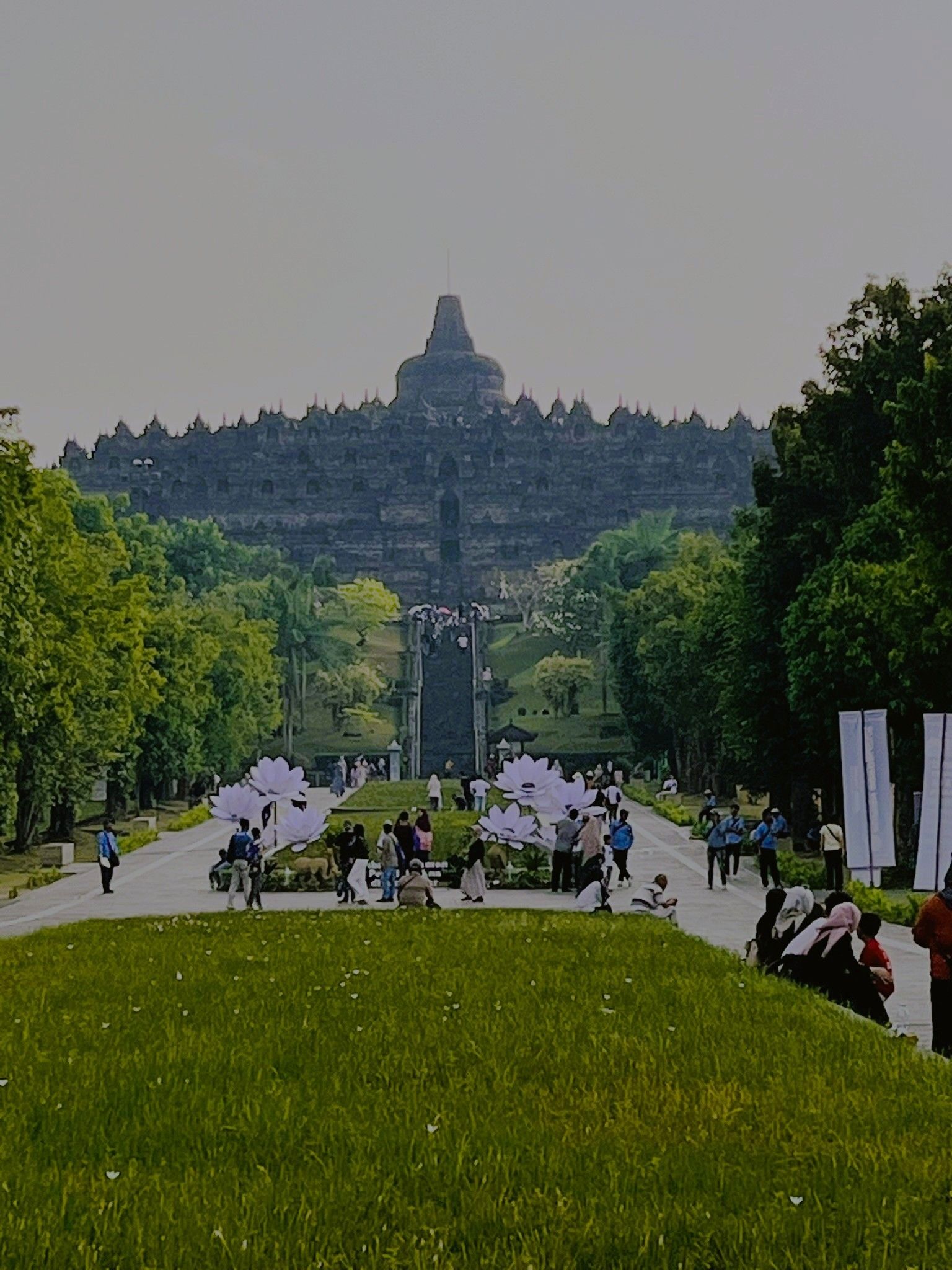
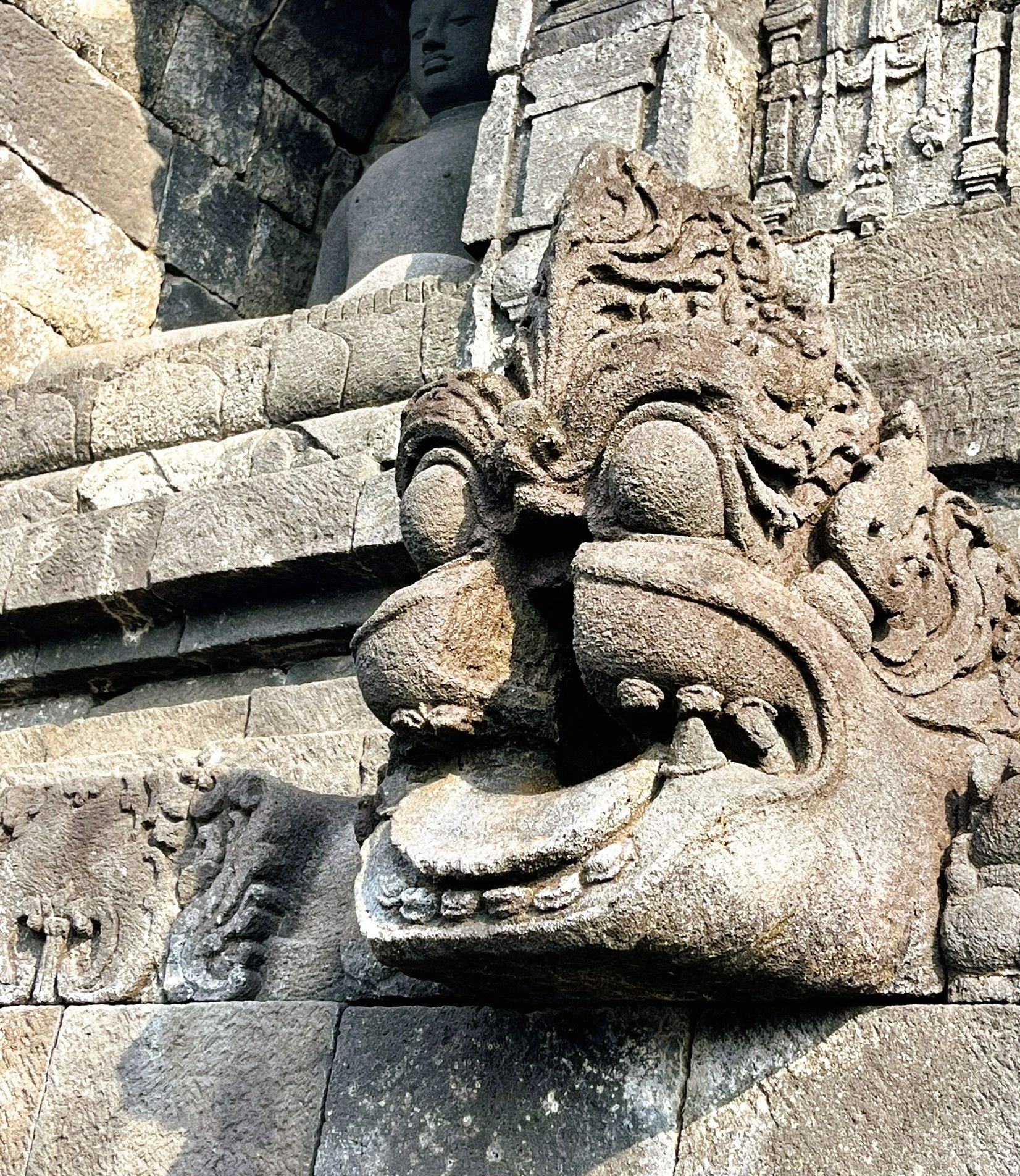
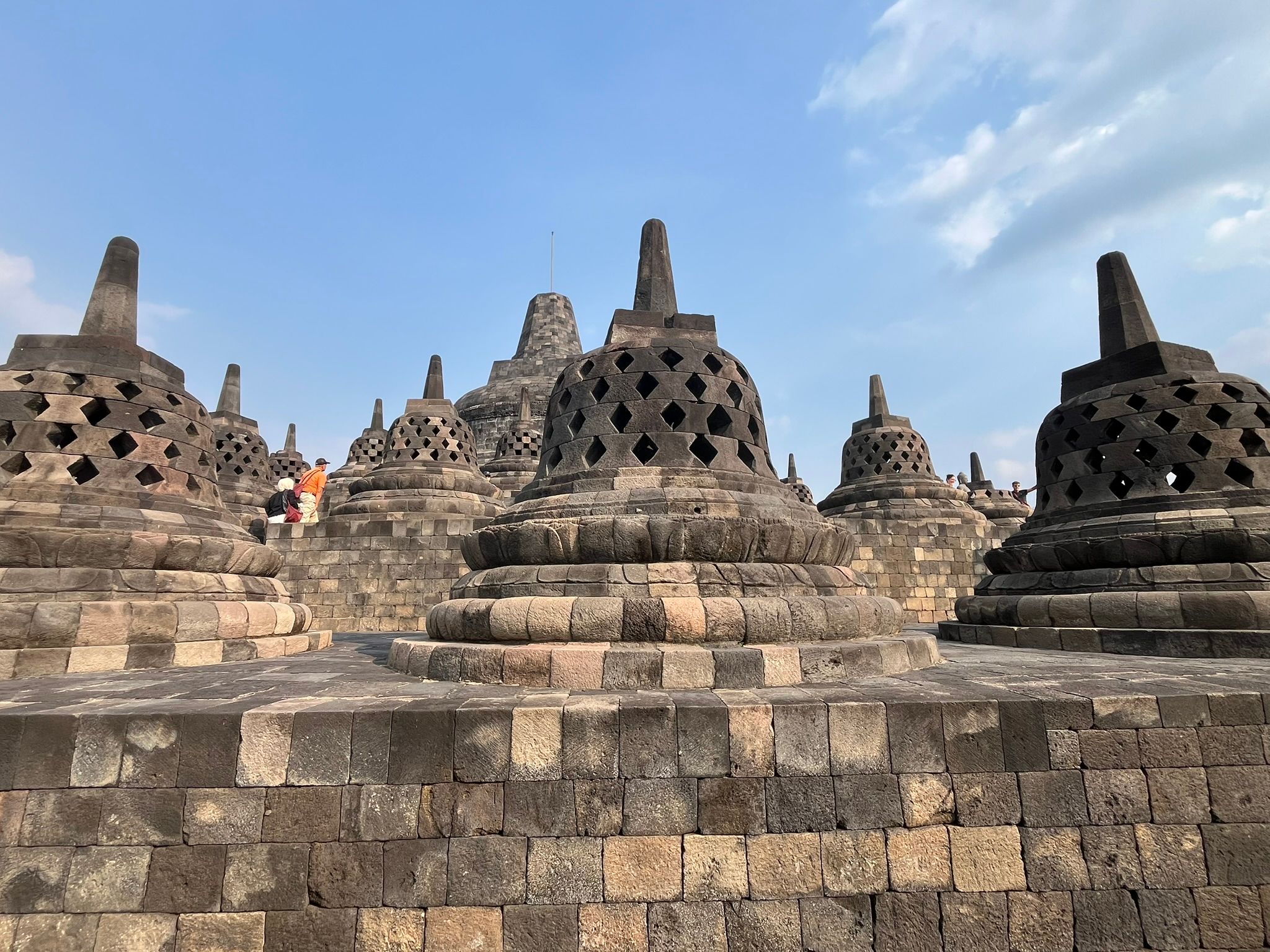
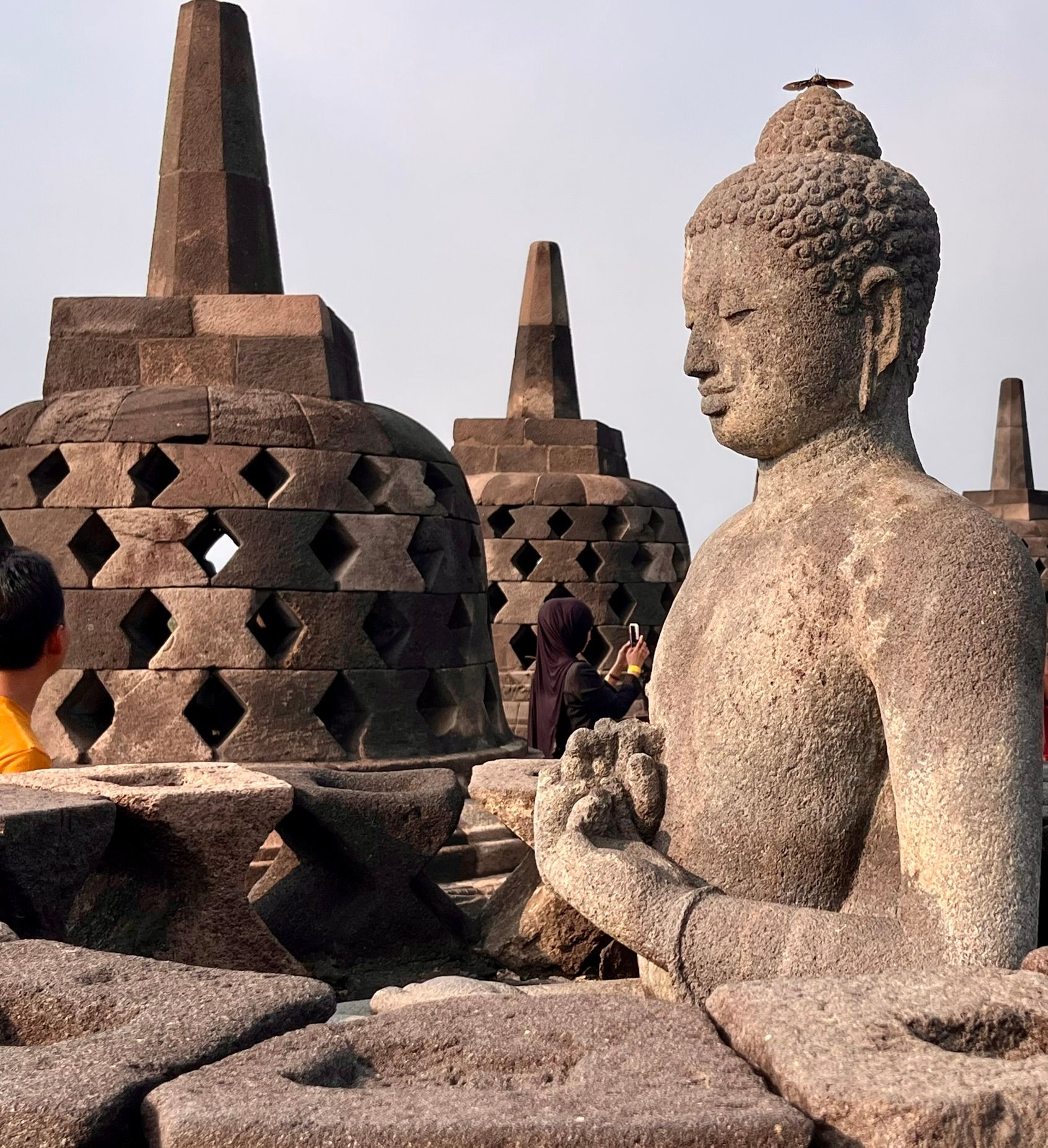
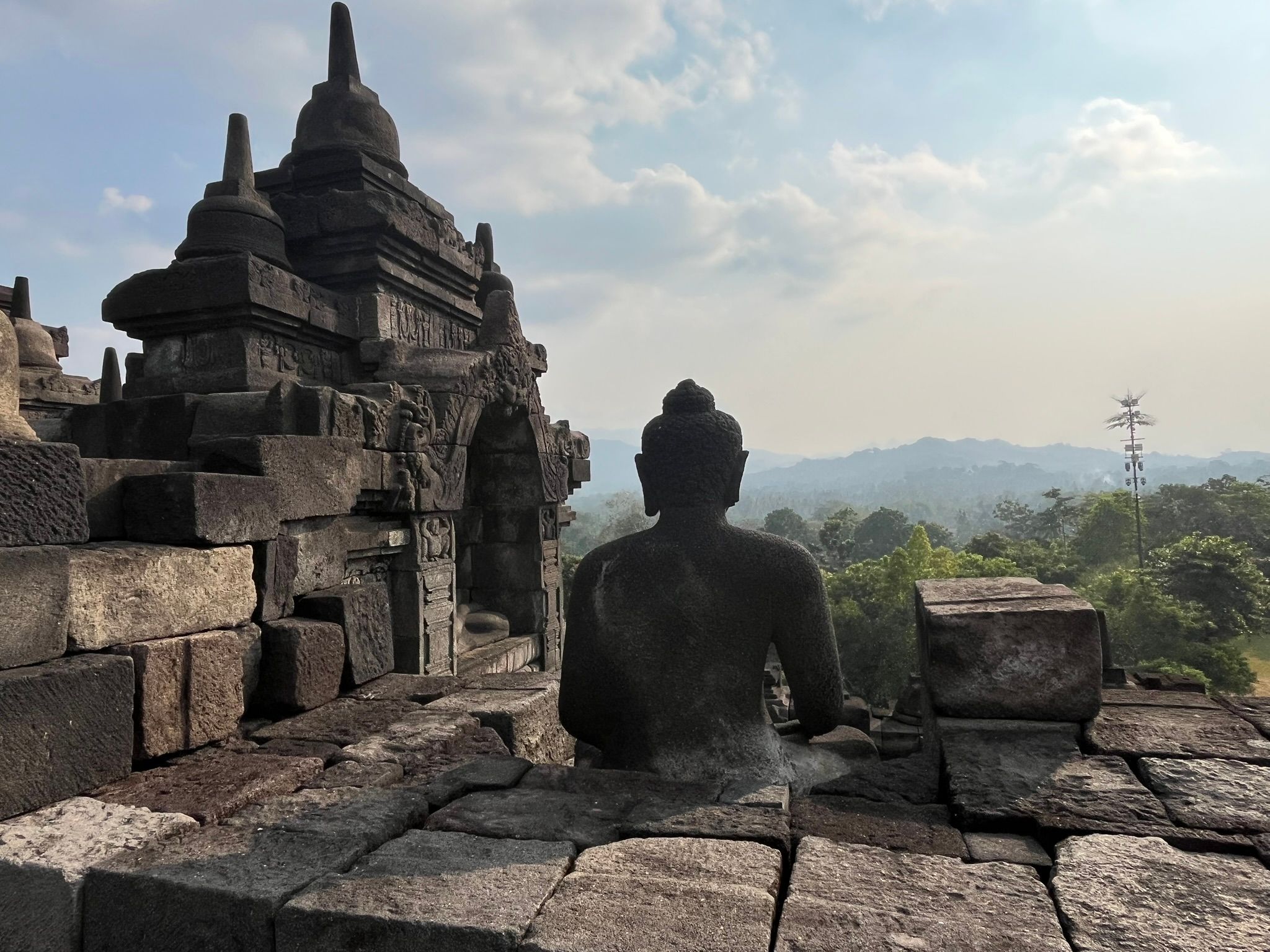
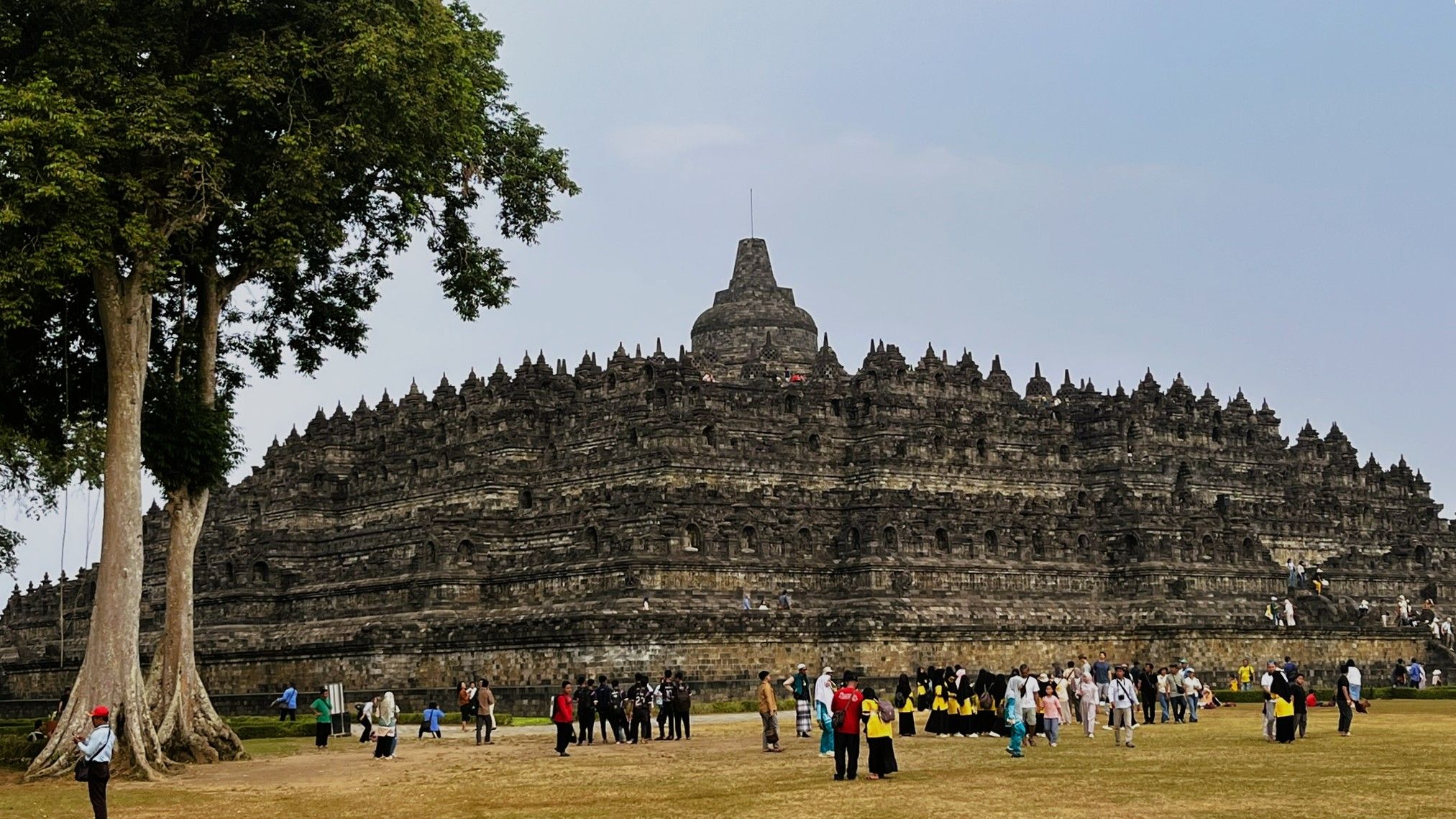
July 4, 2026. With a private driver named David, the three of us drove from Yogyakarta out to the Kedu plain. For the 40 kilometers, we took a good hour in mostly heavy traffic – the return trip during evening rush hour was to take even longer, but the effort was worth it: On a small hill in the Kedu plain lies Borobudur, a construction of superlatives. This is confirmed both by UNESCO, which added Borobudur to the World Heritage List in 1991, and by the Guinness Book of Records, which declared the site in 2005 the largest Buddhist temple in the world and the largest Buddhist archaeological site.
The Kedu plain is surrounded on three sides by volcanoes and other mountains. One, the Merapi, is considered highly active, as my guide Caca in Yogyakarta told me. It regularly spews ash, and occasionally there are lava flows. The crater of Merapi is about 30 kilometers away from both Borobudur and the center of the large city of Yogyakarta, and both are occasionally covered with ash rain. But the city and the temple lie, authorities and scientists assure, outside the direct danger zone for pyroclastic flows.
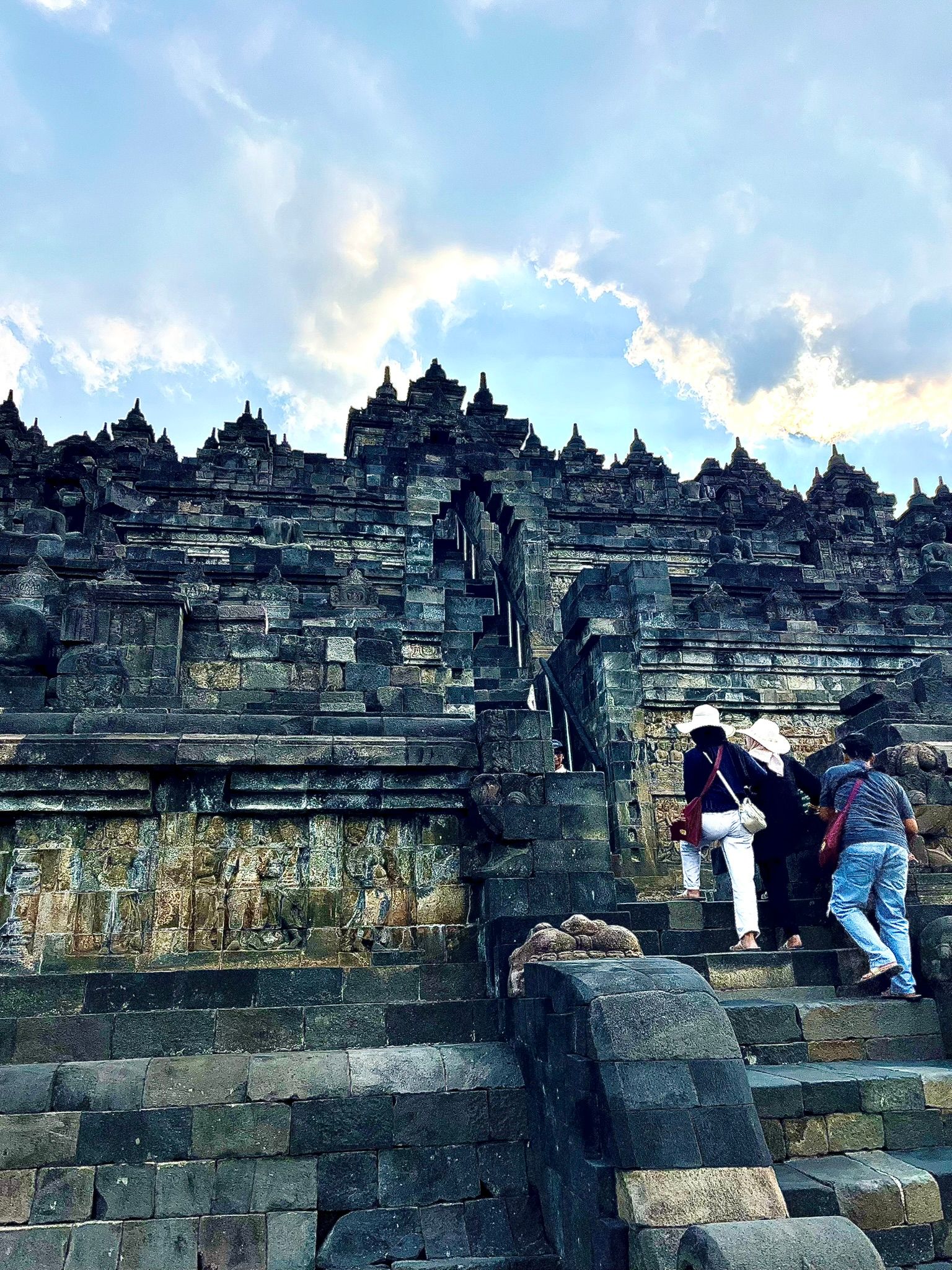
Borobudur, as it begins to emerge on the horizon in the shimmering heat of the day, is first and foremost gigantic: The square base measures 123 by 123 meters, with a height of about 35 meters. A total of 1.6 million stone blocks were used – almost comparable to the Cheops Pyramid in Giza, which was assembled from around 2.5 million blocks.
Borobudur is also designed as a pyramid, but walkable, with nine tiers: six square terraces, above which are three circular platforms.
Buddhist Cosmology
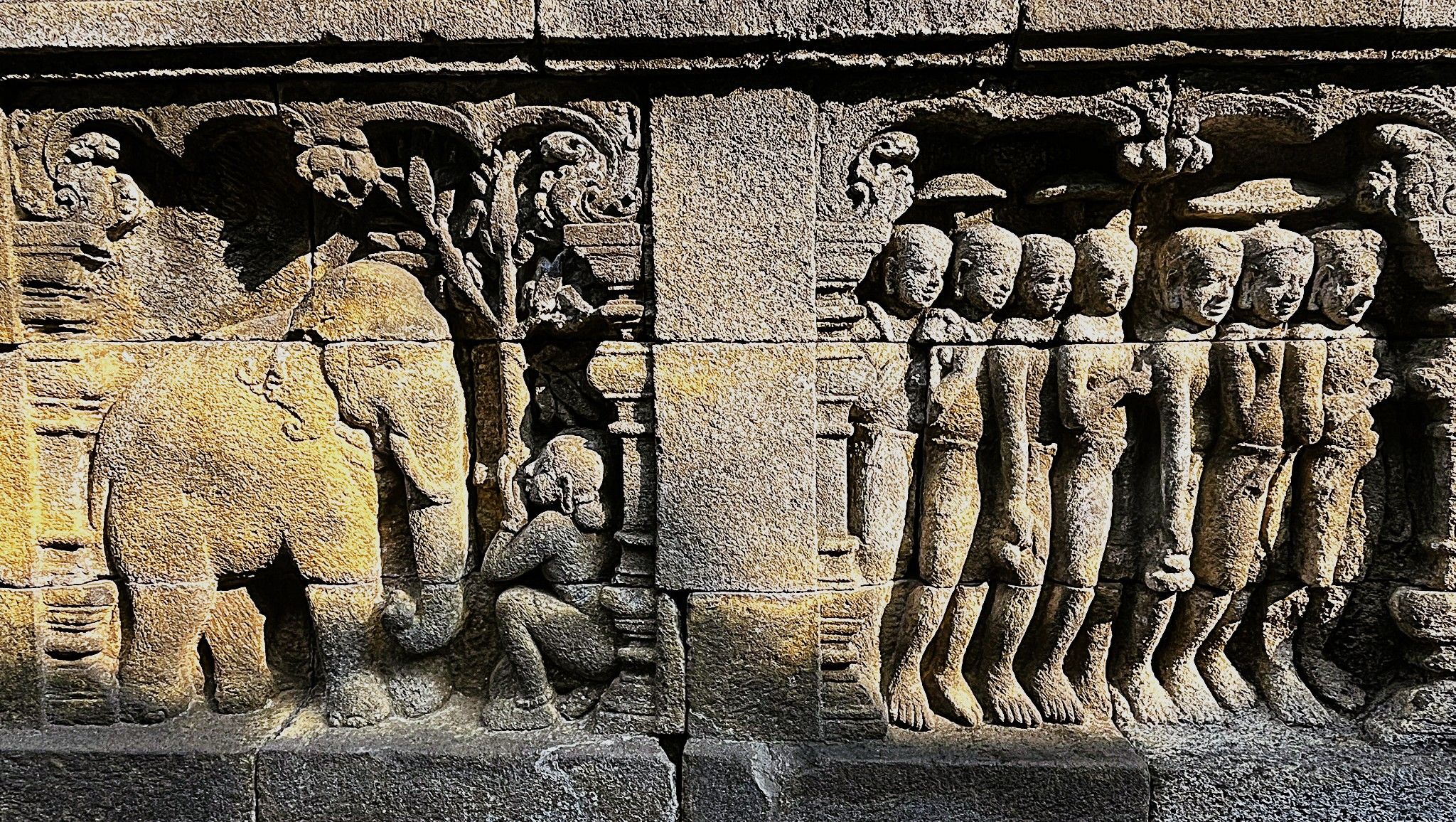
The symbolism of Borobudur comes from Buddhist cosmology. On three levels, the temple represents the path of mankind from banal everyday life to enlightenment, that is, nirvana. On the lowest level, we find the world of desires. Above that, on five square terraces, the life of Buddha and his teachings are depicted on kilometer-long, detailed relief bands. On the three circular top terraces, 72 bell-shaped stupas rise into the sky, with a central main stupa at the top as a symbol of nirvana. In each of these stupas sits a Buddha; two have been uncovered to demonstrate this.
The Buddhist temple Borobudur and the Prambanan complex, which has both Hindu and Buddhist temples, were created around the same time. (I described this complex in my previous blog “Prambanan – Gods Sculpted in Stone” from July 3, 2026.) They served not only religious purposes but were also stone embodiments of power demonstrations by the most important clans competing for supremacy in the Mataram kingdom, later also called Medang, in the region of Central Java: the Buddhist Syailendra dynasty and the Hindu Sanjaya dynasty.
Power, Glory, and Downfall
For me, Borobudur is the symbol of the eternal conflict between transience and permanence. The construction of the site, which began around 750 AD, took decades and was presumably completed in the early 9th century under King Sri Maharaja Samaratungga of the Syailendra dynasty. (Researchers have searched in vain for written evidence of the construction; they had to estimate the construction years based on stylistic comparisons, architectural analyses, and inscriptions.)
Yet, while the overwhelming complexes of Borobudur and Prambanan give us a metaphysical sense of infinity today, we have not internalized the second part of the story, that of the rapid decline: As proud as Borobudur and Prambanan stand today, their bloom period was very short. Prambanan was only intensely used for about 80 to 100 years. And Borobudur's significance faded after 100 or at most 200 years.
Over the centuries, volcanic ash and the dense vegetation of the jungle buried Borobudur. Earthquakes shifted walls; stupas collapsed. Rainwater and root pressure affected the stability; the temple threatened to sink into the ground.
In 1814, about a thousand years after the completion of Borobudur, a Dutch engineer was commissioned to free the structure, deeply hidden in the jungle, from trees and earth. It wasn't until almost a hundred years later, from 1907 to 1911, that the top terraces and stupas were stabilized.
Preserving the Heritage
However, the crucial phase for the rescue of the monument began in 1975. For seven years, the Indonesian government, in collaboration with UNESCO, carried out one of the most elaborate restoration projects humanity has ever seen: More than a million stone blocks were removed, cataloged, and cleaned. A modern drainage system was installed, and the core of the temple was reinforced with concrete. Then Borobudur was rebuilt with the original stone blocks.
In addition to being a symbol of power, glory, and permanence, Borobudur has also become a symbol of scientific progress: Its restoration has set new standards in monument preservation.
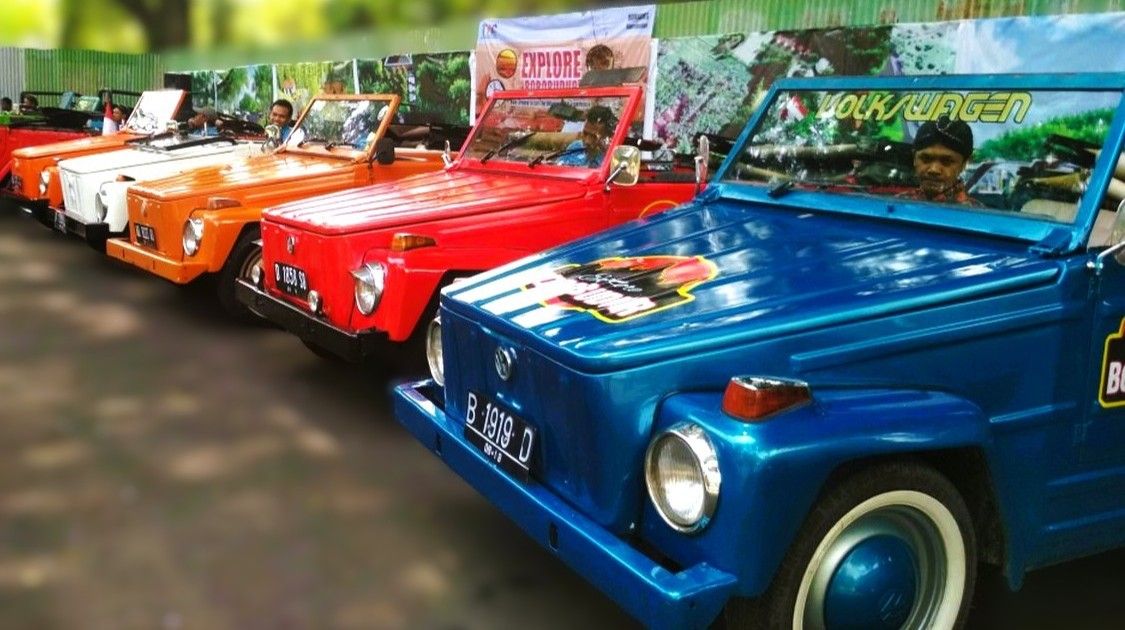
After the overwhelming impressions, as we set off back to Yogyakarta, we make a more mundane but still surprising discovery outside the fenced complex of Borobudur: Suddenly, several candy-colored VW buggies, filled with waving tourists, pass by. The officially termed 181 or