

Borobudur or the stony ascent to Nirvana
open VW model with its angular body and boxer engine in the rear recalls the army Kübelwagen of World War II. In Germany, the VW 181, originally designed for the Bundeswehr, was...
Published: 05.08.2026
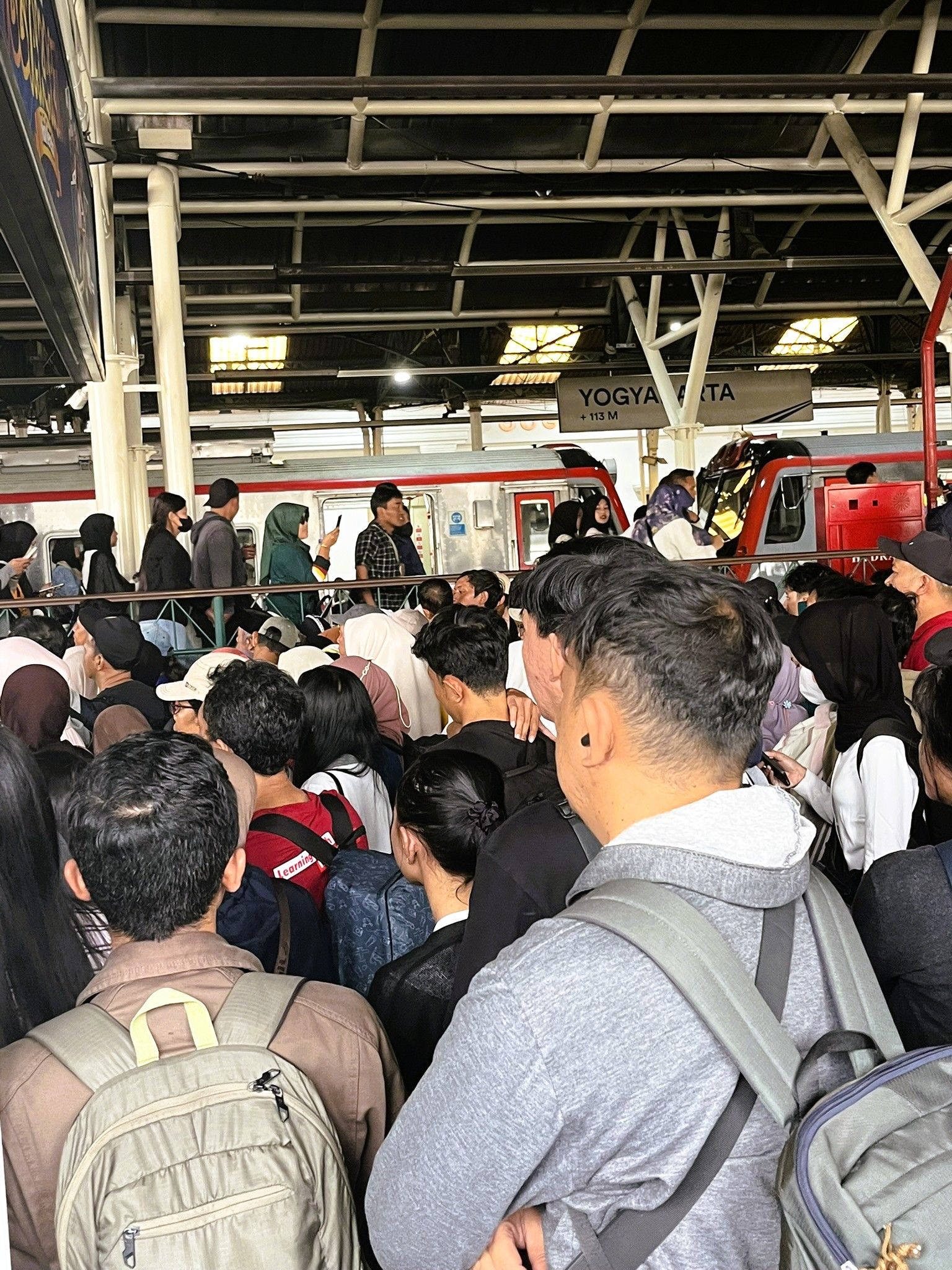
From Yogyakarta, I continue on July 6, 2026, to the city of Surabaya in the northeast of Java. At the train station in Yogyakarta, a crowd pushes in; several times, there is no way to get through. However, the “Executive Class” of the Indonesian railway proves to be comfortable. And the train departs right on time, which astonishes German fellow travelers who are not used to such punctuality from Deutsche Bahn.
I spontaneously chose Surabaya due to a song by Bertold Brecht and Kurt Weill. “Surabaya Johnny” is a bitter love song from a woman to her unruly and unfaithful Johnny, who travels the seas as a sailor from Surabaya. She describes how she is seduced, exploited, and abandoned by Johnny but remains infatuated with him. The incomplete list of female interpreters is a roll call of past superstars: Lotte Lenya, Marlene Dietrich, Milva, Bette Midler, Marianne Faithfull, Nina Hagen, Ute Lemper.
Art Deco meets Skyscrapers
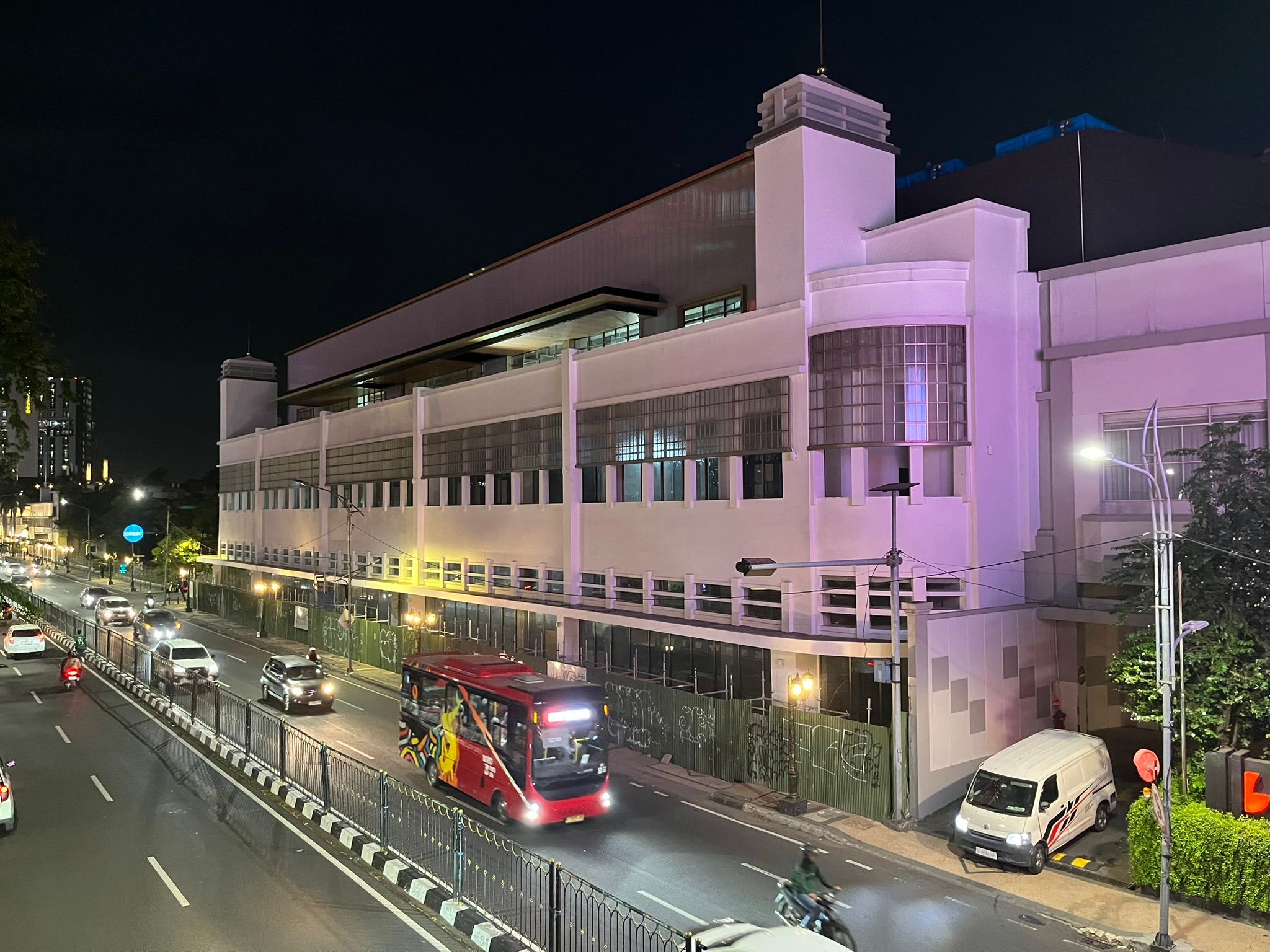
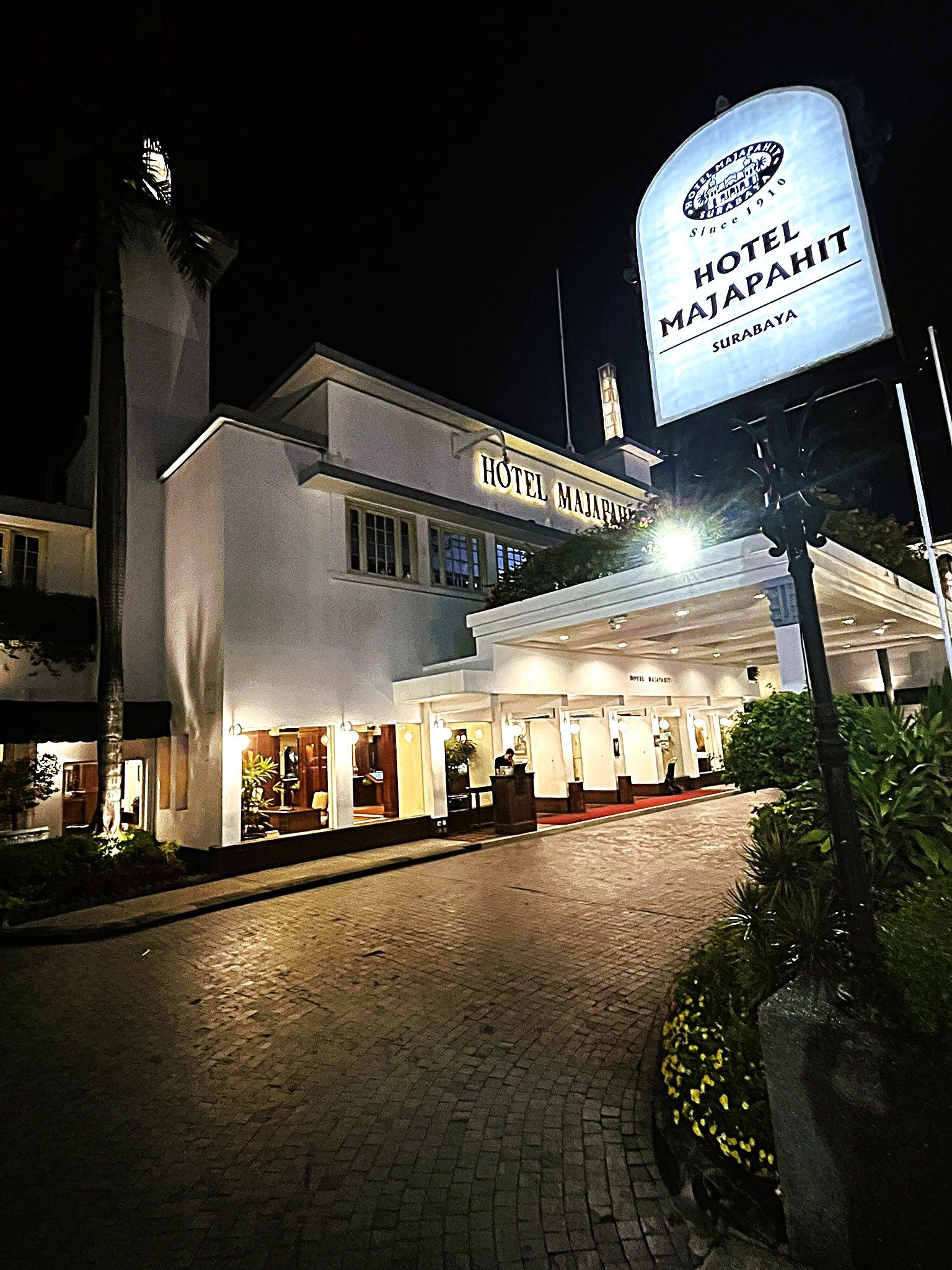
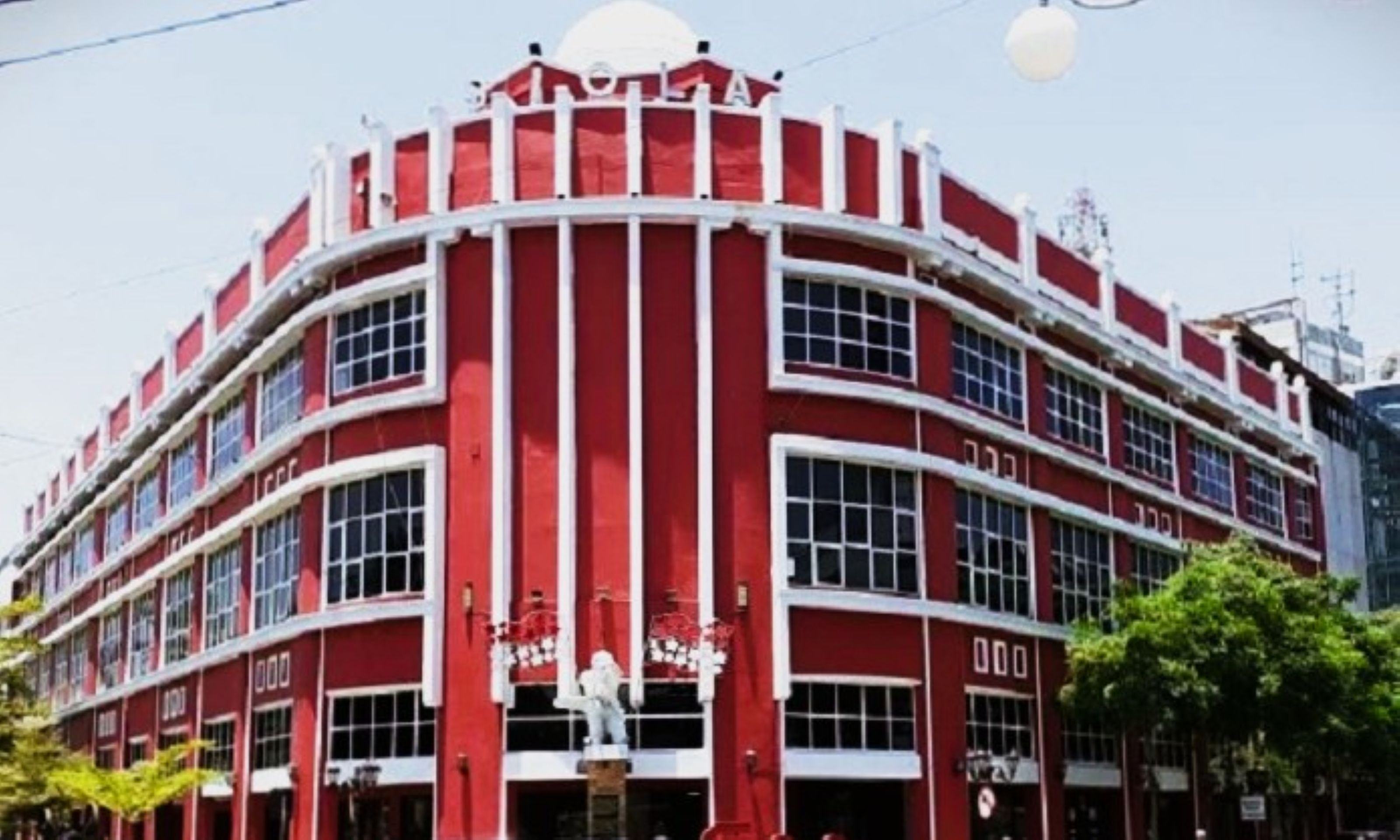
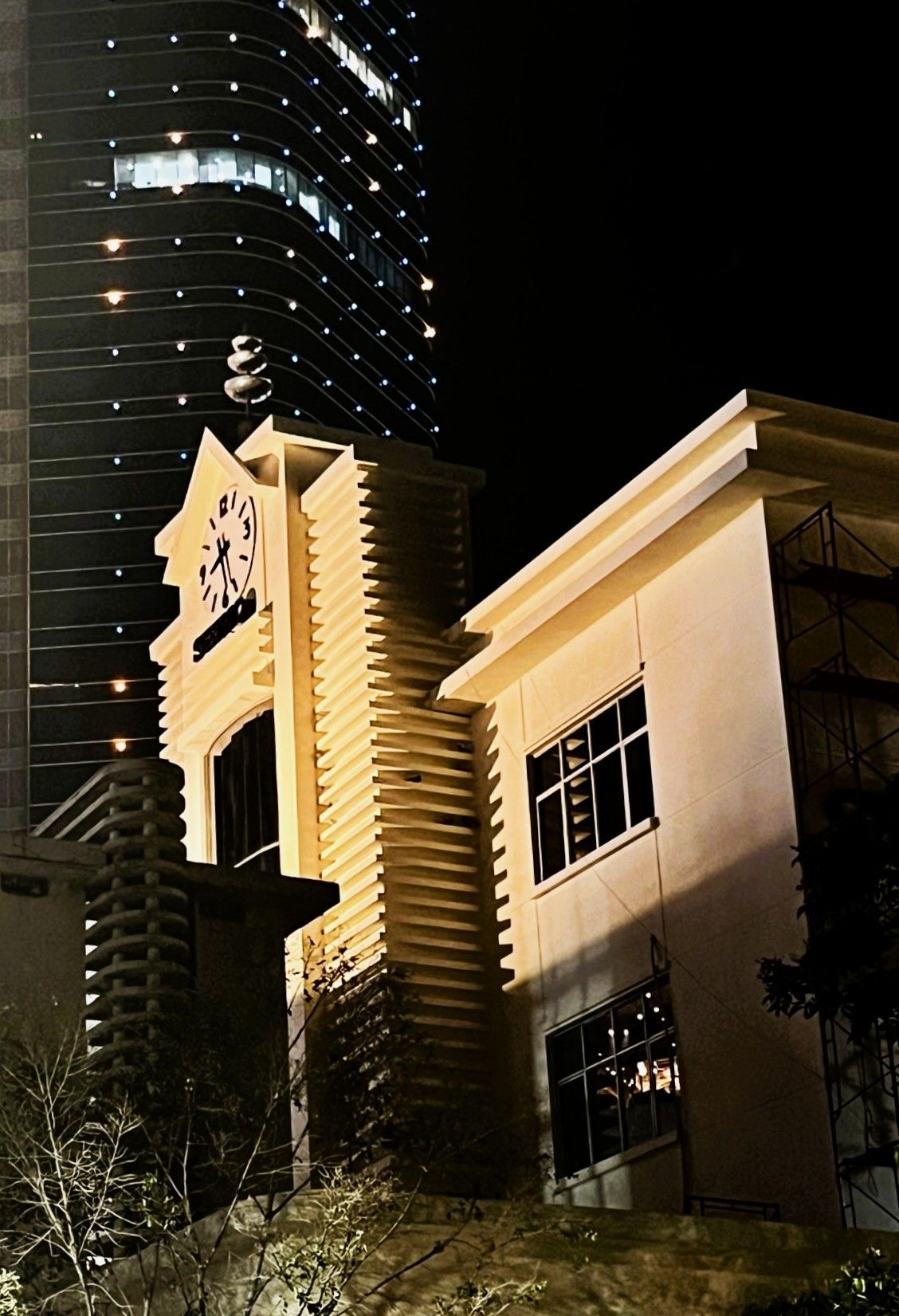
After a four-hour train ride, I arrive and check in at the “Grand Inna Tunjungan,” an elegant four-star hotel that costs only 26 Swiss francs (about 26 euros) per night. Tunjungan is a neighborhood to my taste: In the area, you can admire the careful architecture of many buildings in Art Deco and colonial style, including landmarks such as the “Hotel Majapahit,” opened in 1911, or the Siola Building from 1877.
The “Majapahit” was originally named “Hotel Oranje” in honor of the Dutch royal house of Orange. It has been renamed several times since; the current name is meant to commemorate the Majapahit Empire, a powerful Hindu-Buddhist kingdom that ruled East Java from the late 13th to the early 16th century and later parts of Central Java, building a vast network of vassal states that secured its influence over Sumatra, the Malay Peninsula, Borneo, Sulawesi, and parts of the Philippines. (The history of Southeast Asia is extremely complex, I know. And here there is only space for summary presentations.)
The strikingly striped Siola Building, which marks the northern end of Tunjungan Street, was built in 1877 by a Britishman as a department store, called by the Dutch “Het Engelsche Warenhuis,” and is now a museum.
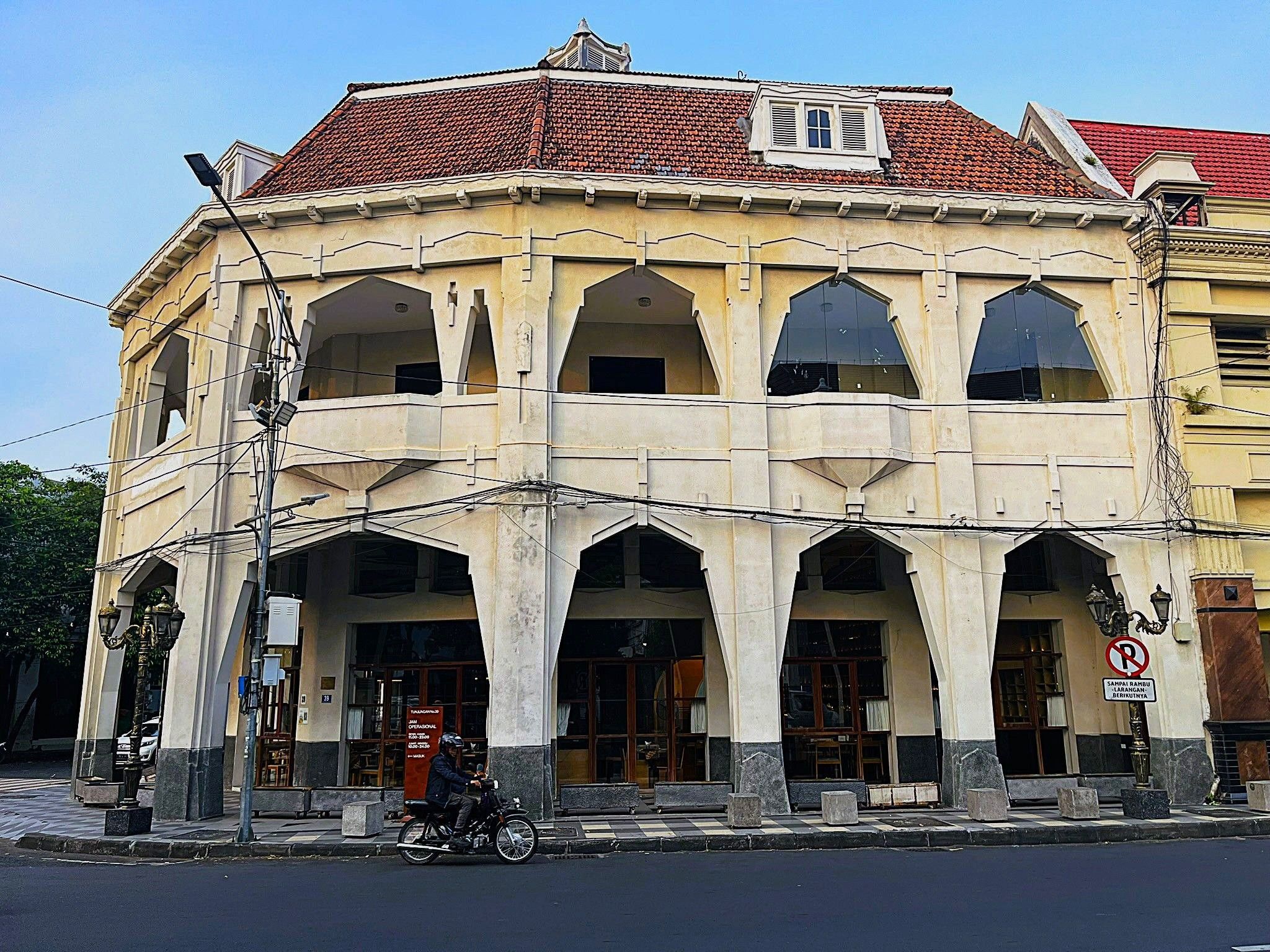
The city has revitalized the neighborhood in a large project. In the evenings, thousands stroll down Tunjungan Street, although, unlike Yogyakarta, hardly any foreign tourists wander here. There are cafés, music venues, and chic restaurants. My favorite spot would be the “Locaāhands” at Jalan Tunjungan 39.
Citra, my tour guide with whom I dine here, explains the strange name: Locaāhands is a made-up word; it is meant to refer to the “local hands” that produce the ingredients processed by local cooks. Apparently, this is too complicated for Surabayans, so they simply call the restaurant “Tunjungan 39.” It is located in a distinctive corner building, built in 1925 for the bookstore J.W.F. Sluyter. Wall-high, albeit empty, shelves in the establishment remind visitors of the house's former career.
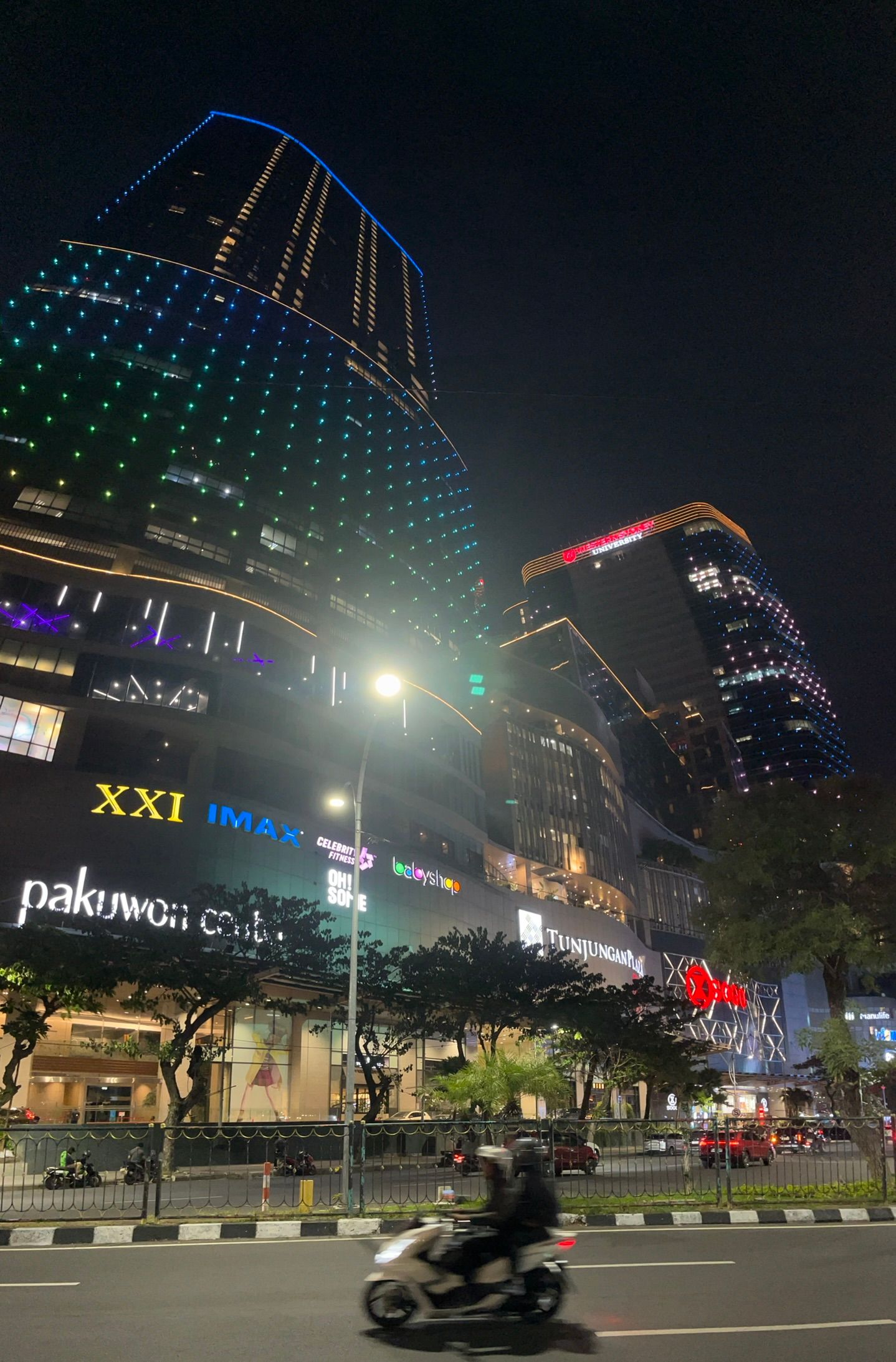
However, the historical buildings in Tunjungan are merely dots in the urban landscape. For Tunjungan is also the central business district of the five million metropolis Surabaya. The colonial buildings cower between gigantic office, apartment, and shopping complexes. One day, I completely lose my way in Tunjungan Plaza, which boasts of being the second-largest mall in Indonesia, and can hardly find my way out.
Memories of Liberation
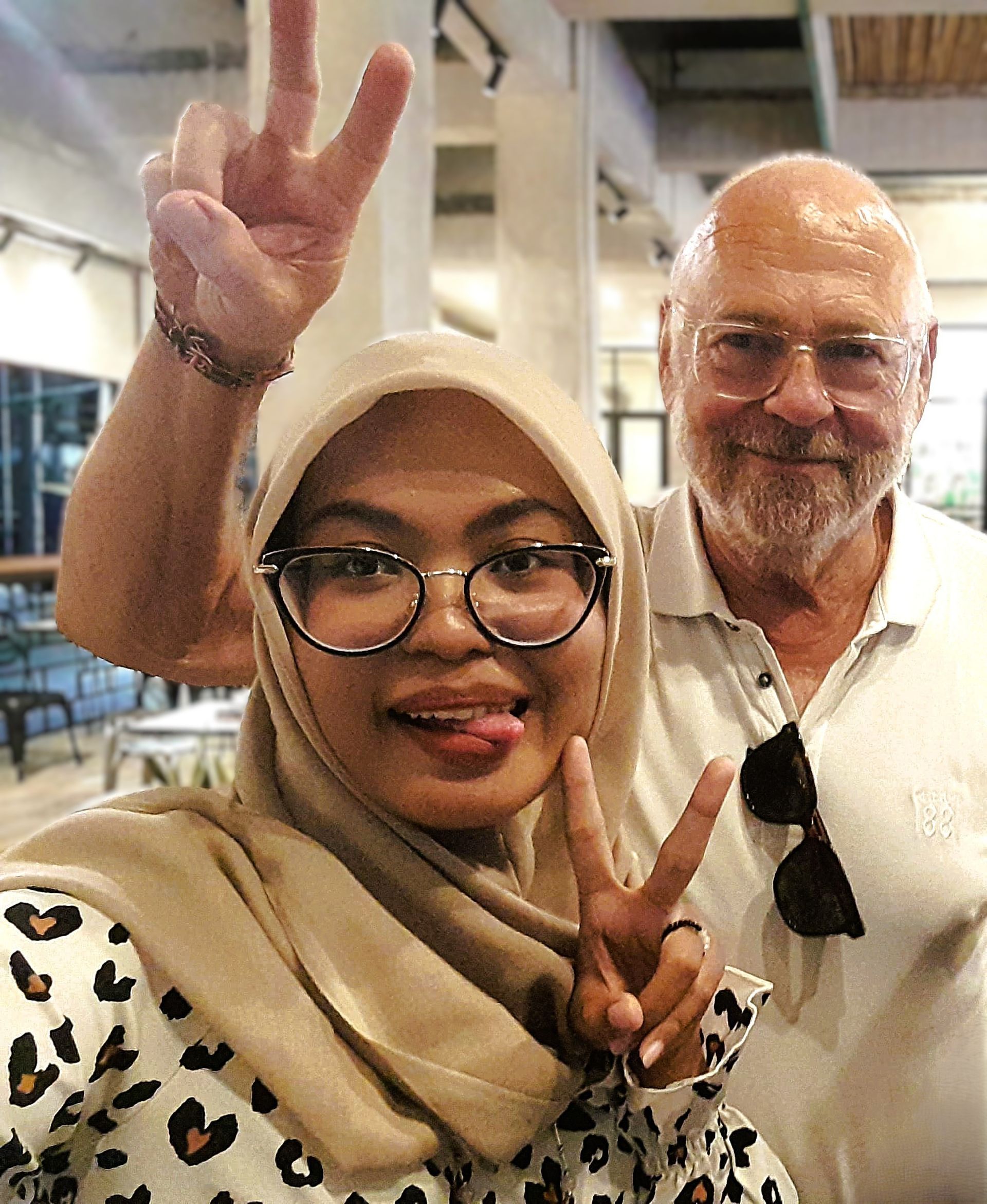
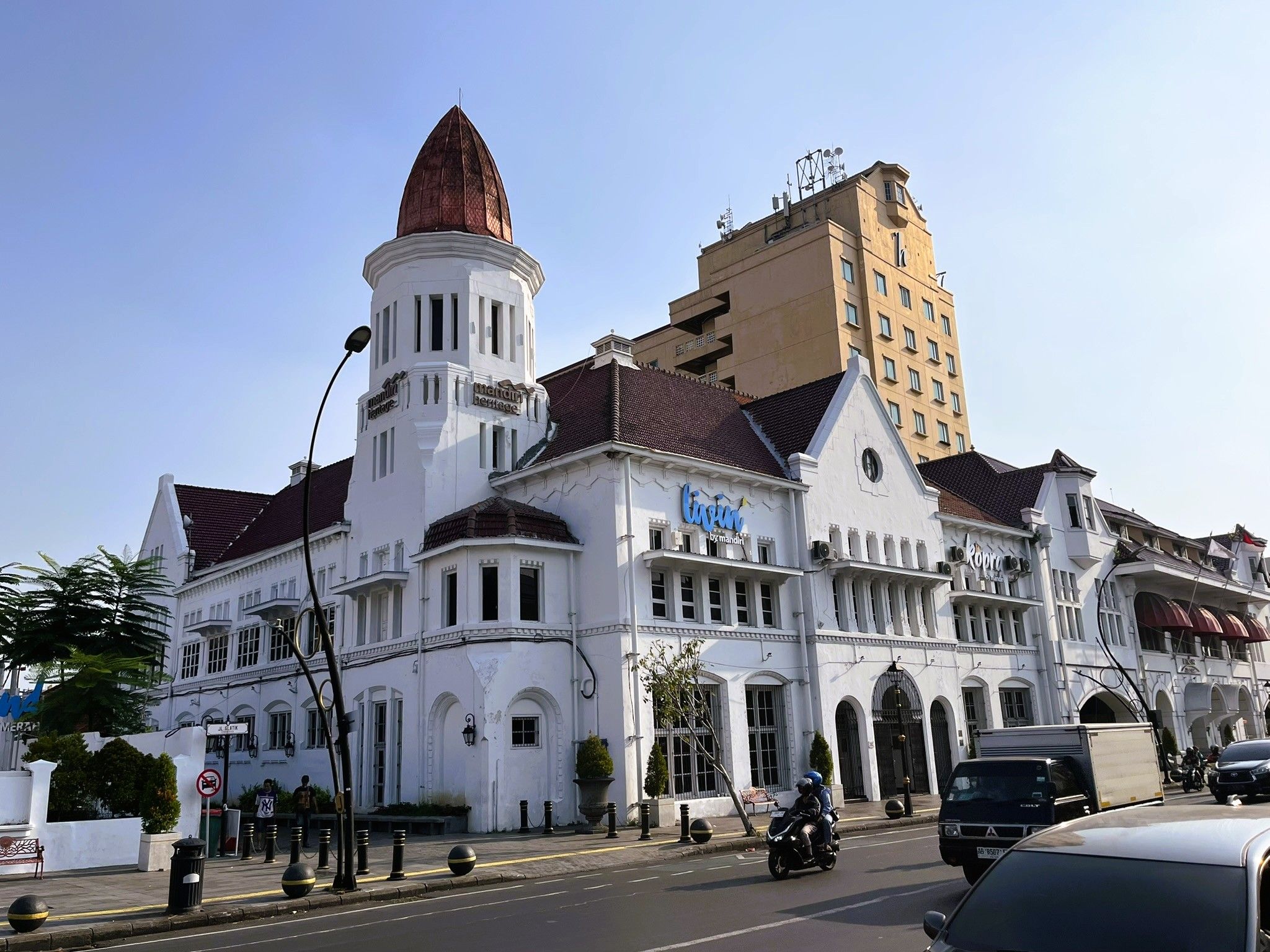
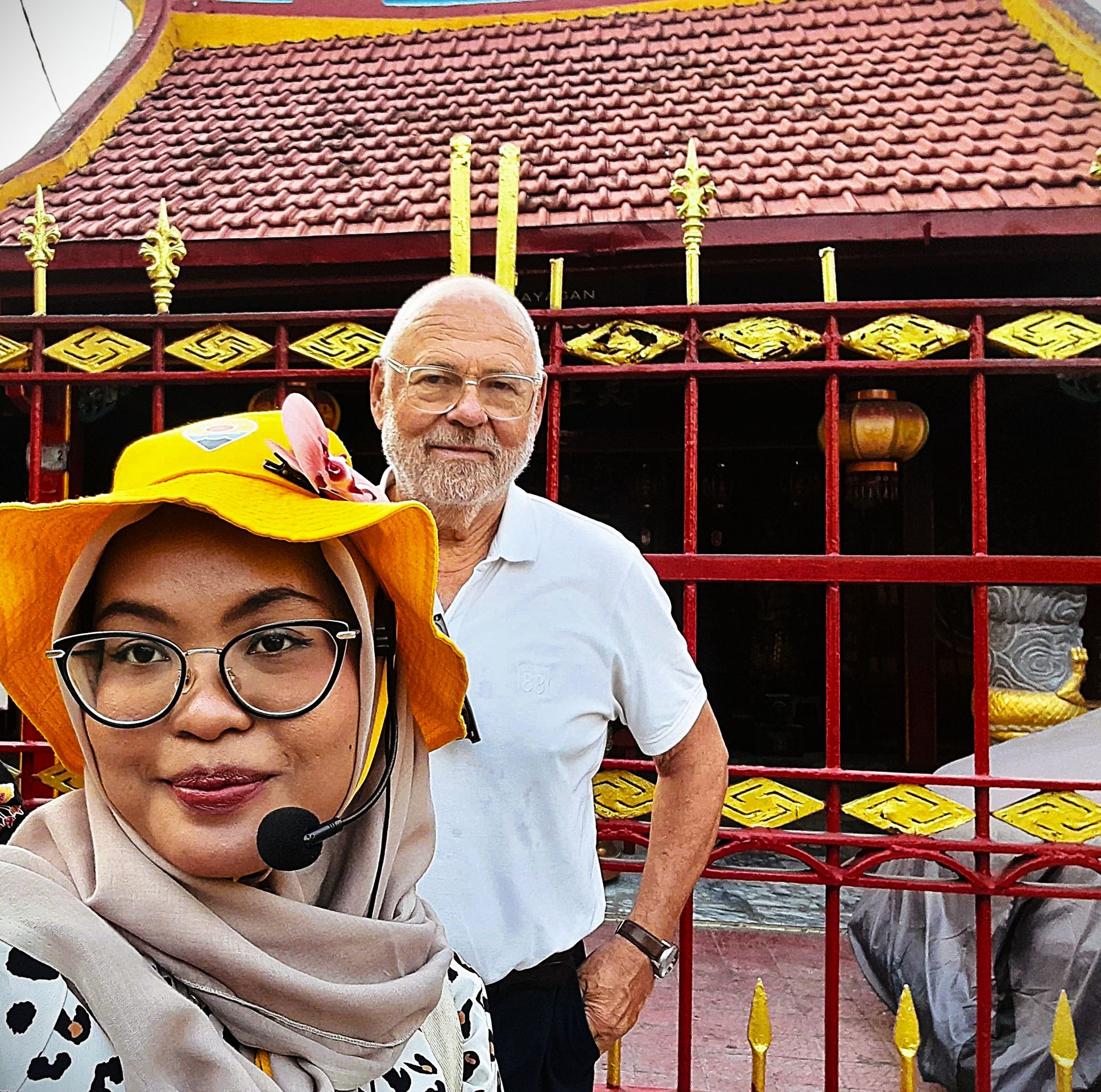
I met Citra, a young woman in a hijab, when I booked a walking tour with a storyteller through historic Surabaya and Chinatown via “GetYourGuide.” Our tour (the “group” consists of only me and one student from Jakarta) begins in a small park. It is surrounded by massive colonial buildings like the “Cigar Building,” named for its cigar or lipstick-shaped corner tower, and the 1929-built Internatio Building, the former seat of the “Internationale Credit en Handelsvereeniging Rotterdam.”
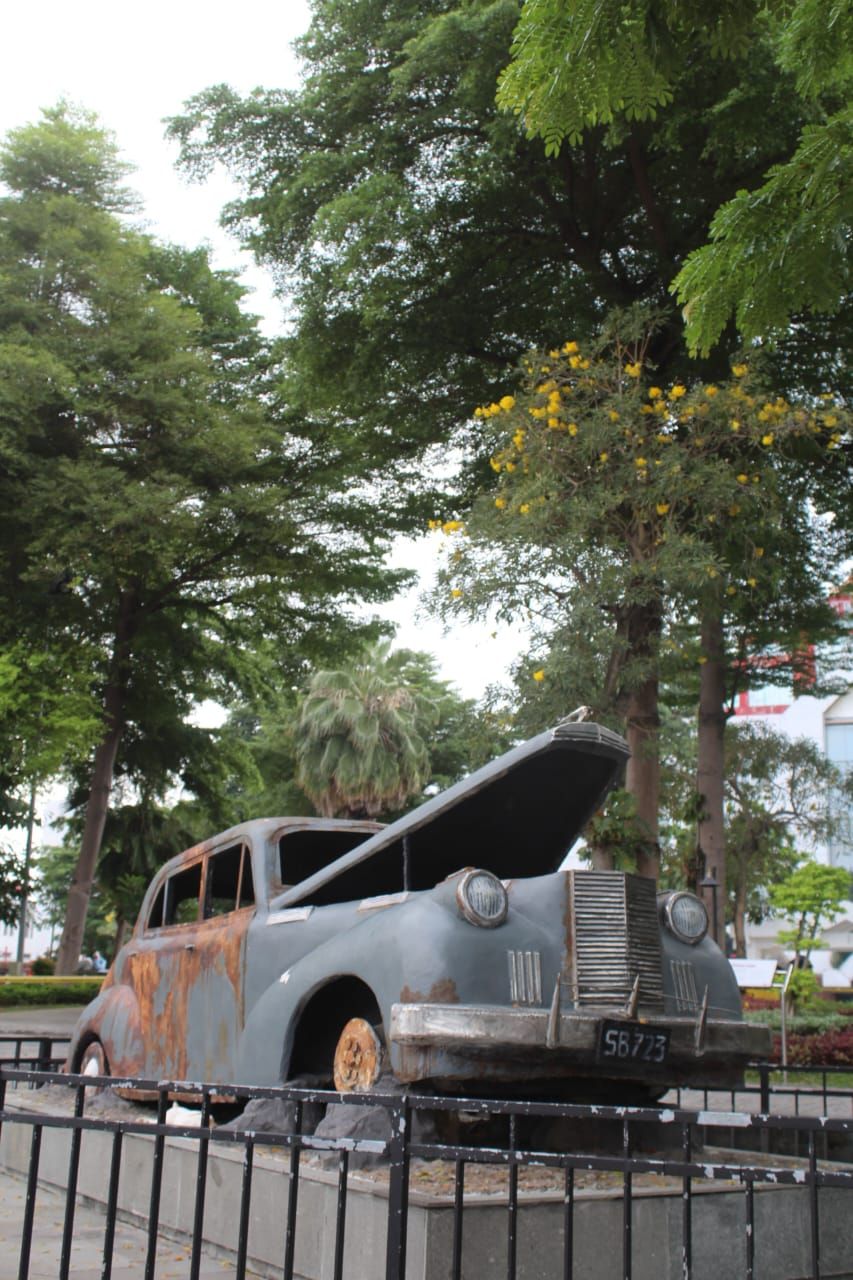
On the square, a replica of a car wreck from the 1940s stands out. Citra tells the story: In this American car, British Brigadier A.W.S. Mallaby lost his life. Mallaby’s 49th Indian Infantry Brigade had been relocated to Surabaya to ensure the surrender of Japanese troops. In the long term, the Dutch were also to be supported, as they sought to regain control over the Java colony after the Japanese withdrawal.
On the evening of October 30, 1945, Mallaby drove through Surabaya under a white flag to inform his troops about the recently negotiated ceasefire agreement. His car was surrounded by Indonesian militias in front of the Internatio Building, where British soldiers had taken up positions. In the tense situation, the British fired warning shots; the militias shot back. Grenades exploded, and amidst the chaos, Mallaby’s limousine was blown up. It could never be determined who was responsible for his death, the militias or Mallaby's own men.
This incident was one of the causes of the battle for Surabaya in November 1945, where British and British-Indian troops attacked Indonesian nationalists. There were thousands of deaths, tens of thousands of refugees, and widespread destruction in the city. The British won, but in the long run, the independence movement prevailed; Surabaya became a symbol of the liberation struggle.
A Chinese Gate and a Stinky Market
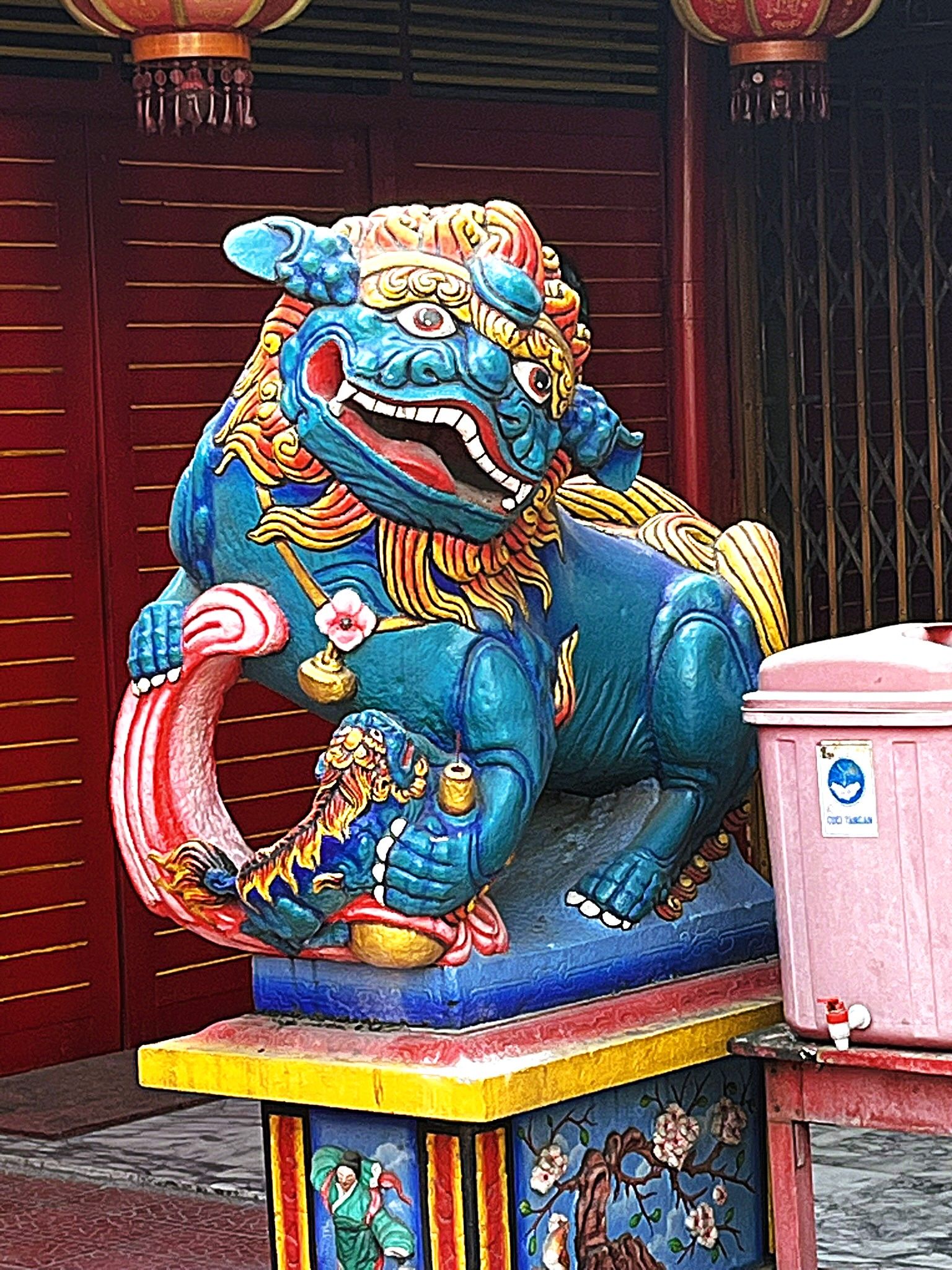
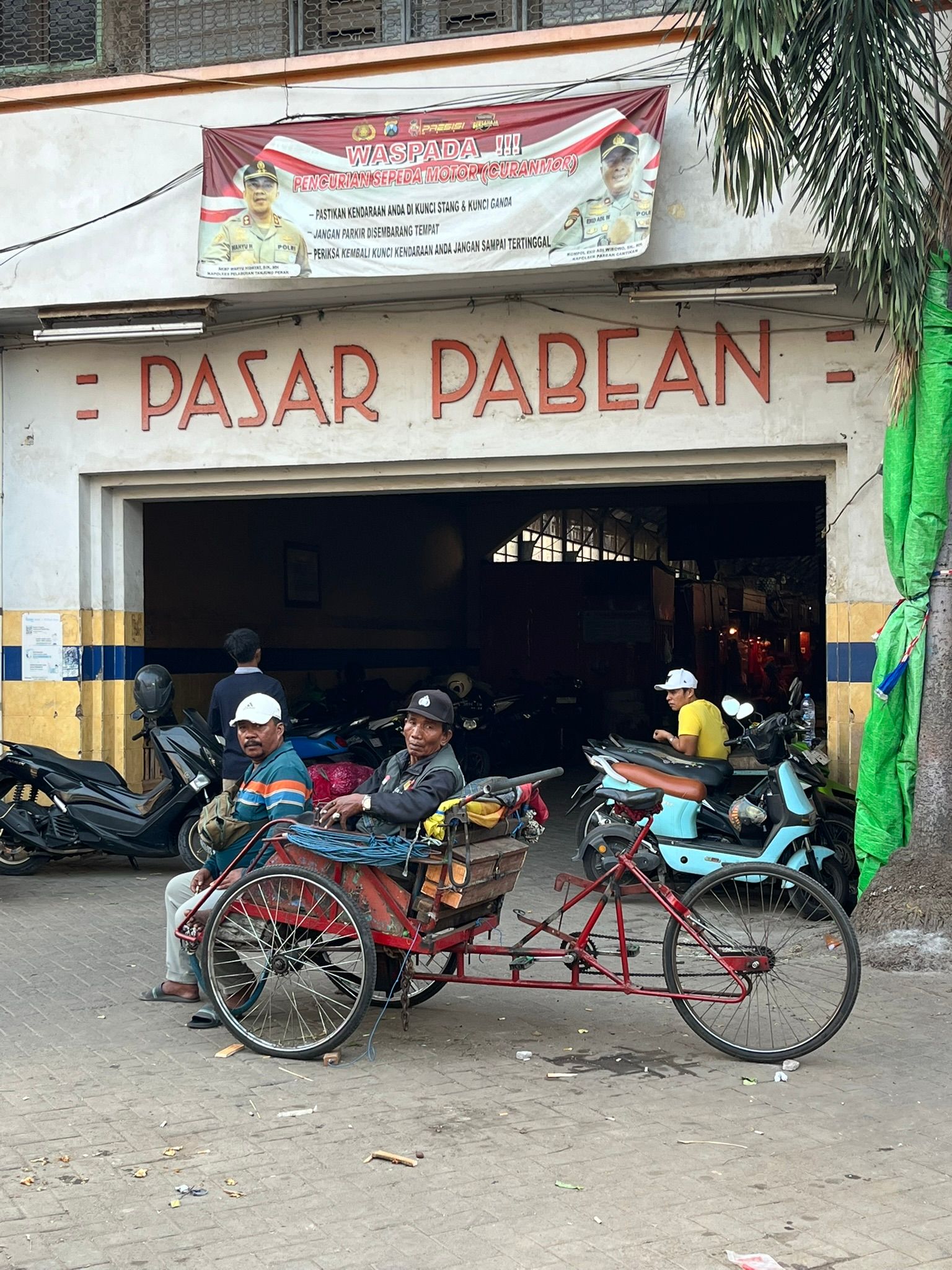
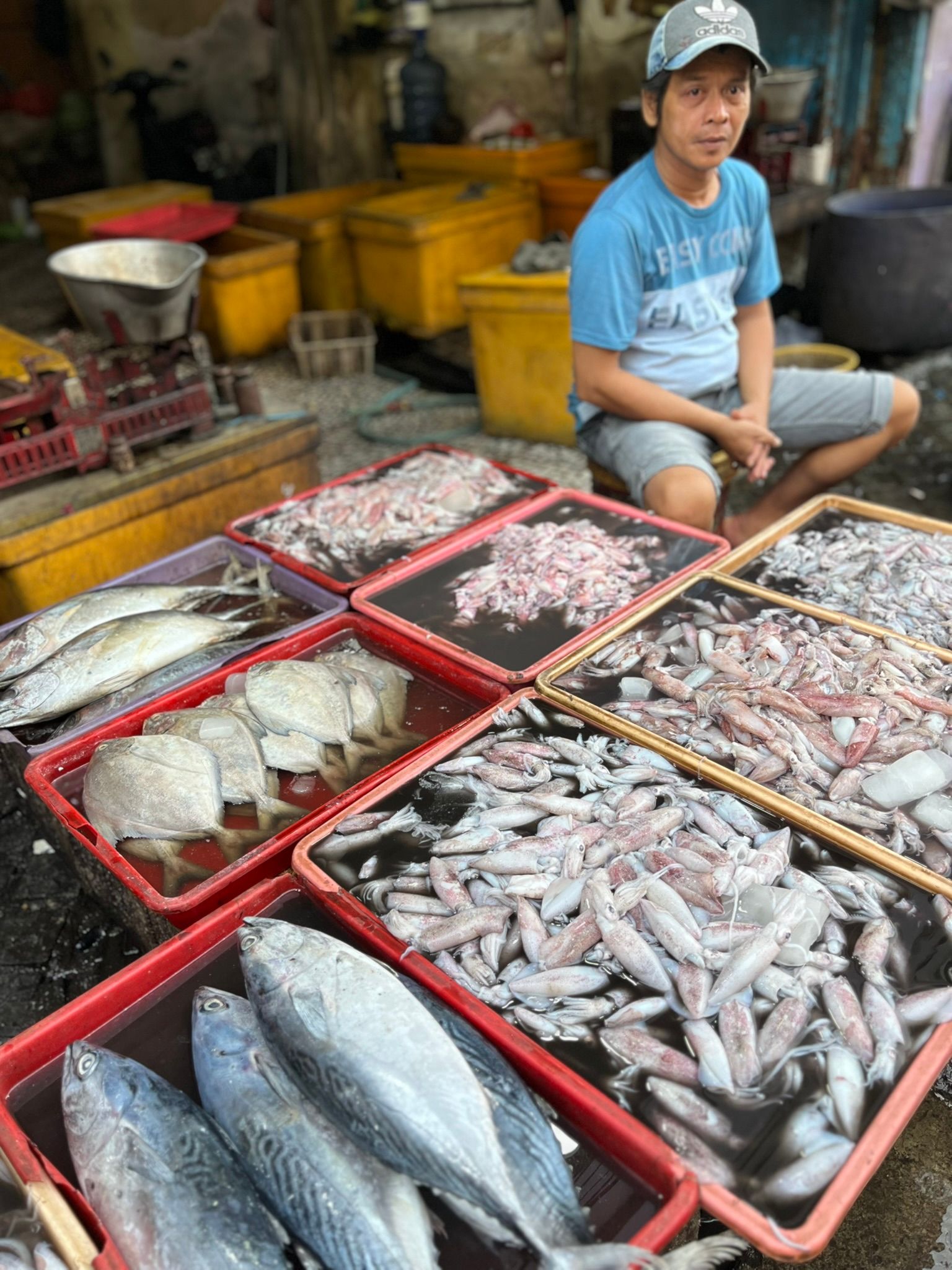
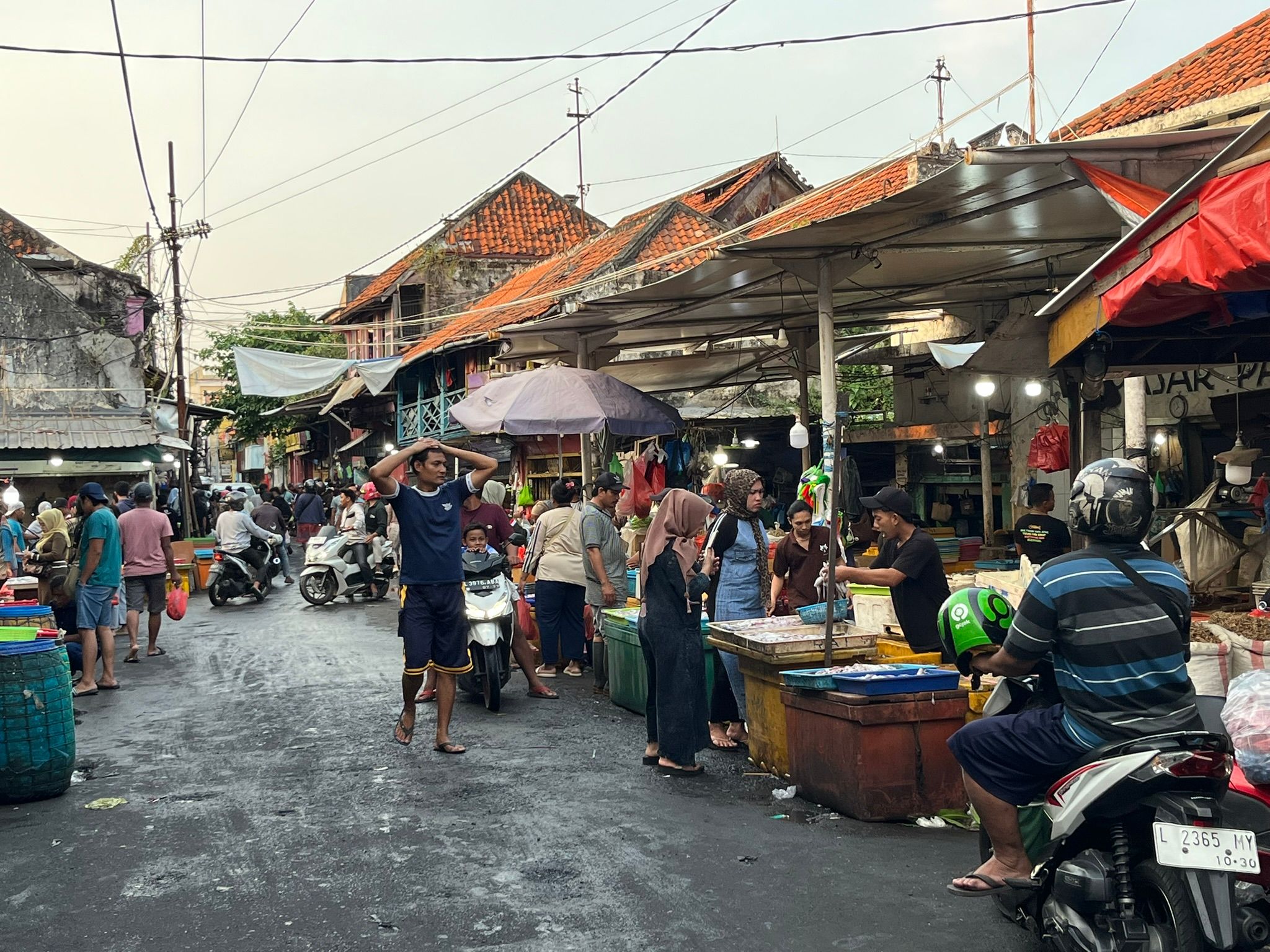
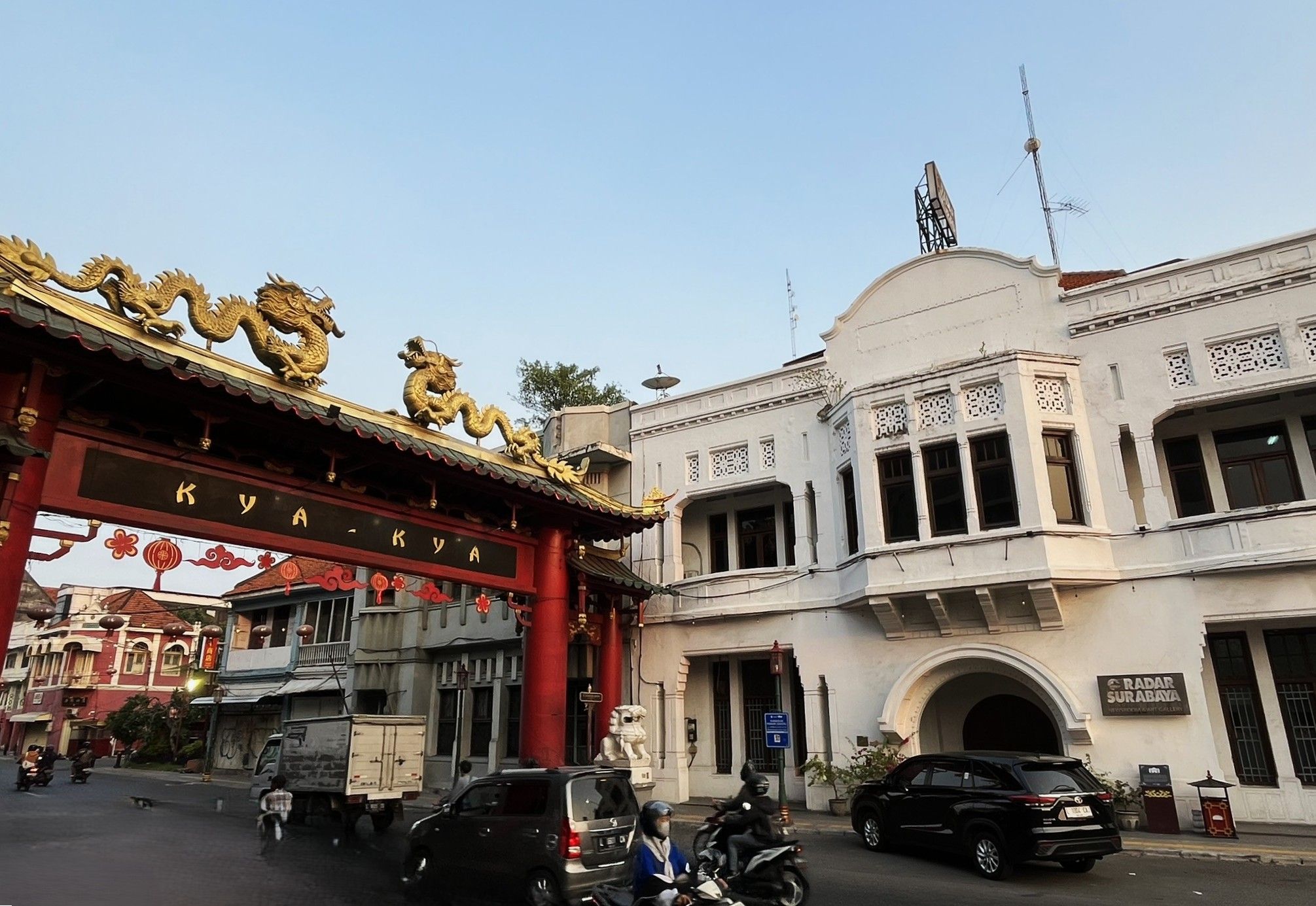
We cross over to the Red Bridge over the Kalimas River. It is not only named for its color but also for the many bloodshed that occurred here during the 1945 revolution. Beyond the bridge, the cityscape changes. A red entrance gate marks the Chinatown. Narrow alleys, past old Chinese businesses and traditional temples, lead us to the Pasar Pabean. In the narrow, centuries-old market, fruits, vegetables, and spices are traded; in the back, a fish market is detectable by its strong odor.
Right next to the gate to Chinatown, I am reminded of my former profession: In an elegant colonial building, the local daily newspaper “Radar Surabaya” is produced. I have never experienced such a stately editorial building during my journalistic career.