

Festhütte and History Book
according to Wikipedia; I admit I have never heard that name before). In the cool shade of the Melaka, Parameswara had the intuition to establish a sultanate and name it after the...
Published: 03.05.2026
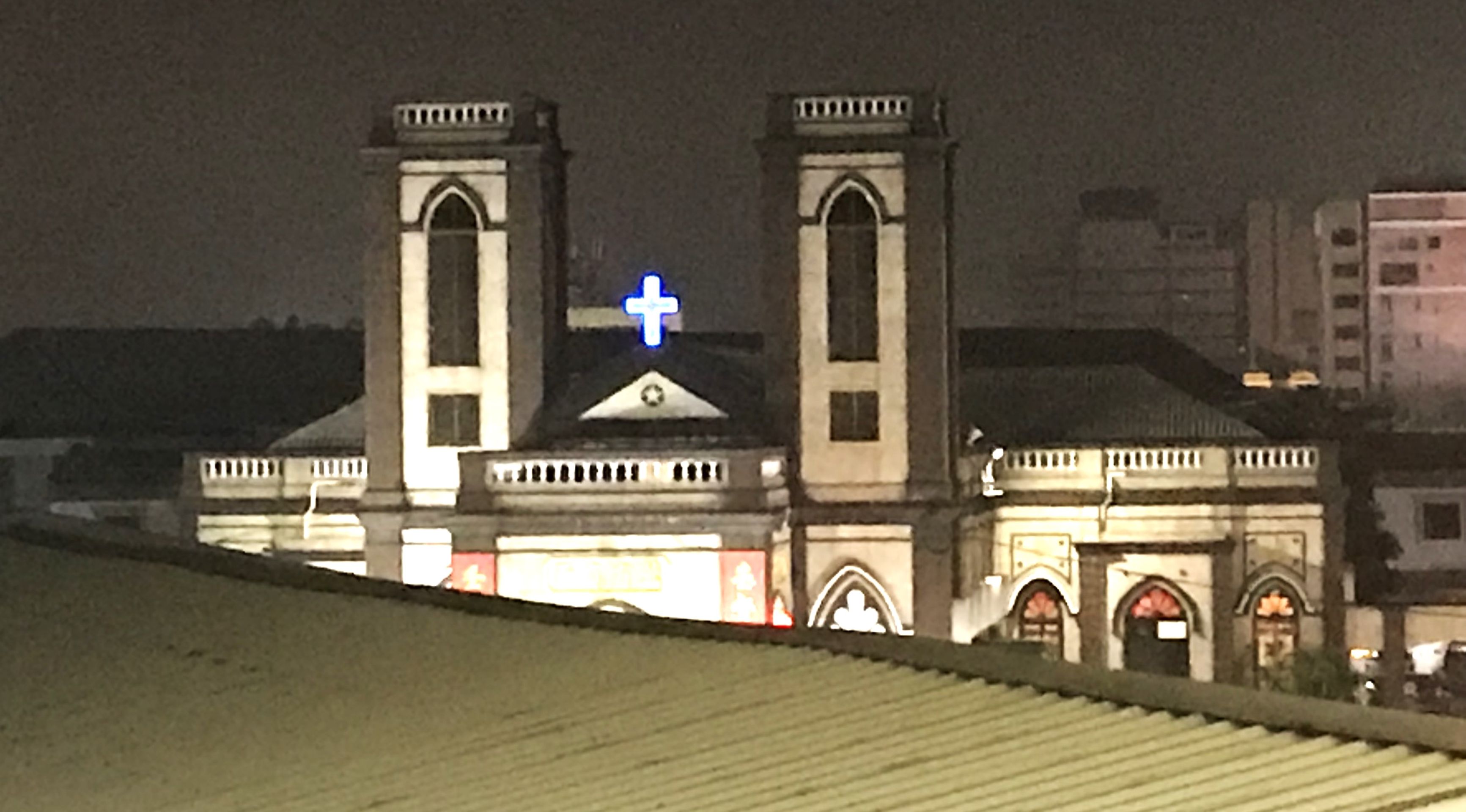
About two-thirds of Malaysians adhere to Sunni Islam. The constitution is ambiguous: on one hand, it names Islam as the state religion, while on the other hand, it posits a secular state. Other religions can be legally practiced; however, Christians, Hindus, and Buddhists report instances of discrimination.
At my hotel 'Vintage Villa' in Kuah on the island of Langkawi, a very competent woman is at the reception. During our conversations, it becomes clear that she had to convert to Islam as a Catholic when she wanted to marry a Muslim.
The reverse—the conversion from Islam to another religion—is significantly more difficult. While Malaysia does not go as far as other countries like Iran, Saudi Arabia, Yemen, Mauritania, Afghanistan, or Qatar where leaving the faith is punishable by death, a Sharia court decides whether someone can leave or not. The court can impose draconian penalties on those wishing to exit.
"In reality, it’s almost impossible to convert from Islam to Christianity," says a Catholic cleric who prefers to remain anonymous and complains about state harassment. He himself lives in constant uncertainty, as "it is strictly forbidden to discuss Christianity with Muslims."
Rejecting false gods
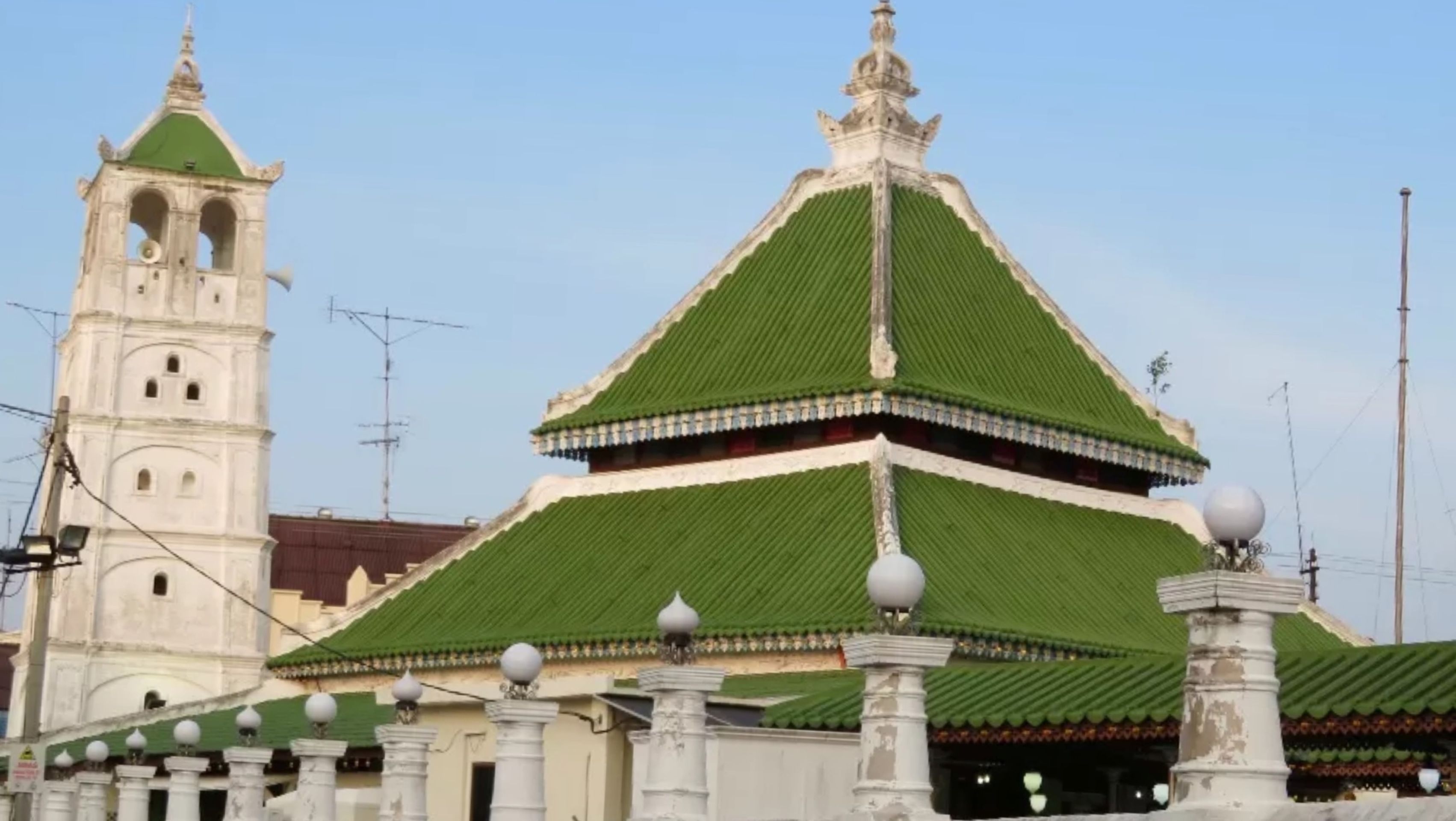
This rule does not apply to Islam. In front of the Kampung Kling Mosque in the old town of Malacca, a woman in a hijab sits in February 2025, labeled as a 'Volunteer' on a small sign. Having traveled in humid Southeast Asia for more than three months, I have abandoned my once formal dress style and am wearing shorts. Because these are cataloged as indecent according to a sign at the entrance, I am not allowed to enter the mosque.
The woman wants to know if I believe in God. I reply evasively that I was raised as a Catholic. I will certainly not engage in a theological discussion. "But you know that Islam is the only true teaching?" This reminds me of my primary school days in Lucerne when Catholic clergy indoctrinated us that only our own denomination is in accordance with God's will.
The volunteer in front of the mosque hands me a brochure: "The Quran – the final revelation for humanity." In it, I read, "because Allah is the only one worthy of worship, false gods and deities must be rejected." The fact that several Muslims in Germany have recently committed acts of terrorism only reinforces the understanding that the claims to absoluteness by religions of all kinds have historically led to war and violence.
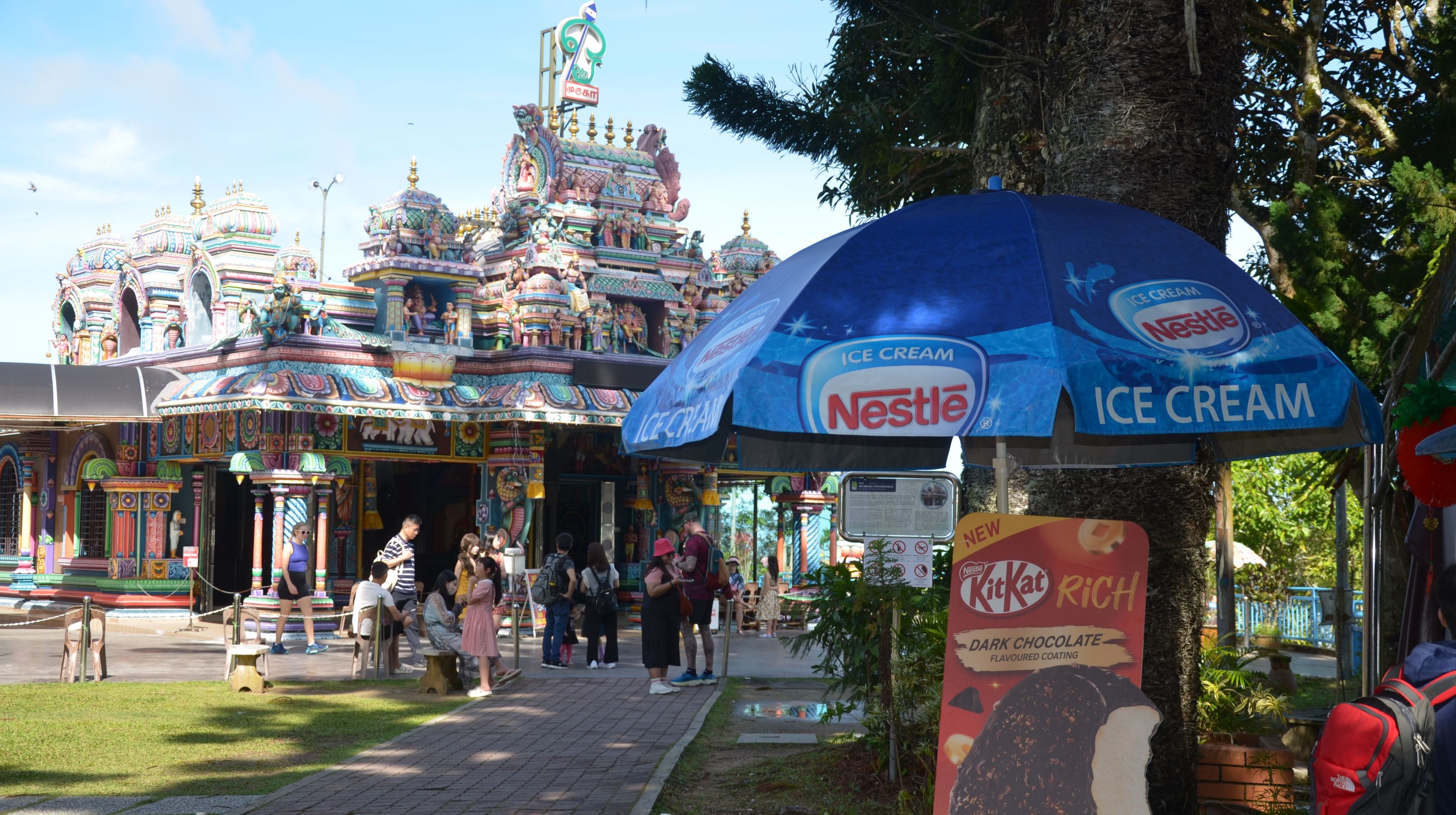
Malaysia was islamized in the 14th and 15th centuries simultaneously with Indonesia under the influence of Arab traders and sailors. Despite the dominance of Islam, religious diversity is notable throughout the country. A variety of places of worship—mosques, churches, Hindu, Buddhist, and Taoist temples—are found in close proximity. For example, when taking the funicular to the highest point of Penang Island, a whimsical Hindu temple and a mosque with golden domes are almost directly next to each other.
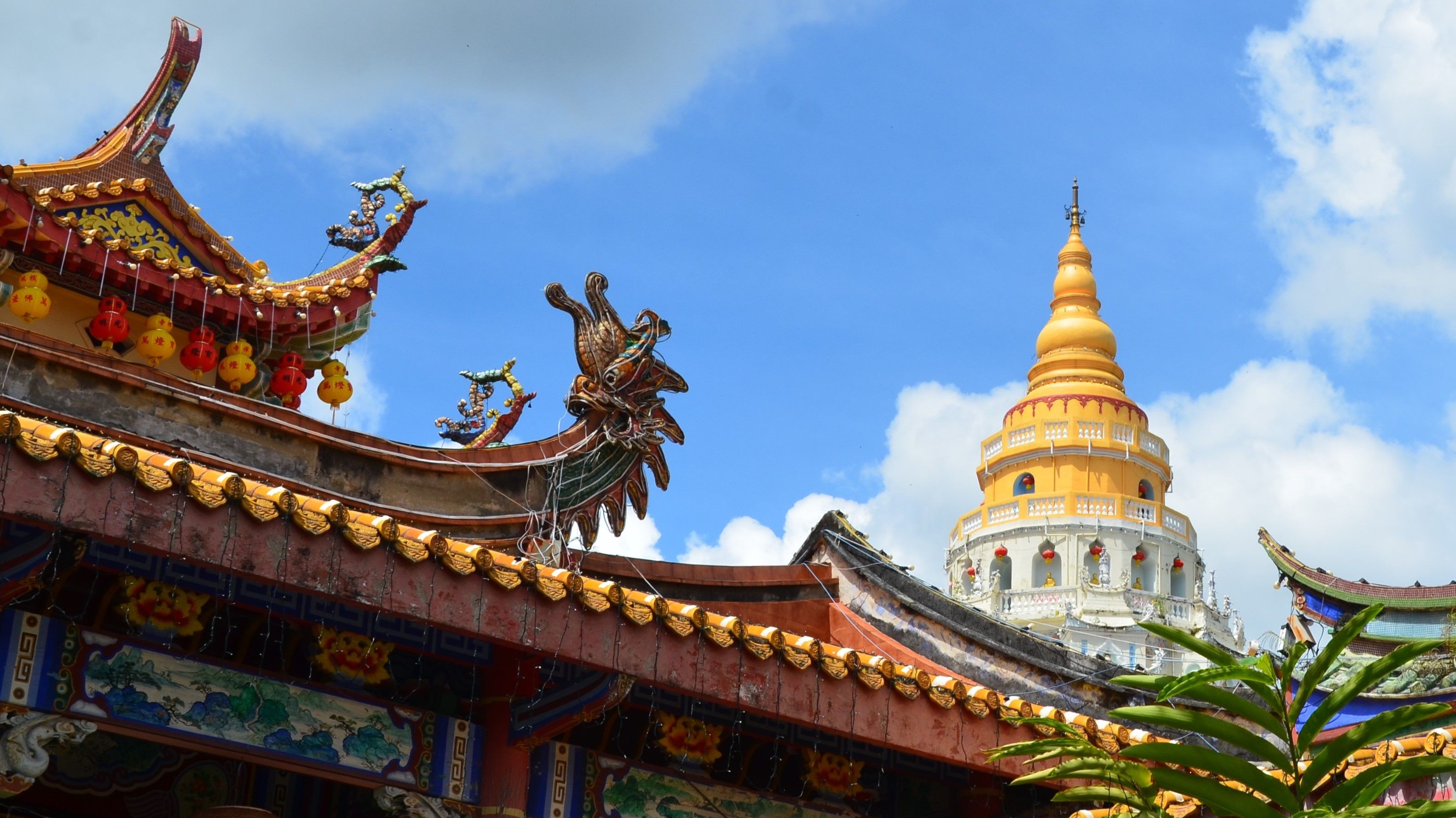
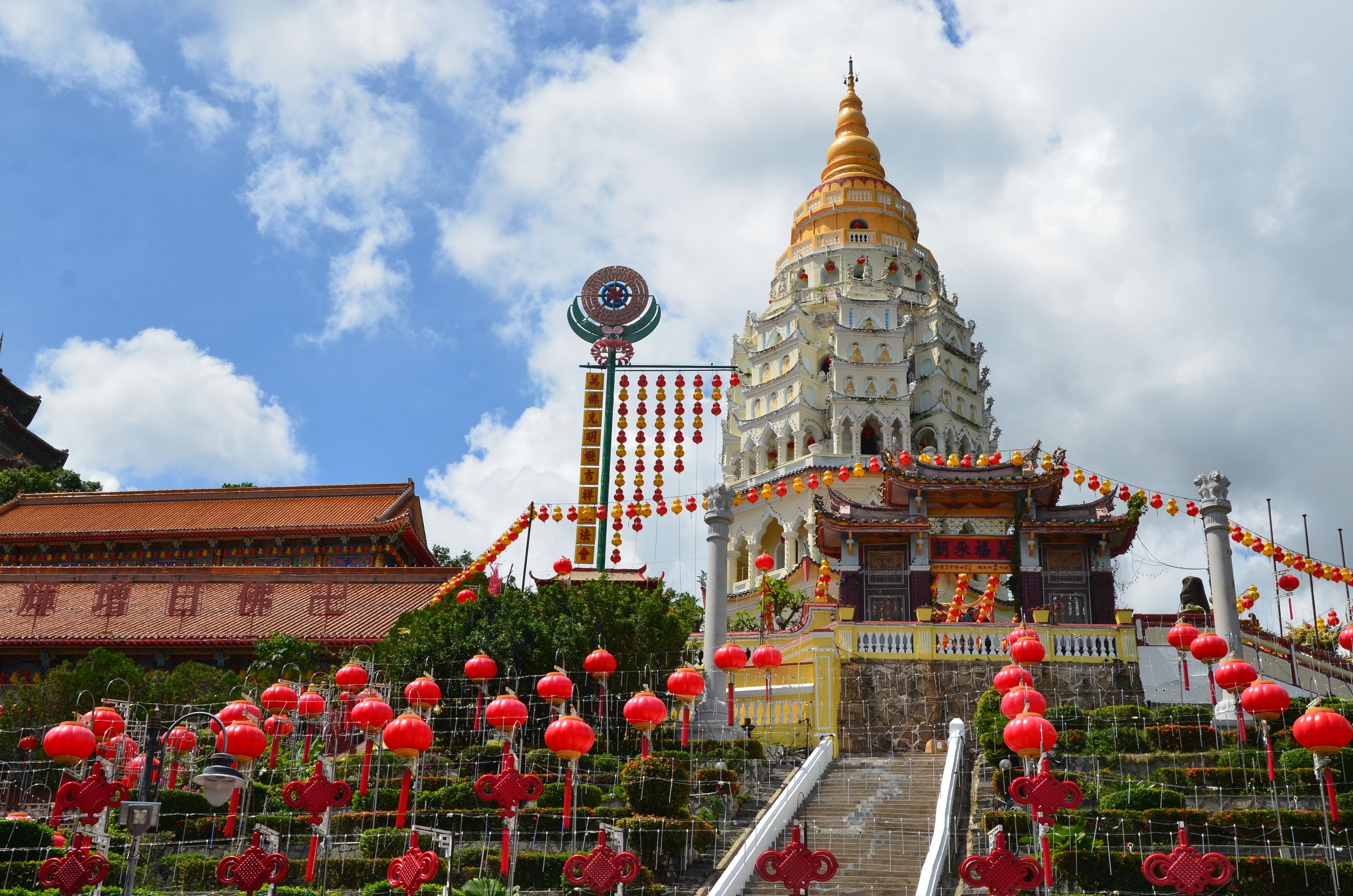
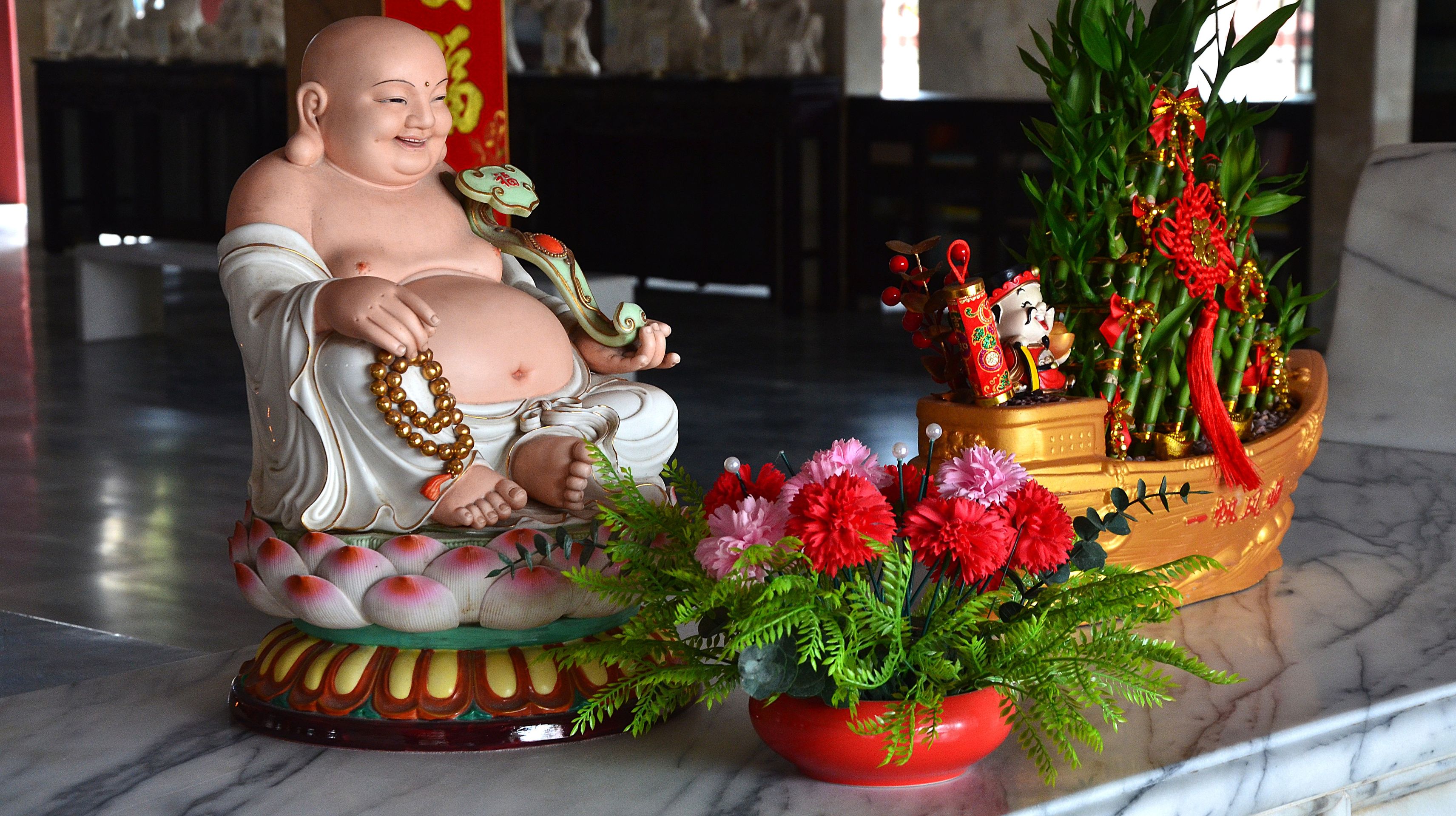
Right near the valley station, I visit the Kek Lok Si Temple, a magnificent complex that simultaneously proves that Eastern religions do not take the claim to sole truth as seriously as Christianity and Islam: the temple is home to hundreds of Buddha statues but also a 30-meter tall bronze statue of Kuan Yin, the goddess of compassion, who is especially revered in Chinese Taoism.
Karma and reincarnation
Before the islamization, the kingdoms of the Malay Peninsula were partly influenced by Buddhism and partly by Hinduism. Both religions are still present: nearly 19 percent of Malaysians are Buddhists, just over six percent are Hindus; Christians make up about one-tenth of the population.
Buddhism and Hinduism both represent the concept of karma and reincarnation: the soul is reborn in a new body after death, depending on the life one has led. Both strive for enlightenment, called Nirvana in Buddhism. The great difference: Buddhists do not believe in deities; Buddha is their revered example. (He was born under the name Siddhartha Gautama in the 6th or 5th century BC in present-day Nepal and primarily lived and taught in northern India.)
Hinduism is approximately a thousand years older. In contrast to Buddhism, it has a complex pantheon. Deepak, an English teacher from southern India’s Kerala whom I spoke to at the Batu Caves in Kuala Lumpur, tries to guide me through the divine thicket.
At the top sit three main gods with their wives: Brahma and Sarasvati, Vishnu and Lakshmi, Shiva and Parvati. Vishnu is often worshipped in the incarnation of Krishna. (In the modern Hare Krishna religion, founded in the 1960s, which notably attracted followers like Beatles' George Harrison and John Lennon and Apple founder Steve Jobs, Krishna is even the supreme deity.)
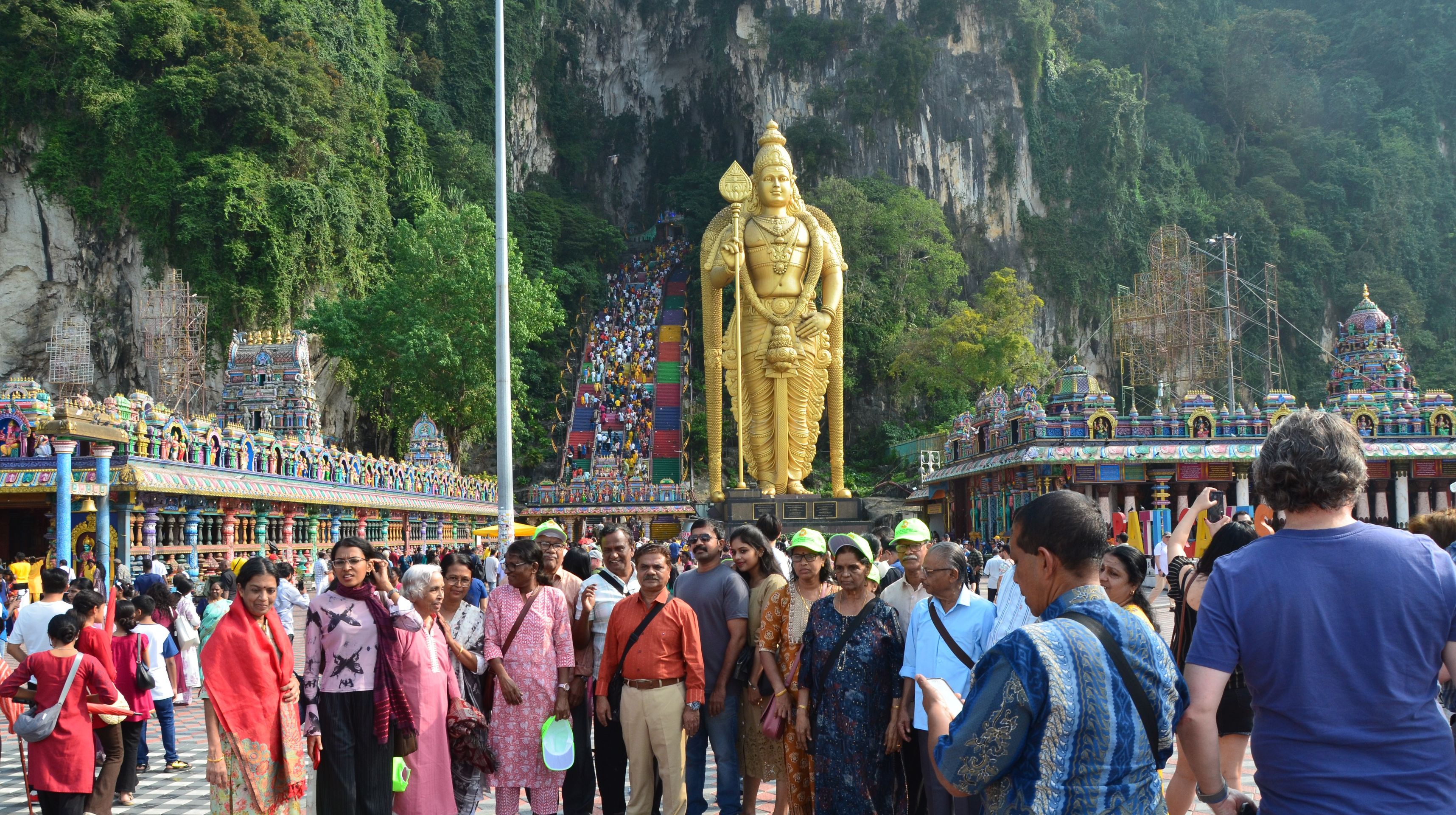
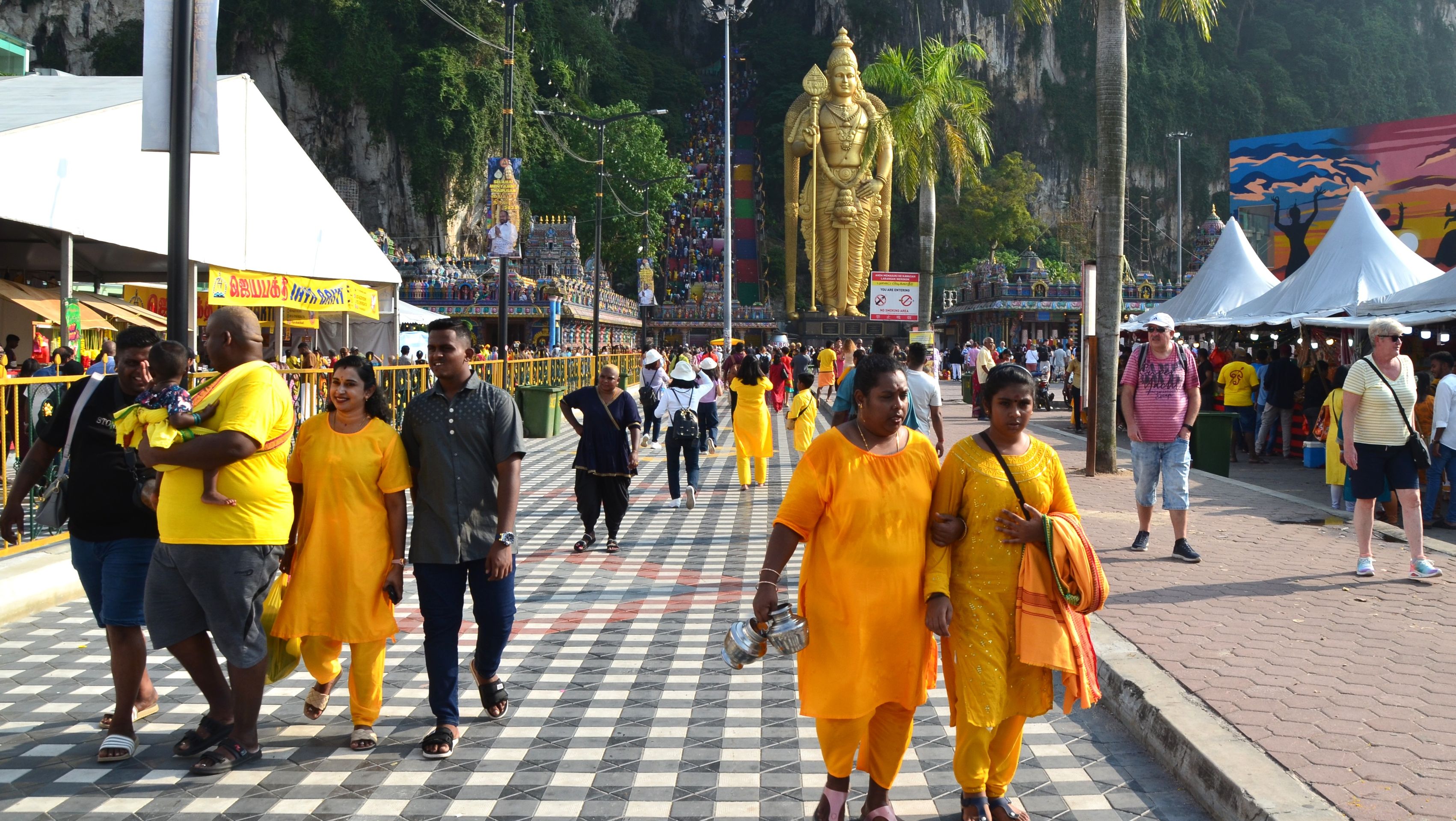
In Hindu temples, shops, and homes, other deities are also present as statues and images, such as Ganesha with the elephant head, Hanuman the monkey king, or Murugan, the god of war. At the wide staircase with 272 steps leading up to the Batu Caves, there stands a 43-meter tall golden statue of Murugan. The caves are a significant pilgrimage site for Hindus. During my visit, Thaipusam, the most important festival for Tamil Hindus, is just coming to an end. A crowd is surging across the square. Food, drinks, and souvenirs are being sold at hundreds of stalls—and umbrellas, because a heavy thunderstorm is currently taking place.
Liberal Islam?
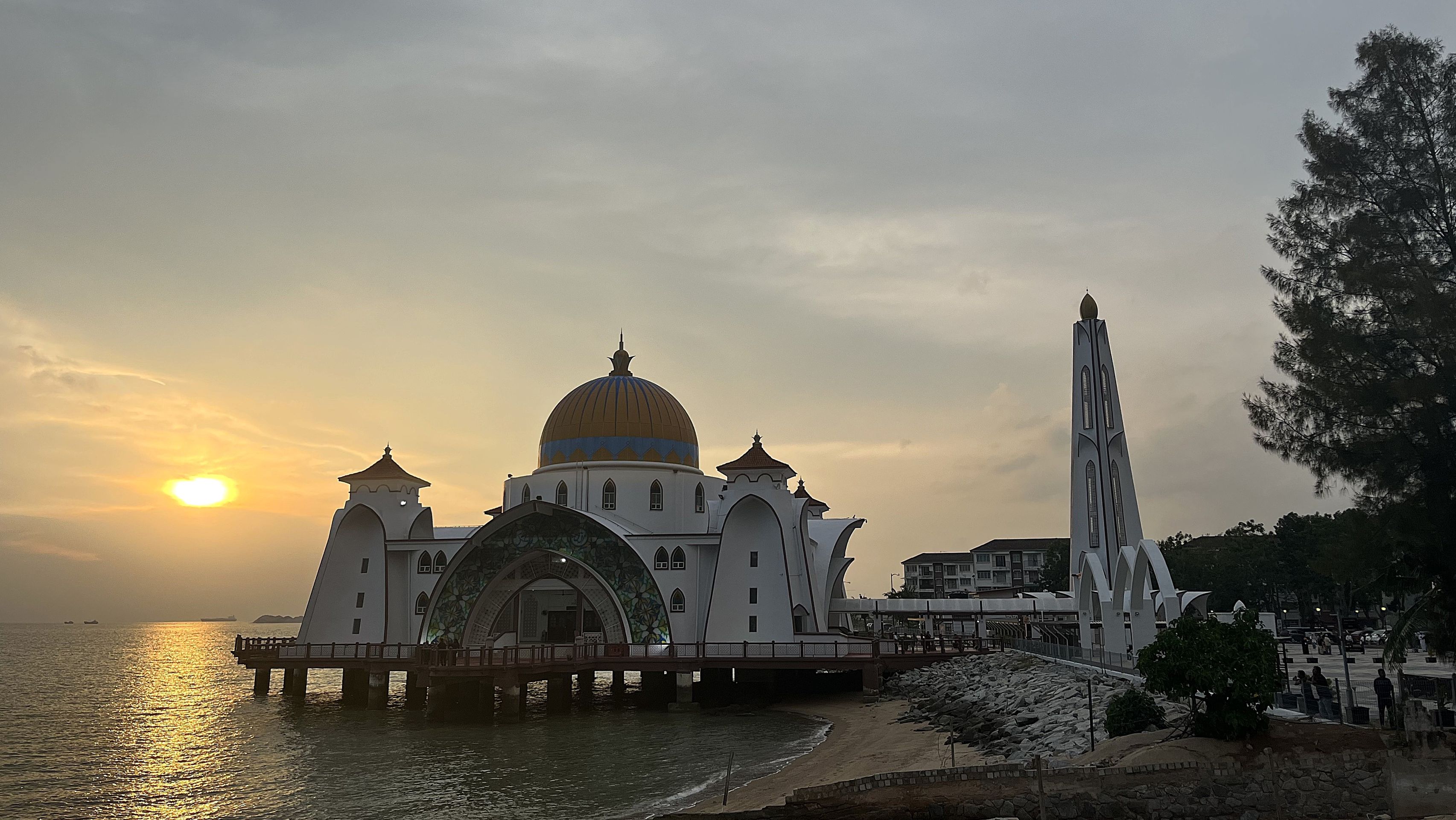
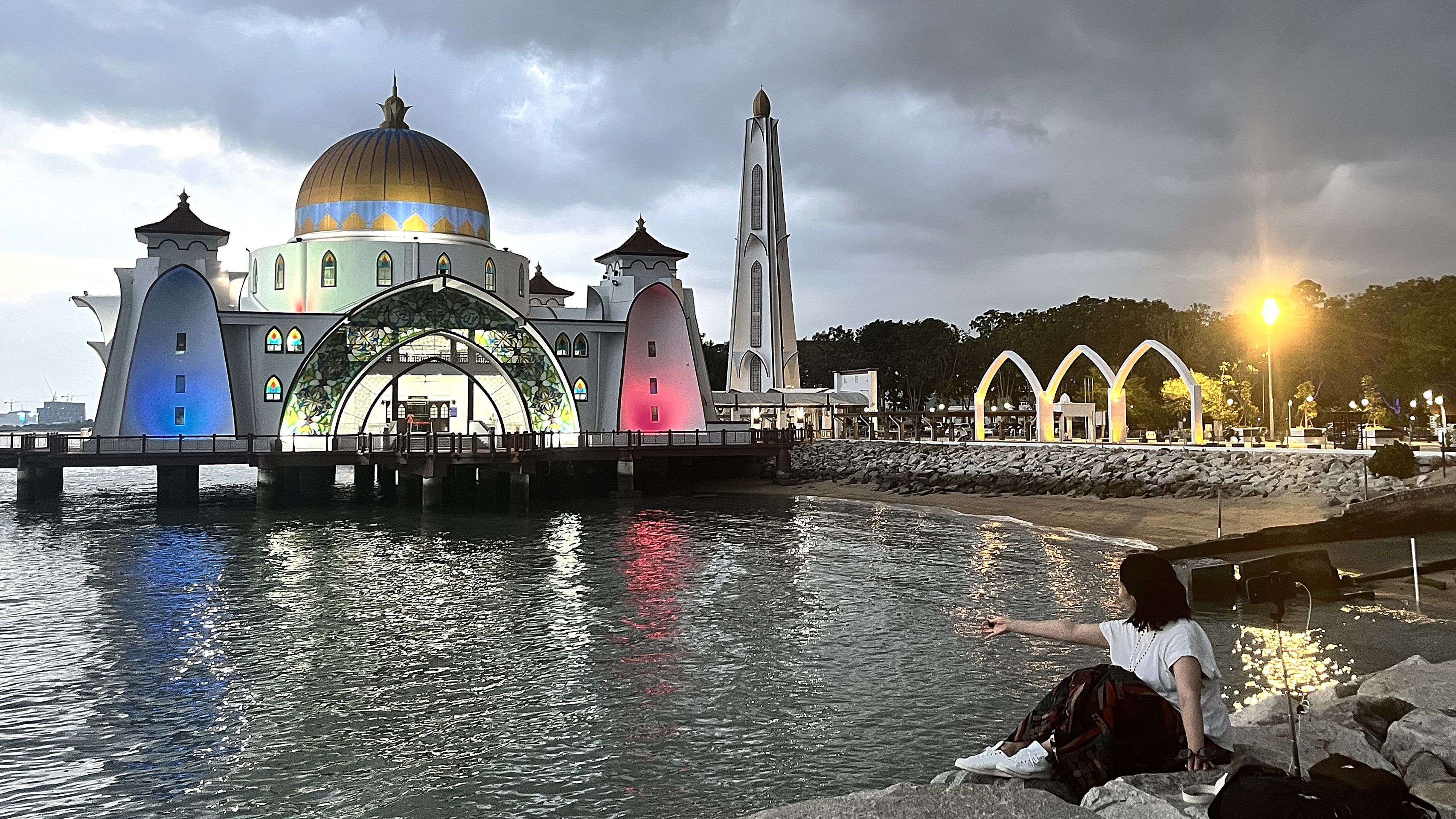
Alongside magnificent Buddha and Hindu temples, mosques are particularly striking. The 'floating mosque' in Malacca, for example—so named because it appears to float on the water during high tide—is illuminated at night in all the colors that the neon tubes can provide.
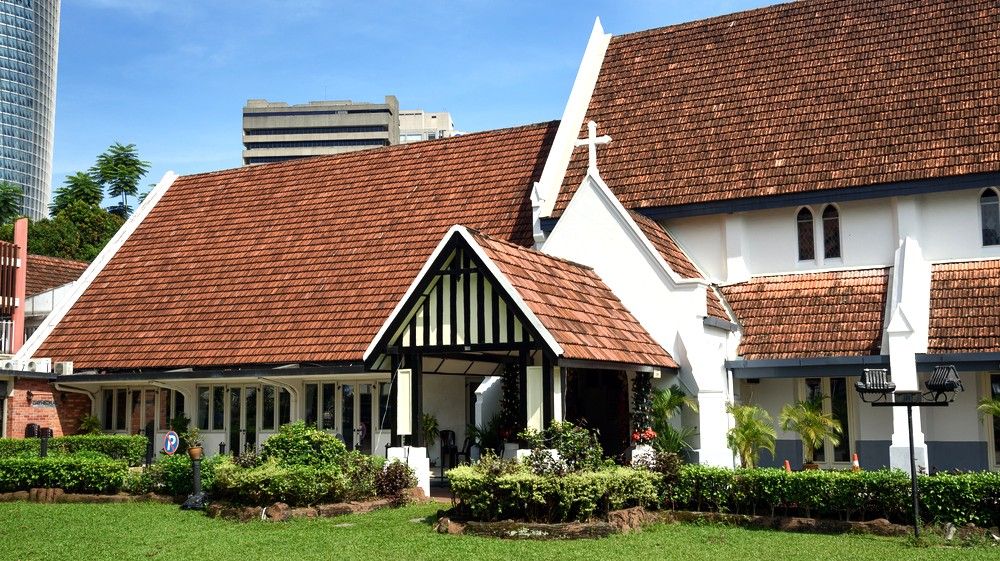
The churches, on the other hand, are notably reserved. The Anglican Cathedral in Kuala Lumpur resembles more an English village church than the seat of the bishop for West Malaysia.
In Europe, one often hears of the supposedly liberal Islam that prevails in Malaysia and neighboring Indonesia. (The latter is the world's largest Muslim country, with over 280 million inhabitants.) However, liberalism is waning; here too, as almost everywhere, conservative Islam is gradually gaining the upper hand. Those watching Youtube films from Kuala Lumpur of the 1960s see hardly any headscarves. Today, they are ubiquitous; even preschool-aged girls are covered up.
In one area, however, the so-called liberalism of Malaysian Islam definitively ends: Mahathir Mohamad, the still widely revered long-term prime minister (from 1981 to 2003 and from 2018 to 2020), now over a hundred years old, is a declared anti-Semite. Israeli citizens cannot enter Malaysia; Jewish tourists better keep their religious affiliation to themselves if they want to avoid trouble. And after every, really every news broadcast on the radio, the same phrase is preached about the elimination of the state of Israel: "Palestine will be free, from the river to the sea."