

Angeles City – a provincial den of vice
I belong to that gradually fading generation that still remembers the Vietnam War, the traumatic images from the jungle, the shameless lies of Presidents Kennedy, Nixon, and...
Published: 29.05.2026
After the experiences in the Philippine cities of Davao, Cebu, and Angeles, my brain, overloaded with impressions, needed a reset. Thus, on June 6, 2025, I flew with Cebu Pacific from Clark International Airport in Angeles City to Bangkok and took an overland bus from there. My retreat for such situations is called Hua Hin. Here, two hundred kilometers south of the hectic and exciting metropolis, lies a place that offers just the right mix of landscape and beach, culture, culinary delights, and entertainment.
Golfers, to whom I do not belong, can find five golf courses in the area, some of which, as my friend Christoph from Bern excitedly reports, are certainly top-notch. They carry extensive and heavy equipment around the planet. The first golf course, the Royal Hua Hin Golf Course, was opened in 1924, and the legendary “Railway Hotel” (now “Centara Grand Beach Resort & Villas”) was built two years before that. Thus, the once small fishing village transformed into a cosmopolitan seaside resort.
Royal Residences
However, Hua Hin has not become a place like Pattaya, Patong, or Koh Samui, a magnet for the masses, nor a stronghold of quick thrills, fleeting pleasures, and vain beachfront promenades. It has retained a certain serenity, a remnant of grace and dignity.
This may be due to the fact that Thai kings chose Hua Hin at the beginning of the 20th century as the location for their summer residences. Already King Chulalongkorn, Rama V., who died in 1910, owned a beach house in Hua Hin on precisely the plot of land where the "Hilton Hua Hin Resort and Spa" now stands. However, the actual palace buildings came only in the 1920s.
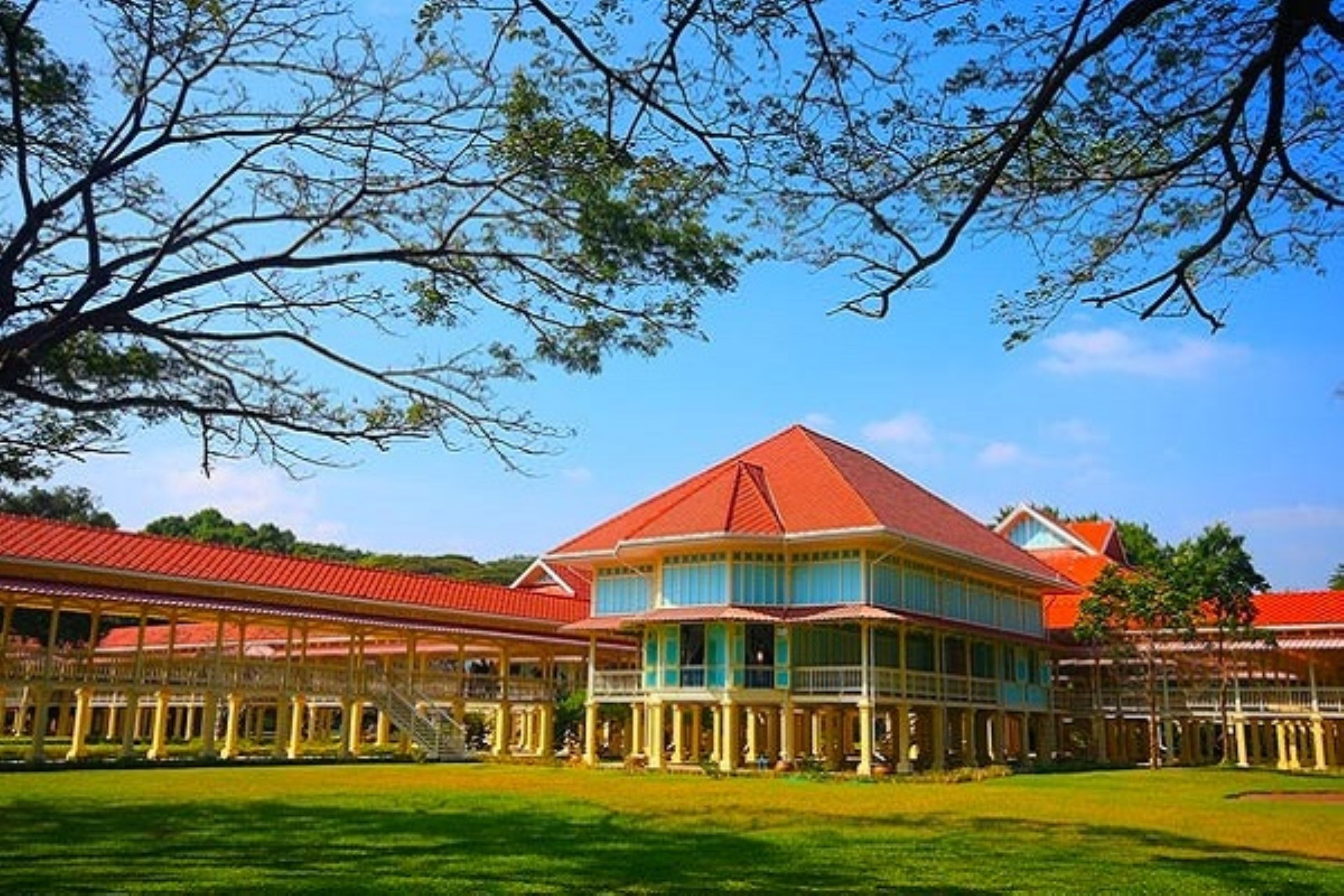
King Vajiravudh, Rama VI., commissioned the construction of the Maruekatayawan Palace in 1923, which he designed himself together with an Italian architect. About twenty kilometers north of Hua Hin's city center, Rama VI. found his retreat. The monarch, trained in Sandhurst and Oxford, had survived a coup attempt by young military officers who wanted to depose him and abolish the monarchy.
The king could only use his wooden palace for a short time: he spent the summer of 1924 in the new palace, known for its three two-story wooden pavilions with sea views, which is also called the "Palace of Love and Hope." He returned in 1925, but by November of that same year, Rama VI. died at just 44 years old from a bowel or appendicitis with blood poisoning.
Vajiravudh's brother and successor, King Prajadhipok, Rama VII., shortly thereafter commissioned a new palace, this time in the elegant style of a Spanish villa with Thai elements. This palace, Klai Kangwon (“Far from Worries”), located directly by the sea and embedded in a spacious garden complex, cannot be visited, unlike the slightly older "Wooden Palace" of Rama VI., which is open to the public.
From Hua Hin to Bavaria
Because of the royal residences, Hua Hin is still considered the summer retreat of the royal family. This is despite the fact that the current monarch, Maha Vajiralongkorn or Rama X, born in 1952, favors Bavaria. He owns the Stolber Villa in Tutzing at Lake Starnberg; however, his main residence is the "Grand Hotel Sonnenbichl" in Garmisch-Partenkirchen, from where he conducts much of his governmental and other business. The king occupies the entire house together with his fourth wife, Queen Suthida, former commander of his royal guard, his court, and his around 30 luxury poodles.
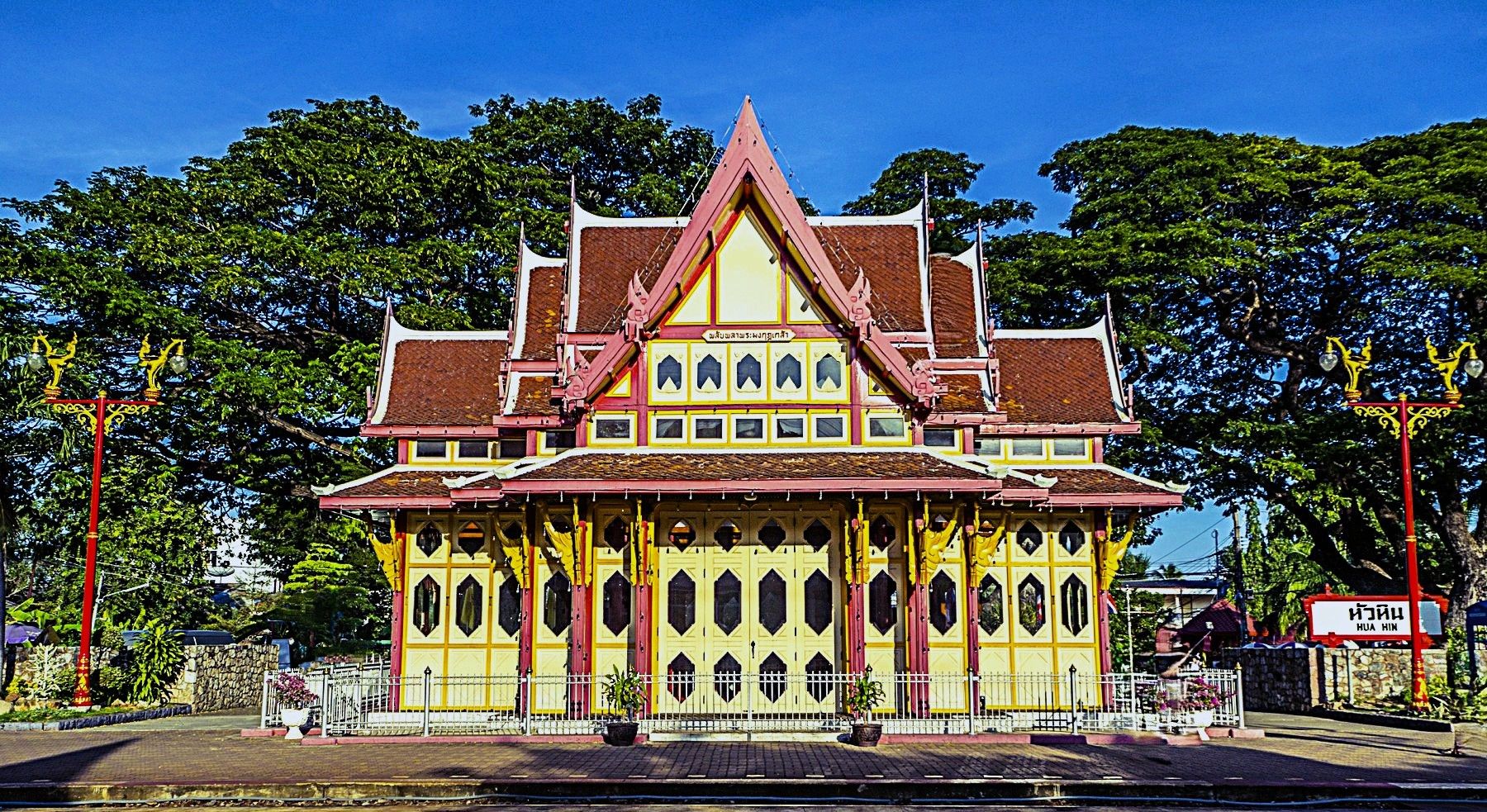
A train station was built for the royal family in Hua Hin, which regularly appears on lists of the world's most beautiful train stations. However, it is no longer in use because the railway line was relocated to a higher level, and Hua Hin received a modern, functional station.
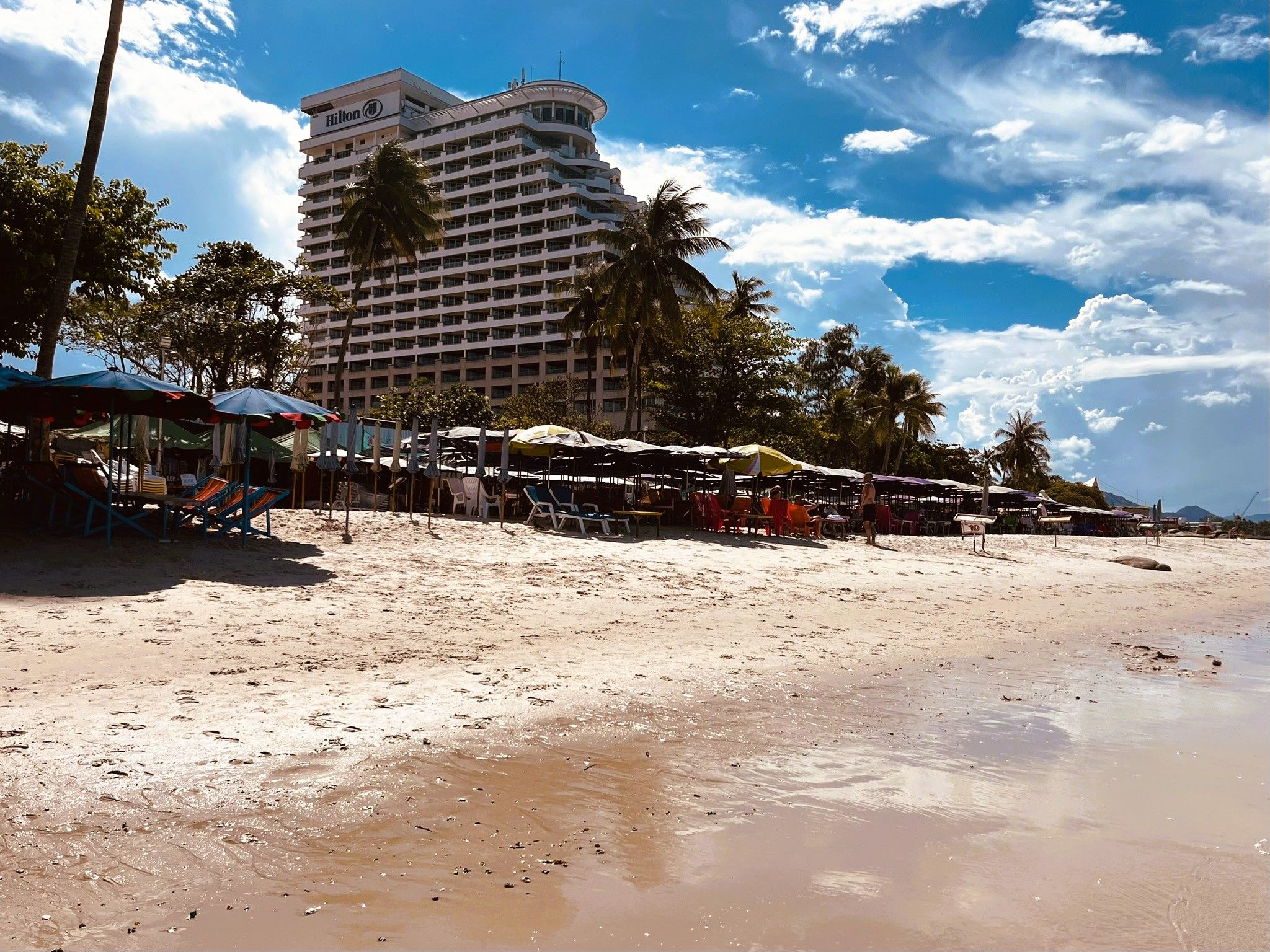
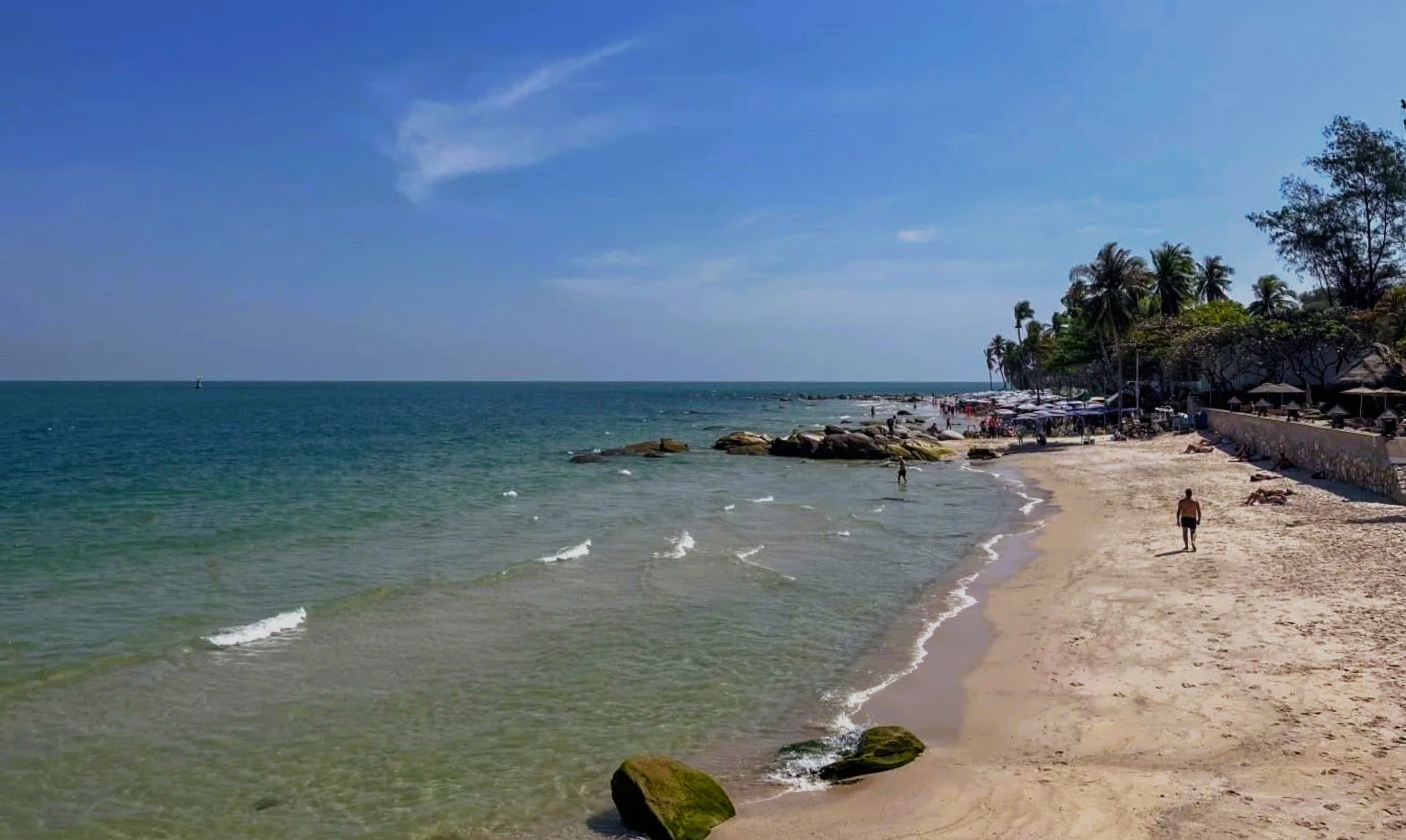
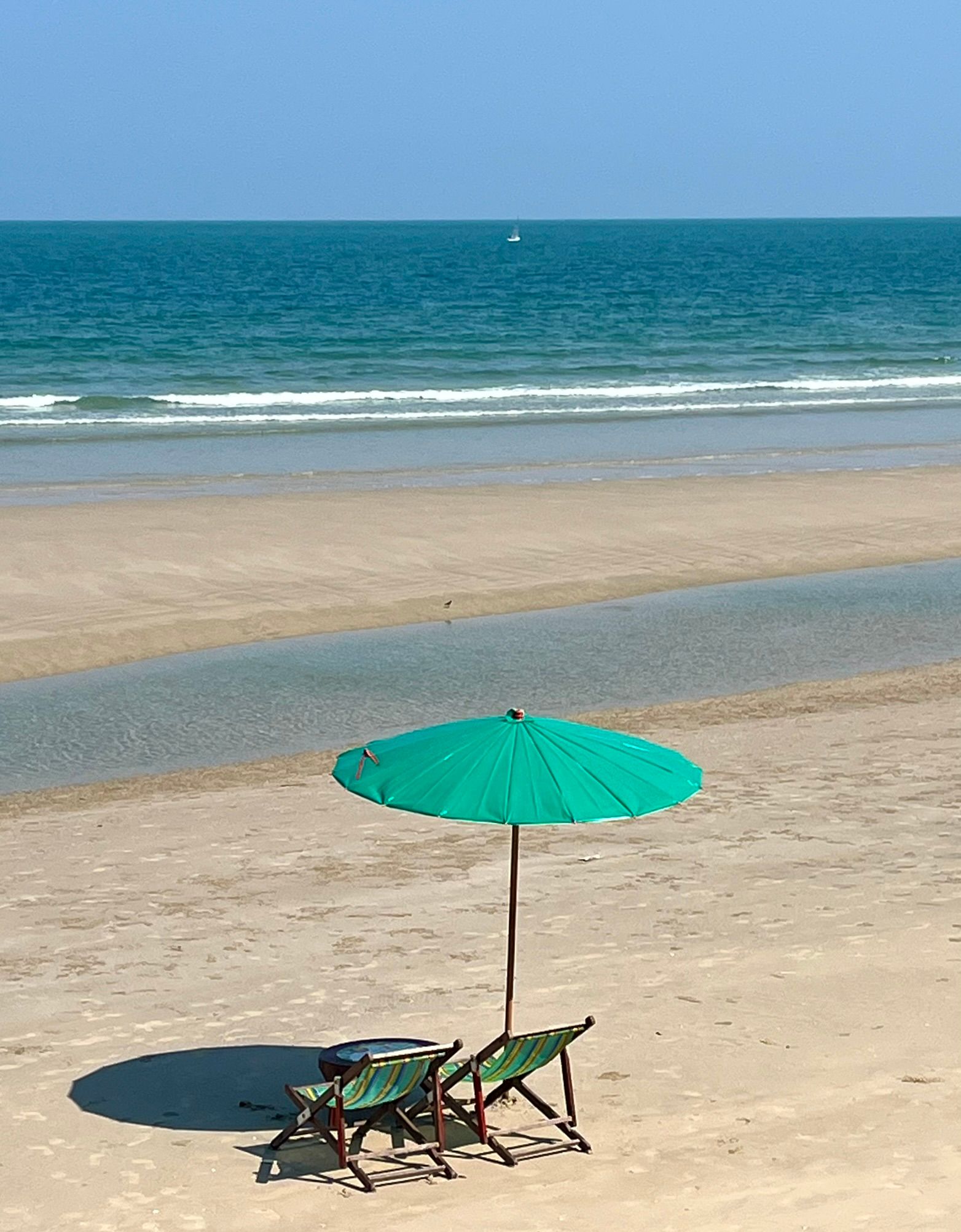
When one enters the main beach of Hua Hin, there is no longer a hint of this royal heritage. The sand is light and stretches for kilometers along the coast. At certain points, it is interrupted by rounded boulders. The mentioned "Centara Grand" discreetly crouches behind a wall and trees. The "Hilton," built in 1993, however, dominates the beach with its 18 stories, visible from afar.
Thai Food and Horse Apples
In the morning, the first joggers and swimmers arrive. Later, Thai families and tourists occupy the rather worn-looking chairs and beach loungers under sunshades, which are nestled against the beach wall in front of the "Hilton." Here, one can order Thai food and drinks in about 20 sections, each run by a family. It smells of fried garlic, grilled meat, and fried rice. As the tide rises, the guests at the front dip their feet in the water; the beach then almost completely disappears.
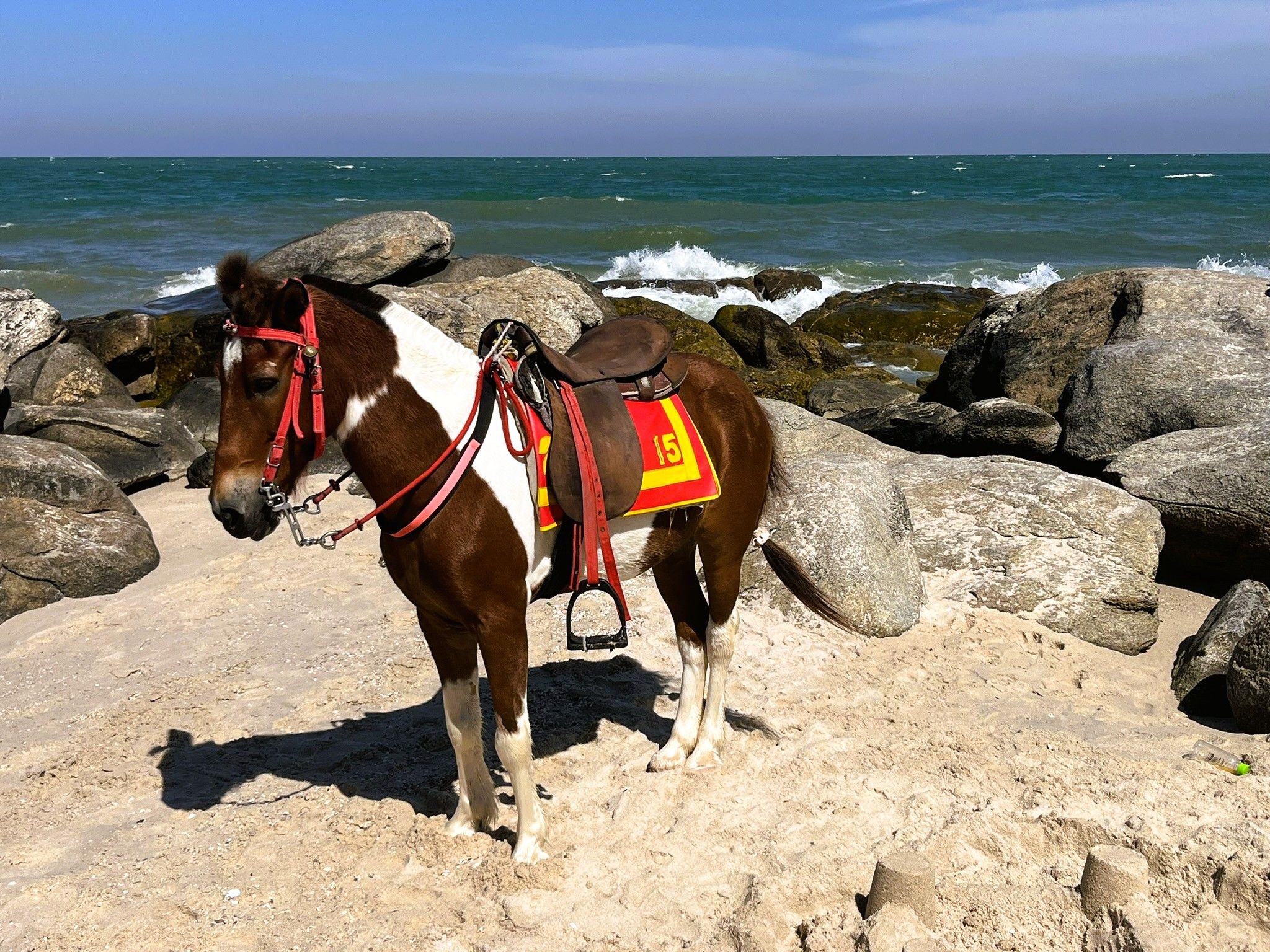
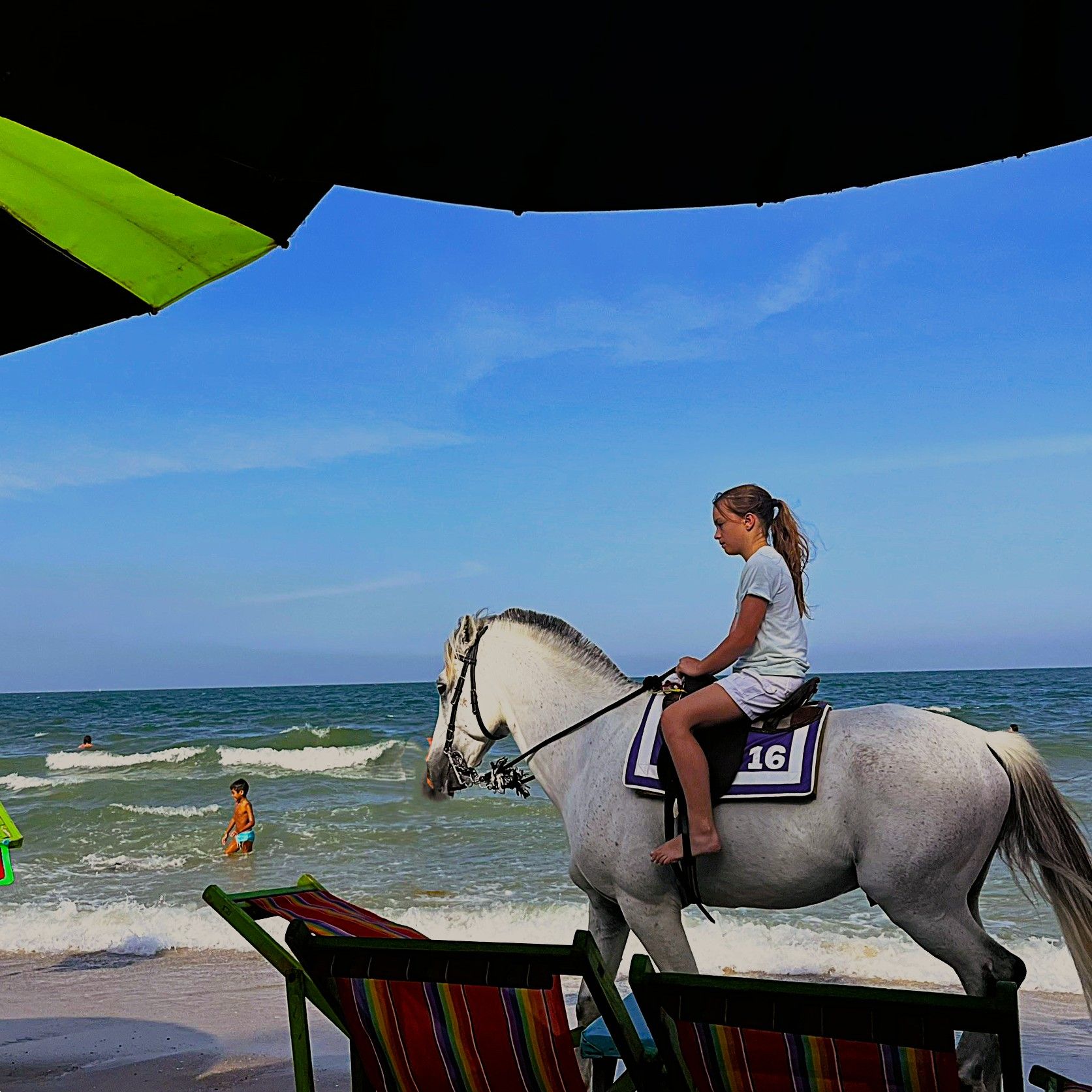
Those strolling here must also dodge horses and ponies led by their handlers trotting along the beach. Especially children ride out at a slow pace; parents enthusiastically take photographs; sometimes a handler holds a bag under the rear of the animal to catch any horse droppings before they hit the sand.
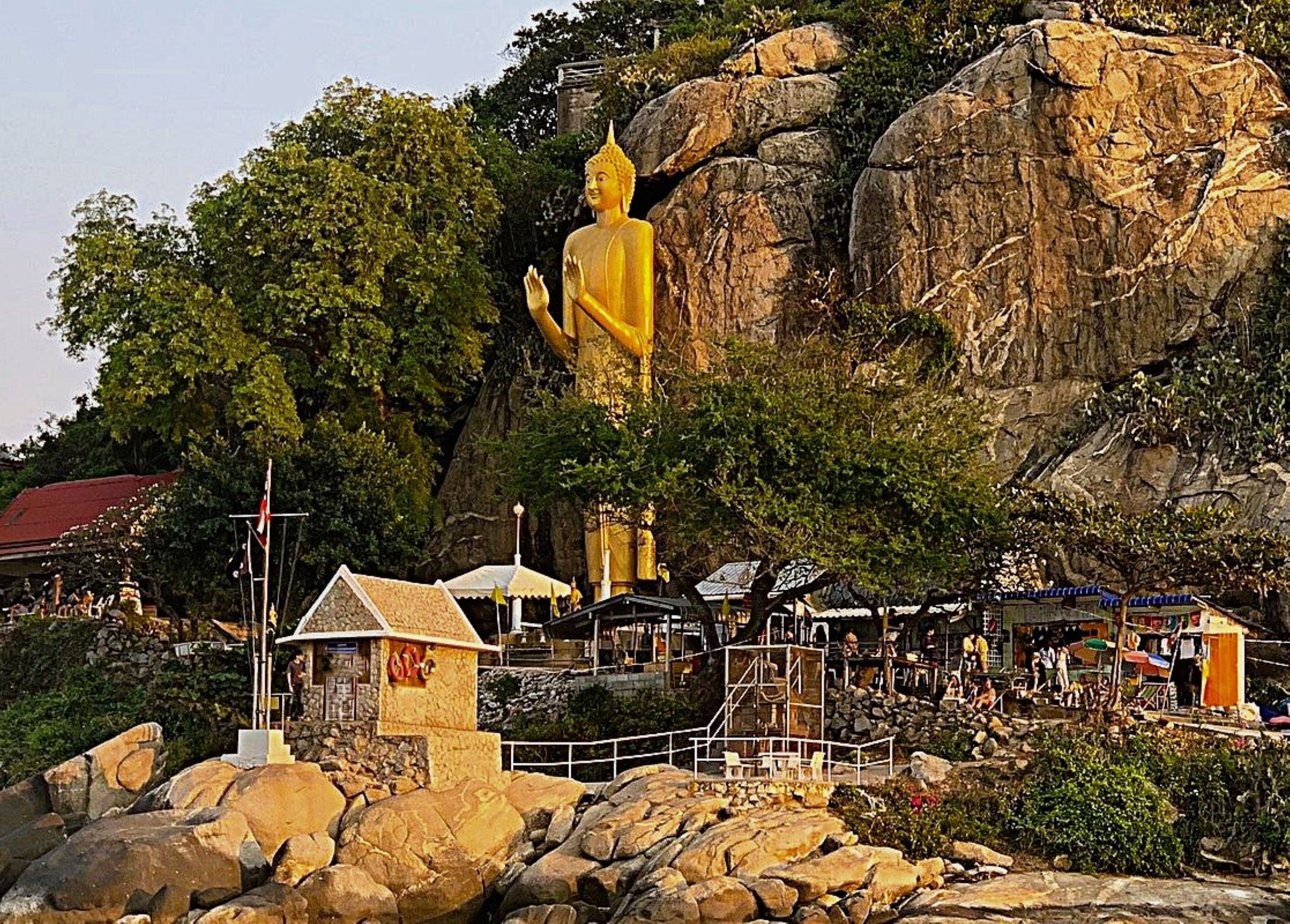
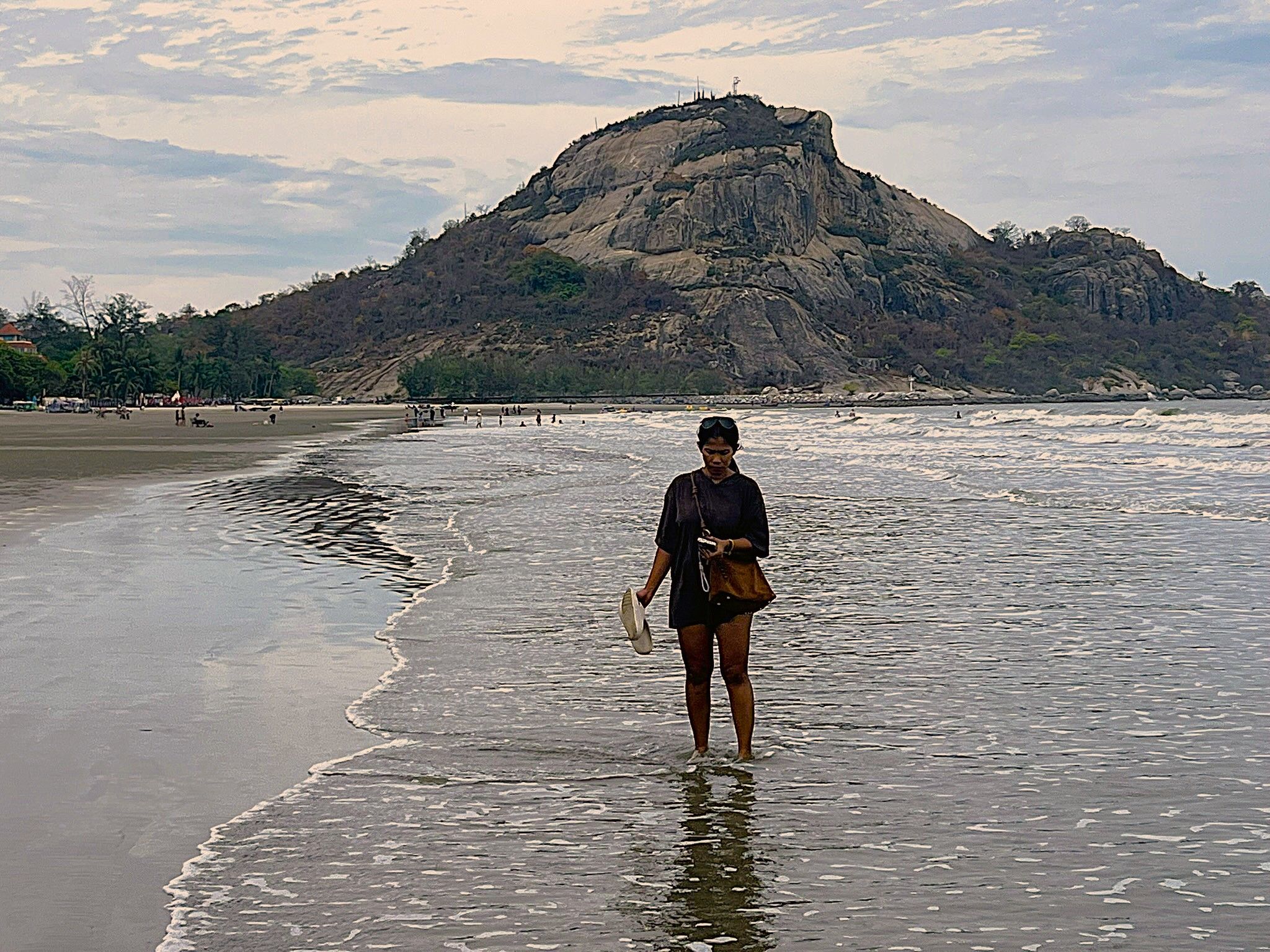
Further south, the beaches become wider and less populated. The Nuea Khao Takiab beach, for example, is dominated by a massive rocky hill. A steep path leads up to the temple, which is inhabited by hundreds of macaques. The monkeys are agile and mischievous, eyeing food and sunglasses. At the top stands a huge, far-visible Buddha statue that glitters golden in the sun. The view sweeps over the sea of houses in Hua Hin and the hotel castles along the beaches.
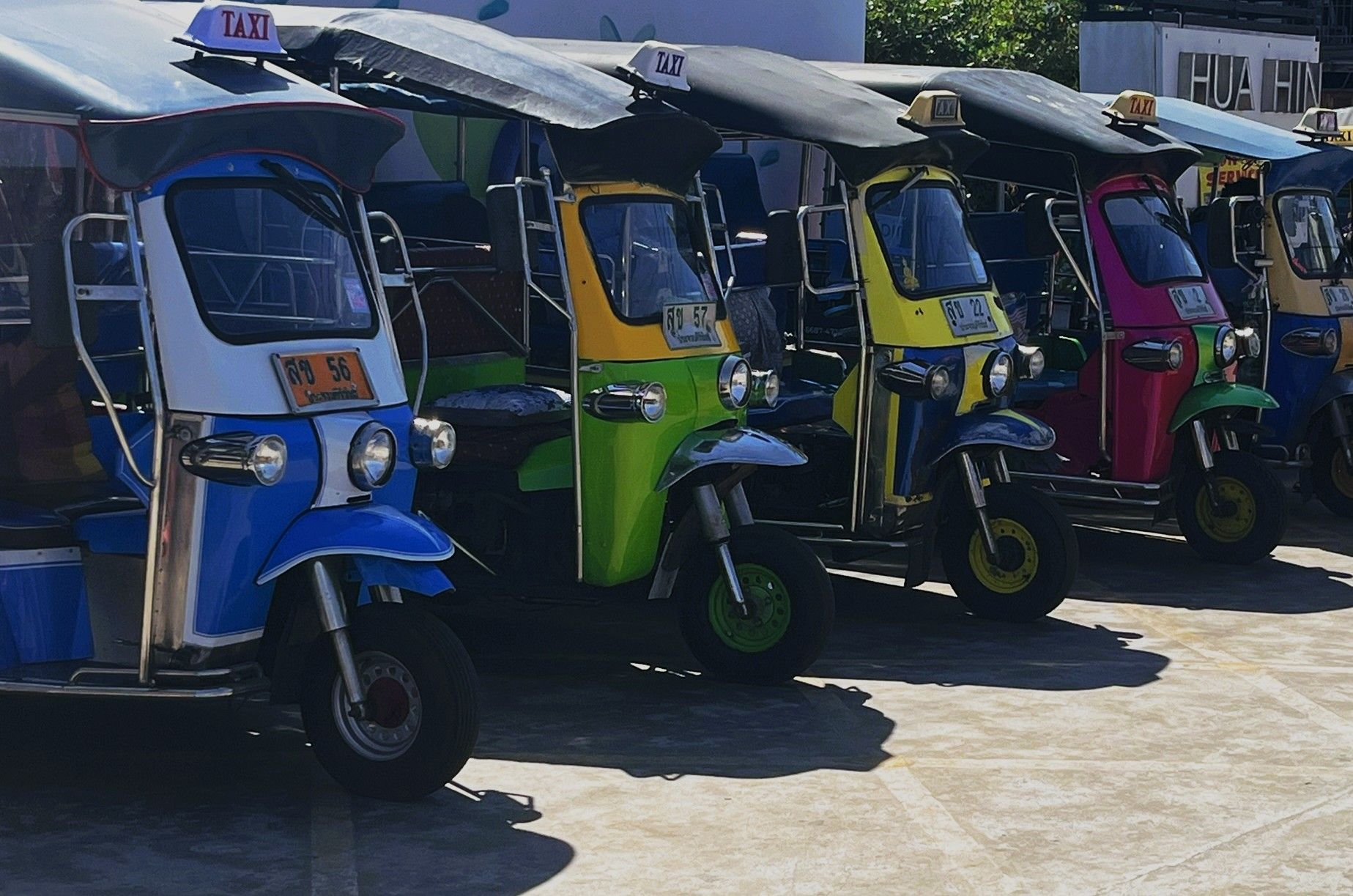
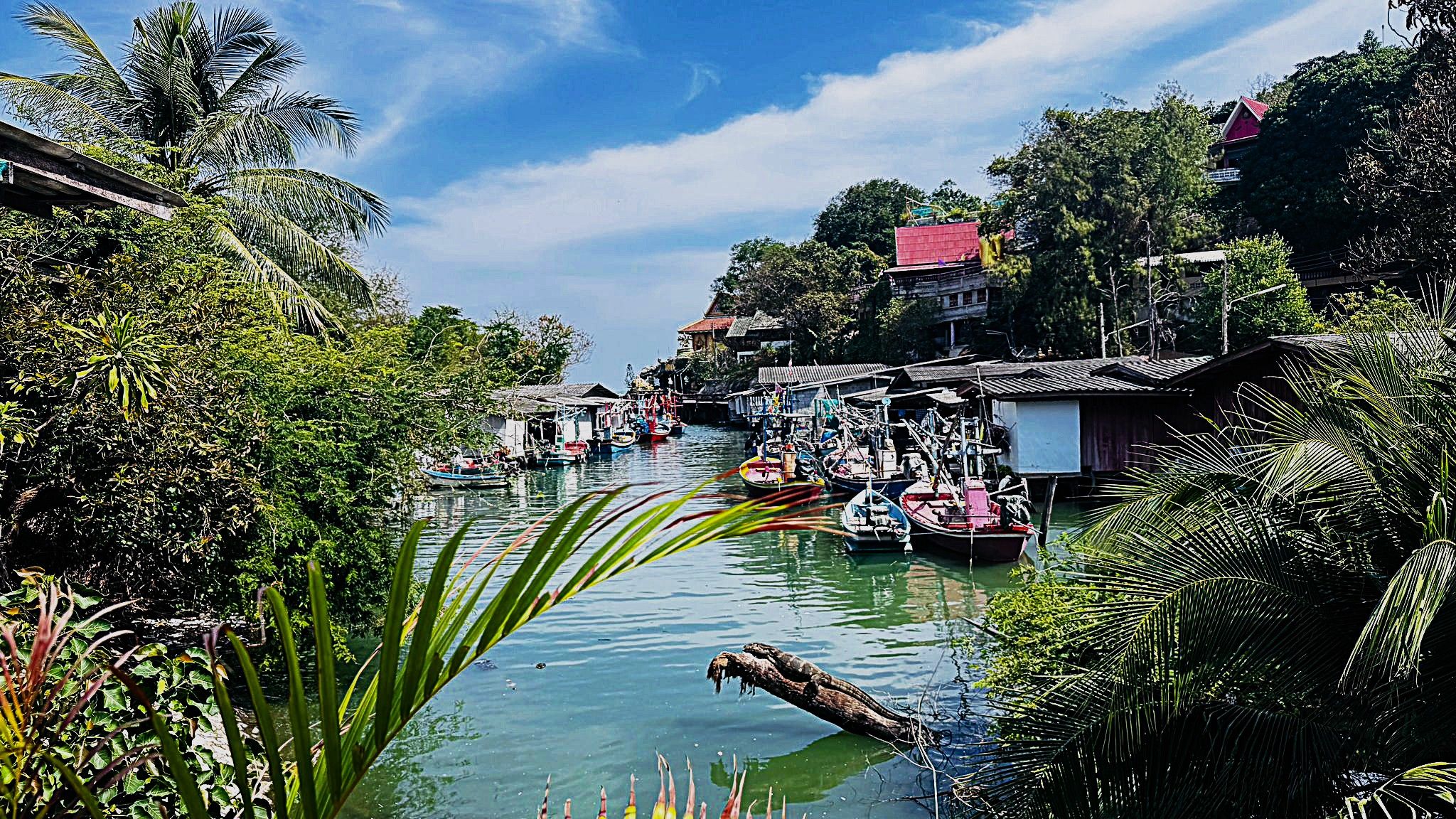
After a twenty-minute tuk-tuk ride from Hua Hin, one reaches, south of the rocky hill with the Buddha statue, an almost ten-kilometer-long, very wide beach. This section is also called Khao Takia; it seamlessly transitions into Khao Tao beach. This beach is bordered by a fishing village of the same name, located by a lagoon. In the water, the green and red-painted boats drift, used to catch squid. Their wooden outriggers are equipped with light bulbs. At night, they can be seen from the beach as sparkling green dots on the horizon; they attract the catch.
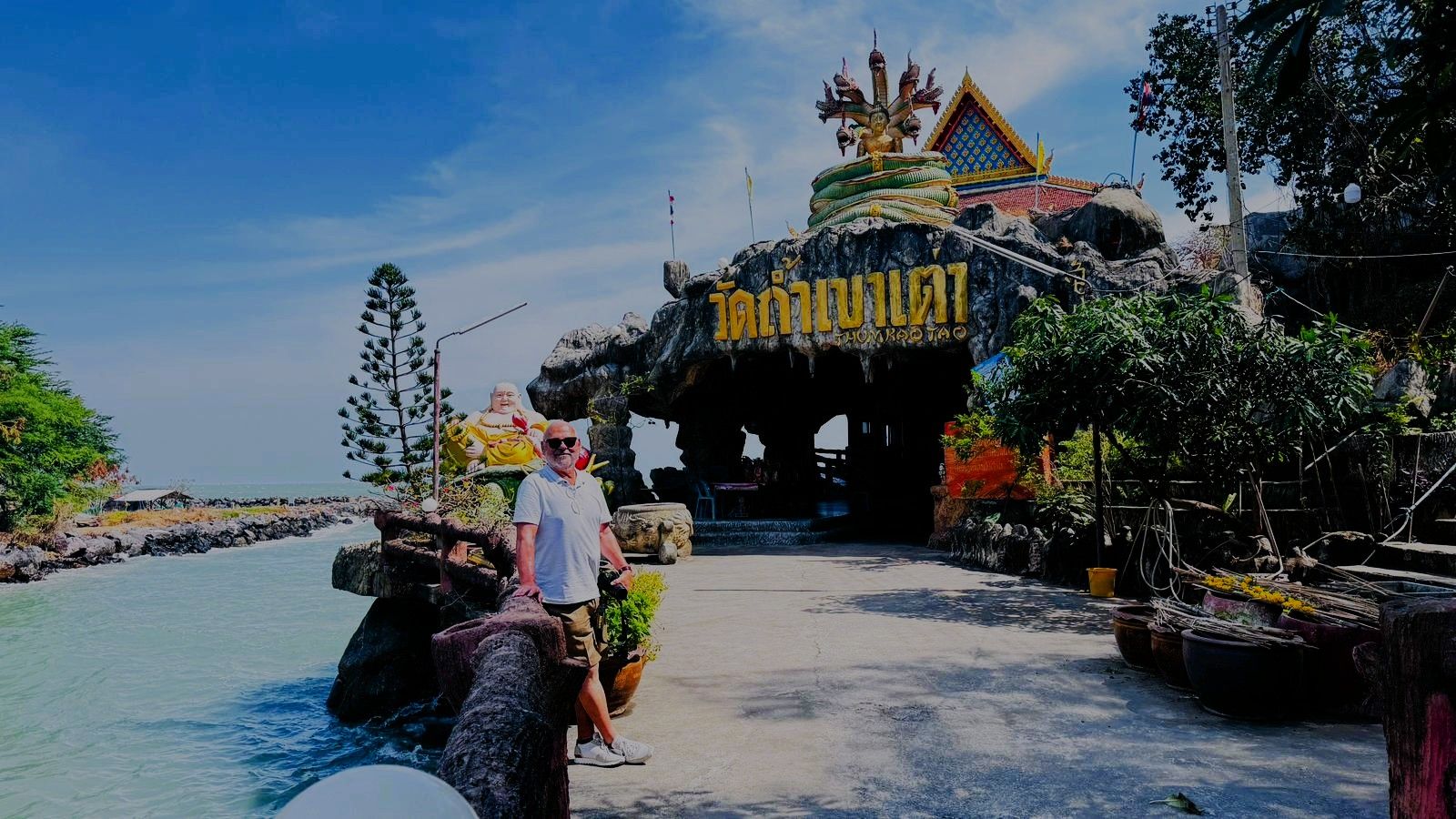
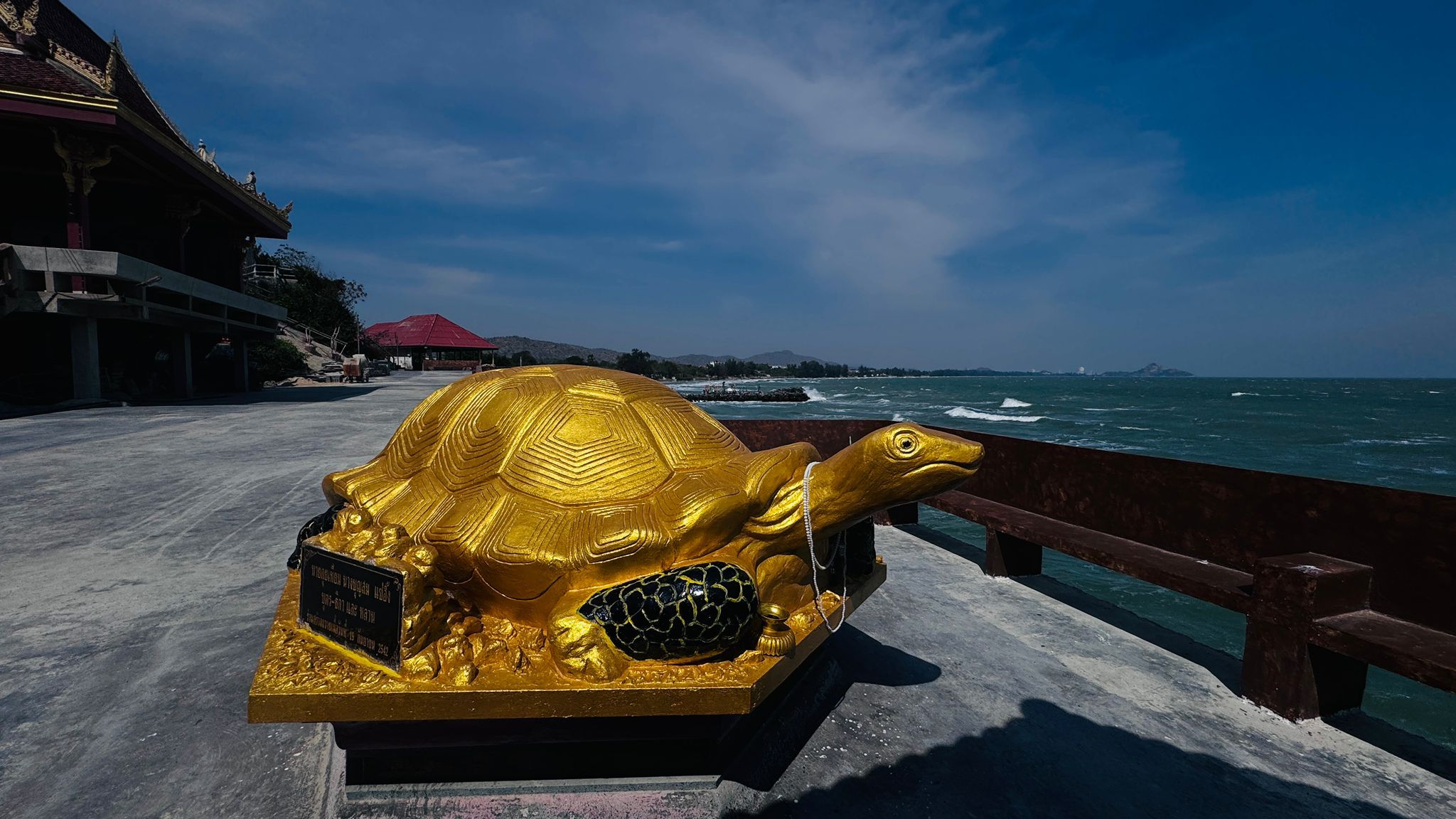
Above the sea, at the foot of another hill, a sprawling temple complex clings to the wooded slope, called Wat Tham Khao Tao. The name "Khao Tao" means "turtle hill" and refers to the turtles that once inhabited this region. Around the temple, we discover artistic depictions of these fascinating animals.
Anyone who wants to read more about the temples in and around Hua Hin: I have extensively written about them in my blog "Bars and Temples in Hua Hin," which refers to January 2025.