

Hell on Earth
The 'Hanoi Hilton' was a torture prison of the French from the end of the 19th century, where prisoners were held under horrific conditions. Later, it was also used by the...
Published: 27.04.2026
After days in Hanoi, a breather is due. Normally, one would head to Halong Bay in the Gulf of Tonkin now. It is touted in travel brochures as an 'awe-inspiring natural wonder', consisting of more than 2000 limestone islands and rocks that rise steeply from the water, and has been declared a UNESCO World Heritage Site.
However, the bay is also a magnet for mass tourism. I will consciously expose myself to this – at Christmas in the temple complex of Angkor Wat in Cambodia. But at the moment, I have no desire for crowds. Rose, the tour organizer at Hotel Du Palace in Hanoi, has advice: 'Go to Pu Luong! You'll find peace there,' she promises. Pu Luong is a nature reserve and is largely forested.
The minibus takes about three hours for the roughly 150 kilometers southwest. Eventually, it stops at the edge of the village of Don in front of the Gateway Inn, which captivates me immediately: a large wooden house like an African safari lodge with a terrace overlooking the misty valley.
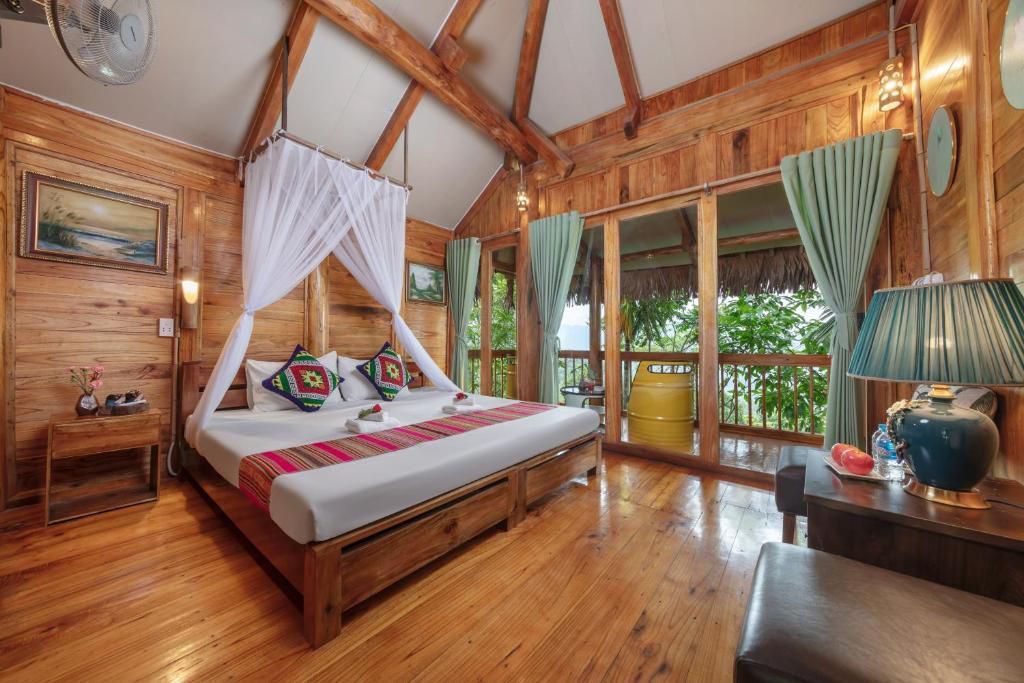
My room – priced at 20 US dollars per night; in Vietnam, one sometimes also calculates in the currency of the former enemy – is spacious; above the bed, mosquito nets hang. What I don't yet know: The house is built so lightly that one can hear every noise, the crying of a baby, a marital dispute, the clattering of pots in the kitchen, and the buses, trucks, and motorcycles that joyfully honk as they pass by.
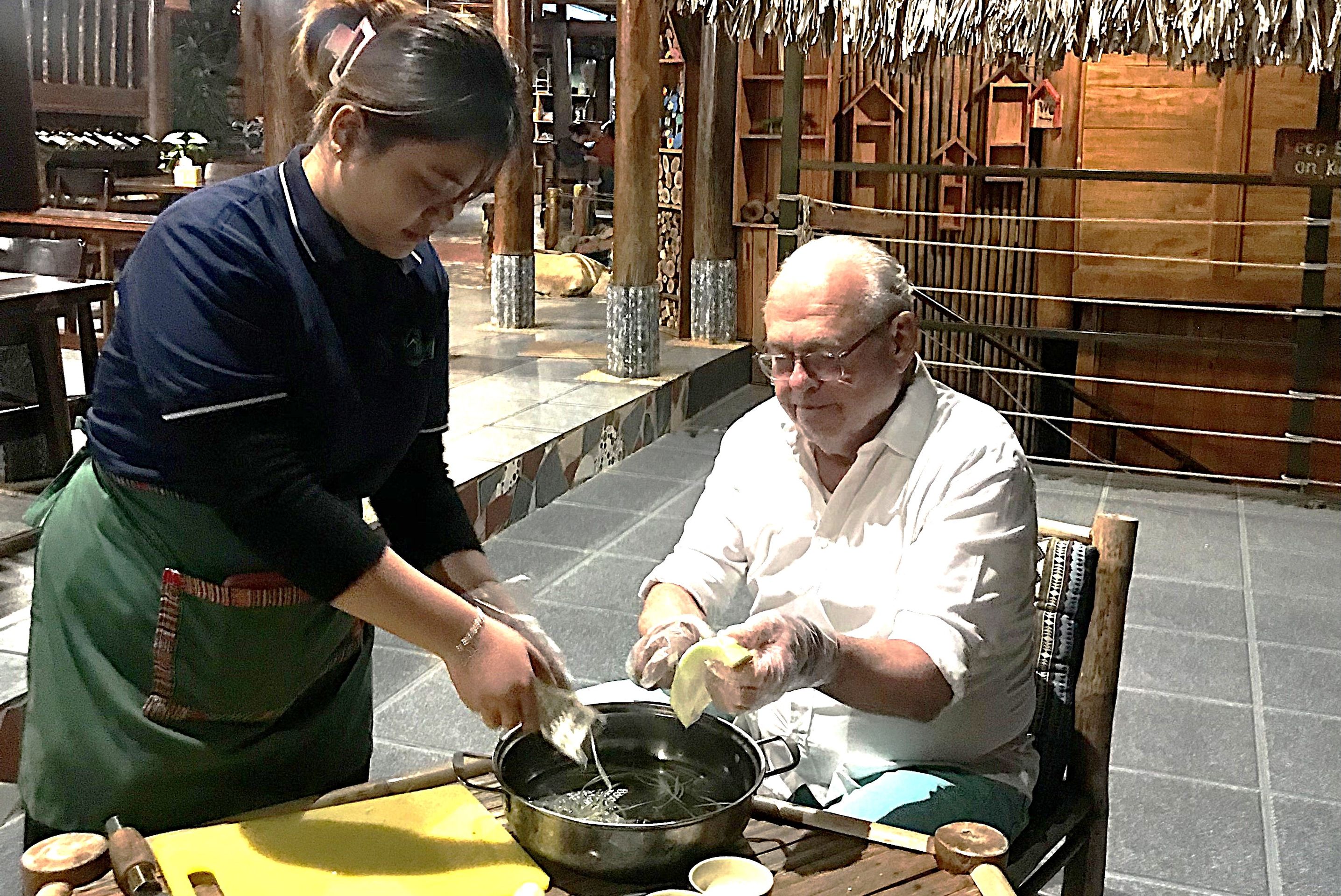
In the evening, I receive a crash course in making papaya salad and afterwards enjoy a lavish meal with pork, beef, vegetables, noodles, rice, garlic bread, and watermelon.
Eels, Frogs, and Ducks
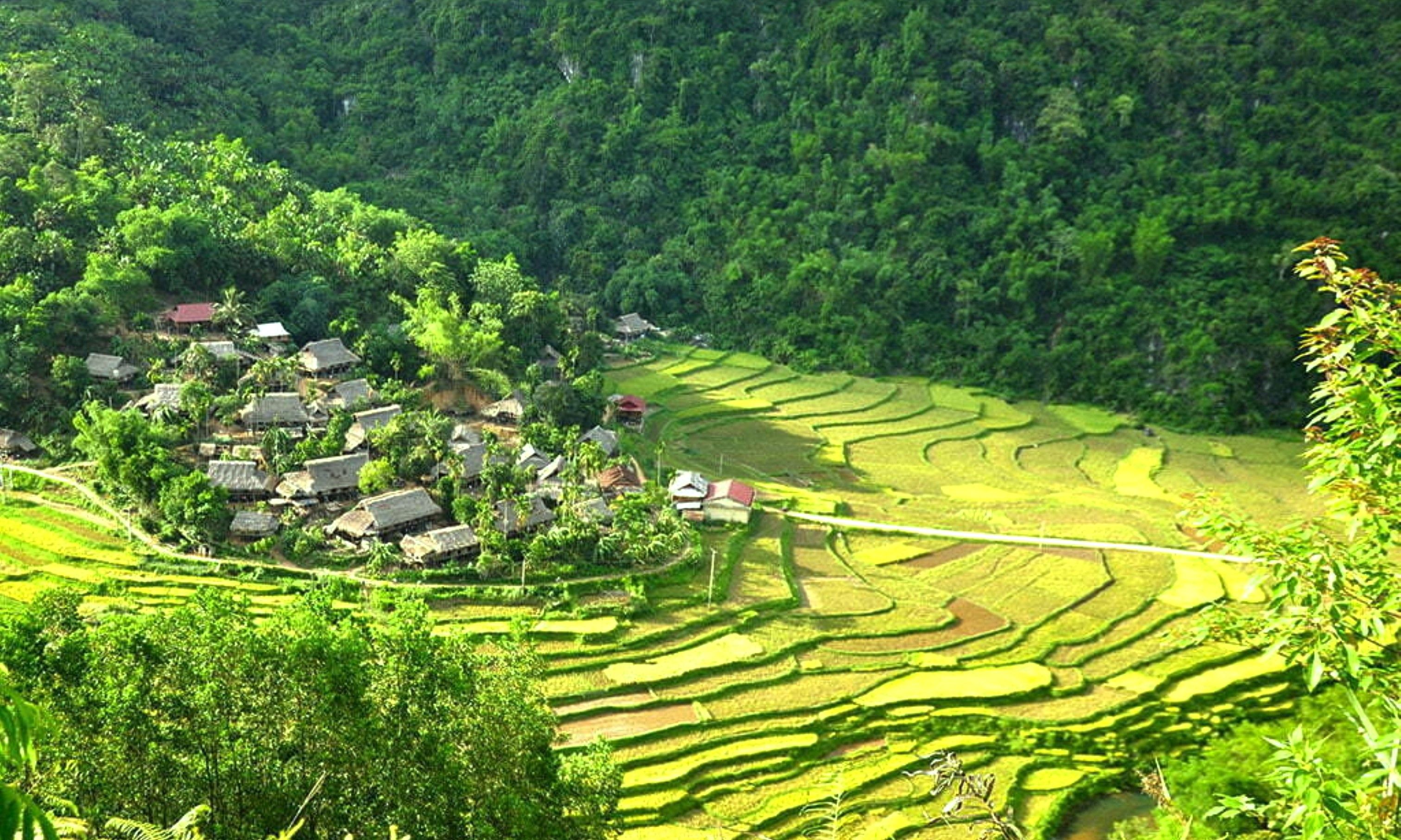
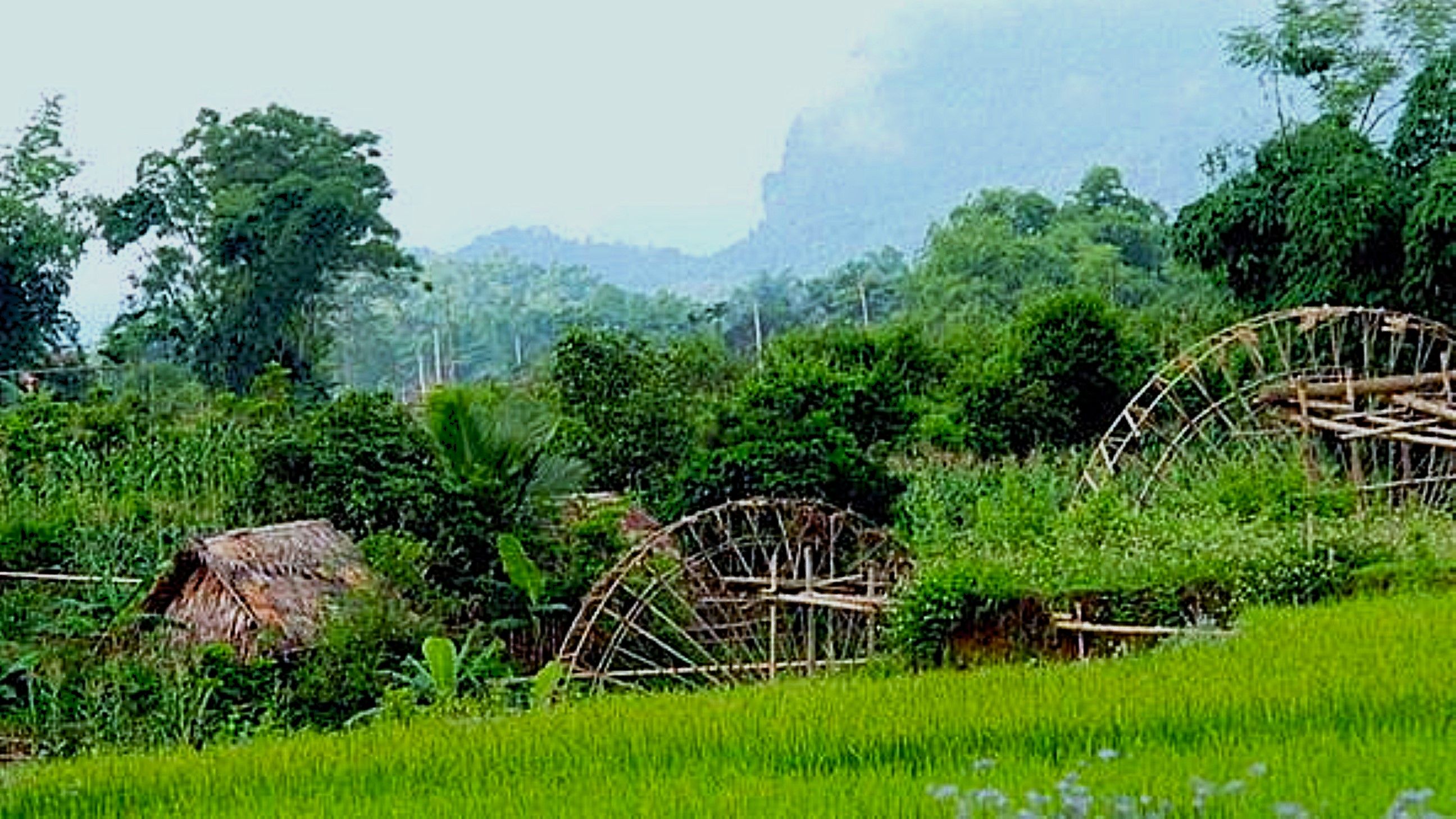
The next morning, Quoc picks us up, our 33-year-old tour guide. A Vietnamese family from Hanoi is part of the group, a biology teacher from Singapore named Lisa, and me. We leisurely hike down into the valley, past rice fields that geometrically divide the plain, and rice terraces on the slopes up to the edges of the rainforest.
While up to four rice harvests per year are possible in the fertile deltas of the Red River or the Mekong, here there is only one: sowing in February, harvest in June. In the meantime, corn, vegetables, or grains are grown. Ducks swim in the flooded areas, herons probe in the murky water. A woman sifts small fish out of the mud, which are fried or boiled and eaten whole. Children search for eels and frogs, also a welcome change in the menu.
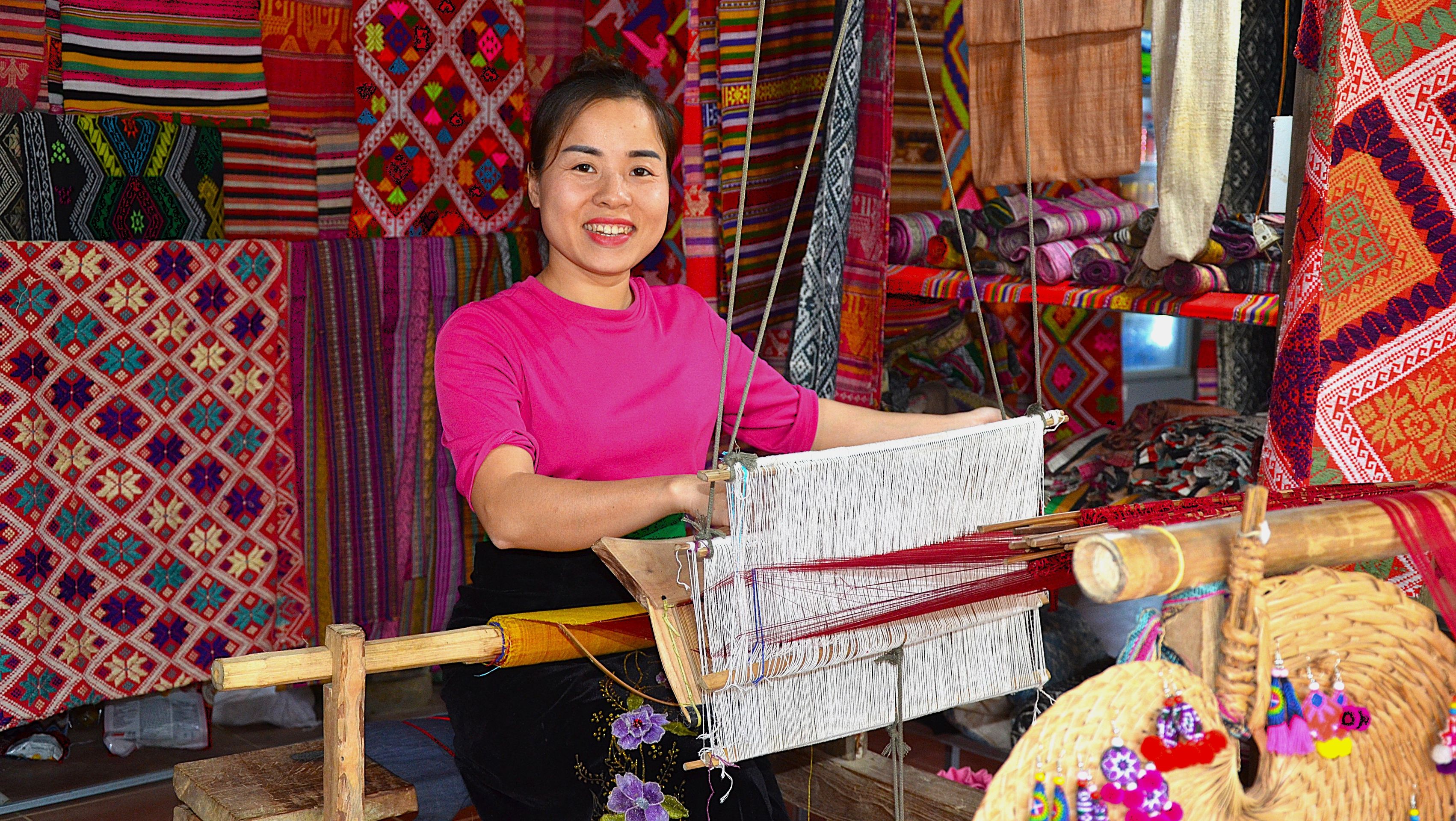
In a beautiful village called Lan, colorful scarves and fabrics hang in front of almost every house. The girls learn to weave early, a laborious task on hand looms.