
2025 - August - Rüdesheim am Rhein
09.08.2025: On this warm summer morning, we leave Frankfurt Main Station on Regional Train RB 10 heading towards Rüdesheim am Rhein. The thermometer already reads 26 degrees, but...

Published: 11.08.2025
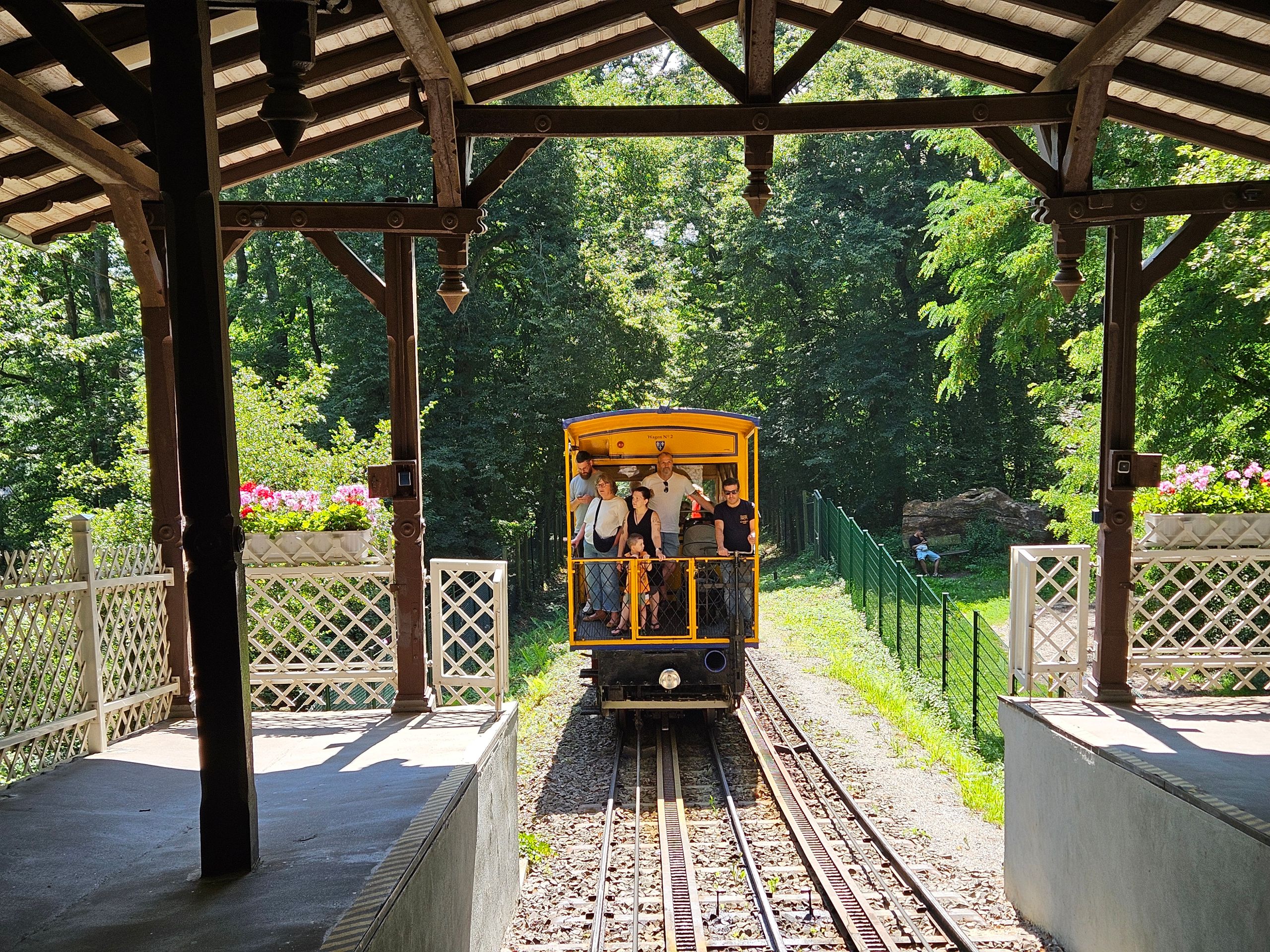
A particularly beautiful excursion tip from Frankfurt leads to the Neroberg in Wiesbaden. Those coming from Wiesbaden are certainly familiar with the Neroberg, and surely everyone knows about the historic Nerobergbahn.
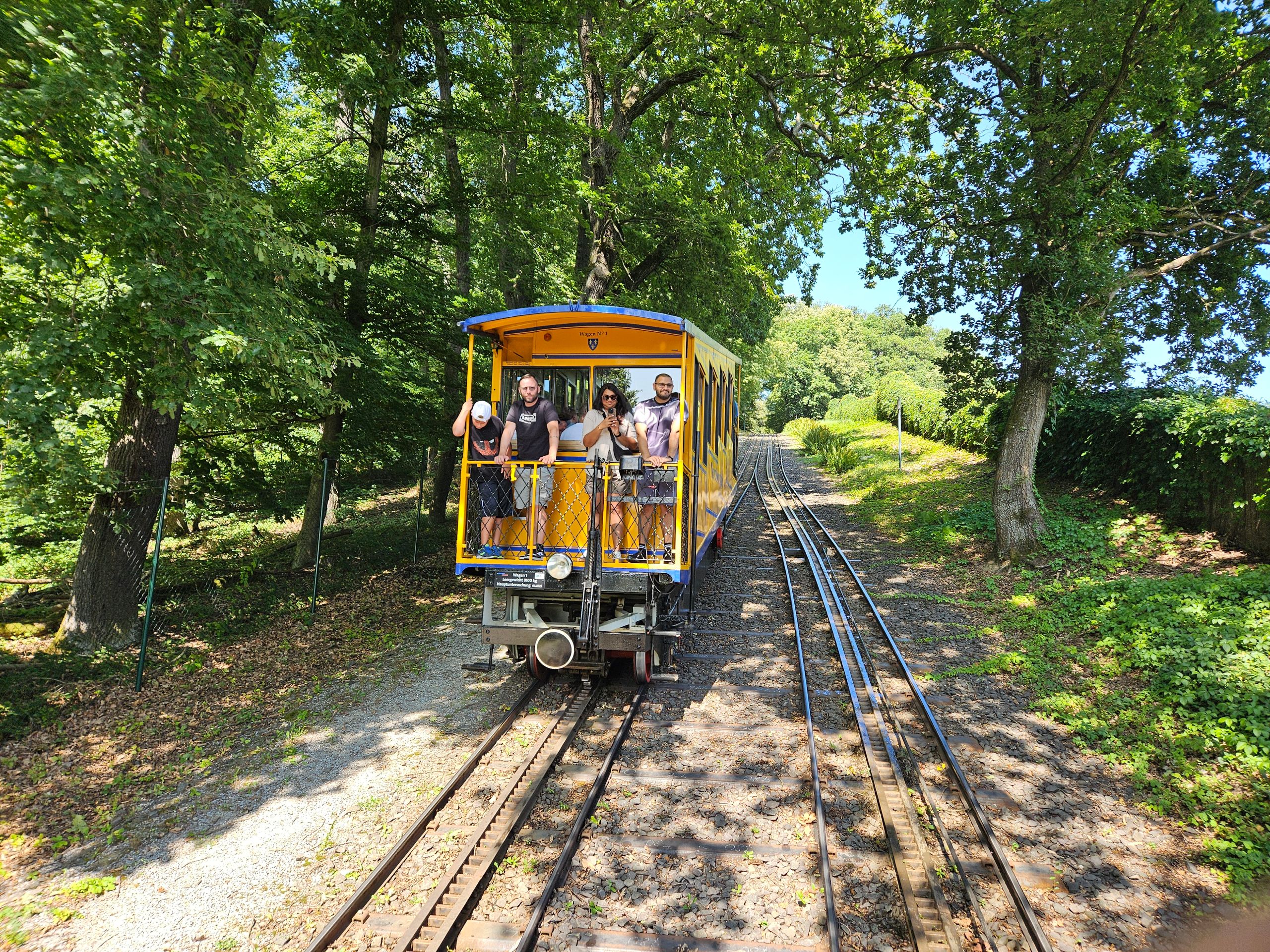
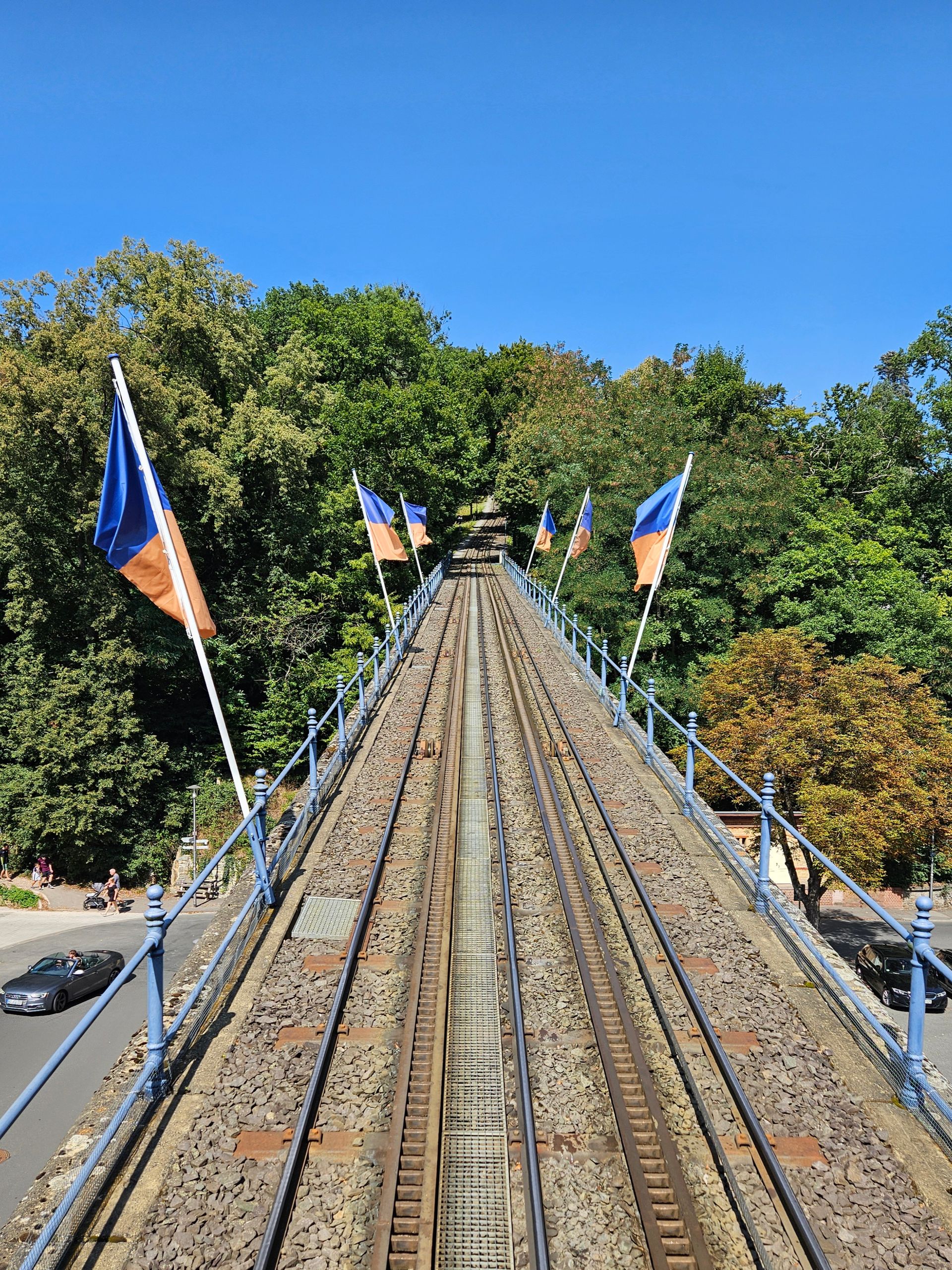
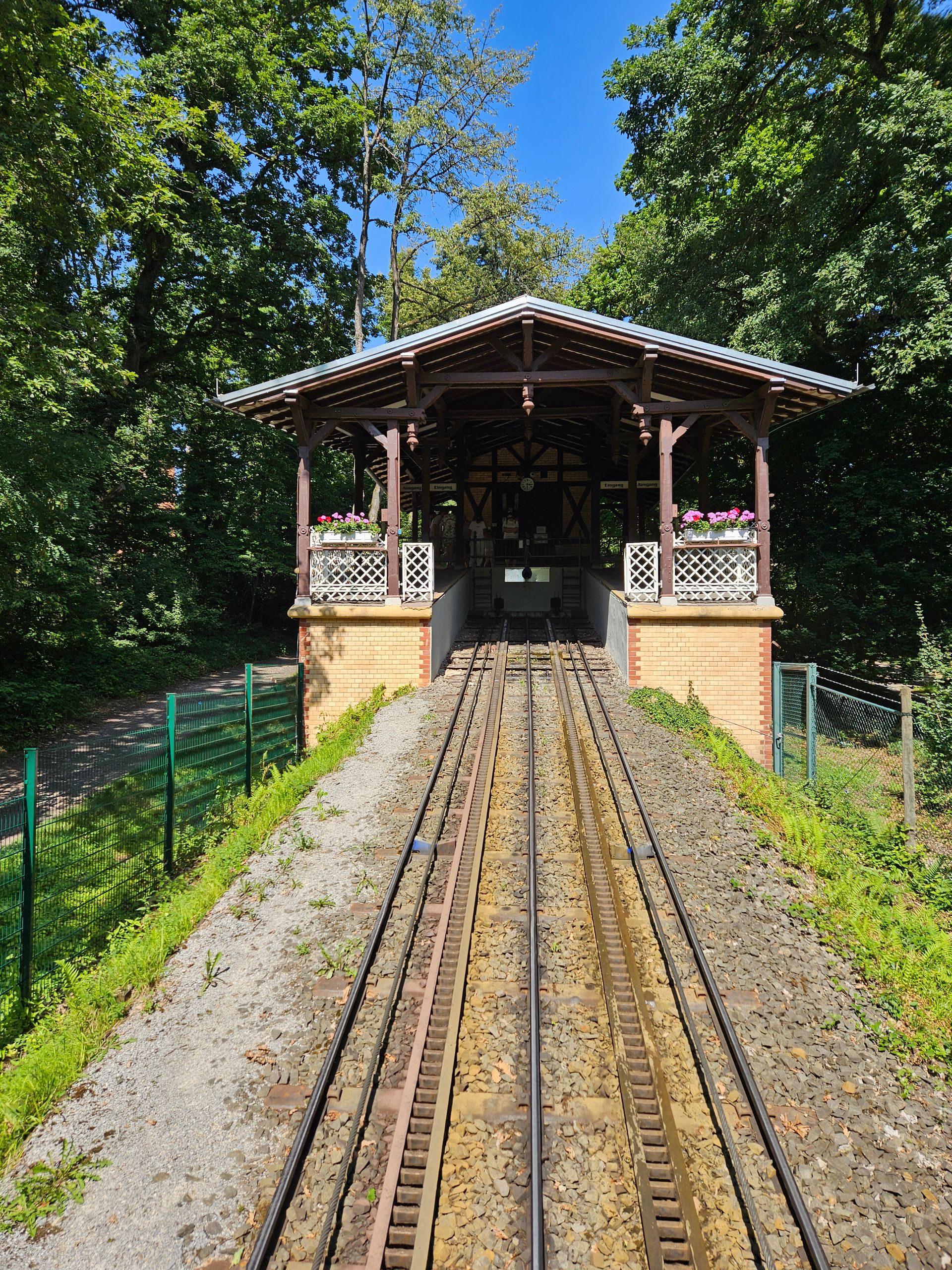
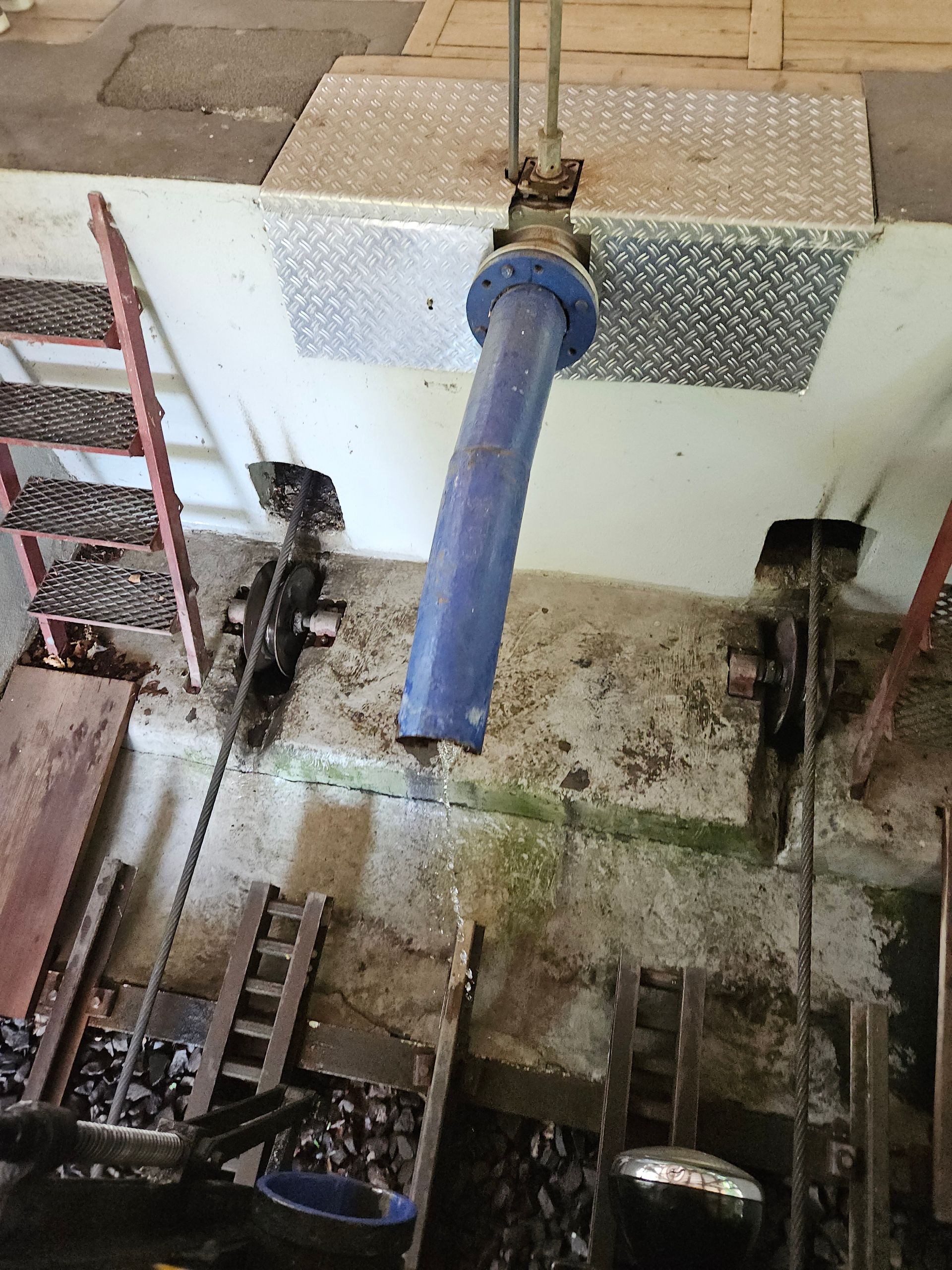
The Nerobergbahn is a cogwheel train that has been bringing visitors to the Neroberg since 1888. The route is about 440 meters long and overcomes an elevation difference of around 70 meters. It is powered by hydropower! It is a fascinating technical principle, where a water bucket is filled with water at the top of the carriage to utilize the gradient. Thus, one carriage glides down while simultaneously pulling the other carriage up. The fare for adults is six euros for a round trip. That is a very affordable price to enjoy both the technology and the beautiful landscape. The ride is particularly worthwhile on sunny days, as the view is especially impressive then.
Make sure to get a spot right at the front or back outside, as that's where you can take the best photos!!!
The Nerobergbahn operates exclusively from April to October. Therefore, one should pay attention to the seasonal times. Bus number one travels directly from Wiesbaden train station to the Nerobergbahn, making the journey very convenient.
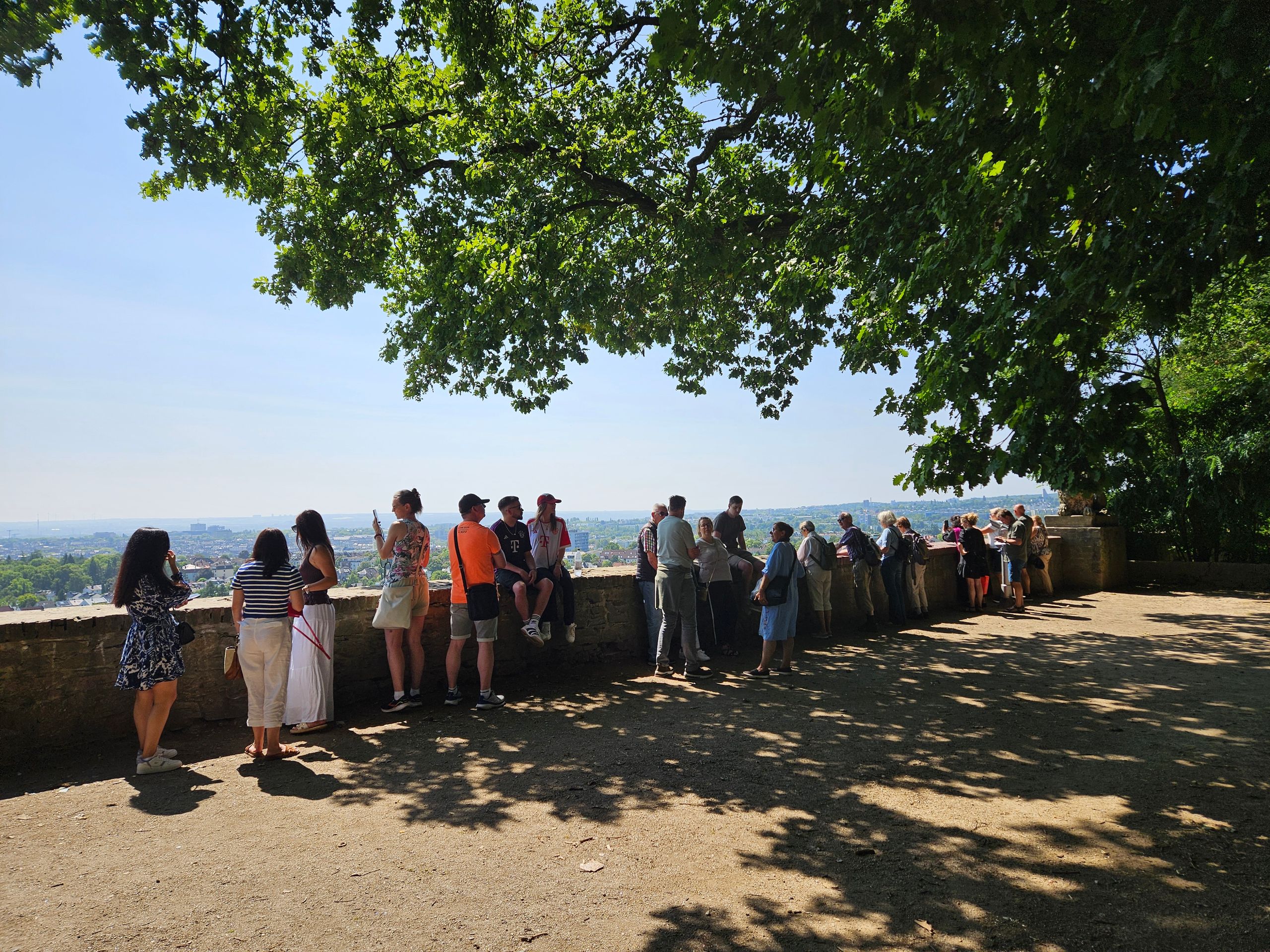
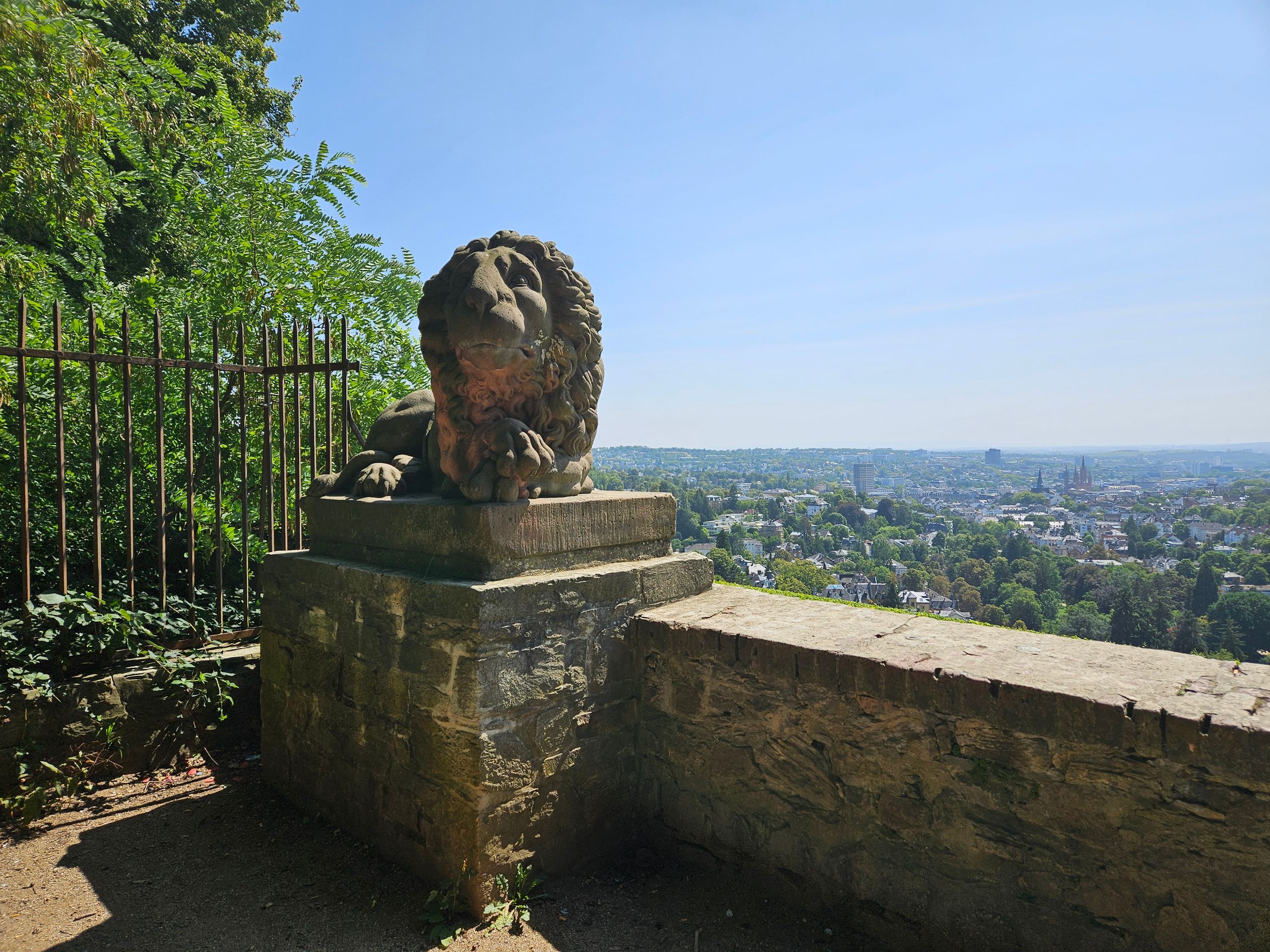
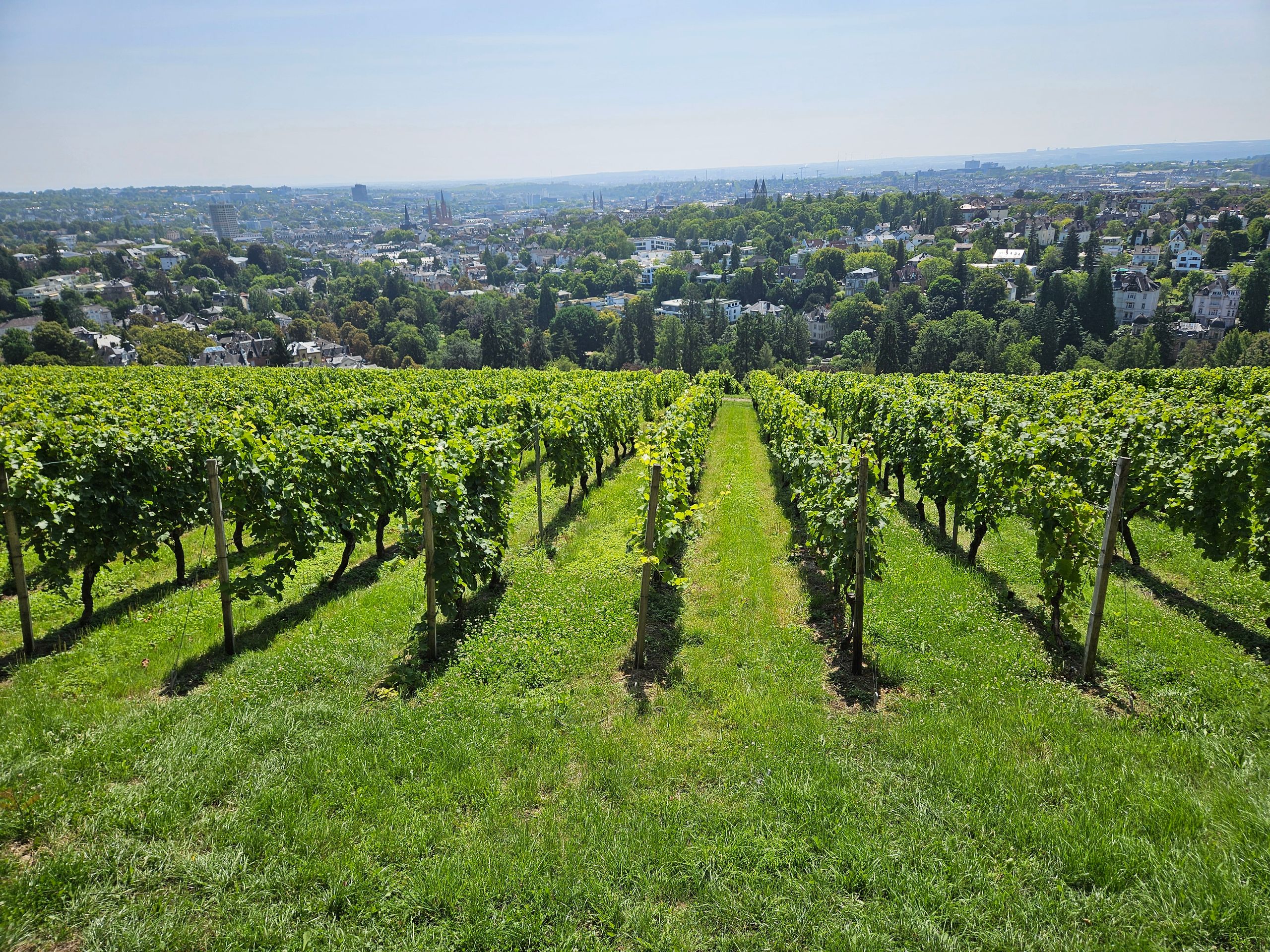
Upon reaching the top of the Neroberg, an impressive view of the city of Wiesbaden unfolds. From the Löwenterasse, one can enjoy a particularly beautiful view over the rooftops. There is also a memorial dedicated to the fallen of the First World War.
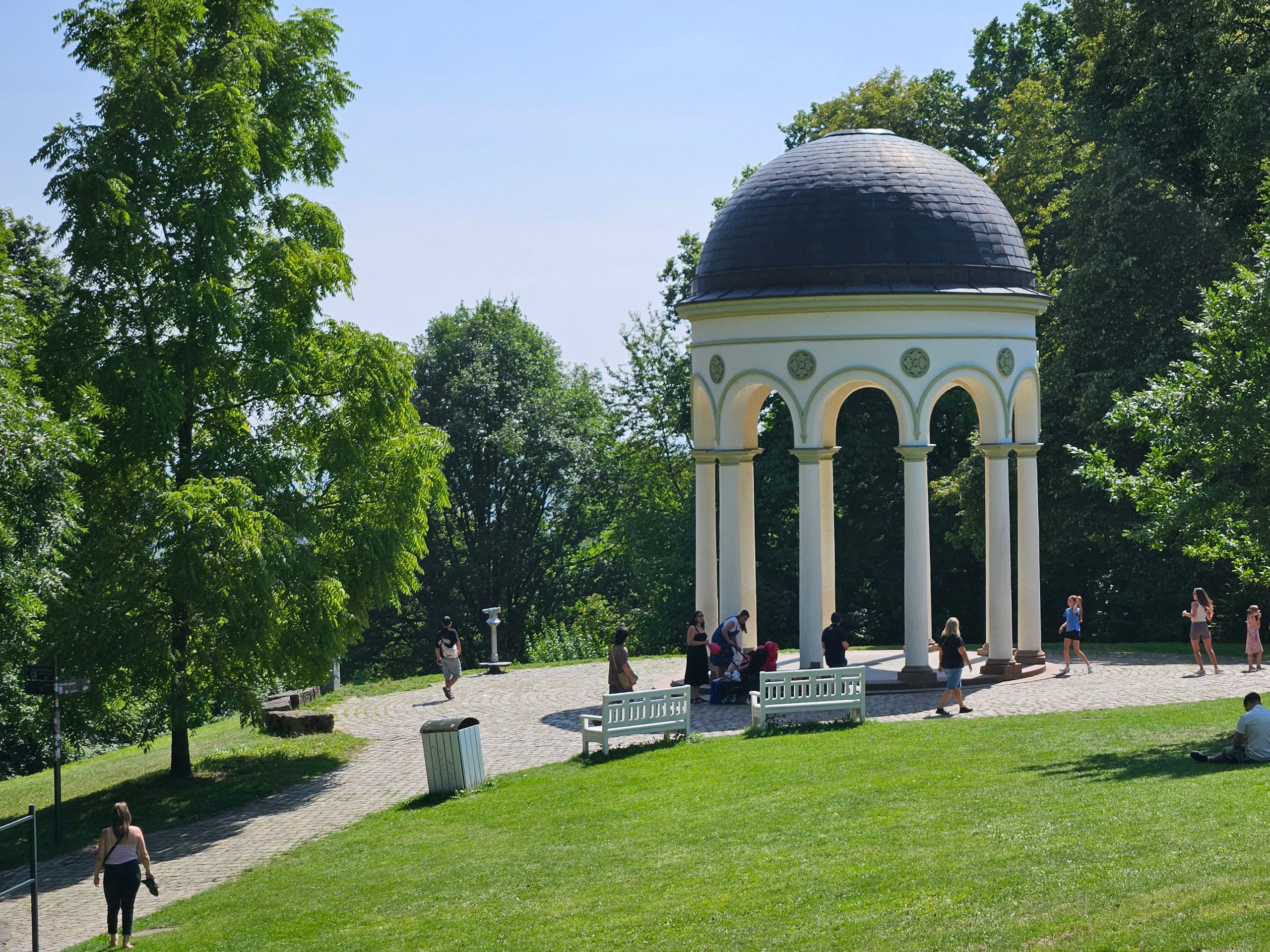
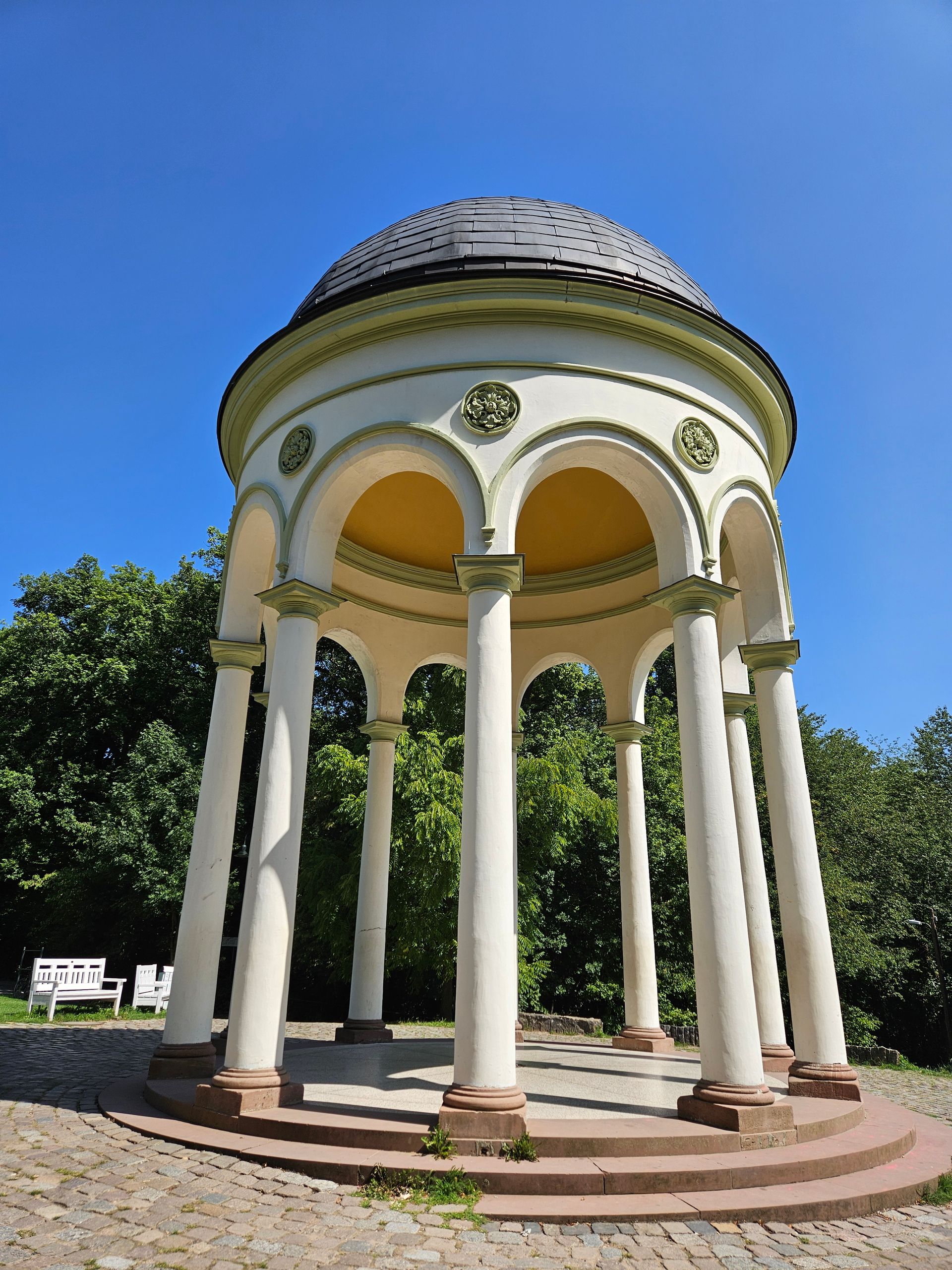
Just a few steps further stands the Neroberg Temple, snow-white and built in the style of a Greek temple, which was constructed in 1885. It romantically blends into the landscape and has long been a popular photo motif.
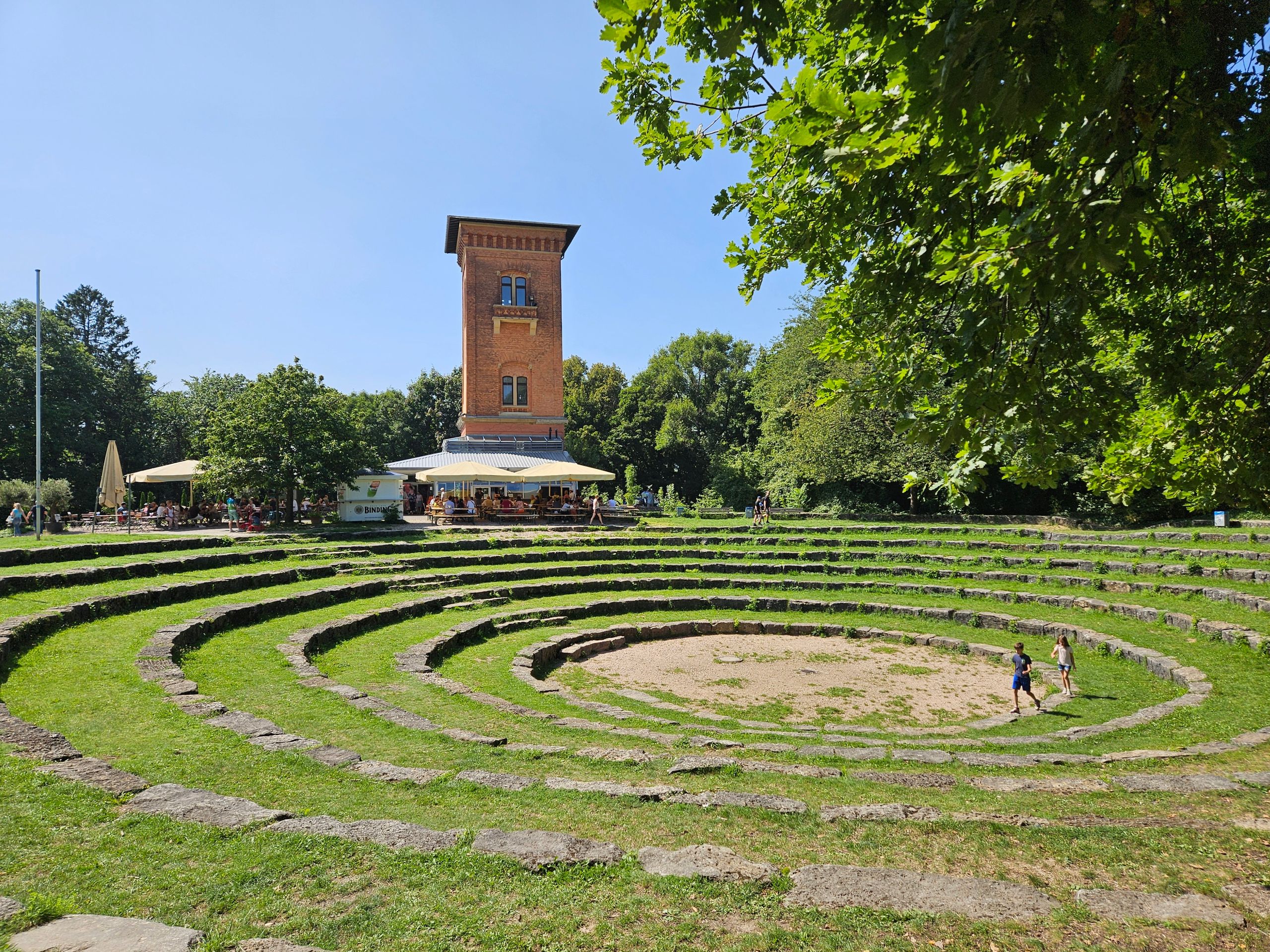
Additionally, one finds the so-called Erlebnis Mulde, an open-air theater made of stone circles that has an ancient charm. During our visit, the Erlebnis Mulde was a popular spot for picnickers. However, we found comfortable seating in the excursion restaurant also located there.
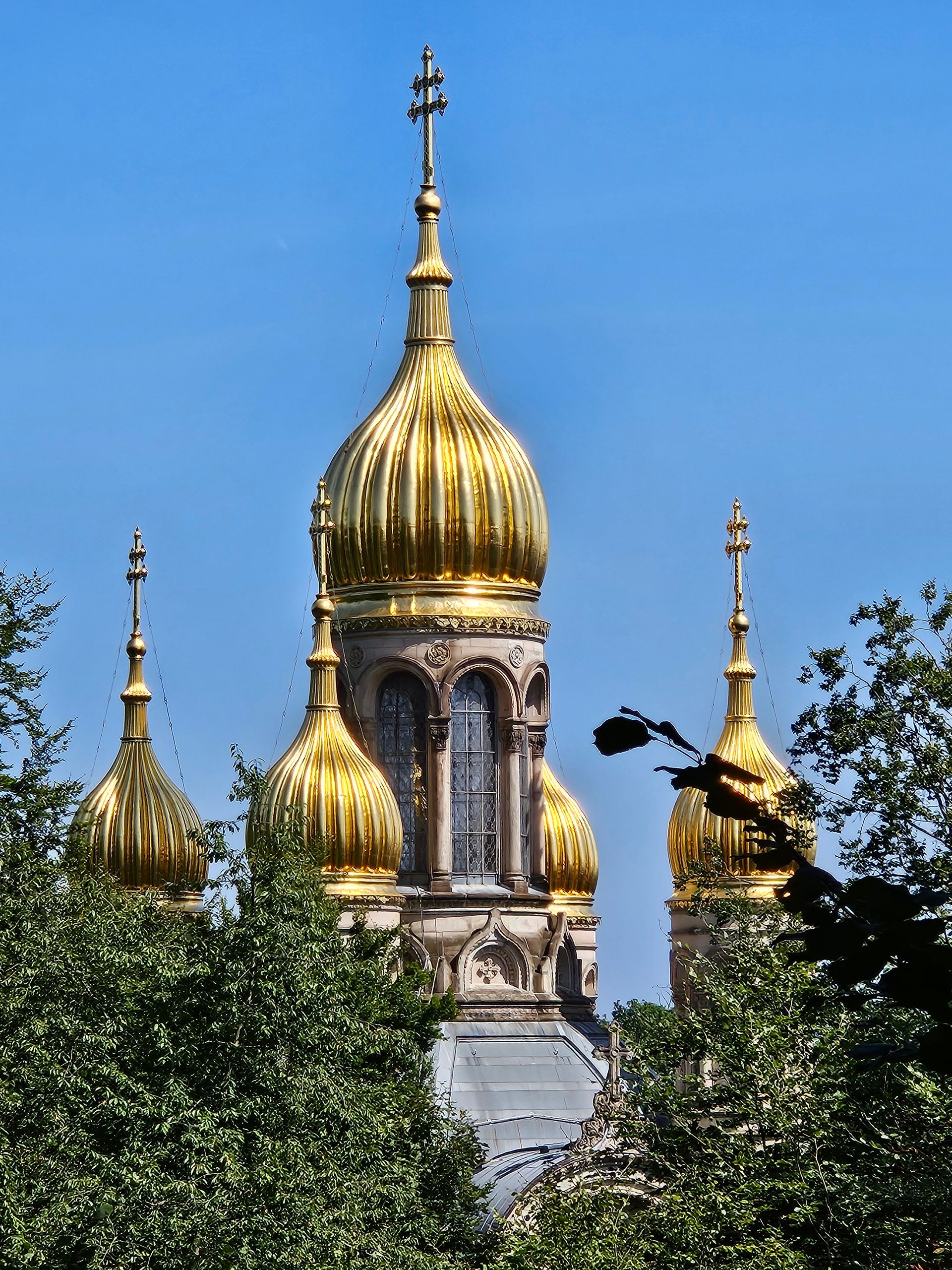
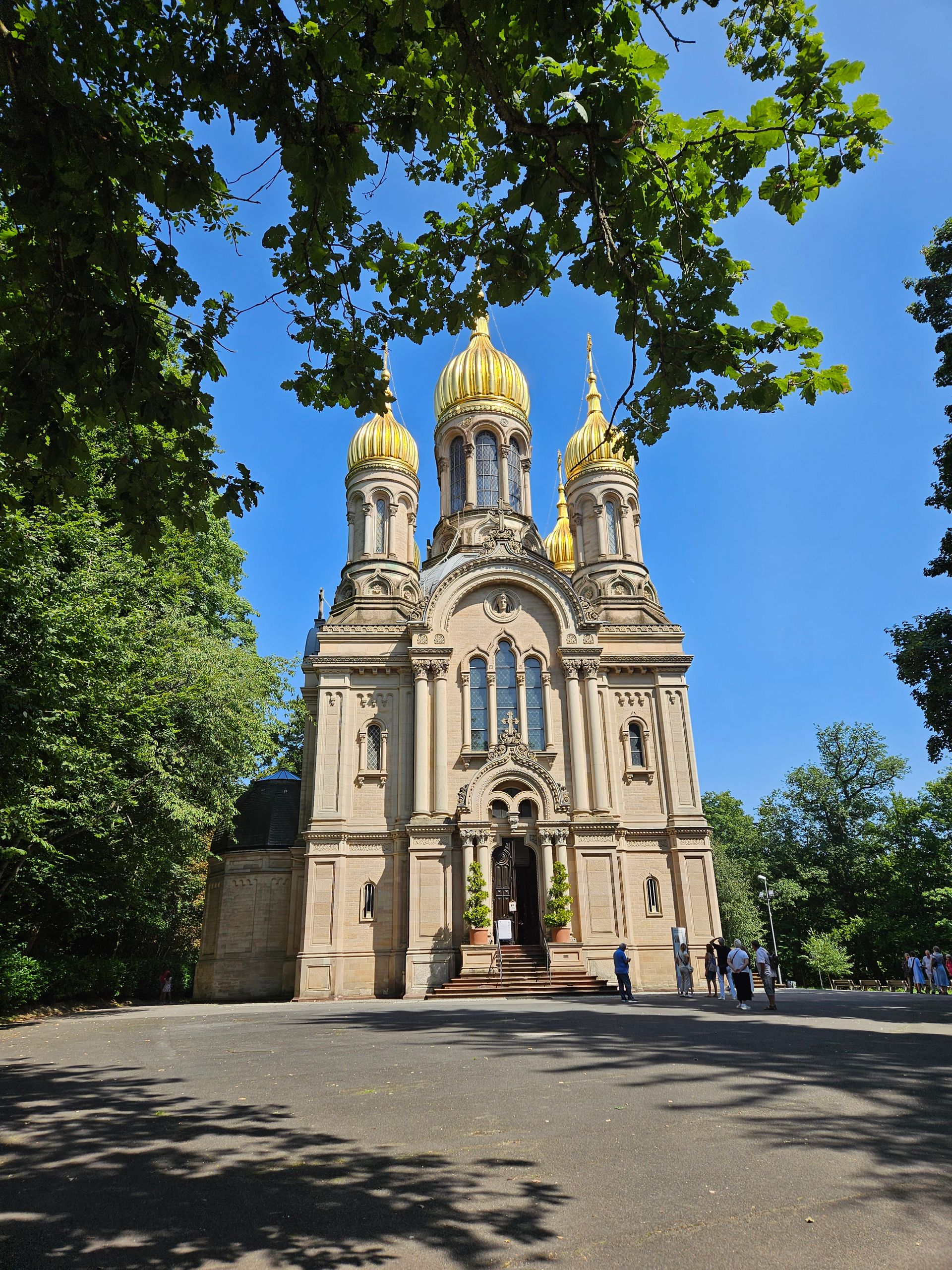
Those not afraid of a rather steep descent will soon discover golden onion towers. They belong to the Russian Orthodox Church of Wiesbaden.
However, the history of this church is tragic: It was built between 1847 and 1855 at the request of Duke Adolf of Nassau. The church serves as a memorial to his wife, Elisabetha Pawlowna, a Russian grand duchess who died in 1845 during the birth of their first child. The church was constructed as a burial church for Elisabetha, and her mortal remains were transferred to the crypt during its inauguration in May 1855. The architecture of the church is inspired by the Moscow Cathedral of Christ the Savior and was designed by the Nassau master builder Philipp Hoffmann. With its five golden domes and the magnificent interior design featuring mosaics and frescoes, it is an impressive example of neobyzantine architecture.