2026 - August - Light Show at Strasbourg Cathedral
When was the last time you sat on the street on your bottom? I did yesterday. It's not really comfortable on the hard pavement. But the view upwards is perfect. Up towards the...

Published: 11.10.2026
As a former GDR child, I have certainly been indoctrinated enough. To be honest, after the fall of the Wall, I had had enough of urban development projects in the form of typical socialist buildings. Most of these were the same monotonous prefabricated buildings.
Therefore, despite my many visits to the capital, my desire to walk through the prefabricated housing estates in Berlin was minimal.
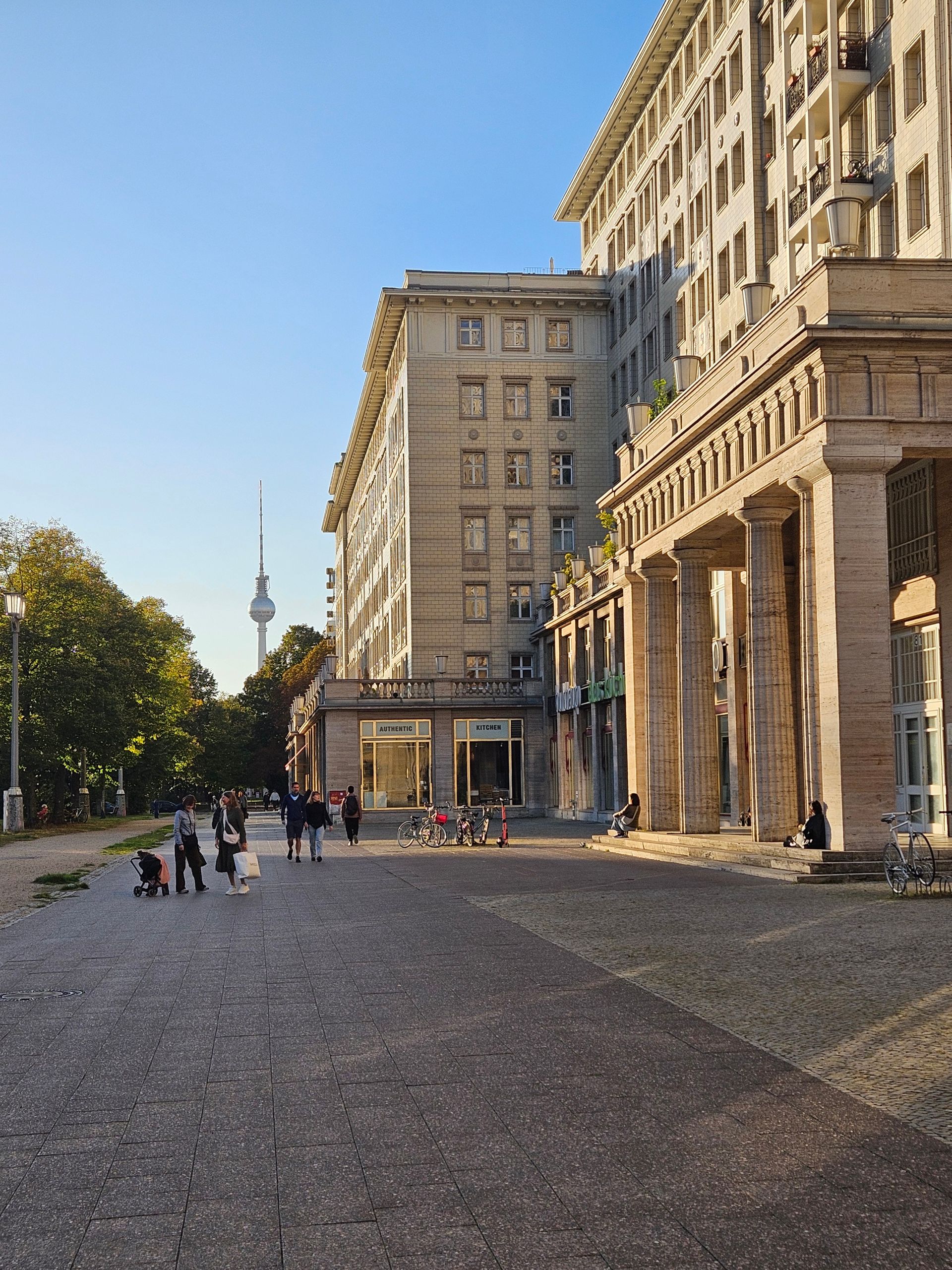
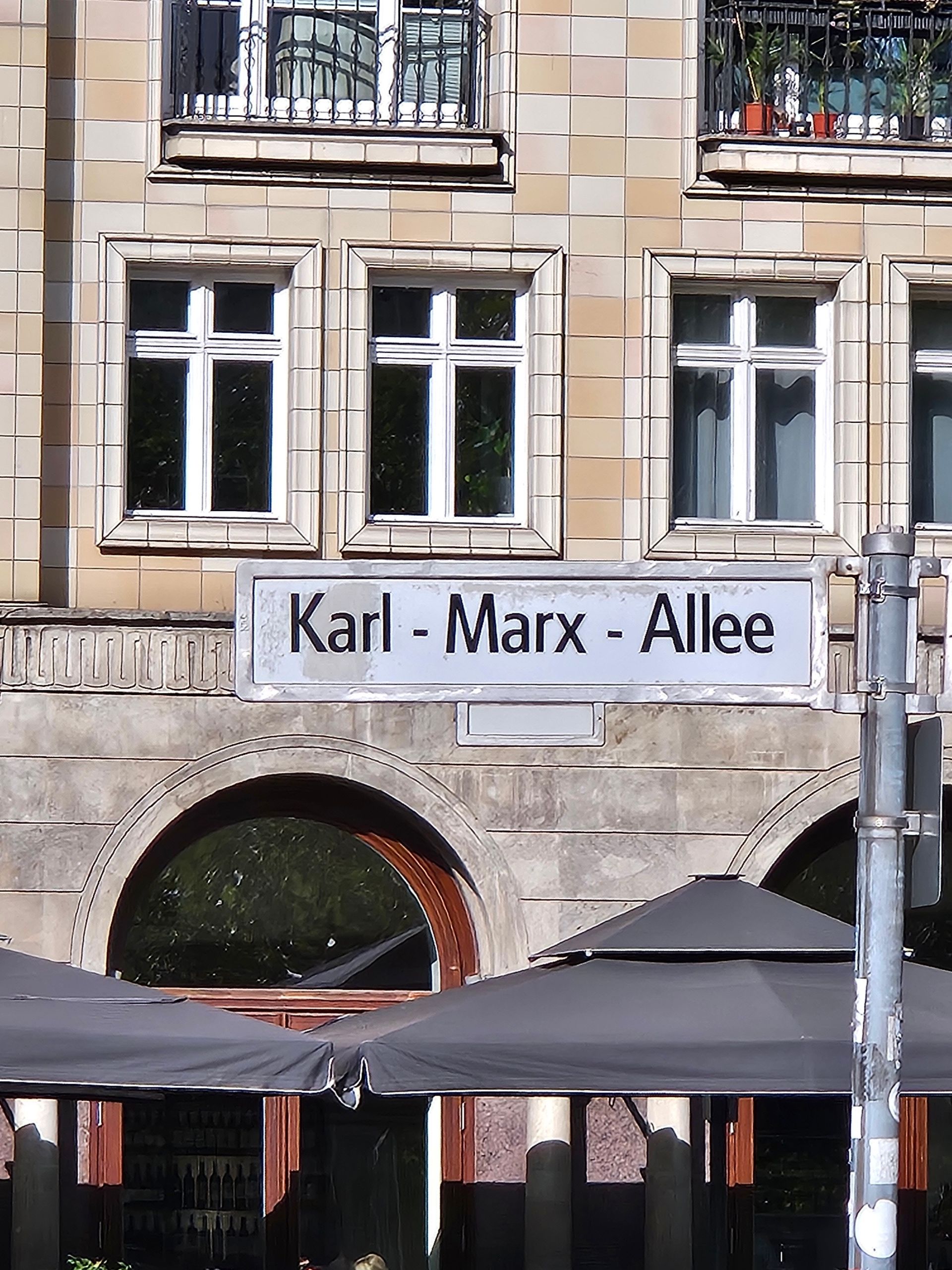
By mere coincidence, we ended up this time on the magnificent street number one of the GDR: the Karl-Marx-Allee. I hadn't been here in ages. In fact, my feelings towards the place are still mixed today. On one hand, the typical pastry chef style of Stalinist design of the ensemble at the beginning of the avenue greatly repels me. This display of the grandeur of socialism has always had the opposite effect on me.
On the other hand, I generally find alleys beautiful for strolling. And yes, a bit of that cozy memory of childhood and youth also came into play. Since many of the buildings are listed as historic monuments, store signs like “Stamps” or “Karl-Marx Bookstore” were left unchanged, even though completely different stores have since moved in.
By the way, the Berlin State Monument Office has proposed to include both this ensemble and the Hansaviertel built in West Berlin in 1957 in the UNESCO World Heritage List.
My tip: Just walk directly from Alexanderplatz to Frankfurter Tor, going one side and then back on the other. Your step count will be sufficiently recorded on this day. After all, the distance is about 3.5 km long. And if you, like us, make various detours, the day will be well spent.
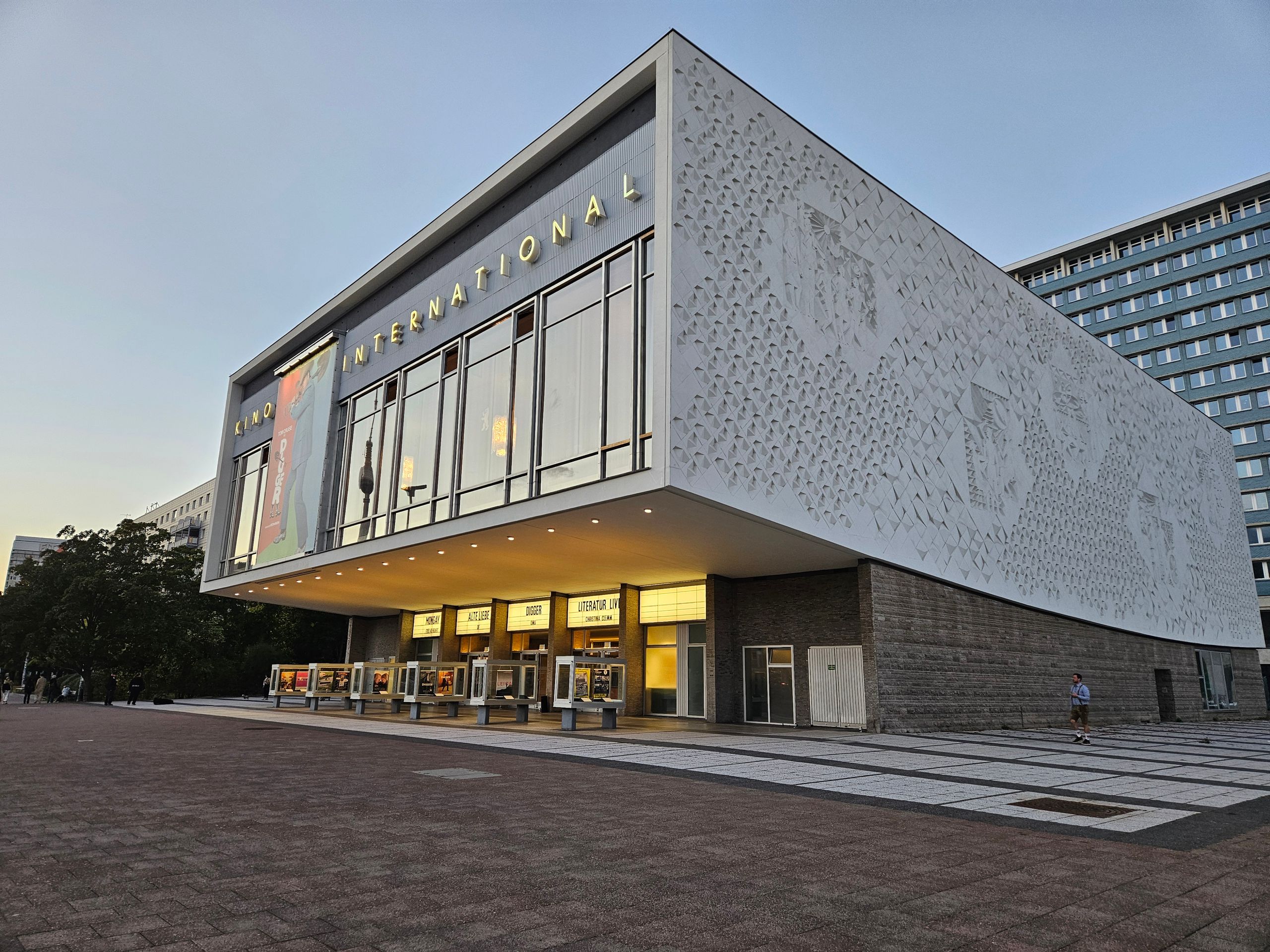
On the way, you will get to know many notable buildings. Right at the beginning is the Kino International, which opened in 1963. Then, on one side of the street is the Café/Restaurant Moskau, which unfortunately is vacant. But look up, you will discover something: A striking Sputnik model sits on the roof.
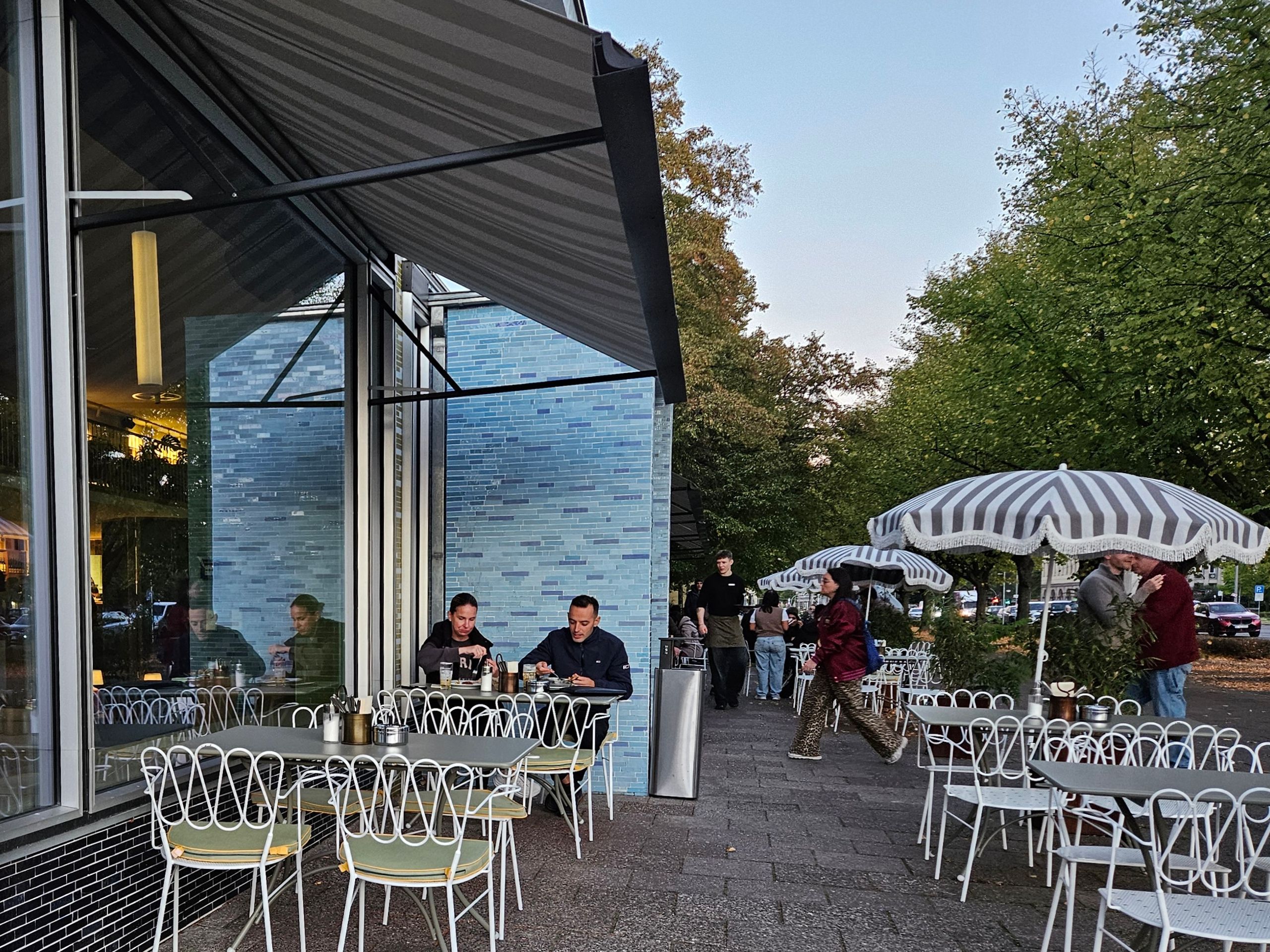
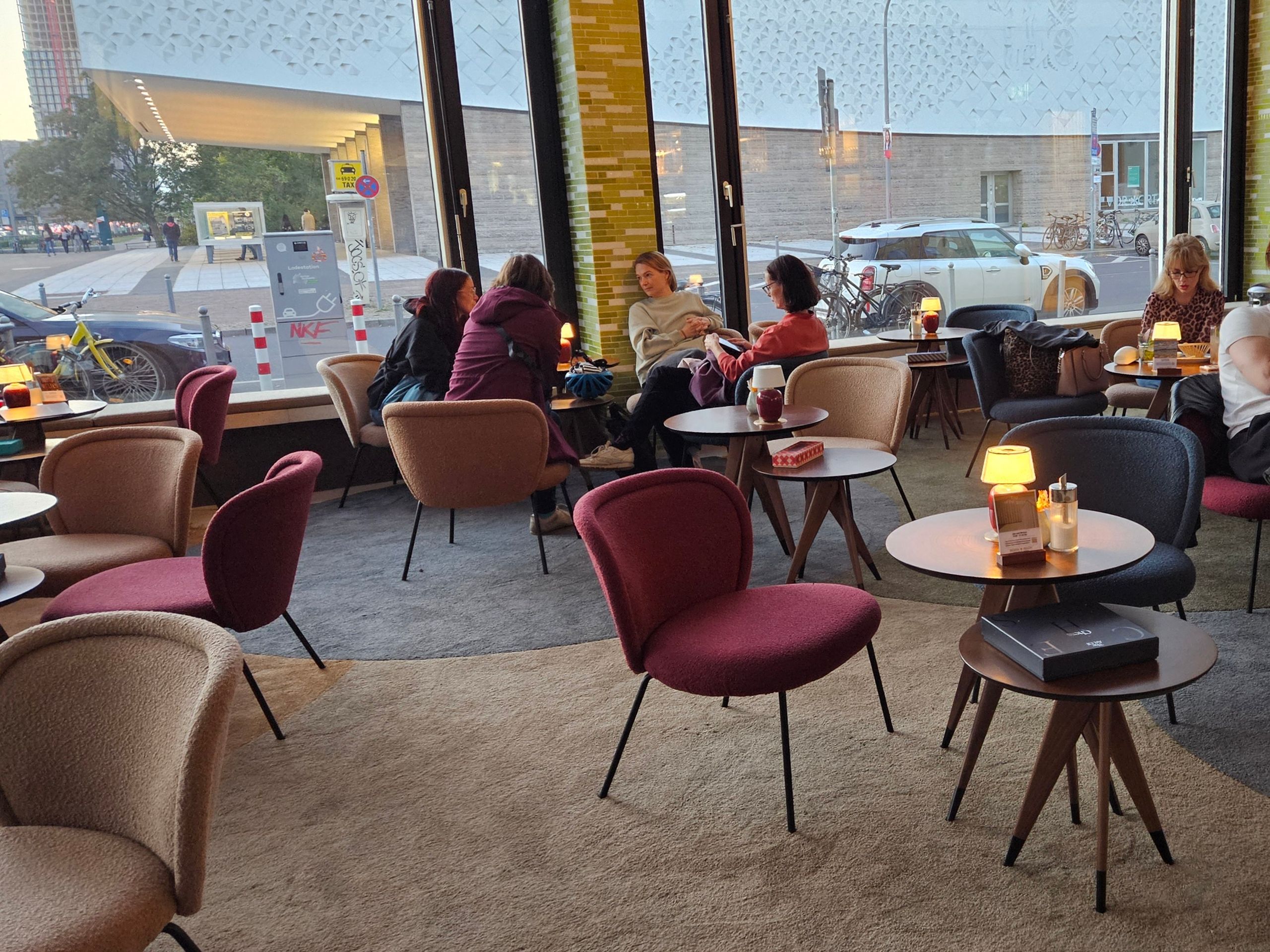
On the other side of the street, directly across, you will find the Mokka-Milch-Eisbar, which just reopened in 2026. It's worth a visit, because the clientele and staff are very international nowadays, but the decor really gives off '60s vibes.
A bit later follows the Strausberger Platz. The residential buildings here were arranged symmetrically in monumental size. This part of Karl-Marx-Allee strongly reflects socialist classicism, the so-called pastry chef style. The houses were built in 1952 and 1953, and initially, the street was also called Stalinallee.
The two towers at Frankfurter Tor were also built in this style between 1955 and 1960. Their domes remind one of historical Berlin models. By the way, at this square, Karl-Marx-Allee leads out of the city into Frankfurter Allee.
However, with the onset of de-Stalinization, not only the name changed, and Stalinallee became Karl-Marx-Allee, but also the architectural style. Initially, the avenue started at the previously mentioned Strausberger Platz. The expansion towards Alexanderplatz was taken up later. The functional modernity of the 1960s is reflected here. And exactly that can be found, for example, at the aforementioned Mokka-Milch-Eisbar.
By the way, much of this is now listed as a historic monument and has been renovated, but perhaps during a visit, you will notice the taut nets. They are quite wide and serve, as I now know, to protect pedestrians from falling facade tiles.
The western construction glue just cannot hold everything together.