09.08.2025:
On this warm summer morning, we leave Frankfurt Main Station on Regional Train RB 10 heading towards Rüdesheim am Rhein. The thermometer already reads 26 degrees, but with the window open, it's still quite pleasant in the train. The journey initially takes us through the bustling Rhine-Main area, before the vineyards and the river come into view.
Rüdesheim am Rhein is definitely worth a trip, even if the place is heavily influenced by tourism. When I think of Rüdesheim, I inevitably picture buses full of retirees making a day trip with the promise of good food and, of course, equally good wine.
We turn this into our own excursion and initially avoid the tourist-heavy Drosselgasse.
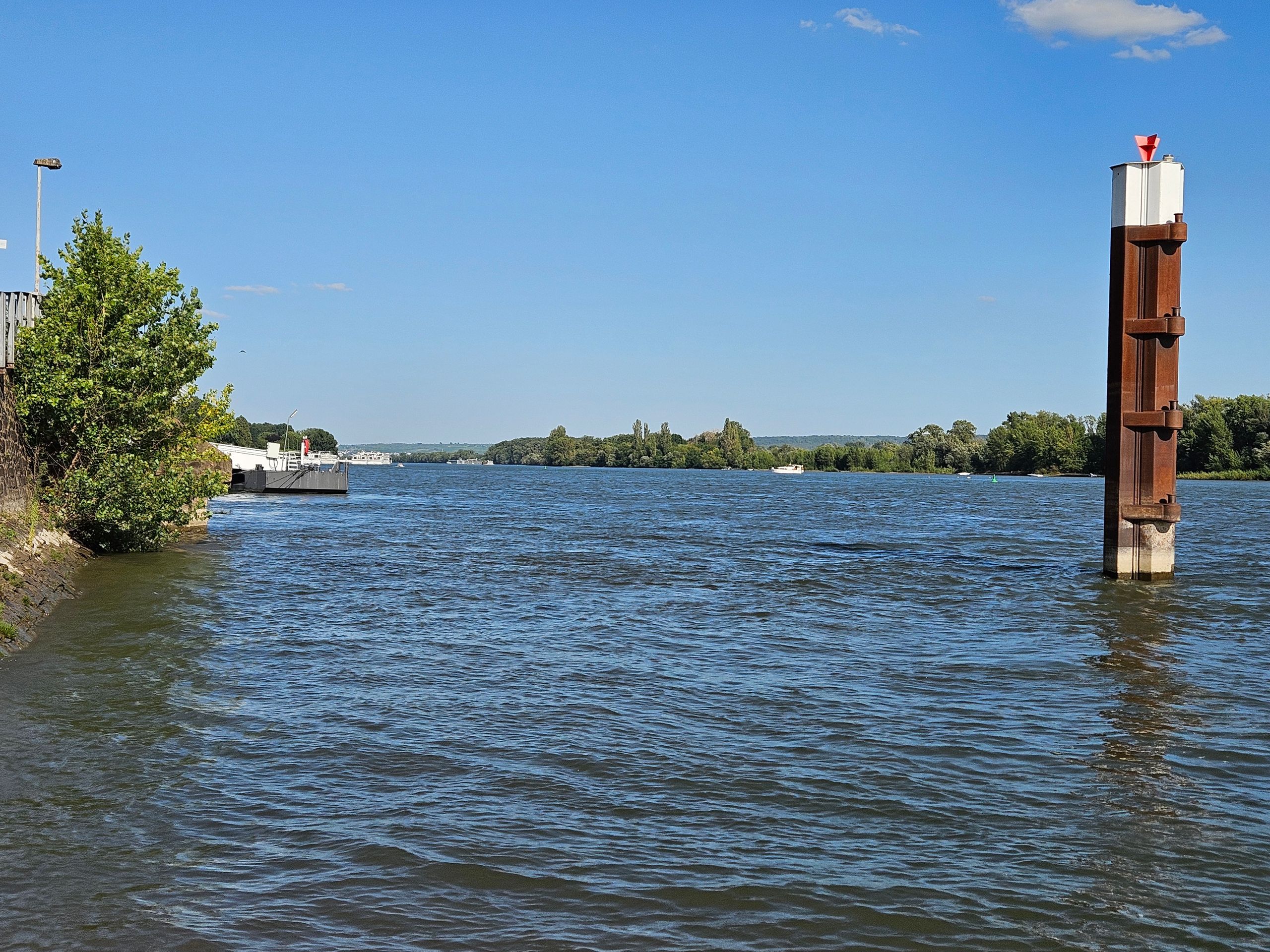
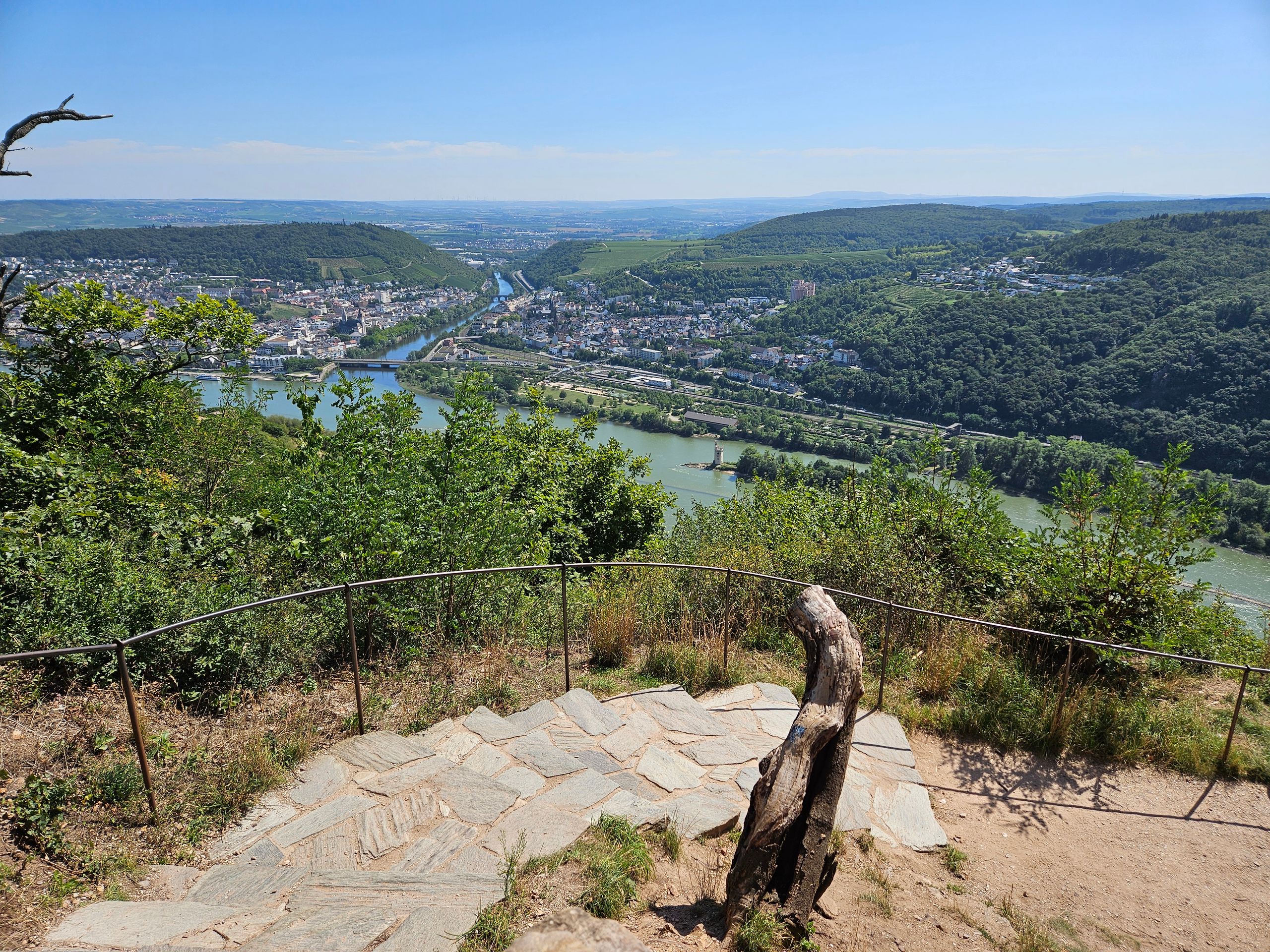
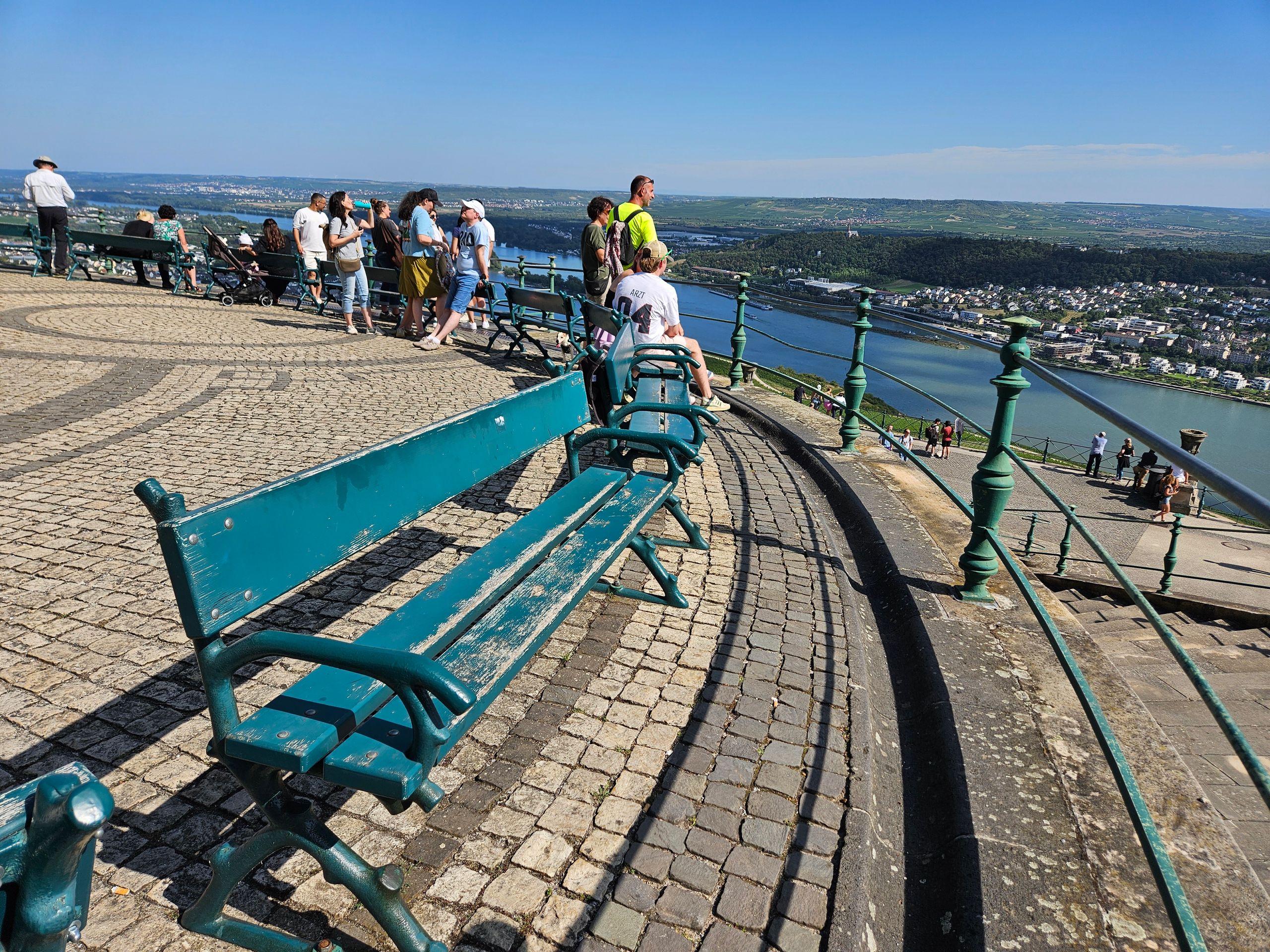
Instead, we head uphill, as the landscape displays its beauty best when viewed from above in the Rhine valley. By the way, even back in 1770, carriages were driving through the vineyards to the summit to present visitors with the view.
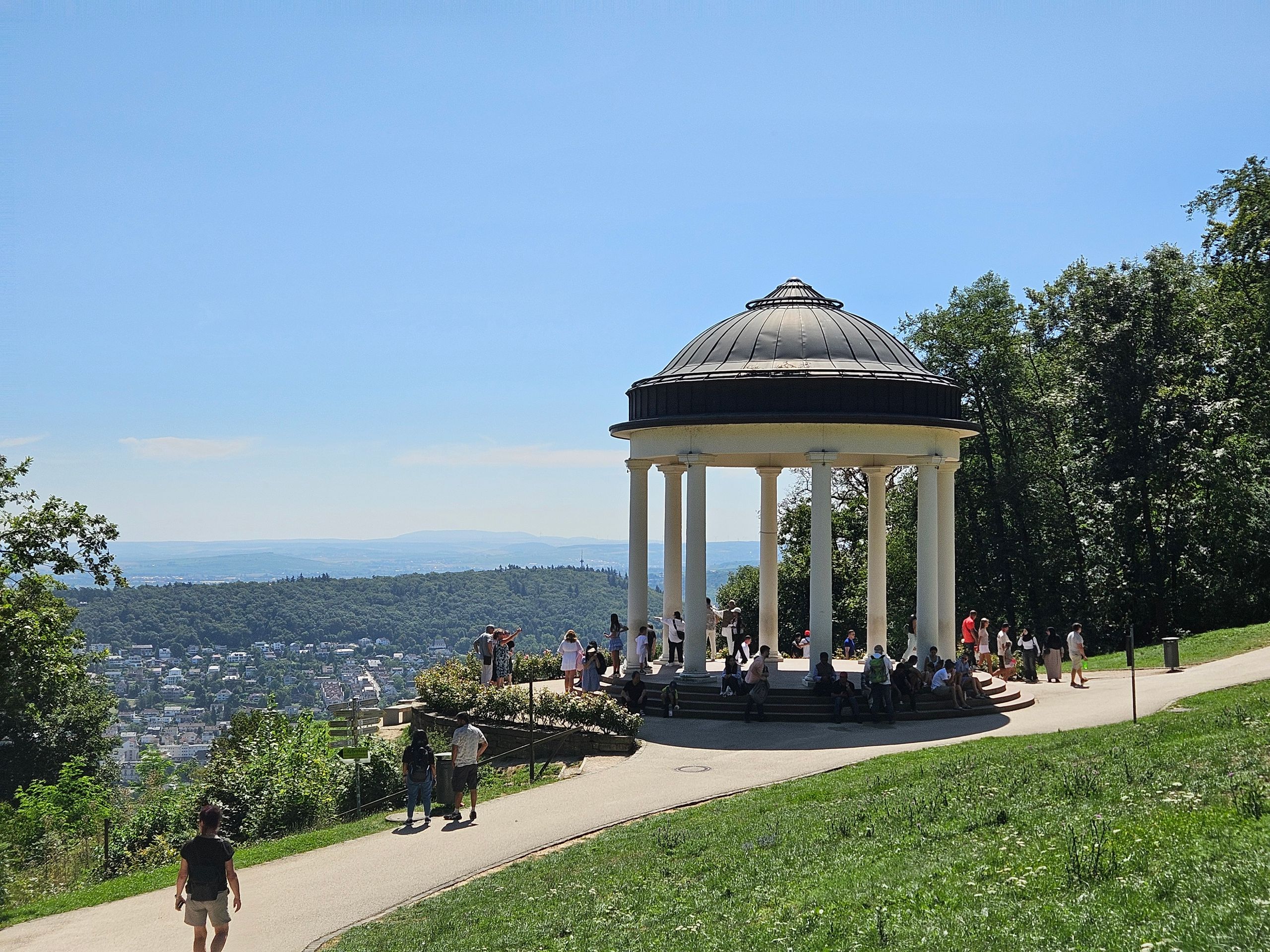
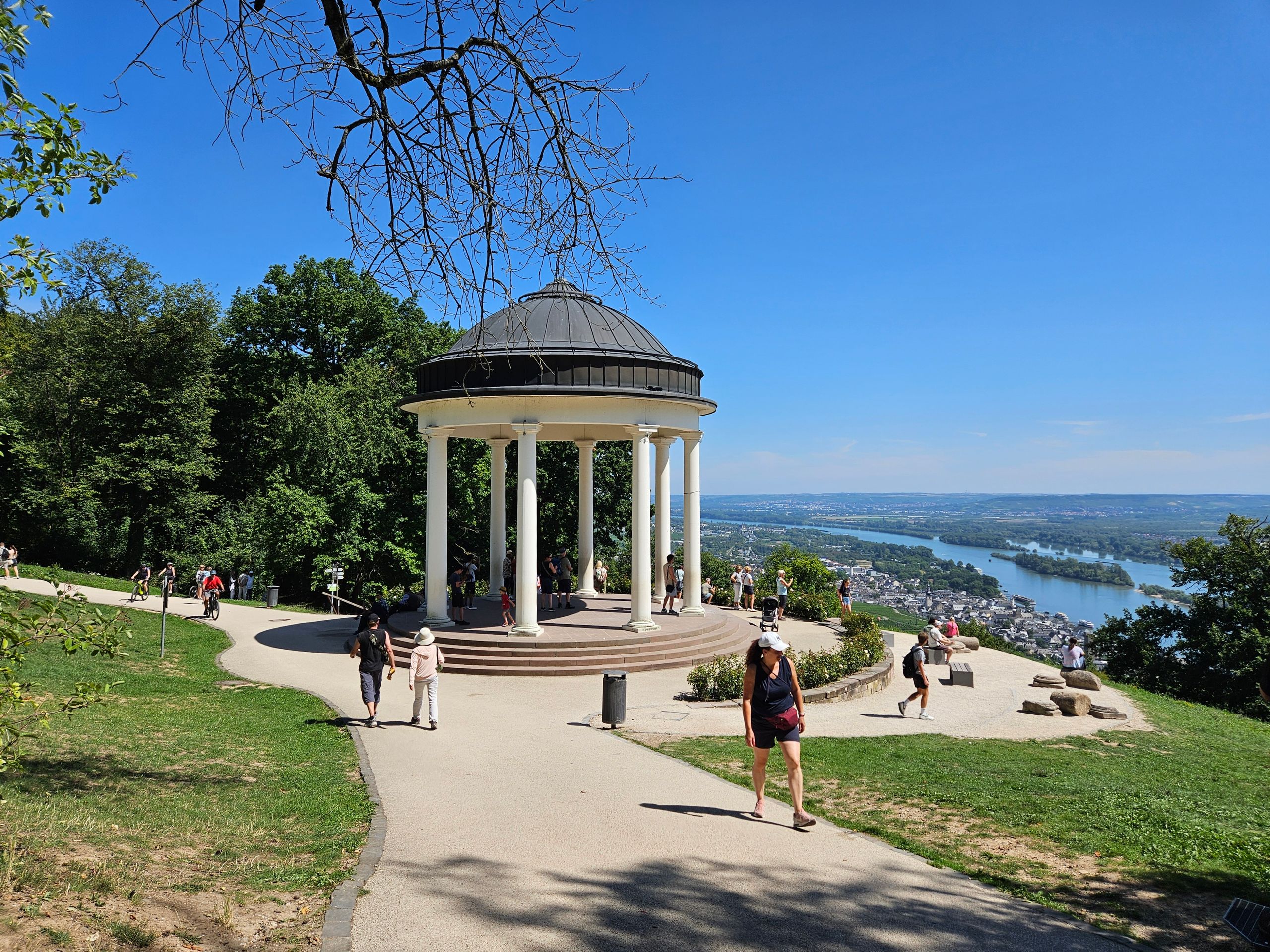
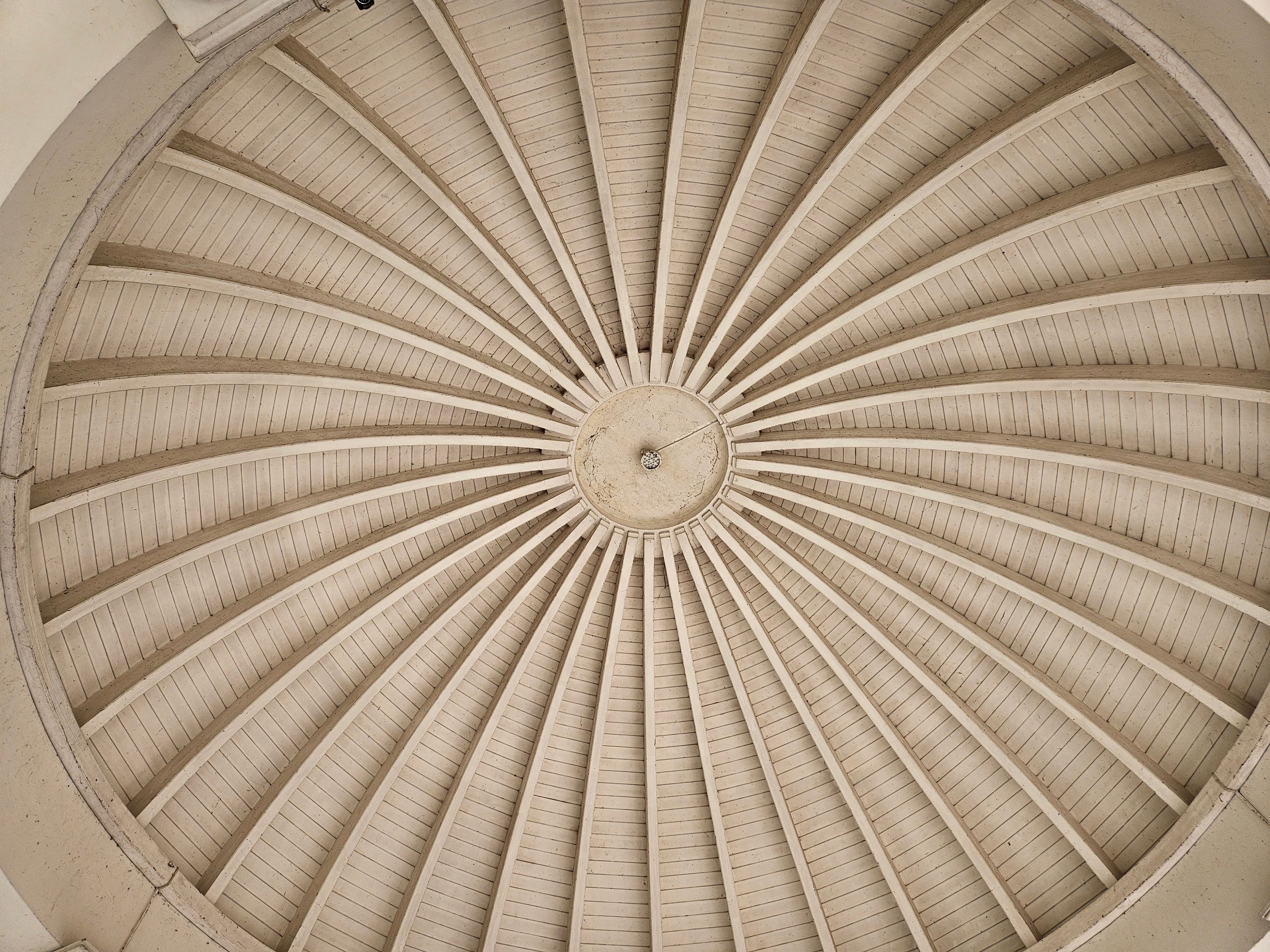
Later, in 1788, a pavilion was built on the mountain, further enhancing the romantic allure of the place. Paintings were even created depicting this view.
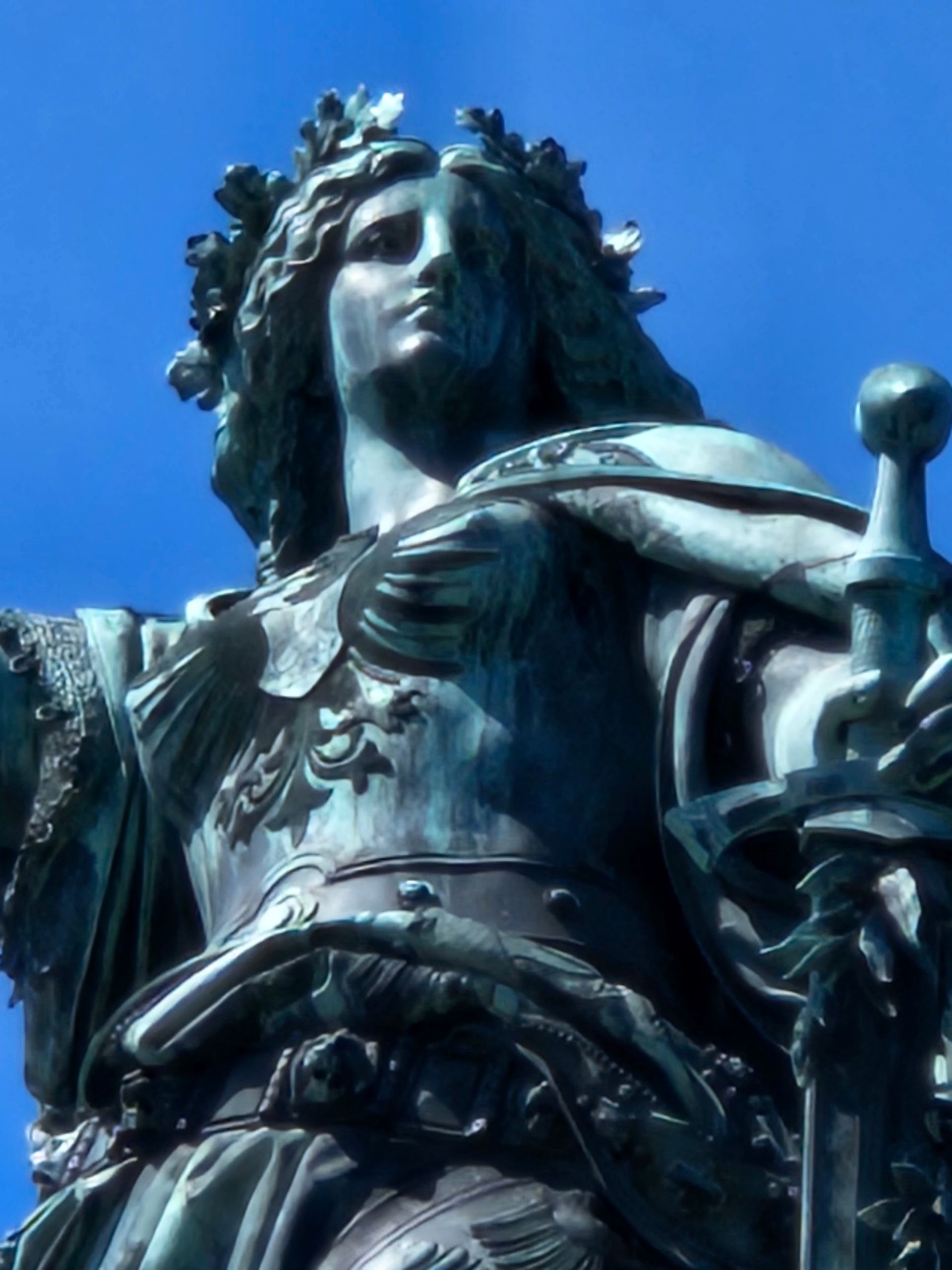
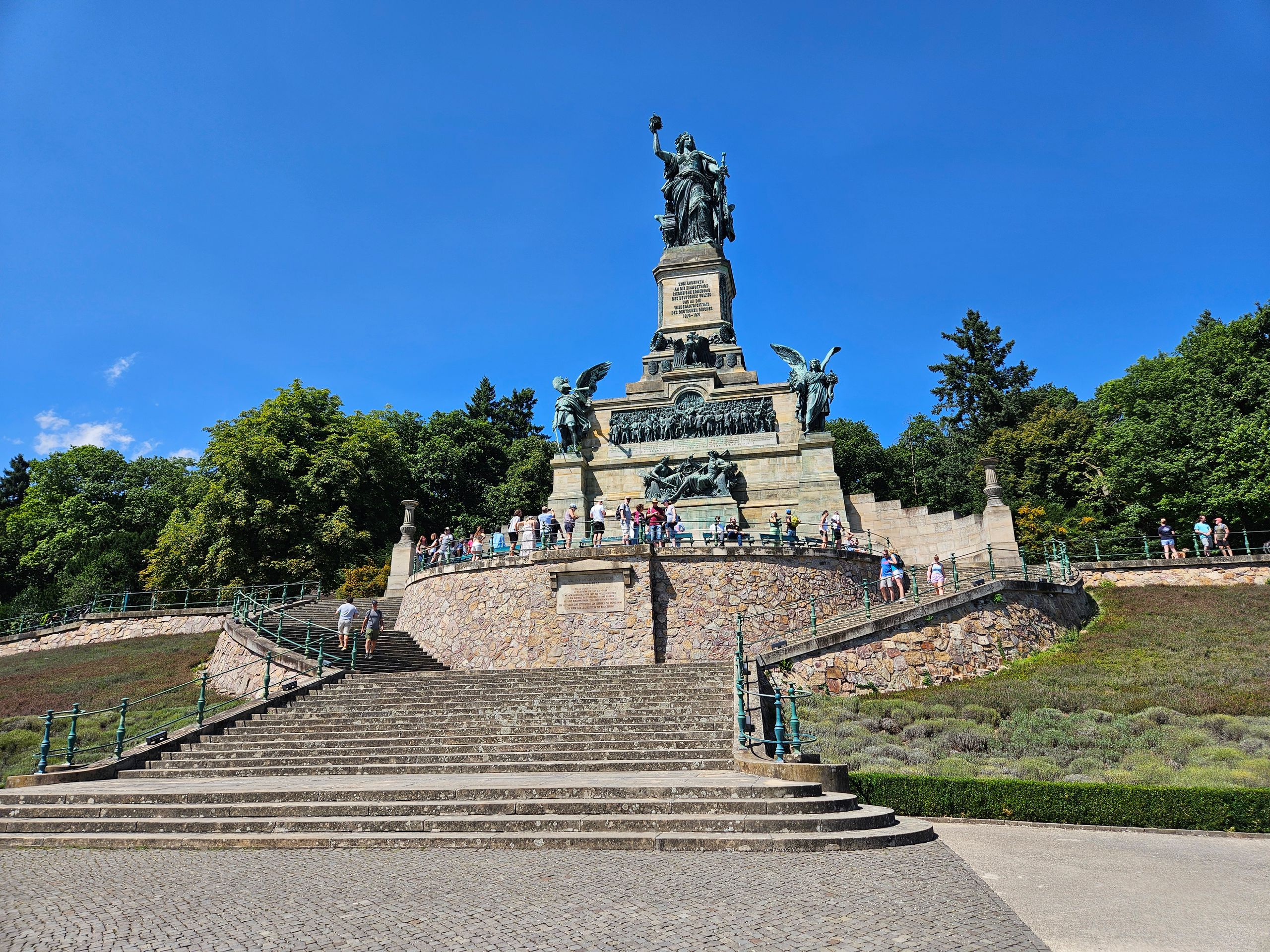
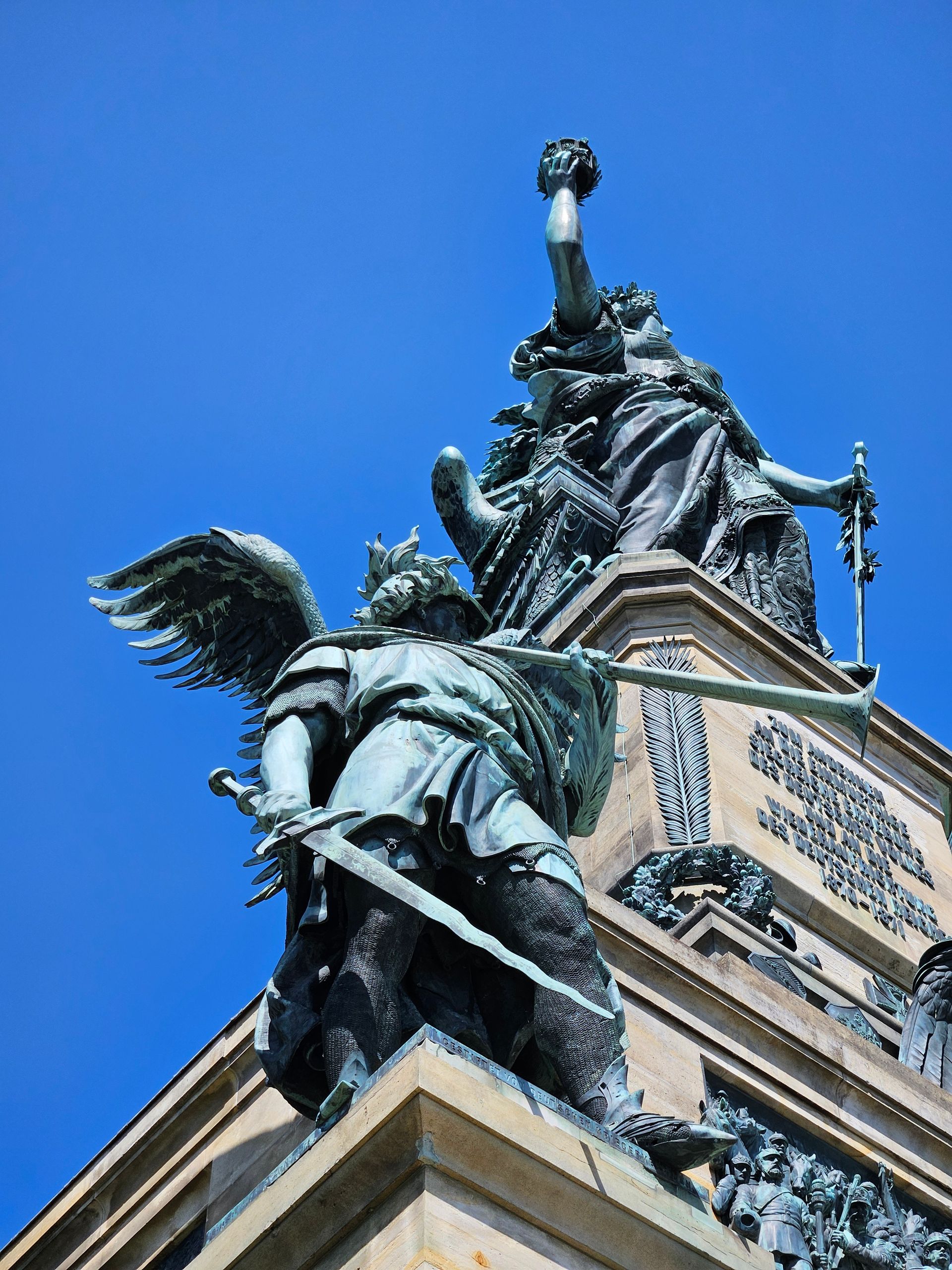
Finally, in 1871, this very location was chosen for the Niederwalddenkmal with its monumental Germania. It was intended to commemorate the founding of the German Empire in the same year, the victory in the Franco-Prussian War from 1870 to 1871, and the newly awakened national self-awareness. Accordingly, the monument is heroic and impressively large. It measures 38.18 meters and was completed in 1883 after six years of construction.
But why this massive bronze Germania?
Many people at that time did not yet identify as Germans but primarily as Saxons, Bavarians, Prussians, or Hesse. Large monuments like the Victory Column in Berlin from 1873 or the Hermann Monument in the Teutoburg Forest from 1875 were meant to strengthen this sense of community.
Today, such German nationalism feels somewhat foreign and at least warrants an explanation. At the foot of the monument, several signs inform visitors about the historical context and period of creation.
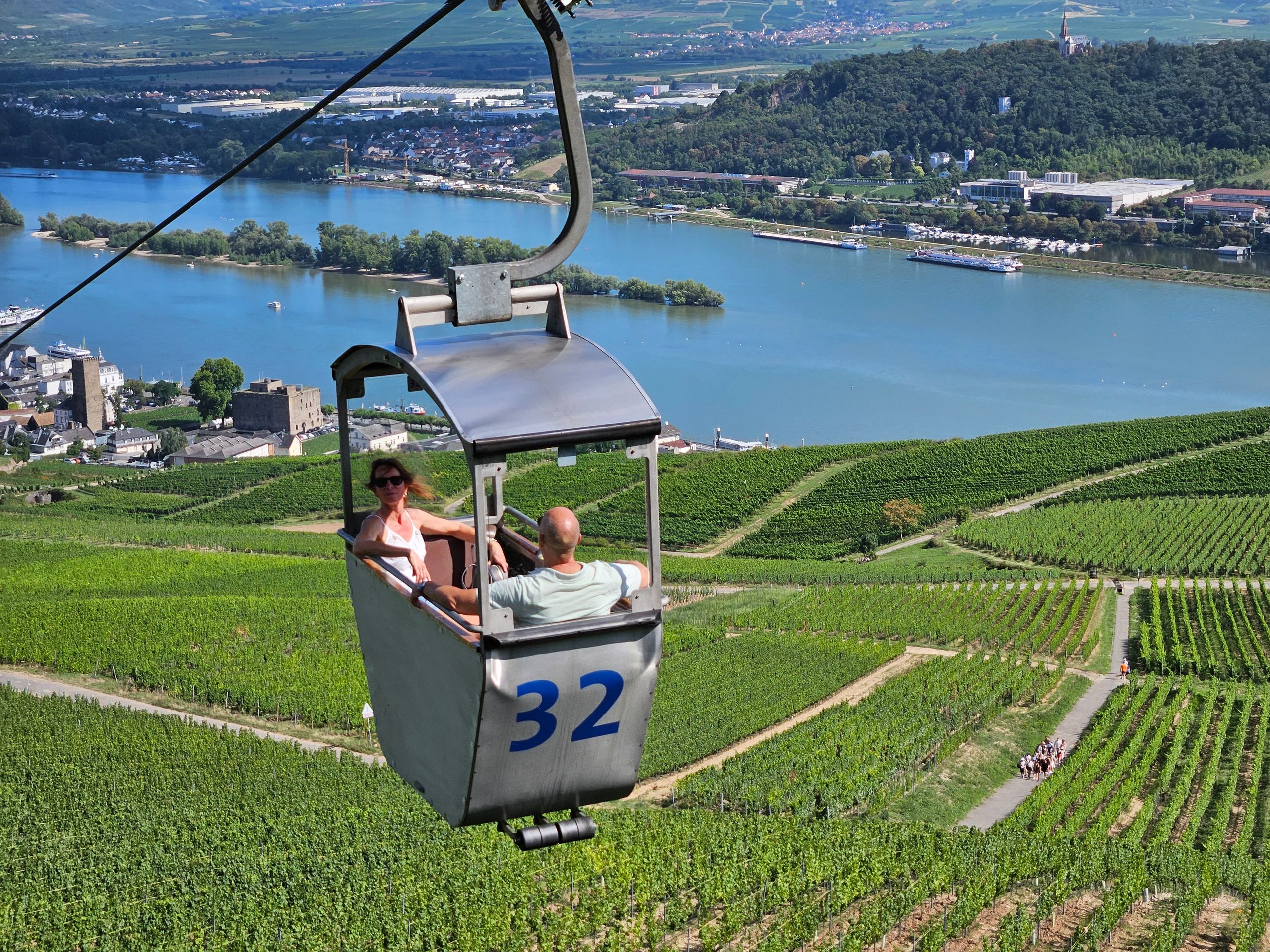
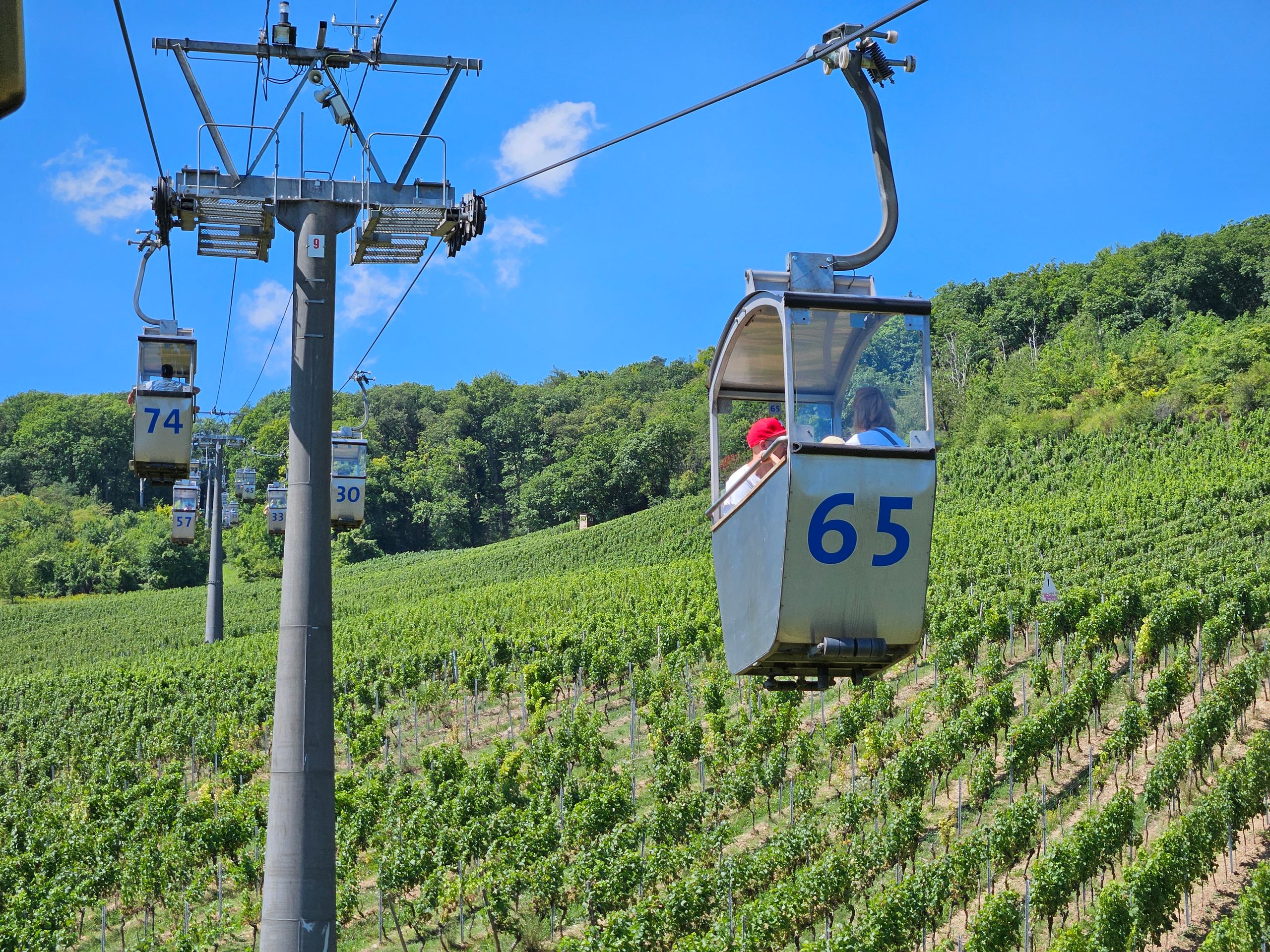
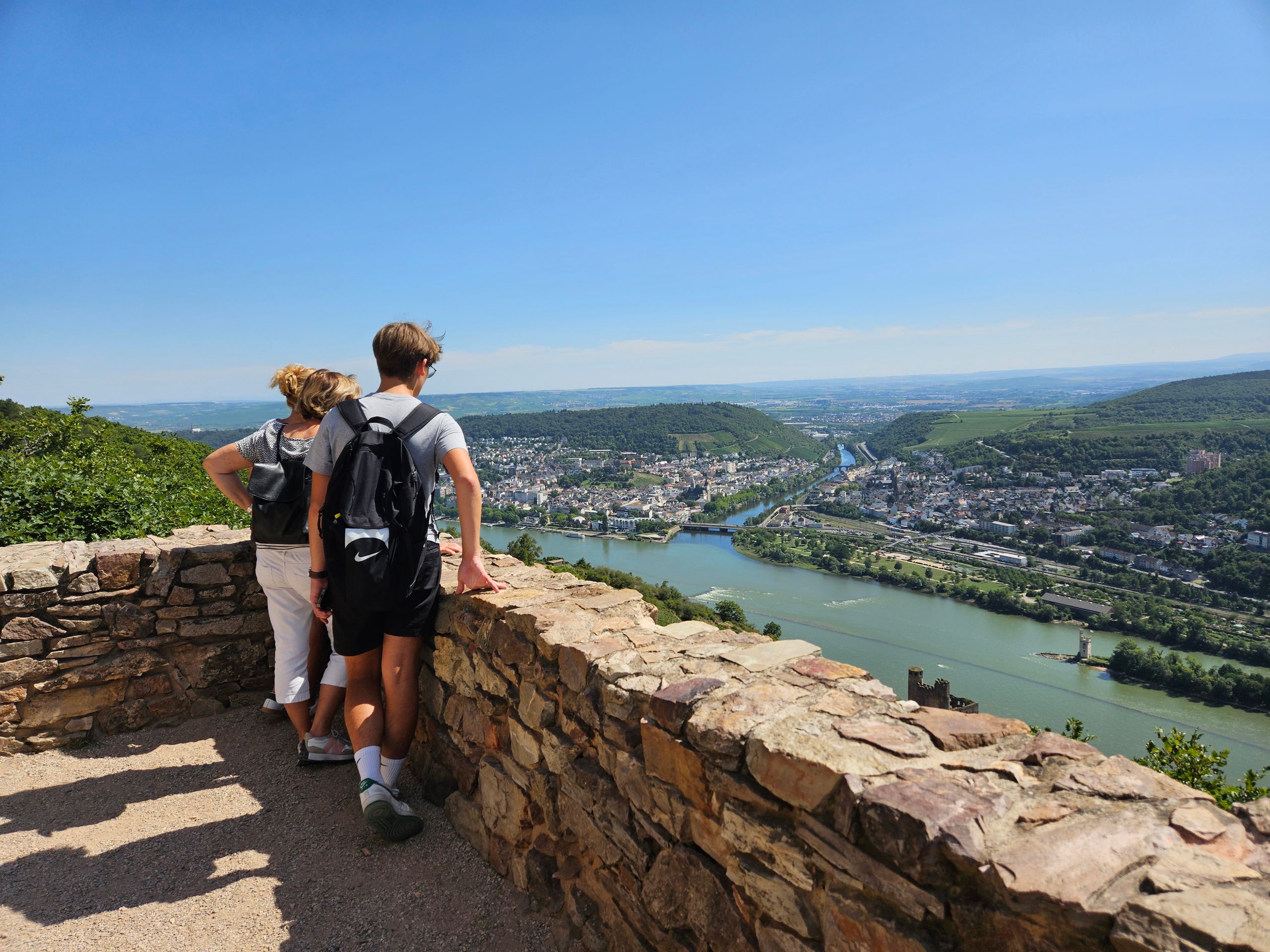
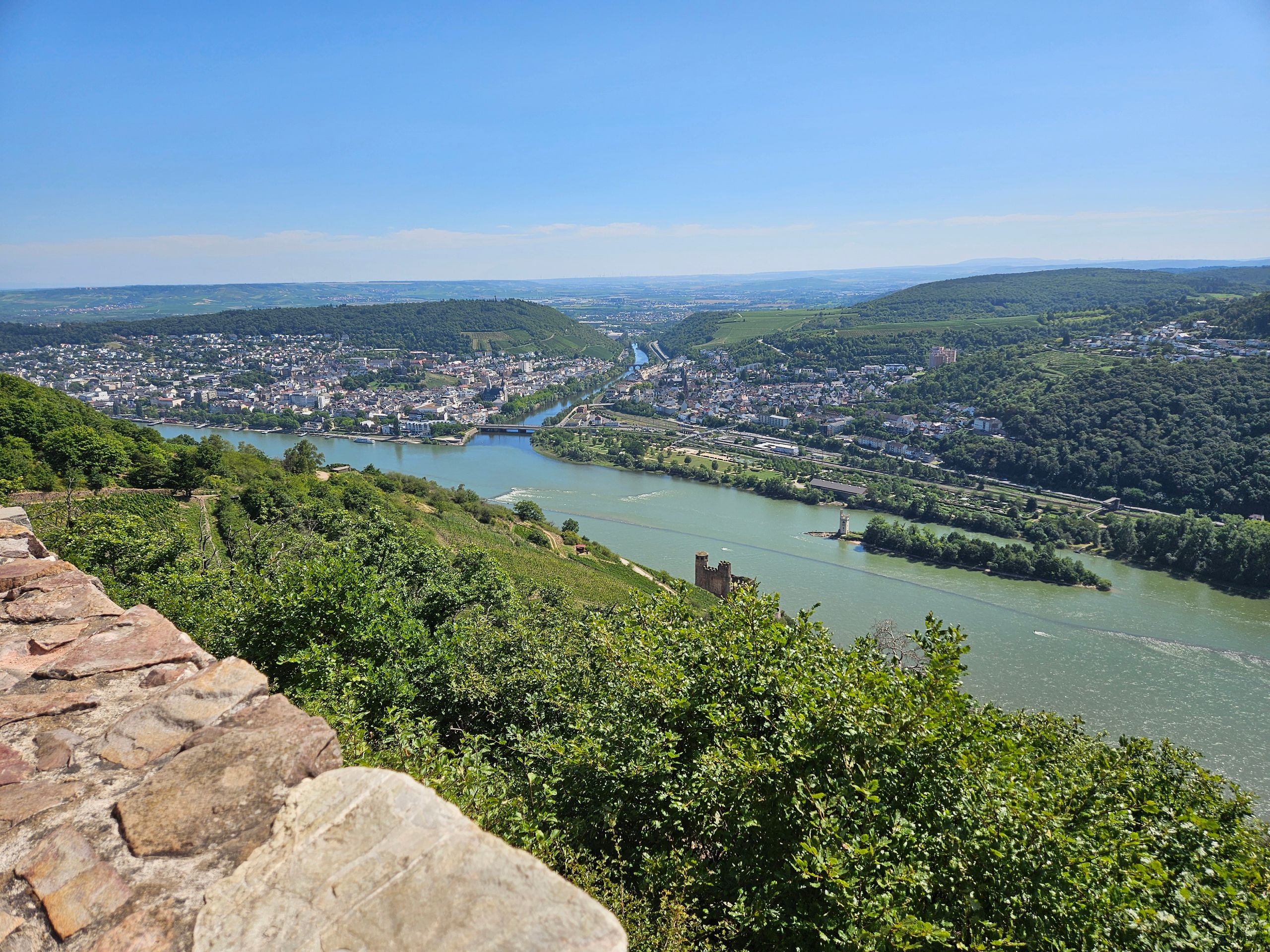
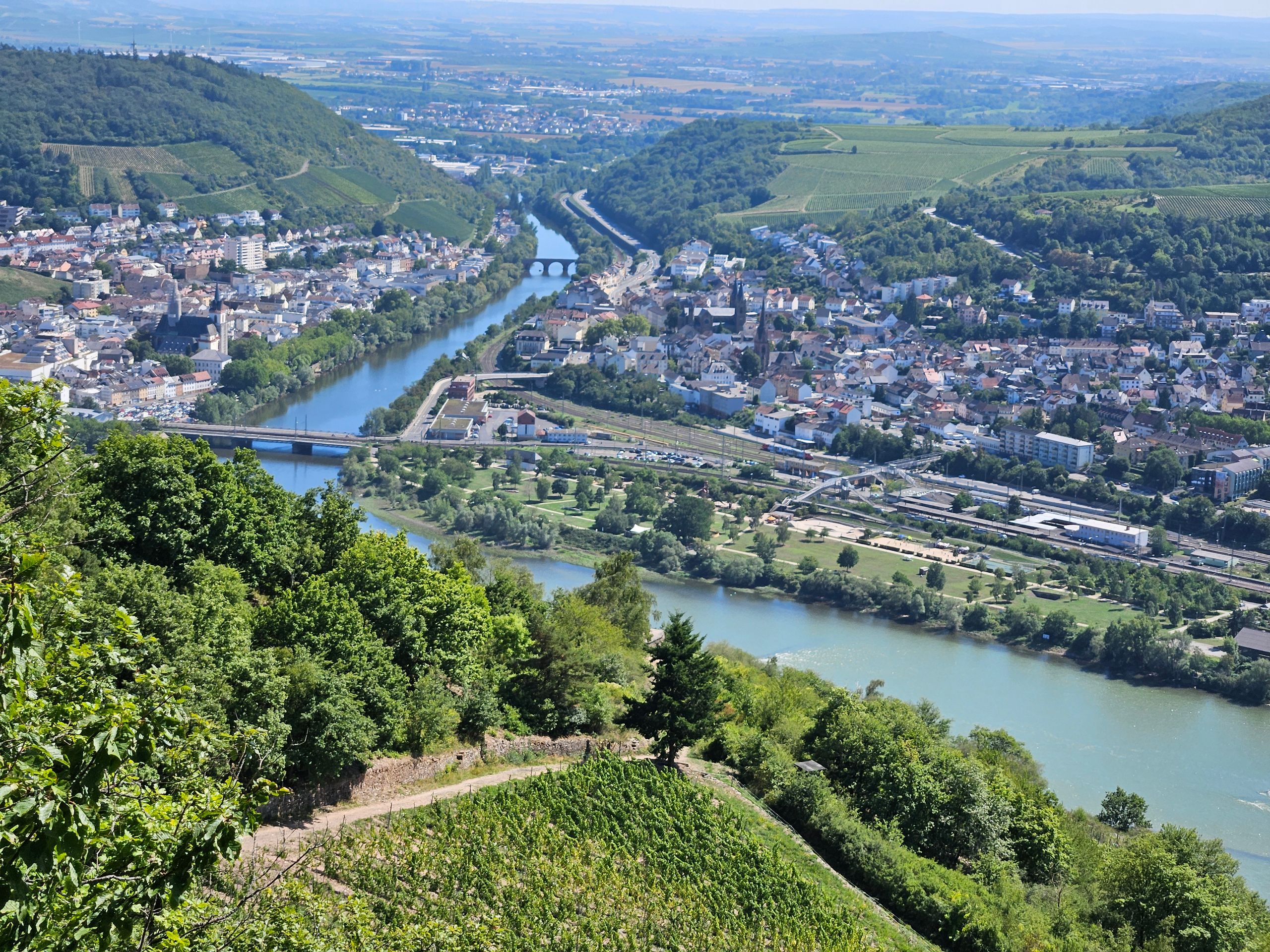
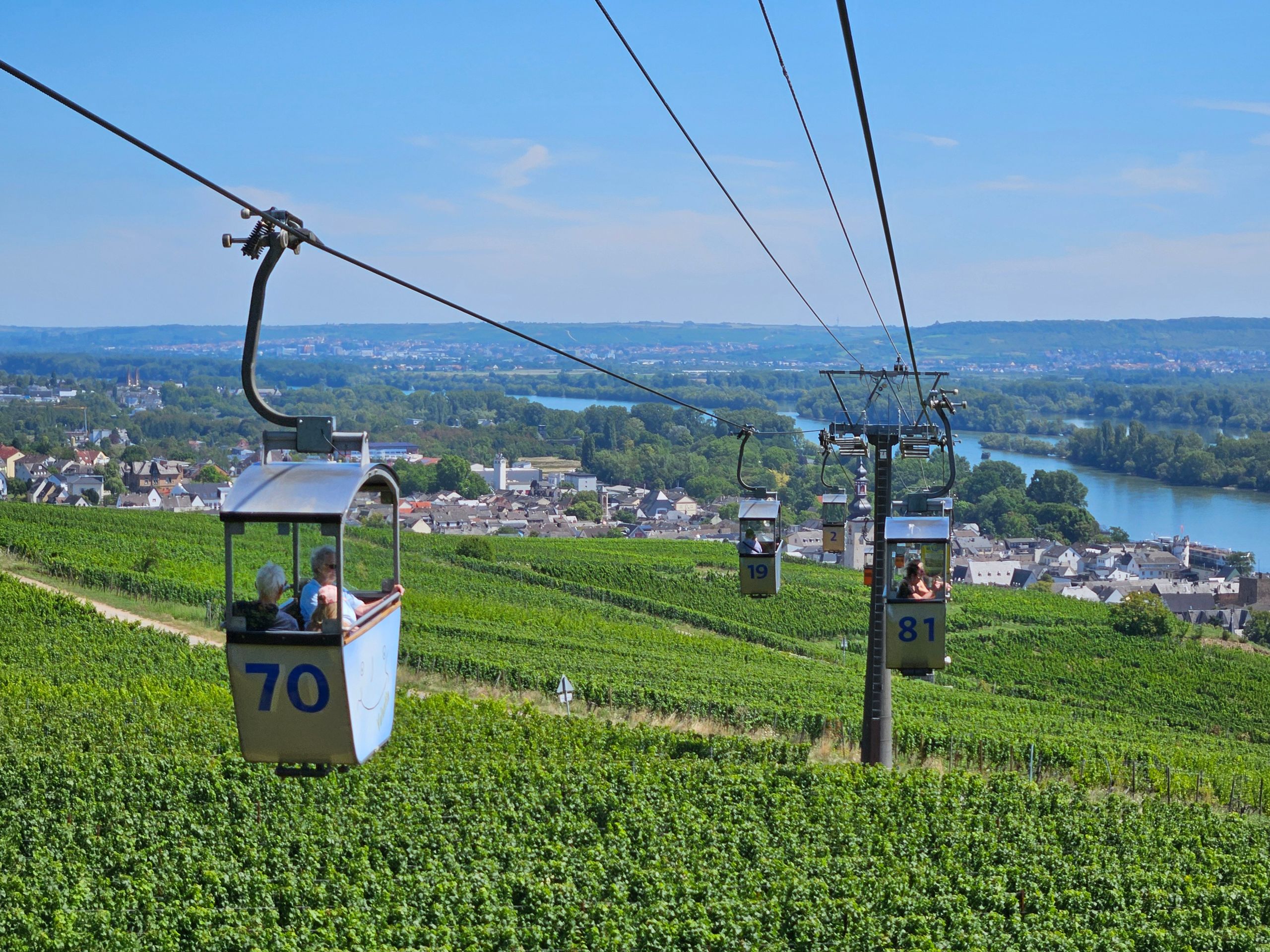
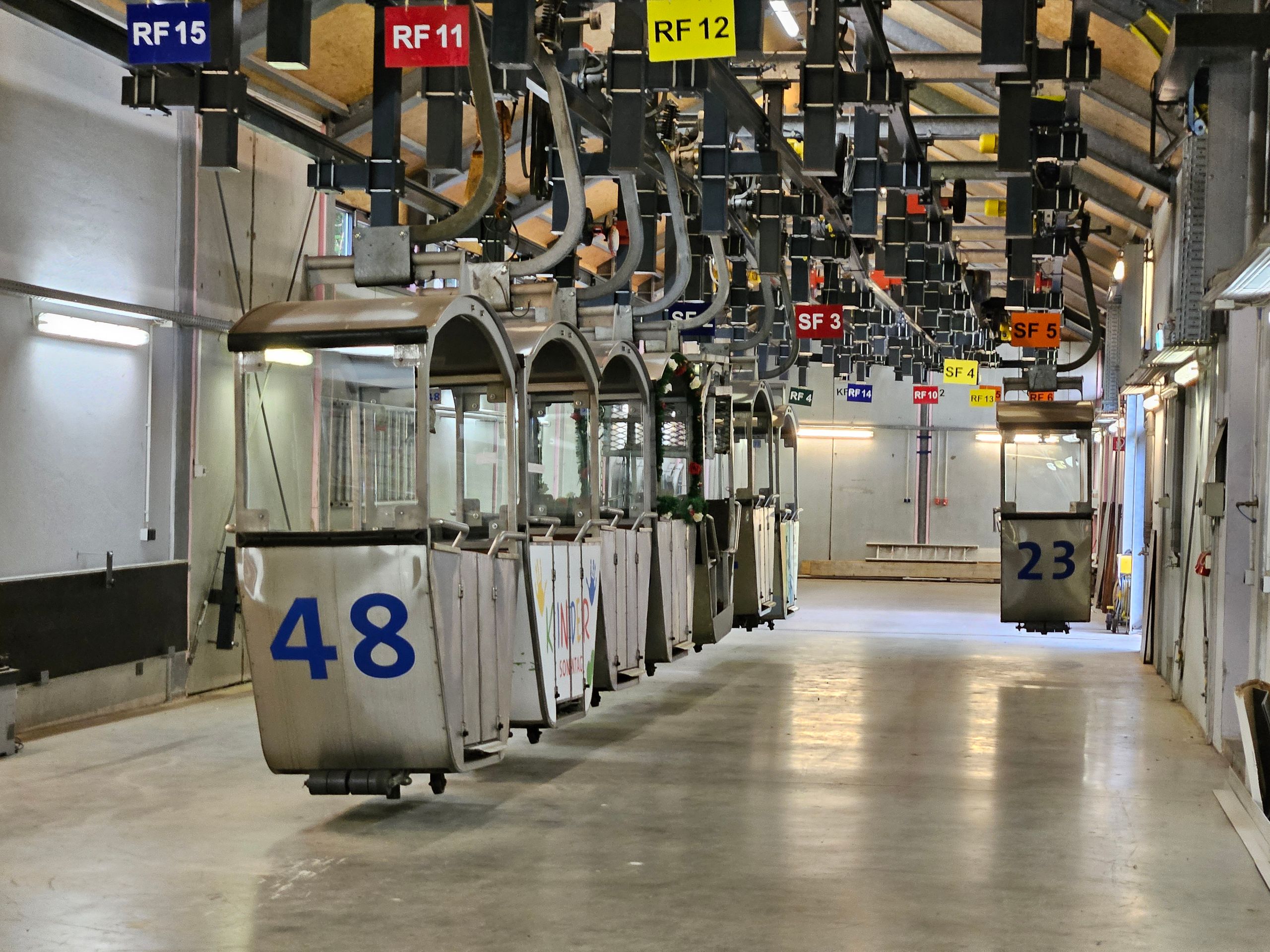
Following the inauguration of the Niederwalddenkmal, the popularity of the place certainly continued to rise. A cogwheel train was built, and donkey cart rides were also offered. Since 1954, however, a cable car has comfortably led from the town to the top. In gondolas designed for two people, you glide silently over the vines, in line with the catchphrase “Gliding over Vines,” and enjoy the view of the Rhine, the vineyards, and the rooftops of Rüdesheim.
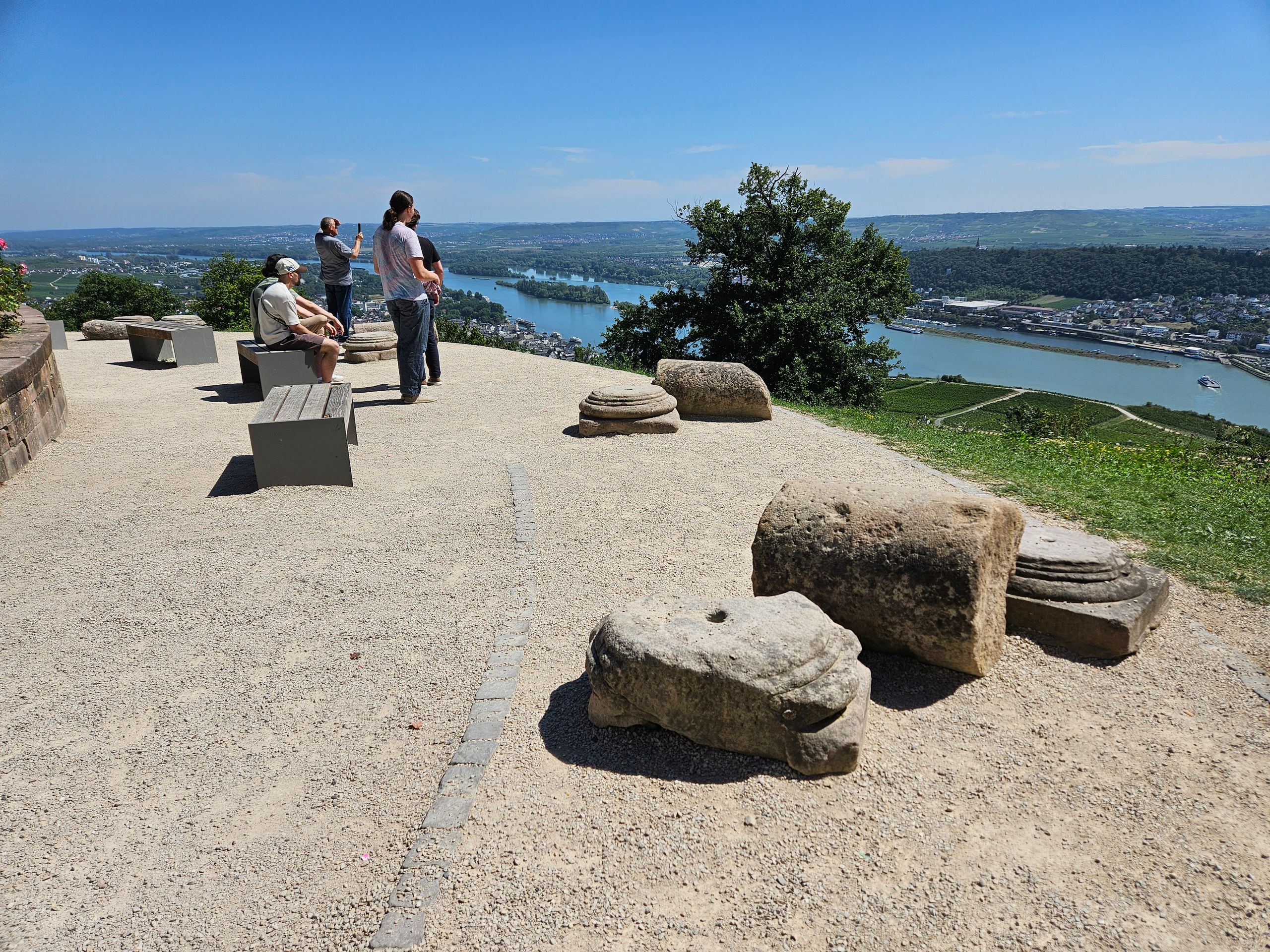
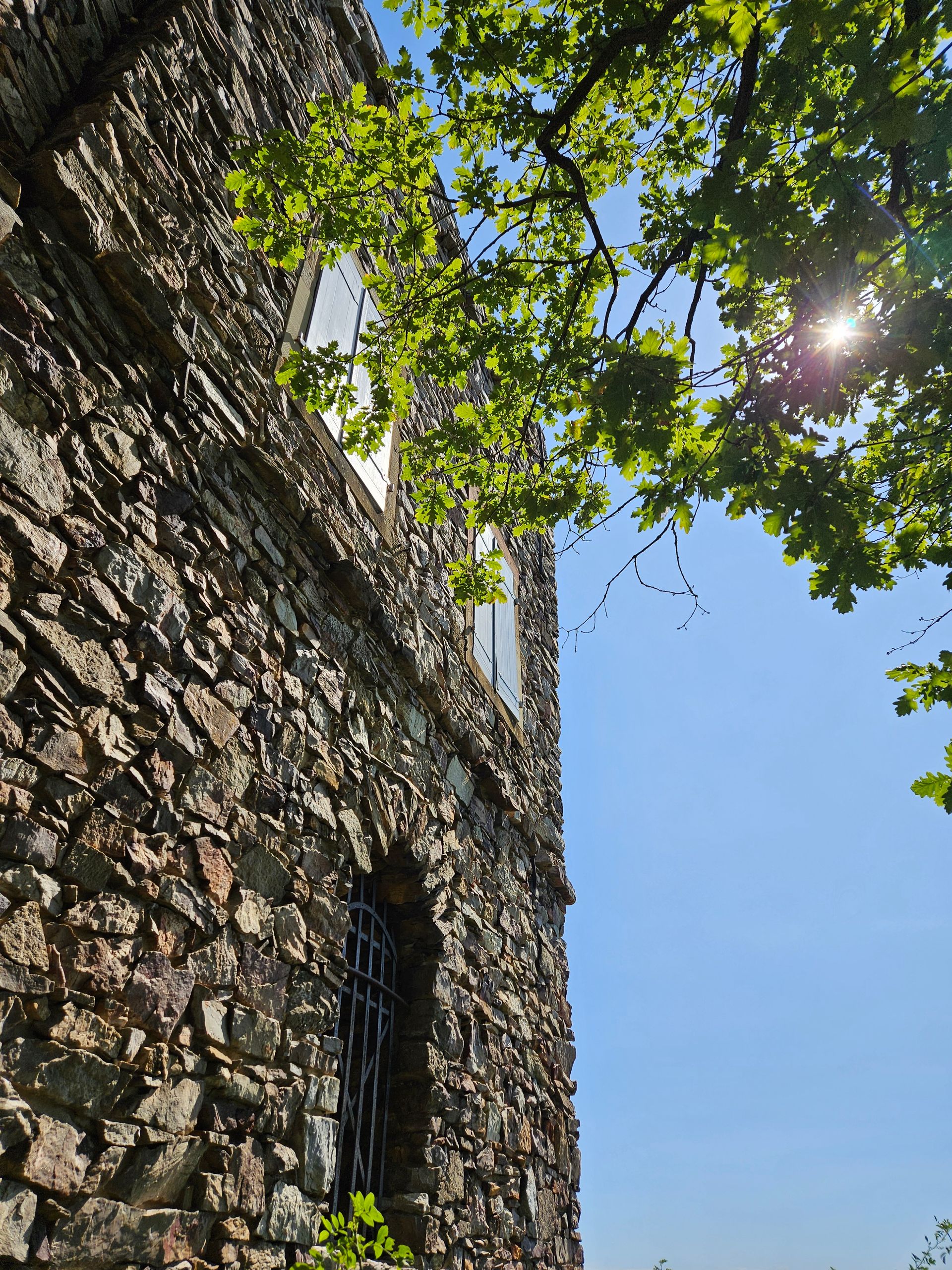
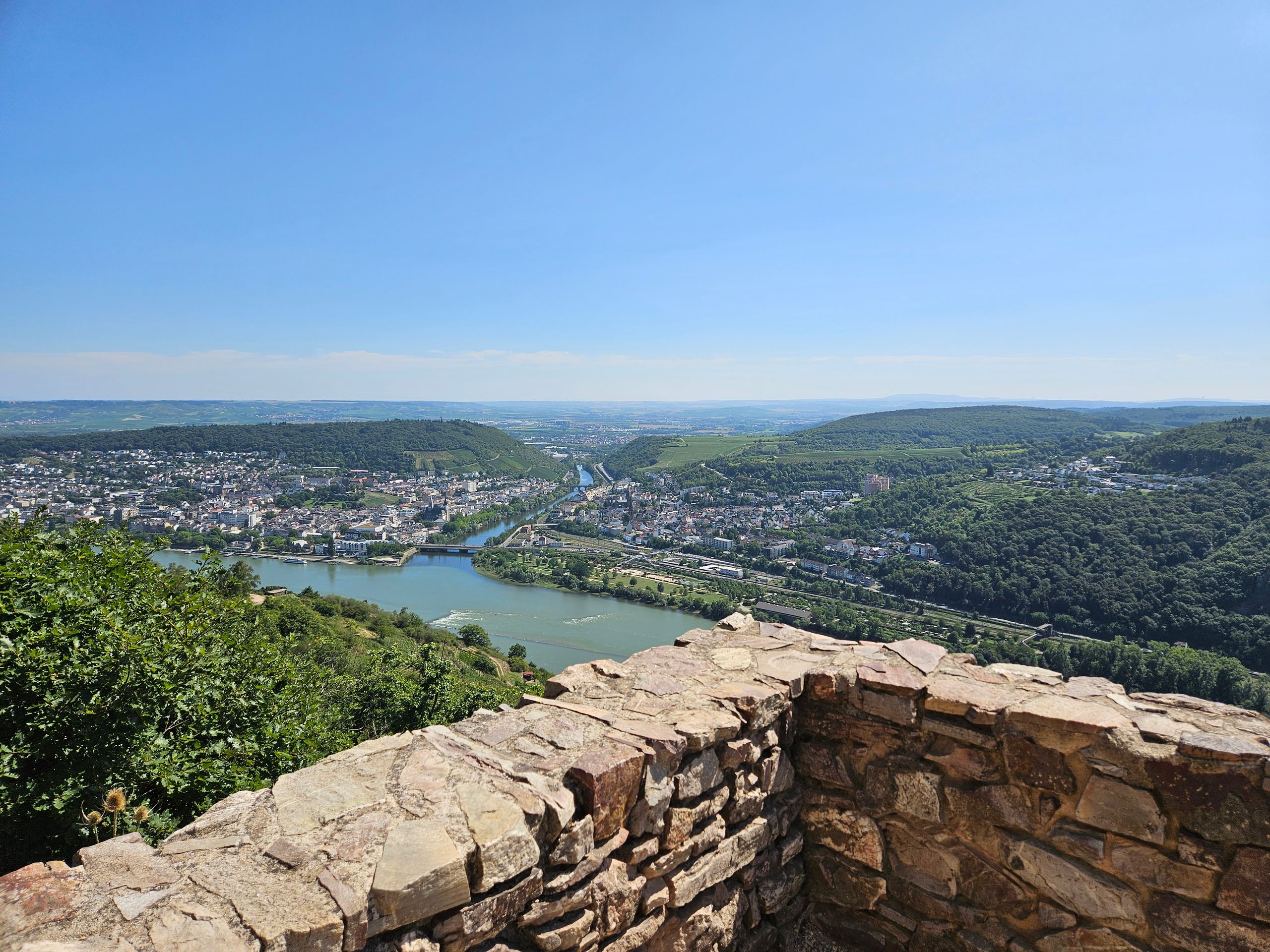
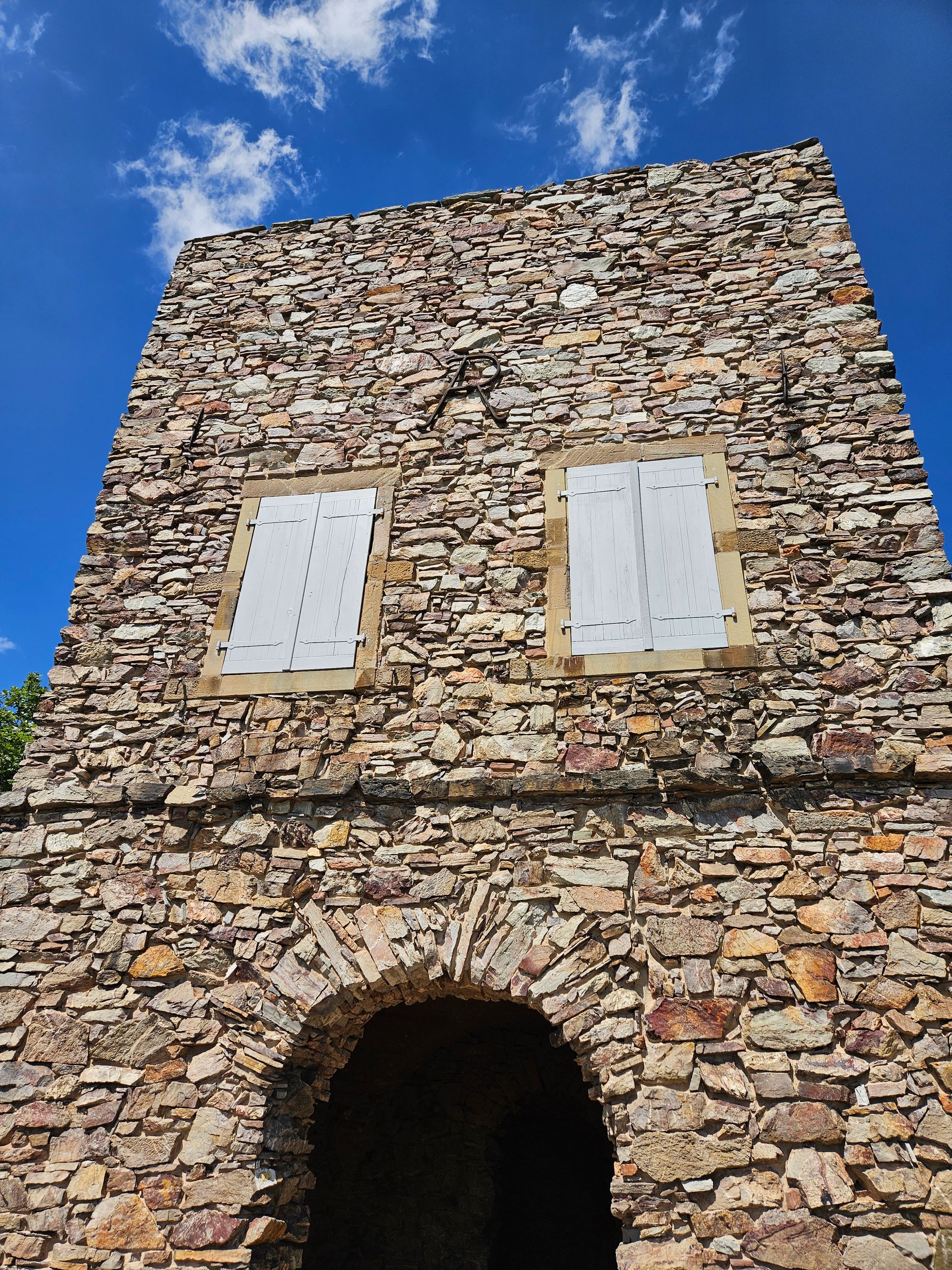
Upon arriving at the top, you can continue to hike to the viewpoint Naheblick, which, as the name suggests, offers the perfect view of the Nahe estuary. A few steps further is the viewpoint Rittersaal.
For the return journey, you have a choice: walk back through the vineyards or take the gondola down again. At 32 degrees, we opted for the comfortable ride.
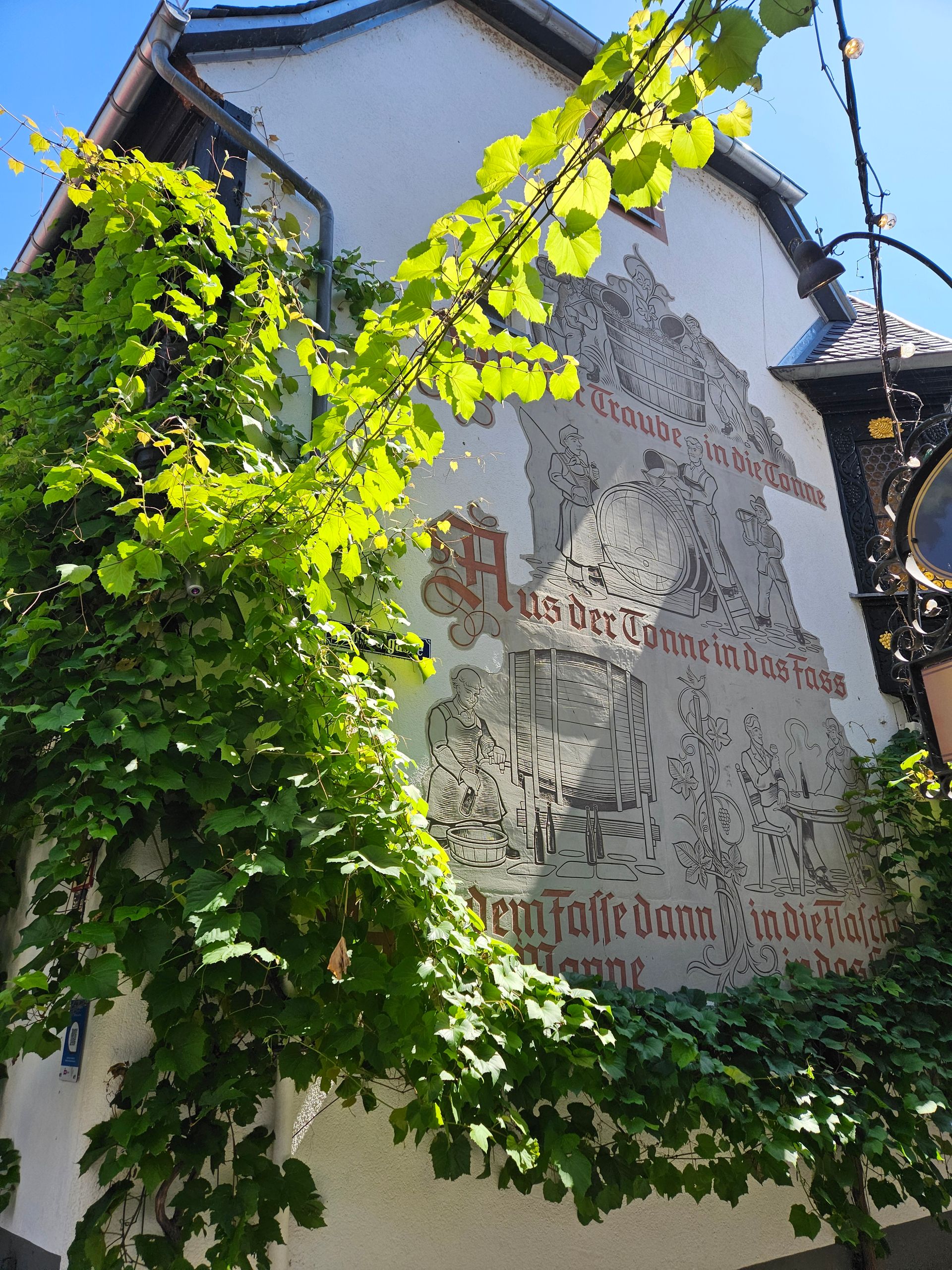
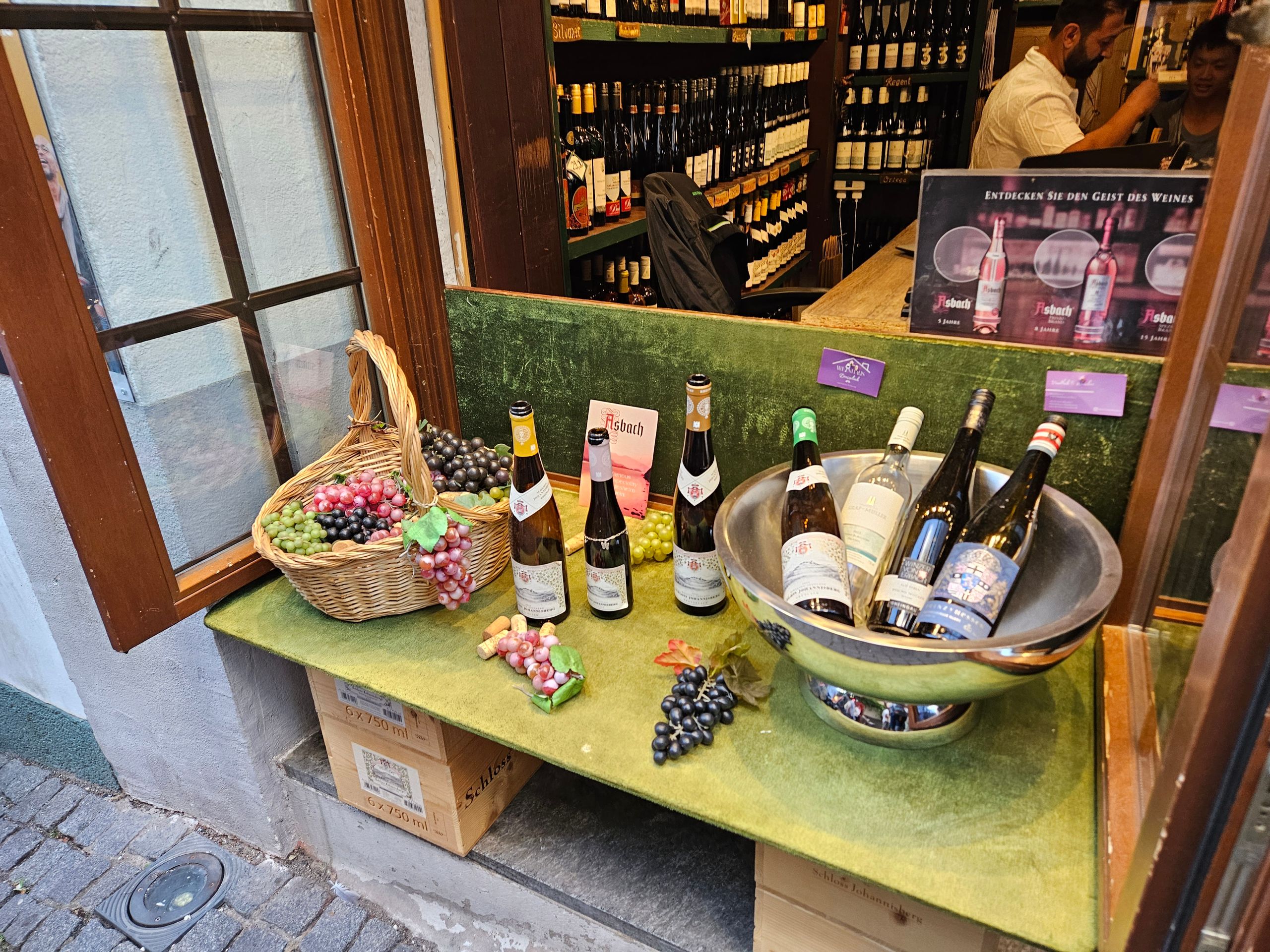
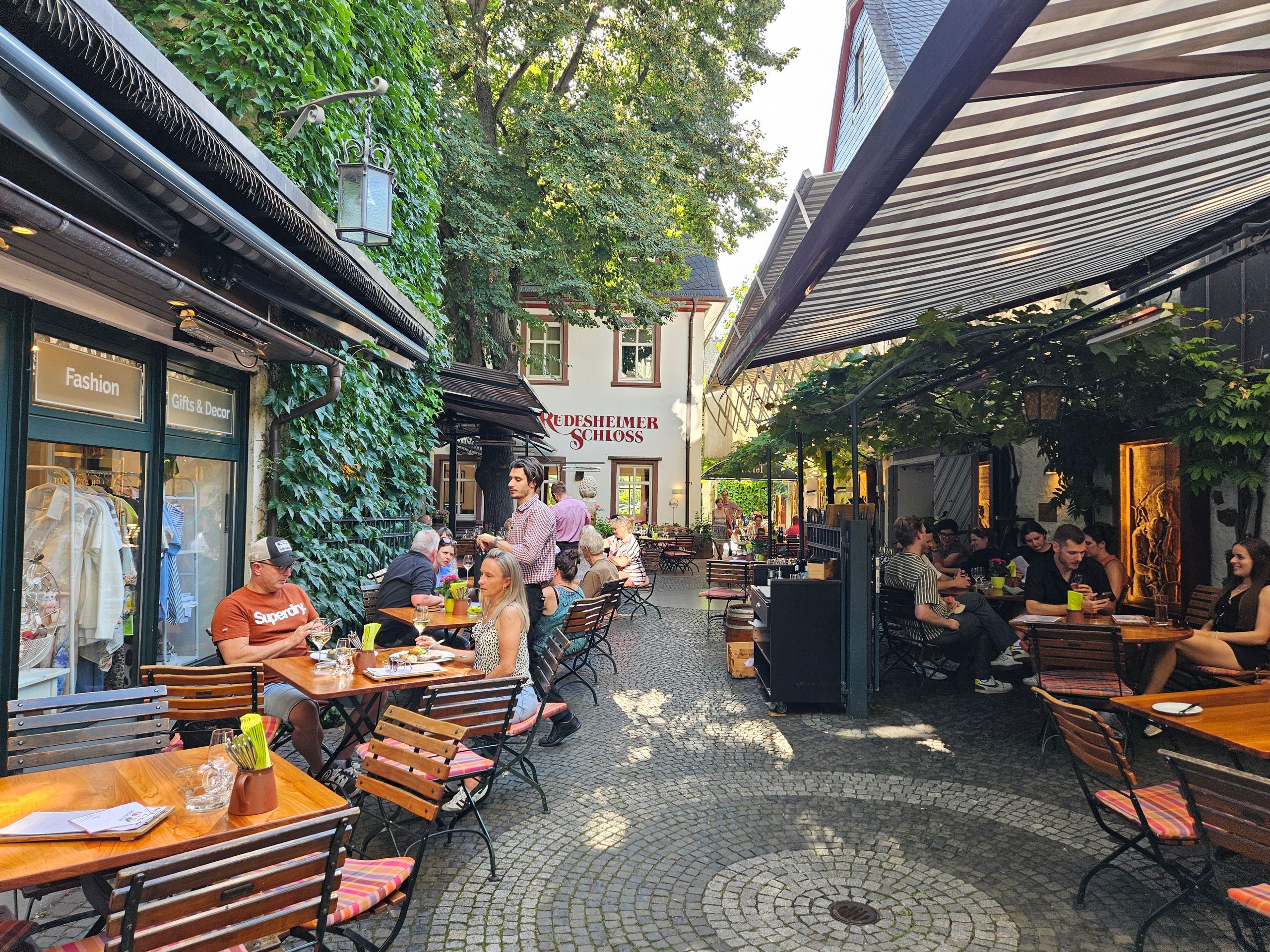
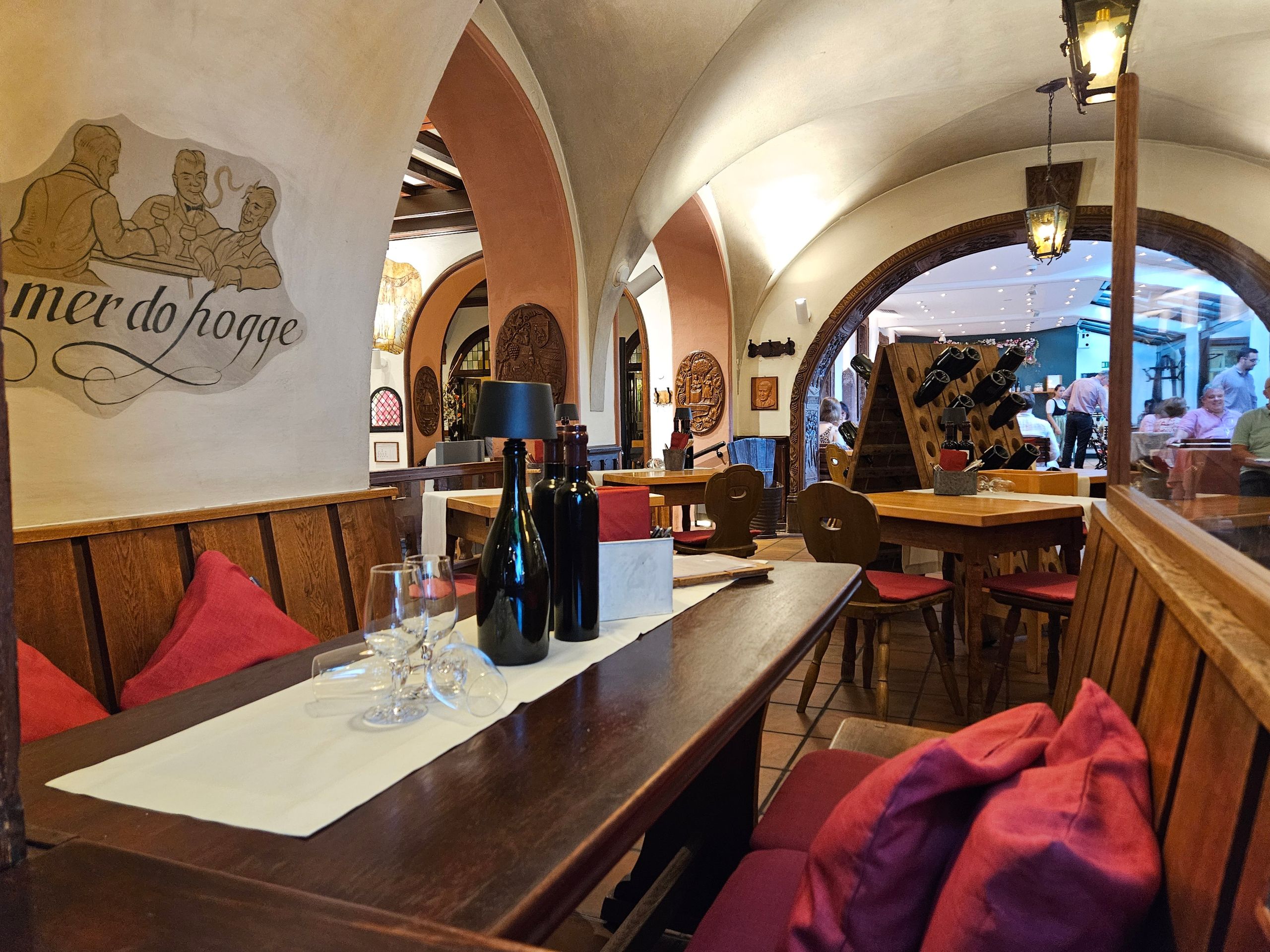
And because Rüdesheim am Rhein is primarily a wine town, we wandered through Drosselgasse after our little mountain tour, enjoying a beer and some water!
We then reluctantly began our return journey on RB 10. Despite the lovely mountain hike and pleasant hours in the town, there was a feeling that we had not yet discovered everything. But this time, the ride was anything but relaxed: outside it was 32 degrees, inside even hotter, stuffy, and overcrowded. No seats to be found – we stood the entire way. After a little over an hour, we were relieved to breathe fresh air again in Frankfurt.