
Mâcon - Tournus - Chalon
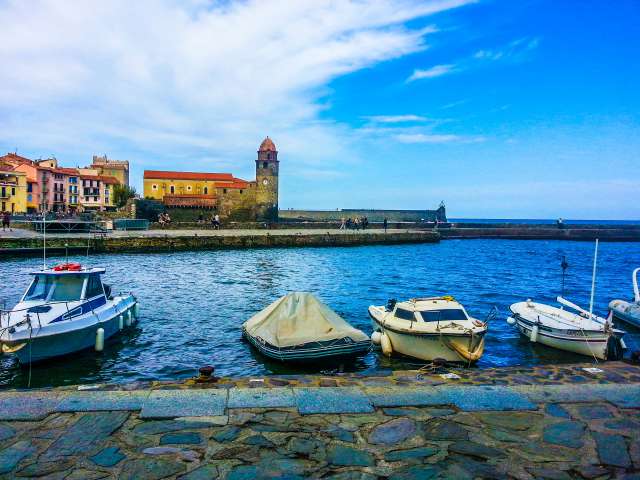
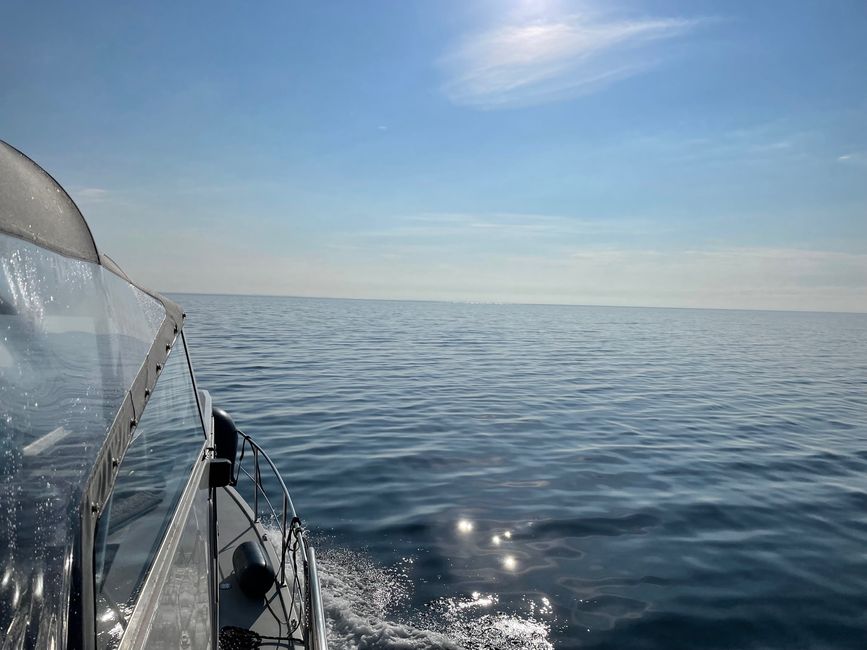
Our next leg takes us from Mâcon to Chalon sur Saône. Ahead of us are 58.38 km and two locks. The old locks of the Saône are partially used today as ports for recreational...


Published: 02.06.2025
Chalon-sur-Saône,
Quote from Wikipedia:
is a French city in the Saône-et-Loire department in the Burgundy-Franche-Comté region. With 44,592 inhabitants (as of January 1, 2022), it is the largest city in the department, but not its administrative center; it only hosts a sub-prefecture. After Dijon, Chalon is the second largest city in Burgundy. The residents are called Chalonnais and Chalonnaises.
We wanted to stay here for two days, replenish supplies, and take a closer look at the city we had flown over two years ago; after all, Chalon is the cradle of photography, Joseph Nicéphore Niépce was born here.
Quote from Wikipedia:
After further elaborate experiments, he then captured what is likely the world's first light-stable photograph in early autumn 1826 in Saint-Loup-de-Varennes: a view from the window of his study at the Le Gras estate with an exposure time of eight hours in the format of 16.5 × 21 cm. He used a camera obscura and a photosensitive asphalt coating as a chemical substance. This hardens when exposed to light and was developed with lavender oil. Niépce called his process Heliography (from ancient Greek Ἥλιος, translit. helios = Sun and γράφειν, translit. graphein = to draw, to depict)
Unfortunately, the visit to the museum was sacrificed to the fact that while supermarkets are open all 7 days in France, state institutions are much stricter when a holiday like Ascension Day approaches.
We experienced something similar in Avignon; all shops were open, just not the post office.
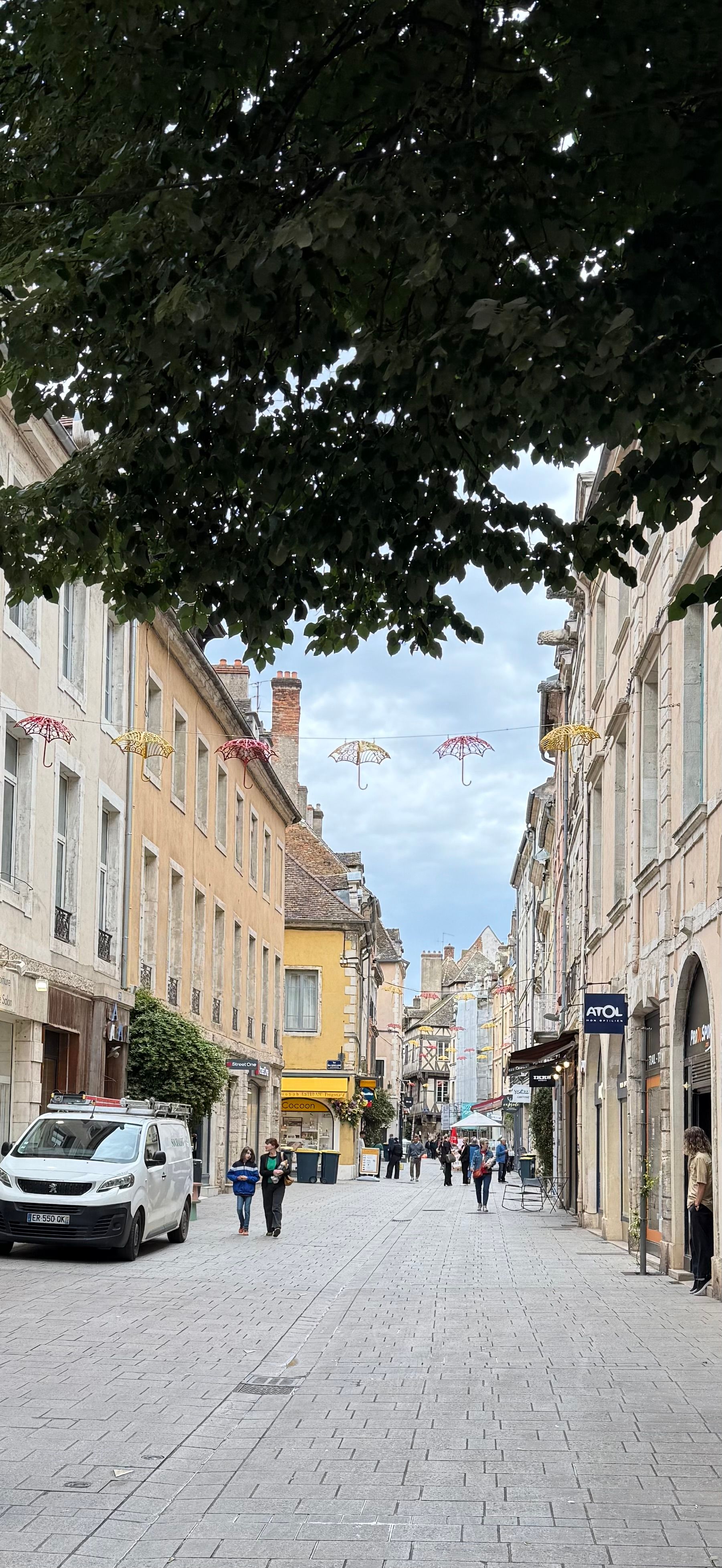
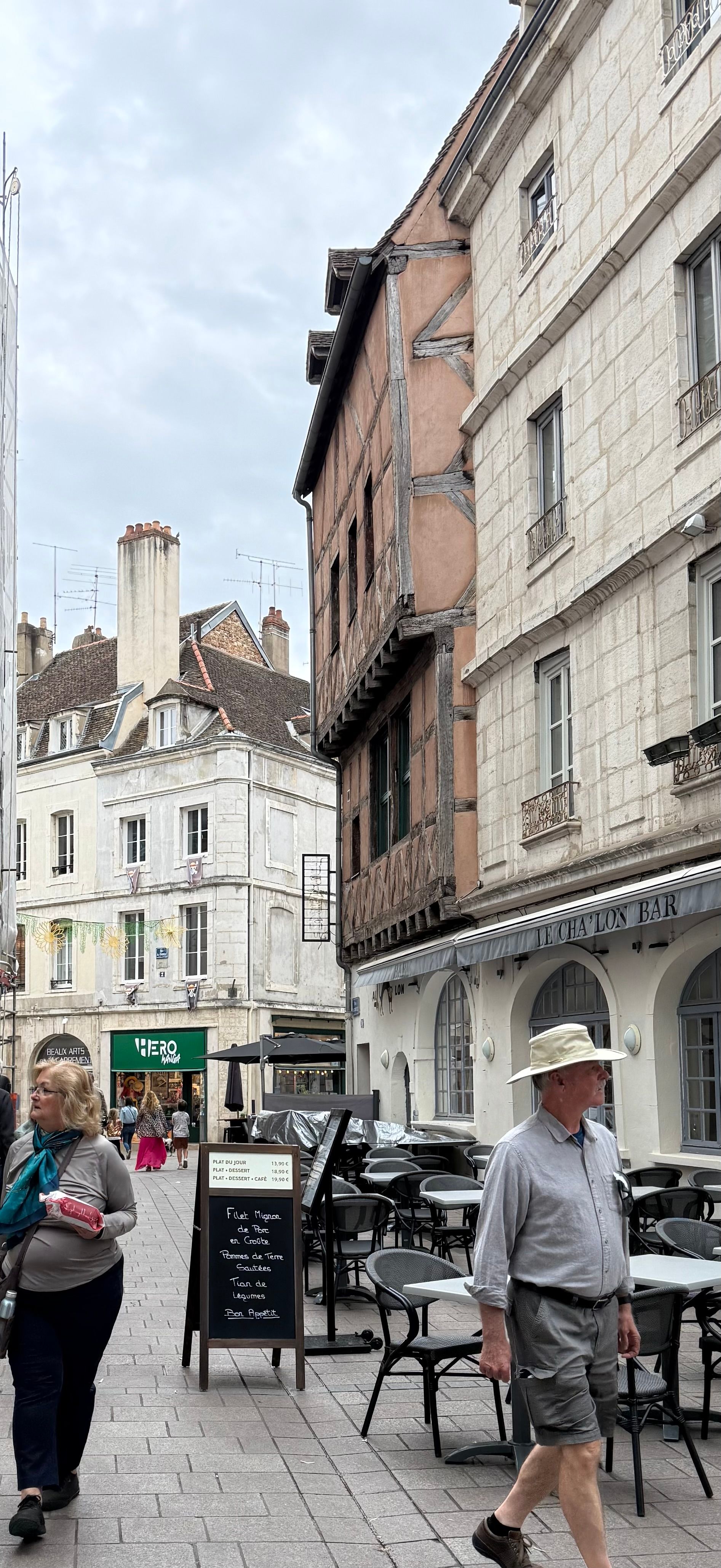
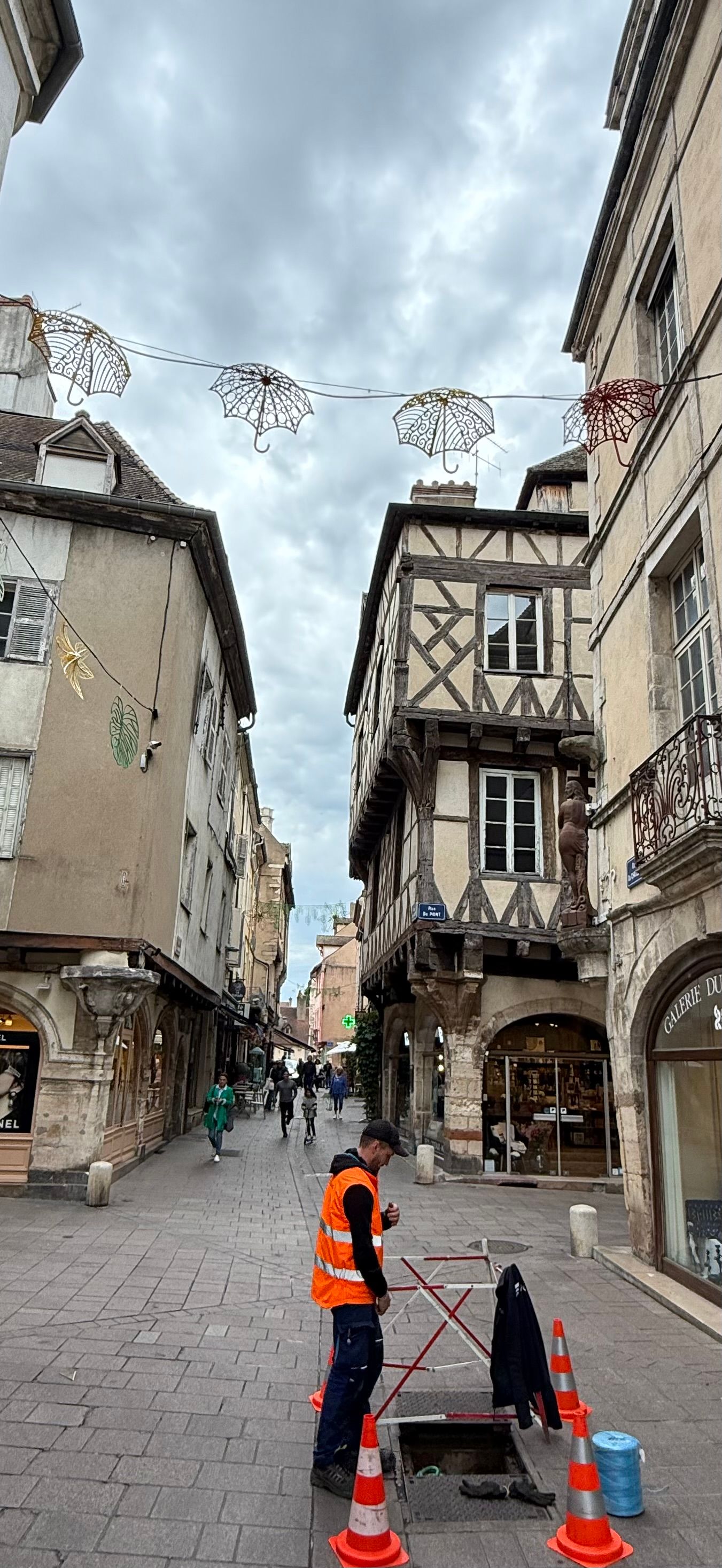
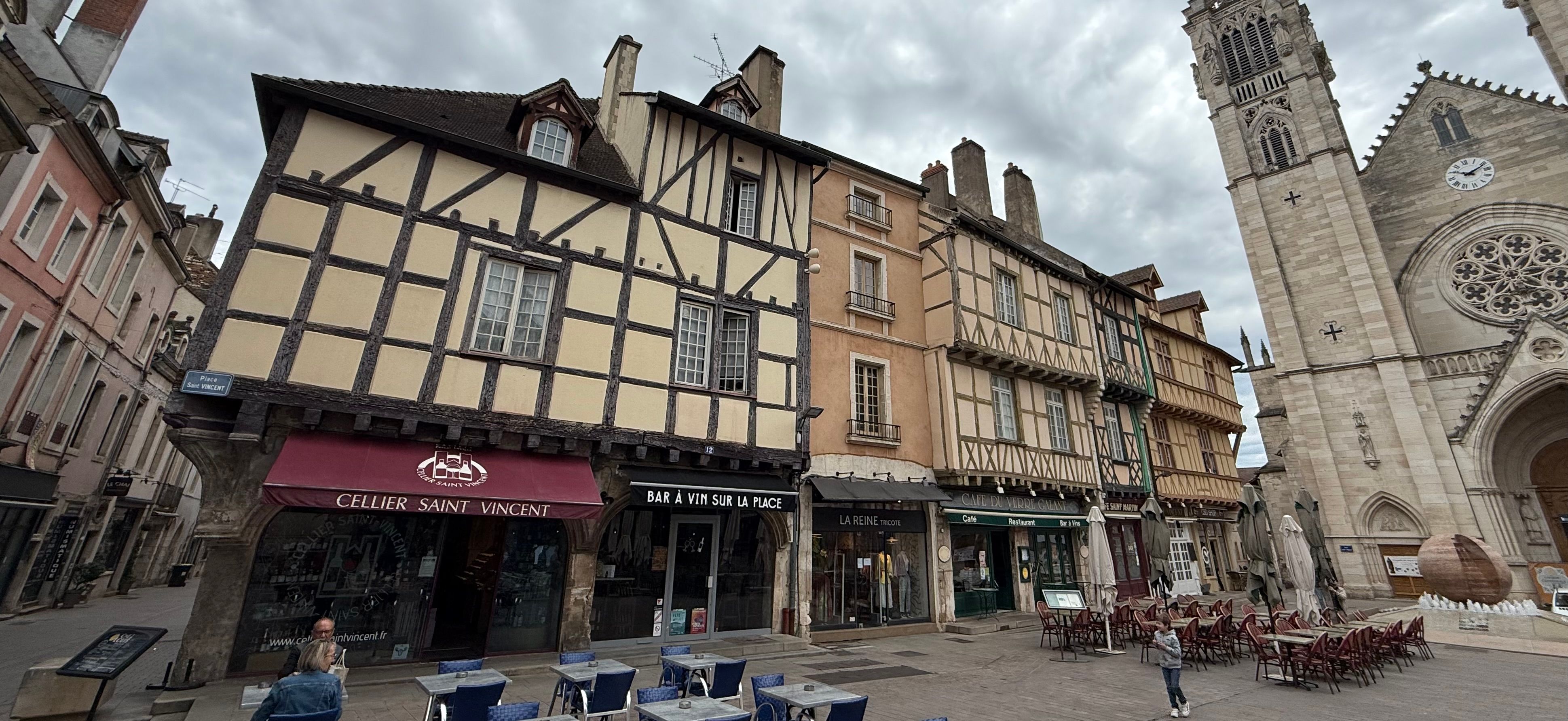
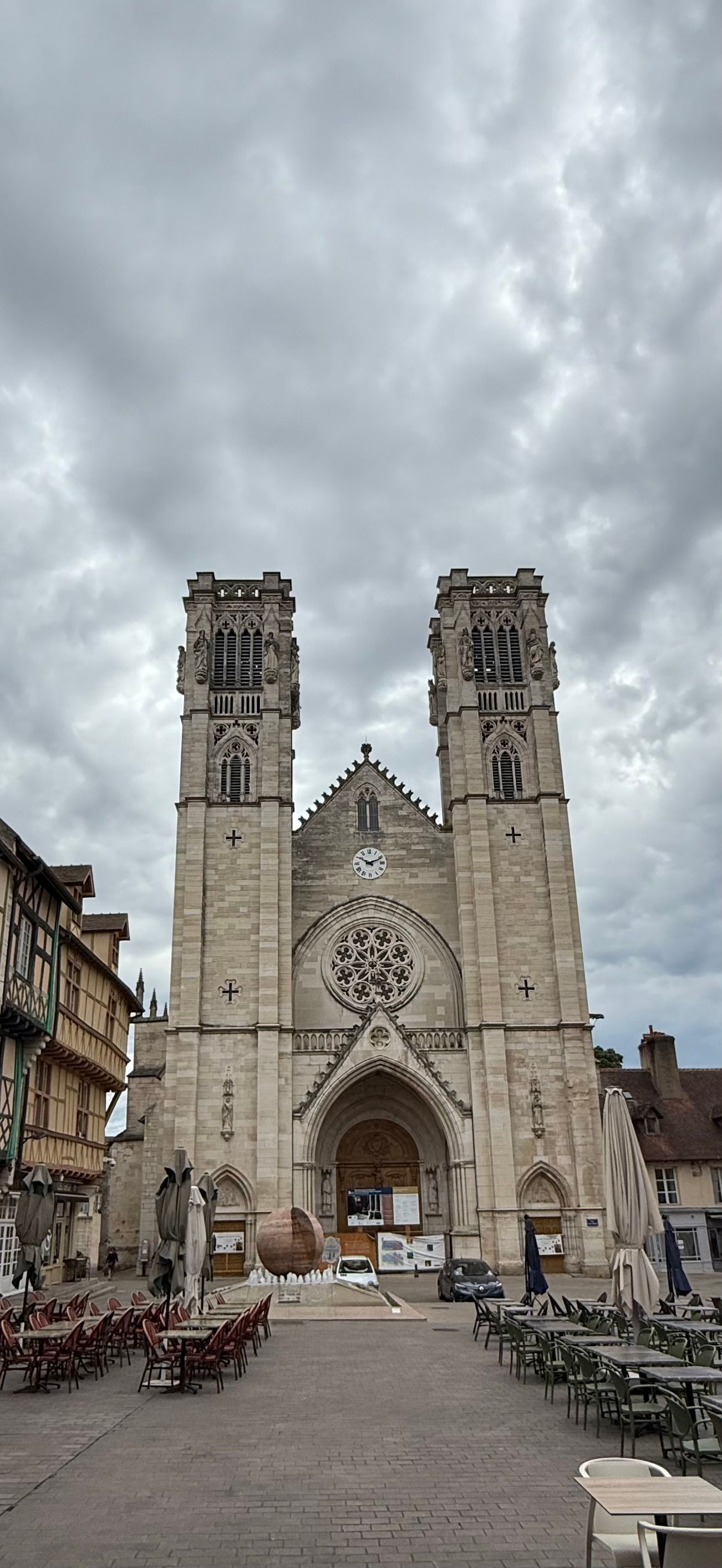
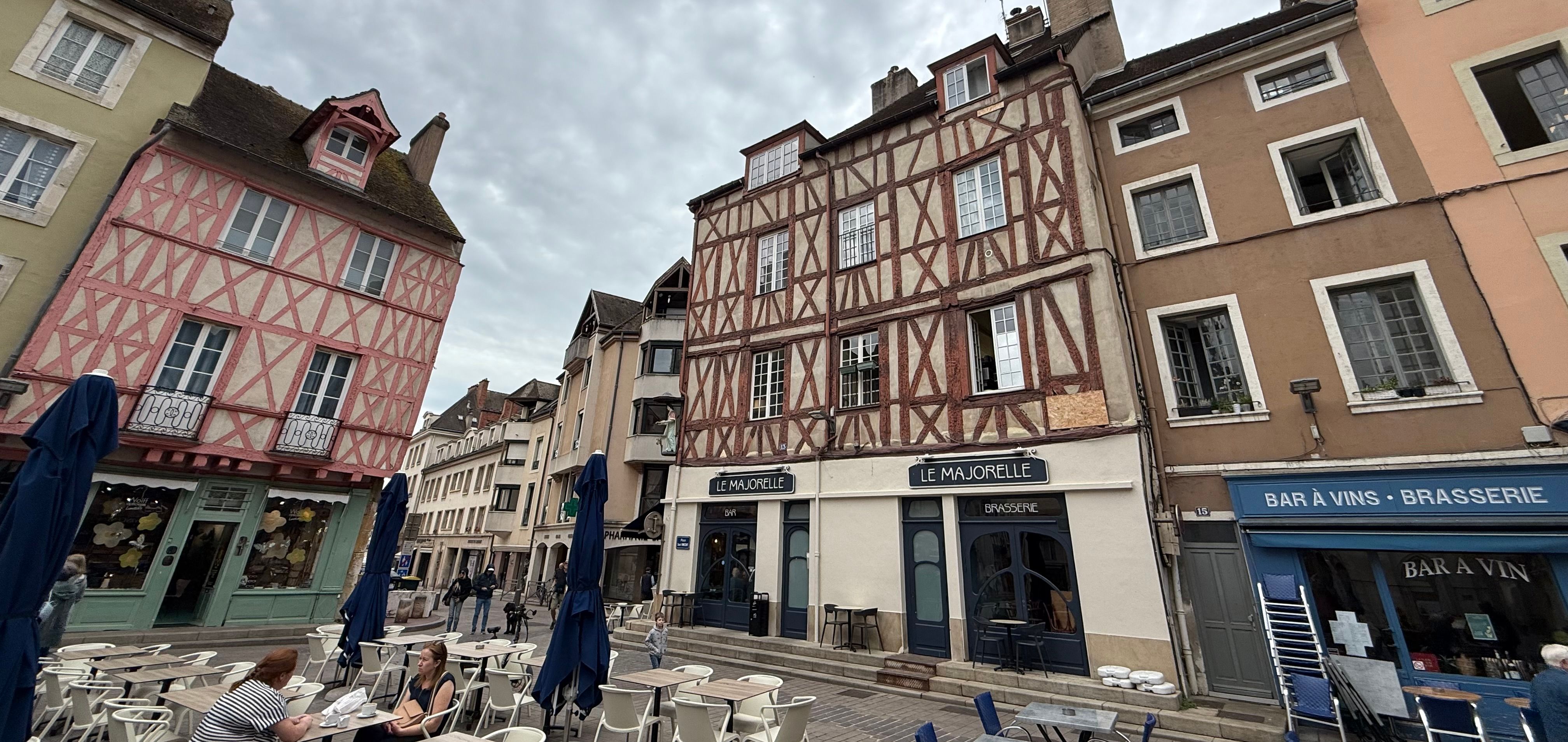
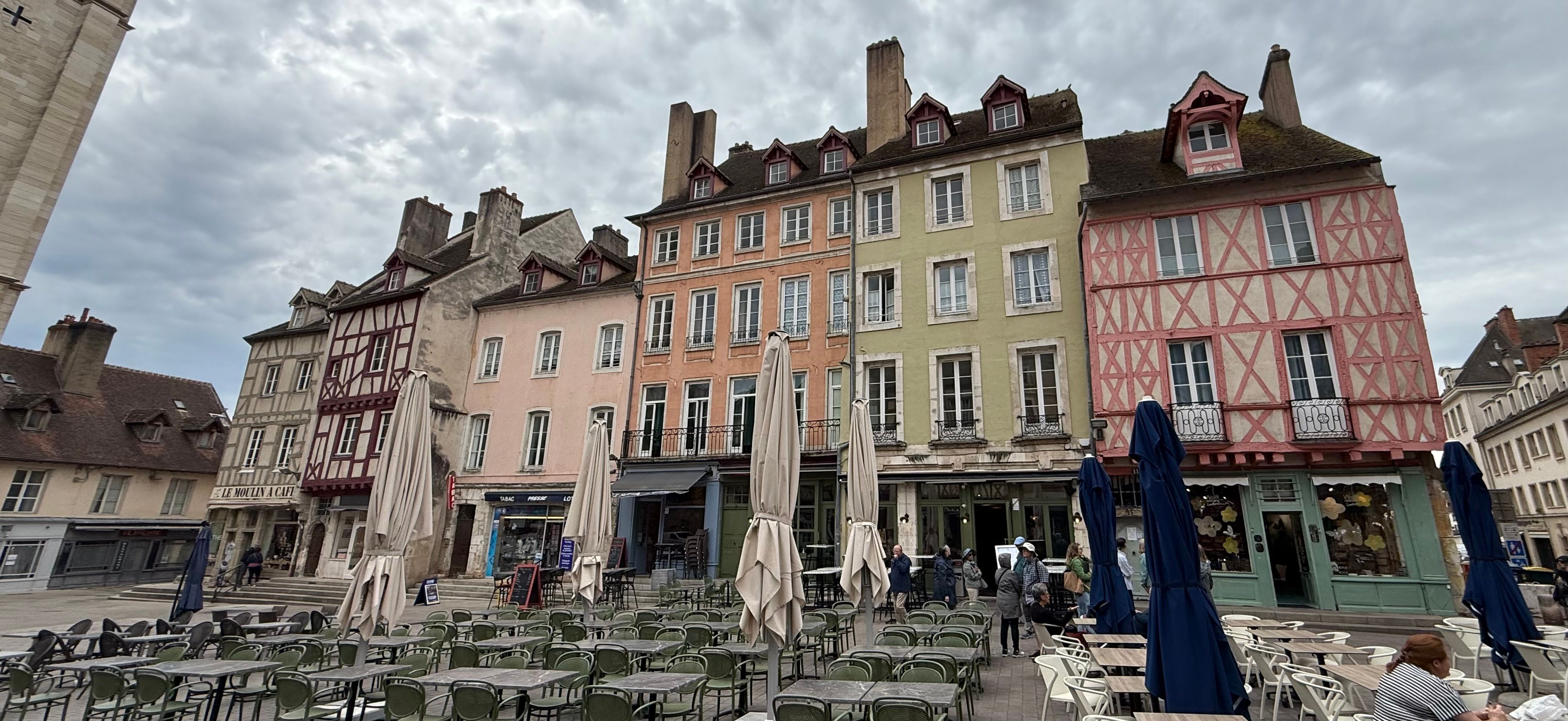
The city center of Chalon is worth seeing, especially the partly well-preserved half-timbered houses and the Cathédrale Saint-Vincent in the square of the same name.
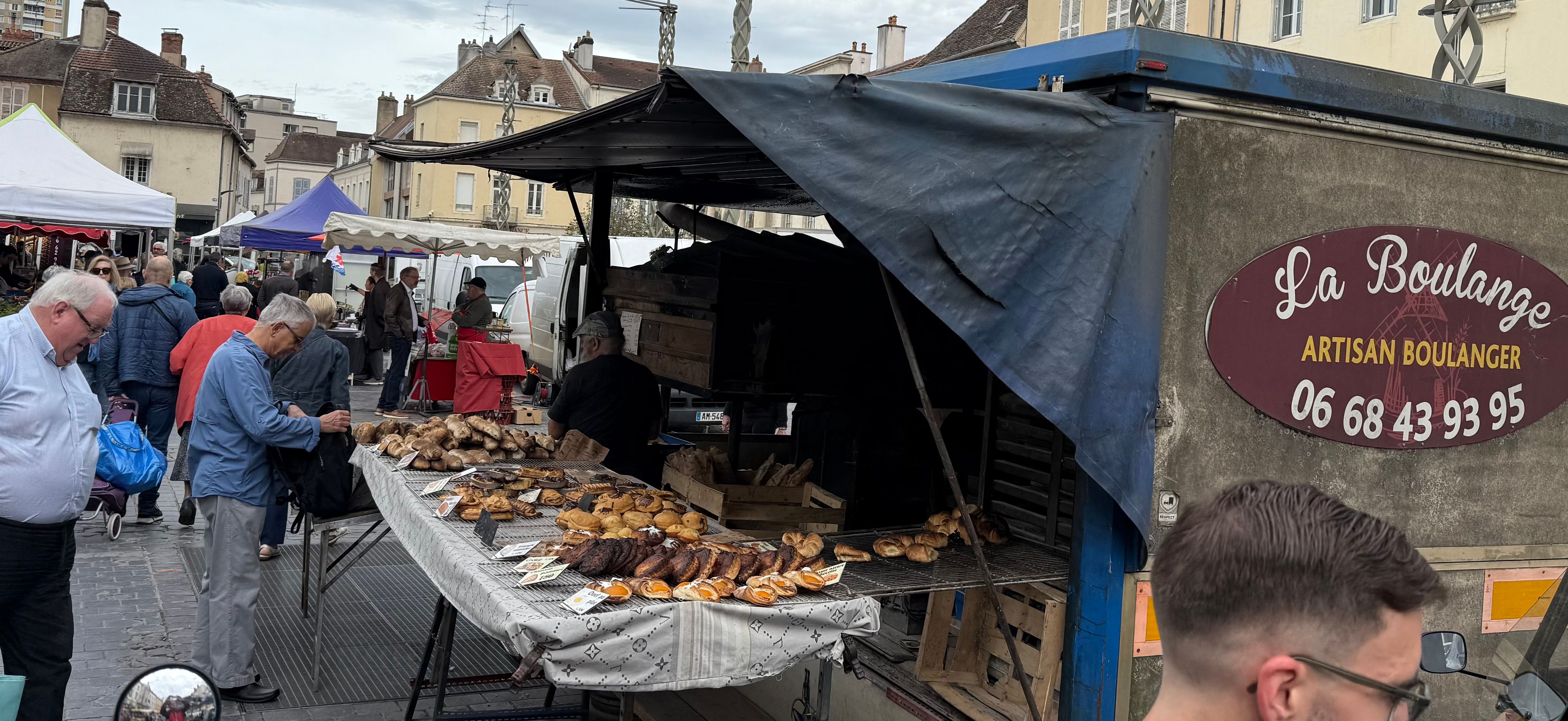
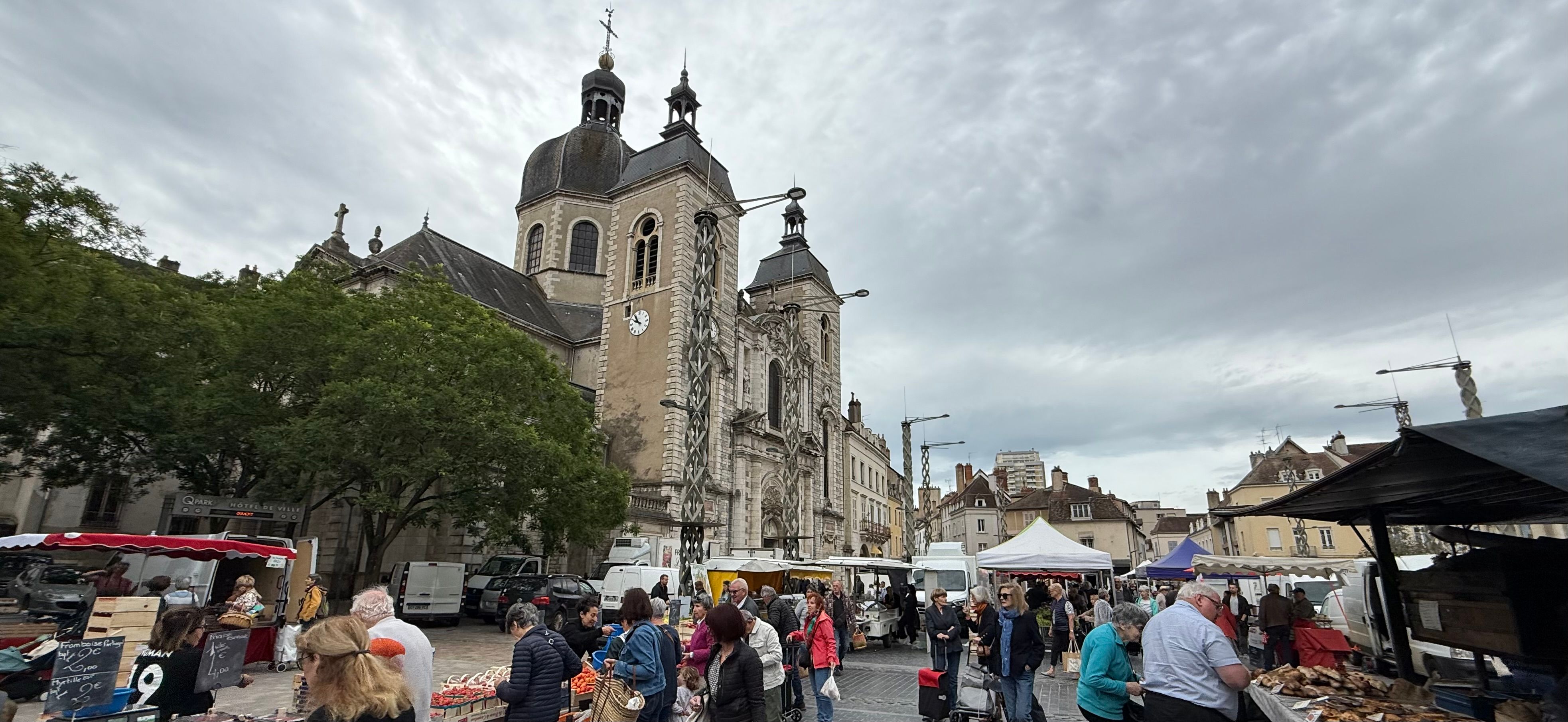
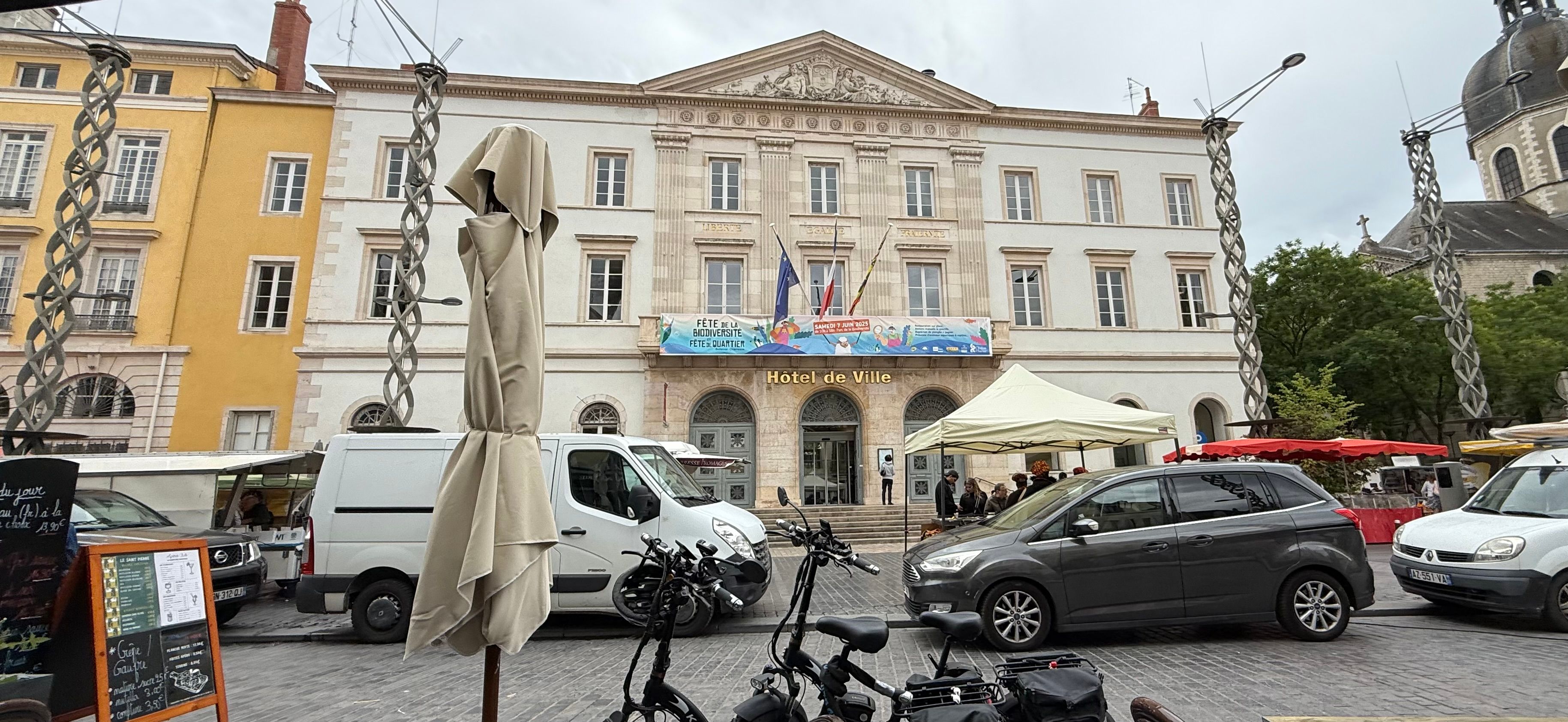
Frankly, the city and the buildings are in a condition one would expect in France. Only the bustle in the city gives everything a certain charm. The market at the town hall square was well attended, and the displays differ significantly from those in the south. The baker offers his bread; my first comment was, “it looks like it caught fire,” the breads came in the states of raw dough, medium, and burnt; only I have since realized that these quality differences are certainly not based on an accident, as all bakers in the region offer their bread this way.
So we decided, after standing in front of the museum's closed doors, to take a trip to the countryside. More on that in the next post.