I hold my credit card up to the scanner for the third time, but the bus driver's gaze signals to me that it is still not readable. I didn't think too much about how to get from the terminal to the city. In the tiny arrival and departure hall of Hualien's small airport, there was no ATM. No taxi app works here and so I now stand at the bus door without any means of payment or transport options.
'It's okay, it's just a couple of cents,' says a passenger who boarded before me, tossing the mentioned few cents into the ticket box. 'Thank you!' I am thrilled by the spontaneous willingness to help. He is from Singapore and has found his favorite country in Taiwan, which he has been traveling to for a long time and repeatedly. Currently, he is here due to the devastating flooding around Hualien to assist with the cleanup efforts. Many volunteers from across the country are reportedly on-site to help. Hualien has had a tough time. Since a severe earthquake last year, tourists have stayed away, and many hiking trails in Taroko National Park are still closed. Now, there are also heavy rains, a Job-like story. Taiwan is naturally in the typhoon zone. But the Taiwanese are naturally supportive.
After I say goodbye to the friendly Singaporean, I look at my phone. A debit of a few cents for the bus ride shows up in my credit card app. So it worked out after all.
Once at the hostel, I immediately strike up a conversation with my roommate. I ask if he is one of the volunteers. He gestures to each bed in the dorm, and a few of the helpers smile and nod. A company of volunteers and I am the only guest who is here just for hiking. I meet another one of these so-called 'supermen' in the dumpling restaurant. I ask him if the table is still free, and he asks me where I am from. When he hears 'Germany,' he instantly thinks of 'Carl Zeiss.' He works as an optician and uses the Jena devices for his eyesight tests. How friendly can a country welcome me in just a few hours? Helpfulness, solidarity, and instead of the Third Reich, East German companies as a response to Germany.
Back at the hostel, I have to toast with the flood helpers; alongside schnapps, they share pomelos and mooncakes with me. It's currently the full moon festival, and they explain that these two foods are eaten excessively. Surely another reason for them to push the pieces over to me like just before market closing. I am touched by the hospitality, and the older members of the group introduce themselves: Mr. Chen, Mr. Chen, and Mrs. Lee. We practice the usual exchange when the language barrier prevents deeper conversations: guessing ages, teaching each other words for 'cheers,' and showing each other where we live on Google Maps. After an hour, they say goodbye to go to sleep; after all, the volunteers have a real task to complete unlike me. 'You made my arrival to Taiwan very easy,' I type into my translation app. One of the Mr. Chens smiles and places his hand on my shoulder: 'We are the world.' He types into his phone and the English translation appears: 'Brothers of the four seas.' Later, I research the phrase back in the bunk bed and stumble upon an old Chinese saying: Translated into modern times, it means that people from all four directions are brothers and should live in harmony.
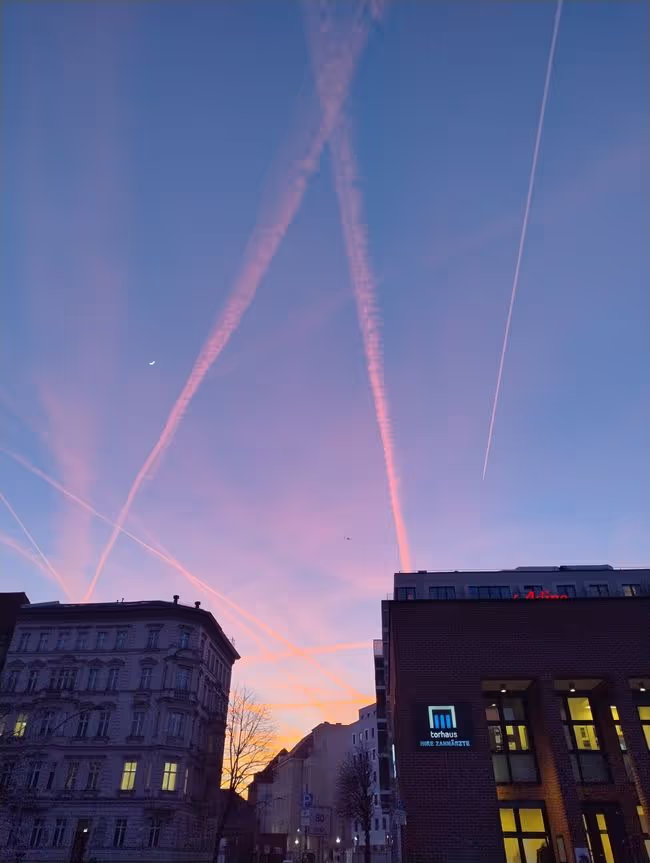
'Who is shaking my bed?' I think as I am jolted awake in the morning. I push aside the curtain of the bunk bed and look with disbelief at one of the remaining volunteers: 'Was this an earthquake?' But his composed look says it all. After all, it was nothing more than five seconds. What else can I expect in an earthquake region? What you see is what you get. 'Warning from the President: Earthquake in the Hualien region,' is the warning message on my phone that I see too late. That human warmth and constant threat are the Taiwanese Ying and Yang, I also realize by the fact that a jet blasts across the sky every few hours.
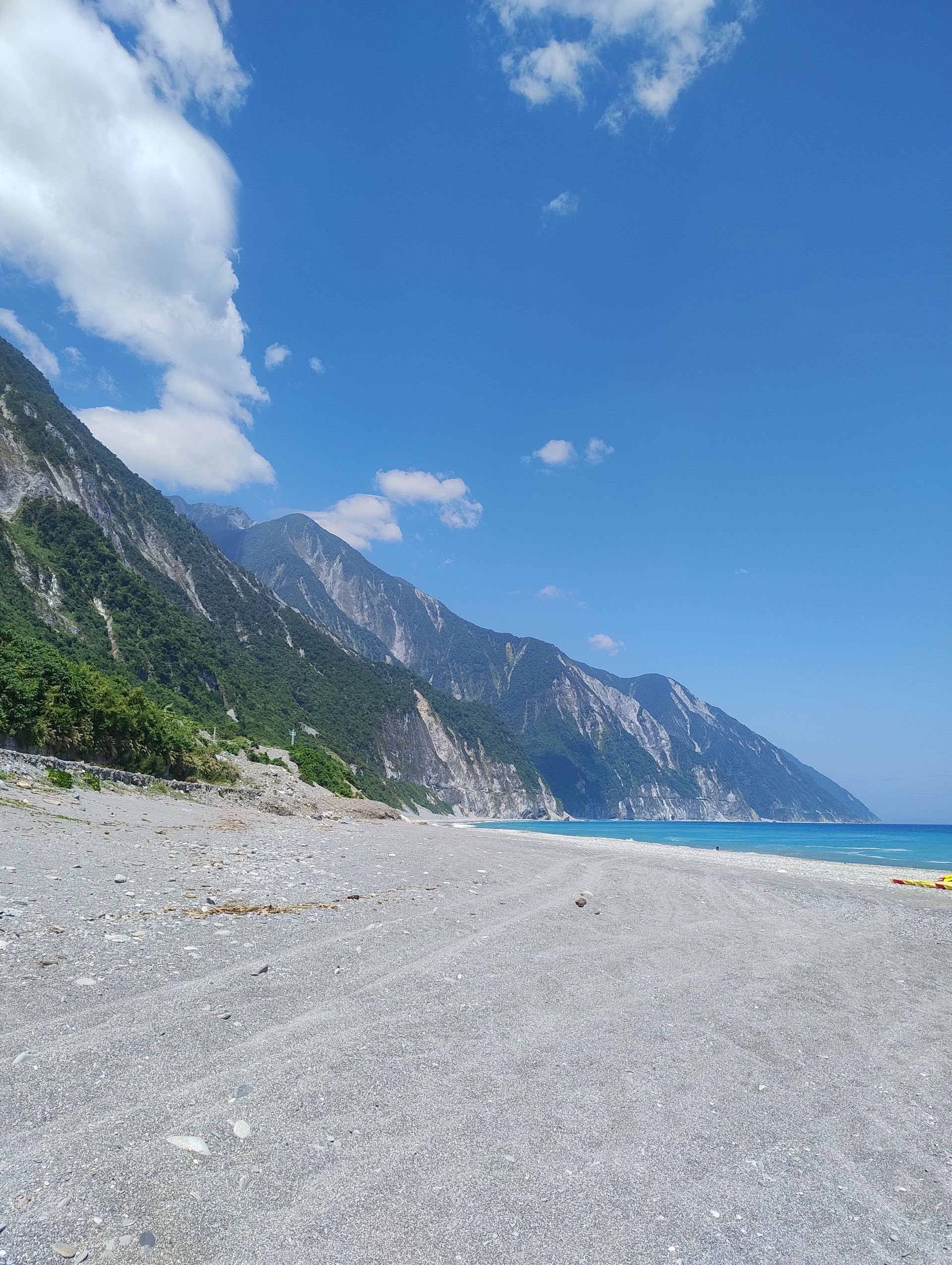
Taking the train to the meeting point for a kayak tour I pre-booked in Hong Kong, the train runs infrequently, and I spend the hour and a half wait in front of the shed with the plastic boats staring at the tall mountains that rise almost vertically behind the coast. The waves break several meters high on the beach. Was it such a good idea to kayak here directly on the open sea? A jeep comes driving up, and a tanned man in swimming trunks around 50 gets out. He puts a cigarette in his mouth full of gaps and instructs me to lock my valuables in the container. The group consists, besides me, only of a Taiwanese family with two little daughters, who still look quite motivated.
After our kayak guide equips us with life jackets, we settle into his jeep. The four-member family sits in the truck bed, and I sit in the passenger seat. 'Blacky,' as he calls himself on WhatsApp, tries to start the engine, but it just sputters briefly. After a quick look under the hood, I turn the key at his command and the rusty old thing starts running again. The car is supposedly 15 years old, claims the Tarzan in swimming trunks, but I would have believed it if he said it was 35.
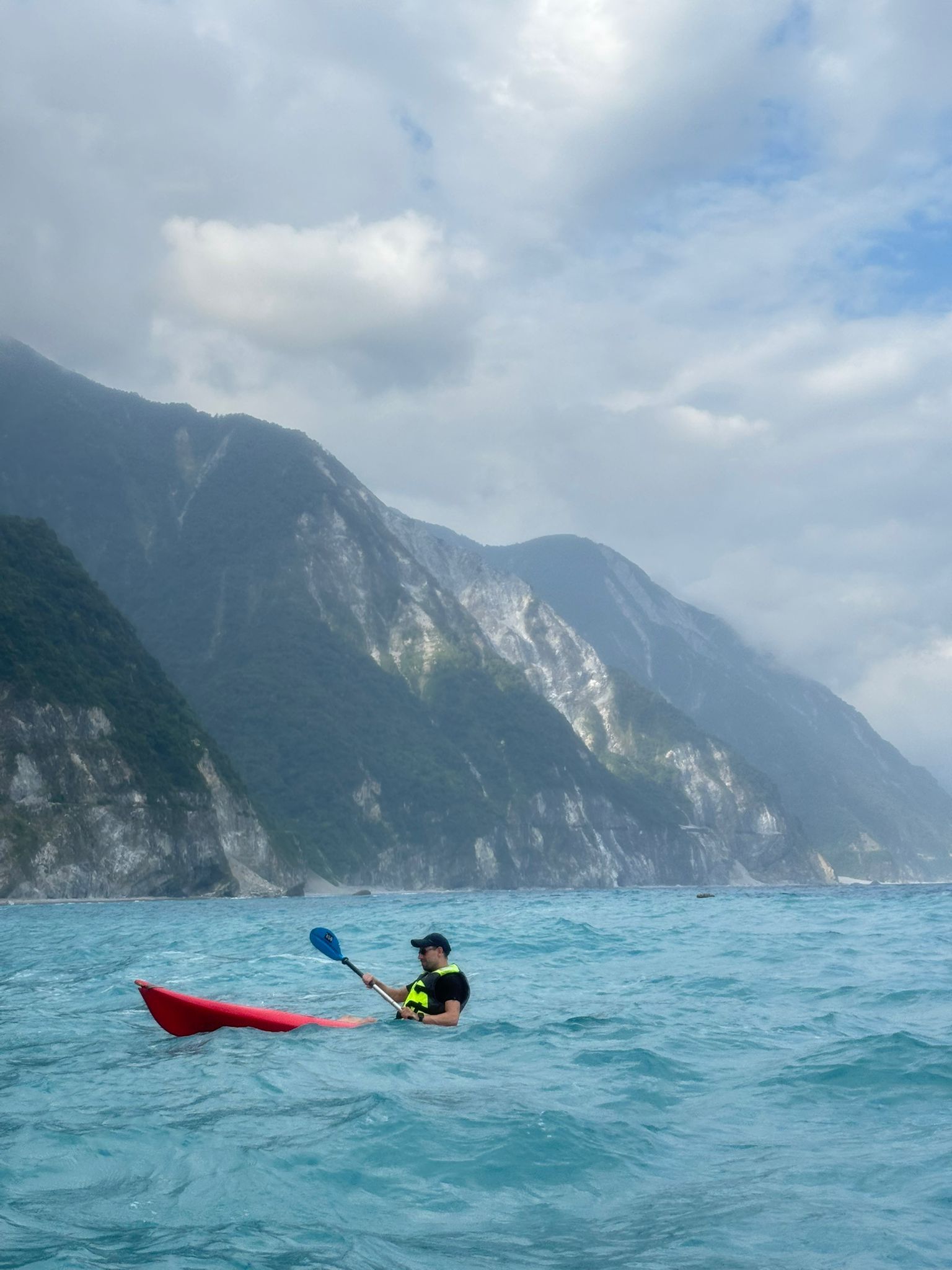
We only drive a short distance to the boats, which are already waiting on the beach. I am supposed to lead in the first boat, and the others will follow. 'Your glasses!' he takes my glasses off and puts them in a plastic case with his cigarette pack. I am genuinely relieved because this secures my glasses as well as his sacred smokes. Without much hesitation, he pushes me - blind as a mole - into the waves, and a second later, the kayak has thrown me off again. The pathetic spectacle repeats once more, and I crawl out of the man-high wave onto the shore. If I had been wearing my glasses, they would have been lost on the first try, just like now my flip-flops, but those are easier to replace. On the third attempt, I succeed, and I paddle for my life to make distance and not be washed back in by the next wave. The sea remains restless. I carefully set the kayak paddle aside to quickly put on my sunglasses, which I stored in my now soaking wet fanny pack. Time and again, the kayak dips under the waves a bit, and water gets into the boat. But that's plastic and hollow inside, making it unsinkable, like the Titanic. I am now about 100 meters from the shore and observe how the others still haven't dared to venture into the sea or haven't made it yet. Suddenly, I see Blacky and the family getting back into the jeep and driving away. Now this just keeps getting better... but they only drive a few hundred meters further, likely to a better spot to get the boats into the water. I paddle after them and see that at least the mother succeeded in getting one of her daughters into the boat. The other one found it too eerie, and dad stayed with her on shore, the woman says as I am within earshot. Captain Ahab now comes behind us, giving us a few quick pieces of information about the Hualien coastline in both Mandarin and English as soon as we are on the same wavelength. The effects of last year's earthquake can still be seen, he says, pointing to landslide scars on the slopes of the mighty mountains. He asks if I need my glasses. No, I point to my sunglasses. Blacky still pulls out his box where my glasses are with his cigarettes and lights one up.
The sky darkens and the waves grow bigger. 'We have to go back; it's too dangerous.' When even the most ruthless of guides says that, you better believe him. Blacky puts the life jacket back on that he had taken off to smoke earlier, and we return toward the jeep. 'I wonder if the landing will be as bumpy as the takeoff,' I think as I am still twenty meters from the shore. A few seconds later, I get my answer when I land headfirst in the water, and my kayak nearly does a loop over me. At least my sunglasses are still on my nose, and my kayak instructor has also managed to save my flip-flops in the end, as it turns out. Once we've all four washed ashore and pulled the boats onto land, Blacky at least wants to show us the rock in gorilla form from the beach, which we could no longer see from the sea because of the change in weather. The stones bang loudly against the undercarriage as we bounce over the gravel in second gear. Between the roaring sea on one side and the towering cliffs on the other, it feels like a TV spot from the 90s: 'Jeep - any ground can be a road if you want it to be one.' - or something like that... 'What were you thinking when we drove off?' the mother asks me laughingly, referencing the earlier situation when they supposedly drove off in the jeep. 'Let the foreigner drown!' I reply back with a wink.
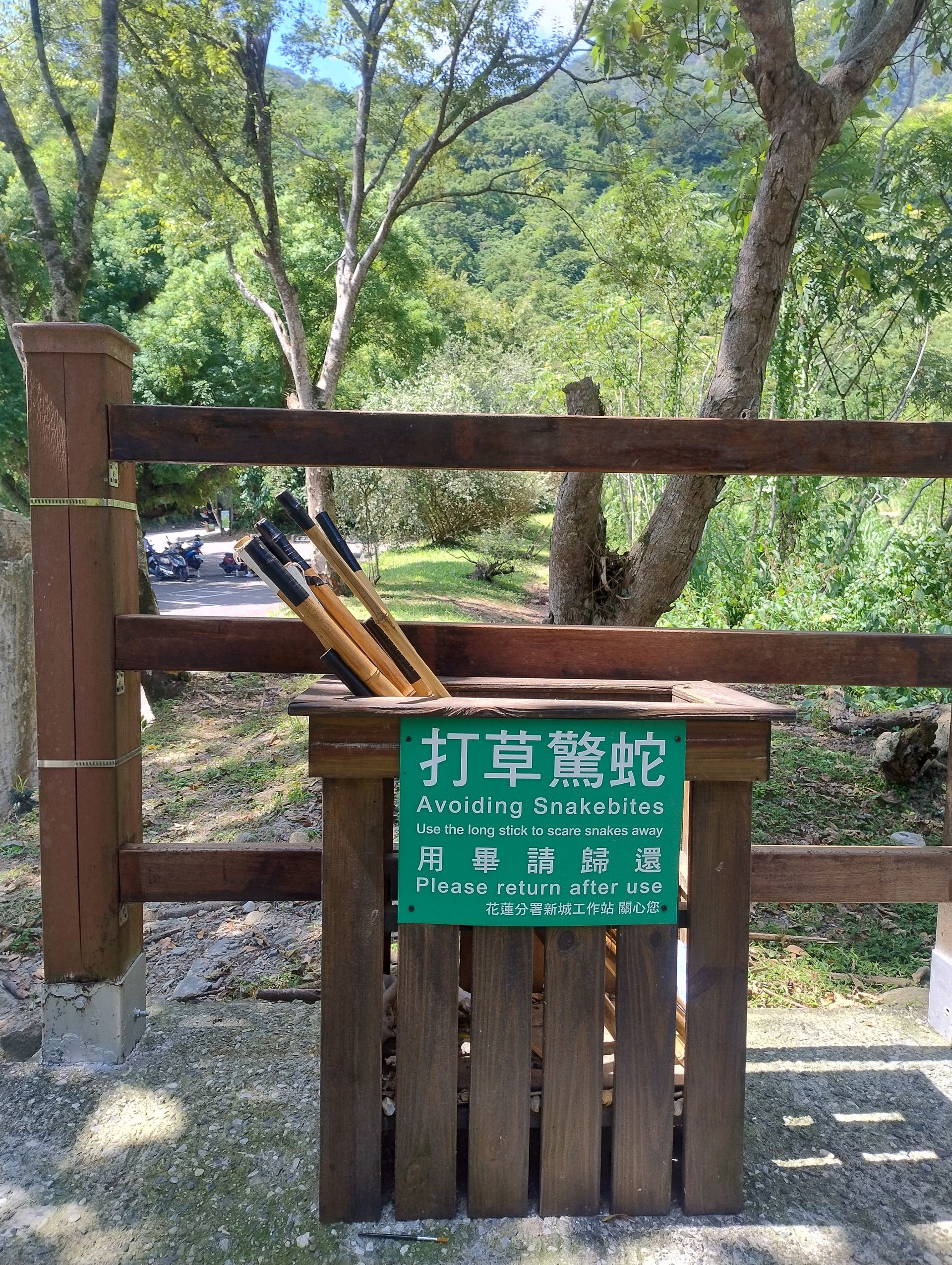
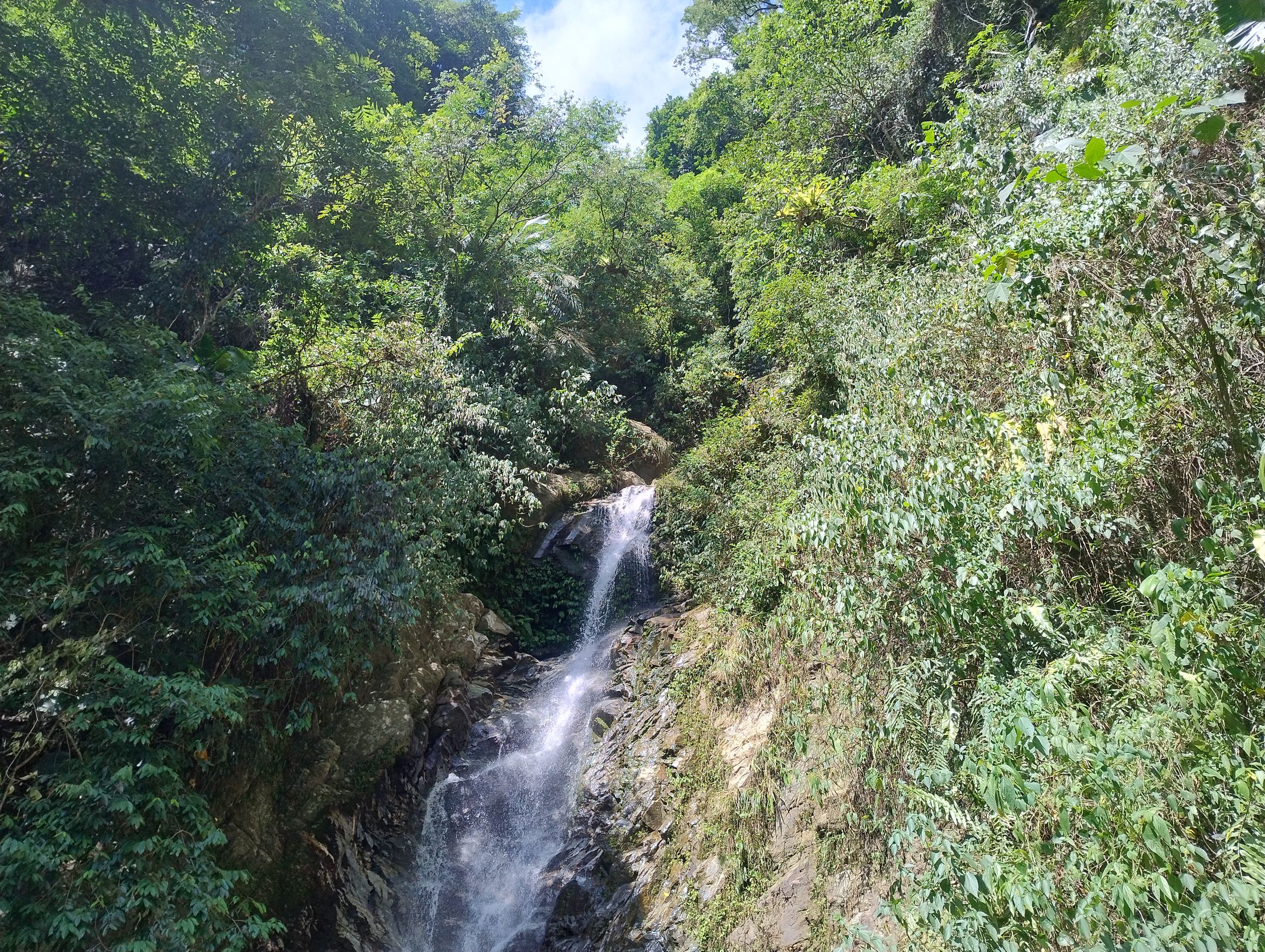
The next day, I get driven to a starting point for two hikes. The taxi driver calls something after me as I get out. He points to a wooden box filled with bamboo sticks and makes a striking motion: 'For the monkeys!' Aha, I'm supposed to use a stick to keep the monkeys away. As I approach, I see that it originally had a different purpose: 'Avoiding snakebites. Use the long stick to scare snakes away.' Great, my nemesis. With every step, I hit the bamboo stick loudly against the ground. Maybe it helps; maybe the monkeys have scared off all the snakes. They remain a phantom on my trip. At the waterfall, no one seems to worry either. The locals dip their feet in the water and stand under the cascades. Everyone has a smile on their lips, and I feel welcomed. Small schools of fish swim through the clear water, and butterflies flutter around.
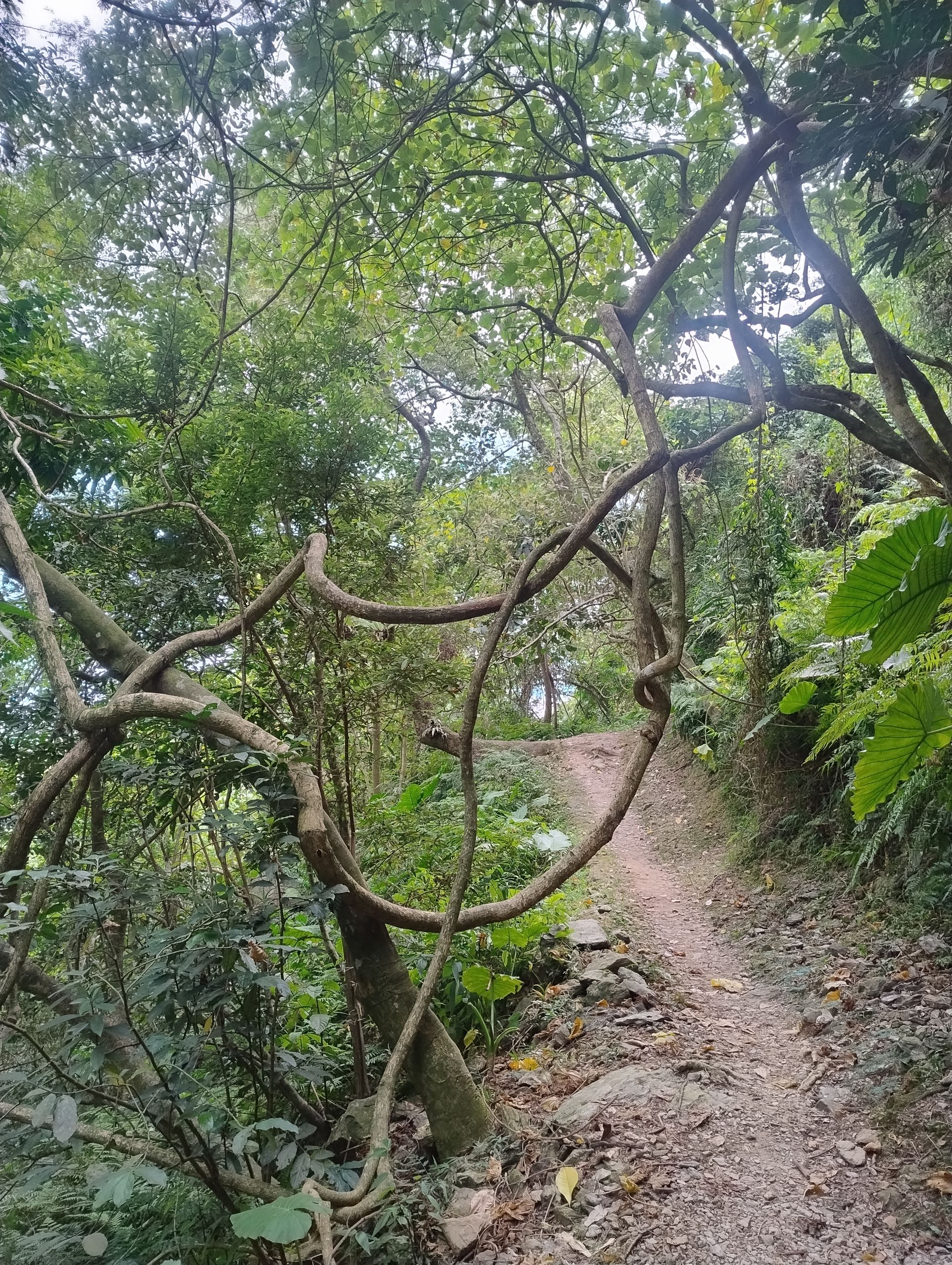
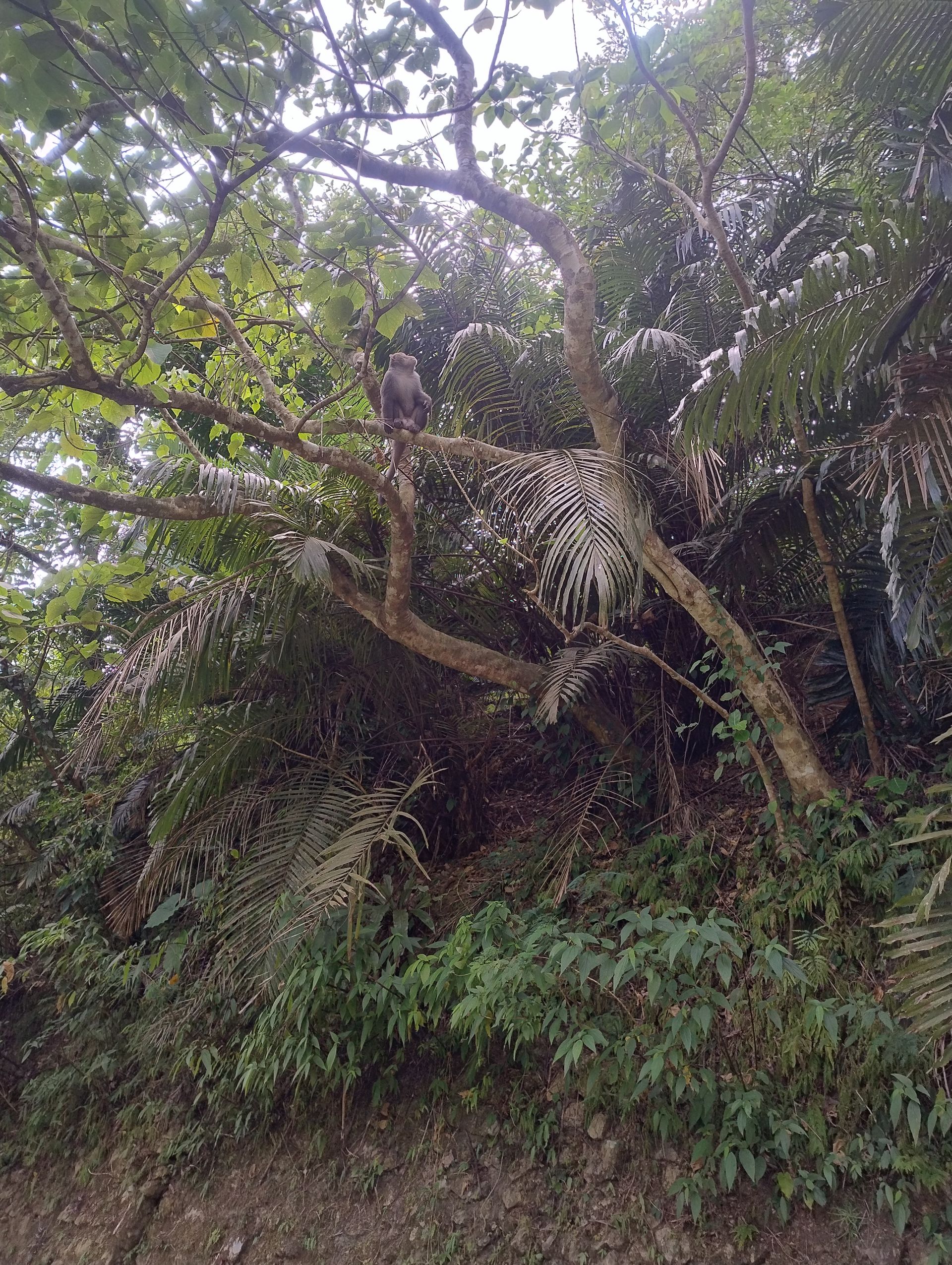
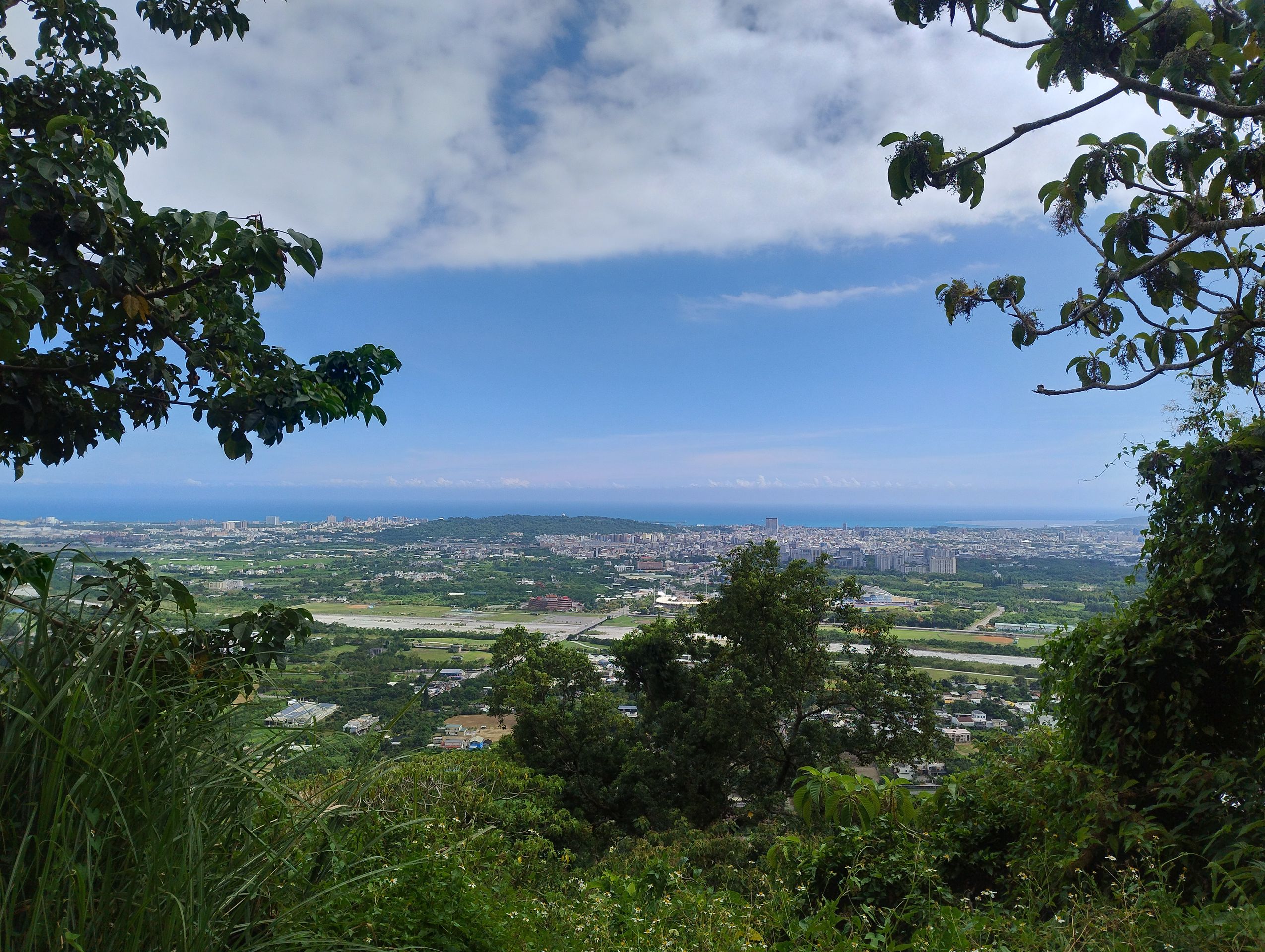
On the second tour, macaques alert with bright shrieks, waiting on the paths and climbing in the trees. Stomping my stick against the ground, I signal that I am armed. I want no trouble but am ready to defend myself. I look at peaceful Hualien at the foot of the mountain and at the military airfield, from which jets take off repeatedly. Taiwan doesn't want a war, but is ready to defend itself. 'Please return after use,' says the sign on the box with the bamboo sticks. I place mine back unused.