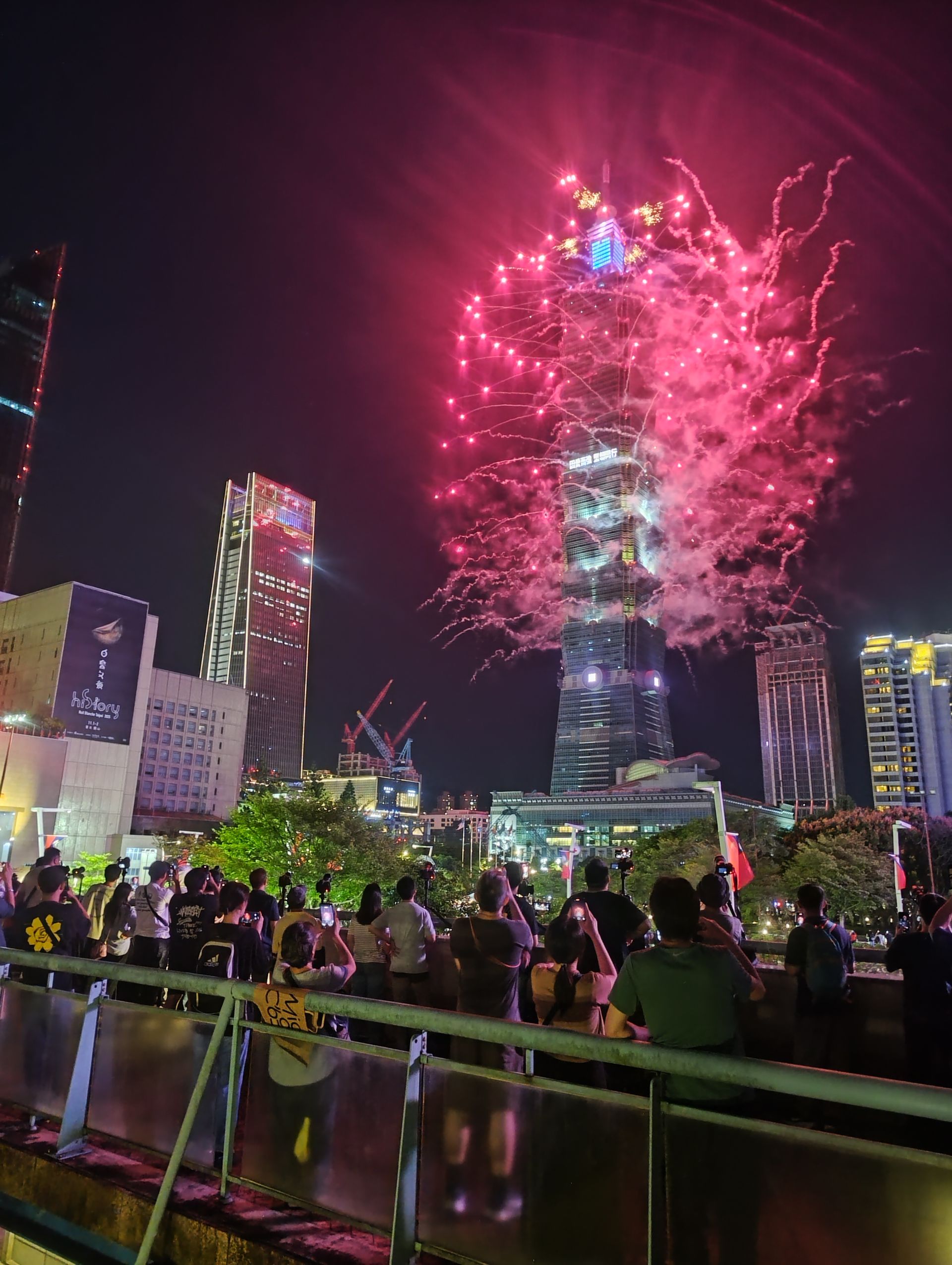
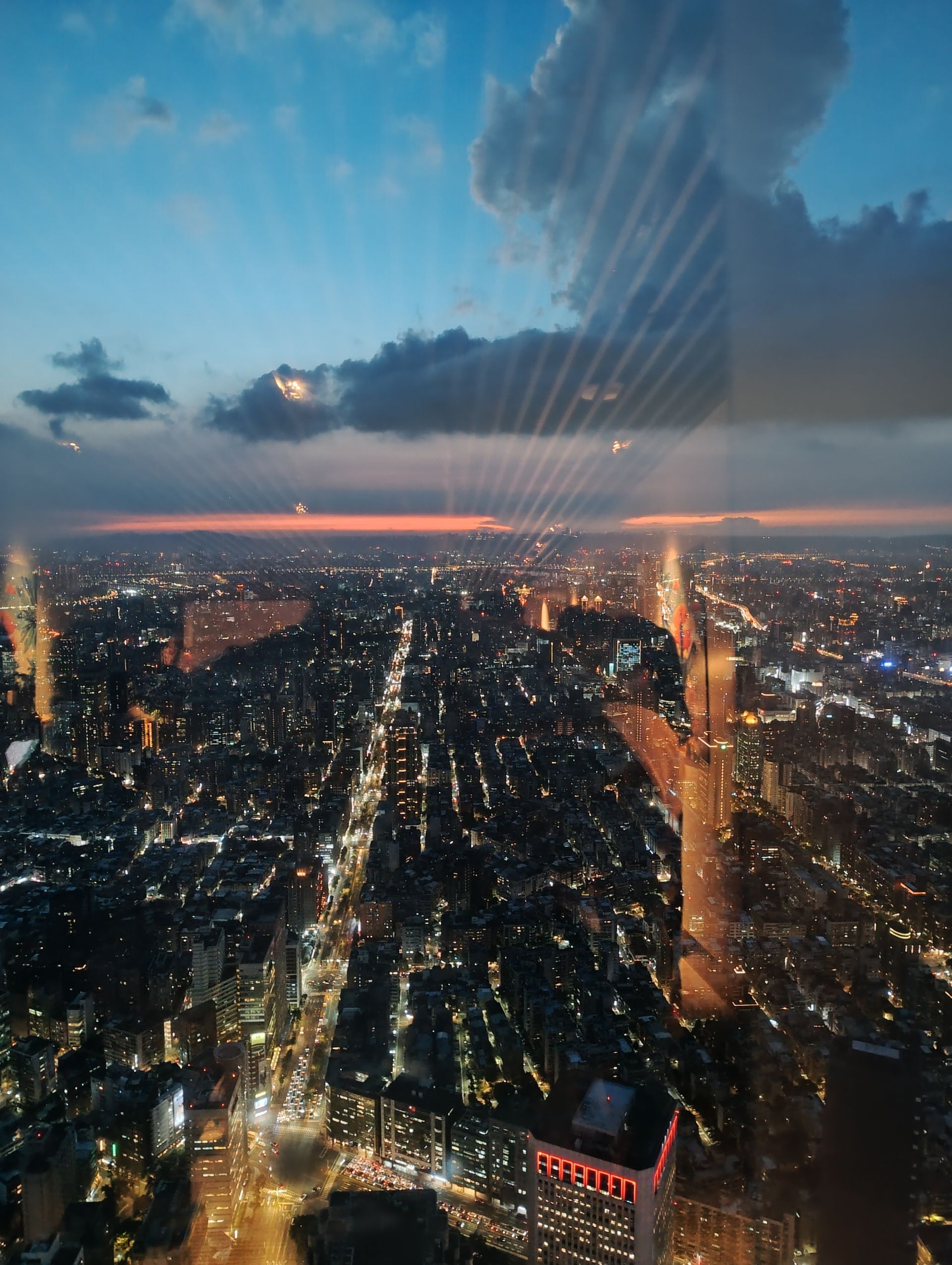
Chinese rockets explode over Taipei, casting a veil of soot over the tallest tower in the city. Drones fly in the night sky. But, like in Hong Kong, it's again just a false alarm. No hot war has broken out. It's once again the Chinese National Day. But it's the National Day of the Republic of China, not the People's Republic of China. This time, the rockets are launched not from the water but from the skyscraper 'Taipei 101', with the drones providing a light show. The fireworks shine red and blue, in the colors of the island nation. I'm not quite sure how the light show works, but the drones create various shapes in the air. First, the lights form the Taipei 101 tower, from which a heart rises that then takes the shape of Taiwan. Lights twinkle around it: a globe rotating, with the small island inside. Pure Asian kitsch, but unlike China's show of power, it tells a different narrative. I can't help but think of Mr. Chen’s words at the Hualien hostel: 'We are the world.' And
Taiwan simply wants to be part of this world.
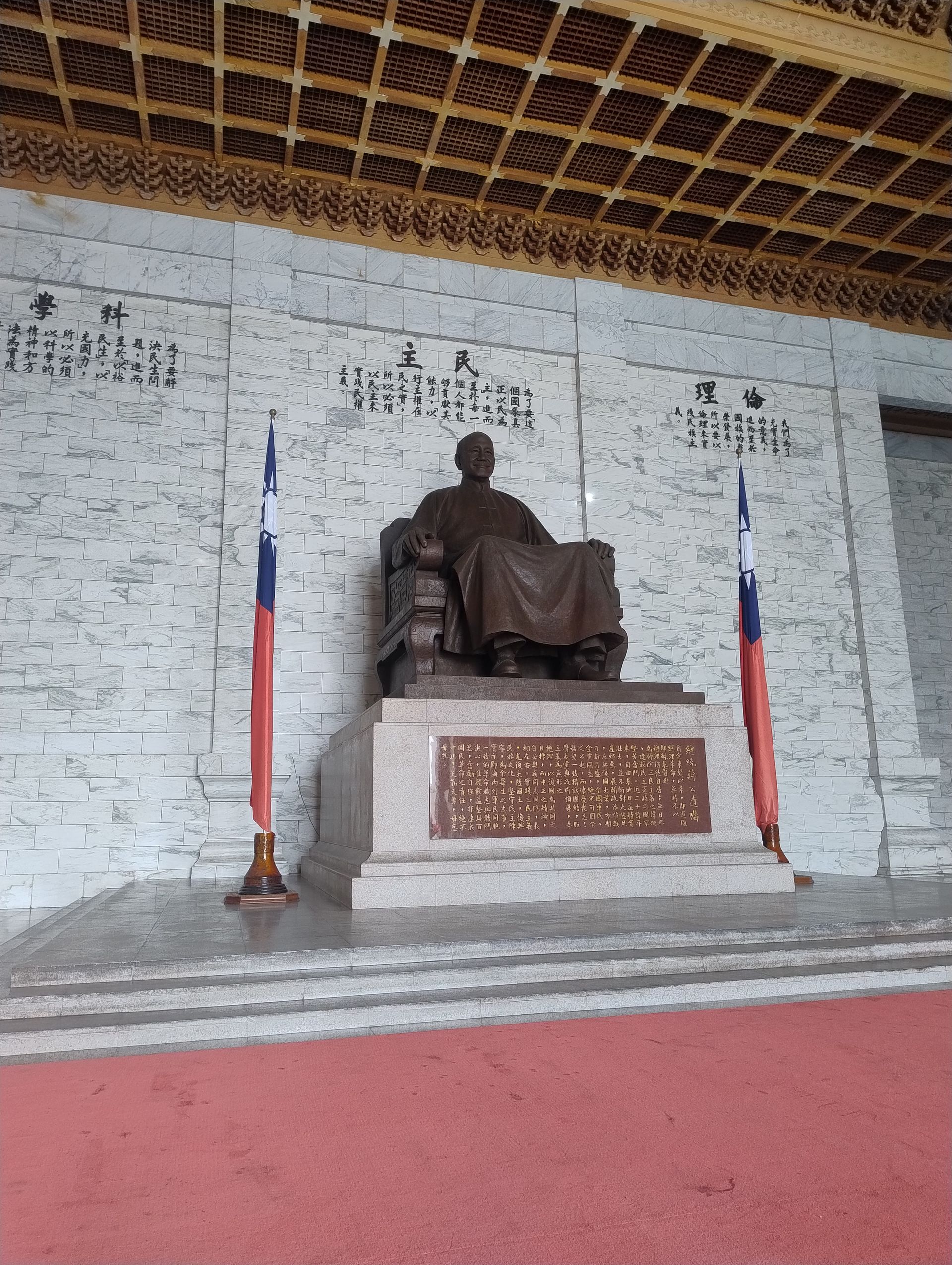
The next day, the geopolitical situation of Taiwan and its recognition as a state is also discussed during the Walking Tour. It feels unusually political, but as I'm slowly learning, the Taiwanese are becoming more politically aware themselves. Our two city guides explain the young democratic system and the political landscape while we stand in front of the Presidential Palace. In front are masts displaying the most unusual collection of national flags, including those of Paraguay, Belize, and the island nations of Palau and St. Lucia. All countries that officially recognize Taiwan as a country, and there are only about a dozen of them. Since Mainland China took the UN seat away from the rival state in 1971, the number has dwindled. The Taiwanese can take pride in their process of liberalization, which has developed politically and socially since the 90s. On the democracy index, the country ranks equally with Germany or Great Britain. The discrimination against Taiwan's indigenous peoples, the Aboriginals, is being addressed, as is the dictatorship of Chiang Kai-shek. Hundreds of statues were erected to honor the dictator in Taipei. Today, they have been painted in bright colors and assembled somewhat randomly in a park as comic figures. The museum about the '228 Incident' documents the oppressive rule of the one-party dictatorship. In contrast, a life-sized marble statue of Chiang Kai-shek still sits in a large hall overlooking the central square. Many people still visit the impressive statue. It is indeed a process of reckoning that is still ongoing.
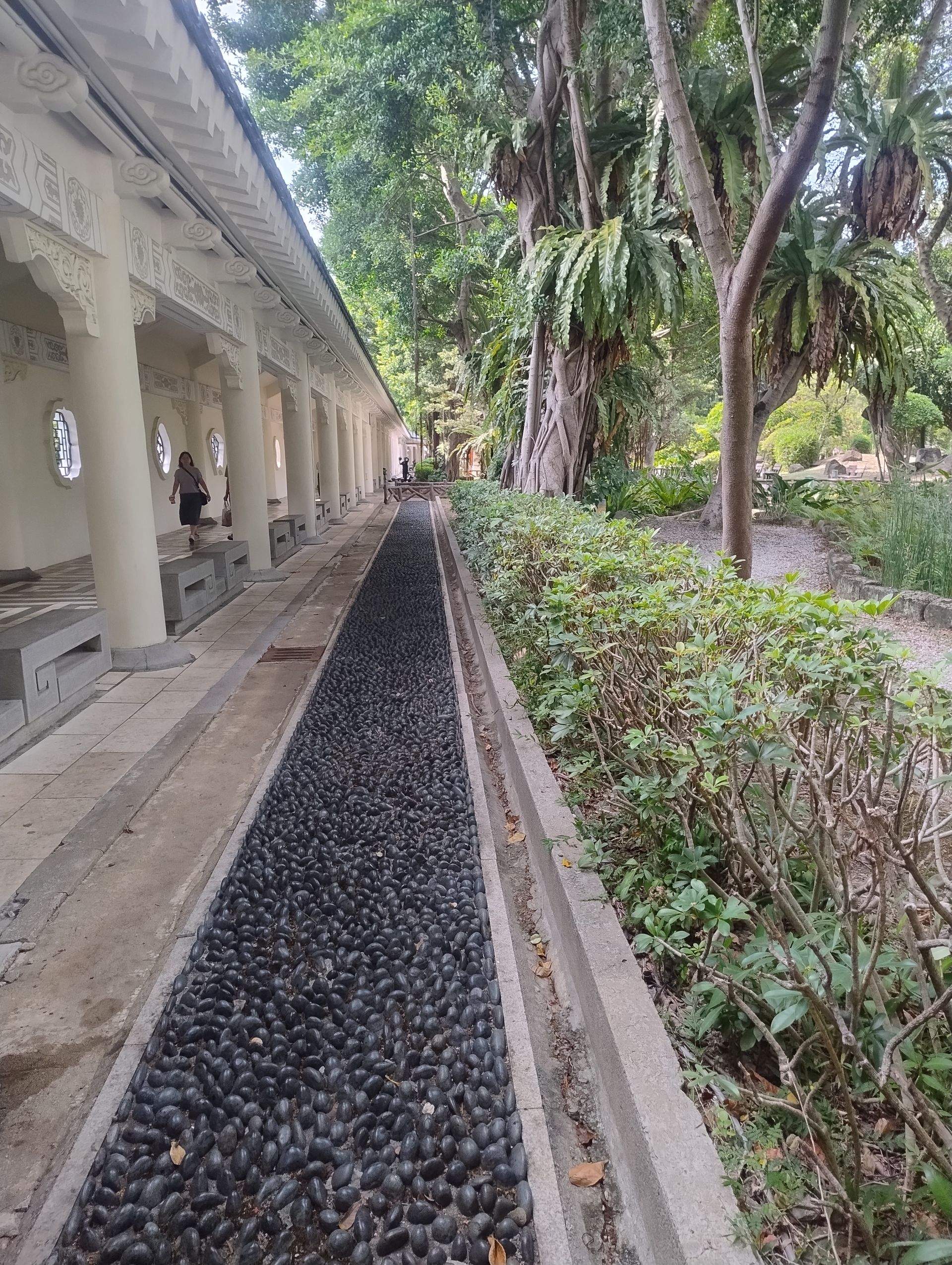
Around the square with the smiling marble Chiang Kai-shek, there is a green space. I discover a reflexology path embedded with black round stones. I walk over them in socks. The stones painfully dig into my feet. Next to the health trail sits a young Taiwanese who cheers me on: 'Good Challenge!'. Indeed, because afterwards, my feet feel like after a foot massage in Chiang Mai.
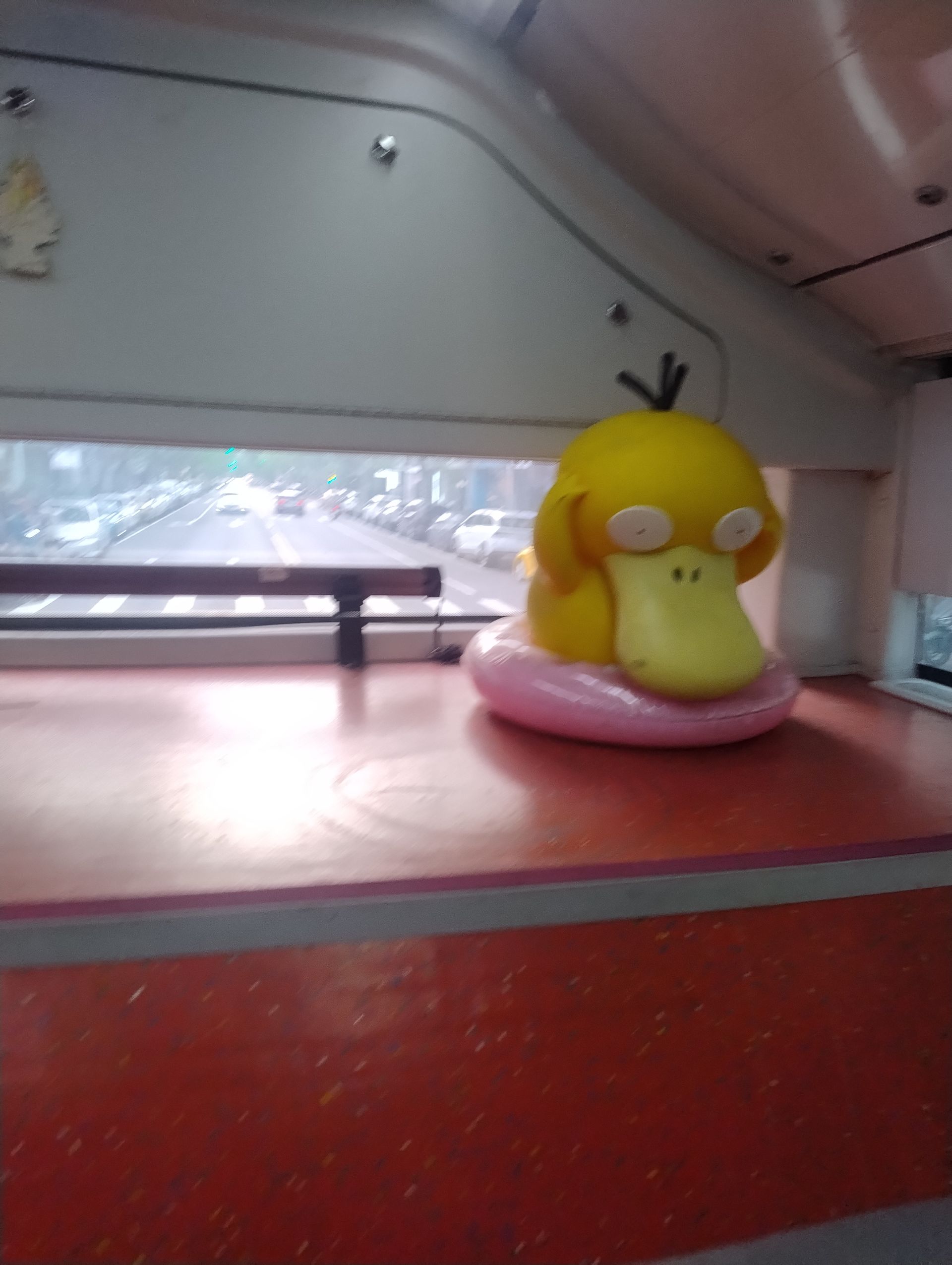
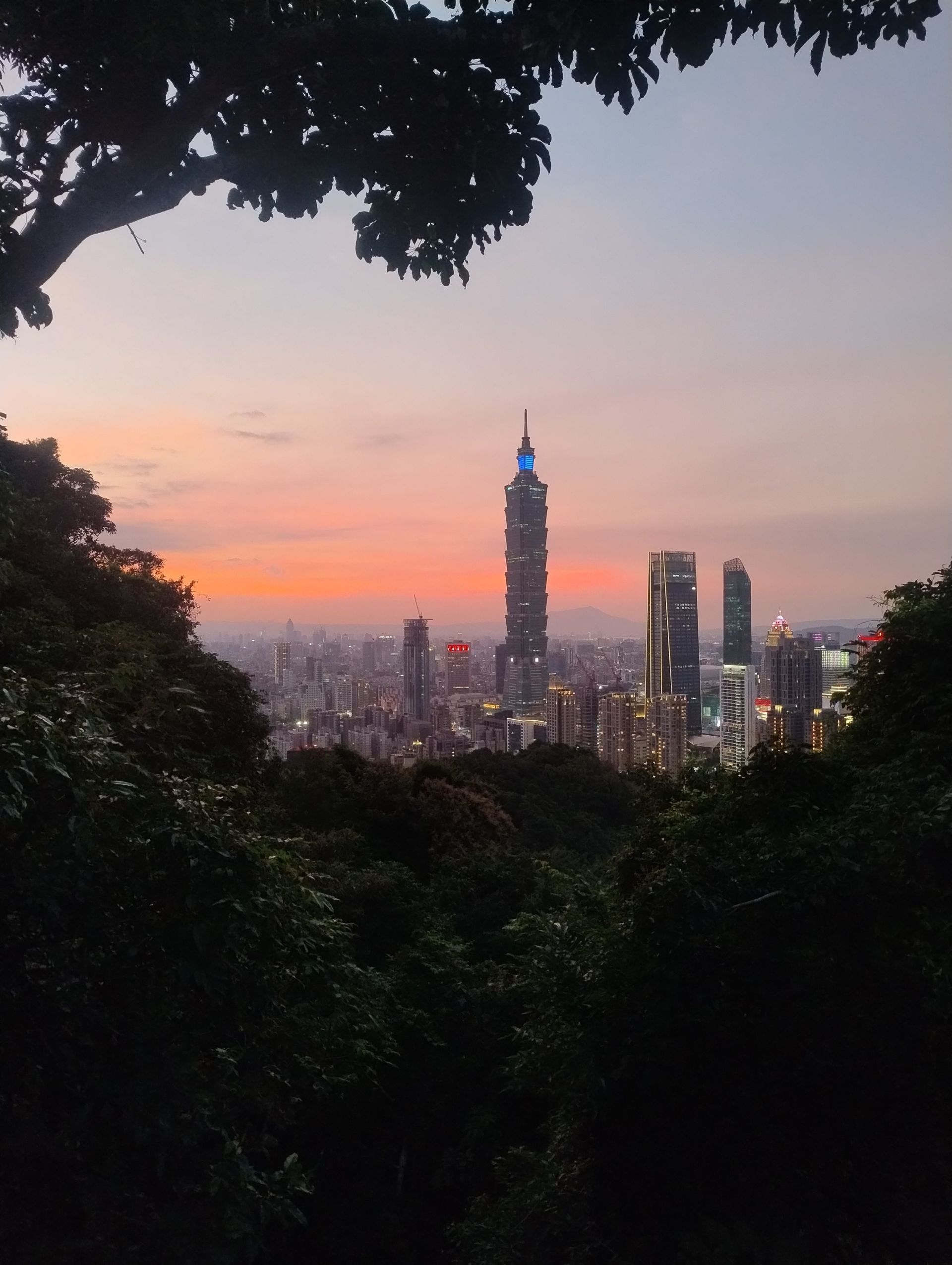
In the evening, I meet a few people from my hostel. Together we walk up Elephant Hill, with a sunset view of Taipei's skyline. The bus from the hostel to the hill has a theme: Lots of Nintendo characters are built into it. Behind the last bench sit Mew and Enton and a Game Boy melody plays before each stop. If I were a bus driver in Taipei, I would be going crazy.
On the stairs up to the viewpoint, I chat with two Frenchmen, Axel and Theo, from the hostel. An older Taiwanese approaches us, suspects he hears a German accent, and speaks to us in the middle of the stairs: 'Where are you from? Germany?' - 'France, Germany.', I reply, pointing to my compatriots. 'I was in Berlin in the 80s.' - 'Ah, back when there was the wall.' We're glad that it no longer stands, and we agree as we part ways after our brief conversation.
Upon reaching the top, we look forward to the promised sunset. At the same time, I can share my struggles with my fellow Europeans. They are just as exhausted and sweaty from the climbing as I am in the evening heat. In stark contrast, the Taiwanese: Older people and families with small children stroll up and down the steps as if it were their daily commute.
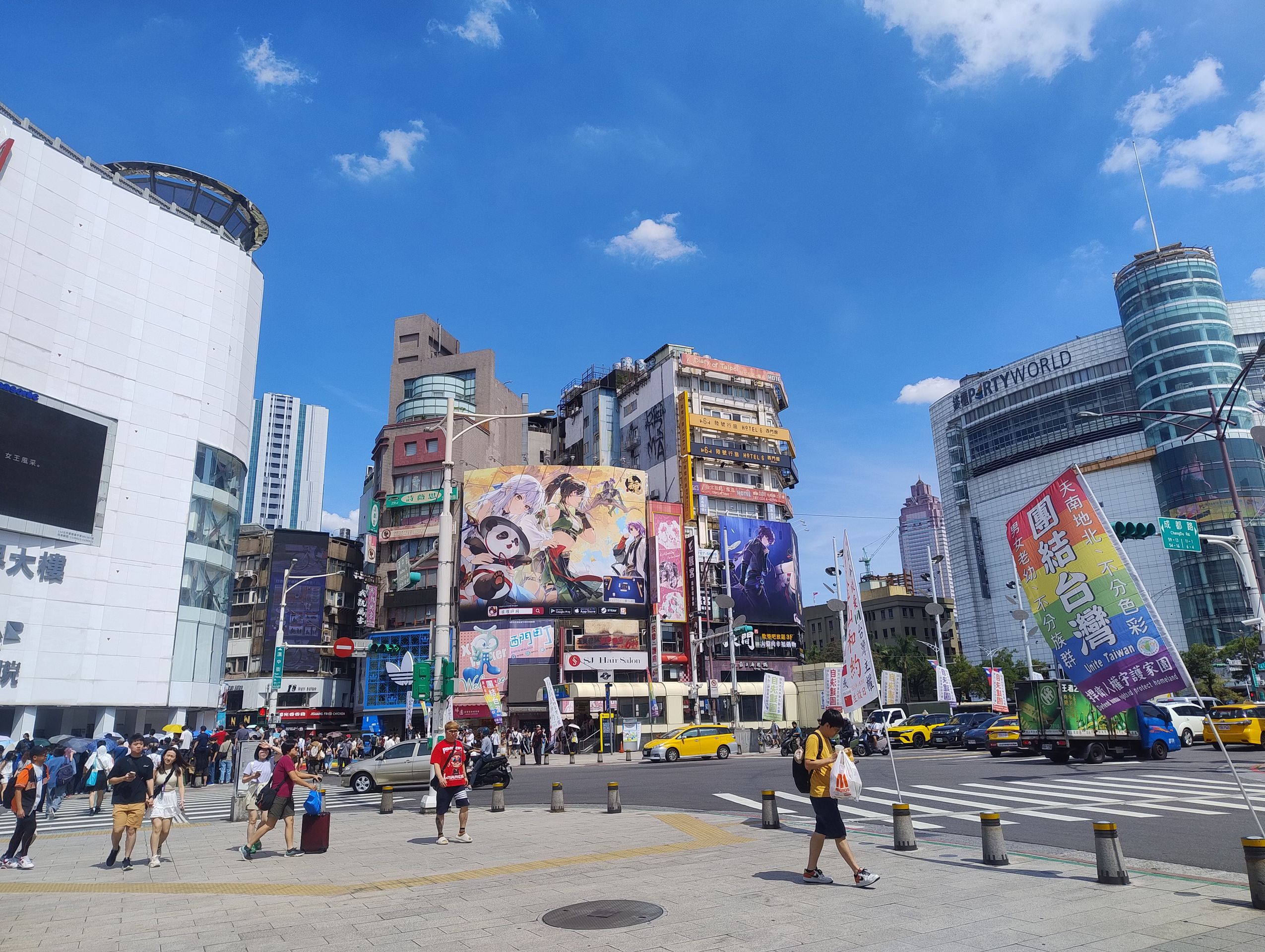
To wind down the day, Axel and I sit in a bar in the queer nightlife district near our hostel. Axel lives in Fukuoka, Japan, and has a child with a Japanese woman there. He is here for a Japanese band from the 90s that is performing on their comeback tour in a small club in Taipei.A table next to us has two Taiwanese women who engage us in innocent flirting. Silvia, who speaks English unlike her companion, has given herself a German Western name since she studied in Fulda and shares some sentences and words in German with us. She raves about her hometown, Tainan, and gives us some tips for Taipei beyond the tourist spots. In their hospitality, they even insist on accompanying us back to the hostel.
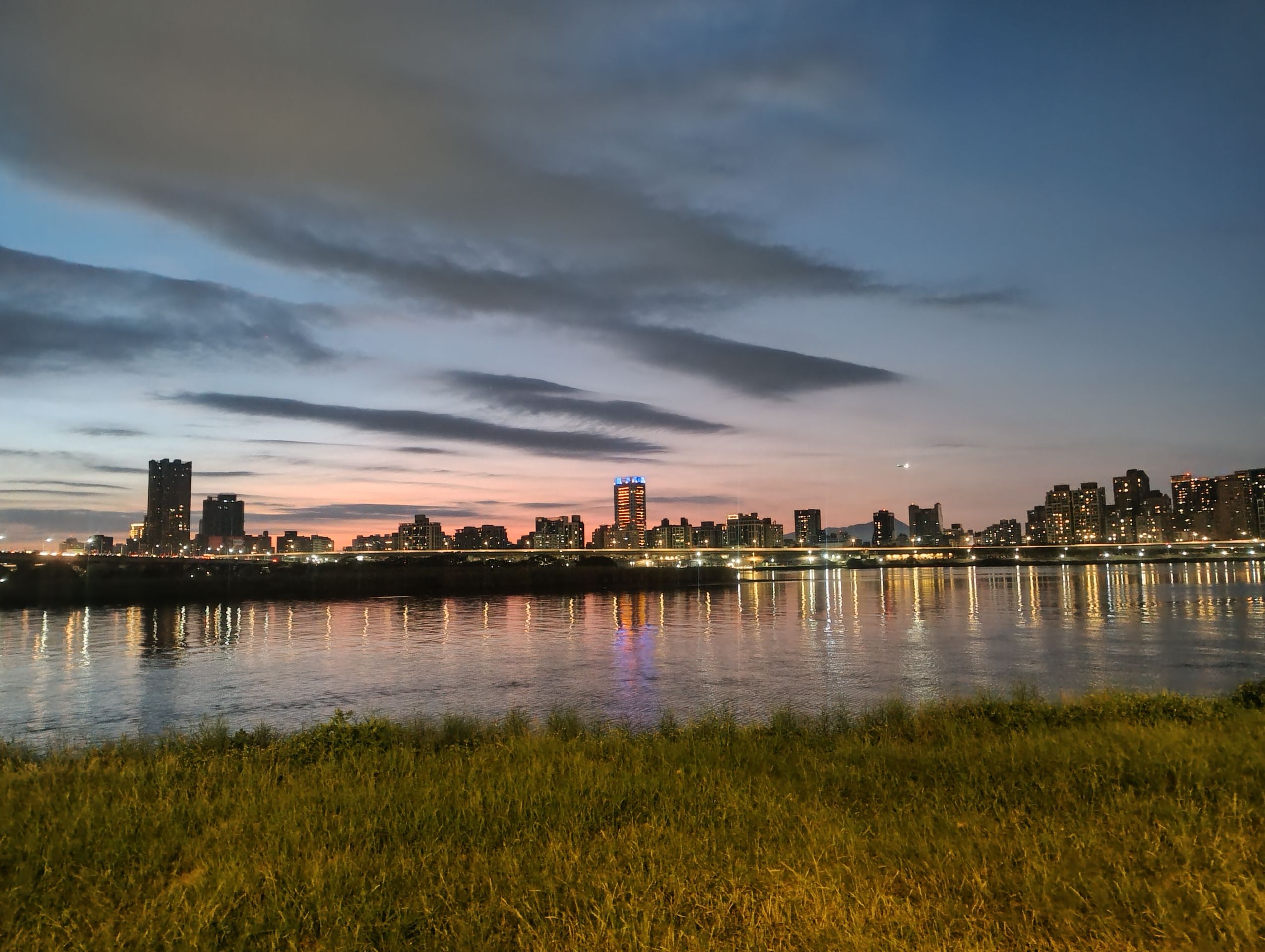
One of Silvia's tips leads me to a night market by the Danshui River. A group of women in traditional attire of Taiwanese indigenous people has organized a karaoke round. They sing Chinese-Taiwanese hits in alternation with the audience, which can choose songs. A middle-aged man spontaneously stands up and starts dancing. He swings a cloth in rhythm to each song.
An older gentleman sits next to me and moves his feet to the rhythm. I mimic him, and before I know it, he is giving me dance lessons. 'That was over 15 years ago, Grandpa!', I want to shout, but he wouldn’t understand me anyway. Instead, I can only hope that he recognizes my attempts to keep up with the steps. Now it's my turn for karaoke. One of the women goes through the rows asking the audience for their song requests. I can hardly say no. However, the selection of Western songs is limited, so I picked the first one I could find on the list. 'Bridge over troubled water' plays from the speakers in the usual karaoke setting, as I stand at the front. Unfortunately, not in the classic tone I am familiar with. I am unsure, try my best, and miss many notes. The dancing man with the cloth smiles encouragingly at me, and the audience claps despite my modest performance at the end of the song. Taiwan is being kind to me.
Axel has found some like-minded people at his concert, and I meet them after the performance of his Japanese band in a bar. Jaffar, an American with Indonesian roots, edits for the Jakarta Times. He asks me where exactly I'm from in Germany. When he hears Leipzig, he is visibly excited. I prepare myself for something about Red Bull Leipzig and football. Far from it, Jaffar is a Napoleon fan. If he ever came to Germany, my city and the Völkerschlachtdenkmal would be his first stop. That was unexpected. Chandler is an English teacher in Taipei and shares his assessment of the situation surrounding the China-Taiwan conflict. China gains nothing by attacking its neighbor. The chip industry would be destroyed in a war, and the entire population would resist Chinese occupation from the mainland. In an attack scenario, China would be at a disadvantage in the event of Japanese, South Korean, and American involvement according to a recent simulation. An attack in the next 10-20 years is unlikely. I want to believe him.
On the day before my departure from the homeland of bubble tea, I dutifully drink a plastic cup of the sweet drink. I also take in the view from the Taipei 101 Tower. Up there, I spend the afternoon sitting cross-legged by the window of the skyscraper, writing postcards and waiting for the sunset. While I write and stick stamps, groups of people gather behind me, taking photos of the city as it is bathed in the last rays of sunlight. I practice serenity and reflection: Taiwan is what emerges when you combine Chinese culture and community spirit with freedom and democracy. What has emerged is a country with a hospitality and openness that I have not experienced on this trip before. With people who support each other and, despite the language barrier, help every traveler at the slightest hint of helplessness.
When I awkwardly searched for signs and ticket machines at the train station on my first day in Taipei, I asked a young Taiwanese for help and showed him my Google Maps route to the hostel. He took me by the hand and led me to the machine, for which my coins were insufficient. He put in some of his cents and took me with the ticket in hand directly to the right subway platform.
I feel a bit sorry for only allowing Taiwan a good week.
After getting through Bucharest in my improvised travel outfit, I hope that the Taiwanese will accept my style combination of a short linen shirt with long hiking pants as concert-appropriate on the eve of my departure. They do, and after the first half of European classical music, the small string ensemble plays a selection of Taiwanese pieces. The concert is dedicated to the former mayor of Taiwan, that's as much as I understand. But just like in Brno and the film about Gerhard Richter without a German audio track, I only understand Chinese during the interludes. Whenever the audience laughs, I look on with an amused smile through the rows.
'Great music!', I say to my older neighbor as I leave after the encore. I doubt he speaks more English than I do Mandarin, but he smiles kindly at me. We understand each other nonetheless.