
Okavango Delta, a paradise for animal stories
Okavango Delta, the largest and most wildlife-rich wetland in Africa, is fed by the river of the same name from the highlands of Angola. The city of Maun, located to the north in...

Published: 05.05.2026
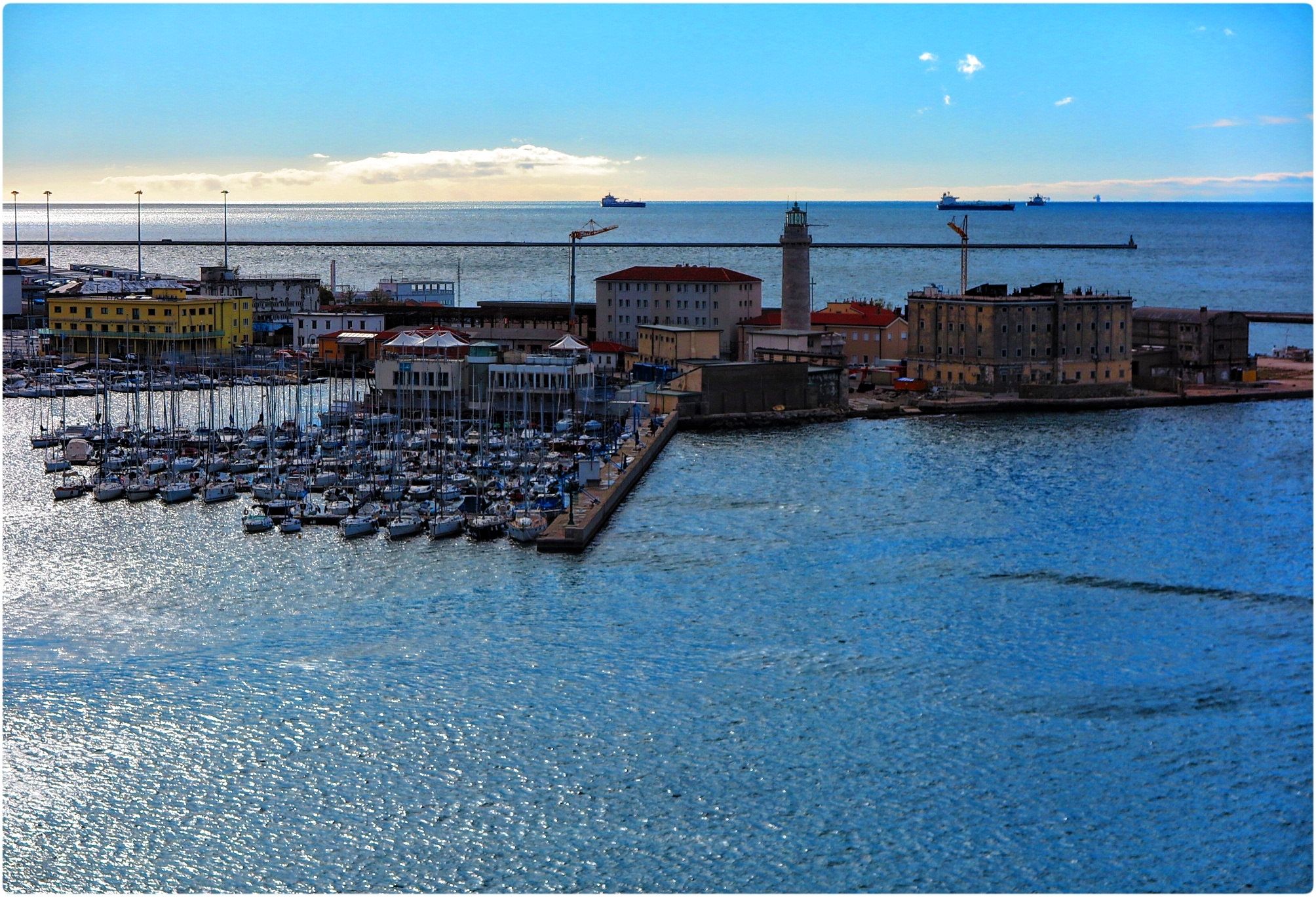
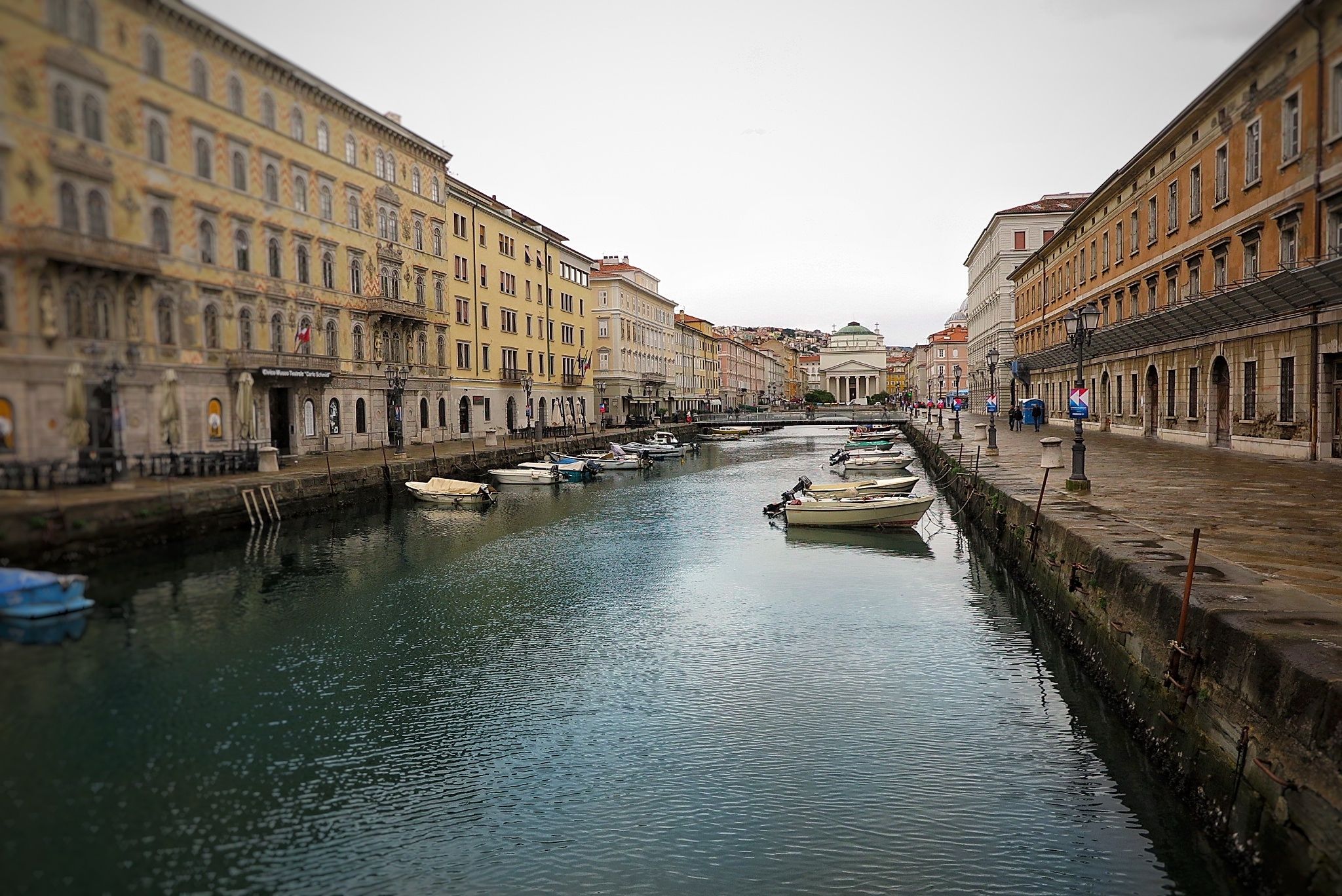
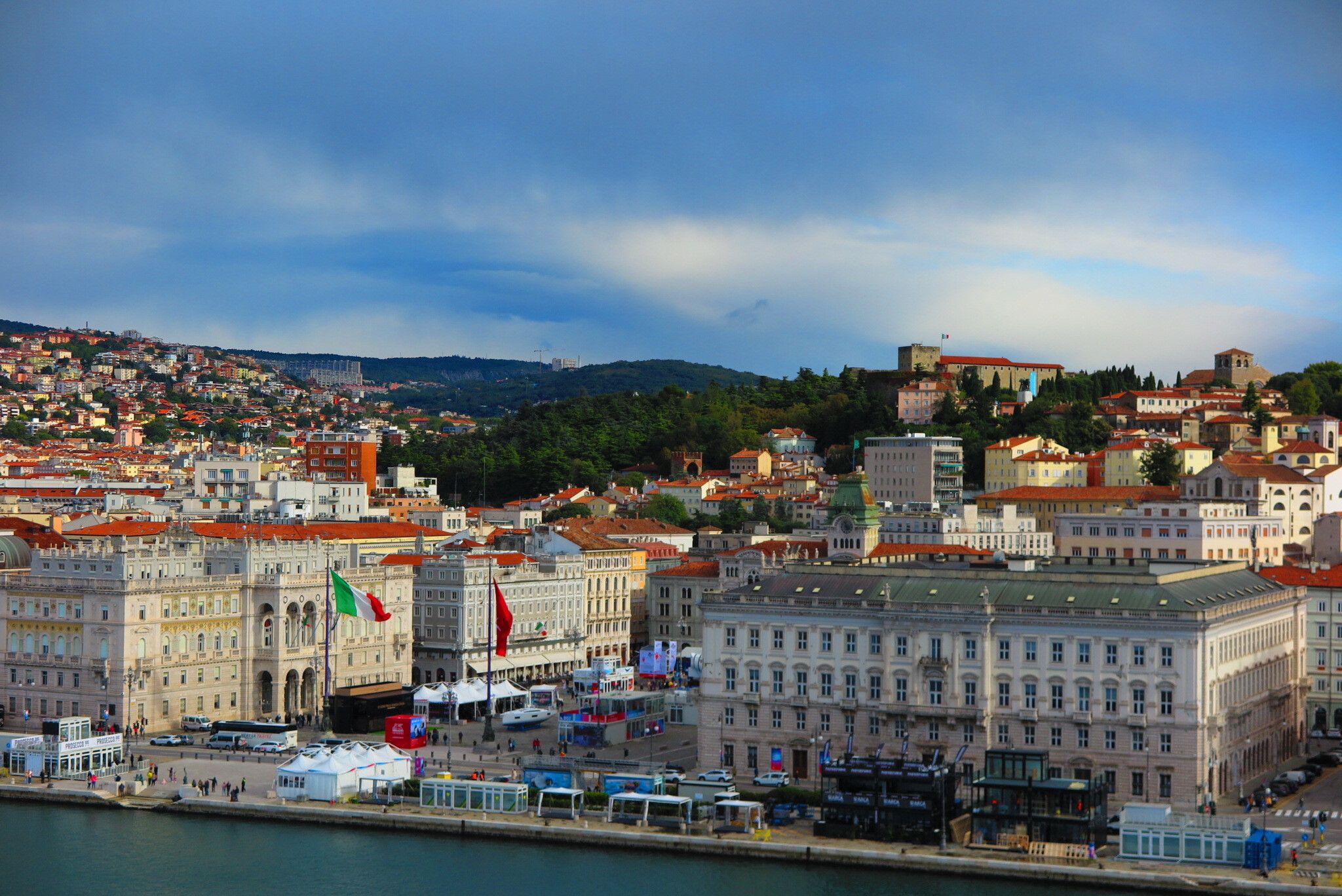
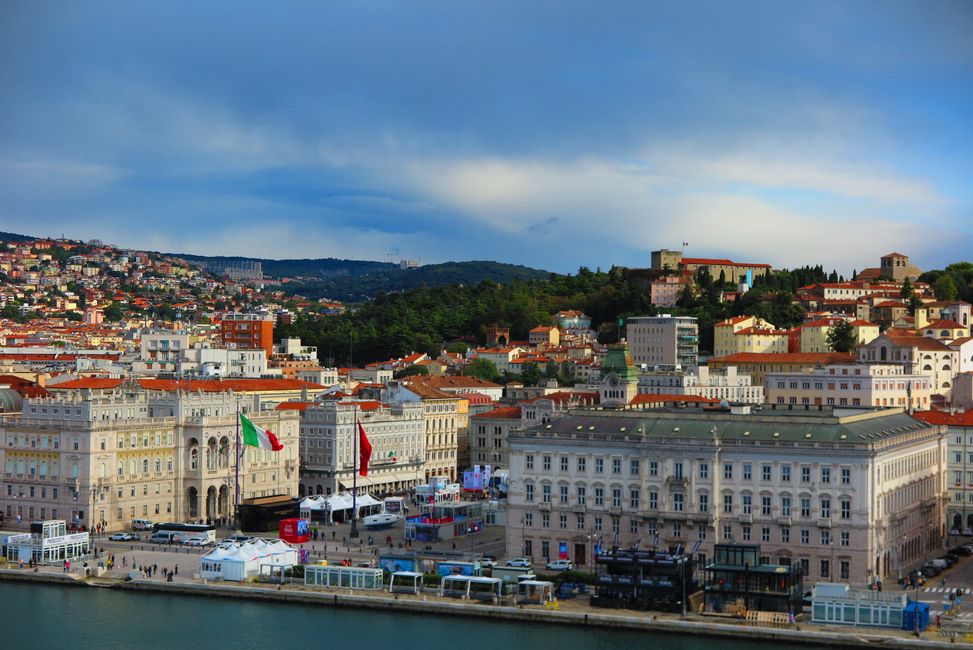
TRIESTE is the maritime gateway to Northern Italy.
The city has a deep-water port that connects via the Suez Canal to many countries in Asia. The port is duty-free. There is a high standard of living here, and it is now considered to be very safe. The climate is humid subtropical with moderate summers and mild winters.
A brief history.
In ancient times, up to the 6th century, the Roman Empire ruled here.
It was succeeded by the Byzantines. The Byzantine influence is especially visible in Ravenna (see the lower part of the article) with the mosaics, and the Byzantine influence in the architecture can also be seen in Kotor.
The subsequent Venetian rule lasted until the 18th century.
In the 18th and 19th centuries, Trieste thrived as a trading port.
Coffee, sugar, tropical fruits, wines, and oils were shipped from here.
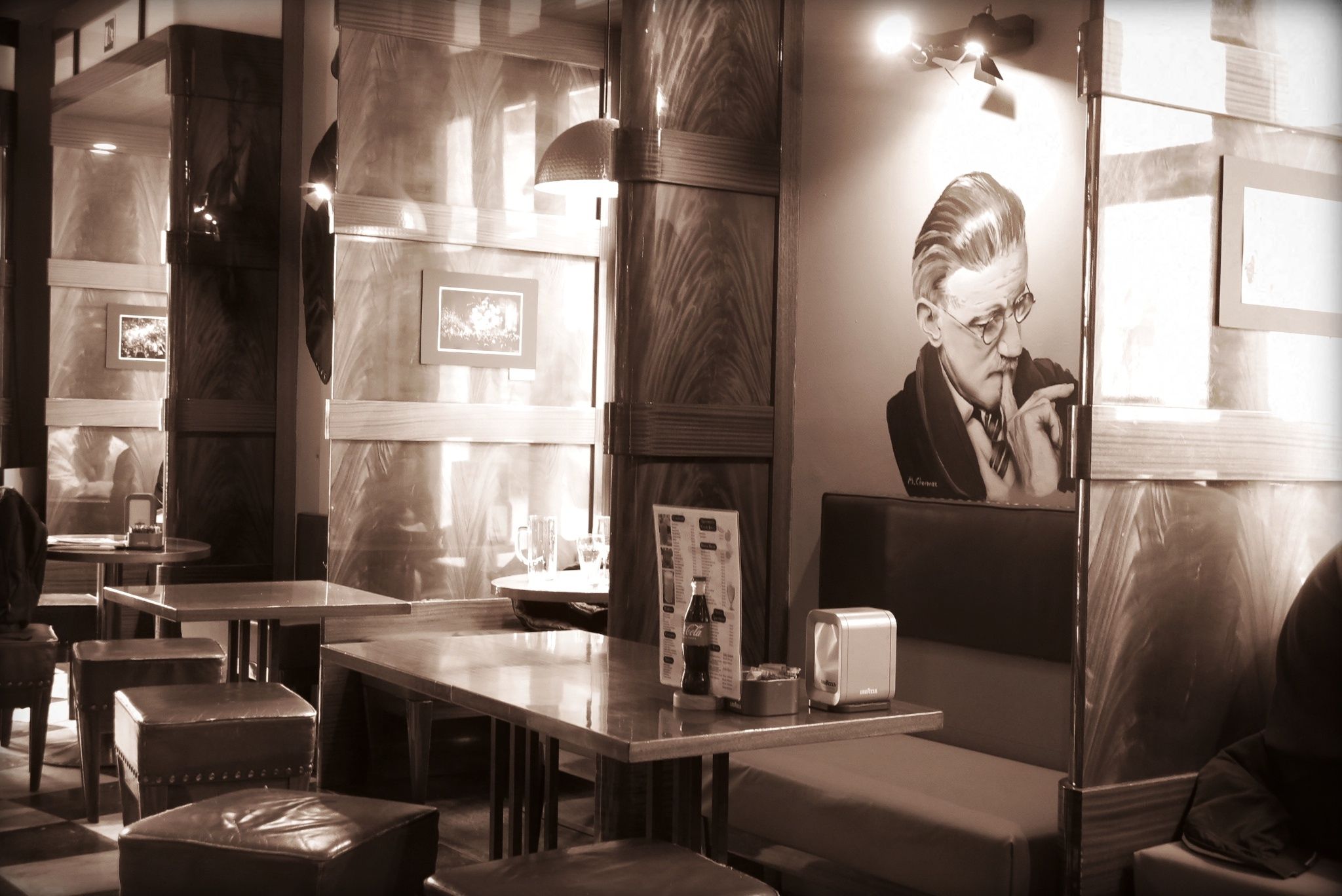
Trieste is the coffee capital of Italy. The coffee culture is also based on the imperial Austrian rule. Historical cafés and roasteries are testament to this.
Santa Maria Maggiore, a baroque church located slightly higher, was built in the 17th century; it is very simple yet very beautiful.
The Cathedral of Trieste, built in the 14th century, located next to Castello San Giusto, offers breathtaking views and is a symbol of strength.
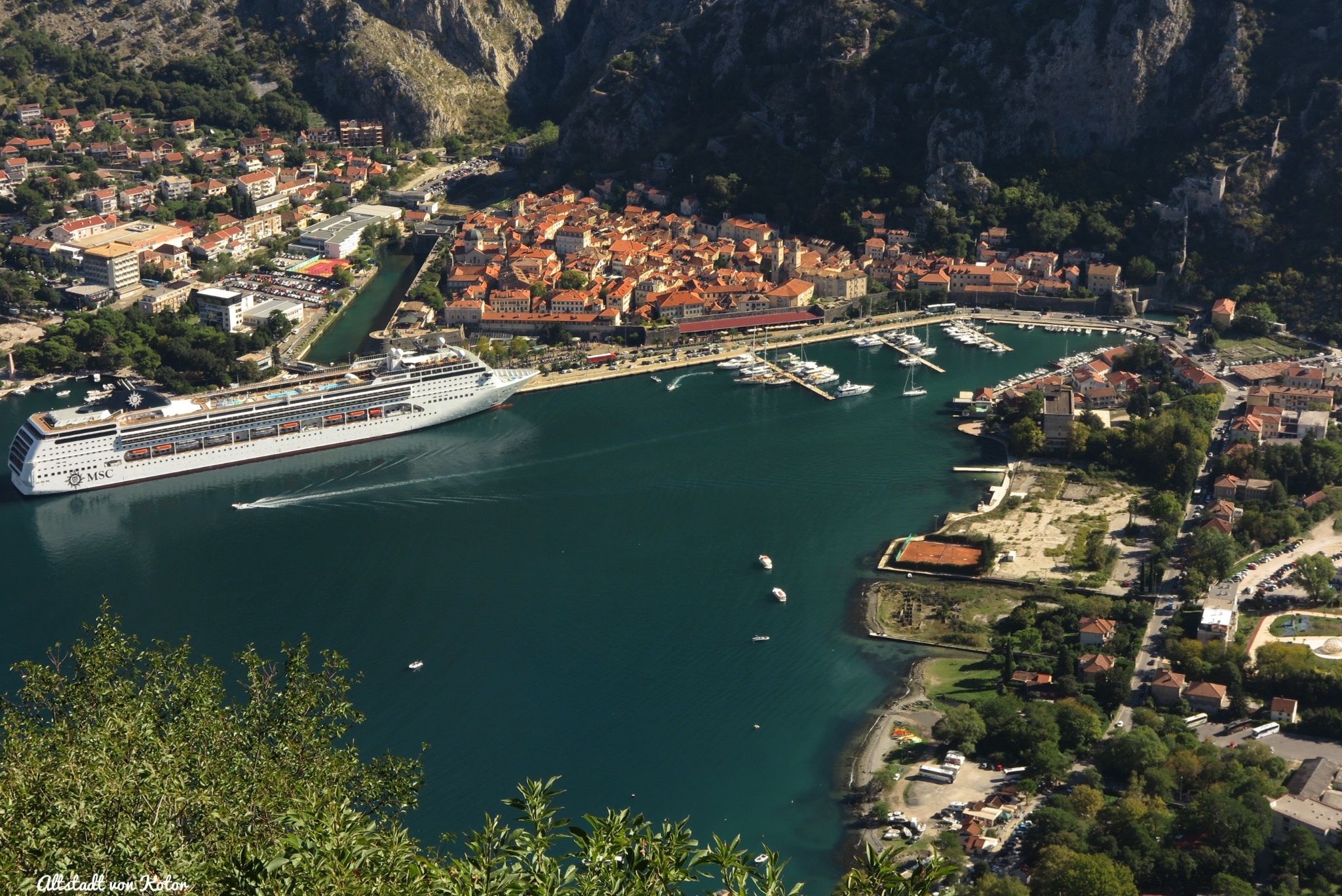
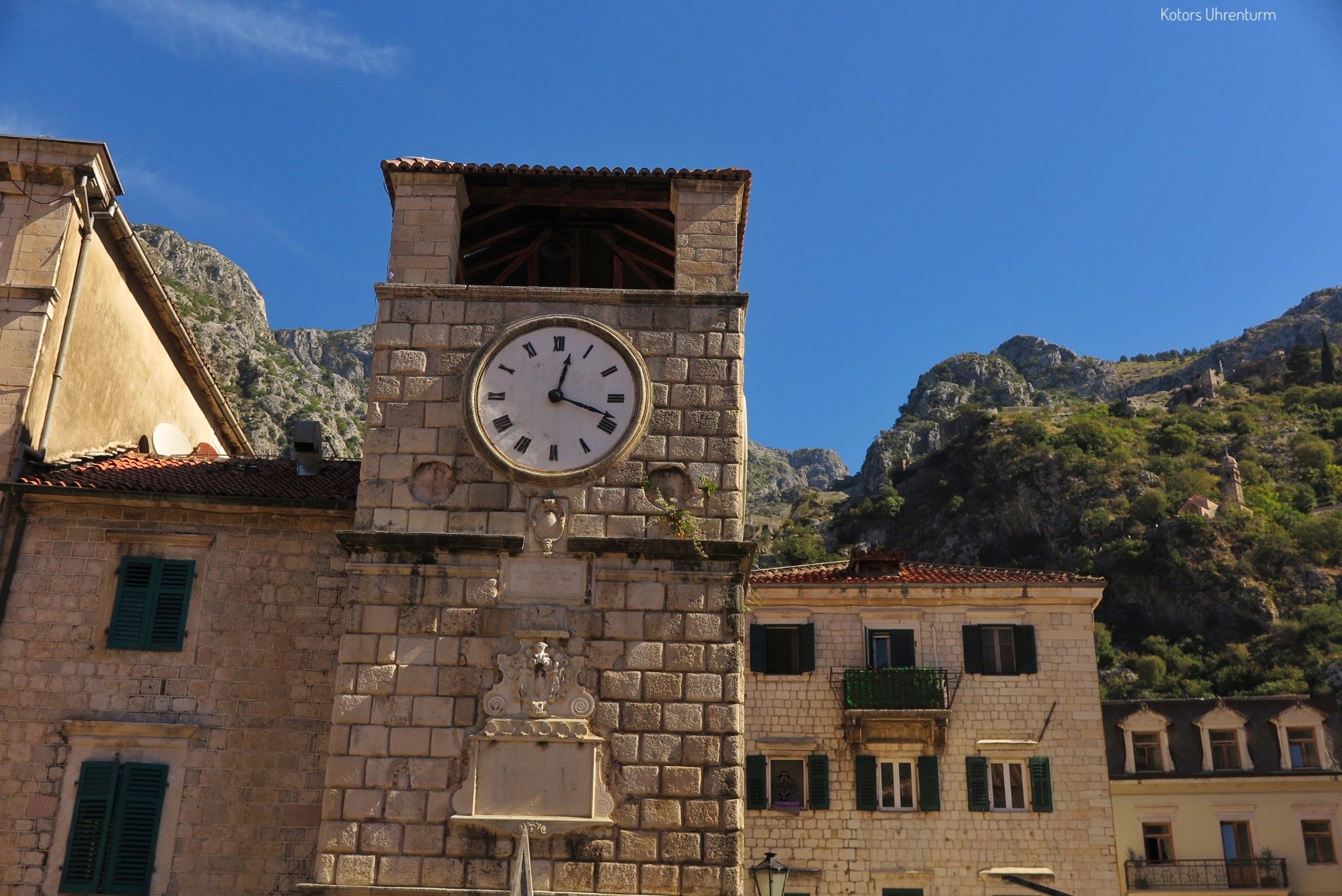
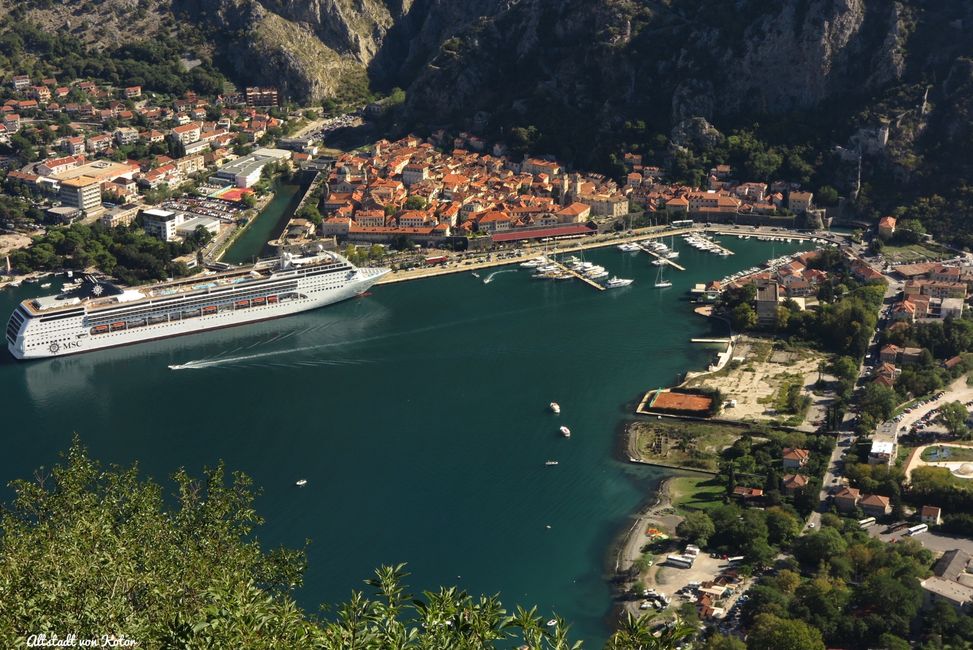
KOTOR, the medieval old town, is a UNESCO World Heritage Site.The city walls, narrow streets, and the clock tower can be admired while climbing to the San Giovanni fortress.
Kotor is located in Montenegro and is a Catholic diocese.
The city is surrounded by high mountain ranges.
In 1420, Kotor sought Venetian protection from the Ottomans but gradually lost its independence. In 1815, the city of Kotor was assigned to Austria. The Austrians transformed the natural harbor into a military base for the k.u.k. (Austro-Hungarian) navy.
Gorazda, a military bunker built by the Austrians in 1886 and remodeled several times by the Montenegrins, is perfectly camouflaged in the mountains of Kotor.
Even during socialist Yugoslavia, Kotor was an important naval port.
After the breakup of Yugoslavia, Montenegro introduced the Deutsche Mark in 1999, followed by the Euro, to separate itself from the hyperinflationary Yugoslav economy.
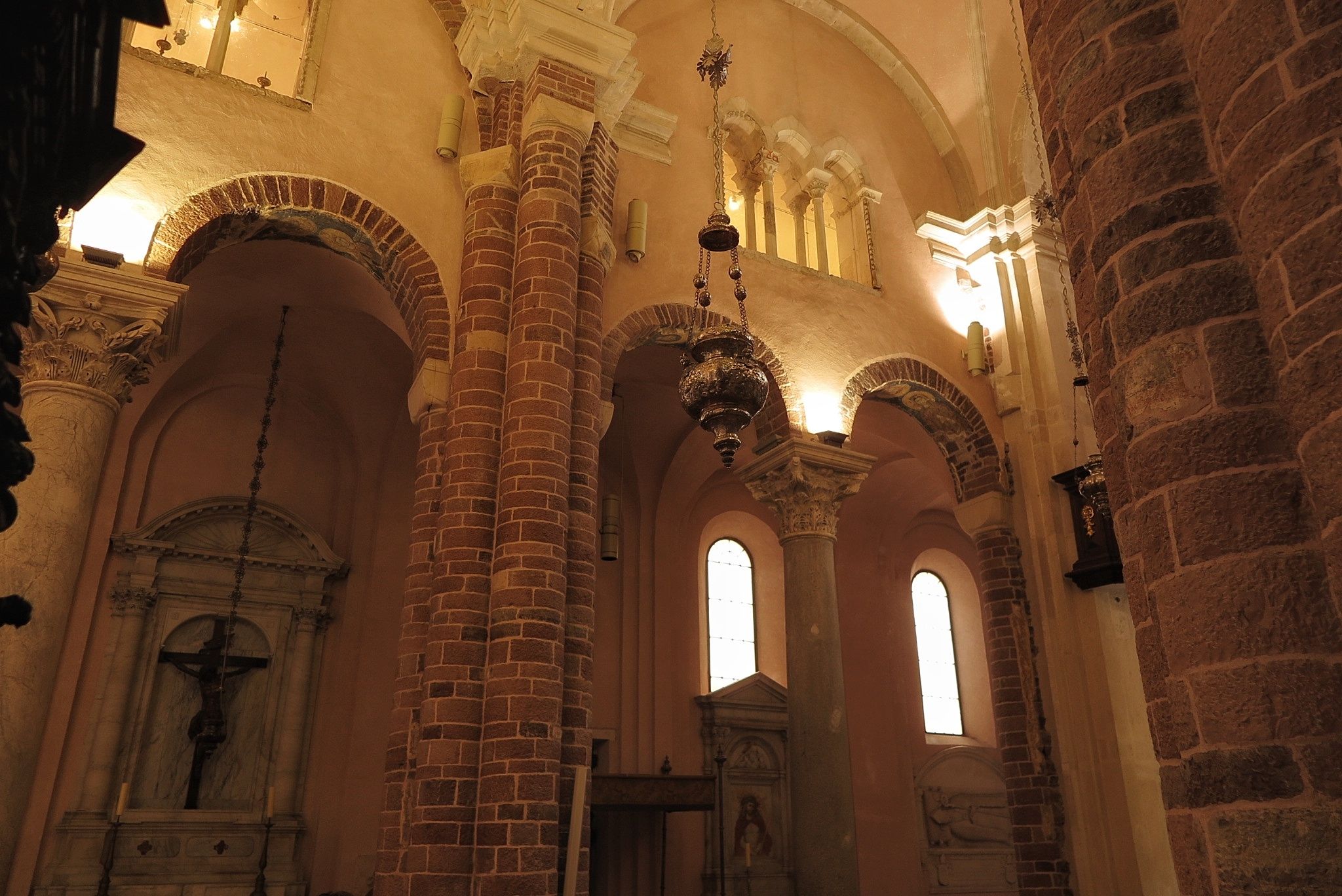
The 4.5 km long city wall and the St. Tryphon Cathedral from 1166 are outstanding examples of Romanesque architecture with Byzantine influence.
The clock tower in the Renaissance style dates from 1602 and is a reminder of the Venetian rule.
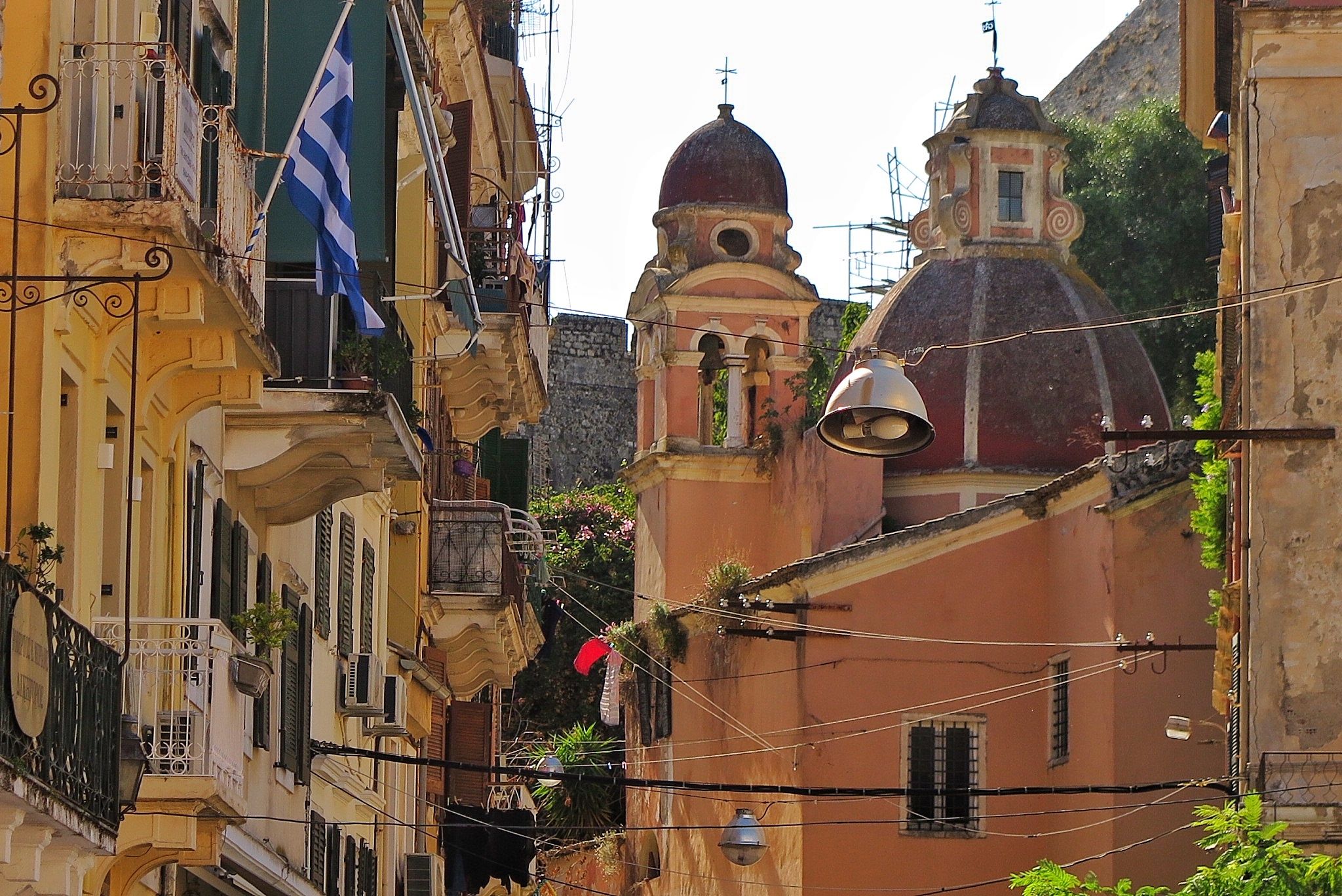
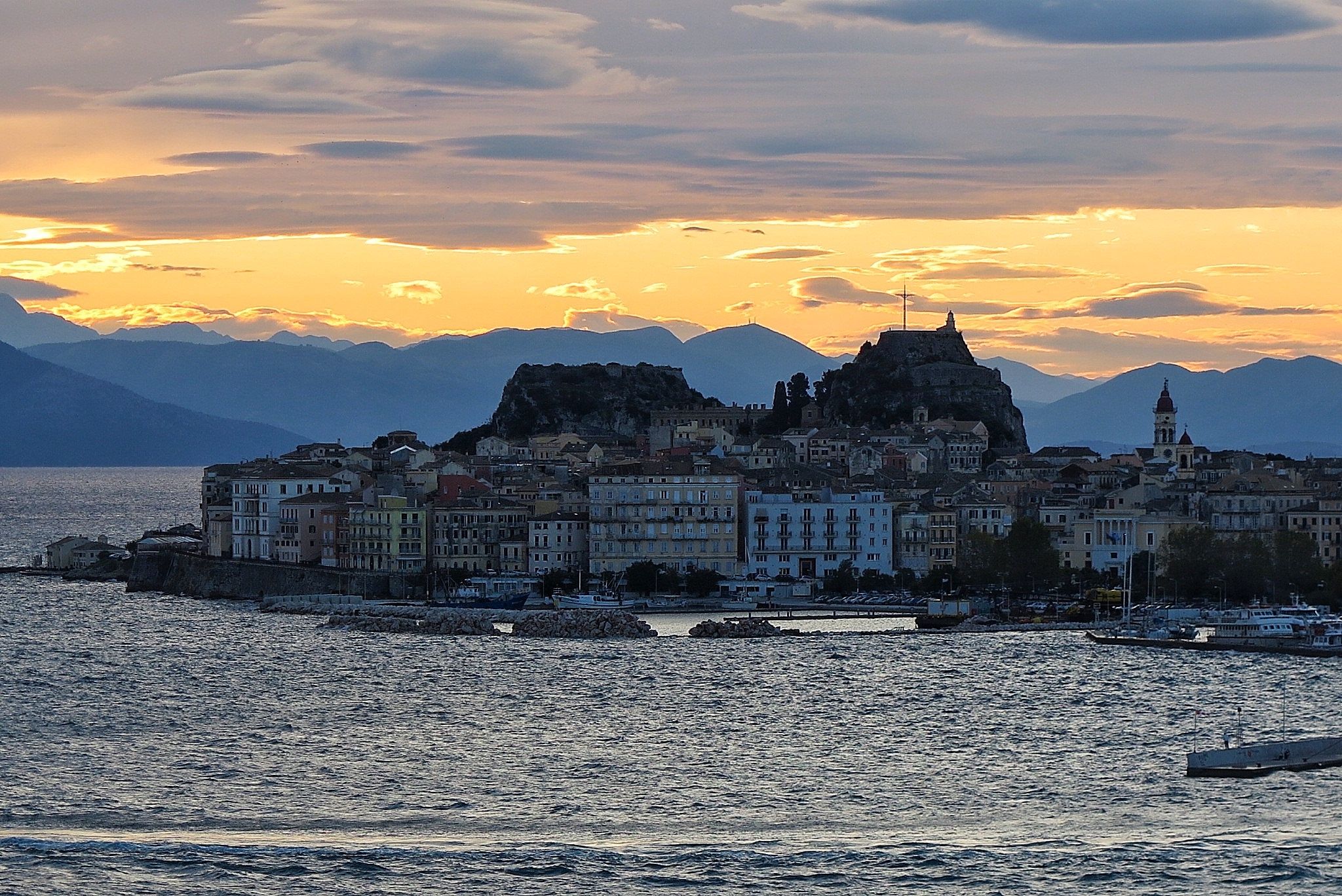
KORFU is located off the northwest coast of Greece in the Ionian Sea. Rugged mountains and lagoon areas provide important habitats for wildlife.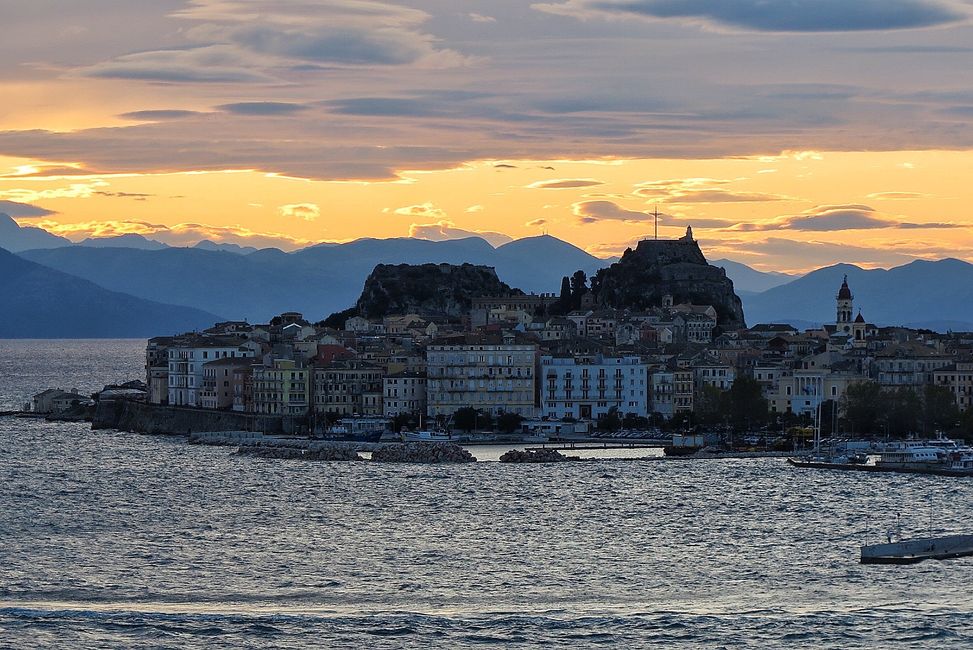
Only in 1716 did the Venetian army under Matthias Johann von der Schulenburg manage to repel Turkish invasion attempts. The general came from the German noble family after which Schulenburg in Hattingen is named.
In World War II, after 1944, almost 1700 Jews were deported under German control to Auschwitz, where they were gassed.
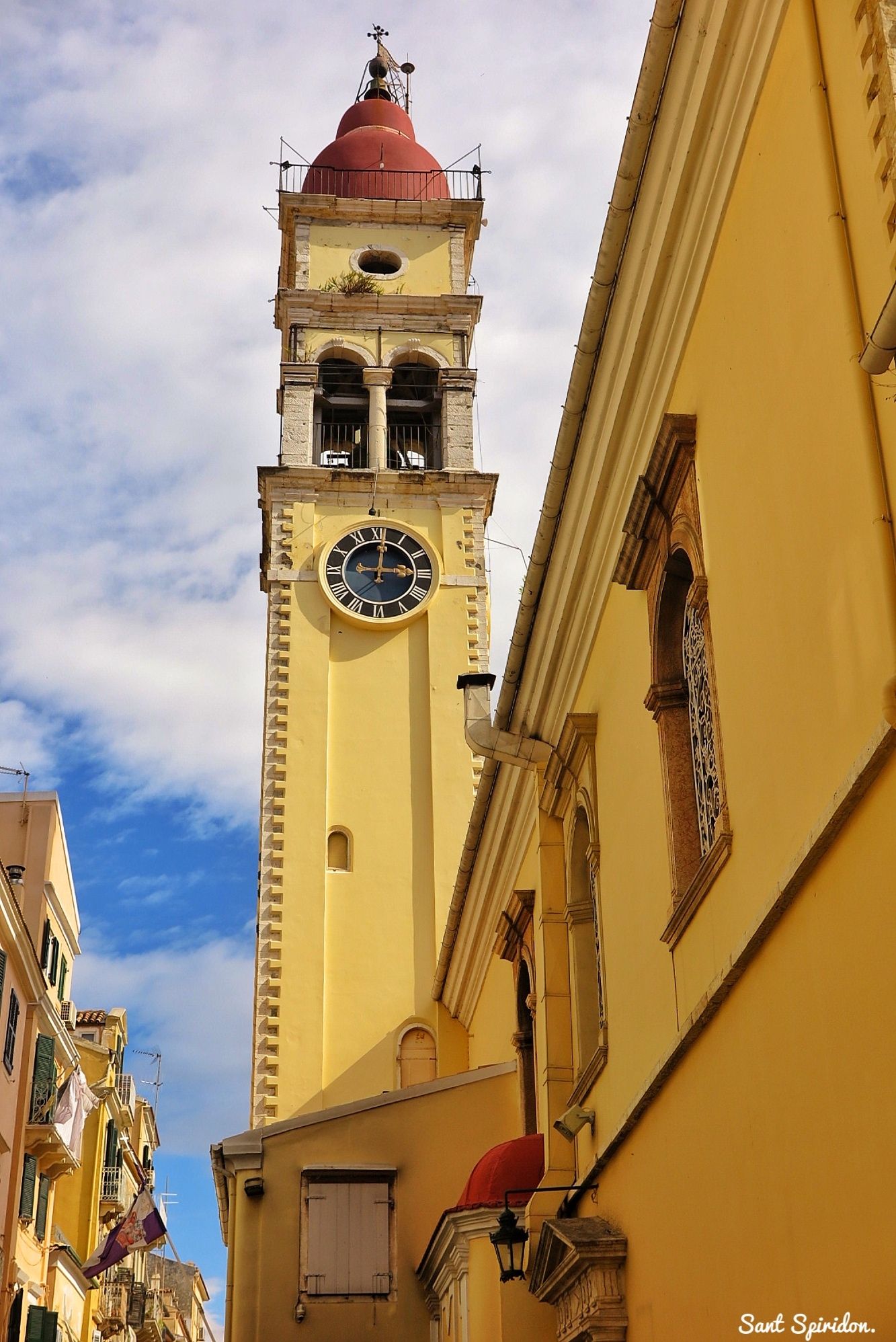
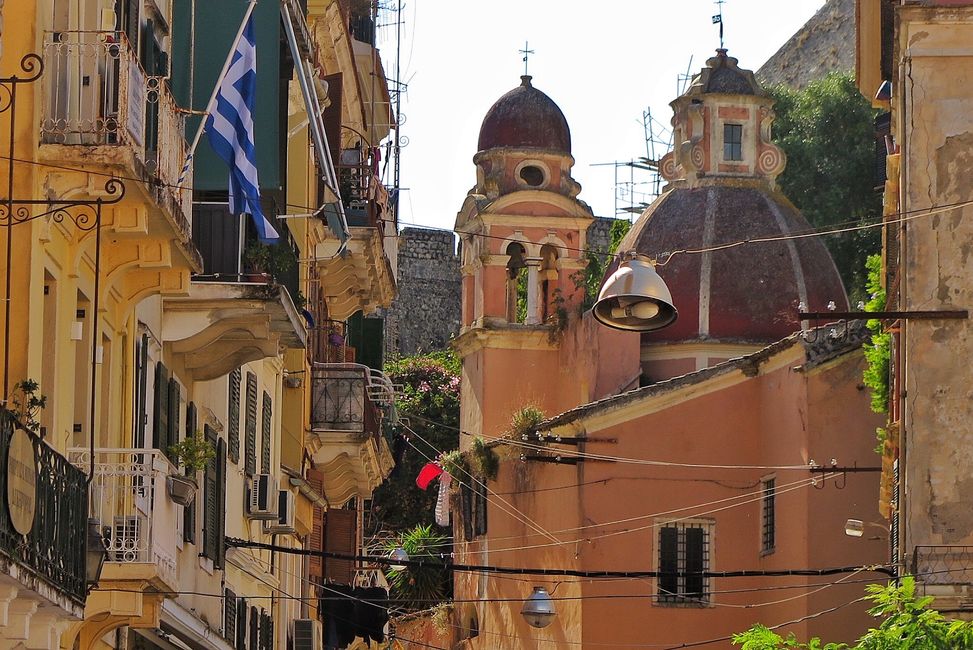
The Greek Orthodox Cathedral of St. Spiridon, built in 1589, with its characteristic bell tower is a prominent landmark of the city of Corfu.
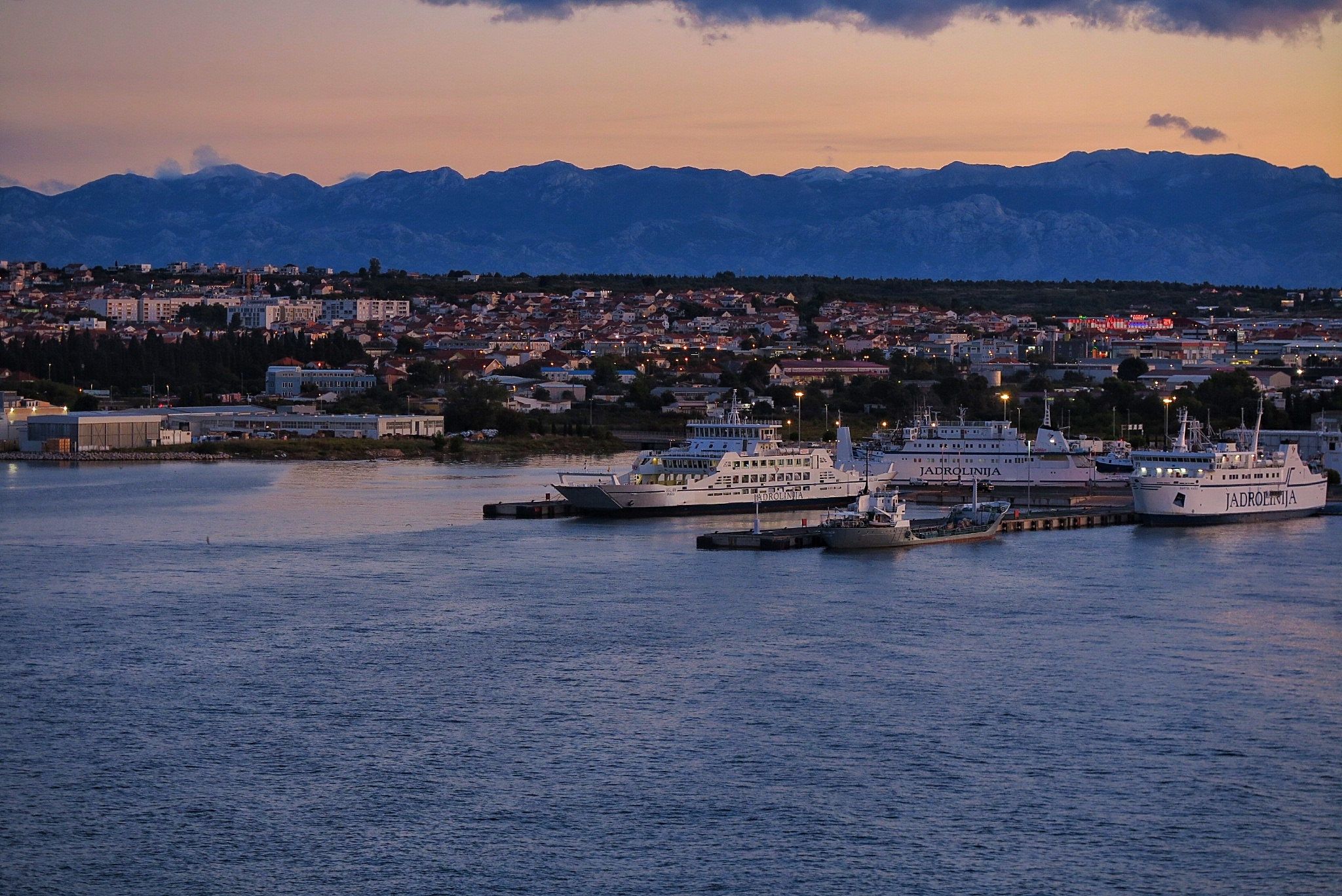
ZADAR is a Croatian city whose old town is situated on a peninsula.
The Dinaric Alps are inland and determine the climatic conditions; the coastal area has a Mediterranean climate, while the mountainous region has a more continental climate.
Dalmatian wines are very strong and sweet due to sunlight exposure, from above, the reflection off the stones of the karst landscape, and from the surface of the sea. The red wines, in particular, have a high alcohol content.
Karl May was fascinated by the karst landscape, and films such as THE TREASURE OF SILVER LAKE or OLD SHATTERHAND were shot here.
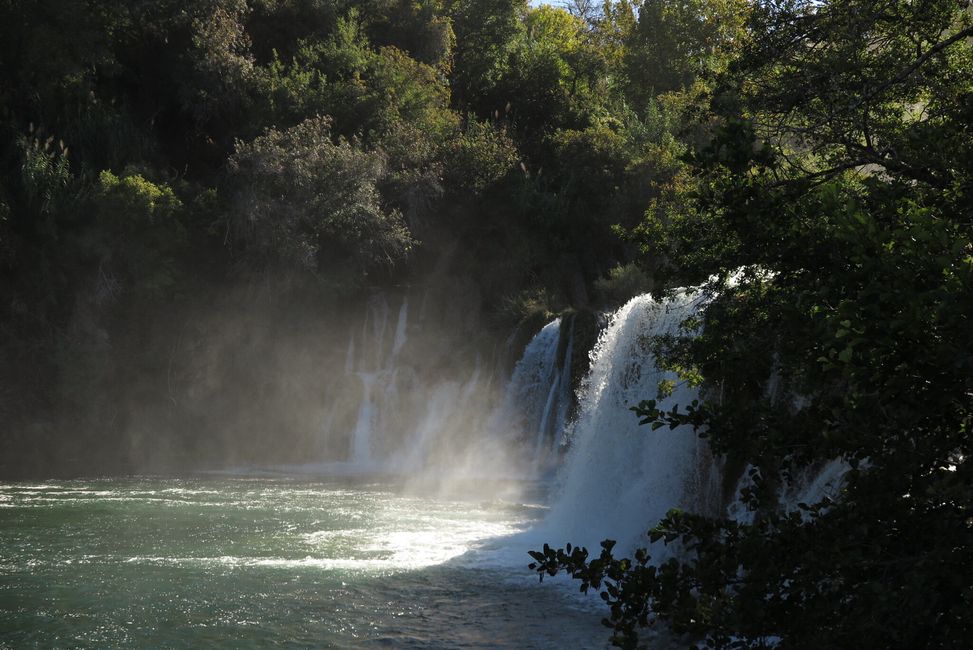
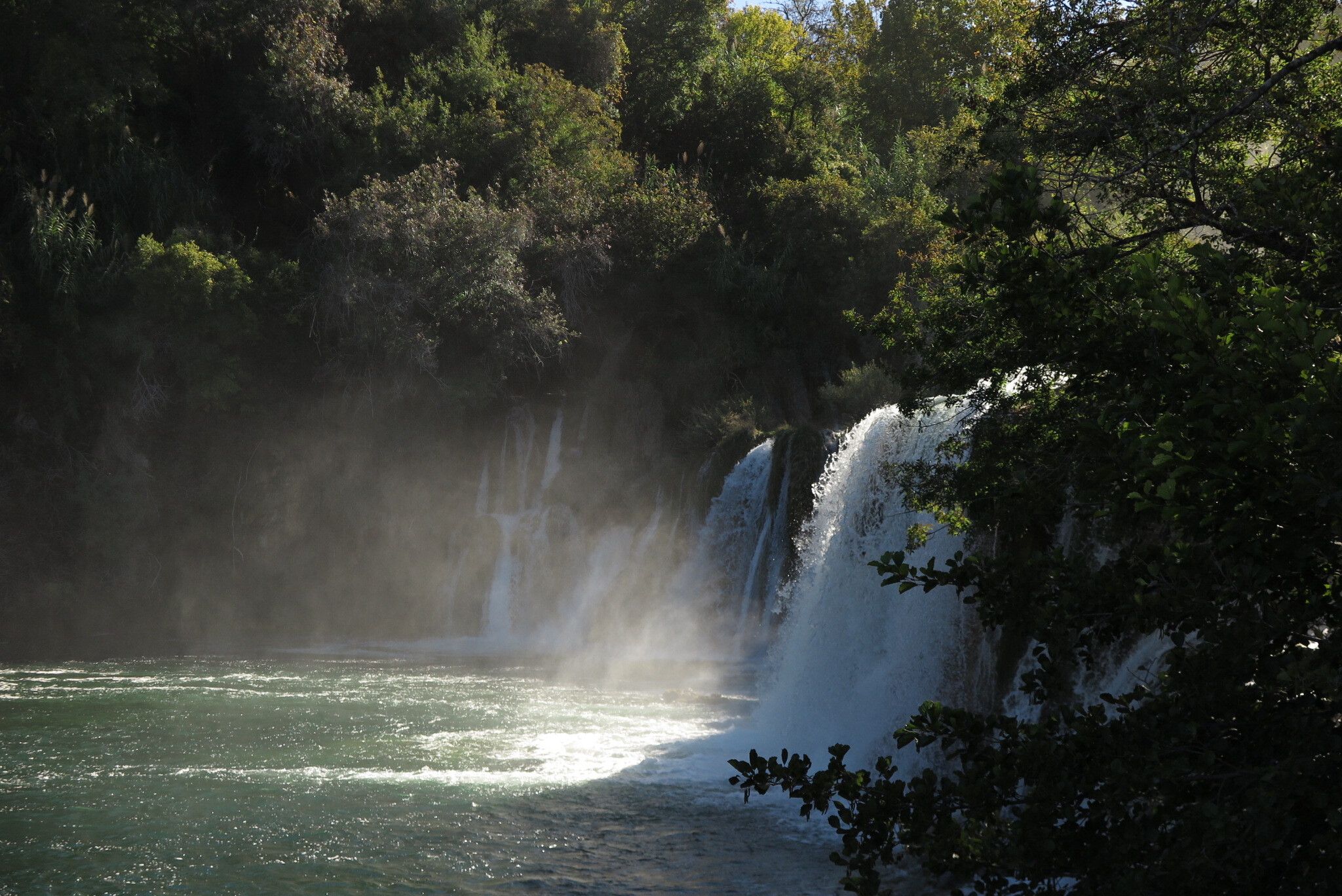
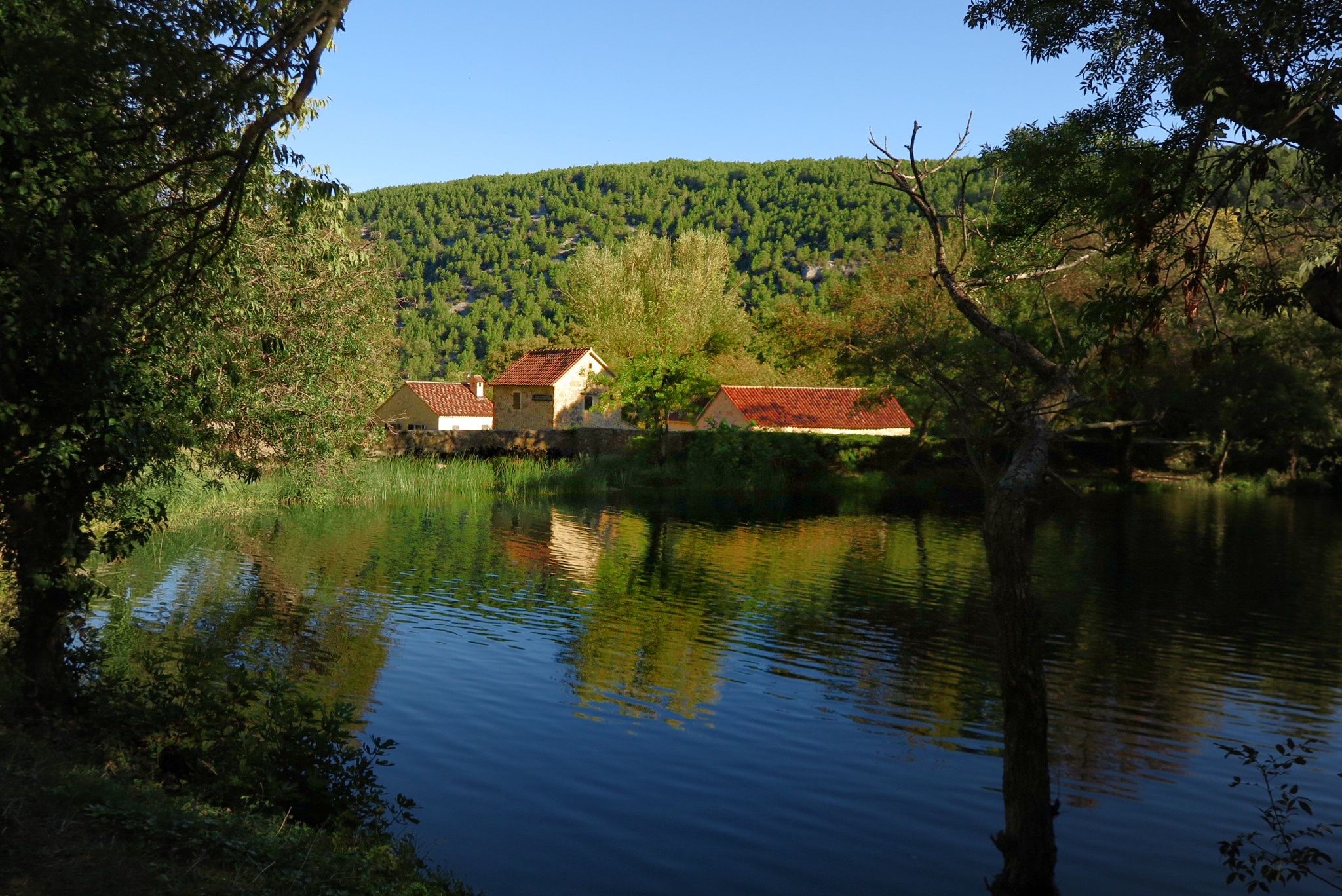
A few kilometers behind Sibenik, the gates of Krka National Park open up a view and access to a unique, paradisiacal river landscape that is unmatched. Within the park, the Krka winds through canyon-like gorges and along gentle, green slopes.
In Zadar, one can admire Roman and Venetian remnants.
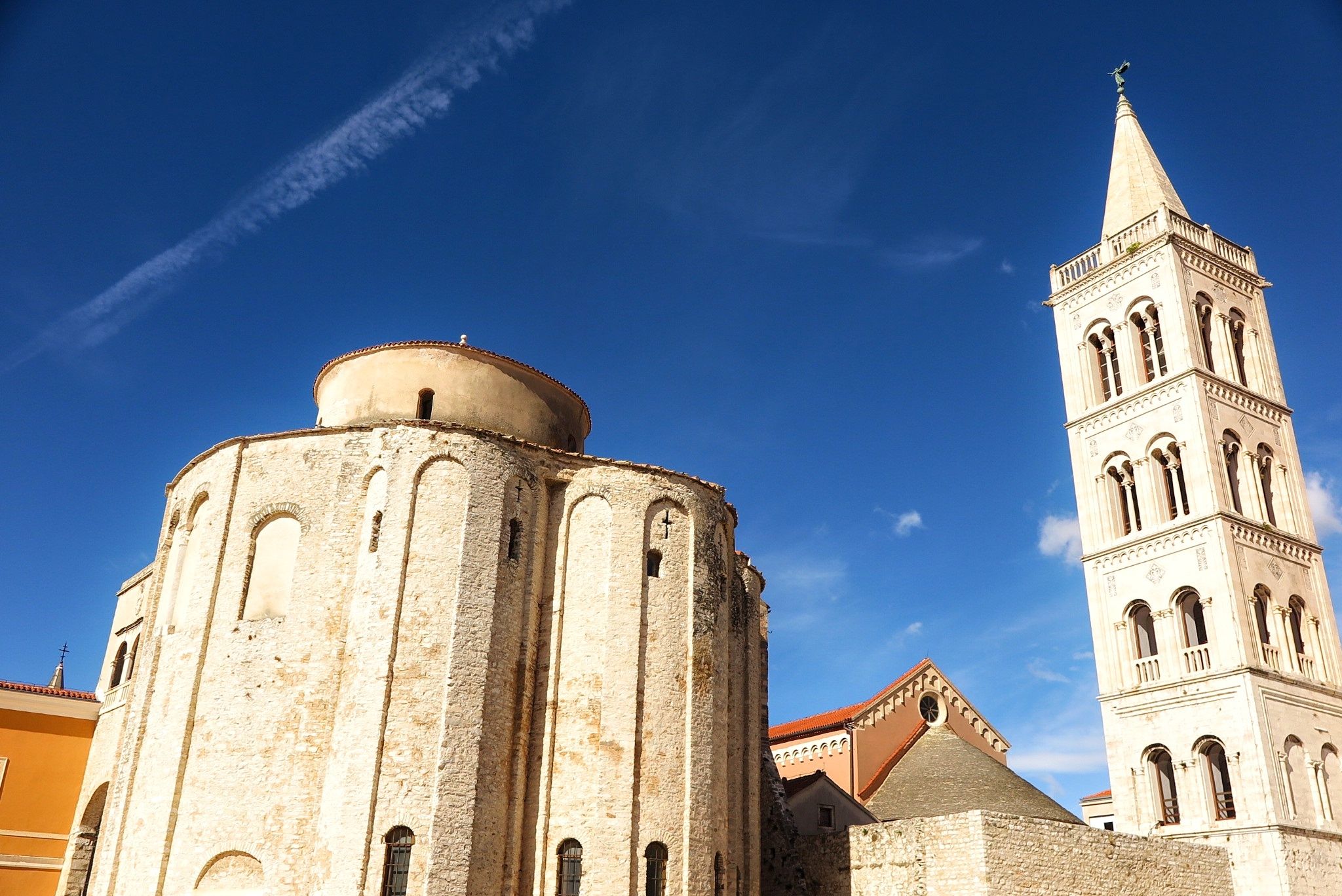
The Church of St. Donatus from the 9th century is a documentation of the Byzantine Empire in Dalmatia (from where the Dalmatian dog originates).
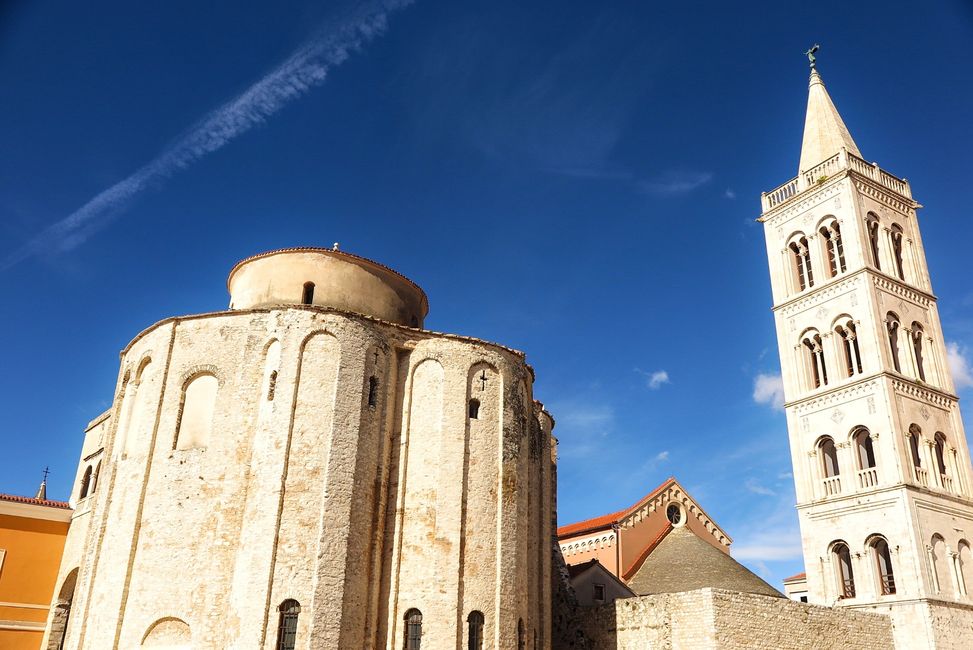
The Austrians took over in the 18th century and stationed the k.u.k. army during World War I.
In 1945, the city belonged to Croatia; many Italians left the city for Italy.
After World War II, Yugoslavia was founded, with Croatia and Slovenia being the most developed countries.
They wanted to leave the federation in 1991.
In 1991, Zadar could only defend itself against the Serbs with great effort.
Since 2013, Croatia has been part of the EU and since 2022, Croatia adopted the Euro. However, life has become very expensive, and many young Croats are emigrating, for example, to Germany.
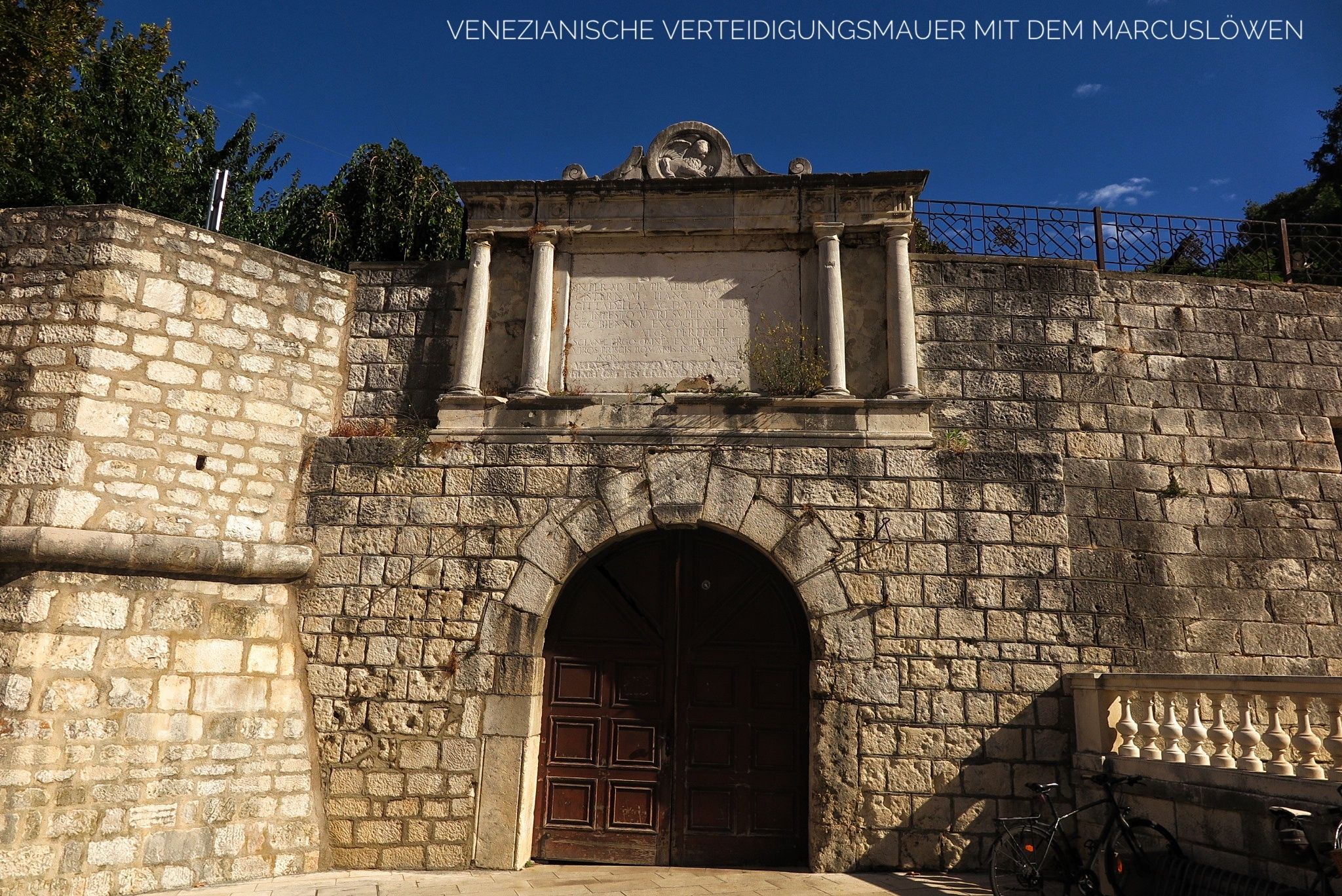
-Maritime gate with Roman triumphal arch Porta di Terraferma featuring the Lion of St. Mark, a symbol of Venetian rule
-Fountain square with the Roman Corinthian column
-Cathedral St. Anastasia Basilica minor from the 9th century in Romanesque style
Since 2005, there has been a sea organ at the harbor. Music is generated through wave movement.
Nearby, created by the same artist, is a 22-meter large platform made of walkable glass panels that capture sunlight and create colorful light shows at sunset.
RAVENNA is a city in Emilia-Romagna, Italy.
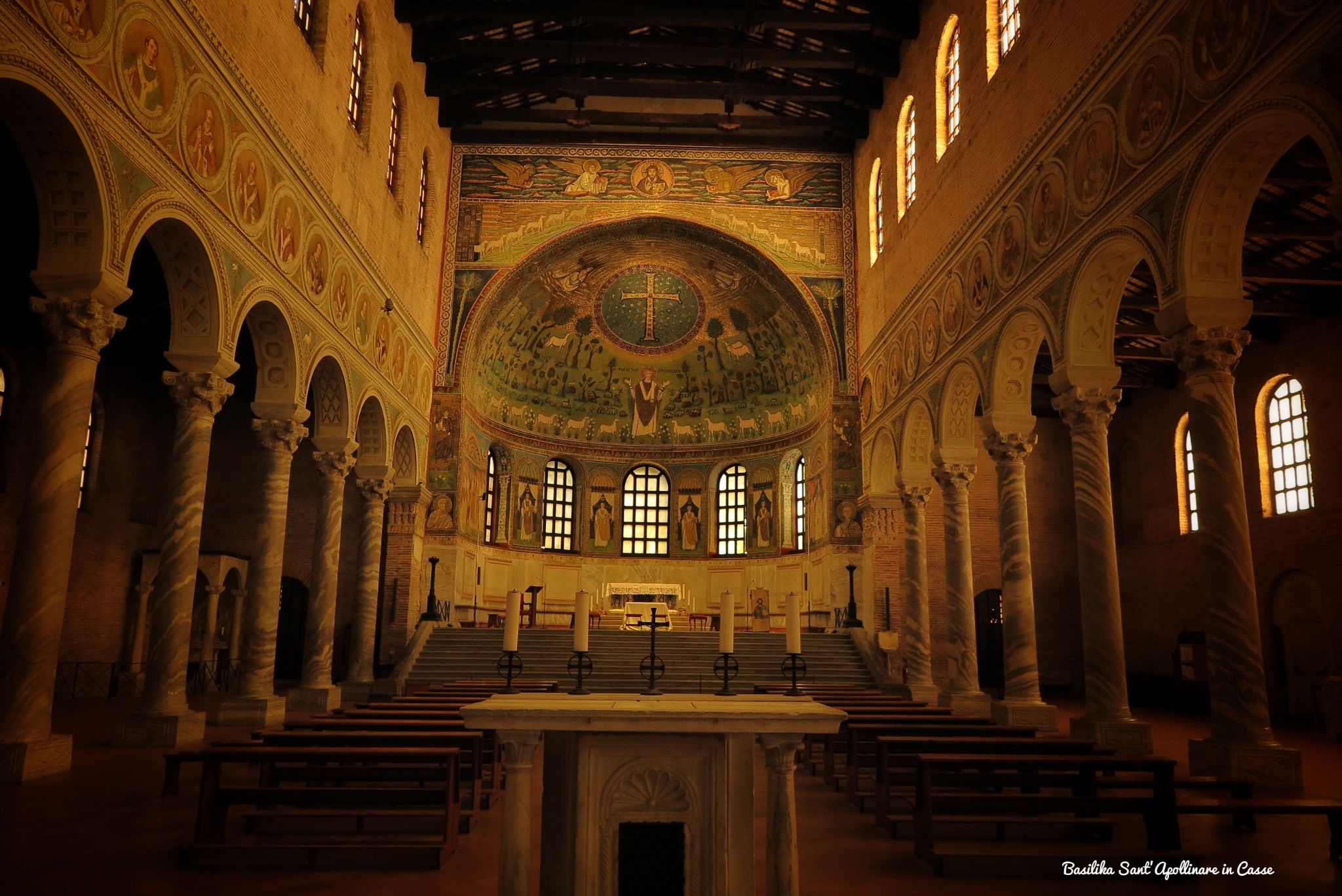
It experienced its heyday in the 5th century when it was declared an imperial city. The Basilica of Sant'Apollinare in Classe was consecrated in the mid-5th century. It is an example of early Christian architecture. Externally, it appears as an unremarkable brick building, but inside, it features a finely chiseled mosaic landscape that dazzles with golden light. The basilicas from this period are oriented eastward, and the morning service was held at sunrise. Only believers were allowed to enter the basilica.
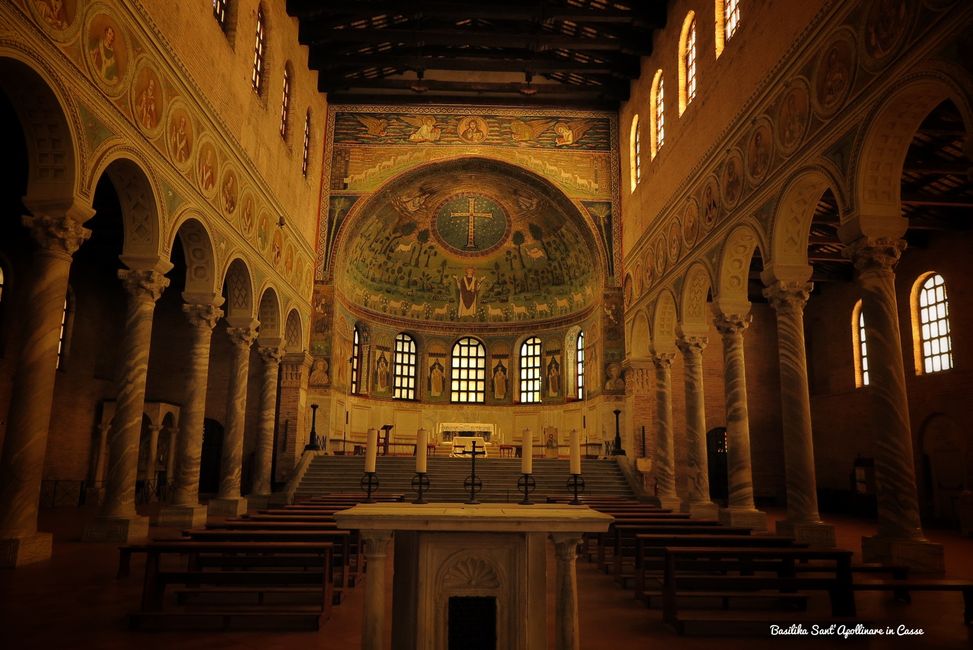
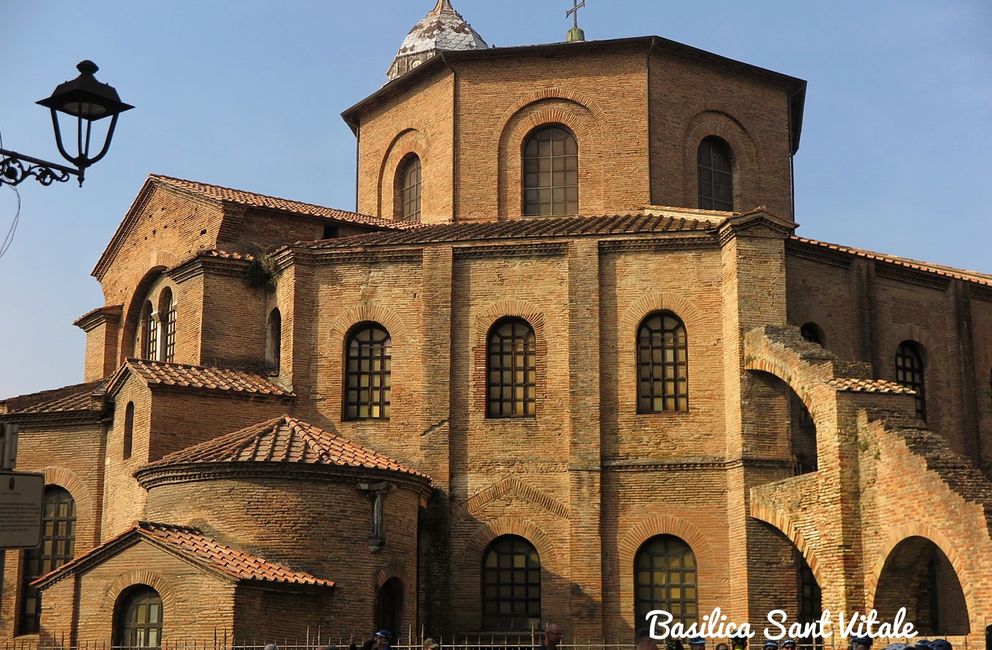
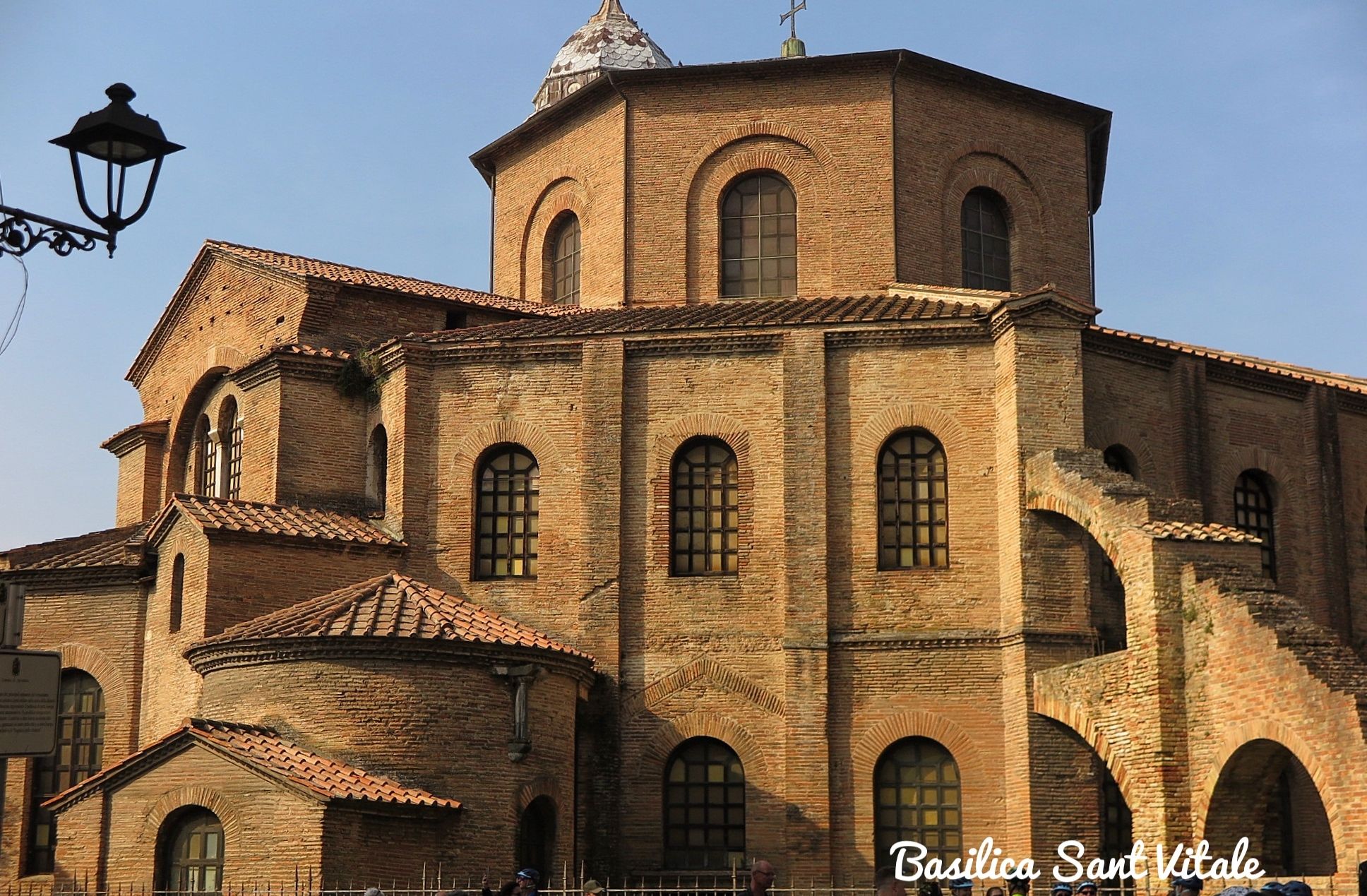
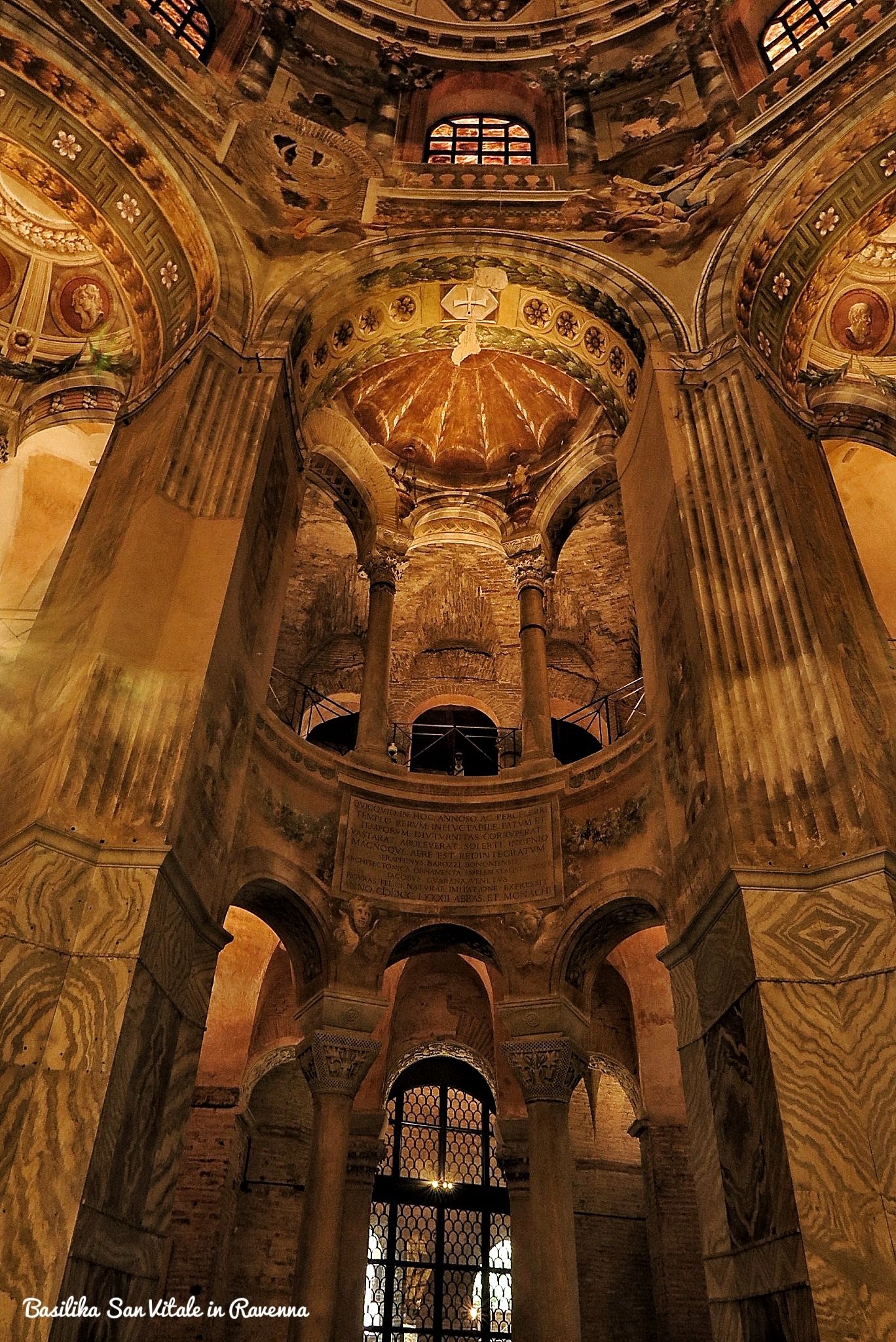
Both the octagonal Basilica di San Vitale and the cruciform mausoleum of Galla Placidia, which were almost simultaneously created, exhibit the same technique.
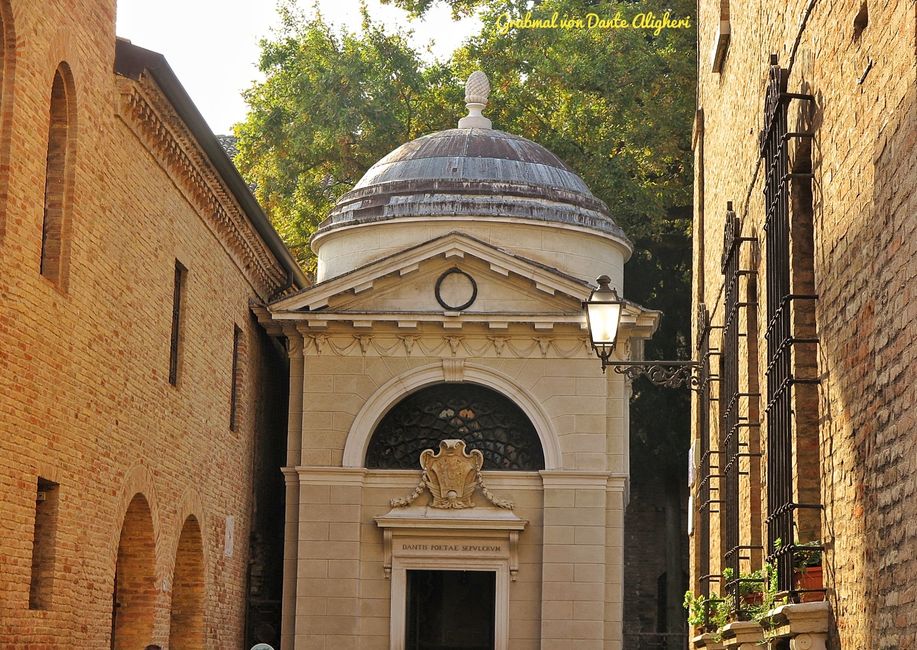
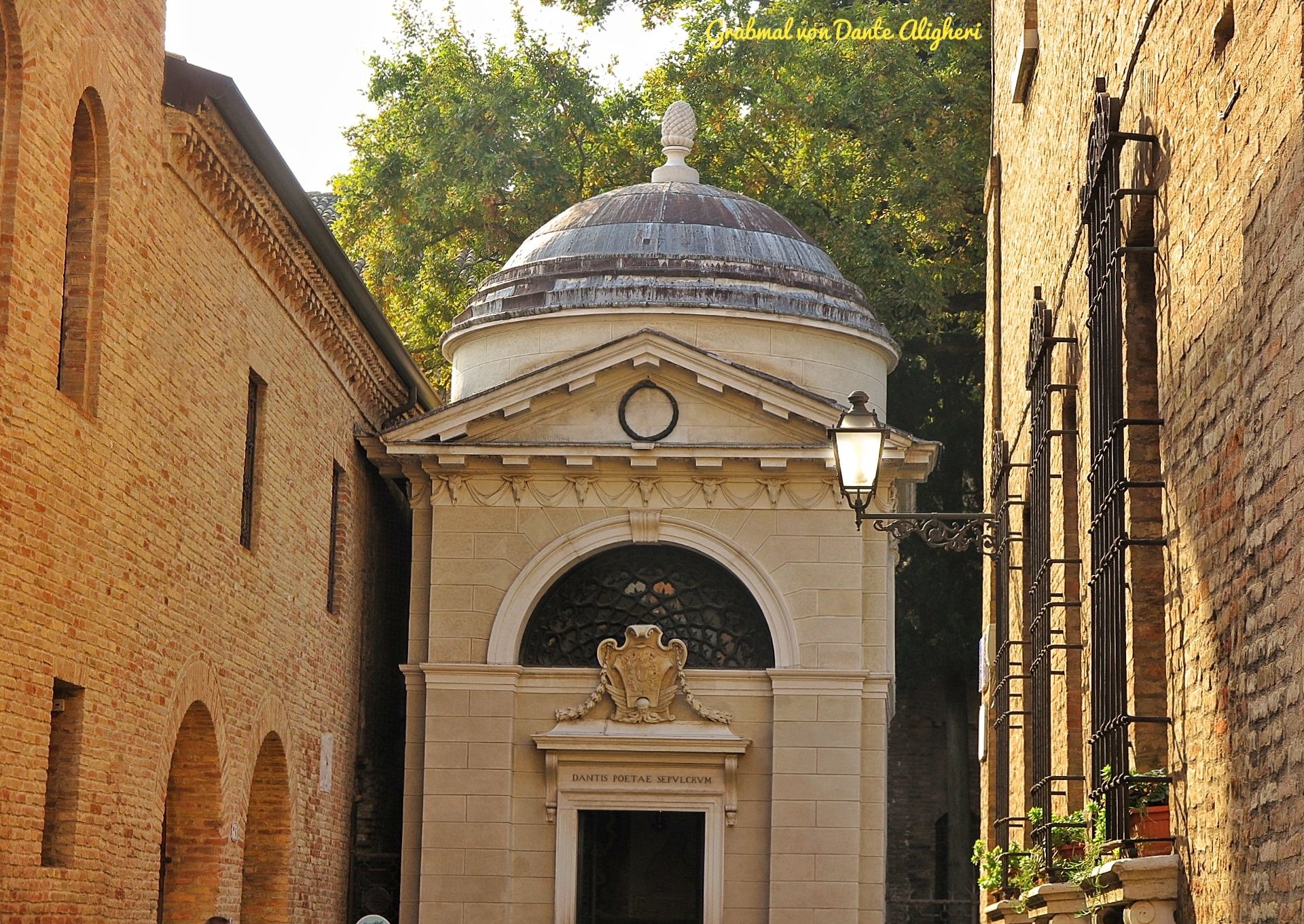
Many mosaics led to the Iconoclast Controversy in the 8th century. The Islamic influence collided with the Jewish commandment, 'You shall not make any graven image of God.' The divine nature cannot be described, so it cannot be painted. Icons and image worship were frowned upon in the 7th and 8th centuries until total rejection. Only the ecumenical council in the mid-8th century prohibited the iconoclasm.Dante Alighieri completed the 'Divine Comedy' in Ravenna in 1307 (which is about hell and paradise in his time). He wrote 'The Divine Comedy' in Italian, while only comedies were allowed to be written in that language; all other works had to be in Latin. That is why he titled his work as a comedy. He died in 1321 of malaria, and his remains are in a small temple at the San Francesco monastery.