
Etosha National Park
The Etosha National Park, with its vast salt pan, is unique! The area stretches across northern Namibia from west to east. ‘ Etosha’ means something like great white place. The...

Published: 28.04.2025
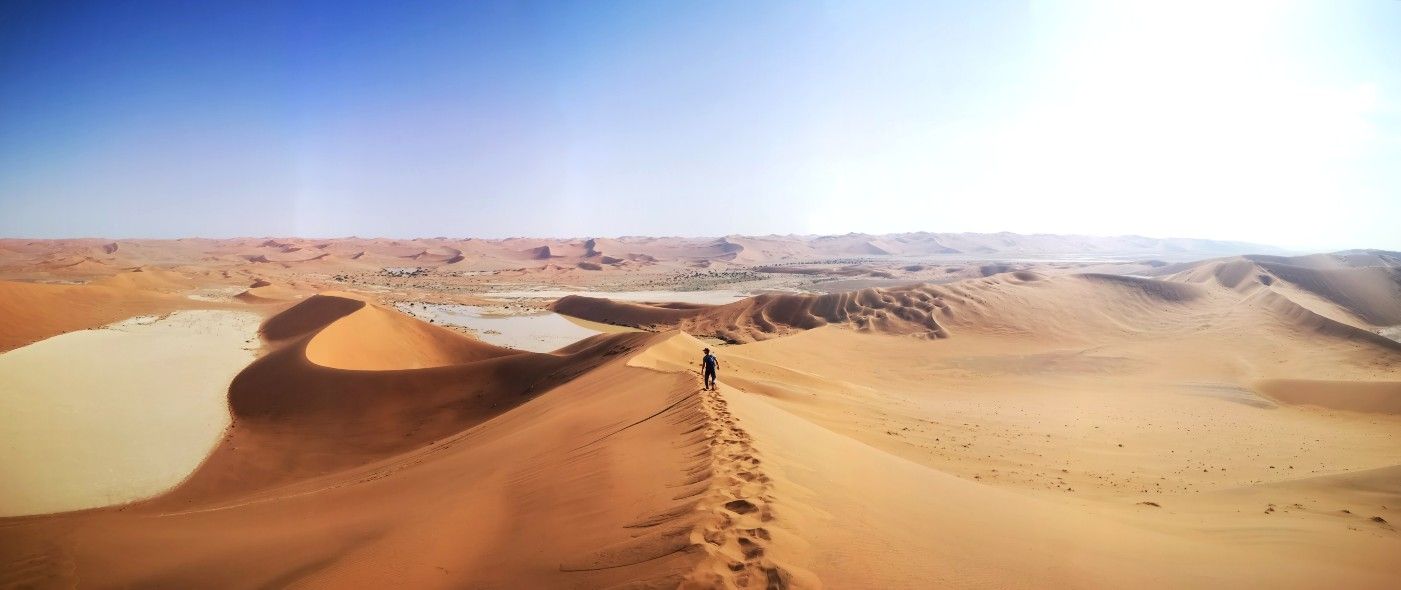
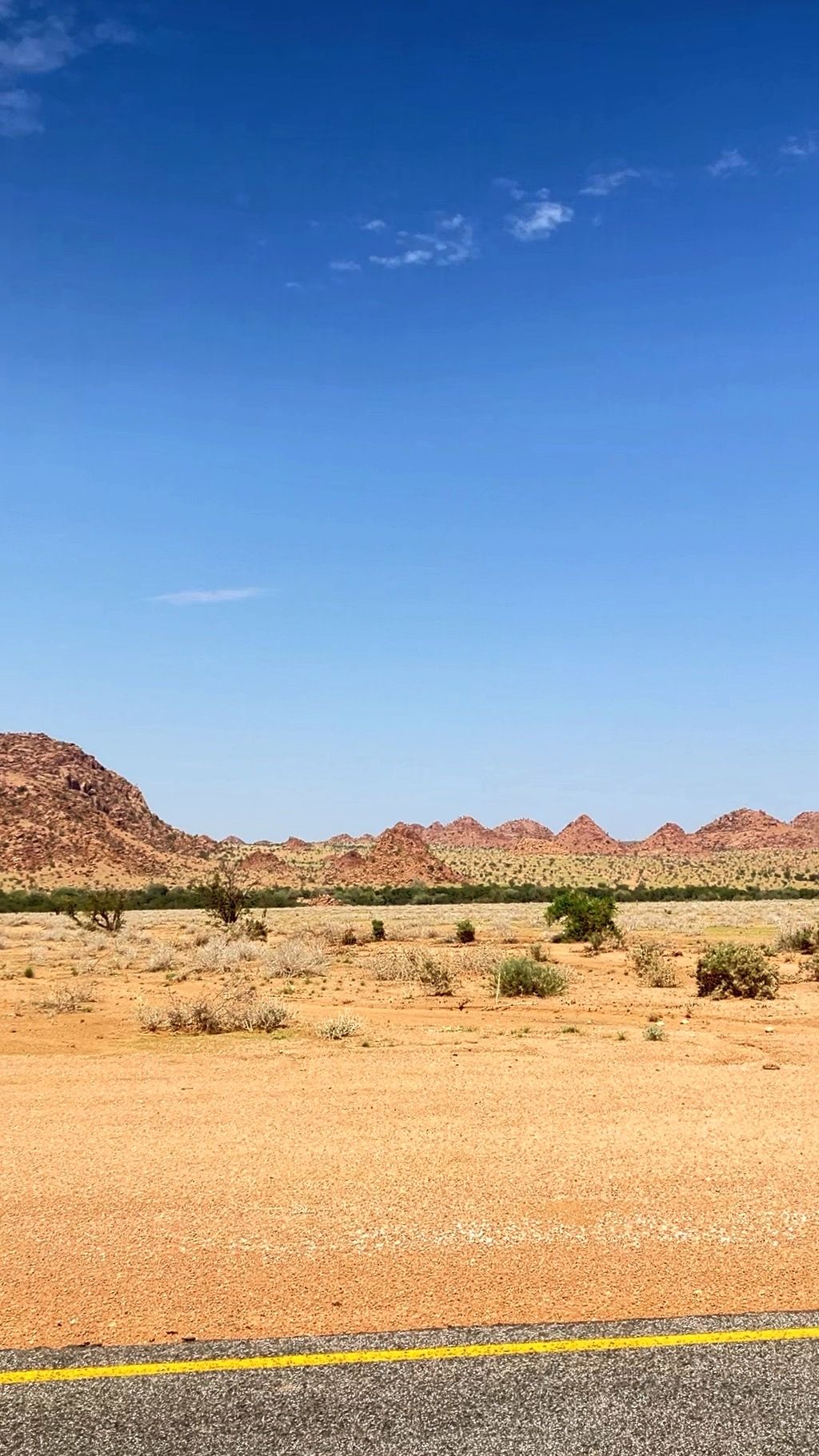
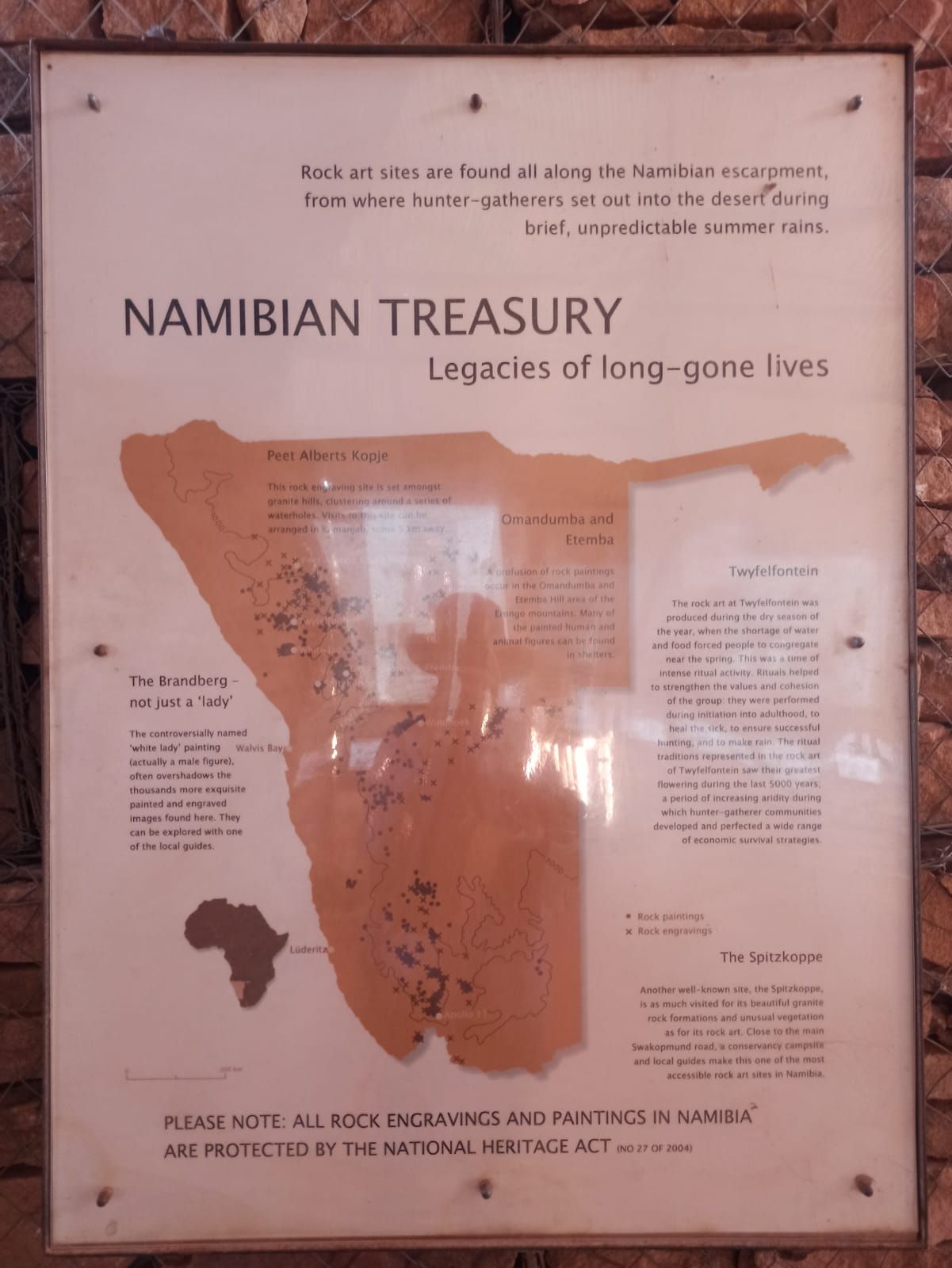
Damaraland is a remote region with impressive mountain landscapes, rugged rock formations, and vast deserts. There are countless impressive ancient rock paintings to admire.
The area is very dry and was not permanently inhabited for a long time - the living conditions are too extreme!
After World War I, Namibia became part of British South Africa. Apartheid was thus also implemented in Namibia - a policy of strict separation between blacks and whites. While the black population was systematically disenfranchised, discriminated against, and economically and politically oppressed, the whites secured extensive privileges. As a result, there were relocations of the indigenous population to remote, barren areas.The Damara people, originally nomads, had to remain in a reserve in the region. Settling was only made possible by digging wells for water supply.
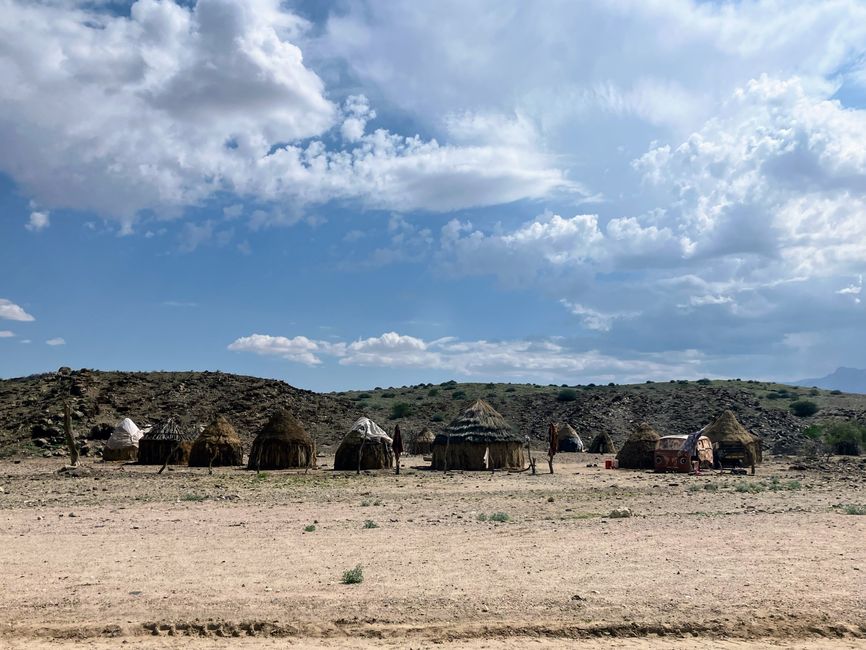
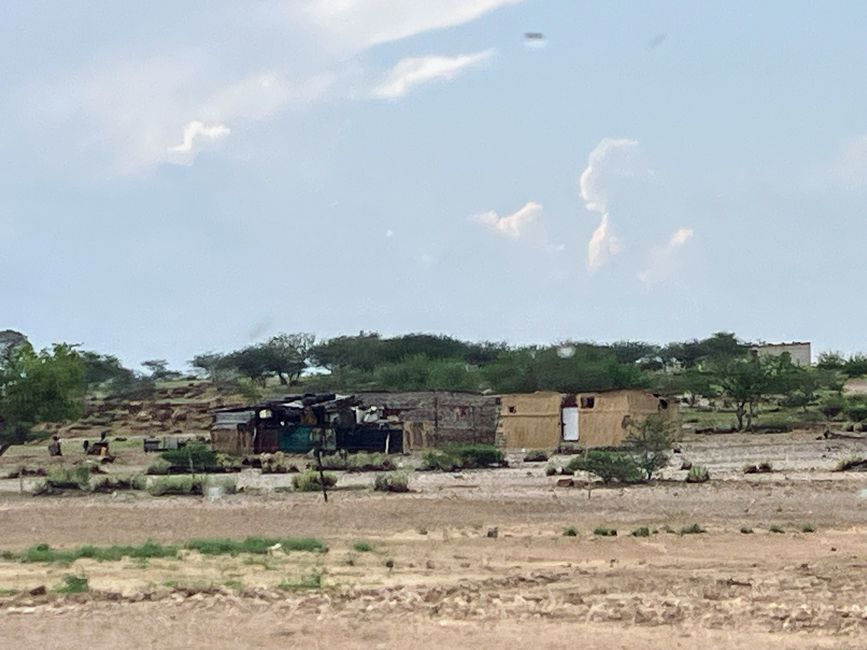
Today, only a few Damara people are settled here, in small huts along the roadside. The people have hardly any means of livelihood; some live off livestock farming and own their own goats.
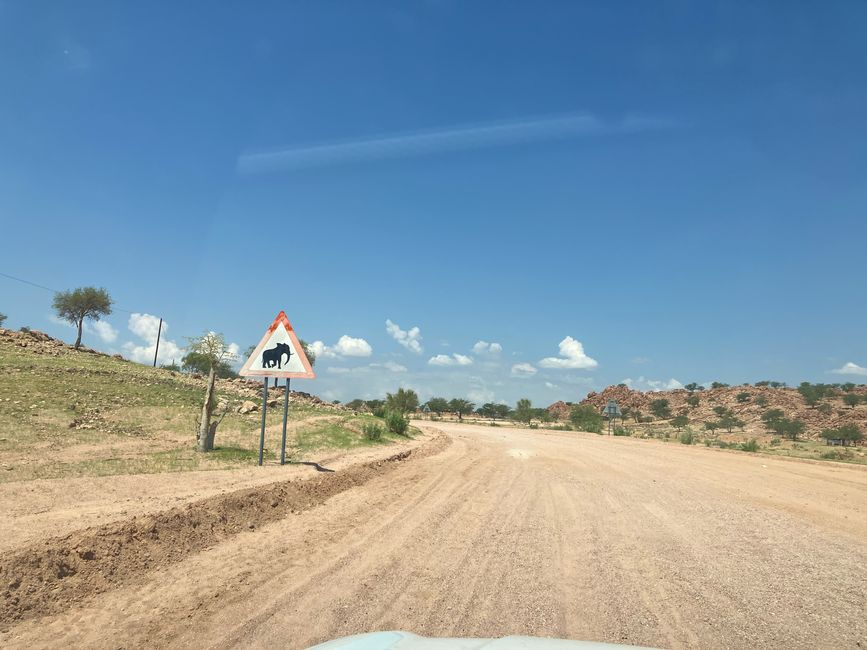
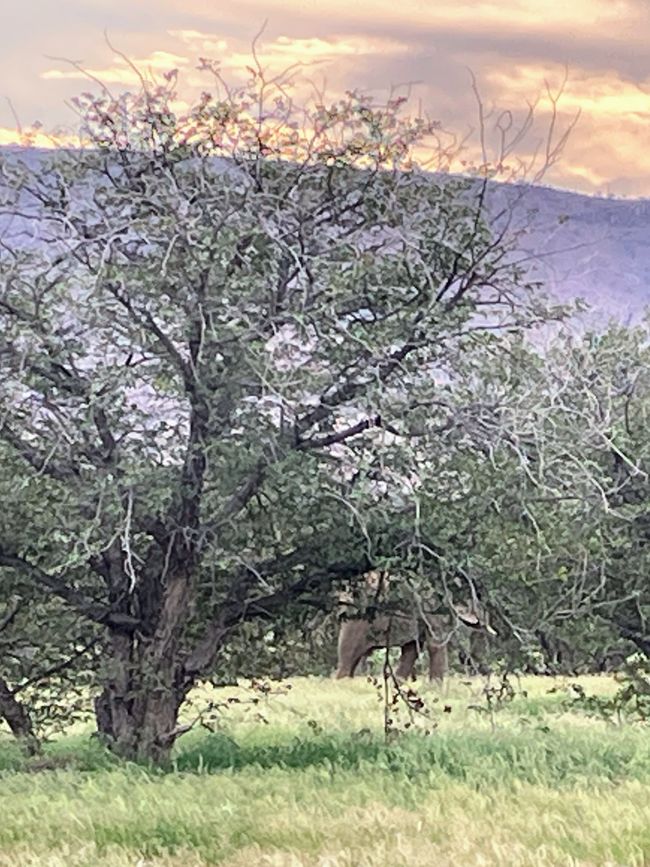
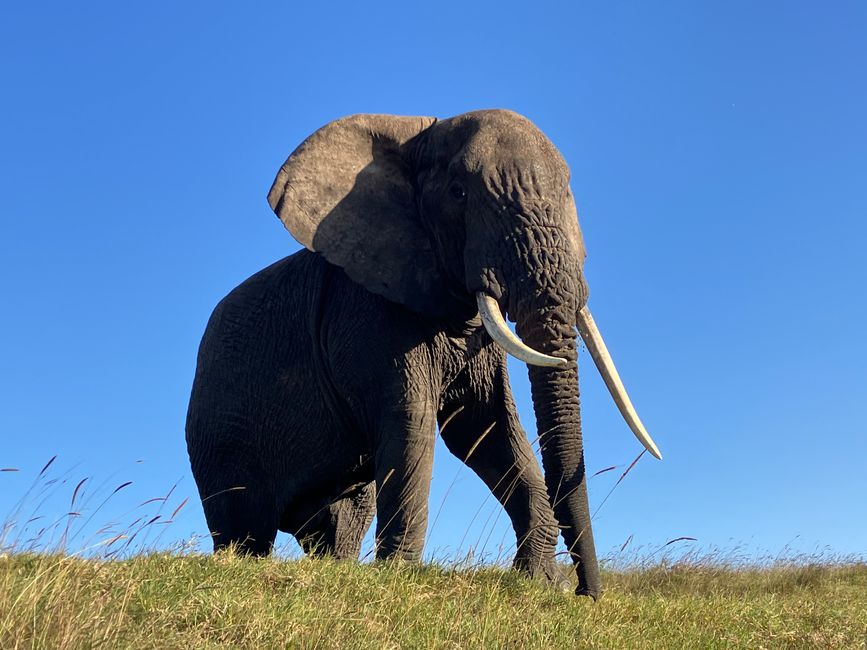
In Damaraland, desert elephants live, and very rarely, desert lions. However, the region is enormous! At least, we get a distant glimpse of an elephant bull during a spontaneous detour into a valley...
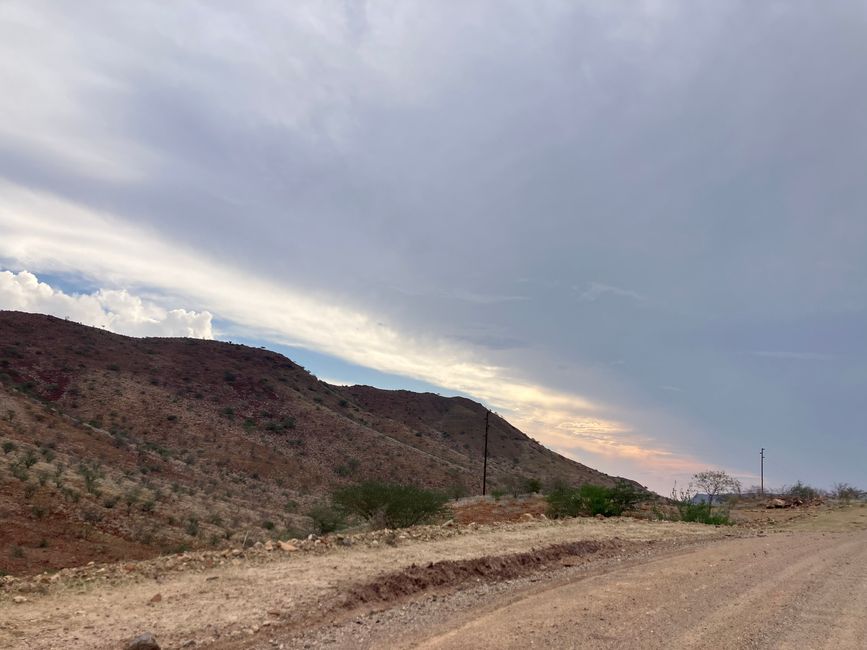
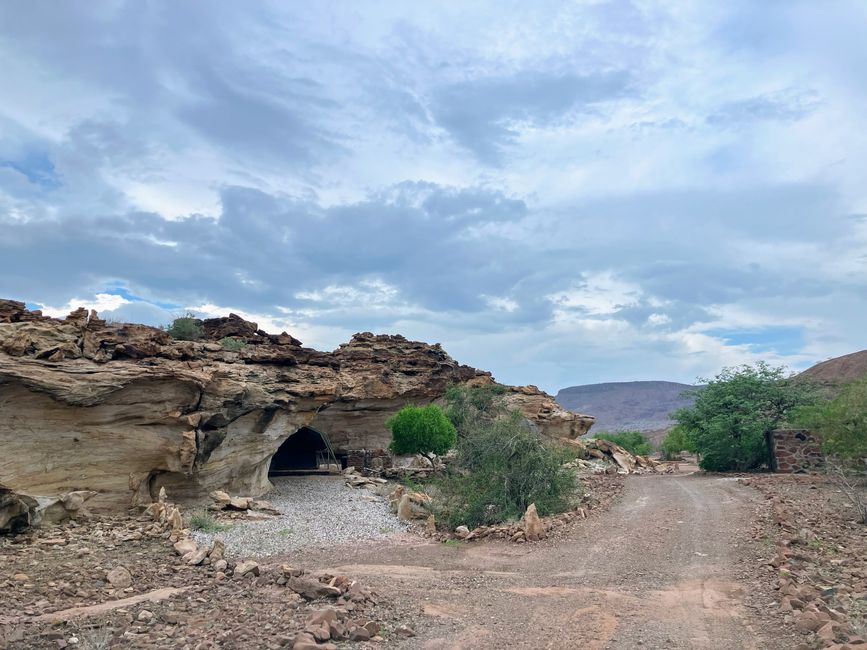
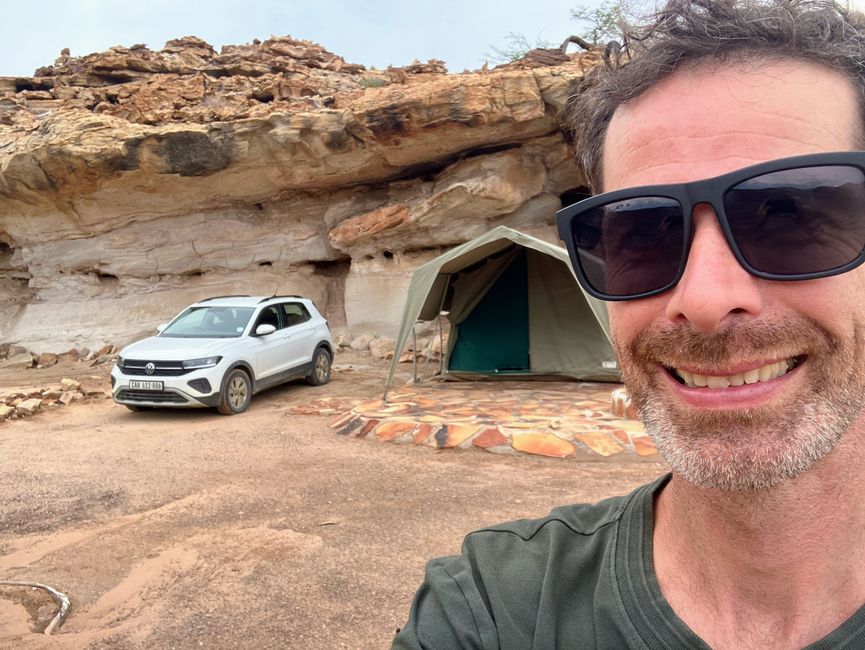
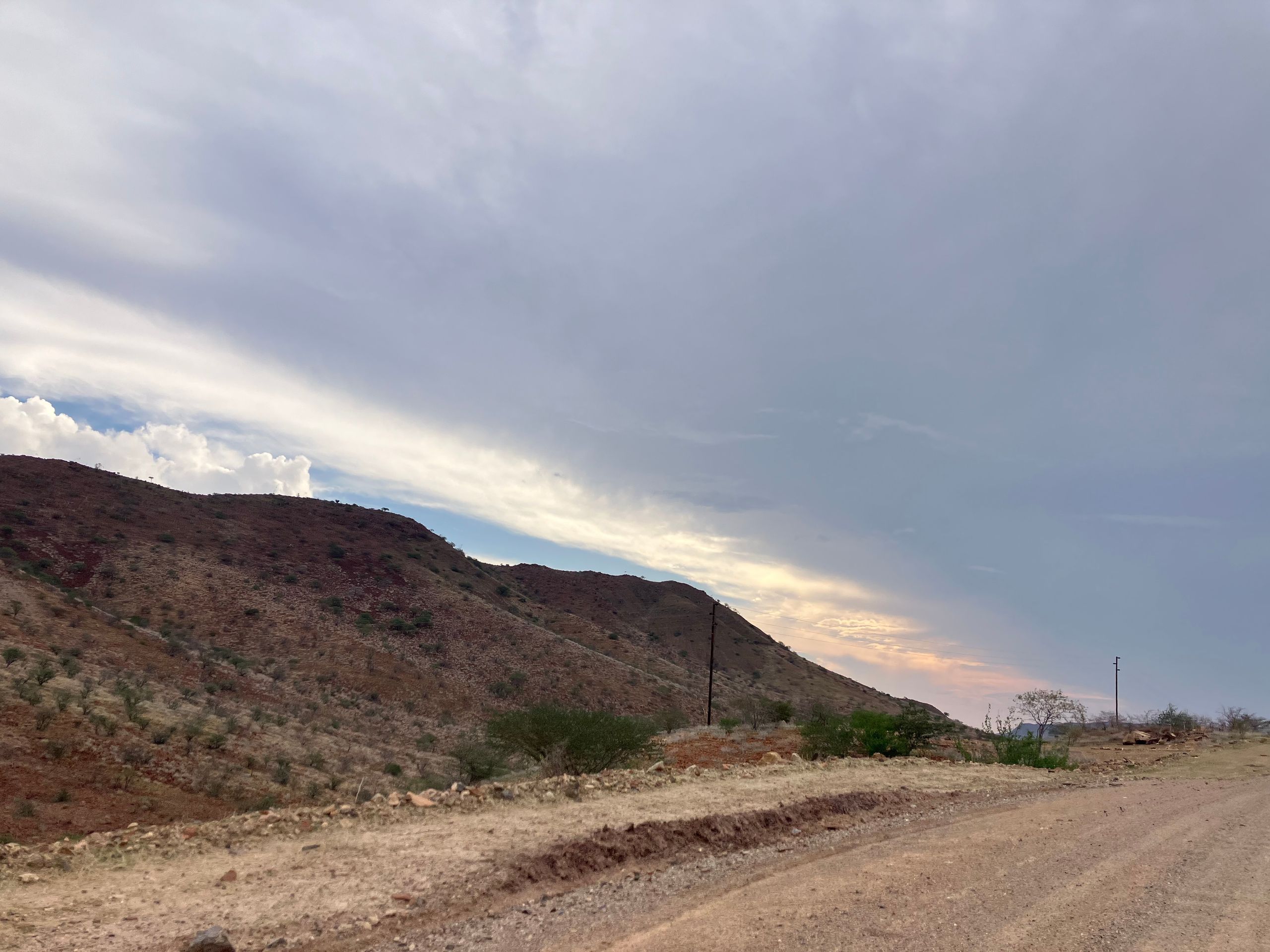
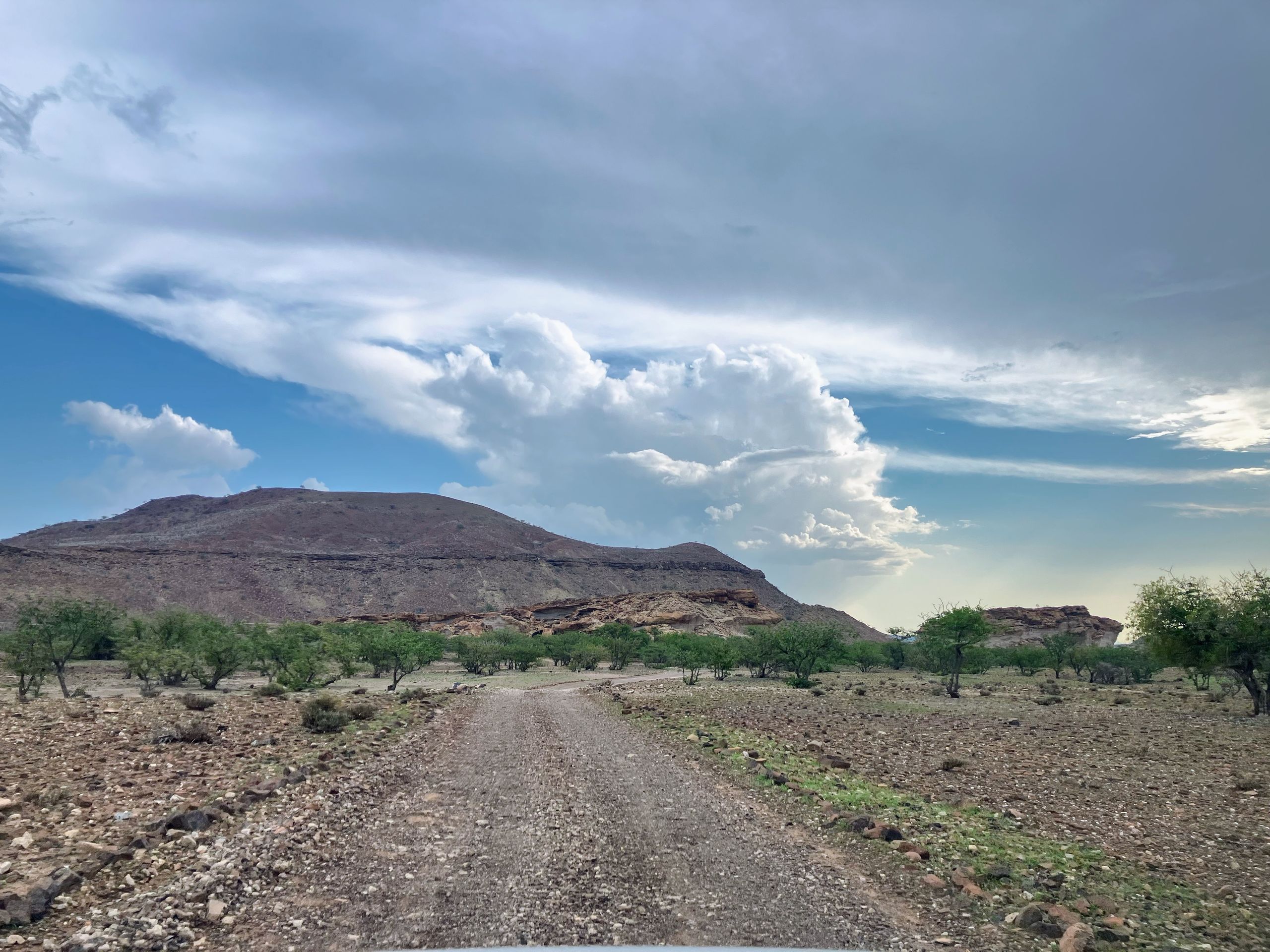
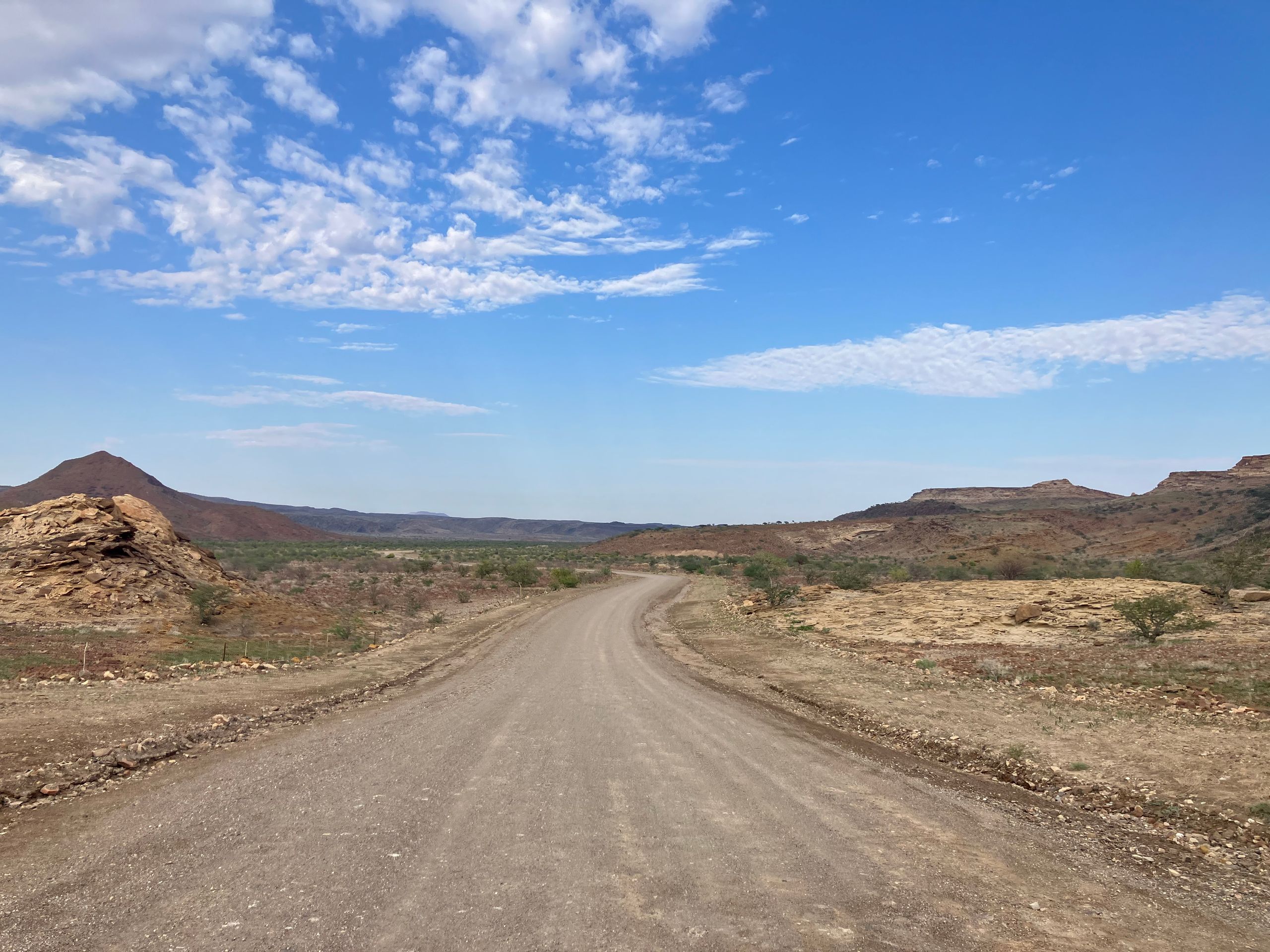
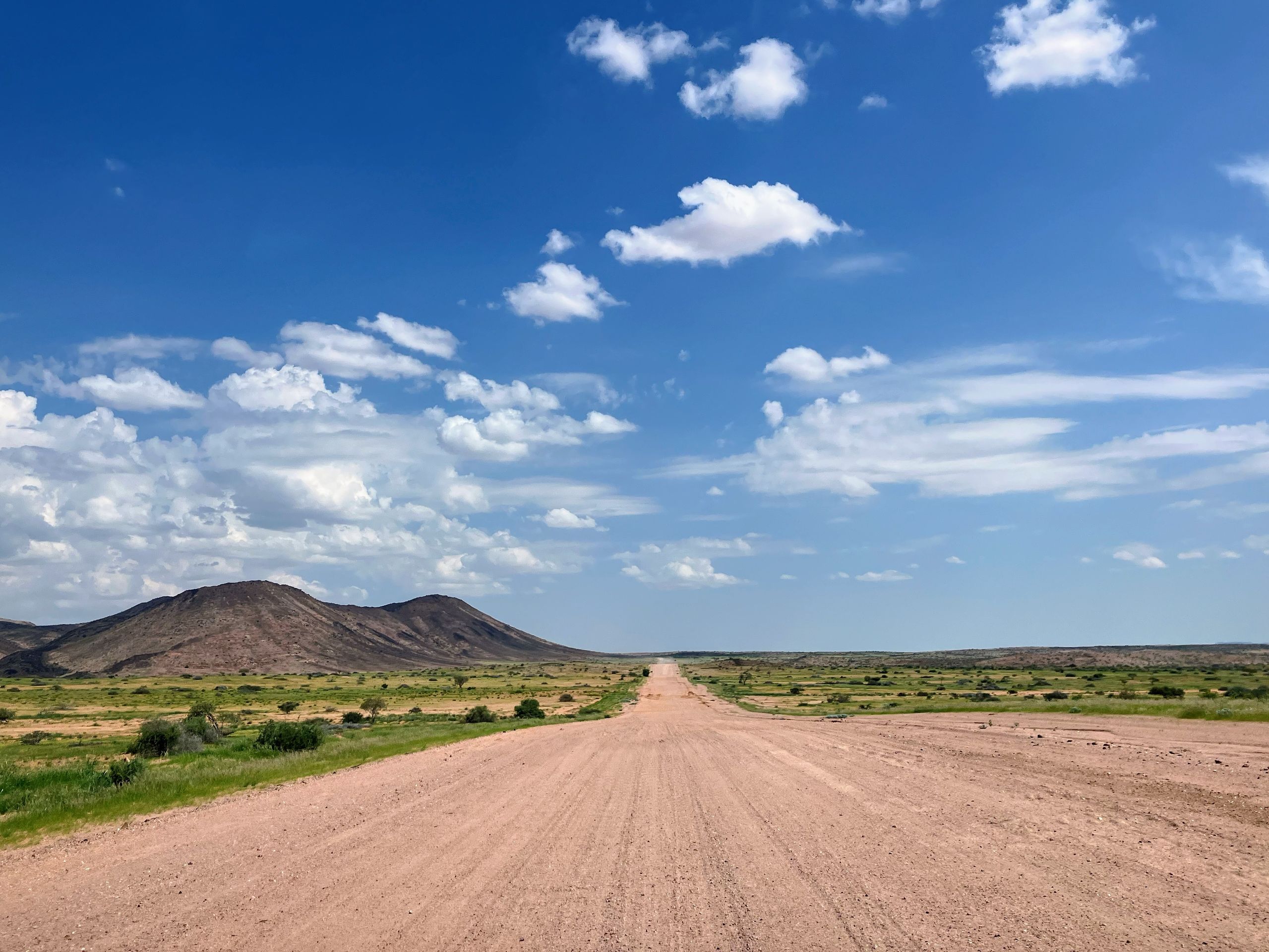
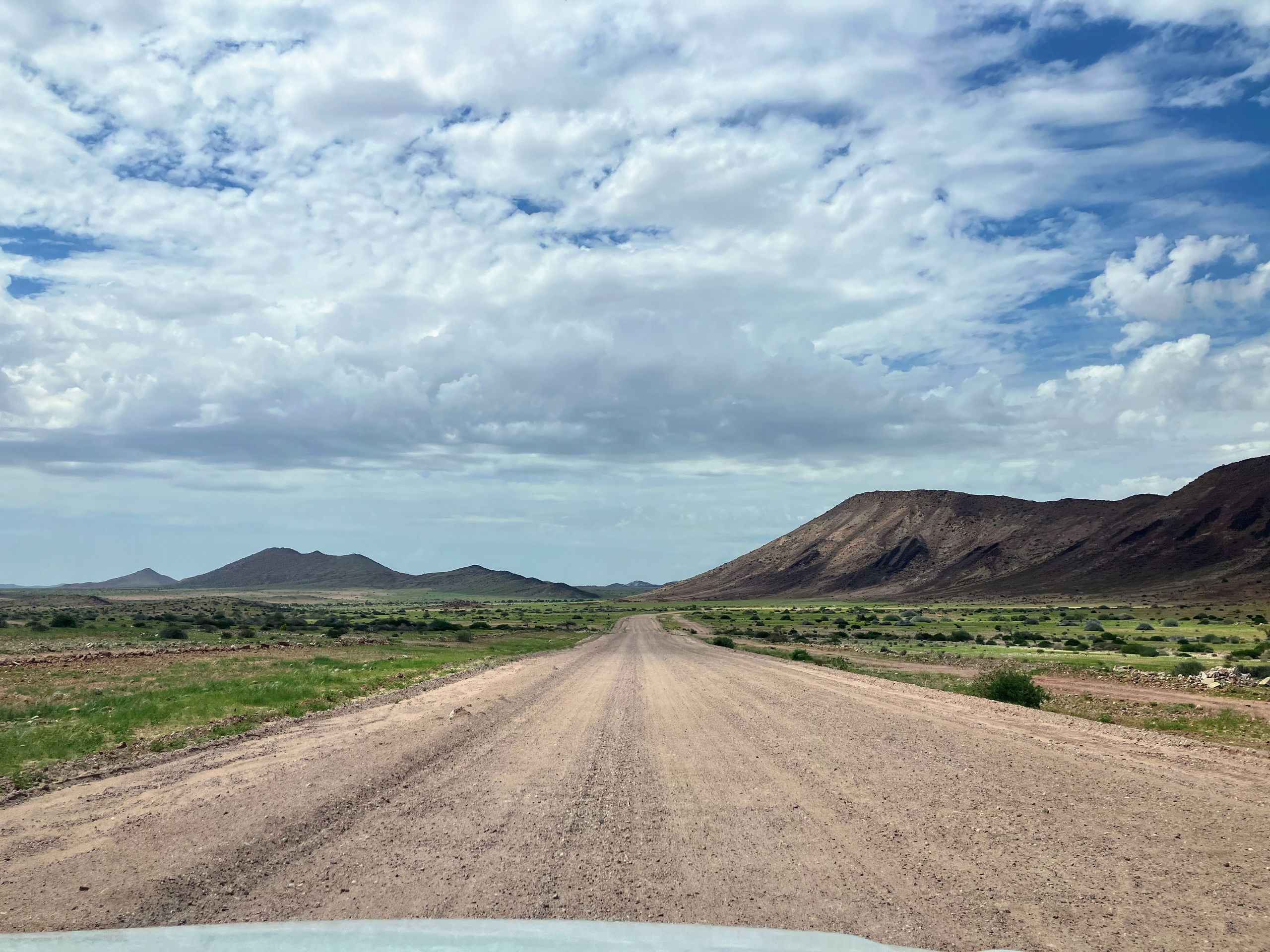
The roads we must travel on our way are quite adventurous, especially due to the heavy rain! The gravel road is getting worse... Eventually, we stop for the night at a desert camp. The guest tents are situated under the protection of a rock face.
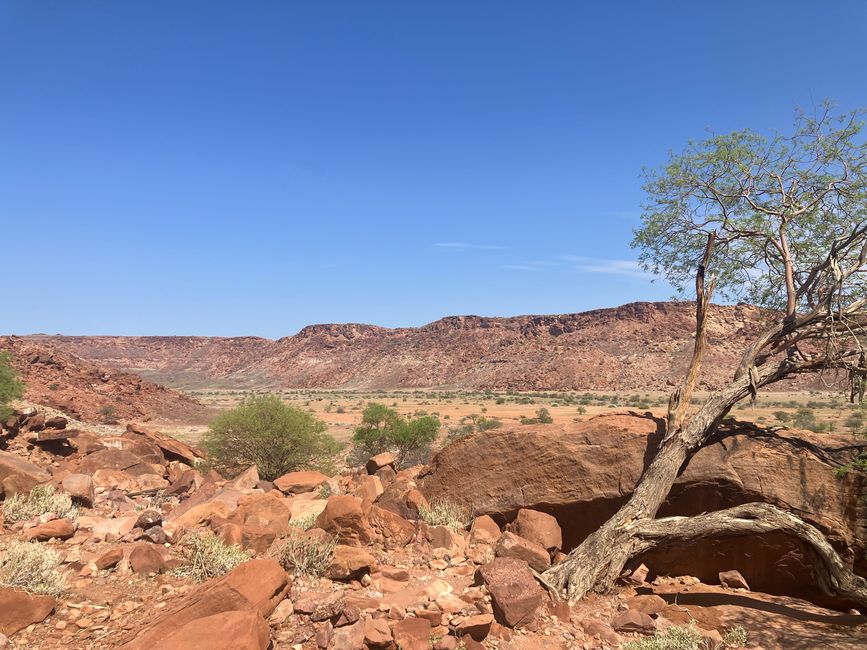
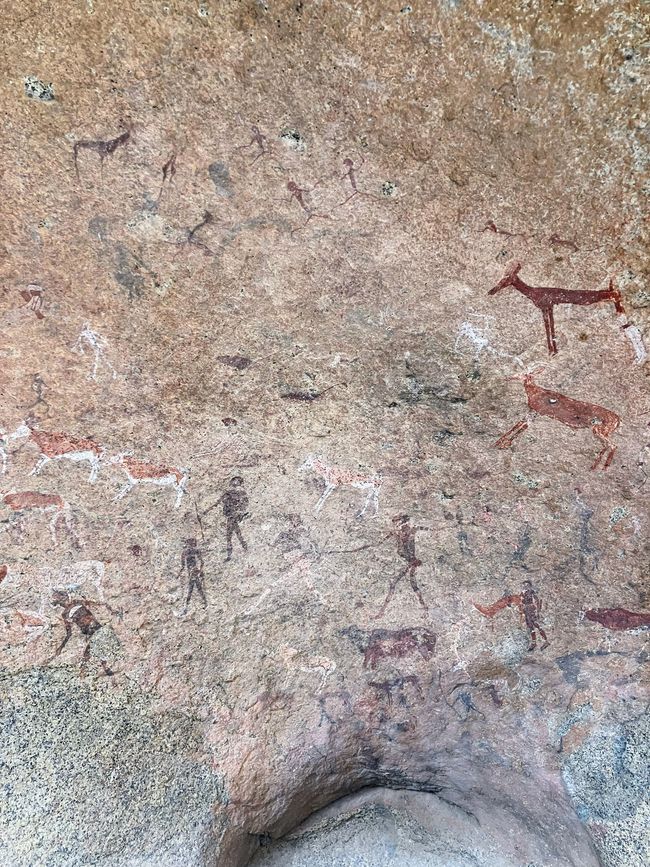
Our destination the next morning: The rock paintings at Twyfelfontein - one of the oldest historical testimonies in Namibia. They are part of the UNESCO World Heritage. In the area where the rock paintings are found, white farmers attempted to settle after World War I. They could never fully rely on the water source. Hence, the name Twyfelfontein (which means 'doubtful fountain'). Eventually, the farmers left due to the drought. The rock paintings remained.
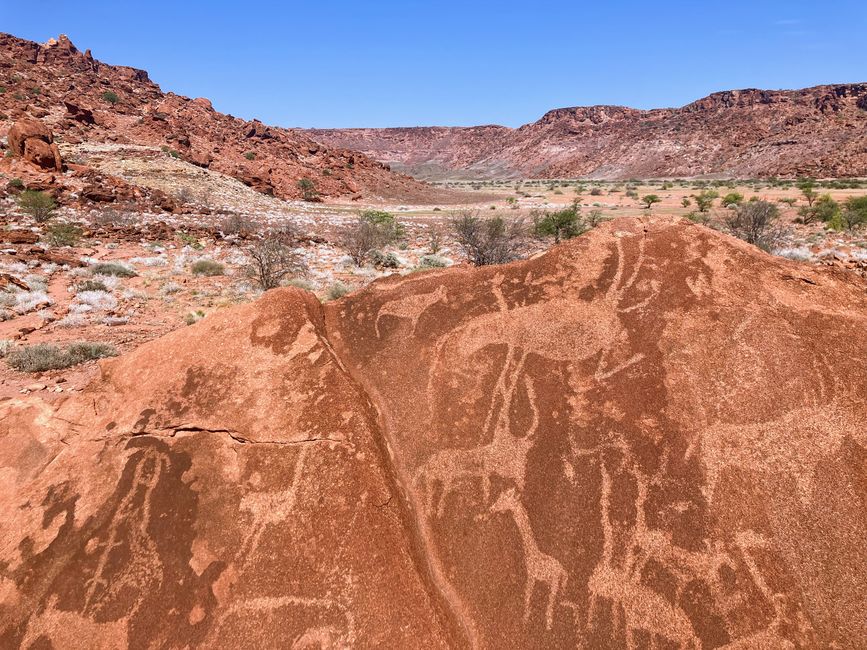
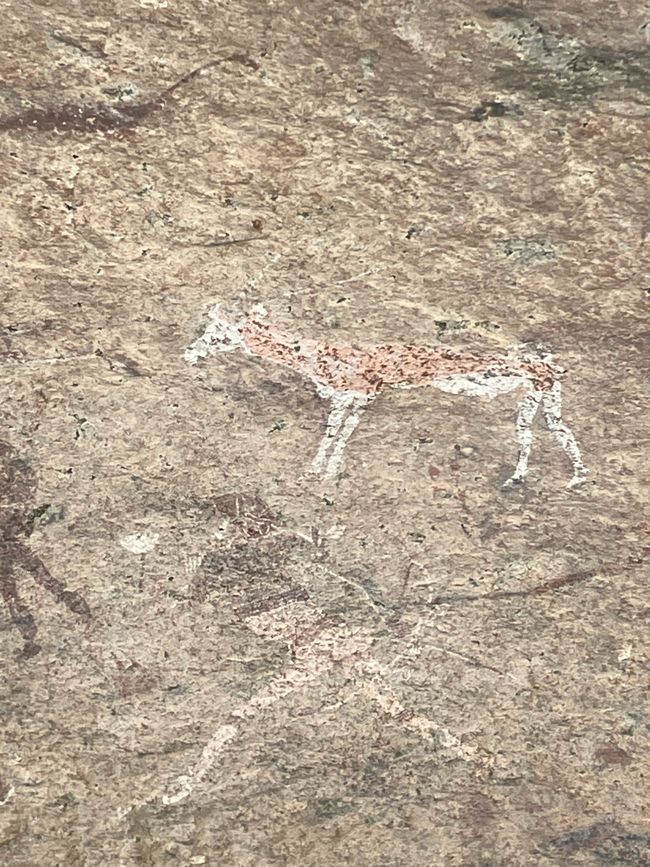
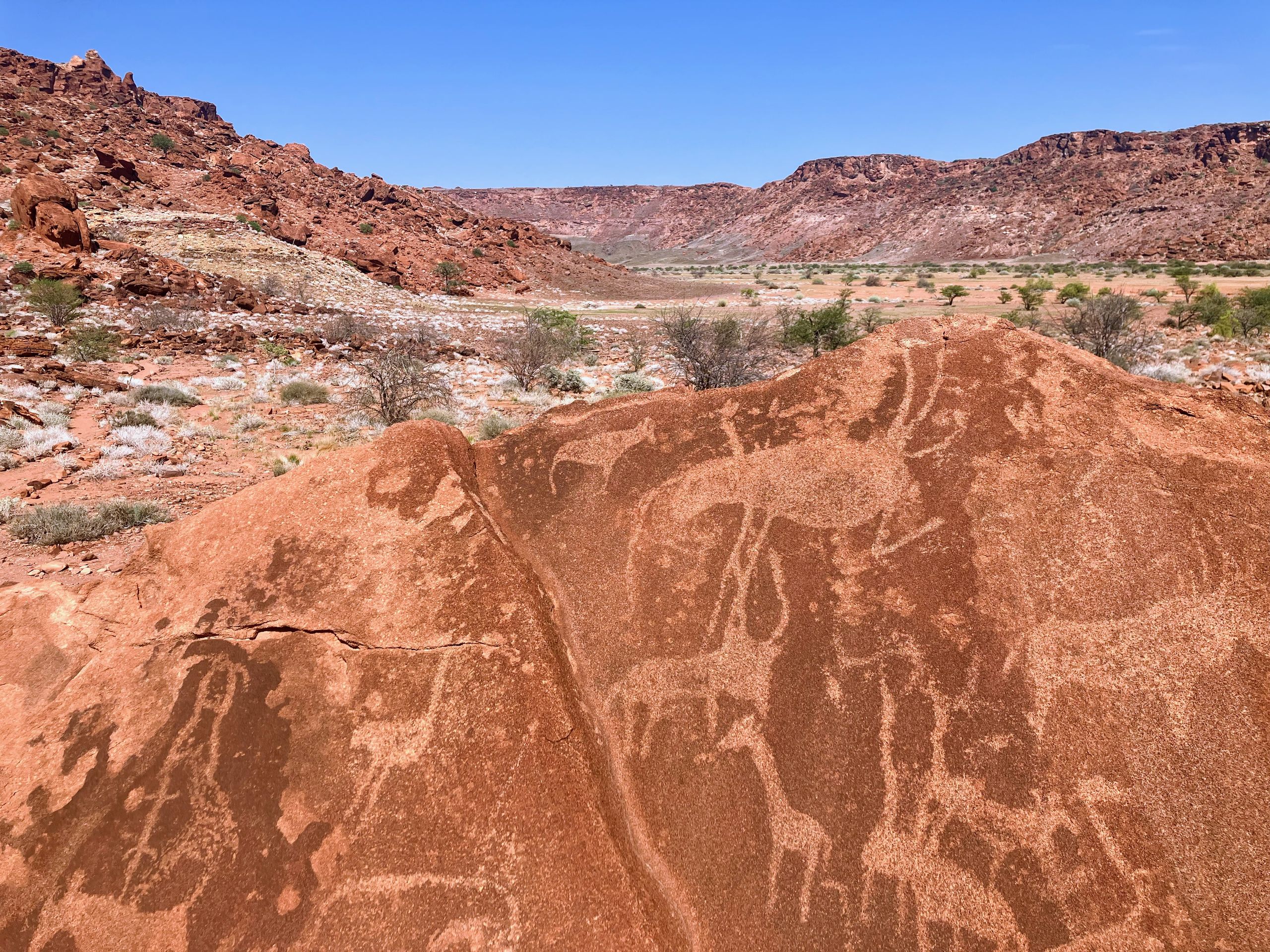
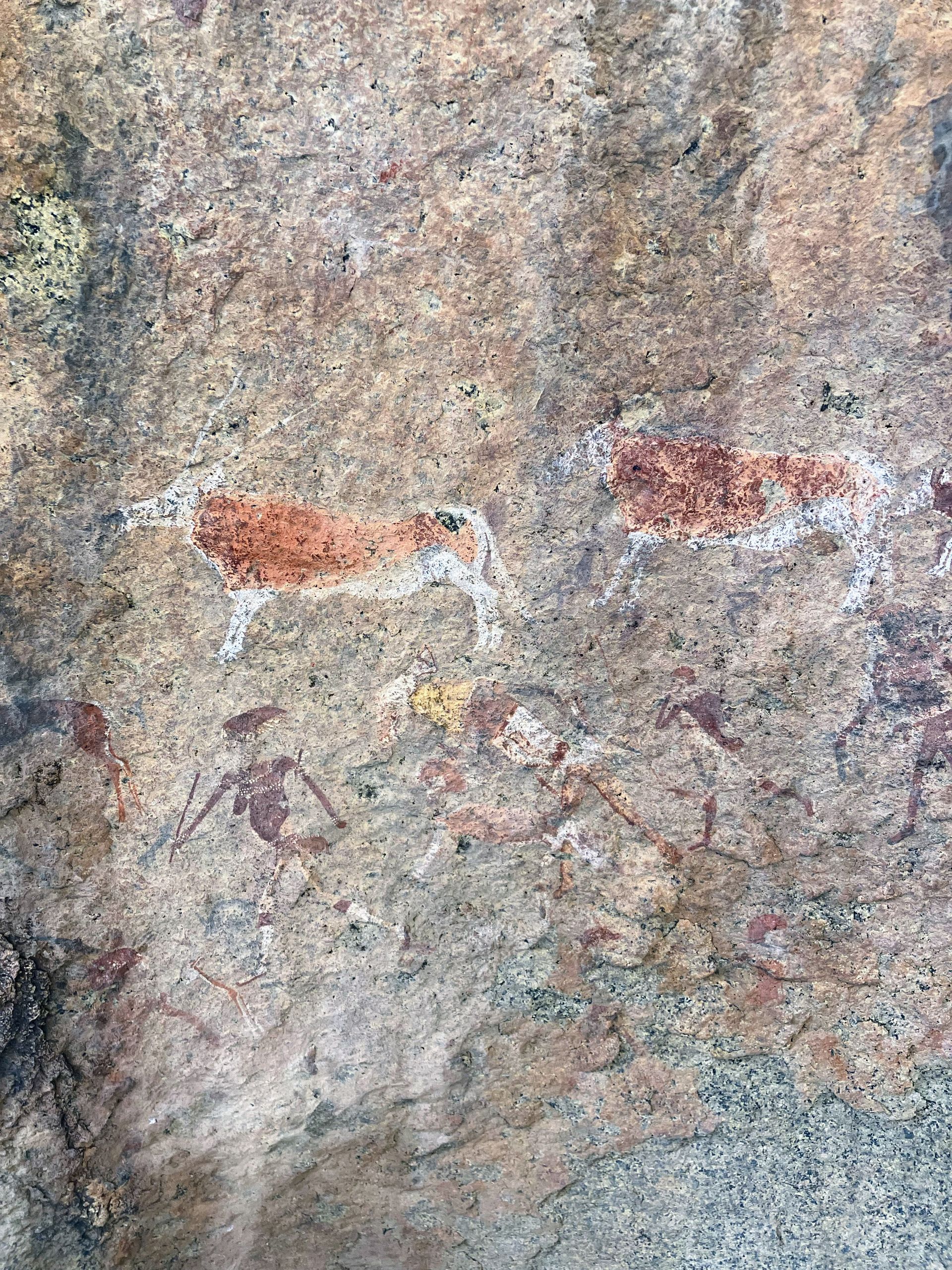
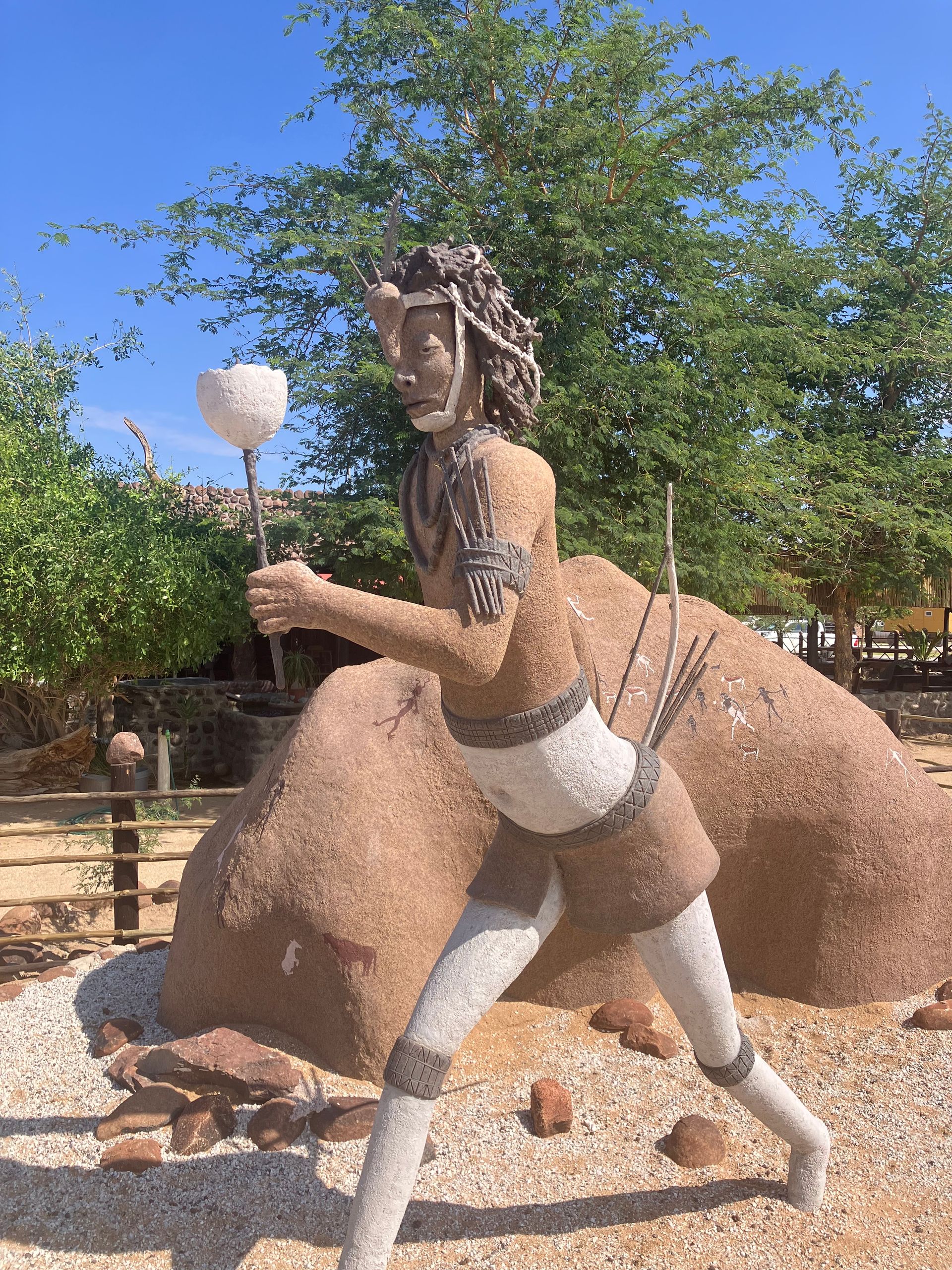
In the valley, there are 2500 rock paintings and engravings, which are estimated to be at least 2000 years old. The images were created by the mountain-Damara to show hunted animals, as a map to mark water points, and possibly as communication to the god Kaggen. The engravings were scratched into the sandstone with quartz.
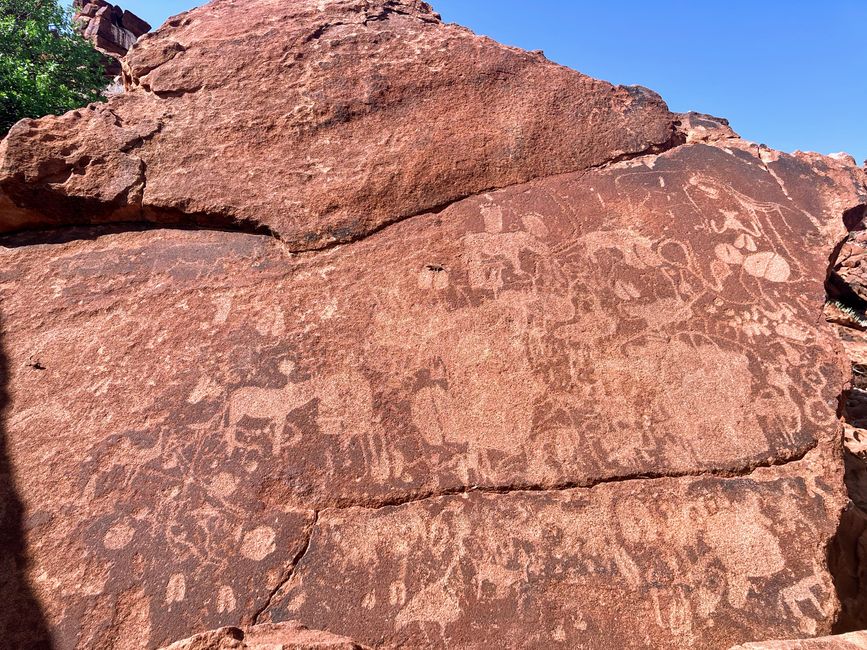
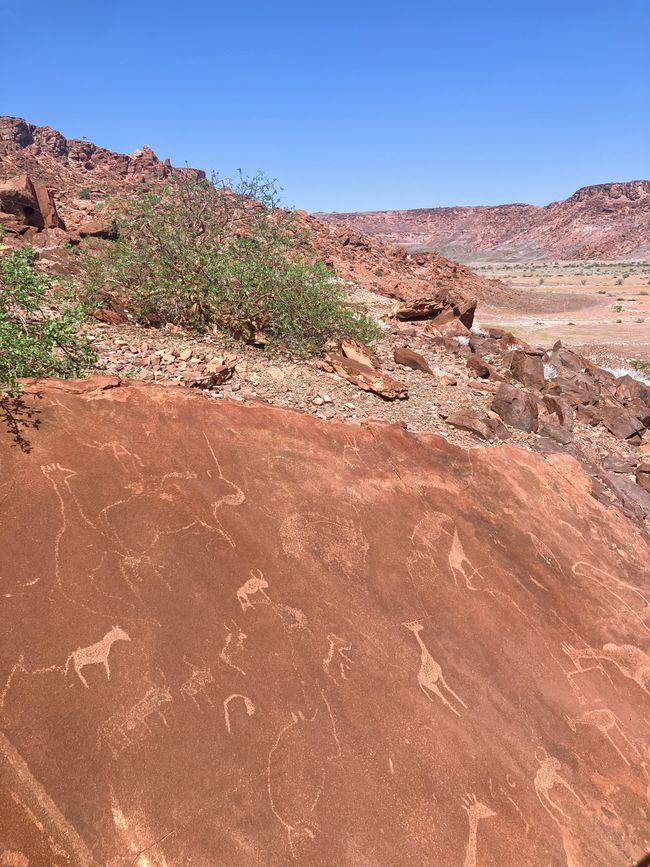
Some stone slabs have detached from the rock mass and lie scattered on the slope. Wow! 🤩 We've never seen anything like this! The illustrations clearly show various animals: Rhinos, elephants, giraffes, zebras, ostriches, and many more!
We can hardly believe they are so old. But due to the dry climate, they have been very well preserved! 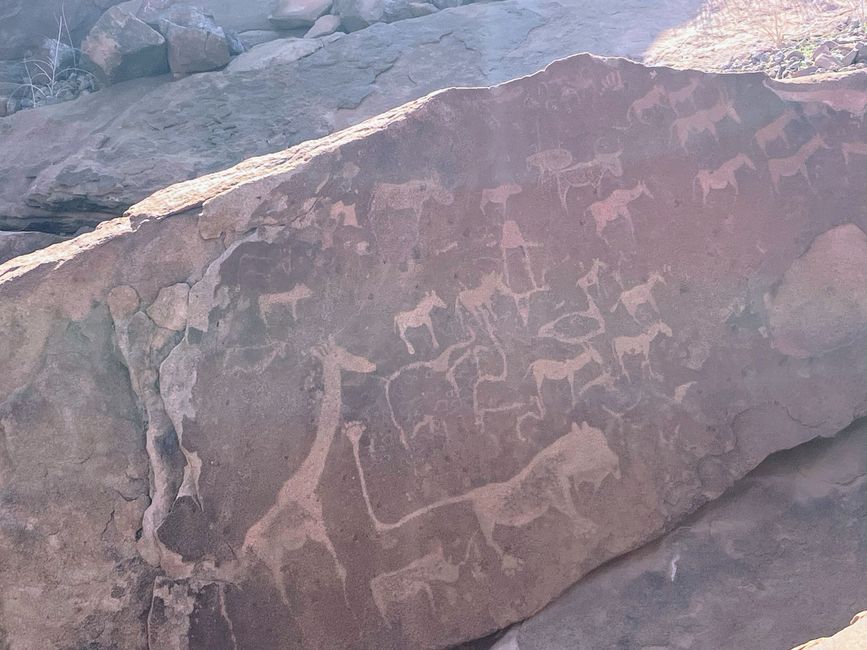
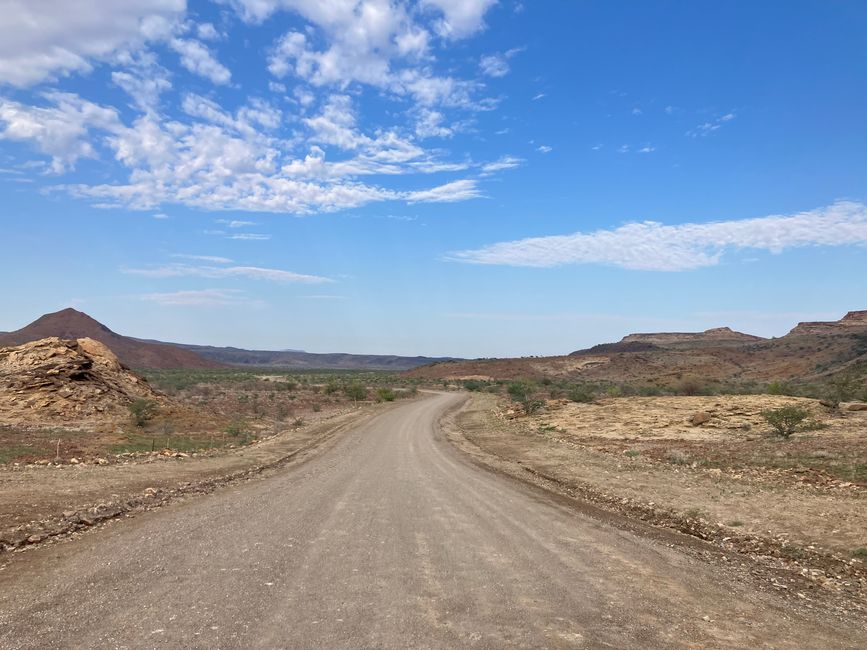
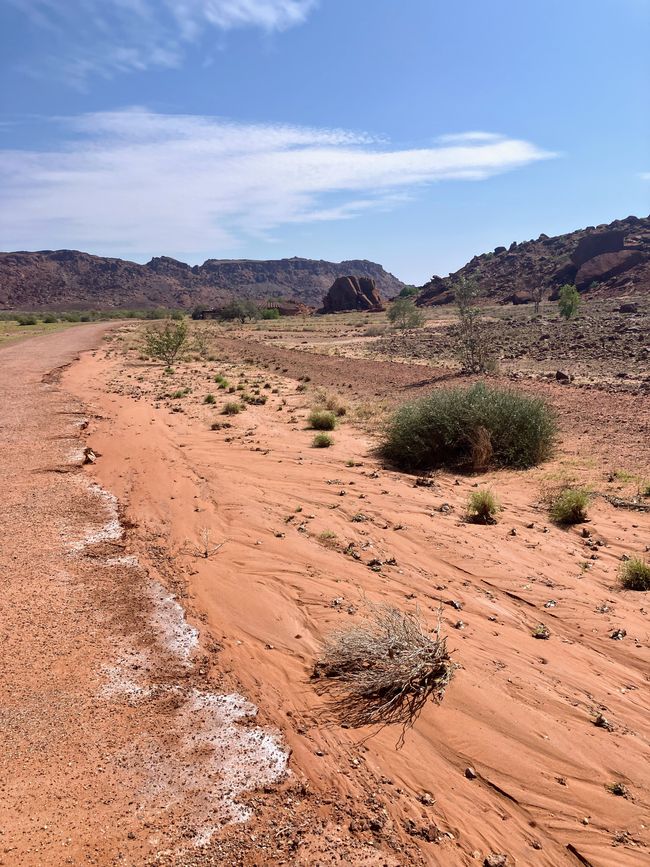

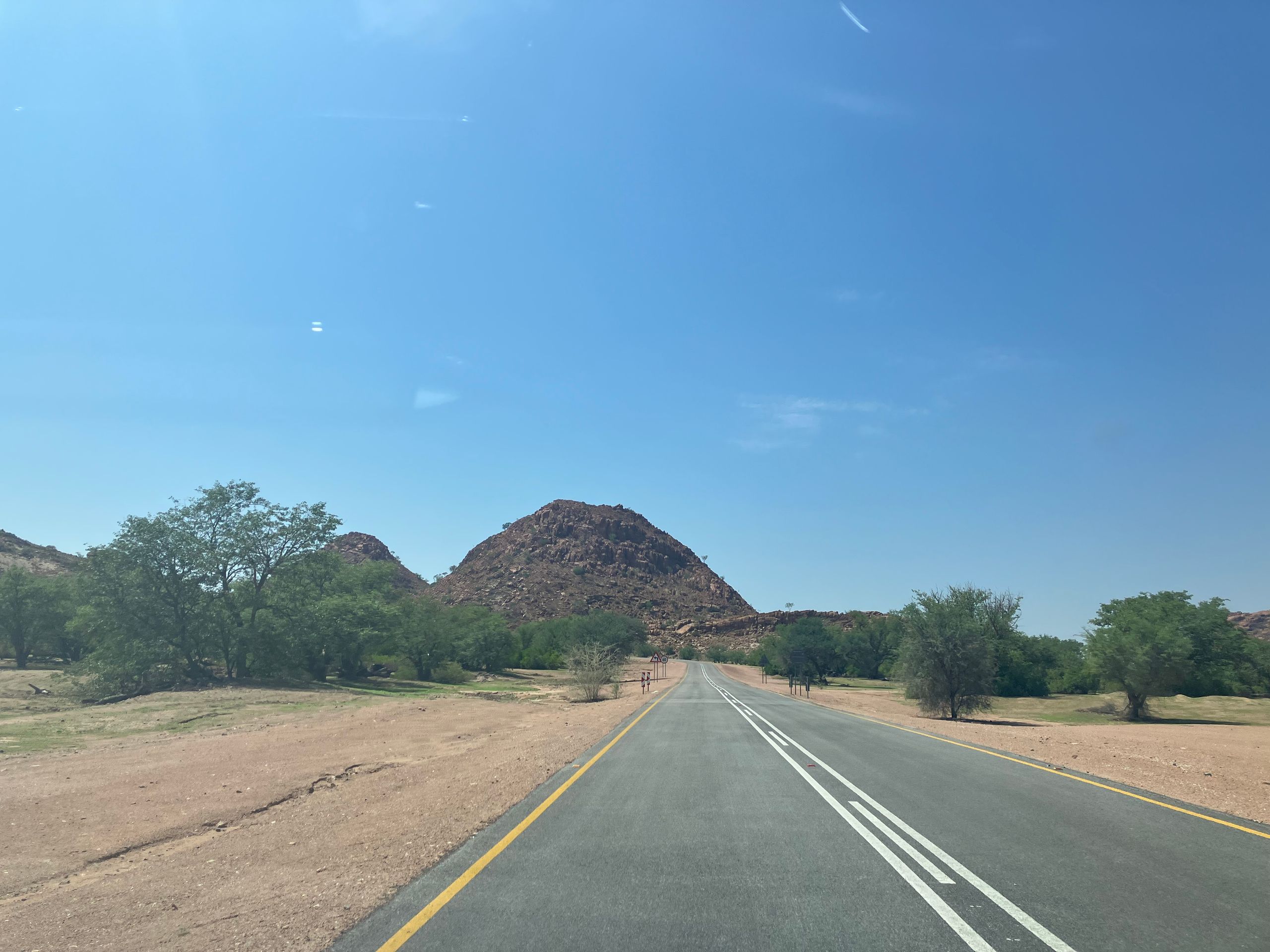
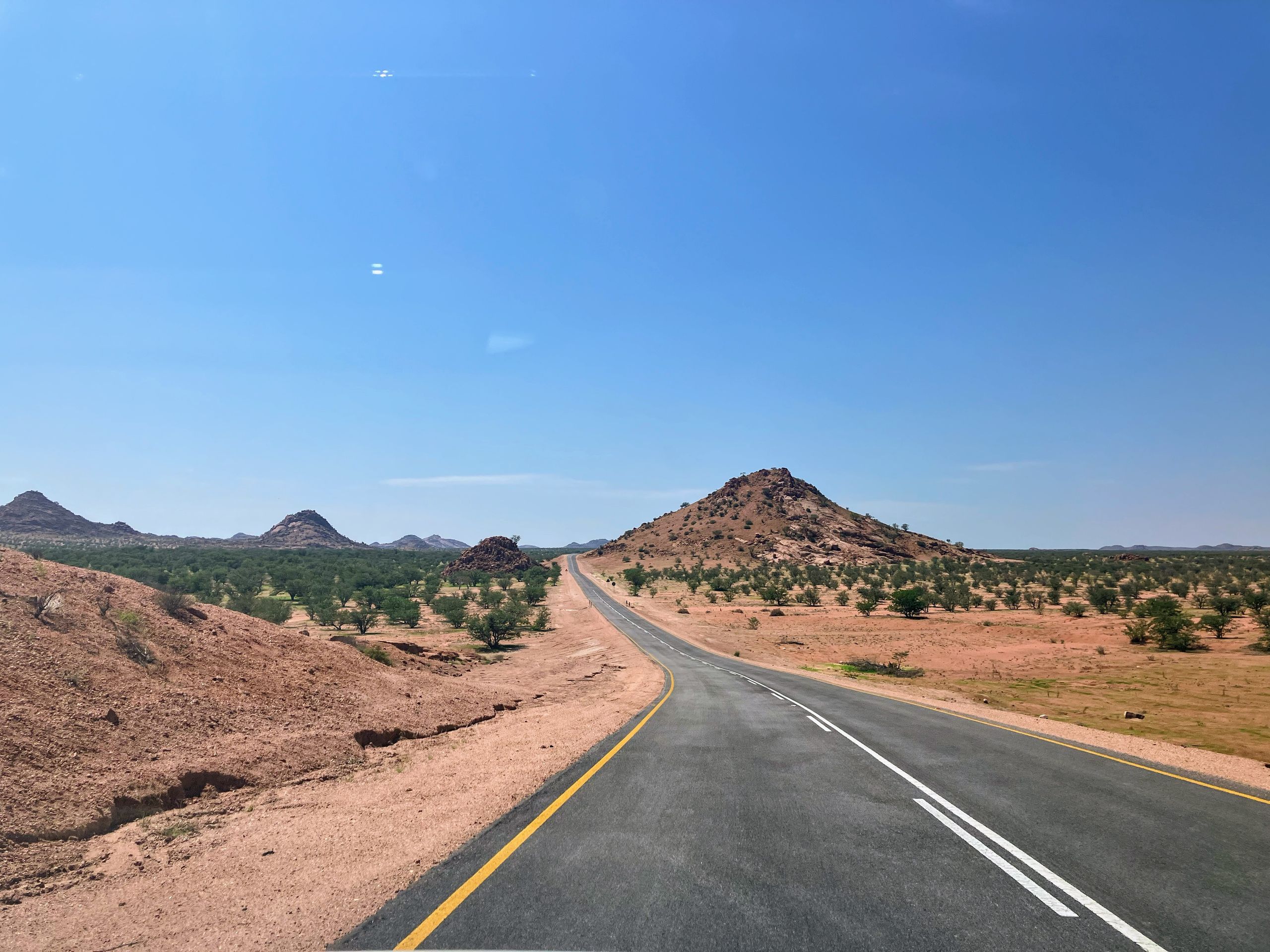
Our onward journey through mountainous desert landscapes feels like a hellish ride! The “road” of sand has been washed away in many places by the water and is in a deplorable state. Right at the start, we get stuck and have to shovel the car free. With additional help from other travelers who soon stop, we manage to get free! But there are still many kilometers ahead of us, and it won't get any better.😁
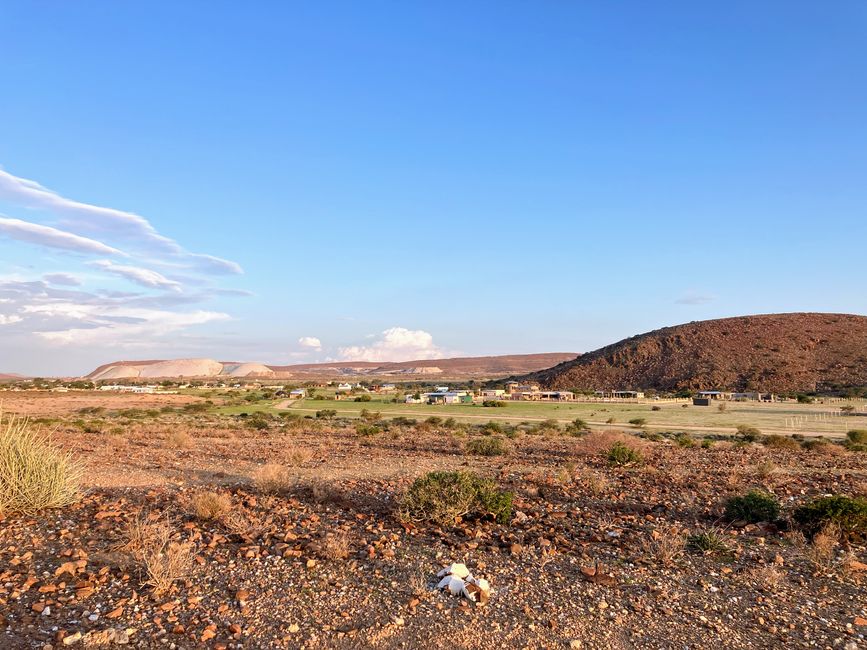
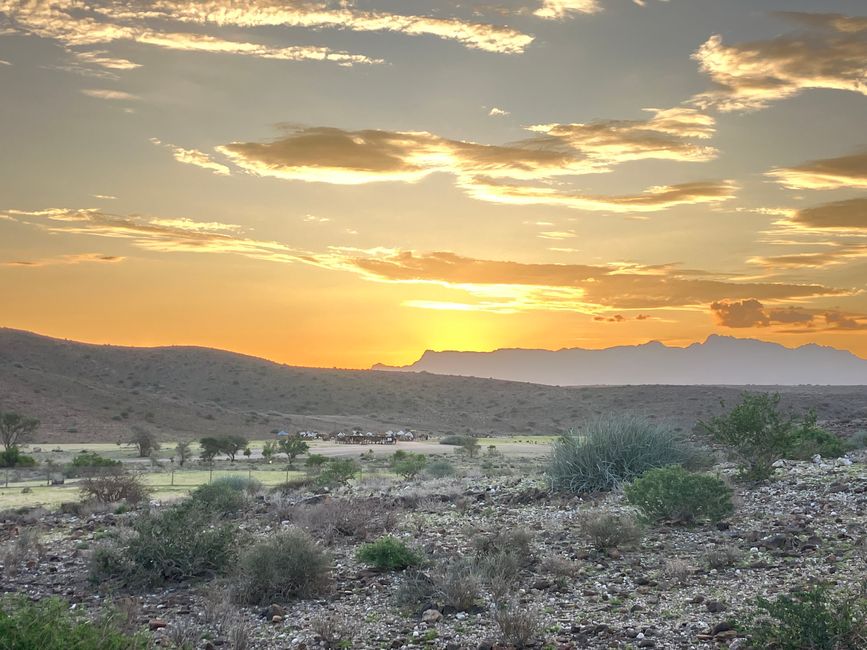
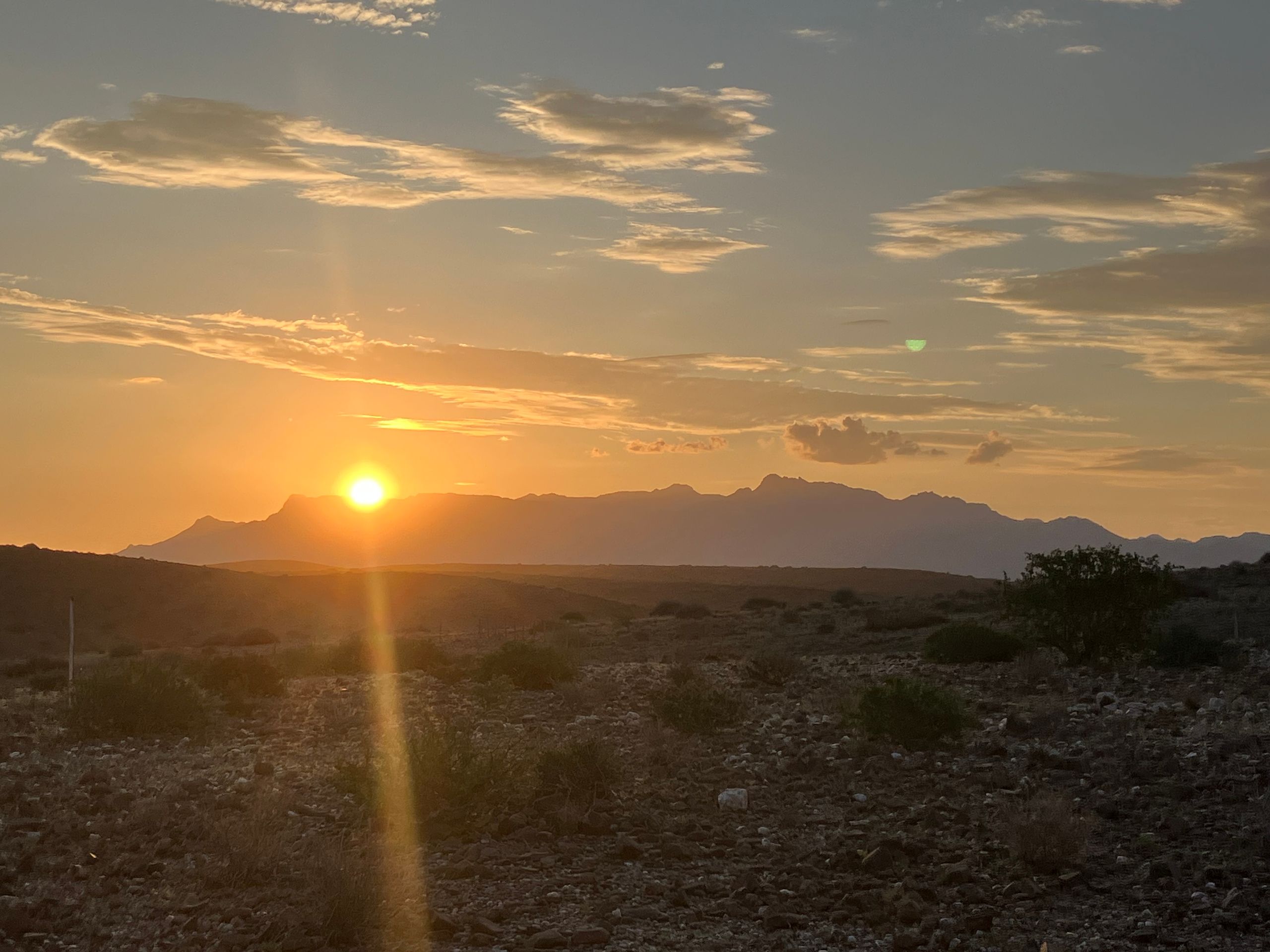
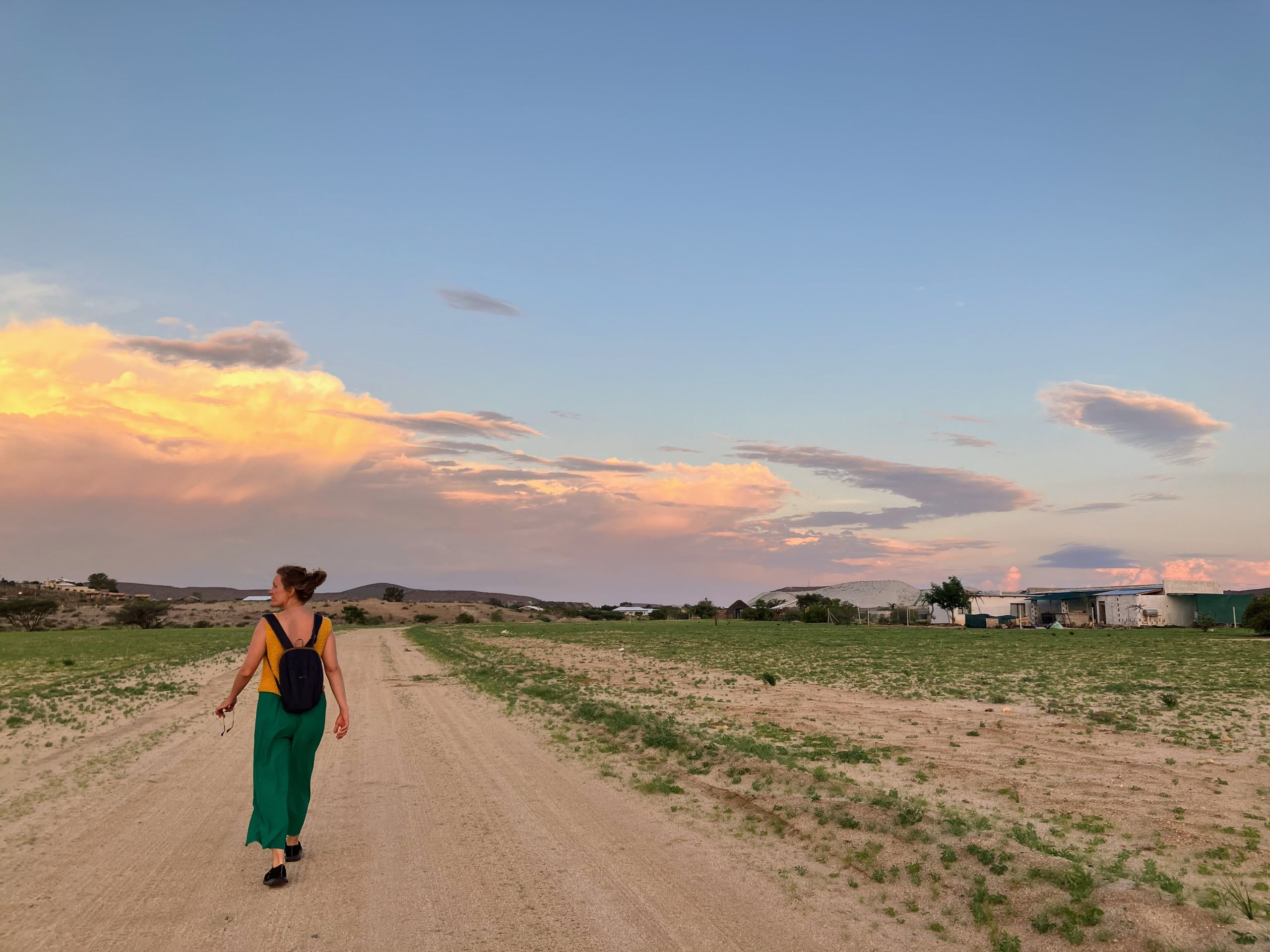
With our two-wheel drive, we have to swing through the deep sandy sections. We hold our breath for what feels like an eternity, but then arrive at our destination without further incidents: The mining town of Uis. It is located near the impressive Brandberg mountain. There we want to go on a hike the next day and see more beautiful rock paintings. Uis is situated very idyllically and quietly in a dry valley. At sunset, we can admire the Brandberg, which is 30 km away!
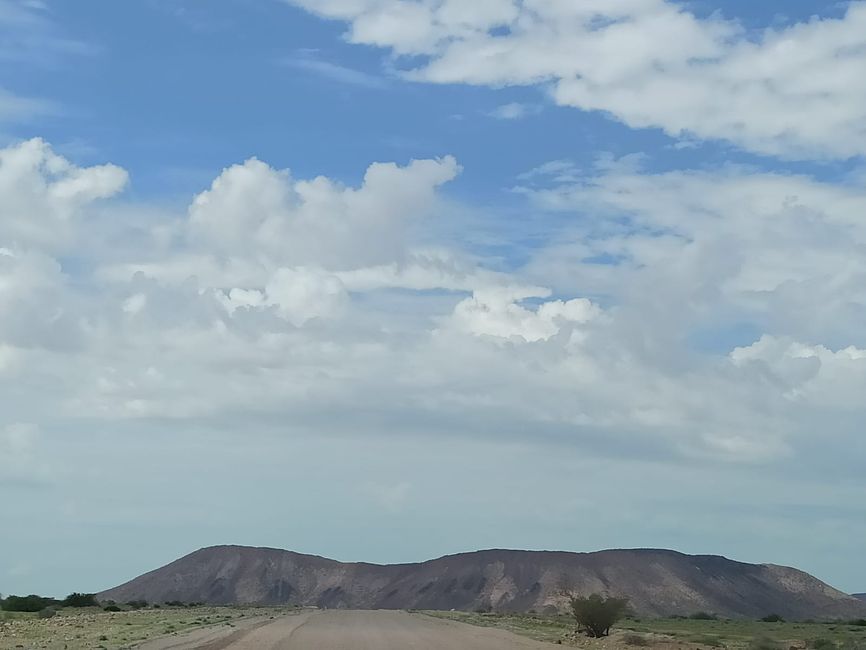
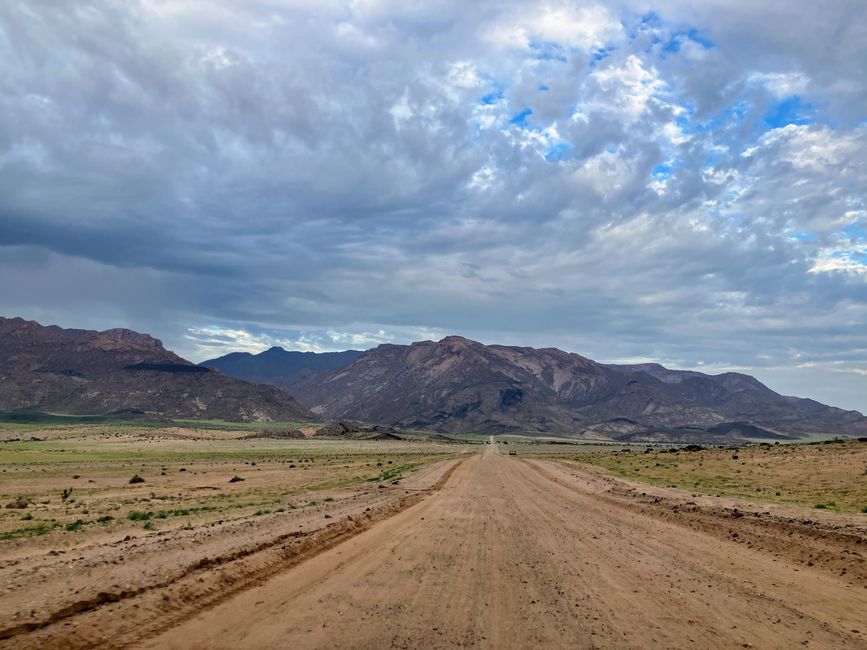
The Brandberg, when viewed from above, is a huge oval massif, rising from the surrounding area like a landed UFO. The Königstein is Namibia's highest peak.
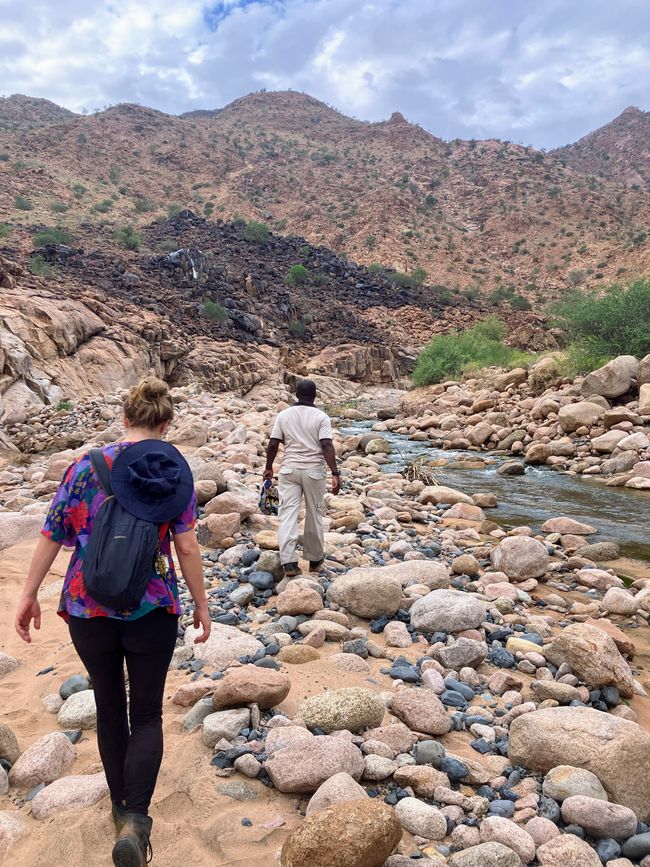
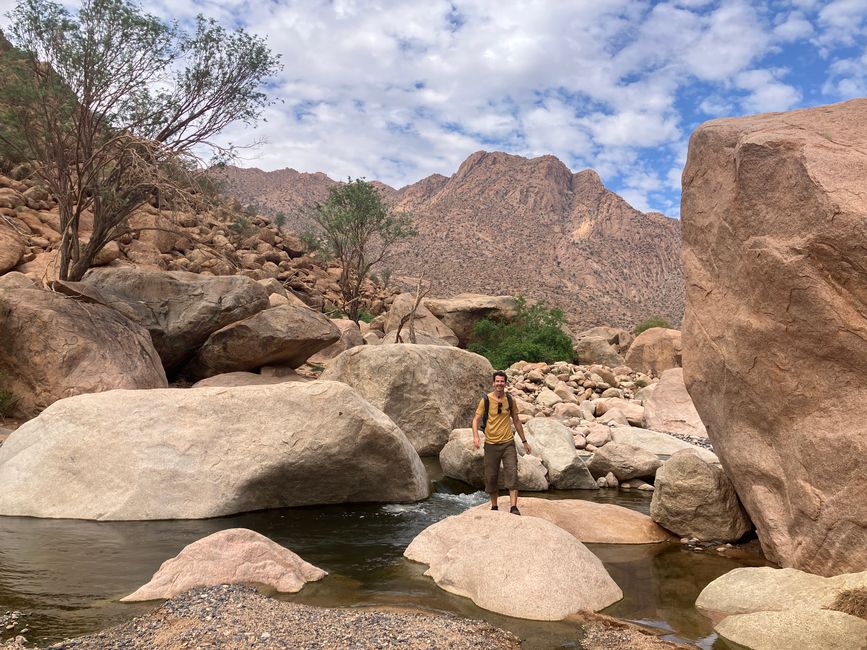
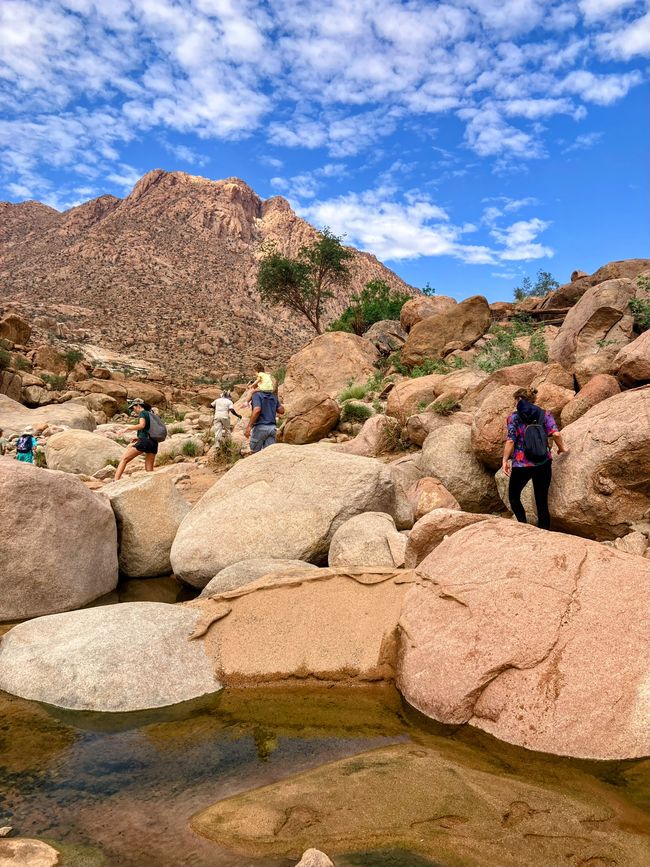
The approach to the Brandberg is impassable on the last stretch, and we walk to the entrance. Fortunately, we meet a guide and can begin our hike. Actually, the entrance has been closed for days, as the path has been in catastrophic condition since the rains.
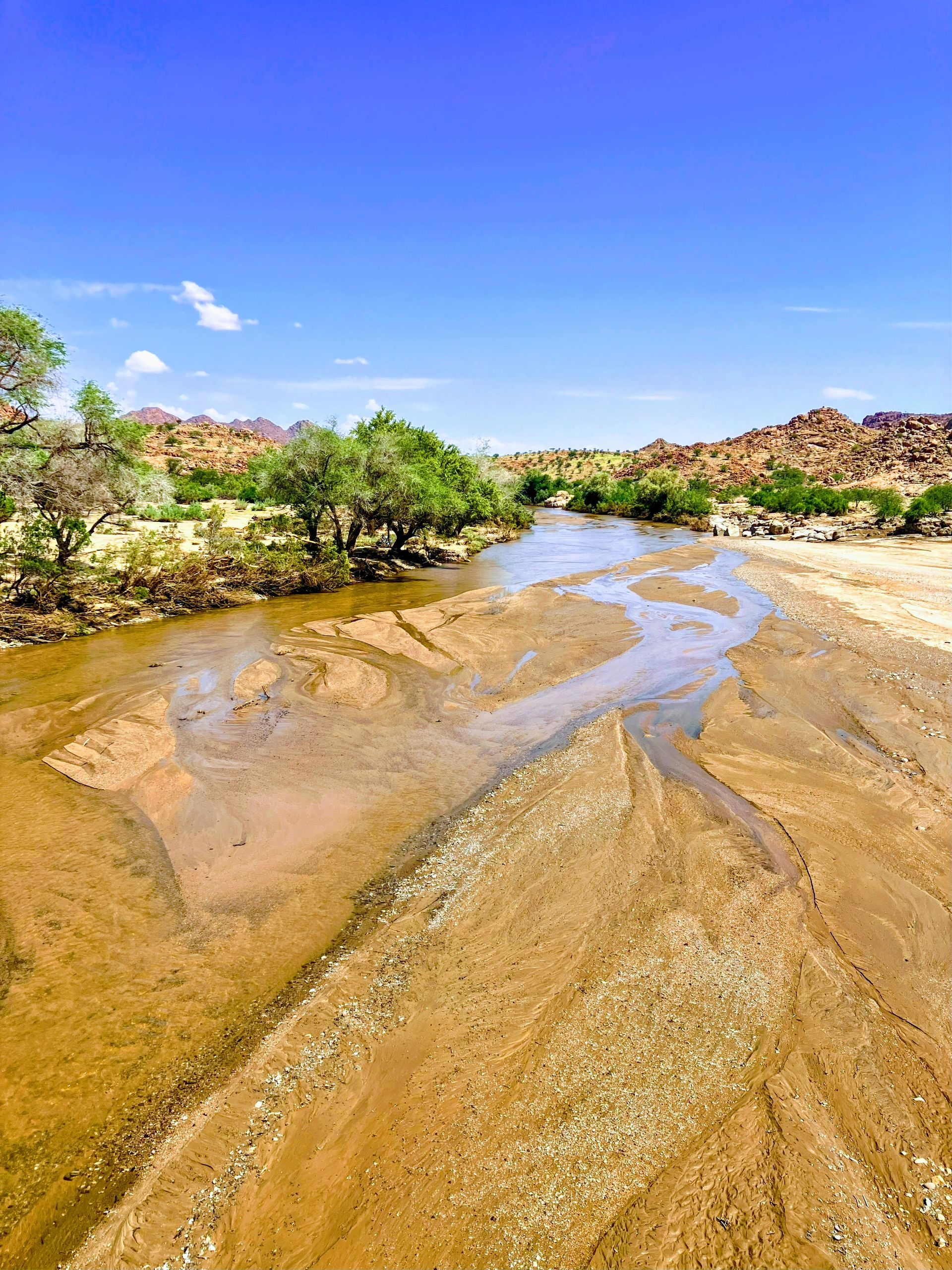
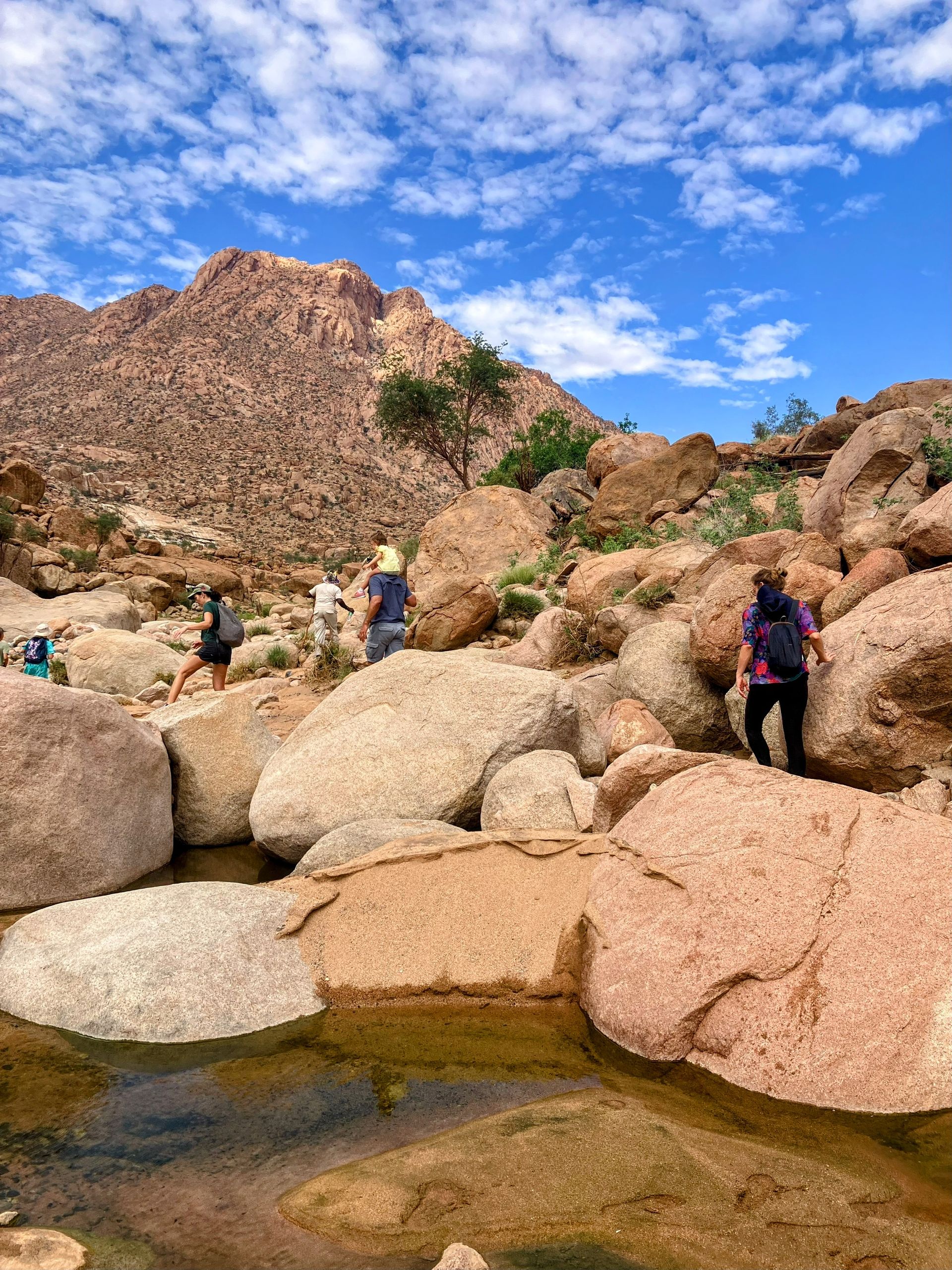
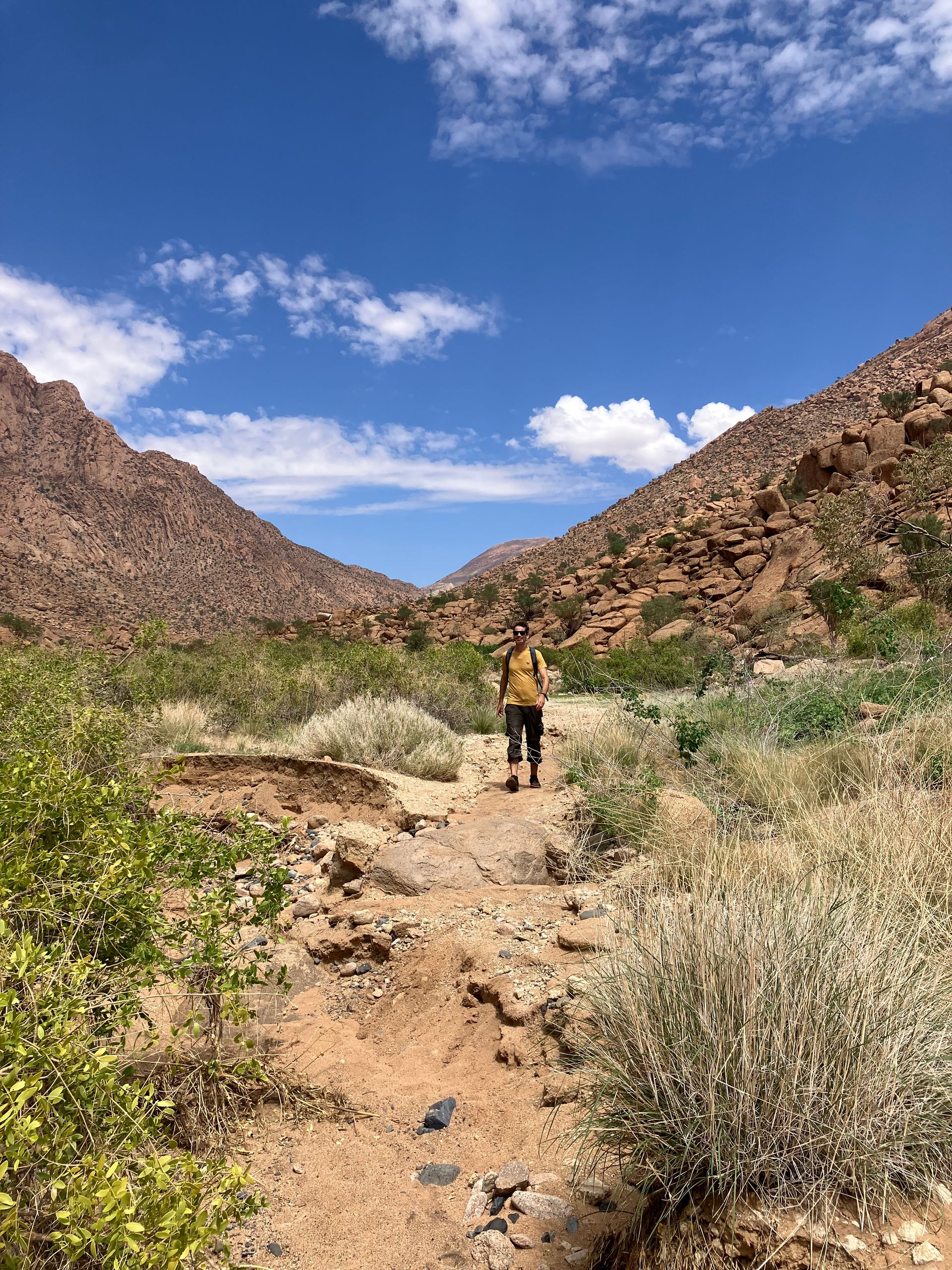
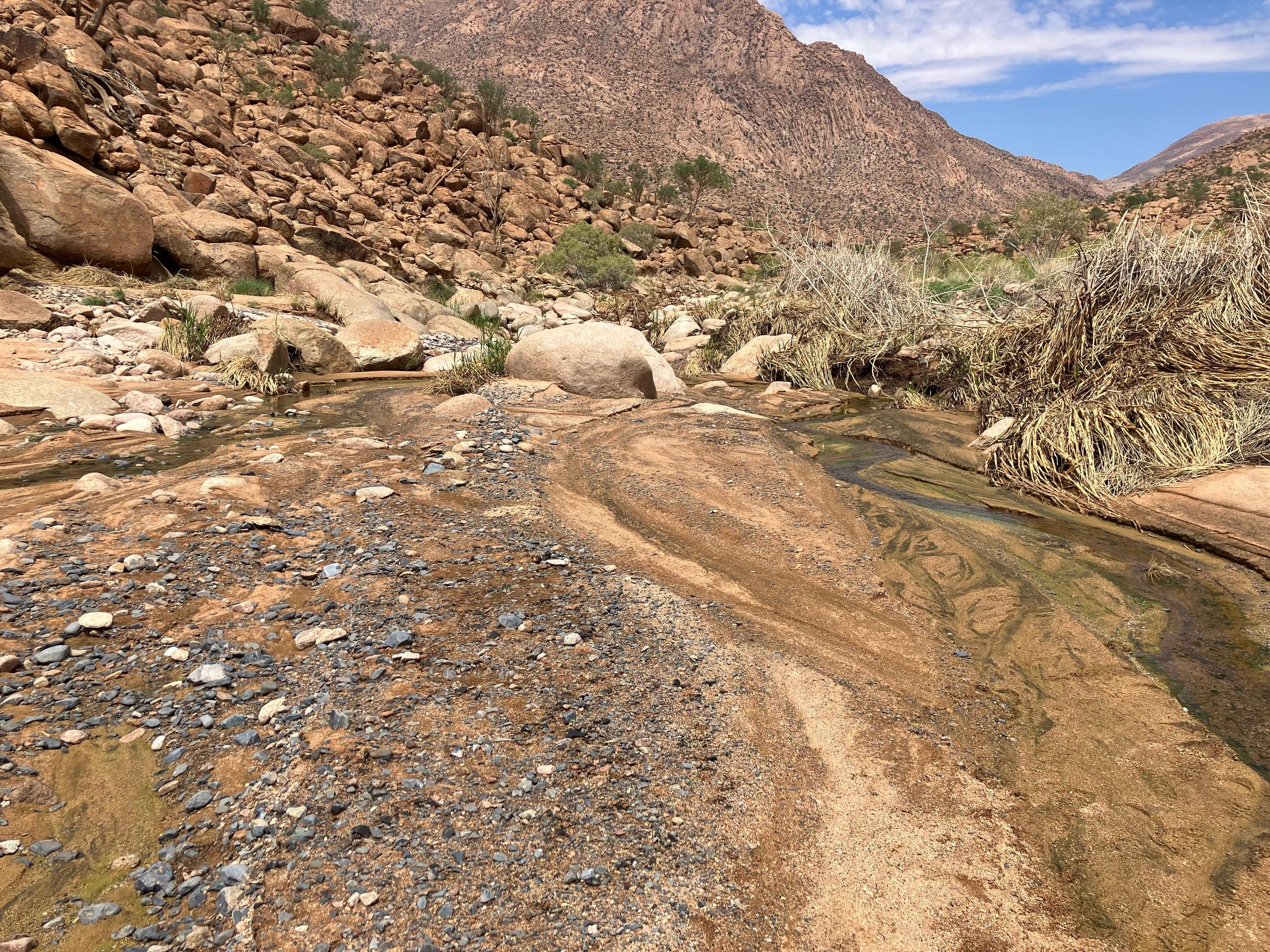
We walk up a valley, passing large stones and having to cross the river repeatedly, which has hardly carried any water in the last few years. The nature is incredibly beautiful!
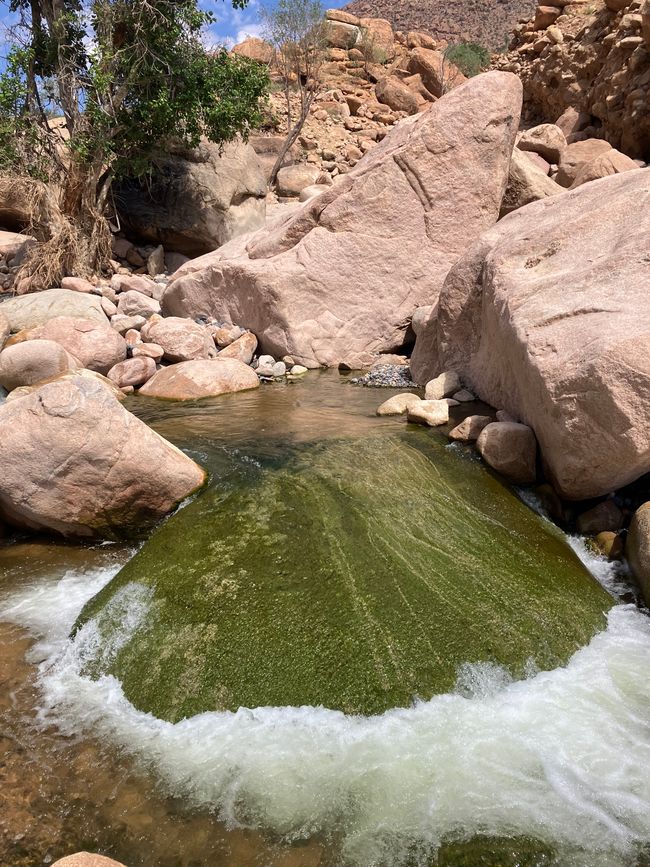
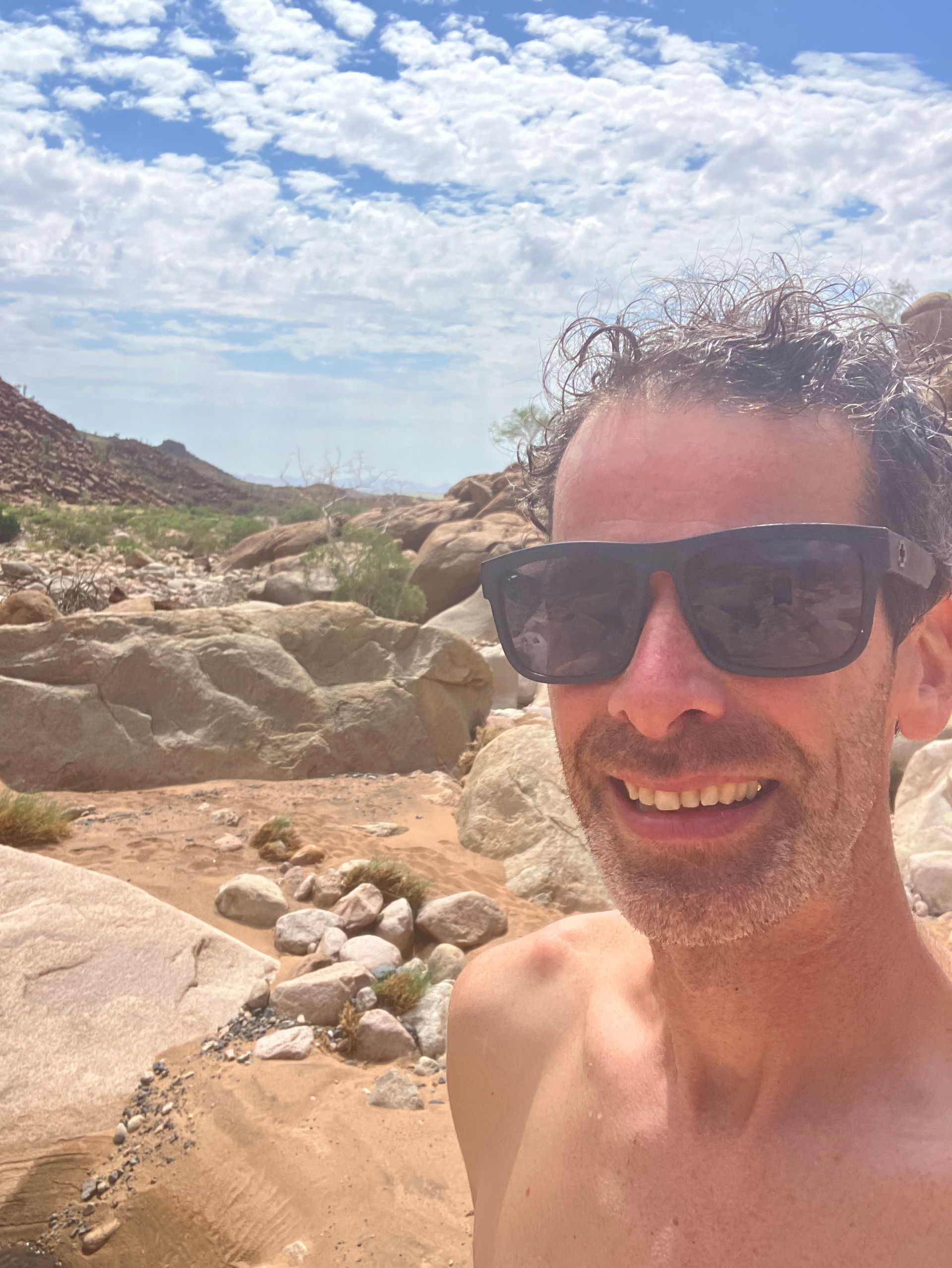
In the upper part, natural pools have formed in the riverbed, where we can bathe - even with natural waterslides 🤩