Stranded again in Tenerife – our island hopping hangs by a thread!
A bit battered but optimistic into the new year

Published: 08.03.2025
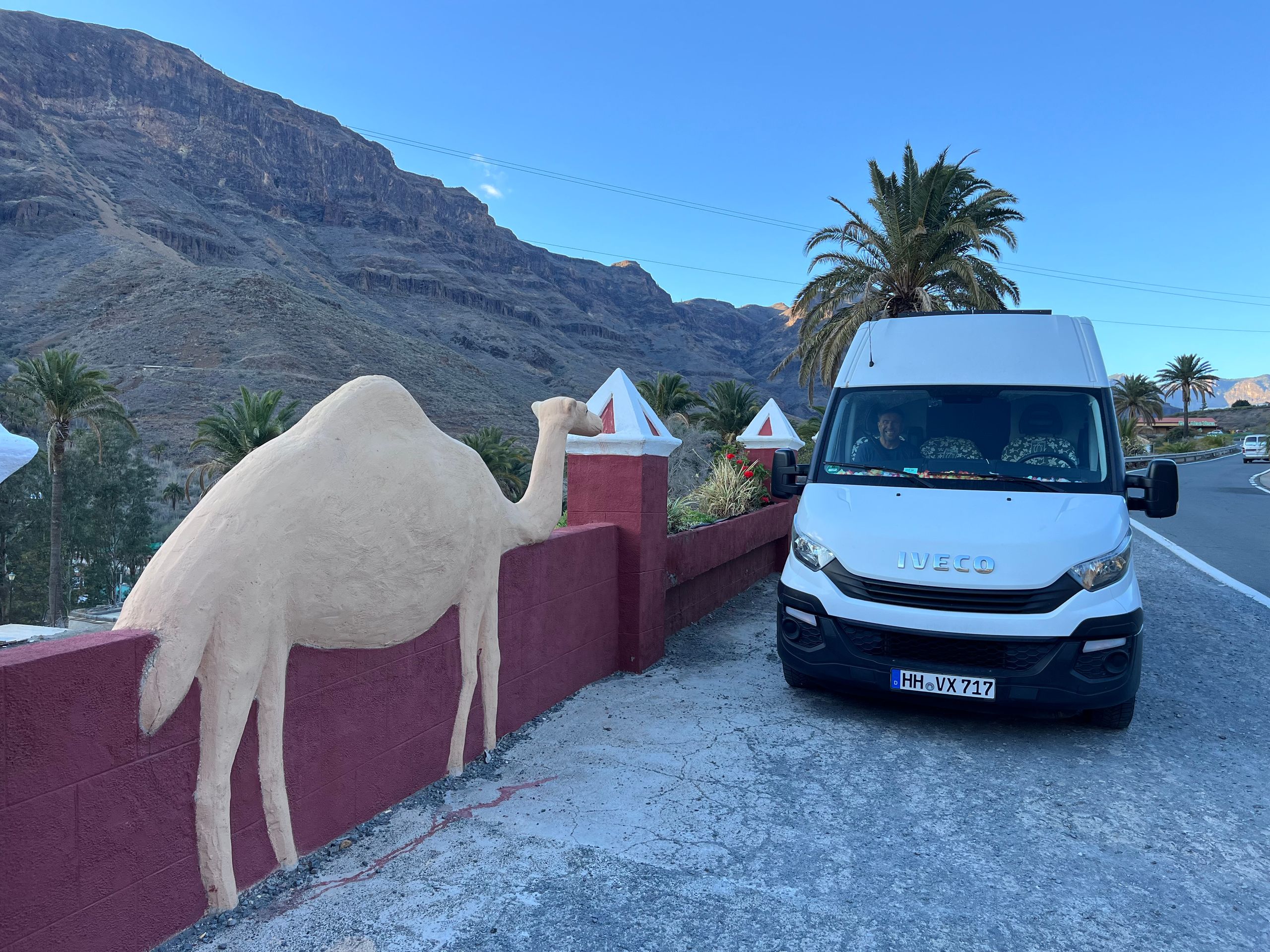
Personal logbook entry from the houseboat Betty HH-VX 717: We write the year 2025, January 16, 4:00 PM
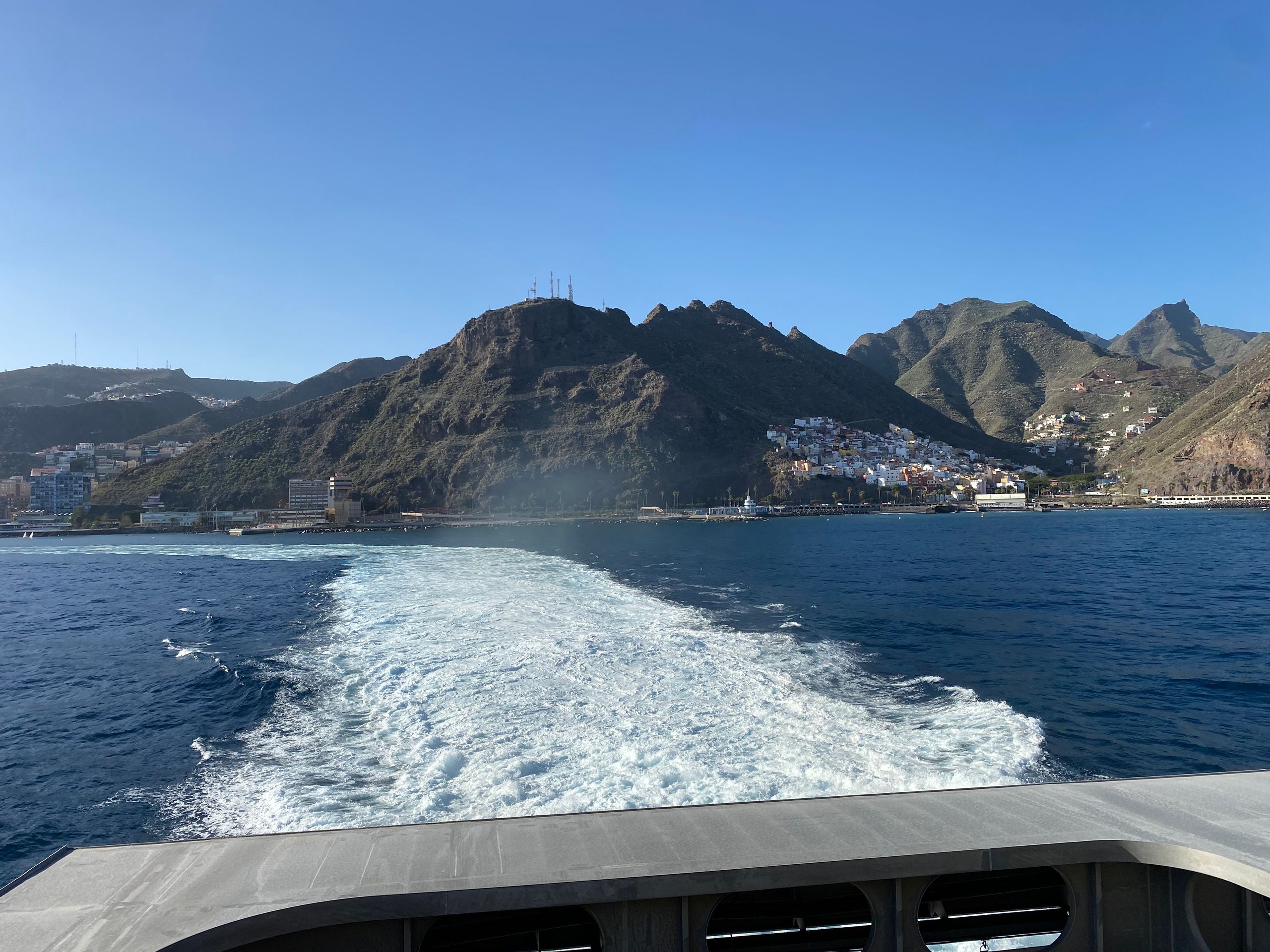
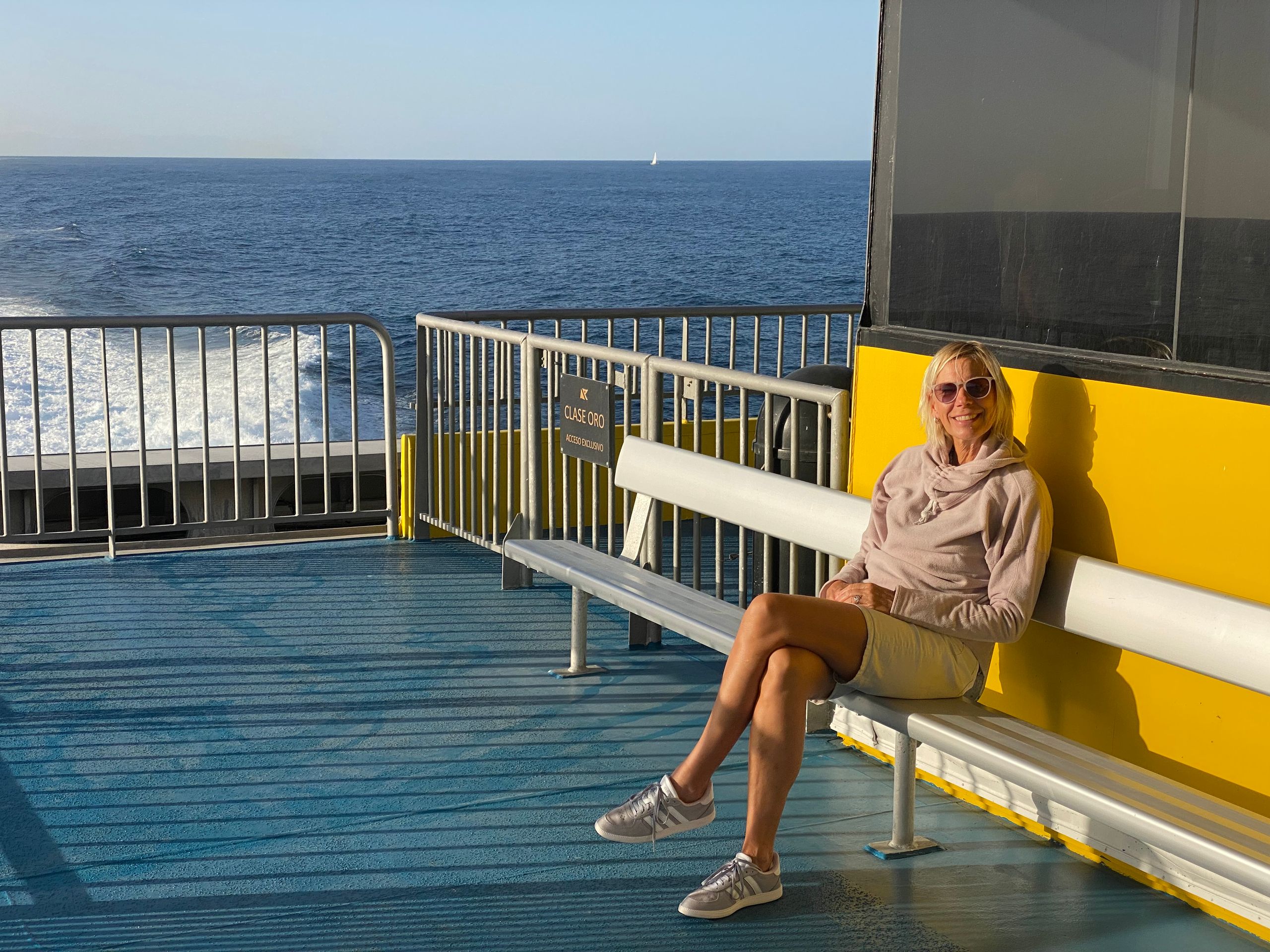
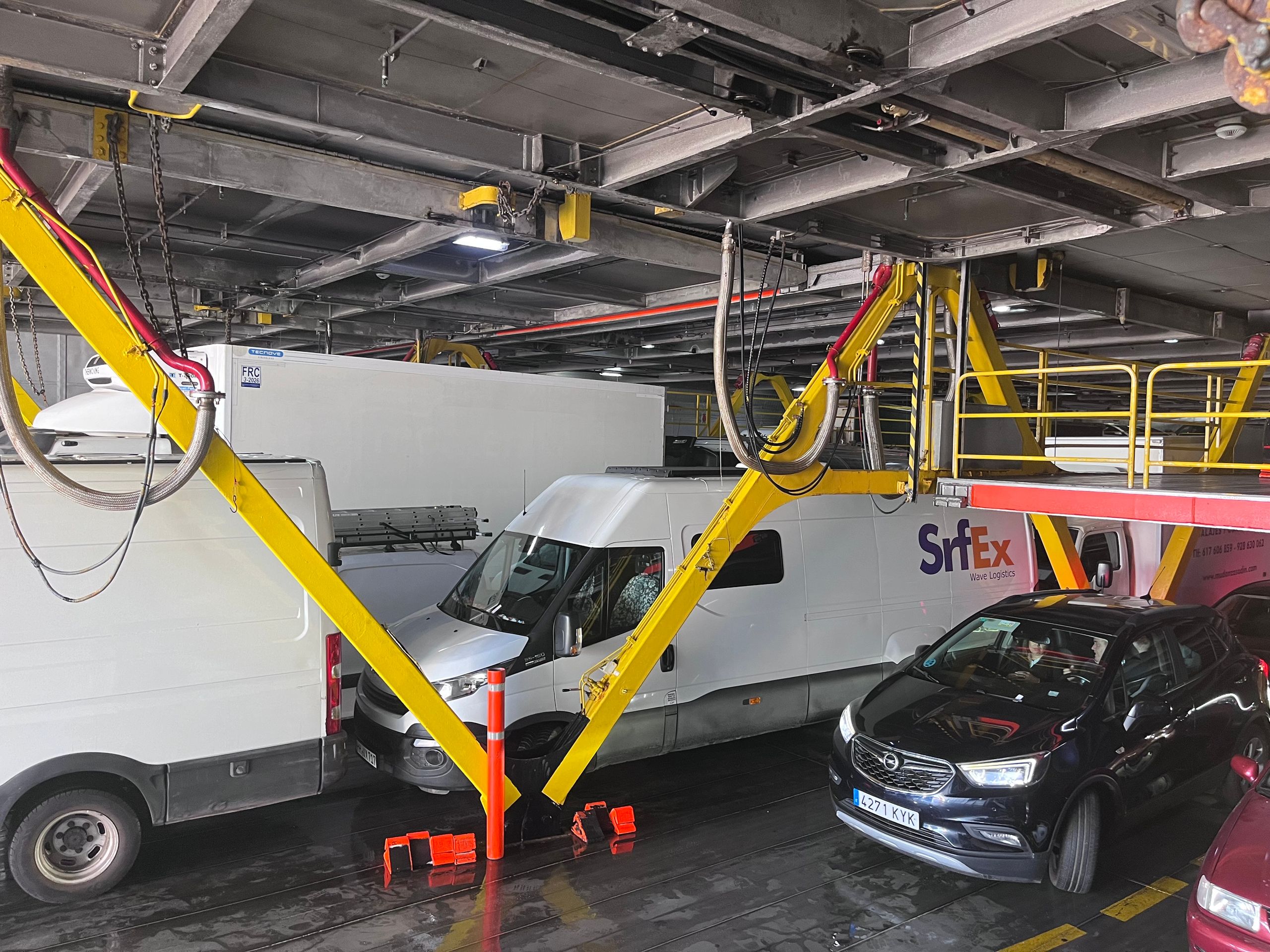
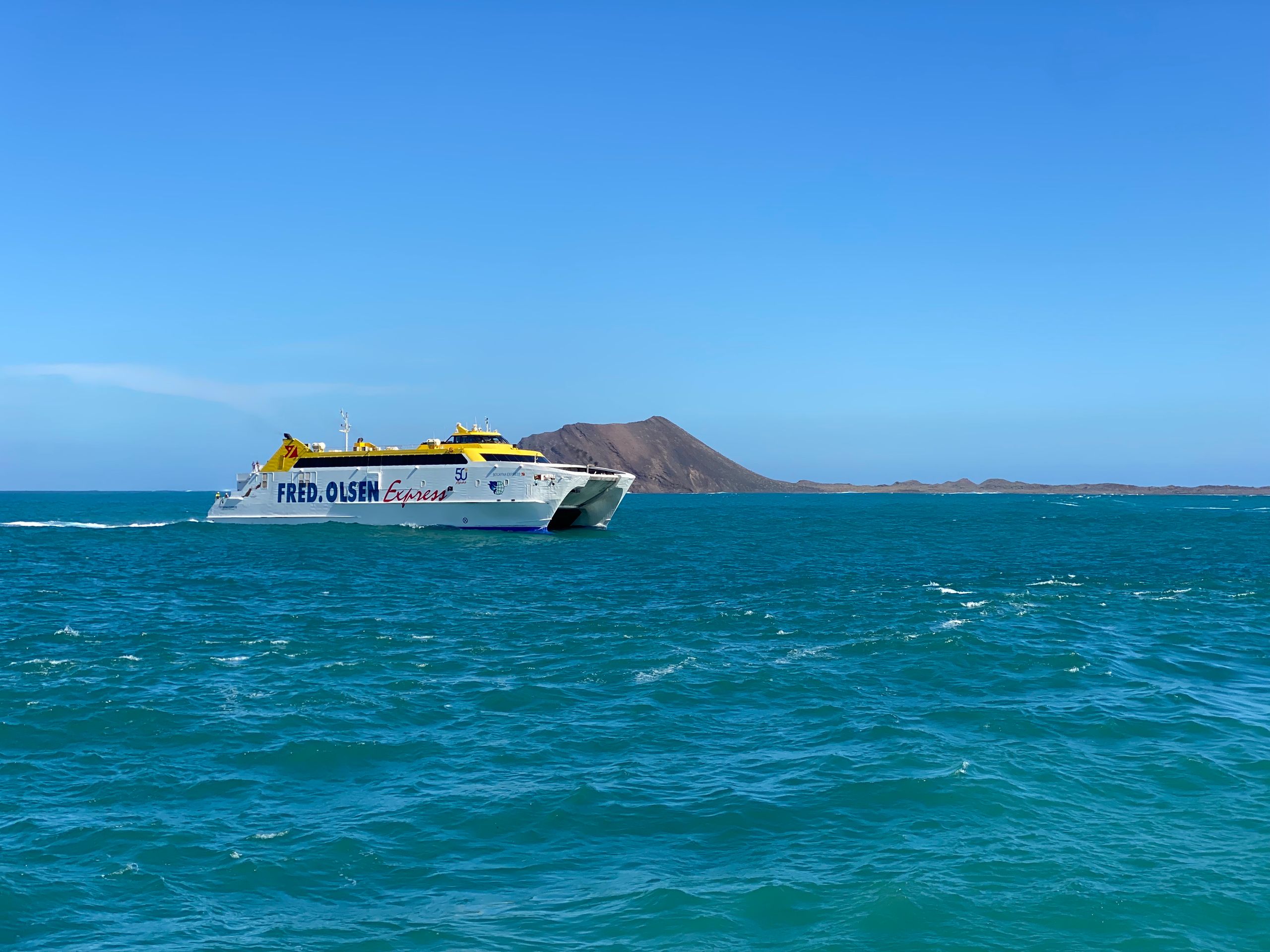
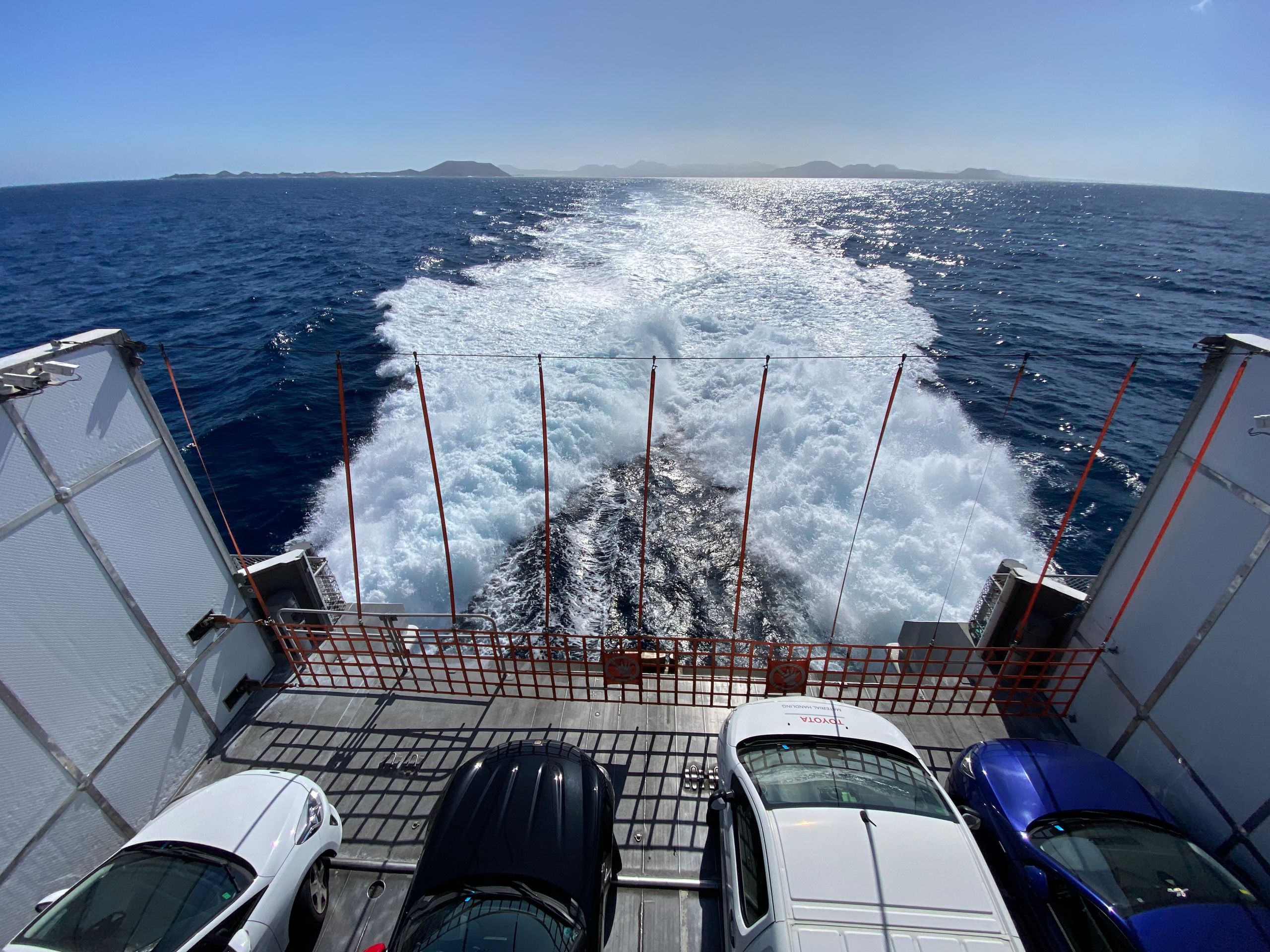
The yellow fast ferry from Fred Olsen, the market leader in island ferry services, departs from the harbor of Santa Cruz, the capital of Tenerife. Apparently, rough seas are expected. Our van has been secured against sliding on the vehicle deck, and passengers are requested to sit more towards the middle of the ferry. But things turn out differently, the sea is relatively calm and we zoom towards Gran Canaria at over 60 km/h (as measured by our hiking app Komoot!). We even spot some small whales that don’t seem to be disturbed by our ferry. Our destination, Gran Canaria, is the third-largest Canary Island by area and, after Tenerife, has the highest population.
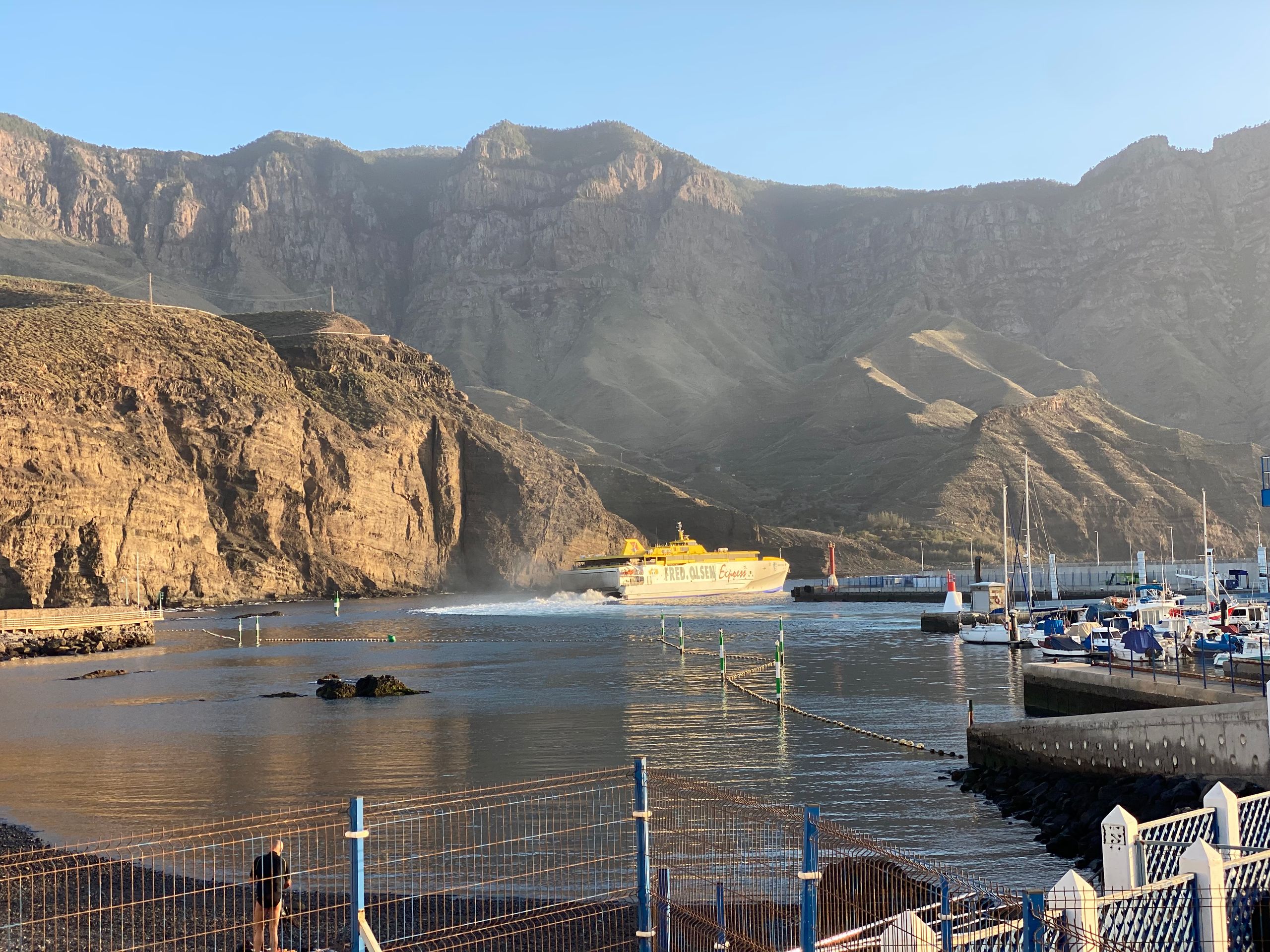
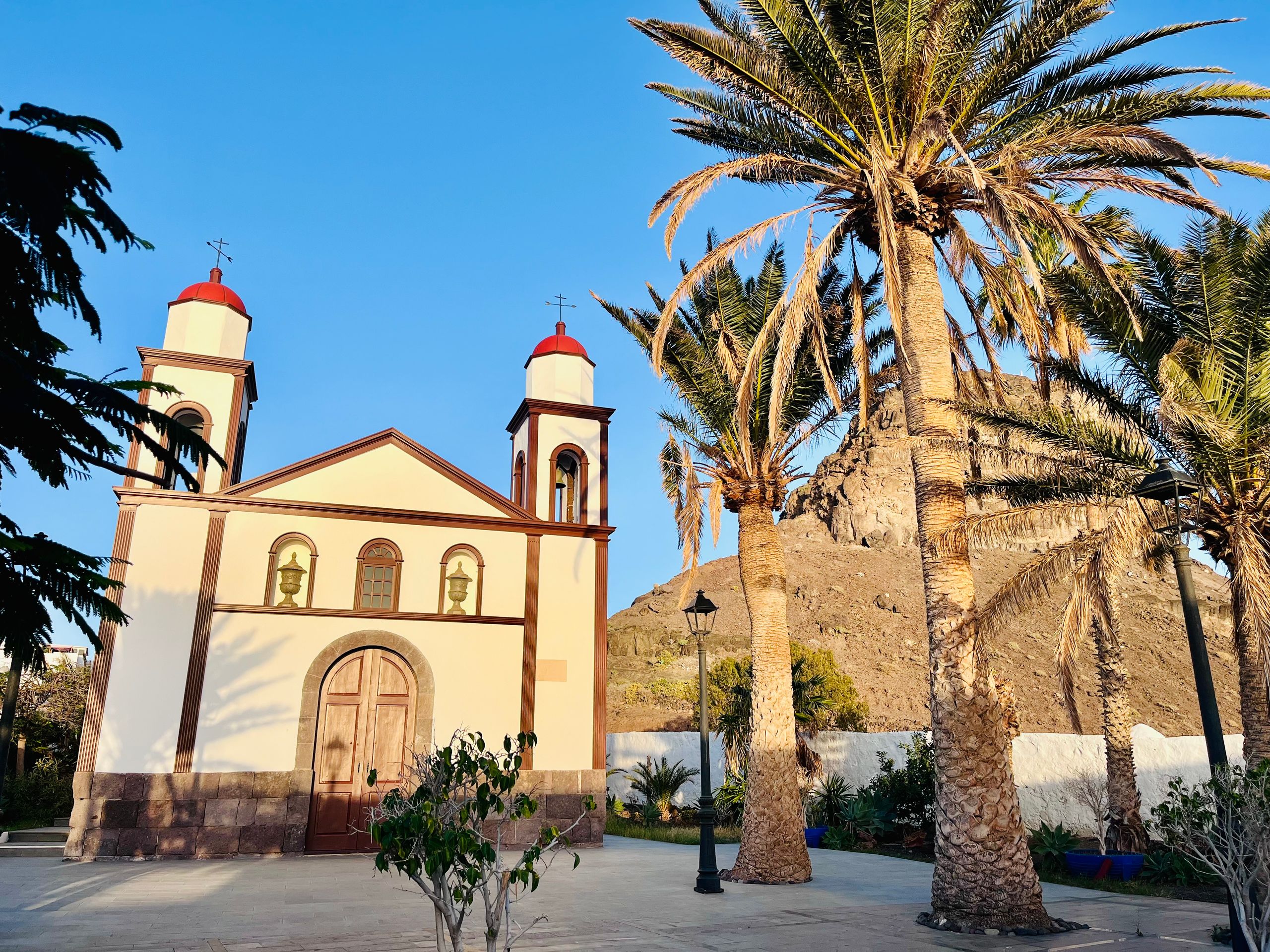
We aim for the ferry port of Agaete located directly opposite Santa Cruz on the western coast of Gran Canaria. Since it is nearly 6:00 PM upon arrival, we simply parked above the harbor and the small fishing village, letting the impressions of the day take effect on us. Just behind Agaete, the inaccessible coastal mountains of Gran Canaria's west coast start, plunging steeply into the sea. Agaete itself is calm and picturesque. When the last ferry departs in the evening, it's a good night to the fox and hare here.
For us, Gran Canaria is more of a stopover, as there are no direct ferry connections between Tenerife and Fuerteventura. Nonetheless, we have set aside five days for the island. From previous visits, we know that the coastal regions of Gran Canaria are by far not as beautiful and interesting compared to the other Canary Islands. Thus, we have decided to traverse the green island center from north to south and then drive along the southern and eastern coasts to Las Palmas. From there, our ferry to Fuerteventura departs on January 21.
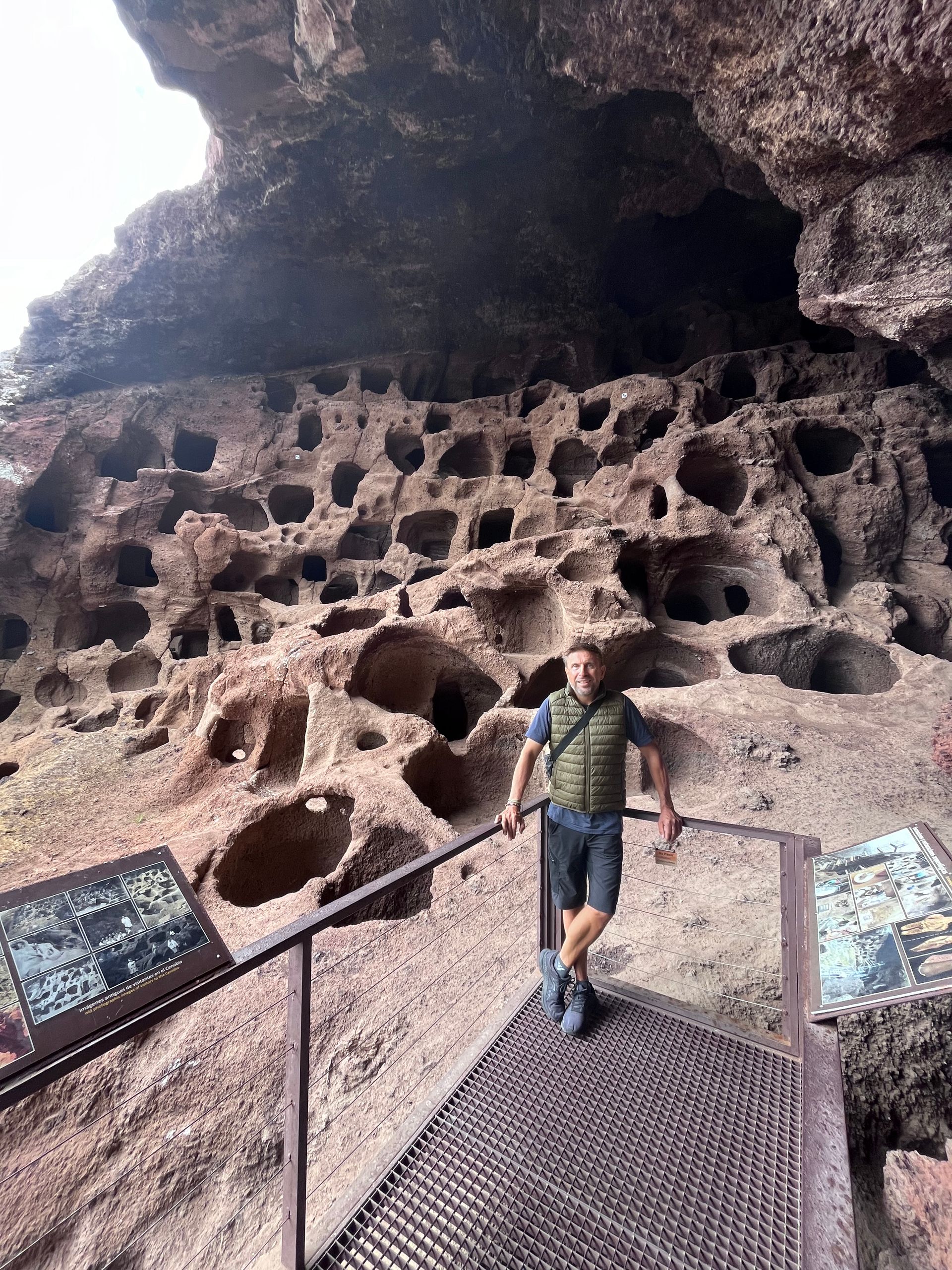
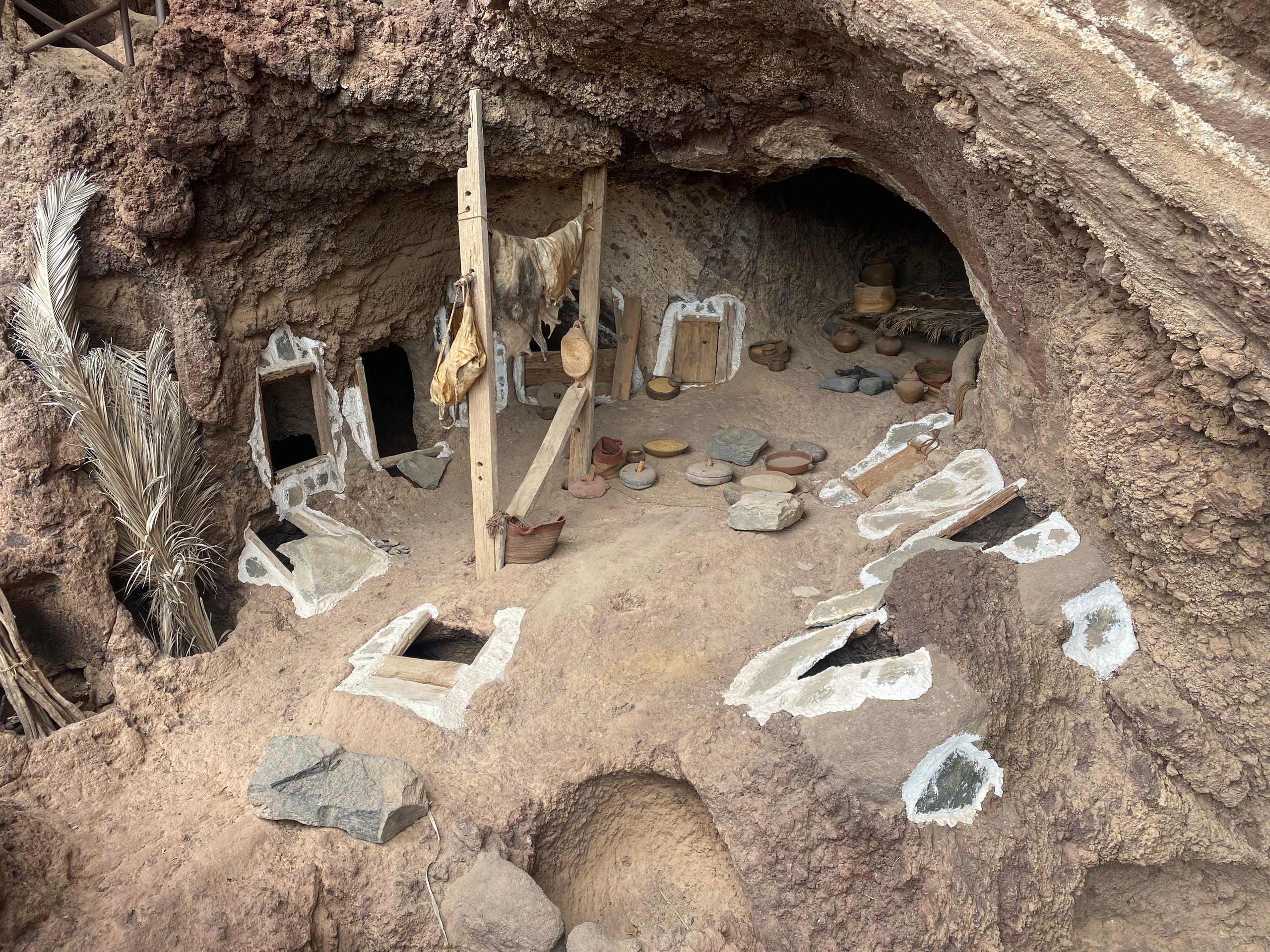
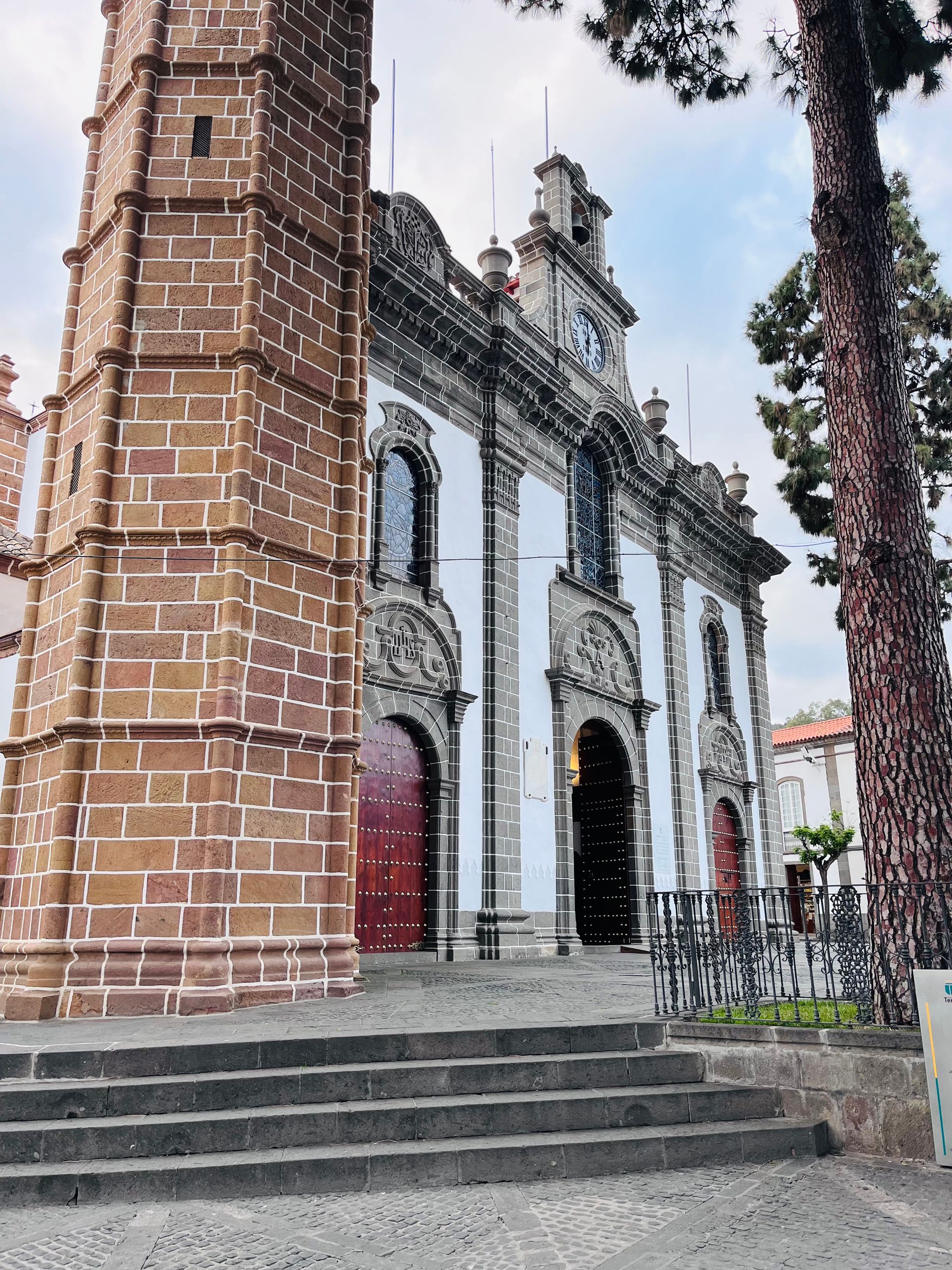
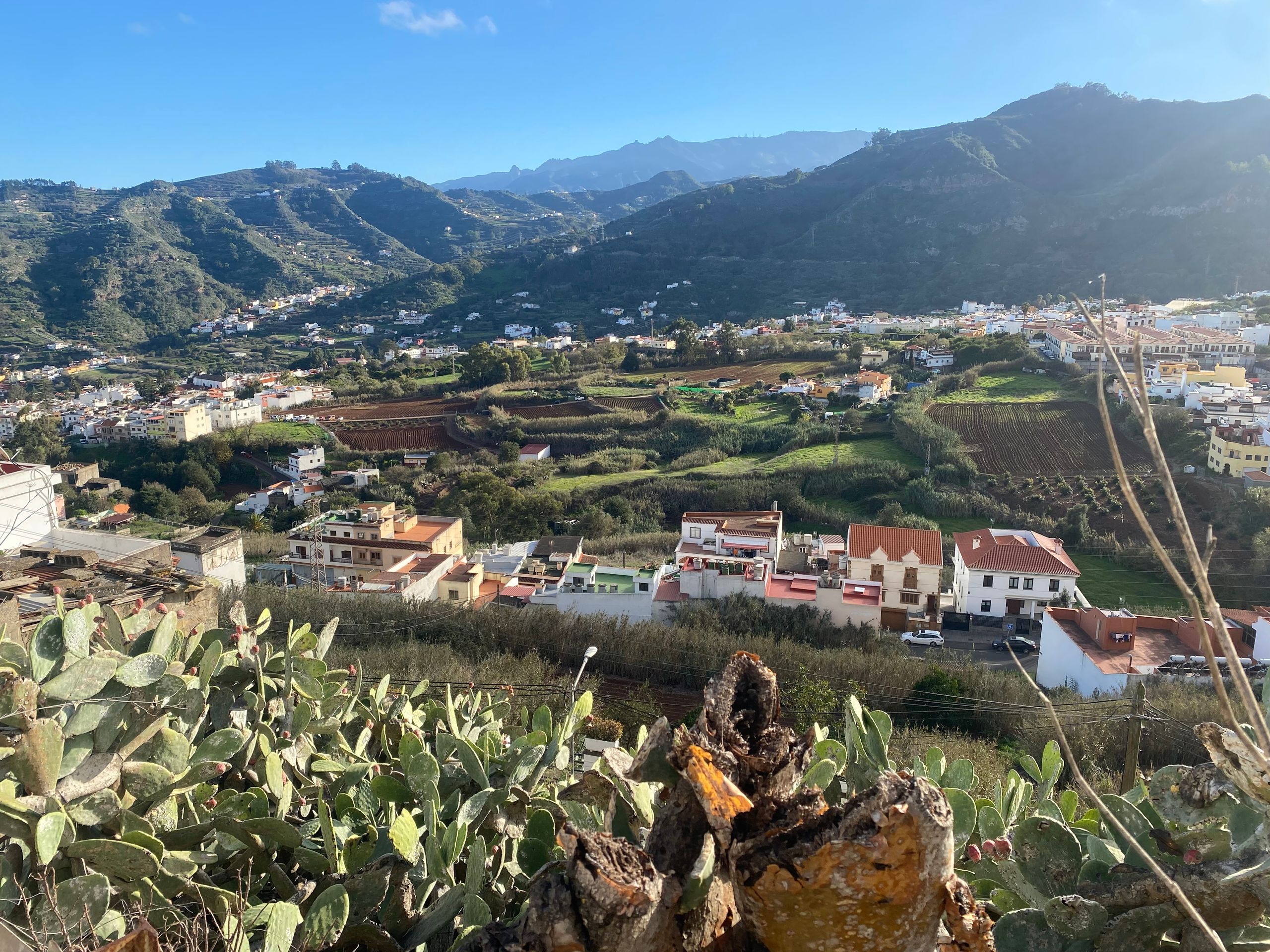
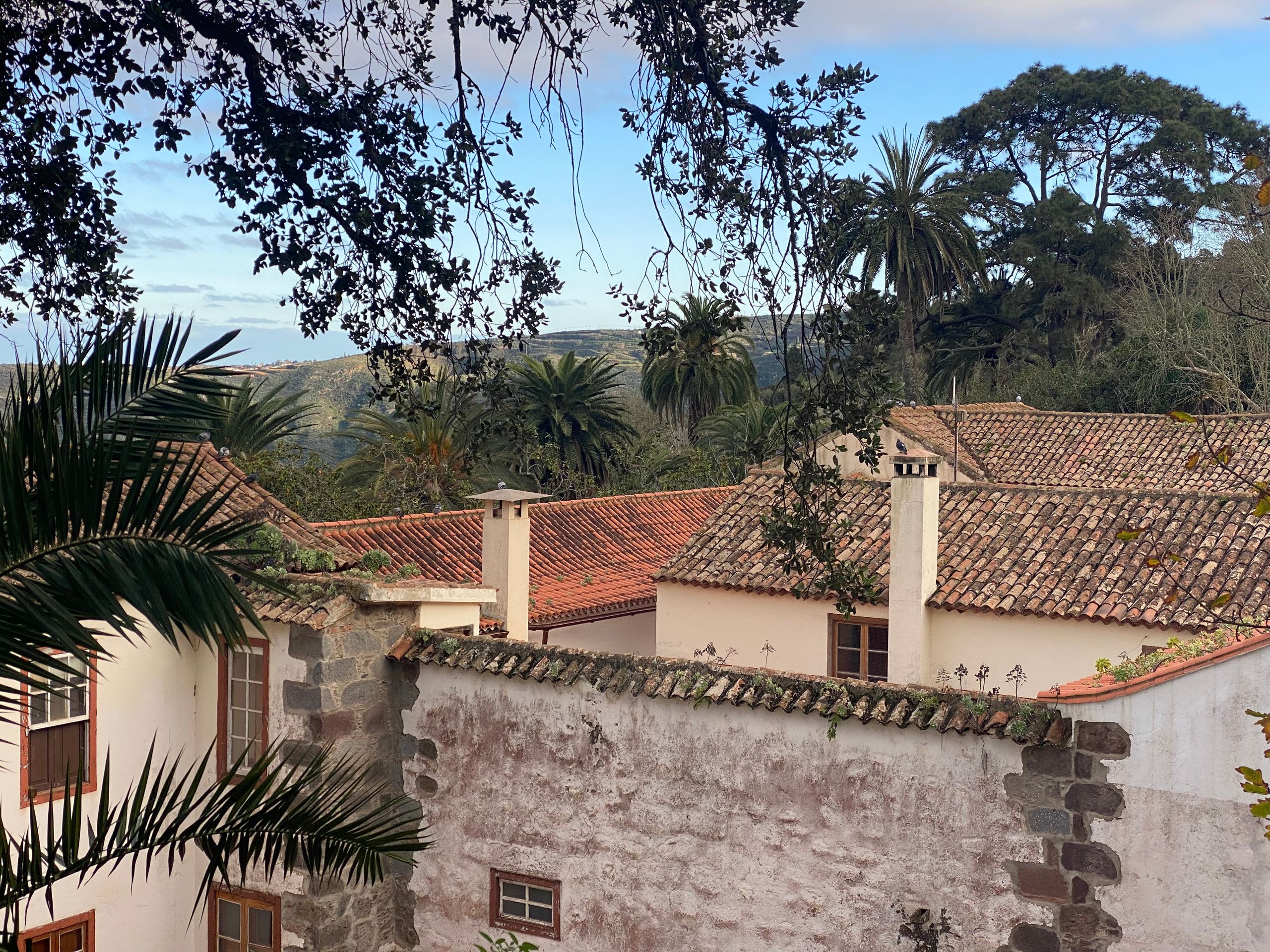
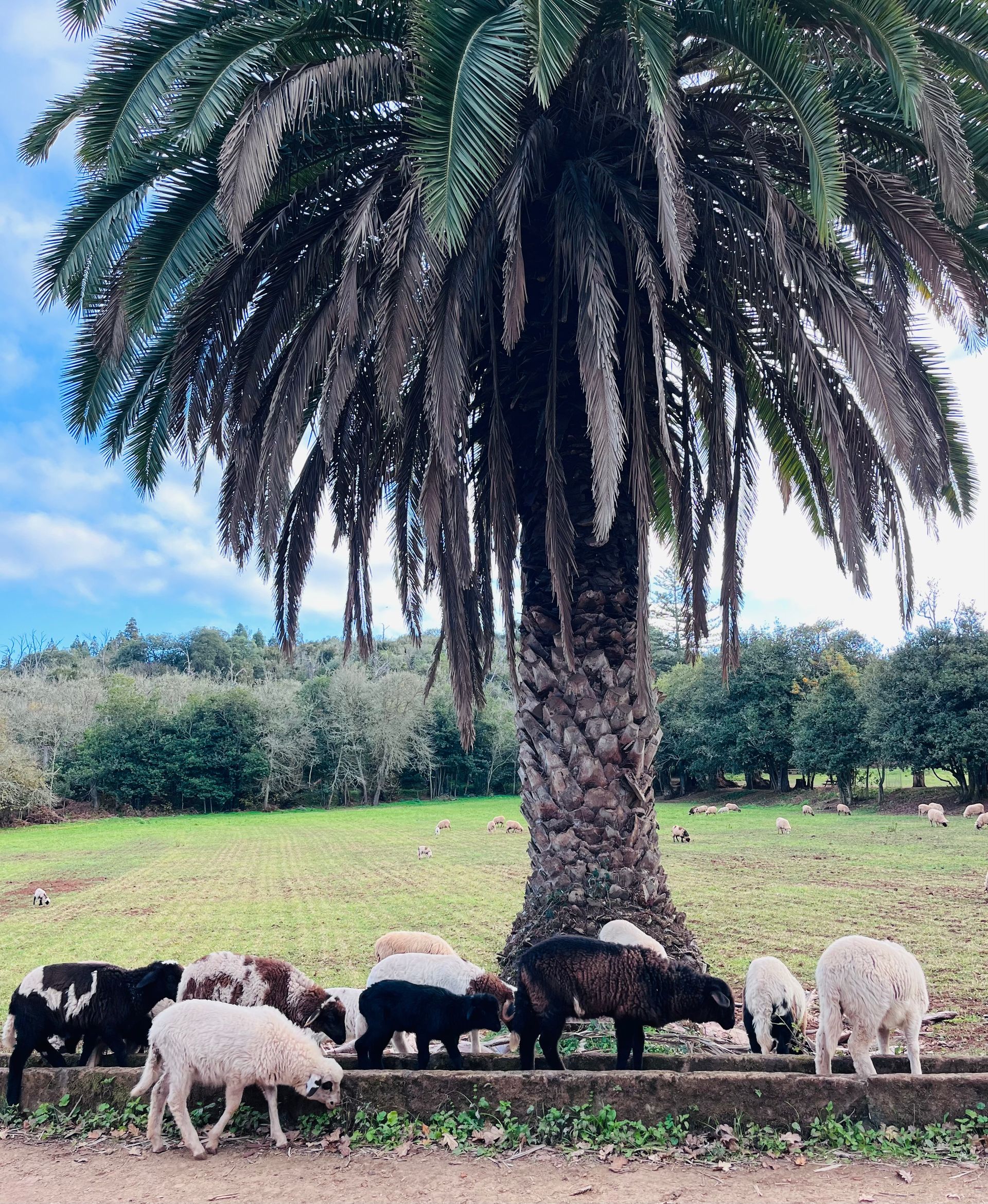
The next day on Gran Canaria, we start with a visit to the Cenobia de Valeron. This is an archaeological site on the north coast, located high in the mountains. Here, the indigenous people carved countless small caves for storing grain into the rock, thus protecting themselves from enemies. These stores remind us of the Agadire in Morocco, and indeed the description of the archaeological site refers to parallels with Morocco. Afterwards, we drive along the coast past Las Palmas de Gran Canaria and then turn inland towards the center of the island into the mountains. We are pleasantly surprised by how lushly green the central area of Gran Canaria is. Our first destination is Teror. This original village is situated at an elevation of over 500 m, surrounded by mountains and valleys. Although we have never been to South America, we imagine it might look like this. In the central park and market square, we find a good place to park for the night. We still have time for a hike and head out of the town on steep paths. From above, there is a beautiful view of Teror and also the Atlantic. The hiking trail runs through the lands of the picturesque Finca Osorio. Here, free-ranging herds of sheep and goats, equipped with small bells, give the whole place an alpine character.
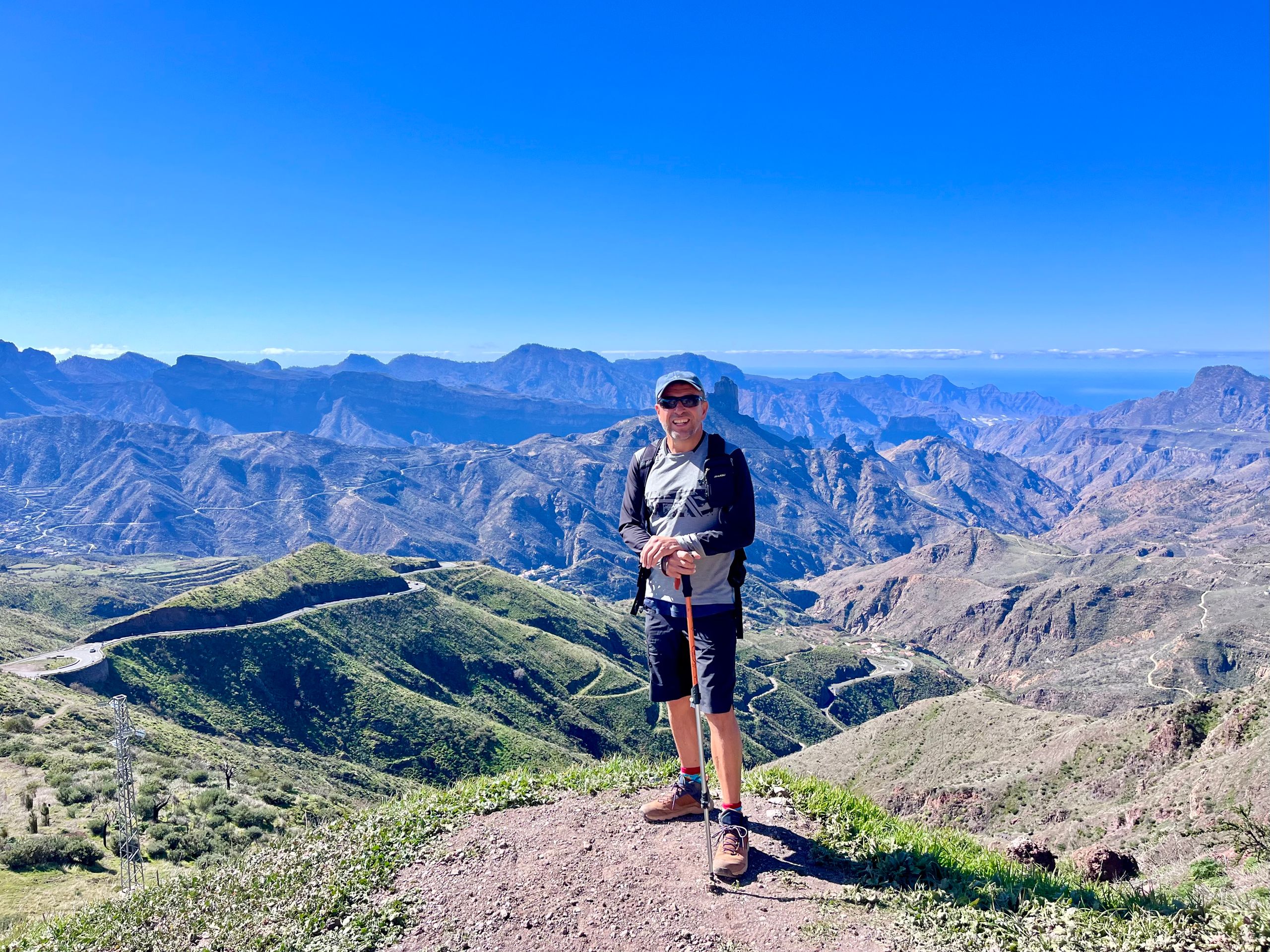
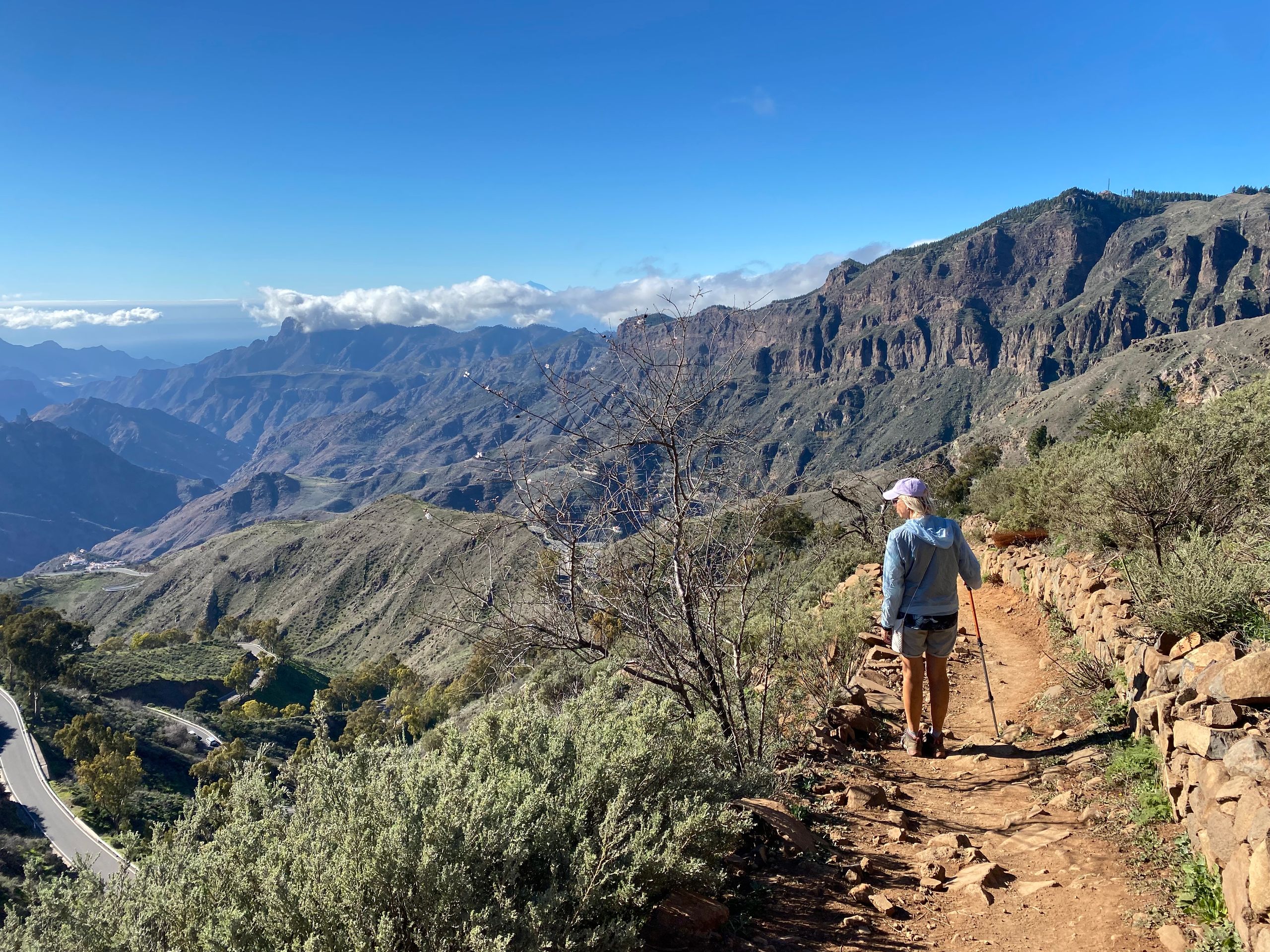
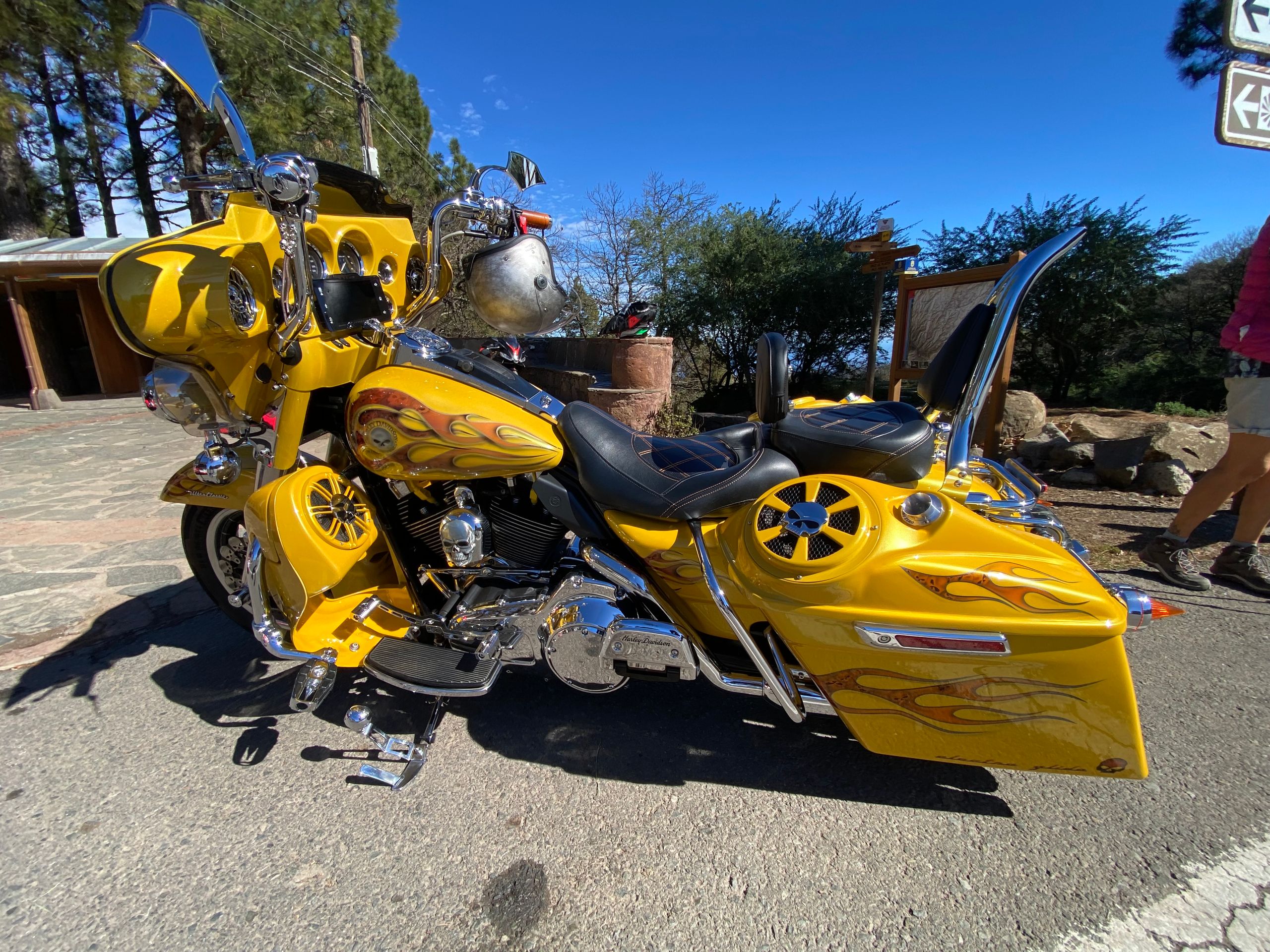
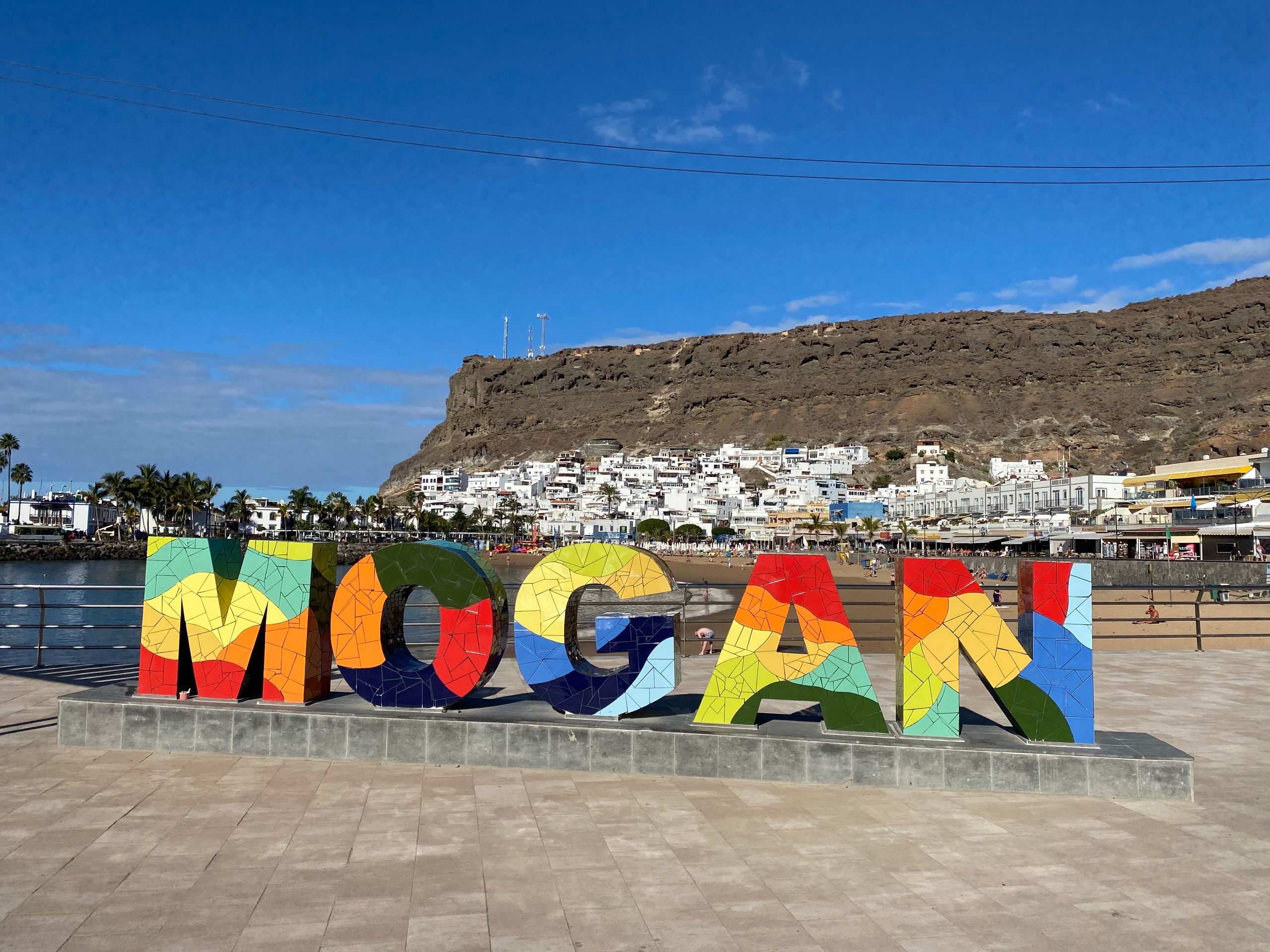
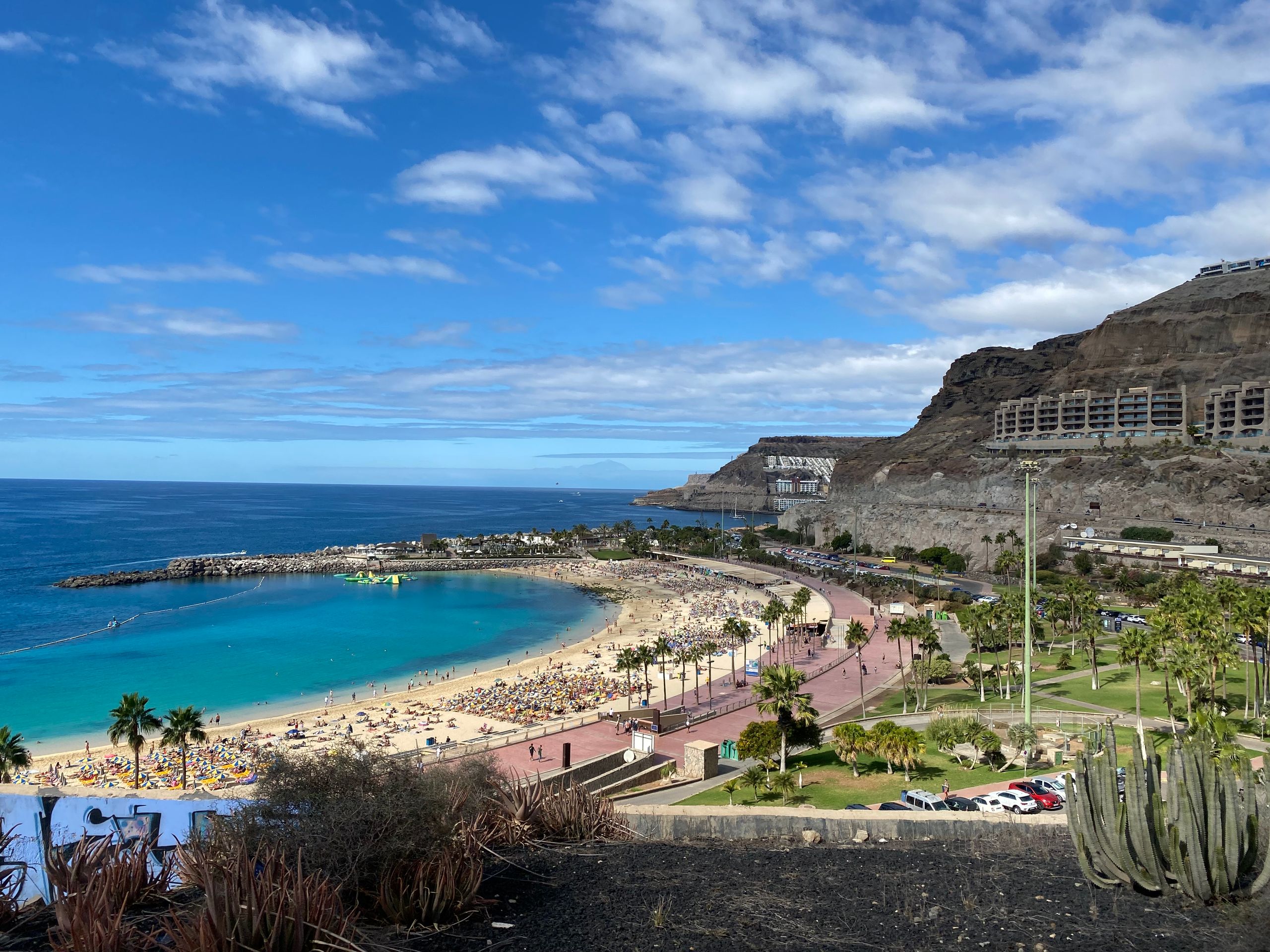
The next day, we continue from Teror through the center of the island. It's an up and down journey, and the roads are quite narrow. We are glad that no bus is coming towards us. In Tejeda National Park, we take a nice mountain hike at the Parador de Cruz de Tejeda. One side has (for me) too exposed paths, so we have to turn back. The other side is more to my liking and we can admire the beautiful green mountain panorama. There's a lot going on at Cruz de Tejeda. Many bus tours and hordes of motorcyclists head for this pass. A few steps further on the hiking paths, however, there are hardly any people left. Further along, we pass the picturesque mountain village of Tejeda on the very narrow GC-60 towards the south. And of course, at some point on the narrow, twisting road, we encounter a bus. It gets very(!) tight, and Susi has to reverse several times until we are standing with the tires directly against the small concrete blocks that separate us from the abyss on the right. But she handles it very well! I have been 'drivingly impaired' for weeks due to my injury and can only be a good passenger. Early in the evening, we arrive at the coast at the height of Maspalomas or Playa del Ingles. We spend the night in Puerto de Mogan at a large (and even legal) motorhome parking space. Here in Mogan, the GC-1 highway ends, and to the east begin the inaccessible coastal mountains again. Puerto de Mogan is typical for the tourist towns in southern Tenerife. The slopes at the small bays are 'packed' with apartments and hotels for package tourists. Surrounding them are relatively barren mountains and gravel areas. Not really our style...
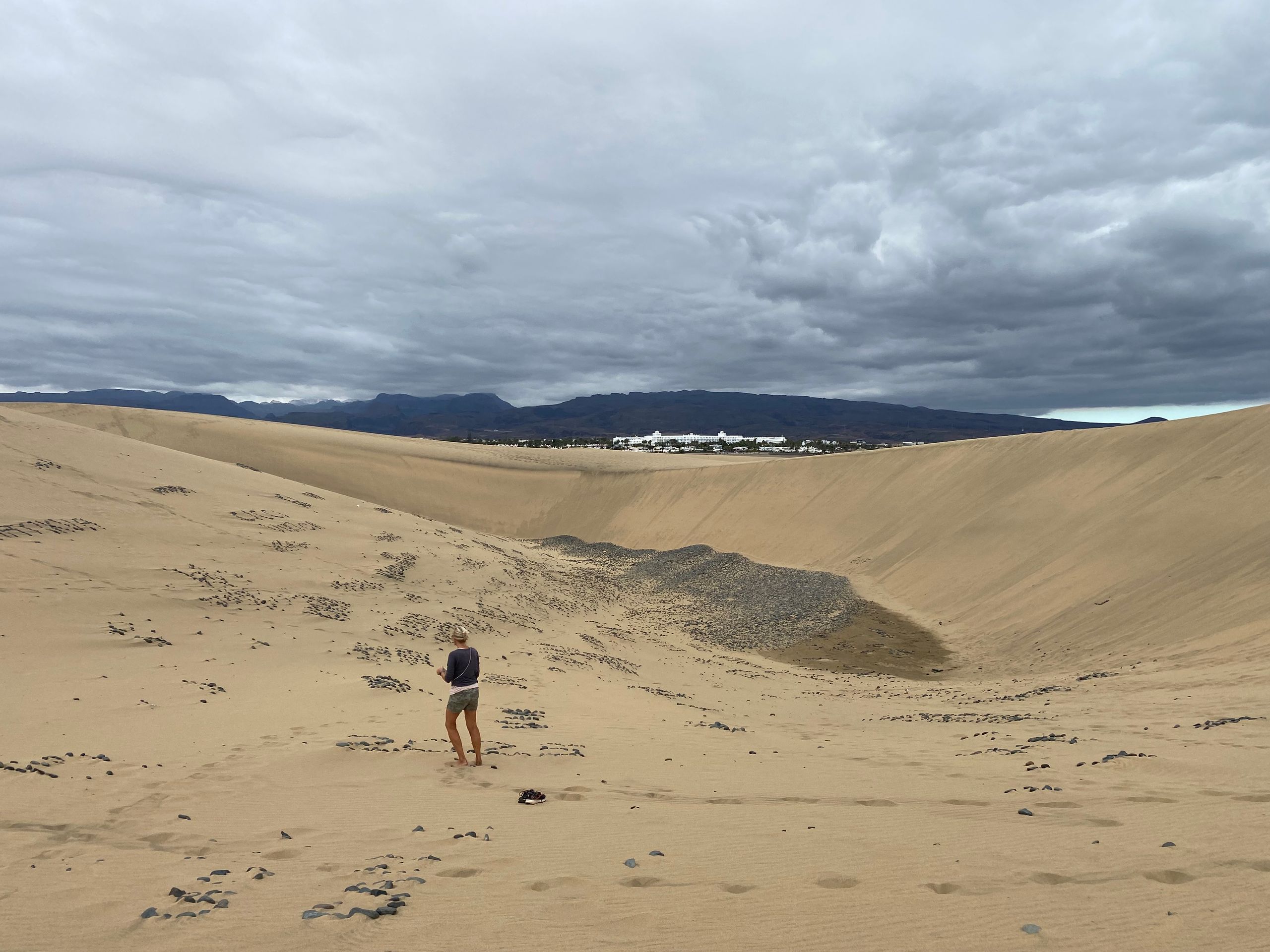
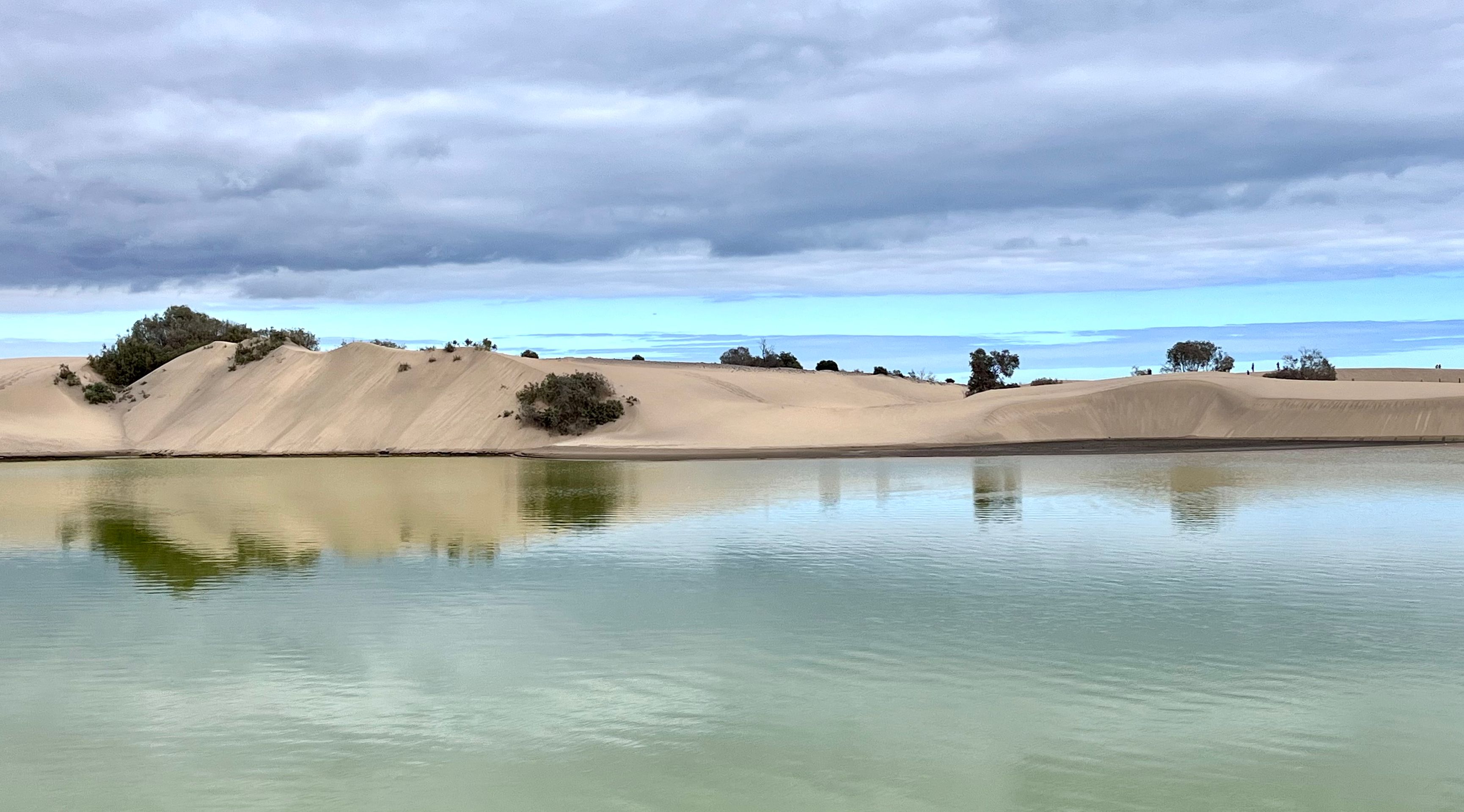
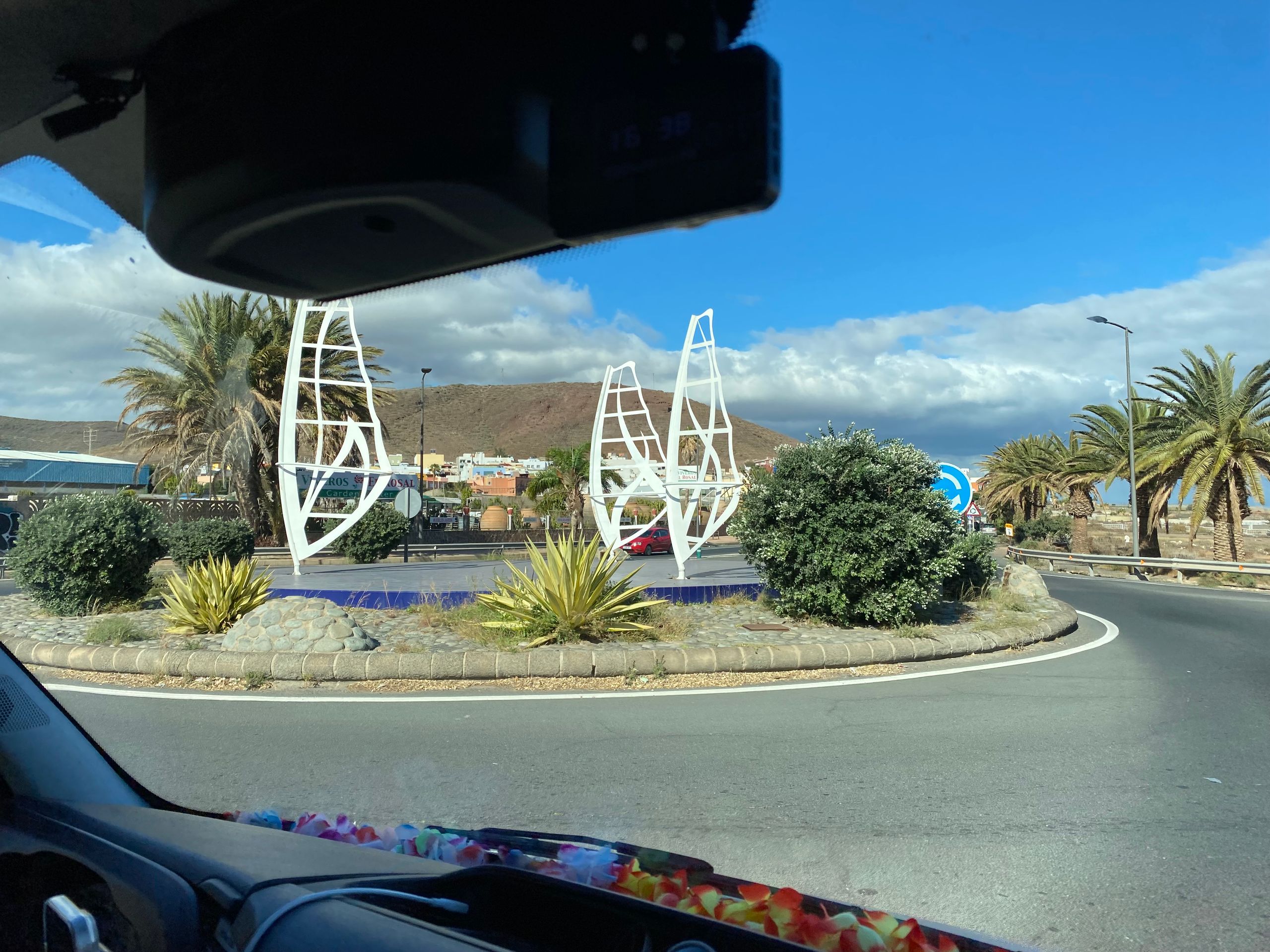
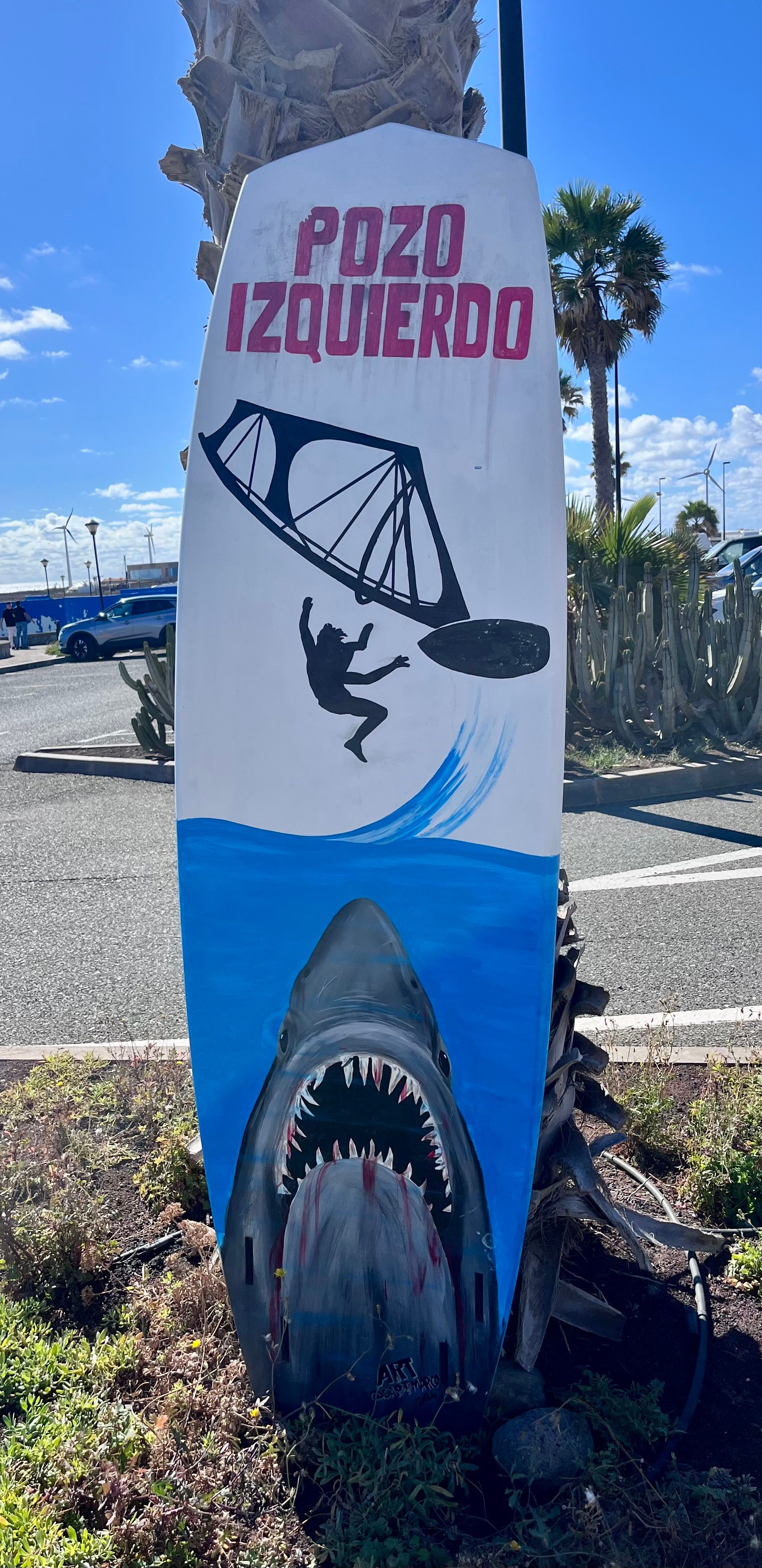
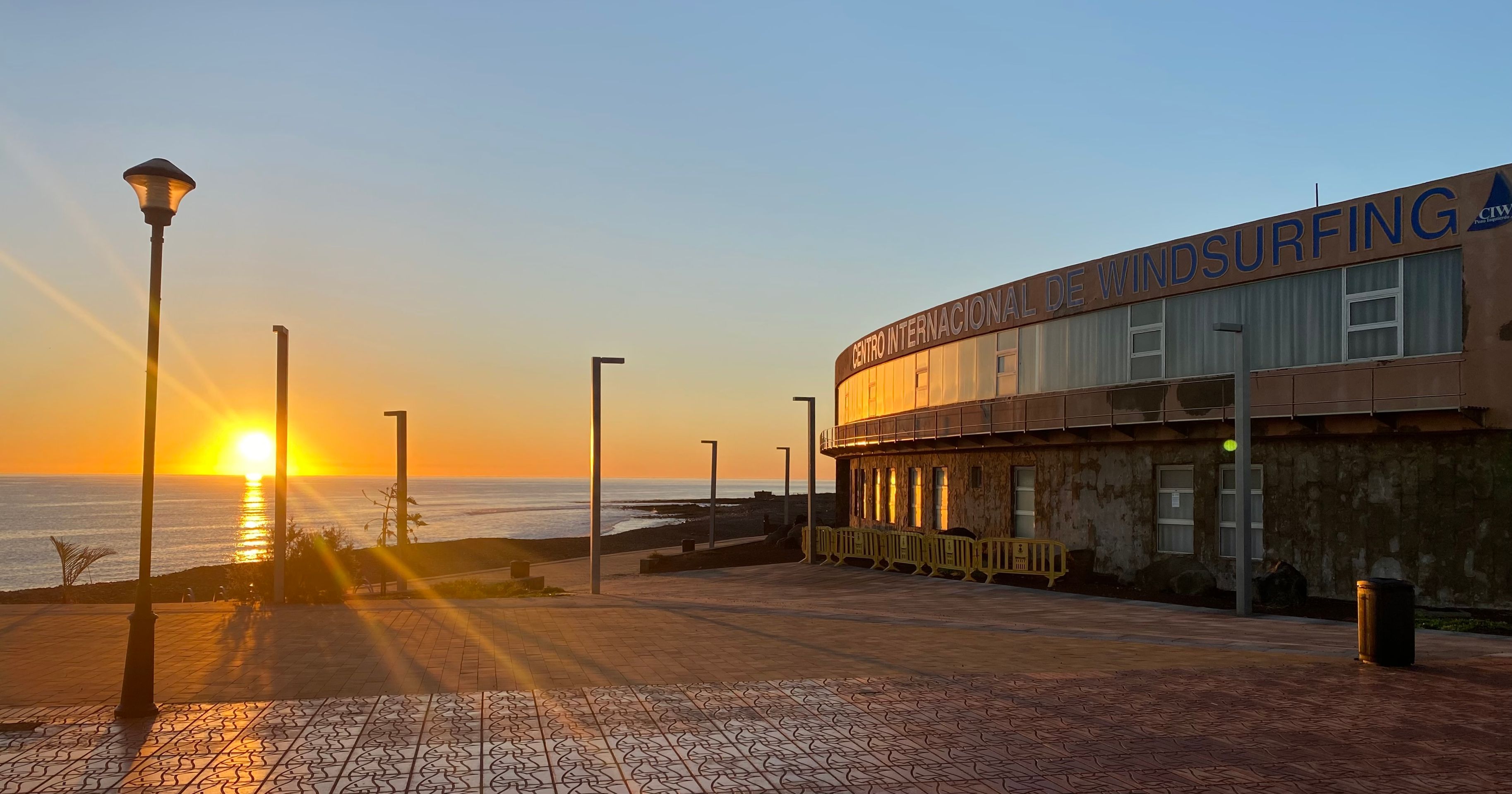
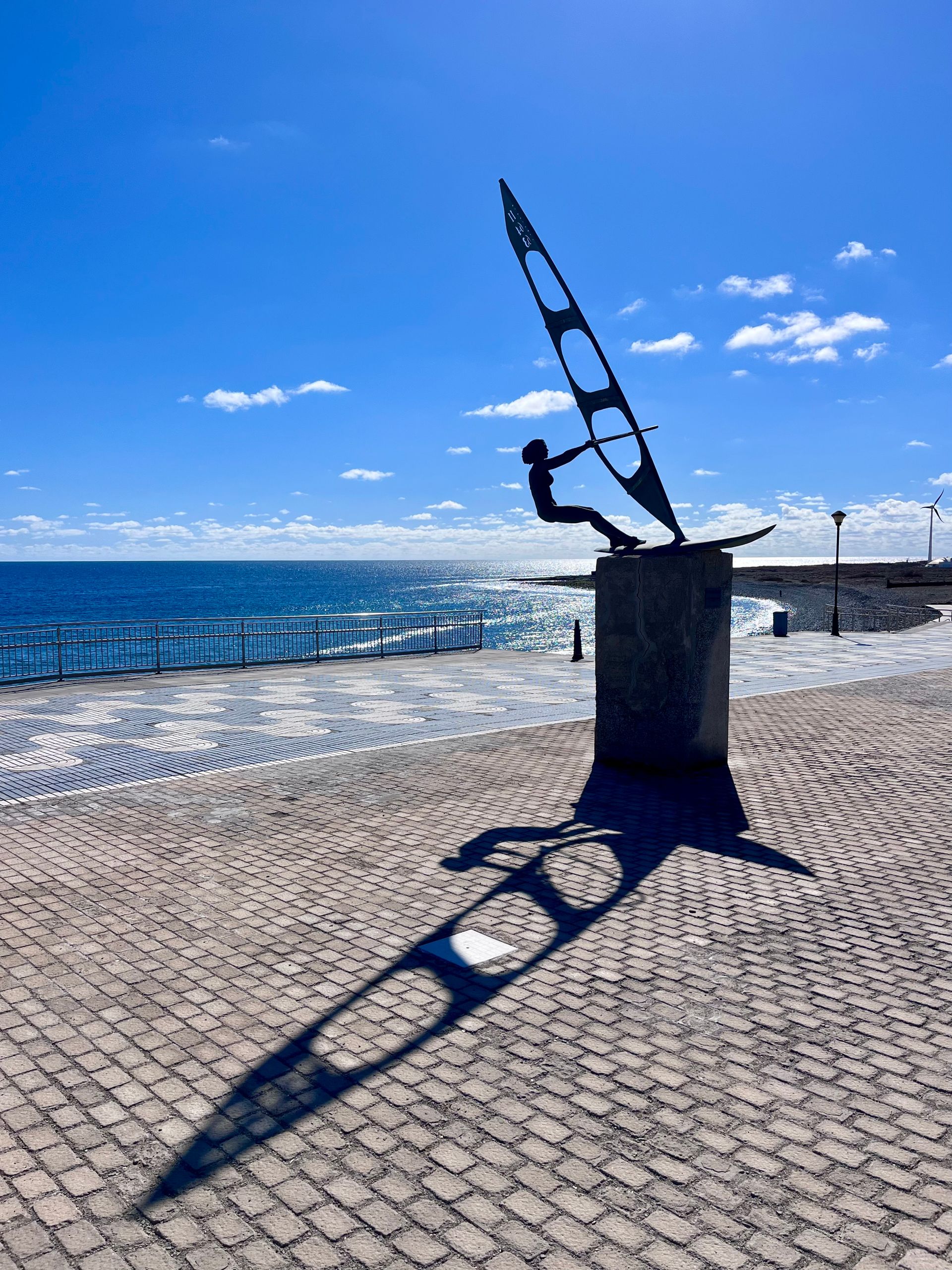
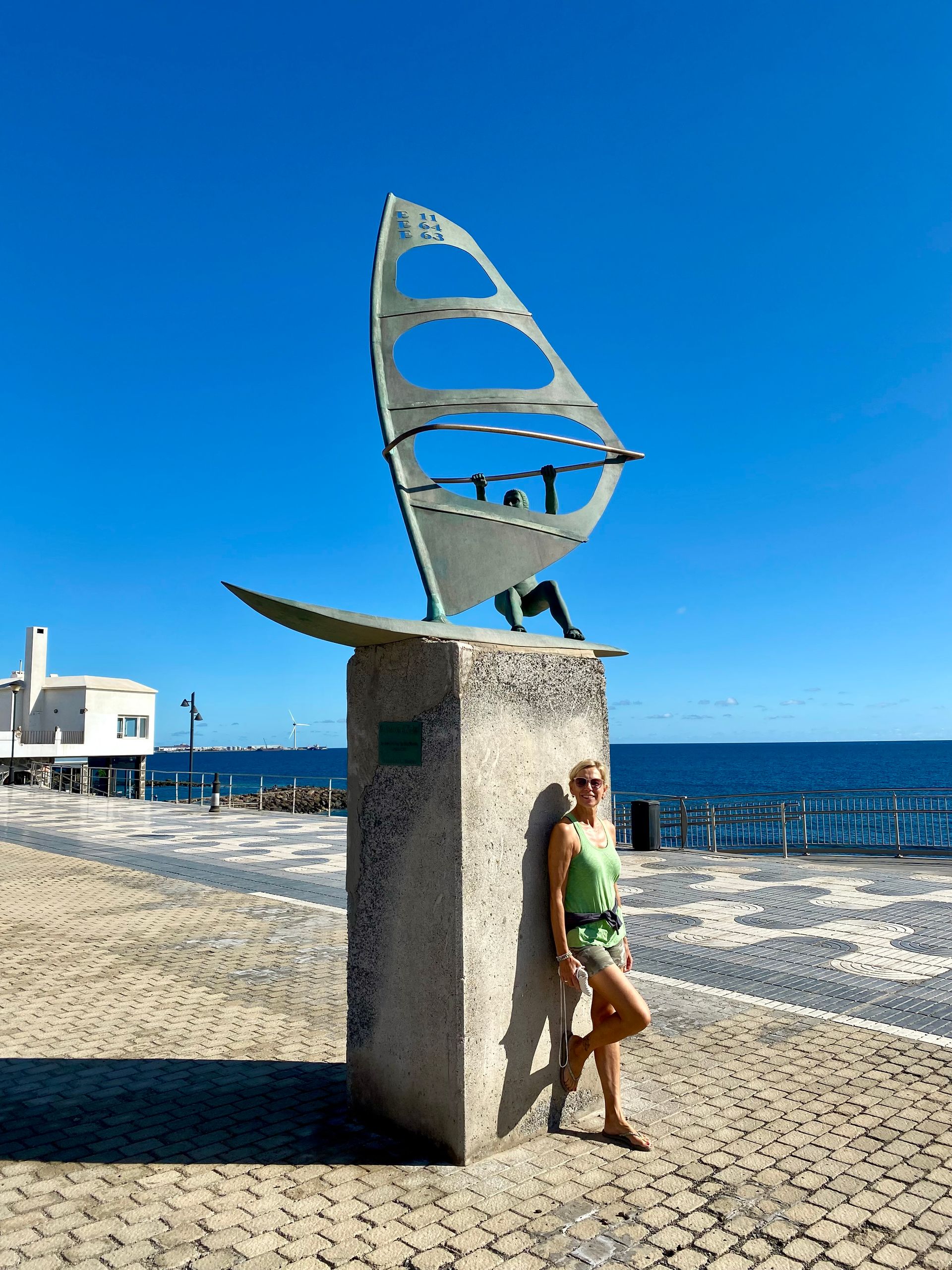
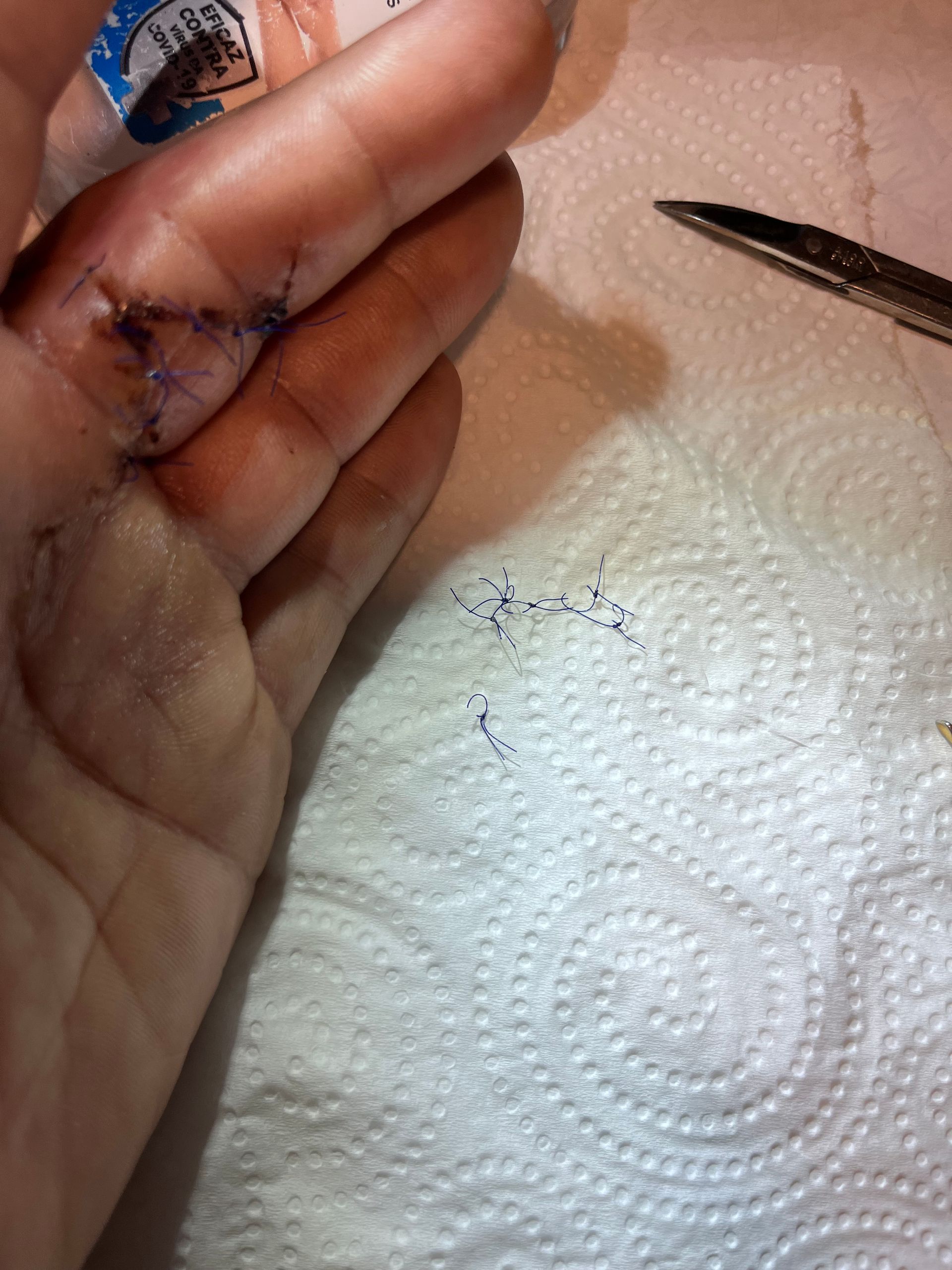
Behind Mogan, we explore the tourist town of Maspalomas and the famous Dunas de Maspalomas. After the Erg Chebbi dunes in Morocco, we are not especially wowed by these dunes. Maspalomas also doesn’t impress... So onward to the east coast towards the well-known surf spots. Before that, a brief stop at the barber in Vecindario; my hair needs a trim! From there, it’s just a few minutes to Pozo Izquierdo, one of the windiest and wave-rich places in the Canaries and regular host of the Windsurf World Cup. However, Pozo greets us today with calm winds and about 10 cm high waves! I know Pozo from several windsurfing vacations, but we have never been here with the van right at the spot. By the way, there is a proper monument in Pozo for the most successful windsurfers on the island, the Moreno Sisters and Björn Dunkerbeck, and the 'Centro Internacional de Windsurfing' (which is now looking a bit run-down), all from the heyday of windsurfing. In the evening, we sit in the Pozo bar with locals and enjoy Canarian cuisine. Before that, I even pulled some stitches from my left hand myself, which deserves a reward! We sleep well right by the World Cup spot; sleeping here with 'normal' trade winds would have been very uncomfortable. The next day, the wind has changed and comes gently from the southwest. It would be ideal for wing foiling, but my hand isn't cooperating yet. Afterwards, we check out the next surf spots, Arinaga (industrial harbor) and Vargas. As previously mentioned, the coast of Gran Canaria is not very attractive due to industrial establishments and endless often-abandoned fruit and vegetable plantations, and it’s really only interesting for hardcore surfers. By the way, Vargas is where the five-time world champion in windsurfing, Philip Köster, grew up. With the bleakness of the place, one can only find solace in sports... After passing the airport, we continue along the east coast until Playa Hombre. Here we spent several very windy surf and family holidays in the past in a fantastic villa with a pool right by the coast. In memory of those times, we spend our last night on GC in Playa Hombre and walk along the coastal promenade to the neighboring villages of La Garita and Playa de Melenara. The next morning, we drive to Las Palmas and, despite (or because of) the GPS, get lost several times in the narrow street maze of the island's capital while trying to reach the ferry port. It’s January 21, and we have booked the morning crossing on the fast ferry from Las Palmas to Morro Jable on Fuerteventura.
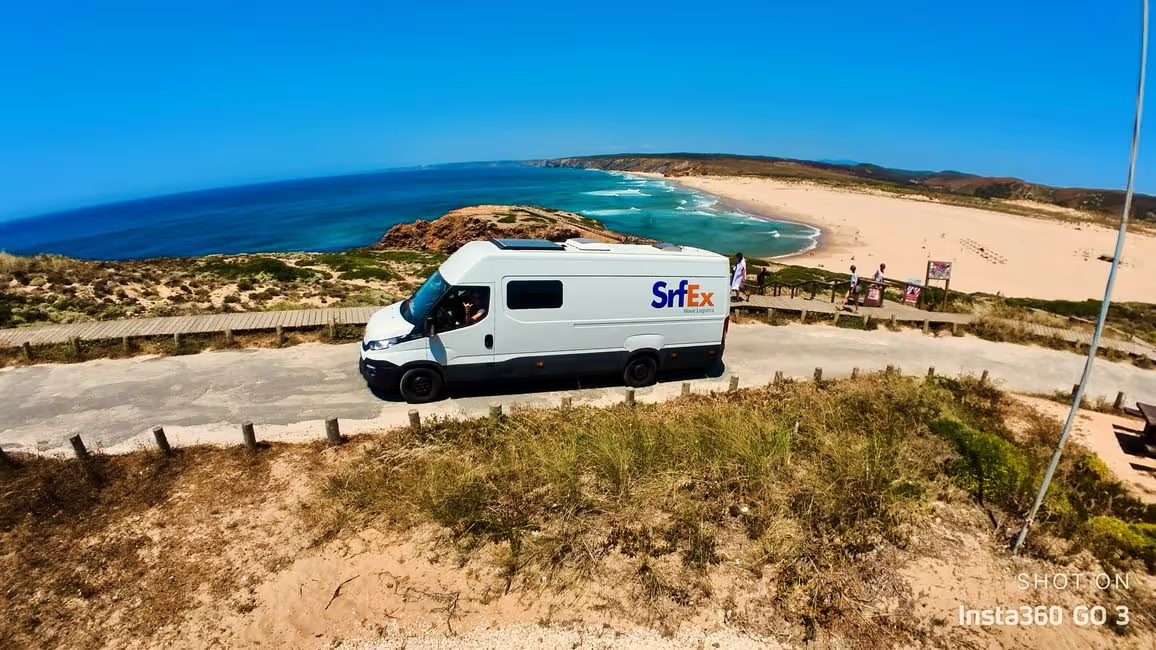
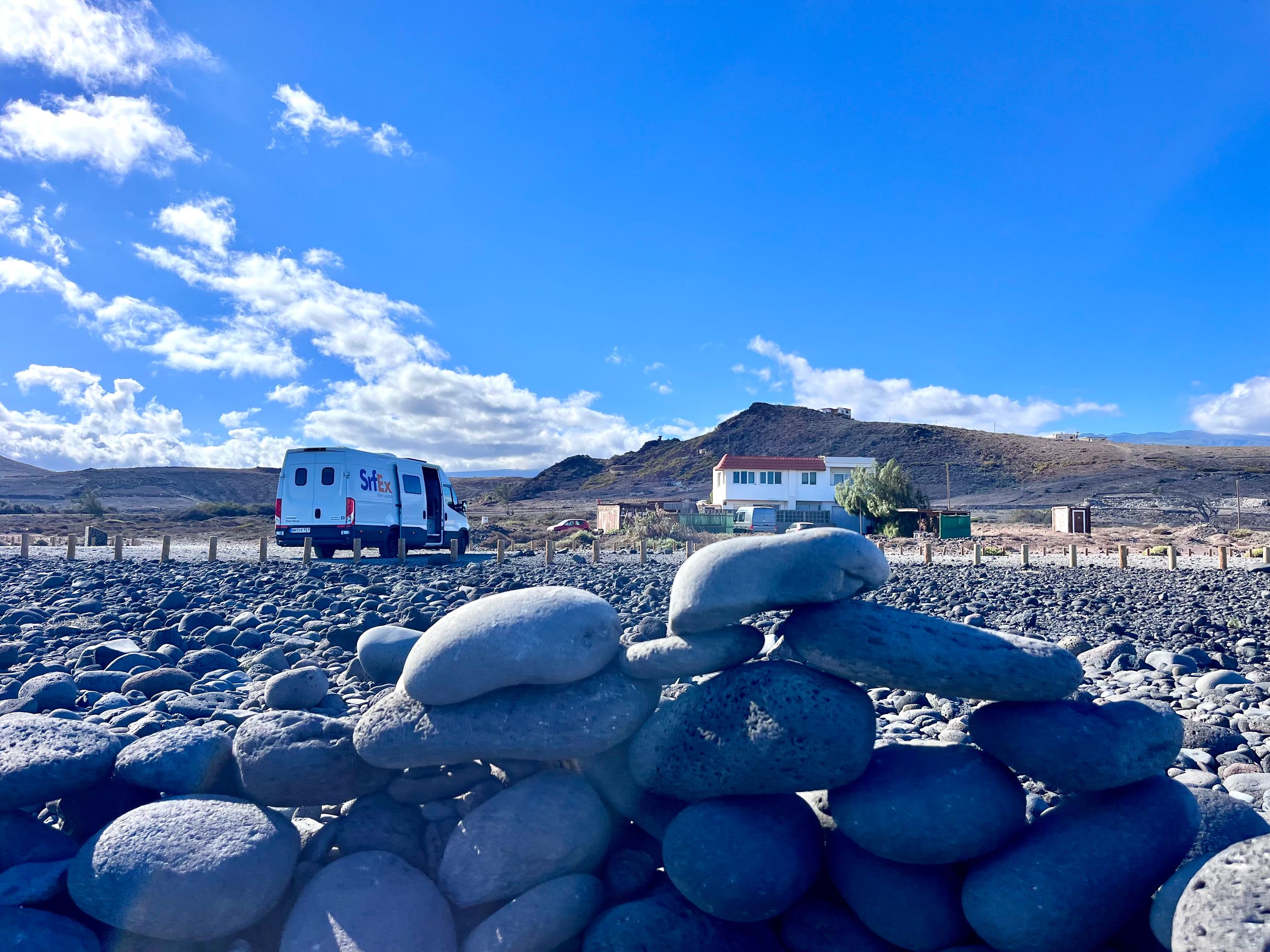
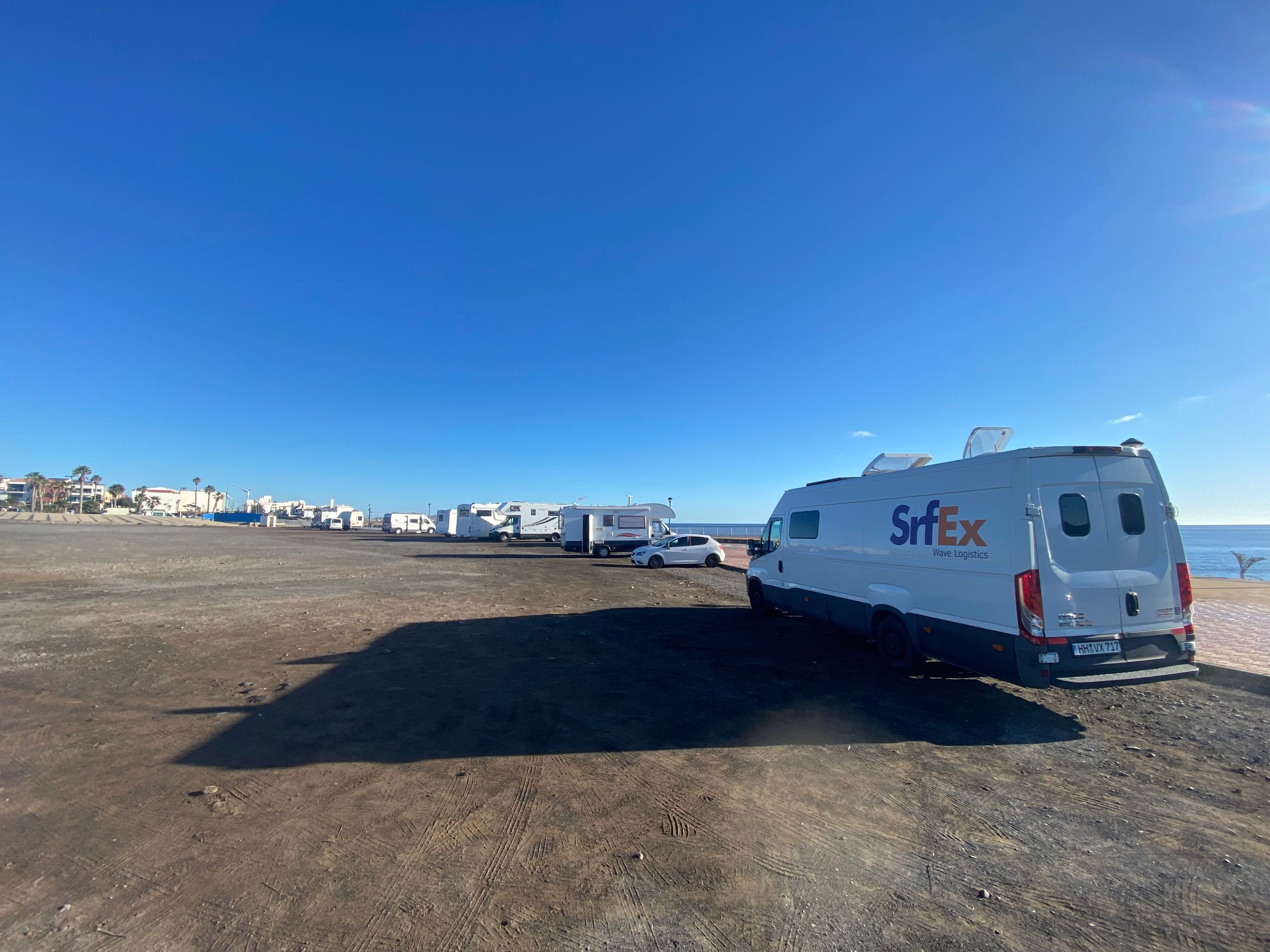
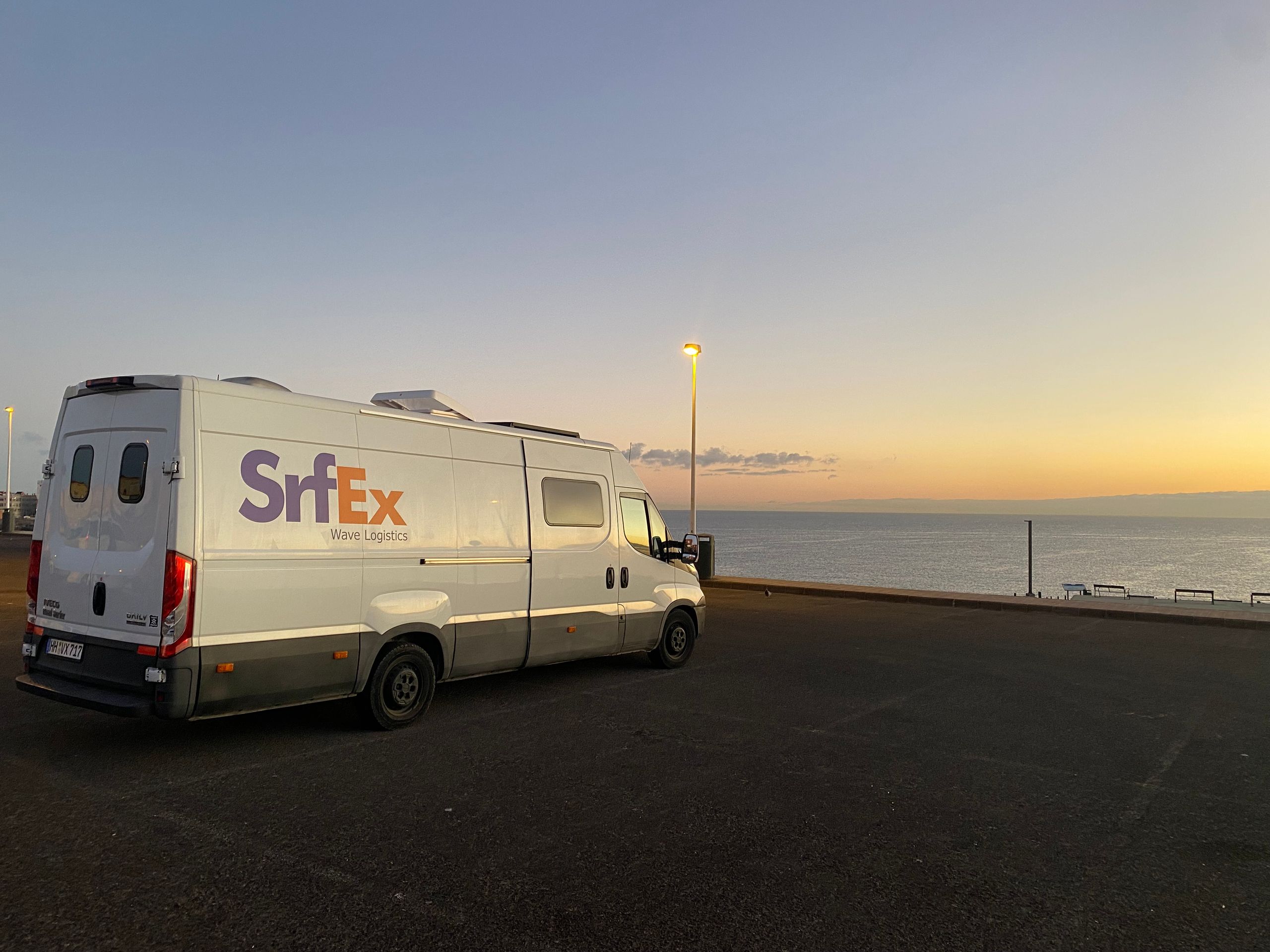
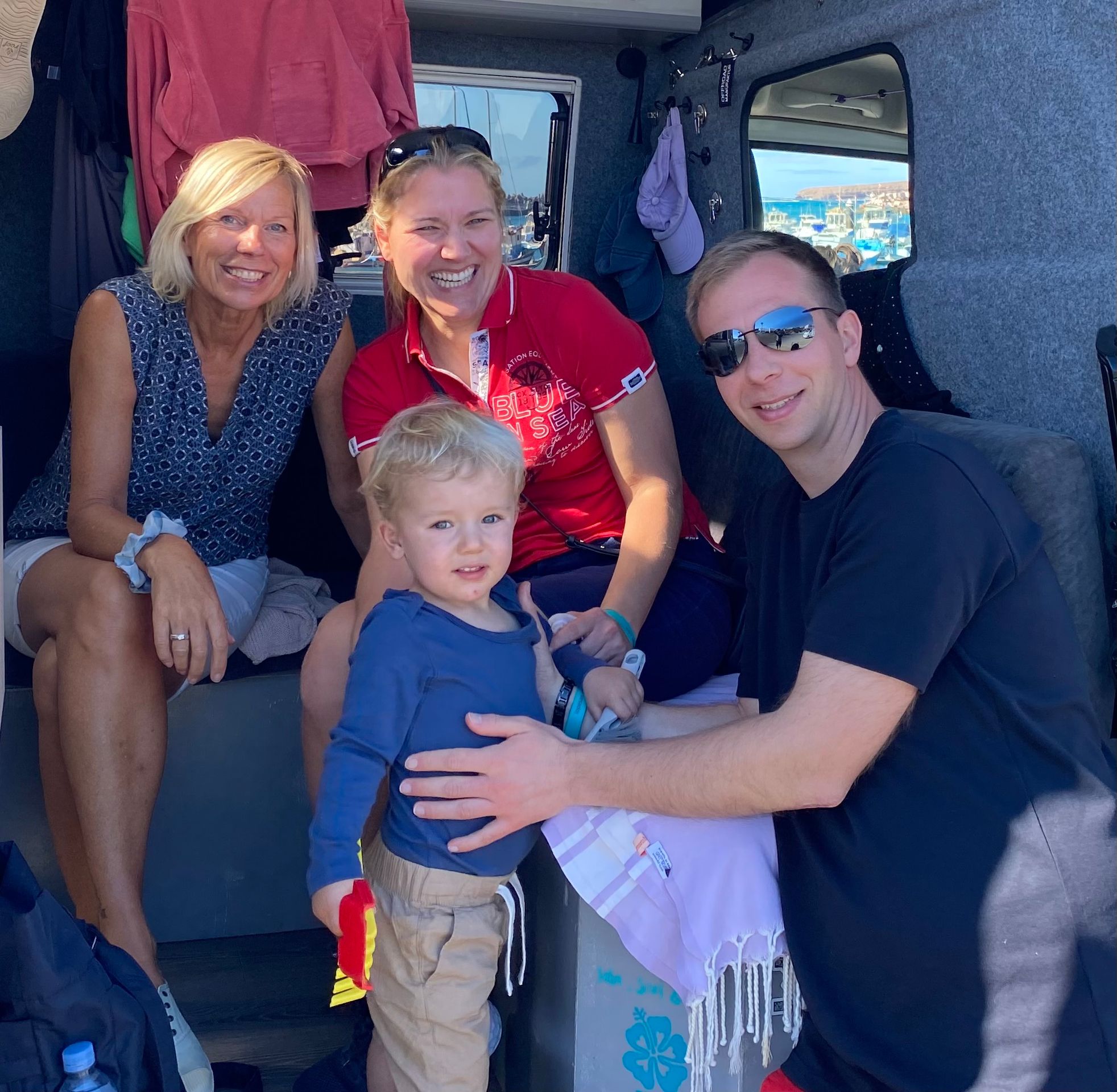
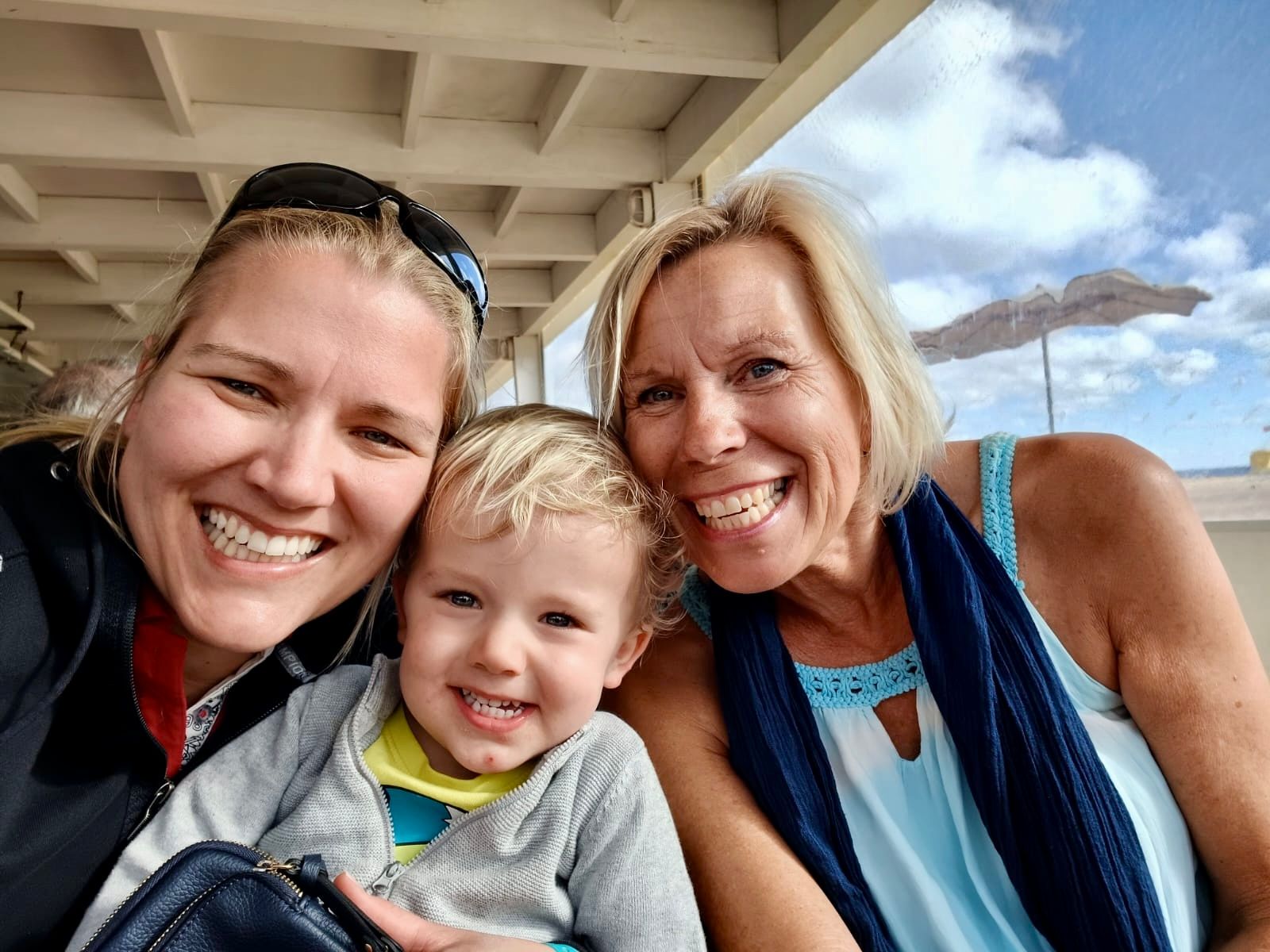
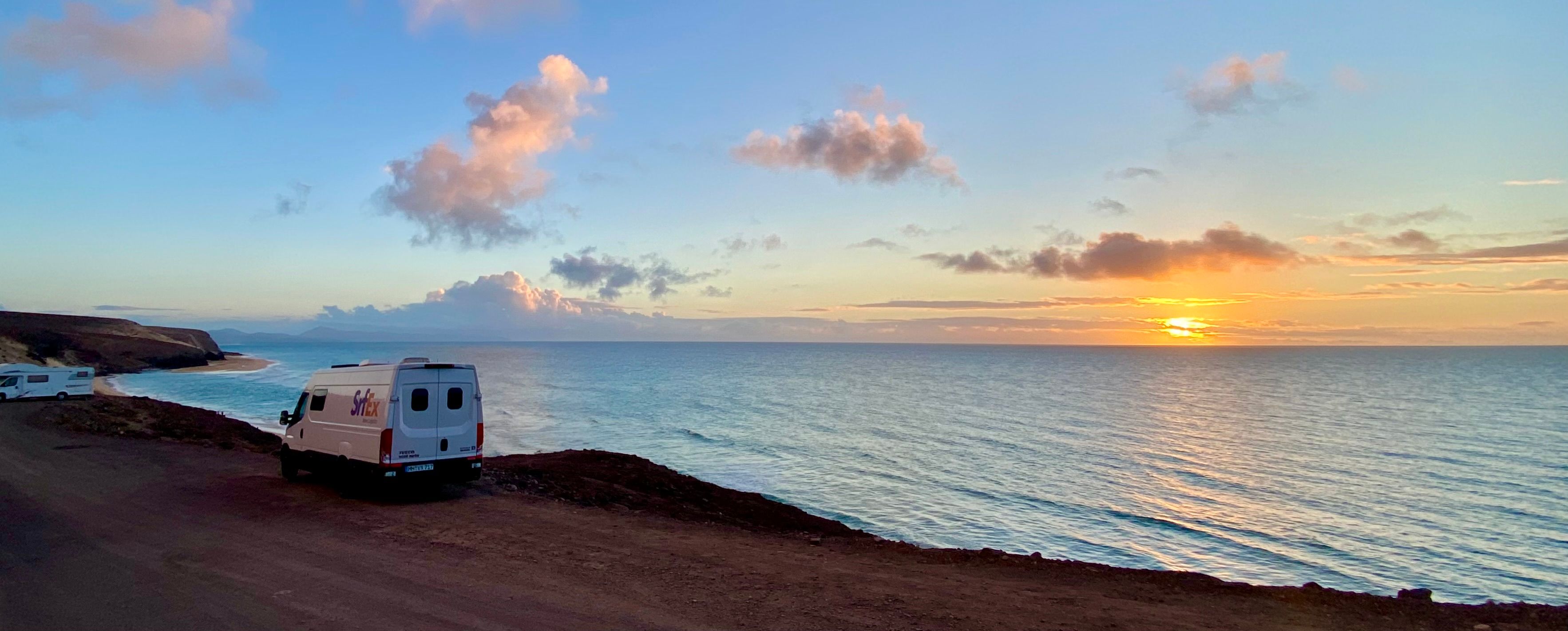
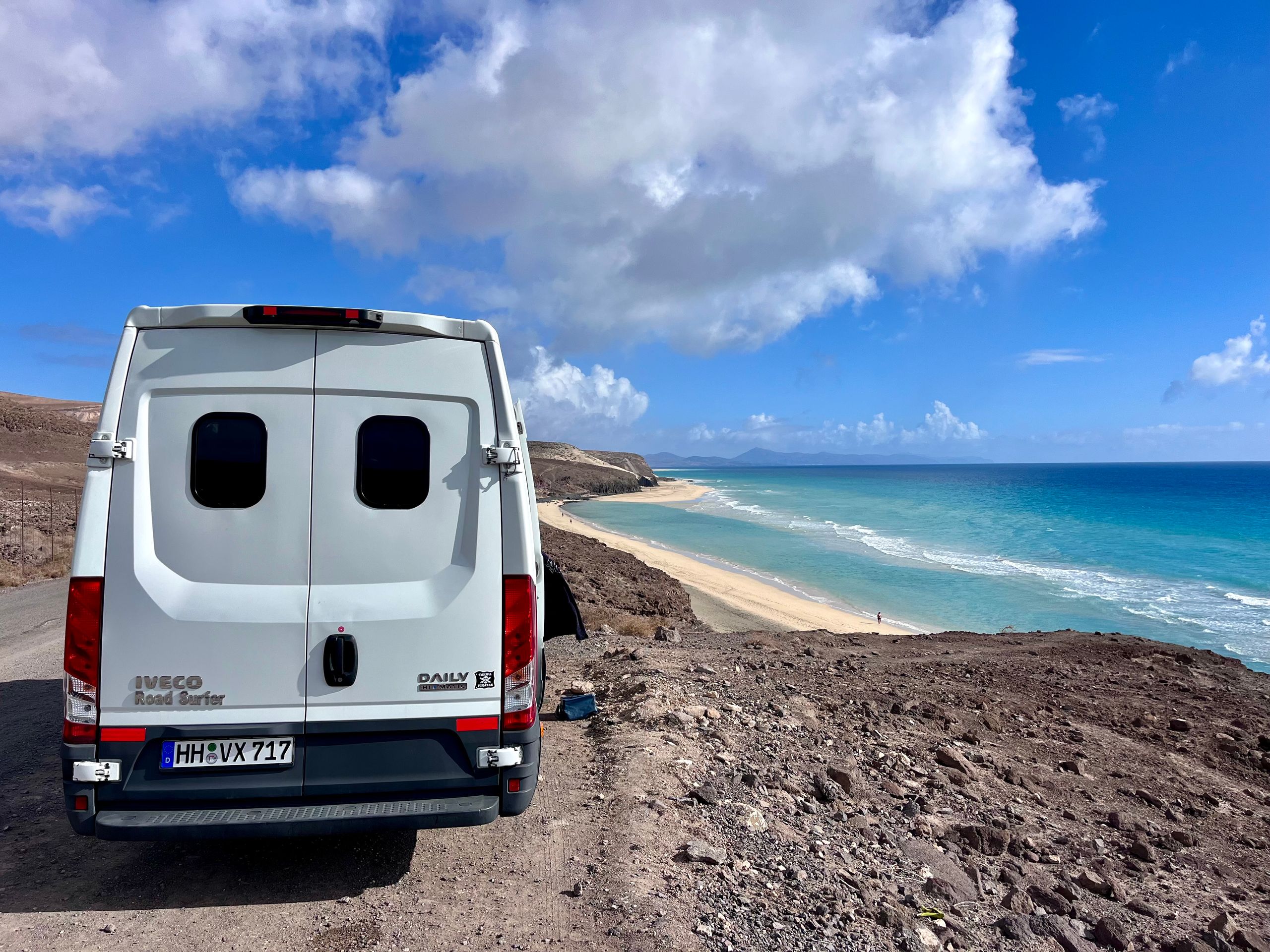
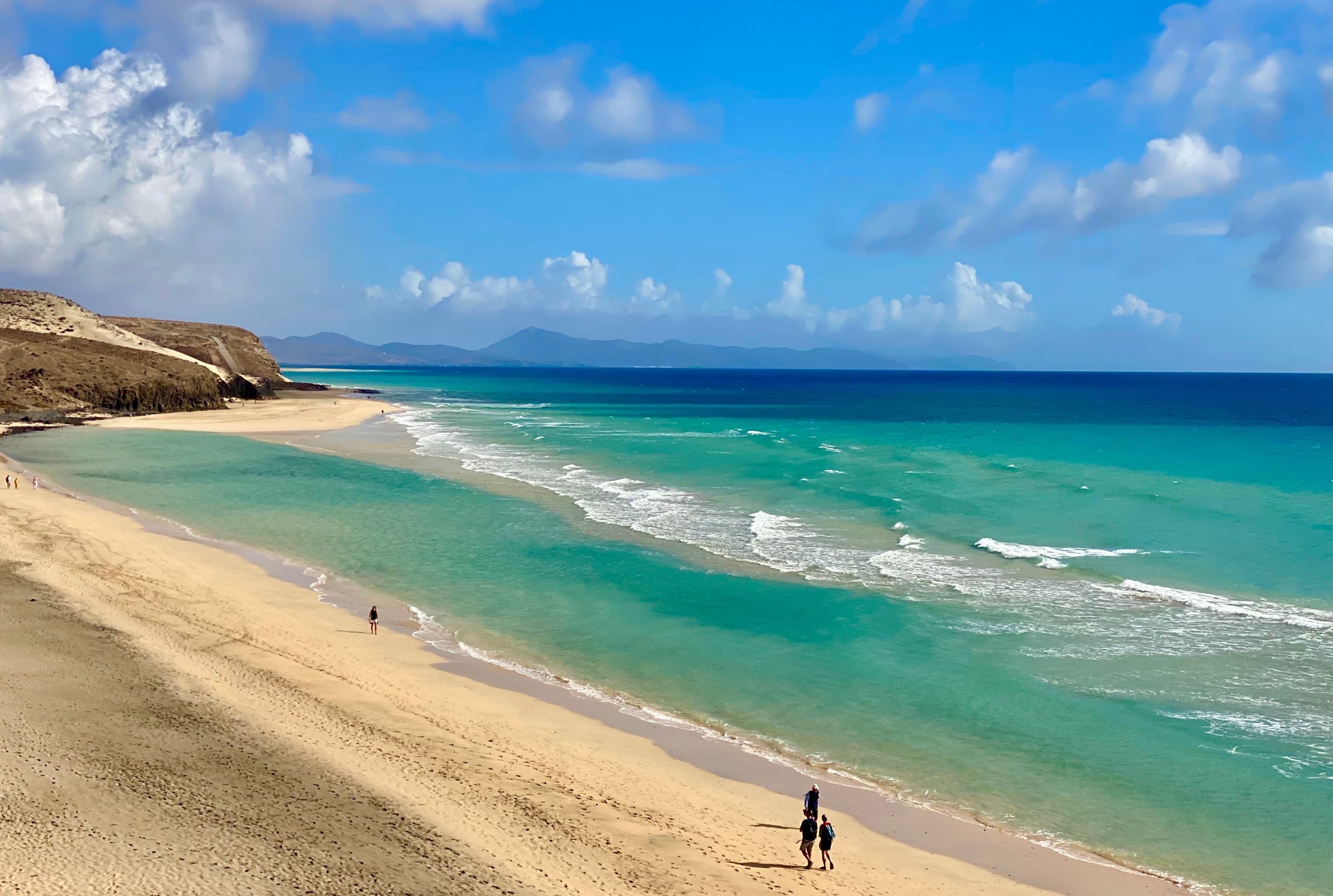
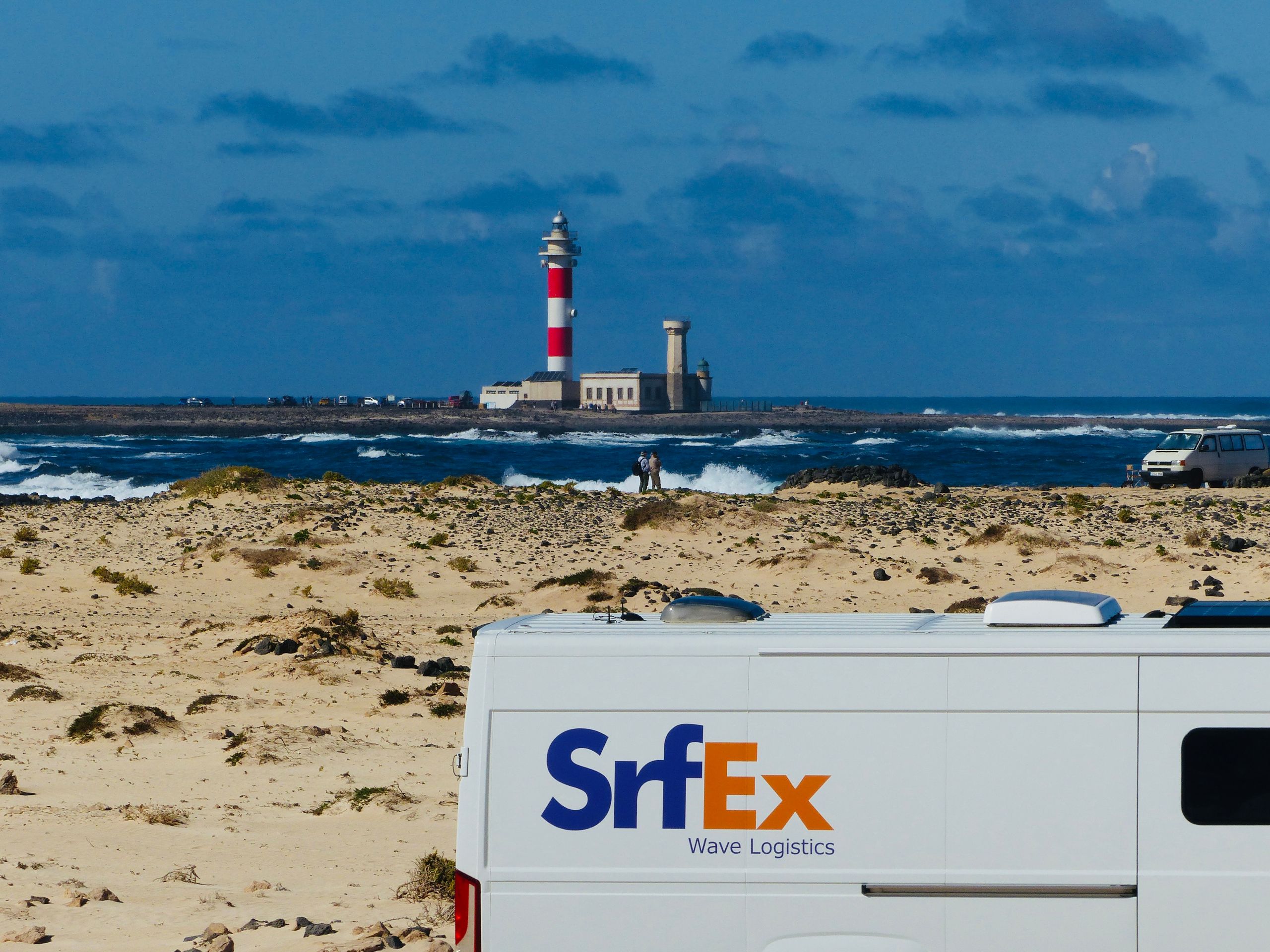
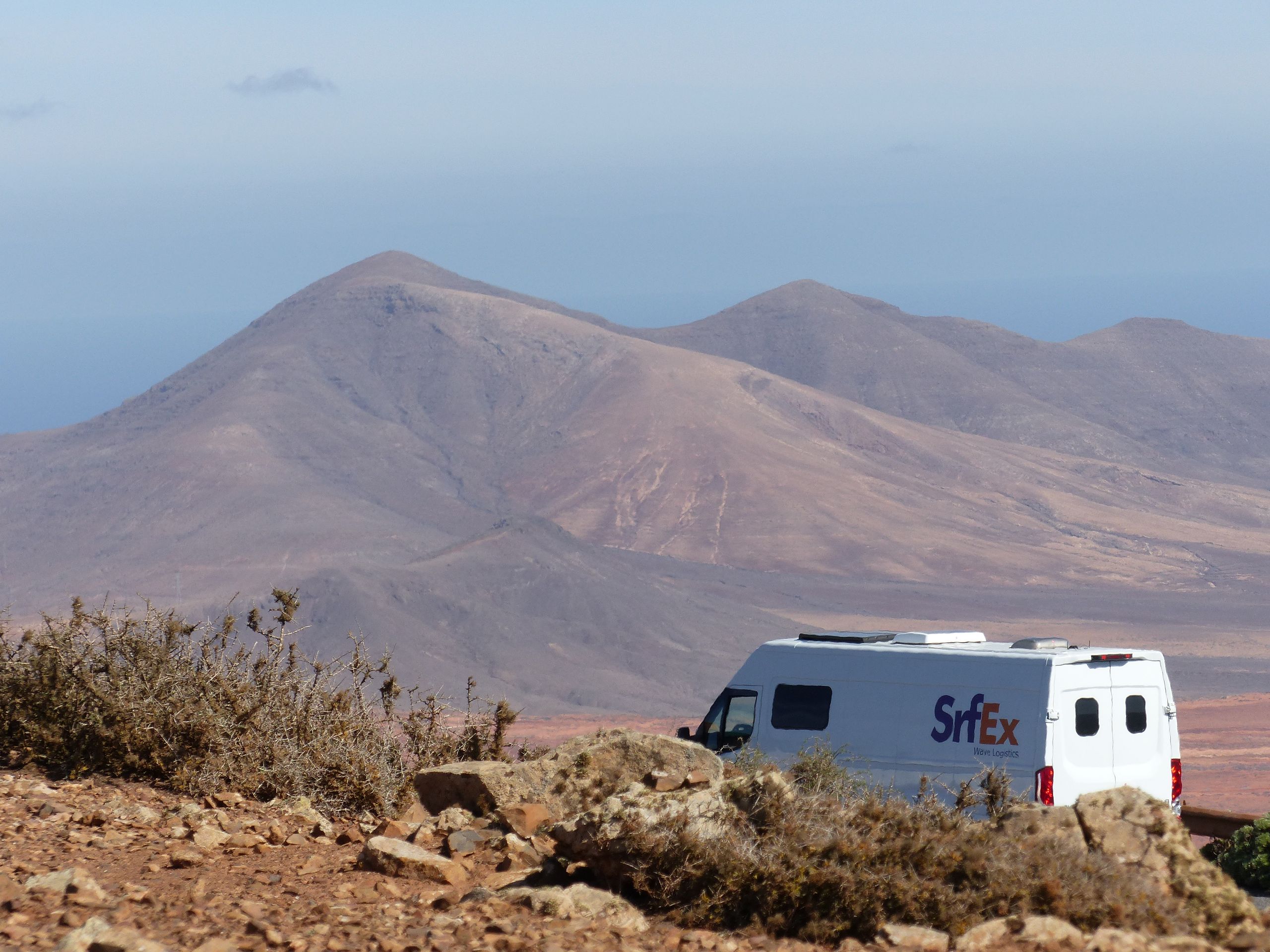
At the ferry port of Morro Jable, we have a rendezvous. Susi's former coworker Franzi is on vacation there with her husband Nils, their little Fiete, and her parents. We spend a lovely day together at the beach, sharing much to discuss and exchanging news from the pharmacy daily life in Hamburg. In the evening, we then continue to Playa de Mal Nombre for the night. A typical spot for Fuerte: On a lonely gravel road, we are high above the Caribbean blue Atlantic, with a little path leading down to the deserted beach. In the morning, we take a glorious swim in the sea; it’s fresh but wonderful! During breakfast, Mark from the UK suddenly appears with his van next to us (see travel blog 'Stranded on Tenerife'), whom we met in Tenerife. He has also just arrived in Fuerte and just took some random little path down to the sea and discovered our van with the 'SrfEx' logo. A typical case of 'you meet again and again'! By the way, we have been approached very often about this great logo on this trip. Many took a while to understand that it wasn't FedEx. Sometimes we even saw 'secretly' taken photos of the logo. Dear Tim, thank you for this great design!
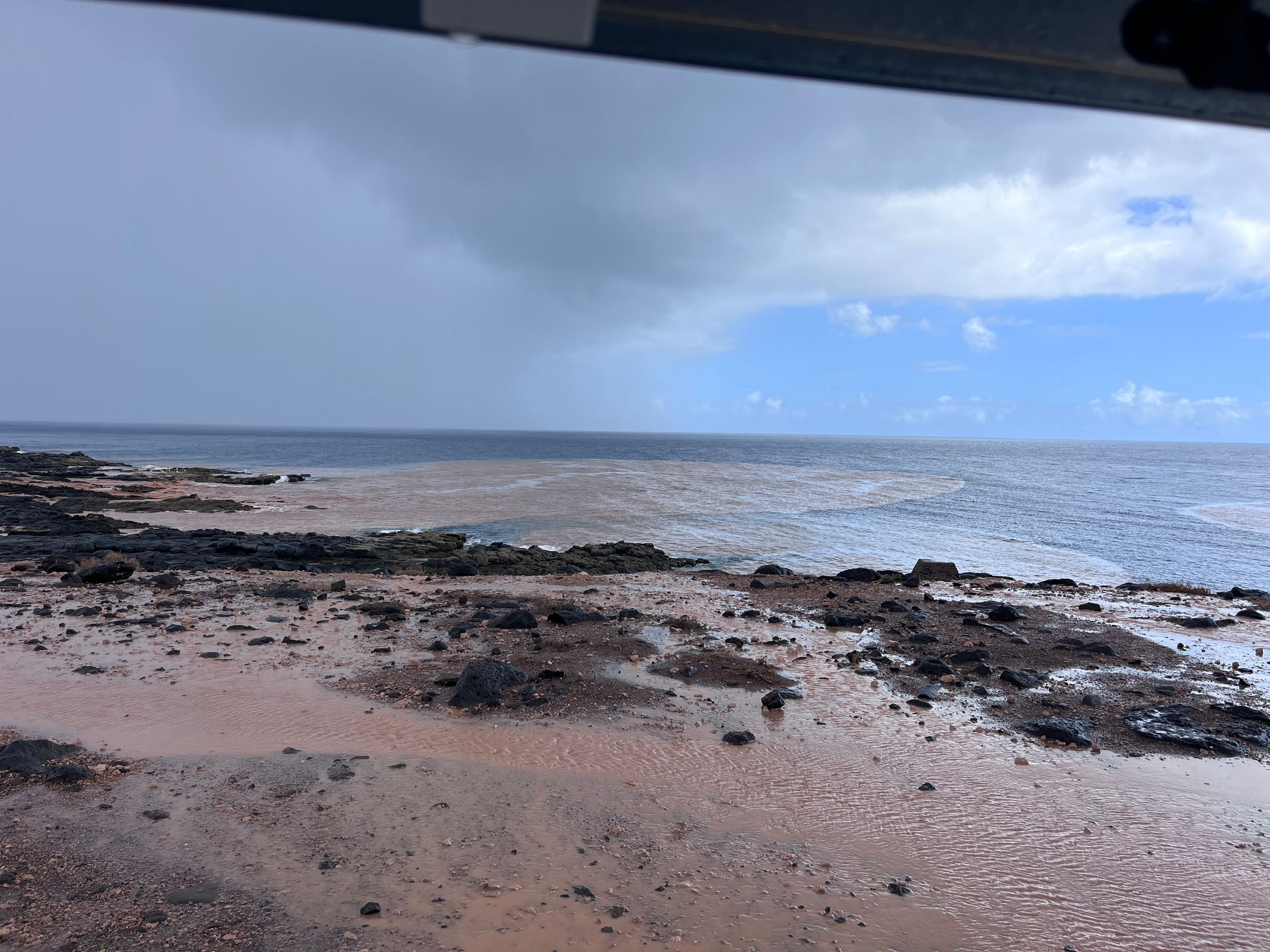
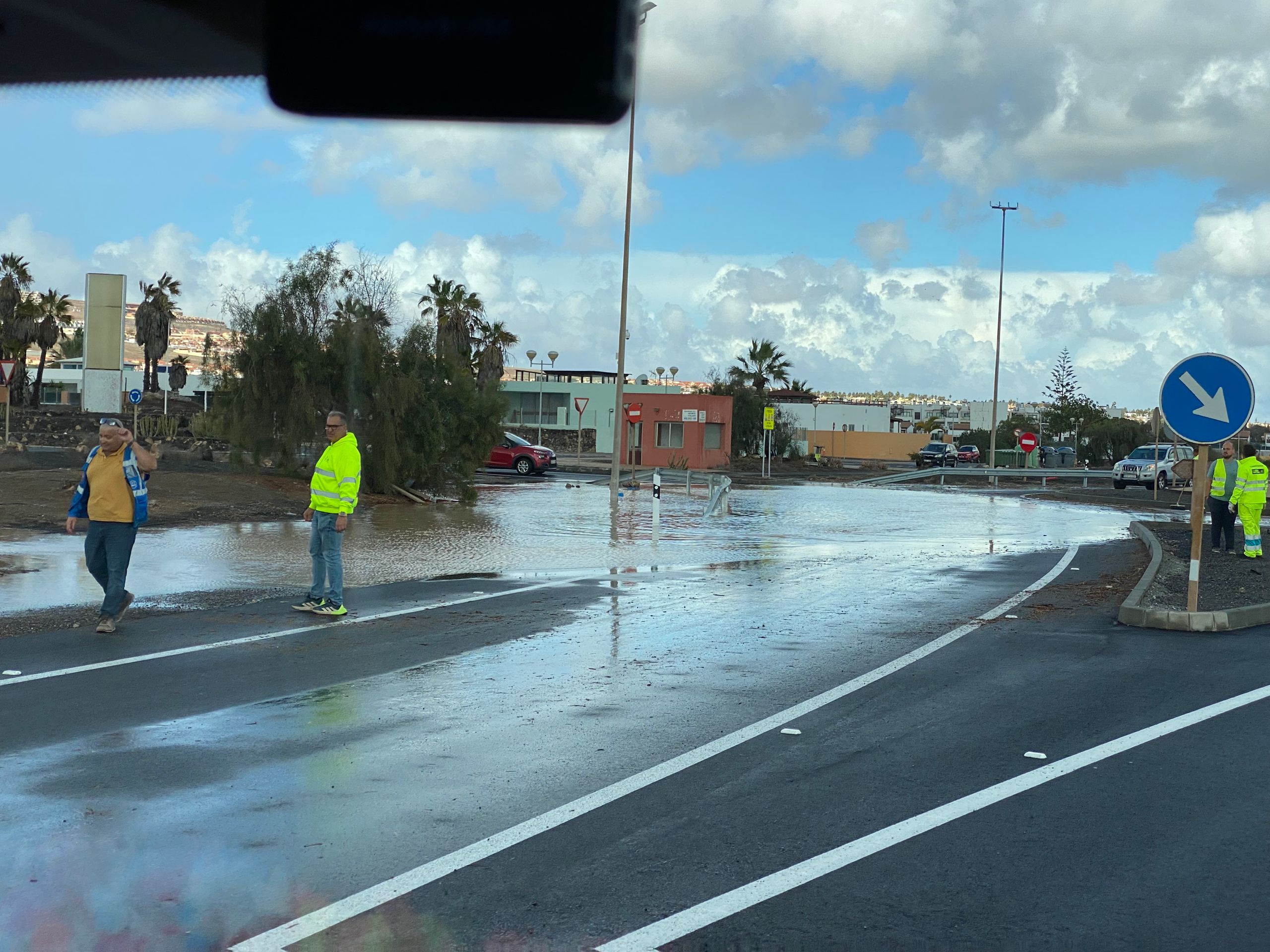
For the following day, we decided to head straight to the north. We still need to look for accommodation for our family, who is arriving in Fuerte on February 22 and 23. Fuerte is the second-largest and longest island in the Canaries. From Morro Jable to Corralejo, it’s about 100 km. There is no real highway. On the way north, we also take a look at the well-known surf spots of Sotavento and Matas Blancas at Costa Calma. We also pass by Tarajalejo. Here, about 30 years ago, we had a classic package holiday. Our old hotel is now a ruin left standing next to the newly built hotel. About midway through the island, we are surprised by a heavy downpour. The rain is so strong that we have to stop our drive. Even a road is flooded, and the sea turns light brown from the rainwater flowing muddily from the mountains into the ocean. Apparently, the dry gravel soil has very little capacity to absorb water. A few kilometers further, the magic is over, and everything is dry.
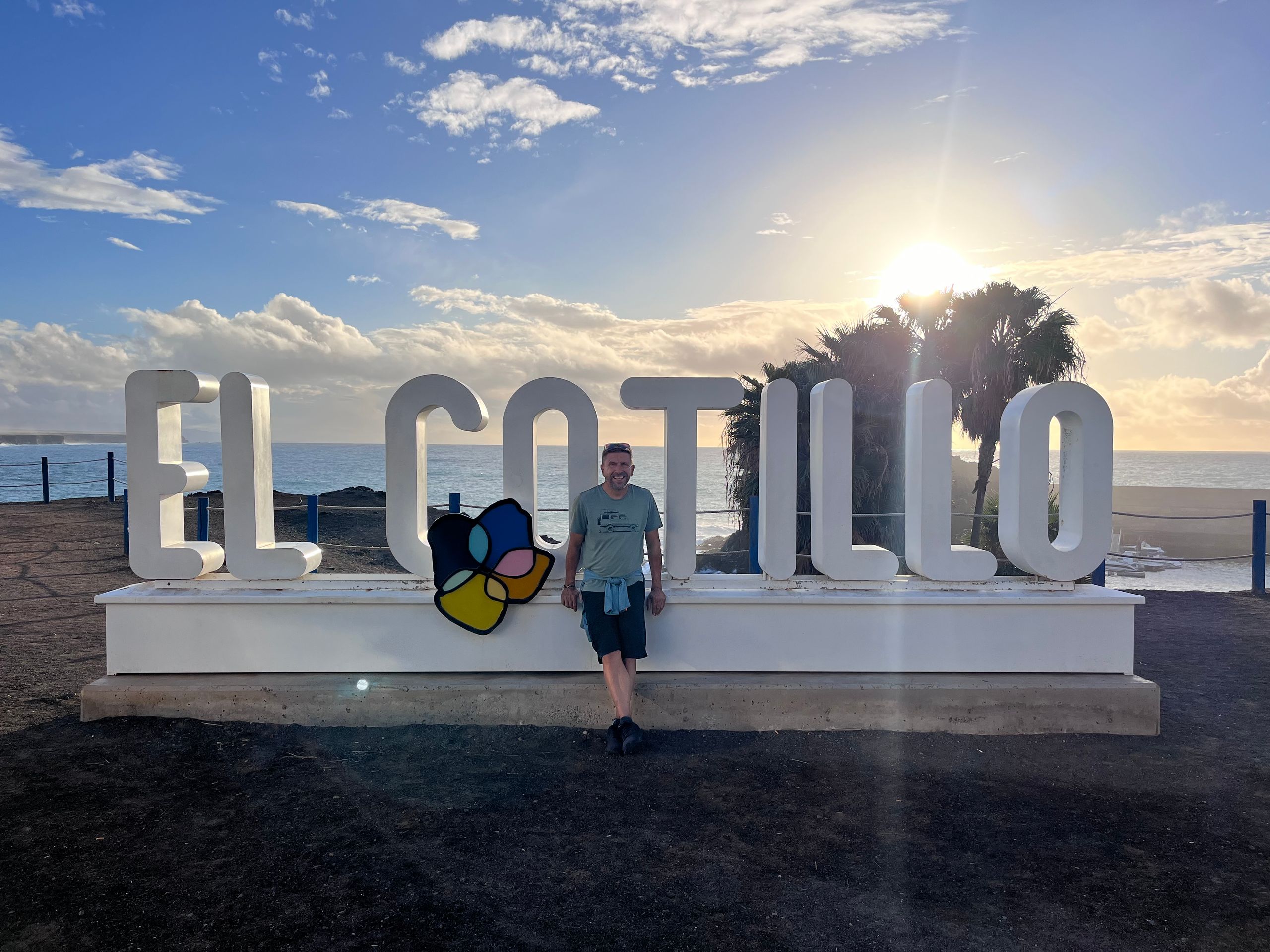
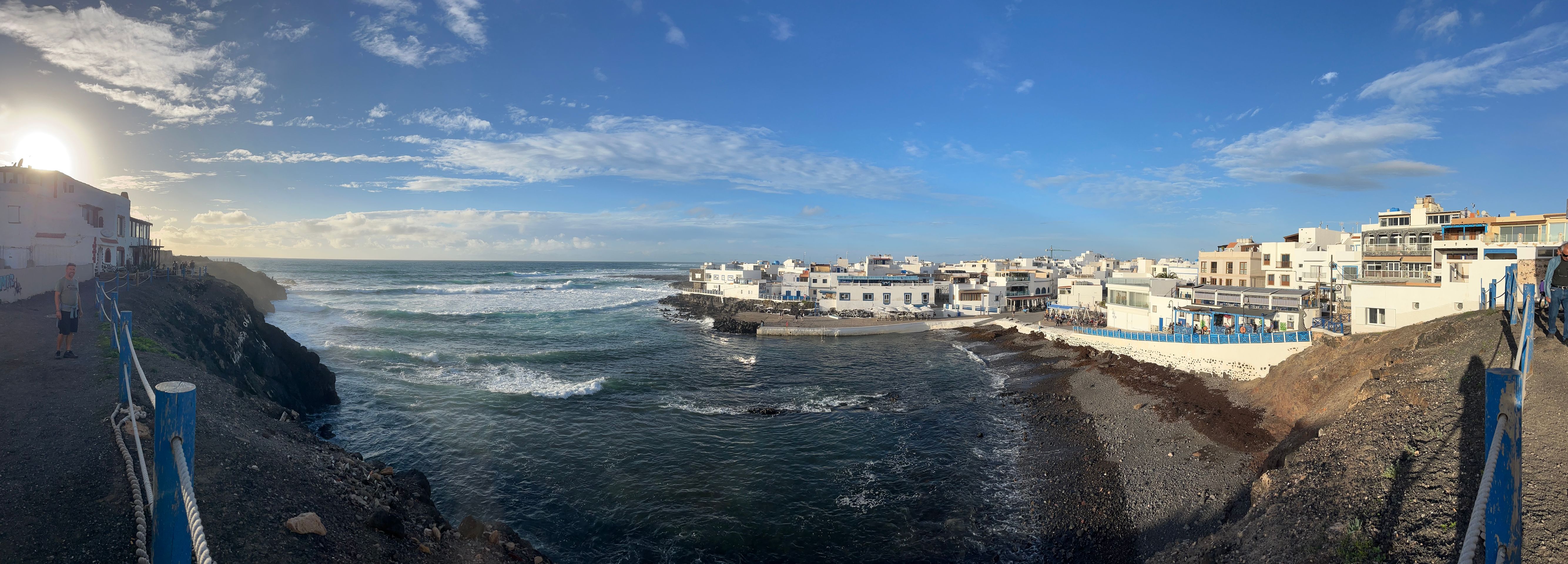
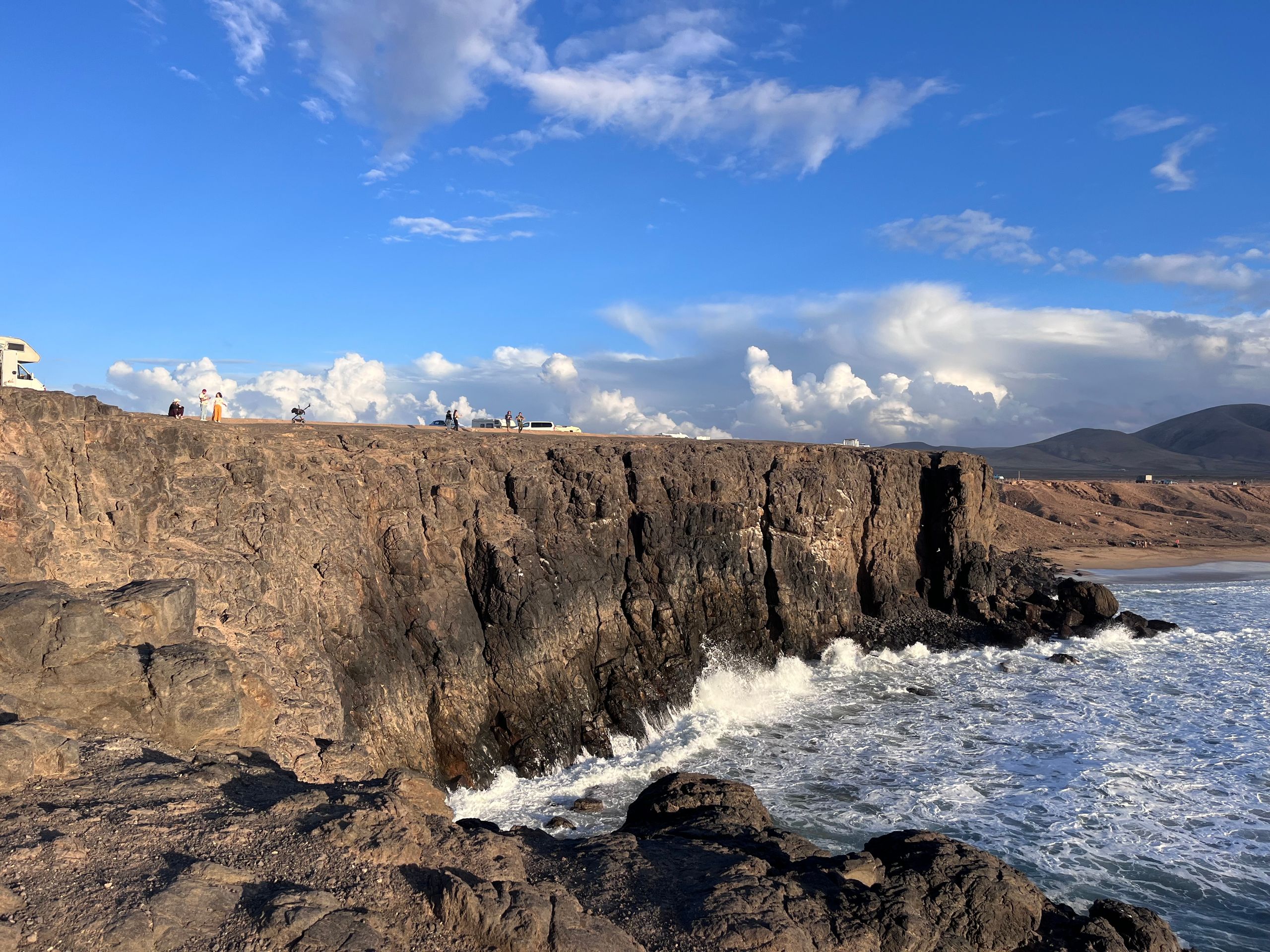
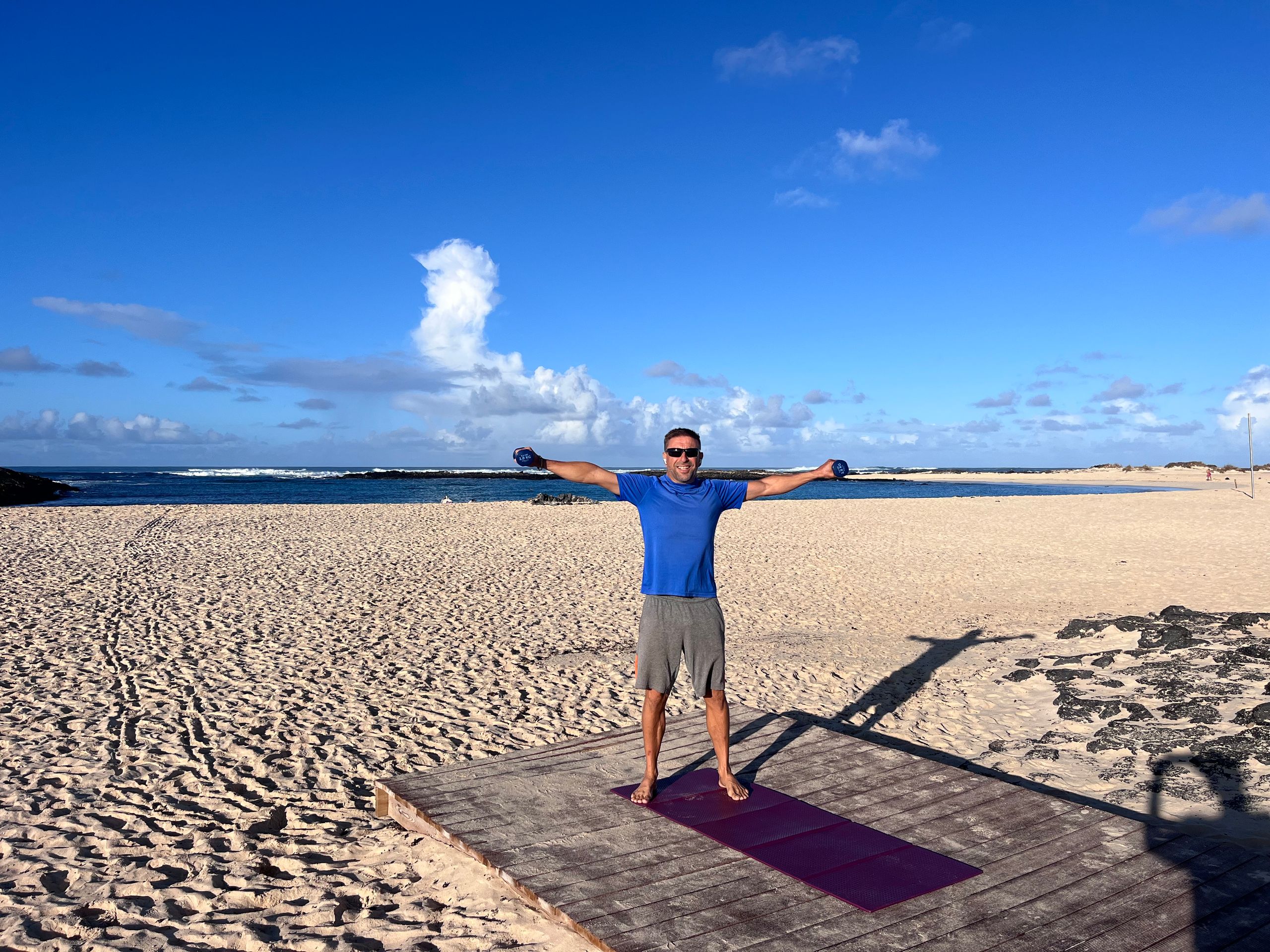
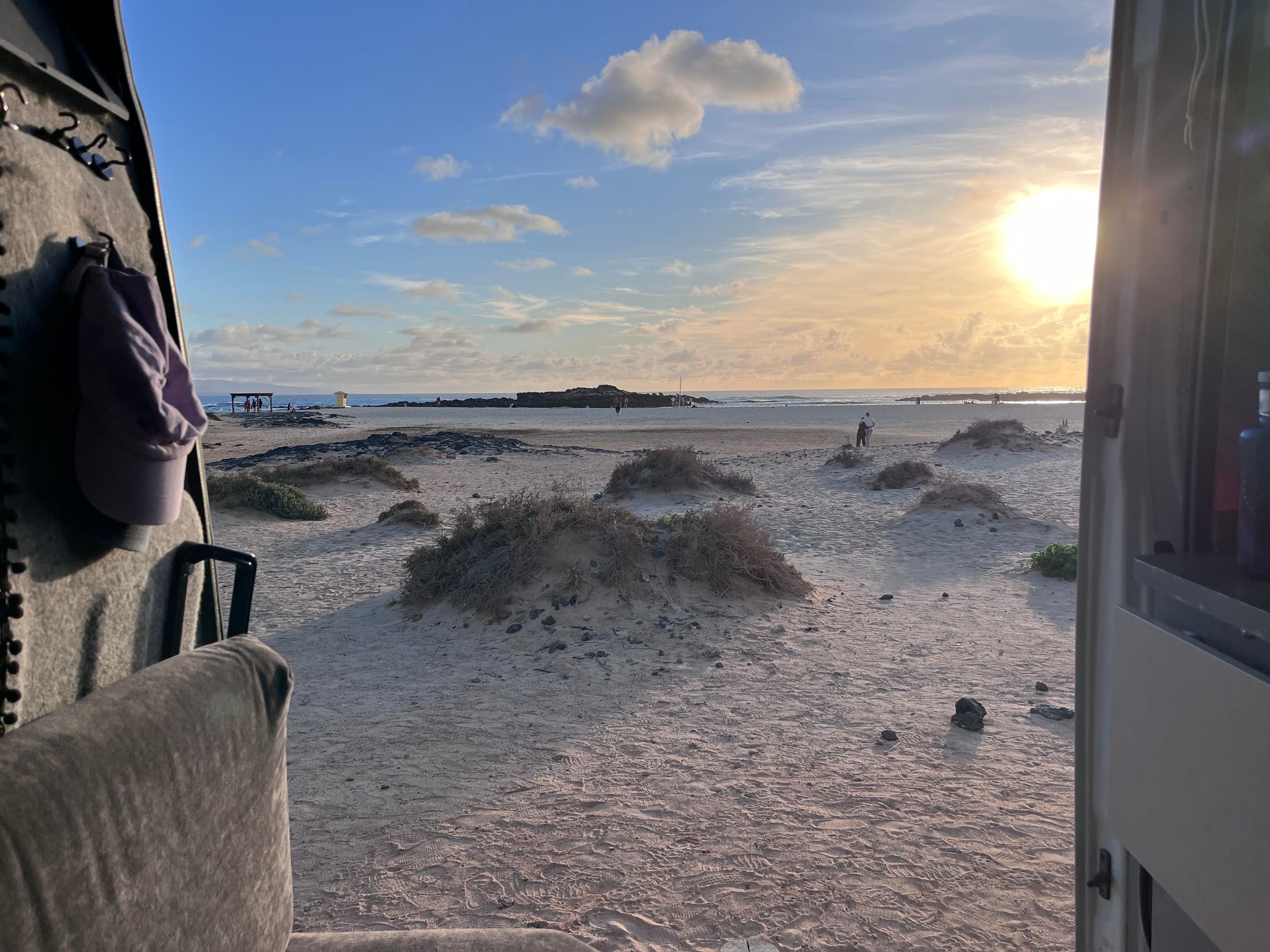
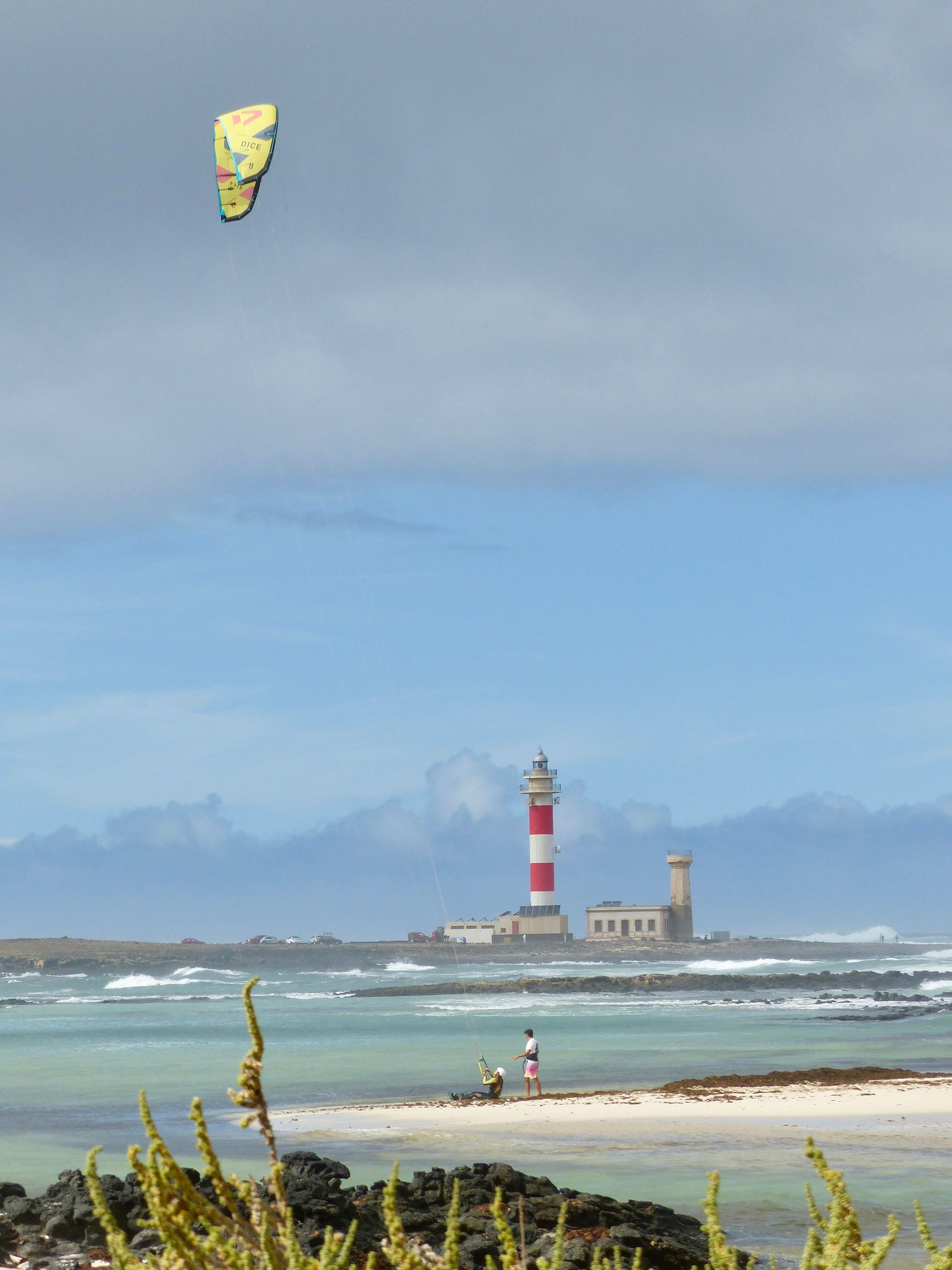
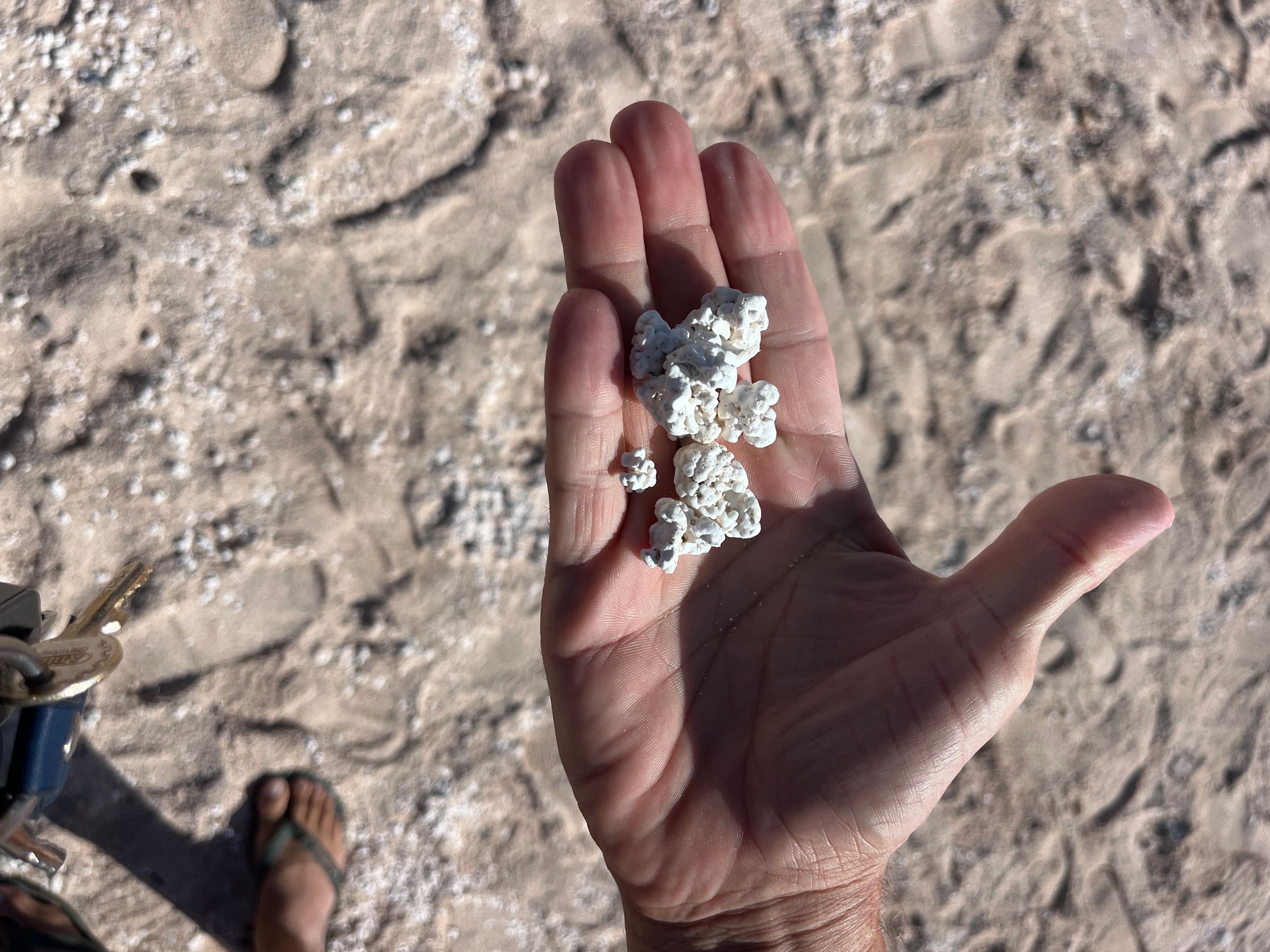
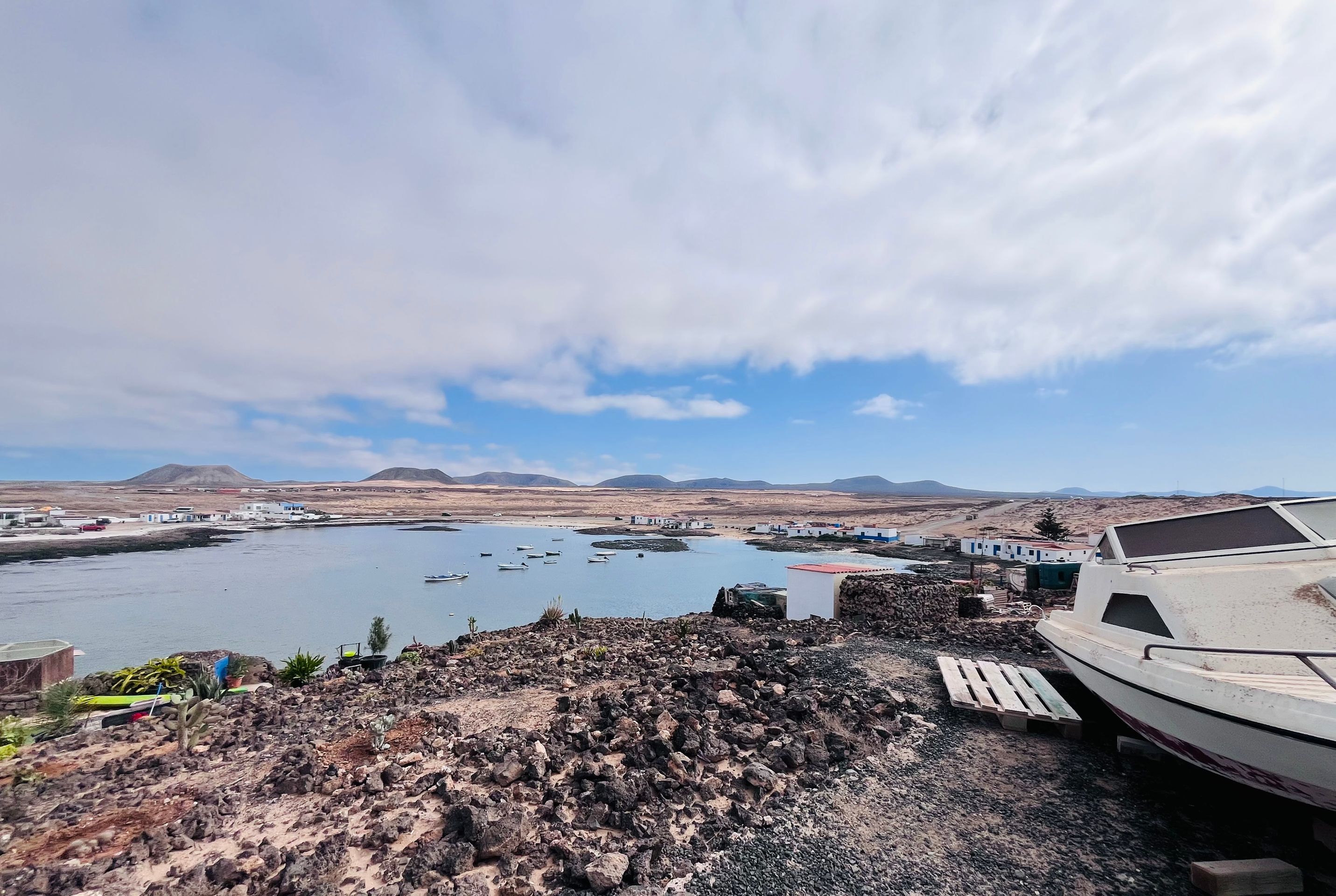
In the late afternoon, we arrive in El Cotillo. El Cotillo is a well-known surf spot on the northwest coast of Fuerte and we like it right away! A bit outside the town towards the lighthouse, there’s a small parking lot with a beach bar, a great beach, and a beautiful protected lagoon for swimming. It quickly becomes clear to us that we will declare El Cotillo as our headquarters here in Fuerte. Fuerte is indeed - as we’ve often been advised along the way - THE vanlife island in the Canaries. There are plenty of parking spaces along the entire coast, so it never feels cramped. There are also plenty of opportunities for water and waste disposal for the motorhome. And compared to Tenerife and Gran Canaria, there are relatively many (and functioning) beach showers. The next days, we take it easy and enjoy beautiful hikes along the coast from El Cotillo. Southward, there is an impressive steep coast and even more impressive waves. Northward, you find the famous surf spots and the so-called popcorn beach. It gets its name because large amounts of white corals are washed ashore that look like popcorn.
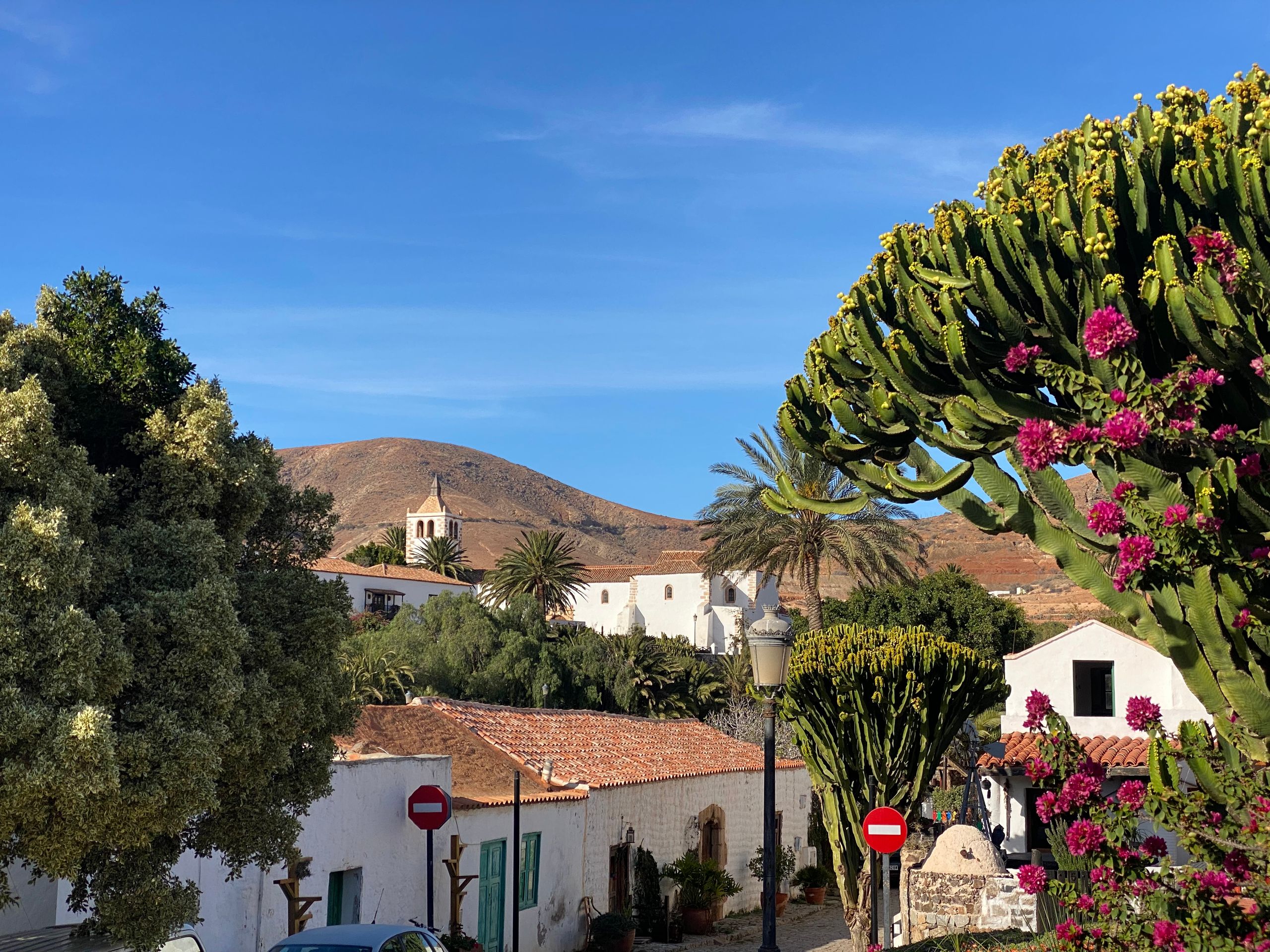
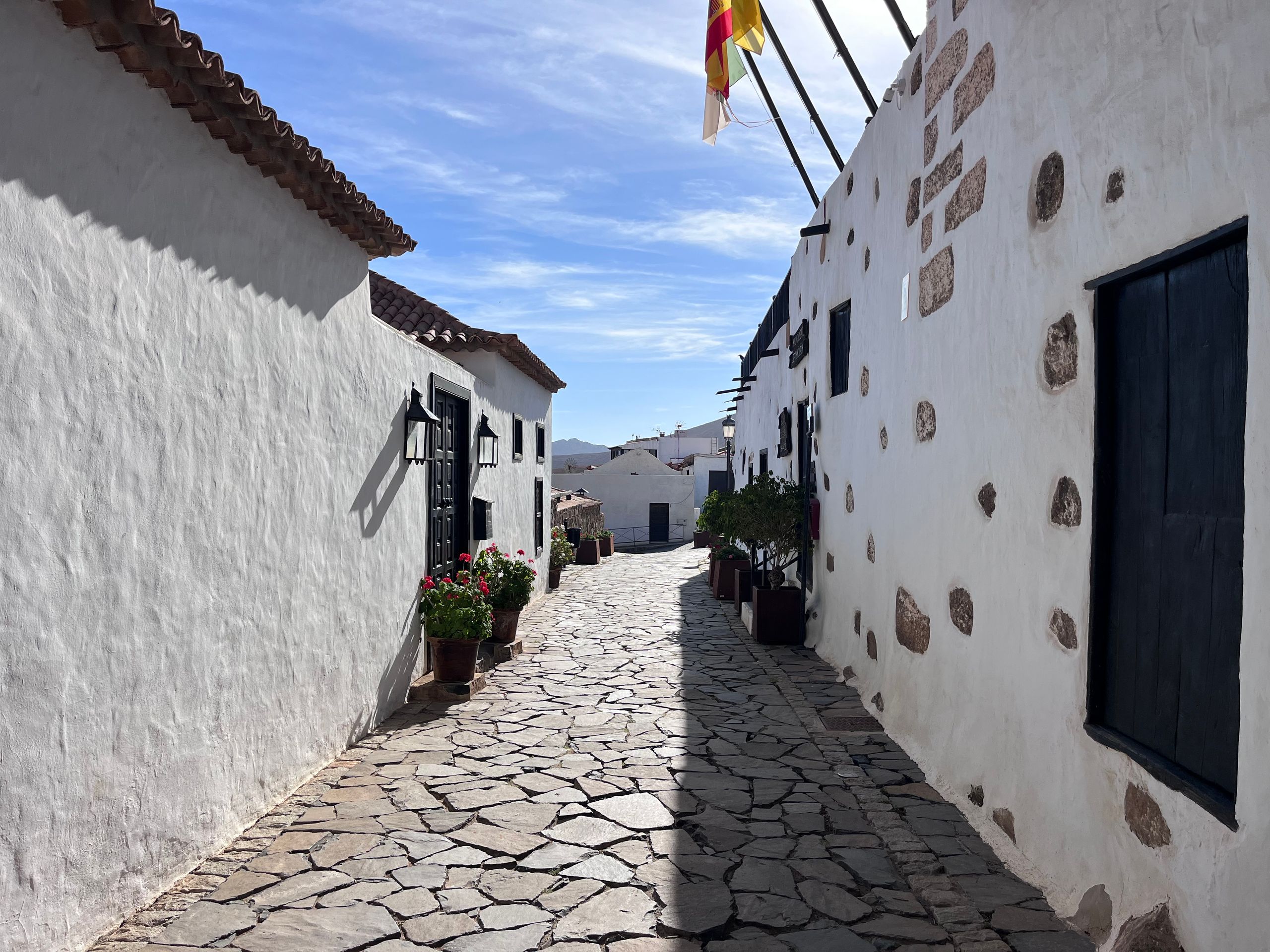
On January 25, I then have the remaining stitches removed from my hand at a doctor's office in El Cotillo. I had pulled some stitches myself, but was hesitant to attempt the remaining ones. Fortunately, the doctor is very pleased with the healing process and also tells me once more that the doctors in Tenerife did a very good job. In the evening, we have dinner with Mark from the UK. He needs to leave in a few days since his 90-day visa for Europe is running out soon. Thank you, Brexit! The next day, we visit the old capital Betancuria, which was built hundreds of years ago in an inaccessible valley to protect it from enemies. By current standards, Betancuria is more of a village but is very nicely arranged and exudes a great calm. Around Betancuria, there are numerous viewpoints from which to get a wide view of Fuerte.
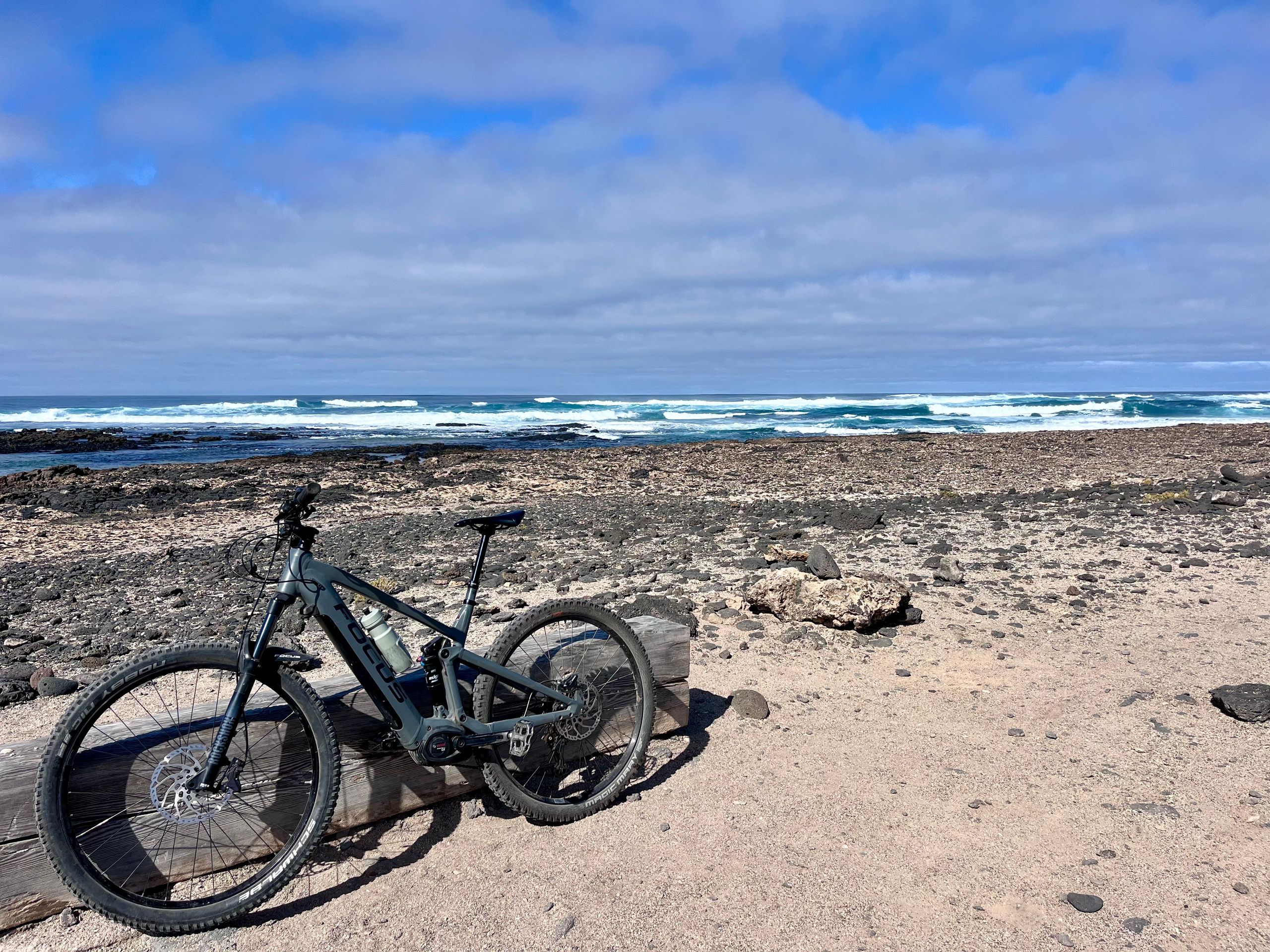
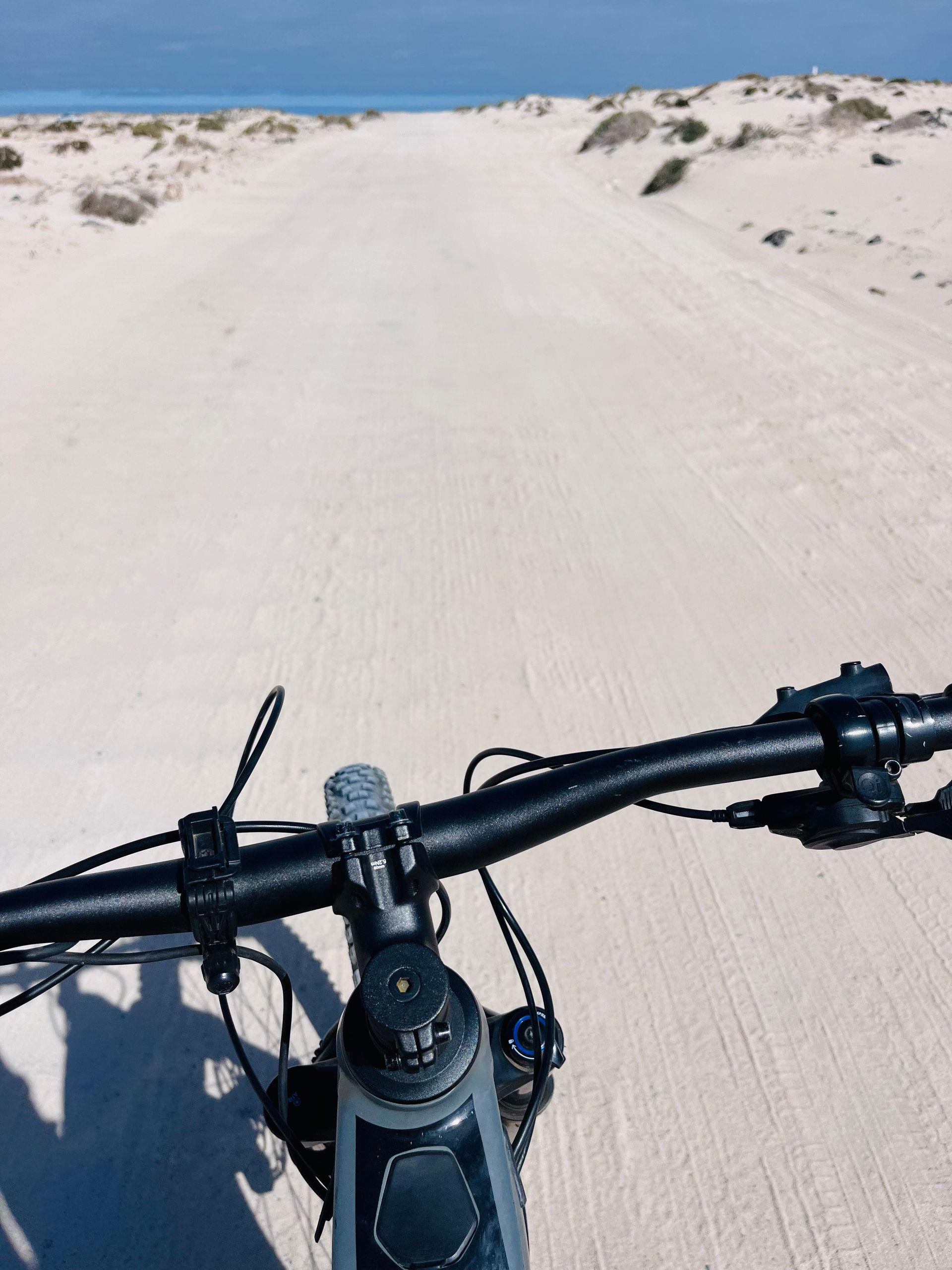
More and more, the impending end of our break is coming to the forefront. For me, this means sprucing up my profiles on LinkedIn and Xing, revising my résumé to start the job hunt. I have already been in contact with my former employer. They are currently cutting back significantly, and there is no going back for me. The application process, of course, takes quite a bit of time; meanwhile, Susi is getting on her mountain bike to explore the island. In her profession as a pharmacist in public pharmacy, the application and hiring processes are significantly simpler than in my industry. She has never had to apply in writing in her work life! Nonetheless, we create a modern résumé for her so that the application process can also start while on the go.
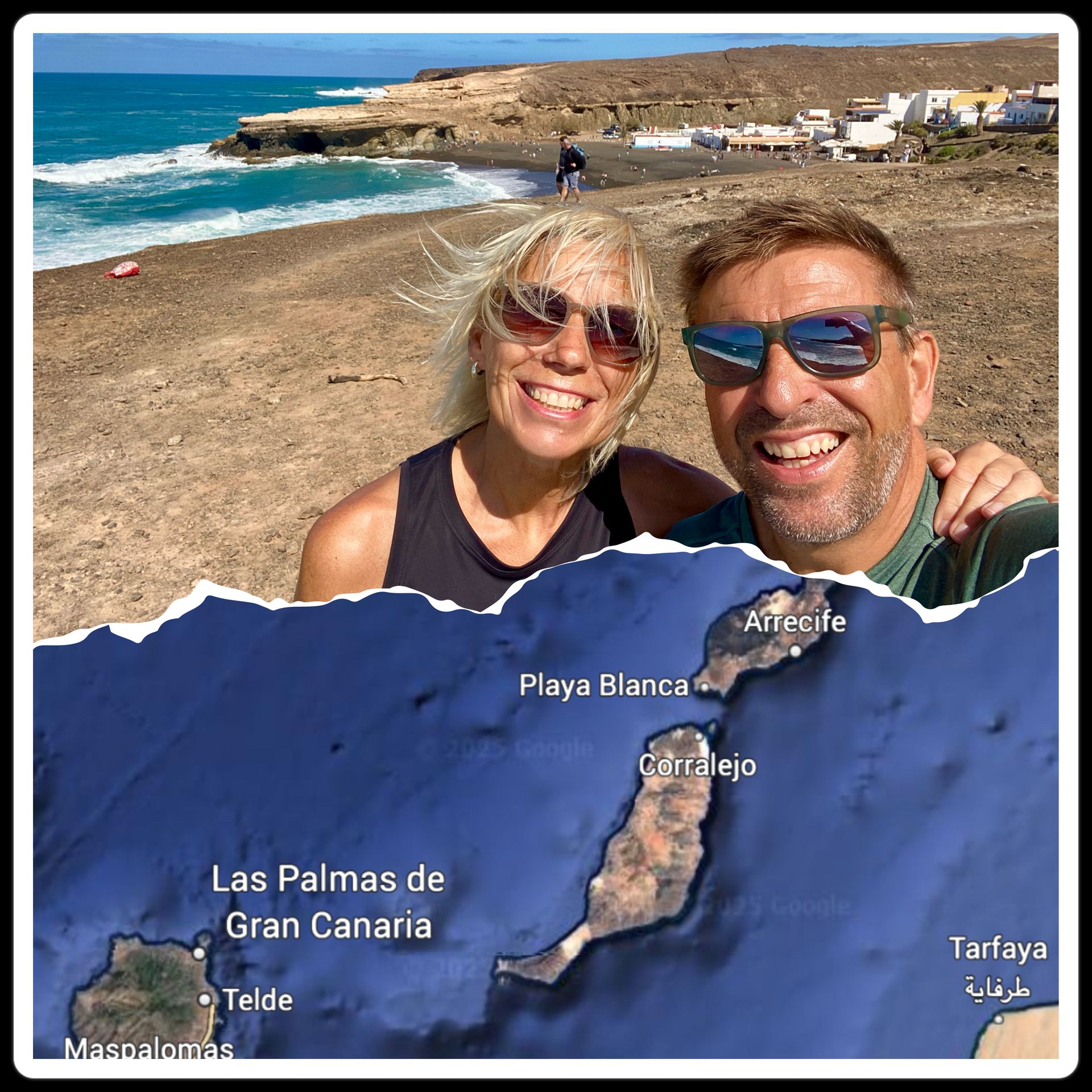
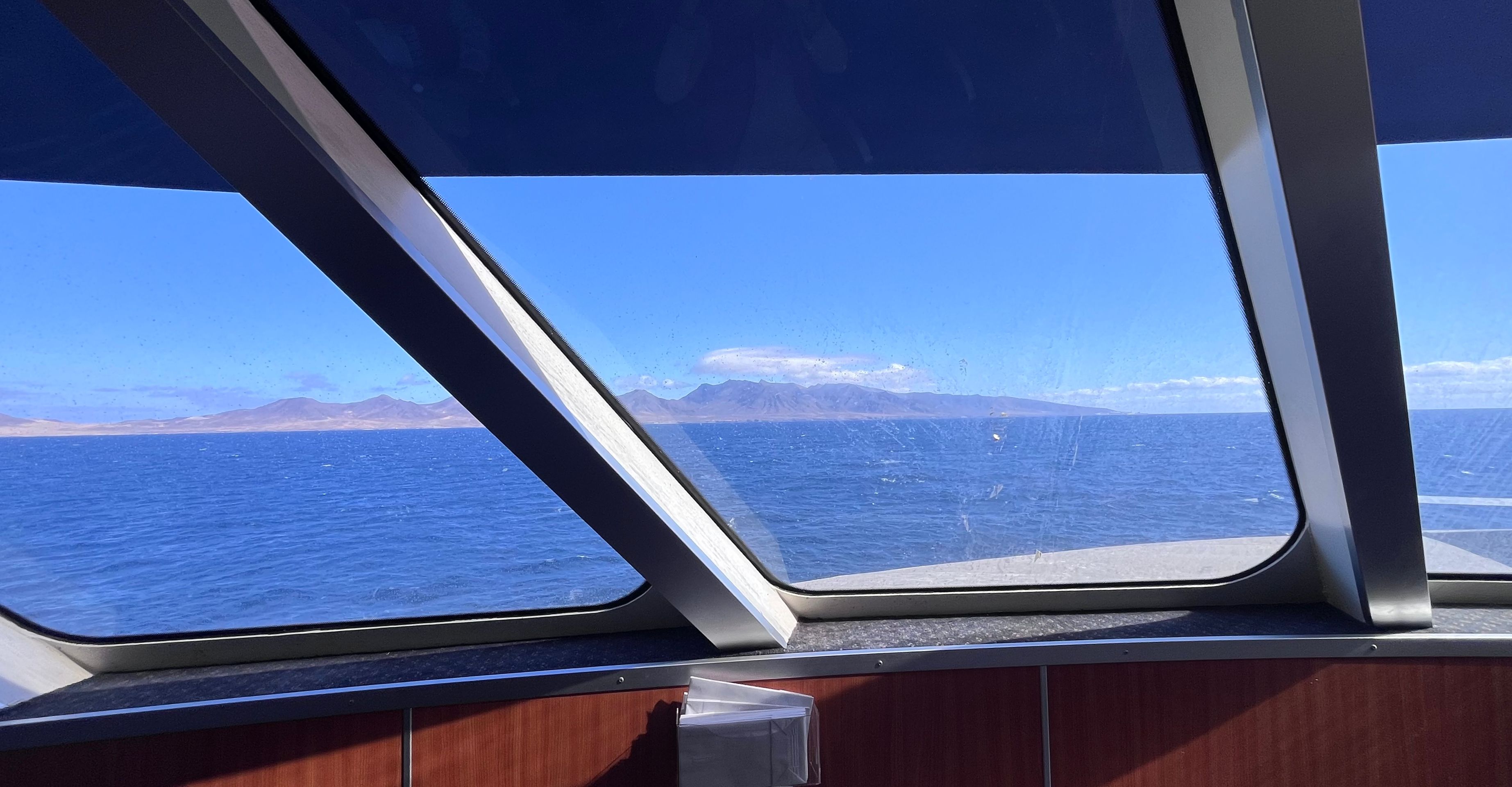
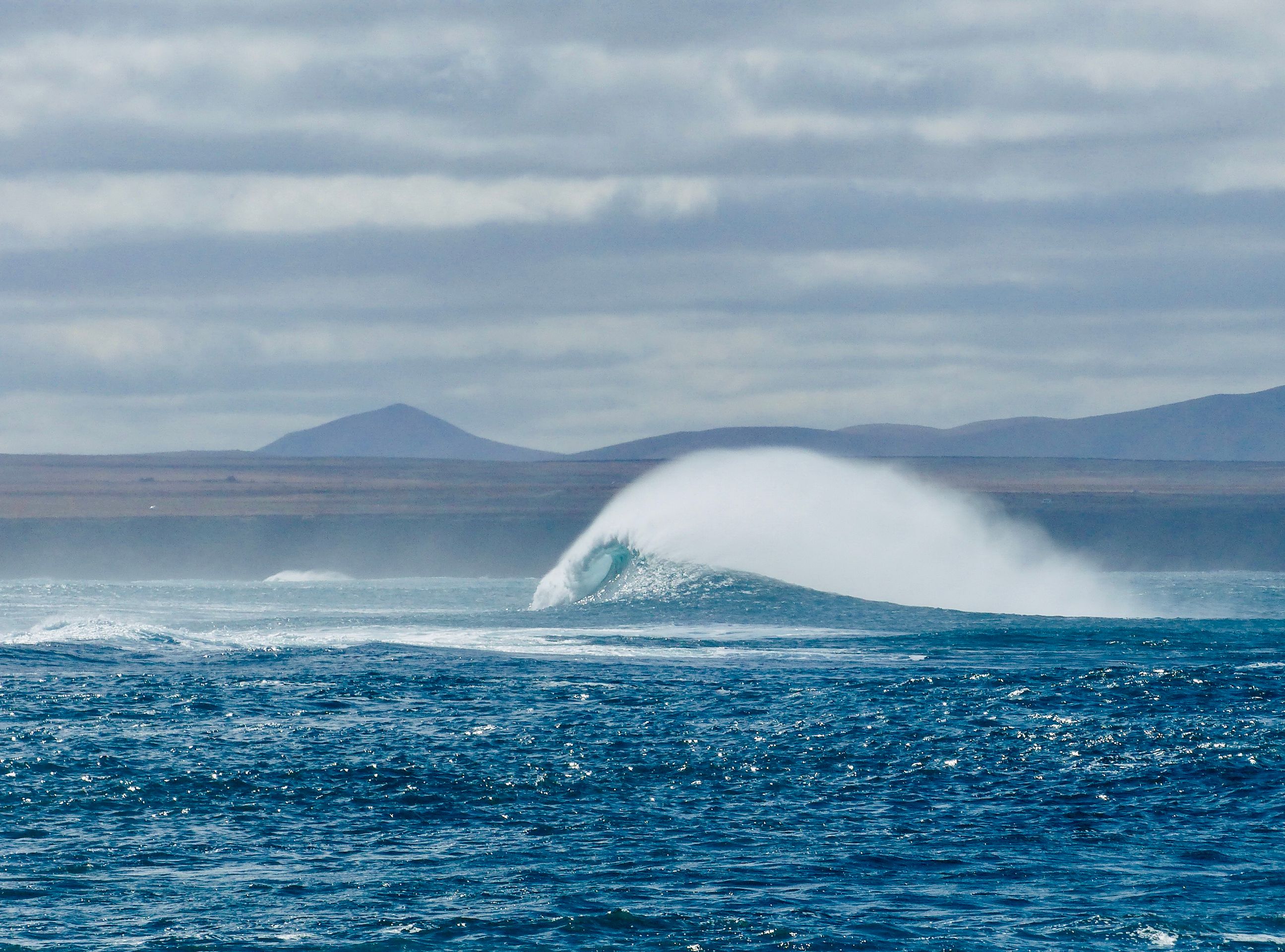
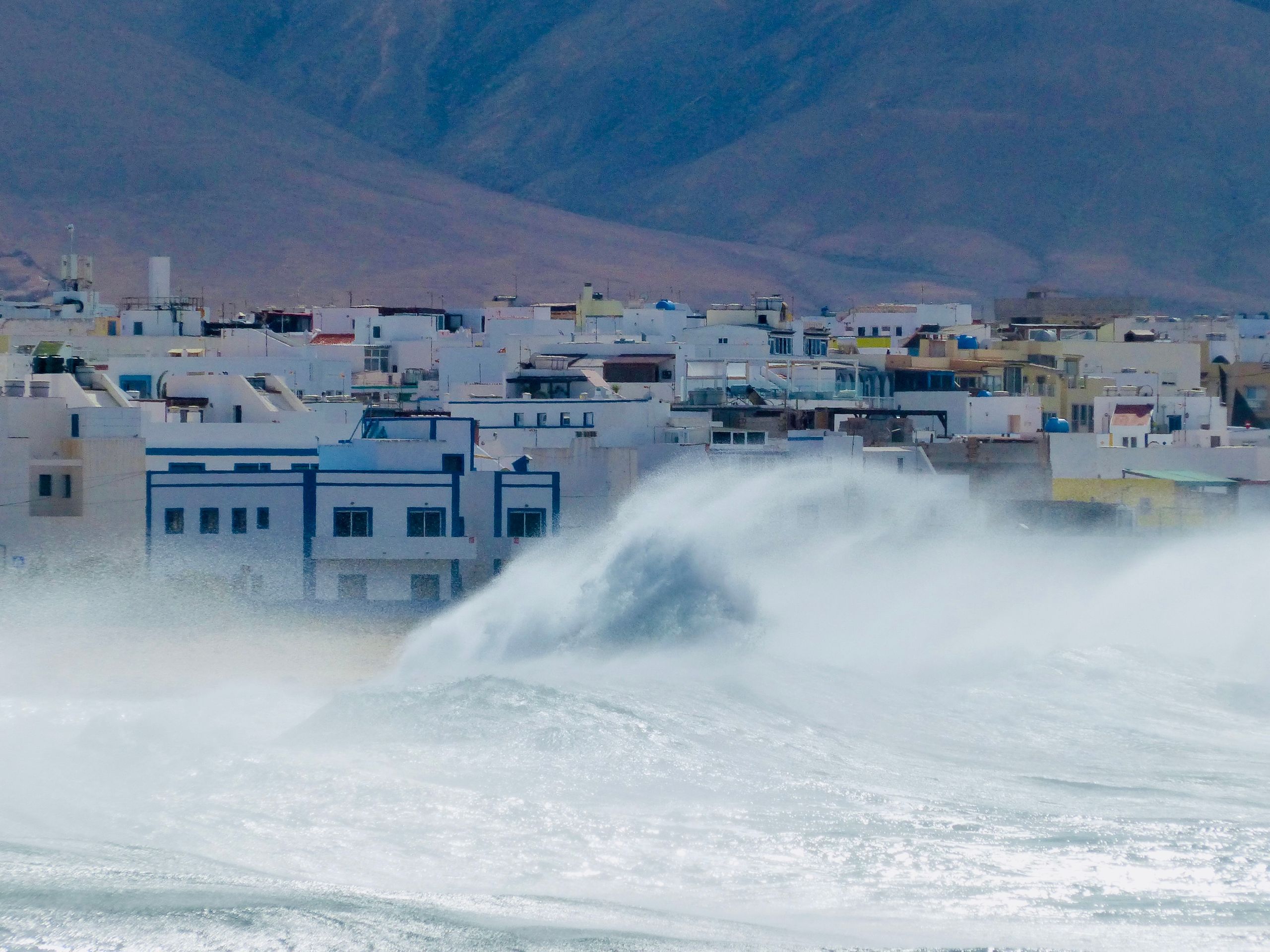
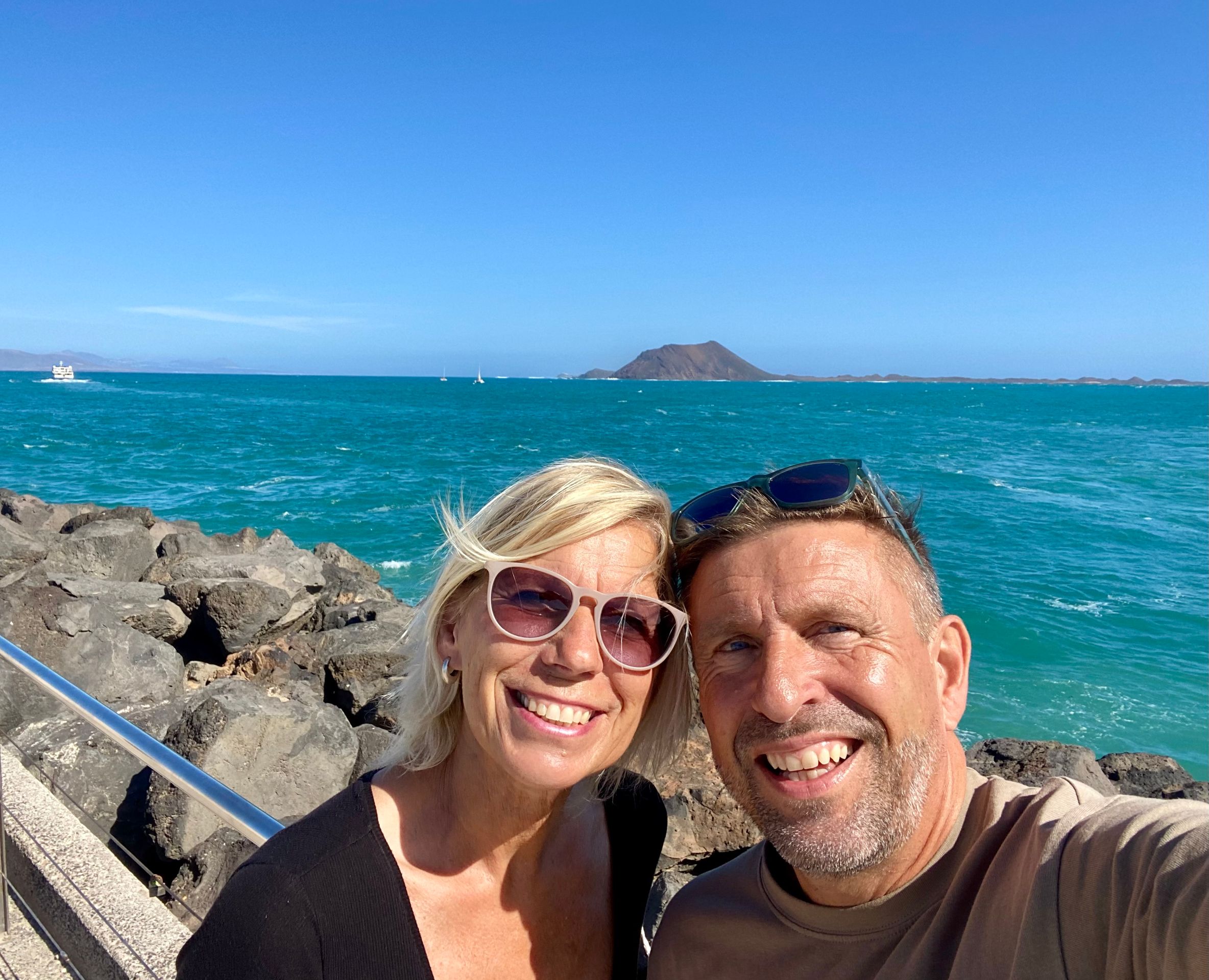
The next days are characterized by unusually high waves. A wave warning has been issued for the Canary Islands. We can picture the height and power of the waves right from our campsite on the west coast. Due to the off-shore wind, the wave crests are ripped backwards, towering meters high. You can only find surfers in the more sheltered bays. We also take these first days on Fuerte to take care of a holiday home for our family who will visit us in just under a month. After driving around the island once, we realize that this accommodation can only be located on the west coast near El Cotillo. Eventually, we find a great villa with a pool and a huge terrace area in El Roque, only a few minutes by car from the sea on booking.com. Originally, we had planned to meet up in Fuerte with our friends Zhaoyang and Sascha, who are also on the road with their van, before our family visits. Unfortunately, our meeting in Morocco didn’t happen due to our early departure from Morocco (see travel blog 'Morocco - a decision'). However, the two have made a detour to Lanzarote from Fuerte and are so excited there that they will stay there a while longer. No problem for us. With a van, you are always flexible, and a ferry ticket between the islands is inexpensive and quickly booked. Said and done, and on January 29 the ferry leaves from Corralejo to Playa Blanca on Lanzarote. The crossing is very short, taking only 25 minutes. It goes past Isla de Lobos, and just a few minutes later, the harbor of Playa Blanca comes into view.
Conclusion: ... and the winner is..? Clearly Fuerteventura! While Gran Canaria can score with a green, mountainous center, for us as coastal nomads, the quality of the coasts is much more decisive. And Fuerte clearly has the edge there. Almost the entire coast is undeveloped and freely accessible. There are fantastic sandy beaches everywhere, and the turquoise water is reminiscent of the Caribbean. The desert-like, mountainous inland only reveals its charm upon a second glance.By the way: If you like the travel blog, we would greatly appreciate a 'like' by clicking on the heart!
On the road: 373 days
Distance covered: 24,250 km
To be continued