
Morocco #4: Marrakech, rockin'60, back by the sea and a decision
Personal Log Entry from the houseboat Betty HH-VX 717: It is the year 2024, November 15, 2 PM. Still a bit under the weather (see travel blog Morocco #3), we set off around noon...

Published: 30.12.2024
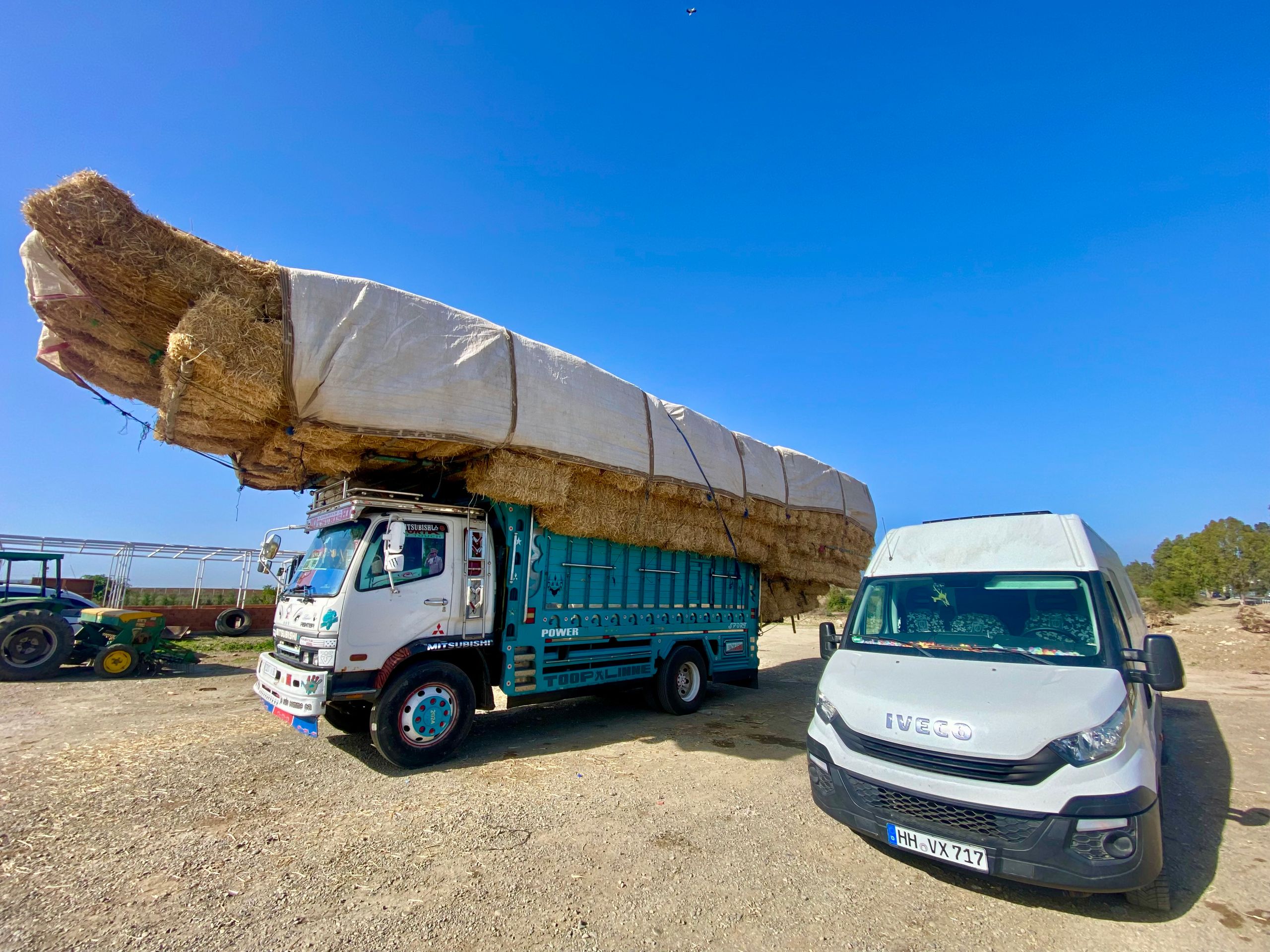
Personal log entry from the houseboat Betty HH-VX 717: It is the year 2024, November 23, 11:00 AM.
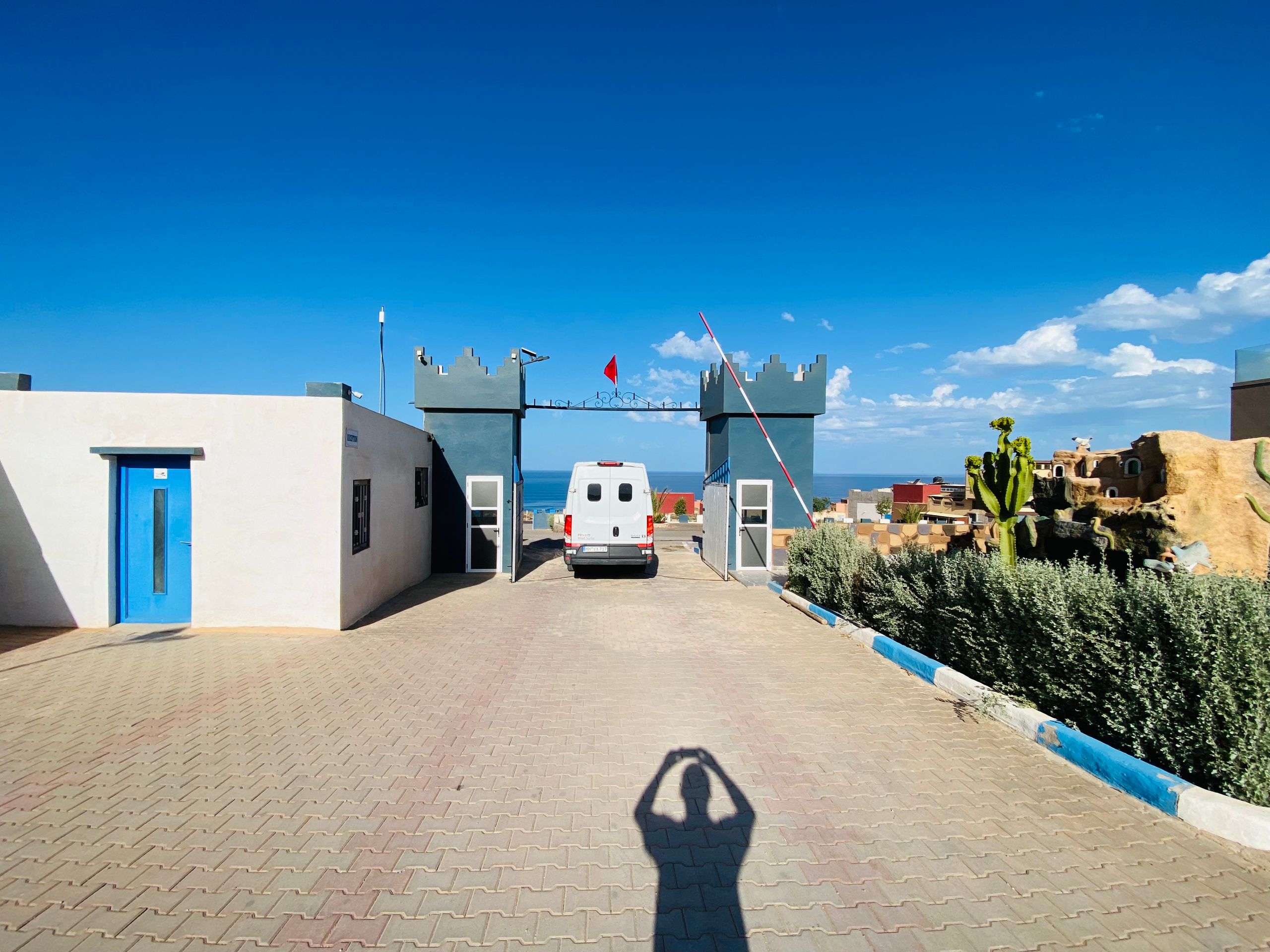
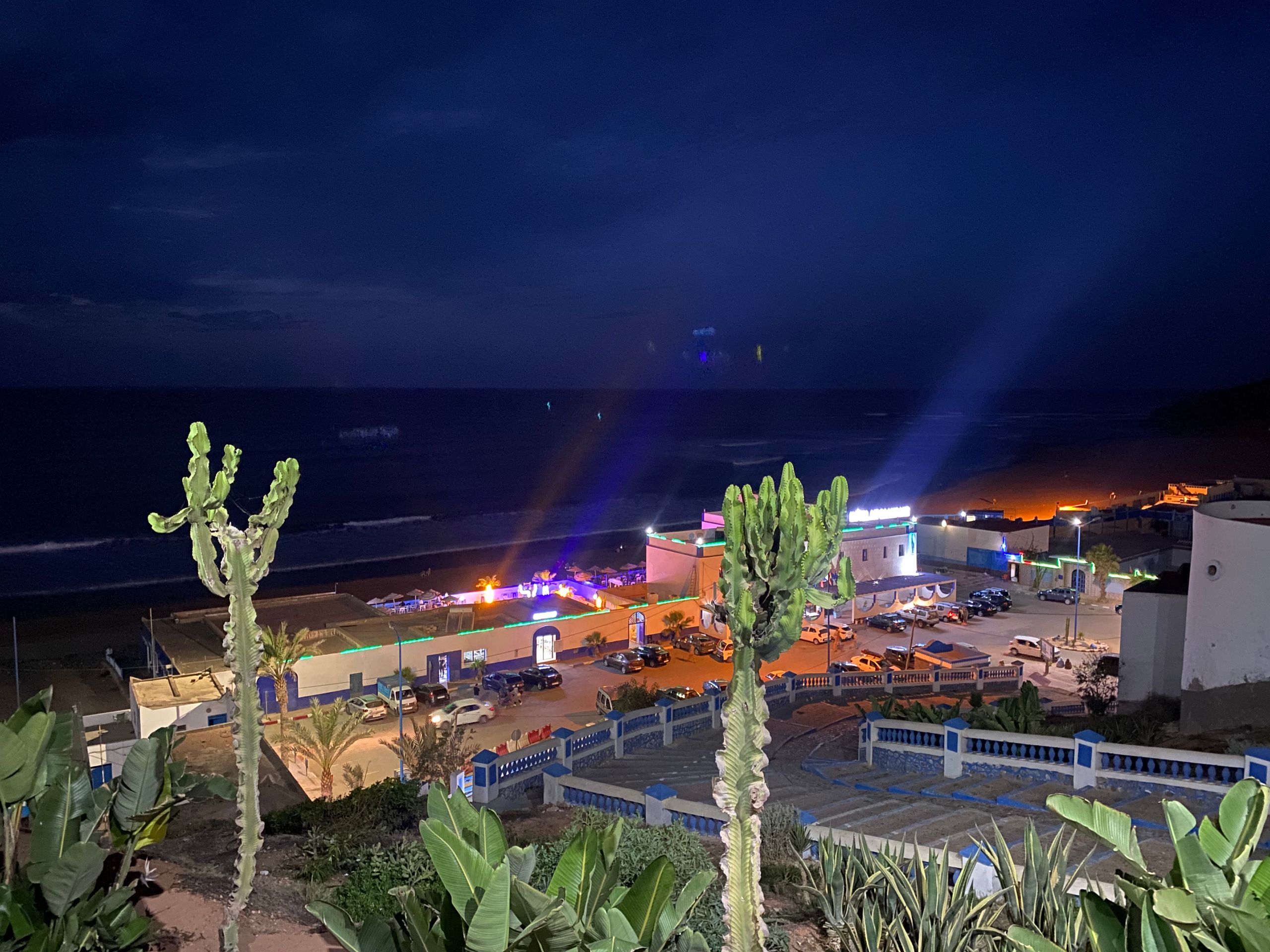
On November 23, we set off from Aglou. We plan to go a little further south before finally heading northwards towards the Strait of Gibraltar and back to Europe. Our next destination is Mirleft, one of the many well-known spots among surfers around Agadir.
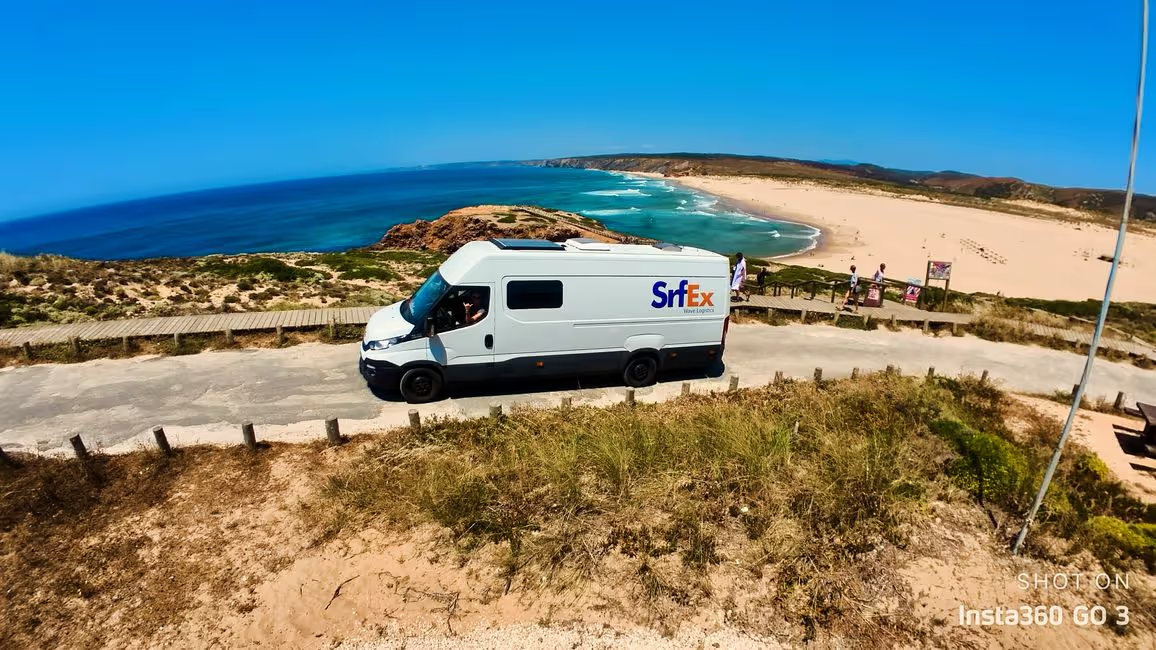
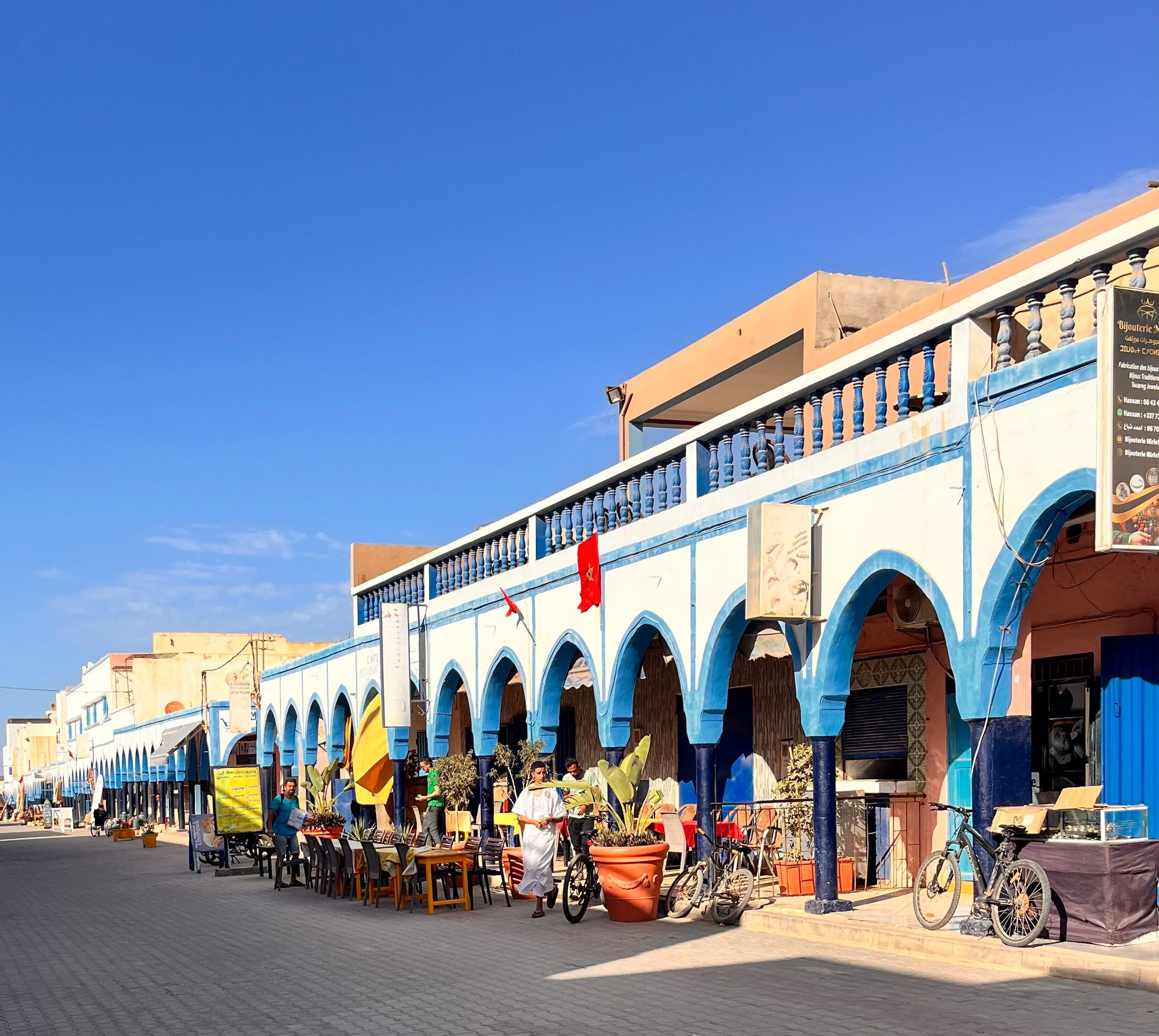
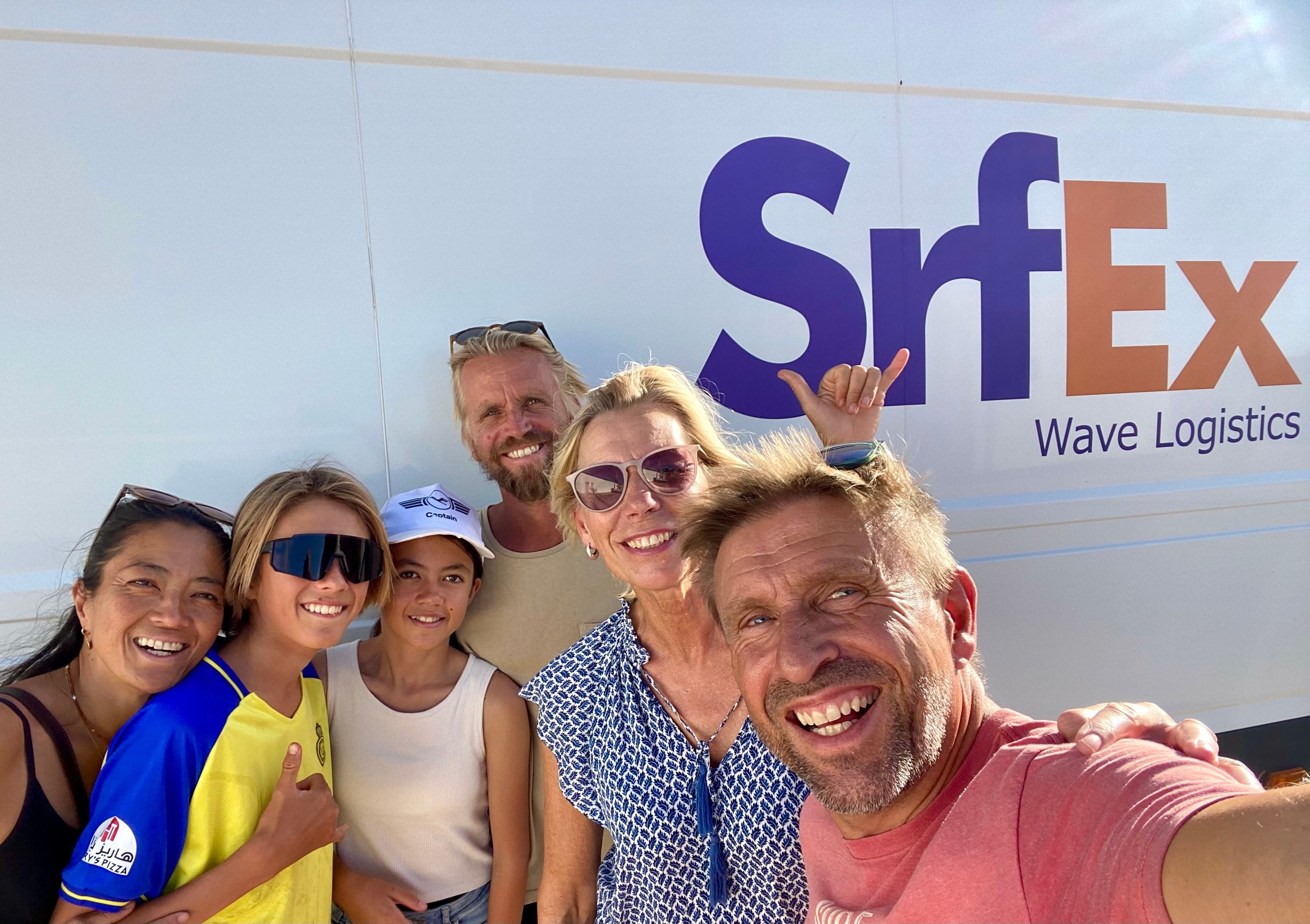
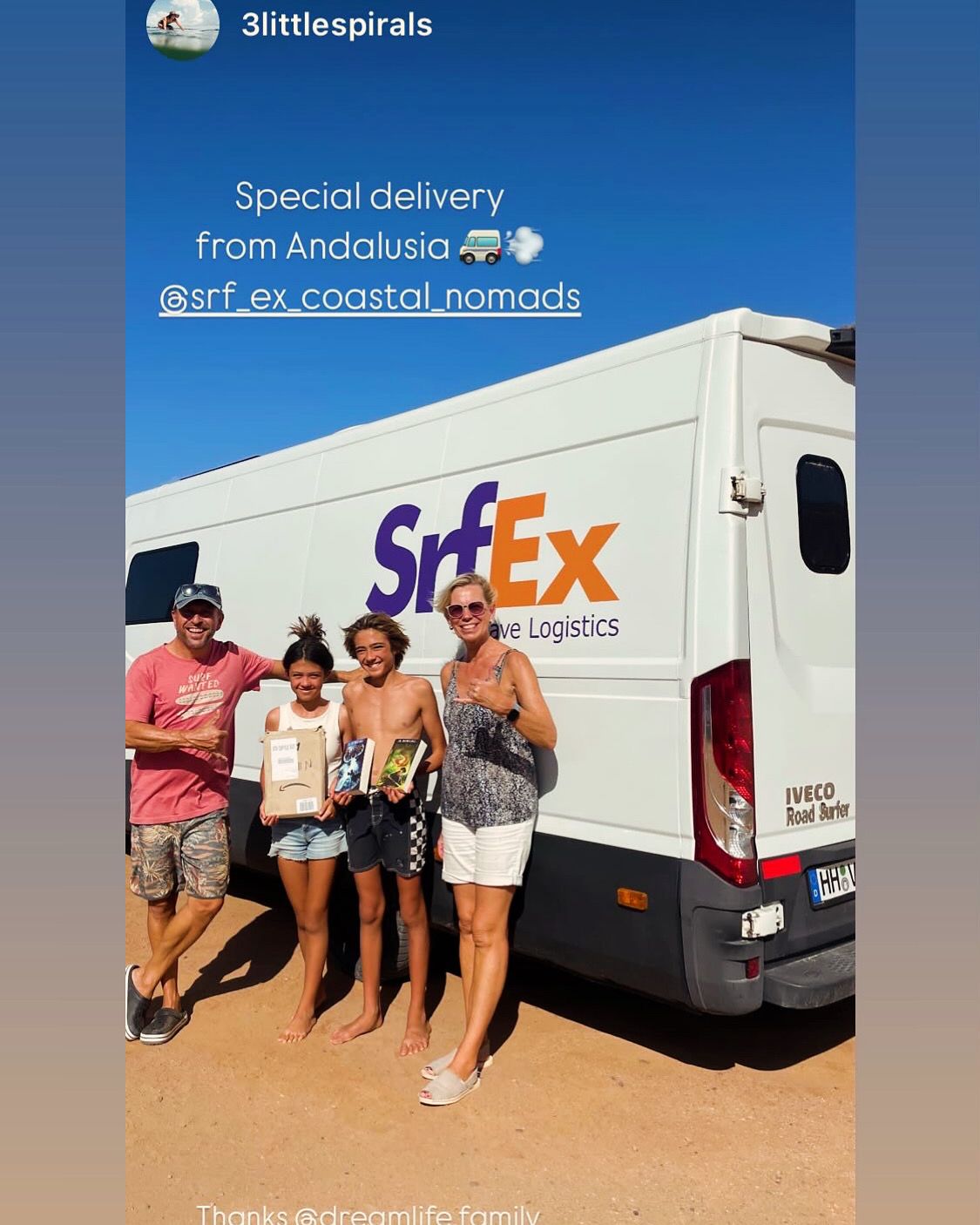
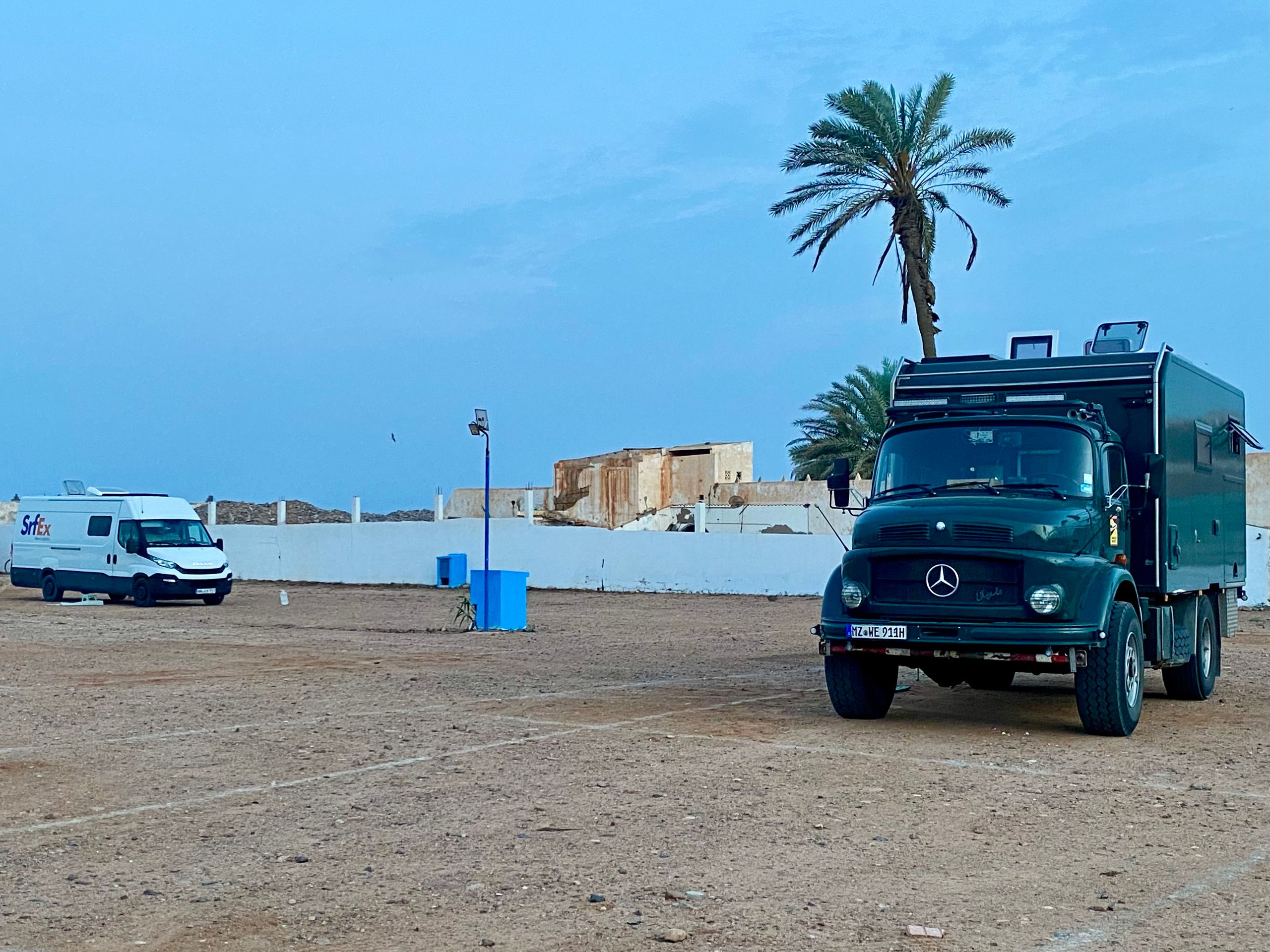
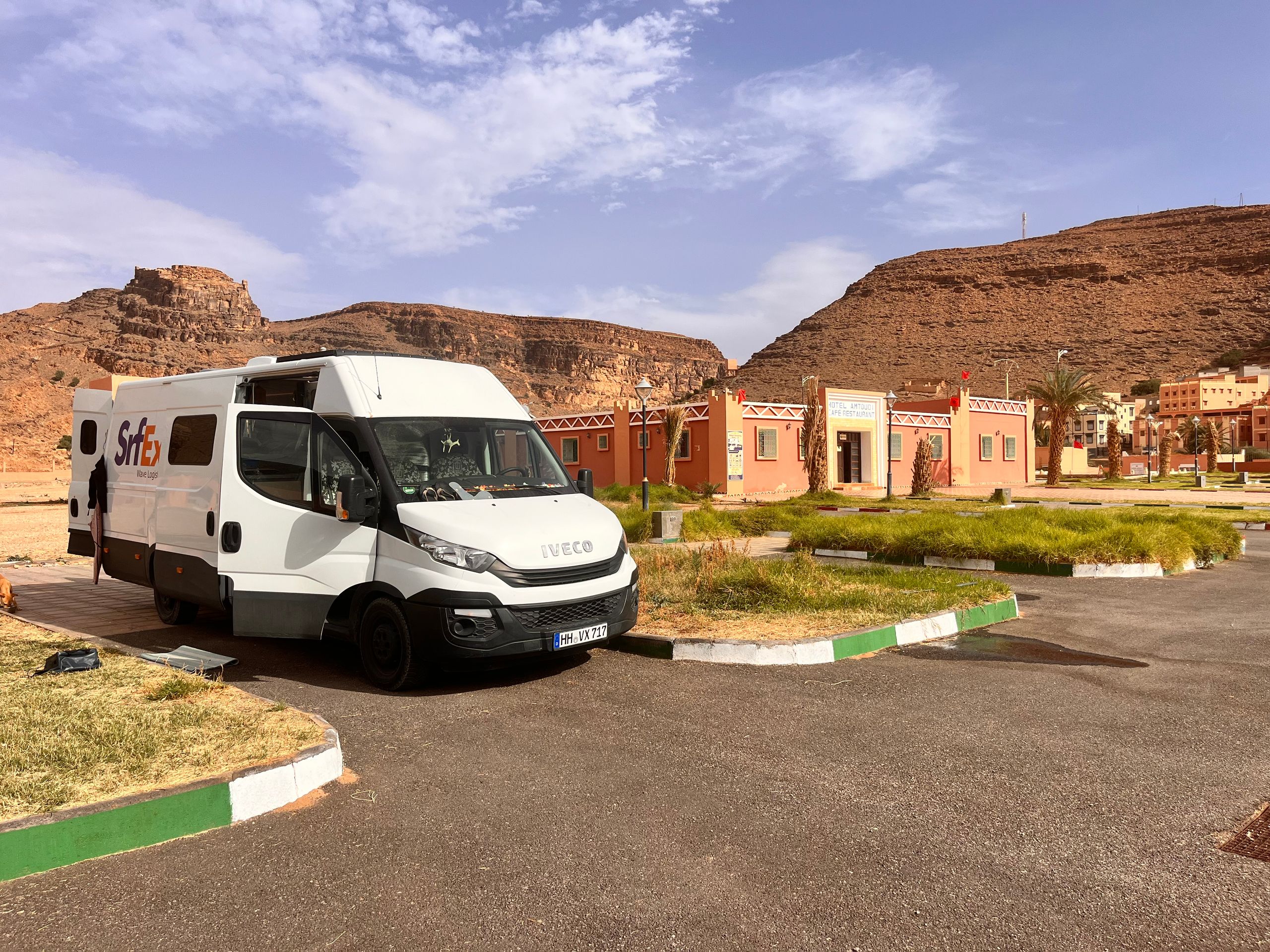
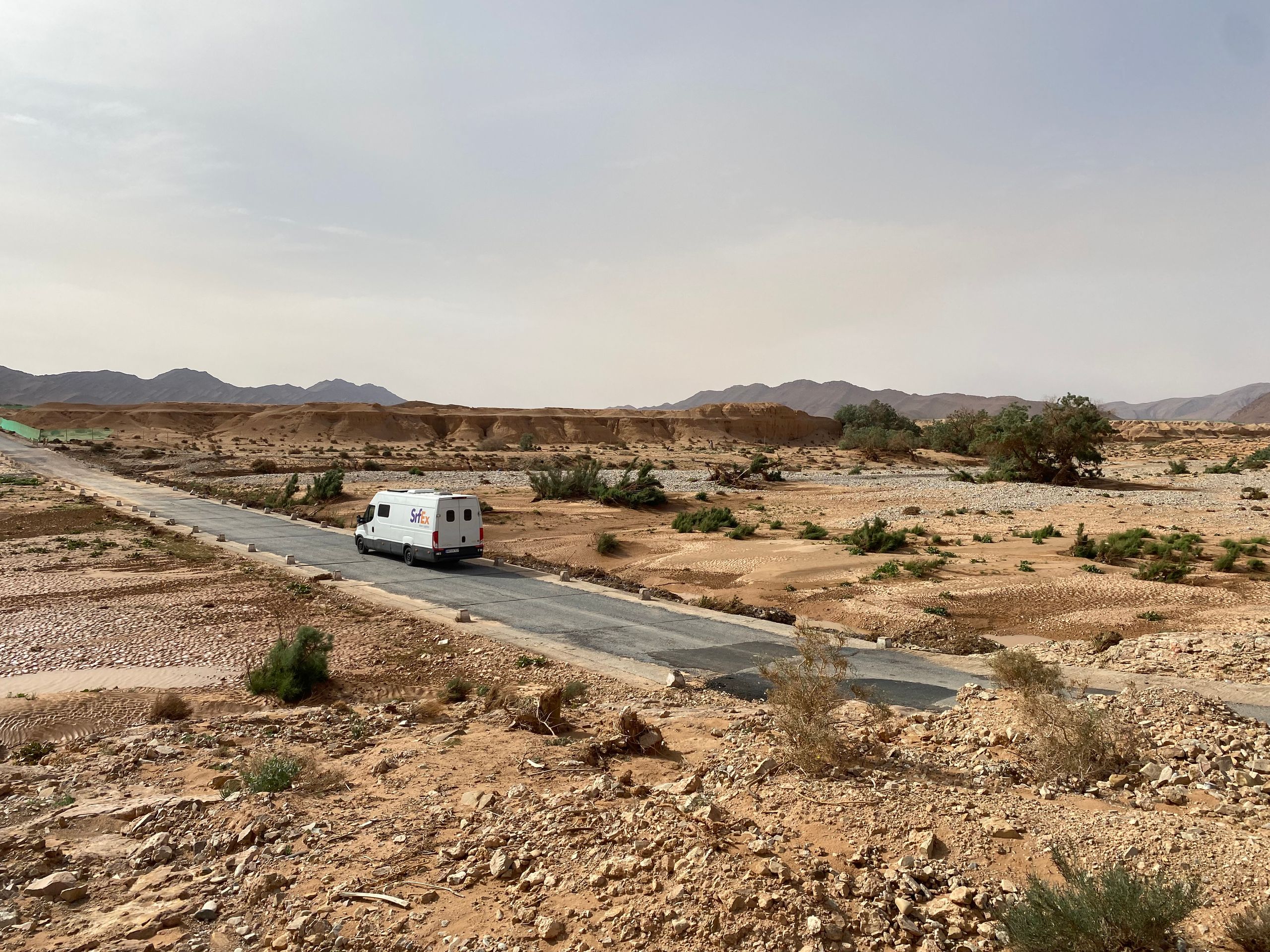
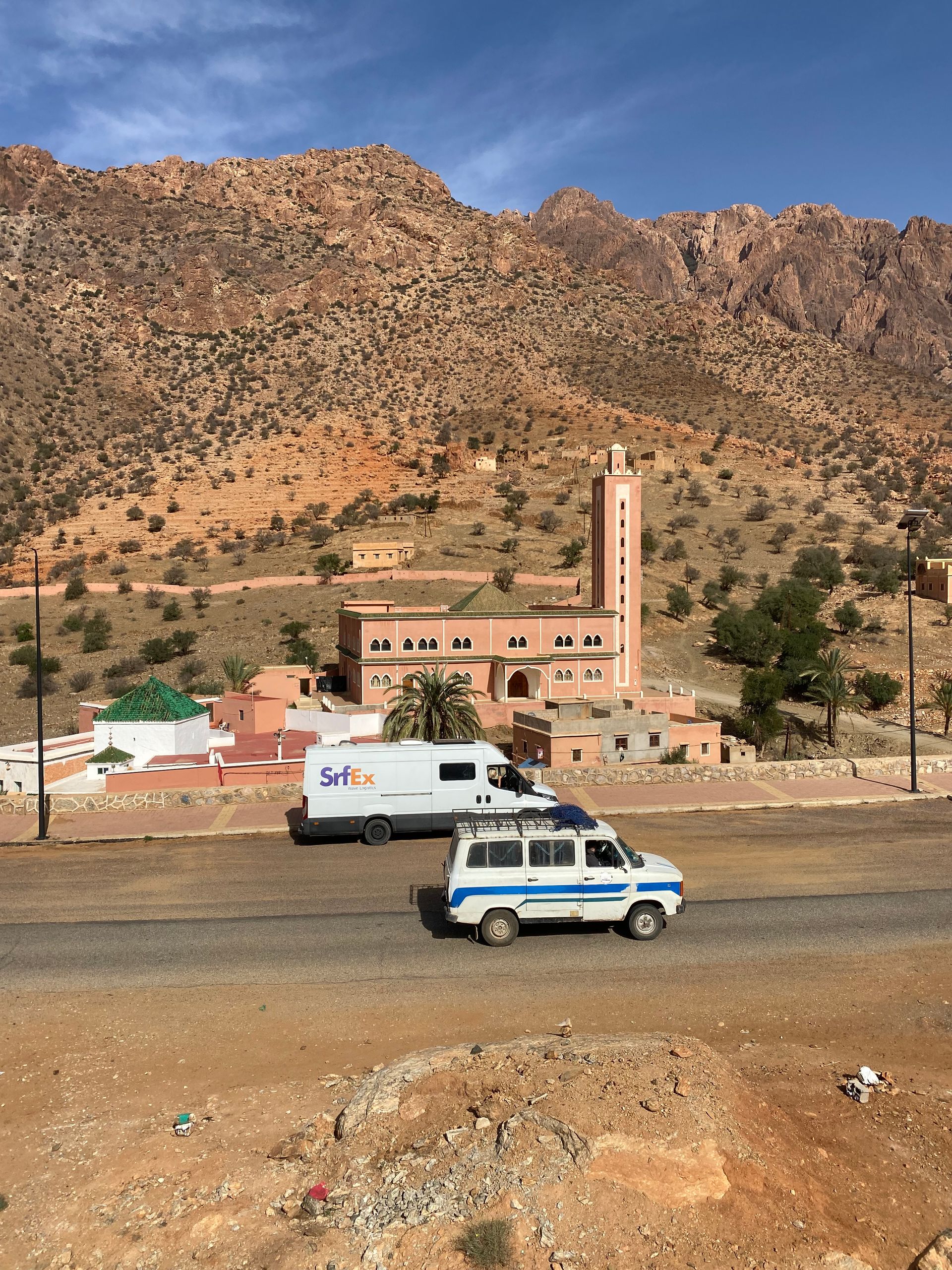
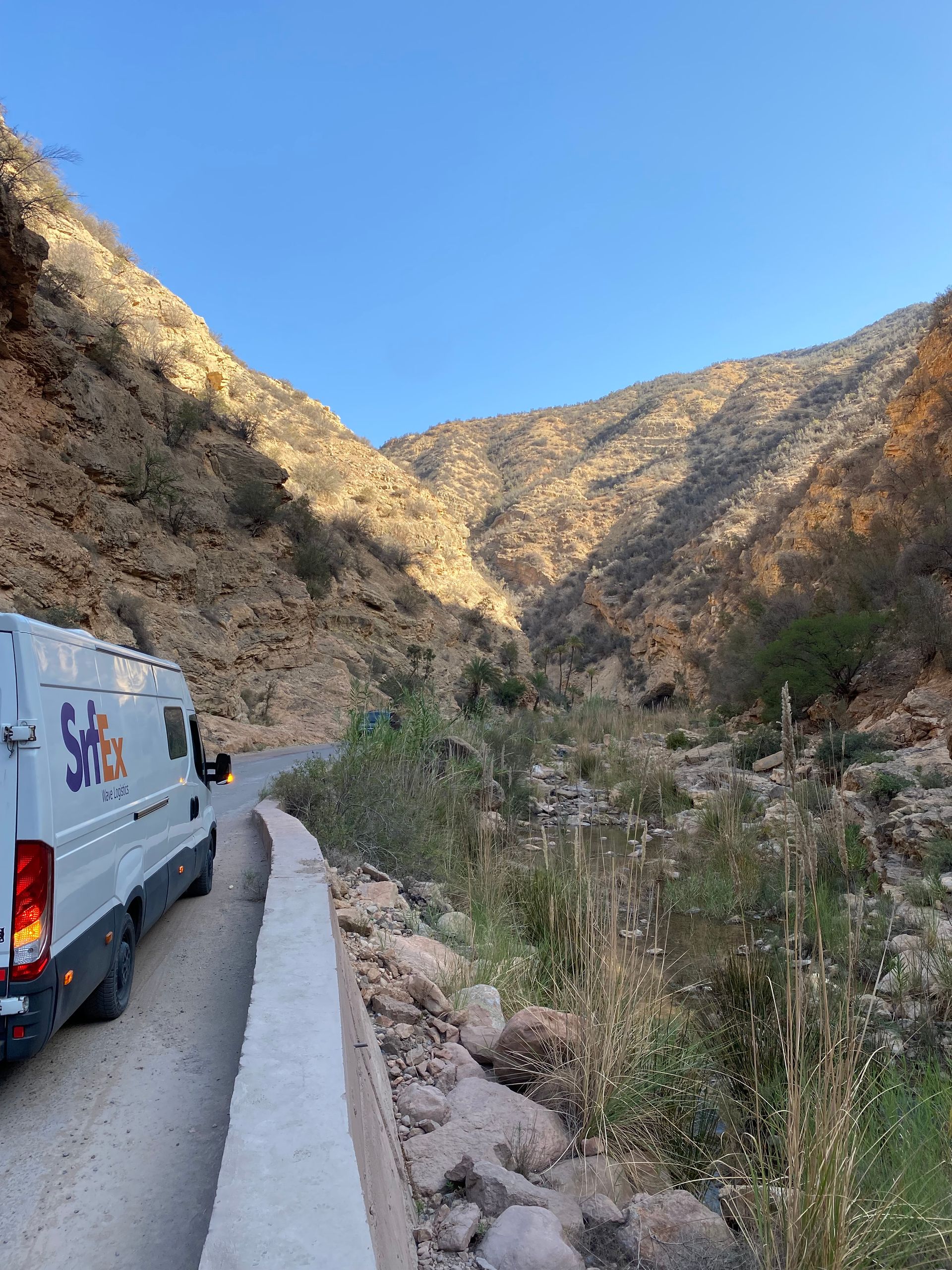
We arrive in Mirleft around noon and after a brief search, we find the camper belonging to our acquaintances Mike and Maki with their two children at one of the surf spots in Mirleft. After a long six weeks of 'waiting', we can finally hand over the package they gave us from Spain (with Harry Potter books, as we find out) to them. The handover of the package under the Srf_Ex logo is, of course, professionally documented for their Insta account '3littlespirals' with almost 5,000 followers! As a sandstorm builds up throughout the day and it becomes unbearably hot on the beach, we are all forced to flee after a while. In the town center of Mirleft, it is pleasant to stay, and we enjoy a nice day together. The '3littlespirals' are currently planning for the future, as they aim to travel to either Central America or Japan next year. True globetrotters! Unfortunately, we part ways again on this day, as we still have a tight schedule in Morocco, and Mike wants to wait for some particularly high waves that the weather service has forecasted. By the way, we really like Mirleft. The small town is tidy and clean. There are nice restaurants and cafes, and while strolling through the streets, one is largely left in peace.
In the late afternoon, we drive the short distance to the next surfing spot, Sidi Ifni. This will be the southernmost point of our journey in Morocco. Sidi Ifni is located roughly halfway between Tanger Med, our arrival point in Morocco, and Dakhla, our original destination. Dakhla is another approximate 1,000 km south of here and can only be reached via an endless desert track. This is not feasible in the remaining days. So, this point on our itinerary is canceled! When we arrive in Sidi Ifni, the sandstorm has intensified even more. The air is yellowish haze from the stirred-up dust and sand, and it is very warm. We spend the night at the local, very basic campground (CP) near the beach and sleep poorly due to high temperatures at around 30°C at night. In the morning, I manage a short surfing session before the offshore wind finally picks up to storm strength, making surfing impossible. Staying at the CP is also very uncomfortable in the storm.
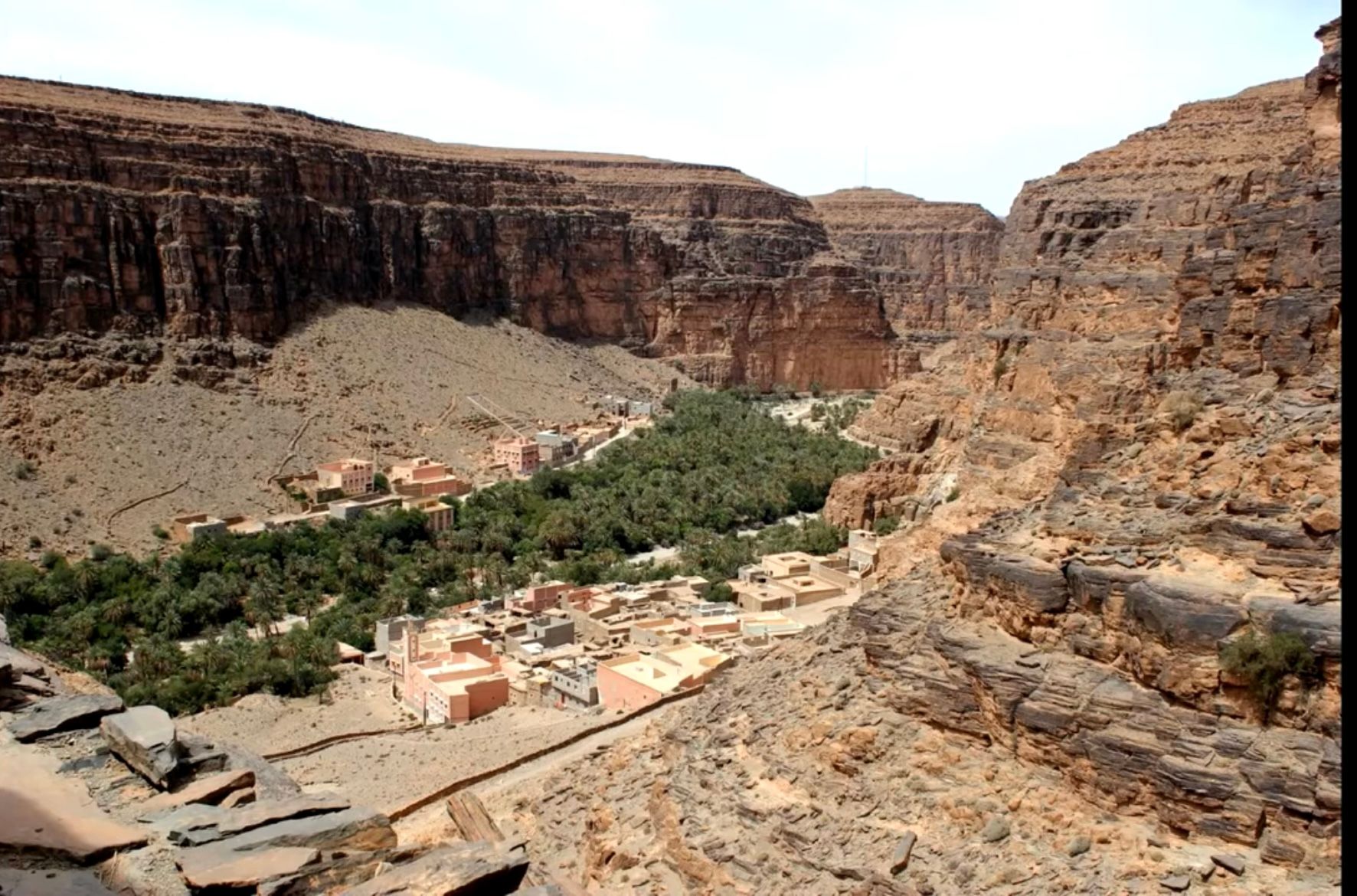
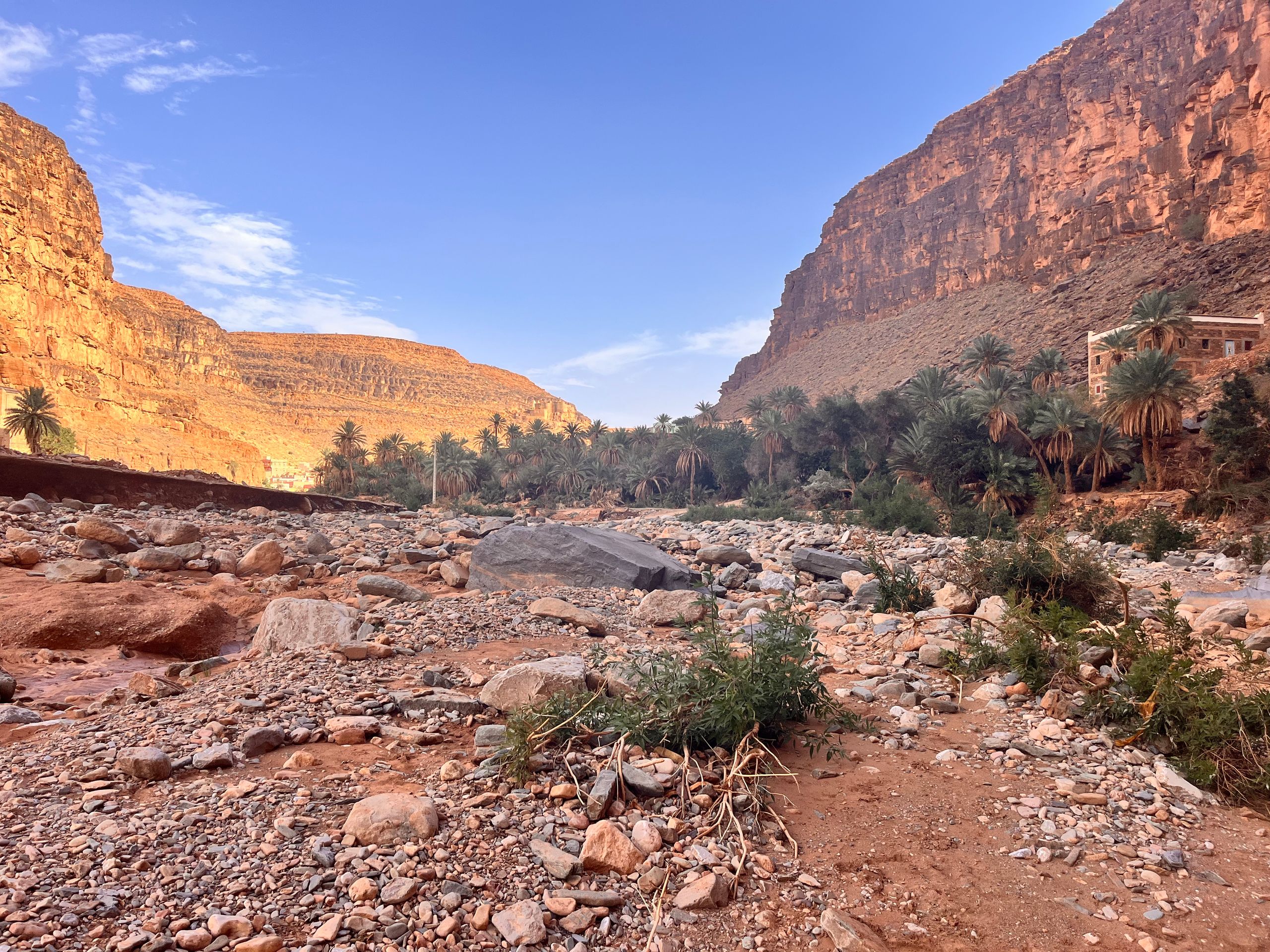
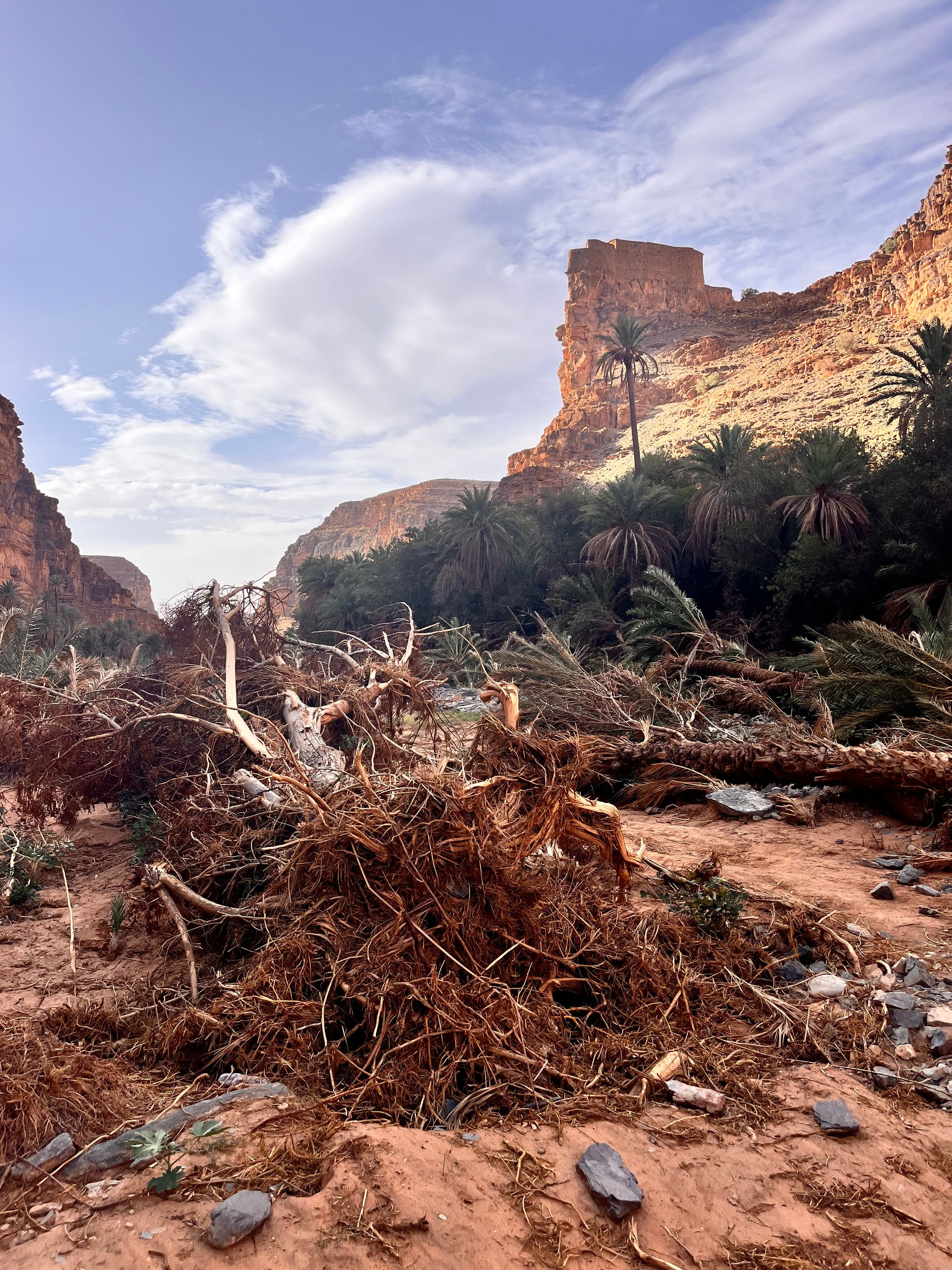
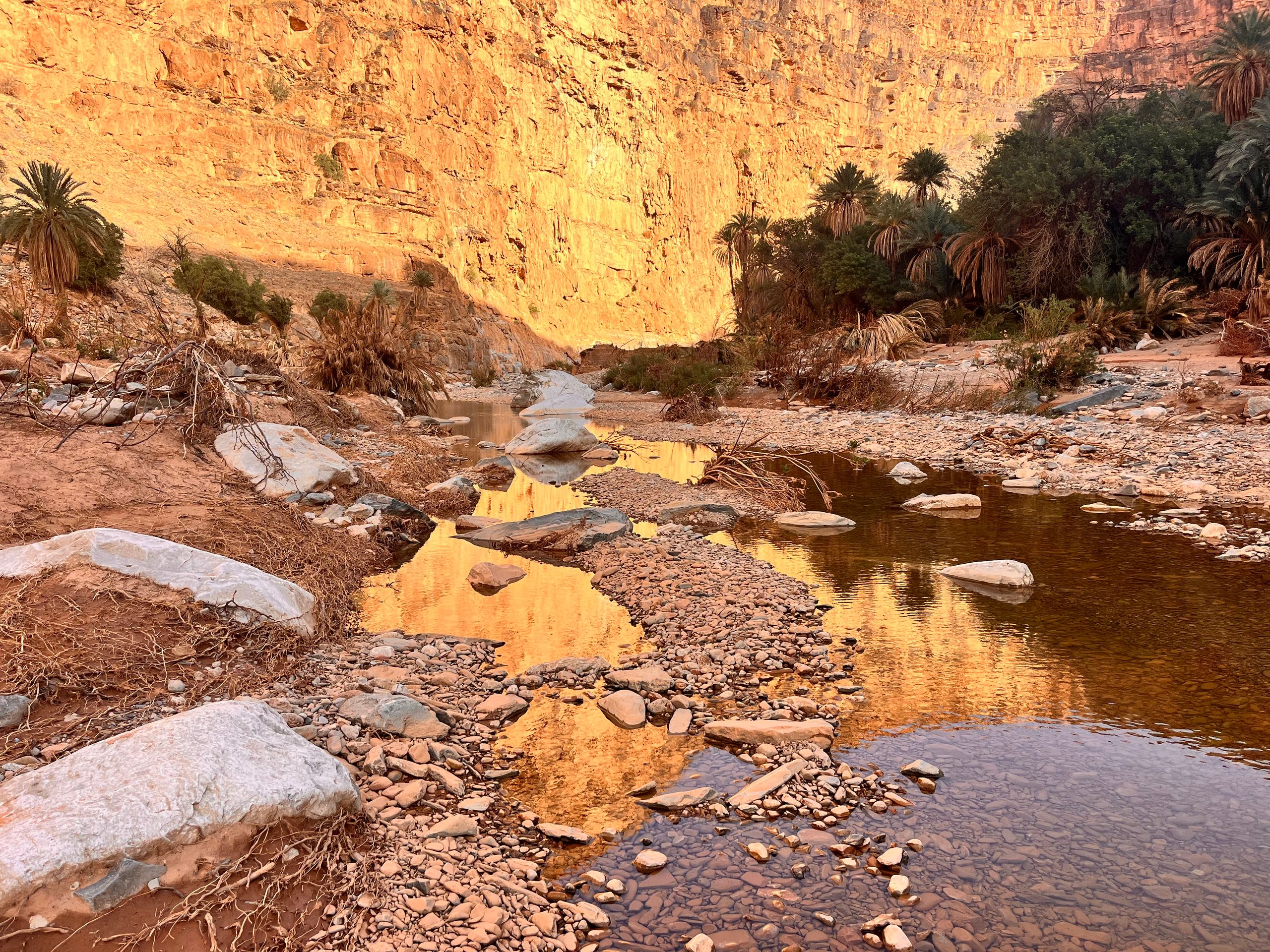
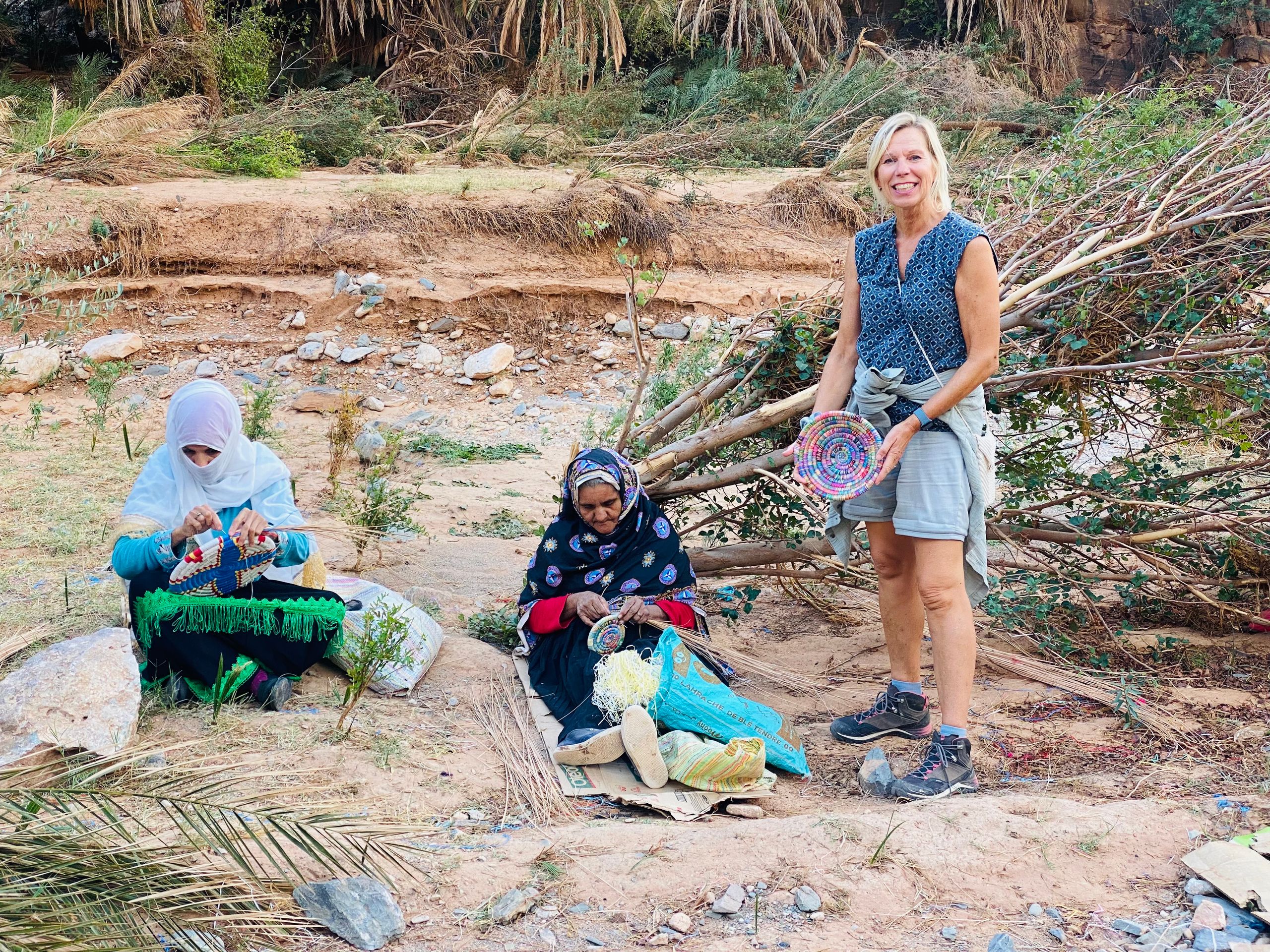
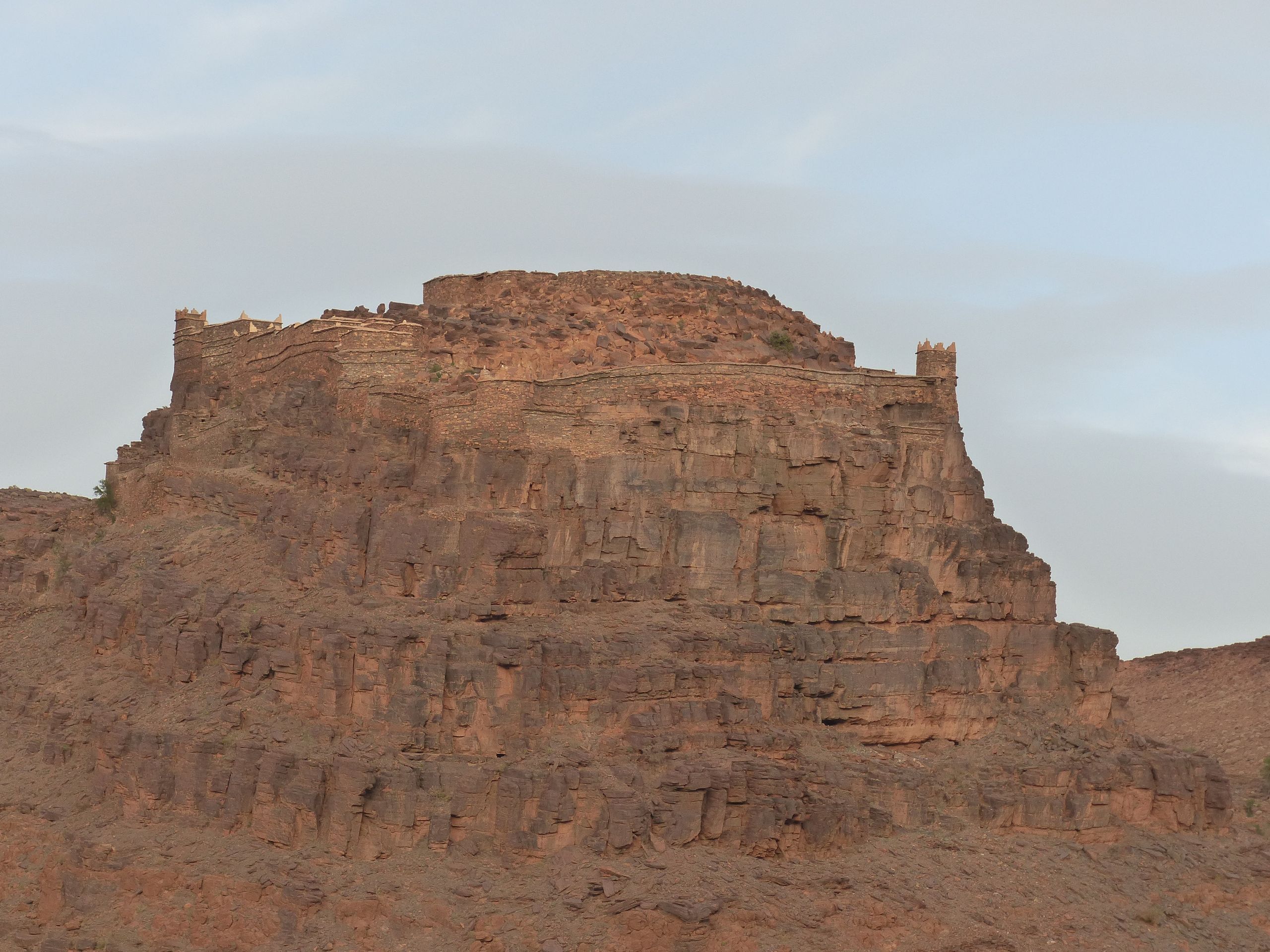
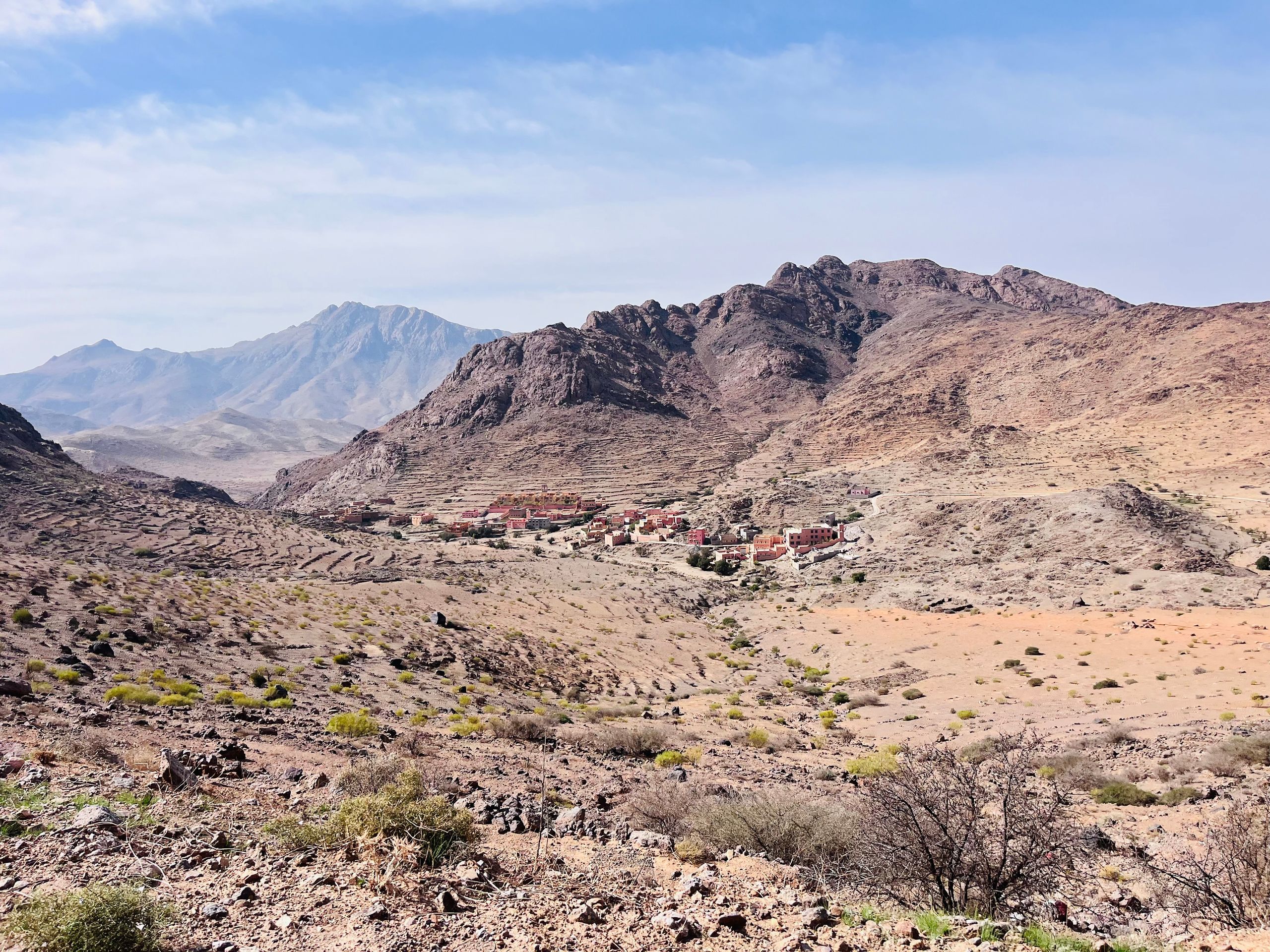
We flee from this weather condition inland, hoping for less dust in the air and easing winds. Through the provincial capital Guelmin, we travel about 150 km east towards Amtoudi. Unfortunately, we miss the famous and largest camel market on the outskirts of Western Sahara in Guelmin by one day. Allegedly, the camels sold there are loaded in a modern way using forklifts! The further we go inland, the more the storm subsides and the air becomes clearer again. So, a good decision! Our traveling acquaintances Silke and Tim had strongly advised us to visit the Amtoudi Gorge. Amtoudi itself is a small village on the edge of the gorge, where only a few tourists seem to wander. We are almost the only guests at the local CP. From the almost empty campground, we hike into the famous Amtoudi Gorge. In the gorge, there is an almost dry wadi. Due to the catastrophic rainfall last September, this river swelled to over 10 meters high. Almost the entire palm oasis and some houses near the river were destroyed. Fortunately, there were no casualties. In some stretches, we are reminded of the Ahr Valley. Nevertheless, one gets an impression of how beautiful this area is. Two Agadirs tower majestically above the gorge. Agadirs are mountain fortresses. At the end of the hike, we meet two local women sitting by the river, crafting beautiful bowls from palm leaves and colored threads. We buy one bowl and were probably their only customers today.
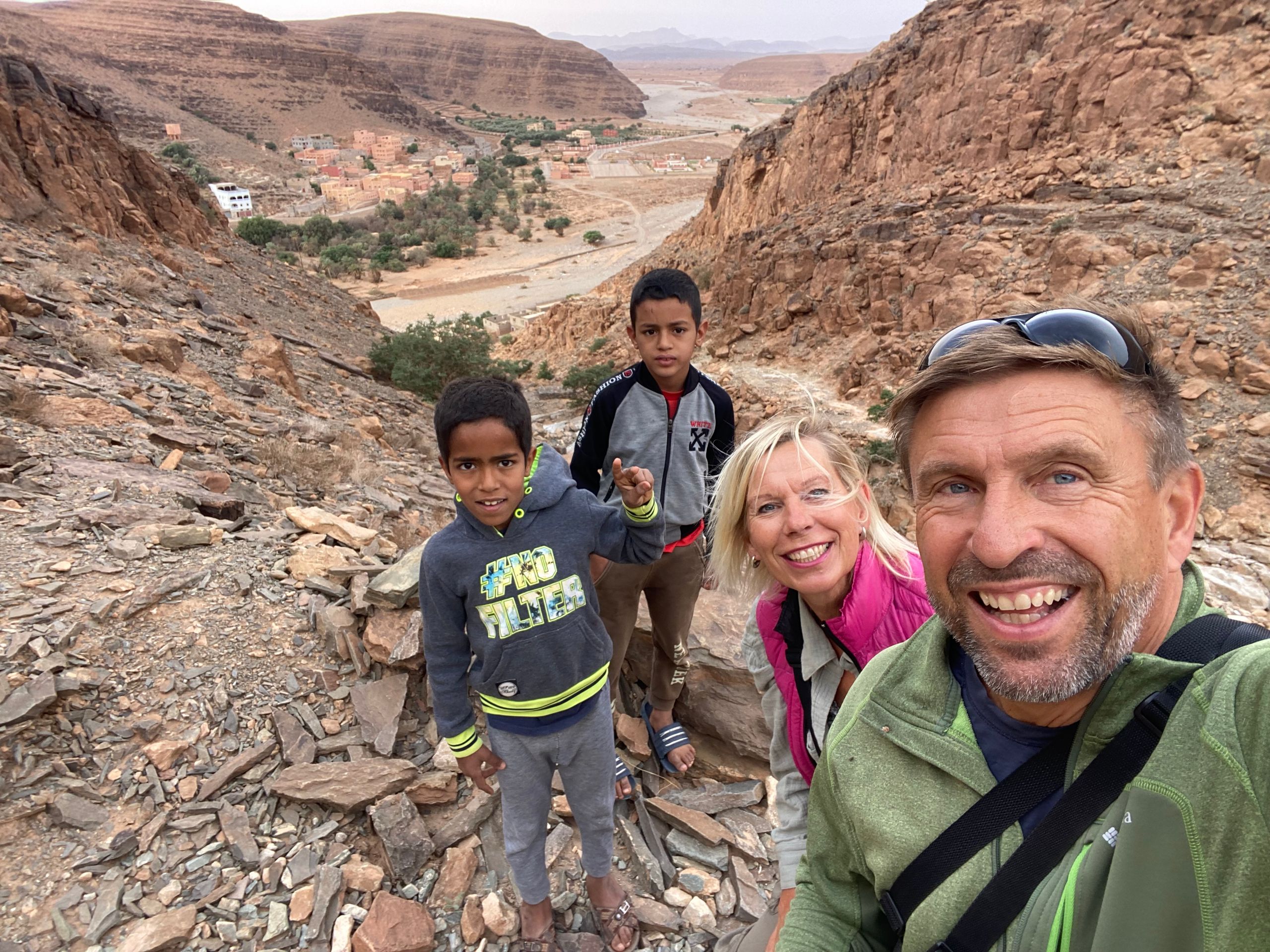
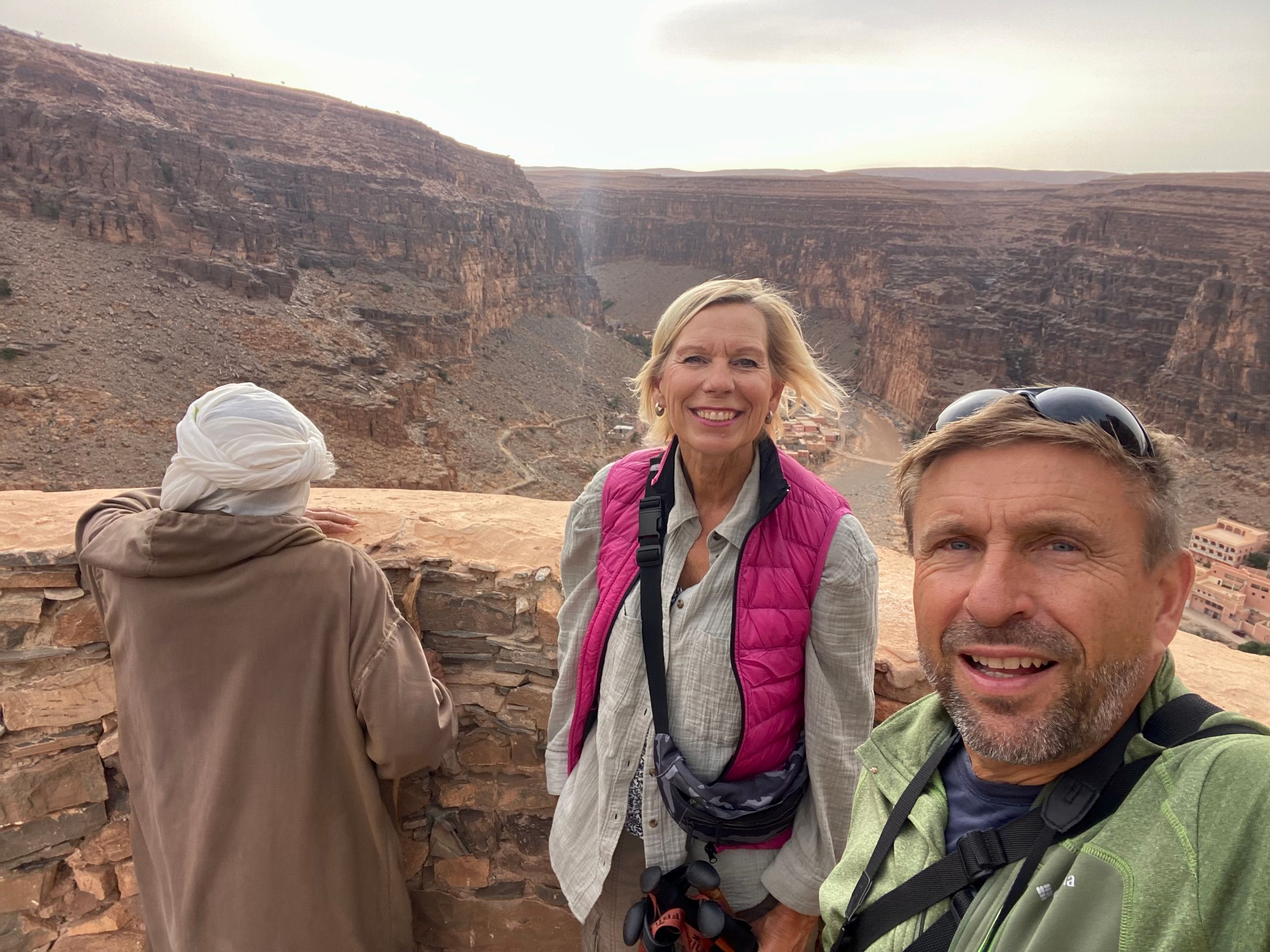
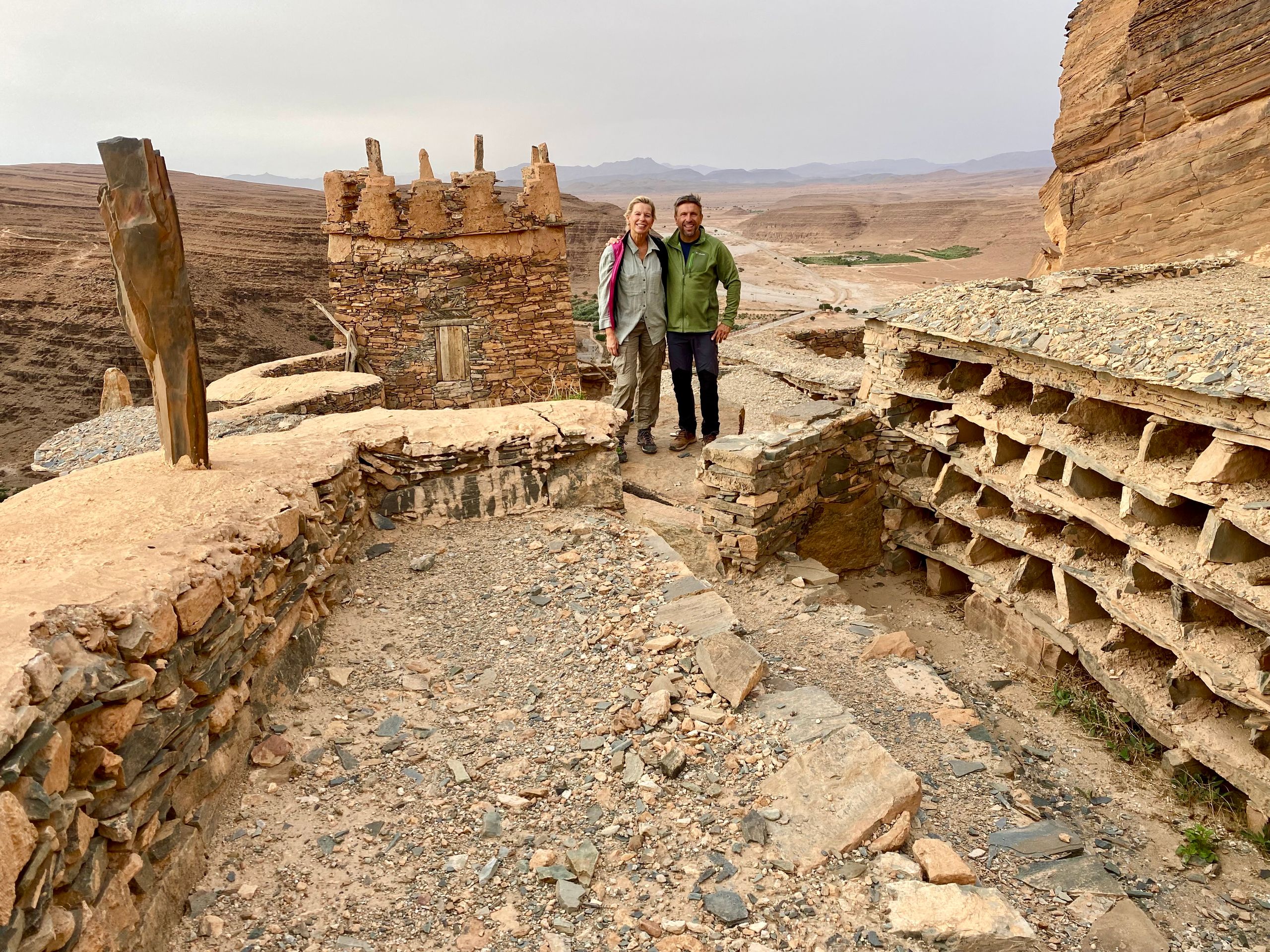
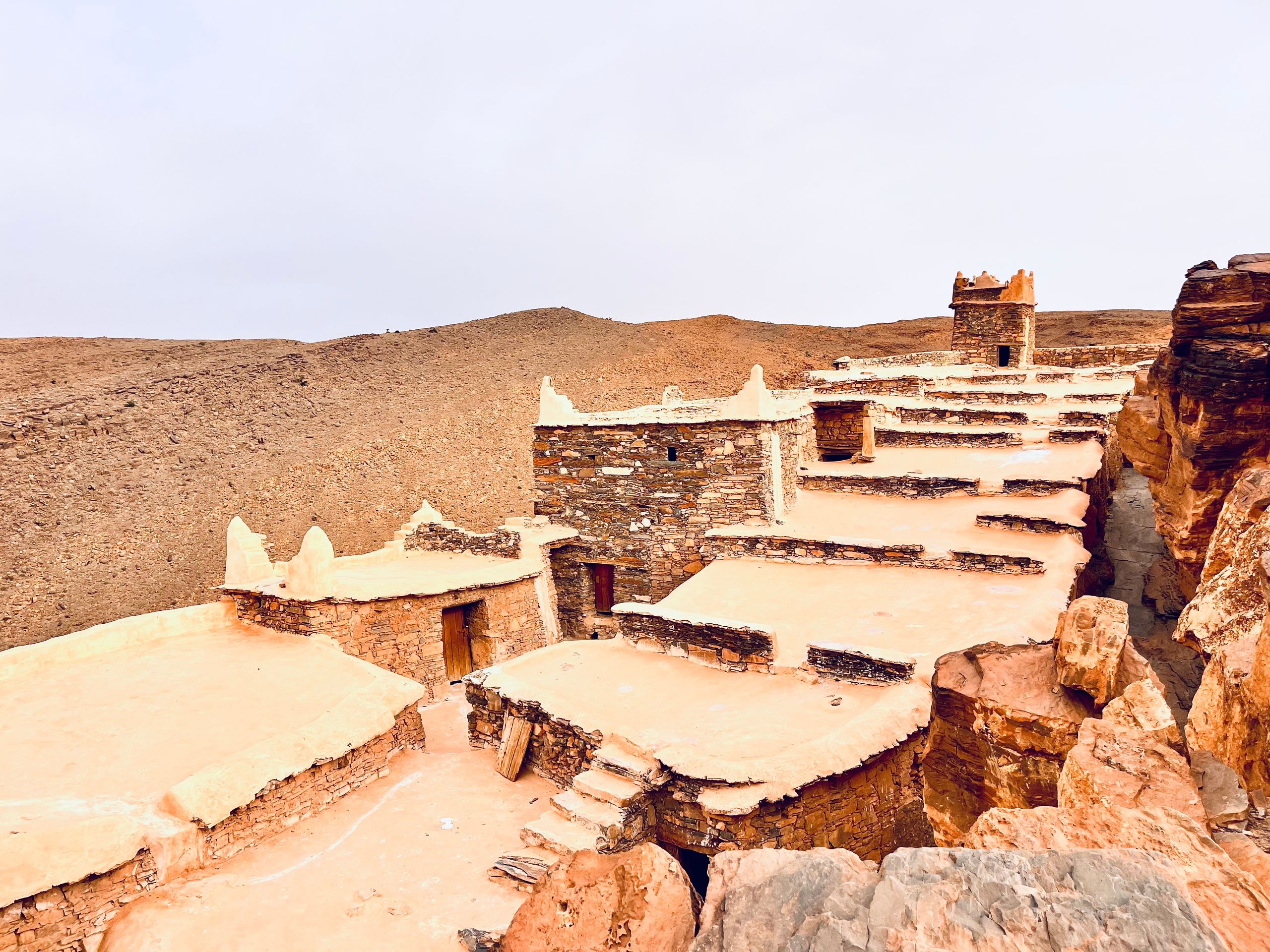
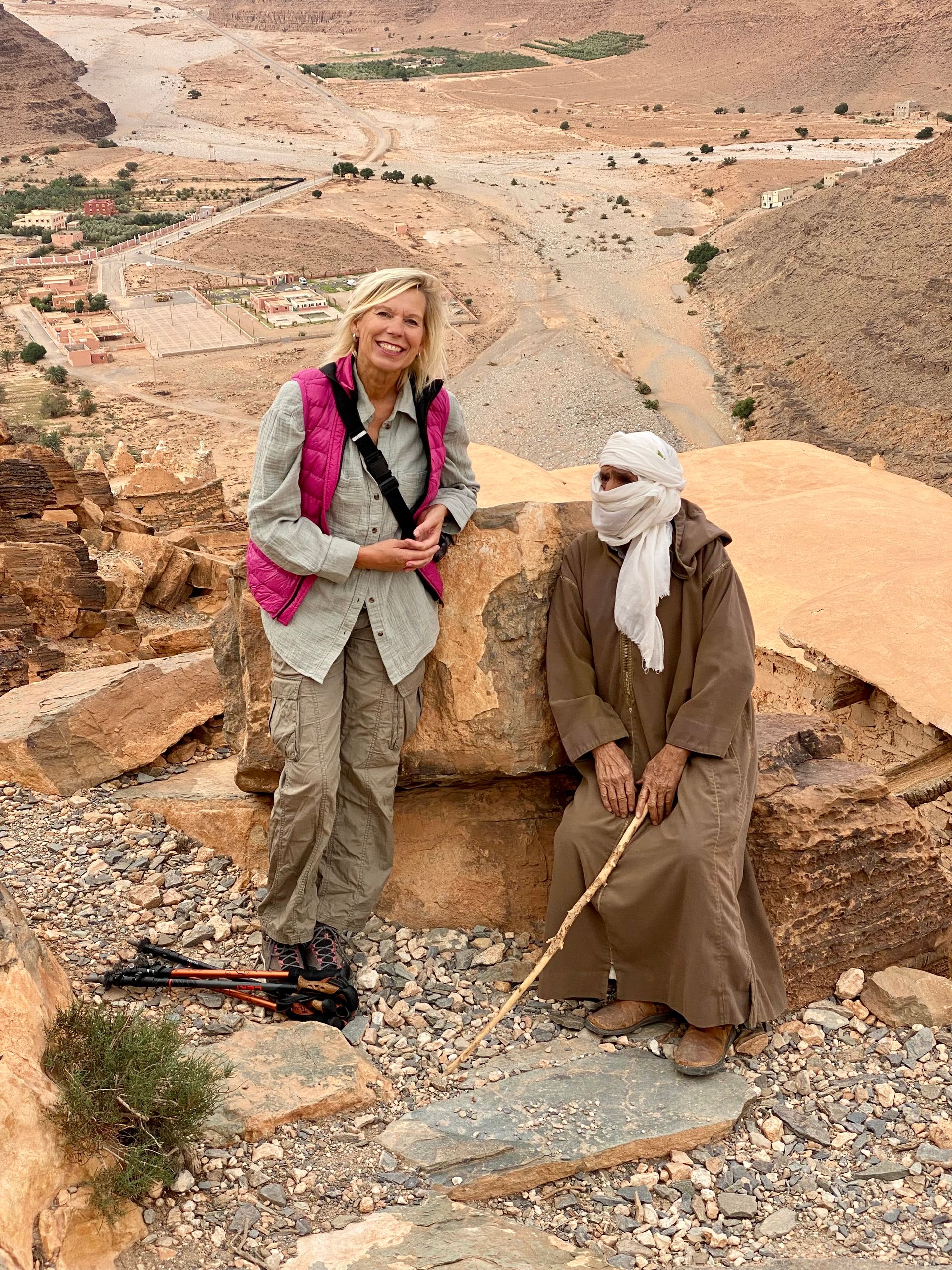
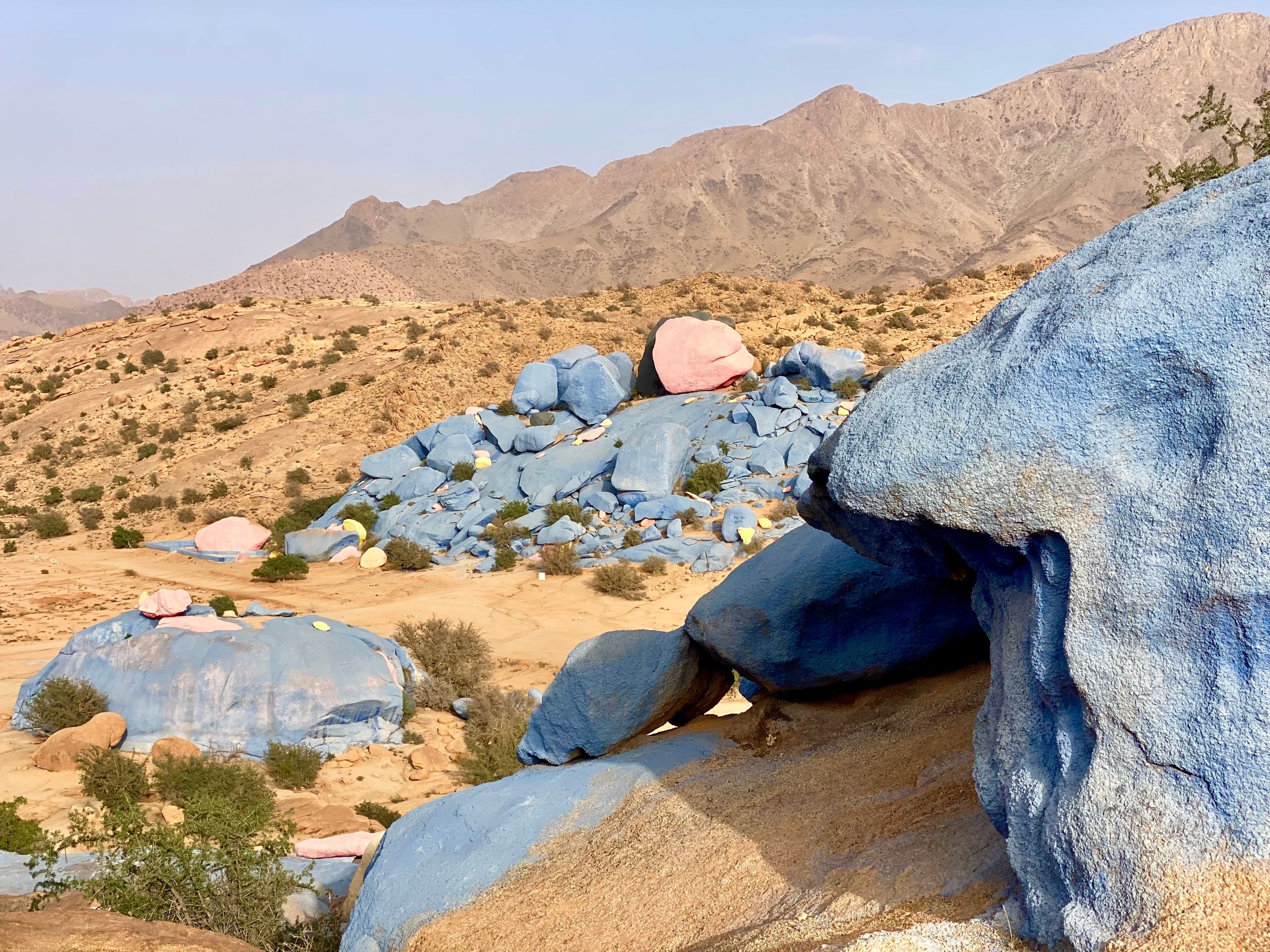
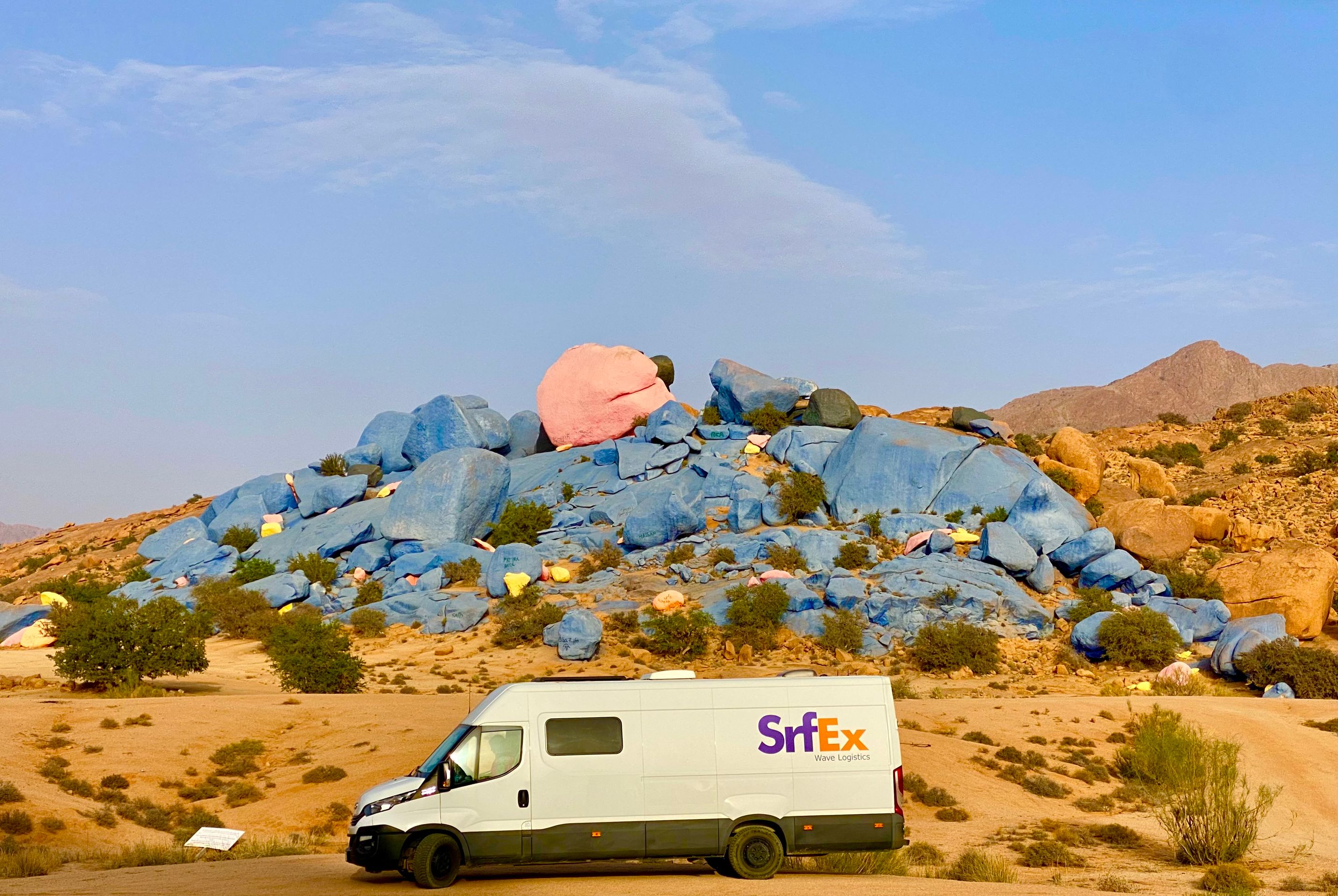
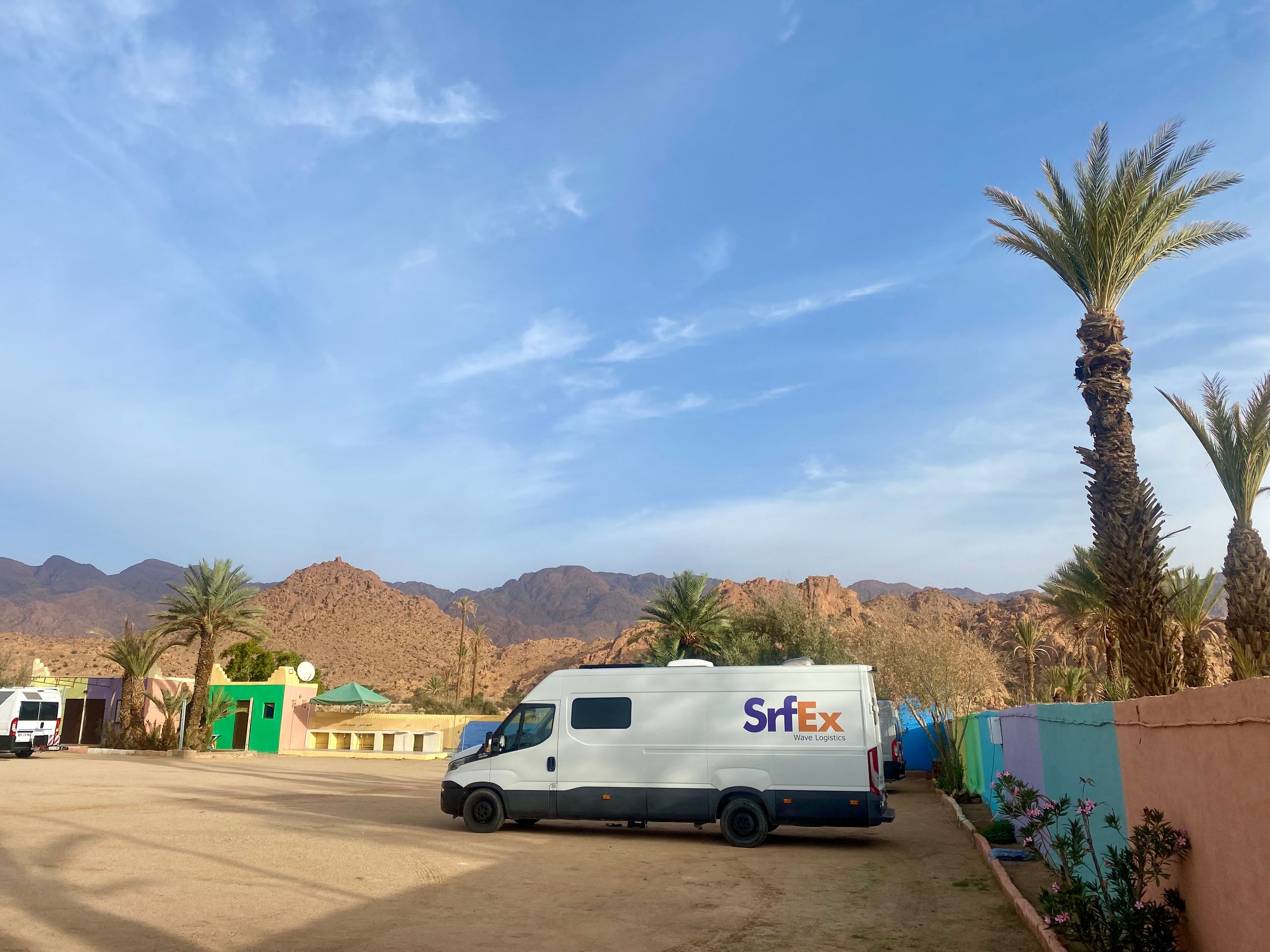
After hiking through the Amtoudi Gorge the day before, we want to visit one of the Agadirs today. Agadirs are ancient storage fortresses on mountains, where food was once kept safe from enemies. During attacks, the villagers also hid there. Two little boys from the village lead us up the steep path. We both wear hiking boots and carry trekking poles, while the boys only wear worn-out sandals. At the top of the Agadir, we are welcomed by an old Berber who gives us a private tour of the Agadir. Among other things, a lot of honey was stored there. There is also a small museum in the Agadir with ancient items from the Agadir, including Koran verses written on palm wood and an ancient musket. The two boys wait for us in front of the Agadir (they were not allowed inside) and guide us back to the valley. In return, they receive a small reward in the form of candies and pens.A highly praised travel destination among vanlifers is still outstanding: Tafraoute! Tafraoute is a small town in the western Anti-Atlas, situated in an impressive basin of granite rocks. Just before Tafraoute, there are the 'Blue Stones'. A Belgian artist painted granite blocks, shaped by erosion, with many tons of mainly blue paint in 1984. The artwork is undoubtedly striking; we find it appealing, and for Betty, it serves as a photogenic backdrop. In search of a CP, we experience another sadly typical occurrence in Morocco: We stop briefly at the street with the most CPs to orient ourselves. Immediately, a moped rider comes to a halt next to us, fervently promoting 'his' CP in fluent German. Indeed, the reviews online for this place are very good, and we follow his advice, even though he seems a bit too pushy. He zips away on his moped, and we head towards the CP. Shortly before the next roundabout just outside Tafraoute, a man in an SUV overtakes us and gestures to stop, nearly blocking the roundabout: he tells us that we cannot visit the CP recommended by the moped rider as there is a problem with the water supply, insisting that we should turn right here and follow him. We have absolutely no desire for such things! I accelerate, maneuver around the 'roadblock', and we zip away. Back in town, we opt for the small, local, nice CP and are extremely angry about what just happened. Whether the two were competitors or accomplices is uncertain; various scenarios are possible. In the evening, we still go out to eat in Tafraoute, but the atmosphere is lacking.
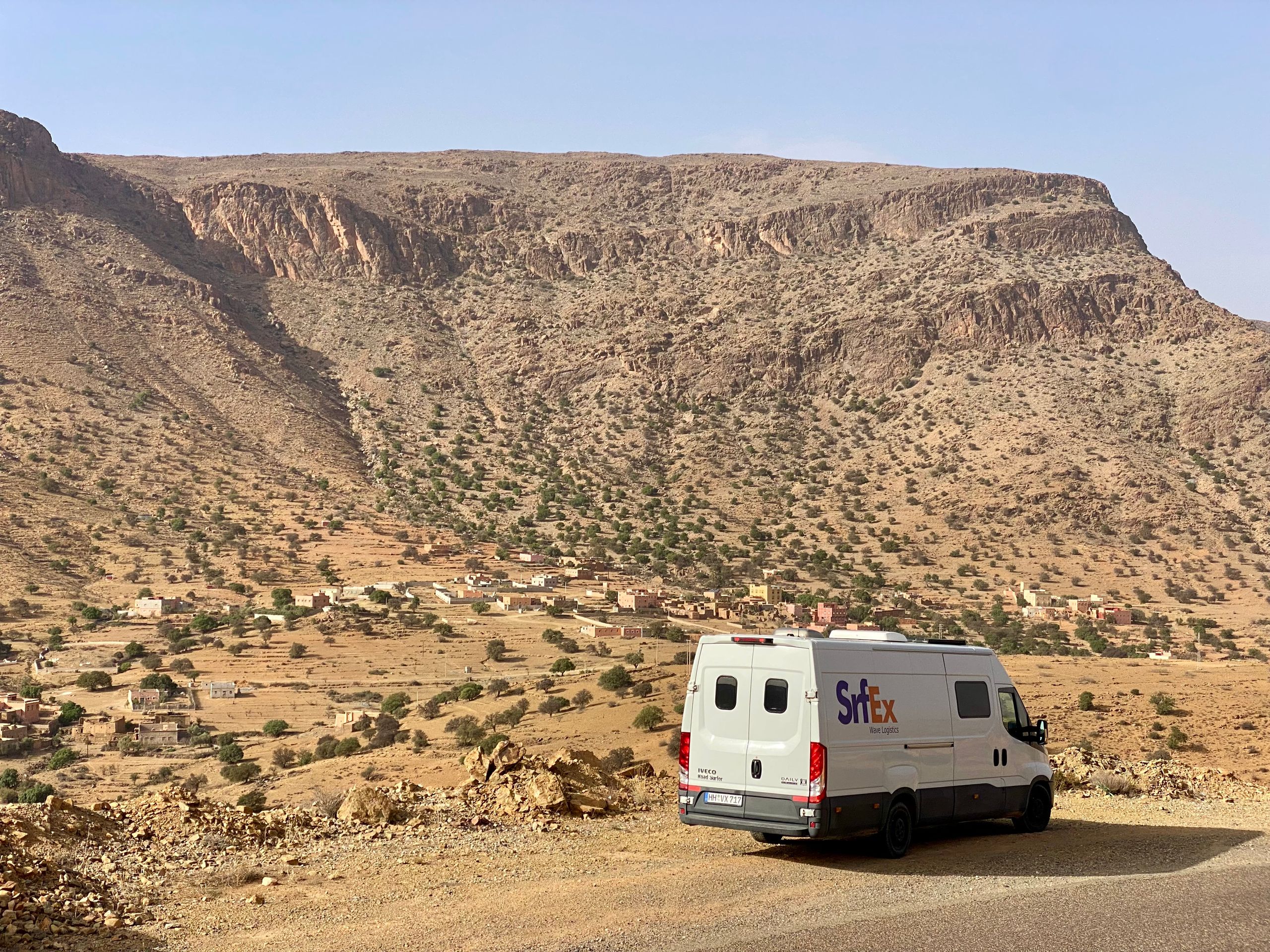
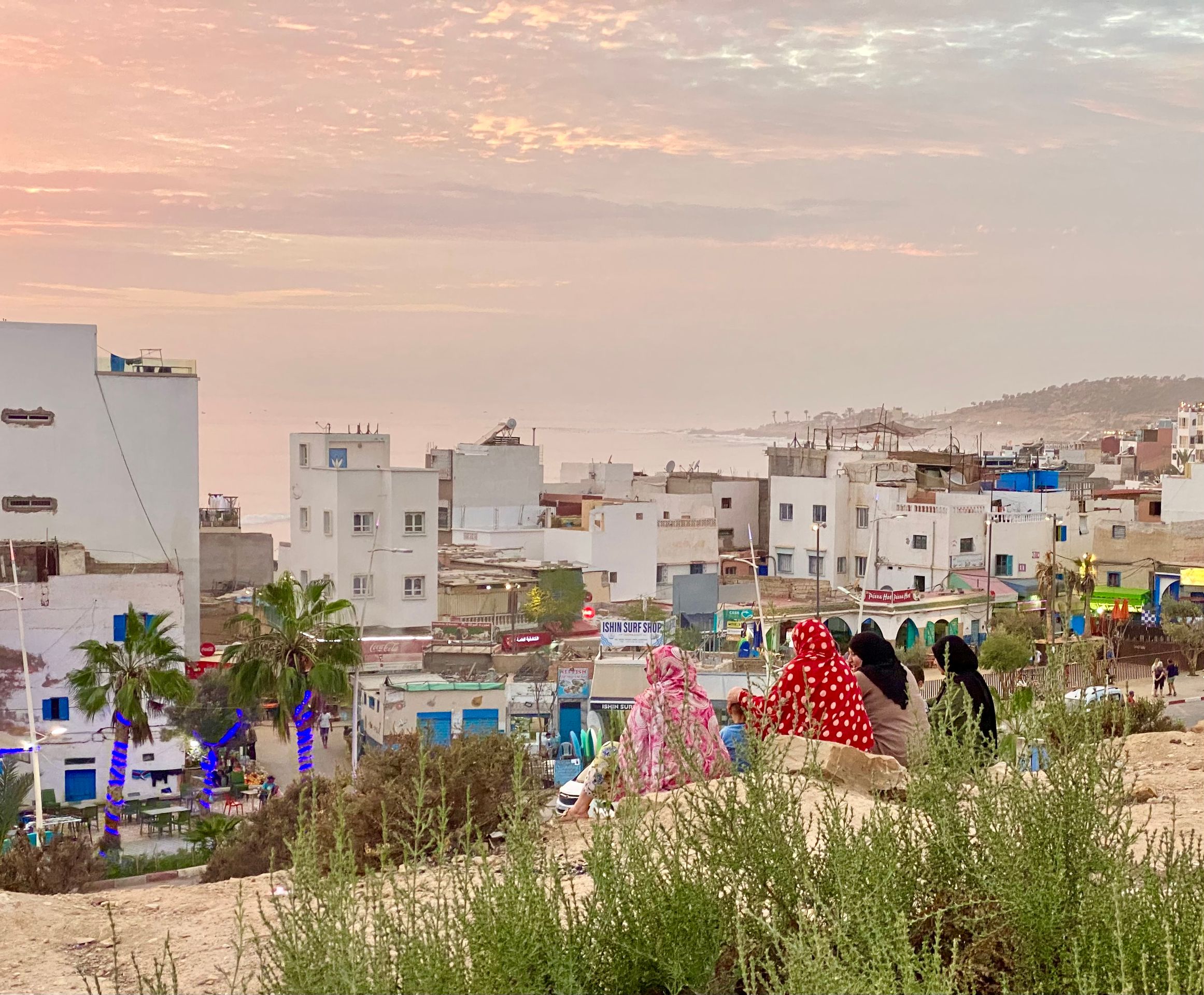
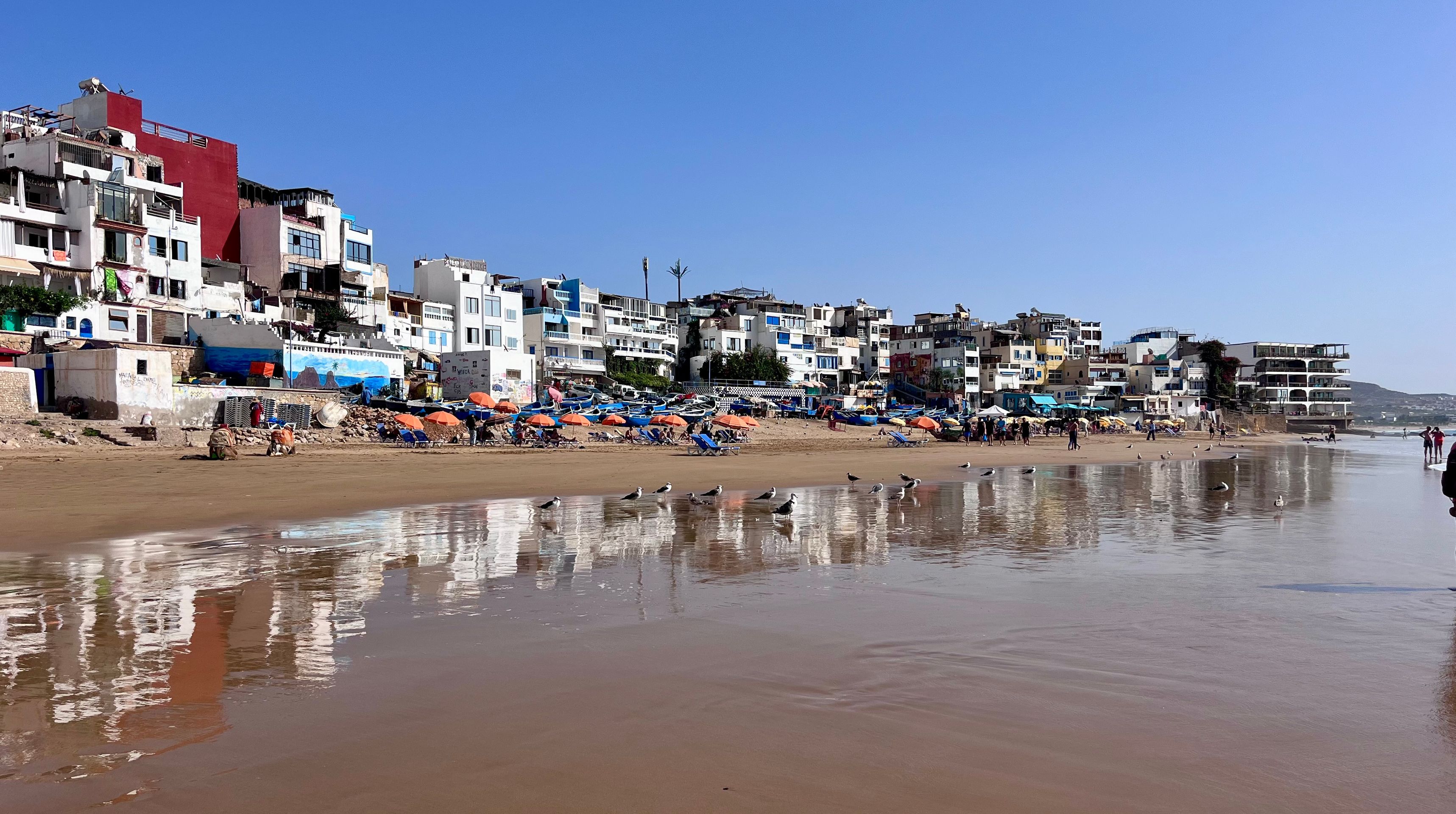
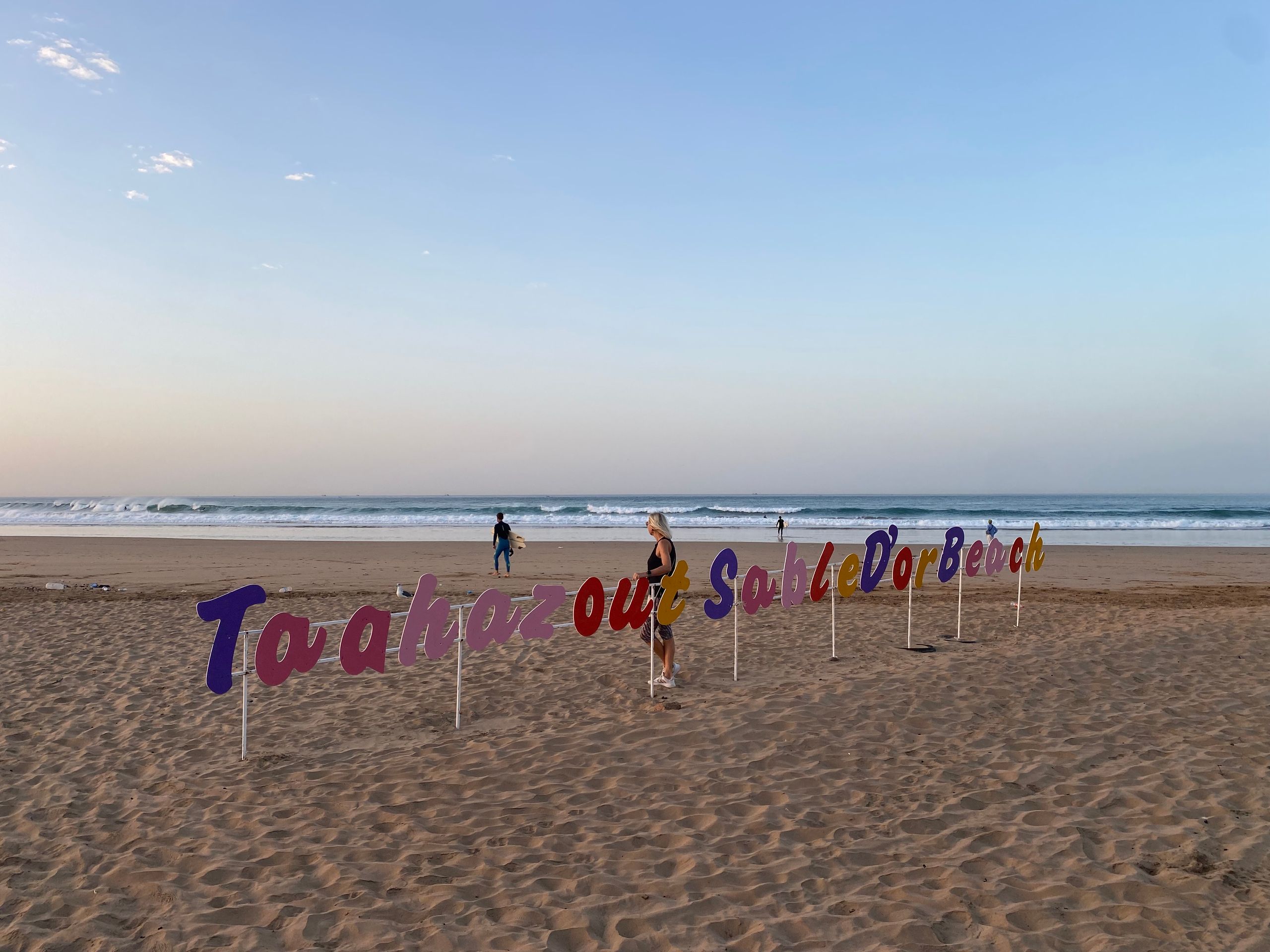
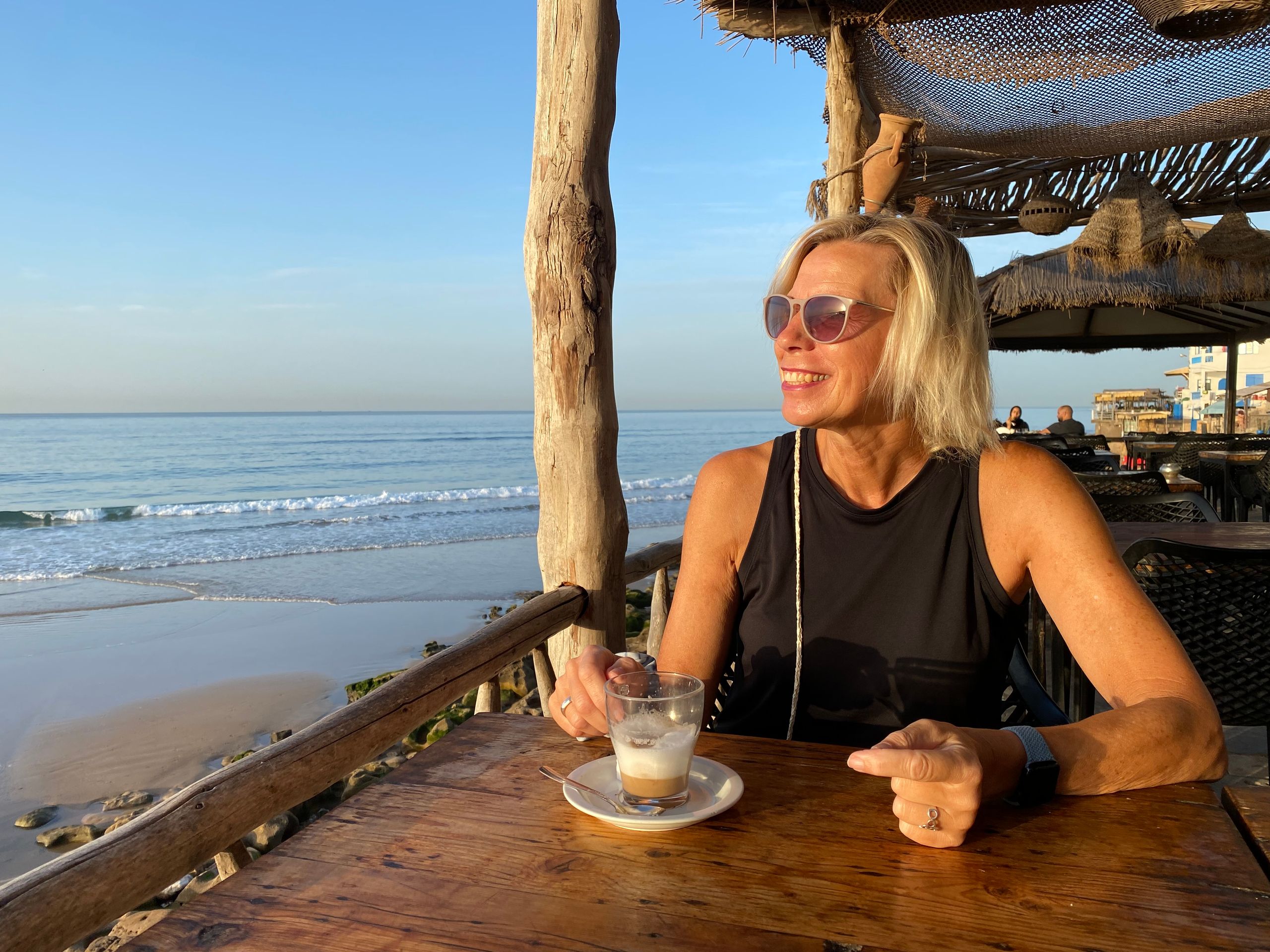
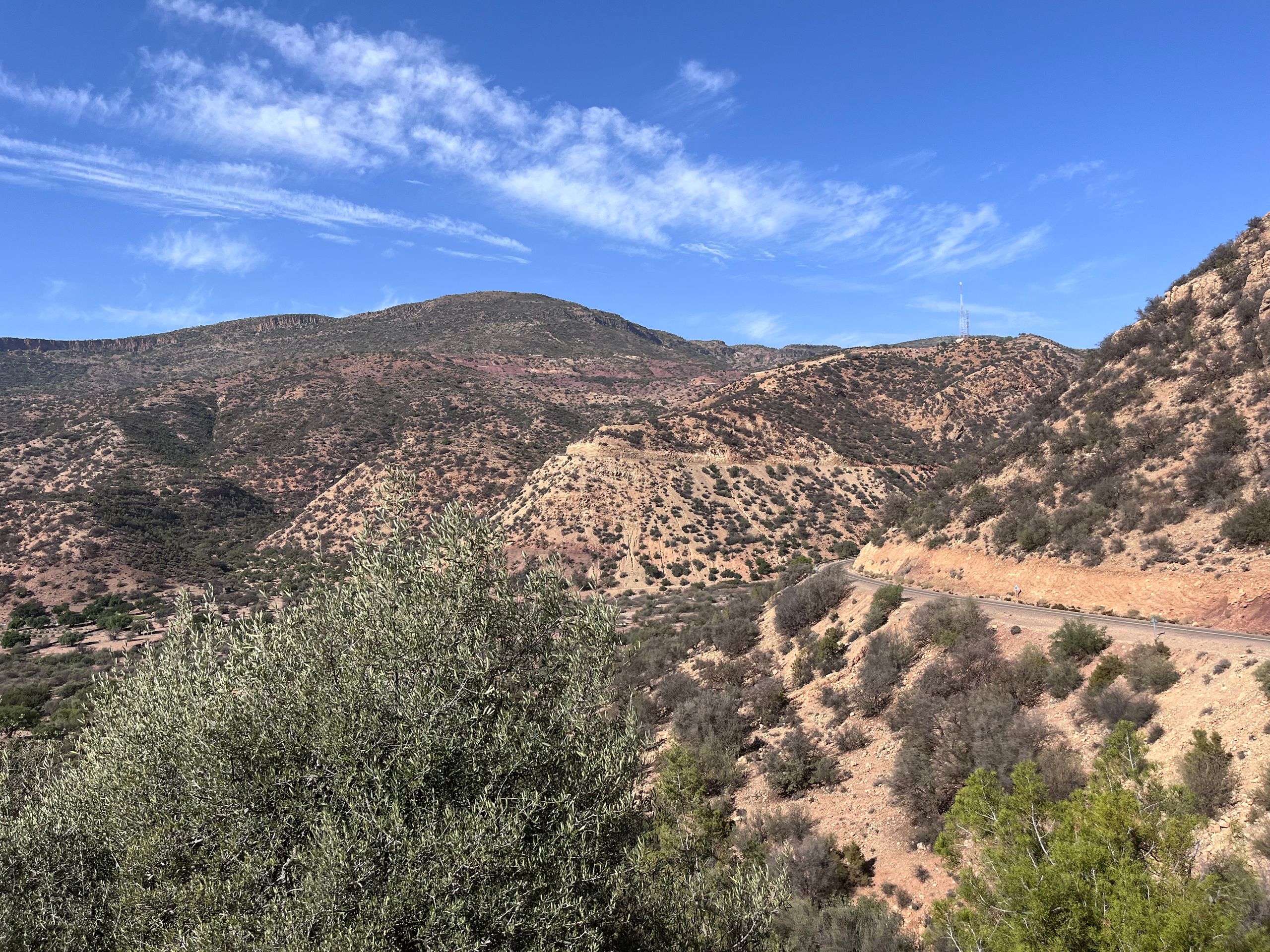
The next morning, we take a stroll around Tafraoute, buy a few things, and then head towards Taghazoute around noon. A beautiful, sparsely traveled route leads through the Anti-Atlas northwest towards Agadir. We can’t help but admire this impressive mountain panorama. For the approximately 180 km, we take nearly 4 hours; averaging over 50 km per hour is not achievable on Moroccan roads. In the evening, we reach Taghazoute, the last surfer stronghold on our list. A little above the town, there is a parking lot overlooking the Atlantic where one can camp with a mobile home. The boss here is Mohammed, who charges 30 DH for 'official' services as a parking attendant. But Mohammed is friendly, and we chat with him for a while. The parking lot's night guard sleeps in a structure that rather resembles a doghouse. In the evening, we go down to the sea and into the town, which presents itself quite nicely in the twilight with its many surfer cafes and restaurants along the beach.
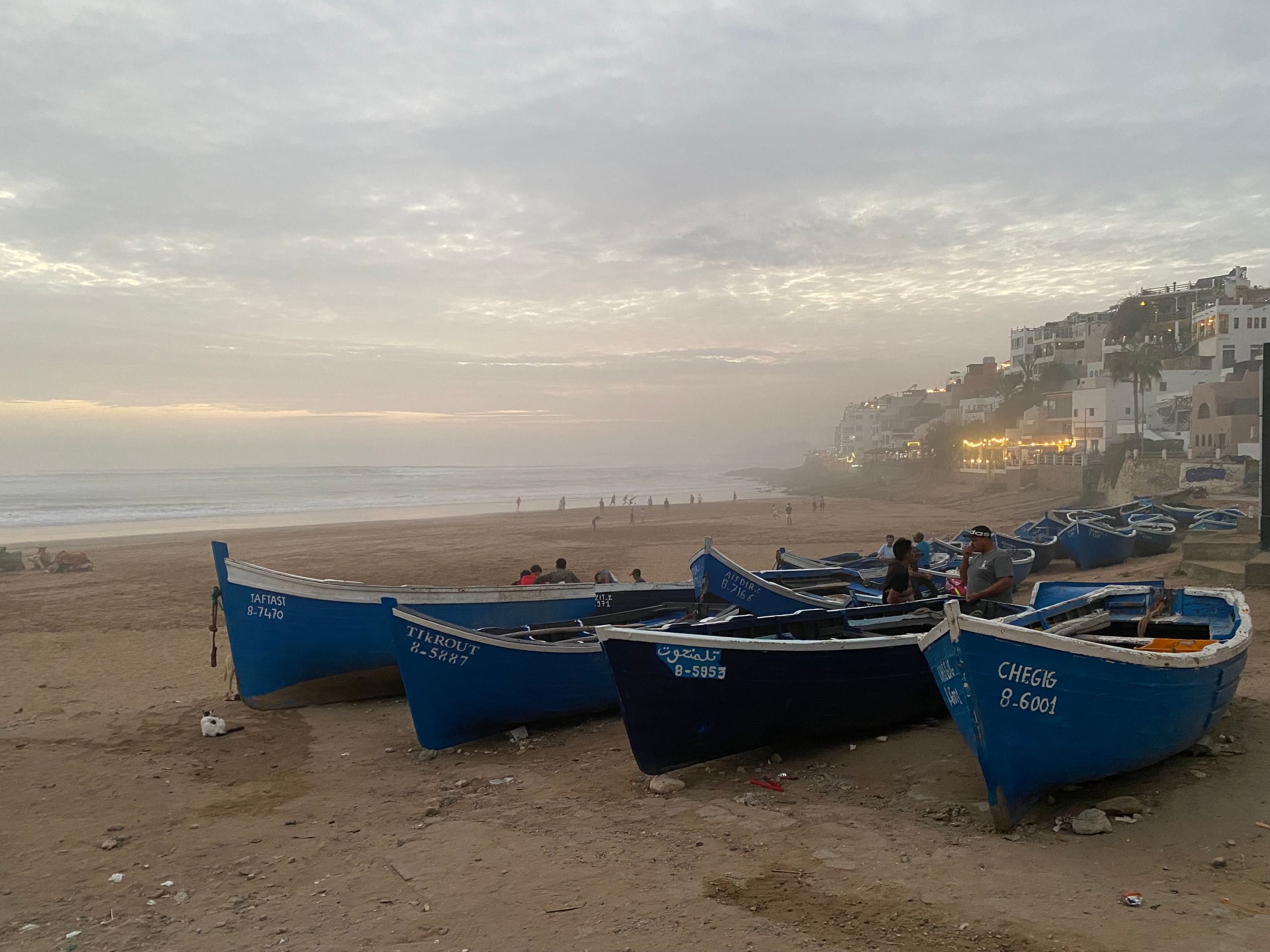
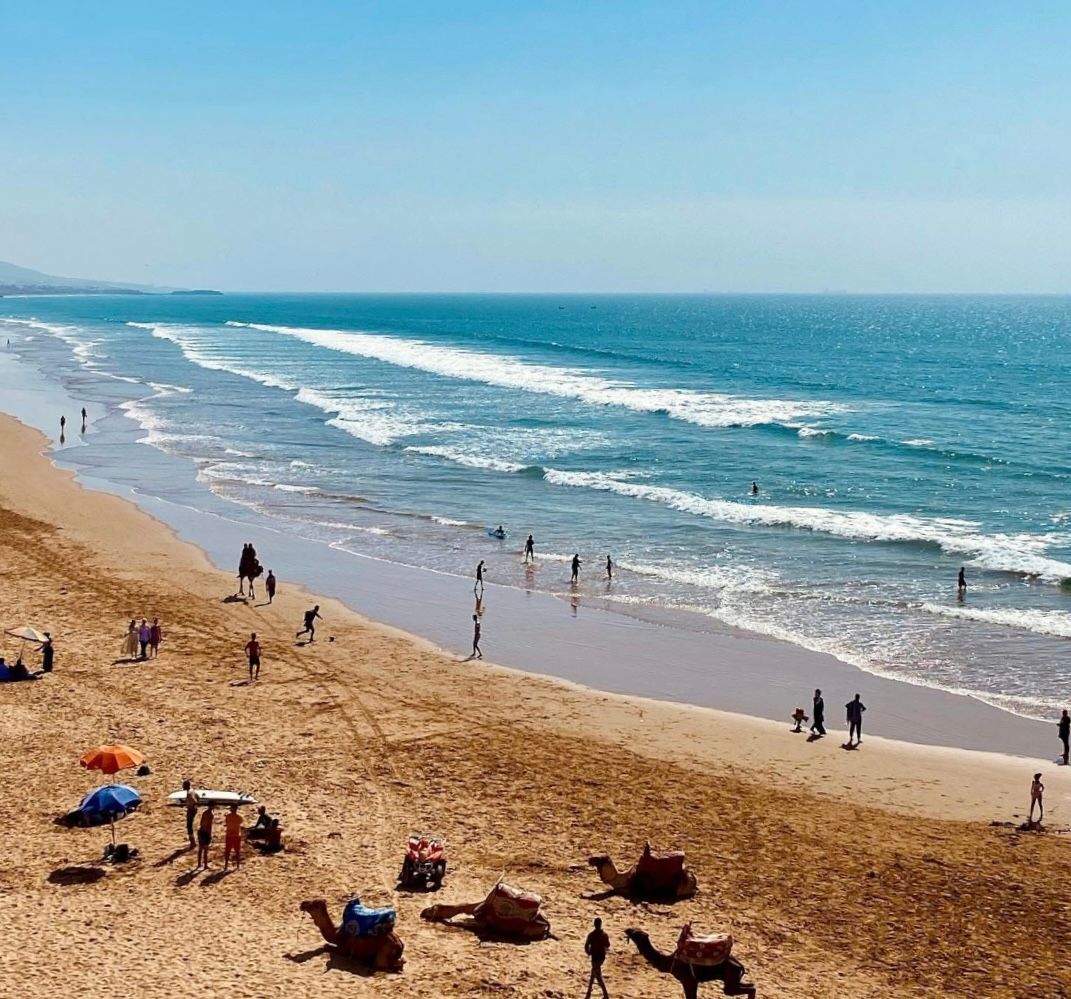
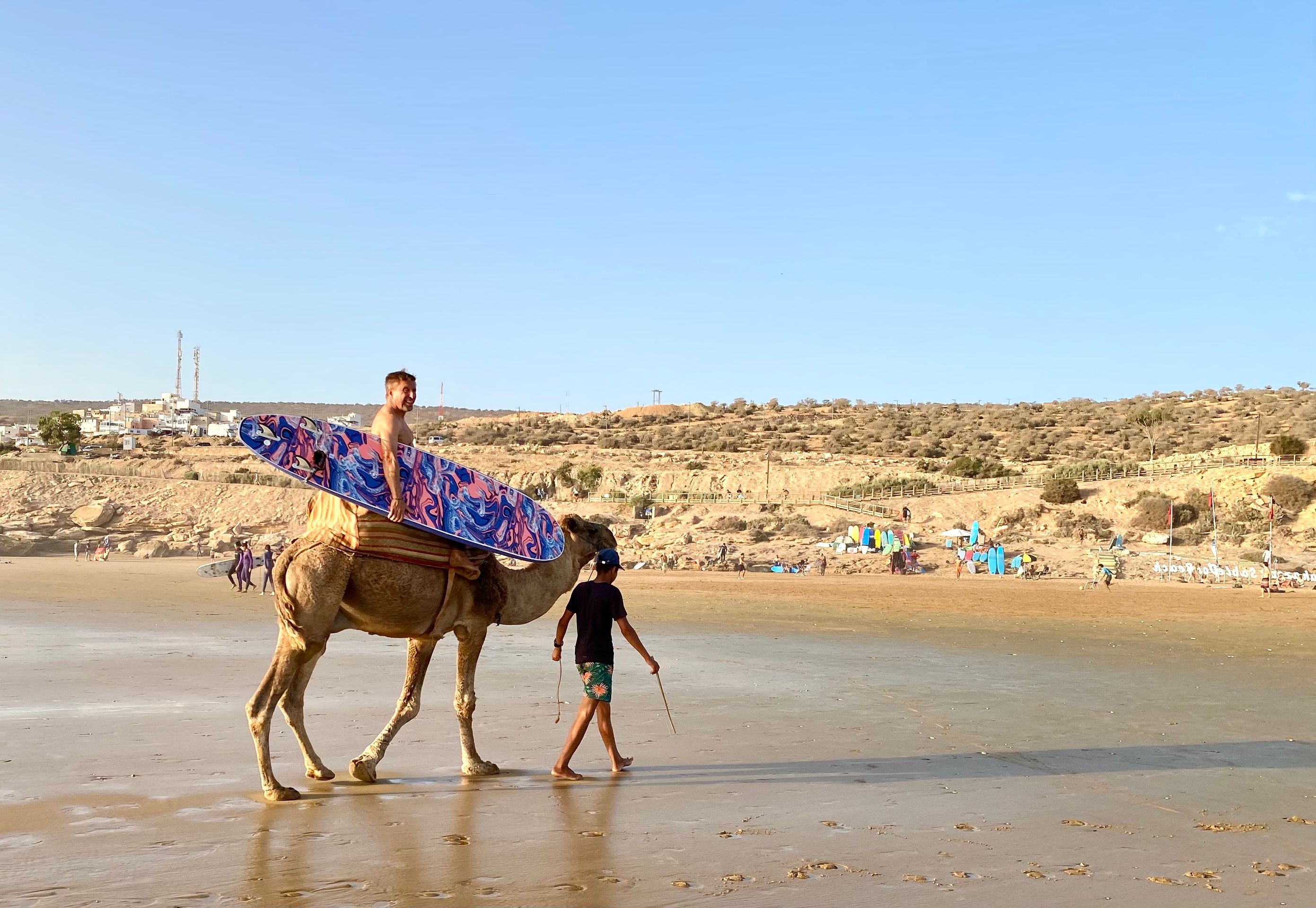
We start the next morning with a long walk along the beach. Our usual morning gymnastic routine in front of the van is, as so often in Morocco, skipped. Susi understandably has reservations about showcasing gymnastics exercises in this environment. After breakfast, we take a look at Taghazoute in daylight and are dismayed at how littered and dirty this little town is despite being quite charming. Why does no one among the city officials care about the problem here? It seems that the many tourists, mainly young surfers, are not particularly affected. Perhaps they find the atmosphere 'exotically appealing'? By the way, nearby Agadir is spick and span. It can be done! The waves are calling, and I plunge into the waves with my board while Susi finds a sunbed. Unfortunately, she cannot relax here as she is persistently accosted by tea and luggage vendors and camel herders. When I come out of the water, she is quite annoyed. We do manage to negotiate a deal with one of the camel herders: I have long wanted a photo of myself on a camel with a surfboard under my arm. The camel herder starts at an exorbitant 300 DH, but I manage to haggle him down to 50 DH, which is certainly a reasonable price for a photo.
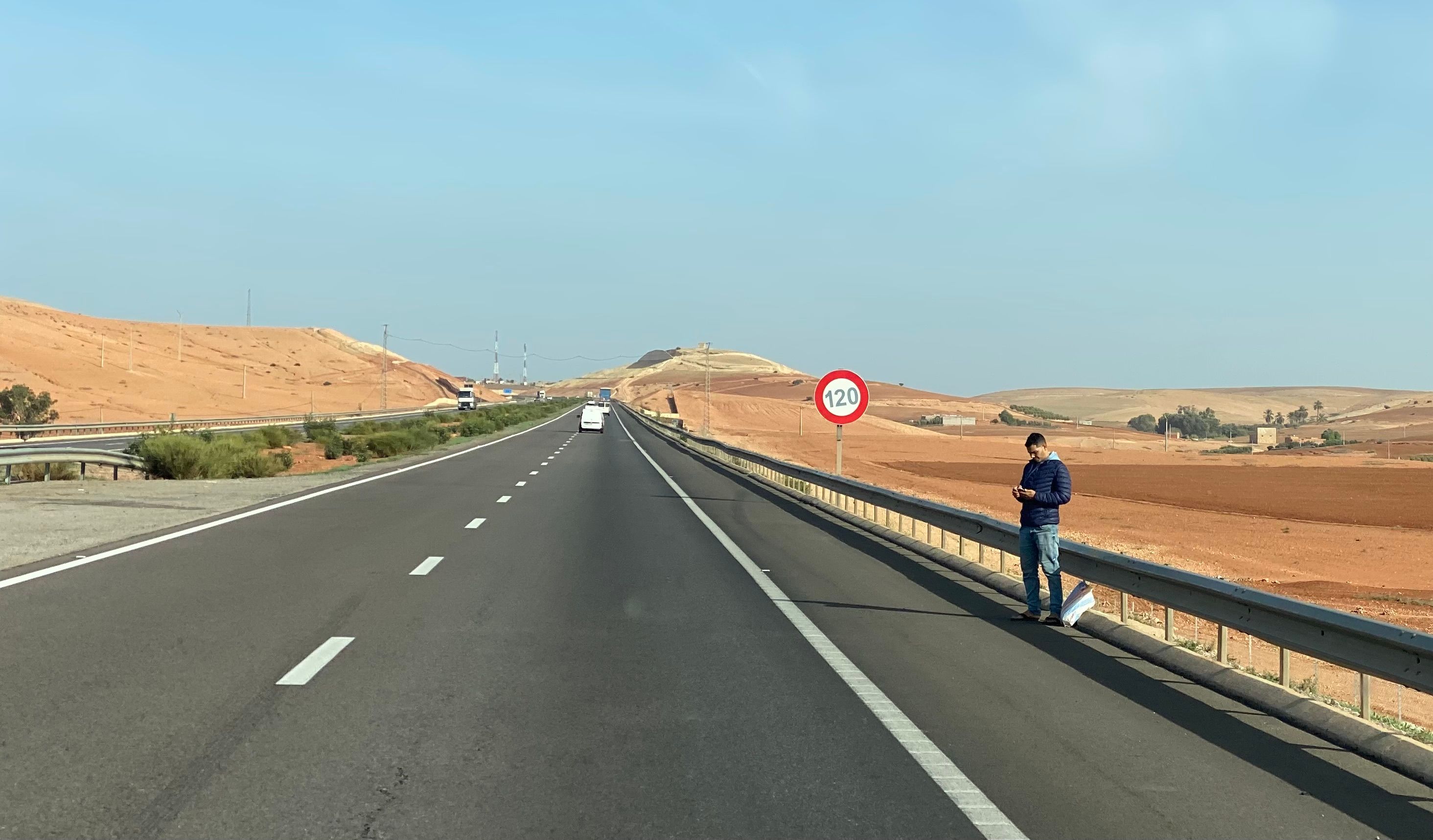
Today, on November 28, we leave the coast and thus the last surf spot behind. After a morning coffee at one of the nice surfer cafes in Taghazoute, we plan to drive through the so-called Paradise Valley towards Marrakech. Paradise Valley is an offshoot of the High Atlas that stretches from north of Agadir to the coast. A winding road runs along the Tamraght River through the idyllic and green valley. Numerous cafes have set up tables and chairs directly in the shallow river so that patrons can cool their feet while enjoying coffee. This approximately 80 km stretch is among the most beautiful mountain roads one can travel in Morocco. There is almost no traffic. By the way, Jimi Hendrix also visited Paradise Valley in the late 60s. At the end of Paradise Valley, we encounter the toll highway towards Marrakech and are glad to finally make some distance. In Marrakech, we make a night stop at CP Le Relais de Marrakech on our way north. By chance, we run into various travelers we have met at different stops in Morocco, among them the 'English crew', including Sarah and David and Julie and Eddie, whom we met at Erg Chebbi. In the evening, we sit together, sharing our experiences in Morocco. We haven’t experienced this in any other country — that you continuously run into familiar faces!
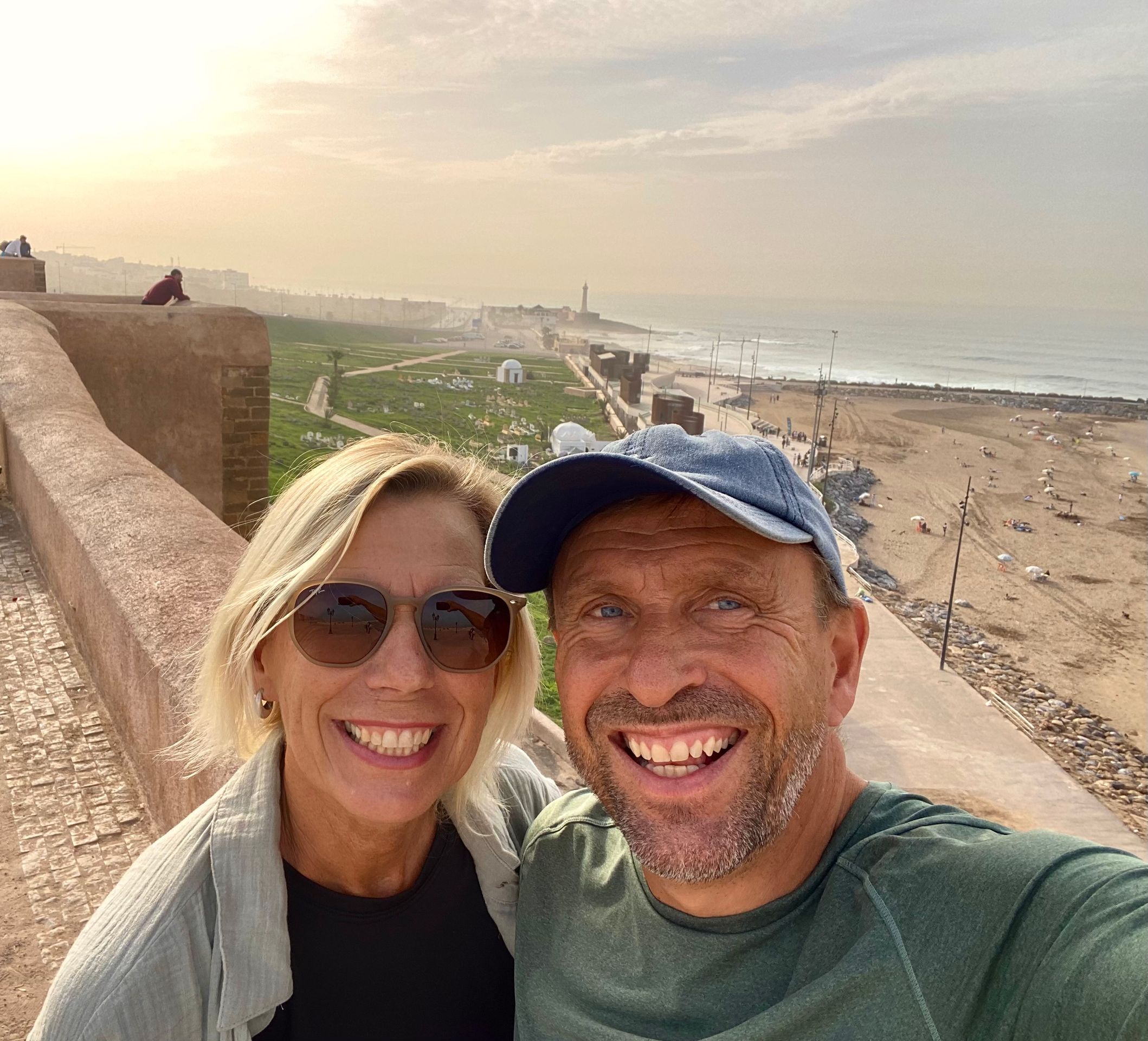
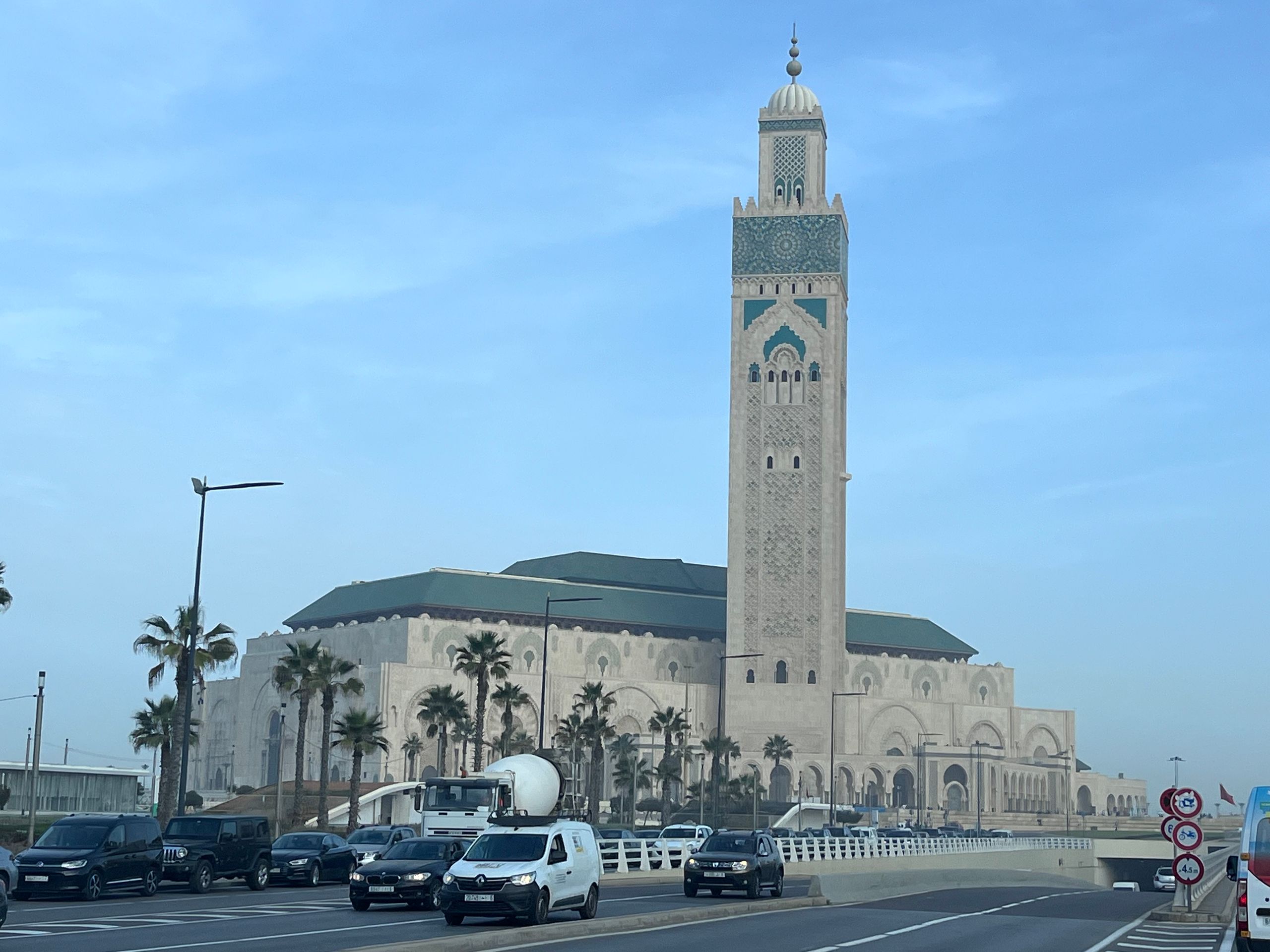
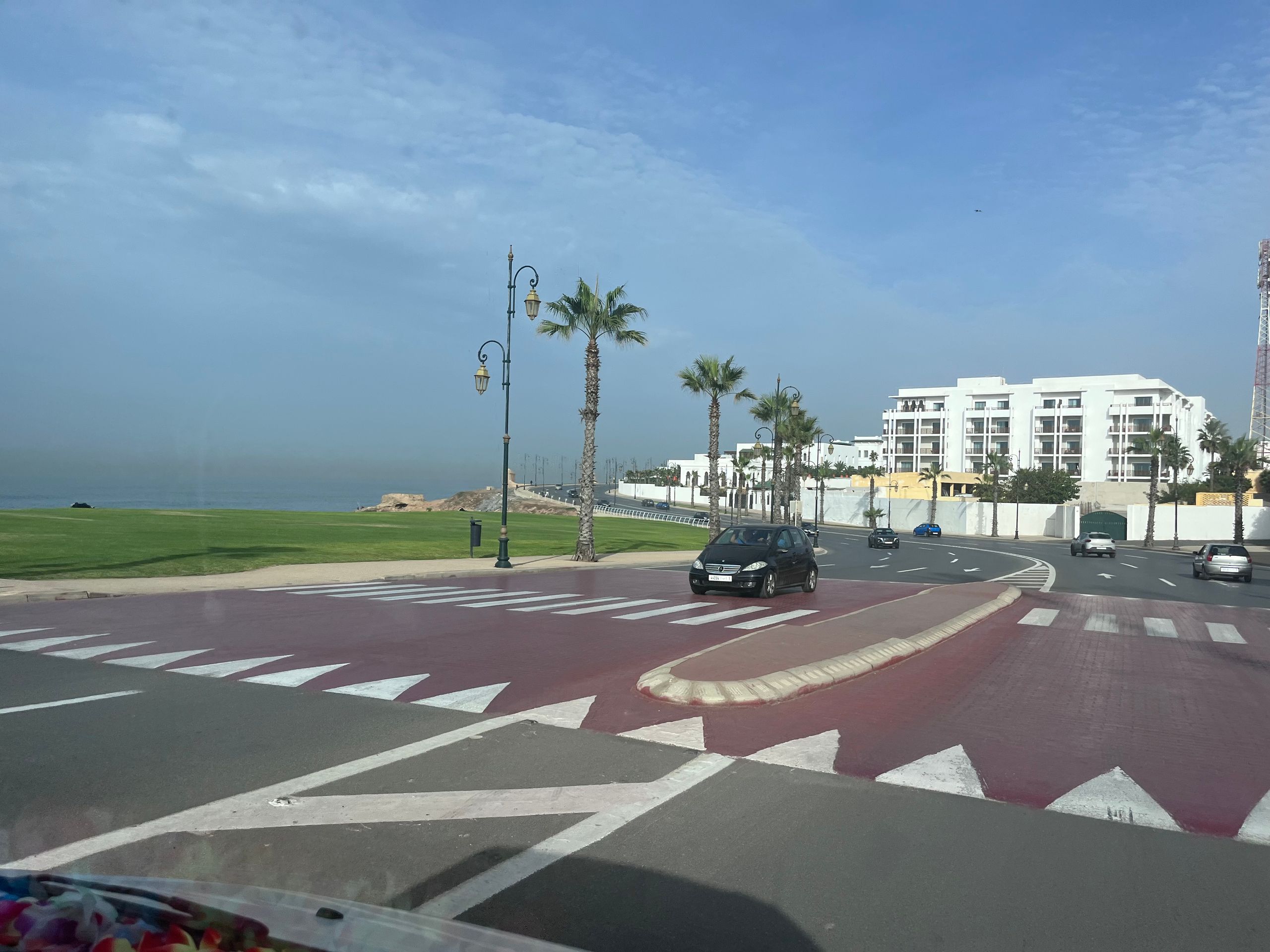
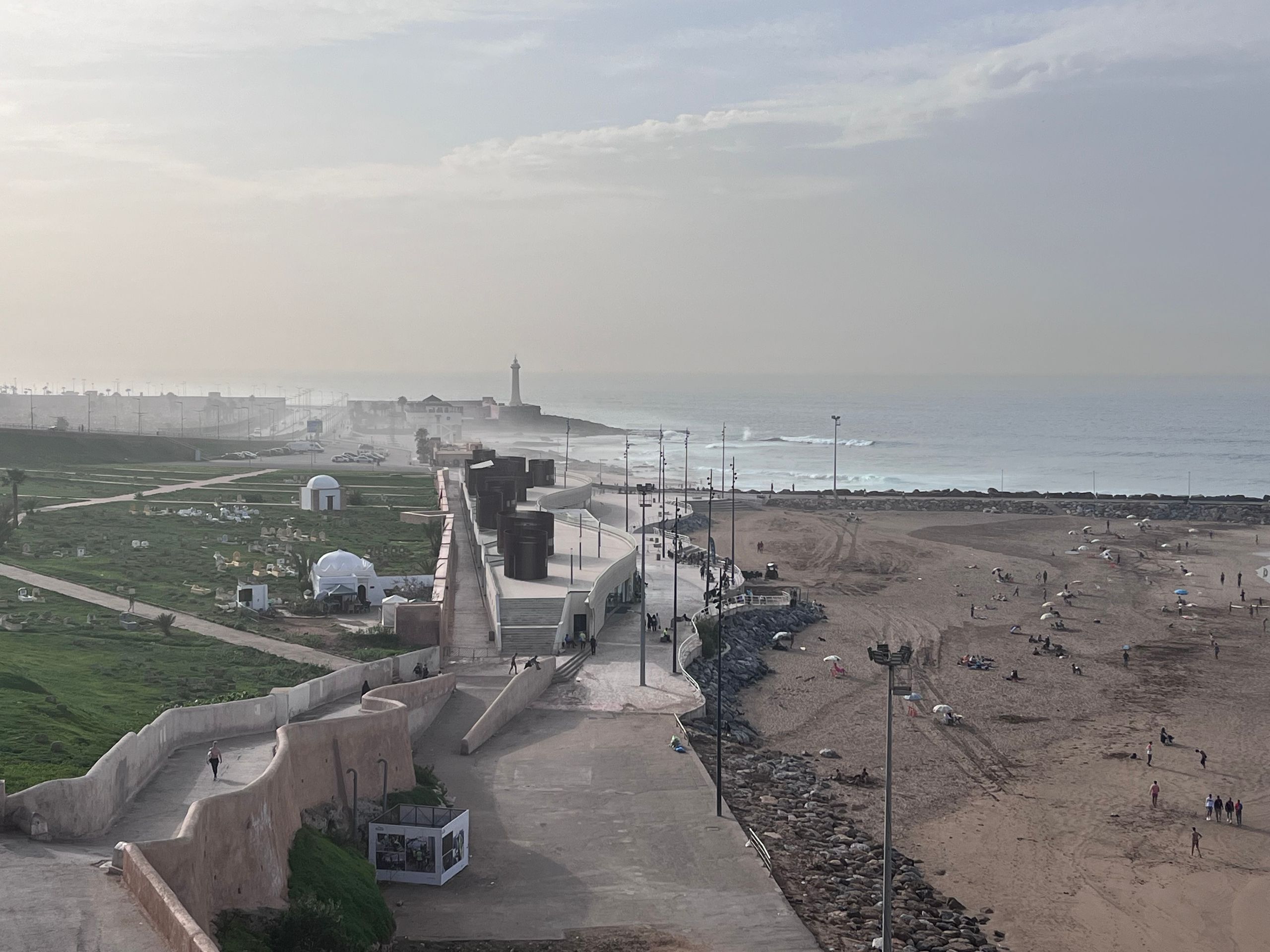
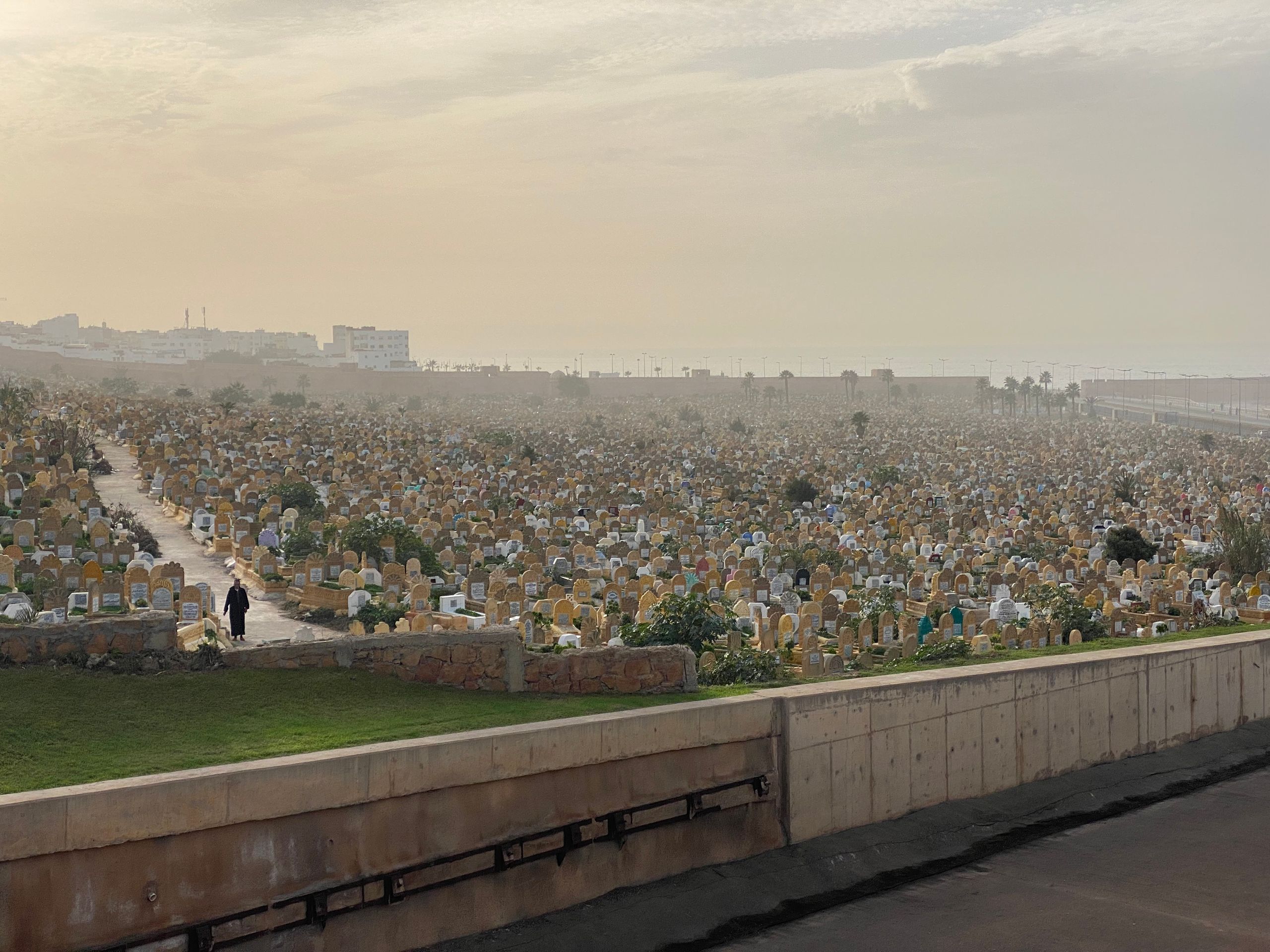
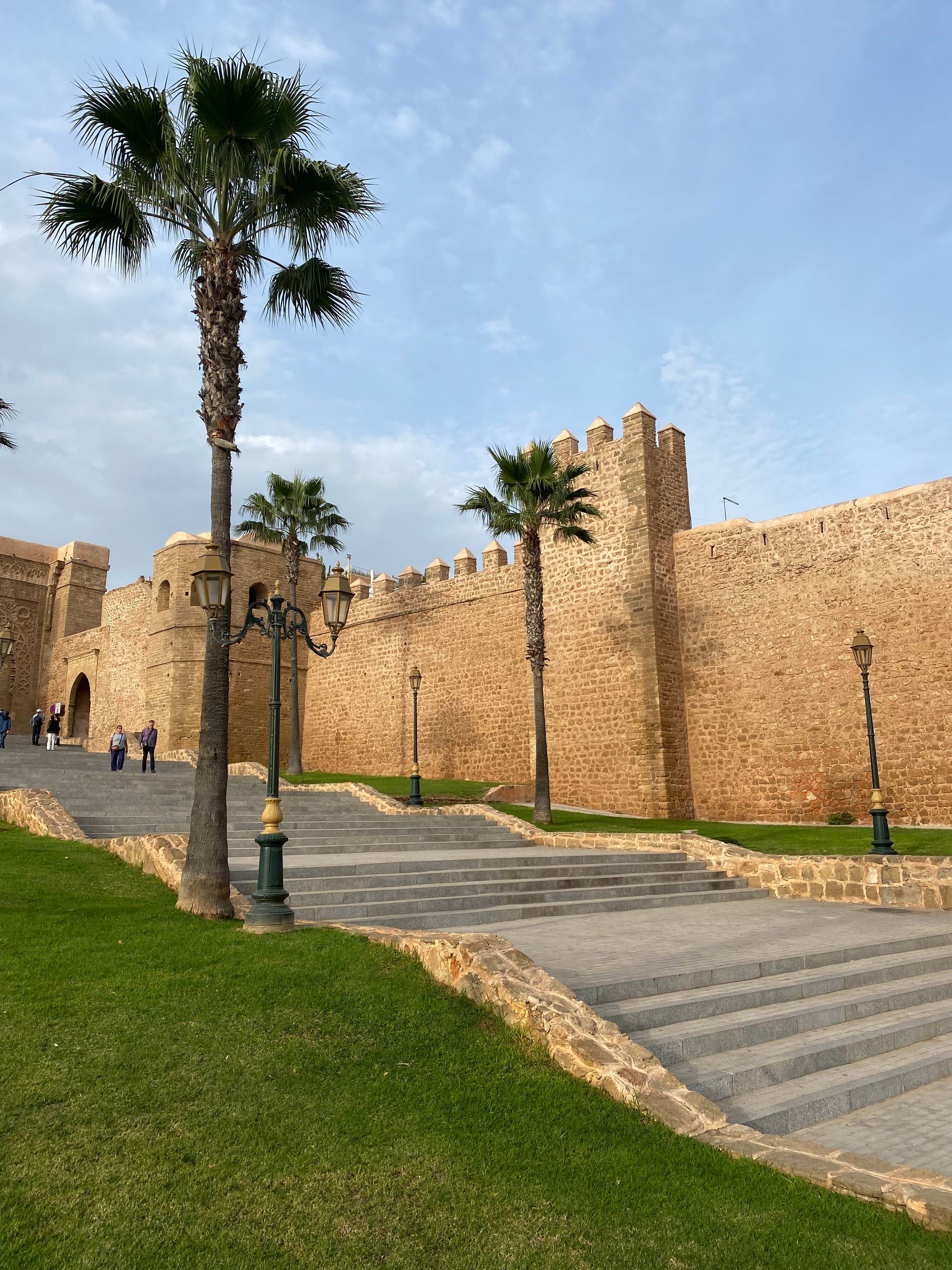
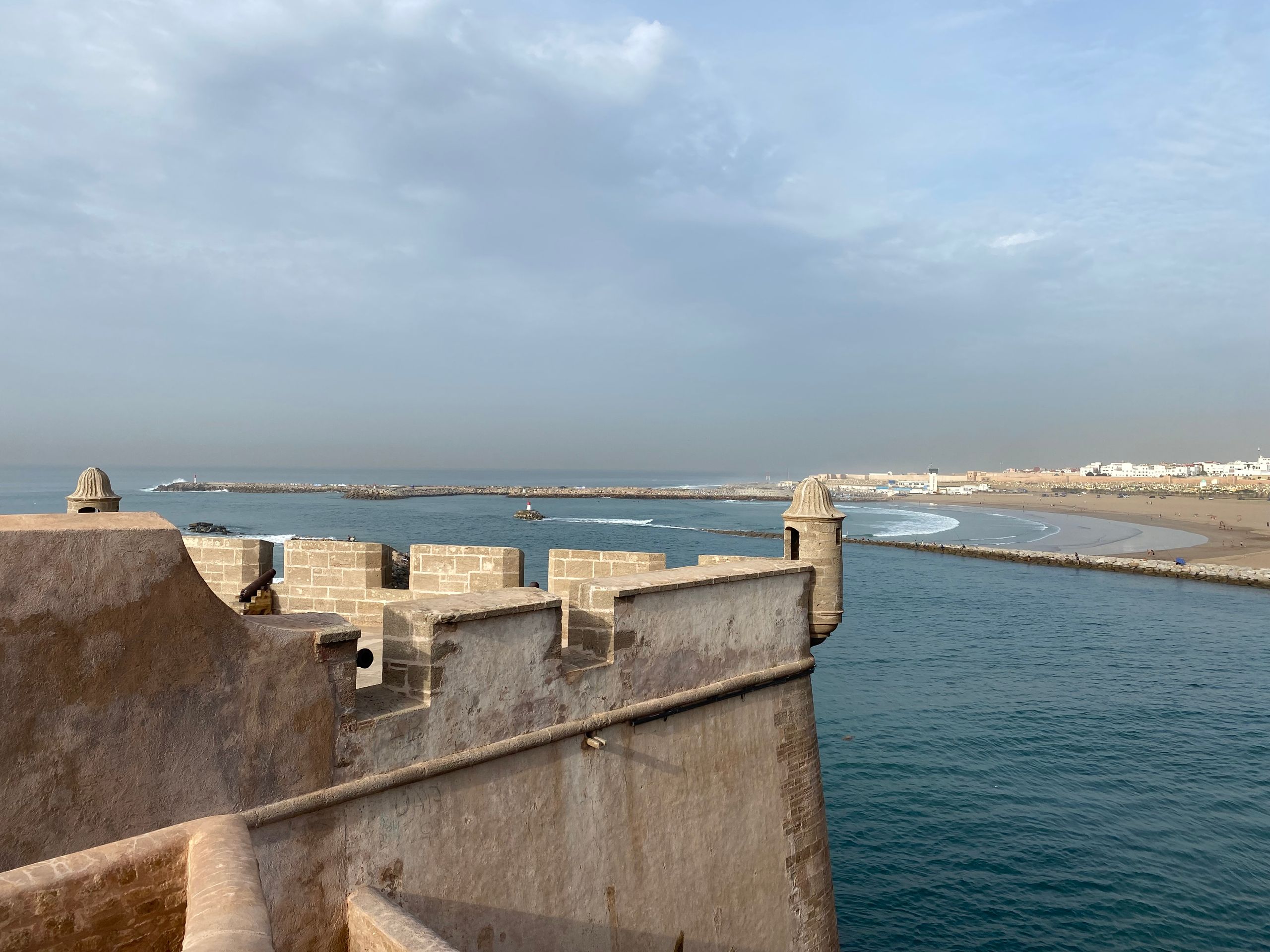
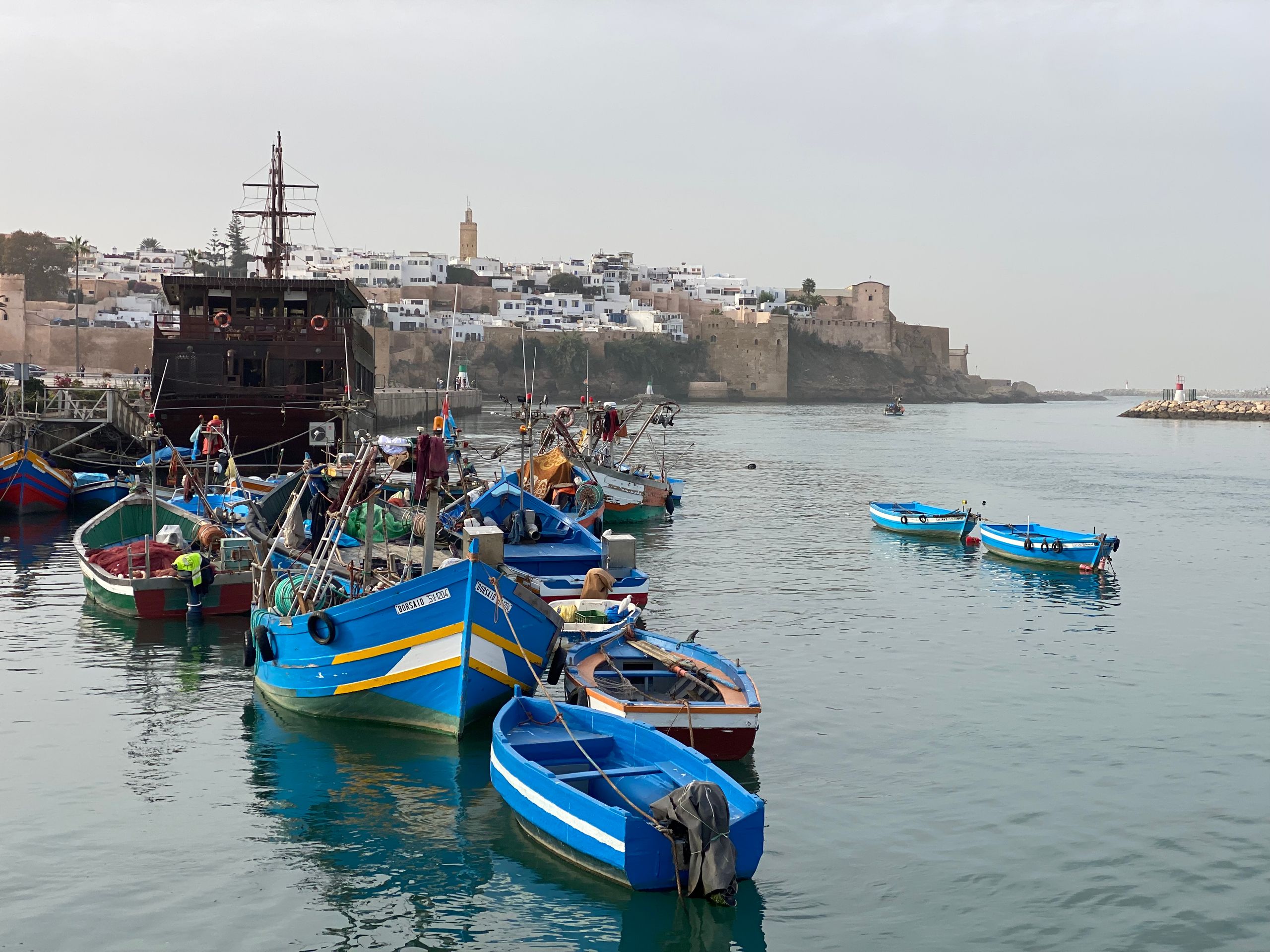
The next morning, we set off early. We have 400 km to travel and want to briefly visit Casablanca and Rabat along the way. Casablanca is said to be rather unremarkable except for the Hassan II Mosque, which is supposed to be beautiful and, as the only mosque in Morocco, accessible to non-Muslims. Unfortunately, we realize on the drive that it is Friday. Access for non-Muslims is also prohibited in the Casablanca Mosque during Friday prayers. We limit ourselves to a drive-by of the mosque, which sits right by the sea and is one of the largest mosques in the world, with its over 200-meter tall minaret. However, it was built in the early 1990s and is thus still a very young structure. Otherwise, the 4-million metropolis of Casablanca is fairly uninteresting, and we continue driving about 80 km north. Here lies Rabat, the capital and one of Morocco's four royal cities. Rabat is situated on the Atlantic and at the confluence of the Bou Regreg River. From the parking lot by the sea, we take a walk along the city beach with many surfers towards the fortress-like and picturesque Kasbah des Oudayas, and from there along the promenade of the river back towards the city. The scenery by the river feels familiar; we have been here before in 1984! In Rabat resides King Mohammed VI. The city appears (therefore) spotless, even the fine flying sand is swept from the shore road with brooms. We are all the more surprised that the otherwise beautiful city beach is very littered.
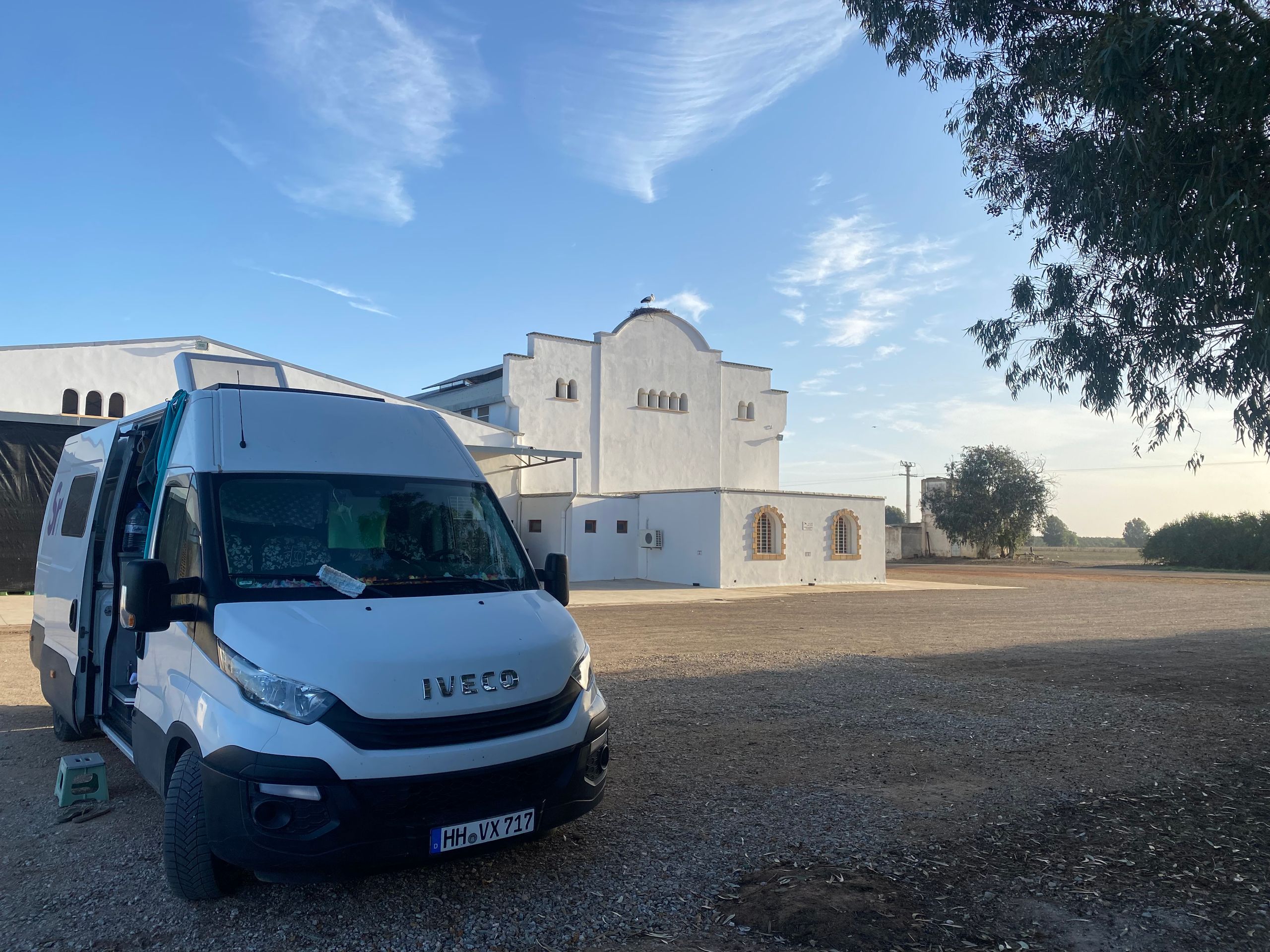
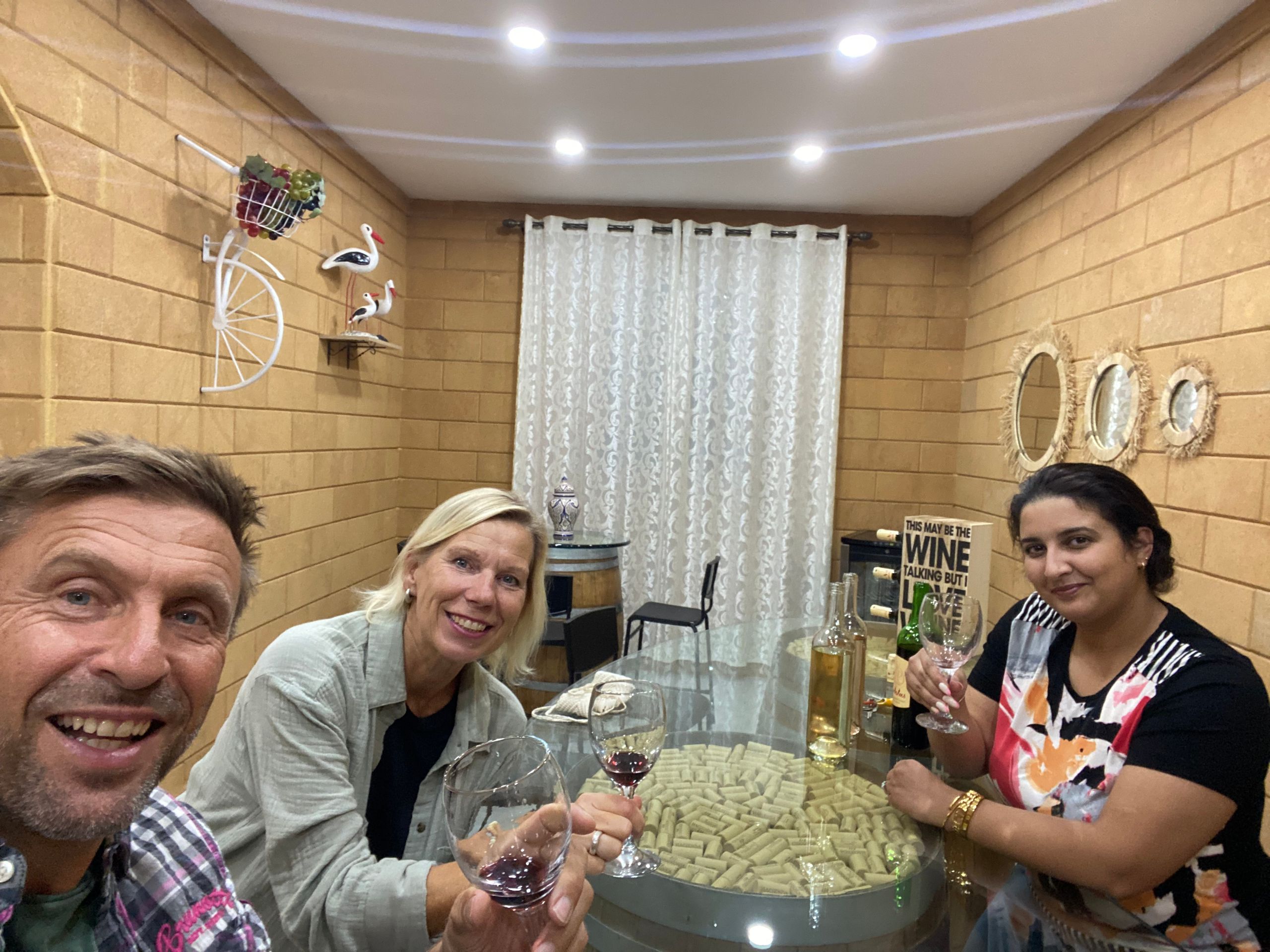
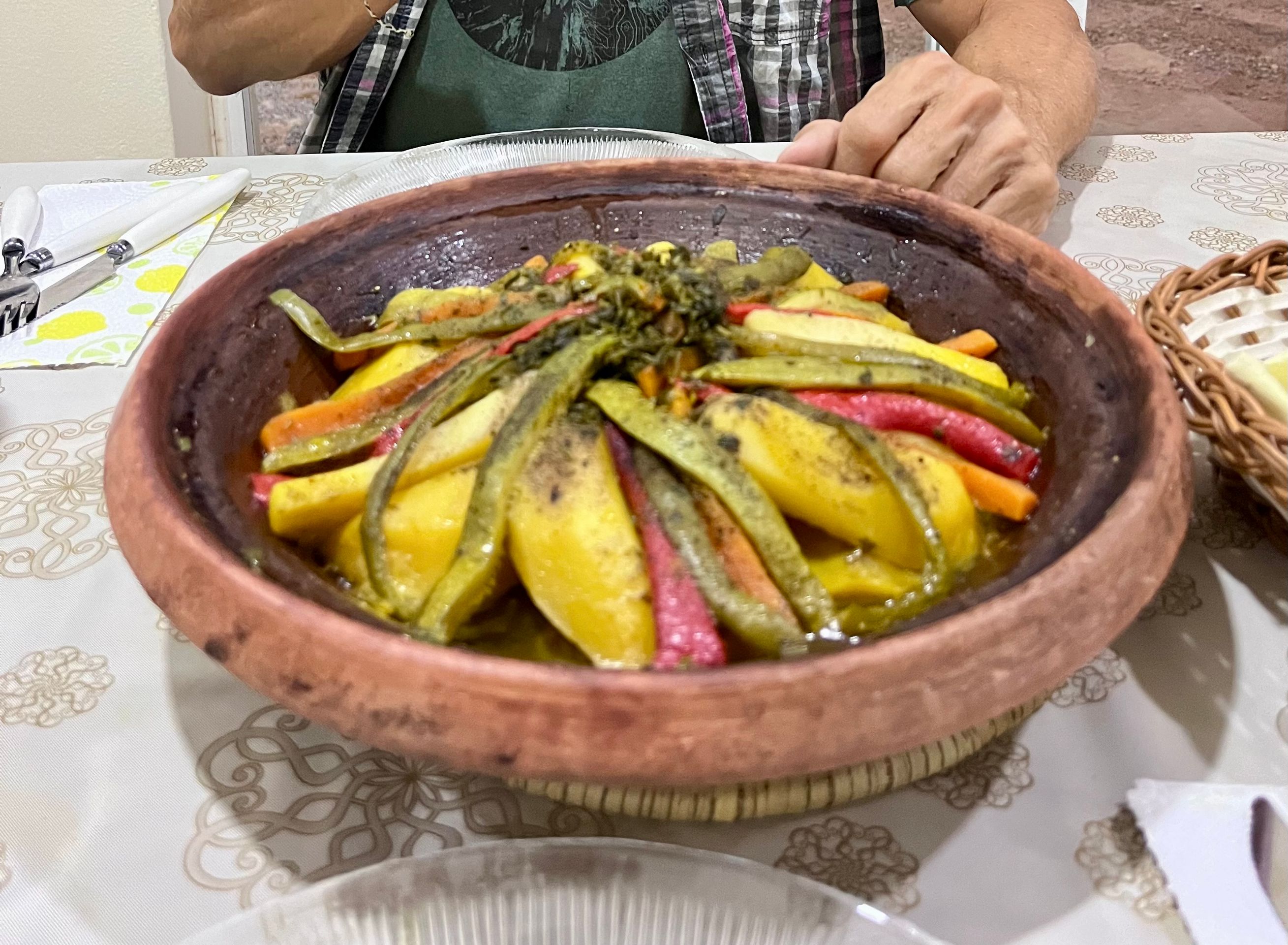
From Rabat, we make the approximately 50 km journey to a vineyard that offers overnight stays for motorhomes. We previously signed up for a wine tasting and dinner via email and are looking forward to it. Upon arriving at the Hacienda de Cicognges (Hacienda of the Storks, which indeed nest there), we find ourselves to be the only motorhome for miles, and it looks quite lonely as well. However, after some time, Wafae, the lady of the house, welcomes us, and we have a delightful wine tasting, during which we learn a lot about the history of winemaking in Morocco. Apparently, many Moroccans drink wine, but never with meals, as we find out. From the tasting, we can choose a bottle, which will be served during dinner. By the way, the red wine from the Hacienda is delicious! And the tagine that Wafae prepared for us is the best we've eaten in Morocco. Sated, satisfied, and a bit tipsy, we crash into our van and sleep soundly.
On the morning of November 30, we set off from the Stork Hacienda for the second to last day of our round trip in Morocco. From Tiflet, we head north towards the Rif Mountains. In the evening, we announced our arrival for the night at Monim's farm (see Reisseblog Morocco #1). When we roll onto the farm early in the evening, we are almost knocked out: almost every available space is occupied by motorhomes! A total of 12-14 motorhomes are on the small farm's grounds, where we had previously stood alone with the French couple from Perpignan. Maybe we shouldn’t have awarded a 5***** in the Park-4-Night app? Monim greets us very warmly as old friends but seems very stressed. It's clear that the family is overwhelmed by the influx of guests. Nevertheless, he insists that we will have dinner. In the end, we wait over two hours for something to eat that his heavily pregnant wife Hawta (who also looks quite stressed) is somehow preparing. As we lay down to sleep in the van that night, we wonder how long this can continue and when the additional camping operations of this truly lovely family will become overwhelming for them.
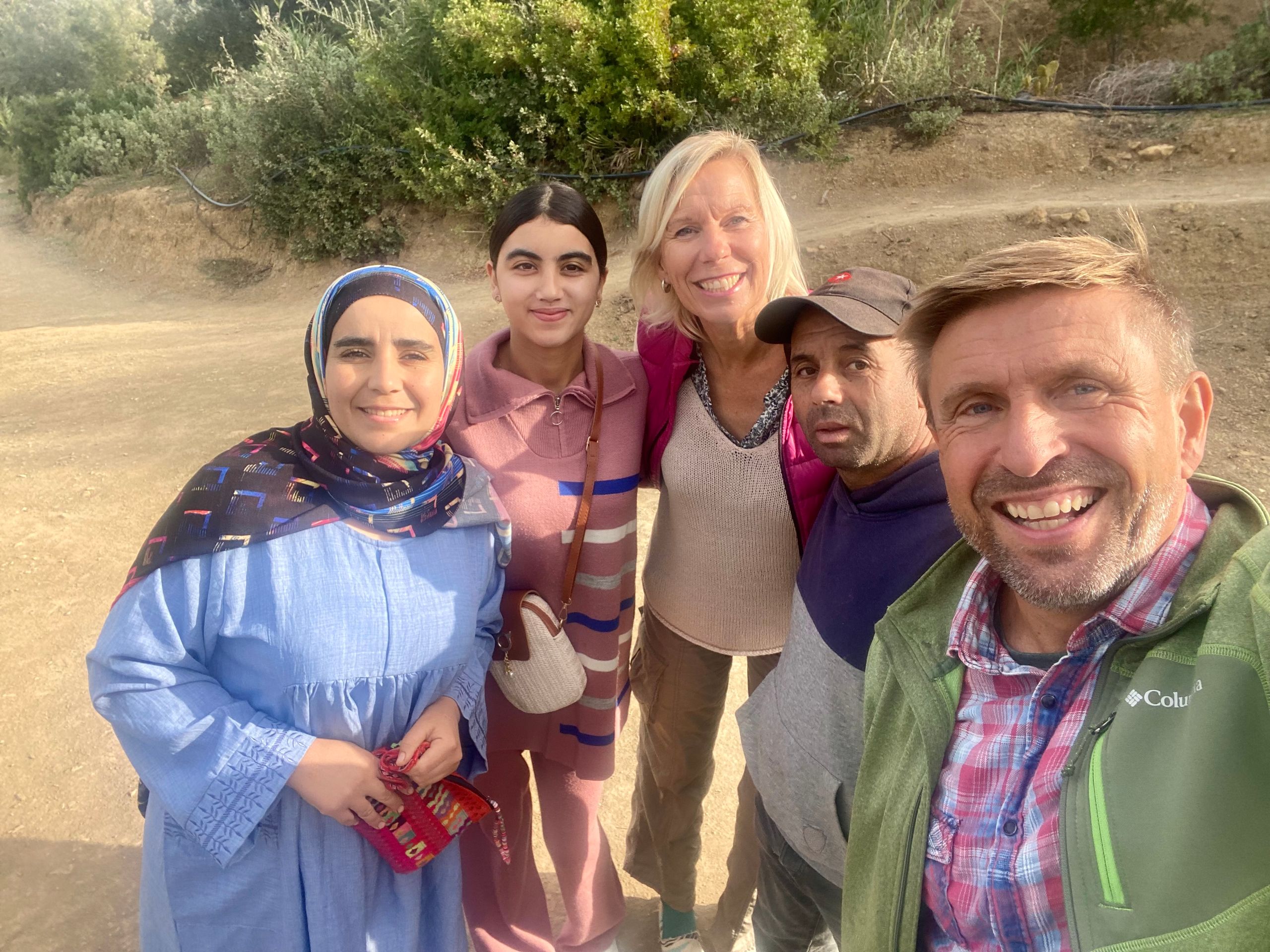
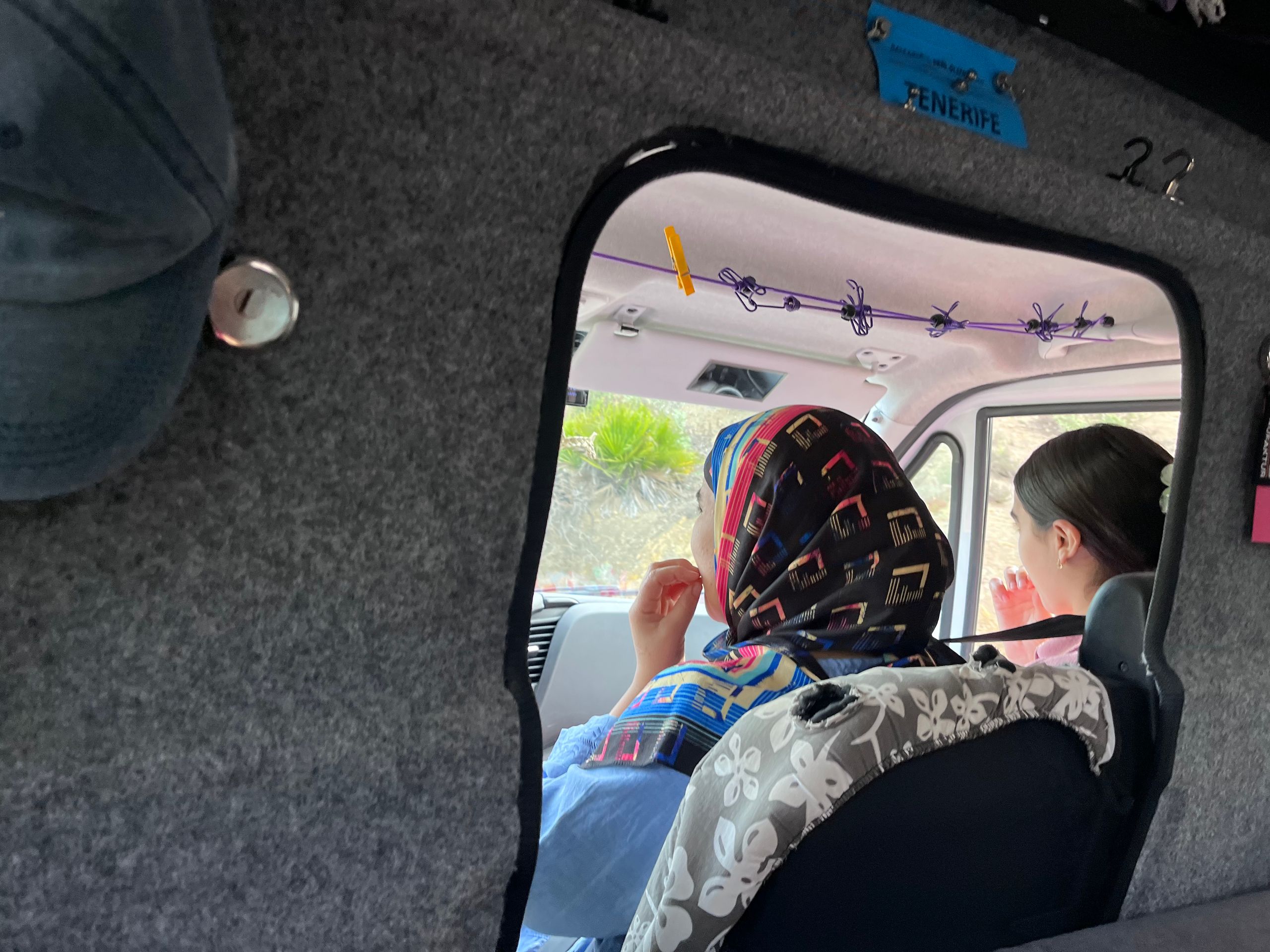
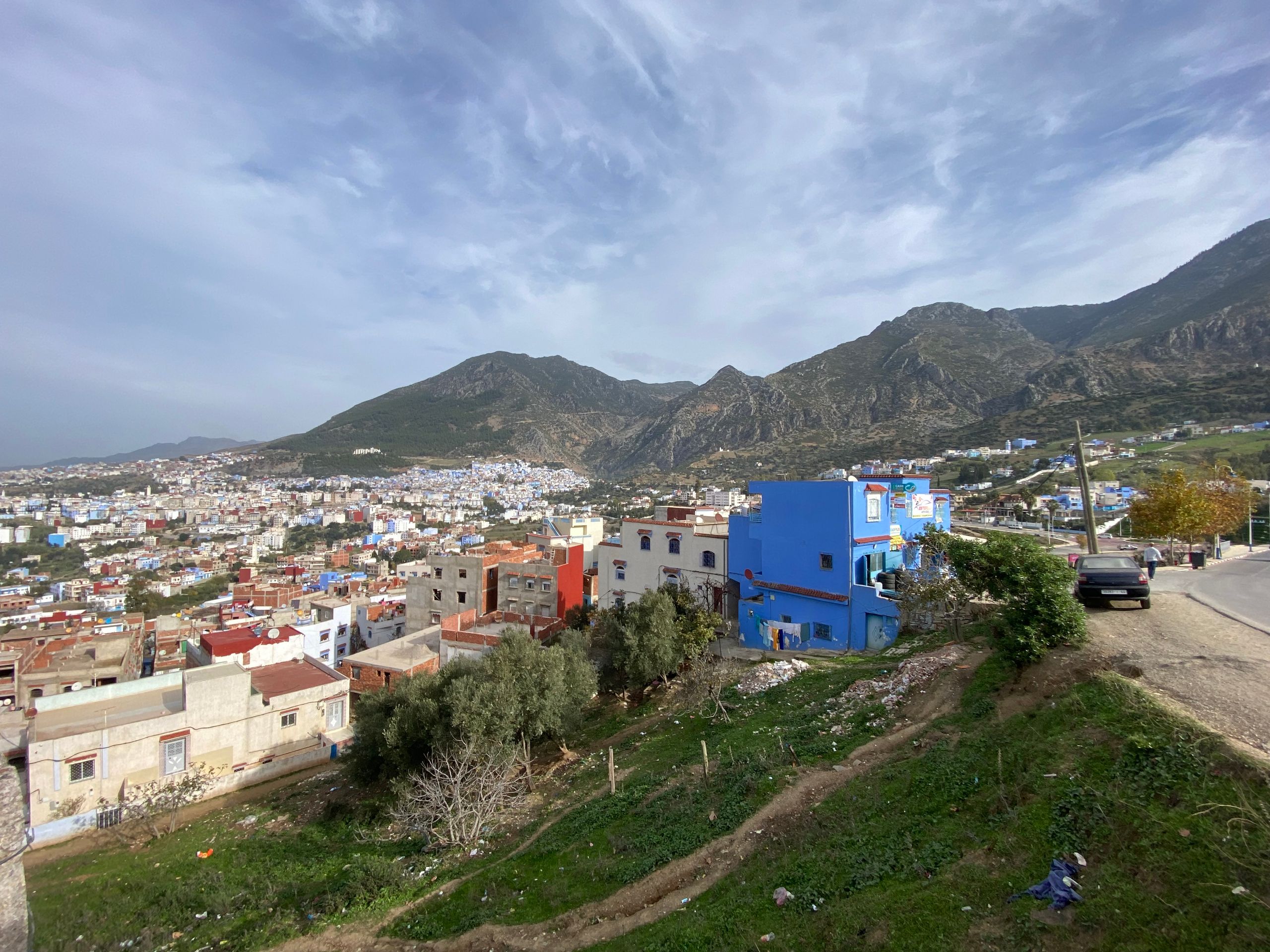
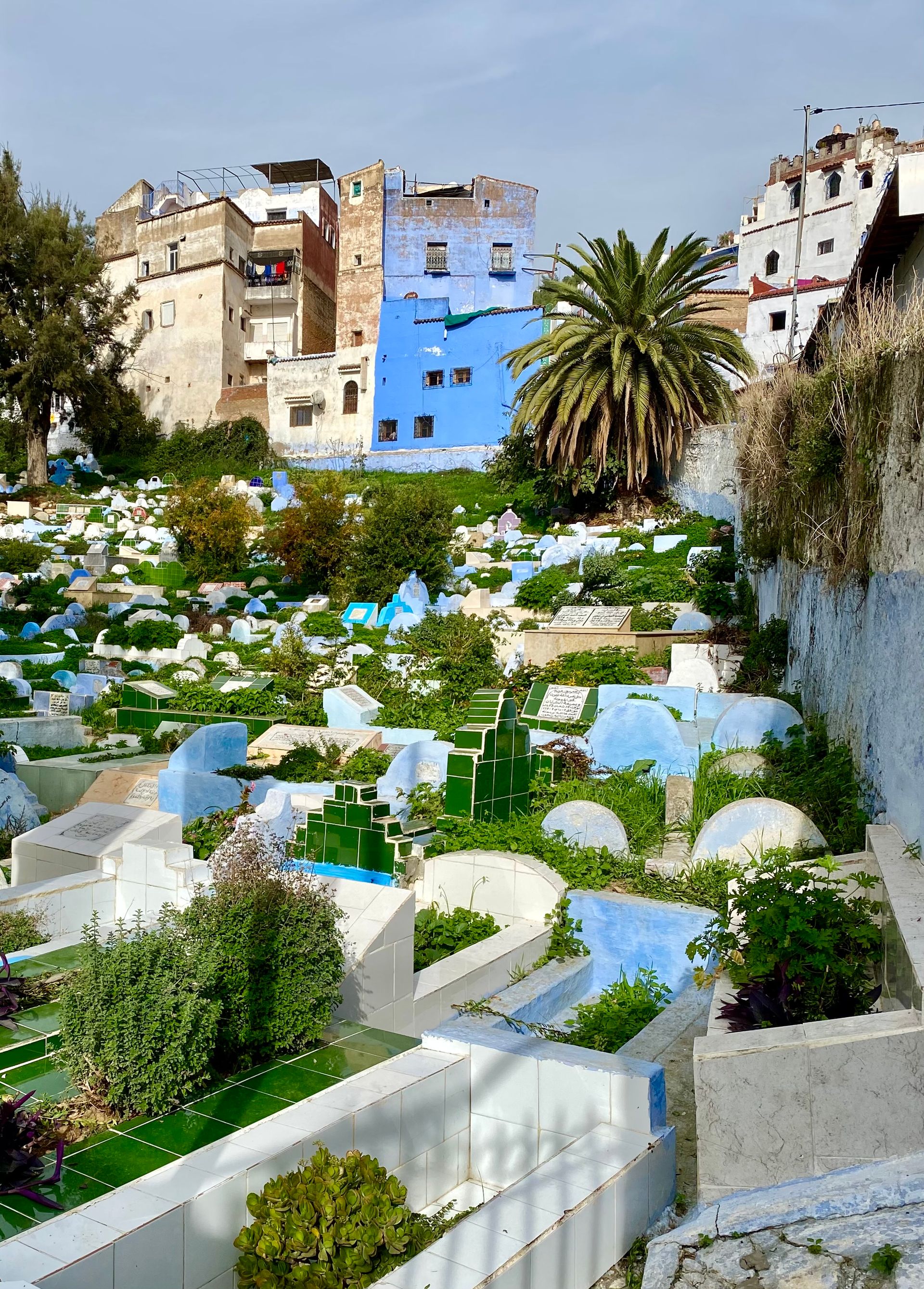
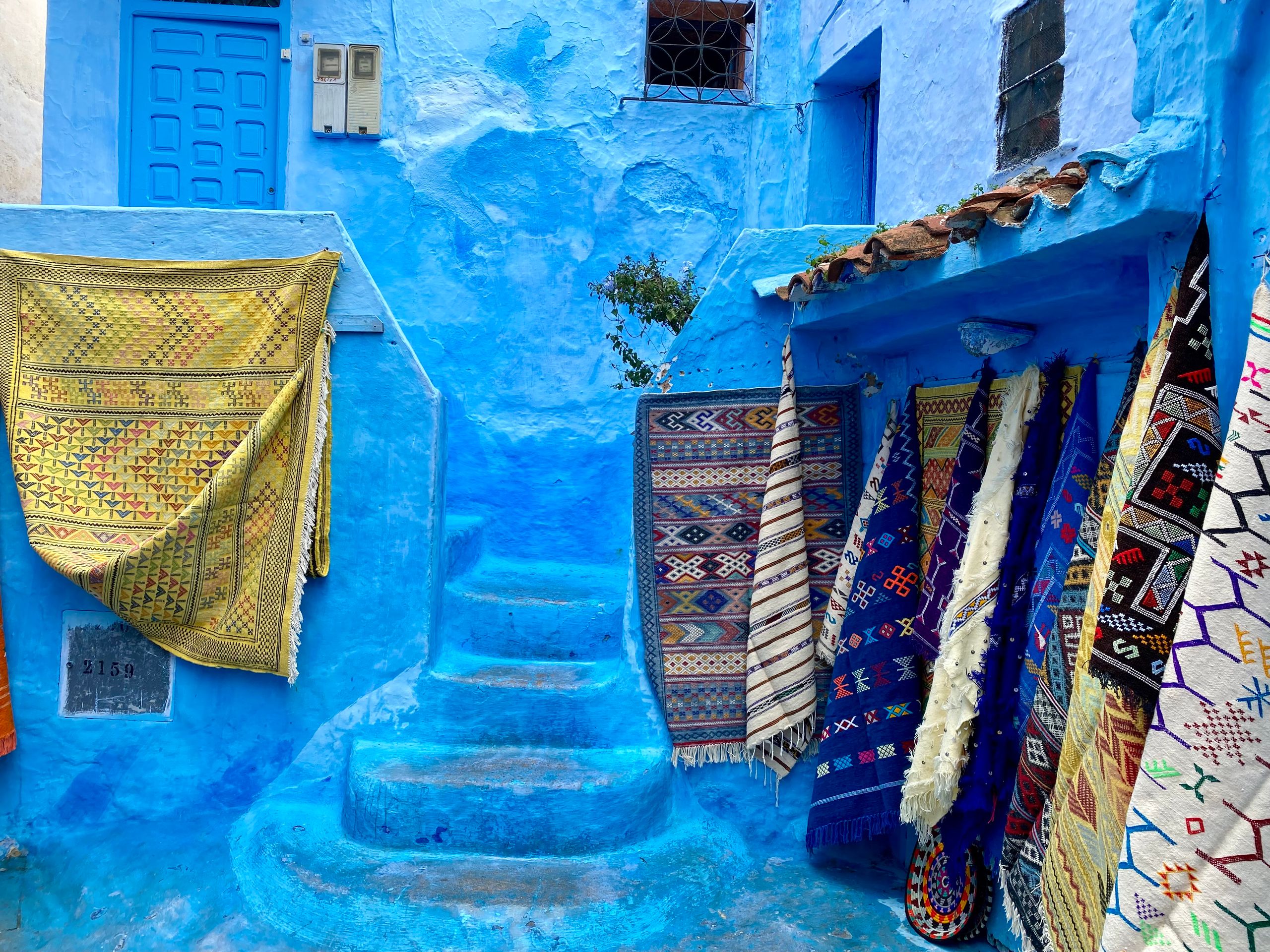
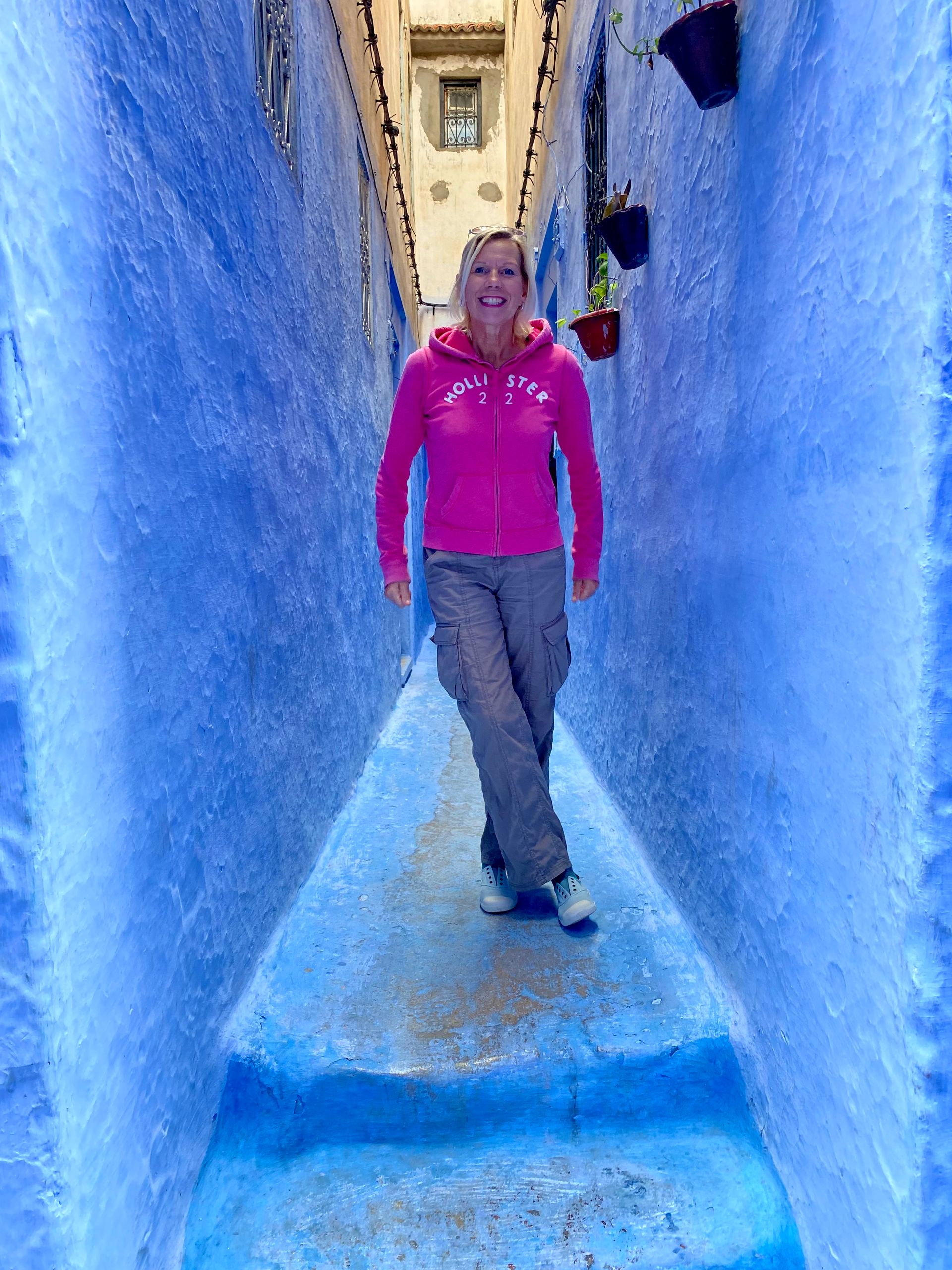
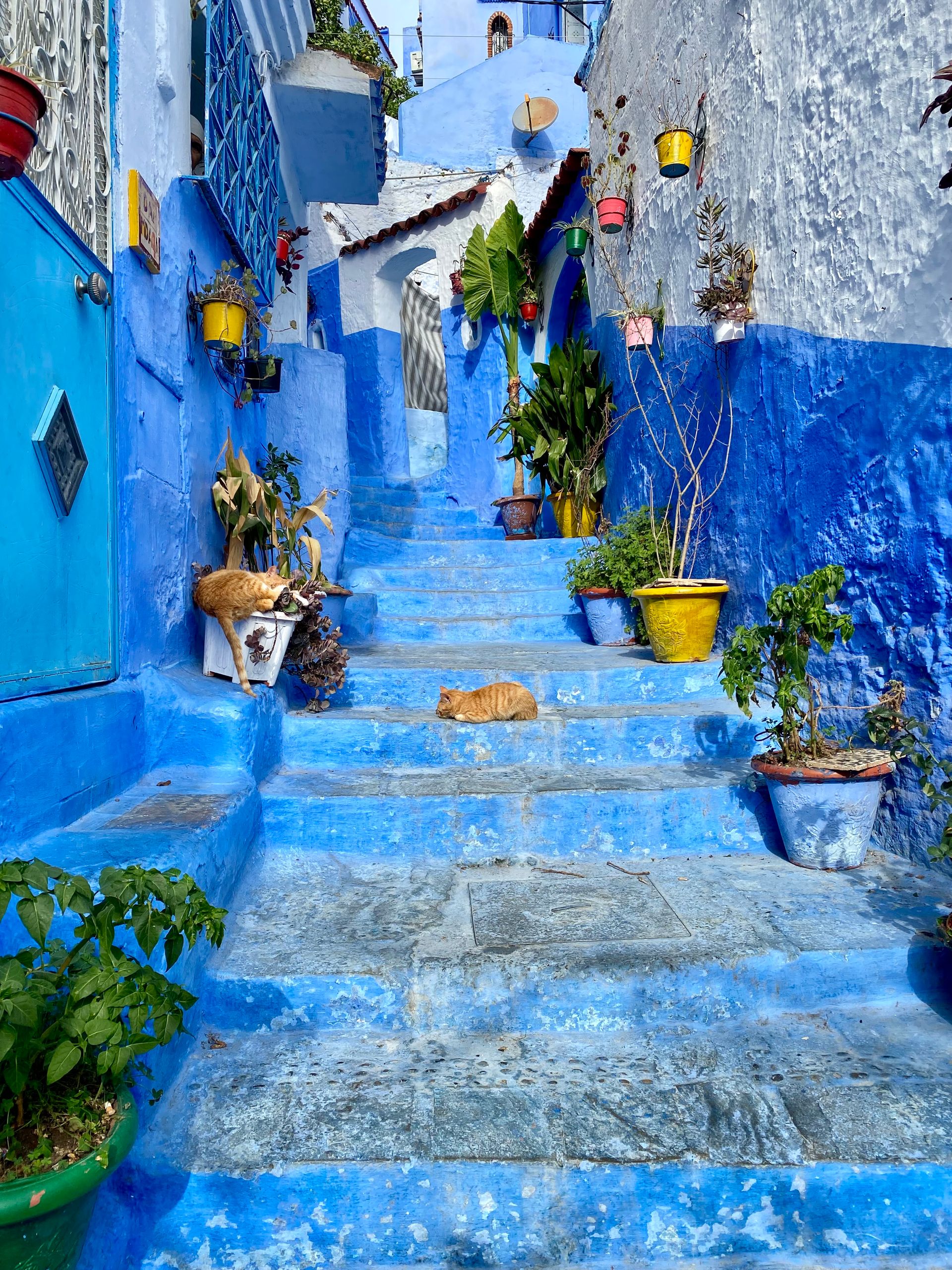
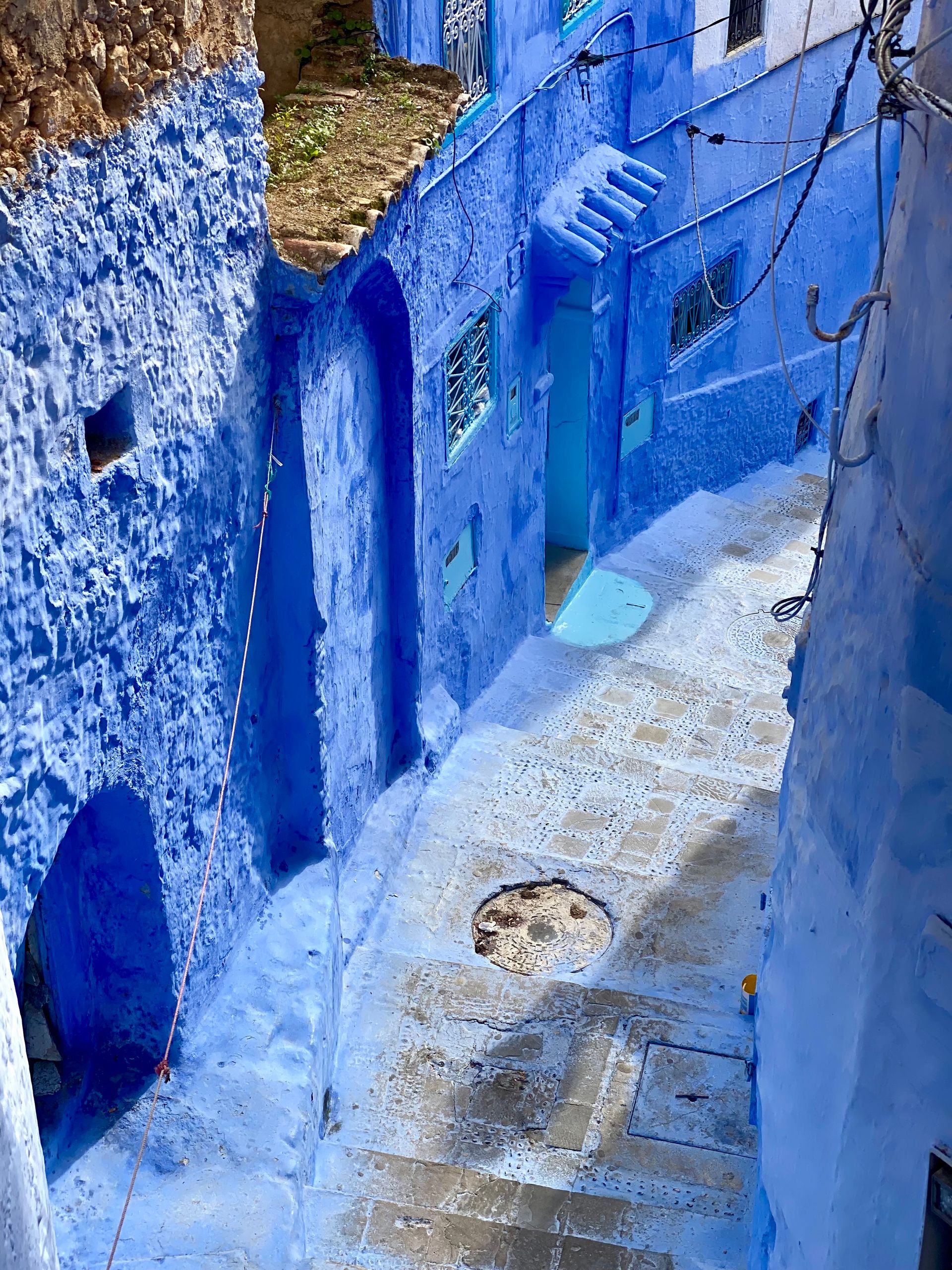
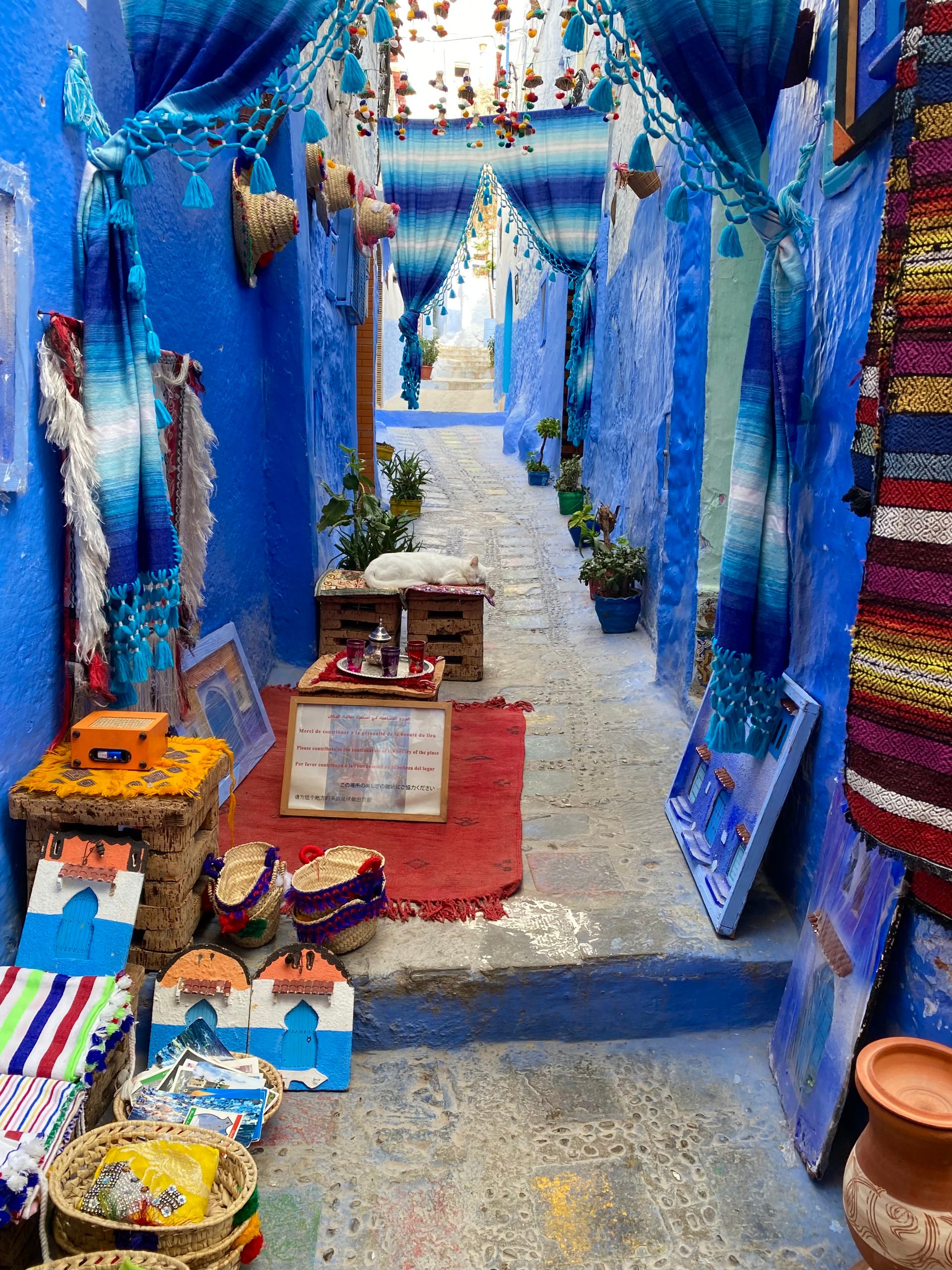
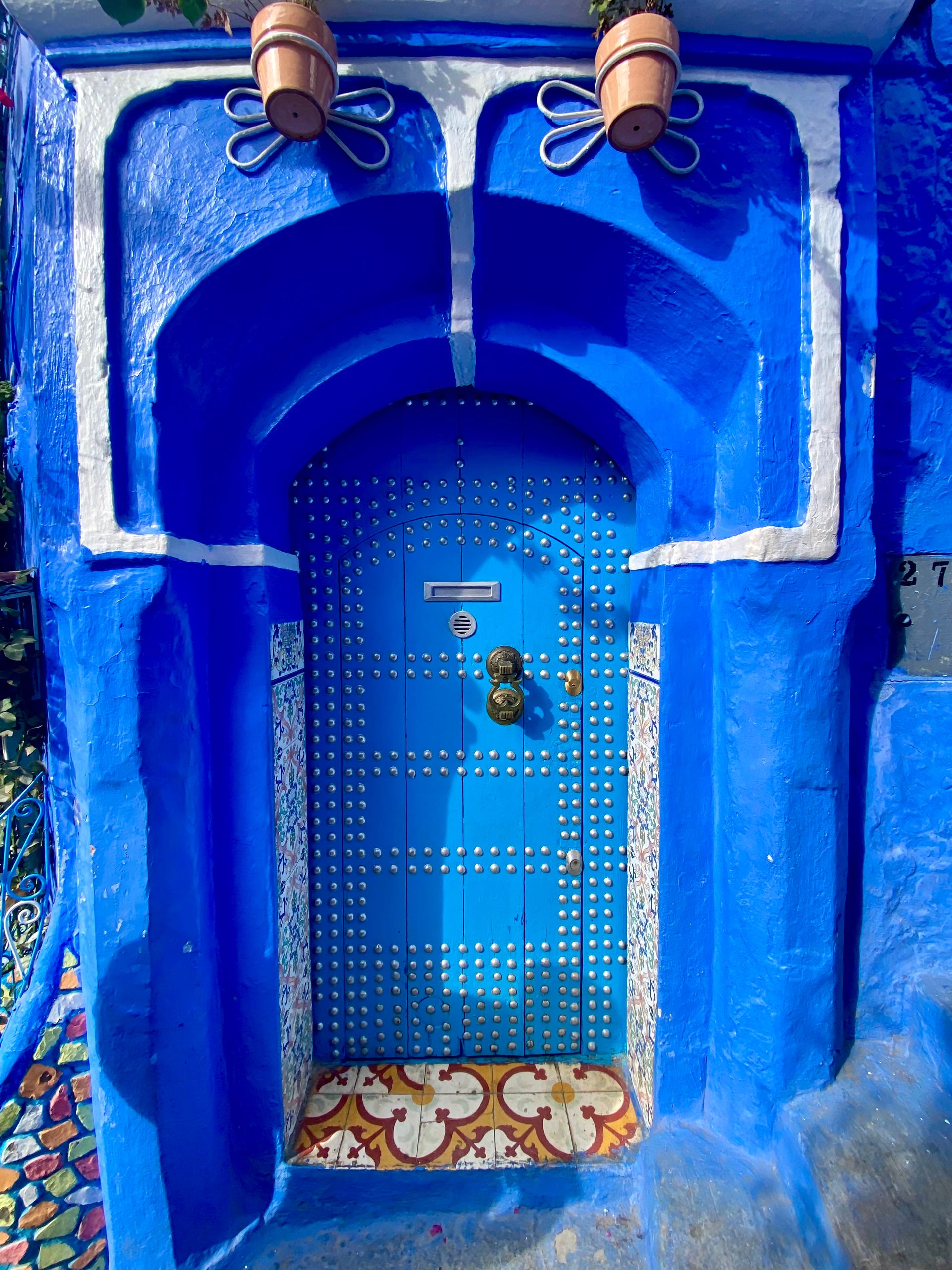
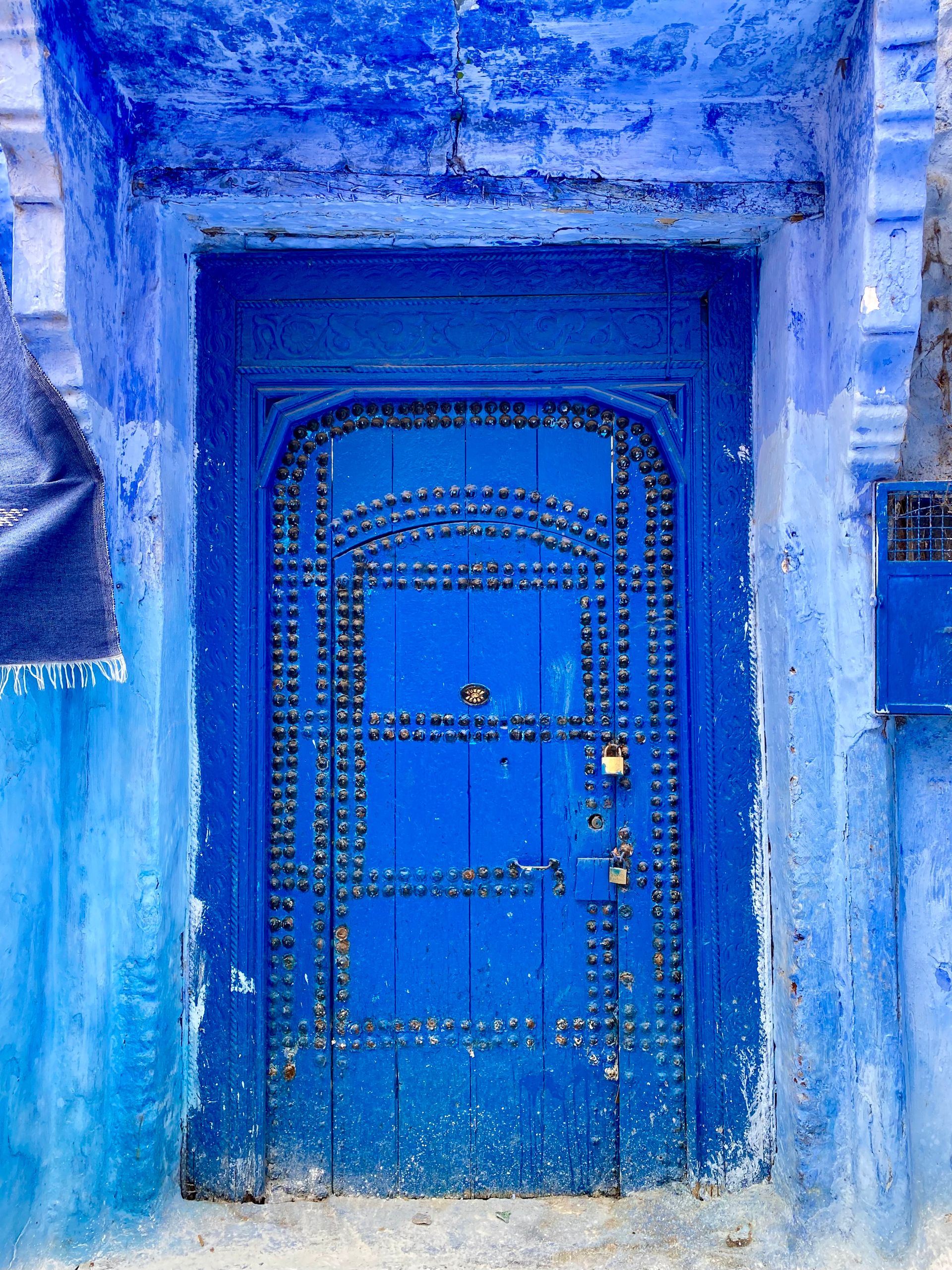
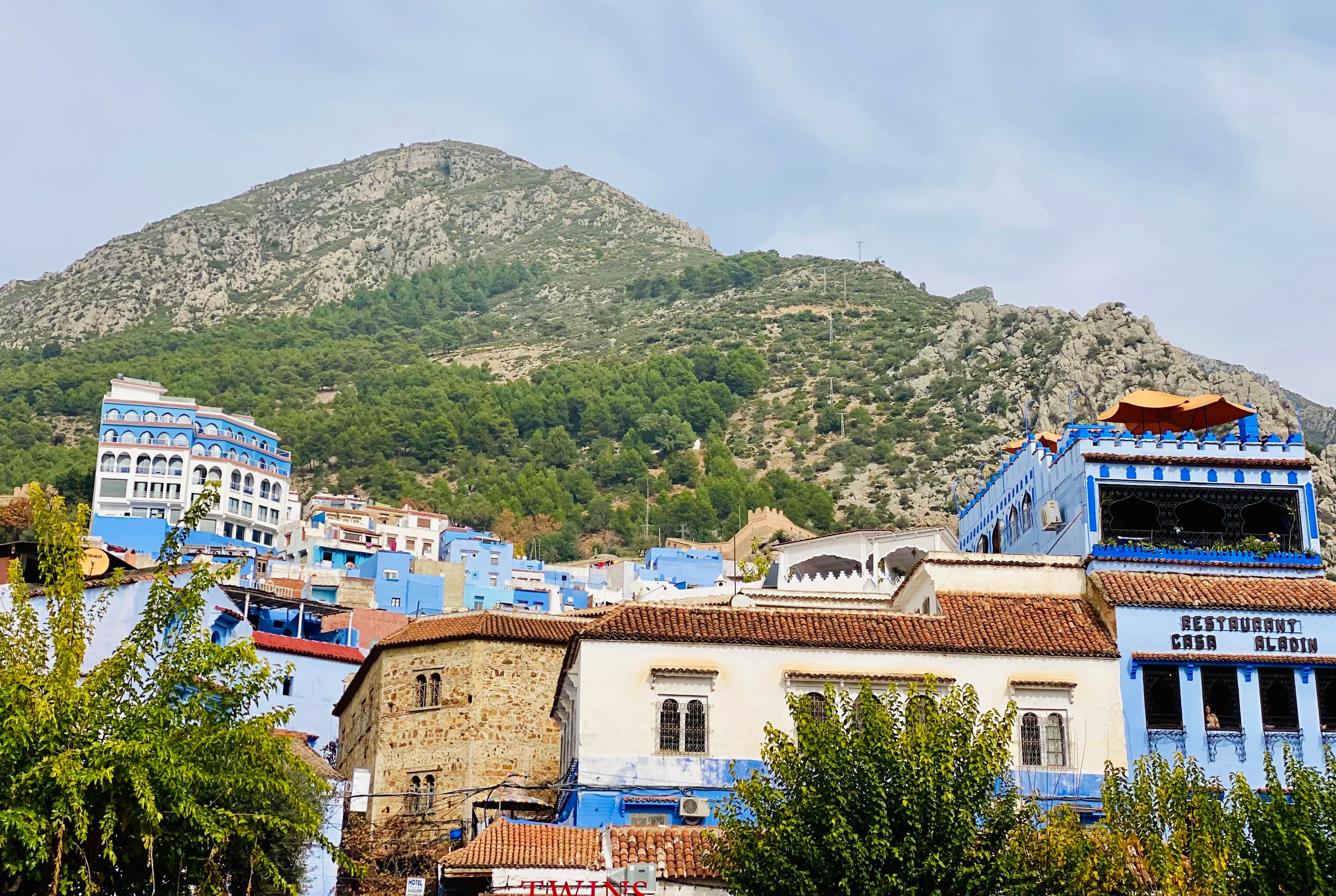
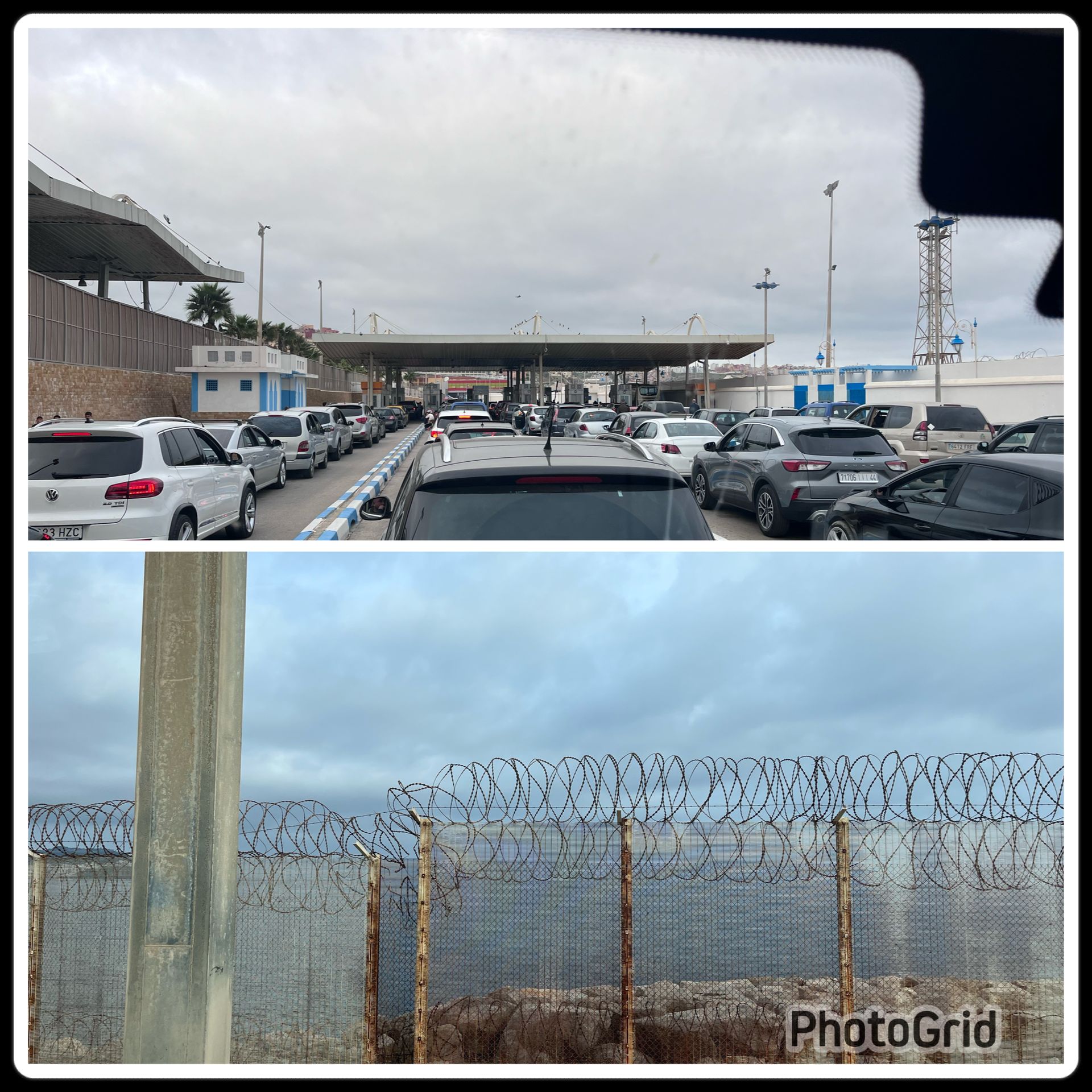
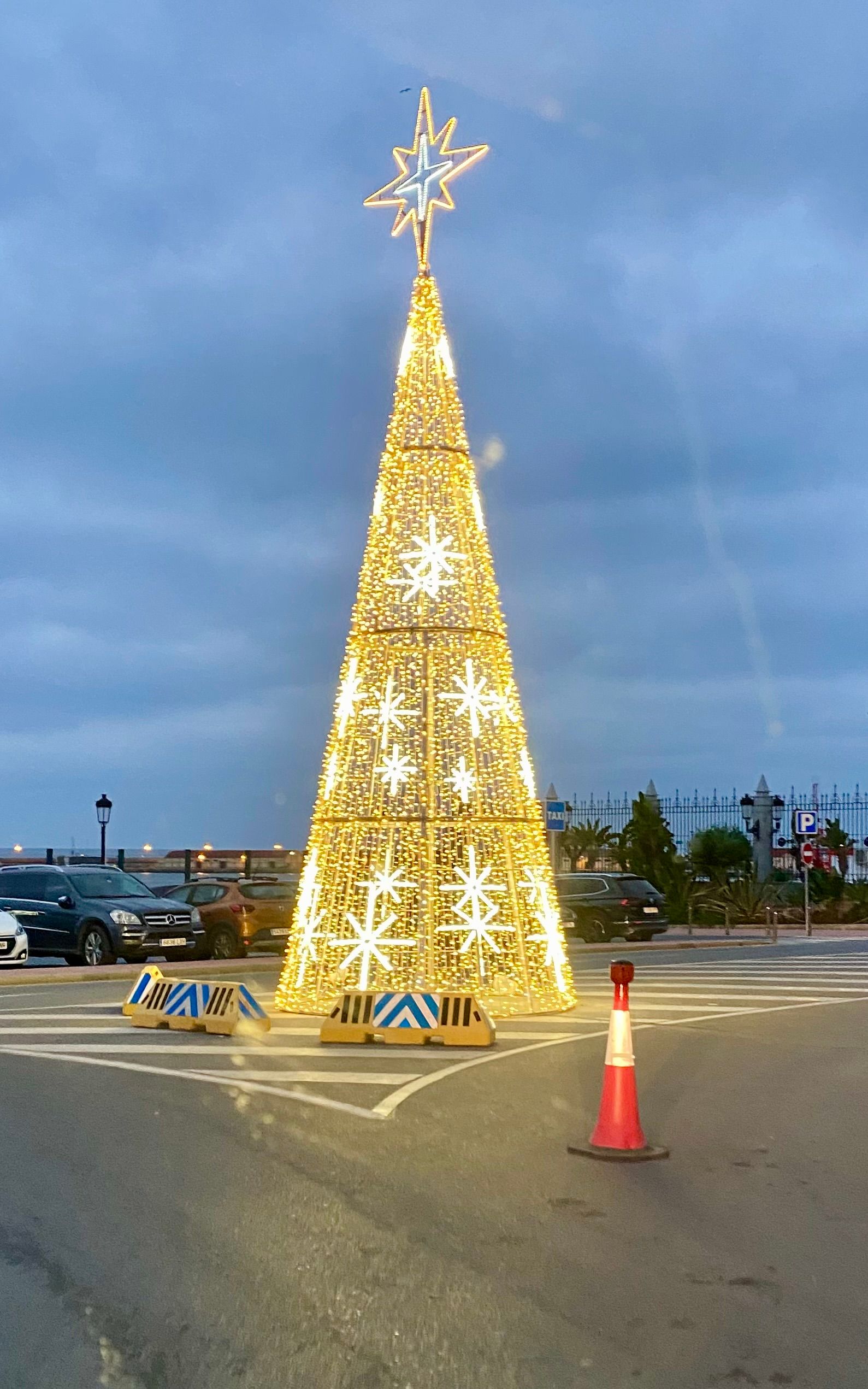
On the morning of December 1, Monim's aunt serves us a delicious Moroccan breakfast, and then, after a brief but warm farewell from Monim, we head towards Chefchaouen, our final destination. Until the next town, we offer his wife and cousin a ride to the weekly market. When the two women hug us goodbye right in front of the van, directly in front of the market and in front of everyone, some Moroccans look a bit stunned. Just before noon, we finally arrive in the blue city of Chefchaouen. Chefchaouen lies at the edge of a basin in the Rif Mountains, only about 50 km from the Mediterranean coast. From above, one can already see many blue-painted buildings glowing in the sun. We find a parking space in the middle of the city and go for a stroll through the medina, which indeed looks as though dipped in a blue paint bucket. As one of the main travel destinations in Morocco, the tourist influx is correspondingly large, and the medina consists almost entirely of too many souvenir shops and restaurants that aggressively vie for customers. When we behave reservedly, a vendor calls after us that we probably don’t speak to Moroccans. We realize how thin-skinned we have become and how such sales tactics and comments spoil our enjoyment of this truly beautiful city. After barely an hour and a half, we start the engine and take on the last 100 km on Moroccan soil towards the Spanish enclave of Ceuta. At the border, we encounter the well-known slow processing by the Moroccan border authorities. The 2-hour wait is evidently too much even for the many border commuters. A wild honking symphony erupts, which has no effect on the processing speed. At 6 PM, we finally roll into the festively decorated Ceuta and rejoice at the beautiful Christmas lights lining the streets. Our ferry is booked for the morning of December 2, so we will need to spend the night in Ceuta. However, somehow we are done with North Africa. At the port office, we manage to switch our ferry to the night ferry, and on December 1 at 10 PM, we leave the African continent heading towards Algeciras. Bye-bye Morocco!
Our conclusion about Morocco: We have been to Morocco twice, in 1984 and now, making a total of four trips to North Africa including our two trips to Egypt. This time, we leave Morocco with very mixed feelings. On one hand, we experience a country with a fascinating variety of beautiful landscapes. Generally, Moroccans are very hospitable and welcoming to visitors. We have never been waved at so much from the roadside in any of our travels. Moroccans are very proud of their country and always want to know where you come from, where you are going, and how you like it here. There are incredibly many children in the country who appear very happy, although most likely live in relatively poor conditions. We also felt very safe here. In our almost seven weeks here, we heard nothing about violent crime, robberies, or car break-ins. Technologically, the country is very advanced. The internet is better than in Germany, the infrastructure is good and is continuously being improved. Many Moroccans have now reached a certain level of prosperity.
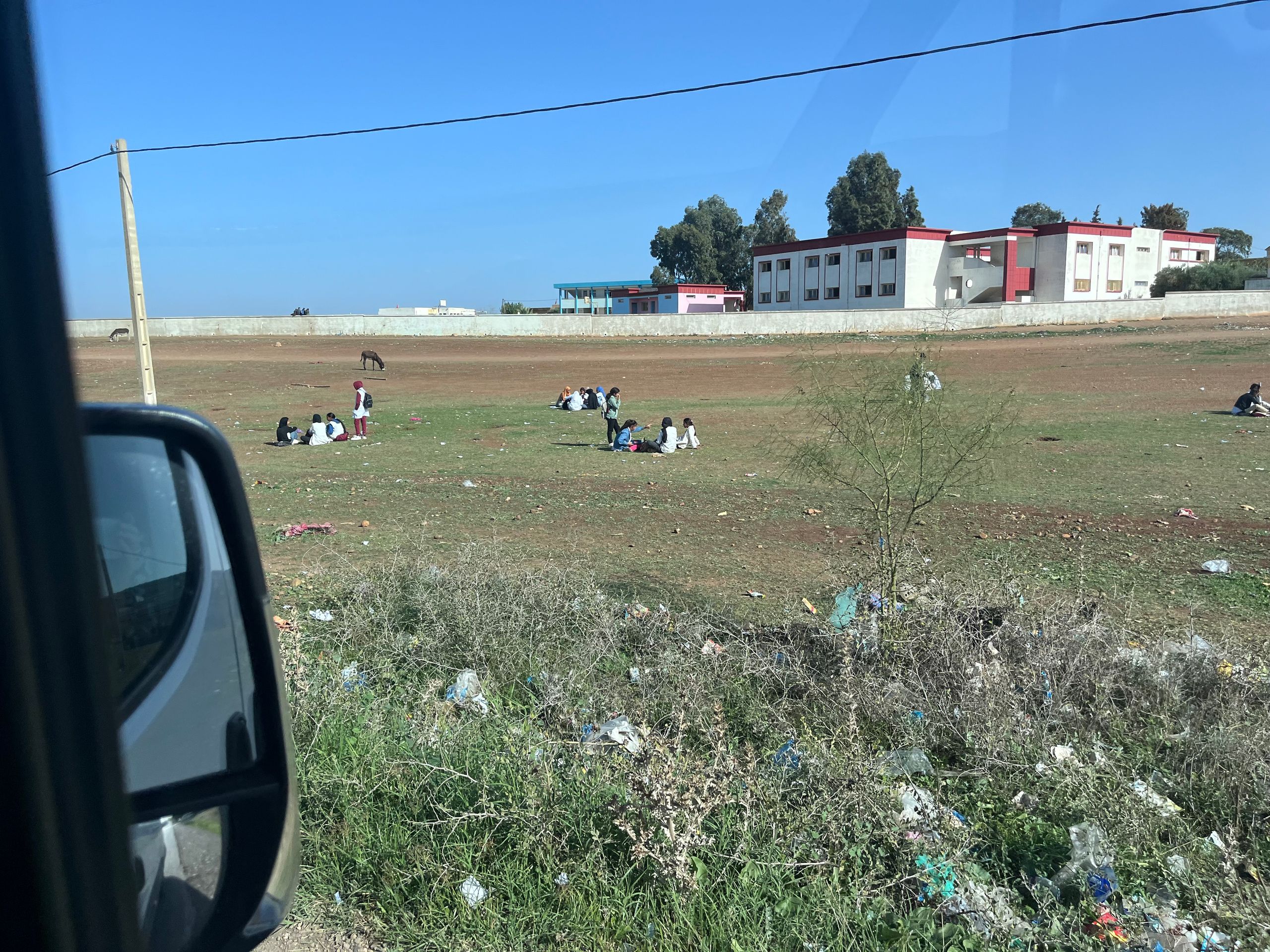
And then there is the other Morocco: There are poor people, very poor people. Meanwhile, King Mohammed VI is among the richest people in the world. Trash mars cities and landscapes, and no one seems to care. We think, great internet, but no trash can in sight... The constant dodging of very persistent attempts to sell us something or to cheat us has caused ongoing stress within us. We became increasingly uneasy when someone approached us with a particularly friendly ‘Bon jour, ca va?’ because we knew we would have to say, ‘No, no, and once again, no.’ Often, the (exaggerated) friendliness ended abruptly after a transaction. It is hard to just be alone in Morocco. Susi particularly struggled with the male dominance in this country. The service in shops and restaurants is entirely male. In cafes, almost exclusively men sit while women often do the hard work and carry heavy loads. There are aggressively begging children who might take a stone in hand to emphasize their demands.
Will we come back someday? To be honest, we don't know. We do not want to miss our time and the wonderful experiences in Morocco, but we did not feel comfortable in this culture overall. We cannot comprehend the glorified perspective that many travelers have about 'exotic' Morocco. Our decision to return to Europe early after nearly seven weeks was felt like a kind of liberation. At the moment, the answer would likely be: Not likely to return soon. However, we do not want to rule it out. The experiences we had in Morocco need to be processed calmly first.
On the road: 314 days
Distance covered: 21,200 km
By the way: If you enjoyed the travel blog, we would appreciate a 'like' by clicking on the heart!
To be continued