
Morocco #5: Final, Goodbye, and will there be a reunion?
Farewell to Morocco and our conclusion

Published: 17.01.2025
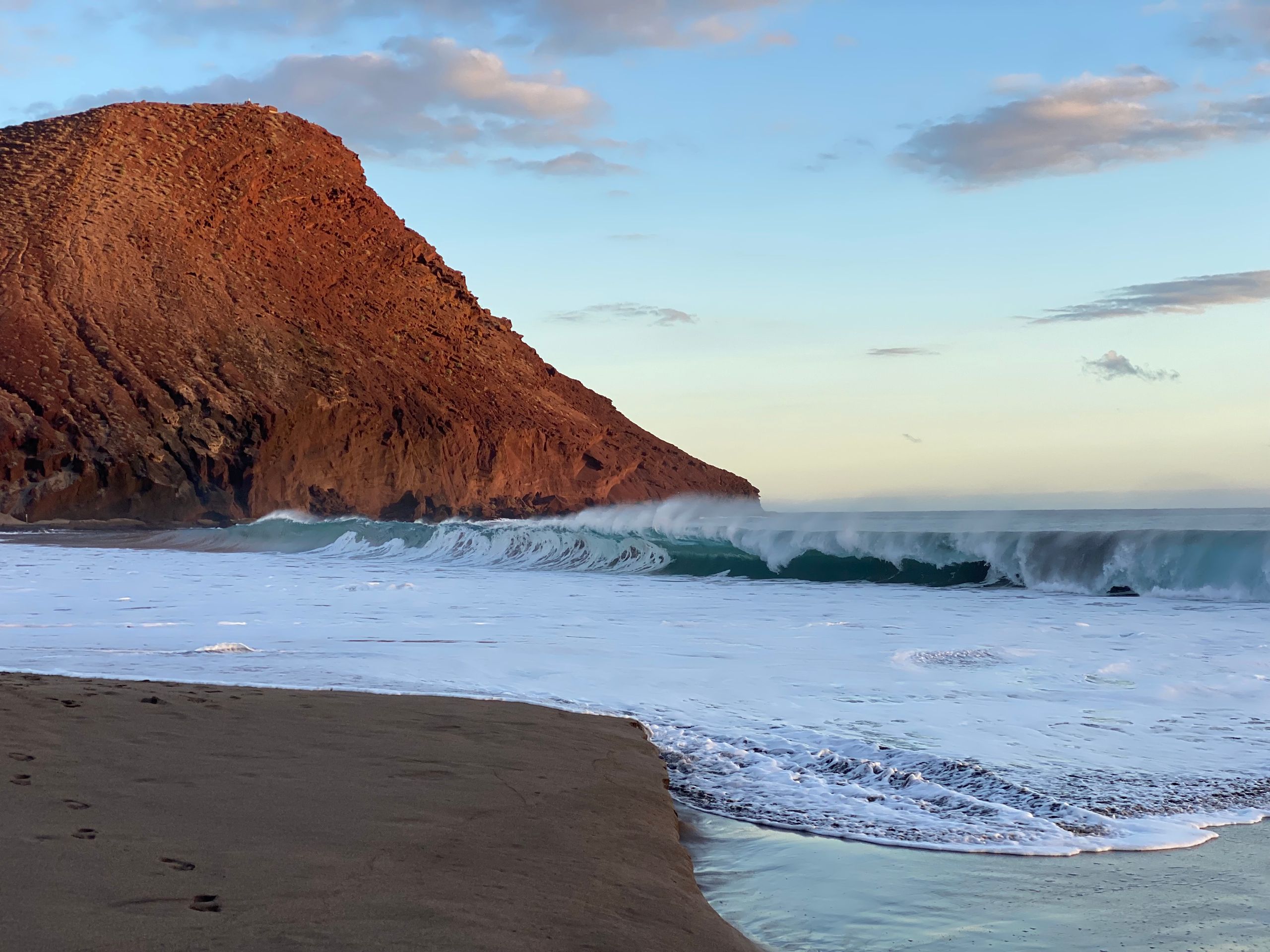
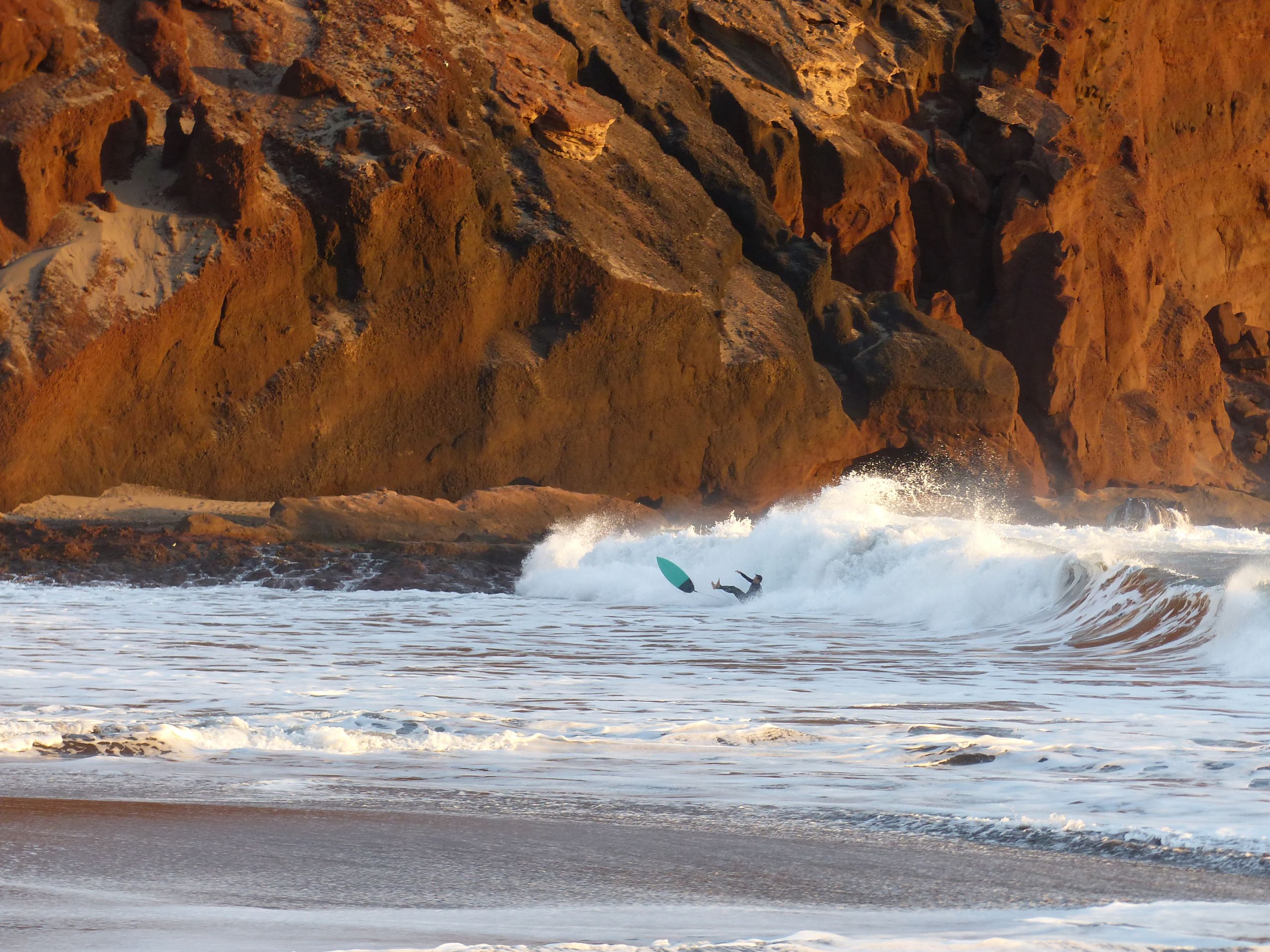
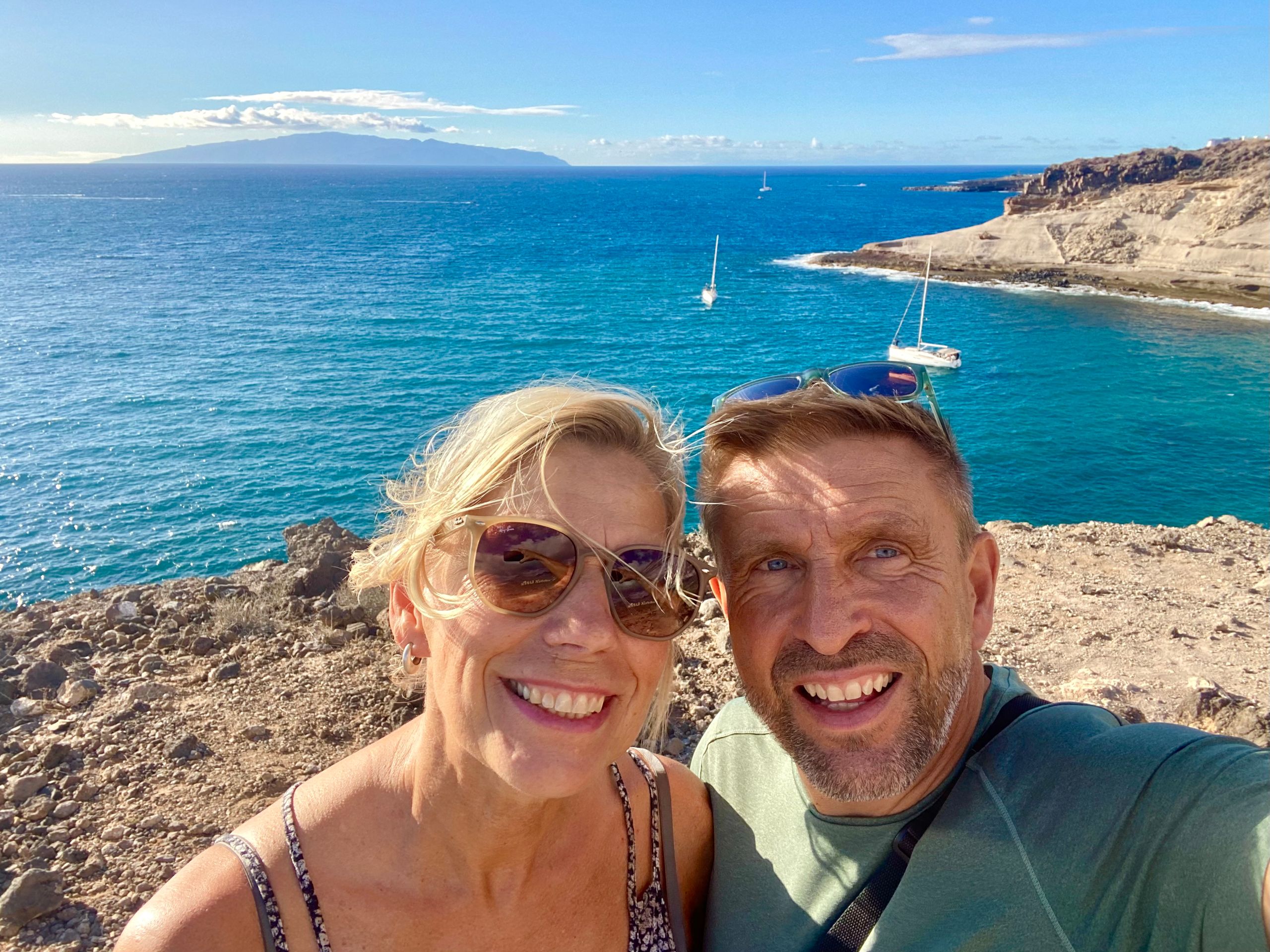
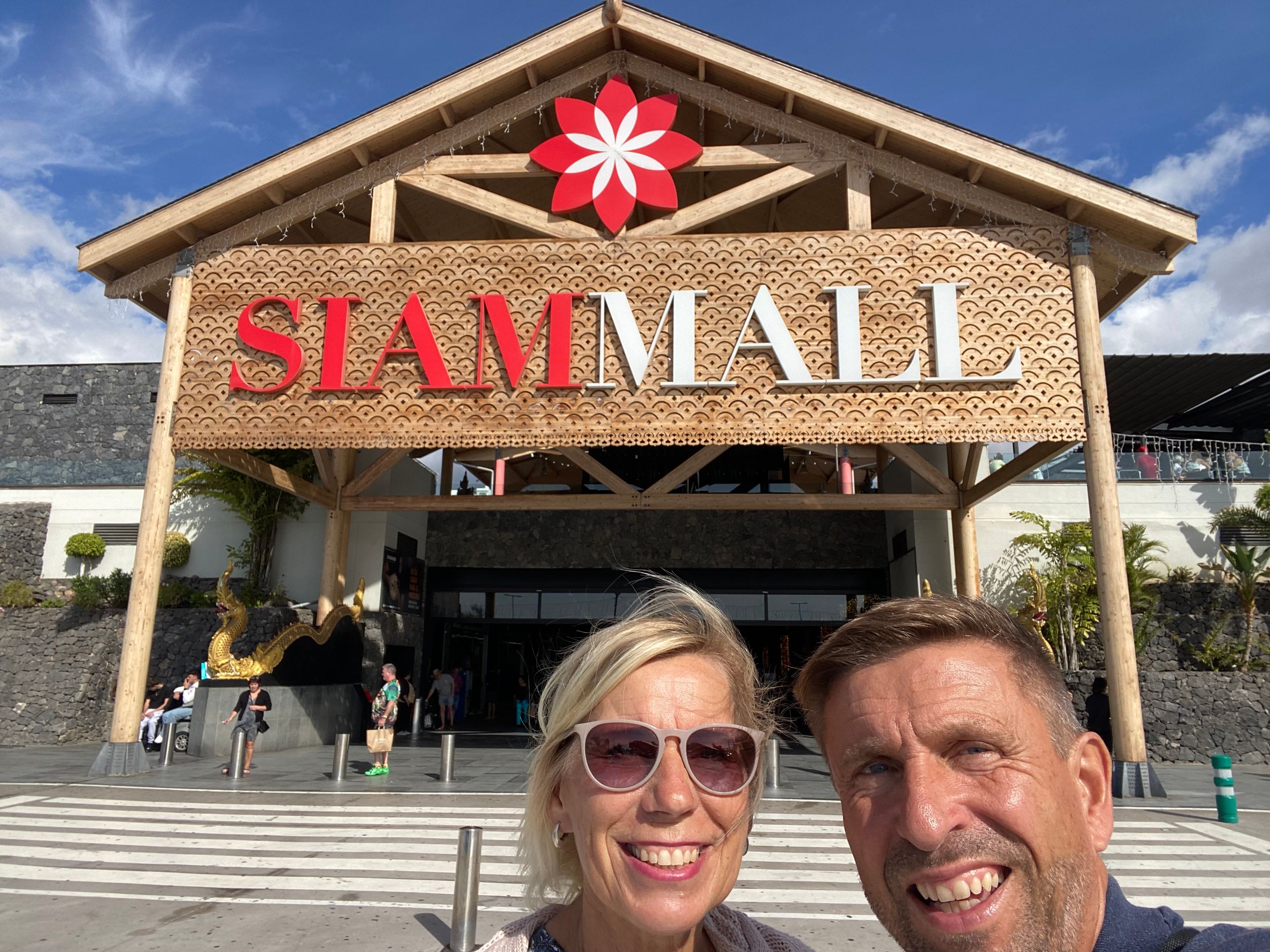

Personal log entry from the houseboat Betty HH-VX 717: It is the year 2024, December 2nd, 00:15.
Shortly after midnight on December 2nd, we arrive in the port of Algeciras after a calm crossing over the Strait of Gibraltar. Although it's late, we decide to take the 40-minute drive to Tarifa. Our chapter in Morocco is therefore temporarily closed (see Travel blog Morocco Au revoir). Here on the Spanish mainland, we have five days before the ferry from Huelva to Tenerife departs on December 7th.
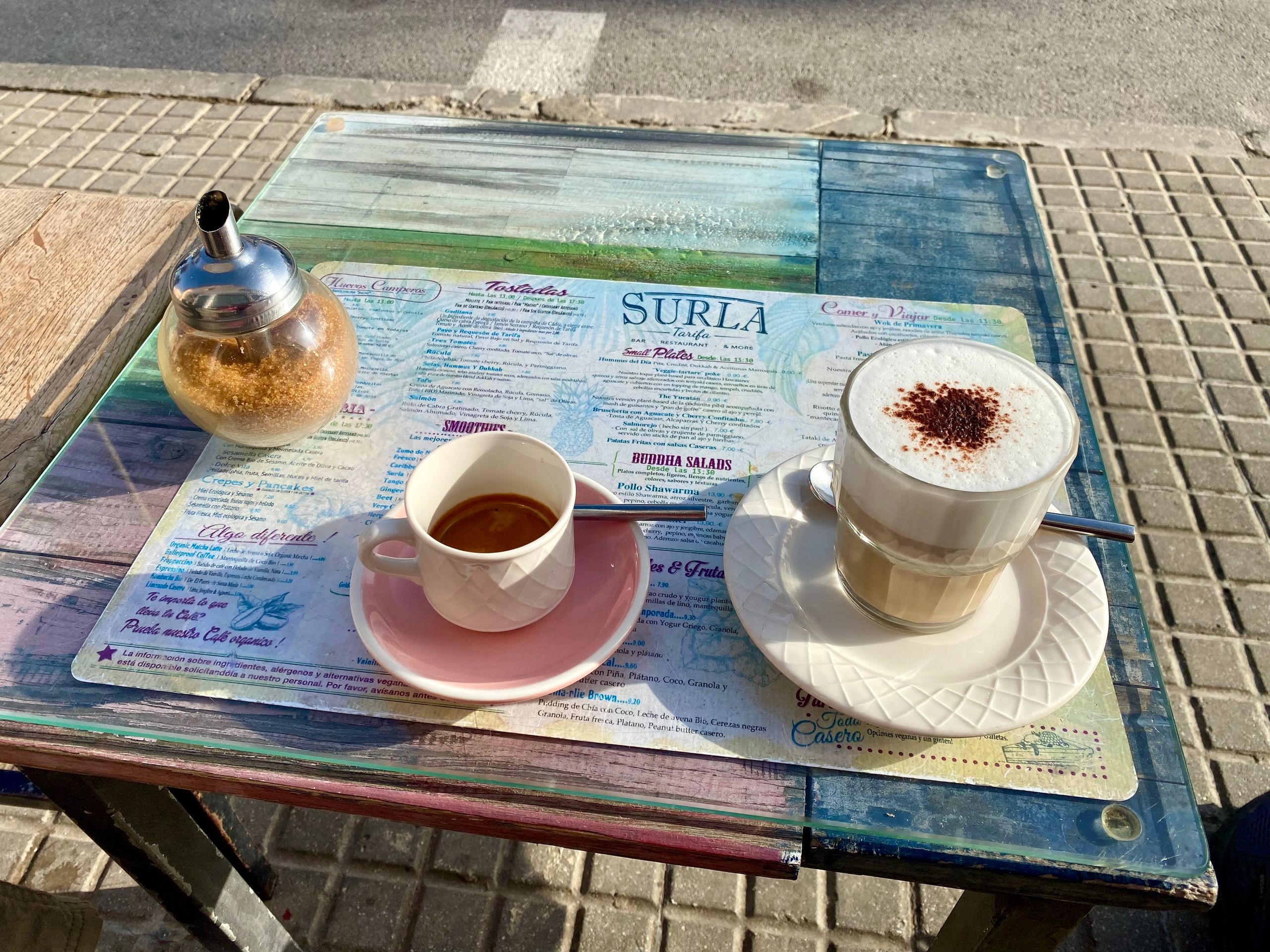
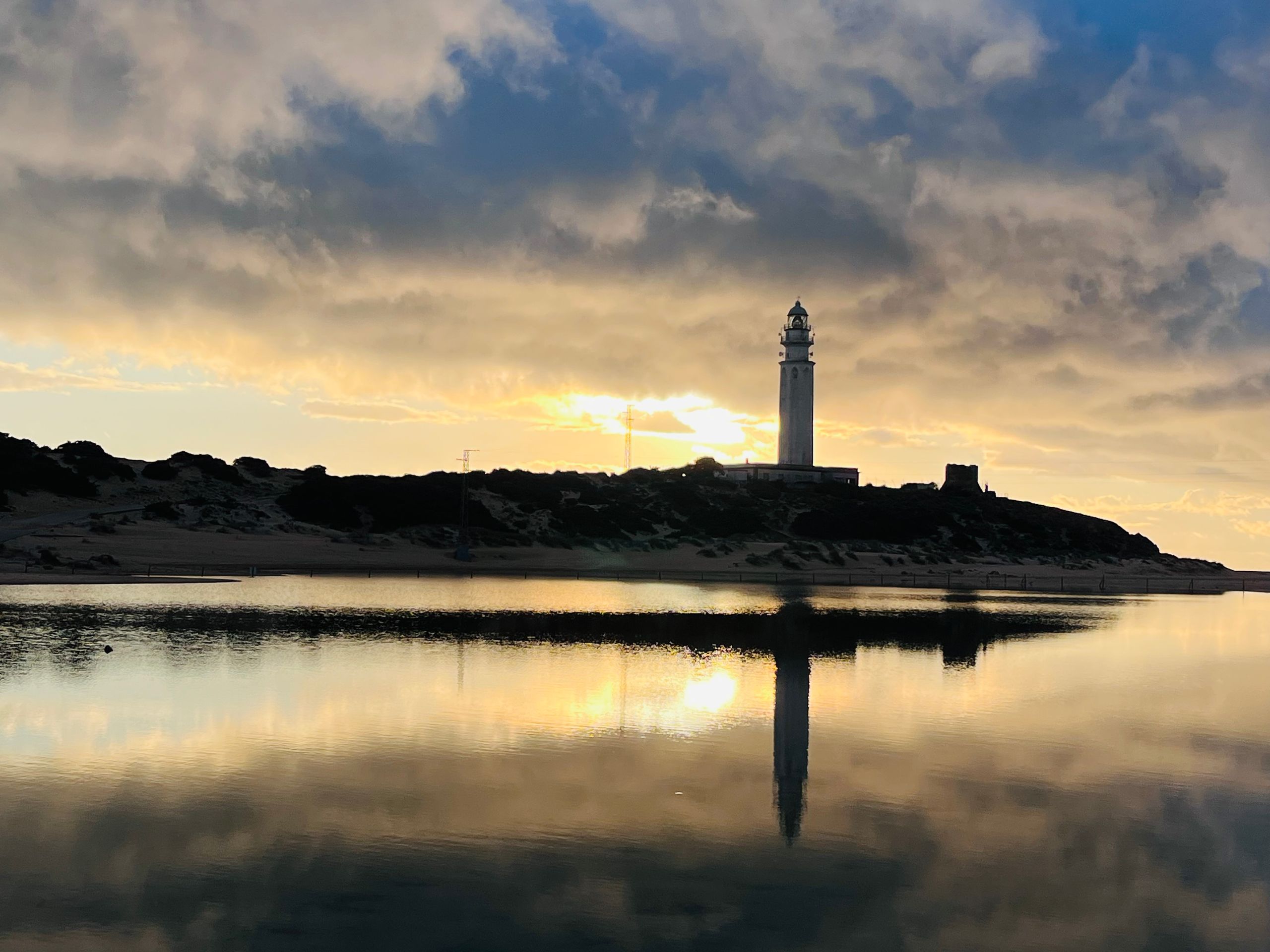
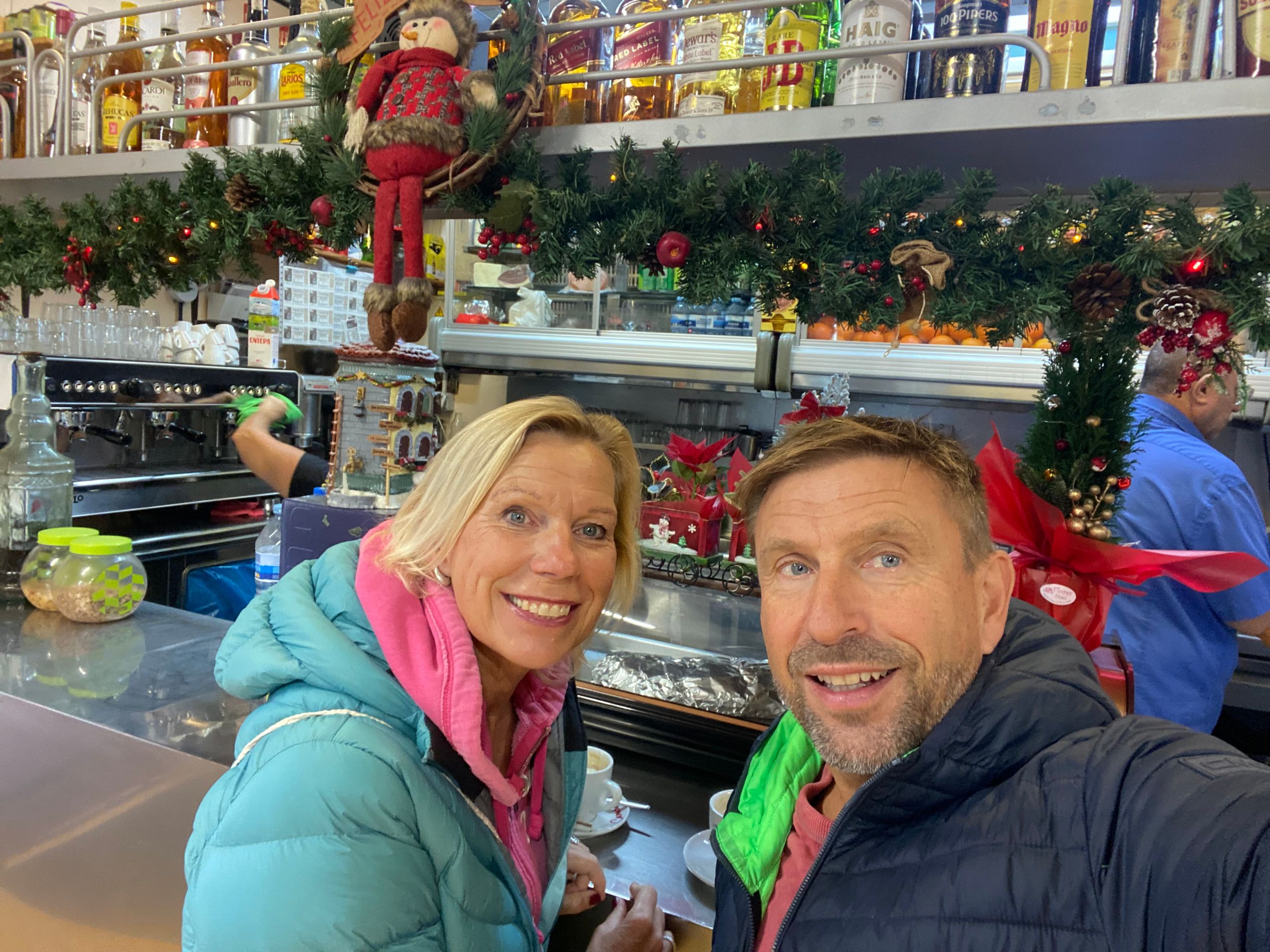
In Tarifa, the usual parking spots for motorhomes are well occupied. Like migratory birds, winter guests are coming from all over Europe to spend the winter either here in Andalusia or in Morocco. The temperatures in Andalusia, of course, do not reach the level of Morocco, but it is sunny and dry, which is enough for shorts! After a coffee in our favorite café Surla, we head to the rental shop 'Tarifa Box'. We have stored part of our surfing gear there and are now loading the van again for the Canaries. The beach even looks a bit windy, but a spot check at various locations reveals no usable conditions for wing foiling. Therefore, we continue to Los Canos de Meca, where we want to spend two days. Although we usually park for free, the spot in Canos is one of our favorites because of the very relaxed atmosphere, thanks to the friendly owner Raphael. The place Canos itself radiates incredible tranquility. Canos is also of historical significance: the naval battle of Trafalgar took place here off the coast in 1805. At the parking spot, the van is tidied up, laundry is washed, paperwork is handled, and we get done what needs to be done... However, there is still time for sports and nice walks on the beach.
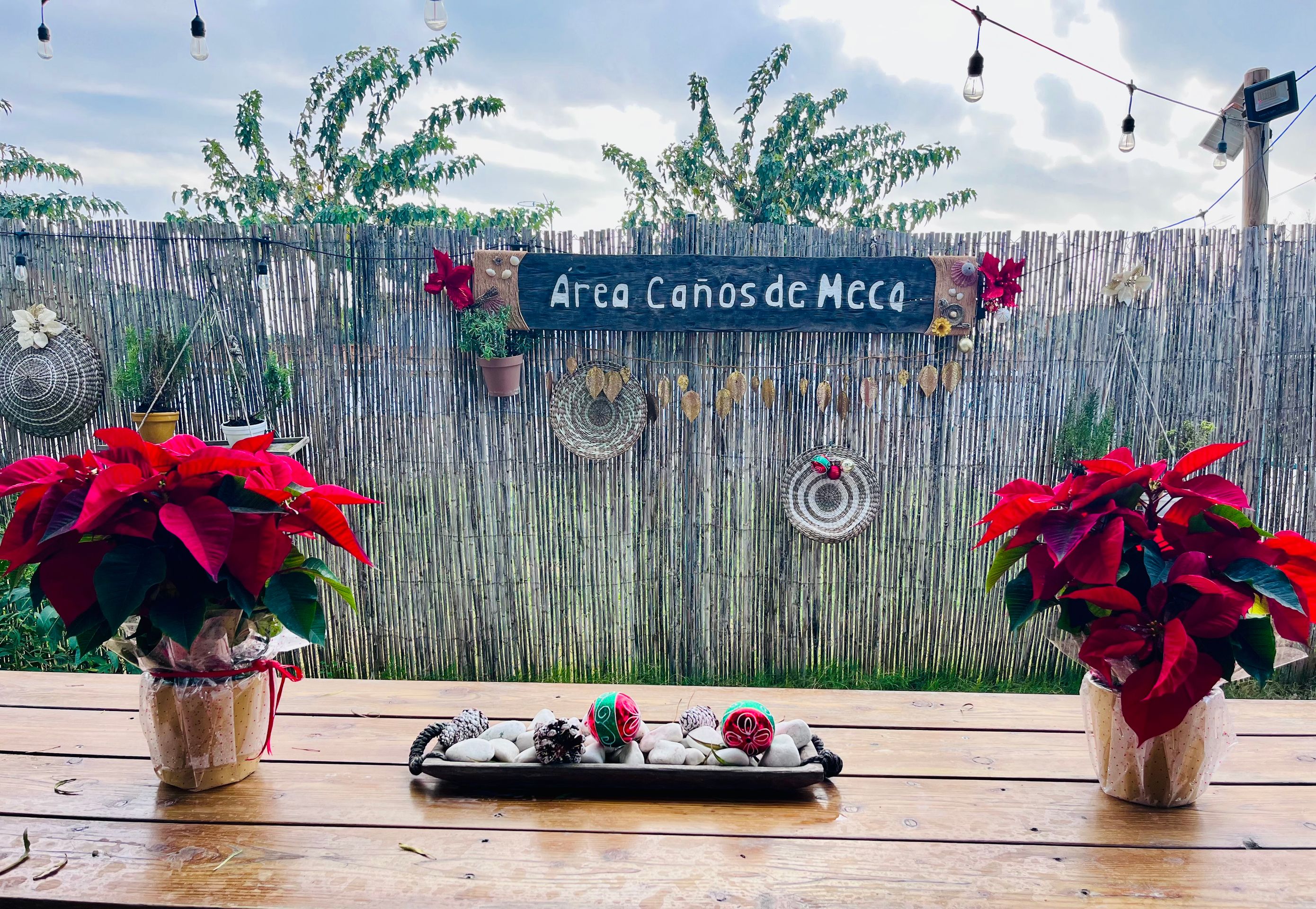
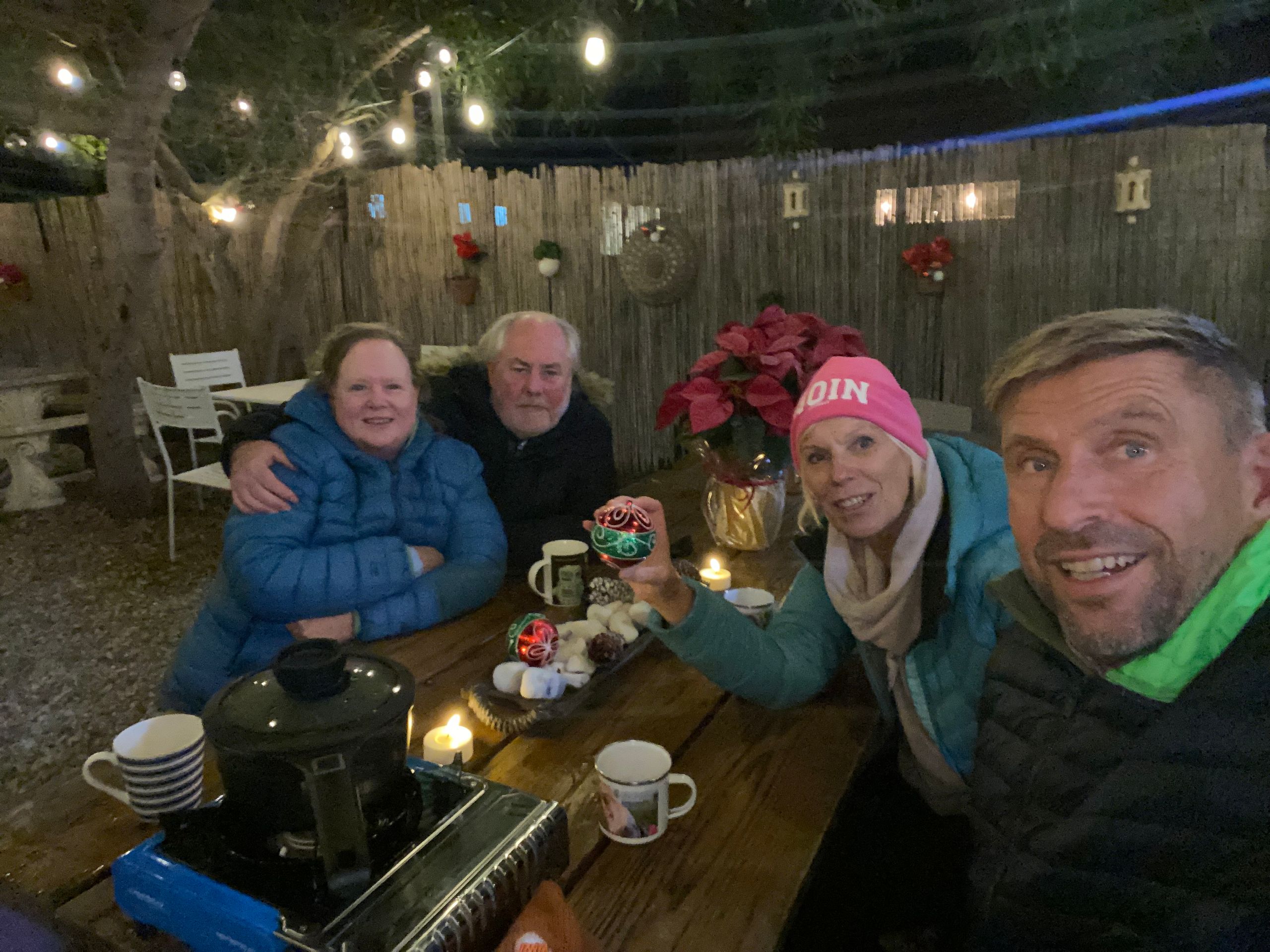
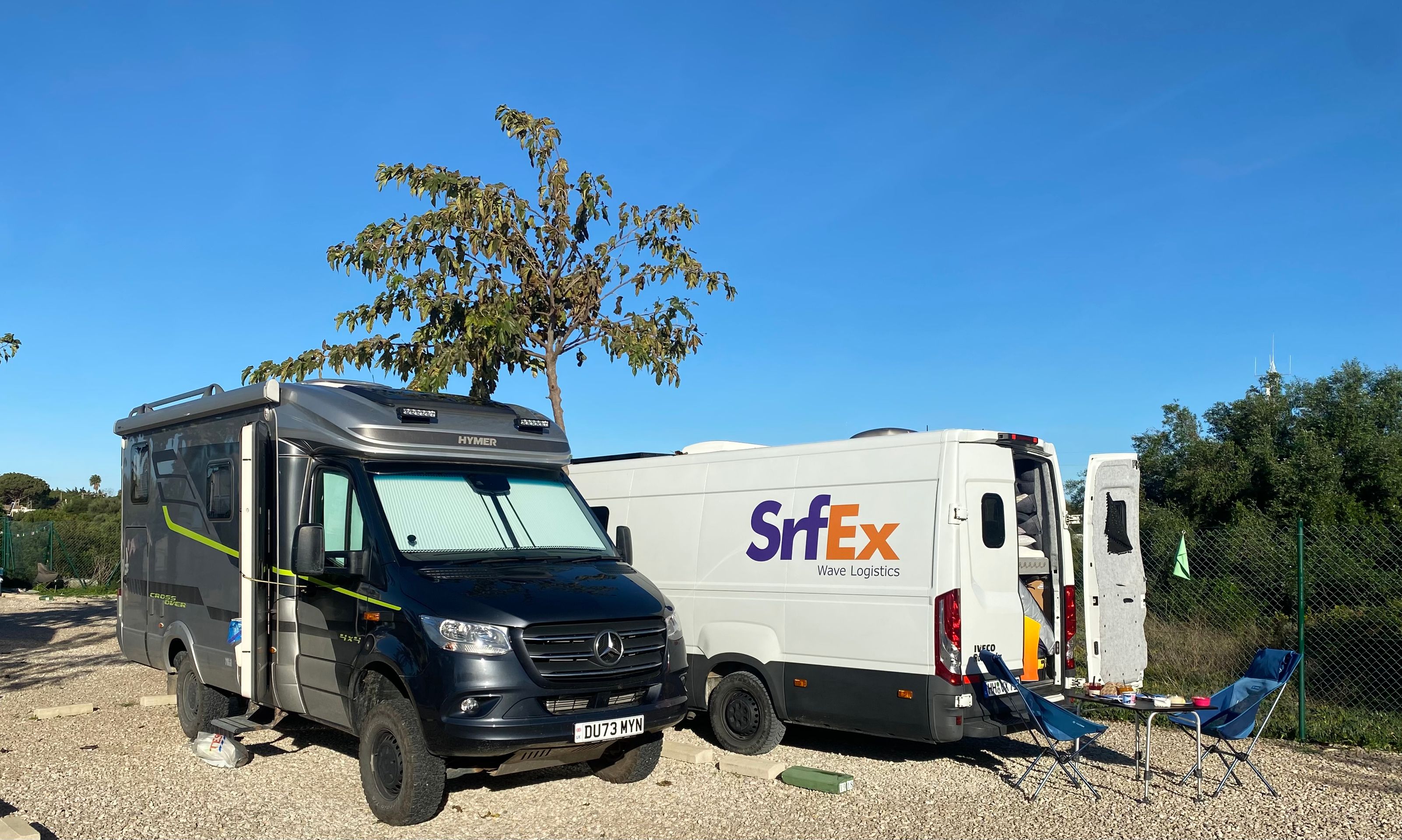
We had raved about Canos to our English acquaintances, Sarah and David, whom we met in Morocco. The two have also left Morocco and are now arriving in Canos with their Hymer 4 × 4 motorhome. There is much to talk about and share experiences from Morocco. We do this in the lovingly decorated outdoor seating area of the parking place with a cup of original Christkindl mulled wine in hand. You could buy it at Lidl in Tarifa! In the evening, it gets quite chilly and we all wear our warm jackets, creating a little Christmas market atmosphere.
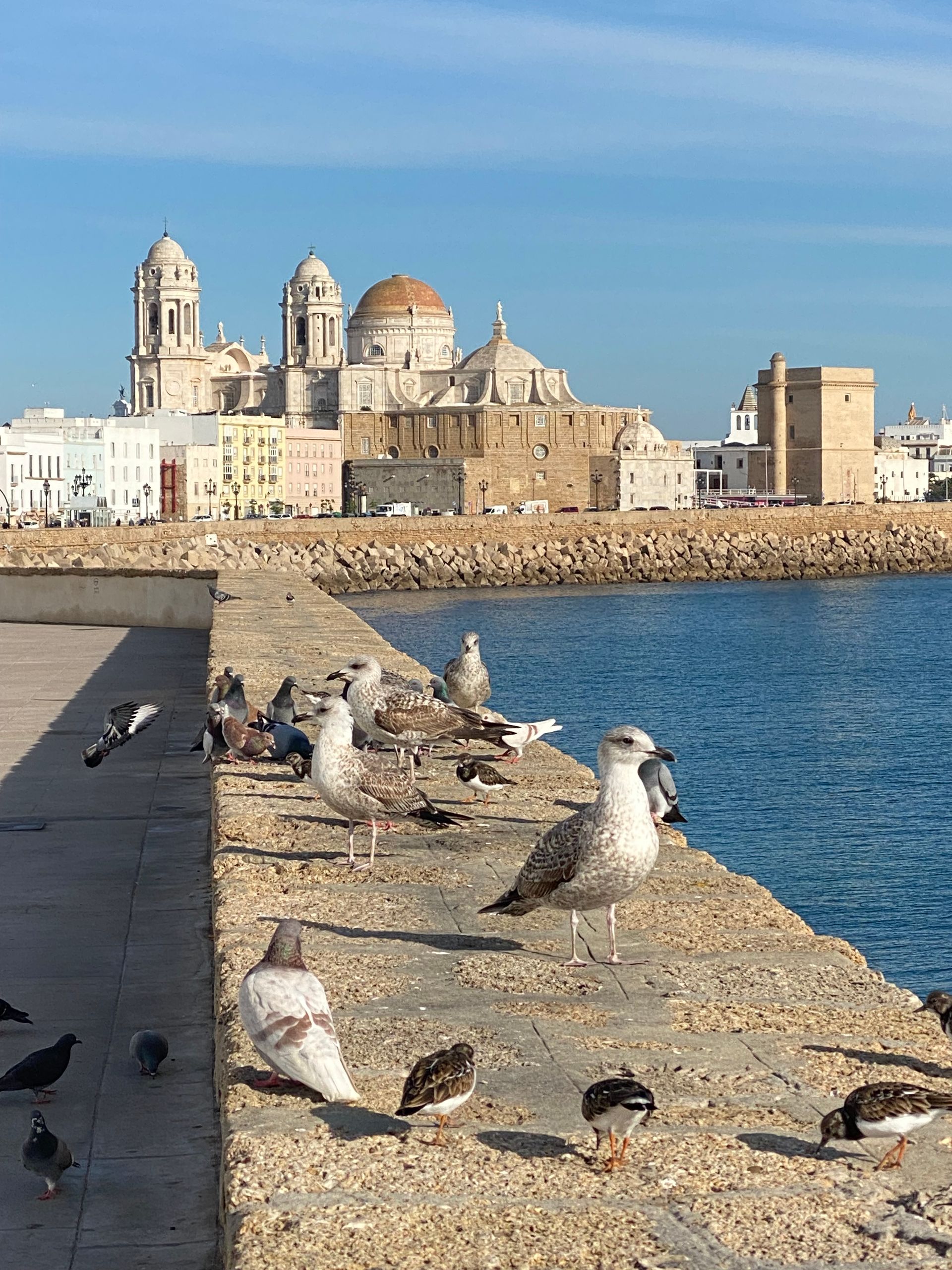
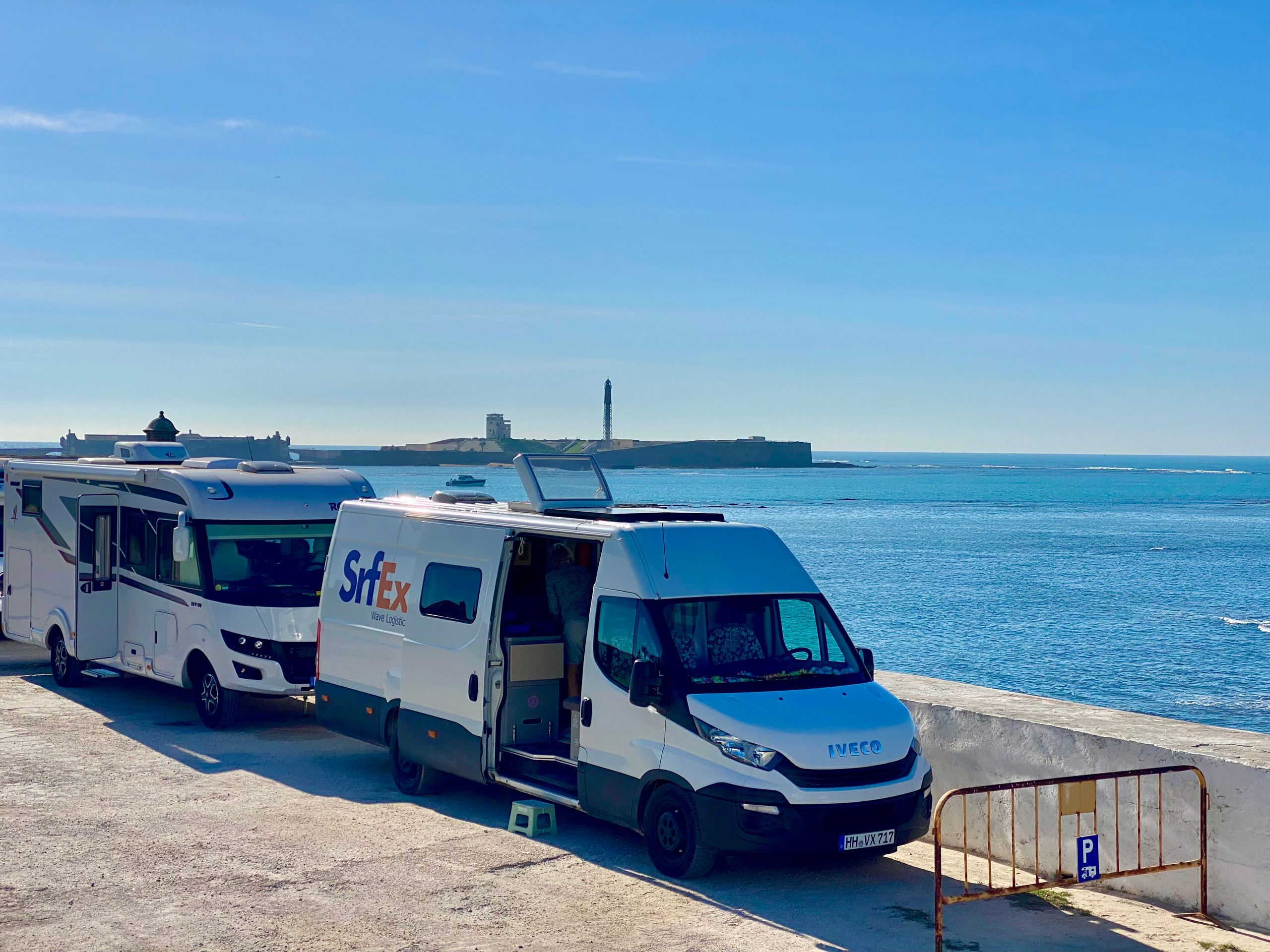
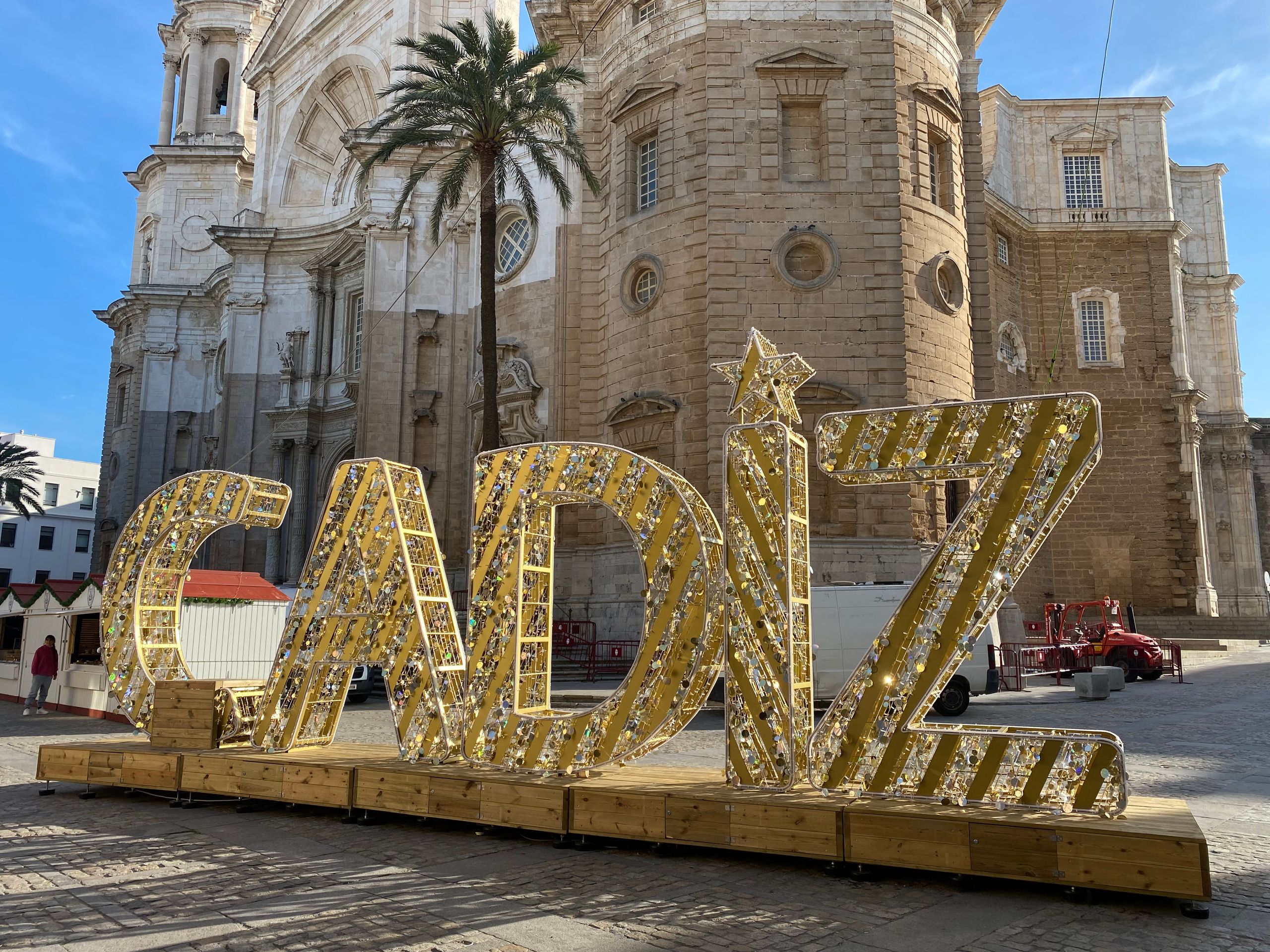
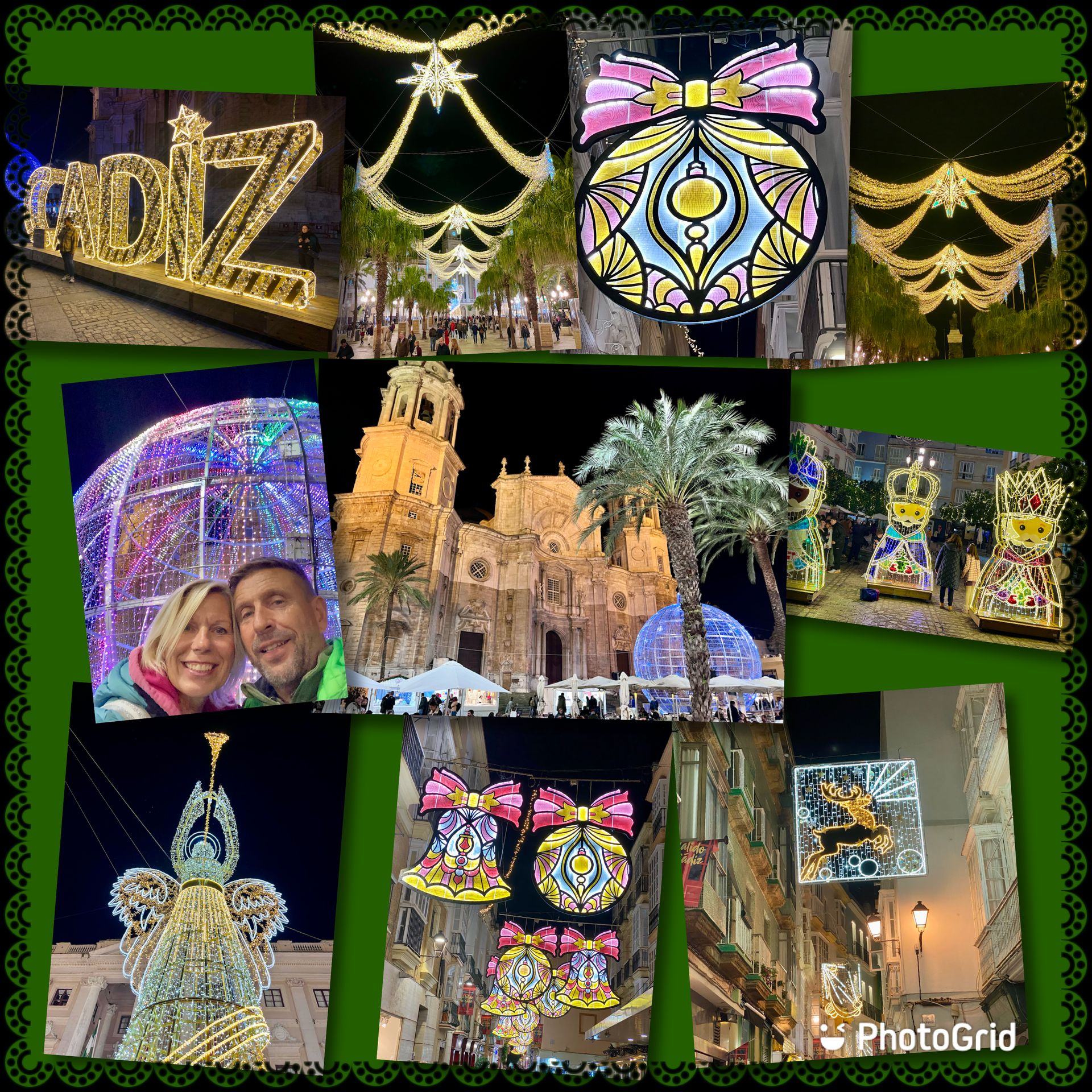
Unfortunately, the next morning our paths part once more, as so often before. Sarah and David want to head to Portugal. We want to continue to Cadiz. Friends have told us that Cadiz is especially beautifully decorated during the Christmas season. This time, we spend the money for the extremely expensive motorhome pitch, right in the old town of Cadiz. In return, we park right by the old town wall, directly by the sea. The sun is shining and the port city situated on a long peninsula presents itself at its best. In the evening, we go back to the old town, eat in one of the many typical fish restaurants there, and then admire the Christmas decorations. The entire old town is festively illuminated. The motifs are beautiful and completely different from those in Germany. We think that Christmas and a southern atmosphere go quite well together!
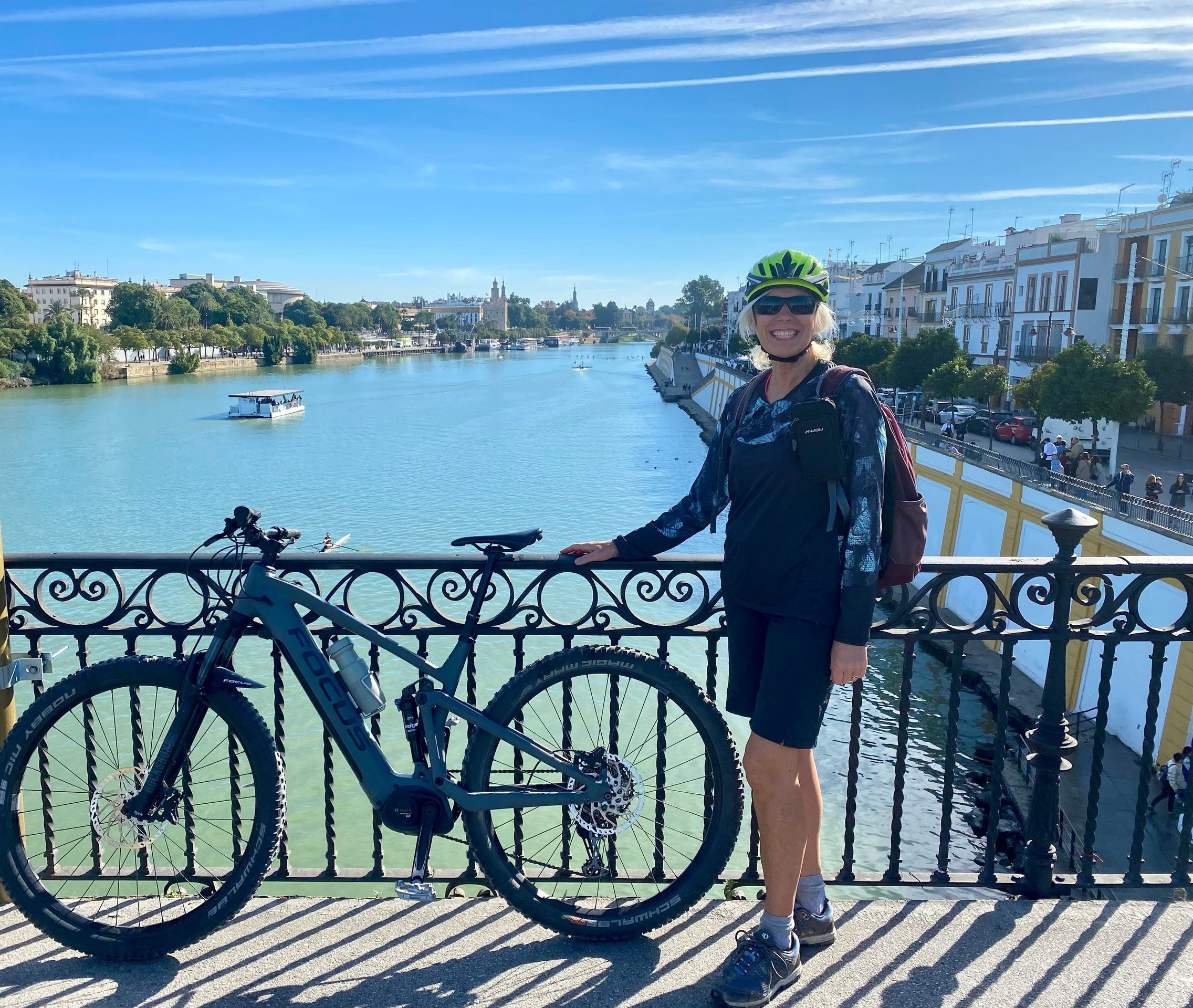
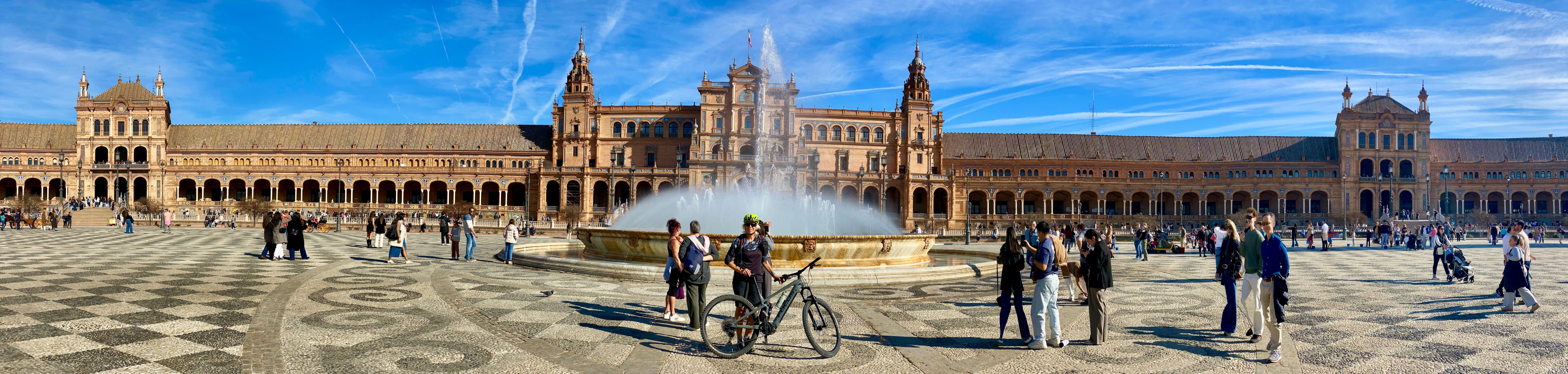
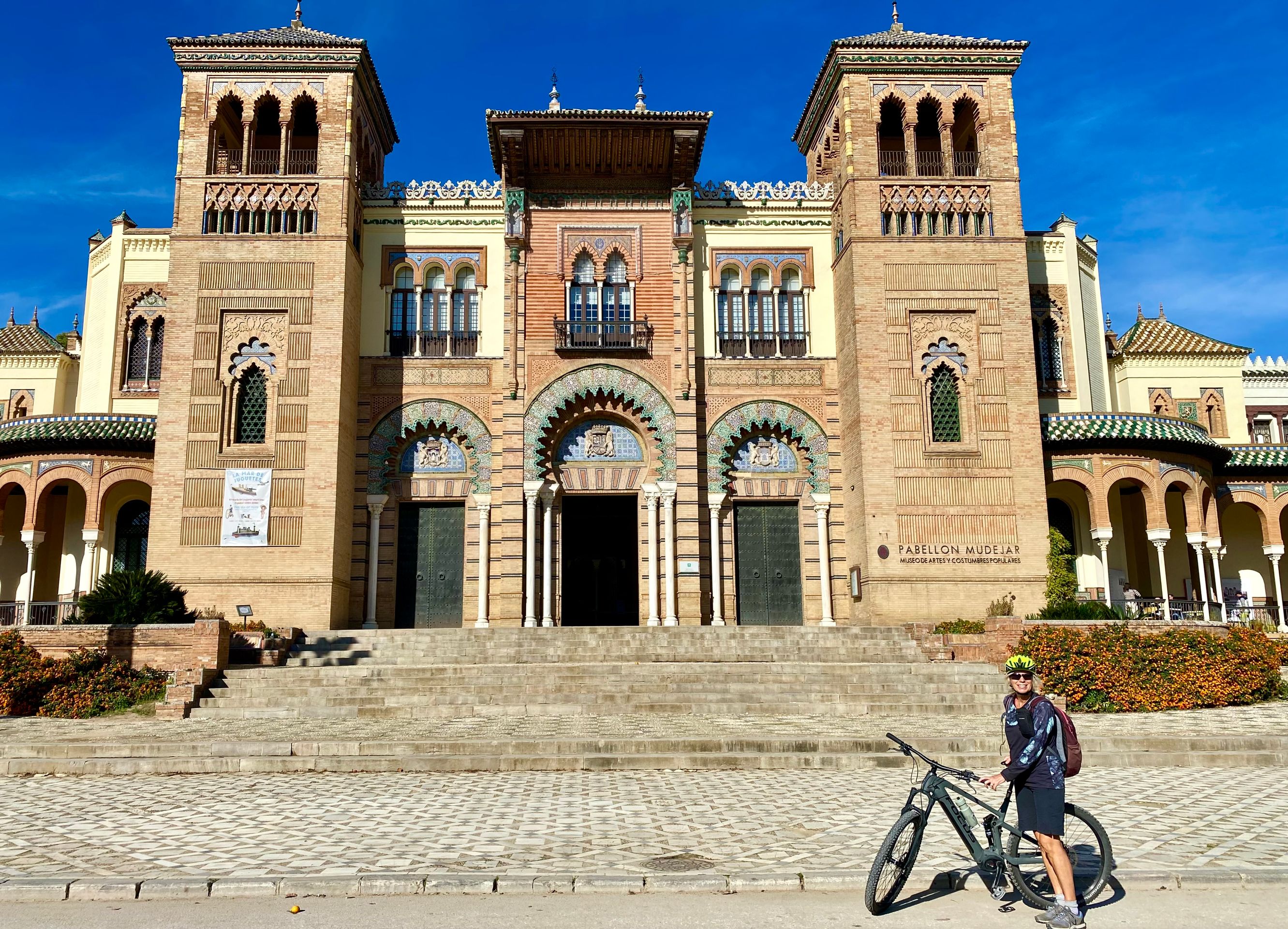
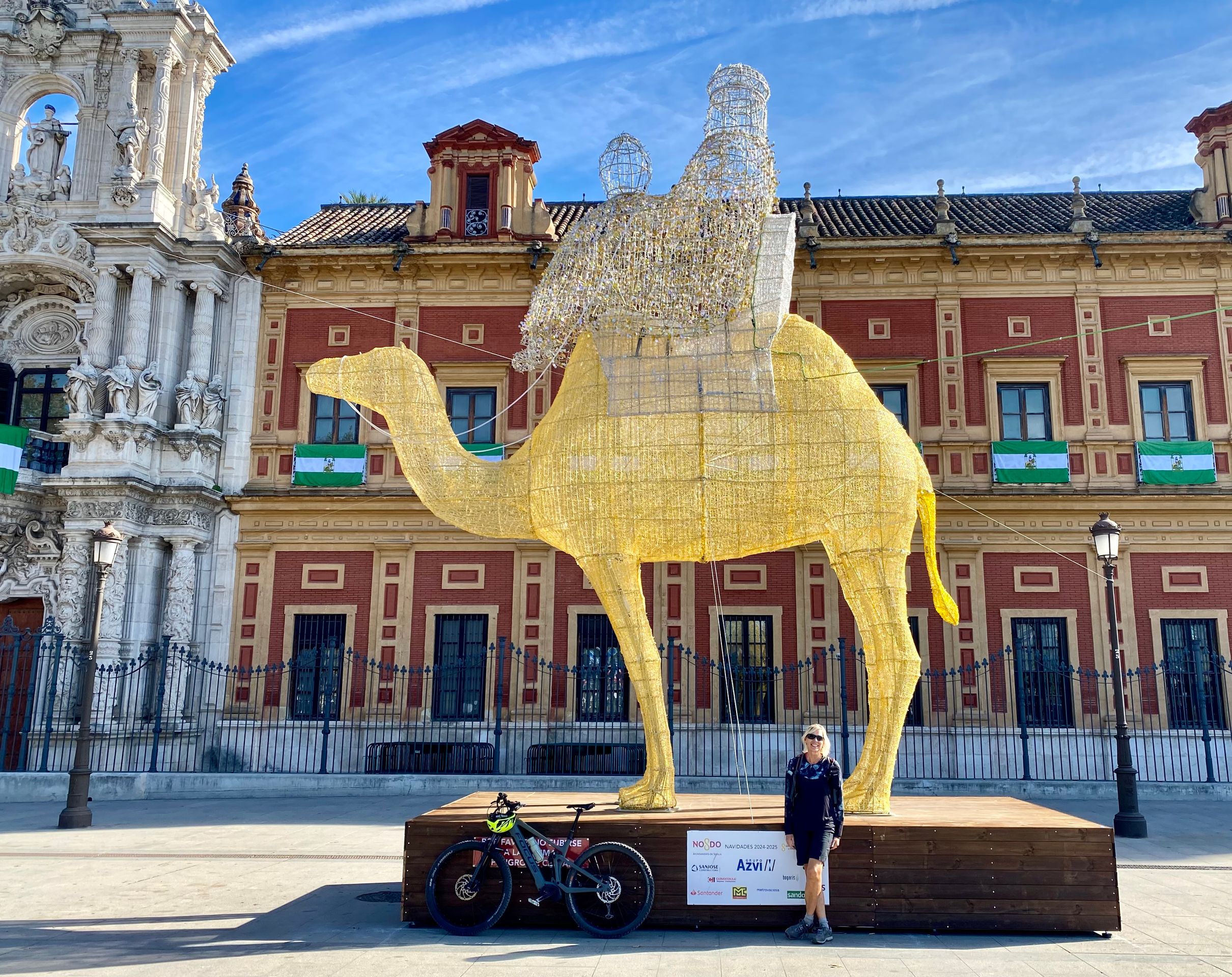
On the way between Cadiz and the ferry port of Huelva lies Sevilla. Last year, on our way to the ferry, we had passed through Sevilla, but this time we want to at least spend the day there. So after the short but lovely stay in Cadiz, it's time to say goodbye again and tackle the 120 km highway stretch to Sevilla. Upon arrival in Sevilla, we park for free in the parking lot of the former expo grounds of the World Exhibition of 1992. This tip comes from our app Park4Night, which is indispensable for motorhome travelers. We unpack the bicycles, as Sevilla is said to be perfect for exploration on wheels thanks to a bike path network of 140 km. We wonder a little that the city is so full of people before we realize that today is December 6th. December 6th is the national holiday in Spain and Constitution Day. The Spanish use this day to stroll through Sevilla with their families.
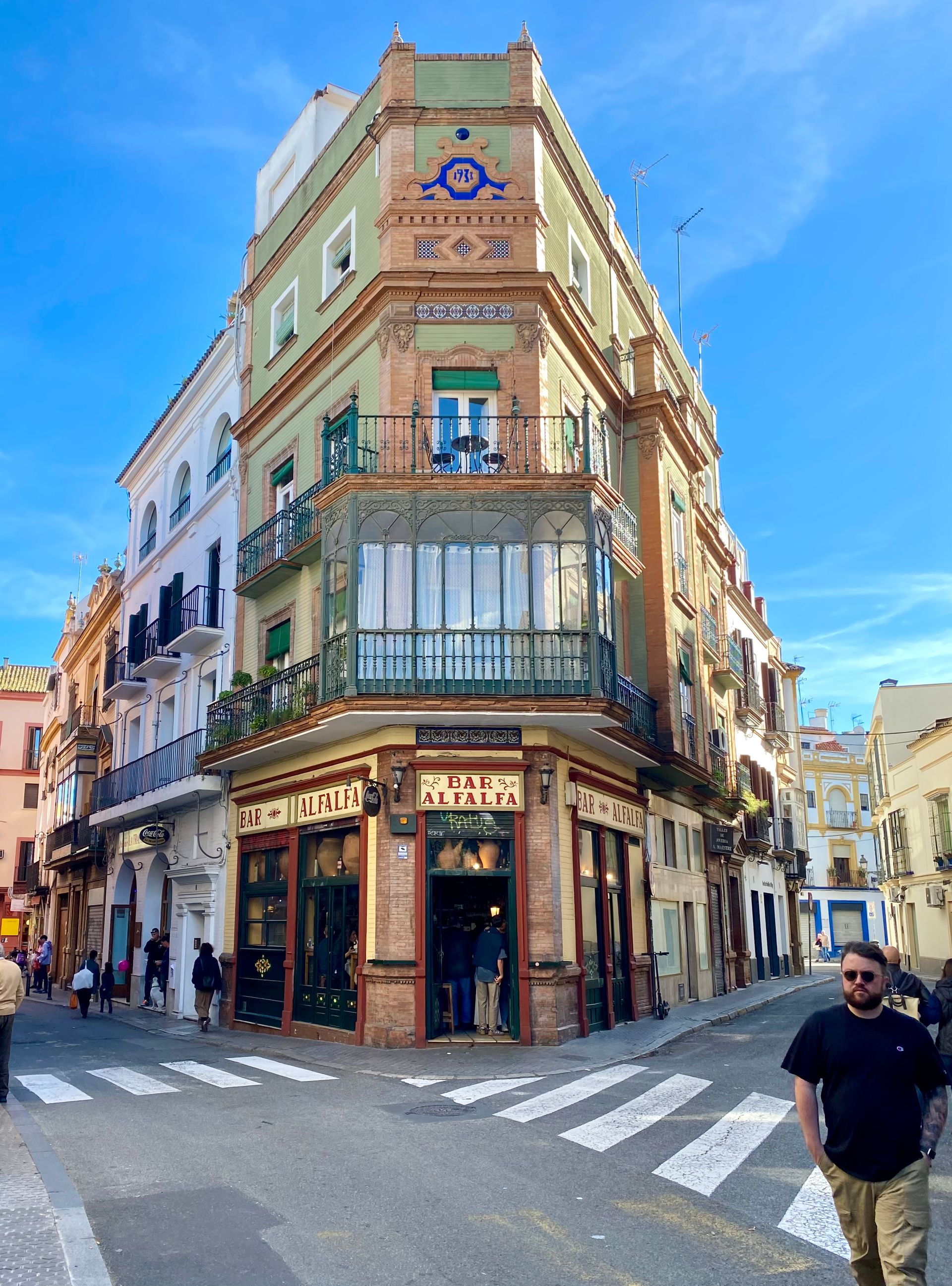
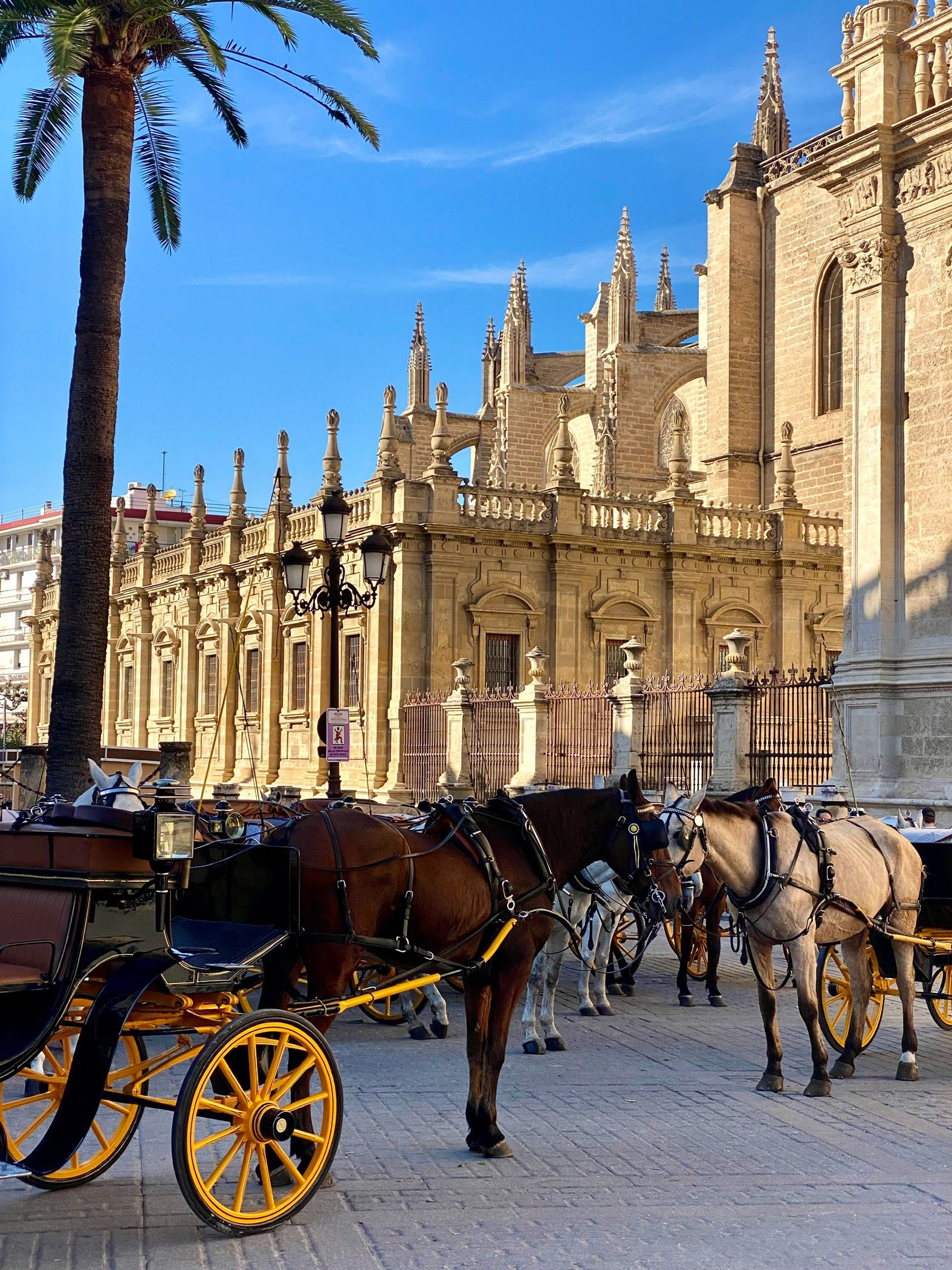
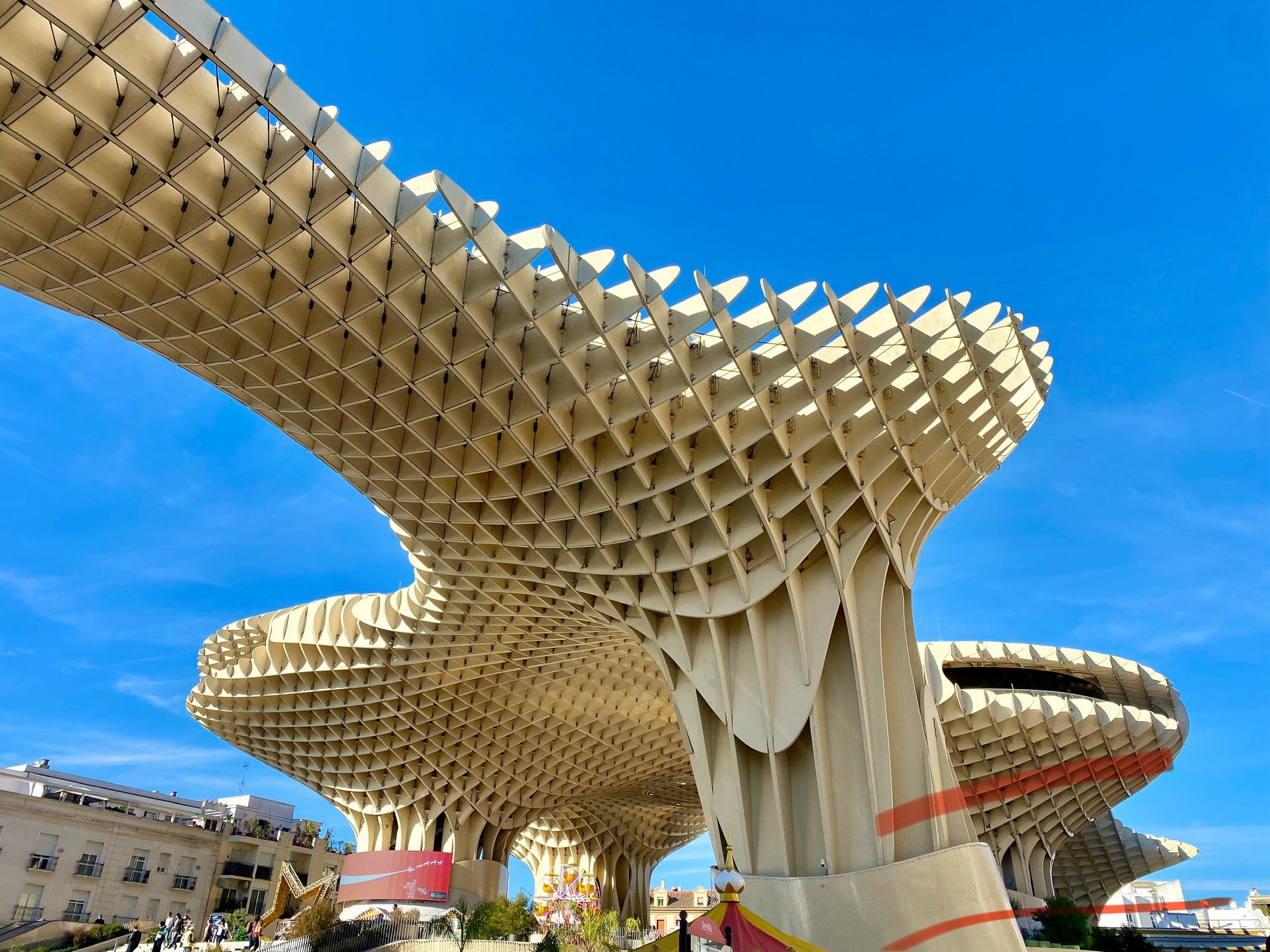
We cross the river or rather the Canal de Alfonso XIII with its numerous beautiful bridges and then ride along the canal to Maria Luisa Park and the famous Plaza de España. From there we walk through the bar and restaurant district Barrio de Santa Cruz to the modern landmark of Sevilla: the striking Setas de Sevilla or the 'Mushrooms of Sevilla', a wooden construction towering over the city from 2011 with a panoramic terrace, a walk path, and an archaeological museum. All the restaurants and bars in the city are packed full (holiday!). We only find one café for lunch, which is also very delicious. We roll past the cathedral, where a procession is taking place, and then back through the trendy district of Macarena to the canal. On the other side of the river, we head back through the former expo grounds, which, like most expo grounds around the world, looks somewhat deserted and dilapidated. Although we only had a few hours in Sevilla, we really liked this city and decided that one day we would come back with more time!
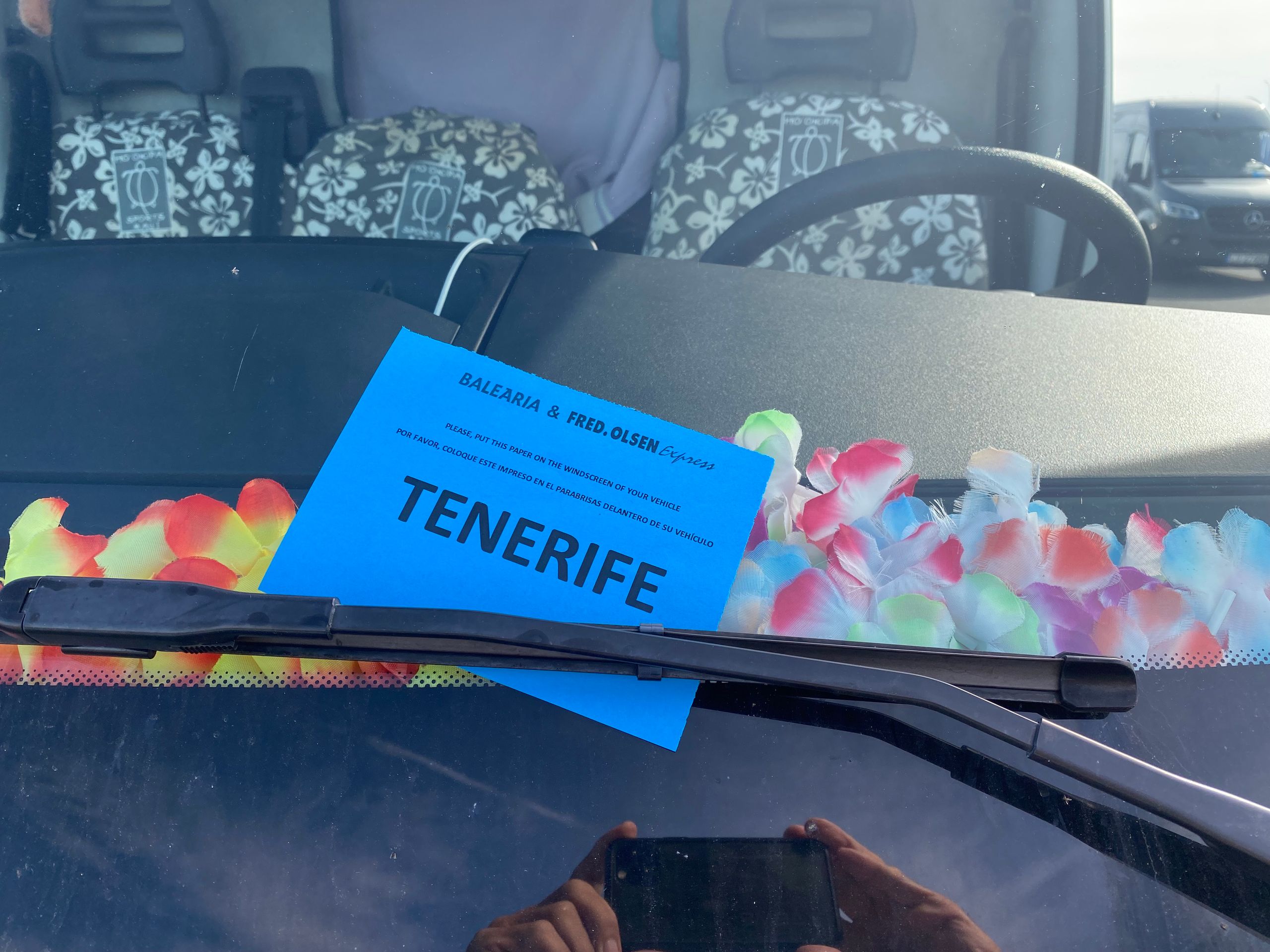
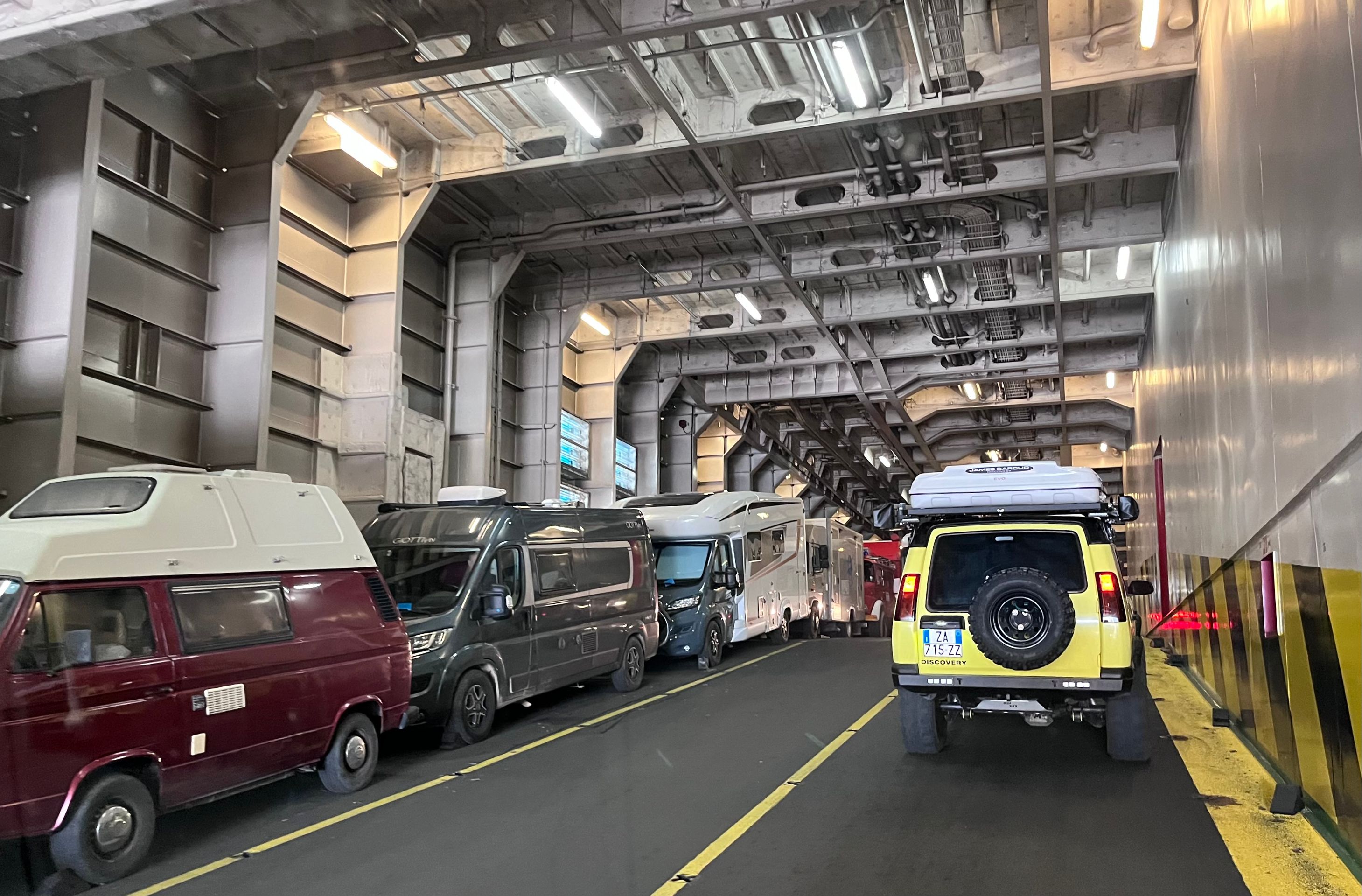
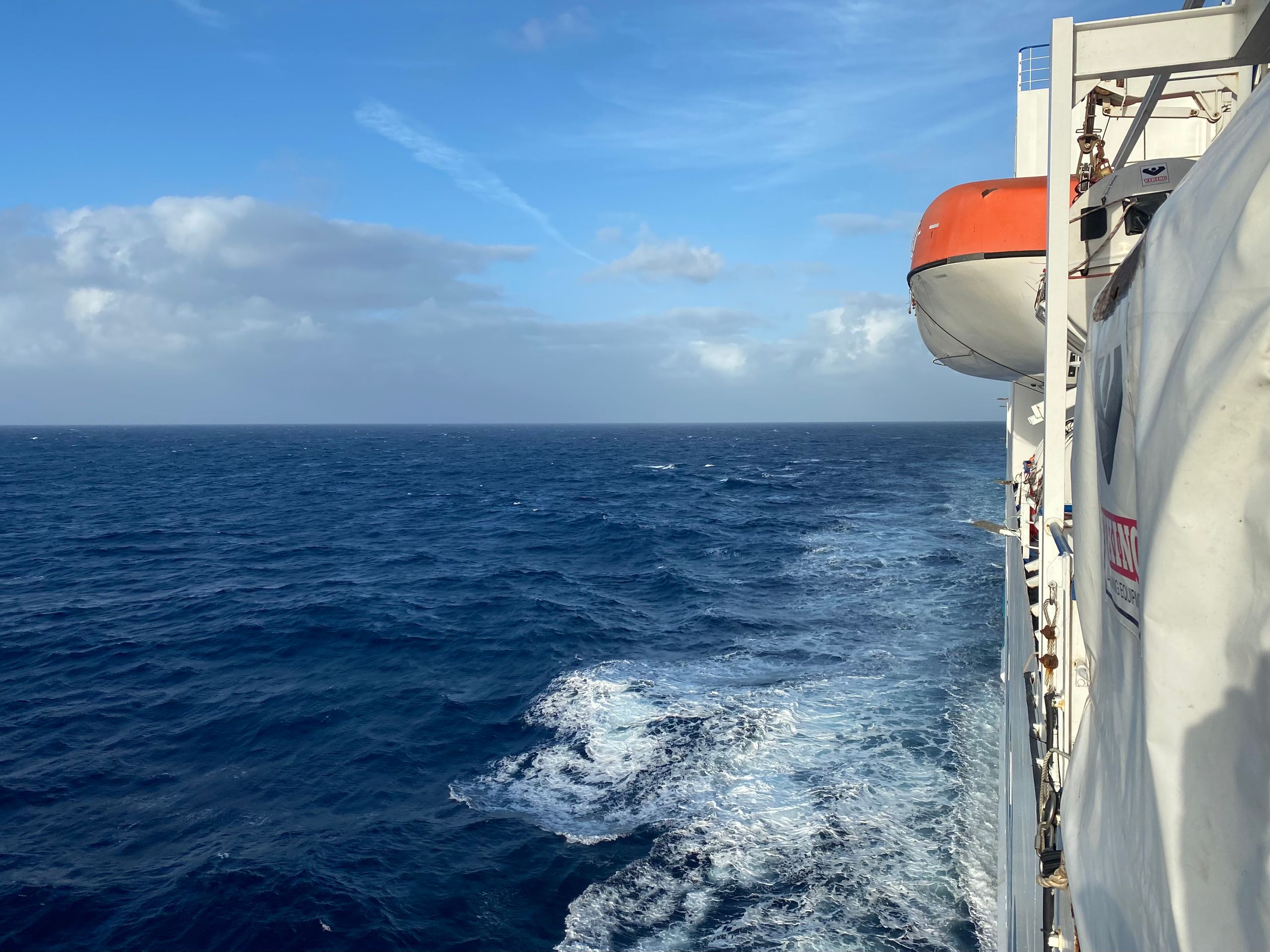
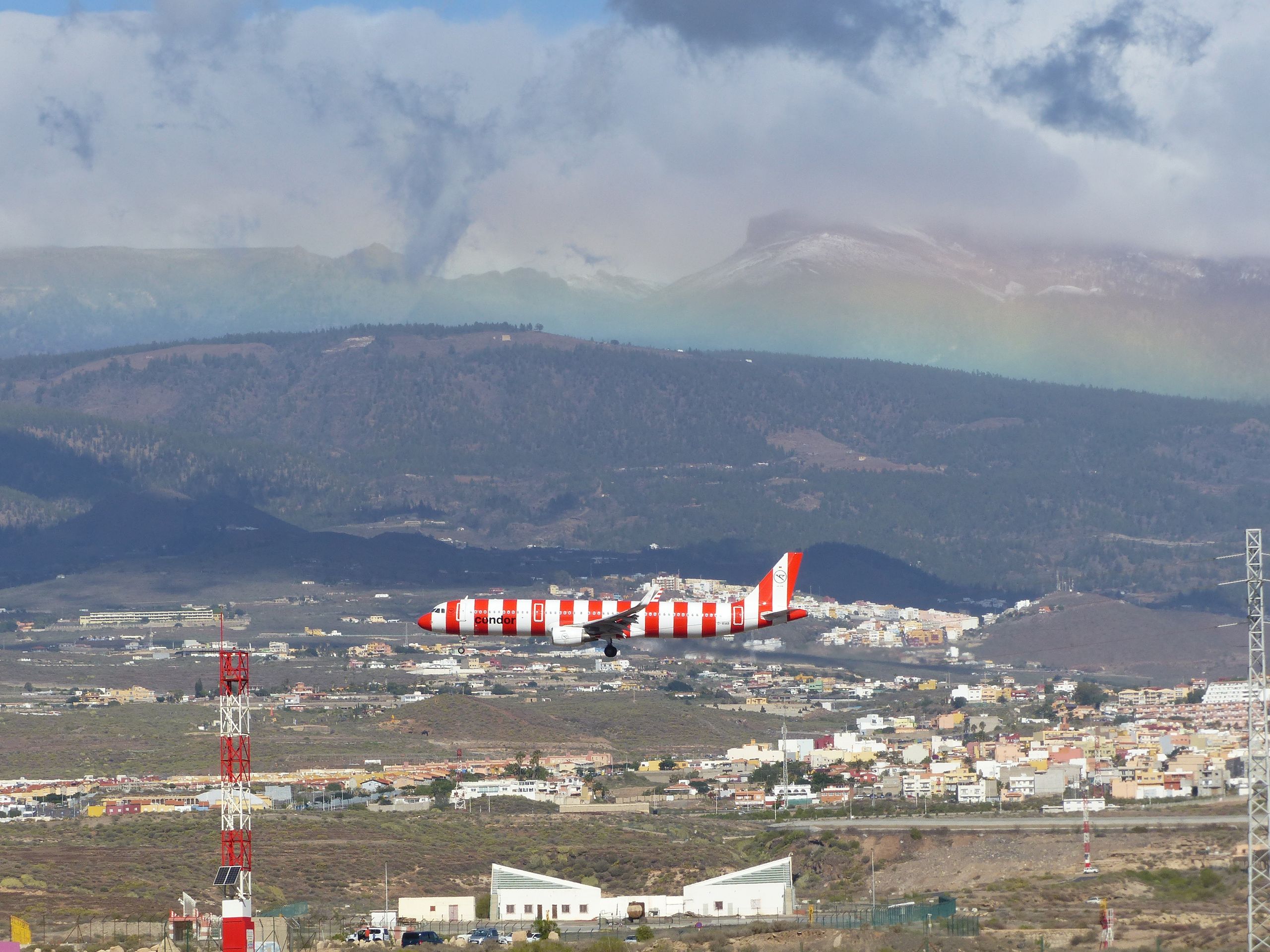
In the late afternoon, we set out towards Huelva, located on the Rio Odiel. We spend the night of December 7th with many other motorhomes, who are evidently also waiting for the ferry, on a beach parking lot in Mazagon close to the ferry port. Our ferry departs at noon. The crossing to Tenerife is smooth, the Atlantic shows its tamer side. As we saved the money for a cabin (over €400!), we 'sleep' in the sleeping chairs more badly than well. After about 36 hours of crossing, we roll off the ferry shortly after 0:00 am on December 9th and drive the short distance to our familiar overnight spot in Las Teresitas.
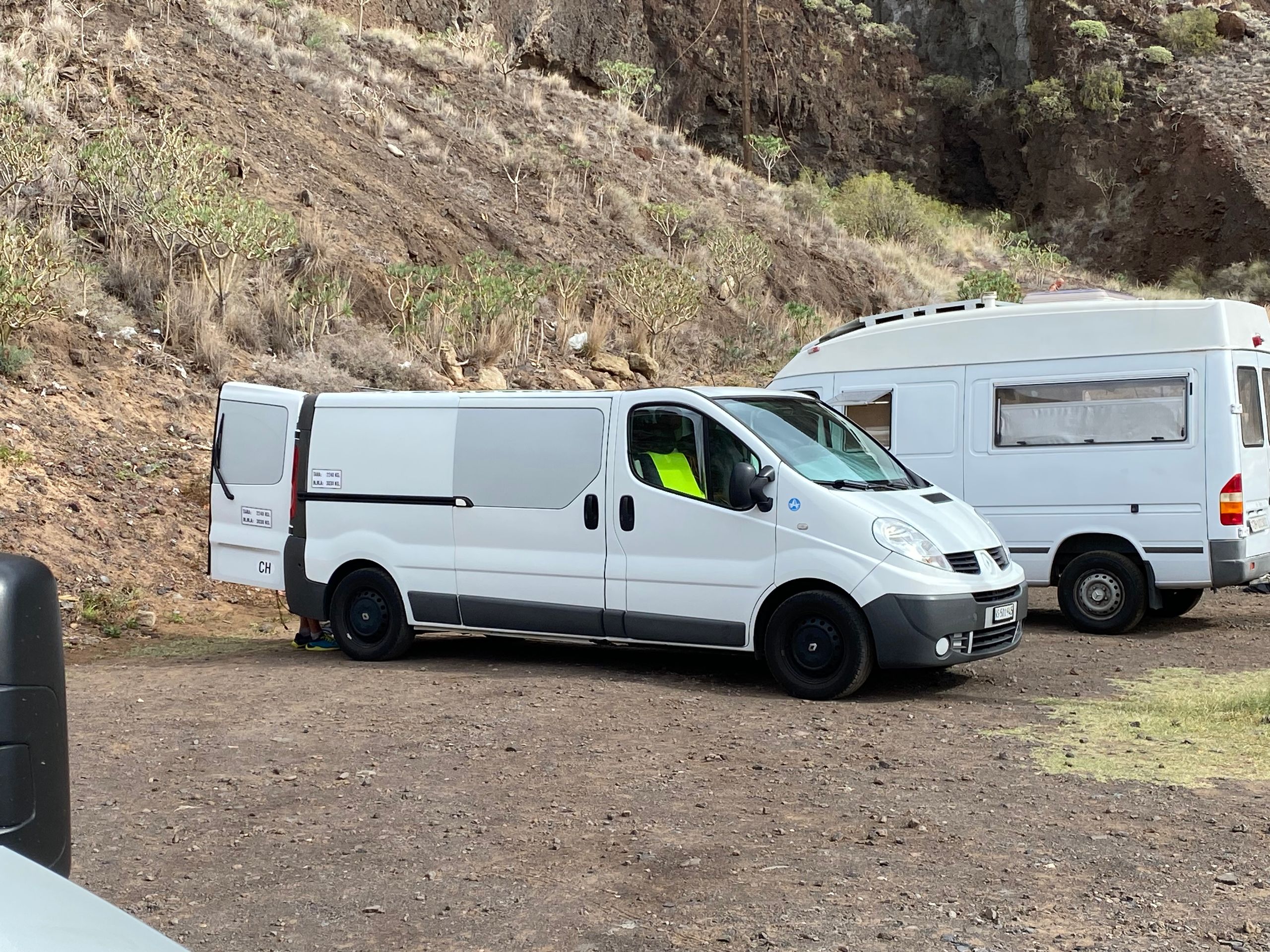
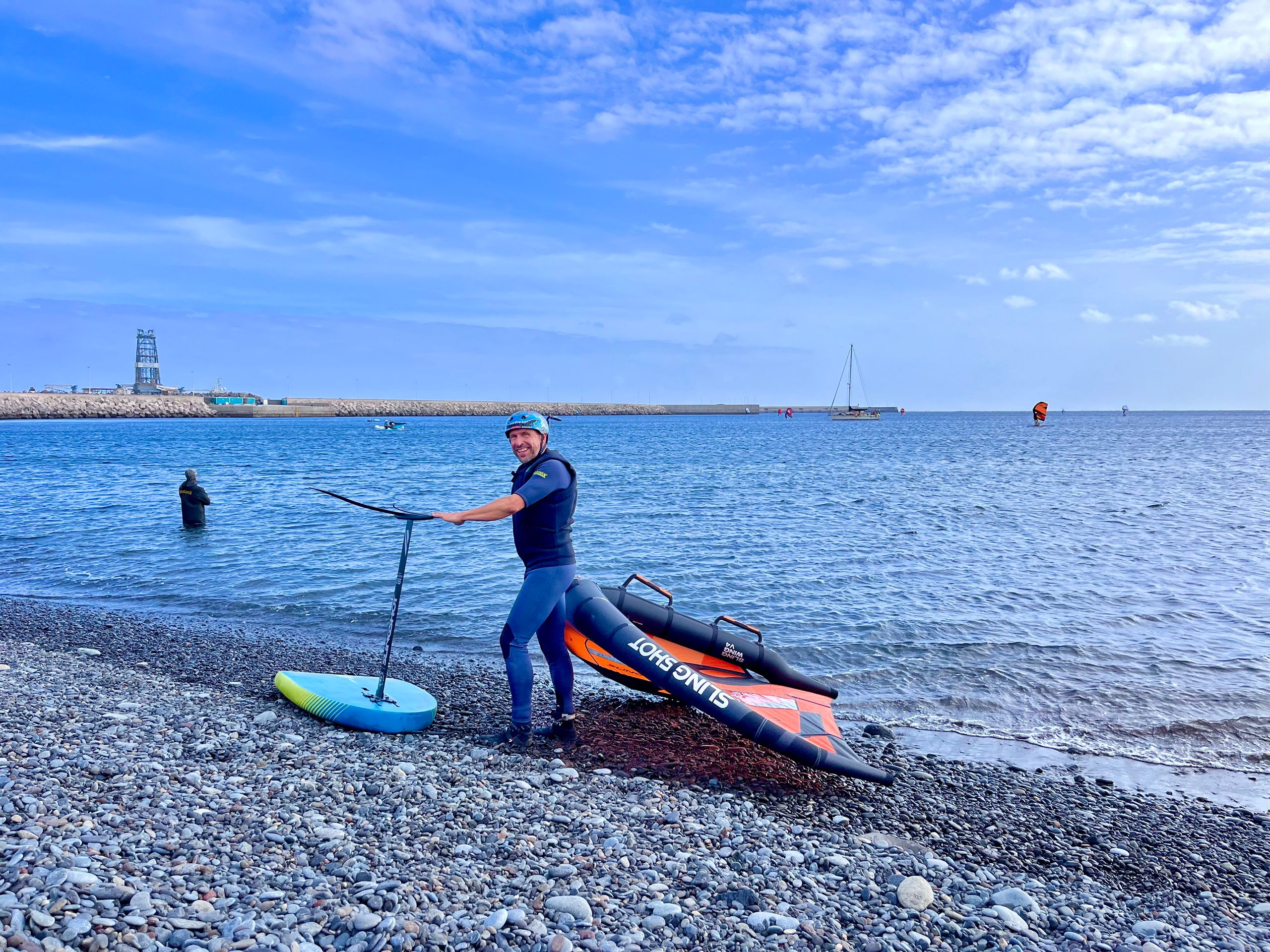
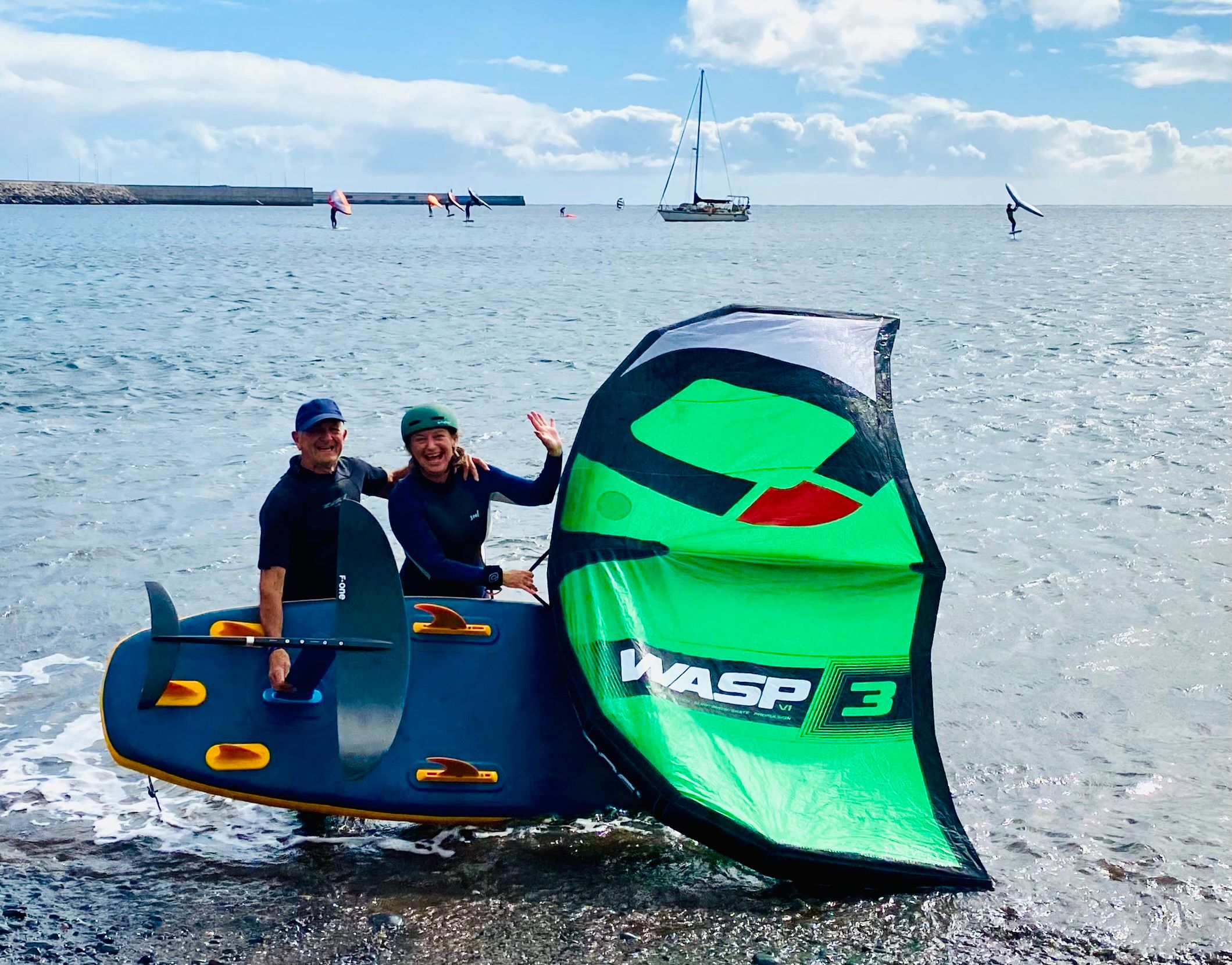
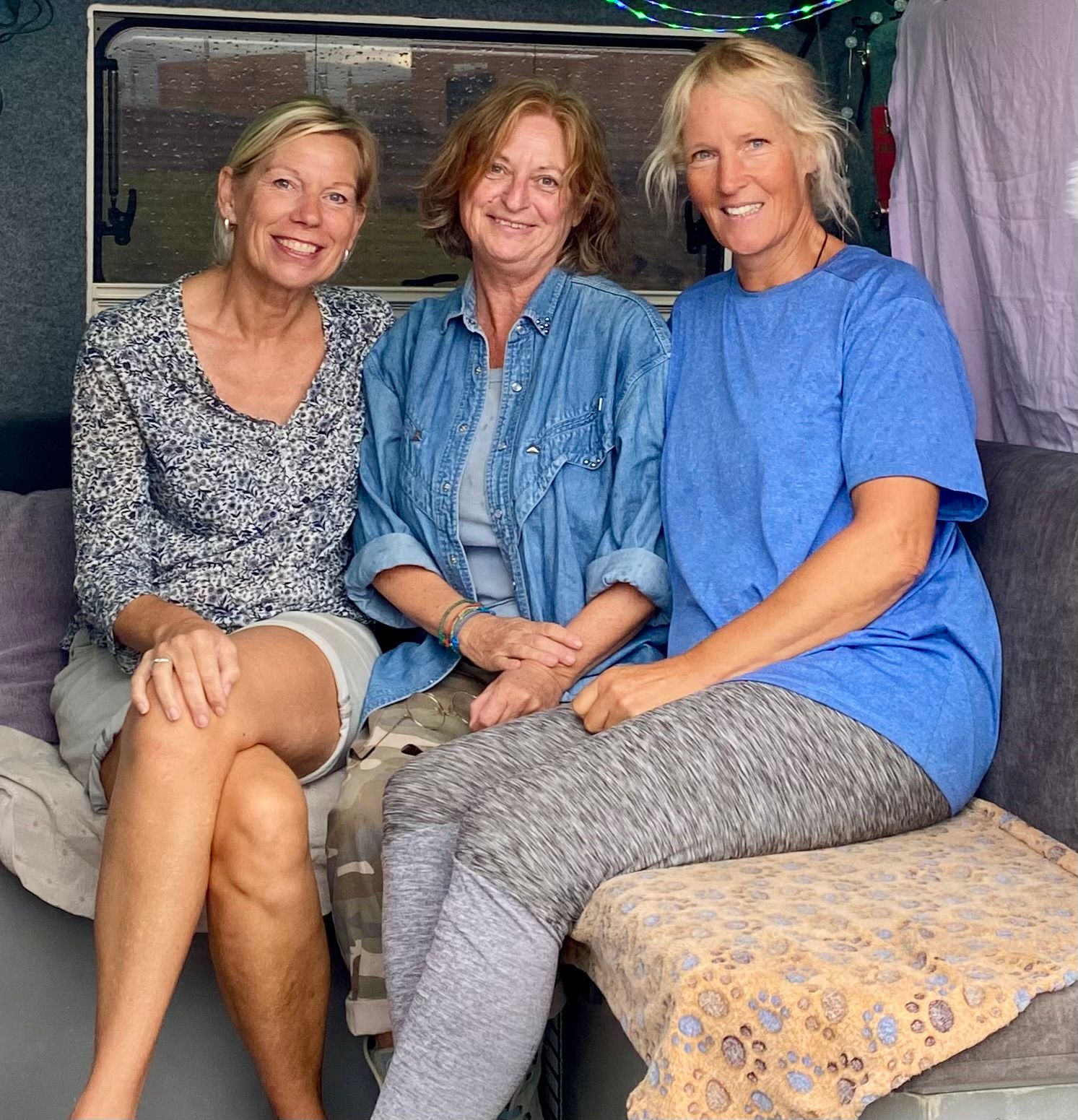
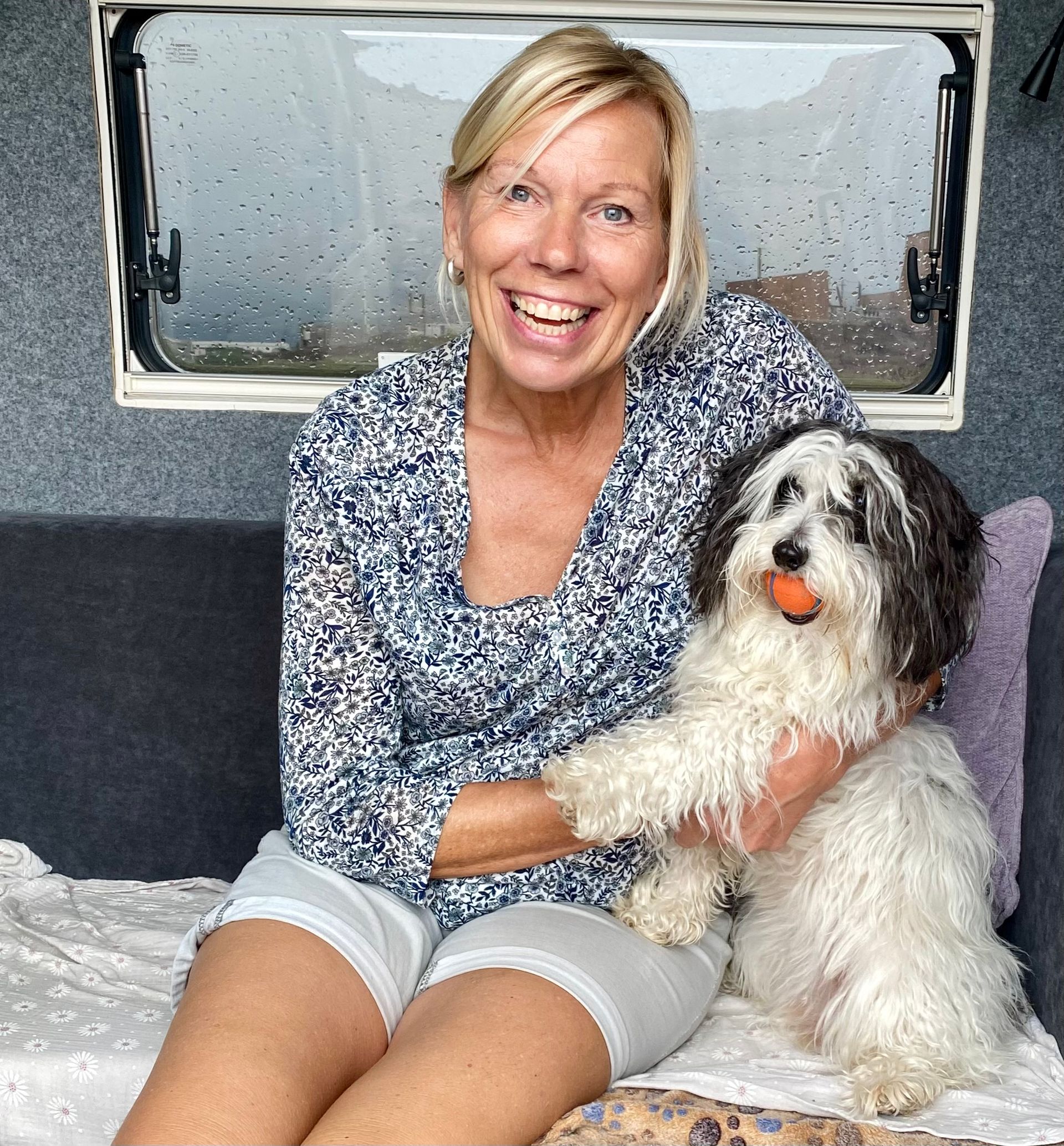
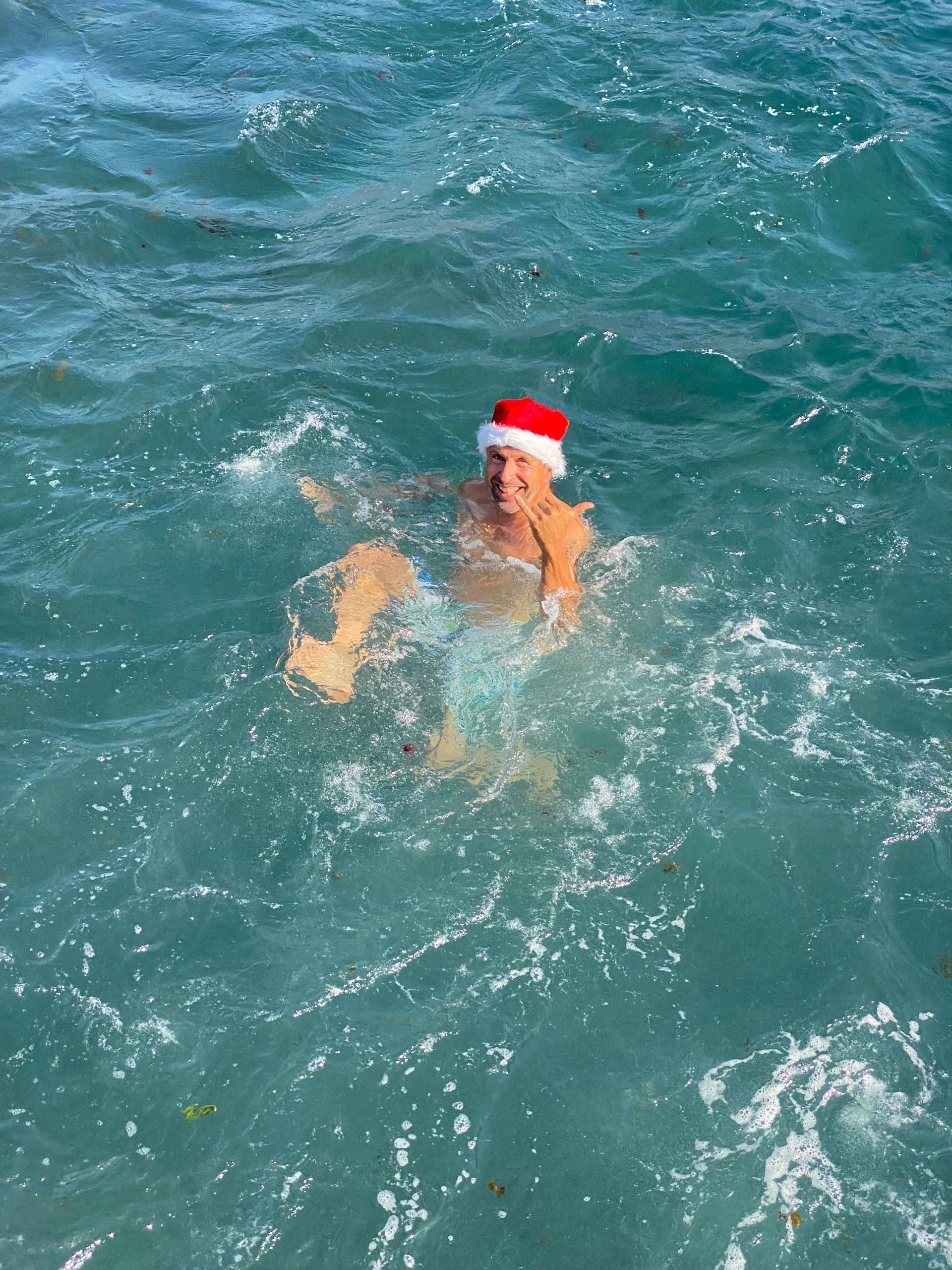
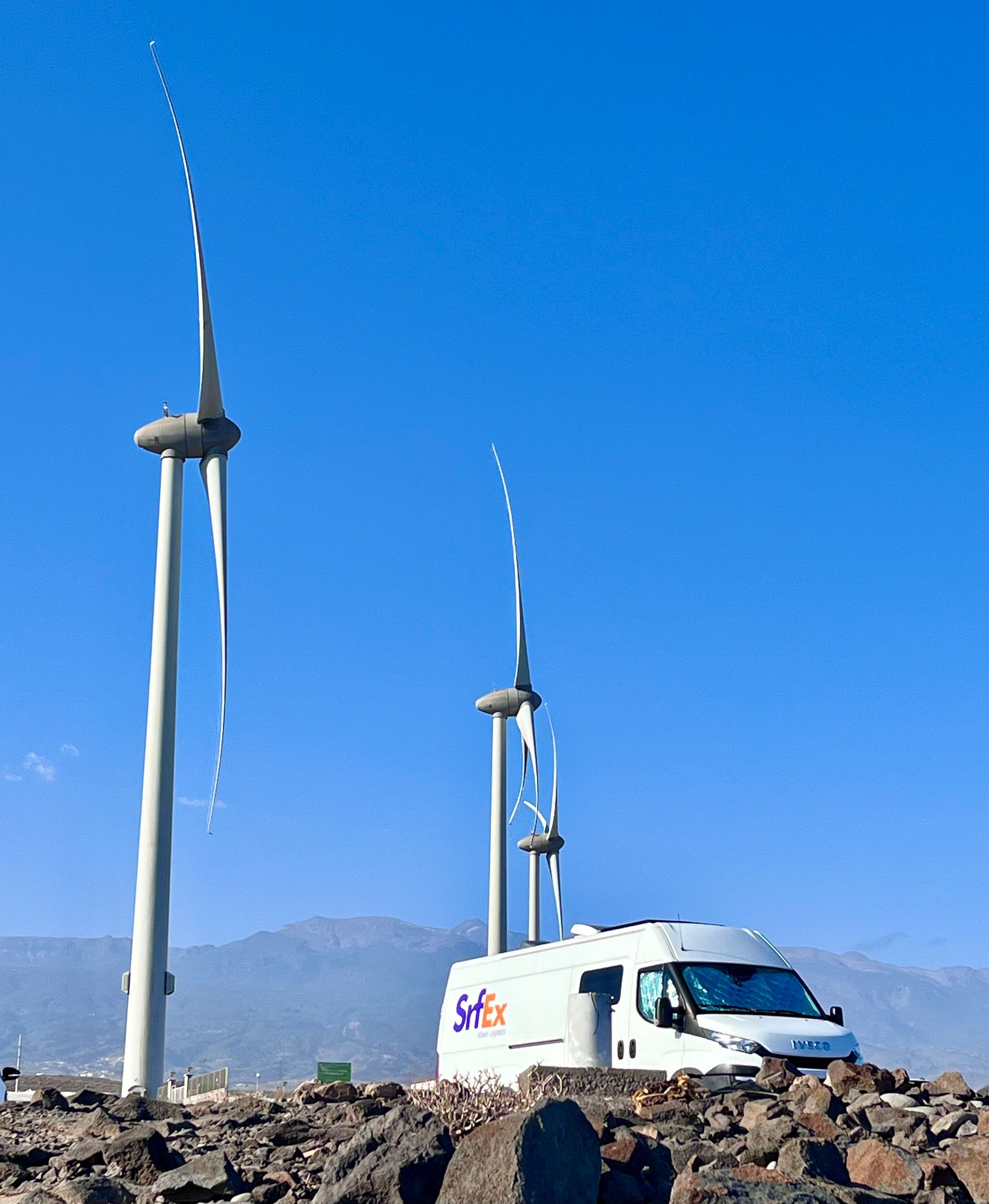
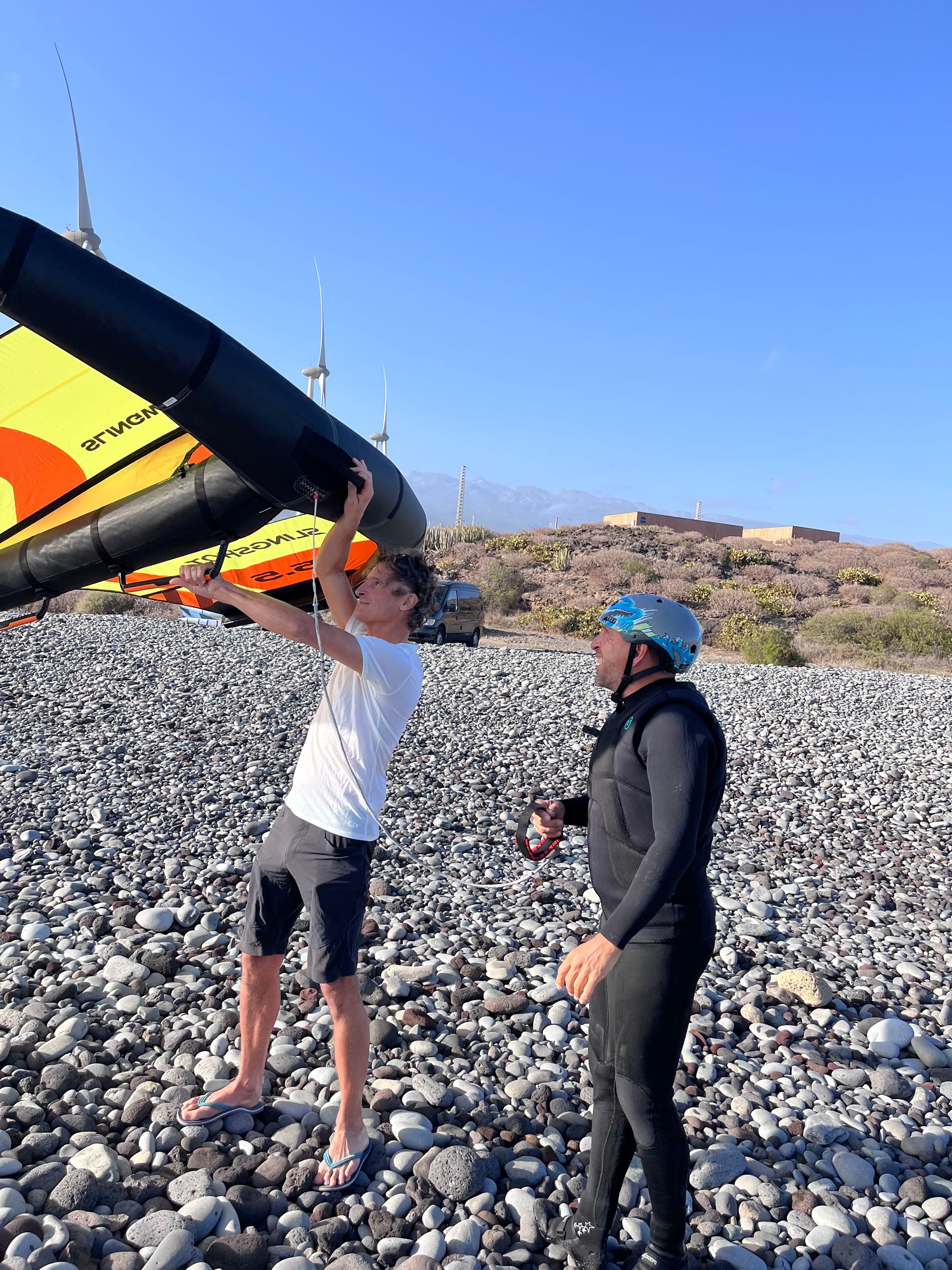
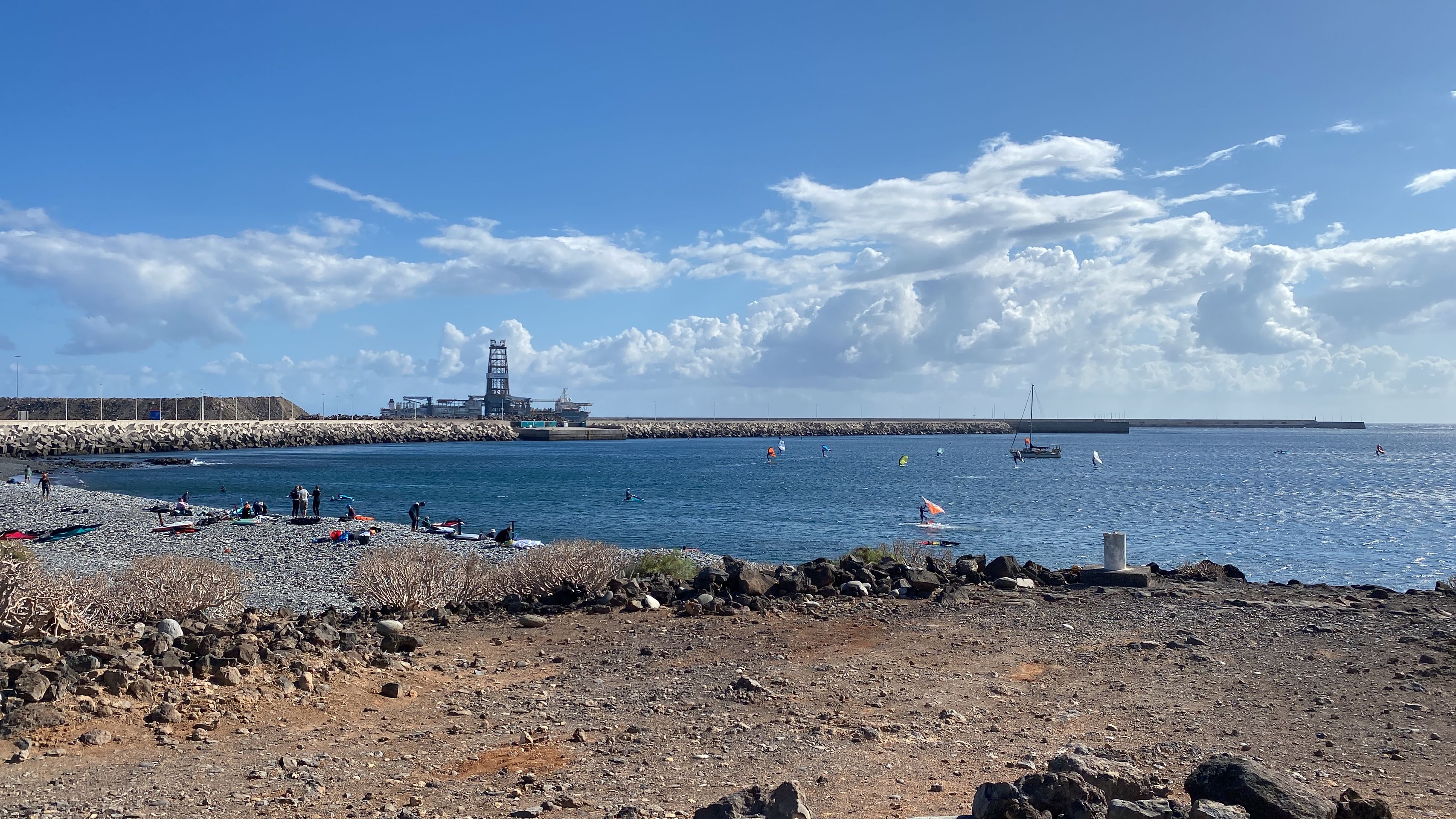
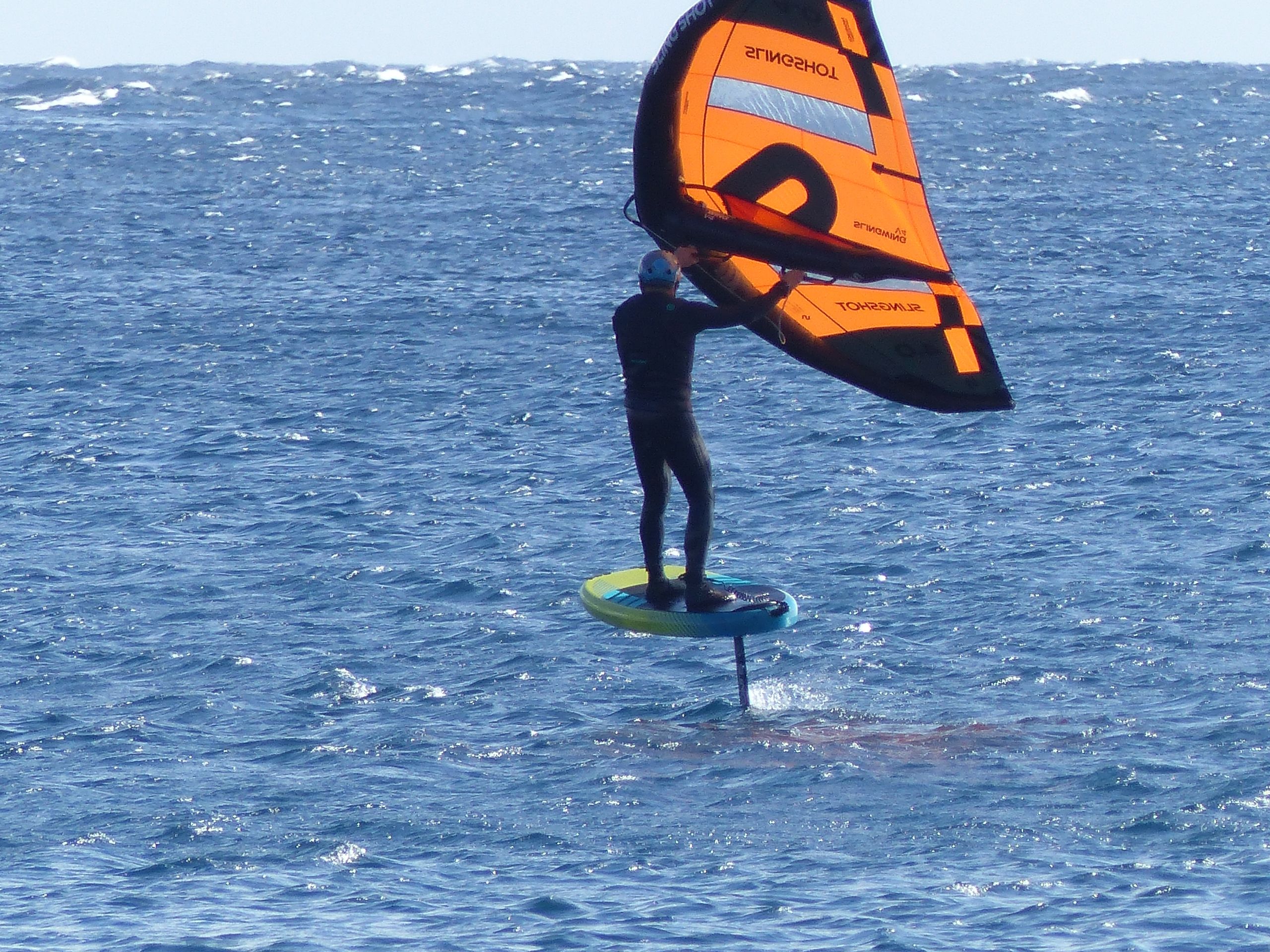
As is often the case, you quickly meet someone while living in a van, and this time it’s Roman from Switzerland, who lives the fifty-fifty model. 'Fifty-fifty' means working in Switzerland for half the year and traveling for the other half. With the wages paid in Switzerland, it’s easy to manage. Roman has outfitted his mini camper with many clever ideas, and we make a note of his idea for the white foiled windows for our van. He also has a 'flaking machine' with him; we look a bit puzzled? With the flaking machine, he grinds out a huge quantity of different grains to make the ingredients for his breakfast muesli. After a morning workout and a refreshing dip in the wonderfully warm Atlantic, we head out for surfing in the afternoon, specifically wing foiling. At the industrial harbor of Granadilla, there is a very good spot for practicing! The far-reaching harbor mole extends into the sea so there are nearly no waves, which is very helpful in the initial phase of wing foiling. The next day, we are right back at the spot and meet two traveling women, Claudia and Barbara (with their dog Ramba), who are also wing foiling and traveling in their motorhomes. Claudia has been on the road with her motorhome for several years, and Barbara has temporarily handed over her physiotherapy practice to her employees for a few months. Coincidentally, both come from northern Germany, around Flensburg. Barbara still has Bruce in tow for a few days, whom she met in El Medano. Bruce is an over 80 years old, ever ready for a joke Englishman, who has just switched from windsurfing to wing foiling. A fun group, where boredom does not come up!
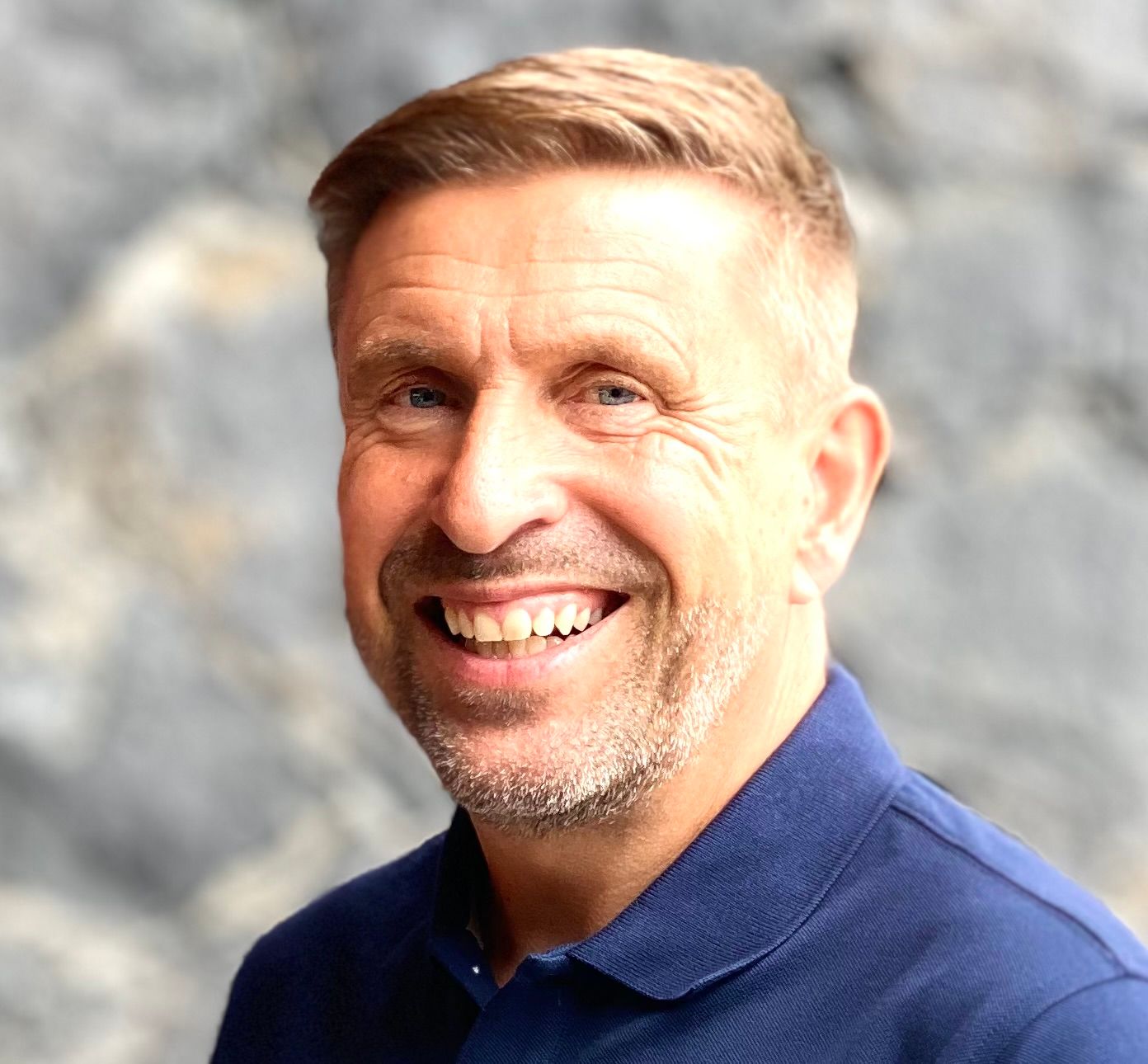
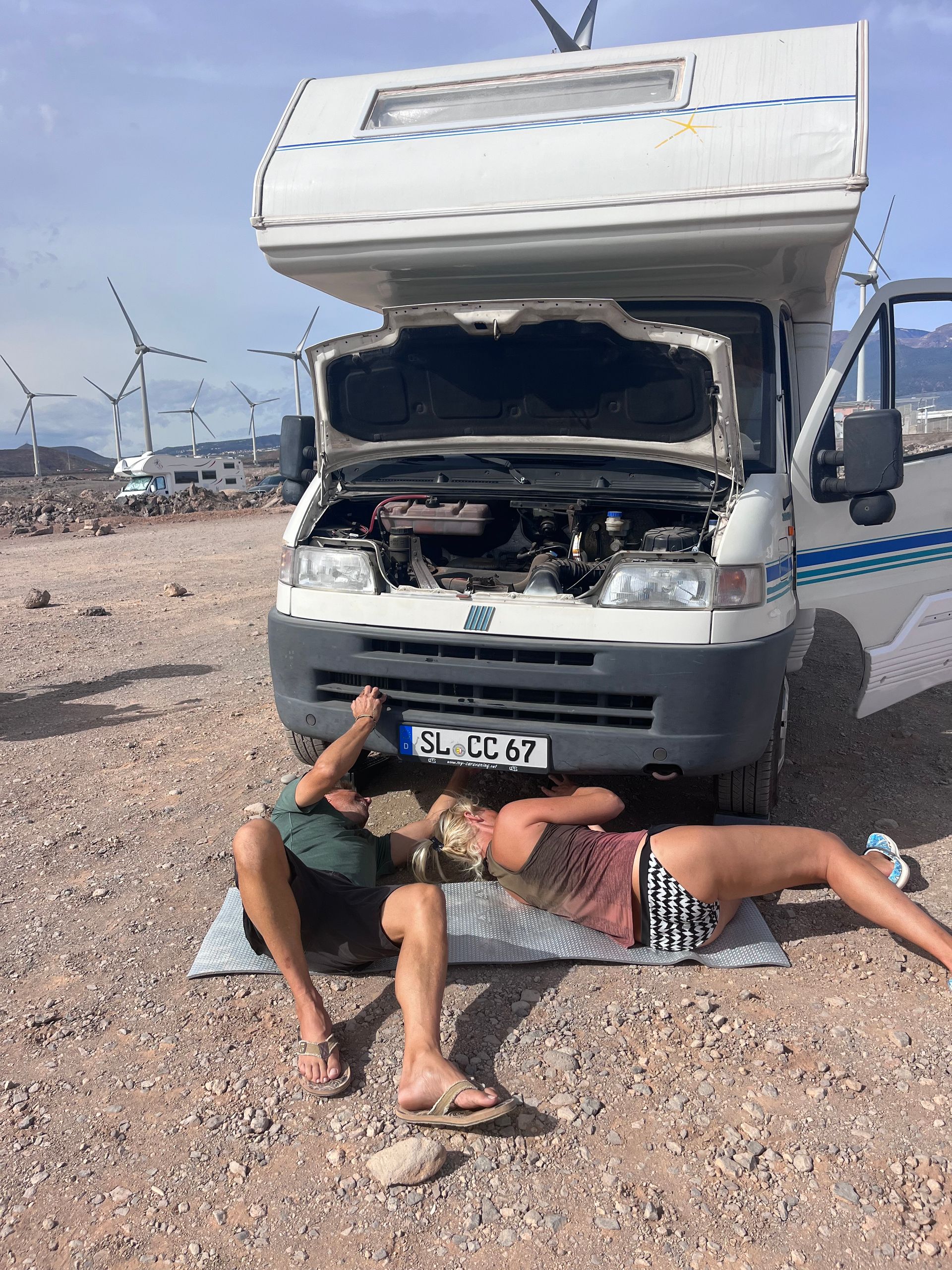
If there's no wind, we visit our favorite beaches on the island. However, the topic of job hunting for 2025 is increasingly coming to the fore. Among other things, the somewhat outdated profile picture on LinkedIn and Xing urgently needs to be updated. Since there are hardly any photo studios on the island, Susi takes the pictures with her iPhone and the portrait function herself. We think the photos turned out really well. The next day, there is relatively little wind, and Claudia encourages Susi to try wing foiling too. Talk about it, do it. Susi takes a few laps on the water and is very satisfied afterwards. In return for the motivational effort, I crawl under Claudia's motorhome and search for the cause of the oily spots beneath the car. Apparently, the starter is half torn off and there’s also diesel leaking out. The car is barely drivable, so we decide to spend the night together at the spot, as it’s Saturday, and no workshop is open anymore.
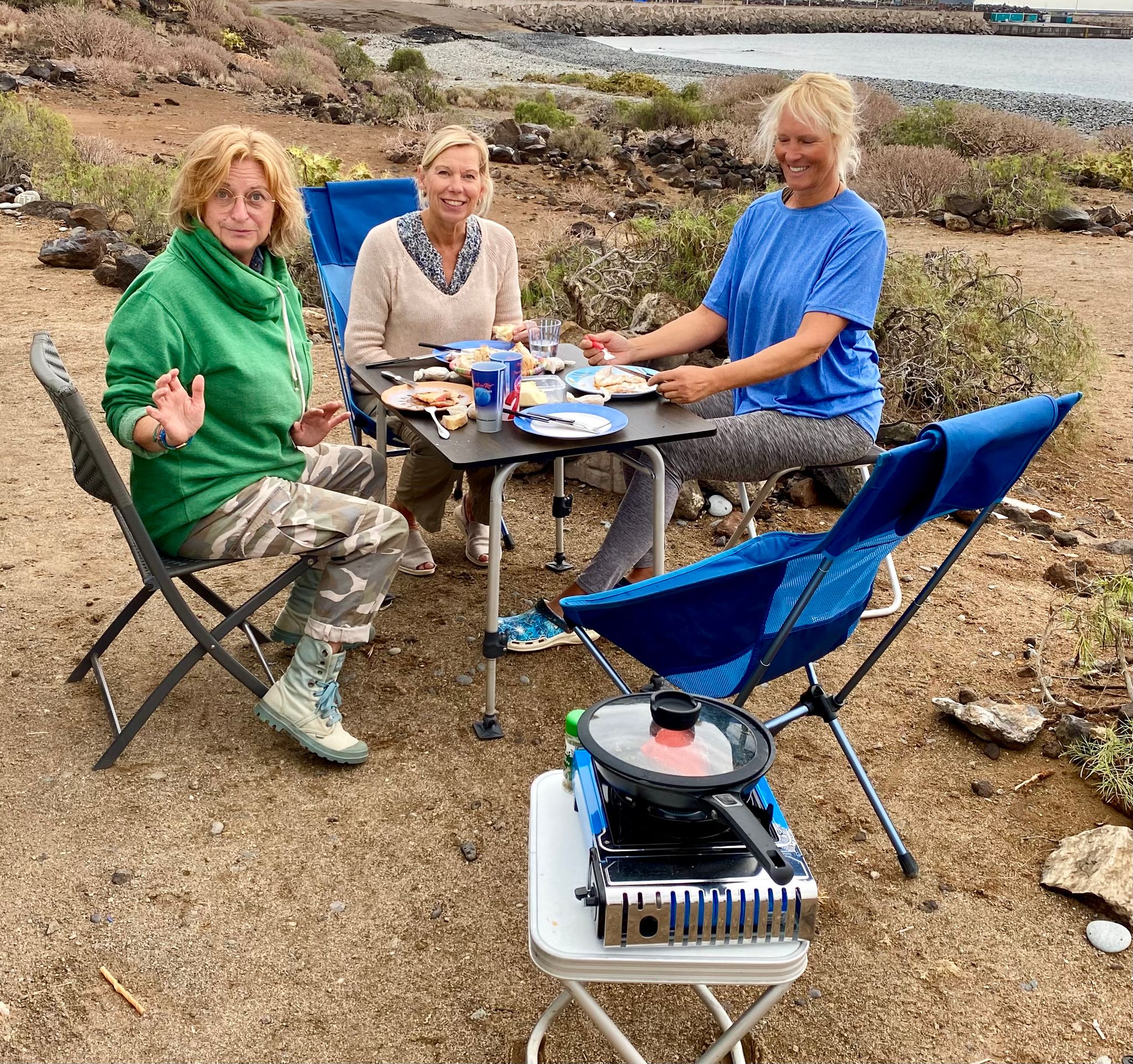
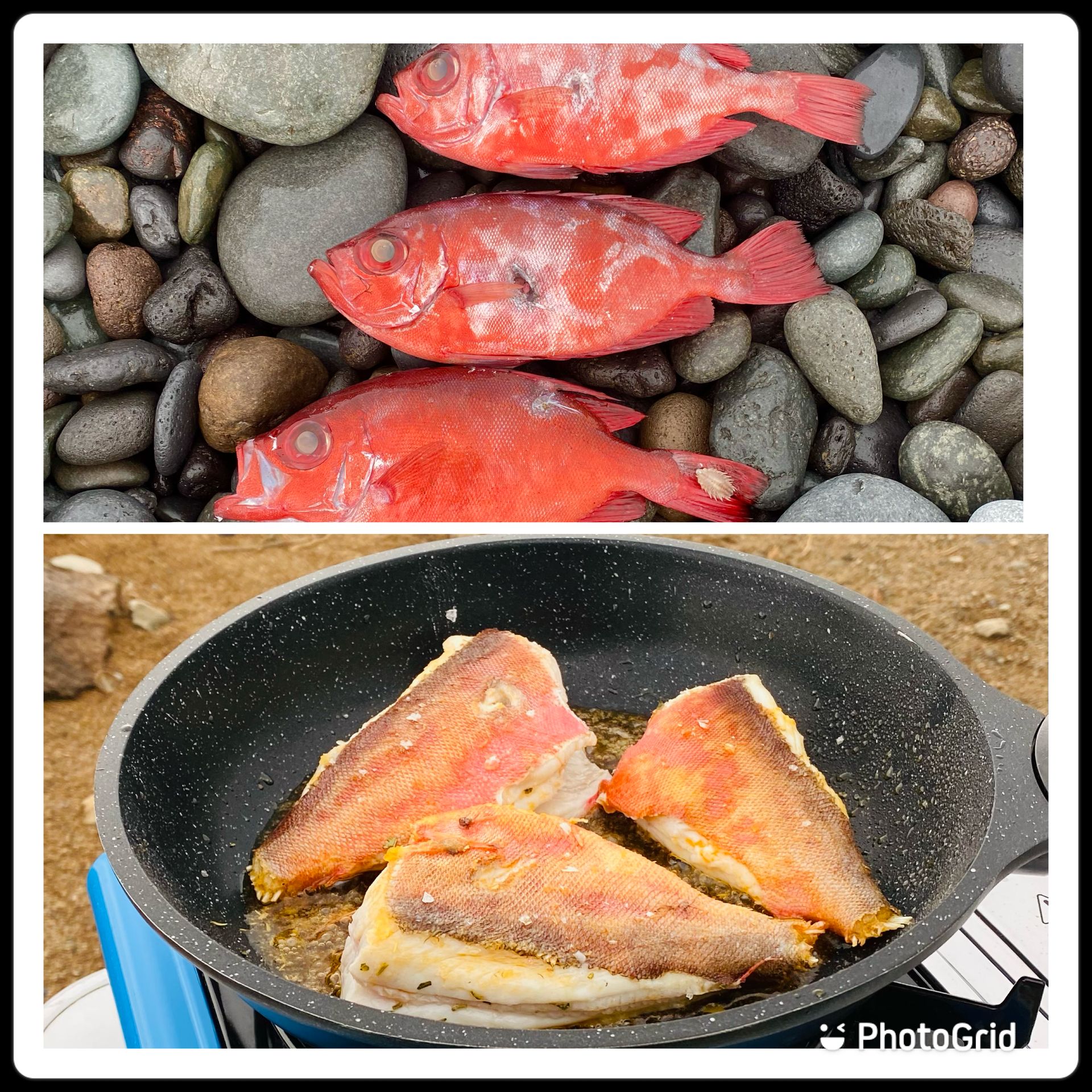
On Sunday, the promised wind fails to show up, or rather blows too offshore, combined with a little drizzle now and then. Susi sits in our van with Claudia and Barbara (and of course Ramba), chatting away. Meanwhile, I go for a walk... For lunch, I fry some reef bass for all of us. The reef bass were given to us by friendly local spear fishermen because we provided them with plastic bags for their catch.
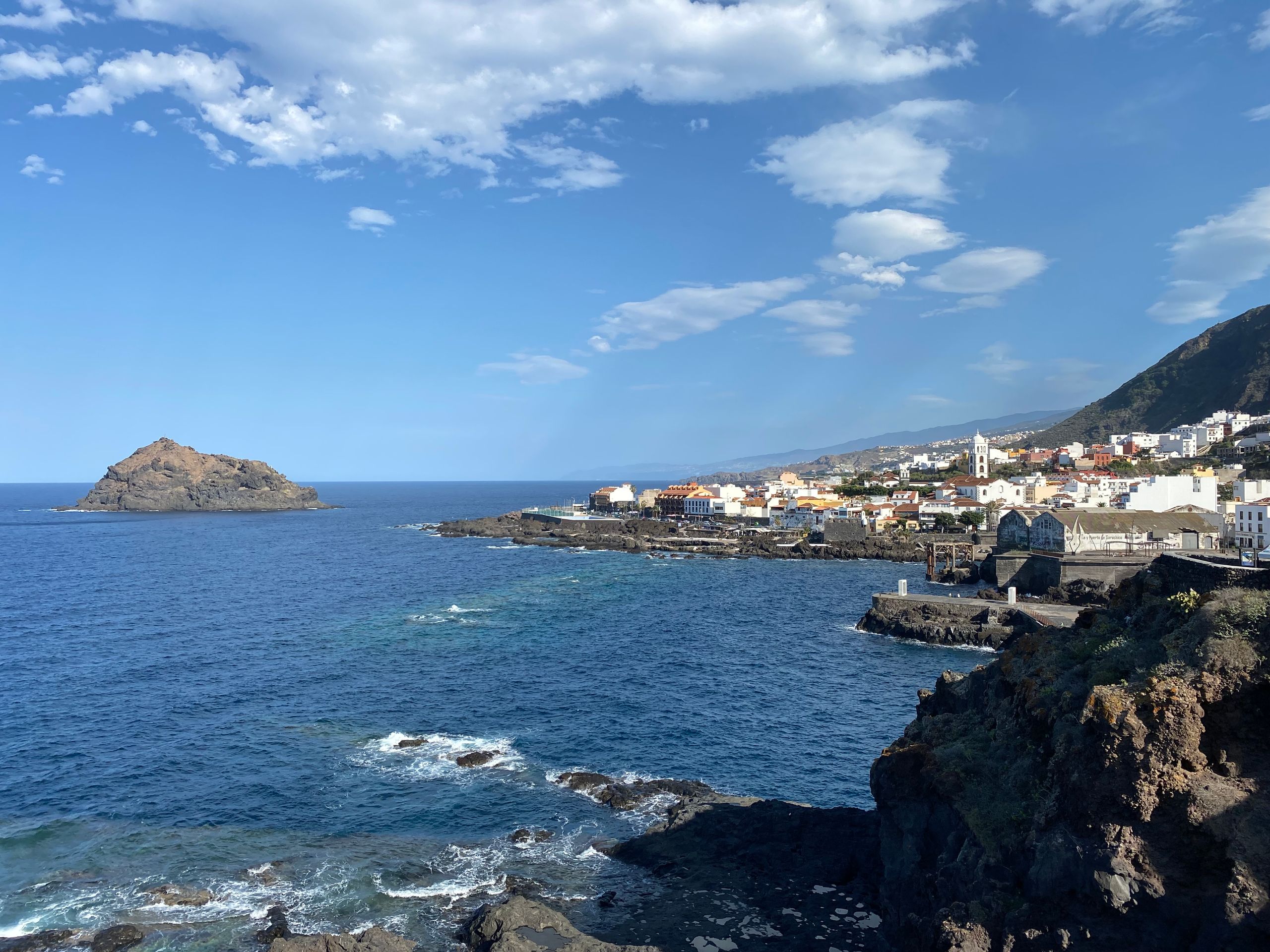
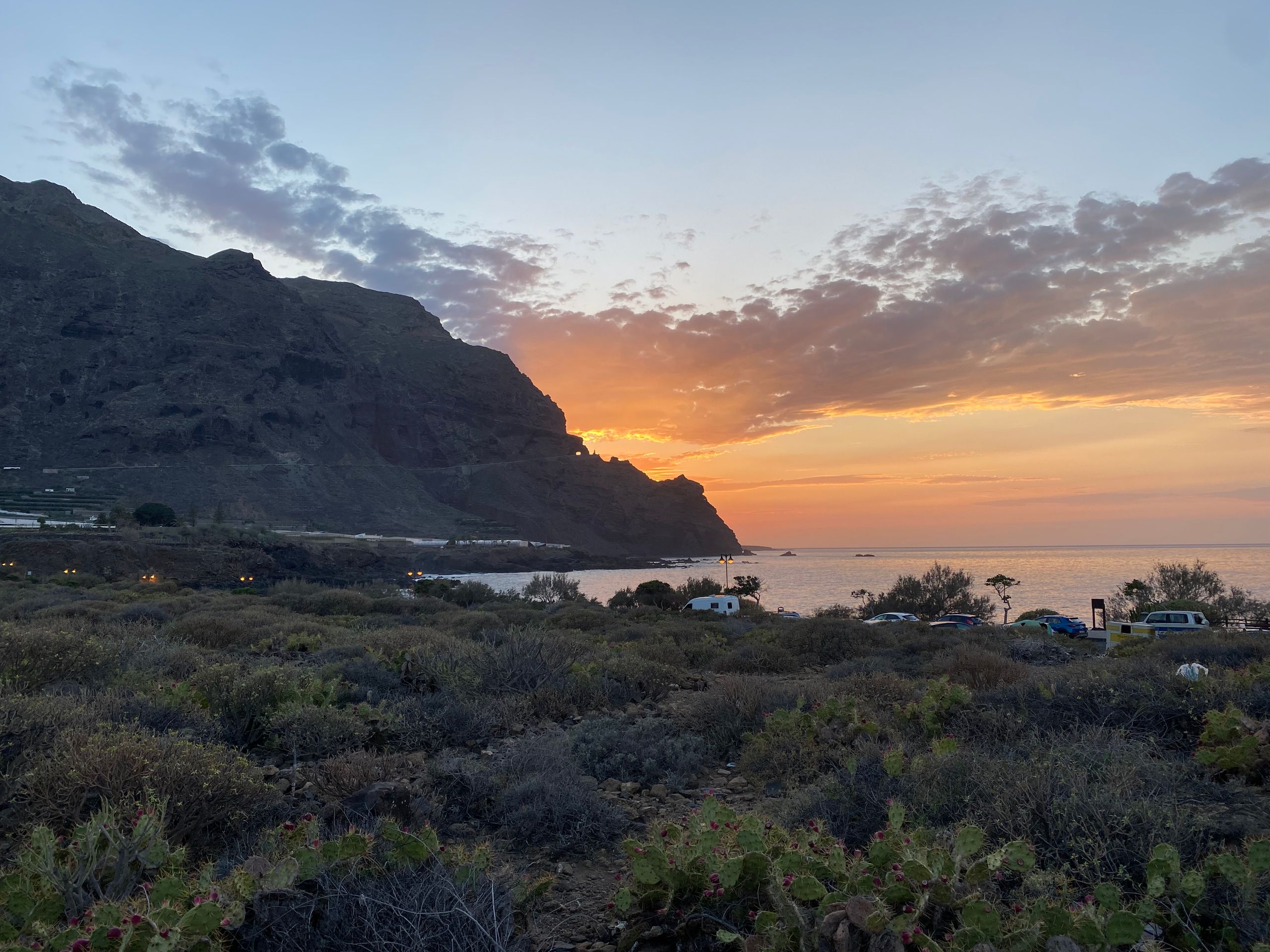
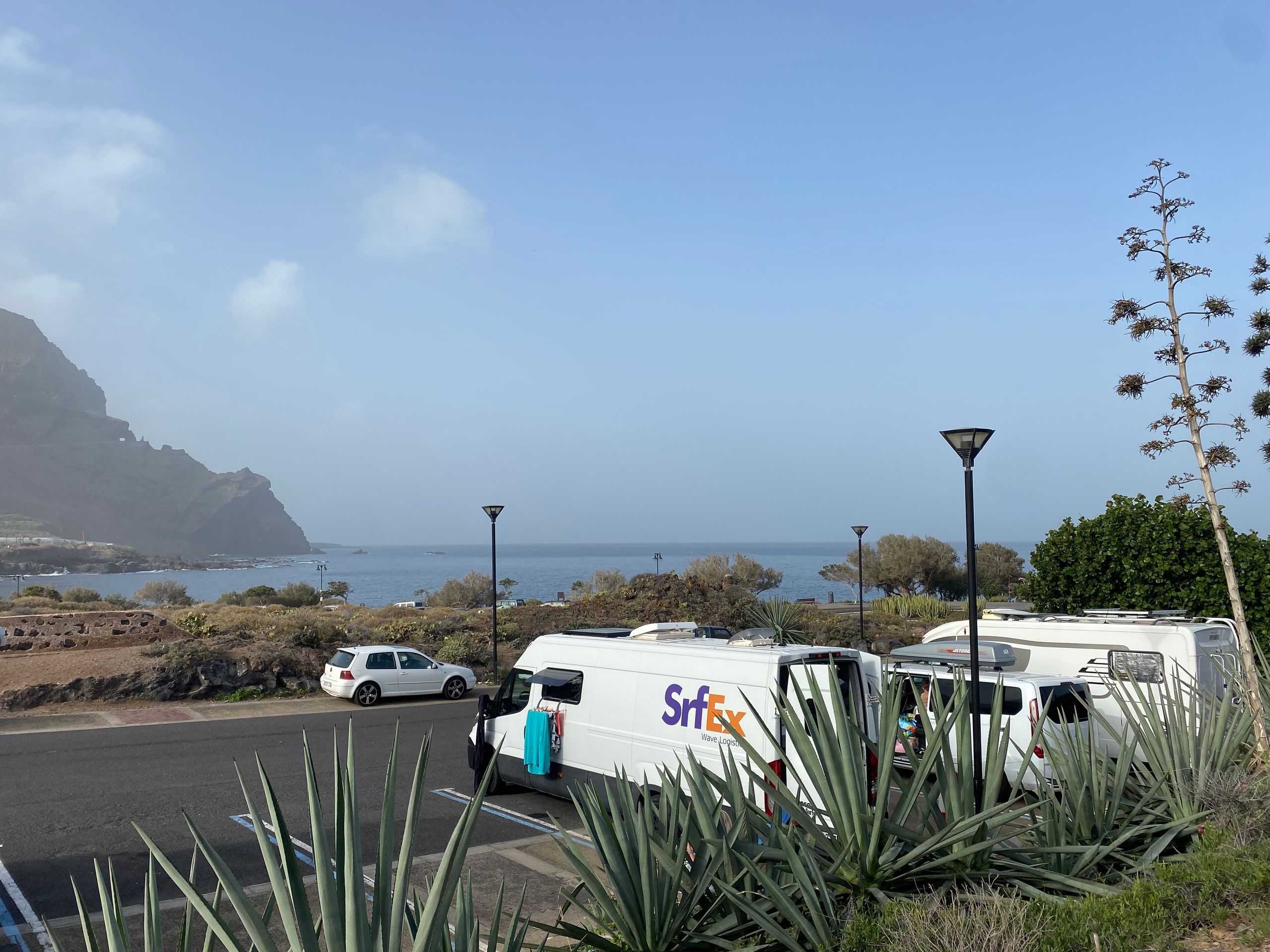
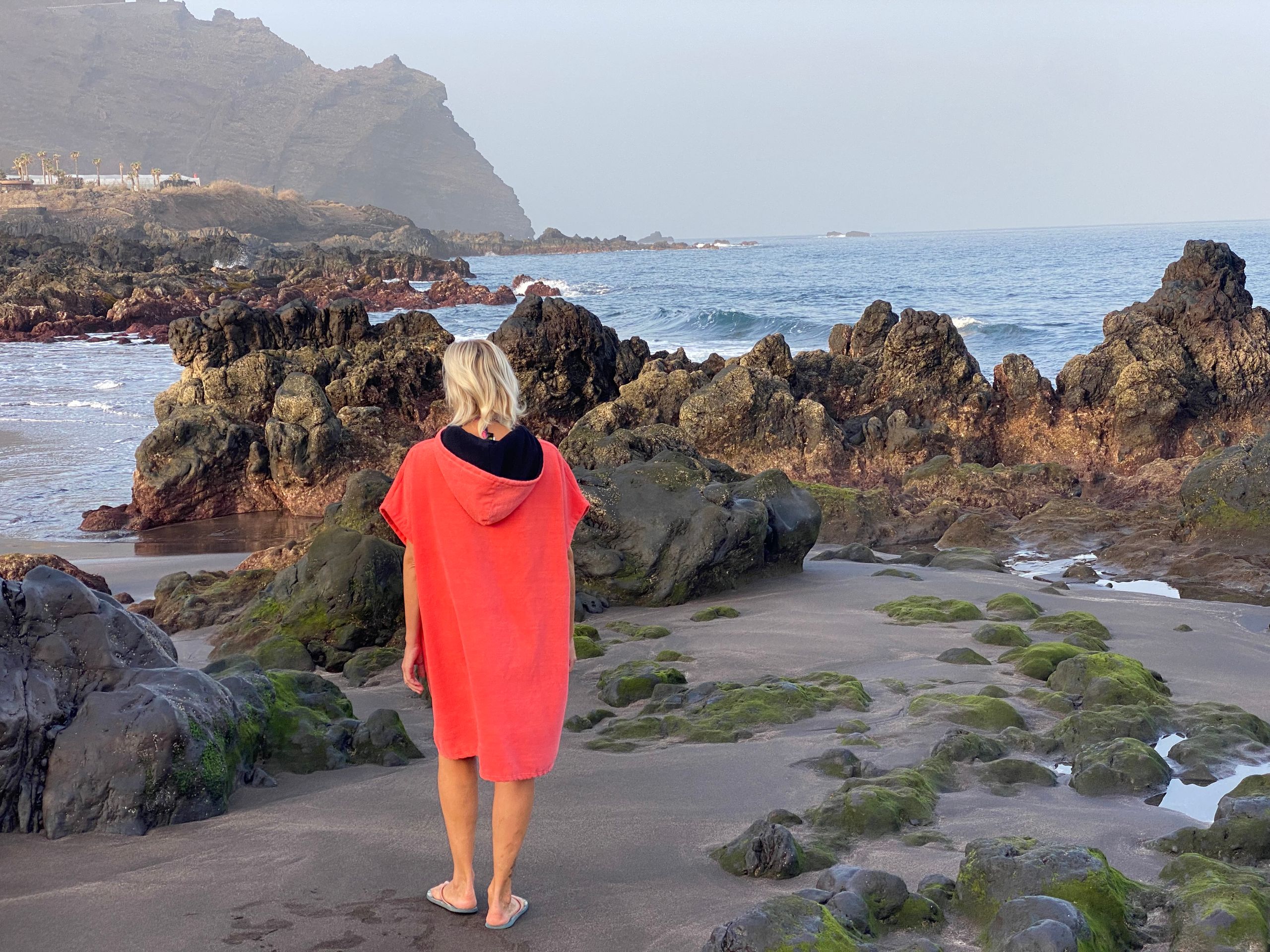
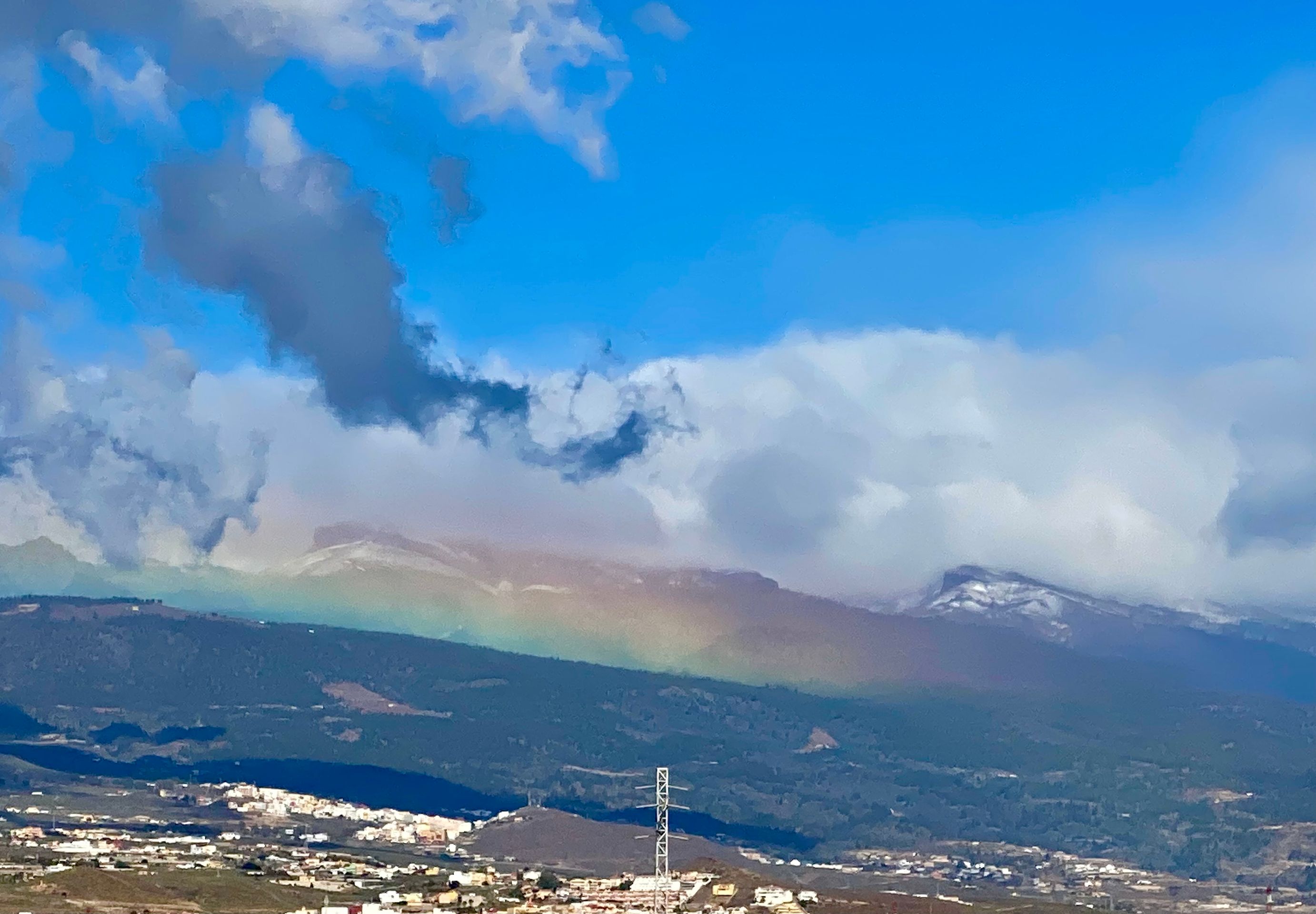
For the next few days, no wind is predicted, and we take the opportunity to go around the island and visit the north coast. Our first destination is Buenavista del Norte, one of our favorite spots on the island. Buenavista del Norte is located in the far northwest of the island, quiet and secluded amid banana plantations. At the dreamlike black sand beach, surrounded by wild rocks, it's even legal to spend the night in a motorhome. At the beach, there is a small restaurant and even a little public swimming pool. Before the swimming pool, we had left our high-quality fitness mat during our last visit in March. We think to ourselves, asking costs nothing and inquire with the swimming pool whether the mat was handed in there. A few minutes later, we have the mat back in hand after nine months! We love Spain!
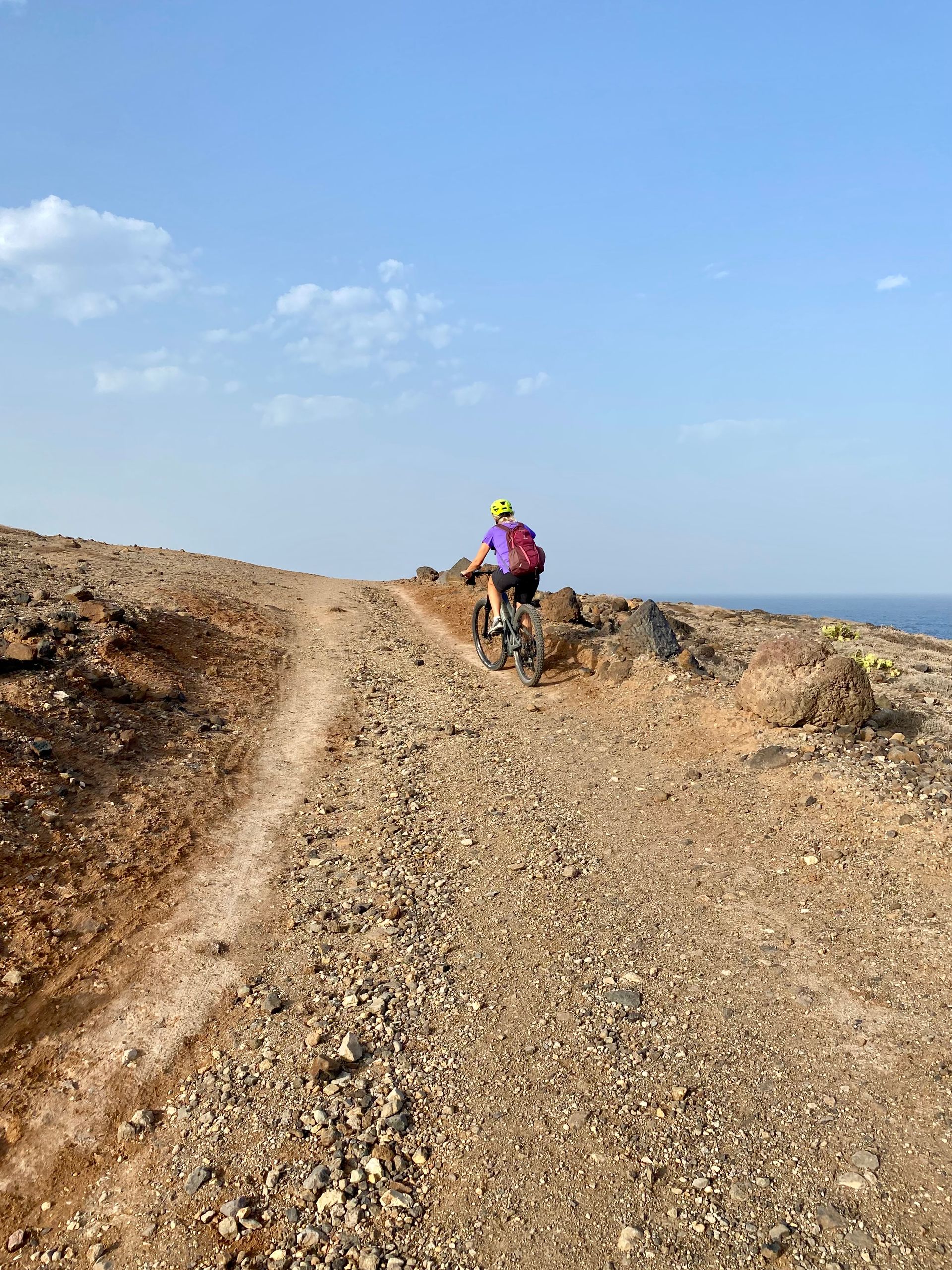
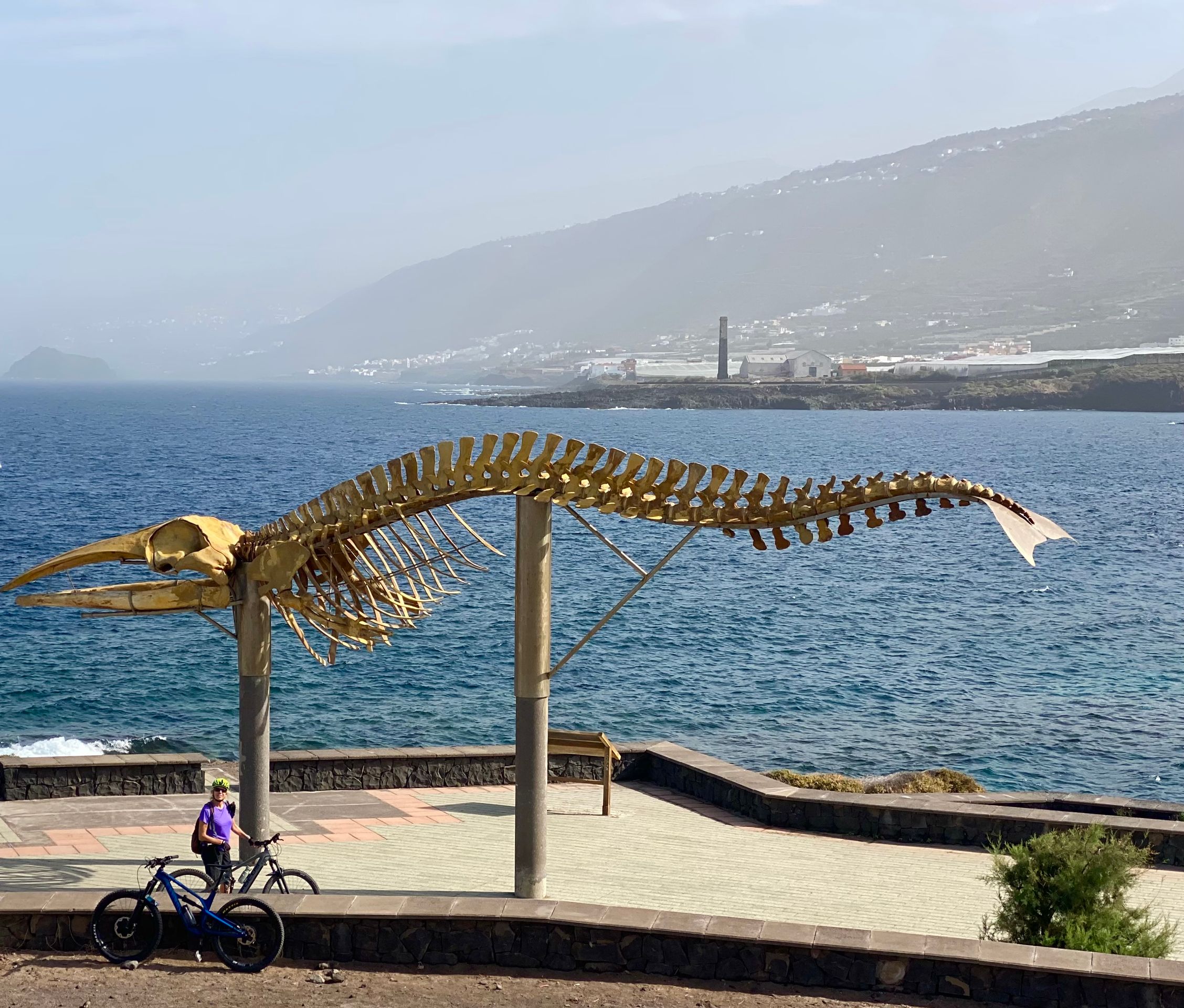
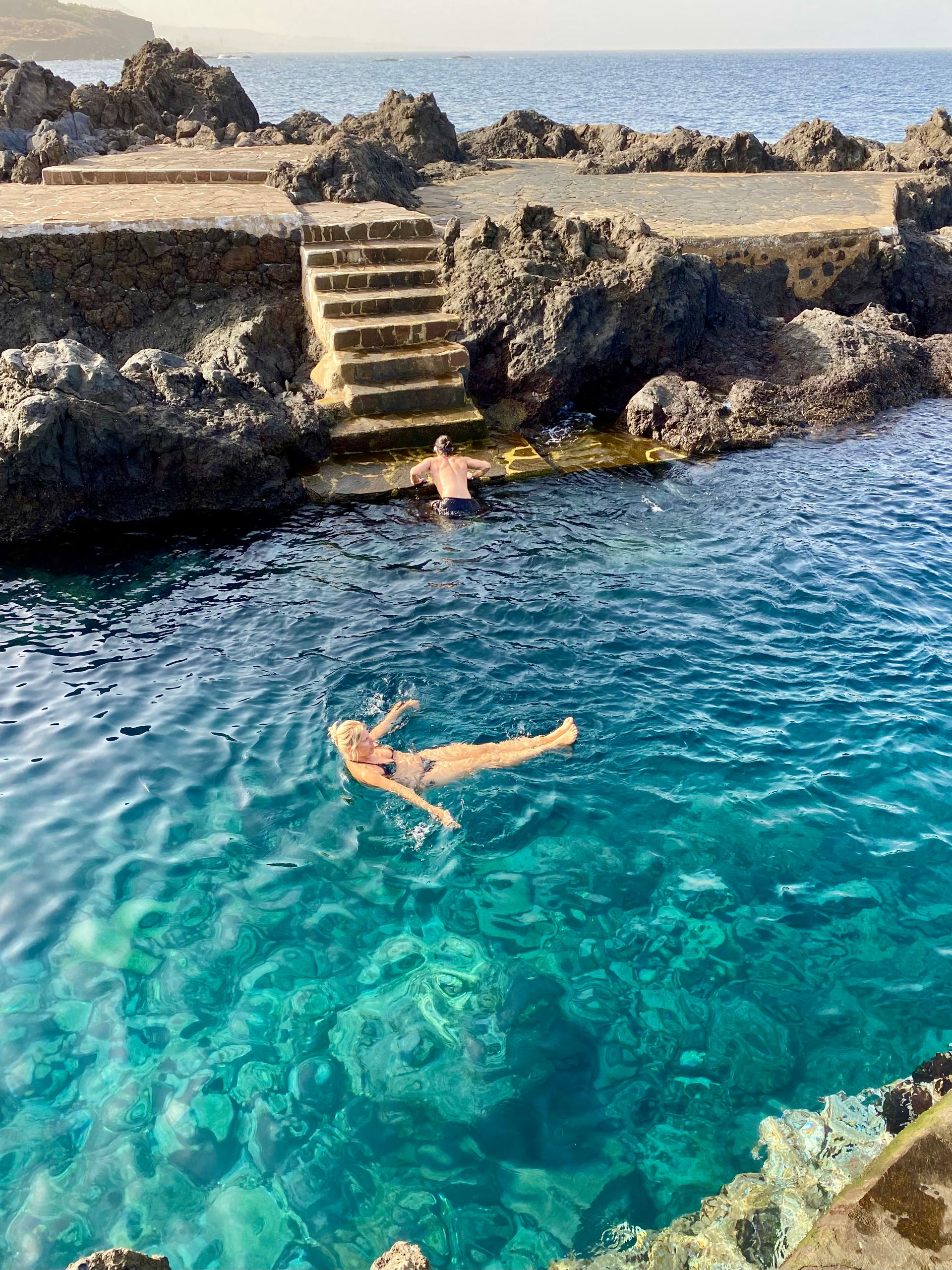
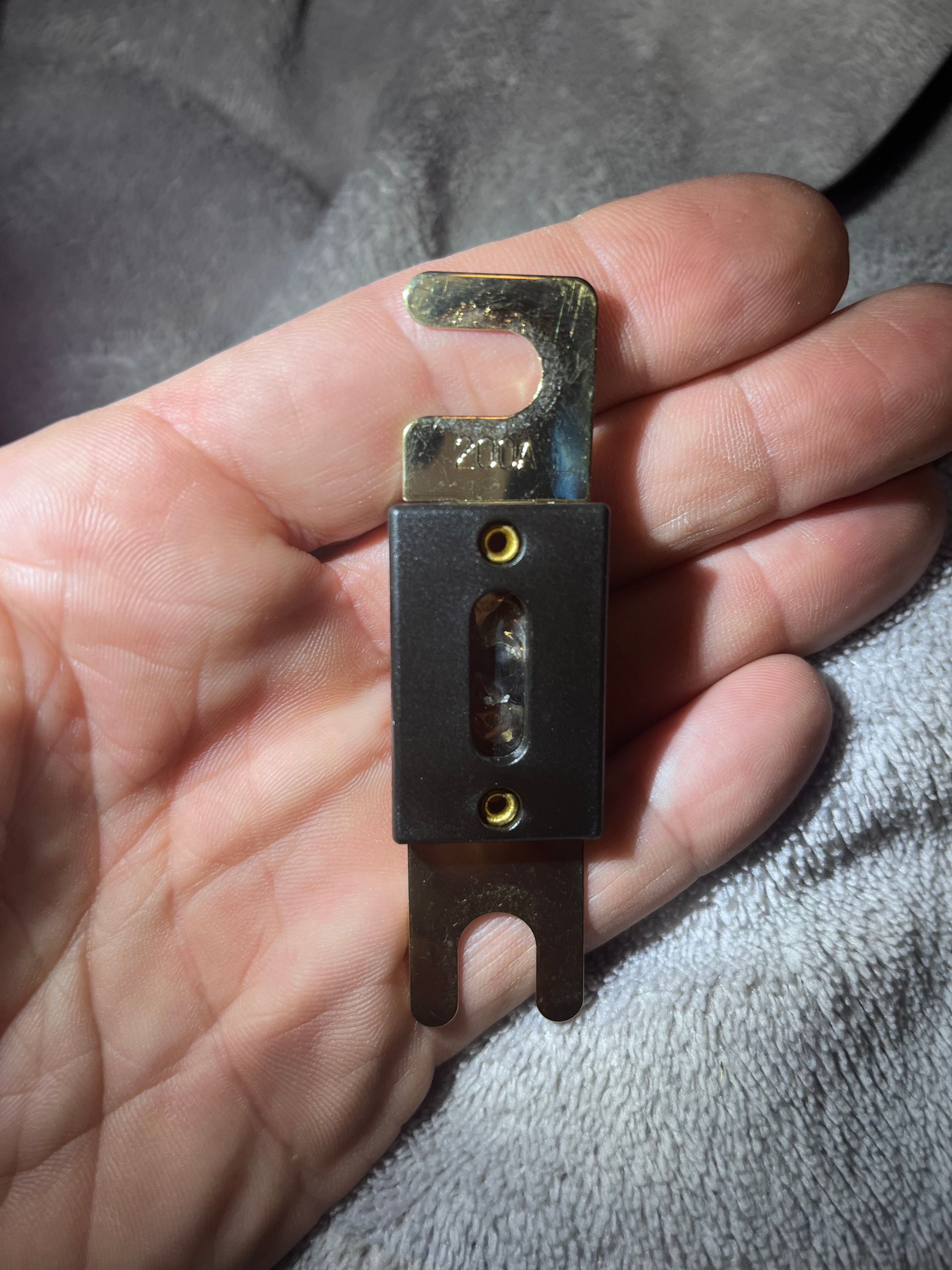
The next day we saddle the bikes. We want to take a cycling tour to Punta de Teno. That is a lighthouse at a peninsula and the westernmost point of Tenerife. Unfortunately, the access road has been closed for all private traffic, including pedestrians and cyclists for some time now for unknown reasons. So we have to change our plans. We head in the other direction and ride along the coastal path to Los Silos and then to Garachico. In Garachico, we bathe in the Piscines Naturales. These are natural rock pools in the sea, created by lava flows. Overall, a very nice bike tour of nearly 40 km in beautiful weather. In the evening, our good mood takes a slight hit: the 200 A fuse between our building battery and the inverter blows. Accidentally cooking and blow-drying hair at the same time is too much... Unfortunately, we do not have this fuse as a spare part, and for now, we cannot use the inverter.
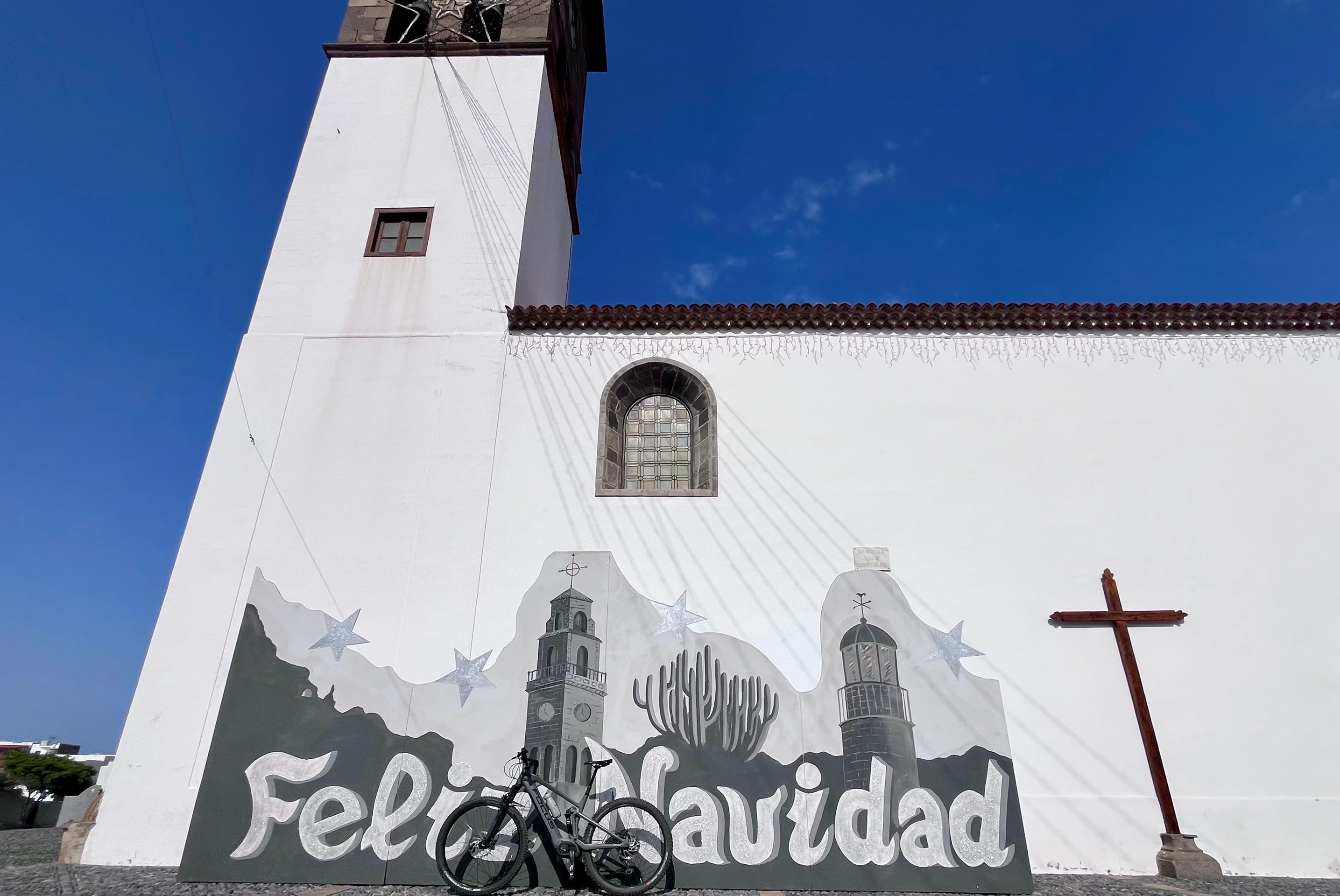
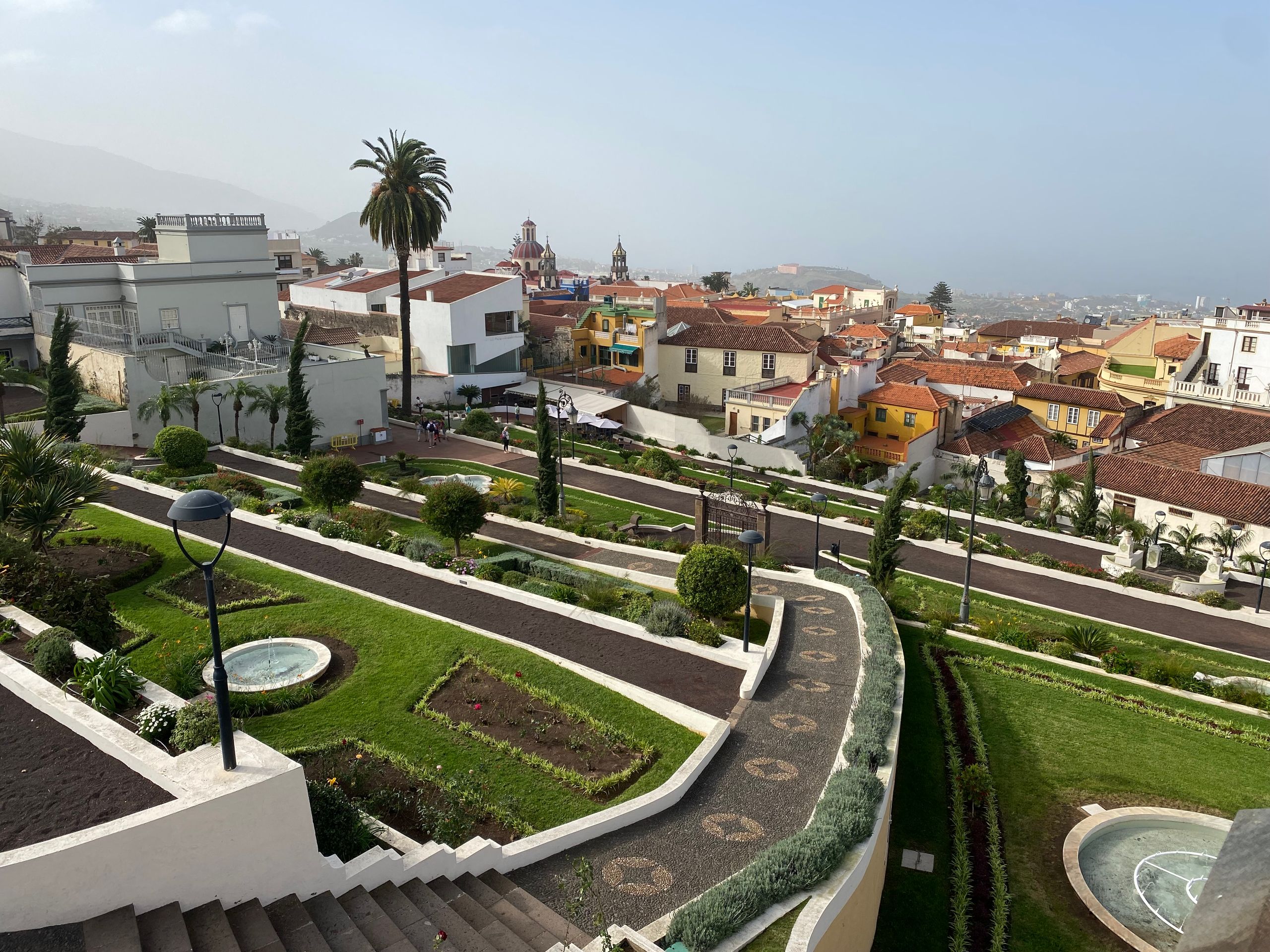
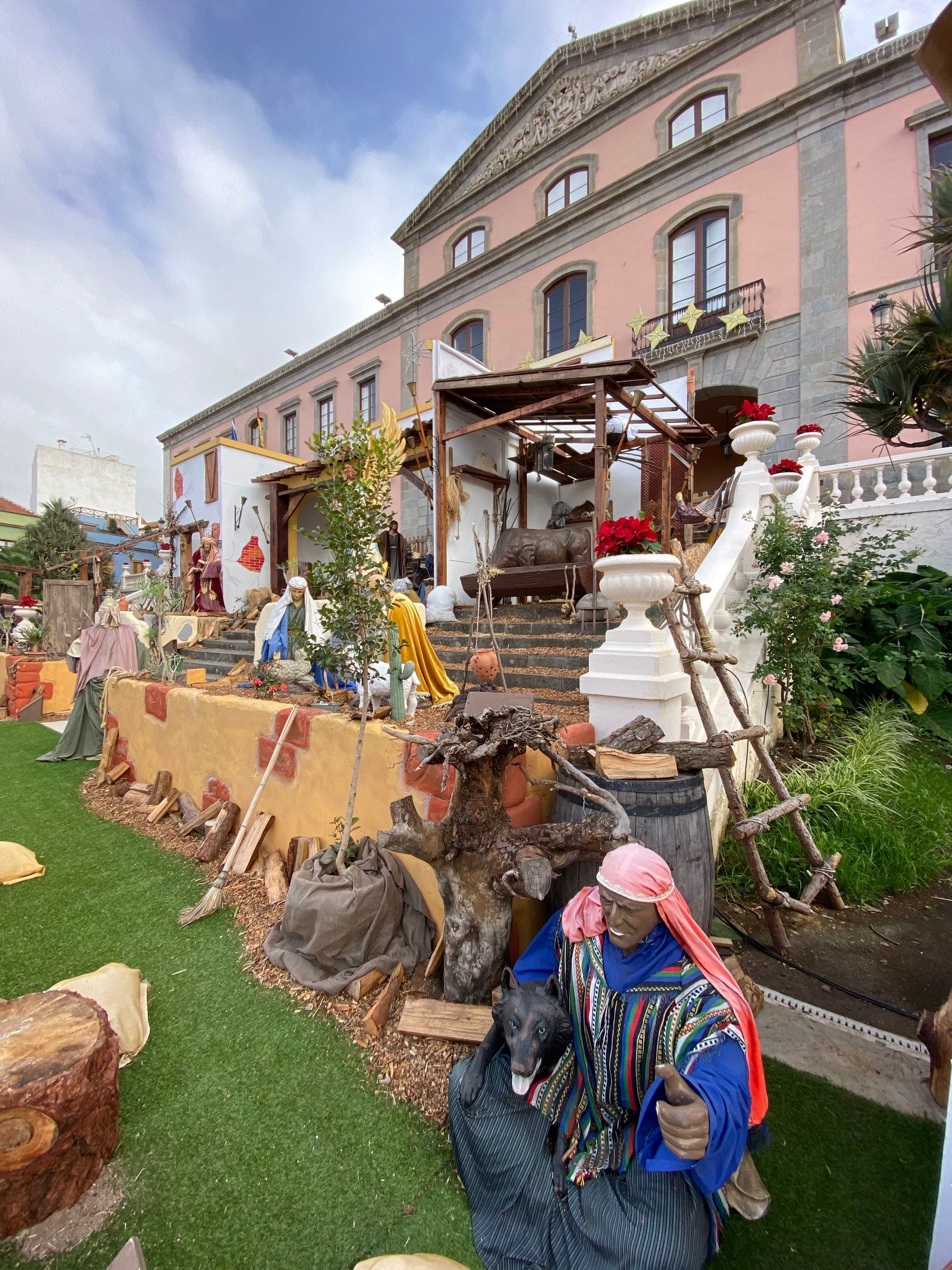
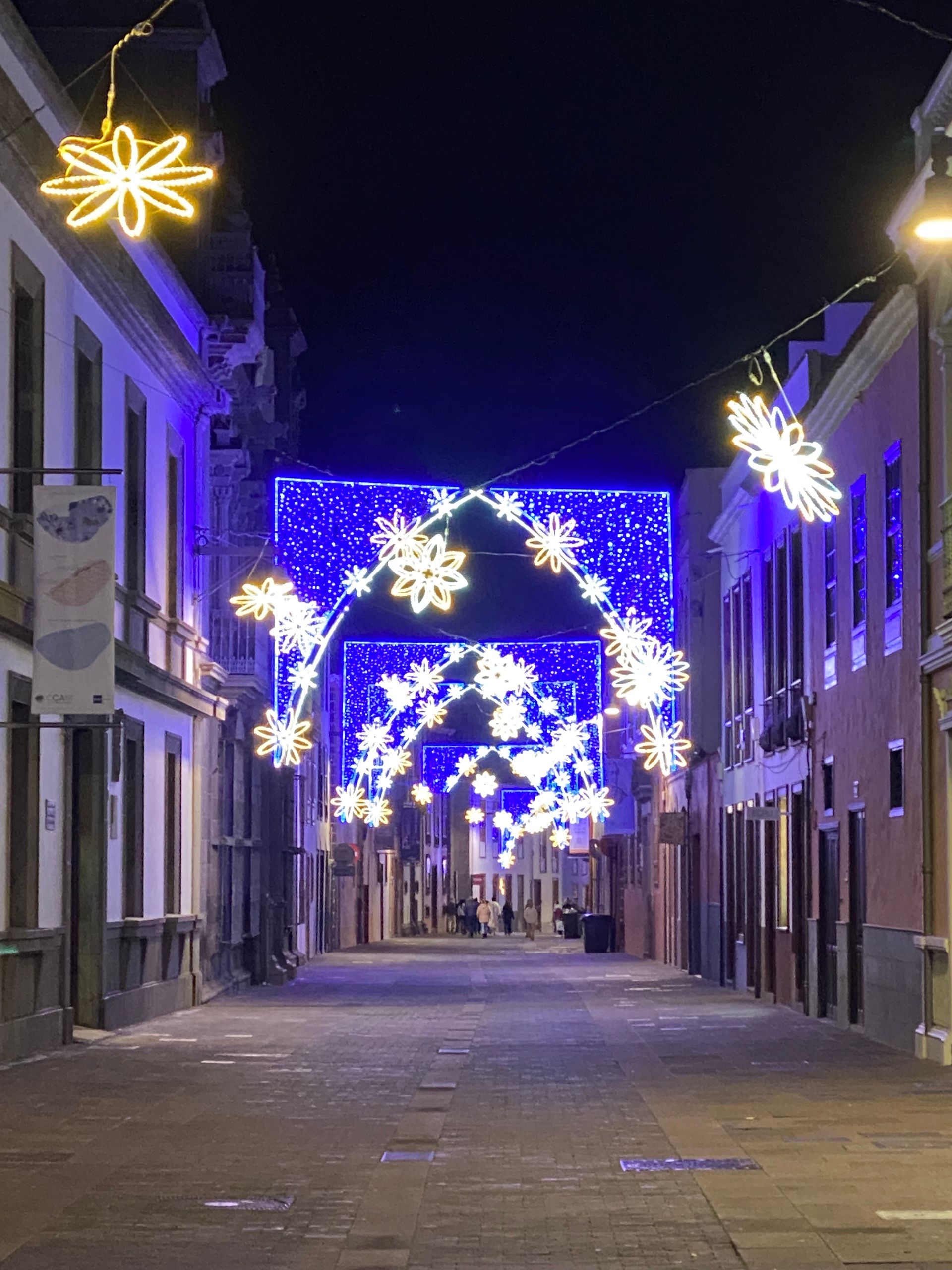
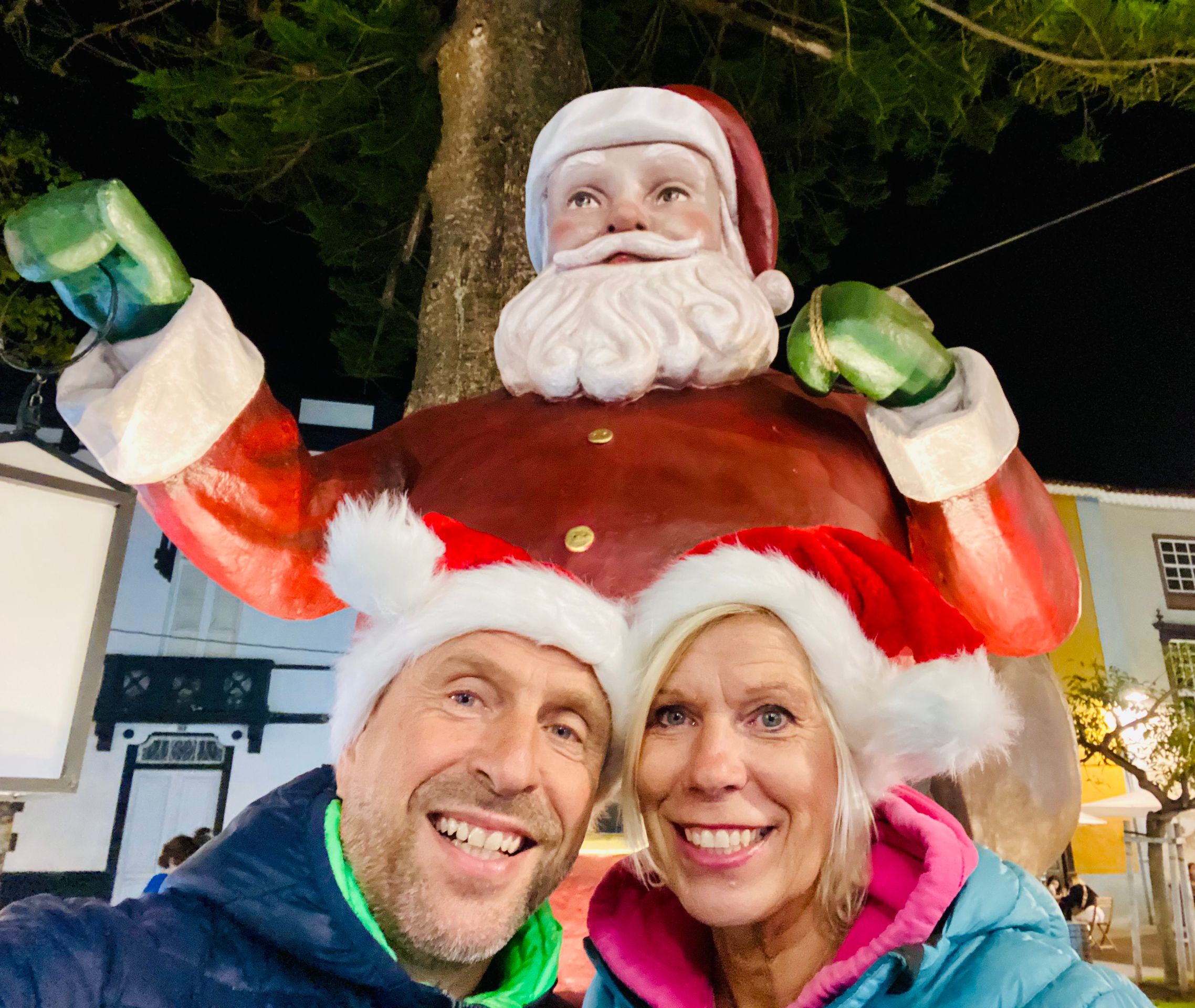
Overall, we stay two nights in Buena Vista as it just feels so good there… On the morning of December 18th, we head north along the coast. Our initial destination is Orotava. But first, we check out a few auto repair shops. At one, we actually find a 200 A fuse being fished out of a junk box. While it doesn’t fit into the old holder, we can definitely set up a makeshift solution! In Orotava, we take a walk through the old town, which is picturesque high above Puerto de la Cruz and is a UNESCO World Heritage site. It's Christmas time, and the city is decorated for the holidays. Particularly for the Canaries, small and large lovingly crafted nativity scenes are set up all over the cities. After visiting Orotava, we spend the night on the north shore at a tiny place called Playa de Jover. This place is a little secret tip. We park the sliding door directly by the sea and look out at the wild Atlantic. The next day, we take it easy and head to San Cristobal De La Laguna in the afternoon. La Laguna is a university town, bishopric, and also a UNESCO World Heritage site. In the evening, we wander through the old town and enjoy the festive spirit in the beautifully decorated streets. In the morning, we have breakfast together with workers and police officers at the coffee stand of the market vendors in the historical market hall of La Laguna. Once again, we notice how friendly and warm the Spanish are with each other and with us.
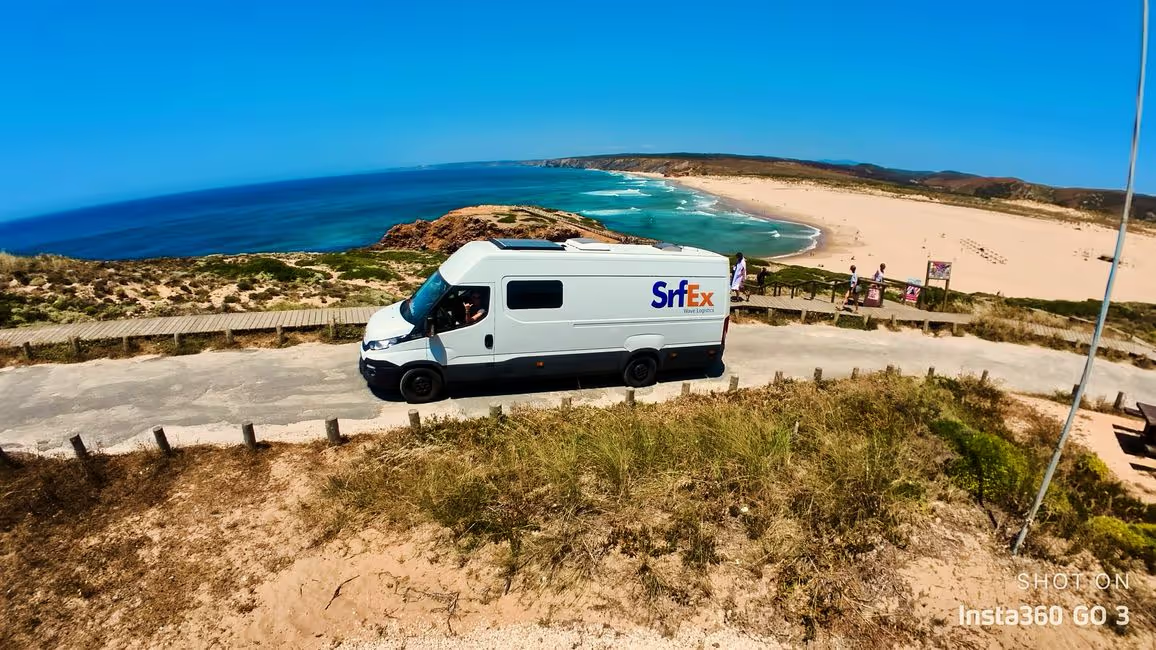
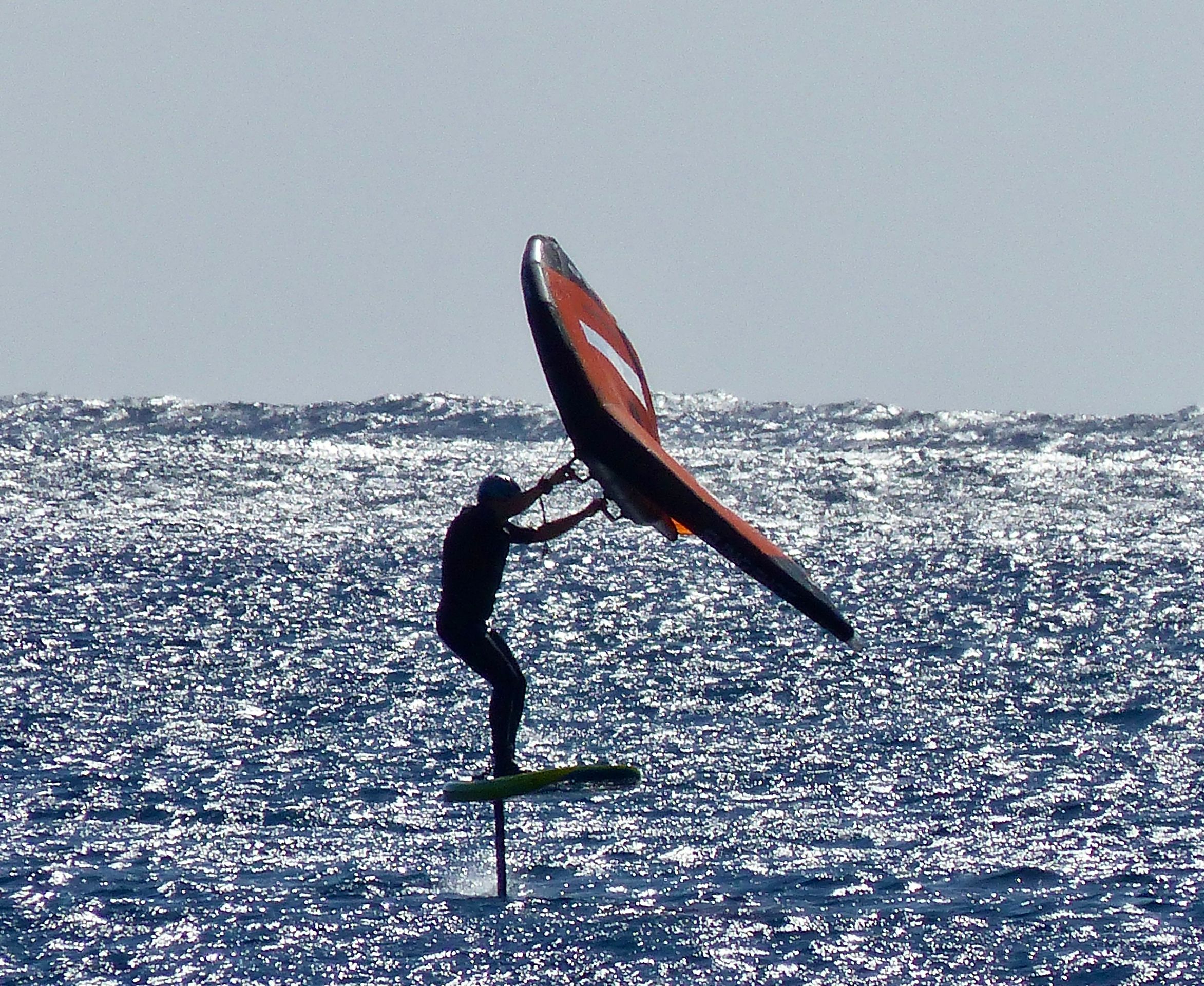
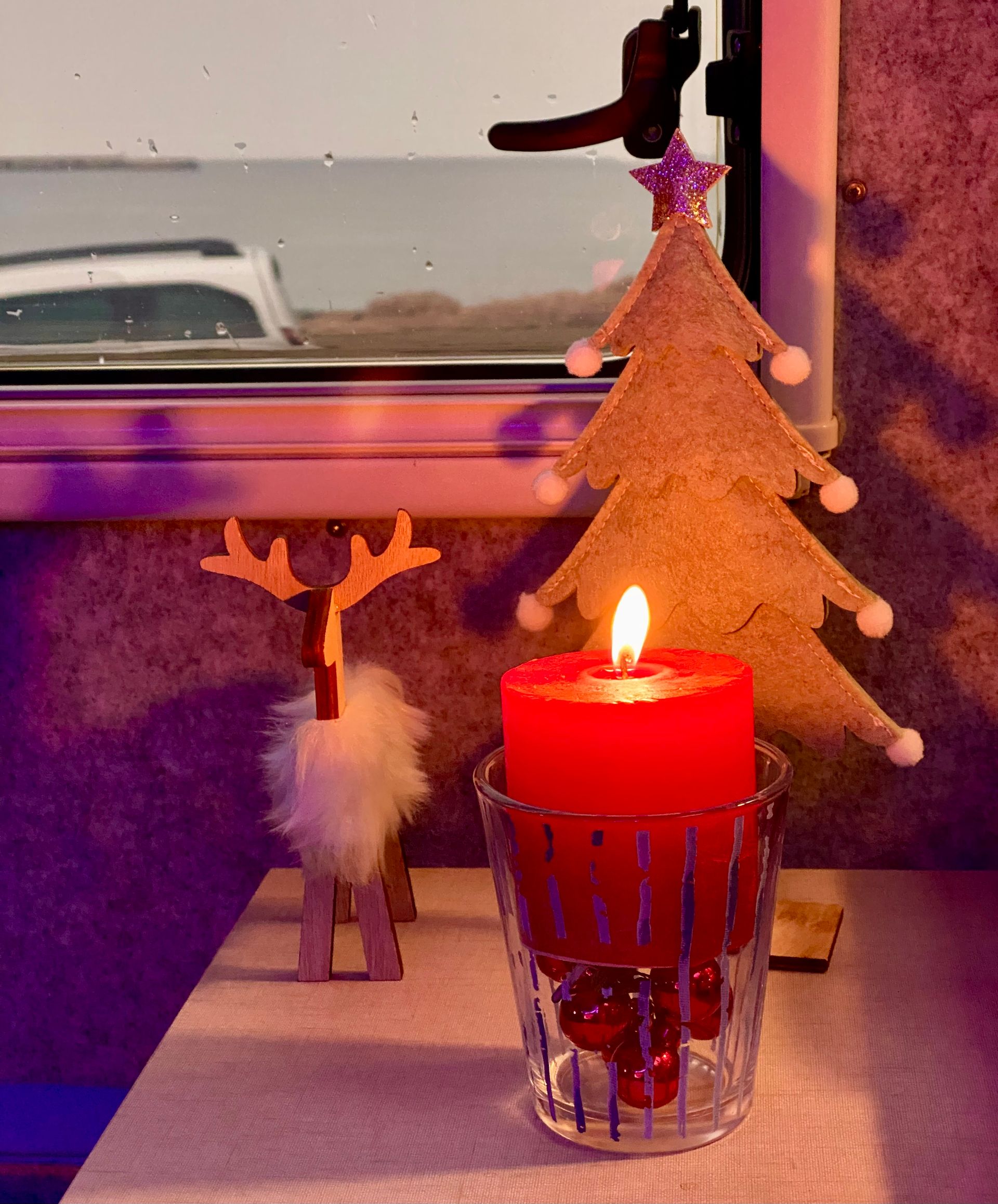
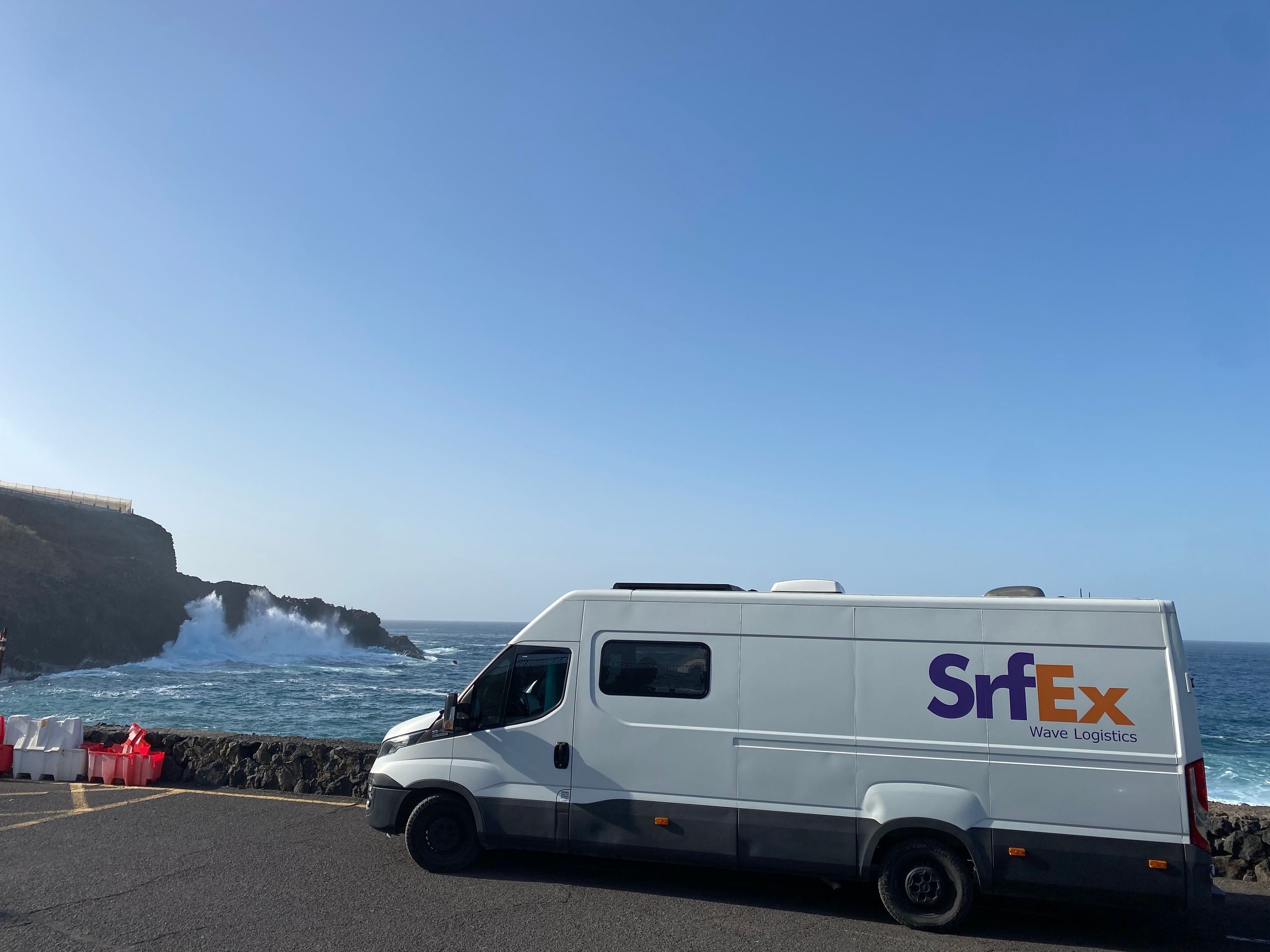
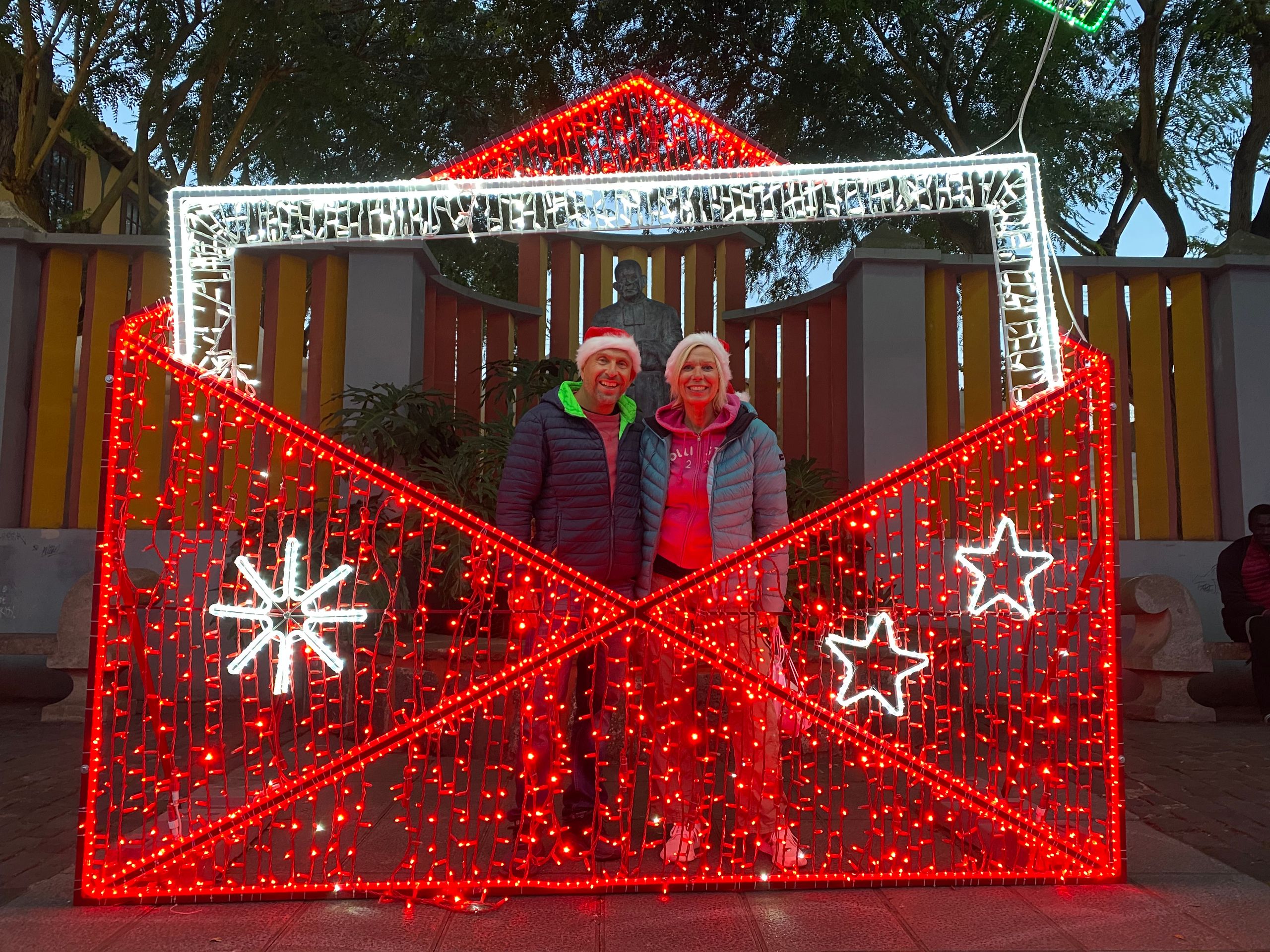
Now that wind is forecasted again, we head back from the north of the island to the south to the industrial harbor of Granadilla. The conditions are good for wing foiling, and I take several rounds (or more precisely, back and forth as I cannot jibe yet) over the water. In the afternoon, Christian joins us. Christian is the brother of my oldest friend Oliver and has a sailing boat moored in the harbor of Santa Cruz. We also met on the boat back in March. Christian, like me, is looking for a new water sport and does some dry practice on land with my wing. He is quite taken with it and wants to book a course right away (not with me, my skills aren’t enough for that). The wind takes a little break for now, which we use to take some pictures of Betty with Christmas decorations.
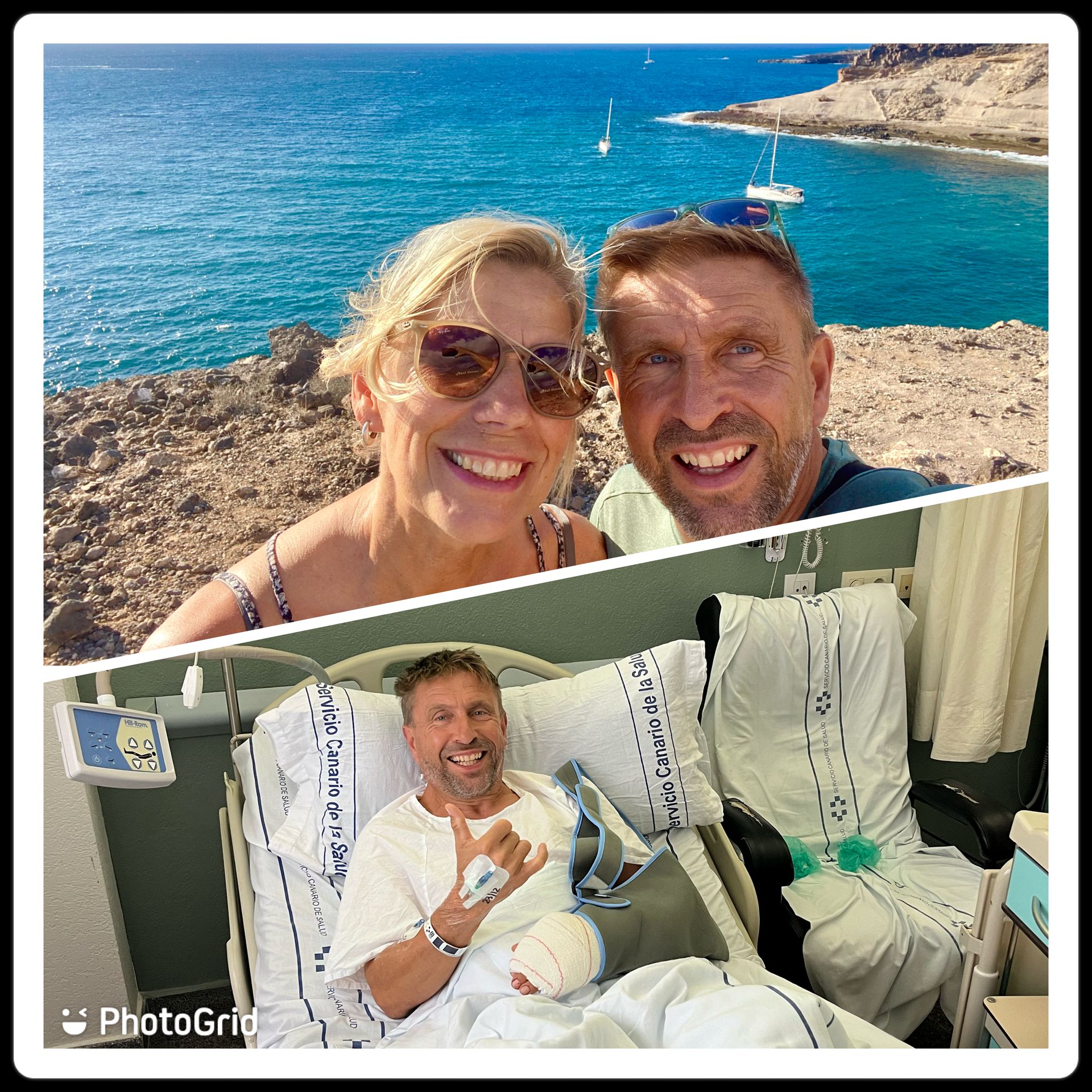
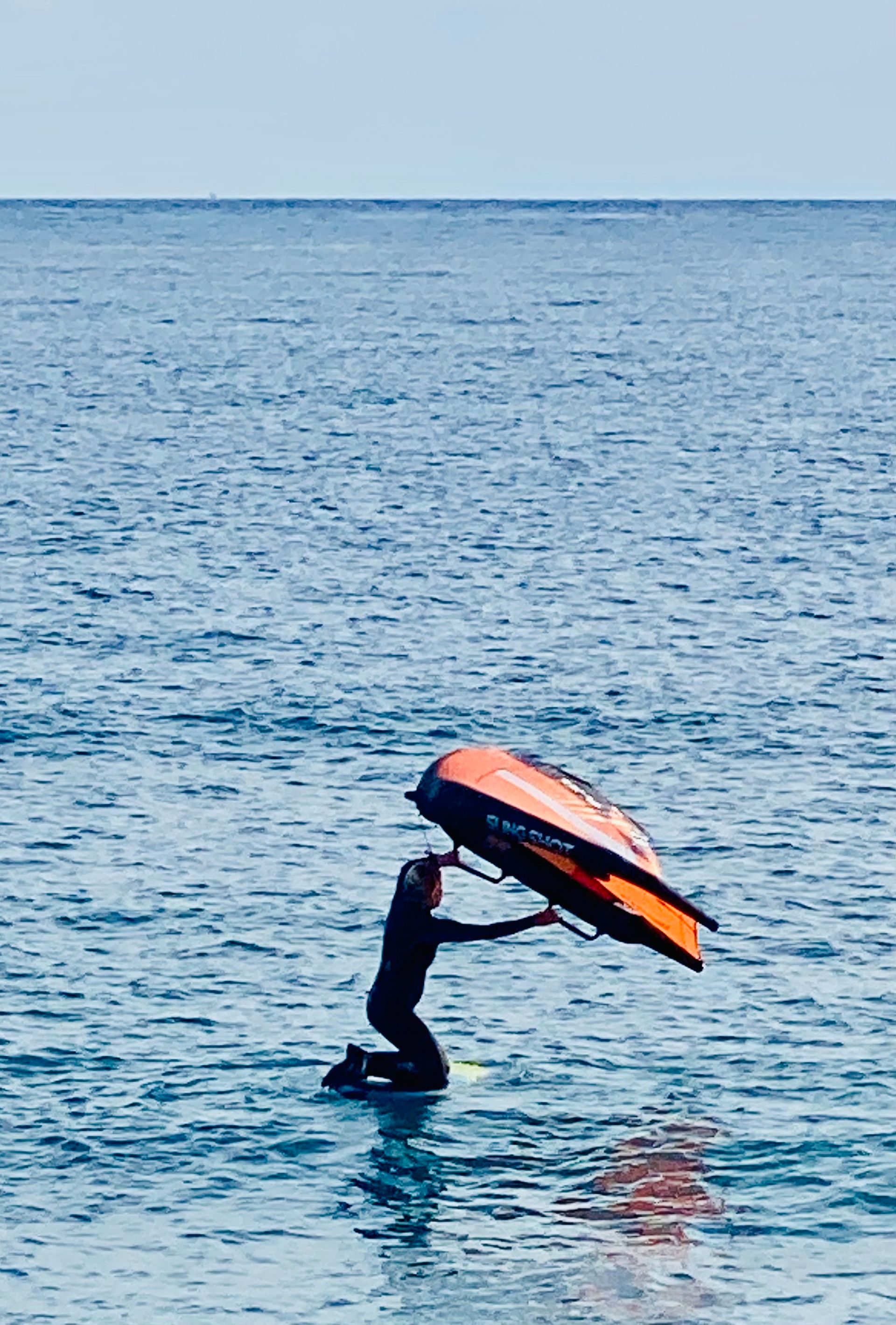
Two days before Christmas Eve, it’s blowing hard again and we are back in the industrial harbor for wing foiling. With my small 4-meter wing, I fly well over the water and think that now is the time to venture the jibe. That’s not so easy with wing foiling, as you have to keep relatively many parameters under control at the same time. Meaning, the first attempts are always guaranteed to involve falls. In a jibe, I completely lose the momentum. The board tips over, and I fall towards the sharp-edged foils (the wings). Instinctively, I extend my left hand to avoid falling on the foil, and I feel how the back edge of the foil cuts into my middle finger. When I resurface, I immediately notice that something is very wrong. I have a deep, gaping wound between my middle finger and index finger, from which blood is flowing profusely.
Fortunately, I am not far from the shore. I wildly gesture to Susi, who is sitting on the shore and is supposed to take great photos of me. At first, she doesn’t understand what’s going on. Under the adrenaline rush, I quickly get back to land, and together we hoist the gear up the steep slope. I somehow press my fingers together and hold my hand up as high as possible, but it’s still all covered in blood. From everywhere, people come to help us. A surfer who is a nurse gives me a pressure bandage. Another surfer helps Susi bring all the equipment back to the van, which we simply throw into the back. As you can easily follow, Susi is quite nervous (she initially thought the finger was gone). Apparently, I have a lot of adrenaline in my blood and feel relatively little of the injury. I even manage to get myself out of my wetsuit. The pressure bandage seems to have initially stopped the bleeding, and we decide (after a quick Internet research) to drive to the hospital in Santa Cruz, which means about a three-quarters of an hour drive.
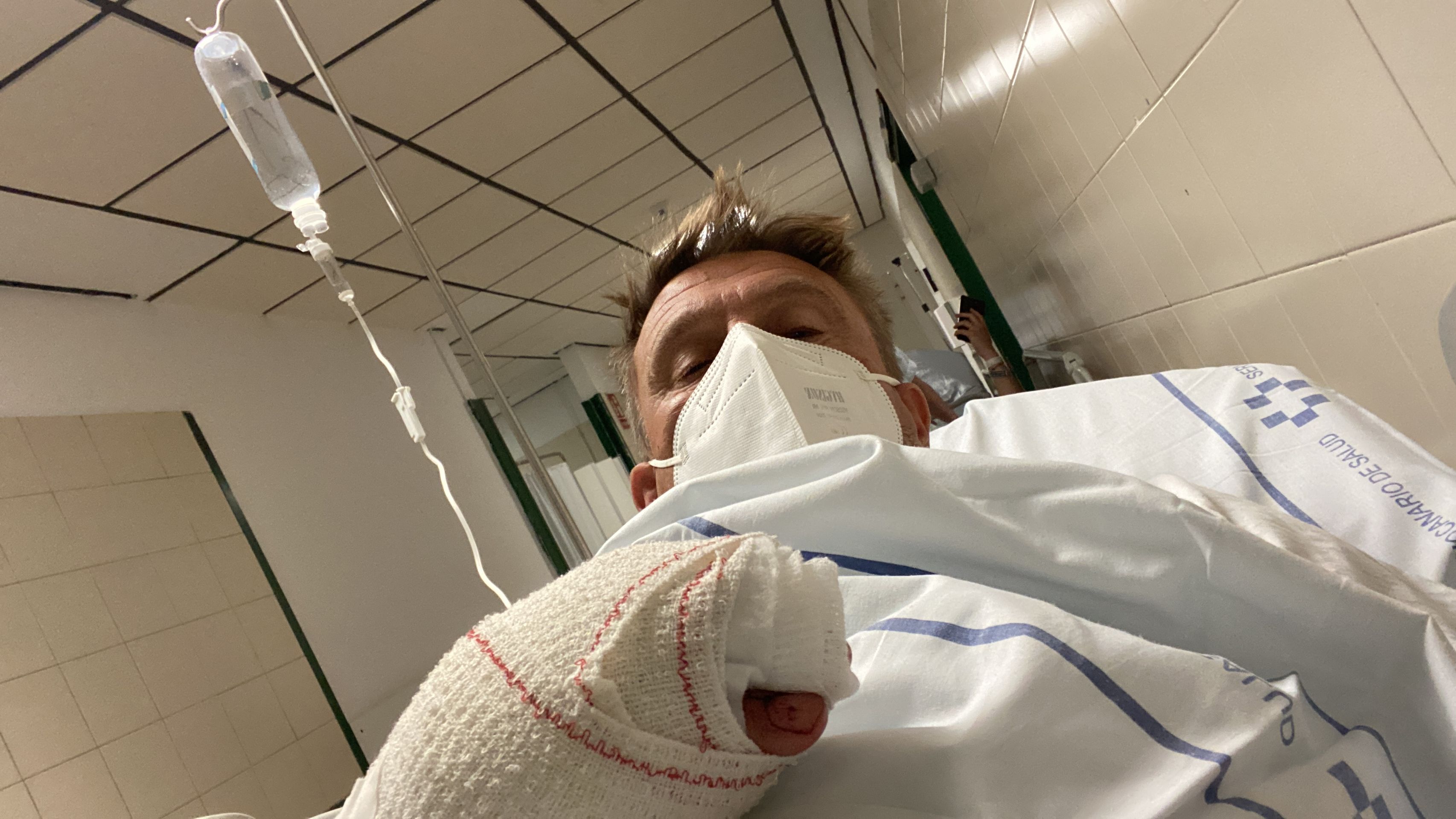
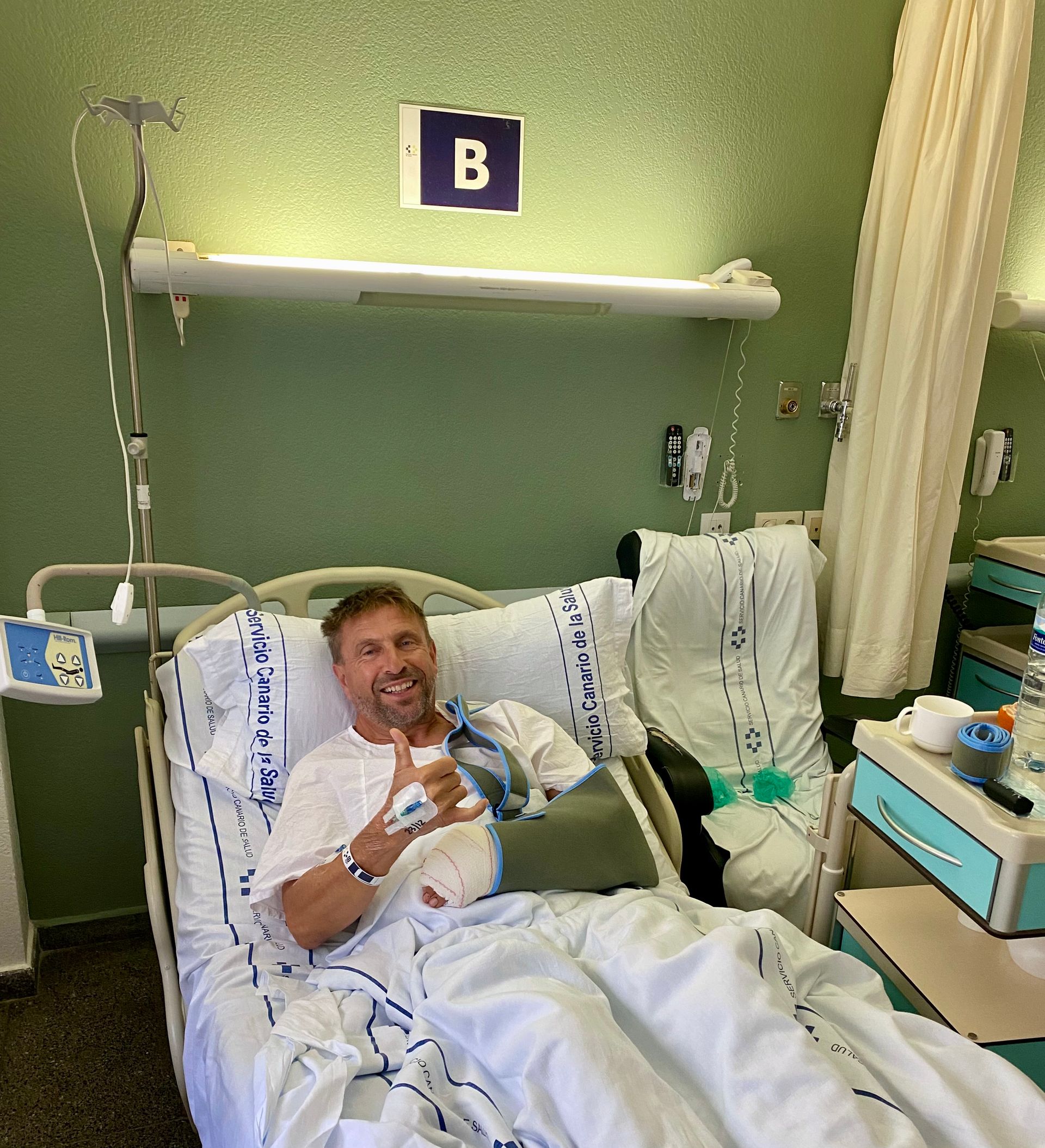
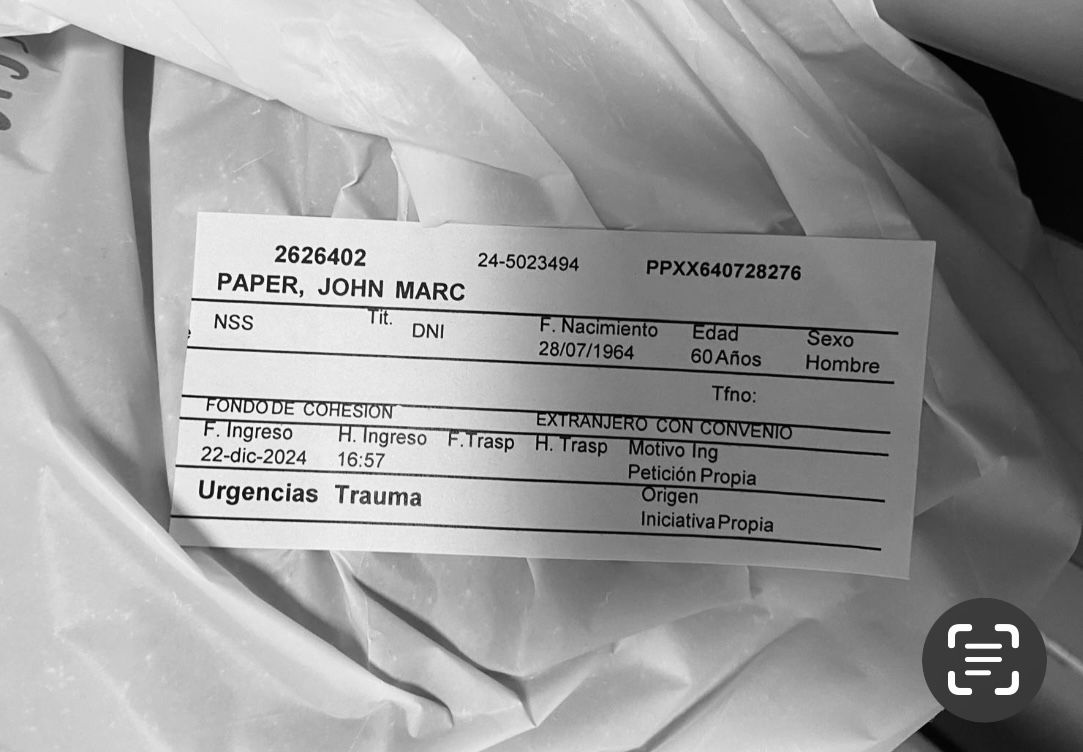
Just before 6:00 pm, we reach the public hospital Candelaria in Santa Cruz. In the emergency room, they attend to me relatively quickly. When the makeshift pressure bandage is removed, the blood sprays to the ceiling, and I hear the doctor calling 'Arteria, Arteria'. The arm is first tied off, the wound is temporarily stitched, and then I am to be operated on at night. Meanwhile, I know that in addition to the deep flesh wound, a nerve and an artery are severed. Fortunately, the tendons are still intact. Before the operation, I have to take off all my private clothing and hand my phone to Susi, so that I am completely 'naked' except for the hospital gown. Susi has found a parking spot near the hospital where she can spend the night. At 11:00 pm, I go into the OR, where I will be operated on under general anesthesia. At 3:30 in the morning, I wake up in the recovery room, quite groggy from the anesthesia. The arm is in a cast up to just under the elbow. It is December 23rd, one day before Christmas.
Conclusion: The past weeks of our journey have been marked by our farewell to Morocco and our 'return' to Andalusia and Tenerife. Especially valuable were the spontaneous acquaintances and exchanges with other travelers, which make vanlife so unique.
At the same time, the unexpected sides of life also showed: a small accident while wing foiling ended in a hospital stay with surgery - a reminder that adventures do not always go smoothly. But the willingness of people to help and the professional care on site impressed us deeply!
This incident has taught us to appreciate this free life offered by vanlife even more, and to embrace challenges as part of the experience.
On the road: 336 days
Distance traveled: 22,500 km
If you enjoyed the travel blog, we would appreciate a 'Like' by clicking on the heart!
To be continued