
Island Hopping Part #3 - Fuerteventura: Finale, Family and Nearly a Fire
A gradual farewell to the feeling of boundless freedom

Published: 17.05.2025
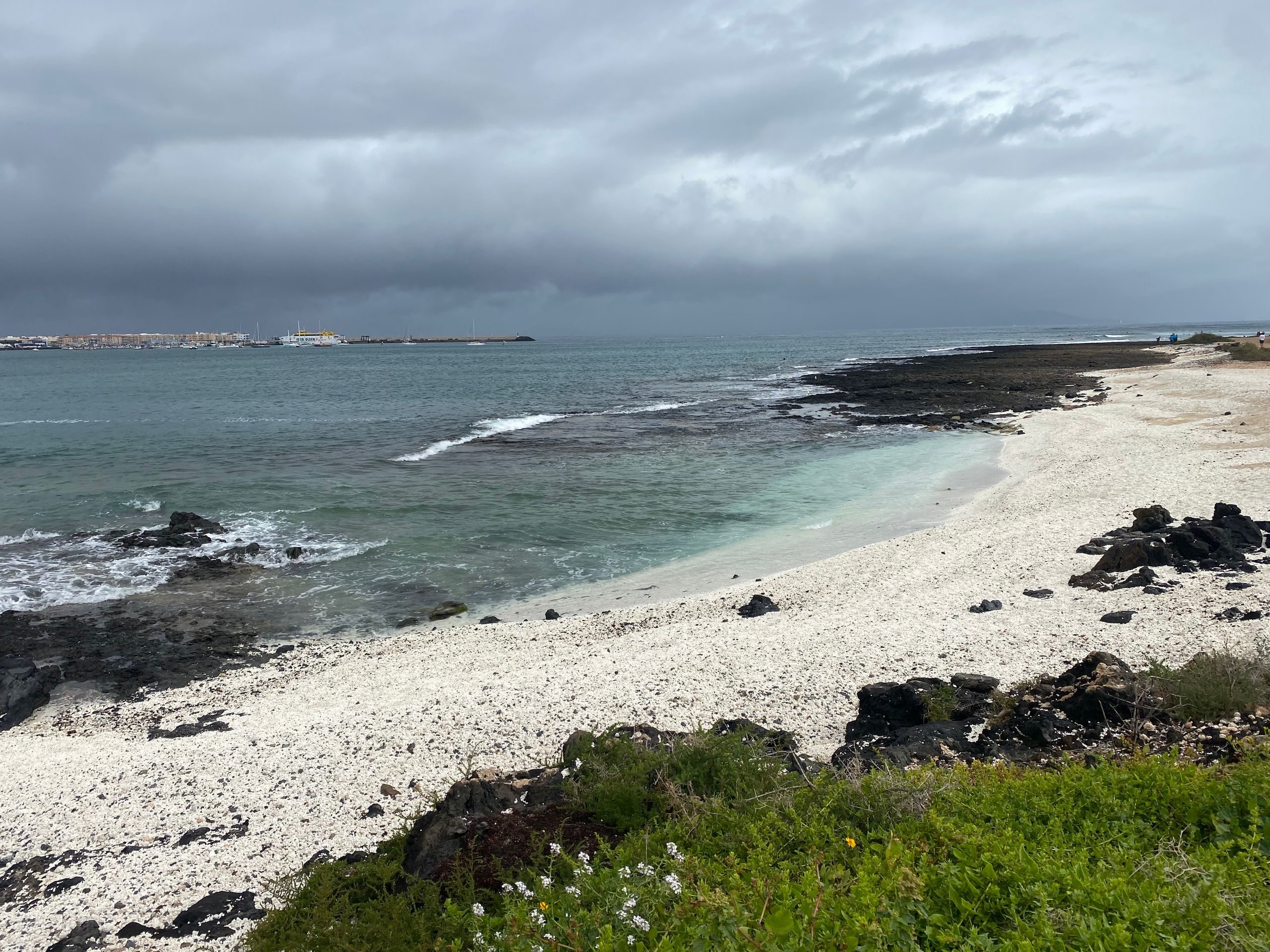
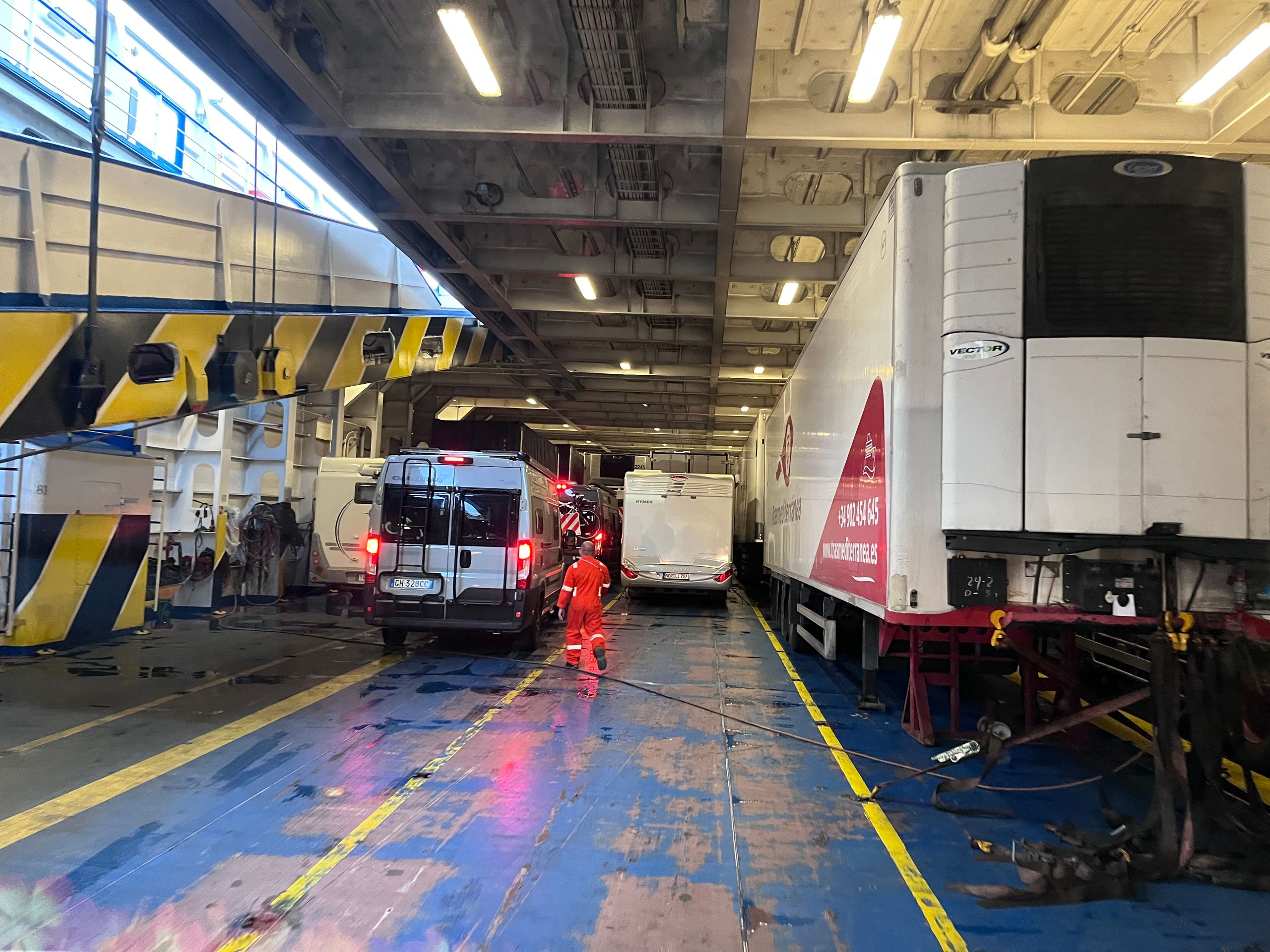
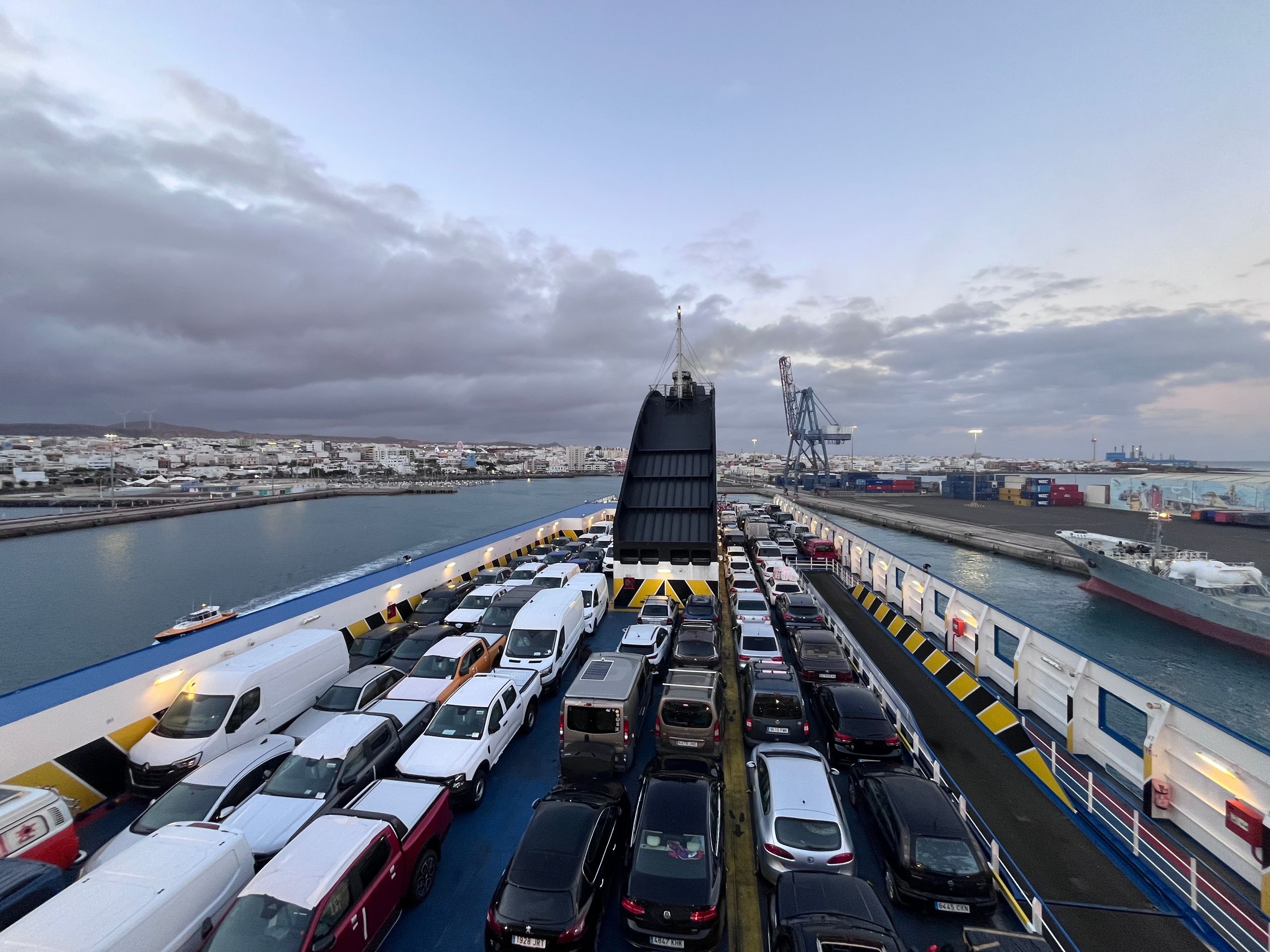
Personal log entry from the houseboat Betty HH-VX 717: It's the year 2025, March 8th, 6 PM
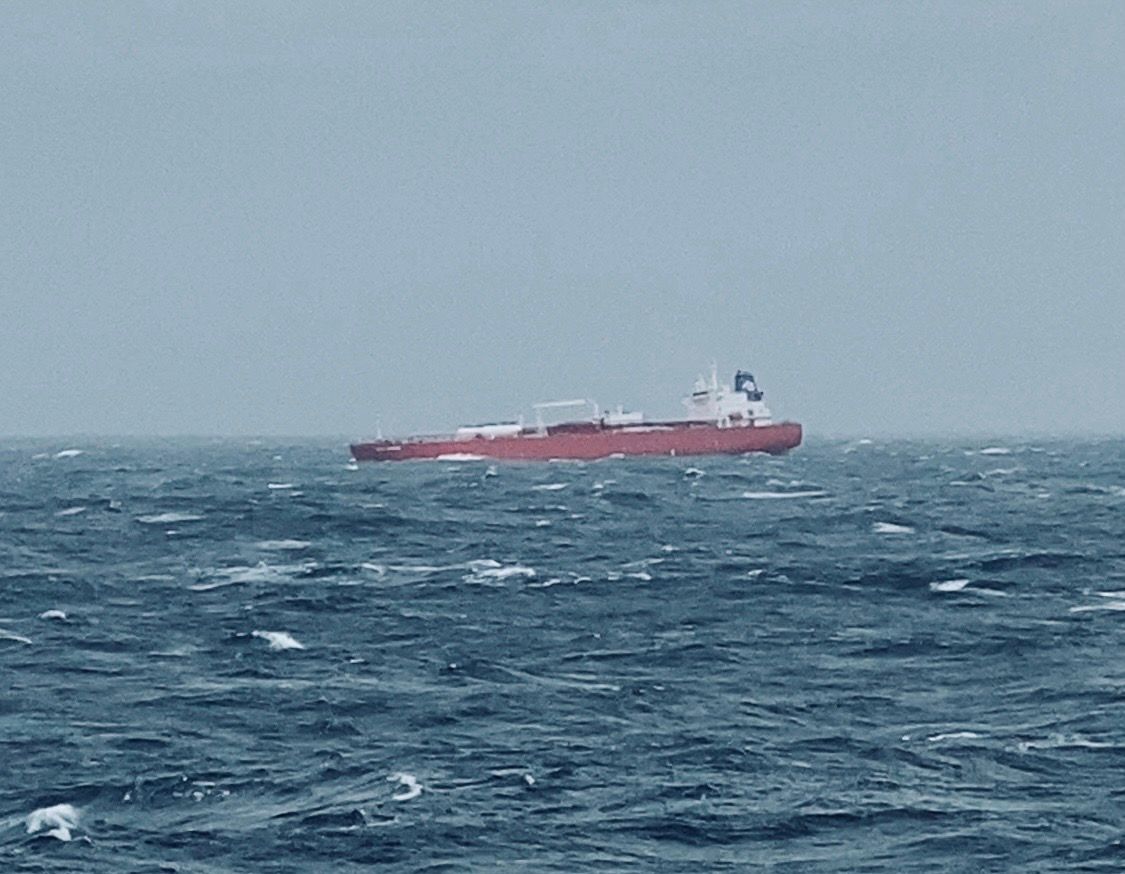
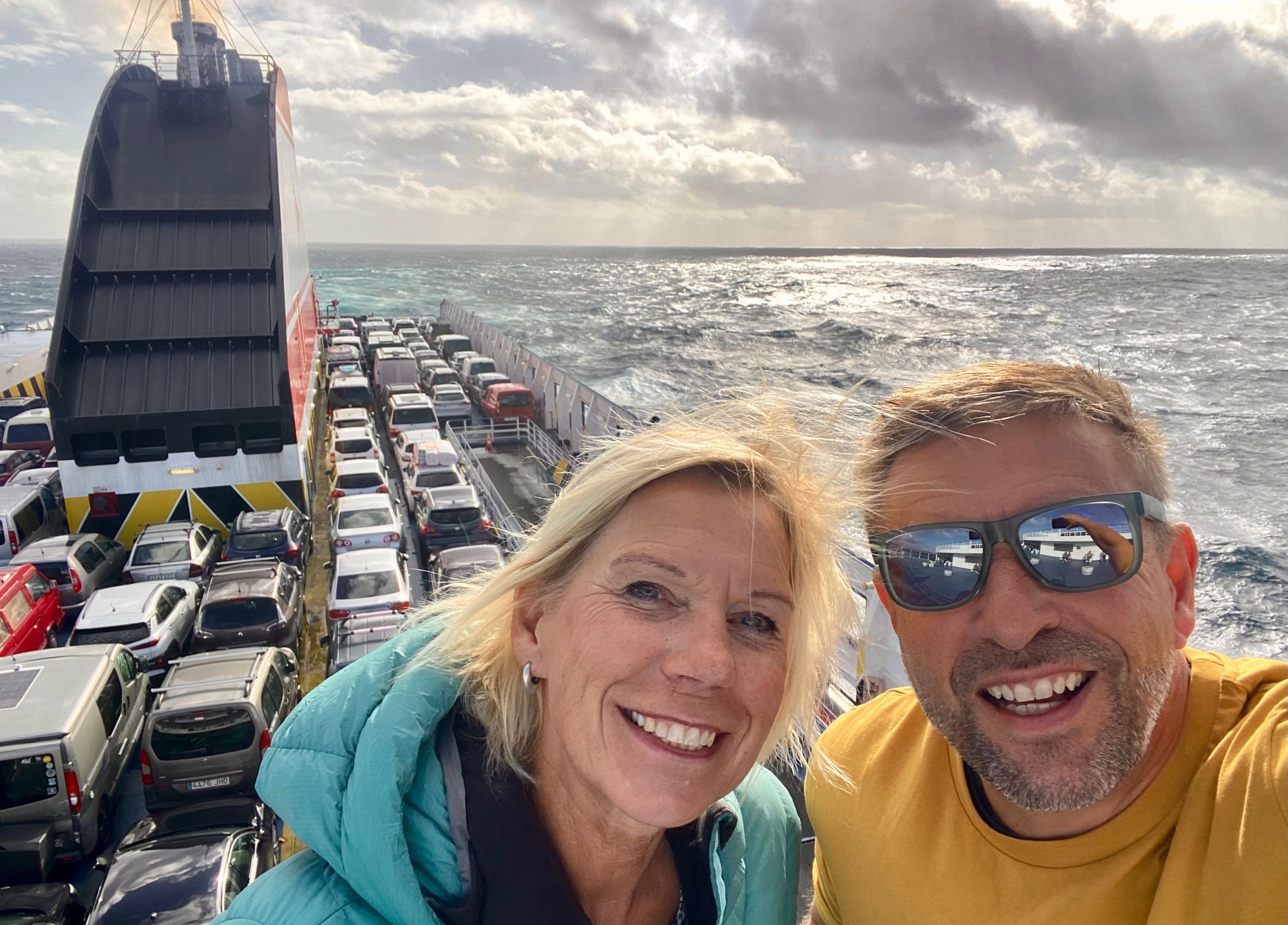
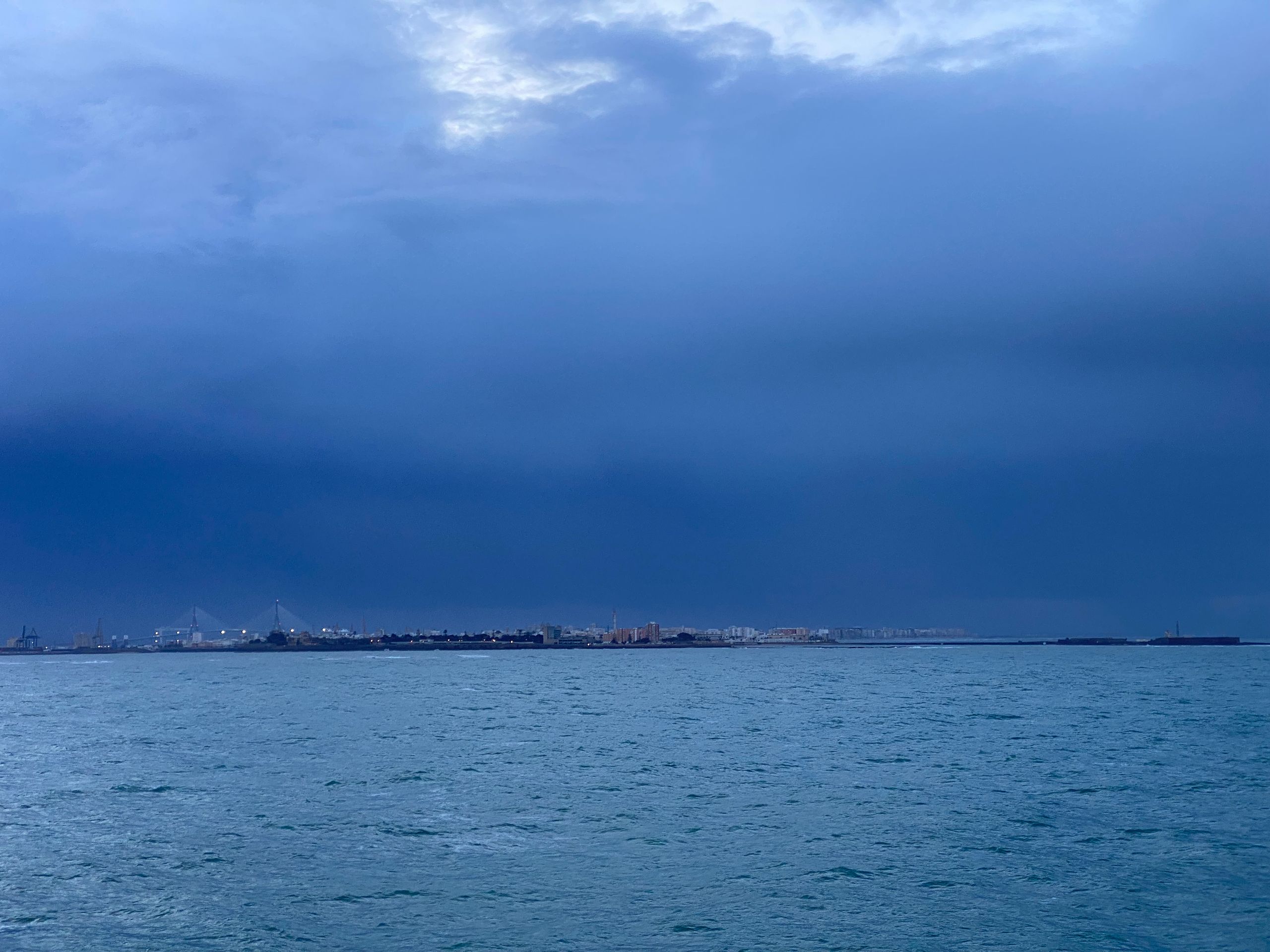
At exactly 7:00 PM, the Armas ferry departs from the ferry terminal at Puerto de Rosario. For us, the last chapter of our break begins, and we are on the 'Long Way Home'! We still have about 4,000 km of travel ahead, during which we intend to visit many old and new friends and family. But first, we must conquer the Atlantic. The forecast predicts a stormy crossing to Cadiz. The ferry will make a stop at midnight in Arrecife on Lanzarote. Then we leave the wind and wave shadow of the Canary Islands and get into the swells of the Atlantic. The wind and waves come from the side, causing the ferry to sway like a corkscrew. Since we are on board for two nights, we have booked a cabin. The price of the cabin includes full board. We won't miss it; we just have to be careful that plates and drinks don't slide off the table in the dining room! In between, we enjoy the view of the wild Atlantic from the aft deck, and even the sun shows itself occasionally. On the night of March 10, the storm abates, and when we arrive in the port of Cadiz in the morning, the sea is calm as if nothing had happened.
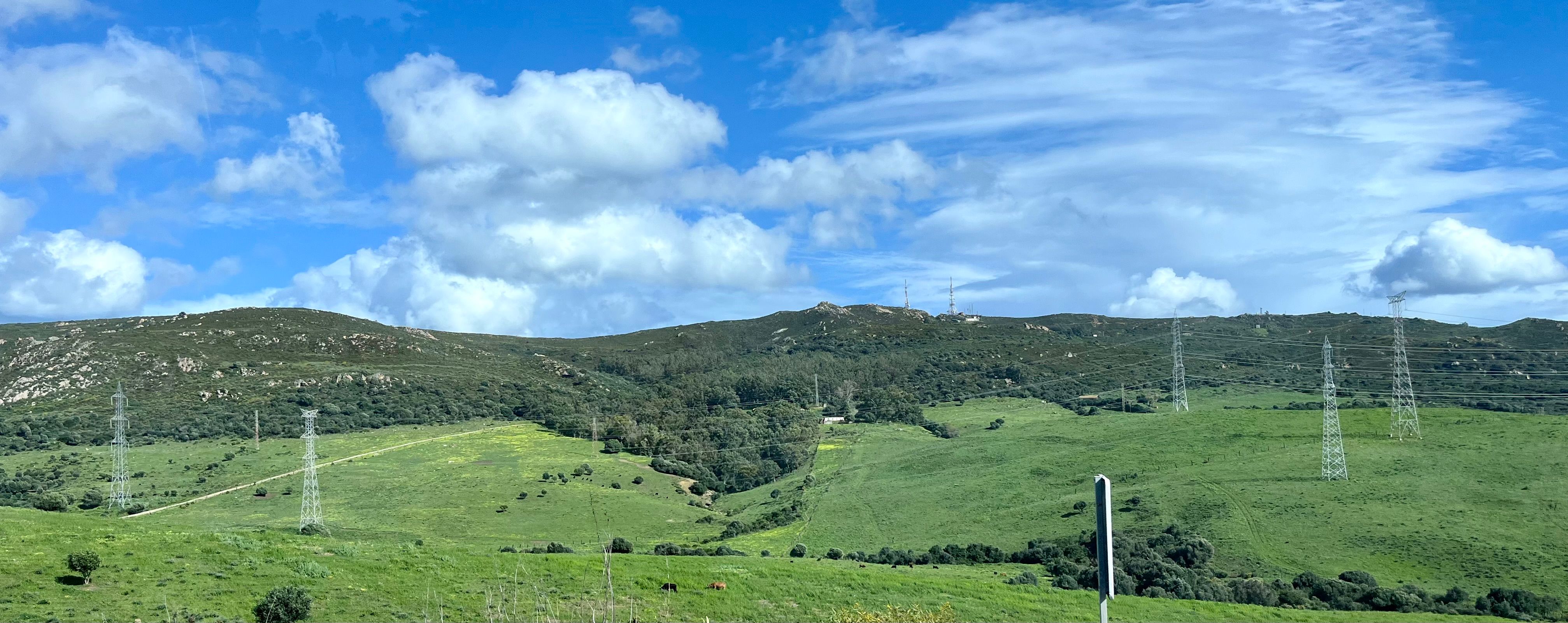
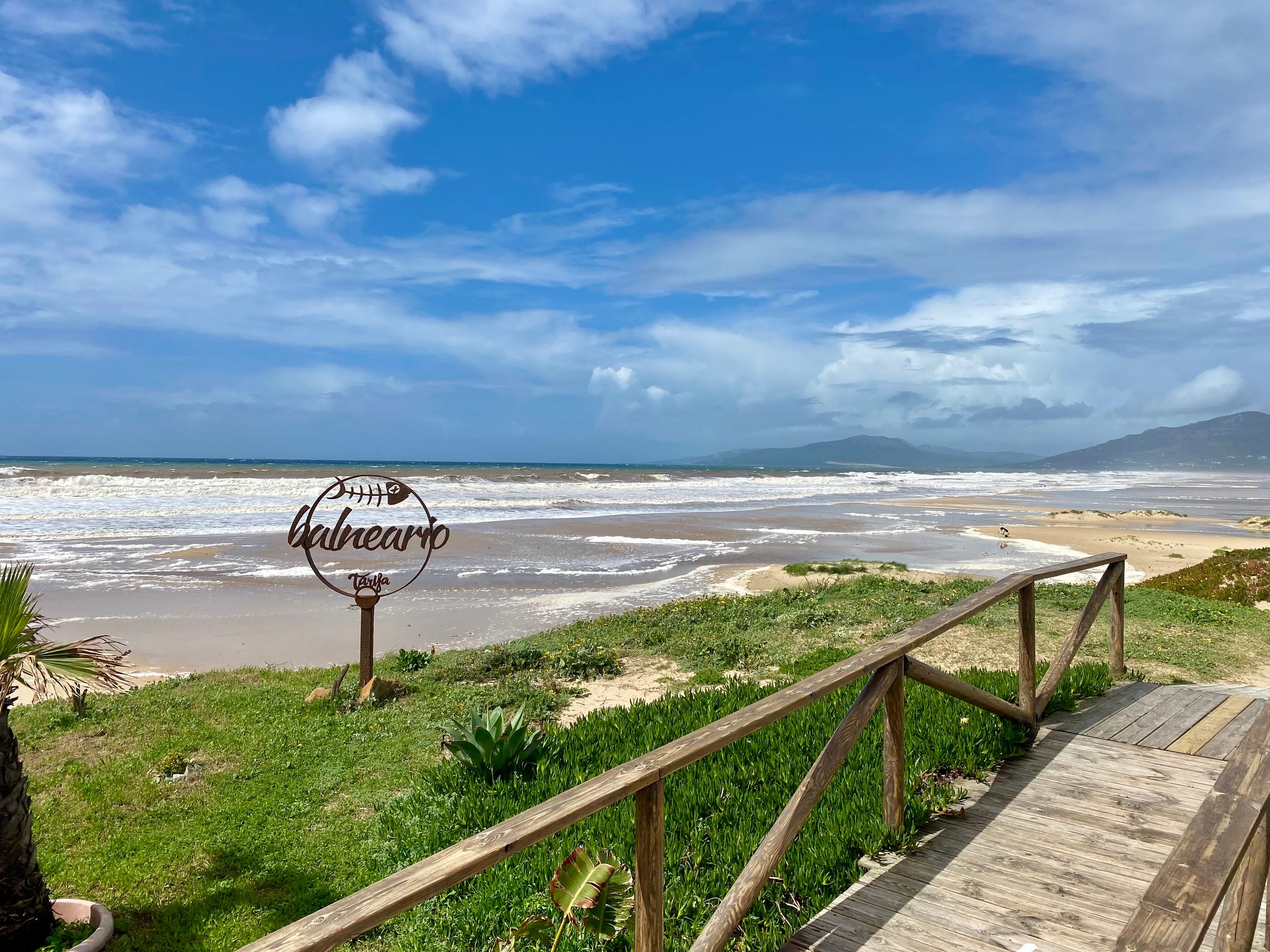
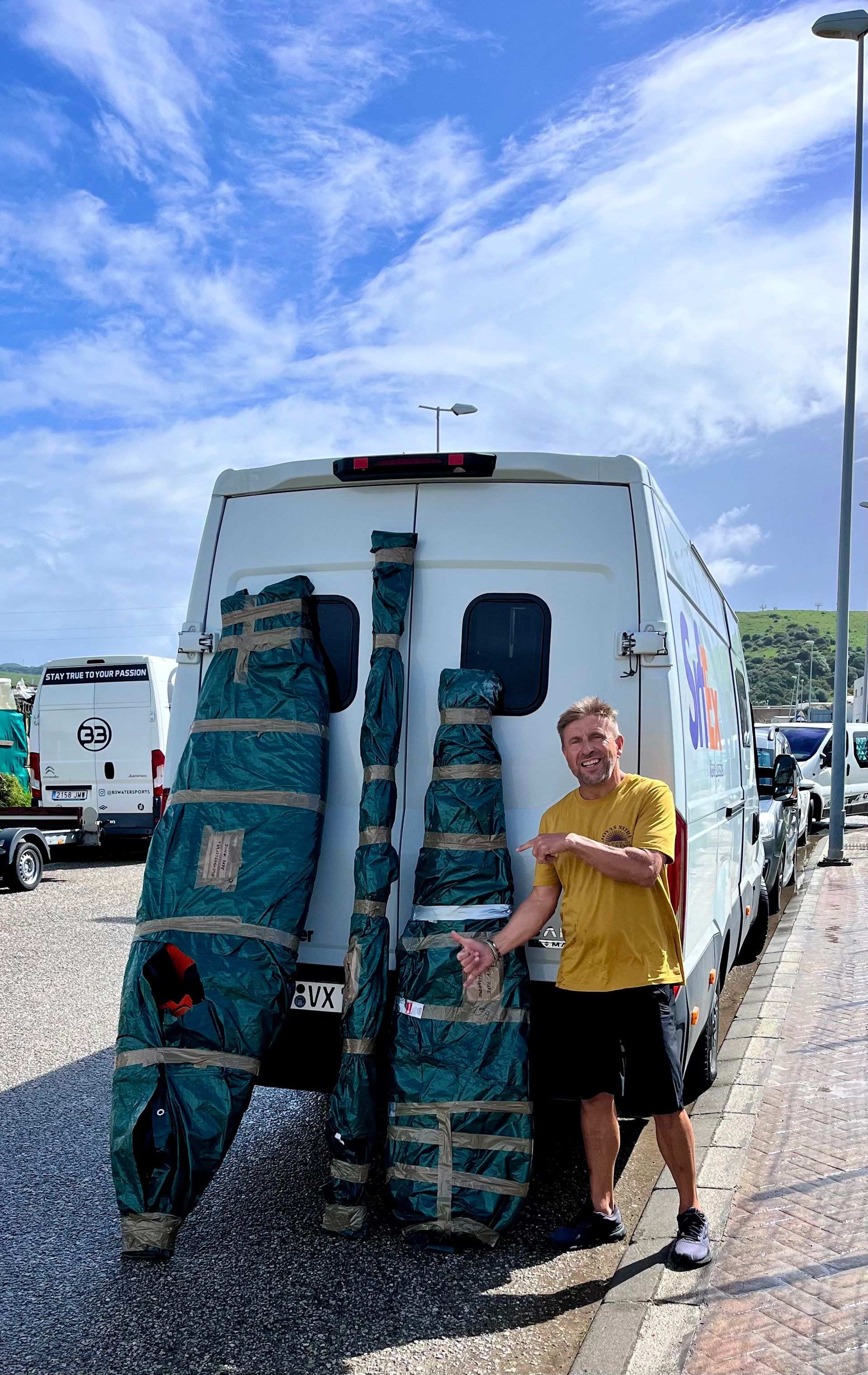
The persistent bad weather system over the Atlantic also influences the weather in Andalusia. It has rained a lot here in recent days, resulting in numerous floods. The weather is expected to remain changeable over the next few days, so we will limit our stay in Andalusia to the bare necessities. On the drive from Cadiz to Tarifa, we see green, lush meadows with happy cattle. Last autumn, this was not the case; the cattle stood on dried, brown soil. Now, part of the meadows is flooded, and the ditches at the roadside are overflowing. In Tarifa, we first head to the self-storage facility Tarifa Box, where part of our surfing gear is stored. The very nice owner, Dona, has taken good care of our equipment. After a farewell stroll through Tarifa, which we have come to love, we continue along the Mediterranean coast towards home.
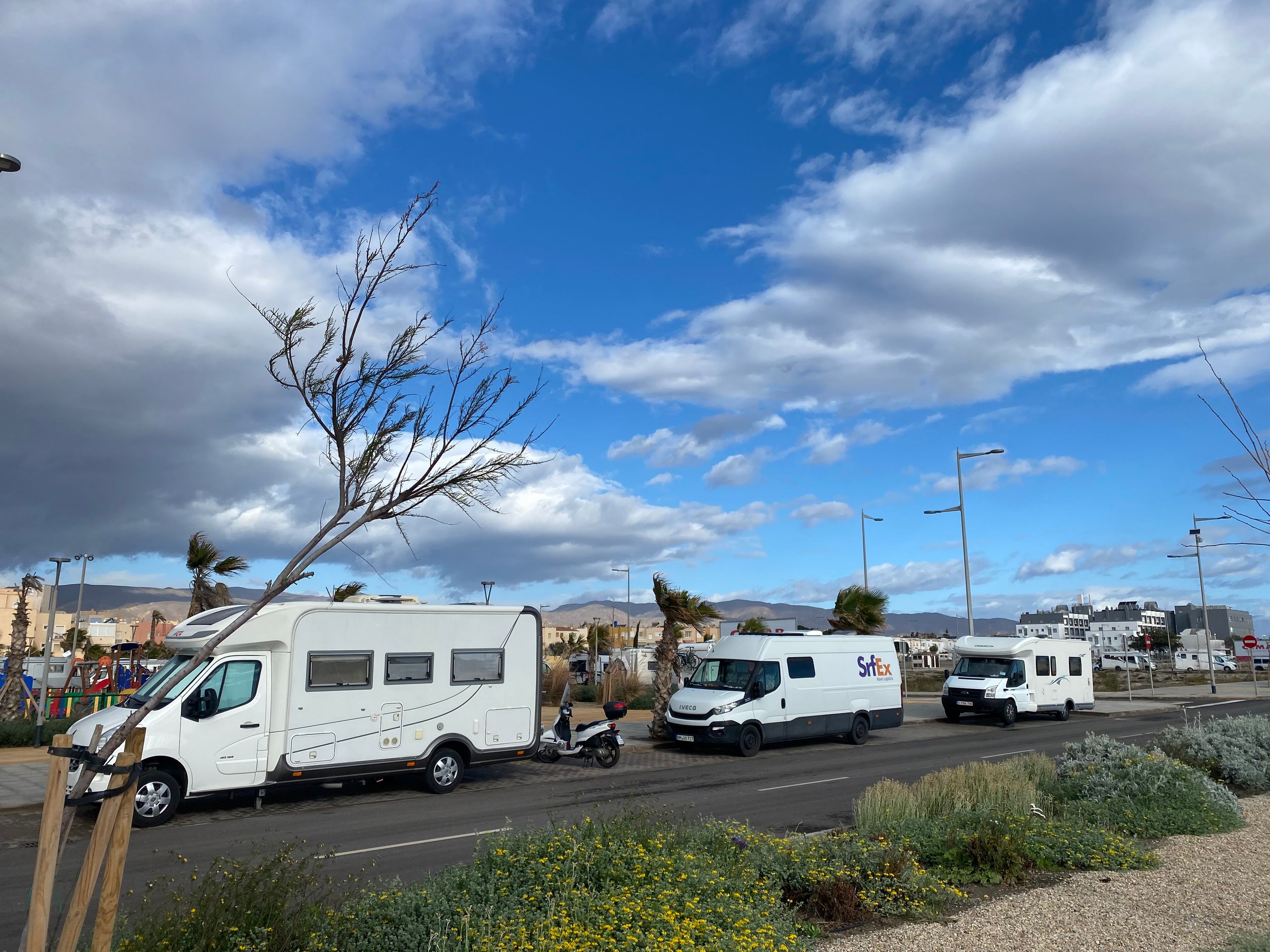
We spend the night in Almeria, about 350 km northeast of Tarifa, in a large parking lot on the outskirts, also used by numerous campers. As always, we try to be as inconspicuous as possible. That is our luck, as in the morning, the Policia Local comes and chases away some campers who are living too much of a camping life in ordinary car parking spaces. The weather is also unpleasant in Almeria, and we set off after breakfast. During the lunch break, which we spend in Puerto Lumbreras, I have a planned interview with a research company regarding questions in the pharmaceutical market. These interviews are well-paid but much too rare to make a living from.
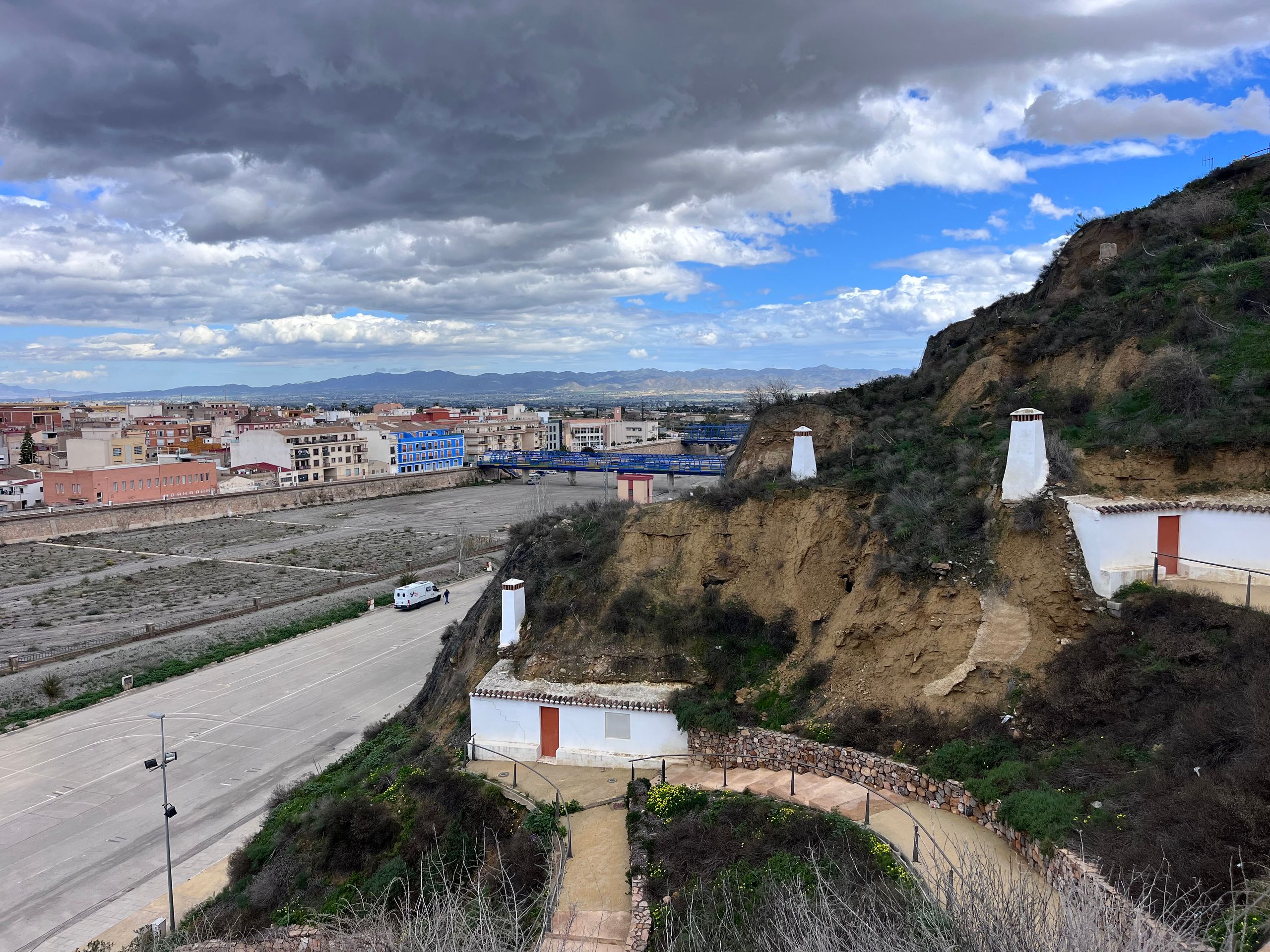
Our next day's destination is Castello de la Plana, located north of Valencia. The drive passes by Murcia. From the heavy floods in recent days in this area, which have even claimed a life, nothing can be seen from the highway. We were already in Castell0 de la Plana last year. Around the completely overcrowded camper park, there are now numerous signs prohibiting campers. Unfortunately, we understand the community; there are simply too many campers. In a quiet side street, not far from the beach, we still find a nice spot for the night. The weather forecast promises pure sunshine for the next day, so we plan to take a rest day.
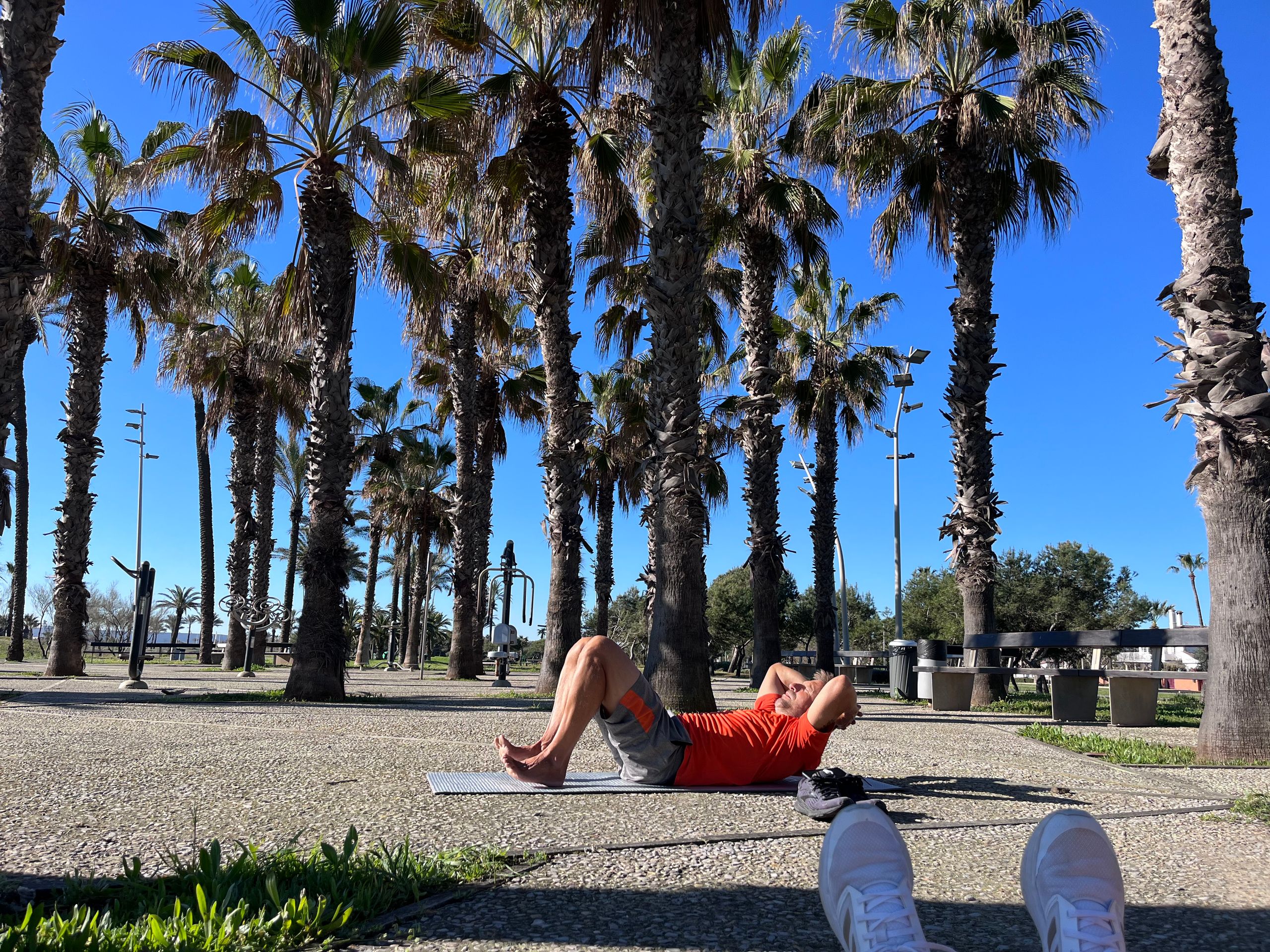
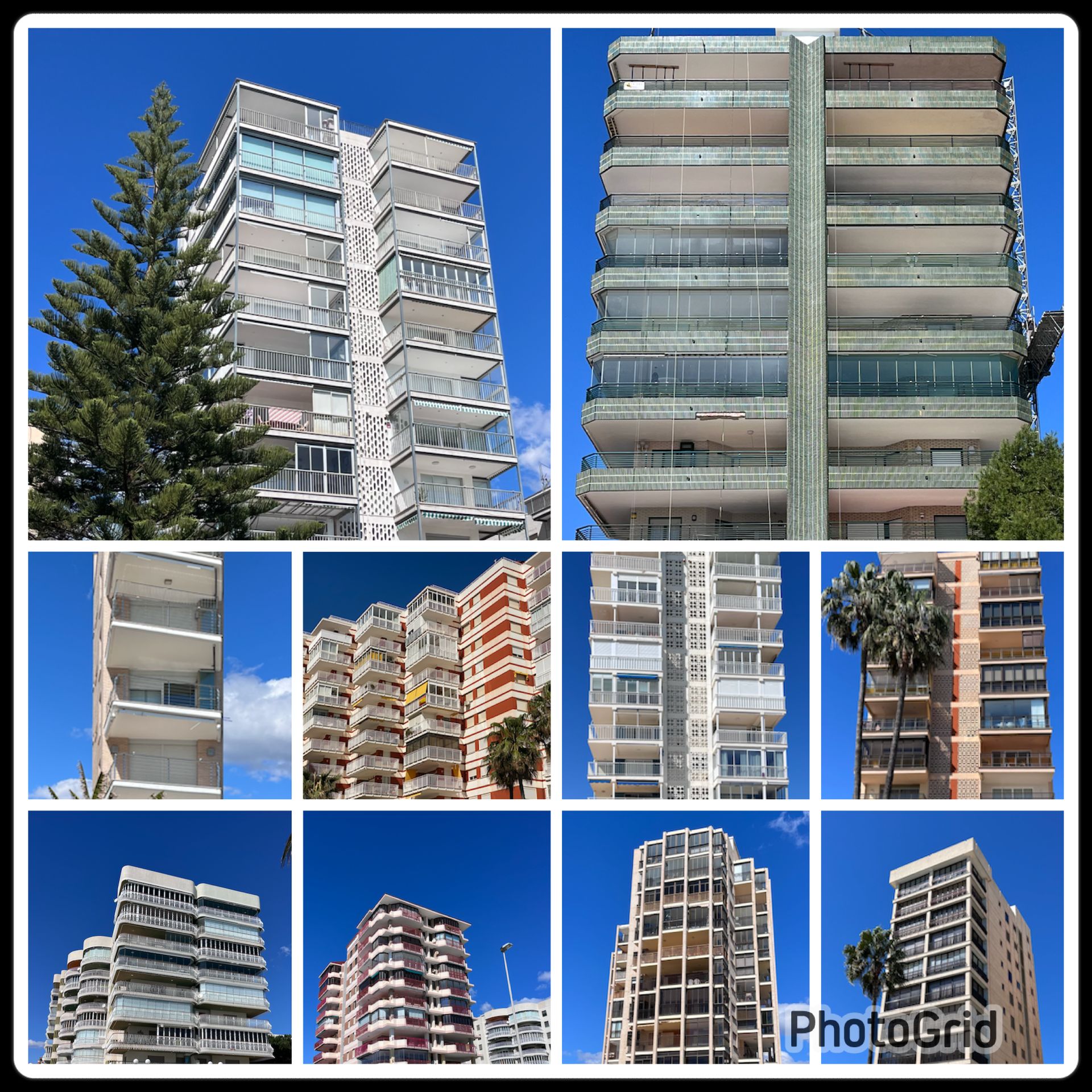
The next day, we wake up to radiant sunshine. In the beautifully elongated park between the beach and our parking lot, we can do our morning workout. This has definitely been too short in recent days. Afterward, we set off for a beach walk that takes us in excellent weather all the way to Benicasim and back. Benicasim consists mainly of apartment high-rise buildings that are quite empty at this time of year. The restaurants and cafes are still almost all closed, so we have trouble quenching our coffee thirst. In the end, it’s an iced coffee from a plastic cup from the small minimarket. But it helps us ‘survive’ the total distance of 15 km.
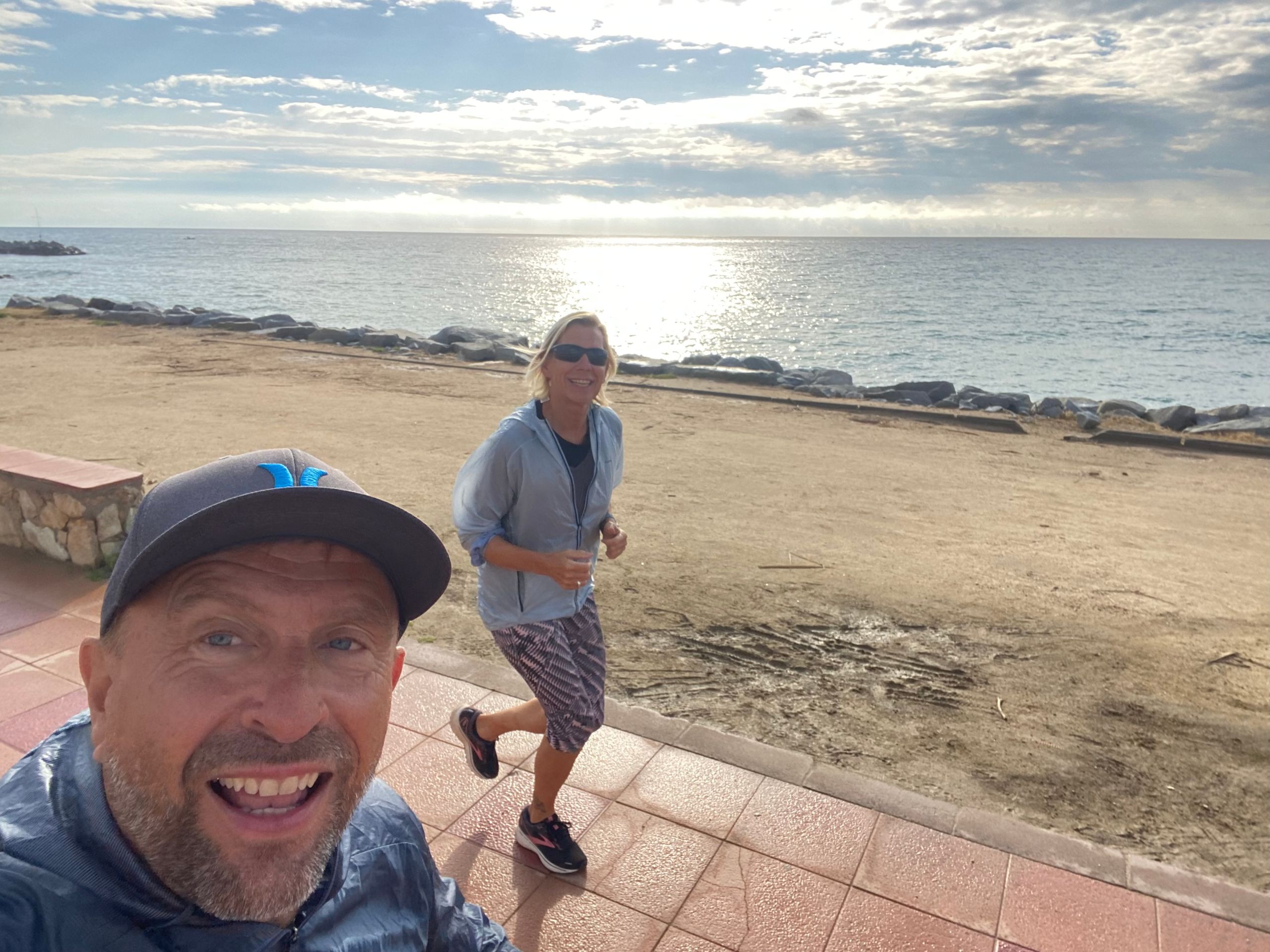
We spend the next two nights near Barcelona on the luxurious camper pitch 'Barcelona Beach', which we already know from the outbound journey. The name 'Barcelona Beach' is a bit misleading; the site is neither directly at the beach (about 500 m in a straight line) nor in Barcelona but 30 km north in Vilassar de Mar. Nevertheless, it is the best place to safely park the camper and visit Barcelona. Due to the changeable weather, however, we forgo another visit to Barcelona and limit ourselves to a hike and a jog along the long beach promenade. Here in Vilassar de Mar, we also spend our 'last' night in Spain, which we have come to love over the past 14 months!
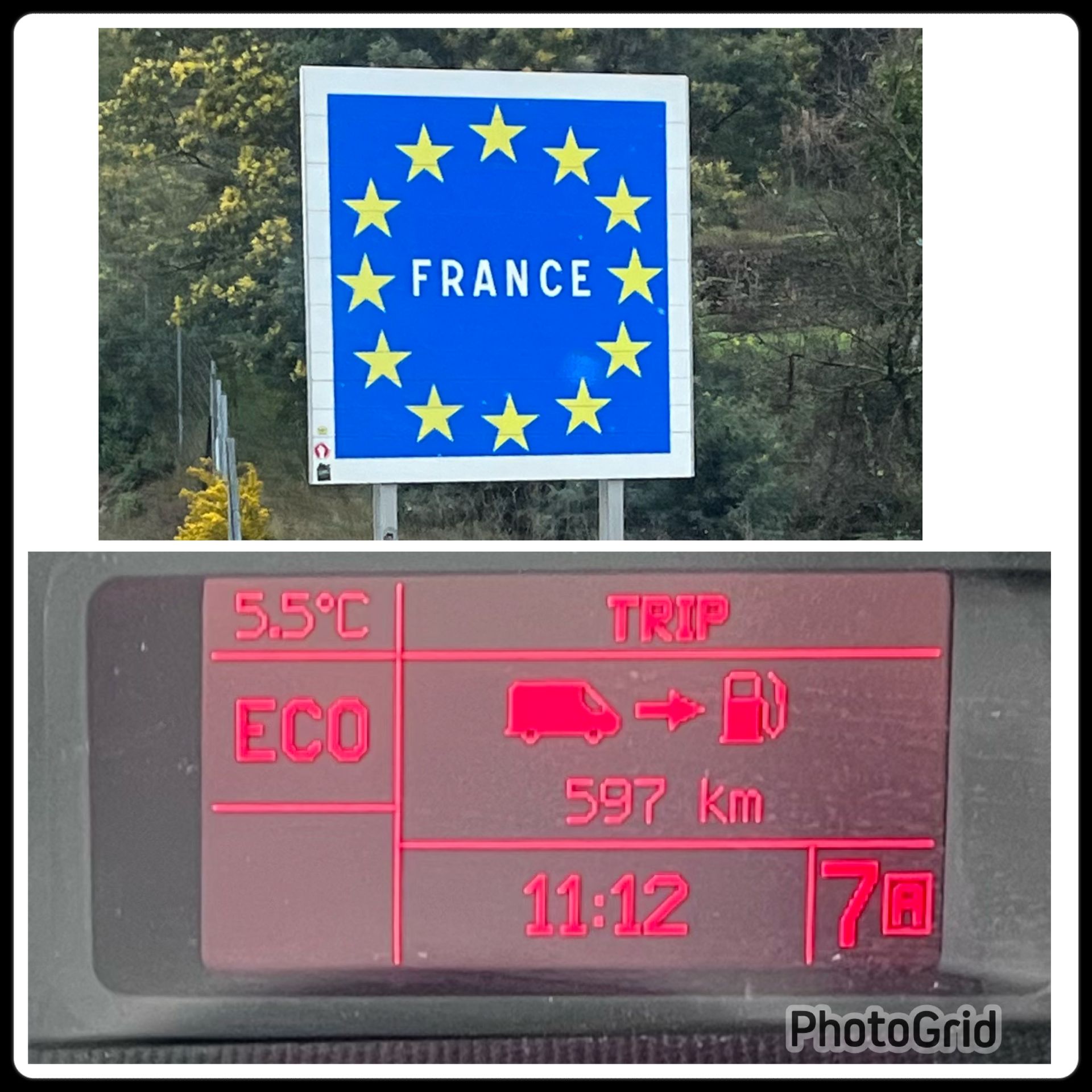
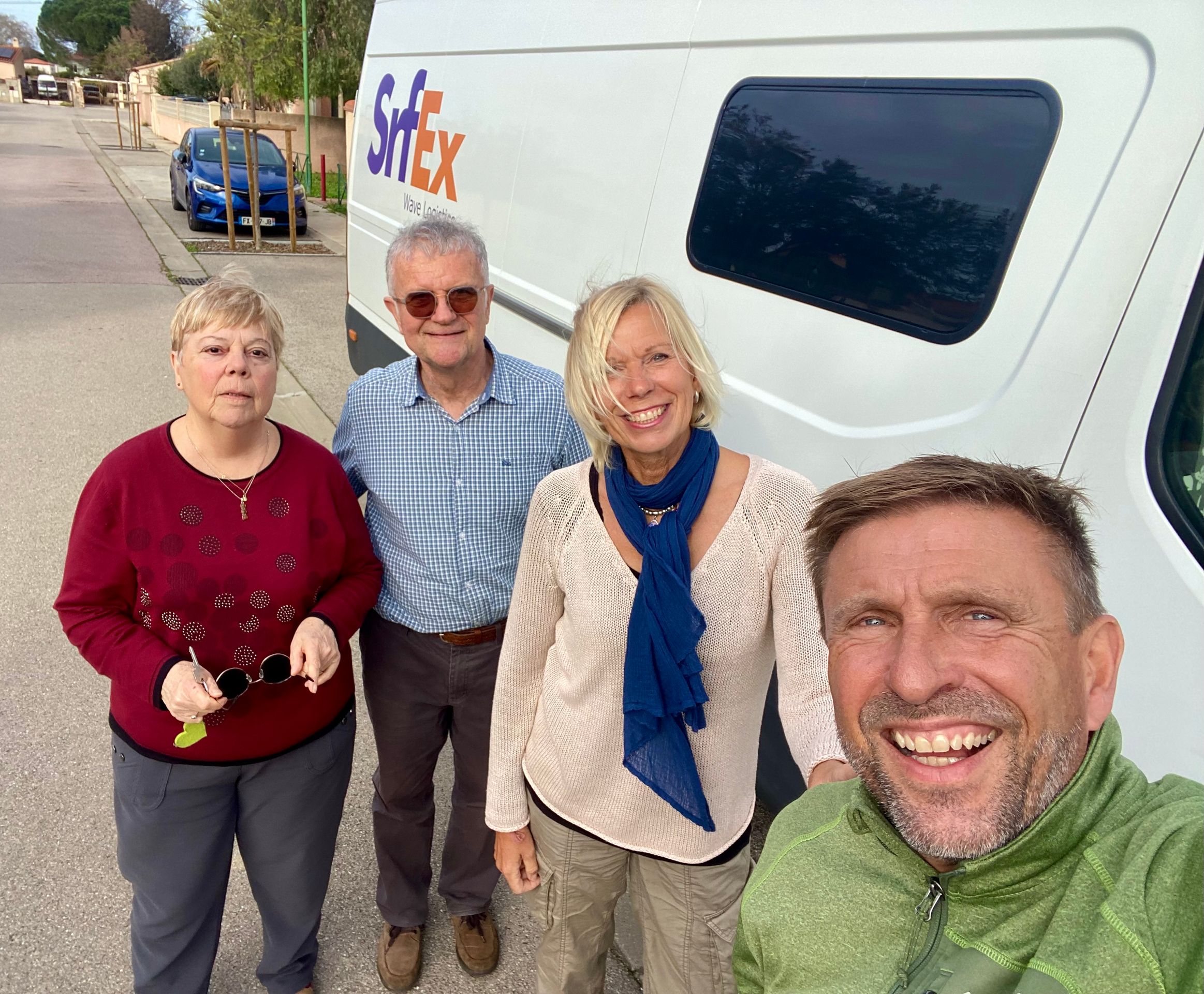
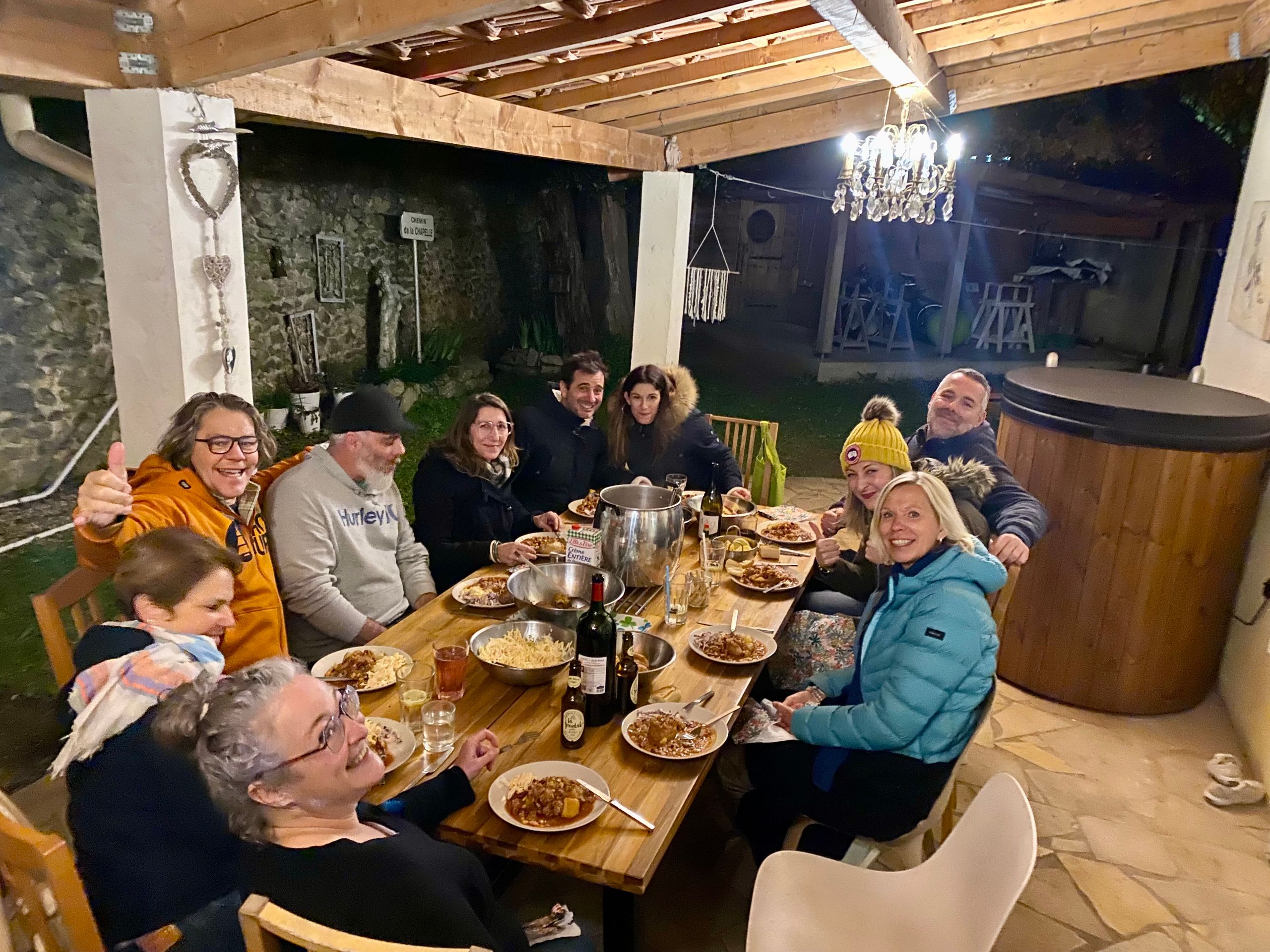
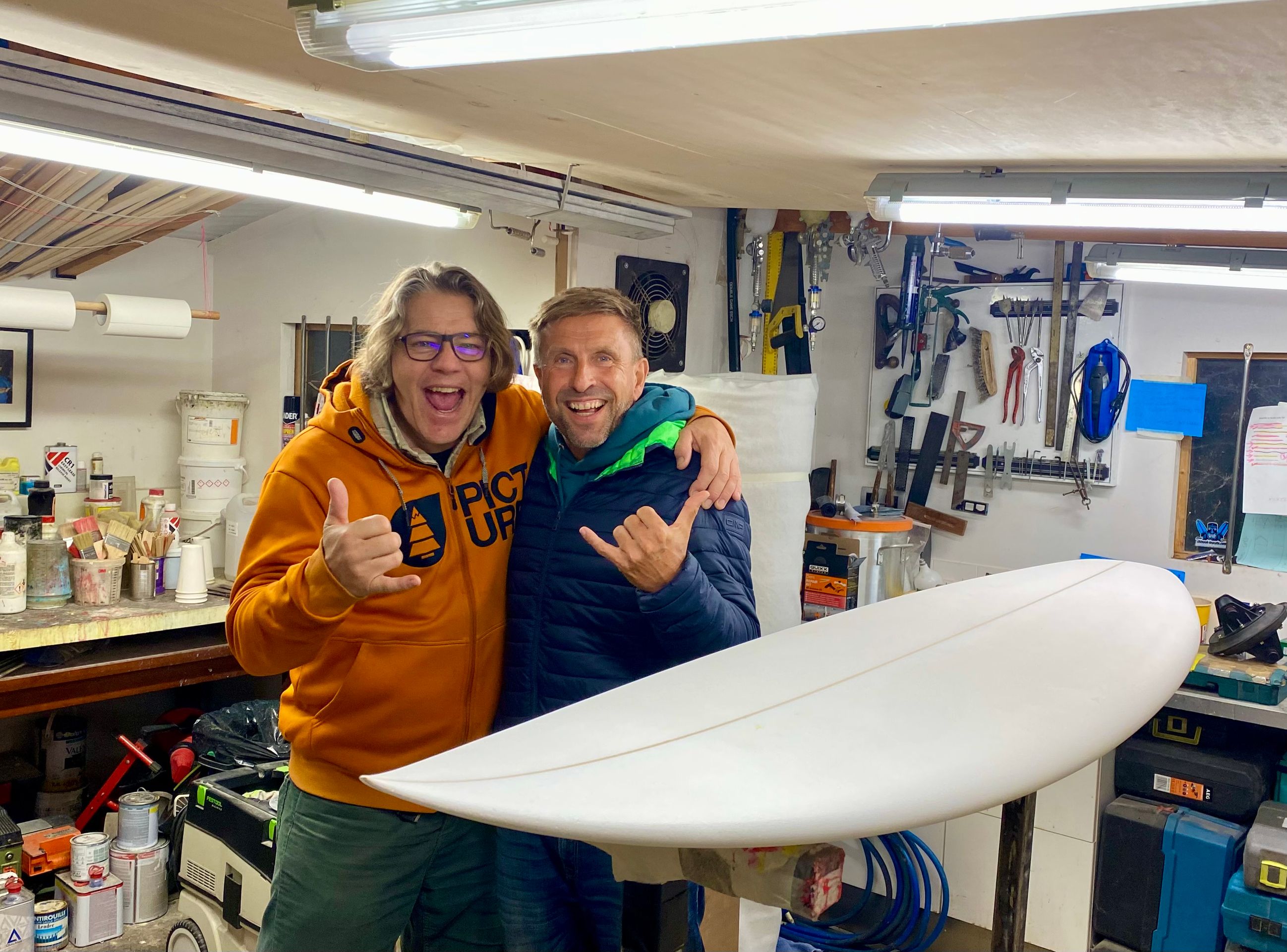
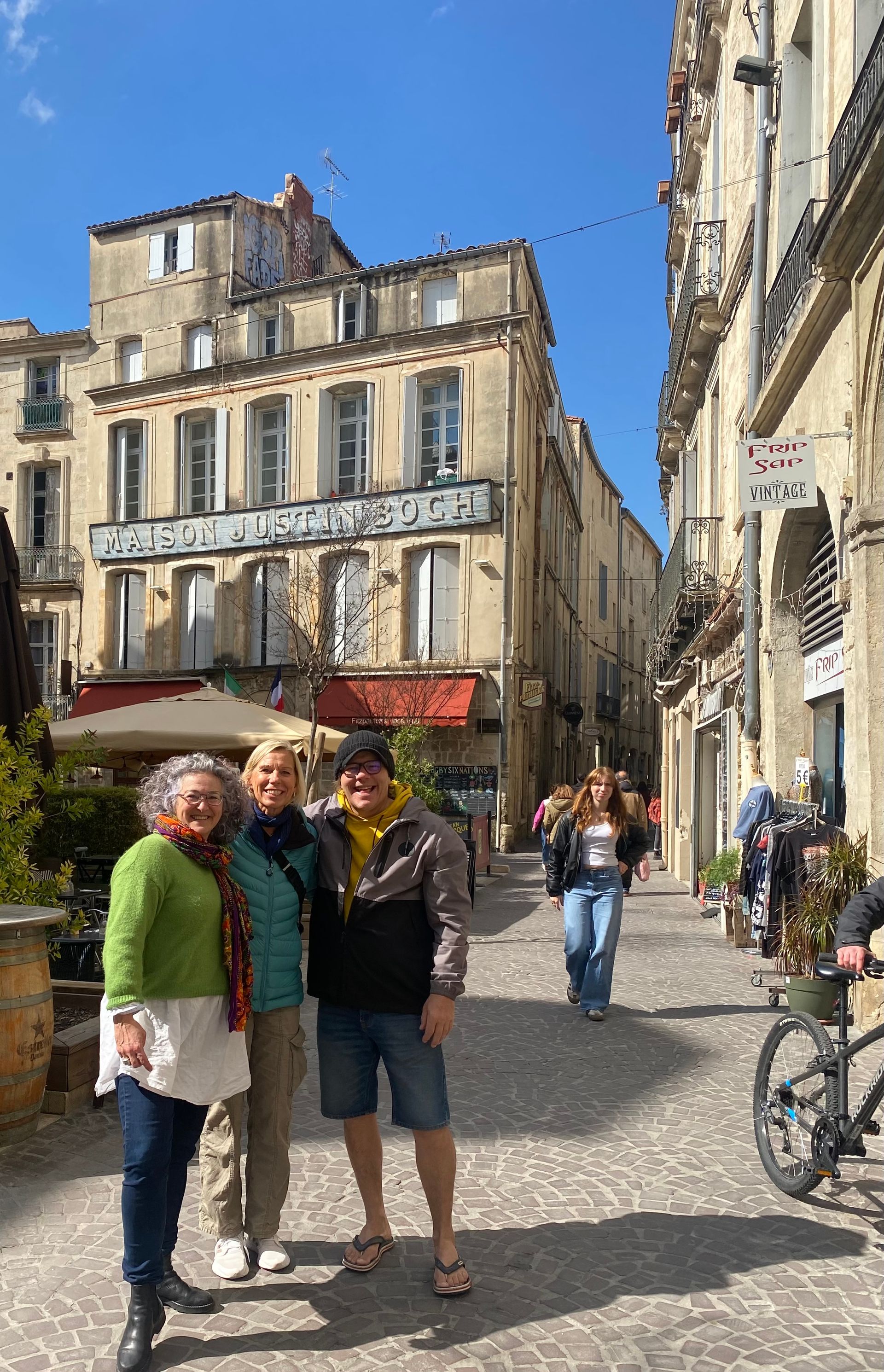
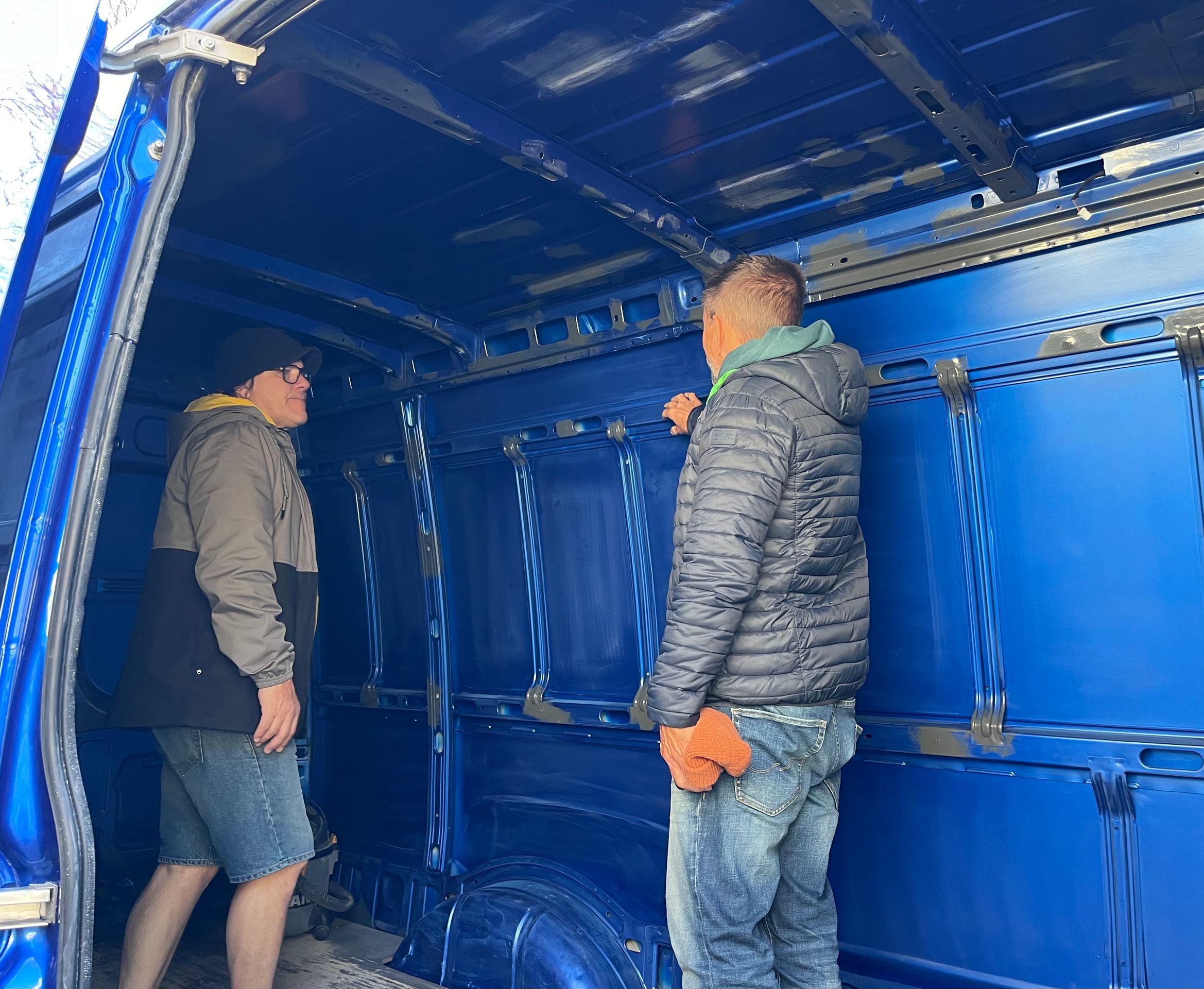
On the morning of March 13, we cross the Spanish-French border at Le Perthus in the Pyrenees. The uncomfortable weather in the Mediterranean region is also noticeable here. At over 600 m altitude, the outside temperature drops below 6° C. Today we have two appointments: In Perpignan, we plan to meet Jean-Louis and Martine, whom we met last September in the Rif Mountains in Morocco (See Travel blog Morocco). They insisted that we visit them on our return in Perpignan. They have cooked delicious food for us, and we have a lot to talk about. Unfortunately, time flies, as we have to continue to our second appointment in Montpellier. In Montpellier, we have a blind date: we are to meet a surfboard shaper and his wife, who are also facing the challenge of converting an Iveco Daily into a surf camper. This contact came through the Japanese-Australian surfing family we met in Spain and Morocco. Chris and Sophie enthusiastically welcome us, and we get to join the little party taking place in their garden tonight. Meanwhile, our van is safely parked at Sophie’s parents' place in a gated community because there are unfortunately many (car) burglaries in Montpellier. Chris and Sophie insist on showing us Montpellier the next morning. In exchange, our 'Betty' gets inspected, and we can give them many tips for their planned van conversion. Although we have only known each other for less than 24 hours, we say goodbye like old friends, as our journey is already continuing. Next Saturday, we need to be in Aachen, but first, we want to explore a bit of the French Mediterranean coast.
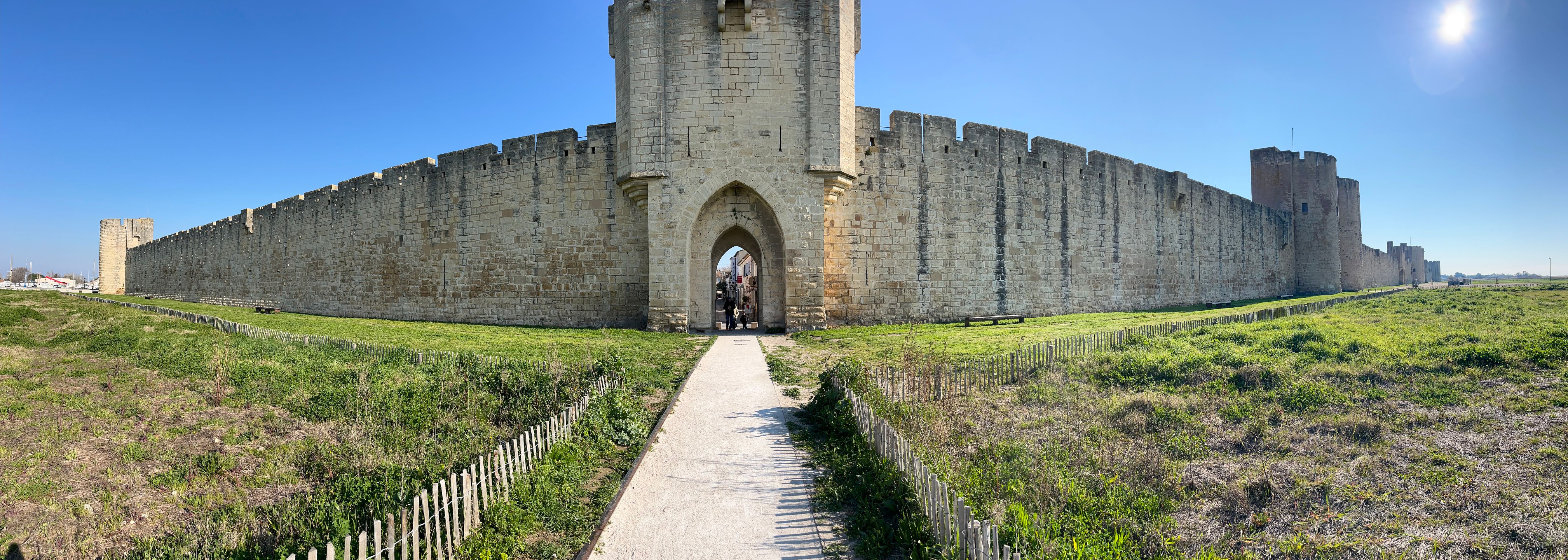
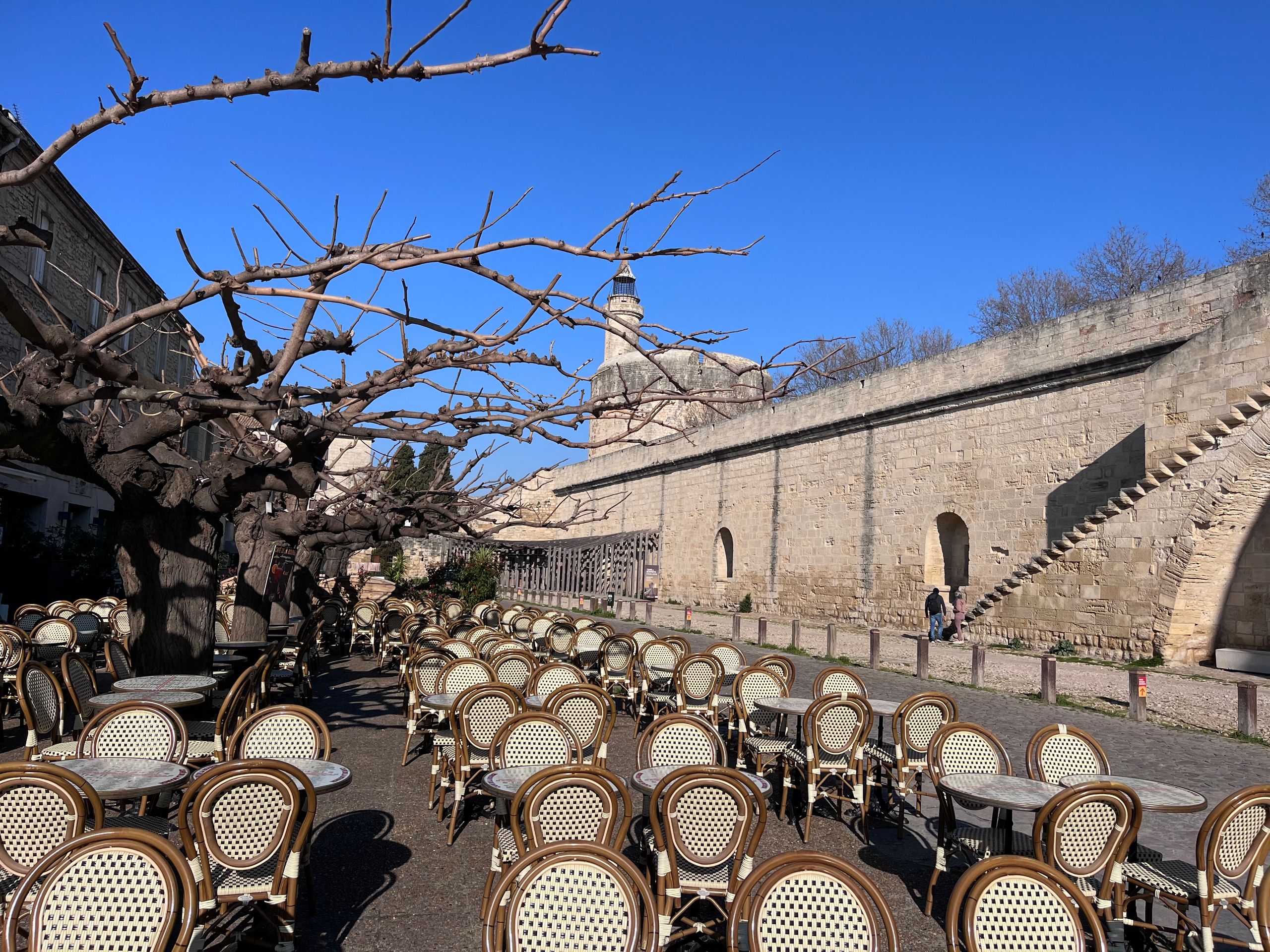
When we set off from Montpellier, it’s already fairly late, and we only make it to Aigues-Mortes, less than 40 km from Montpellier. Aigues-Mortes is one of the best-preserved medieval fortified towns with a completely encircling complete fortress wall. Early in the morning, we walk through the still-empty town and then stroll across the wonderful weekly market, which offers everything that is part of a French gastronomic delight. Well-equipped, we continue along the coast through the Camargue towards Marseille. The road from Marseille leads through the national park Sainte-Baume towards Toulon. In this mountainous landscape lies the (former Formula 1) racetrack Le Castellet. The proximity to the racetrack apparently motivates hordes of motorcyclists to behave on the road as if they were racing. We barely get a chance to enjoy the scenery as we have to pay close attention to the dangerously reckless bikers driving like crazy.
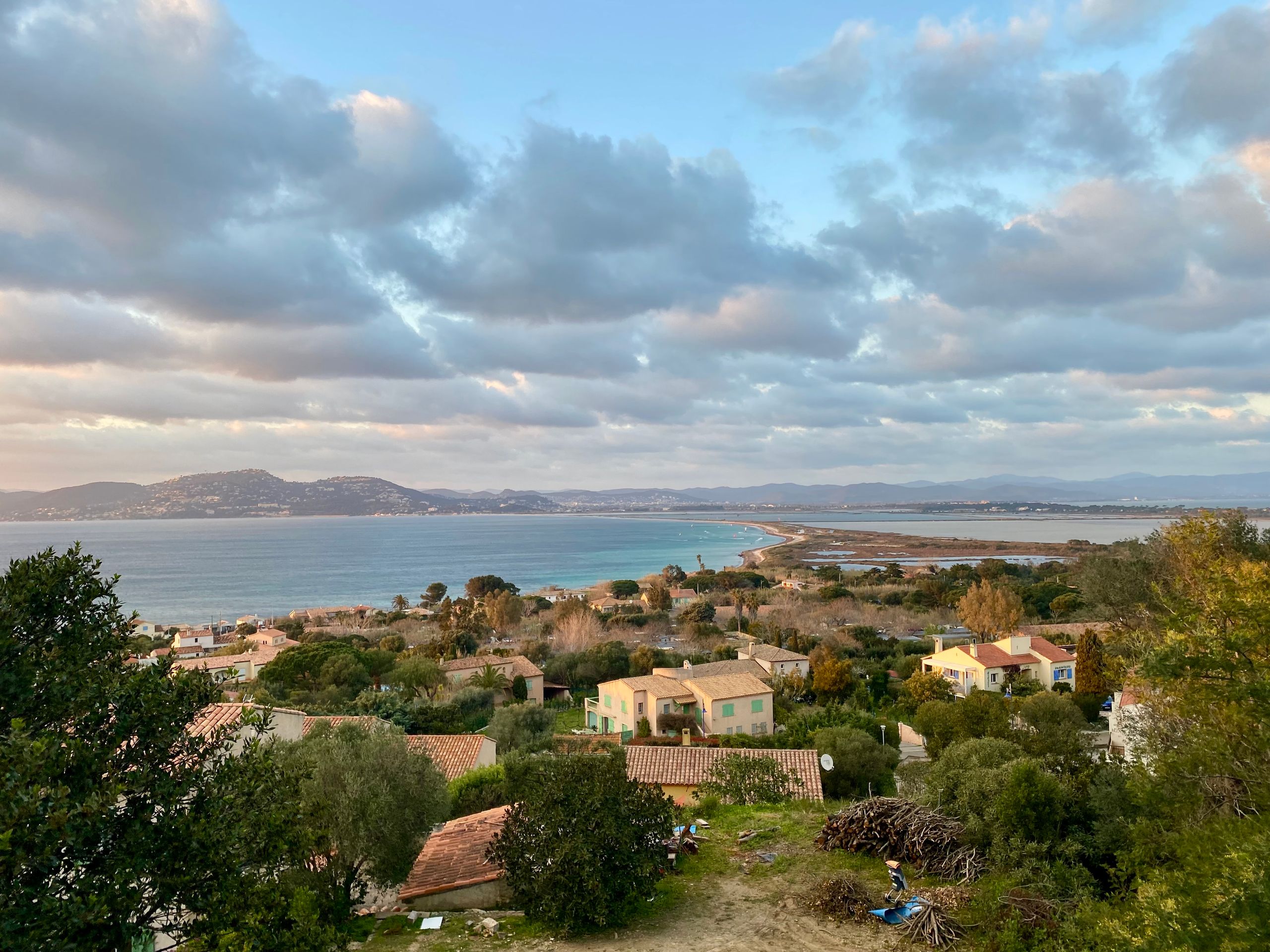
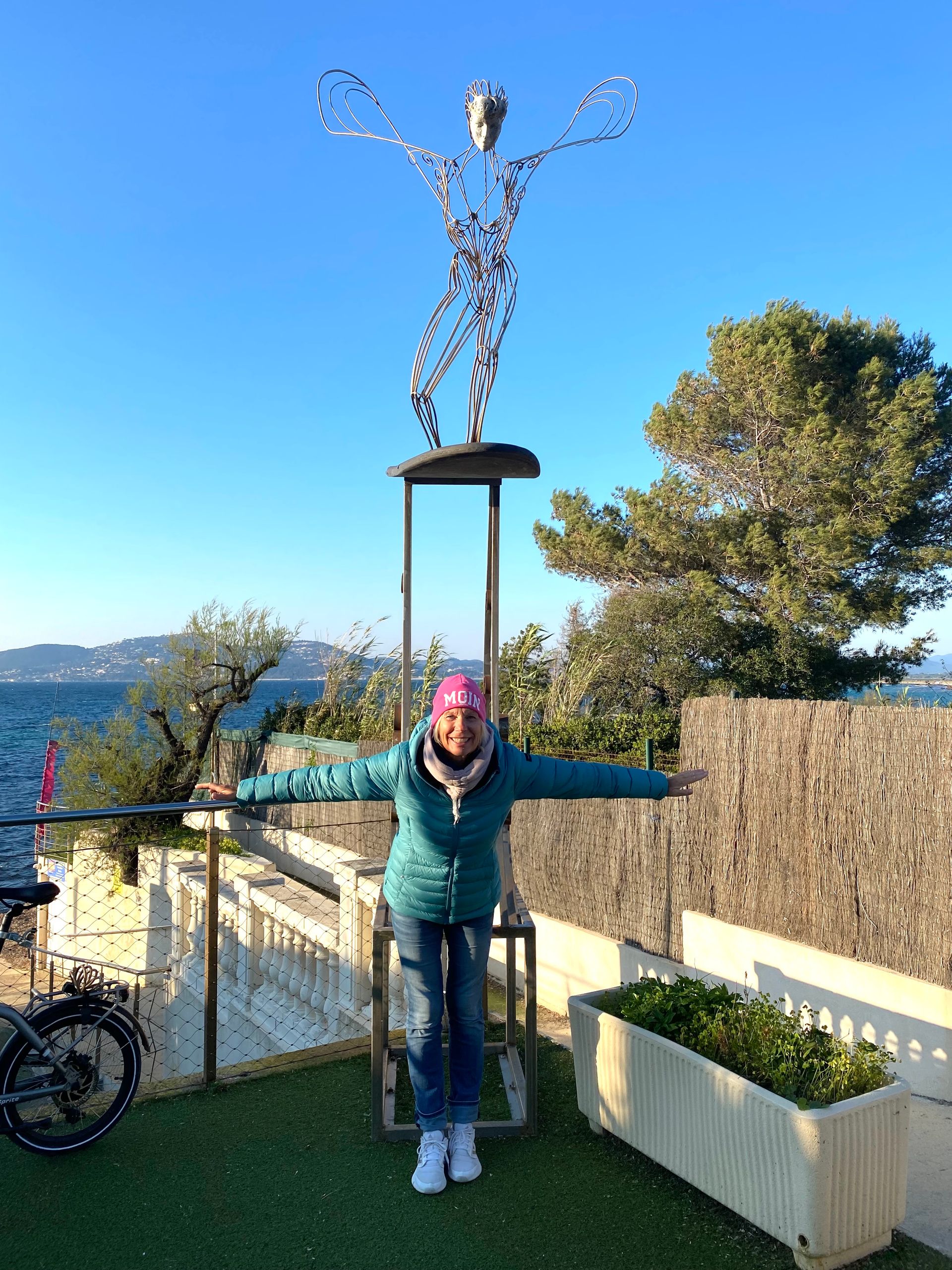
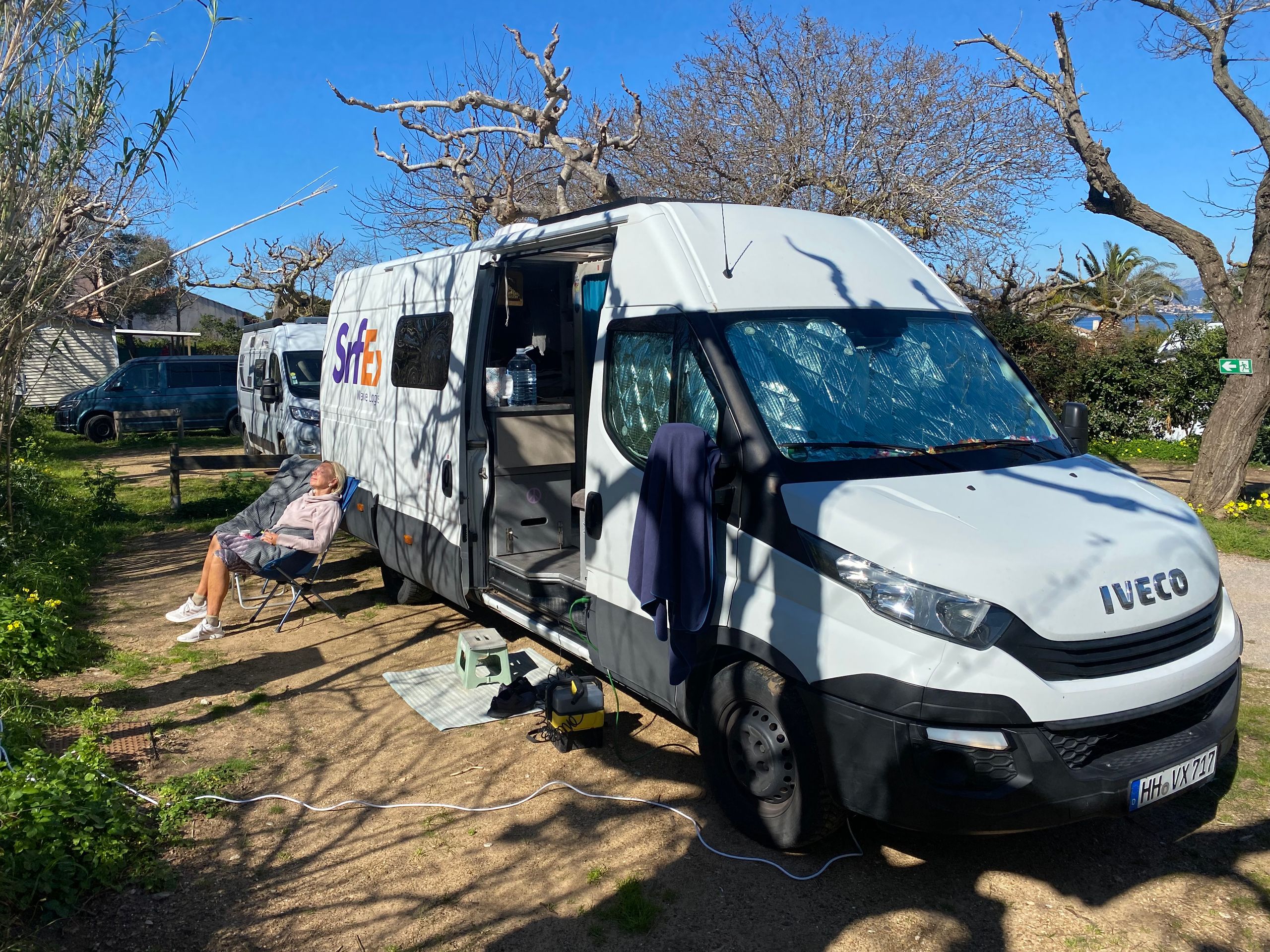
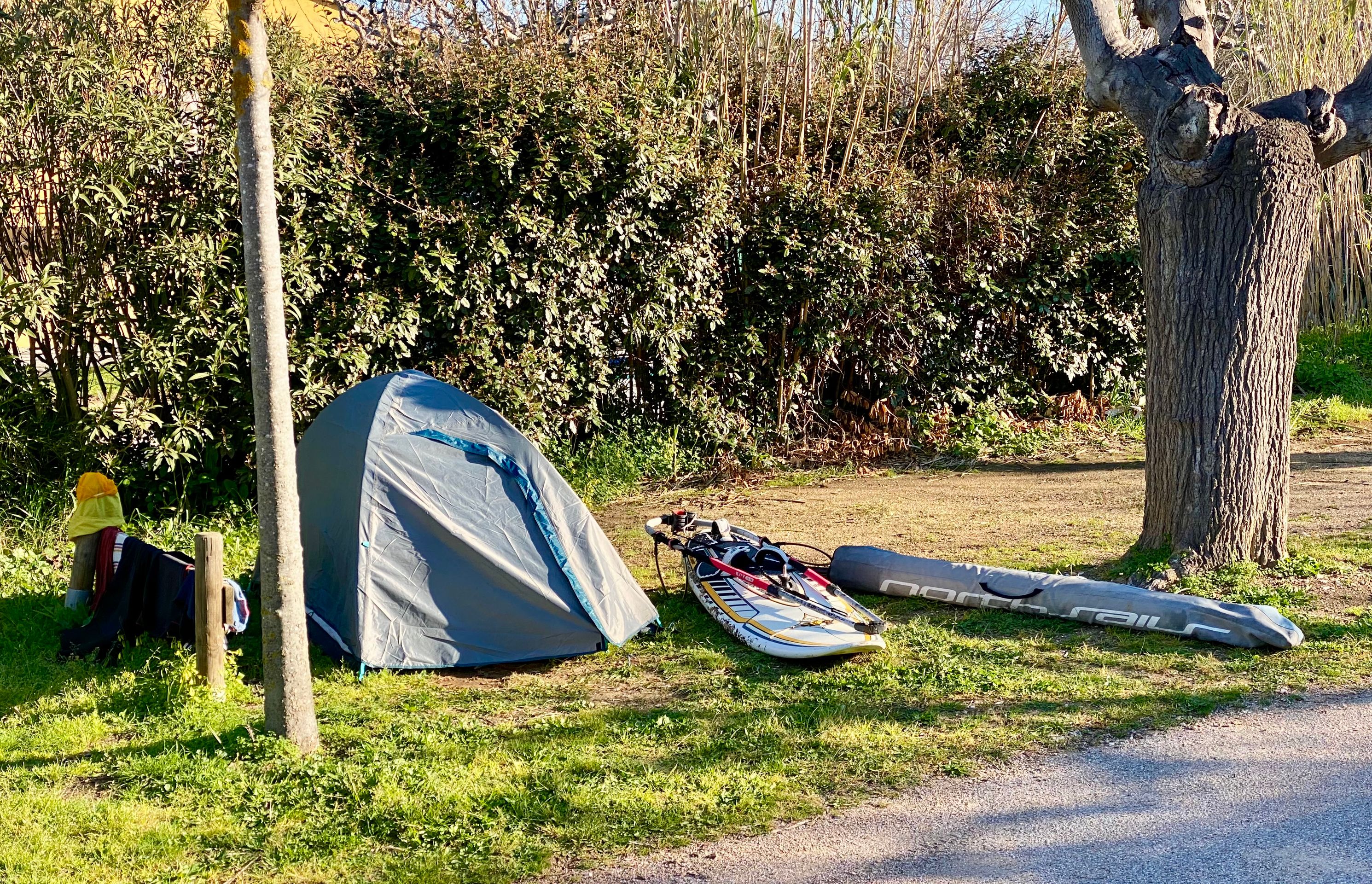
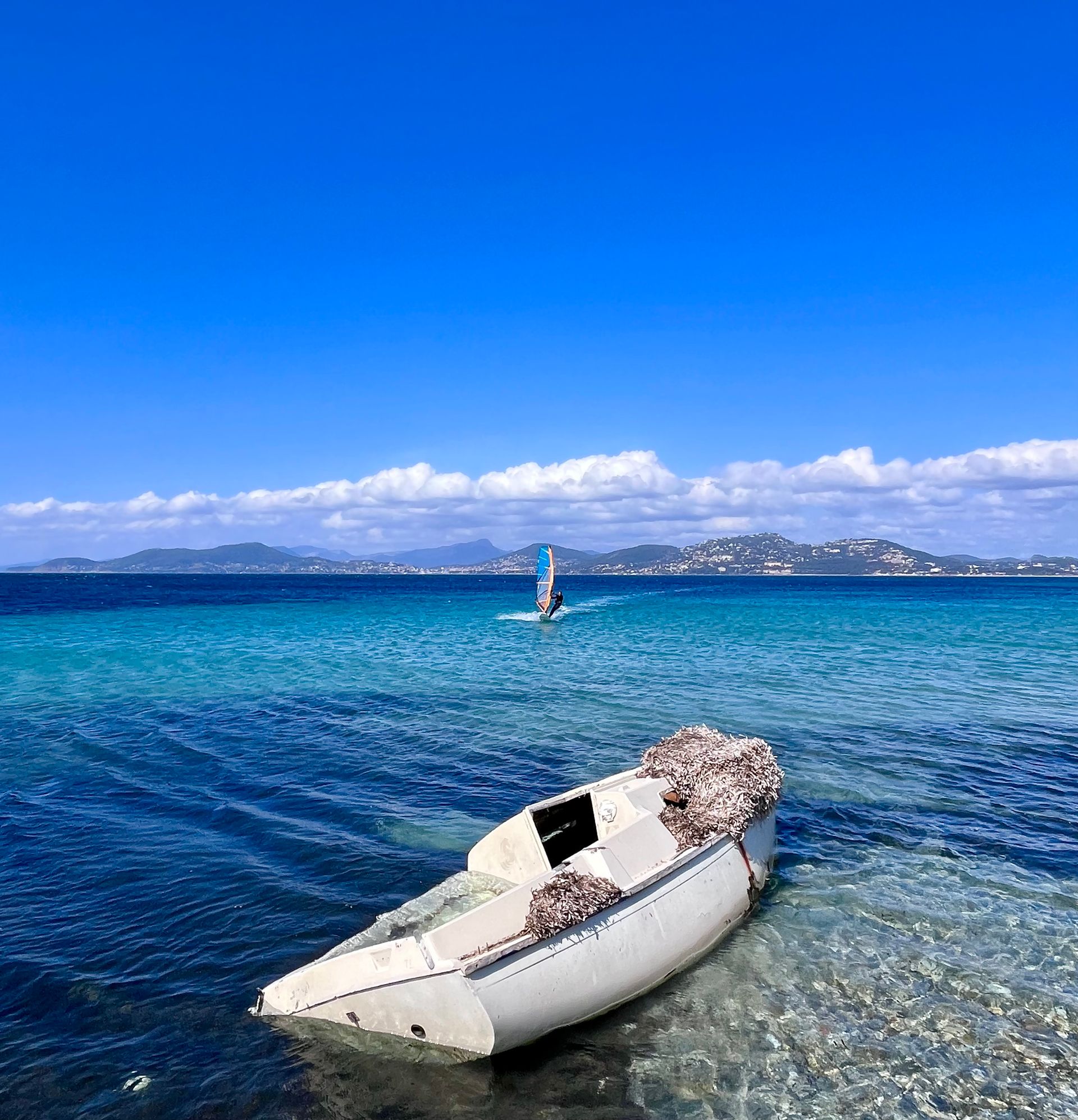
We pass Toulon and approach Hyeres. Off the coast before Hyeres lies the Giens Peninsula. Giens is connected to the mainland by a wide saltwater lagoon and two roads and is known for its excellent water sports conditions. This is also where the former World Cup beach Almanarre was when windsurfing with legends like Robby Naish and Björn Dunkerbeck was still huge. We have always wanted to come here. Twice, Corona had derailed our plans, but now it’s finally happening! We check into the Surf International campground, which is famous among surfers. Large parts of the French Mediterranean coast are unfortunately not suitable for wild camping, as almost every parking lot near the water is obstructed with a solid beam at 2 m height. Moreover, we have been warned from several sources that the risk of theft is very high if you leave your vehicle unattended. At Camping International, it’s still the pre-season. We find a spot easily among the other campers, most of whom have come for water sports. The campsite even has a well-equipped gym, which we occupy every morning.
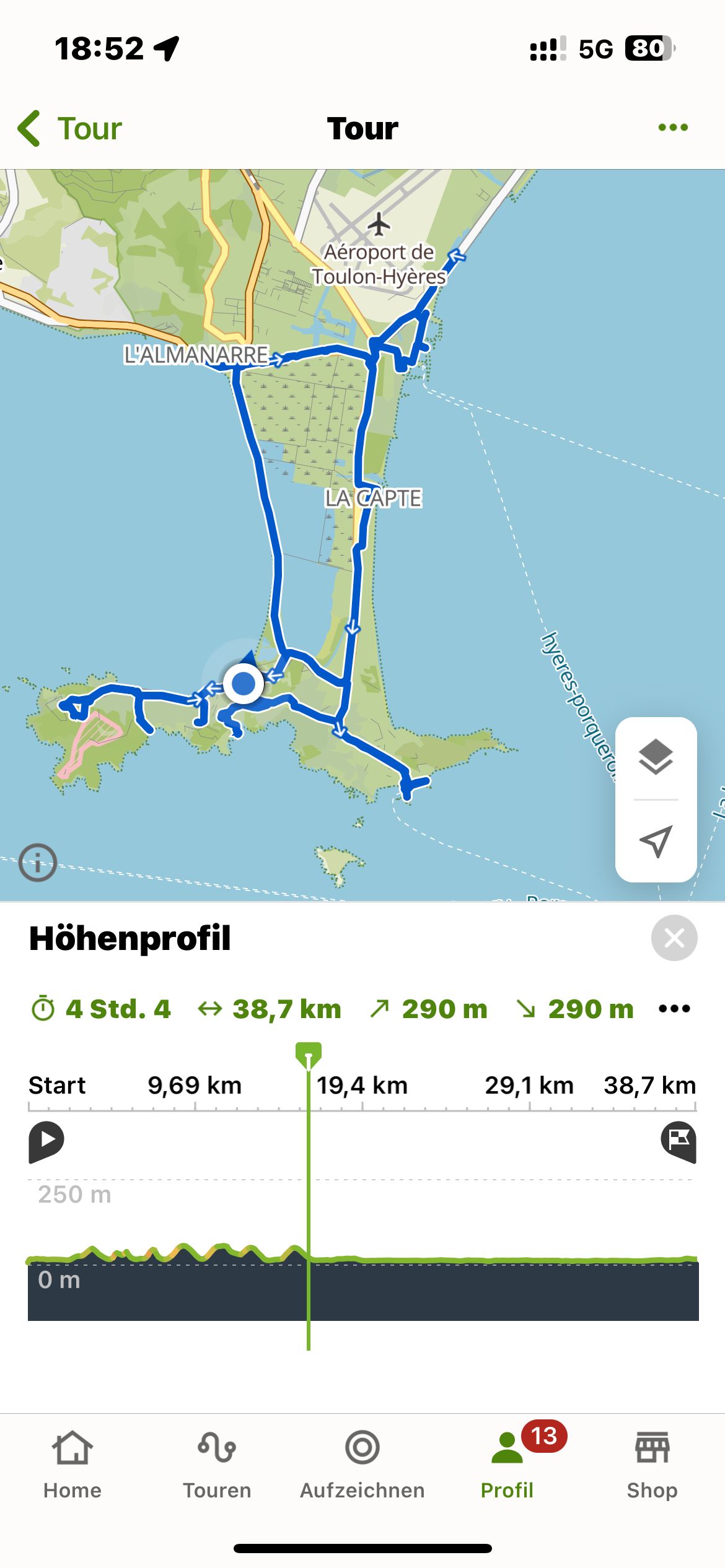
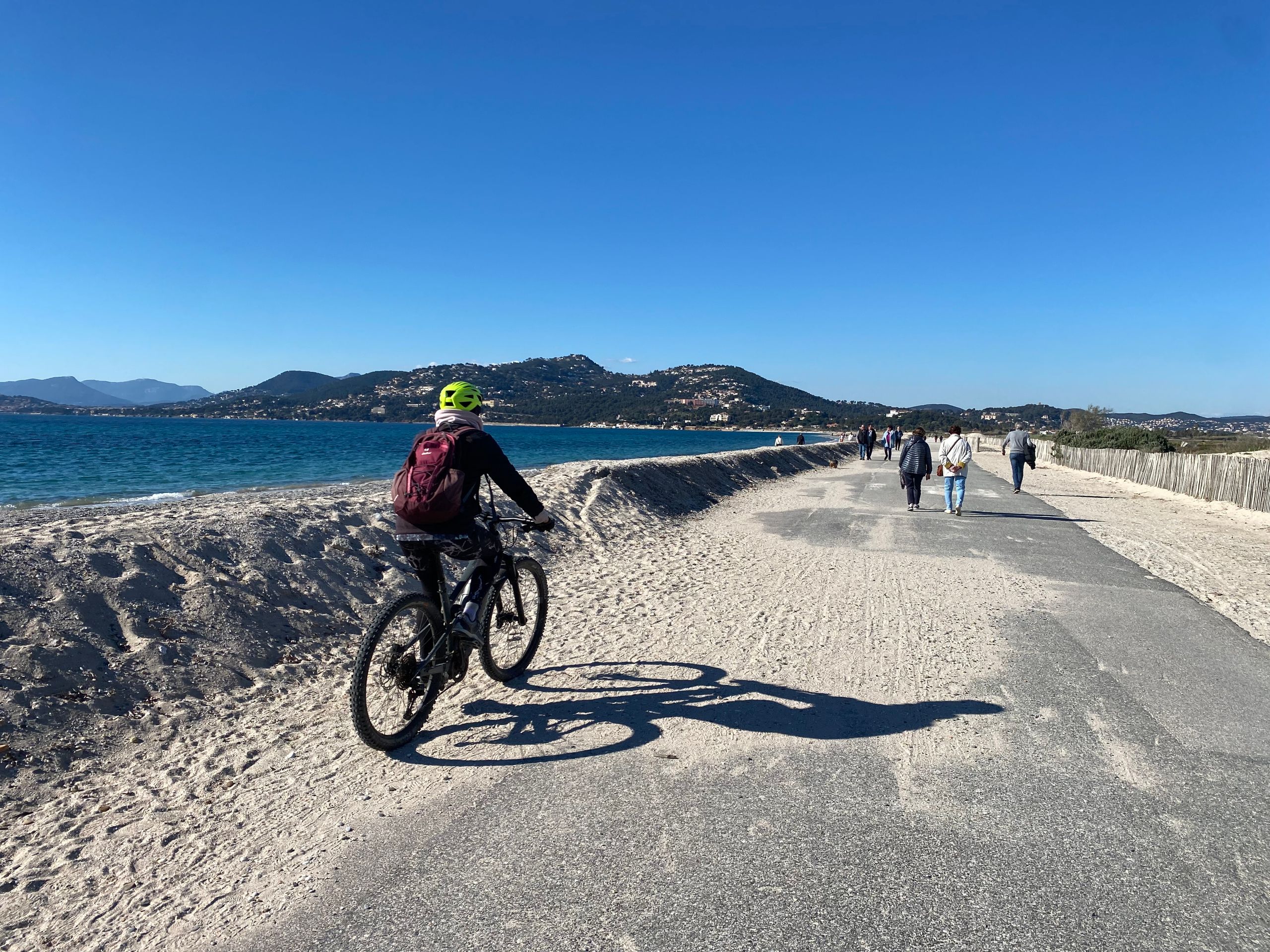
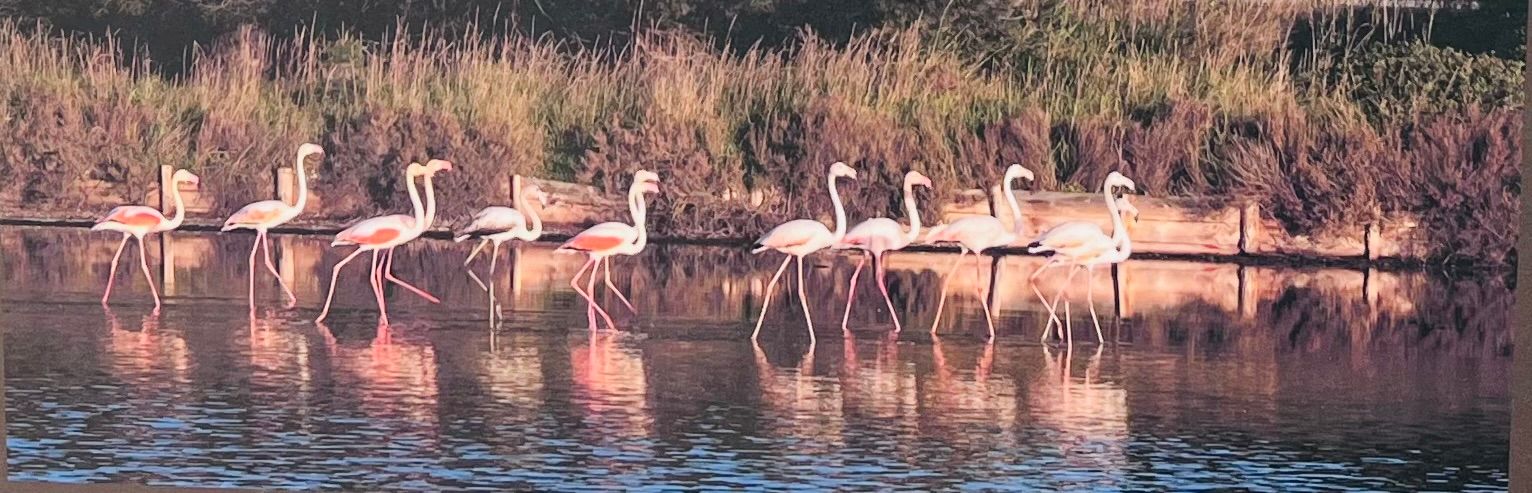
We will spend a few days here, and I naturally hope for good wind for windsurfing and/or wingfoiling. The next day, now March 17, we first hop on our bikes. On a 40 km round trip, we explore the Giens Peninsula, the saltwater lagoons with the pink flamingos, and Hyeres with its large marina. We really like it here, and it’s not just us. The upscale resort Saint-Tropez is not far away. One day later, the wind comes in, and not a little at that. Time for windsurfing. However, the small sails have already begun their journey back to Germany. So, my 5.0 sail must suffice, which is actually a little too big. My left hand gets a good workout; it’s the first time windsurfing since my accident on December 22. But I am very happy to be back on the water! Meanwhile, Susi is doing a 30 km bike tour to Hyeres. In Hyeres, there are gradients of up to 20%; luckily, she has an e-mountain bike!
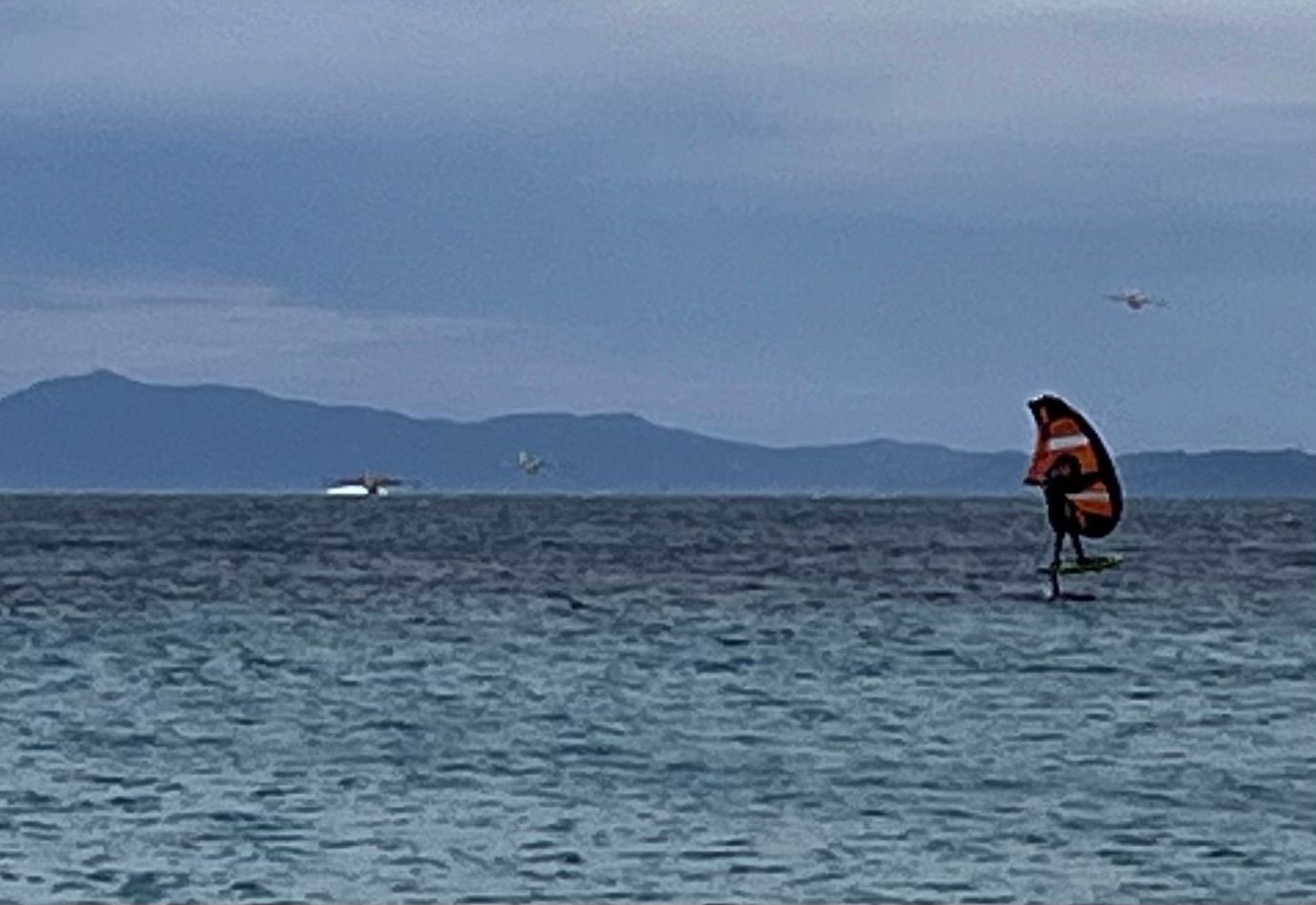
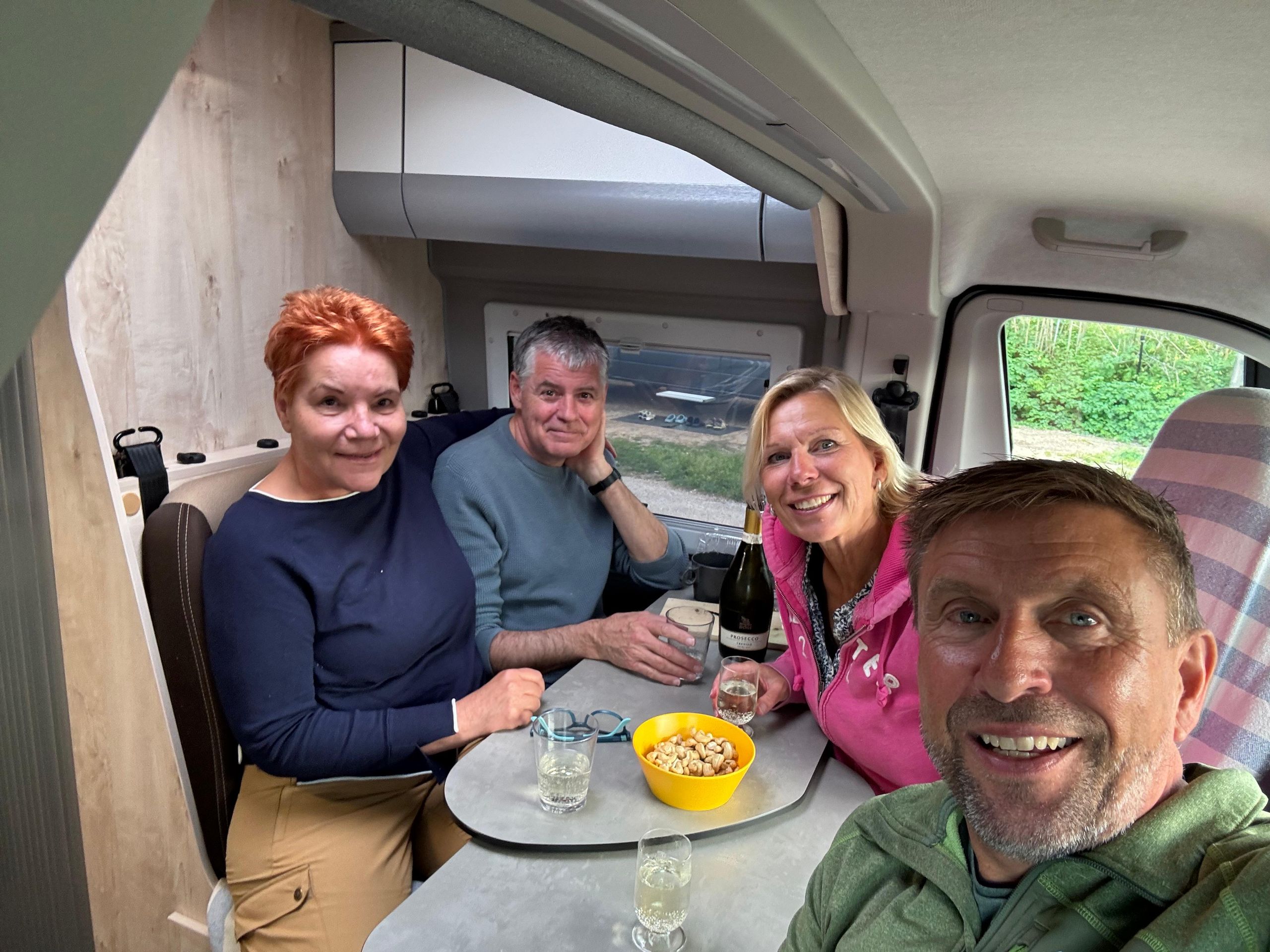
On March 19, we have another appointment. We meet Gerd and Renate from Austria. We met them in Asilah, Morocco, just before they unfortunately had to cut their trip short due to illness. Fortunately, they are back on the road, heading to Morocco, while we are on our way home, and the Giens Peninsula is an ideal meeting point. But first, I need to get back on the water. Today offers perfect conditions for wingfoiling. Alongside other water sports enthusiasts, we share the large bay with three Canadair firefighting planes that are training here. They repeatedly touch down near us, pick up water, and release it over the sea. An incredible aviation feat! By now, Gerd and Renate have arrived. Over cheese, baguette, and wine, we reflect on the past months and chat about past and future travels. The two plan to embark on a major journey through South America to Tierra del Fuego, starting at the end of this year! The Ural setup is supposed to be shipped from Hamburg to Brazil in August, and of course, we hope to see them again in Hamburg. As is often the case with travelers, our paths separate again the next morning. Gerd and Renate head towards Morocco, and we unfortunately leave the Mediterranean coast for good, heading north.
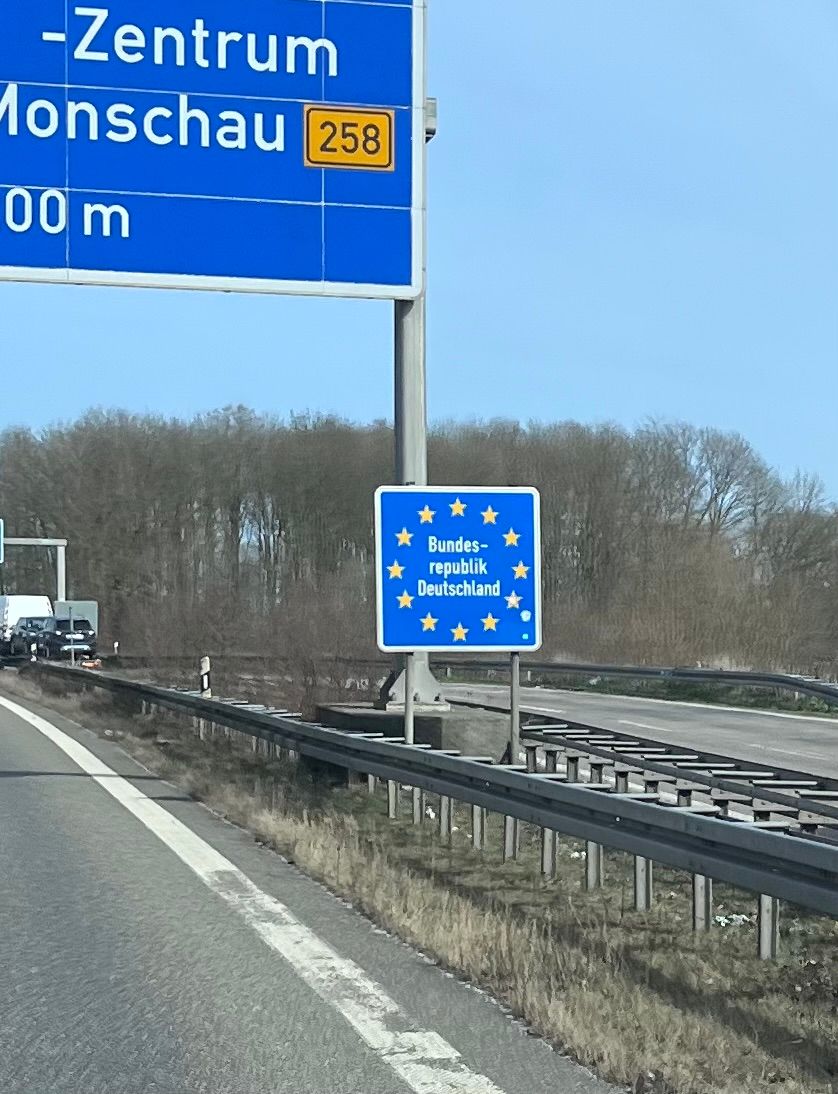
After some deliberation, we decide to use the toll highway after all. It is expensive (about 10 € for 100 km), but you simply can’t get anywhere on the country roads, and we have deadlines to meet! On this day, we cover about 750 km and stop for the night in Bulgneville, at the level of Freiburg. However, we will drive through France and Luxembourg until we reach Aachen. We are just not in the mood for the stress of German highways. The next morning, we continue towards Aachen. In Luxembourg, we take the opportunity to refuel (relatively) cheaply and then drive a short distance through Belgium before crossing the German border. It is Friday, March 21, 424 days ago we left Germany for our big journey.
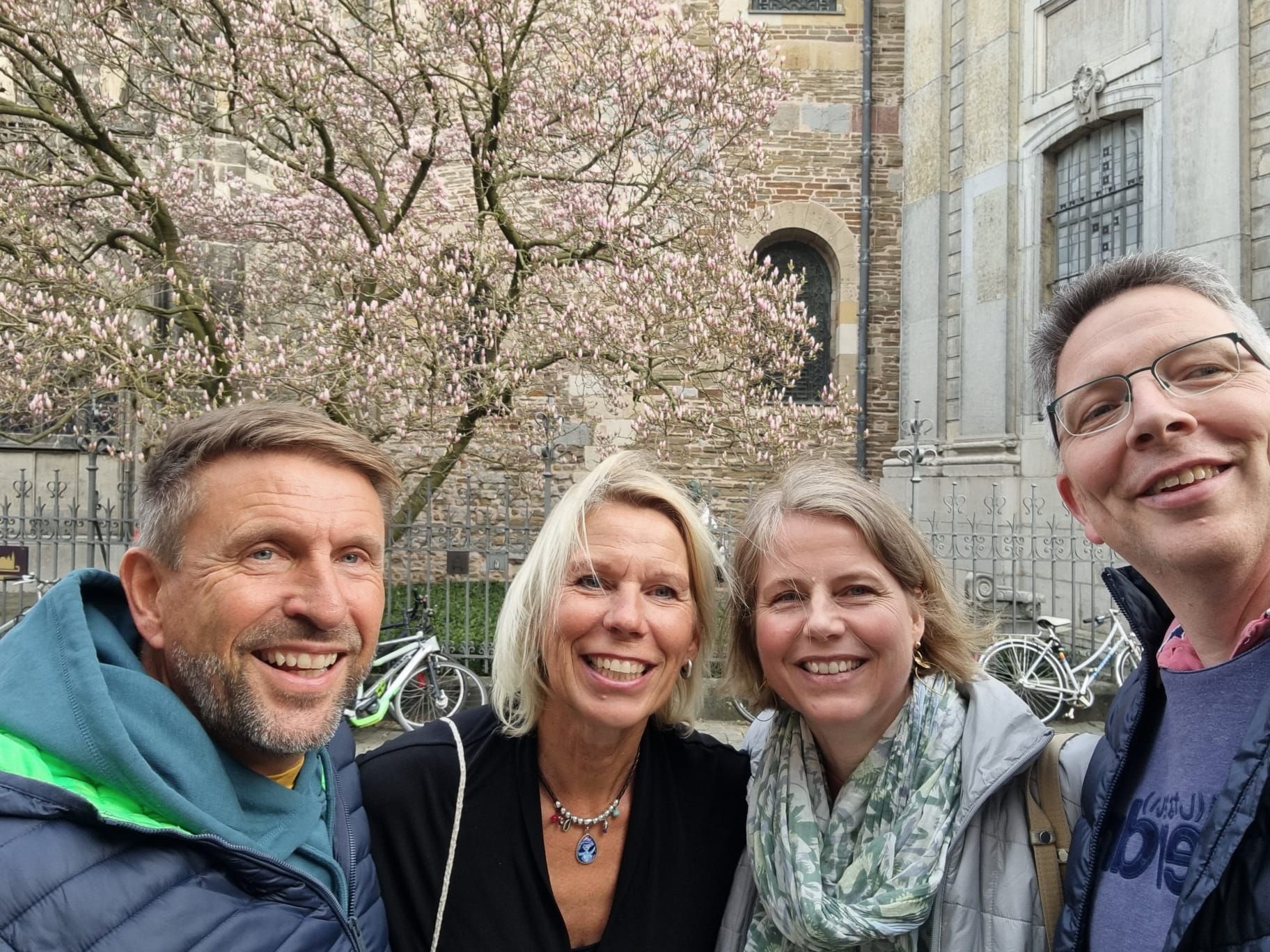
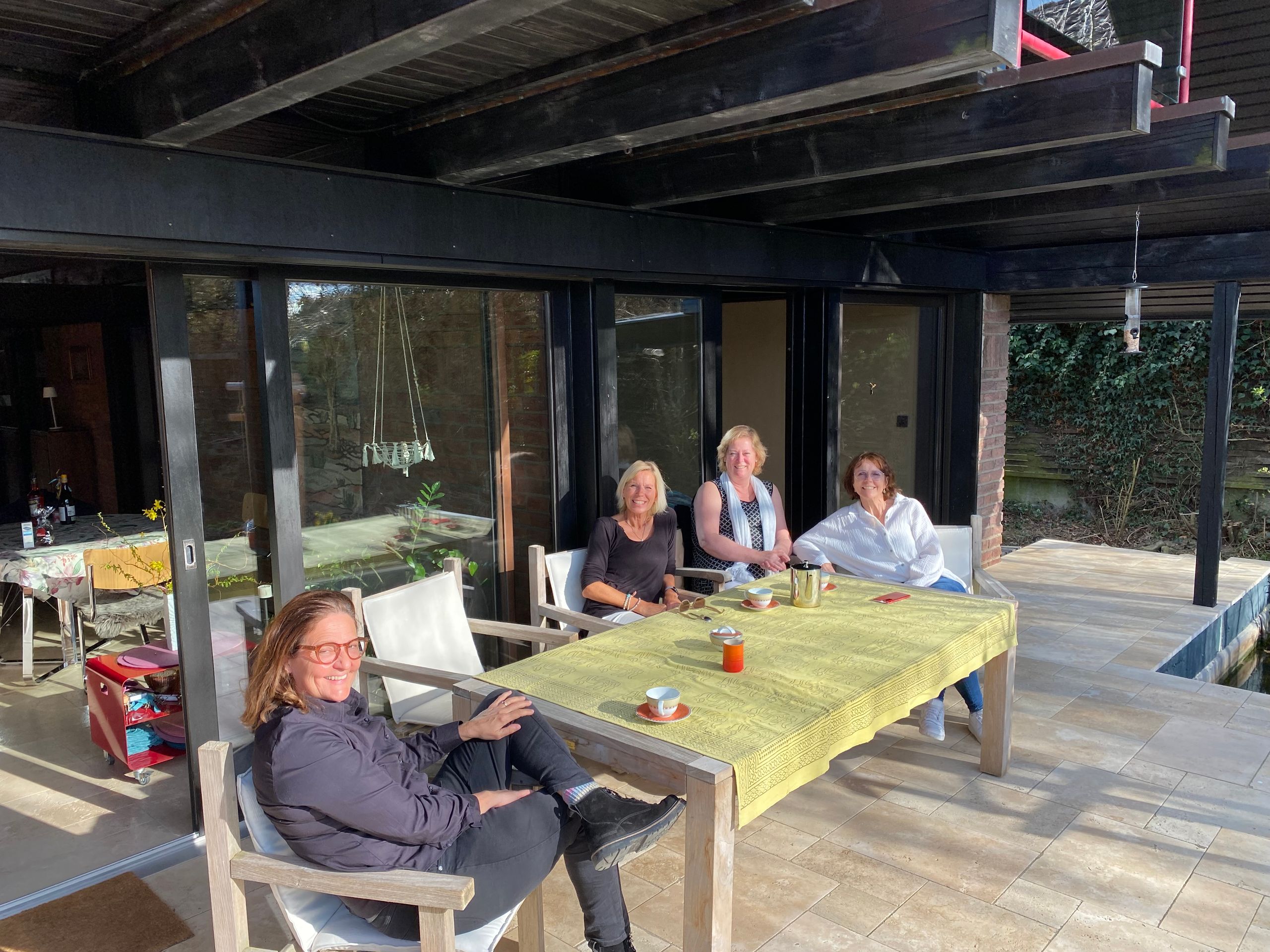
In Aachen, my cousin Julia lives with her husband Karsten and their two children. The last time we were in Aachen was for their wedding, which unfortunately was several years ago... Karsten took the afternoon off, and after Julia's daughter was sent off to Confirmation camp, we go to the city center of Aachen for sightseeing. Besides the Aachen Cathedral, of course, Aachen Printen is a highlight that we sample extensively before buying. The Aachen Streuselbrötchen is also not to be underestimated. In the Gasthaus Postwagen zum Ratskeller of 1659 in Aachen Town Hall, we have a nice beer. Right in Aachen, there’s a fantastic camper park of the highest quality, which we indulge in for a night, especially since it's just a few meters from Karsten and Julia's house. The next morning, we have breakfast together. There’s so much to discuss, but as it is with travelers, they must continue, and our next appointment awaits.
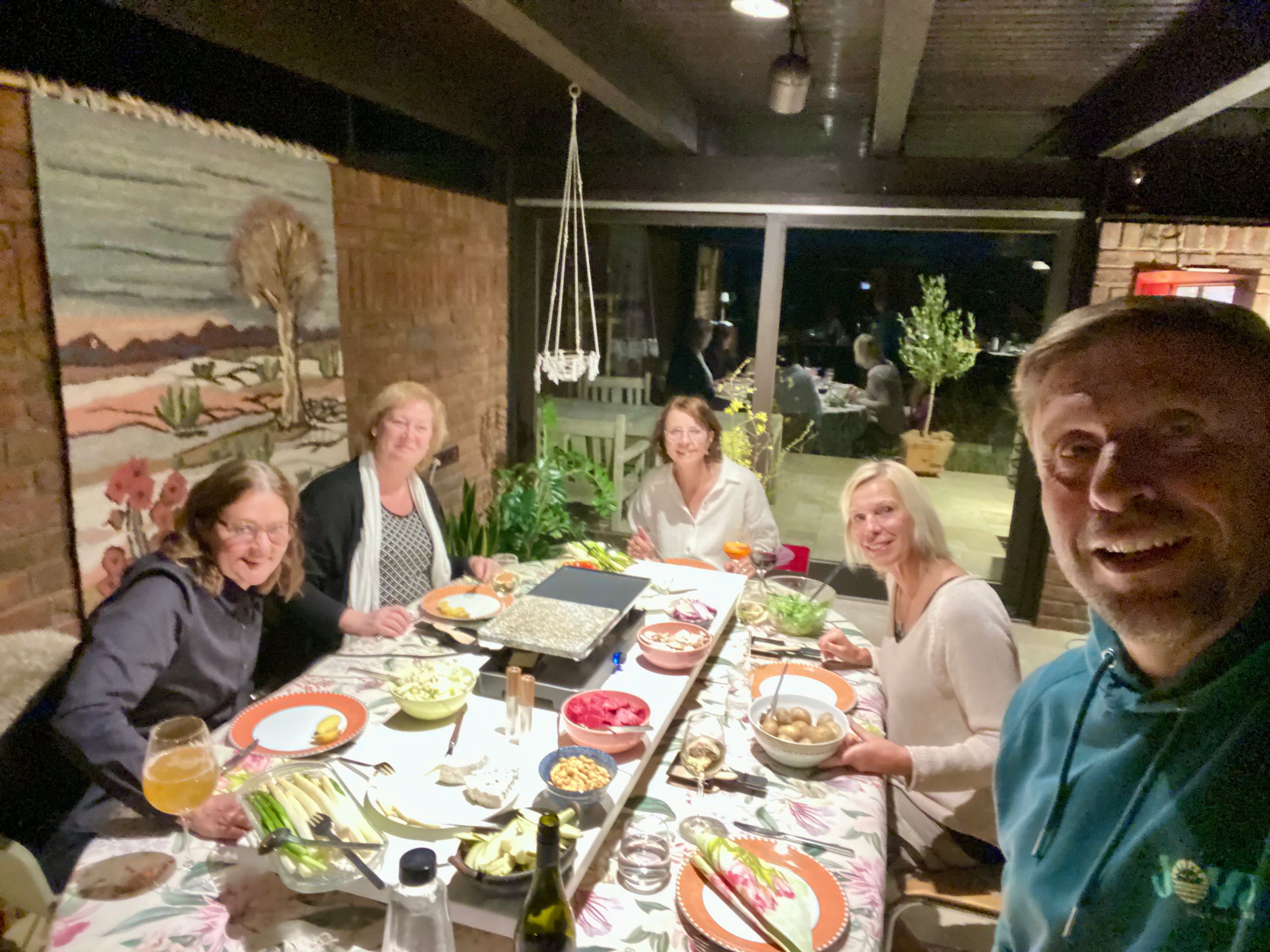
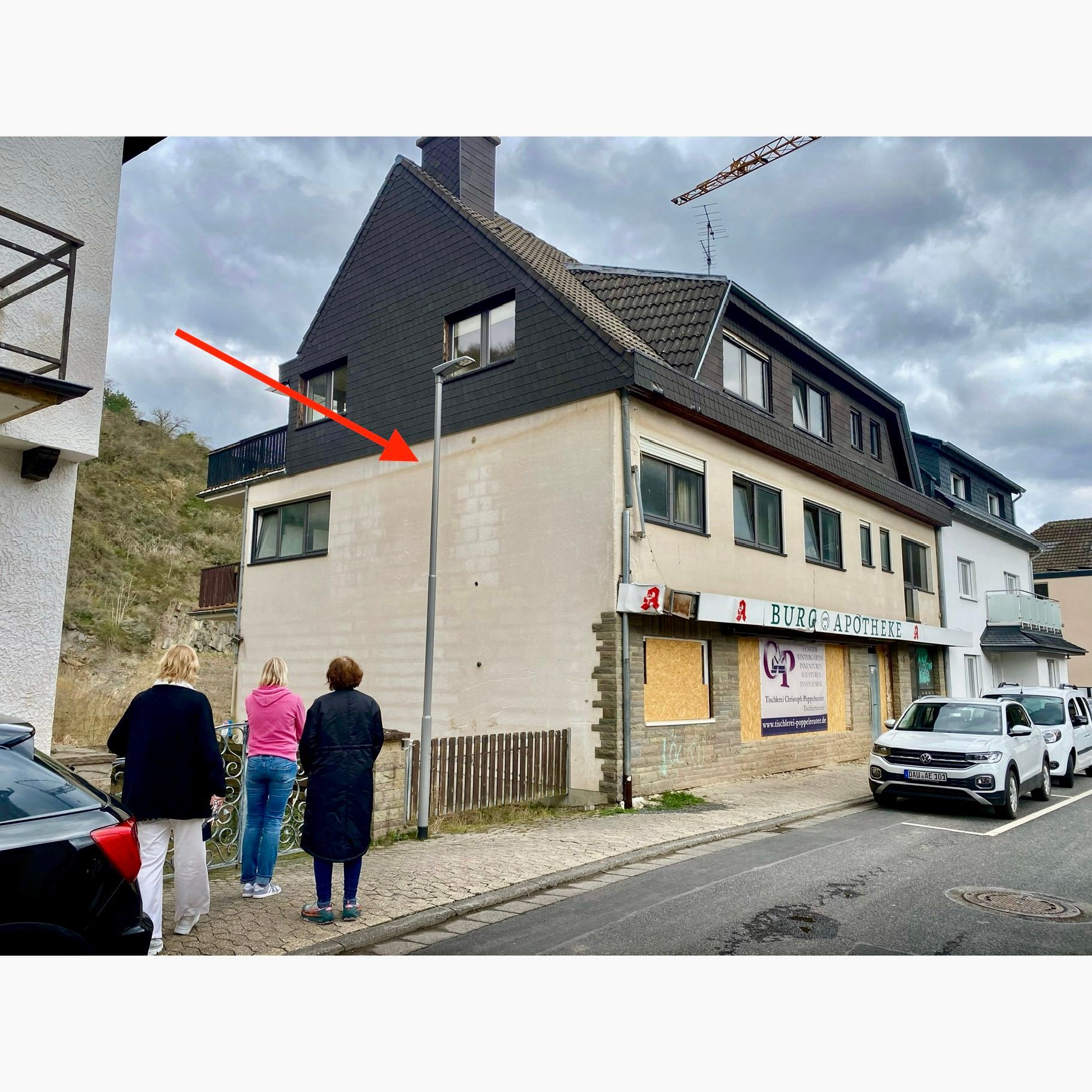
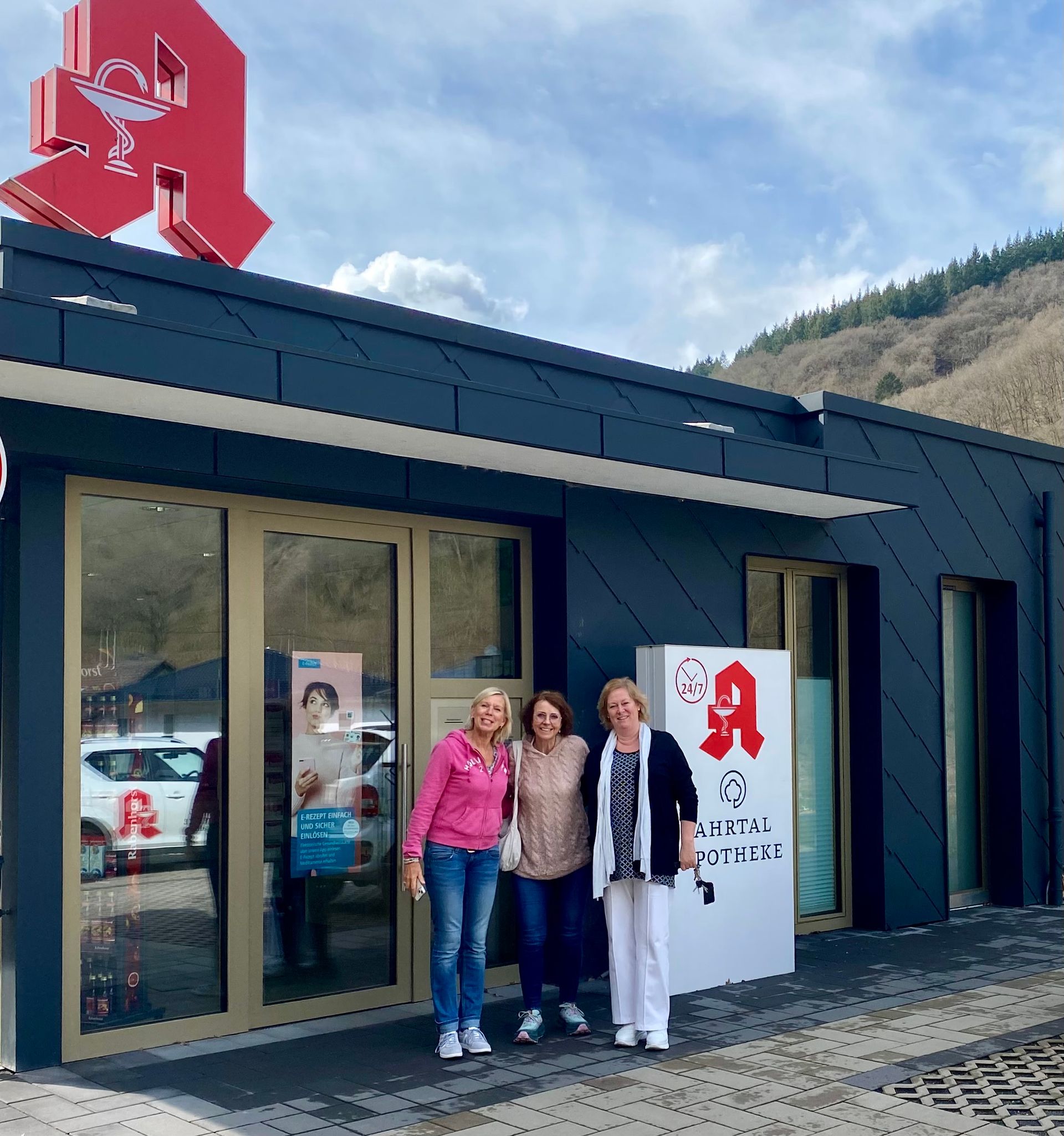
From Aachen, it’s only a relatively short drive to Bornheim near Cologne. By the way, I get caught twice by a radar control on this short drive to Bornheim. We can already tell, Germany is getting expensive... In Bornheim, we want to meet Inge, her wife Ditsi, and Vera from Cologne. In 1989, Susi, Inge, and Vera started studying pharmacy together in Berlin, witnessing the fall of the Wall and reunification, successfully completing their studies, and have been very close friends ever since. The joy of reunion is immense. In the evening, there’s raclette, and we all have sooo much to talk about. The next morning, we visit Inge's new pharmacy, located in the Eifel region in the Ahr Valley. Her old pharmacy in Altenahr was tragically irreparably damaged in the July 2021 flood disaster. With incredible energy, she ensured the pharmaceutical supply for the population in this area with a temporarily set up container pharmacy. On a little hike through Altenahr, we see many construction activities, but also many ruins and destruction. We stay one more night in Bornheim and continue on the long way home, which suddenly seems quite short.
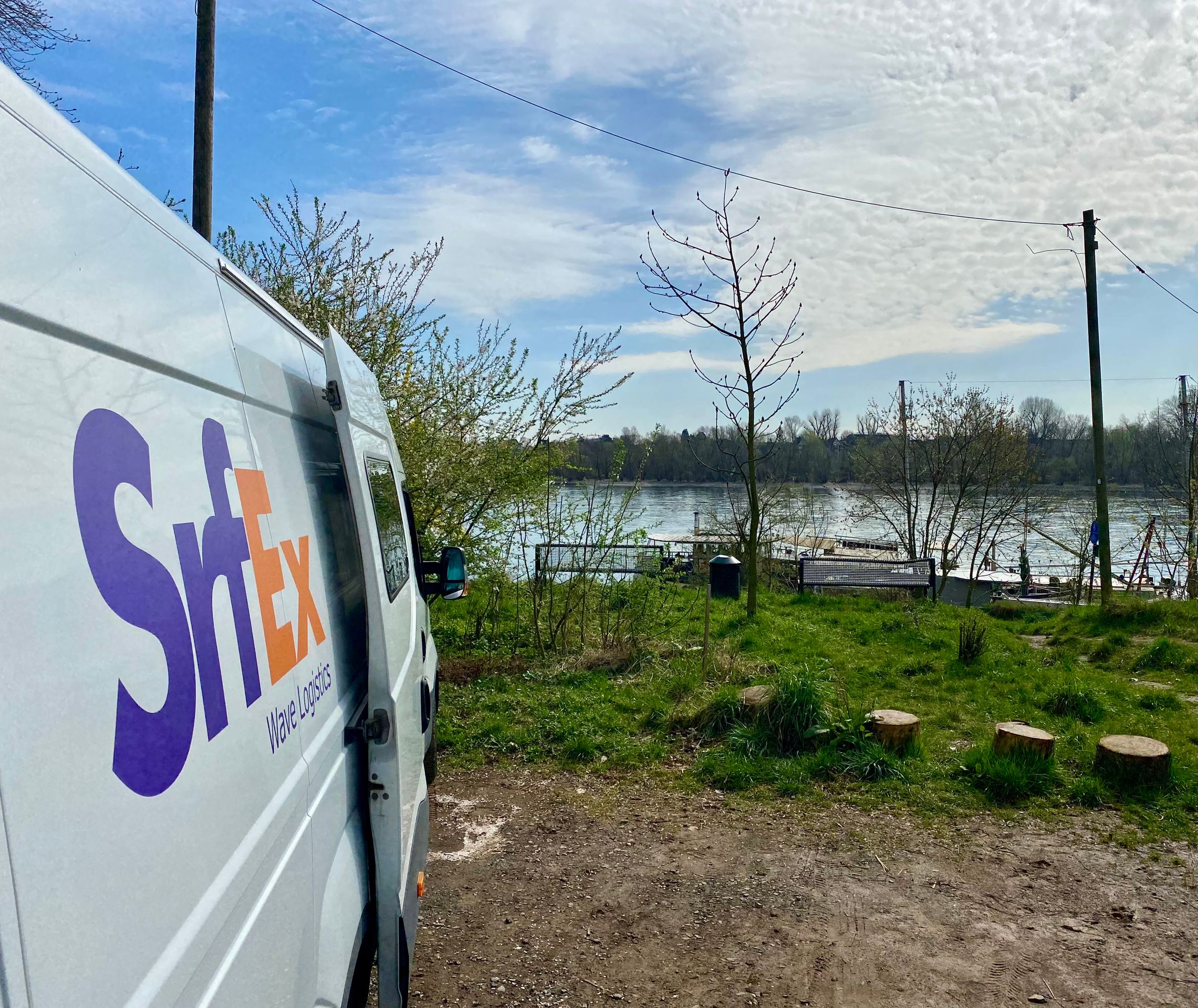
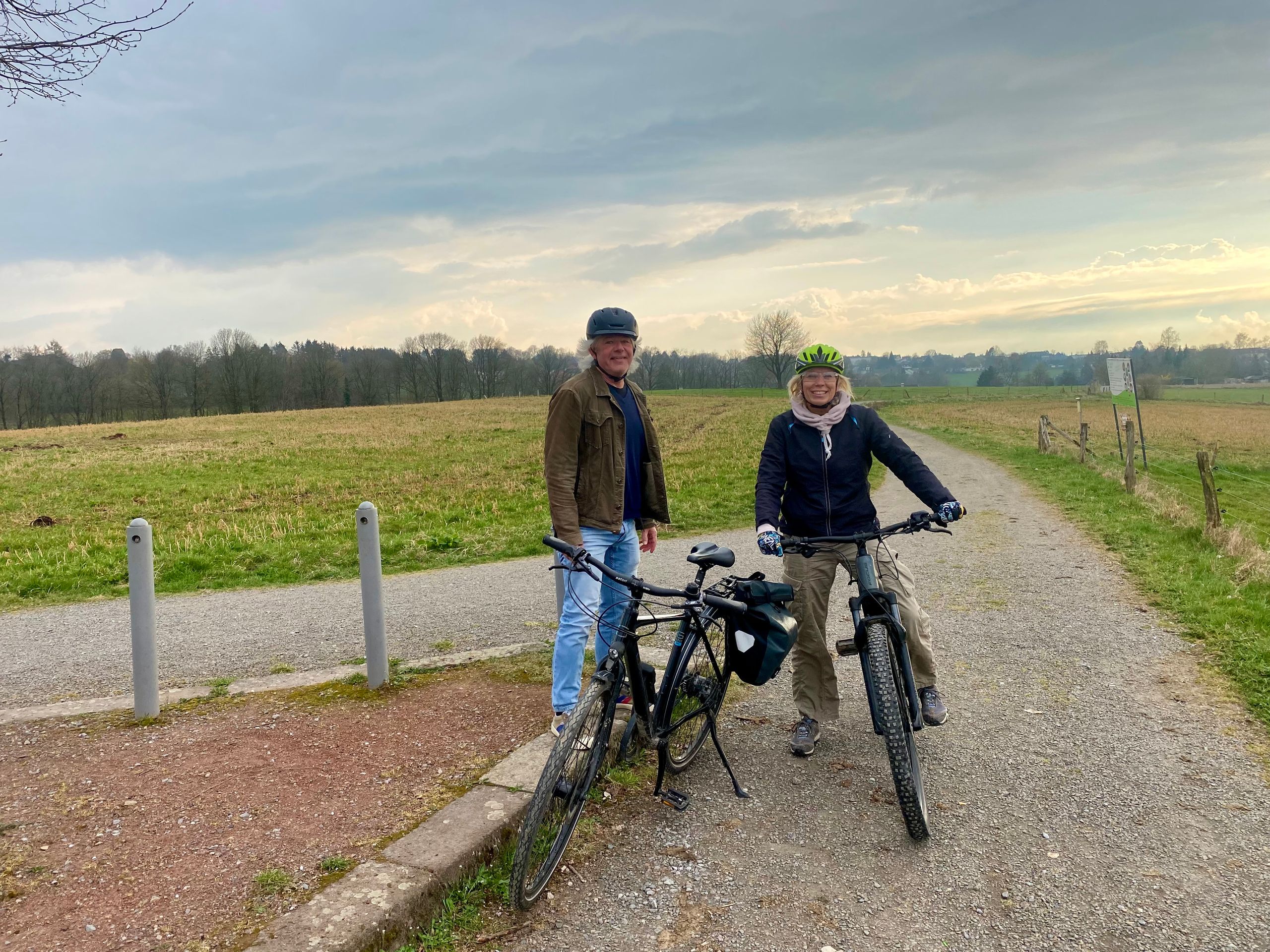
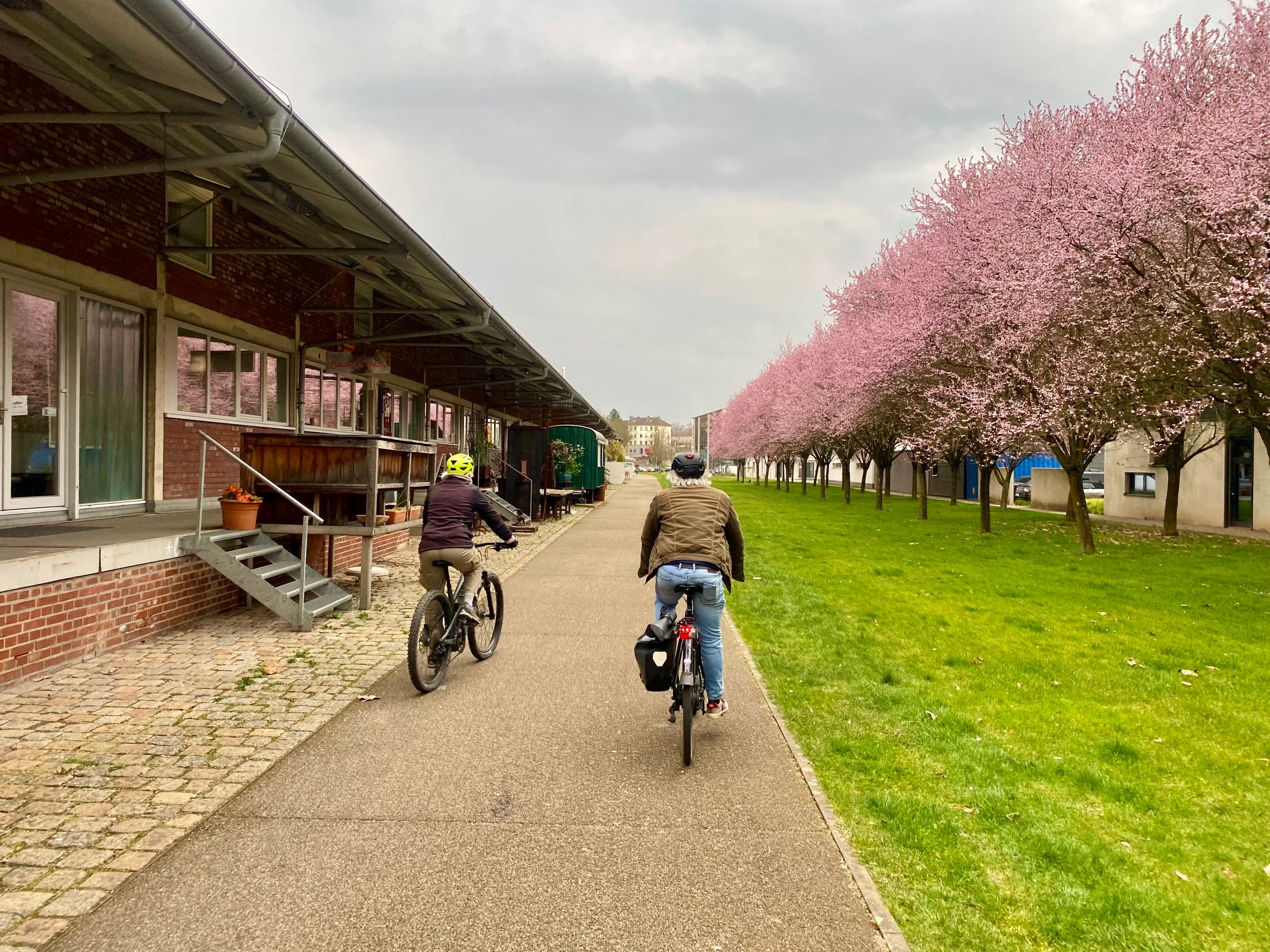
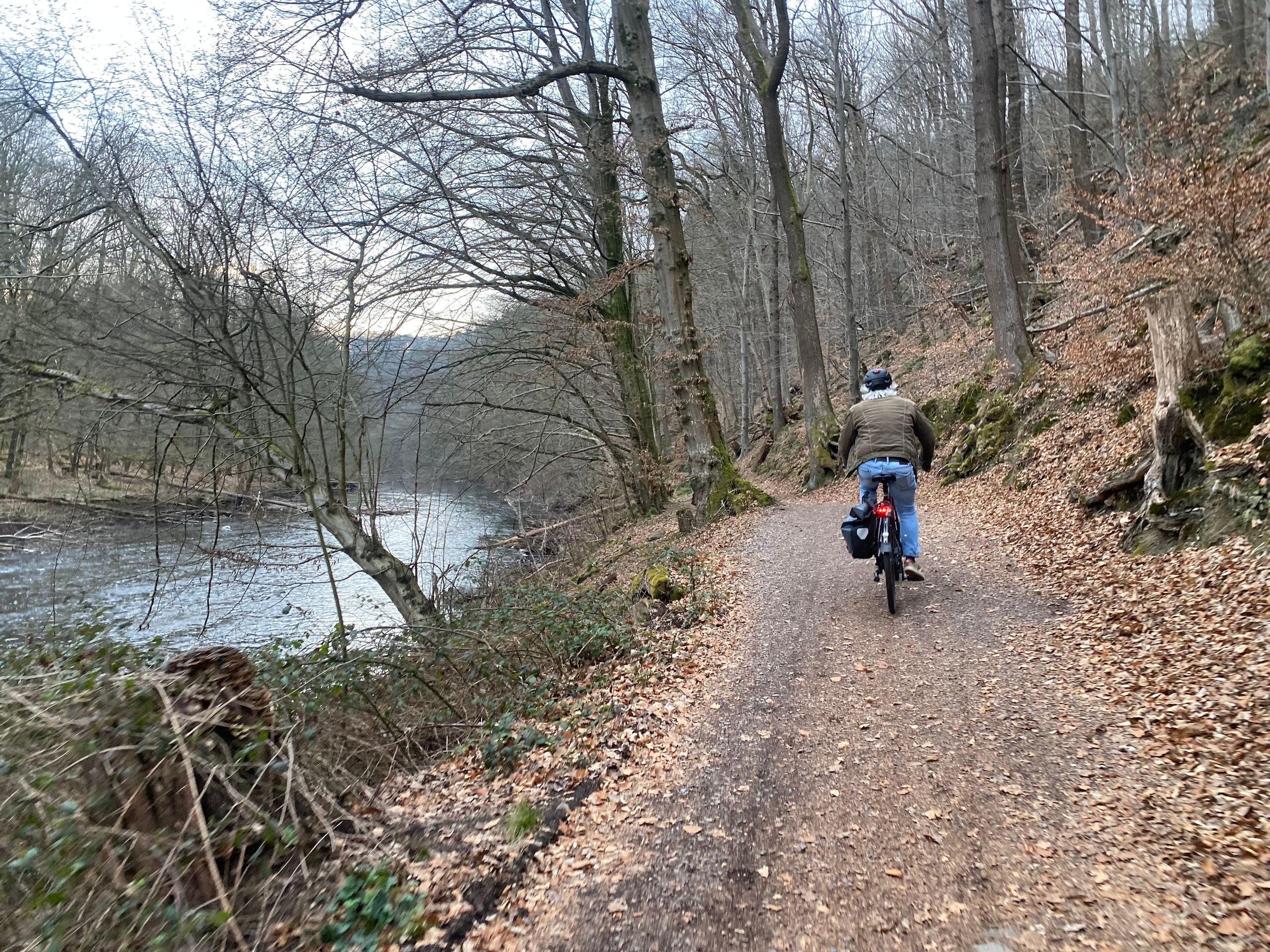
Our next destination is Solingen. On the way, we take a breakfast break with a little walk by the Rhine in beautiful weather. Solingen is a bit further from Cologne, and it’s only a short drive there. This is where Kiki and Reinhard live, whom we met in Galicia on the Illa de Arousa peninsula (Travel Blog Galicia). Their daughter was so kind to take a part of my surfing gear and my guitar back to Germany to make space in the van. The funny story behind it can be found here (Travel Blog Asturias). Already on the way, we are pleasantly surprised at how green and hilly it is around Solingen. In the late afternoon, we saddle the bikes, and Reinhard takes us on a 30 km power tour around Solingen and along the Wupper Valley. Pure nature and the highest railway bridge in Germany can also be seen there! In the evening, we sit together comfortably, and of course, there’s more to tell here than the evening can hold. After breakfast the next morning, we are already on our way again. Two more appointments are waiting for us until we reach Hamburg.
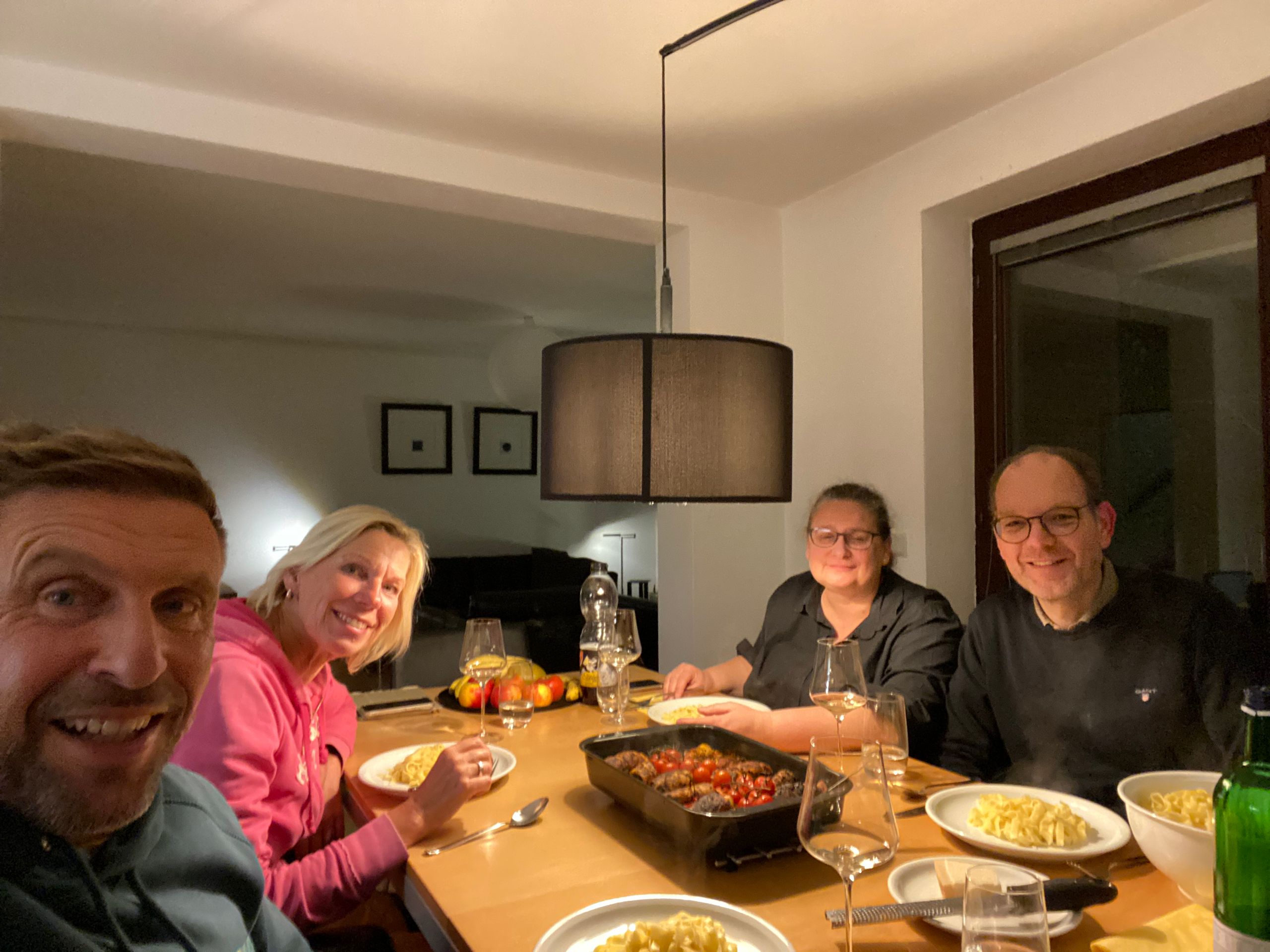
From Solingen to Oldenburg in Oldenburg is nearly 300 km. Here in Hundsmühlen live Stefan and Beate. I studied with Stefan back then, and fortunately, we have never lost sight of each other. Now we seize the opportunity to visit them, as our path rarely leads to this area. After a walk along the Hunte, Stefan cooks up a delicious dinner, and of course, there’s... so much to talk about here. A favorite question of ours has become ‘where was it most beautiful’? Although it’s not really our favorite question, as we still have no proper answer to it. Because how do you define ‘most beautiful’? Of course, one could list that it was most beautiful in Galicia and Tenerife or maybe Lanzarote. But Morocco - which we have viewed very critically - also had its ‘most beautiful’ sides. Late at night, we sink into our bed in Betty. It is our penultimate night in the van on this journey.
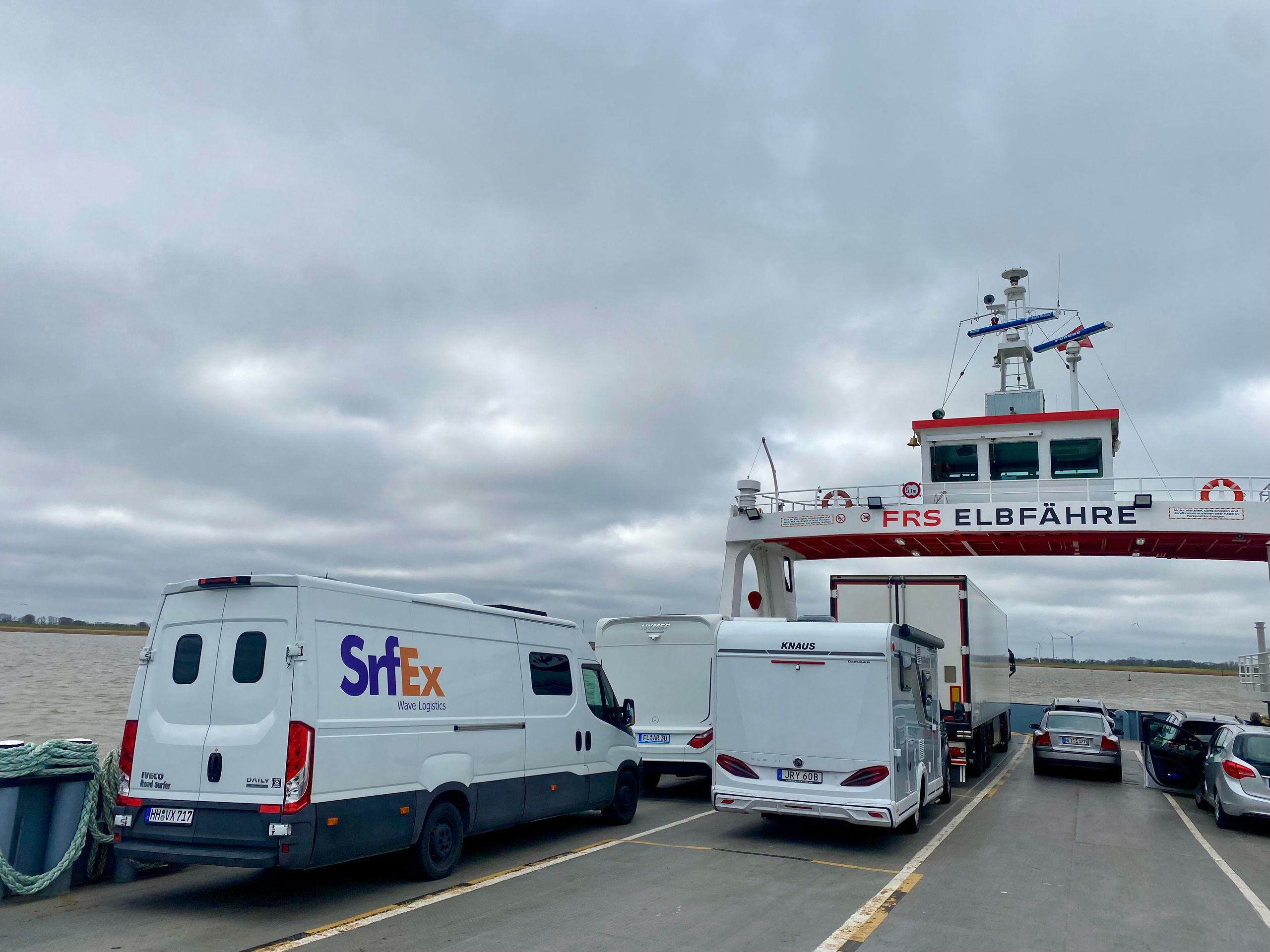
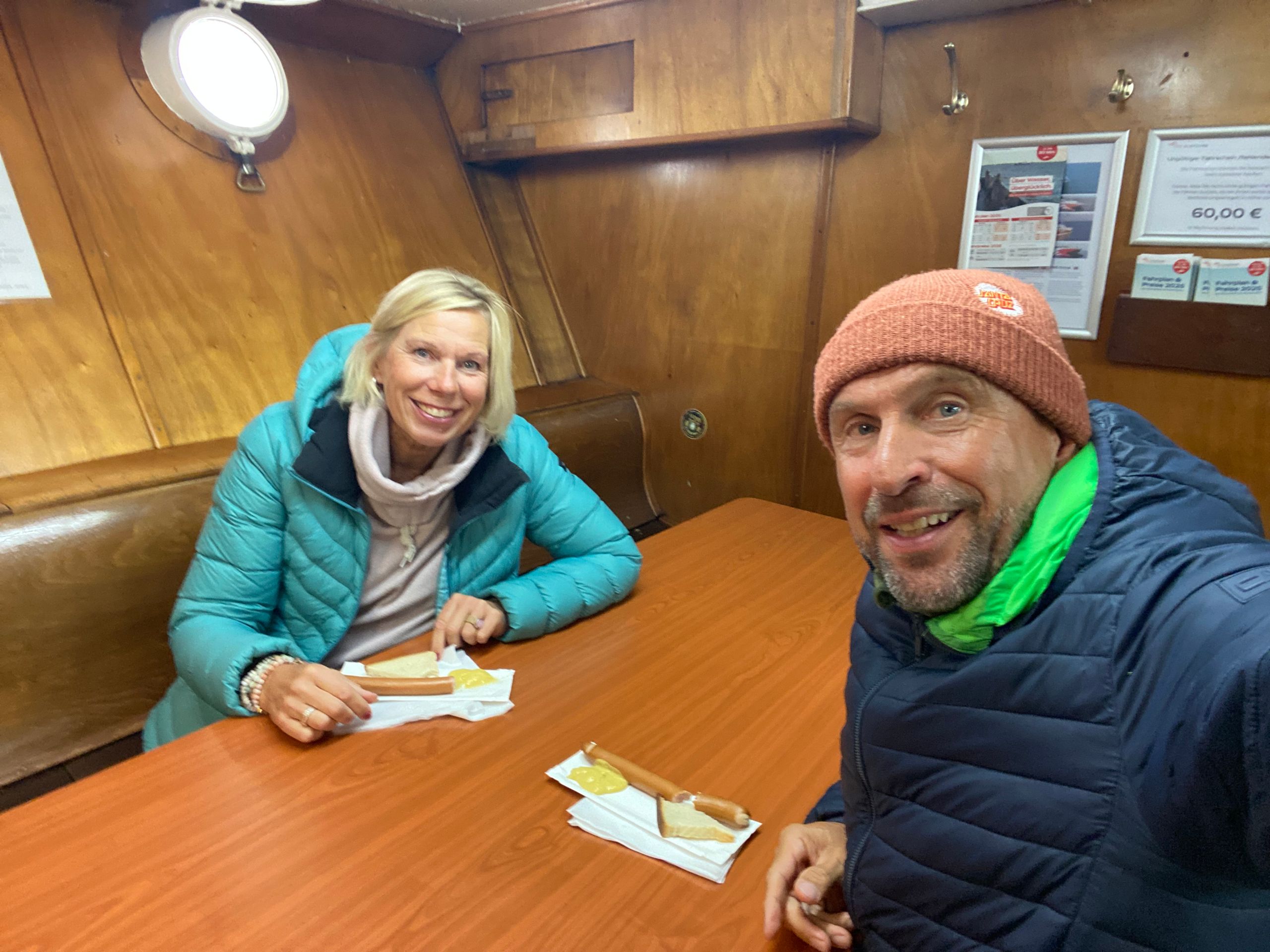
On the next day, March 26, we plan for a bit of last holiday feel, not to cross the Elbe drearily over the Elbe bridges or through the Elbe tunnel! Instead, we take the Elbe ferry from Wischhafen to Glückstadt. When paying, the friendly ferry operator turns a blind eye, even though we are longer than 7 m. The saved money is invested in the famous Bockwurst with mustard, which is available in the ferry's galley, total 70’s feeling included. However, the weather does not invite sunbathing on deck. It is cool and windy with a light drizzle.
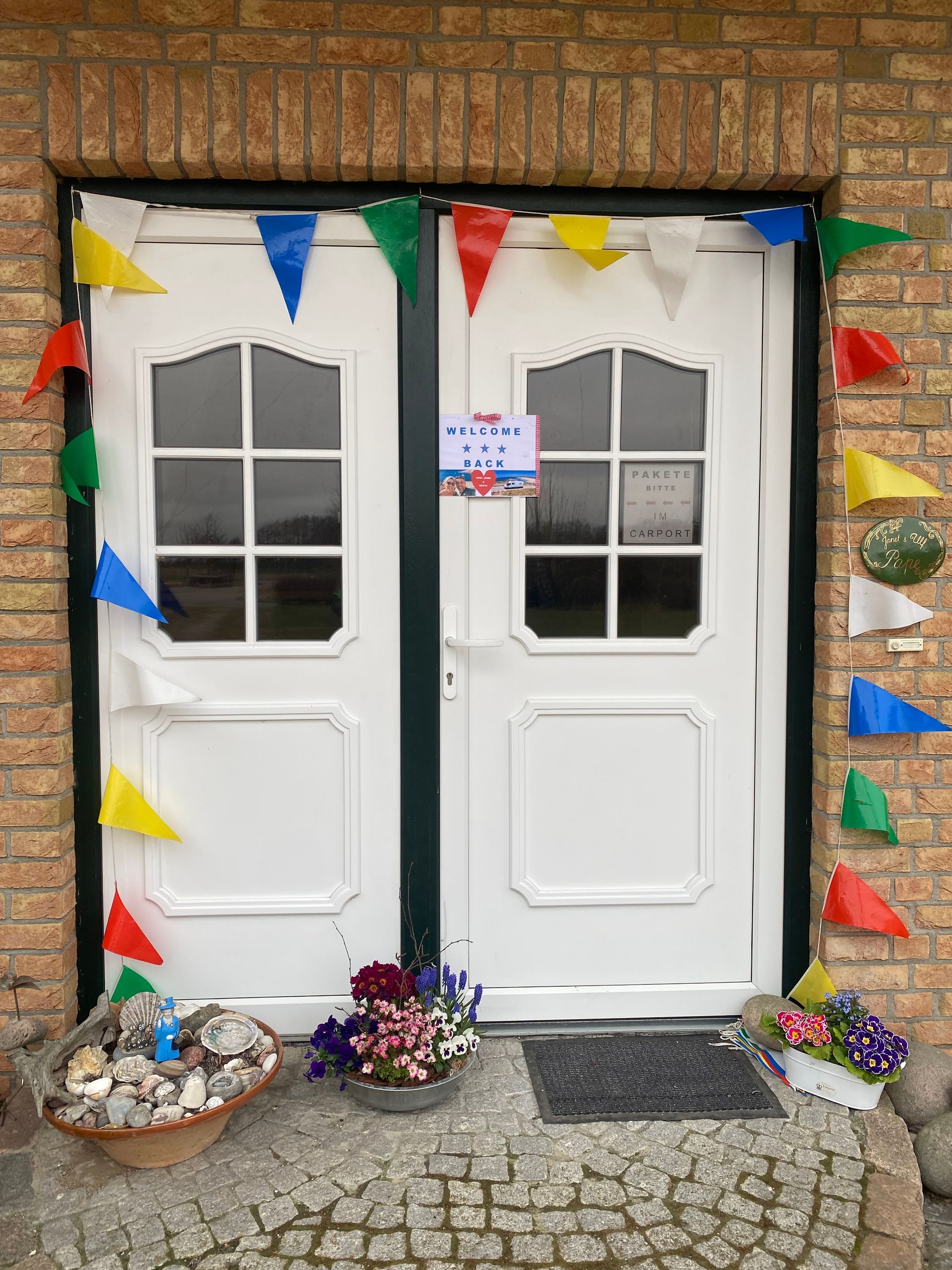
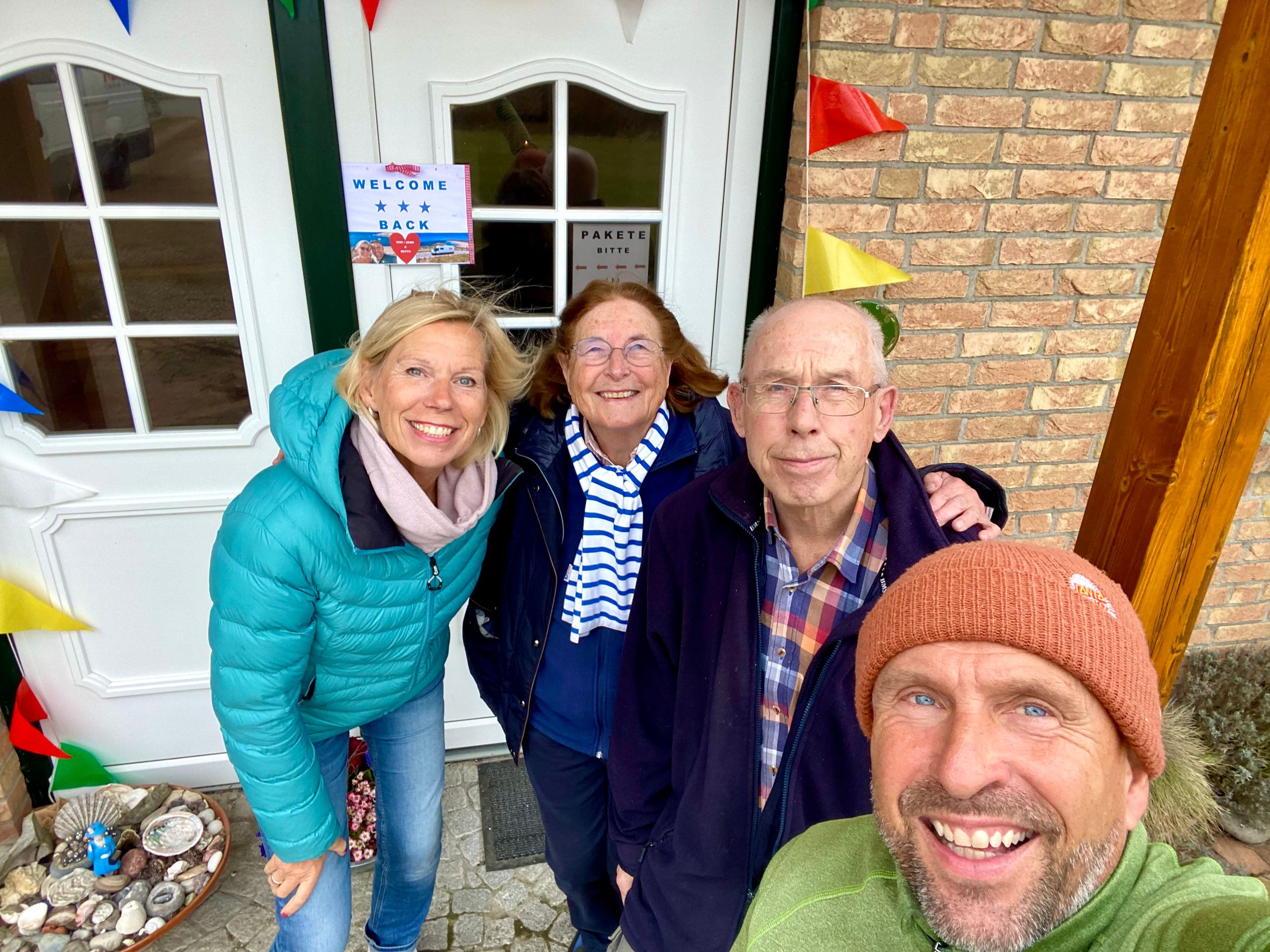
From Glückstadt, we head towards Nordfriesland. My parents were a bit surprised when we announced a few days ago that we would visit them on our way home. Because Friedrichstadt is well north of Hamburg, and they had expected us to head straight for Hamburg. But what does a day earlier or later in Hamburg matter? After our journey, we will have enough time to spend in Hamburg! As we roll up the driveway to my parents’ house, we are both a bit excited and emotional. We haven’t seen my parents since April of last year. Here in the workshop, we built our Betty over several years. And it is, of course, also a first conclusion to our journey. When we drive home tomorrow, it will feel like coming home after a normal weekend. But that is also the plan. Since we can digitally locate each other in the family, my parents are already waiting, waving on the driveway. The front door is adorned with a colorful garland and a 'Welcome Back' sign. There are heartfelt and long hugs, and one or the other eye is not only wet and red from the cool, sharp wind...
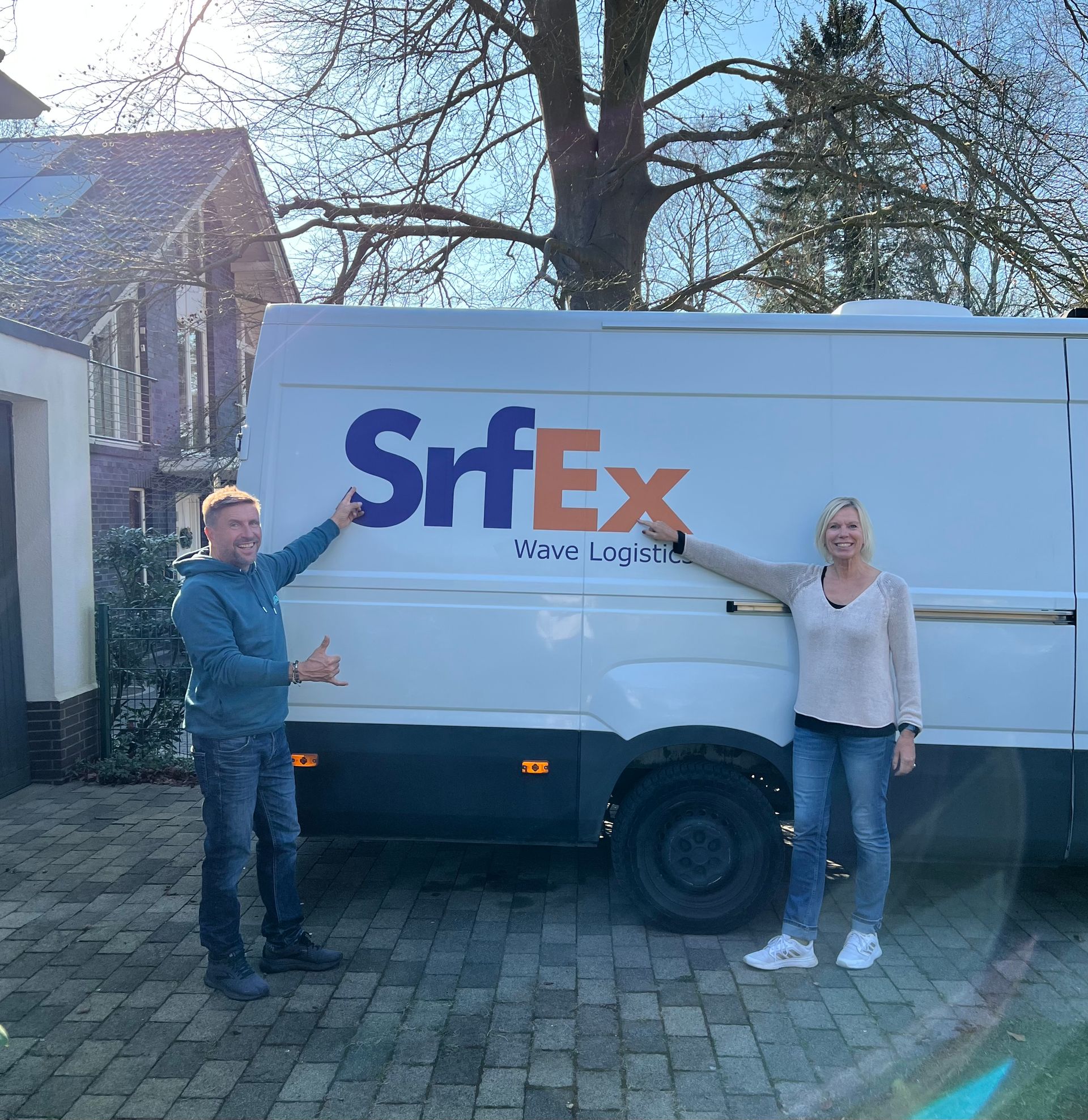
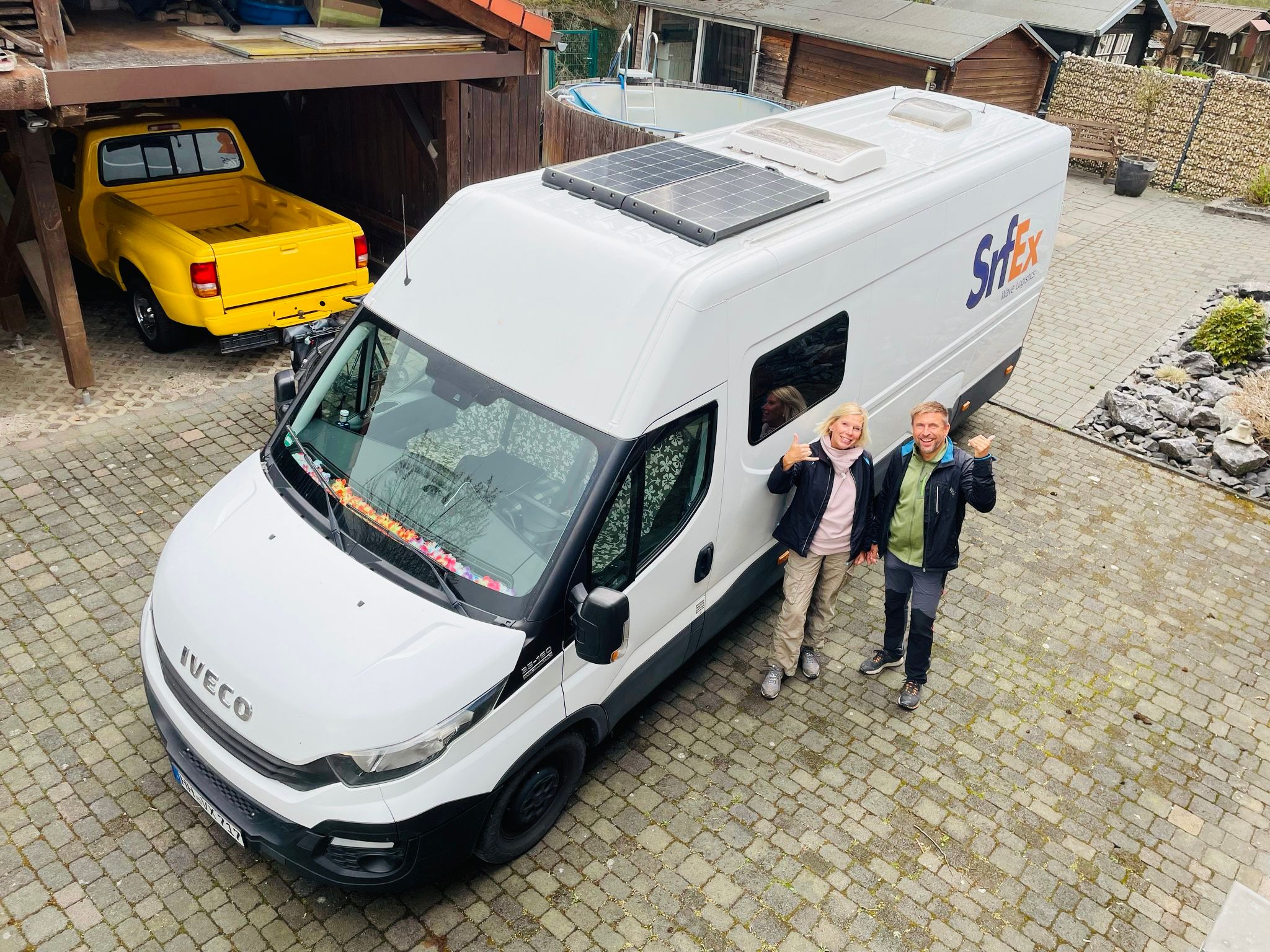
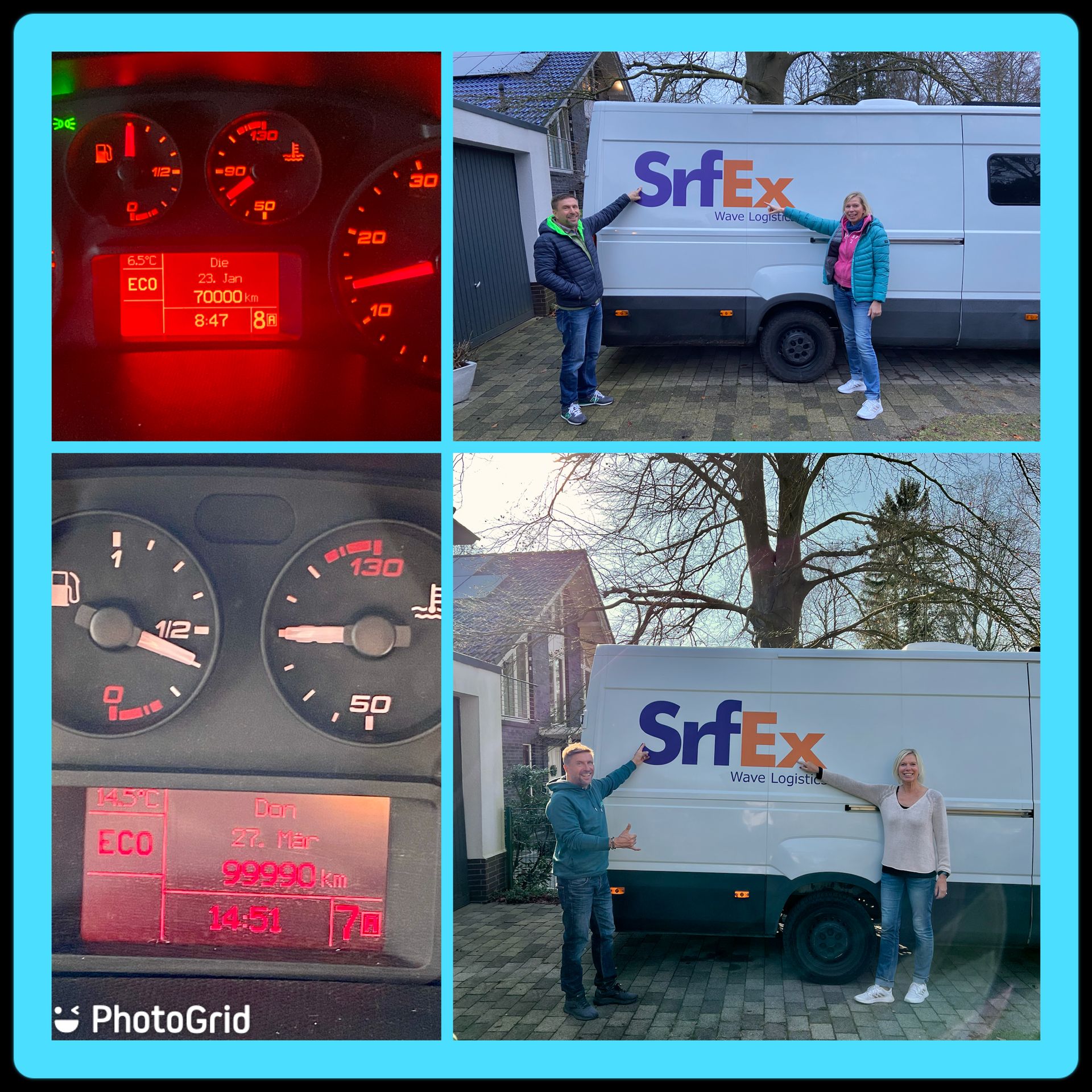
We stay one night at my parents’ house. On the morning of March 27, we head south on the A7 towards Hamburg. The kilometer counter on the speedometer slowly moves towards a full 100,000 km. However, we do not want to make any detours, and as we enter Josthöhe, we have exactly 99,990 km on the clock. We set off on January 23, 2024, with a mileage of almost exactly 70,000 km. At the door, our boys Leon and Tim warmly welcome us. 'Welcome Home' hangs in the hallway. Is it really so? Is the house our home, or has our van become our home? In any case, our strategy of the ‘stretched’ way back has paid off. Our journey does not end abruptly. Over two weeks of numerous visits, we have gradually come to terms with the idea of ending our journey, talked to many different people about it, and have slowly transitioned from the eternal summer of the Canaries to the beginning of spring in Northern Europe. Now we feel that we have done it just right and do not have to be sad but can look back with gratitude and pride on the past 14 months on the road. Grateful for the many encounters and experiences. Proud to have simply set off and sought our path. We have learned to slow down, live in the moment, and appreciate the diversity of this journey – from the Sahara to the Pyrenees, from the coast of Galicia to the beaches of Tenerife.
Conclusion: Was it worth it? We've often heard this question.
The answer is a definite YES! Anyone who still doubts should take heart and just set off!
By the way: If you like the travel blog, we would greatly appreciate a 'like' by clicking the heart!
On the road: 430 days
Distance covered: 29,990 km
THE END (OF THIS TRIP)