
Goodbye France! ...and through the picturesque Switzerland
Just now, the dark bells of the cathedral in Fribourg/Freiburg ring eight o'clock. Finally, I want to try to briefly capture the impressions of the last good 10 days. First, my...

Published: 02.07.2026
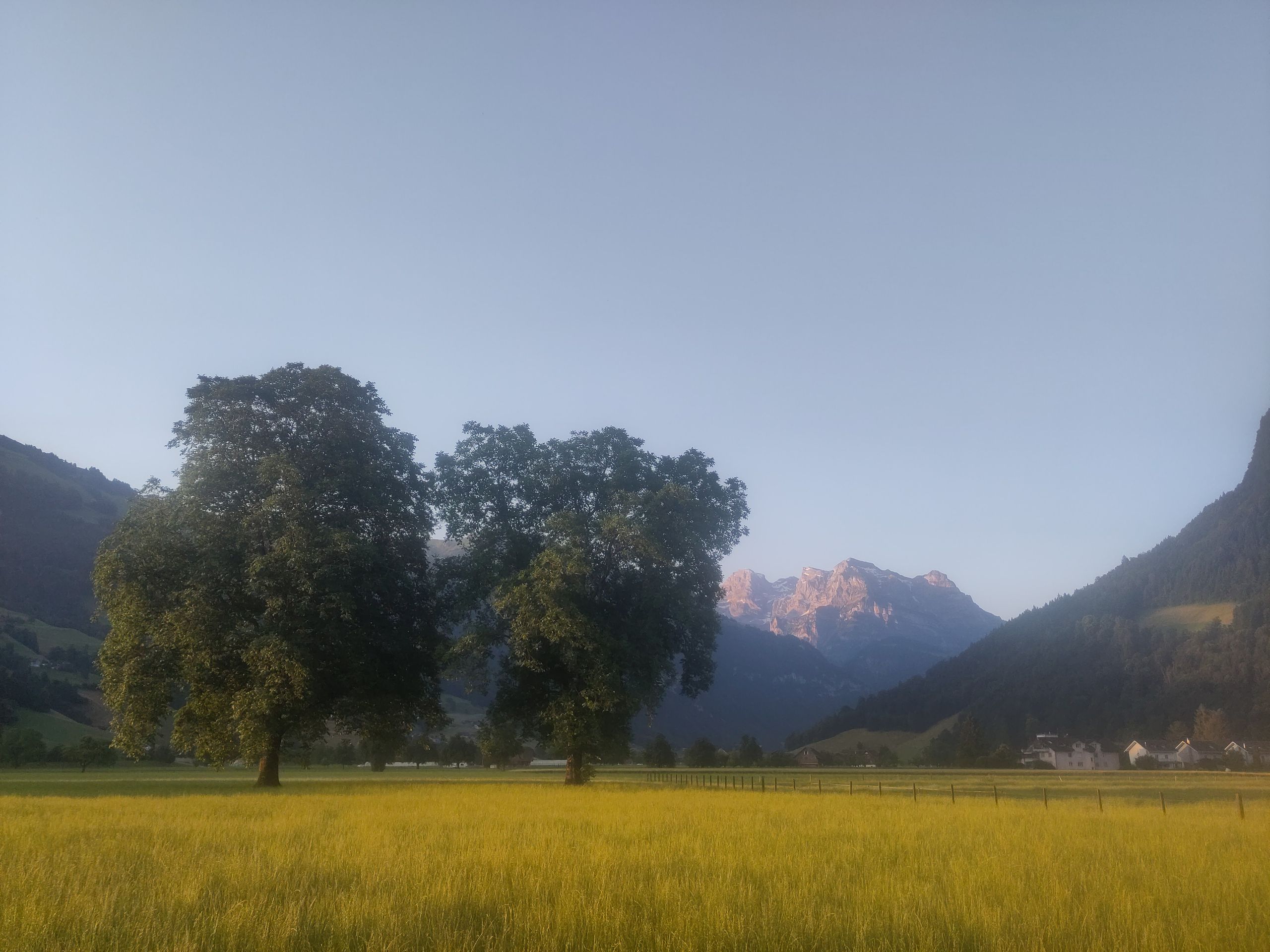
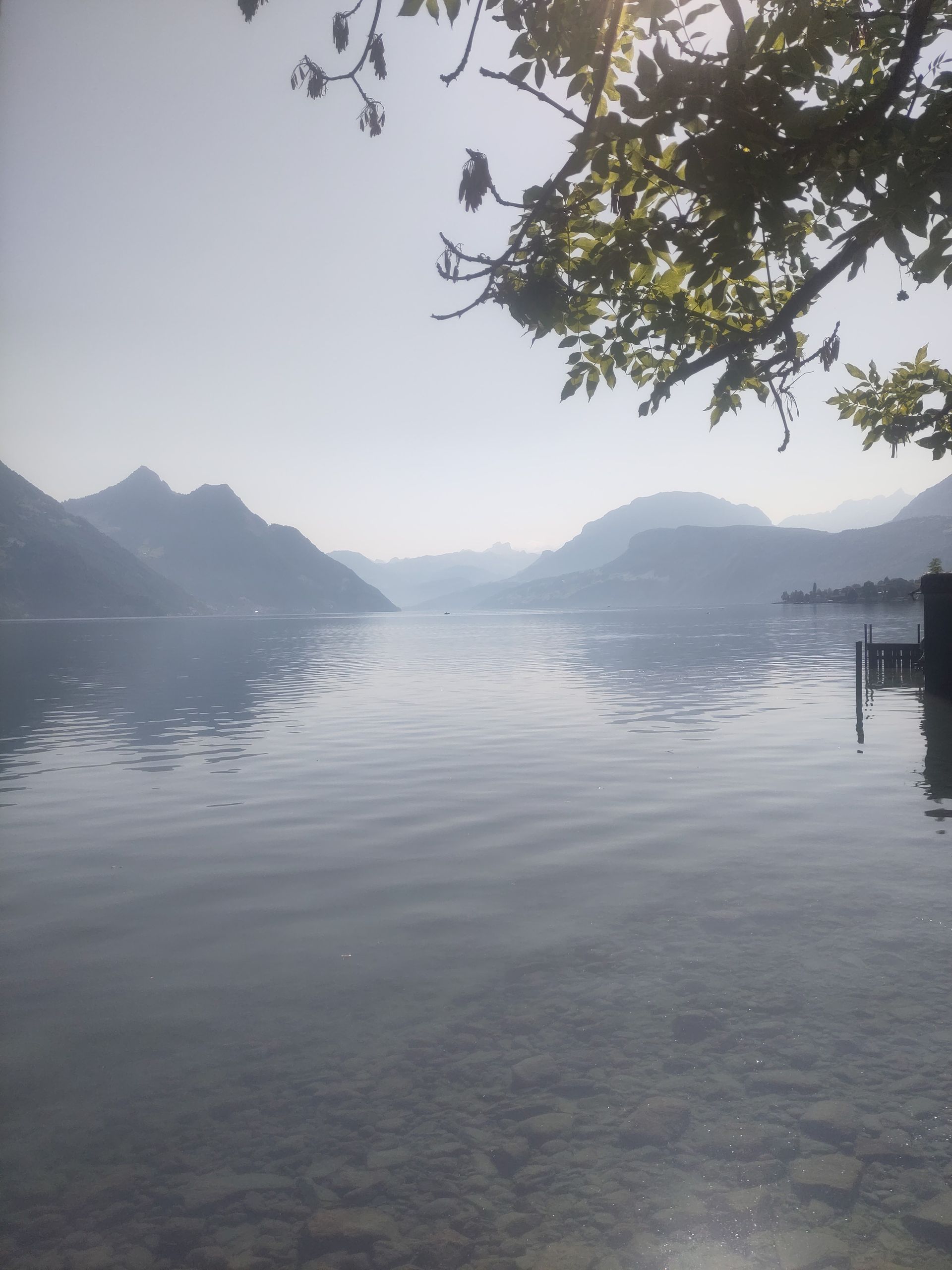
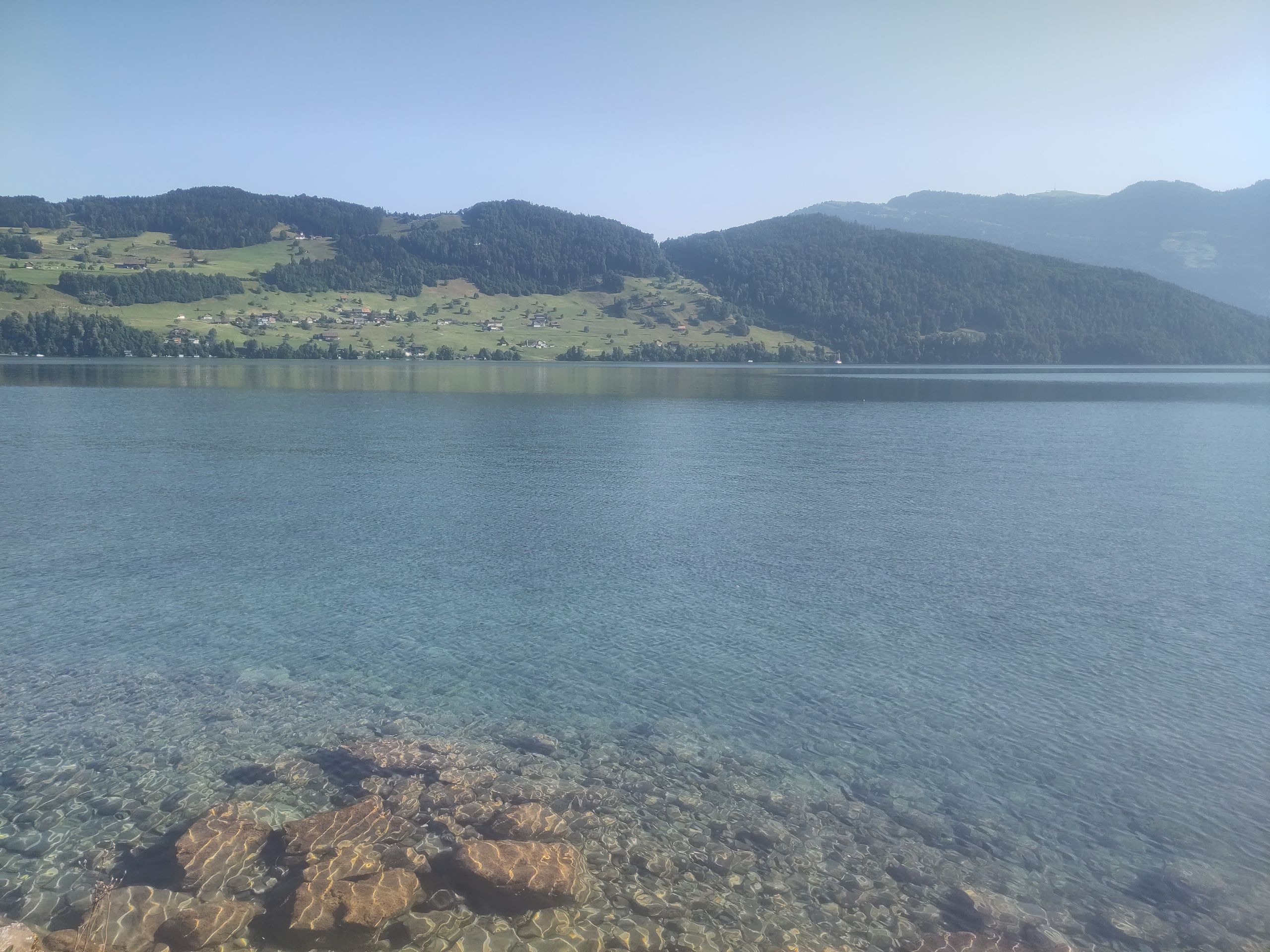
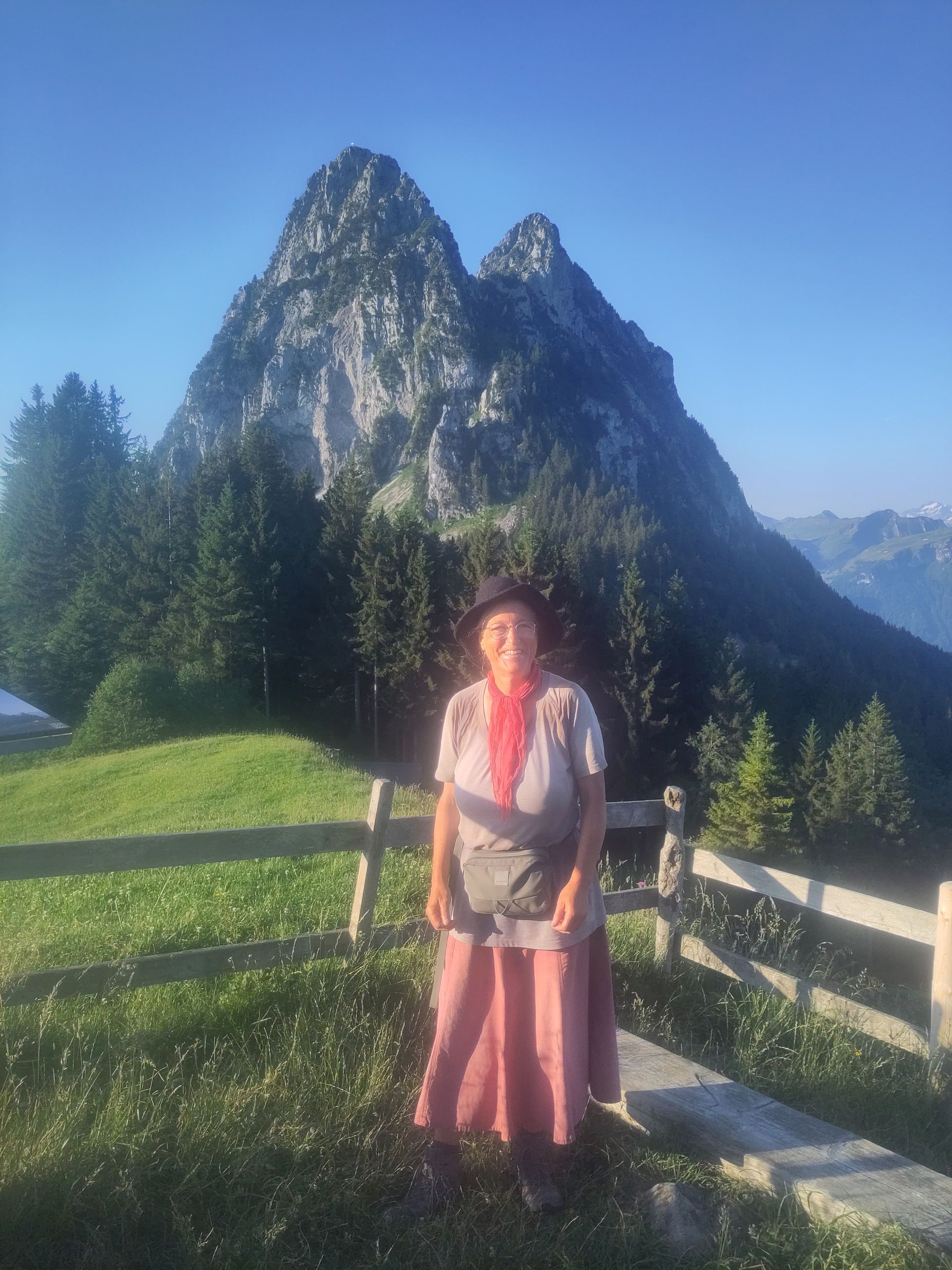
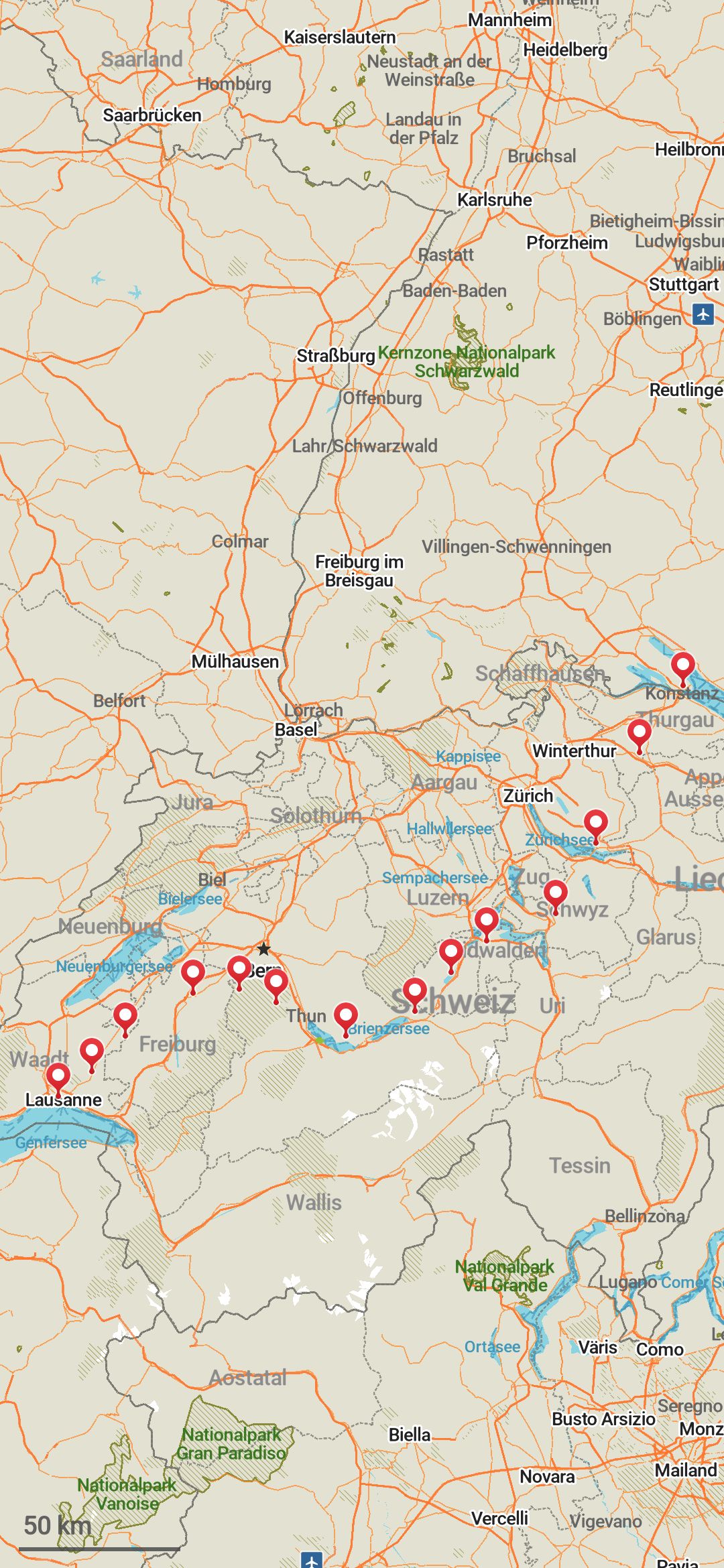
I will cover the further route through Switzerland to Konstanz at Lake Constance during the sweltering second half of June this year. Walking through Switzerland feels like a continuous stroll through postcard landscapes, almost as if within a glass ball, where a perfect world dream landscape full of soft cowbell sounds has been set up, which has little to do with the reality of the world outside; this impression is even intensified by the now almost uninterrupted sunny and hot weather. However, this picture-perfect world has such high prices that I can only afford this hike in Switzerland because I sleep outside every night. Only in Rapperswil do I visit (for 25,- sfr a remarkably cheap accommodation!) a pilgrimage hostel once more. But now, more in order:
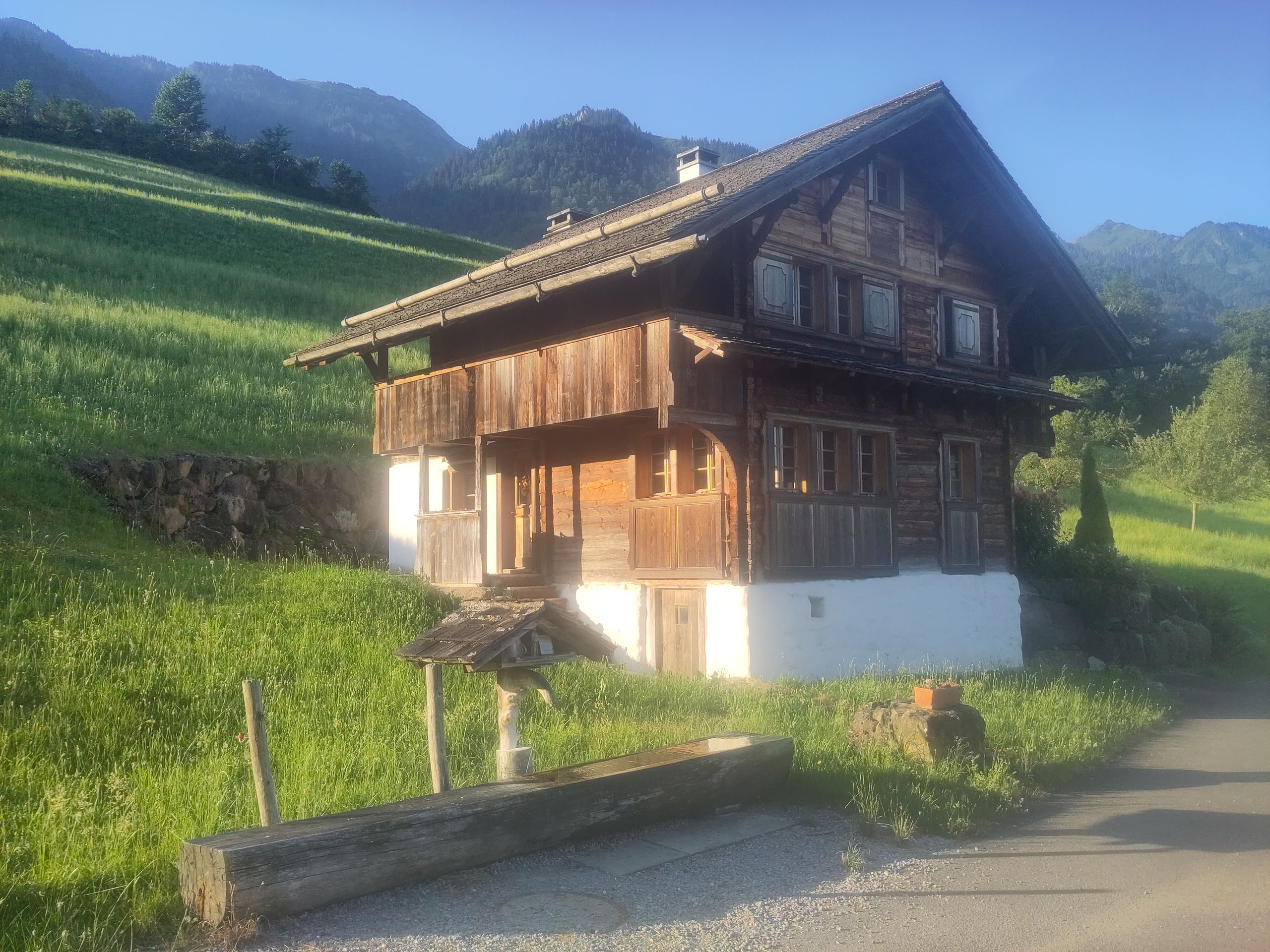
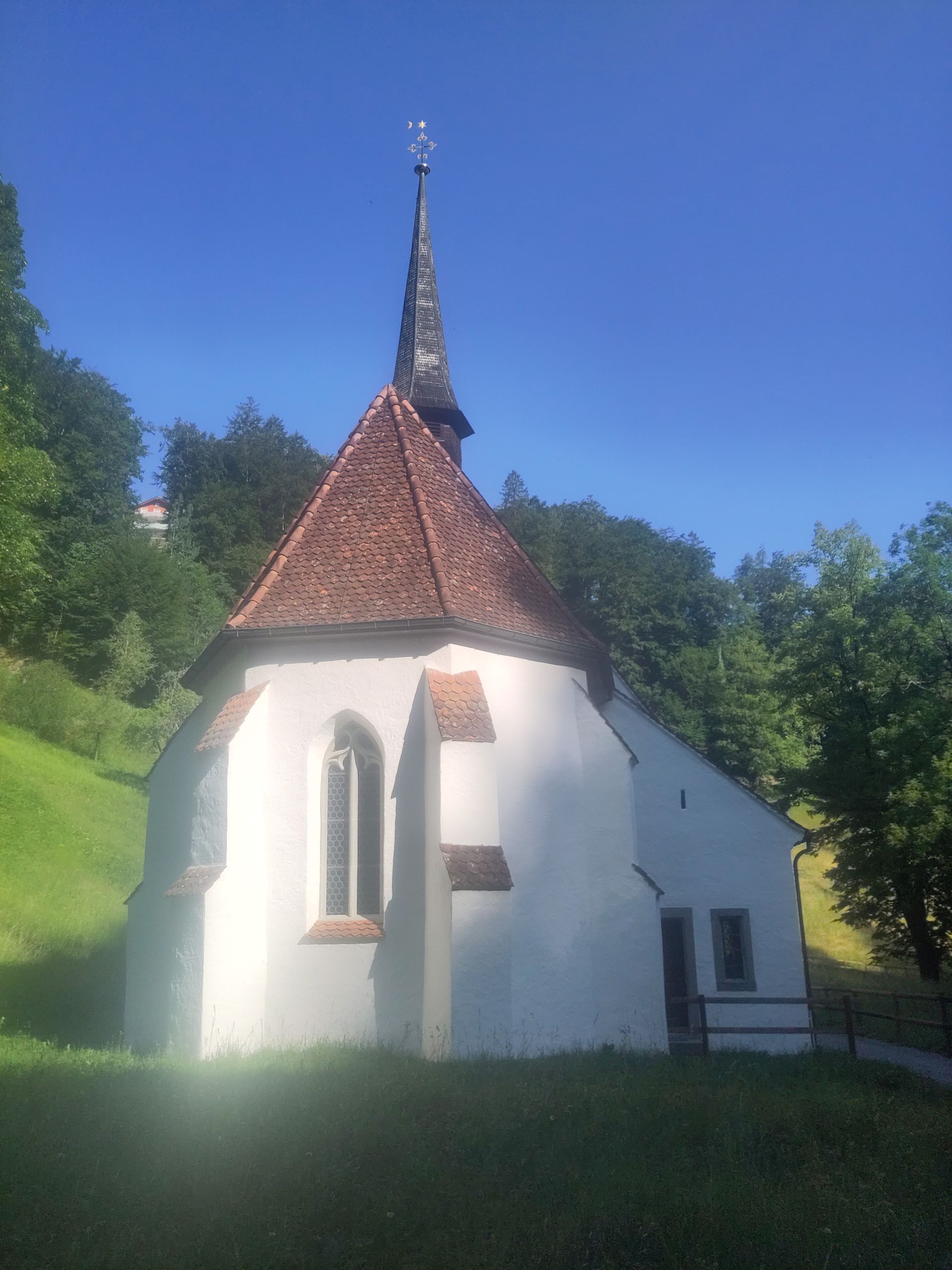
On Wednesday, June 17, the last day in the French-speaking part of Switzerland, the old town of Romont sits high on a hill with its many pointed and rounded, stout towers above the today's districts with their block-like residential buildings. From the women's monastery below the old town (used and animated since the 13th century first by Cistercian nuns, later by Trappist nuns 'without interruption', as stated in the description at the gate), I can only visit the church, everything else is not open to visitors - however, an open door allows a glimpse into large, beautiful garden areas; a fountain in front of the gate... Afterwards, largely sunlit without shade land and many paved paths and smaller roads. Large, stately farms: I admire the countless mini wooden shingles that mostly make up the house walls. Once I pass an open garage where an older man practices tuba: to the gentle splash of the brook beside the path, the slow and deep tones sound like the playing of some prehistoric creature. In a bend of the Glane river, a deeply etched gorge in the molasse rock, a very old bridge and a small chapel: St. Apollonia, according to the information board already an important crossing in 'prehistoric times'. Such places deeply touch me, as we are so accustomed to reach everywhere relatively safely, finding roads, bridges, infrastructure of all kinds. But there were times when crossing a brook or a gorge was so much more complicated, only possible at very special places - and there, not 'just on the road nearby'. I think of this especially again when, two days later in front of Spiez at Lake Thun, I stand before a closed hiking trail that actually leads cool-shady through the gorge toward the city, but is now redirected over the road. However, since the sign at the barrier simply states that 'in case of use' no liability is accepted, I climb onto the closed hiking path. At first, I am glad because it is indeed an impressive gorge and the shade and silence here in the wooded river valley of the Kander feel good after the hot sun and the noise of the road. Then, however, I stand before a long, narrow suspension bridge that crosses the gorge at a great height; once again, there are barriers here and the same text on non-liability. I hesitate for a long time: my head tells me that, in case of real danger, access would be insurmountably locked and not just stated that no liability is accepted, but my stomach feels utterly uncomfortable! So I creep over anxiously, hardly able to endure the swaying beneath me, holding onto the railing, seeing the foamy water below, the rock walls; I don’t know how long it takes me to cross the well over 30m long bridge, only that I feel irrationally as if I have just evaded a death danger and passed a great test of courage or experienced a dangerous situation when I finally arrive on solid rock again...
Fribourg is indeed a very beautiful old city - currently somewhat hampered by many construction sites (it feels as if almost all streets in the old town are currently being torn up), but the two halves of the old town, divided by the Saane, are very picturesque, with one of those narrow, wood-covered bridges leading over, which are so often seen in Switzerland; I also cross many of these 'museum bridges' in the next ten days. Steep rock walls, the large, high bridge with two-story arcades, city wall, castle, narrow steep alleys... and steeply rises the footpath out of the city in many bends again up. That I am now back in a German-speaking area after such a long time, I first notice from the signs and inscriptions, then from the 'Grüezi!' (in the first days, I still often say 'bon jour!' habitually when encountering someone). And although Swiss German is not unknown to me: in one or the other conversation, I do not understand everything... Overall, however, I adapt surprisingly quickly again to understanding all spoken and written language around me.
Until the end of June, it remains unusually hot. Each day there are temperatures up to 34, later even 38°C, and at night it does not cool down anymore and stays warm at around 20 - 22°C; the weather report warns every day against 'unnecessary physical exertions in the sun' and the risk of circulatory disorders... On Friday, the 19th, there is a thunderstorm in the afternoon-evening (just in time I find a kind of children's playhouse with an open front side, yellowed flyers painted by children indicate that vegetables, fruits, and crafts were once sold here, but now only trash lies inside and the staircase is already quite wobbly. I am grateful for the shelter, clean up the trash in a corner, and lie down diagonally so my 'bed' fits perfectly. It storms and rains quite heavily and for a long time, but brings little relief, and the next day it will be just as hot as before. I break camp every morning very early to take advantage of the short time of morning 'coolness,' which unfortunately does not last long before the sun once again stands 'mercilessly' hour after hour in the sky.
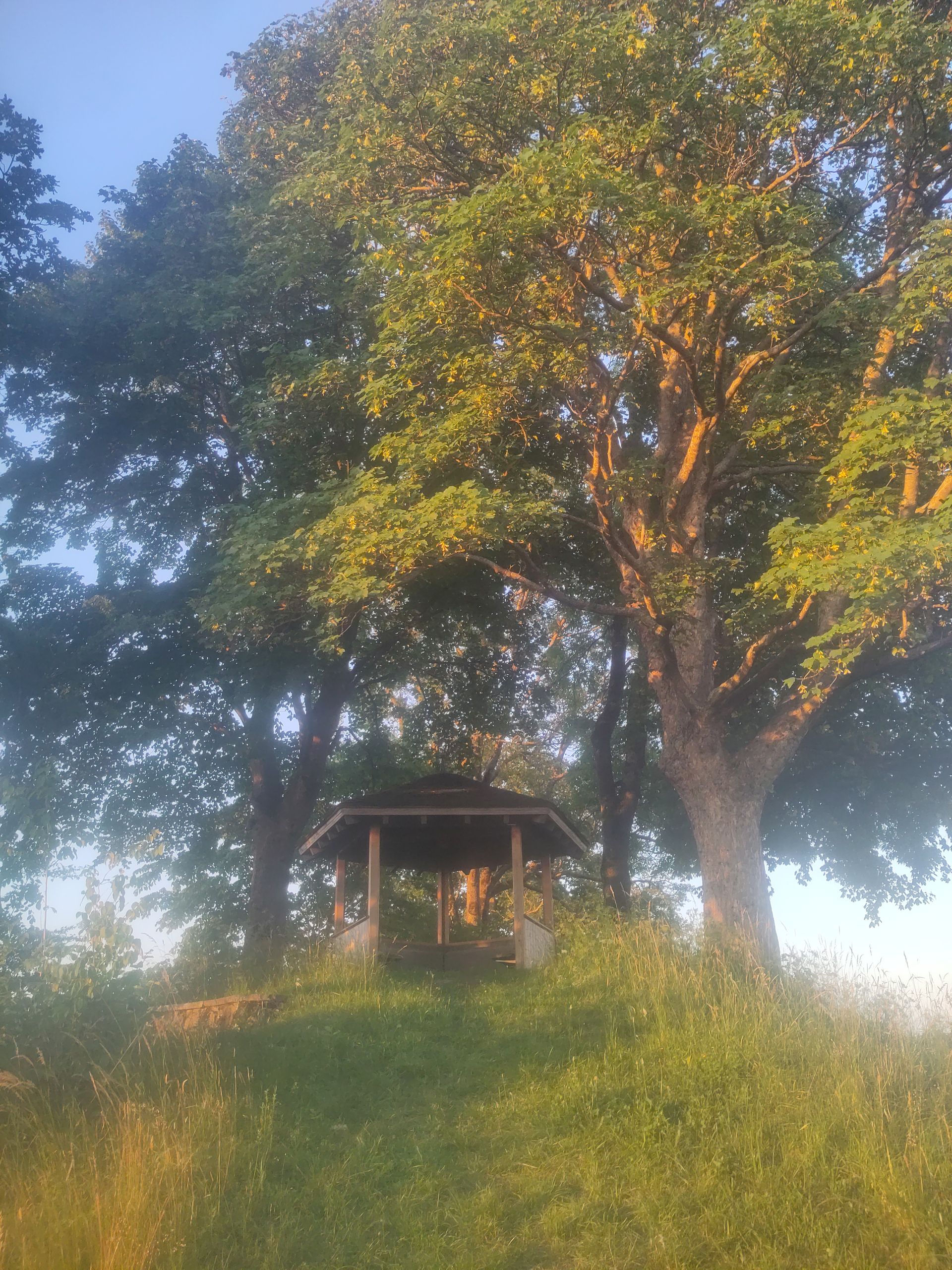
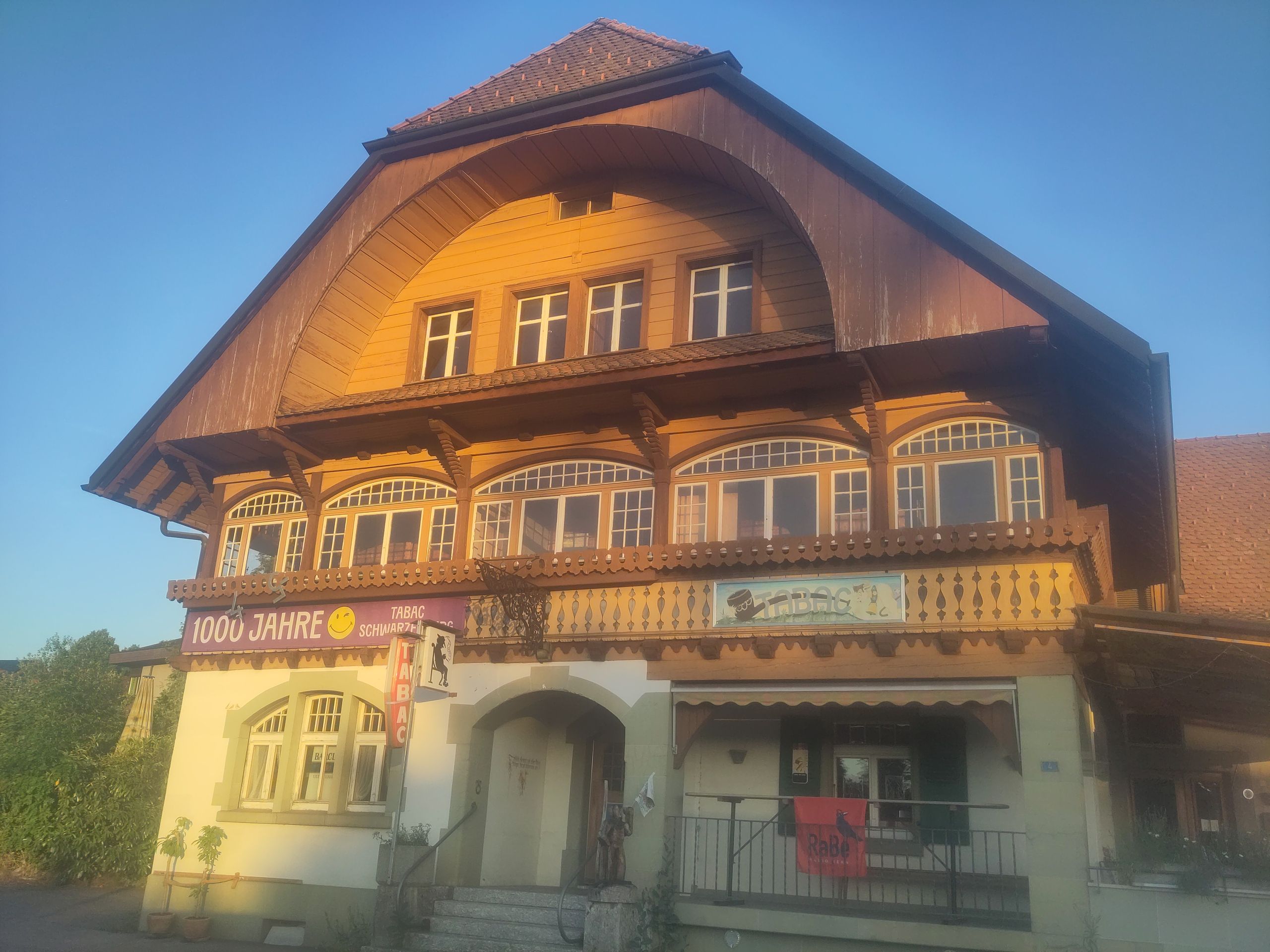
In front of and behind the town of Schwarzenburg, the path leads for some time along the Sense / Schwarzwasser on paths, whose paving probably still partly dates from Roman times! Deeply cut valley between rock walls. Tafers, St. Antoni, Schwarzenburg, Rüeggisberg, and others... - places like open-air museums, pretty houses, and blooming gardens. I eat so many wild strawberries along the paths in all these days! Above Schwarzenburg, I sleep in an open pavilion, which stands on a hill under stately trees. I arrive just in time for sunset behind the mountains there and enjoy the narrow crescent moon and the stars that I can see shining through the trees at night. I decide not to walk through Bern, but south to Lake Thun. Again and again, I gaze at the snow-covered peaks of the Bernese Oberland.
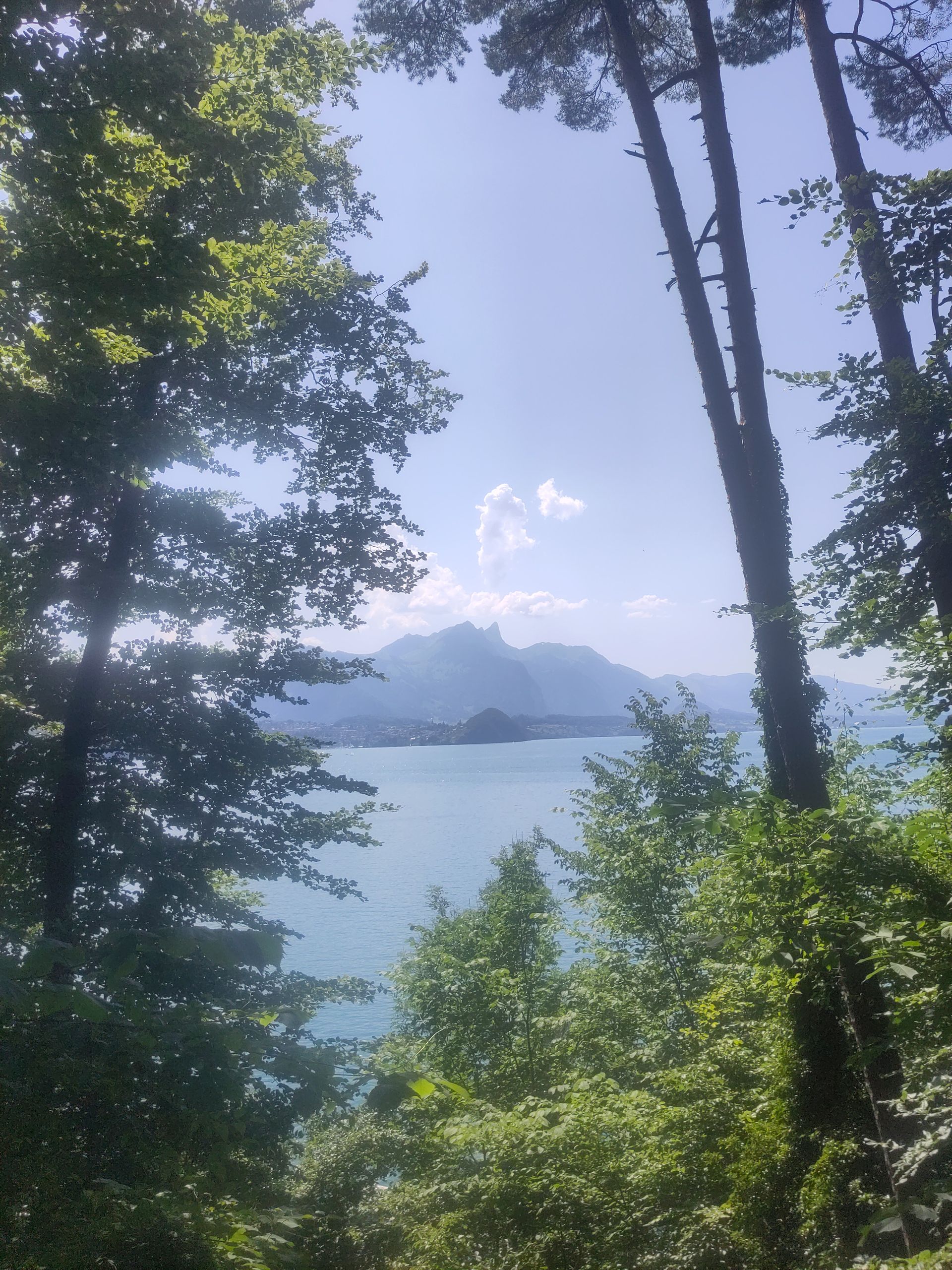
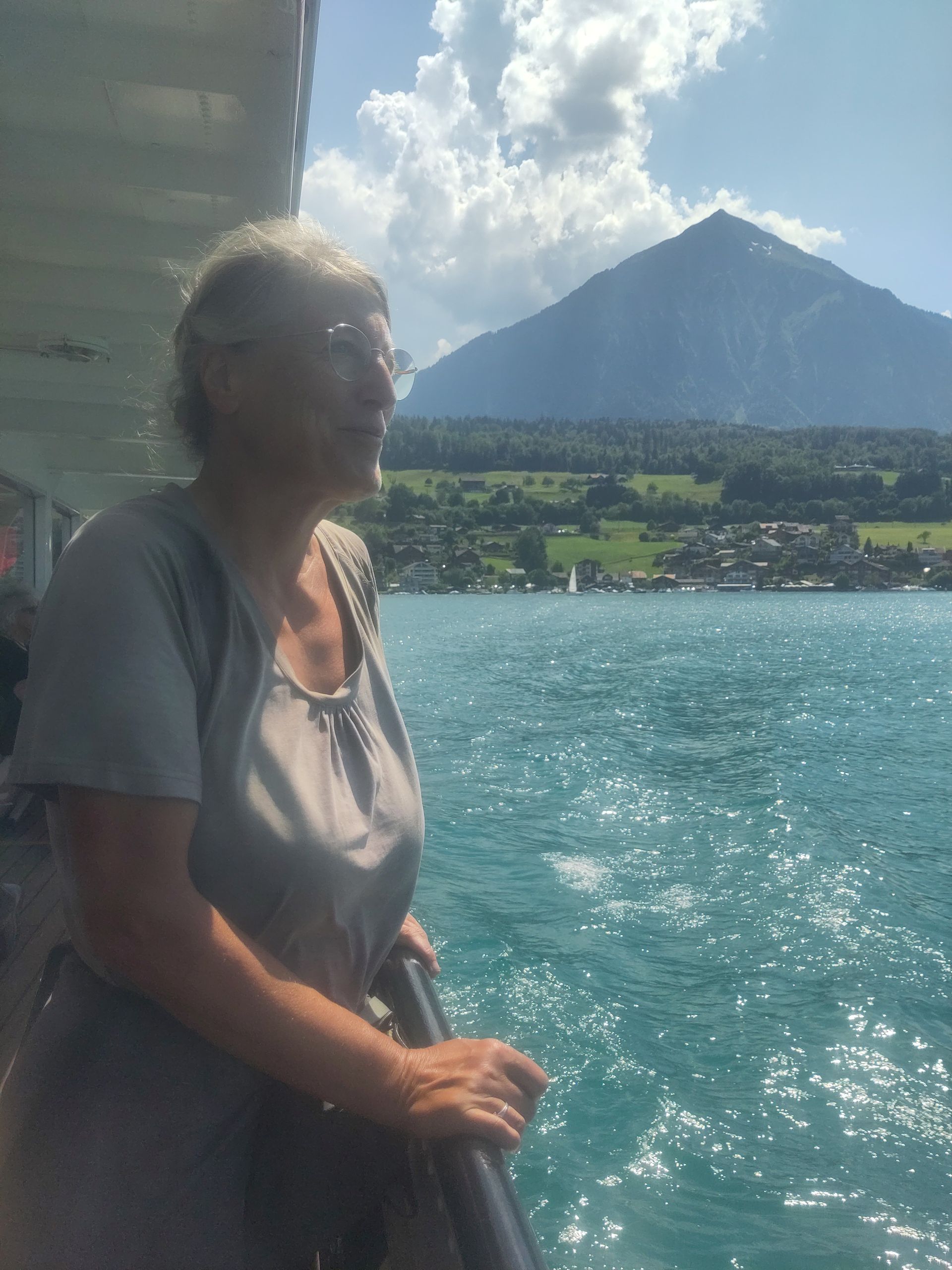
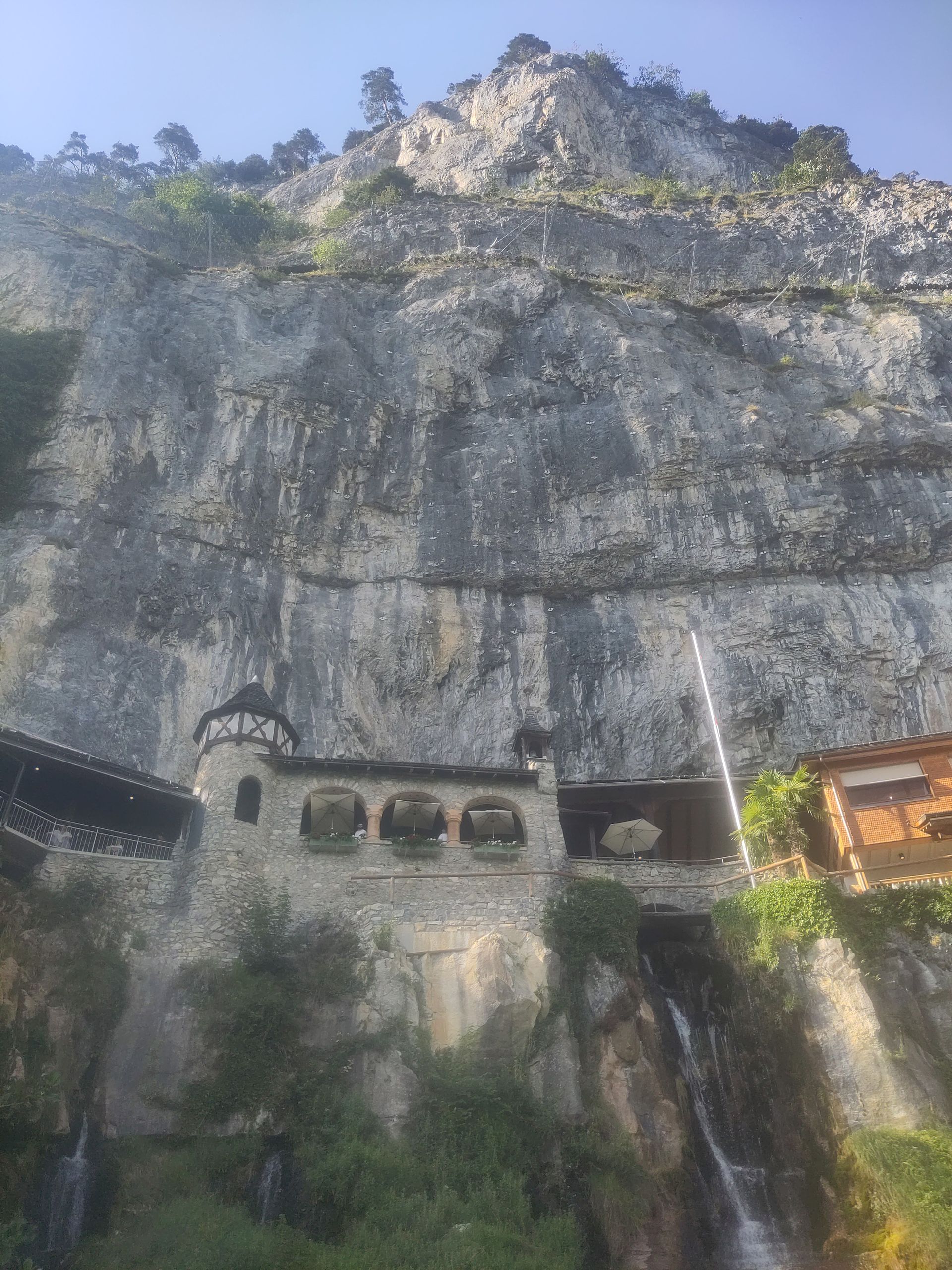
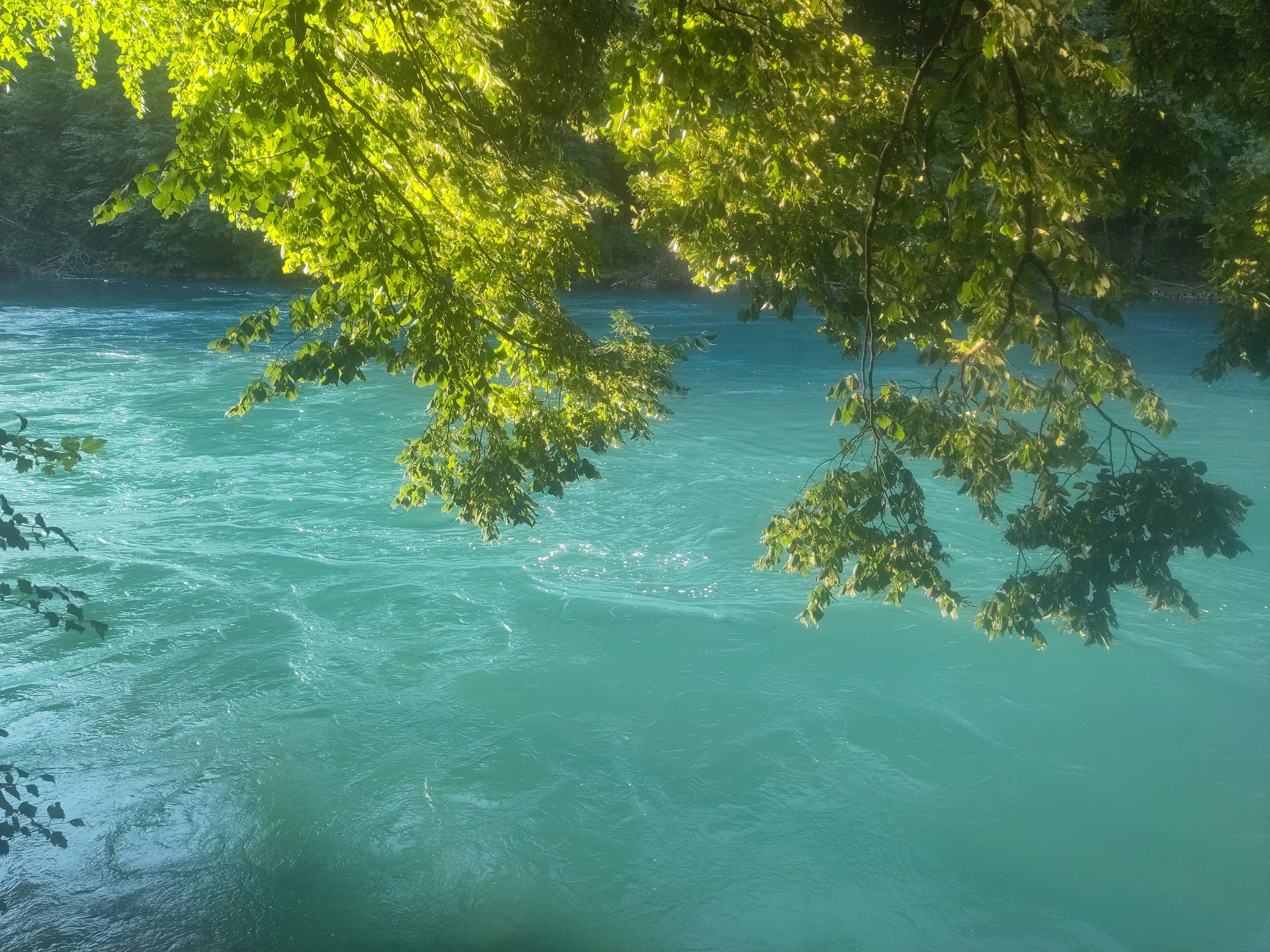
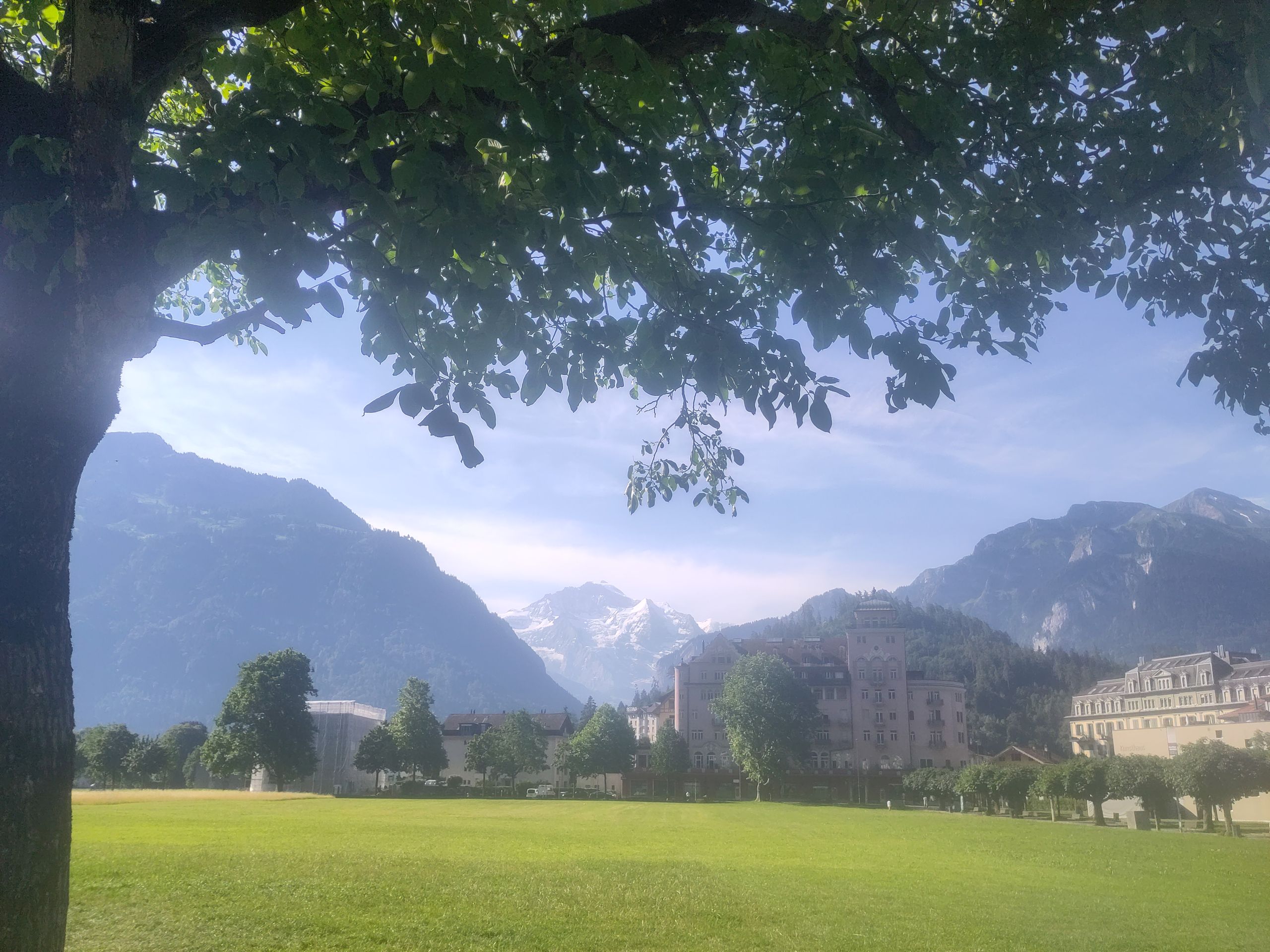
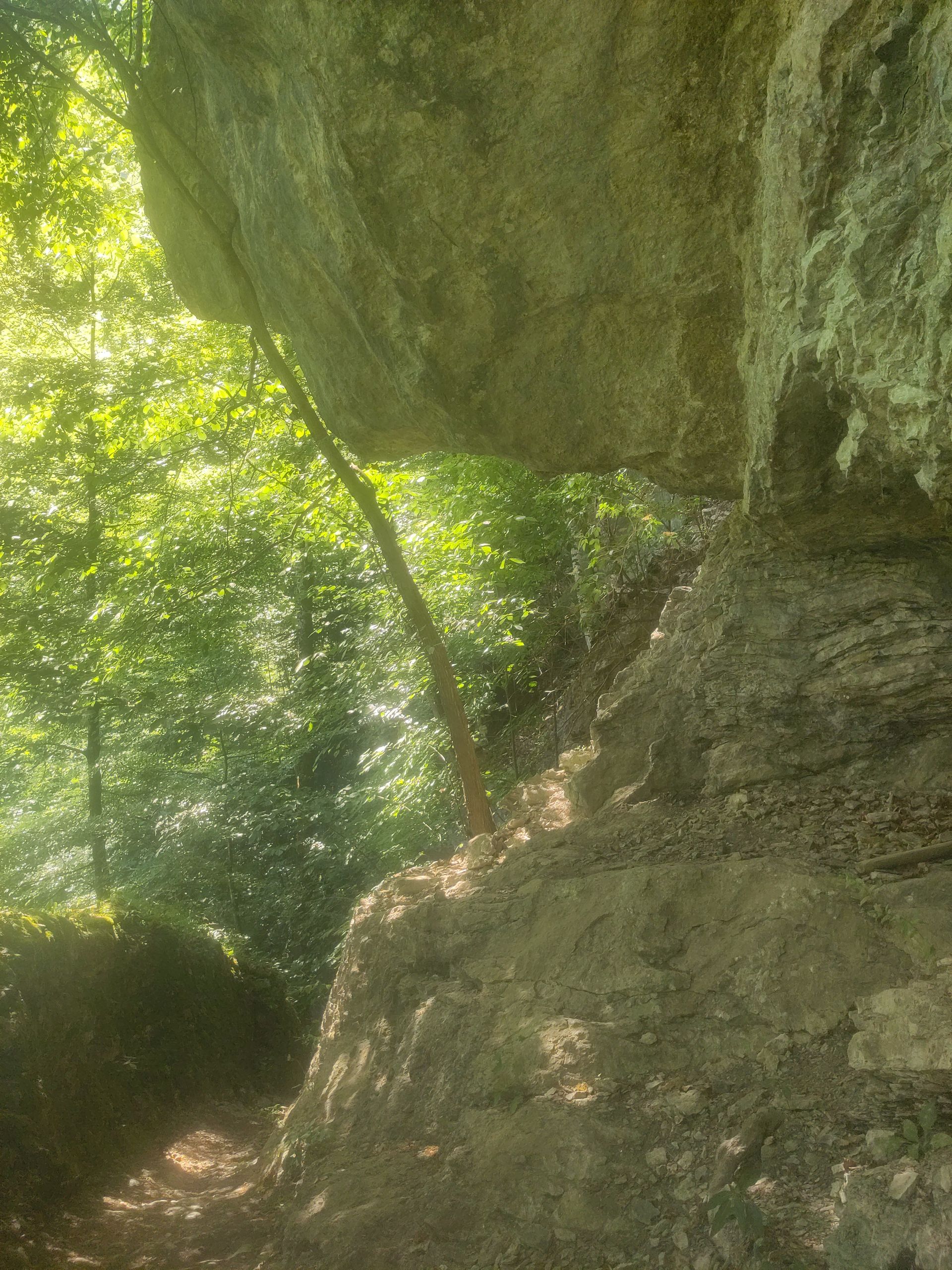
Lakes, mountains, mountain passes line up in the heat of the sun, day by day, kilometer by kilometer. First Lake Thun, Lake Brienz, and Lake Lungern, all three are radiant turquoise green: really unusual, but very special! In Amsoldingen, the romanesque church is already (very kitsch-beautiful) decorated for a wedding. I spend a long time in the crypt, a simple room with a strong charisma and very good acoustics. Some of the columns bear Roman inscriptions; the builders around 1200 used stone columns that already originated from Roman buildings! I also find nice the note that in the 19th century the respective pastor used this crypt as a fruit and vegetable cellar. From Spiez to Merligen, the path leads by boat over Lake Thun (expensive and beautiful) and then up to Sundlauenen (where I bathe and sleep next to the ferry terminal) along a wooded height path above the lake, past famous stalactite caves (St. Beatus Caves). And although the entrance to the caves closes at 5 pm, there are still many excursionists in the restaurants, playgrounds, barbecue areas - as always only a few meters around a parking lot: before and after I have the hiking trails all to myself... I am very lucky to happen to hike here on the weekend, as the high-altitude path is currently closed during the week due to work on the slope - I gather this from many prohibition signs. On Sunday, the longest day of the year, I hike early through a 'moos,' a marshy nature reserve around the old Aare bay and then, initially along stately trees beside the canalized Aare to Interlaken. The views of Eiger, Mönch, and especially Jungfrau are indeed 'royal'! Along the Aare there stretch stately old wooden houses with well-kept gardens. Once, the residents probably had an unobstructed view of the Jungfrau, now a long row of tall, block-like new buildings stretches along the other bank of the Aare. I imagine how unfair this must be for the residents of these old houses: From the new buildings, people can now see the snow-capped peaks in one direction and in the other over the river the picturesque houses and gardens, while the residents from these can now only see practically ugly concrete cubes...
Over Interlaken, many colorful paragliders take advantage of the beautiful weather and land at the 'Paragliding Landing Site Höhematte,' a large park-like meadow area in the middle of the old town. It looks amusing, these colorful, cheerful splashes of color floating down between and behind houses, church towers, the castle, and before the nearby mountains. In the Holy Spirit Church, the organ roars powerfully just as I quietly enter, it is cool, and I sit quietly in a pew for a longer time, enjoying the 'concert' alone, glad that the organist is practicing right now...
For the rest of Sunday, I walk along the entire northern shore of the green shimmering Lake Brienz. Actually, I had planned to spend the night somewhere on the shores of Brienz, but it is simply still too hot and too crowded for me there. So I ask at a gas station for drinking water and climb up to Hofstetten, from where I rise early the next morning through the still sleeping Brienzwiler and then through the mountain forest to the Brünigpass. It is always special to be in the mountain forest around sunrise, it is also good to rise on the shadow side, where the sunrise is greatly delayed by the height of the mountains. How quickly I adapt again to hiking through open beech forest! Even up here at 1000m and in the middle of the forest, there are walls of large moss-covered stones along the narrow path - stacked presumably in times when this pass crossing was only possible on this path and not on a paved road. I startle deeply when a large black dog suddenly and silently stands before me (for a moment I think it’s a wolf!). The dog is also startled by me, as I appear unexpectedly on the path for him, and his owner eventually comes along as well, but it takes me some time for my heartbeat to calm down again - and I ask myself once more why dogs are not leashed, especially where it is encouraged (nature reserve) everywhere.
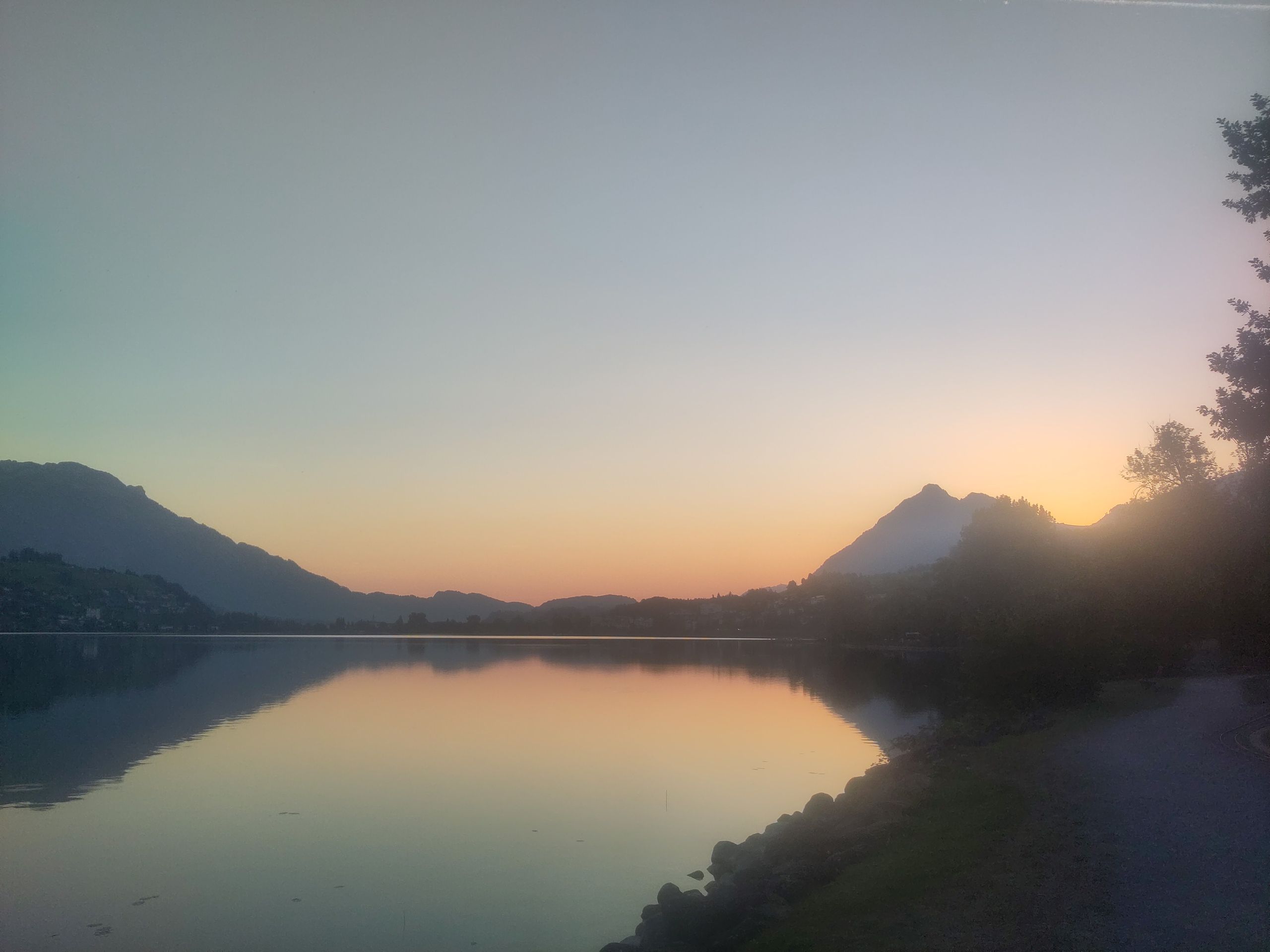
Past the very beautifully located nature friends' house Brünig (which I take a brief look at and where I get hot water) then the long descent down to Lake Lungern again - another green sparkling gem: this water color fascinates me! The more so, since the 'subsequent' Lake Sarner (and further on Lake Vierwaldstätter and Lake Zurich) is filled with 'normal' colorless water, crystal clear like all the lakes, and reflects a wonderful mirror of the surrounding shore. This makes me ponder to what extent unique, special, unusual... 'individual color' and the ability to be a 'neutral mirror' can mutually exclude each other and what we humans can learn from this? There is indeed plenty of time for 'philosophizing' during the many hours of solitary hiking...
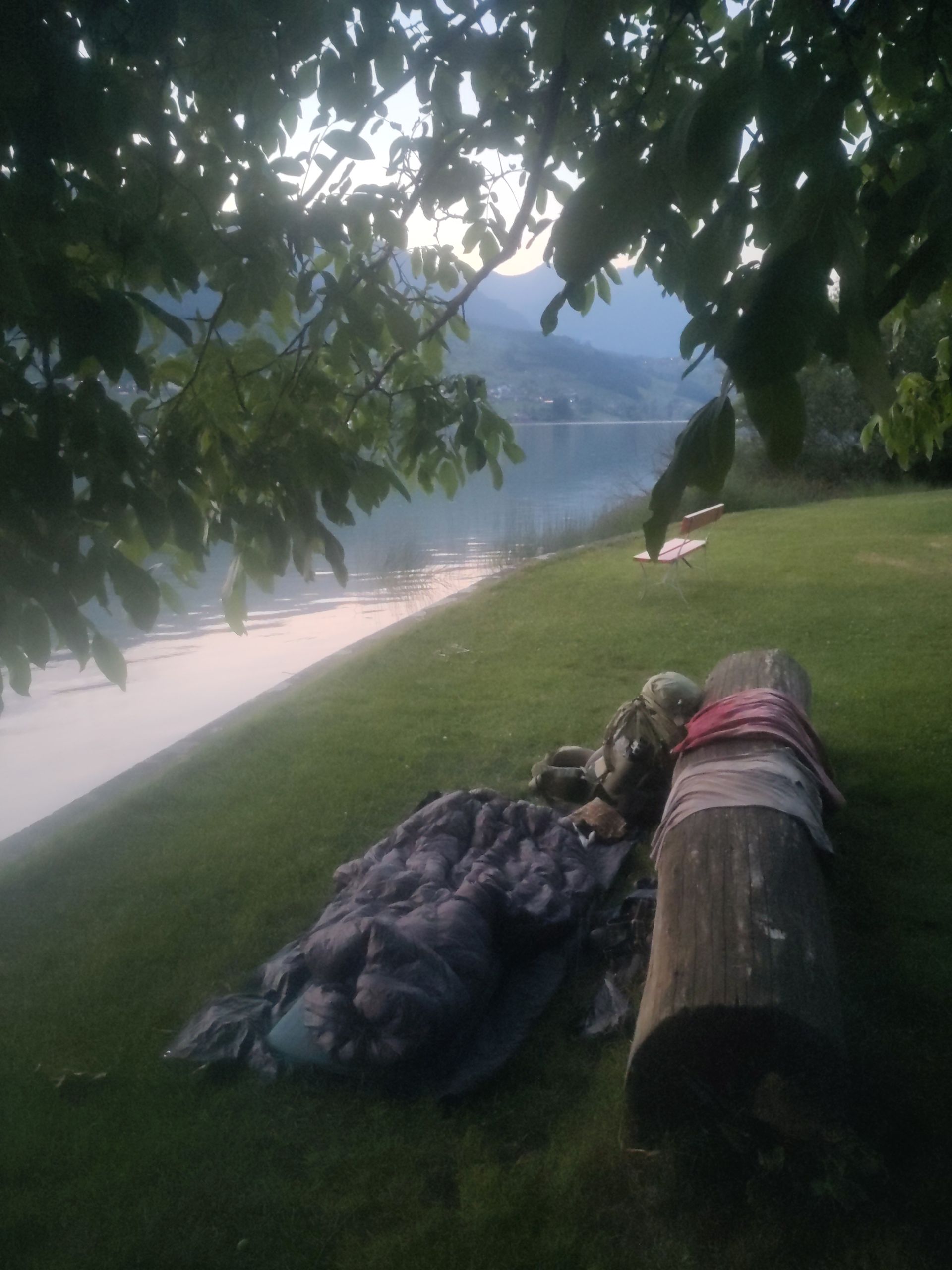
After a late evening bath and a wonderful night under the walnut tree right by the shore of Lake Sarner, Tuesday is marked by 'Brother Klaus,' the Swiss national saint. Since I leave my sleeping place shortly after 5 am, I can experience all the associated places alone and in peace before 'pilgrimage tourism' will take place later in the day. I am here directly 'in the heart', in the center of Switzerland. First, I visit Sachseln, in whose large baroque church directly behind the altar lies the grave of the saint behind glass. At the fountain, where I drink and refill water, there is a large statue that seems to watch me. In Flüeli, the white church sits on a rock ('Fluo') above the village - richly decorated wooden ceiling and of course many pictures from the life of the saint. Niklaus of Flüe (1417-1487) lived in his hometown Flüeli as a farmer and judge; the house he built himself for himself and his wife Dorothee Wyss and their ten children is now a museum. In front of it, there is an extensive bus parking lot. I am glad to be here long before the museum's opening hours and admire the pretty house only from the outside. A magnificent hotel with turrets and at a fantastic viewpoint shows that guests have been coming to this place for a long time. After Niklaus already had visions and 'sights' since childhood, his urge to seek God even more intensely and to live another life becomes ever stronger. At the age of 50, he leaves everything behind and henceforth lives until his death as a hermit in the Ranft ('Rand'), the gorge just behind Flüeli. Surprisingly, all the old sources testify that this happened 'with the consent' and support of his wife Dorothee - the youngest of their ten children was still in the crib when her husband said goodbye! His neighbors built him a hermitage in the Ranft and over the years two chapels, the upper and the lower Ranft chapel, which can both still be visited today. He no longer needed any food ('light nourishment'?) and became a sought-after advisor for many contemporaries; in 1481, his words and the advice he sought likely even prevented a war within the young Switzerland. Between the two Ranft chapels, there is a souvenir shop with rosaries, 'holy kitsch', candles, etc. - opening time 10 am; how glad I am to be there before 9 am! In all these early hours, I do not encounter a single person, so I can truly perceive something of the 'power place' Flüeli-Ranft. I reflect a lot on the courage of this woman who lets her husband go, endures it, and supports him in leading another life 'just behind the house.' Previously, I used to think: How can one just run away from everything, what should be 'holy' about leaving one's family behind, etc. - today I rather think: what courage to leave everything behind, what love for each other to free oneself like this to still live another purpose. What a time in which 'the neighbors' did not scold him and pressured him to pursue his work, but built a chapel for 'the dropout,' recognizing that this too concerns them all and is part of life and serves everyone?! If I take away 'the Catholic wrapping', I encounter deeply spiritual people who listened to their calling and became a blessing for many over the centuries. Thus, in the lower Ranft chapel, for example, there is an impressive large mural thanking Brother Klaus for his 'intercession' which kept Switzerland neutral in World War I: around a blooming, mountainous farmland, armies are marching, battles are raging, and bones and skulls are piling up... or over the portal of the church in Stans in stone figures all the quarreling 'high lords' when peace among the Swiss was deteriorating - in between, the narrow Brother Klaus in his simple robe. Historically, he did not leave his hermitage to prevent this war, but the relief still beautifully illustrates what a different kind, what a strong inner force emanates from this half-starved, inconspicuous man...
As always, there is so much more to tell! About the woman who hands me an ice cream as I pass her house, saying it is just too hot to hike; or about the eerily impressive bronze sculpture in Stans, where a young girl with a mirror and comb in her hands, Death the skeleton holds her bony fingers around her waist from behind; or about the many horseflies that make my life difficult in all the sultry heat and constant sweating; about all the people who fill my bottle with clear, cool water; about the sleeping place high above Stans and Lake Stans; about the Madonna in Buochs, who, white and marble-like, in flowing garments, with a golden crown and scepter, stands with her child in her arms on a golden crescent moon - not unusual in itself, what is striking here is that the moon has a face like in old picture books - Mary's shoe steps exactly below the large nose on its mouth...; about Schwyz with its colorfully painted town hall and a large poster in front of the church: 'Coffee and Blessing' - everyone does what they can to attract attention and customers! A large shopping center (besides the Victorinox factory buildings) is called 'MythenCenter,' as the distinctive peaks of the small and big Mythen rise prominently over Schwyz - from the actually idyllic sleeping place by a stream just behind Schwyz, where I am so bitten by mosquitoes at nightfall that I crawl into my sleeping bag despite the heat to protect myself a bit; about the pastor who lets me sleep in the church (in which town I intentionally keep to myself), but says, 'I did not meet you...' - in general, during these hot days, the churches are often my refuge for breaks with their shady coolness and silence. I would also like to tell about the ascent to Haggenegg: at 1421 m the highest point on the 'Via Jacobi,' the pilgrim path through Switzerland. At 4:10 am I pack up and thus manage the entire ascent while it is still in the shade. In the forest, there is a 'magical encounter' with a chamois that allows me to observe it for a long time and calmly while it munches on ferns, glancing at me periodically. After two and a half hours of ascent, I then see the sun at about seven o'clock at the Haggenegg Pass. Everything is glowing: Lake Vierwaldstätter in the valley, the peaks around, partly snow-covered, the meadows, forests, farms, towns... A Czech pilgrim, who wandered here from Prague, also comes up early from the other side. I am already so used to everyone understanding me that I simply address her in German, she has to say 'in English, please!' - I apologize...
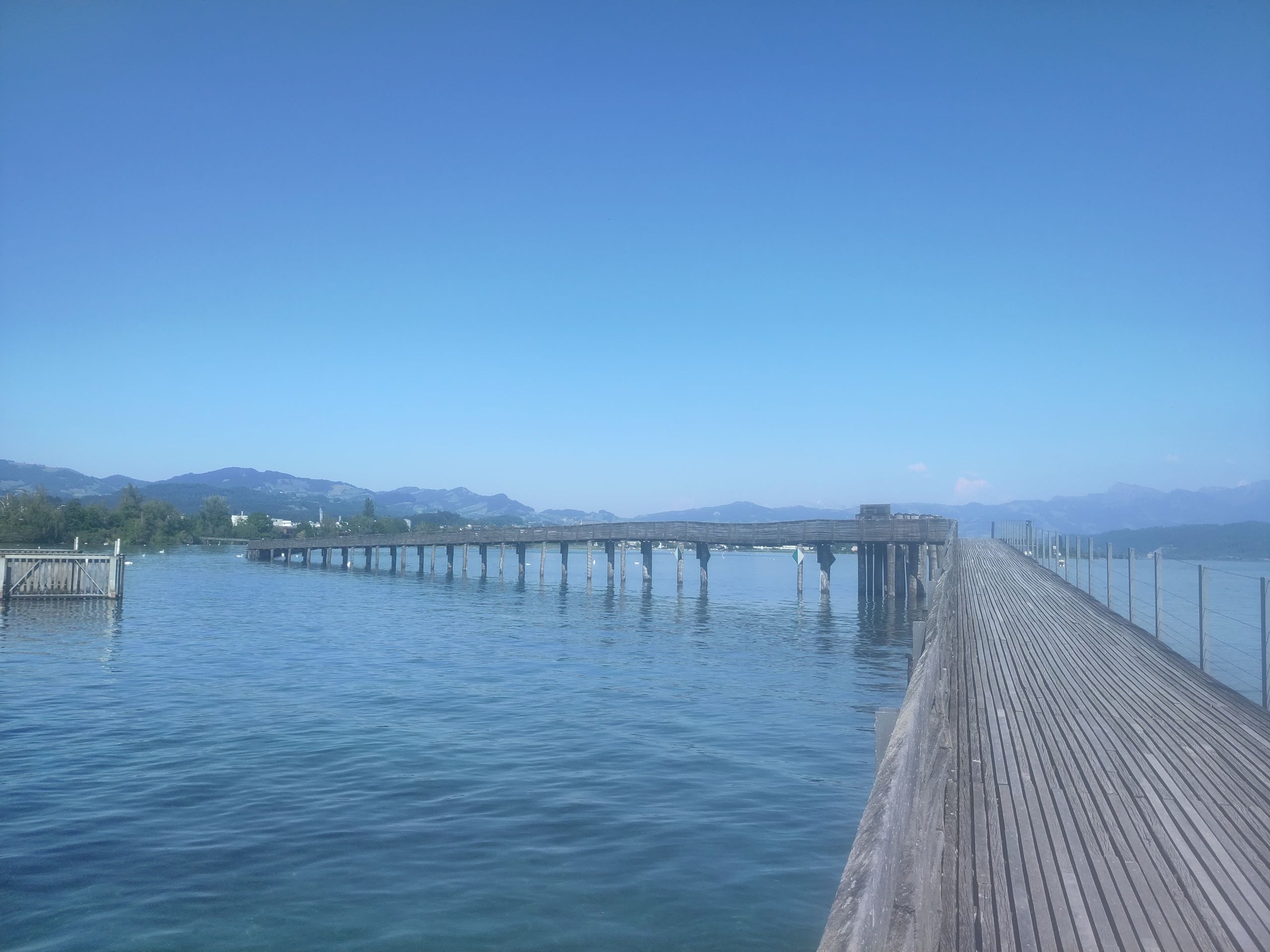
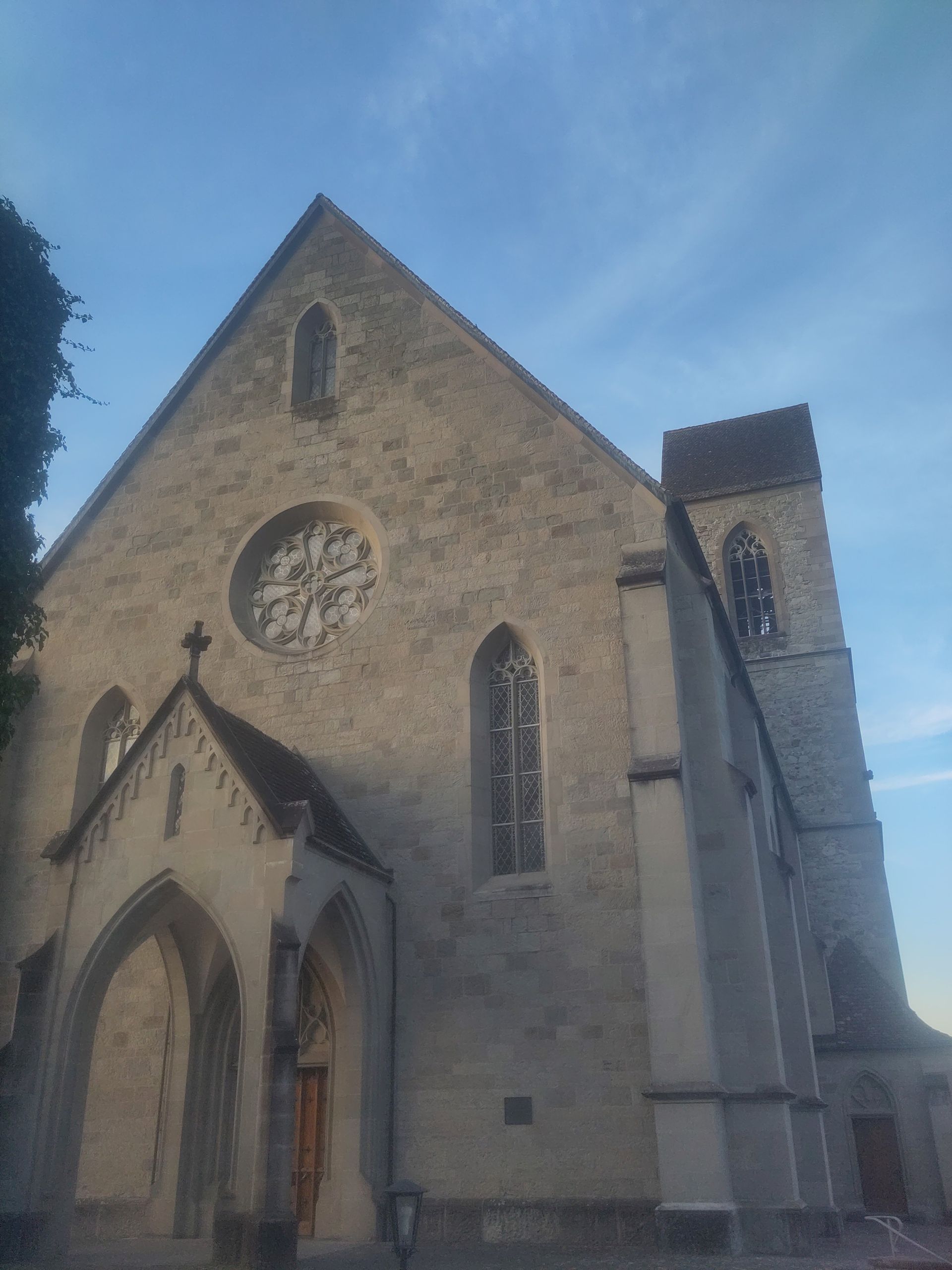
Furthermore, there would be a report of the way to Einsiedeln (past the Au monastery) with its famous large pilgrimage monastery - according to legend, in the 9th century, Brother Meinrad from Reichenau retreated here 'into the dark forest'. Where he was killed by robbers in his hermitage 25 years later, today stands the monastery of Einsiedeln. From 'dark forest,' in truth, nothing is recognizable far and wide anymore... Since a mass is about to take place, all visitors are asked to leave - so I only catch a brief glimpse of the overloaded baroque splendor and the famous Black Madonna, drink a bit more at the women's fountain, and then continue; over the Devil's Bridge, where Paracelsus' birthplace stands, up to the Etzel Pass and over Pfäffikon to Lake Zurich. On a very long wooden jetty, I walk over the lake towards Rapperswil, the many gray towers rise venerably on the other shore. A woman arrives in the pilgrimage hostel, who has just finished her first day of hiking and simply goes to shower and sleep... I take the opportunity to cook vegetables, do laundry, later take a shower and stroll through the old town and the rose garden along the lake shore, chatting with the hospitalero for a long time. I still do not suspect that I will walk the remaining 75 km to Lake Constance in the next two days. It turns out that way - a hike partly like in a kind of heat trance, just continuing on and on. A butterfly lingers with me for a long time - on the last hiking day, an incredible gift that deeply delights me. Only when I rejoice over a few cornflowers do I truly realize what I had only subconsciously noticed: in all the cleanliness, order, and tidiness in Switzerland, all the wild and colorful blooming at the edges of the paths, on the meadows and fields has imperceptibly disappeared, which had delighted me so much in recent months!
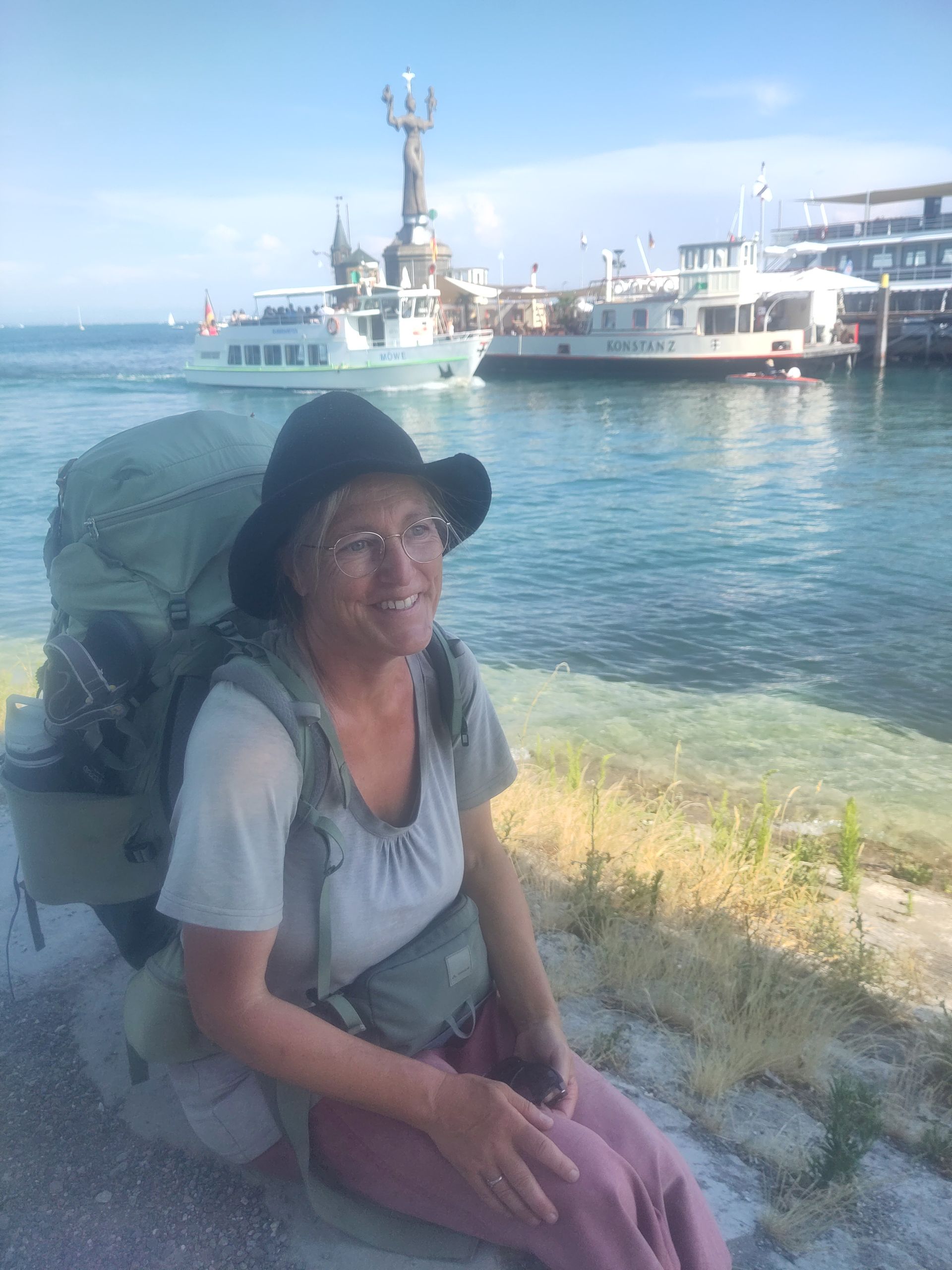
On Saturday, June 27, I cross the border into Germany at around 4 p.m. between Kreuzlingen and Konstanz. After almost 4 months and 2870 kilometers walked through 3 countries, I am now taking a break.