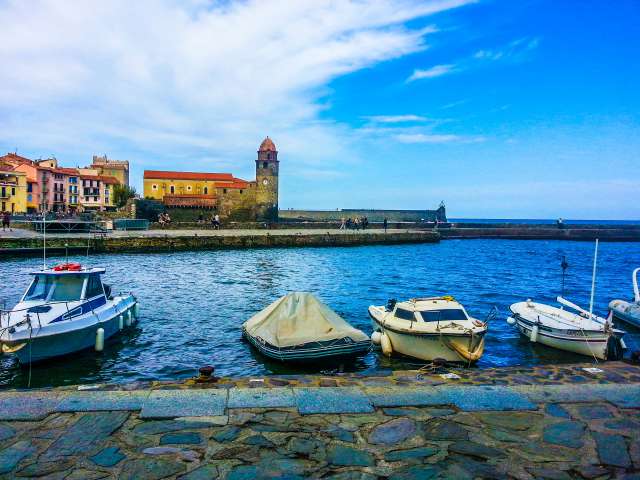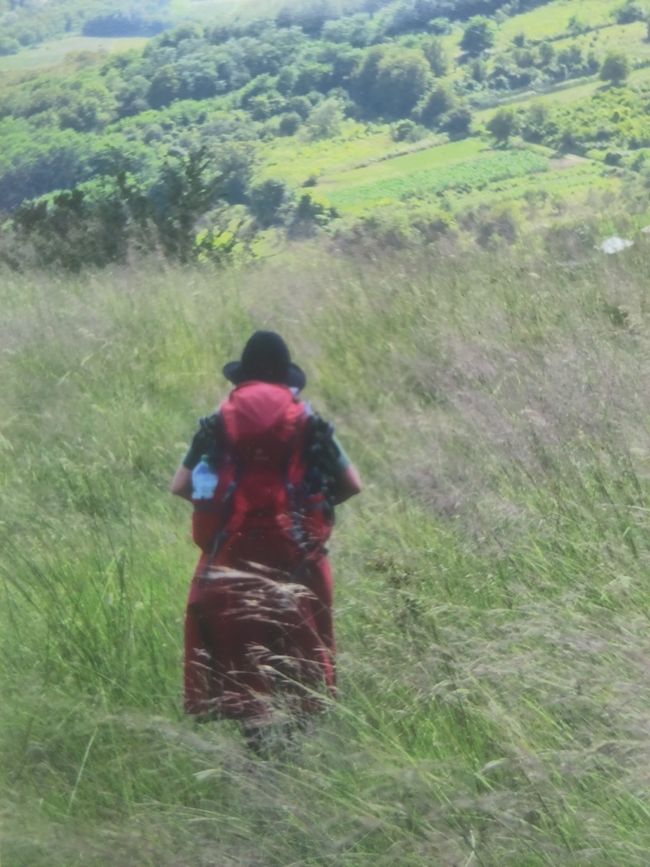
Goodbye, Spain! Next stop is France
Since yesterday, I have no longer been hiking in Spain, but in France - still in the Basque Country, though. But to put it a bit more 'in order': After the last entry here, the...
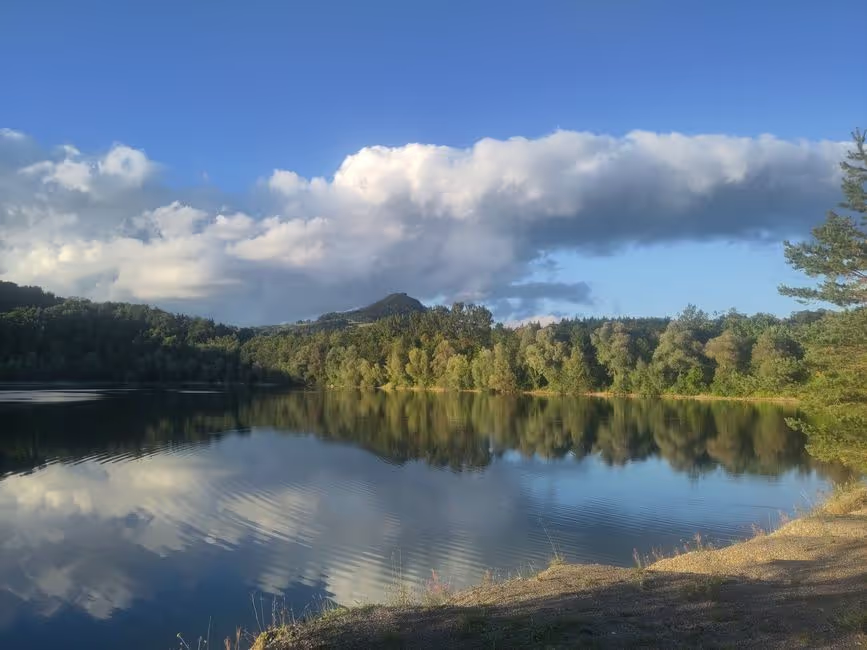

Published: 16.05.2026
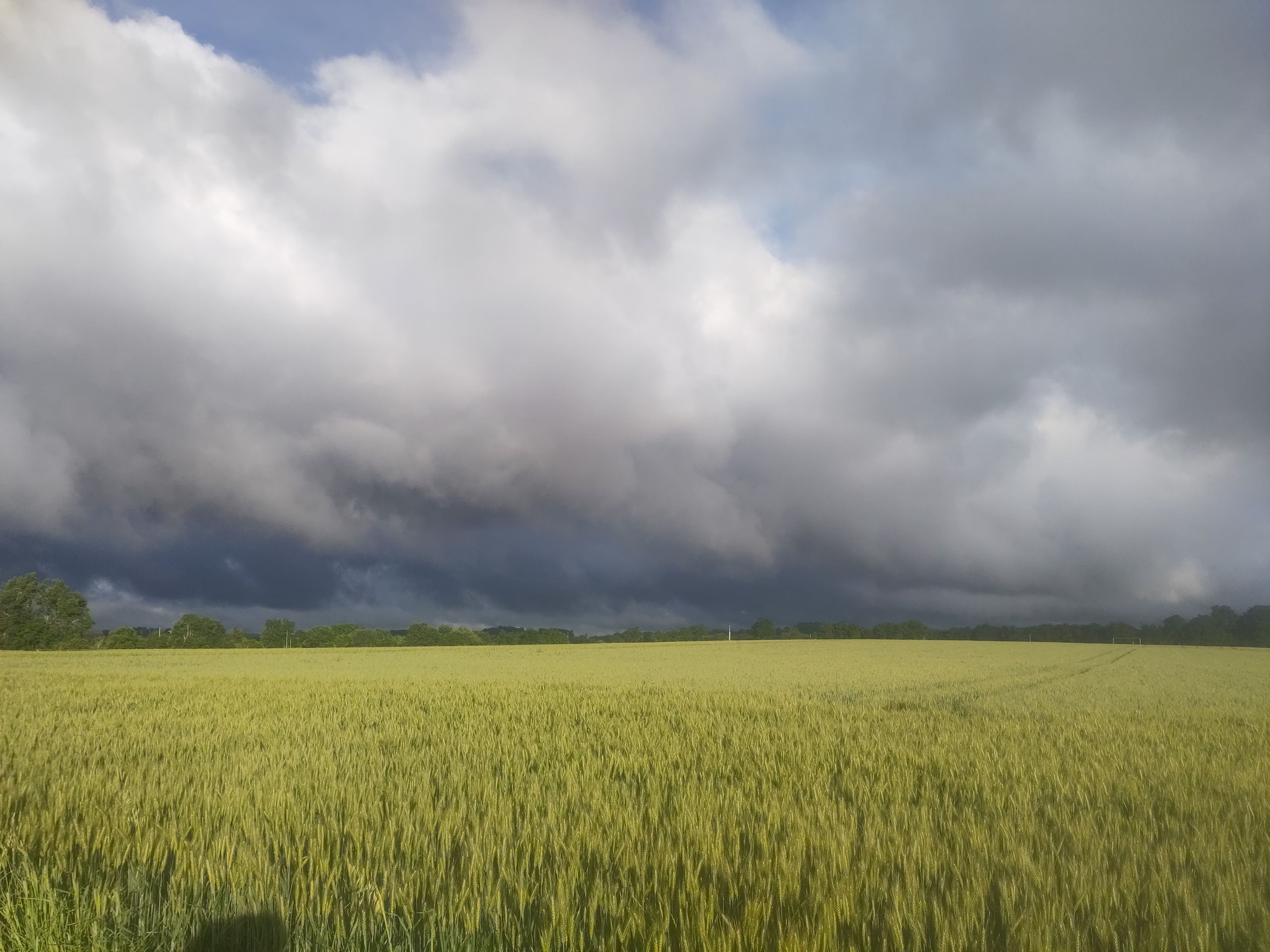
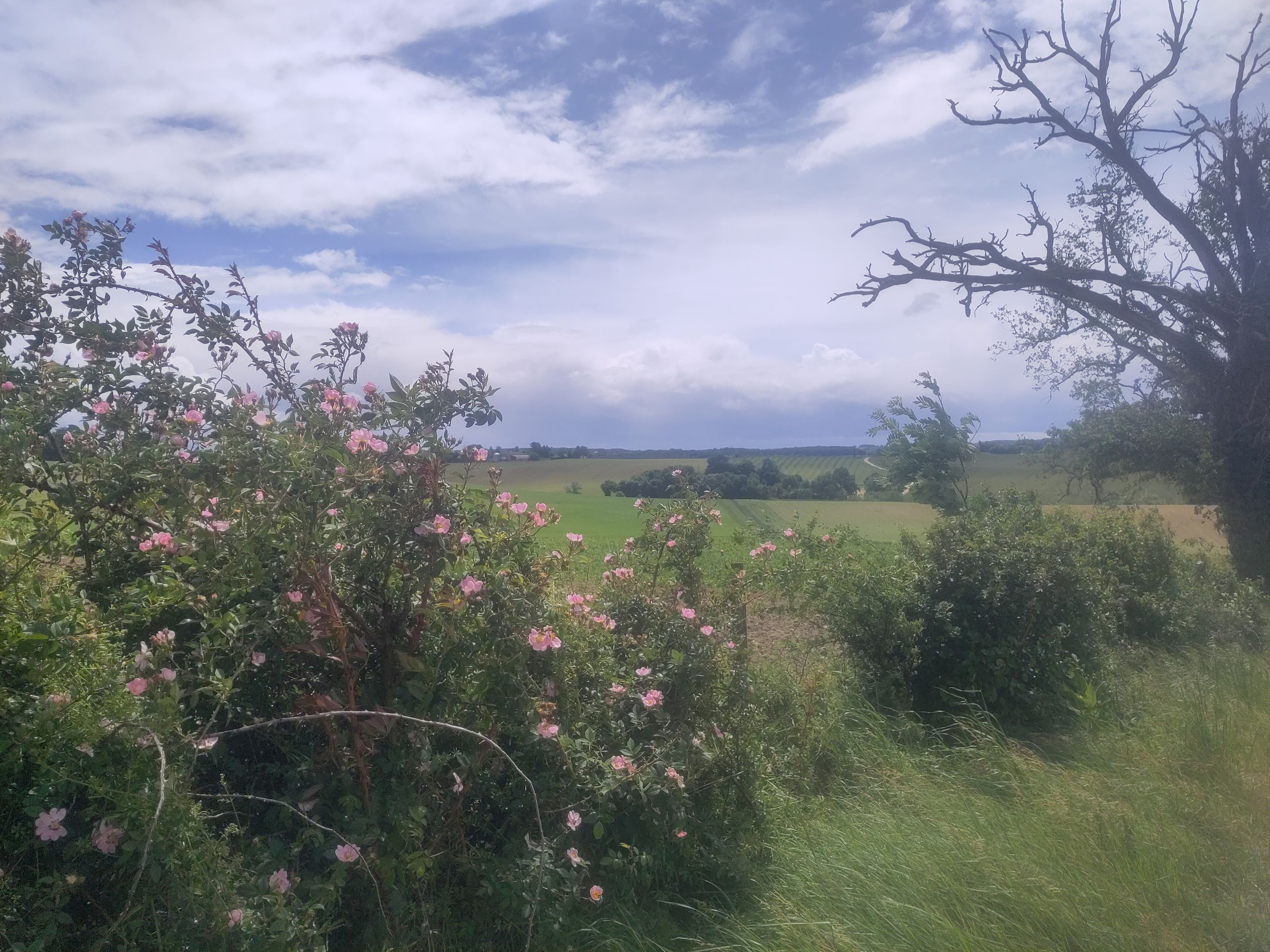
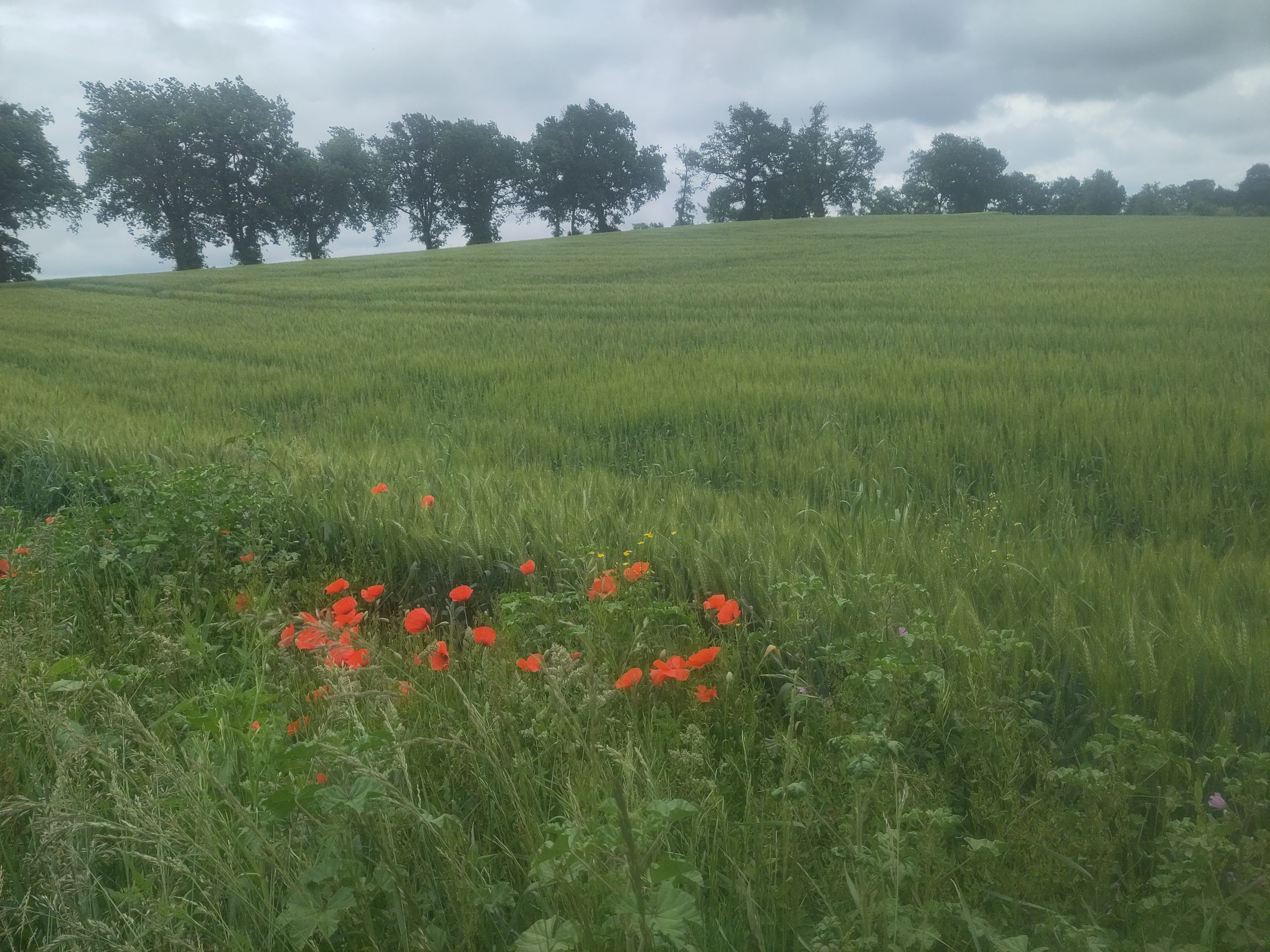
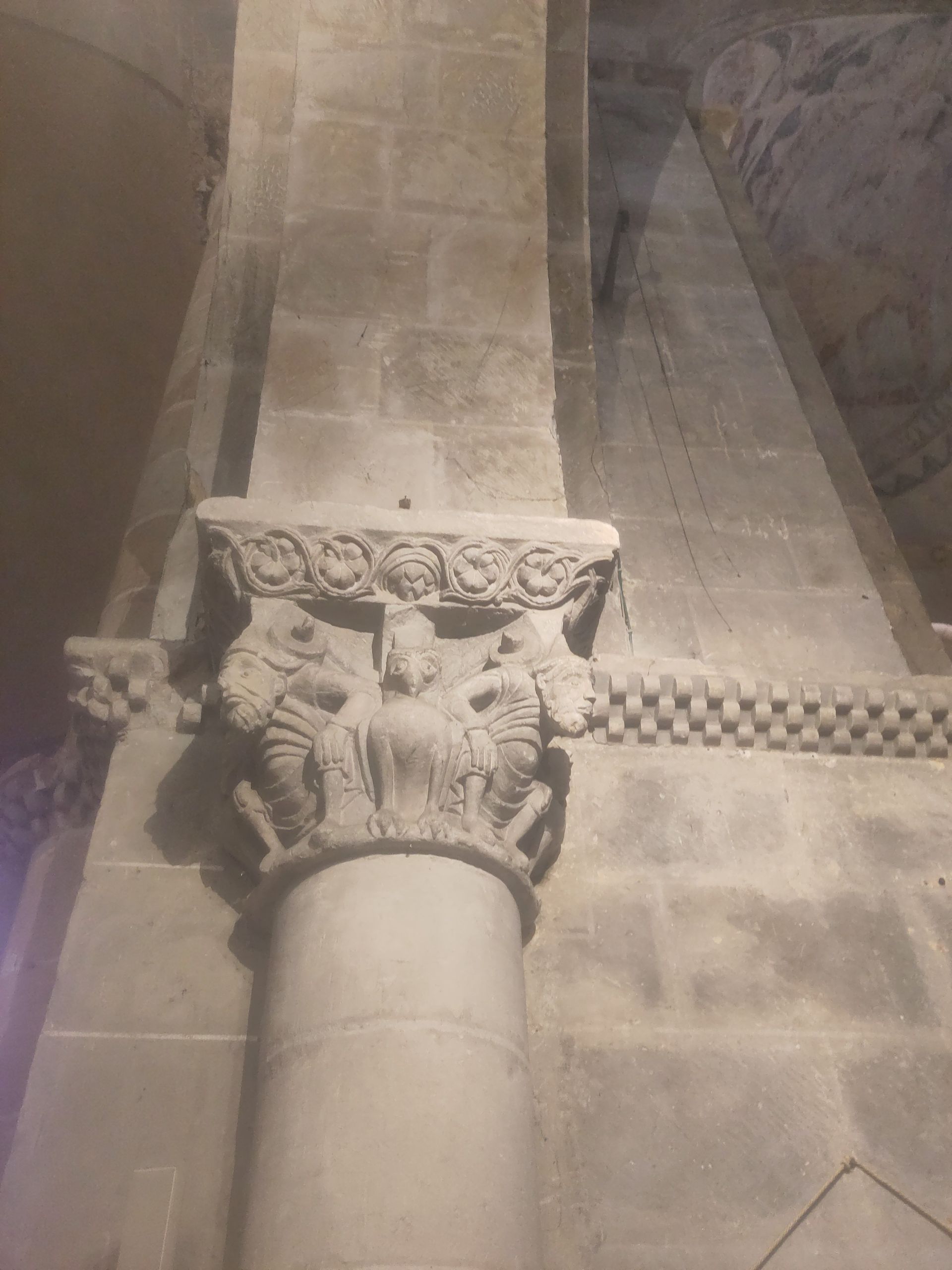
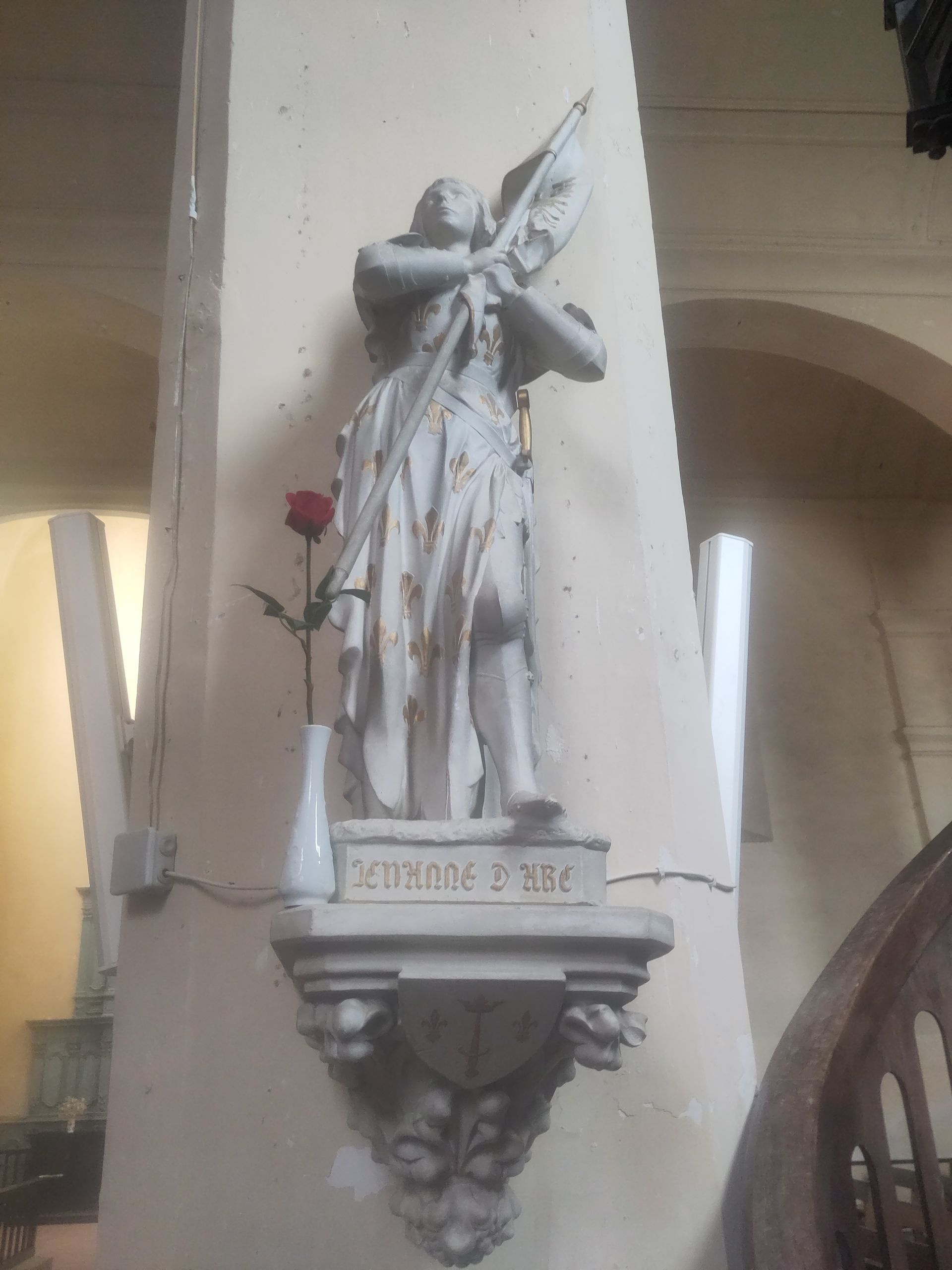
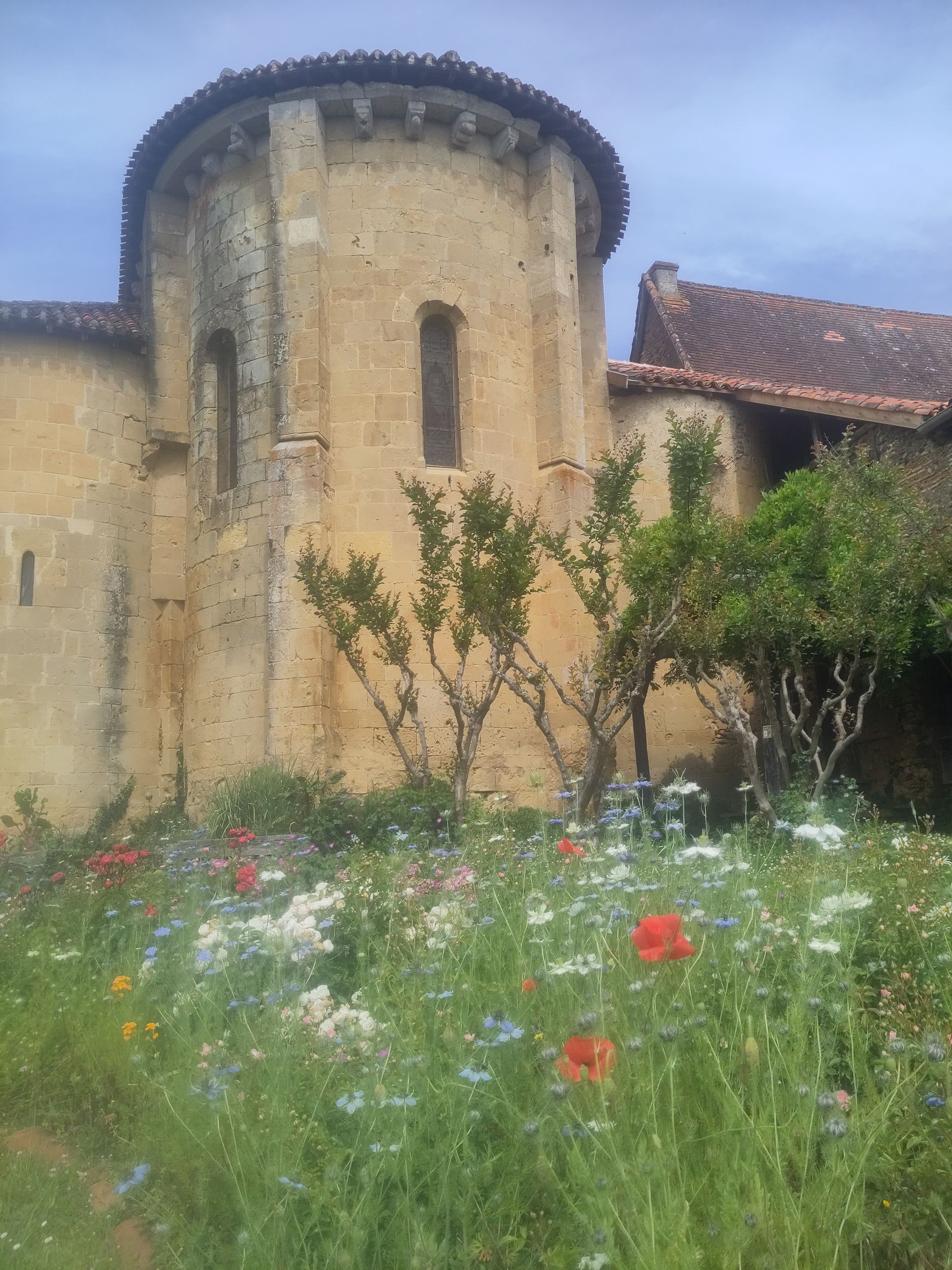
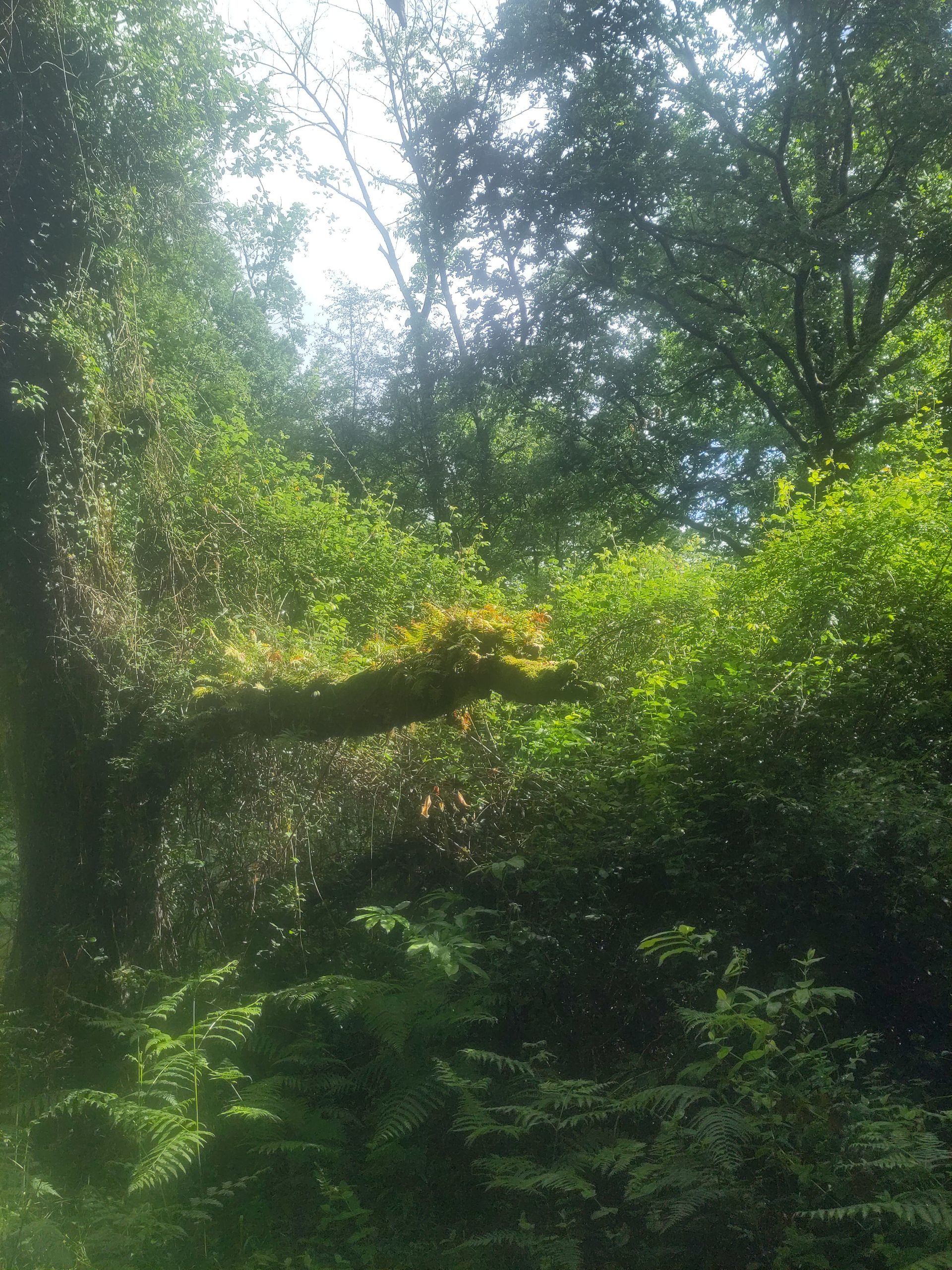
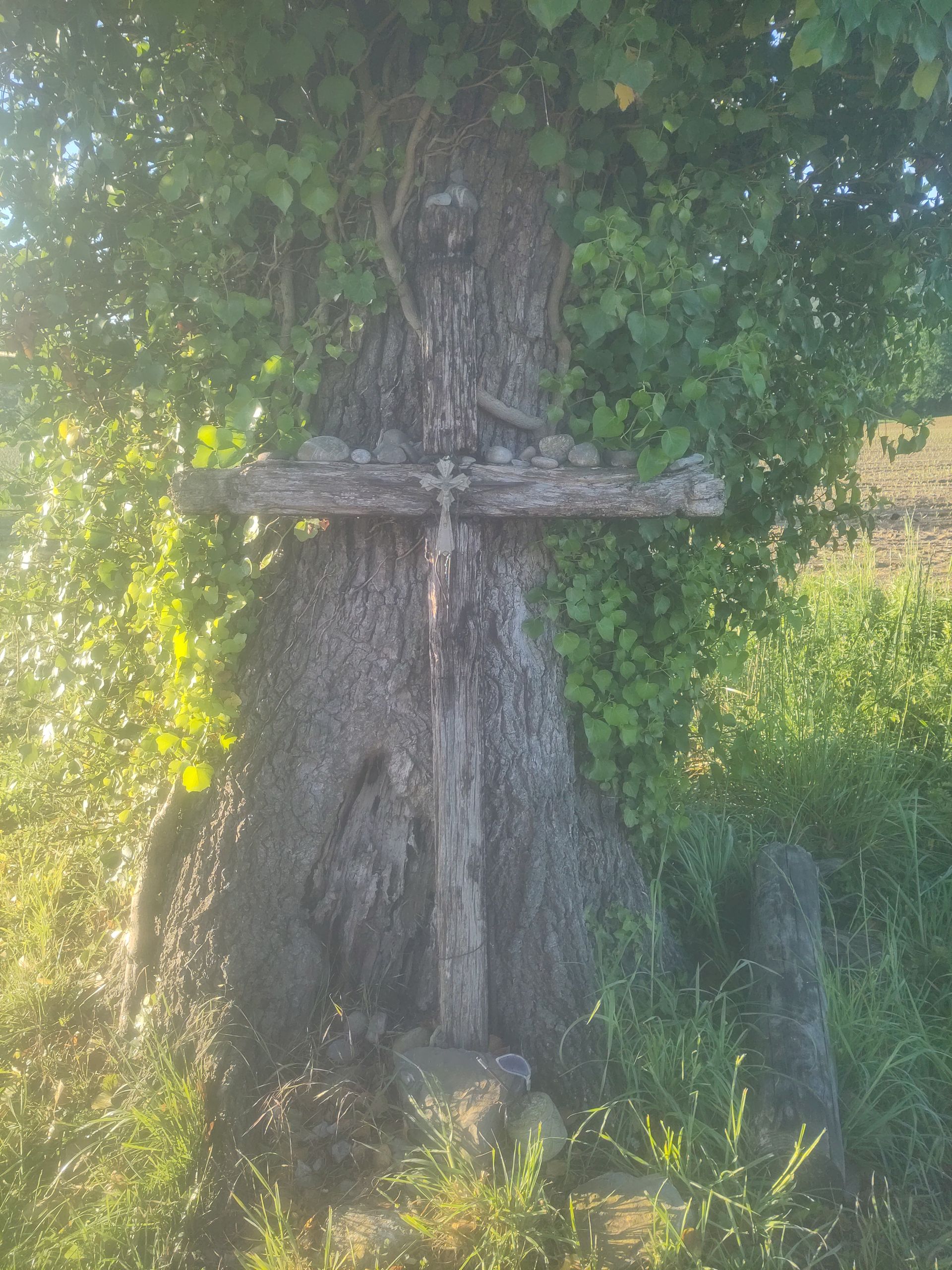
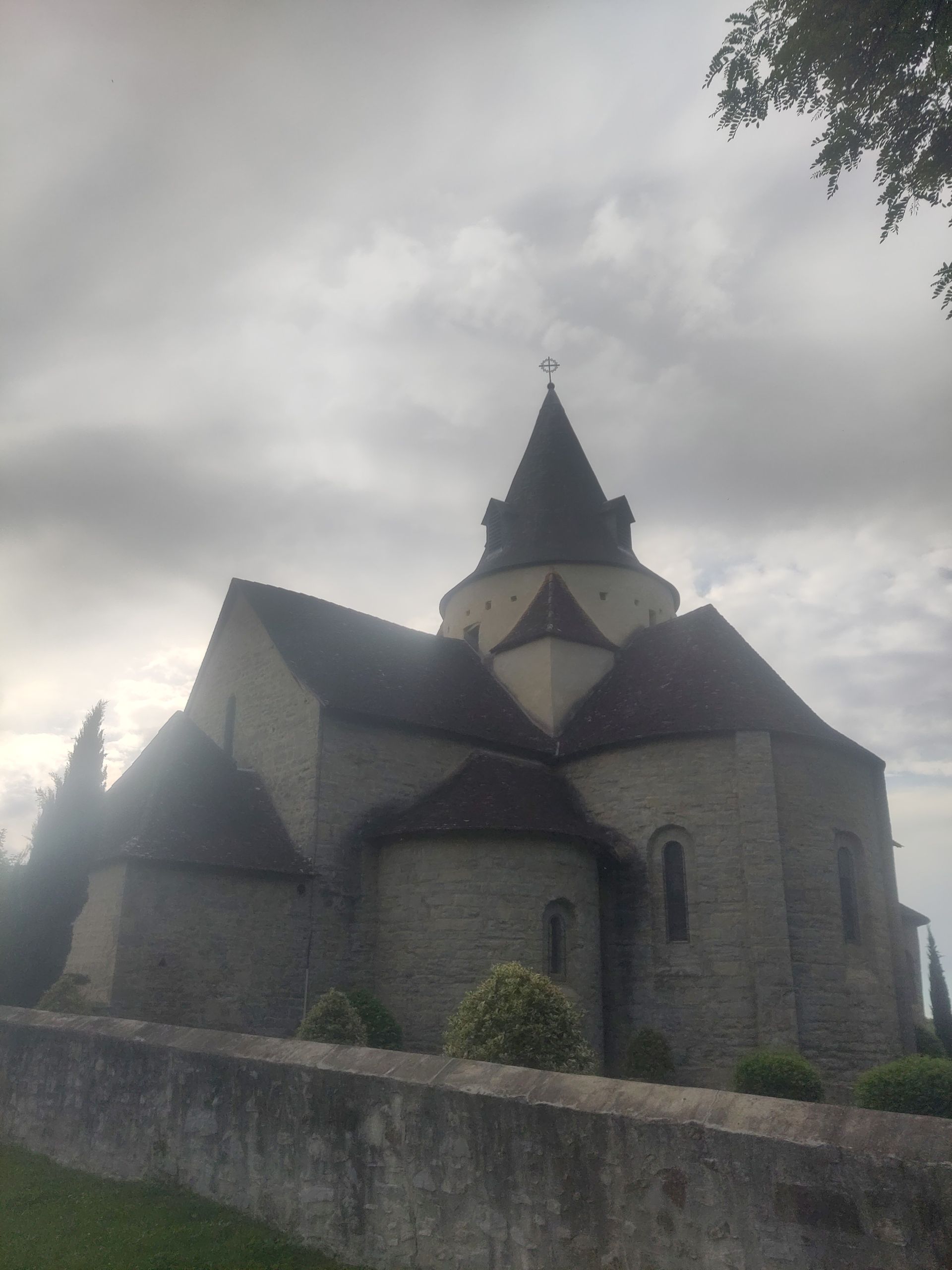
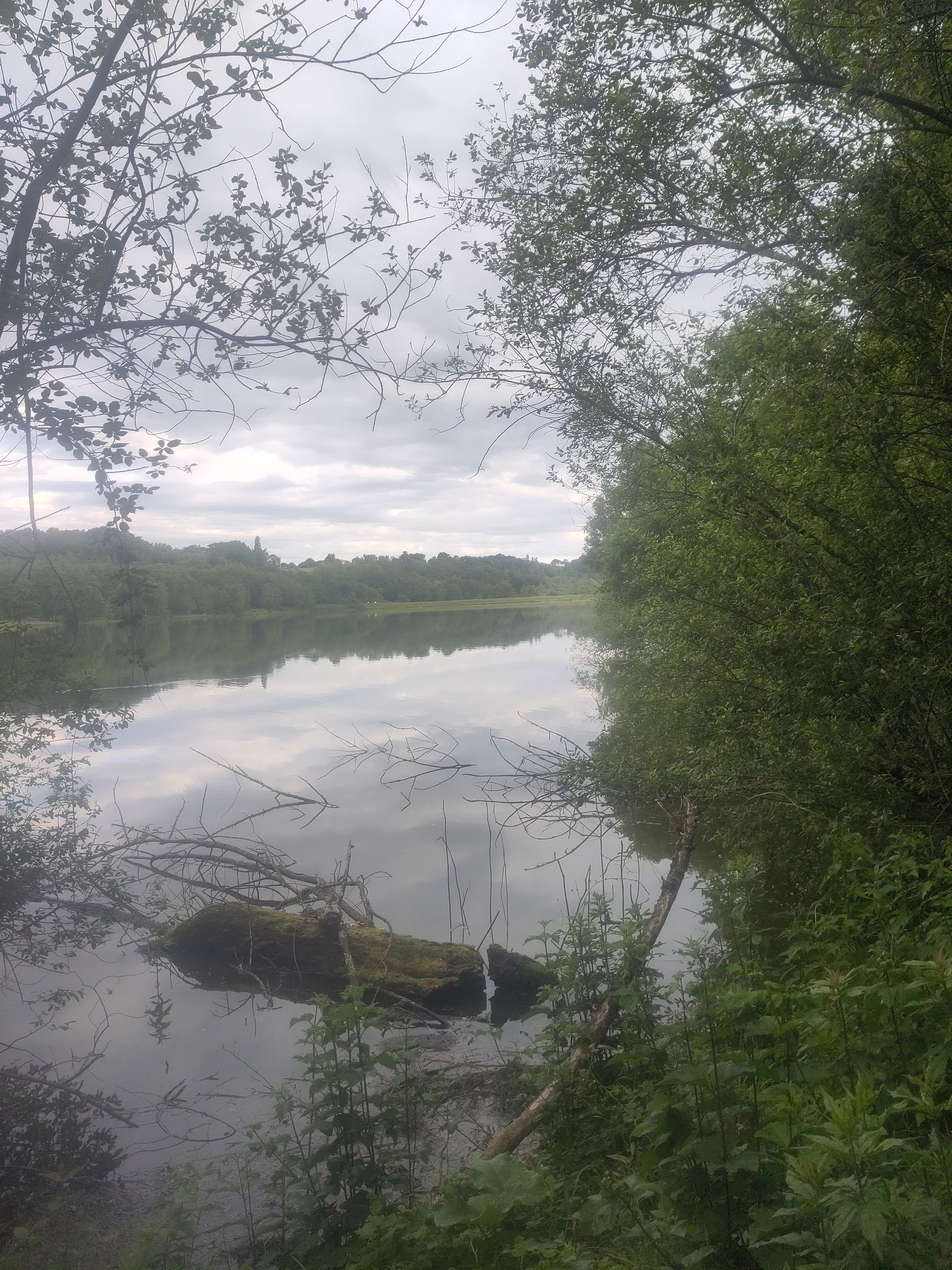
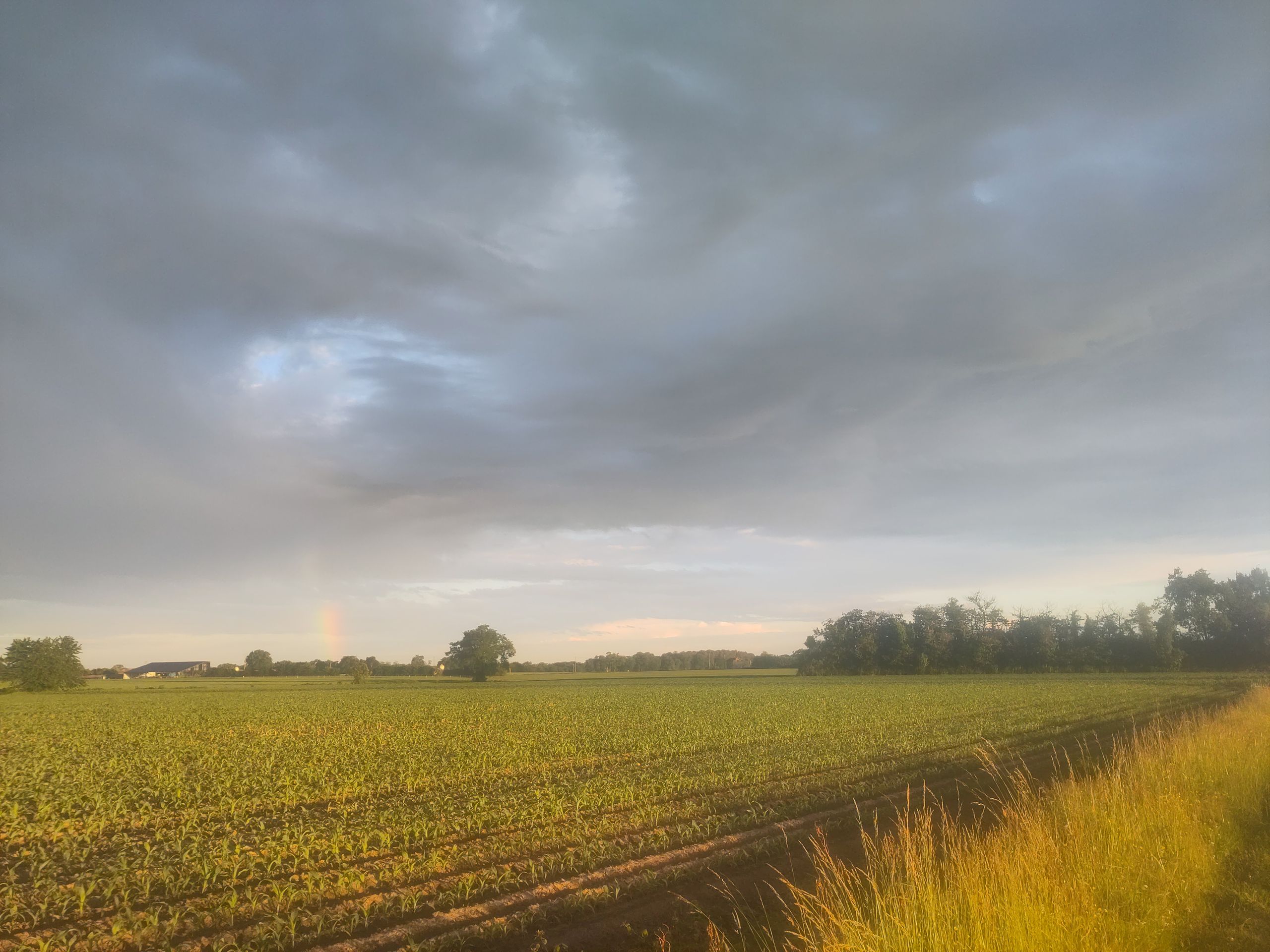
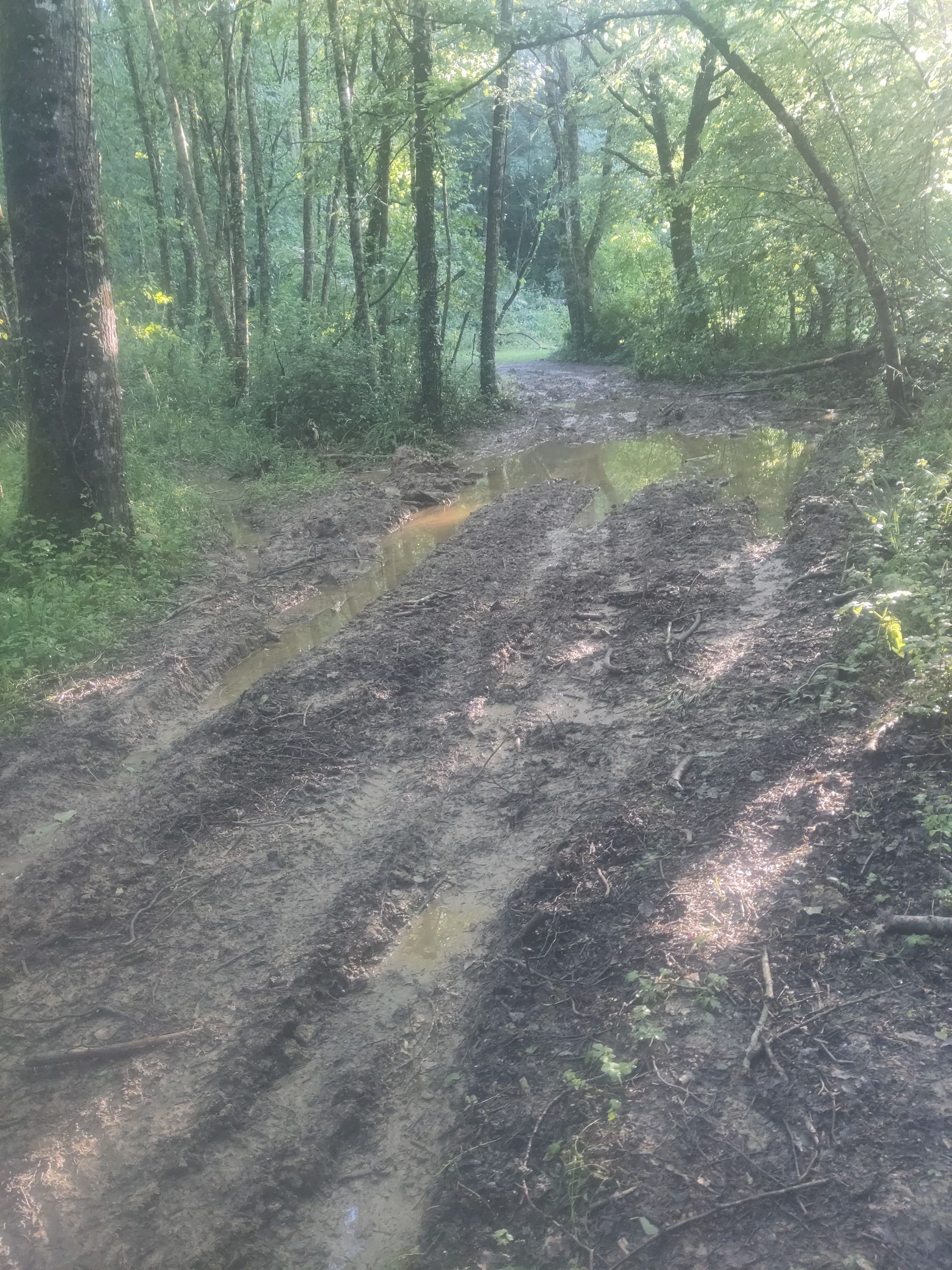
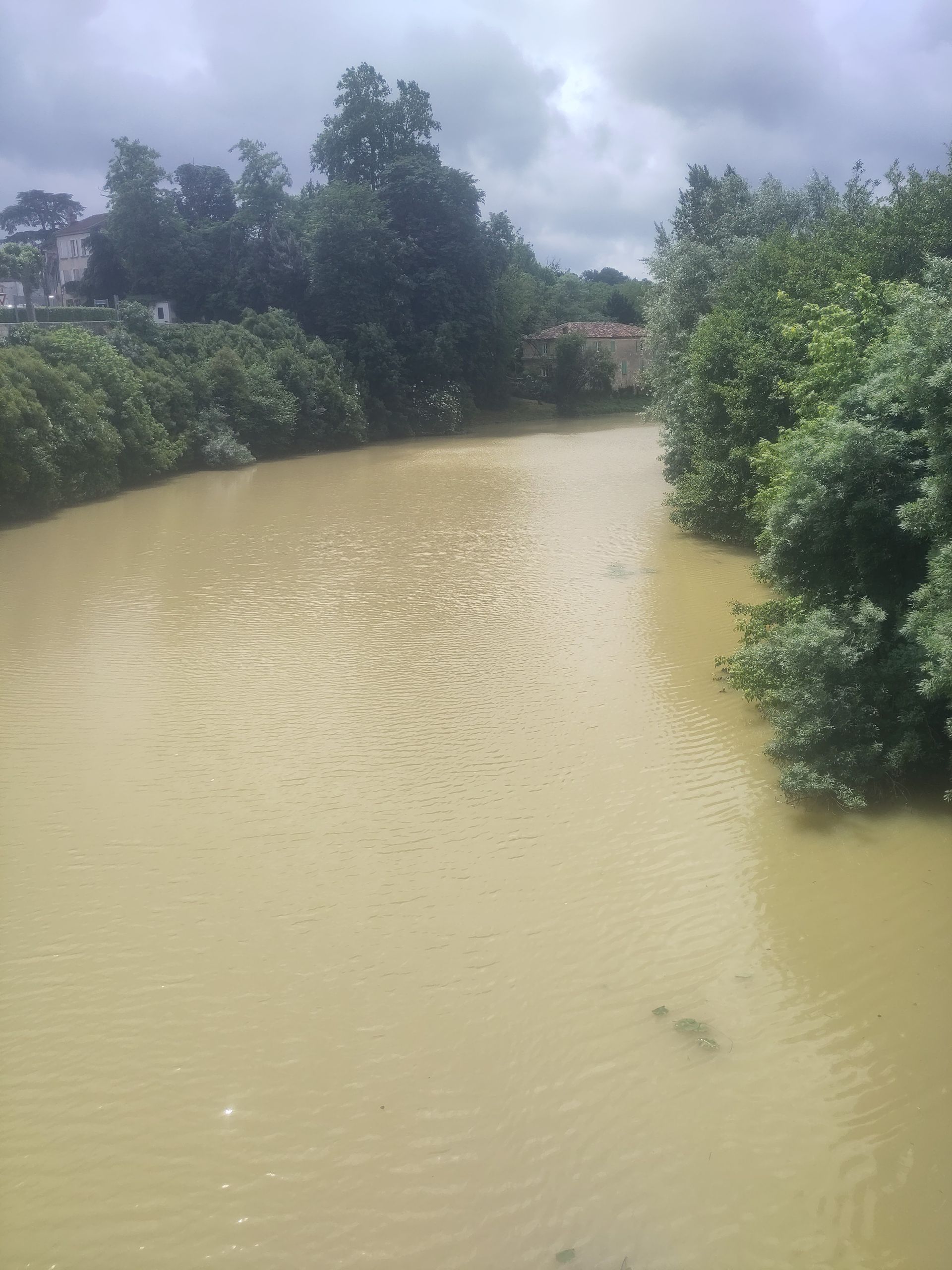
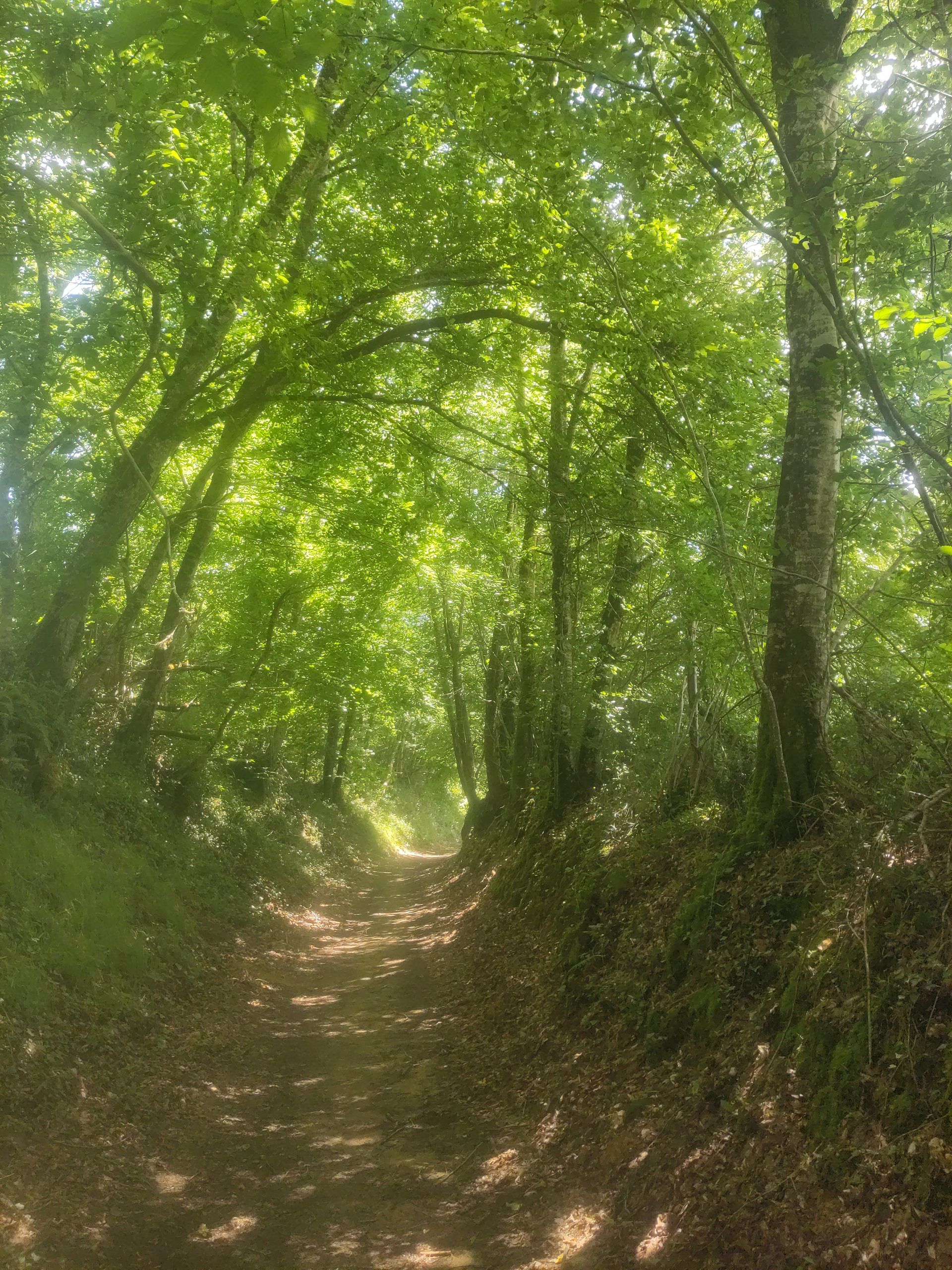
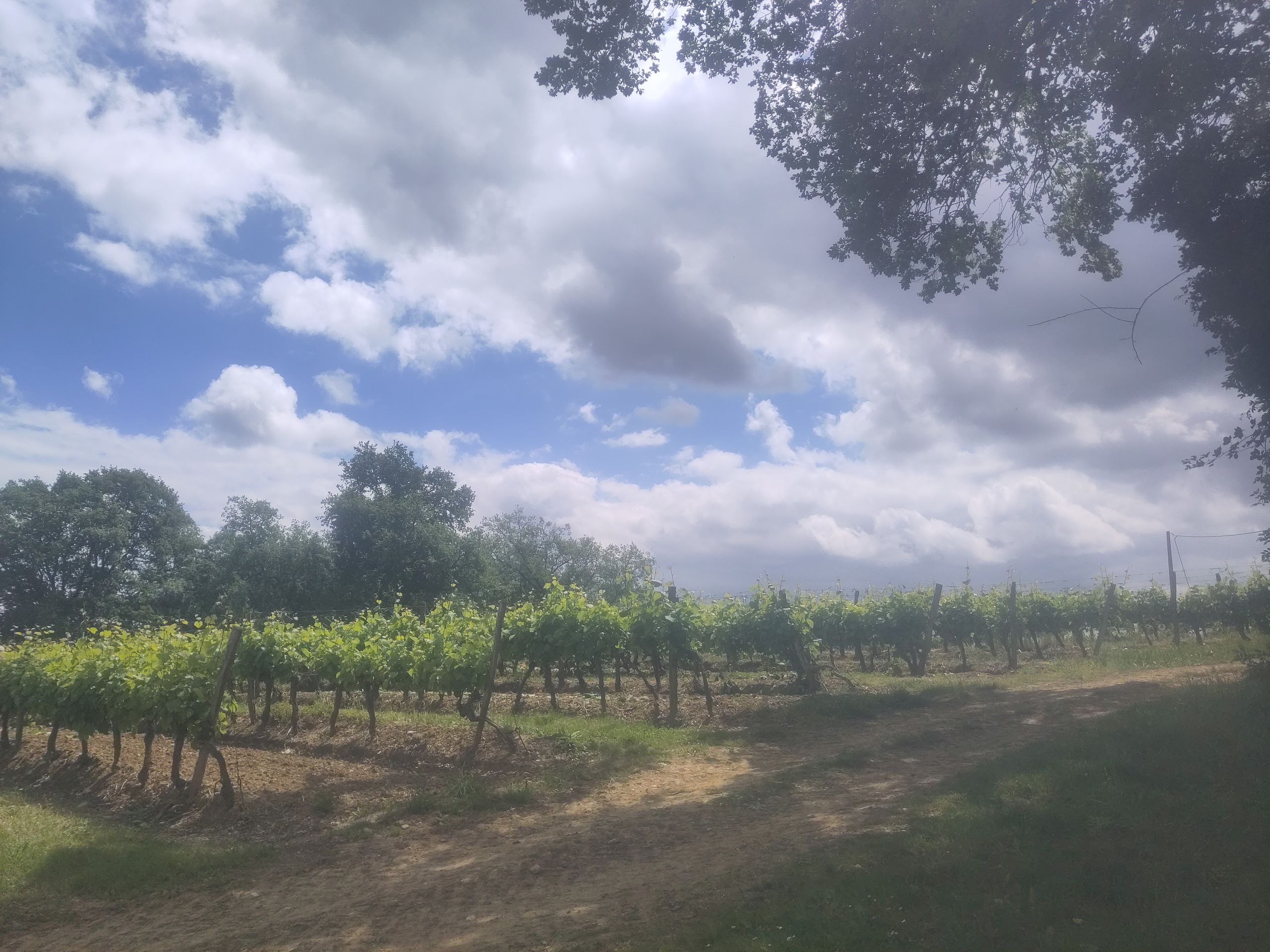
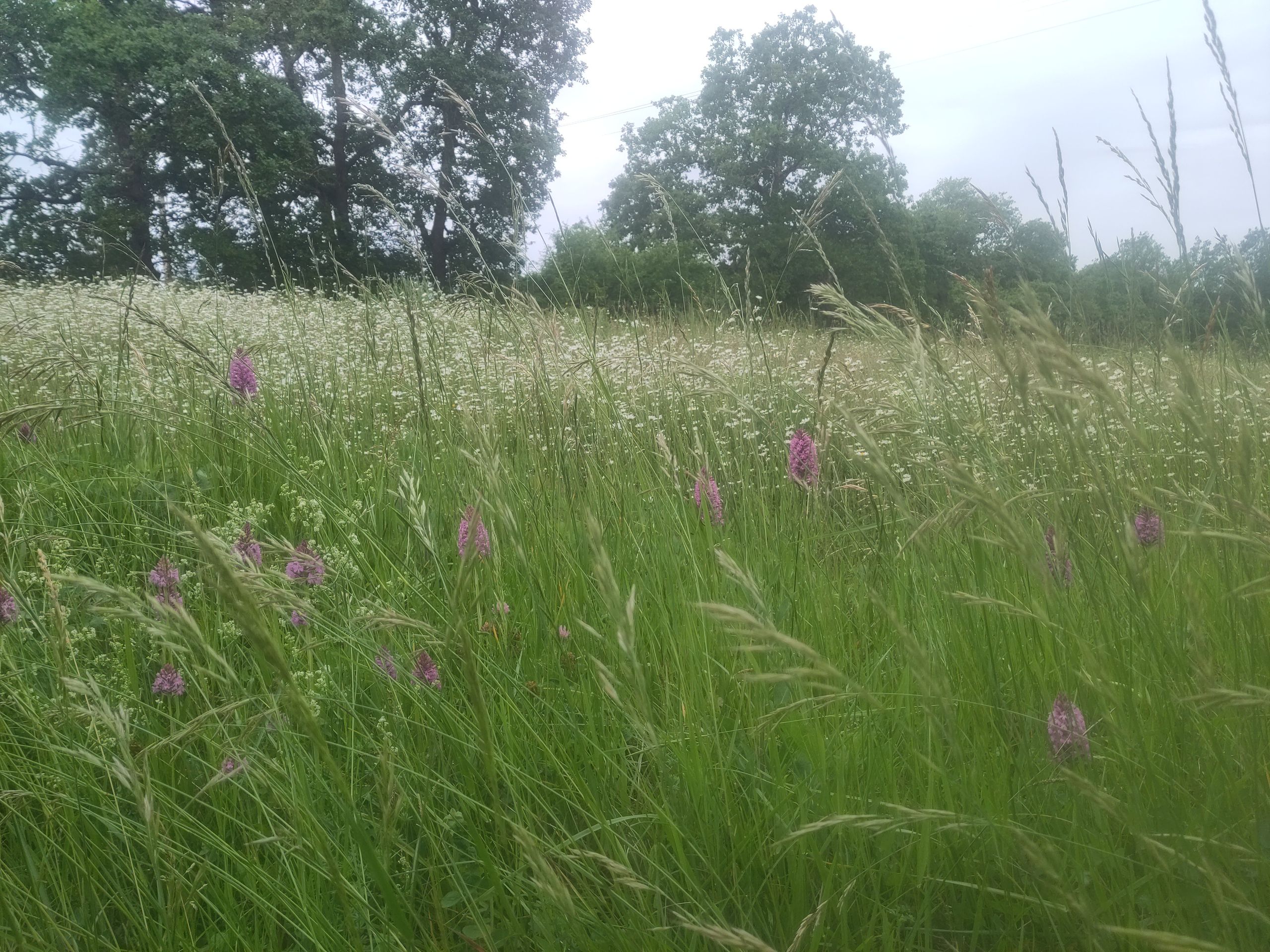
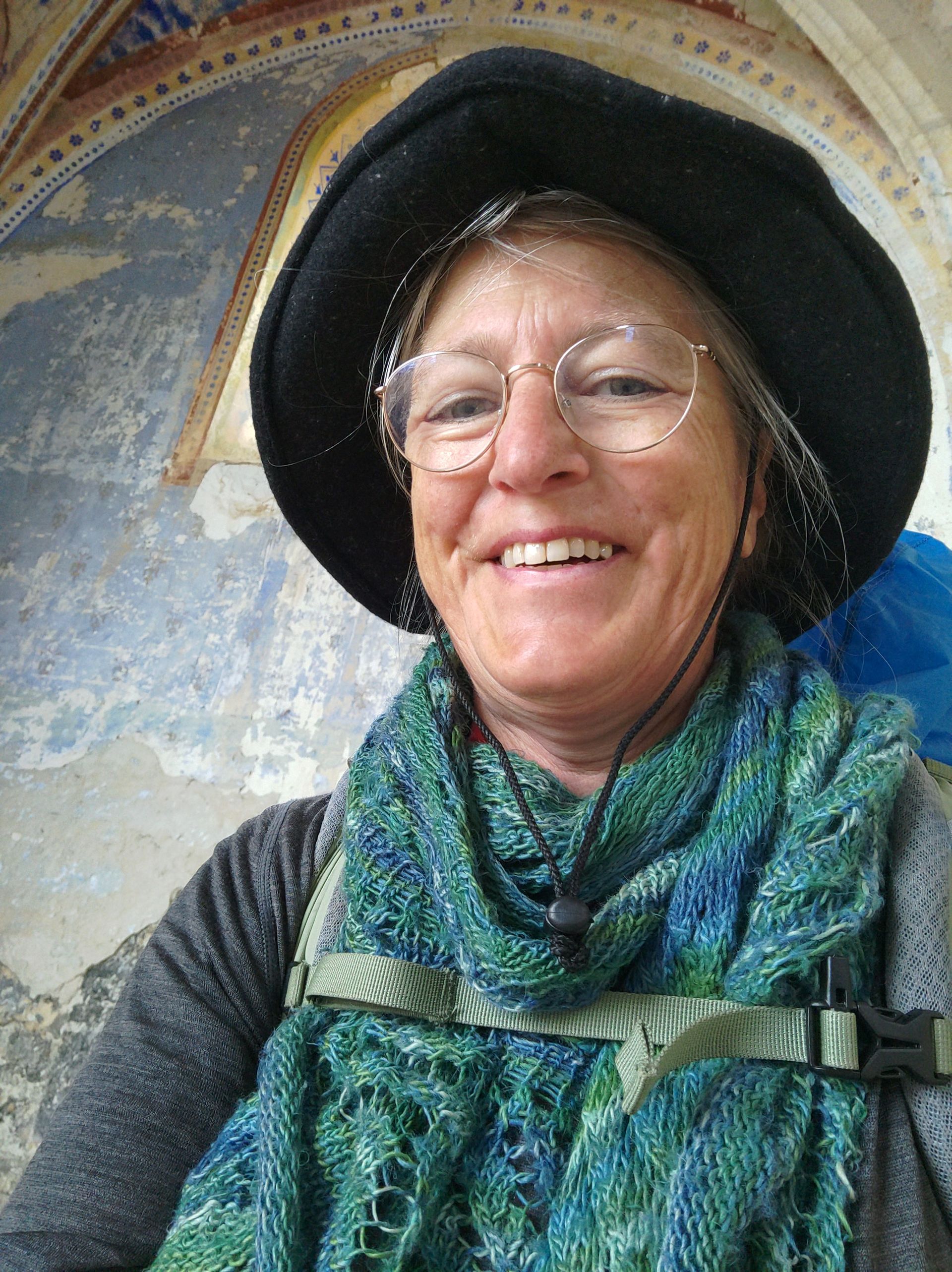
Once again ten days and 240 km further - time for a new brief impression from beautiful France; the gently rolling, hilly, green Occitanie with its lovely stream and river valleys, the wheat fields swaying in the breeze, green forests and charming old places with large churches and full of rose blossoms...
Initially, I still experienced the French part of Basque Navarra: on the bilingual place name signs, the French names were almost everywhere spray-painted black and made unrecognizable. Just over a week ago, I left the Basque Country (when crossing the river Le Saison); on that day, it also didn't rain for the first time: a truly 'dew-fresh morning' and finally a view of the snow-capped peaks of the Pyrenees! Even the next day, I got to admire this majestic 'wall' before rain clouds covered everything again...
May 8th is a holiday: victorious end of World War II: fresh flowers everywhere in front of the war memorials and many taking advantage of the long weekend to be on the move. In the small town of Maslacq, the Tricolore is being raised and a speaker's stand is set up in the village square as I pass by - in some churches, dark red roses stand in front of the Jeanne d'Arc, who can actually be found somewhere in every church, in this wonderful mix of femininity and 'armored knight'...
In Aquitaine, the irrigation and fertilization systems stretch like huge spiders over the vast corn fields (still earthy brown with the delicate green shimmer of young corn plants) and grain fields. The vines here are already far outgrown. Over the wide river Pau (and here also once the highway ‘La Pyreneenne’), I finally reached Occitanie - beautiful landscapes full of lush green and blooming; it's fresh, often it rains, mostly it's (darkly) overcast and on some days, the weather forecast warns of thunderstorms, which turn out to be quite justified. The more I enjoy the (short) sunny paths in between, the light, the rainbows, or for example last week in the morning the snow peaks of the Pyrenees in a bright strip of morning sky, densely covered above by a blanket of dark thunderclouds; over the little grove where I had slept, a piece of rainbow... That night I was very fortunate that the thunderstorm only grumbled and flashed in the distance; above me, at times even the stars shone, and it only rained lightly for a while, so my poncho-log-wood slab construction was sufficient as protection! The next day, I just manage to find a large open barn right in time around 4 PM, before the blue-black sky erupts in a violent thunderstorm, which comes back two more times. When I speak to the older woman who is just walking across the yard by the barn, it turns out that she not only speaks English (my first question in France is always 'do you speak English?', since unfortunately, I do not speak any French and far fewer people in France speak English than, for example, in Spain..), but she is also English. She and her husband bought this large old estate, which was quite dilapidated, 20 years ago and since then spend several months here every spring and autumn, creating a beautiful place, almost a kind of open-air museum. At first, they invite me for tea, later for open-faced sandwiches and even later for a glass of wine by the open fireplace, while outside the world seems to be collapsing - we chat comfortably. Just in time before the third downpour, I go under the barn roof and am already cozily lying in my sleeping bag when lightning, thunder, storm, and rain come closer again and finally are above me. Right next to the barn is a small lake: It's amazing how much noise frogs can make!.. But I still sleep well. For days, it croaks and makes noise at every body of water...
Other nights I spend again in various hostels - from a communal one, in which there isn't even a window in the sleeping area (only a roof window high up), which you could open (according to that, the air is like that) to various smaller private ones (mostly on a donation basis). There are many former pilgrims who now create places where they can live while doing something good for the pilgrims; but also, for example, a permaculture and food forest initiative in an old mill, idyllically located (a few kilometers away from the trail). This place is brought to life and created by Germans who couldn't acquire such land in Bavaria; at another place, there are two Canadians who share their house and garden with up to 9 pilgrims; once I spend the night in a slightly musty, damp small tent (it's been standing for five years...), which, like three other guest tents, a large kitchen-living room tent, and a yurt, is set up in a forest meadow, where a young French couple has been living every year from early April to about the end of October (when I was astonished that in Germany this is not allowed, living for years on a property without a house, just with a yurt and tent, they laugh and respond: not in France either, but nobody cares). This winter, the heavy rains and fierce storms uprooted 15 large trees on their property. At first, they were sad; now they notice they have much more light and space and can grow more vegetables... There is a compost toilet, a garden hose shower behind bamboo - and a good communal dinner for three, since I am the only guest that night. Elsewhere I meet an American couple (I only have a tea there and chat for a while), who are reviving a large estate with a pilgrims' hostel: he was a successful chef in the USA, got cancer, went to Spain on the Camino, and hiked until he was healed - at least that's how he tells it, he met his wife on one of the pilgrim paths, and now they are here, have found this beautiful place, he cooks for the guests (they accommodate over 40 paying overnight guests) and tells me that cancer was the best thing that could have happened to him, otherwise, he wouldn't have changed his life...
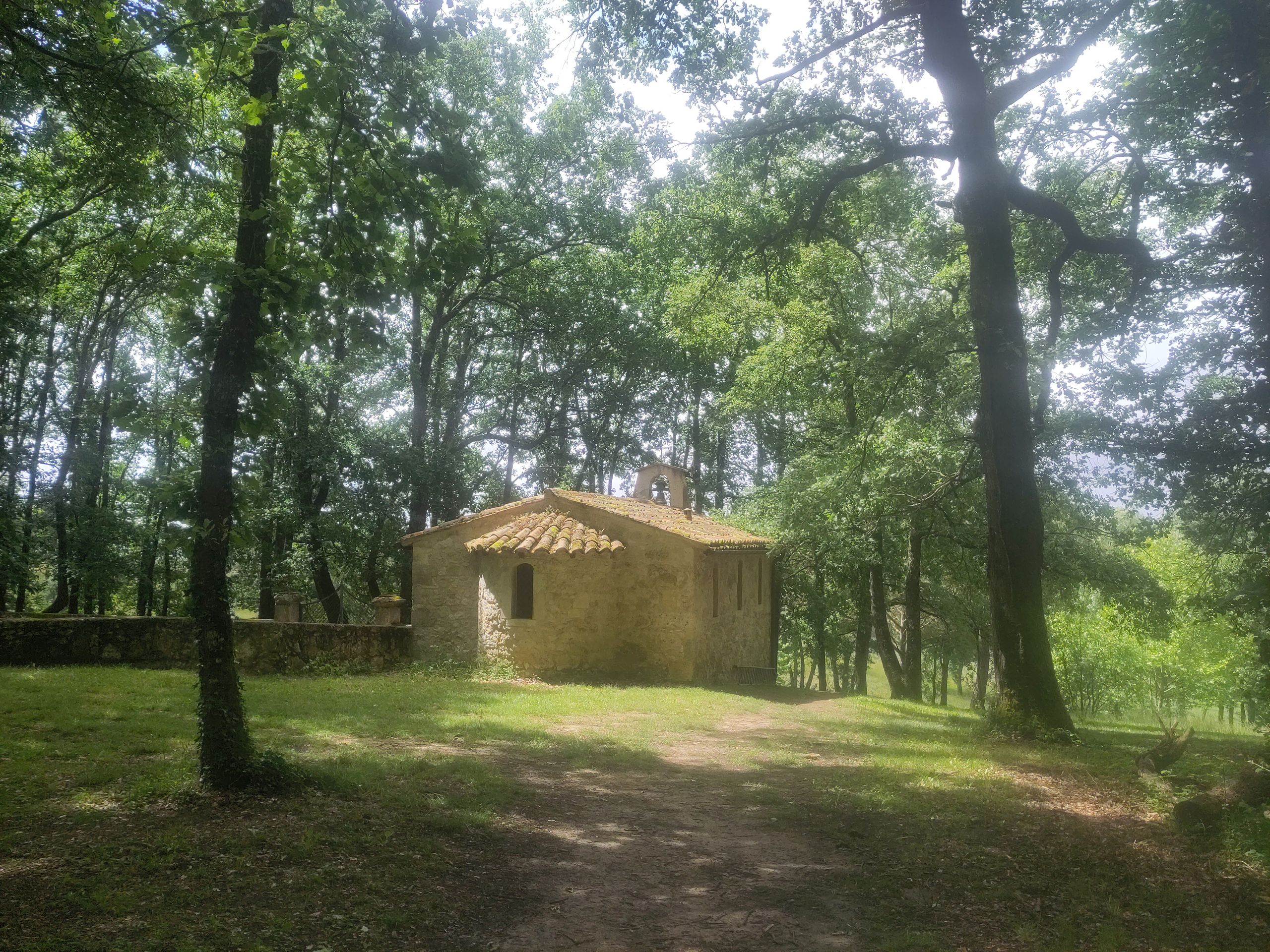
Last night I sought refuge under the awning of the 'citizen house,' only 16 km before what I don't know how many rains of the day, not quite clear and such that I thought to just stay there. During the day, I waited out downpours at various places: in the massive monastery church of La Romieu, in a cafe, in a large greenhouse full of flowers, in a small chapel deep in the woods, under a high open barn roof; and several times I got really wet, like when a steep forest path turned into a slippery brown stream, while the thunder roared directly in my ears... Now, despite it only being 5 PM, I had no desire for more rain. Around six, a handful of women arrived with gym mats for Pilates. They had no problem with me, let me join in and afterwards sleep in the community house (one door can always be opened from the inside, I just had to use it in the morning and let it fall shut behind me...) - so I am grateful to be dry and not quite so cold (7°C at night), have a toilet, water, charging electricity - a kettle for tea would complete my happiness, but after all, you shouldn't overdo it with wishes!).
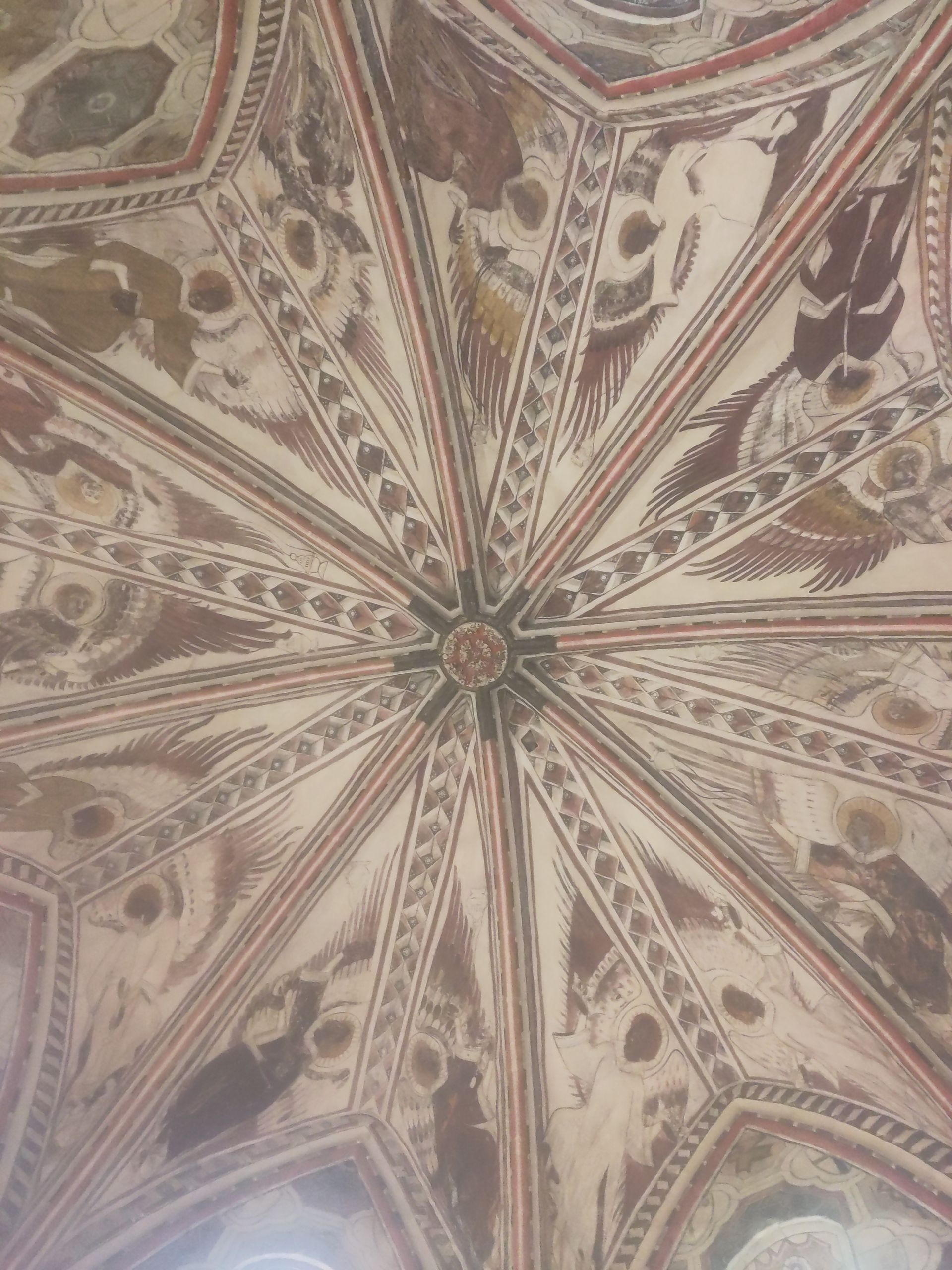
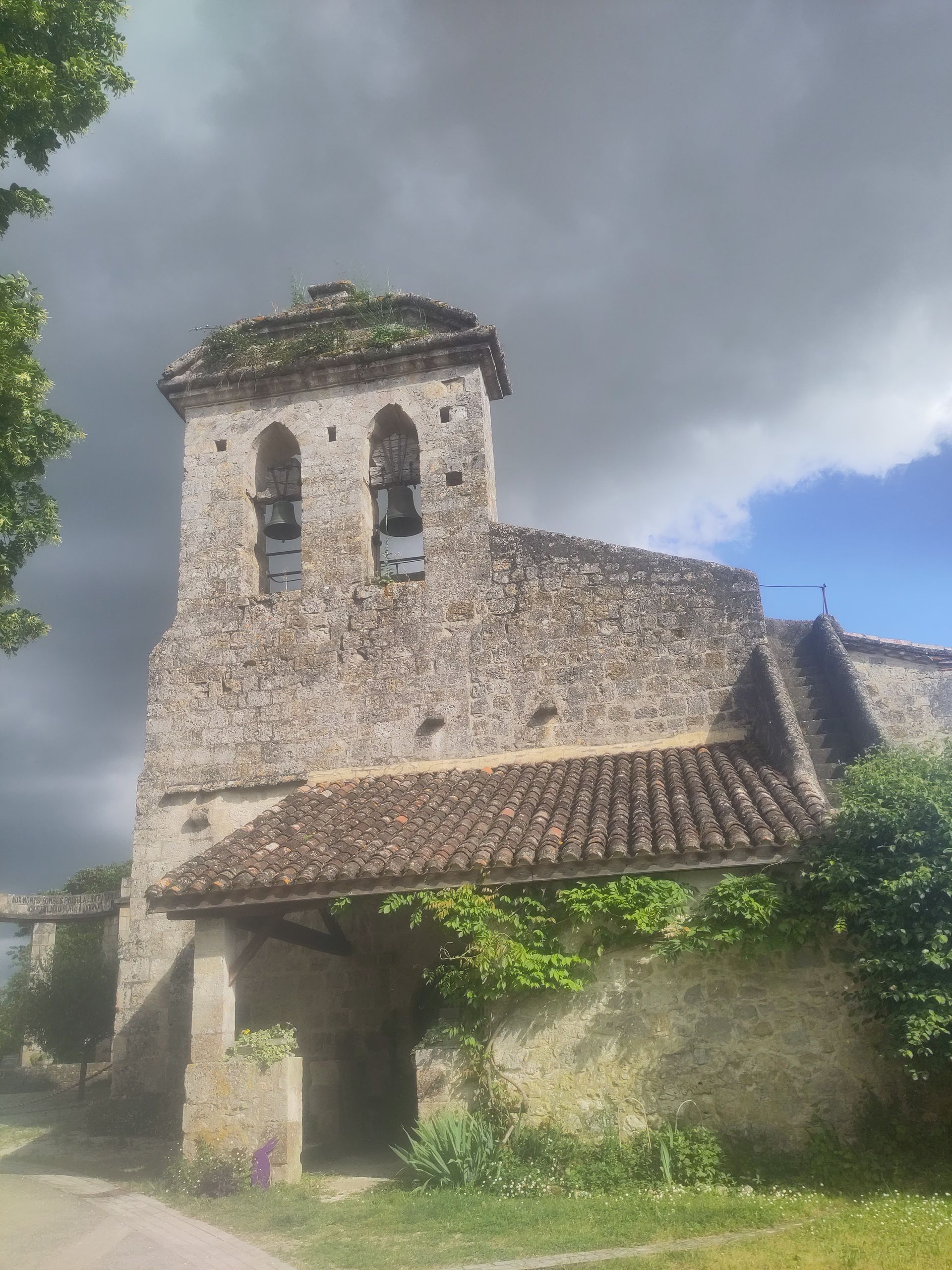
Now the hiking time, of course, consists not just of nights and sleeping places but also of days: each full of beautiful landscapes, silence, bird song, blooming and ripening, interspersed with hamlets, towns, and individual farms: An area in which, evidently, no bomb destruction took place during the war. Chateaus, castles, majestic estates, medieval picturesque towns with city walls, old gates and bridges, and of course churches, chapels, and cathedrals. Navarrenx, Air sur l'Adour, Nogaro, Eauze, Montreal, Condom, where life-sized musketeers stand in front of the cathedral, La Romieu, and Lectoure - just to name a few of the places where I wander through old alleys and admire famous sacred buildings. Besides, there are small places like Pimbo which remain in memory: a large old church, in which the stained glass windows are no longer complete and the swallows have built nests directly beside the altar in the niches of the columns, constantly flying in and out, and where there is a blooming garden and a nice 'pilgrim cafe', otherwise at most just a handful of houses; on a hill (well, that’s not exceptional, mostly I have to go up and down to the places), already visible from afar is the large Romanesque building. Or Larresingle, where between the castle and church wall, both towering and equally powerful, only a very narrow passage remains, in which one has to lay their head far back to even see some sky... Then the small chapels, often very lonely, usually with a cemetery nearby, special trees - very enchanted places with a special atmosphere and good sound when singing; in front of the various saints there are often no offerings, notes, photos, or flowers left.
Overall, a blessed region full of gentle beauty. Two days ago, I found the first ripe cherries under a tree, the first meadows are mowed, and poppies shine red in the still green grain. Hawthorn flowers bloom along the roadside and lush roses in the gardens and against the light natural stone house walls. Also here, there are many houses for sale, there are also decaying and half-decaying places, and there are also churches where something needs to be urgently done to prevent the intrusion of water, especially... but overall, everything looks a bit more 'well-kept' than in large parts of Spain. The prices are noticeably higher, a cup of tea cost between 1.20 and 1.80 in Spain, at most 2,-€. In France, it starts at a low price of 2,-€ and goes up to 3.80 € (but that’s just too much for a cup of tea for me...). The paths are slippery-sodden and the boots are thickly caked with mud, and every day, when it’s dry enough, just sitting in the grass, back leaned against the trunk of a thick linden, pine or oak, enjoying the peace and quiet is a real gift. Encountering pilgrims these days often presents a bit of a historically reminiscent image when they appear in the distance with flapping rain ponchos over a grain field or a hill...