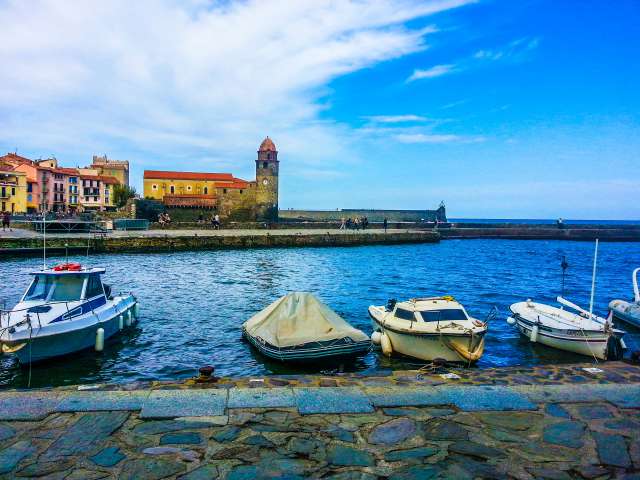

on the coast up to the Basque Country
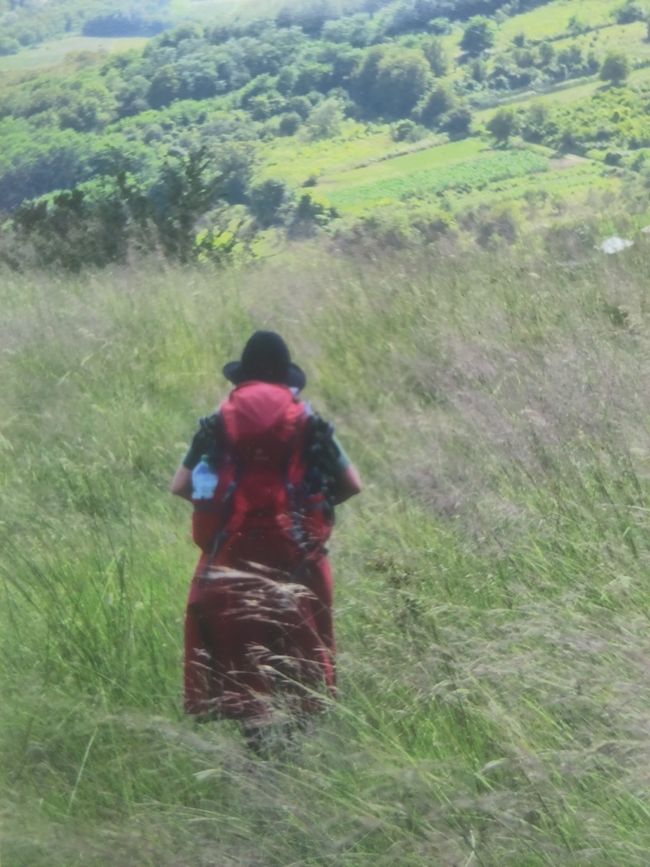
coastal fog and slowly breaking morning sun

Published: 05.05.2026
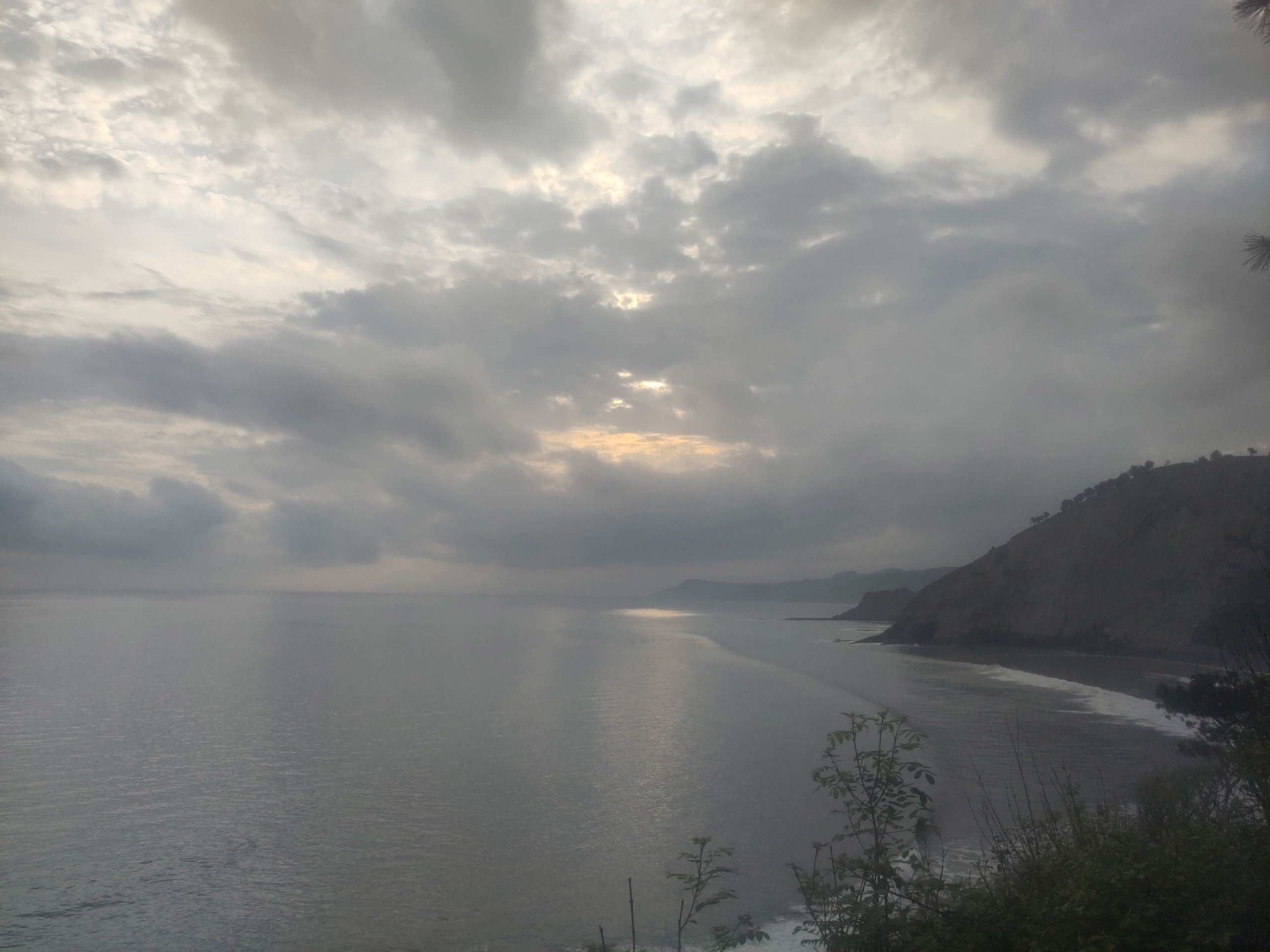
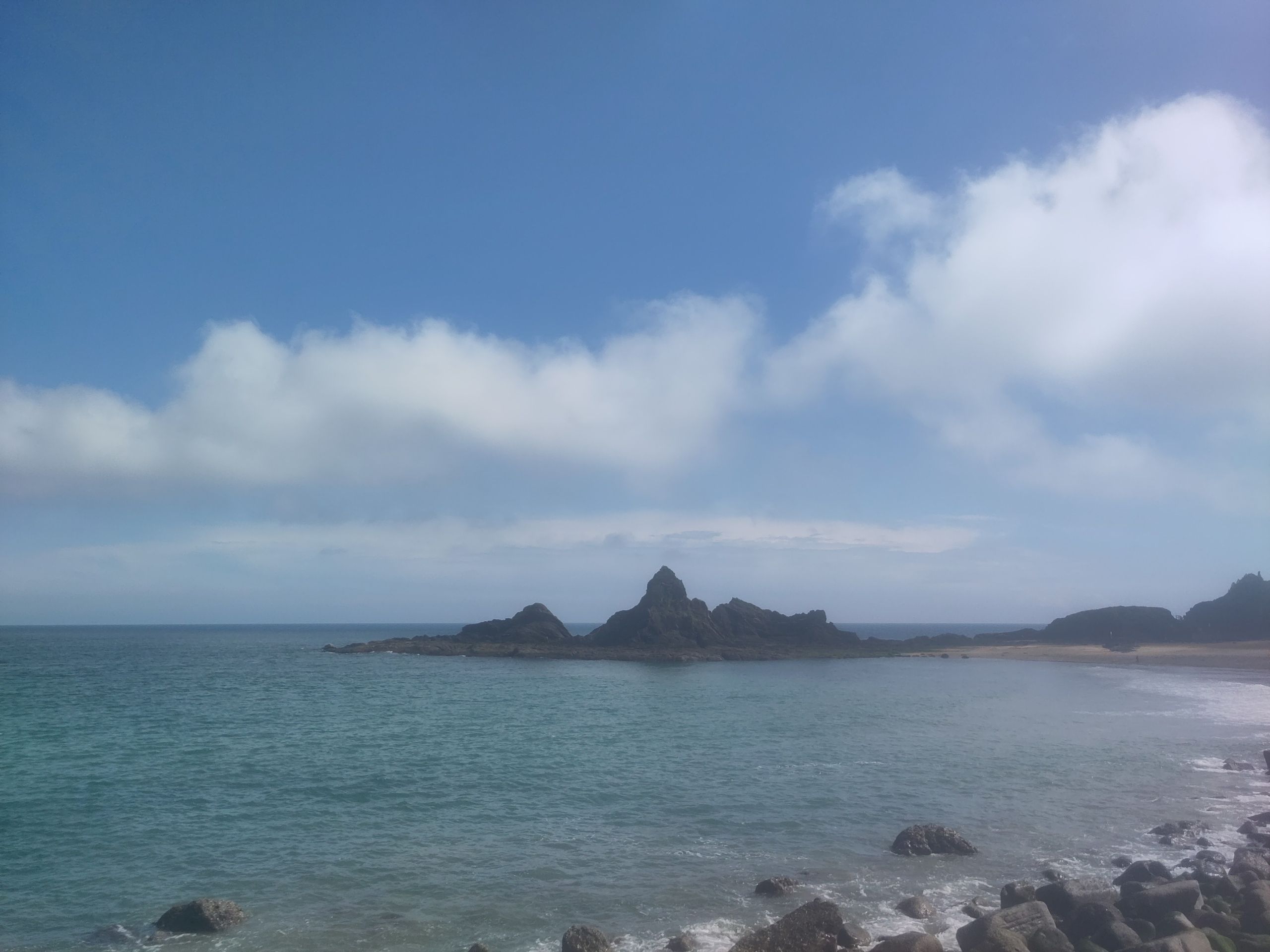
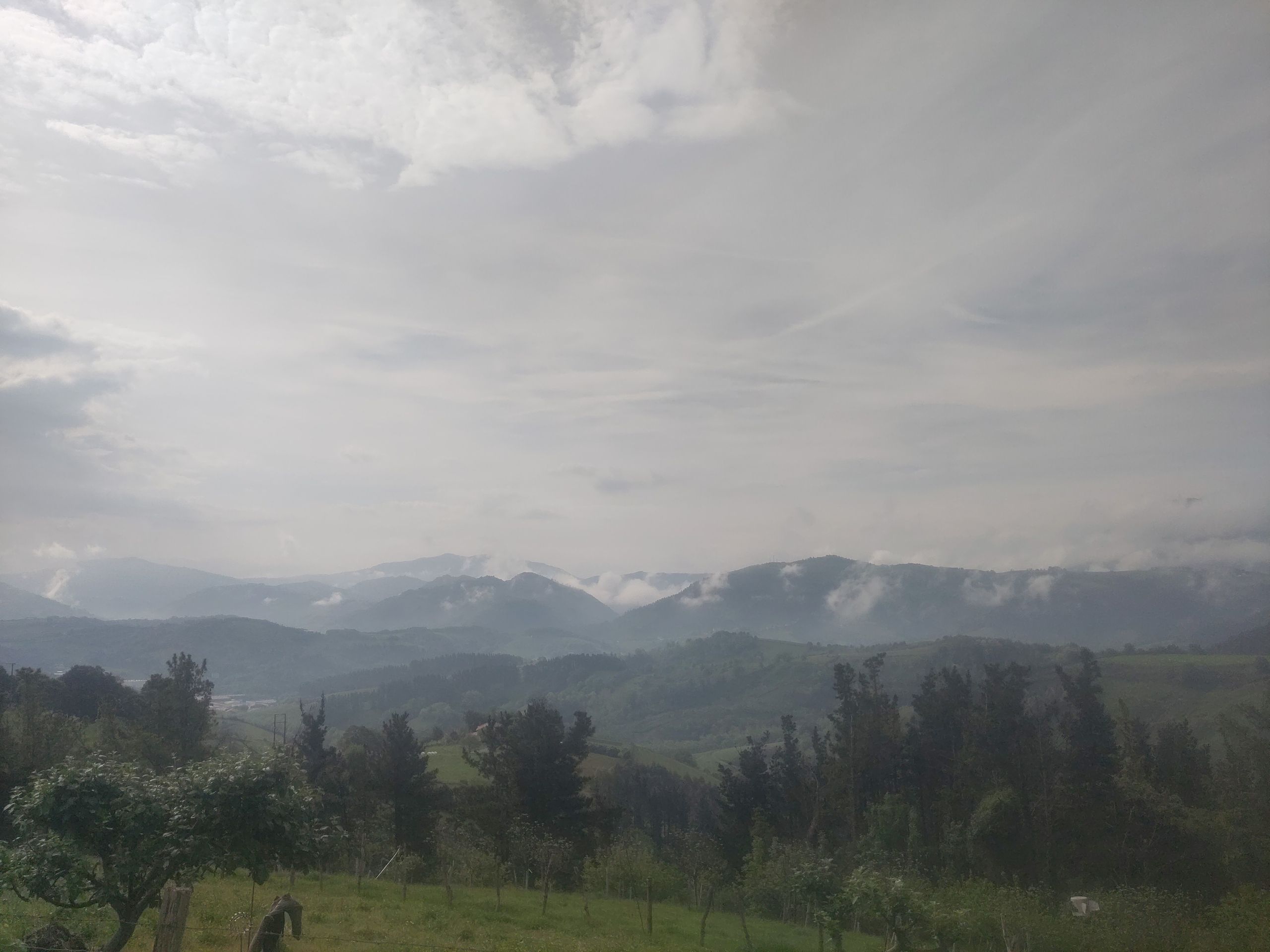
Since yesterday, I have no longer been hiking in Spain, but in France - still in the Basque Country, though. But to put it a bit more 'in order': After the last entry here, the last four days were spent on the Camino del Norte in Spain. The weather often showed itself from its 'coastal side', meaning it was rainy and cool-stormy or very changeable. I tried to find other routes in the green mountains besides the marked Jacobean path, but eventually found myself dripping in my rain poncho in front of a small 'Eremita', a stone chapel, and could not even discern a trace or what had been overgrown from my digital map's 'forest/field path' (I hadn't even planned for a 'path' category). A concerned driver, the only one who ventured here, stopped and explained to me (as much as I understood) that it was dangerous in these mountains, that this small road ended by his house further up, that there was nowhere to go from here, and that I needed to turn back - well, I had realized that on my own too... Regardless, I will not go back to the starting point but simply to the nearest place from where I will indeed be picked up while trying to hitch a ride, and two cars, several kilometers, and two heartfelt, albeit somewhat laborious conversations later, I get out again in Gernika. In the drizzle, armed with colorful umbrellas, seniors and students alike flood into the town's museum; I, however, only buy some fruit and nuts and make sure to get back on lonelier paths.
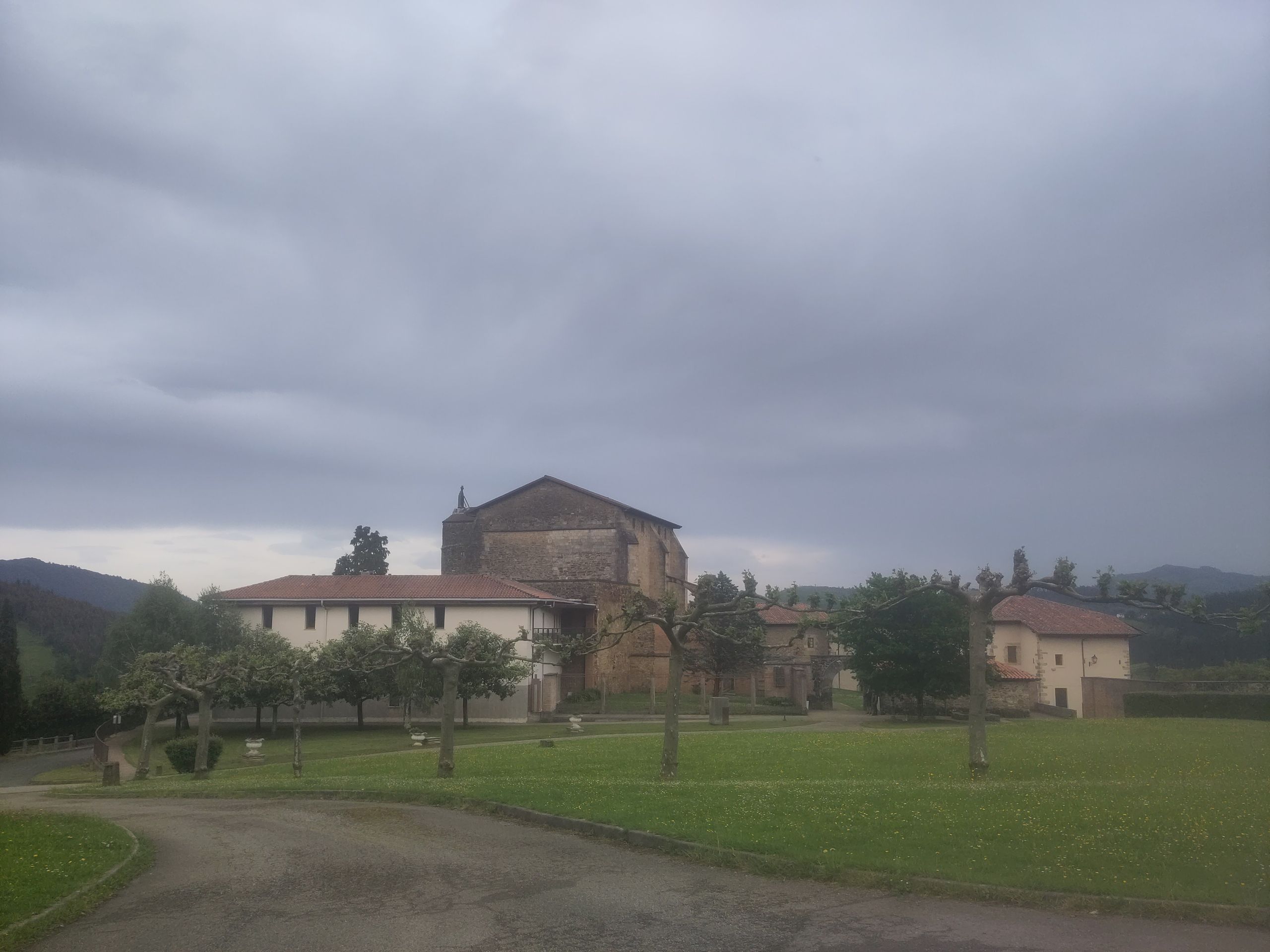
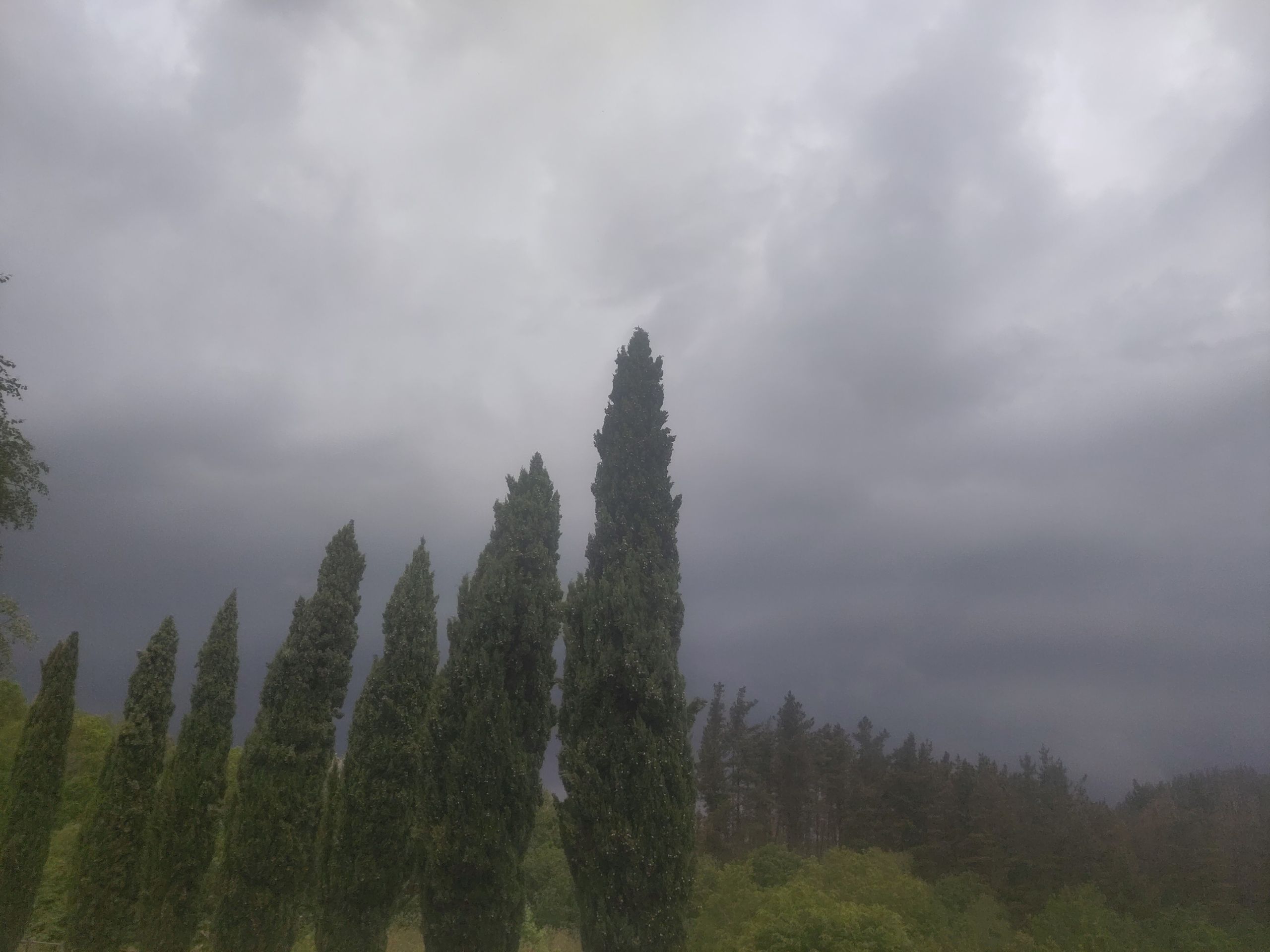
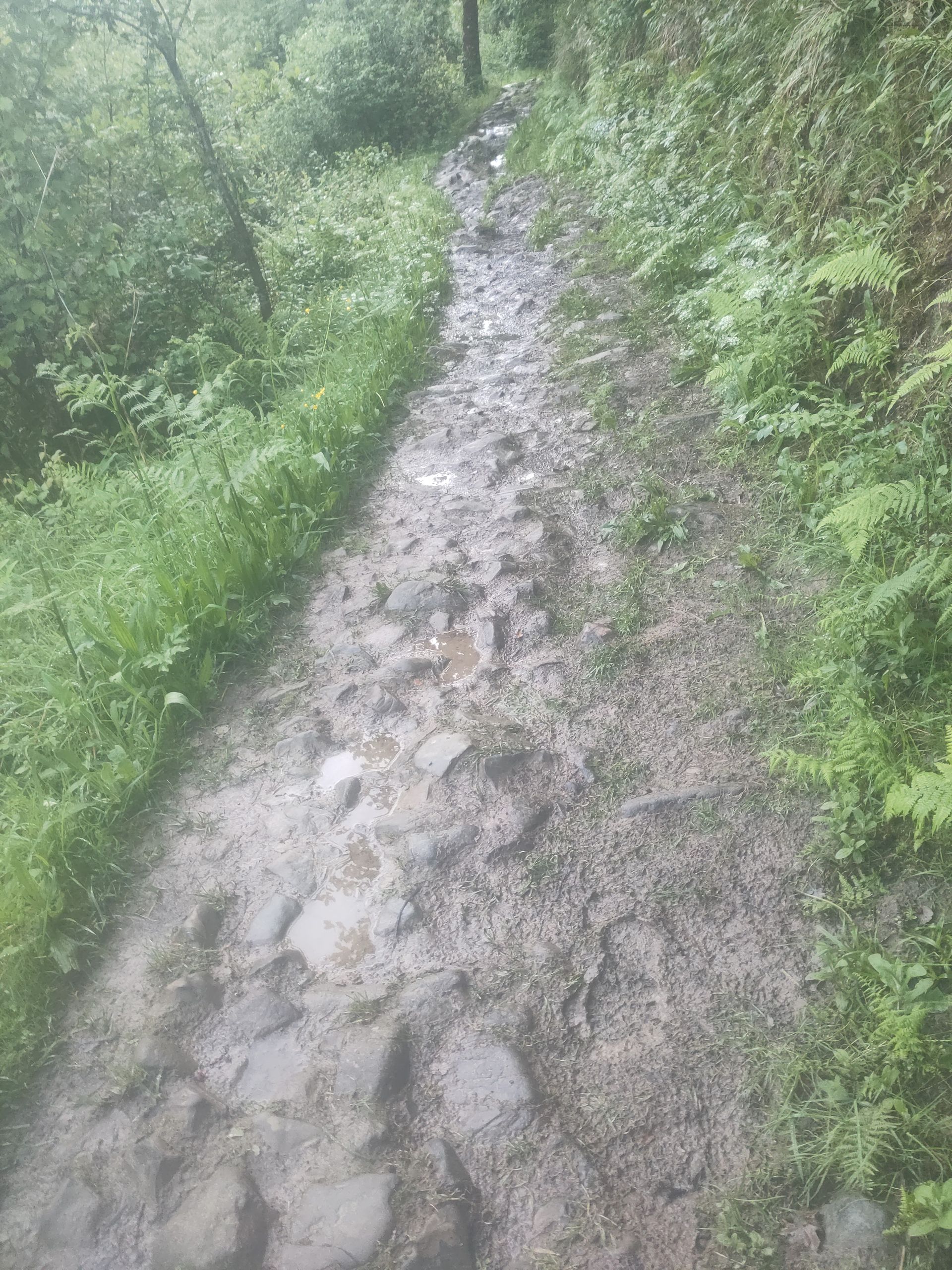
The lonely, narrow forest paths, steeply up and down, are beautiful, but now they are muddy, soft, and slippery. Moreover, it seems that the thunderstorm warning is valid, as the sky is turning more and more threateningly dark blue. I finally arrive directly from the woods at the great monastery of Ziortza. There, the white-clad Cistercian monks welcome pilgrims in a sort of cellar-style accommodation, quite rustic, but I am glad to find room on the mat in the entrance area, as all the bunk beds are already occupied. The monks brew their own beer, which they sell in a small monastery shop along with some 'pilgrim kitsch' and a few 'snacks'. For a moment, the sun shines briefly, then the storm approaches with heavy thunder, lightning, and hail - we stand around shivering, glad to be sheltered! Afterwards, we go into the surprisingly large church (a cloister is also included) for 'prayer and hymns', where two monks sing (more or less melodically) and recite quite long and monotonously but passionately; then, there is a pilgrim blessing, followed by pasta with tomato and vegetables served from a giant pot for everyone...
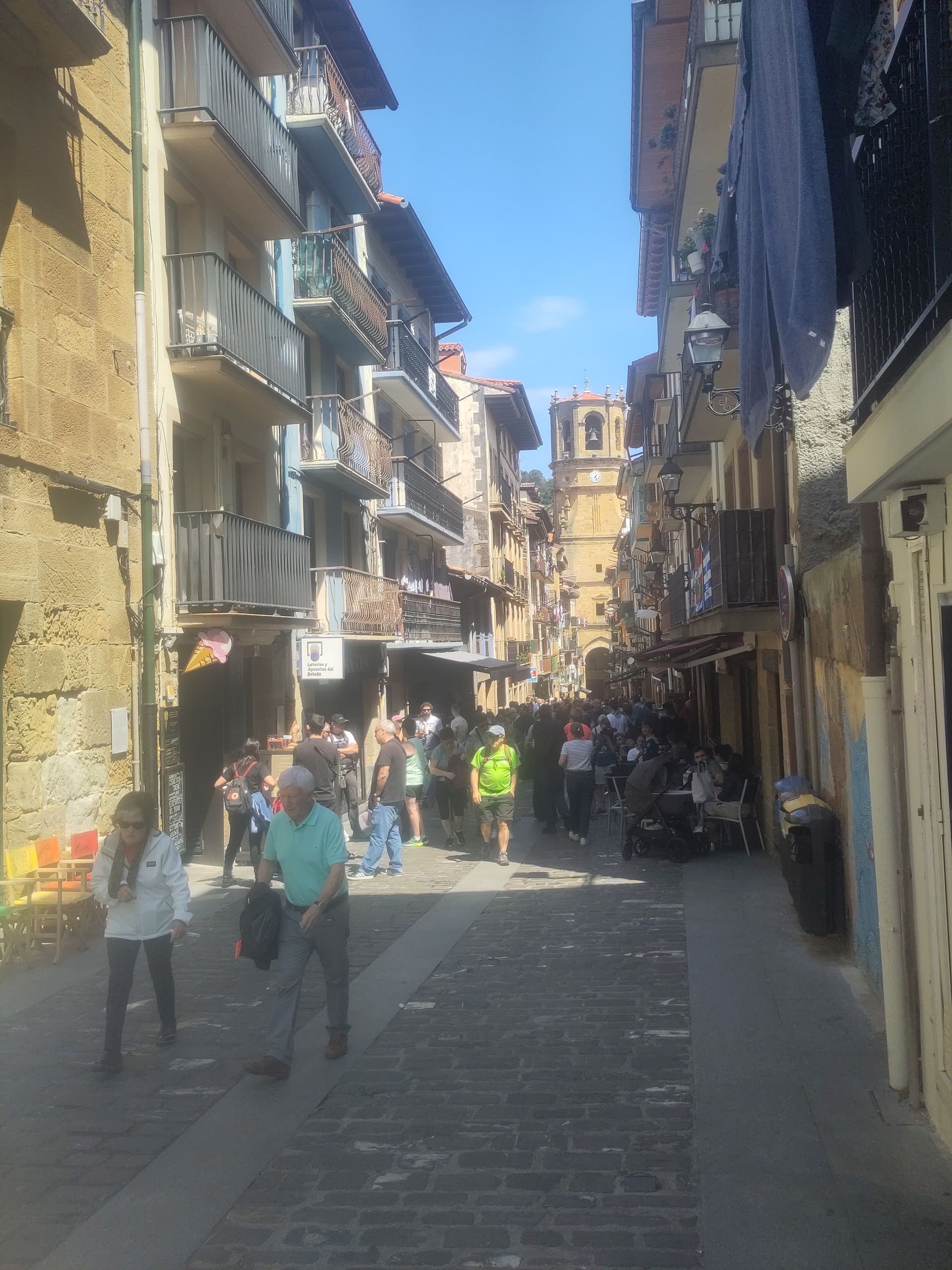
During the long May 1st weekend, there are 'migrations' of people everywhere; joggers, walkers, families with strollers and scooters, senior groups, and of course cyclists. The number of pilgrims also surges rapidly for the weekend: In the former train station of Deba, where the Municipal Refuge is located, all 56 places are filled! All in all, although it is quite busy, it is also nice to see everyone who can getting outside in the first days of May, despite the uncertain weather.
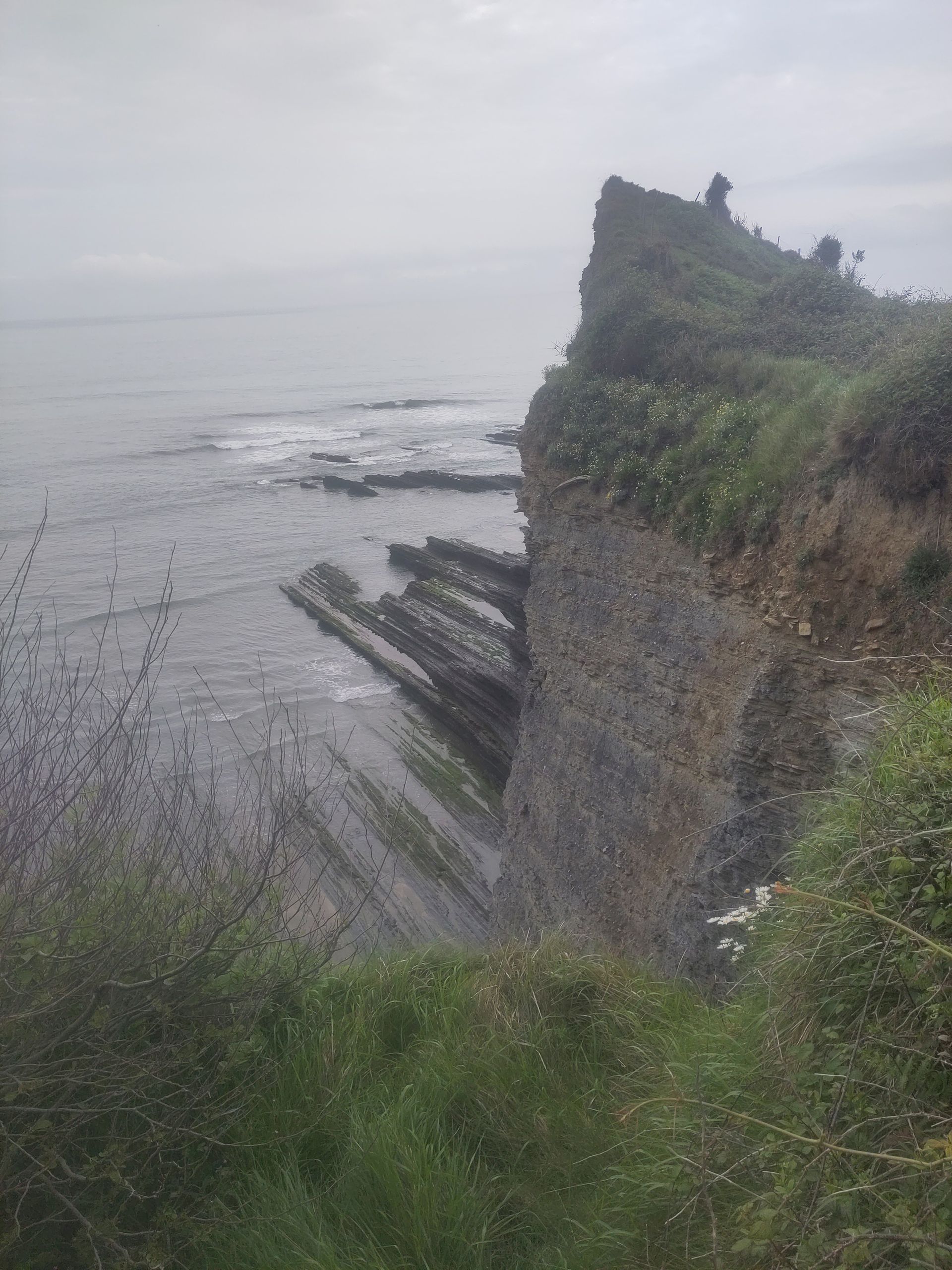
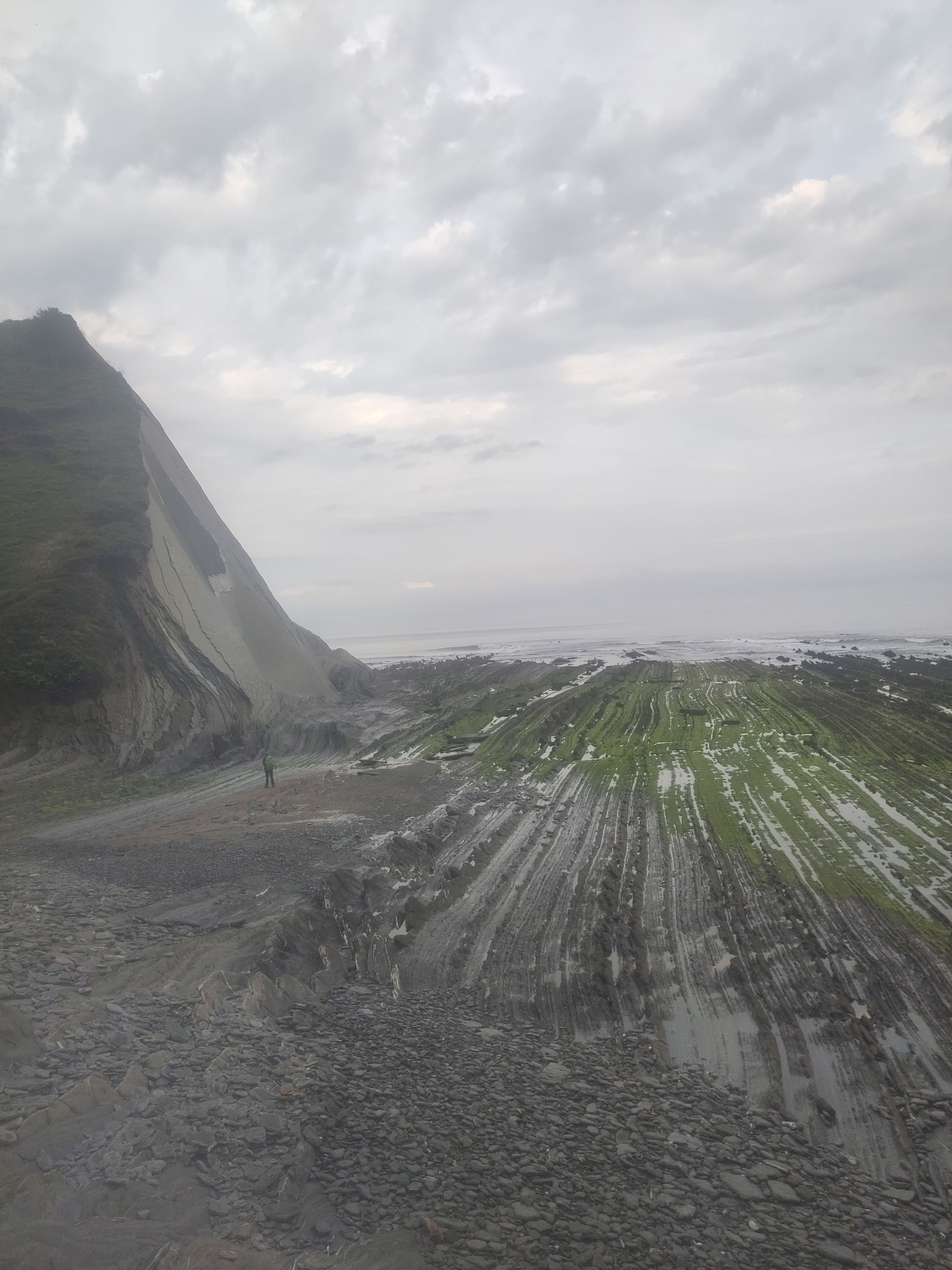
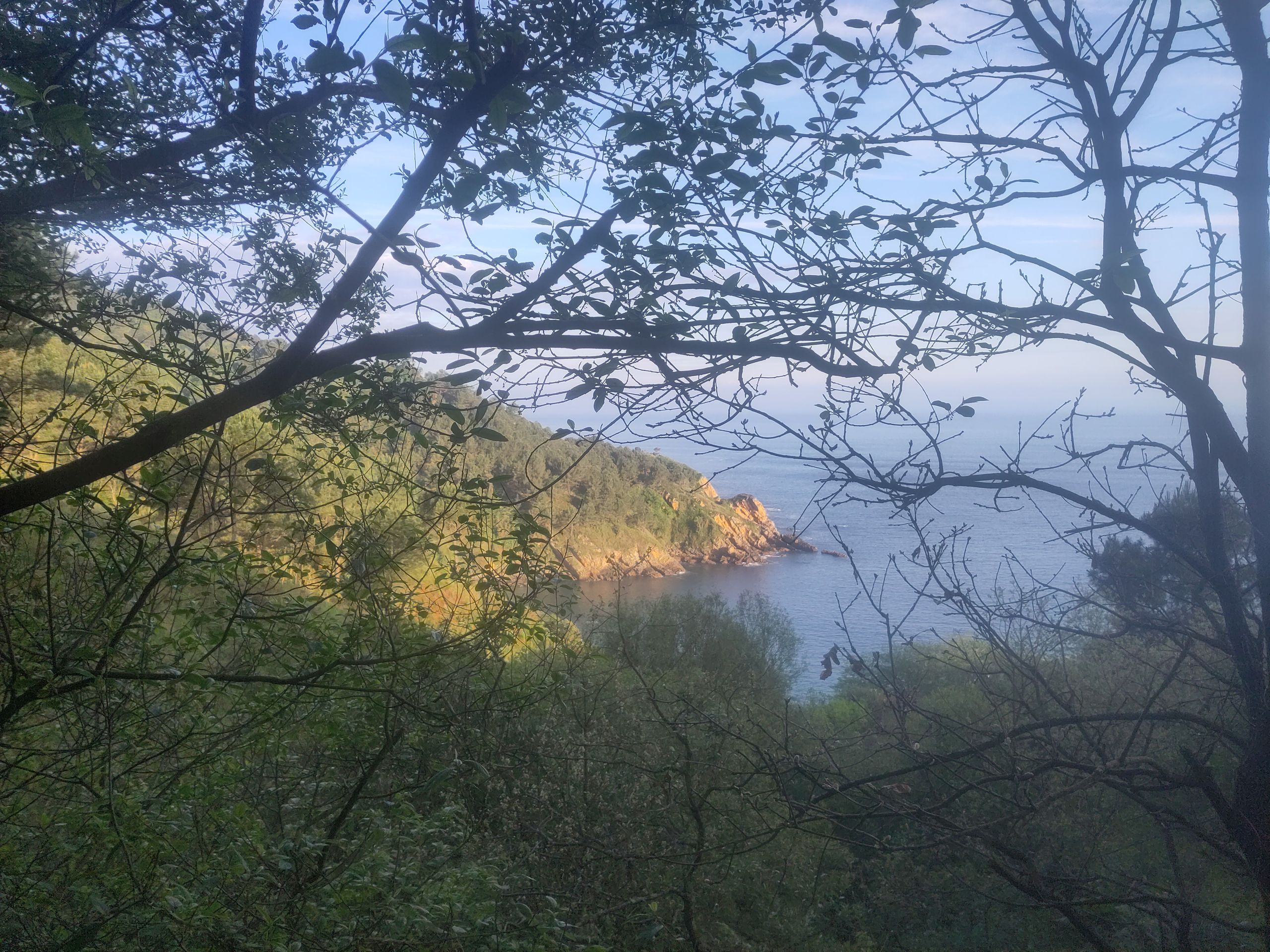
Still, I find lonely paths again close to the coast; especially between Deba and San Sebastian, the coastline is practically an earth history picture book: the steep cliffs and the vertically standing sediment layers, called 'Flysch - Geopark', stretch far out to sea, etc.
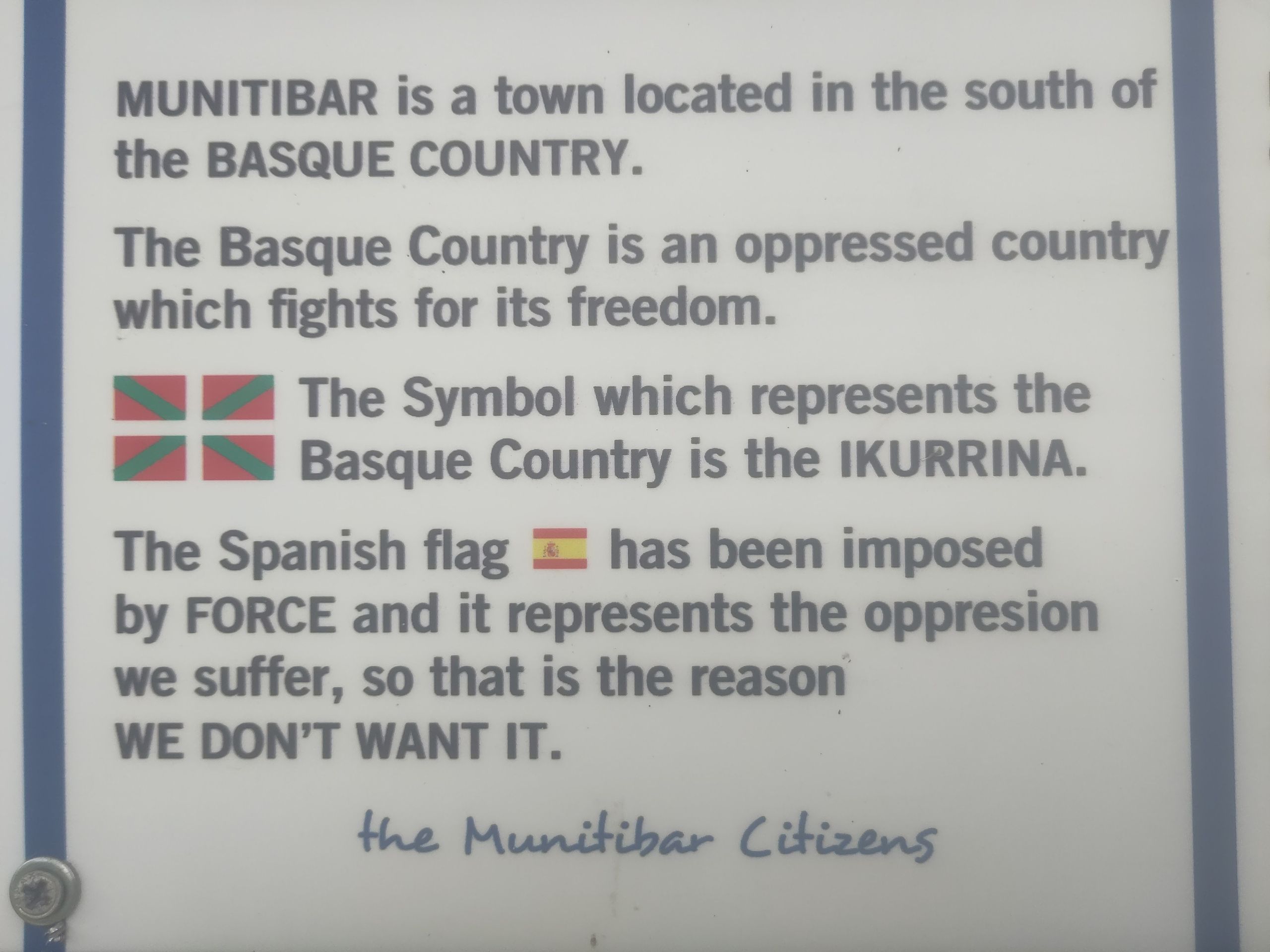
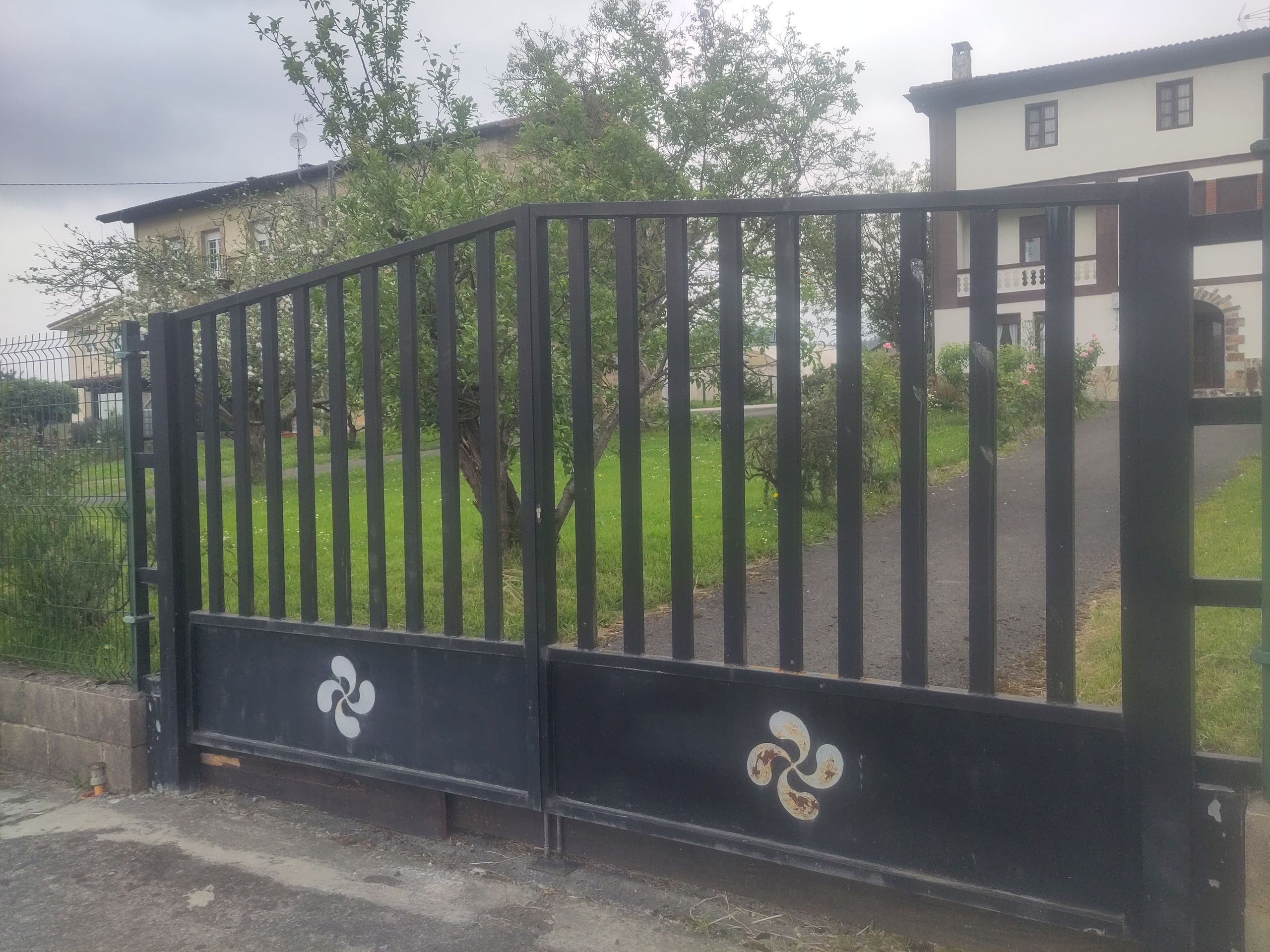
Elderberries, roses, and jasmine are blooming, and I eat my first wild strawberries from the roadside. The Camino is called 'Donejakue Bidea' in Basque. The Basque 'Lauburu', a kind of swastika or sun wheel, adorns shutters, barn doors, tablecloths, and much more and is offered as keychains and jewelry in souvenir shops. Many, including official signs, clearly point out that Spaniards and French with their flags and claims to sovereignty are unwelcome in the Basque Country. However, I often cannot quite distinguish to what extent these aspirations for freedom (are still) 'real' and where they belong to the 'touristic cliché'?
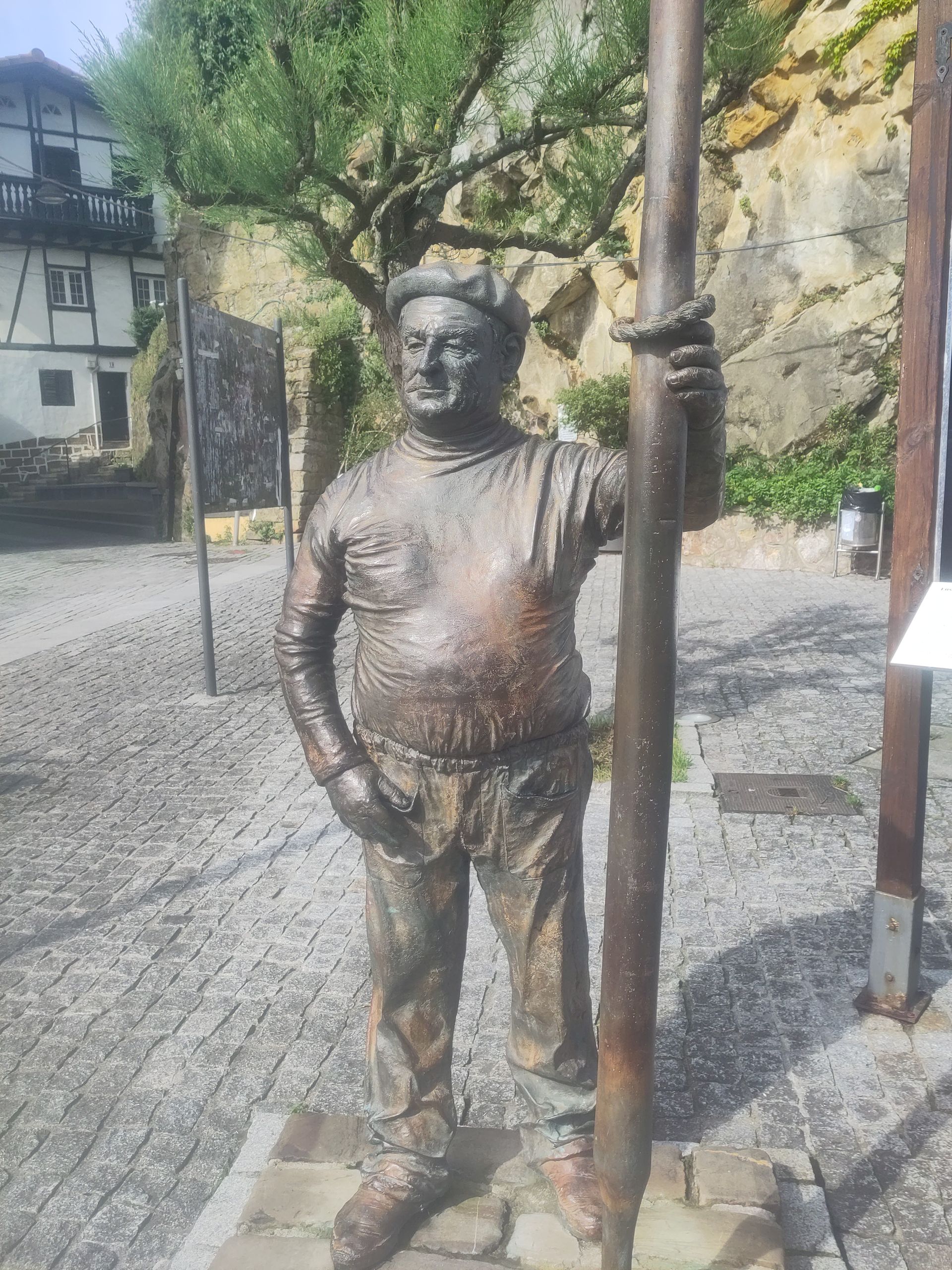
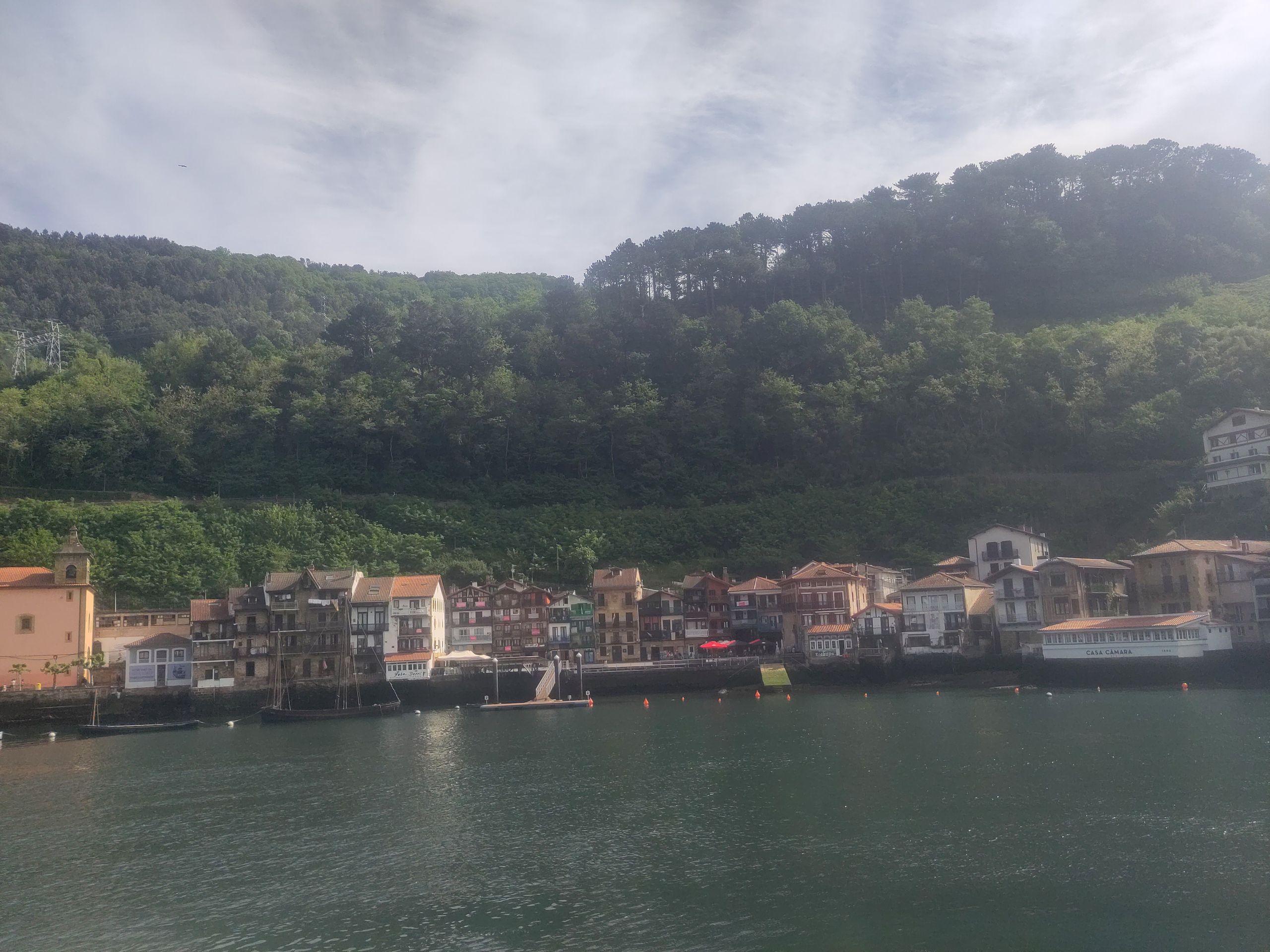
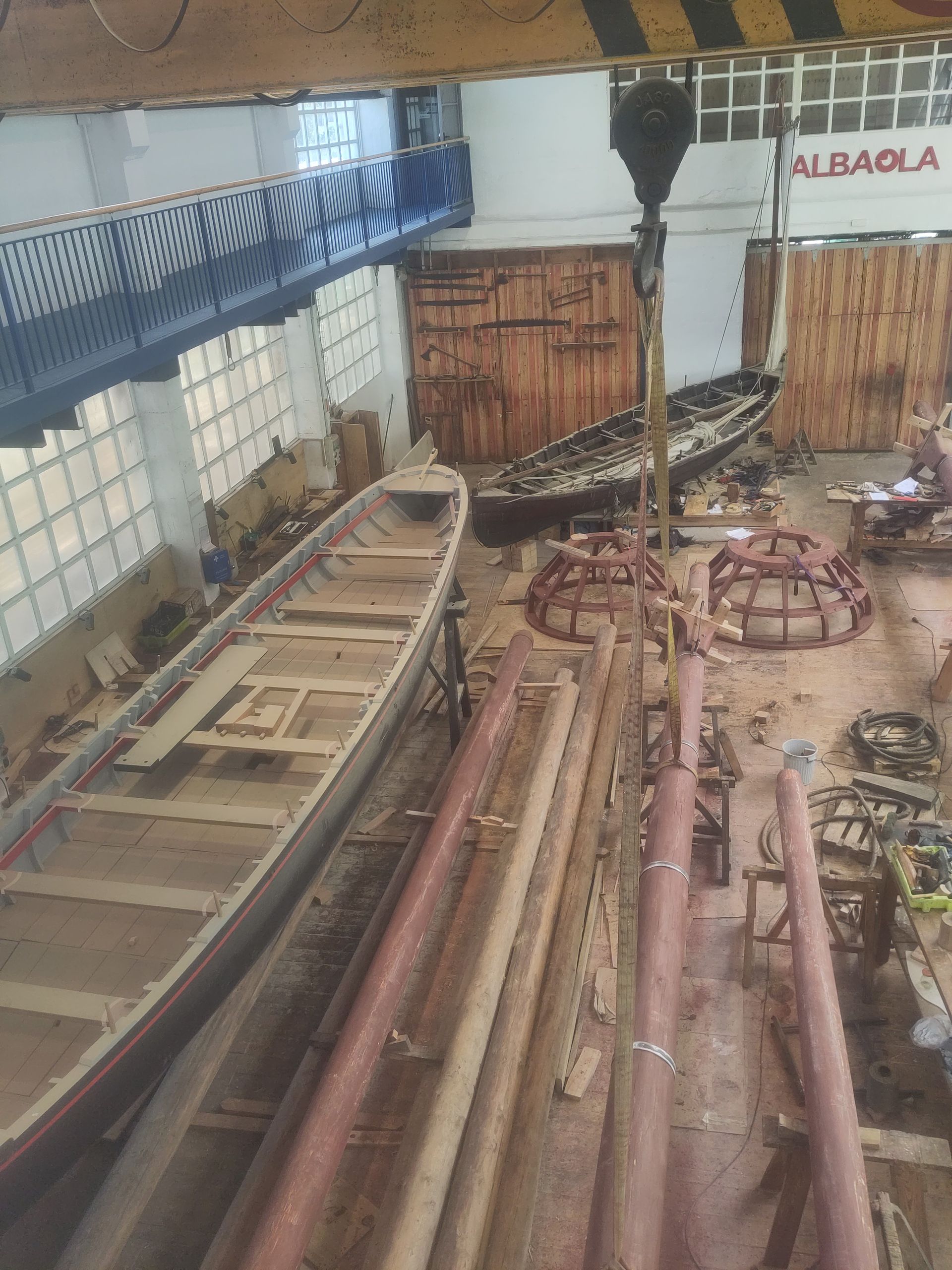
In Pasaia (a small fishing village near San Sebastian), I visit a large Maritime Museum and can dive deeper into the world and history of these fishing villages along the coast. I learn that a tuna can grow up to 3.5 meters long and weigh 650 kg - I had no idea that tunas were that big! One of the last large wooden tuna fishing boats is anchored here in the museum. A Basque whaling ship from here presumably sank in 1563 off the coast of Newfoundland, for which there is a large, exciting exhibition; old wooden ships are reconstructed using the techniques and equipment of the time, among other things - and meanwhile, outside on the bay, 12 rowing boats are practicing for some race, propelled by the 'caller', the slender boats zip across the water; and in the harbor stands next to the large black-and-white photo of a previous winning team a stout, mischievous smiling bronze man wearing a Basque beret and having a long oar in hand...
Twice, I also spend the night in very special accommodations offered by a group that collectively (following the example of the early Christians) operates farms, a bakery, restaurants, and also hostels, as the lands and farms belong to this community rather than to any individual. The people are dressed somewhat unusually, very warmly, there is communal eating, and interesting conversations - and at night the scent of freshly baked bread wafts through the open window...
The night before last, I then arrived in Irun in the rain, where the Dutch hospitaleros warmly welcomed me, and after they saw my 'Credencial', the pilgrim passport, and asked a few questions, I was also admired... I am simply tired from the long day, a bit exhausted and feeling 'too full of impressions', and perhaps also somewhat sad that I will already be leaving Spain.
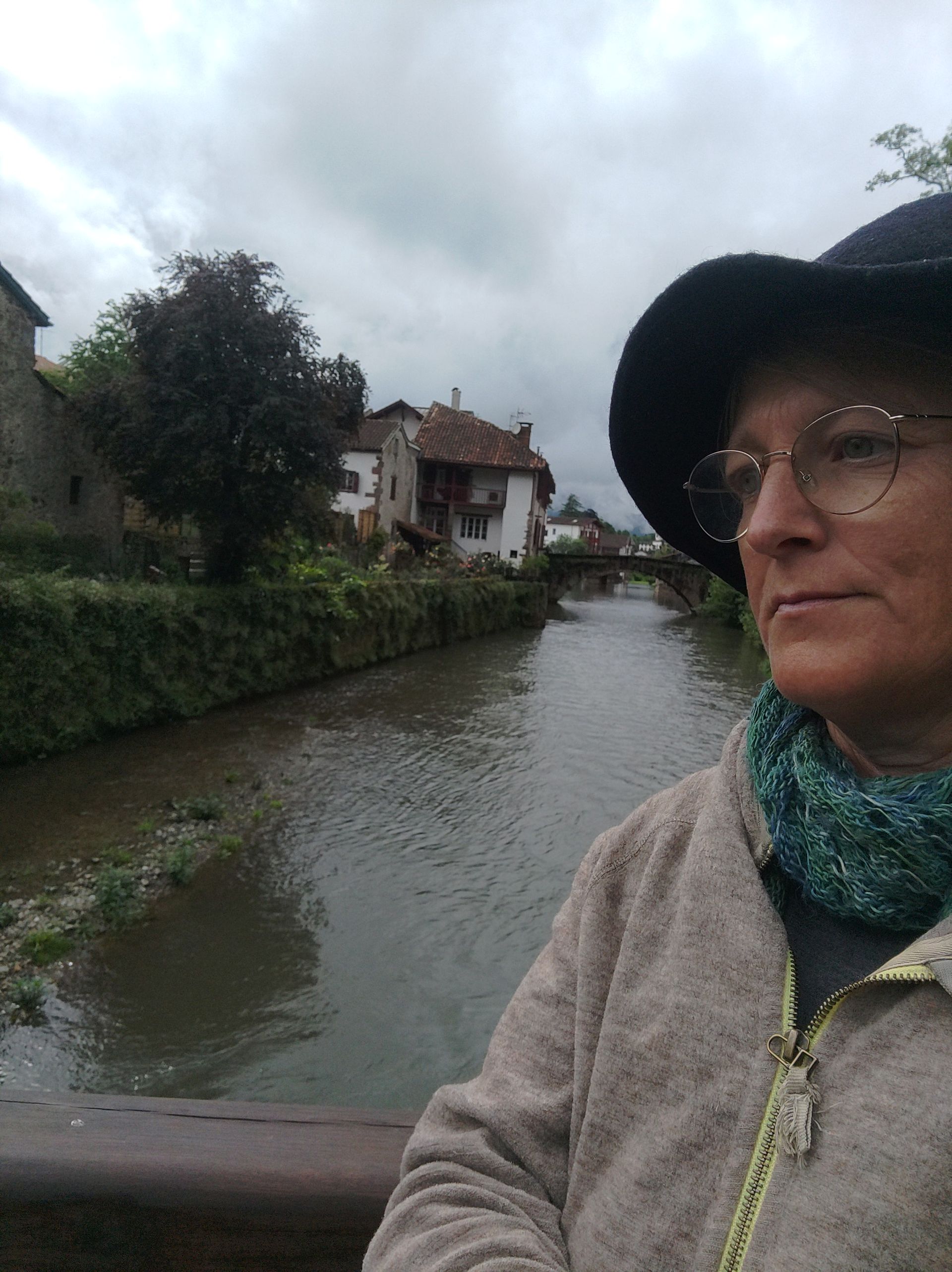
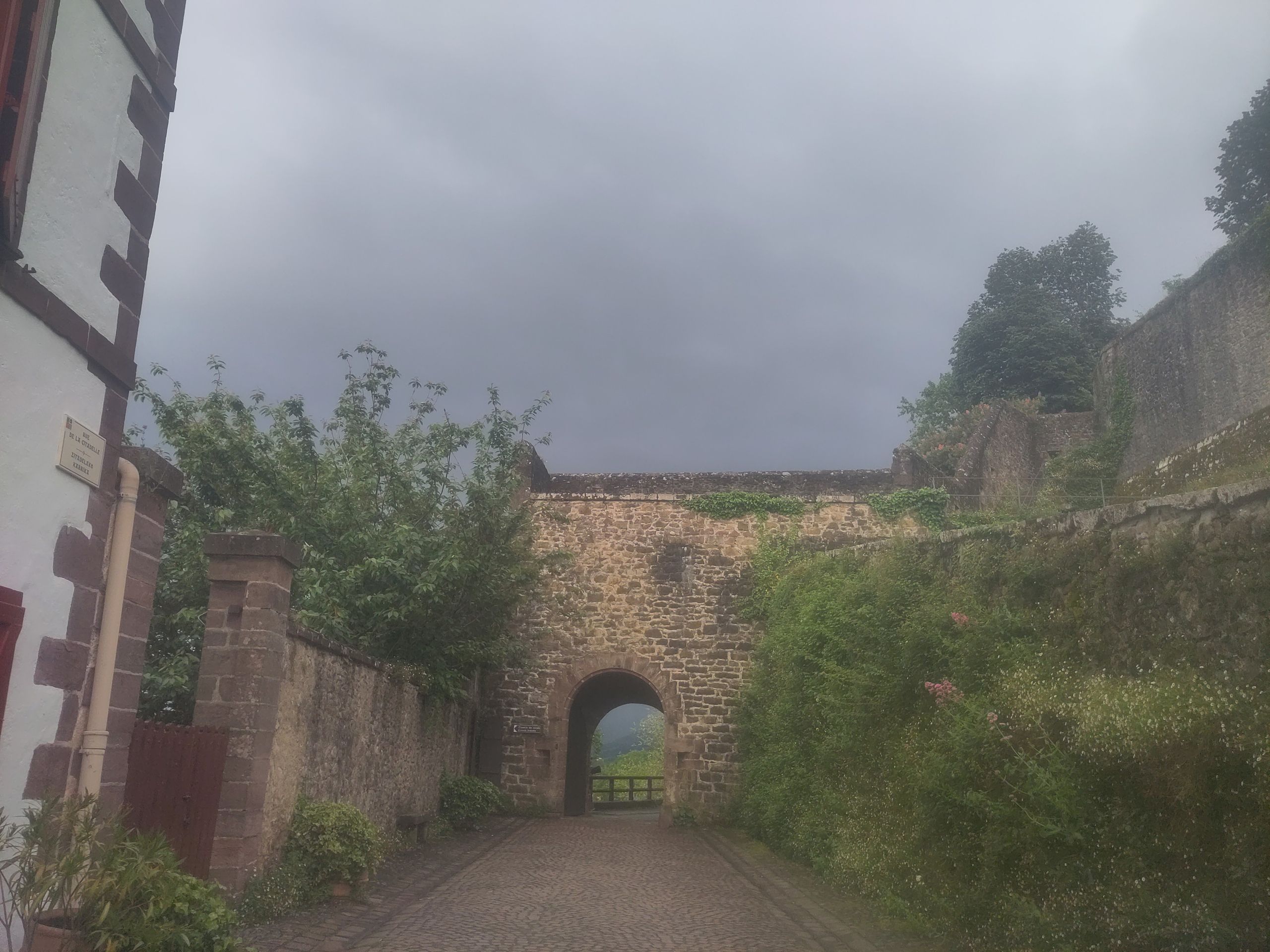
I did so yesterday morning together with H., whom I got to know a bit in the last two days and evenings: She is going home from Bayonne today and walked the first two stages of her time on the Camino del Norte back; that’s how we met, both 'going in the wrong direction', in the rain in front of the hostel with the beautiful garden and the own bakery... We are the last two to leave the hostel in Irun, warmly bid farewell by the hospitalera. We head towards Hondarribia, the 'district' of Irun, which hosts an old town with narrow streets, a large church, and venerable walls. With the first ferry at 10:30 am, we take to the water by the rain pause over the border to Hendaye, the French part of this 'triplet city'. At the same time, it is a farewell to all these many boats in the harbors, to the seagulls, the ferries, the view of the stately villa fronts along the shore (now) of Hendaye, to all that characterized and shaped the last days and weeks. And during the kilometers to the train station, we unexpectedly and almost without realizing it landed in another language, so to speak. (Well, the prices for train travel are also significantly higher here than in Spain!..) We still travel together to Bayonne, then again here a farewell; after a long wait, I then take the train through a wonderfully green, rain-enchanted mountainous landscape with forests and streams and more rain... towards Saint-Jean-Pied-de-Port, from where I plan to hike through France to Geneva (still in the wrong direction regarding Santiago) and eventually get to Lake Constance via Switzerland. Many pilgrims are on the train, excitedly chatting, still 'fresh', so to speak: Many start their journey from here over the Pyrenees on the Camino Frances, the most famous route through Spain to Santiago. Furthermore, Saint-Jean-Pied-de-Port has a well-liked old town among other tourists. High above the alleyways towers the 'citadel', there are picturesque town gates, a lovely bridge over the little river, well-stocked outdoor equipment stores, souvenir shops, hotels, restaurants, and quite a few pilgrim hostels (of various price ranges); some doors even hang the sign 'complete - no beds tonight, sorry' in the evenings. In the evening, the sun even briefly shows itself, allowing me to leave my wet things in the hostel and stroll a bit through this special place. (Here, the public hostel also charges 16 euros, but offers no more 'comfort' than others in Spain that only charge 5 euros or are run on a donation basis: the bunk beds squeak, the mattresses are terrible, and I wake up at night in fright when a cat scratches at my sleeping bag and jumps up!)
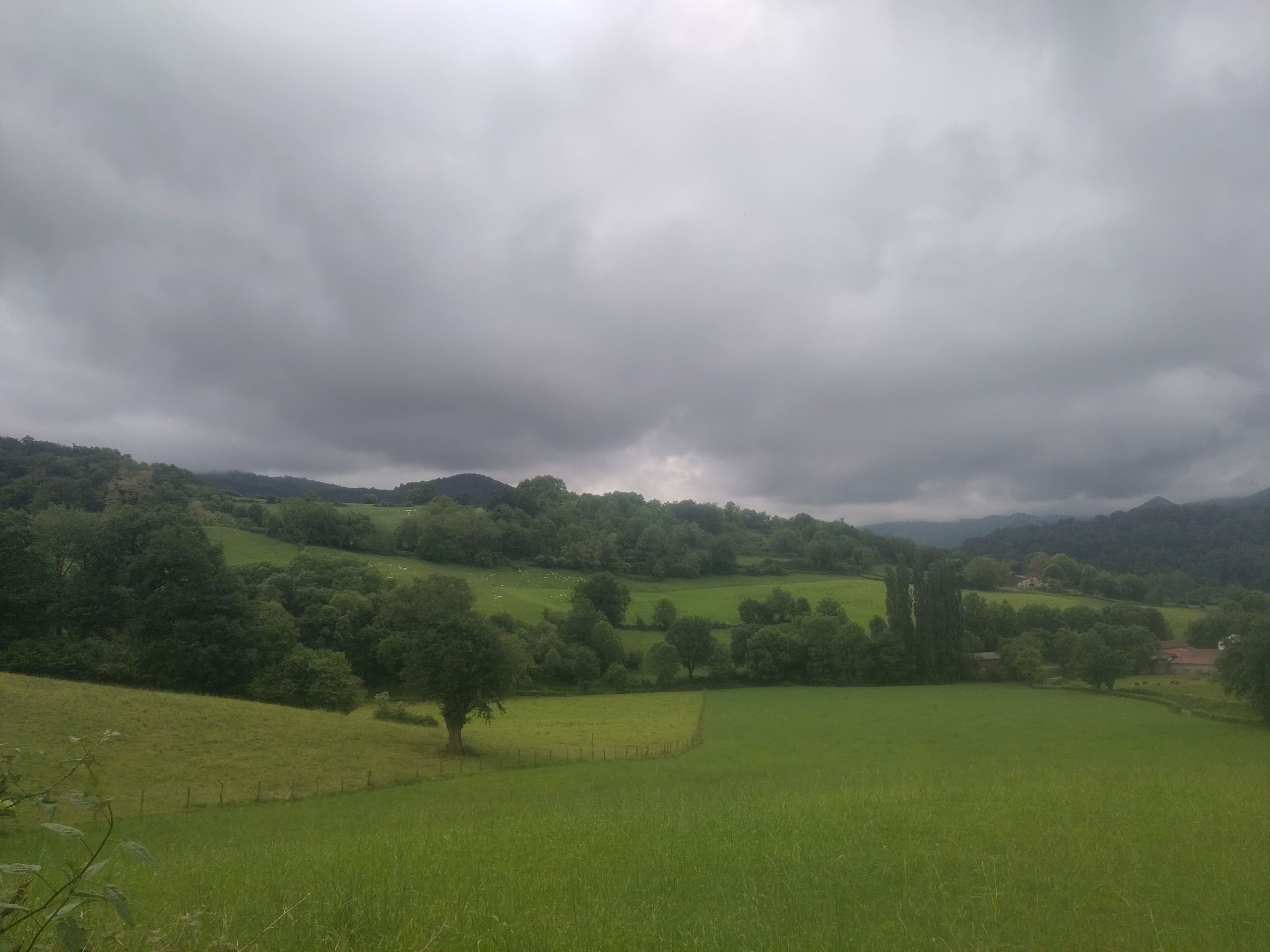
When I wander out through one of the city gates this morning shortly after 8 am, all the pilgrims are already long gone (the first mobile phone alarm rang at 5:20 am) and otherwise, nobody is showing in the empty streets of the old town. I now find myself on the 'Via Podiensis', the probably most well-known and oldest pilgrim route in France; this path largely coincides with the GR 65, making it easier for me to follow the waymarks (red and white) since GR hiking trails are naturally marked in both directions... The weather remains rainy and cool throughout the day, the green mountains 'steam'. When the sun breaks through momentarily, the landscape shines. The grass in the meadows is 'ready for cutting', buttercups, sorrel, and bellflowers bloom; the edges of the paths are slippery and mushy from browned acacia flowers. During a particularly heavy rain shower, I find refuge in an open barn among straw bales and tractors; now I sit (by now shivering) in an old stone structure (stable?) with a newer wooden roof along the path (unfortunately only separated from a smaller road by a bike or footpath and a hedge), which seems intended to serve as a kind of 'emergency shelter'; in any case, there are two simple bunk beds, a long table with benches, a drying rack, and there is also a guestbook... as well as some little saints in wall niches. Since I planned to find a little place for myself somewhere, I will simply stay here, even though I clearly miss my hot tea right now! But hopefully, I will get warm soon in my sleeping bag... First, the rain drummed on the roof, now a herd of cows has just been brought into the meadow next to me, so I now lie in what feels like an endless concert of bells...
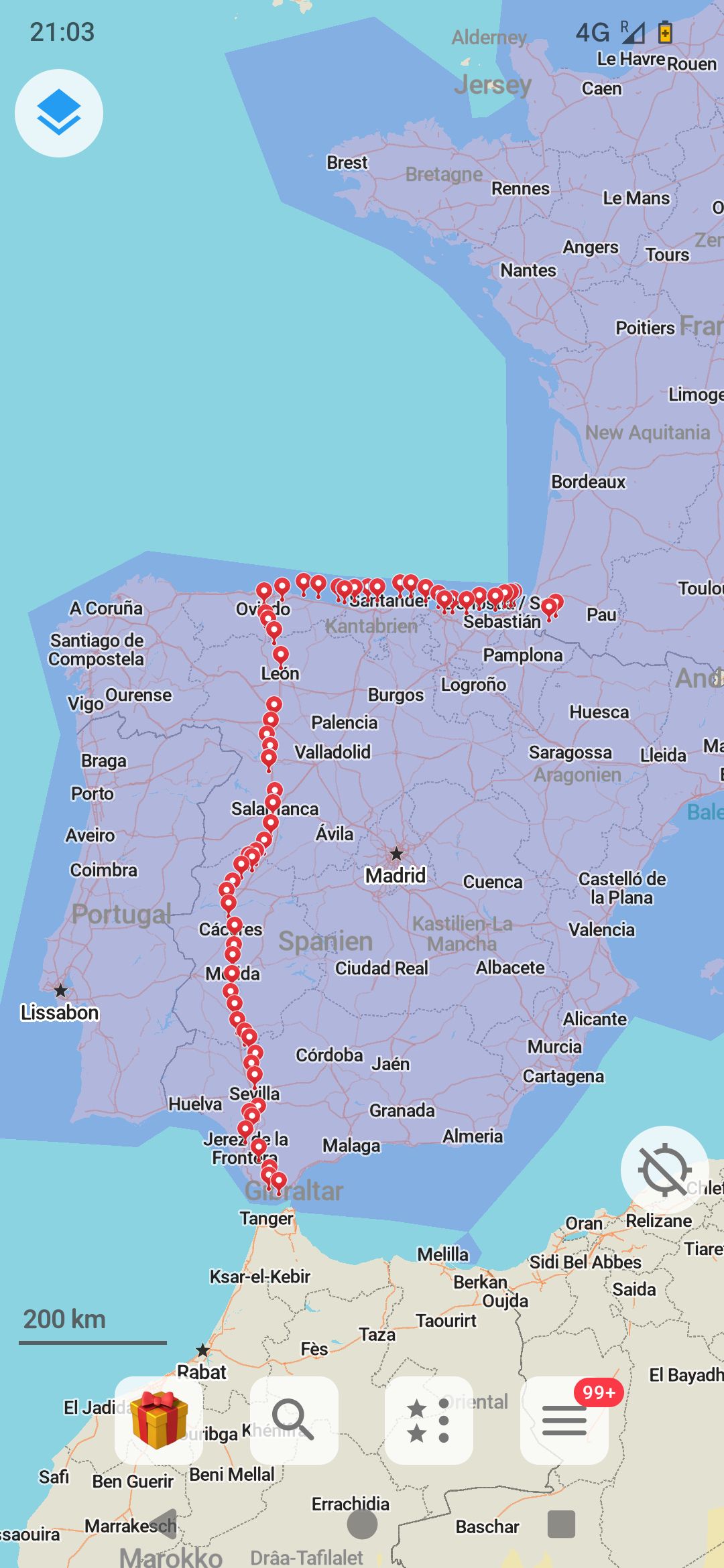
Well, so suddenly the 'Spanish part' of this adventure path is already done! It feels to me like I've been in Spain for much longer than just about two months! Curiously, I counted the kilometers I noted down every evening: Thus, I walked 1320 kilometers through Spain; from Andalusia with its orange trees and palms over the expanses with olives, wine, and wheat, through stone and cork oak pastures, over the Cantabrian mountains to the wild, rugged northern Atlantic coast. My clothes have long since faded in the sun, some socks have worn out, and the insoles of my hiking boots have been renewed once. I encountered many friendly and helpful people, as well as pilgrims from (almost) all over the world (and even though for me there are simply far too many, it has obviously still been attractive for many people despite these mass phenomena - and I was gifted with very special, deep encounters, especially in the beginning).
Gifts are a tricky thing - today I managed to give an old man a gift without knowing it: In France, I now finally encounter open churches. Today, I sang in a church with a blue ceiling full of golden dots like stars and with wonderful sound - without noticing that at some point I was no longer alone. As I was leaving, a gray-haired man came towards me and said something in French, and when he understood that I did not understand, he carefully repeated 'it was beautiful, merci!'