


Biking in Bangkok
June 17, 2025: In the heart of Bangkok's urban jungle, in a loop of the Chao Phraya River, lies the 16 square kilometer peninsula of Bang Krachao, a paradise for bikers.
Published: 02.06.2026
On February 22, 2025, after my trip through Malaysia, I flew from Kuala Lumpur with Air Asia directly to Phuket. Air Asia is the largest Asian budget airline. So, it was a straightforward transport from one place to another, no luxury, no free food, no gadgets. But I must say: I had significantly better experiences with Air Asia than with EasyJet in Europe. My saying, inspired by Goethe, is only partially true here in Asia: «Life is too short to fly with budget airlines.»
Phuket, and particularly Patong Beach, holds nostalgic significance for me: Almost 30 years ago, I was in Thailand for the first time, for the first time in Phuket, and it marked the beginning of an enduring, excessive affection for this country. This was all down to chance: In September 1997, I was in Hong Kong for work and decided to add a few vacation days since I had already flown so far (13 hours from Frankfurt).
I entered a travel agency, asked the employee which destination she would recommend for a beach holiday, and she conjured Phuket out of the air, particularly the «Banyan Tree Resort», a luxury hotel where I had my own bungalow with a private jacuzzi in a walled garden, dining in a restaurant on stilts directly over the water every evening. I believe I spent around 3000 euros for a week back then (almost thirty years ago!), which today approximates my travel budget for an entire month.
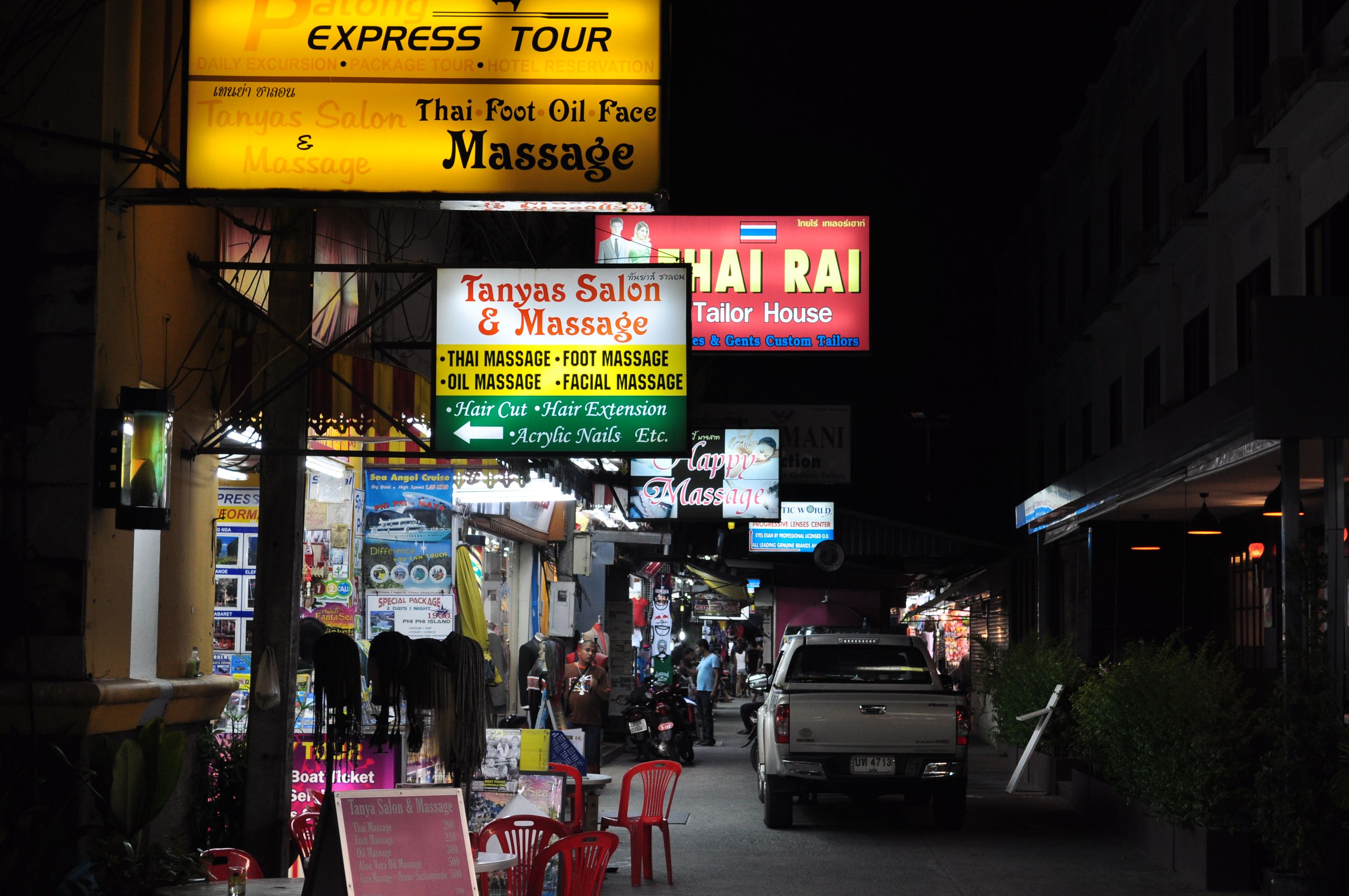
This time, I took a more modest approach: I booked a room in the Savasdee Apartments, located in a pedestrian passage with restaurants, massage salons, and a small market almost directly at Patong Beach.
Taxi Mafia at the Airport
Unfortunately, this time frustration prevailed. It all started at the airport, where an aggressive taxi mafia tries to ruthlessly overcharge you. An advertised bait offer of 300 Baht at the taxi stands inside the airport for the 35 km to Patong Beach turns into a demand for 1800 Baht as soon as you leave the building and face the mob of porters and taxi drivers – almost eight Baht turns into 47 euros in minutes.
I dragged my luggage a few hundred meters through the steamy tropical heat to the Grab station. (Grab and Bolt are to Southeast Asia what Uber is elsewhere.) The ride with a friendly driver in a luxury van to Patong cost a reasonable 20 euros, during which we had an involuntary break of one and a half hours: a young speeding driver had rear-ended our van with his mother’s Honda Accord. Now we were waiting for the representatives of the involved insurance companies to document the damage on site.
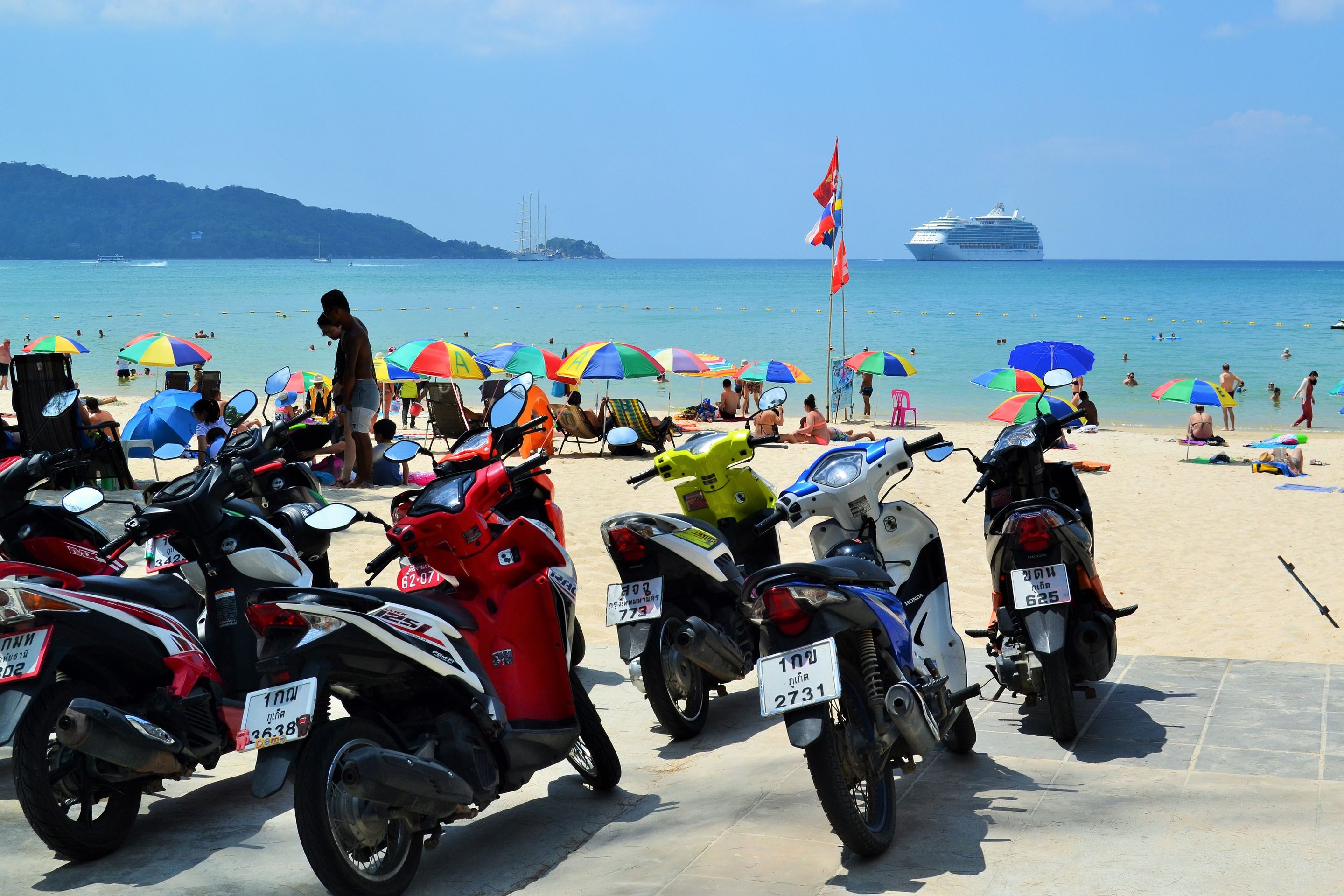
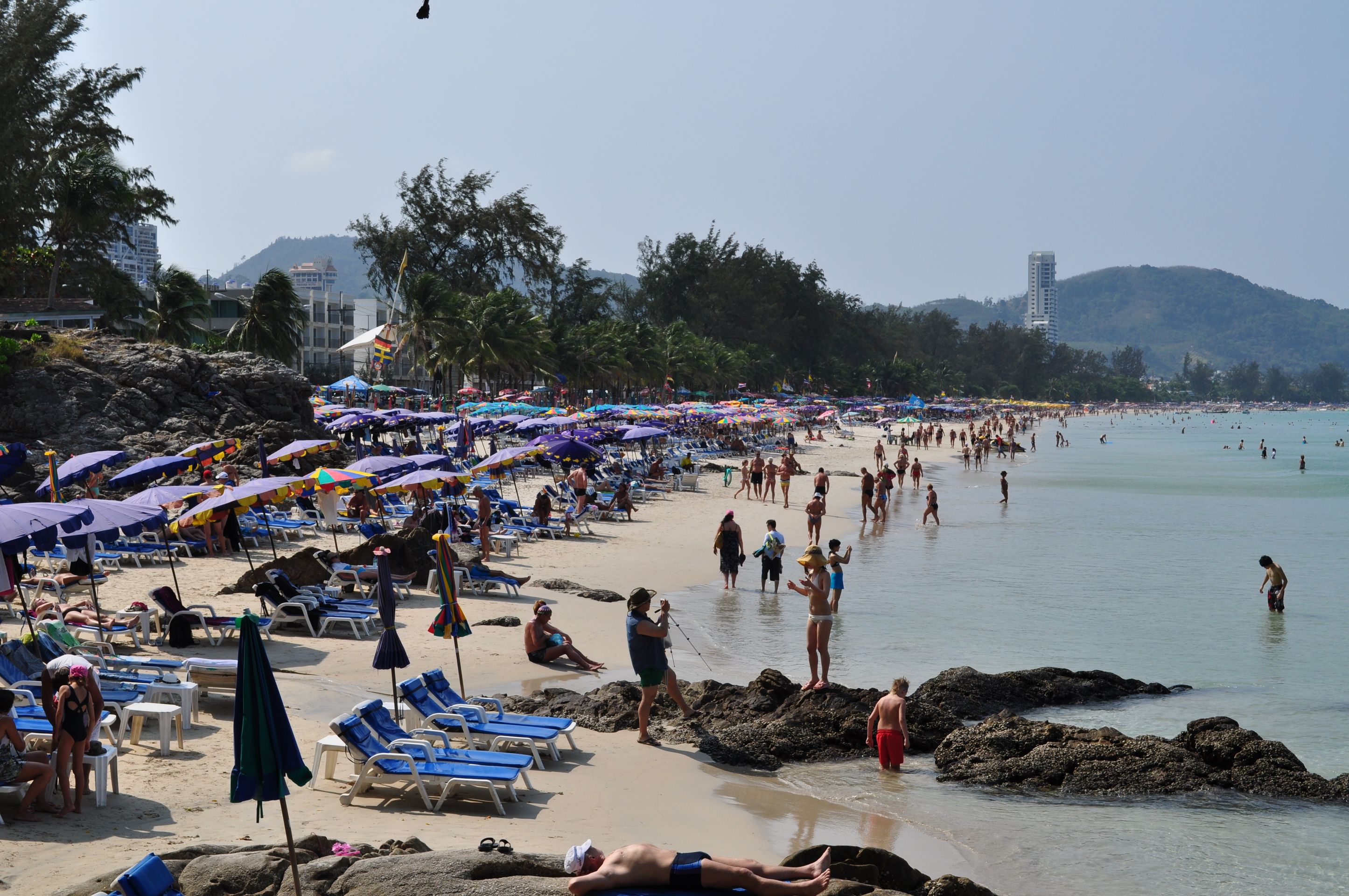
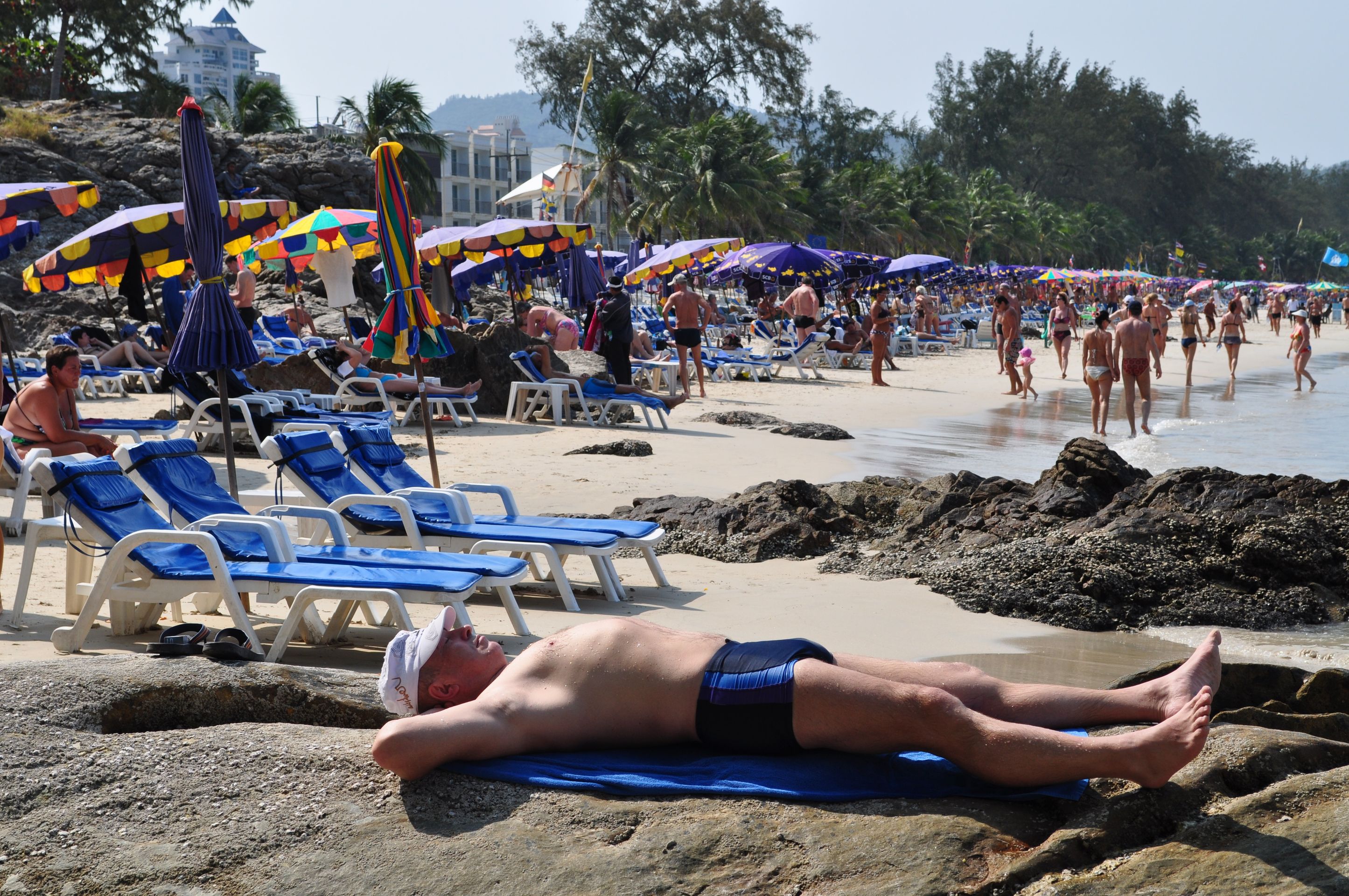
Even without an accident, traffic between the airport and Patong Beach is deadly, and once in the resort, it only moves at a crawl. However, even without a vehicle, you get stuck: The wide, kilometer-long sandy beach of Patong, once considered one of the most beautiful in Thailand, is densely populated during the day by sunburnt tourists, street vendors selling food, drinks, clothes, hats, swim vests, and counterfeit Swiss watches, as well as hustlers trying to sell tourists overpriced jet ski rides, paragliding, banana boat rides, and similar stress-inducing and noisy activities.
Gogo, Cannabis, and Condoms
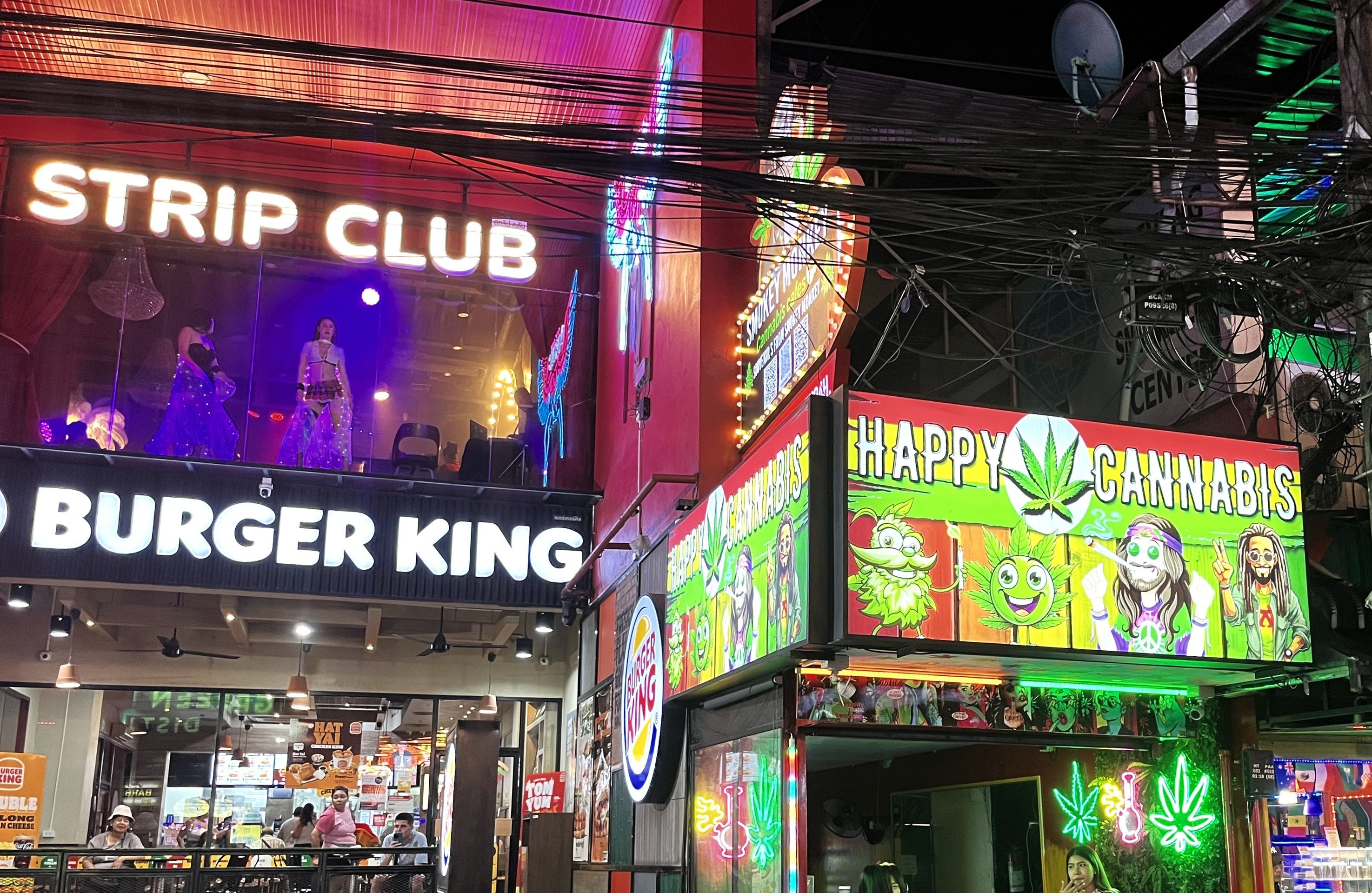
The transition from daylight to tropical night signals a scene change: The crowds now shift towards Bangla Road, which leads directly from the beach into the city. The 400-meter Bangla Road becomes a «Walking Street» in the evening, a traffic-free amusement street (where «traffic-free» only refers to motorized traffic, not interpersonal traffic).
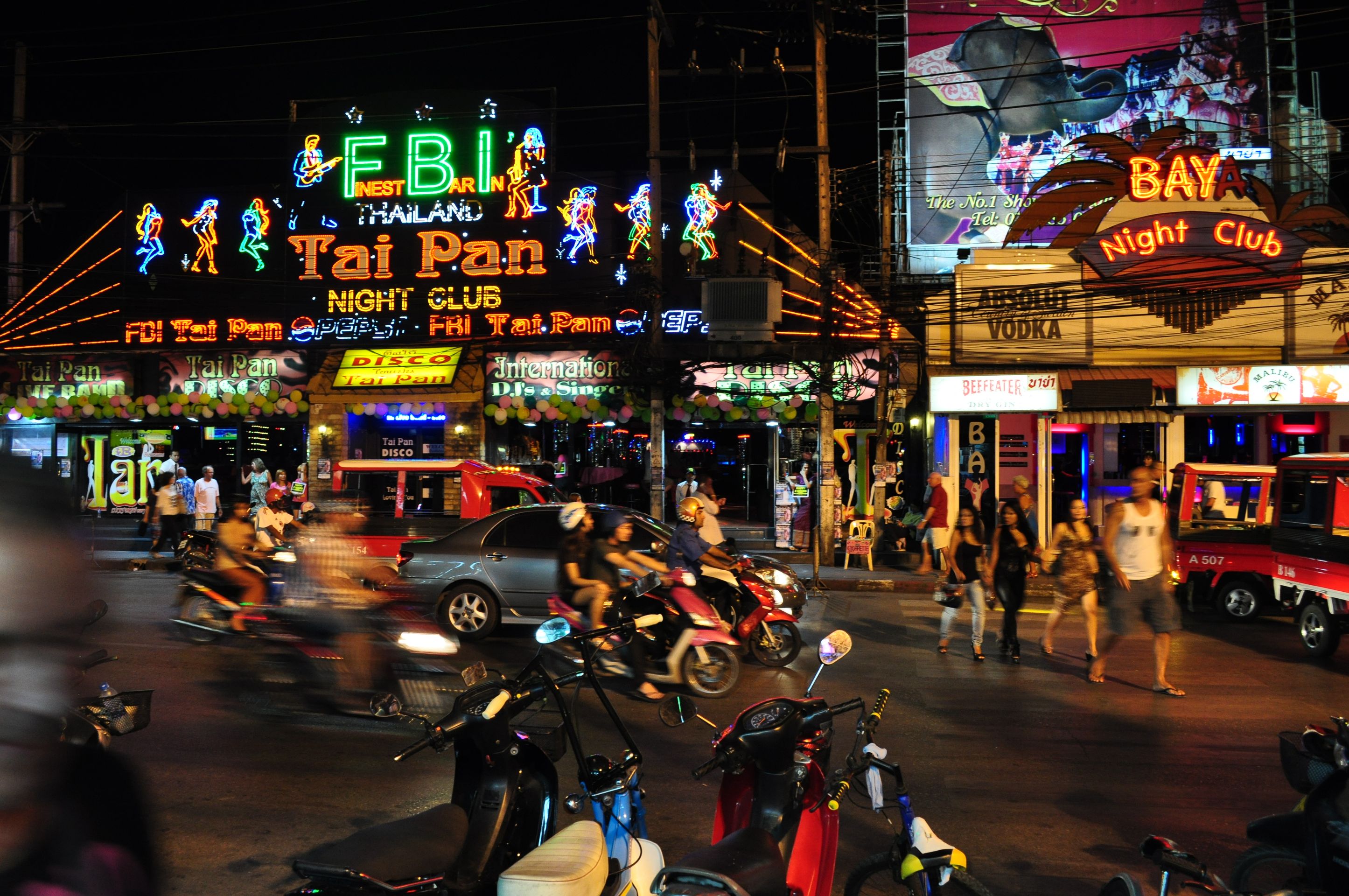
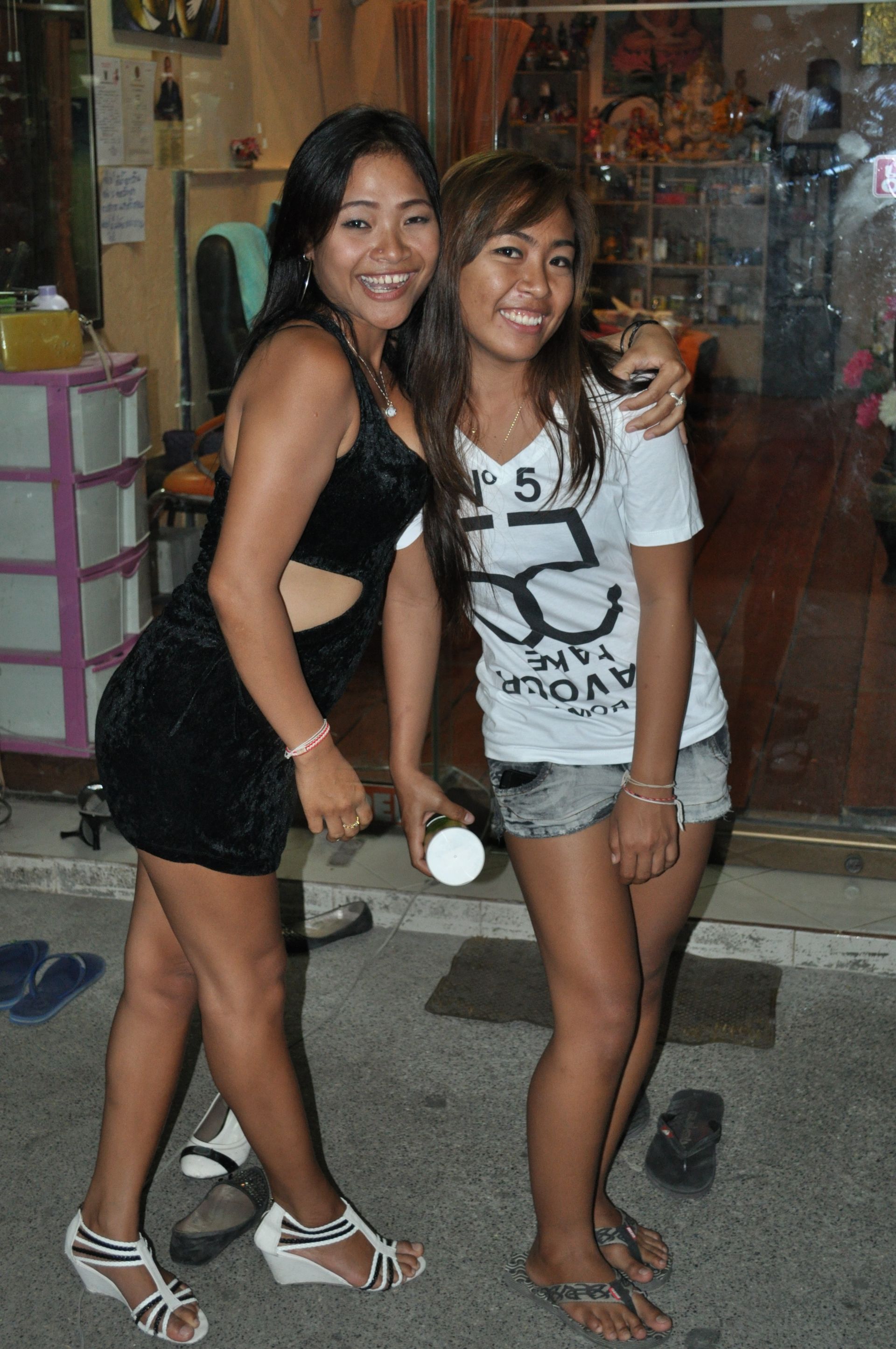
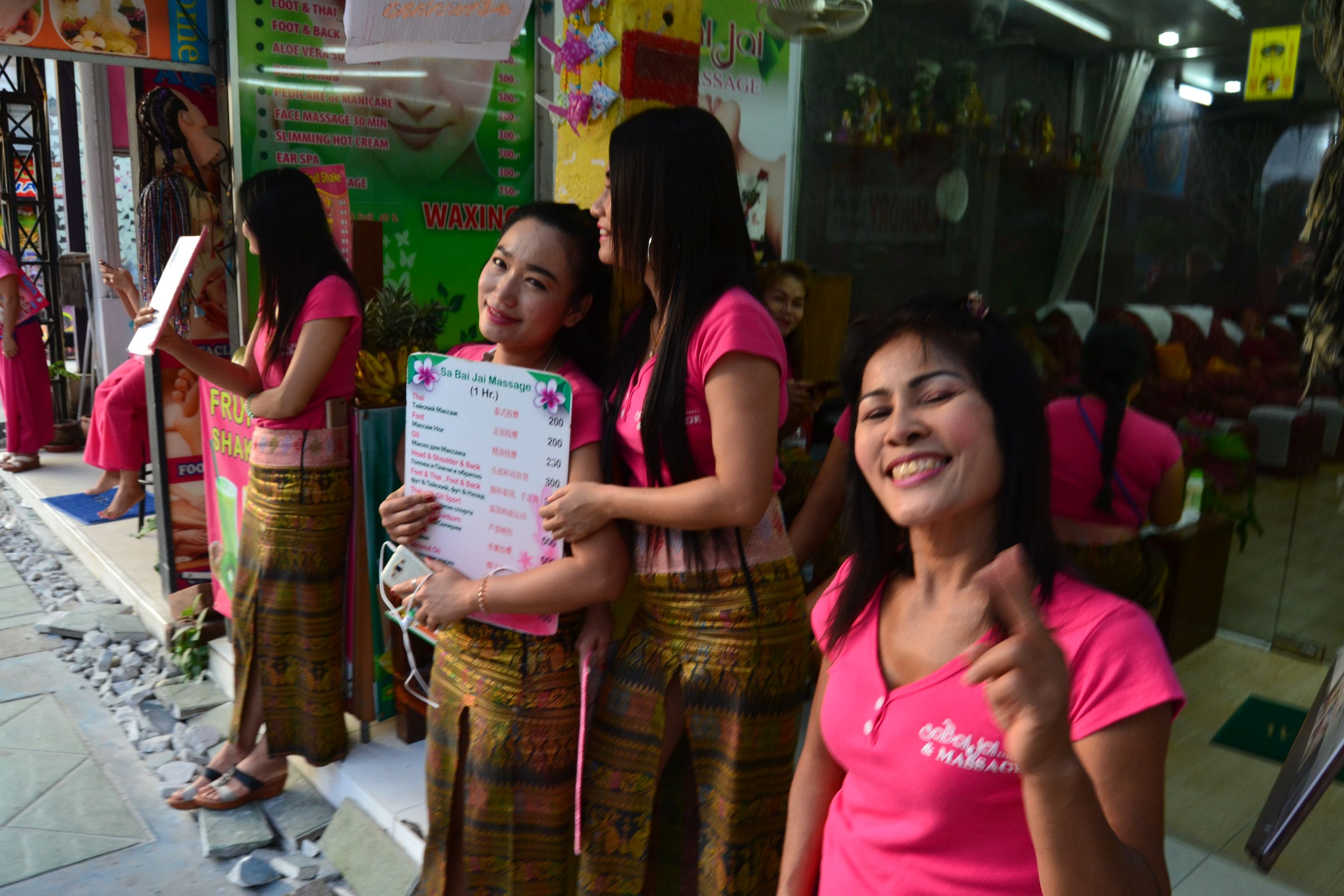
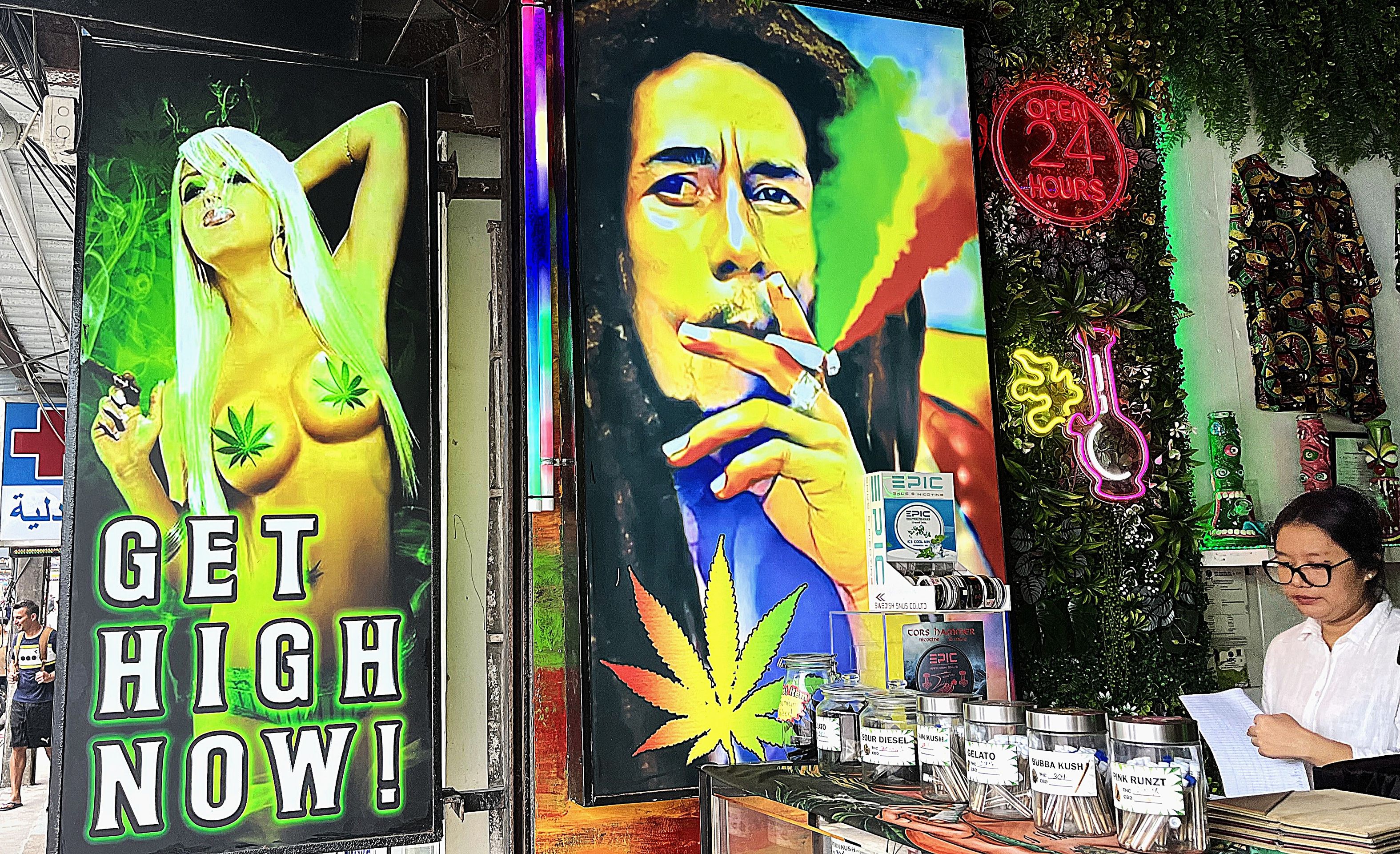
Bangla Road resembles similar streets in Bangkok or Pattaya. A gaudy, almost ubiquitous backdrop of neon advertisements promotes what the street has to offer: bars and gogo clubs, McDonald's and massage salons, and more bars, currency exchangers, souvenir shops, and small supermarkets where condoms are displayed at the cash registers. And you are constantly pressured: young women in skimpy outfits thrust laminated signs with drink prices into the faces of passersby; hustlers try to lure them into the go-go bars with their ping pong shows.
The scene is underscored by the noise pouring out of oversized speakers in the venues and mixes into a bone-shaking acoustic amalgam on the street. The crowd is international and diverse: couples, aging sex tourists, young backpackers, package tourists, and day-trippers from cruise ships anchored offshore, and even the occasional family with small children (how can one expose them to such things?) shove shoulder to shoulder through the street.
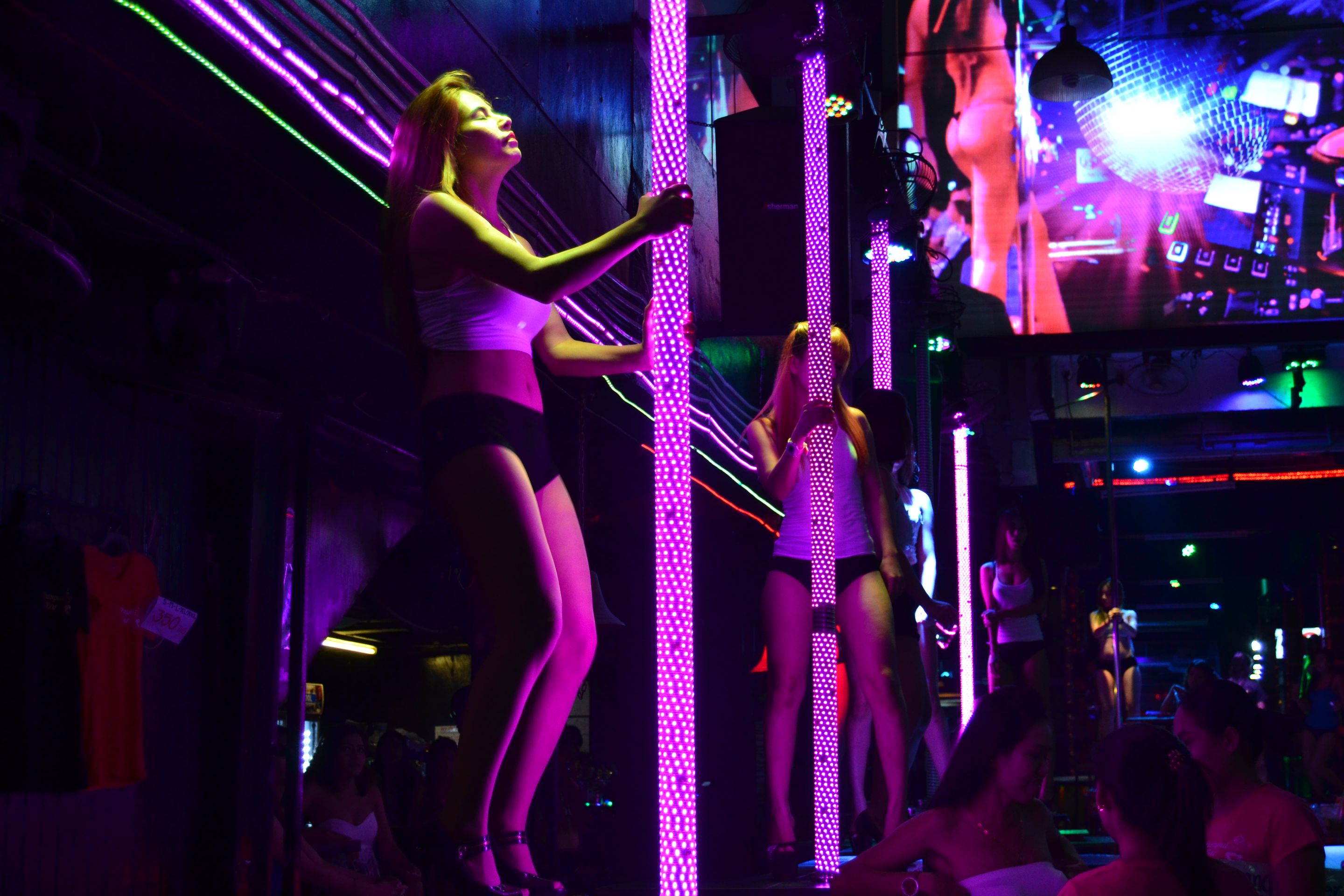
Behind the scenes, we, who were just engulfed by the tropical Thai night, find an internationally shaped entertainment industry with nightclubs, DJs, extensive LED screens, CO2 cannons, and thumping basses. Or half-naked gogo girls moving listlessly on small stages. (One might not use the term «dancing» in this case.) The machinery continues until the early morning hours. Only around four in the morning does it gradually come to a standstill.
Praying at the Big Buddha
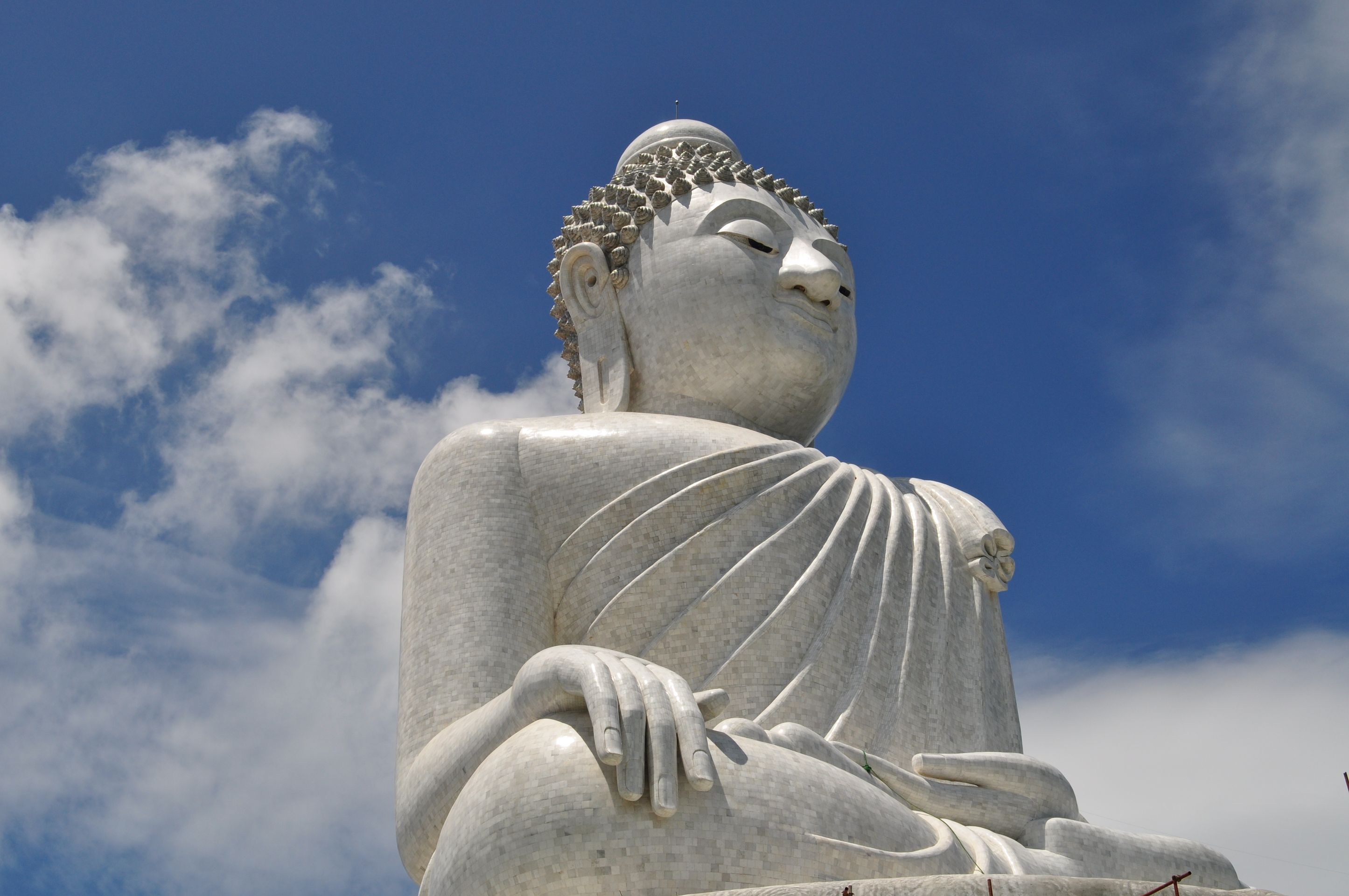
To escape the sensory overload and to restore my karma, I had a friend drive me in a Toyota Fortuner to the Big Buddha. The 45-meter-high Buddha, covered entirely with white marble tiles from Myanmar, gleams white in the sun, and I have a special connection to him: years ago, when he was being built, I bought several tiles and wrote the names of my daughters on the back with a thick felt-tip pen. A monk tied a braided, multicolored yarn around my wrist in gratitude. It peeked out from under the sleeves of my tailored suits and shirts for years while I was still in the workforce.
The Phra Puttamingmongkol Akenakkiri Buddha, as he is officially known, forms an extreme, almost surreal contrast to the excess at the coast. Here, decorum and order prevail. At the foot of the monumental staircase that leads up to the statue, clothing is checked: shoulders and knees must be covered; those who are dressed too scantily are lent cloths to cover their bare skin. While the bass from Bangla still echoes in the ears, here you only hear the gentle tinkling of hundreds of brass bells swaying in the wind and the murmuring of praying believers.
From the plateau, there is an unobstructed 360-degree view over Chalong Bay, Kata, and Karon. These must have been dreamy places before they fell victim to mass tourism. I am almost overcome by a sense of nostalgia: I will never see Phuket, which I have visited repeatedly for decades, again; it has strayed too far from what I once loved so much.