

Will Lombok Bali imitate?
Adat” are orally transmitted rules for everyday life, agriculture, trade, ceremonies, marriage, inheritance, and conflict resolution that are still practiced parallel to state and...
Published: 18.08.2026
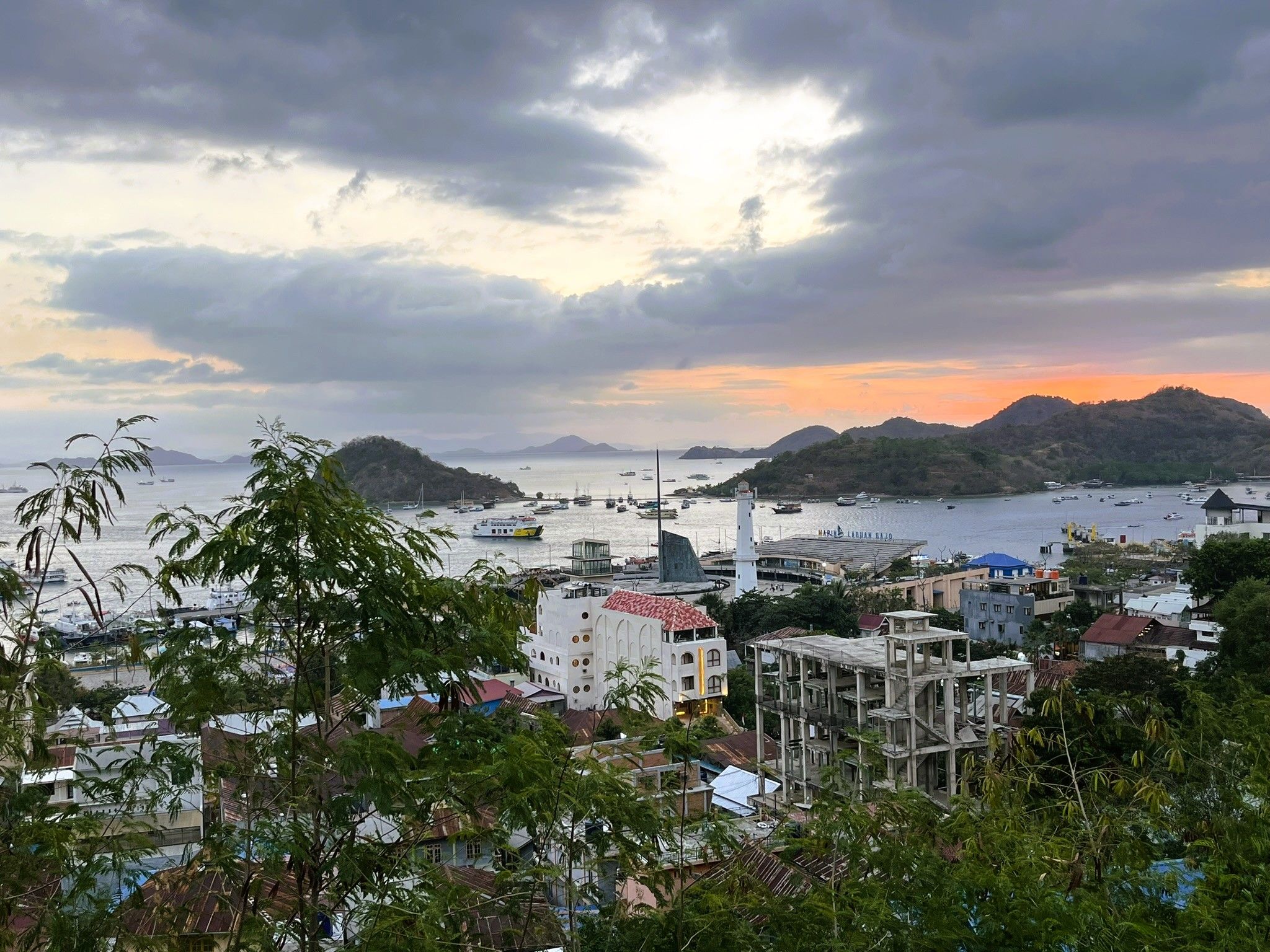
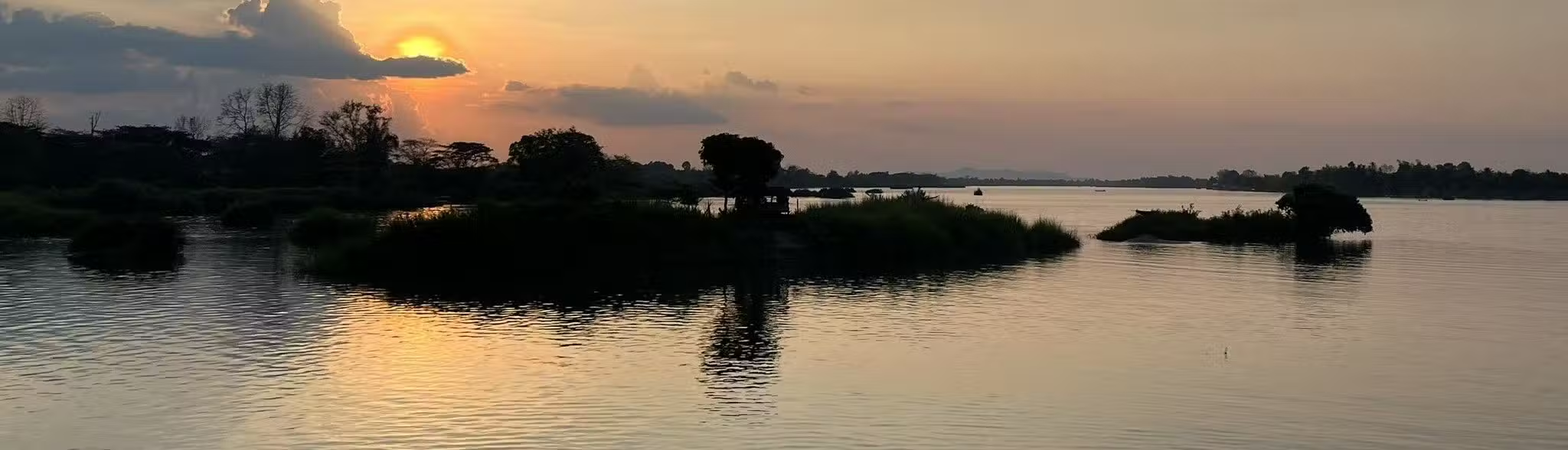
The bar with a terrace is actually called "Harbor View". It is located on a street at an elevated position in the town of Labuan Bajo. In the fading twilight of the setting sun, hundreds of fishing boats and somewhat larger excursion ships sprinkle the sparkling water below in the harbor basin. I arrived in Labuan Bajo from Lombok on July 24, 2026, and the place immediately... What is the opposite of "inspired"? So: Labuan Bajo immediately left me feeling the opposite of inspired.
Once a fishing village at the far western tip of the Indonesian island of Flores, its name means "Anchor Place of the Bajo" and serves as a reminder that the bay has been a protected harbor and settlement of the Bajo for centuries, a widely dispersed ethnicity of sea nomads who originally lived exclusively on their ships and later settled in various coastal regions of Southeast Asia.
Rapid Growth
In the last 25 years, Labuan Bajo has radically transformed: In 2000, the region had around 25,000 inhabitants, says Alvin, at whose "D'Alvin Homestay" I stayed. Now it is 66,000 to 68,000. The rapid growth is solely attributed to tourism. Although fishermen are still active in the Flores Sea; their fresh catch can be enjoyed in some restaurants and warungs, small food stalls, at night.
At the same time, Labuan Bajo is the focal point of a quickly swelling tourism industry: From here, one travels to Komodo National Park with its beaches, rocky islands, and the famous Komodo dragons.
These are also marketed as "Komodo Dragons", a term stemming from an early American dramatization, as Dario, my guide on Rinca Island, explains: After leading a research expedition to the islands in 1926, the wealthy American naturalist William Douglas Burden (1898-1978) published the popular book "Dragon Lizards of Komodo" in 1927, which introduced the animals to a wide audience.
Pre-packaged Offers
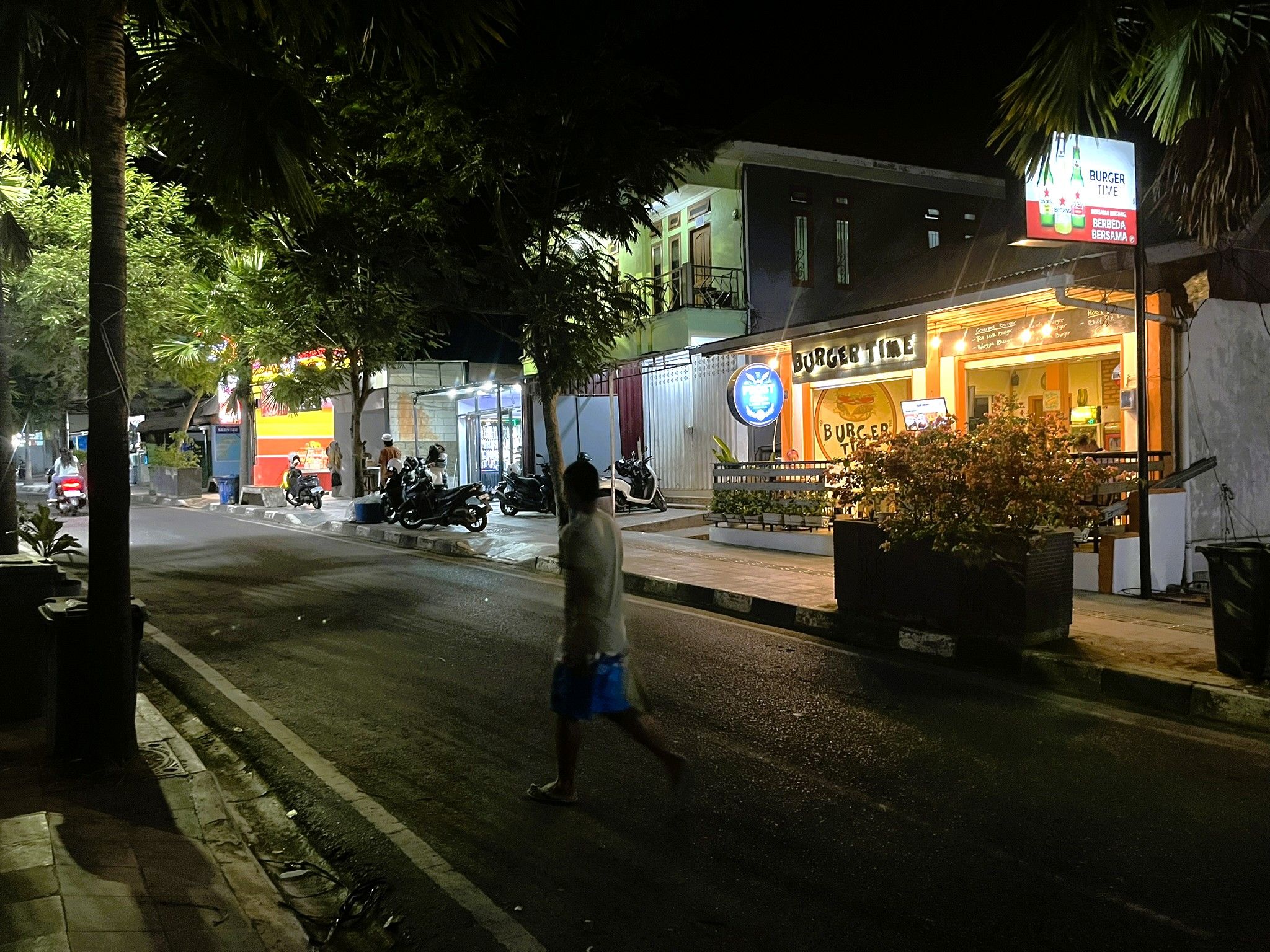
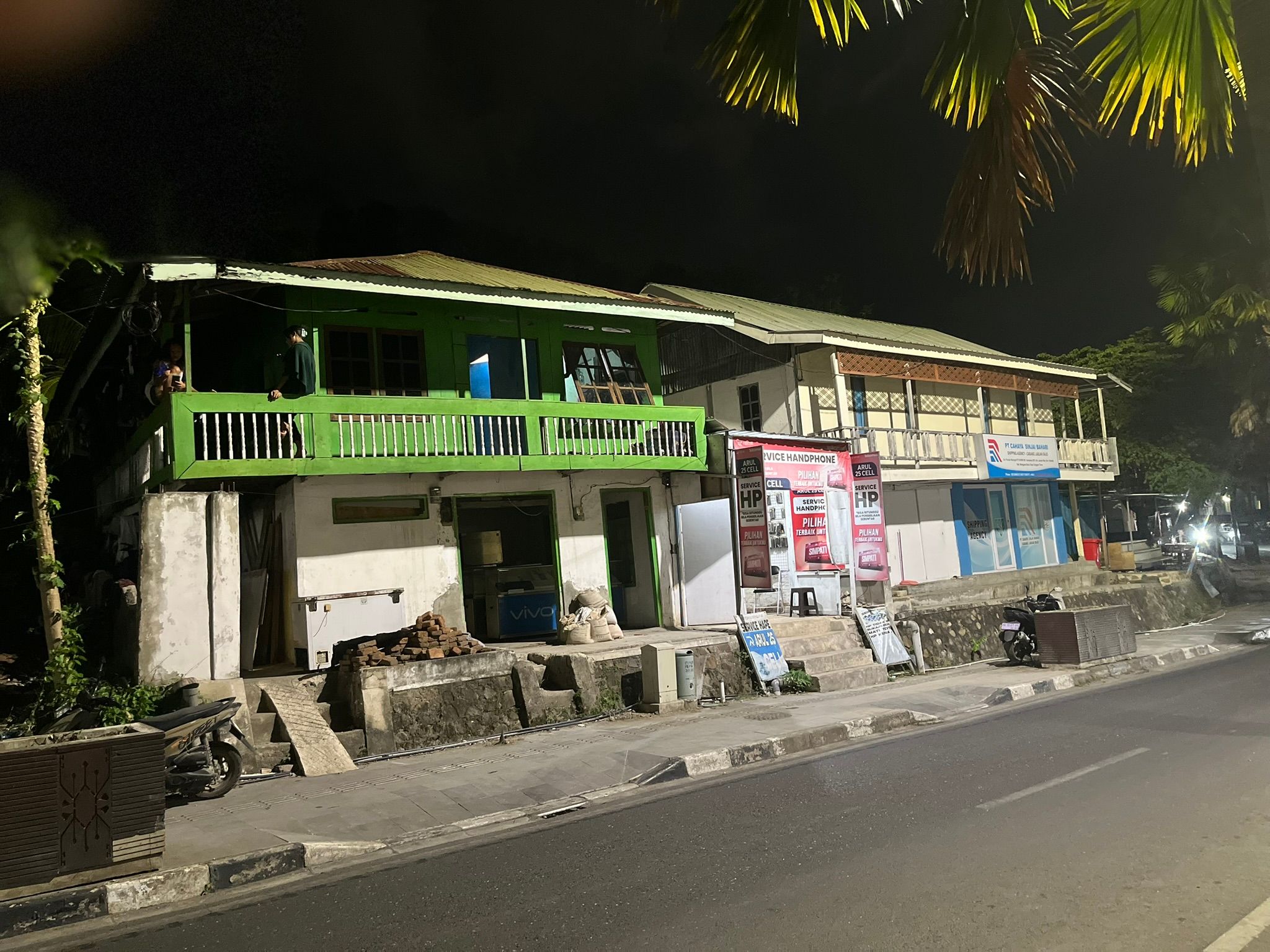
Along Sukarno Street, the unofficial main street of the area, which runs parallel to the shore, restaurants, cafés, hotels, banks, supermarkets, dive shops, and dozens of tour provider offices line up, mostly just improvised wooden shacks with corrugated roofs, under which sits a table with two or three plastic chairs.
The variety of providers is just an illusion. In reality, they all offer the same five or six pre-fabricated standard products: a half- or full-day trip on a boat packed with tourists, with a cold lunch served from a cardboard box at noon. The Komodo National Park comprises 29 islands, but almost all tourists end up at the same five or six beaches and bays, where excursion boats crowd together, and one snorkels or walks the island paths in the company of hundreds of other tourists. Slightly more exclusive, but also very expensive, are multi-day cruises on slightly larger ships.
I do not want to find myself amidst the tourist flow. And the offered cruises do not work for me either, because my minimum requirement for accommodation is a private room, a private toilet, and a private shower. I am too old and too demanding for mass accommodations with shared bathrooms.
A Boat Just for Me
So I exceptionally exceeded my budget and booked my own boat for a day, along with a two-person crew and a travel companion (who does not speak a word of English). The cost is two million Rupiah or just under a hundred Swiss francs or around a hundred euros, which is about a third to nearly half more than a trip with the masses would have cost.
The harbor is the center of Labuan Bajo, and in an attempt to upgrade it, a massive observation tower has been constructed, the upper floors of which are glazed. I board the blue-painted wooden boat docked at the harbor pier via a precarious staircase, and soon we set off; the diesel engine thumps in a slow, lulling rhythm.
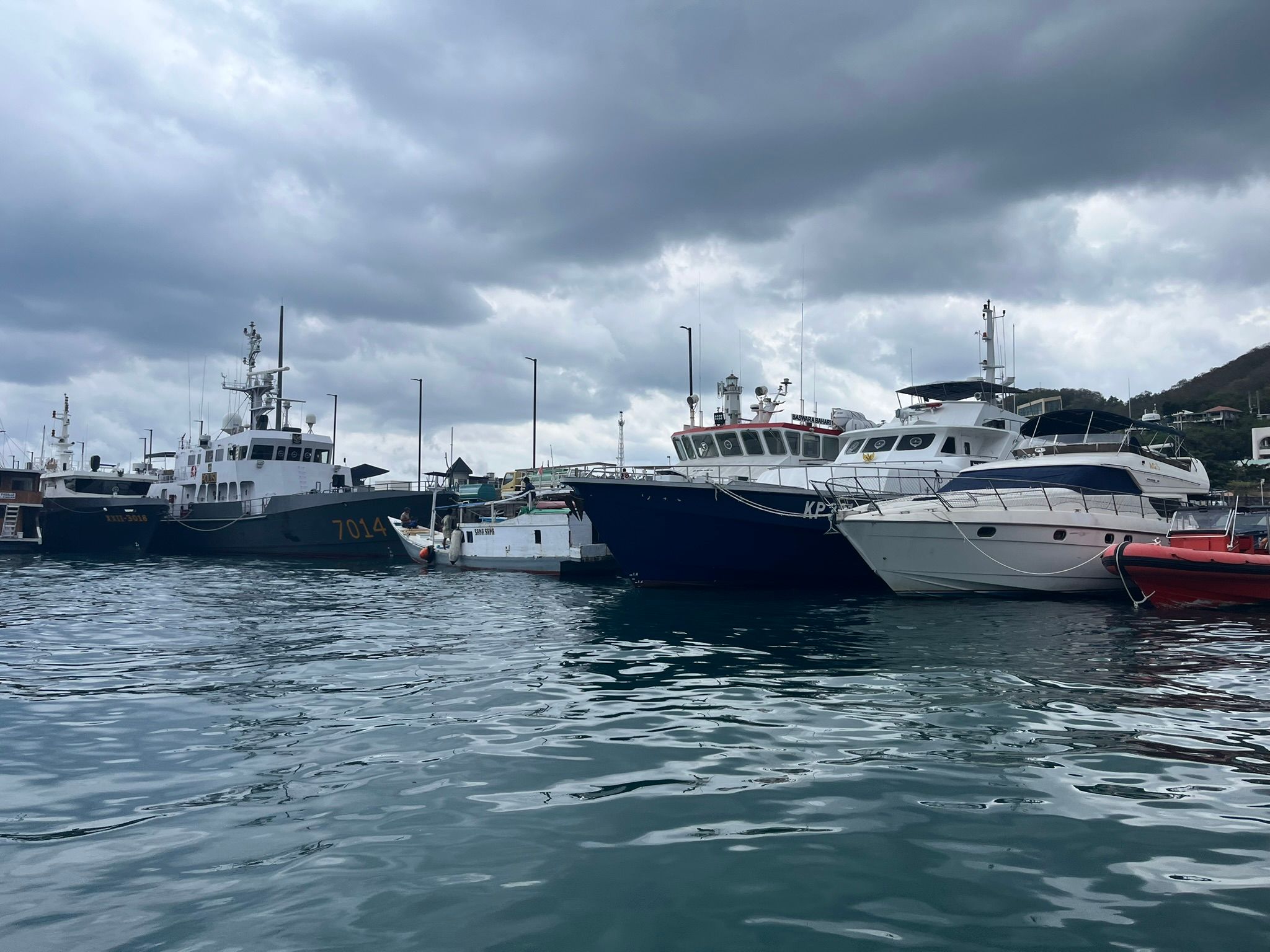
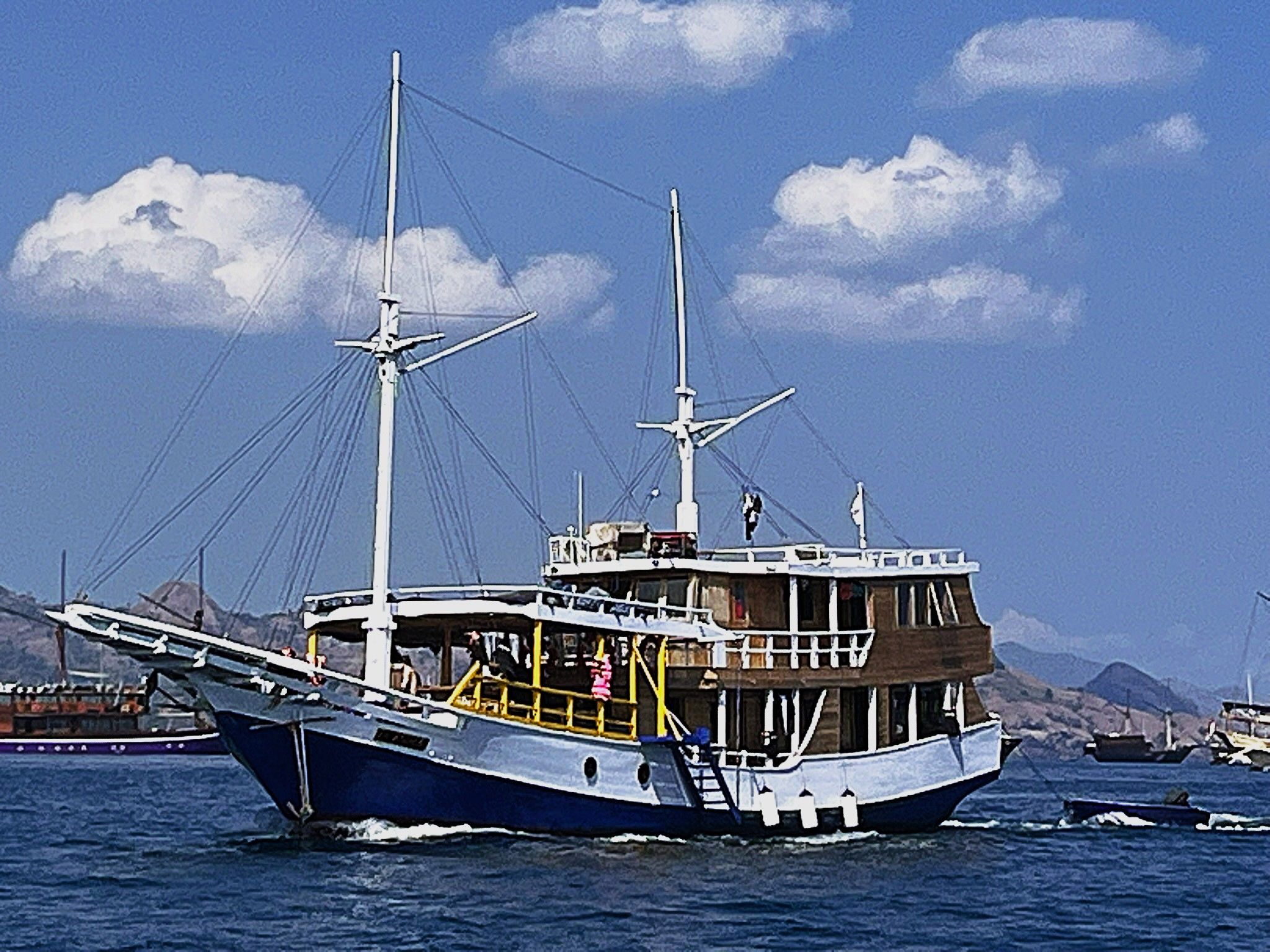
Passing fishing trawlers, excursion boats, and the slightly larger, often two-story Pinisi, we head out to sea. Pinisi are traditional sailing ships from Sulawesi used for cruises. These ships have their sails furled, but in reality, they are powered by engines.
Soon, the silhouette of Labuan Bajo and the coast of Flores fade into the hazy background. The route heads southwest into the Sawu Sea, passing smaller islands where the first tourist boats are already gathering.
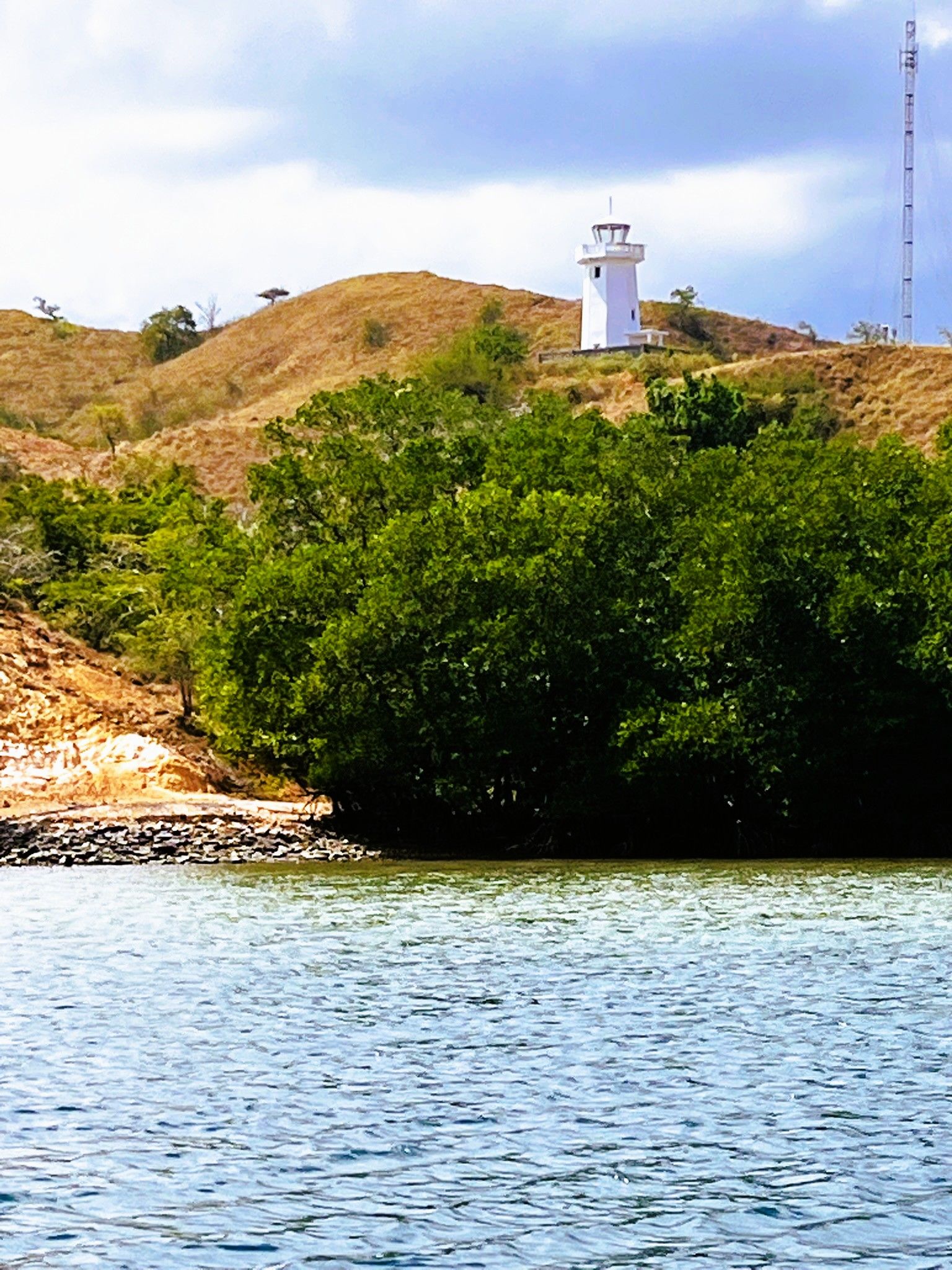
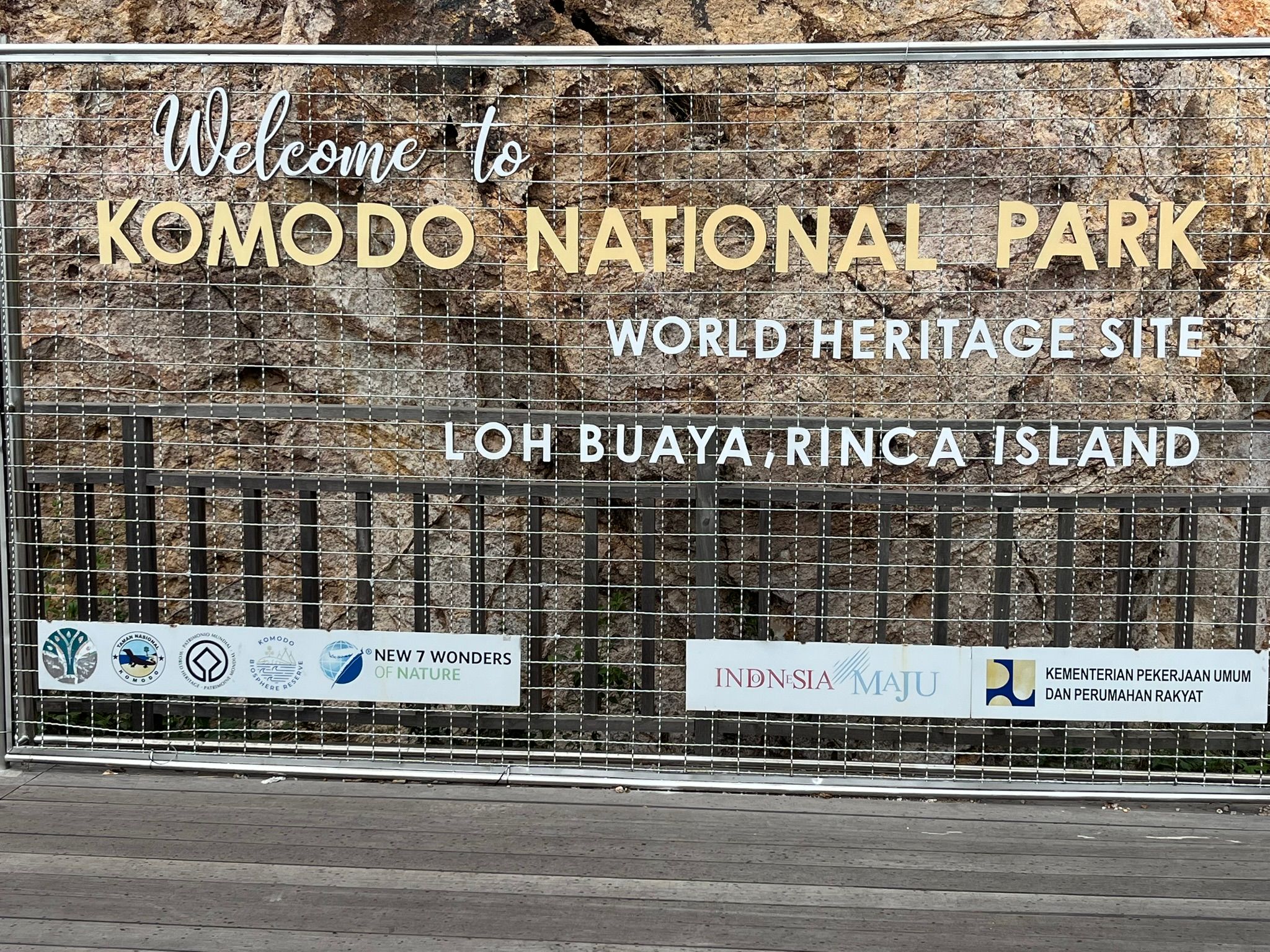
After about two hours, Rinca Island appears, which I chose as an alternative to the overcrowded Komodo Island. A small lighthouse marks the tip; a sea eagle circles above. Rinca, a hilly island with dry grassland and scattered trees, is about 200 square kilometers large, comparable to Elba or Malta, but very thinly populated with just under 2000 inhabitants in two villages.
Dino comes from one of these villages. The official guide (included in the booking price, as well as the entrance to the national park) grew up on the island. But of course, we did not come for the people, but for the “dragons.”
According to Dino, there are still an estimated 3000 to 5000 in the wild, with nearly half living on Rinca and Komodo Islands, where they are protected by the national park regime, and a few hundred in scattered areas along the northern coast of Flores Island, where they are more endangered.
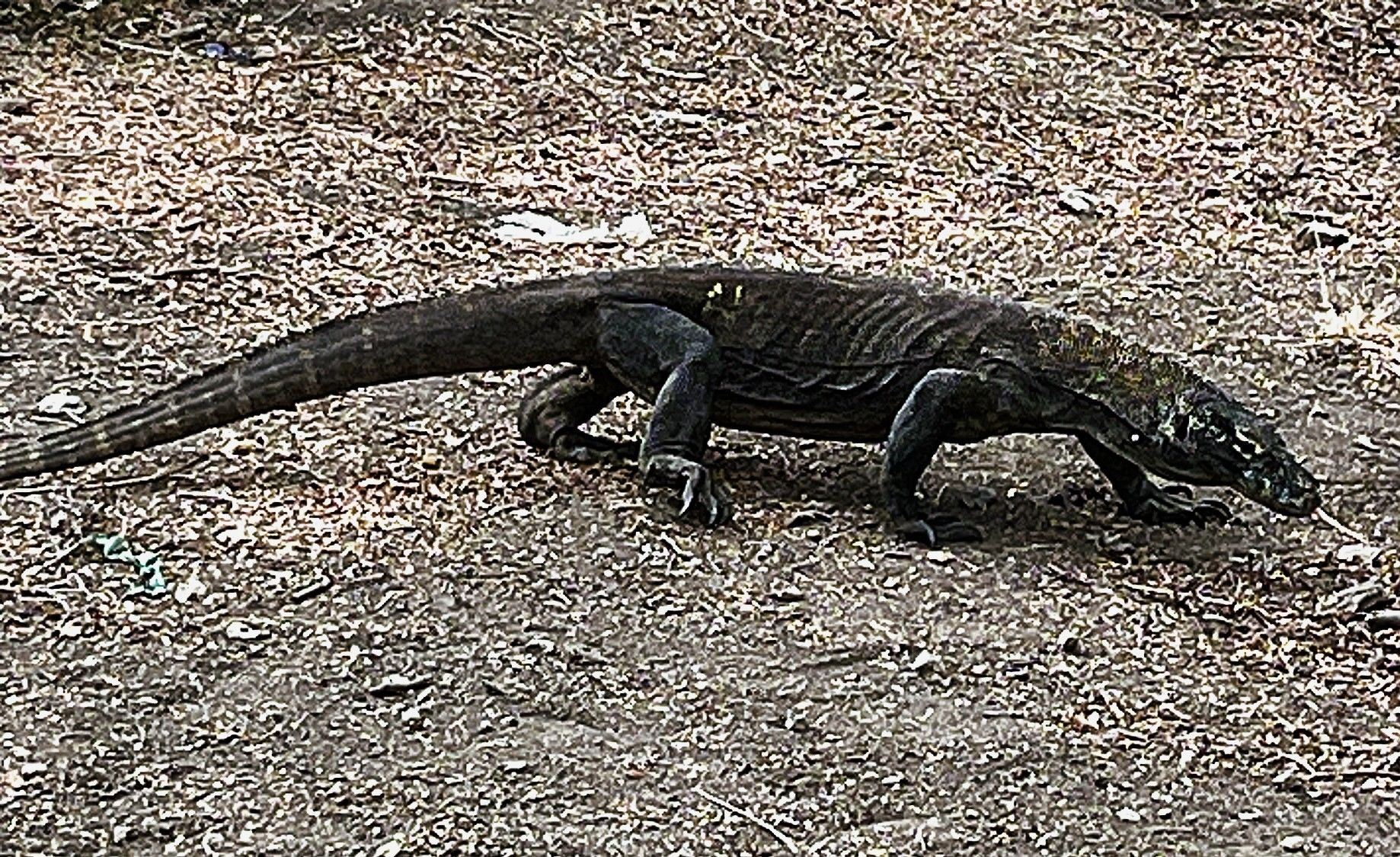
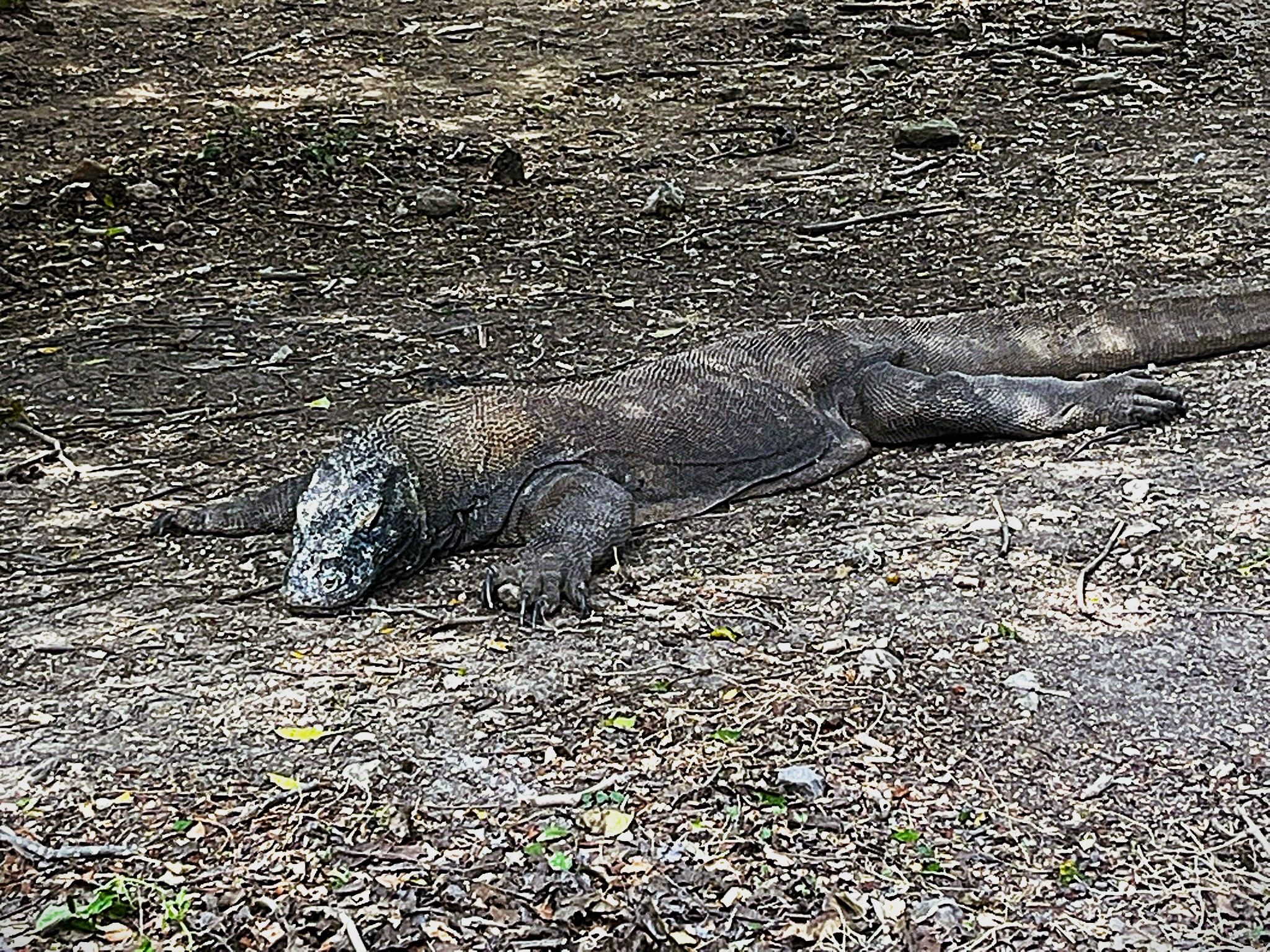
From the jetty where our boat has landed and the reception hut where Dino was waiting for us, we walk over a long wooden bridge to the visitor center. Beyond that begins the wilderness, and almost immediately, the first dragon, a massive male, ambles across our path. Later, we will spot further specimens of this primitive creature. Thanks to fossil finds in Australia, the Komodo dragon can be traced back at least 3.8 million years; on Flores, it has also been traceable for more than a million years due to fossils.
Rinca Island is not a zoo, and one should maintain a distance of at least ten meters from the dragons, warning signs in the visitor center advise. Not only do the razor-sharp teeth of the dragon demand respect; he also possesses venom glands in the lower jaw. If he bites and tears large wounds into his prey, the venom enters the bloodstream; it promotes bleeding, prevents blood clotting, lowers blood pressure, and causes pain, muscle cramps, and paralysis.
Mr. X Died from His Greed
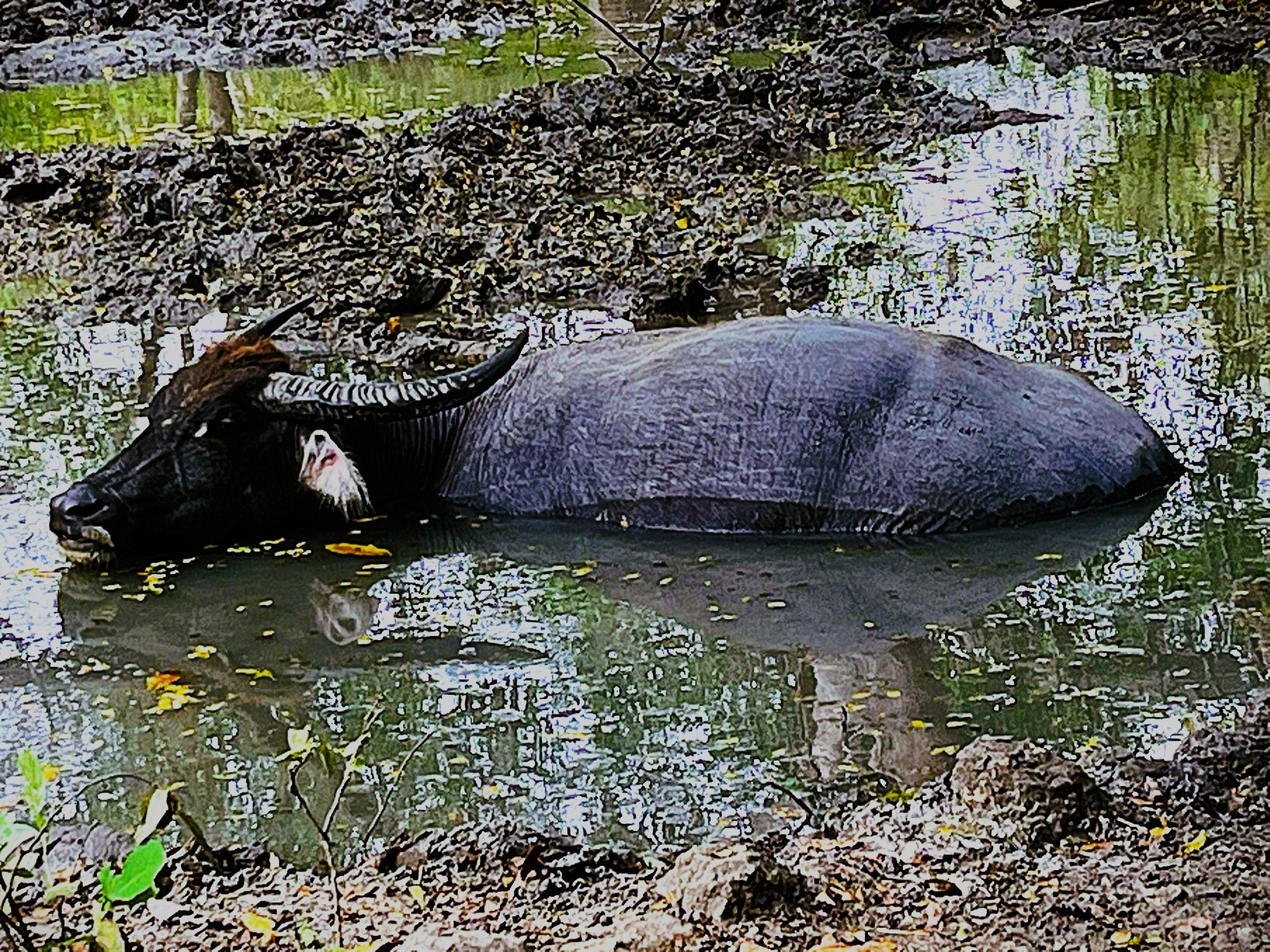
In a pond, we meet a water buffalo. Buffalos are also on the menu for the dragons. Because buffalo have a strong immune system, Dino explains, it often takes several days for the dragon's venom to take effect. The “dragons” wait patiently until the buffalo becomes weak and then strike.
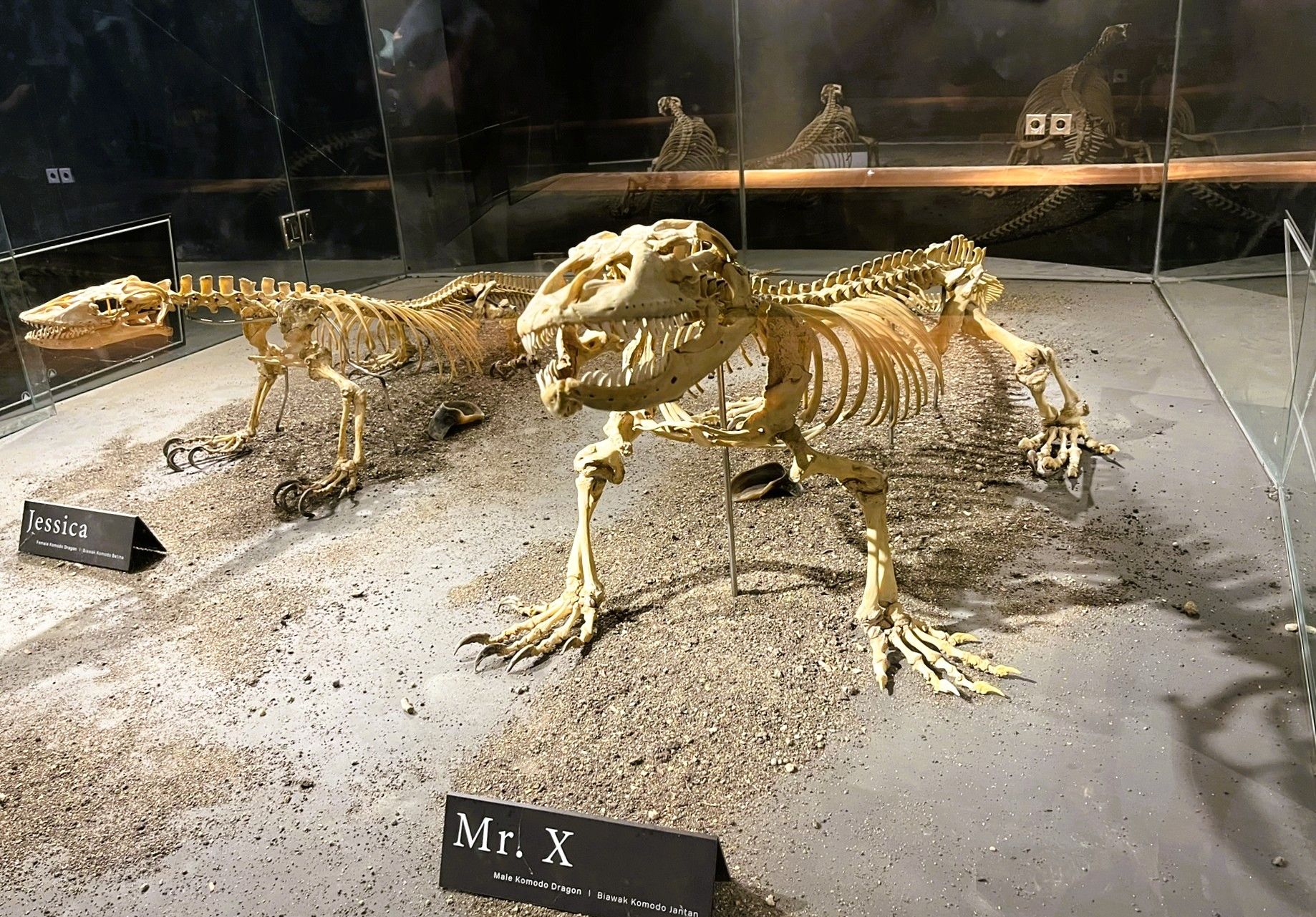
Dragons only eat about once a month but can consume up to half their body weight. This gluttony proved fatal for “Mr. X.” His skeleton is displayed in a small museum near the visitor center alongside that of “Jessica,” a young female. Mr. X devoured a buffalo with such greed that a buffalo horn got stuck in his throat, and he suffocated.
In the museum, we also learn that several island guides have been attacked by dragons. All survived, although some were seriously injured and required long rehabilitation. According to Dino, it is important to be flown to a hospital immediately and treated with antibiotics, and that the wounds are professionally cared for.
And one more thing: Dragons can smell decay from as much as ten kilometers away. To prevent the animals from digging up the dead, people on the islands have traditionally covered their graves with stone slabs or, more recently, with concrete.
A Pink Beach
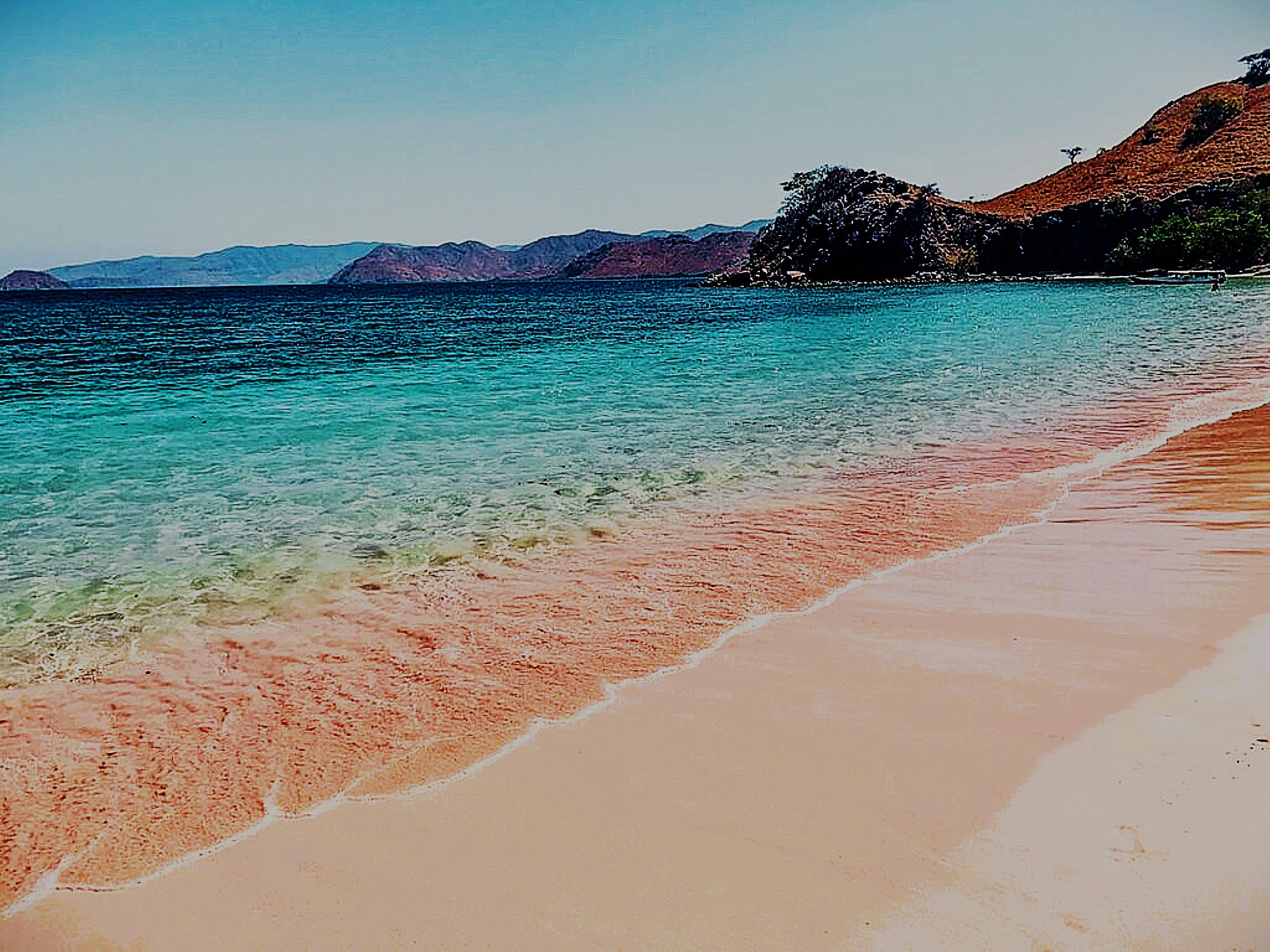
Back on board, heading toward Pink Beach. The sea becomes calmer, the water brighter. After about an hour, a narrow strip of sand appears on the horizon. The boat anchors in shallow water; one wades over to the flat beach. This beach is pink because crushed coral mixes with the white sand, which seems somewhat chemical, even though it was created by nature. But getting a photograph of the beach without crowds is almost impossible; we wait a long time for the tourist boats to leave.
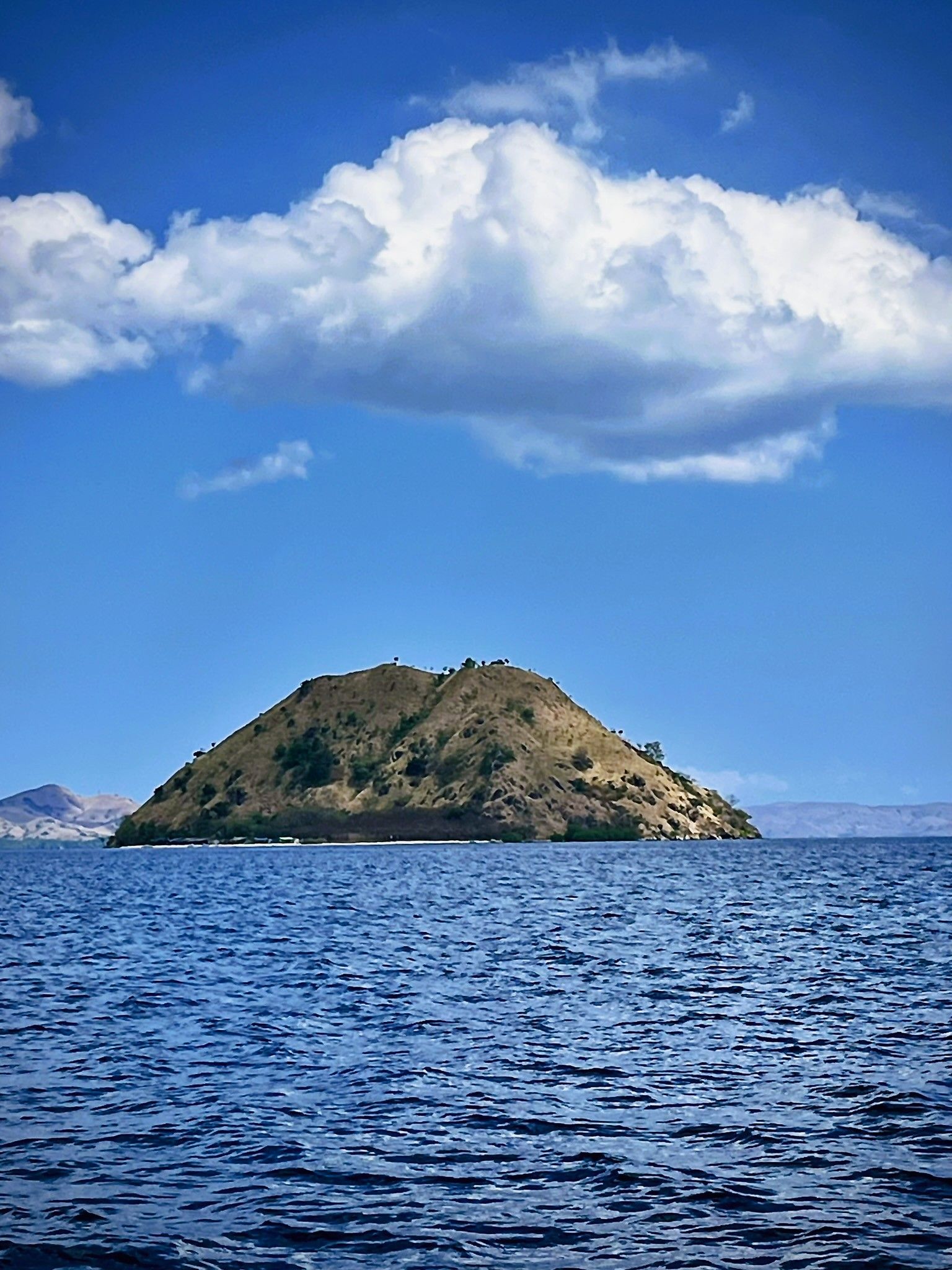
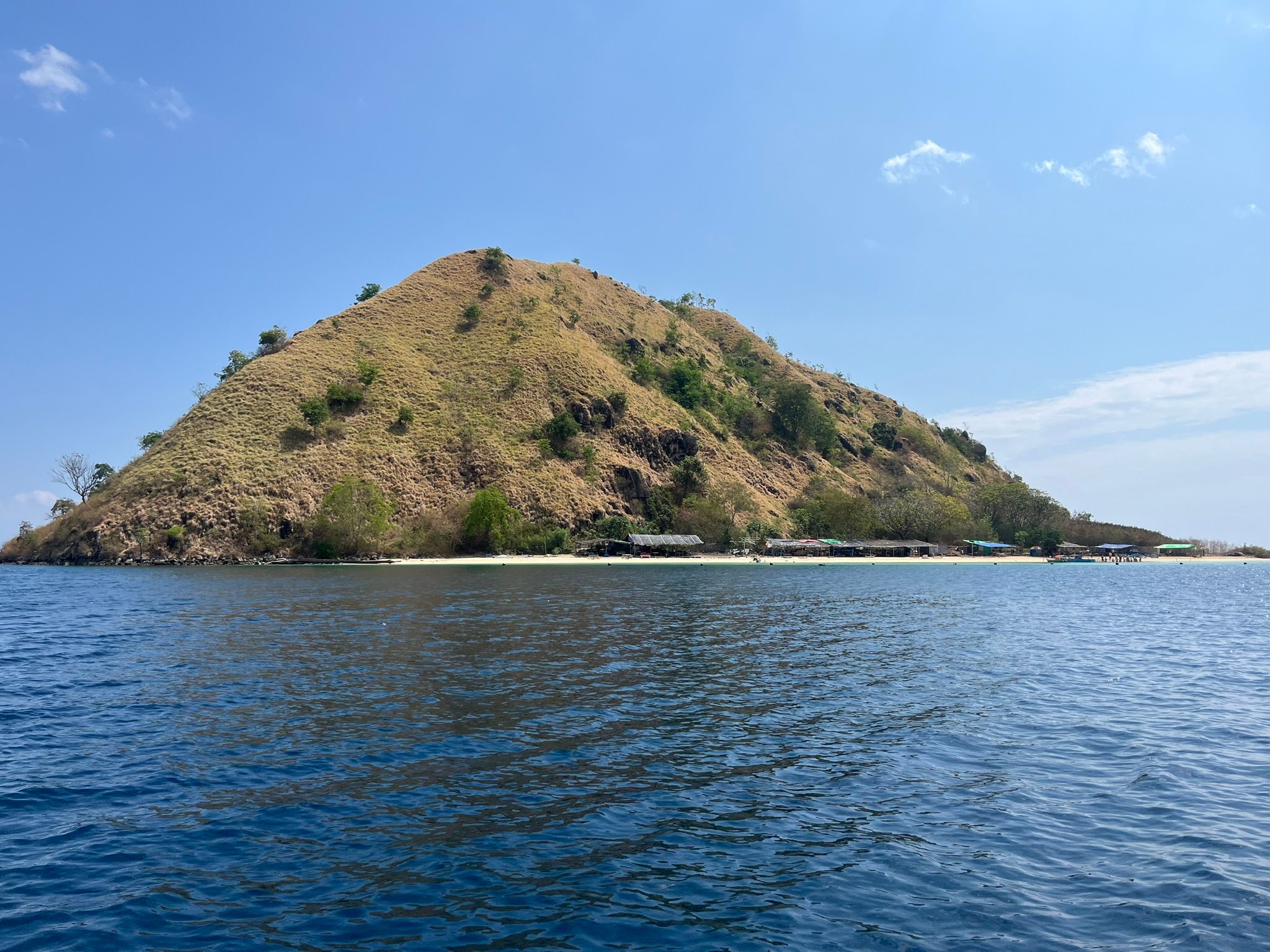
Then we continue to Kelor Island, closer to Labuan Bajo. The boat lands in a small bay. I laboriously and sweatingly climb a steep path up a hill; at the top, I am rewarded with a panoramic view over the Flores Sea, nearby islands, and the open sea. The sun is lower, the light softer, but the impression will only remain in my memory; I cannot immortalize it photographically; my phone's battery is dead. Tourist misfortune!
After another short hour, Labuan Bajo appears on the horizon. I disembark and mingle in Suharto Street with the tourists once again.