

Disturbing Story
conspirators,
Published: 28.04.2026
You can travel from Phnom Penh to Siem Reap, located 300 kilometers northwest, by air, water, or road. Since Phnom Penh has stimulated my imagination enough, I choose the most uninspired mode of transport: the minibus. For 16 US dollars, I will be picked up by a Tuk Tuk at the 'Sun and Moon Urban Hotel' in Phnom Penh on December 23, 2024, taken to the bus station, and after about a five-hour ride in a fully packed Ford Transit, brought to the hotel, the 'Dusit' in Siem Reap.
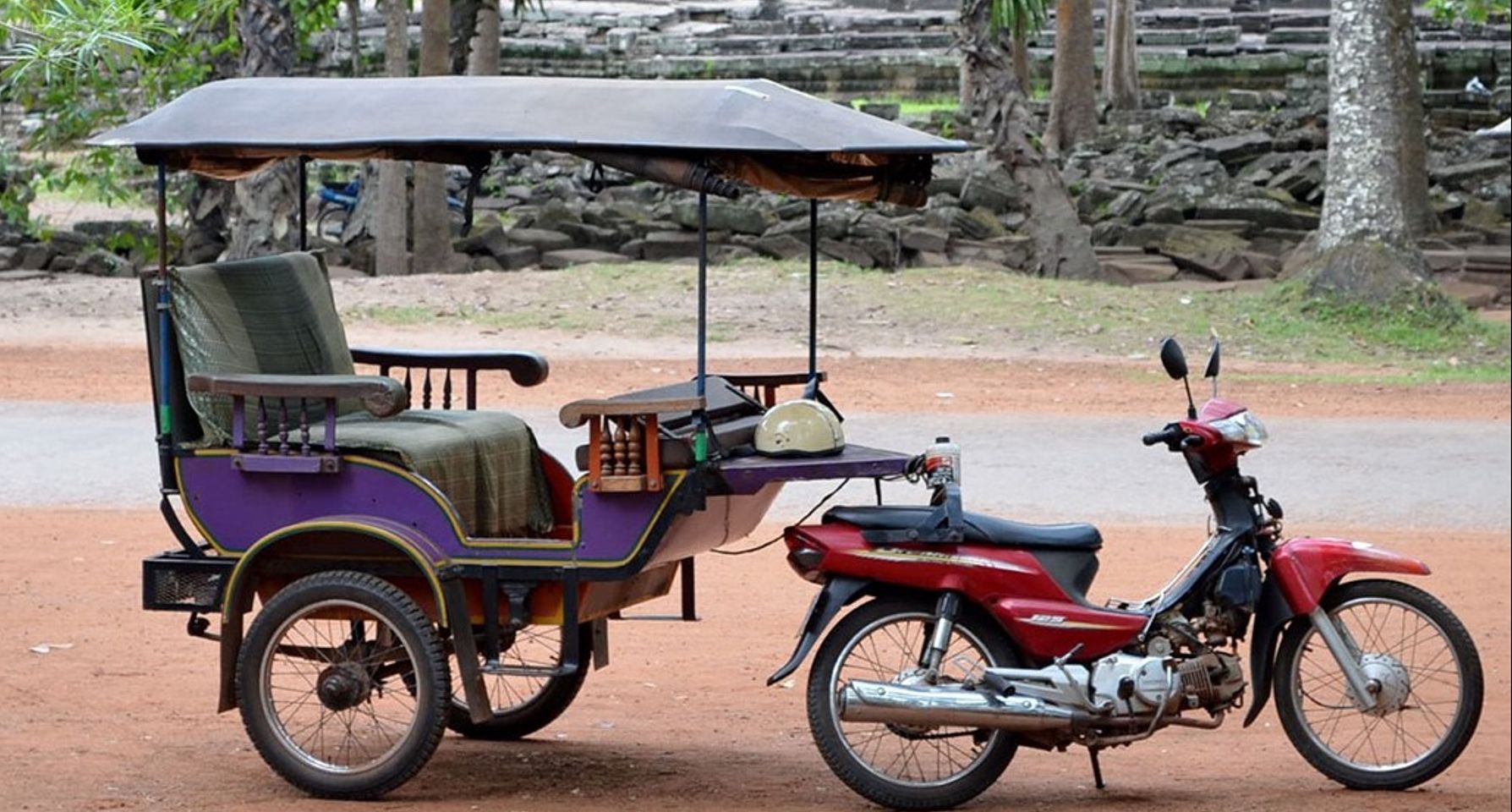
In many Cambodian cities, there is an alternative mode of transport called 'Remorque' besides taxis and Tuk Tuks, which translates to 'trailer' in English. Exactly as it sounds: a motorcycle with a trailer that pulls a small covered cart with one or two padded benches. Remorques cost slightly more than Tuk Tuks, but they are clearly superior in terms of comfort.
Is anyone surprised that dollars are mentioned here? The US currency is widely used in Cambodia: ATMs dispense notes in both dollars and local riels, and most bills in shops, hotels, and restaurants list both. While larger sums are usually paid in dollars, the riel serves as small change and coinage. I wanted to know the reason from a Cambodian acquaintance. He said that Cambodians have little trust in their own institutions due to the very tumultuous recent history.
Glorious Past
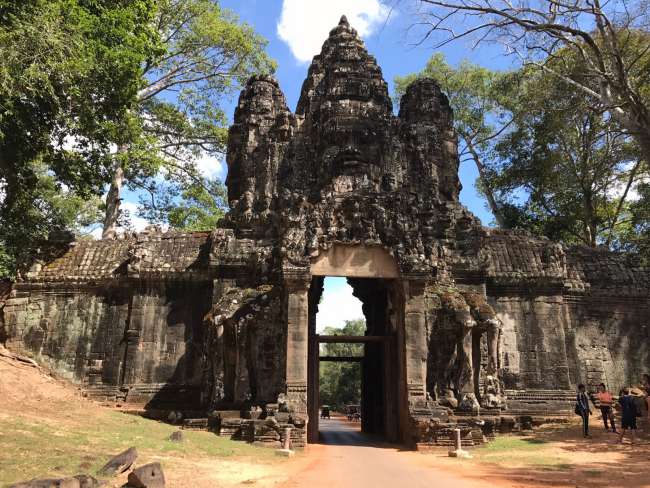
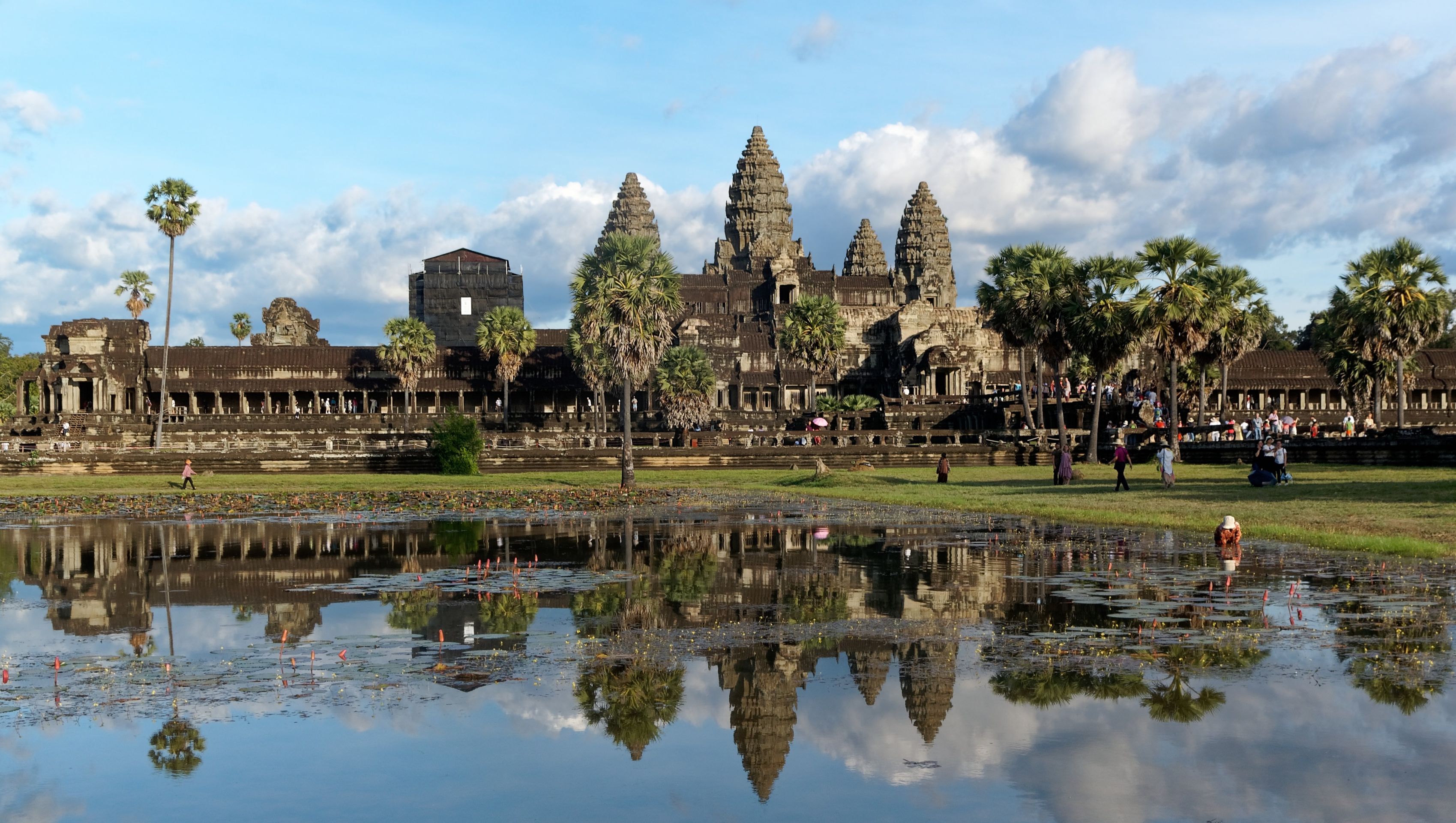
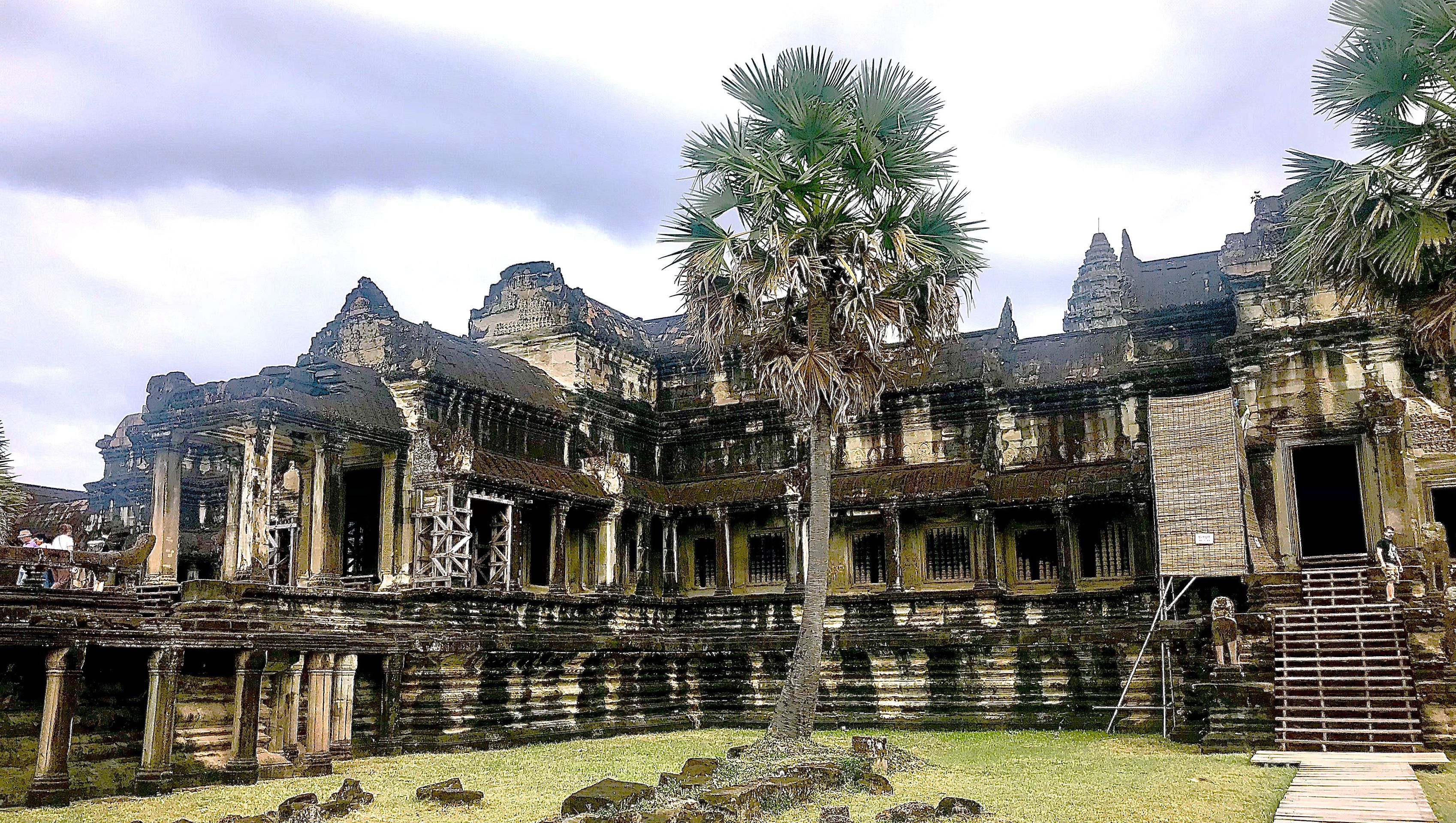
It wasn’t always this way. Angkor Wat, outside the pleasant provincial town of Siem Reap, the imposing sacred structure, bears witness to the imperial past of the Khmer empire Kambuja. This empire expanded in the 12th century to approximately one million square kilometers after bloody conquering wars, nearly three times the size of Germany.
Angkor was the capital of a regional superpower that included modern-day Thailand and Laos, along with parts of Vietnam, Myanmar, and Malaysia. The temples of Angkor were built for the worship of Hindu gods (Buddhism only became dominant in the 14th century) and expressed the rulers' self-confidence and claim to power. Modern Cambodia has shrunk to less than one-fifth of its former size.
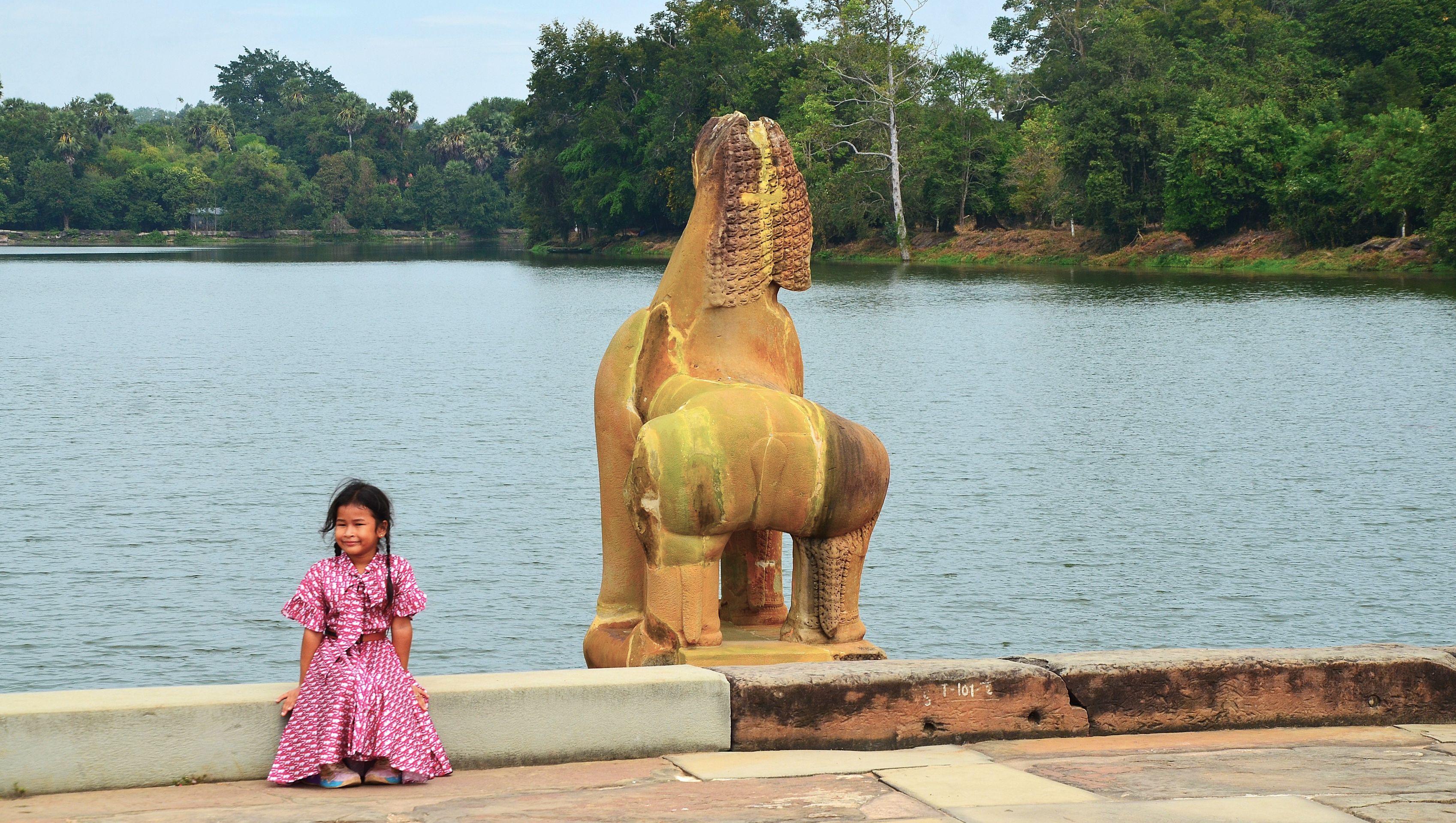
The temple complex is considered one of the places being overrun by tourists. We, two friends from Switzerland and I, have traveled out there by Remorque, strolling through the well-kept alley and onto a wide, stone bridge over the artificial lake towards the temples, where we are impressed and pleasantly surprised: The influx is manageable; we can calmly admire the eight-hundred-year-old, meticulously maintained, and restored treasures. Only the photos fail on this hazy day.
I returned to Siem Reap more than a year later and will write about it in detail.
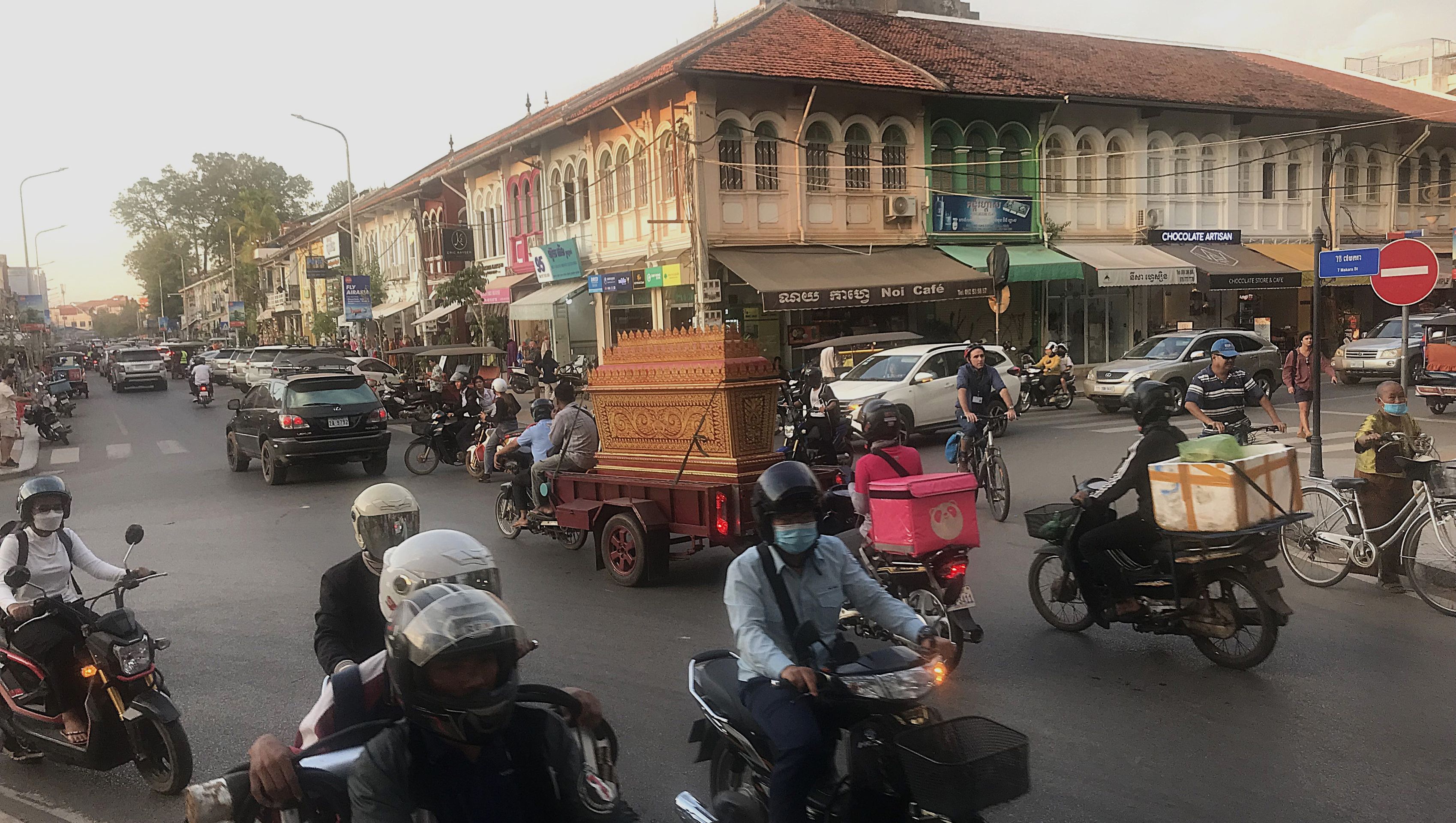
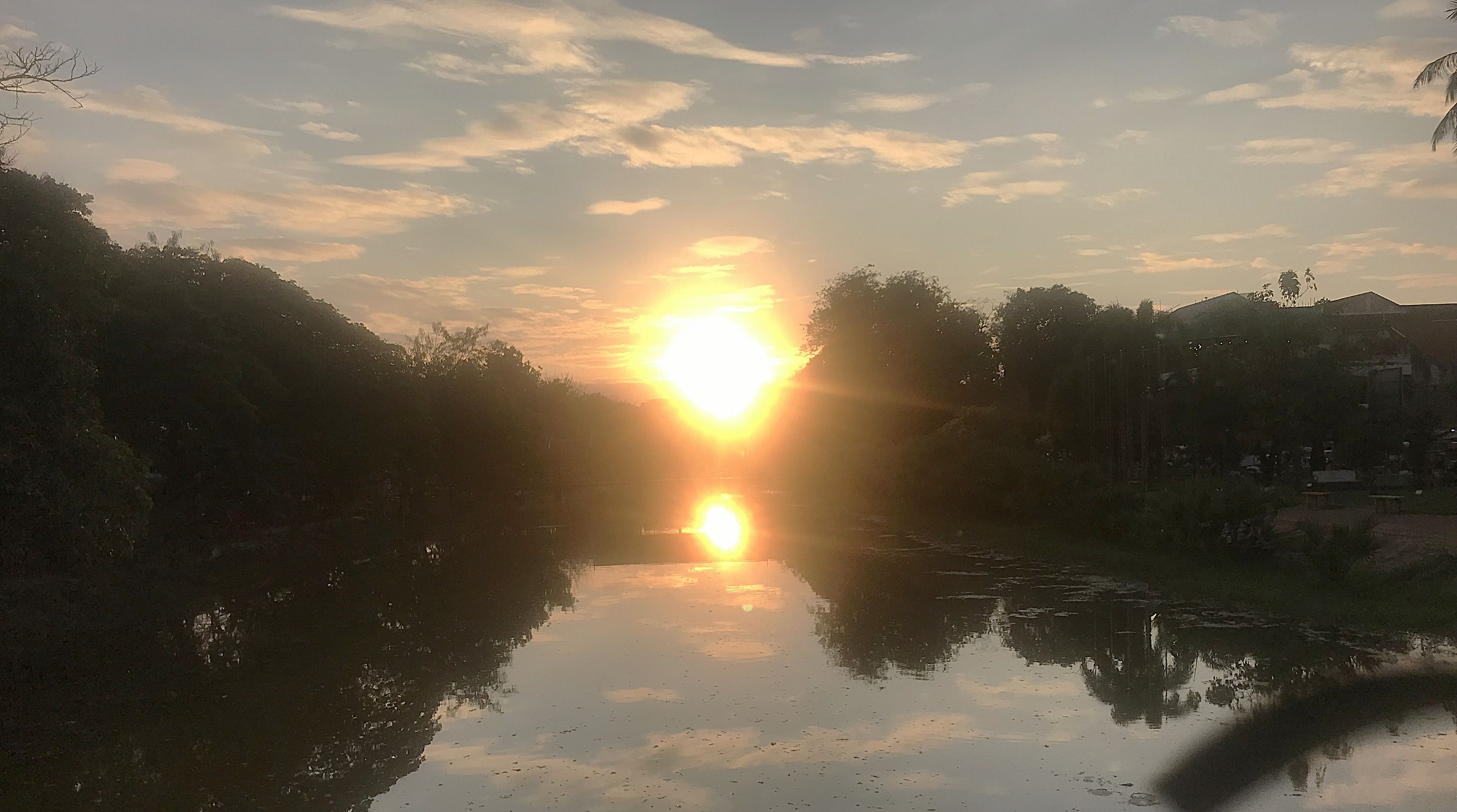
To let the impressions sink in, we stroll in the evening through the city center with its French colonial architecture along the river, lined with mobile food stalls, admire the spectacular sunset, and visit the old market. Everything is available here, from fish and crabs from the Tonle Sap Lake to fruits and vegetables, locally made counterfeit brand clothing and 'Swiss' watches, to jewelry, leather goods, and crafts. A saleswoman asks for 30 dollars for three T-shirts; after friendly haggling, they come into my possession for twelve dollars or 480 riels.
Picturesque Water Landscape
For the onward journey to Battambang, 155 km west of Siem Reap, three friends and I decided on a special mode of transport, a chartered boat, on December 27, 2024. Siem Reap is near the Tonle Sap Lake, the largest lake in Southeast Asia. The lake is about 3000 square kilometers in size during the dry season but expands to over 10,000 km2 during the summer months until September. (In comparison, Lake Constance, at 536 km2, is just a large pond.)
The outflow of the lake, also called Tonle Sap, flows into the Mekong River at Phnom Penh. When this river, originating in Tibet, swells during the monsoon season and with meltwater from the Himalayas, it pushes the water of the Tonle Sap River back; the river changes direction, and the lake level rises.
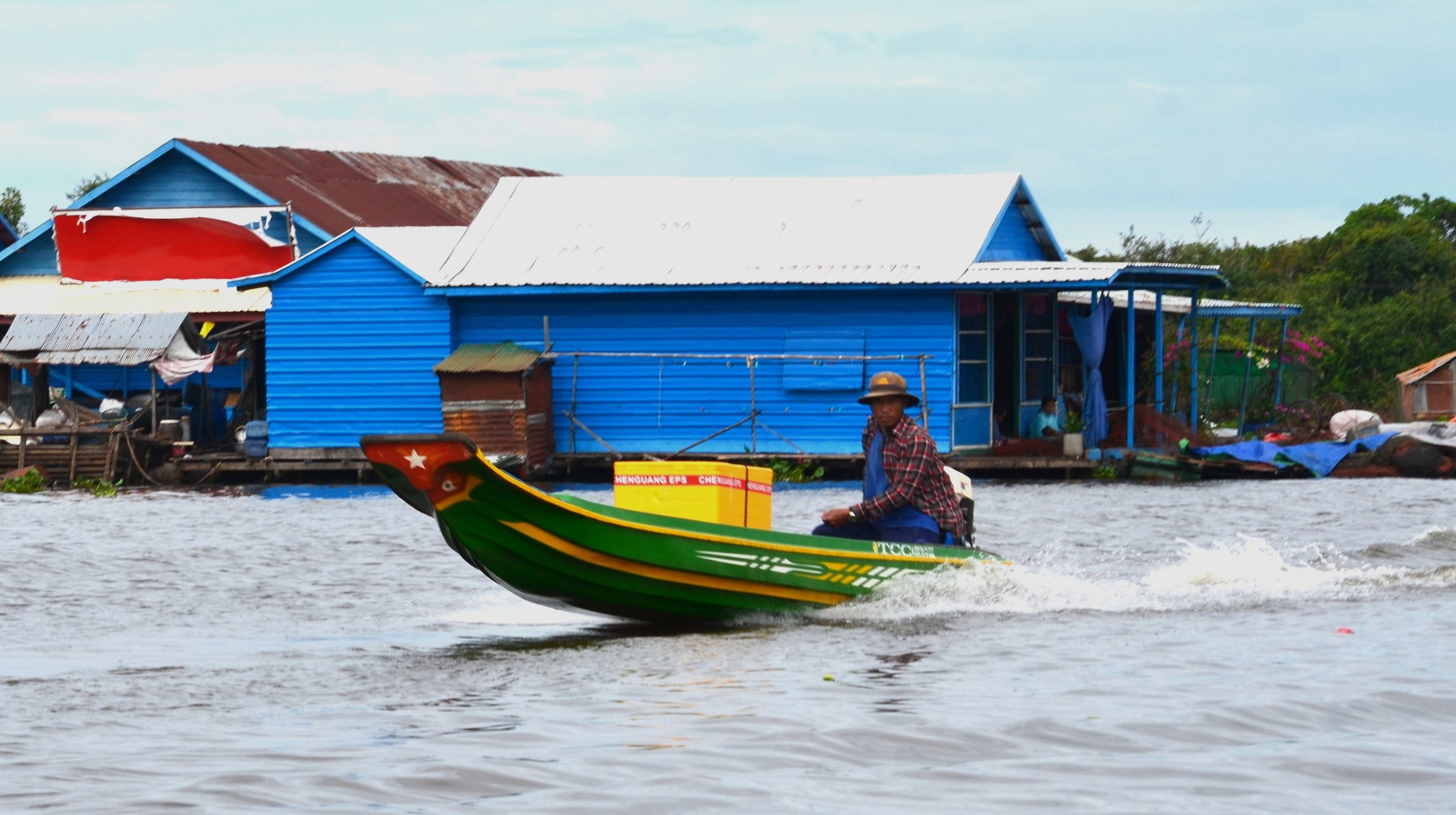
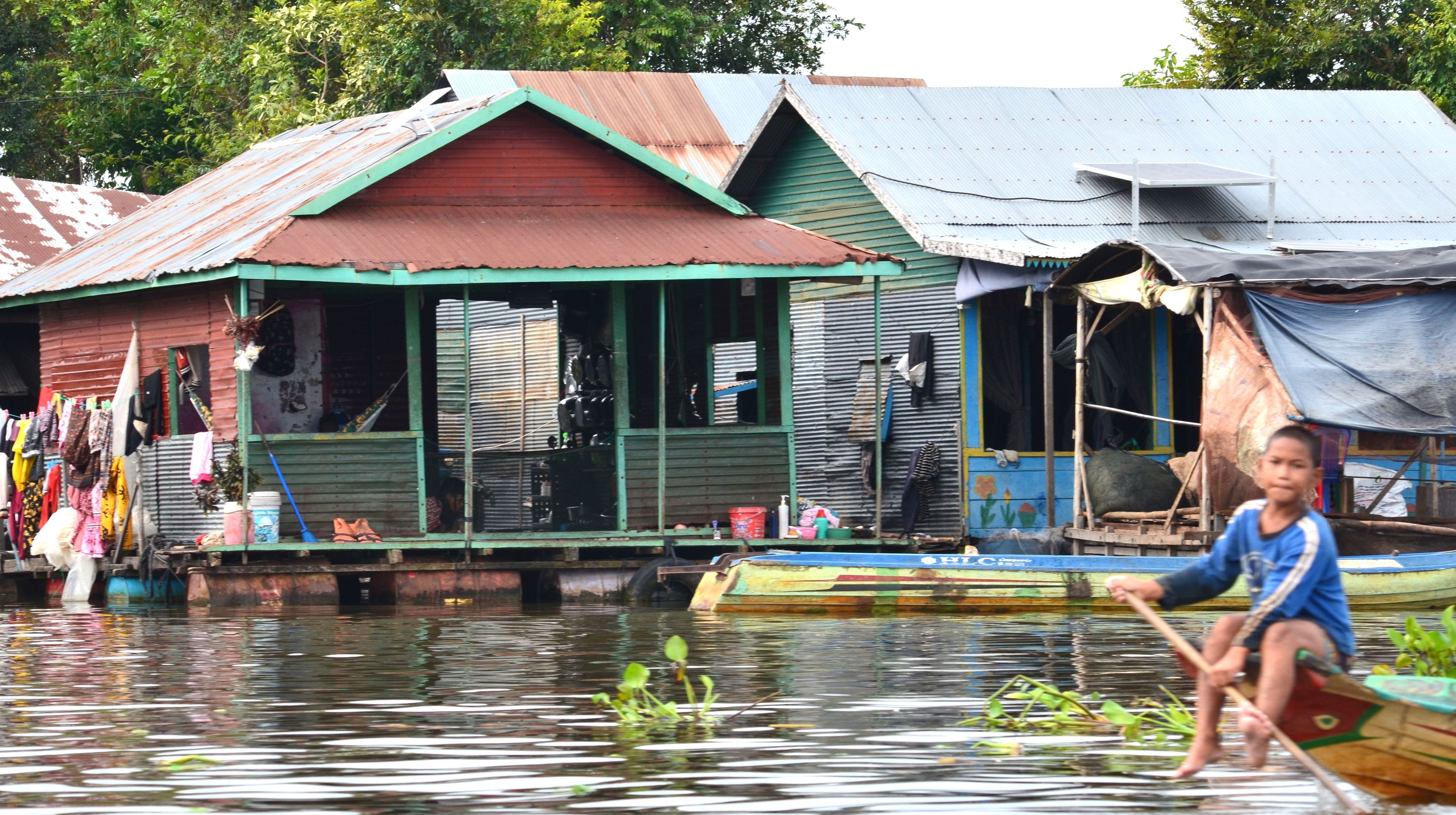
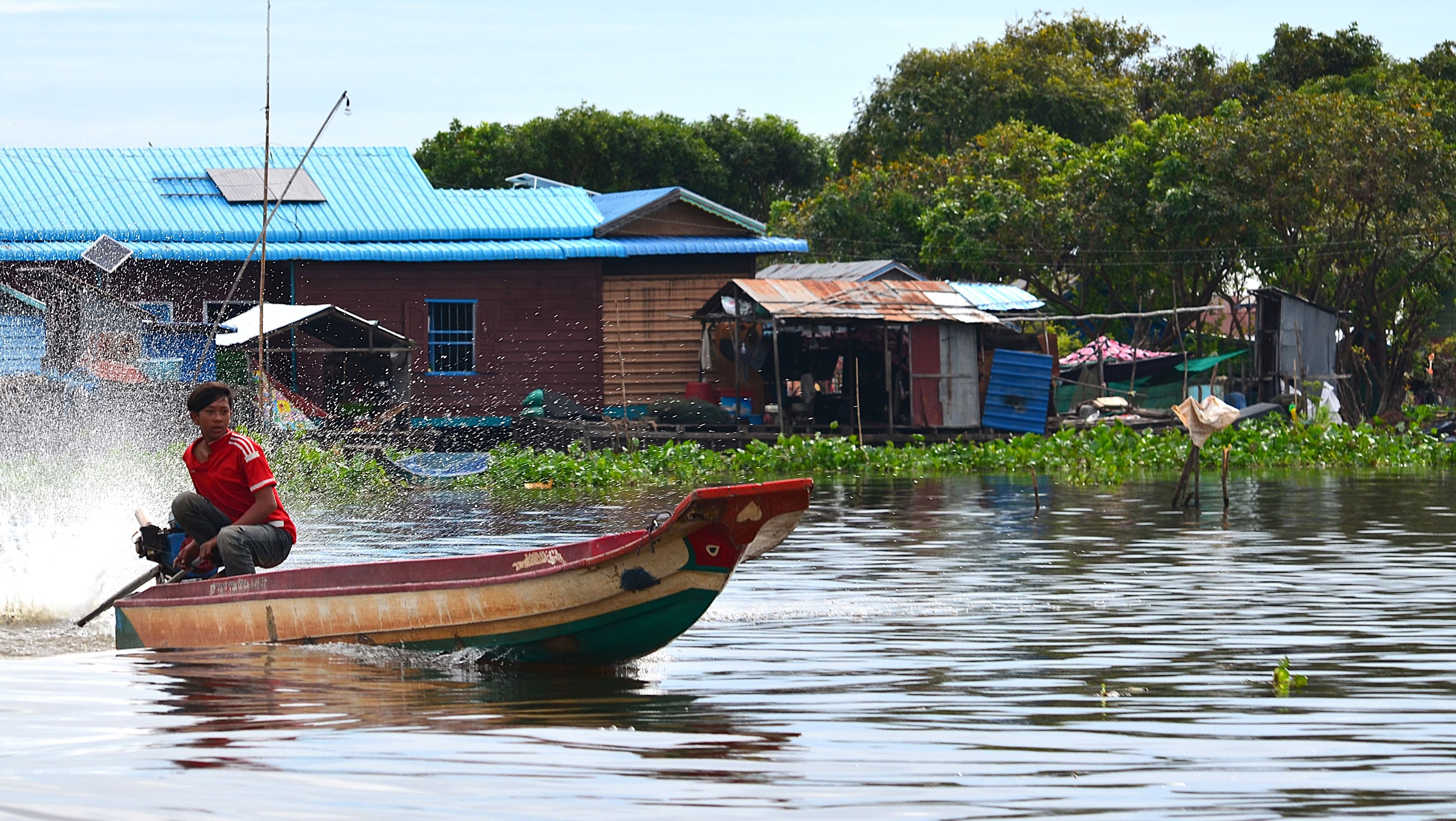
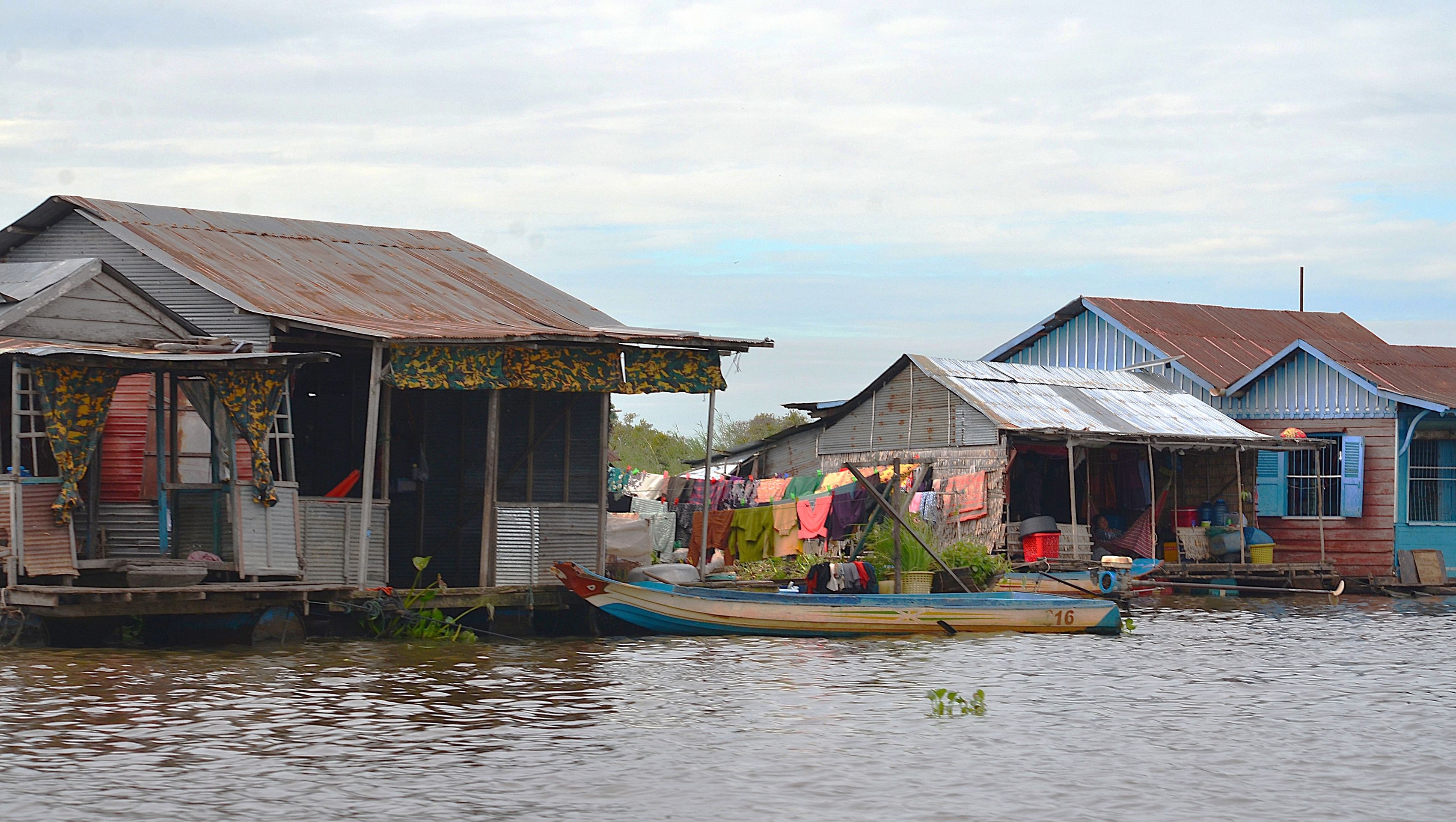
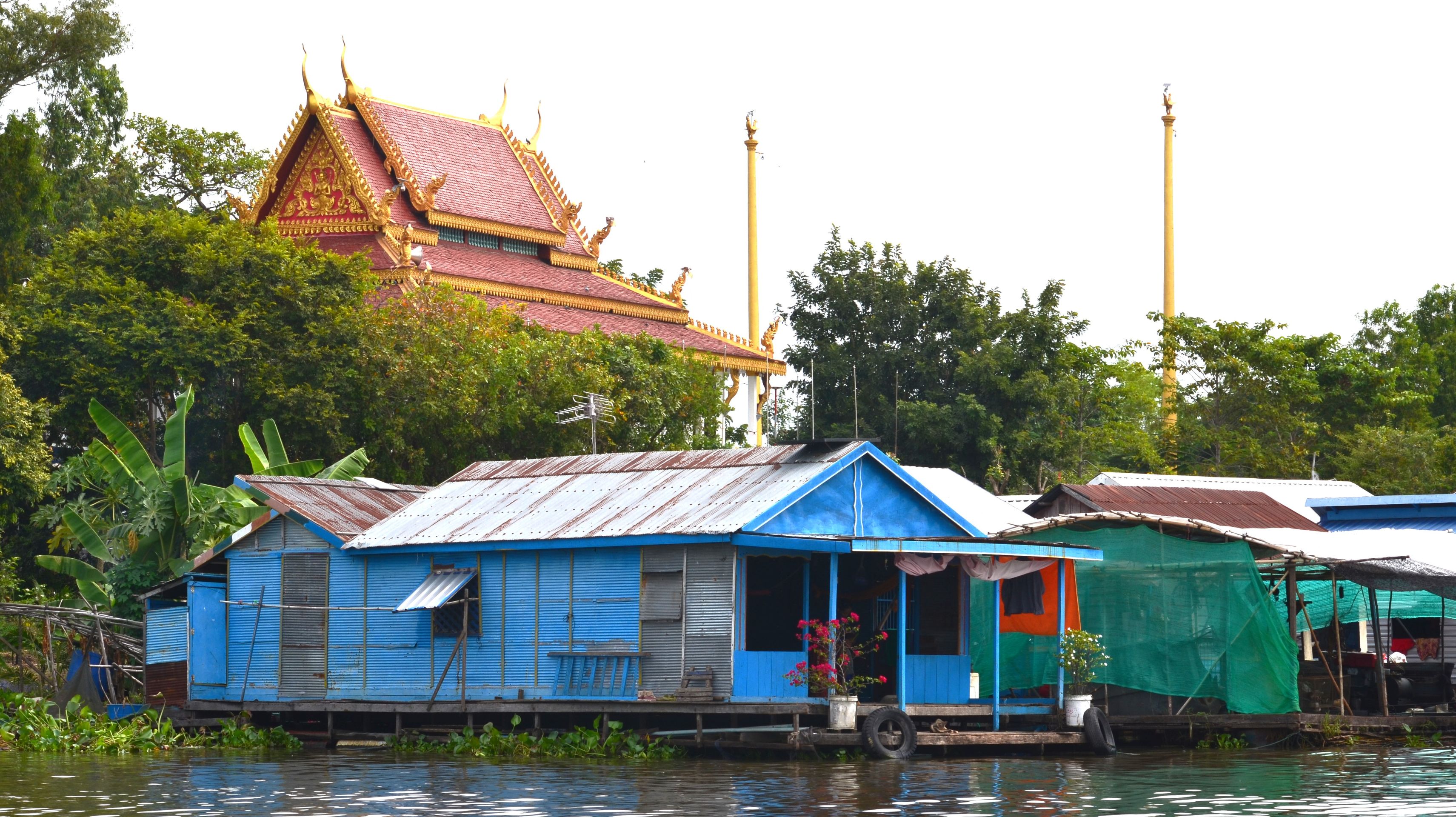
On our boat trip across the lake and the Sangke River, we feel as if we have been transported back decades. Our large wooden boat with its padded benches and a bed inviting for a siesta must have been chugging through this picturesque water landscape for many years. The floating villages along the Sangke, where the houses gently sway in rhythm with the waves, seem like they are from another world.
Only the youthful rowdies are universally the same: Where they used to create chaos with modified motorbikes, today they make the streets dangerous with lowered cars, they zoom across the water here with narrow longboats. The racing boats, creating sprays, are propelled forward by motors that drive propellers in the water via long shafts, resembling oversized immersion blenders.
We let the images wash over us: the fishermen, standing waist-deep in the water in the afternoons, emptying their nets; longboats serving as buses; others transporting goods. We dock at a floating supermarket, stock up on local beer and Chinese potato chips. And in the evening, hopelessly spoiled by civilization, we are grateful for a cooling air conditioning and a warm shower at the hotel in Battambang.