
Head hunters and forest people on Borneo
After my 72nd birthday at the end of April 2025, I traveled to the north of the island of Borneo, encountering a curious chapter of colonial history and orangutans.
Published: 16.05.2026
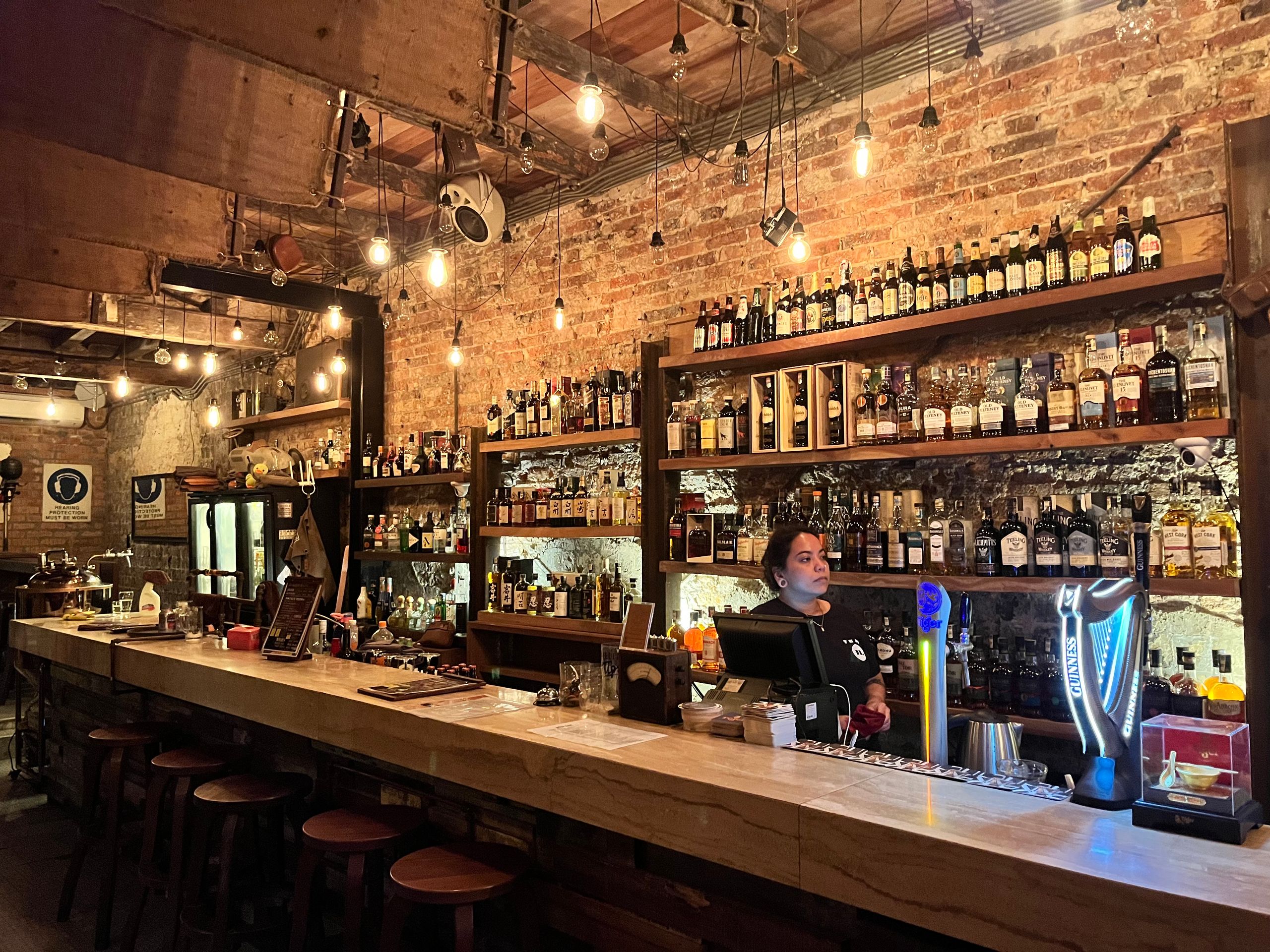
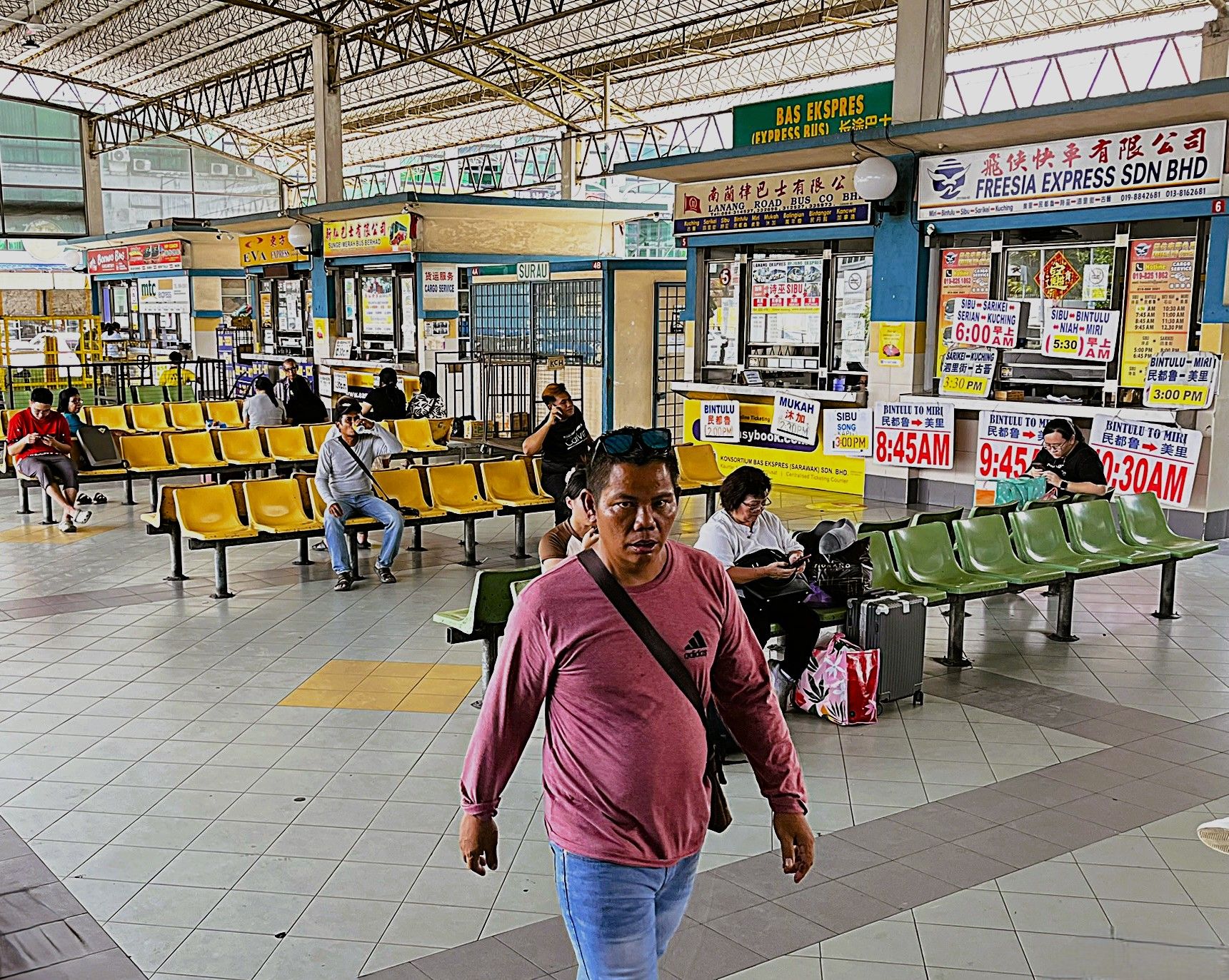
“Two days are enough,” a random acquaintance told me in the “Drunk Monkey Bar” in Kuching, the capital of the Malaysian state of Sarawak on Borneo, while we toasted with a local craft beer: “Brunei is boring.” This naturally piqued my curiosity, and I decided to travel nearly a thousand kilometers northeast over several bus stages between May 4 and May 11, 2025. (Borneo is huge; you realize that when trying to get from one point to another and suddenly find yourself traveling as far as from Rome to Cologne or from Berlin to Helsinki.)
On my way to Brunei, I made stopovers in three cities that were indeed rather dull: Simanggang, which was sometimes called Sri Aman and is still referred to as such by many, for instance, on the bus ticket from Kuching; then Sibu, 225 km north of Simanggang; finally Bintulu, about 200 km north of Sibu and 350 km southwest of my destination, Brunei.
Unpleasant Surprise
The first leg from Kuching to Simanggang brought me the only unpleasant surprise of this Borneo trip: The driver of the long-distance bus informed me in barely intelligible English that he wouldn’t be taking me into the city. He would drop me off at a bus stop outside the city; from there, I could request a Grab vehicle. (Grab is the primary alternative to Uber in Southeast Asia, which does not exist here.)
However, outside of cities in Borneo, there is no Grab service, as I soon found out when I checked the corresponding app. And I was standing at a bus station, but no buses were running here, or they would arrive after an epically long wait. So, I was forced to resort to a mode of transportation I hadn’t practiced in more than five decades: Thumb up, hitchhiking!
For about an hour, hundreds of cars sped past this increasingly frustrated, overweight, and aging hitchhiker with his giant suitcase, without even slowing down. I felt like I was back in 1971 at the Gotthard, where I once stood with my thumb raised in the sun for seven hours at the beginning of vacations in Italy and southern France until a driver took pity on me.
Here in Simanggang, Borneo, I felt similar feelings of resignation and despair as I once did on the pass road south. (The Gotthard road tunnel did not exist back then; everyone had to go over the mountain.) But eventually, a tour bus stopped, though it was heading in the wrong direction. I was already calculating how long it would take me to walk to Simanggang: 16 kilometers, which means about three hours, with heavy luggage and in scorching heat. Not a pleasant prospect!
A Chinese man in a white sedan rescued me. He spoke excellent English, which wasn’t surprising since he worked as an English teacher, and he drove me right to the hotel. Instantly, the grim thoughts were replaced by joyful excitement.
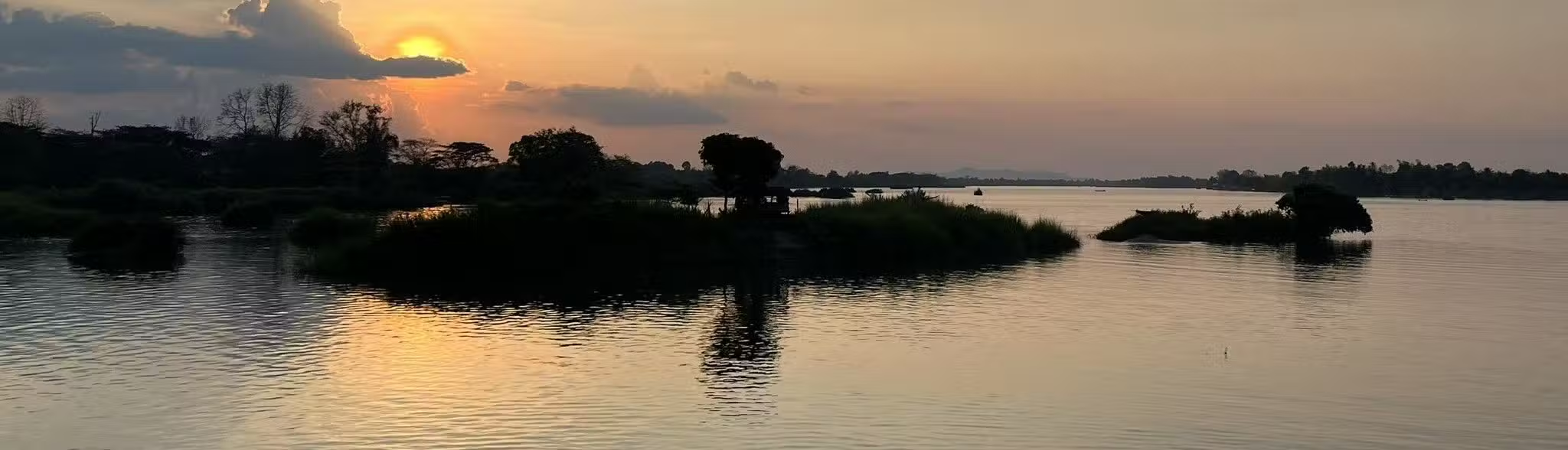
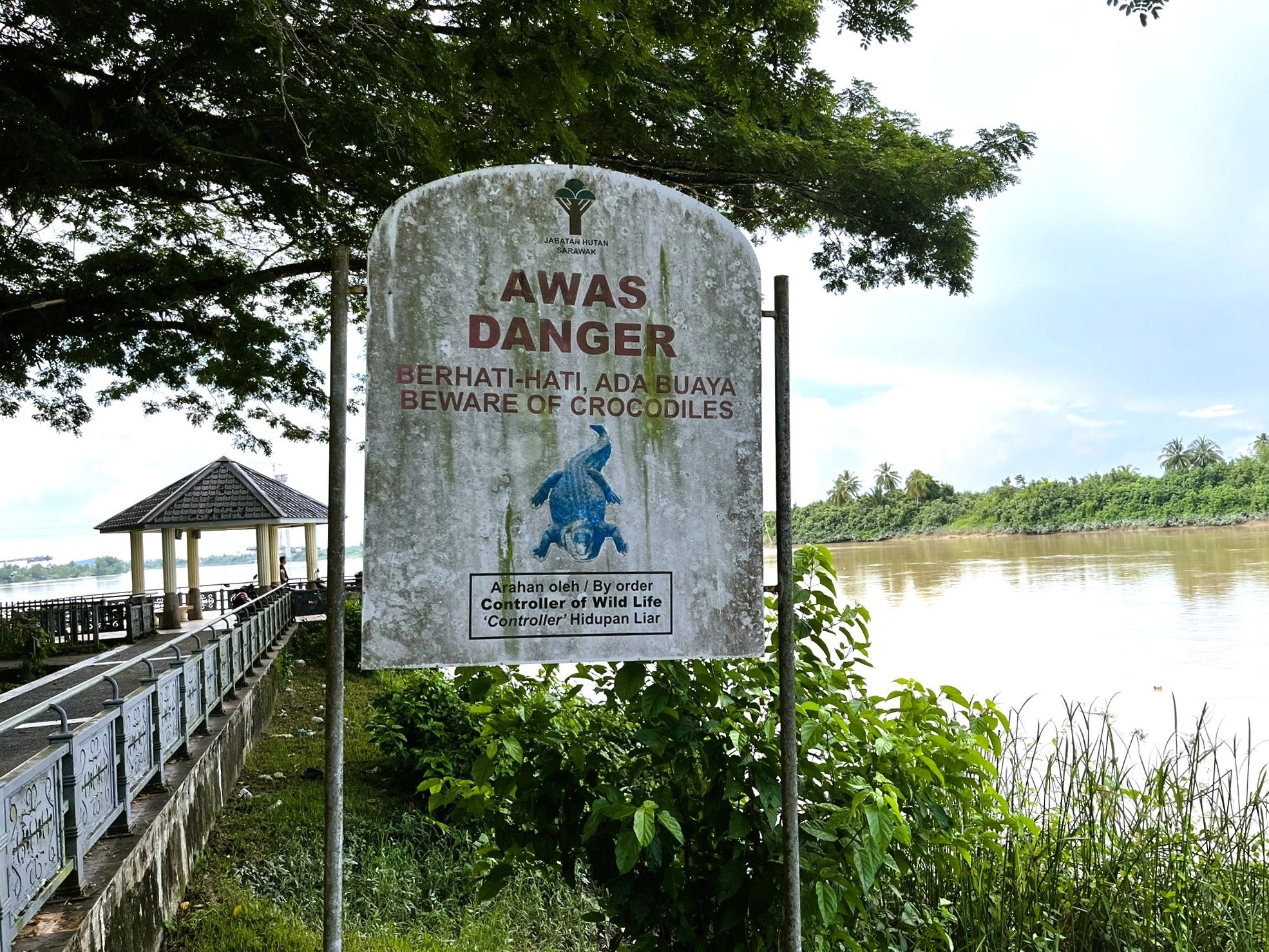
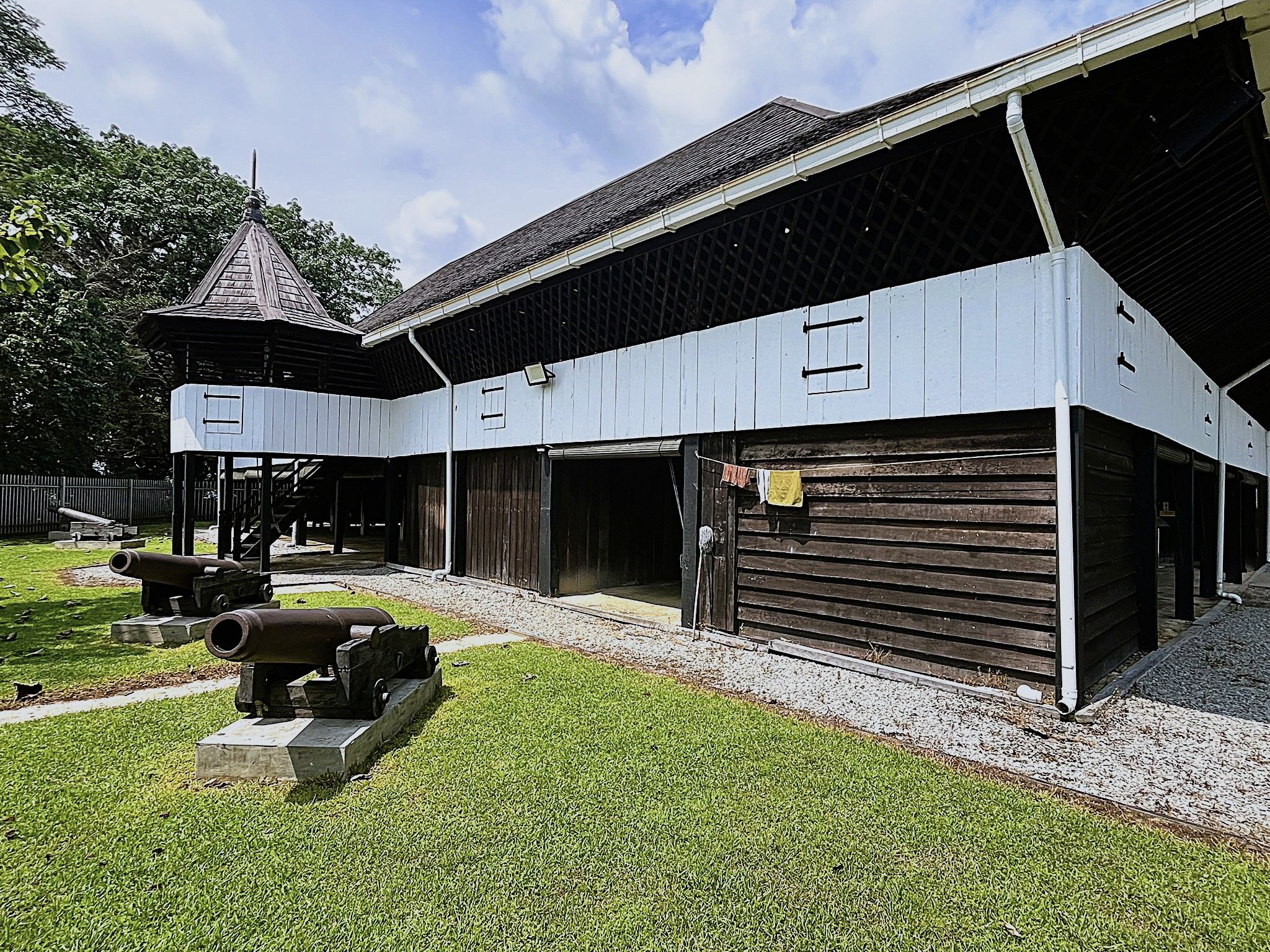
In Simanggang, I visited the Lupar River, where there are warning signs for crocodiles, but no crocodiles were in sight for miles. At the riverside promenade, there is also a lovely temple to visit. Historically interesting is Fort Alice, built in 1864 during the reign of the White Rajahs, the Brooke family, who ruled the present Malaysian state of Sarawak as a principality for over a hundred years. The simple wooden fort, decorated with antique cannons, served as the administrative seat for the Brooke rule and as a military base to control the river system around Simanggang and to fight against pirates.
British Fort and American Fried Chicken
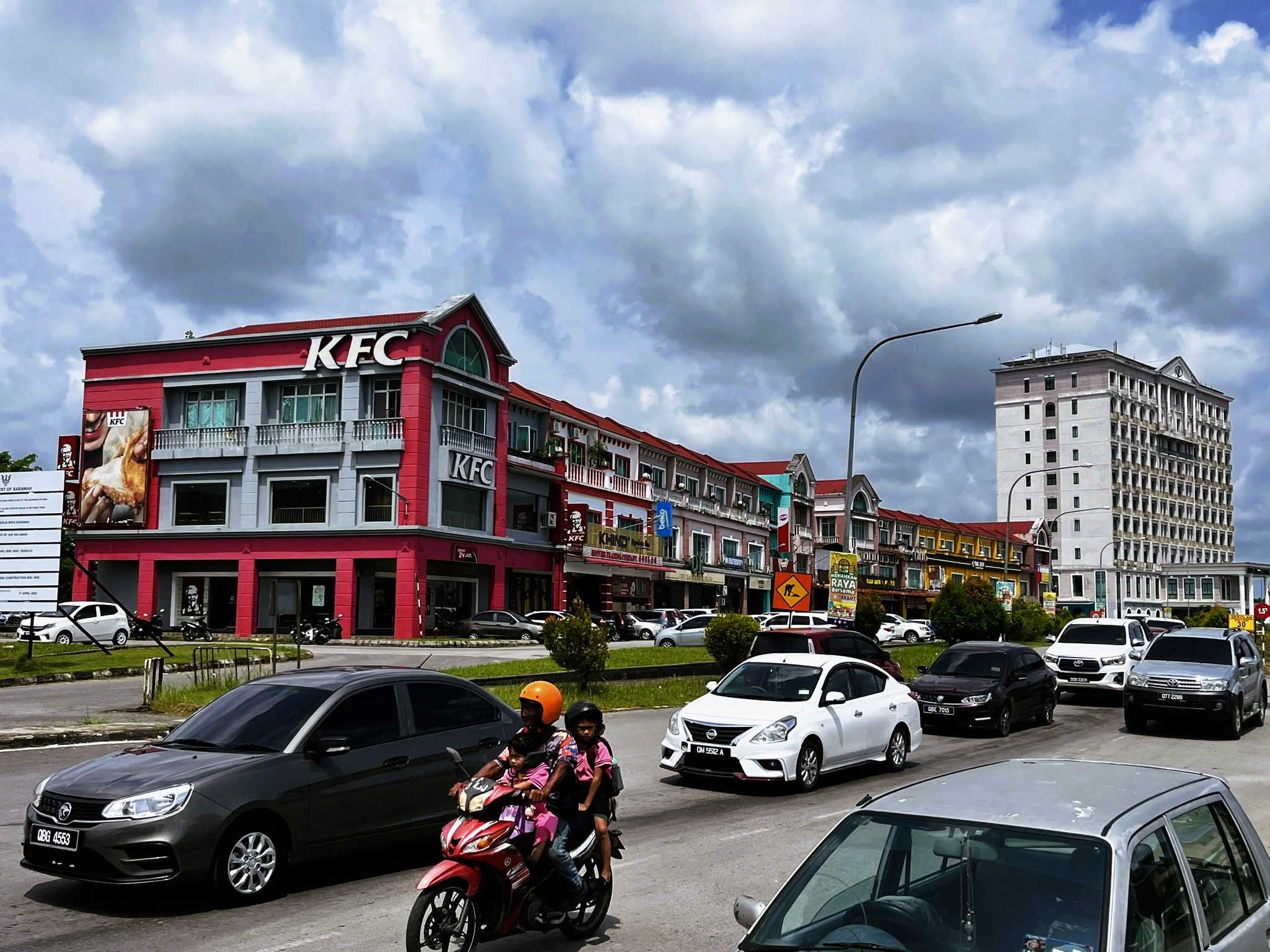
Simanggang, with its approximately 30,000 inhabitants, is a small town on a river; there are no interesting museums or sights. The most striking building in the town, apart from Fort Alice, is “Kentucky Fried Chicken” (KFC) at a busy intersection near my hotel. This, the “Seri Simanggang Hotel,” white and ten stories tall, stands surprisingly grand in this small town until you enter the lobby. There, several restaurants are noticeable, styled in a dreary American fast-food fashion. The rooms, however, are well-equipped, clean, and at 30 euros per night, also affordable.
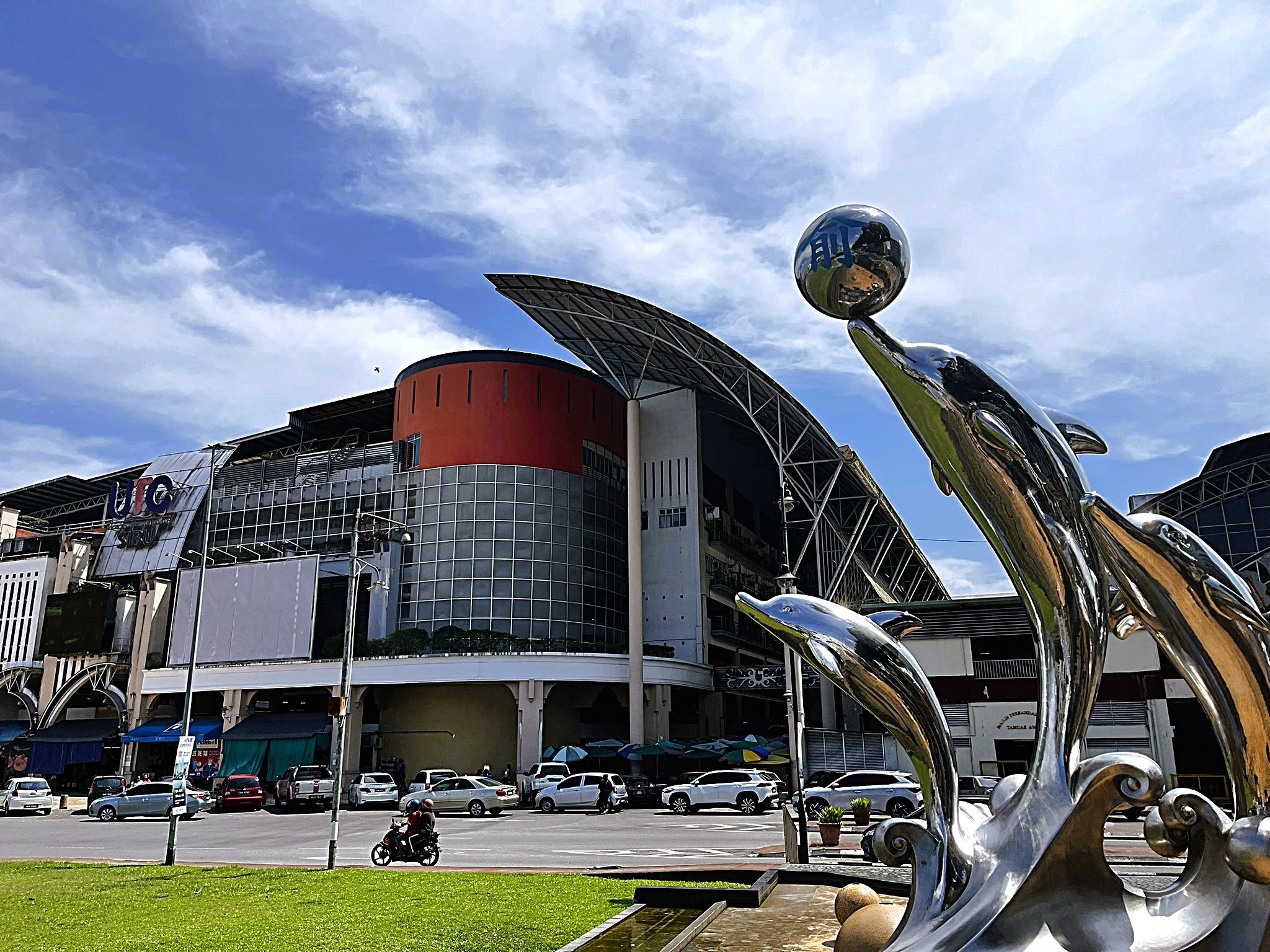
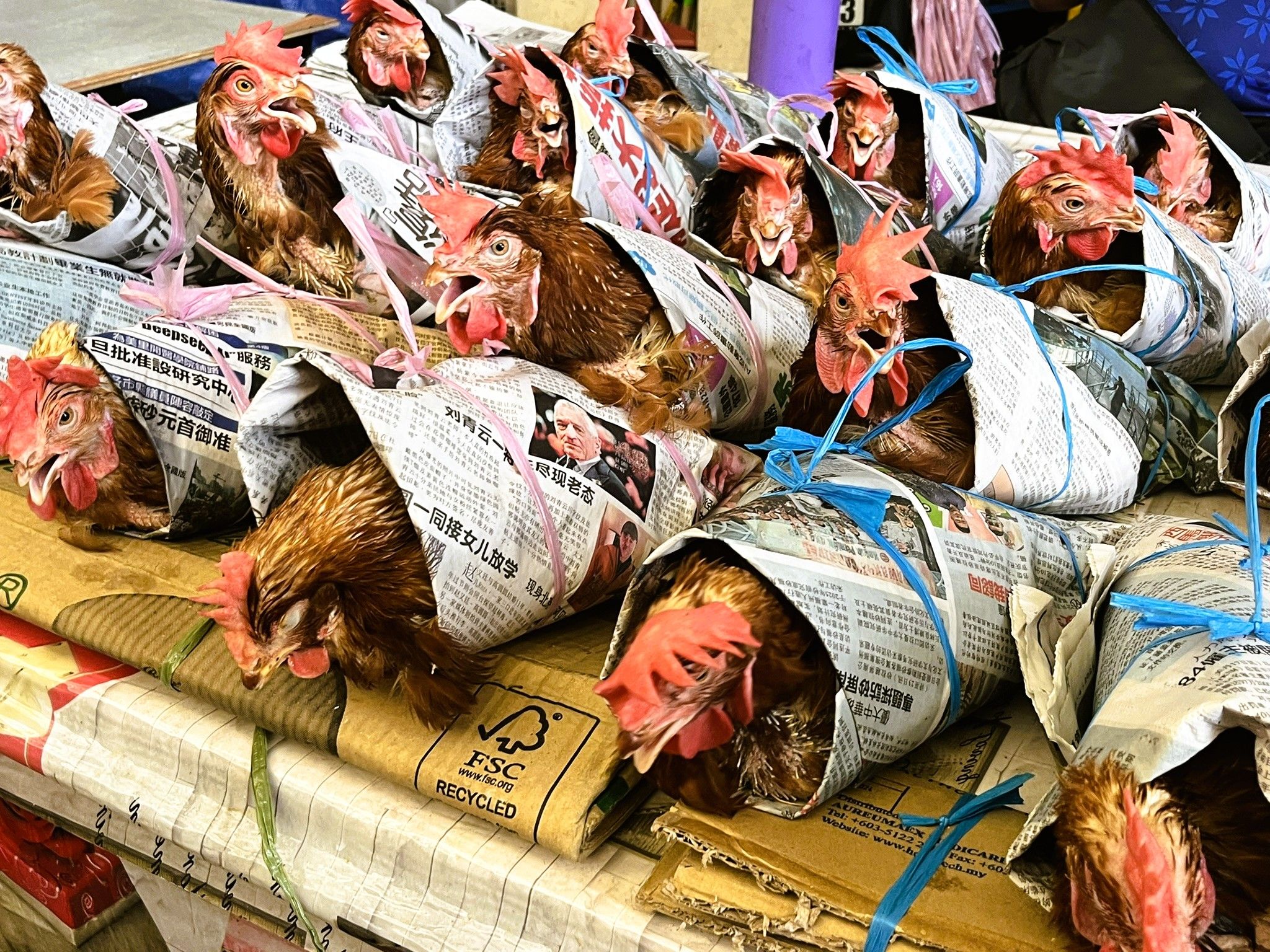
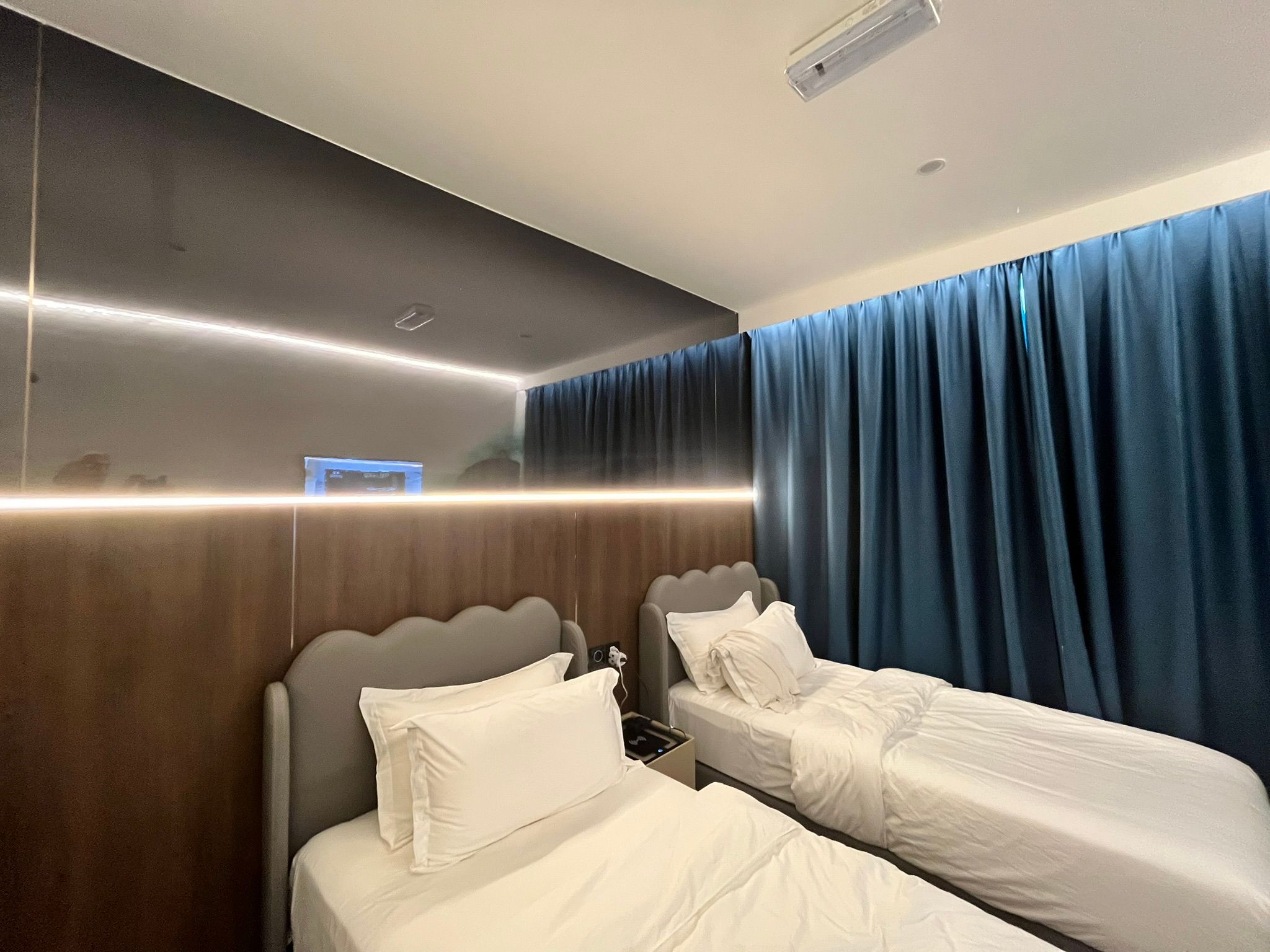
The next day, I continued on to Sibu. The city is significantly larger than Simanggang, with about 250,000 inhabitants. Very close to my ultra-modern and sparkling clean hotel “The Swan” (18 euros per night including breakfast, but with a tiny, tiny room), there is a giant market hall, built 30 years ago, supposedly the largest covered market in all of Malaysia. That may well be true, but what I remember most is having never seen live chickens wrapped in newspaper and tied together being sold.
In front of the market hall, there is a dolphin sculpture gleaming in the sun. The owner of the “The Swan” hotel explained to me that this was to remind everyone that Sibu, at the mouth of the Rajang River, was an important center for maritime trade and ship traffic along the coast of Borneo from the 19th century onward. Here, rubber and timber from the hinterland were primarily delivered downstream and reached Sibu for Southeast Asian and Chinese shipping. In earlier times, members of the indigenous Dayak people primarily lived here, the hotelier explained to me. She belongs to the ethnically Chinese population, which makes up almost half of the local inhabitants.
A Temple, Three Religions
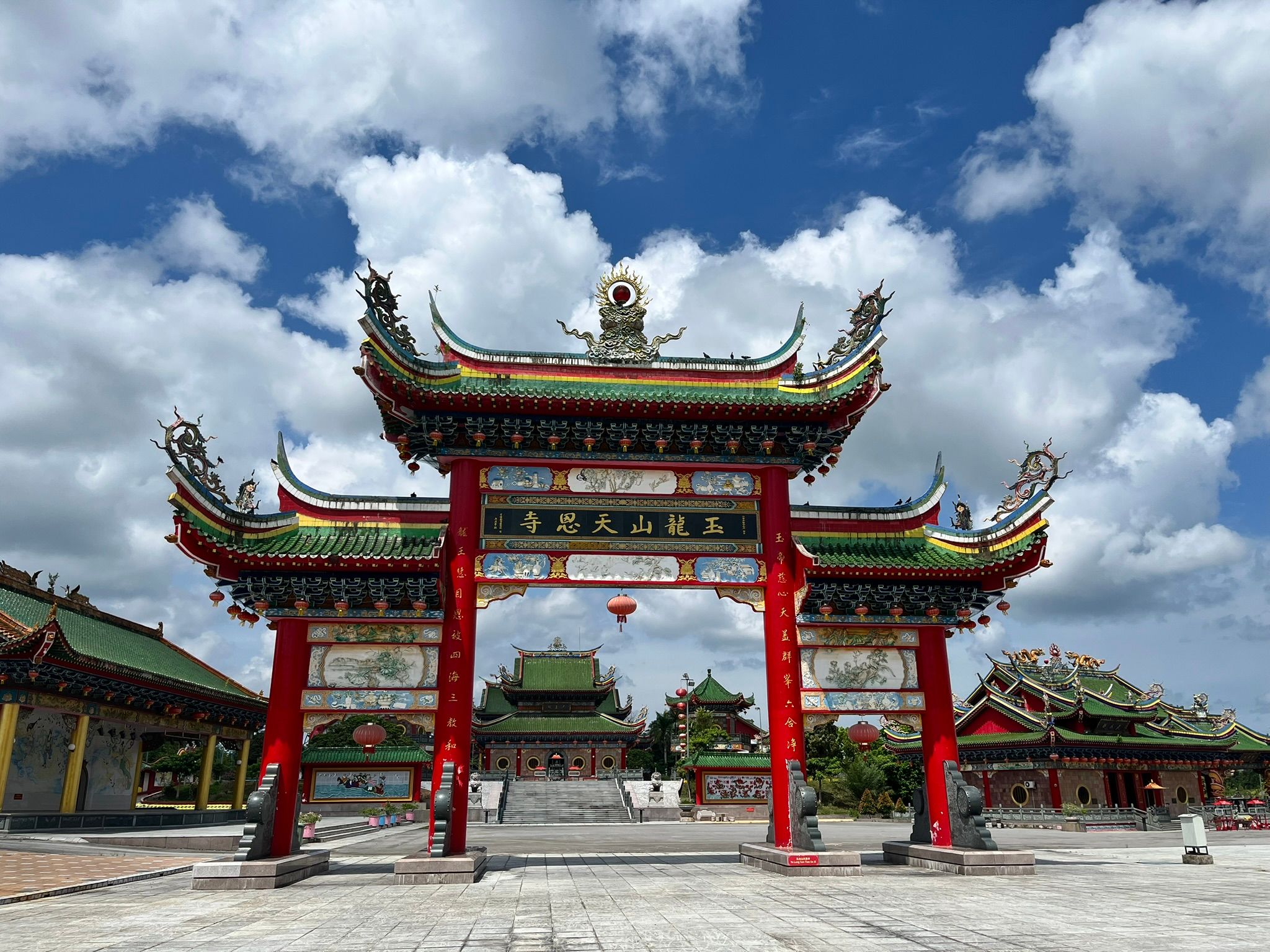
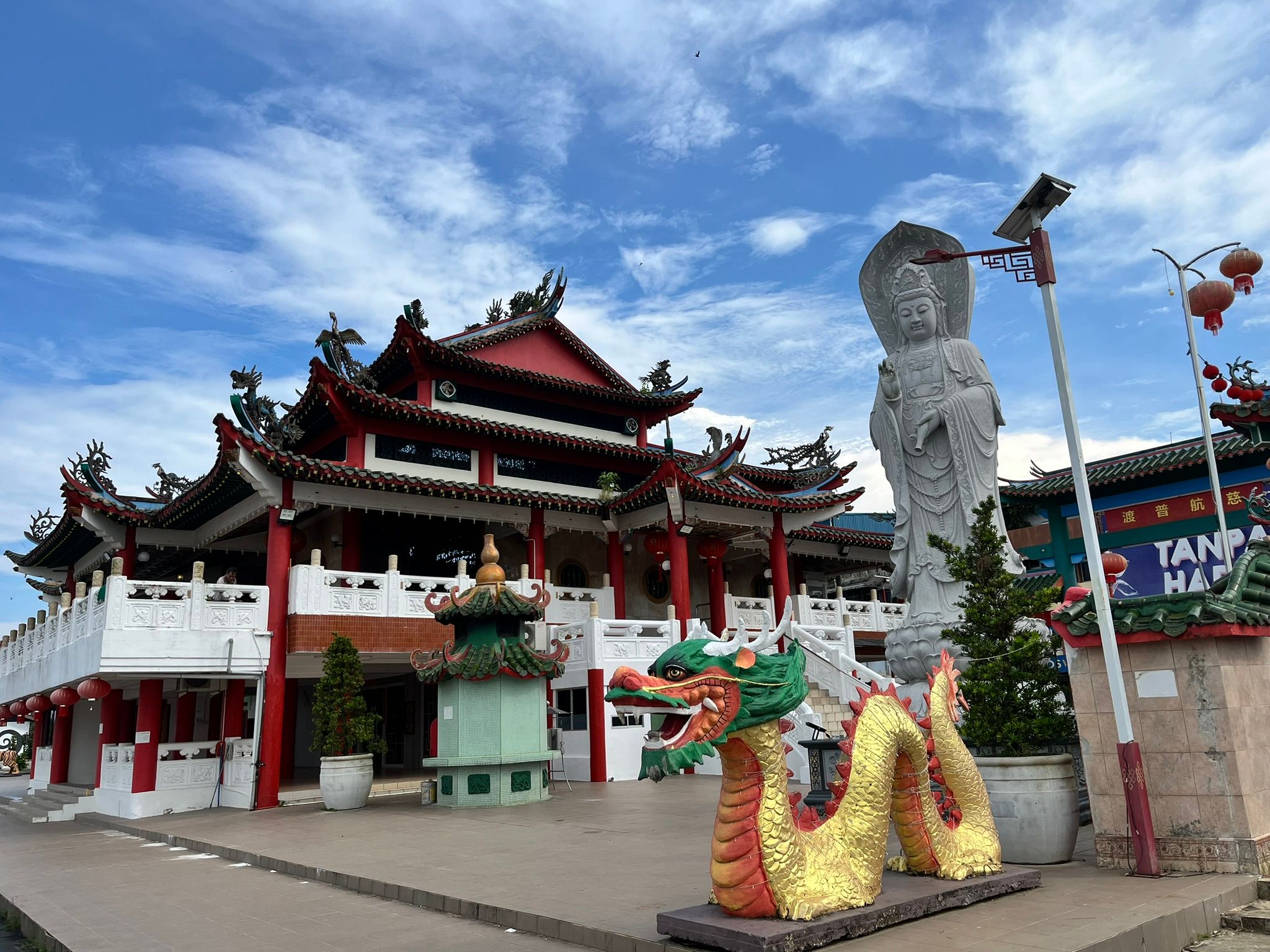
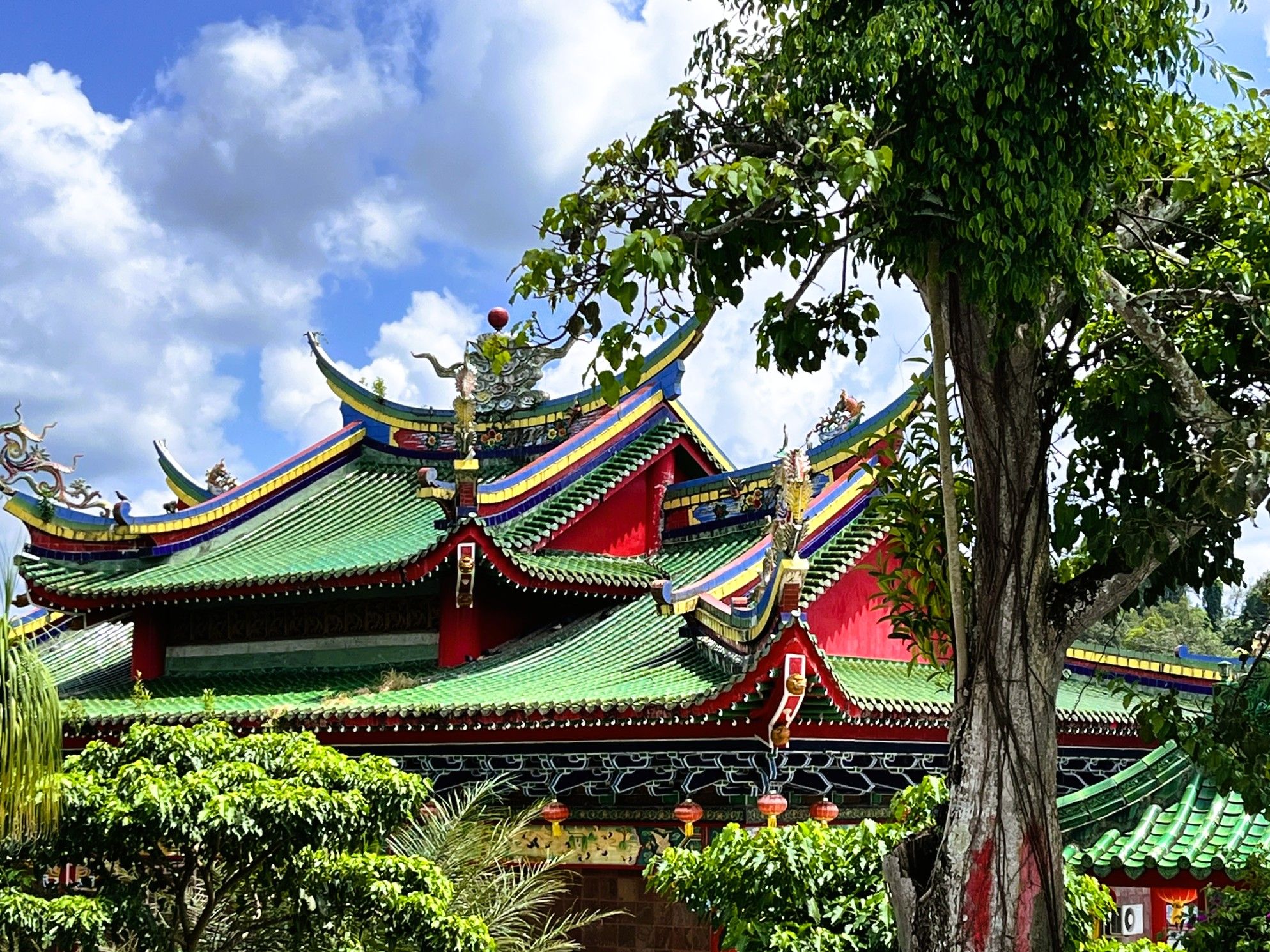
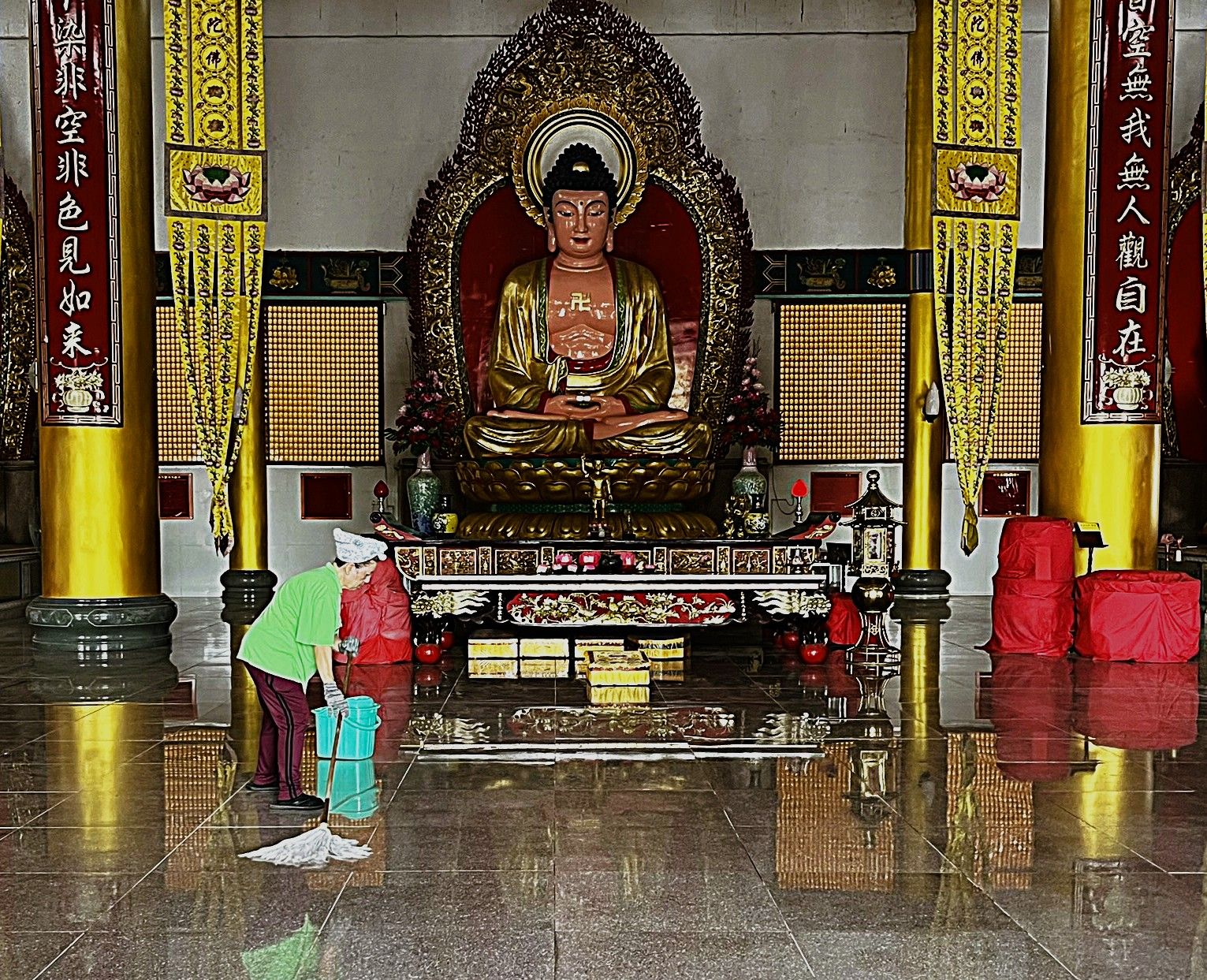
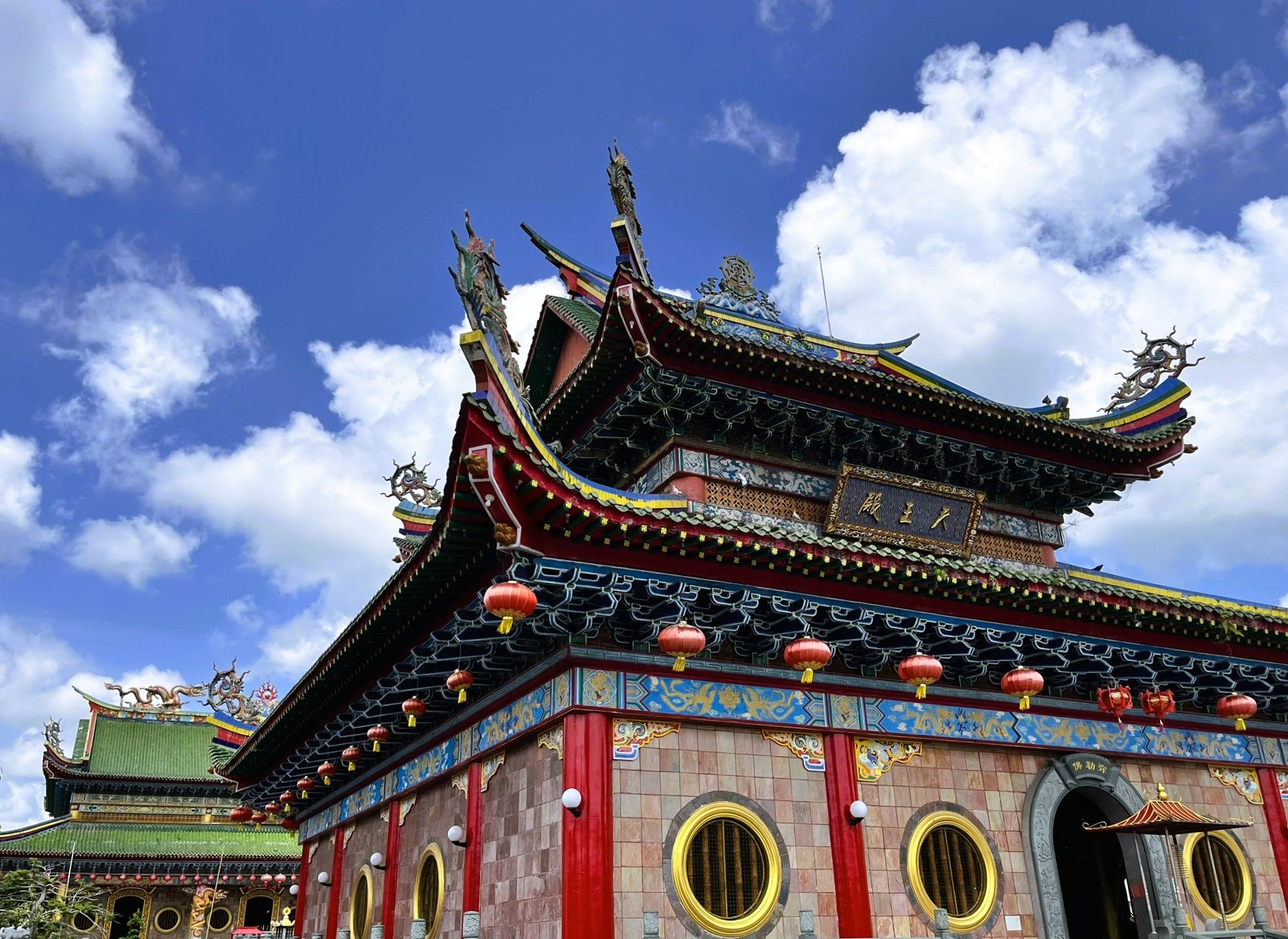
Malaysia is predominantly a Muslim country, and Islam, like certain forms of Christianity, is not among the tolerant religions. In Yu Lung San Tien En Si, however, the Jade Dragon Temple, religious tolerance is essentially the business model. I took a taxi about 25 kilometers from the city center towards Bintulu and was doubly surprised: First, I was practically the only visitor. Similar monuments in large cities, I think of the Batu Caves in Kuala Lumpur or Wat Arun in Bangkok, would be totally overcrowded; here, you have the entire spectacle to yourself.
And secondly, three faiths live here equally and peacefully under the same roof: Buddhism, Taoism, and Confucianism.
The three religions, as one becomes aware upon a closer acquaintance, complement each other. All three were founded in the 6th to 5th centuries BC, Buddhism in northern India and Nepal, the other two in China. Buddhism, founded by Prince Siddhartha Gautama, does not recognize deities and focuses on the individual. Its goal is the overcoming of suffering. The karma, i.e., the way we behave in the world, determines the form of our rebirth. The aim is to break free from the cycle of rebirth through enlightenment, the “Nirvana.”
Confucius (“Master Kong”) likely lived from 551 to 479 BC in the State of Lu, now Shandong Province of China. He laid the foundation for the social and ethical order of East Asia. In Confucianism, society is at the center. In Taoism, finally, it is about harmony with the primordial principle (Tao) through spontaneity, calmness, and the principle of non-action. This philosophy is officially attributed to the legendary sage Laozi, who is supposed to have lived around the same time as Confucius. The “Tao Te King” (Daodejing), the “Book of Meaning and Life,” is credited to him. However, many scholars doubt that the Daodejing was written by a single author. It may rather be a compilation of life wisdom from different sources.
In any case, the complex of the Jade Dragon Temple is magnificent, colorful, richly decorated, and filled with numerous statues. In the large halls, there are statues of Gautama Buddha, the smiling Buddha, Dashizi Bodhisattva, who dispels the darkness of ignorance as an intellectual force, and many other deities. I am not a religious person, but in the Jade Dragon Temple, my understanding grows that many people are still guided and fascinated by religion.
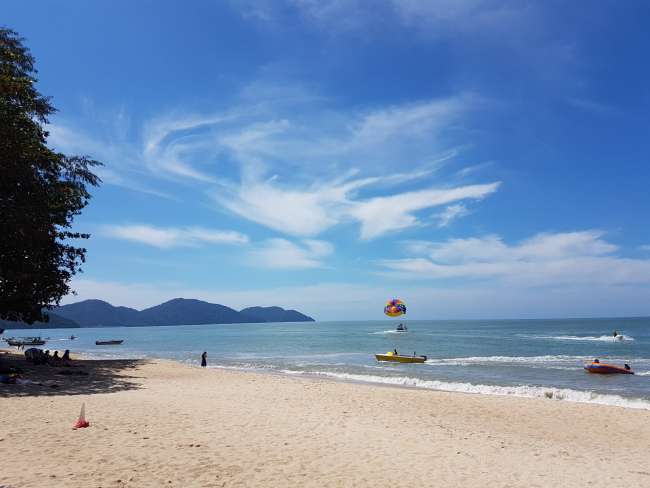
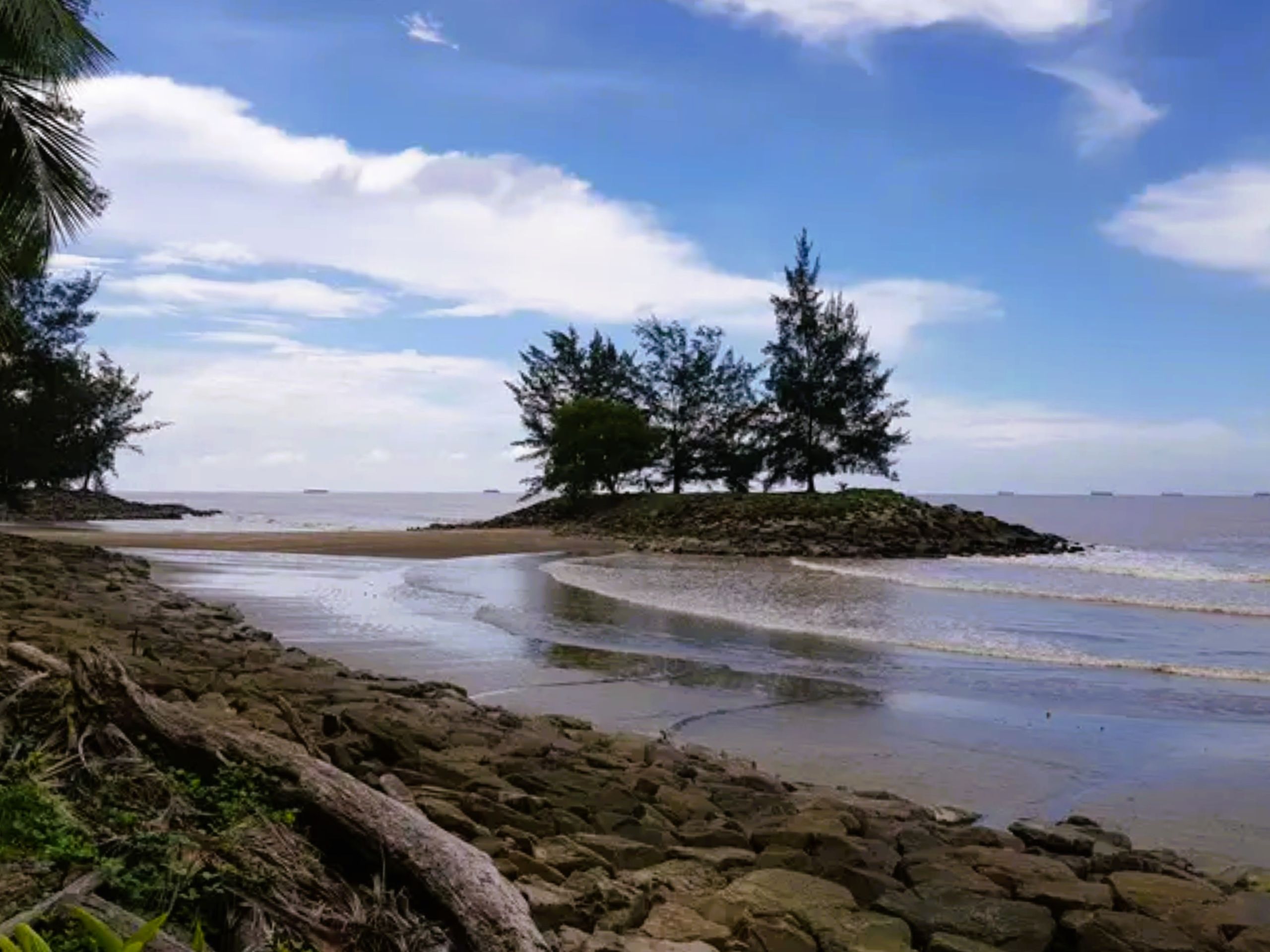
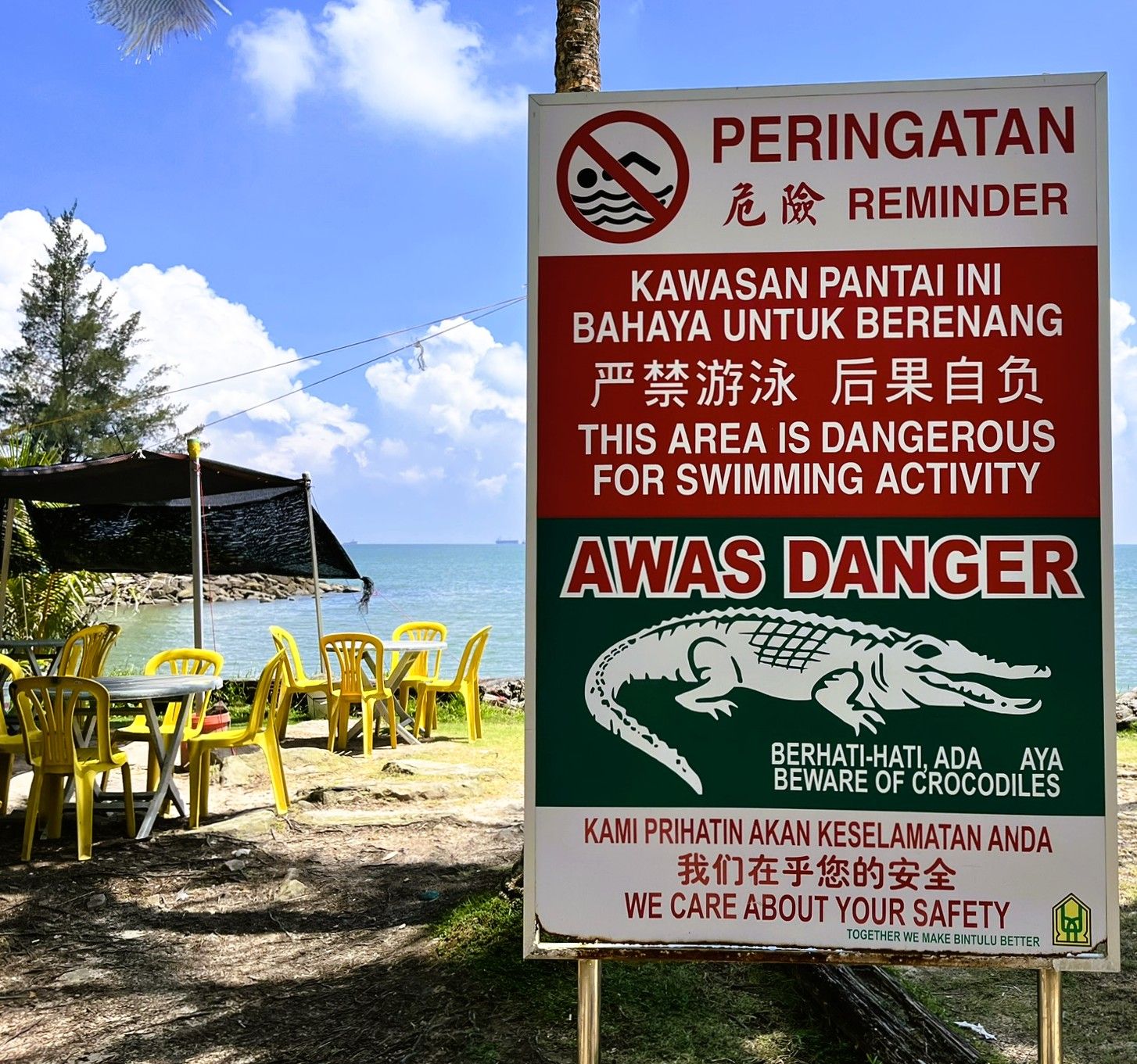
On May 8, 2025, I traveled further to Bintulu. Fifty years ago, Bintulu was a small fishing village; now, the city has nearly 200,000 inhabitants and is a center for the oil, gas, and timber industries, often referred to as “Sarawak’s Energy City.” Otherwise, I can’t think of anything else about Bintulu, except for the extensive Pantai Tanjung Batu beach, where families picnic, lovebirds stroll, and signs urgently warn against swimming, as there are supposedly crocodiles here as well.
I was glad to leave Bintulu on May 11, 2025, and take the final leg to Brunei under the bus wheels.