BLOG 7: In the Land of the Hopi
During our first trip to the USA about 30 years ago, we visited the Hopi Reservation, but apart from the sales area of the Cultural Center, we had no contact with the residents...

Published: 23.05.2025
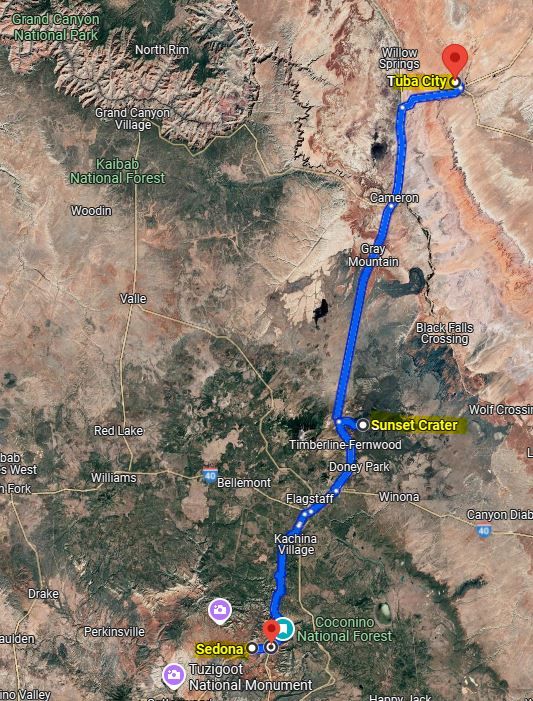
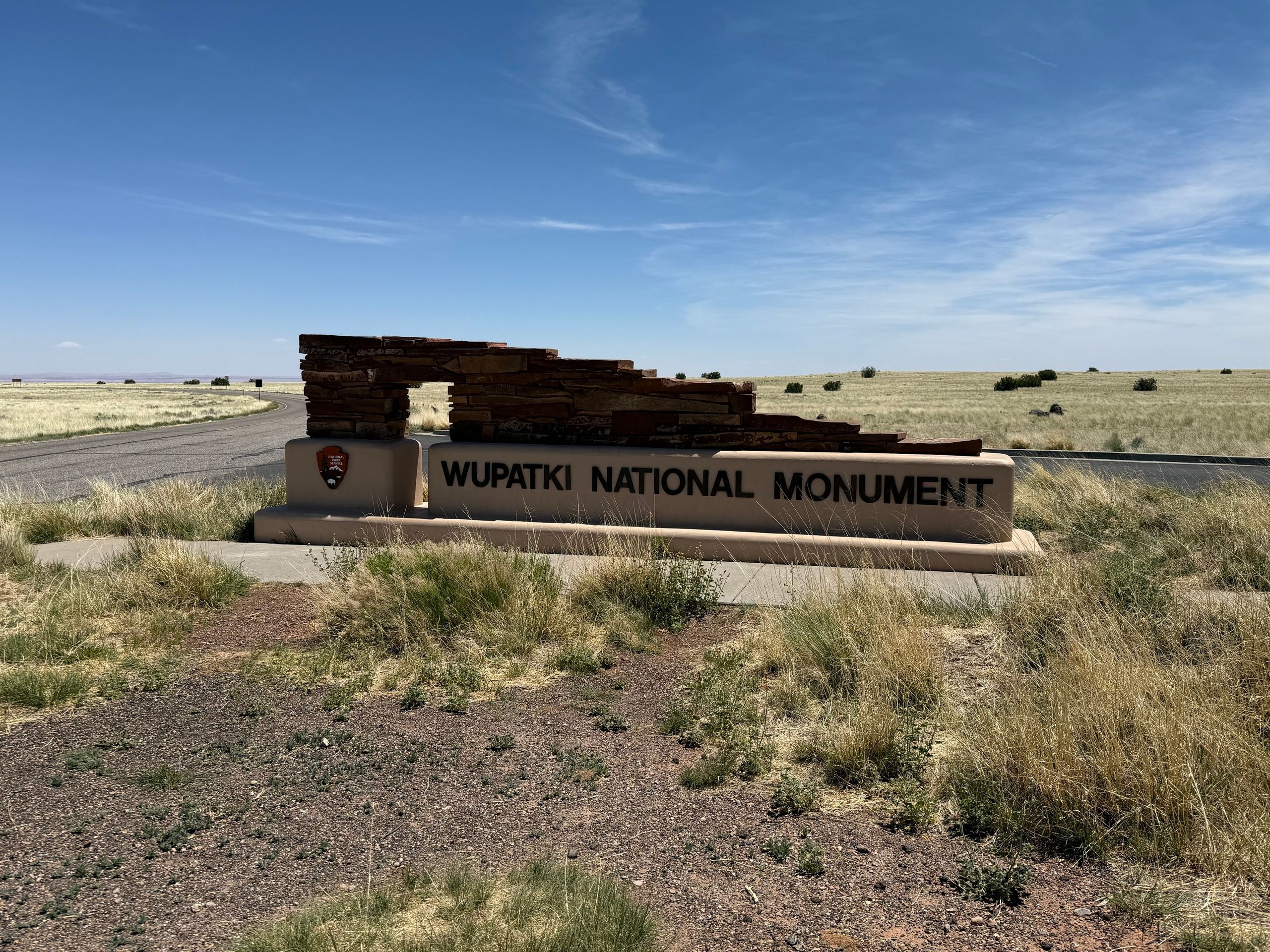
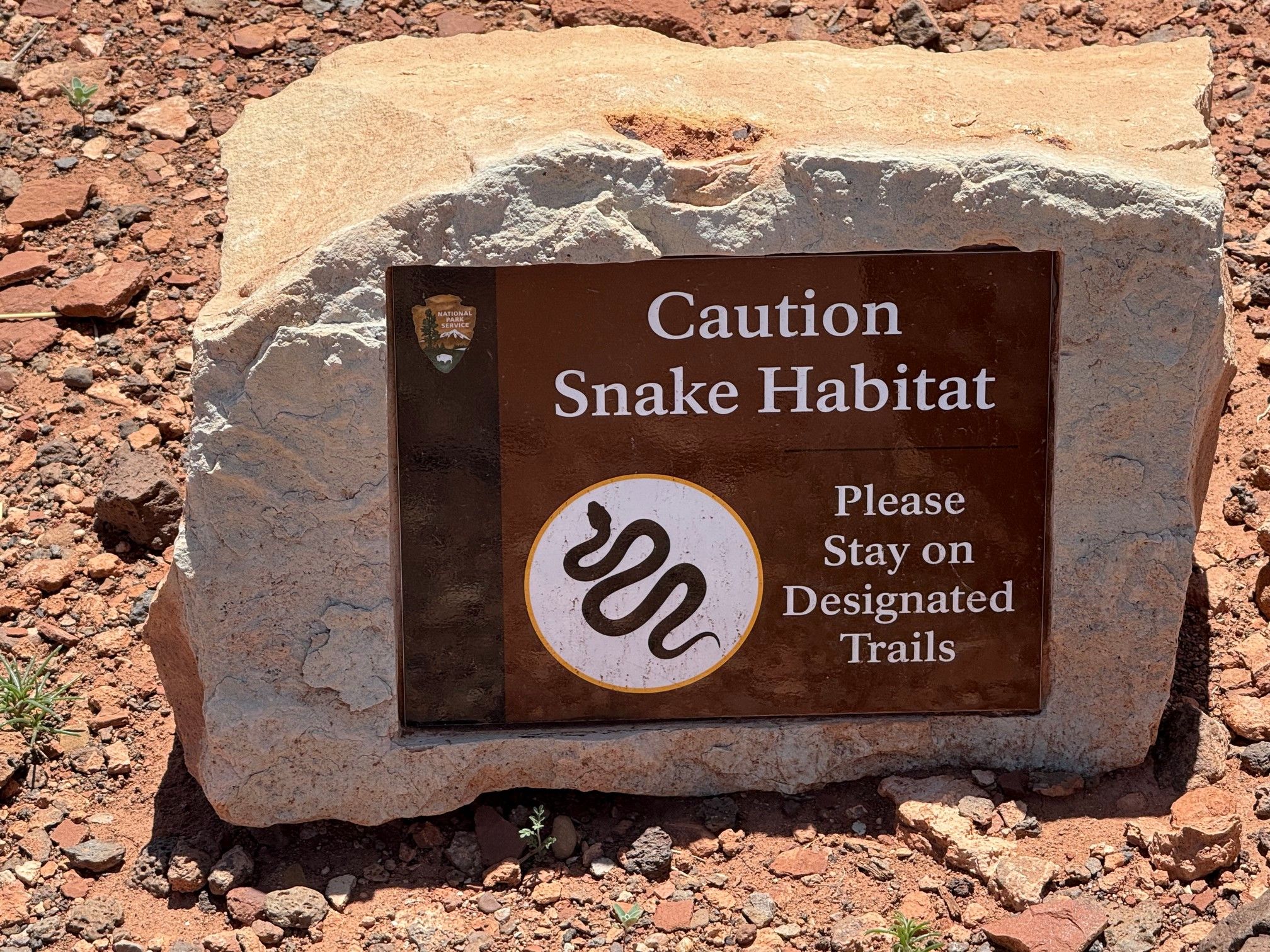
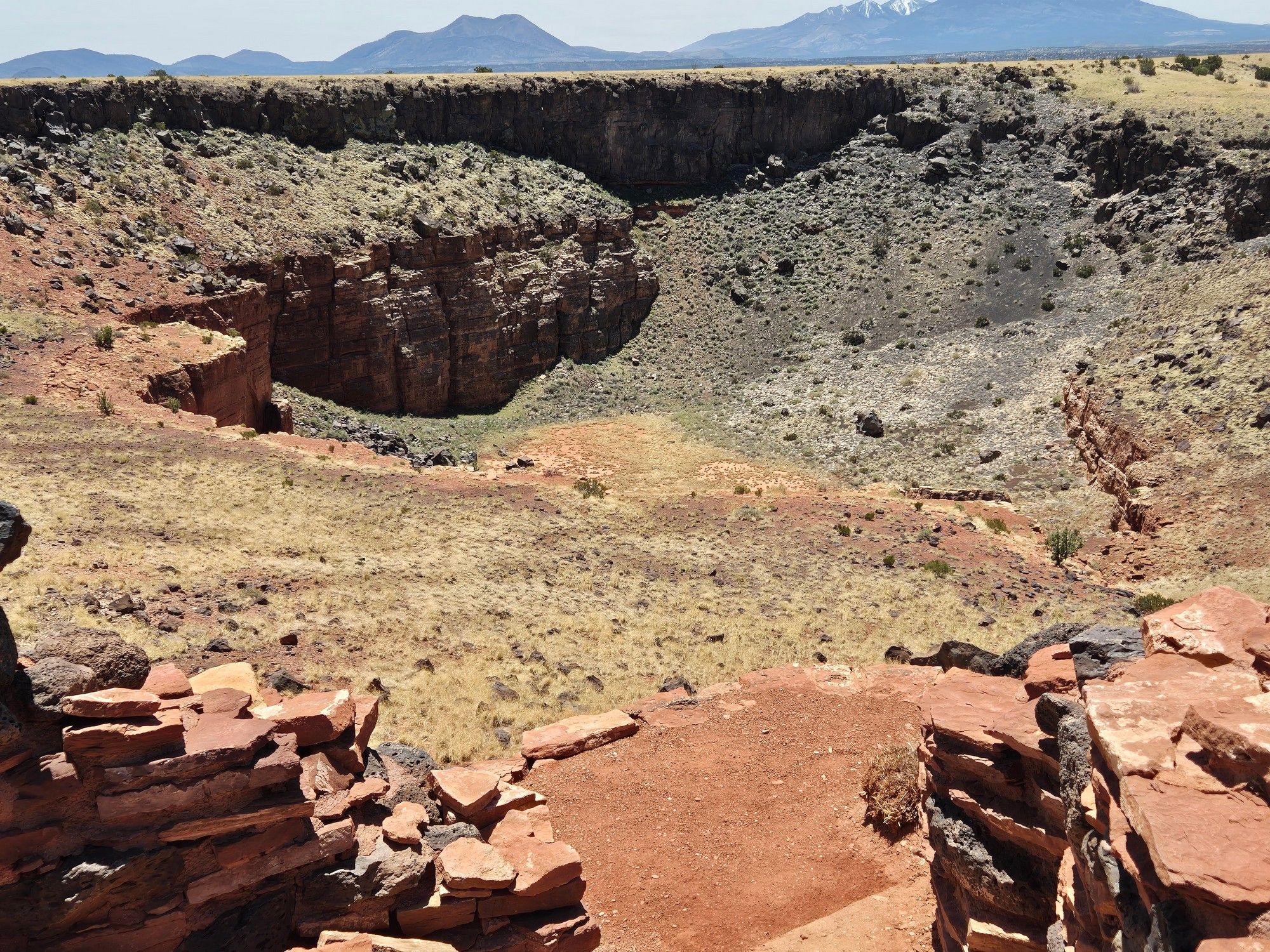
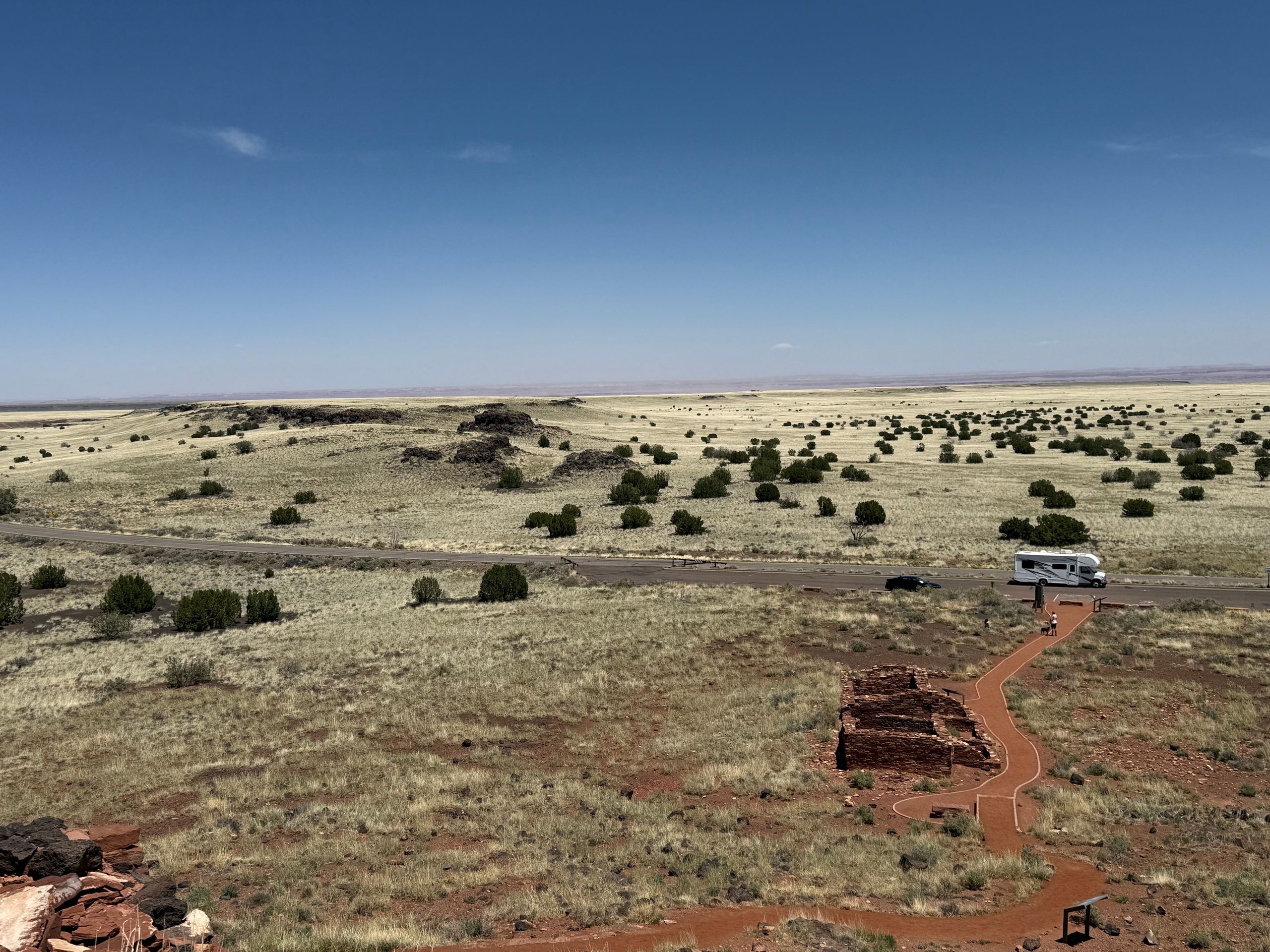
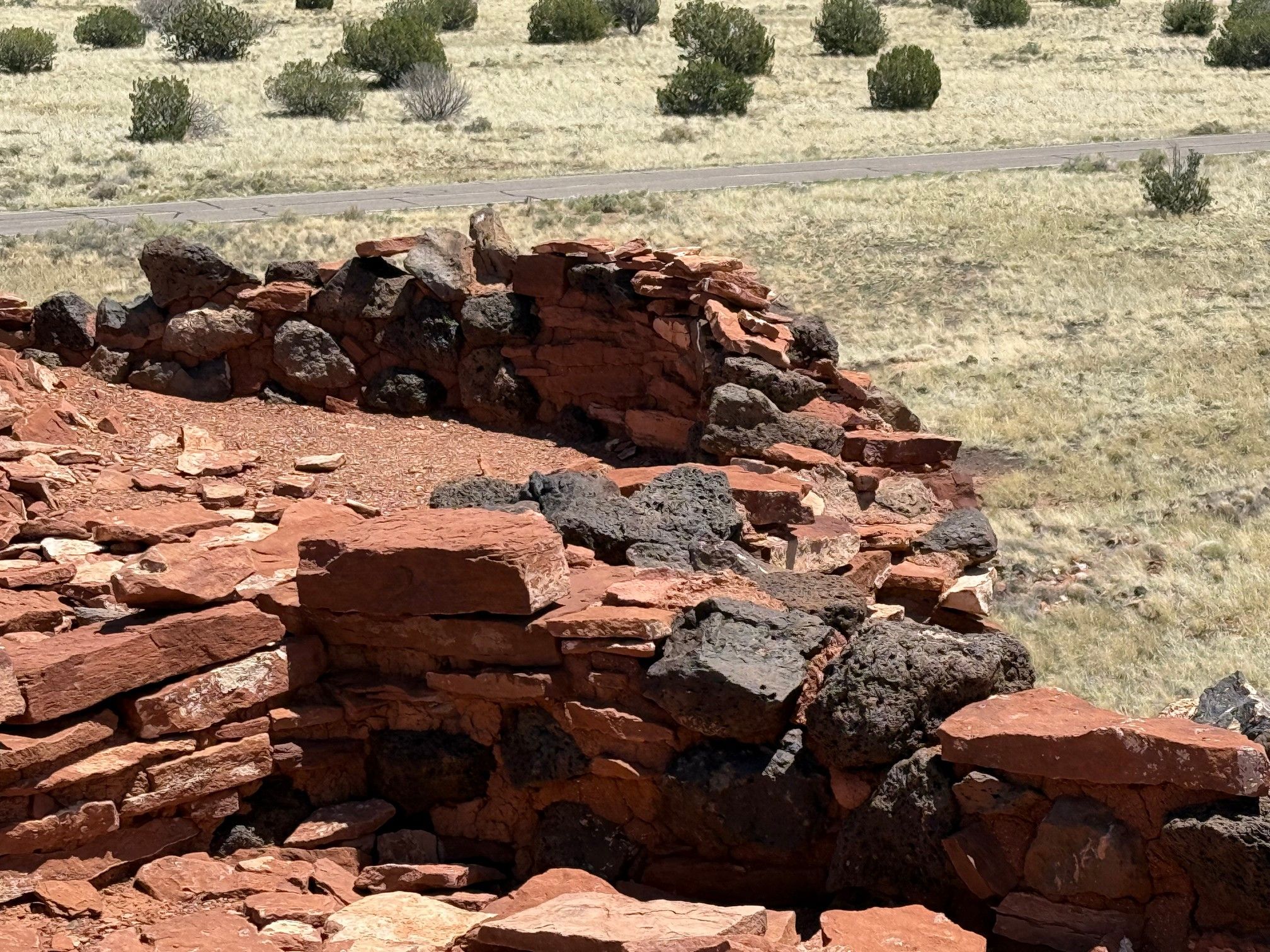
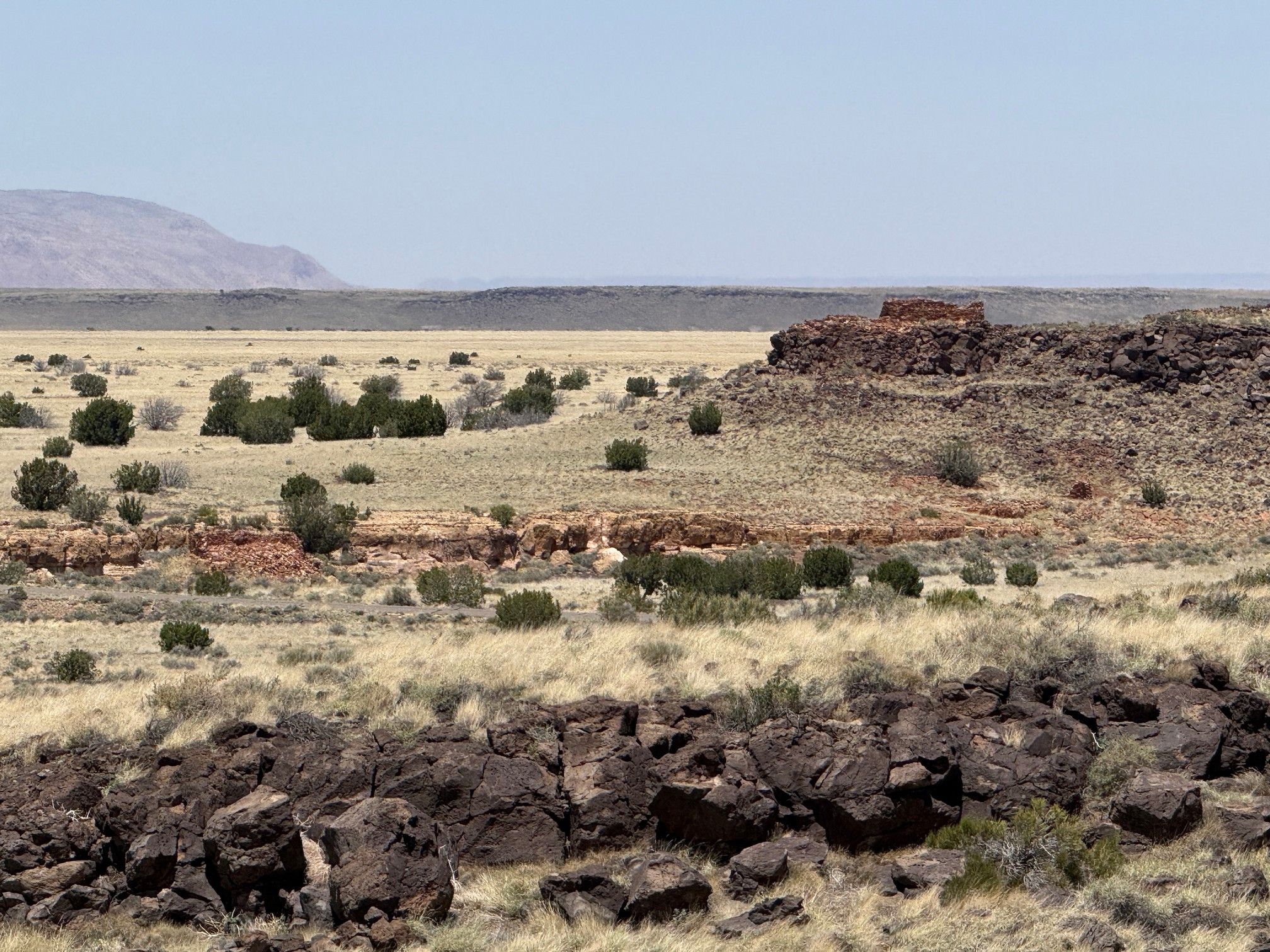
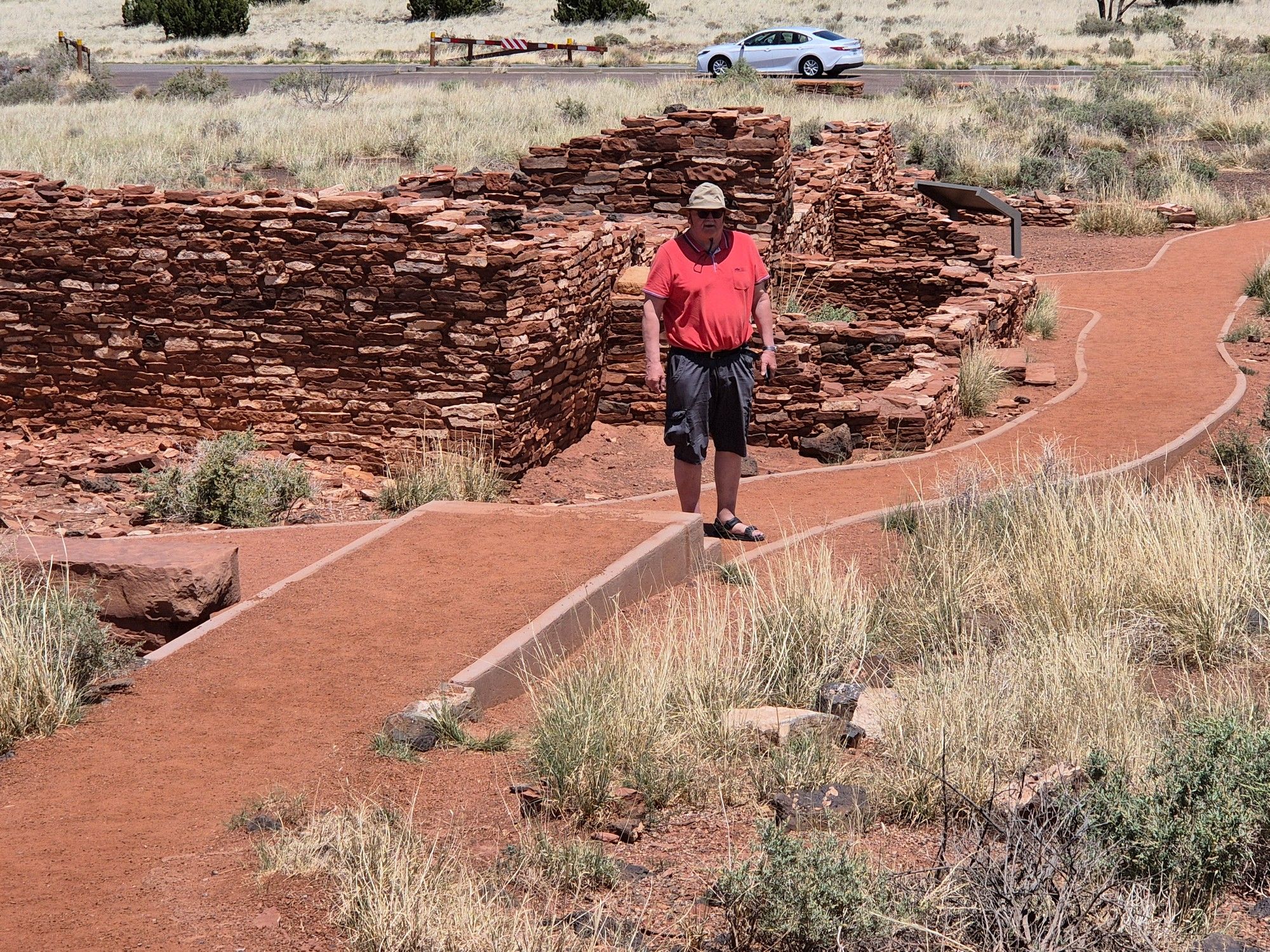
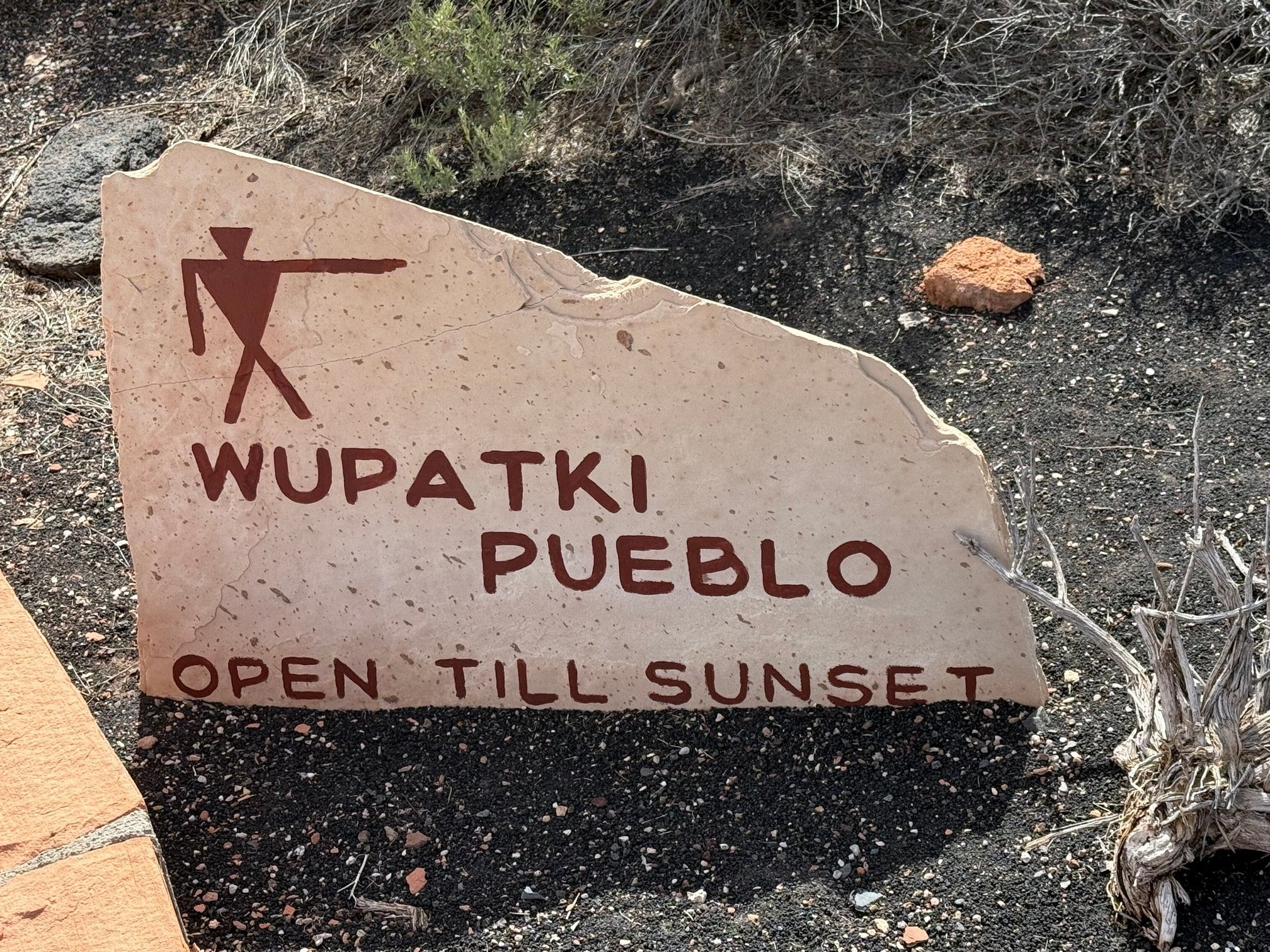
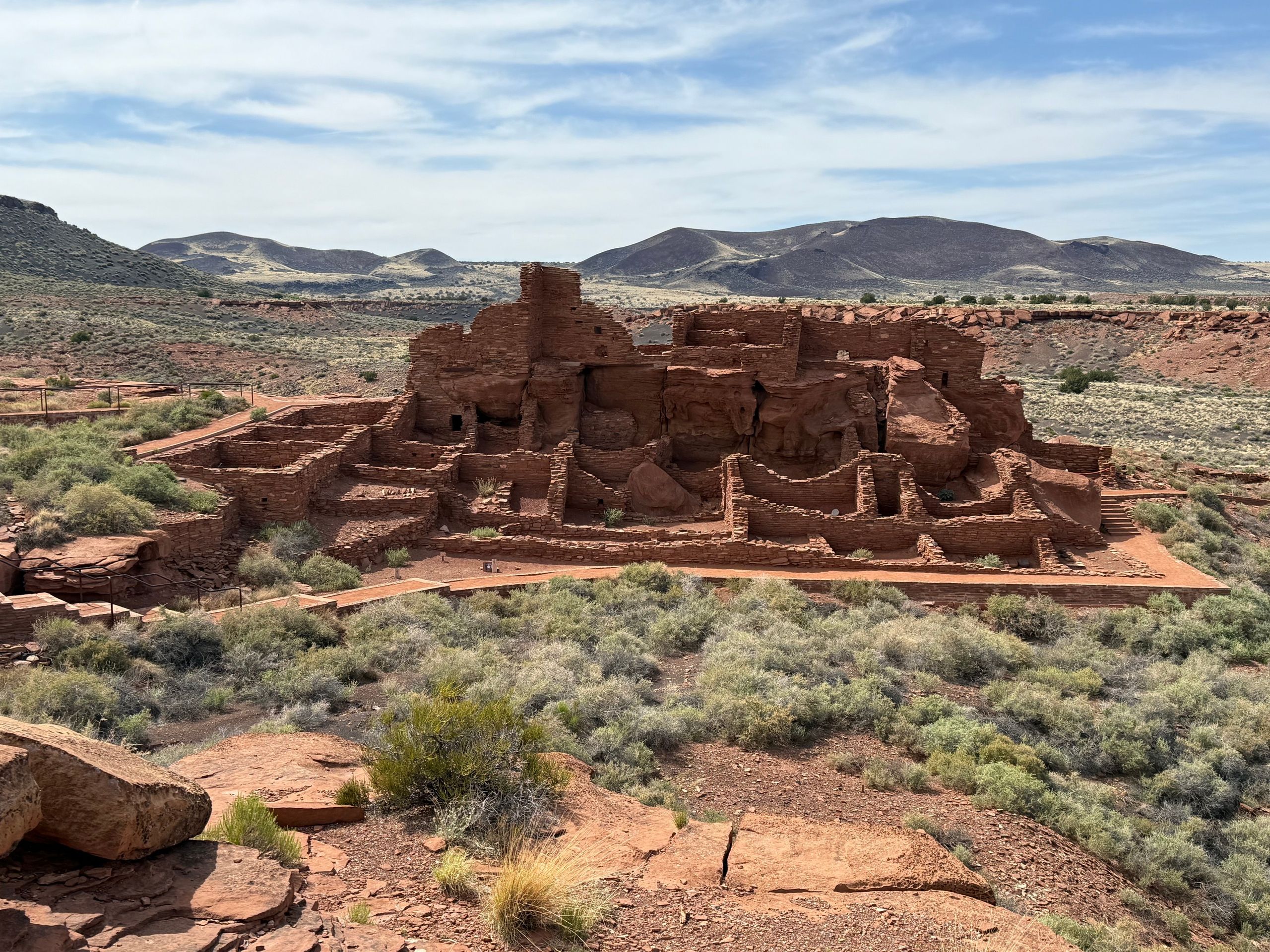
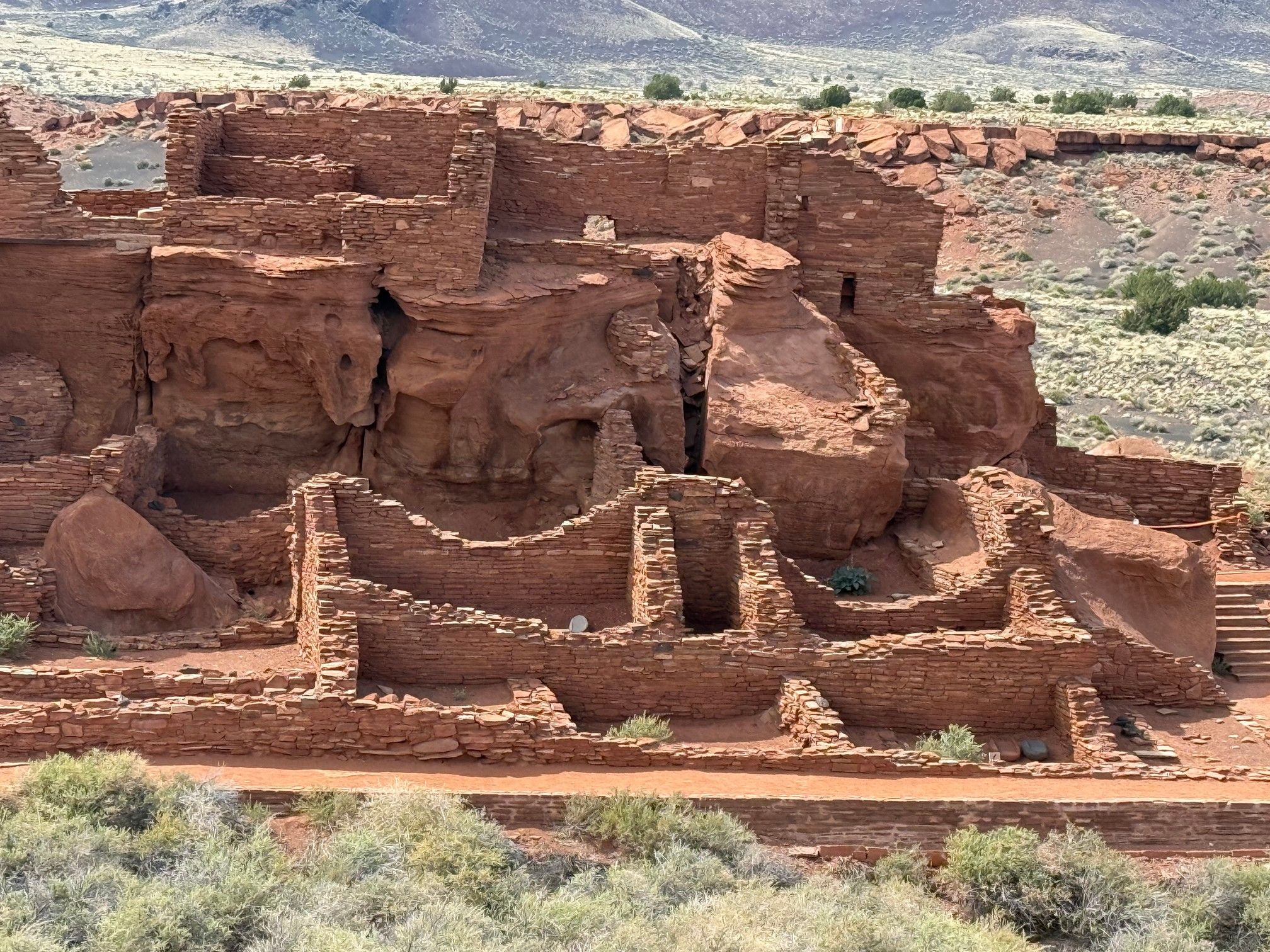
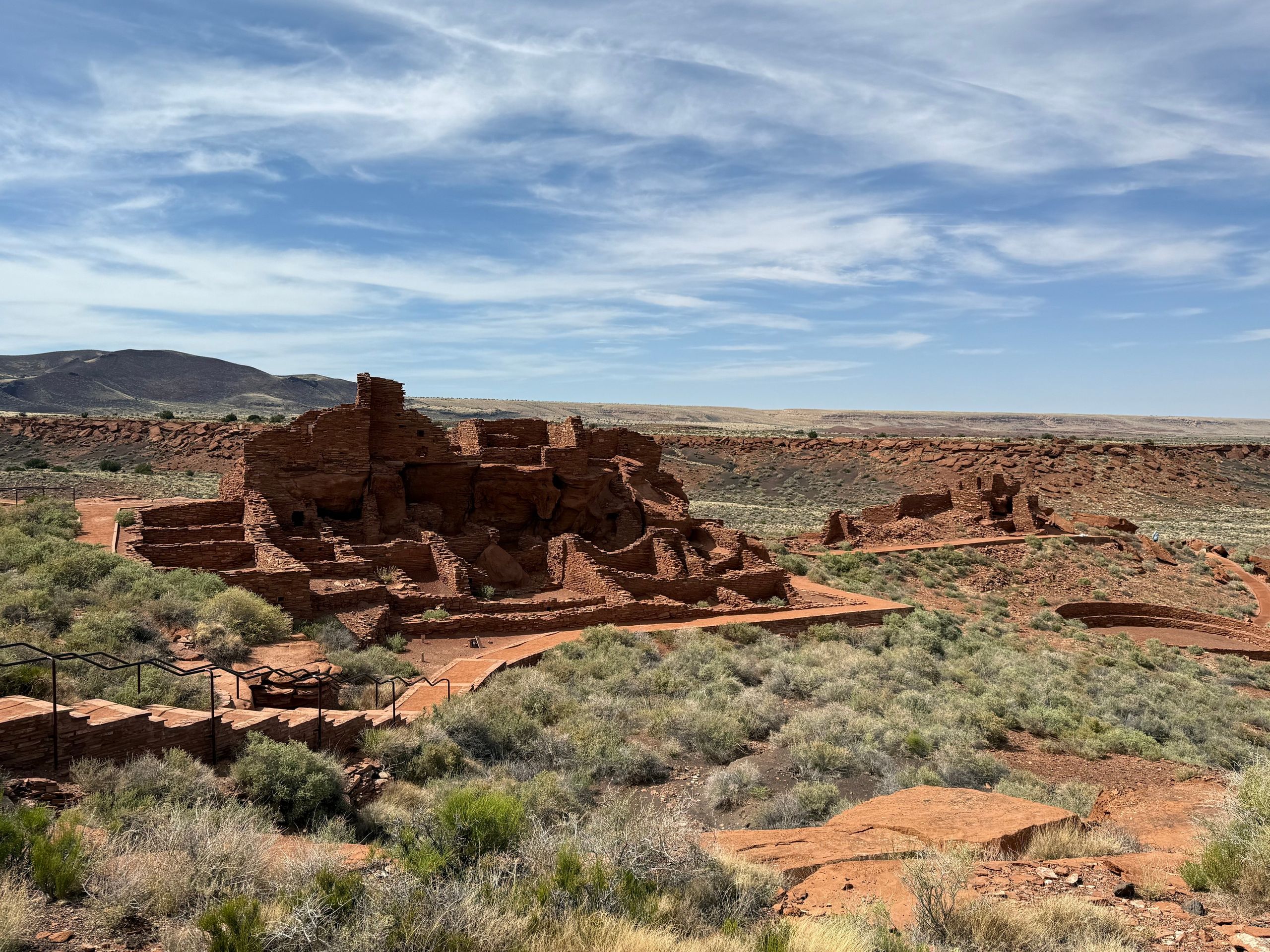
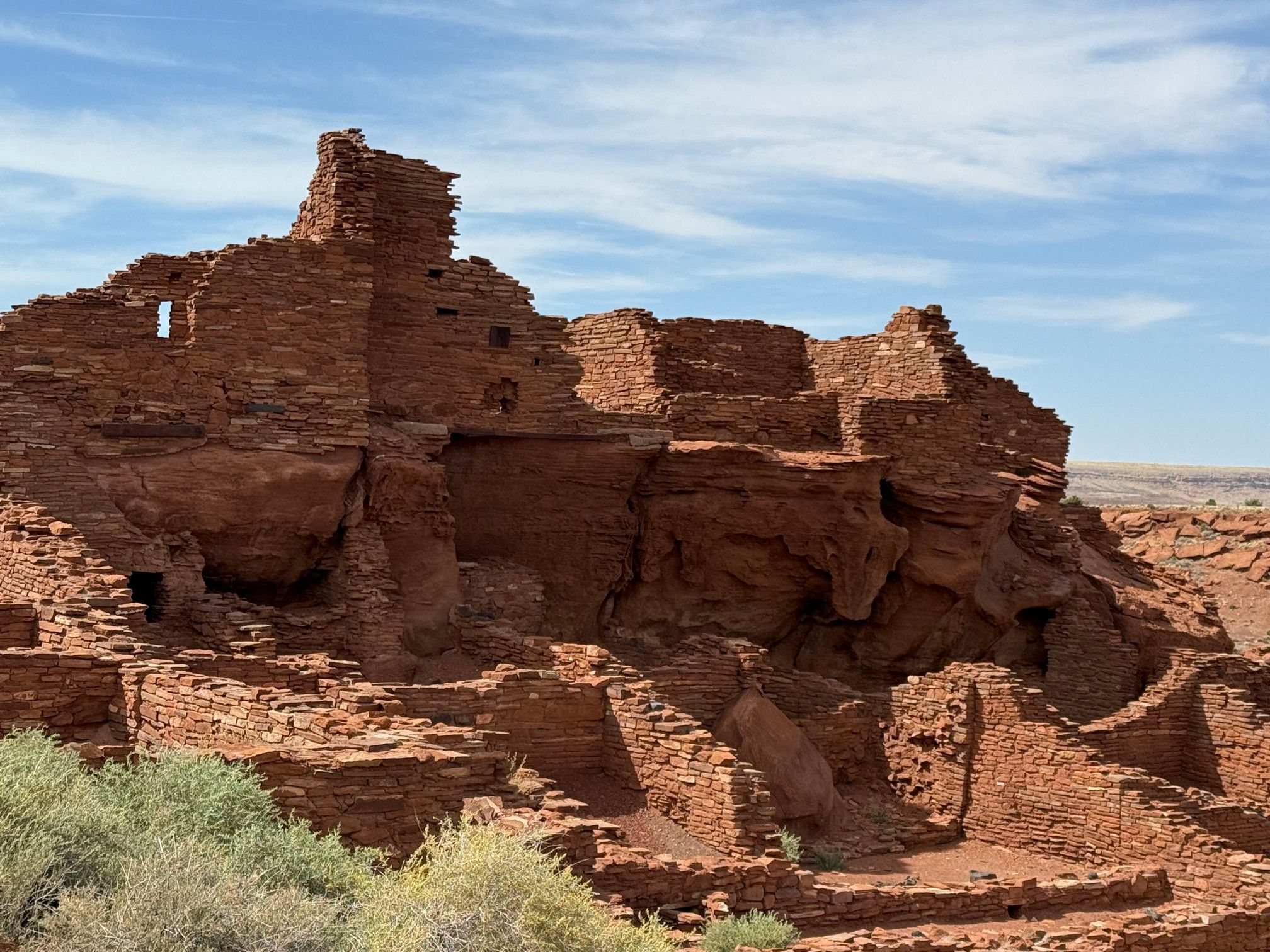
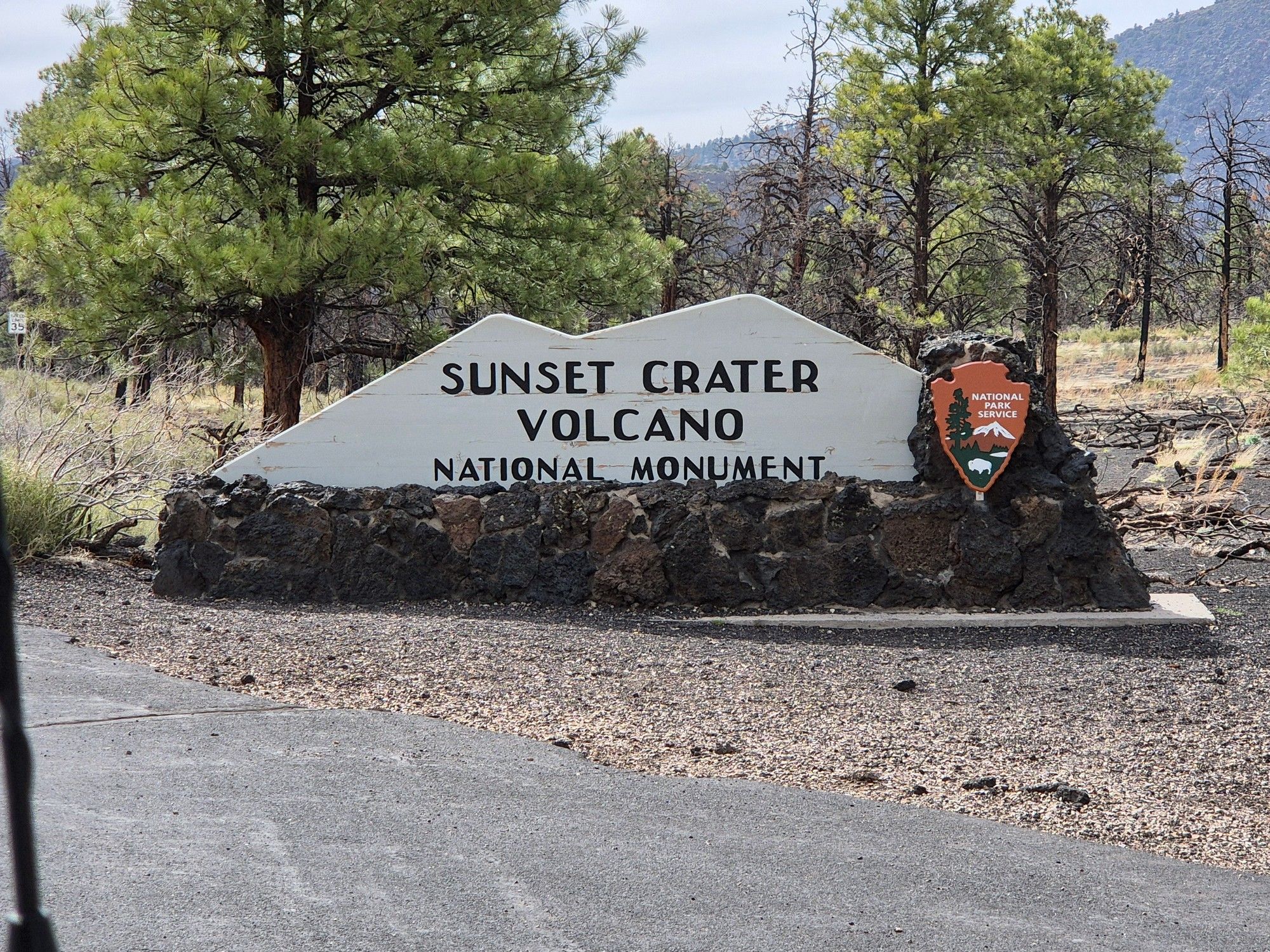
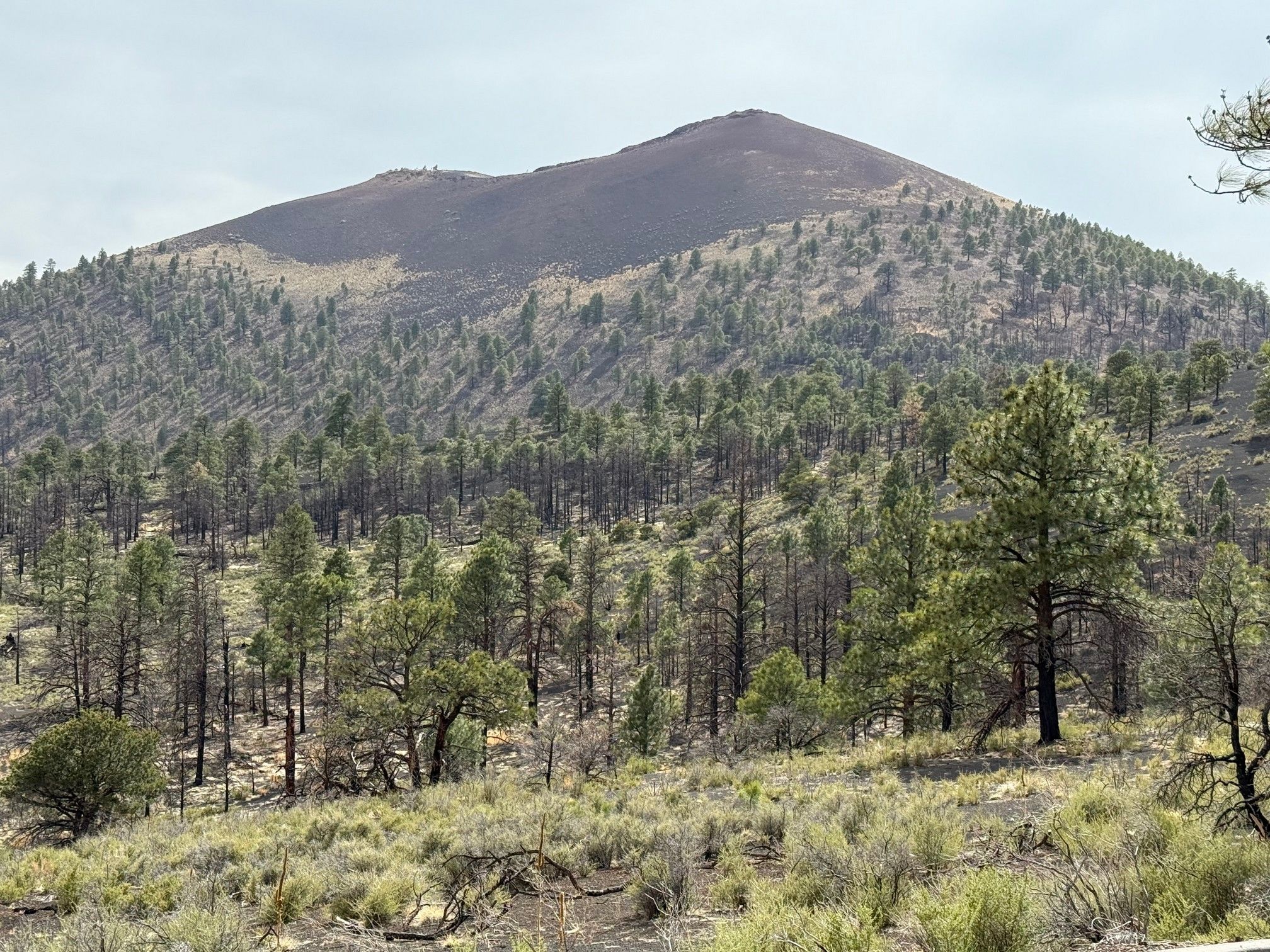
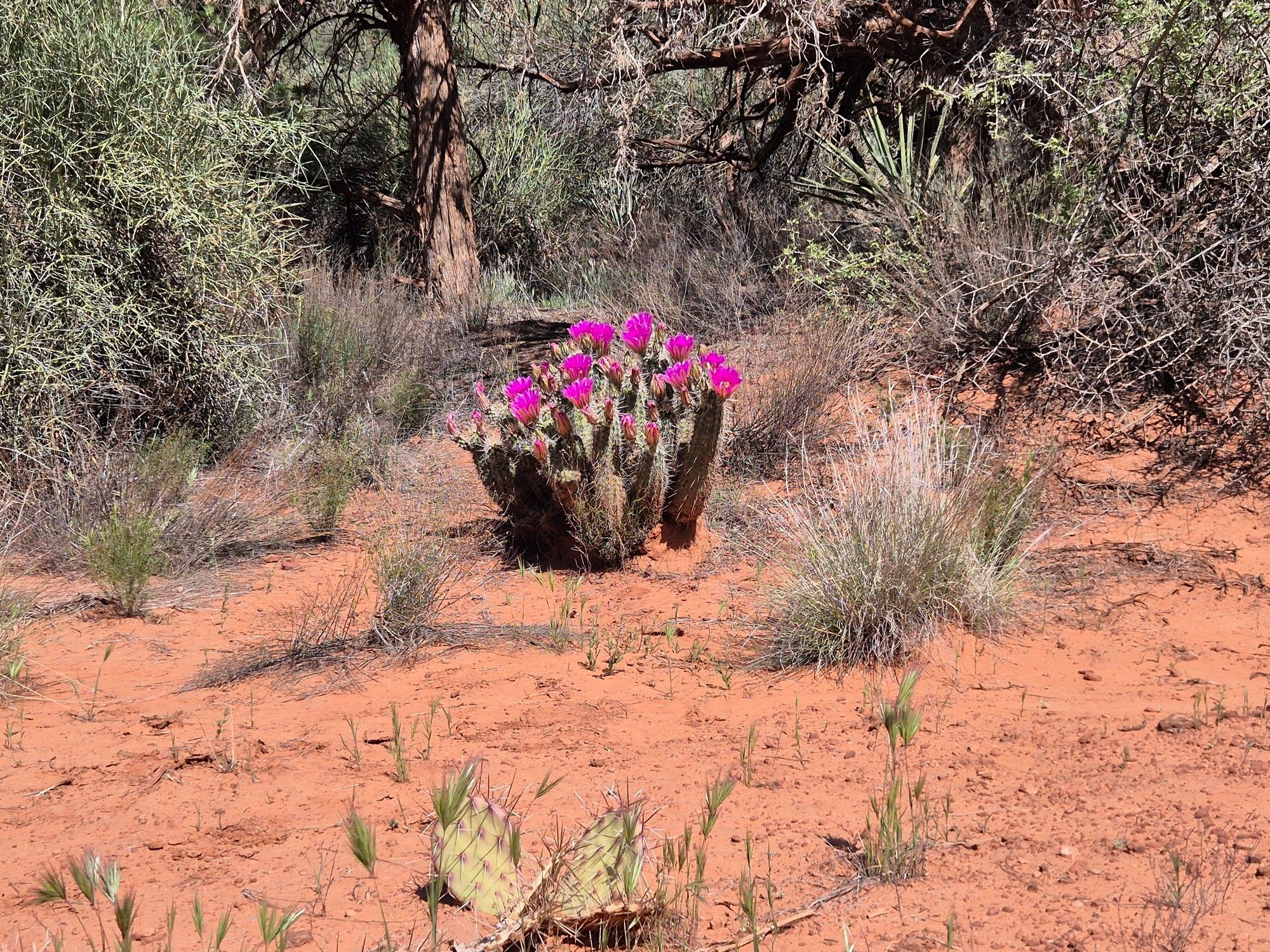
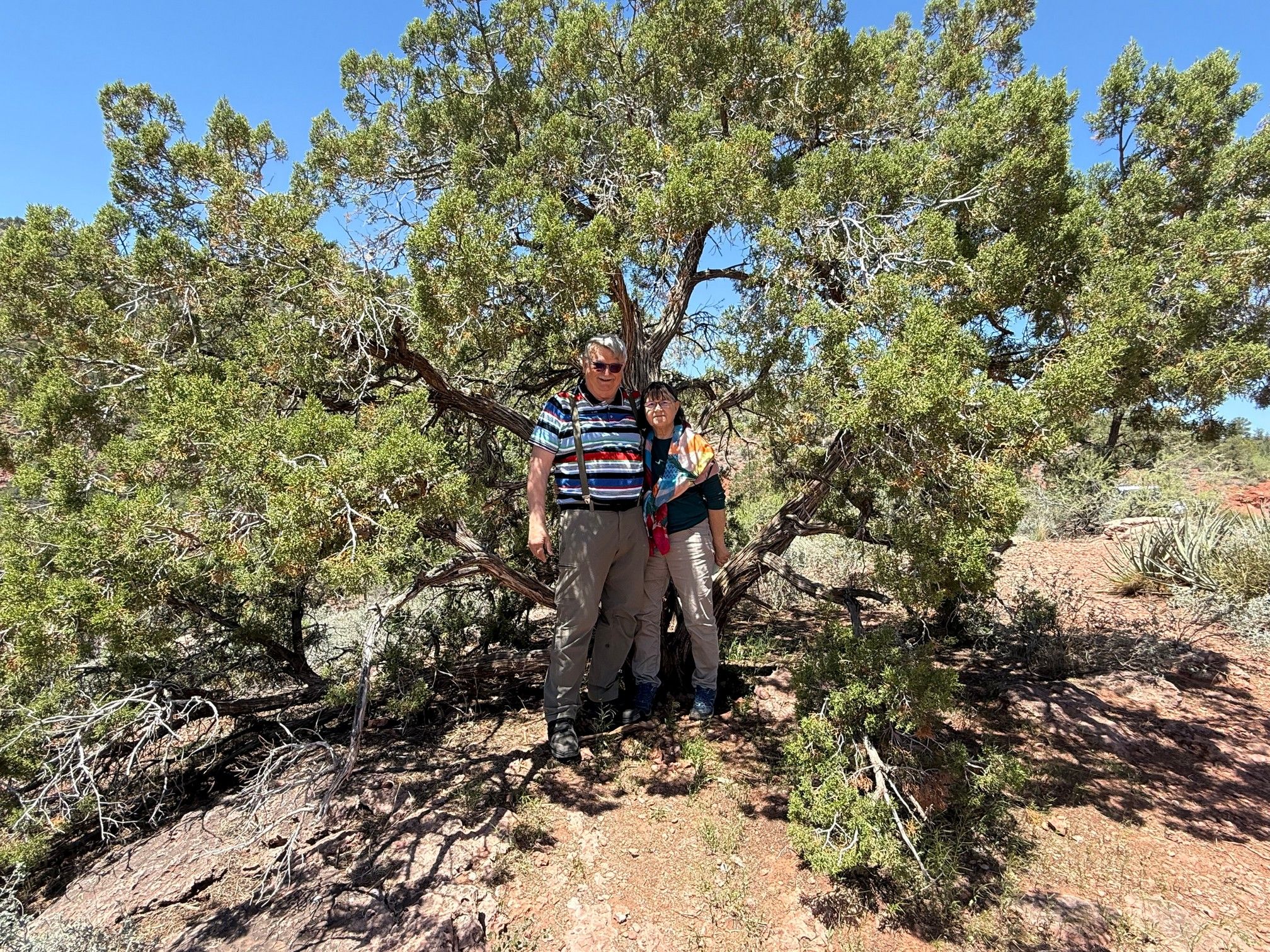
On the way south towards Sedona, our next longer stop, we visit the National Monuments Wupatki and Sunset Crater.
In the 140 km² area of the Wupatki NM, nearly 2600 prehistoric sites have been discovered, including the ruins of Pueblos from the Anasazi culture.
The history of the settlements is heavily influenced by the eruption of the neighboring Sunset Crater volcano in the 11th century. After the eruption, settlements quickly re-emerged. The indigenous Anasazi society, with its environmentally adapted agricultural methods, settlement patterns, social structures, and migration opportunities, is considered very resilient.
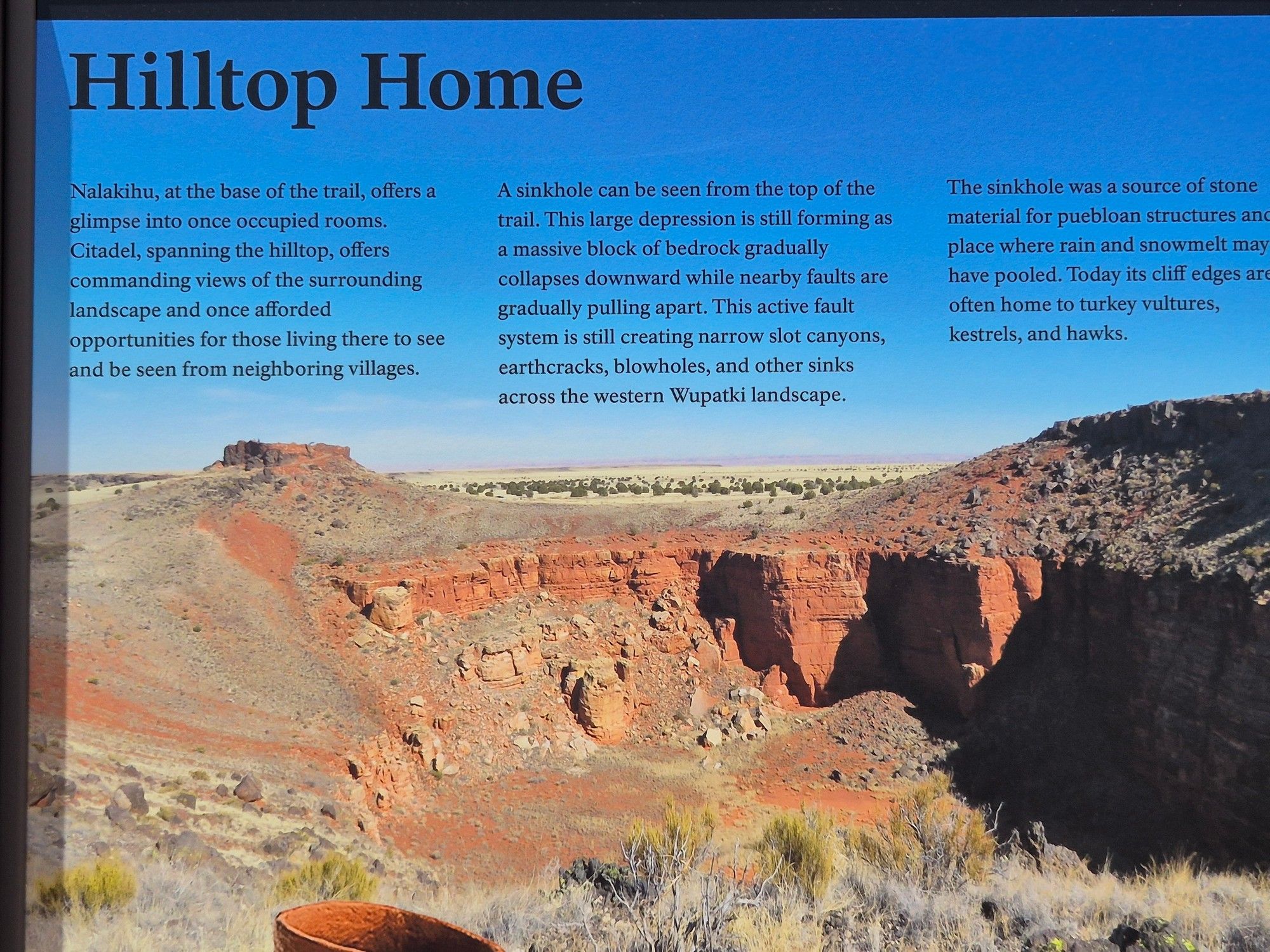
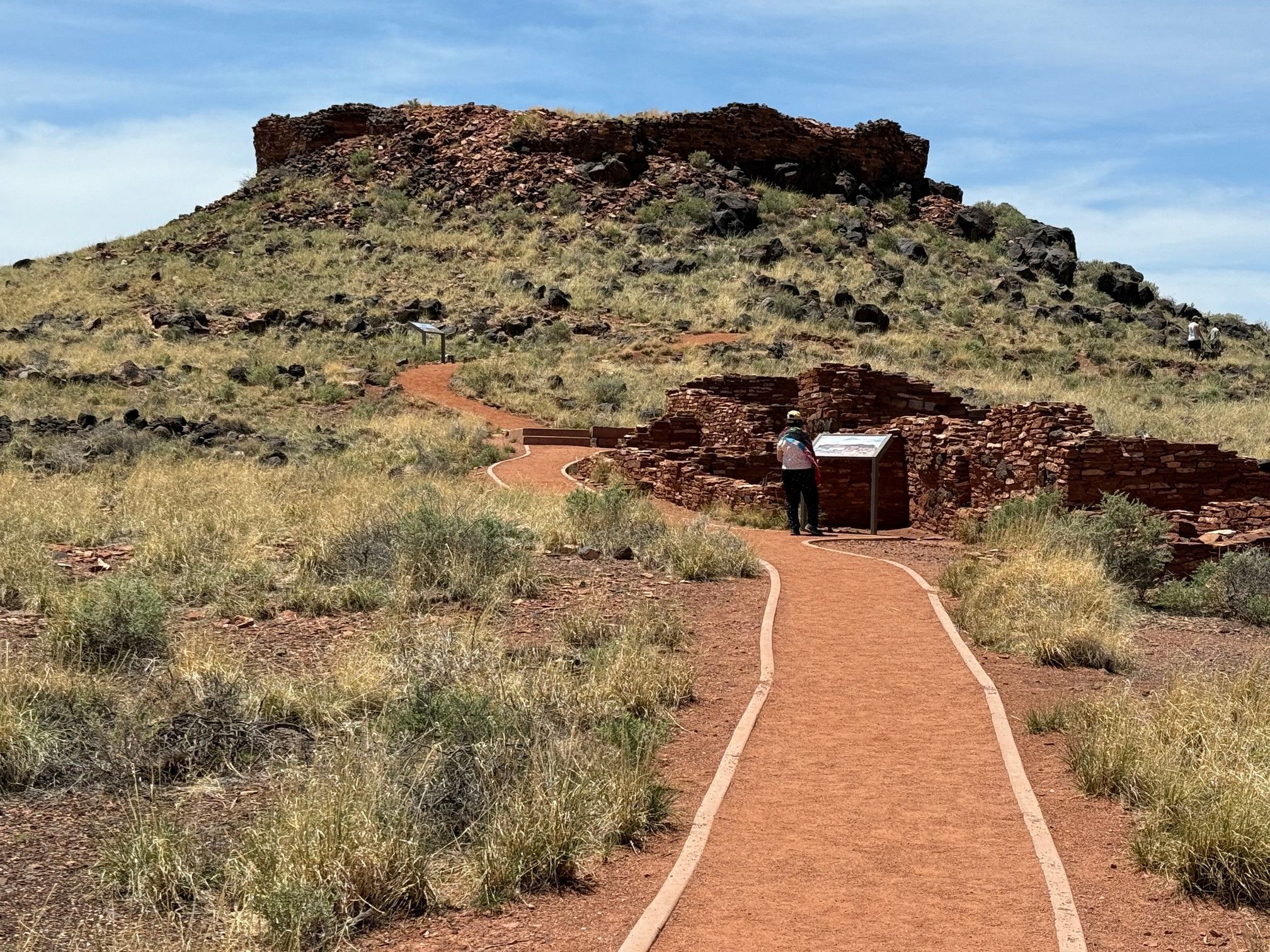
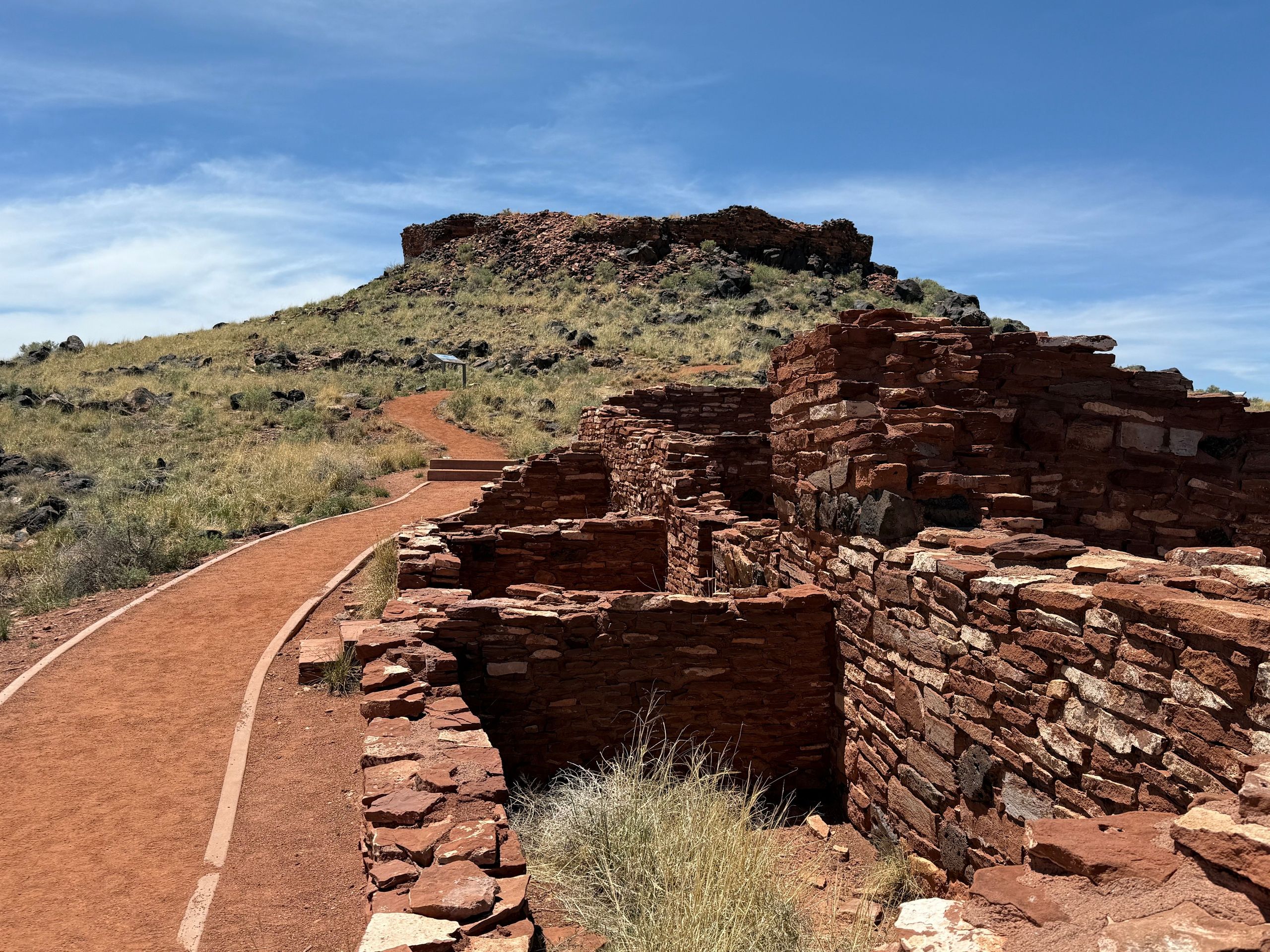
Initially, we visited The Citadel and the neighboring Nalakihu Pueblo. This site was inhabited as early as 8000 B.C., with the current ruins dating back to the 11th and 12th centuries, serving as an example of the many smaller settlement sites in this area from that time.
The Wupatki Pueblo was the largest known structure on the North American continent in the 12th century. It housed between 85 and 100 people, and the surrounding population is estimated to be in the thousands.
The neighboring Sunset Crater is a small volcano (elevation 2451 m, about 300 m above the surroundings) and was first active for a prolonged period in the 11th century, with its last eruption occurring in 1250.
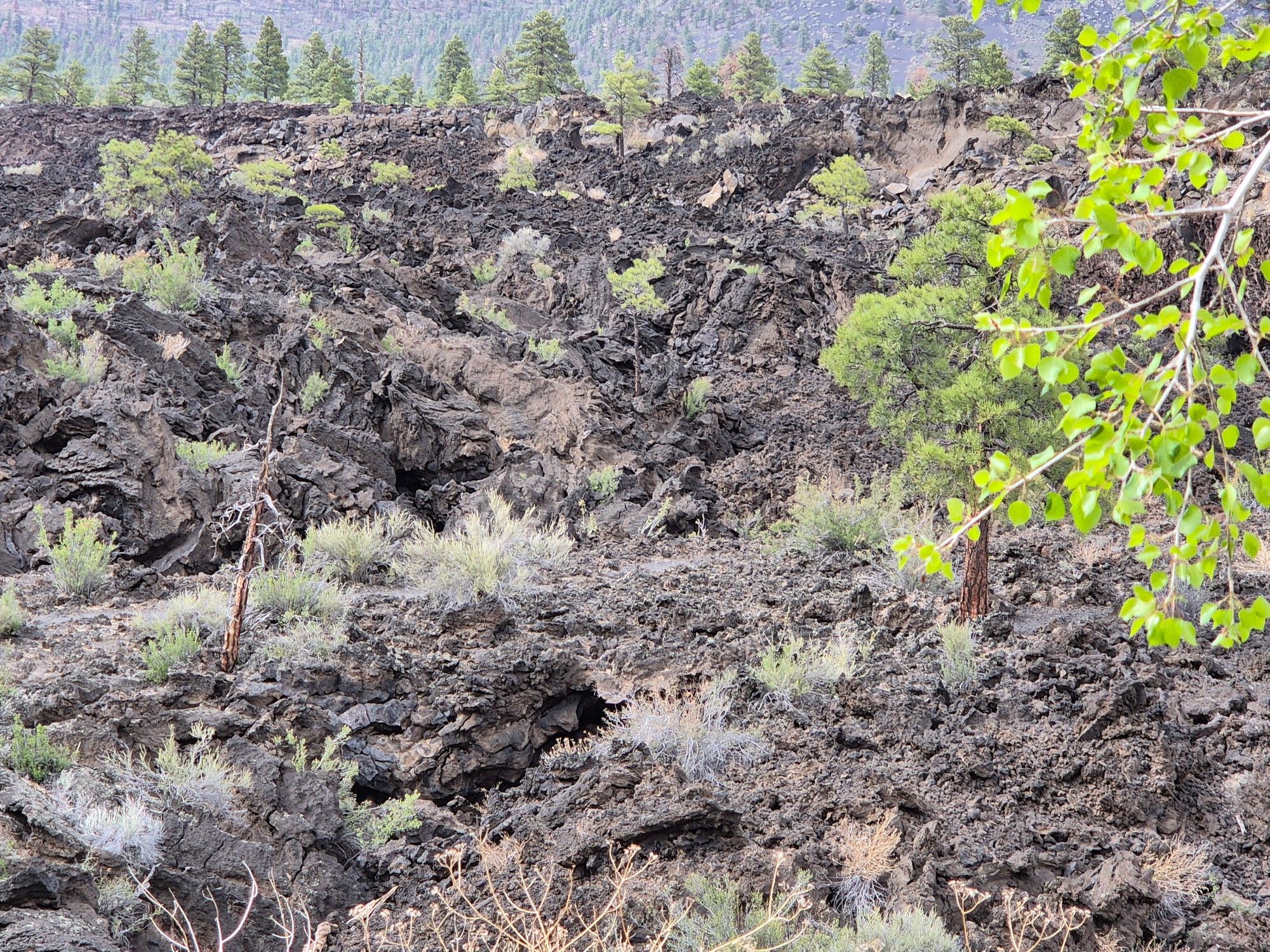
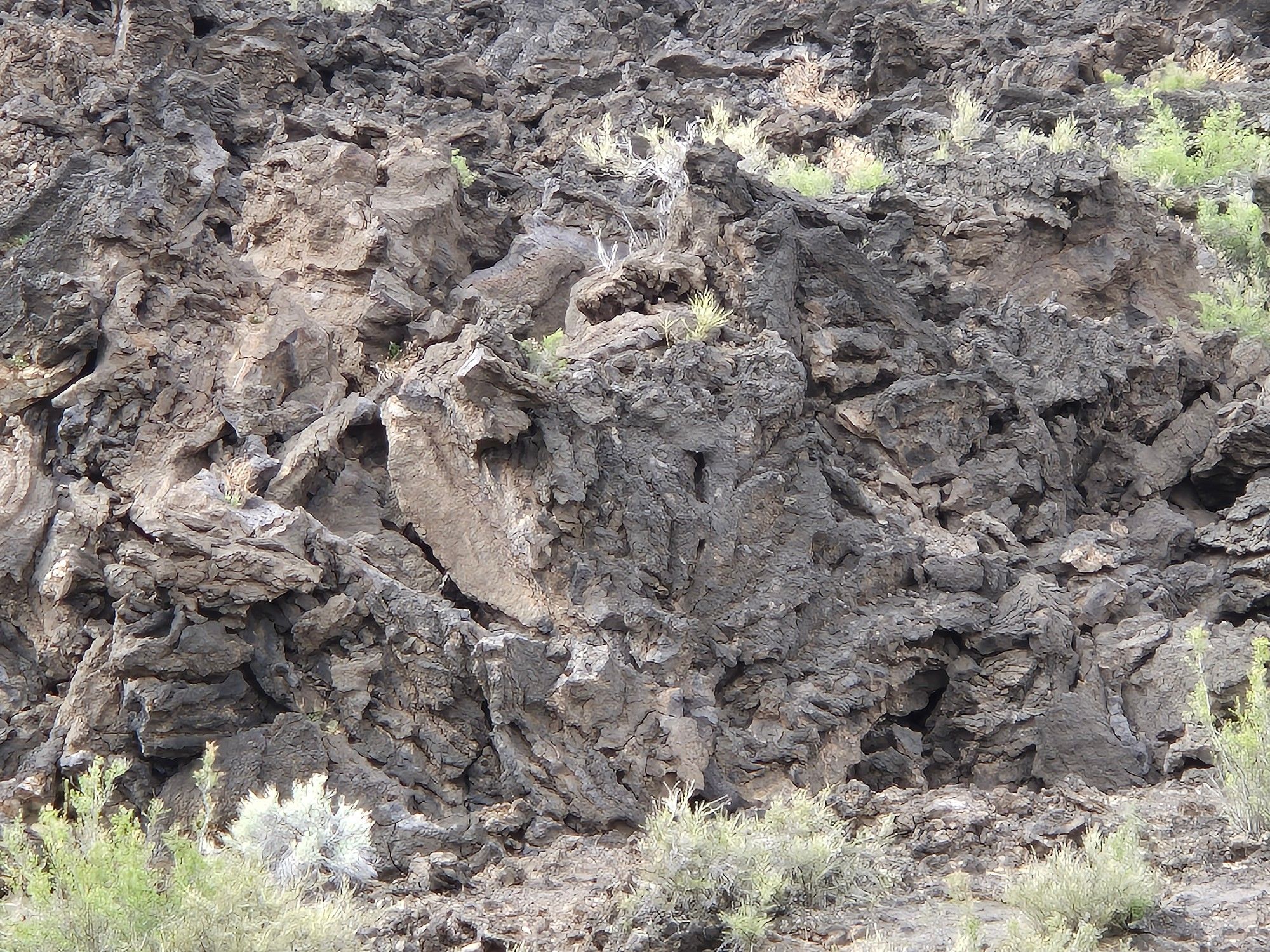
At the base of the volcano, the remnants of lava flows can be seen. The mountain itself has been off-limits since the mid-1980s, due to damage to its delicate structure and vegetation caused by foot traffic.
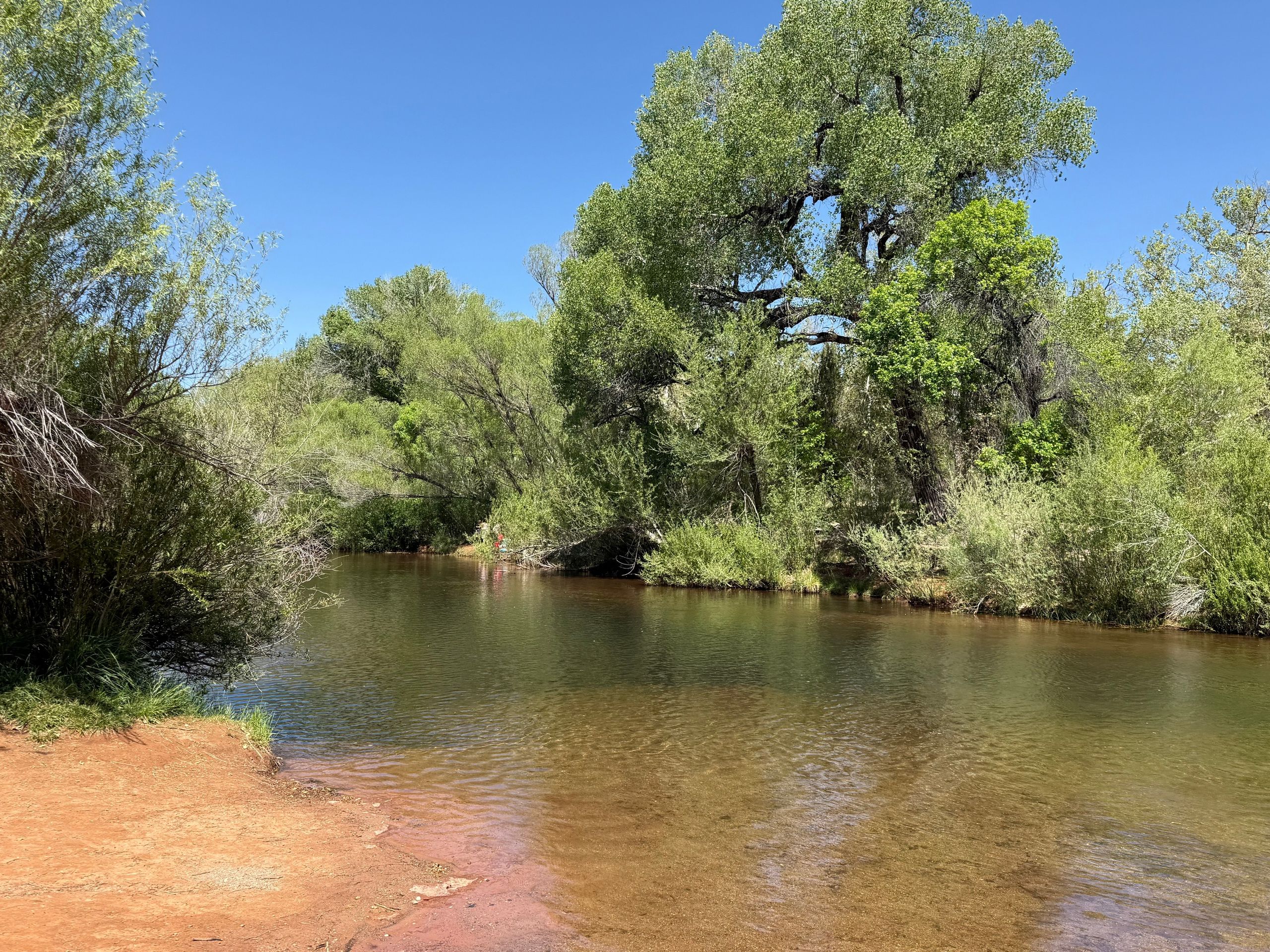
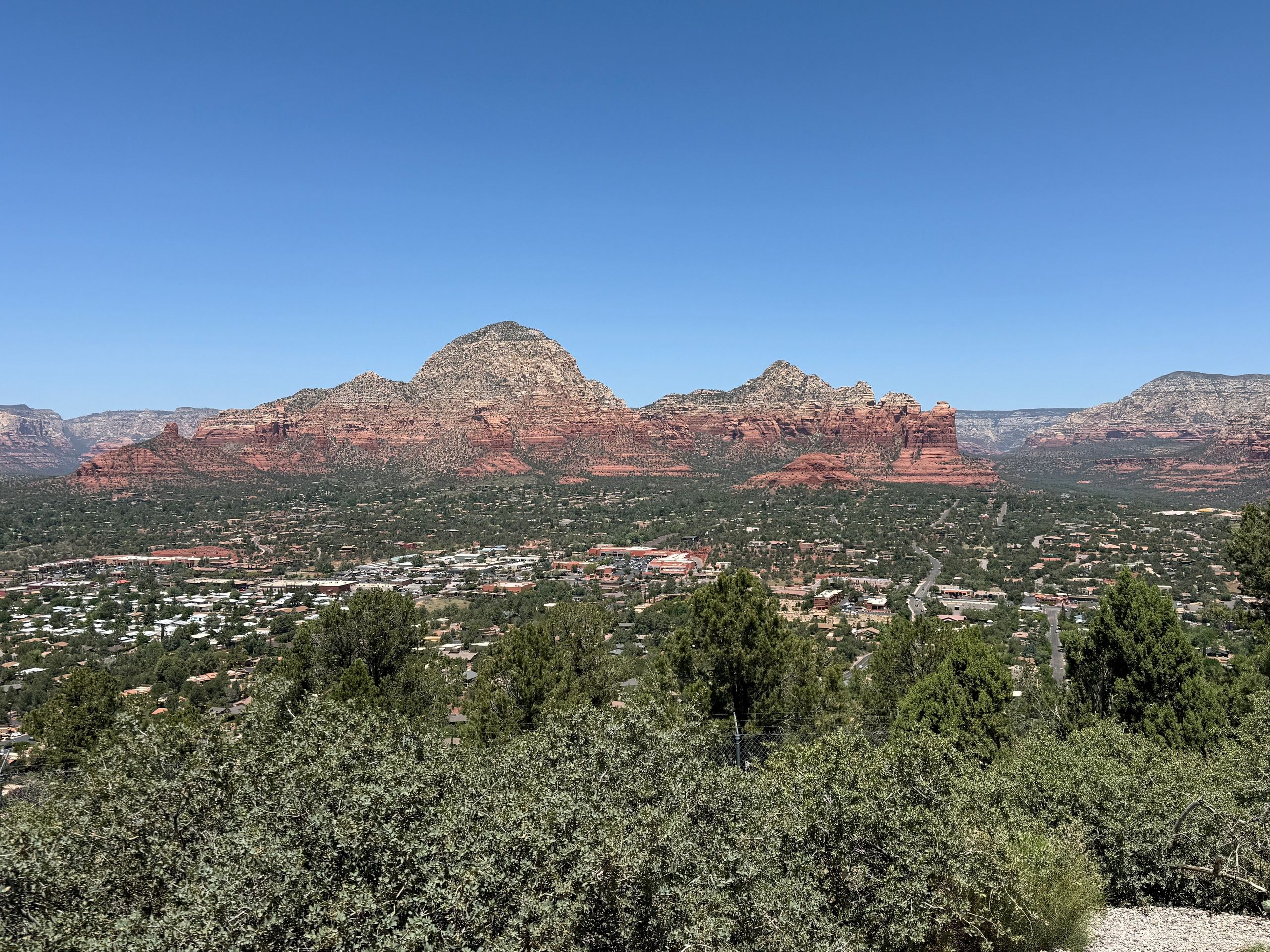
After continuing our journey over a plateau past Flagstaff, we descend steeply and windingly into Oak Creek Canyon, where our destination lies at its exit—the city of Sedona.
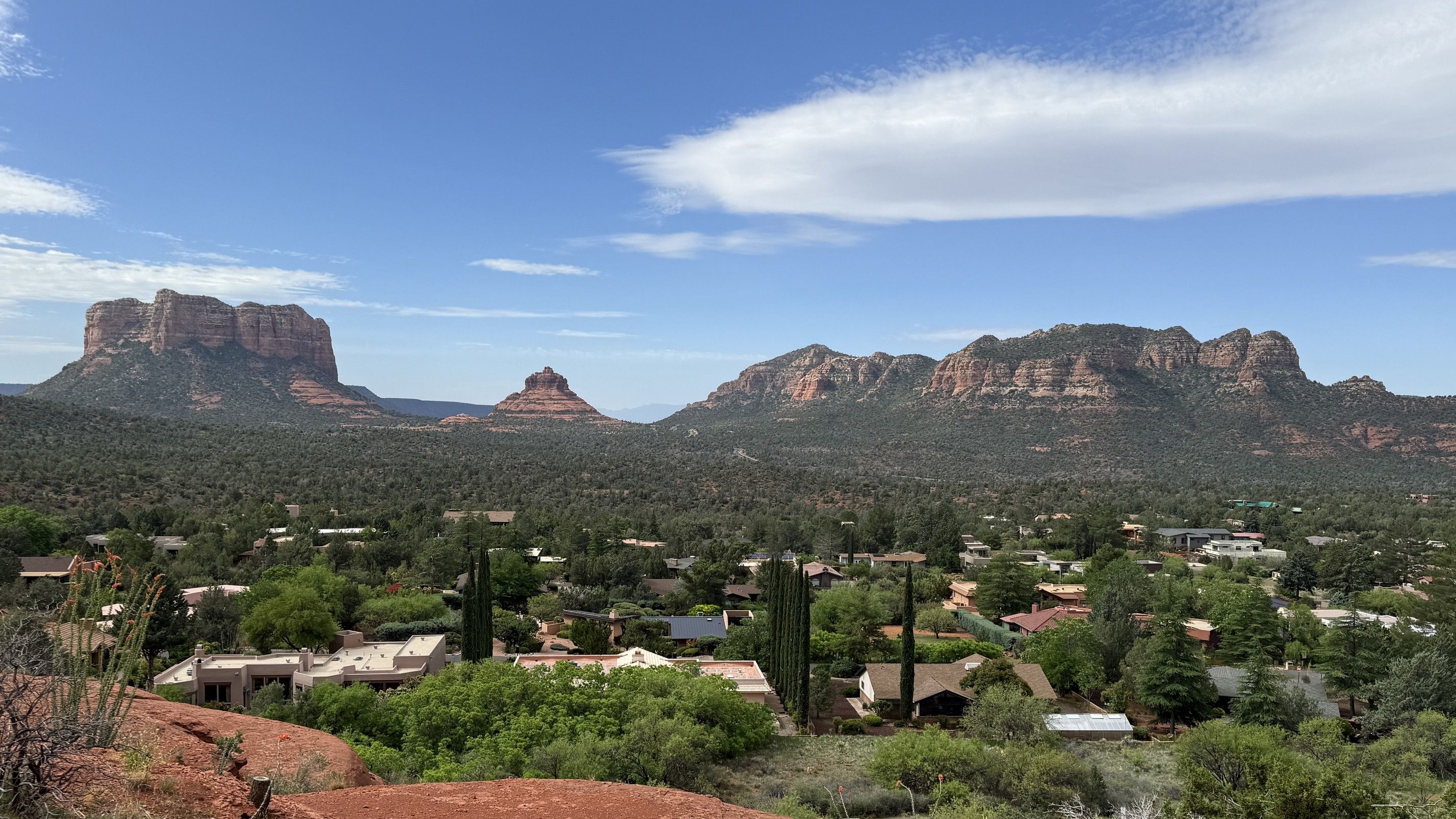
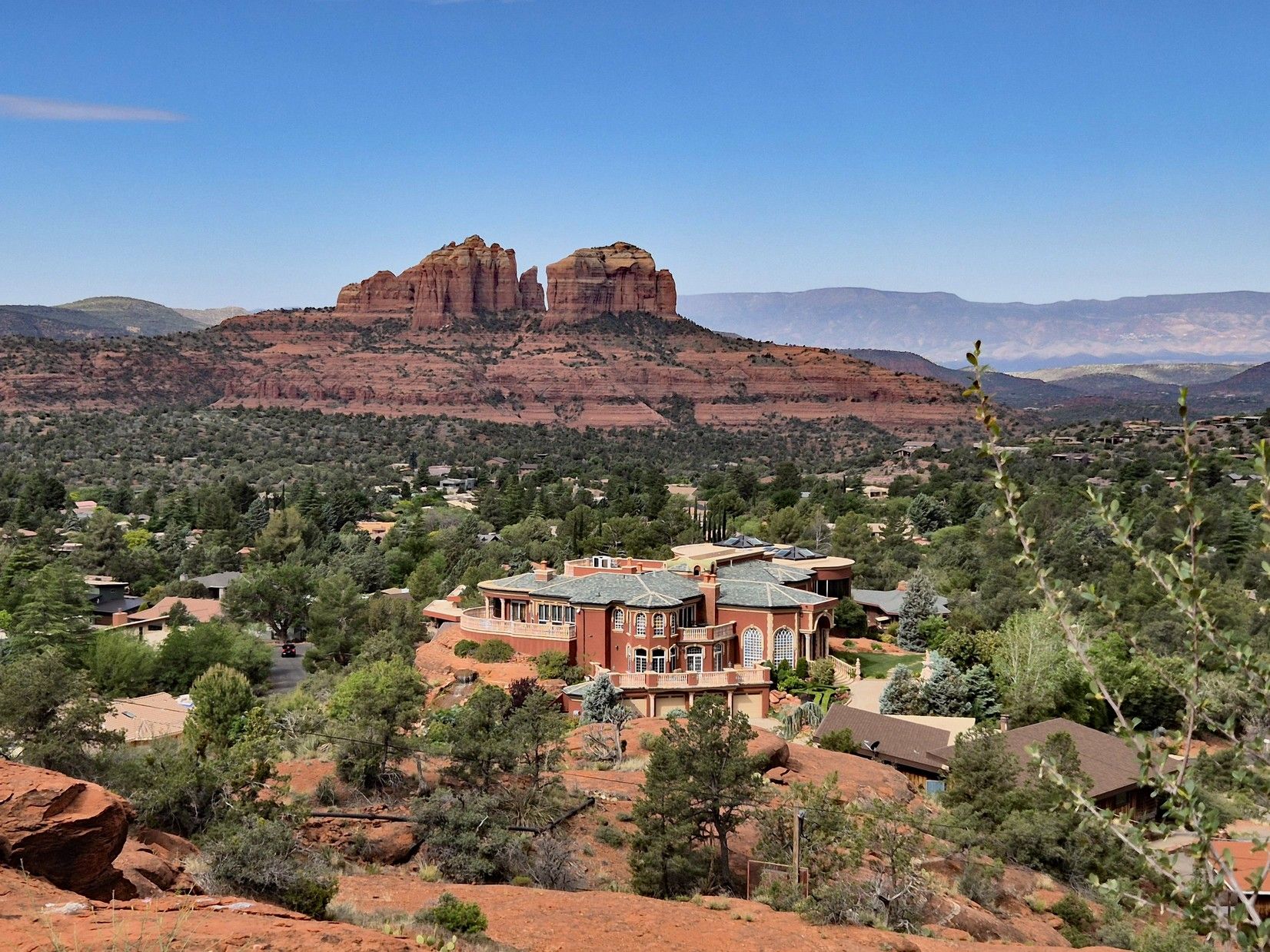
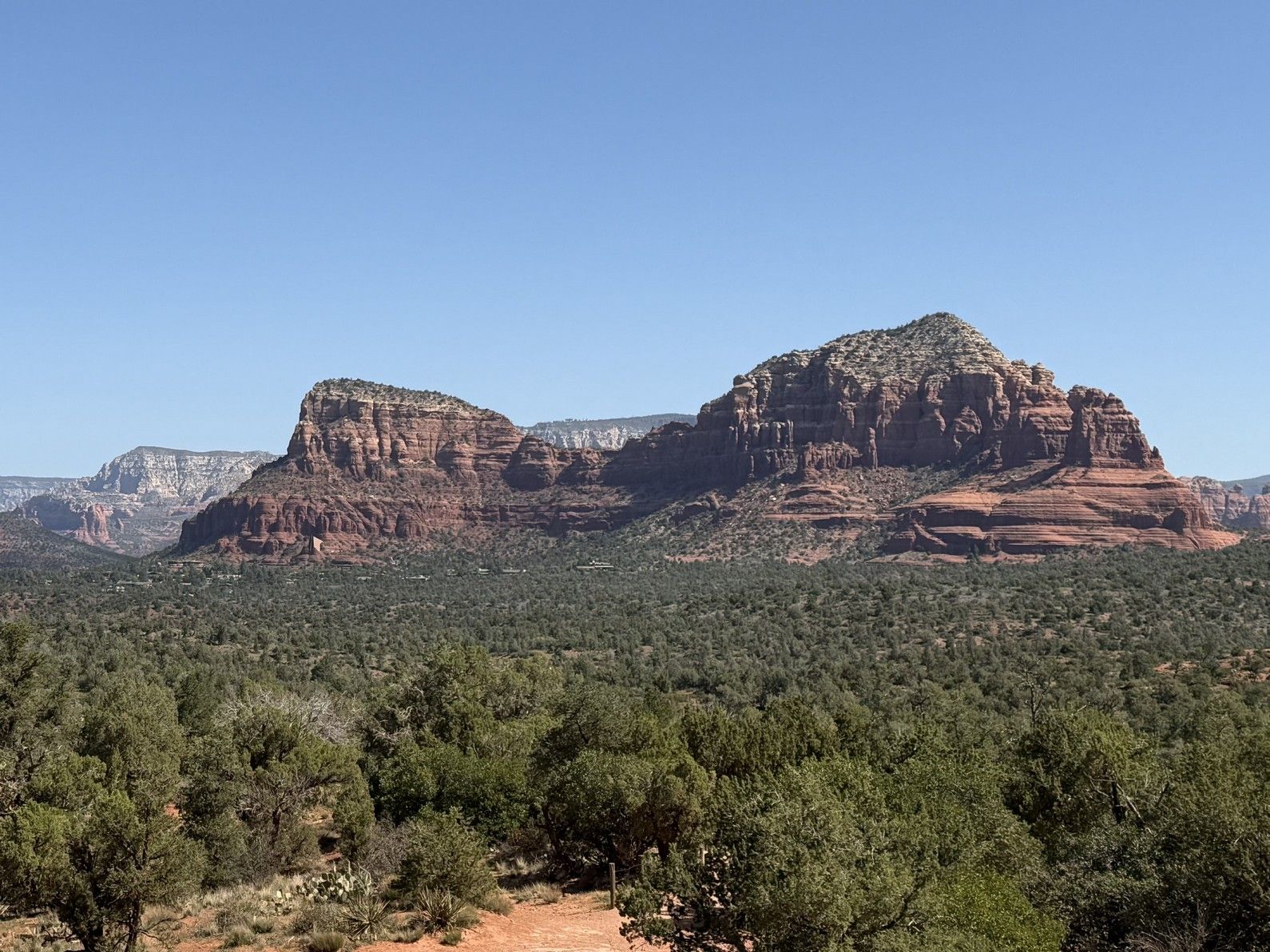
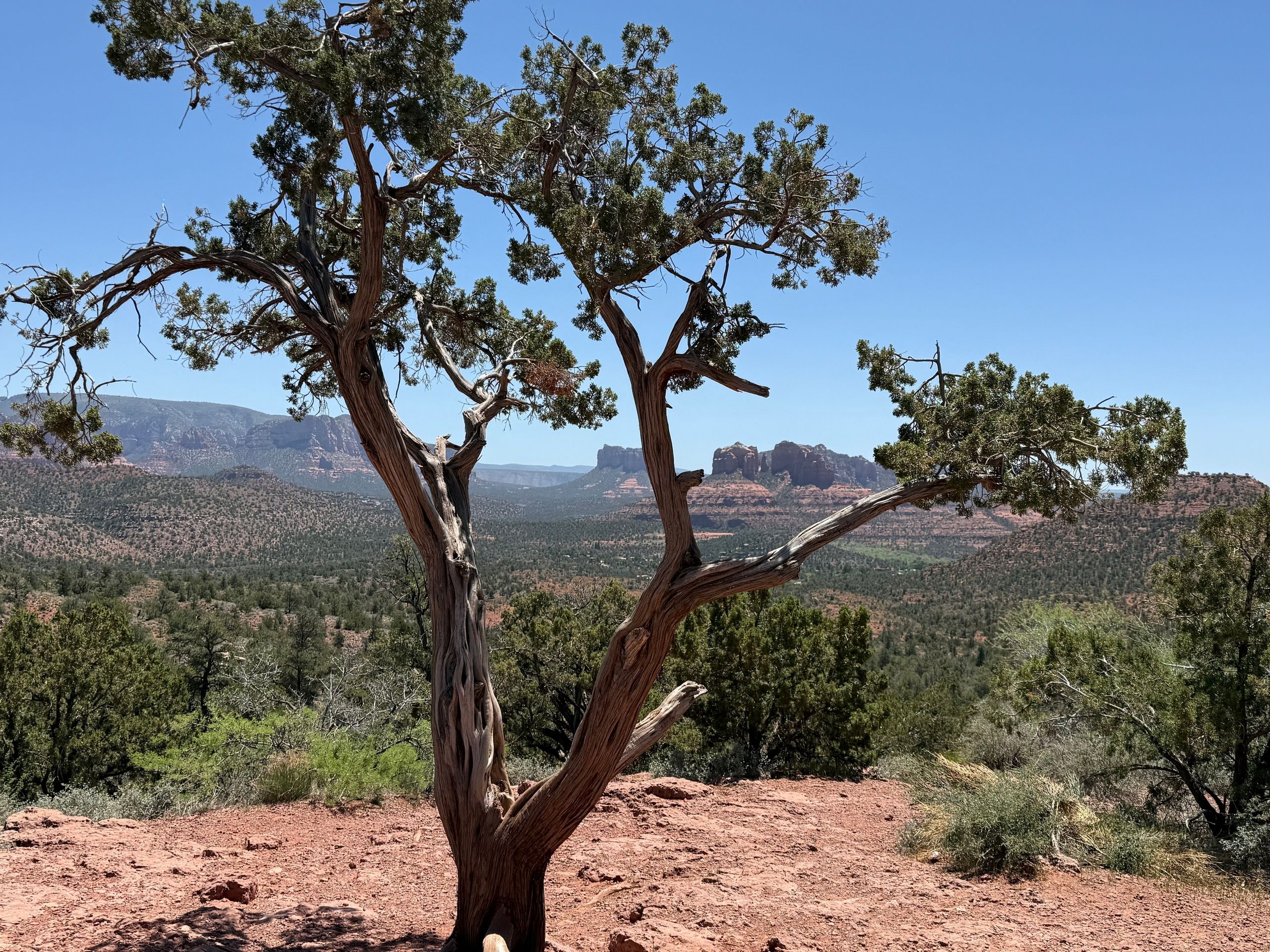
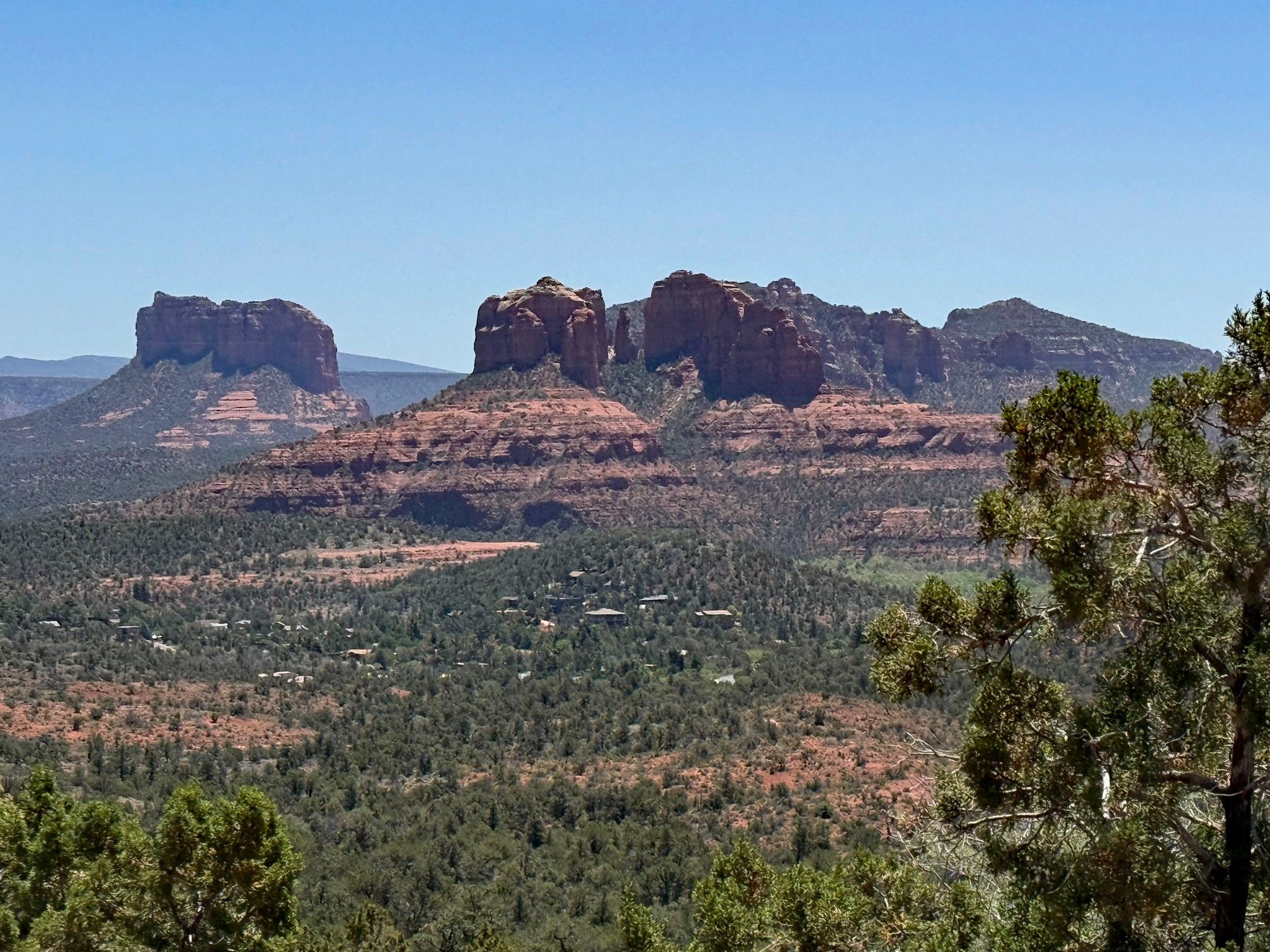
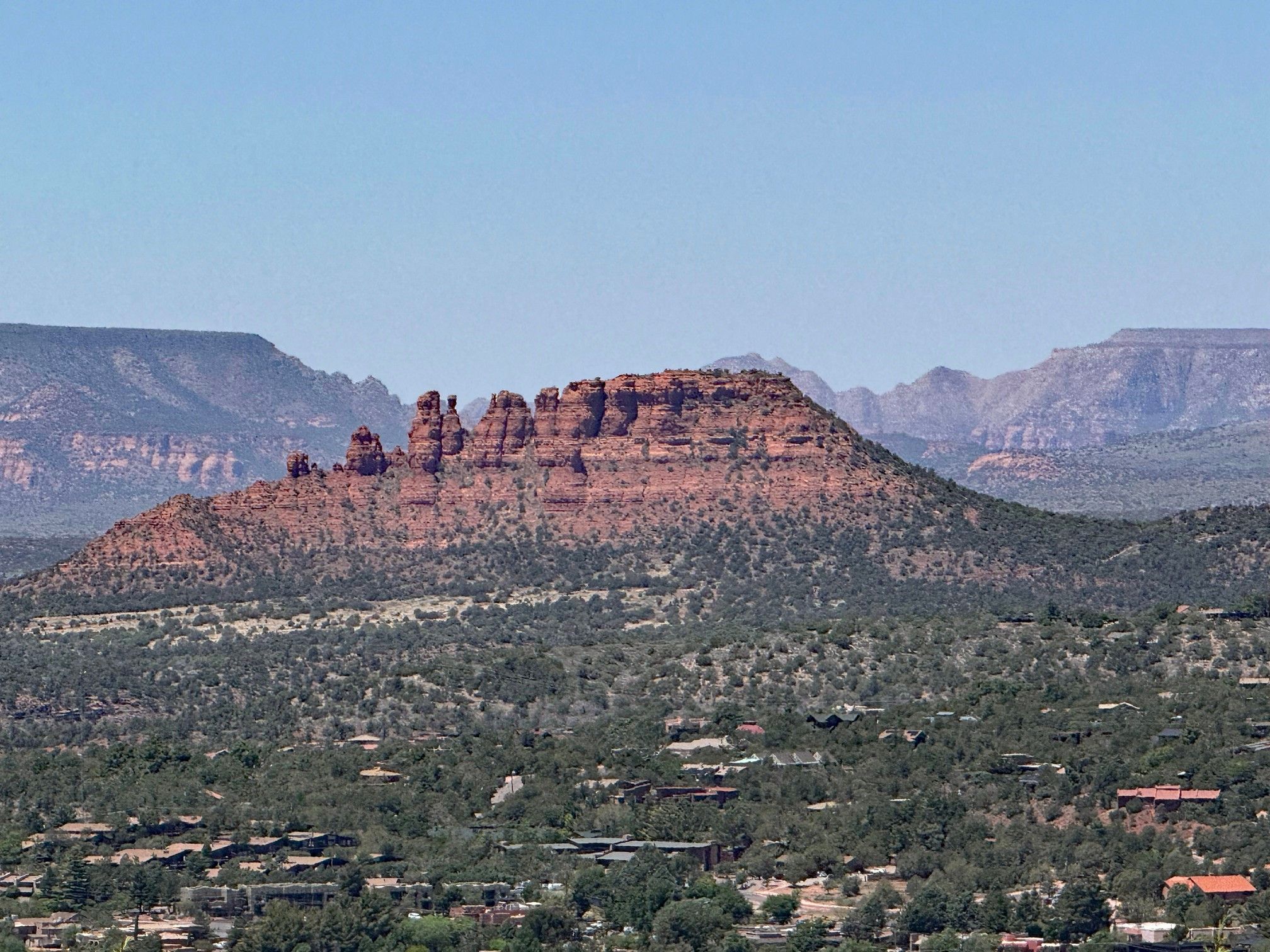
This place is known for the striking mountains in the area, many of which contain “vortexes”—spiritual sites where energy is believed to rise from the earth, leading some (those who believe?) to feel an enhanced sense of energy, healing, and spiritual connection.
After World War II, several artists, including Max Ernst, settled here for a time. Today, Sedona has become a popular residence for affluent retirees and a destination for “spiritual travelers.”
Since our 8-meter long “small” RV by U.S. standards isn’t very maneuverable, we hire a local taxi driver for a trip to the main attractions. The usual guided tours are not only extremely expensive but also somewhat strange, e.g., in an open pink Jeep (only on urban asphalt roads) with a full esoteric vortex focus.
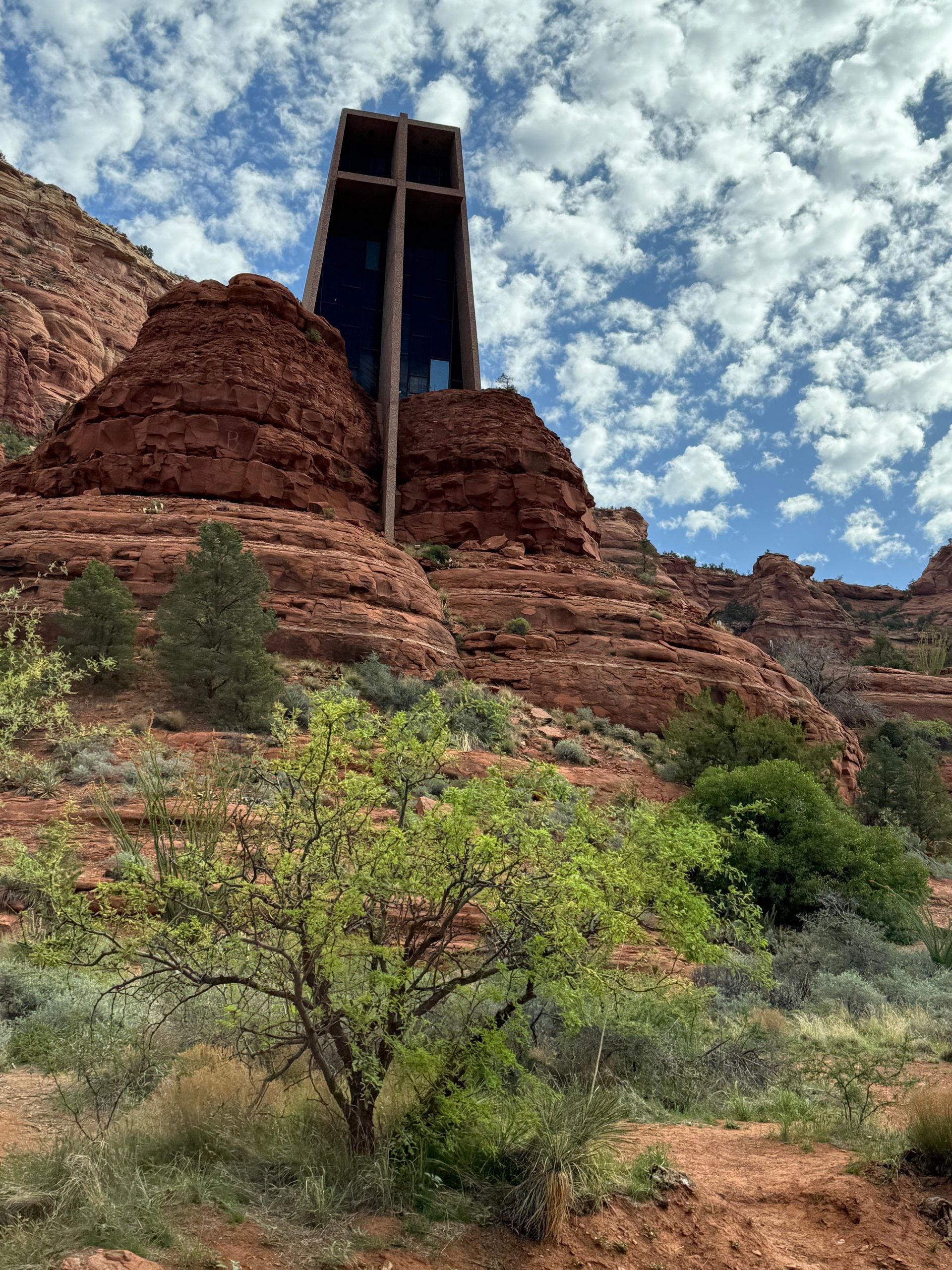
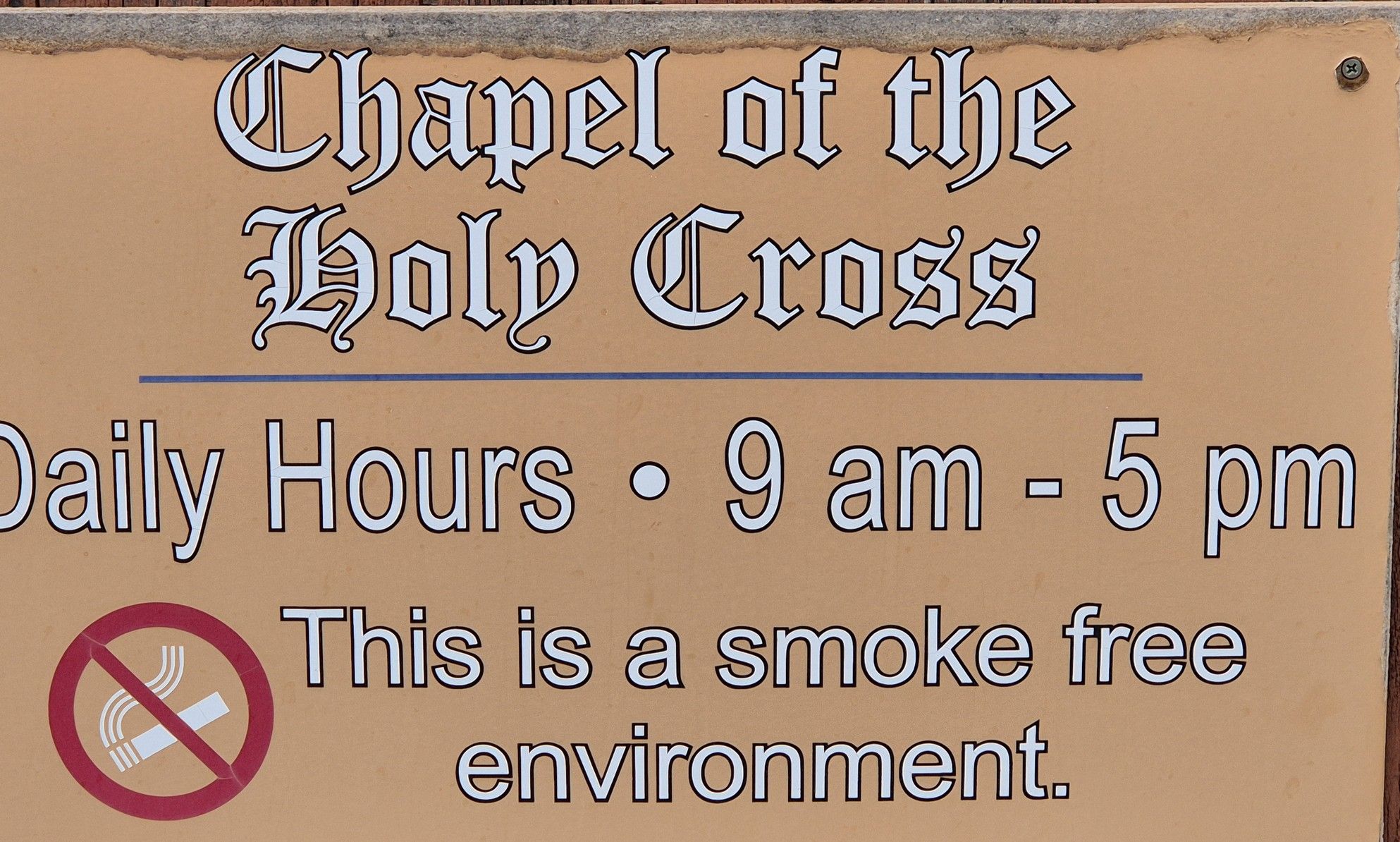
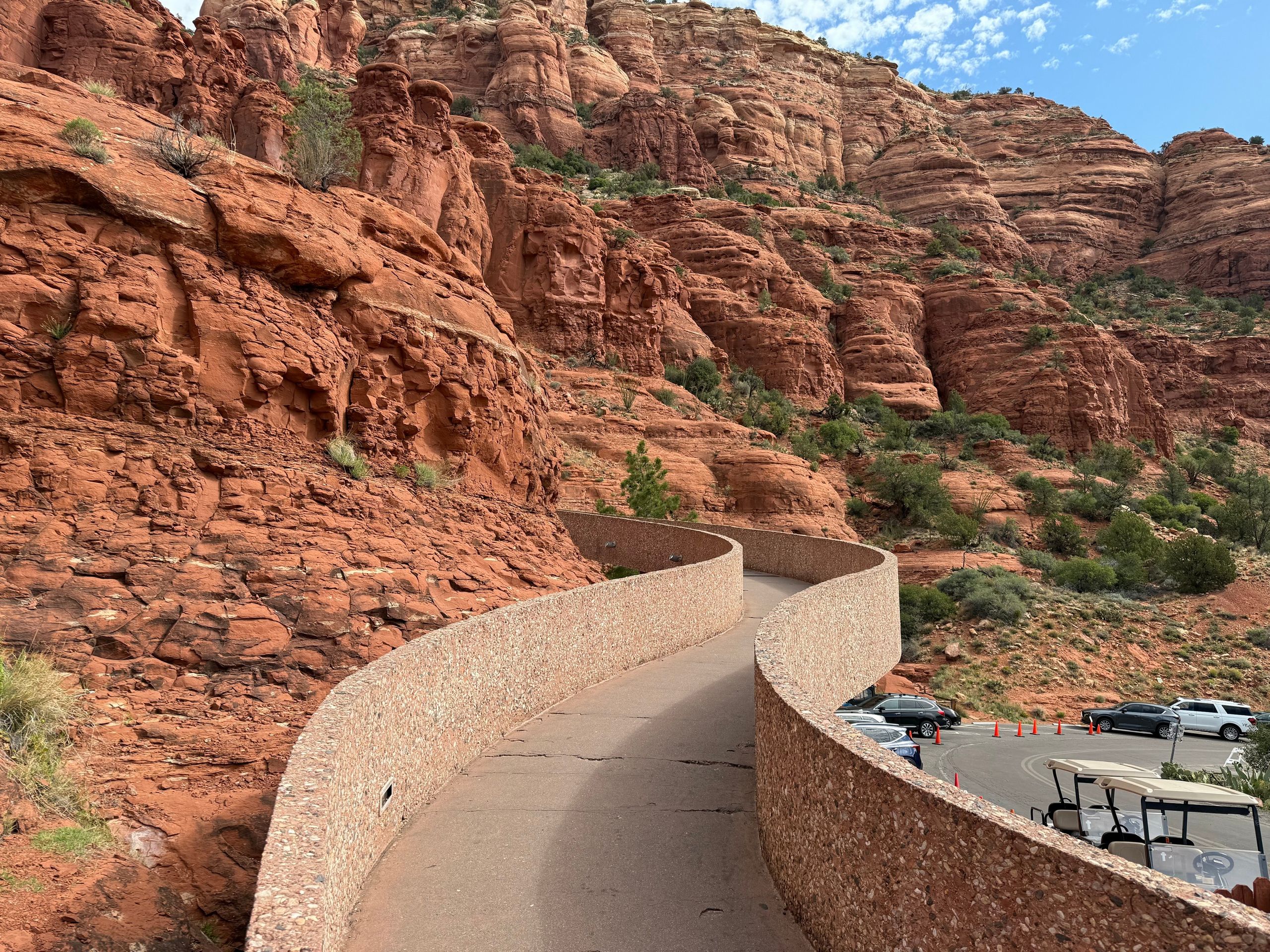
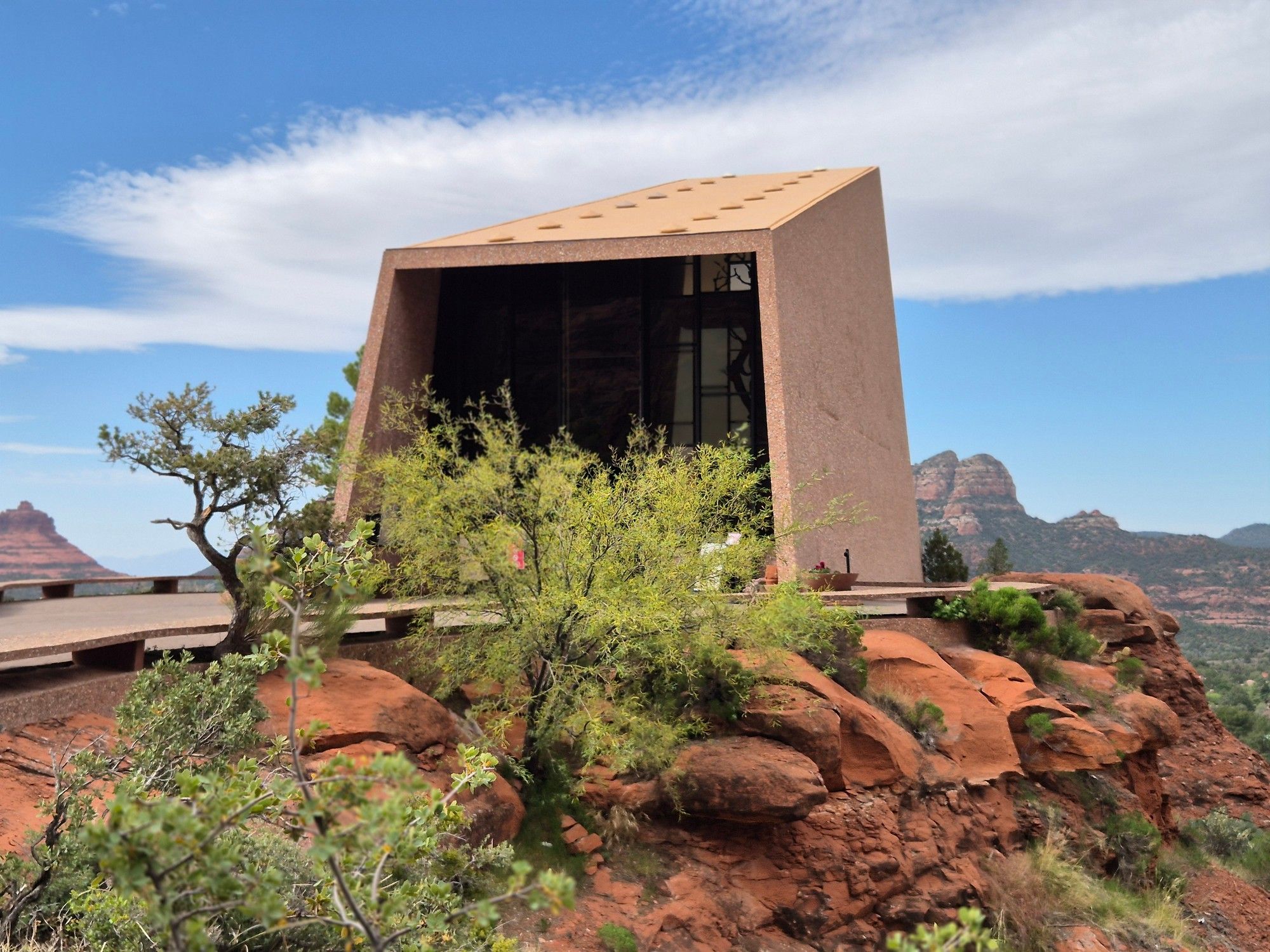
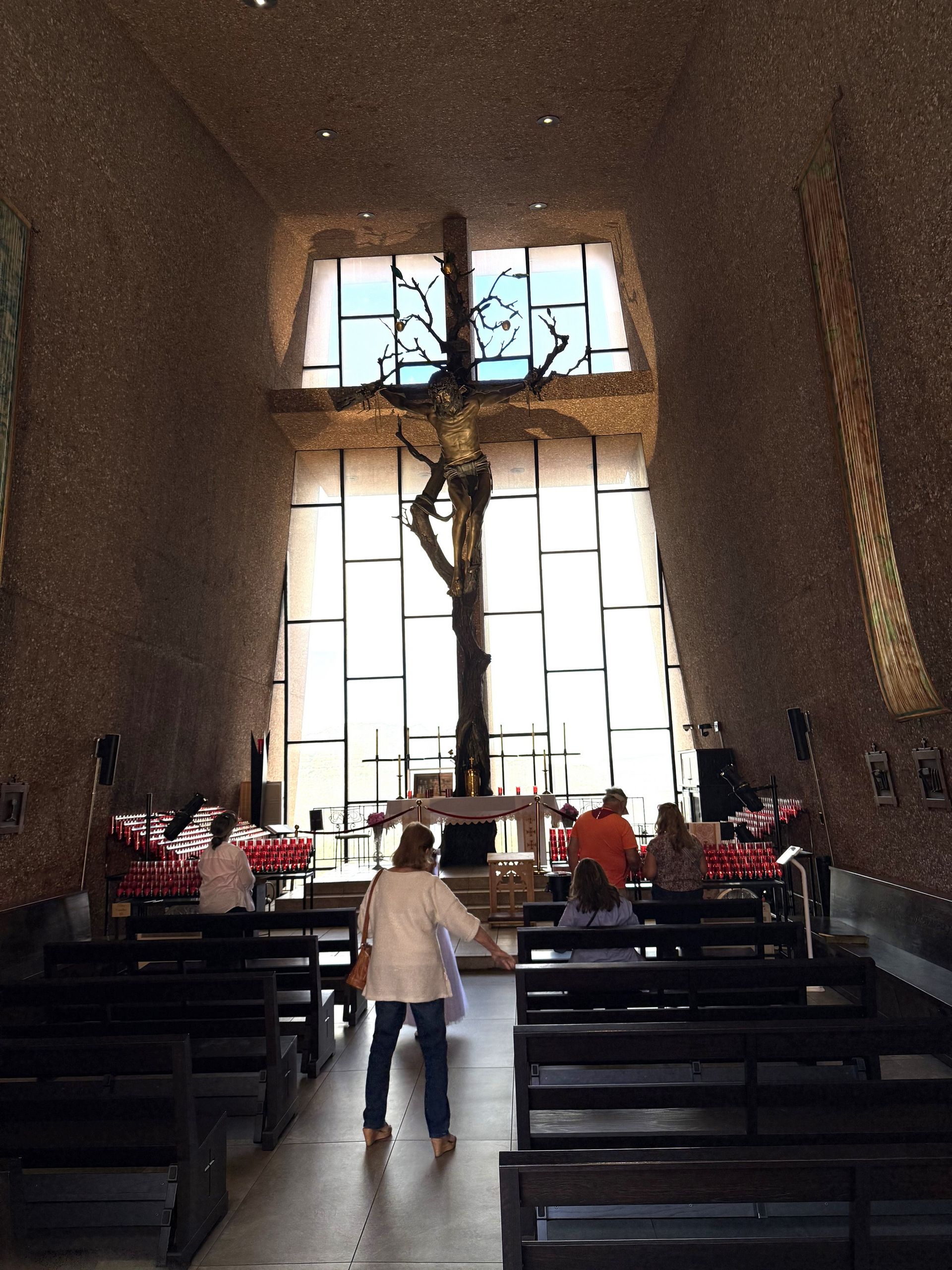
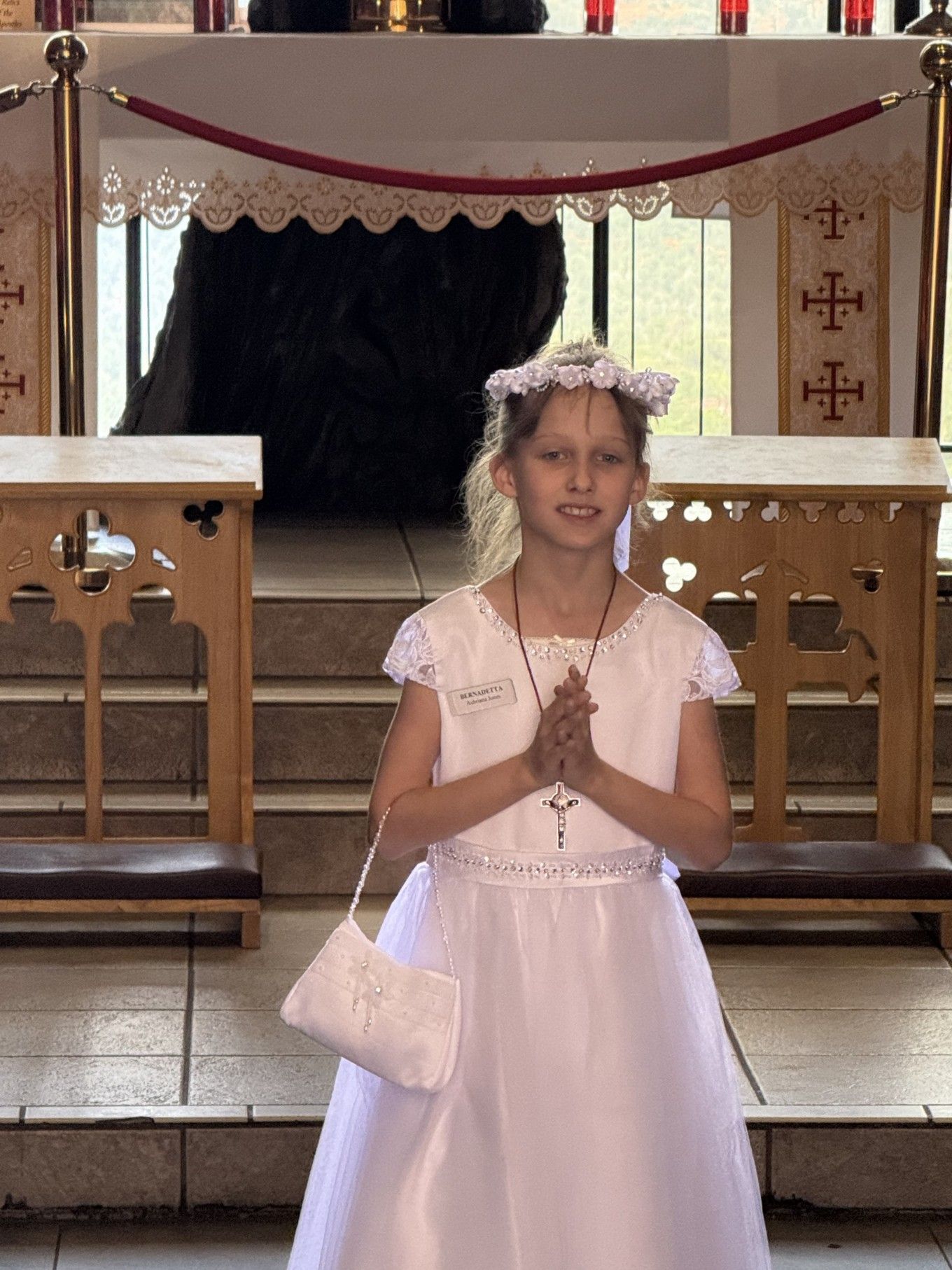
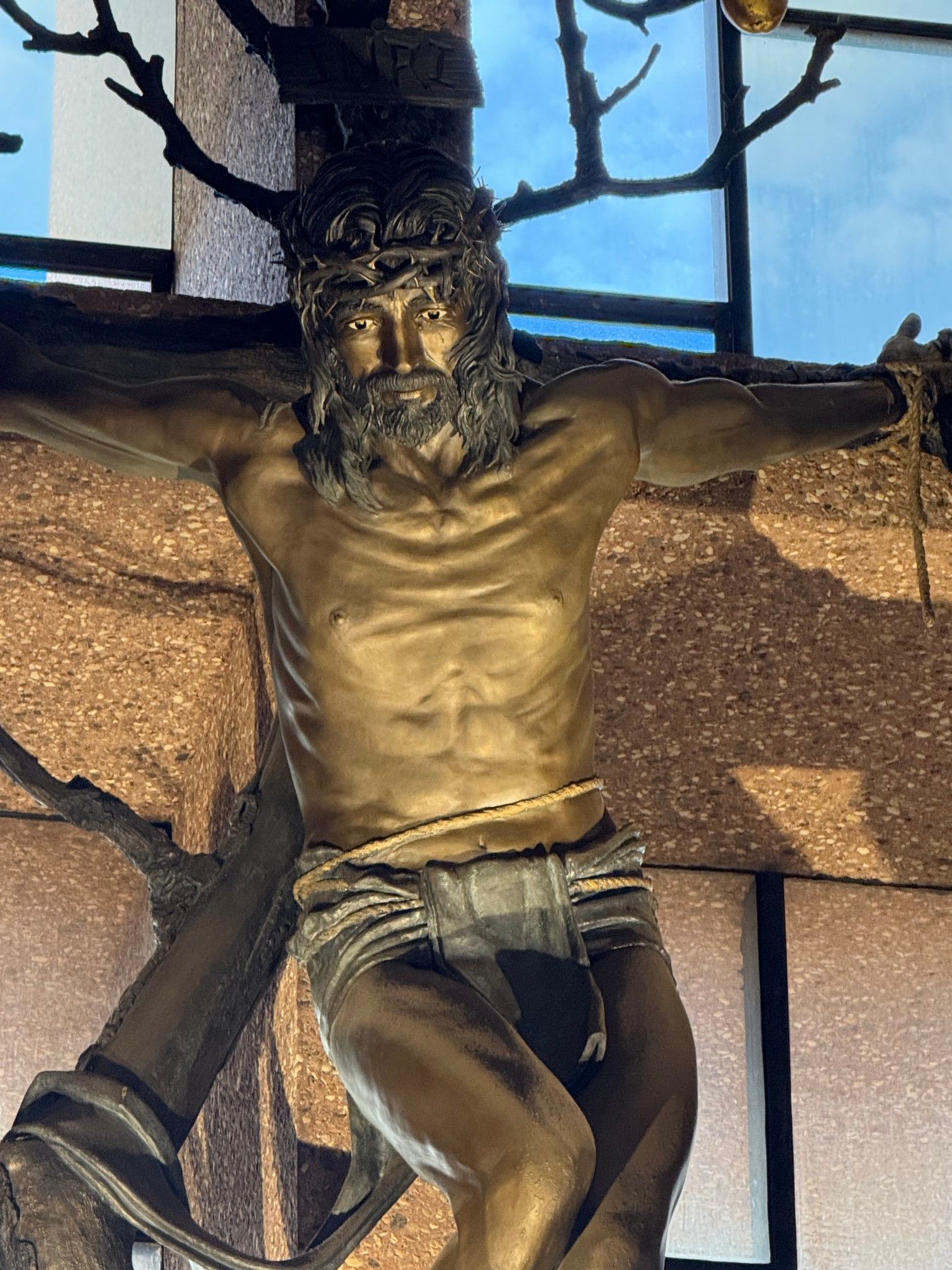
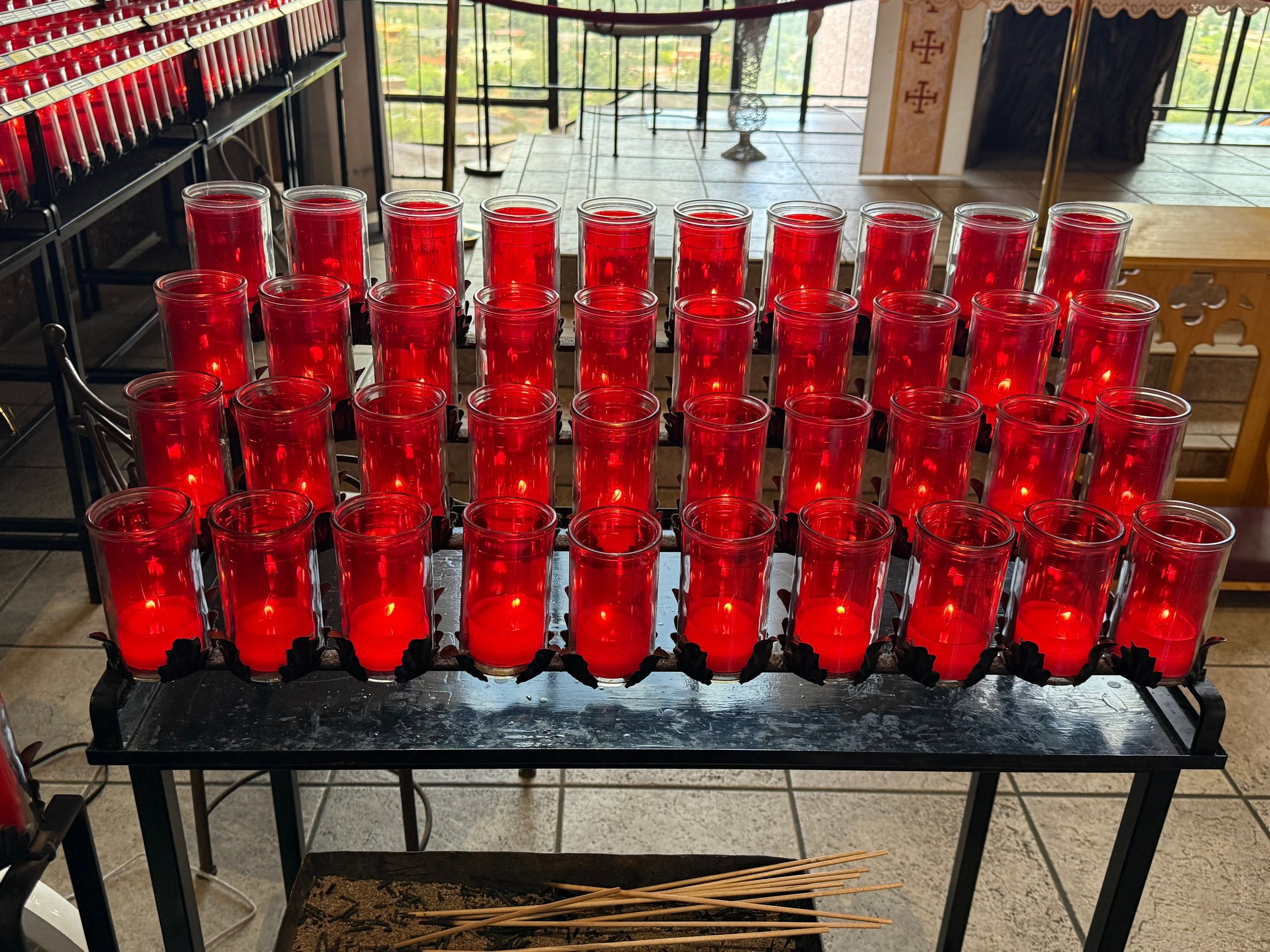
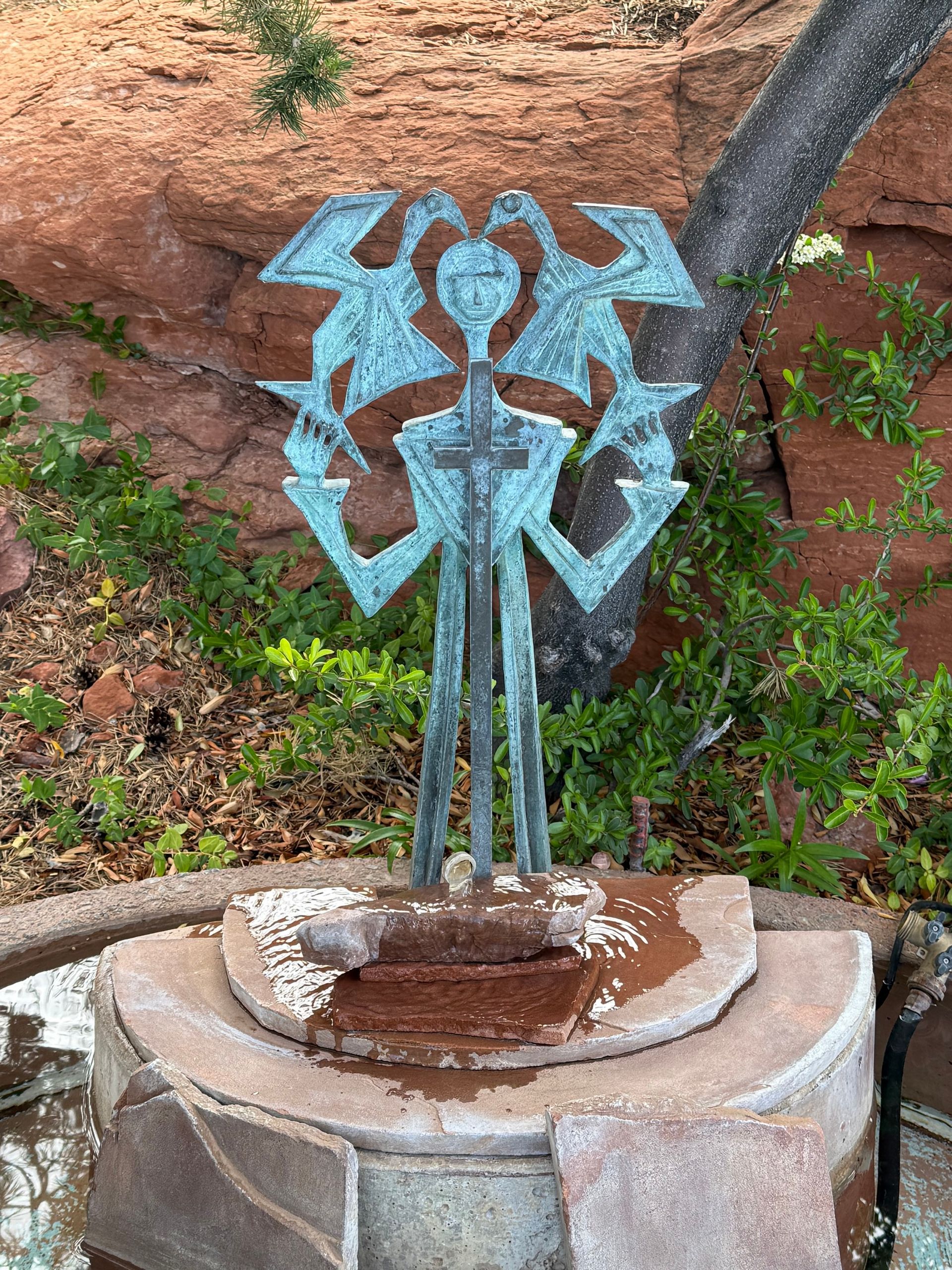
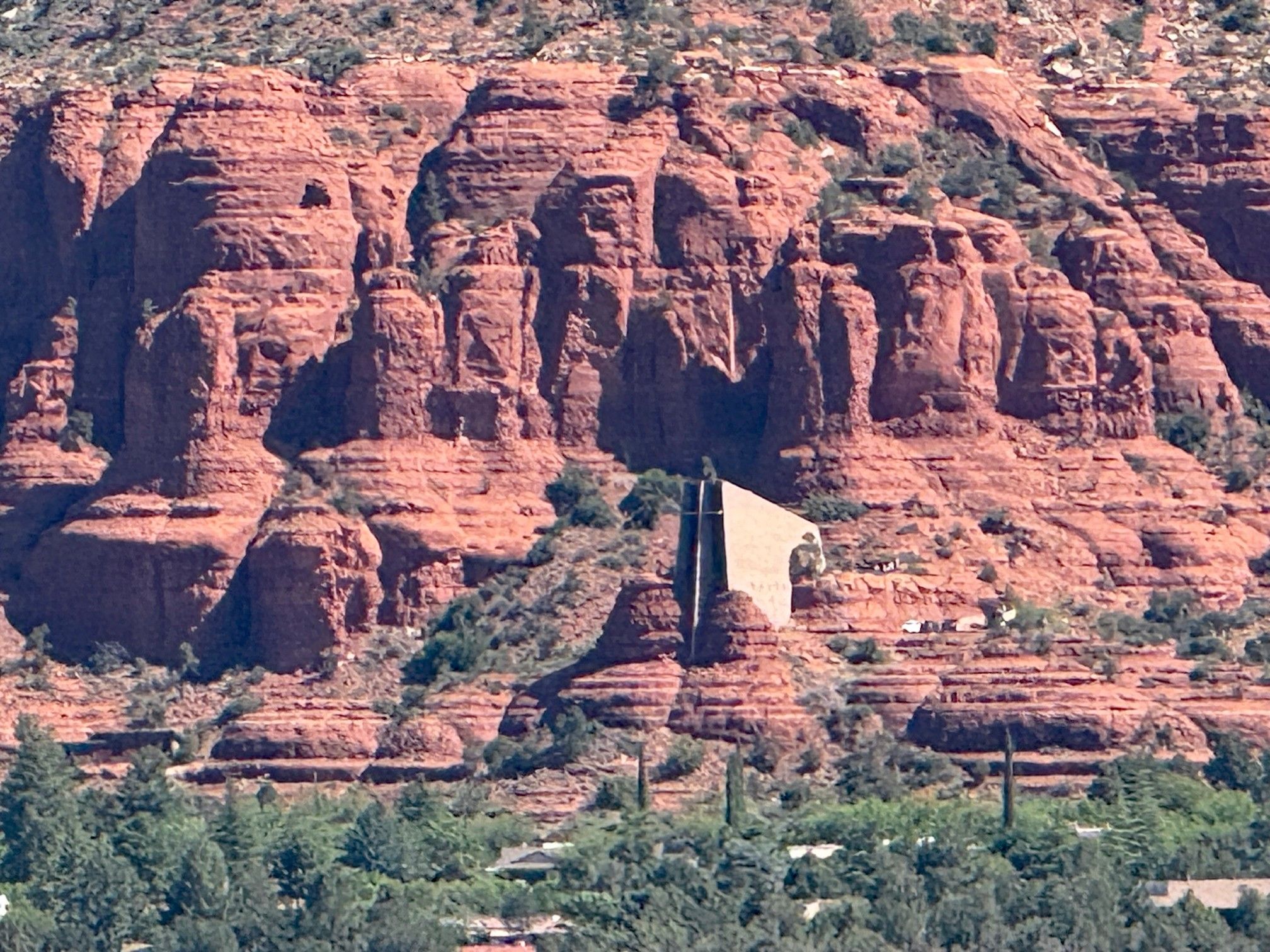
A main attraction is the “Chapel of the Holy Cross.” Following our taxi driver’s advice, we arrive there at the start of opening hours at 9 AM—just in time to avoid the mass influx of tourists and, on this particular day, also of devout Catholics, as a first communion is taking place.
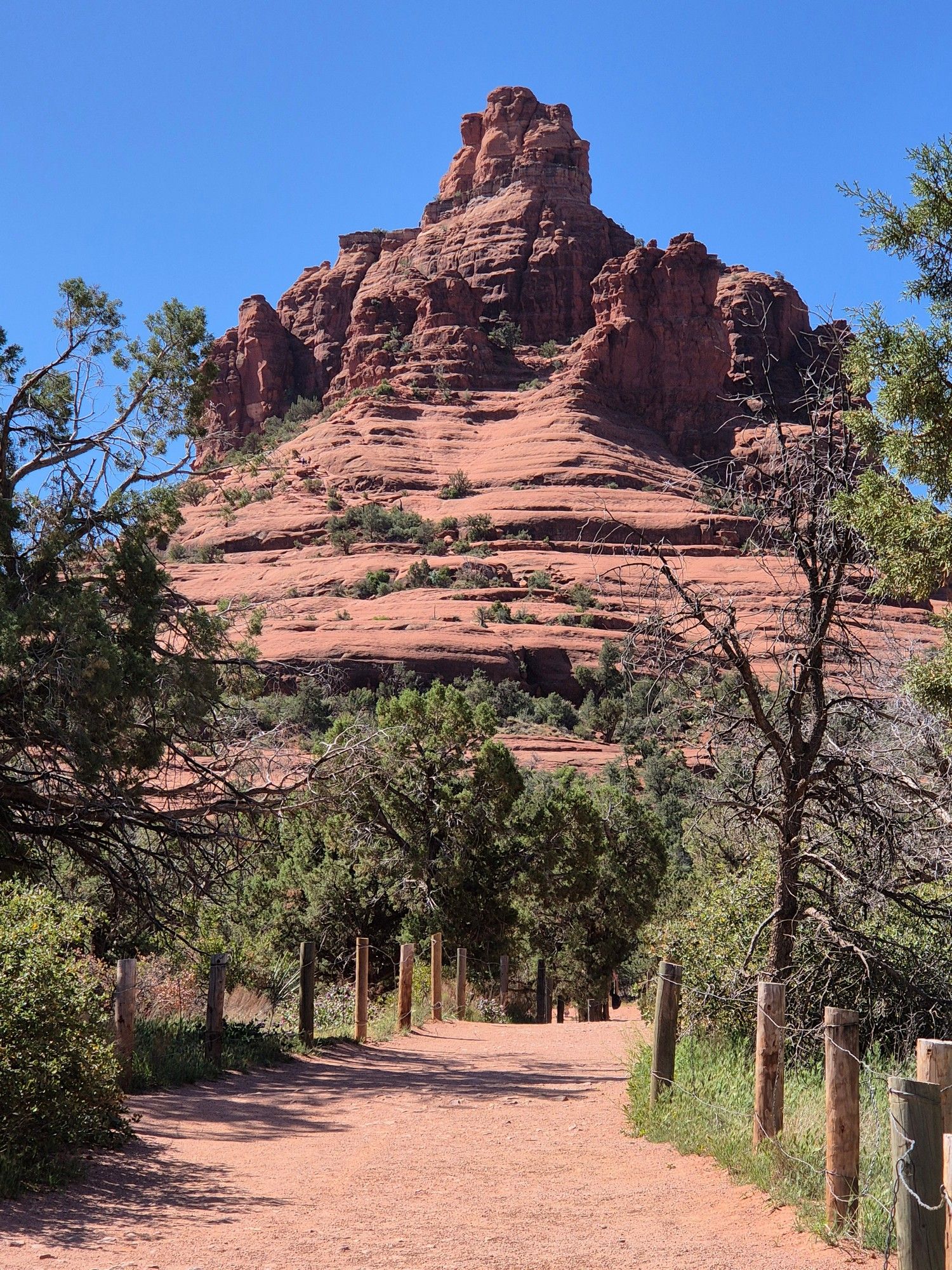
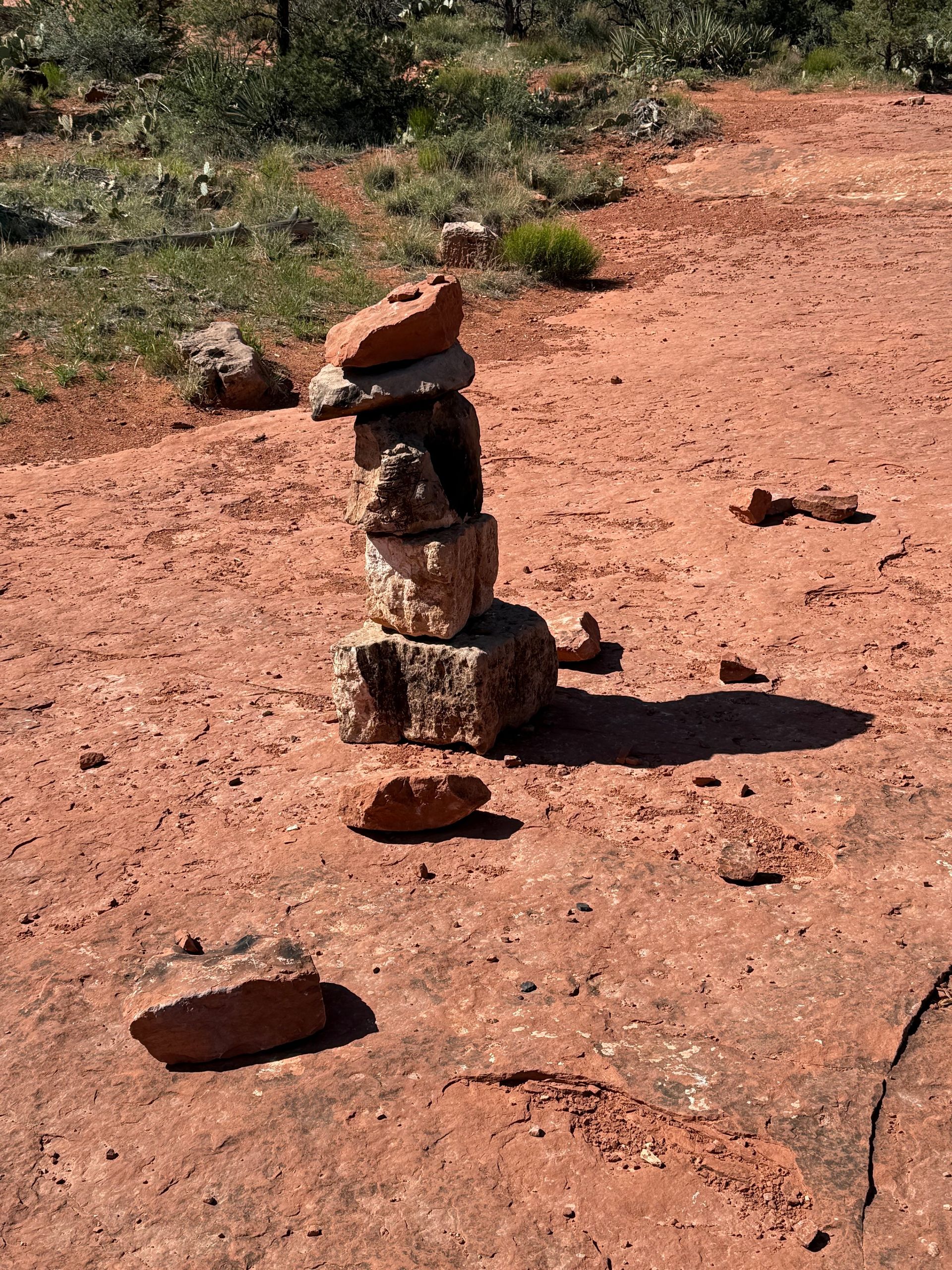
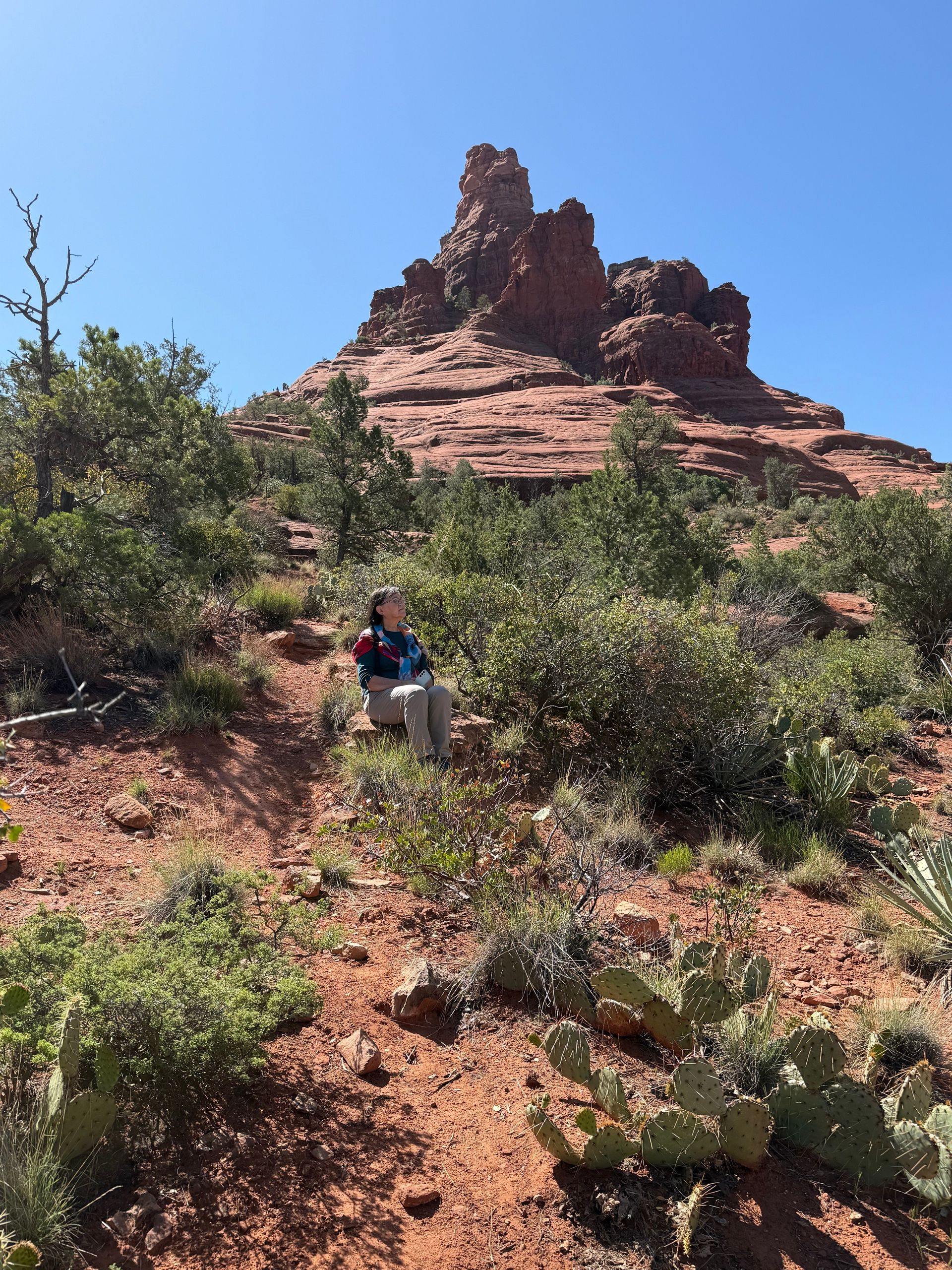
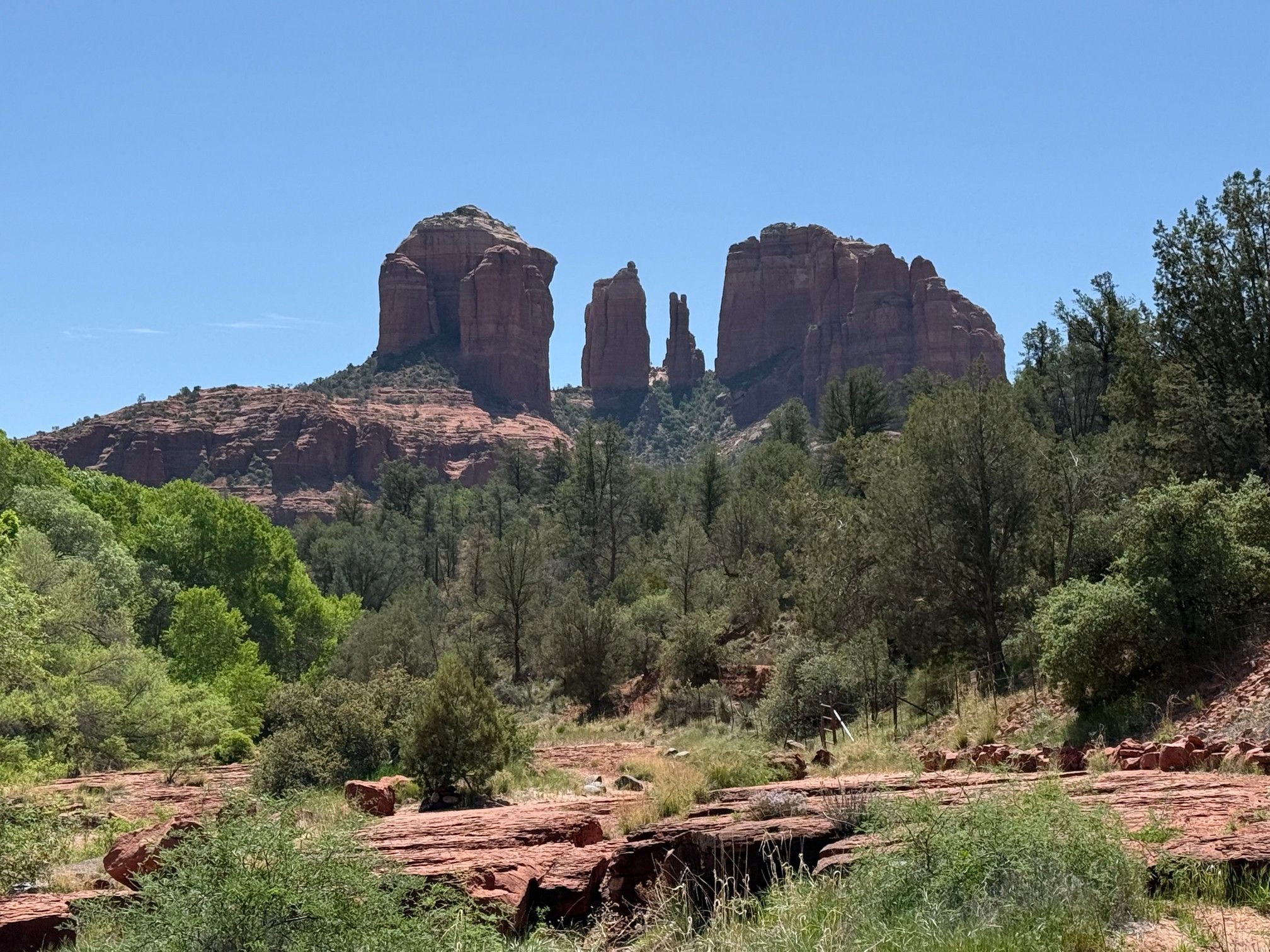
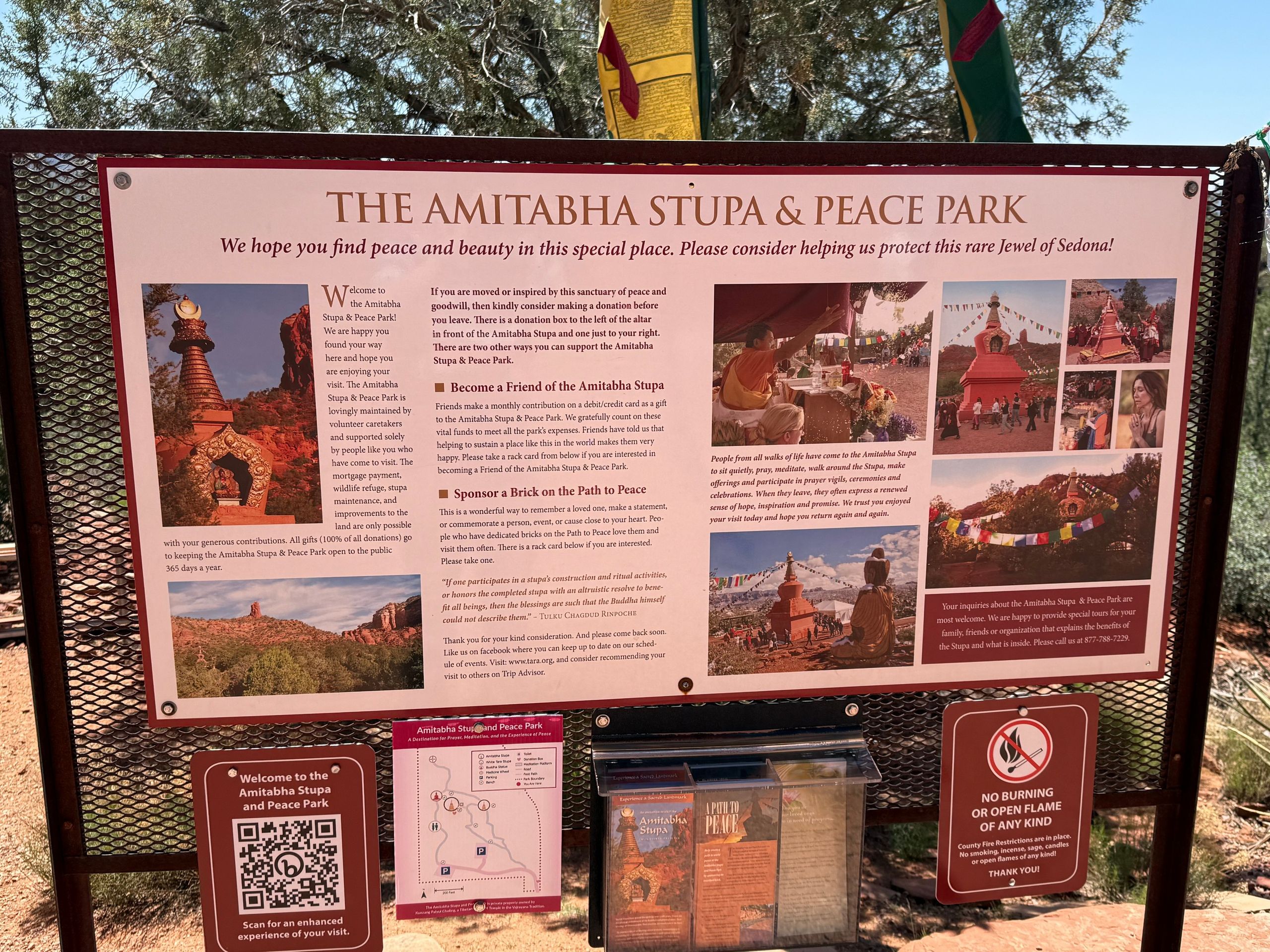
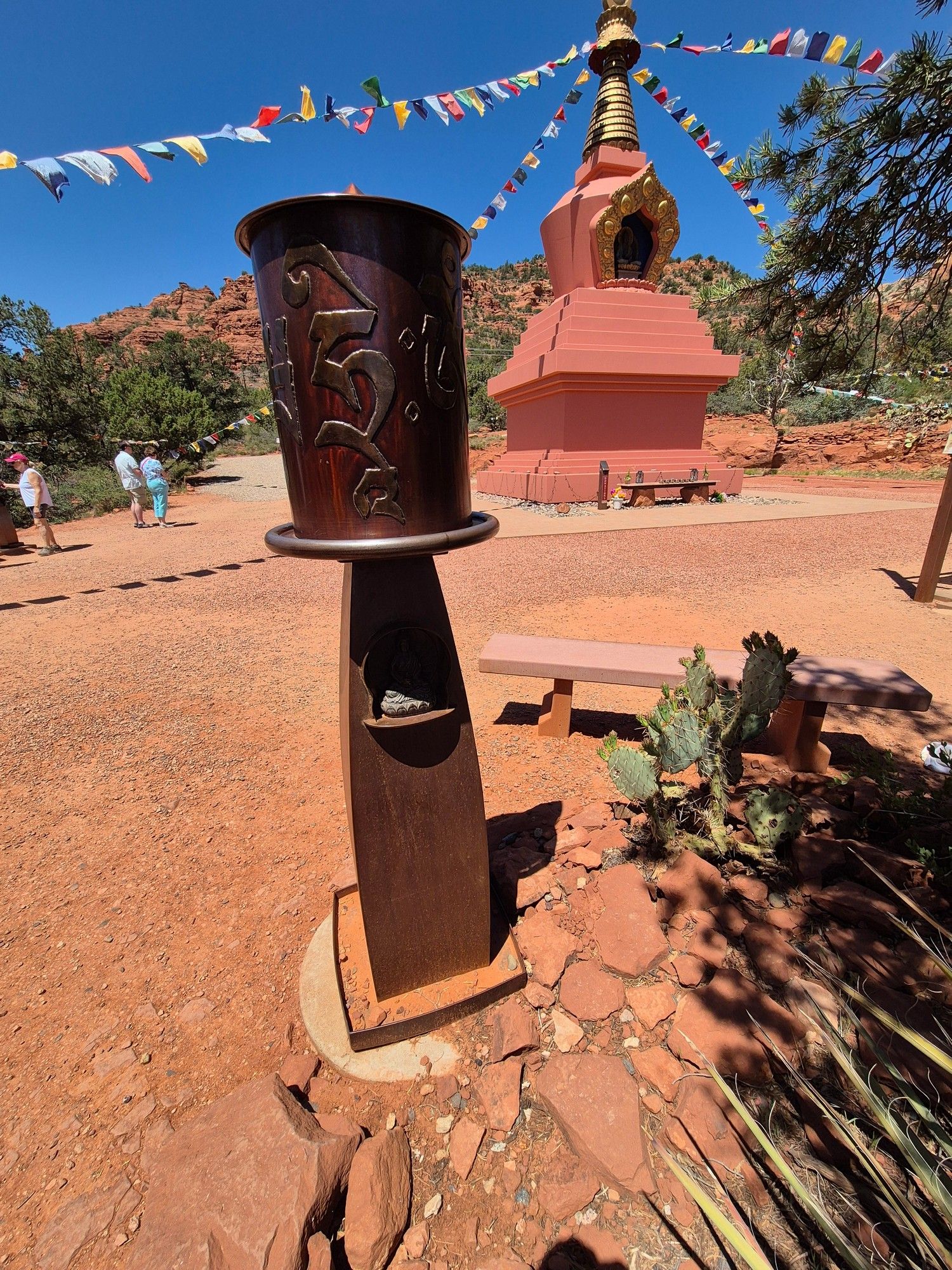
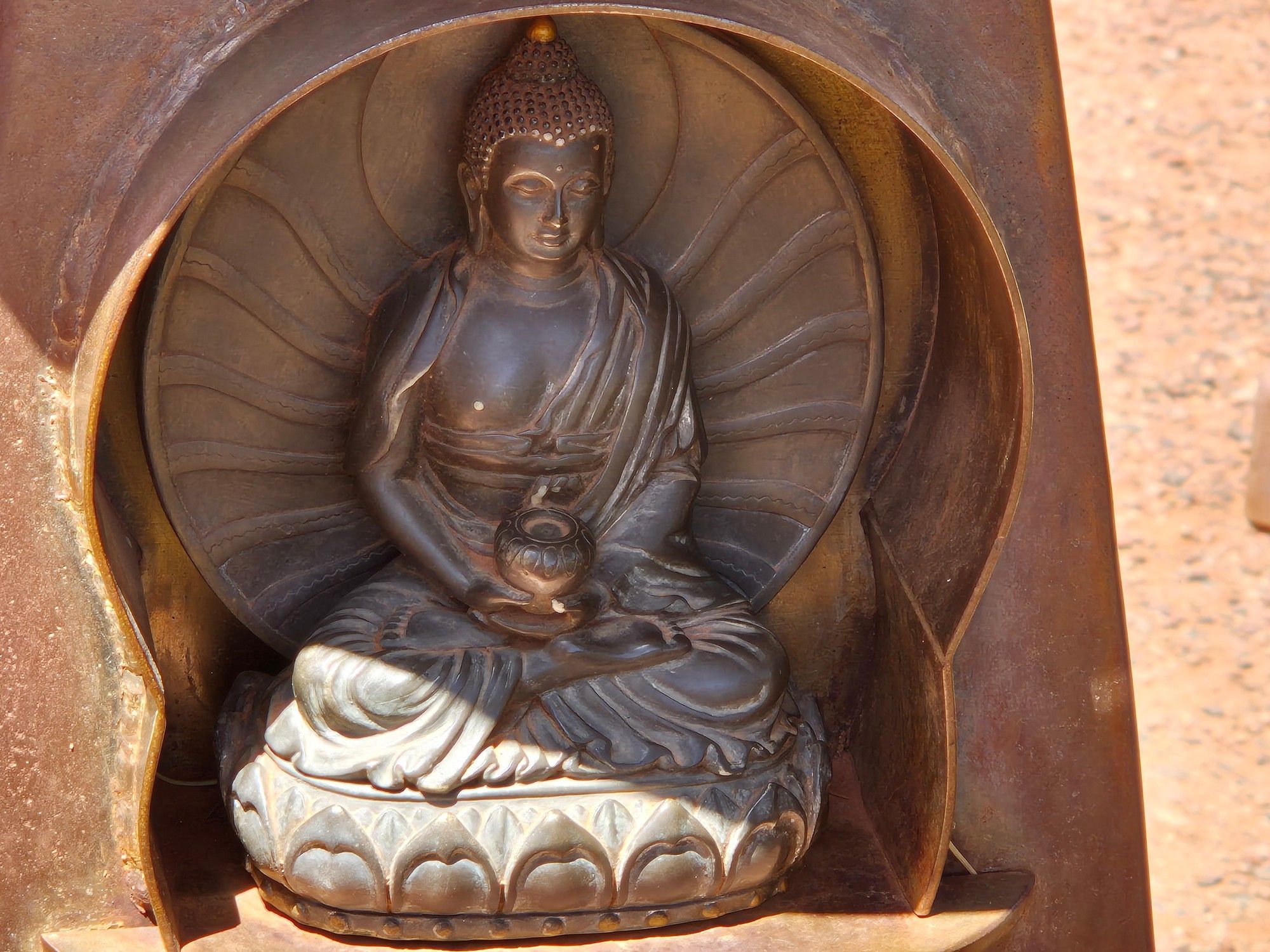
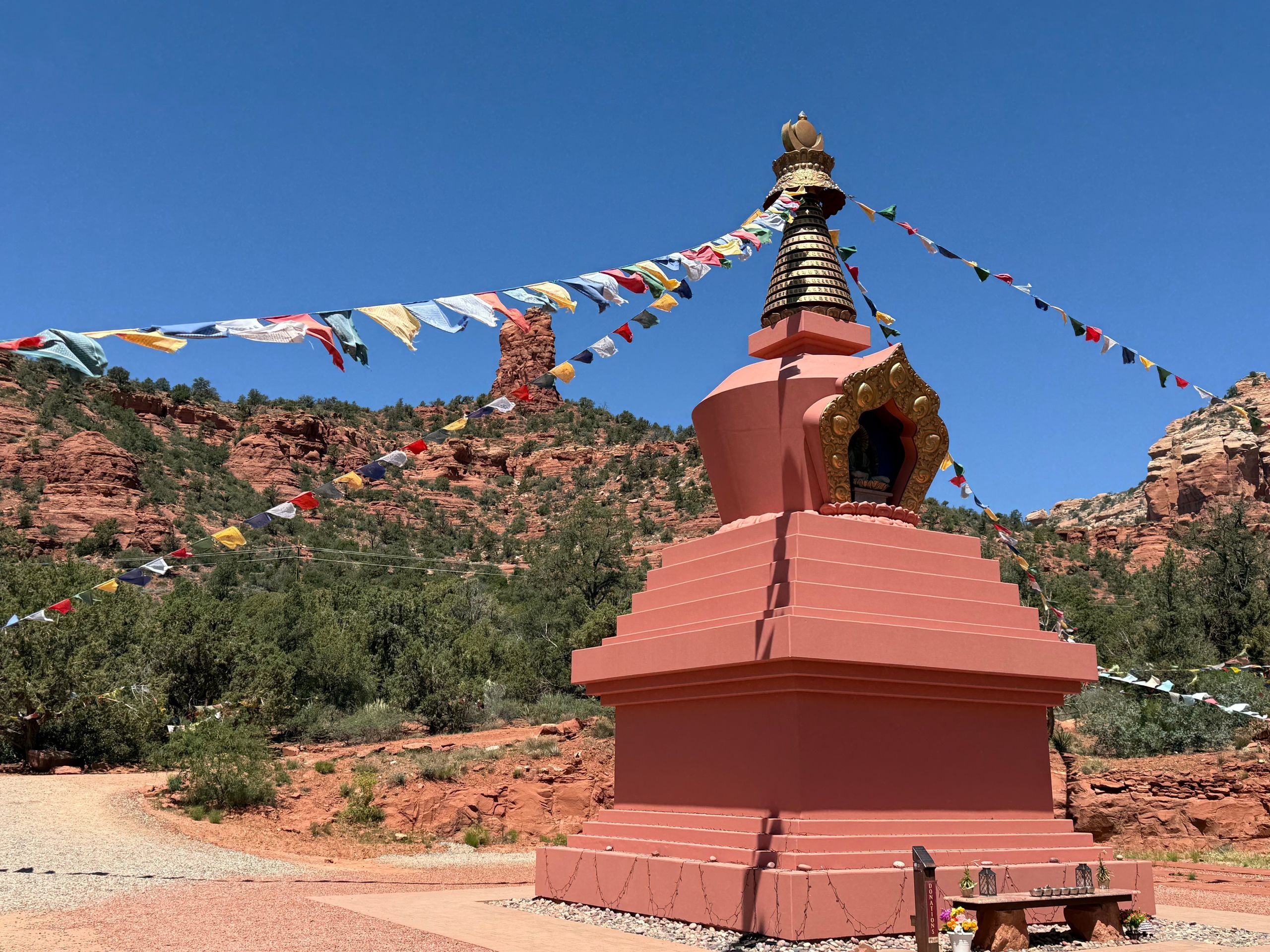
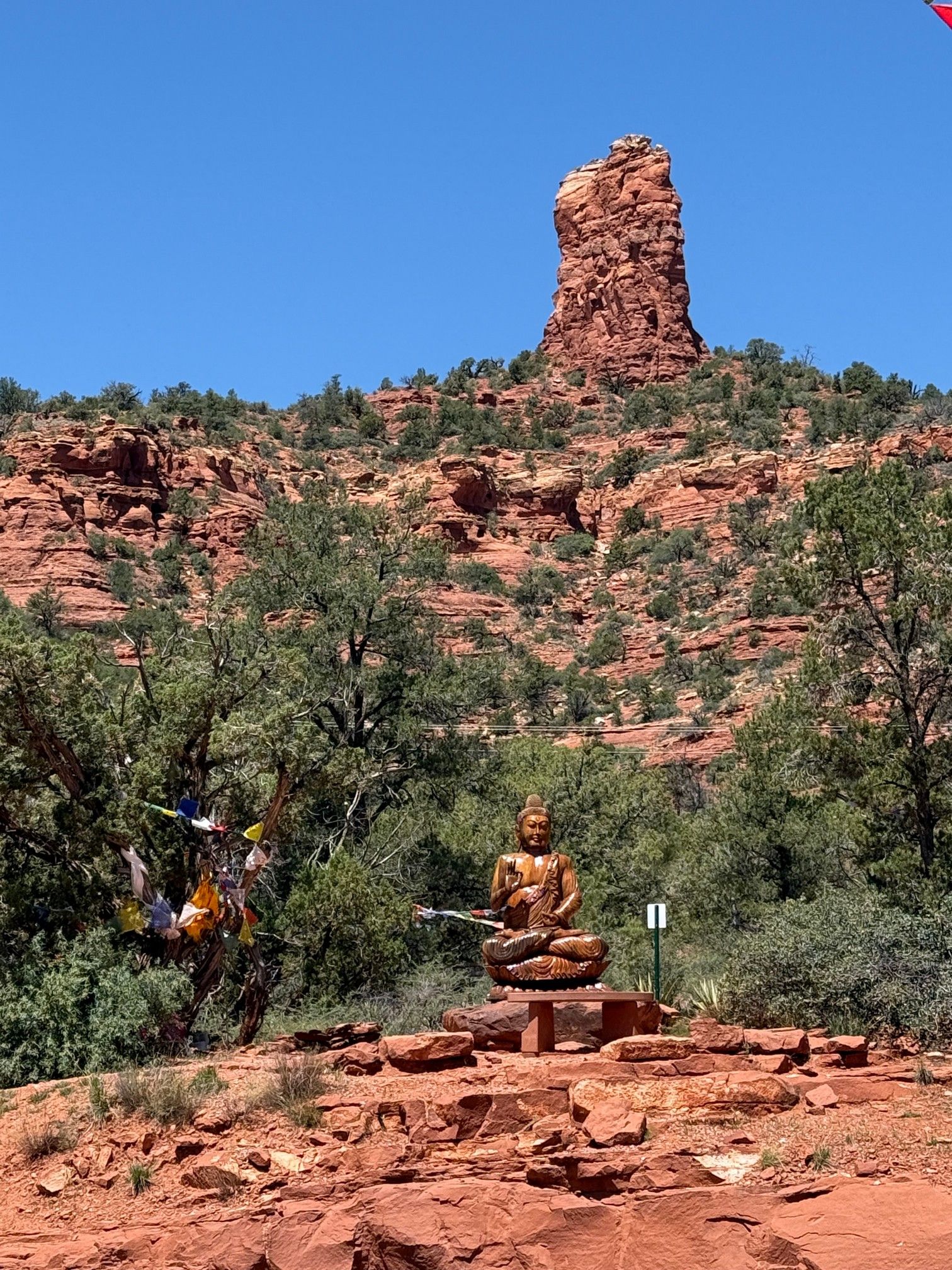
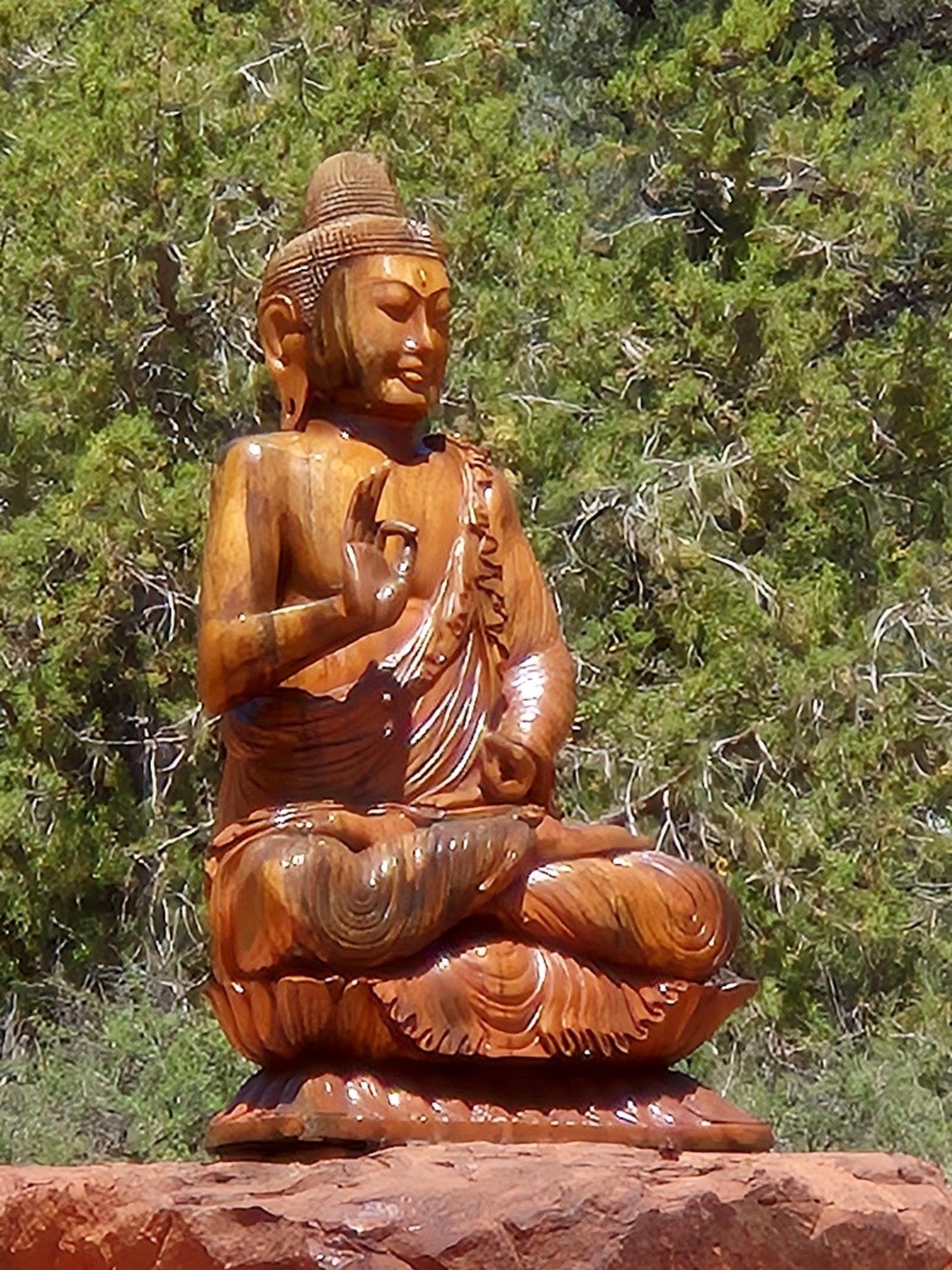
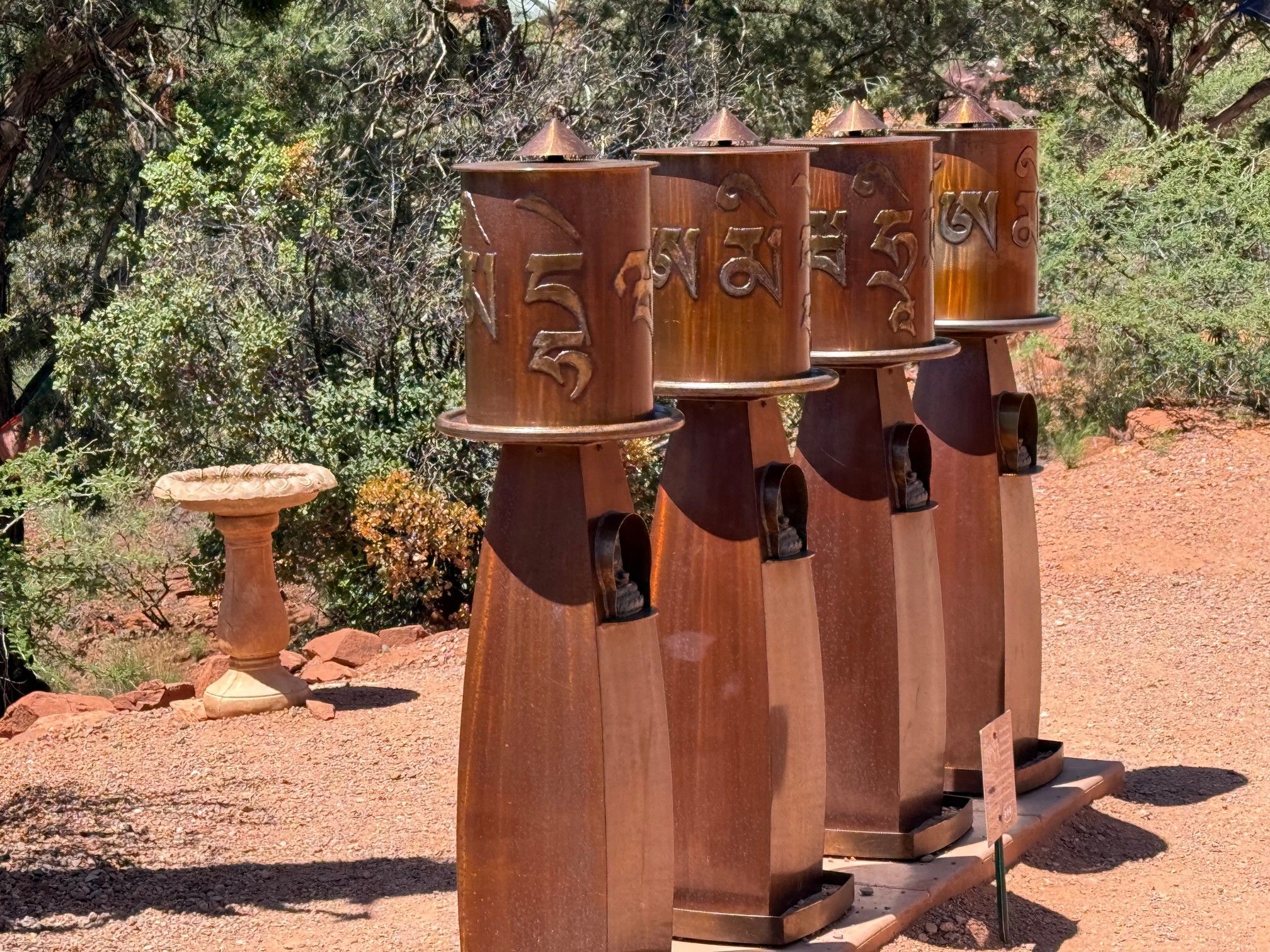
Afterwards, we head to Bell Rock, and during a short hike, we reach a vortex—but don’t quite feel the energy whirlpools as expected. At other stops, we can admire Cathedral Rock and other prominent mountains. Finally, we head to the “Peace Park” with the Amithaba Stupa, a very American interpretation of a Buddhist structure.
All in all, Sedona is definitely worth a visit.
The campground “Rancho Sedona” is also good, almost “Prussian”, but very well managed—with the booking confirmation a 8-page campground regulation is also provided.