max-ein-hase-auf-weltreise
vakantio.de/max-ein-hase-auf-weltreise
Zuletzt in Leipzig

All Along the Watchtower

Published: 12.11.2025

Attraction
Gubeikou
Peking, China
Attraction
Jinshanling
Peking, China
Attraction
Simatai
Peking, China
Attraction
Große Mauer
Peking, China
Attraction
Tiananmen-Platz
Peking, China
Attraction
Verbotene Stadt
Peking, China
Eat
Café im Stil von Friends
$$ · Snack
Accommodation
familiengeführtes Hotel in Gubeikou
Hotel · Gubeikou · Booking
Worth seeing
Flughafen Peking
Peking, China
China rushes past me again. I’m following the timetable for my connection from Shanghai to Beijing live. Highlighted in red it says 'delayed'. It means two minutes. Ridiculous. At Deutsche Bahn, not even five minutes is counted as a delay. So everything is in the green.

In Beijing, I only spend one night before moving on. Xiawei mentioned a cinema where indie films are regularly shown. It’s very close to my hotel. Given the vastness of Beijing, that's a rare coincidence. The China Film Archive is showing a film by Hong Kong director Wong Kar-wai, whose other film 'Chungking Express' I had already noted. 'In the Mood for Love' from 2000 is Kar-wai's most famous film and is about an unfulfilled love in 1950s Hong Kong. Xiawei said, English subtitles are the norm in this cinema. My screening is the exception. Once again, I sit in front of a screen and understand only Chinese. But this time it’s not a one-hour documentary that explains itself through images but a two-hour romance where the dialogues are essential. Leaving now is also not an option. So I immerse myself in the film through the images and expressions of the two main actors. The end perplexes me, though. Instead of a happy ending, the two lovers go their separate ways, and Chow's role in the final scene is to go to Angkor Wat and whisper something into one of the sandstone blocks. When I later read about the plot, the scene makes sense. In the moment at the cinema, it touches me just as much as all the others in the hall, as I myself had just been to Angkor Wat a month and a half ago. On my way back to the hotel, I watch some men playing Xiangqi. With loud clattering, they hit the pieces together. The men around comment and laugh after each move.


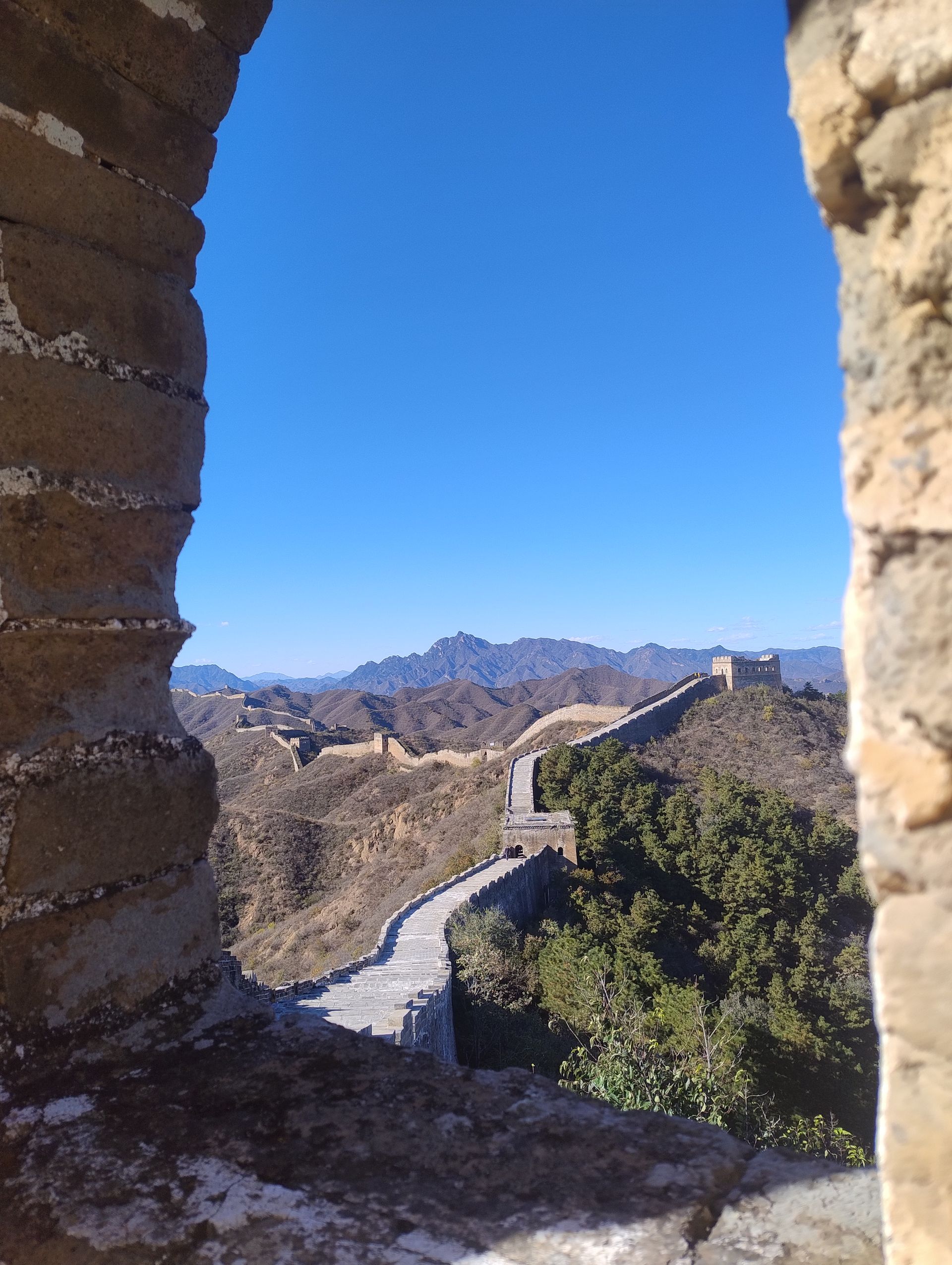
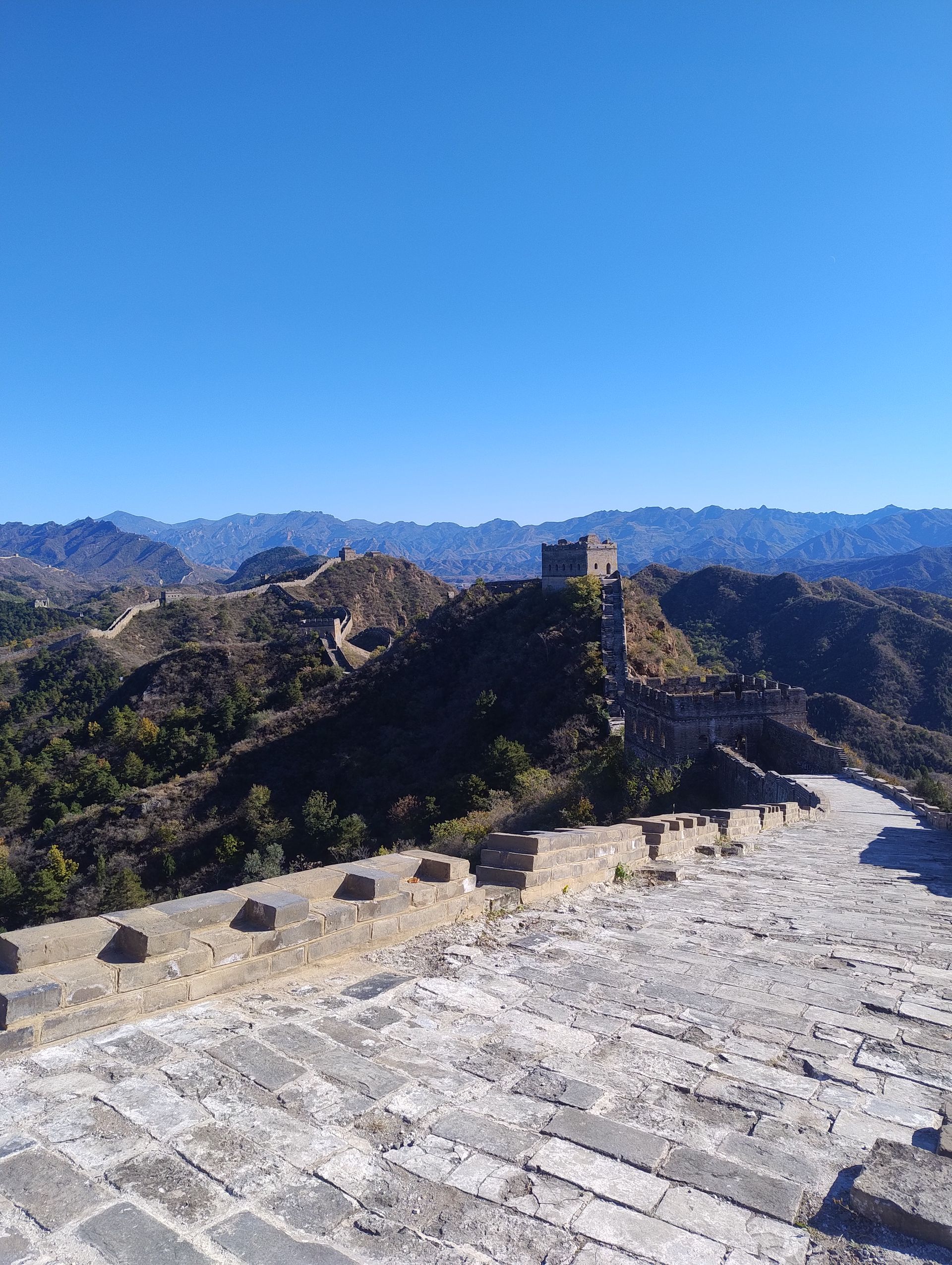
The term Great Wall of China is actually not correct, as there is not one large wall from one time, but various wall sections from different eras and dynasties. Historical minutiae. I arrive in Gubeikou and the section that stretches here to Jinshanling is mainly interesting for hiking. You can walk twelve kilometers here on and next to the wall. The internet description was very complicated, mentioning a military exclusion zone that must be circumvented at one point. At my accommodation, directly at the starting point of the tour, I inquire immediately upon arrival, since it is still 10 a.m. and I don’t want to lose time. The military zone or the detour around it is signposted, the friendly owner of the homestay says via translation app. And as for the rest of the route, everything else is self-explanatory: Just follow the wall.

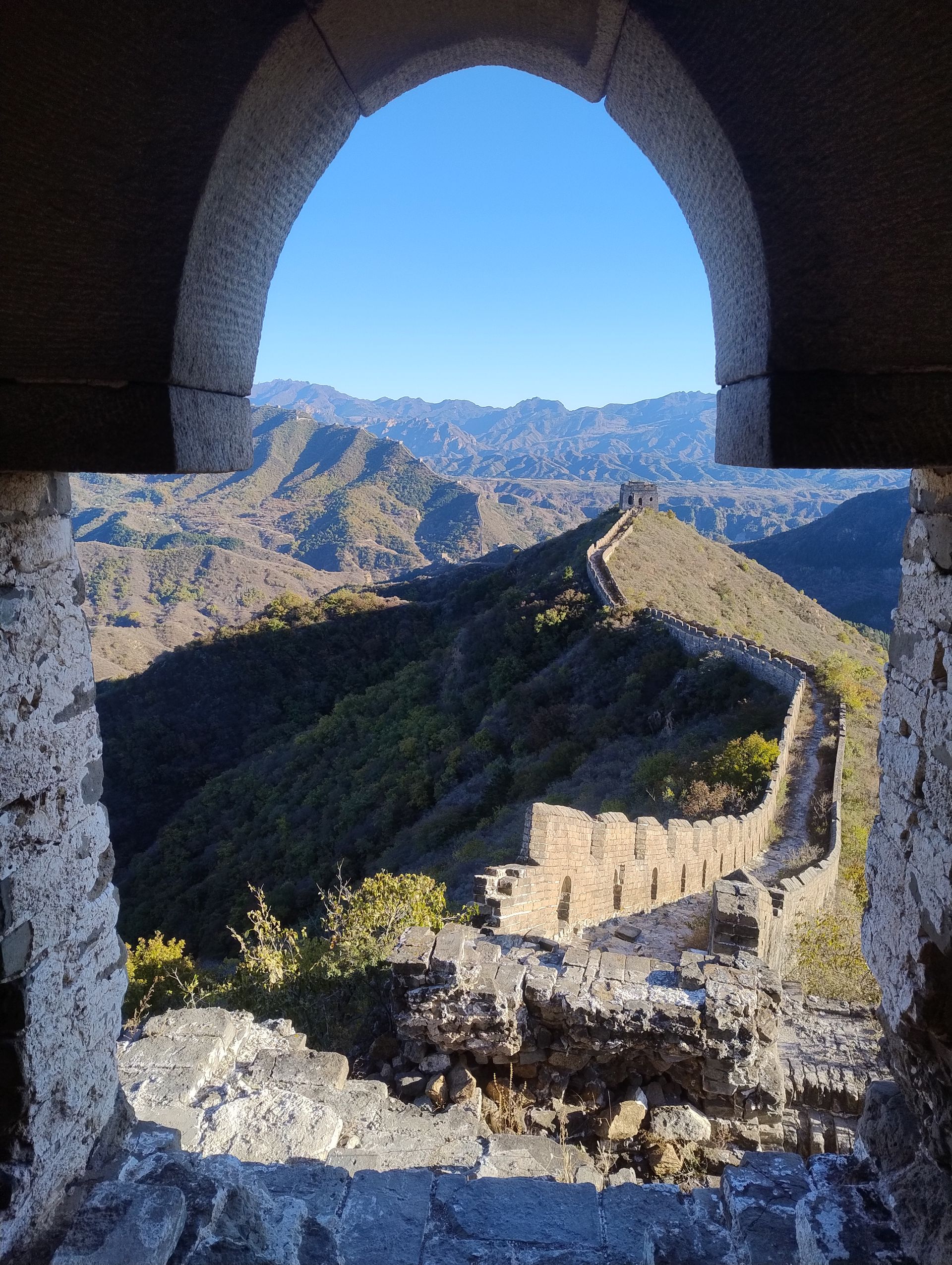
Five minutes later, I find myself at the end of a street. A small path begins behind a waist-high wall, just as hidden as in the description I found online. After another five minutes, I arrive at a ridge and recognize to the west at the other end of Gubeikou the first foothills of the wall section. My tour leads me east and five minutes later, I am standing on the wall. The view of the architecture trending towards the horizon is gigantic. At each corner and every one of the watchtowers rising every few hundred meters, I want to take new photos, because the landscape and the view of the wall are always totally different.

Often, old wall structures were built over by newer ones. The remnants I now stand on date back to the 6th century. According to my research and impression, they are not built over or restored like some of the other sections that are now tourist magnets. In Gubeikou, you can pay admission. You can, but you don't have to. I am a bit proud that I bypassed the control at the official entrance to the wall with the inconspicuous path. The Mongols could only have dreamed of that.


The military zone is unmistakably marked. Large signs with red crosses signal that it is not possible to continue along the wall here. The path around the exclusion zone runs along the creek through a forest. The sun occasionally shines through the colorful leaves, and you can see the wall from the same perspective as the attackers must have seen it back then. The last fighting on the wall from Gubeikou happened during World War II. The Chinese army under Chiang Kai-shek defended against the Japanese invasion troops at the still intact watchtowers.


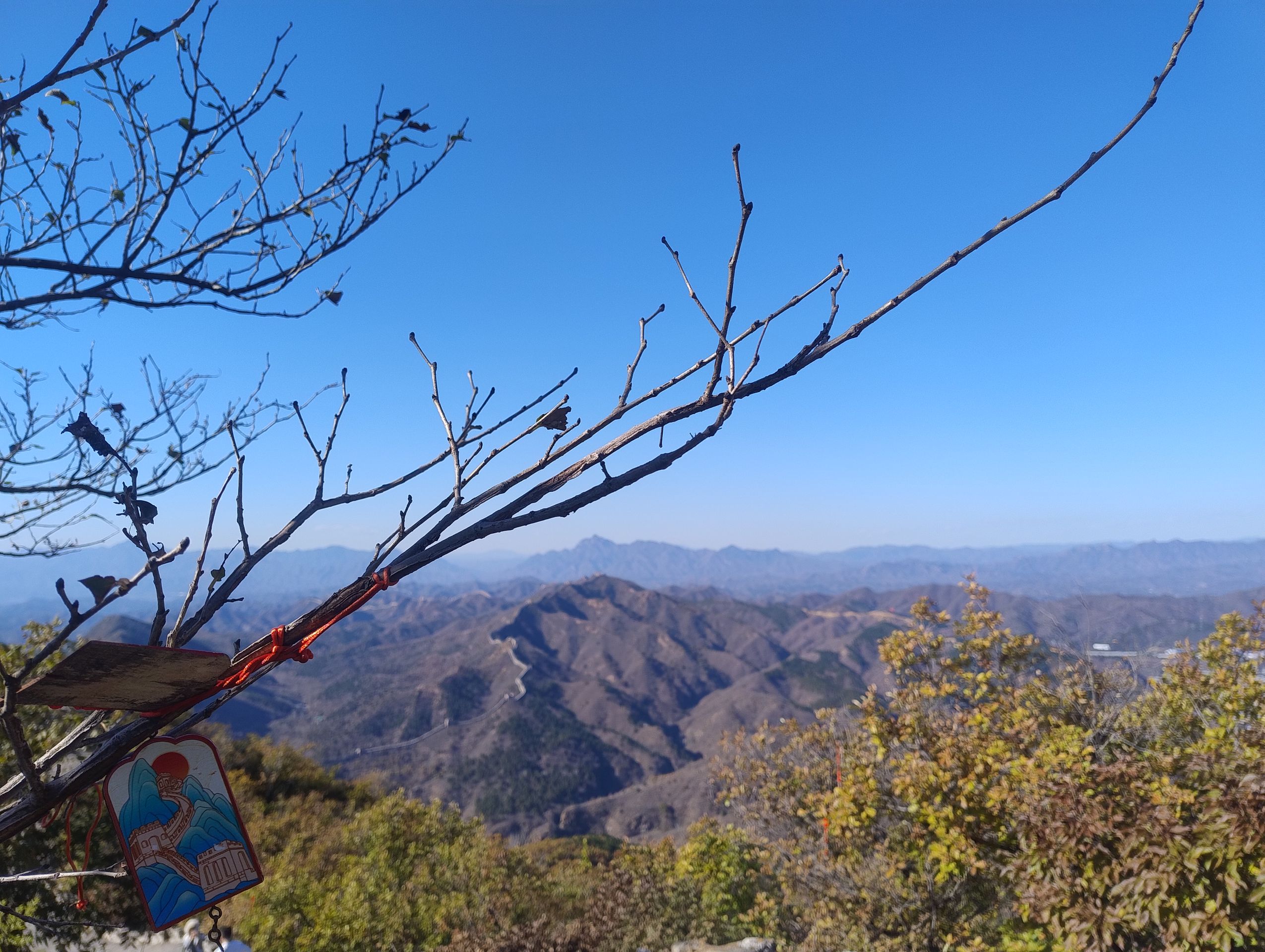
Halfway through the detour, a Chinese woman sells coffee and dumplings. A few Western backpackers are sunbathing during a break at the tables. The icy autumn air and clear sky make for perfect hiking weather.

When the path at the Jinshanling section reconnects with the wall, I must pay for entry after all. The part of the ruin from the Ming Dynasty has been completely renovated in the last decades and is therefore quite popular. For the very lazy who do not want to walk the few hundred meters from the parking lot, there is a cable car. Near the station, the stairs at a steep 45 degrees are heavily frequented. The further I get away from it, the fewer tourists are on the move. As I pass one of the exits to the parking lot, I am warned. I have to come down here again by 4 p.m., as The Great Wall closes. Too bad, during the Ming Dynasty, it was still occupied 24/7.


The section of the Great Wall at Simatai connects to the east of Jinshanling. After about 400 meters in elevation, the last accessible watchtower marks the end. The other defensive structures, while well restored, are not open to the public. Before China's walls became a popular travel destination, farmers from surrounding villages regularly took stones from the structure for their houses. Today, this would be strictly punished. An older Malaysian couple I chat with at the watchtower at the end of the wall section has an interesting perspective on China's surveillance system. Many Chinese still behave badly, in their opinion. Spitting on the ground and cutting in line have stood out negatively during their travels through China. The government has achieved a lot with many regulations and cameras, but the population still needs better 'education'. Also a way to look at it.


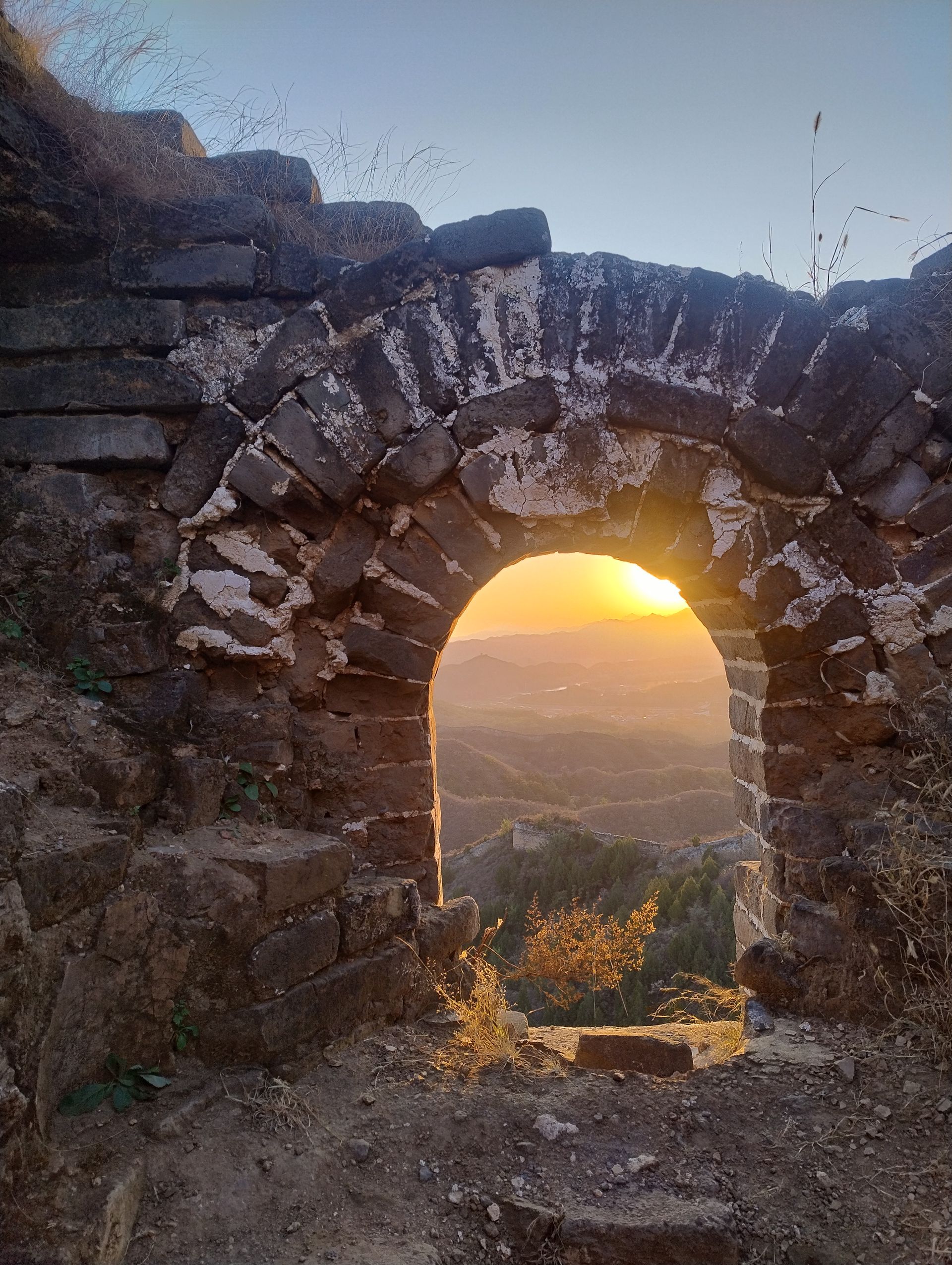
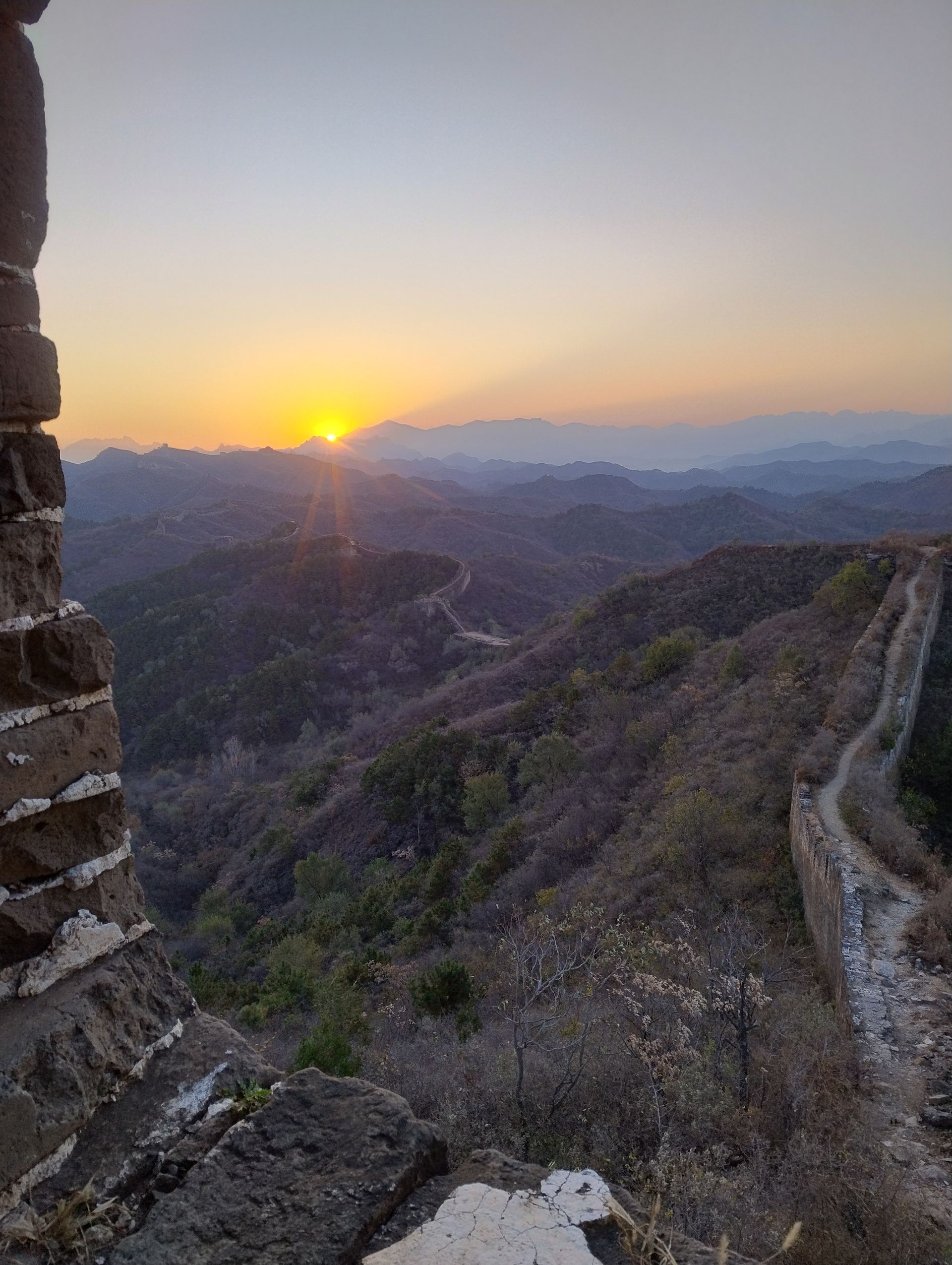
From my now chosen favorite watchtower, I can enjoy the sunset and sunrise completely alone, as it is not yet or no longer opening time. I have a little fear that a police officer will catch me here, but I remain the only post. A squirrel wanders across the ruins from north to south. I let it pass.


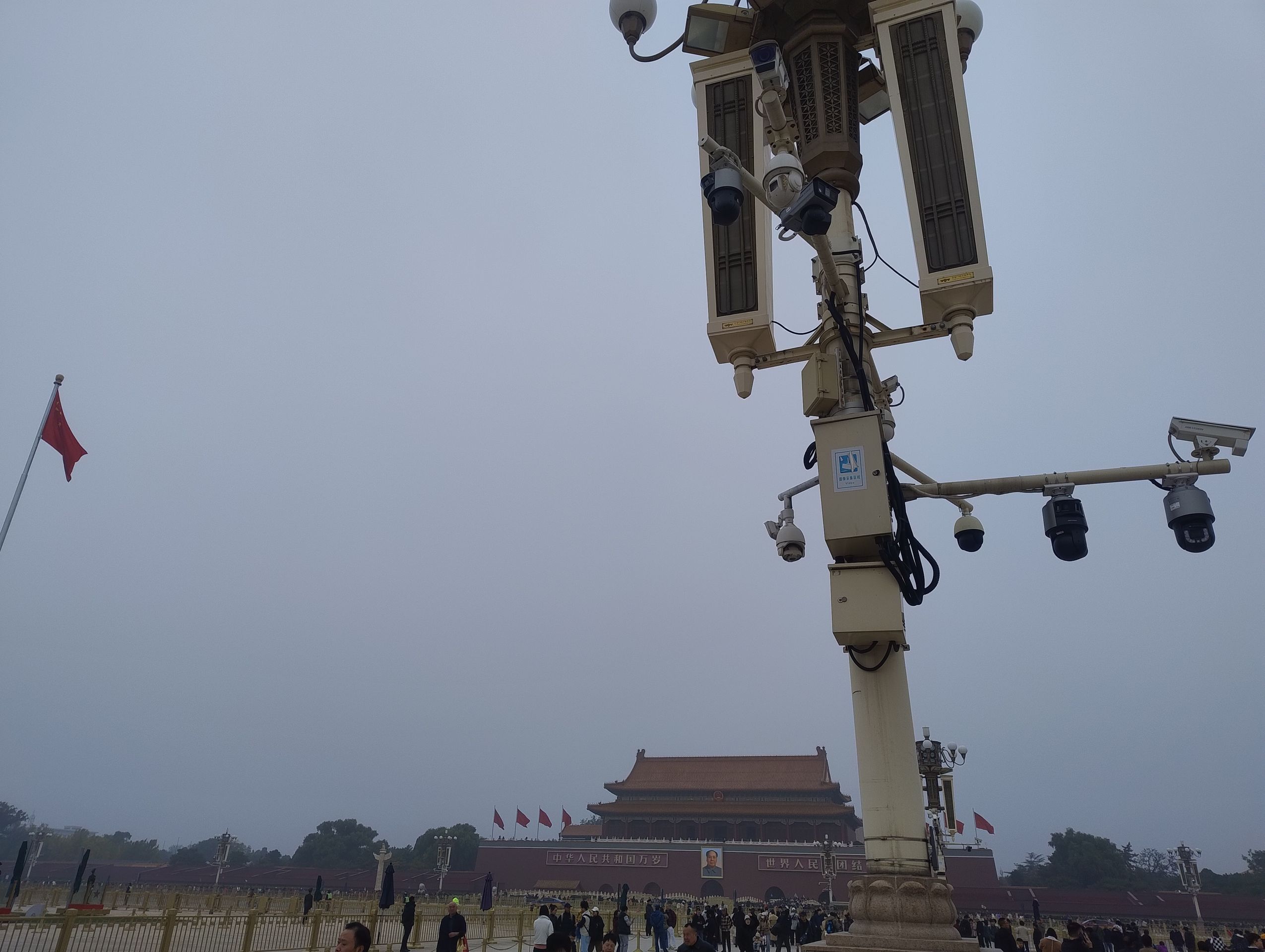
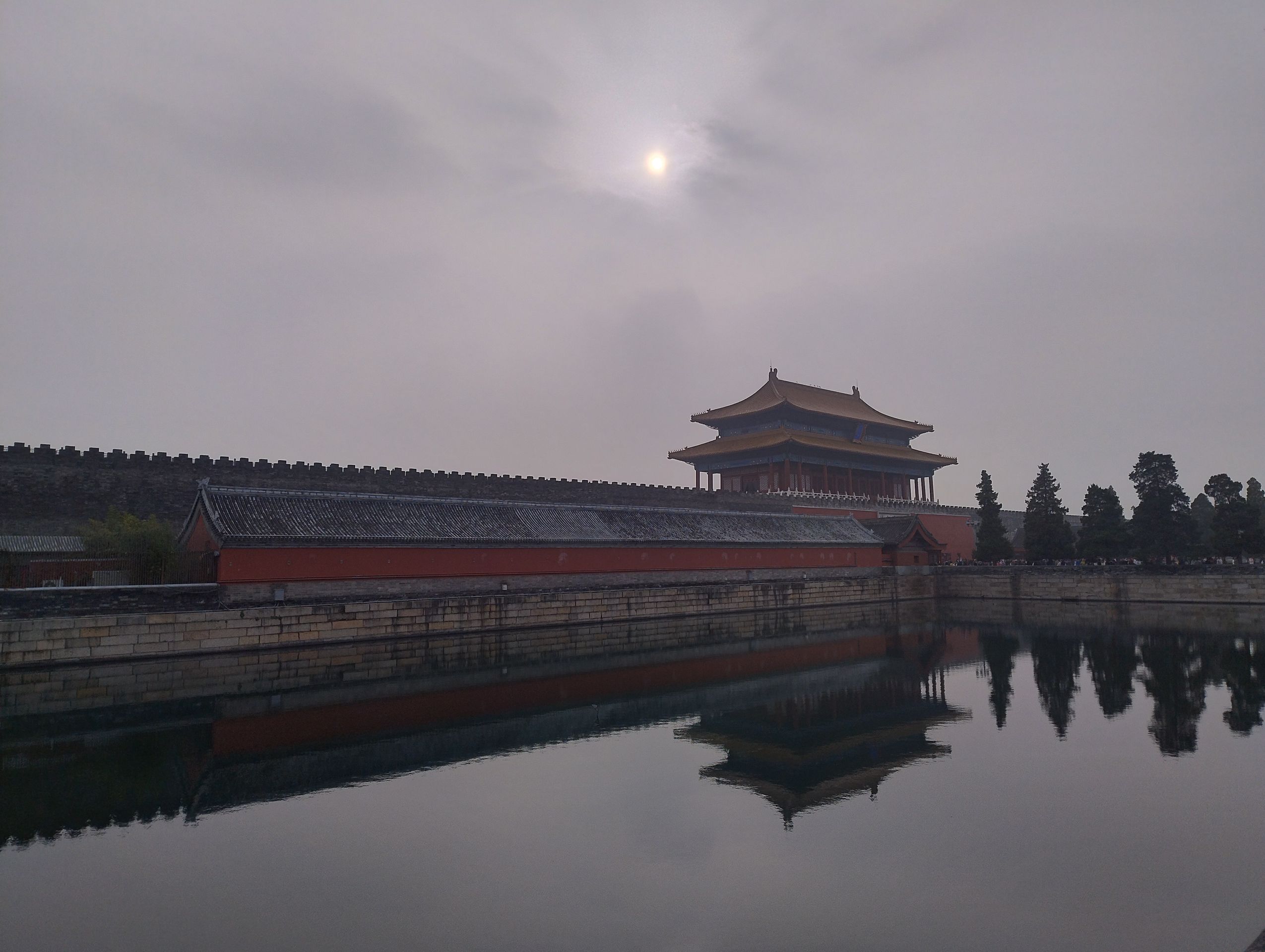
Back in Beijing on the tour through the Forbidden City, our group initially walks across Tiananmen Square, where long lines of patriots wait an average of three and a half hours to see Comrade Mao embalmed in an open coffin. I expect plenty of propaganda and no mention of the massacre from June 1989. Our guide does not disappoint me. Mao rescued the people from the disaster. The famines and Cultural Revolution he plunged them into go unmentioned. He does allow a small jab, however, when he says that due to the long and intense checks at the entrance the government district is colloquially known as the 'New Forbidden City'. I guess some things are hard to deny. Tiananmen Square sets a special record in terms of size. I listen to the tour guide's Newspeak only half-heartedly and am far more fascinated by the density of cameras. Despite the size of the square, it may be one of the highest in China.

In the imperial city, women and couples pose in traditional clothing in front of the pagodas and former accommodations of the emperor's concubines. Cosplay, Chinese style.

Our guide briefly explains the sequence of dynasties and history before the glorious victory of the communists in the civil war. Starting in 1912, the country was shaken by the constant battles of warlords. The existence of a republic is not mentioned in his narrative.


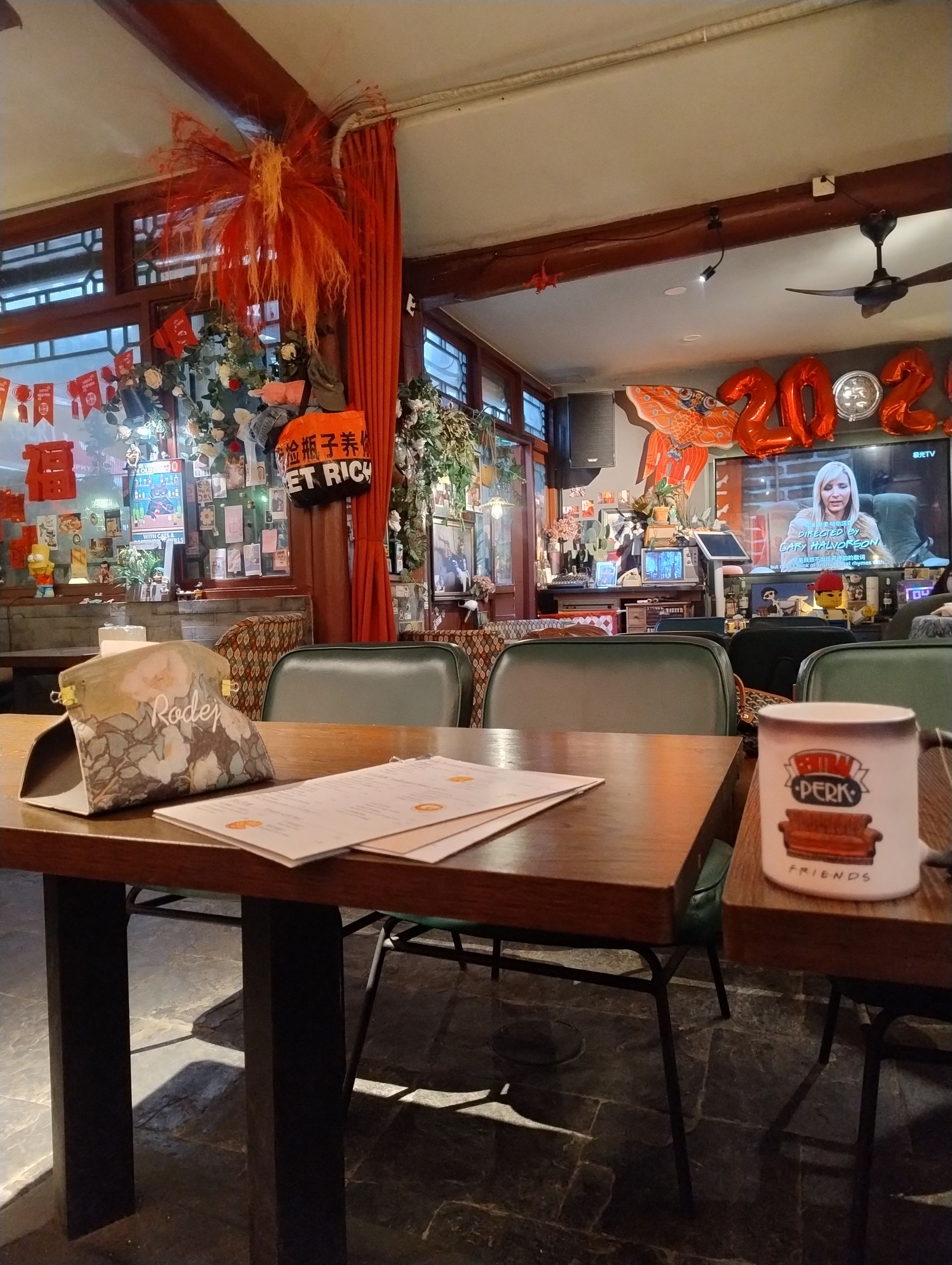
My China experience ends as it began in Shenzhen: In a tacky chic copy of a Western café. The individually designed shop, which I wouldn’t have expected near the Forbidden City, is a reminiscence of the series Friends, which is running on a screen in the background. Next to the flatscreen is a CRT TV, broadcasting the live feed from a camera in one corner of the café. That elegantly summarizes the entire contradiction of China. Pirated Western shows from the 90s on the flat screen, next to the latest surveillance technology on the vintage TV.

A group of French people noisily enters. 'Bonjour, Francaise?', one of them asks me expectantly. 'No, Allemande,' I reply apologetically. They sit down next to a couple who happens to be from France too and start enthusiastically chatting. Time for me to leave.


When I leave my hotel for the airport at 6 a.m., two girls are standing downstairs, confusedly looking at their phones. When I ask them in English if they need help, they giggle. One types the name of the hotel into her translation app. I can understand that they are a bit lost. Two days ago, when I wanted to check in, I also had to walk around the block once to find the accommodation, as it shares the entrance with a beauty clinic and the name is hidden behind the false leaves of a plastic plant. I hold up two fingers: 'Second floor.' When I can show locals the way, I feel particularly proud.


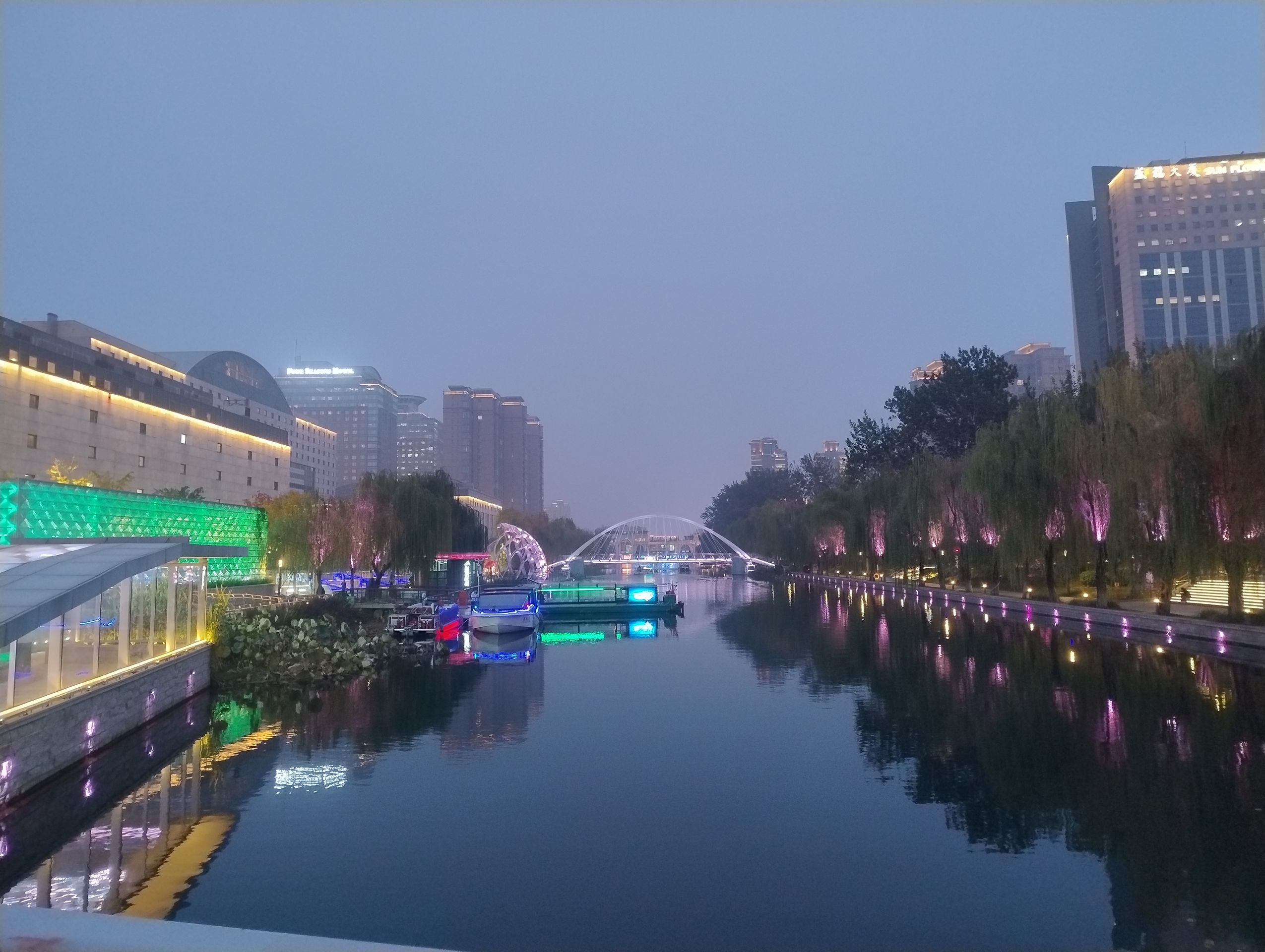
On my last walk through the capital, the glaring lights of the neon advertisements dazzle. Colorful glitter world of Beijing. You can view China through various filters. When they all overlap, it becomes quite blurry.

But in the end, I remember the encounters with friendly Chinese people. Whether it’s the cheerful taxi drivers or the helpful staff at the family-run hotel in Gubeikou. Whether it’s the English-speaking Chinese woman who explained the way to the wall to me in Simatai, or the shop owner at the tea fields of Hangzhou who gestures to hold small talk about the weather with me across the language barrier. No matter what I may think about world politics and the one-party state, the working masses of China offer me an honest smile.

When I want to get on the subway, the tunnel is blocked by a rolling gate. A Chinese woman, who apparently also wants to go to the airport and notices my confusion, explains to me via phone translation that it will open in two minutes. At the platform and on the train, we start talking, partly through translation app, gestures, and English. She has never been abroad but would love to go to Australia. 'There are not so many people,' I read on her phone. Understandable, considering she lives in Beijing. 'Have a good flight!', she waves goodbye to me when I get off at Terminal 1. Thank you. 'Xiexie. You too.'
At a glance

Automatically extracted from the post
Weather
Autumn
Accompaniment
With friends
AdventurousCultural
  • Wanderung auf der Großen Mauer bei Gubeikou, Jinshanling und Simatai
  • Sonnenauf- und -untergang von einem Wachturm
  • Geführte Tour über den Tiananmen-Platz und durch die Verbotene Stadt
  • Rückkehr nach Peking und Abflug vom Flughafen
Wanderschuhewarme Kleidung für Herbstwetter
NatureStoryArchitectureAdventureTransit
max-ein-hase-auf-weltreiseFolge diesem Blog und verpasse keine neuen Beiträge.
Answer

China
Travel reports China