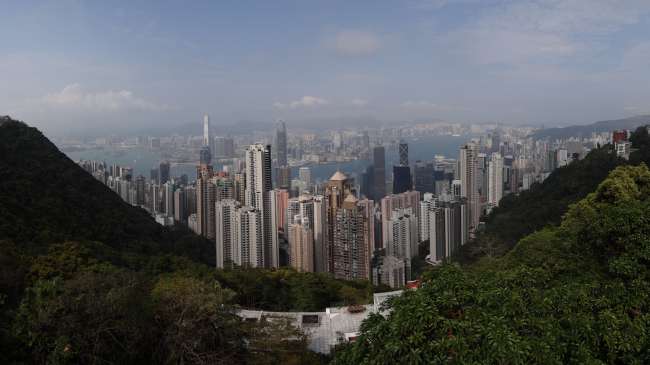

Zhangye Zhangye
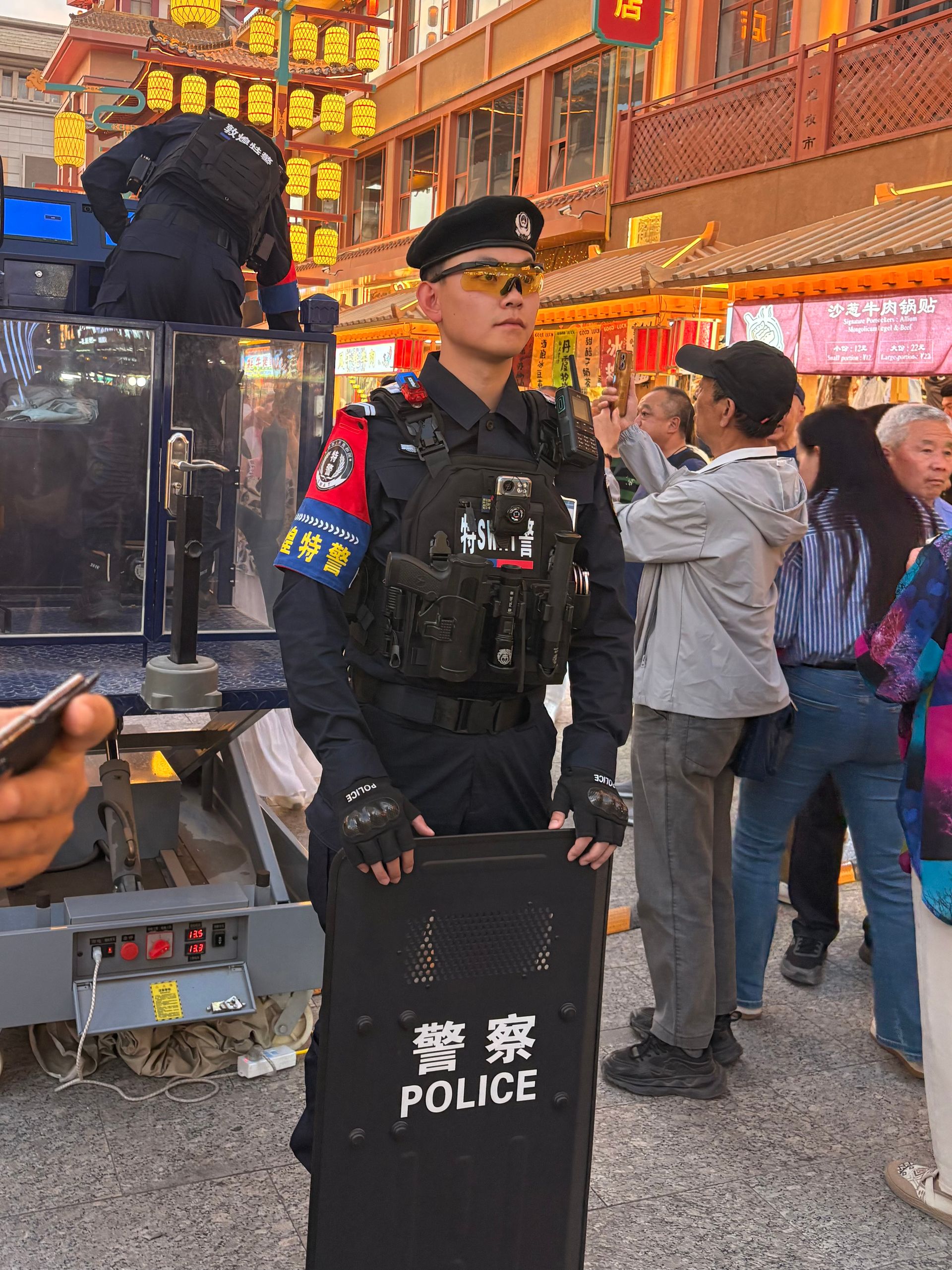
If you want to enter a train station in China, you must first show your passport, and it will be checked whether you have a train ticket. Additionally, the luggage is scanned...

Published: 16.06.2026

From Zhangye to Dunhuang, it was a short hop compared to the previous train journey - 600 km and 4 hours by train. The landscape became increasingly desert-like. Along the route, large construction projects could be seen in the middle of seemingly nowhere. However, some of the high-rise complexes stood completely empty - a consequence of the burst real estate bubble?
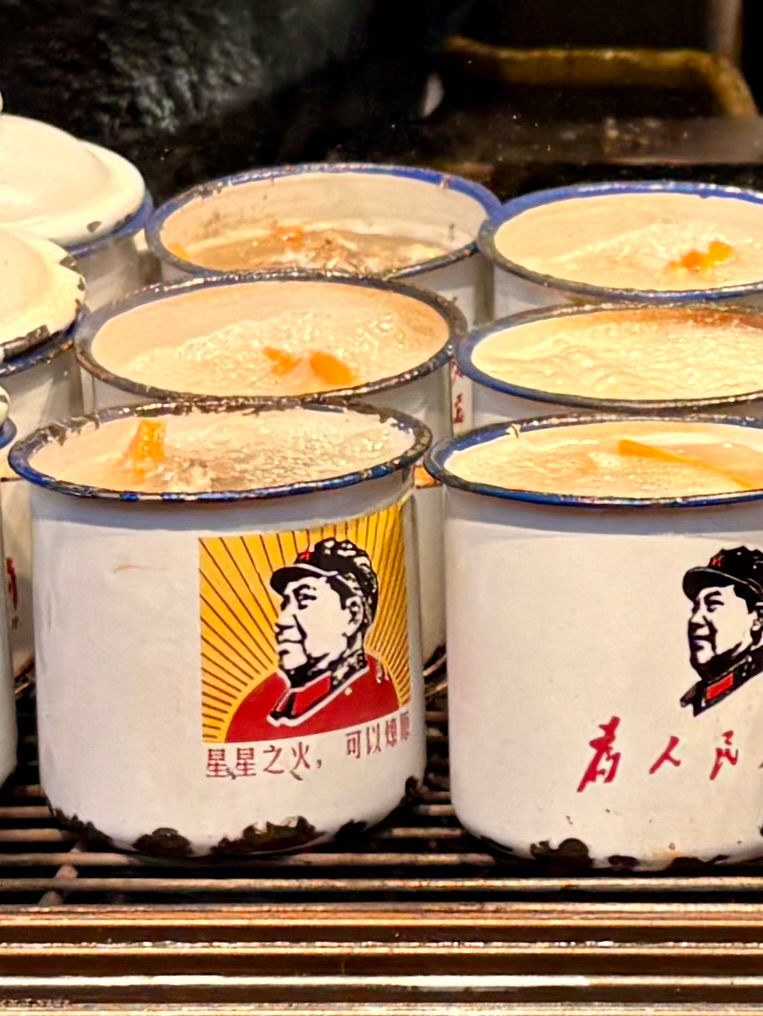
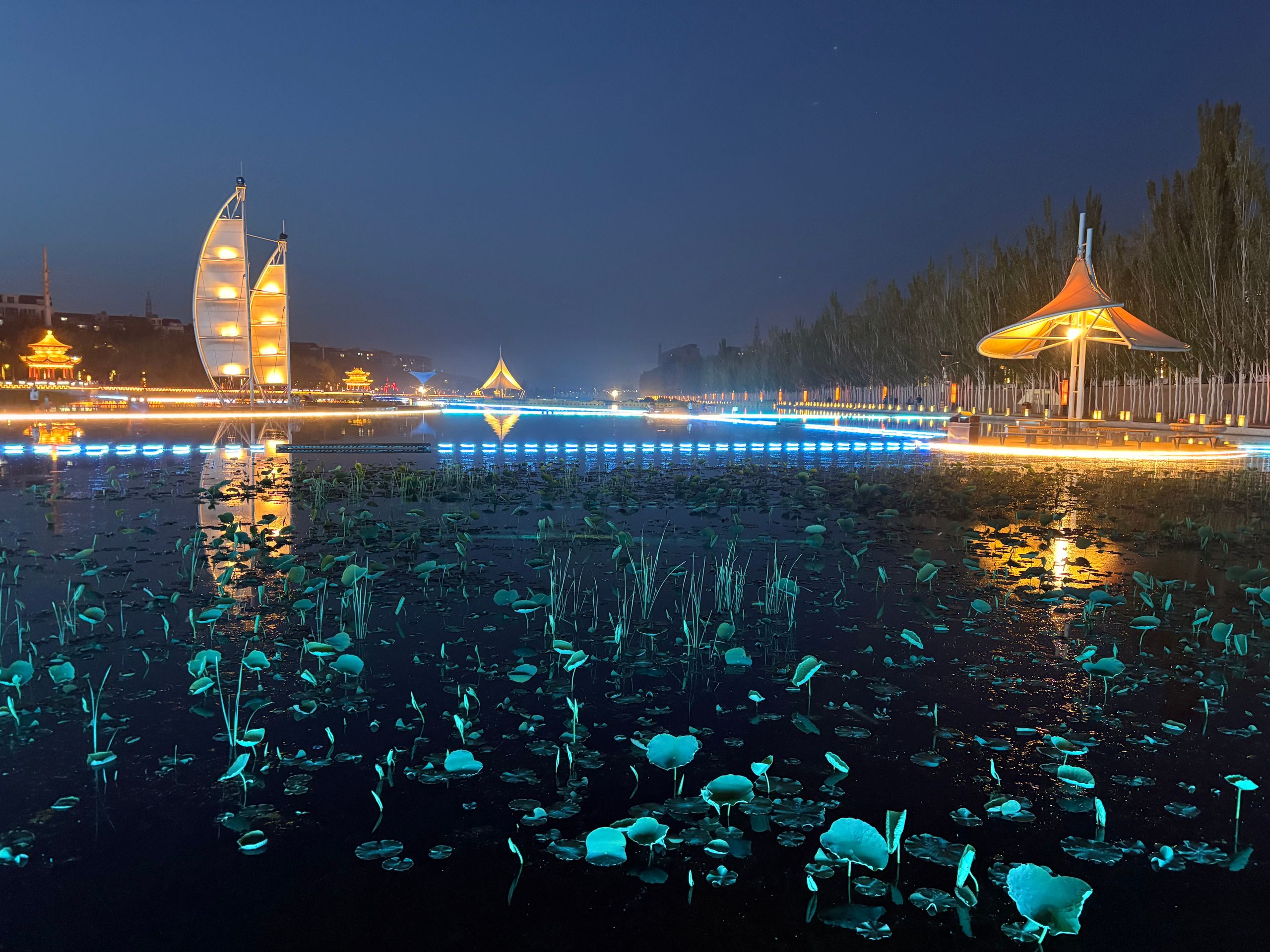
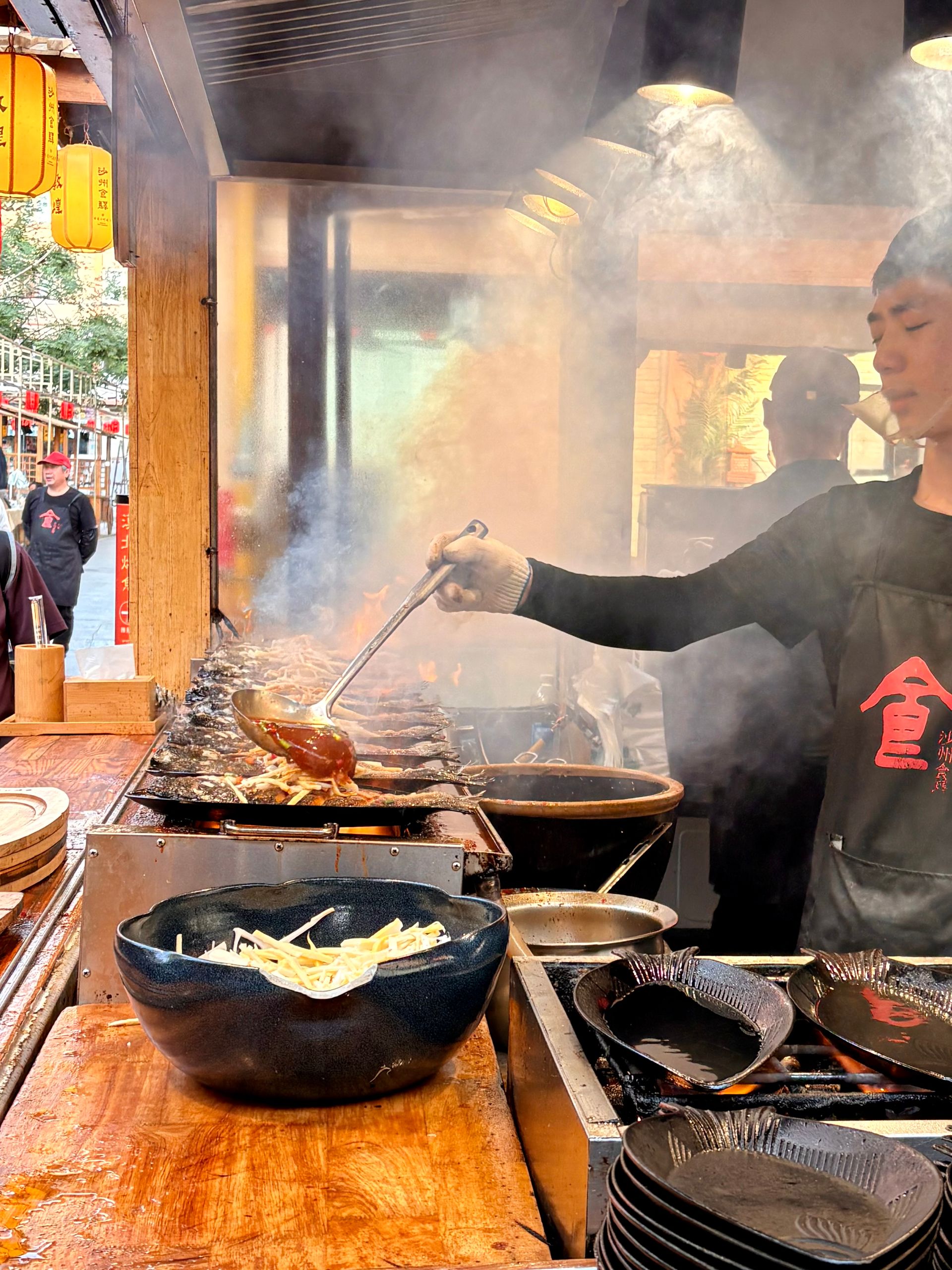
Dunhuang didn't seem as cozy at first glance as Zhangye. Much more touristy, many large oversized hotels, designed to resemble watchtowers of the Great Wall, a lot of colorful blinking lights, audiovisual light shows along the river presenting the greatness of the Chinese people in the past, present, and future. A form of entertainment that we personally could do without, but seemed to delight the larger public. And again - how could it be any different in China - a strong focus on local culinary specialties, promoted late into the night at many restaurants - all excellent. During our stay, we indulged ourselves in a cross-section of the menu - hand-pulled wide noodles with lamb, donkey meat with yellow noodles, desert onion vegetables, apricot peel tea... Even at the night market, there were delicious, well-seasoned various dishes and good ice-cold local beer. Unintentionally, we became ambassadors for the city, as two friendly young Chinese women held a camera in front of our faces and had us sing its praises. Just add a filter and some funny captions, and you'll be trending on WeChat.
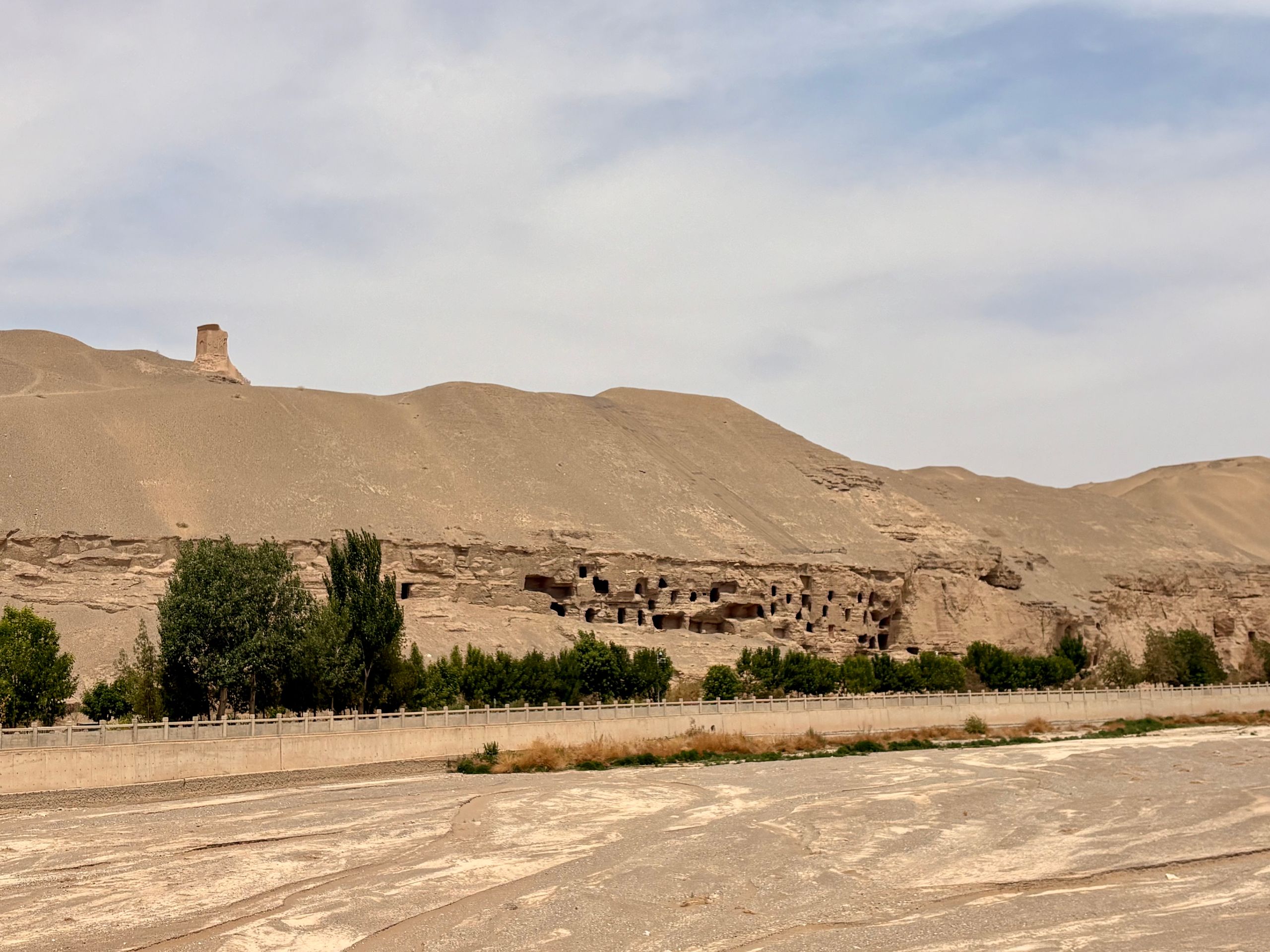
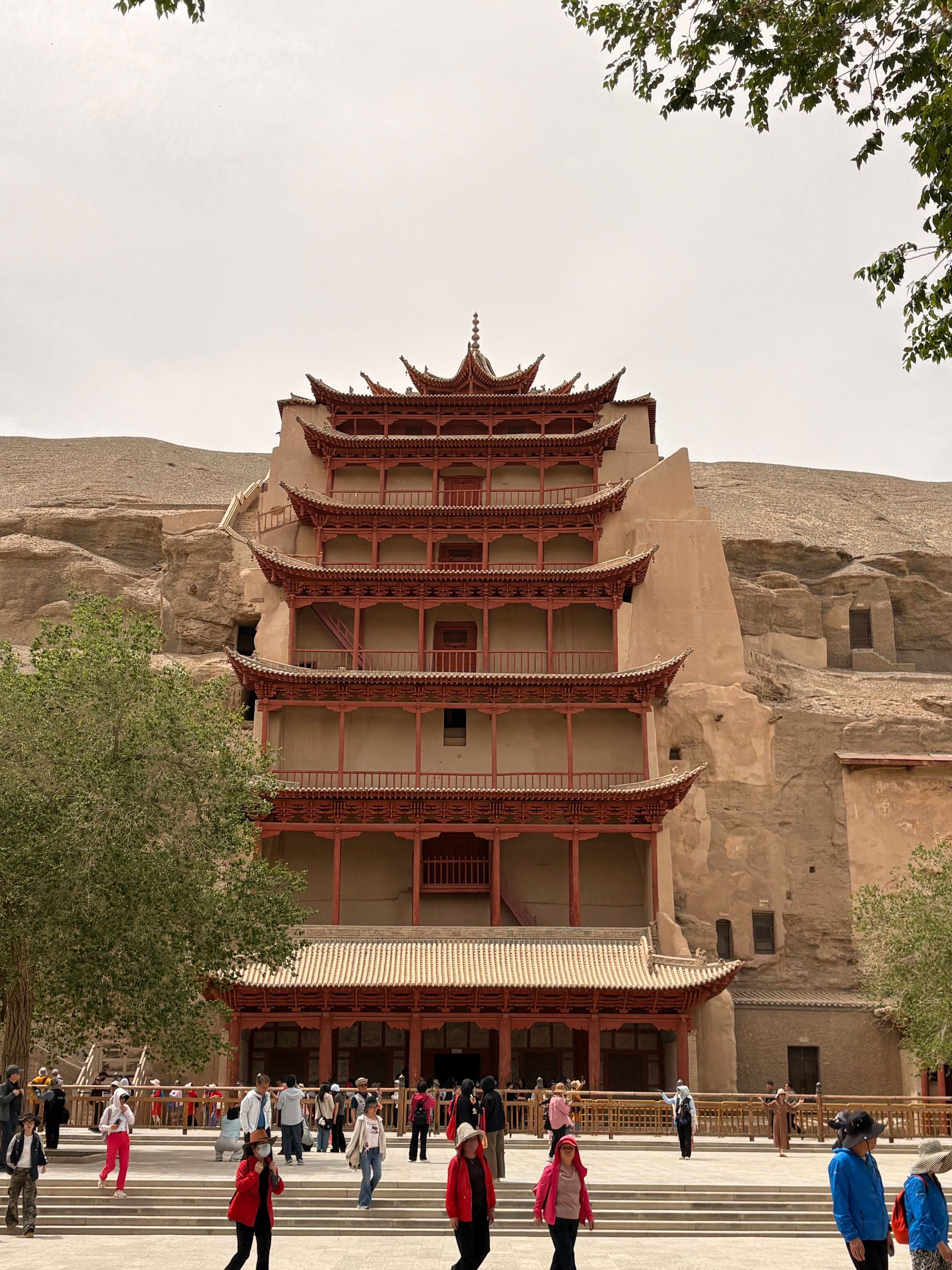
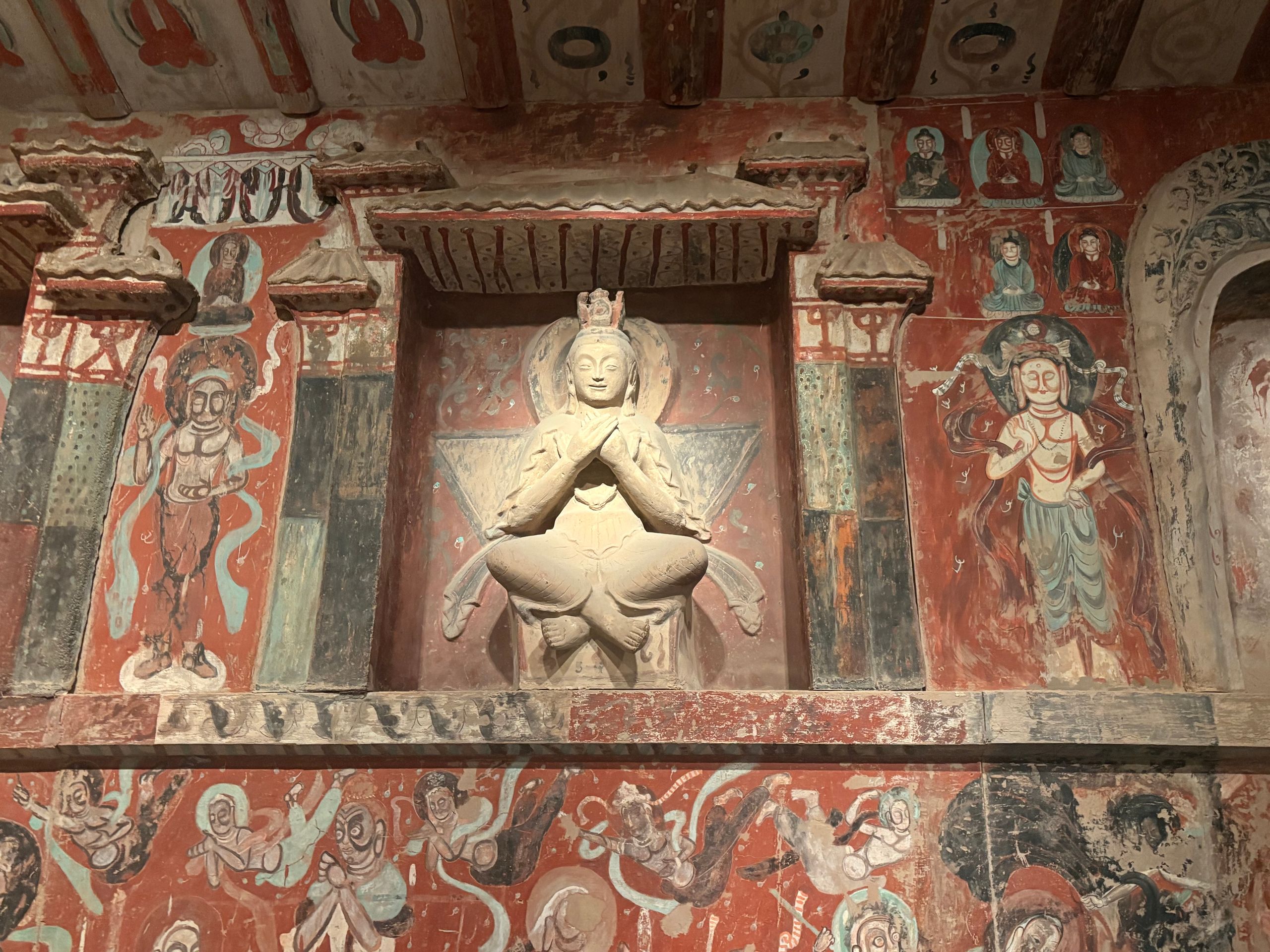
The most famous in the area are the Mogao Caves, also a system of about 1000 cave temples that were carved into the rock between the 4th and 12th centuries. Here, tens of thousands of ancient Buddhist writings from that time were found (including the Diamond Sutra, the oldest printed book in the world), which monks successfully hid from the attacking Mongols (however, most of the finds are in the British Museum in London). A special and interesting place - however, we didn't particularly enjoy it, which was due to the 'processing procedure' on-site. Expensive ticket prices, incredibly crowded, long waiting times. Initially, we were ushered one after the other into two cinema halls - where the history of the caves was re-enacted with a lot of AI-generated special effects and we were virtually guided through the most important caves. Then, more waiting, until we were briefly guided through about 5 caves and to the 9-story pagoda with the second-largest Buddha in China (we unfortunately missed the largest in Leshan), and that was it. Interestingly, a few of the Buddha caves were exactly replicated in the associated museum, so everyone could pose in peace in front of the Buddhas and take enough photos - hallelujah. Frightened by so many people, we skipped the famous singing dunes at Mingsha Mountain and were glad not to be traveling through China in peak season when such crowds are the norm.
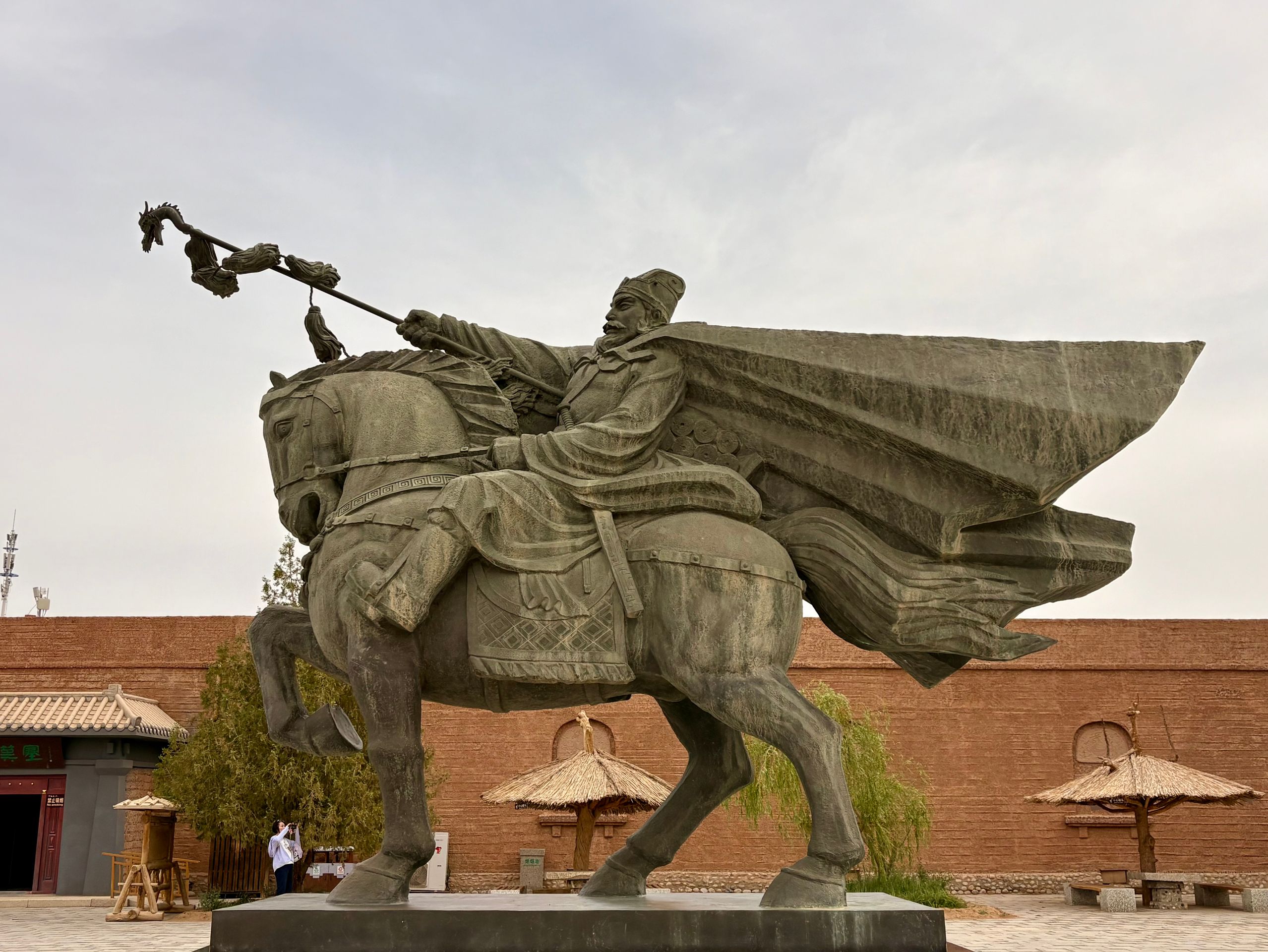
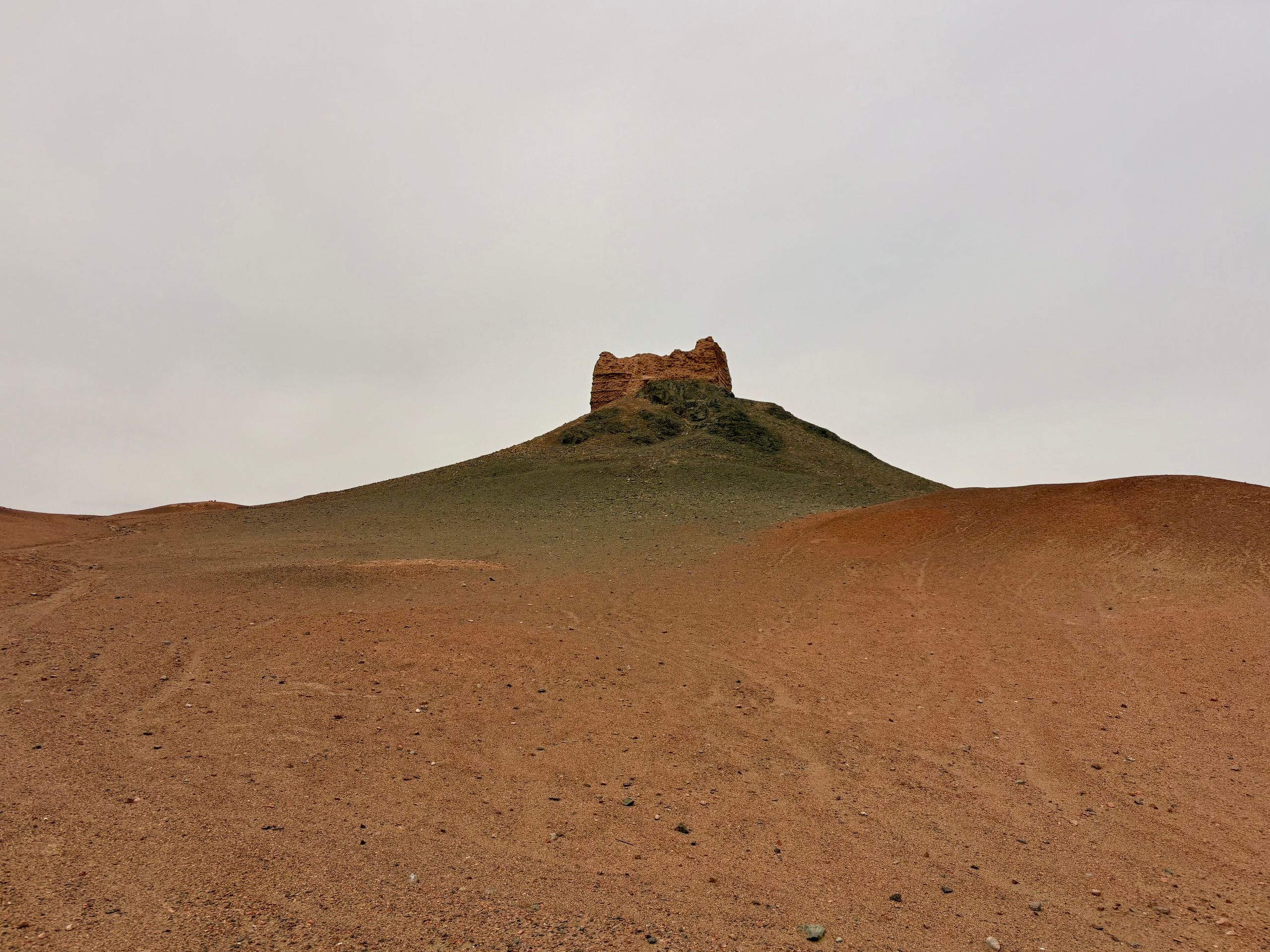
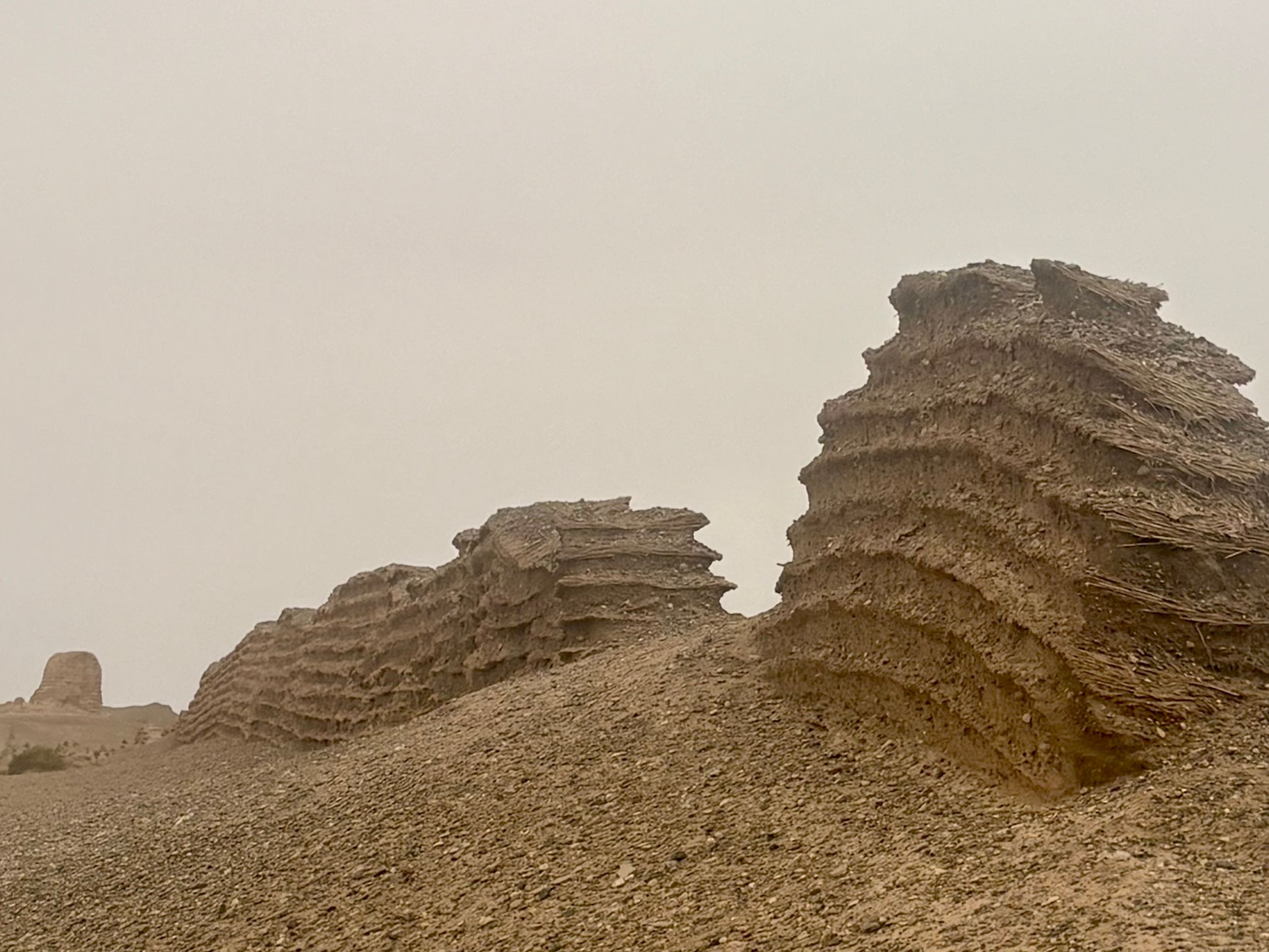
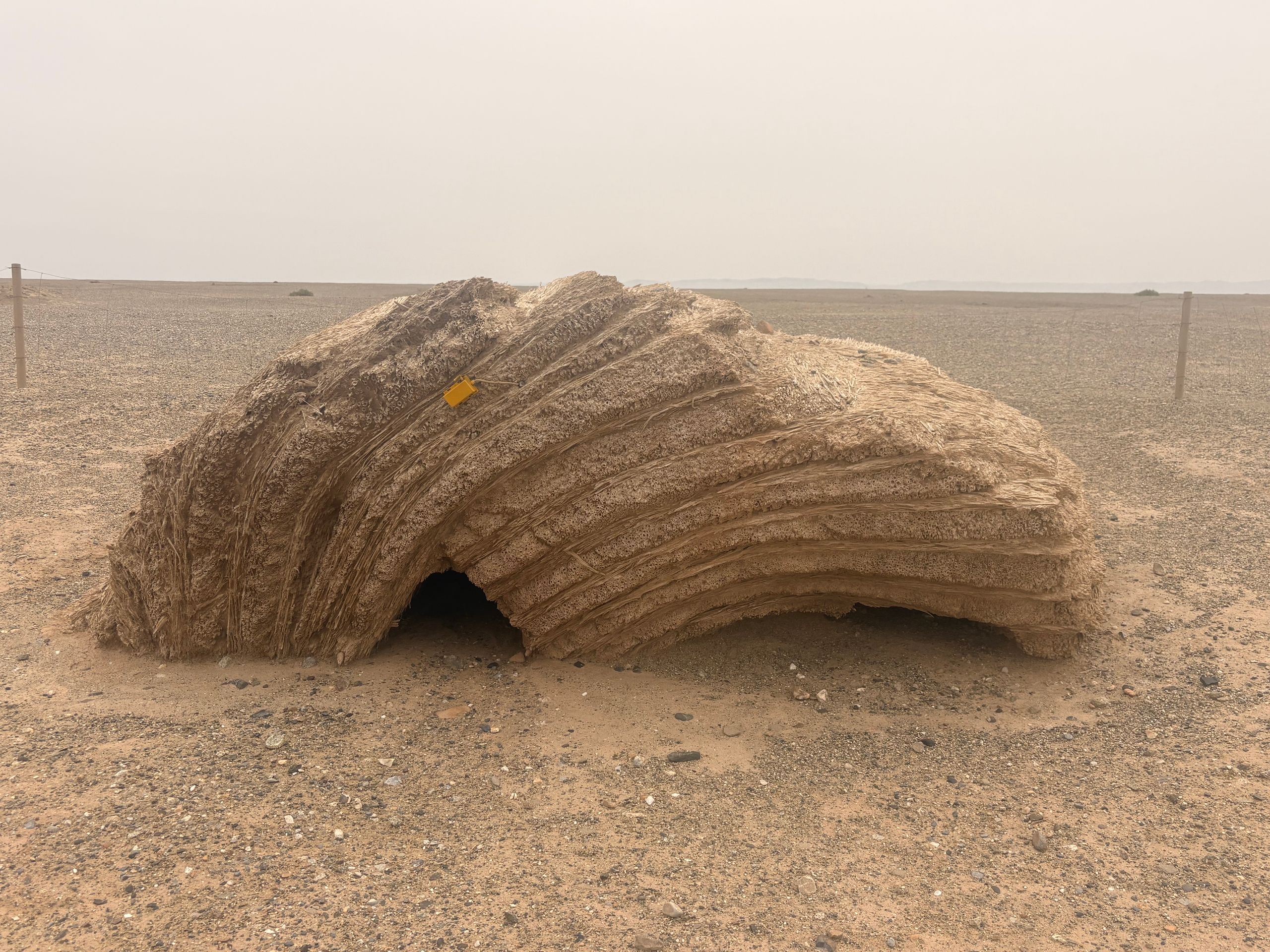
But it went - with significantly fewer tourists - into the Gobi Desert! First to the Yangguan Pass, established around 120 BC during the Han Dynasty, once an important border crossing and strategic checkpoint in ancient China, before heading into the dangerous desert regions. 'Drink one more glass of wine, beyond the Yangguan Pass, you will no longer meet old friends,' wrote the famous Chinese poet Wang Wei (he meant nothing to us, but our Chinese travel companions were quite delighted). Even more impressive was the even more westerly fortress at the Yumen Pass, over which the Silk Road ran. In addition to old supply buildings, remnants of the Great Wall from the Han Dynasty can also be found, which, by the way, was built here from willows, reeds, sand, and gravel. And old hay bales for signal fires along the Great Wall. All over 2000 years old but fairly well preserved in the dry desert.
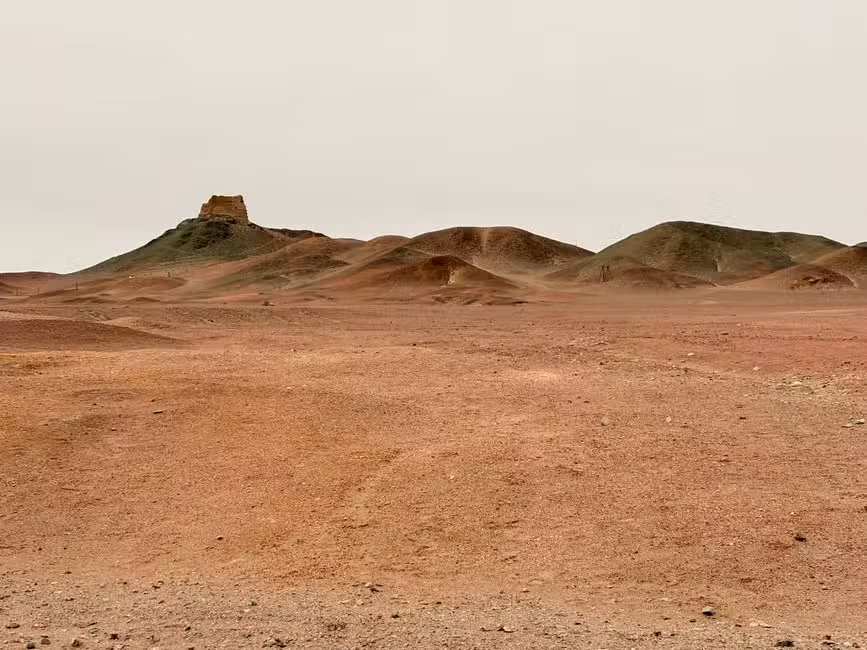
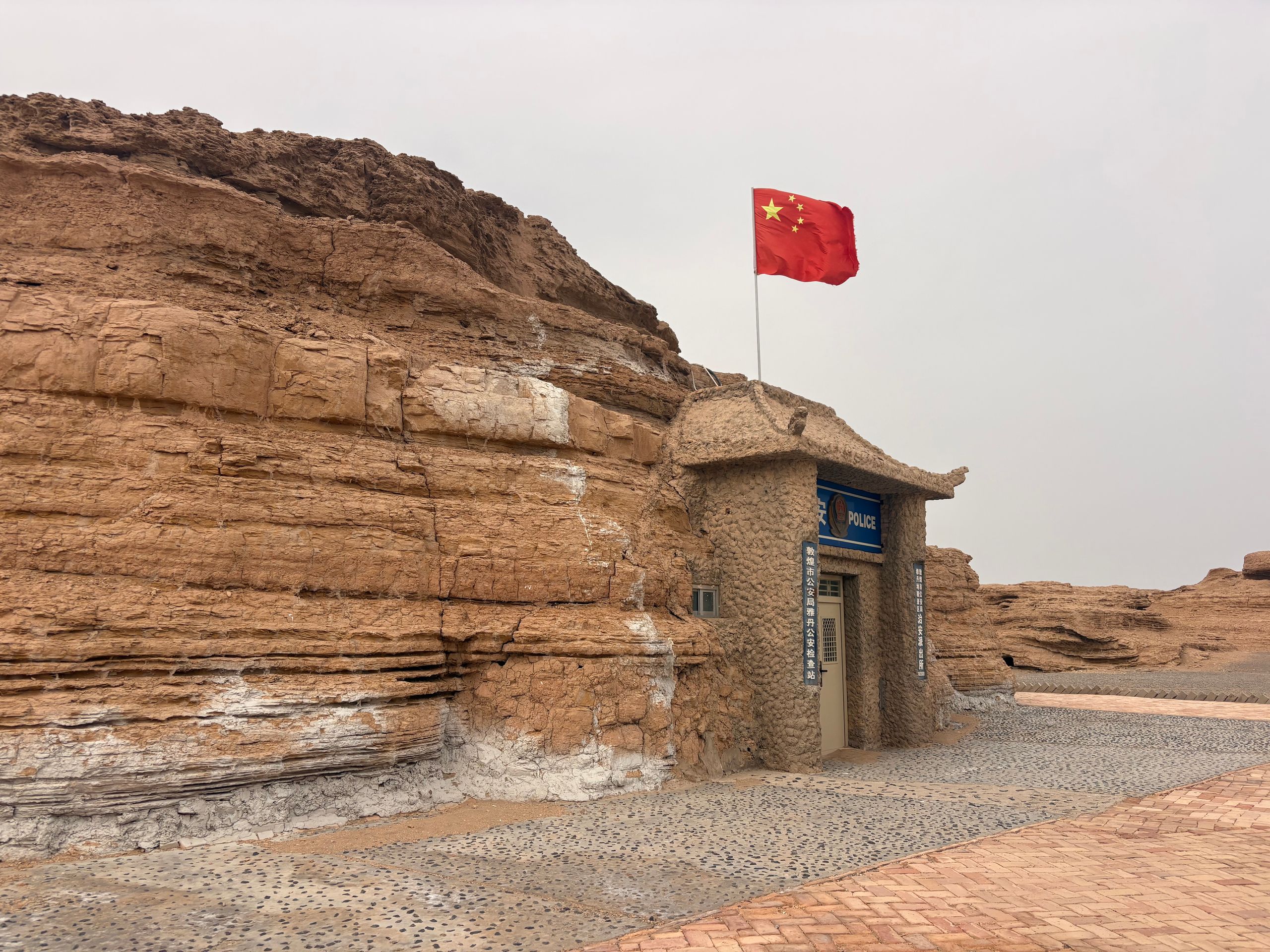
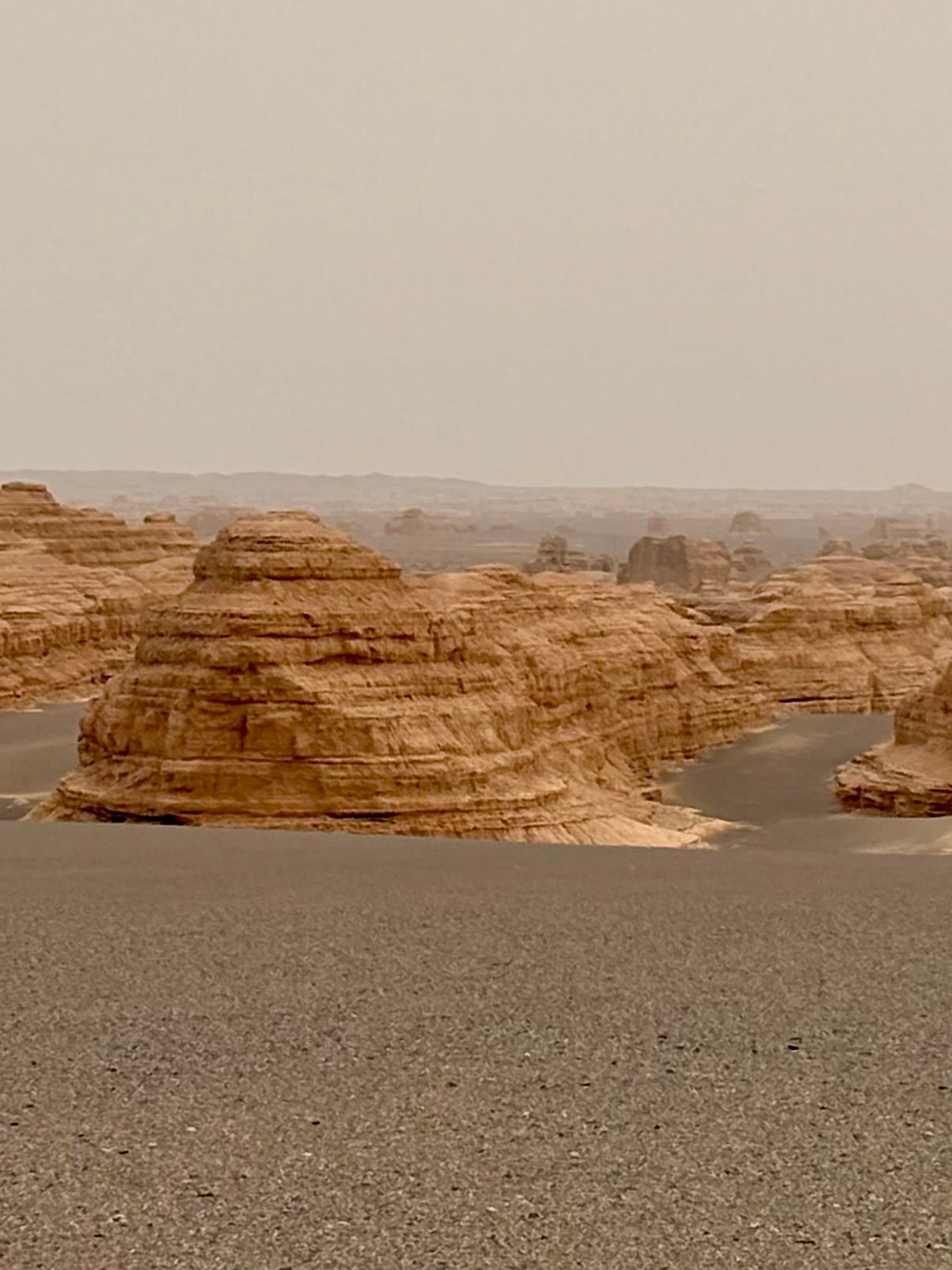
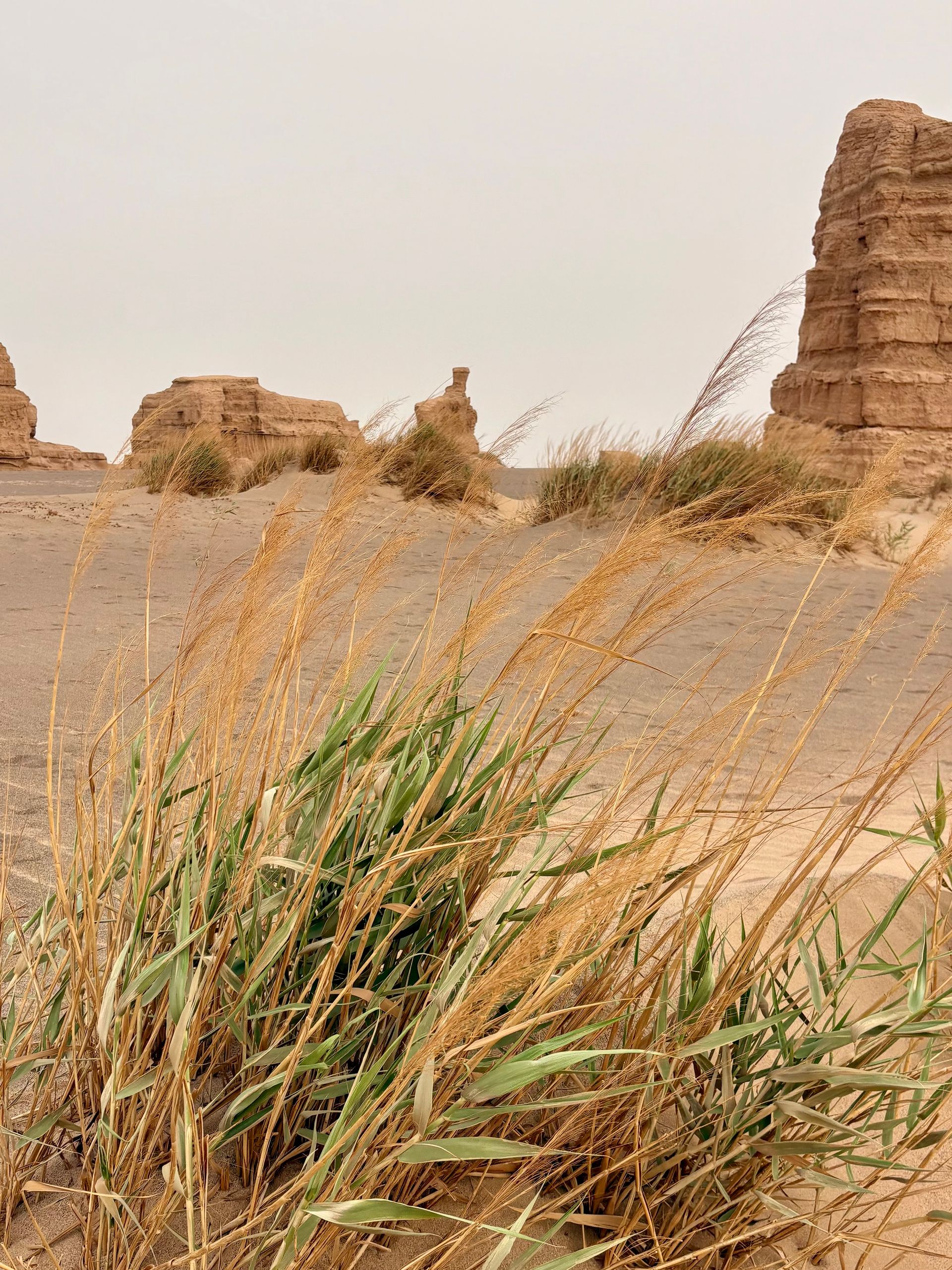
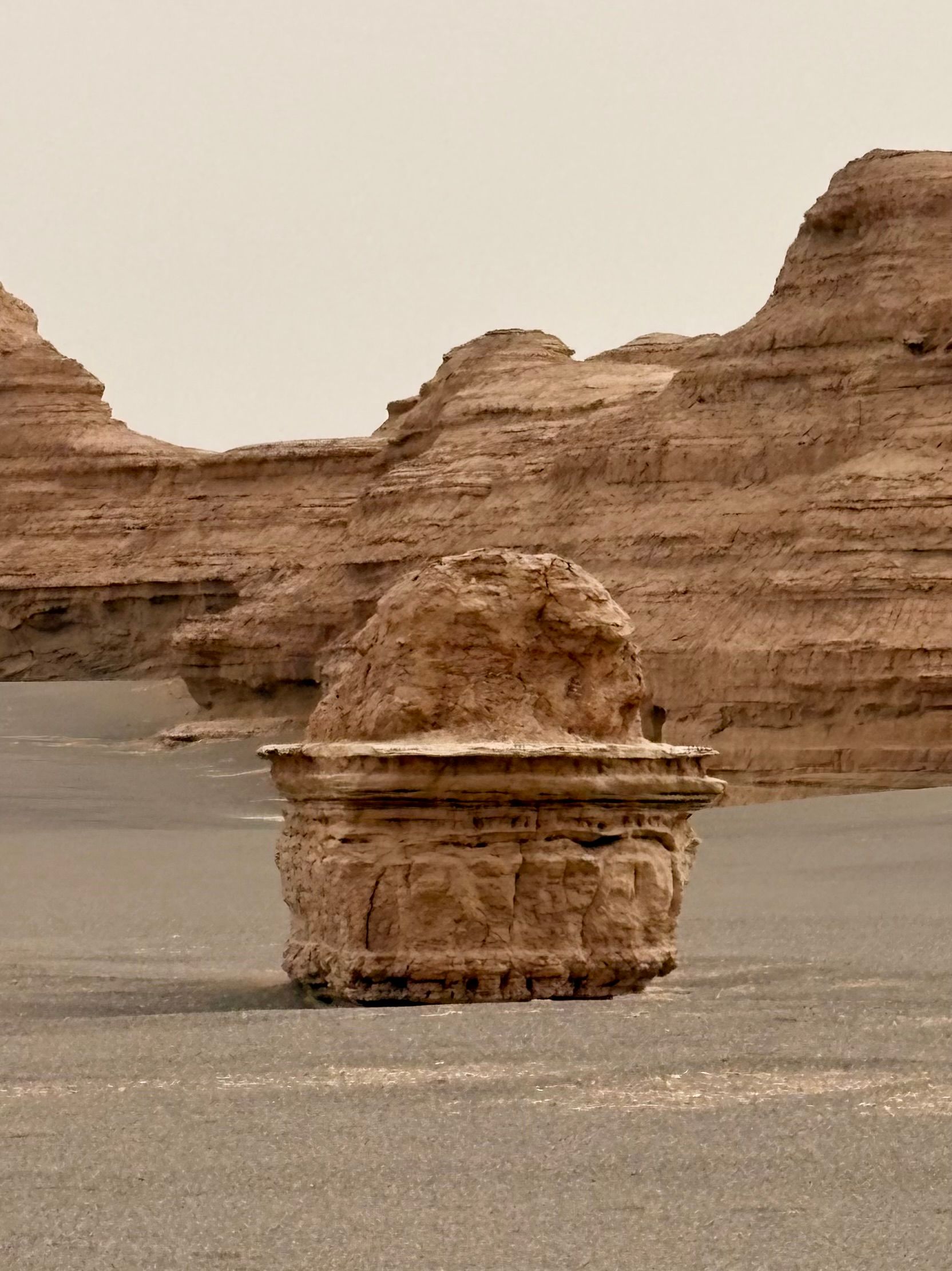
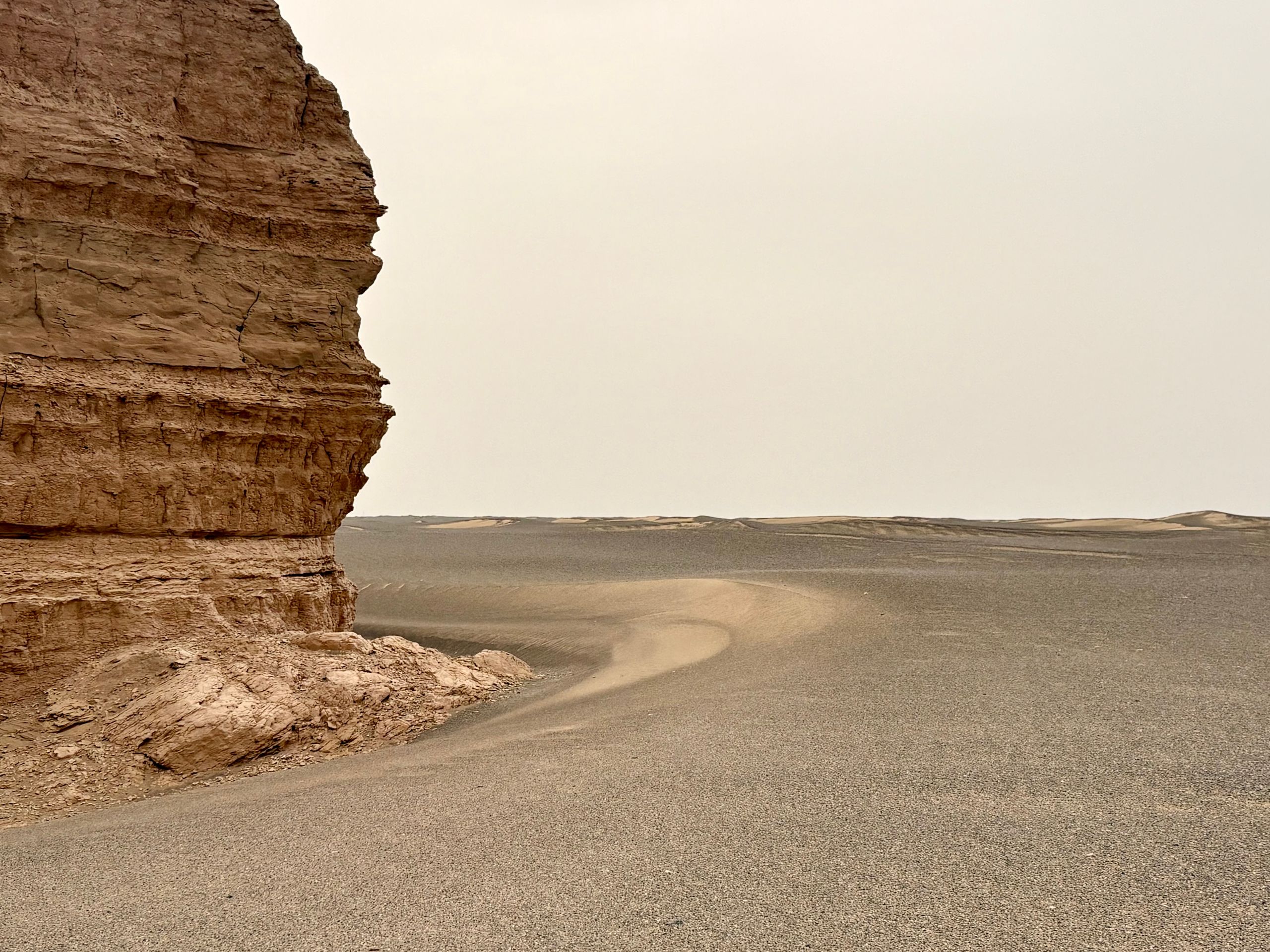
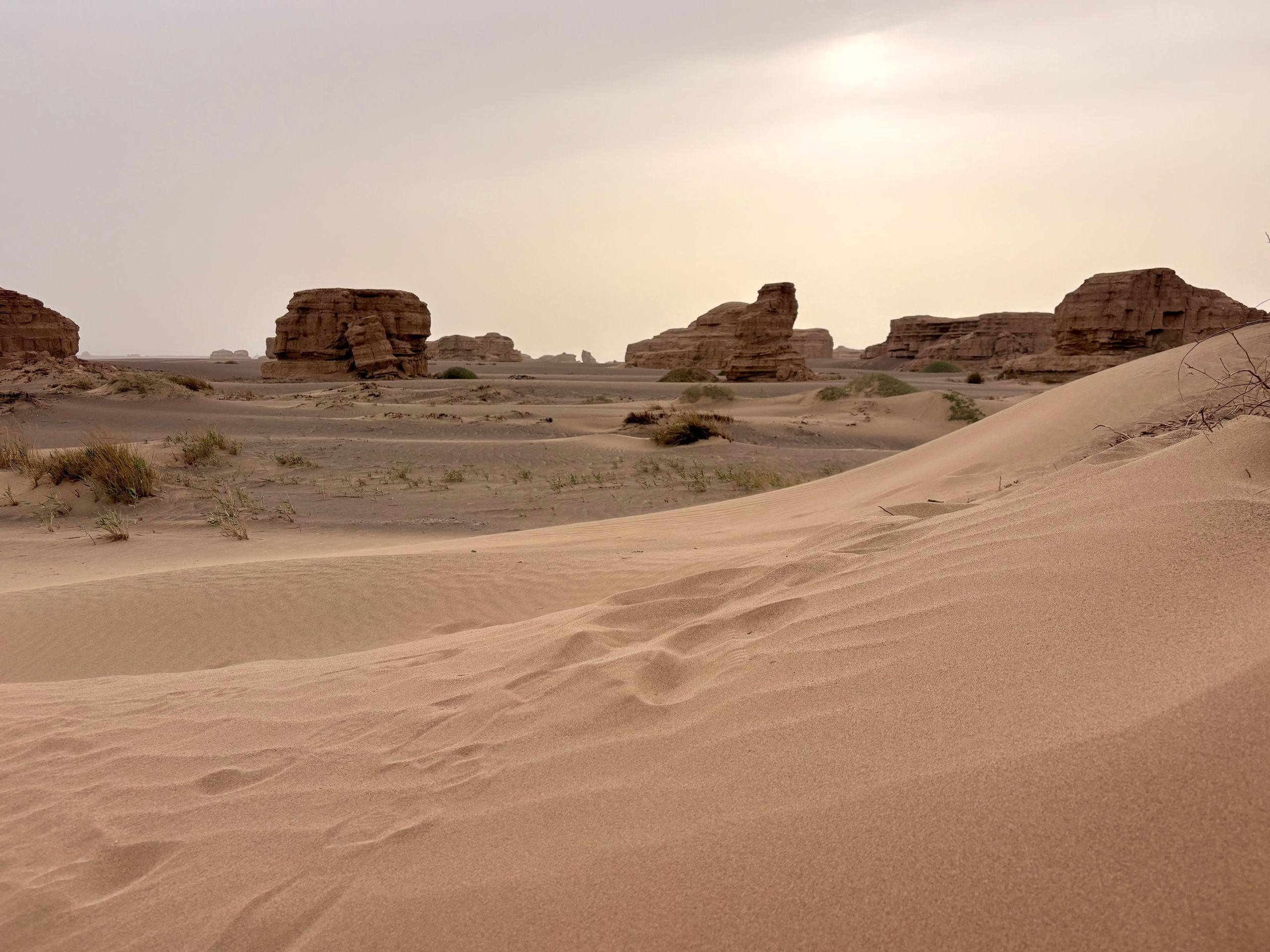
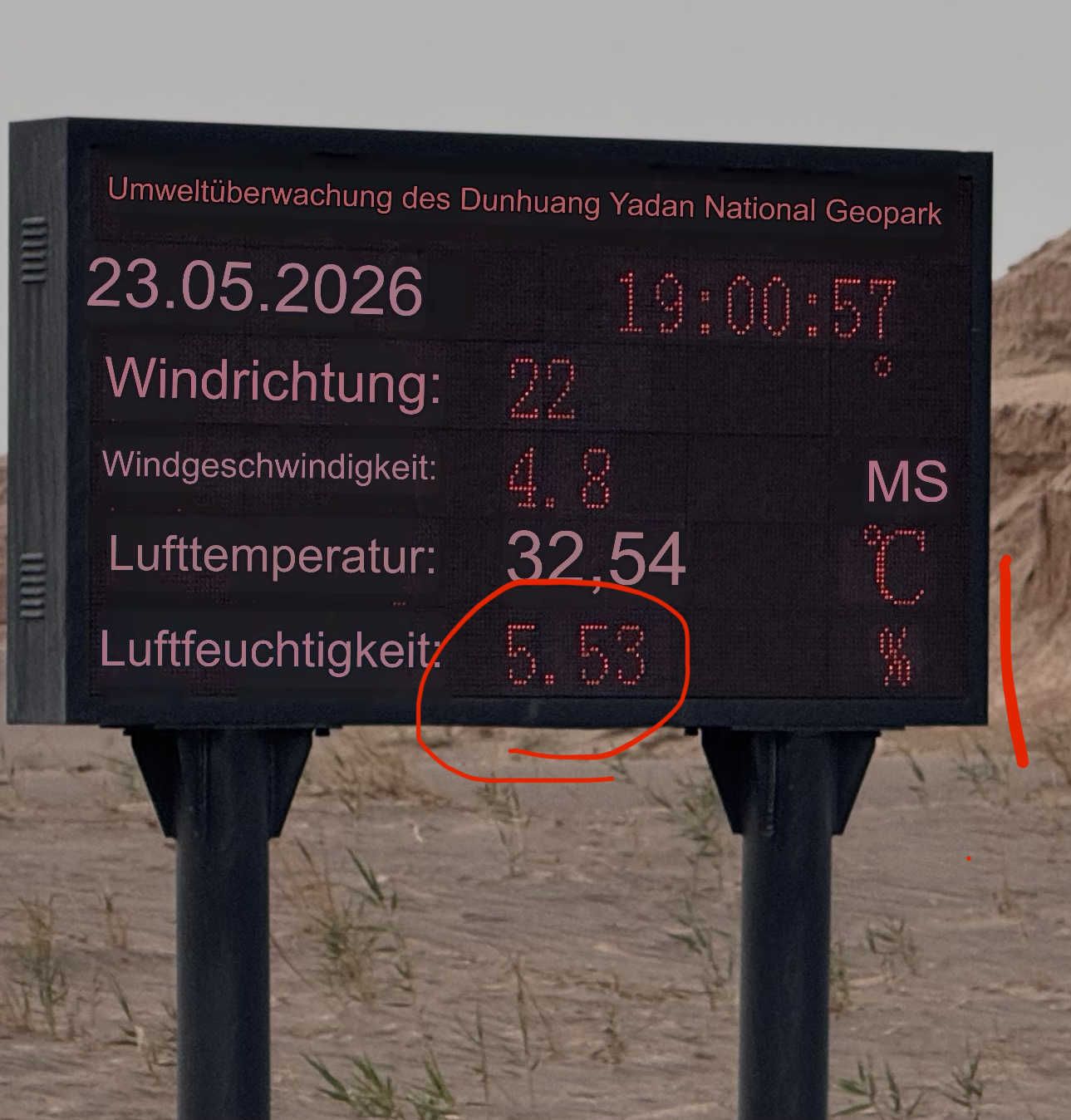
It felt quite surreal in the Yardan Geopark, and our mucous membranes burned intensely due to the dryness - allegedly only 5% relative humidity at 32°C. The term comes from Uyghur and means something like 'Steep Earth Mounds' and is now a standard geological term for these bizarrely shaped stone landscapes that can form in dry desert regions: in dried-up lake basins with alternating layers of hard rock and soft sediments, deep cracks form in the ground due to the dryness, which are further washed out by occasional rainfalls. The consistently blowing wind from one main direction erodes the softer rock layers further, resulting in many hills often arranged parallel to each other.
Happily, we returned to Dunhuang, from where the journey would continue by bus and train to Turpan in Xinjiang.