
Potosi et Cerro Rico
Après des jours passés dans la forêt tropicale bolivienne et les pampas, il était enfin temps d'aller à Potosi, avec un court arrêt à La Paz, espérant cette fois sans blocages...

Publié: 14.12.2024
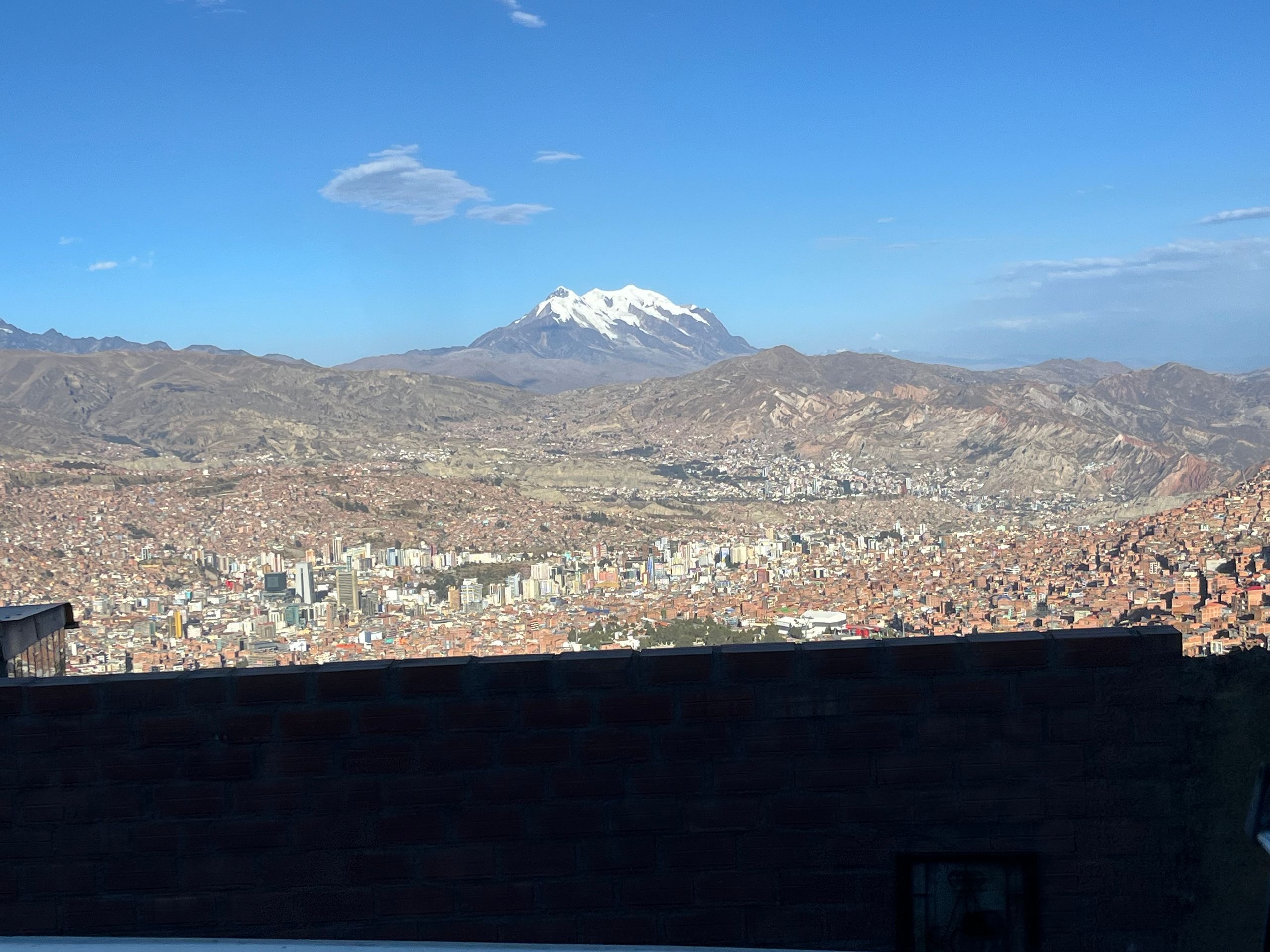
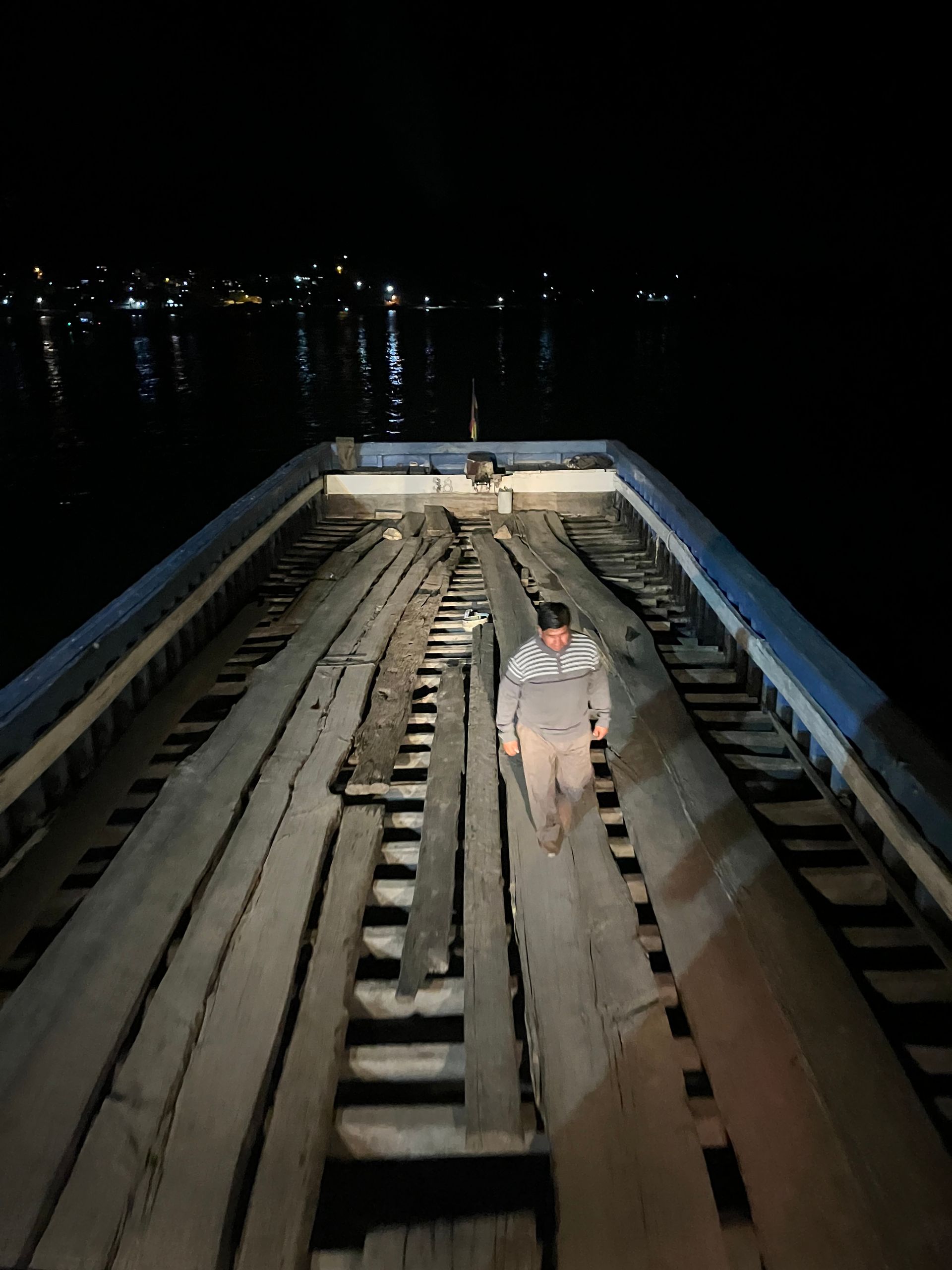
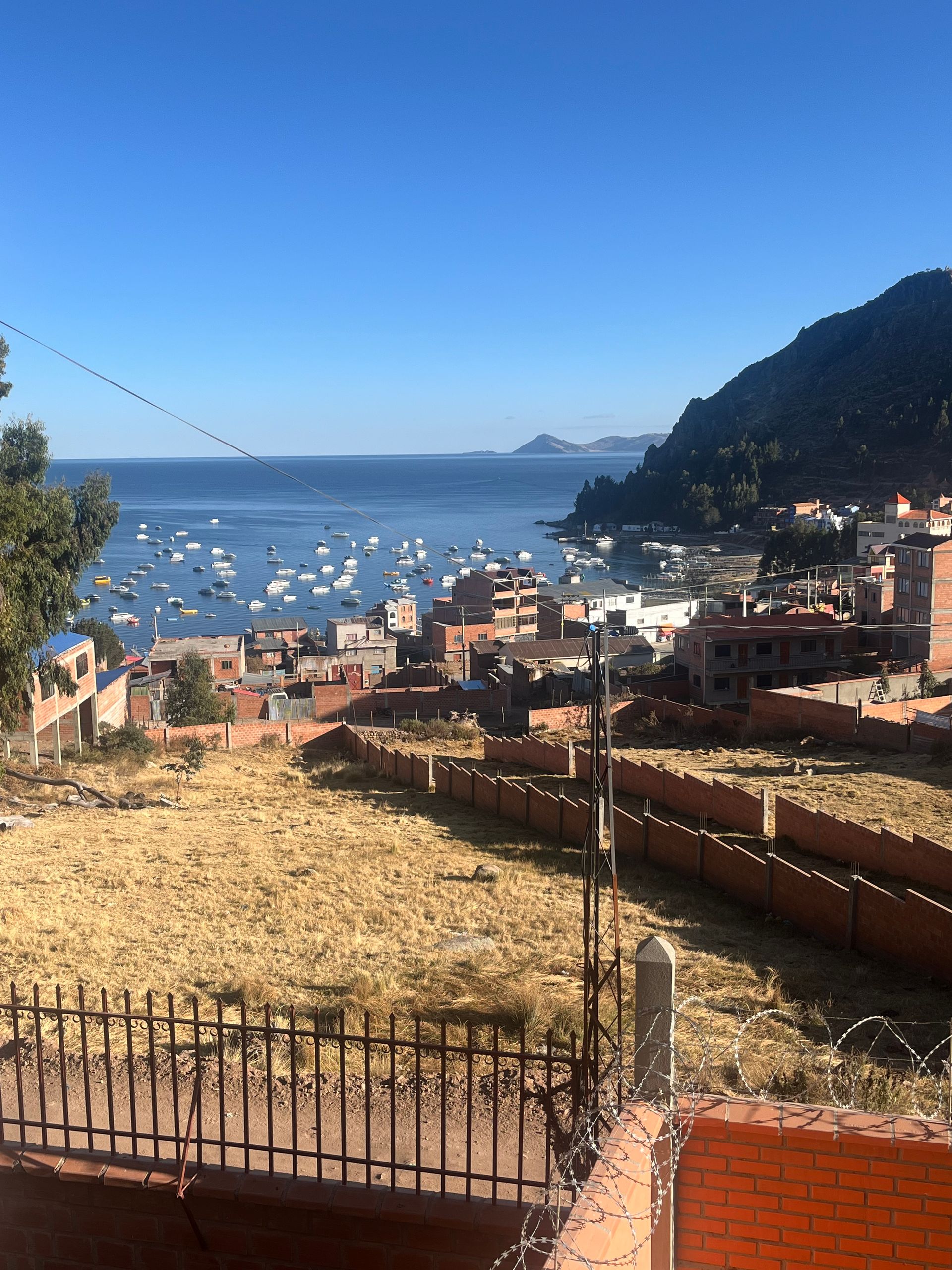
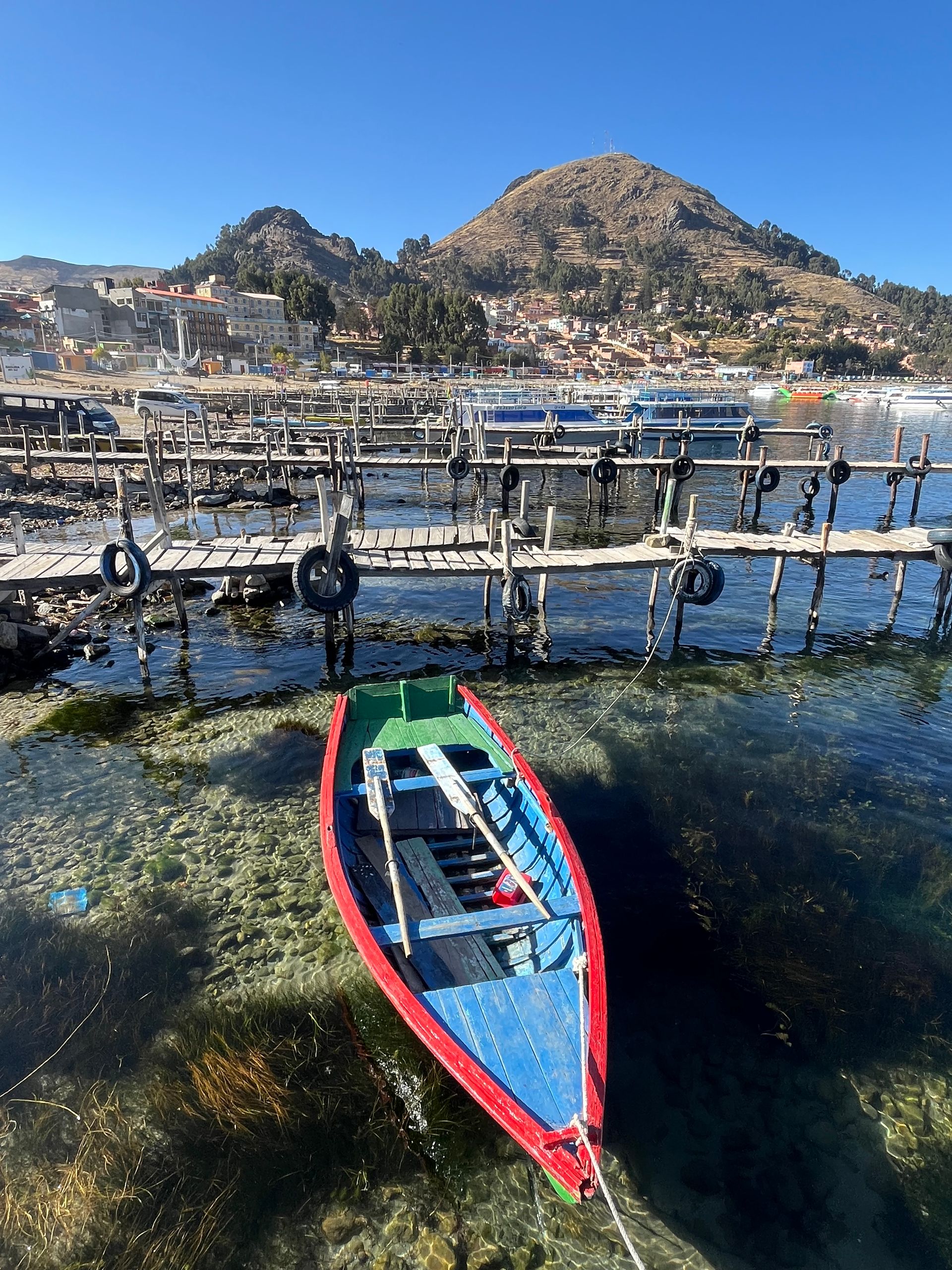
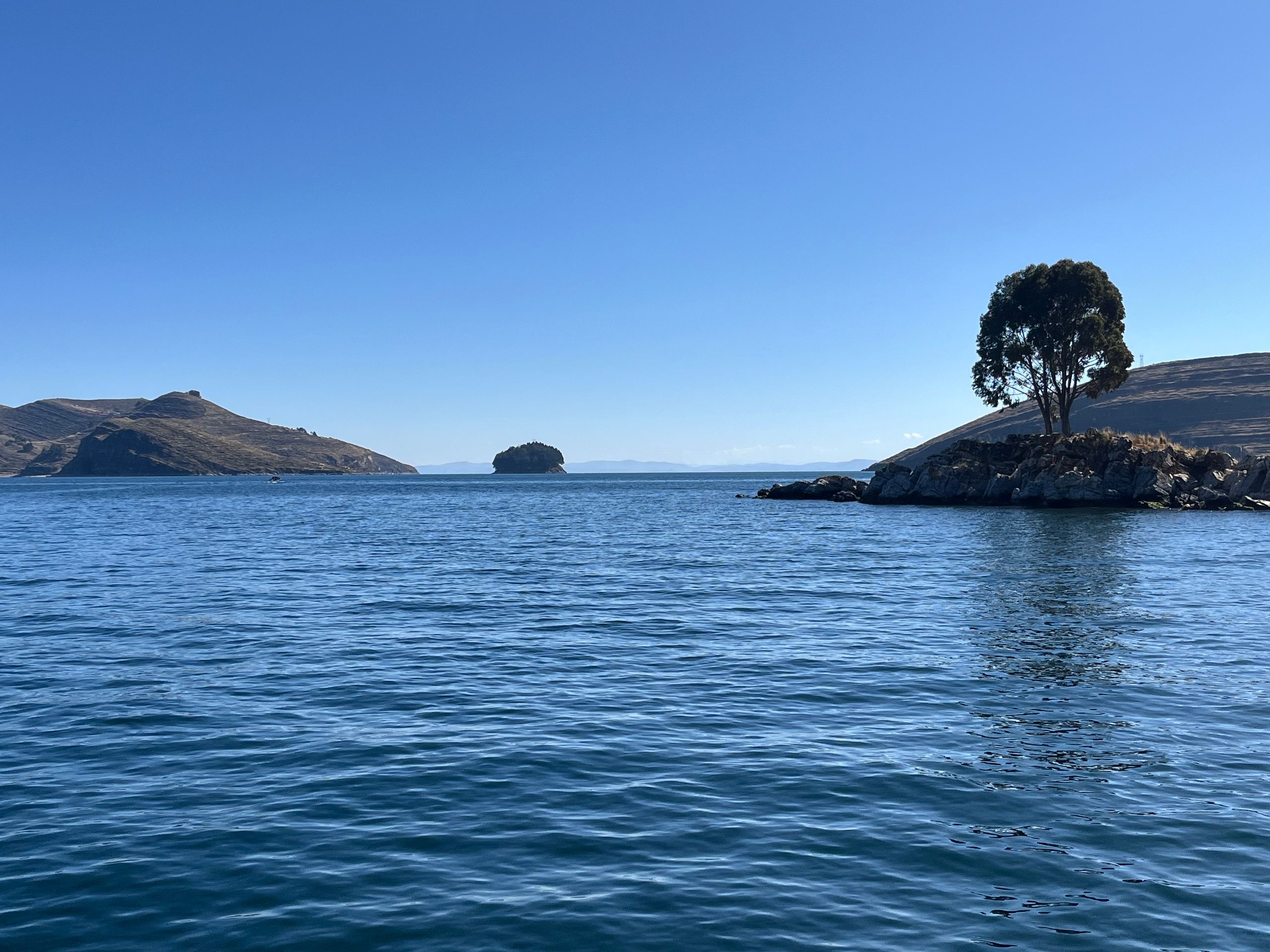
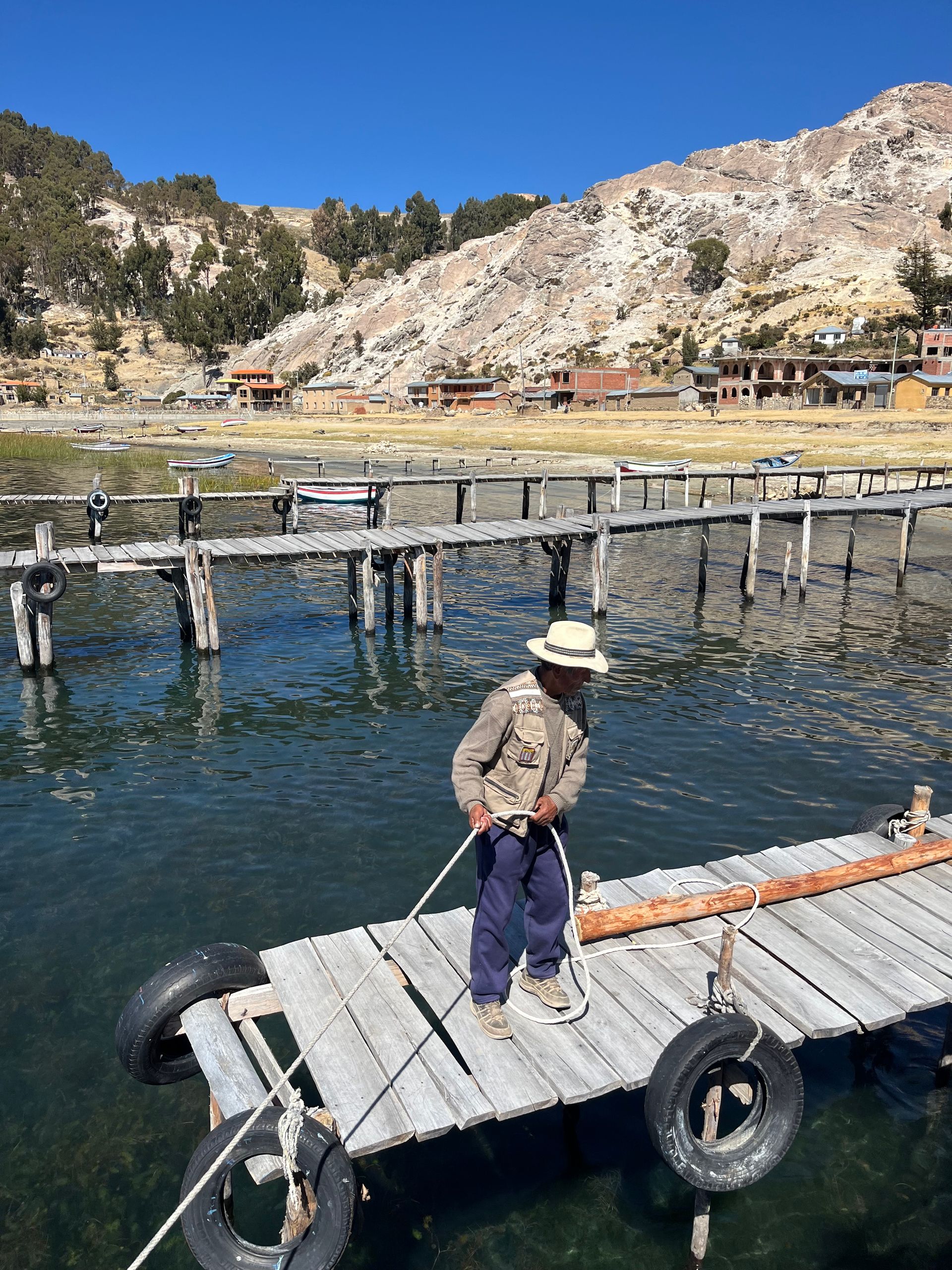
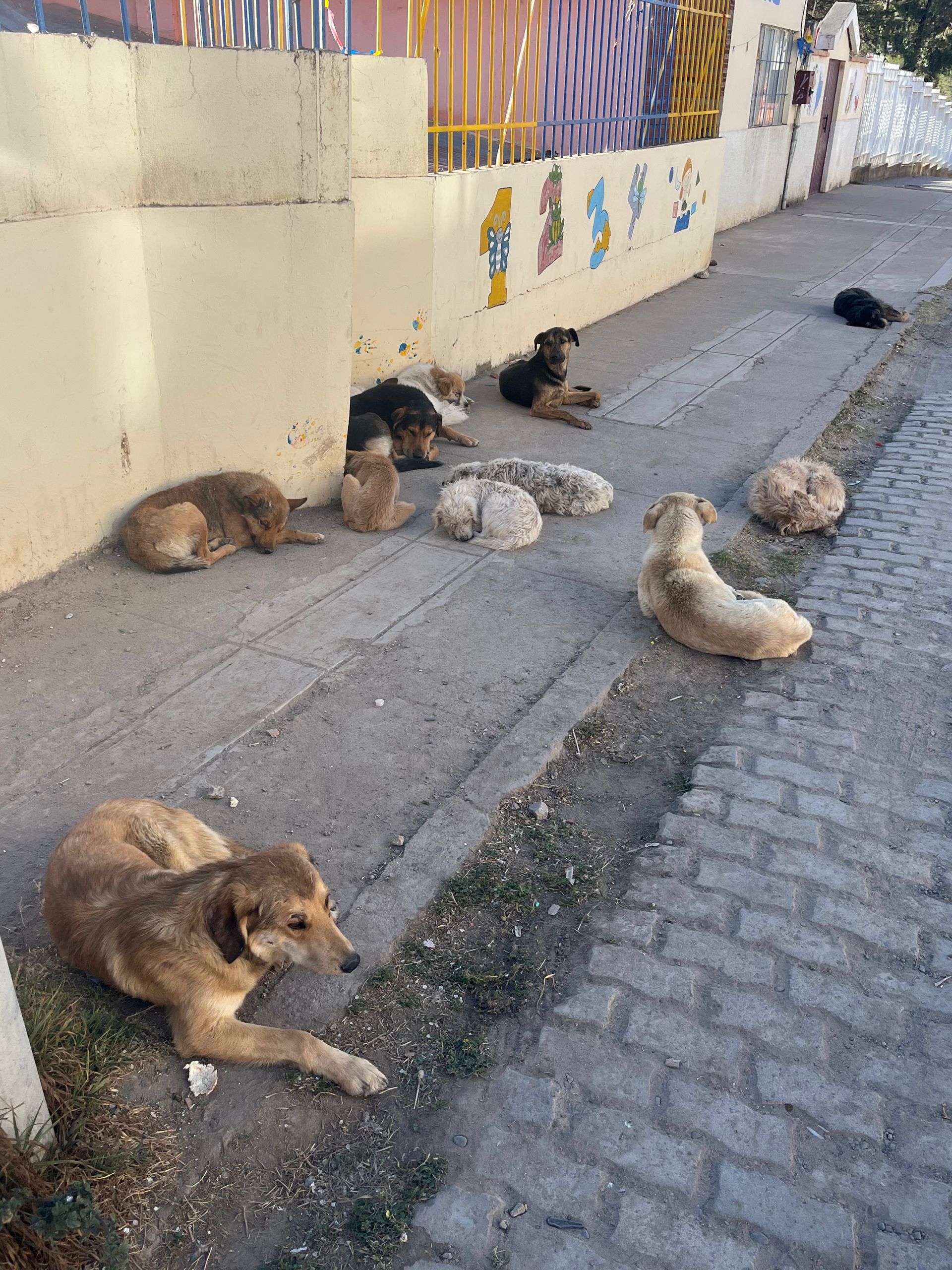
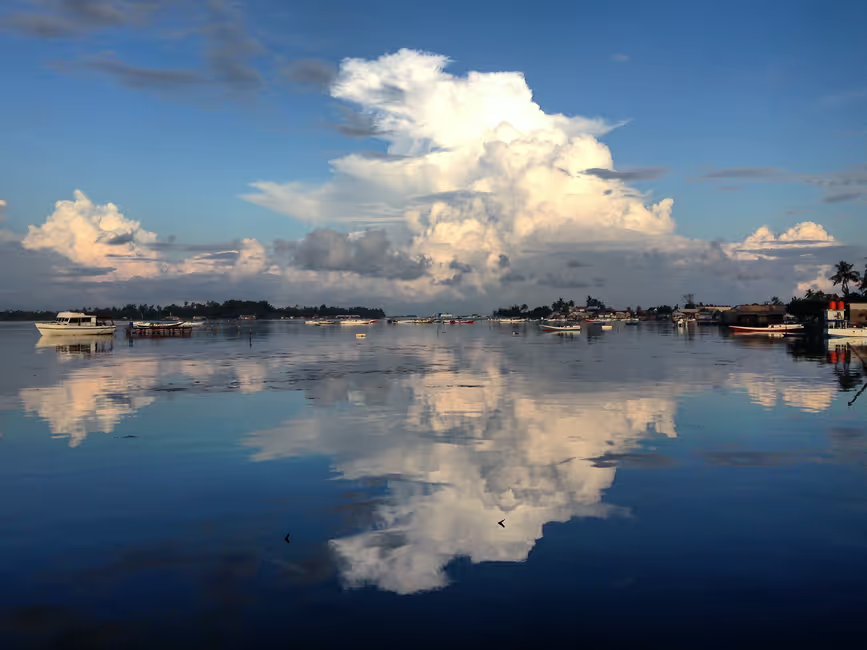
After the cold journey back to La Paz and weeks filled with various activities and experiences, I spent one last weekend in this wild city before finally moving on. Originally, the Clasico Paceño was scheduled for Sunday in La Paz, the duel between the two city rivals “The Strongest” and “Club Bolivar”. One of the major derbies in South America and the most important game in the country. I couldn't deny a certain anticipation for this duel, and disappointed, I found out on the day of my return that the game had been postponed indefinitely. The two clubs were to play their knockout matches in the Copa Libertadores against representatives Flamengo from Rio de Janeiro and Peñarol from Montevideo that week, and although the dates had been known for months, the federation and clubs realized just two days before the game that they needed more preparation time and the Clasico was canceled. Shit happens – so I spent my last days in La Paz strolling around the city and indulging extensively in amateur football. It was enjoyable, and I discovered a few corners of the city that I probably wouldn't have explored otherwise. But then it was finally time to say goodbye. I boarded the bus toward Copacabana, a small town on Lake Titicaca, and cast one last glance over the city. The majestic Illimani also showed itself once again against a brilliantly blue sky as the bus struggled up the slopes on the outskirts of town. A feeling of melancholy spread over me after all the exciting times in this wonderful country. For me, it was definitely the most authentic and adventurous of all the countries I had visited in South America thus far. However, there was still no complete farewell, as I made one last stop at the famous Lake Titicaca, the highest navigable lake on Earth at an altitude of 3,800 m. The lake lies on the border between Bolivia and Peru and holds significant importance for the indigenous Andean peoples. In Inca mythology, it is said that the sun god Inti sent his children, Manco Cápac and Mama Ocllo, to establish the Incan people. Therefore, Lake Titicaca is also seen as the birthplace of the Inca Empire. After about 3 hours of travel, we reached the lake at dusk and boarded wooden ferries. The ferries are about as wide as a bus and consist of only a wooden platform and the engines for propulsion. So, we hopped onto this peculiar means of transport and crossed to the other shore. Although we were still on the mainland, crossing a bay shortened the journey by several hours, and we arrived in Copacabana just before nightfall. I checked into my hostel on a hill and listened to the endless barking of a rather large pack of dogs. Until deep into the night, there was an inexplicable fight among the stray dogs, and I tried to find some peace amidst the noise. After what felt like an eternity, the dogs finally fell silent, and a heavenly calm prevailed at the shore of this mystical place.
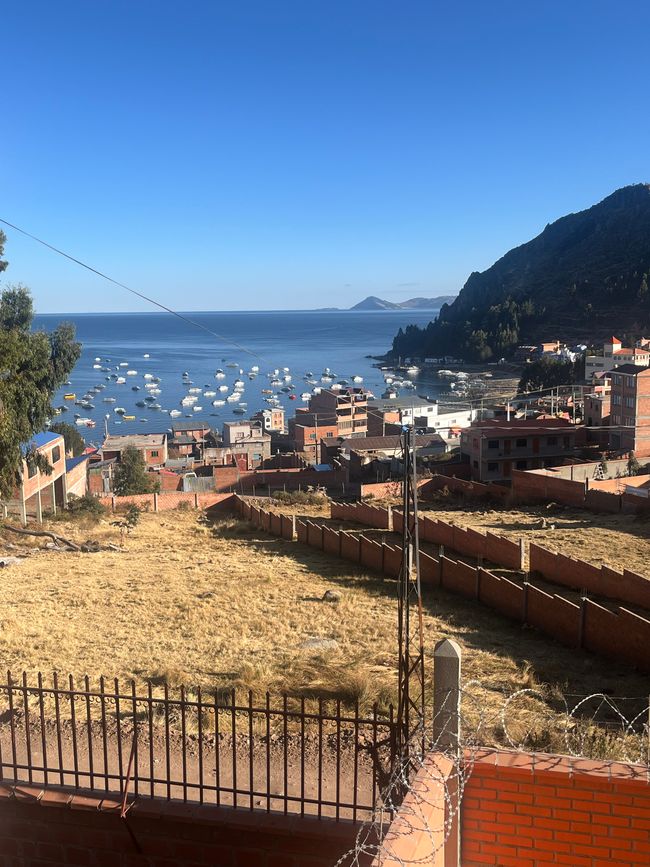
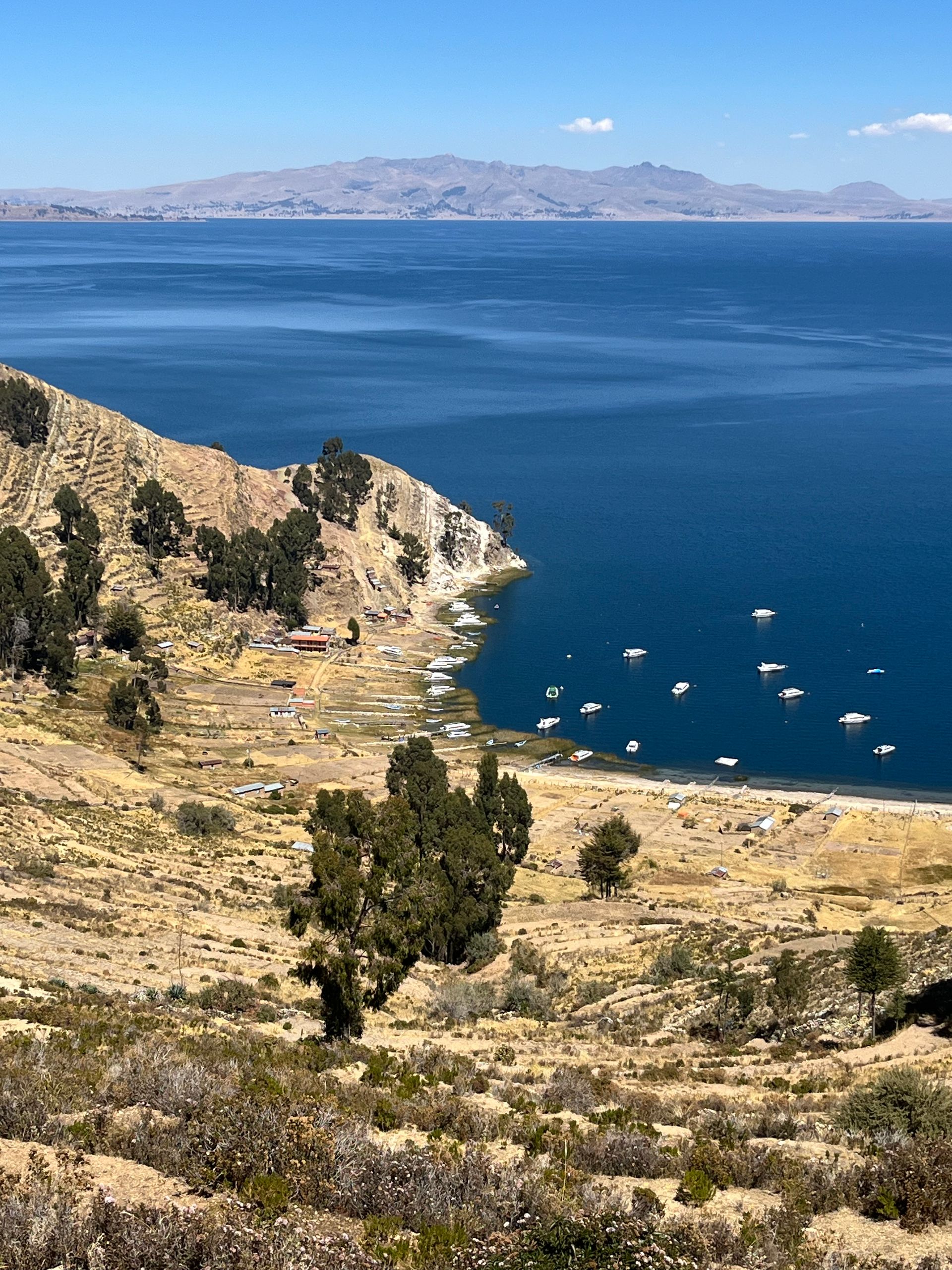
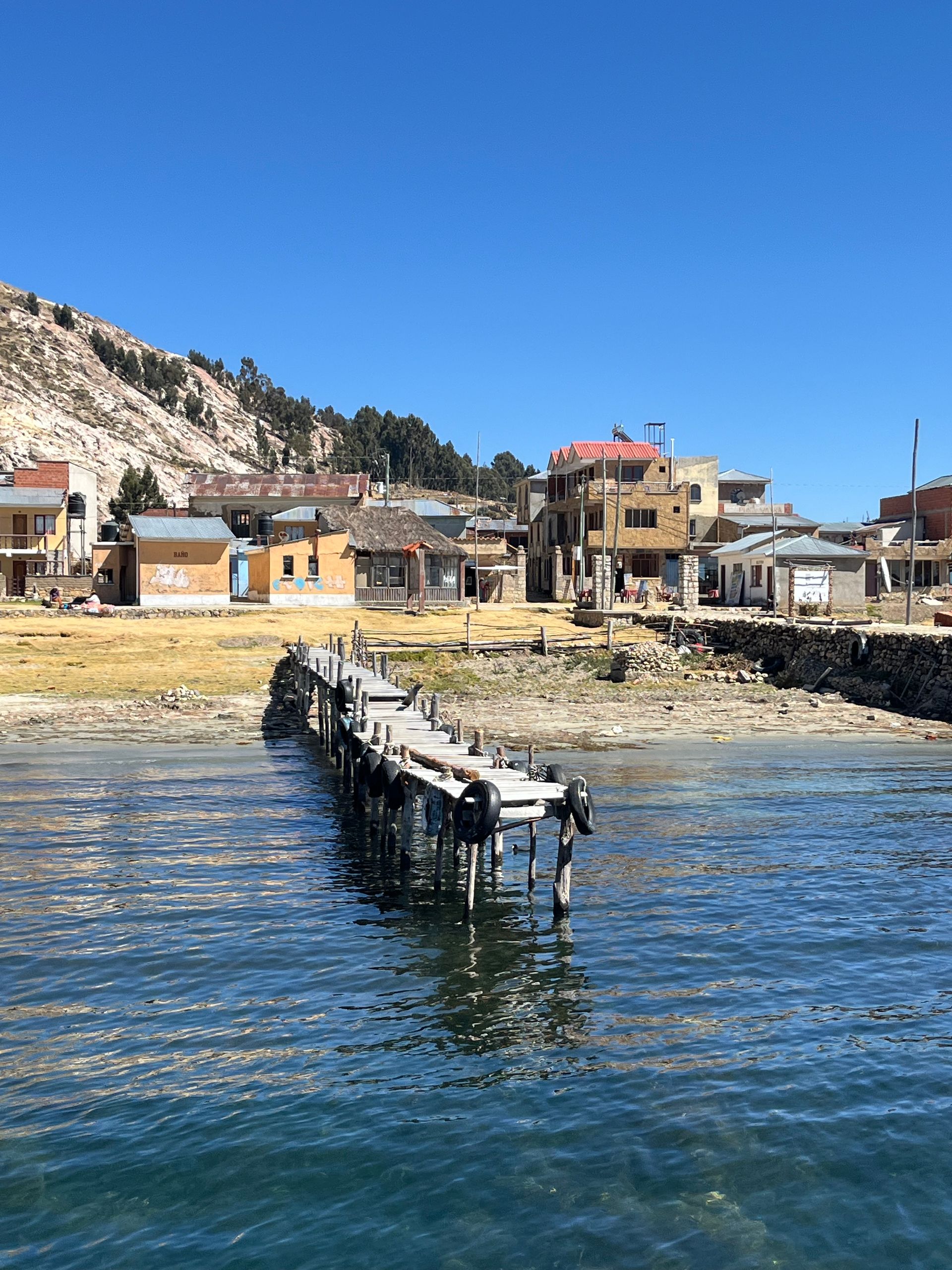
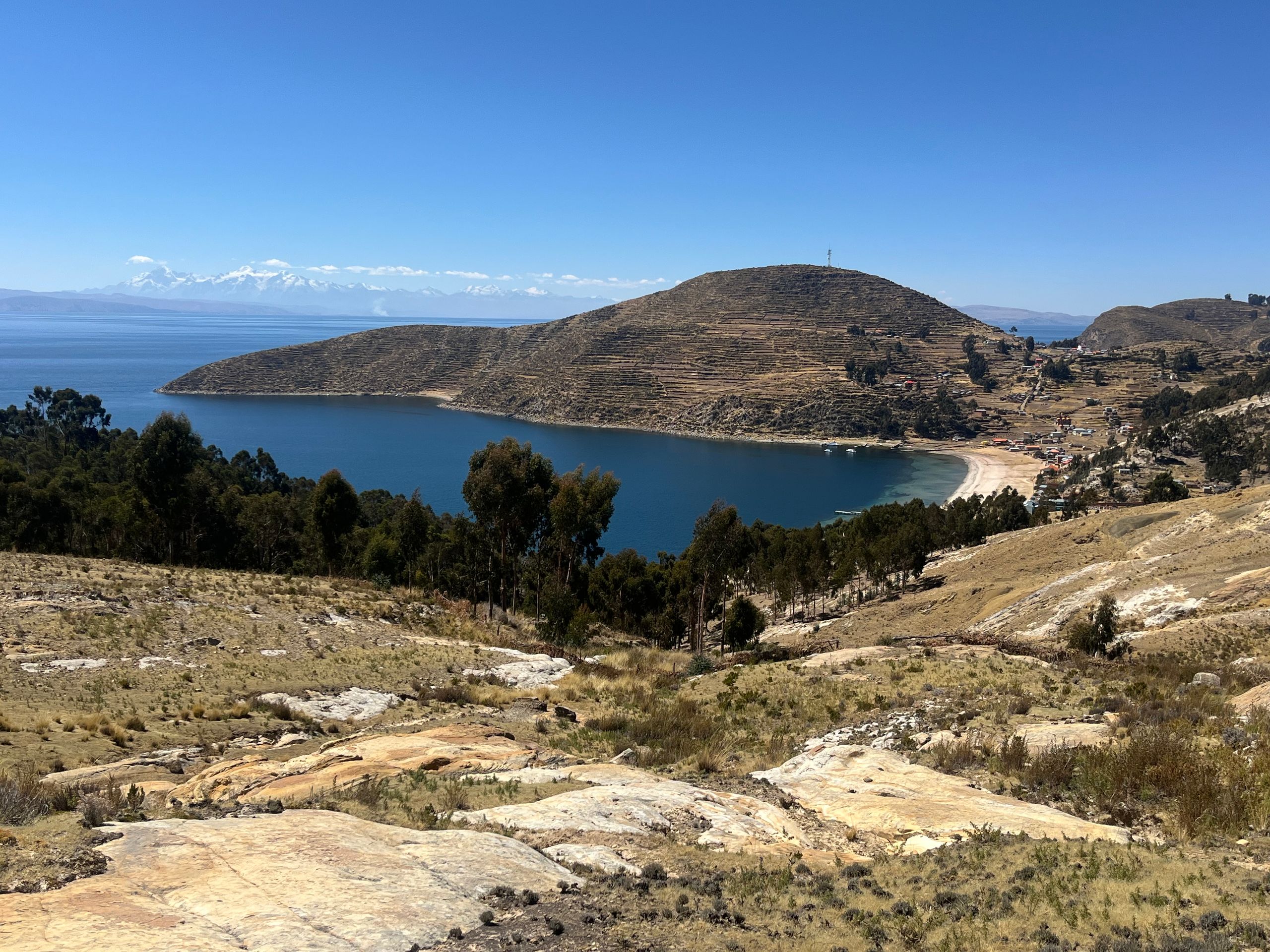
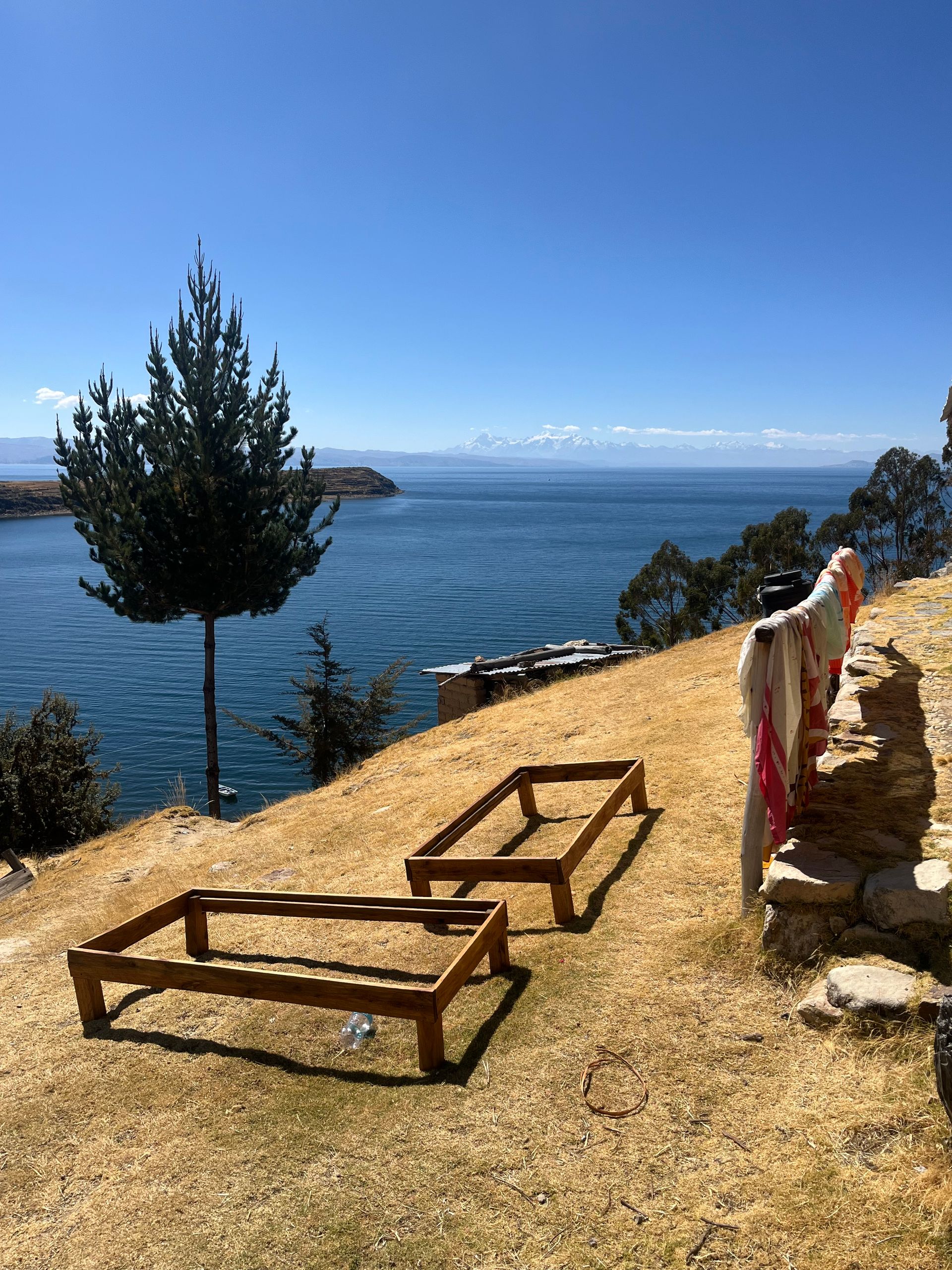
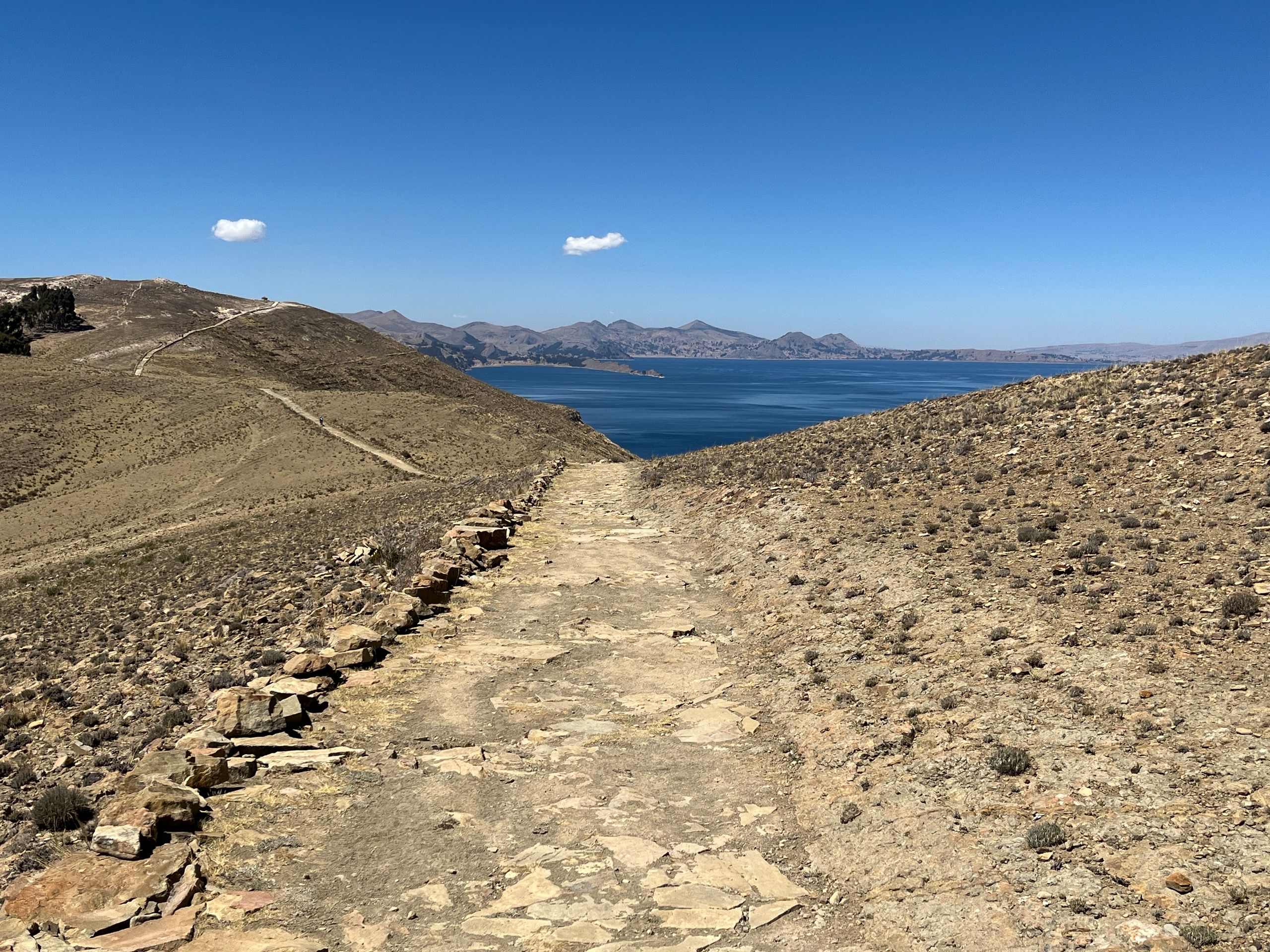
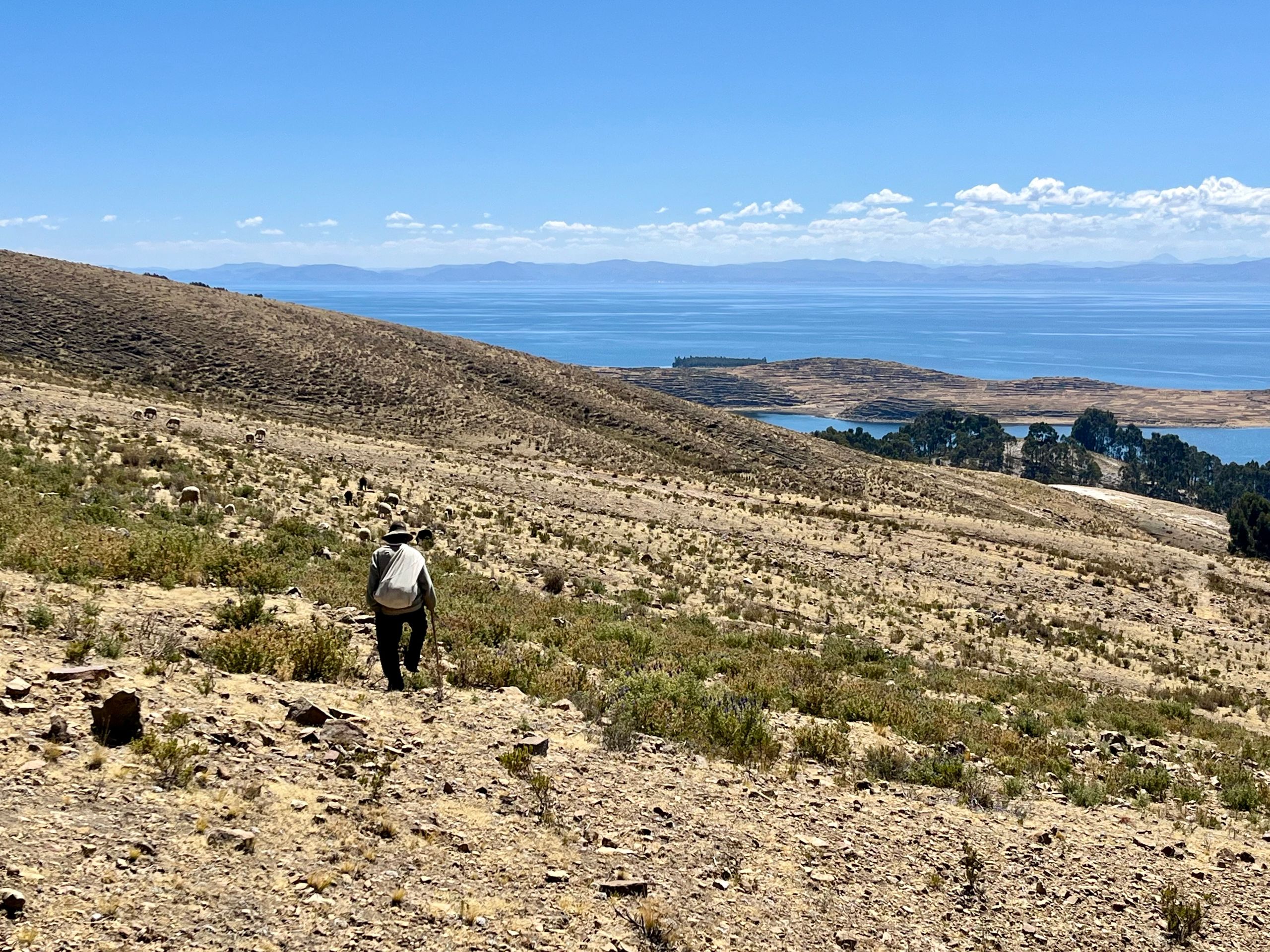
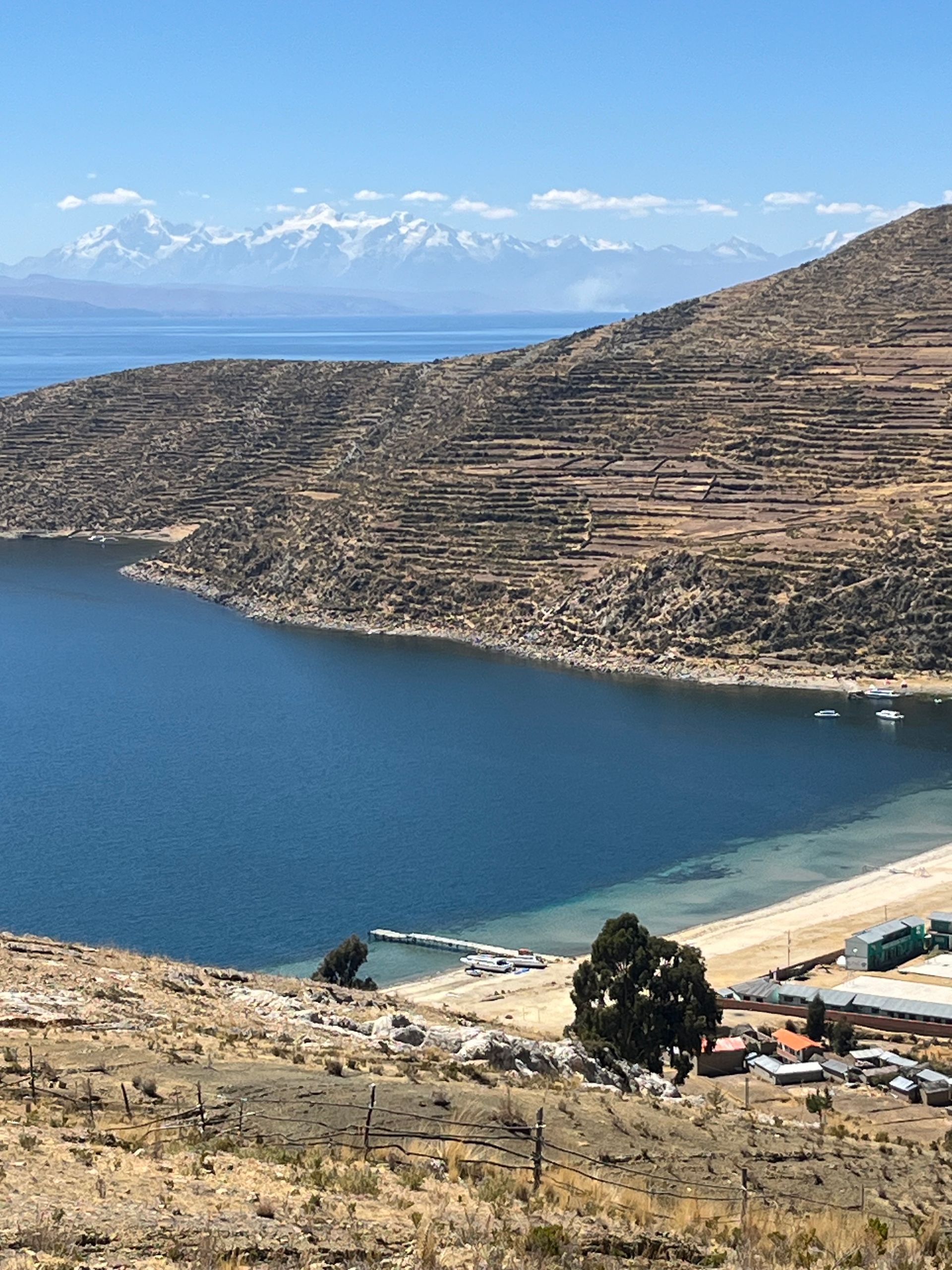
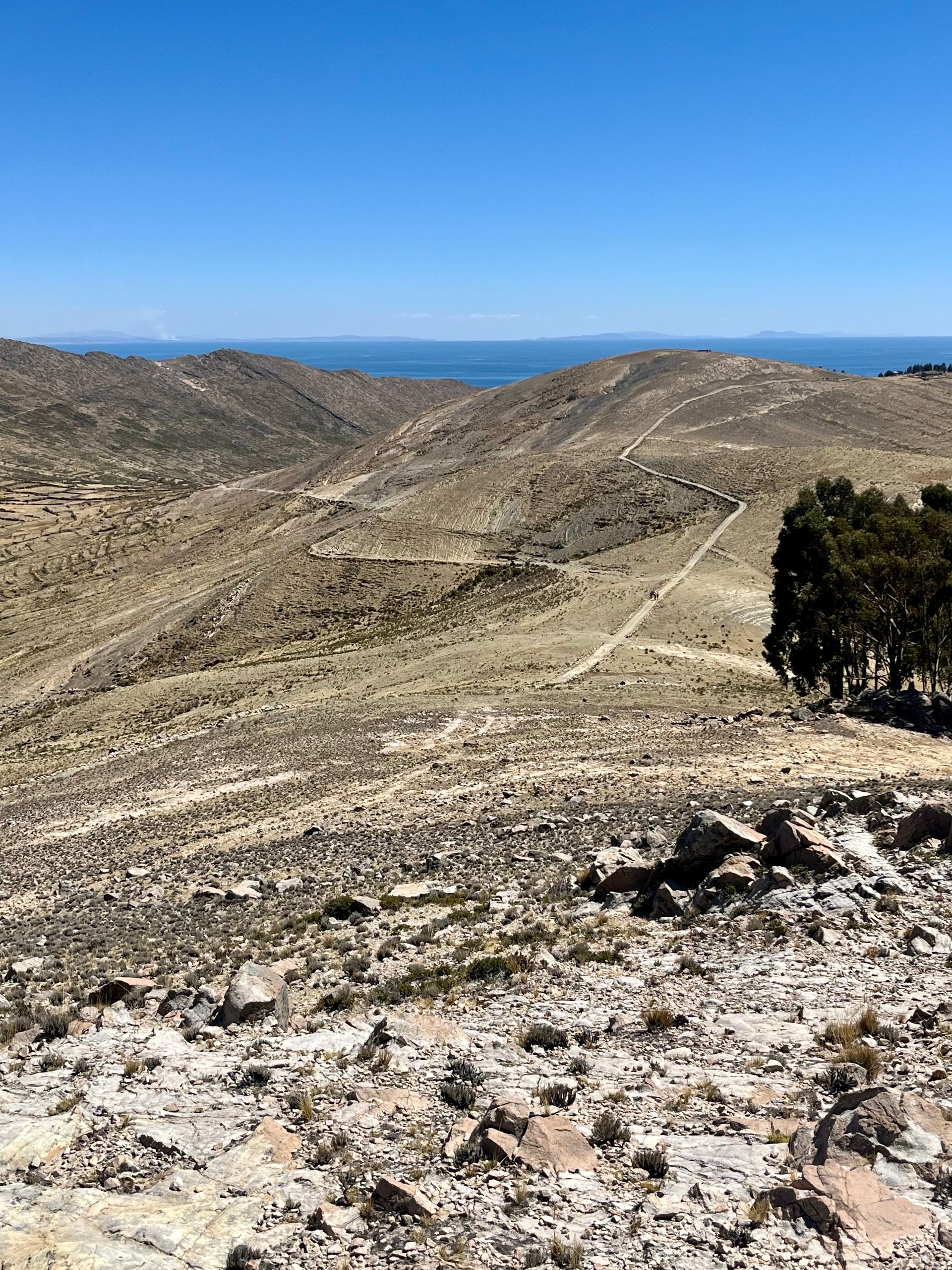
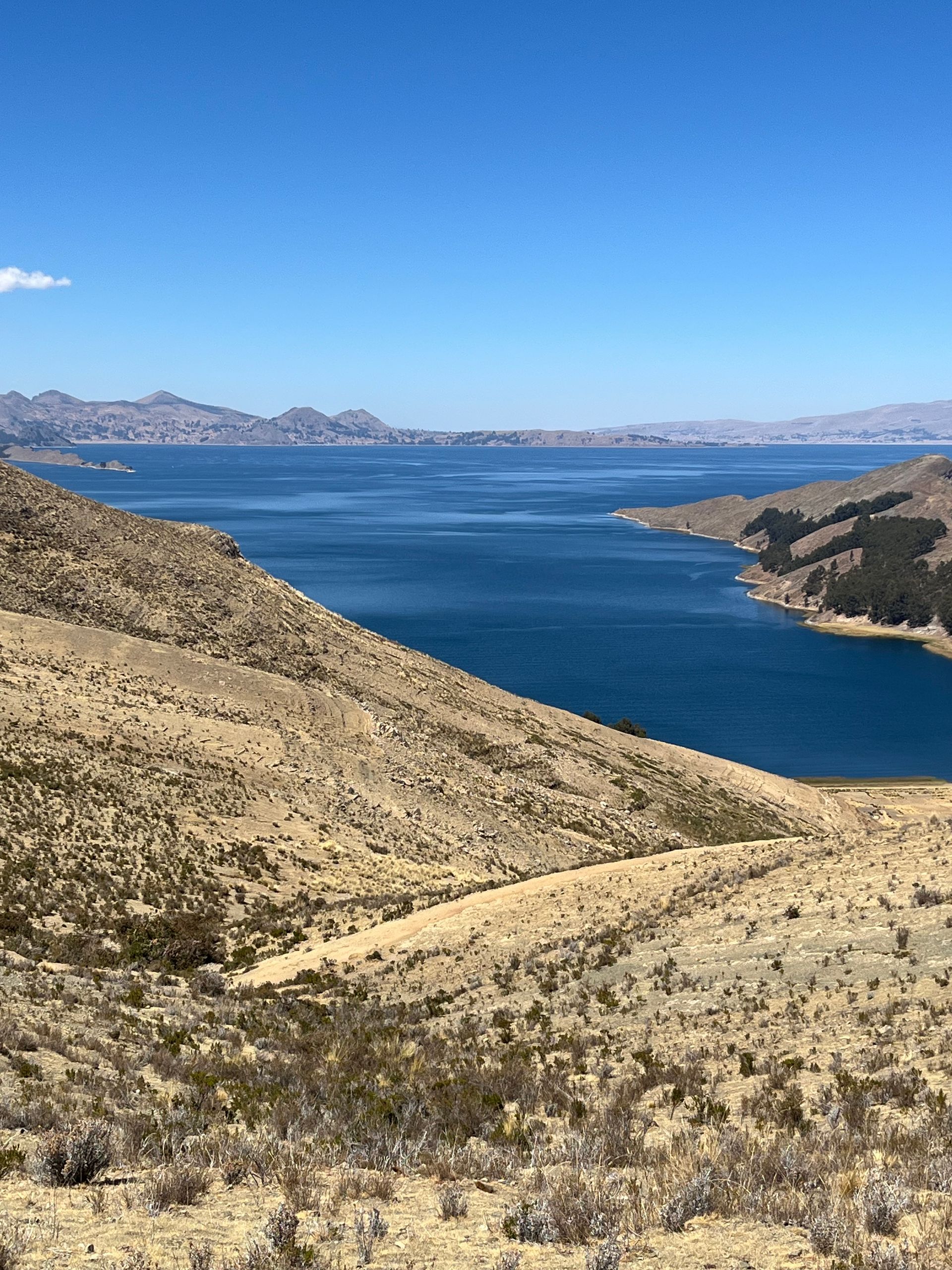
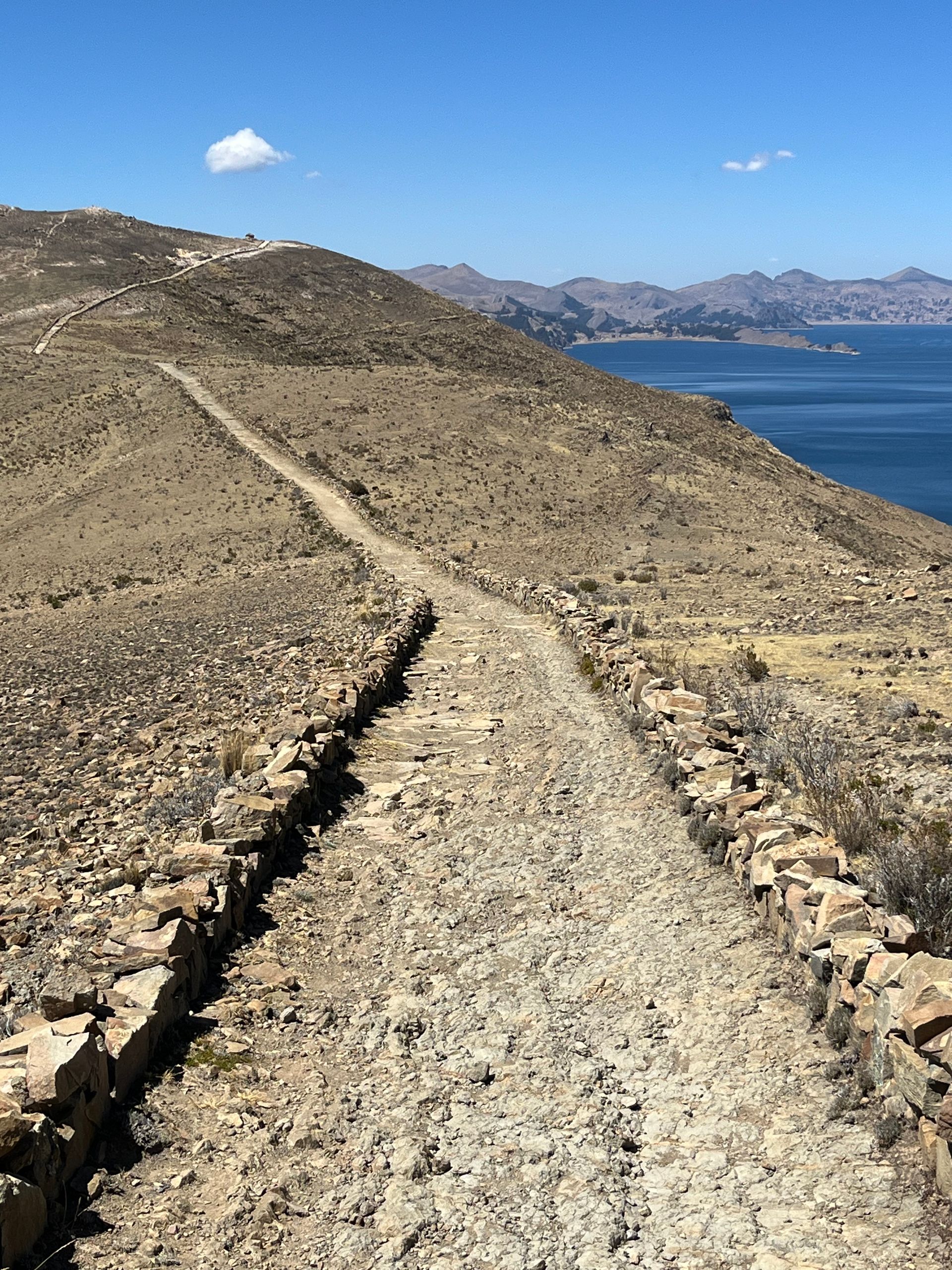
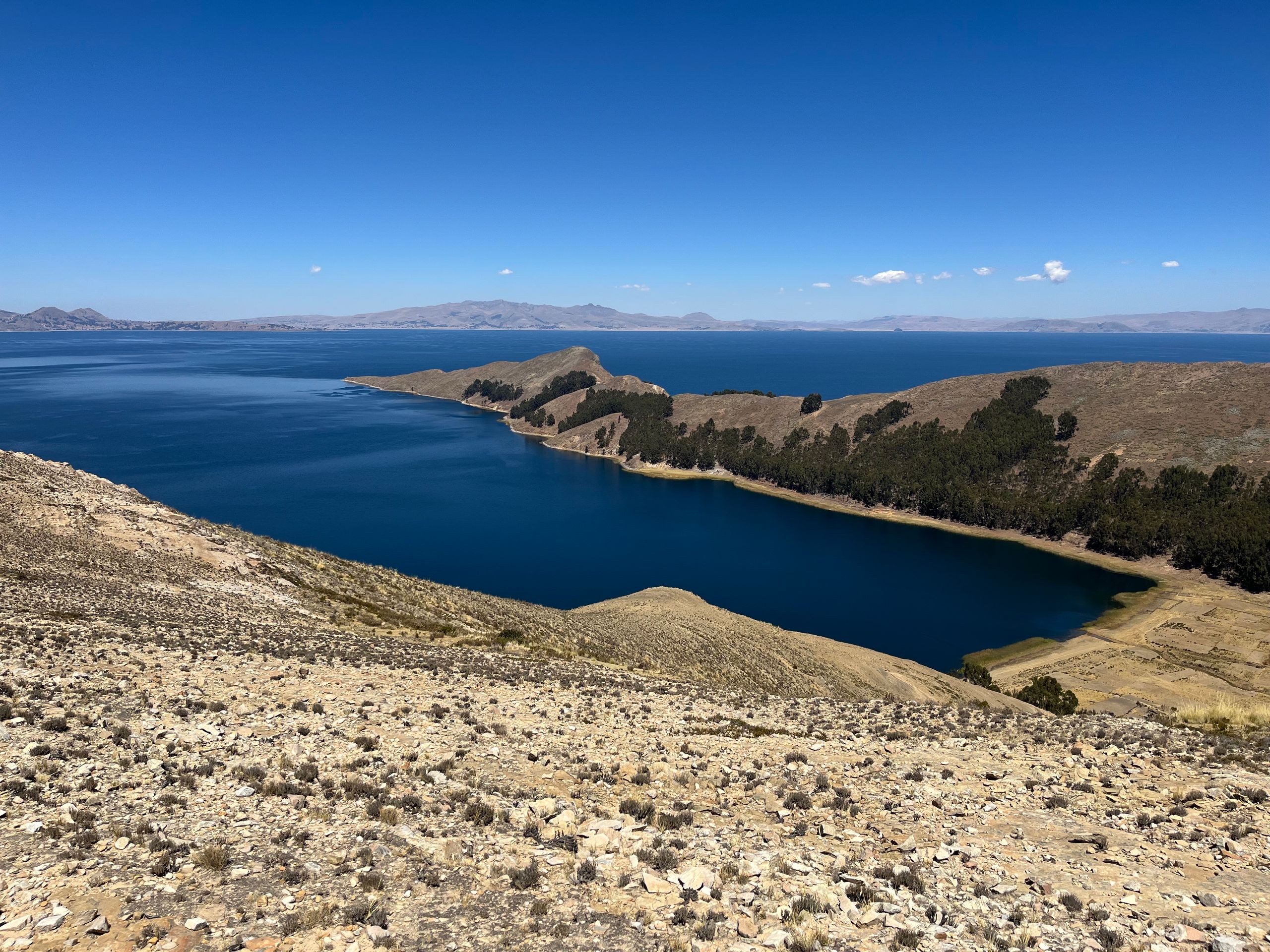
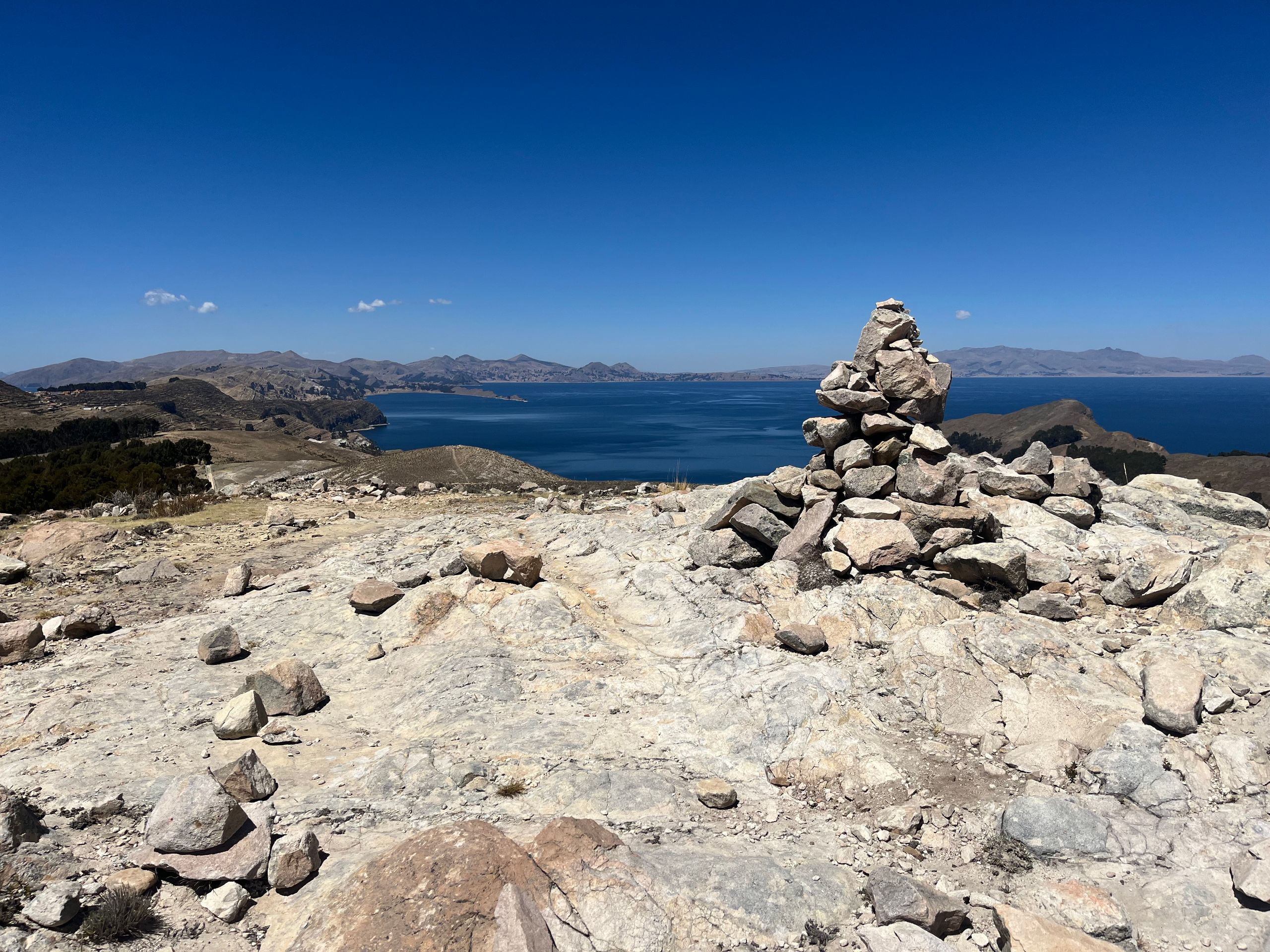
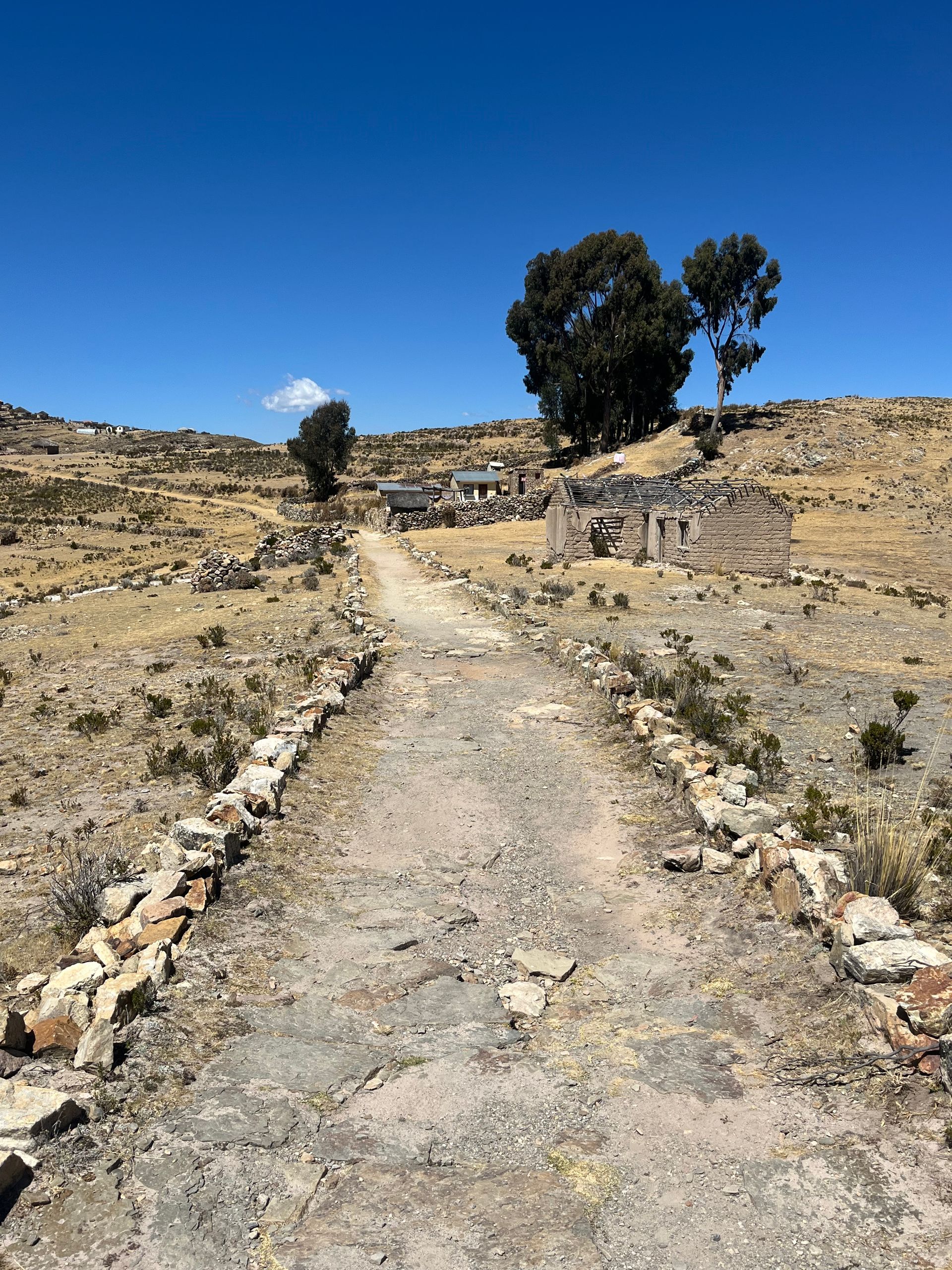
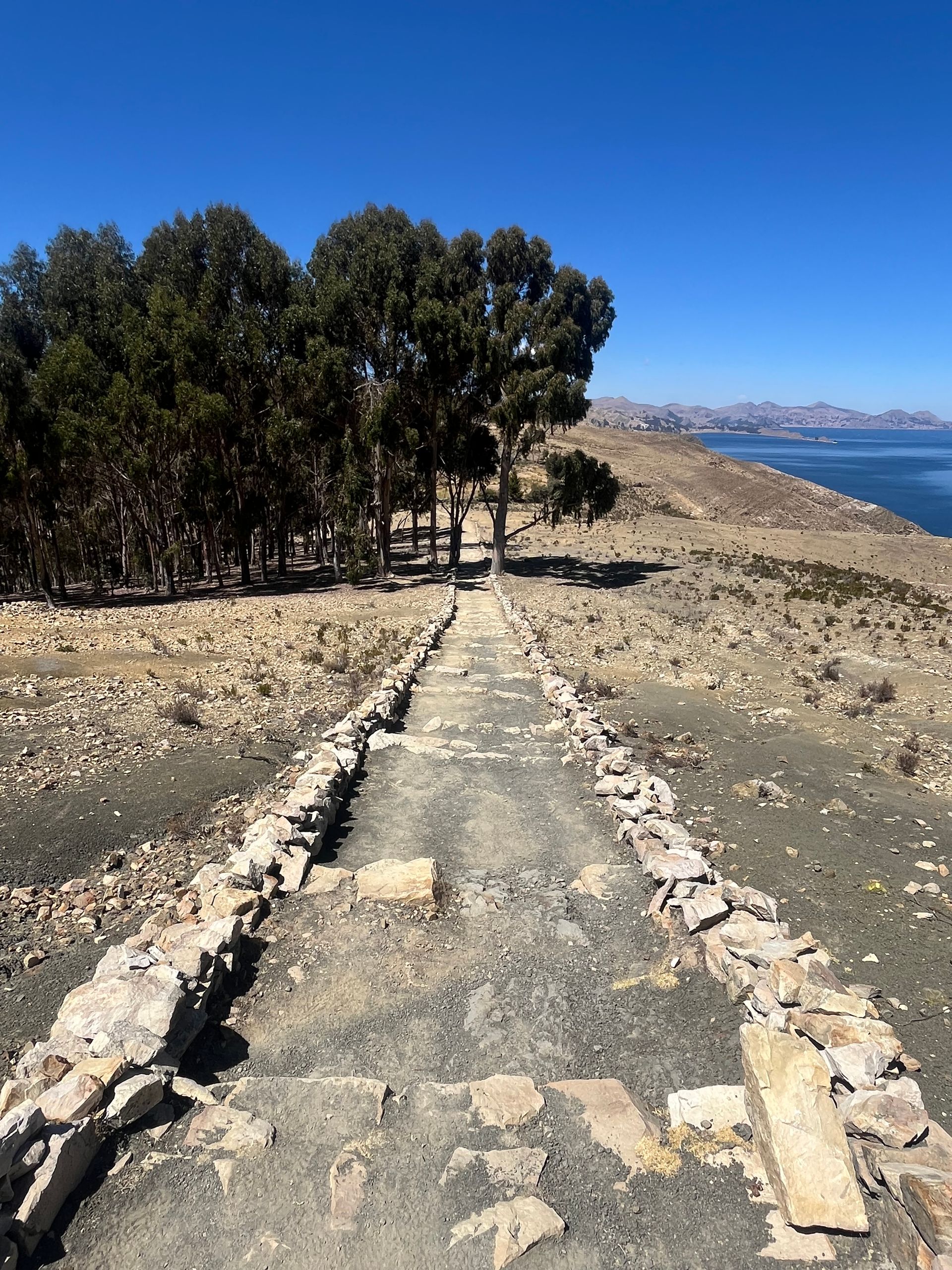
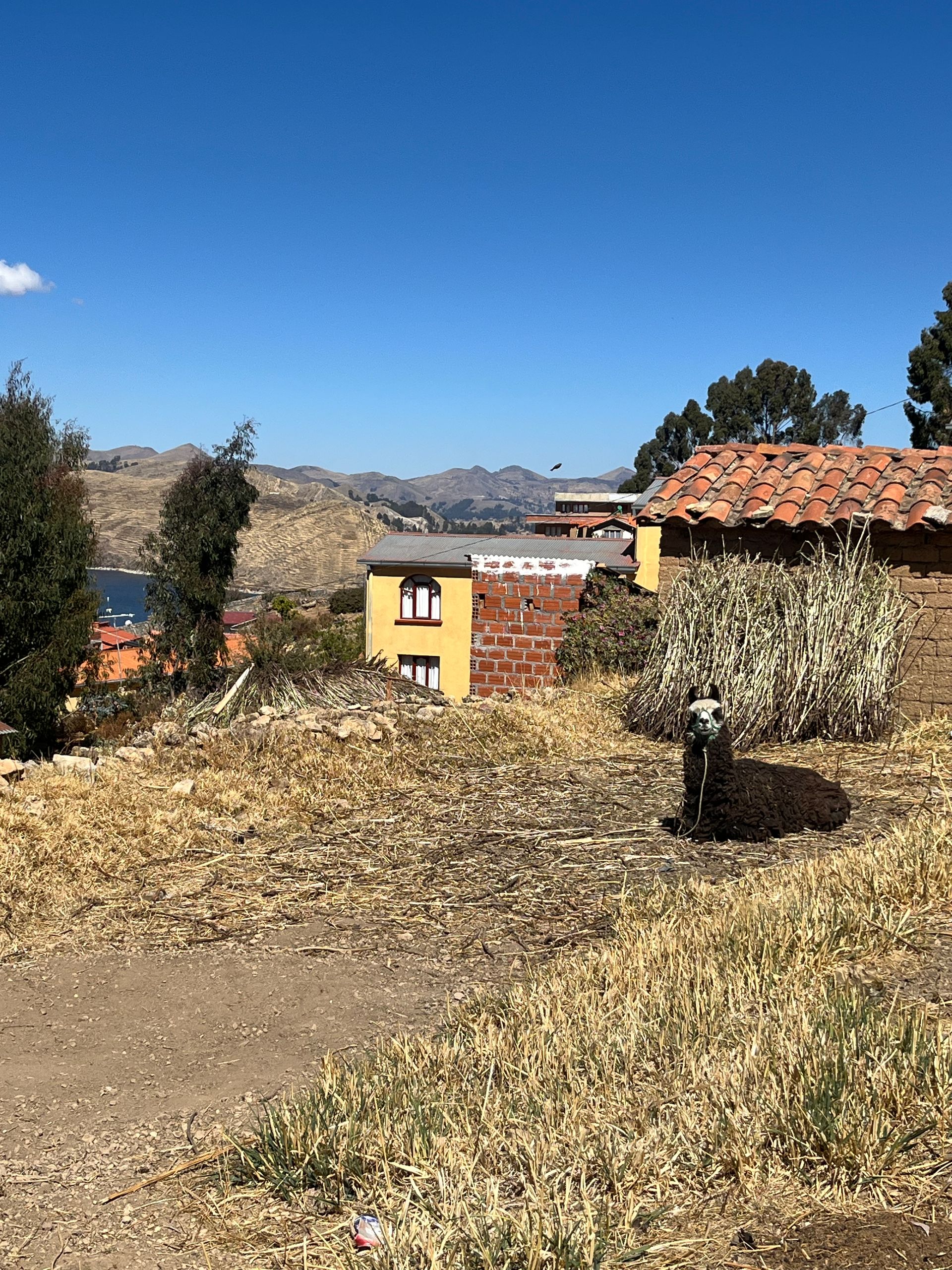
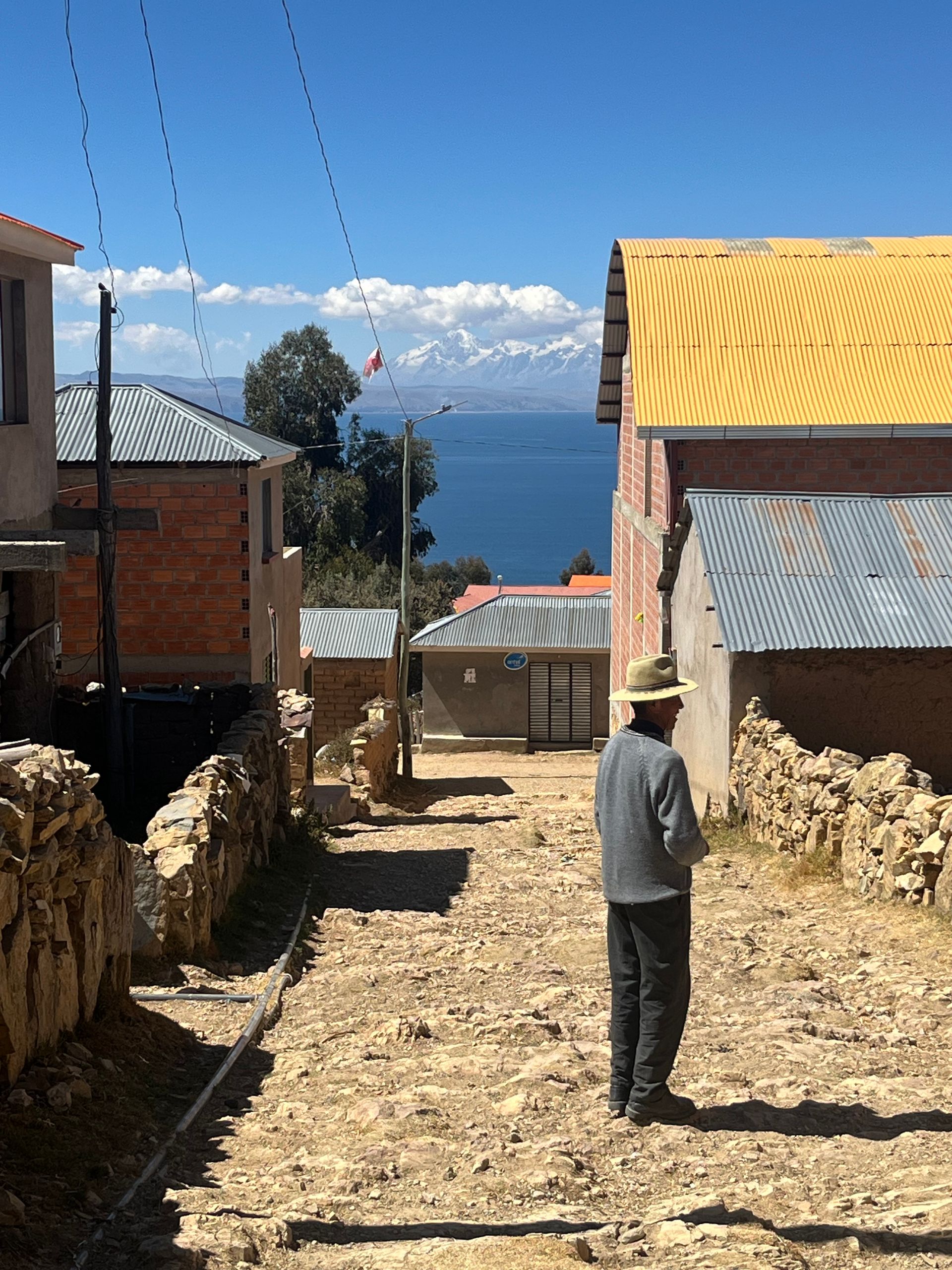
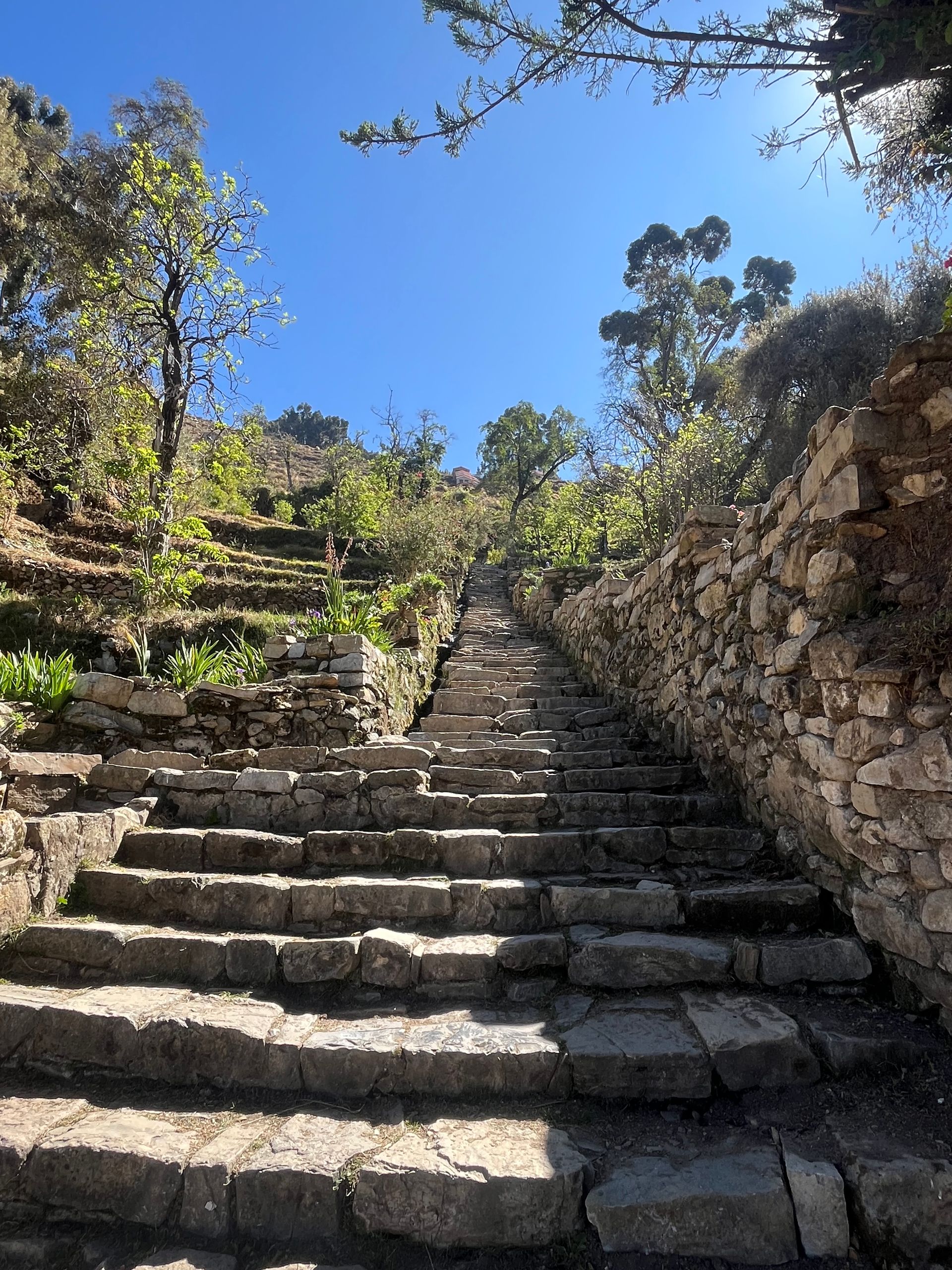
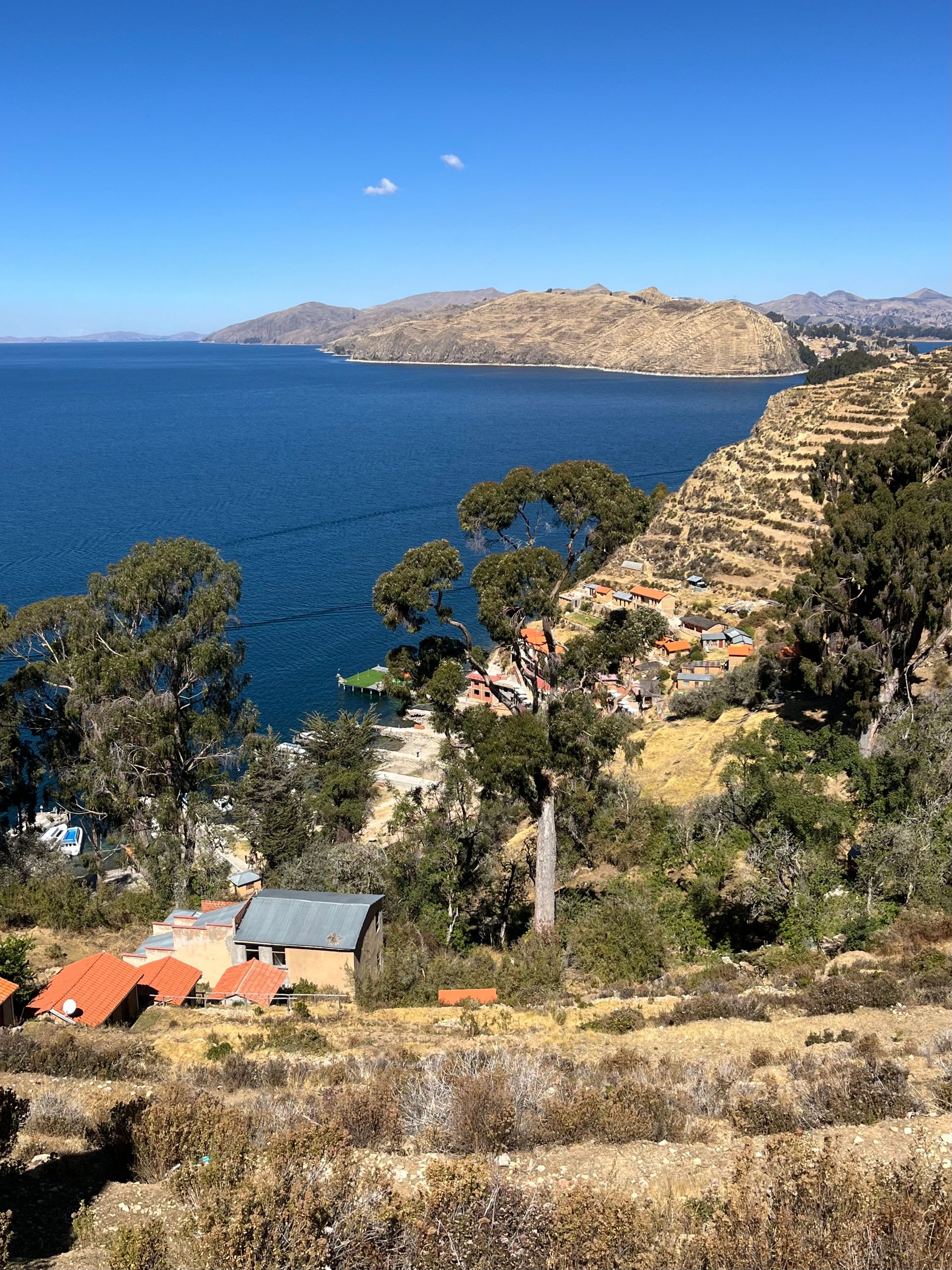
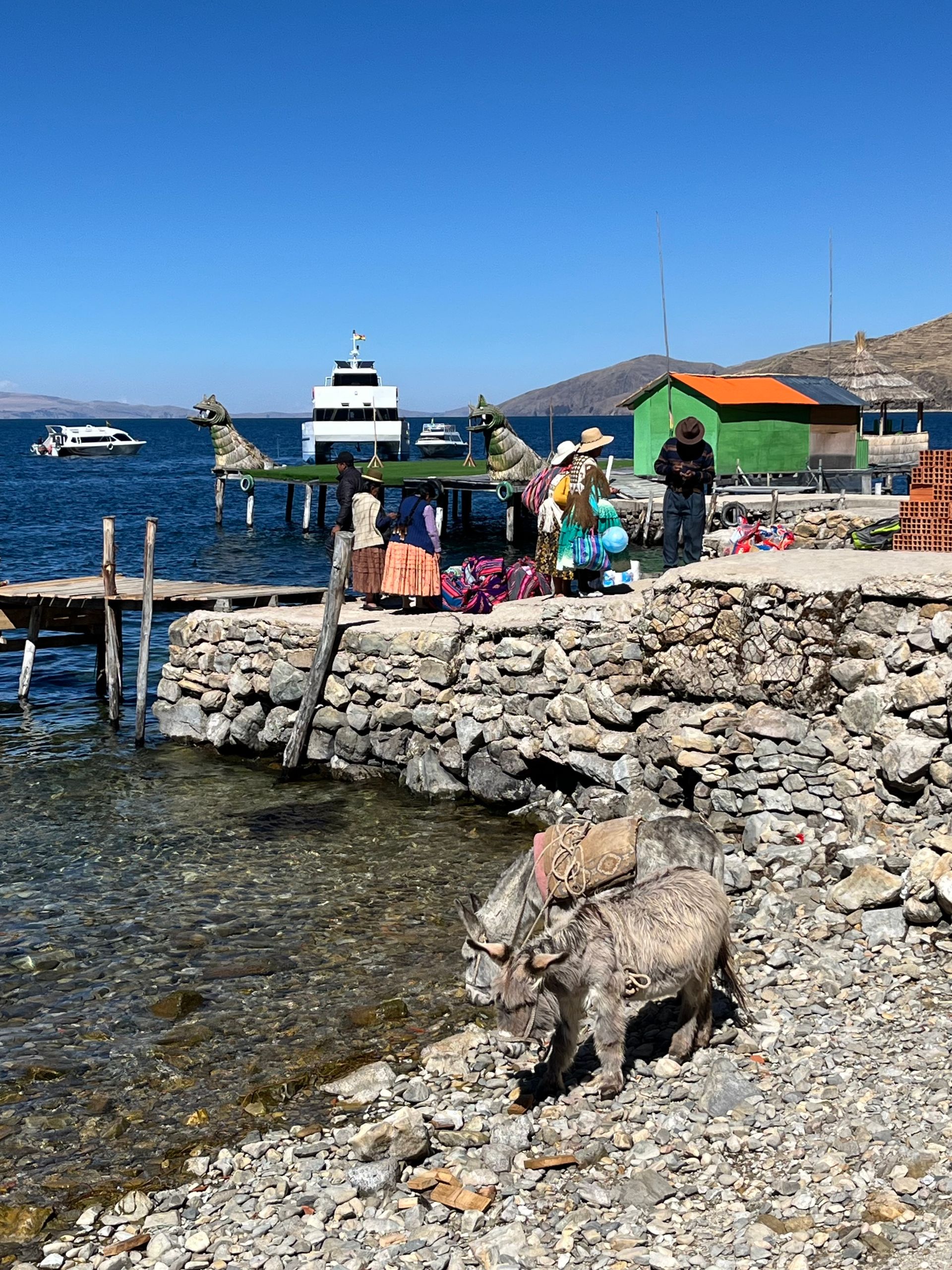
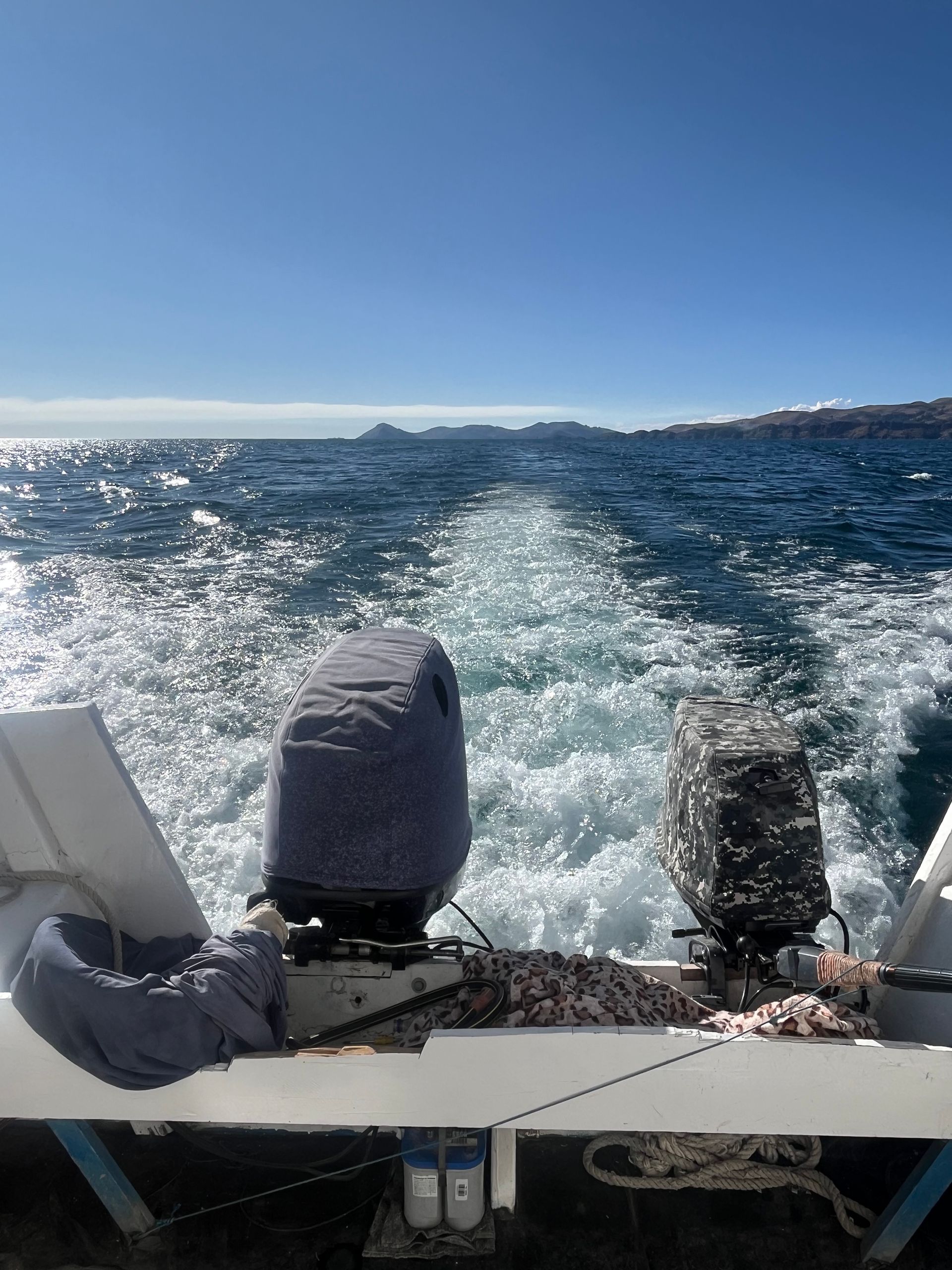
At 8 o'clock the next day, the alarm clock rang, and I set off for the small harbor of the town. My destination for the day was to be Isla del Sol, the largest island in the Bolivian part of Lake Titicaca and the site of numerous ruins and archaeological sites, including the rock formation Roca Sagrada, the place where the sun god is said to have created the world. The ferry chugged comfortably across the lake, and although the sun was shining in my face, it was icy cold in the morning hours. From the boat, I admired the impressively beautiful and barren landscape; the water was clear, and we slowly approached the island. Two thirty-something hippies attempted to play guitar, and although their effort unfortunately failed catastrophically, they persisted in entertaining the rest of the passengers with their strumming at the most basic level for the entire journey. A true test of endurance for any ear, and I was relieved when we finally reached the northern harbor of the island after over an hour. Peace, nothing but peace – absolutely heavenly. I enjoy guitar sounds, but this performance had absolutely nothing to do with music in any remote sense, and if I had grabbed any instrument and banged on it wildly, I wouldn't have stood out in this orchestra of the damned. From the settlement in the north of the island, I set off, traversed some small villages, and climbed the hilly ridge in the middle of the island. The higher you climb, the more beautiful and impressive the views over the island and the lake become. An indescribable peace hung in the air; there were hardly any other people around, and you could almost feel the mystical and unique spirit of this place. I stopped repeatedly, sat down briefly, and let my gaze wander into the distance for a few minutes or more. Rugged landscape, sparse vegetation, the chirping of unknown bird species, and the bright blue water of the lake. Just beautiful, and just the right place to let your soul unwind for a moment. Besides a few indigenous farmers with donkeys and mules, I encountered no other people throughout the morning. The locals, predominantly of Aymara culture, live a simple life. Agriculture, fishing, and a bit of village gossip; there's not much more here. The atmosphere is calm and peaceful, almost like a journey into another time, and for me, it was an appealing and absolutely fitting environment to say goodbye to Bolivia. However, amidst all the idyllic views, one should also keep in mind that Lake Titicaca is one of the most polluted lakes on Earth. Particularly the high amounts of wastewater, especially from the surrounding cities and towns, that are discharged untreated into the lake pose a significant problem. Additionally, around the lake, there are about 30,000 illegal mines that also discharge their heavily lead and mercury-laden wastewater into the lake without treatment. Although numerous projects exist for the rehabilitation and protection of the lake, both on the Bolivian and Peruvian sides, they lack resources and coordination, so pollution will likely remain a long-term problem. If you haven't dealt with the topic, you as a visitor notice very little; the water is clear, the air is pleasantly clean, and generally, there is very little garbage or other human remnants around. In fact, the place looks very idyllic and untouched. Very pleasant, even if one should not ignore the issue of environmental pollution.
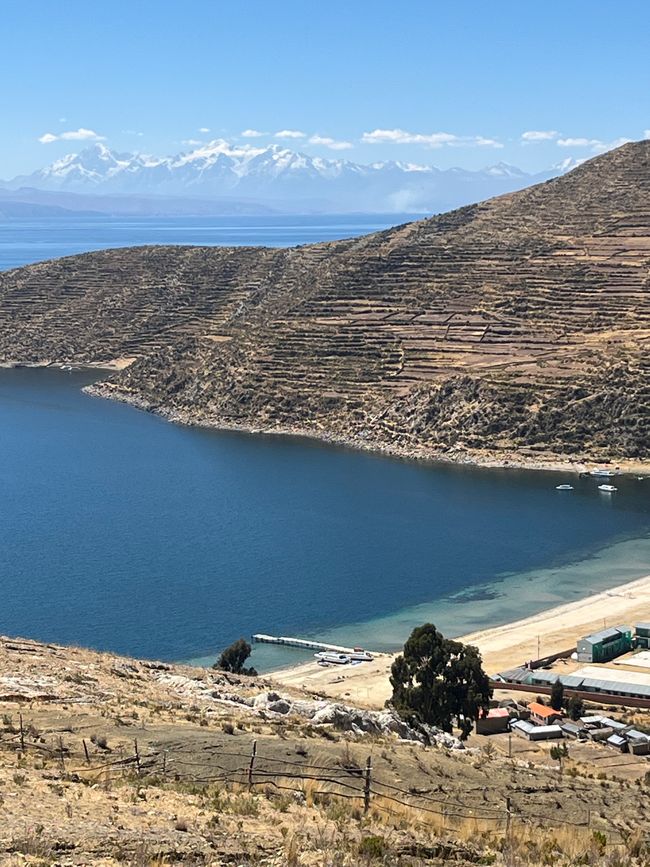
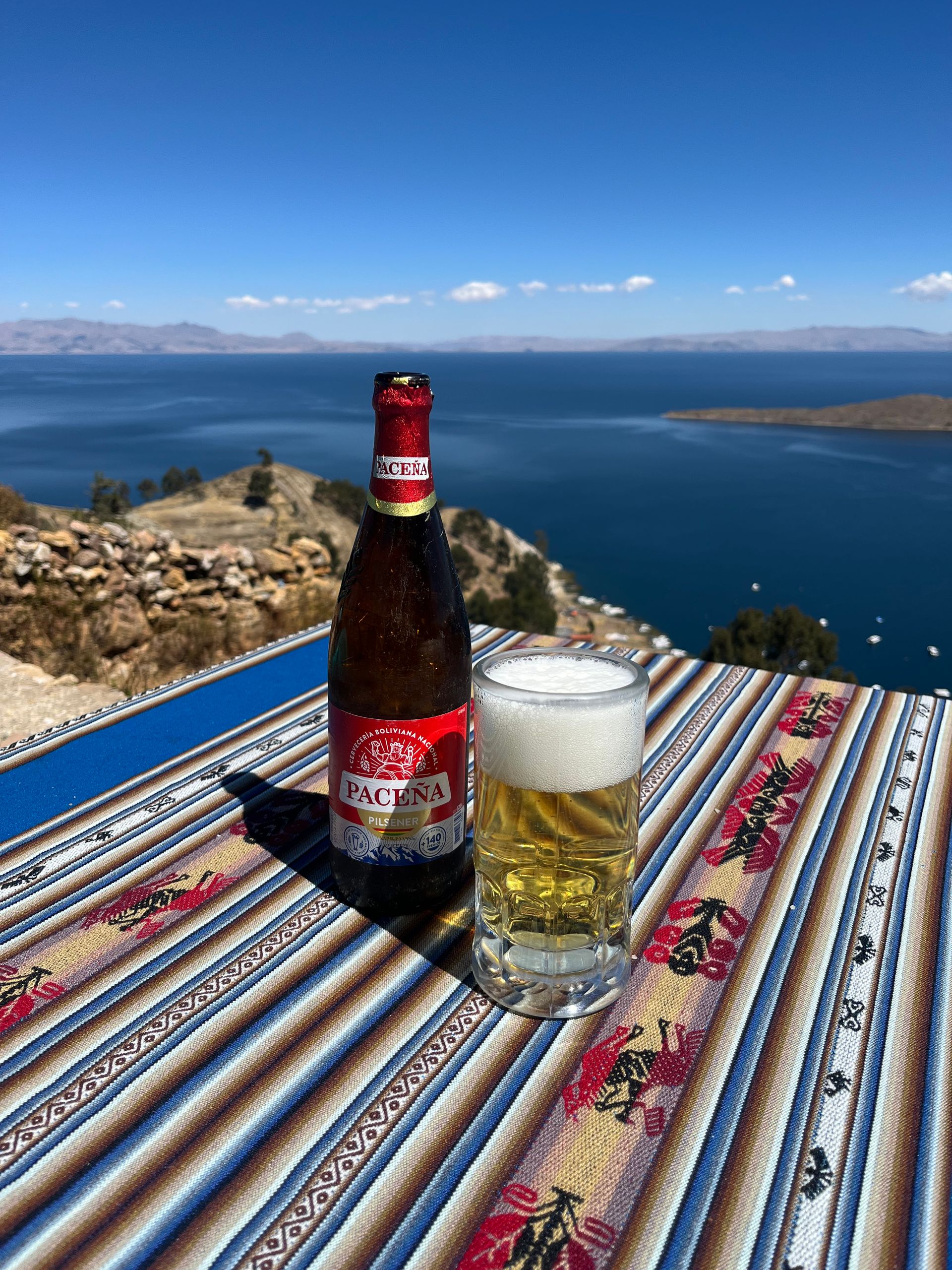
I continued hiking across the island for the rest of the morning (roughly 15 km total) and enjoyed the tranquility and the beautiful views. It's incredibly pleasant to feel like the only tourist on the island. Although you can see smaller groups of people from a distance, the island's size helps disperse them well, allowing you to spend almost the entire day alone in this beautiful landscape. Some panoramas and the lake almost have a Mediterranean flair, and you have to remind yourself briefly that you are not in Corsica but in the Andean highlands at almost 4,000 m altitude. Early in the afternoon, I reached a small settlement and treated myself to a hearty lunch and a beer with a great view before making my way to the southern harbor of the island. The numerous ruins and rock formations I passed through or saw from a distance provide a rough insight into the spirituality and life of the Incan people, even though I didn't dive into the details of each site. For me, that day's main purpose was to let all the impressions of this exciting land sink in and sort my thoughts before embarking on new adventures. I would have plenty of opportunities to explore cultural sites and relics of the Inca Empire in Peru as well.
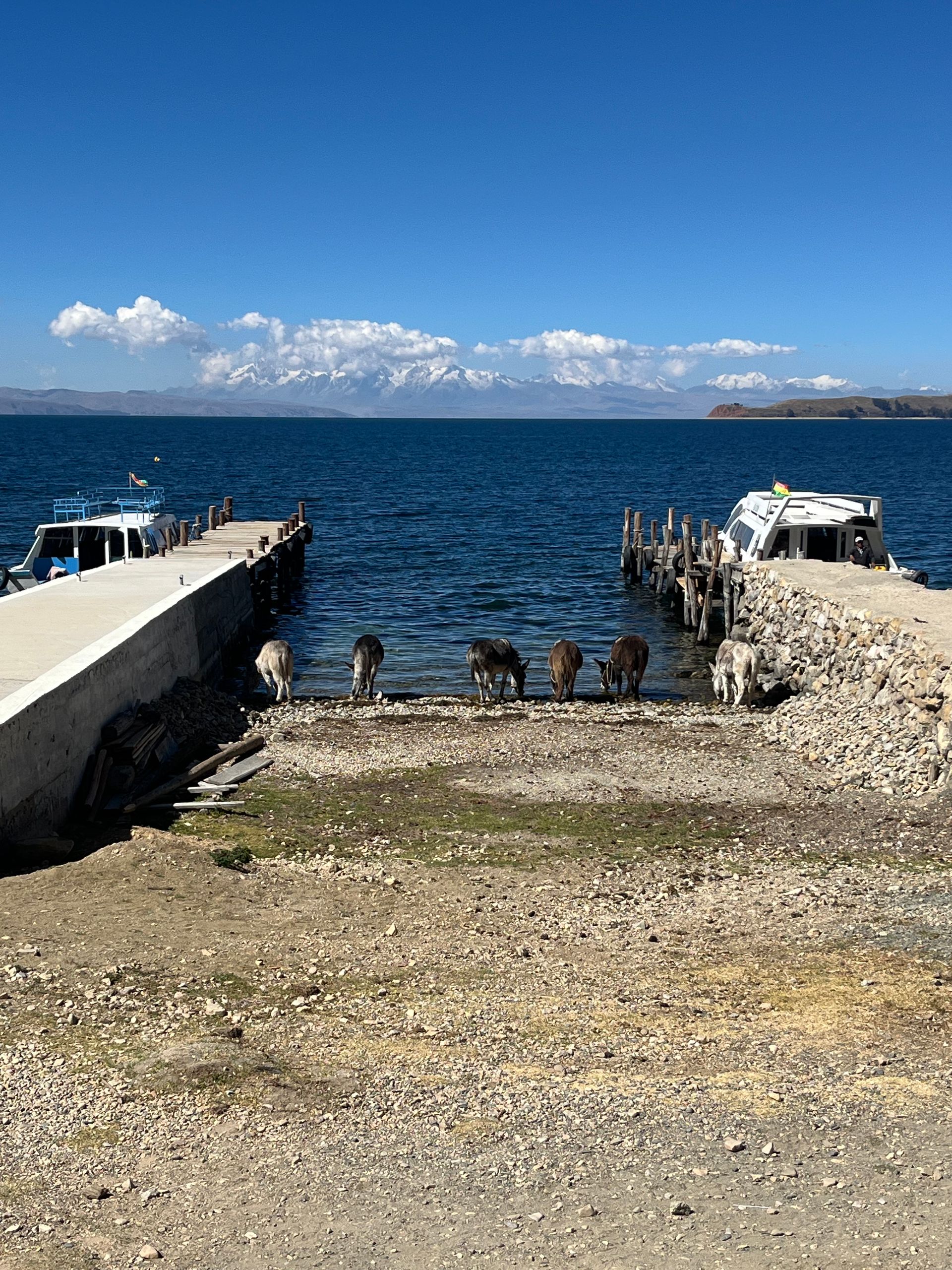
Upon arriving at the southern harbor, there was one last teeny tiny problem. It was 2 PM, and the next regular ferry back to Copacabana would leave in exactly 2 hours. Unfortunately, that was too late for me, as the return trip lasted a little over an hour, and I wanted to catch the only bus to Puno that was scheduled to depart at 5:30 PM since I would then be heading directly to Cusco on the night bus. Moreover, I still had my luggage stored at the accommodation, which was on a hill on the outskirts. Bad timing, apparently, but I didn't want to accept the situation entirely and lingered around the harbor, considering a quick exit strategy off the island. From time to time, smaller boats docked and departed, but they were reserved for pre-booked tour groups, and I asked the crew if it would be possible to transport a German white bread back to Copacabana. The answer was always the same: Theoretically yes, but nothing could be done without the approval of the village elders, who presumably had authority over all harbor traffic, and no crew wanted to risk any trouble with the overseers, as it could mean considerable hassle for them. At the entrance to the harbor, overlooking the area, there sat 5 older gentlemen who managed all payment transactions and logistics. They received the fees for transport and were like the supreme authority of the harbor, which was more of a dock for various smaller boats and ferries. I explained my plight to the council of elders and requested to board one of the tourist boats. However, after a brief assessment of my appearance, the request was unanimously rejected, and I was asked to leave. I was slowly getting fidgety because missing the 4 PM boat meant missing my bus and the subsequent night journey to Peru. So, I tried again to sneak a transit back to Copacabana, but unfortunately, it was without chance, all under the watchful eyes of the island leaders. Eventually, I got fed up, went back to the gentlemen, pulled out 50 Bolivianos from my pocket (about 6.50 euros), and waved the bill in front of the gentlemen to emphasize my urgency to get back to the mainland soon. They laid ice-cold eyes on me and I left in annoyance when a whistle caught my attention. One of the gentlemen had probably caught on to the situation and signaled for me to approach. He asked me to show him the bill. Done, and after a brief consultation with his colleagues, he pointed to a boat that was just leaving the harbor. He took the bill, signaled to the crew that I had purchased a ticket, and gestured for me to make my way to the boat. I ran to the dock and jumped onto the already departing boat, where a group of puzzled tourists stared at me. Wonderful! It was just after 2:30 PM, and I was on my way back to the mainland. The island gurus were also 50 Bolivianos richer. A classic win-win situation then. Absolutely fantastic, and thus nothing should stand in the way of my onward journey to Peru. Upon arriving in Copacabana, I made my way back to the accommodation to retrieve my backpack, which I had previously agreed to store in a room, and was surprised to find the door locked. Unfortunately, the hostel hosts were not on the premises, and my calls went unanswered. Oh no – all the excitement just to not be able to get my backpack and miss the bus. Luckily, after a quick inspection, I found that one of the windows in the room could be slid open, and I climbed in using several buckets to evacuate my things. Completely soaked in sweat and with my luggage in tow, I jogged from the hostel to the bus station and arrived about 15 minutes before my bus' departure. Almost a perfect landing; I still had some buffer time left. ;)
I sat down briefly, then got on the bus and headed for the border – Bolivia, it was an honor and an indescribable joy to be with you – I will hold the time spent with you in my memory for a long time, and I think we will definitely see each other again. Suerte!