
Un peu d'Afrique arrive
Aujourd'hui, l'hiver sud-africain nous offre un merveilleux temps d'été – du moins pour des normes nord-allemandes. 😎 Nous prenons notre dernier jour de vacances de manière très...

Publié: 25.08.2026
Actually, the last blog entry was already written. Actually. 😬😅
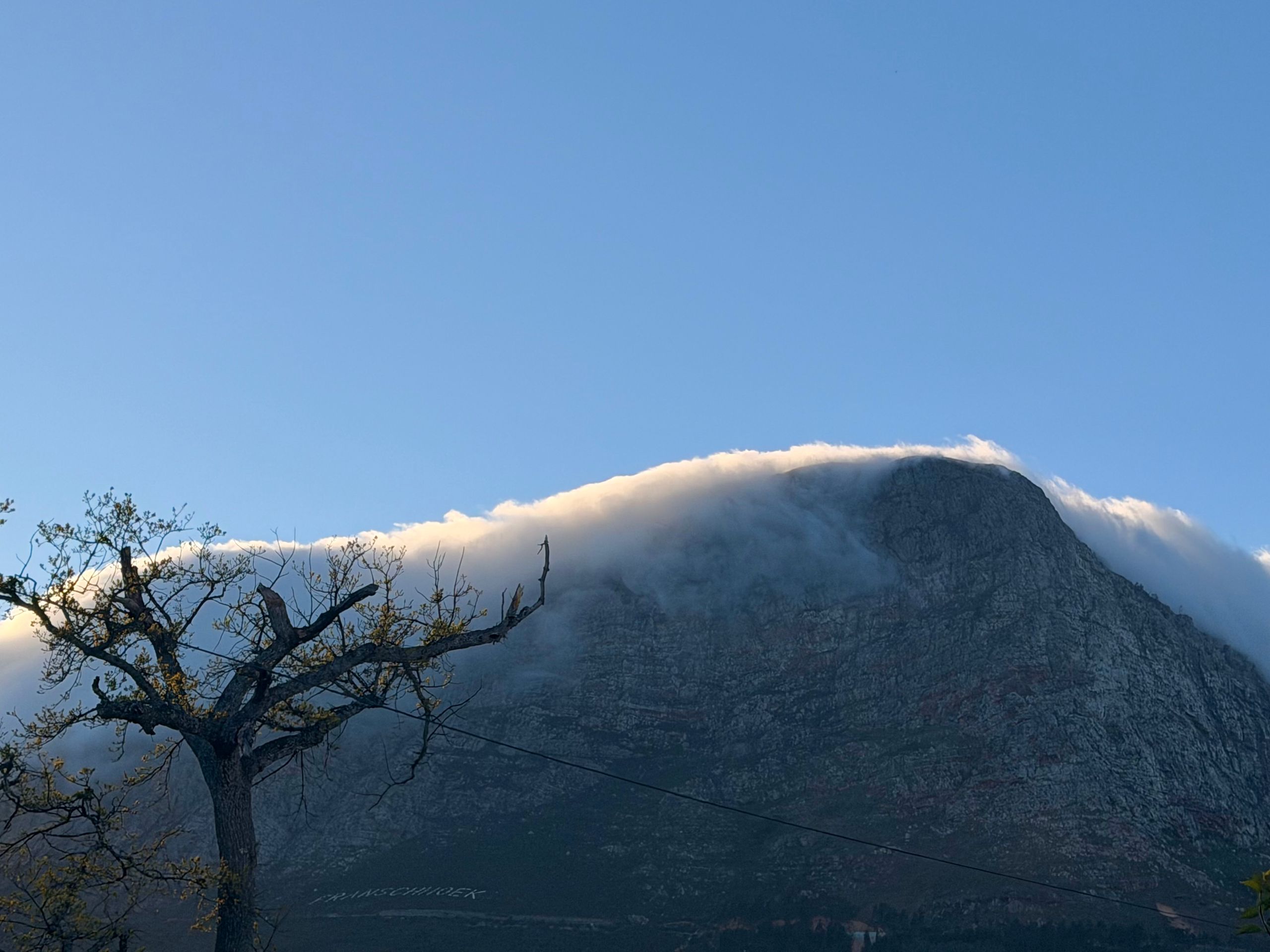
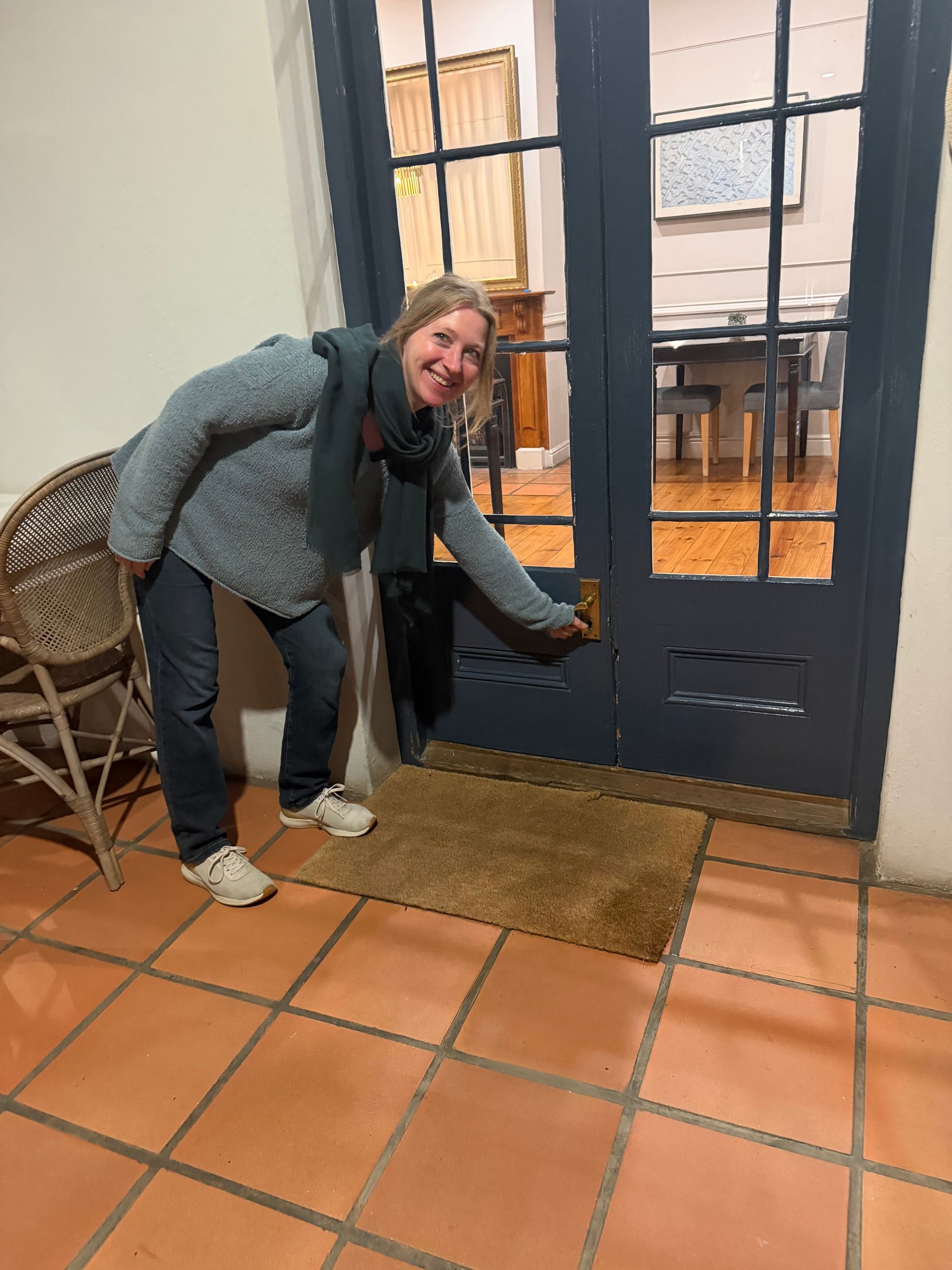
This morning we woke up relatively early, which not only gave us that quaint door on the way to breakfast, but also a wonderful natural spectacle: While the sun still hides behind the mountain peak, the morning fog crawls over the summit.
Since our boarding begins today at 5:15 PM and we also don’t want to be at the airport too early, we are looking for a stopover on the drive from Franschhoek to Cape Town.
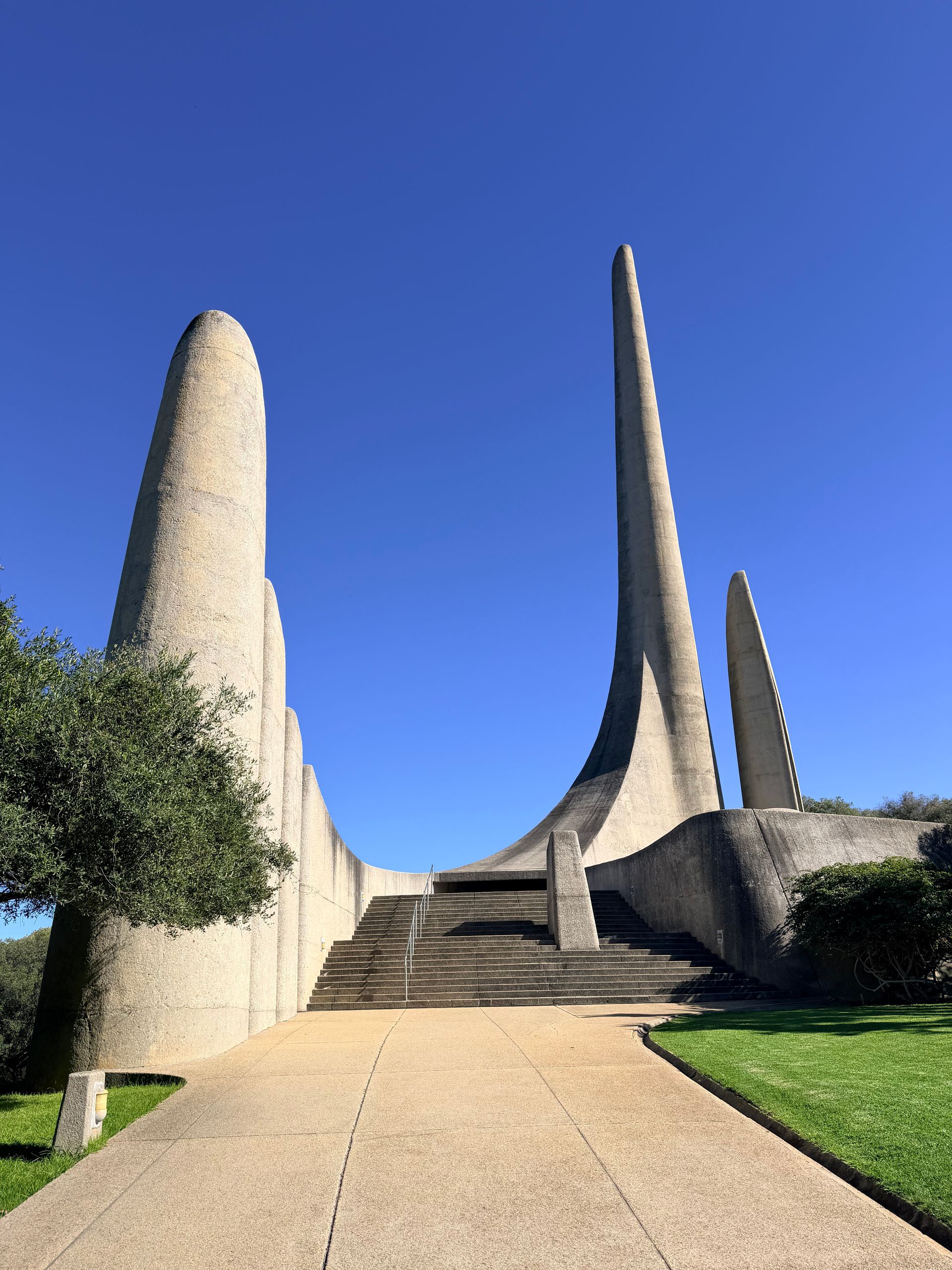
Ever since I mistook the Afrikaans-speaking lady at the cashier in the Cape Town heritage museum for a Dutch woman 🙈, I’ve been curious about how this language actually originated. The Afrikaanse Taalmonument in Paarl, a monument to the Afrikaans language, is just the right place to find out.
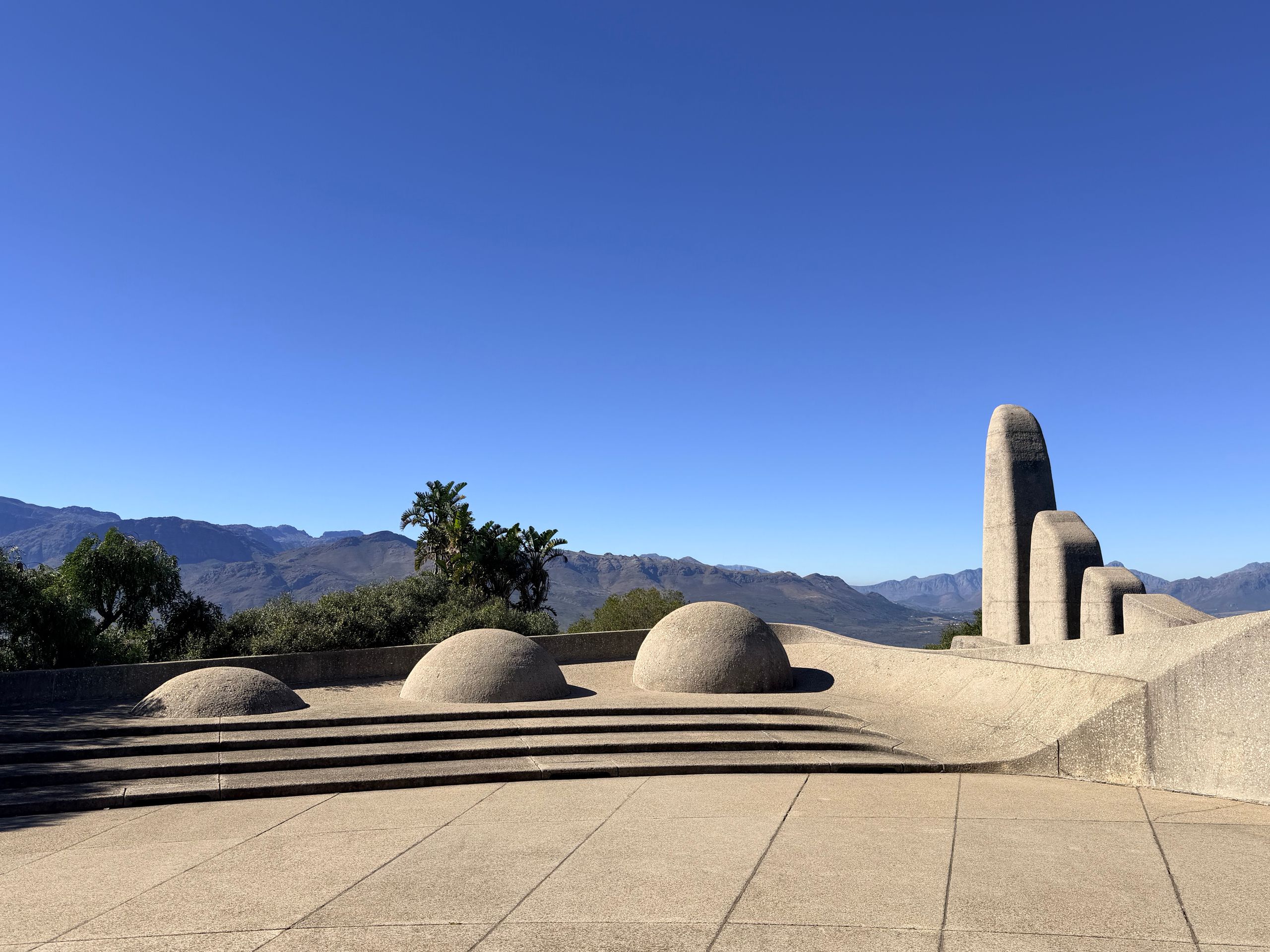
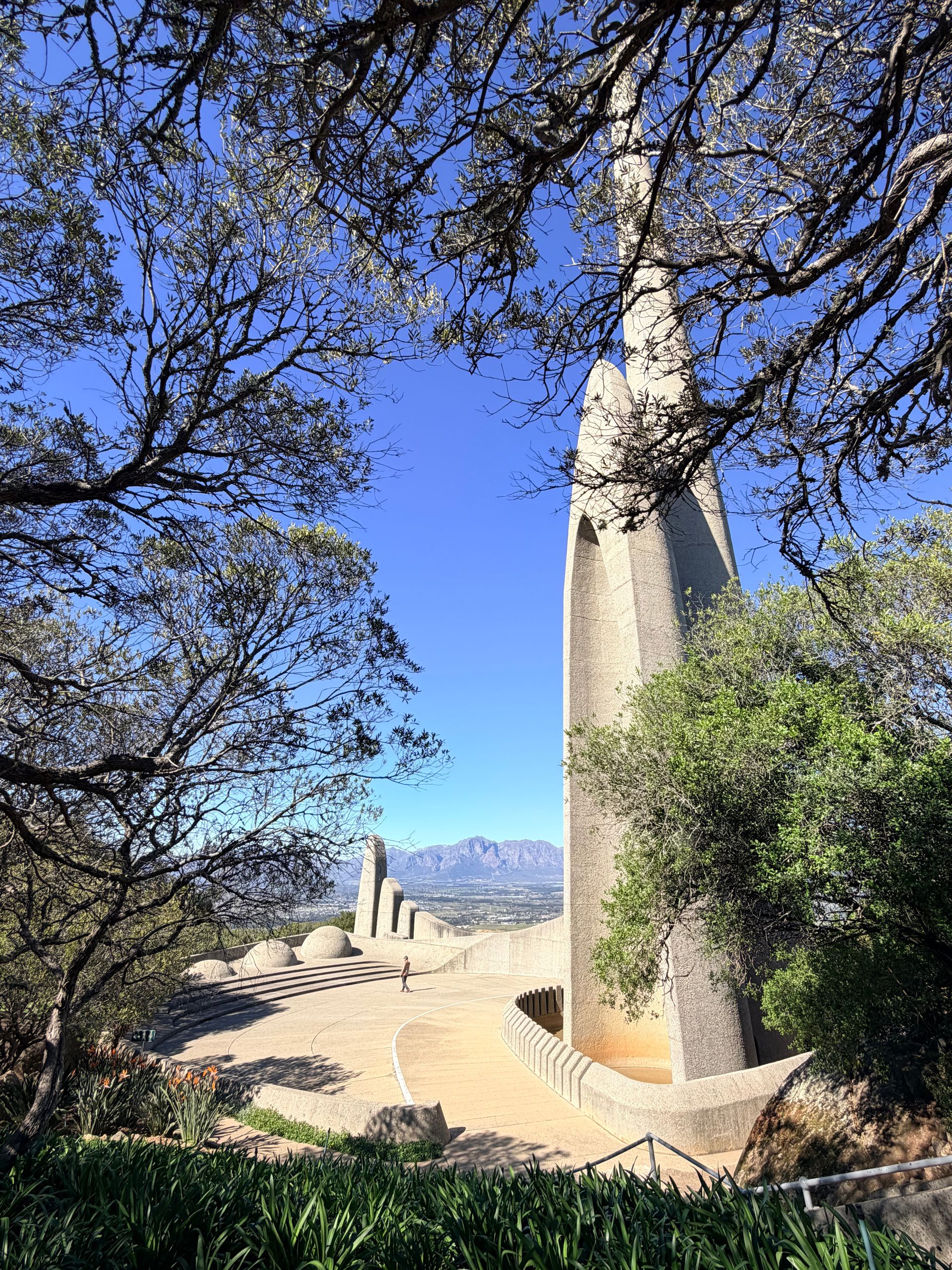
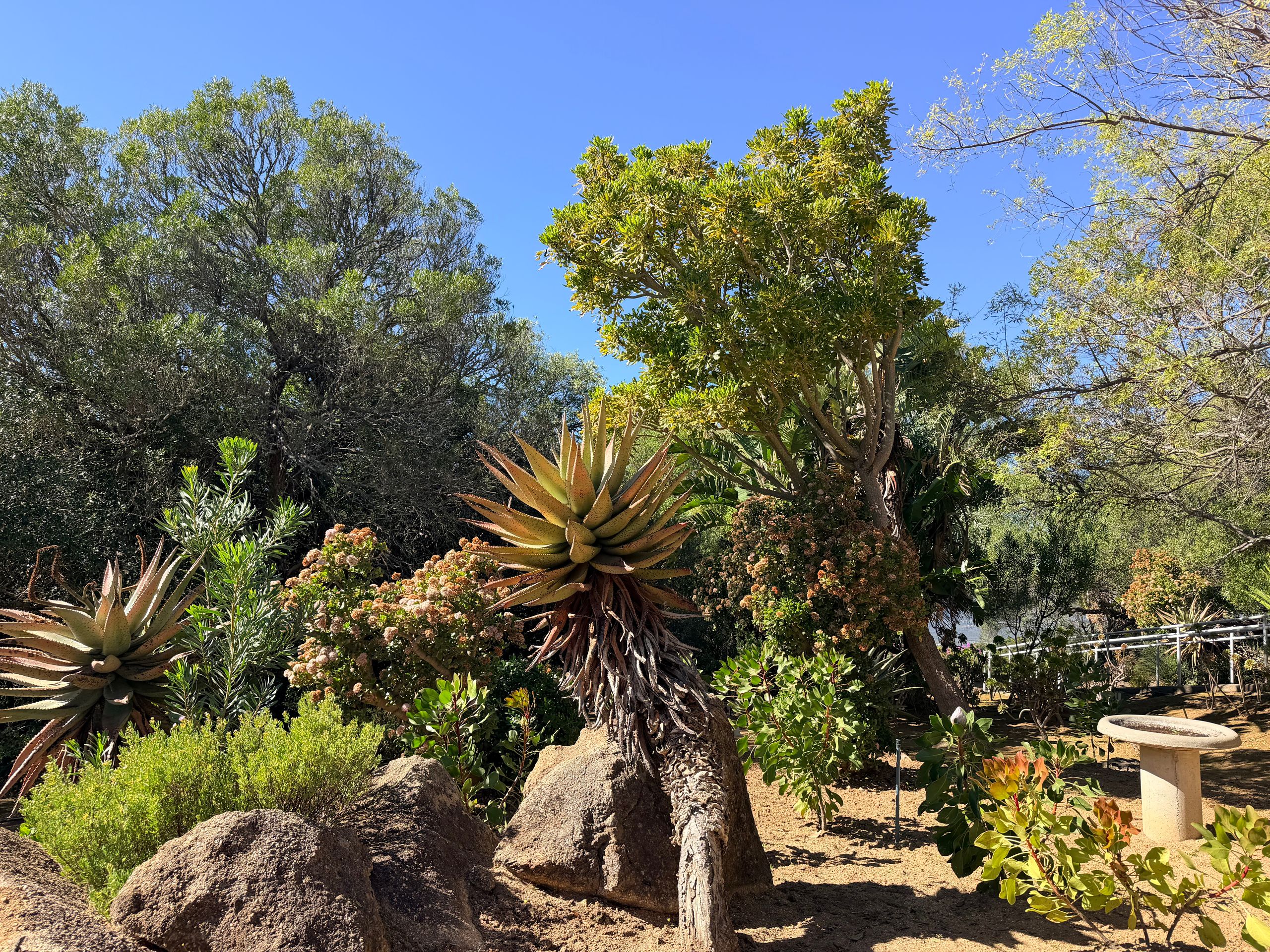
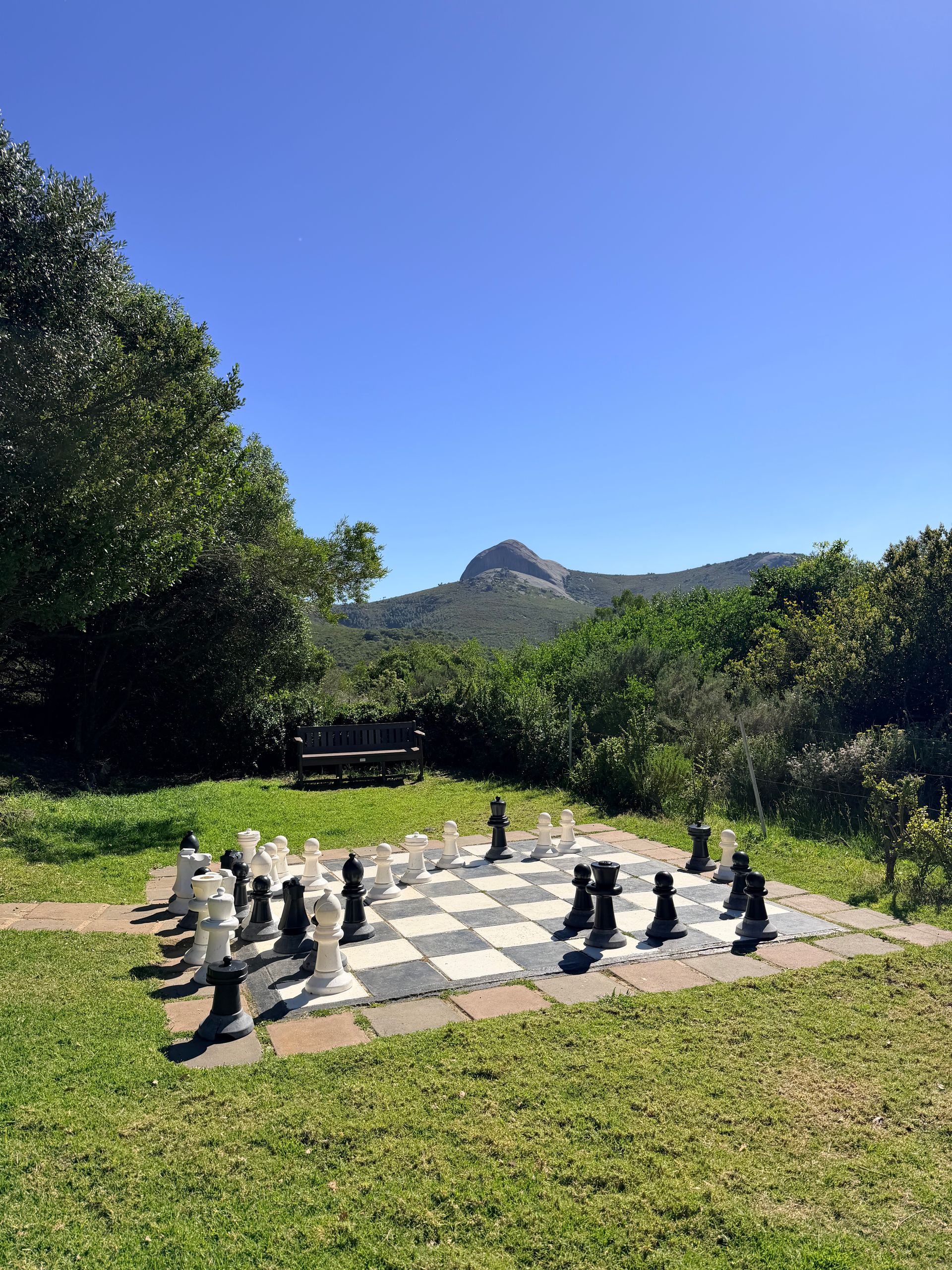
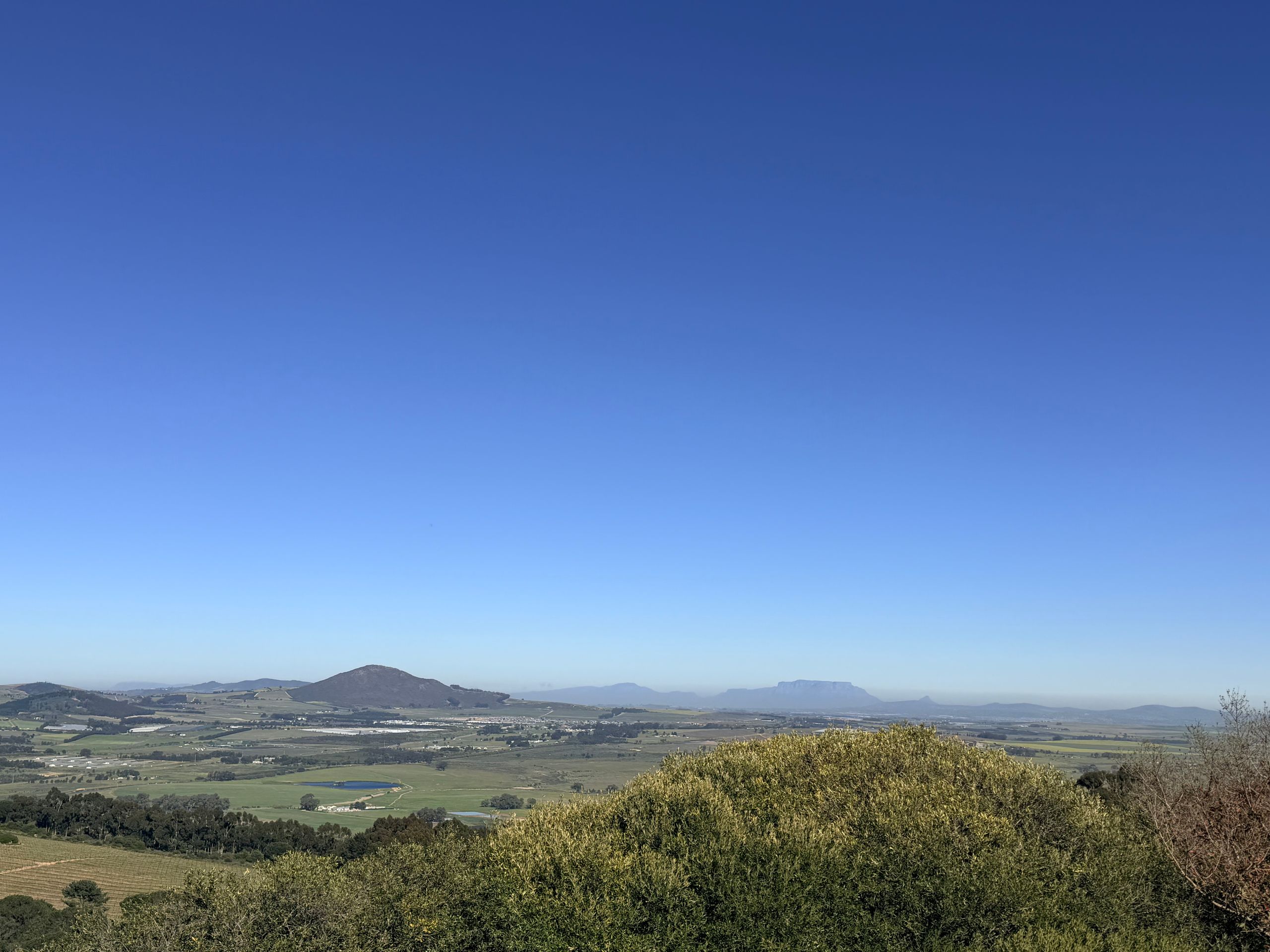
The location itself is impressive. The 57-meter-high monument stands prominently on a hill, surrounded by a surprisingly large, well-maintained park with interesting vegetation (and a beautiful spot for chess-playing 🤩). From there, you get a fantastic view over Paarl and the surrounding winelands.
With an audio guide, we walk through the grounds and learn that Afrikaans is primarily based on Dutch, but is by no means simply the Dutch of the white settlers. Its origin tells quite a lot about the history of South Africa.
When the Dutch established a supply station at the Cape in the 17th century, people from very different backgrounds came together: European settlers, the Khoi and San who already lived at the Cape, and people who were brought to the Cape as slaves, primarily from Southeast Asia and other parts of Africa. In everyday contact, Dutch was modified, words from other languages were incorporated, and gradually Afrikaans evolved from that.
We have already encountered some traces of this on our journey without even knowing it. Kudu and Springbuck, for example. And even the somewhat quirky name Dikkop for a bird is Afrikaans and actually simply means “thickhead”. 😄
What I find particularly interesting is that the people who were taken from Southeast Asia also had a significant influence on the development of the language. Many of them were Muslims, and early religious texts in Afrikaans were even written in Arabic script.
All of this is explained in great detail through the audio guide and is also reflected in the architecture of the monument. Its various columns and arches represent the influences from Europe, Africa, and Asia that ultimately flowed together to create a common language.
The longer we listen, the more interesting we find it all. At some point, however, we also notice what we are not learning, and I use the airport Wi-Fi for further research. 🤓
Because the history of Afrikaans certainly does not end with its origin. In the 20th century, the language became increasingly a symbol of the white Afrikaners and eventually one of the languages of the apartheid state – that system which separated people by their skin color and denied basic rights to the black majority population.
In 1976, the government finally attempted to enforce that black schoolchildren had to learn certain subjects in Afrikaans. Thousands of students protested in Soweto against this. The police shot at the demonstrators, and numerous people died. The uprising became a significant turning point in the resistance against apartheid.
And now the time at which we stand here becomes particularly interesting: The Taalmonument was inaugurated in 1975 – right in the midst of apartheid and just one year before the Soweto uprising.
During the entire tour, we do not learn anything about this part of the history. This part of history is also not mentioned in our information sheets. At a monument that otherwise so thoroughly tells about the origins and significance of Afrikaans, we find this gap at least noteworthy.
Another thing catches our attention: For the first time on our trip, white South Africans are sitting here at the entrance and behind the museum cash register. After encountering almost exclusively black or “Coloured” staff in the tourist service sectors up until now, we now register this immediately. Whether this has any significance here, we certainly do not know. But we find it interesting that we even notice this.
Thus, a stopover that we originally intended just to avoid being too early at the airport unexpectedly turns into a pretty interesting encounter with the complicated history of South Africa.
And of course, we are still way too early at the airport. 😂✈️
But now really: The end. 🙈