
Bus travel in Heraklion
We begin our vacation year 2025 with a visit to the significant Minoan cultural sites on the Greek island of Crete. But before we can visit the historically significant...
Published: 15.05.2025
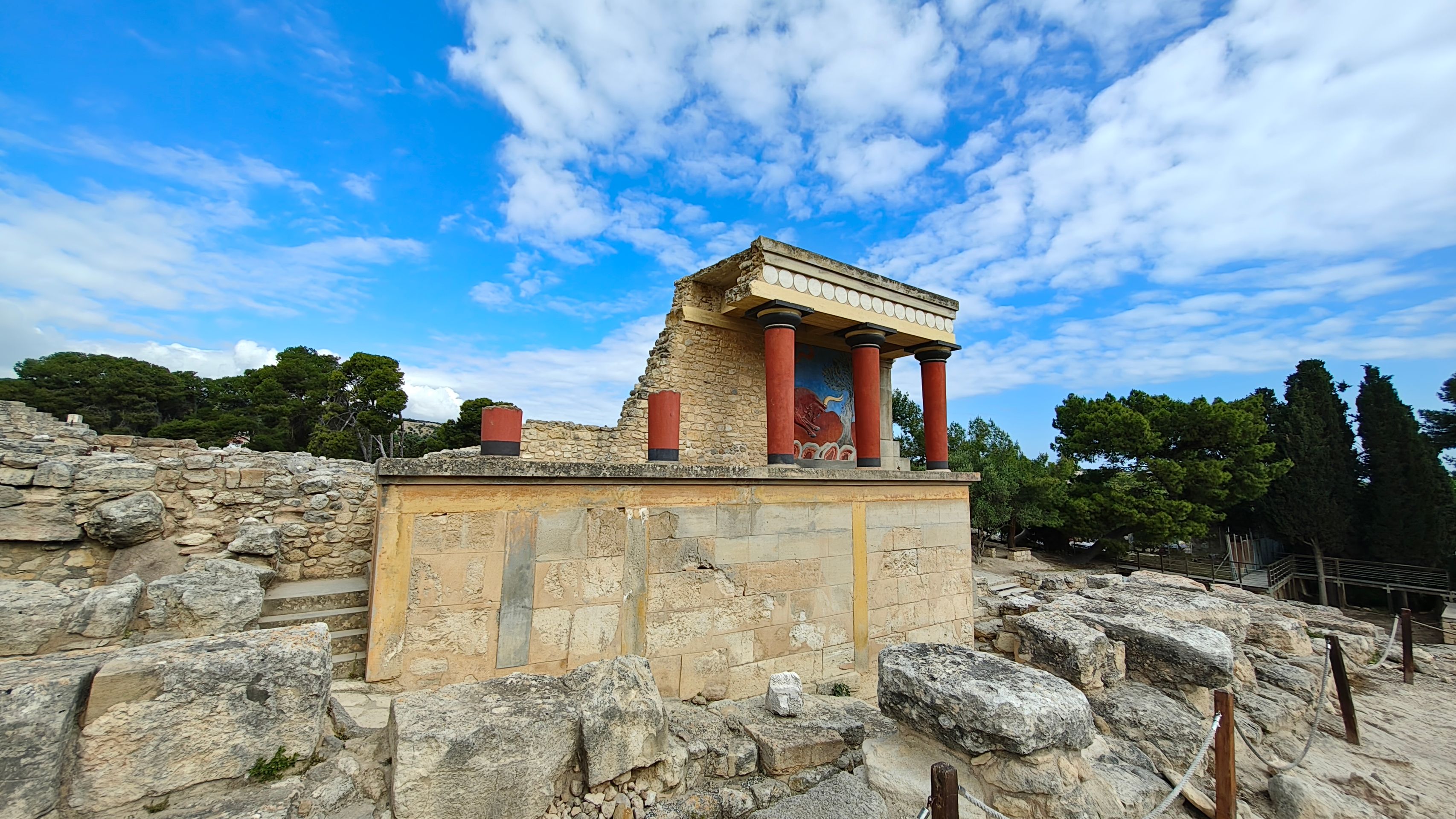
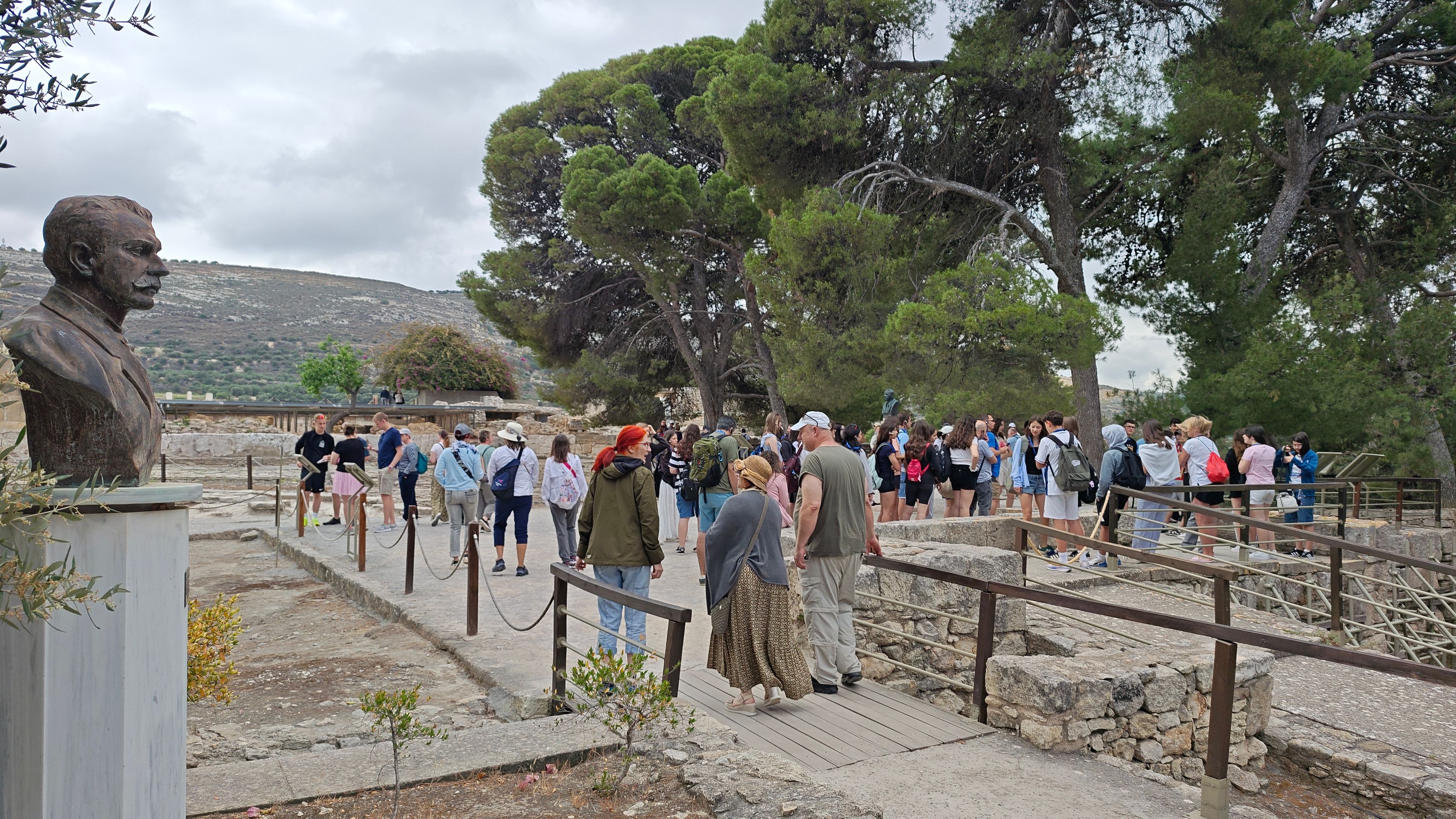
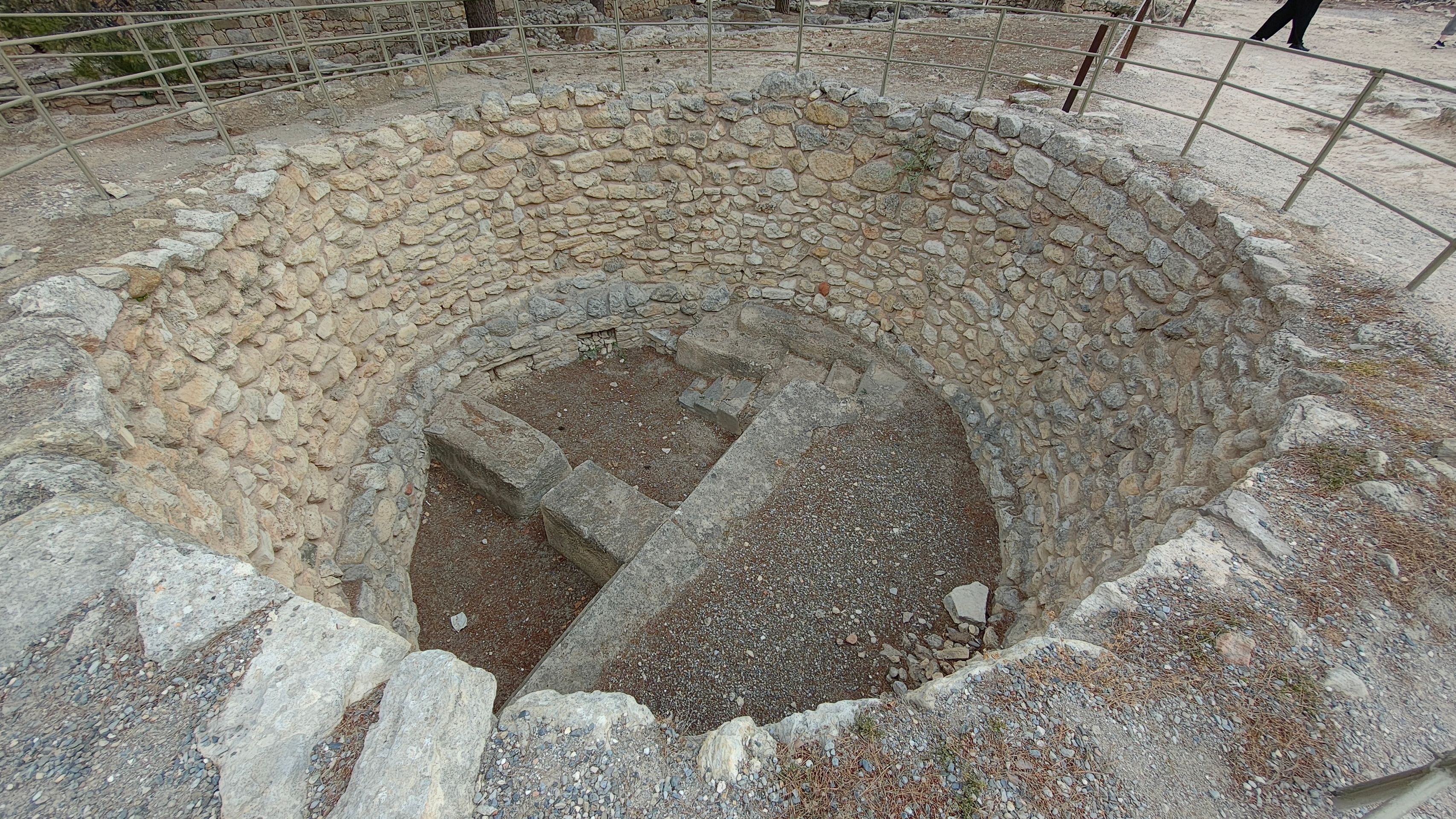
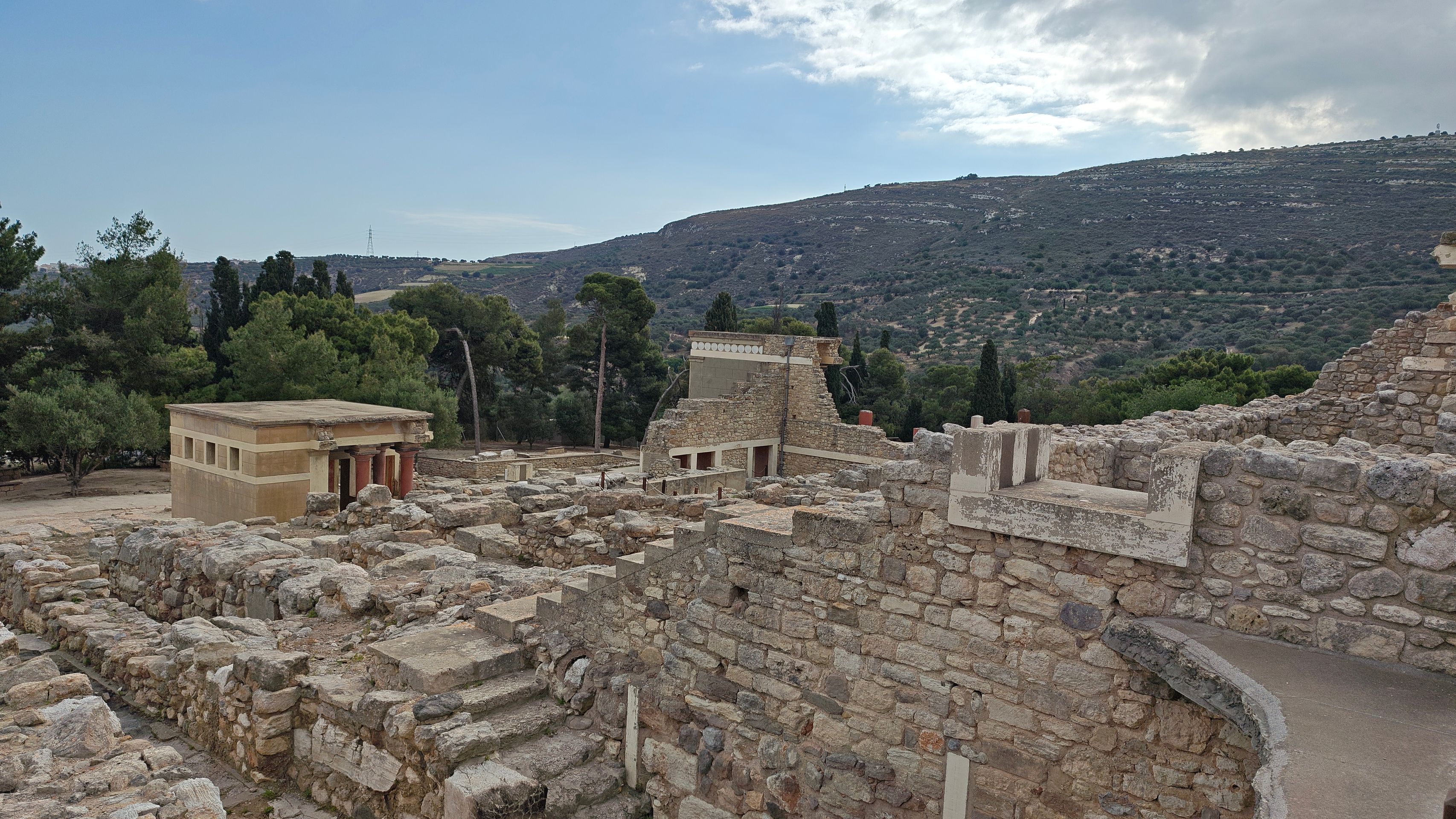
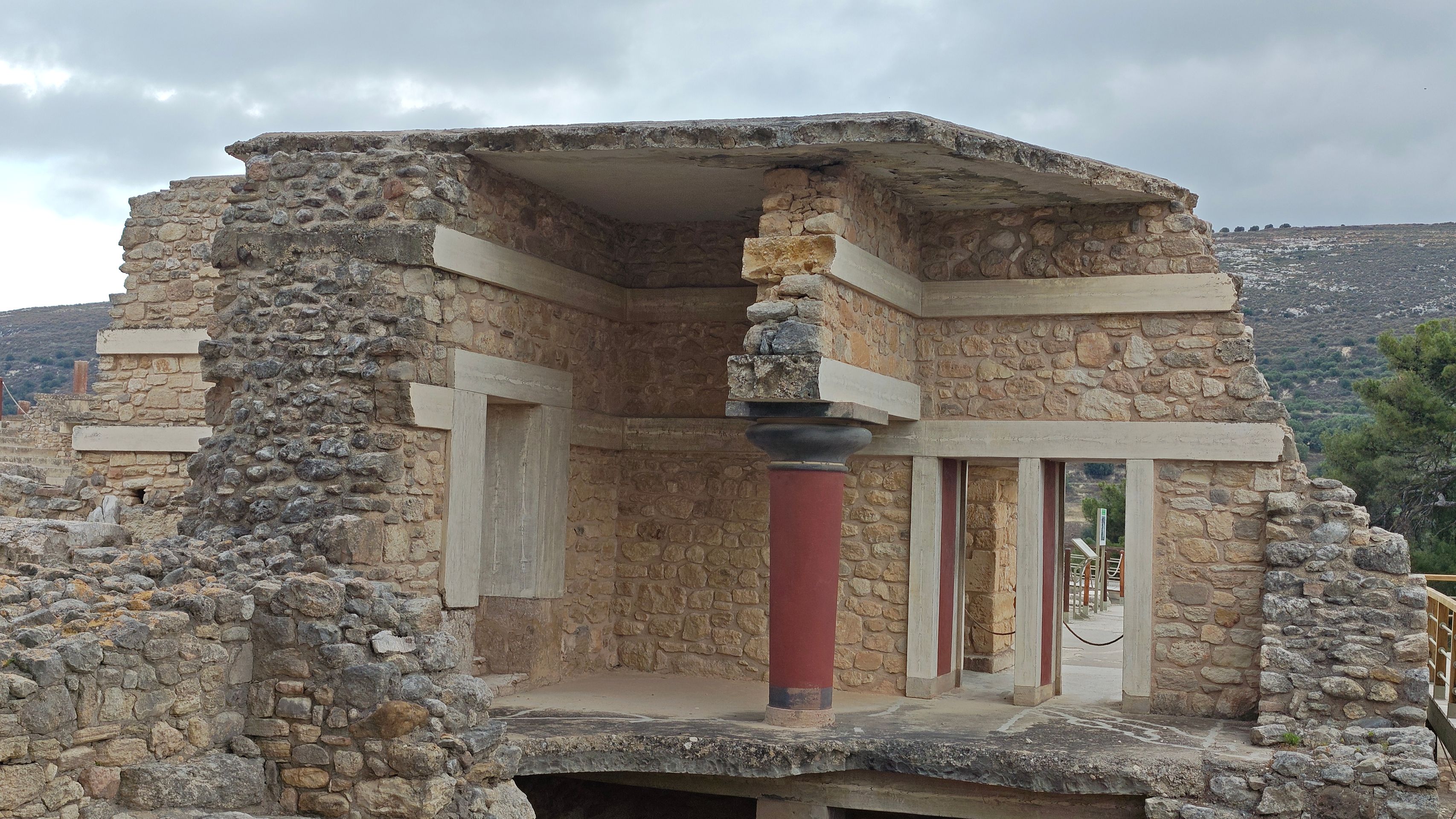
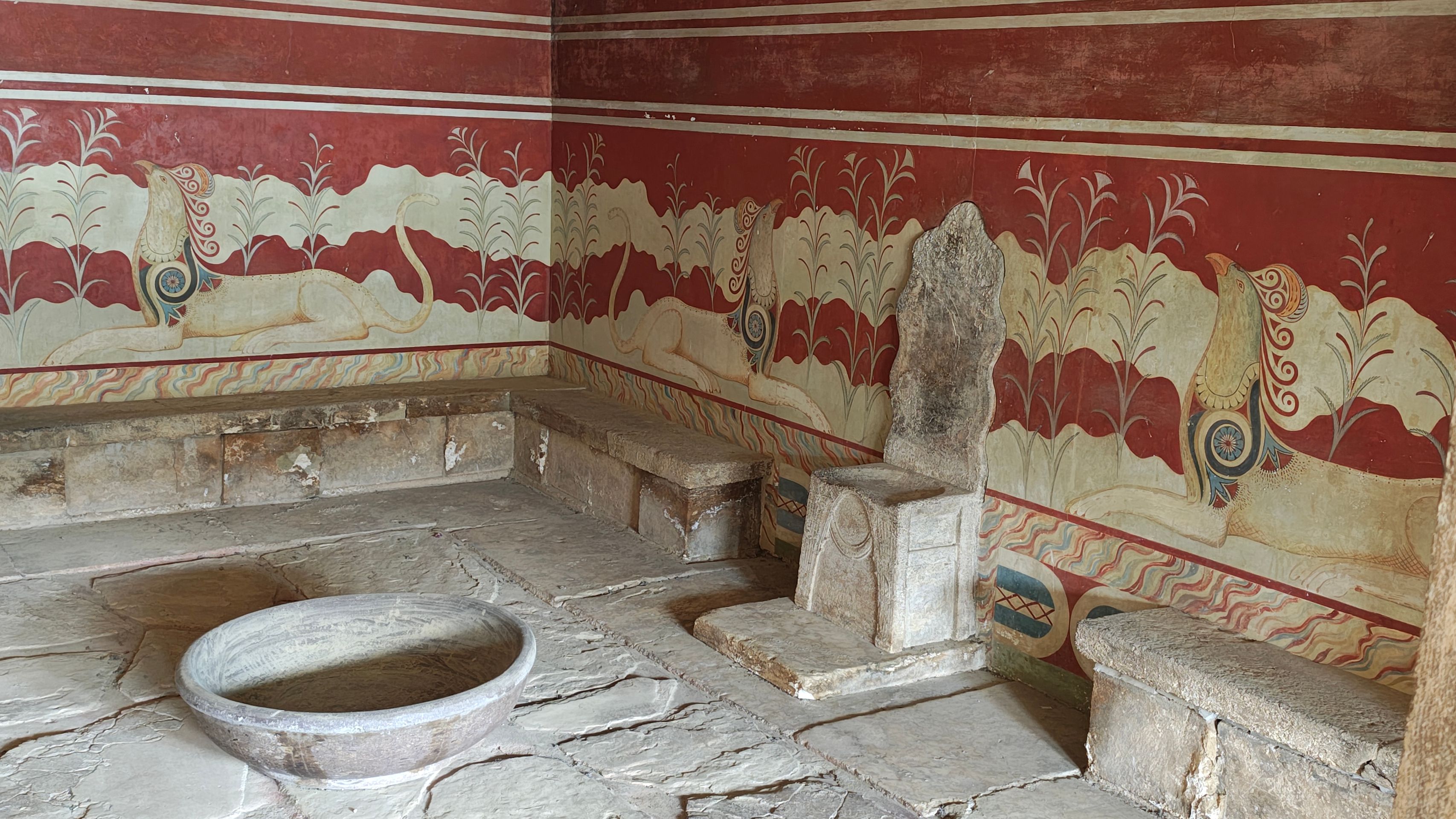
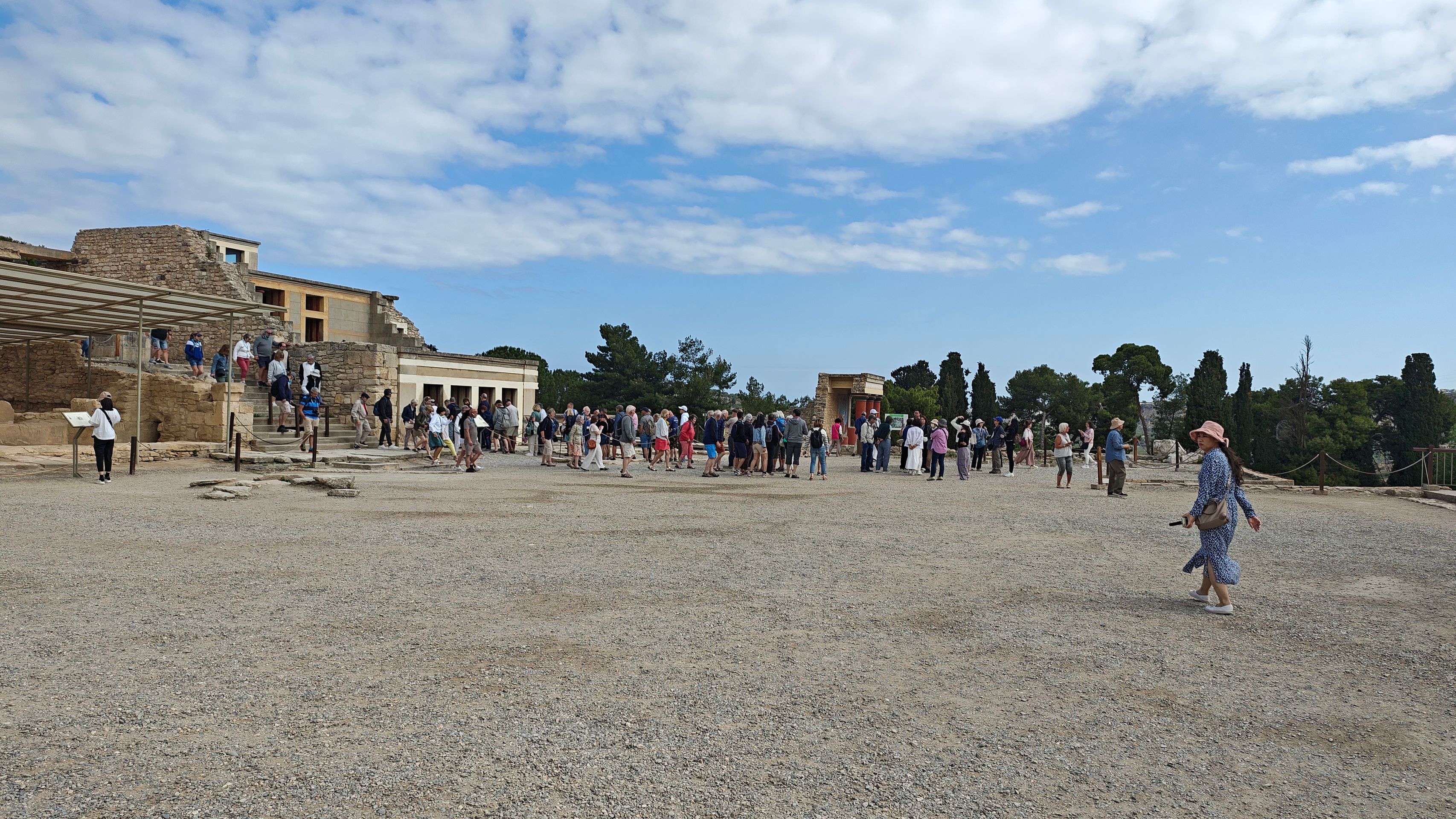
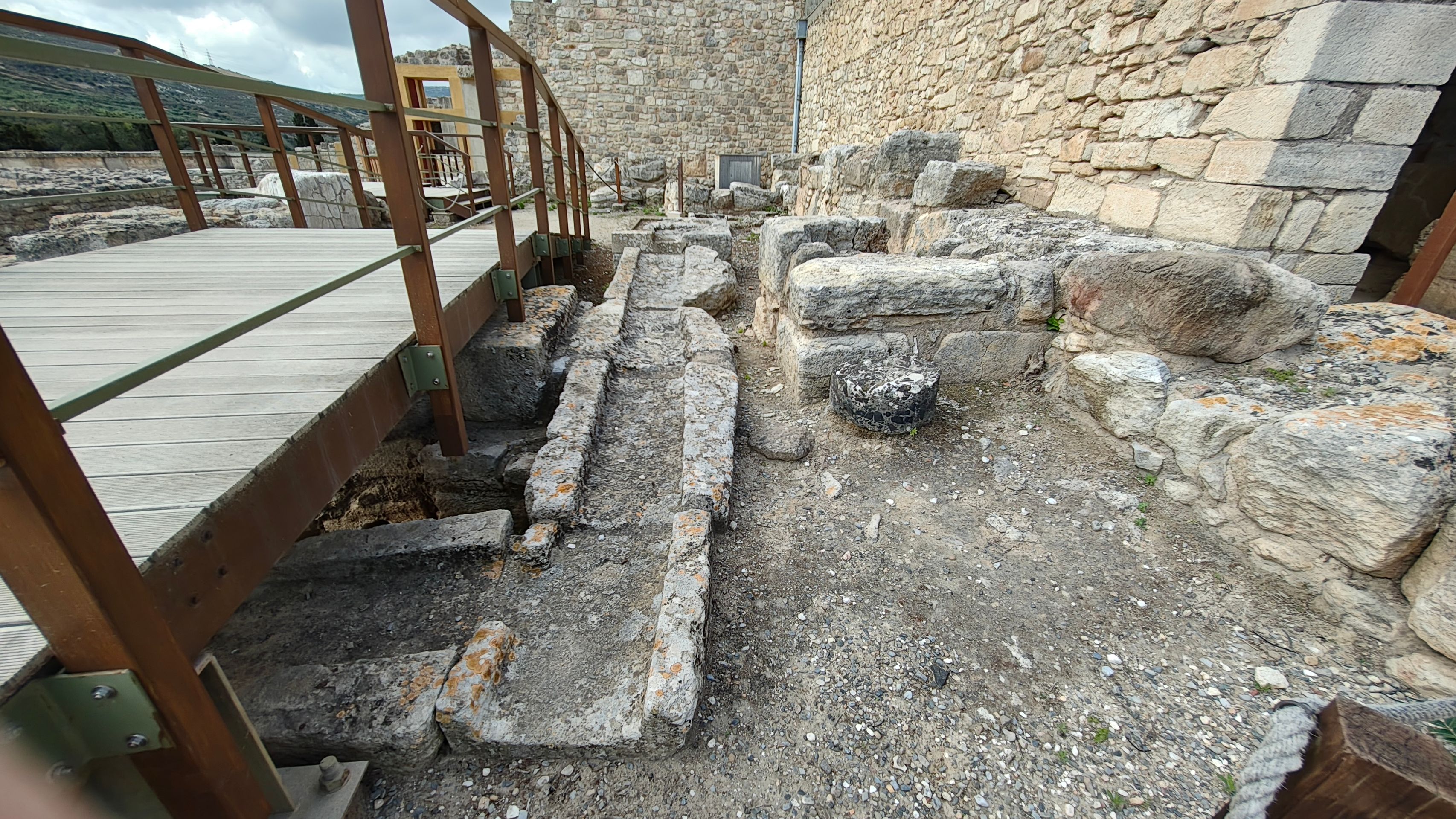
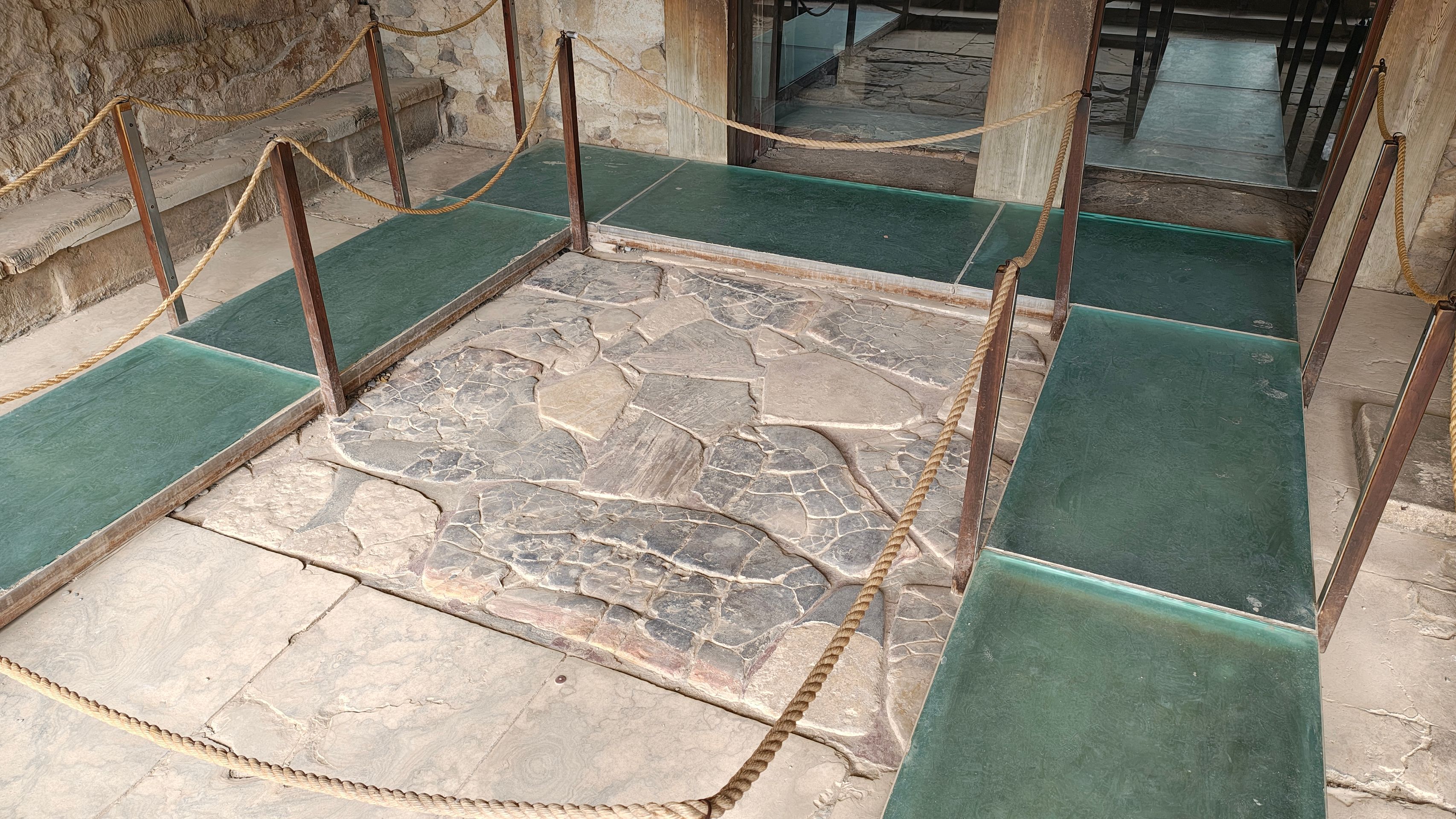
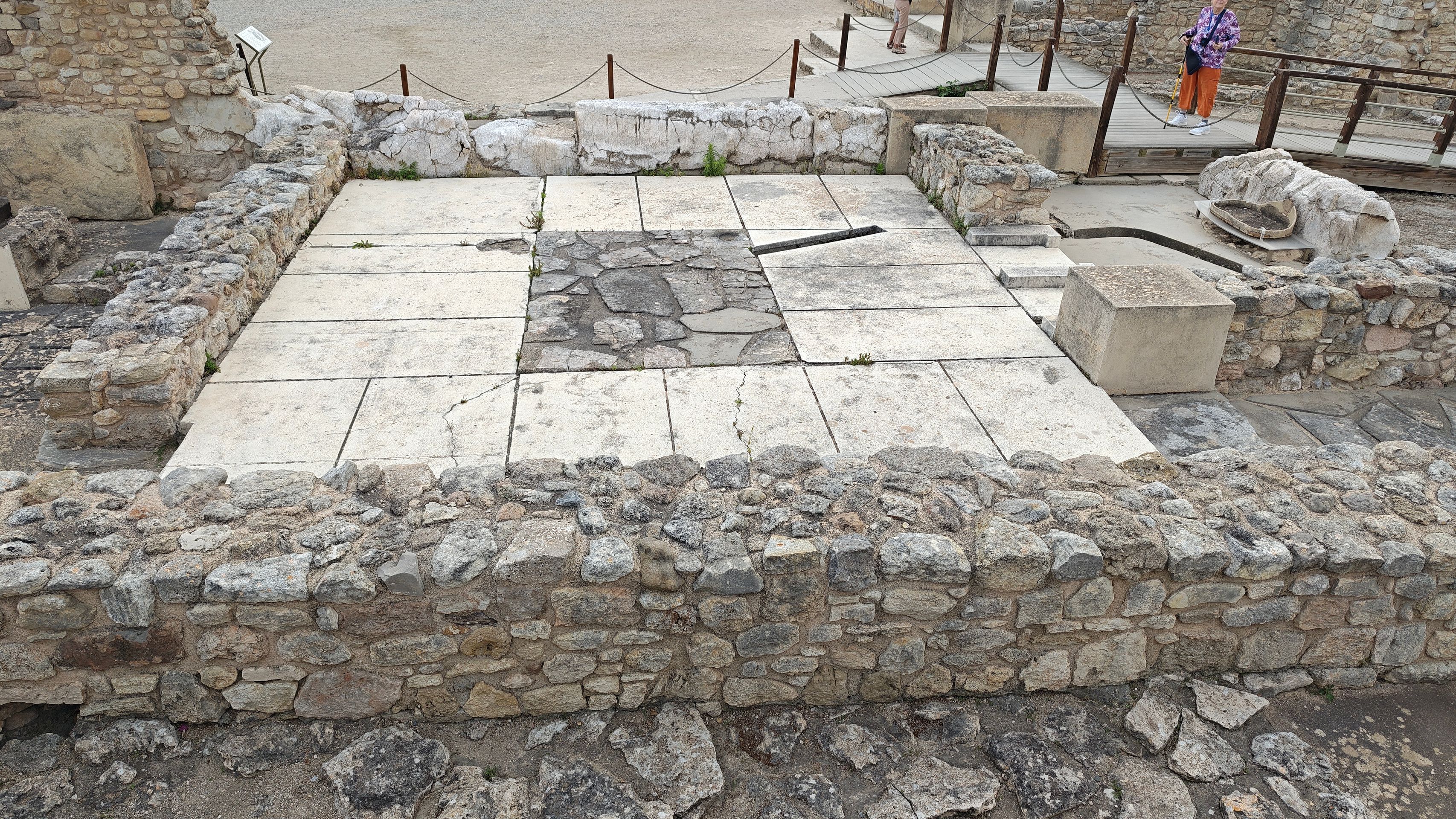
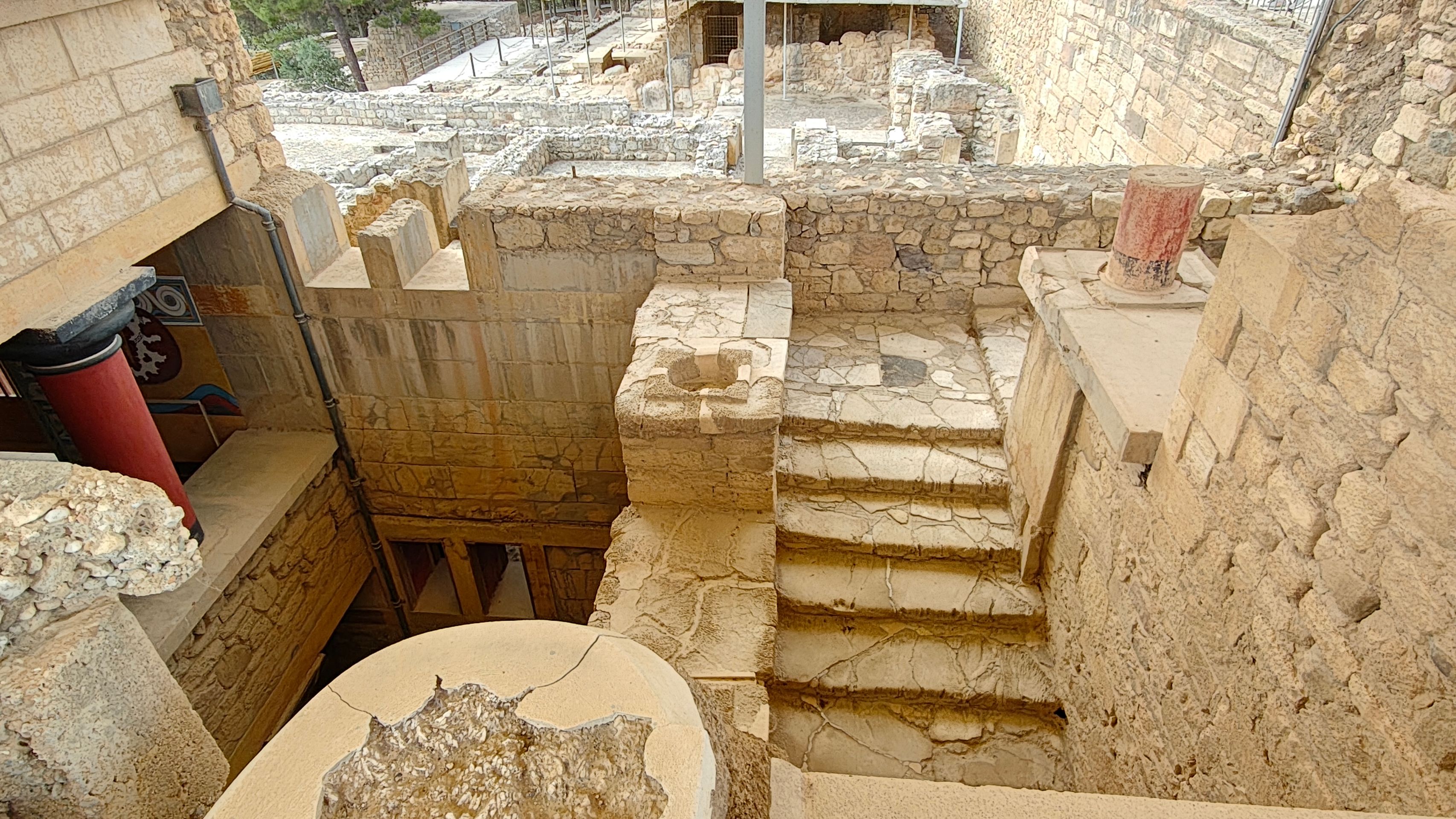
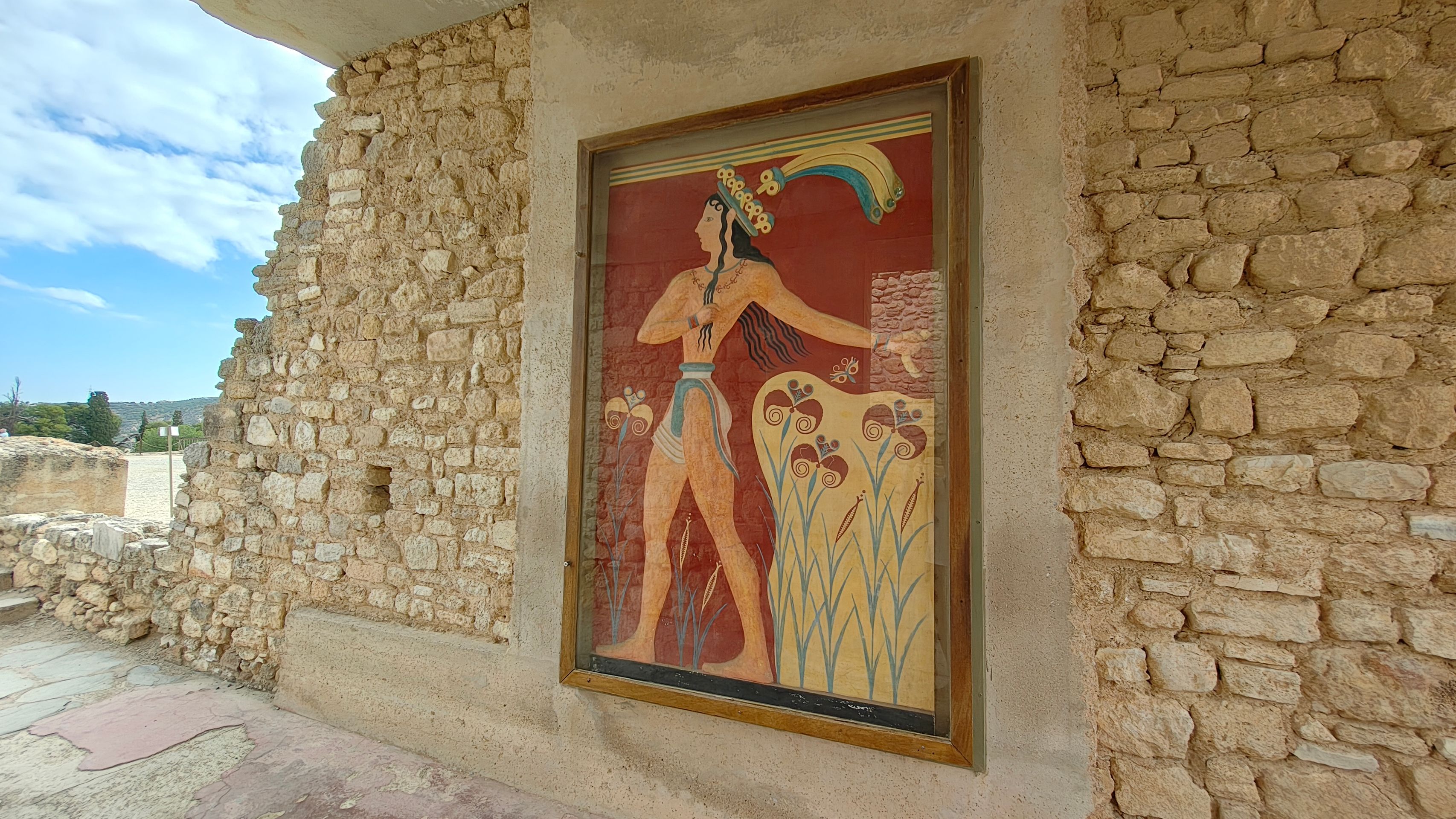
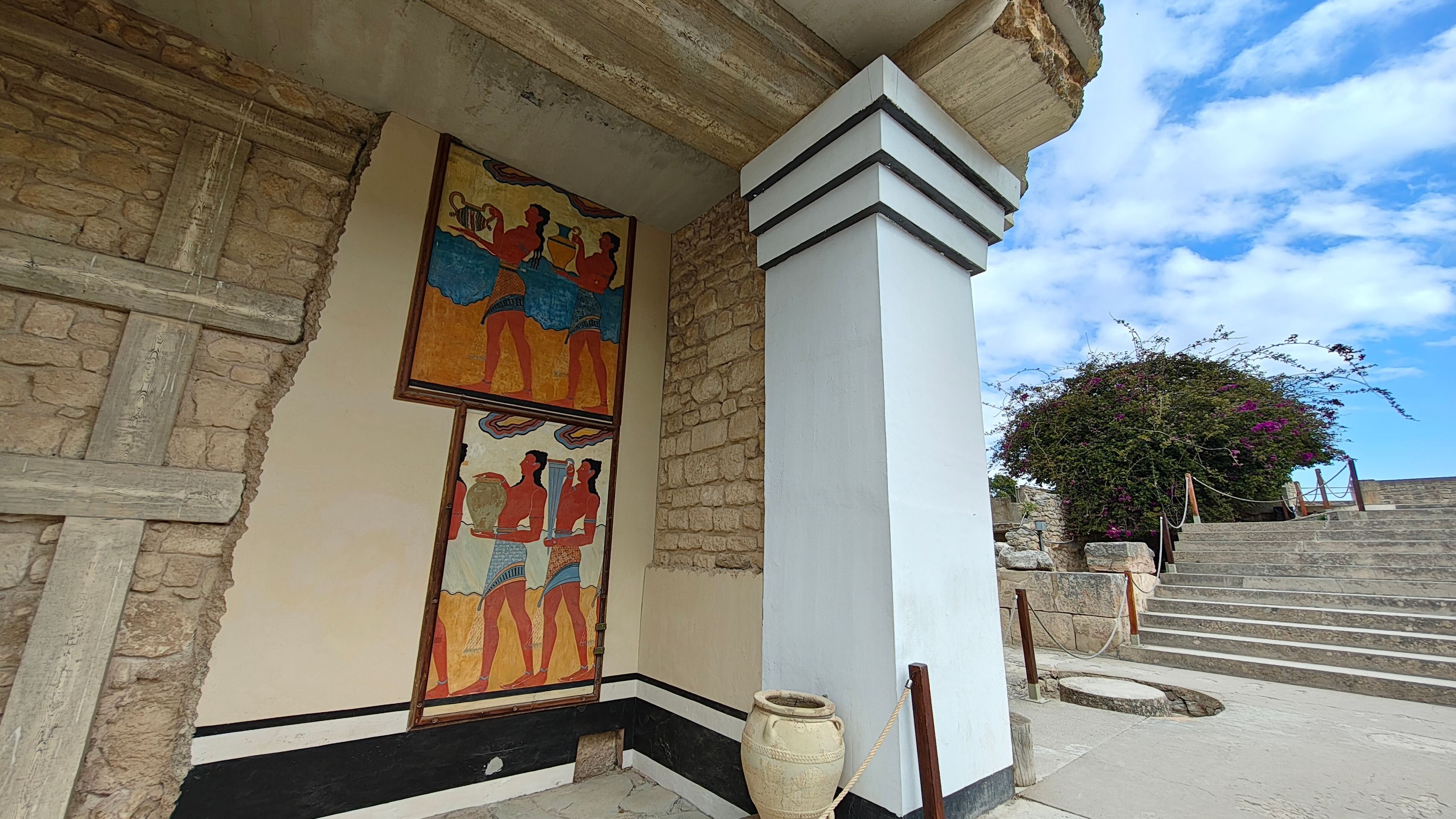
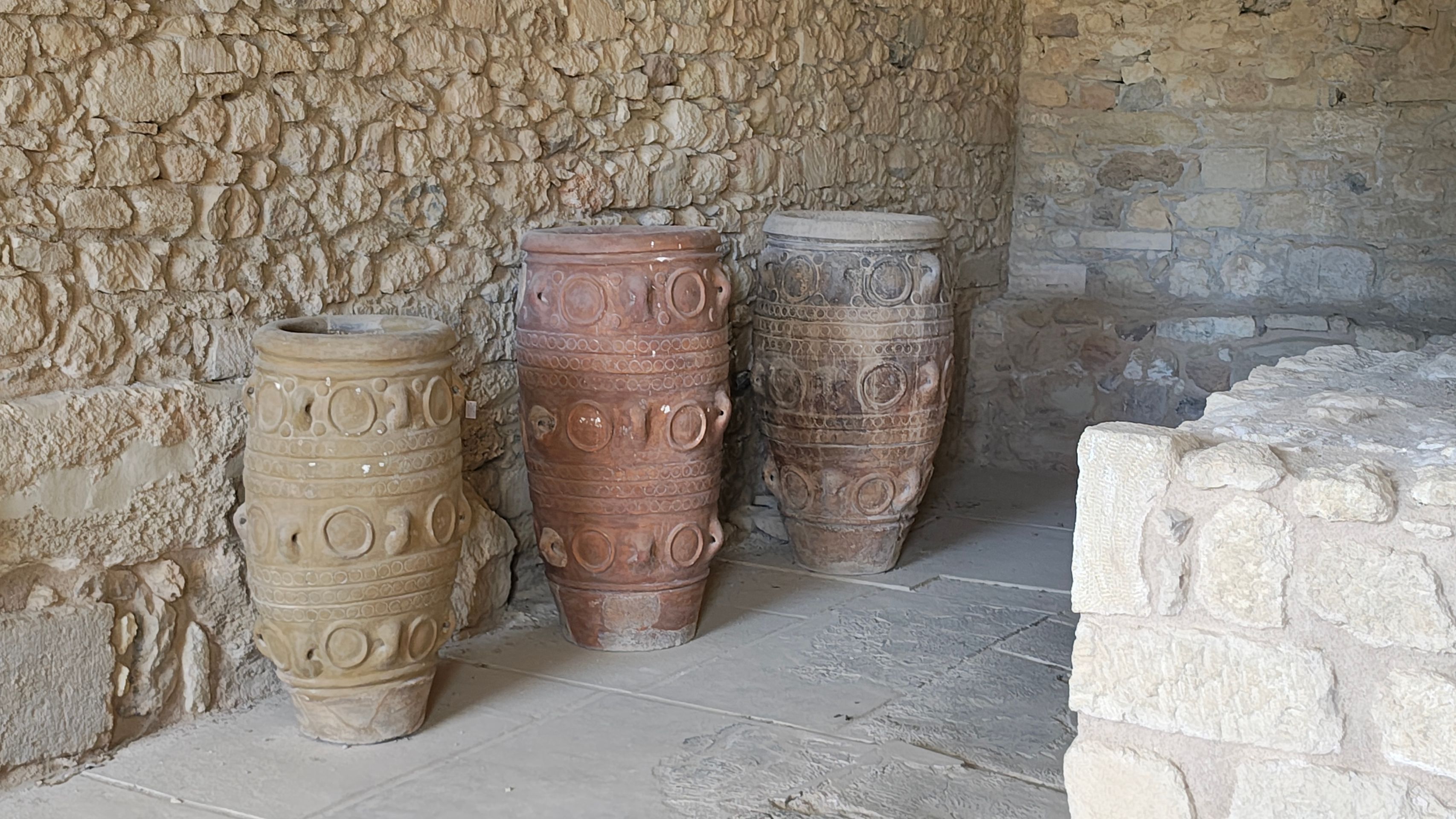
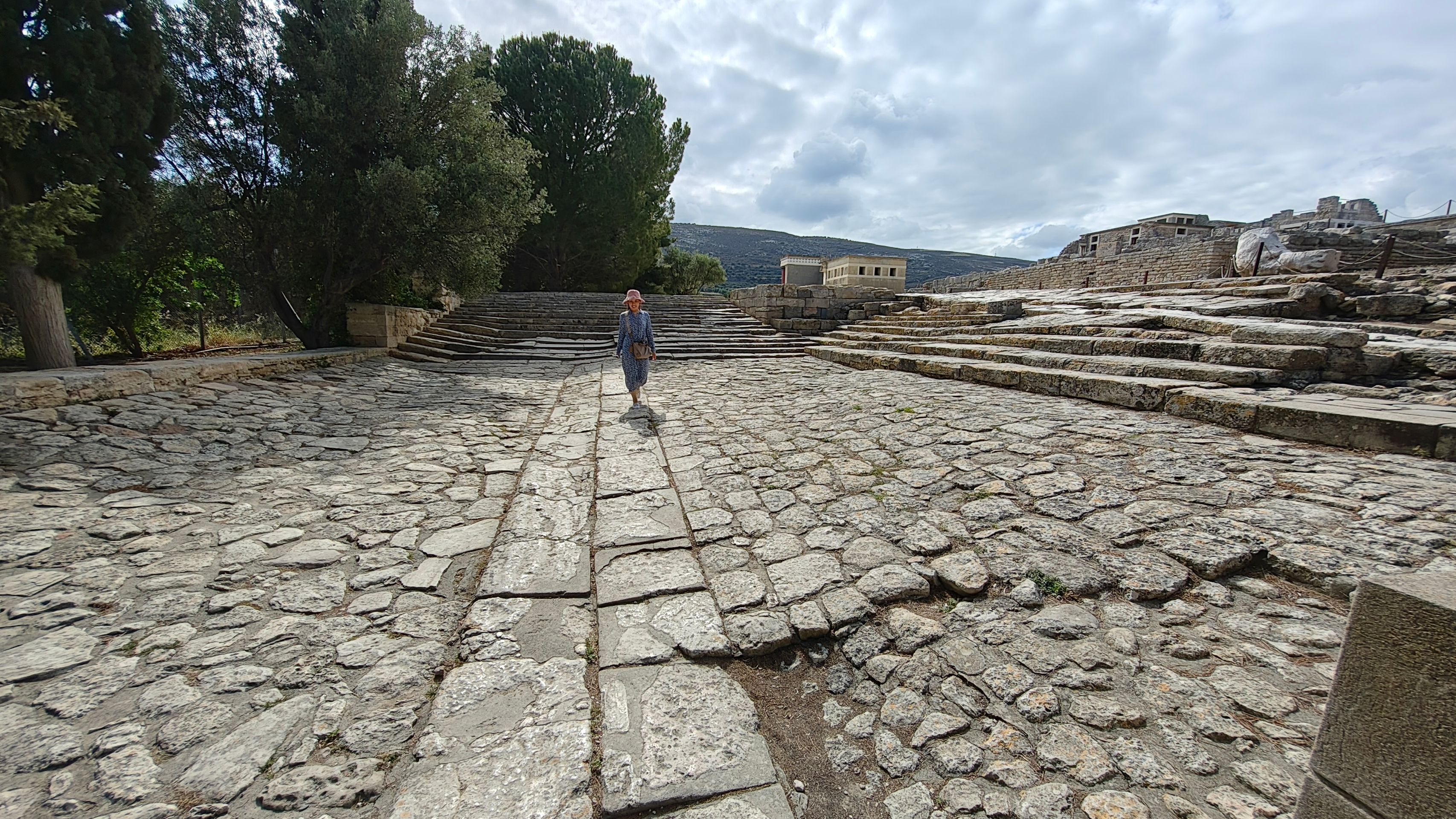
The Minoan culture is the oldest advanced civilization in Europe, and our first destination is naturally the largest excavated palace complex of this culture in Knossos. The Palace of Knossos was built about 4000 years ago, with archaeological research beginning only 150 years ago. Very little is known about the Minoan culture because their older script, Linear A, has still not been deciphered. Archaeologist Arthur Evans dedicated 14 years to the Knossos site and even after that tried to decipher Linear A, but he was unsuccessful. The later Mycenaean script, Linear B, which is considered a predecessor of Greek characters, was deciphered after Evans' death. Since the palace complex is a main attraction for many tourists, we try to get there right after it opens. However, we are held up by a bus, which is likely stuck in city traffic, and we have to wait over 20 minutes for it. Meanwhile, three tourist buses rush past us. Our visit after our arrival and ticket purchase initially goes counterclockwise, and then, due to the abundance of sites to see and the detours required because of numerous tourist groups in the rear part of the complex, we change direction. At first, I think I am about to encounter the statue of Mr. Evans, but it is actually Minos Kalokairinos, who began excavations in Knossos 22 years before Evans. To the left, there are round structures known as Kouloures, whose meaning is not conclusively determined. They are thought to be food storage facilities. They remind me of the small kivas of the Ancestral Puebloans in the southwestern USA. After a few ruined walls, we quickly encounter reconstructed structures. Often, one can recognize these by the material used: concrete. These reconstruction works on the palace complex by Evans are highly controversial, as often more imagination than archaeological findings were applied. Therefore, it must be doubted whether the small structures truly represent the original appearance of the palace complex. Even during the restoration of wall paintings, artistic freedom was given a lot of leeway. Initially, this does not bother me, but during the visit, I realize that these arbitrary supplementary constructions significantly distort the overall impression, and I primarily focus on searching for original parts of the ruins to avoid distorting my picture of Minoan architecture. What remains from the visit? The winding walls are indeed impressive and an original staircase in the east wing also illustrates the multi-story construction style. Particularly, the water channels, excavated floor slabs, and gigantic storage vessels demonstrate a highly complex and well-functioning palace economy. Together with the discovered writing systems, a high culture can be clearly recognized. The artifacts in the archaeological museum (which we visit later) along with the remains of wall paintings further deepen this impression. The - albeit scientifically inaccurate - imaginative reconstructions bring color to the complex and are intended to help with one's imagination. What else is particularly important at the Knossos site? Mainly to avoid the guided tourist and school groups. Even if this sometimes causes us to walk back and forth, we still enjoy a more peaceful visit. While we can admire the impressive throne room all by ourselves with this tactic, shortly after, a long line forms to visit it, stretching far into the main square at the center of the complex. I have already mentioned the staircase in the east wing, and behind it lies the most interesting part for me, with only a few reconstructions, but with clear water infrastructure and artistic use of individual stone blocks. The well-known motif of red columns and the wall painting with the bull must not be missing, of course, and the described tactic saved us there from a school class and gave us beautiful photos. The small theater at the end of the visit can shine with its incline and arrangement. Outside in the visitor parking lot, instead of the three tourist buses we saw upon our arrival, dozens of buses are now lined up. The early arrival was indeed worth it. An impressive tour of the palace complex is now behind us, and I can only give one last tip from our observations: I strongly advise against visiting with a stroller. It has to be carried over 'stock and stone.' It sounds funny, but some people have peculiar ideas.