
Over the Mountains
what a gift it is to wander here!

Published: 19.04.2026
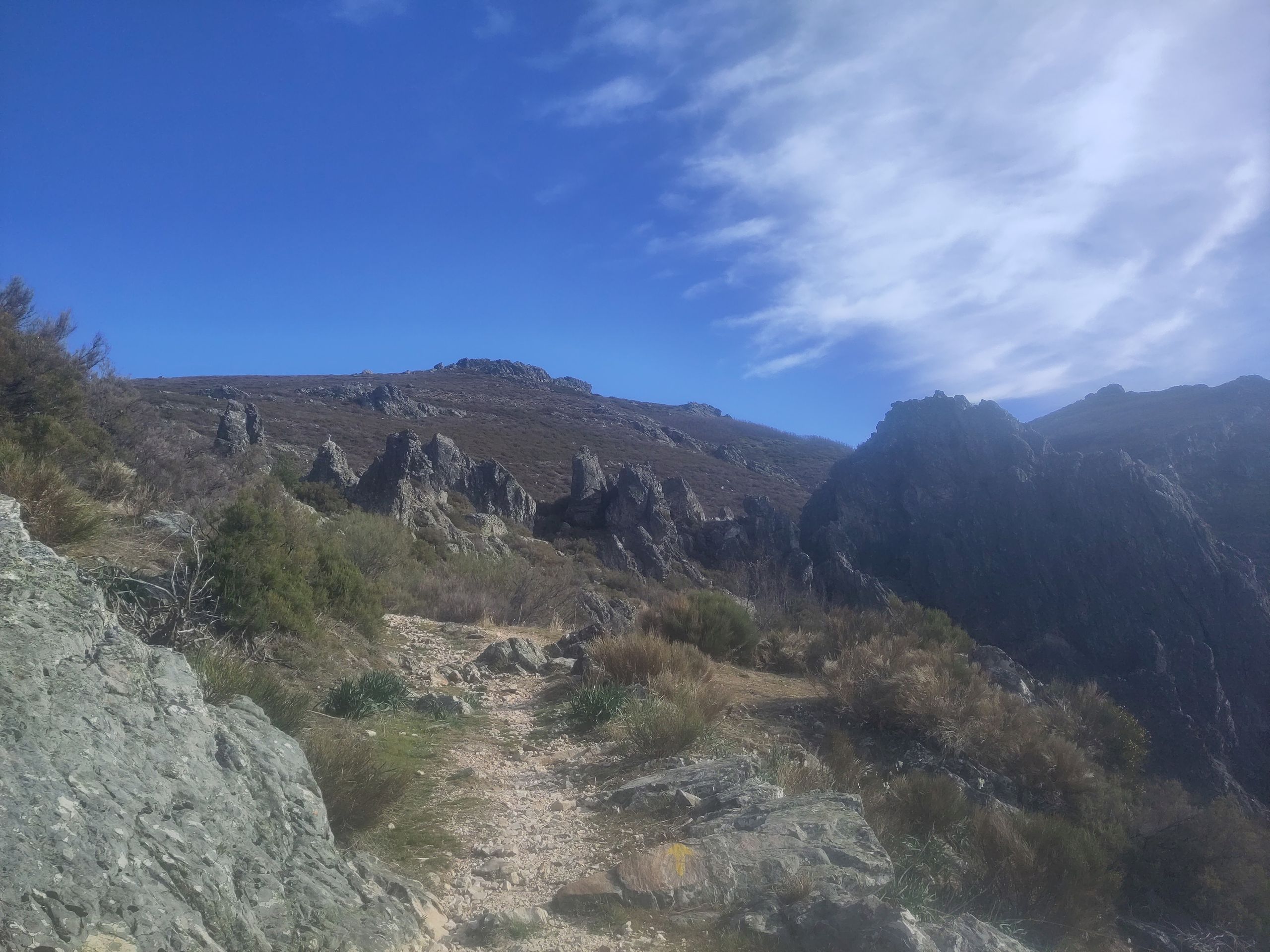
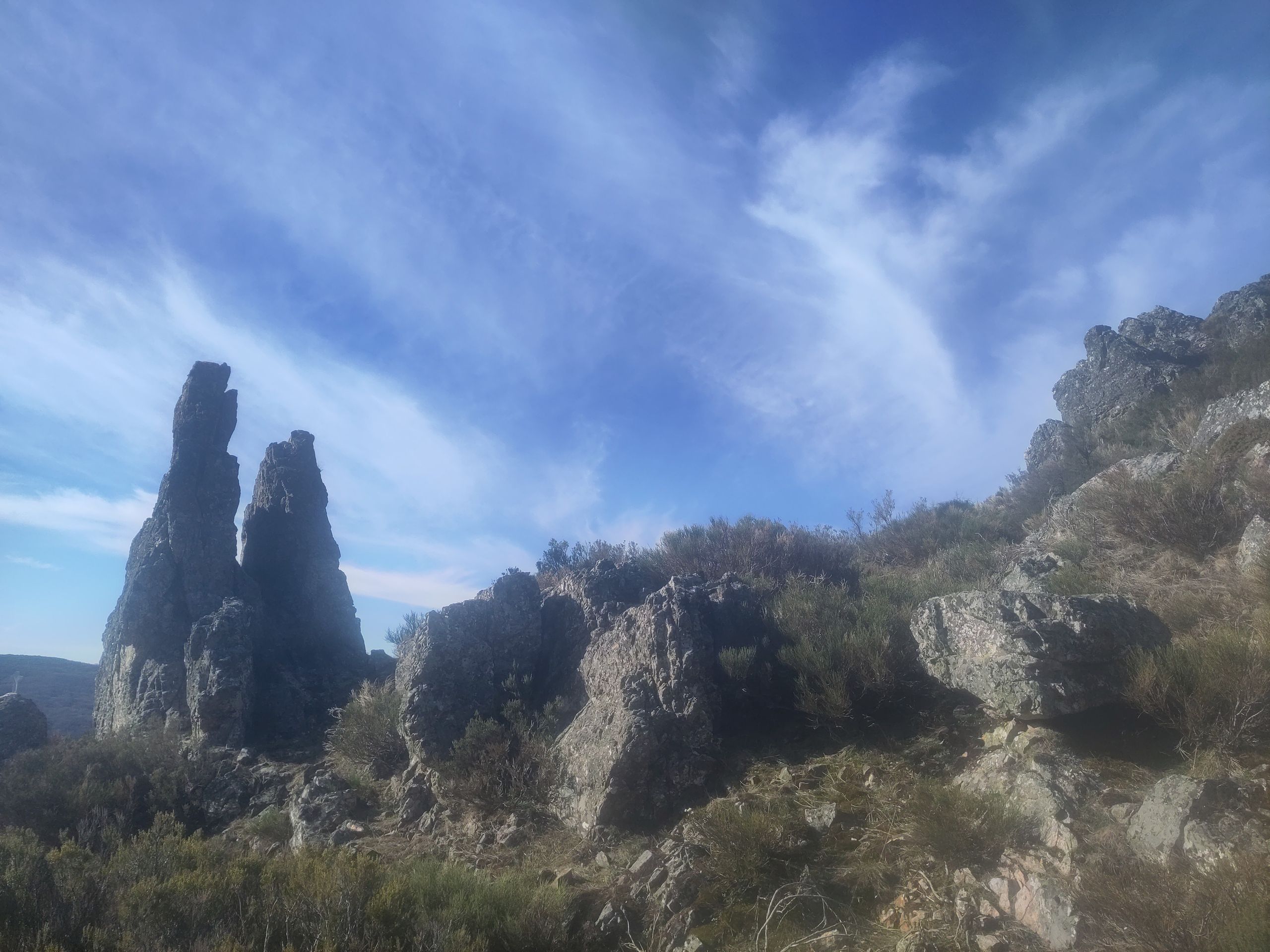
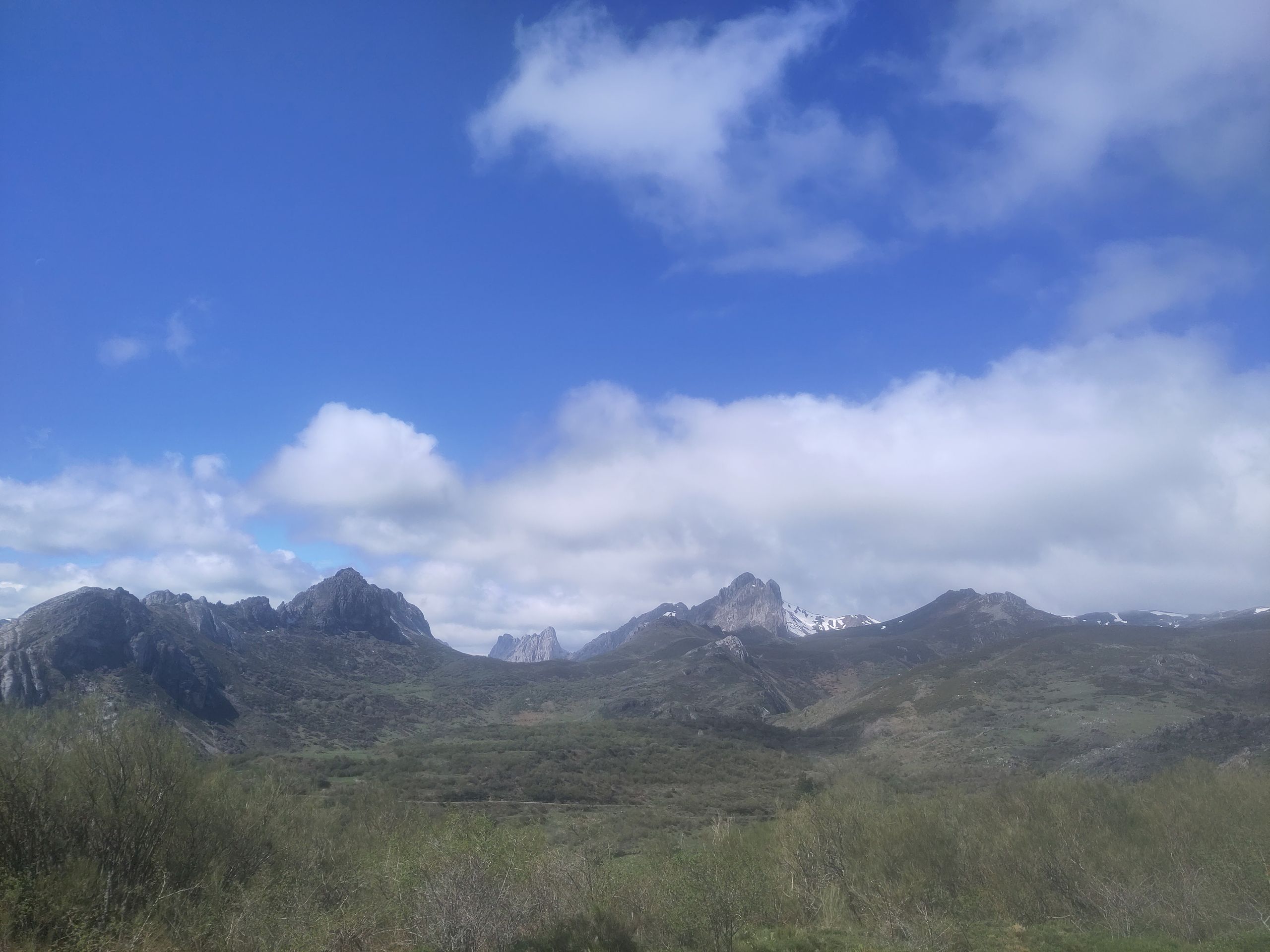
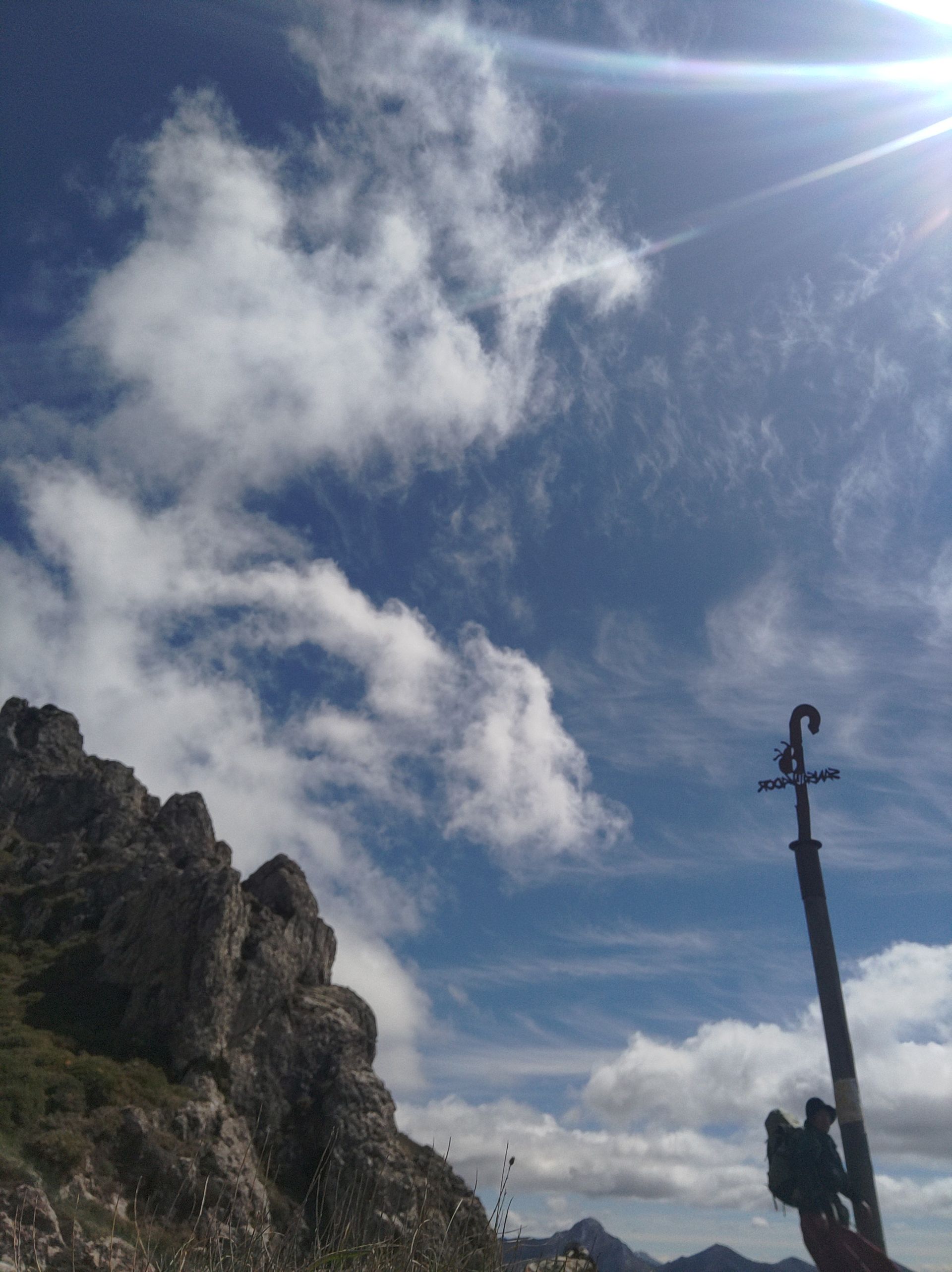
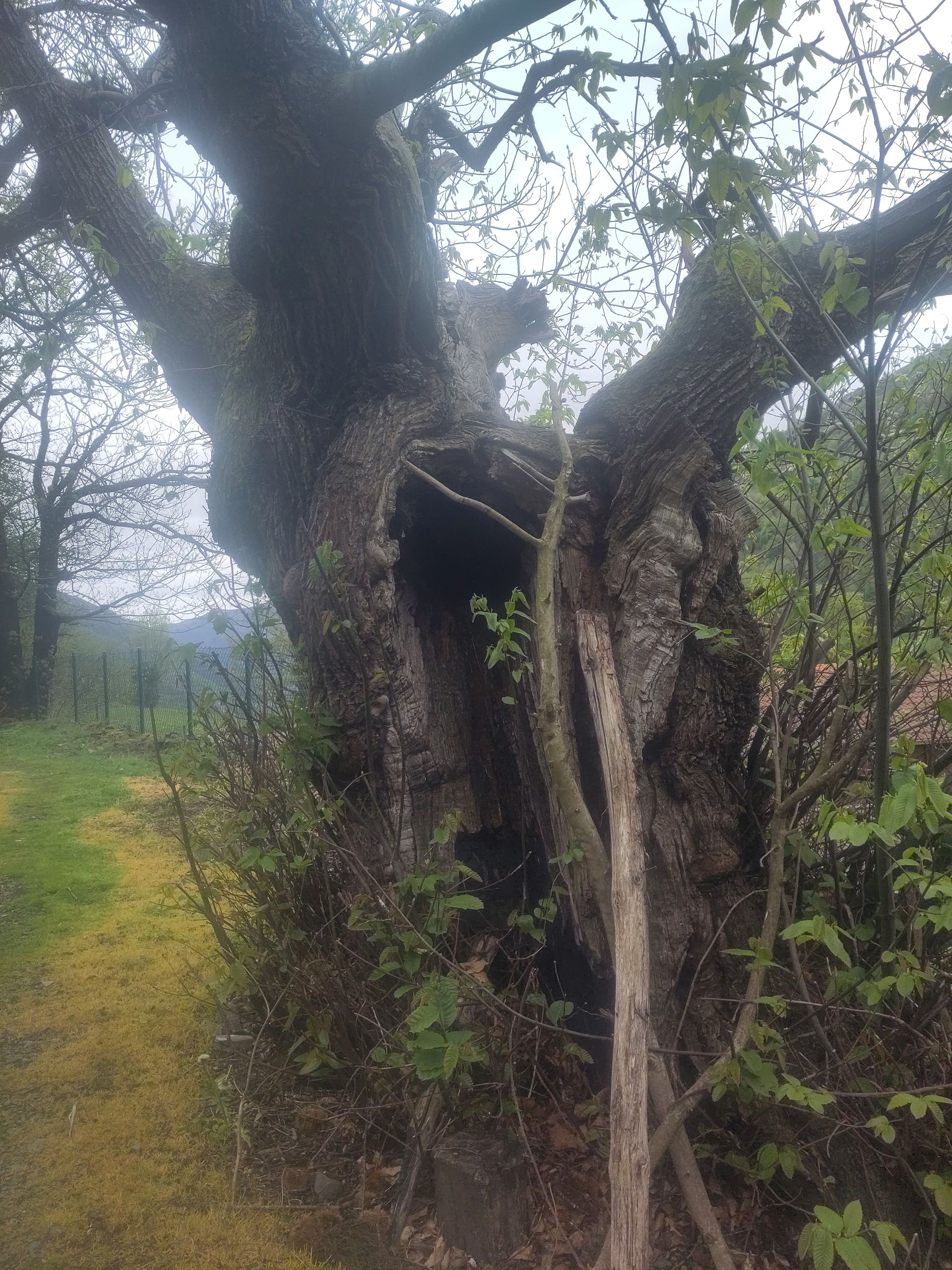
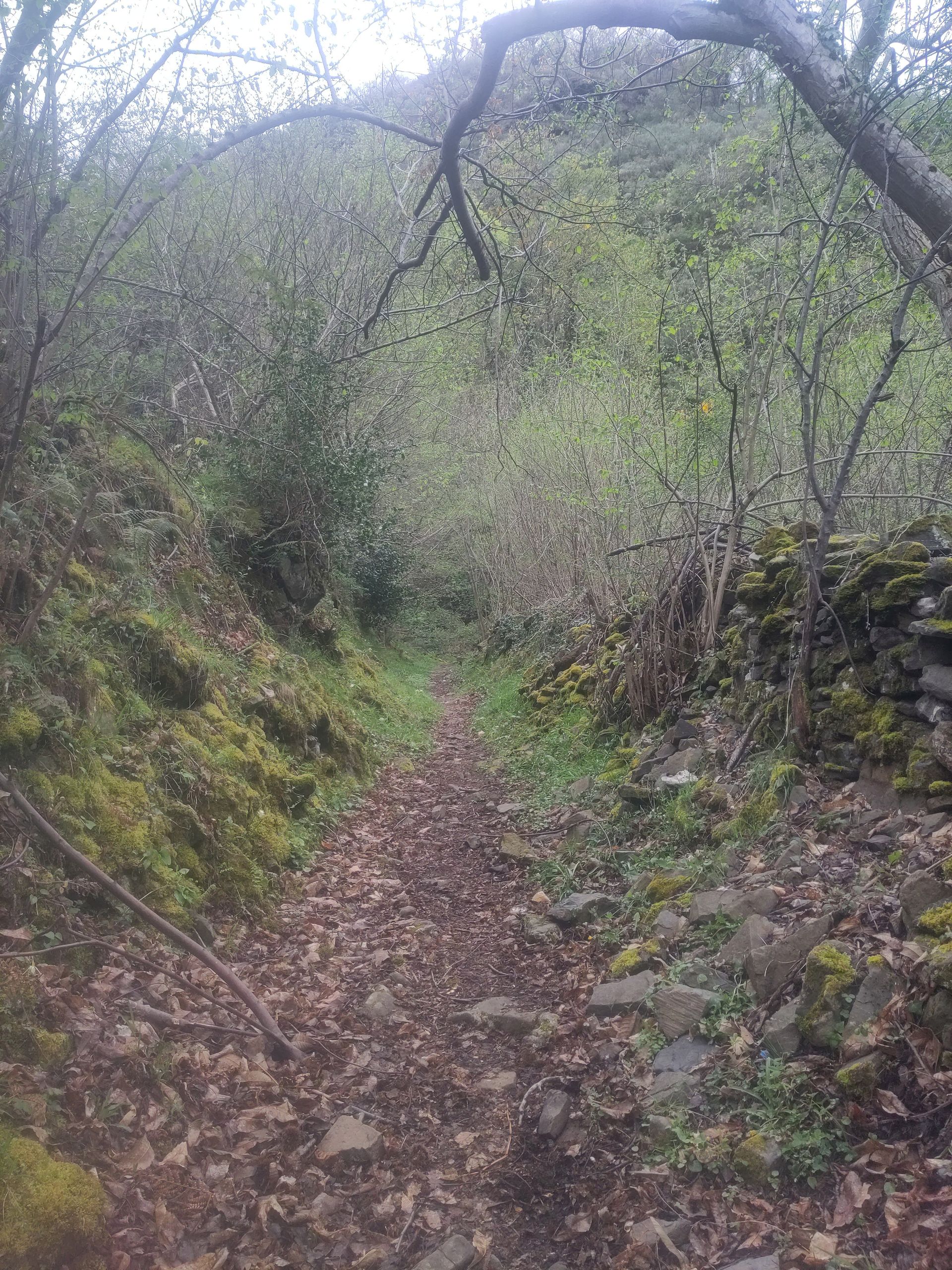
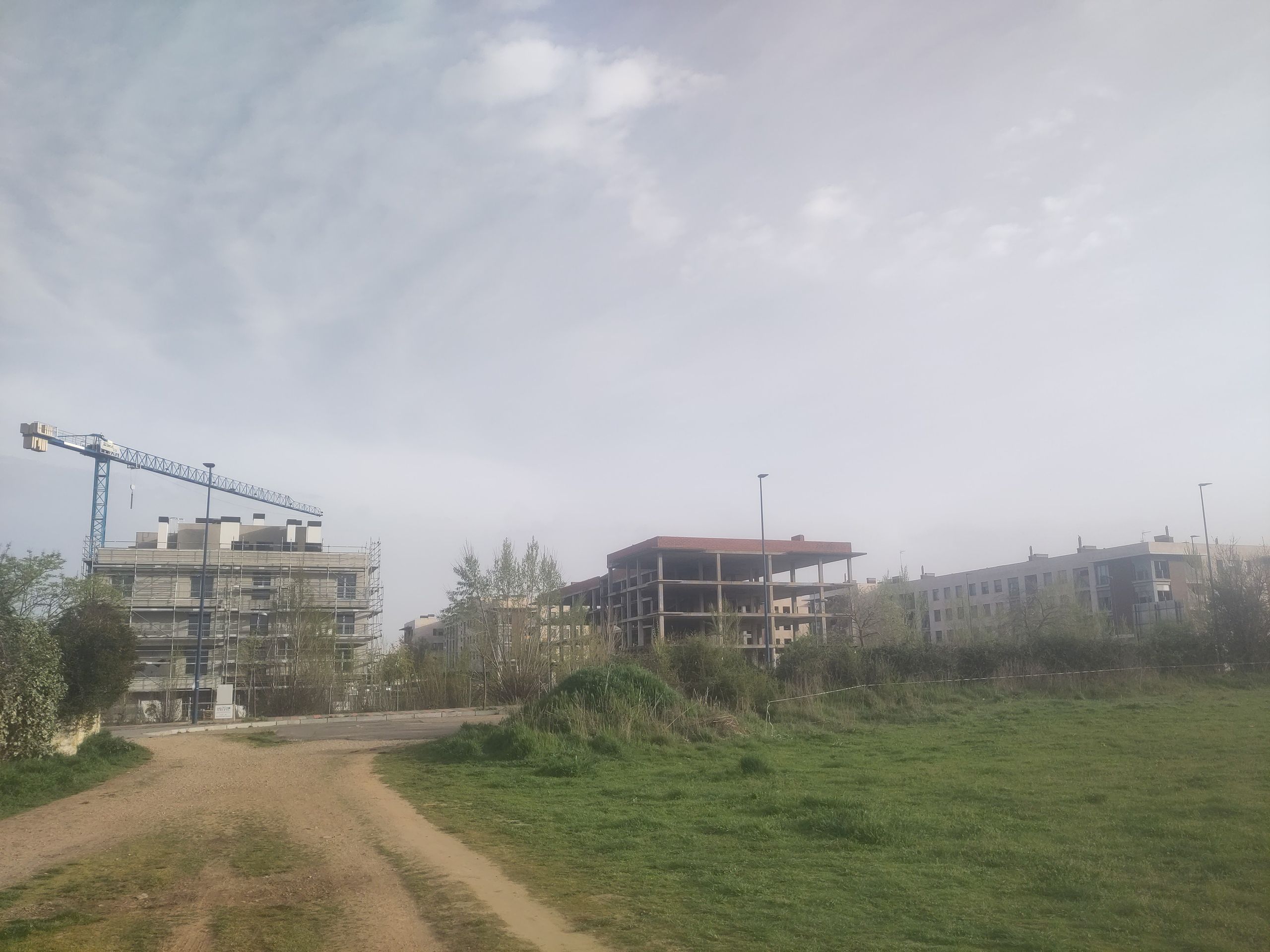
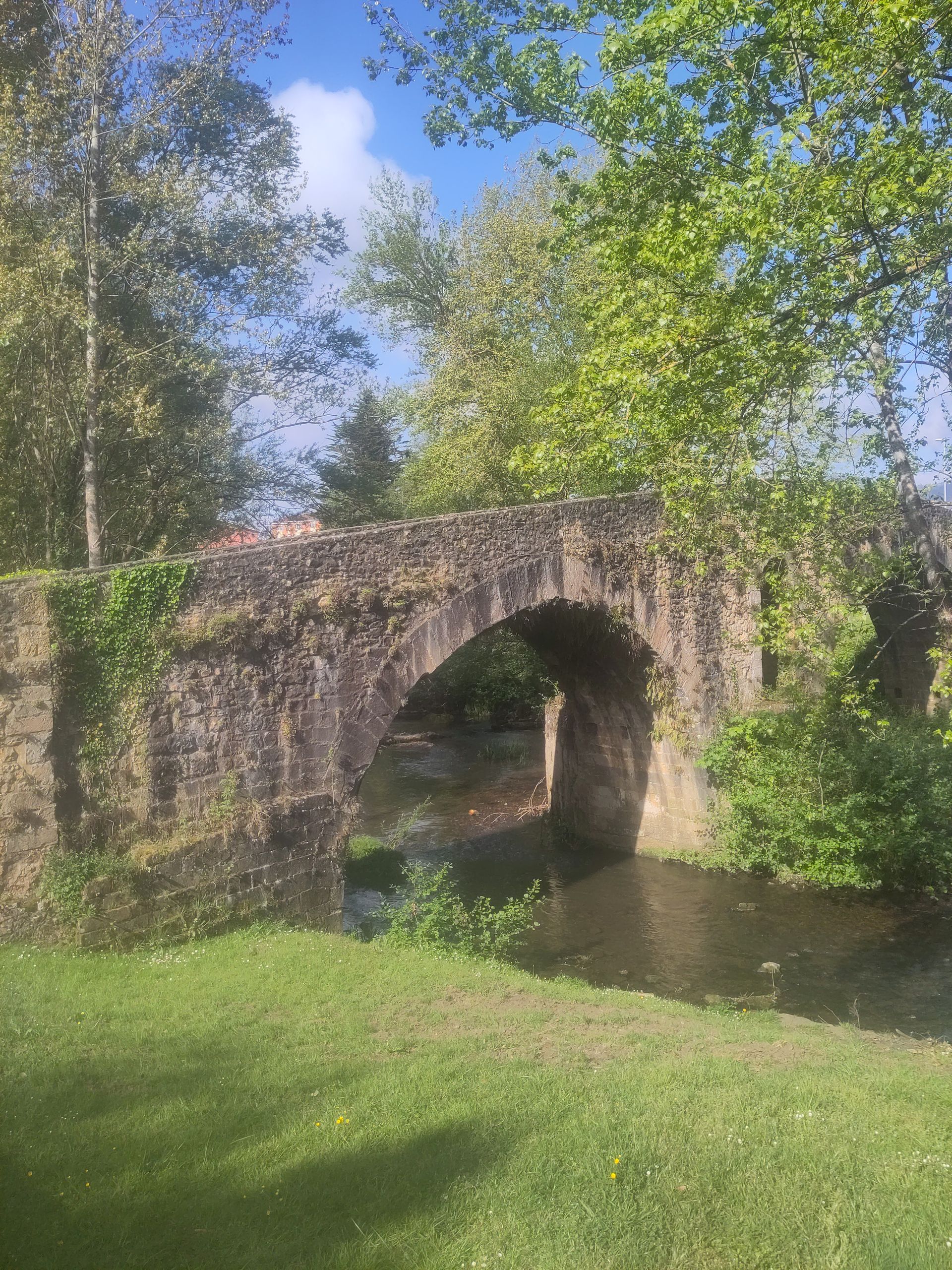
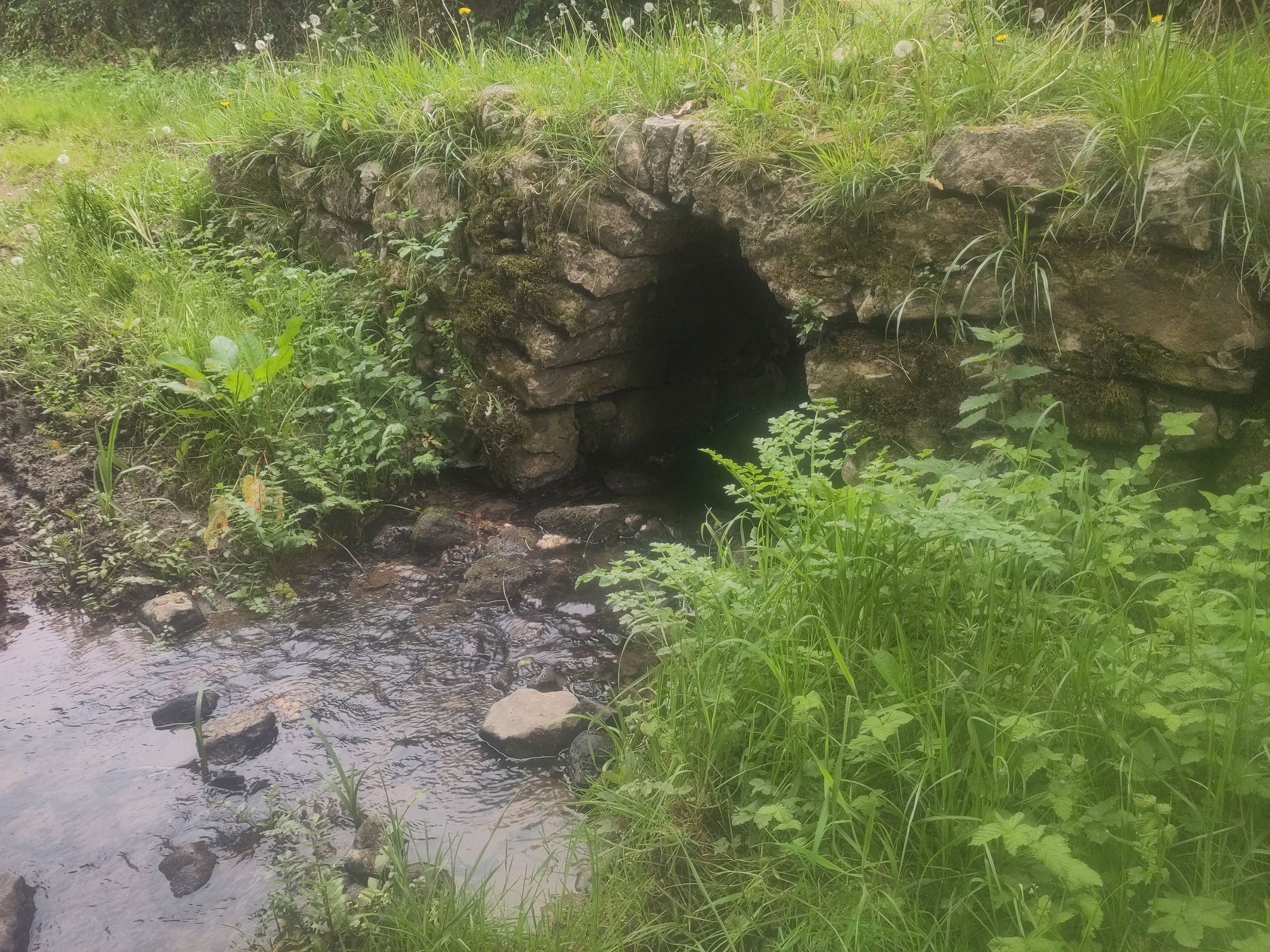
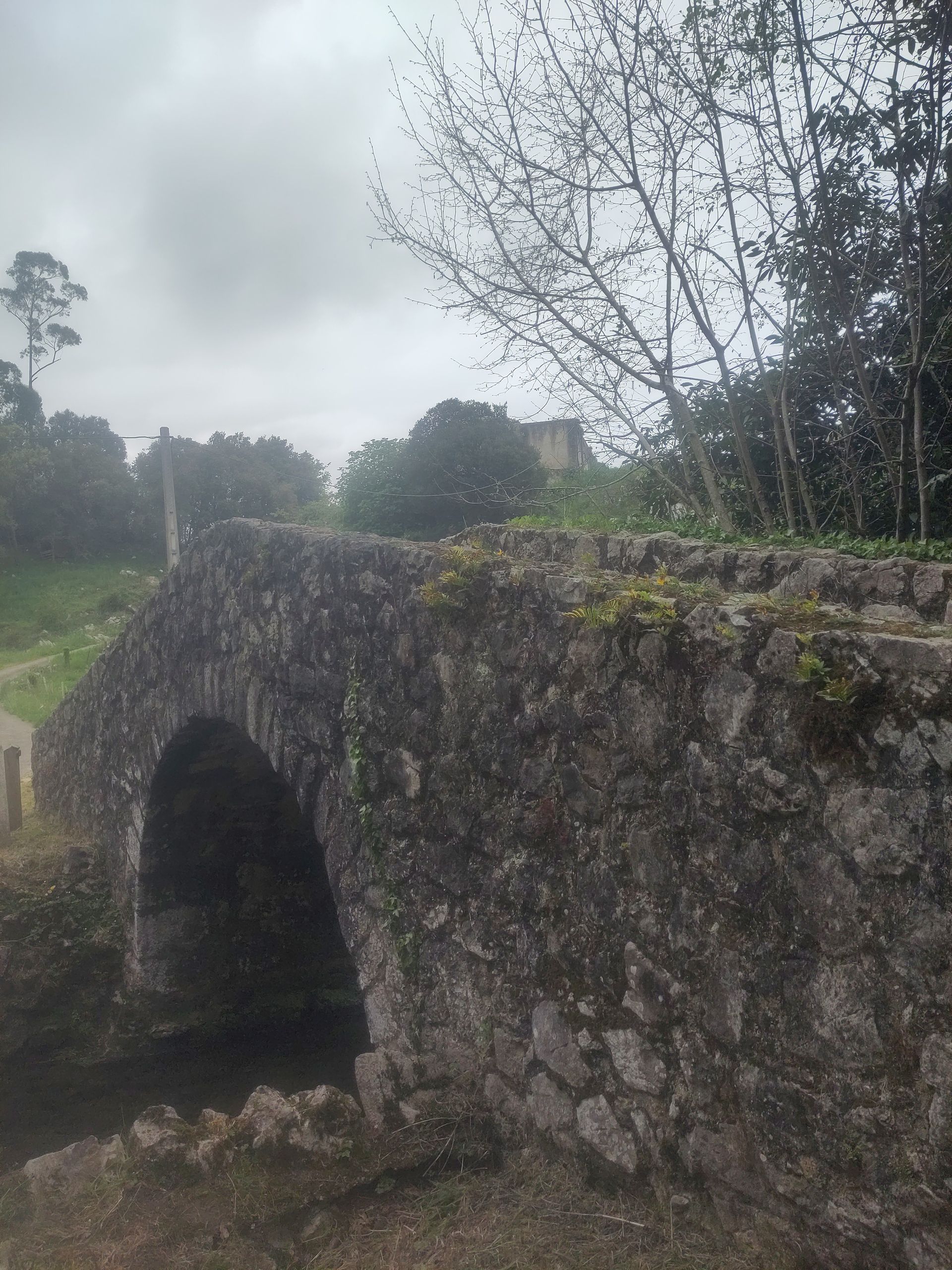
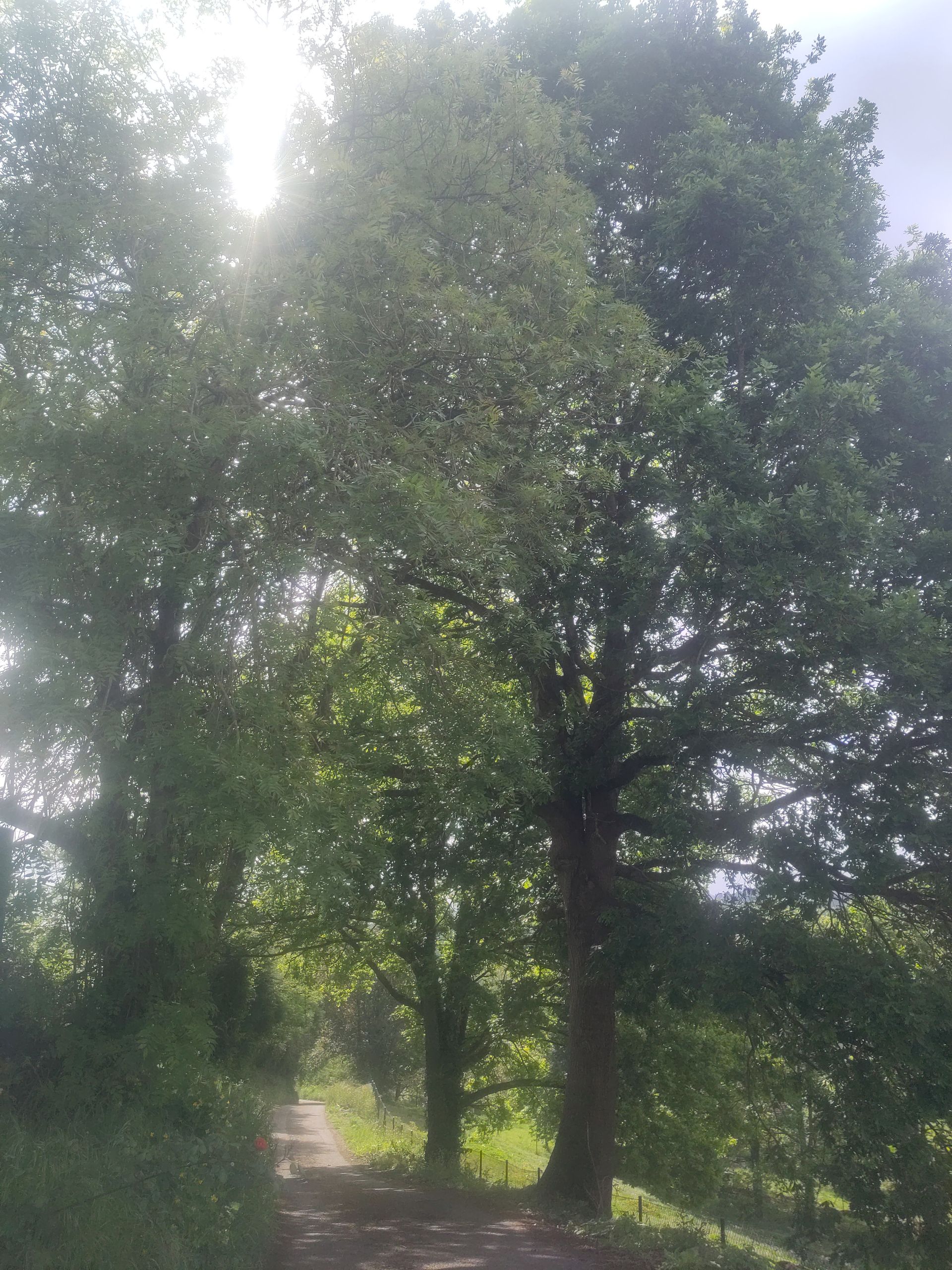
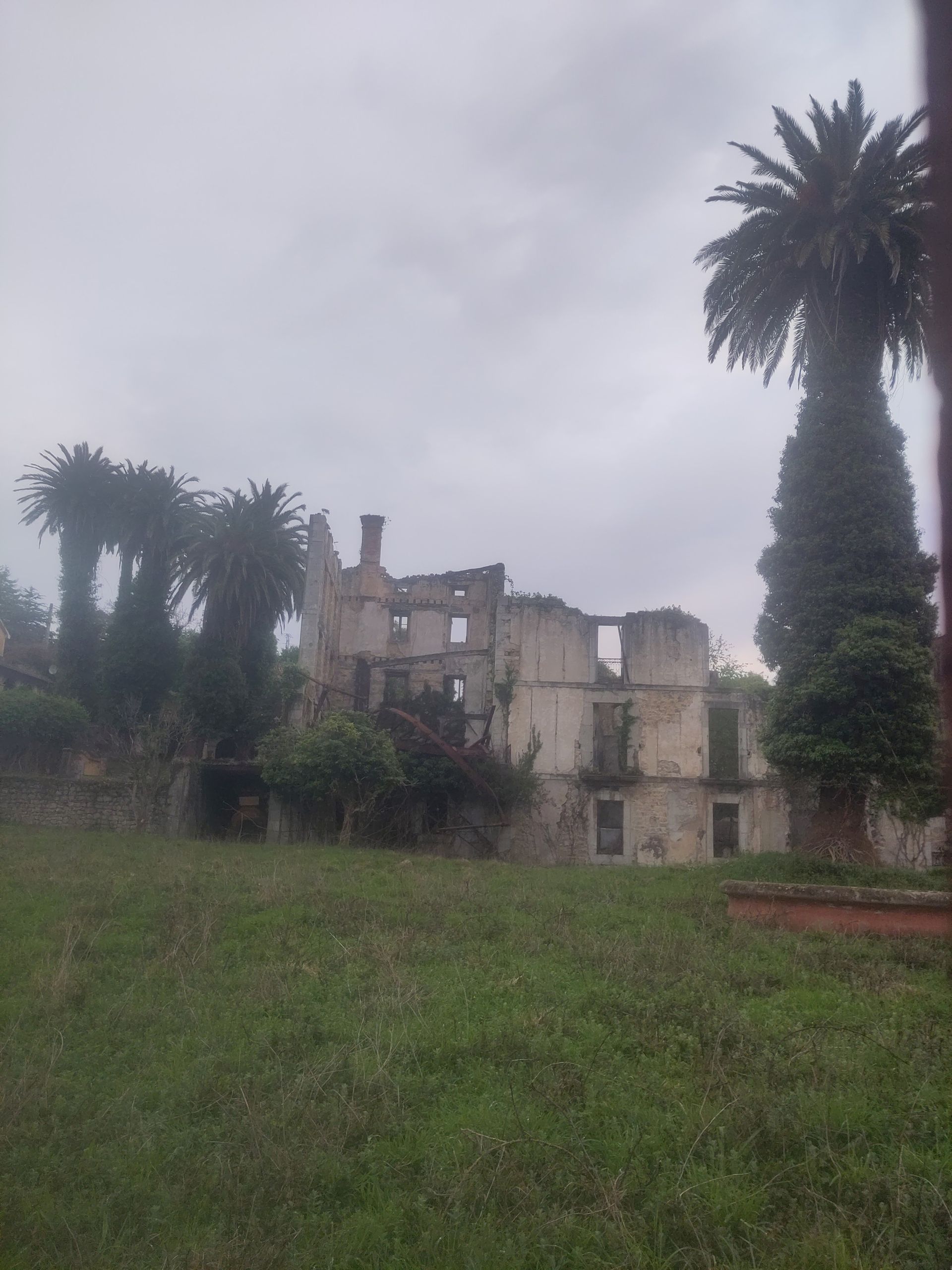
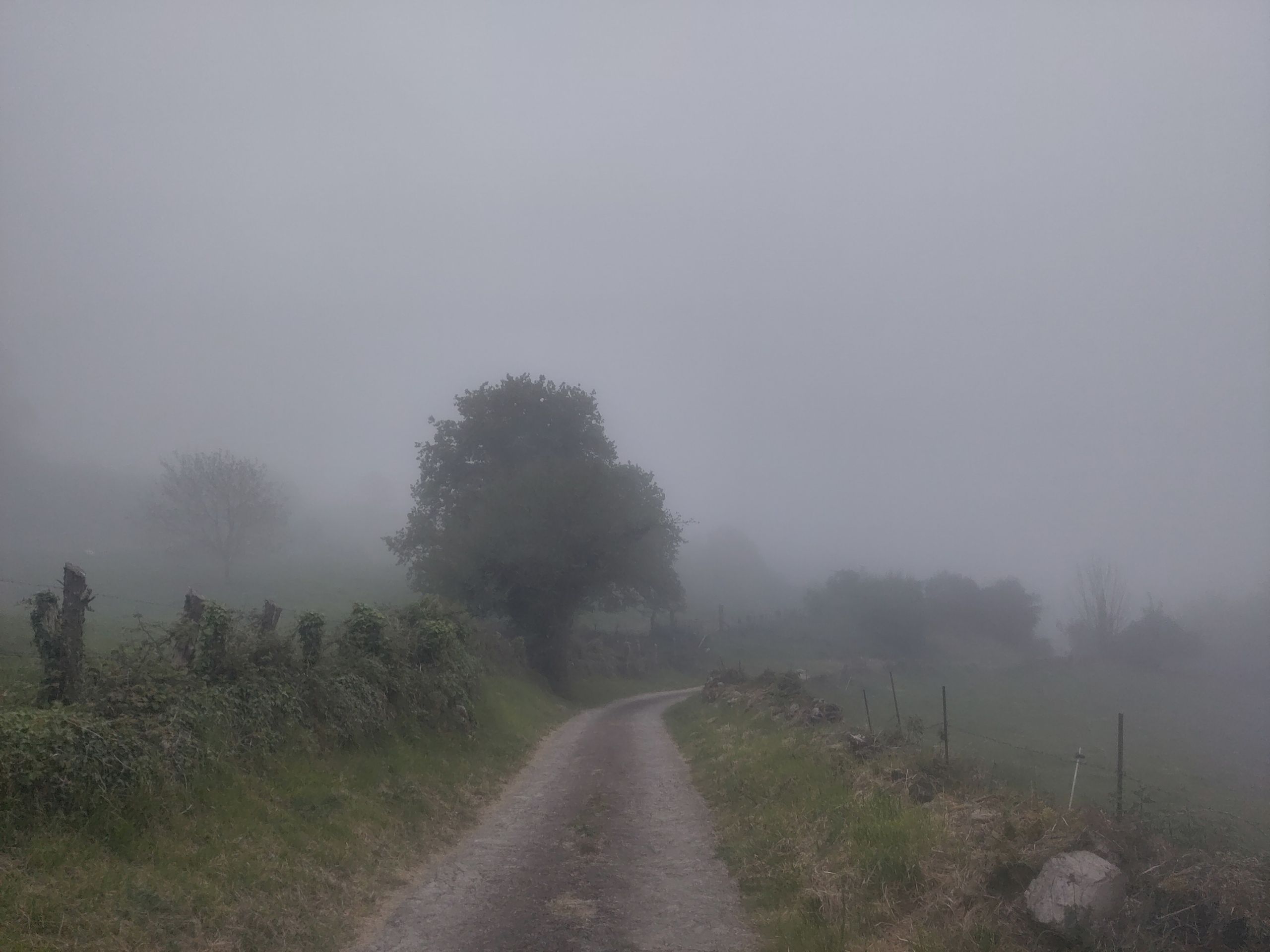
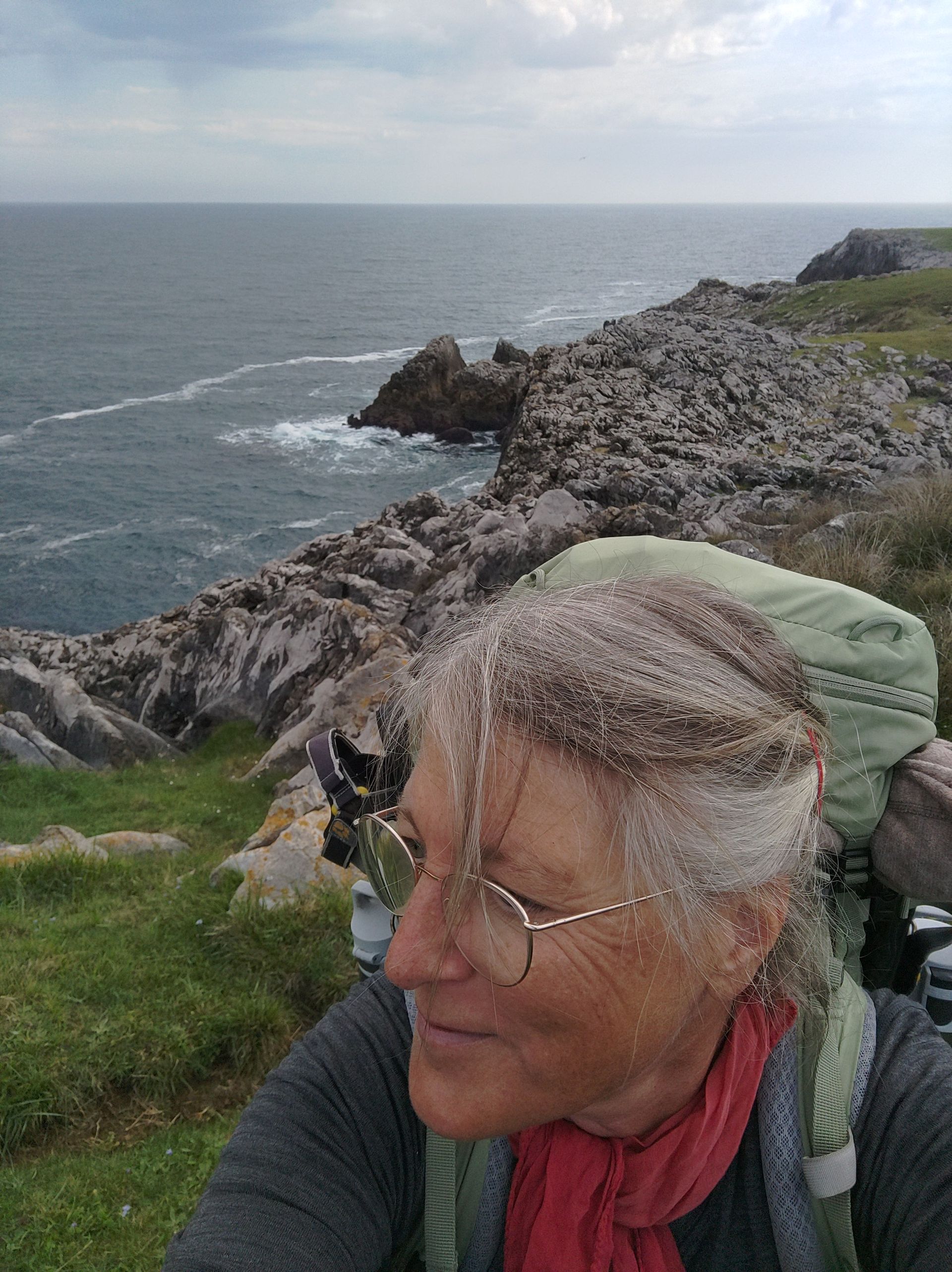
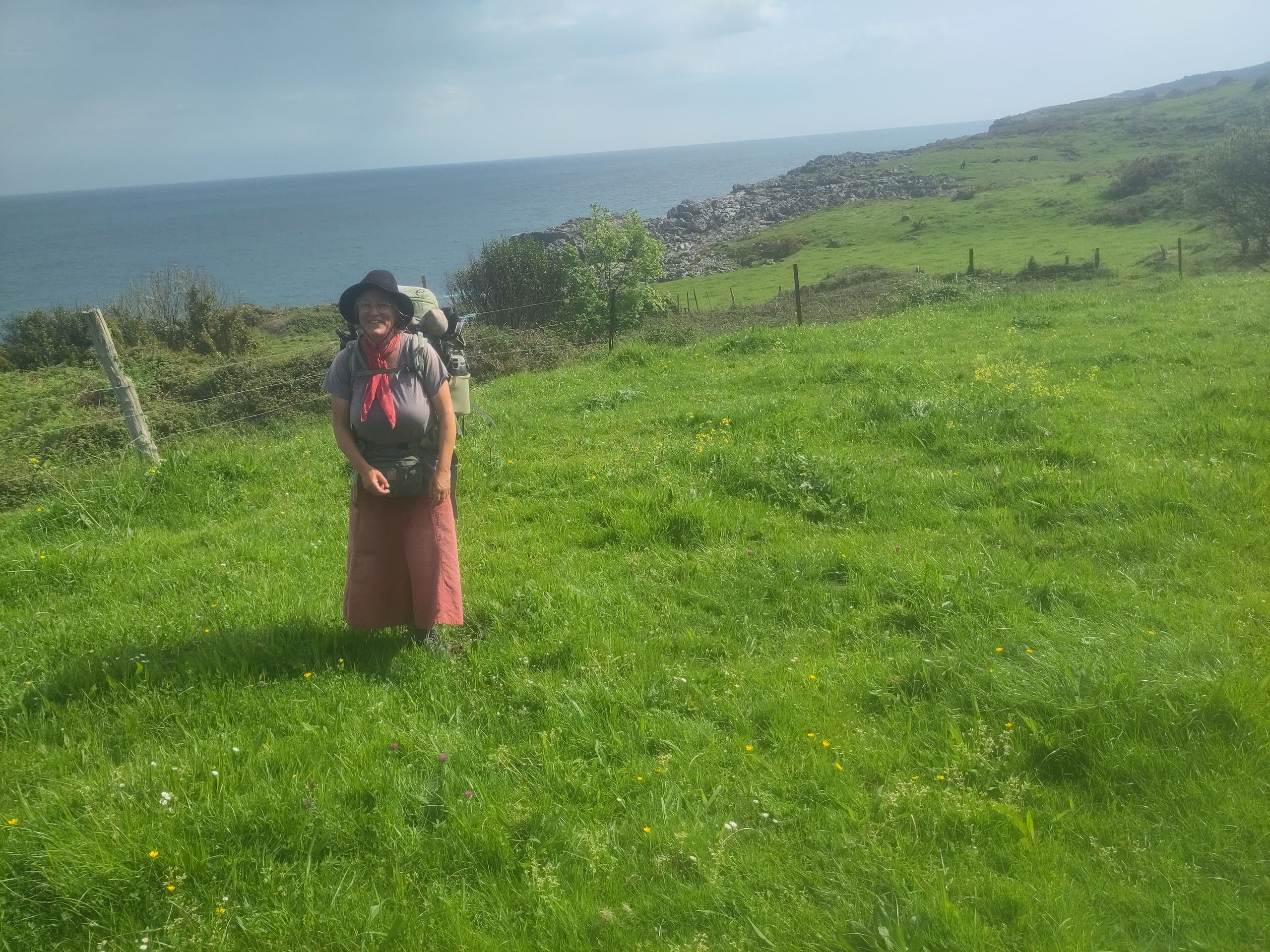
From Leon, the path through the Cantabrian mountains to the Cathedral of San Salvador in Oviedo, the capital of the 'autonomous principality of Asturias', is called the Camino del San Salvador. Walking along the River Bernesga, I leave Leon, often on small paths, but of course also passing the usual edges of cities with large housing complexes in various stages of completion... Then the settlements become smaller and the paths narrower and steeper; I quickly enter the 'rugged Cantabrian mountains', where once, when the Muslims occupied the Iberian Peninsula, precious relics were hidden, which were then brought to the Cathedral of San Salvador in Oviedo after the Reconquista by the Christians. In addition to the usual items like splinters from the cross or the shroud of Christ, there are some unusual relics such as 'coagulated milk of the Virgin Mary', 'remains of manna', 'a sandal of Saint Peter' or 'some thorns from the crown of thorns', among others - this is what one can gather from a normal information board about the 'Camino del San Salvador'...
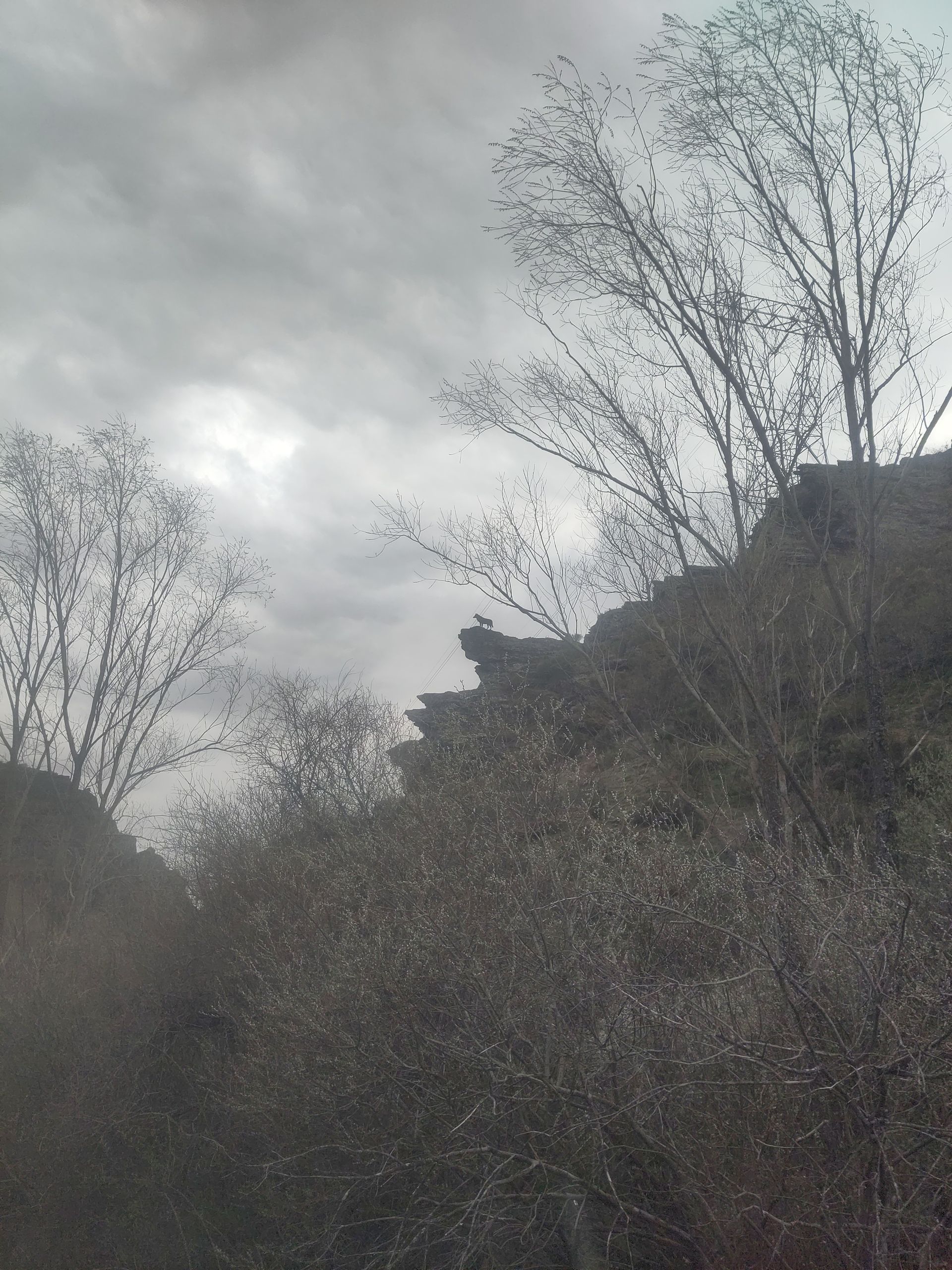
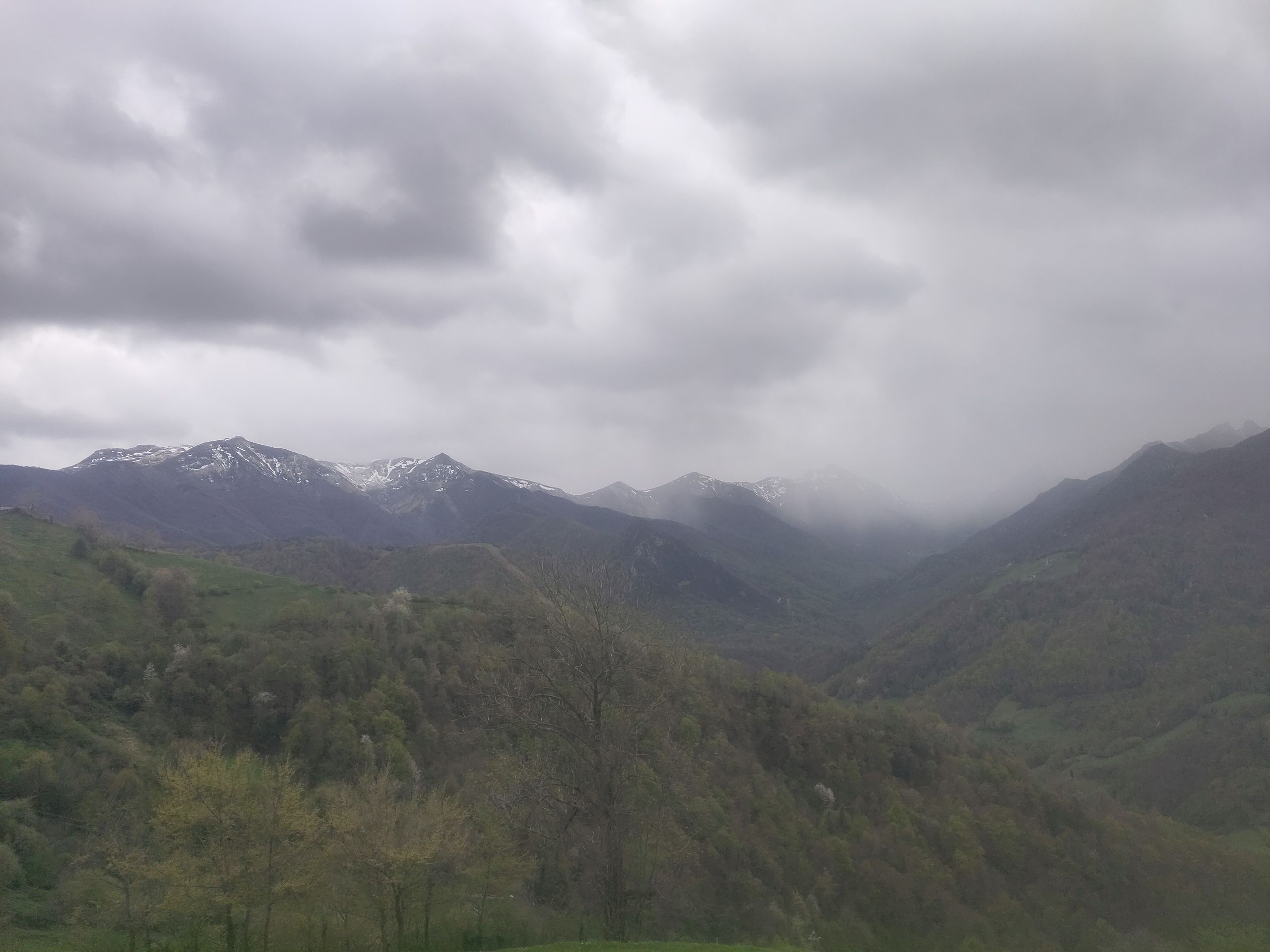
There are beautiful mountain paths, but very steep up and down - often I regret that the blessed invention of switchbacks seems unknown here! During these three or four days until I arrive in Oviedo, I’m almost constantly freezing: the temperatures are around 0°C, once it snows for a while picturesque, and a biting wind blows, which intensifies the cold. Overall, these are truly 'rugged' mountains, this Cantabrian range, which lies like a barrier along the coast. Jagged rocks and mountain passes rise up to almost 1700 m. Narrow paths and often the wind so gusty and fierce (according to the weather report, gusts over 50 km/h), that I fear I cannot keep my balance... There are also wolves and bears here - however, the only wolf I see is a striking figure perched on a rock. Right on the first day of walking from Leon into the mountains, I hike over 40 km and turn into the mountain valley under a cloudy sky that is already evening rainy and dark, where there is a small inn in a village at 1300m: initially, I catch sight of the majestic wolf standing on a rock out of the corner of my eye and need a moment to realize that it is not real...
Up here in the mountains, the sloe bushes, primroses, and violets bloom, and further up, the angel's tears daffodils, otherwise the trees are still bare and just starting to bud - so I've unexpectedly arrived in very early spring. In the mentioned inn in Buiza, I am alone and crawl under all the available wool blankets into bed for 11 hours, taking a long time to warm up.
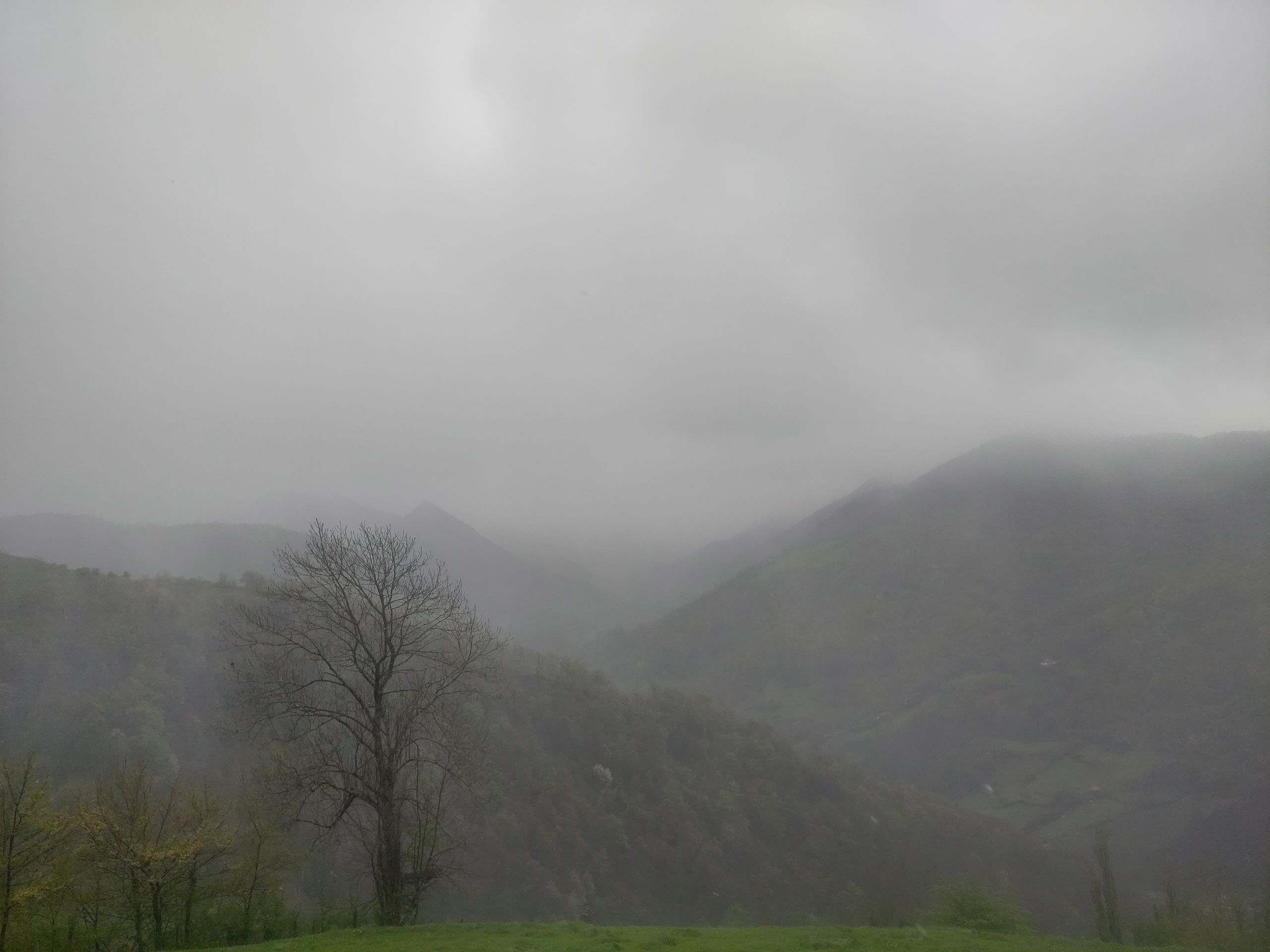
The next Sunday, I then cross the highest ridges, partly on old mule paths and, while it snows, barefoot through a deep and wide brook that 'blocks' the way - silently like the falling snow, more and more dark clouds drift over the mountains, and the peaks around disappear into fog and rain clouds; thus I try, when I reach a small road after 20 km (along which the path continues the remaining 5 km to Payares, where there is another inn), to hitchhike and am indeed soon picked up. I am fortunate to reach the inn just as the rain begins, without having to walk several more kilometers in the rain... - it was truly no 'Sunday stroll'.
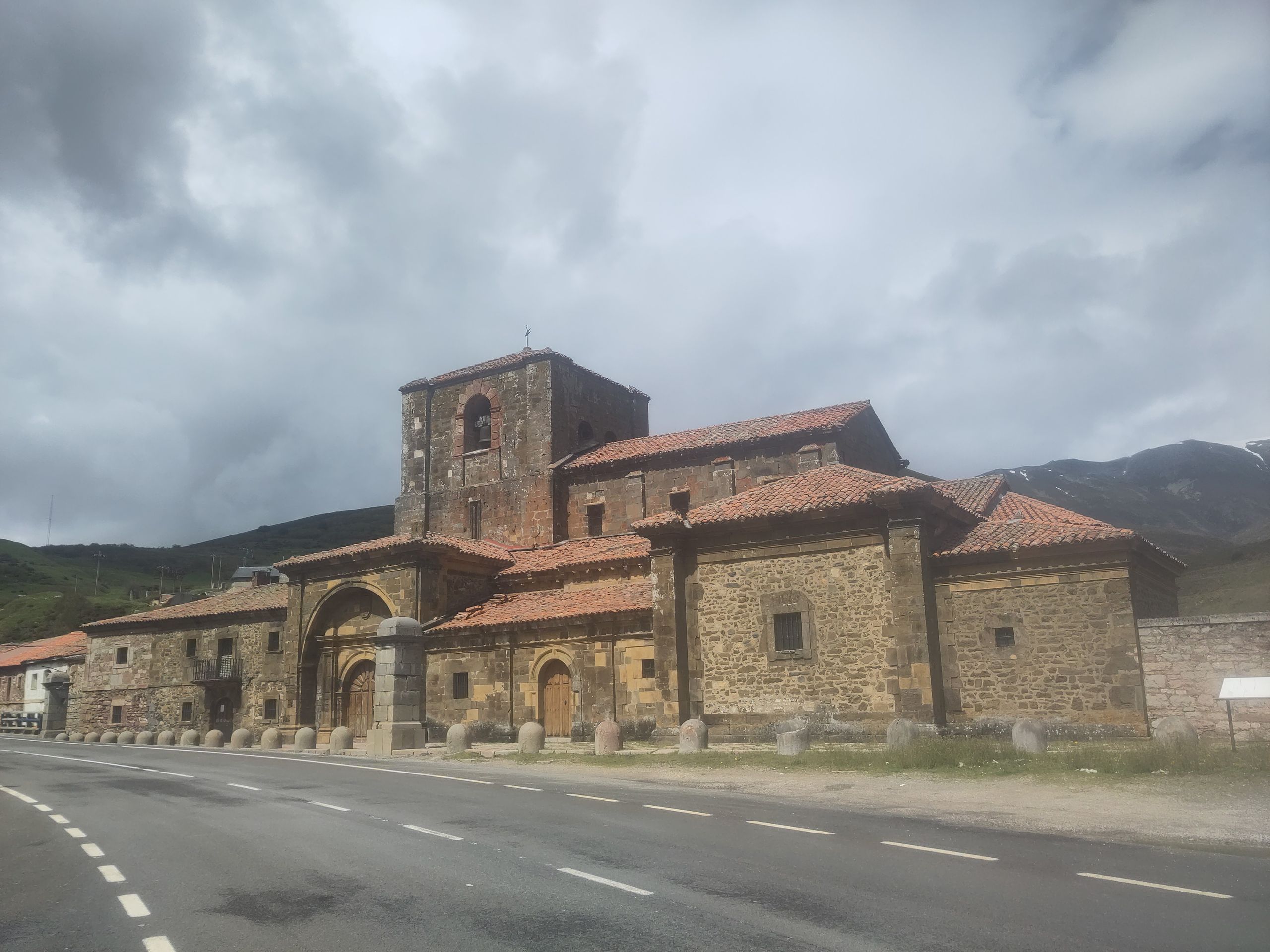
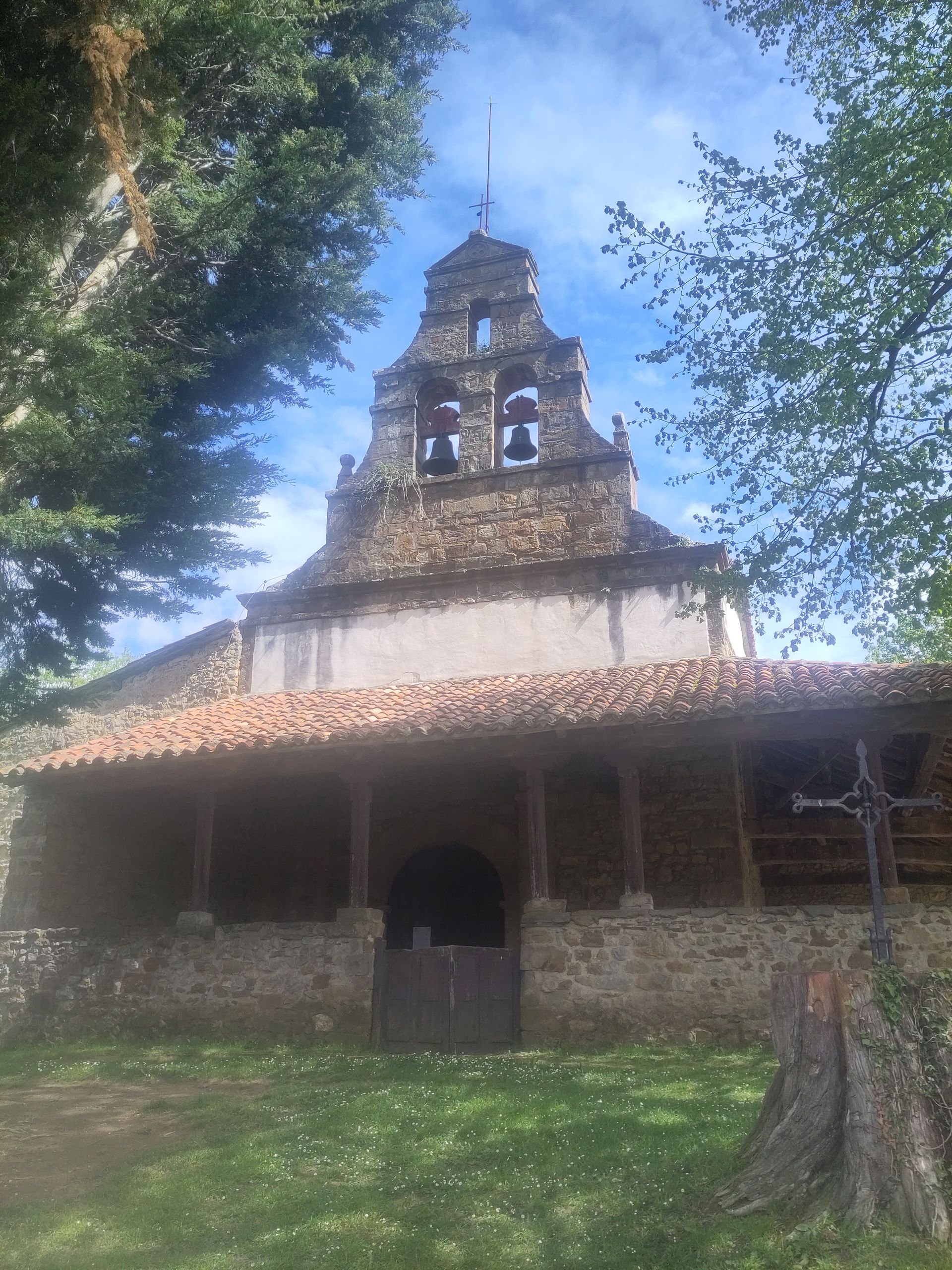
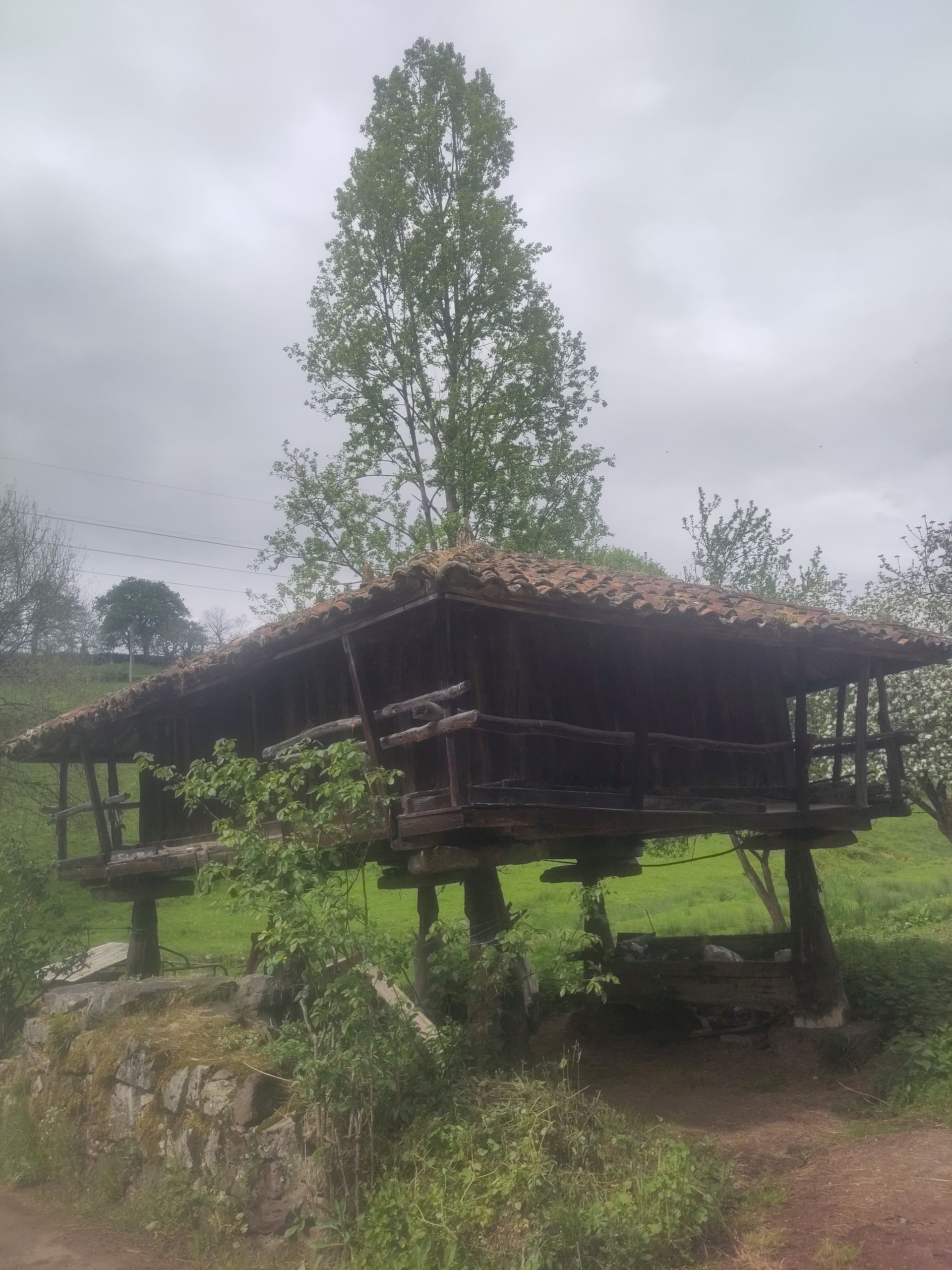
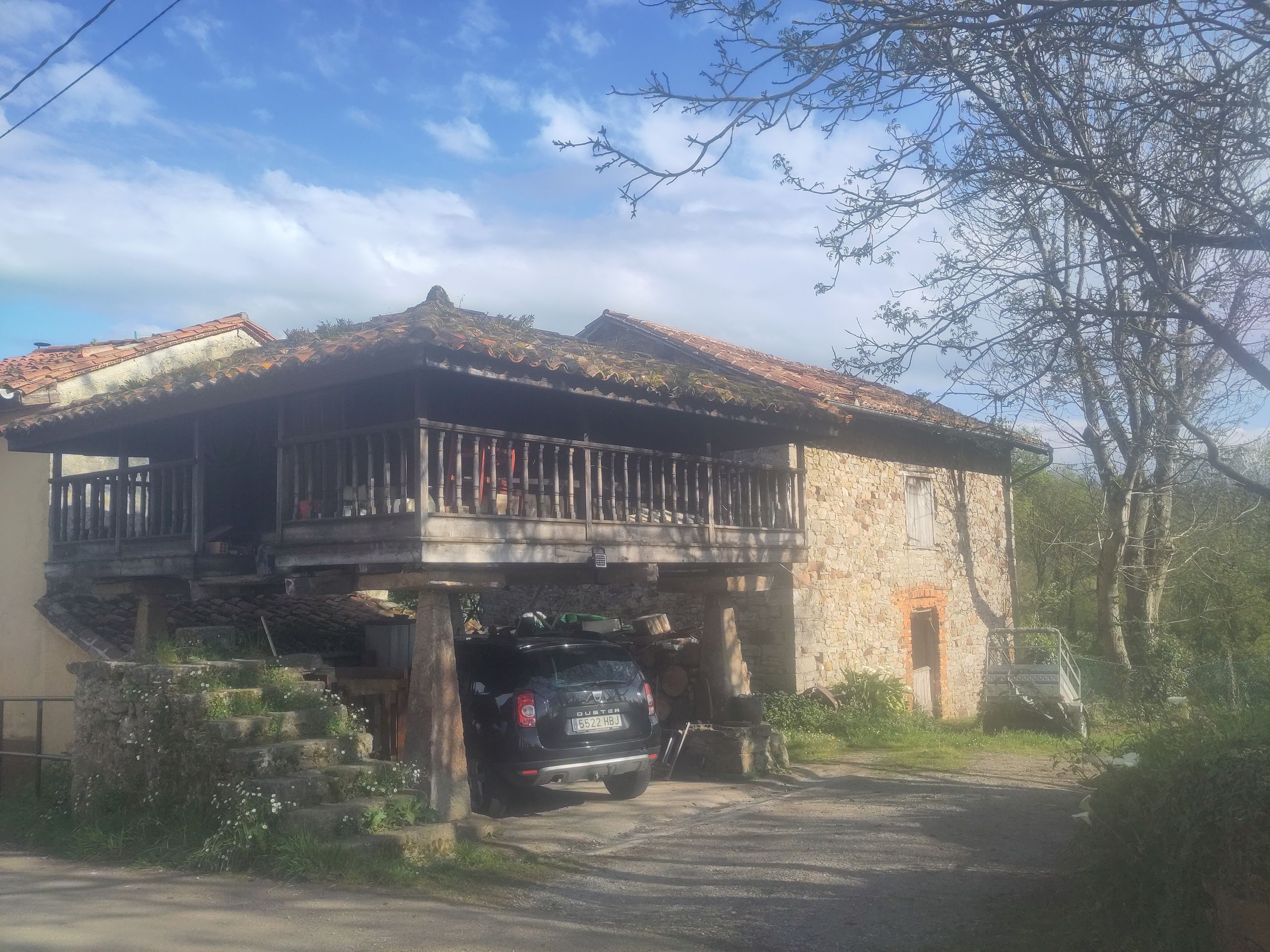
In Payares (at about 1000m elevation) it rains, but just a little higher the mountains appear fresh 'frosted' the next day. The following mountain paths to Oviedo are sometimes very challenging due to their steepness and also moisture; I slip several times - otherwise, they are picturesque with old chestnut trees and violets, small mountain streams, and small villages, with houses often in vibrant colors, and in every village, several typical Horreos, old wooden grain stores on stone stilts, stand. Some villages seem like open-air museums... And so, in a light rain, after another steep ascent and drinking at the well in a nice village (usually, the wells also feature a large old trough or washing place, often even covered), I arrive at a church in the forest that has a very small inn associated with it. Besides me, a young man also stays there, who is 'walking a long way in silence', as the woman who manages the inn explains to me, which is why she offered him to take a break here for a few days. (Normally, one is only allowed to stay one night in the pilgrim inns.) It is a very 'strong', special, somewhat mysterious place with a good aura and a beautiful view of the surrounding mountains.
Once a car stops beside me, and the driver jumps out, calling something with 'Senora', I initially don't understand that it is meant for me - he retrieves a long baguette from the trunk (he is evidently delivering baked goods), puts it in a paper bag, and hands it to me. I thank him but decline, explaining 'no gluten'. He understands that - but as the gesture counts, I still feel somewhat warmer through this kindness...
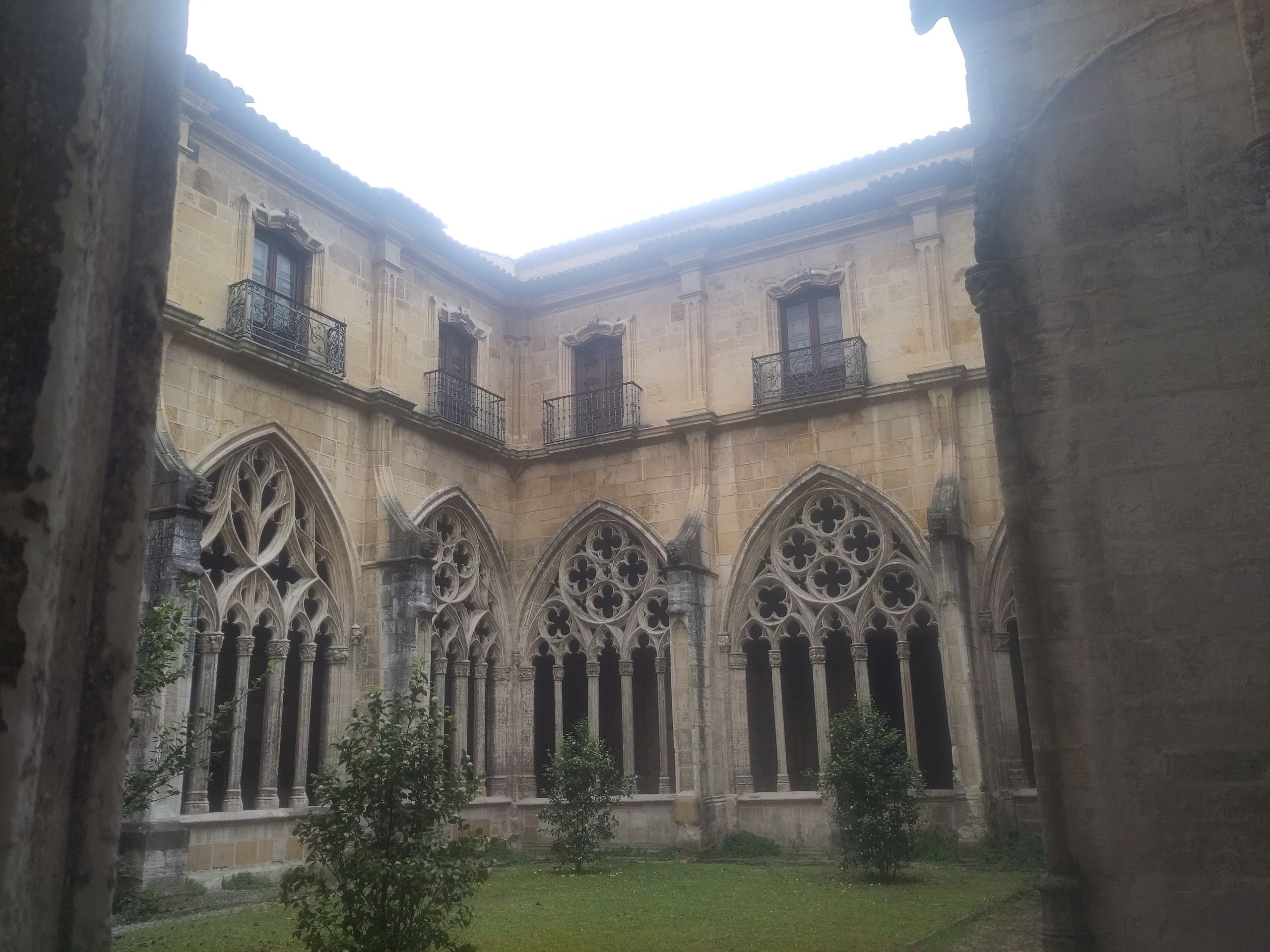
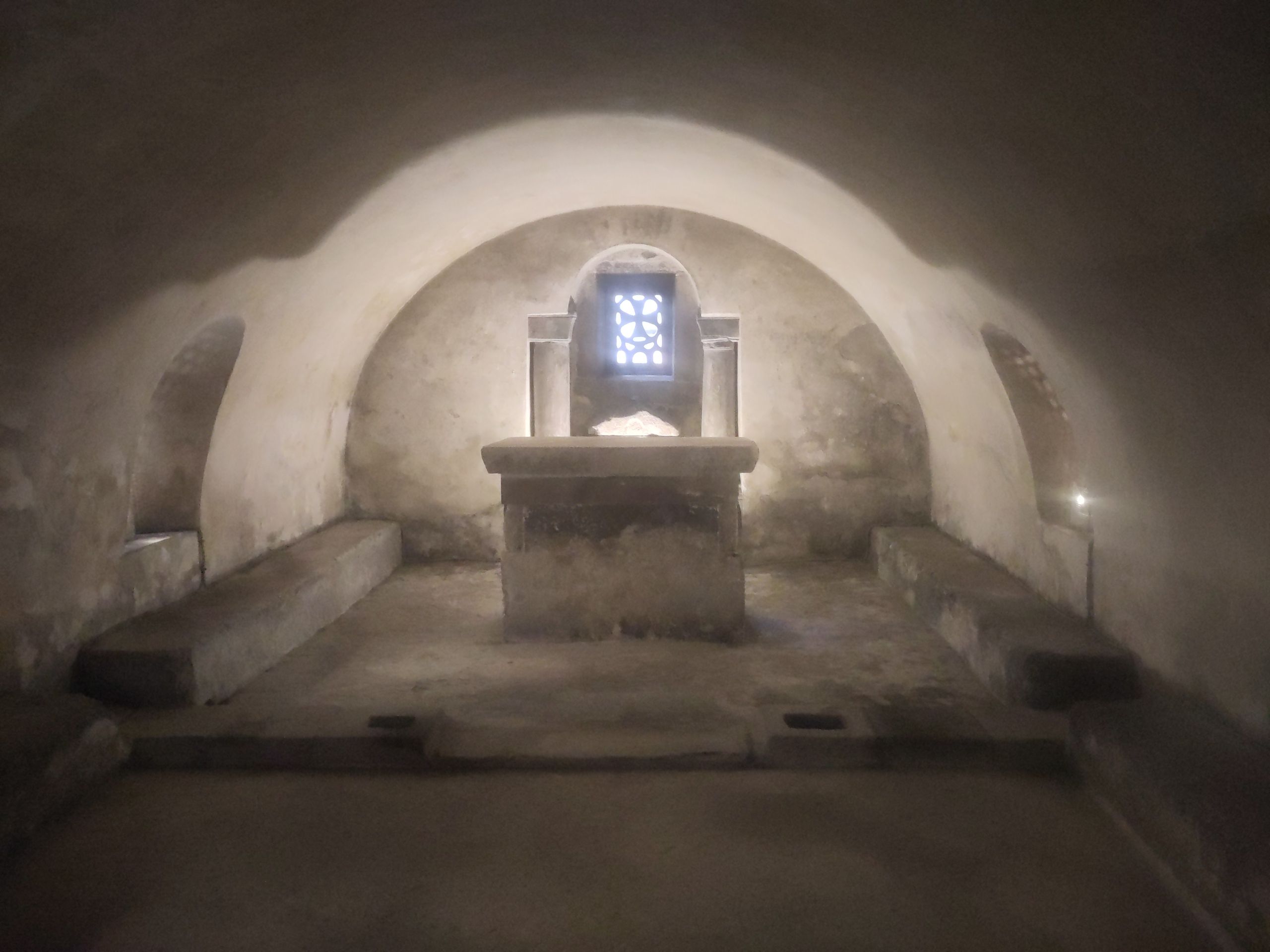
Oviedo seems gloomy and harsh, which of course is also due to the weather. The cathedral is simpler than the southern ones, but has an incredibly beautiful Gothic cloister and the pre-Romanesque 'Camera Santa', the holy chamber, where the relics were kept: a low vaulted room from the 9th century with really a 'holy', very special atmosphere. The main church no longer really appears in its high Gothic form due to too many (baroque) embellishments, and above all an oversized fully gilded main altar brings too much unrest into it. Asturias, once its own kingdom, shows its Celtic heritage: everywhere Celtic symbols and of course the blue flag with the golden cross - it flies even in the smallest mountain village in front of the houses (as we know it from Switzerland). The place names are bilingual since Asturian is a separate language. Otherwise, shops offer artisan silver jewelry with black onyx. The inn in Oviedo is religious (separate dormitories for men and women) and located in a corridor of a large old building. It is raining, and I am glad for this dry spot, even though it is otherwise rather unfriendly-comfortable here.
Since I left Oviedo on Wednesday, I have now been 'going in the wrong direction', as I didn't head westward to Santiago, but rather northeast towards the Atlantic and ultimately France. This means that other pilgrims only come towards me, but are no longer going in the same direction; it also means that I can no longer rely on the yellow arrows and shells as I did before, since all the Camino routes are only marked in one direction, not for the 'return path'; it also means that indeed many locals point out to me that I am walking the wrong way: a man stops his hedge trimming, a car halts beside me, the window rolls down and excitedly points towards Santiago, a woman opens the window of her house and calls down to me excitedly, etc. - I hadn't expected that the population along the way would care so much about where a hiker is headed... I memorize the sentence 'estoy de vuelta a casa.' - 'I am on my way home'... And of course, it also means - unfortunately - that encounters with other pilgrims are only ever singular and thus simply superficial and less binding, just different. Moreover, it means that I am now (again) really on my own and encountering 'myself' differently. I can hardly believe that it was just a month ago that I set out on March 17 after my rest period from Seville. So many impressions every day, each night a different sleeping place, so many kilometers in solitude and only myself as a 'conversation partner' for making decisions (and then living with them...). That I am on the road for a long time is evident to me as I increasingly talk out loud to myself... and how much I get startled when suddenly a dog barks or a cyclist overtakes me or similar happens while I am, so to speak, elsewhere, walking outwardly, not really thinking about anything, absorbed and 'timeless' (often I am then amazed at how much time and how many kilometers have passed without my truly noticing) - that is 'meditative walking' for me, and it only sets in after a longer period, not during short hikes or smaller vacations...
Well, since Thursday evening I am back at the Atlantic, this time 'simply' on the northern side of Spain instead of the south... Four snails traveled along uninvited in my sleeping gear as 'stowaways', which I packed up in the half-darkness on the meadow where I slept in the morning - they then fell out when unpacking in the evening...
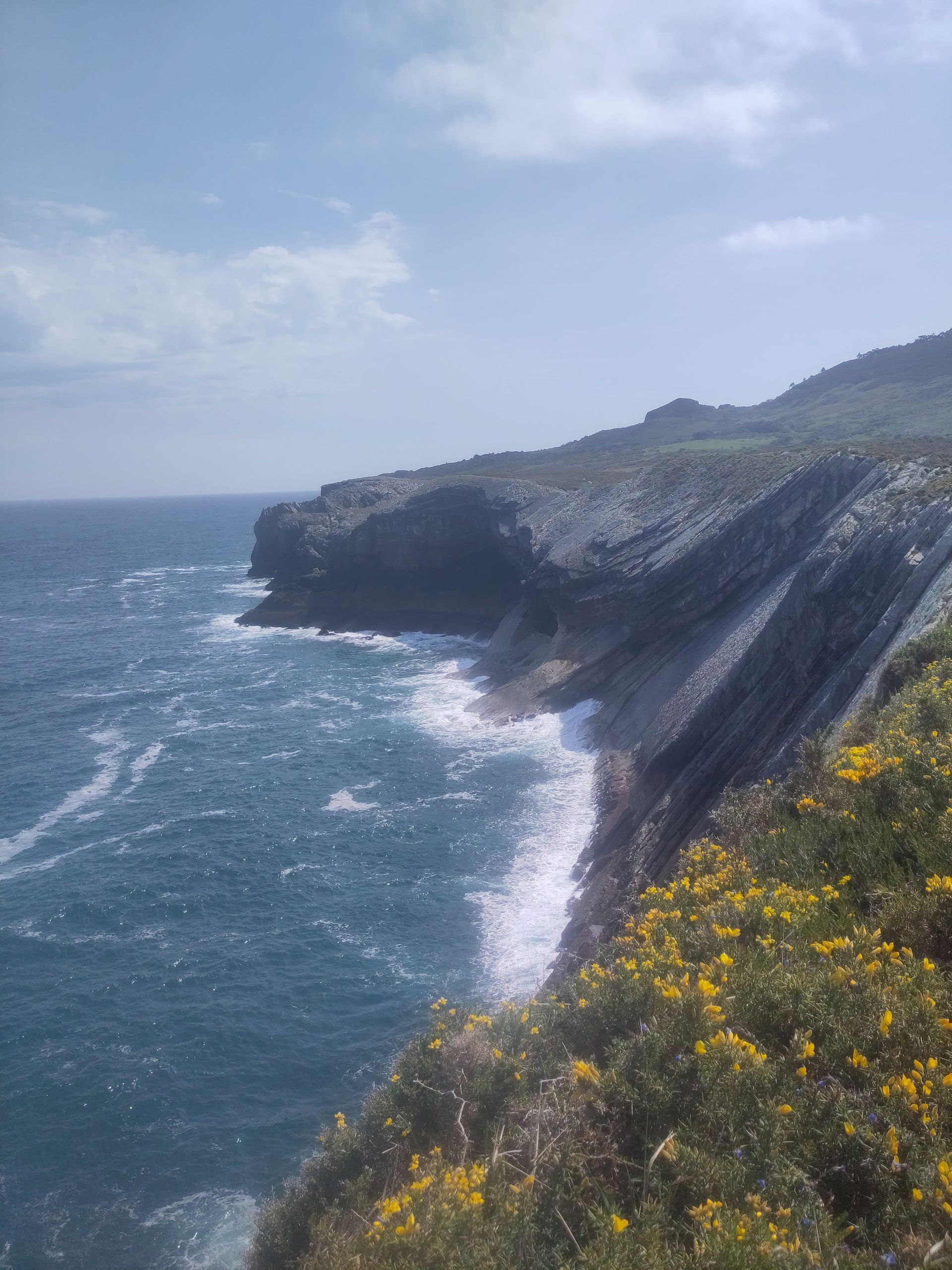
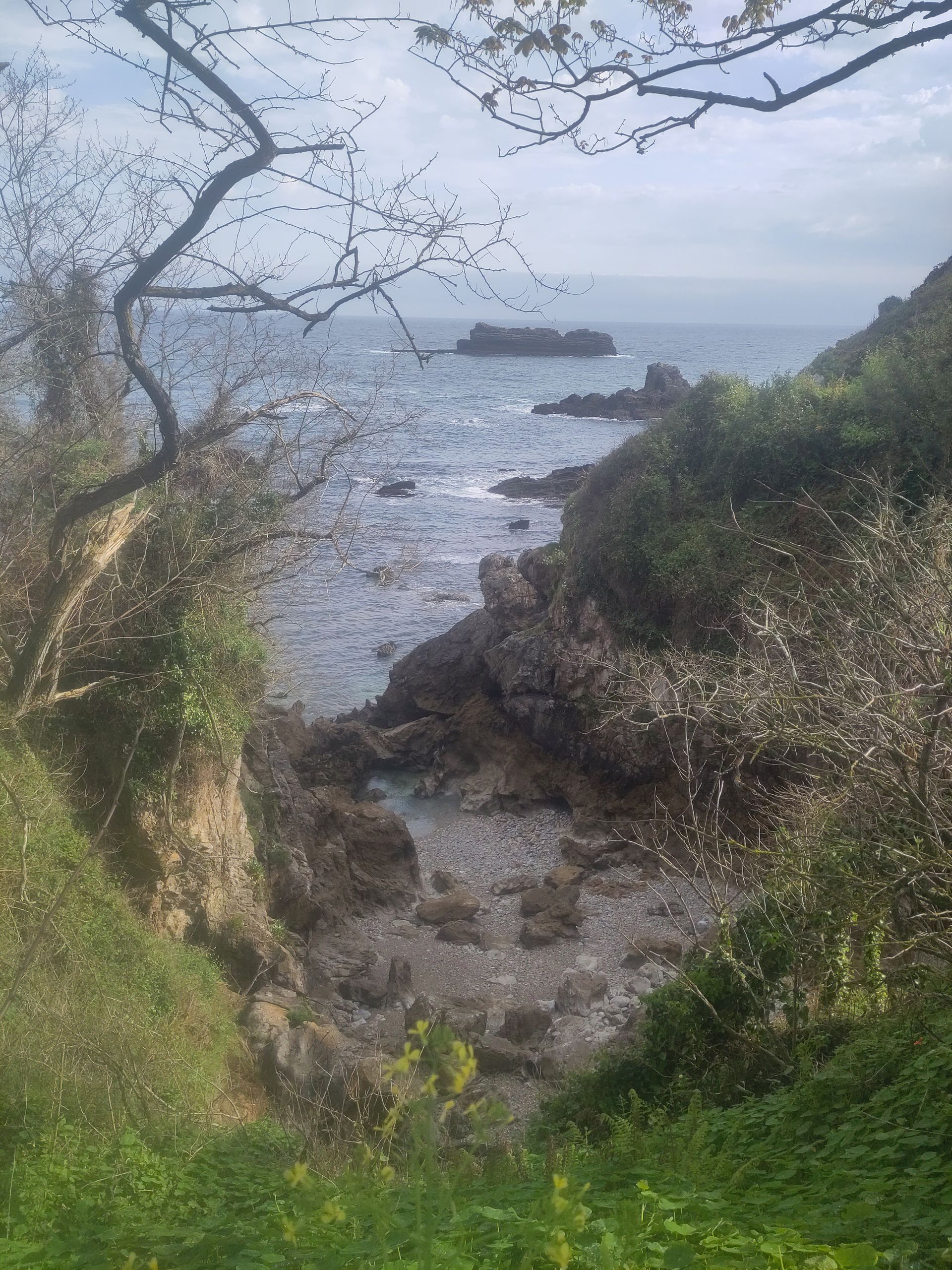
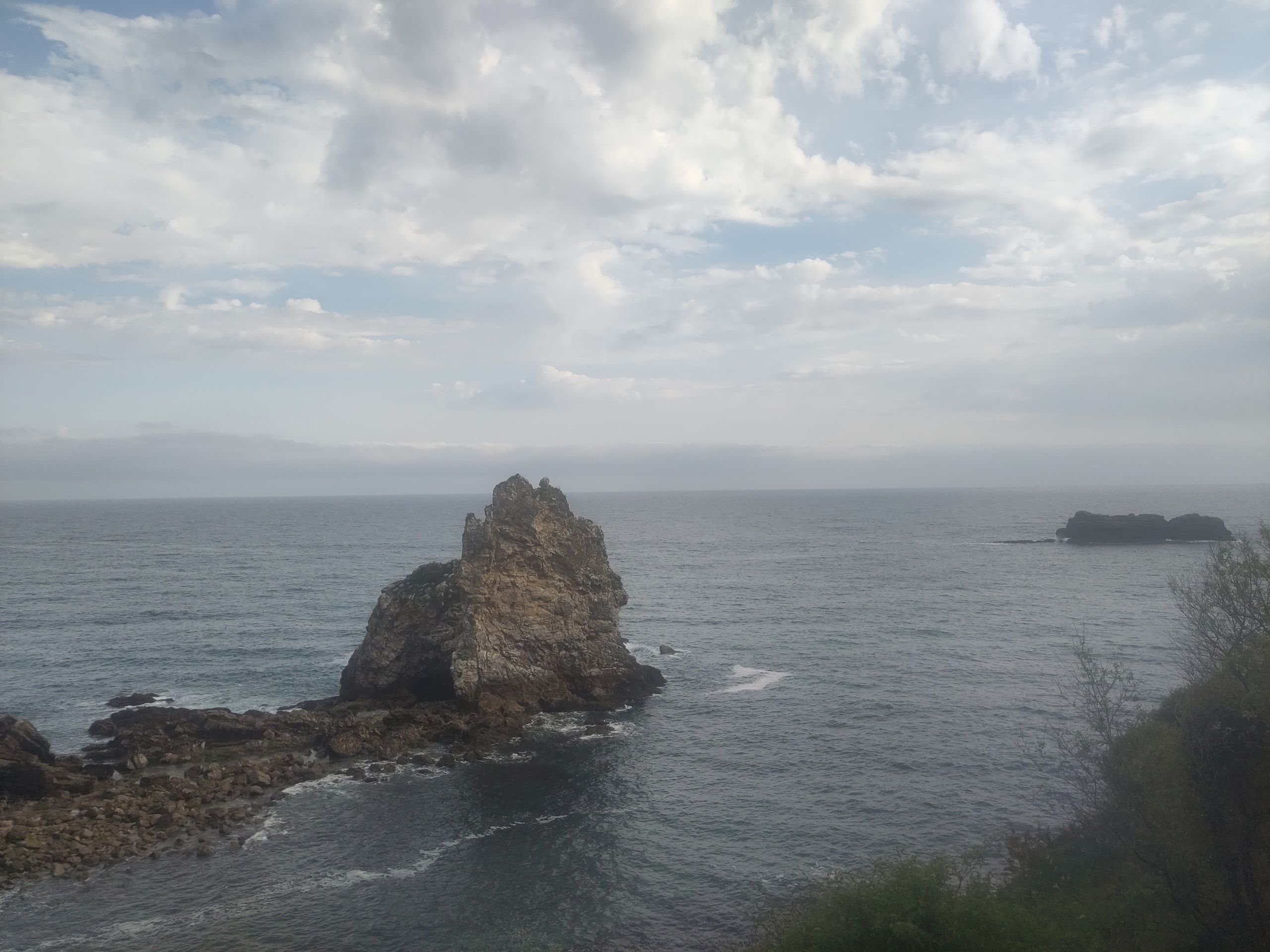
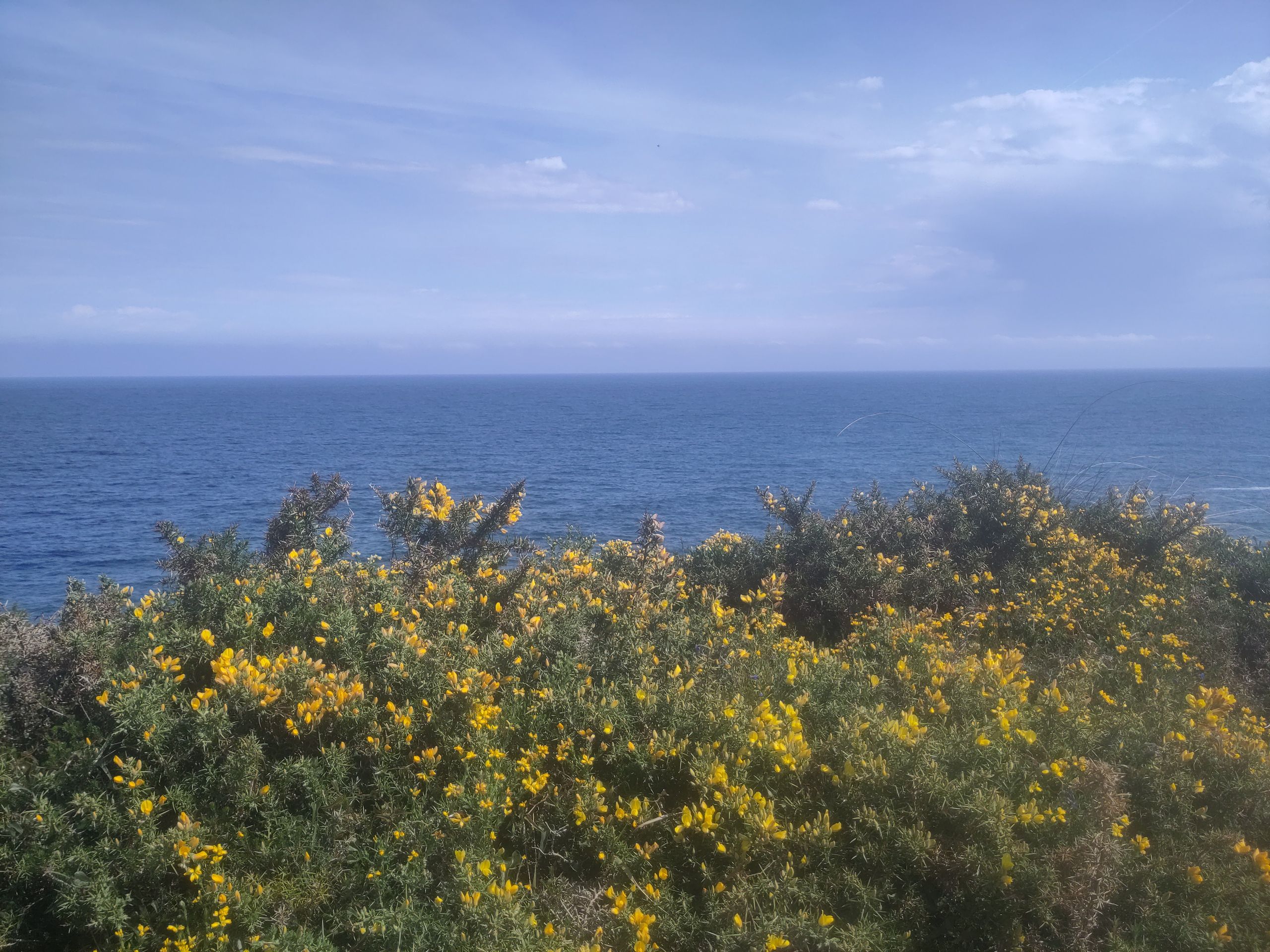
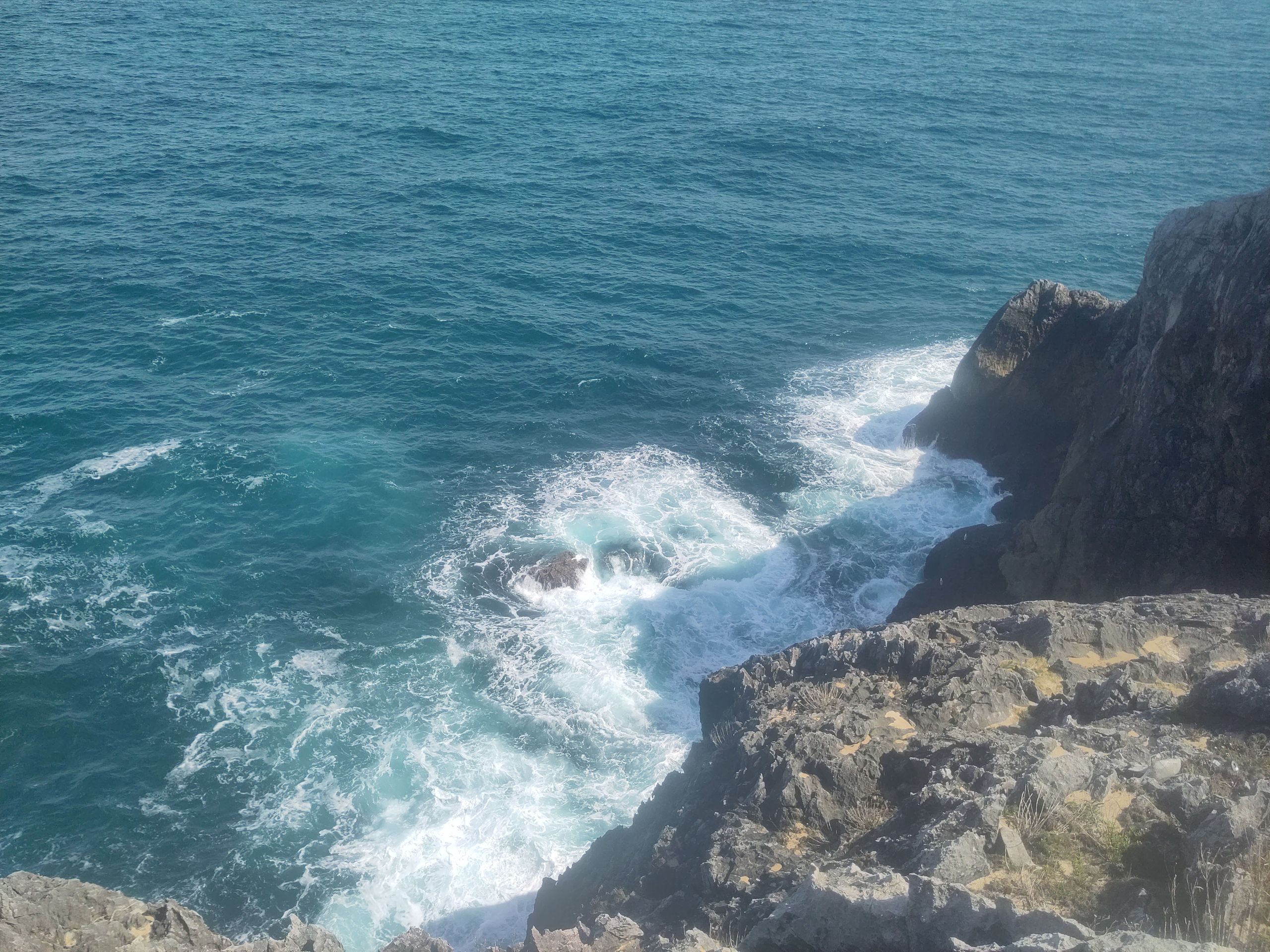
So far, the sea has shown itself here more so on its gloomy side: clammy and damp, dark and cloudy and rainy, only today did the sun shine at times, making the sea shine blue, the spray white, and the broom flowers yellow... It is a rocky, craggy coast with individual beaches in between - and much steep ascent and descent with spectacular views. Where one cannot walk directly on or above the coast, there are unfortunately also longer stretches of road or - as happened to me today: I found with the help of the digital map a very small, overgrown path along the cliffs, even overcame three fences, only to finally end up directly in front of a high gate secured with a padlock. The former farmhouse looked very uninhabited and abandoned, but the high fence and closed gate are still there! So I first had to hoist the backpack over and then climb over somehow (that's really not my thing!) and finally relieved stand on the street, not having to go back again.
The vegetation here, north of the mountains, now often seems more familiar, meaning: oaks, for instance, again look like the oaks I’m used to... and it is overall very green. Alongside, I often walk through eucalyptus forests with their strong, crisp, unique scent; and one or another palm also still finds its way into the gardens...