
and on and on along the Via de la Plata...
...and again already about 200 km further north in Spain: The days flow vibrantly together filled with sun and wind... I hardly know how to convey to you an impression of all the...

Published: 10.04.2026
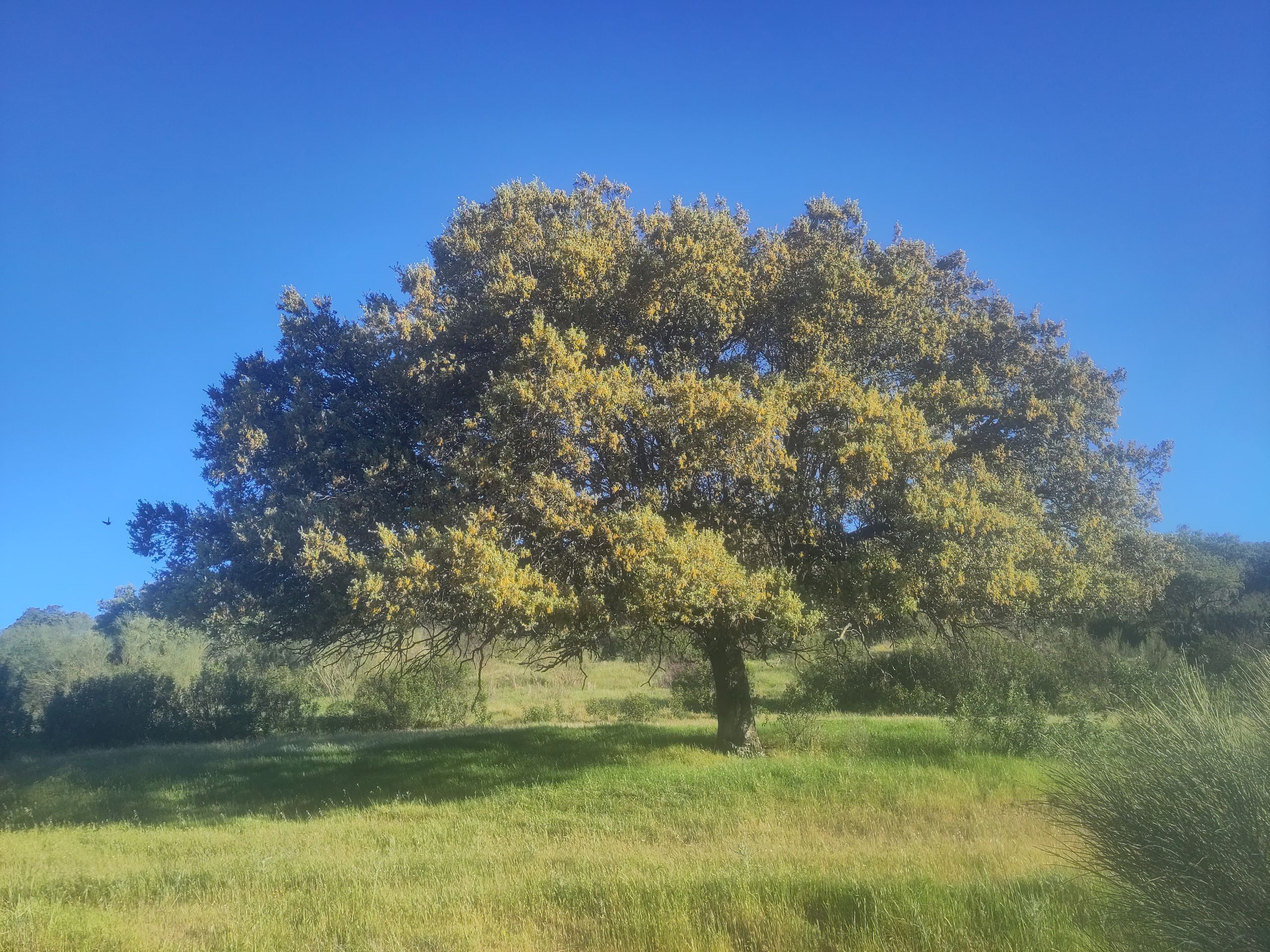
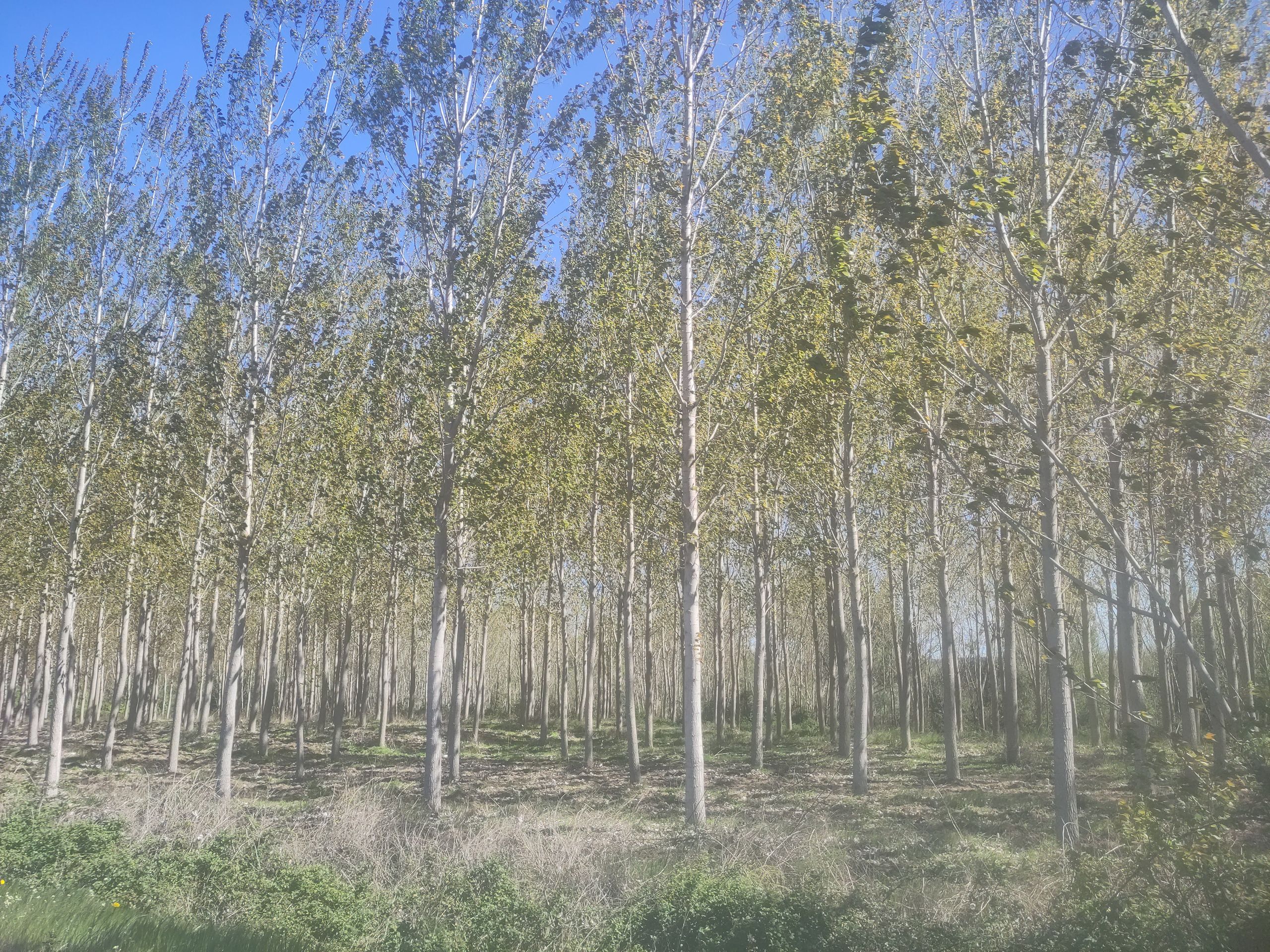
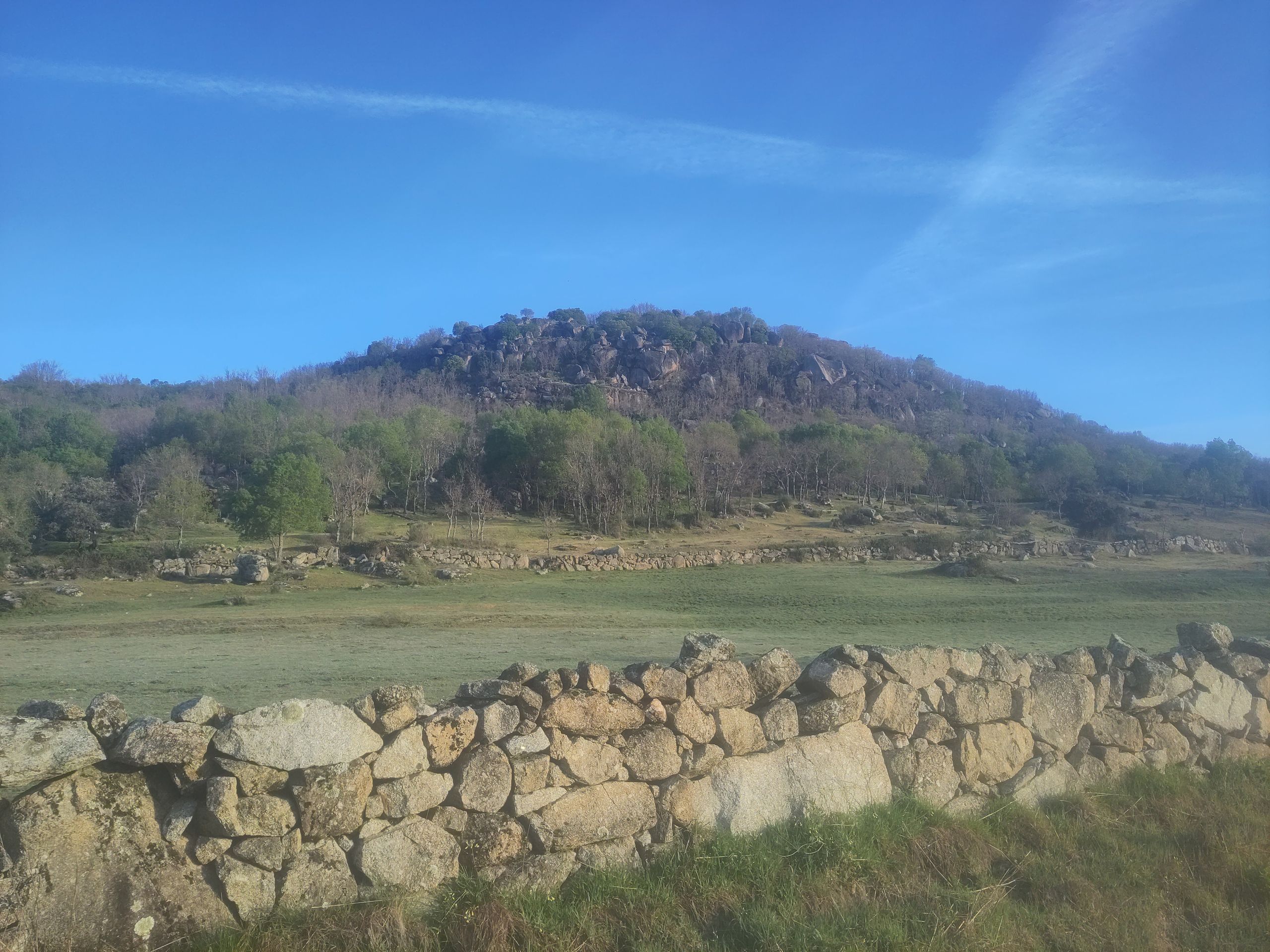
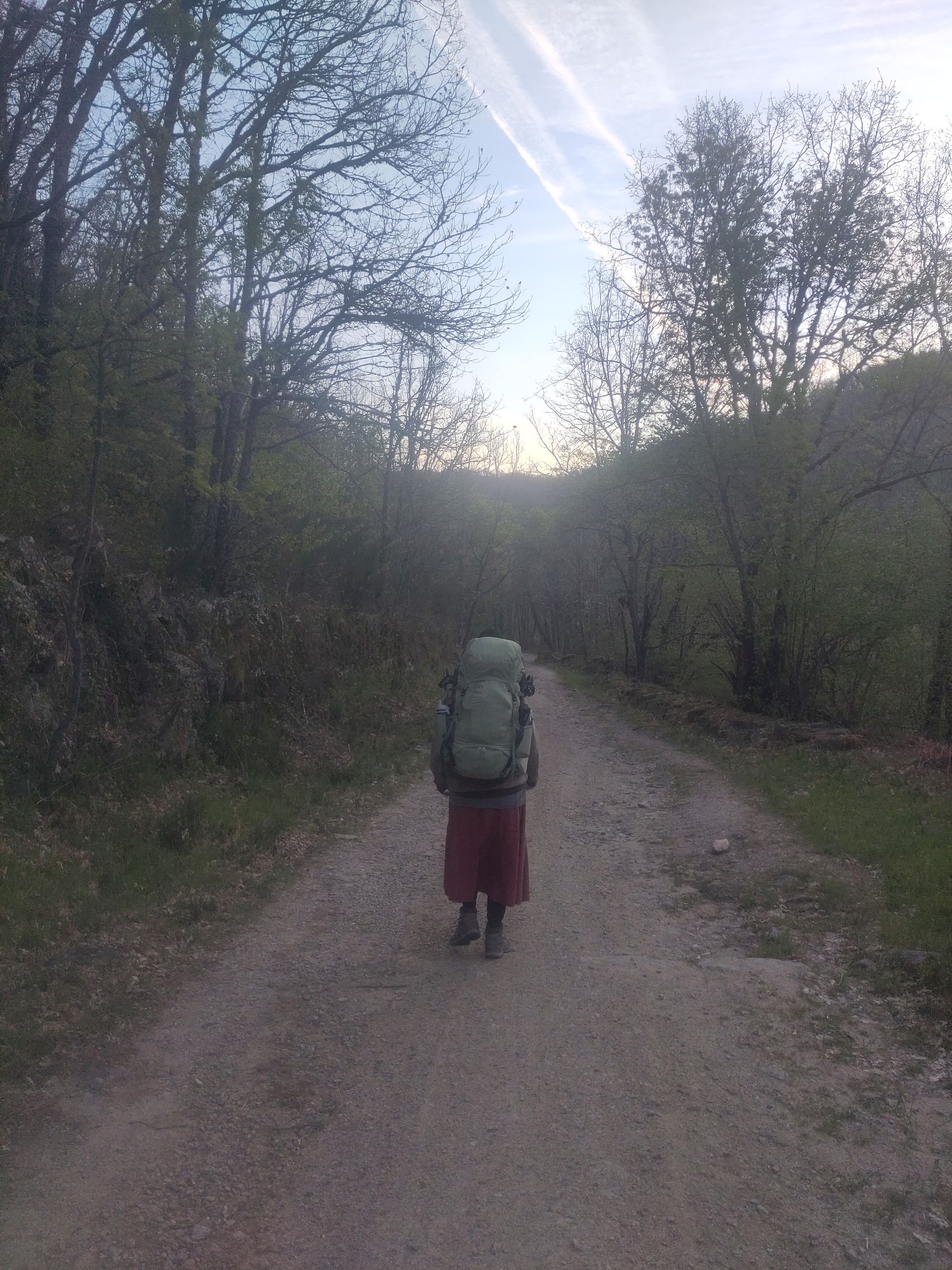
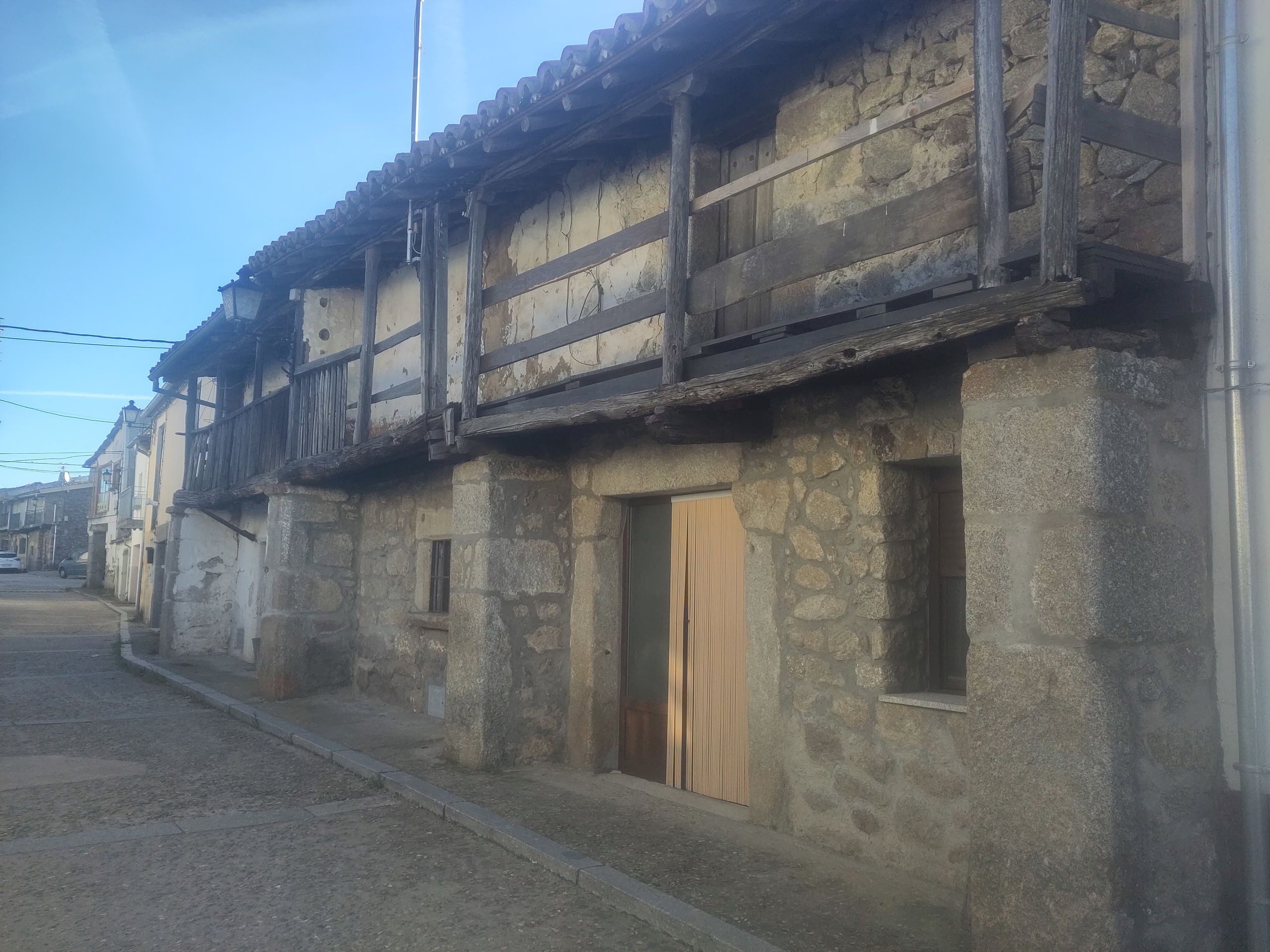
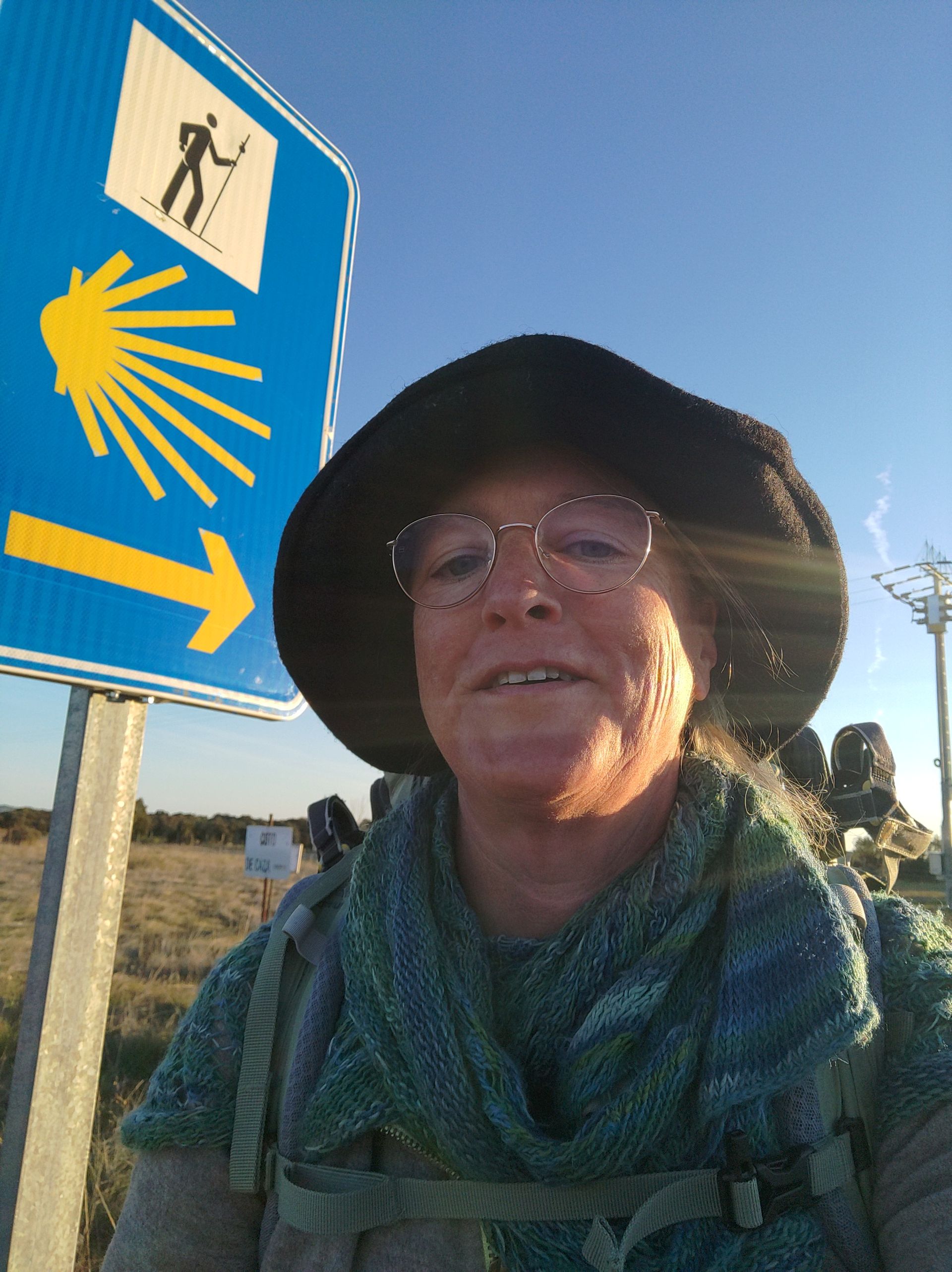
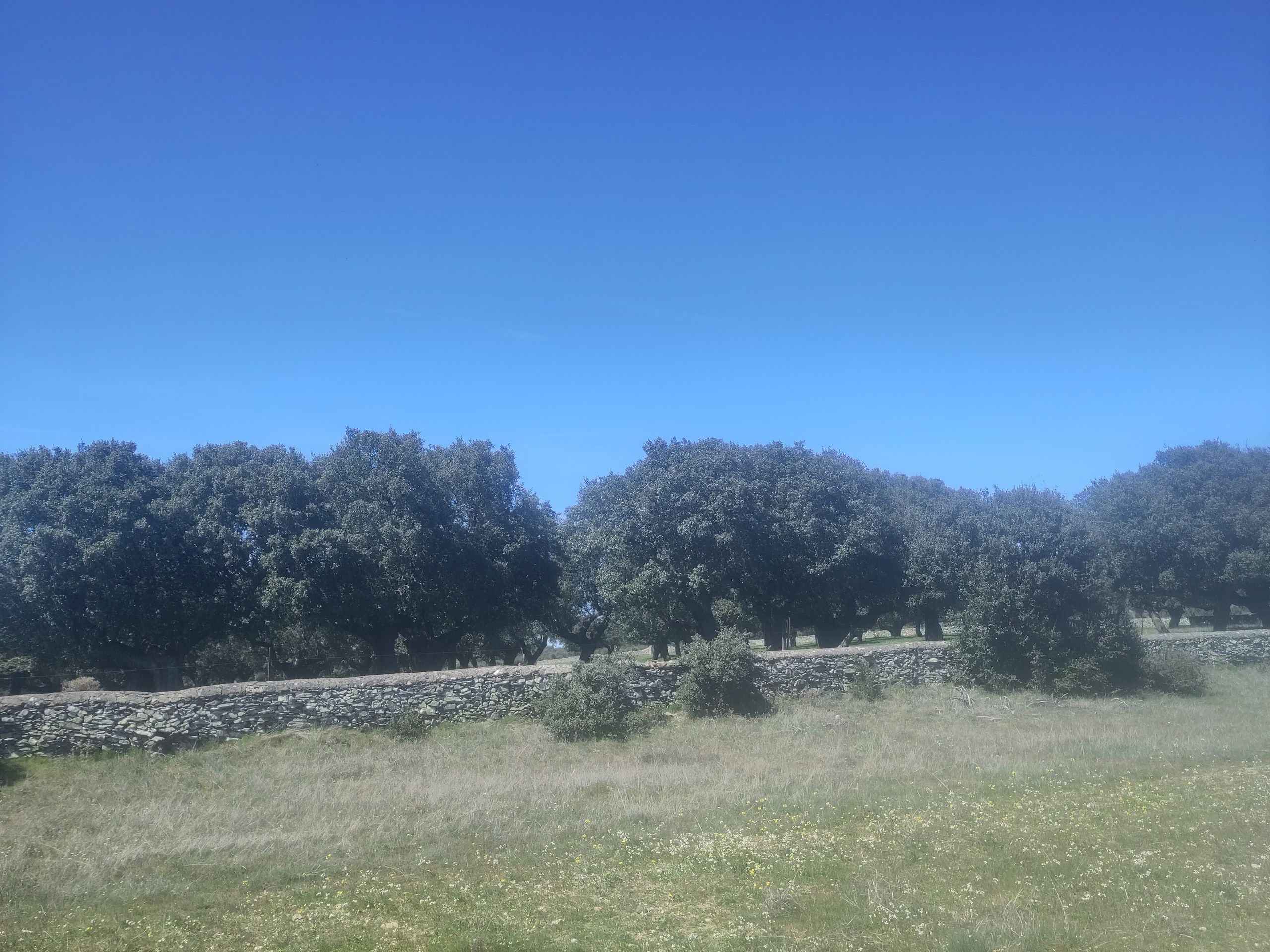
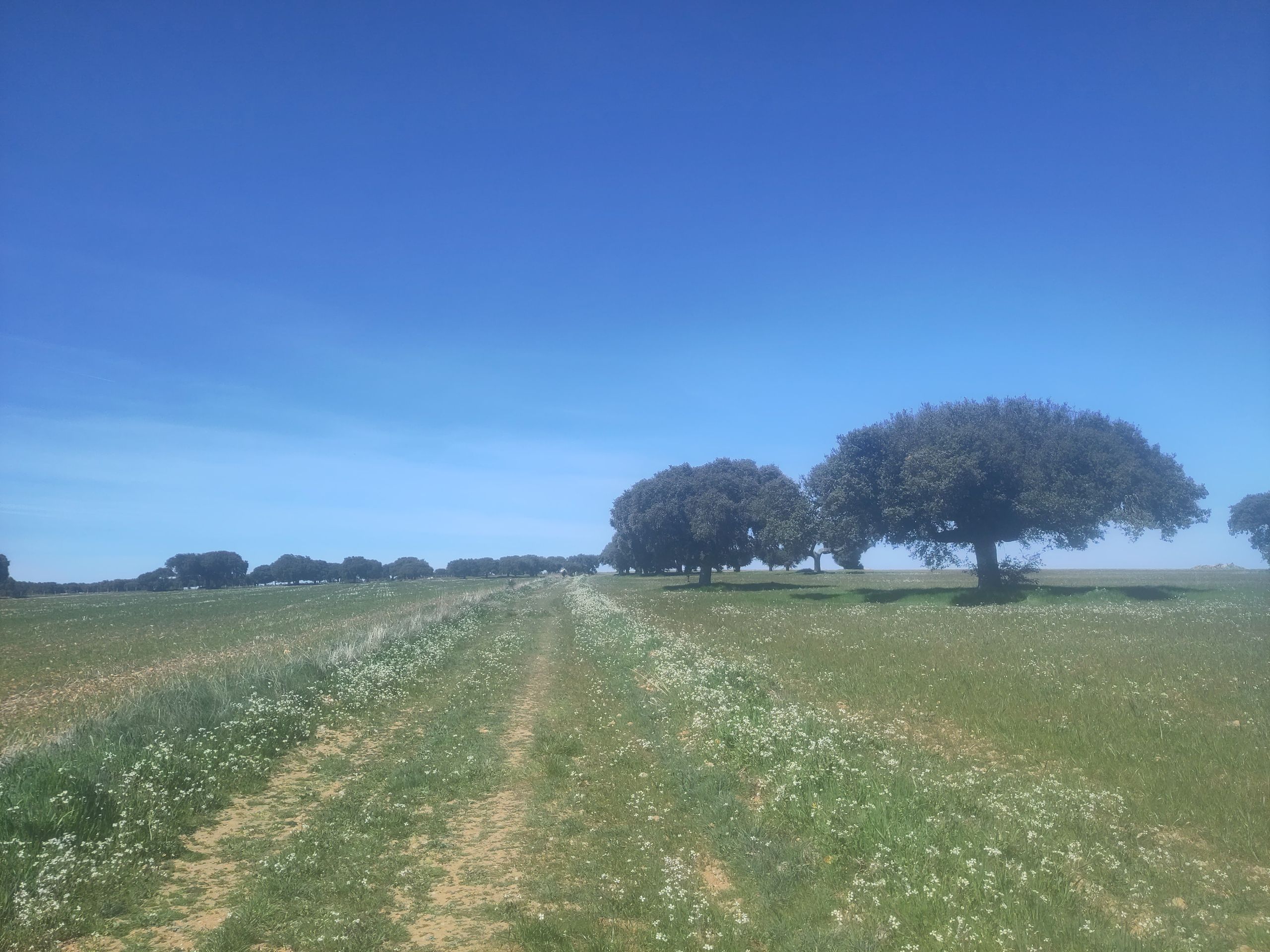
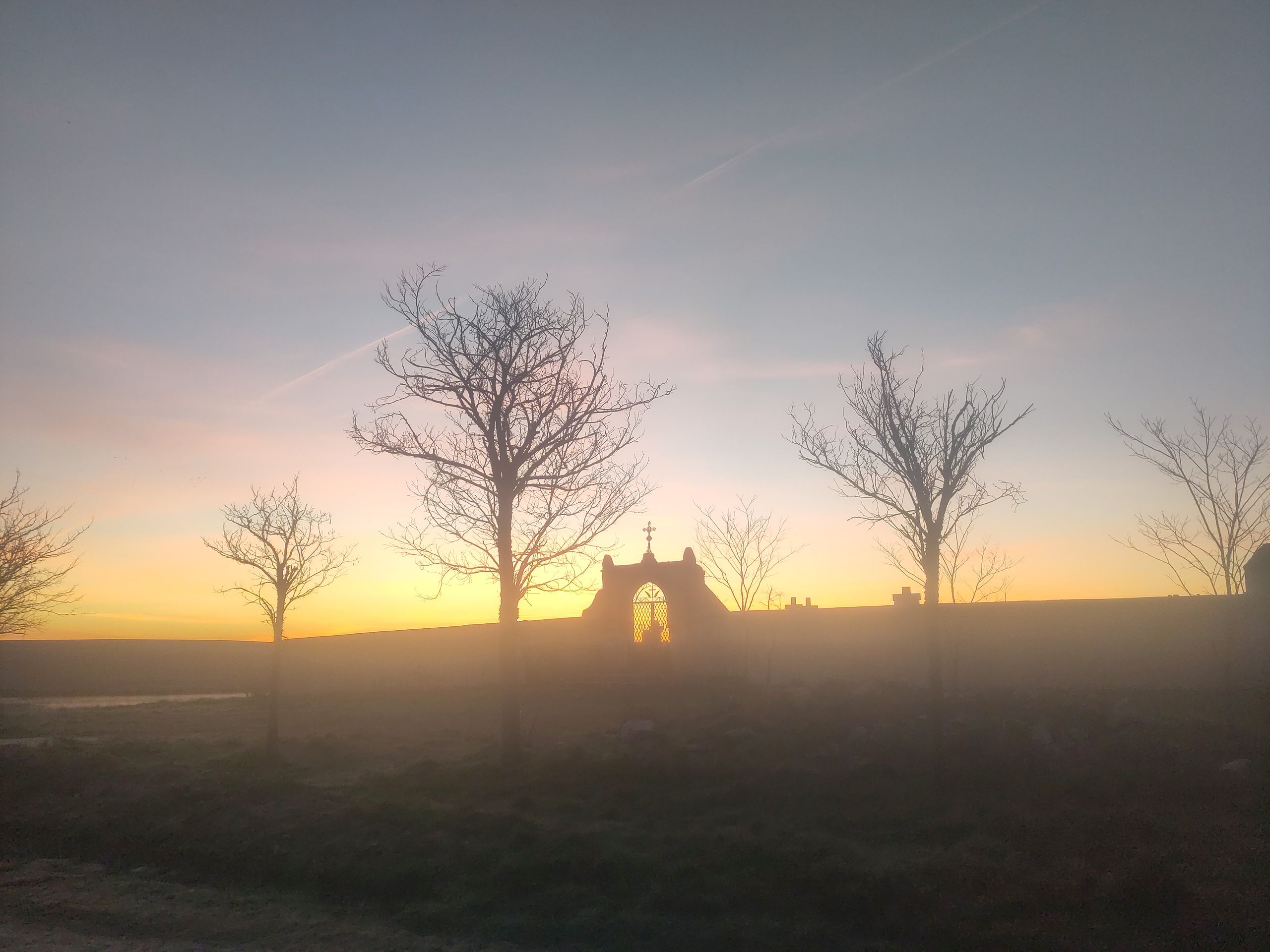
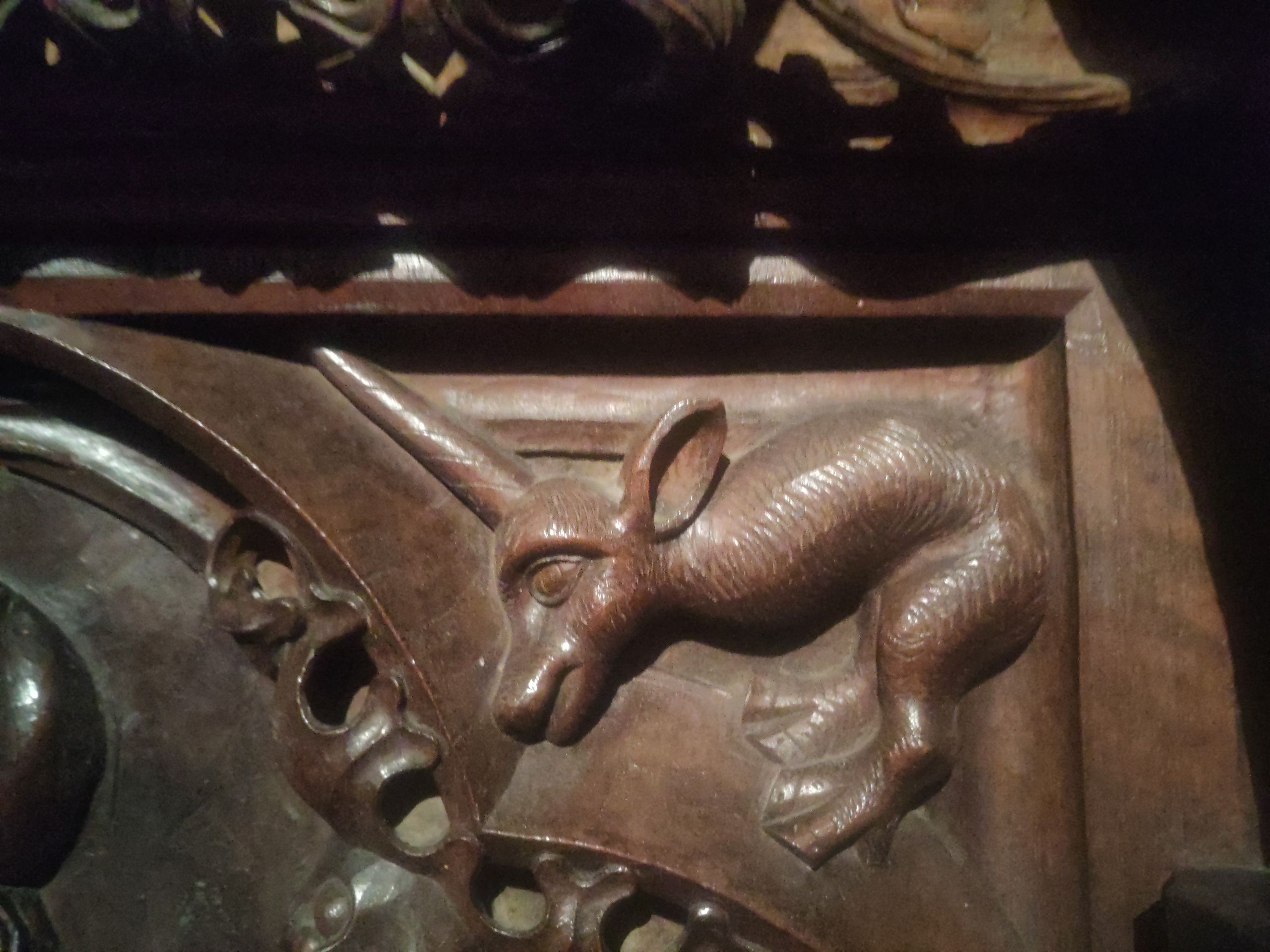
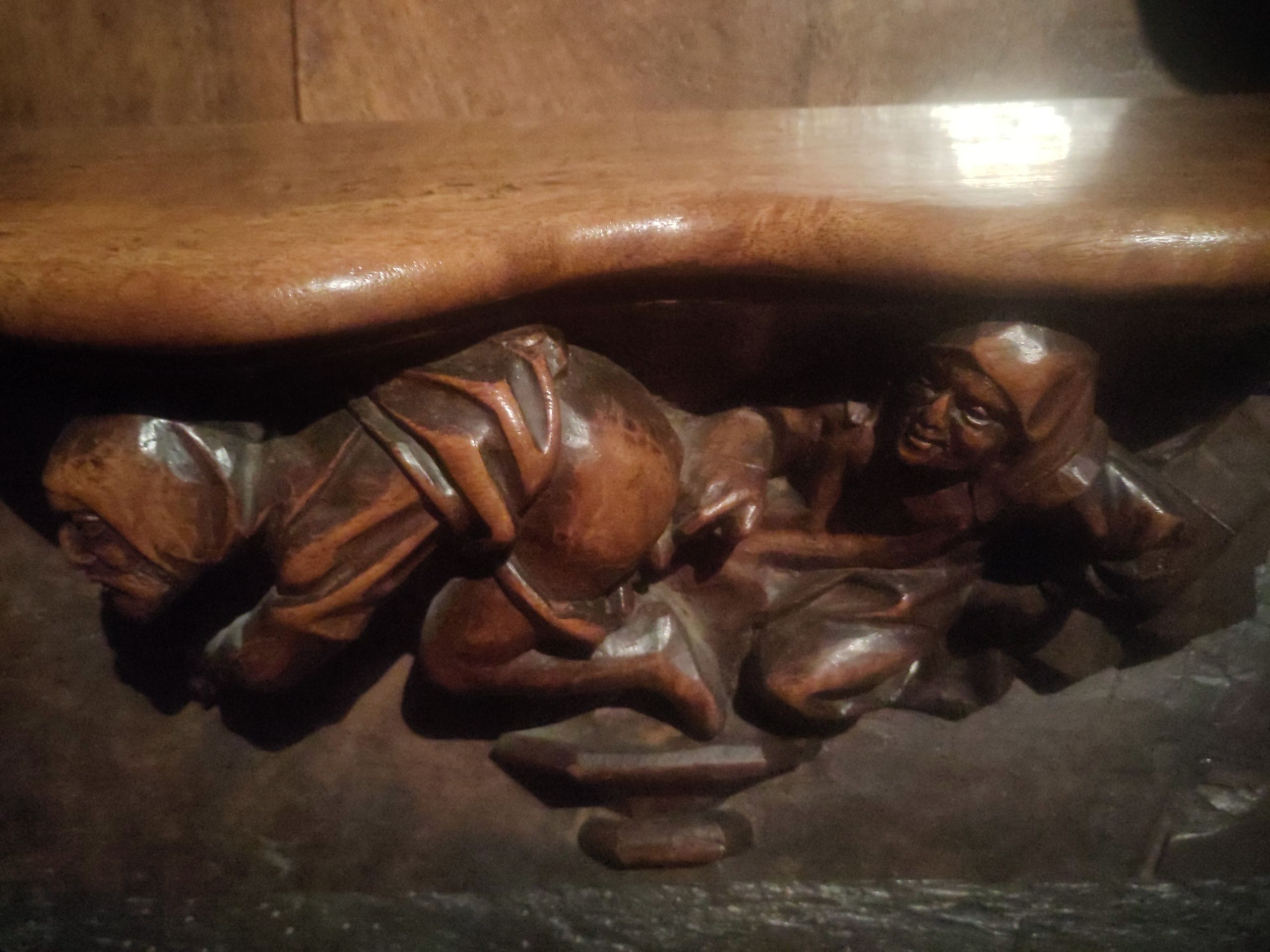
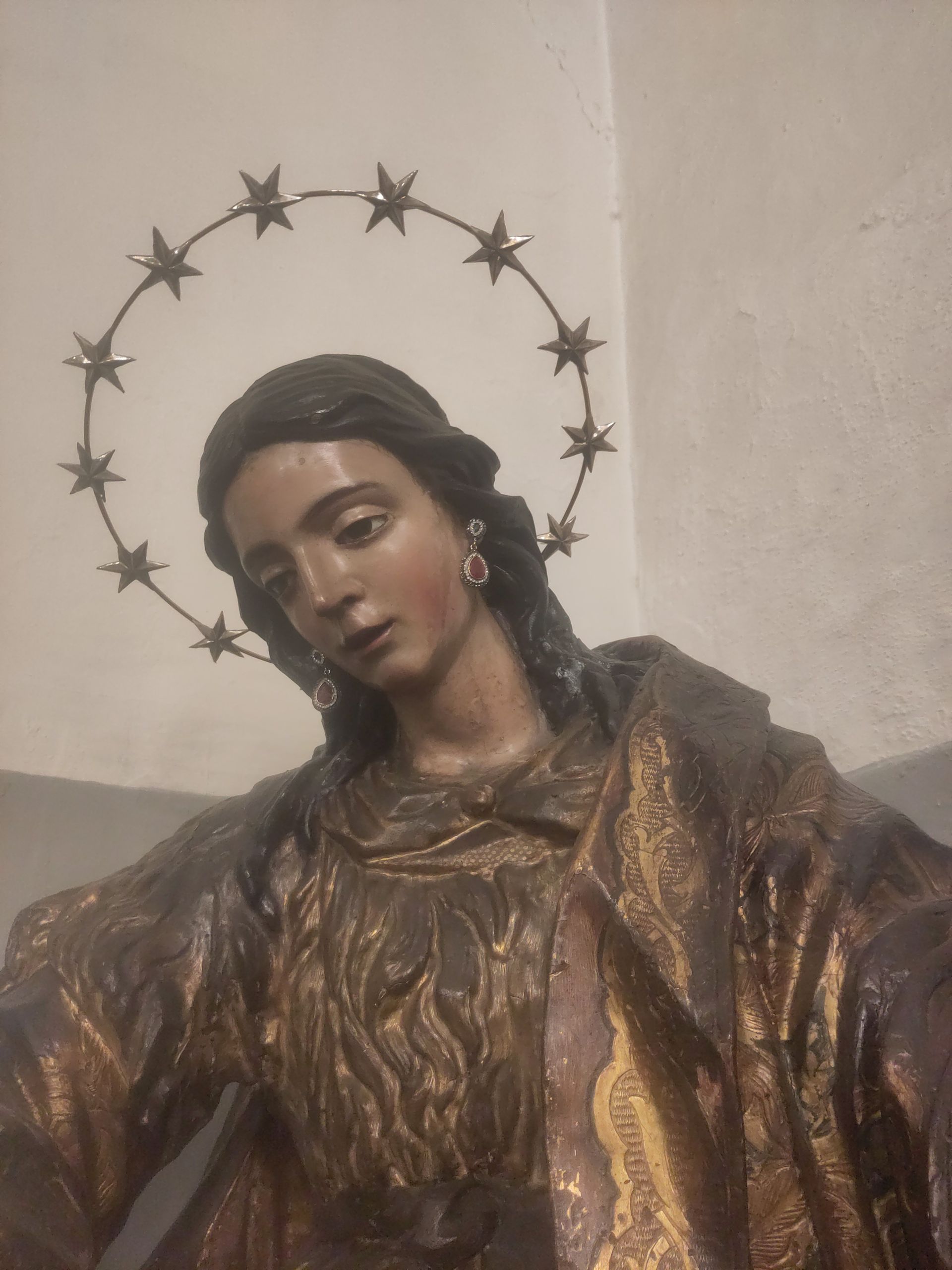
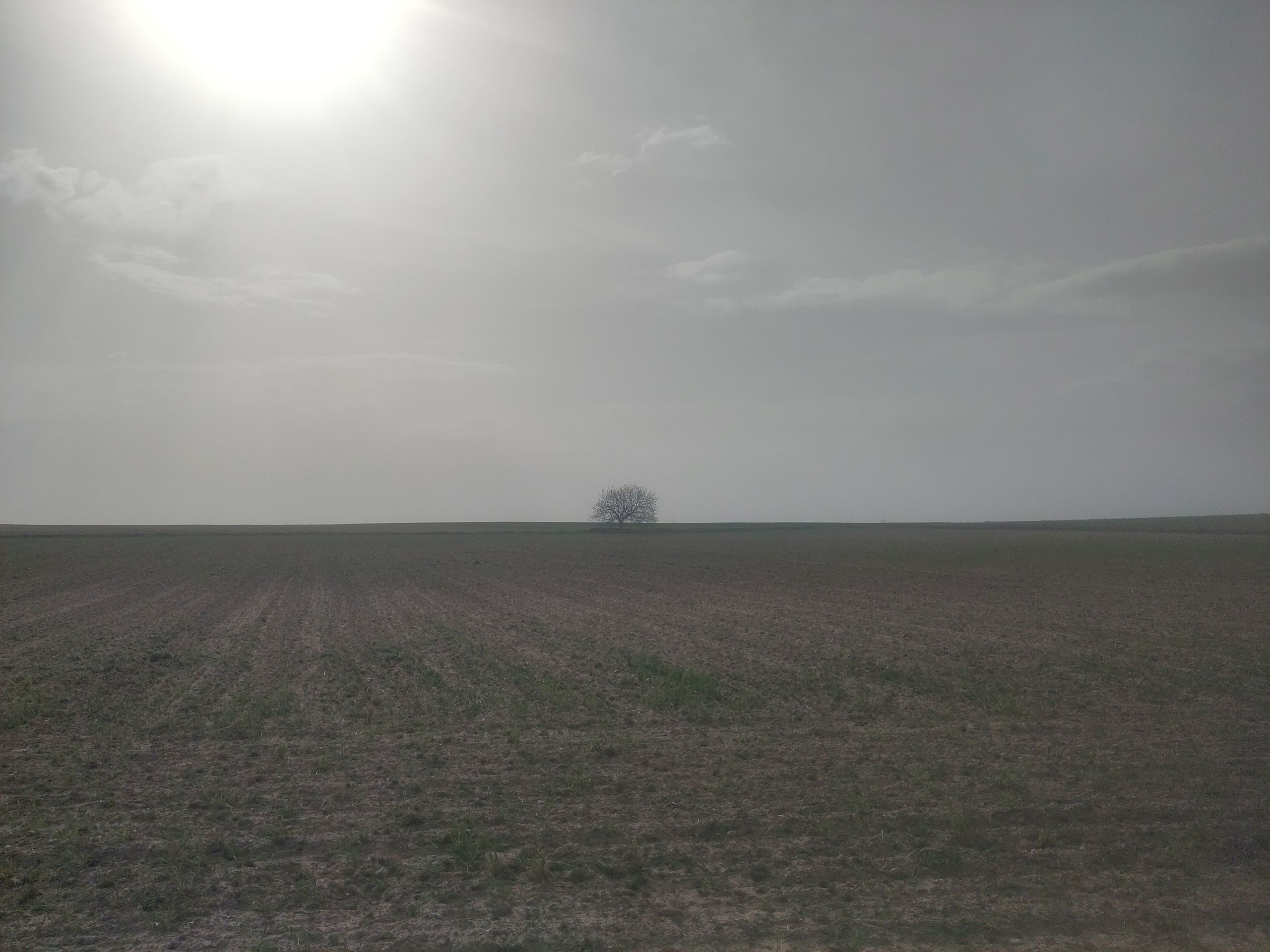
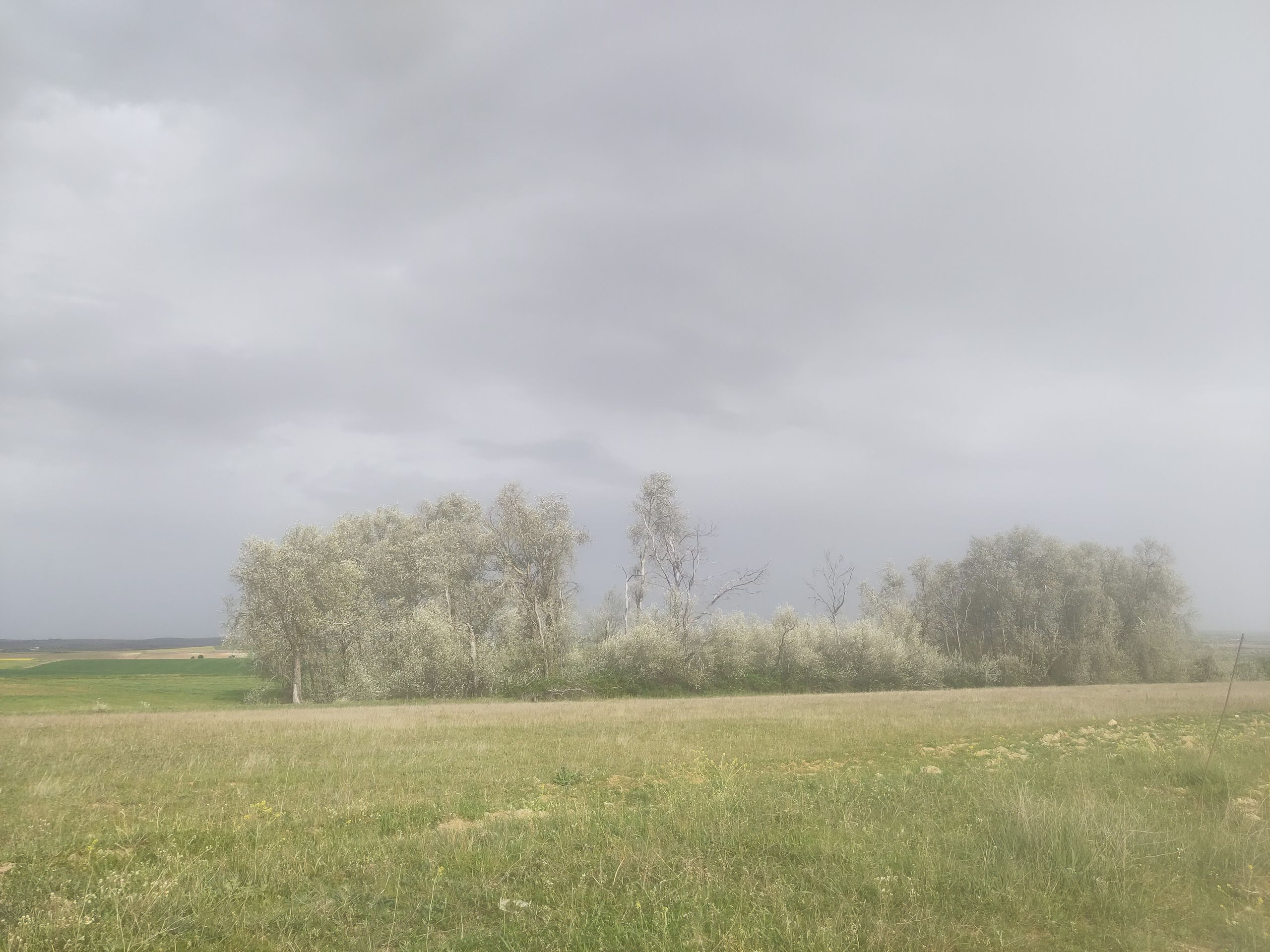
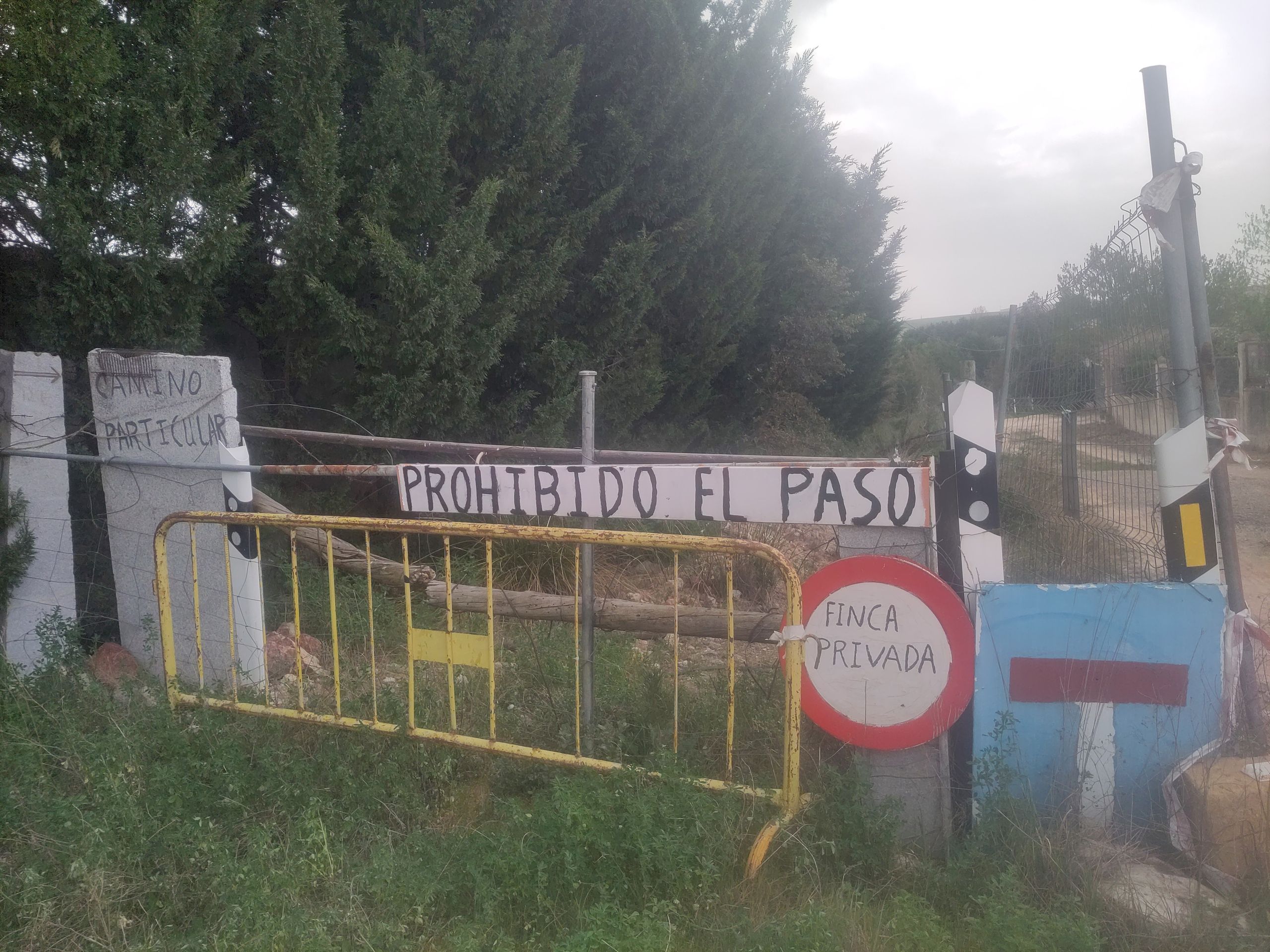
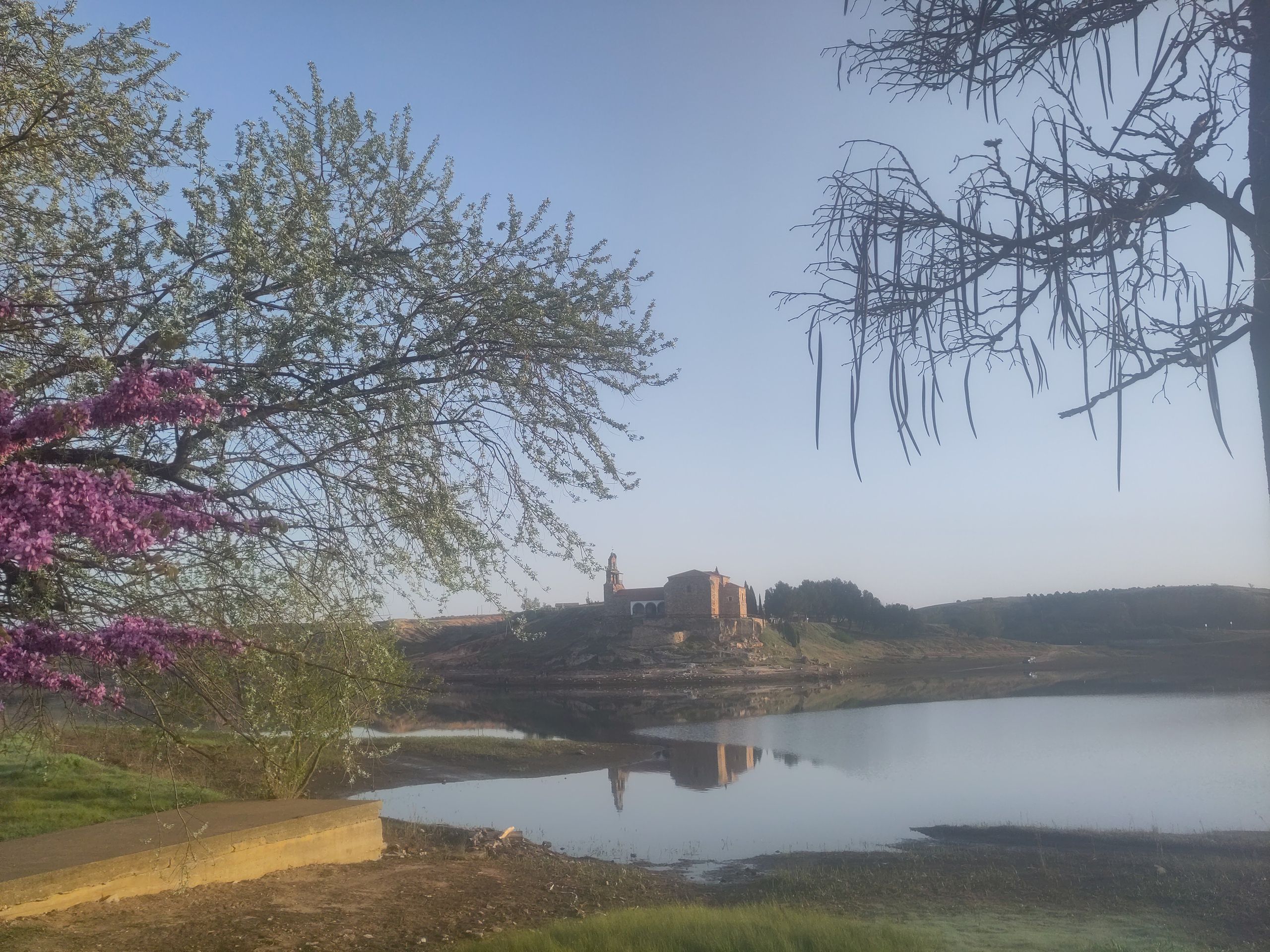
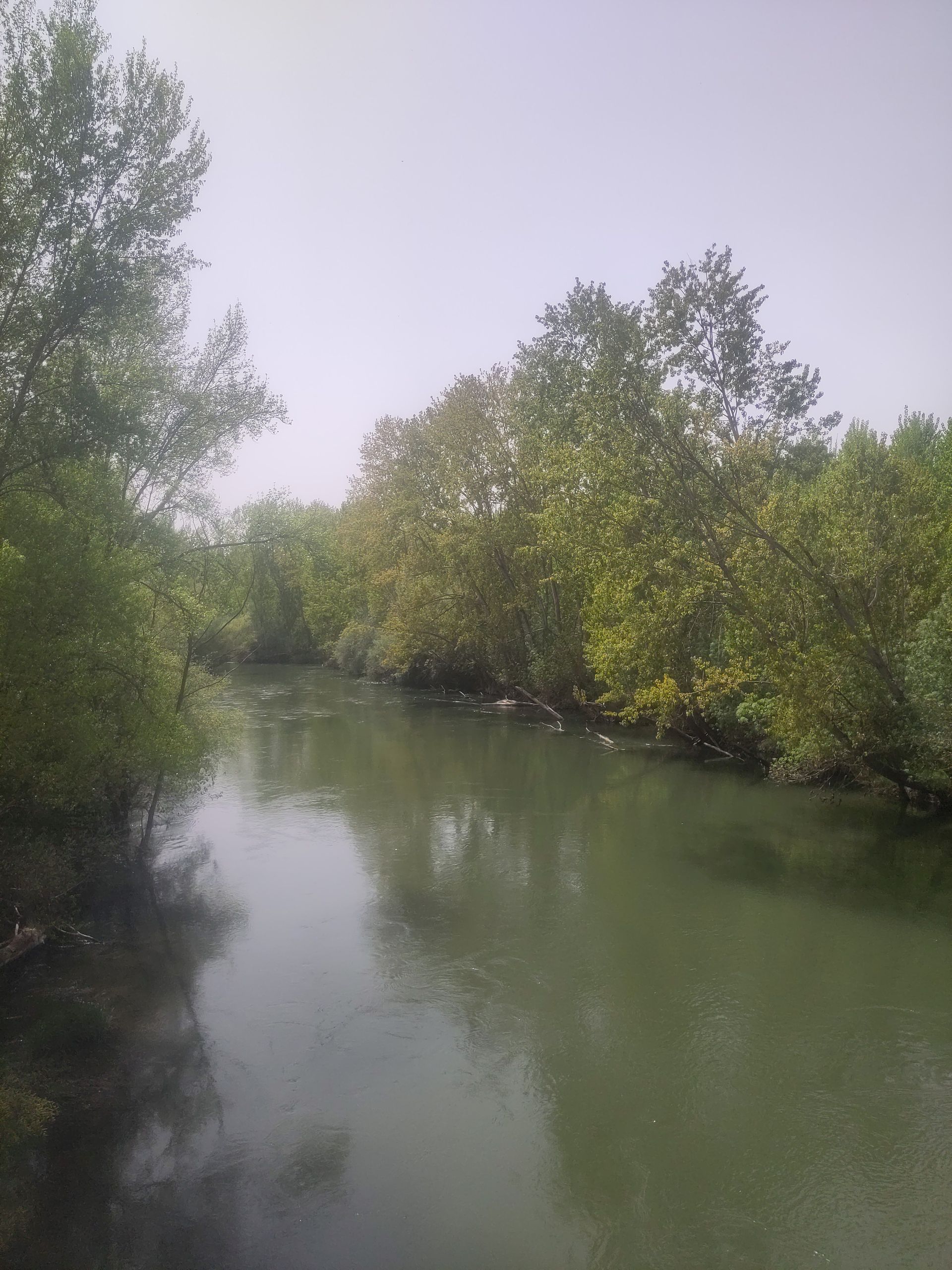
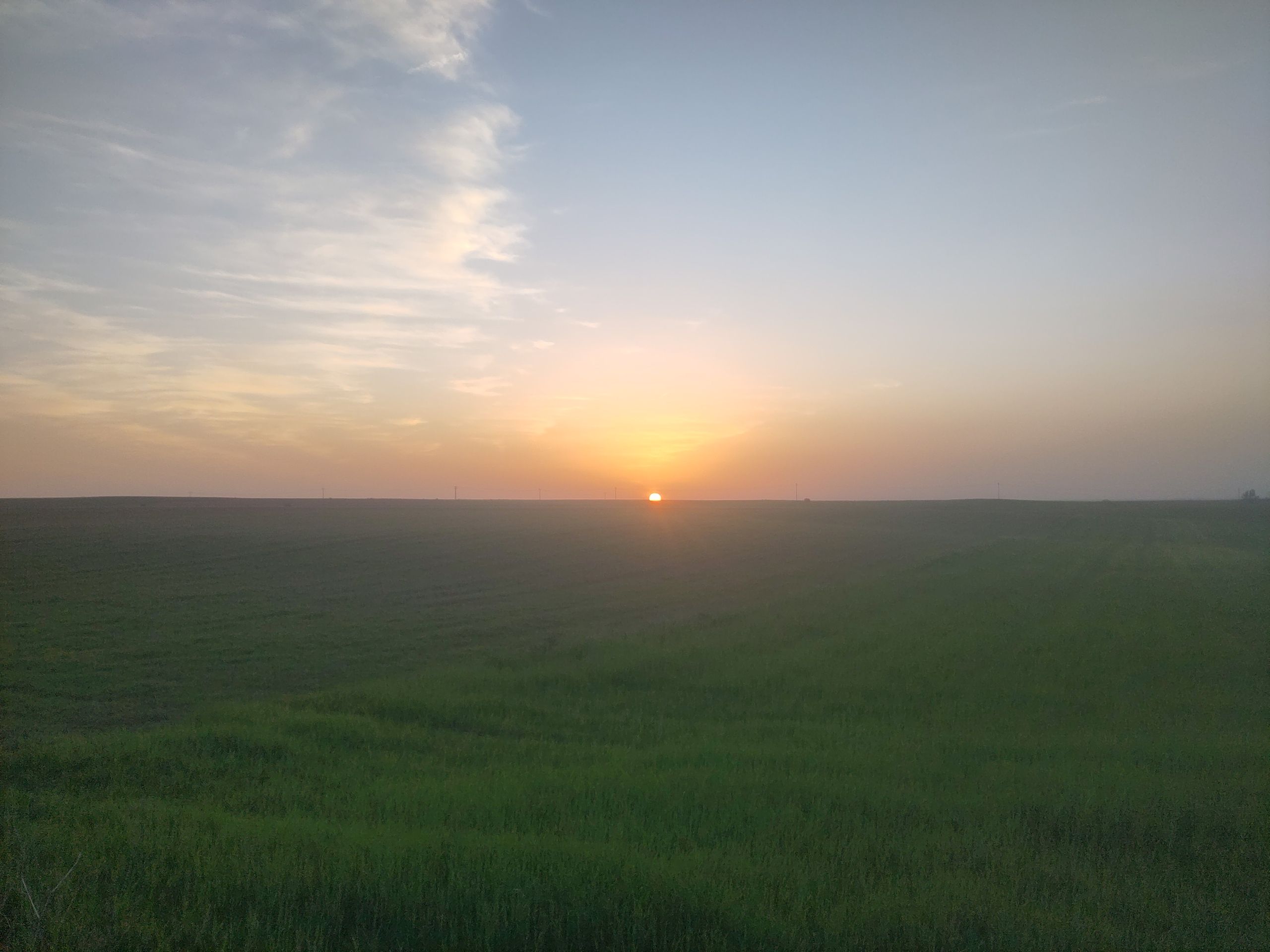
My way leads ever further north. Initially, it continues through 'park-like' landscapes, where cows and sheep graze under ancient holm oaks behind even older walls - with gates that need to be opened and closed repeatedly, surprisingly each time secured in a different manner! The small town of Galisteo sits picturesque on a hill and is already visible from afar: still completely surrounded by an intact medieval city wall. Lizards, fragrant blooming hawthorn, almond orchards (sadly not blooming yet)...
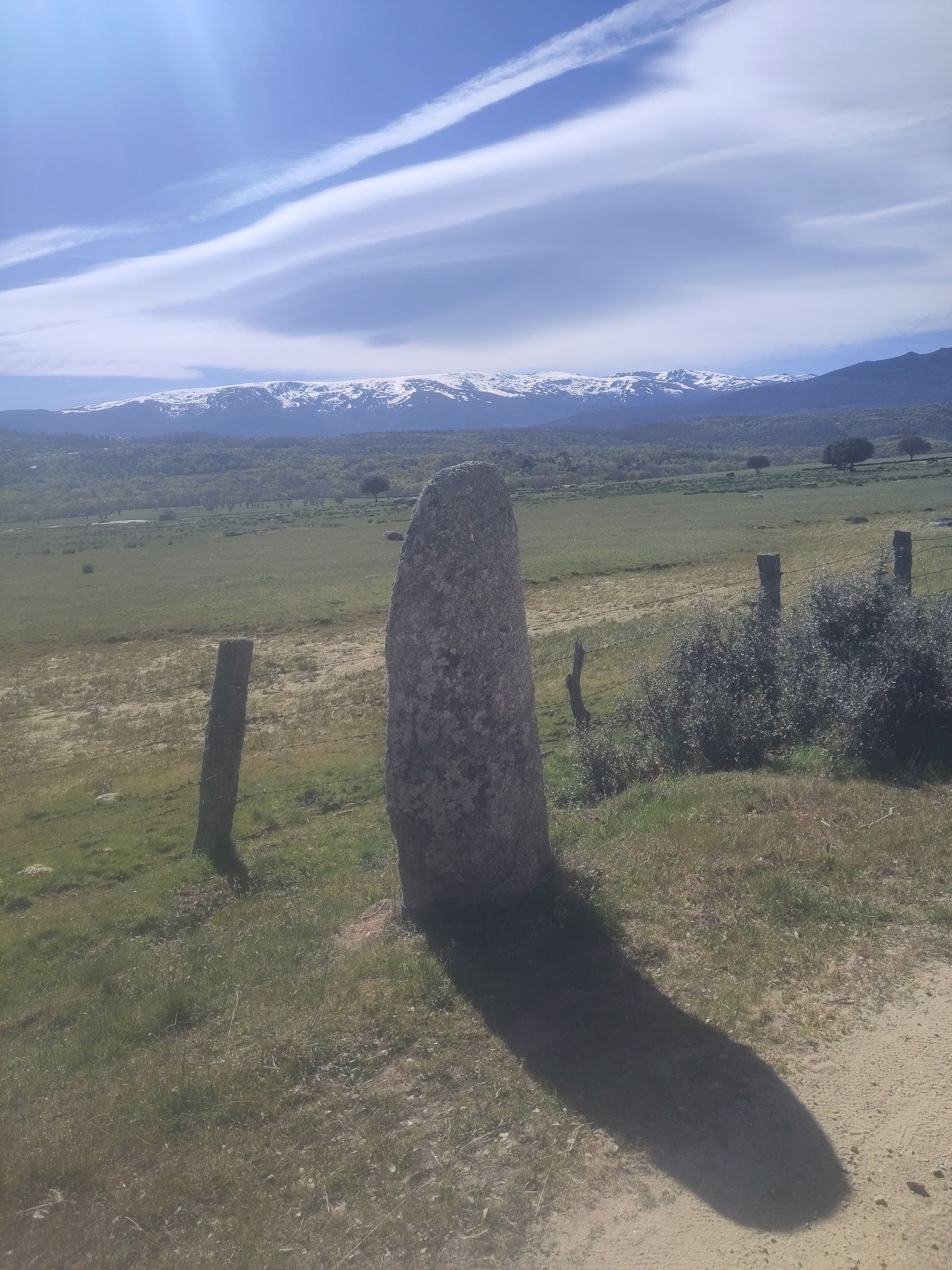
...then many kilometers quite tiring on smaller, lightly traveled roads - after the last entry here, it remains somewhat stormy for another four days, often so much so that I have to push against the strong wind... ...and the snow-capped peaks are getting closer, as I hike out of Carcaboso in the early light of the next day, in fairytale stillness, only 'enriched' by birdsong and wind; through gorse, lavender, and oaks, repeatedly impressed by all these stone walls: how much work is embedded in them and how long these artfully layered walls have lasted, completely without mortar and concrete - and where they crumble, nothing remains behind but simply stones...
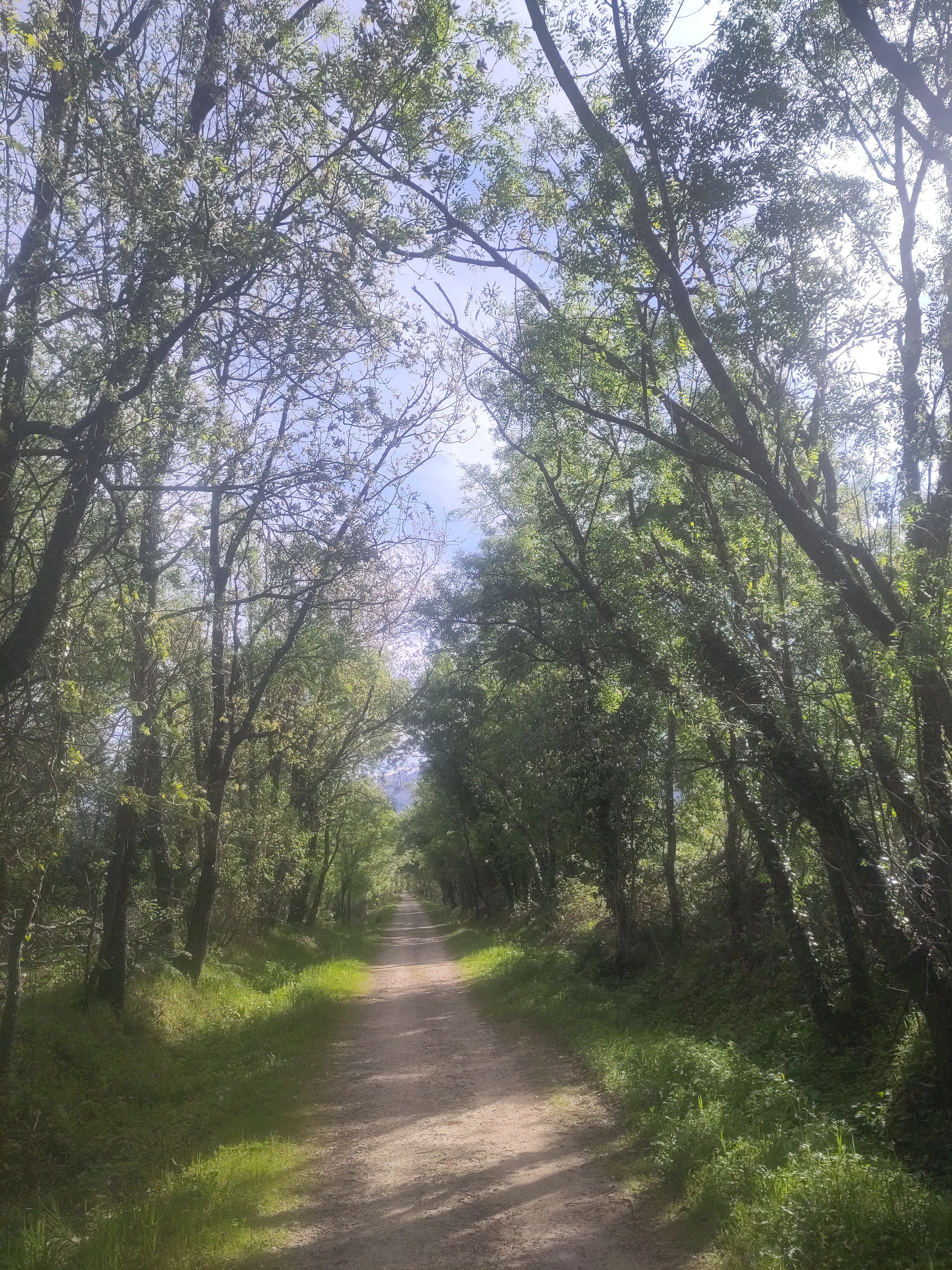
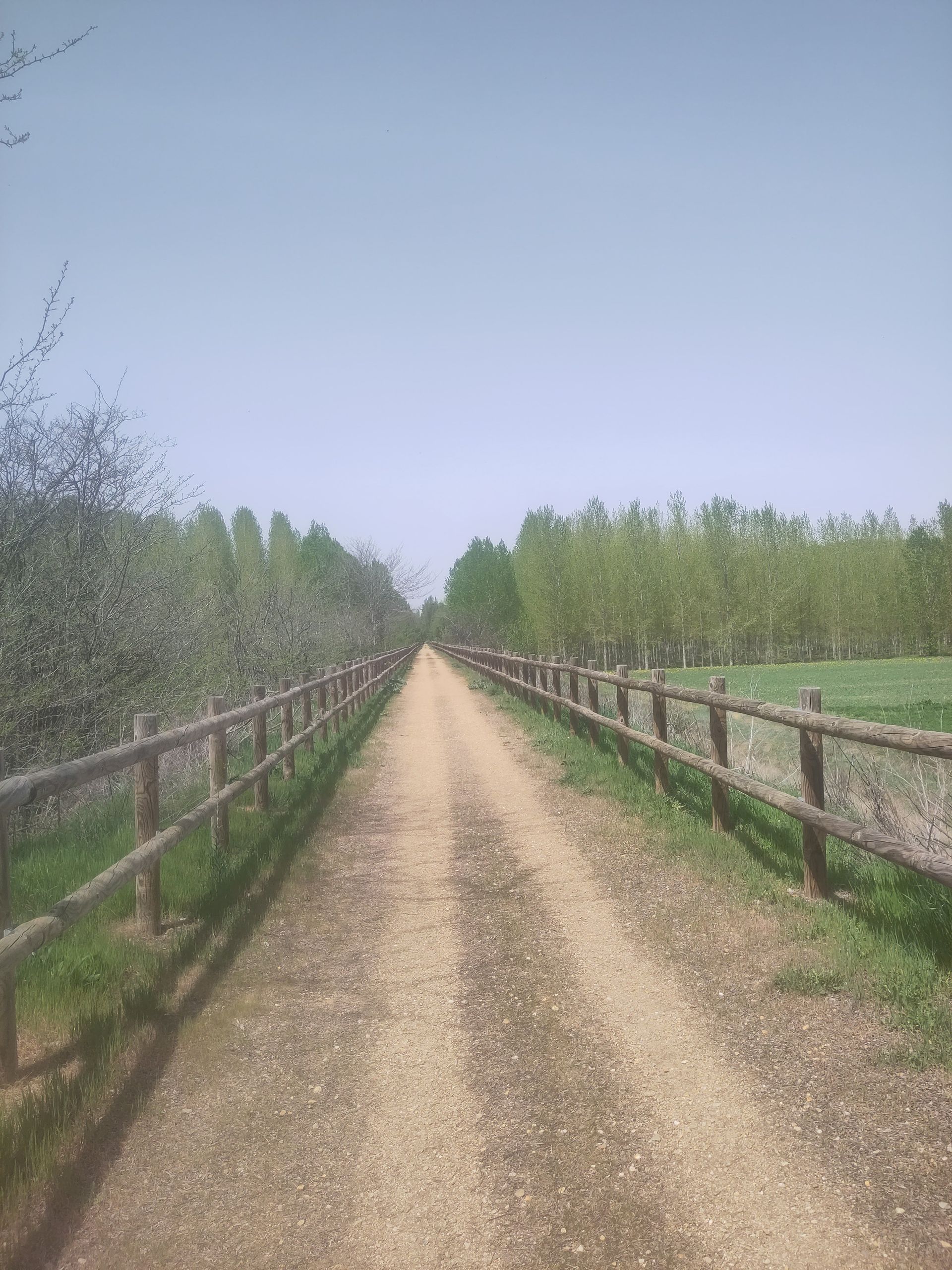
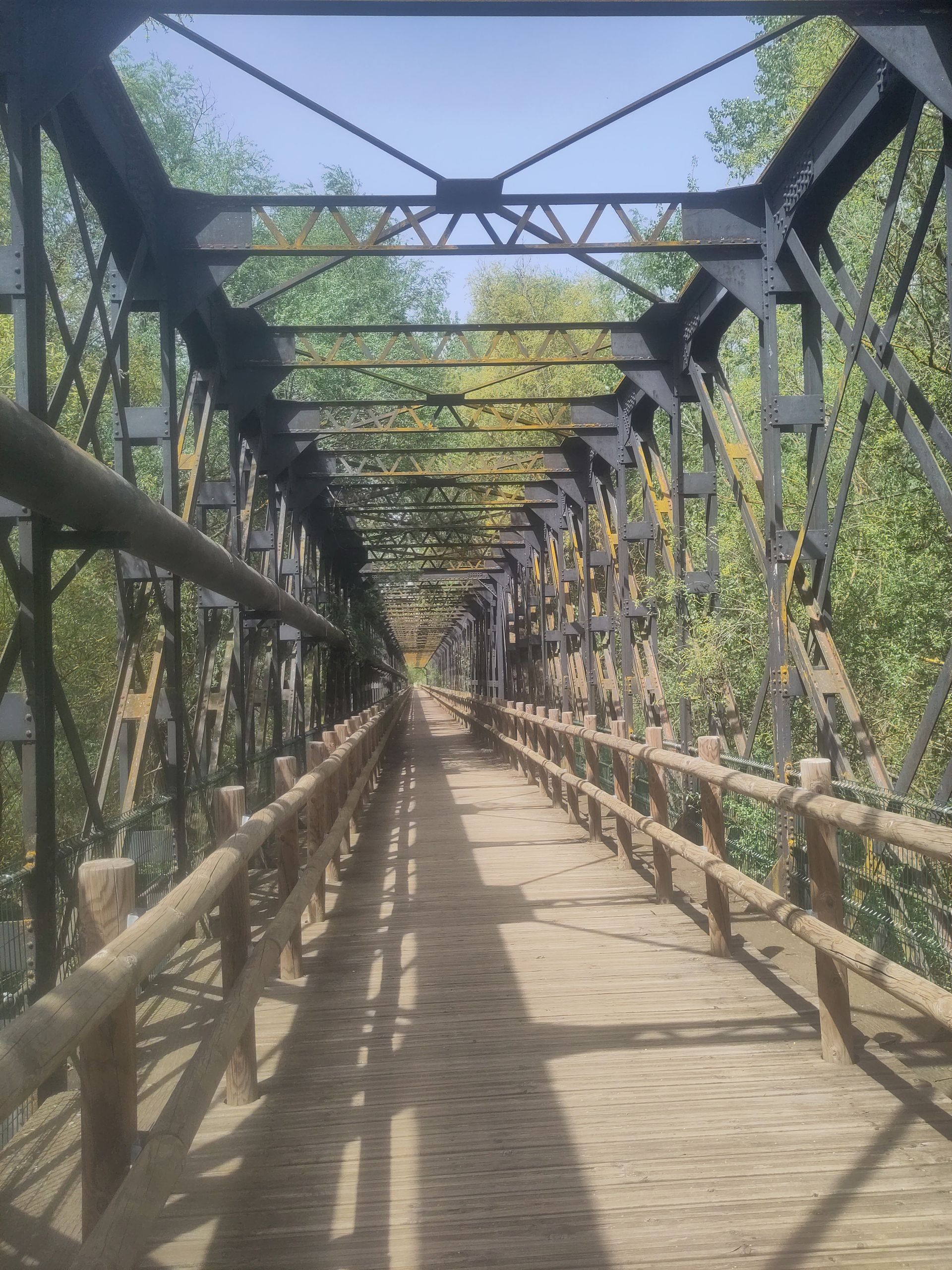
In Caparra, there are Roman excavations again and unexpectedly 'in the middle of the field path' a impressively large archway - now standing a bit lonely, once probably an entrance gate to a larger settlement. Here I then leave the Camino de Santiago and 'switch' for the next one and a half days or well over 40 km to the 'via verde', a former railway line now used as a cycling and hiking path, which meanders with pleasantly constant gradient through the solitude, with tunnels, bridges, underpasses, and old, half-dilapidated train station buildings. As evening falls, I climb over one of the stone walls and find a 'bedroom' between large rocks, olive trees, and blossoming cherry trees.
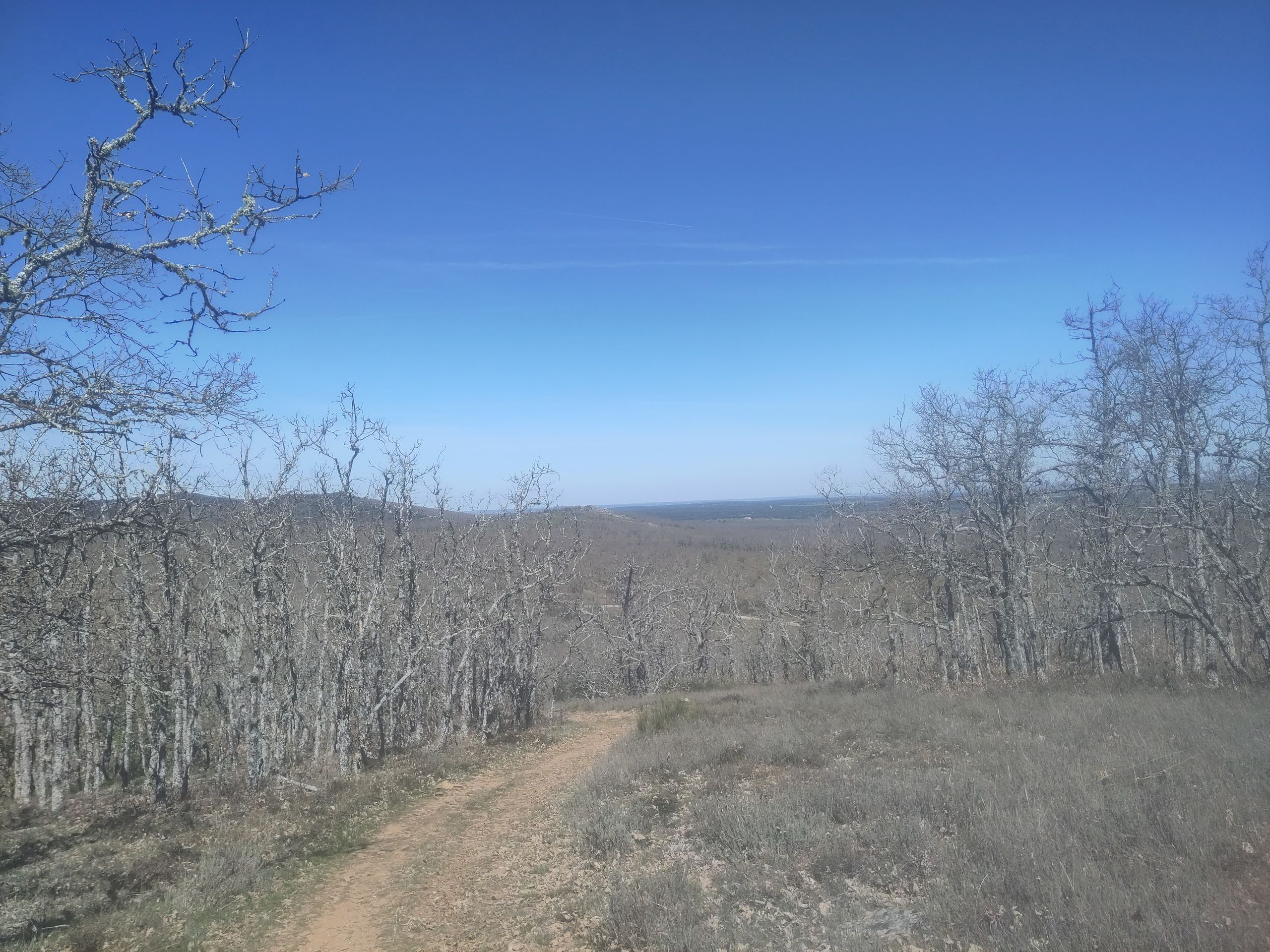
On Maundy Thursday, the area around the picturesque old town of Hervas isn't quite so lonely for a while, as many families, dog owners, and cyclists take advantage of the Easter holidays to enjoy a stretch of the former railway line. It's now always climbing higher into the mountains - I hike 'backwards in the season': no more holm oaks, but many very slender-leaved ashes that have just begun to sprout and shine very light green and fresh in the sun; many trees are still bare, especially the mountain slopes; wild cherries and blackthorn bloom white and spring-like. Just before Puerto de Bejar (at about 950 m), I leave the autonomous region of Extremadura and have since entered Castilla-Leon.
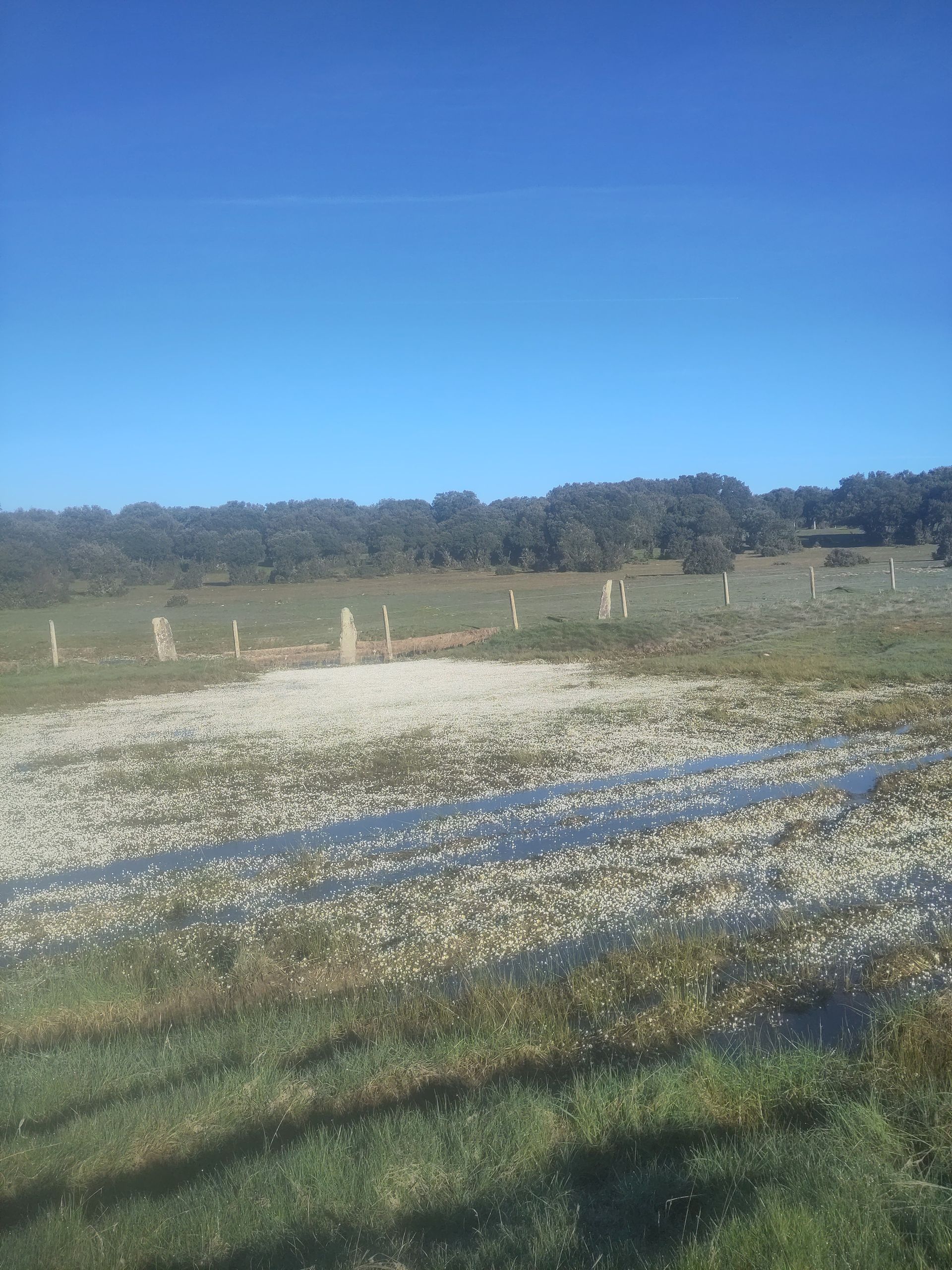
On Good Friday, it goes further up into the mountains: Fuenteroble de Salviaterra lies at almost 1000m height. In the morning, there is frost on the meadows. From Puerto de Bejar, the path leads far down into the valley of the Rio Cuerpo de Hombre (about 650m) on little paths through barren 'forest' (there is no forest here in the Central European sense) - often back on the 'Original Roman Road', i.e., flanked by milestones, the Miliarios. Tirelessly, 'the cuckoo' calls during all these days - so that I feel pity for the songbirds in the area, who later will have to brood and feed the cuckoo chicks... Not until around 9 o'clock does the sun 'come over the mountain', only to soon 'set' once again and rise again and so on - depending on how high the mountains in the east are at the moment... Silence punctuated by birdsong (so many skylarks!), cows grazing in fields that contain almost more large rocks than grass... Every 10 km or so, a small, sleepy place with a stork nest on the church tower and perhaps a small bar for a break. However, by noon, the entire village appears to be gathered in festive clothing at a bar, barbecuing and drinking beer and 'being loud'; and above it all, the snow-capped mountains shine.
The hostel in Fuenteroble de Slaviaterra - a large, old ecclesiastical building - breathes, so to speak, the spirit of the original pilgrimage path (as does the small hostel in Puerto de Bejar, where I stayed the previous night along with a Japanese woman, a Portuguese, a Brazilian, a Dutchman, and an Italian, and where the hospitalero cooked a warm, nourishing soup for everyone...): In a large, dark dining hall full of holy images and figures, dinner is eaten together. Here, 26 people are present (including many cyclists and Spaniards who only walk for two or three days over Easter) and everyone receives sufficiently thick potato-vegetable soup, thanks to Good Friday without meat. Here, I meet most of the group again, whom I had gotten to know the night before at the Tajo reservoir, which is a nice reunion - we will stay together until Salamanca, so to speak...
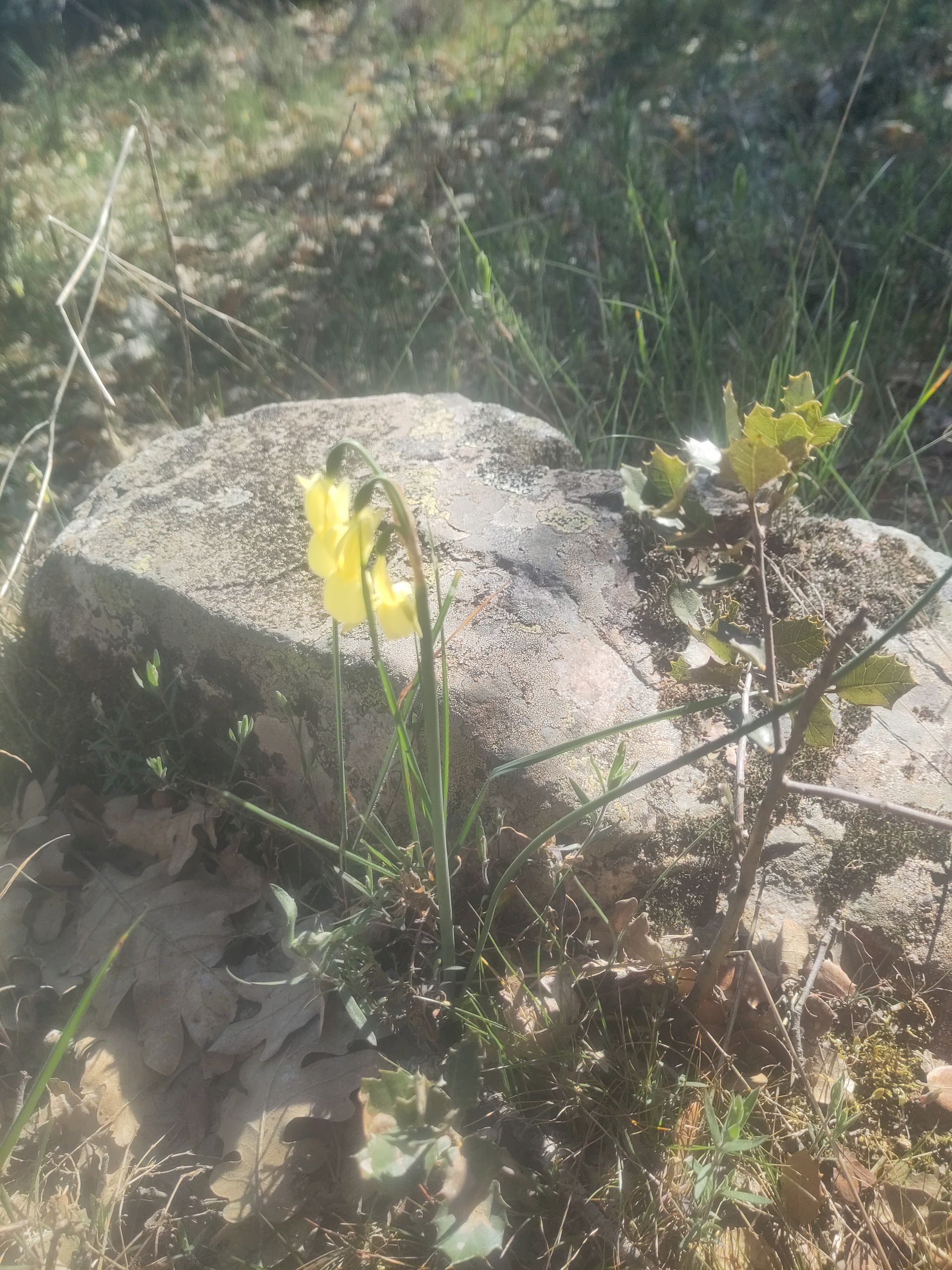
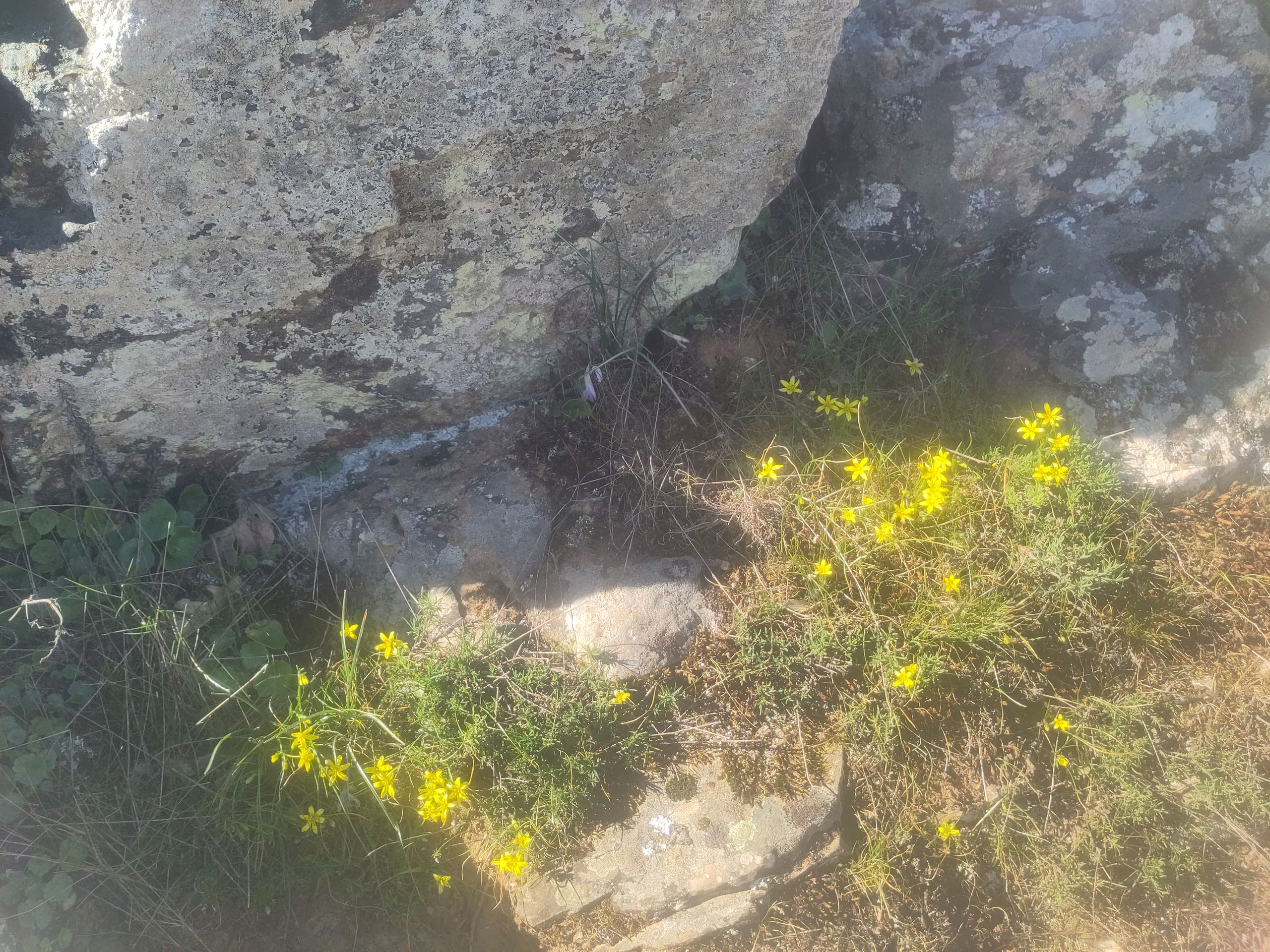
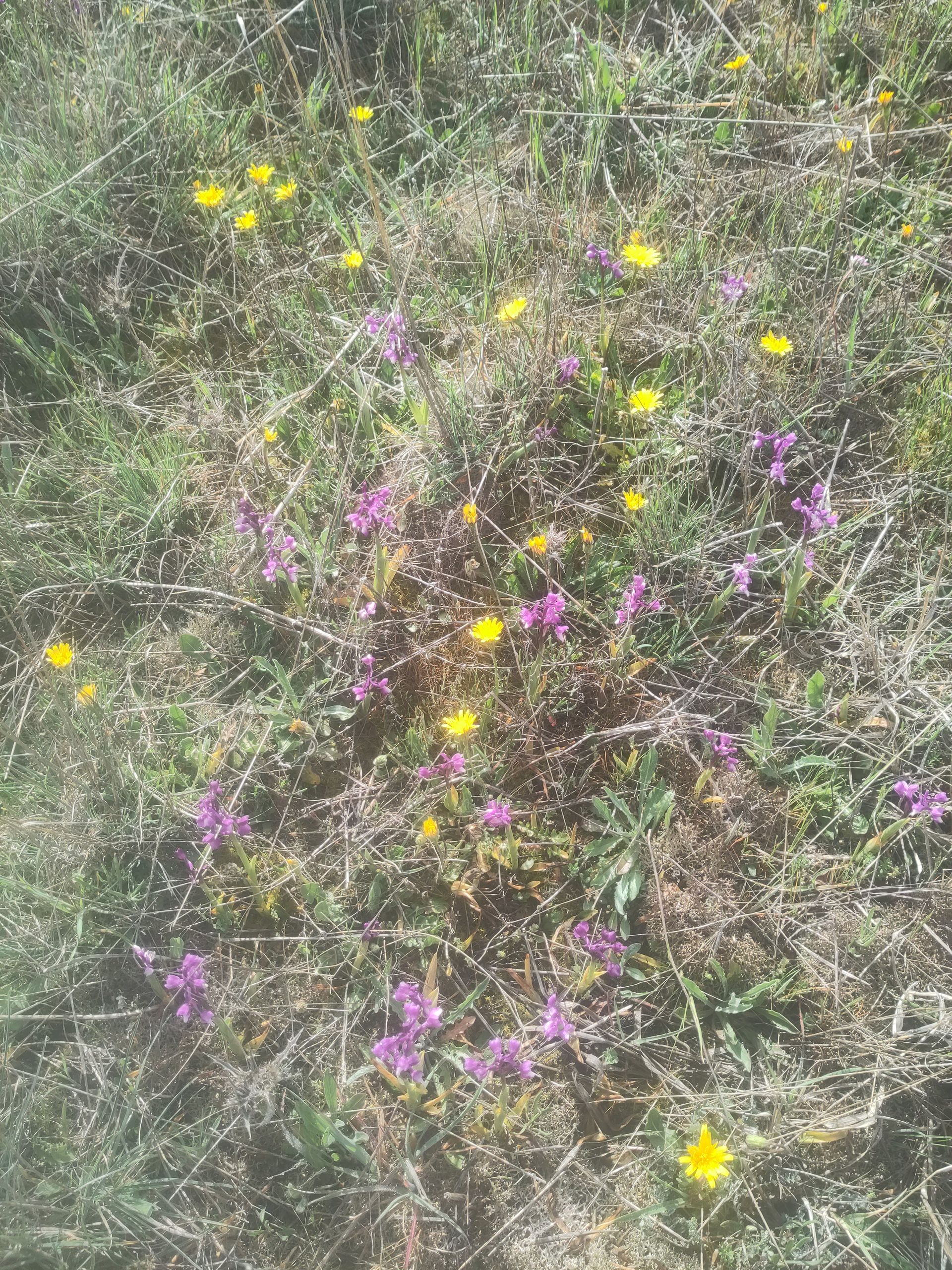
Saturday is finally a day with almost no wind, hence it feels warmer. Today we go 'over the mountains', i.e., at a cross at nearly 1200 m the highest point is reached. Up until then, the path rises rocky, narrow, and at times steep, further back into early spring with crocuses (small pale purple stars that only open in the sun), bare trees and incredibly beautiful mini-narcissus daffodils, softly yellow and 'hanging' like snowdrops - with the help of my 'mini-computer' here I find out that these are 'angel tears daffodils'! Well, I didn't know that angels cry, but if they do, then something as delicately lovely-beautiful must surely emerge from it! Whole sparse, stony meadows are covered with them, as well as with other brightly yellow flowers... ...and as a reminder that we live in 'modern times', high wind turbines rise above all this beauty - oddly standing.
After San Pedro and Morille, it goes quickly down again to 950 m: diving back into holm oak-walled pastures... In the evening at the bar of the small place, still sitting together over a glass of wine.
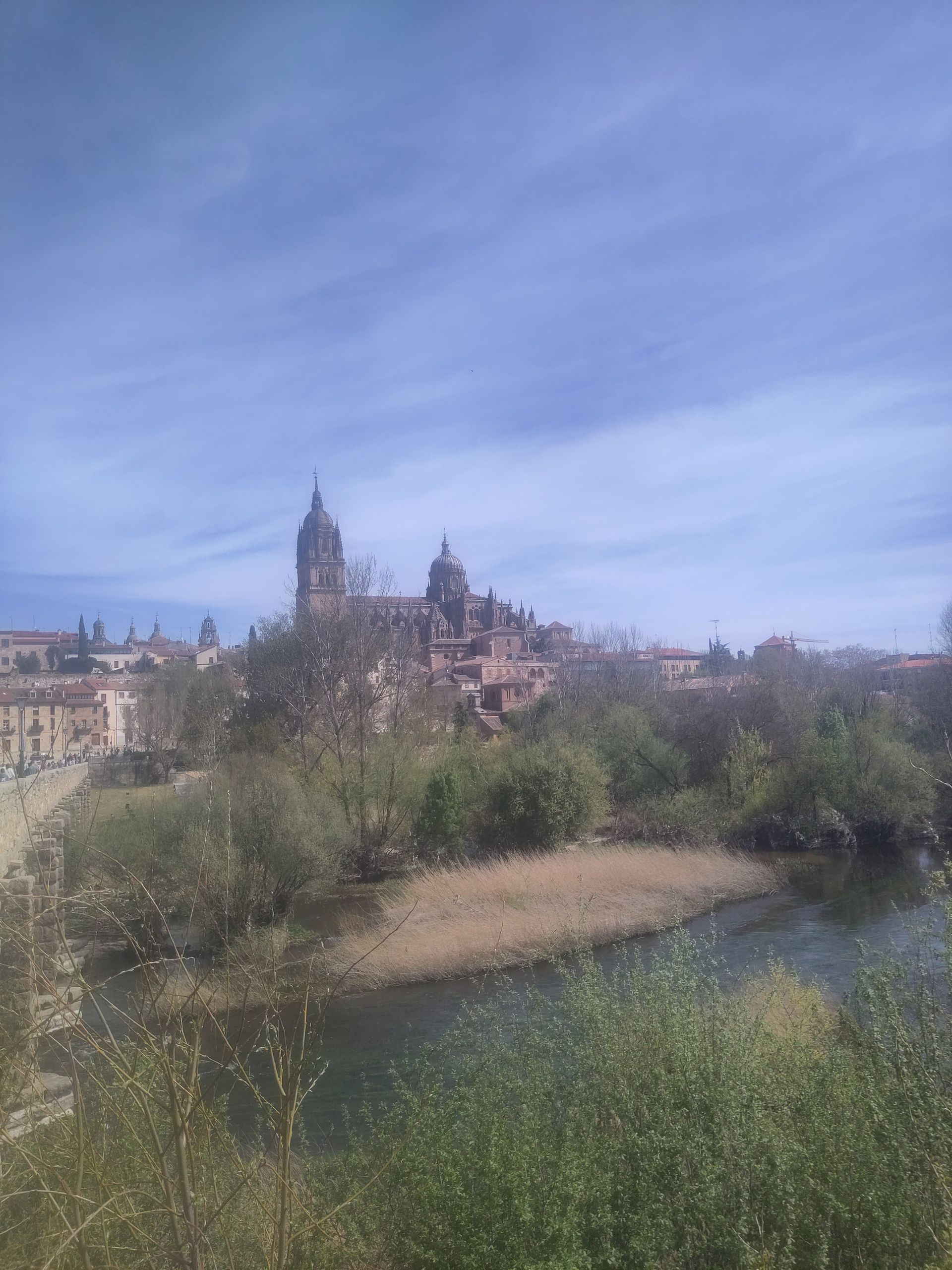
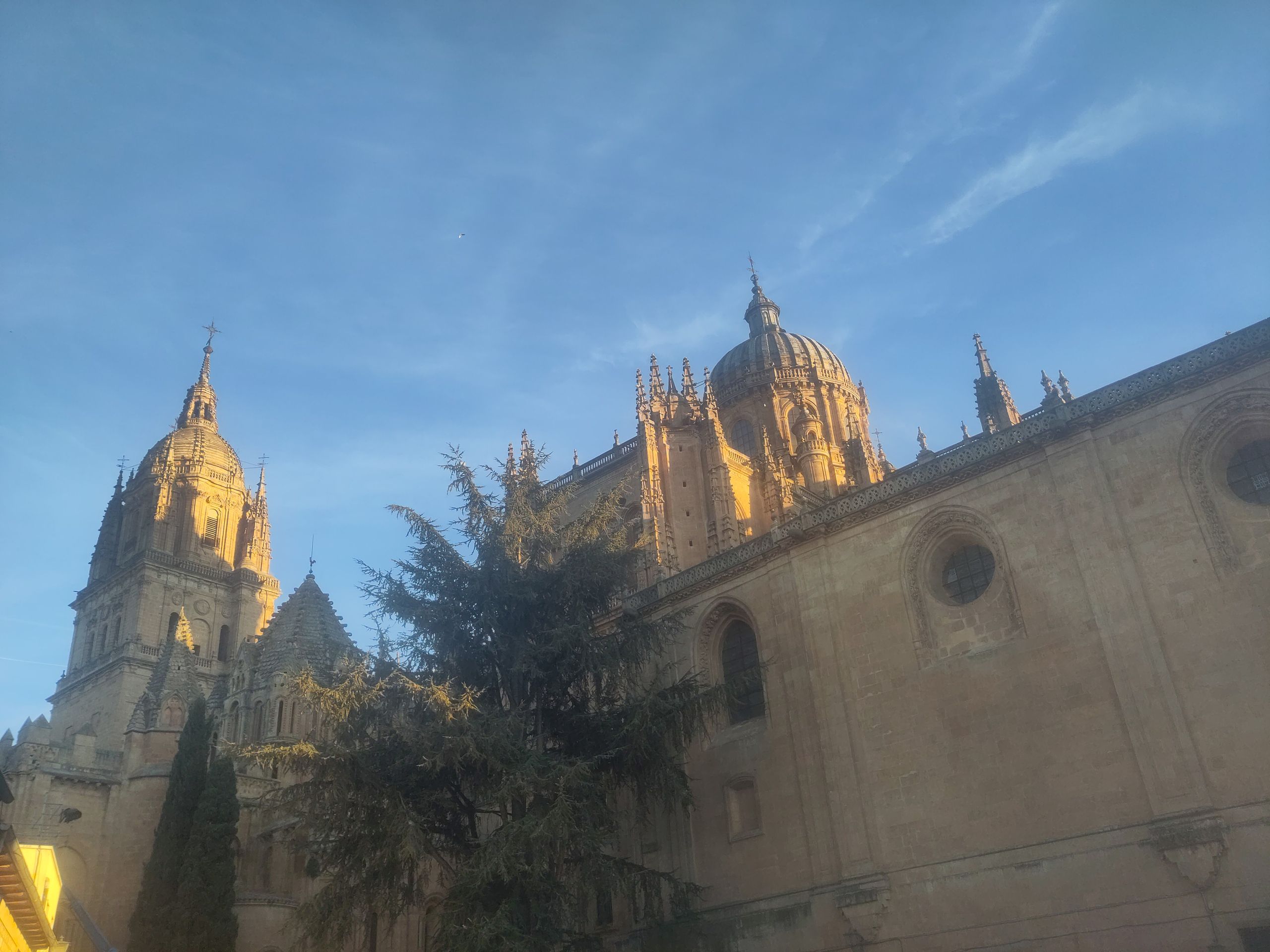
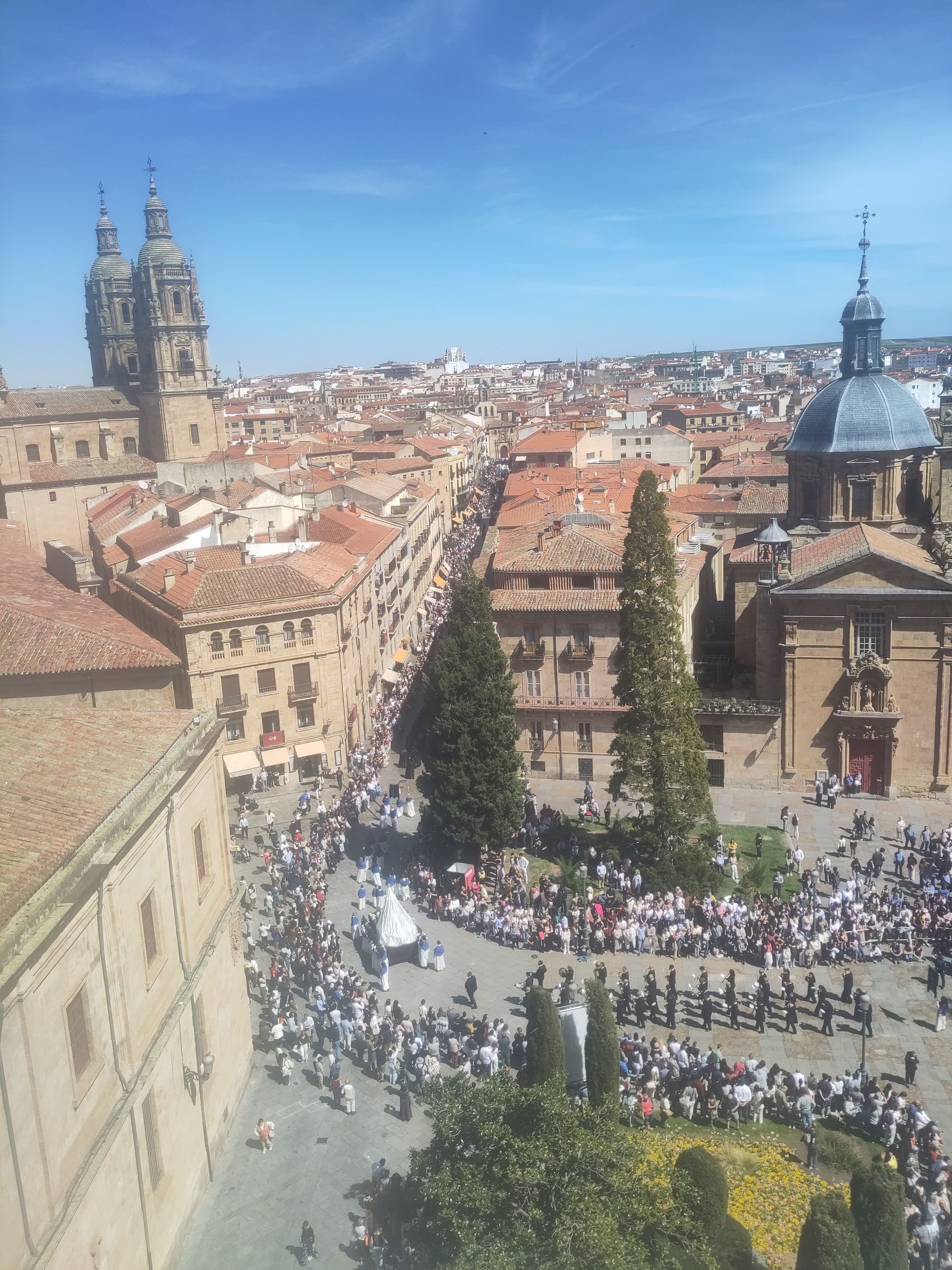
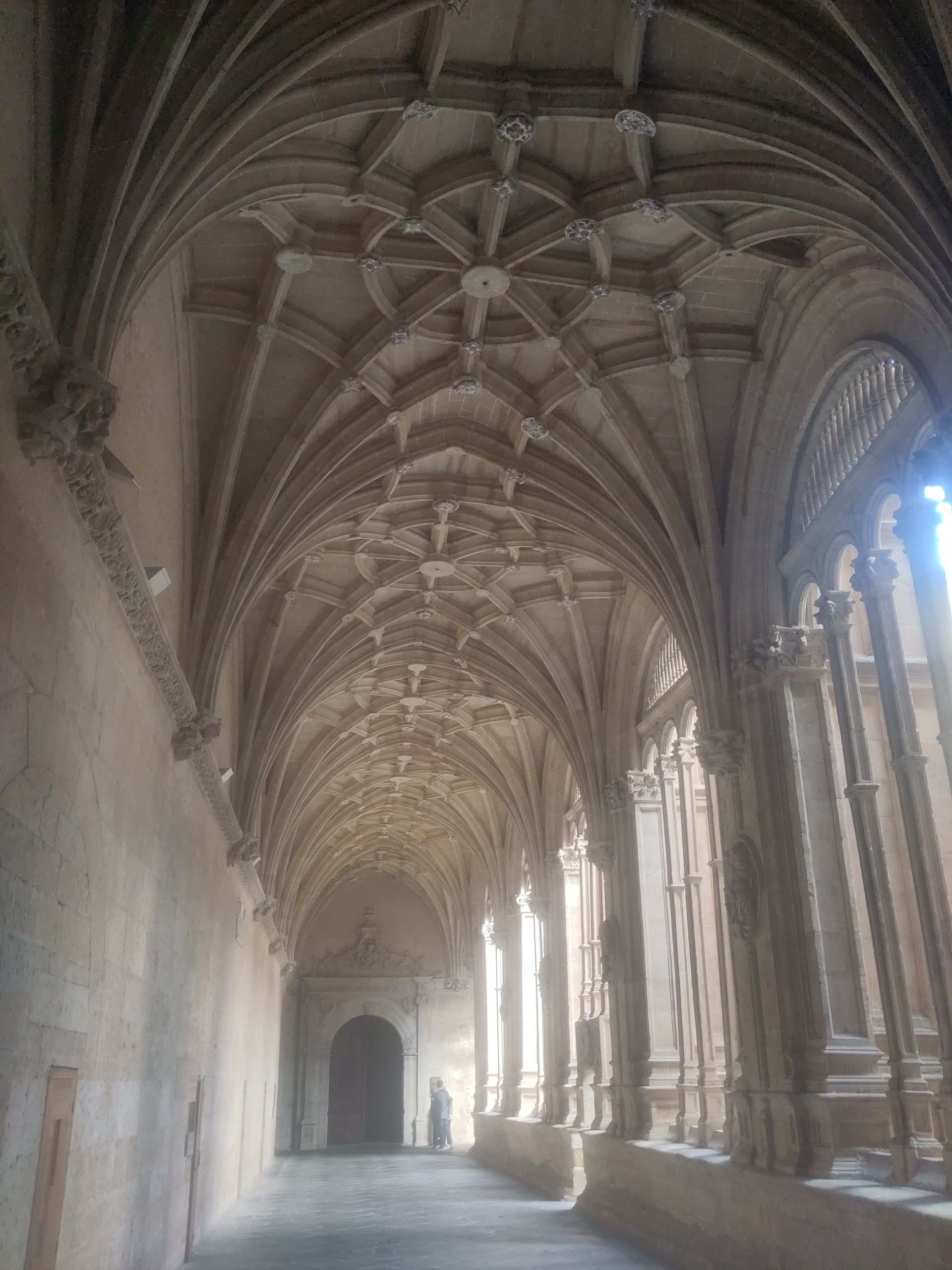
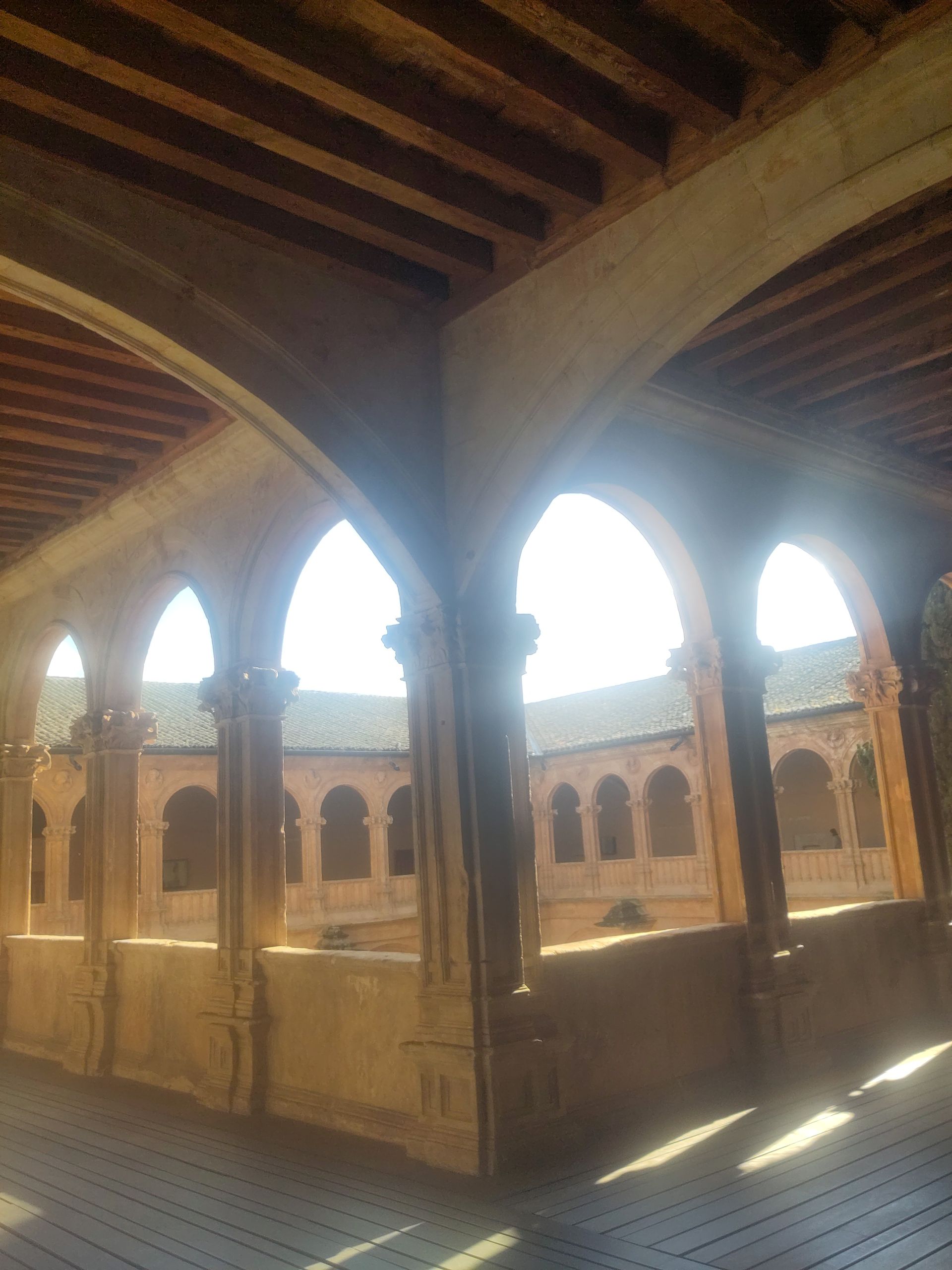
On Easter Sunday, I reach Salamanca around noon - already a long time before visible in the distance with its towers - approaching the dominating Gothic cathedral over the ancient stone arch bridge. Fortunately, I am the first to pay 4 euros to be able to ascend the towers and roofs of the cathedral(s: there are actually an 'old' one and a 'new' one interlocked). Thus, from above, I experience the last Easter procession in Salamanca (Easter here is celebrated as 'Semana Santa' from Palm to Easter Sunday, Monday being a normal working day, and is commemorated with many parades, processions, etc.).
Salamanca has a beautiful old town (and centrally located a public pilgrim hostel, which however is only used by a few, as many stay more than one night in the city). In the evening, we meet at the Plaza Mayor (very large, very impressive), to once again have a wine or beer together, eat pizza, and bid farewell to each other. We sit here together from Australia, USA, Holland, Spain, Germany, Austria, Slovenia, Poland, and Belgium; coming together on the Camino de Santiago, partly very intense encounters - and now the paths separate again - one has to return home, some stay in the city a bit longer, others will move on tomorrow morning (just like me)... - and before we realize it, L. and I must hurry to say goodbye, as the Albergue Municipal closes its gates at 10 pm...
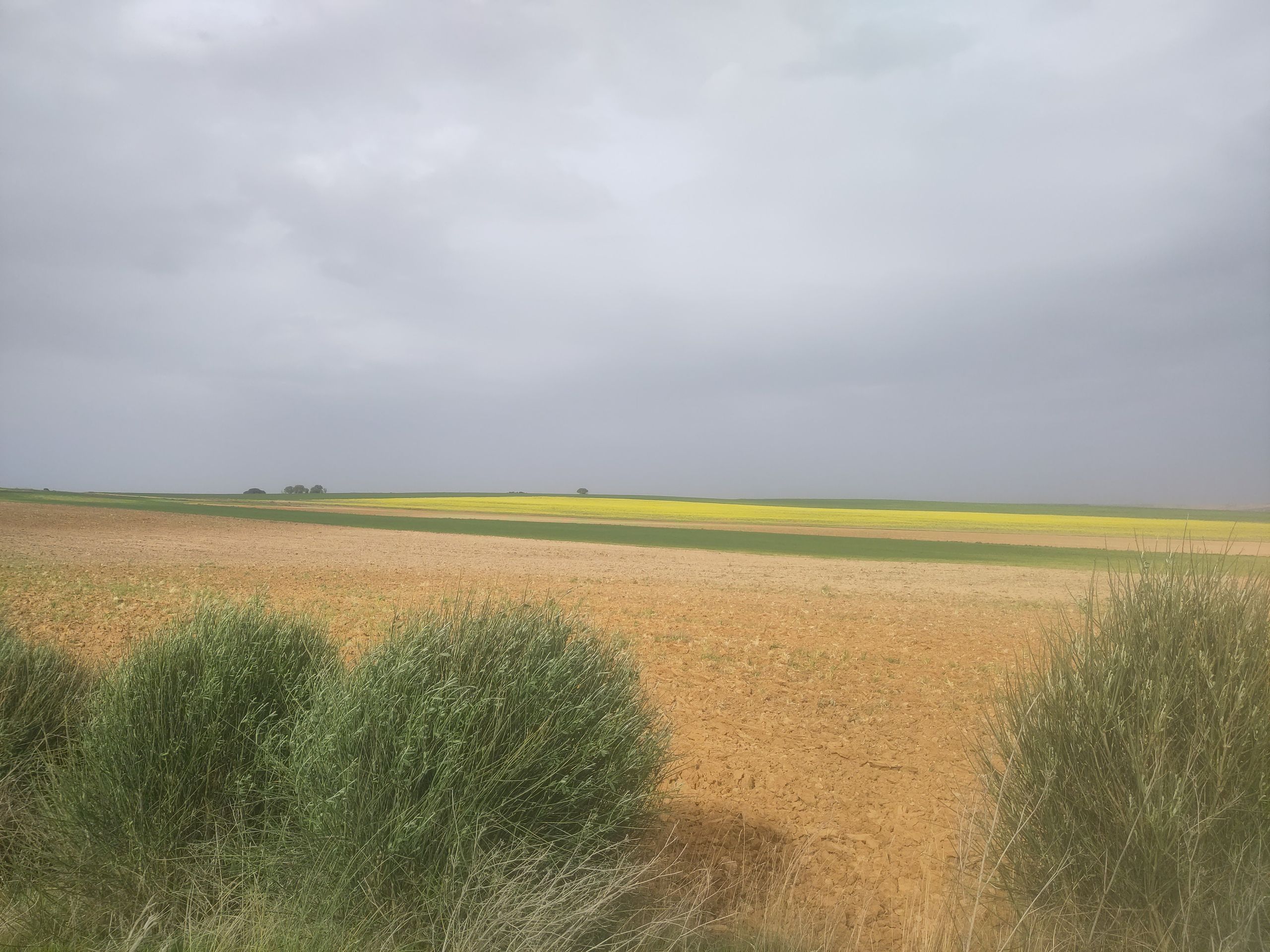
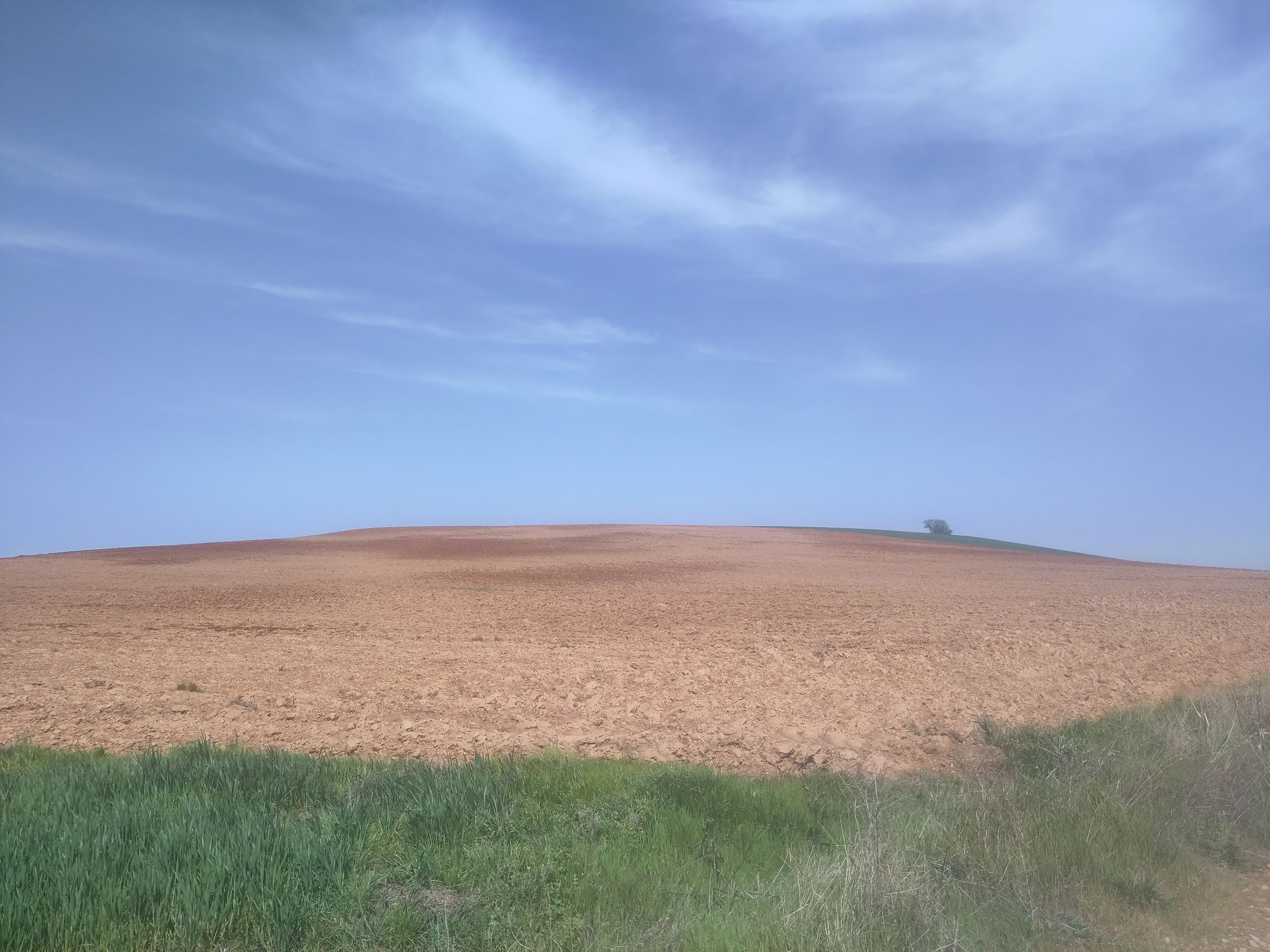
On Monday morning, the city seems deserted: only cleaning crews are at work and suppliers to shops. I still have quite a bit to do in Salamanca (like buying new soles for my hiking boots...) and so I take the bus past a few kilometers out of the city in the afternoon (an announcement says it was 28° C) to hike 'only' 13 km in the afternoon sun on gravel paths through quiet, wide, relatively flat agricultural landscapes (red earth, green grain fields, yellow blooming rapeseed) to a small hostel in an even smaller village, where we then spend the night together as four. Just in the rather 'monotonous' landscapes, I often wandered so immersed in thought that I really jumped when a cyclist unexpectedly came from behind - or suddenly, two or three deer dashed across my path, a dog barks without warning behind some fence or gate...
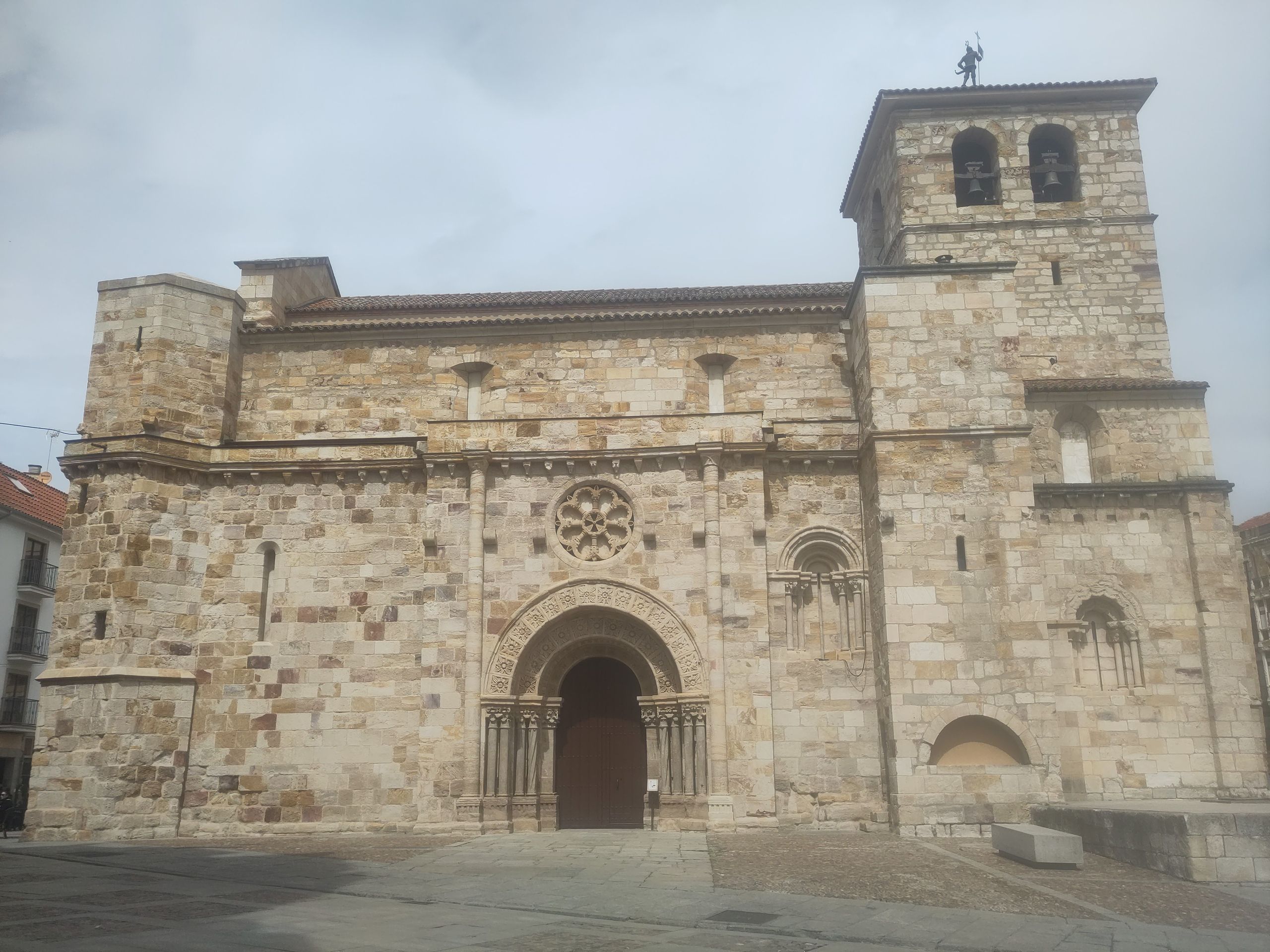
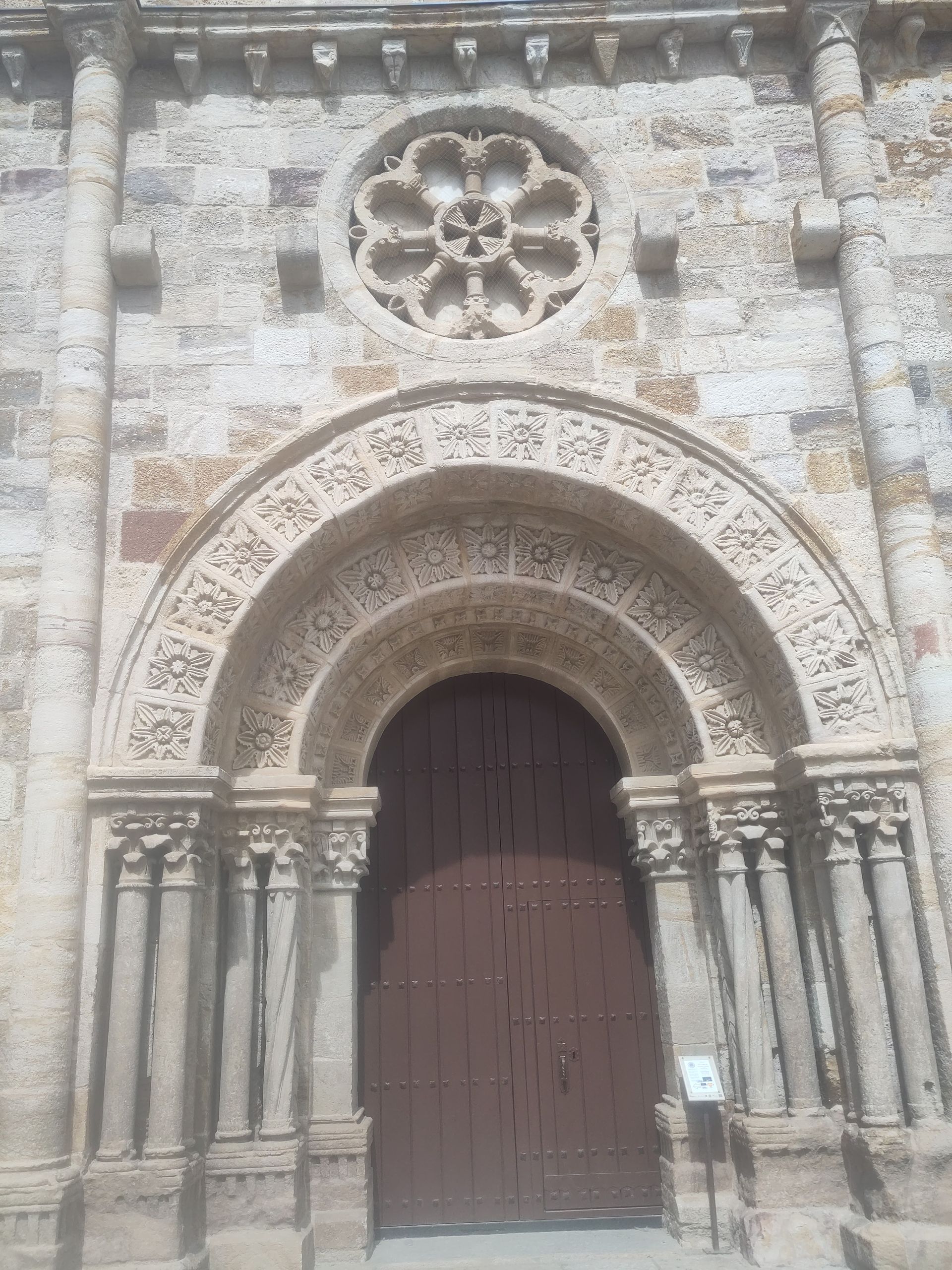
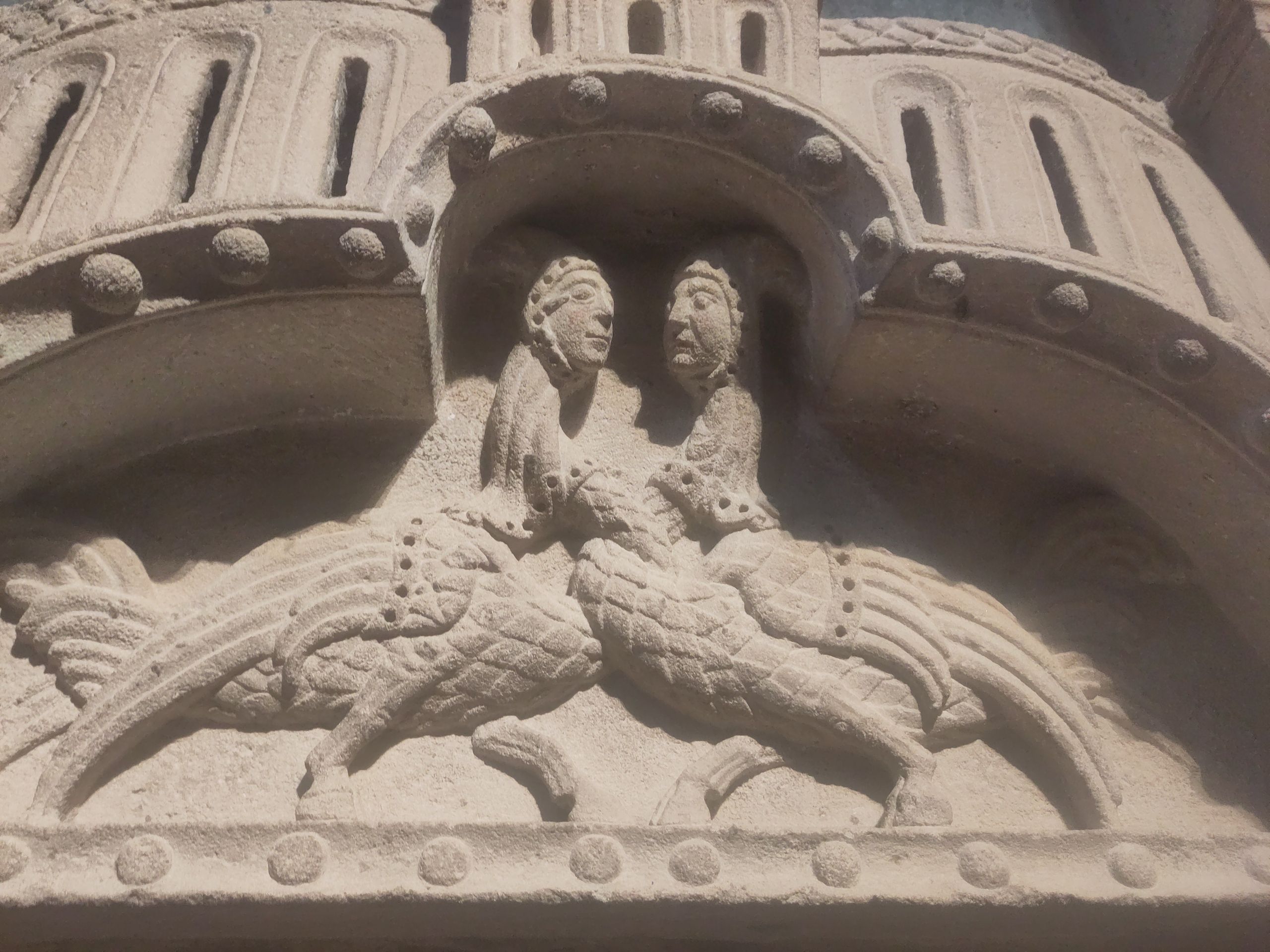
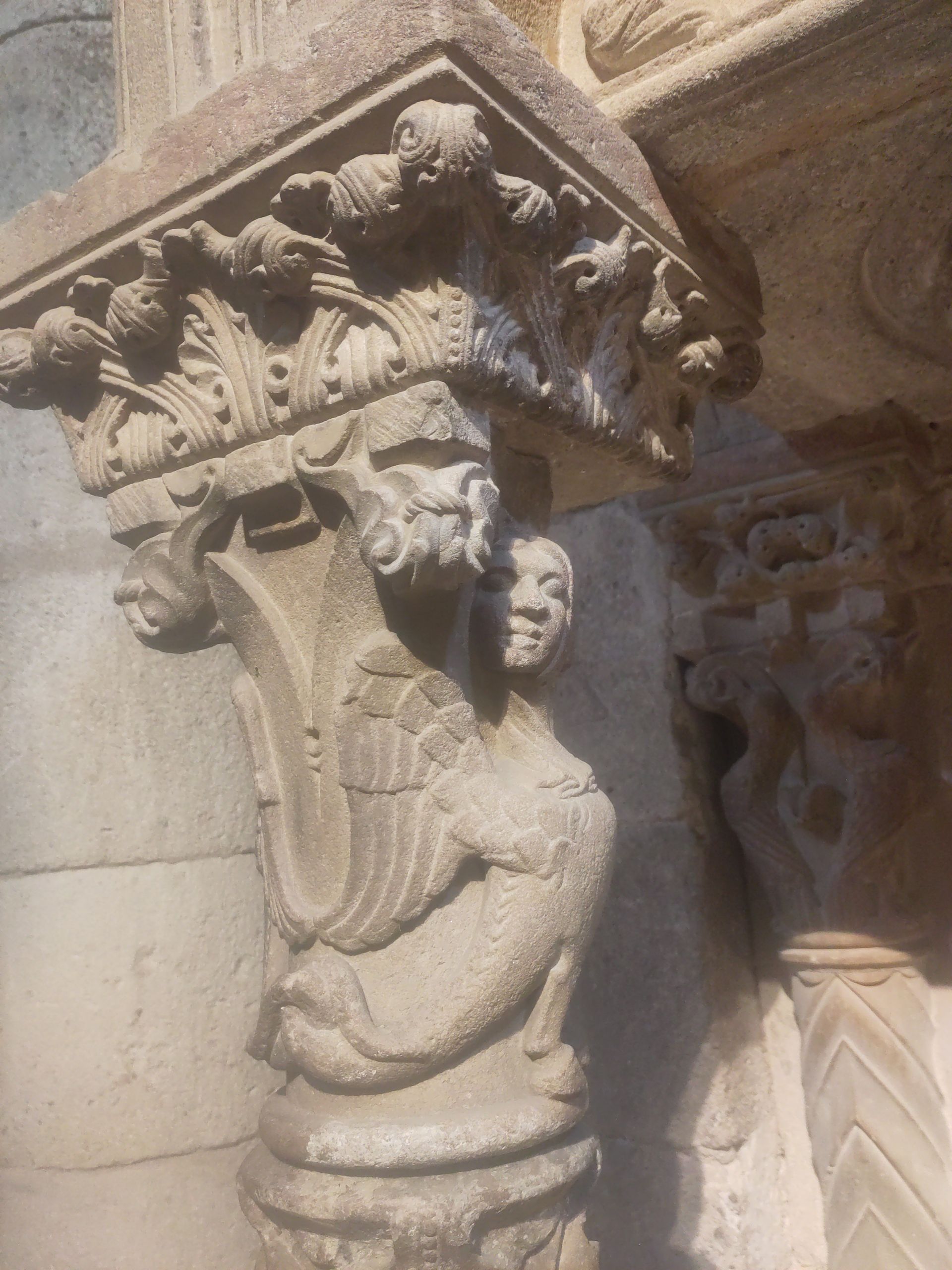
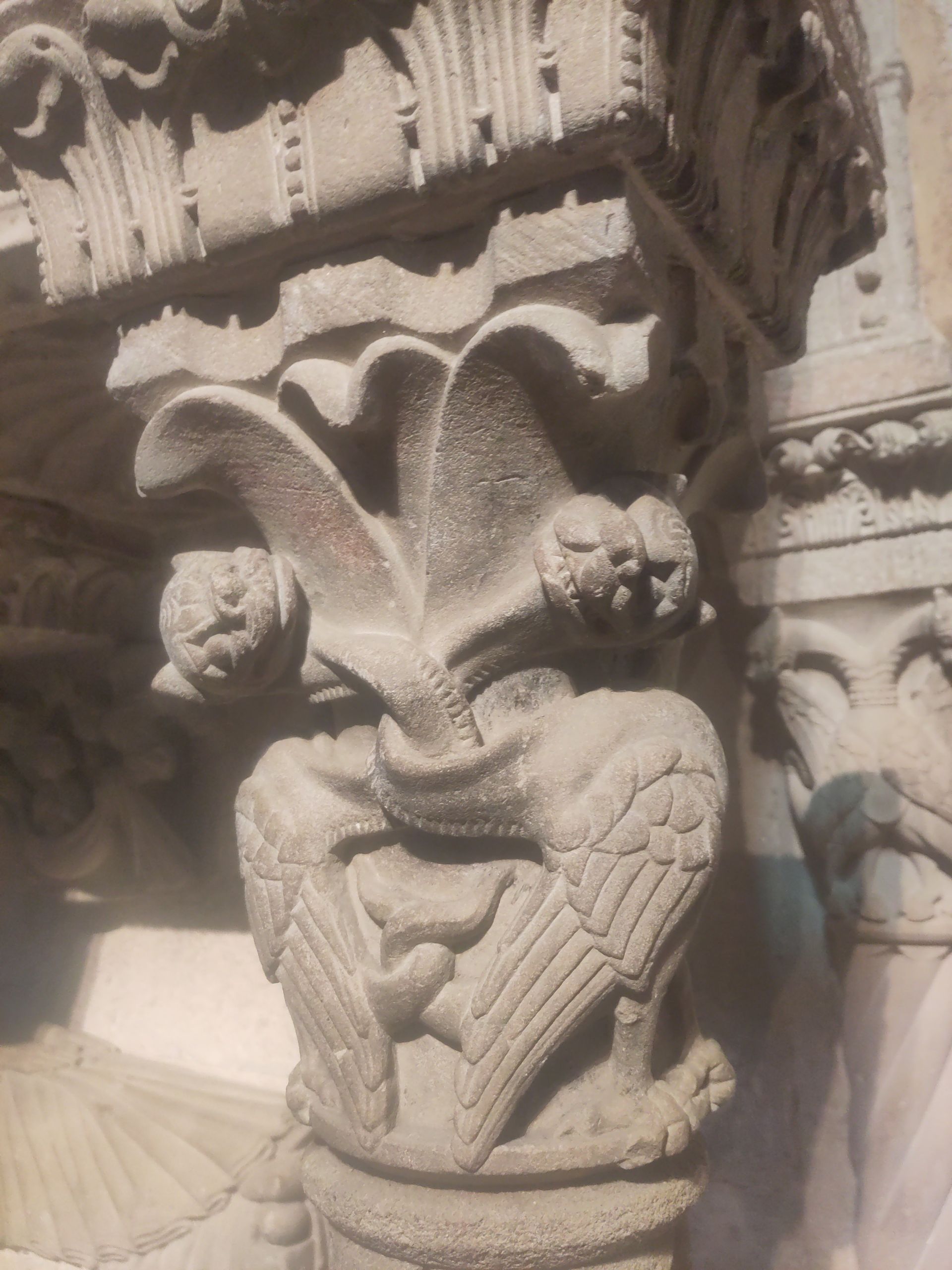
The next two days it mostly rained, or there was April weather. I thus experienced the Romanesque Zamora rather gloomy and wet-cold, but somehow it fit well. Unfortunately, in the Romanesque cathedral, which I had been looking forward to, a museum for sacred art has been installed!, making it so that the actual church space with its dome can hardly be perceived and experienced!
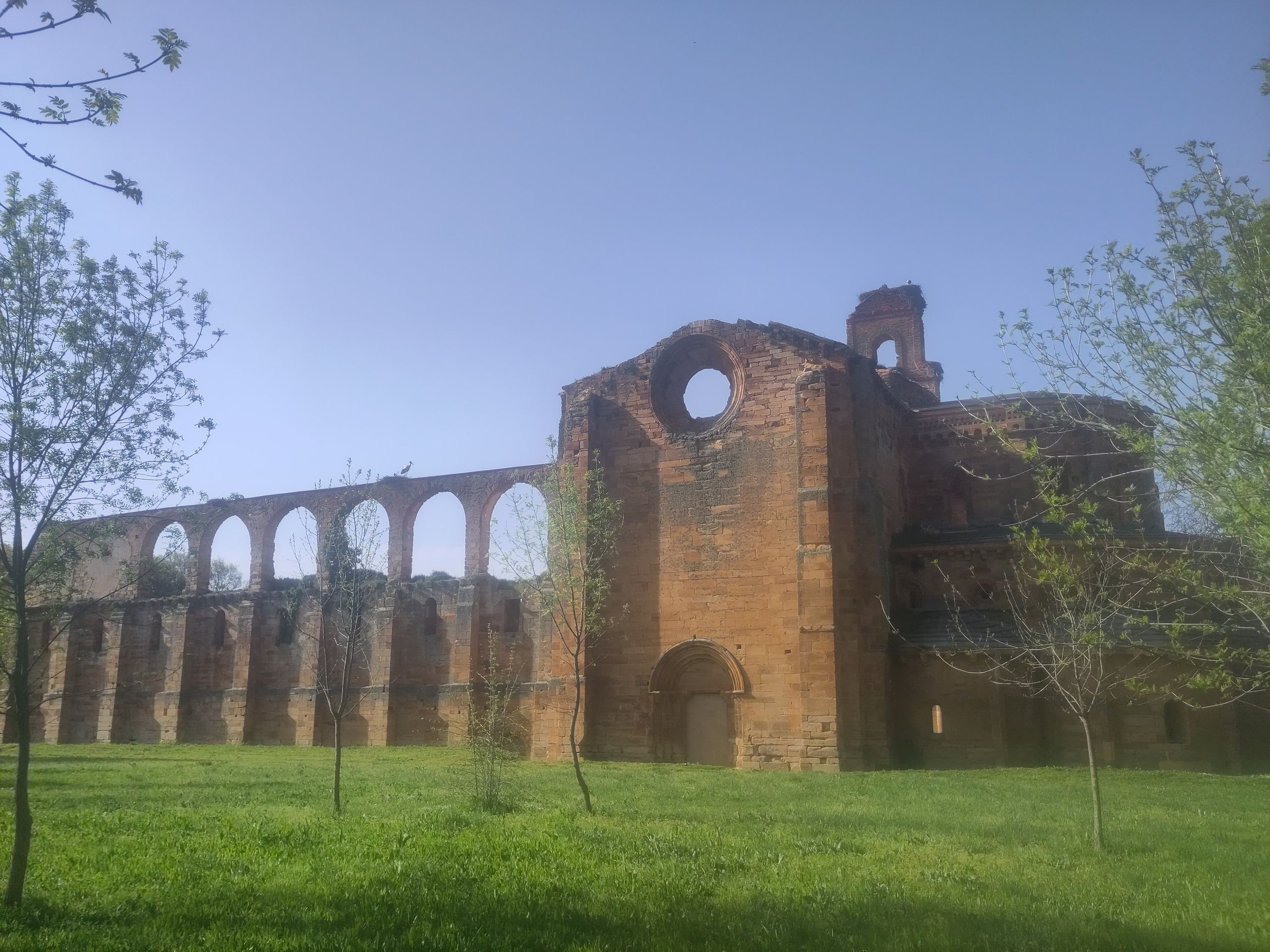
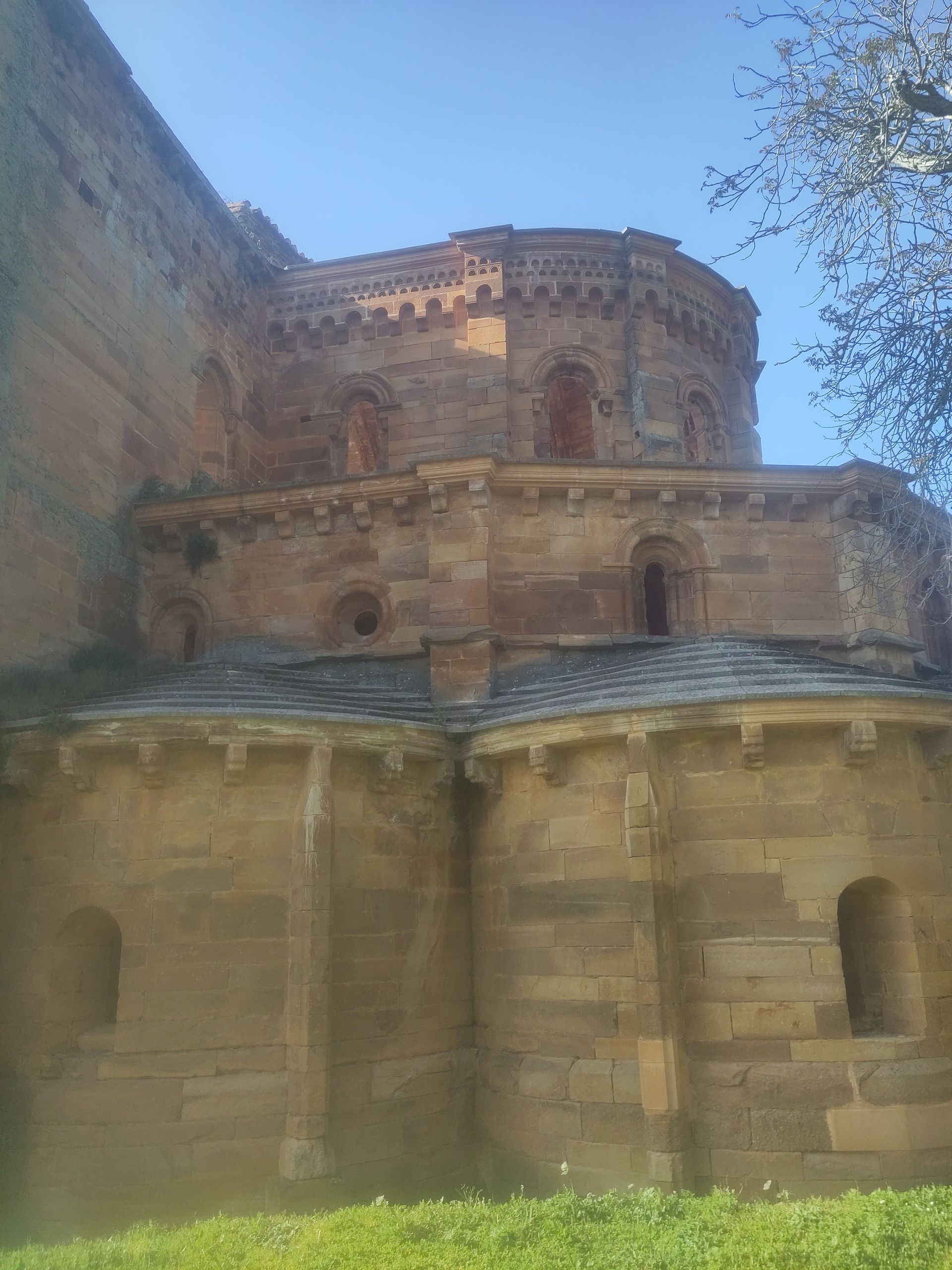
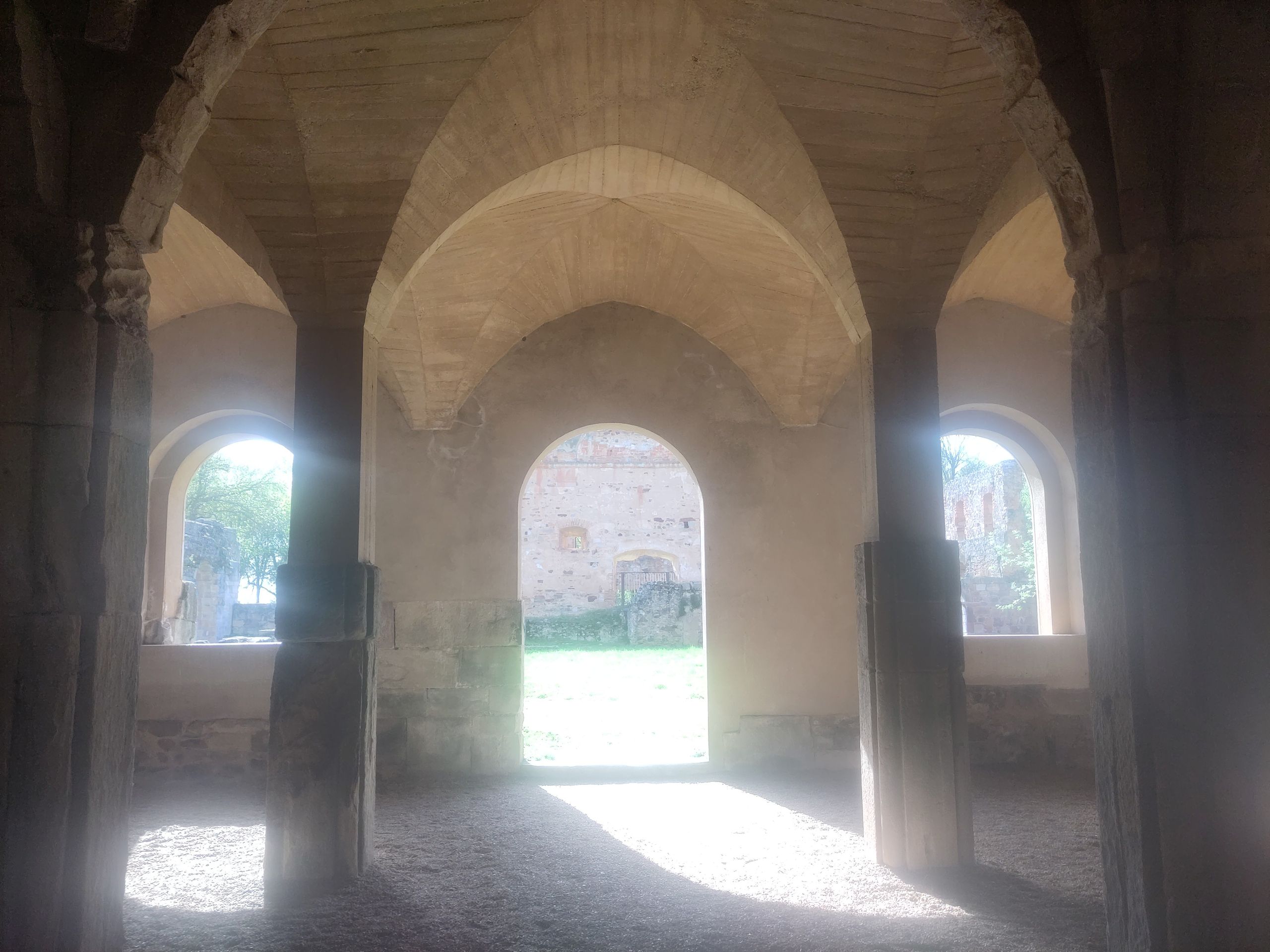
Near Granja de Moreruela rise the impressive ruins of the 'Monasterio de Santa Maria de Moreruela' - also here many stork nests. This former Cistercian abbey obviously had vast dimensions, just like a fortress, of which some km before the present place still 'wall remains are standing in the neighborhood', letting one only imagine the former extent... ...even in the open, preserved only as a ruin 'choir' of the monastery church, the acoustics remain wonderfully beautiful!
I continue northward, while the other peregrinos walk westward from here. Thus, I also bid farewell to C., with whom I had gotten a bit closer over the last three days or rather evenings. Like some of the women I met in recent weeks, she carries heavy memories or experiences with her. Perhaps precisely because these are brief encounters, so to speak among strangers, only brought together a few times by the same path, it is often possible to share grief, pain, questions, and tears as well. At least when I listen openly - these encounters touch me deeply.
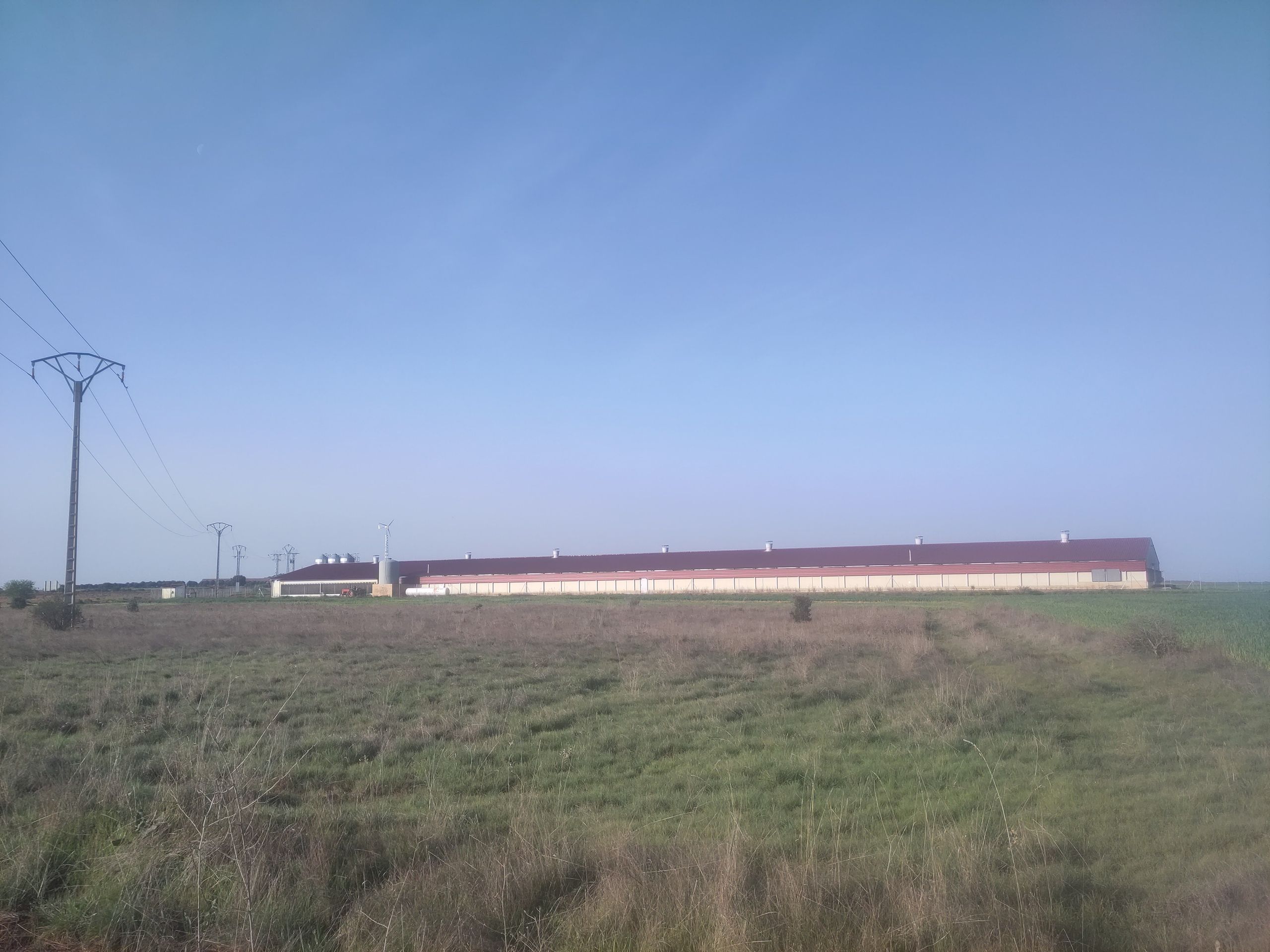
Now I hiked around 30 km to Benavente today (often with 'sweet scent' in my nose, because in this region there are many huge pigsties...), partly again on an abandoned railway line, and then took the bus to Leon: about 70 km through 'flat agricultural desert', through which there are no real footpaths aside from the highway and other roads.
Although even snow is predicted there (!), I am looking forward to the path over the mountains, which still separate me from the north Spanish Atlantic coast. Since there were already so many more pilgrims on the Via de la Plata than I had expected for this solitary route so early in the year, I finally decided not to go east to France from here on the famous and now so very overcrowded 'Camino Frances', but rather along the coast...