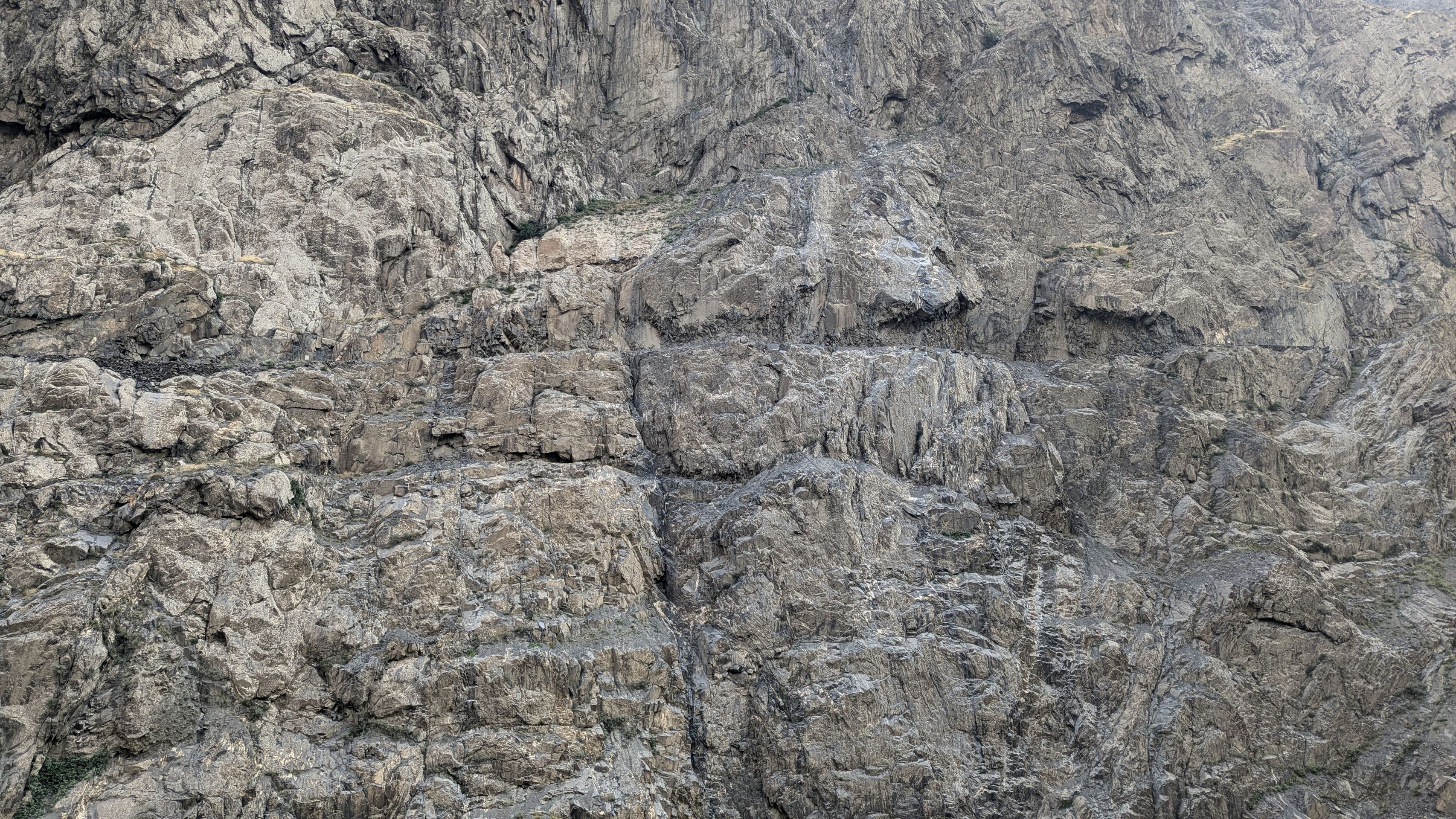
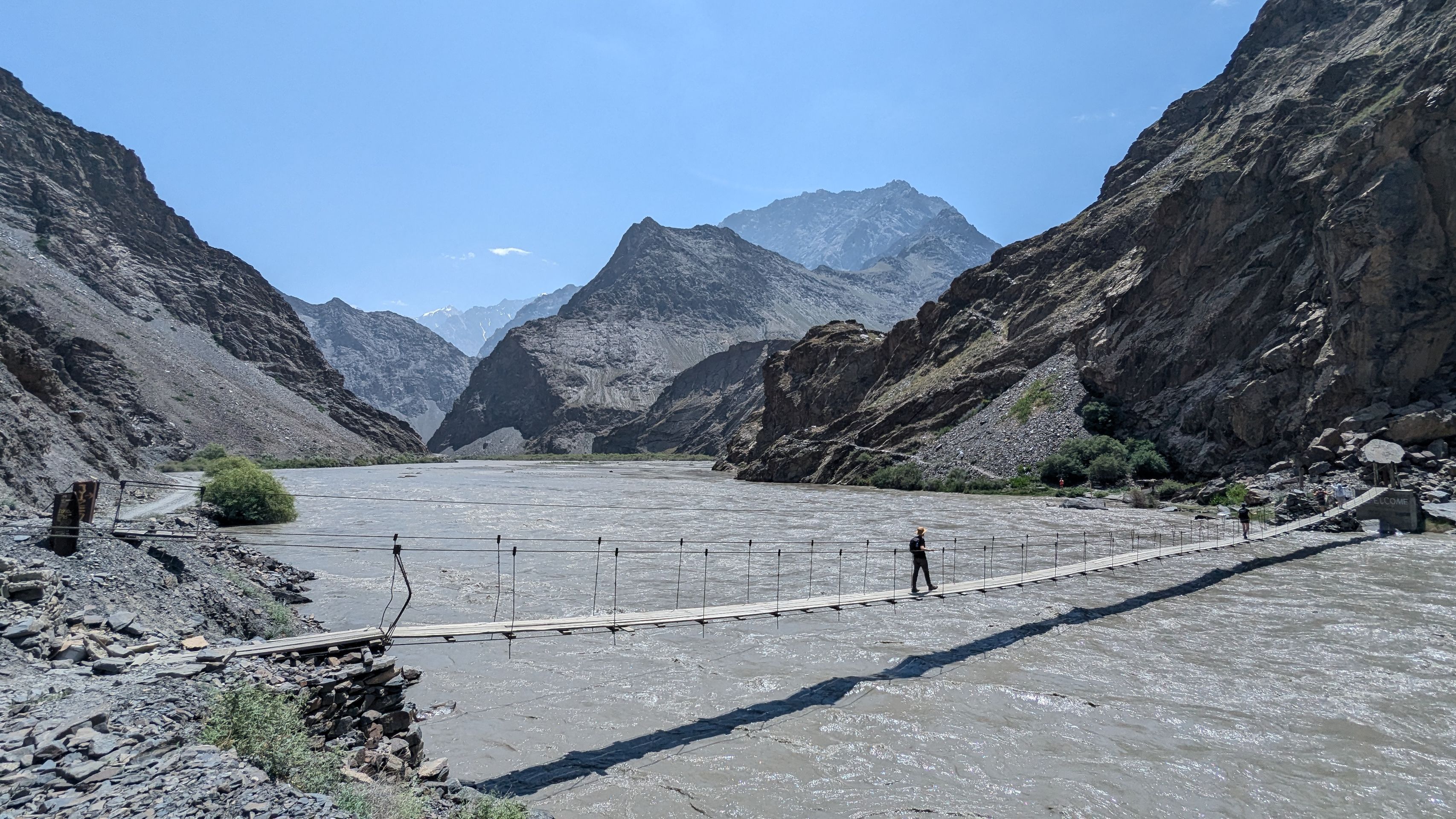
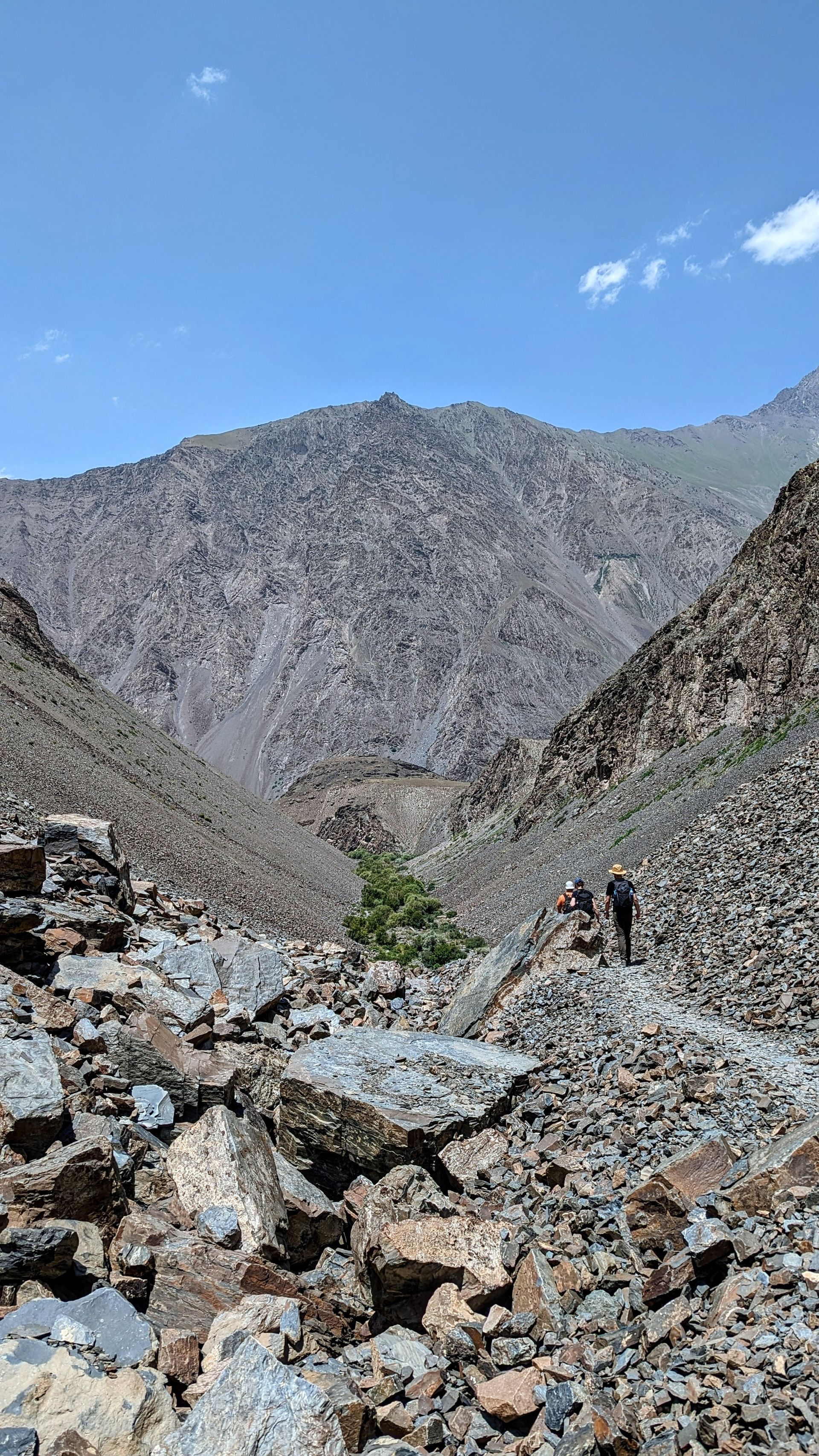
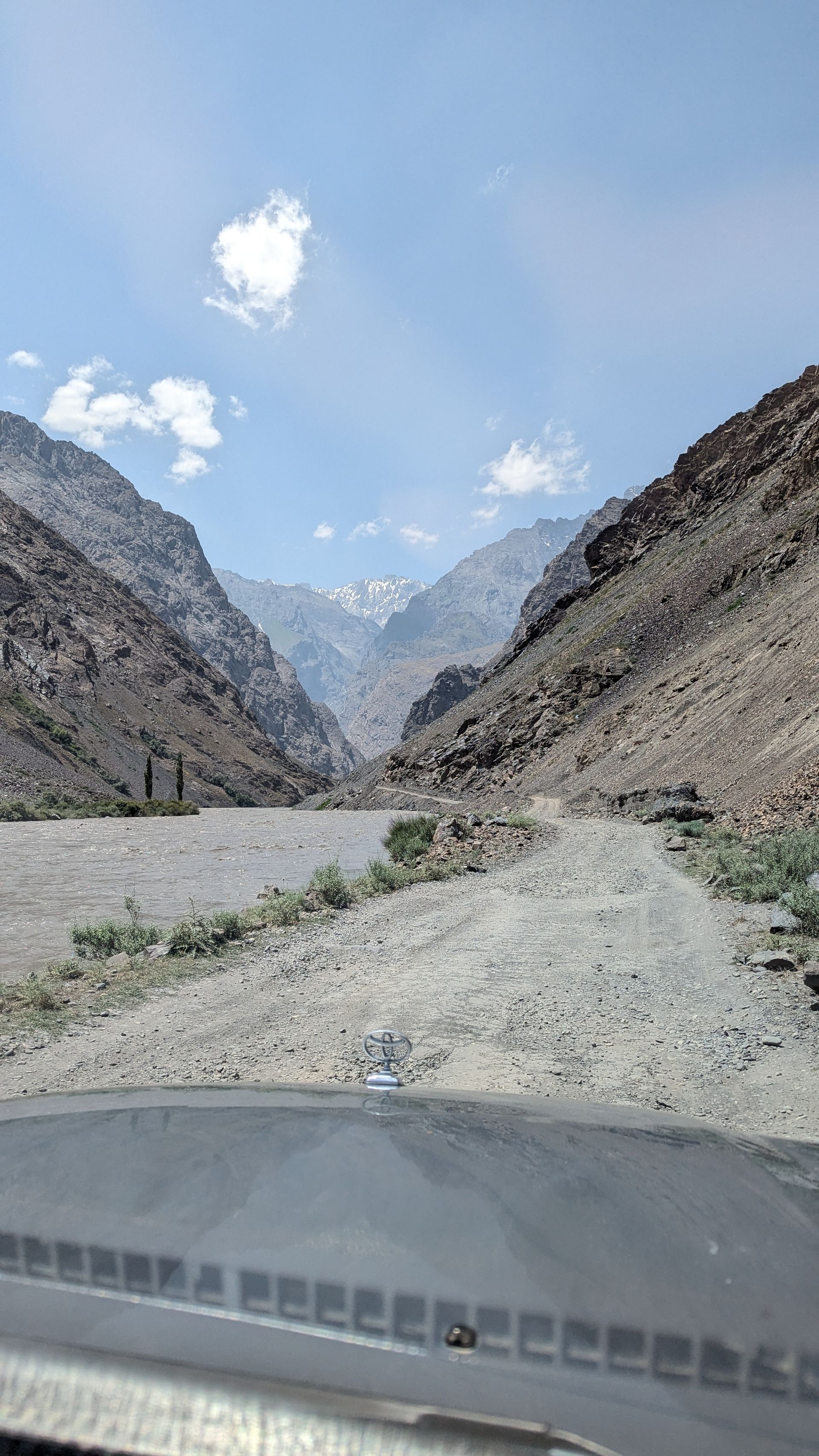
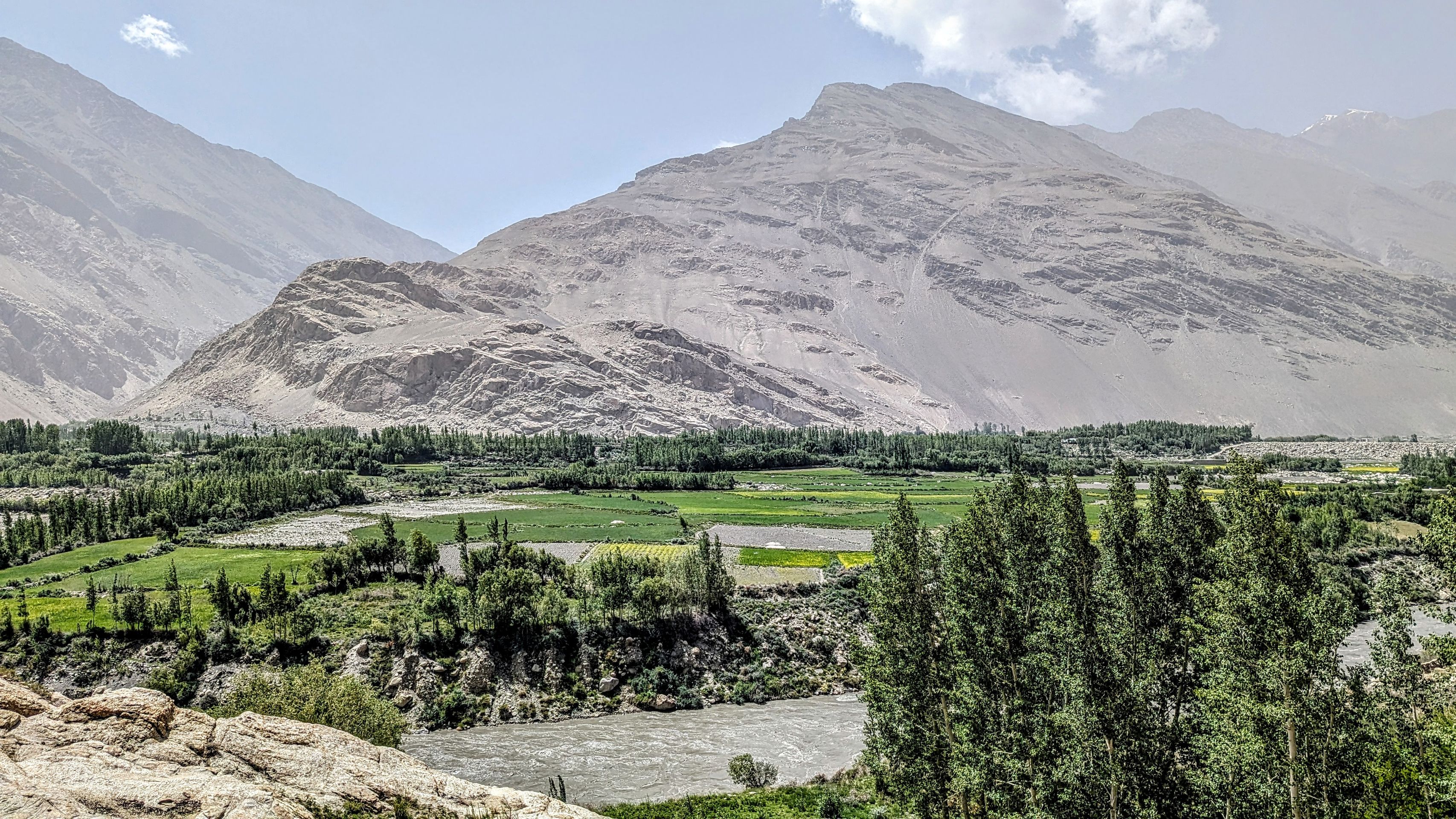
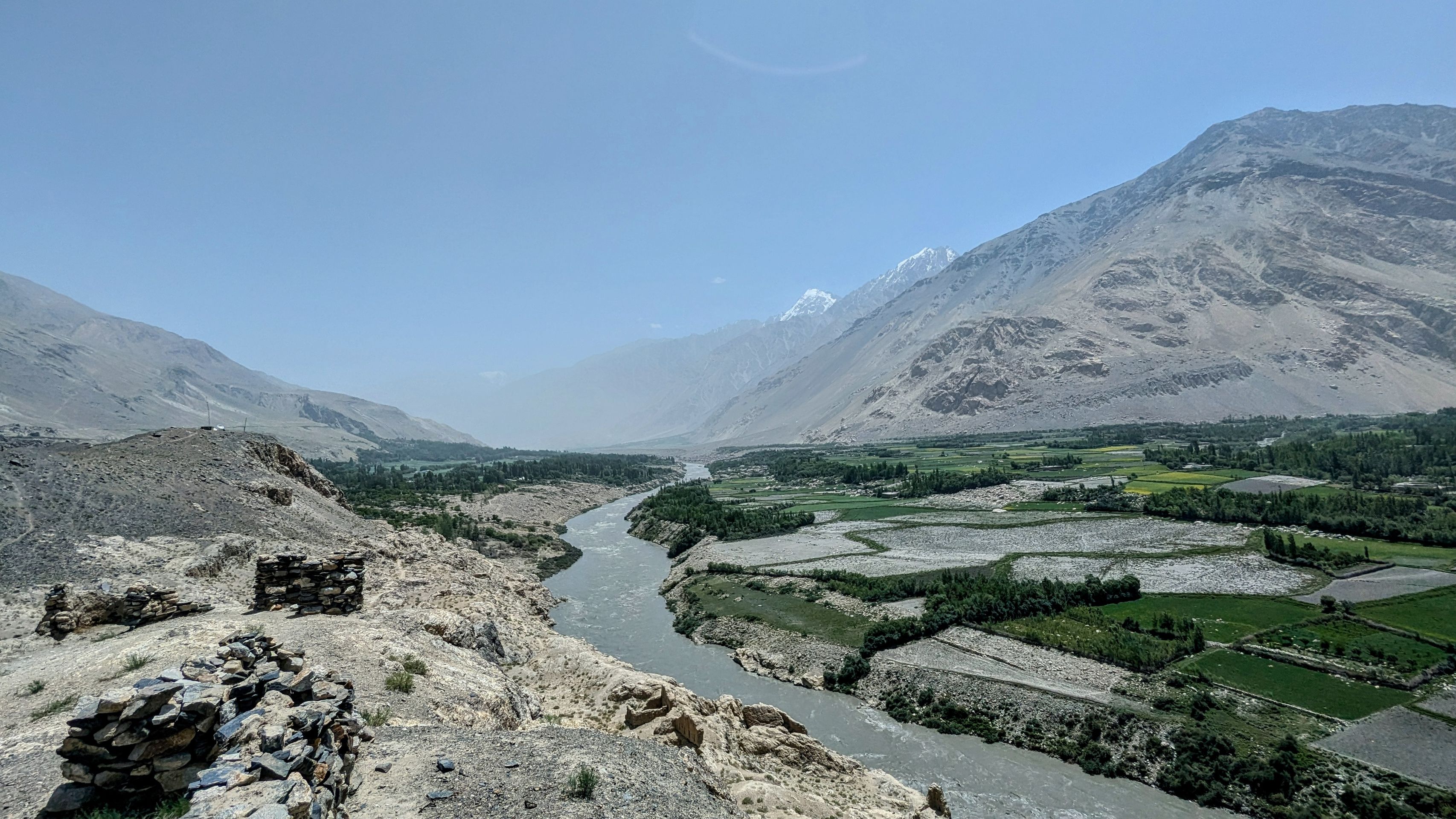
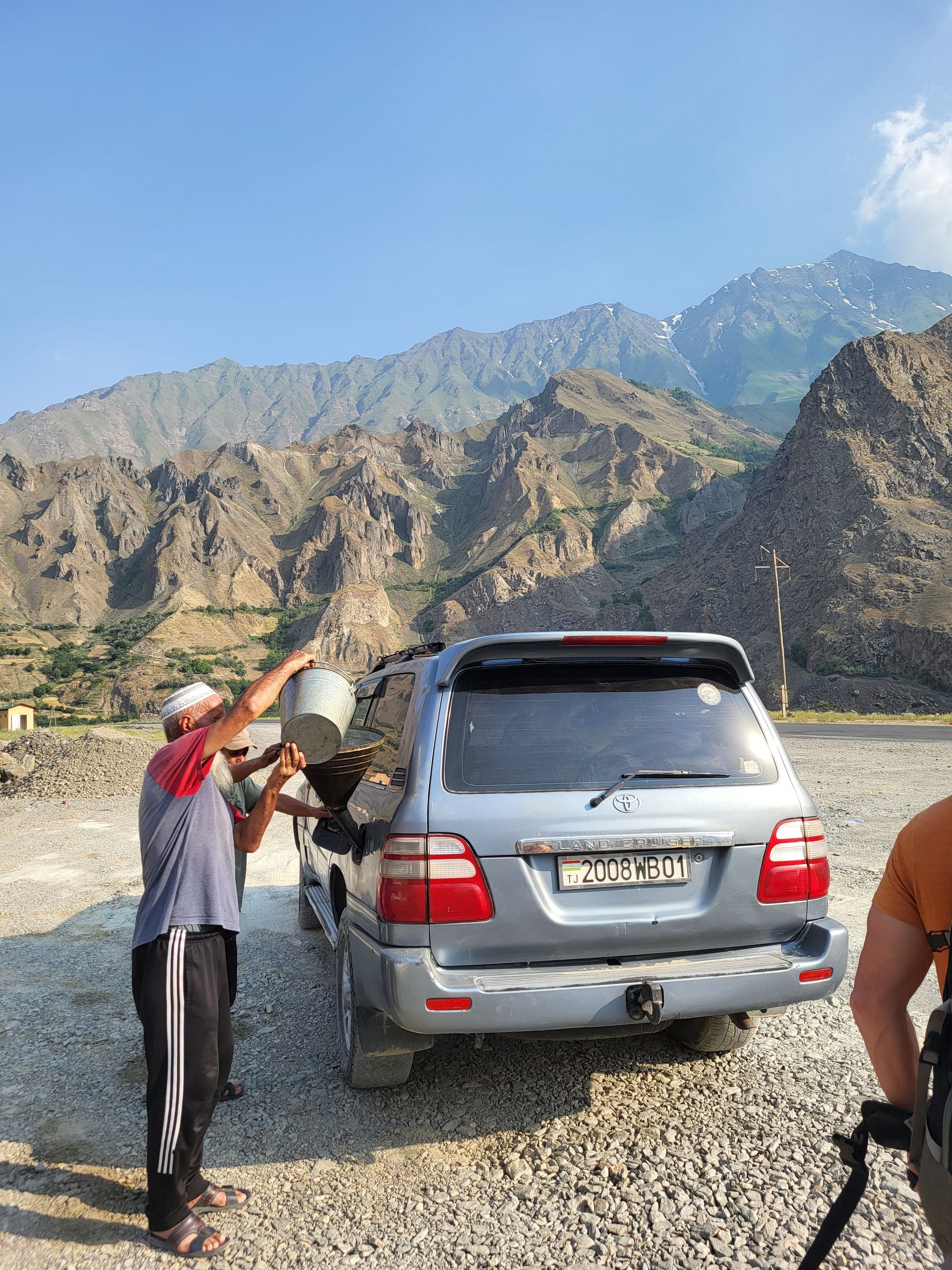
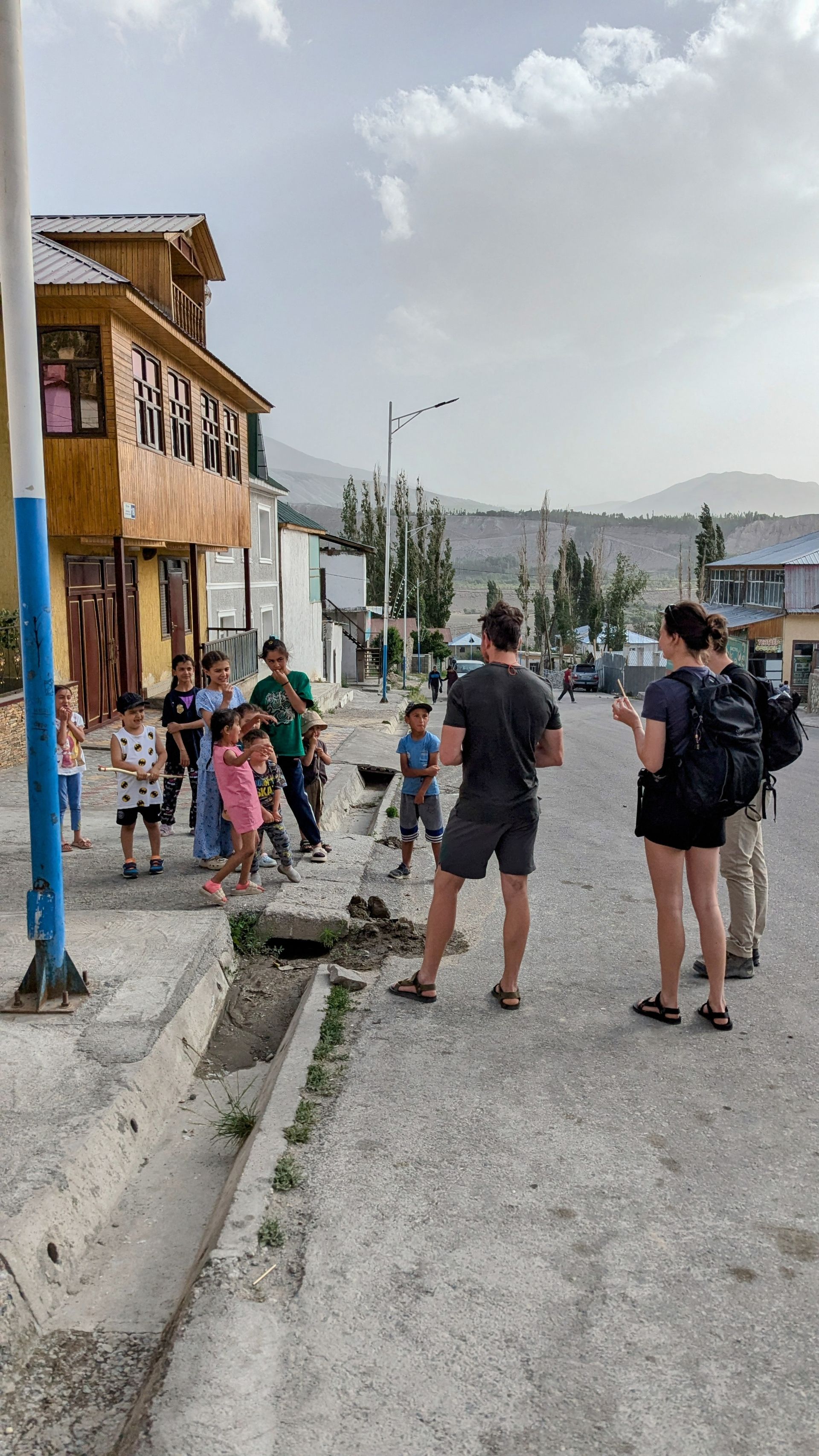
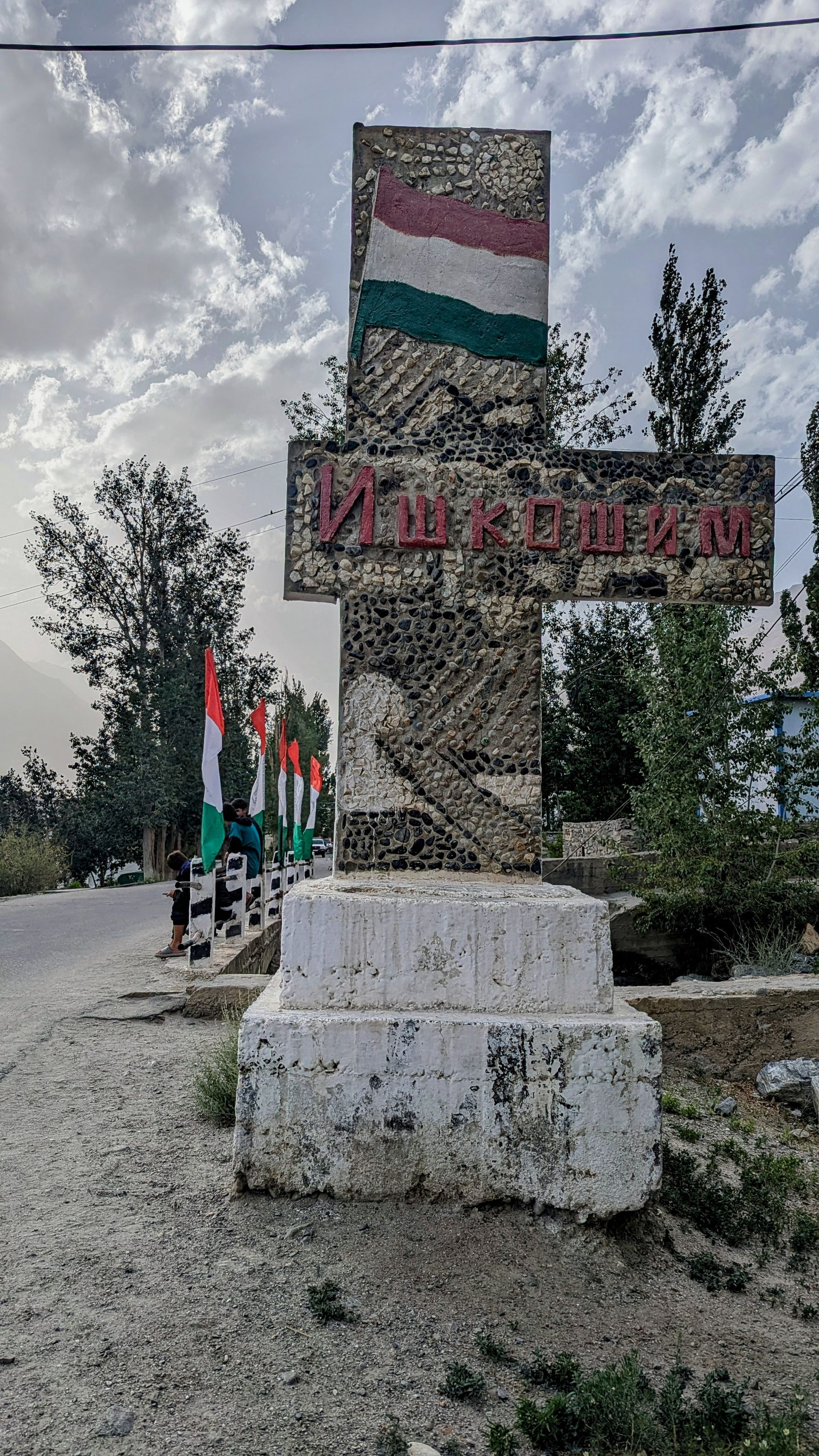
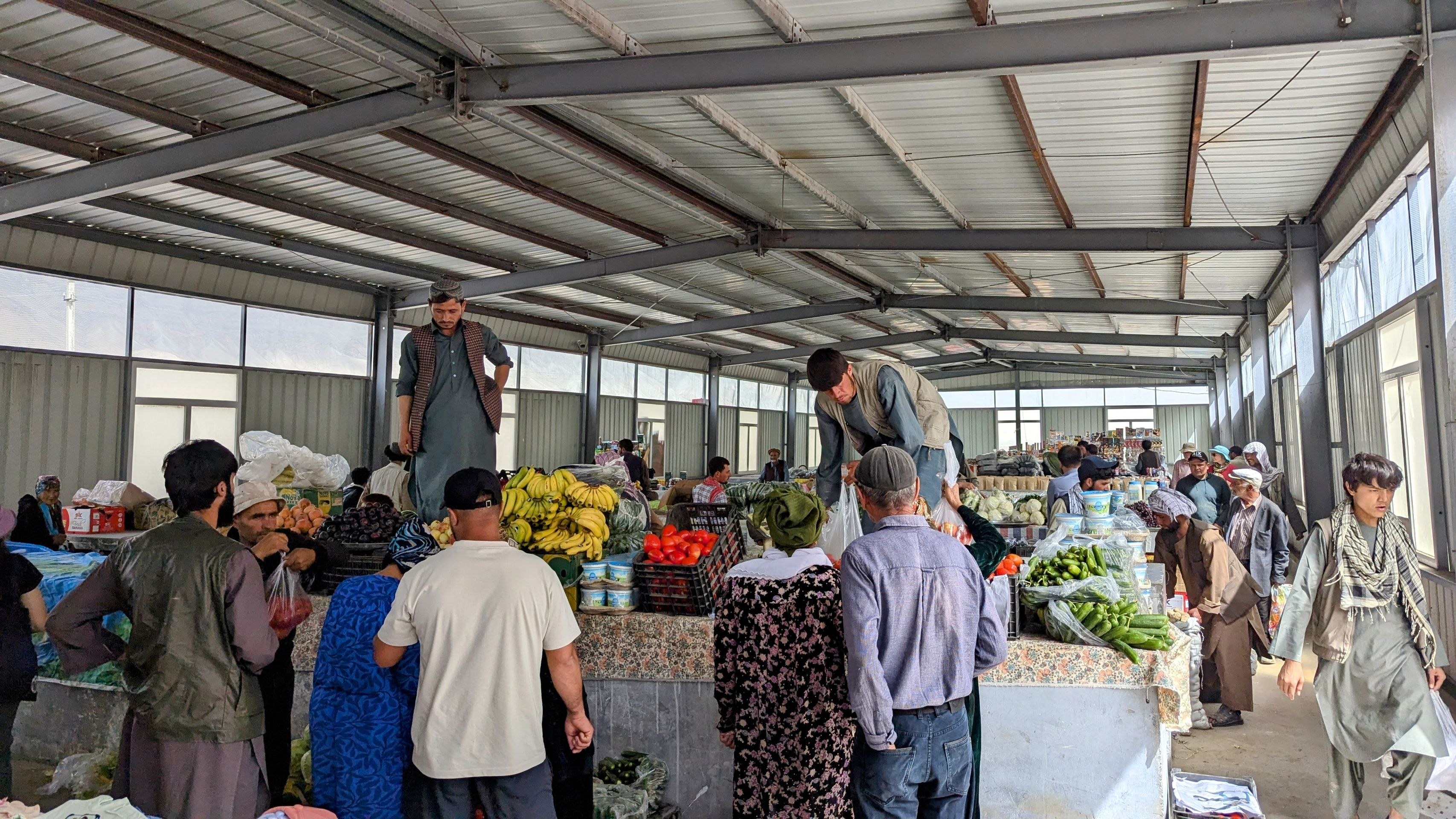
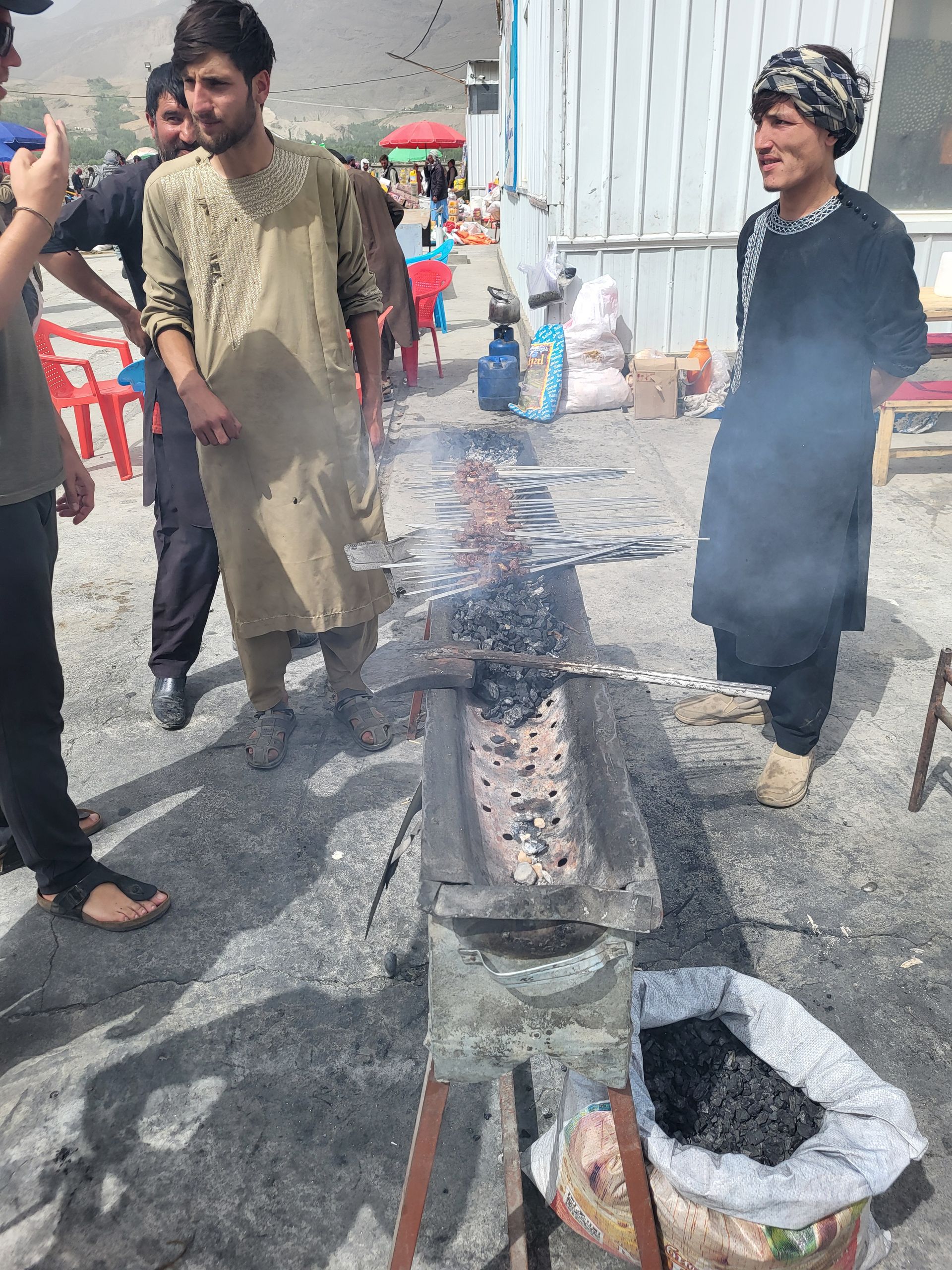
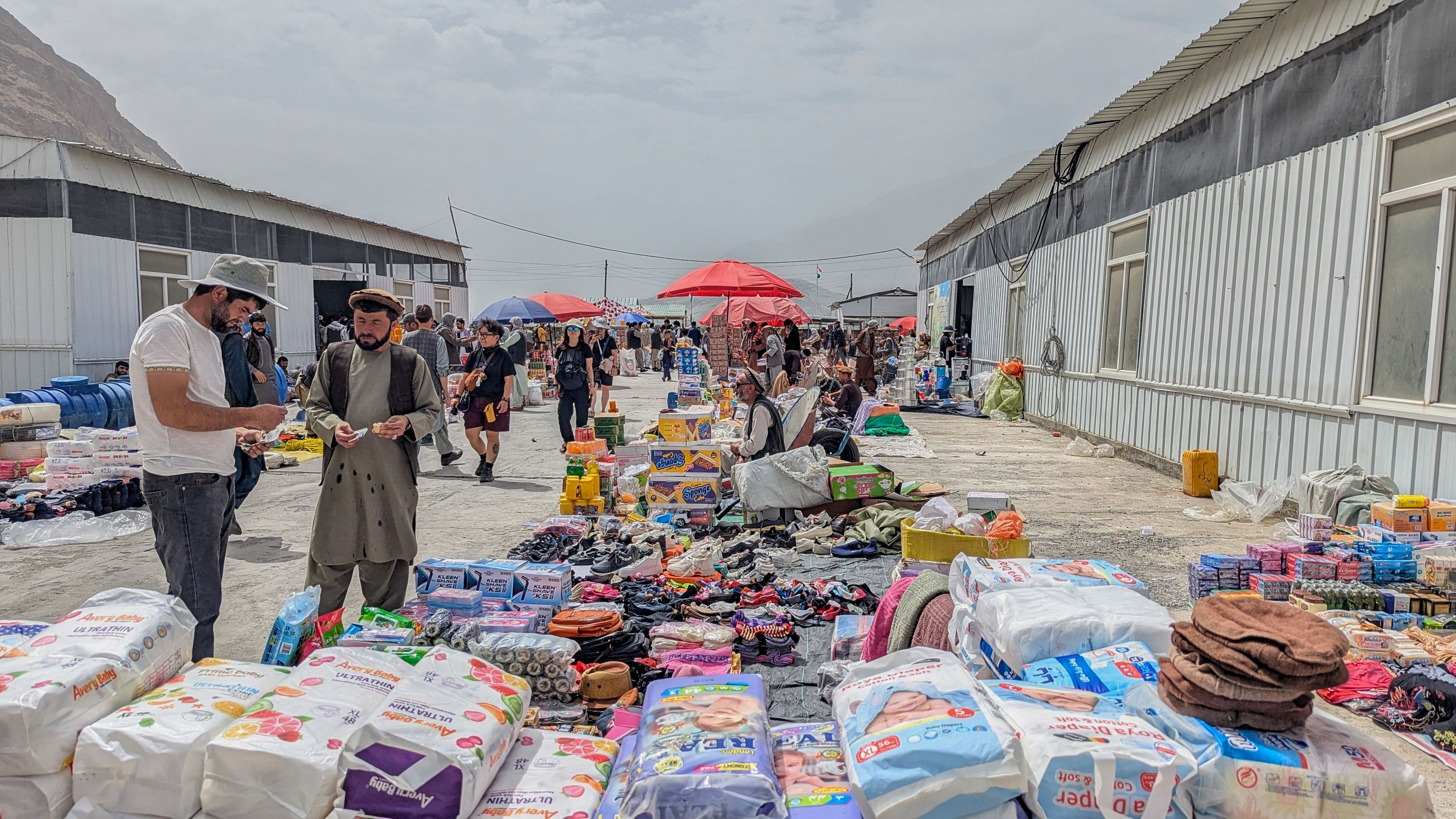
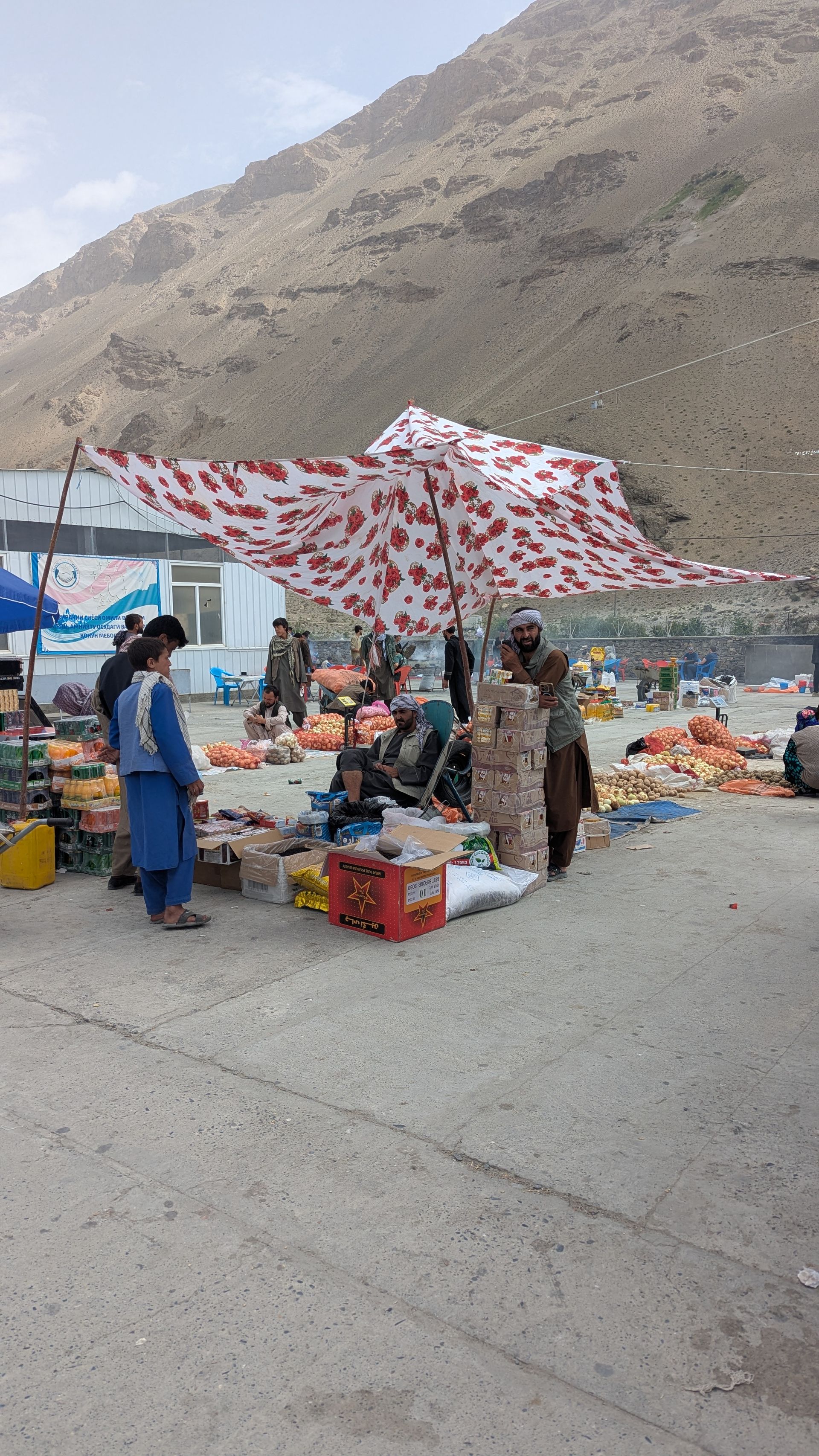
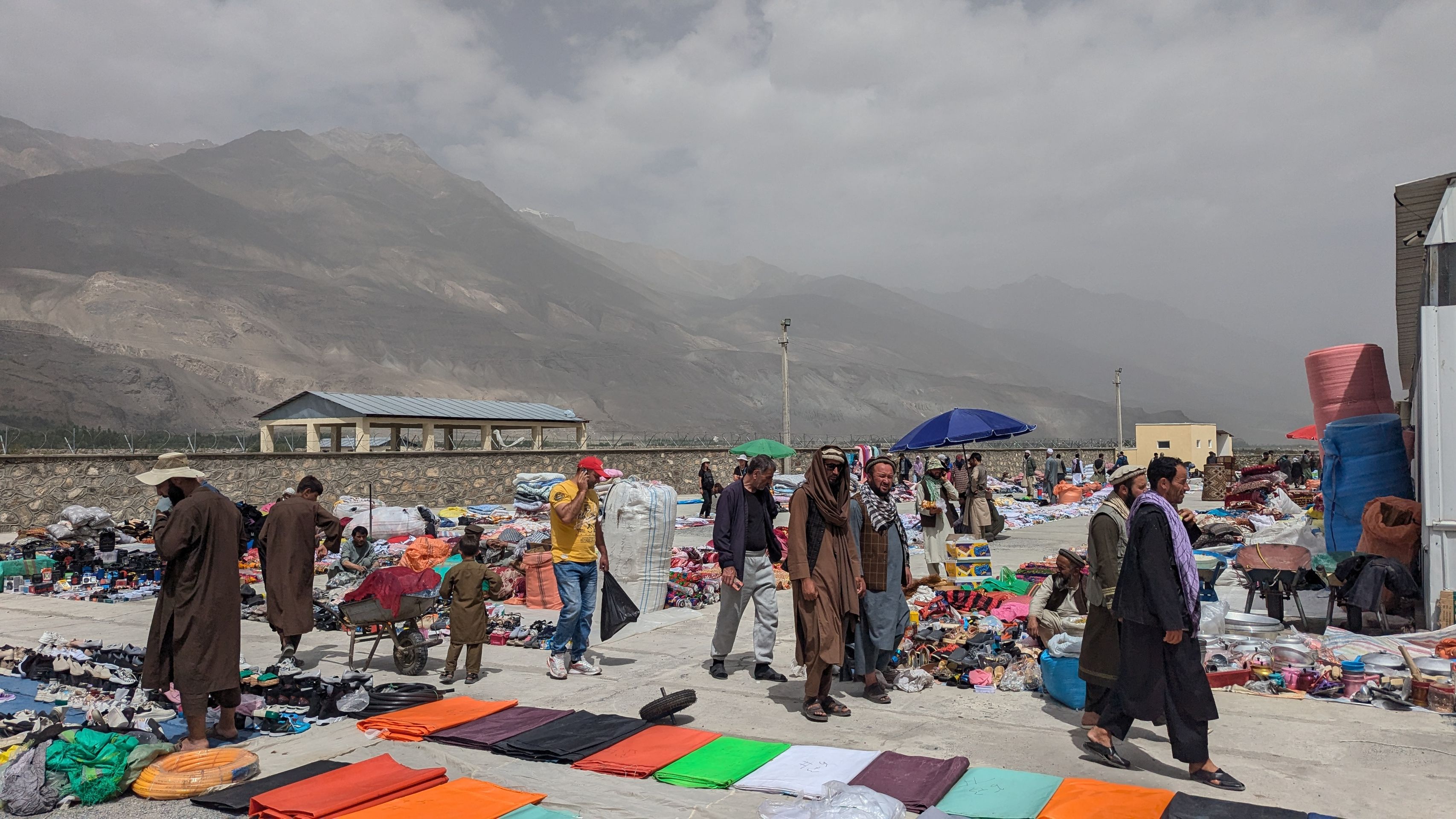
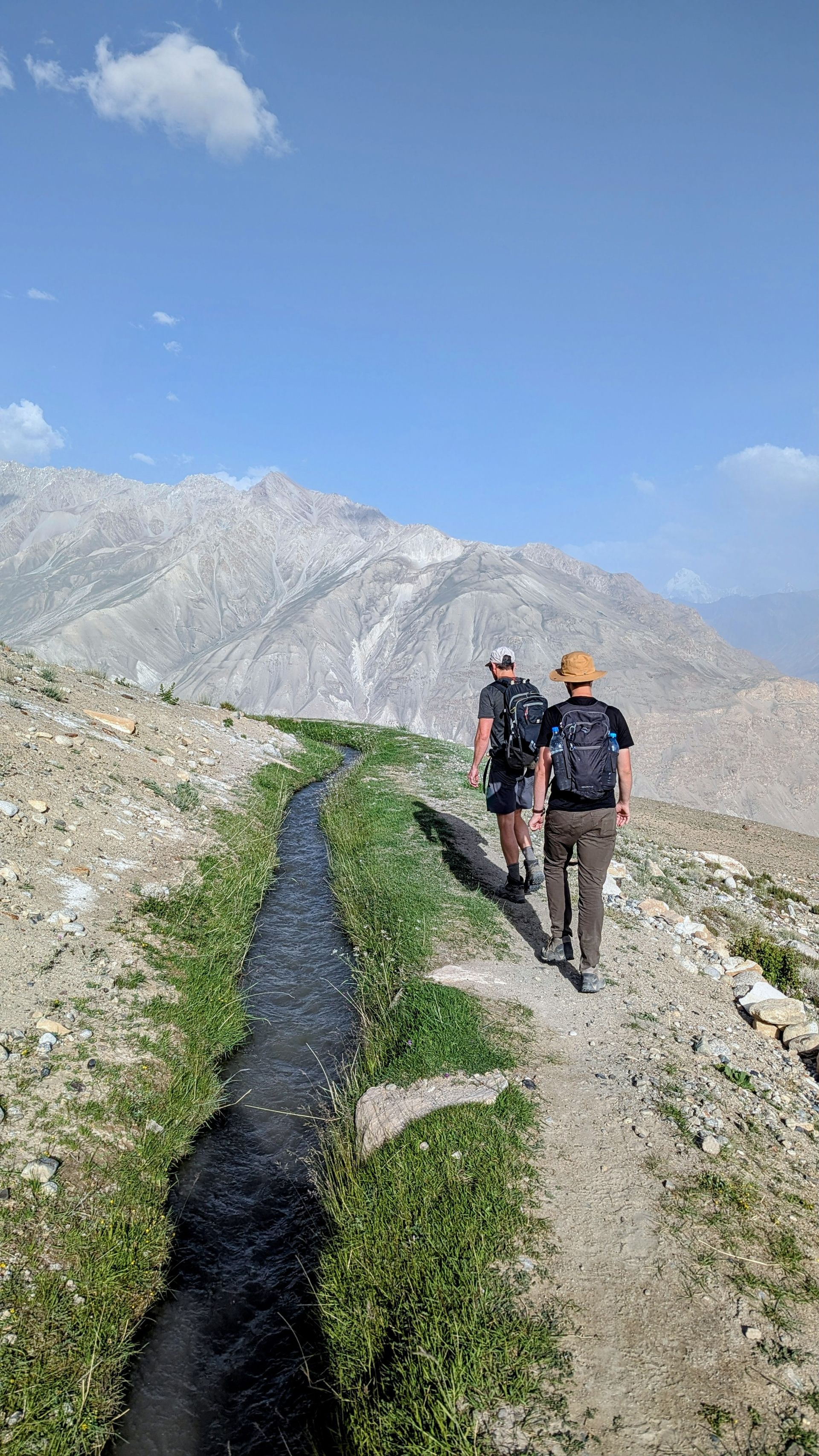
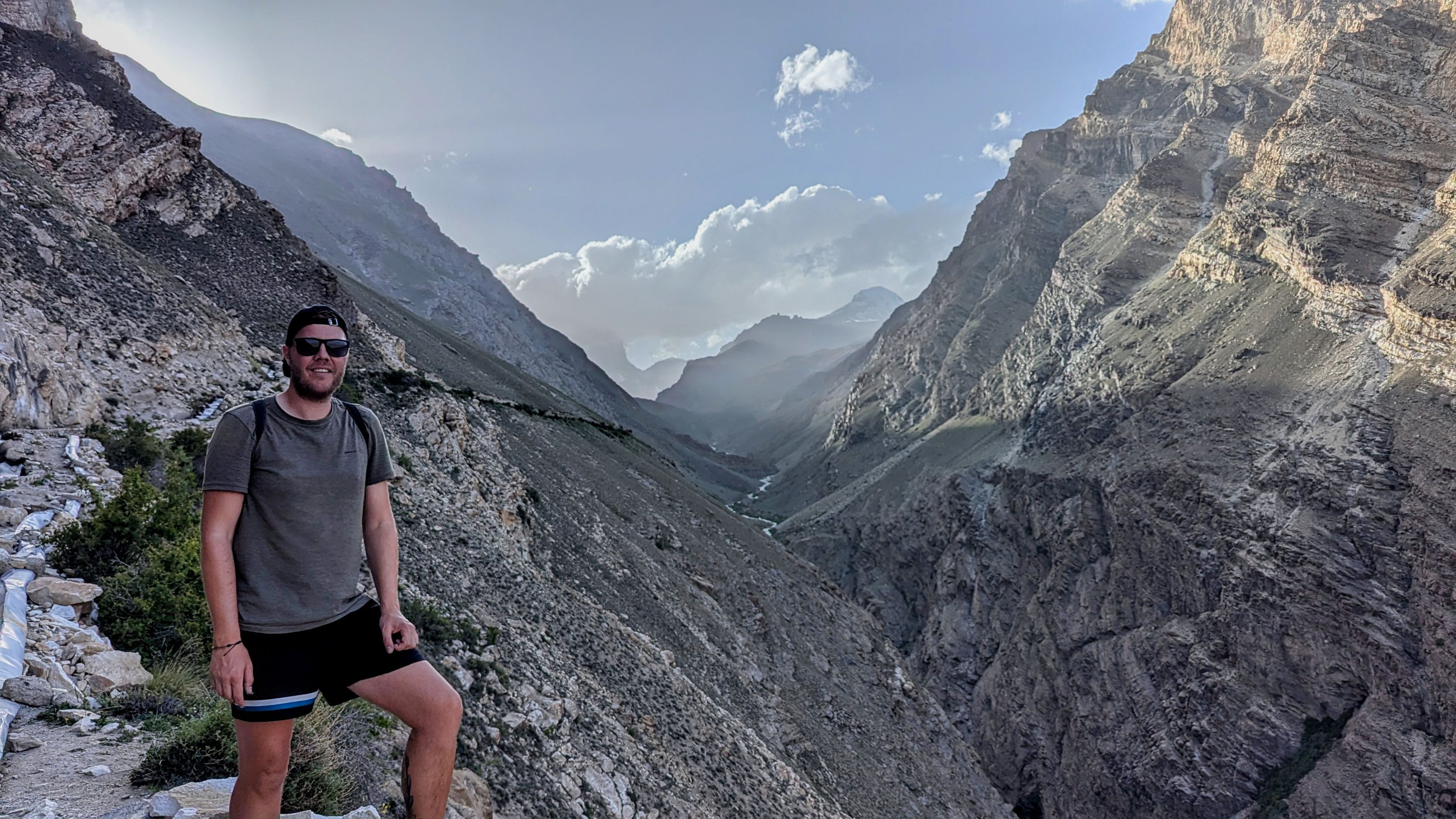
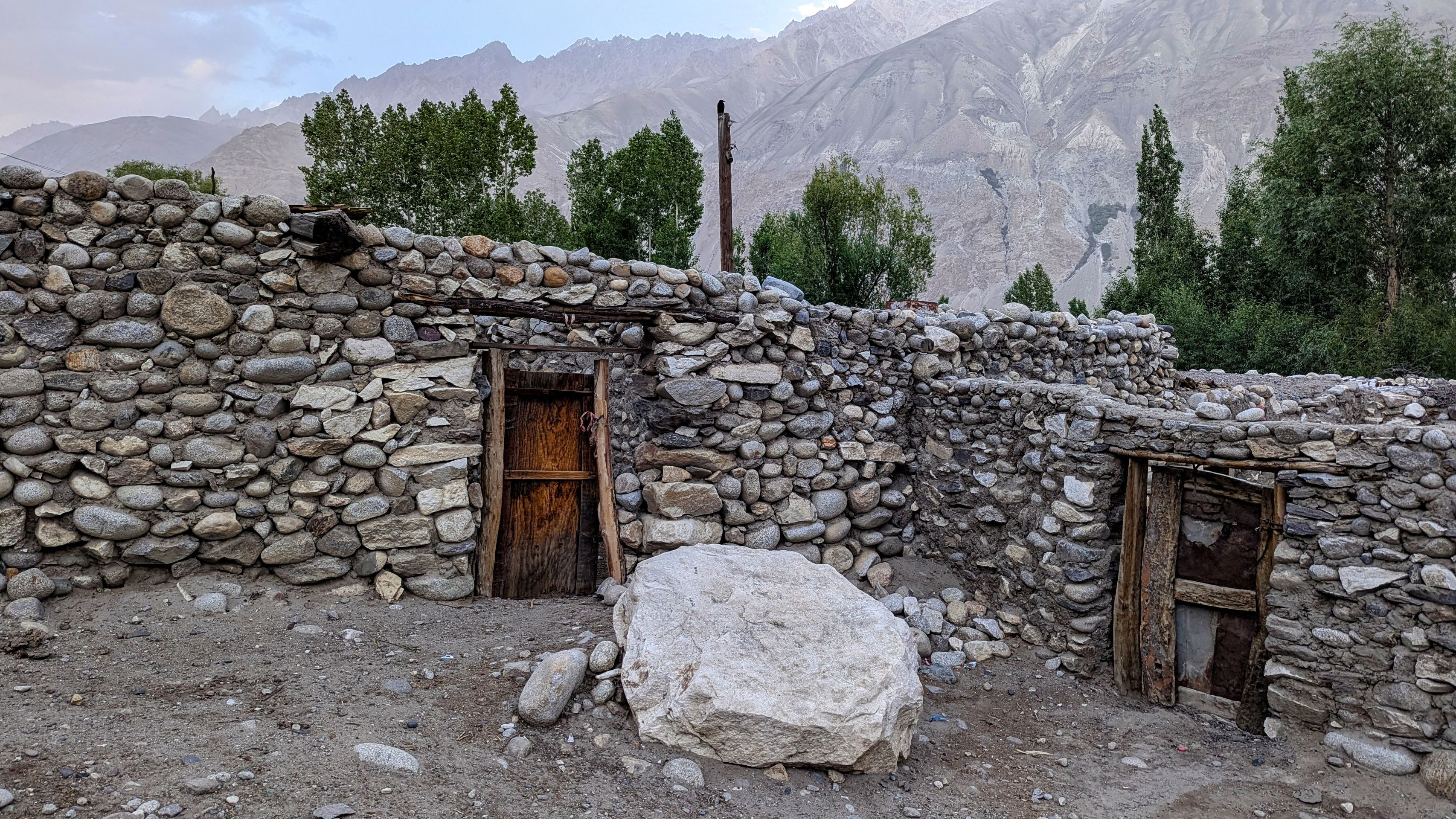
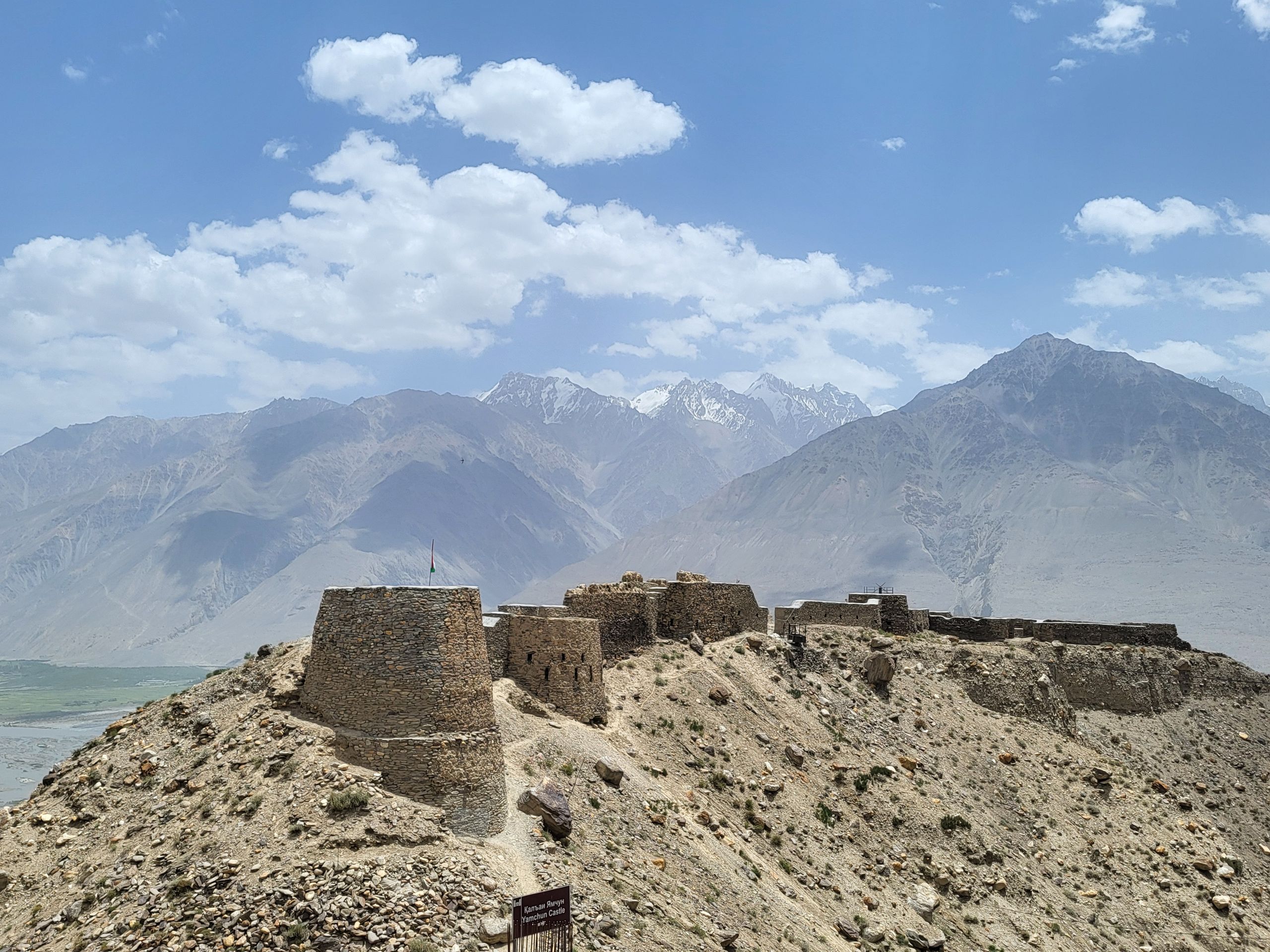
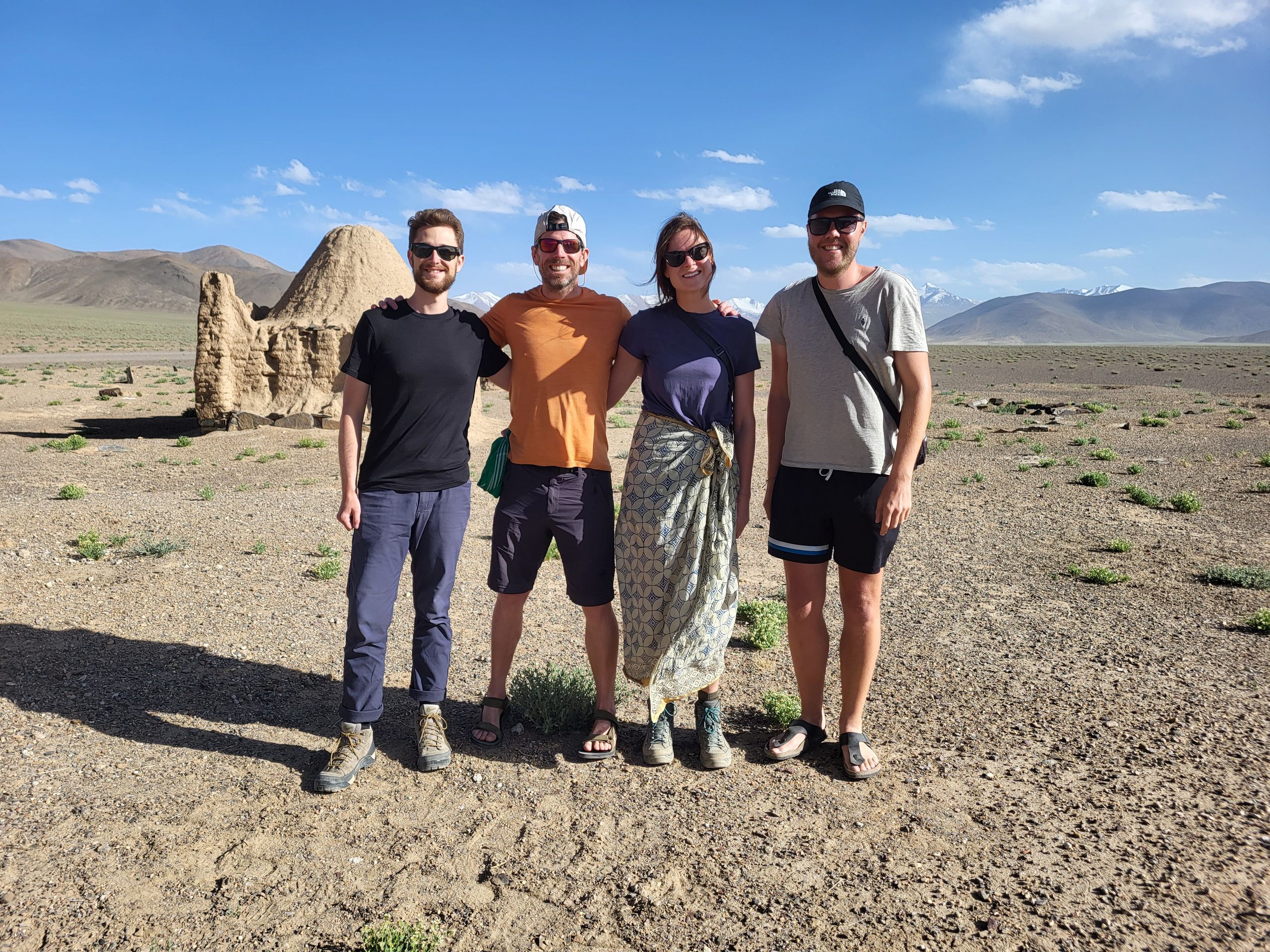
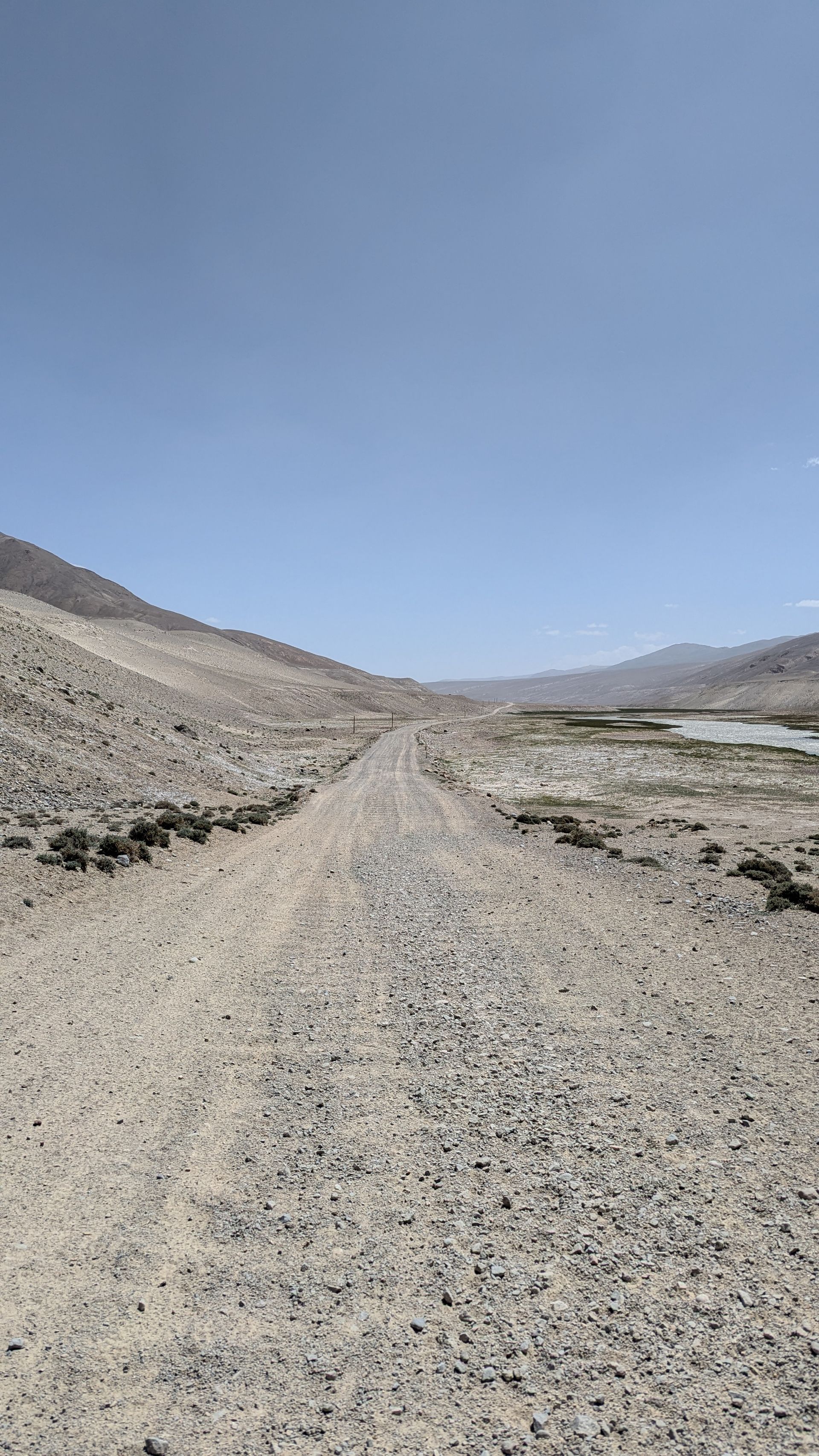
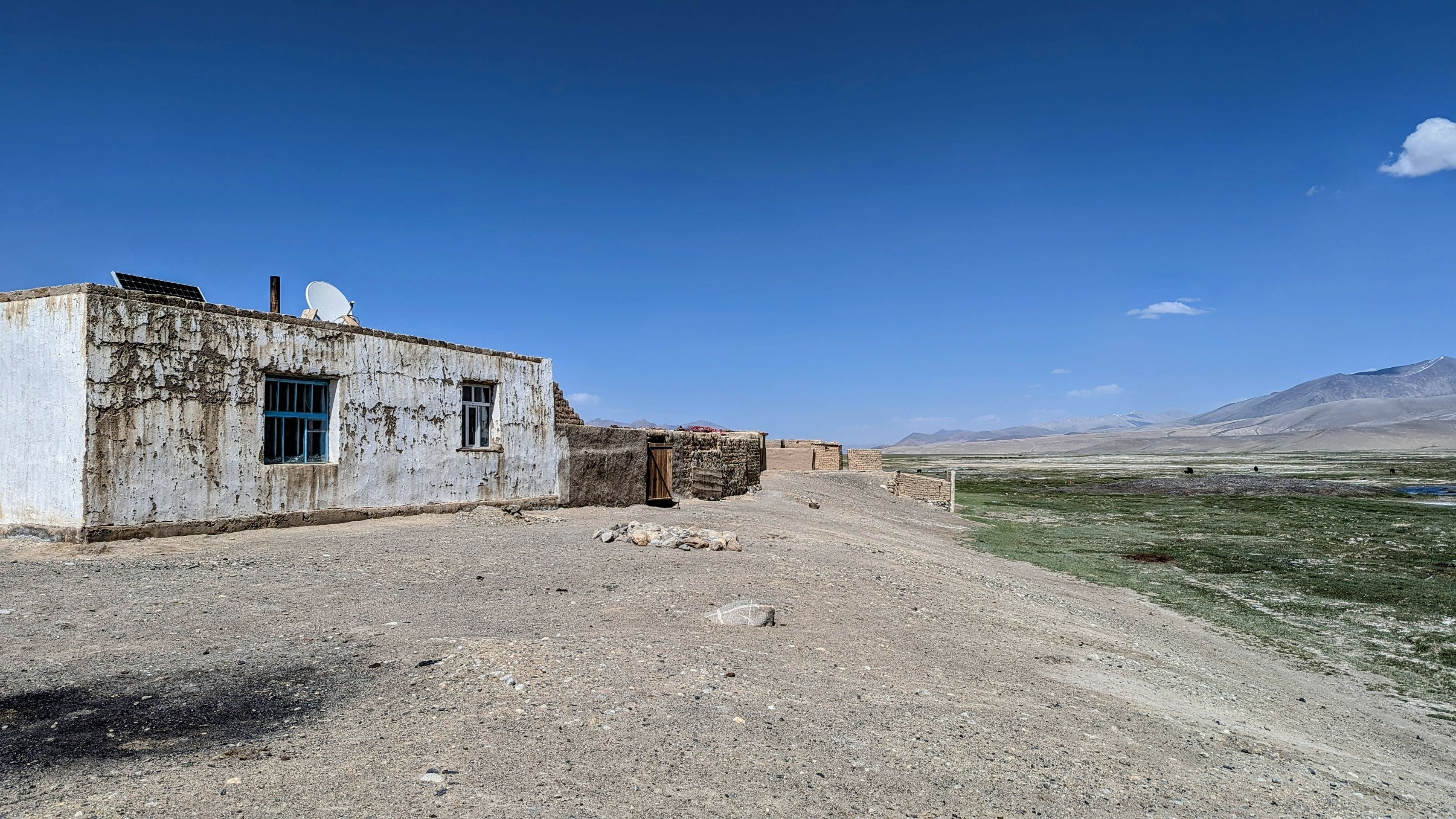
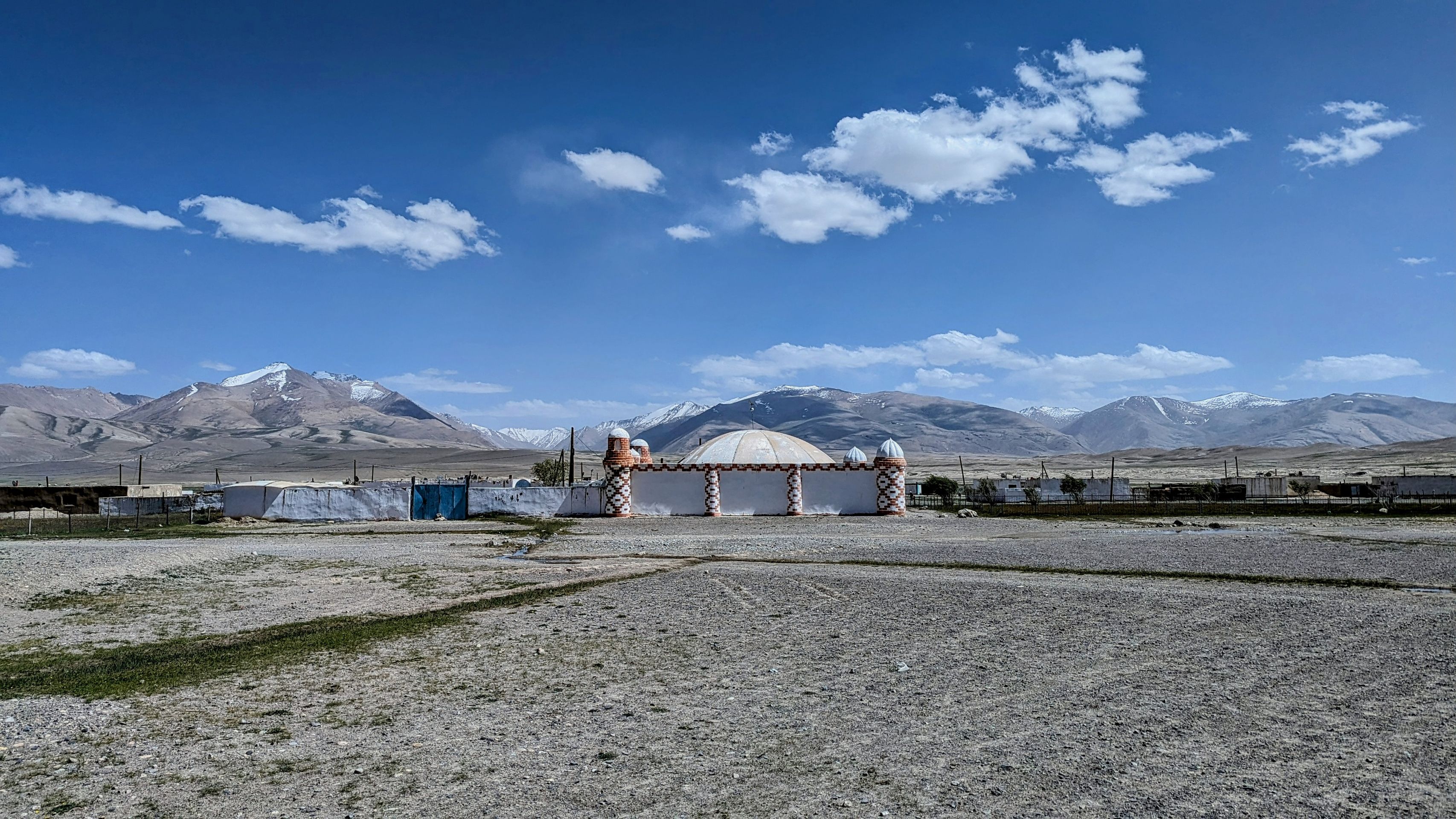
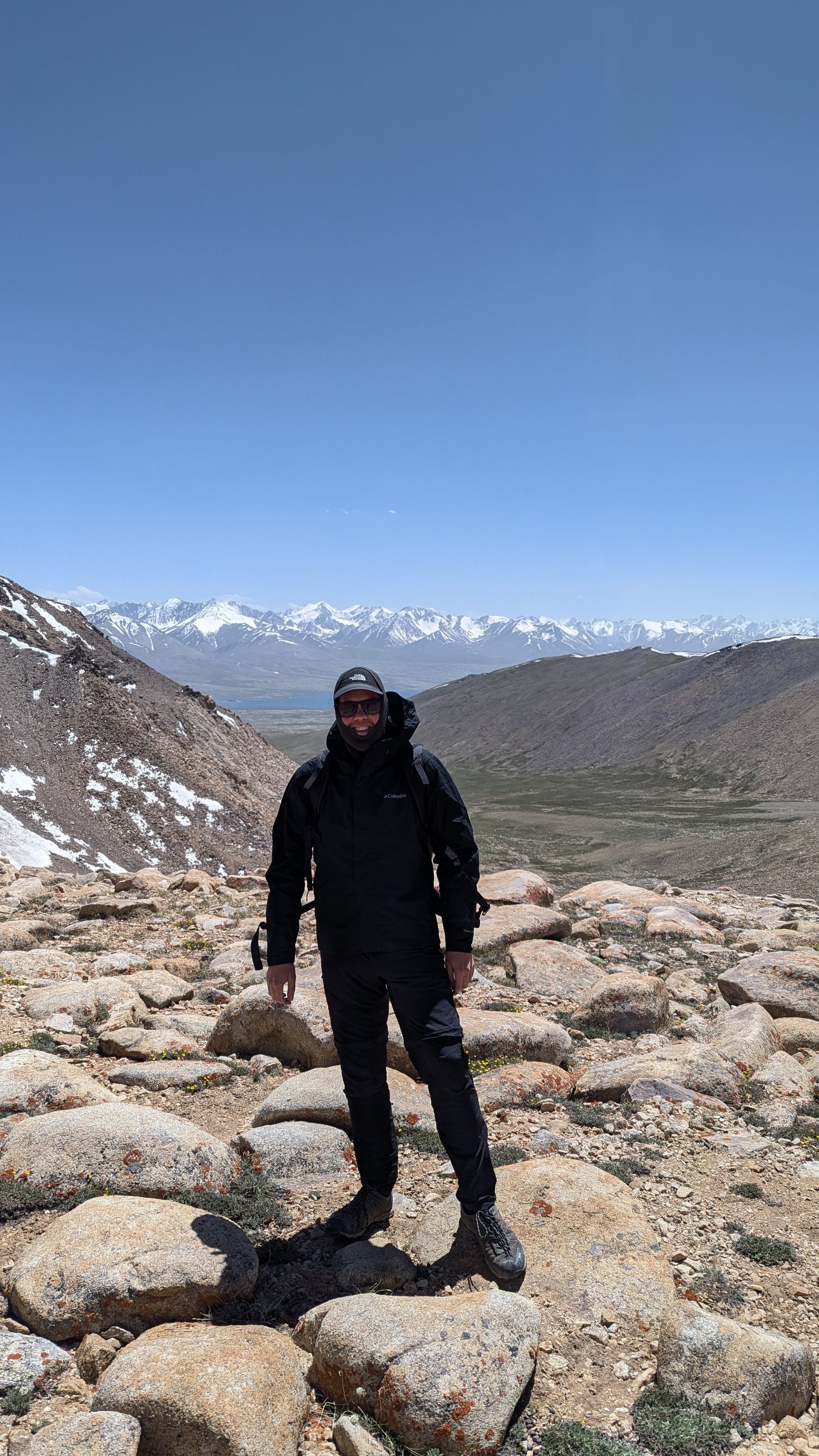
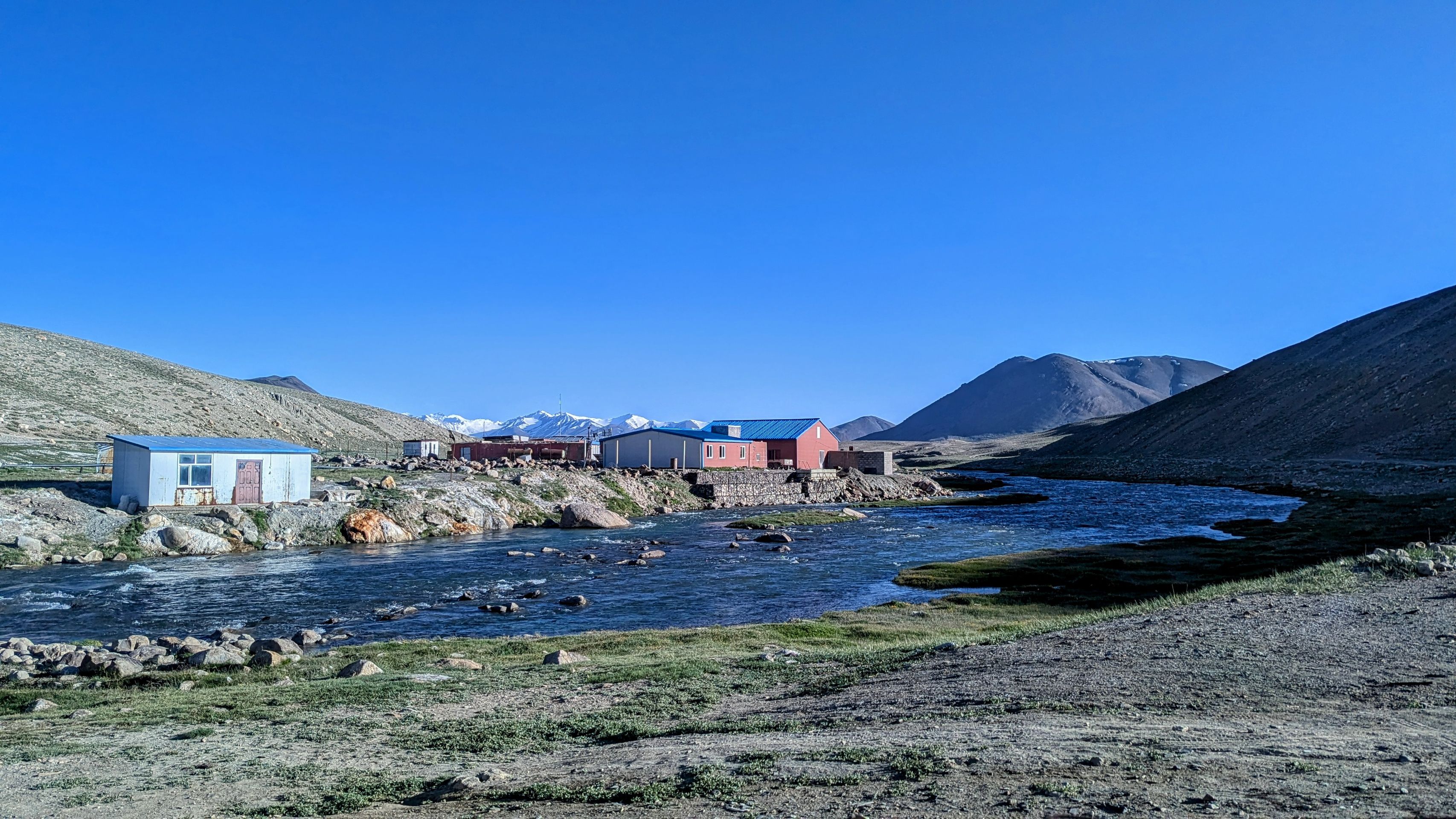
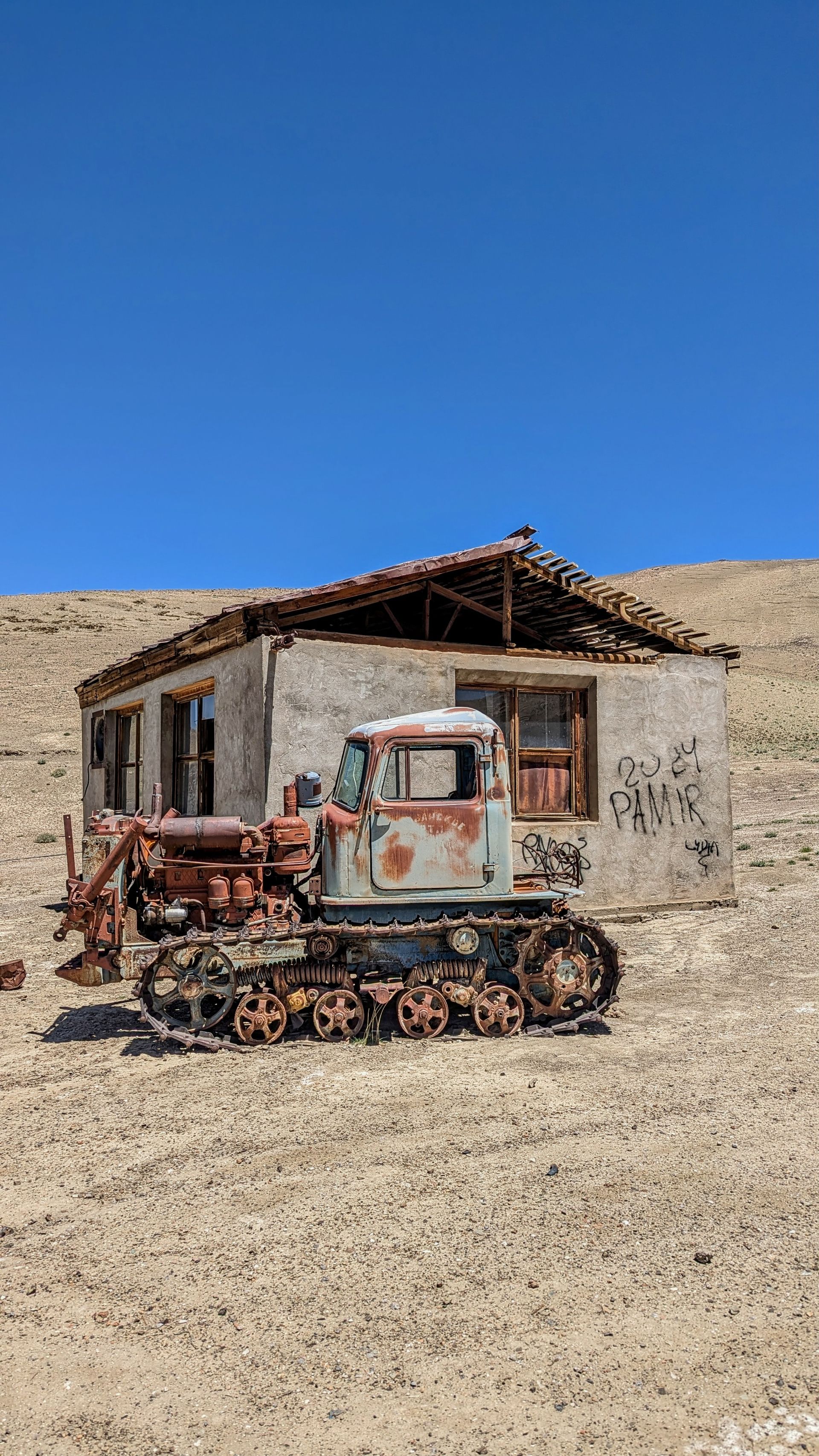
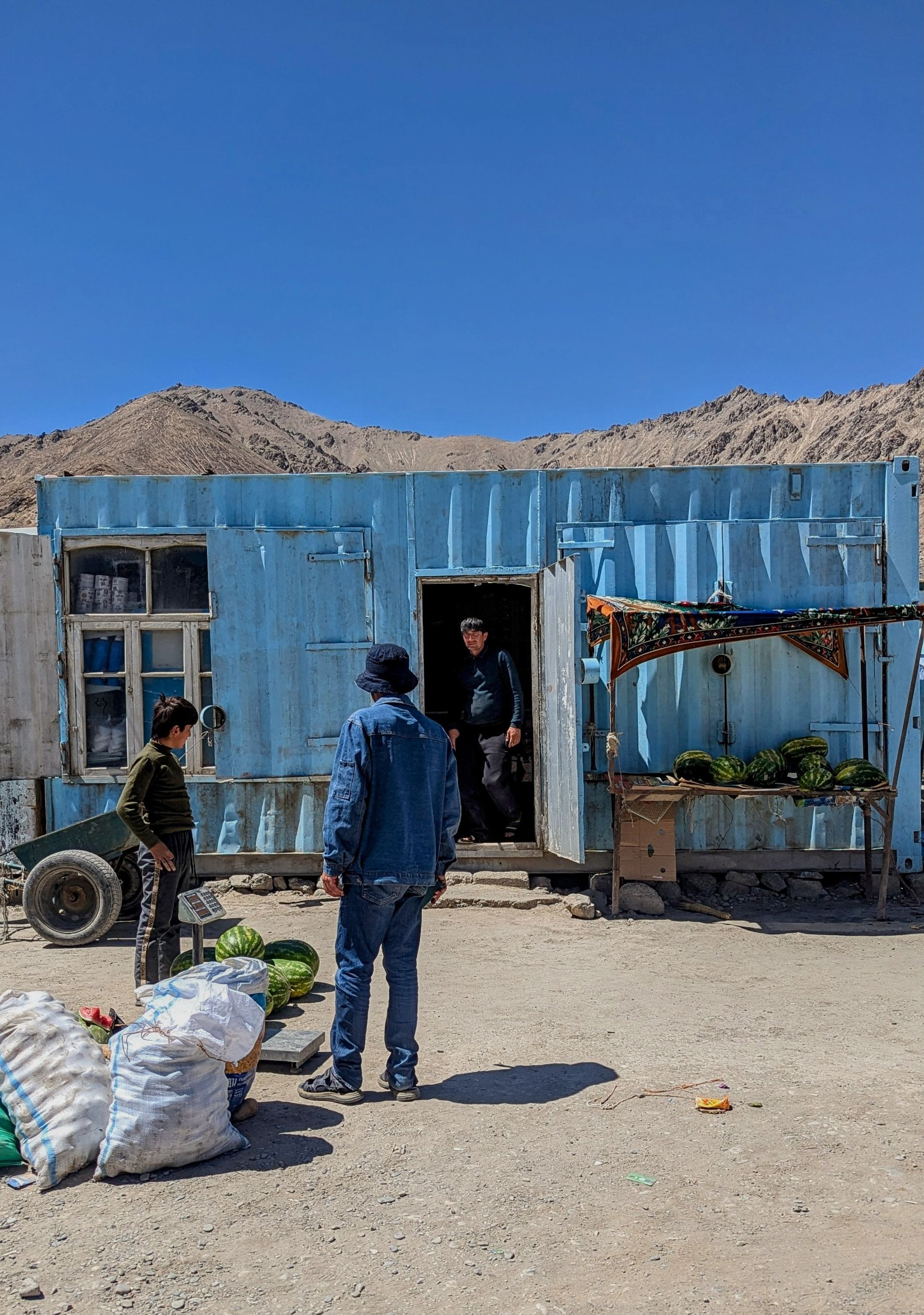
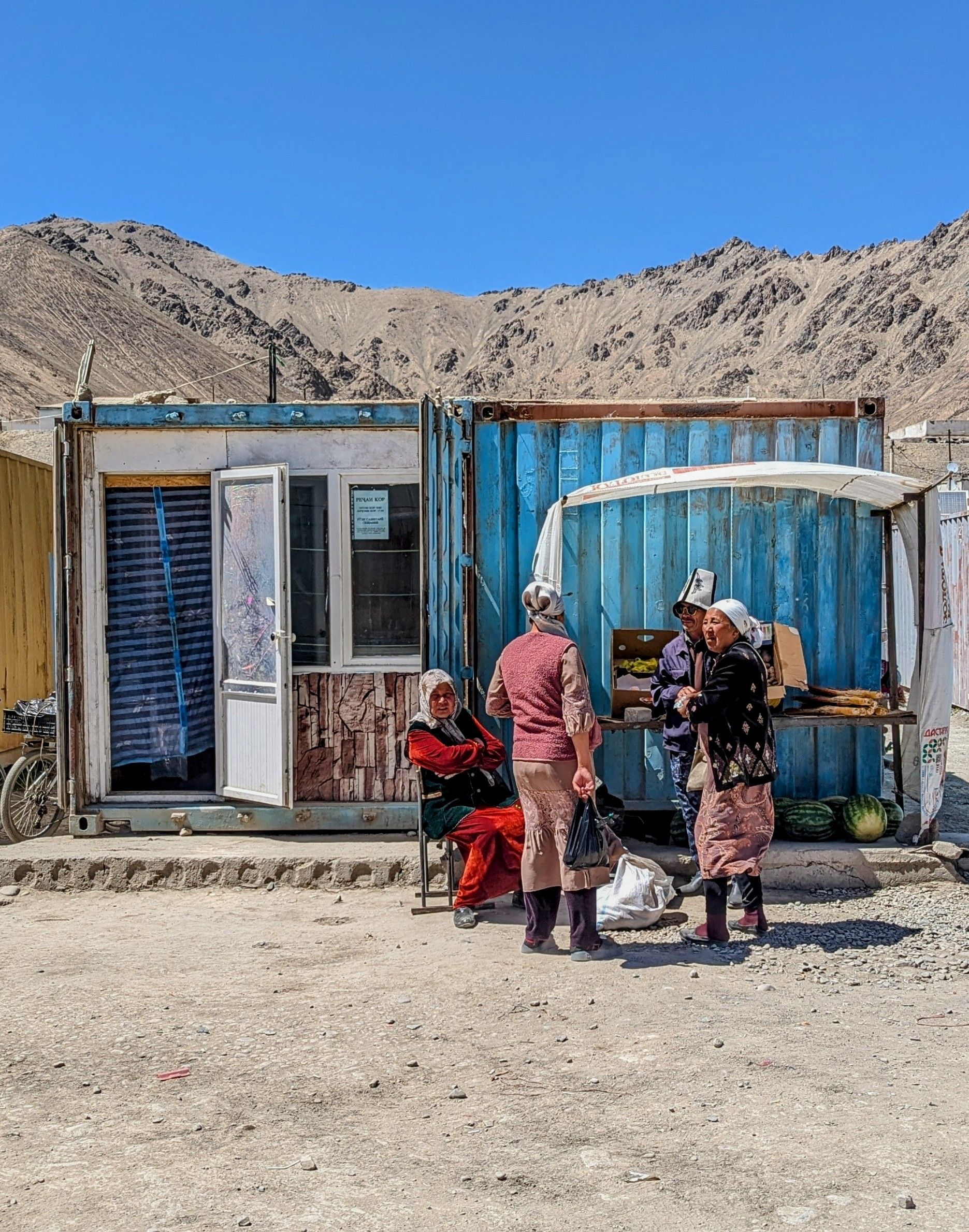
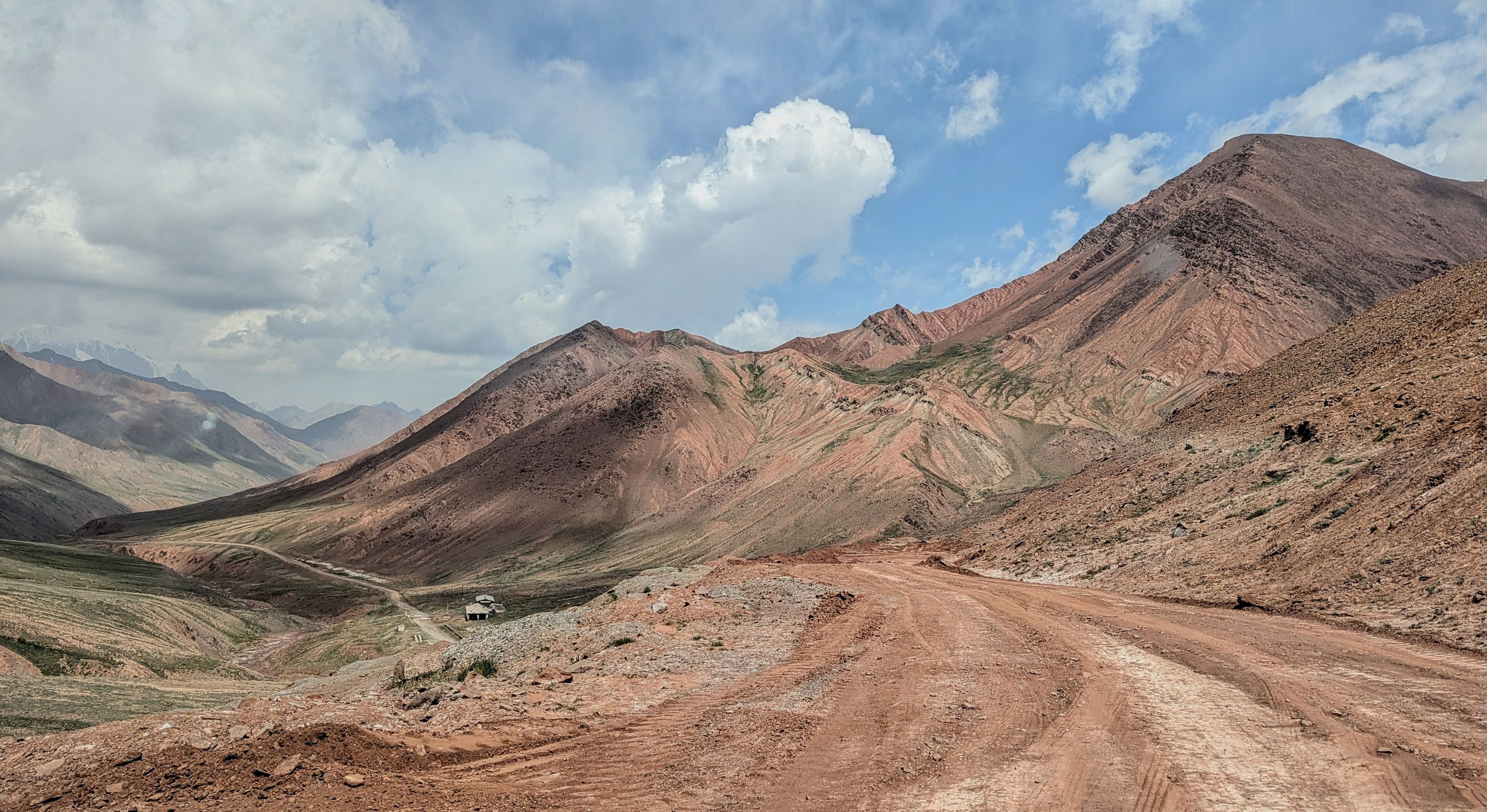
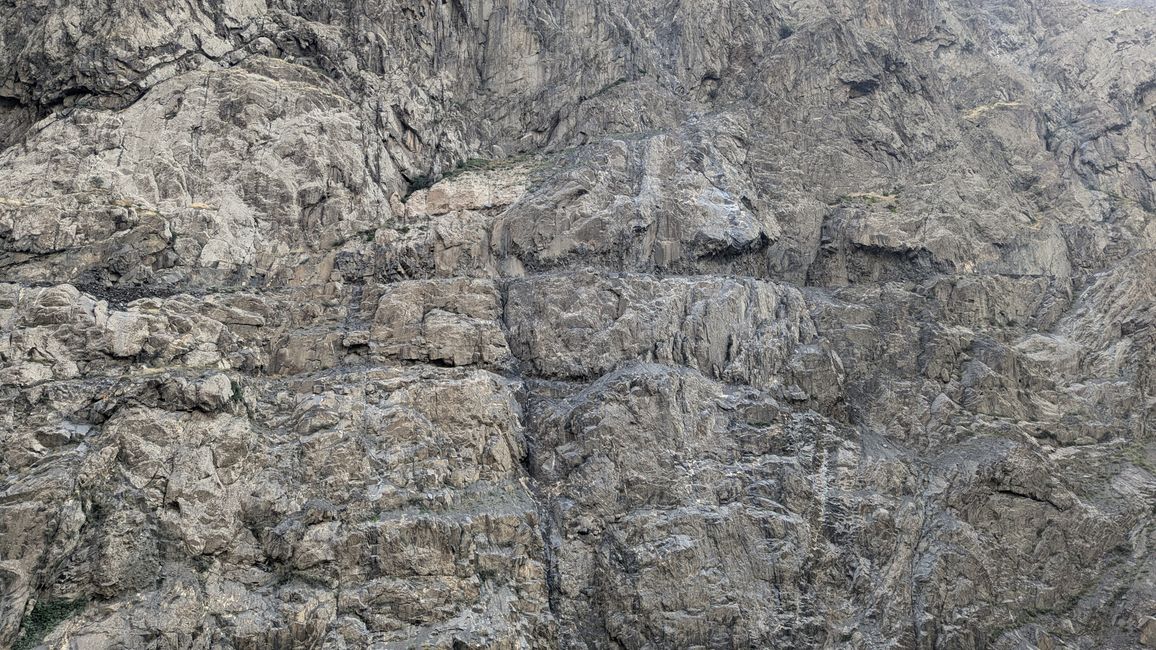
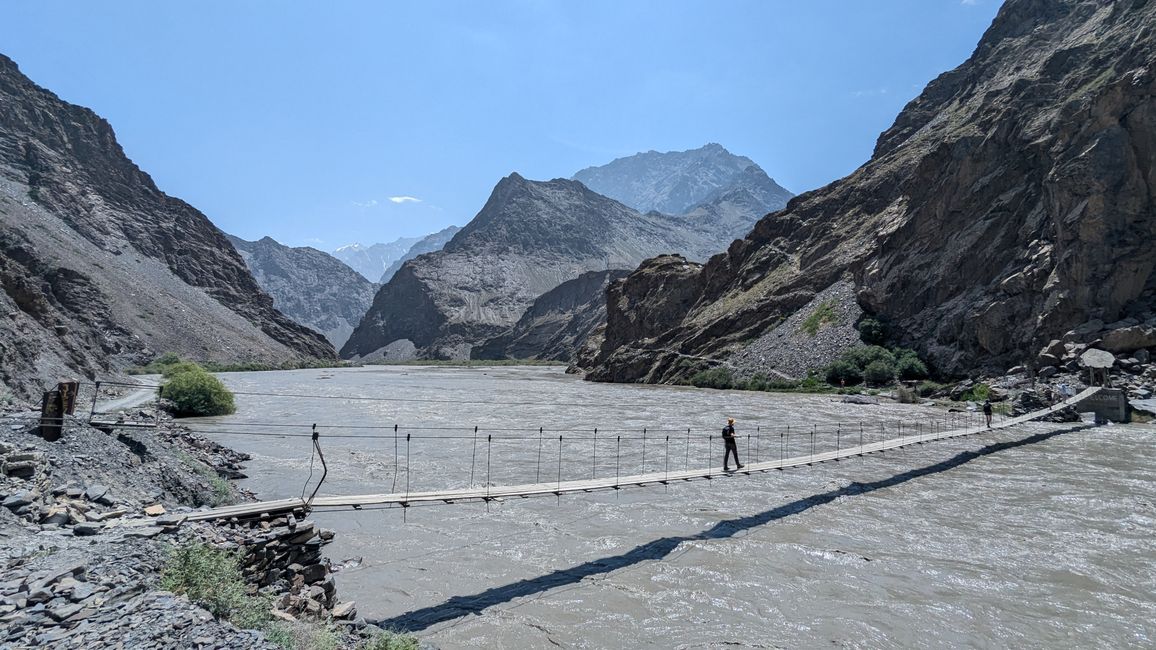
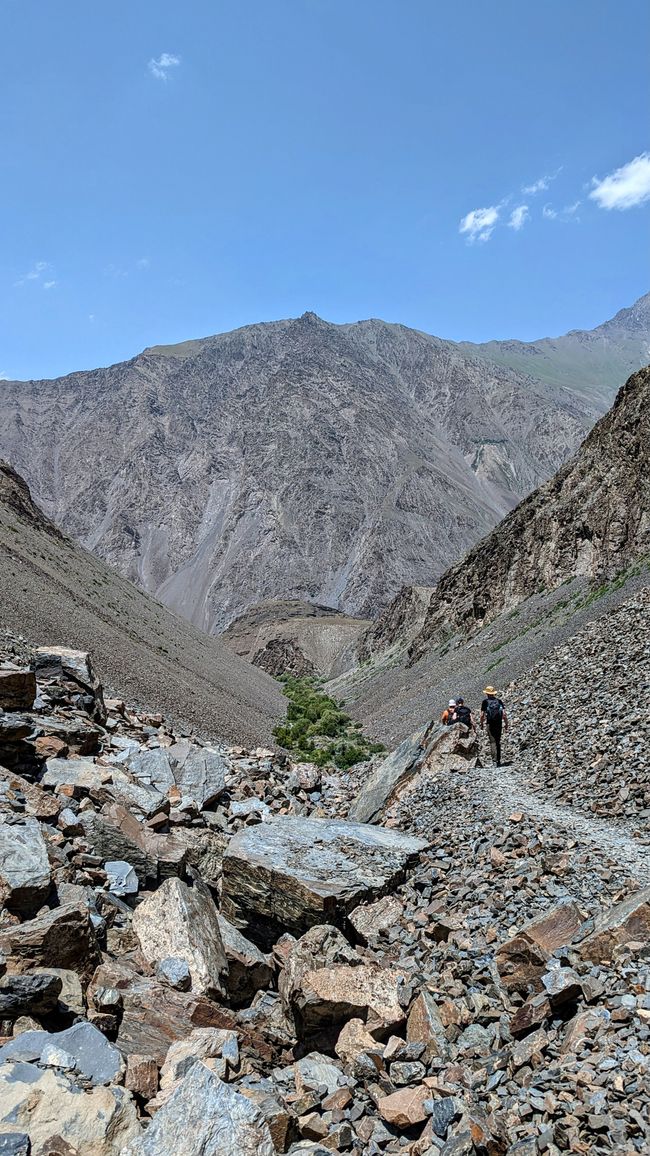
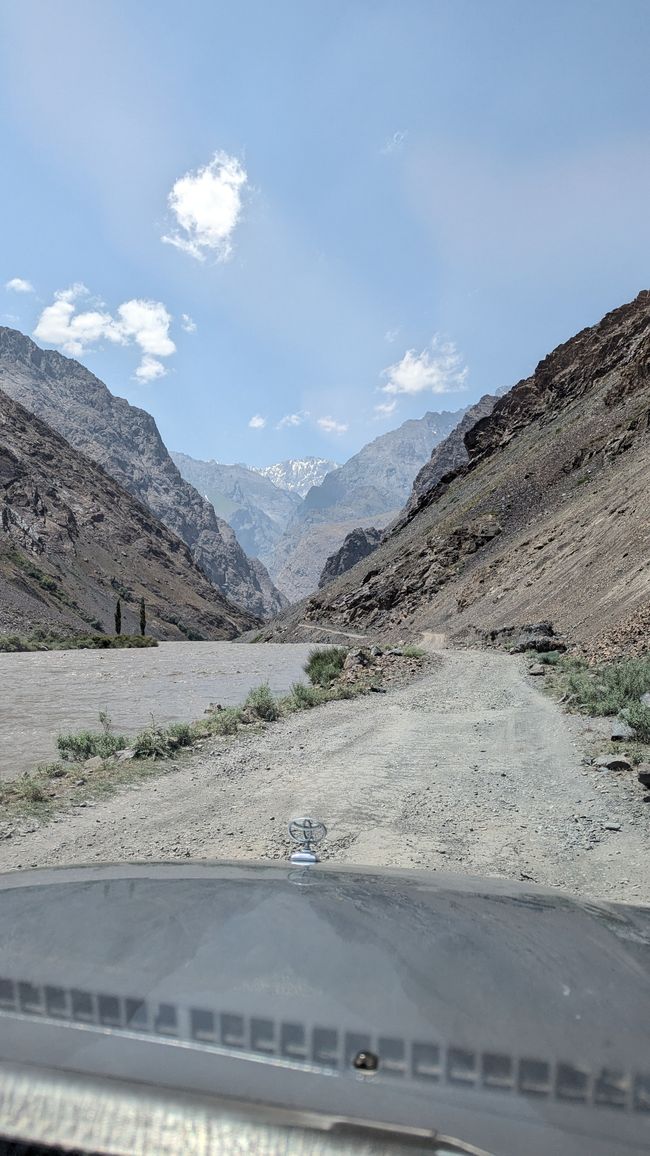
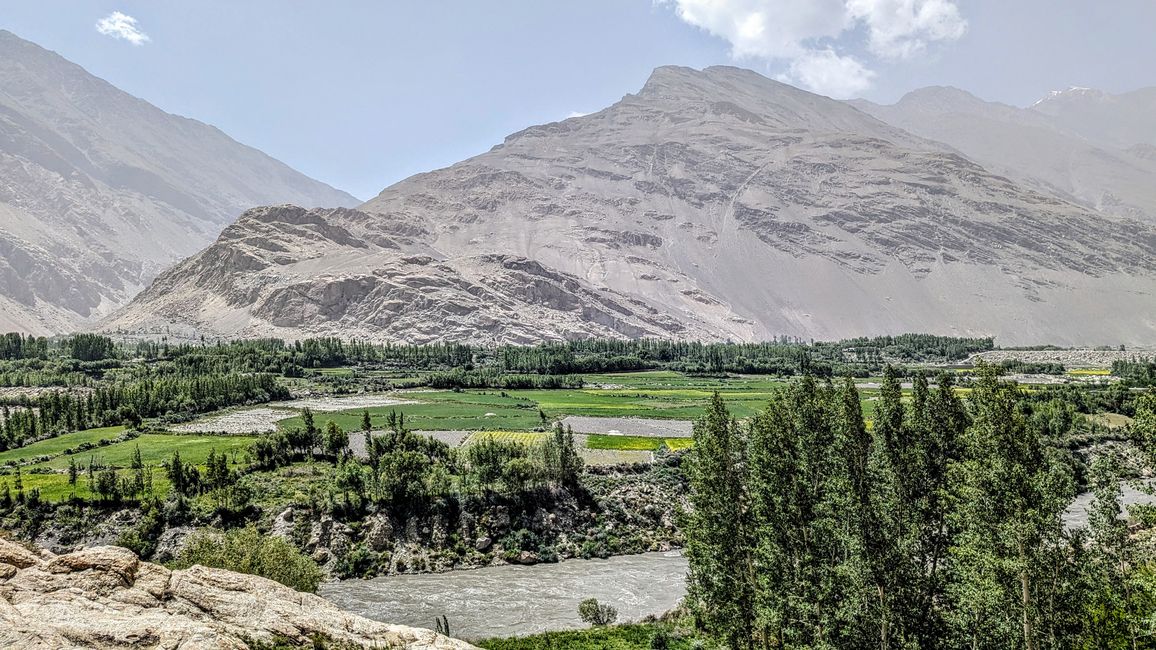
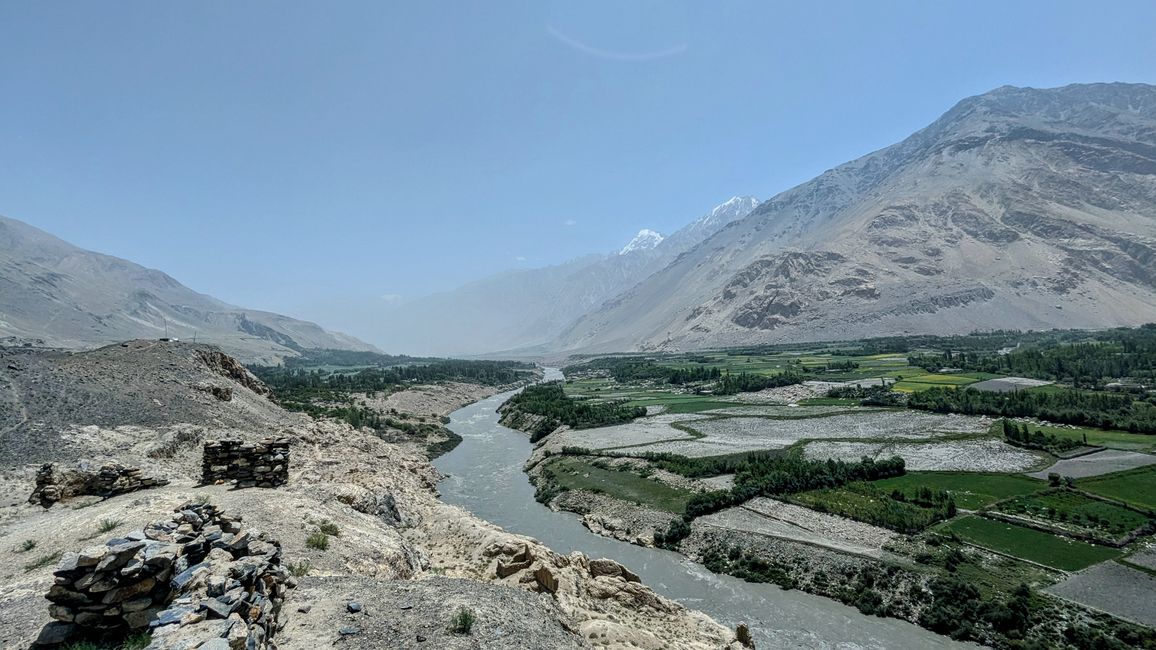
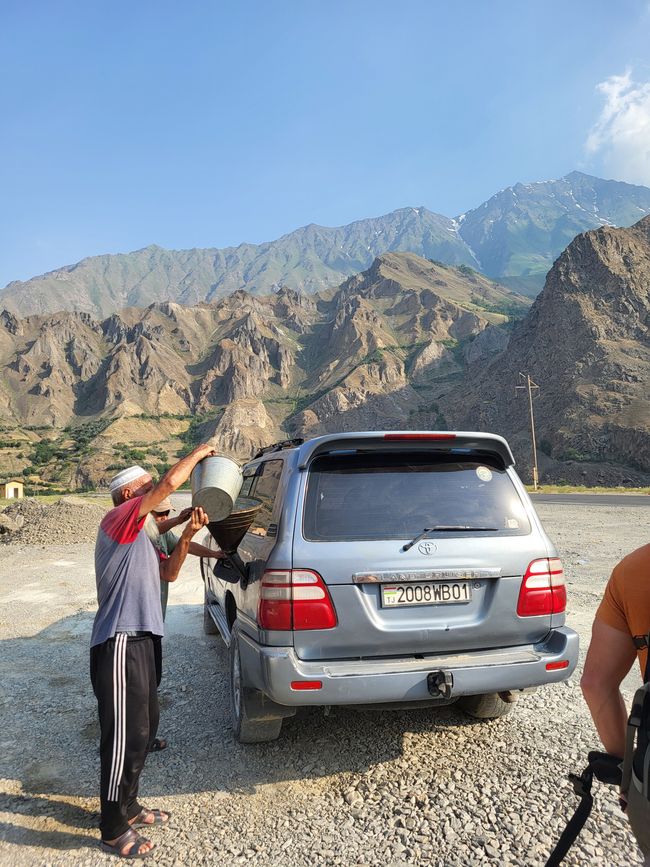
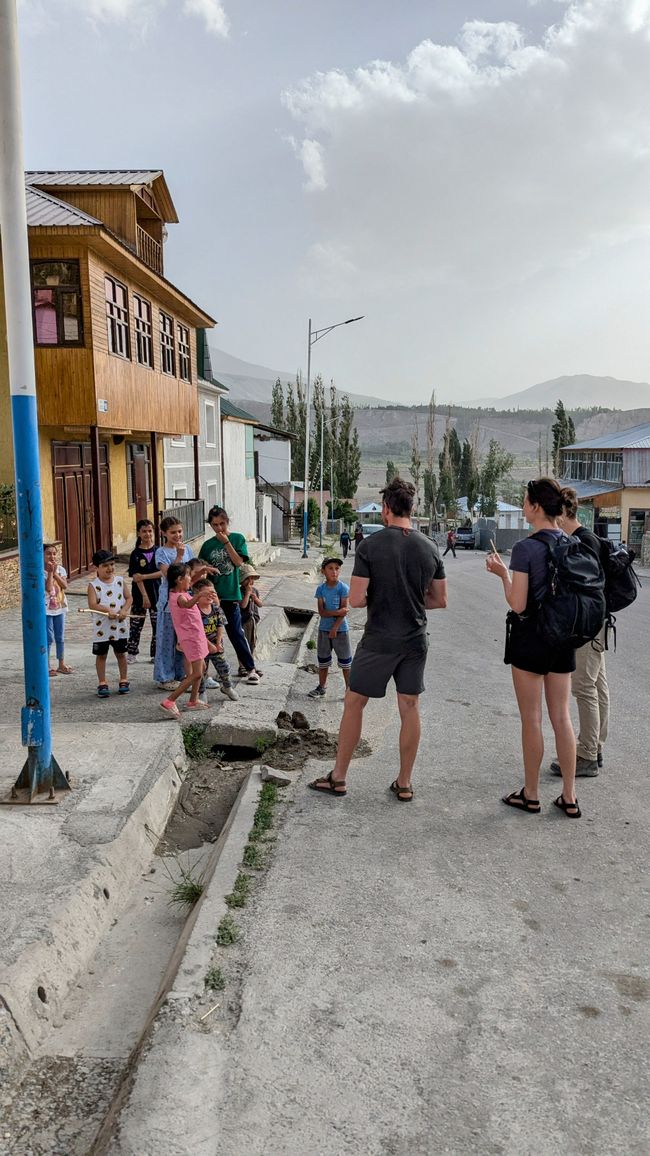
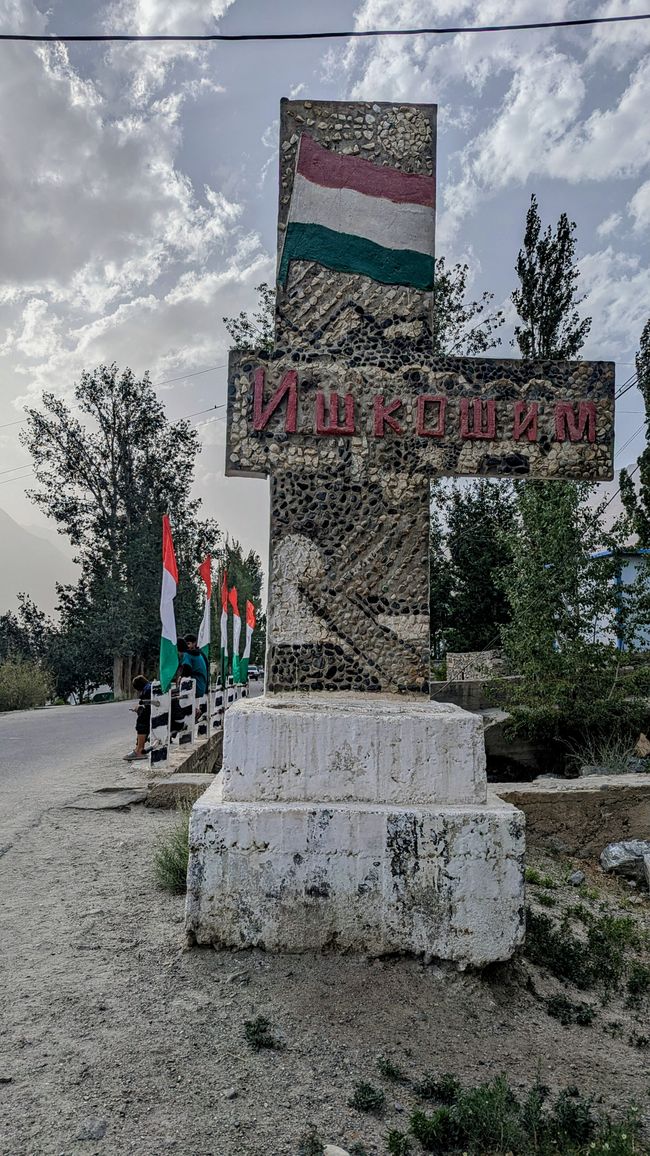
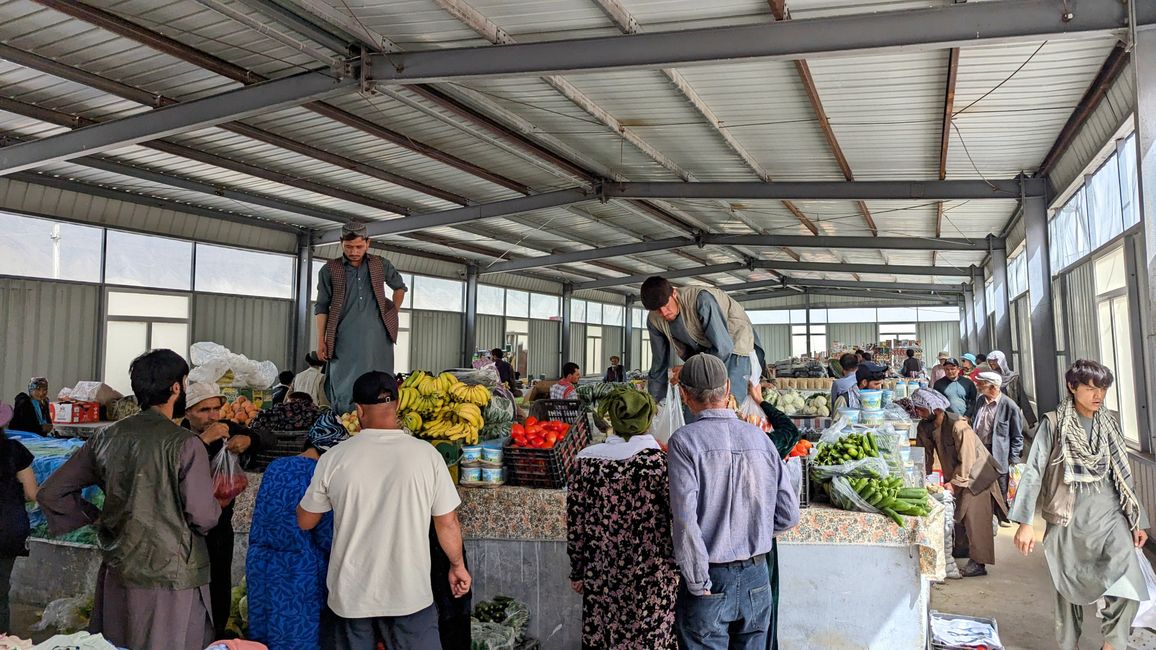
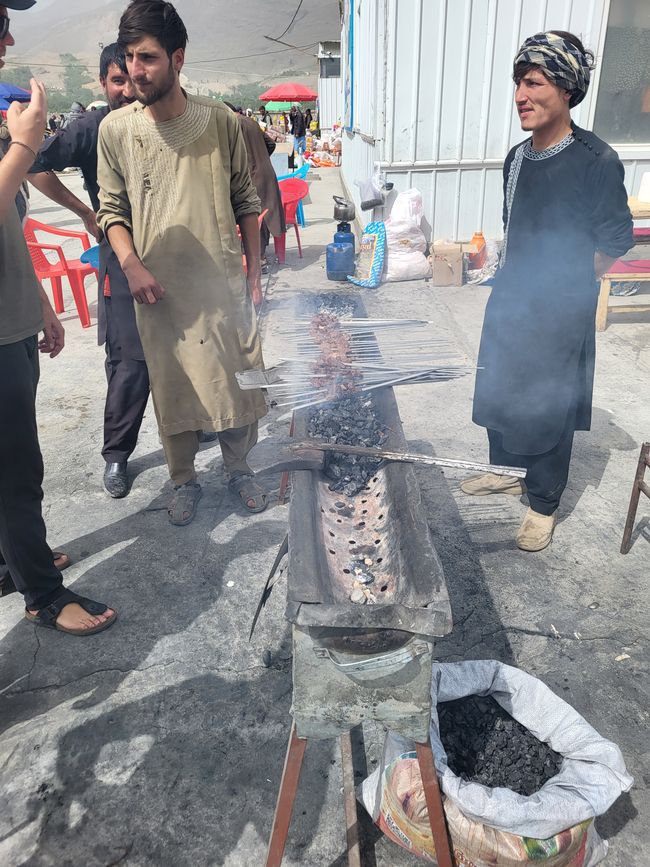
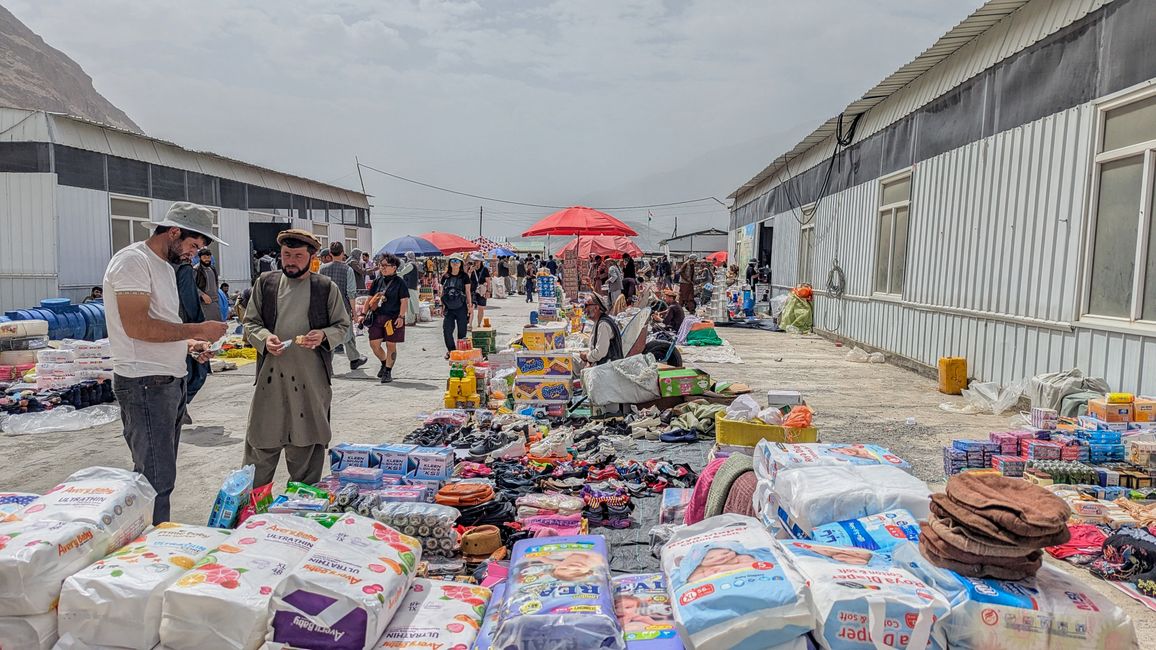
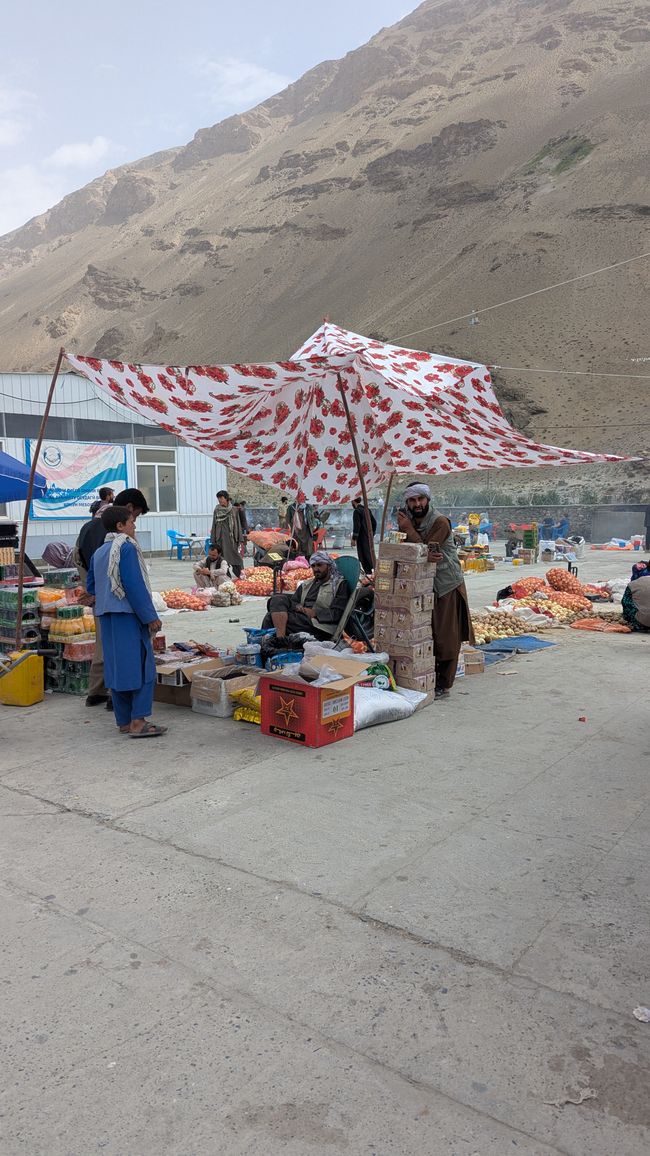
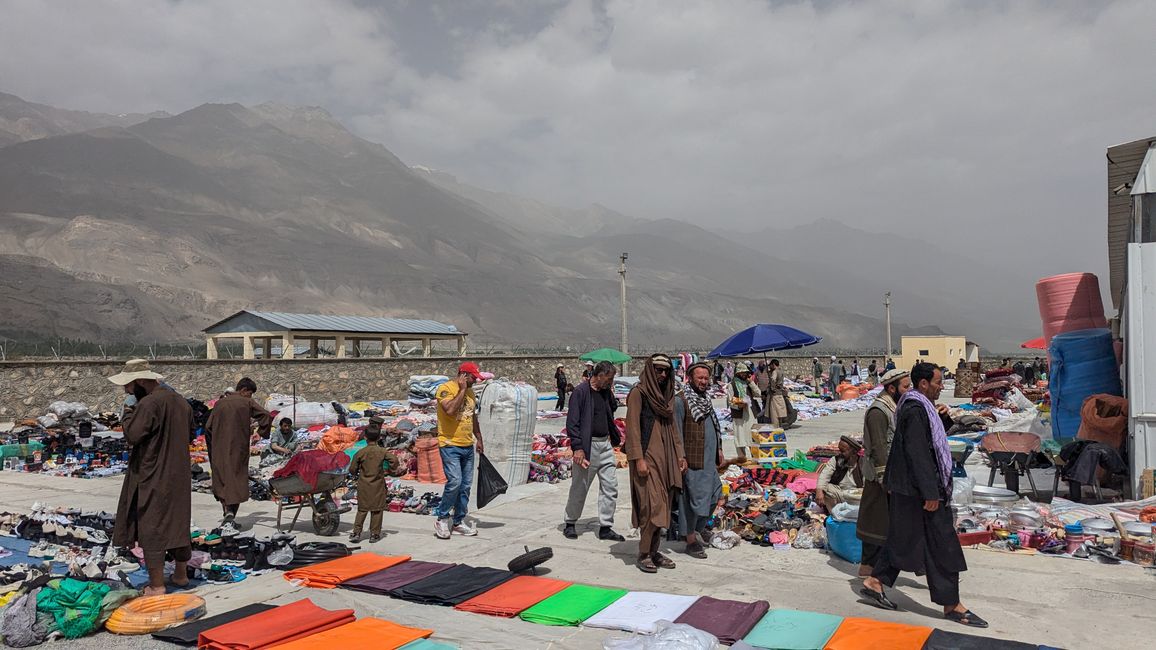
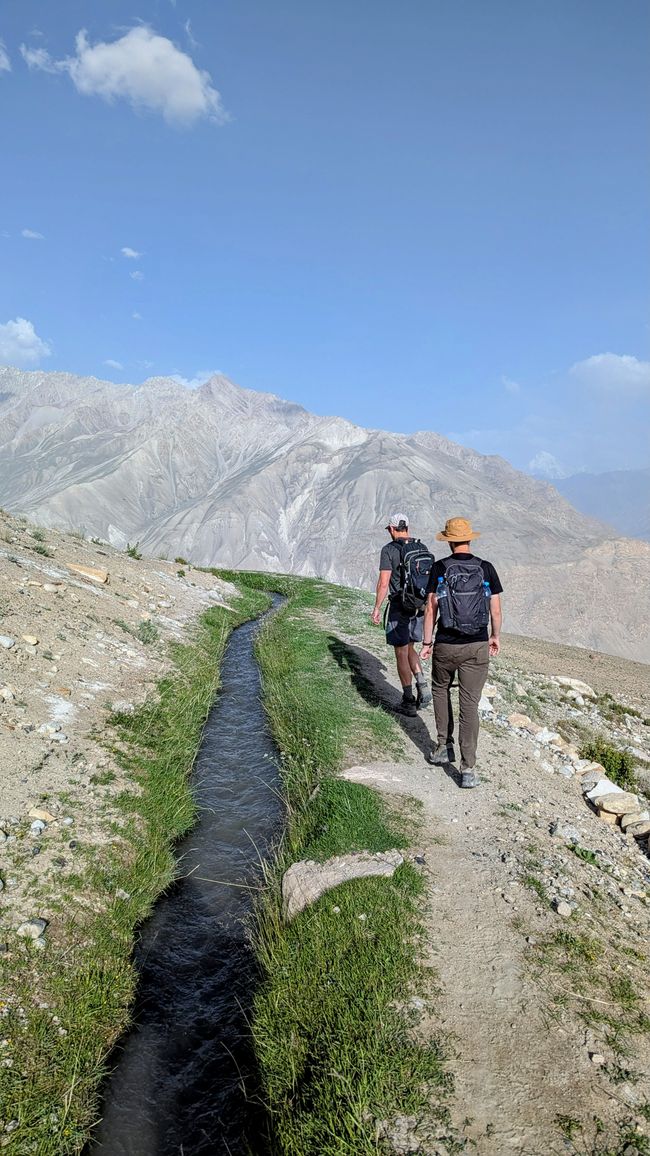
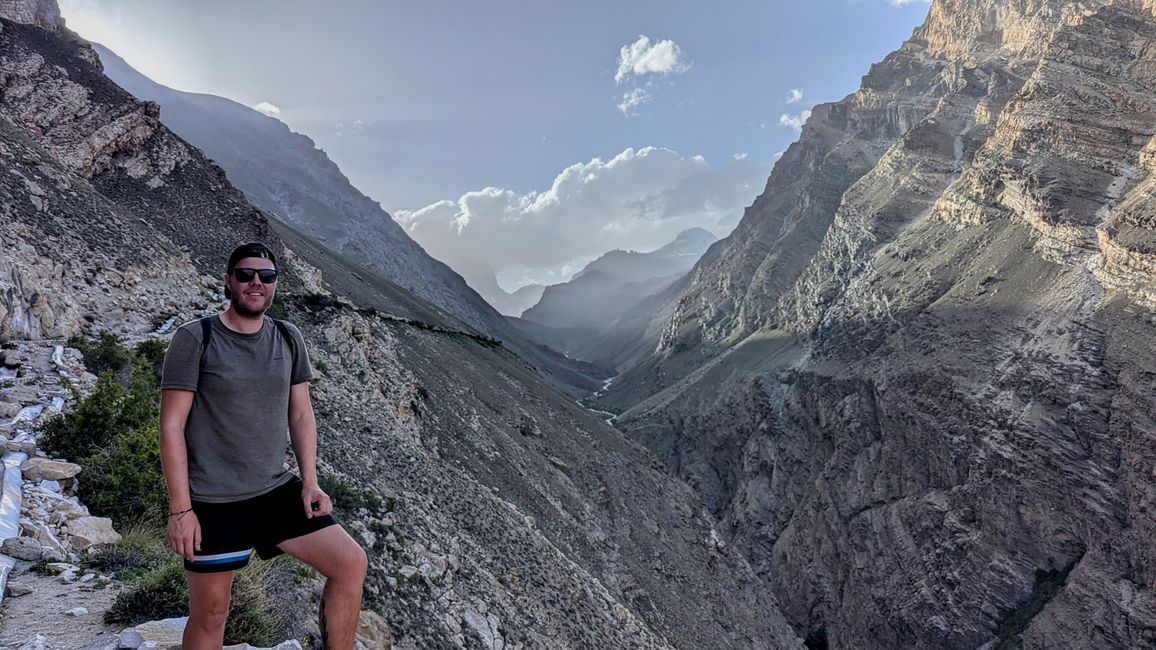
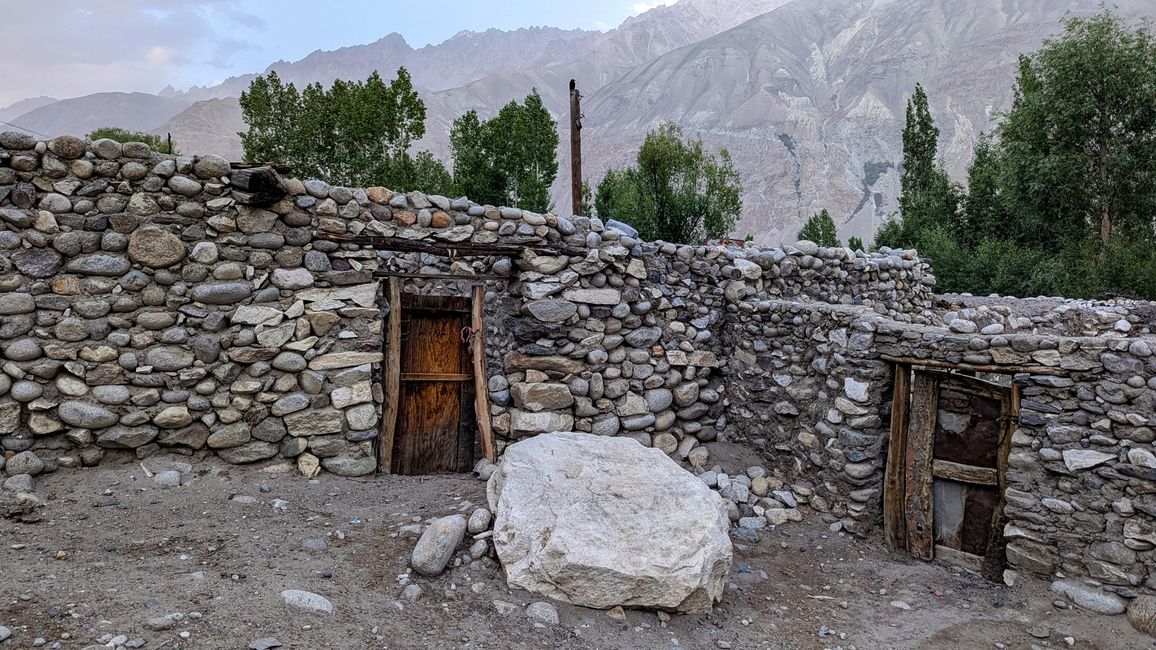
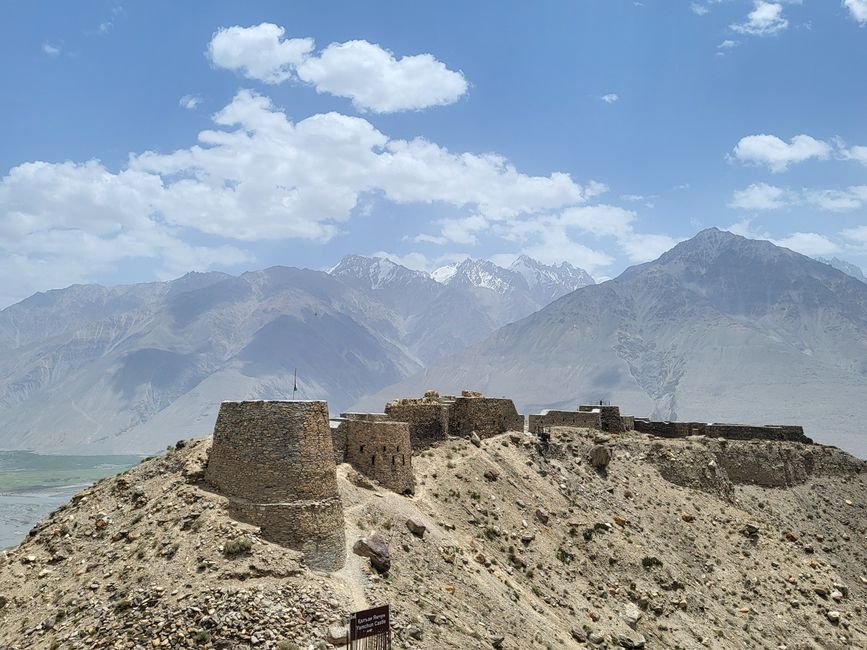
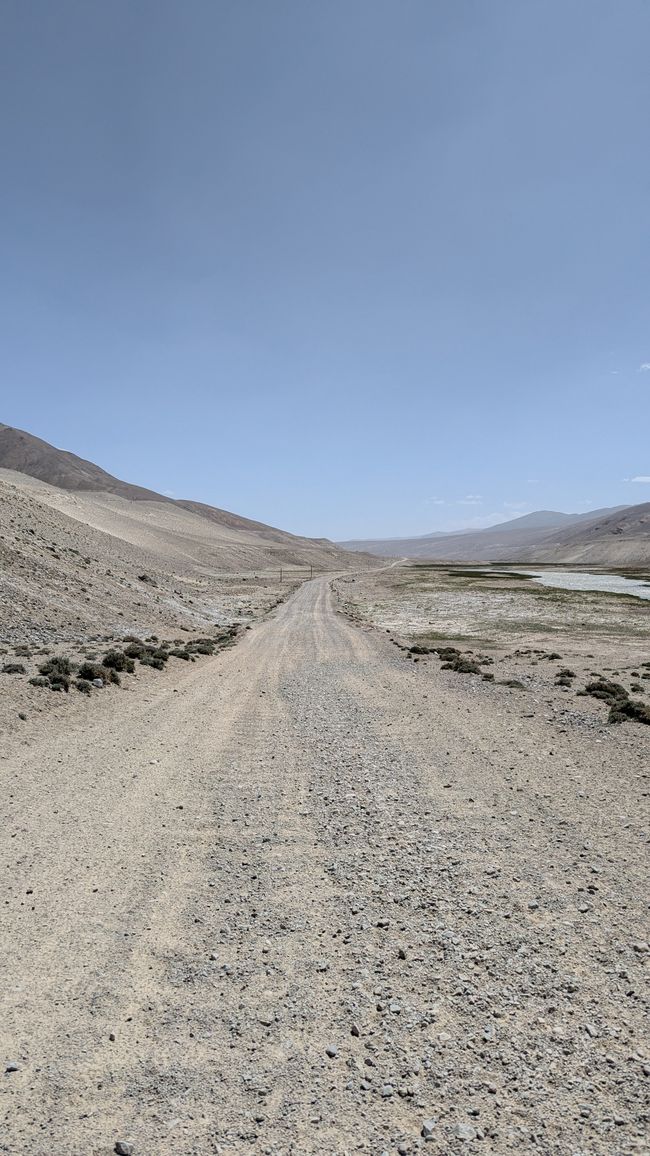
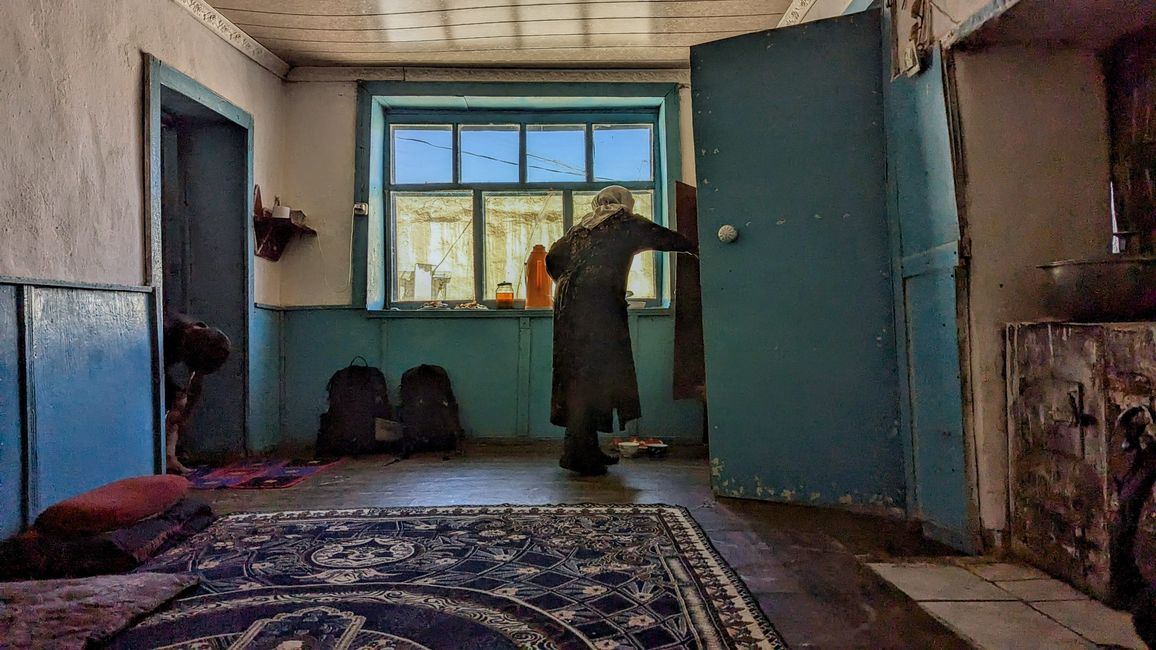
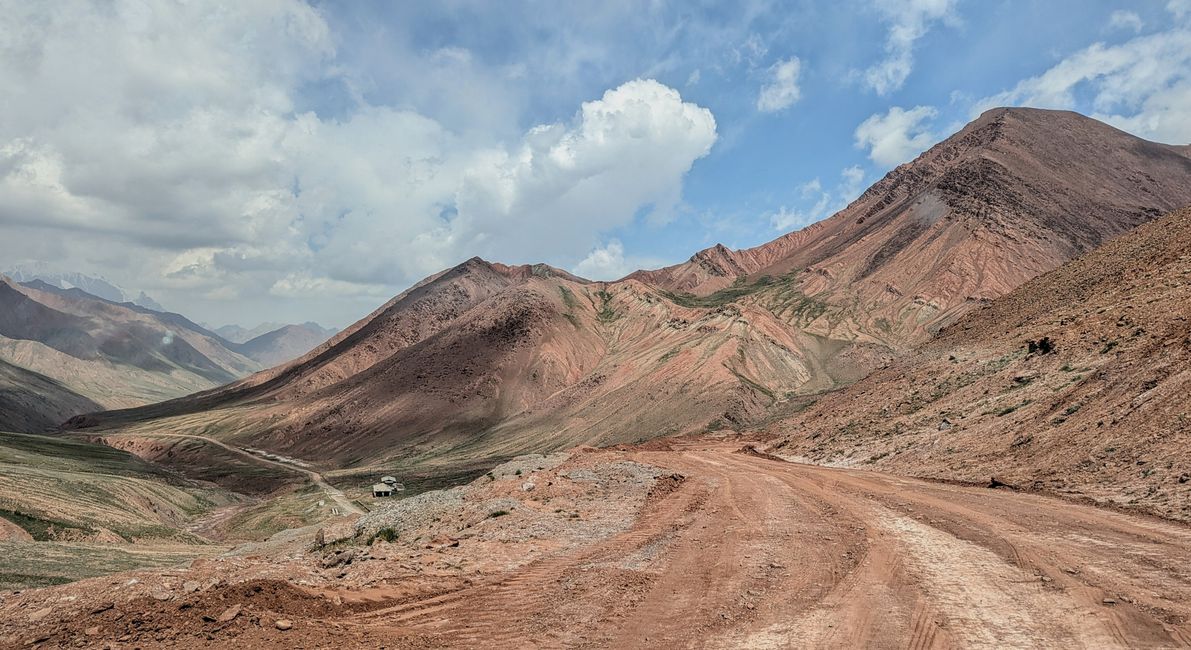
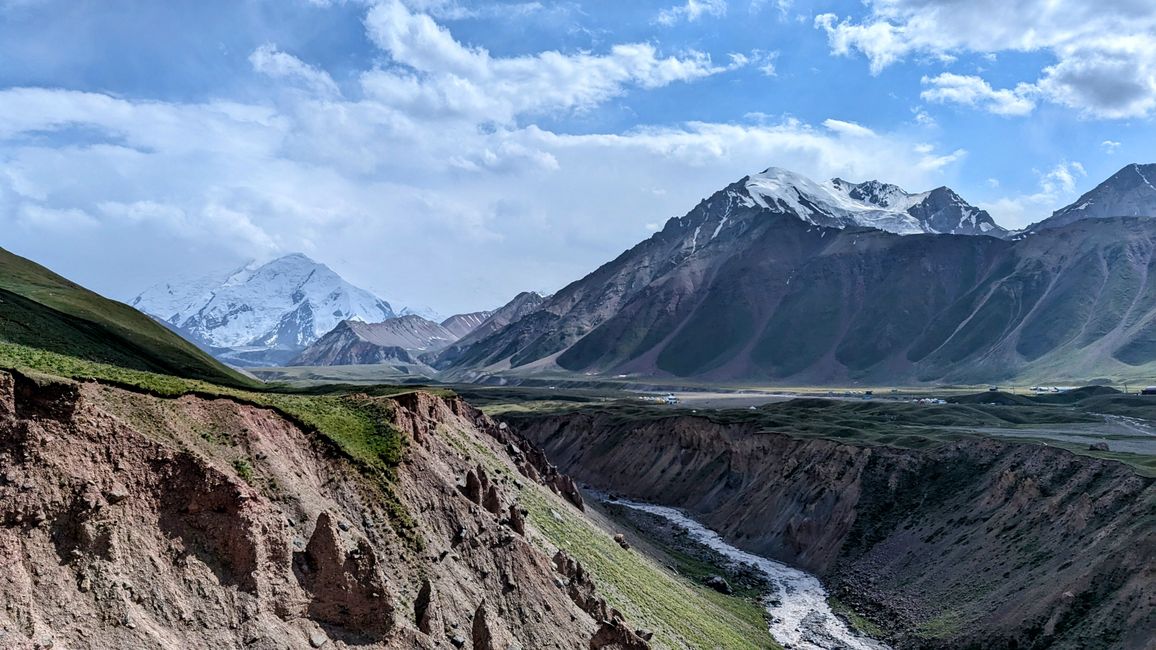
On our right is the Hindu Kush and on our left the Pamir Mountains, the road is getting worse, yet trucks from China with new electric cars are coming towards us. On the other side, the even worse roads are mostly used by motorcycles.Who finds the motorcycle?Due to the delay, we did not reach our destination, Khidjez Village, and ended up somewhere in the middle of nowhere. Since all the rooms were occupied, Brian (USA) and I had to sleep outside on a balcony under a tree. It sounds uncomfortable, and it was. The bedding was hard, and I woke up several times at night from shoulder or hip pain, but other than that, it was quite nice to sleep in the fresh air. Our two other companions, Marnie and Robert from the Netherlands, were able to use the last room. On the third day, we were supposed to start our first hike to a remote village at 8 AM, but the president was in the area again, and the road was initially blocked. Suddenly, after a two-hour delay, we could still go, but unfortunately, because of the delay, we could only hike a few kilometers up a dry gorge, which was beautiful but not what we had expected. Bridge to the hiking trailGorgeLandscape by the border riverOn the next morning in Ishkashim, we decided to stay one more day, after all, we all wanted to cross over to Afghanistan to visit the market. So we went to a very old fortress (200 years BC), and then we walked through the city, where kids waved at us, asking where we come from and what our names are. The next morning, we still didn’t know at breakfast if the market would take place, but since we heard nothing to the contrary, we assumed it would be happening, and it was. At half past nine, we saw the island in the river, which is accessible from Tajikistan and Afghanistan via a bridge. After registering, we were allowed to enter the island and were on Afghan soil within a few minutes. On the other side, the process took significantly longer; a long line of Afghan traders had to wait at a checkpoint, and we don’t know exactly what for. It's amazing how differently people look here, even though they are only separated by a river for a few hundred meters. I bought my first souvenir, an Afghan headdress and two 10 Afghani banknotes. We watched the hustle and bustle a bit, bought some fruits for the further journey, and after an Afghan kebab, we continued to another castle and the Bibi Fatima hot springs before arriving at our accommodation in the afternoon, where we went on a 3-hour evening hike to a viewpoint. It was definitely the right decision to stay an extra day in Ishkashim and visit the market, a unique experience. Afghanistan (behind the river)Afghanistan (right)Gasoline from bucketsTouristsMosaicAfghan border marketKebab pleaseAfghan border marketAfghan border marketAfghan border marketHikeView of the Angels PeakHouses in the countryside
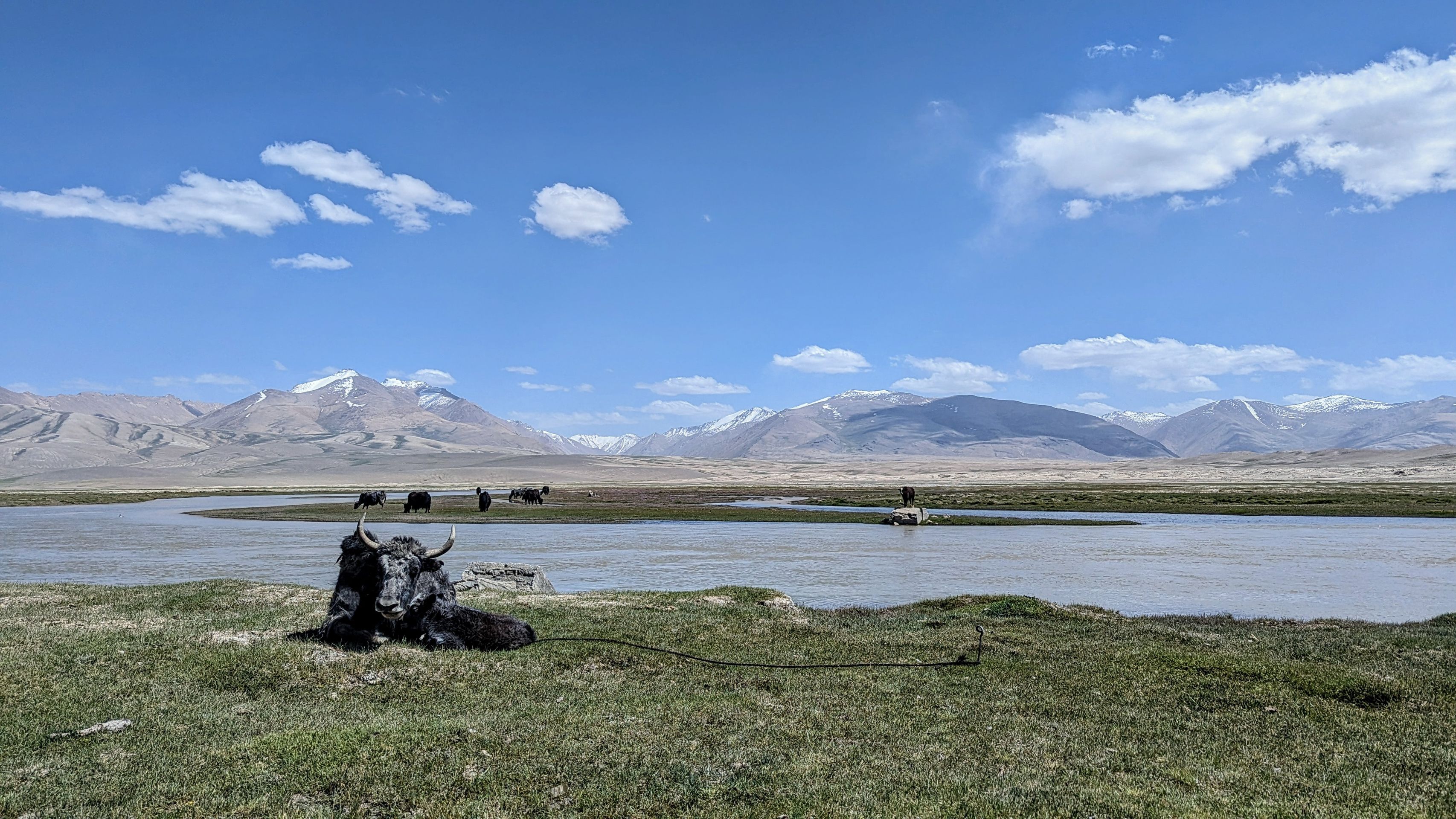
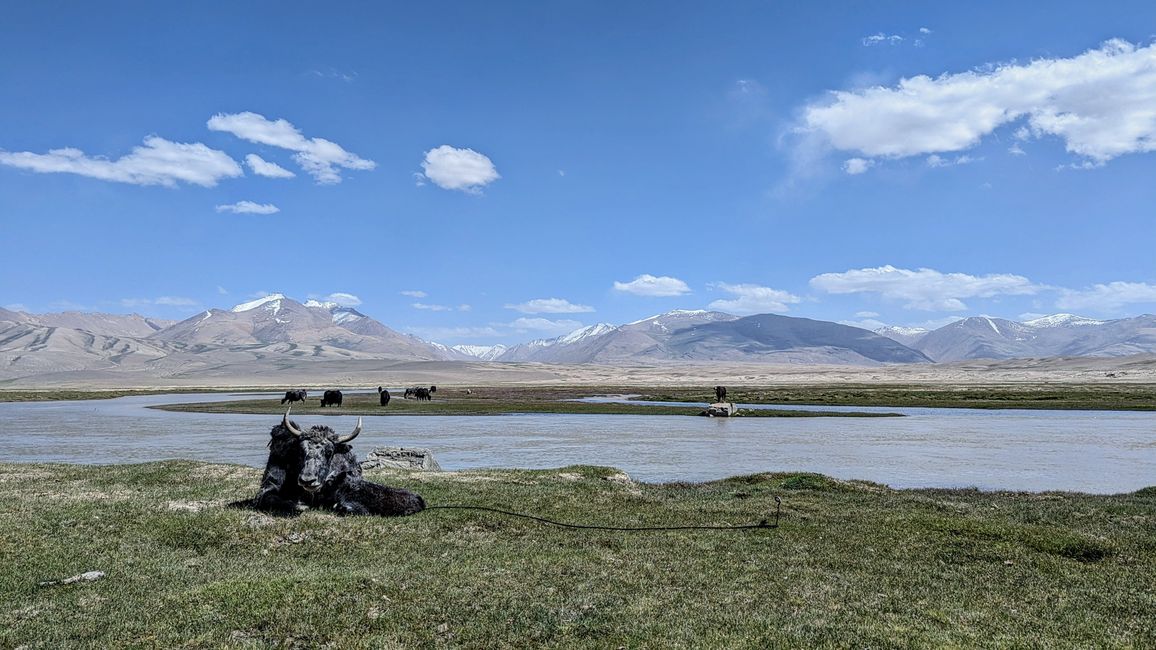
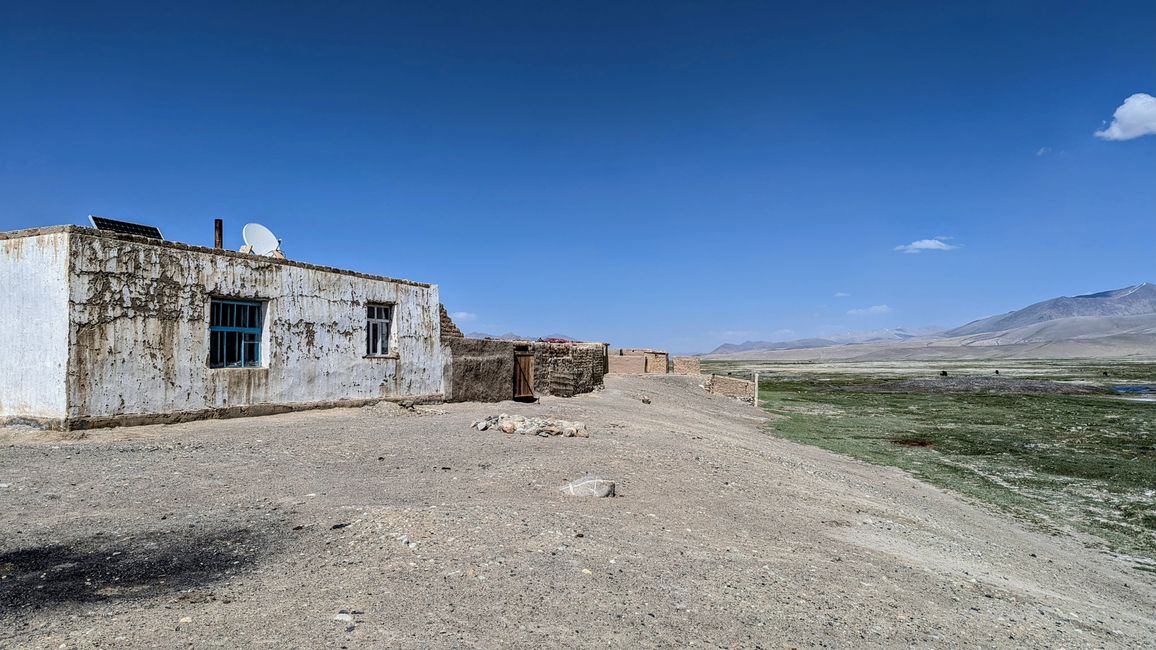
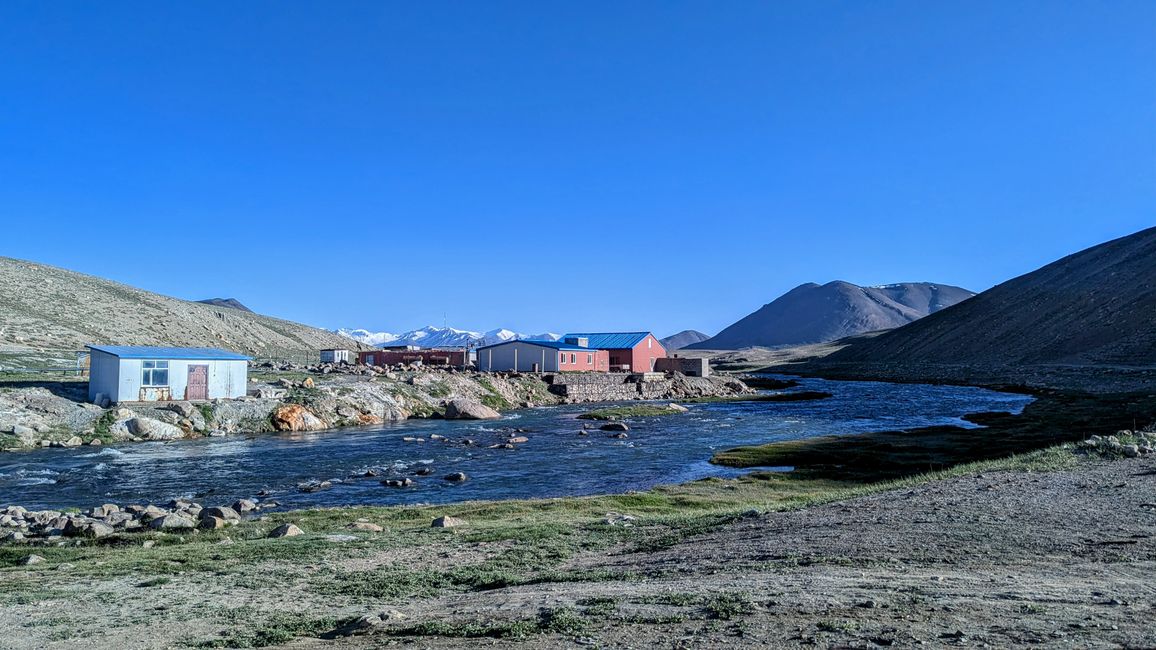
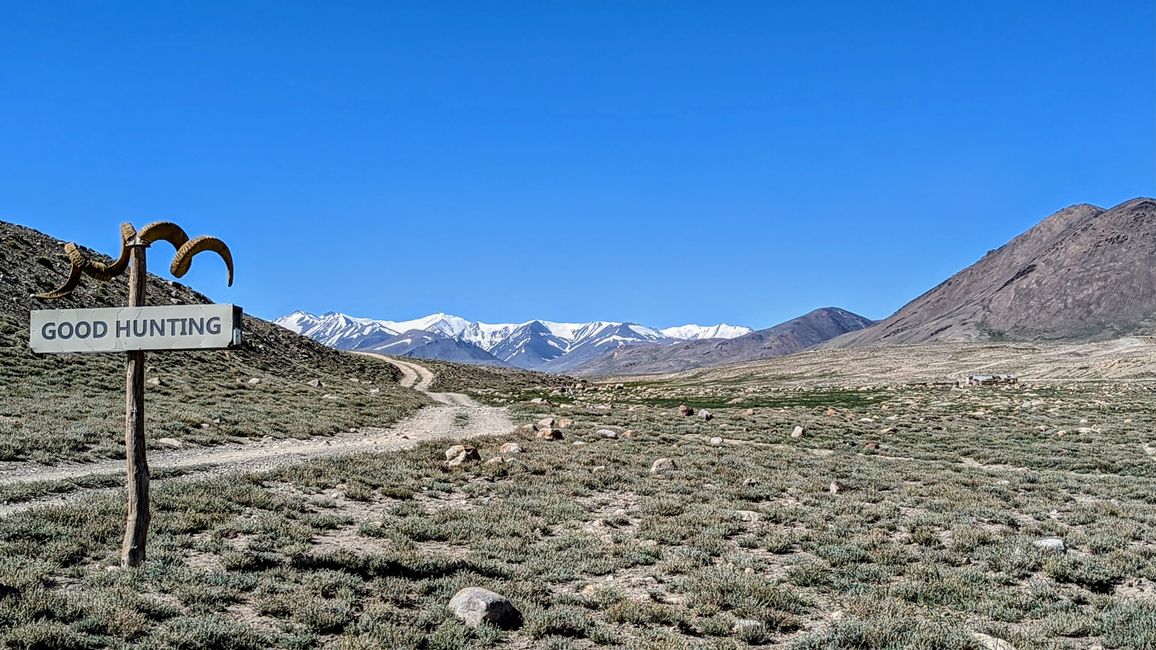
The landscape was still very gray and rugged but absolutely impressive, the weather was hot, and at the roadside, we often saw children, often on donkeys, asking for water; we usually stopped briefly and gave them one or two bottles from our supply. After another night on a hard mattress in Langar and an oily breakfast of two fried eggs, two sausage links drenching in fat, and the obligatory tea, we left the Afghan border heading towards the Tajik Highlands, with plans to go up to 4800 meters in the coming days. So we left the 'highway,' which for the last few hundred kilometers had consisted only of gravel and big potholes, and followed a small dirt road through wide valleys, crossing rivers until we reached our accommodation at 4100 meters in the middle of nowhere. The dinner was finally meatless, and the fresh yak butter tasted great on the fresh bread. However, the toilet was once again just a hole in the ground, with remnants from those who missed it hanging on the edges, and it smelled accordingly; I doubt I'll ever get used to that, although I haven't infrequently used such a toilet in the last 10 months.
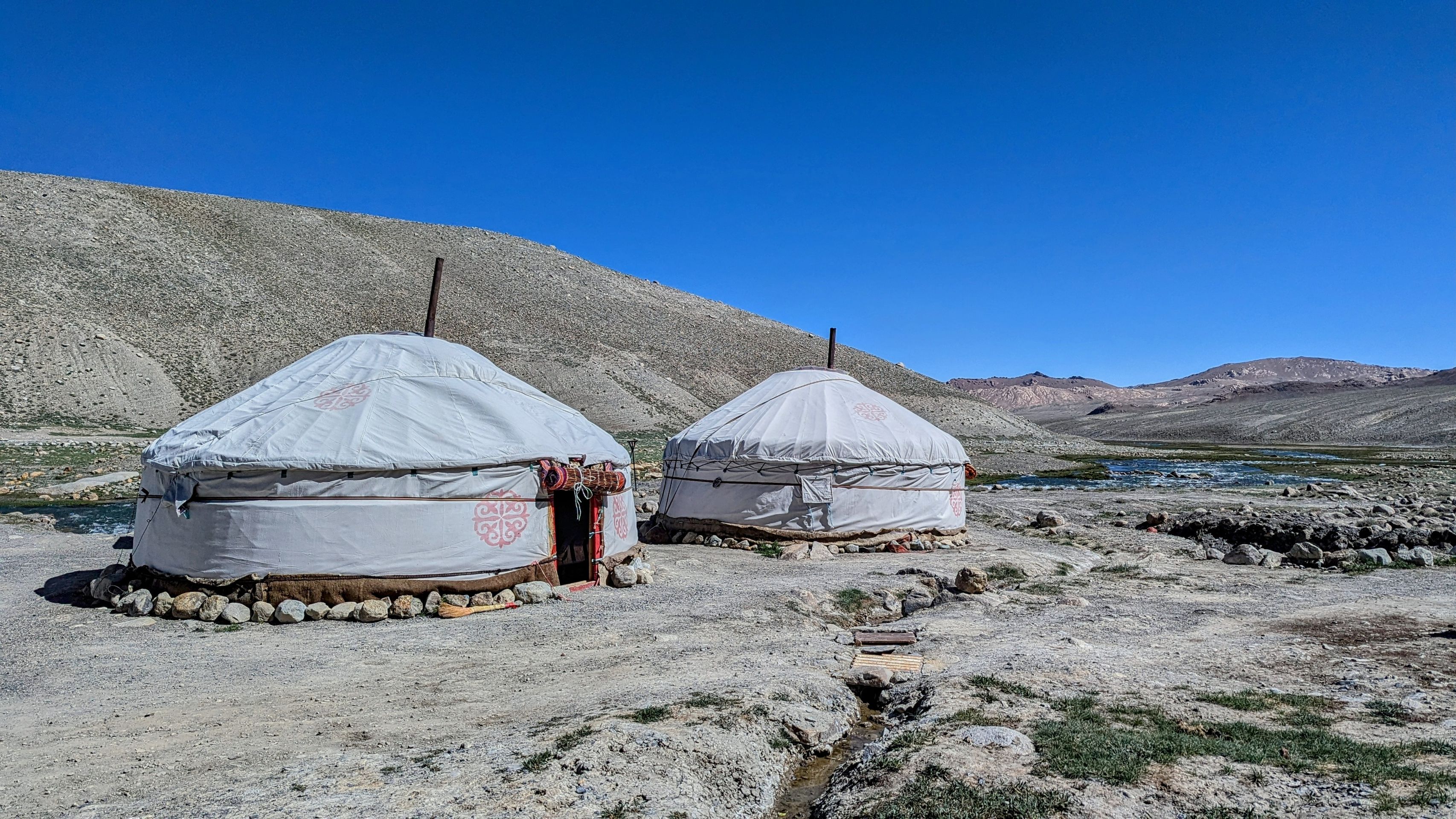
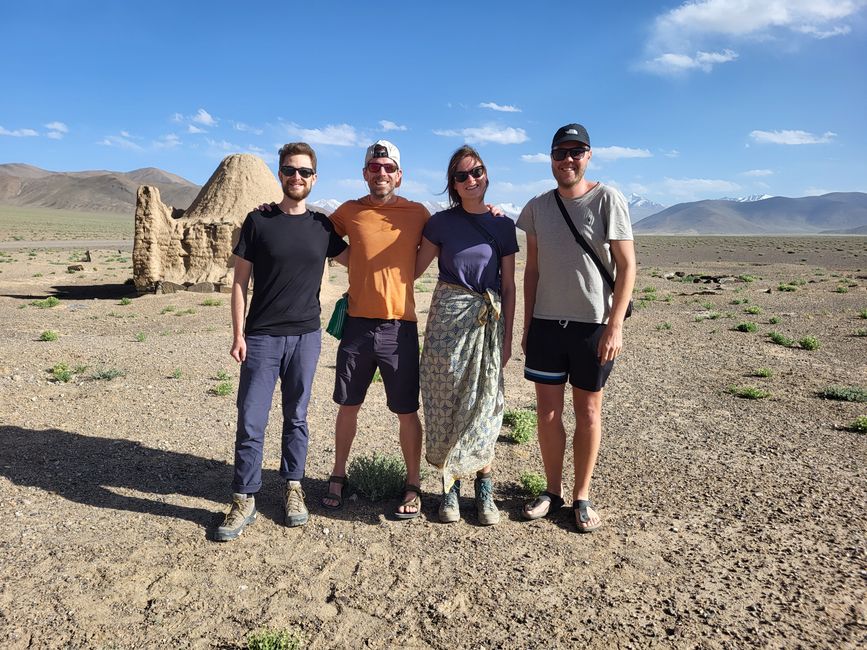
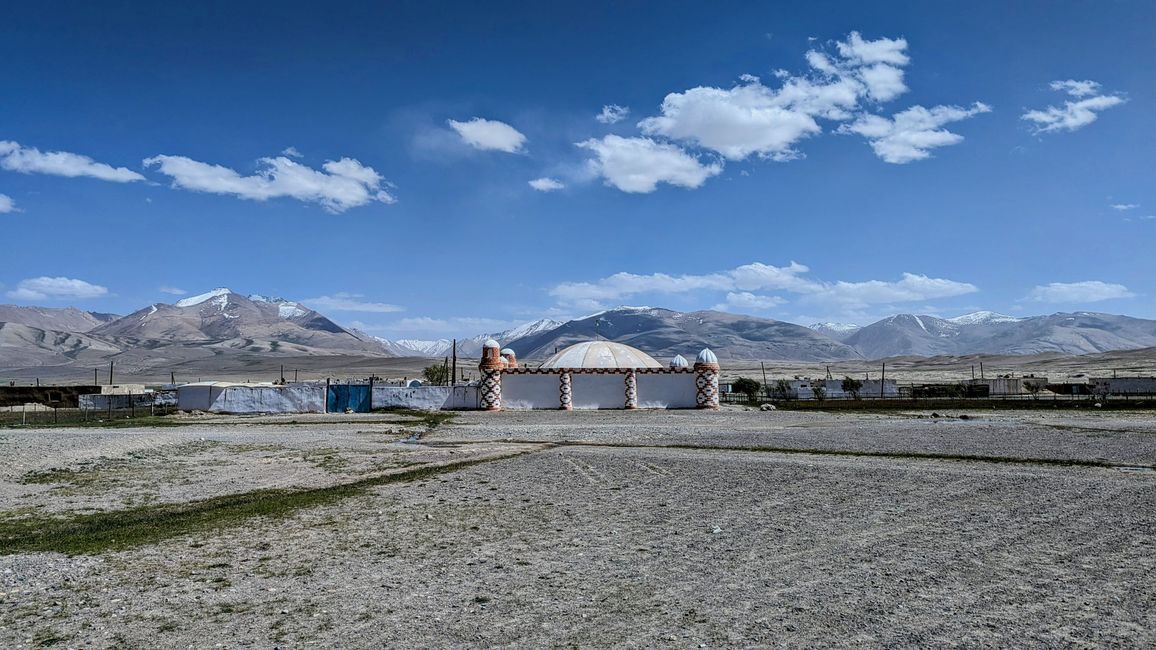
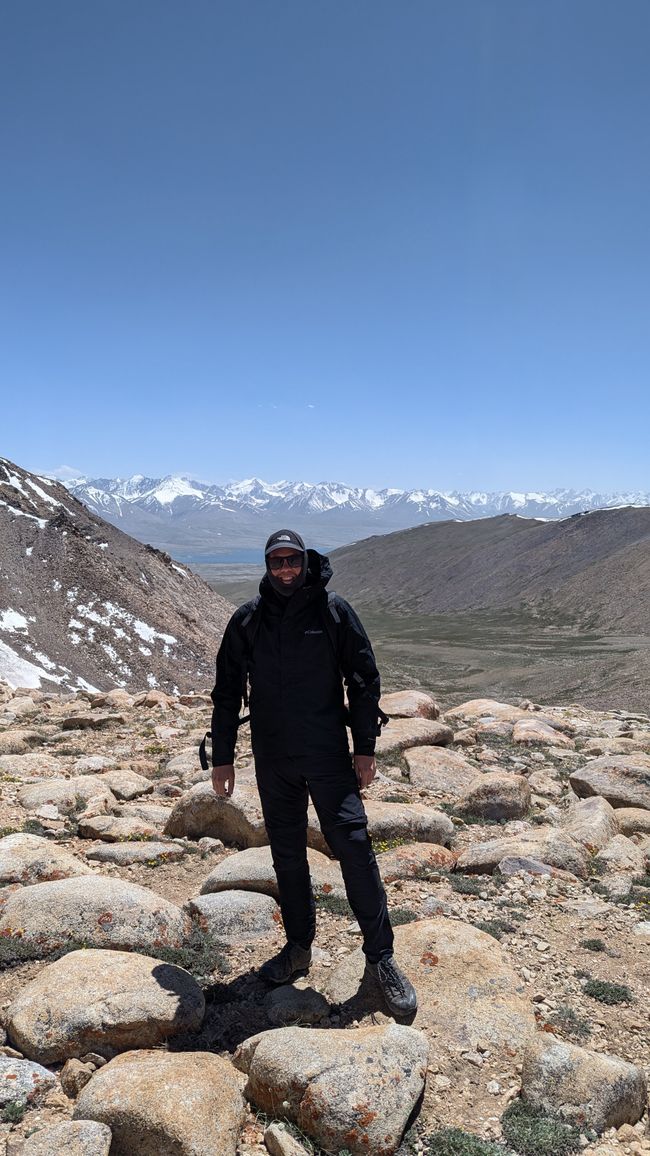
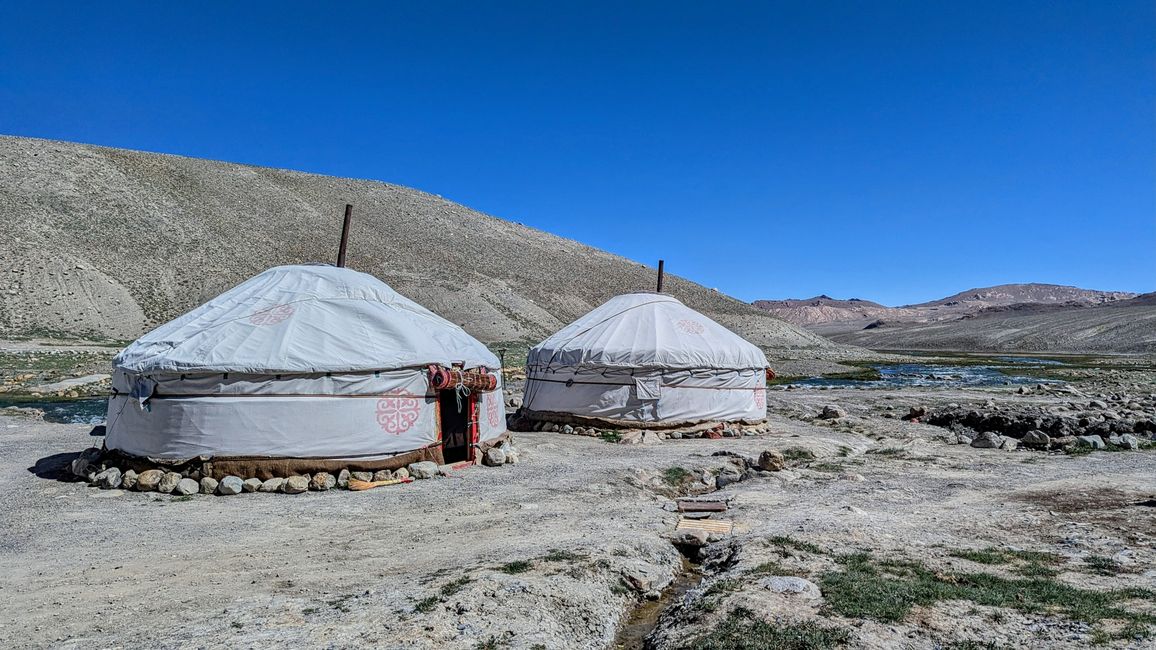
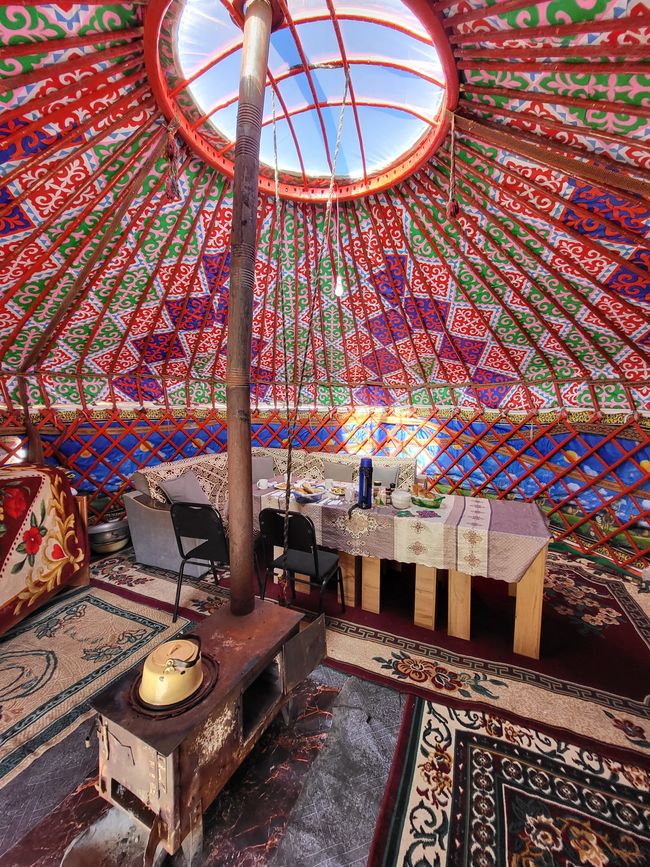
CastleTour group :)TrailYaksMountain lifeMosqueOn the next day, we hiked to the 4835 meter high Bel Airyk Pass for one last look at the impressive Hindu Kush. We continued for an hour over green meadows and through small rivers until we reached Jarty Gumboz. As expected, there was an oily soup; like almost everything in recent days, everything was swimming in oil, which didn't sit well with my travel companions' stomachs, so everyone only ate half and took appropriate medications. My stomach also made itself known, but apart from some grumbling, everything was fine. After that, I took a dip in the hot pool fed directly by sulfurous water from the ground. However, I couldn't stay long in the 49-degree hot water. The hot water also runs continuously through radiators installed in every room, so we had to sleep with the window open all night; for winter, this is surely a good idea as the double chipboards provide absolutely no insulation. Hindu KushHot springsYurtsTajikistan PlateauBreakfast
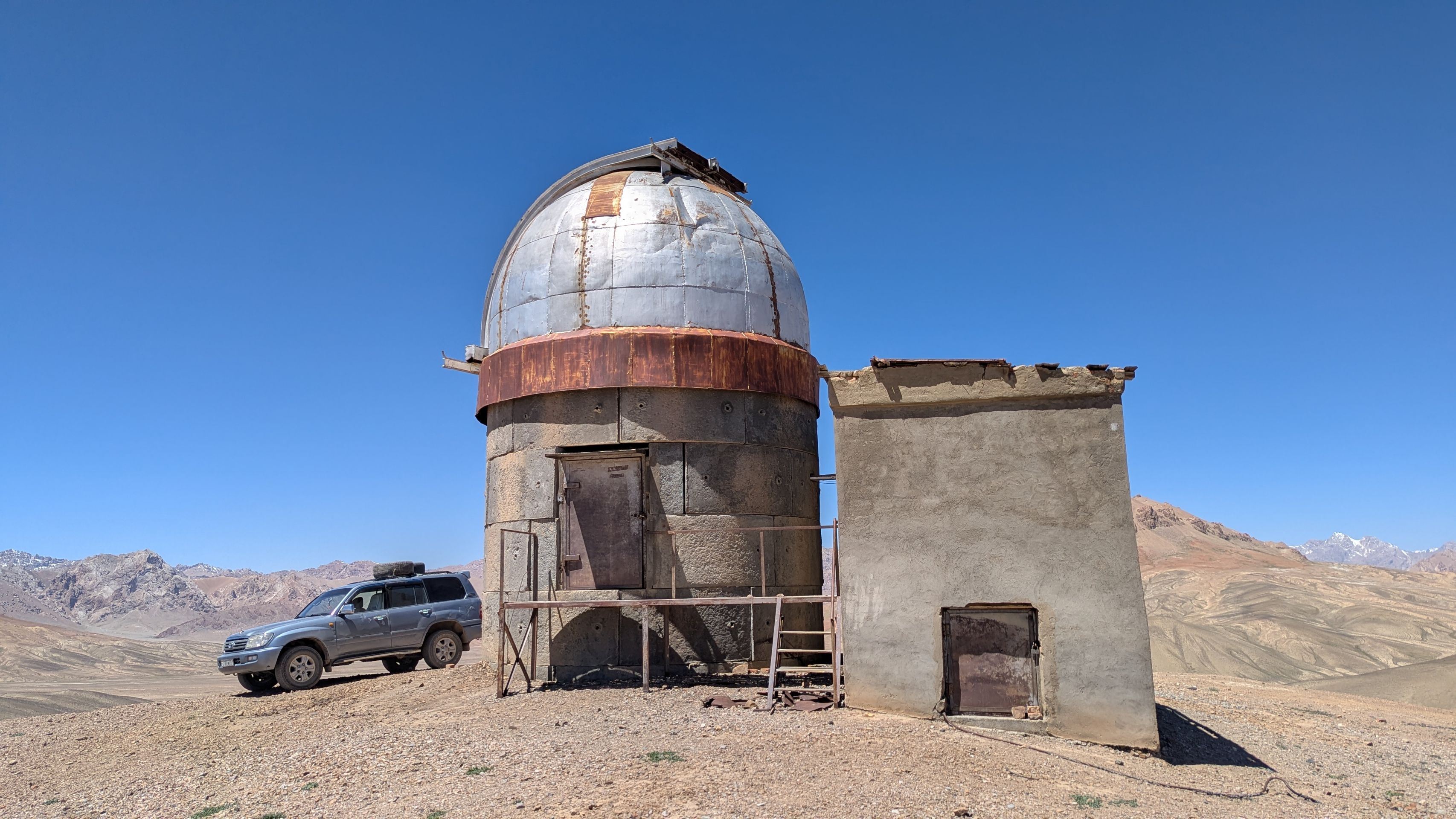
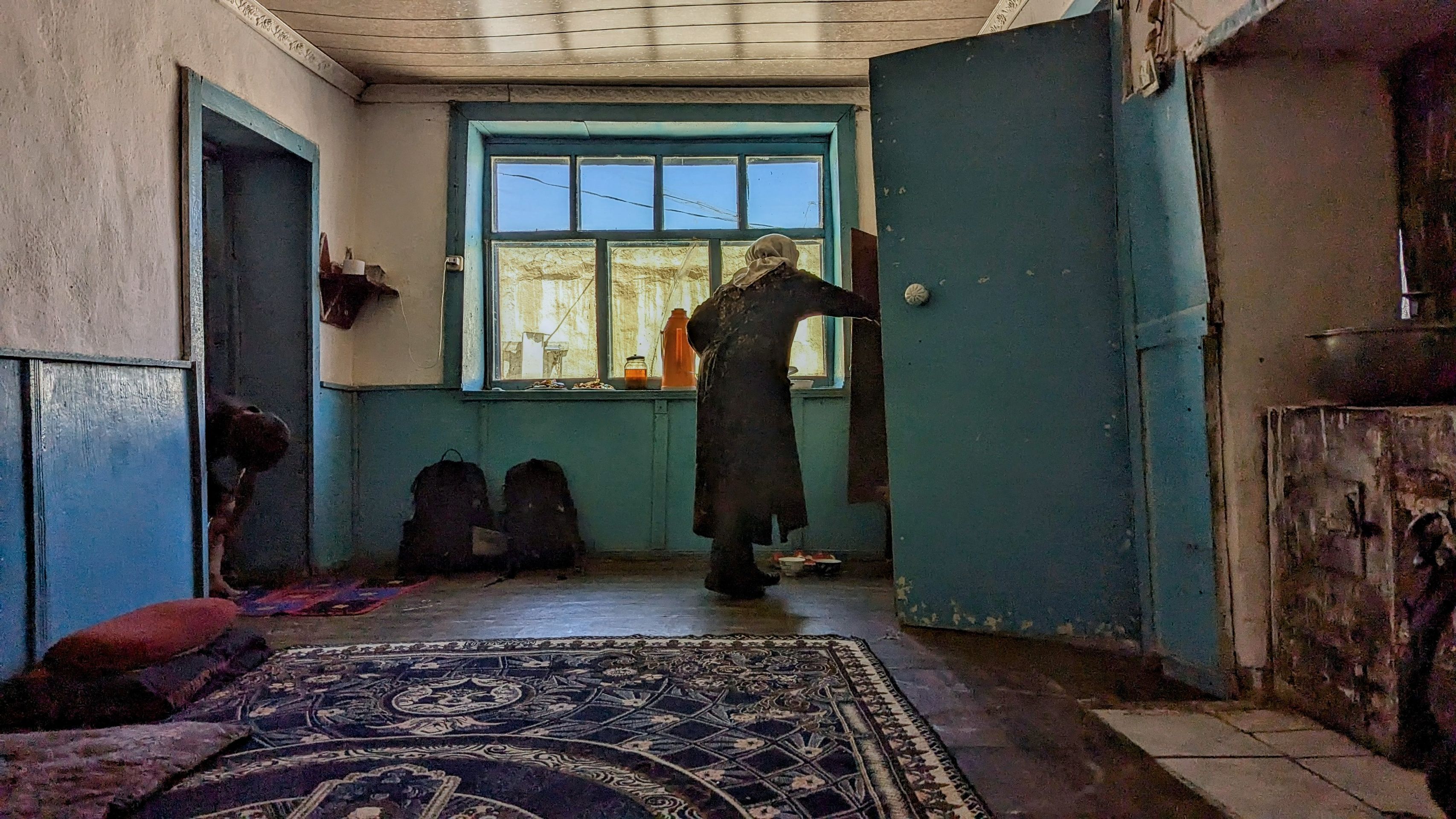
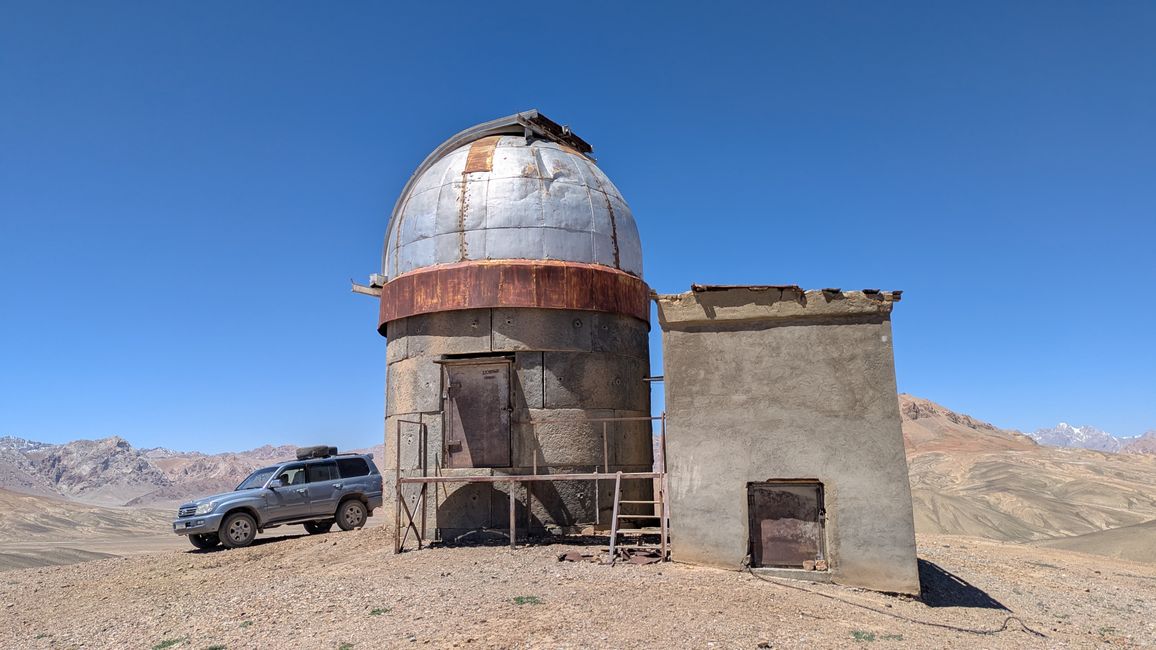
We continued through the seemingly endless expanses; what looks like 5km away here is actually 20km away and a half-hour off-road drive. On the way to Murgab, we stopped at 7000-year-old drawings and an abandoned observatory, and the views were still fantastic. In Murgab, the family of our driver invited us for dinner, sadly highlighting how simply the people here still live, but what other options do they have when it is sometimes 300km to the nearest bigger city? While we buy a new bed or sofa every few years for several thousand euros, one could renovate an entire apartment here for that price. Eating and sleeping are done on the floor. There is still a Lenin statue in Murgab; otherwise, there is a lot of poverty and very aggressive mosquitoes, which unexpectedly attacked me on my way to our homestay.
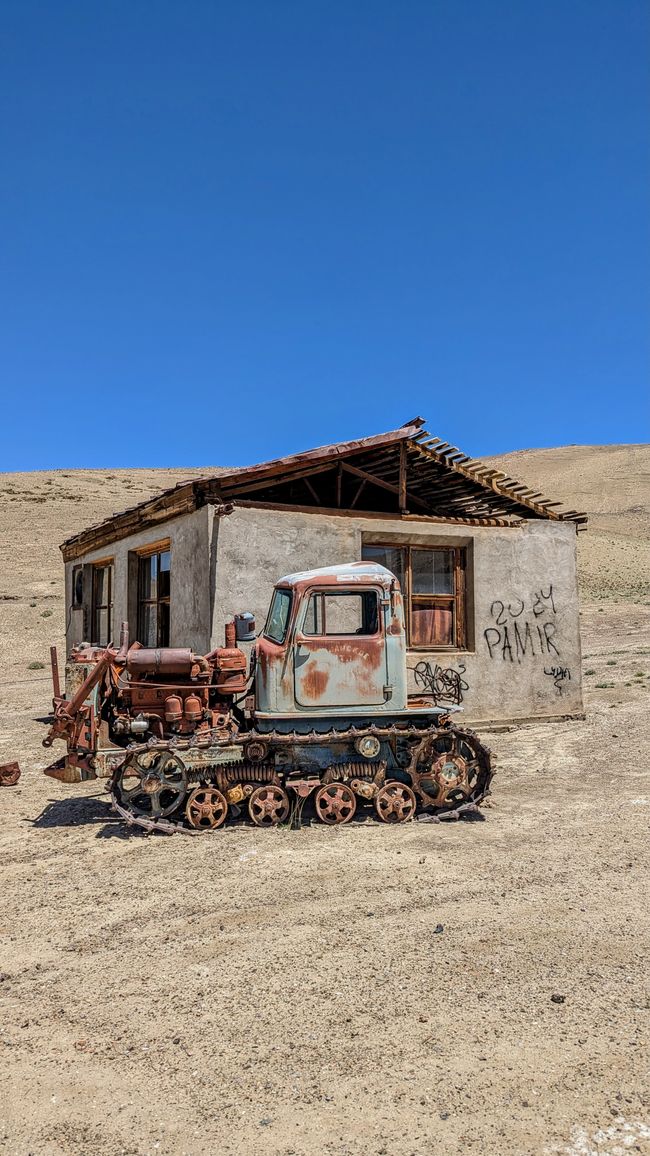
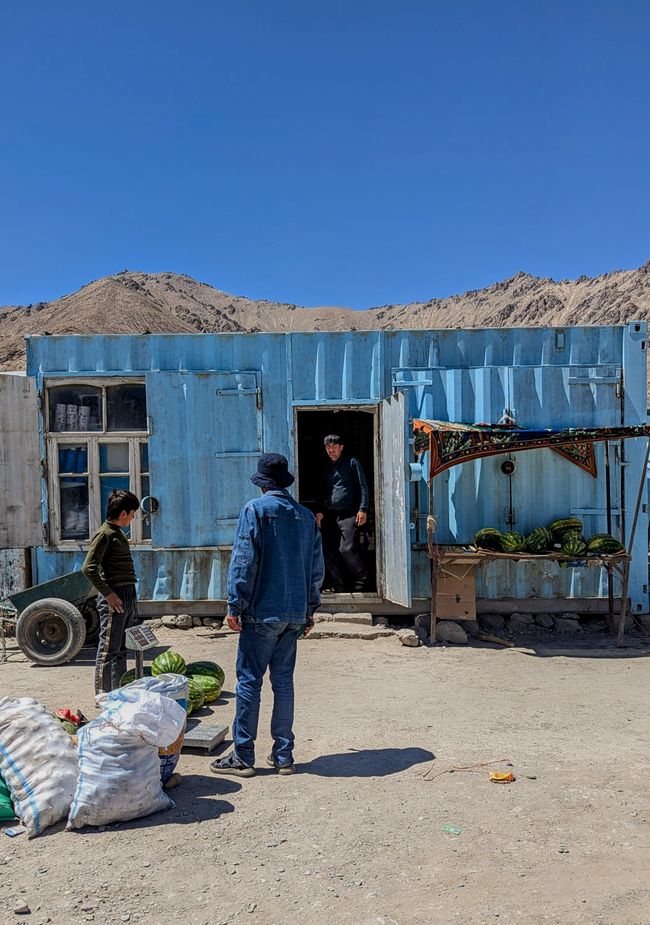
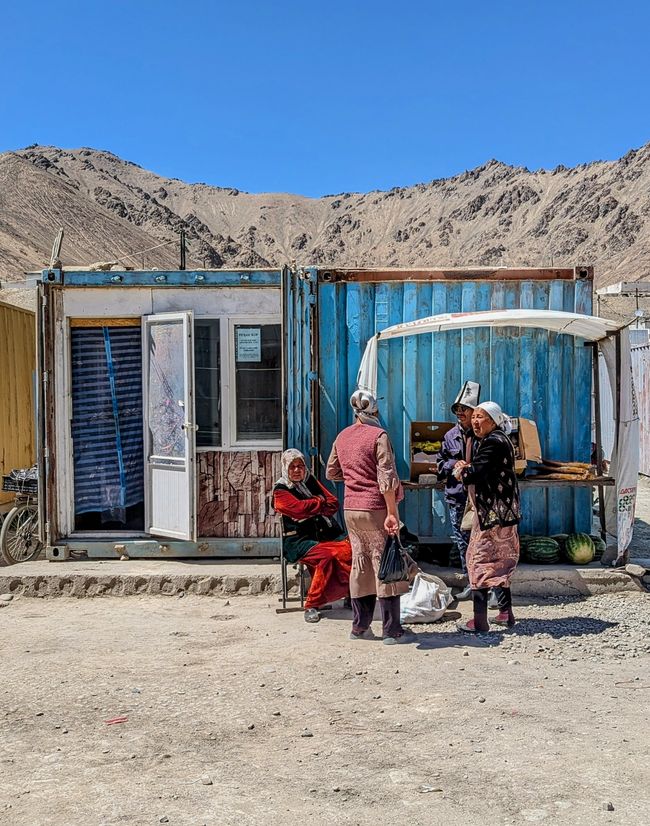
Old ObservatoryPamirMurgab MarketMurgab MarketApartment
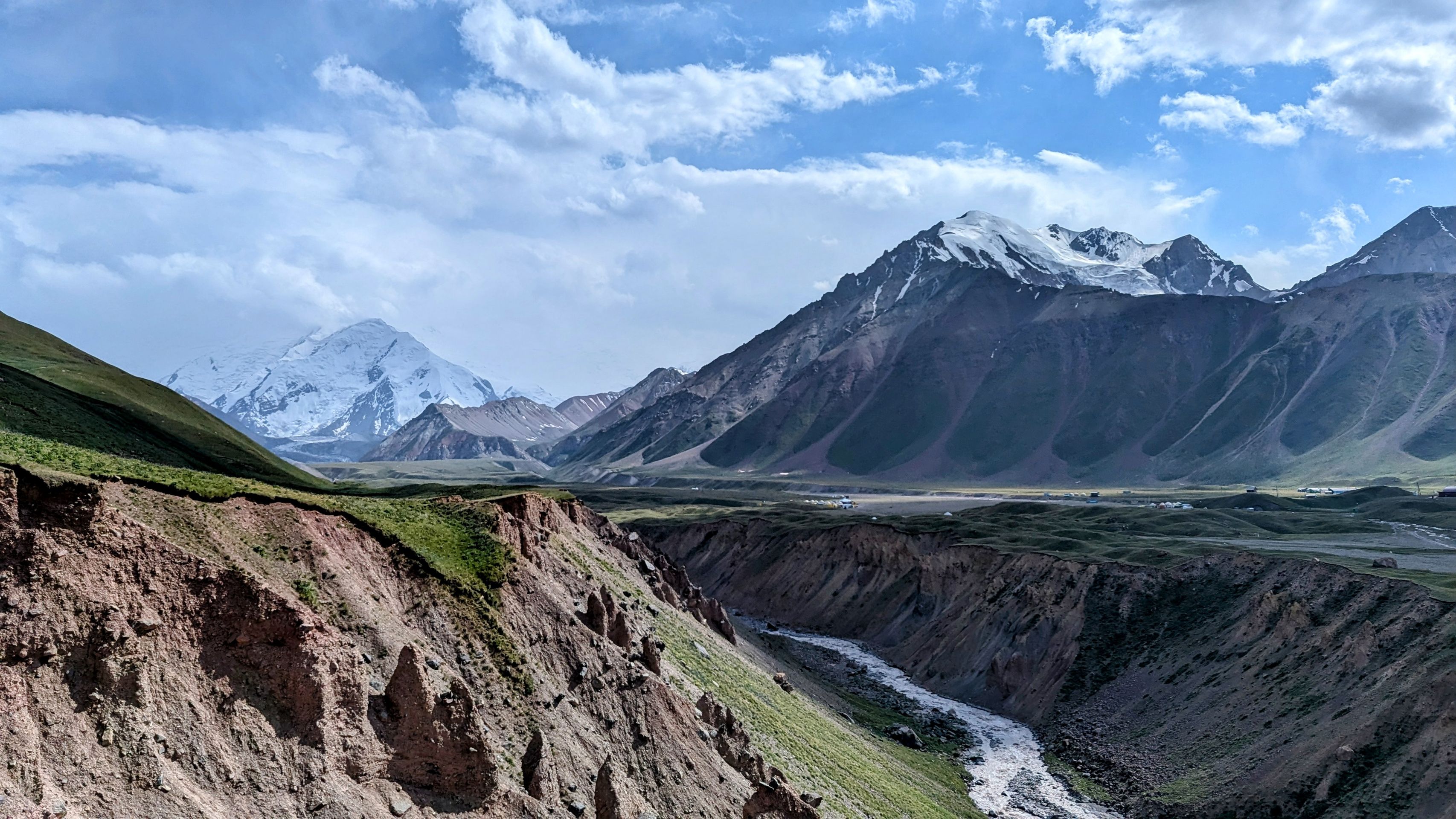
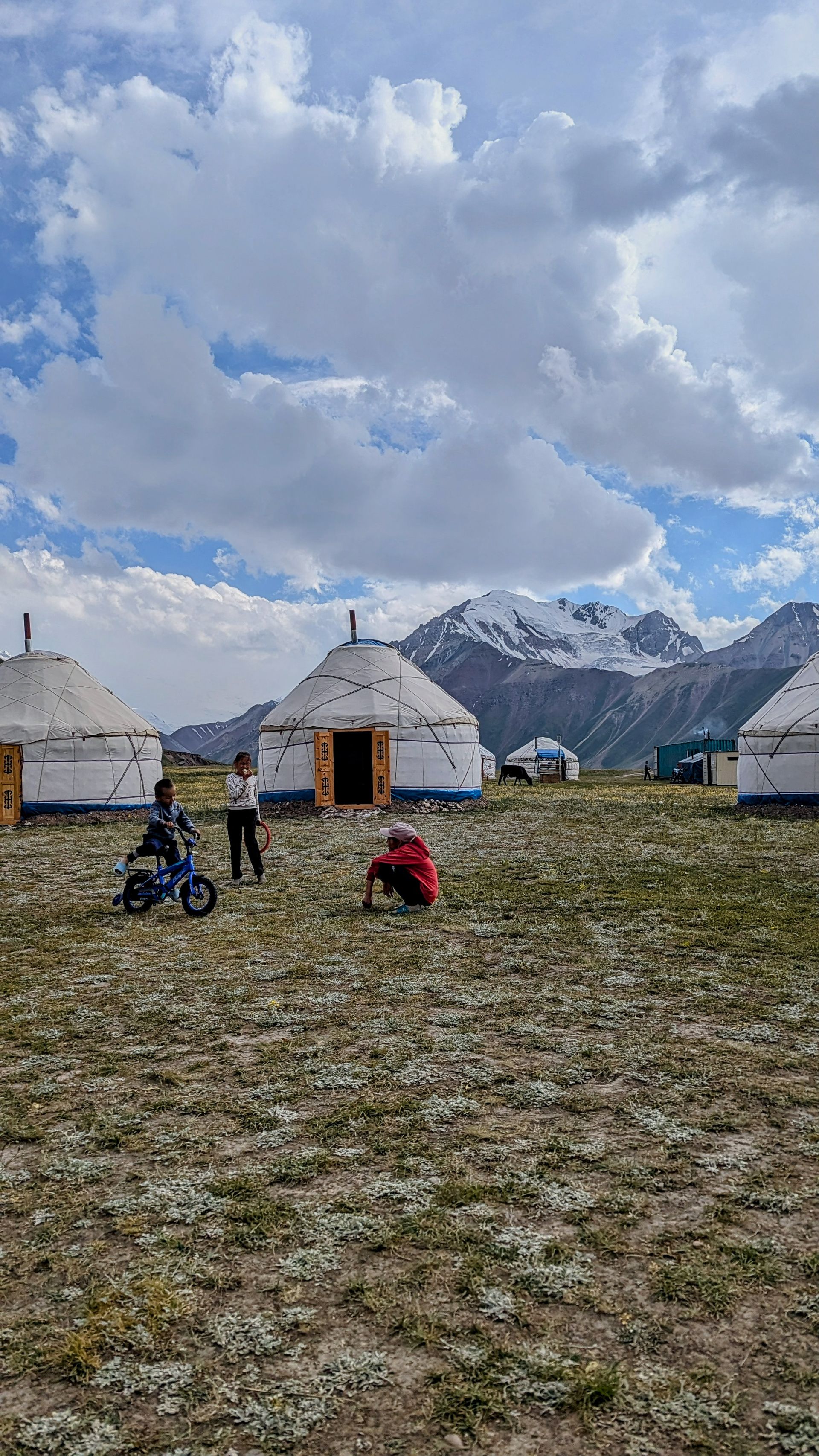
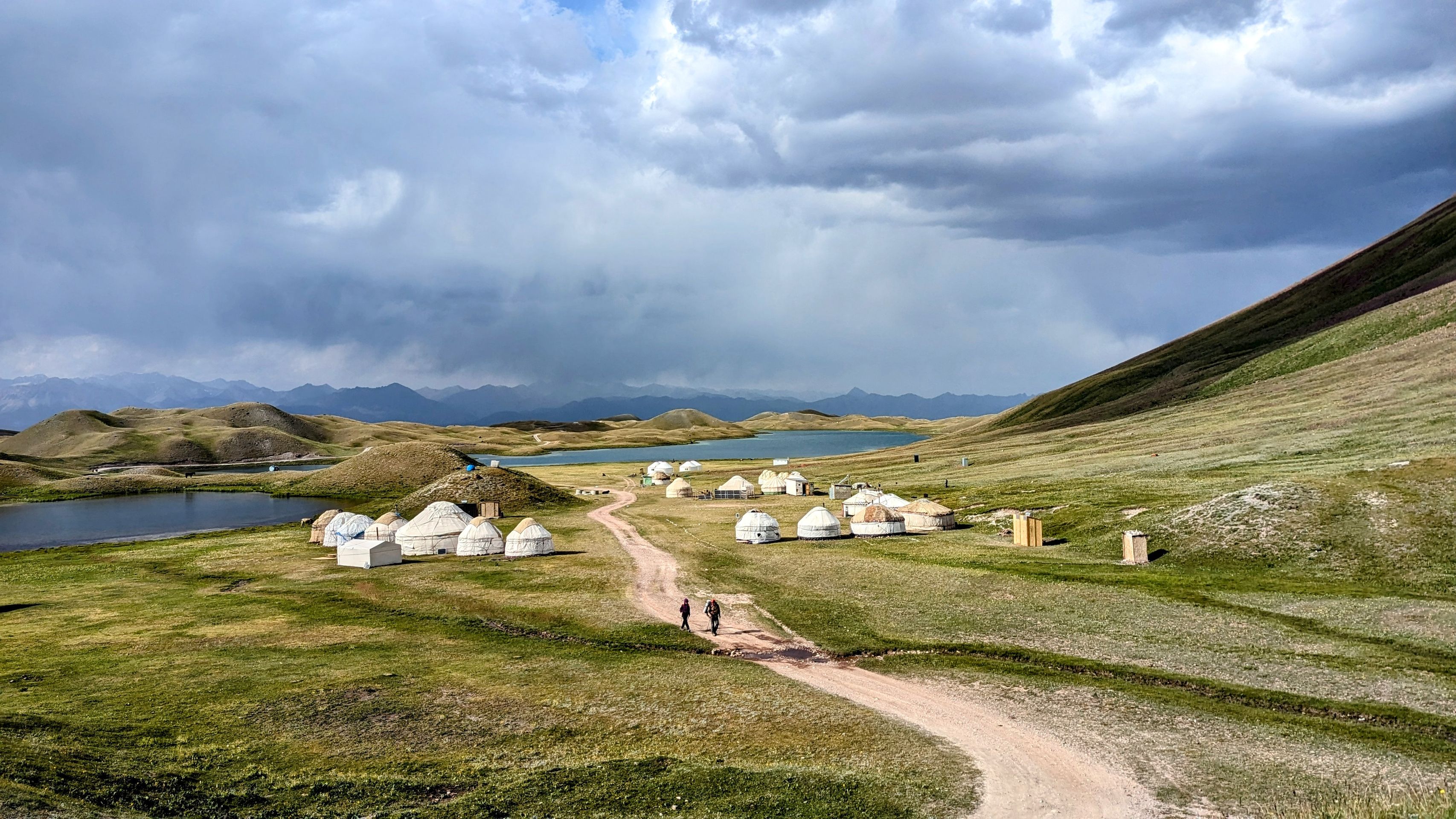
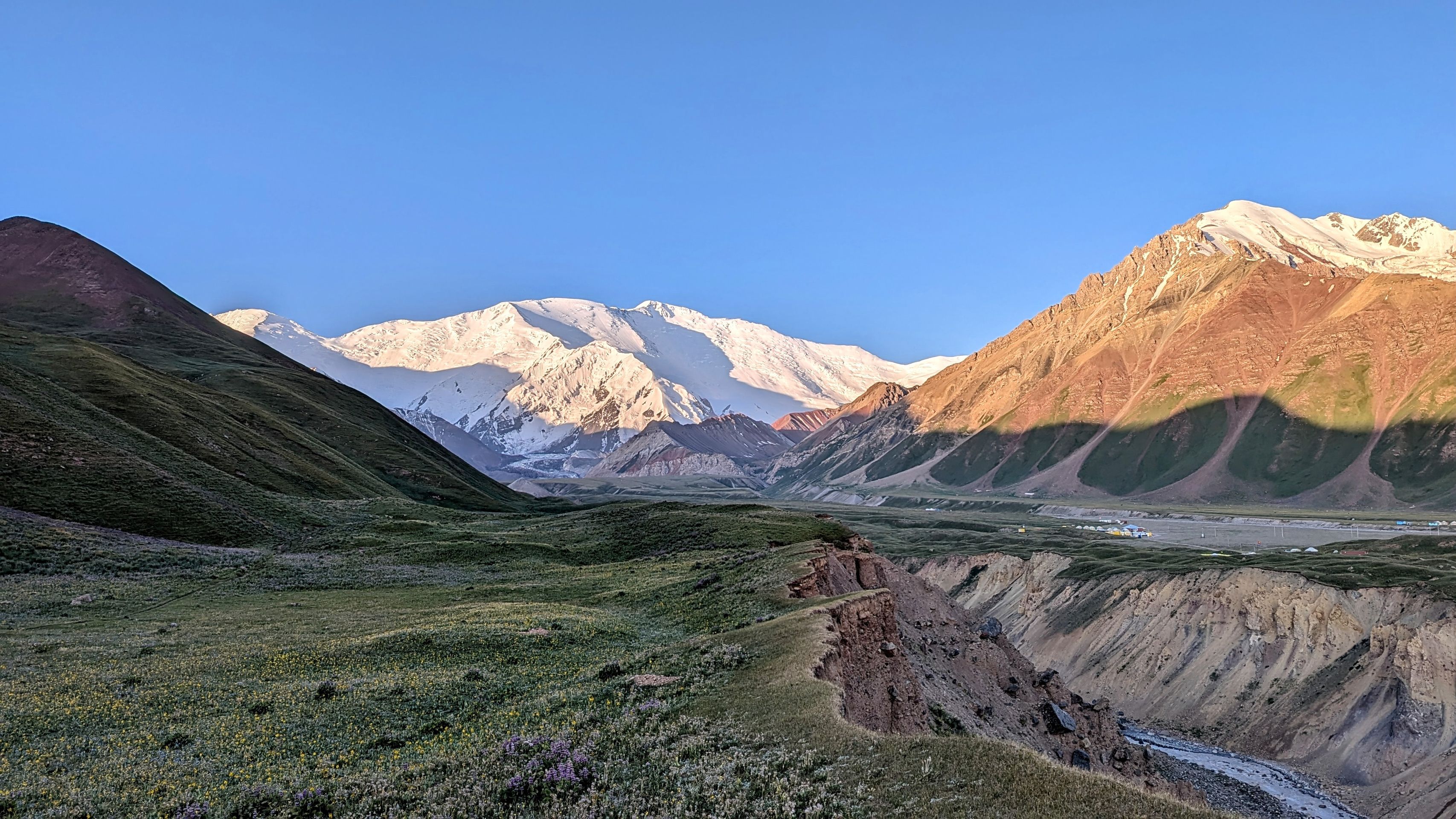
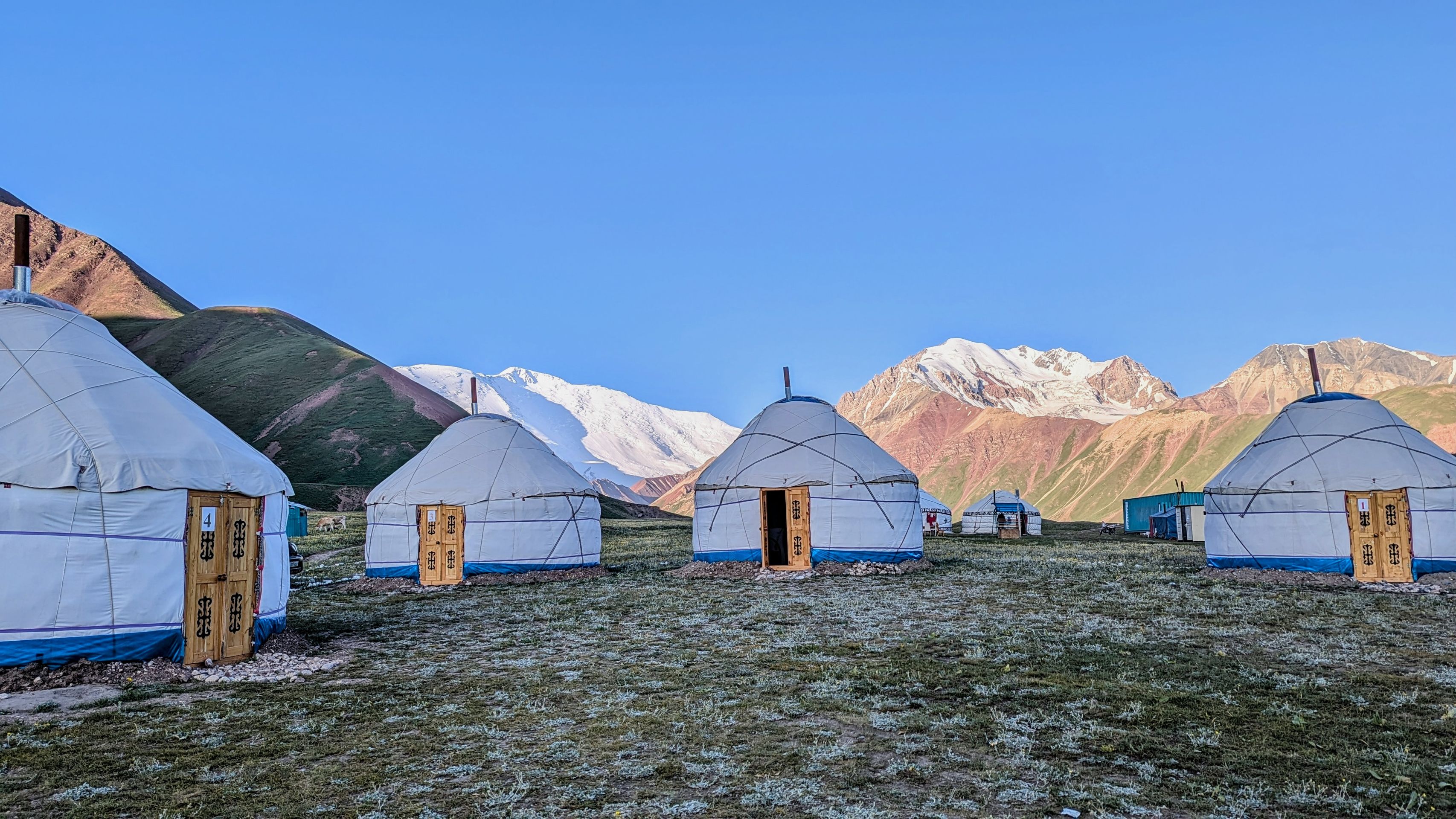
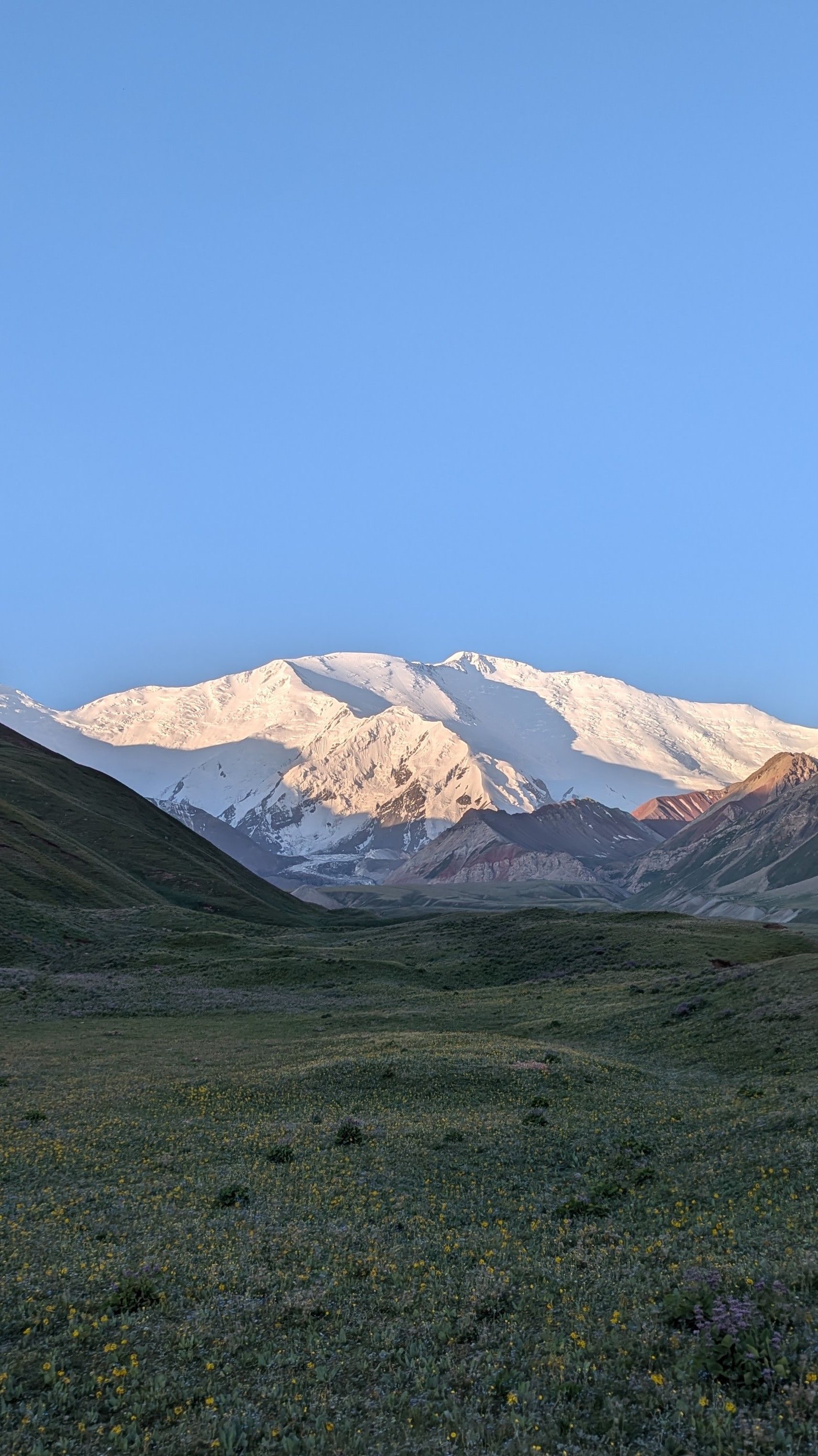
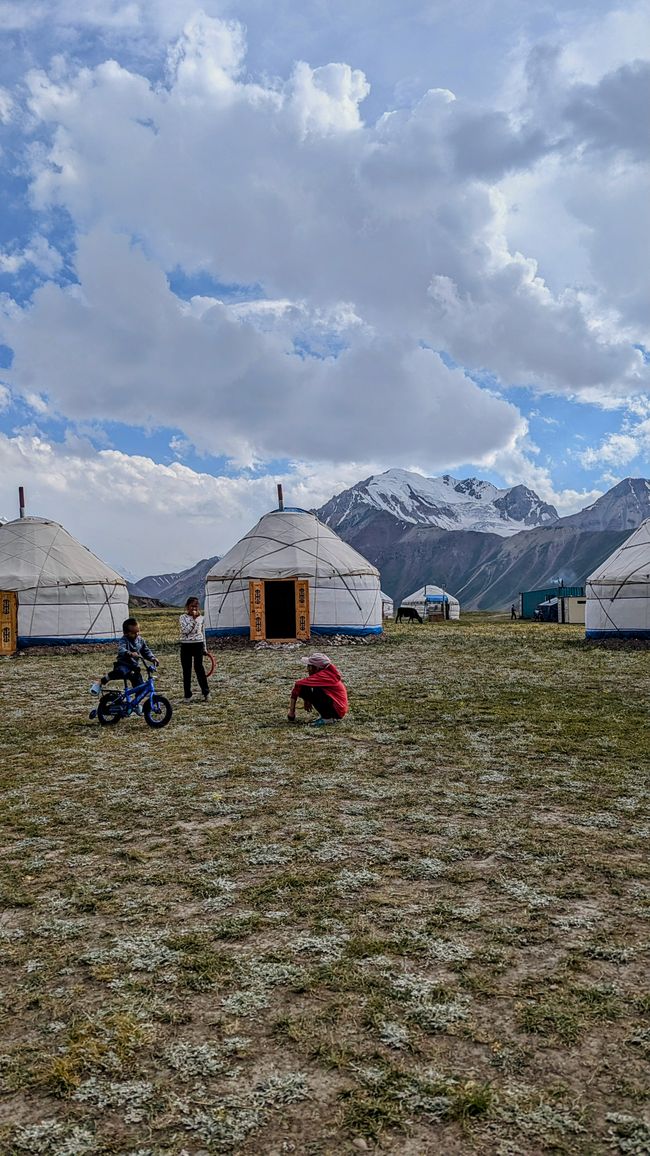
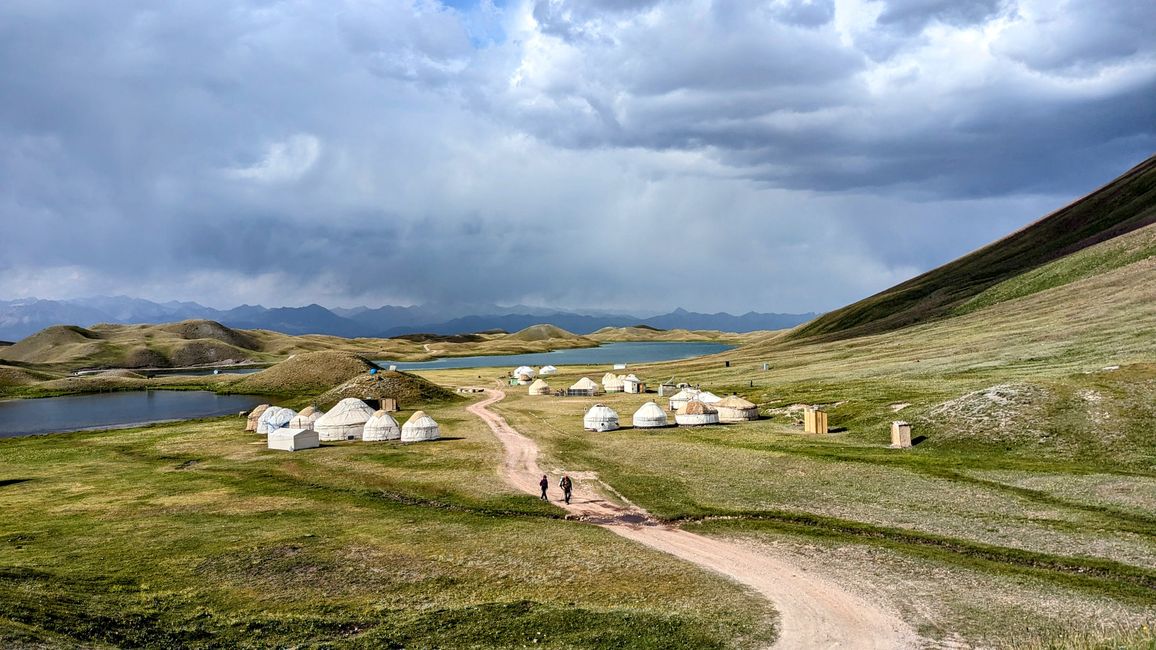
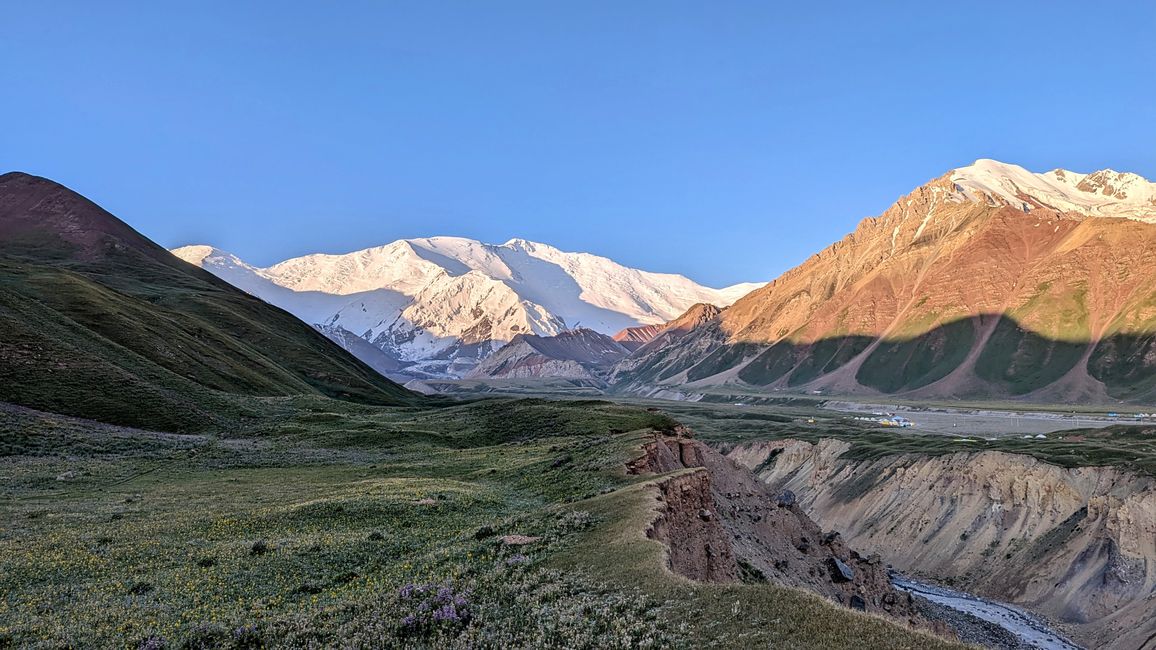
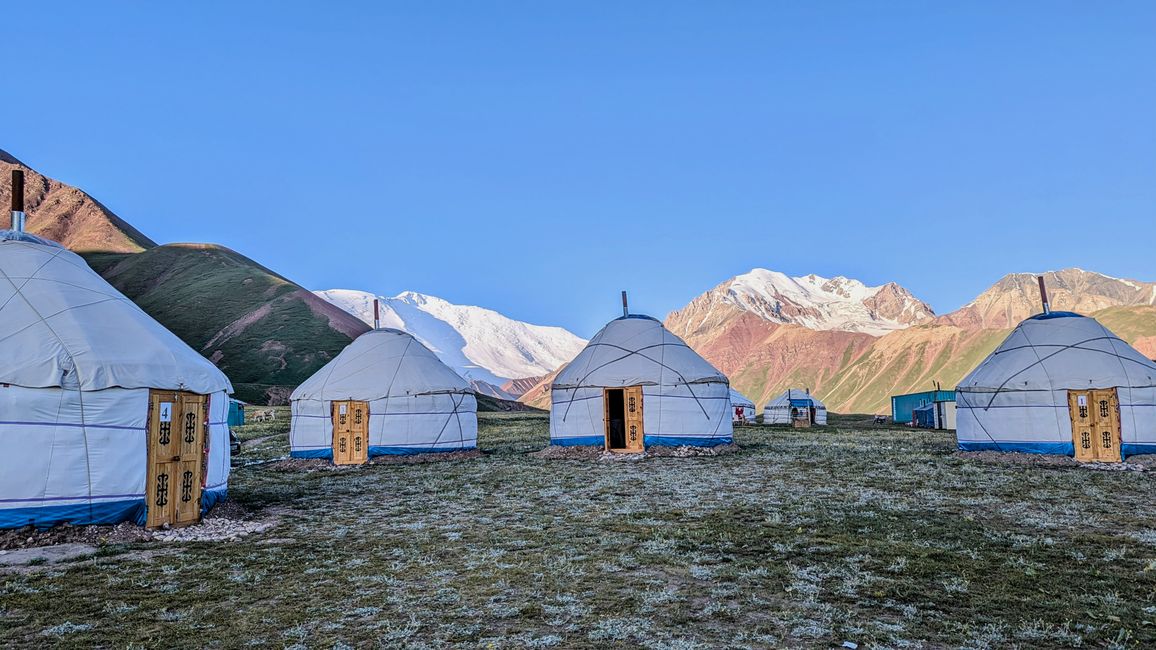
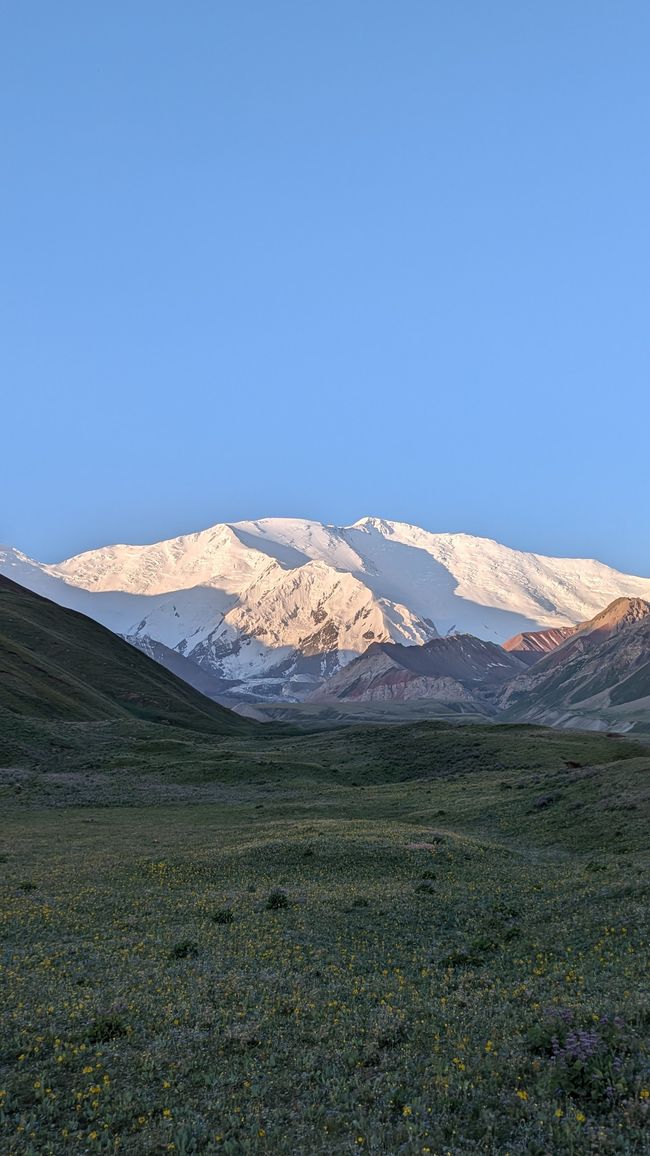
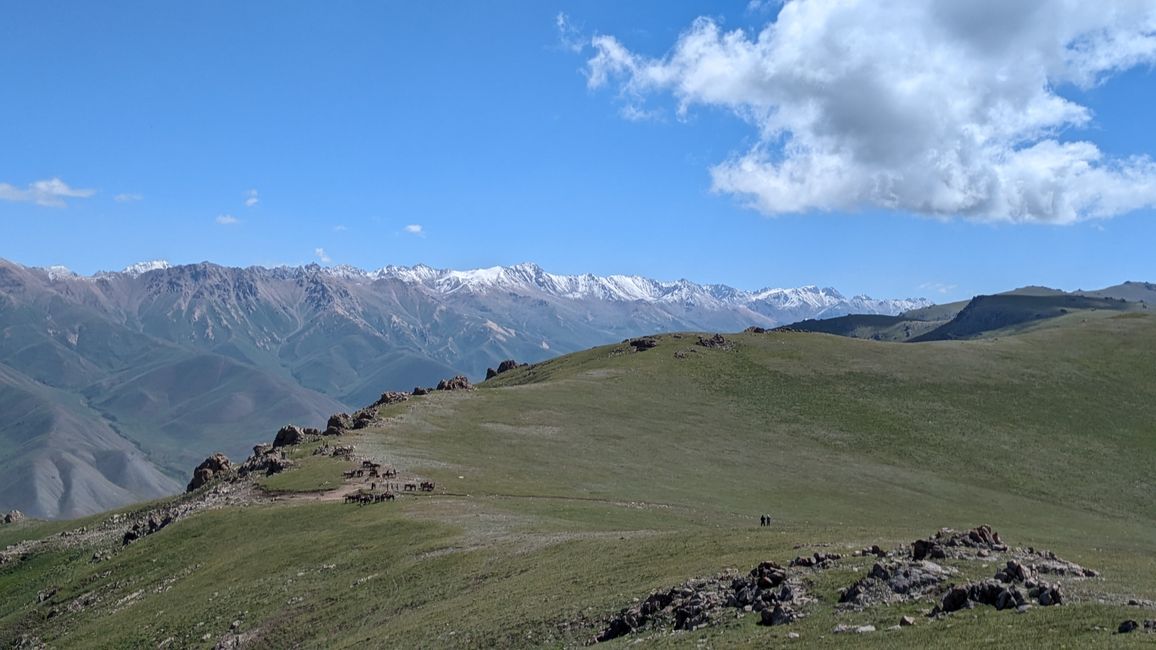
From Murgab, we went over Sary Tash to Tulpar Kul, a yurt village overlooking the 7134 meter high Lenin Peak. The border crossing was probably the most remote I have ever crossed; the soldiers on the Tajik side spend their days in simple tin huts.
After that, we had to drive 20 km over an unpaved road through no man's land before getting the entry stamp from Kyrgyzstan.
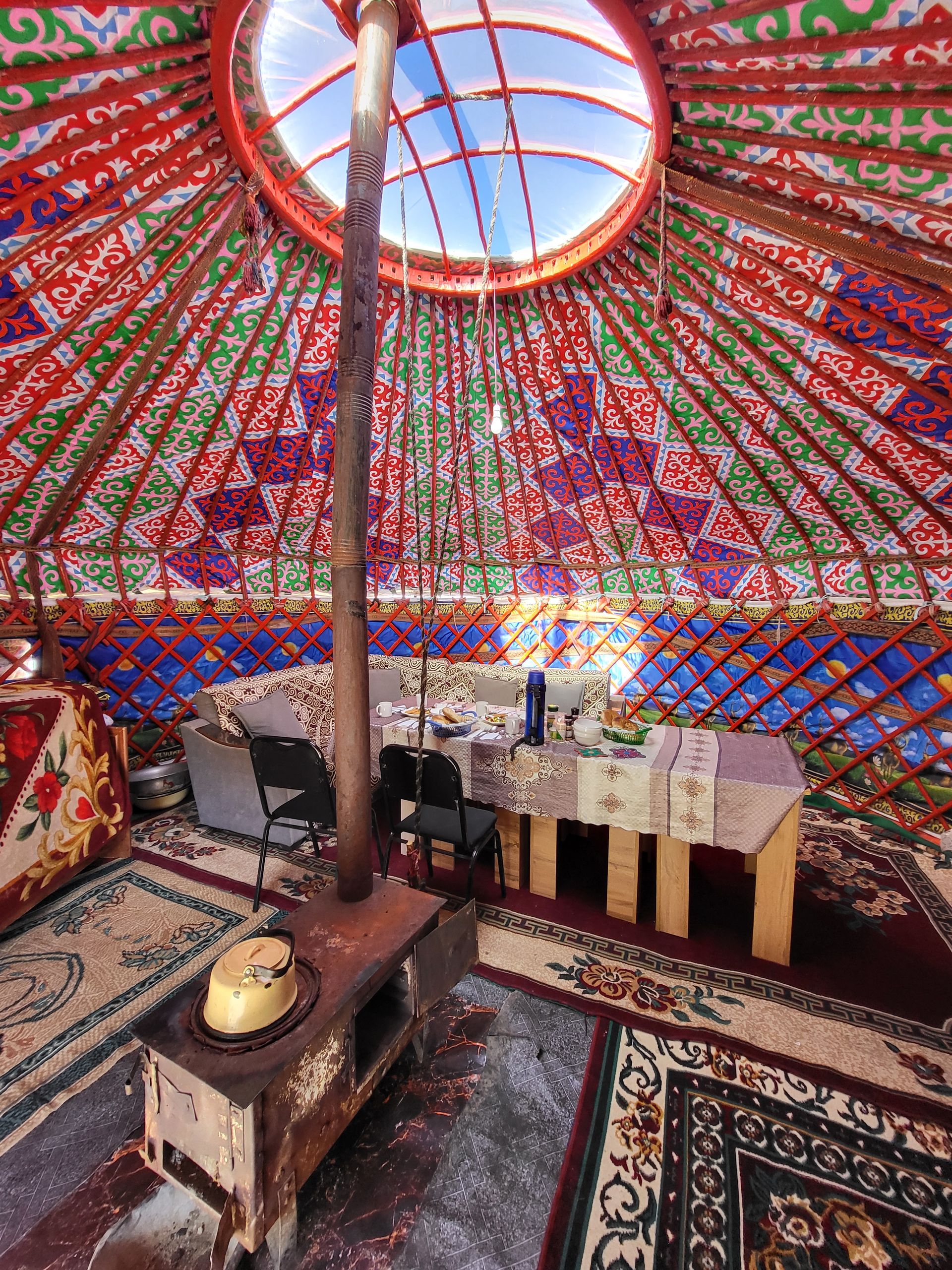
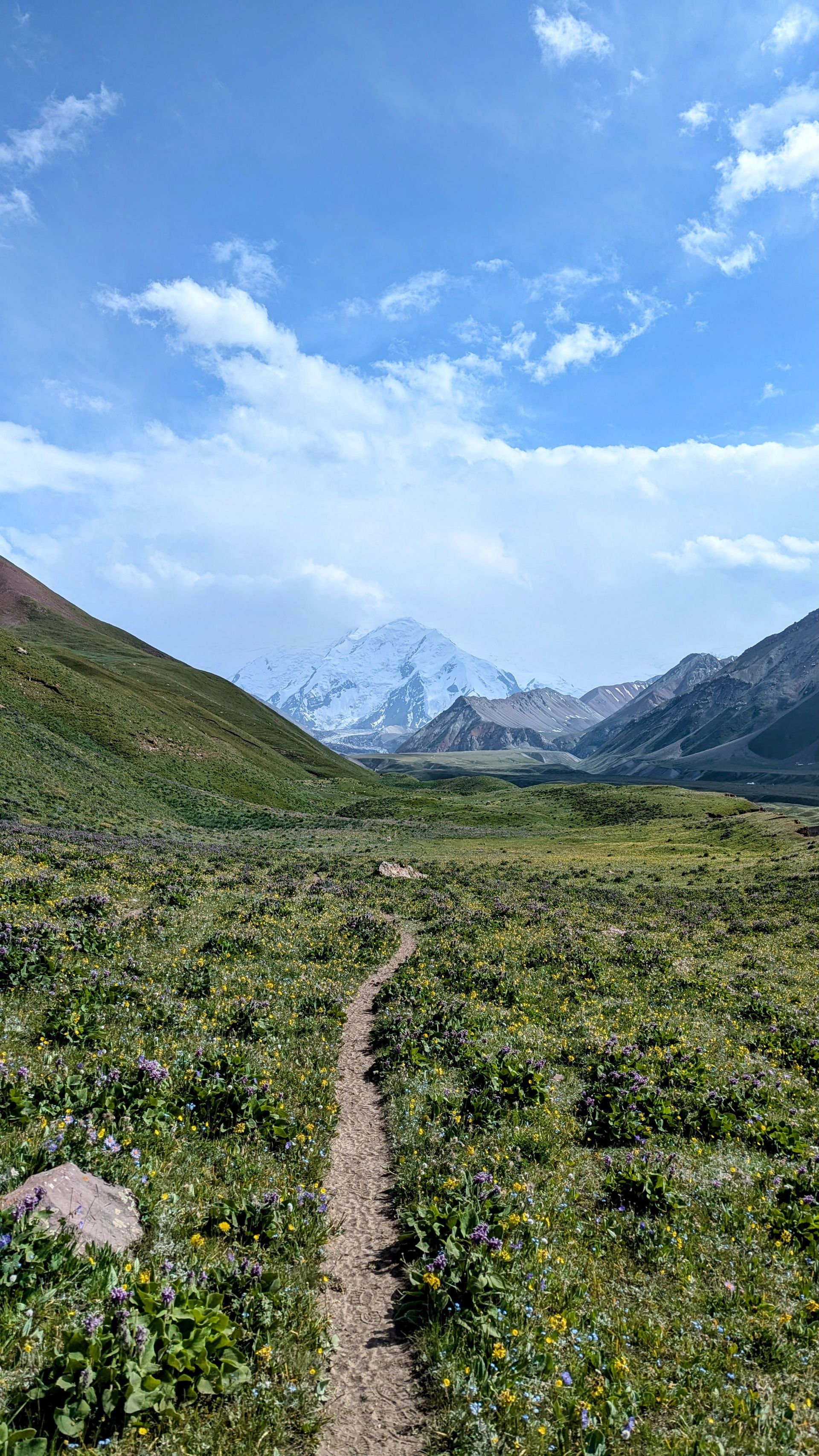
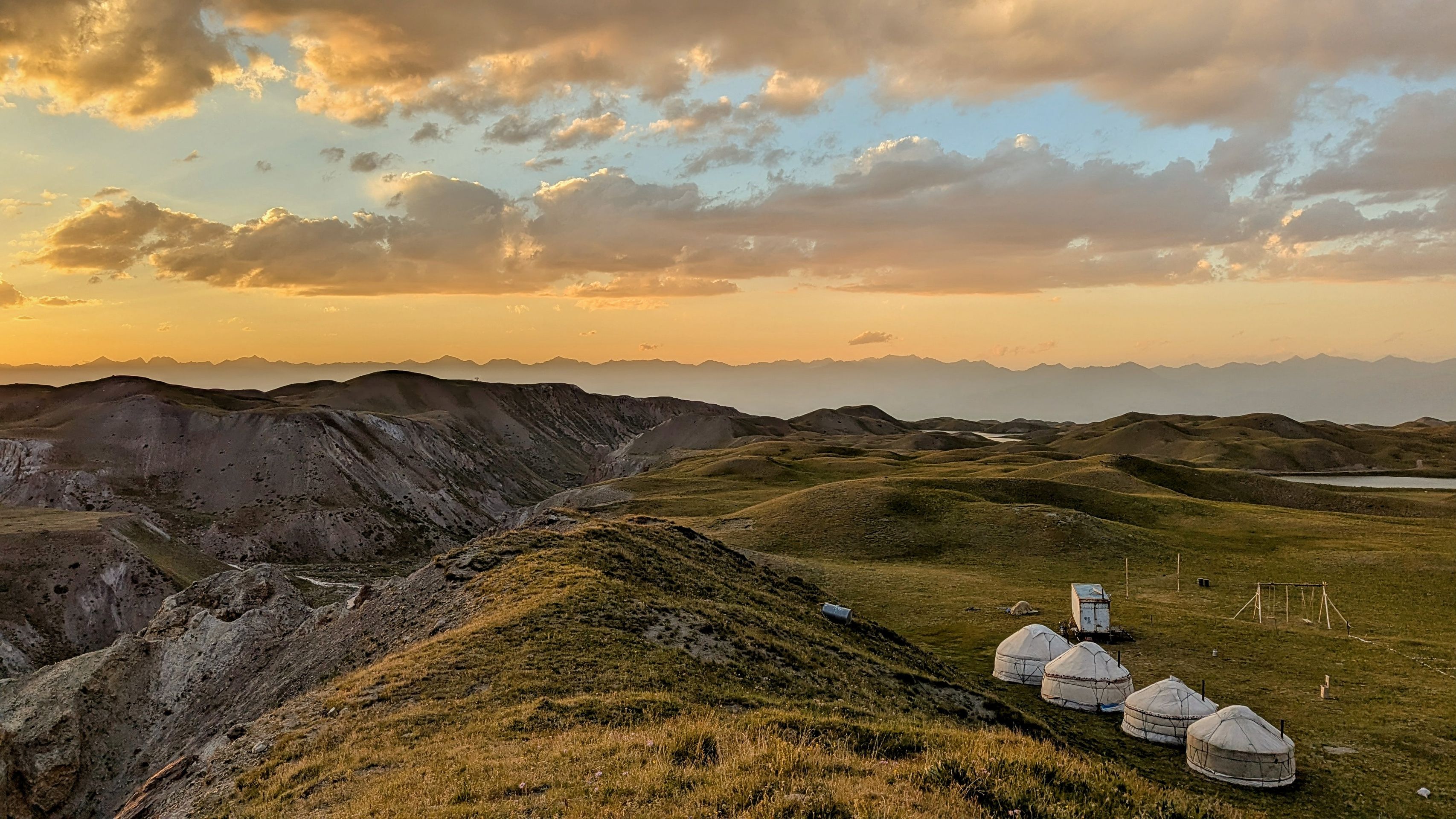
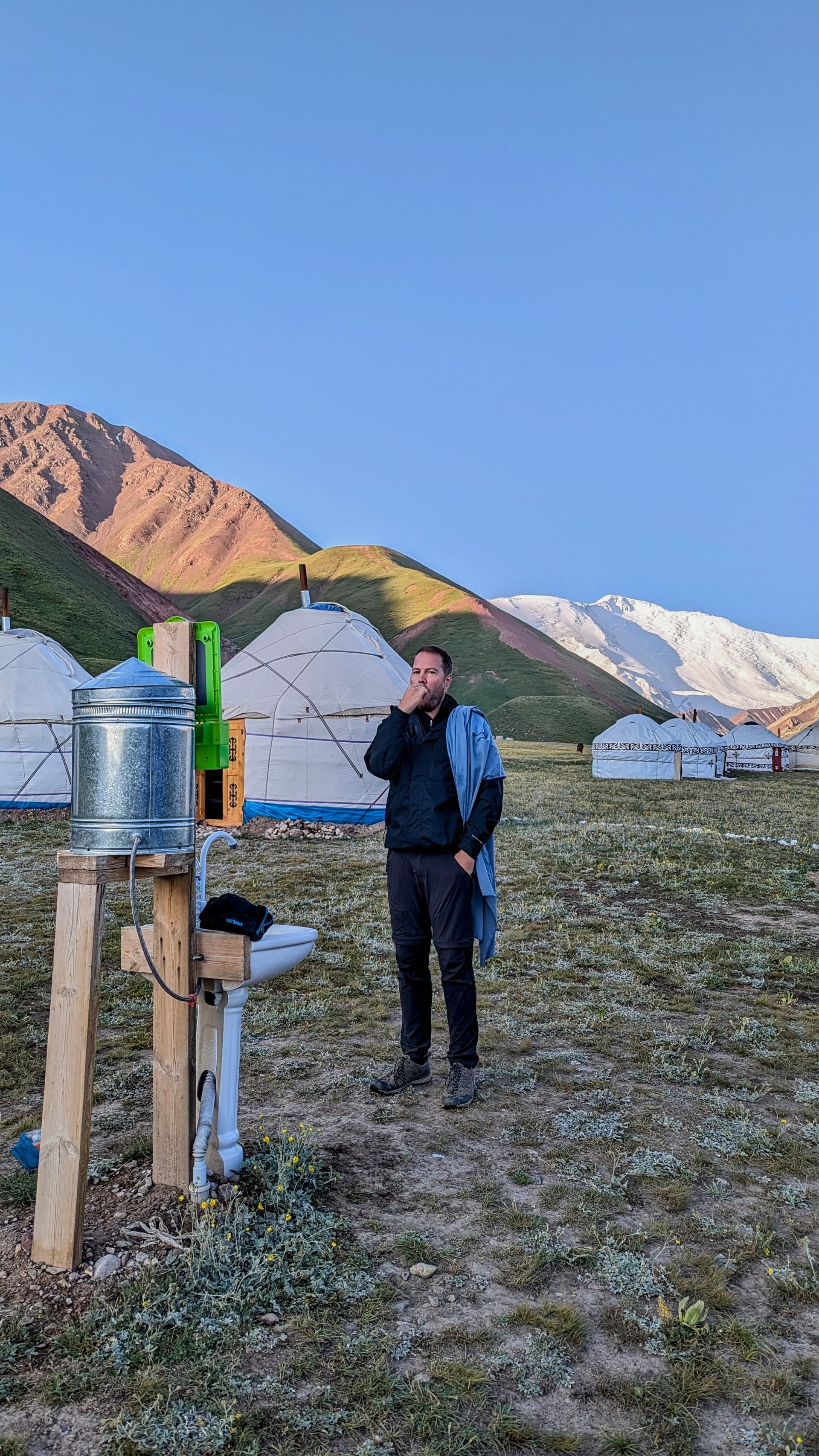
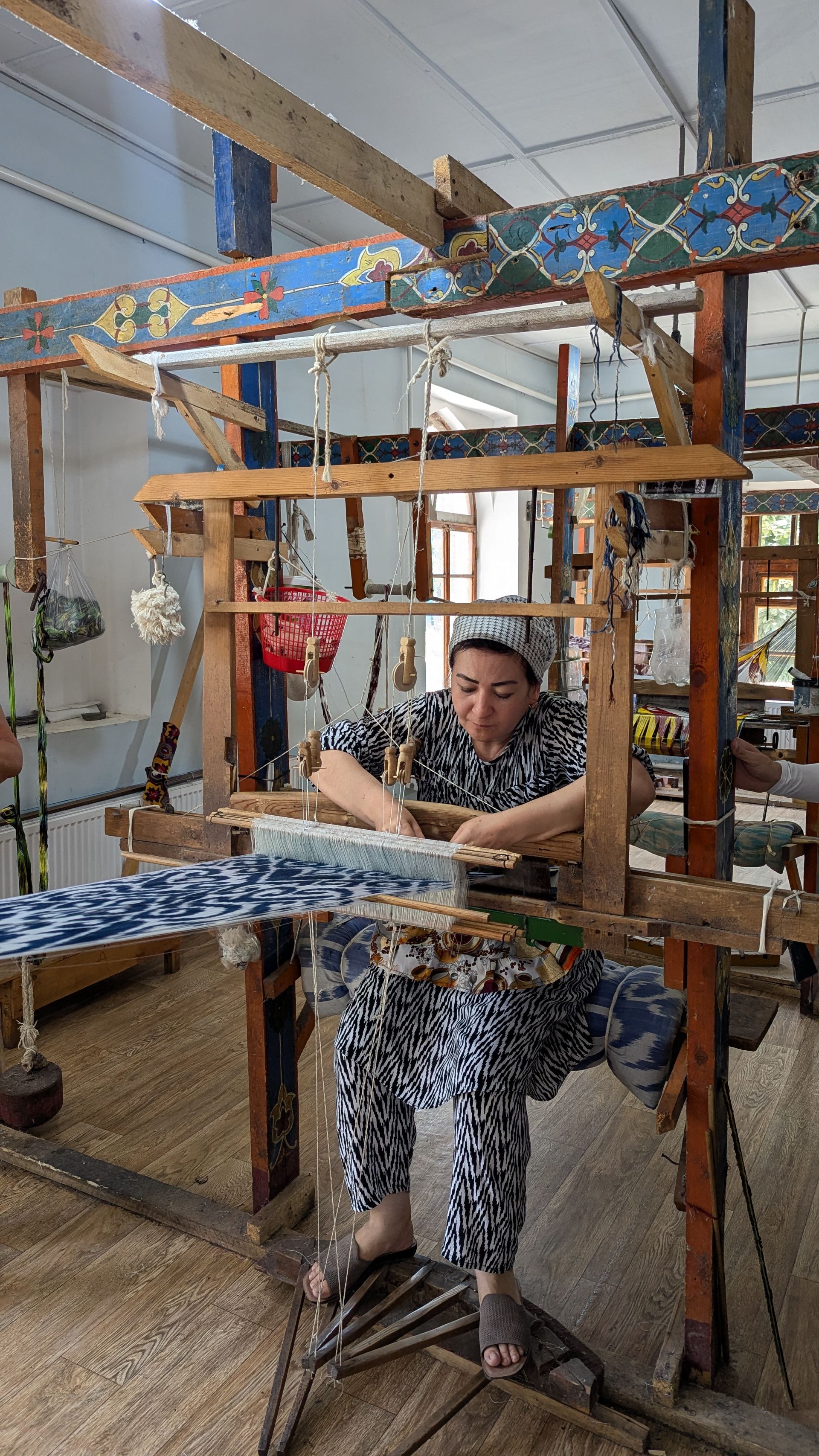
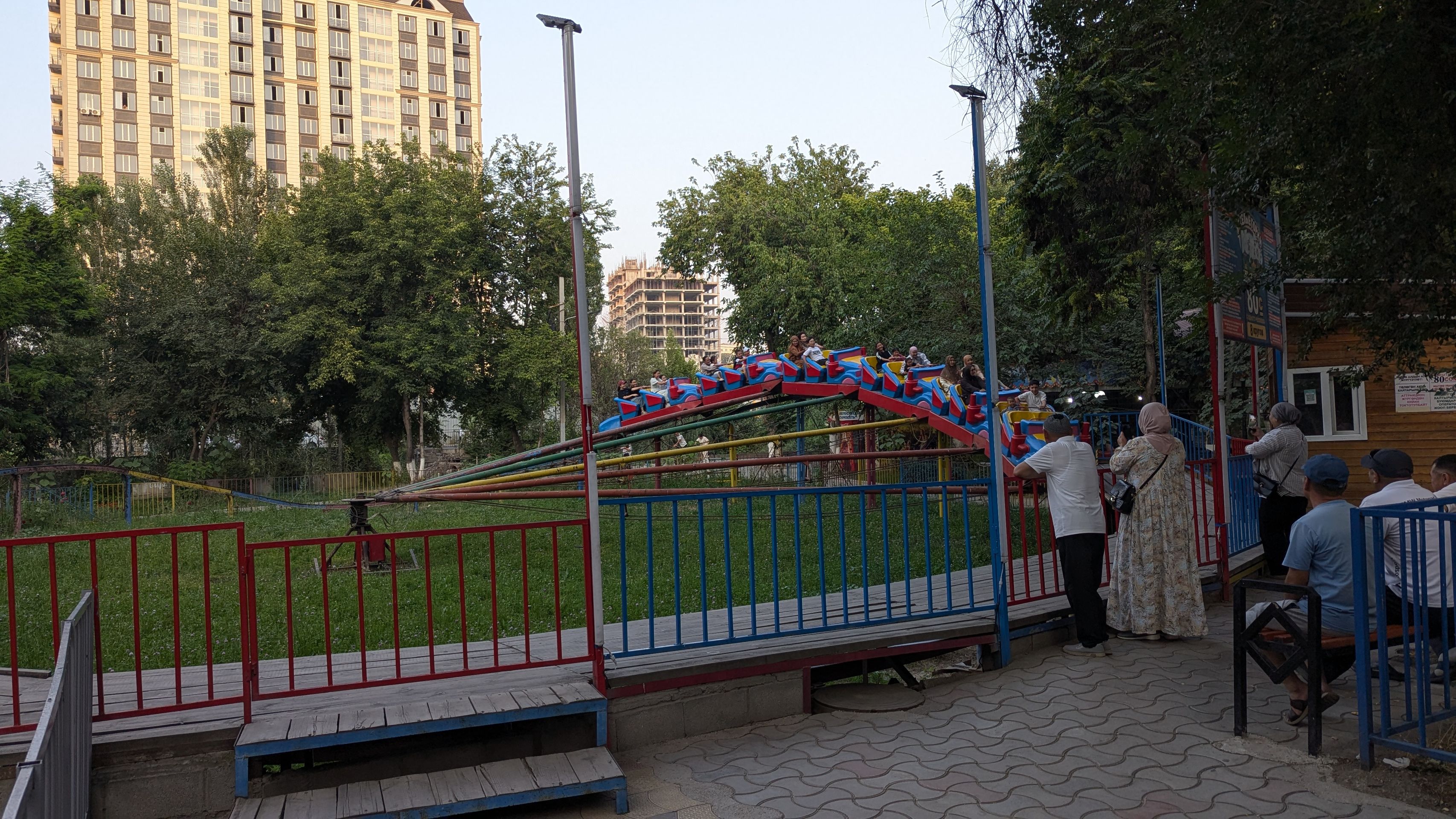
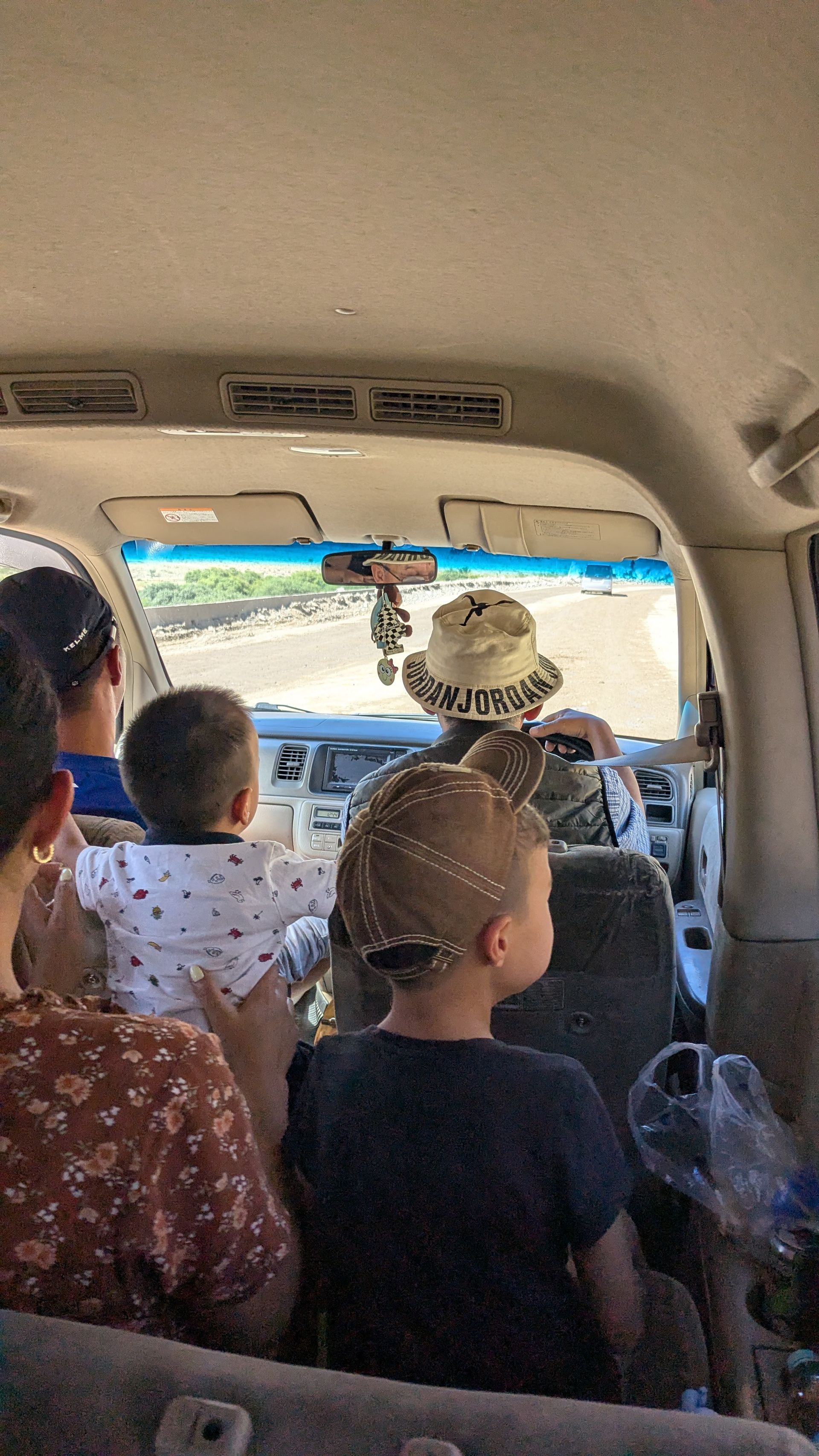
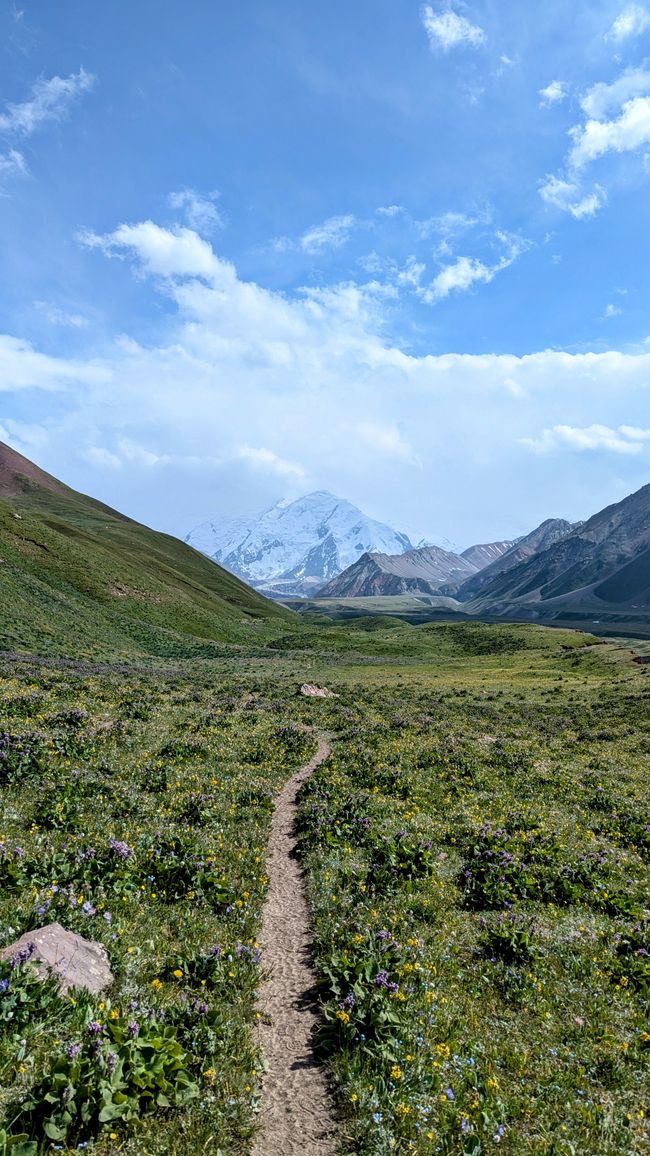
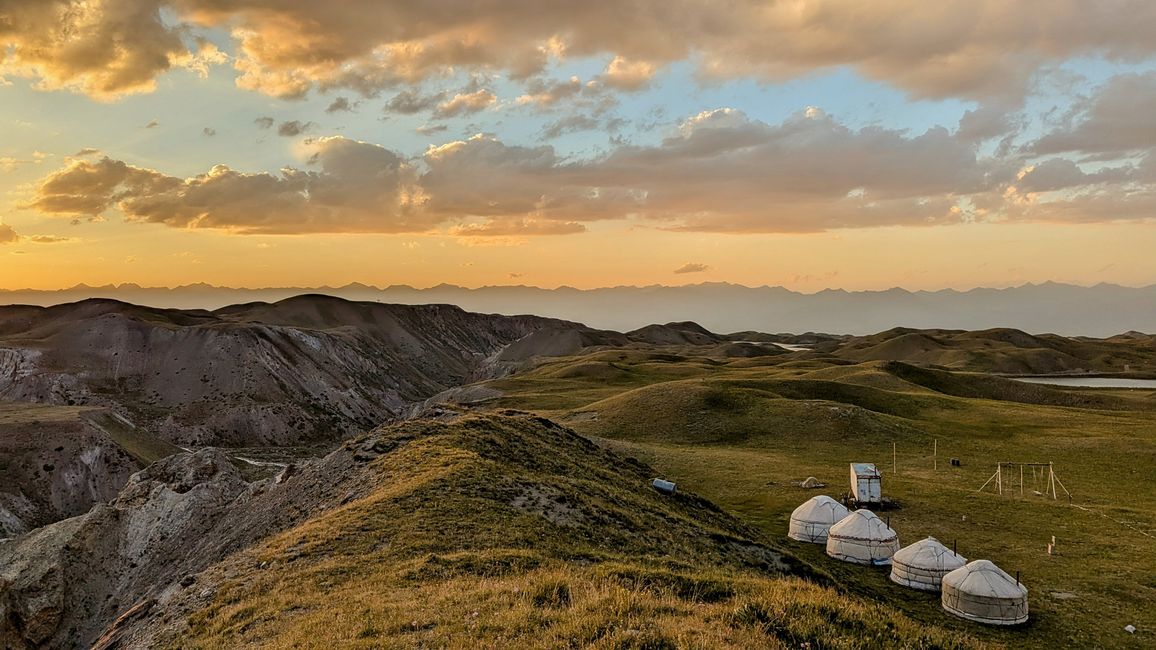
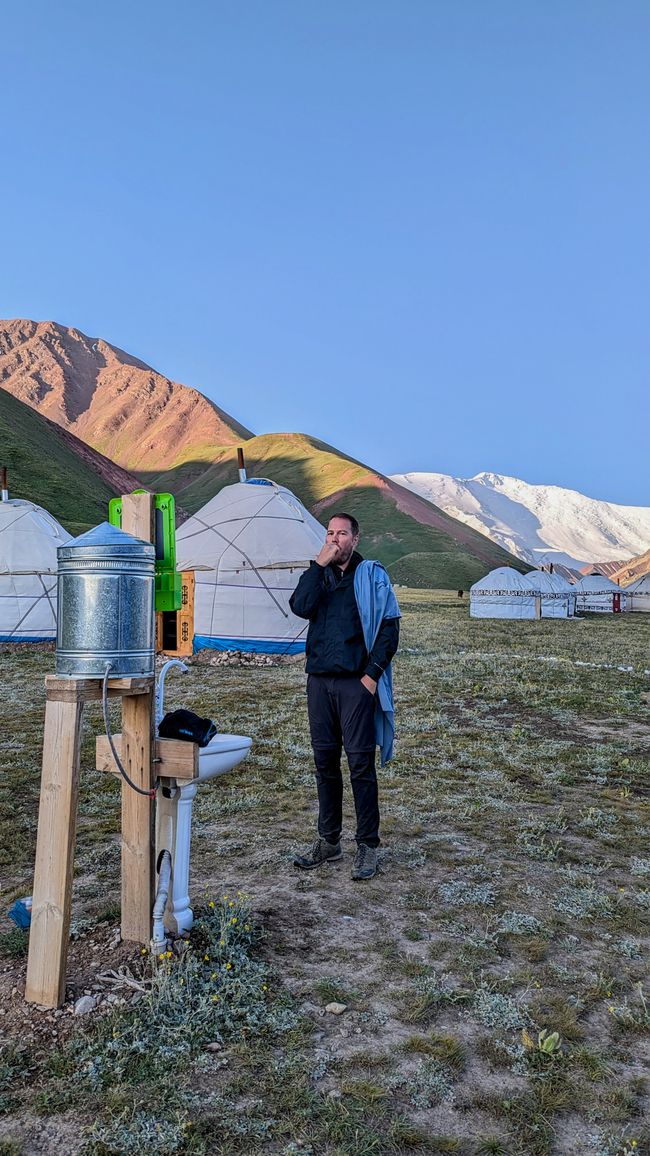
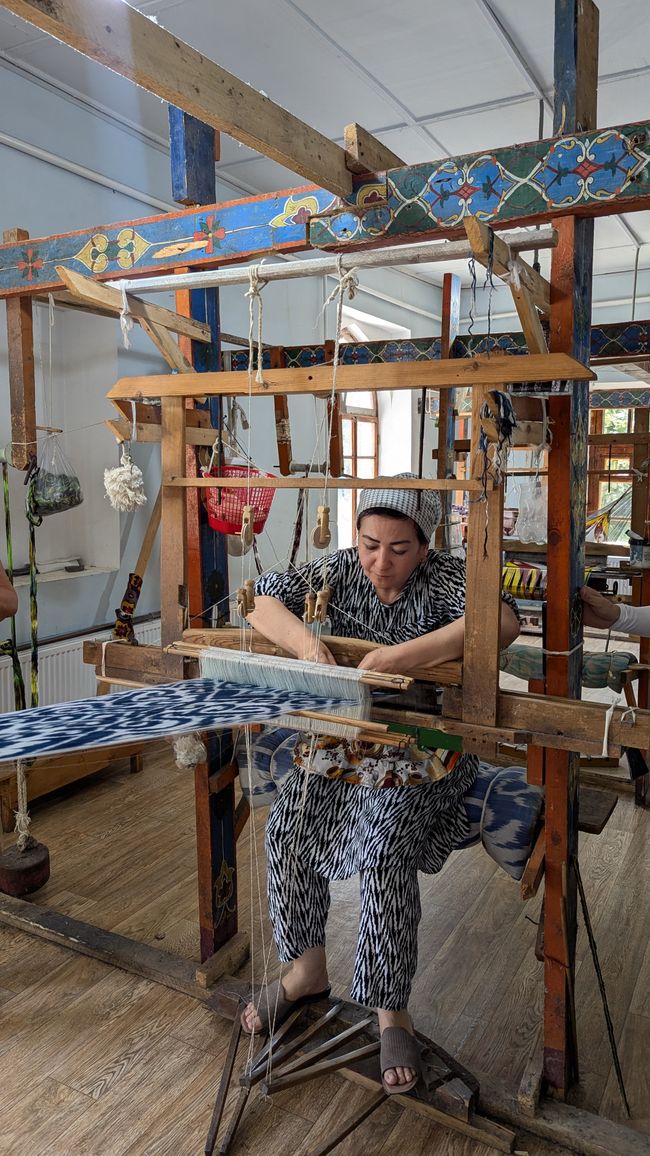
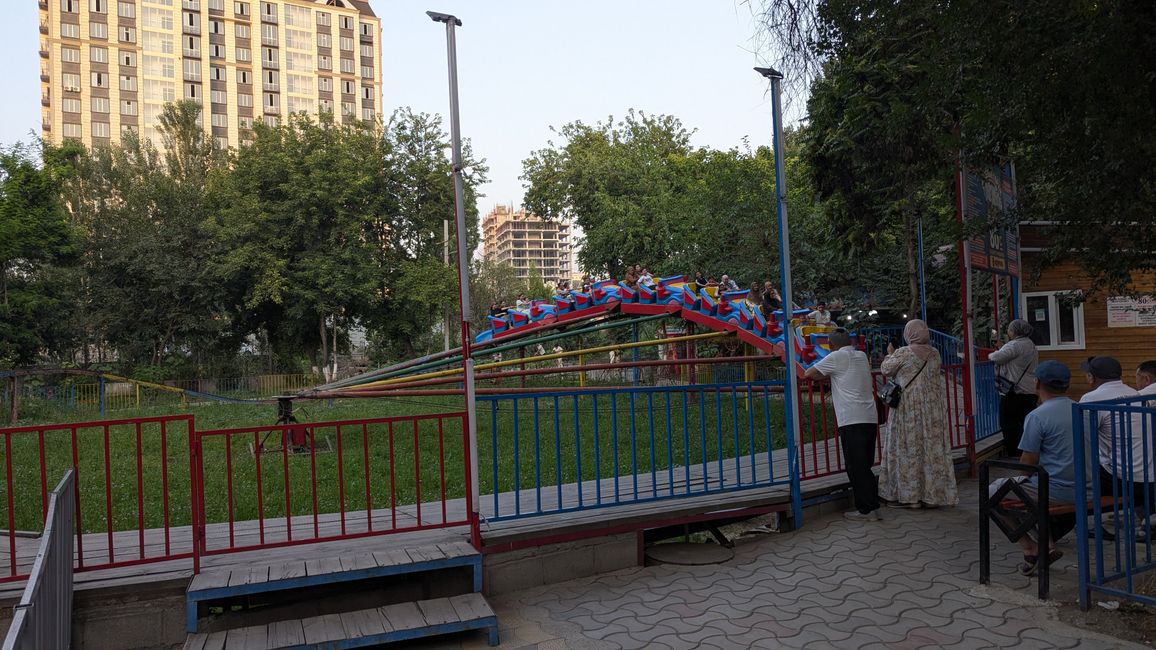
It was an absolutely fantastic ending in the yurt village, except for the once again oily food and the hard bedding in the yurt. For this reason, I could not sleep anymore at 6 AM, but during my morning hike, I was able to observe a fox and countless marmots and had a beautiful cloud-free view of Lenin Peak.Kyrgyzstan-Tajikistan Border CrossingLenin PeakLenin PeakYurtsYurt Village❤️Lenin PeakYurtBrushing teeth...After that, we headed for 5 hours towards Osh. Our driver, as is customary in Central Asia, made some risky overtaking maneuvers. I will be glad when I don't have to drive a car or taxi here anymore since usually, the seatbelt is broken or non-existent. In Osh, I rested for two days and left the hostel in nearly 40-degree heat as little as possible. In the evening, I met with Marnie, Robert, and Brian for dinner and one last beer before we parted ways. My plan led me back to Uzbekistan and the Fergana Valley. Walking across the border again, two taxis and two buses later, I arrived in Marg'ilan, drenched in sweat. I stayed at the hostel until late evening before I started my little exploration tour. In advance, I had only heard good things about the valley, which disappointed me a bit; perhaps the expectations were just too high. There are a few historical buildings and interesting towns, but they cannot compare to Khiva, Bukhara, or Samarkand. Therefore, I checked out the bazaar, a silk factory, the mosque, and in the evening, a park equipped with various old rides, as is usual in Central Asia. Generally, in each city, there is a small old amusement park with at least one Ferris wheel, a banana swing, a small roller coaster, and something that would come closest to a music express, all only 50 years old, but it serves its purpose, and people have fun. Then I decided not to explore the valley further but instead to return to Andijan to come back to Kyrgyzstan.Silk Factory'Music express'
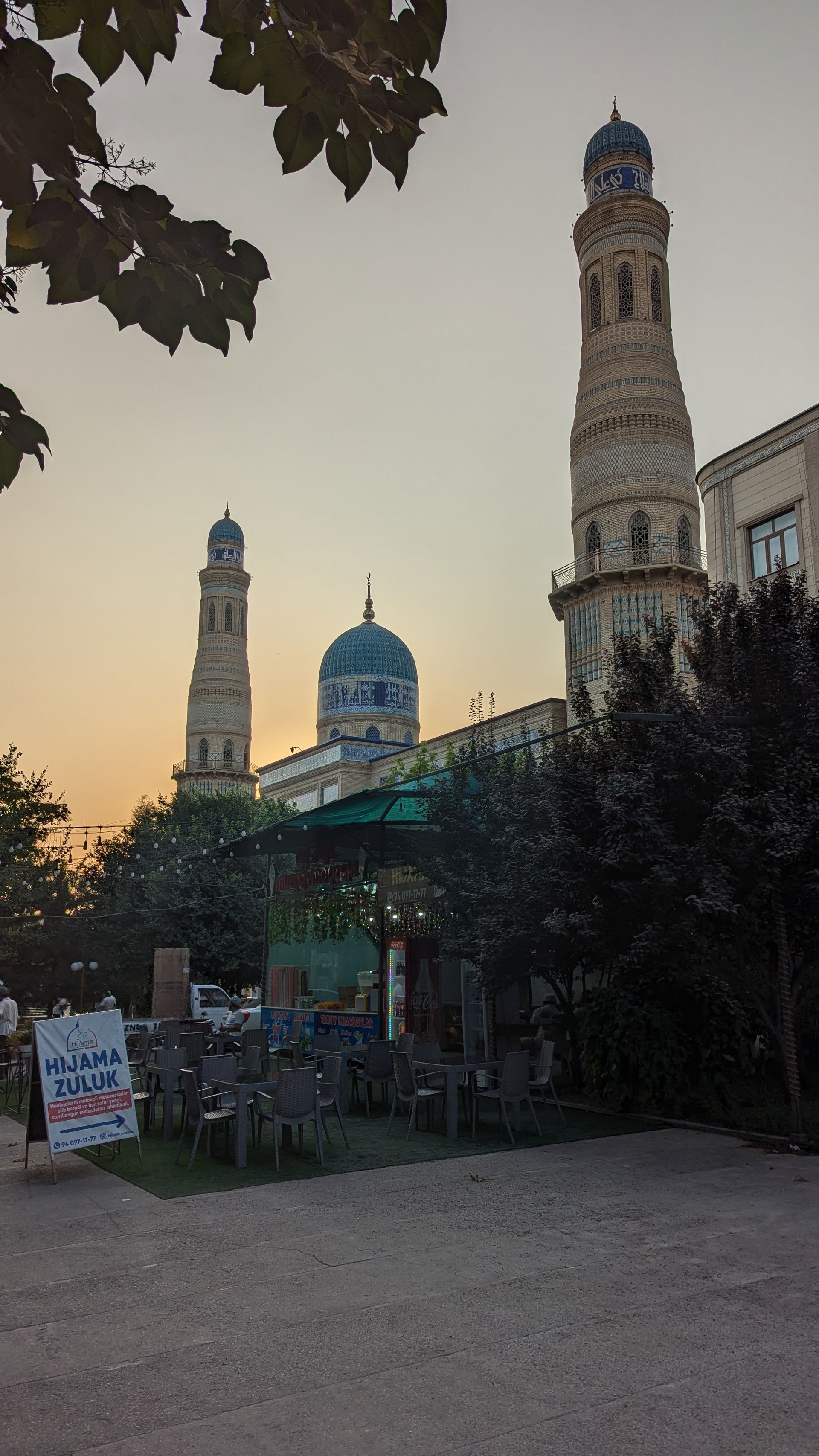
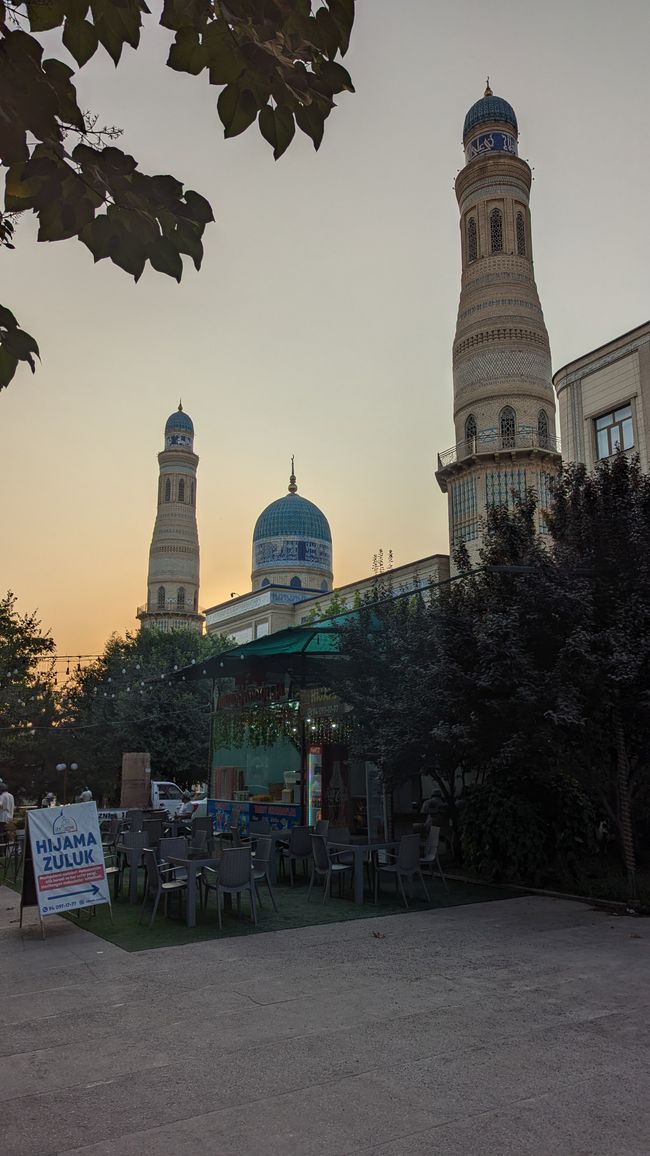
The stopover in Andijan was nice, but everything repeated itself. An oversized flagpole, old, aging Soviet monuments, the park with the mentioned rides, madrasas, mosques, and minarets that all look the same to me (though very, very beautiful).
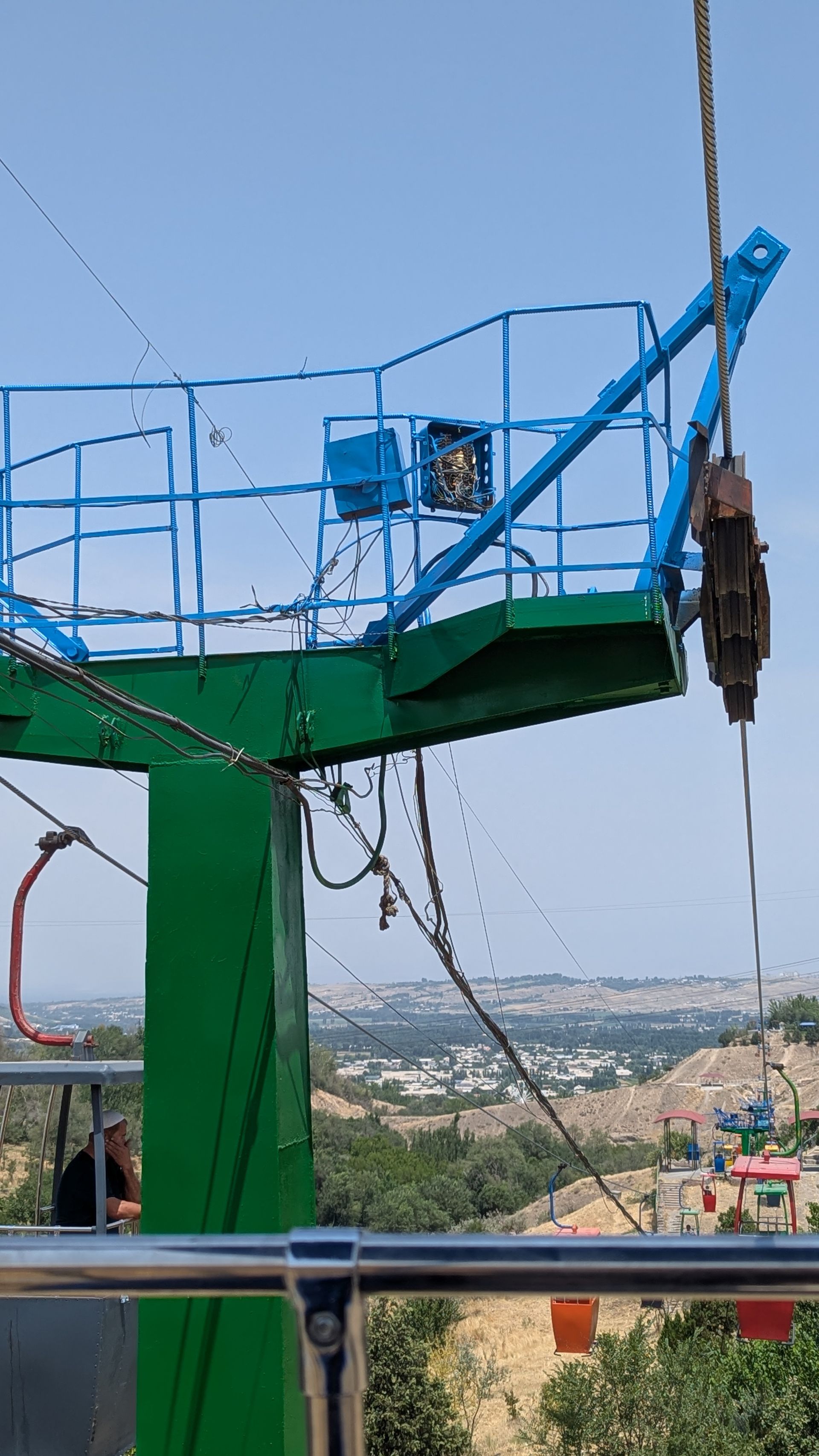
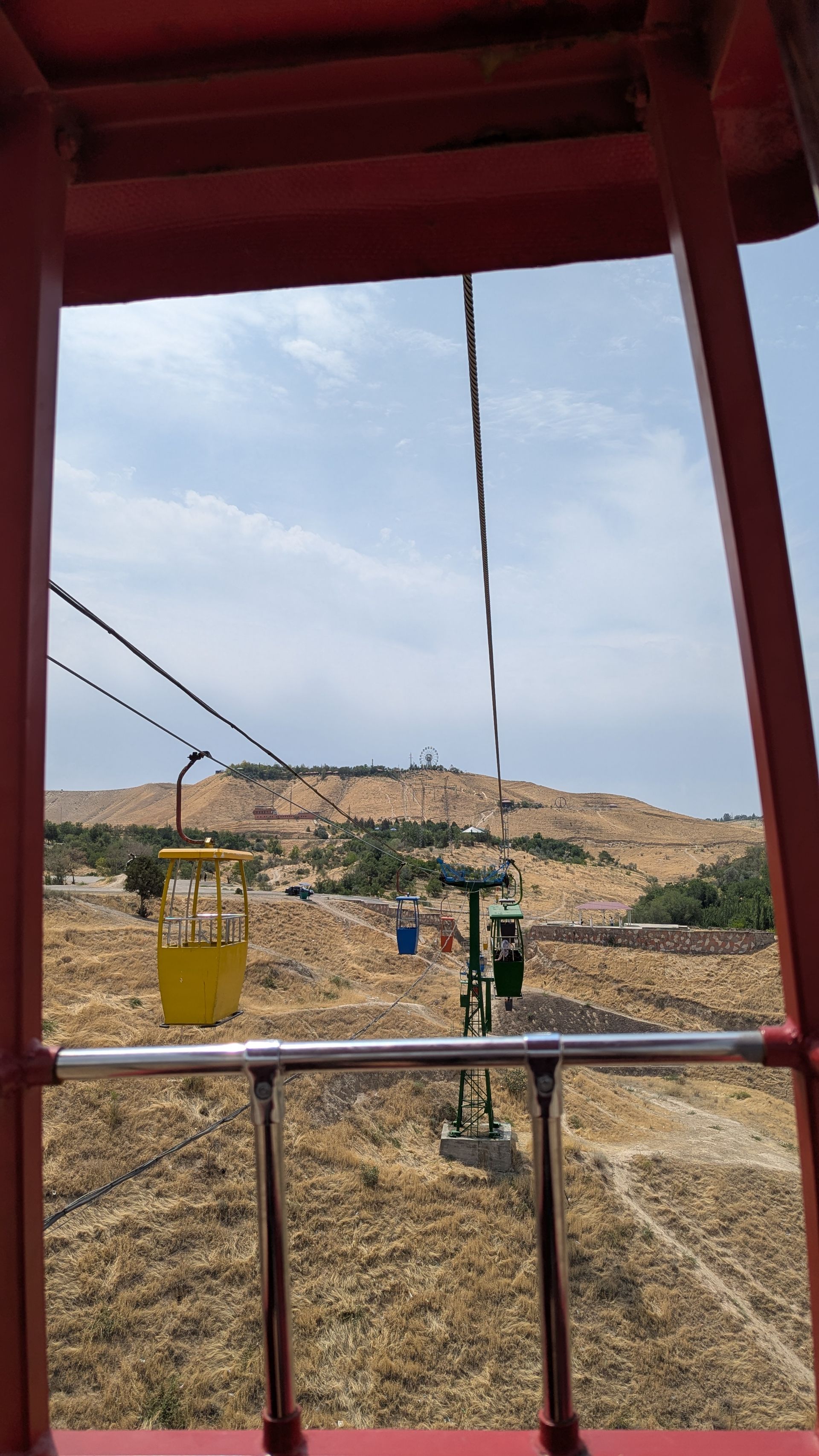
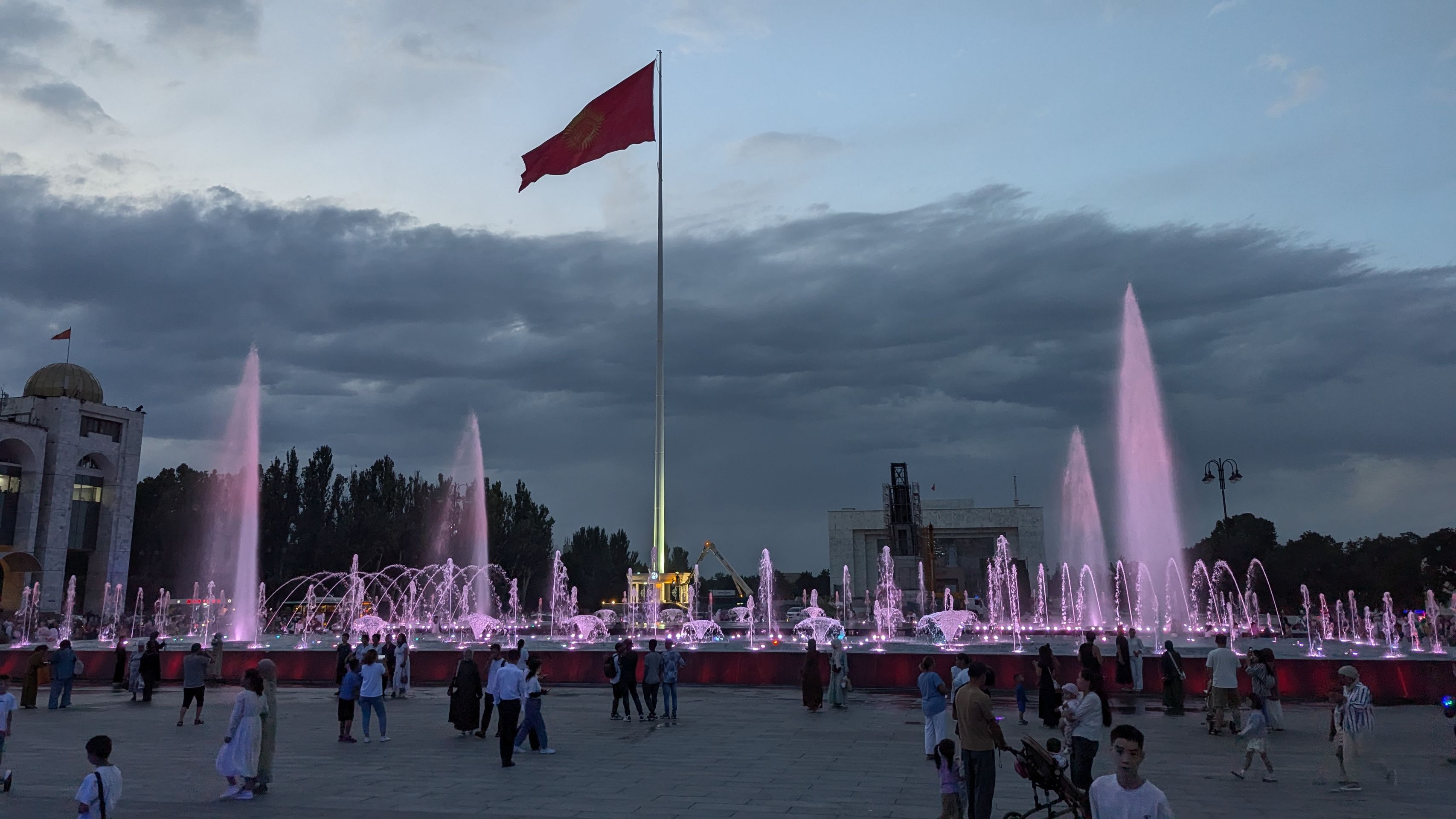
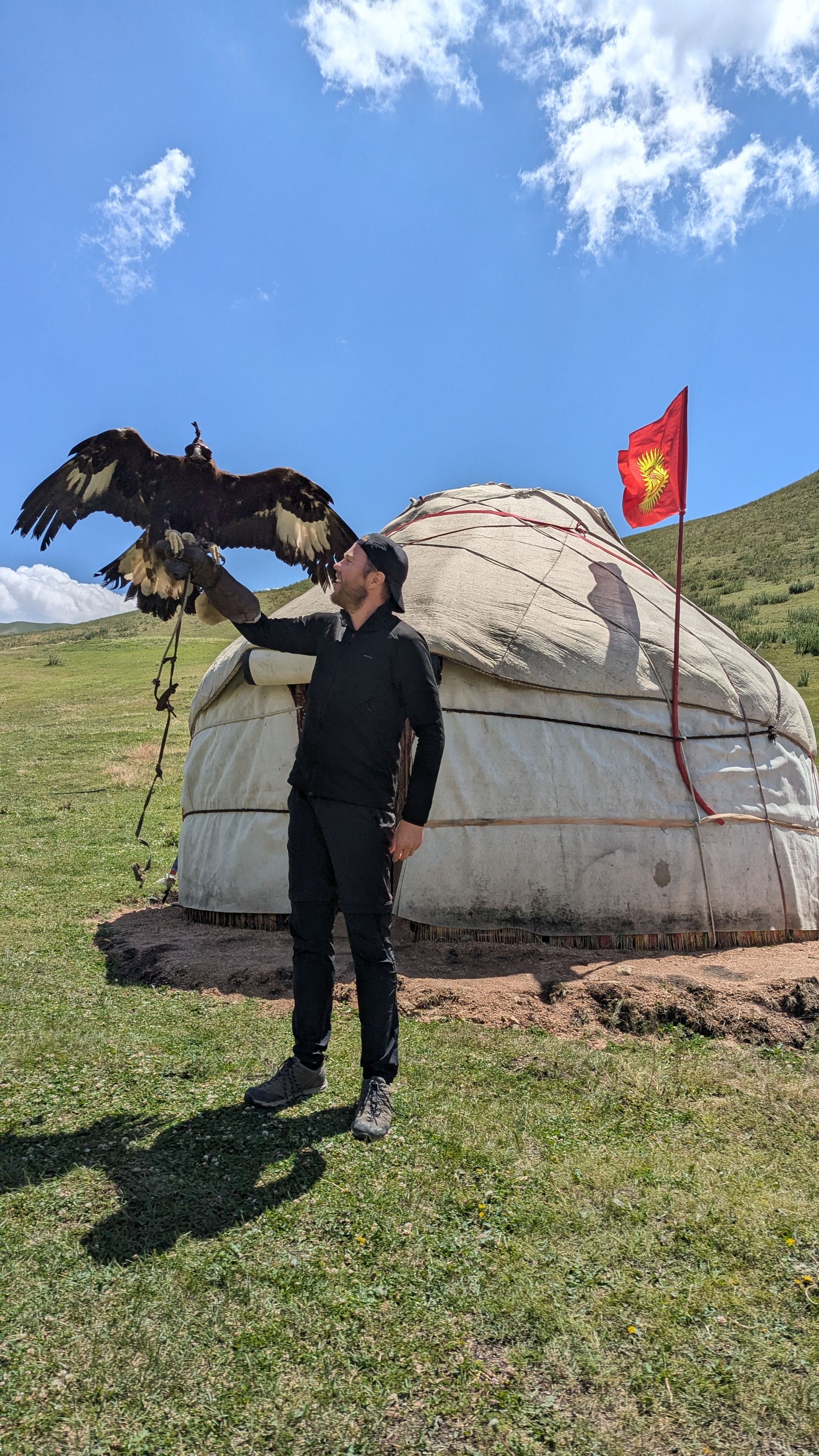
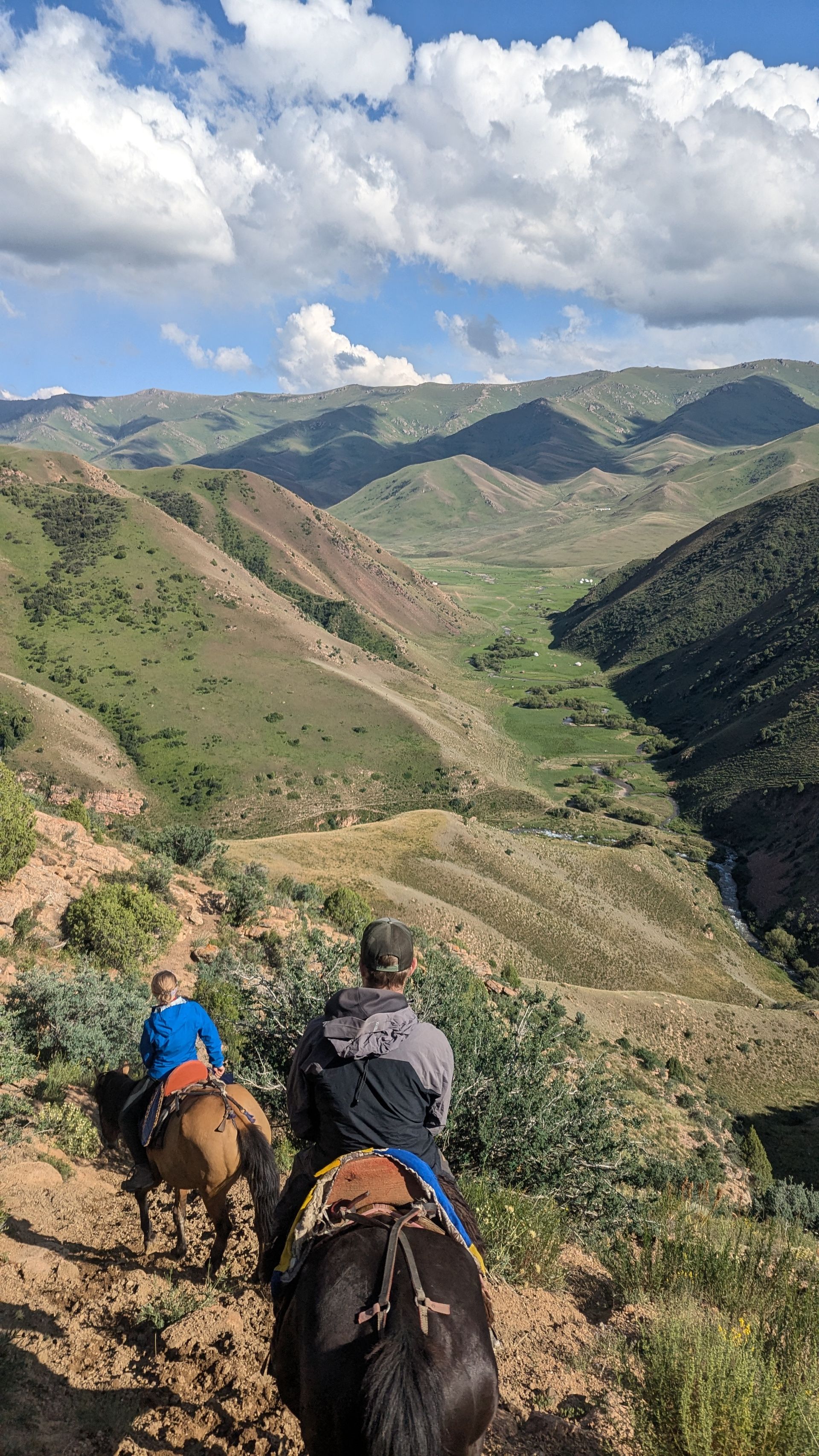
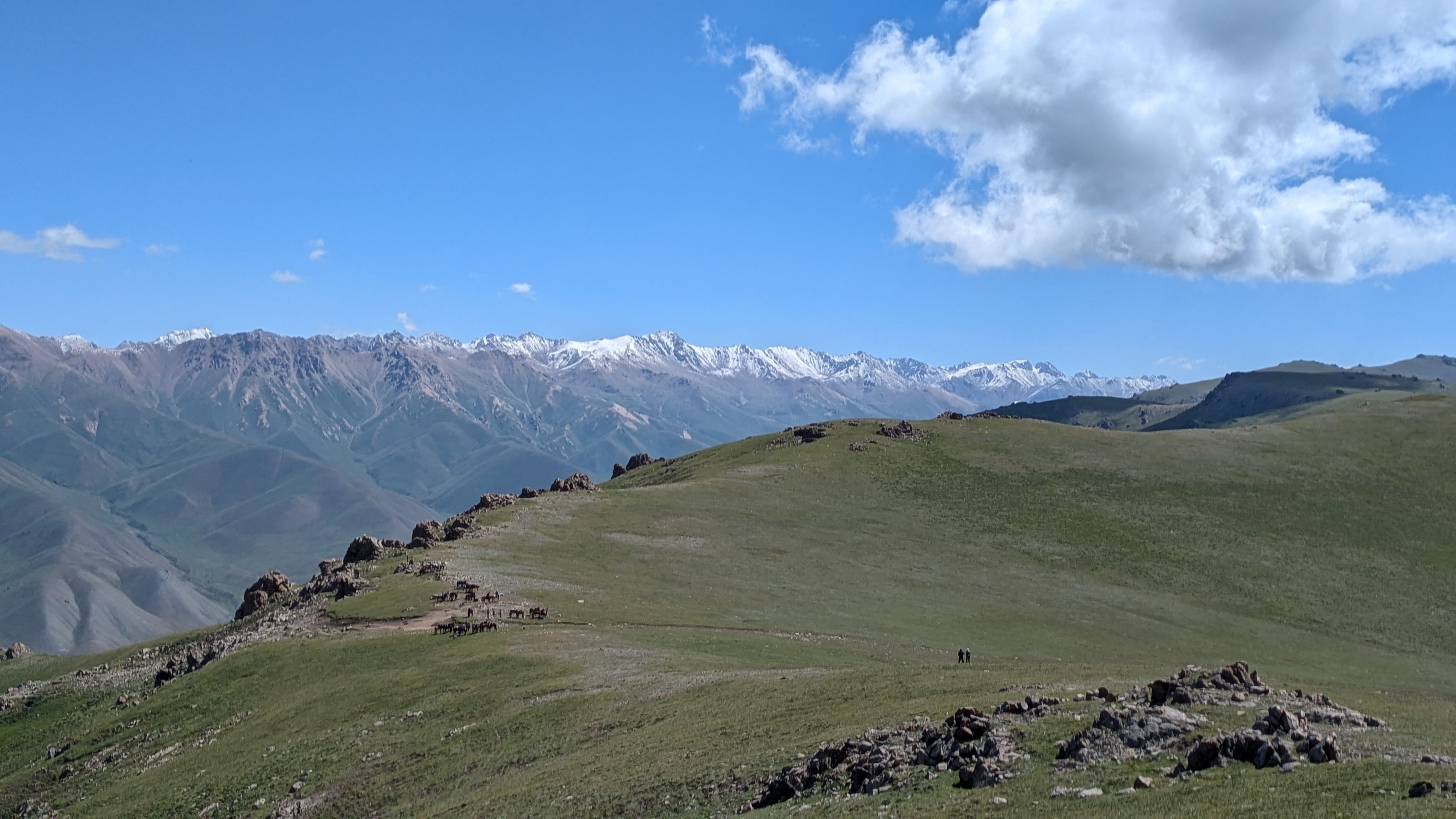
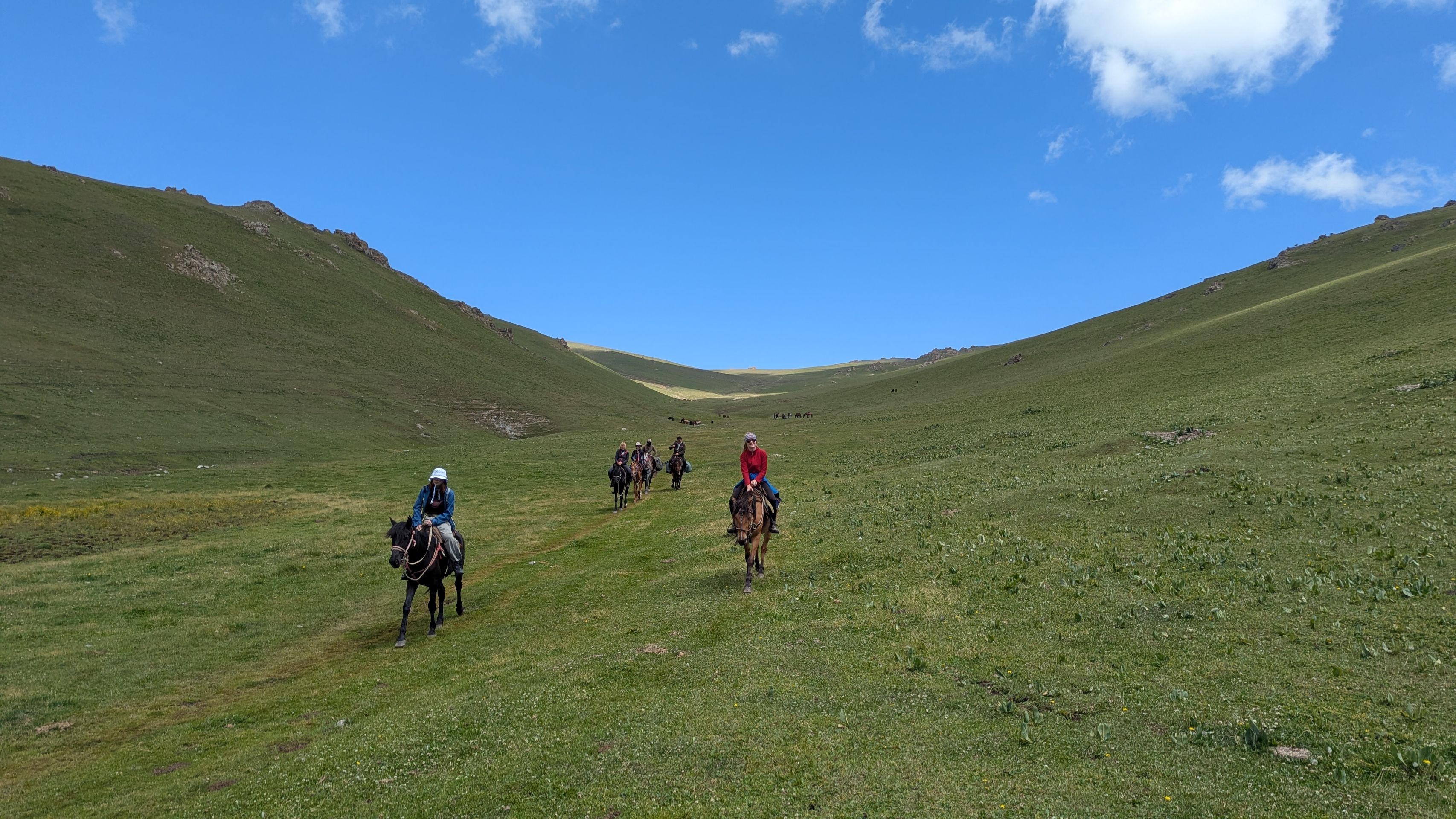
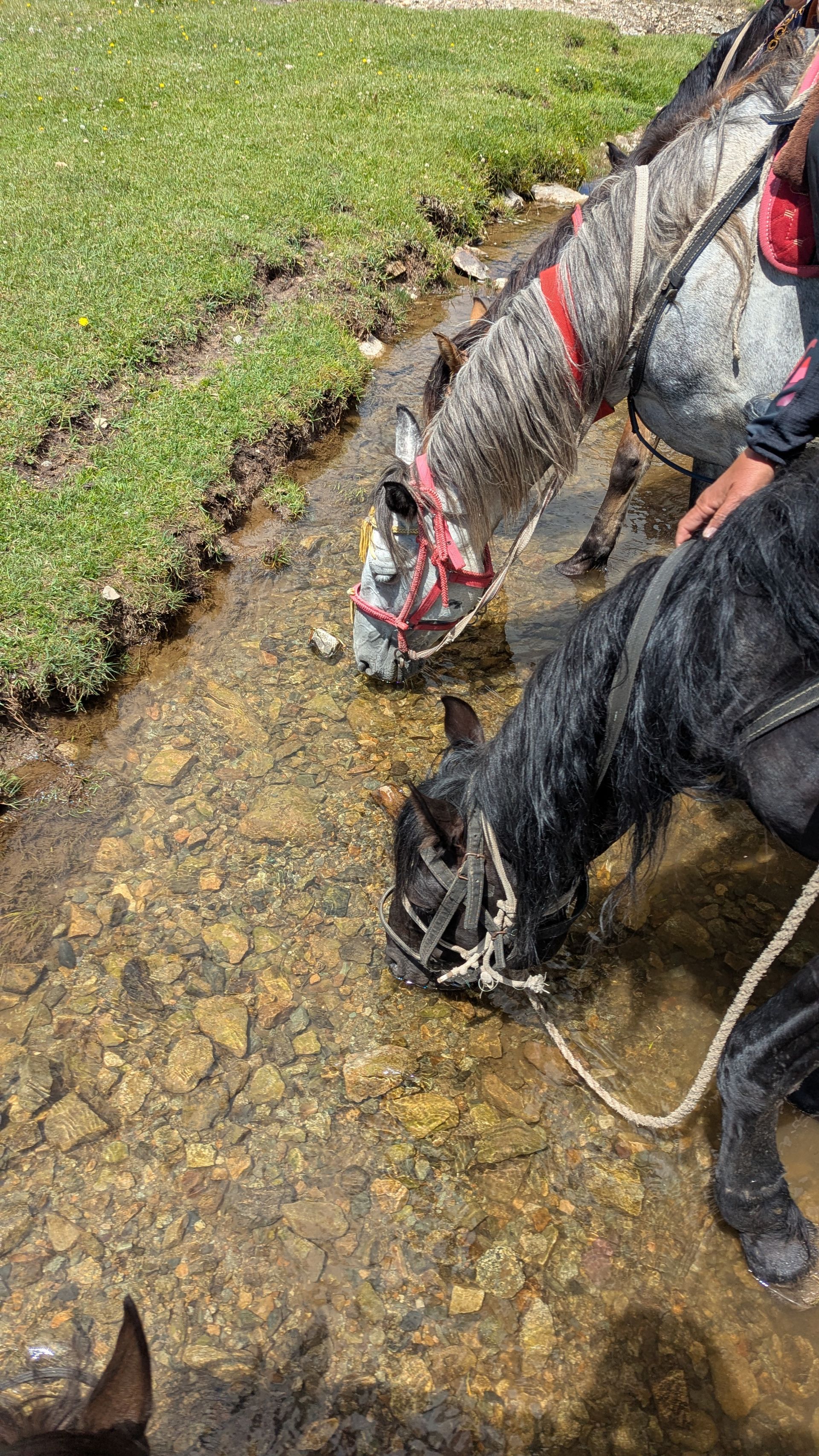
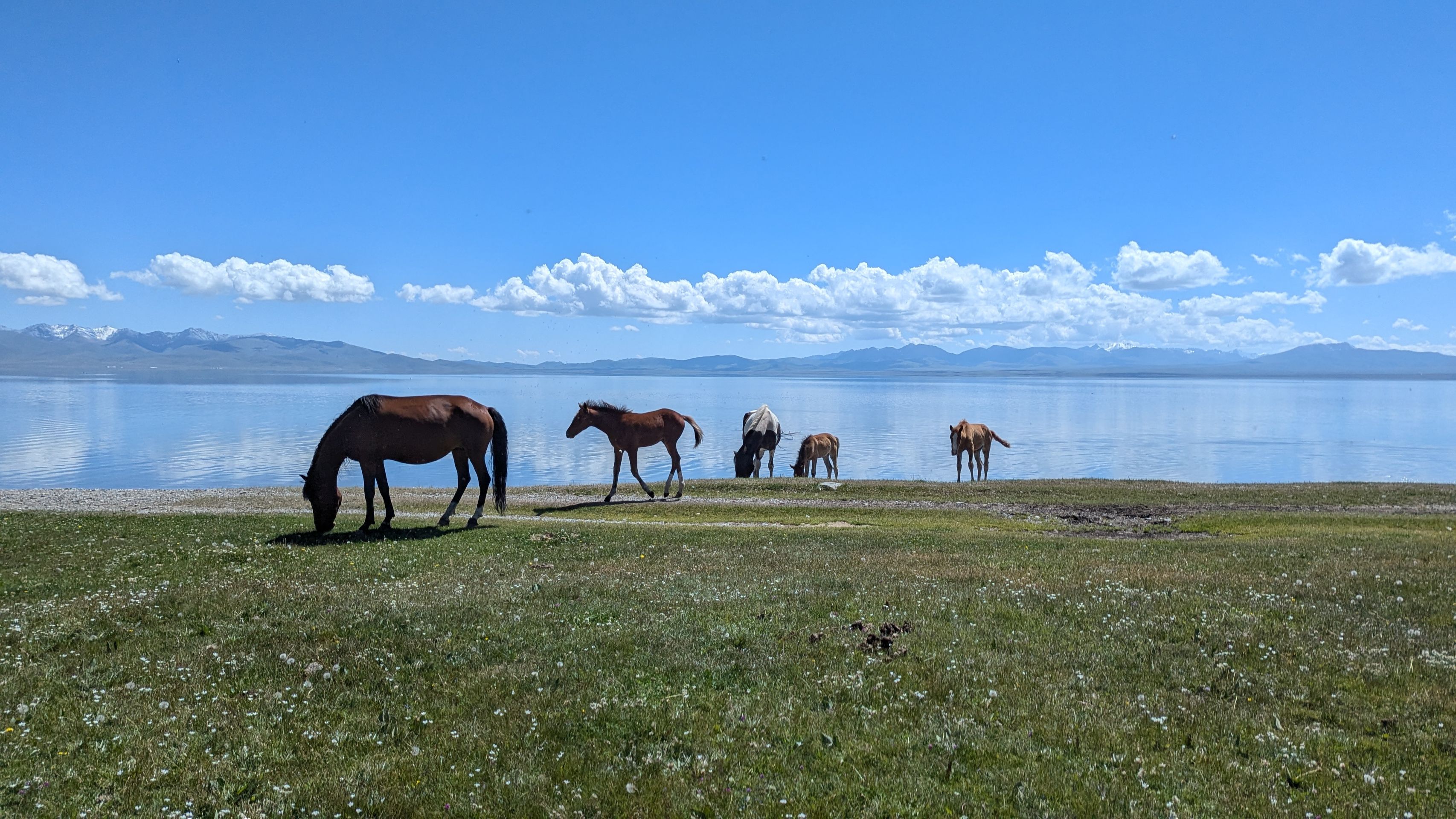
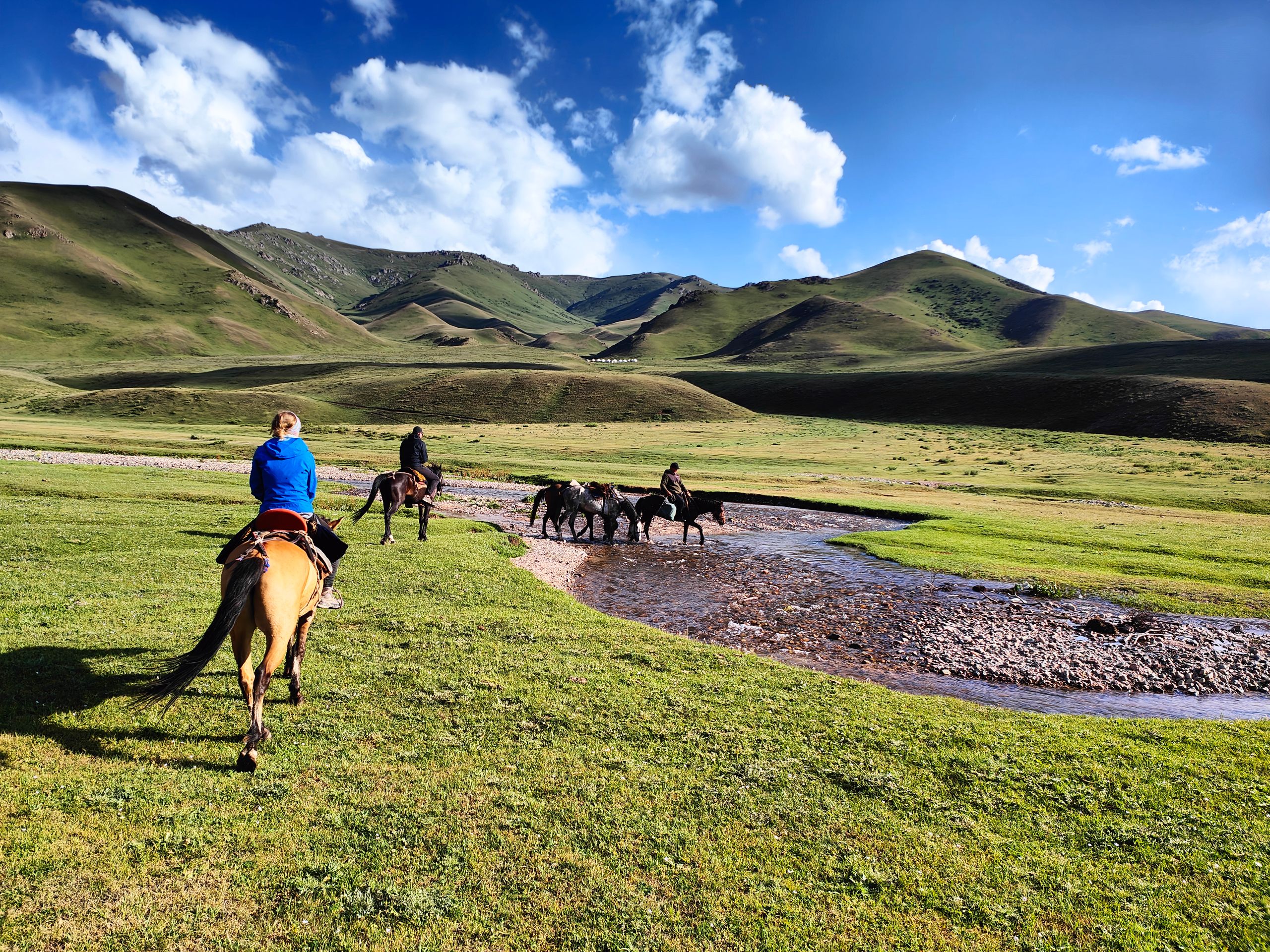
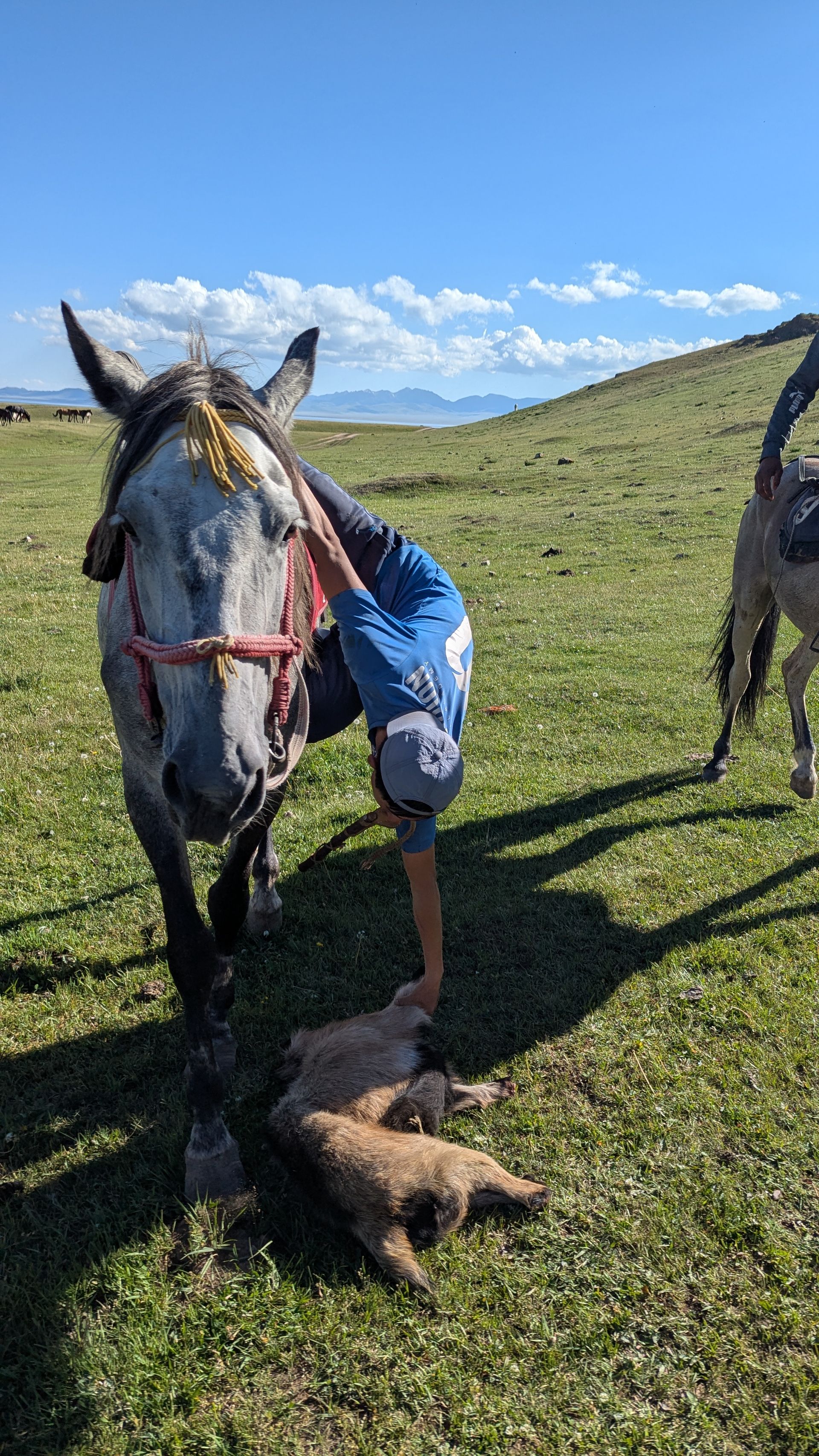
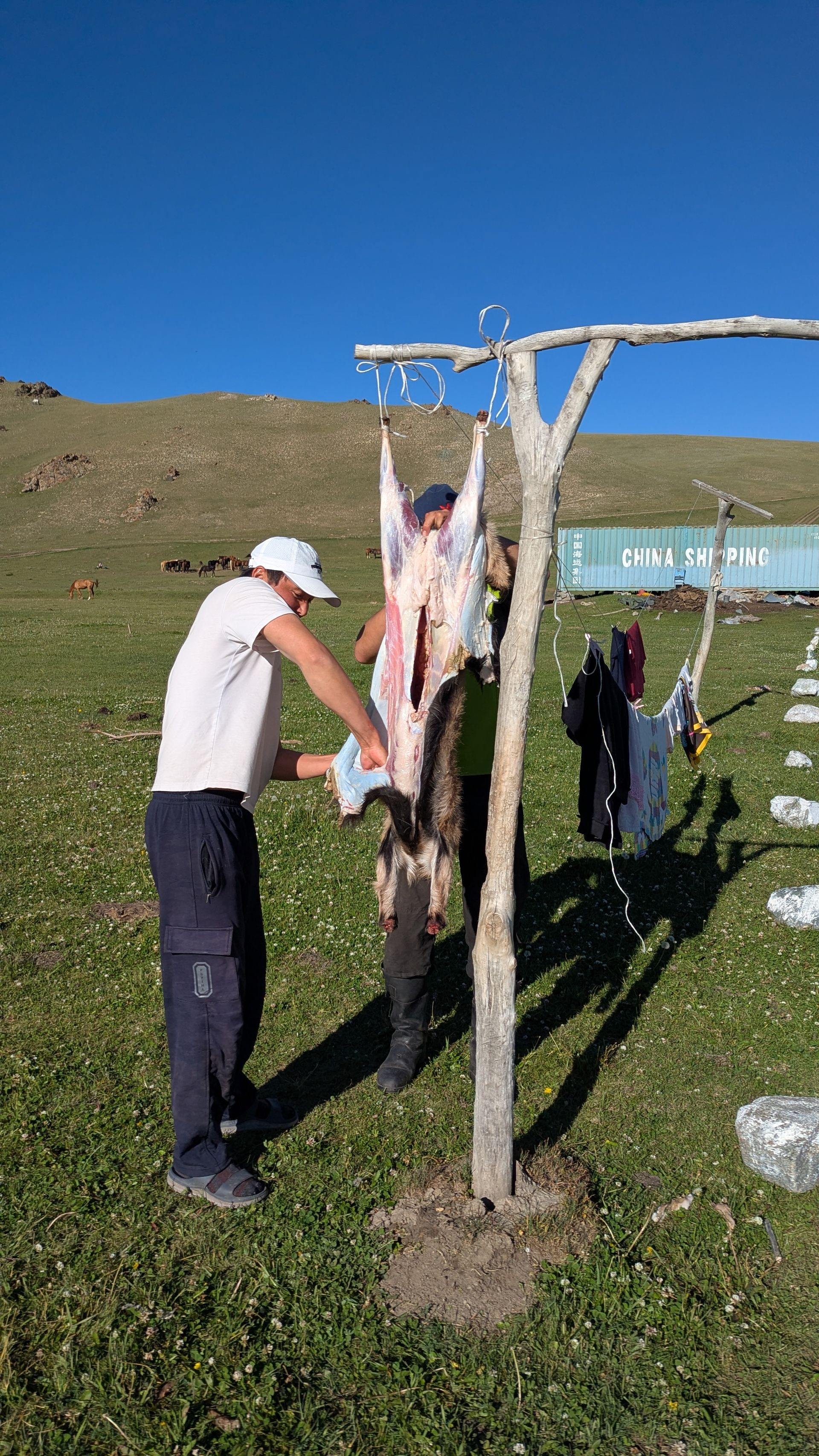
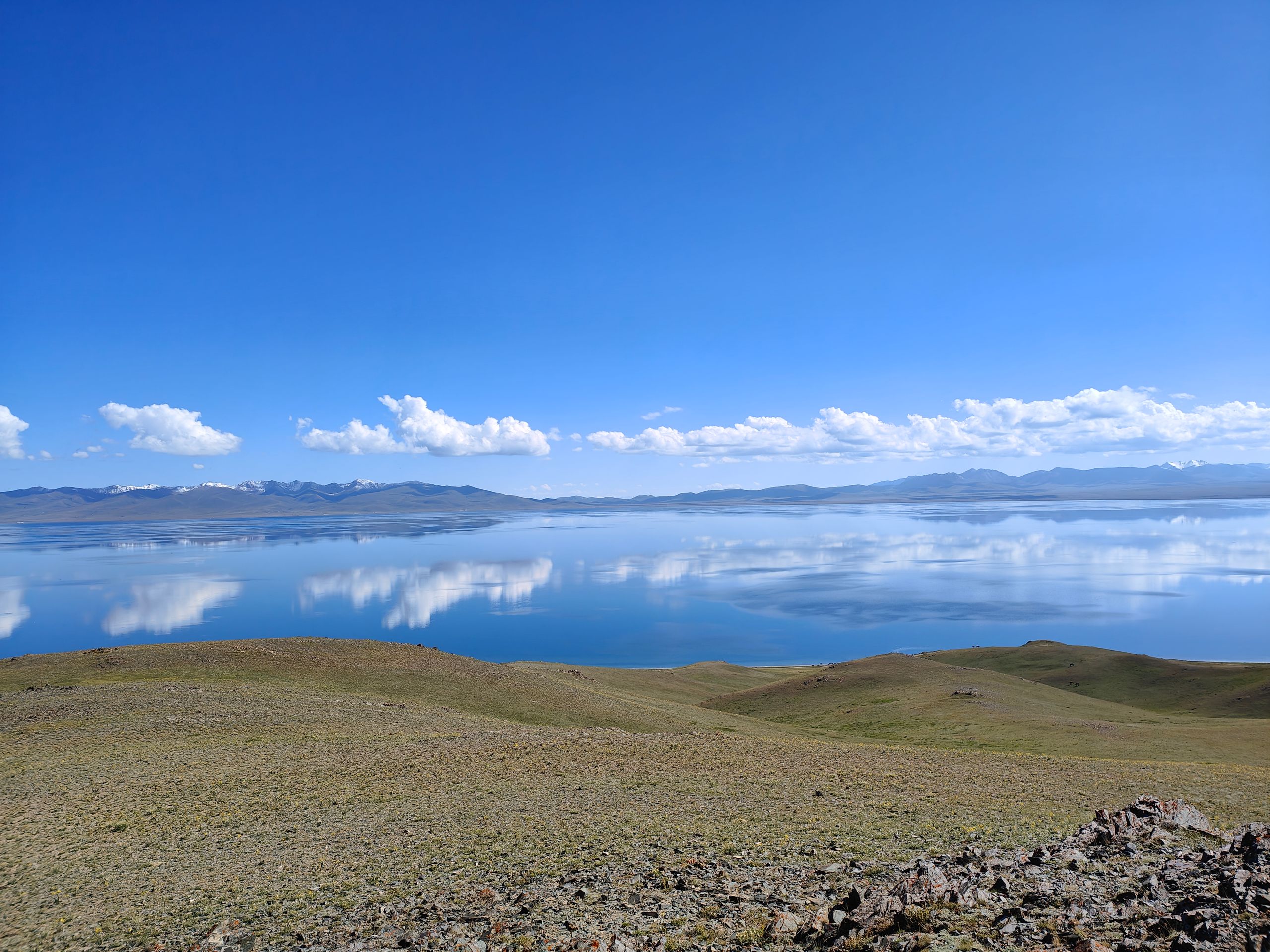
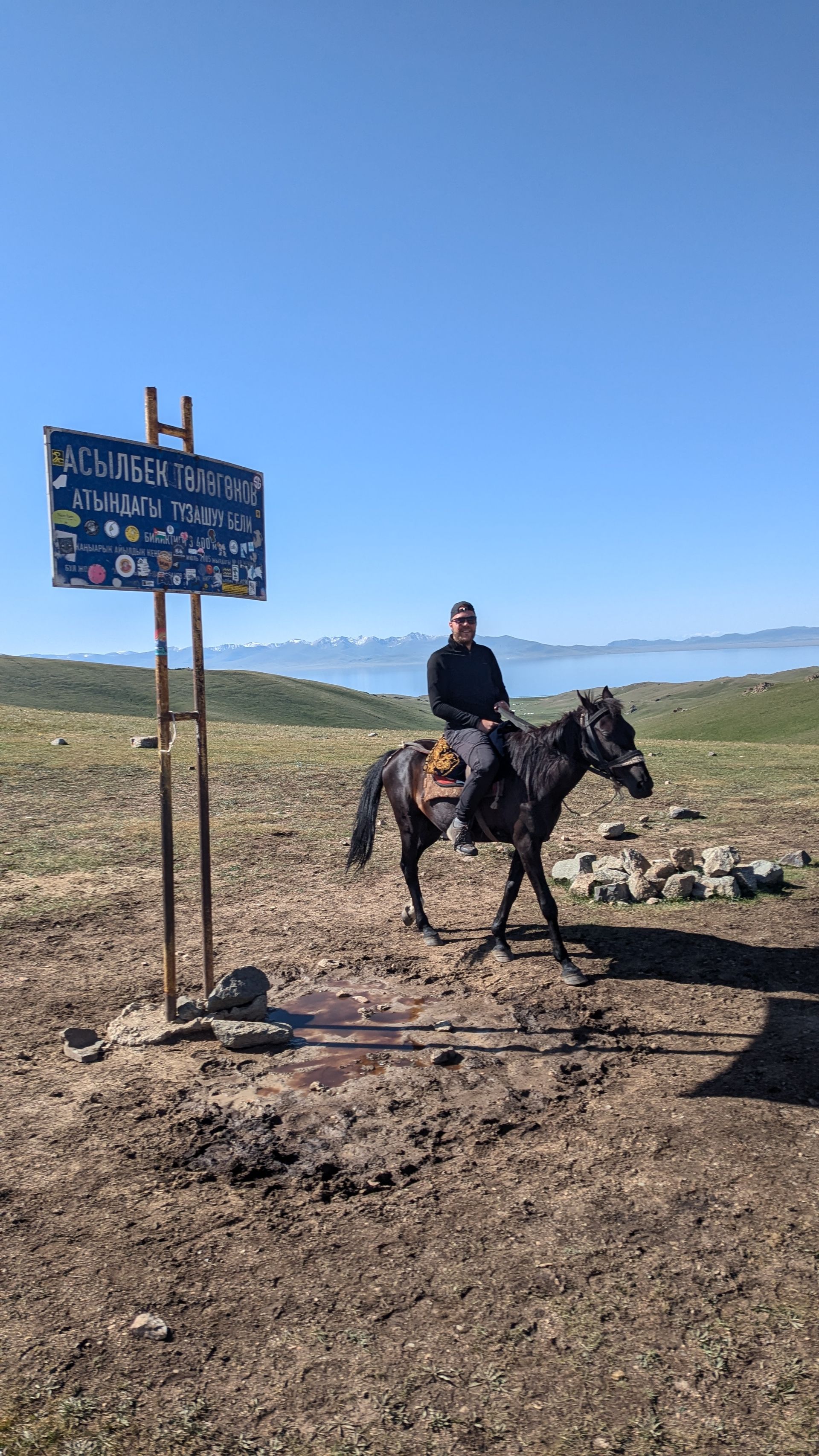
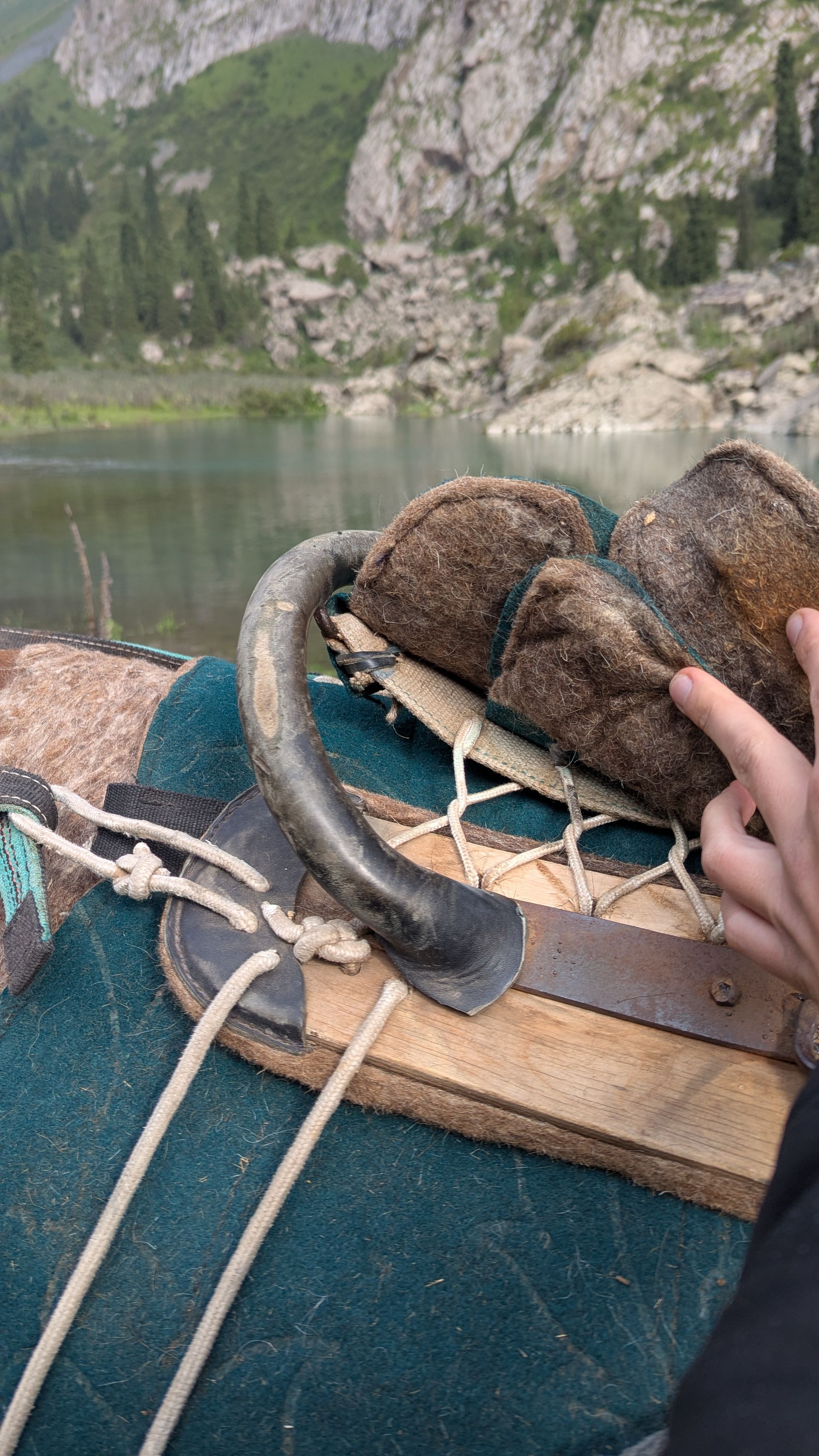
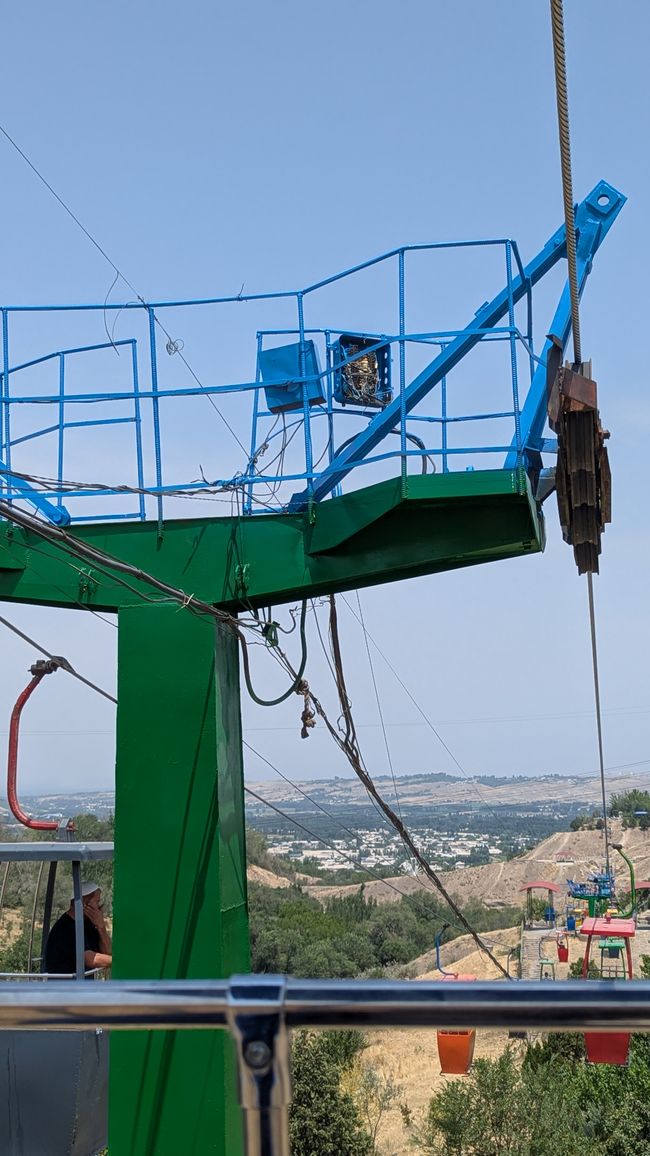
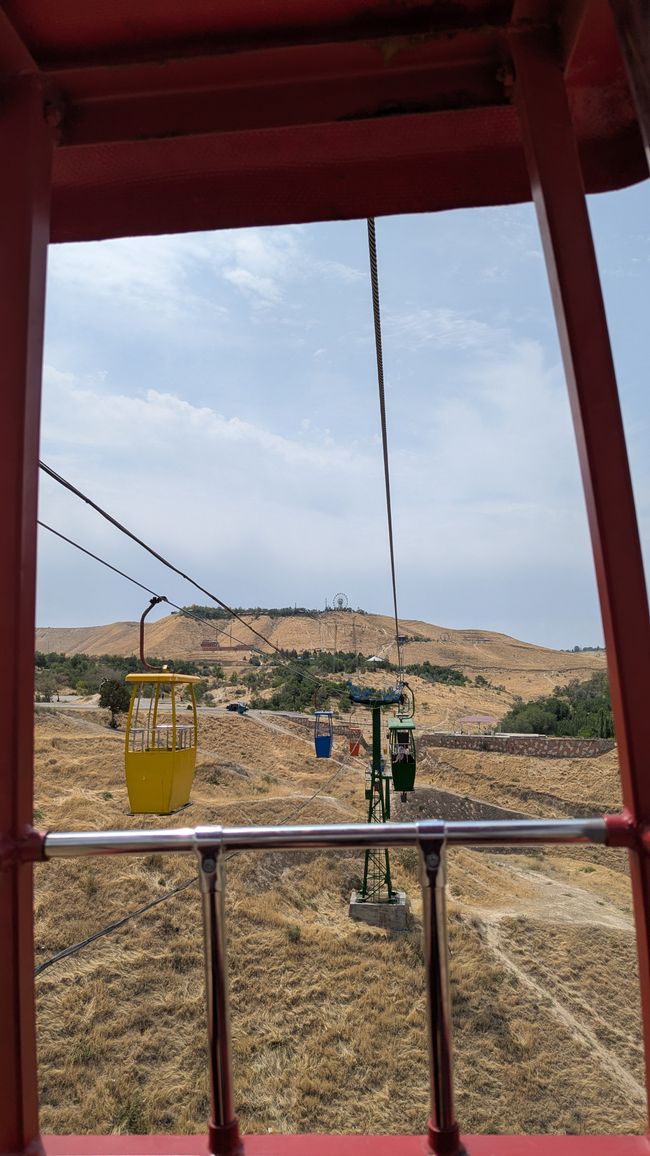
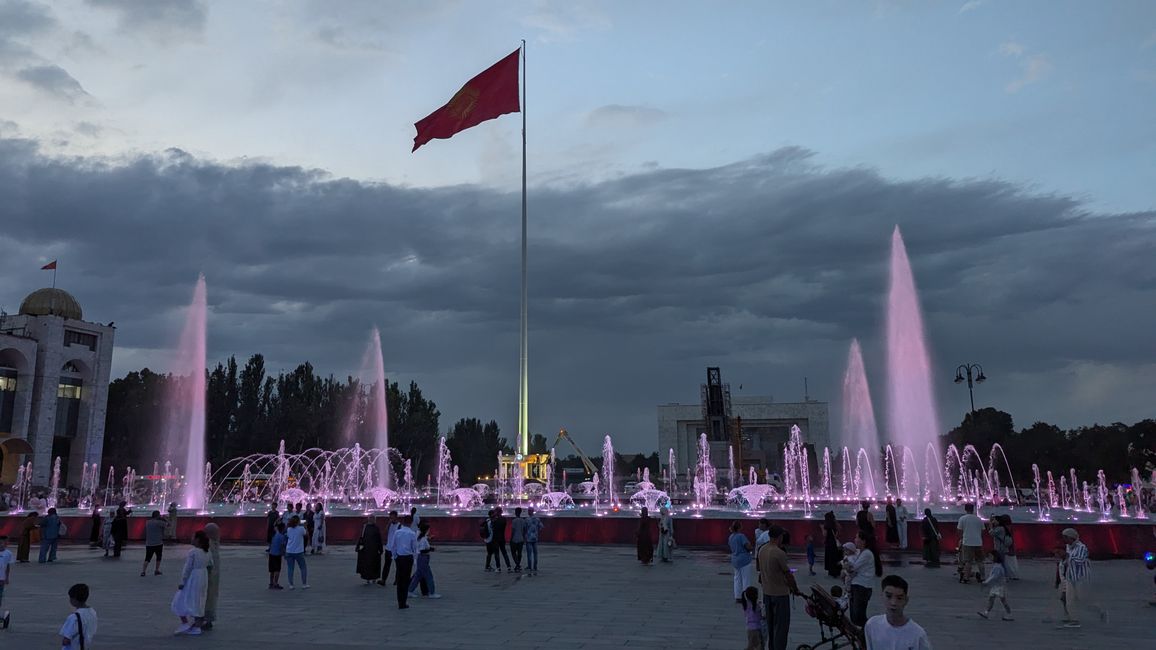
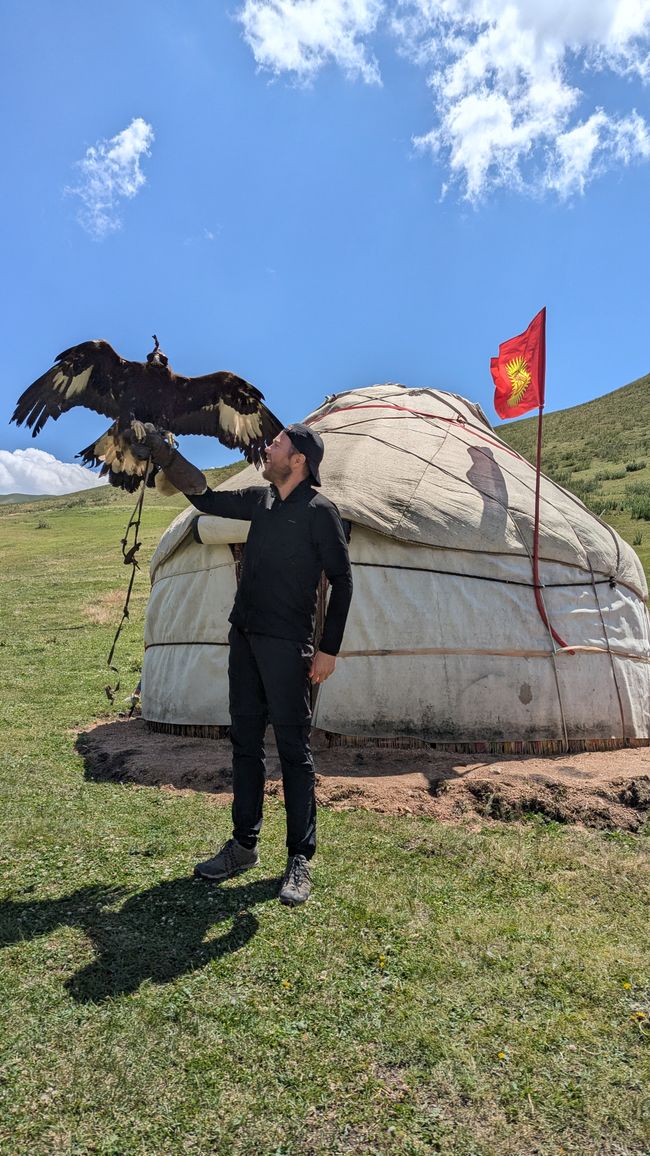
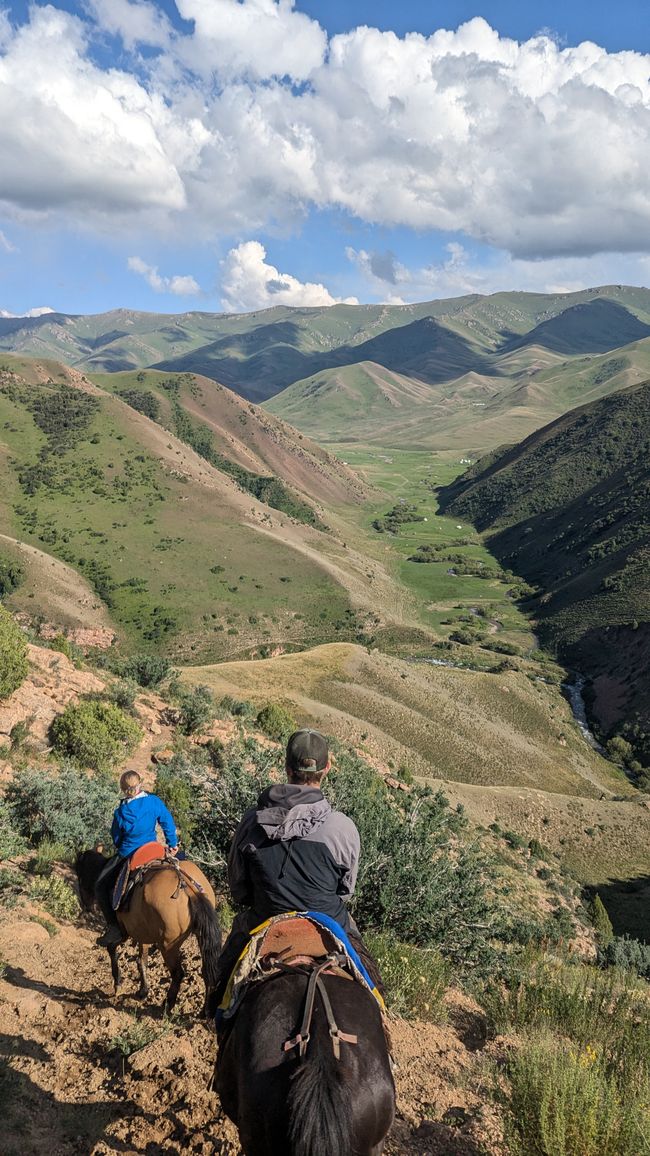
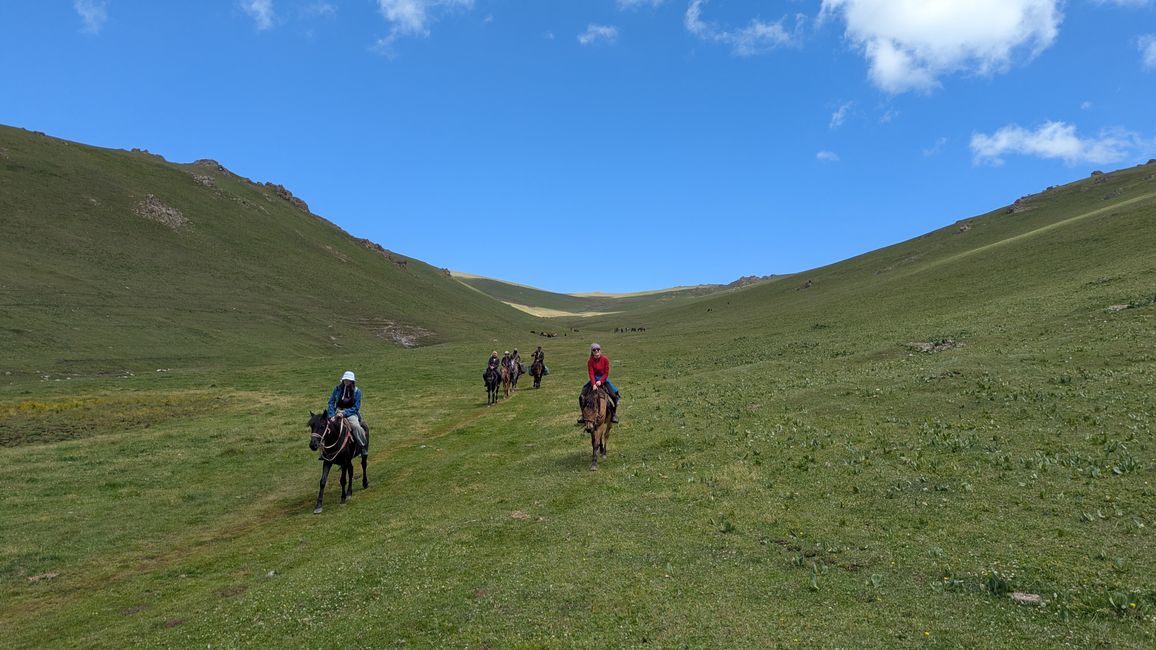
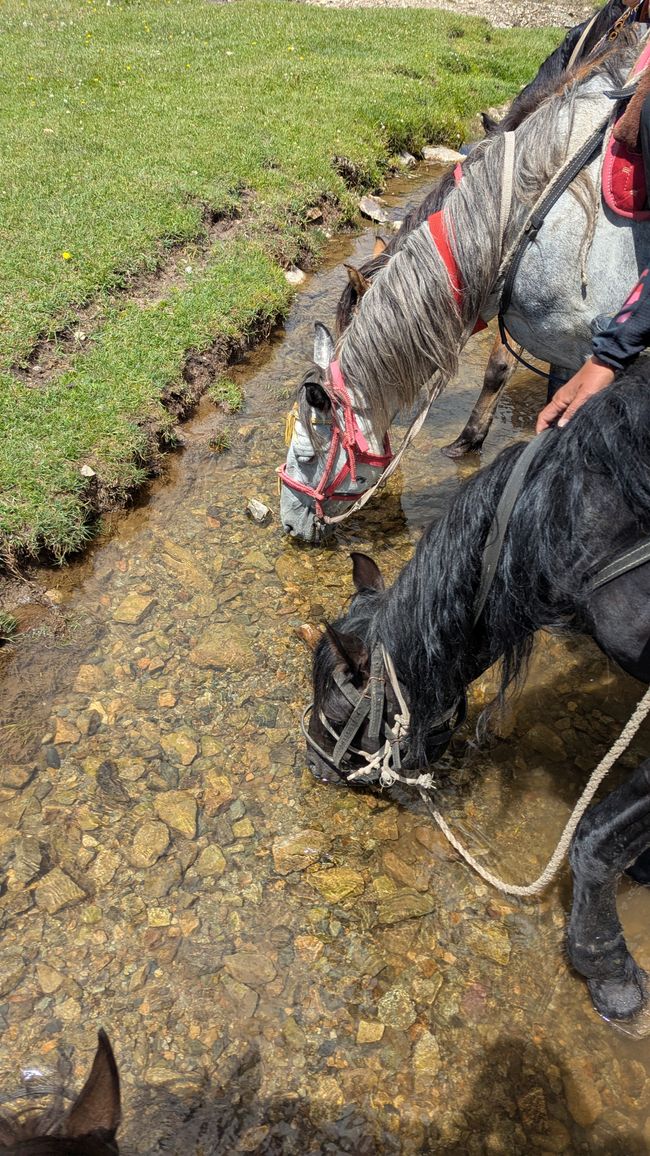
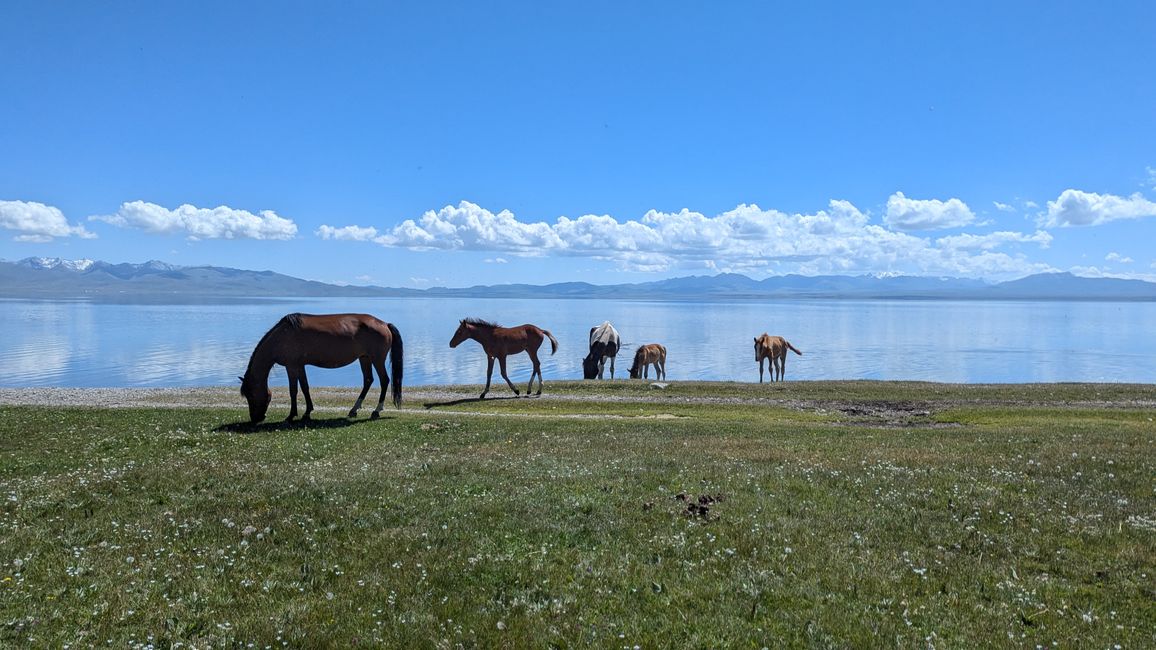
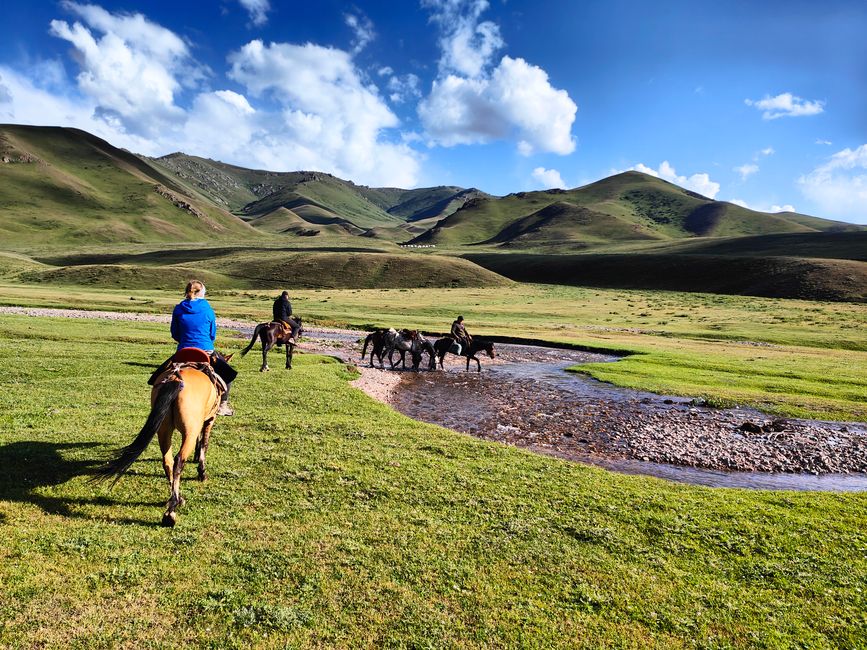
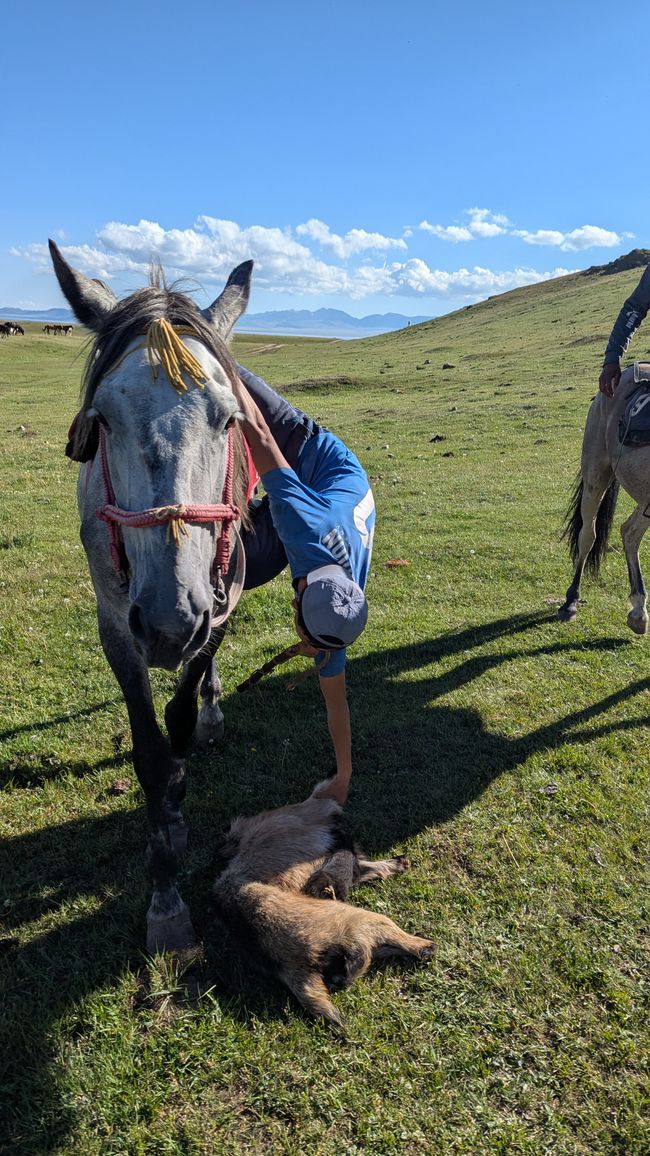
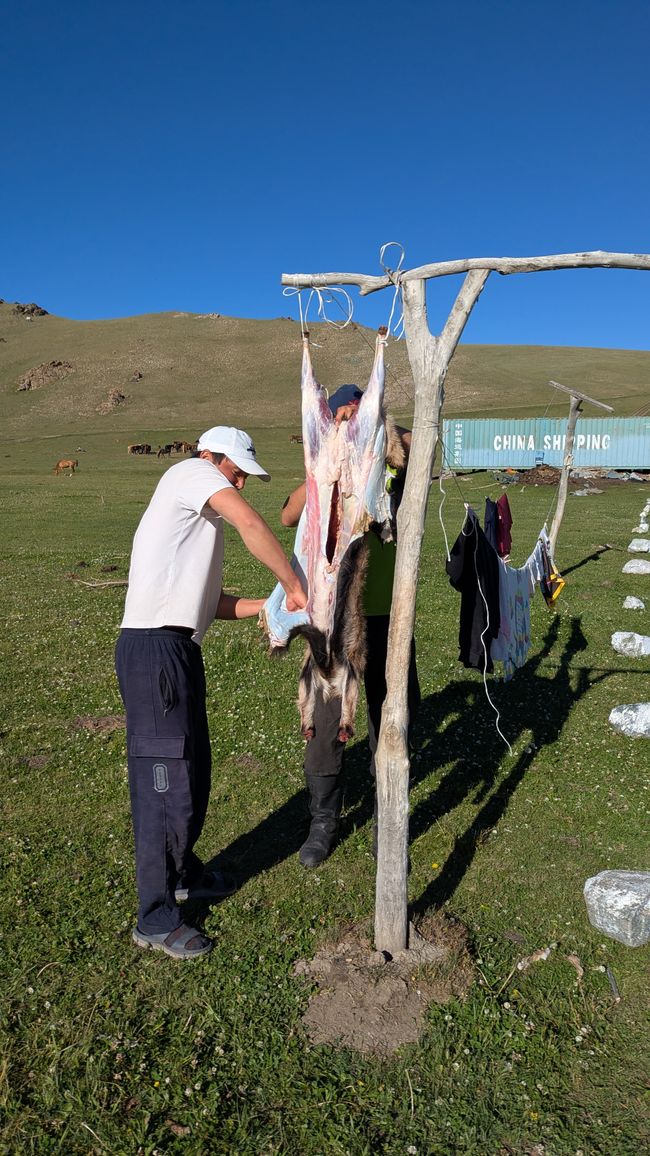
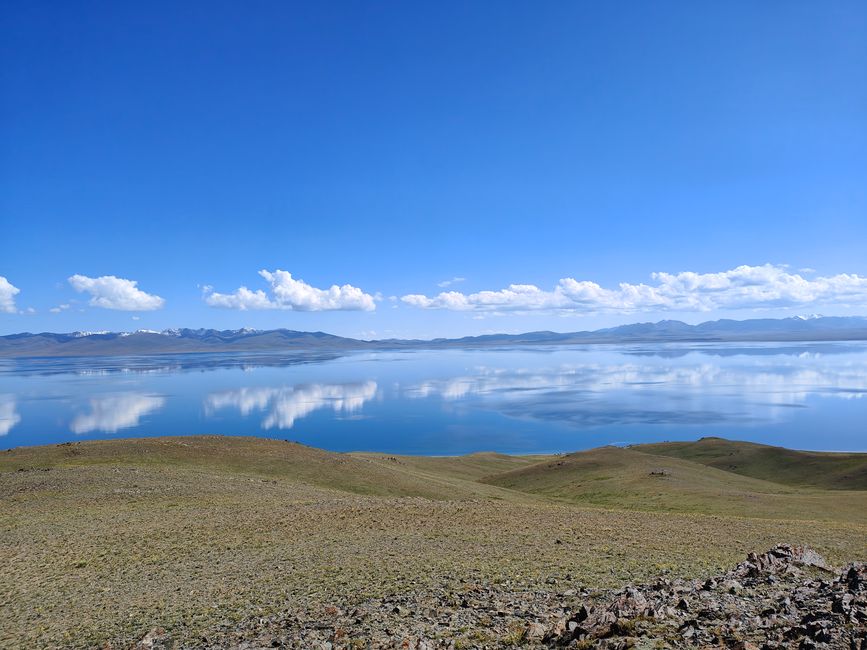
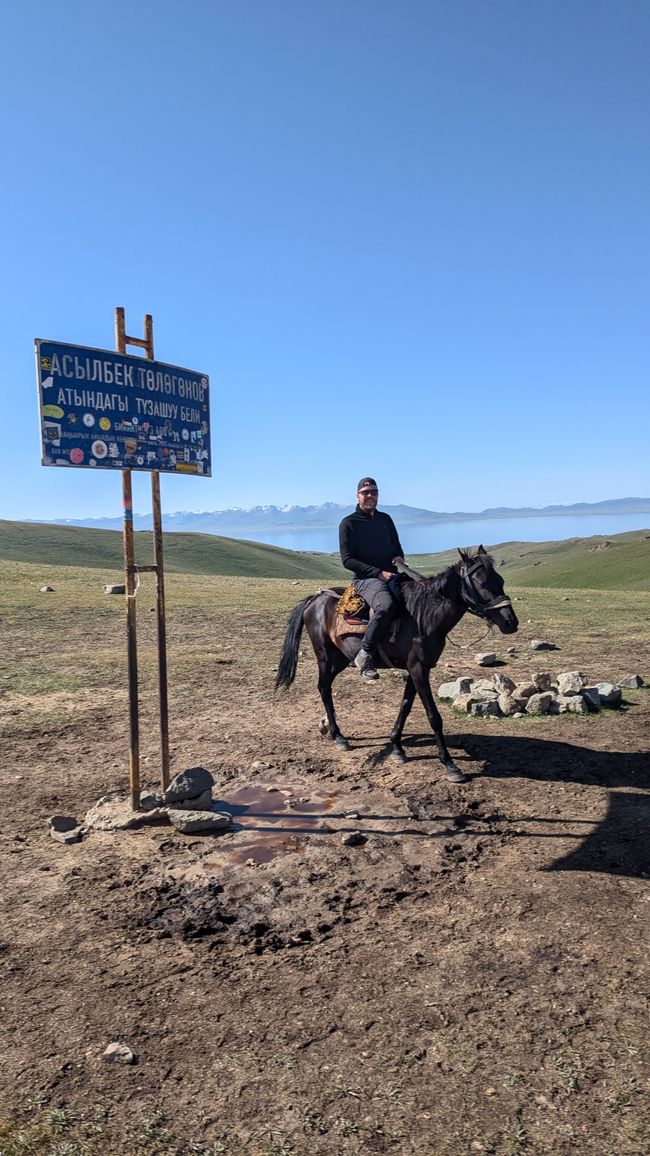
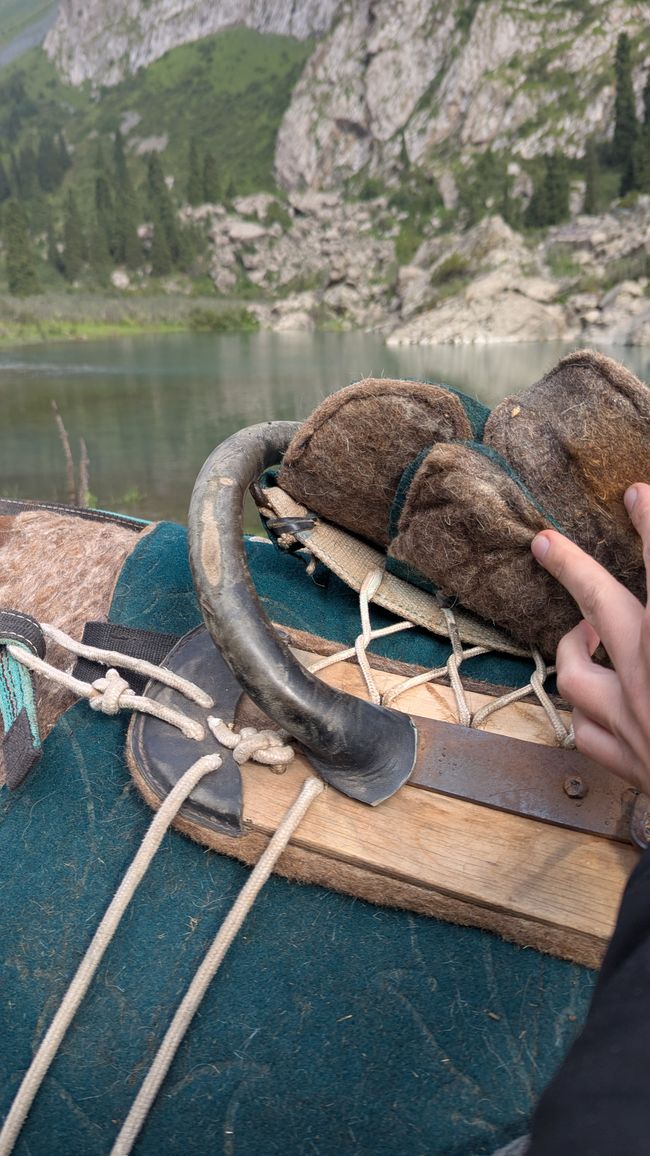
On the morning before my return to Osh, I wanted to go to another park, but I had to taxi twenty minutes away (1€). As the cable car had not yet opened, I treated myself to a soup and a water for breakfast (2.5€), then went to the cable car (1.20€). Not a good idea, as it turned out during the ride. I hadn’t seen such a rickety construction in a long time; the pulleys were completely worn out, squeaking, or wobbling dangerously. The towers were rusting away and vibrating dangerously. Of course, the cable car stopped at its highest point for 5 minutes, and everything shook ominously. After 25 minutes, I reached my destination and was sure I would return on foot. After enjoying the view and the chain carousel, which wasn't powered by an electric motor but by two propellers mounted at the top of the framework, I realized that I indeed had to take the cable car back (1.20€) because the path would have meant 50 minutes under the scorching sun. To distract myself, I bought a water and a big ice cream (0.60€). With damp hands but safely arrived at the bottom, I walked back through the park before taking a taxi back (1€). At the hostel, I grabbed my backpack and took a bus for 2½ hours to just beyond the border (1.50€). I changed my money and took a taxi to the hostel (3€). In the early evening, I took a taxi to the local mountain in Osh, which has a museum, a mosque, and a great view. I paid 1€ for the taxi and 0.70 cents for the entrance. After that, I went by taxi (0.70 cents) to a restaurant where there was a huge lemonade and Asian noodles for 4.50€. Then I returned to the hostel (6.80€/night) and went to bed. Oh, for lunch, I had dumplings and a cola and water in between for 1.30€. Everything here is really incredibly cheap; the day that didn't even cost me 30€ would surely have cost me around 400€ at home, but without fear of falling in the cable car :)Andijan'Cable car''Gondola'The 'bus ride' the next day in a modified Mercedes Sprinter for 21 people reminded me of the awful bus rides in Colombia. After a 13-hour drive, I stopped for a meal and then fell exhausted into bed. The second day in Bishkek started for me at around 2 PM; I looked at the few monuments and in the evening, I had two beers in a nice beer garden with Brian (from the Pamir Highway). I had completely forgotten to mention that there is of course a big fountain and a big flagpole in Bishkek. BishkekOn the next day, we headed toward Kochkor, where a saddled horse was waiting for me and my companions, Justine and Sam. But first, our guide showed us his eagle, which he trains for hunting marmots, rabbits, and even wolves. Impressive, especially as it's a juvenile bird and not yet fully grown; the sharp claws were also quite breathtaking.❤️After a hearty lunch in our guide's yurt, we proceeded over the first pass (3100 meters). Upon reaching the top, we took our first short break and enjoyed a beautiful view of the green grassy landscape. Horses and cows grazed everywhere, which is a lovely way of life compared to our livestock farming. In the evening, we had soup before already heading to our yurt at half past nine. I was a bit concerned that I would be wide awake at 4 AM, but our guide had to wake us up at 8 AM, what a wonderfully relaxed long night. At 9 AM, we were back on our horses, and over more passes, we reached Song-Köl Lake, where we briefly ventured into the water with the horses. After 4 hours, my behind was grateful that we spent the rest of the day playing frisbee and relaxing. In between, the guides showed us a game called “Kok-Boru.” A dead, 35 kg heavy goat (without a head and with half legs) is placed on the playing field. Then, both teams gather around the goat. After the start, both teams initially try to pull the goat onto one of their team's horses. It gets quite rough; the horses ram each other, are whipped, and pushed. As soon as someone has the goat on their horse, the opponent tries to prevent the other team from getting the goat to the finish line (similar to football). During this, one also pulls on the goat, rams or pushes the opposing horse, all while galloping. When the goat is successfully thrown into the goal, a point is scored. After the game, the goat was skinned and prepared for our dinner. In the yurt, we first had tea, followed by soup, and then potatoes with onions and the goat from the game. It was delicious. In the evening, we went to the mares again, and we were allowed to try horse milk, which tasted really good fresh, slightly sweet, and very intense. However, I cannot recommend fermented horse milk; the locals drink it as a source of energy (calling it Nitro), but even the locals chug it down in one gulp, and I can't imagine it's consumed out of enjoyment. On the last day, we were at the 'saddle' promptly at 8 AM; the metal-welded frame was wrapped with a few pieces of fabric and a big cushion was laid on top. Consequently, after 5 hours and two more passes, I was glad it was over. The stirrups were too short for me, and the saddle was a complete disaster; everything hurt for two days. My butt from the saddle, my back from galloping, my knees and legs from the incorrectly adjusted stirrups, and my arms from bracing myself when going steep downhill. Still, it was a great experience, and the landscape was spectacular, especially when you see all the animals that can move much more freely than ours!Pass 1What a viewTo the lakeBreakFreedomStorybookKok-BoruDinnerStorybookReturn tripSaddle? 😂
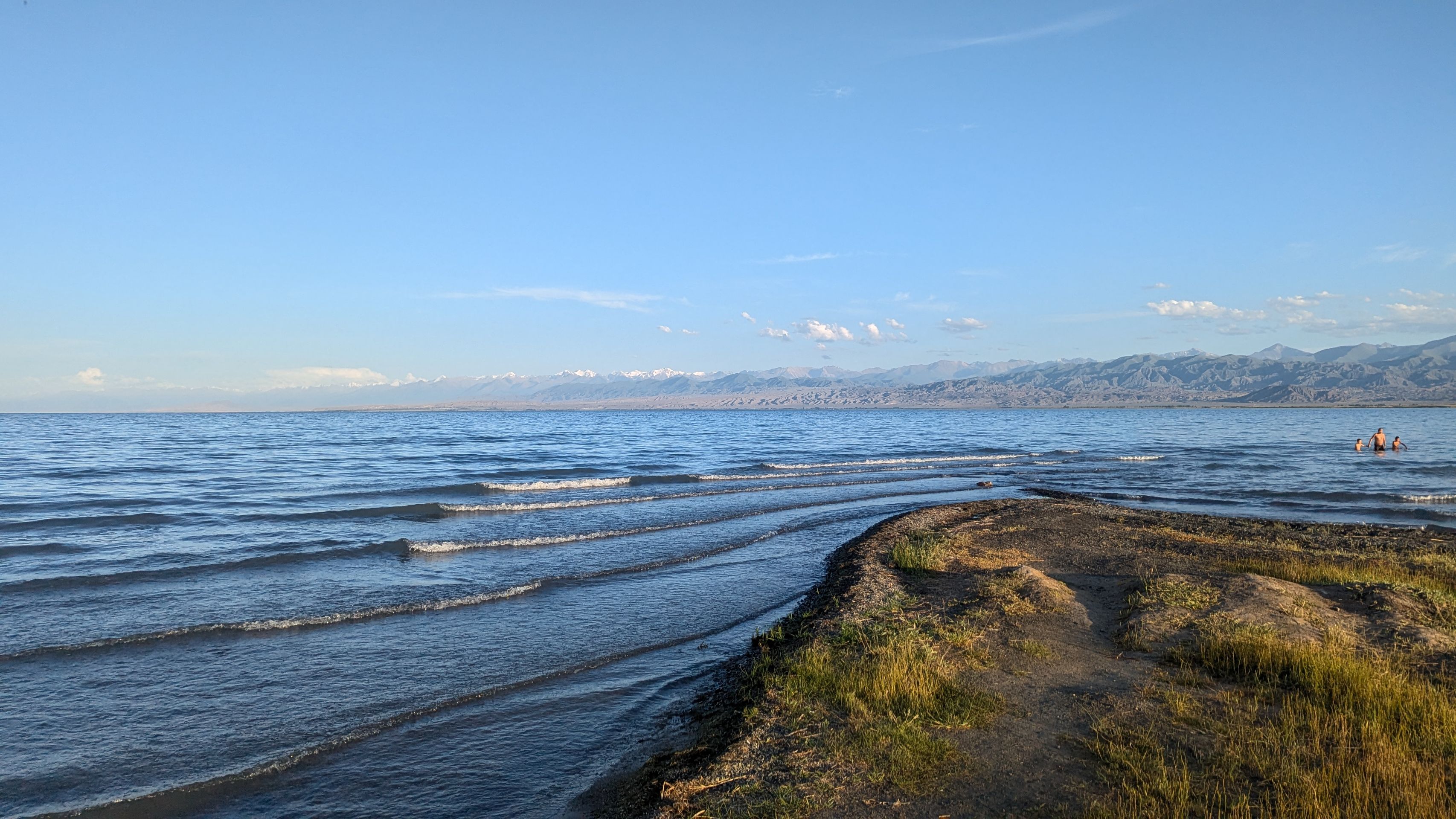
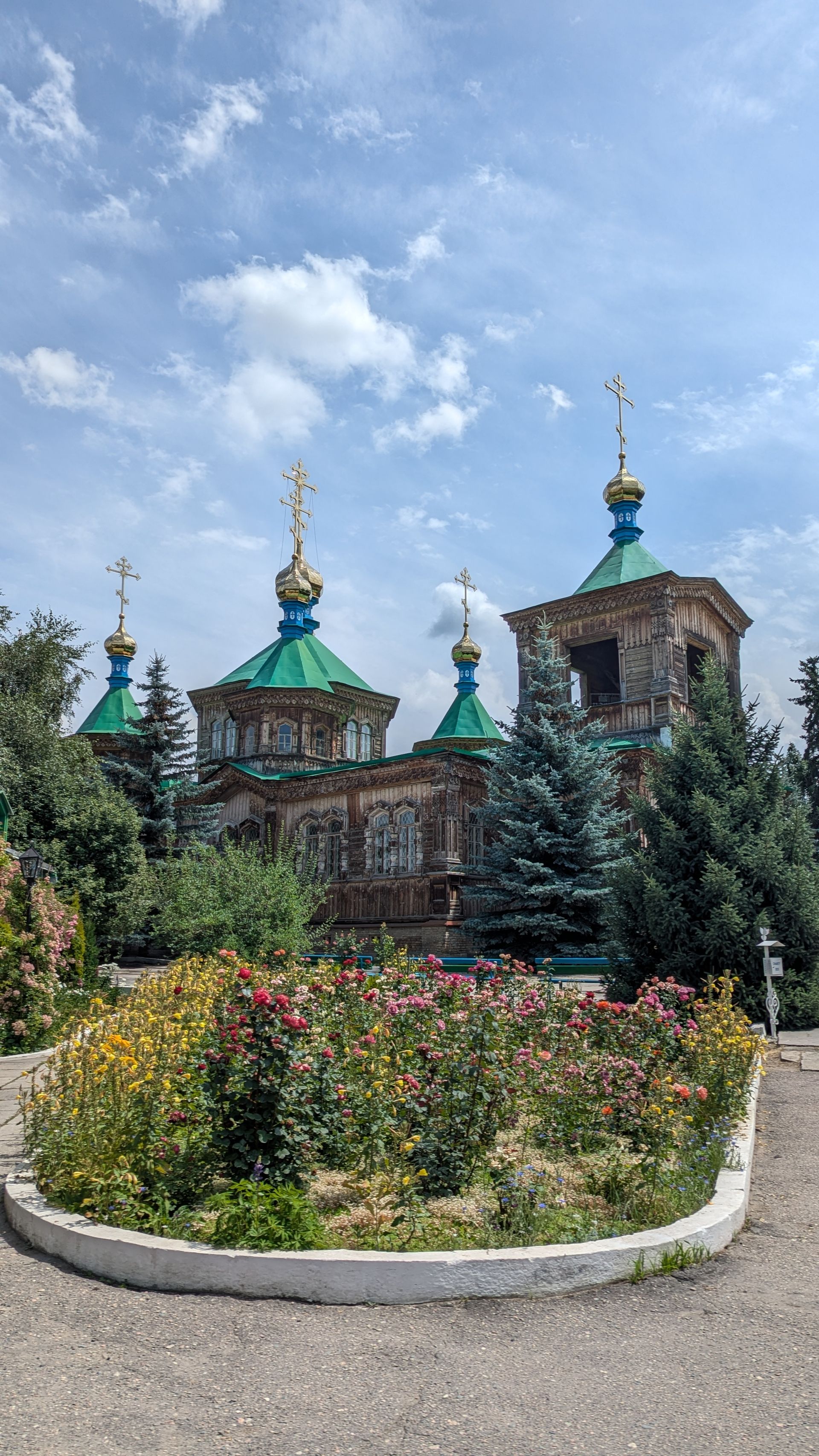
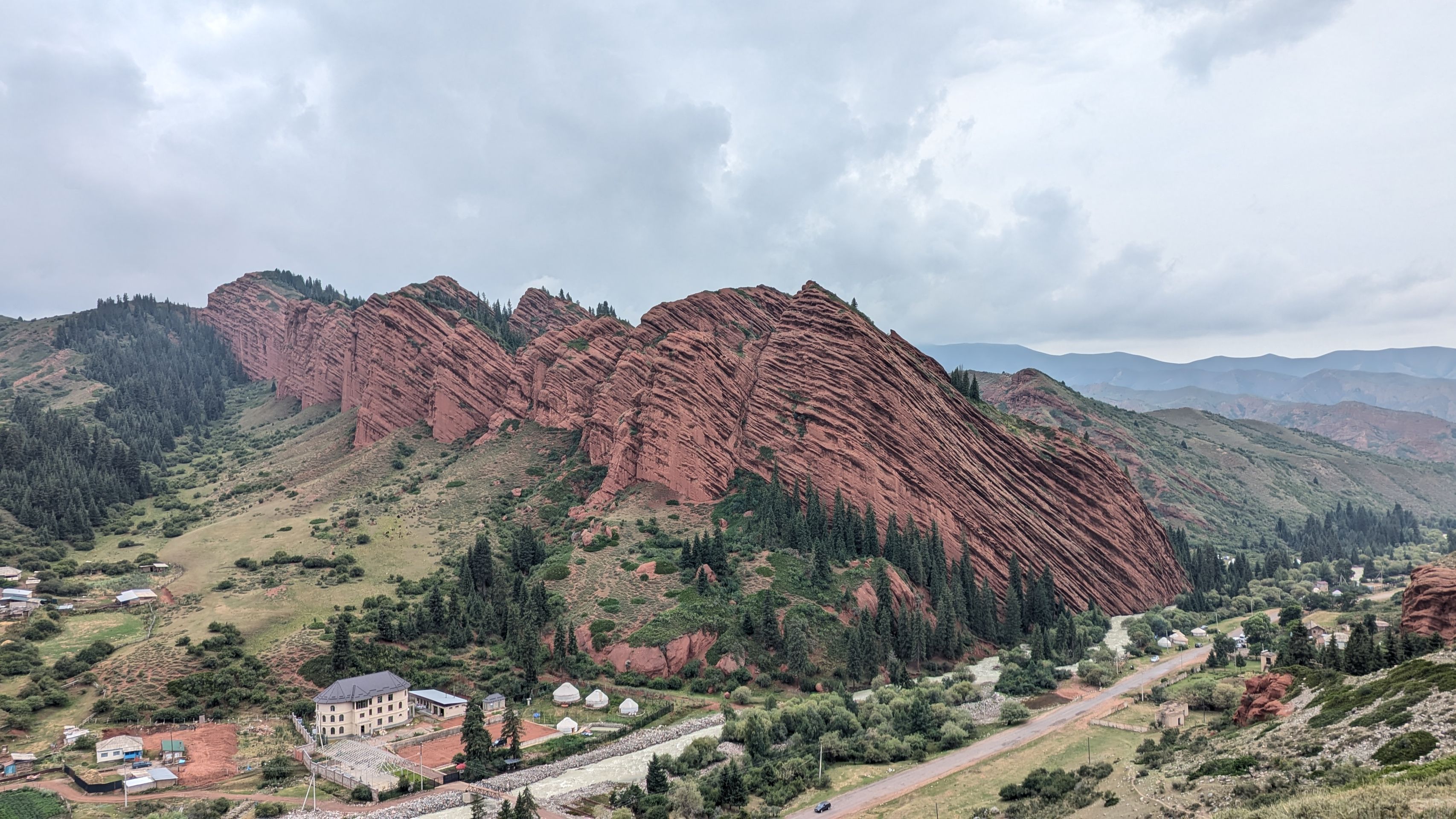
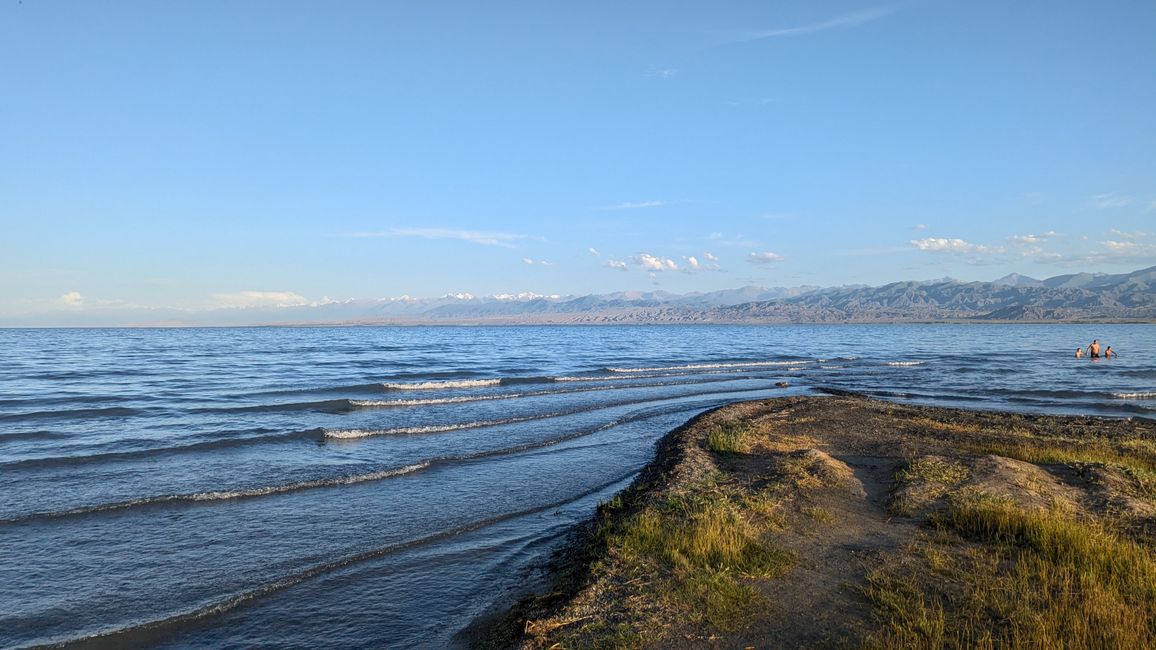
I made a stop in Balykchy because I was really exhausted. A short walk by the beach, where Kyrgyz people were still relaxing in their small tents, then to the ATM, in a restaurant, and then KO into bed. In Karakol, I spent most of my time recovering, writing my texts for this blog and Polarsteps, and as usual, planning my next days. In between, I received an email from Wizzair that my flight from Abu Dhabi to Chisinau was canceled without replacement for “unforeseen” reasons. The unforeseen reasons were actually cost-cutting; all flights to and from the United Arab Emirates from September 1st were canceled, including my flight on September 2nd. Luckily, I found a flight from Dubai to Chisinau for a similar price, so I could still visit Dubai, but it could have been worse. However, it was not over yet; the next day, I received a message from “IndiGo” indicating that my flight to Mumbai was also canceled without replacement, due to Indian airlines not being allowed to use Pakistani airspace since April of this year, and due to rerouting, the aircraft's range is insufficient; but didn't they know this two weeks before departure? Cheap tickets tend to become costly. But of course, I was lucky again and found a flight that departed a day earlier and was only 30€ more expensive, so I managed to escape with just a minor inconvenience. In Karakol, we took a day hike from Jeti-Ögüz to a waterfall before the next day starting a three-day hike to Ala-Kul Lake.
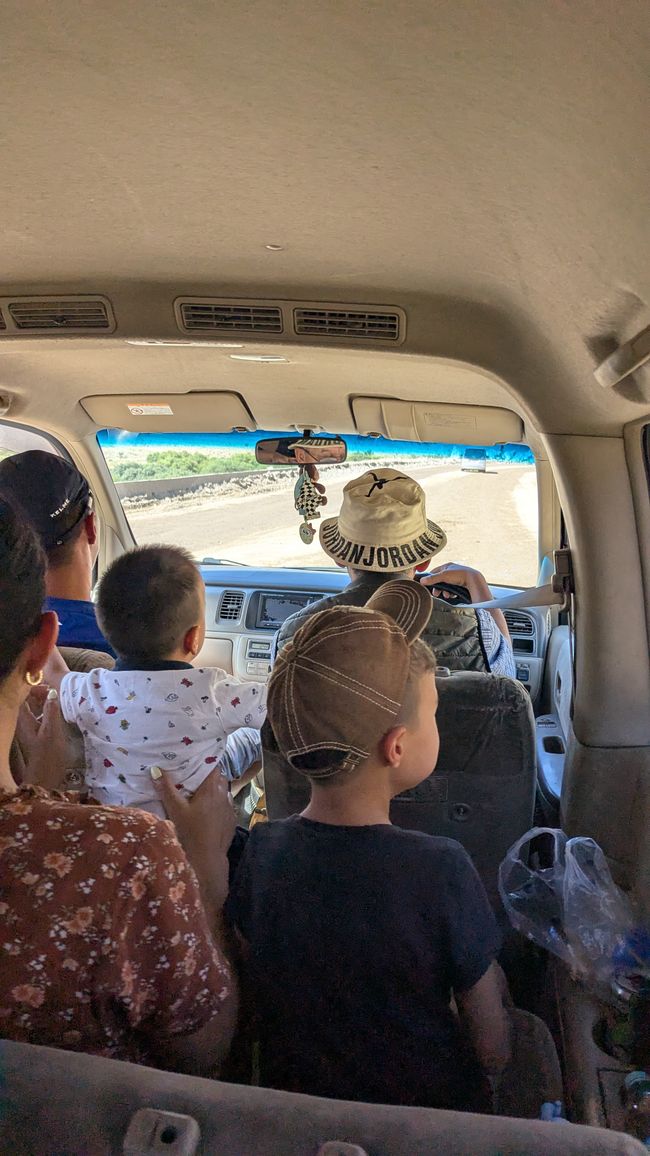
Fasten seatbelt?Issyk-KulKarakolKarakol
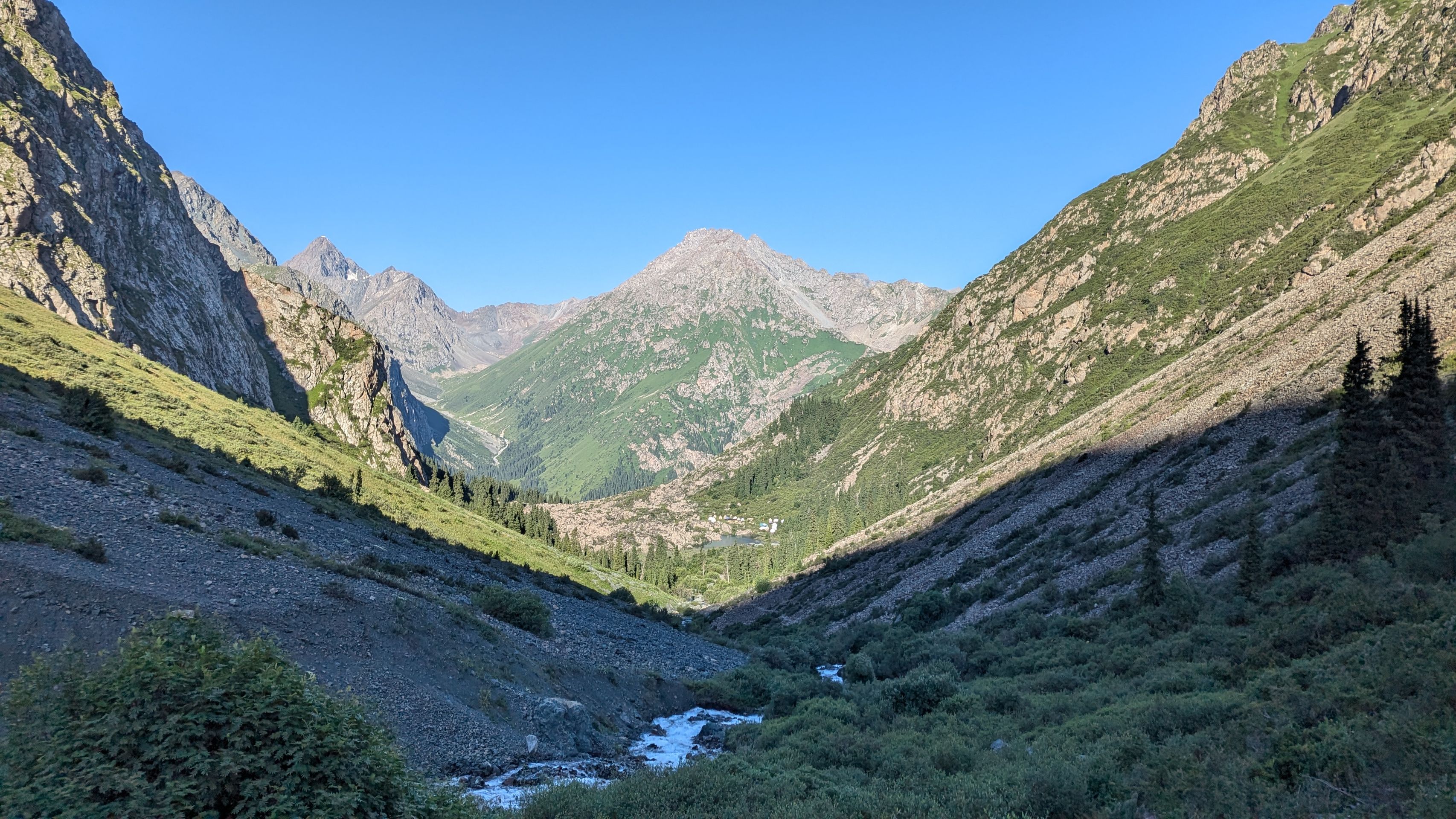
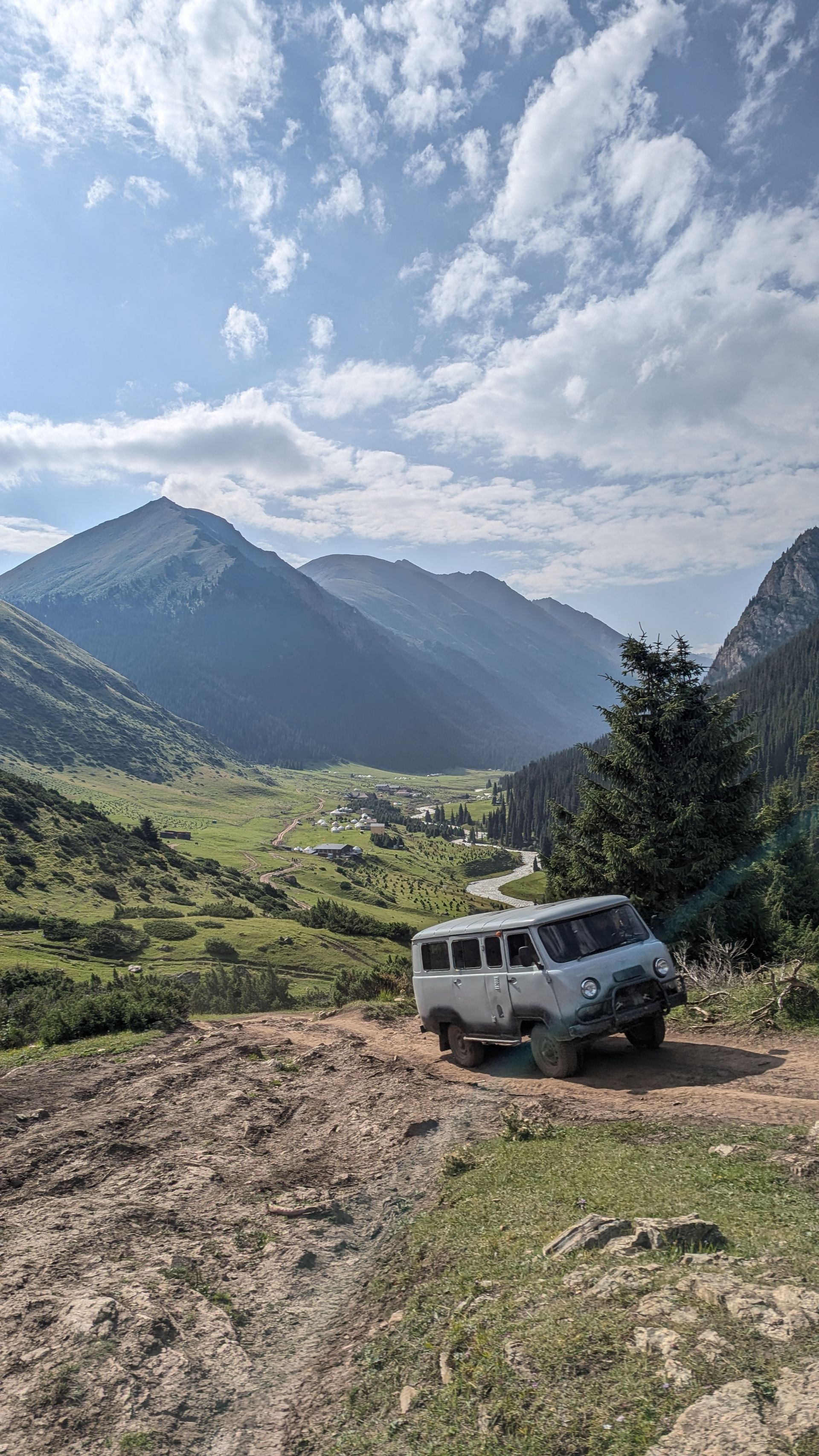
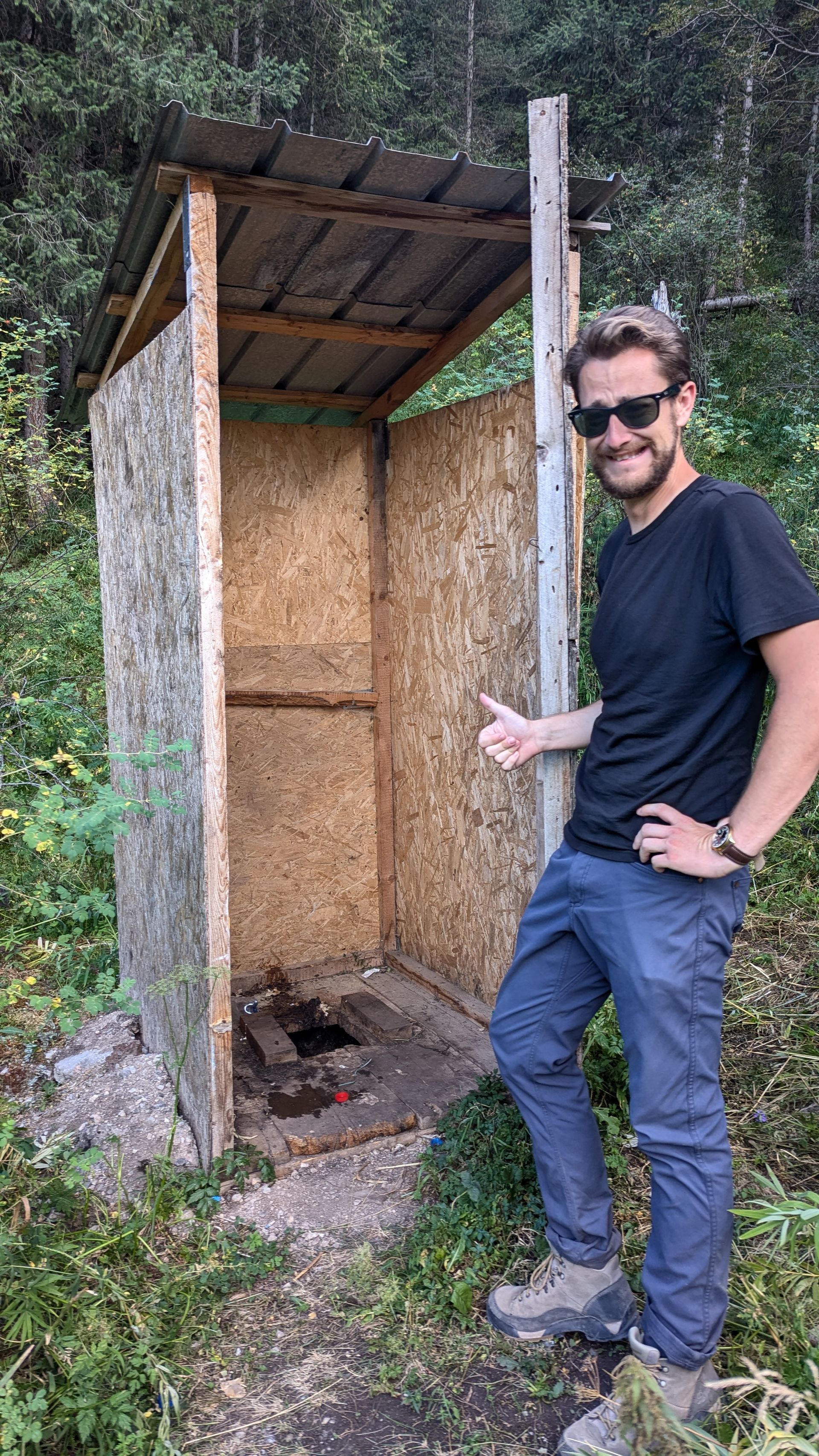
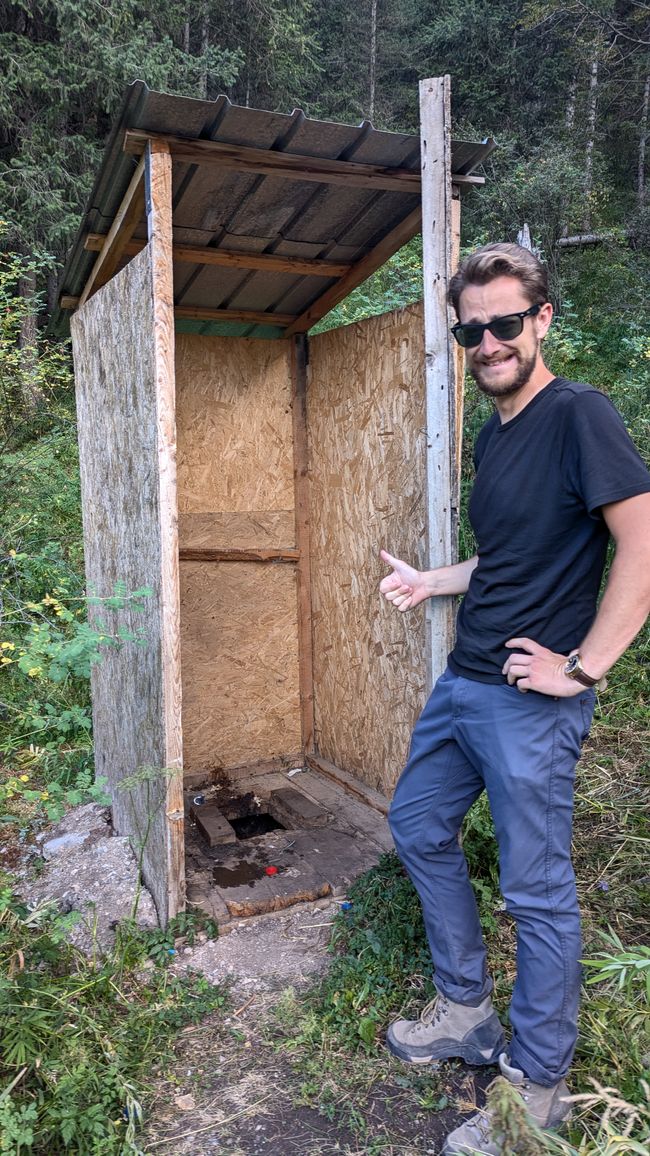
As Justine and Sam were also in Karakol, we rented a taxi together and took the path to the first camp together. On the first day, we hiked about 14 km and 950 meters of elevation to our first yurt. Everything was again very simple; a hole in the ground had to serve as a toilet, and we had to fetch drinking water from the river after a 15-minute walk.
Alps?First ascent
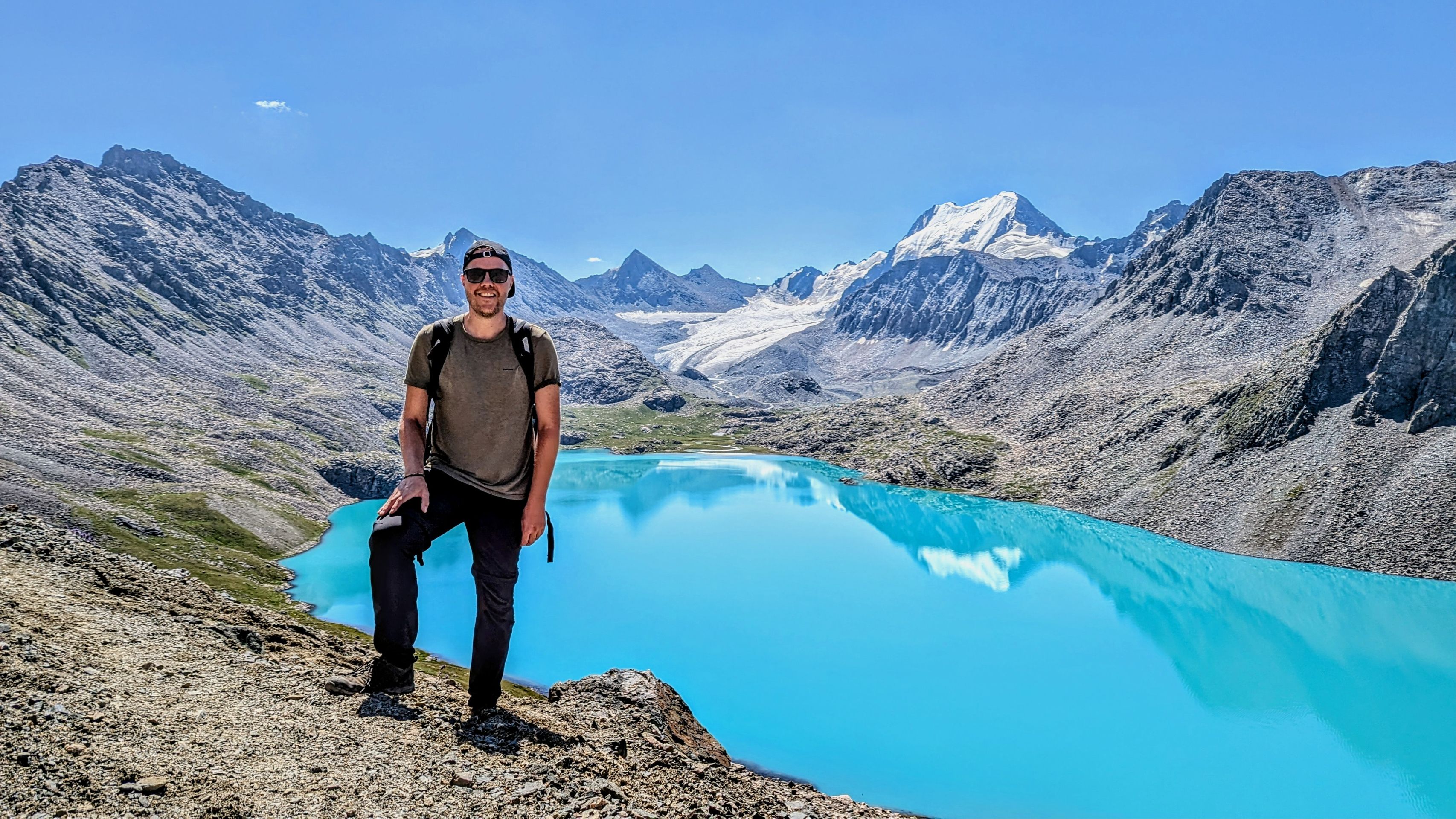
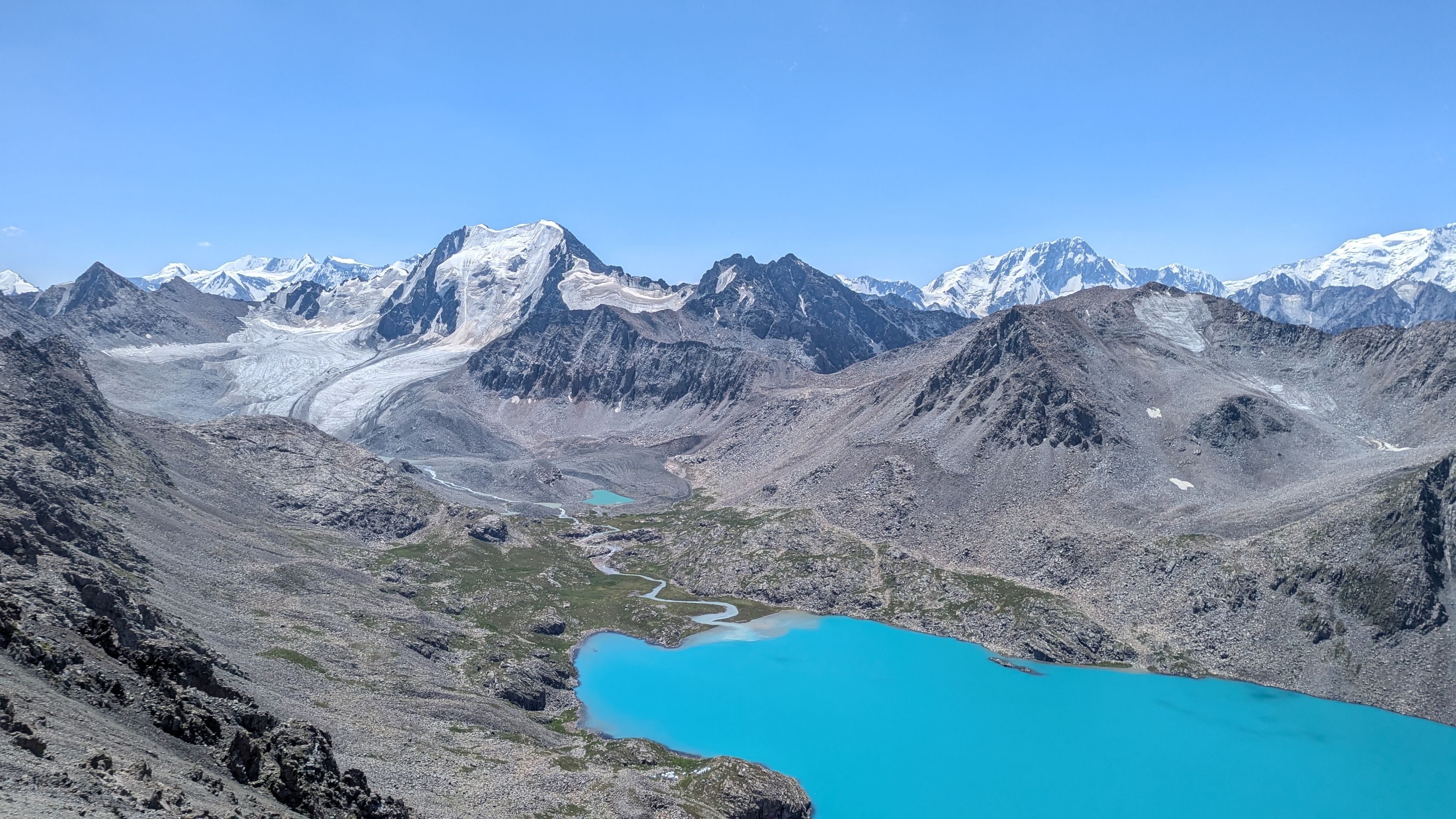
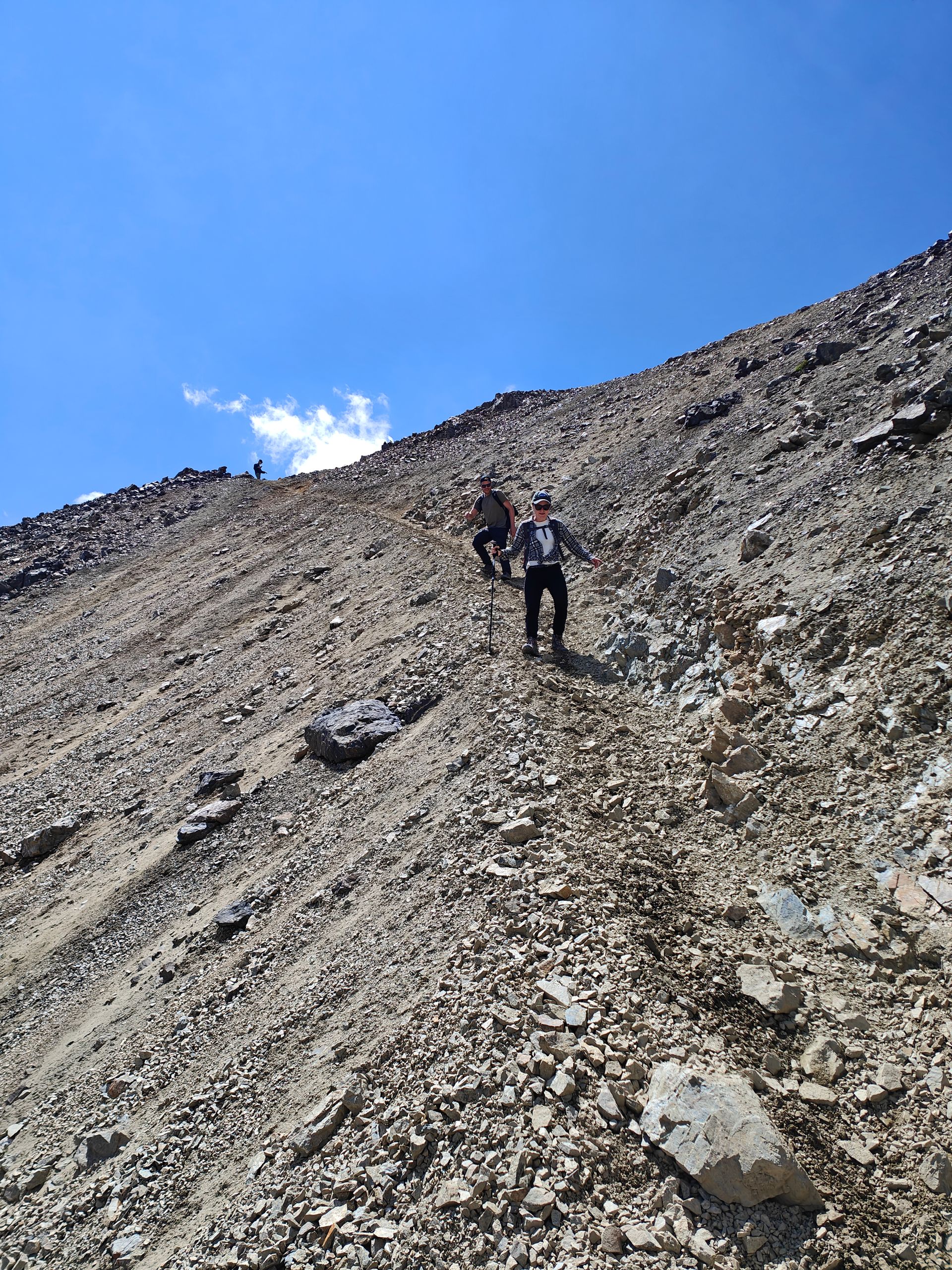
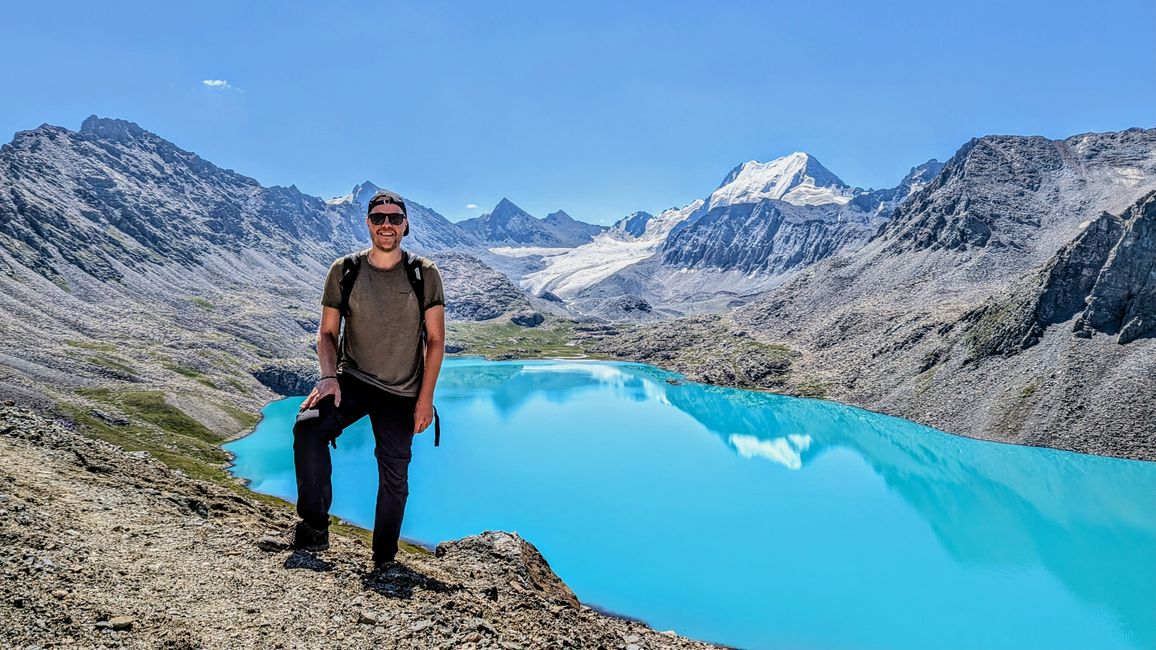
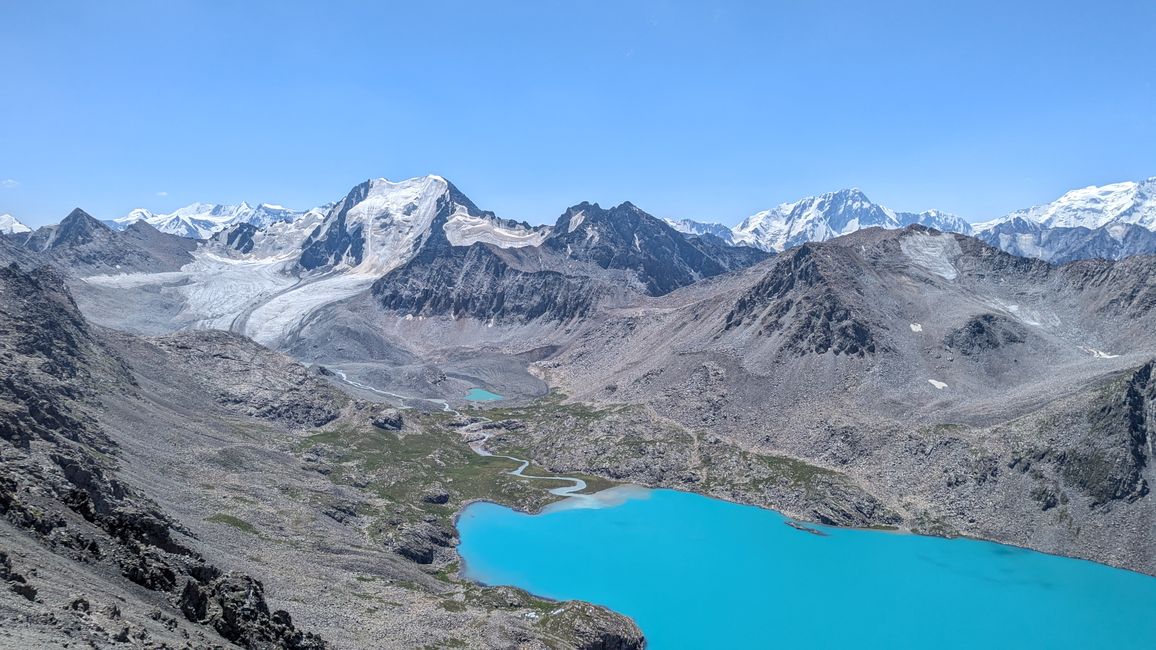
The next day, we continued up to Ala-Kul Lake and the 3920-meter high pass of the same name. The view was breathtaking, and the ascent was definitely worth it. The way down was quite easy; I decided to stay in the village of Altyn Arashan because the taxi driver wanted 80$ per car for the way back to Karakol, which I didn't want to pay. So I decided to visit the hot springs before crawling into the warm yurt, before going down 15 km into the next valley the next day.
To the lakeAla-Kul LakeGlacier
Taxi!
Then it should be back to Kazakhstan and on to Almaty. I decided to cross the nearby border, which supposedly could only be done by hitchhiking. Contrary to all my research, I found a marshrutka that would take me to the border; from there, I took a short taxi to the border fence. Crossing on foot was a mere formality, and the third driver at the border immediately took me to the next village, from where I took a taxi for 6€ for the remaining 250km and 3 hours to the former capital of Kazakhstan, Almaty.
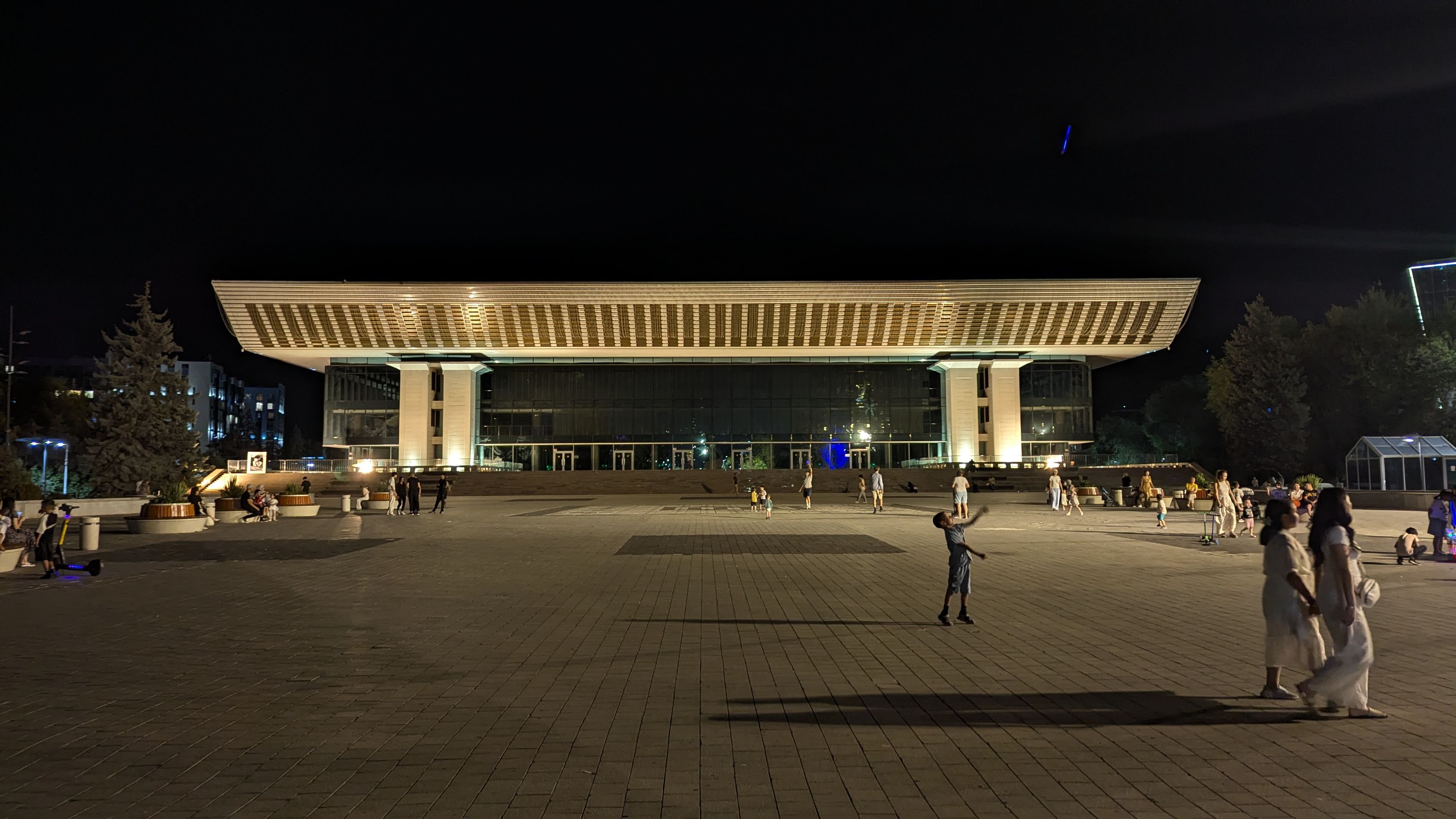
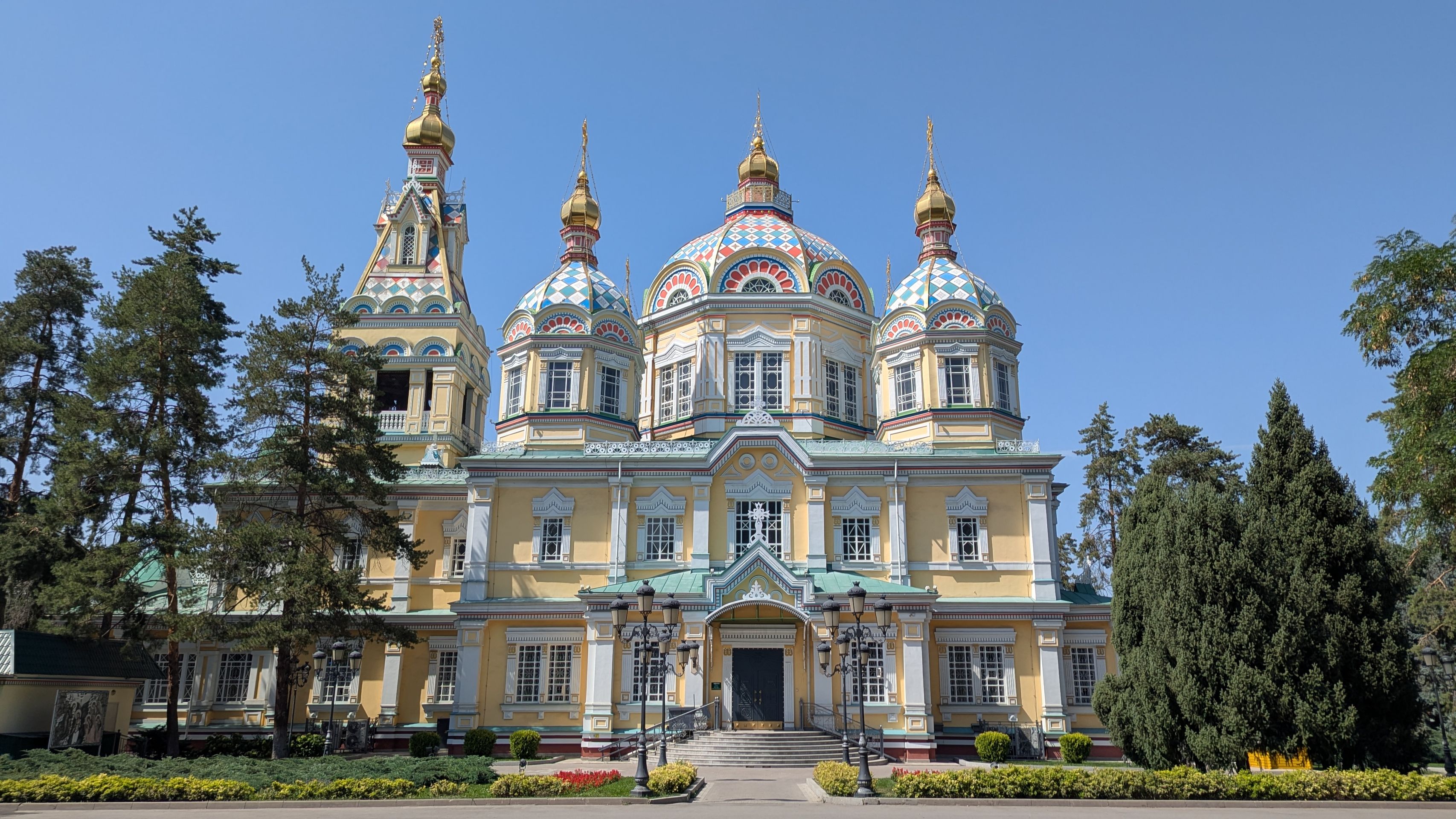
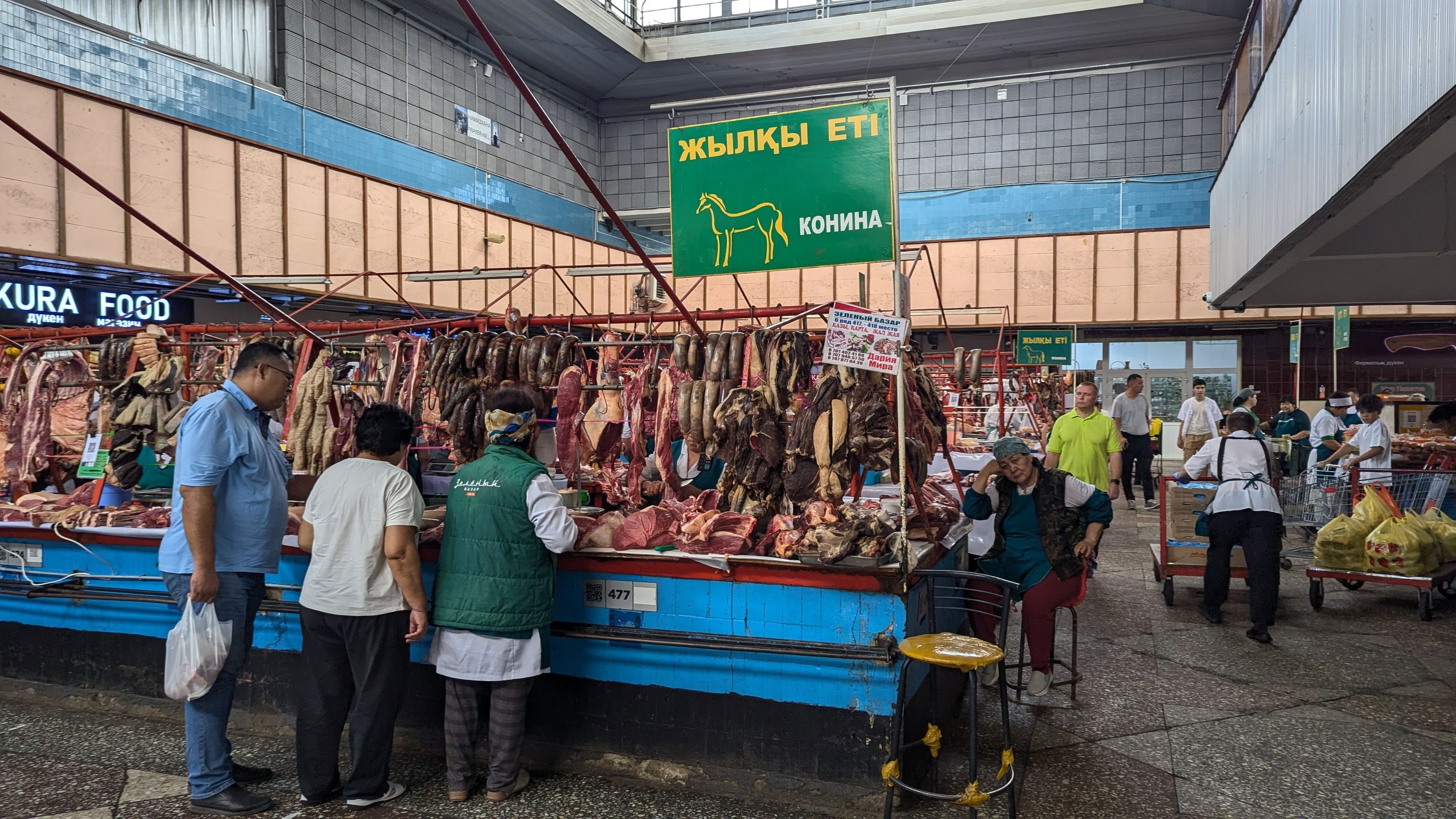
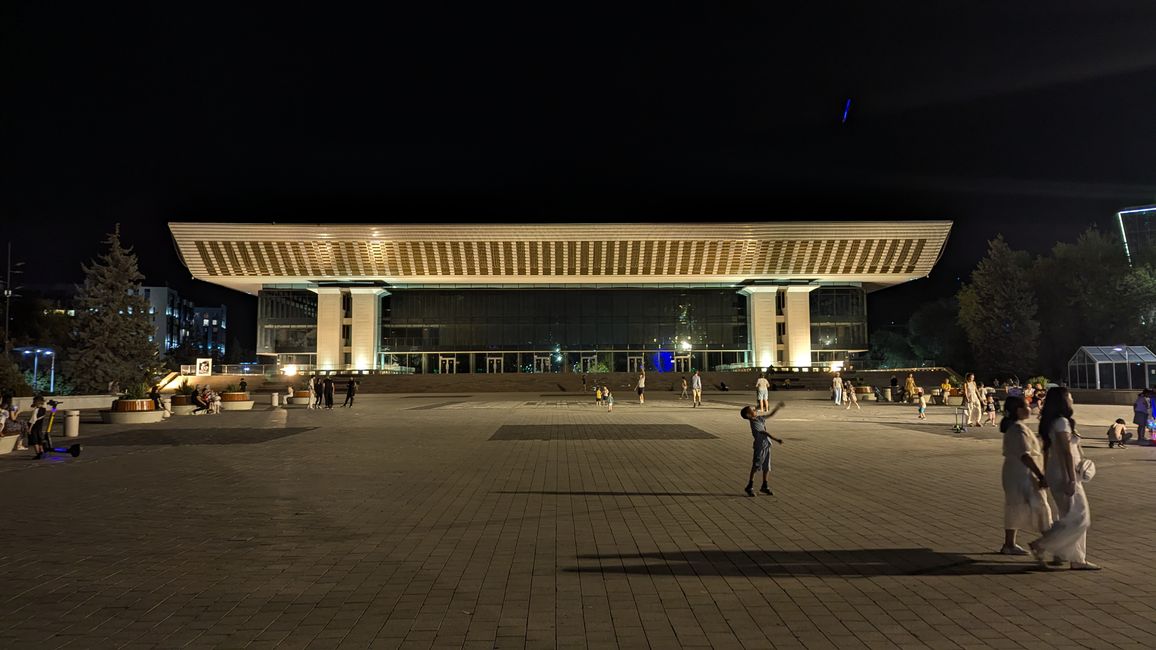
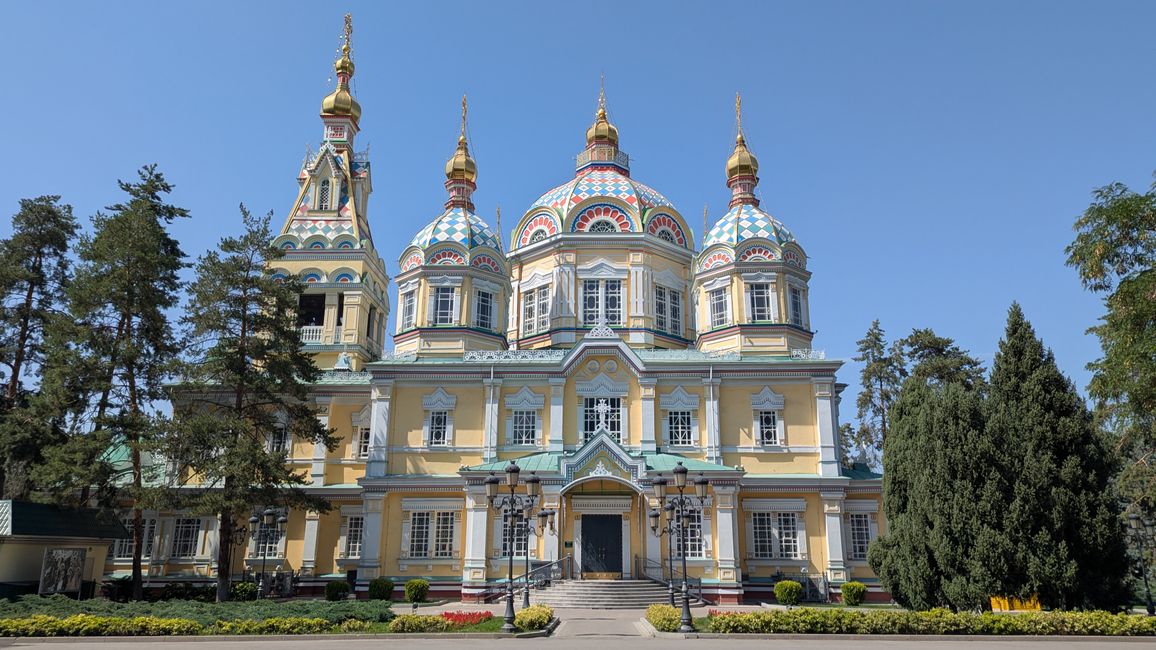
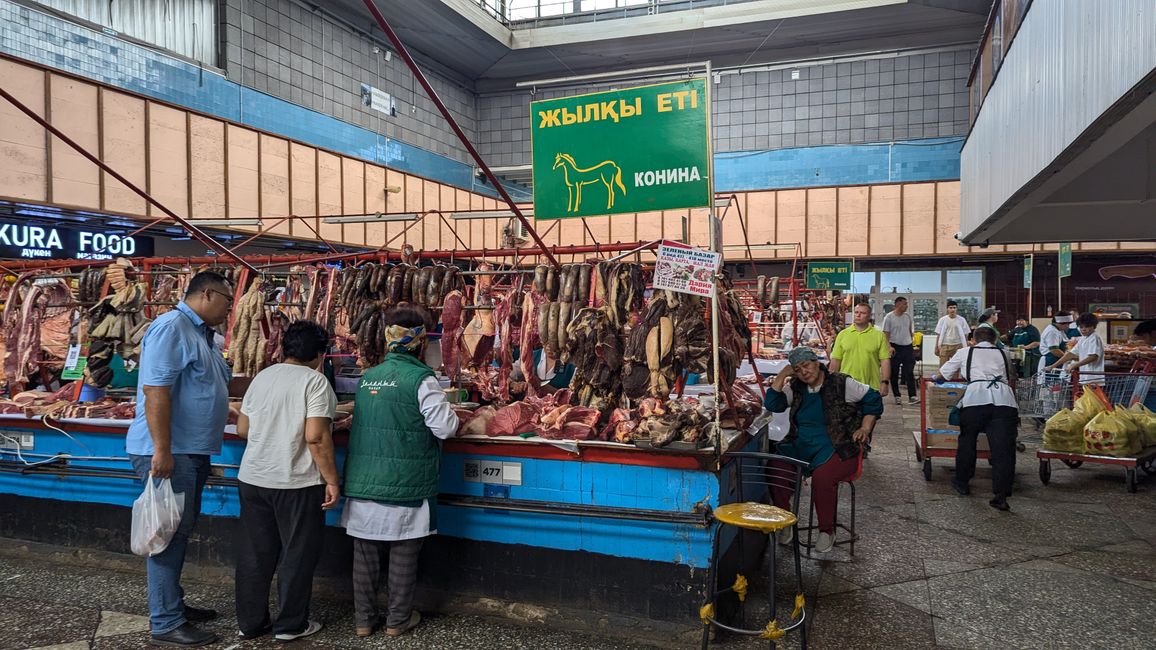
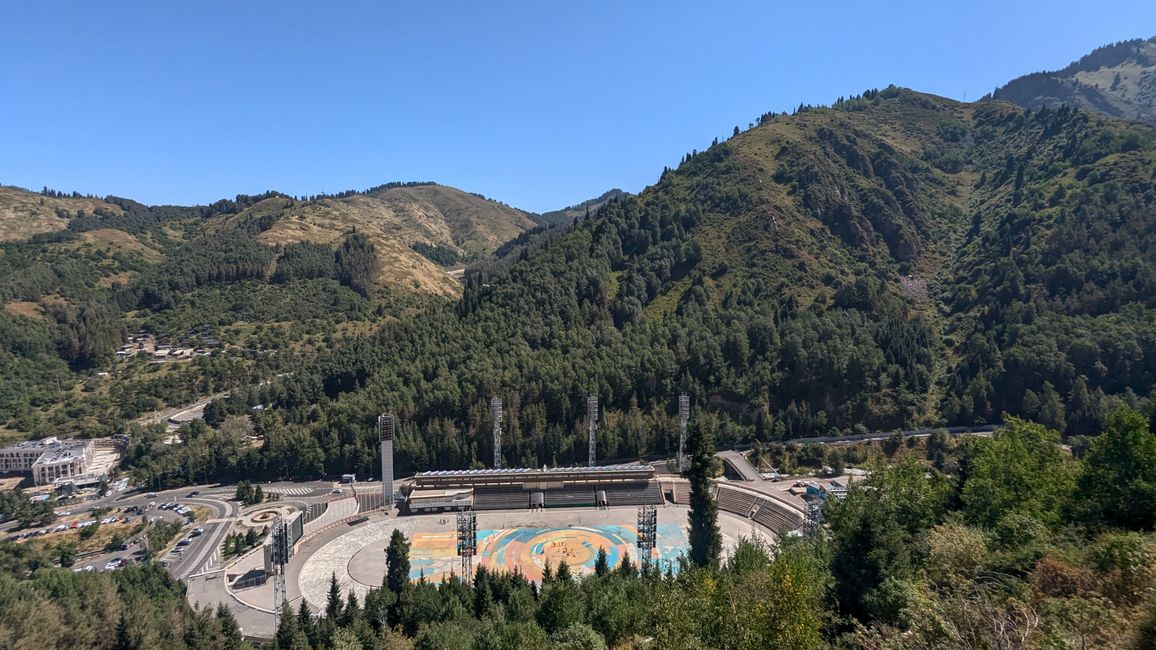
Almaty itself is not particularly interesting; I had expected much more since everyone reported enthusiastically. Many explore the nightlife here, which I am not interested in; maybe that was the reason. Otherwise, there are a few old Soviet buildings that are all quite far apart or the interesting Green Bazaar. For living, the city must be very good; there is a lot of culture, many green parks, and a huge mountain range for climbing and hiking right at your doorstep.AlmatyAlmatyGreen Bazaar
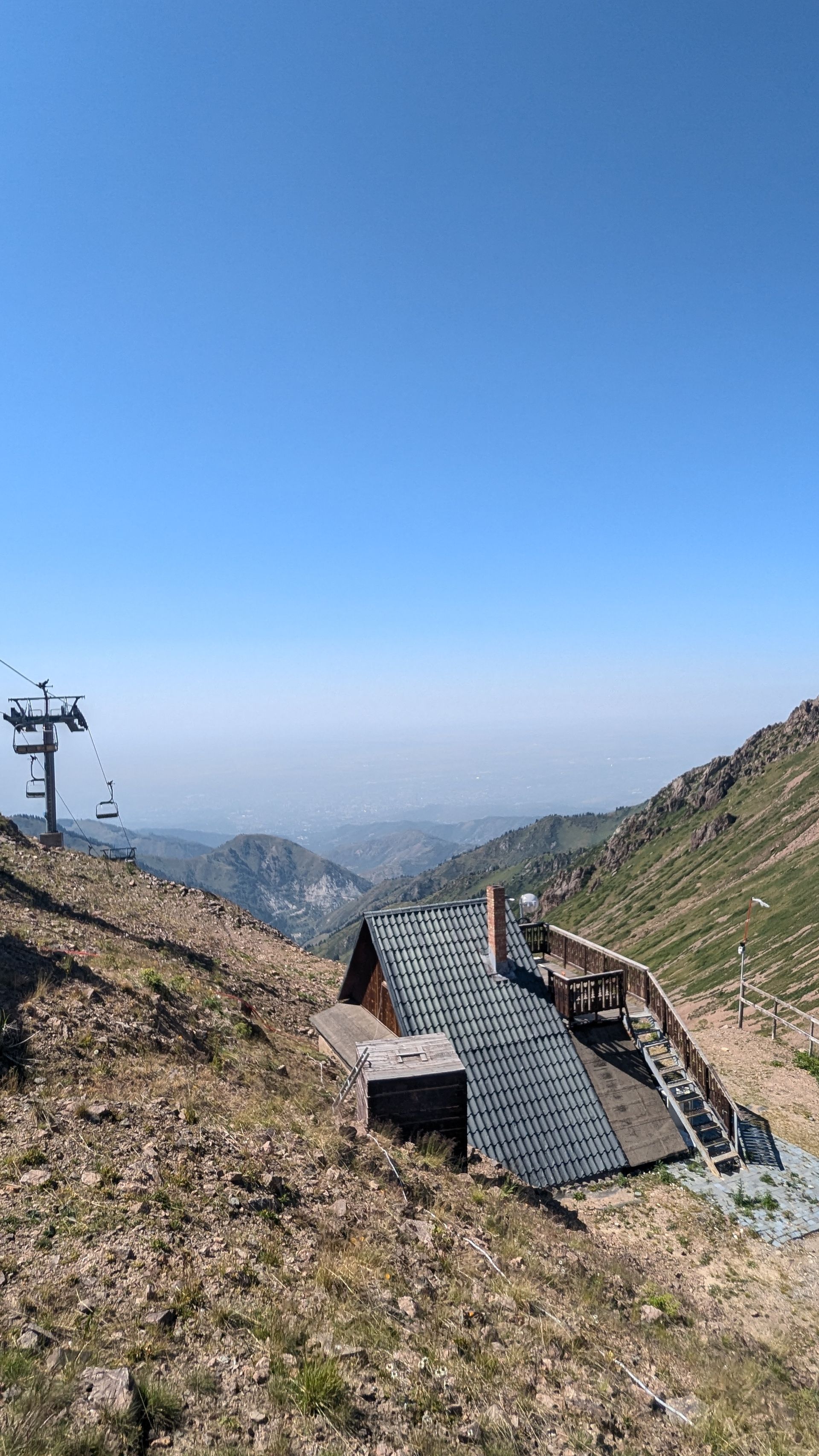
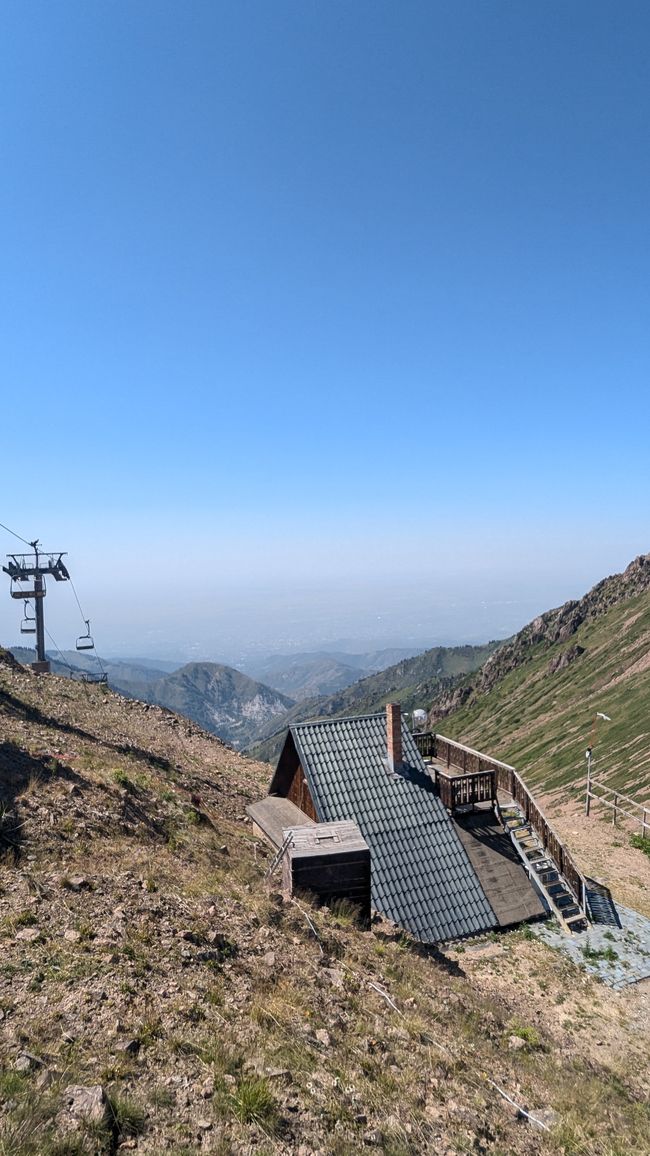
Brian (whom I am meeting for the third time on my trip) and I decided to take a day with the cable car for 13€ up to the peak of “Shymbolak,” where the view of the glaciers was once again noteworthy.
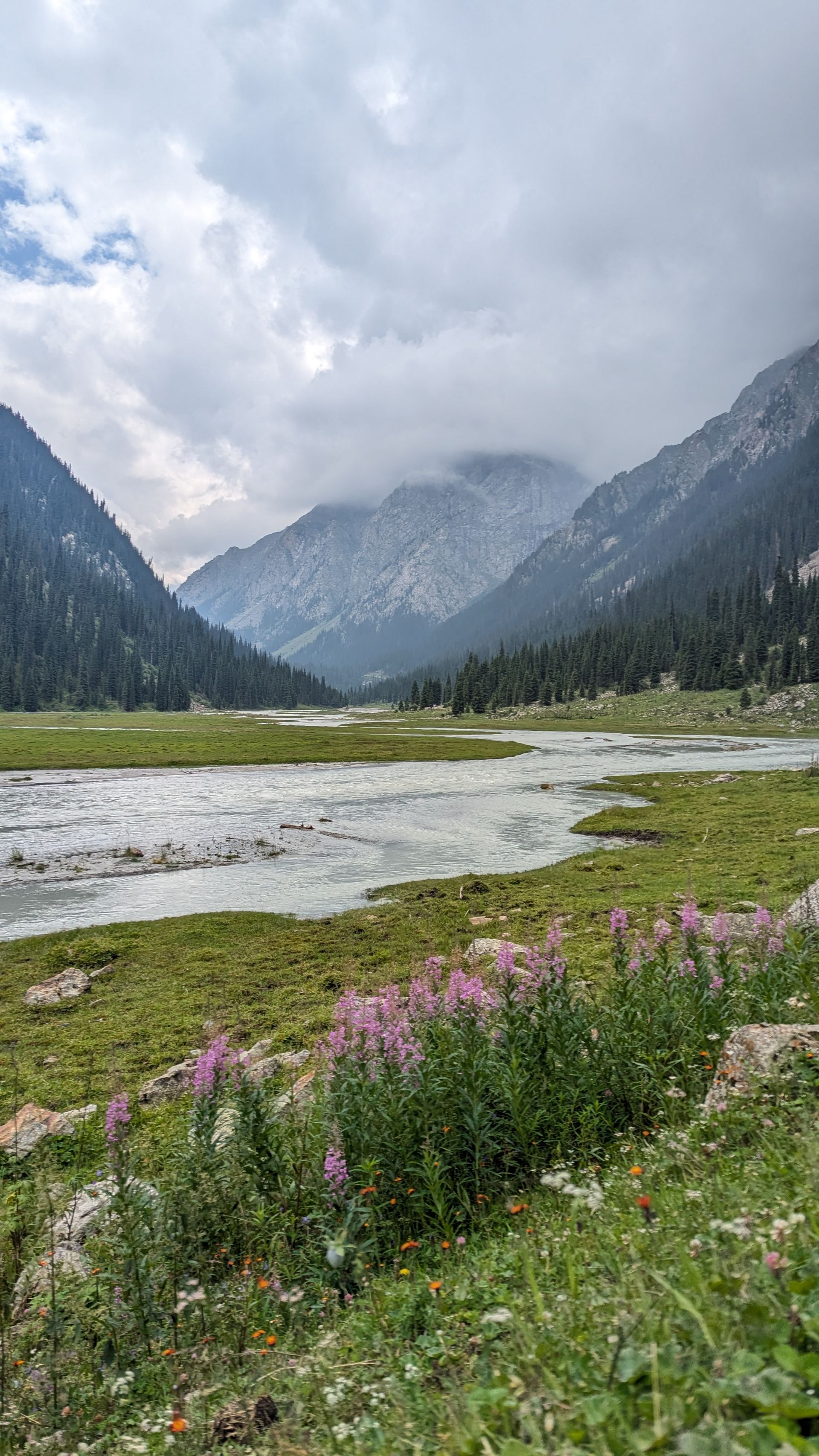
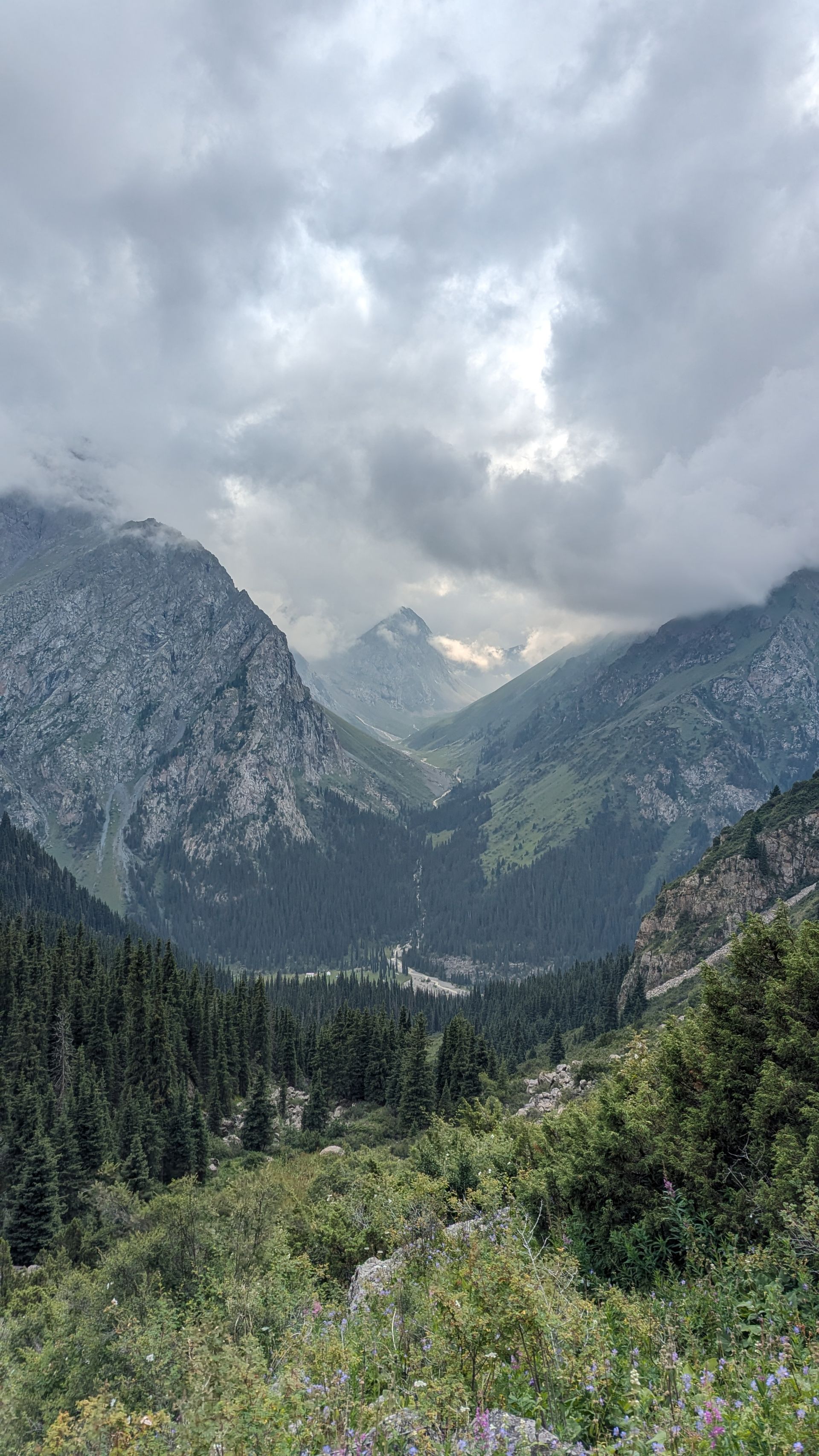
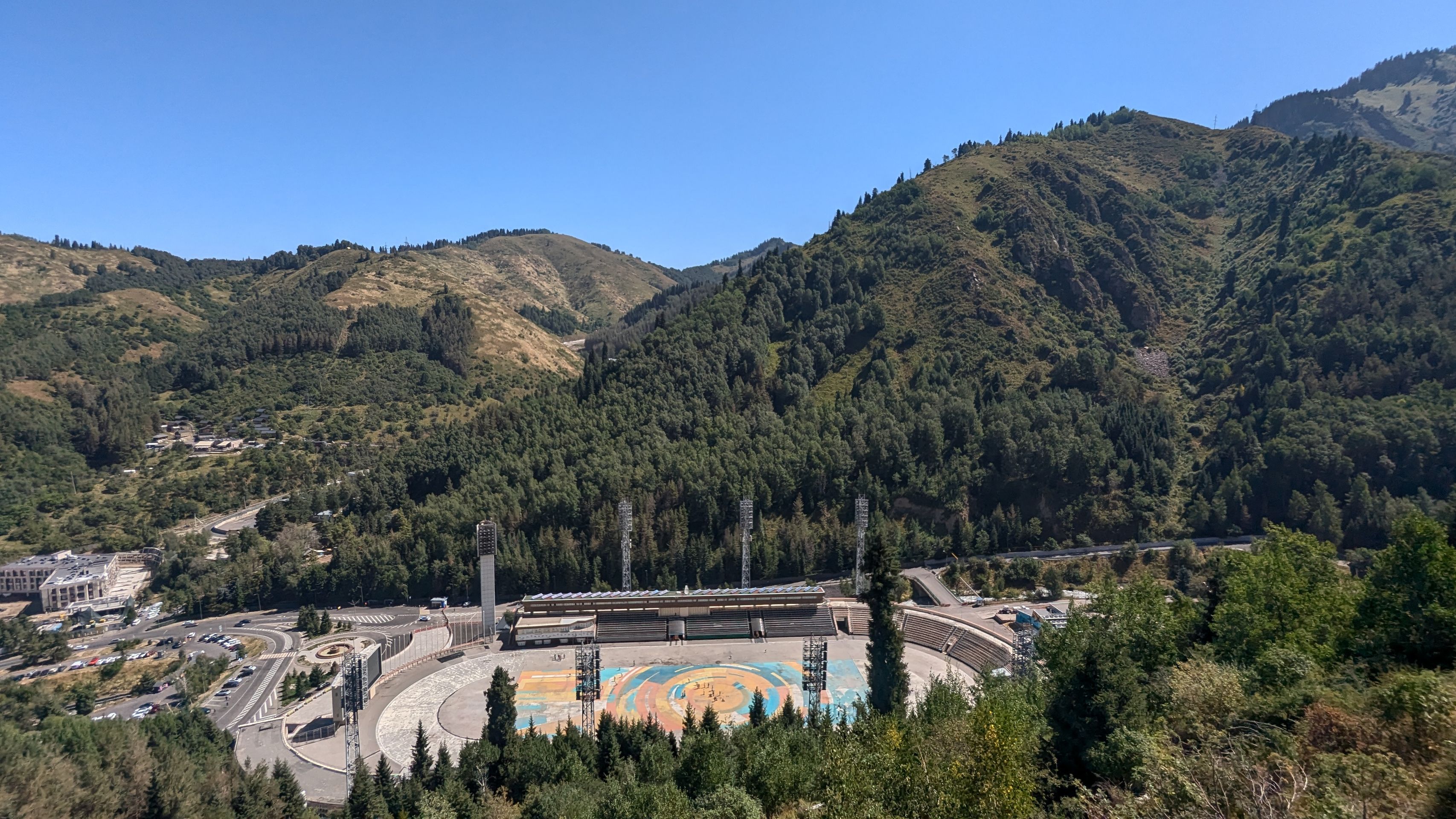
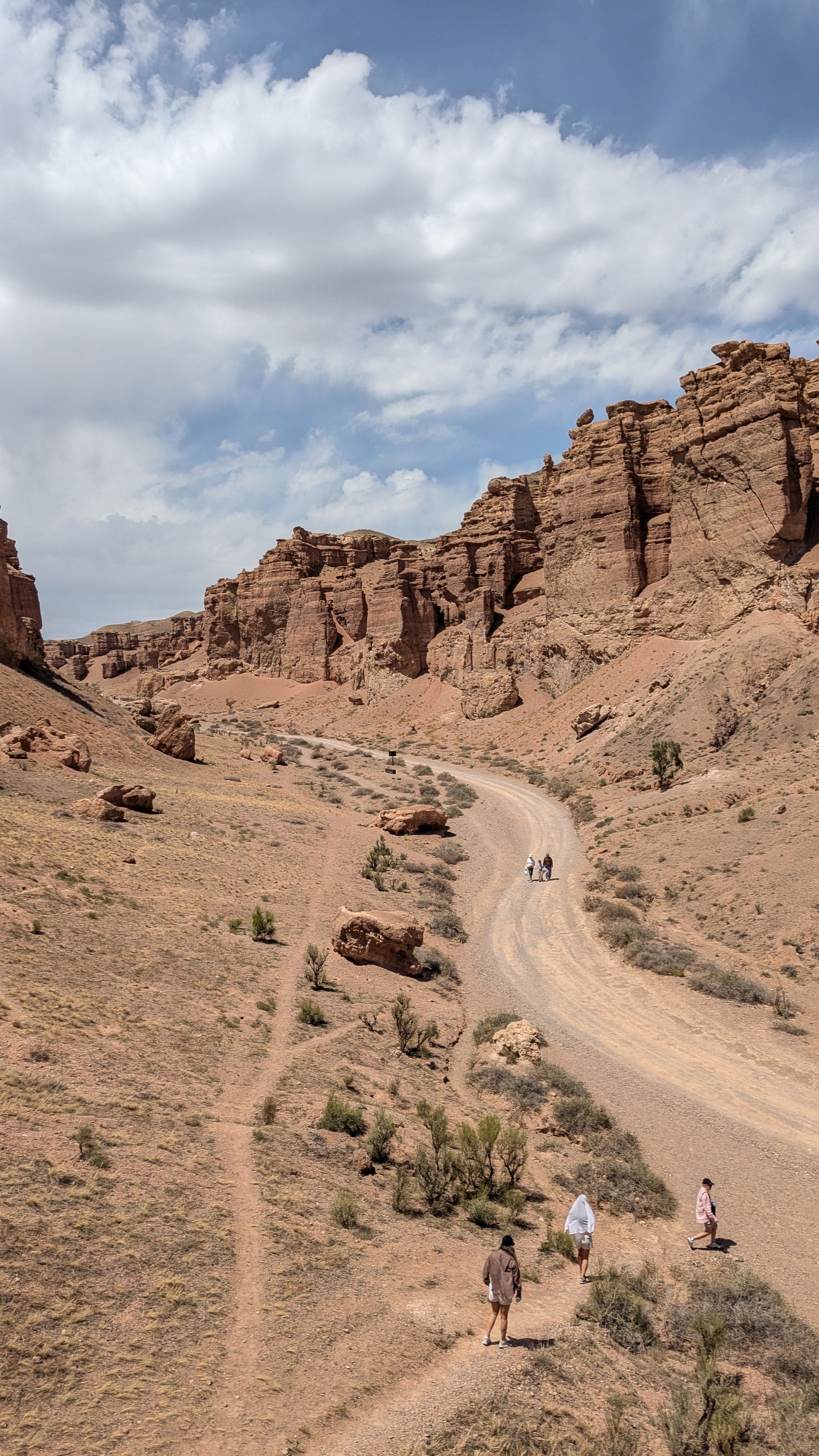
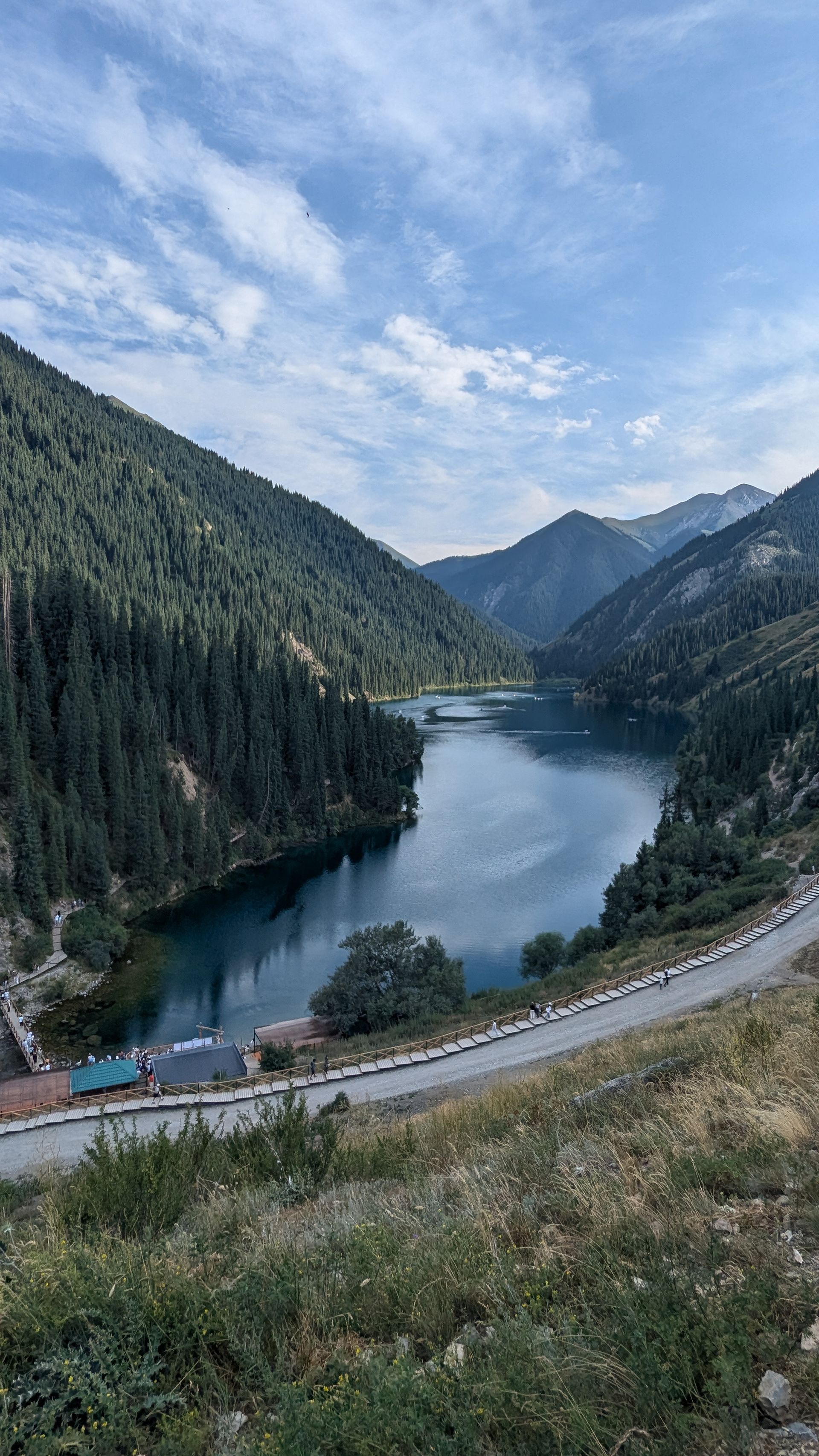
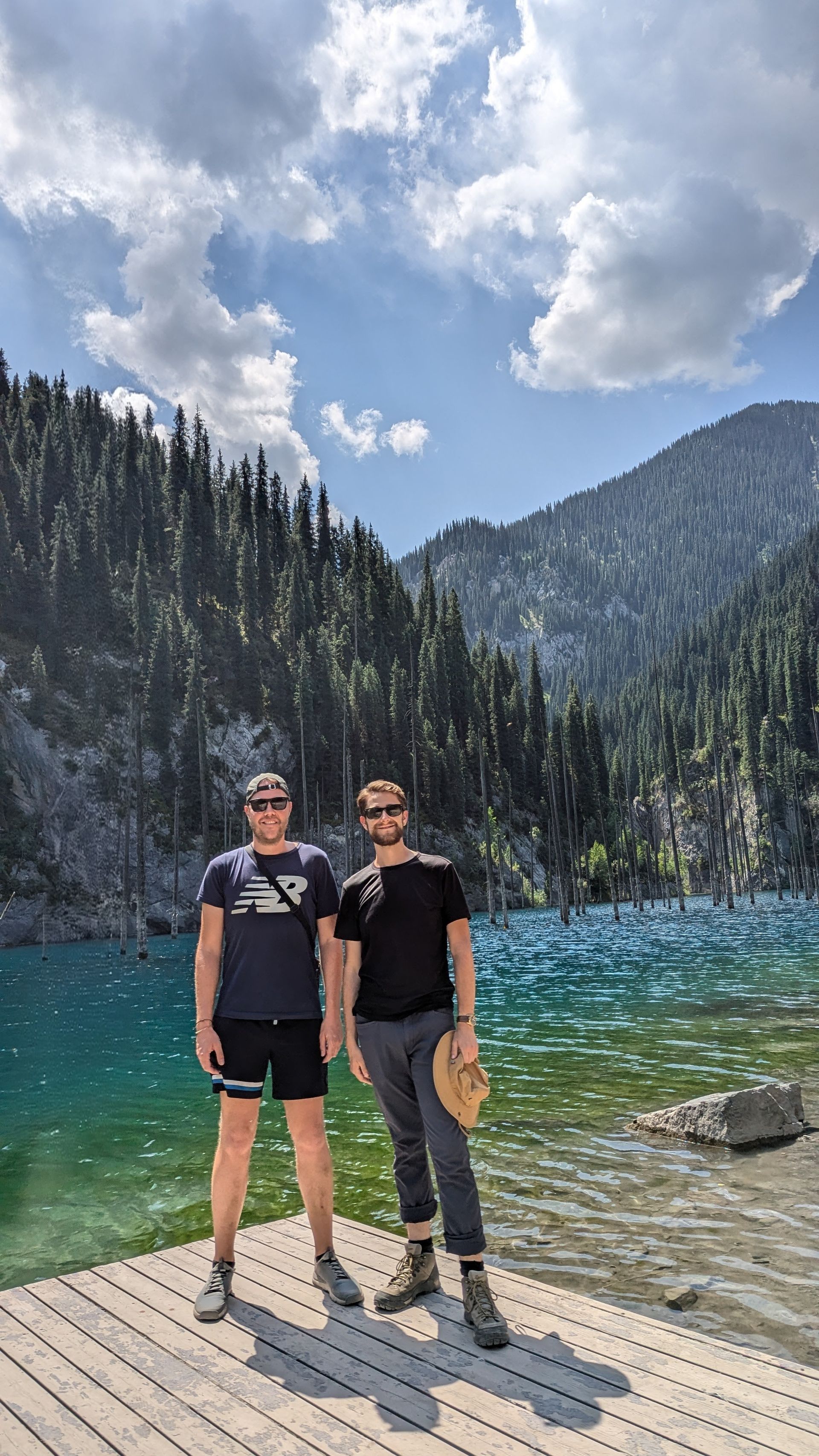
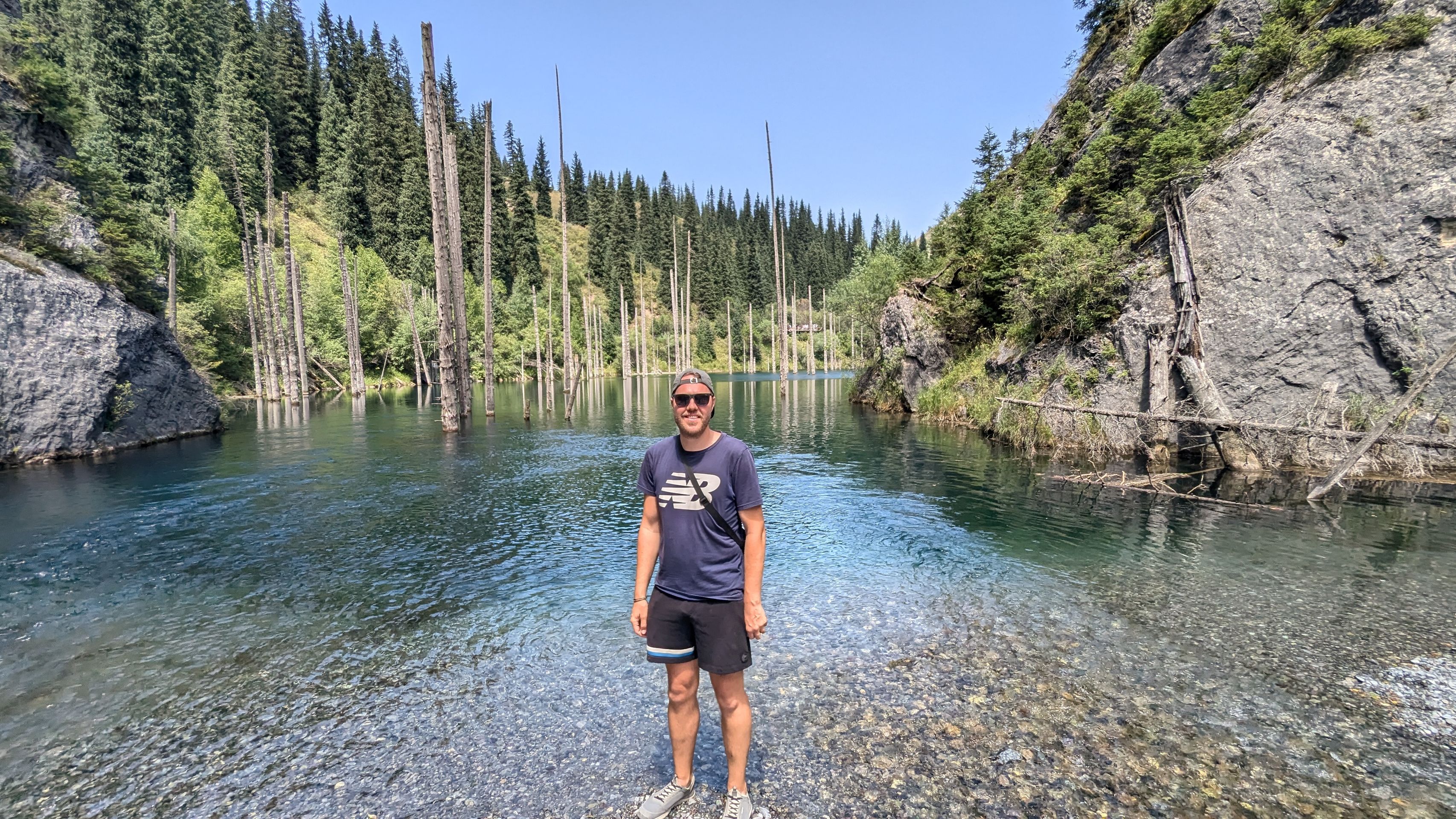
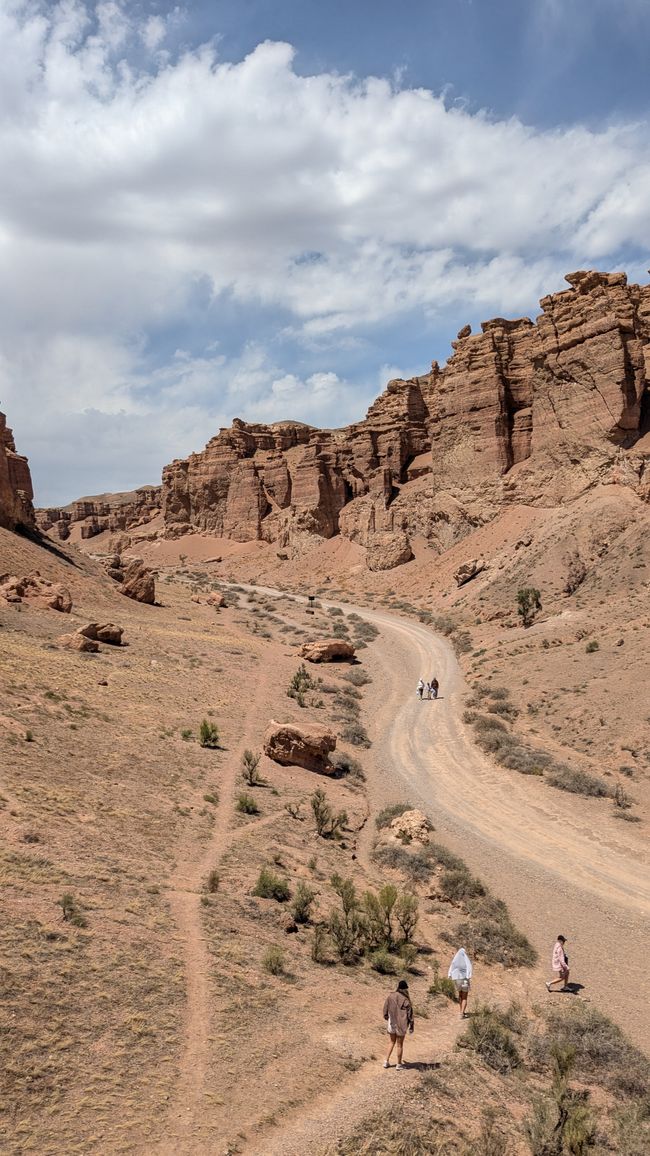
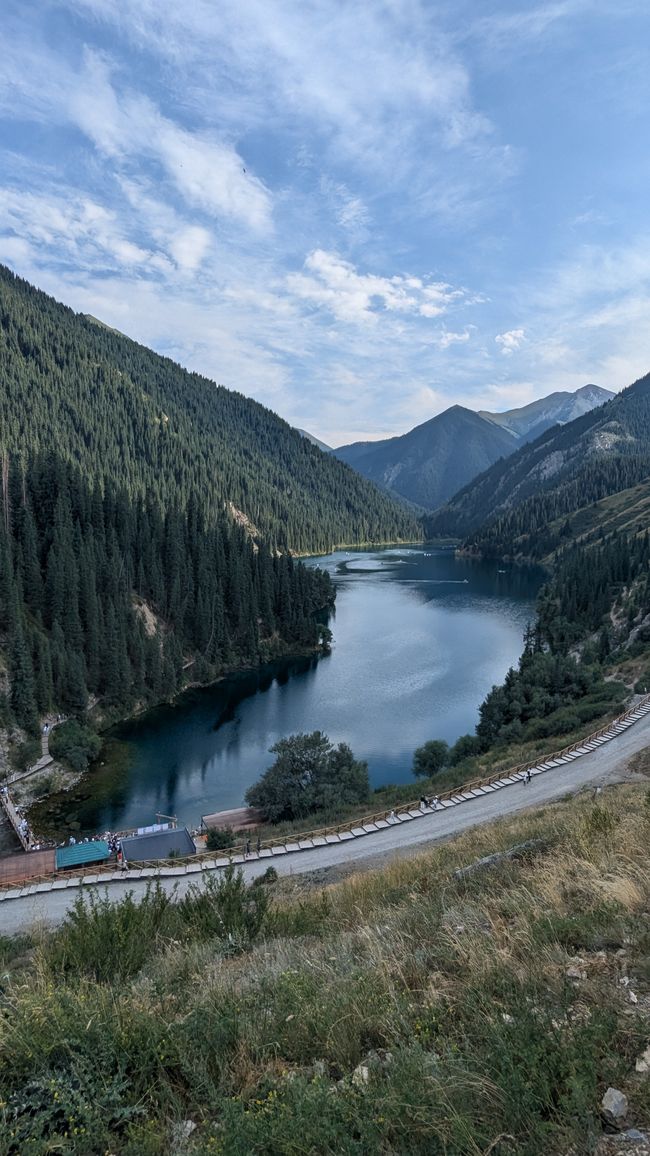
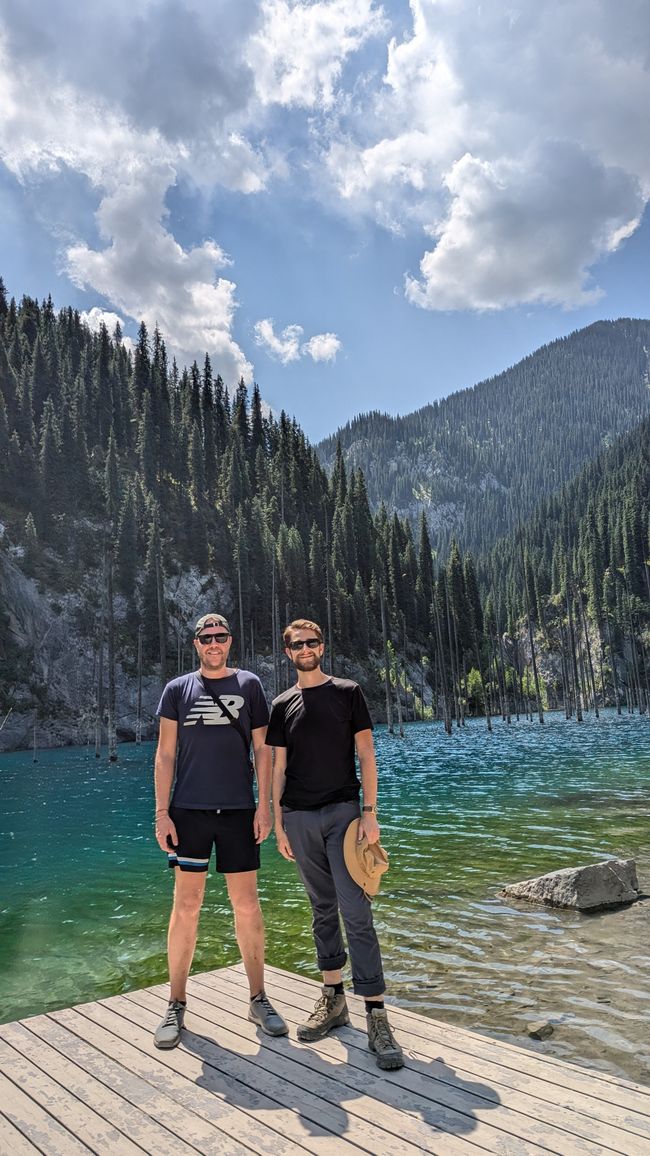
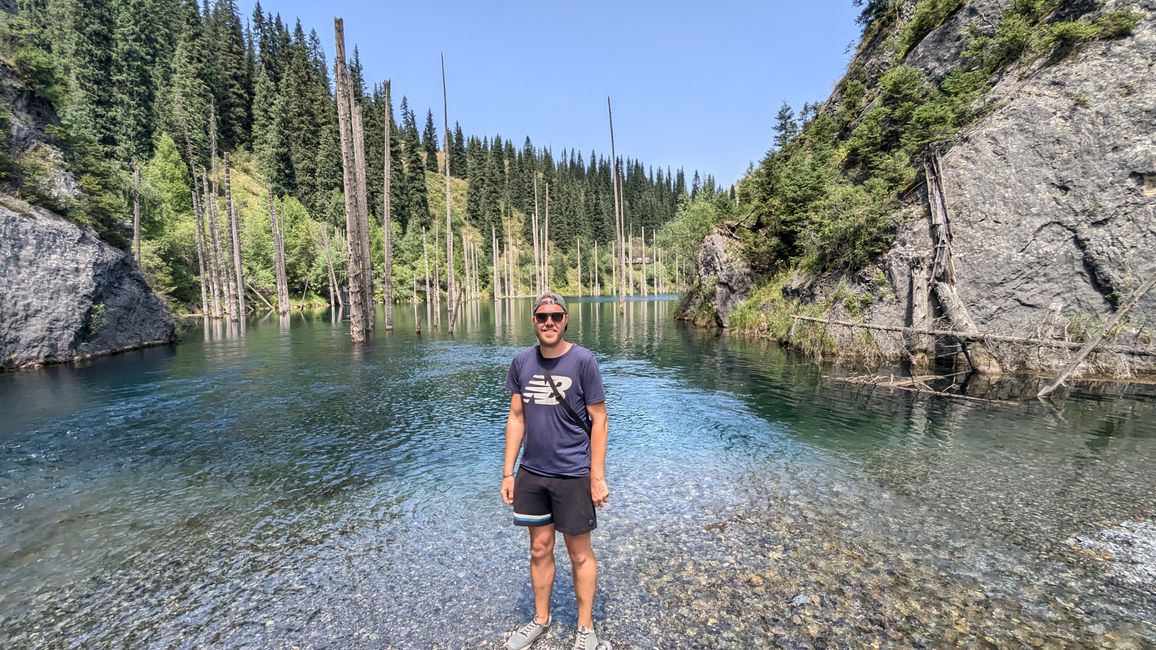
MedeuView of AlmatyTo conclude, we participated in an organized tour in the outskirts of Almaty. On the first day, we explored three different canyons that were quite worth seeing, which were exhausting to explore at nearly 40 degrees. After lunch, we drove to Kolsay Lake, which is very picturesque but probably the most visited spot I have encountered in Central Asia so far. After a final night in a yurt, the next morning led us to the most beautiful part of the tour, to Kaindy Lake, created by an earthquake that caused a landslide, resulting in water stalling and allowing tree stumps to still protrude from the blue waters. Today, I was confirmed in my theory; I believe that Modern Talking is the most successful German band; I have heard their songs in every region, whether in Central/South America, Asia, the Balkans, or now in Kazakhstan on an old Soviet bus, off-road on the way to a mountain lake!
After saying goodbye to Brian, I headed to China to pass the time until my flight to Mumbai.
Charyn CanyonKolsay LakeCode RedKaindy LakeKaindy Lake
At a glance
Automatically extracted from the post
Weather
Summer
Accompaniment
With friends
Mood
AdventurousOff the beaten track
Highlights
Reiten über Pässe zum Song-Köl-See
Kok-Boru und Übernachtung in der Jurte
Ala-Kul-See und Pass auf 3920 Metern
Grenzüberquerung nach Kasachstan
Canyons, Kolsay-See und Kaindysee
Equipment
PferdJurteTaxiMarschrutkaSeilbahn
Topics
NatureAdventureRoad tripTransitCulture
Cost
Taxi Karakol nach Altyn Arashan$80
Taxi an der Grenze nach Almaty€6
Seilbahn nach Shymbulak€13
Taxi von Karakol zum ersten Camp der Ala-Kul-Tour$0
Auf SchlürLike a newsletter: every new post arrives via email.