
From Xinjiang to Kerala
The bus surprisingly drove to a completely different border crossing that wasn't even marked on my map. The questioning was a bit more intense than usual, asking me what I was...

Published: 30.09.2025
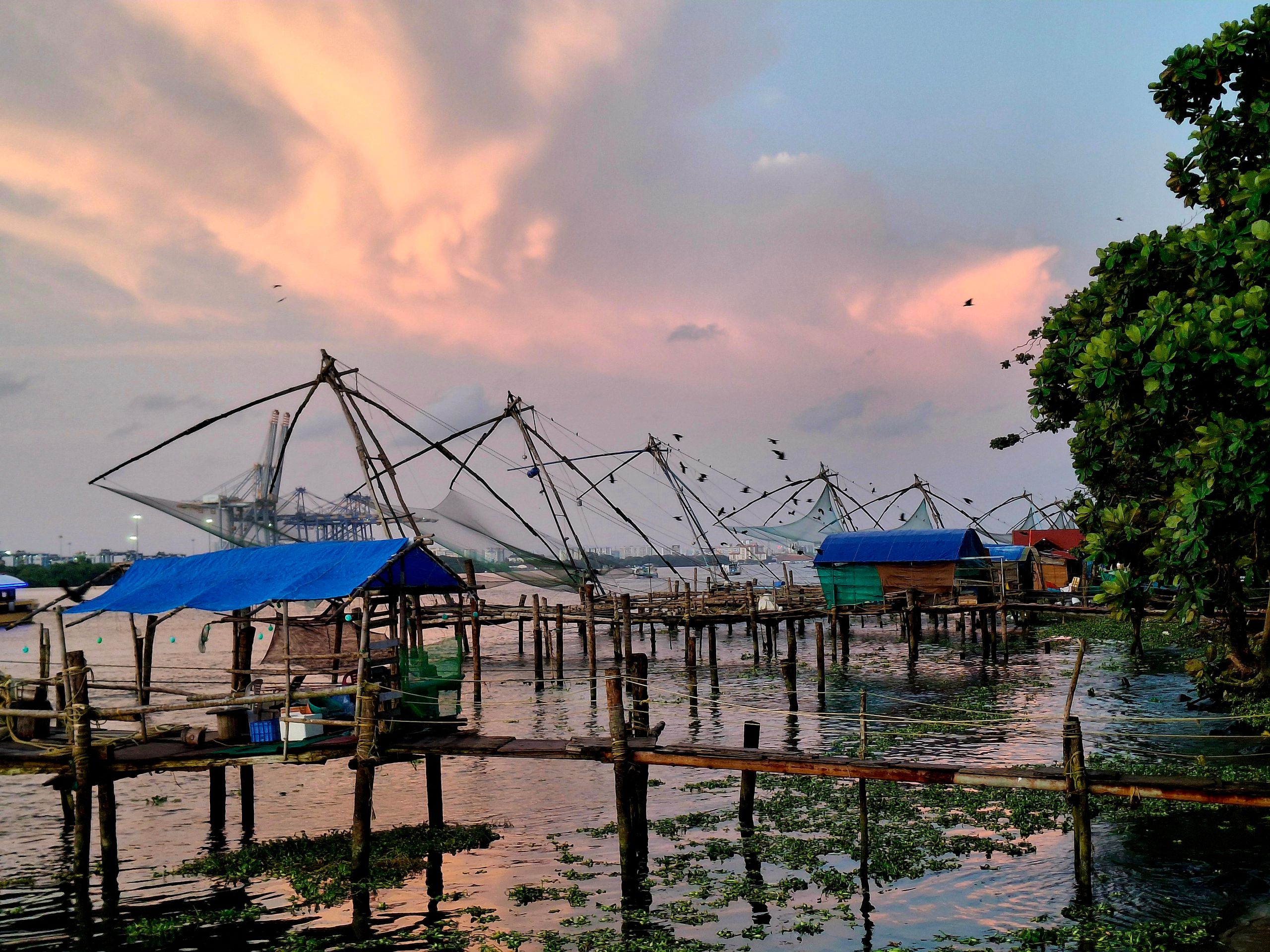
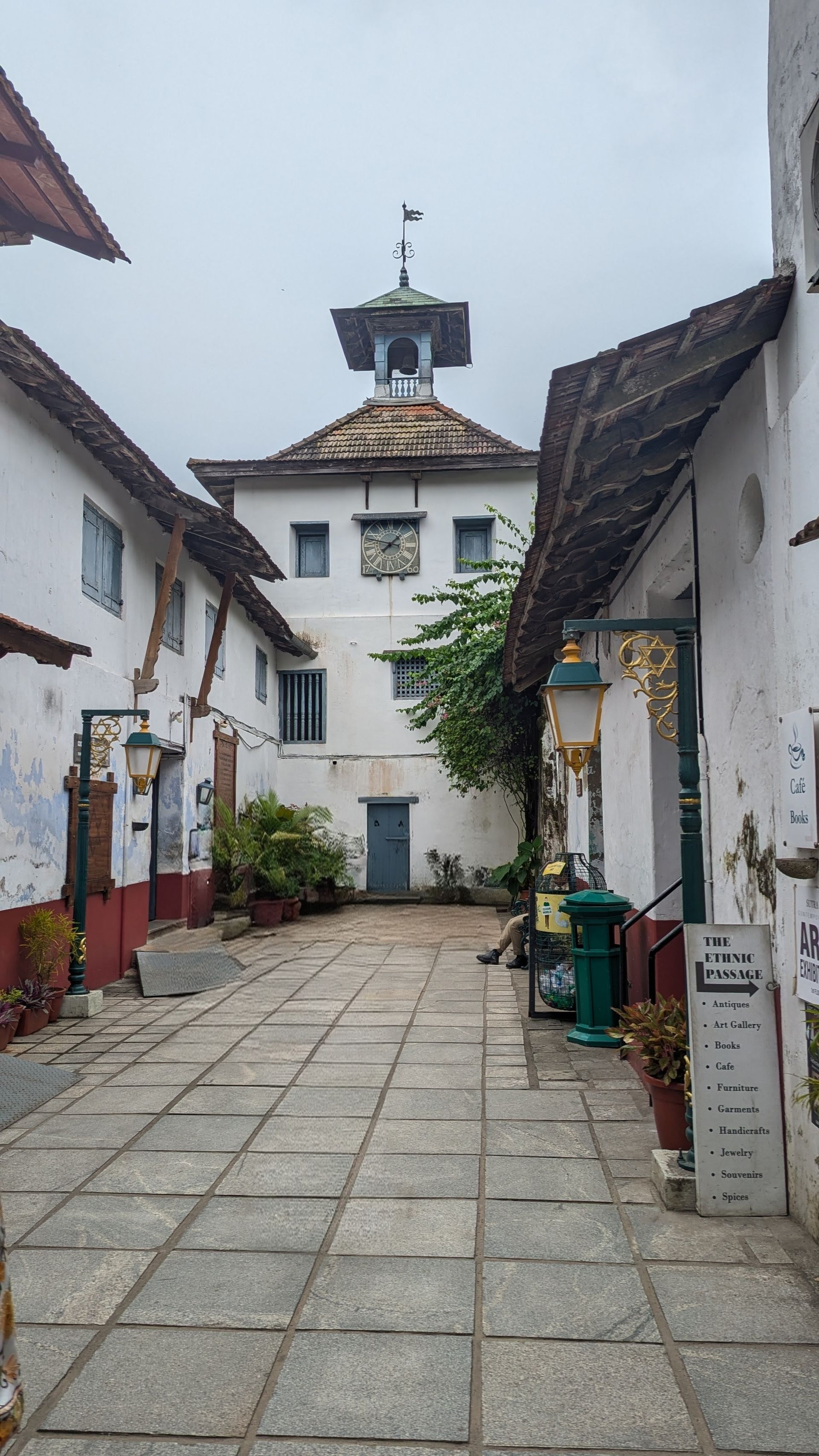
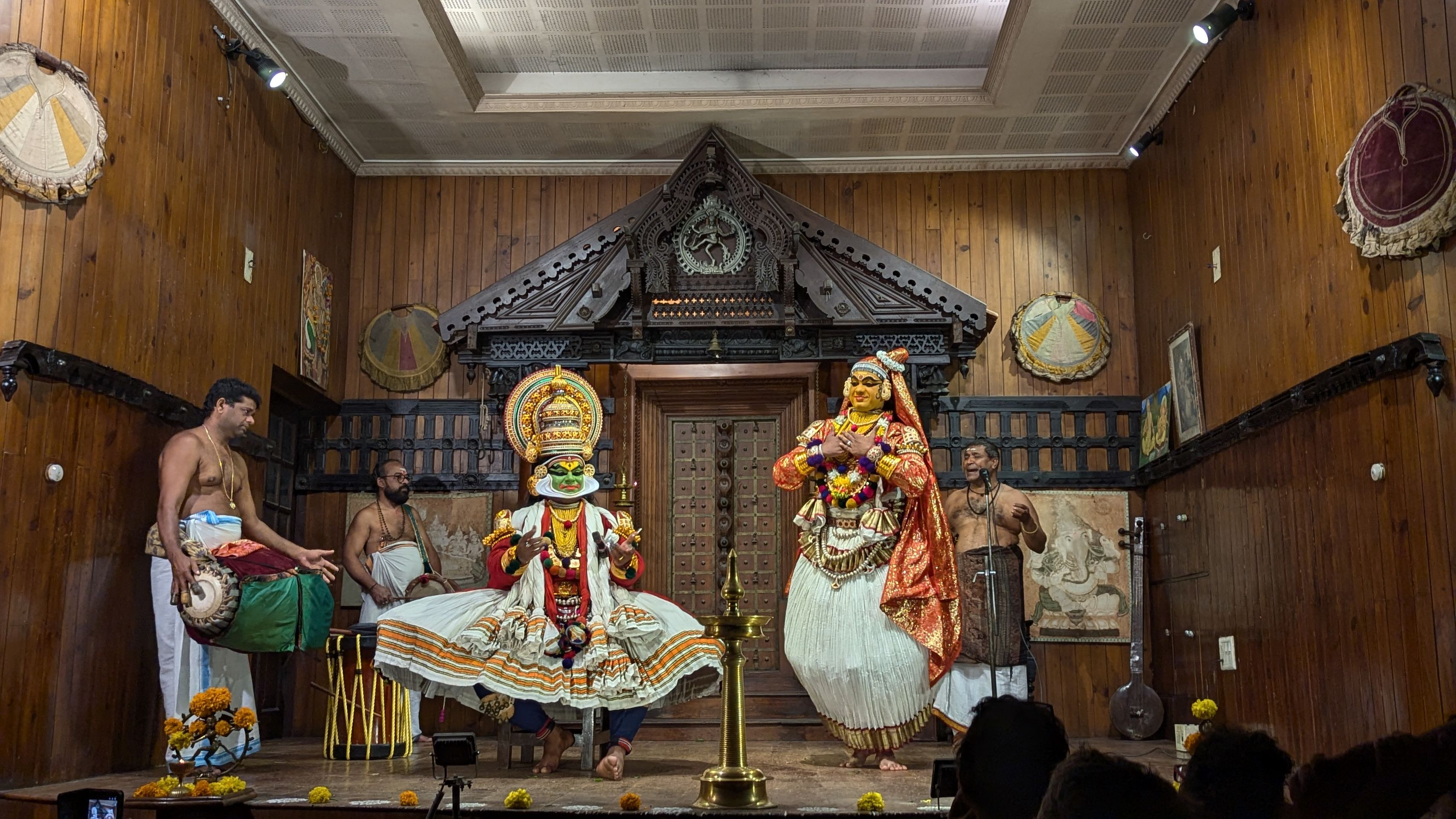
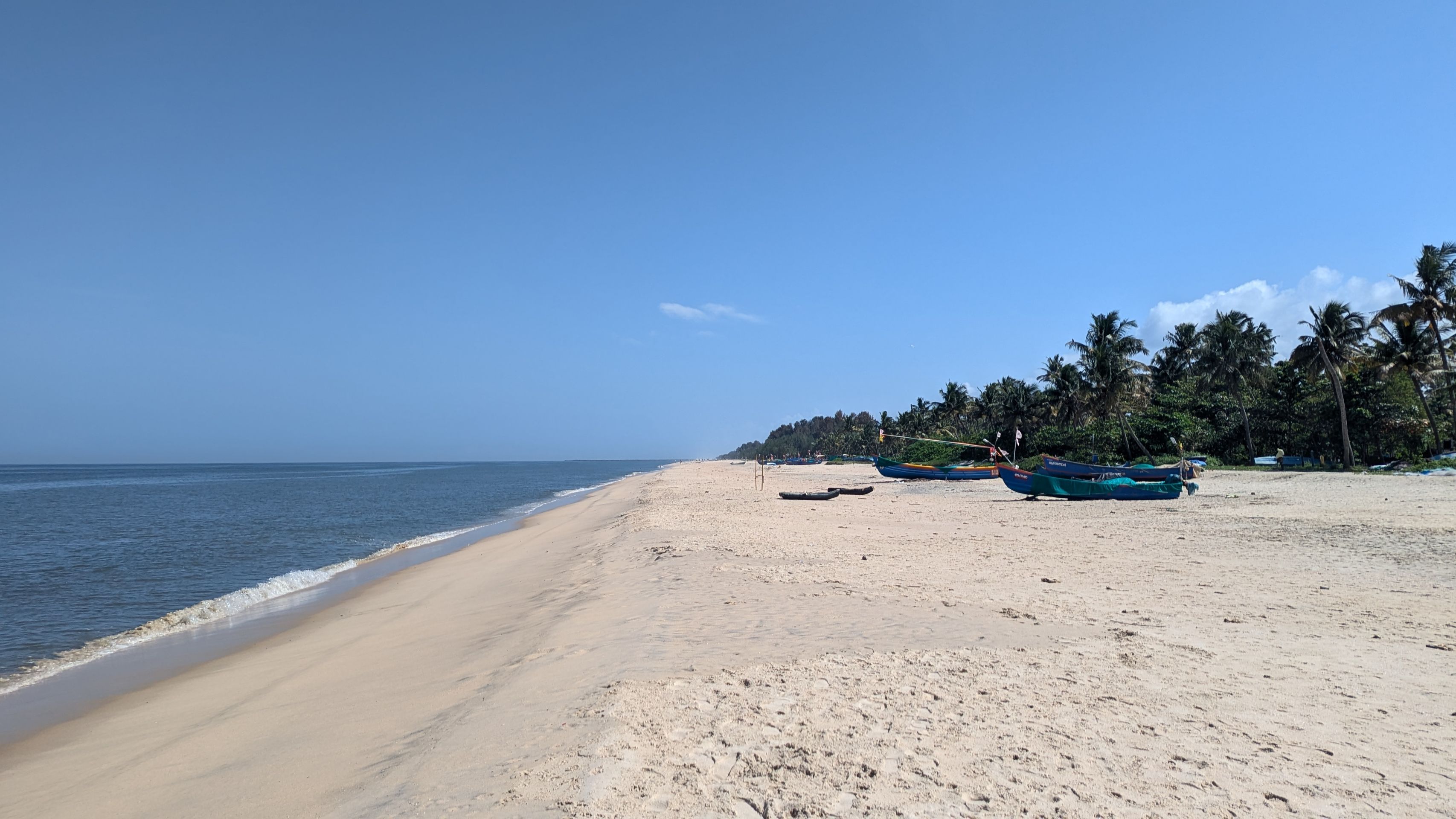
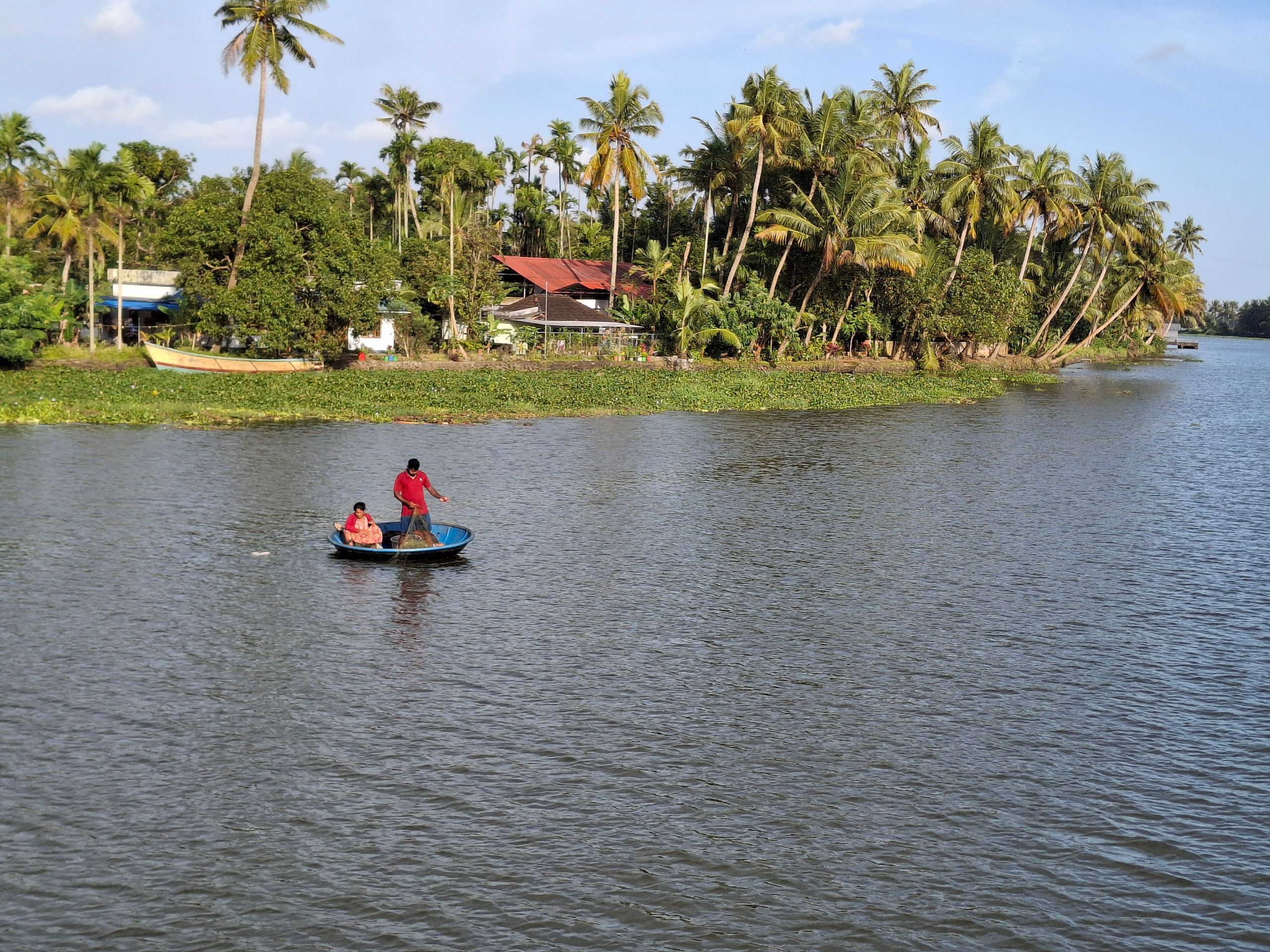
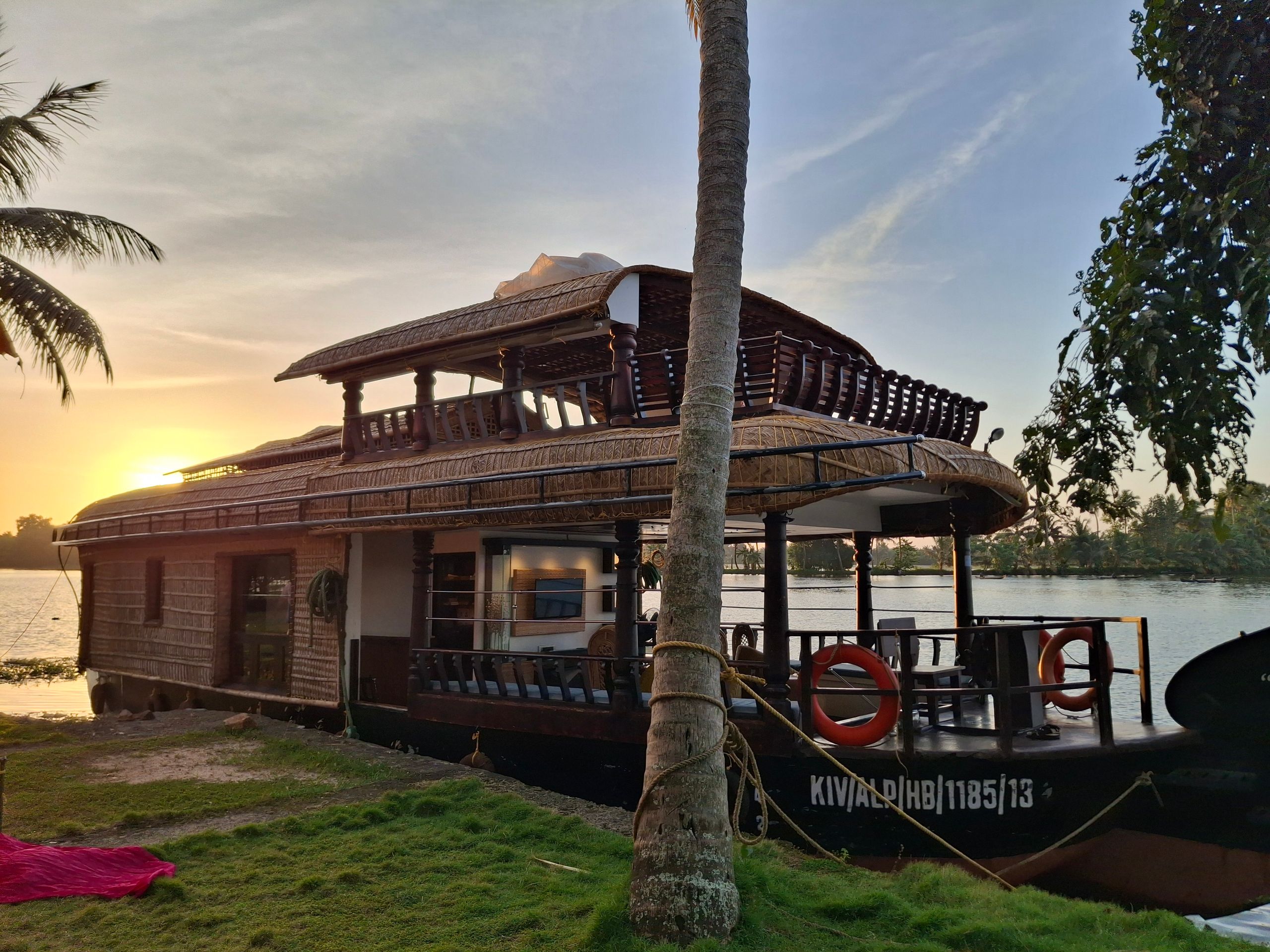
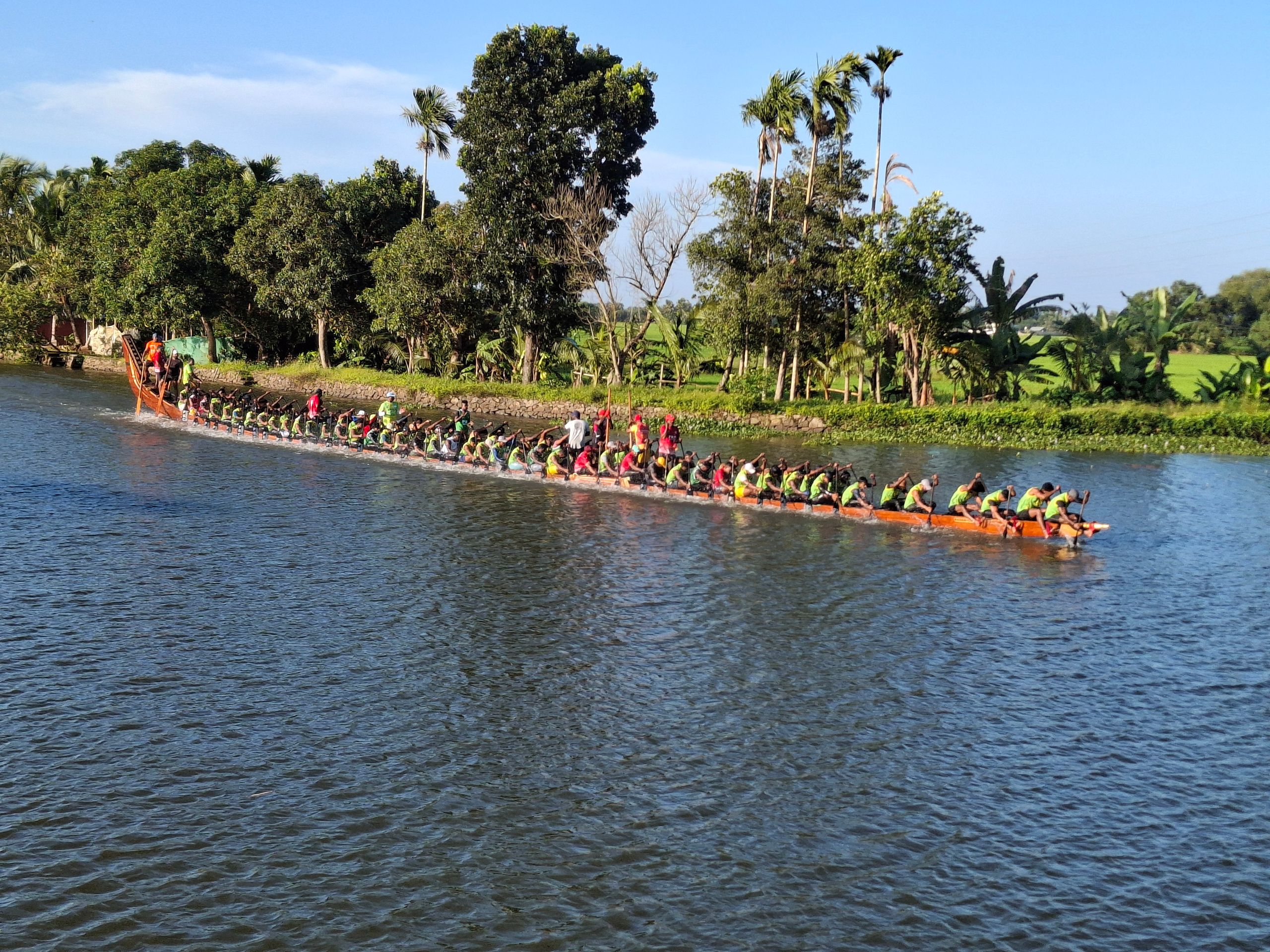
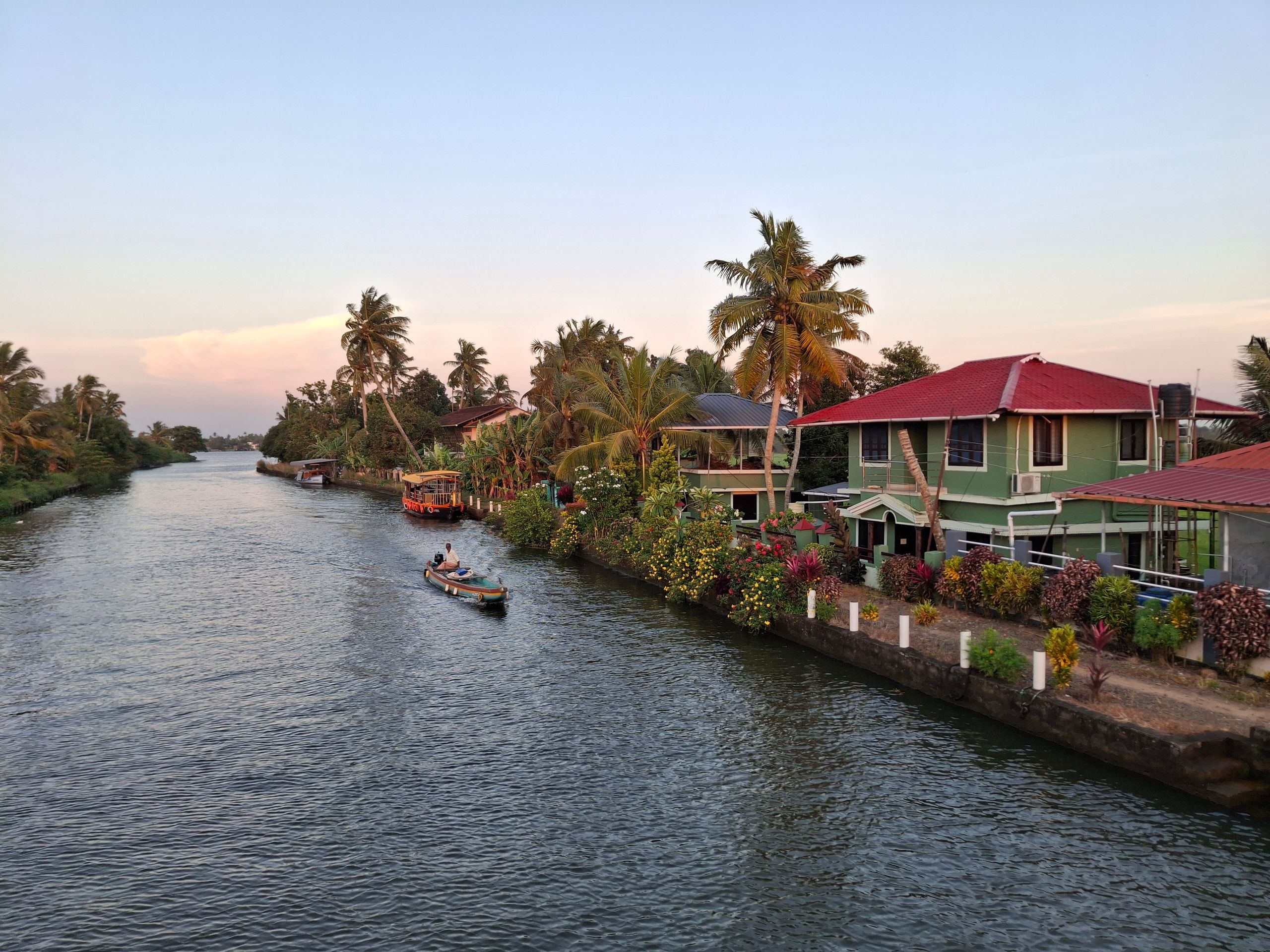
One night in Coimbatore, my research showed that there isn't much to see. Since the hotel canceled our reservation a few hours before our arrival, we searched the area and found a hotel with decent reviews. However, when we saw a cockroach crawling across the bed, initial doubts set in, and upon closer inspection, you could see how gray and stained the bedding was. Half the bed felt damp and didn't smell good, plus the air conditioning was so noisy that we hardly slept; at least we had breakfast the next morning before quickly checking out and heading to the train towards Kerala.
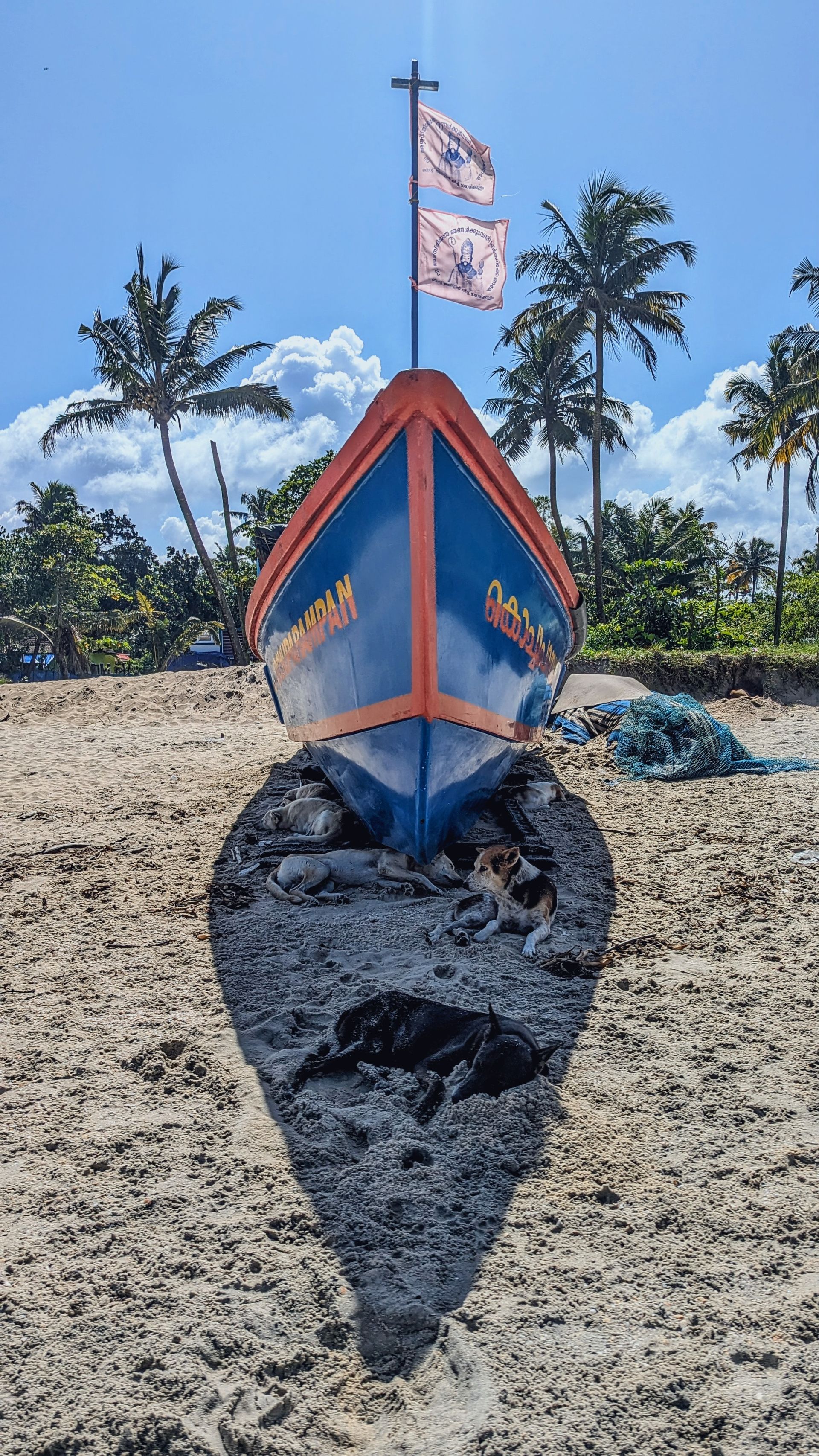
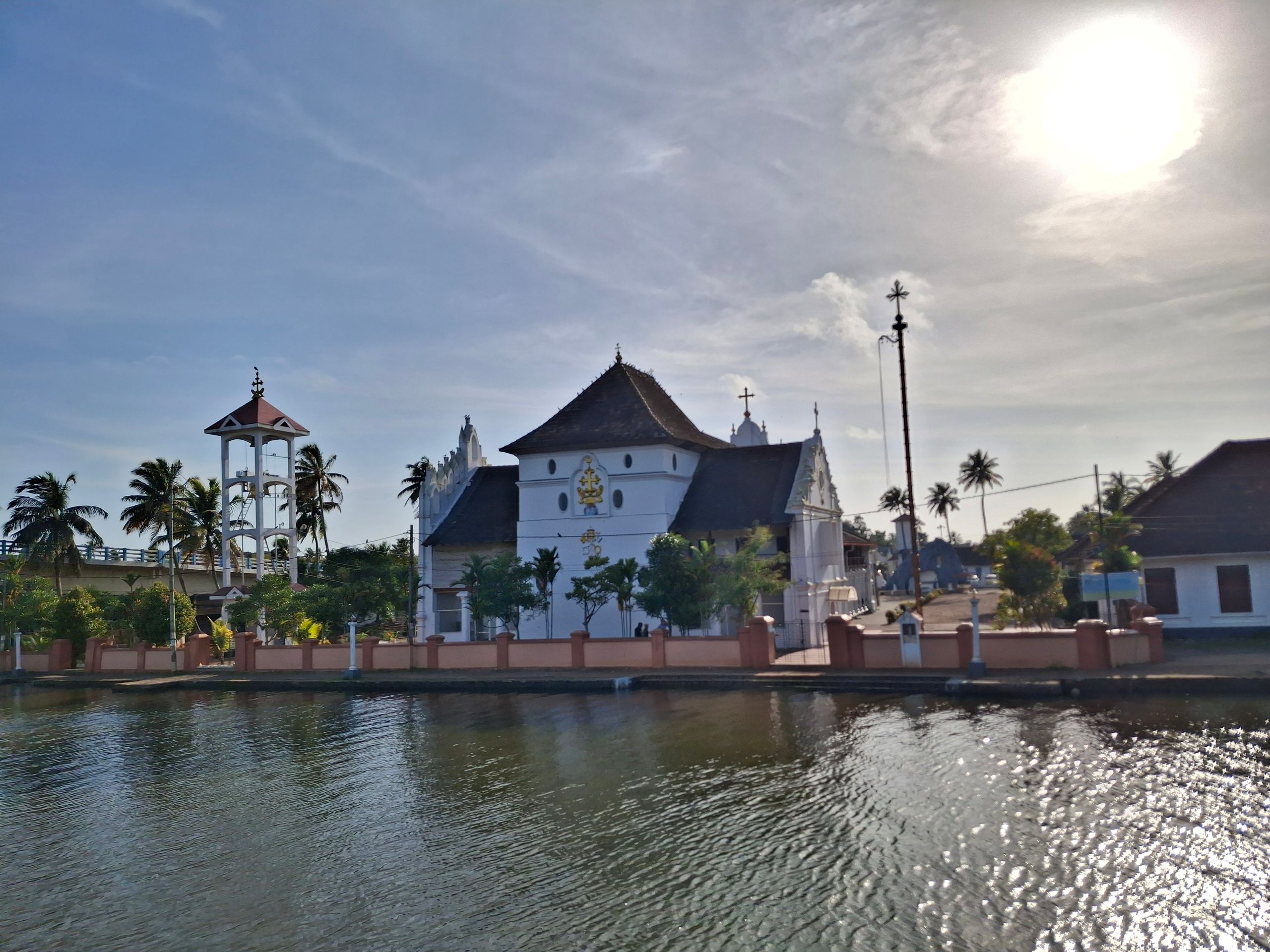
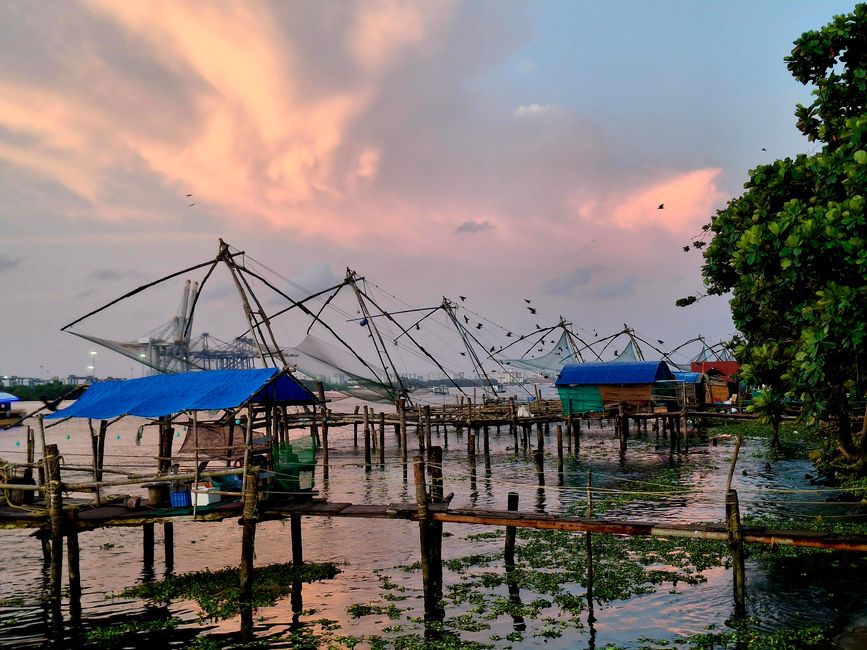
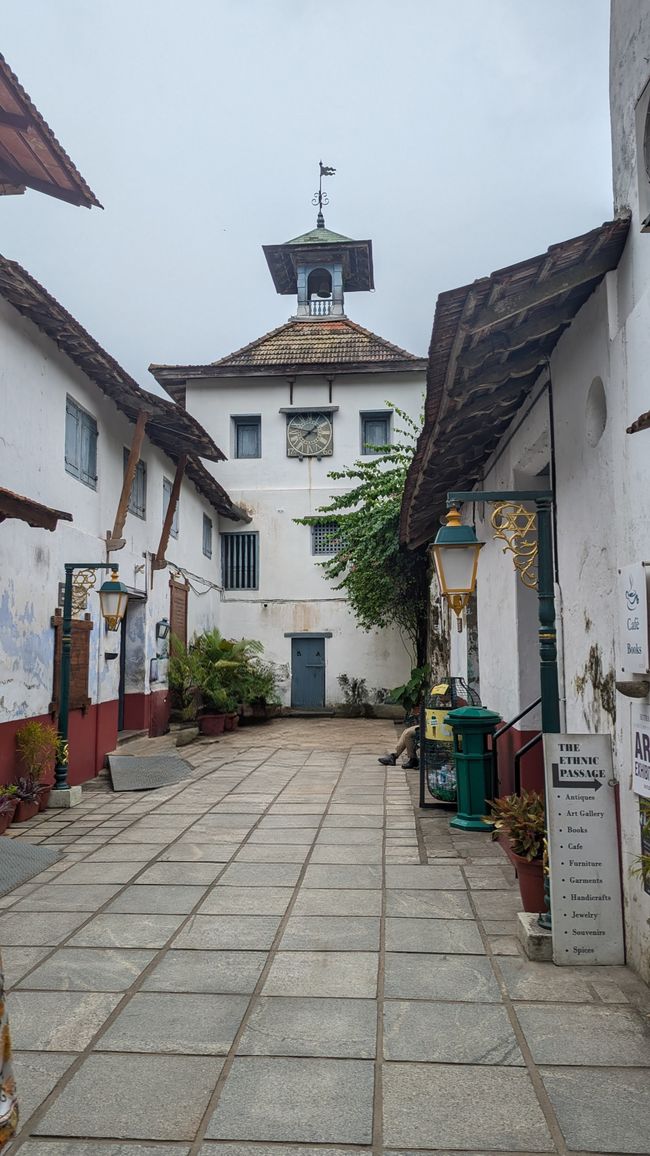
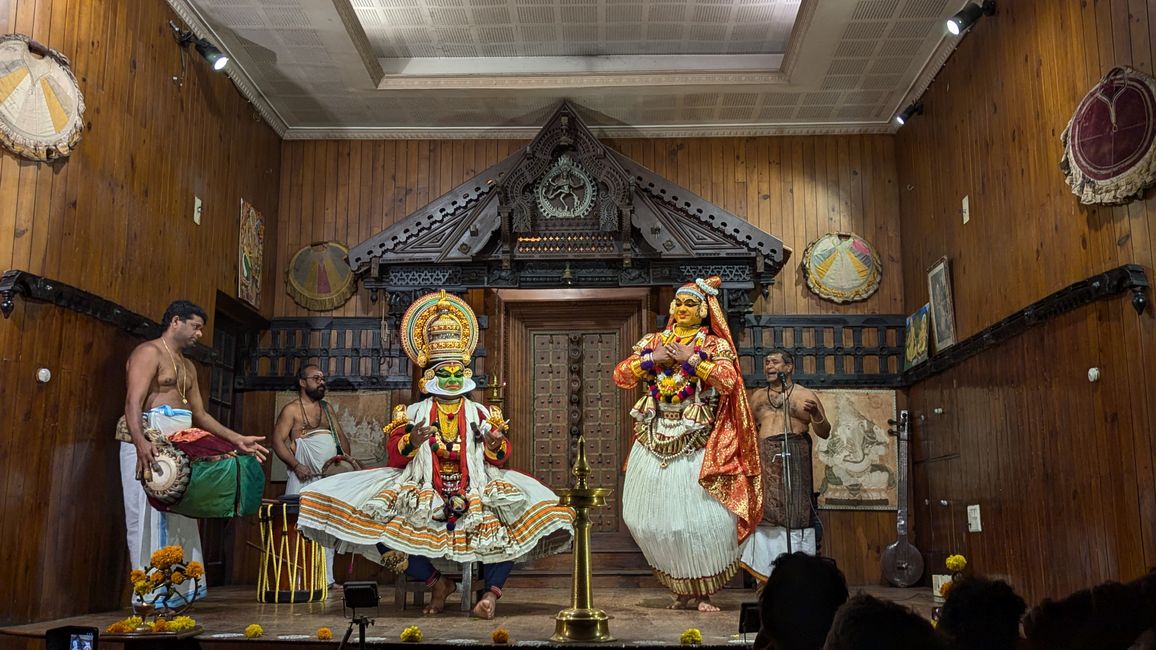
Here we stayed in a super chic hotel, watched the fishermen at work, strolled through the beautiful colonial old town, visited the Jewish quarter, treated ourselves to another massage, and attended a traditional Kathakali show where a story was told using only pantomime, drumming, and singing – highly recommend! Then we moved on to Marari and the backwaters on a houseboat.
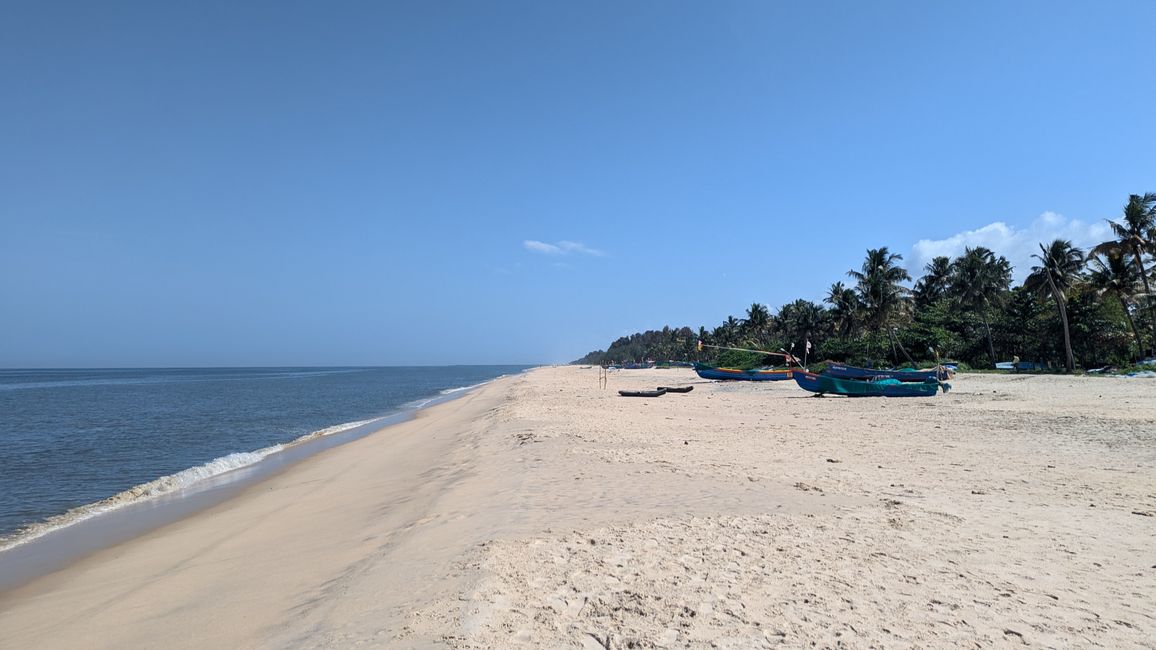
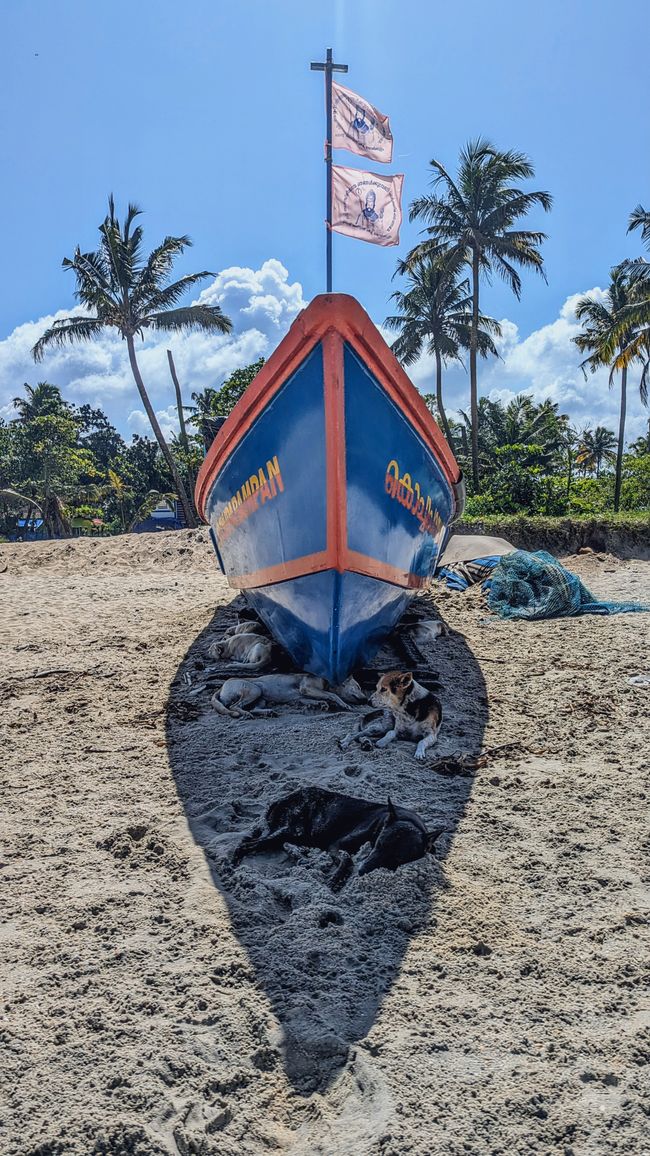
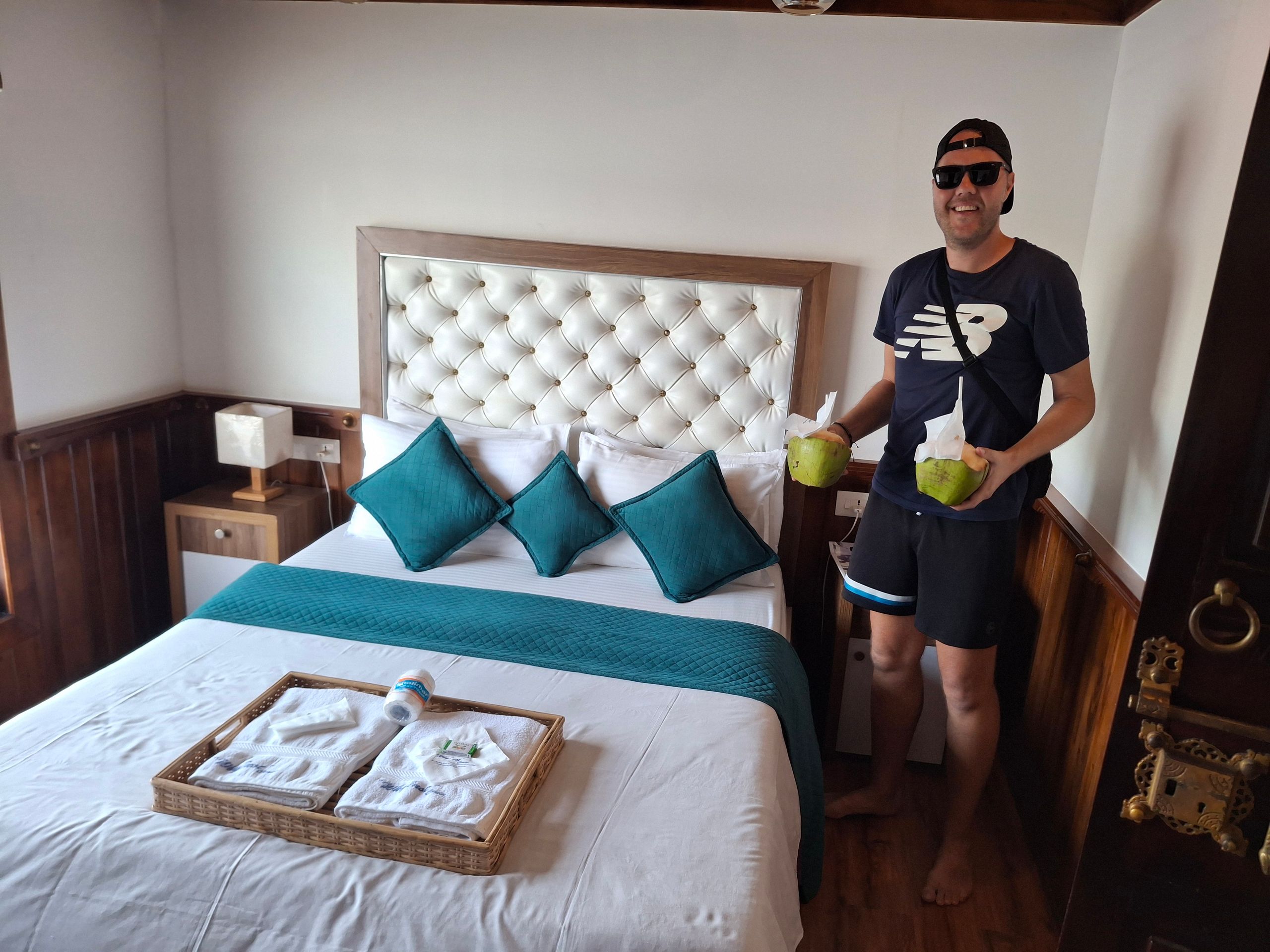
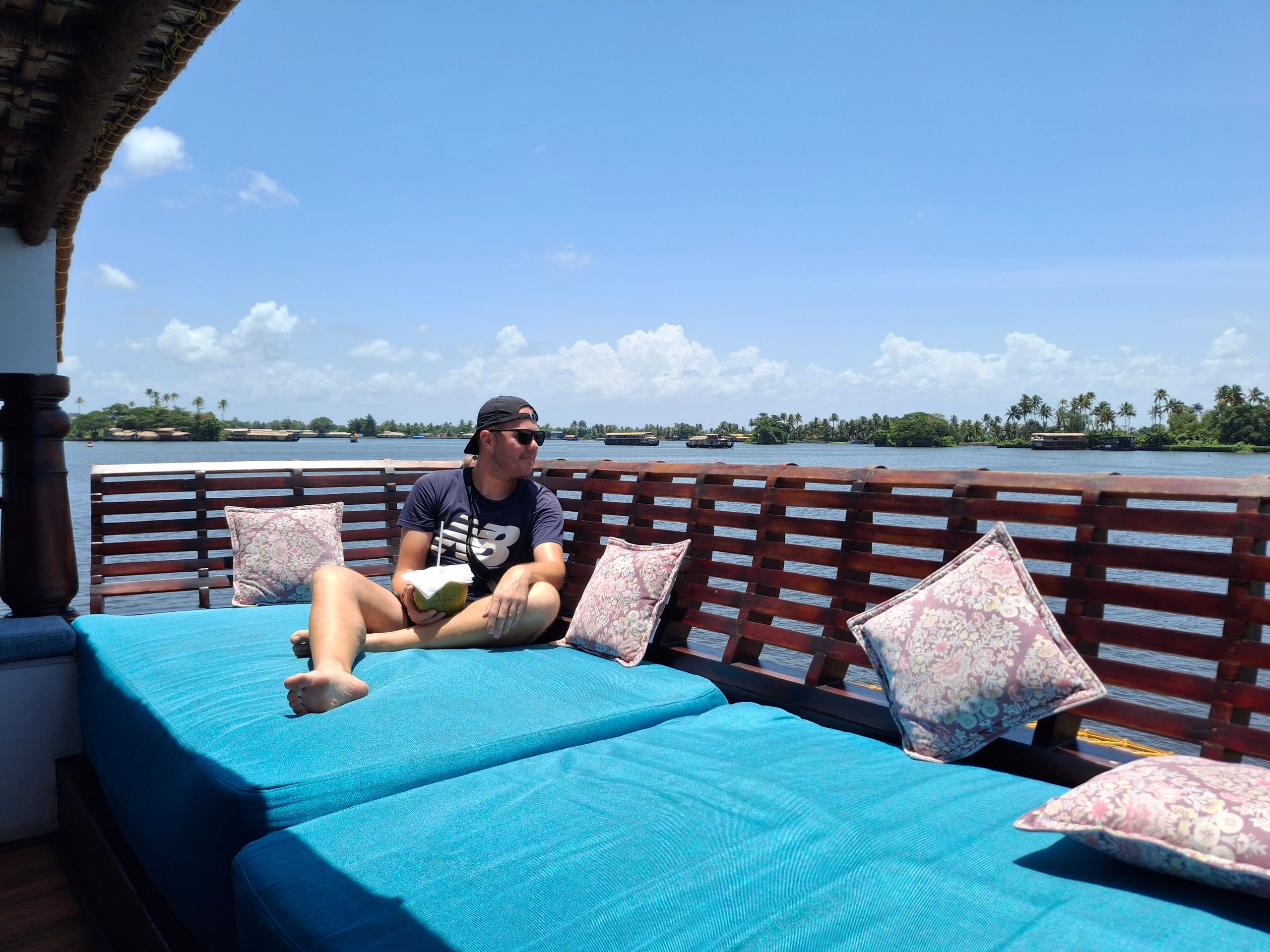
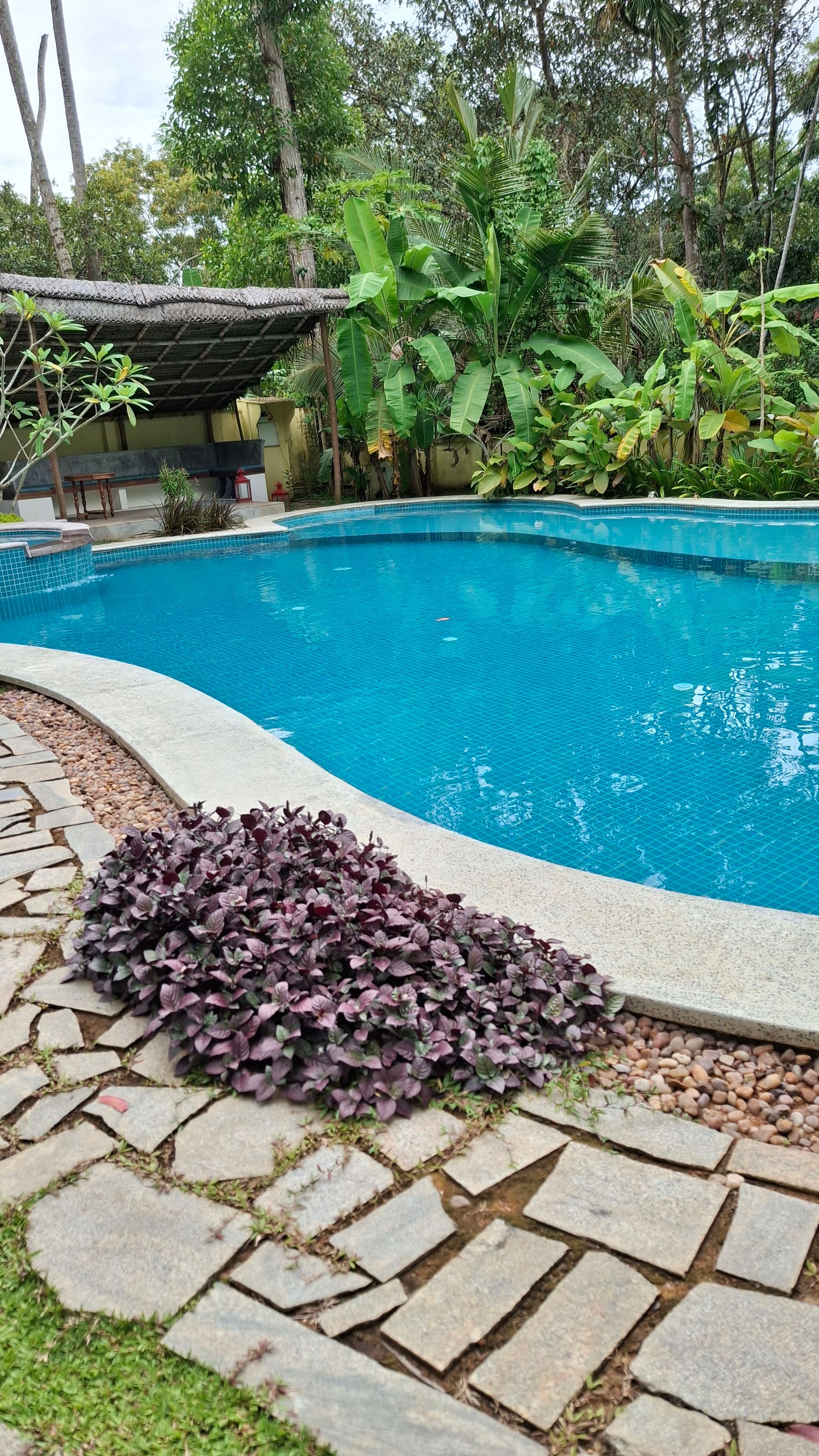
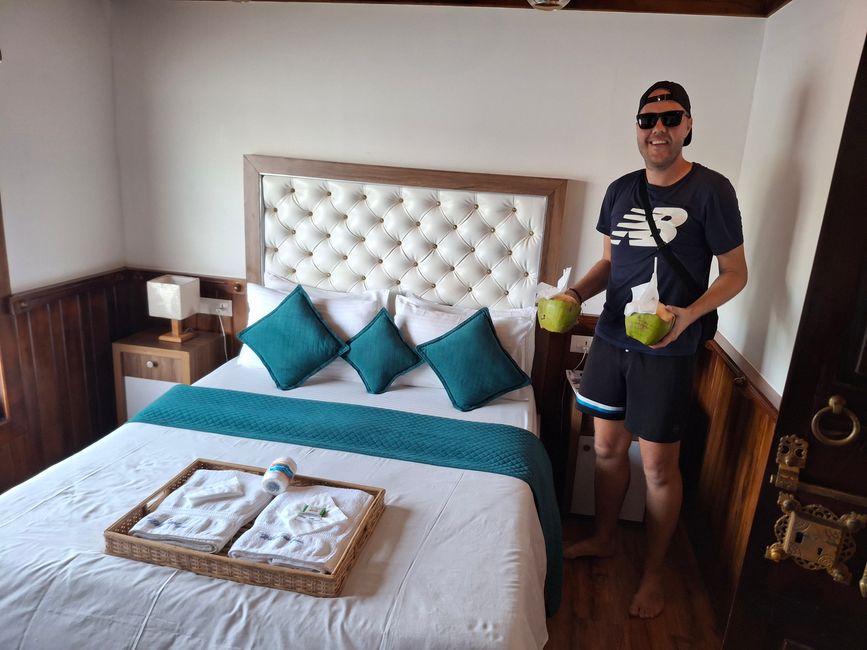
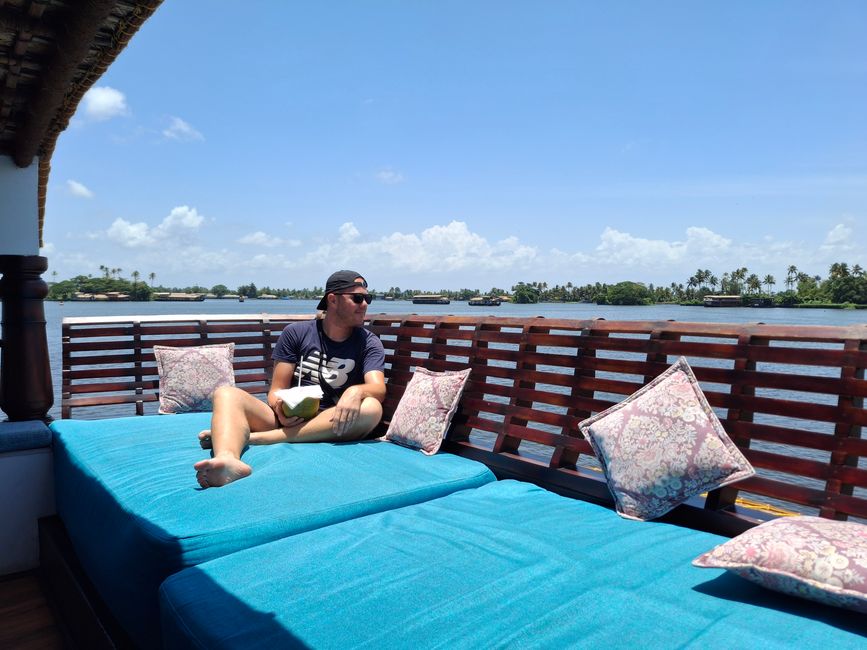
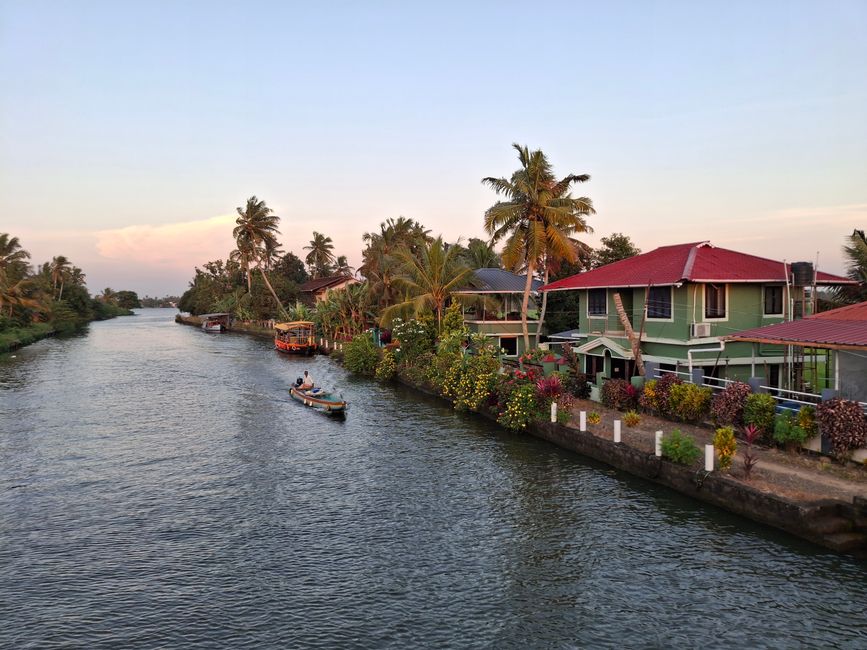
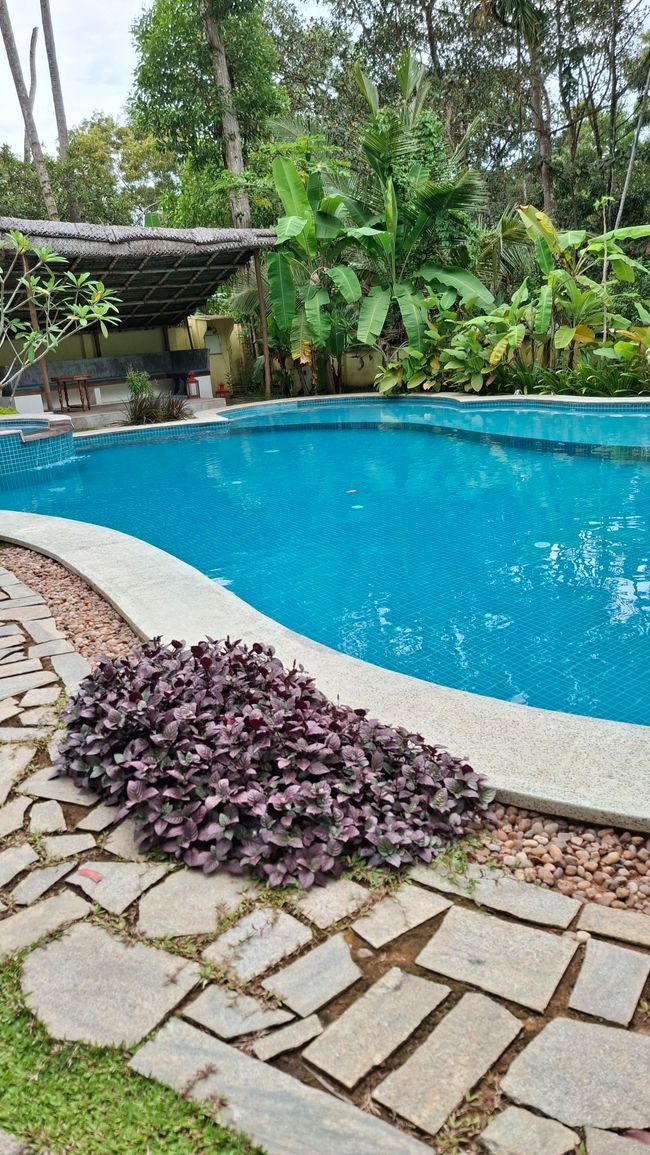
We continued to have good luck with the weather; the next 3 days were continuously sunny, the first three sunny days after the monsoon season. The houseboat with a driver, cook, air-conditioned room, and sun deck cost just €300 for 2 ½ days. We passed rice fields, small villages, holiday apartments, and villas of wealthy Indians. Otherwise, we spent a lot of time reading, sleeping, and enjoying fresh fish on the boat. The next few days continued similarly; our hotel for the following three days had a large pool where we spent the first 1 ½ days before the weather worsened. But lying in the air-conditioned room and reading wasn’t so bad either.
In the low season, the night including breakfast here costs us €60, while in the high season, up to €240 per night can be charged. The resort feels like being in the jungle, the pool and the room are really spacious, everything is spotlessly clean, and the hotel staff follows you around everywhere. Sometimes we were the only guests with 8 staff members around us. Still, €240 in the high season would be a bit much.
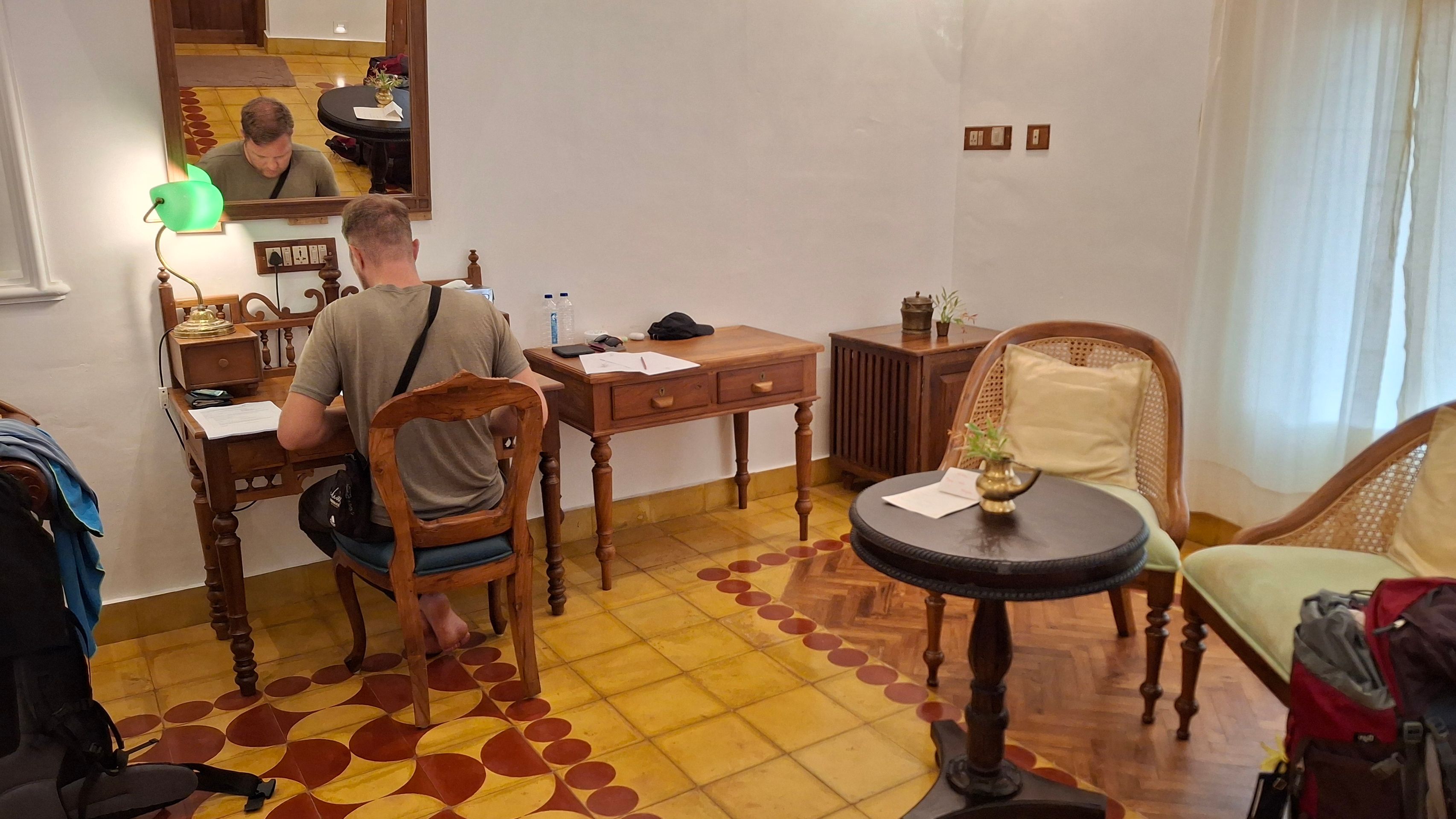
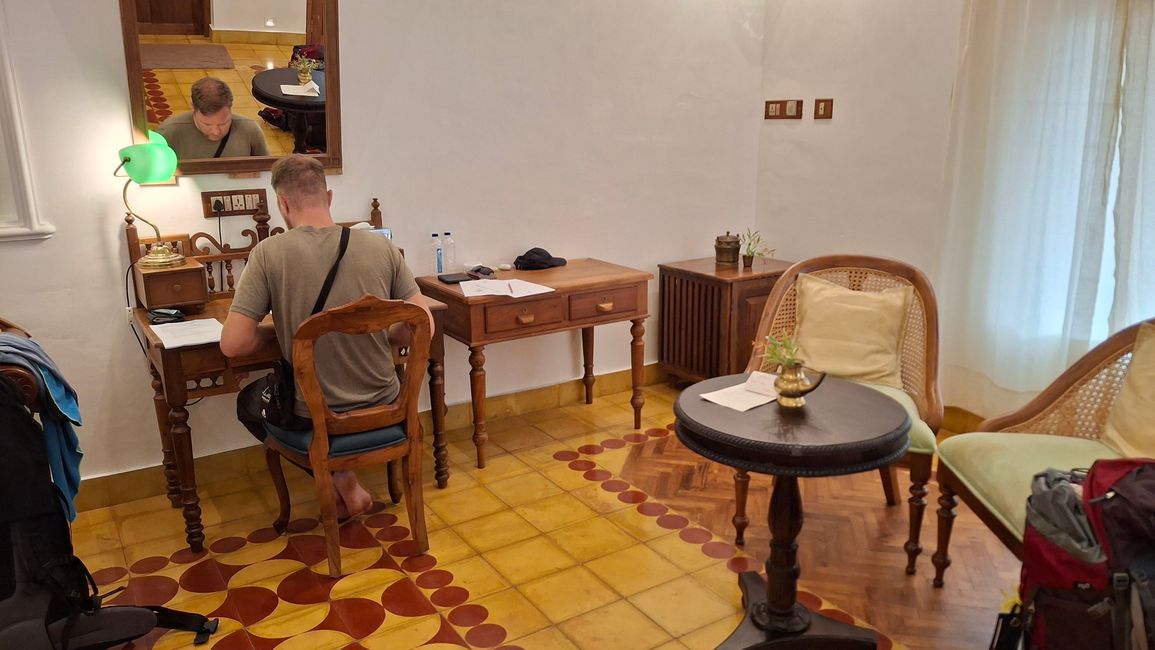
After I stylishly signed my leasing contract for my new car at an old wooden desk, the journey continued to the last city in India, Thiruvananthapuram.
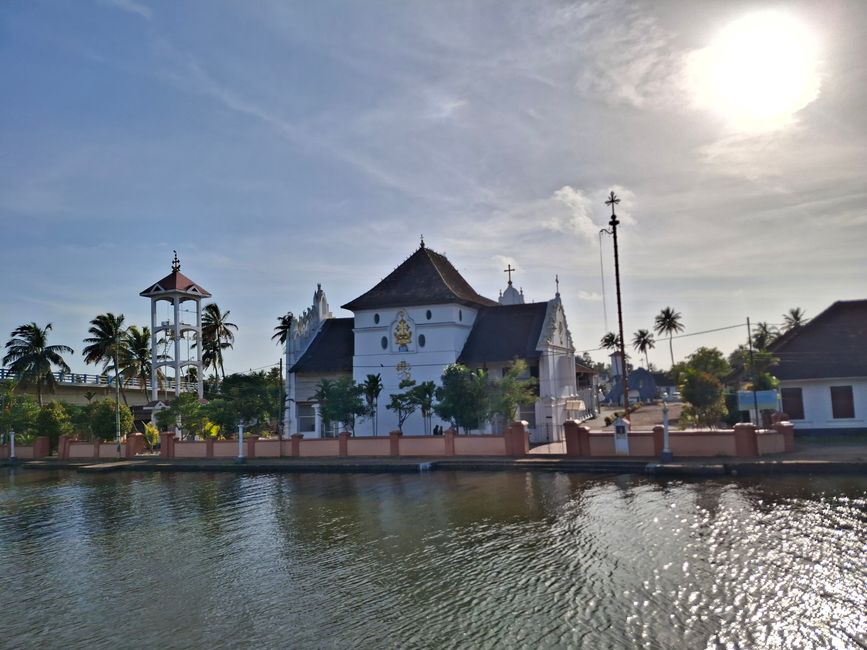
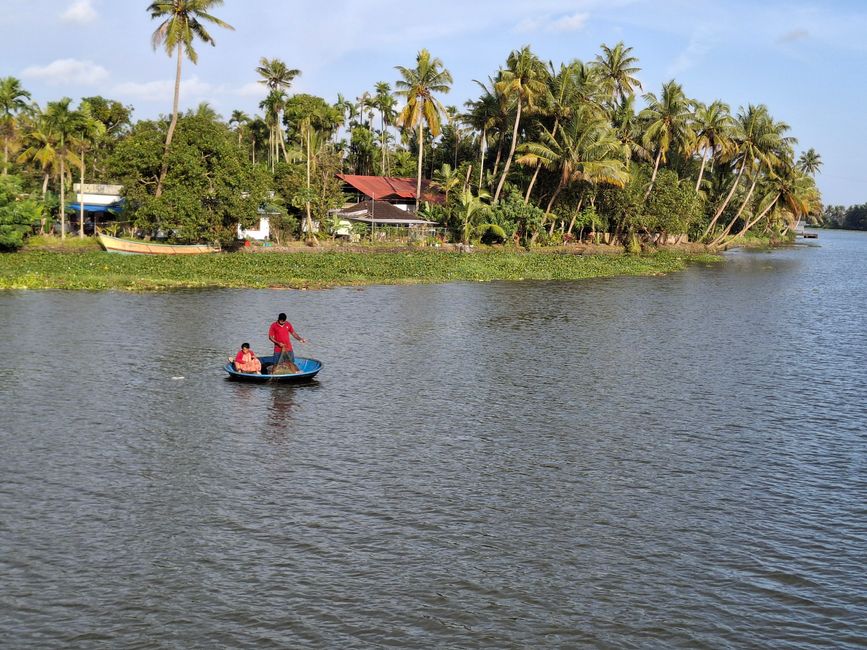
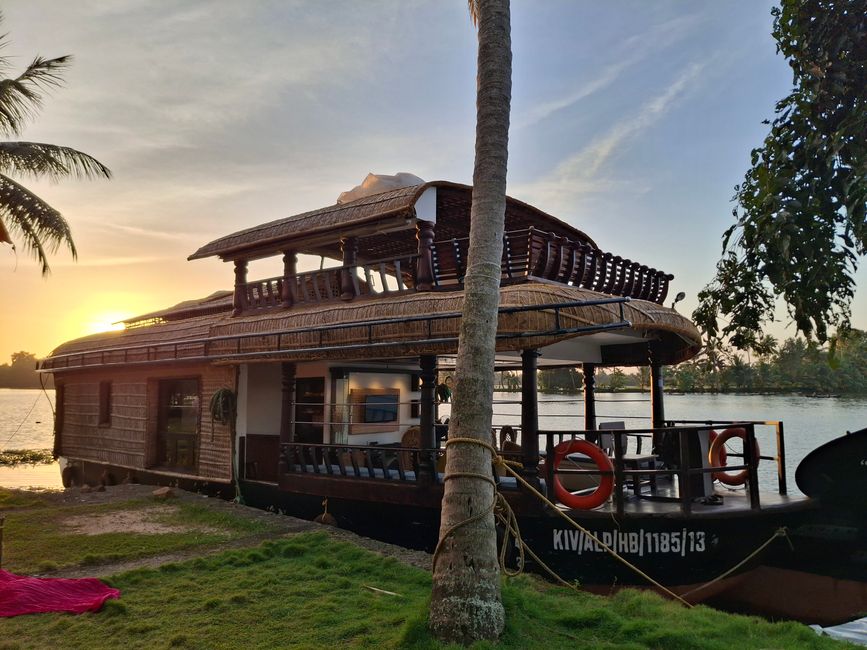
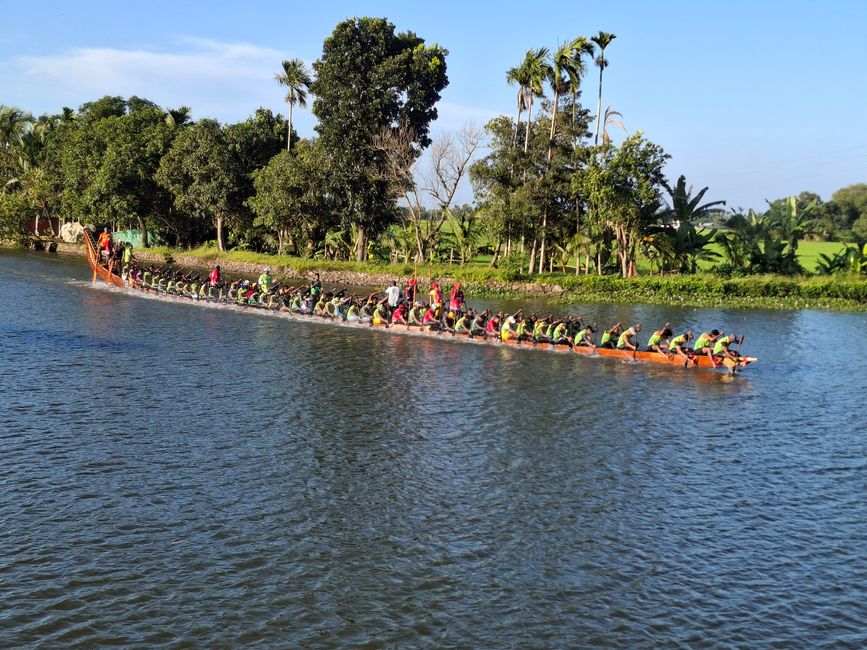
Here we continue to do nothing. We go once to the temple where only Hindus are allowed, and have one last meal together before Fina heads back home.
Unfortunately, I also received some sad news; my grandpa passed away today on 31.08.2025. I had already considered before my trip that this could happen, and I am even sadder that it happened just two weeks before my return. Thank God we were able to see each other again in May. Now I am considering whether to head home a little earlier, but that will take a few more days.
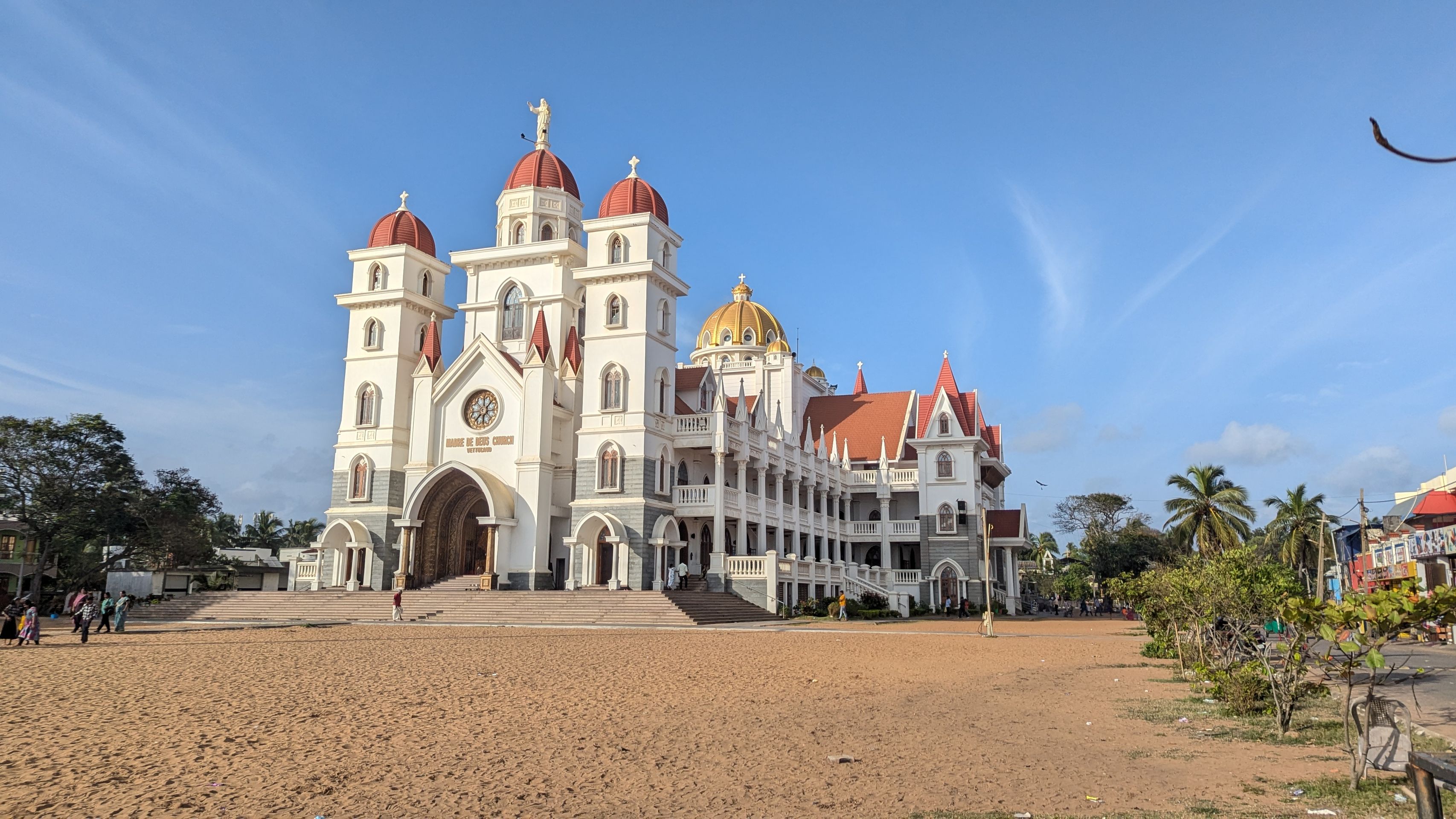
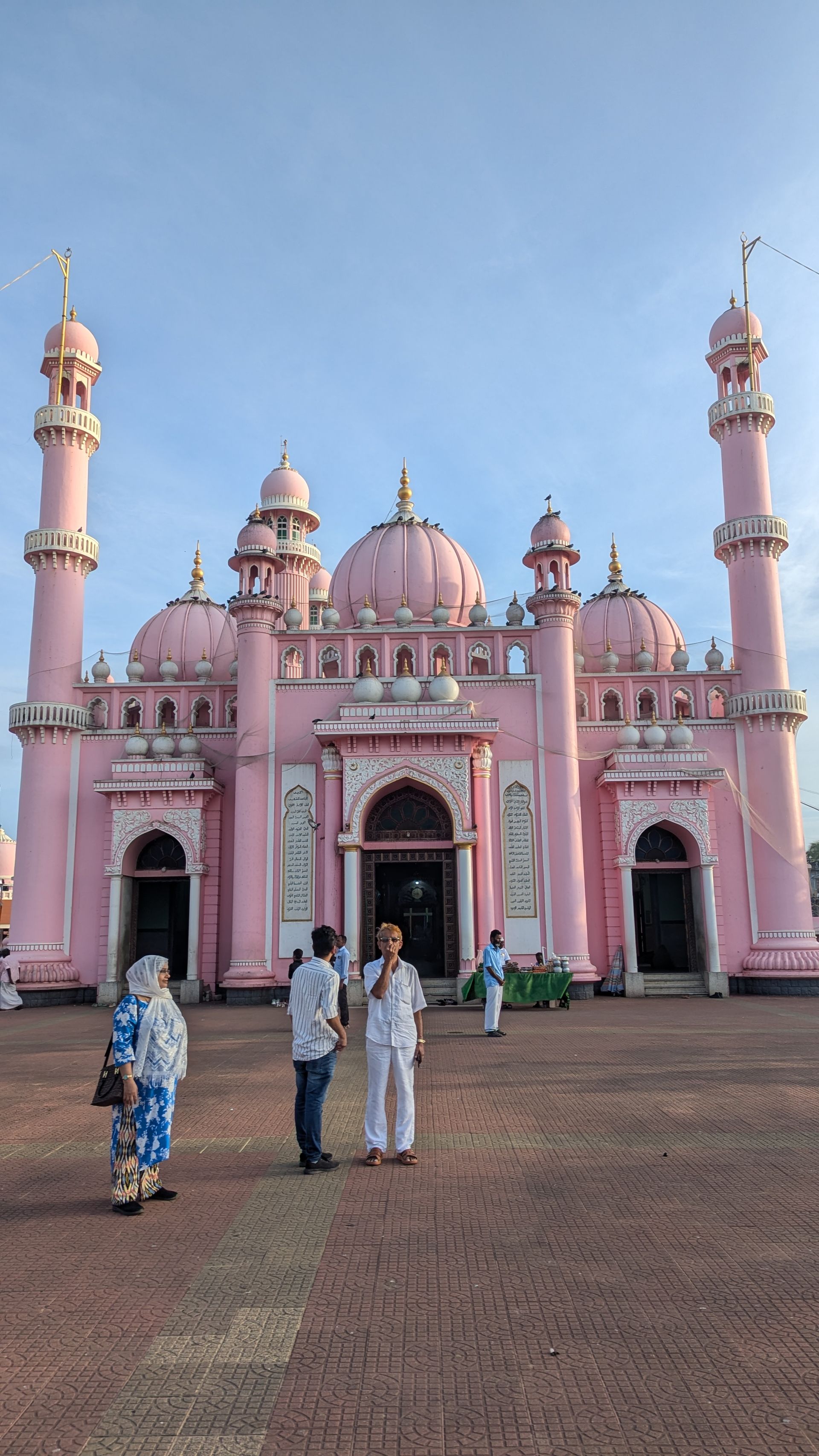
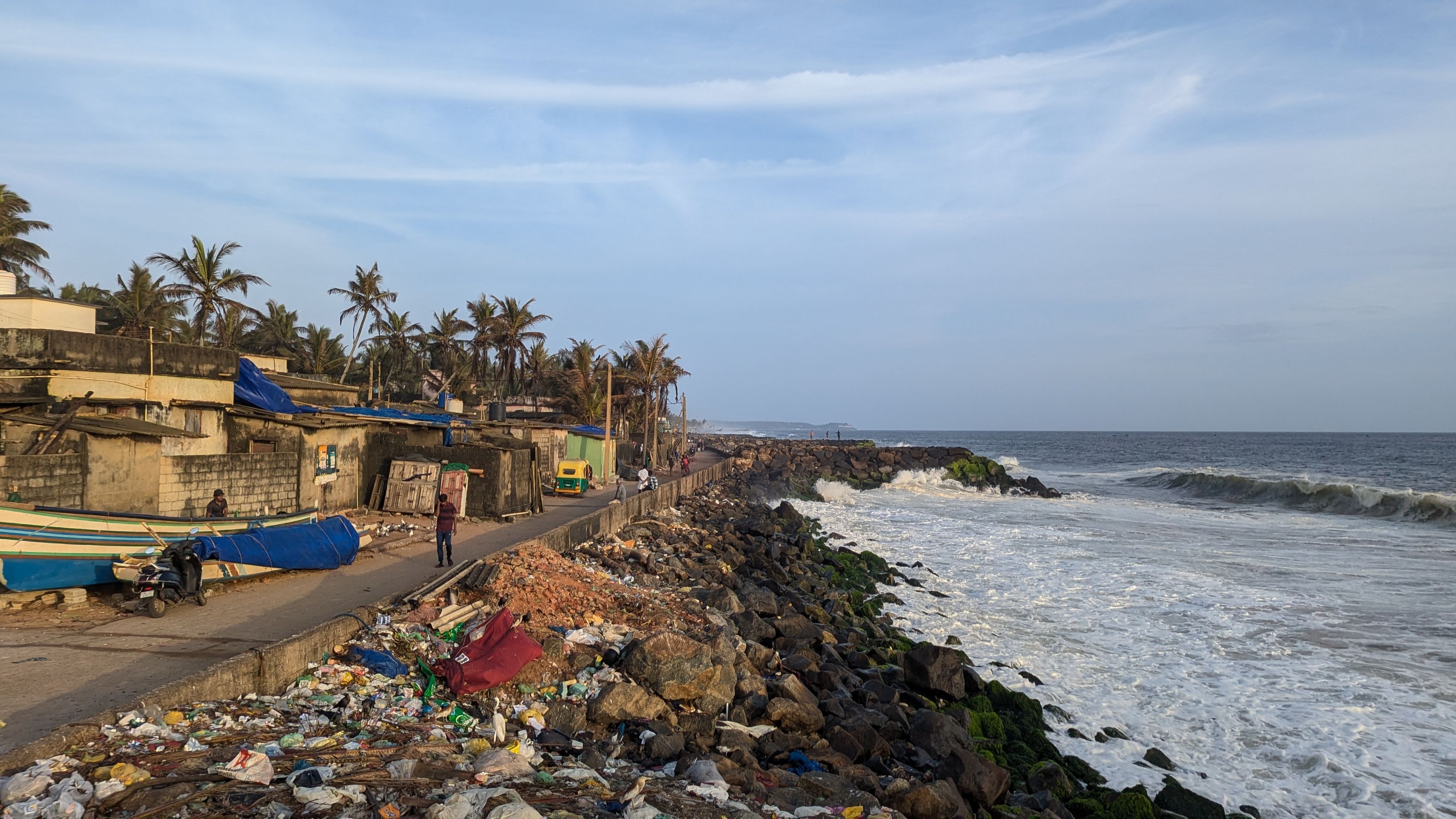
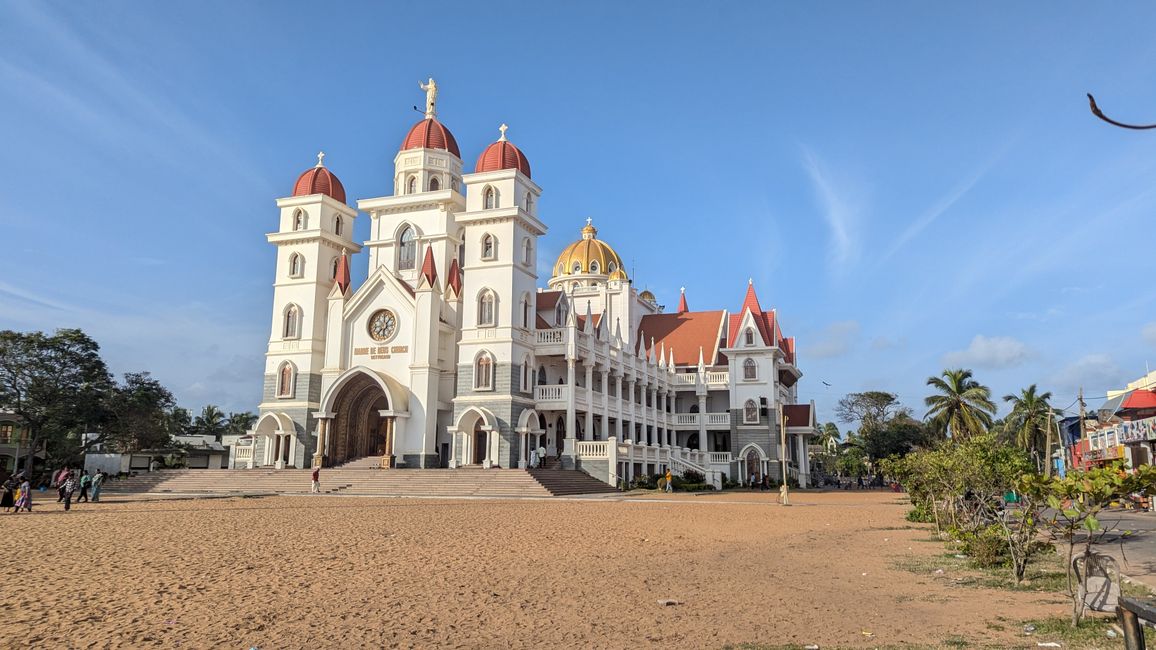
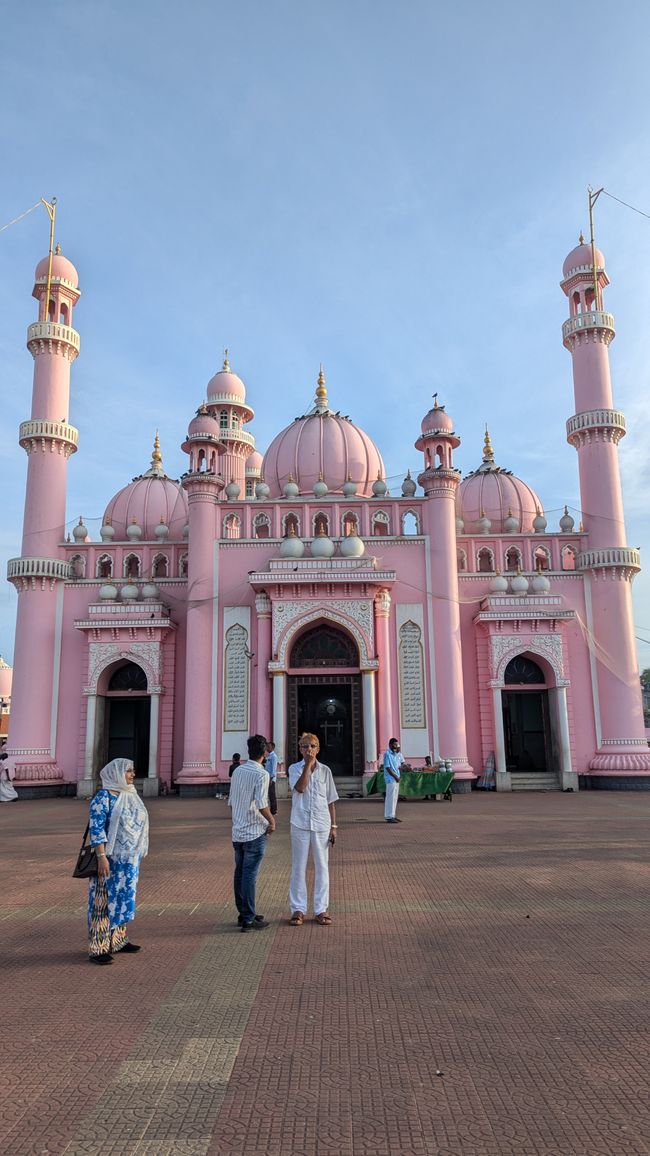
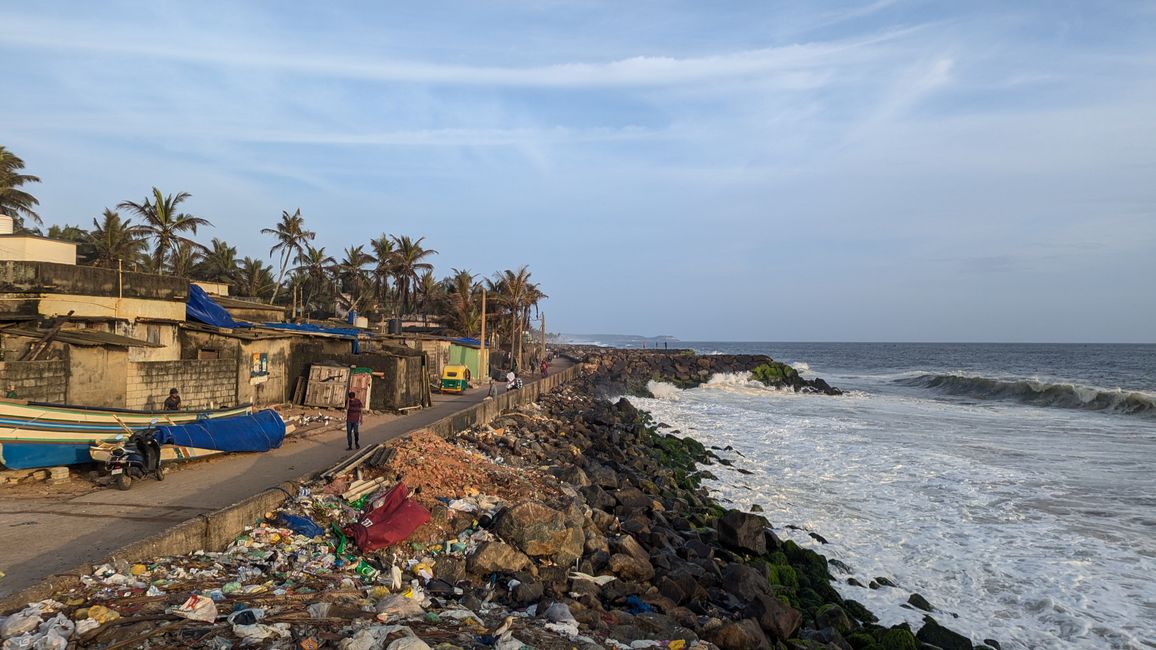
I stayed in Thiruvananthapuram for two more days, but aside from eating, I hardly left the hotel, on the last day I visited a church by the beach and a mosque. There, I was once again reminded of how beautiful it is at home. The coast here has virtually eroded away, and people live in dilapidated houses that look uninhabitable due to the wind and salty air. The garbage is simply disposed of over the wall into the sea.
This continually gives me the impression that we have almost destroyed the Earth. Coral reefs are dying everywhere, coastlines are being washed away, and nature is filled with plastic. It's sad that we are still debating at home about building new gas power plants, postponing the ban on combustion engines, or building new highways instead of expanding bike lanes and public transport. Instead, it gets hotter and hotter, and some areas will soon be uninhabitable; a warning example is my next destination, Abu Dhabi and Dubai.
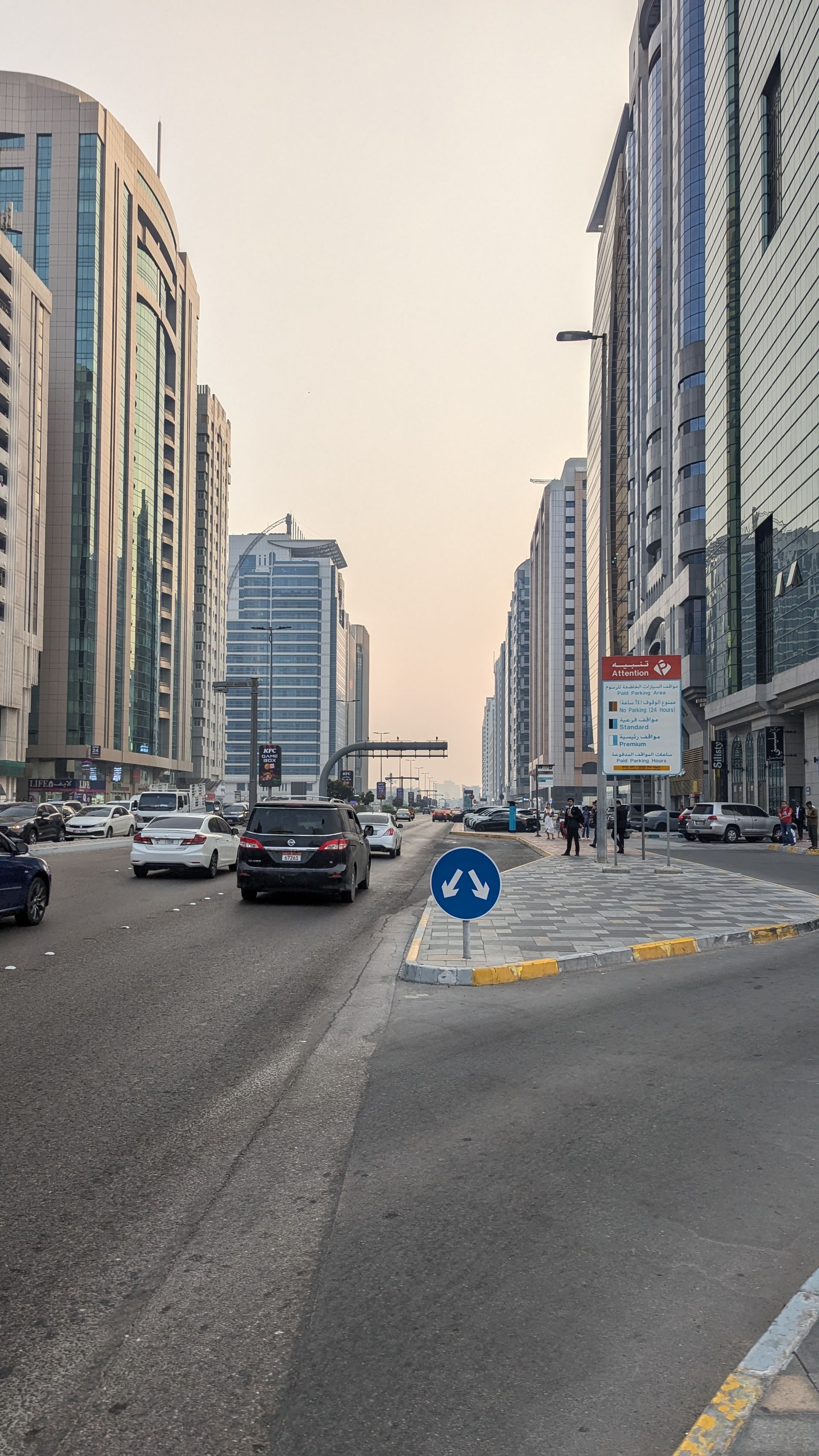
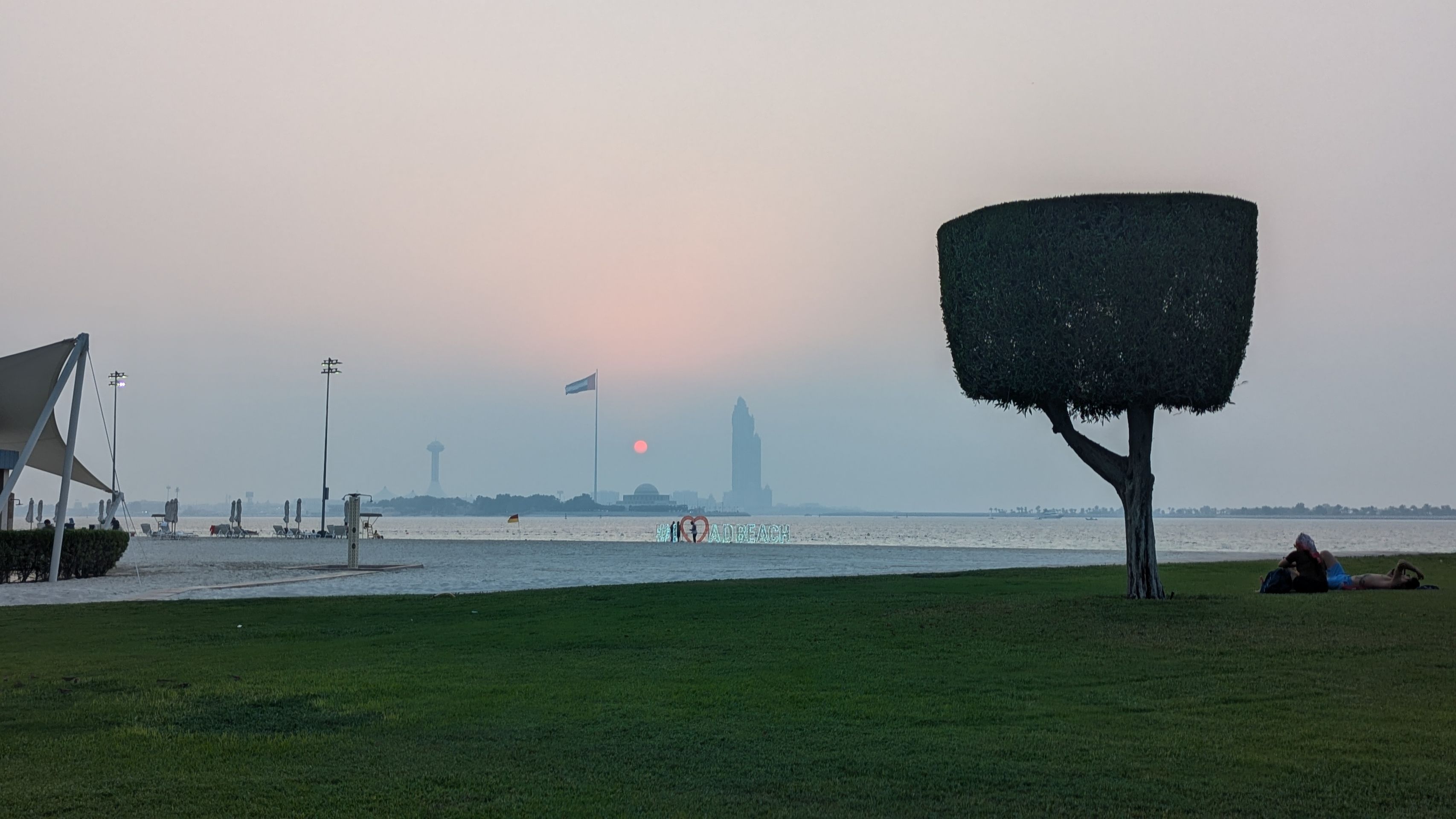
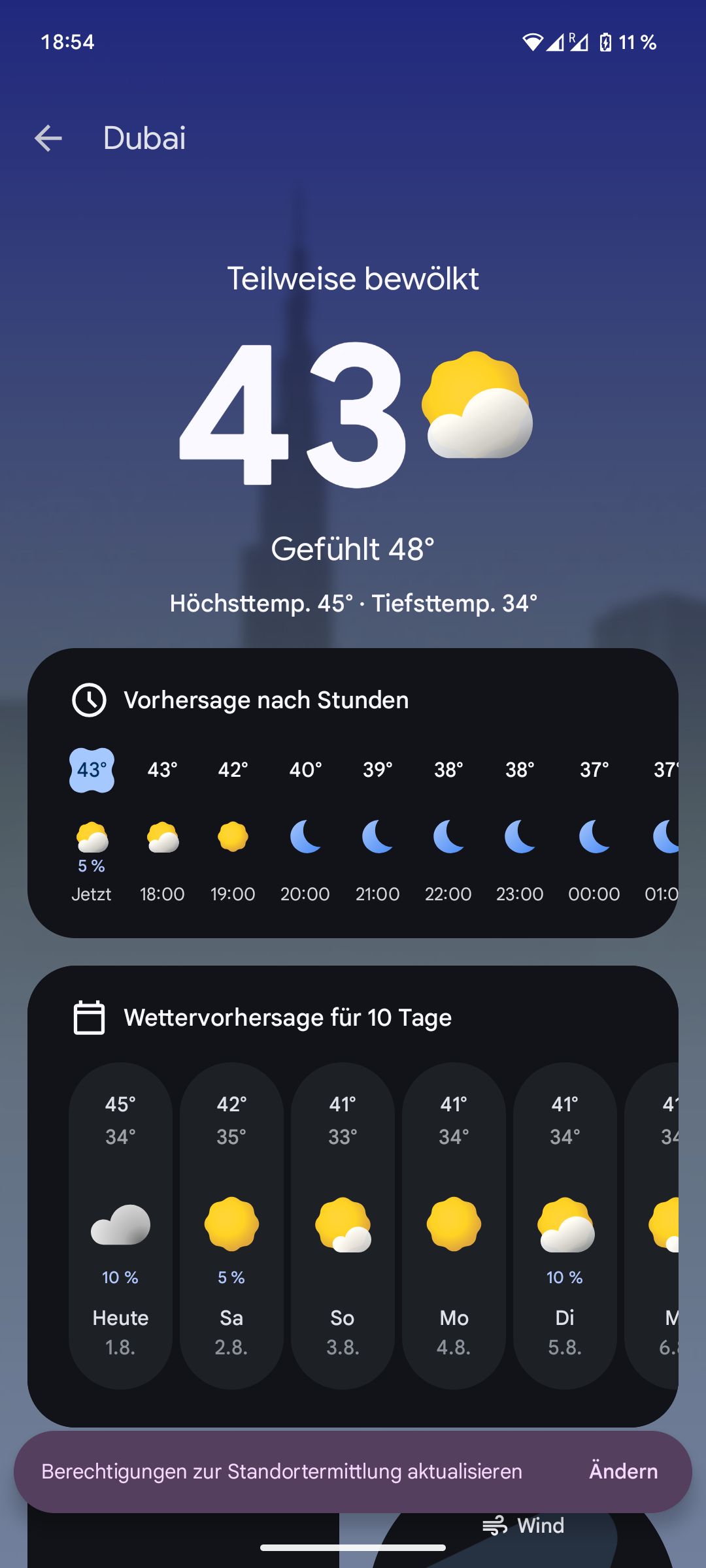
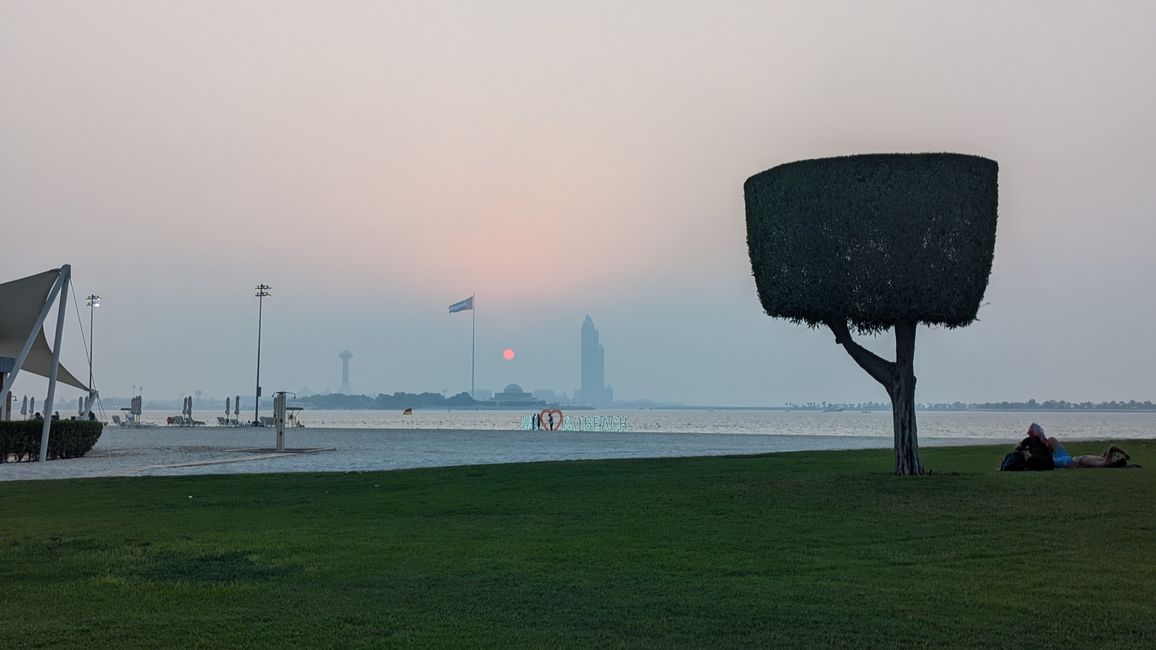
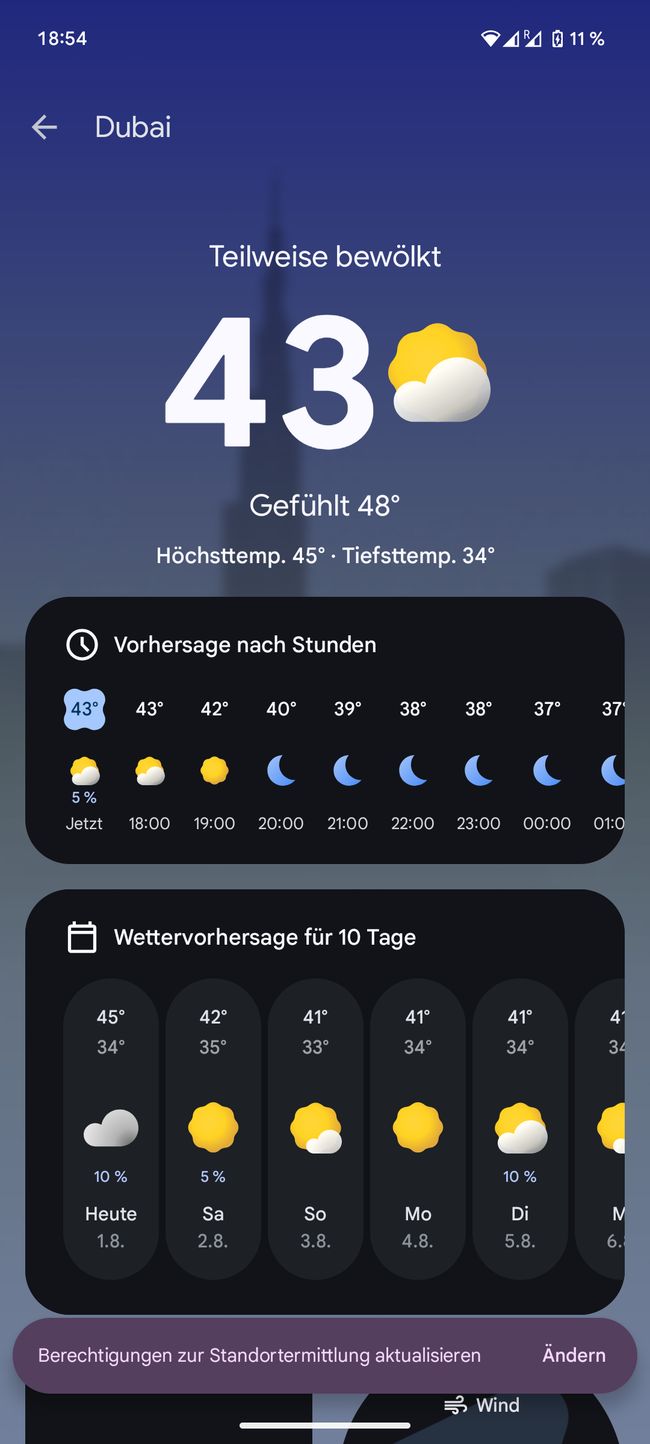
I knew it would be warm, but I didn't expect this. The air was so humid that the perceived temperature was registered at 48°C. When I was on my way to the promenade in the afternoon, I found it hard to breathe at first; it felt like breathing under a warm blanket. After a 15-minute walk, my T-shirt was wet, and I had sweat stains forming on my pants as well. I actually wanted to see the mosque and head to a small peninsula that supposedly offered a good view of the skyline. However, I abandoned that plan due to the heat and spent the rest of the day in the hotel. Overall, I felt like there was very little greenery in Abu Dhabi, and since it was very hazy, I wouldn't have had a good view anyway.
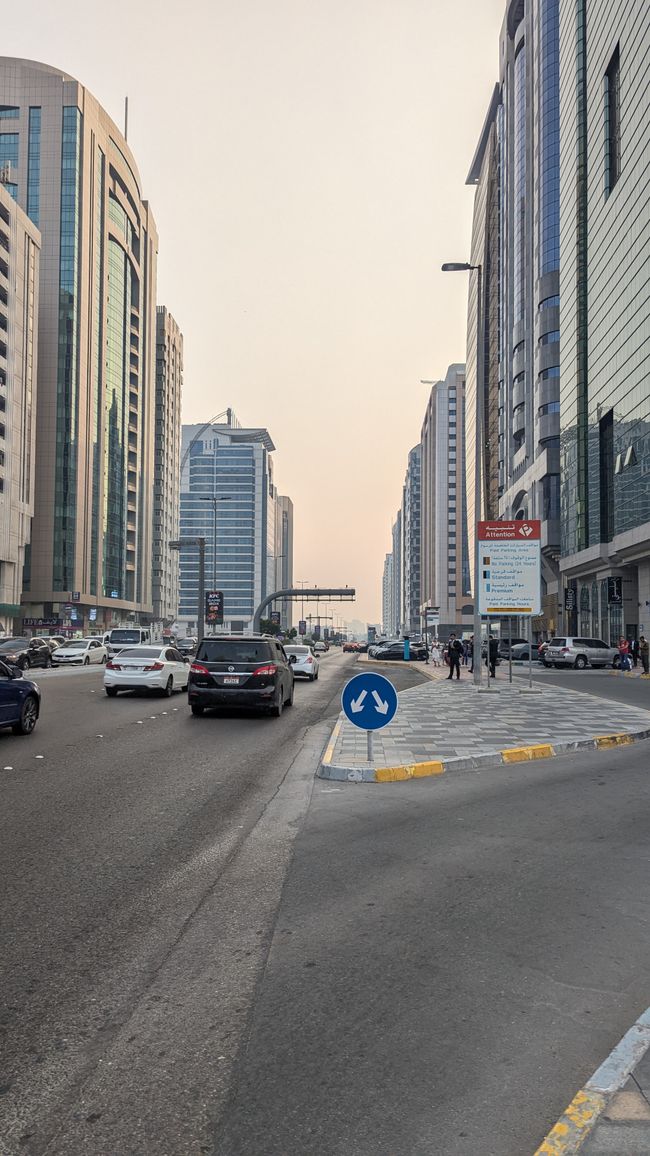
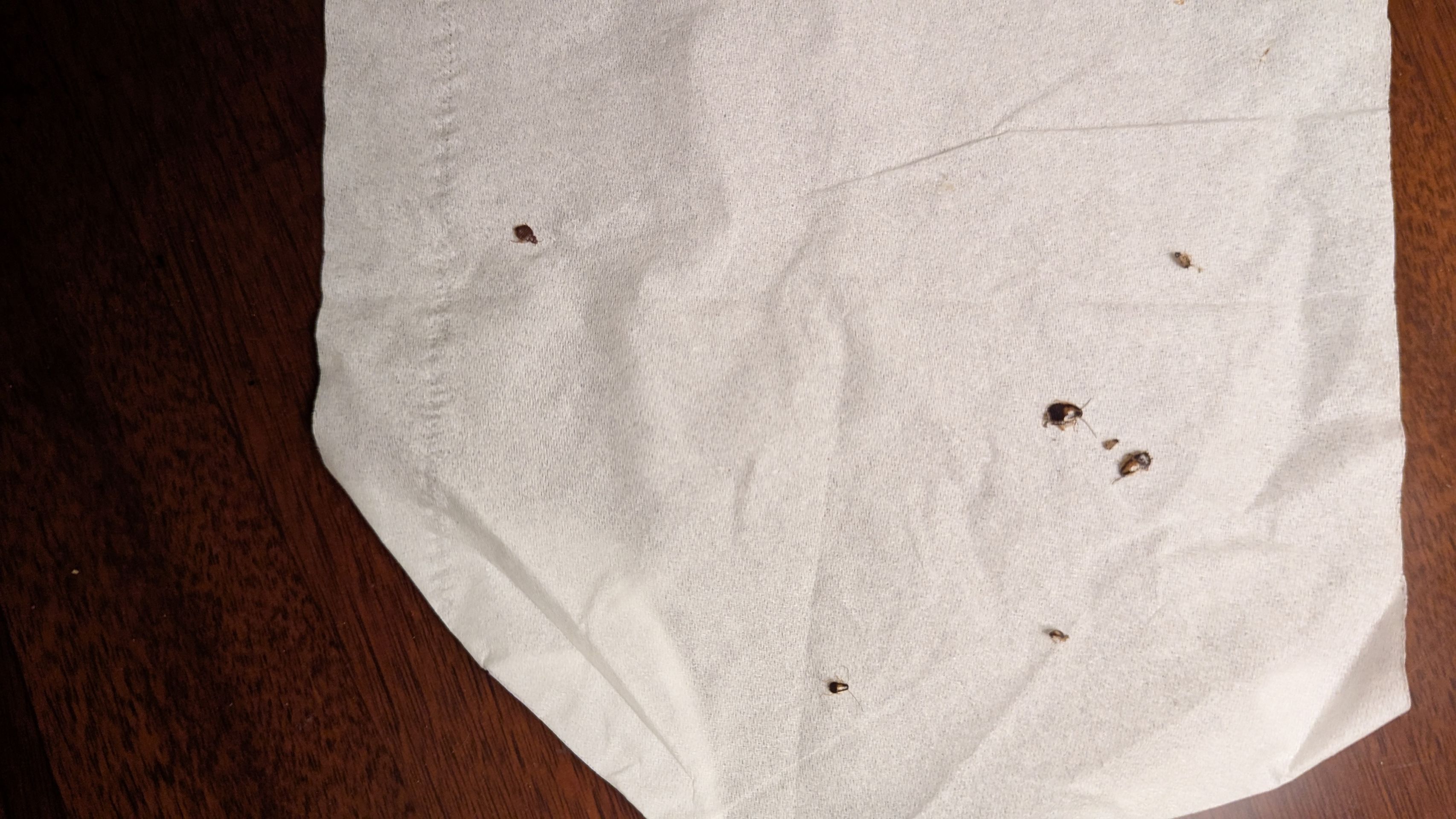
It was only a short two-hour bus ride to Dubai, and since it wasn't any cooler here, I also spent the first hours in my hotel room. Until I found cockroaches under and on my backpack, but unfortunately not just a few, but several. And when I found a bed bug on my backpack and more cockroaches on the wall, that was too much, and I asked for a new room. In the next room, nothing was visible, but I found two more bed bugs outside on my backpack. I hope they are not in my backpack; I will need to keep an eye on that for the next few days. This is now the fourth time I've had bedbugs in my room; I haven't been bitten often, and it seems like it paid off that I never leave my backpack open anywhere. When I get home, I will place my entire backpack and contents in the freezer for a few days; no one wants those critters at home.
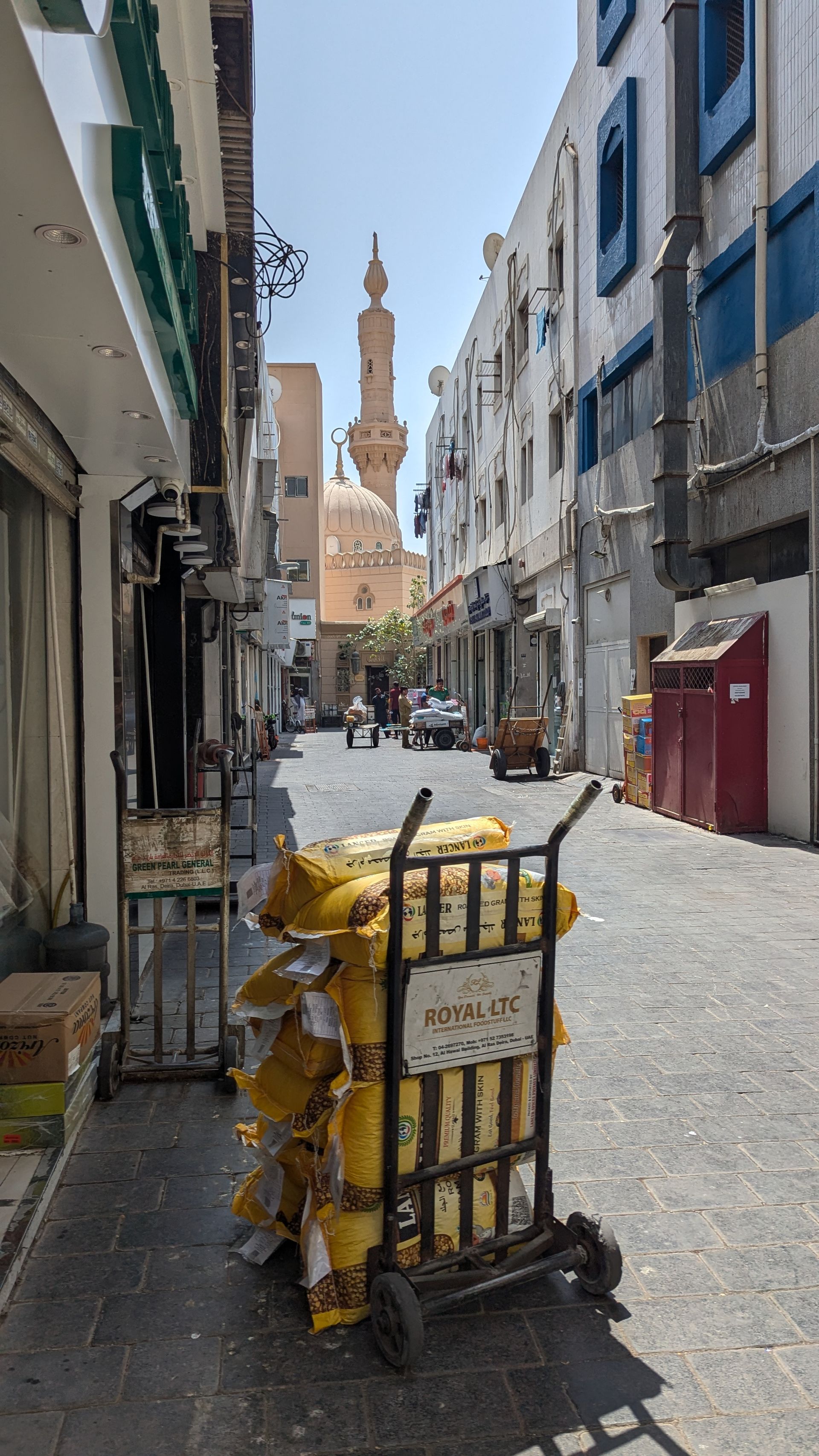
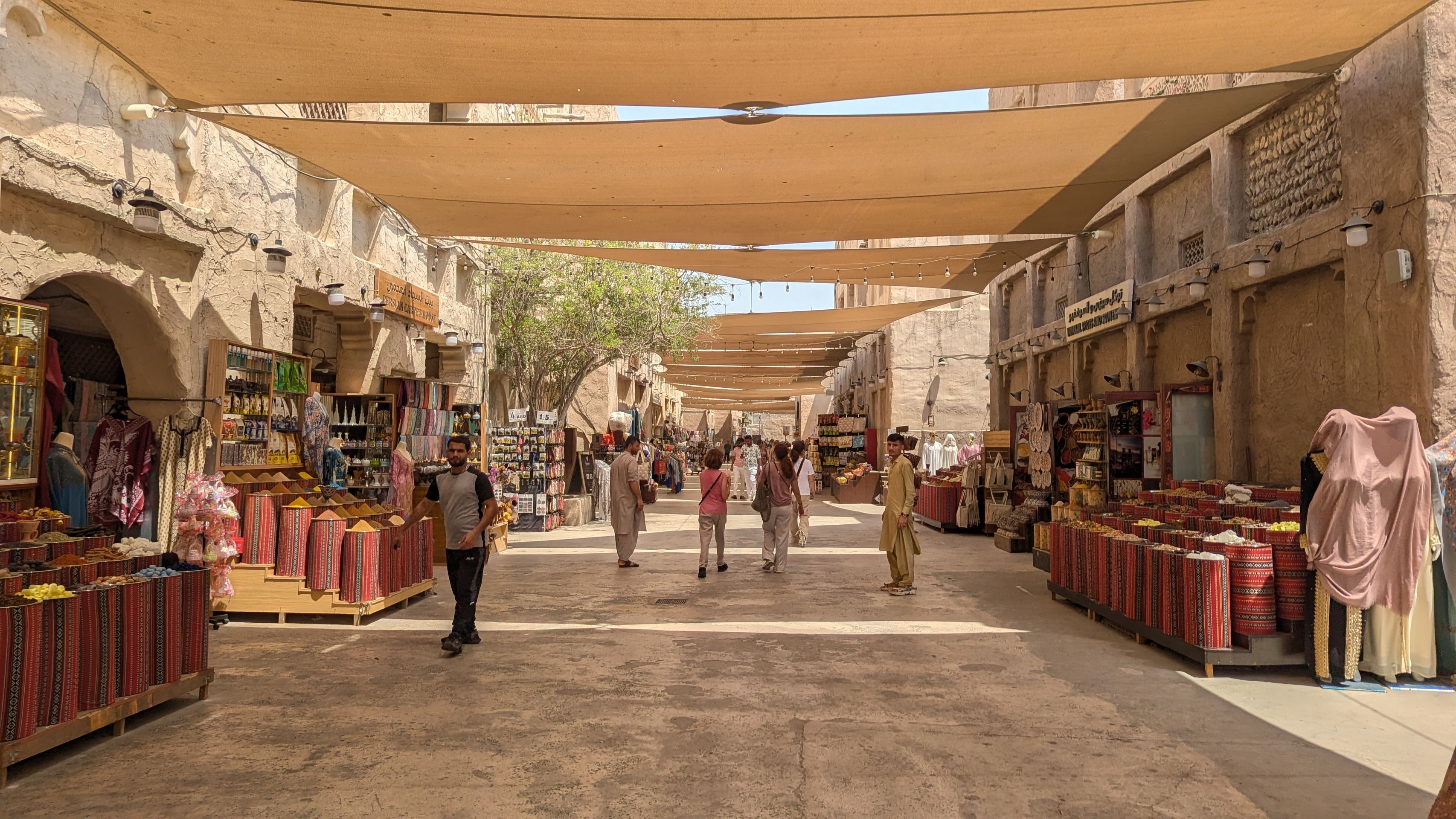
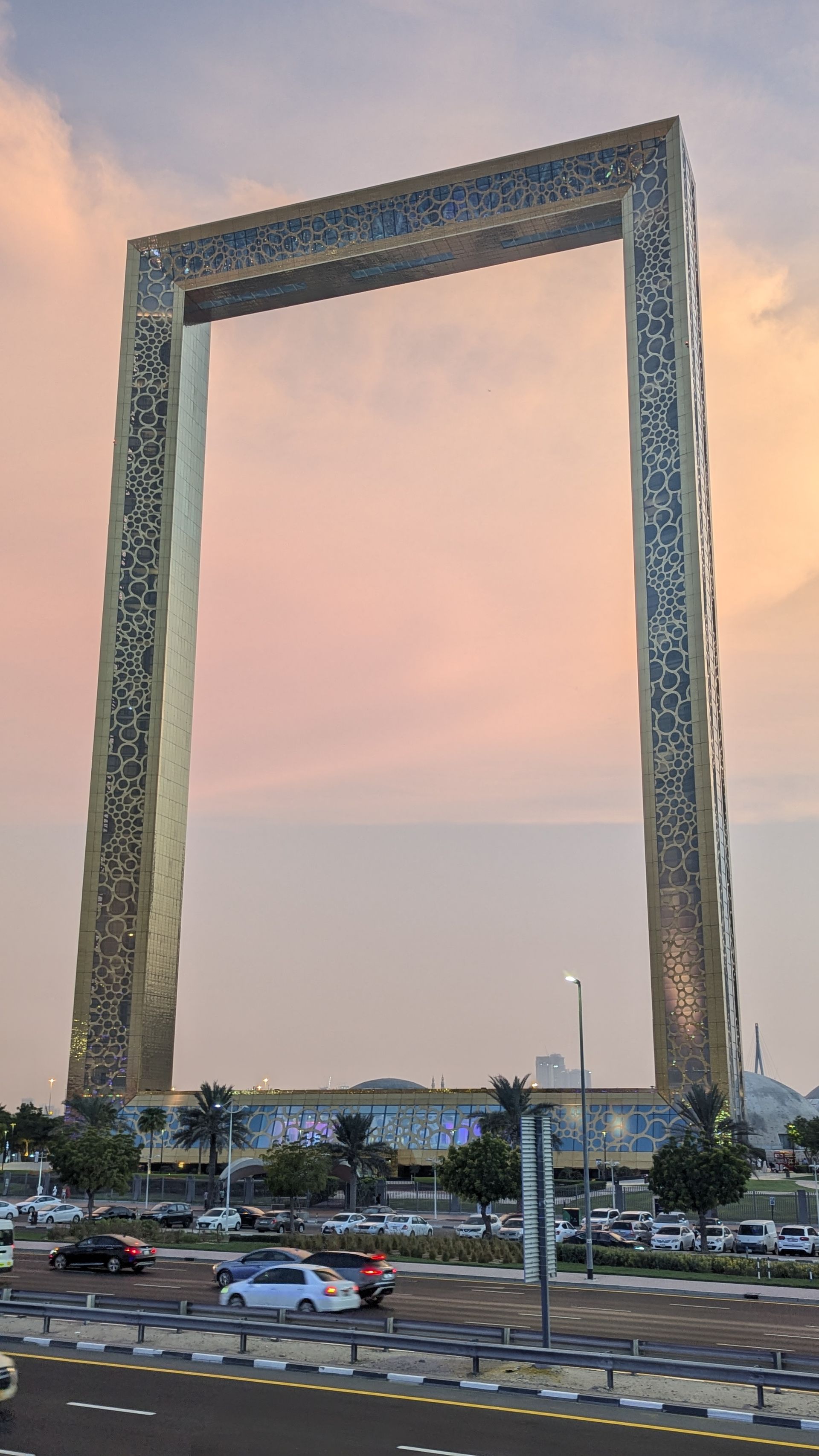
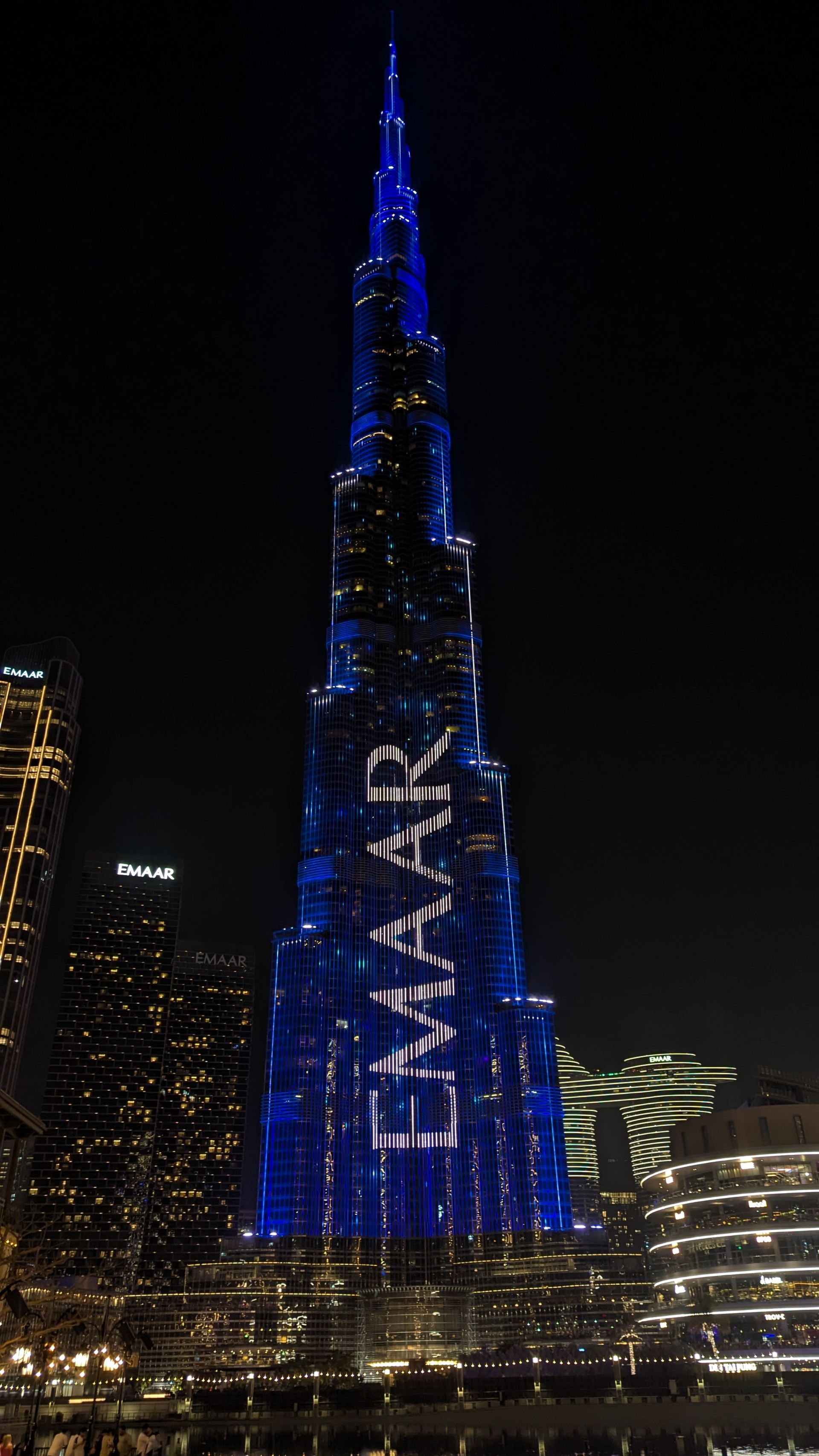
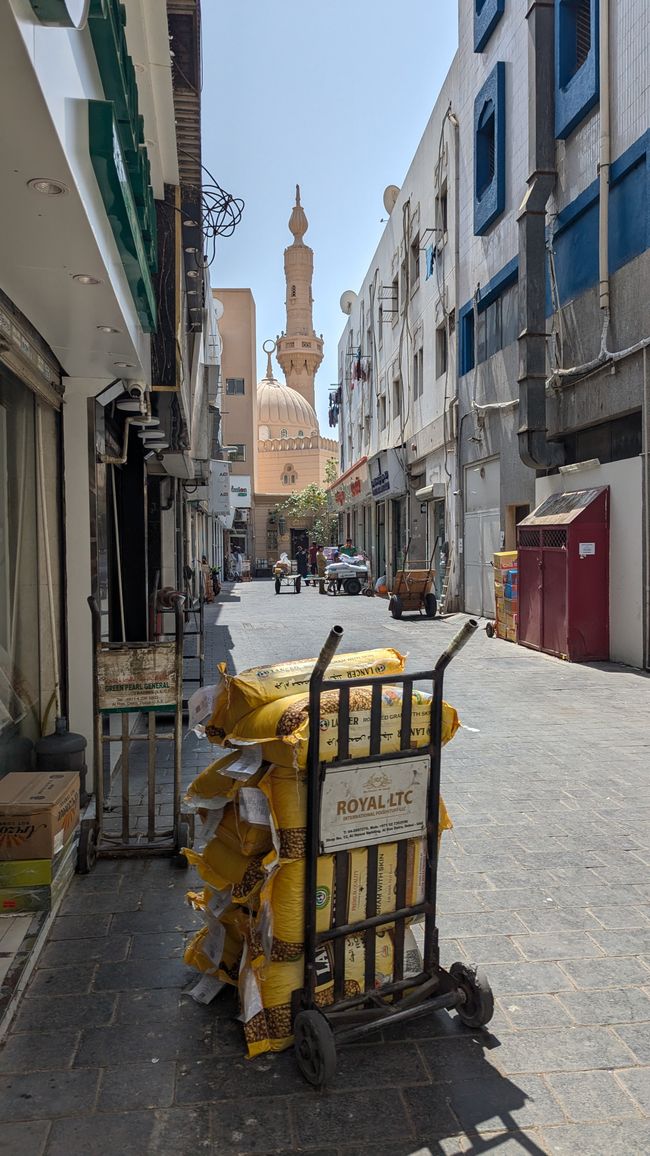
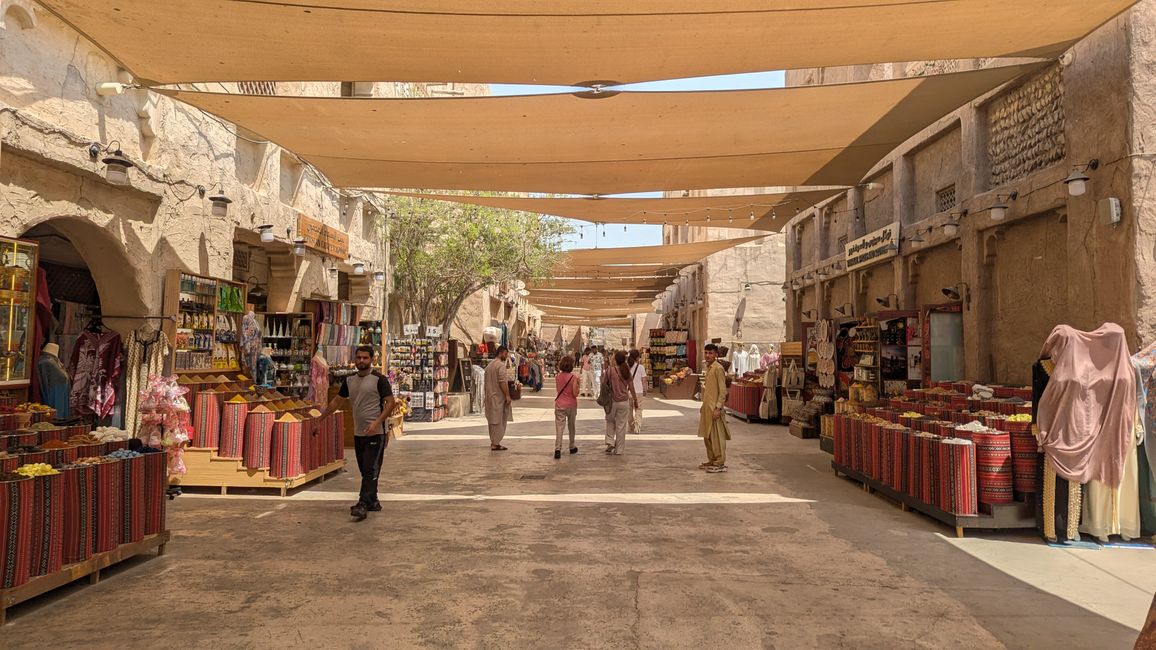
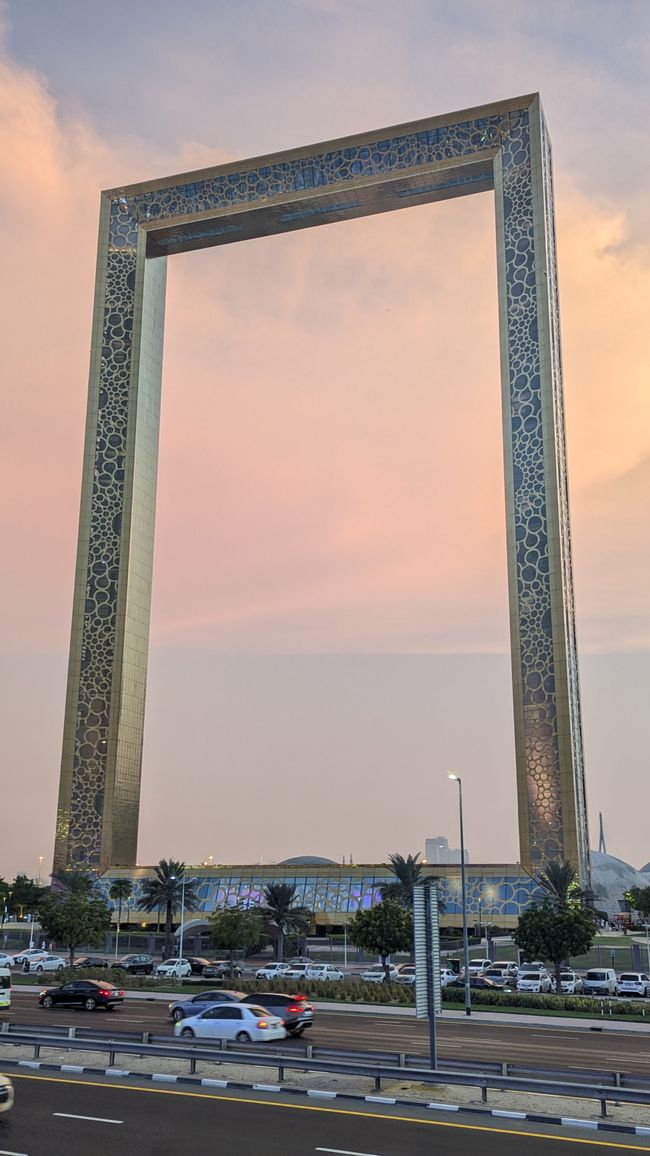
I made a good plan for the next day. Since there is a metro system in Dubai, I used the stations to cool down. First, I walked to the metro station, then towards the market. After 20 minutes, I stopped at an air-conditioned snack bar for lunch. Then another 20 minutes strolling along the promenade, visiting another market, with a stop in an air-conditioned supermarket before heading to the next metro station to cool down for 15 minutes. Then I walked for another 20 minutes through the recreated old town before heading back to the metro. After a 15-minute ride, I went to the Dubai Frame and through a small park. Afterwards, I enjoyed a drink at a restaurant to cool down before heading to the next metro station and from there to the Burj Khalifa, the tallest building in the world. From the air-conditioned metro station, I walked about one kilometer over an air-conditioned bridge to the Dubai Mall, and after another 10 minutes walking through the huge mall, I stood in front of the impressive building. I first let everything sink in for a few minutes before I retraced the same air-conditioned way back.
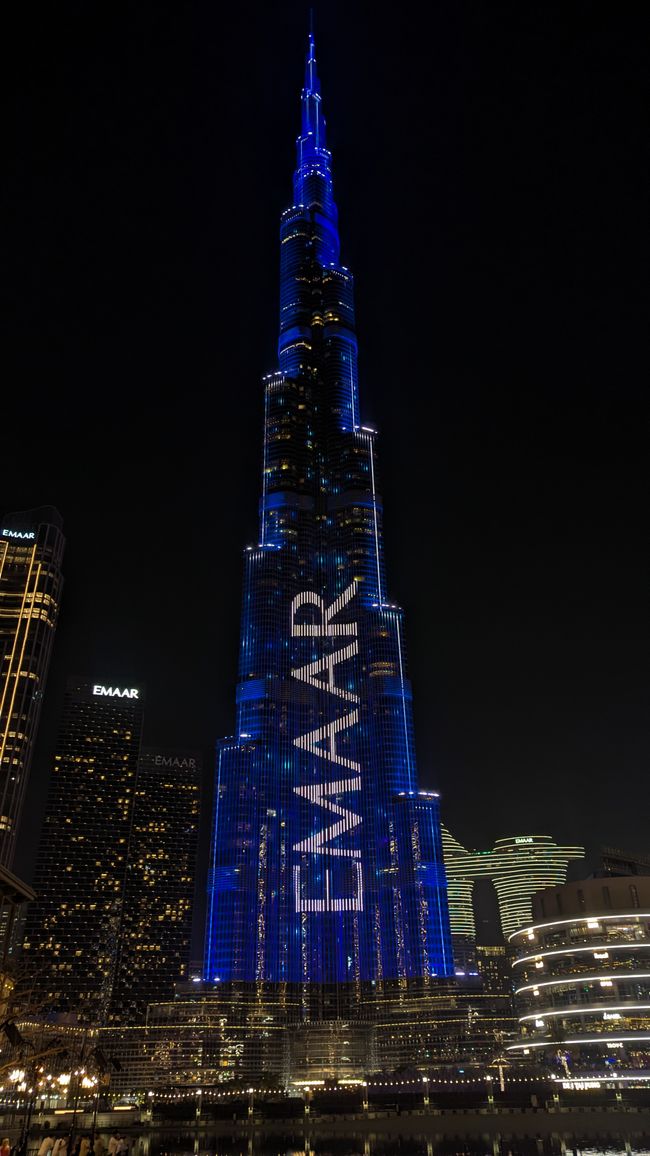
For two days it was okay, but at the moment I can't imagine living there. I think I wouldn't enjoy spending 7 months a year mostly in buildings; exercising or casually sitting in restaurants is just not fun. Even lying on the beach wouldn't be pleasant in those temperatures.
In general, I noticed that there are very few young people in Dubai, which changes at my next destination, the Republic of Moldova.
This is what the Gemini AI has to say:
Dubai:
The age structure in Dubai is heavily influenced by the high number of foreign workers. A large part of the population, almost 70%, falls into the age group of 25 to 54 years. These are mainly male workers who come to the region without their families. The group of 15 to 24-year-olds makes up only a small percentage of the population (about 11%).
Moldova:
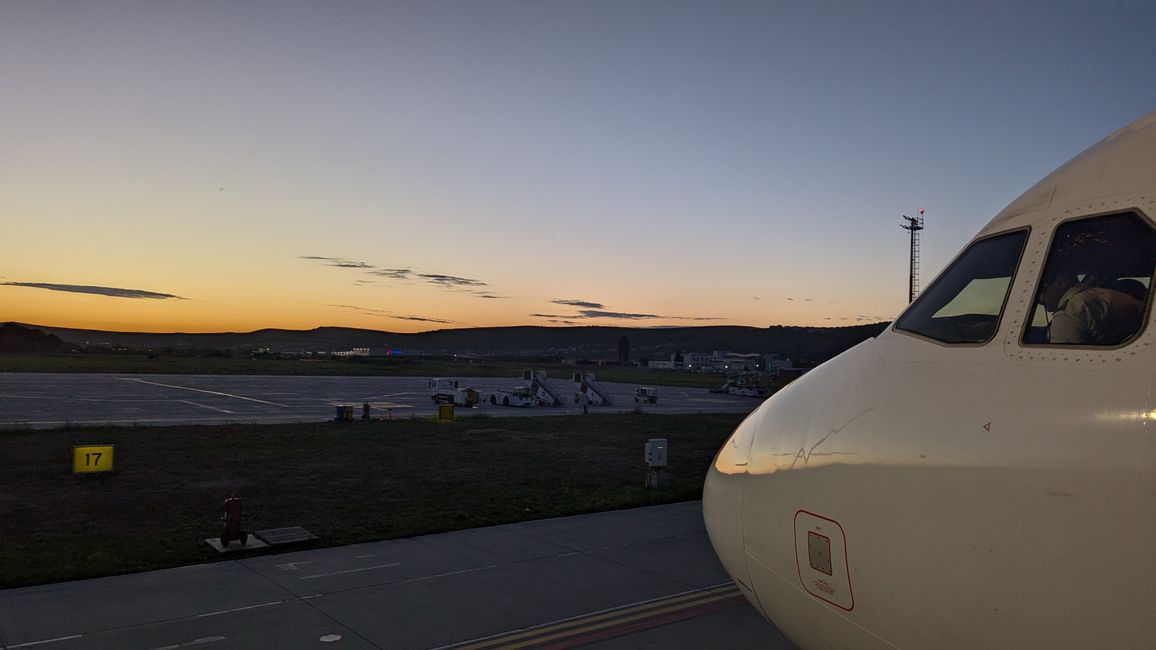
In Moldova, young people are a significant part of the population. About a quarter of the population (around 23-26%) is between 14 and 34 years old. The first employee I saw on the tarmac in Moldova was, of course, wearing Adidas joggers—very stylish, as it is in the east :)
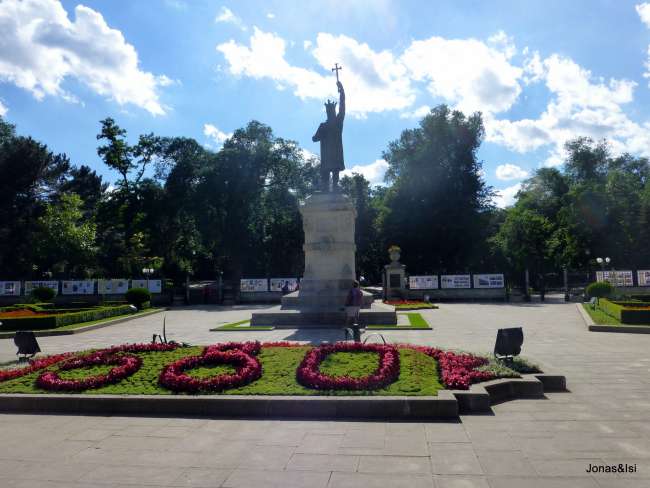
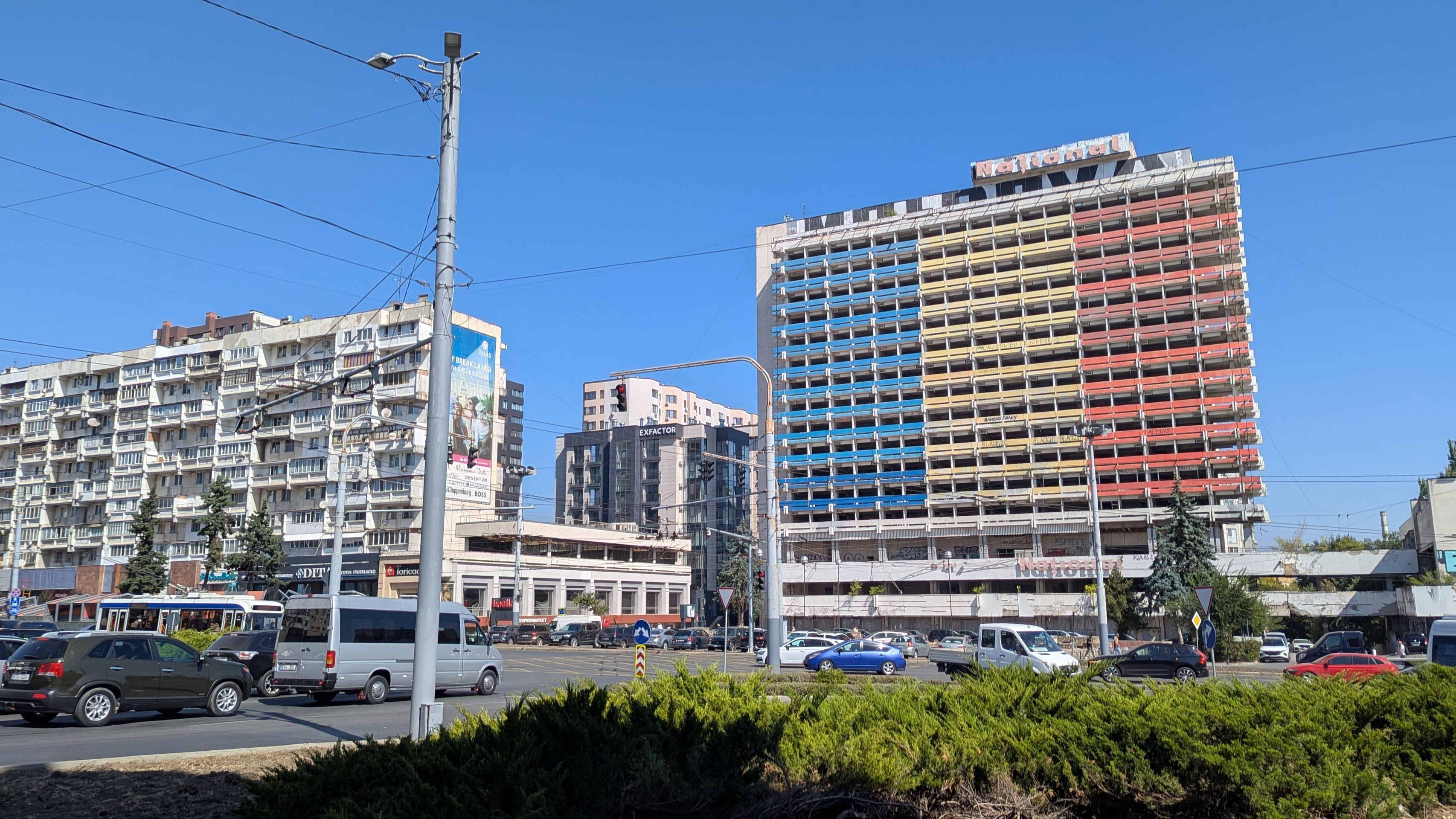
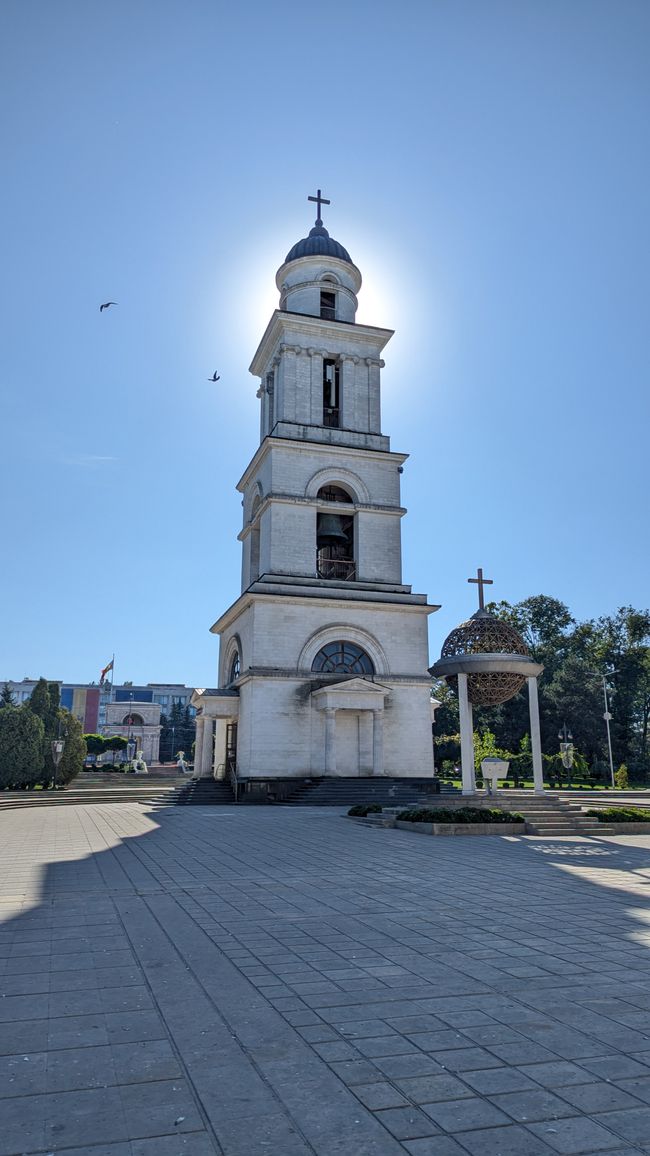
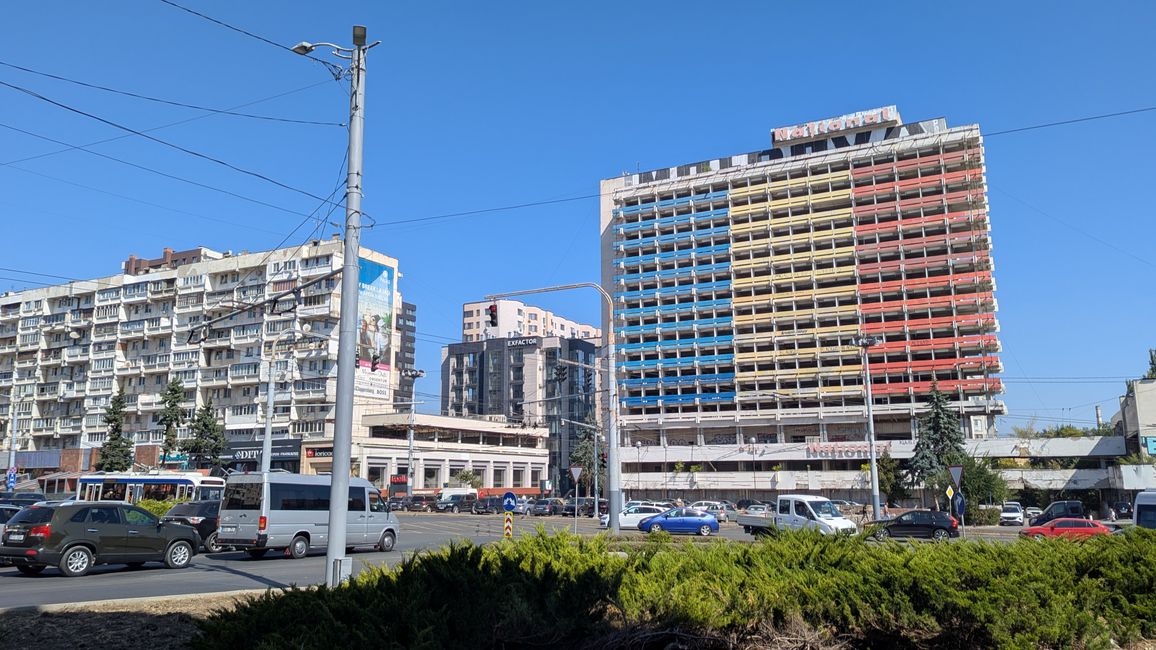
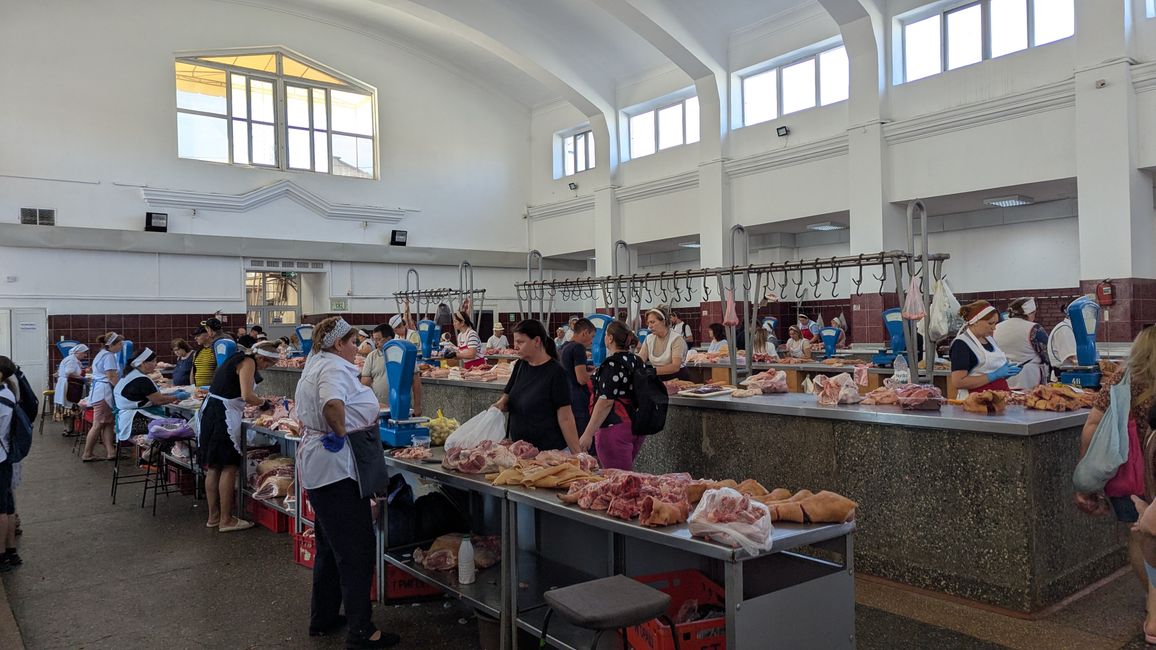
Chişinău is a quiet, unexciting capital; it feels significantly smaller than its 530,000 inhabitants, as there isn't a typical city center like we have, everything is a bit spread out.
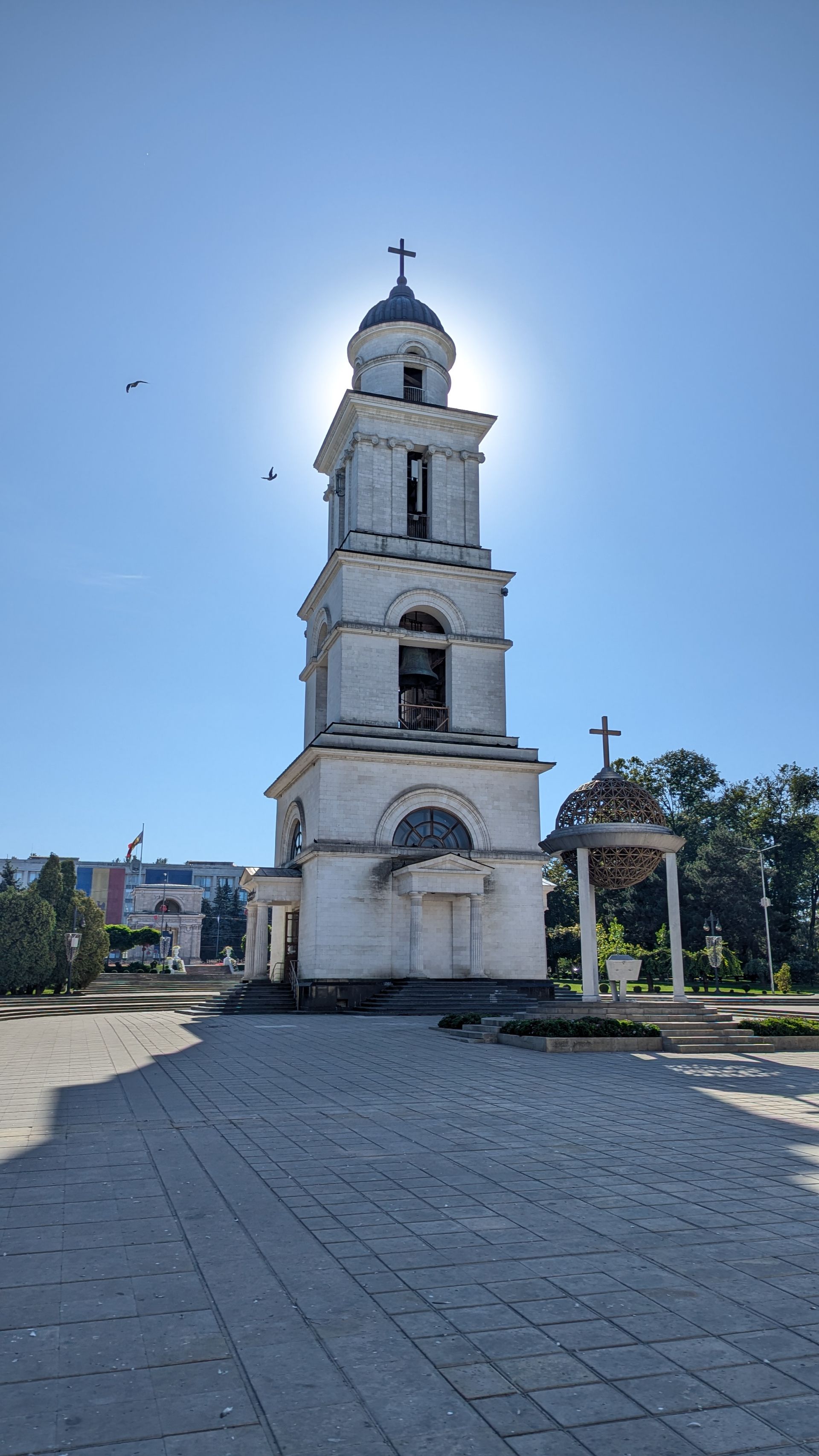
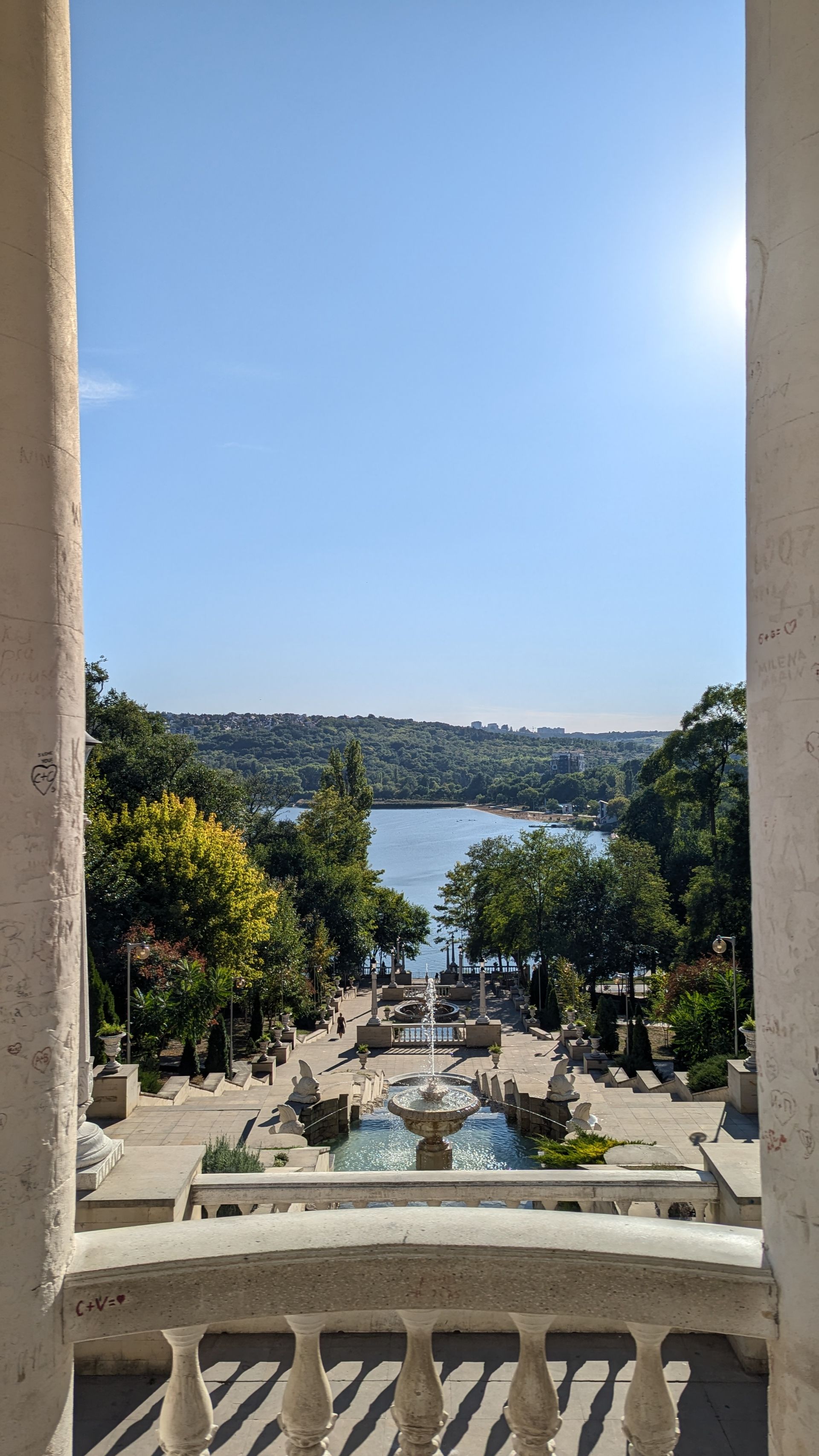
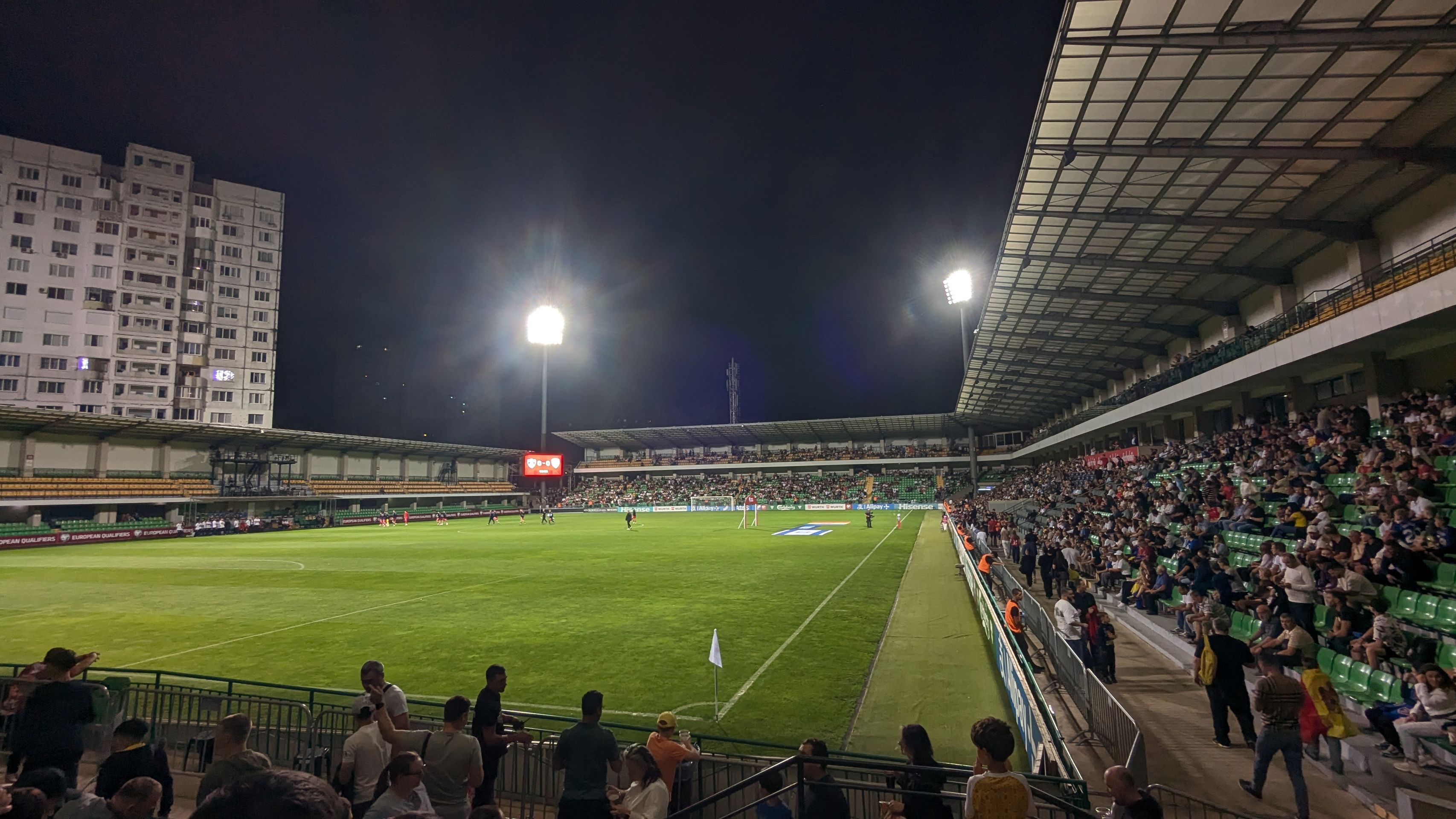
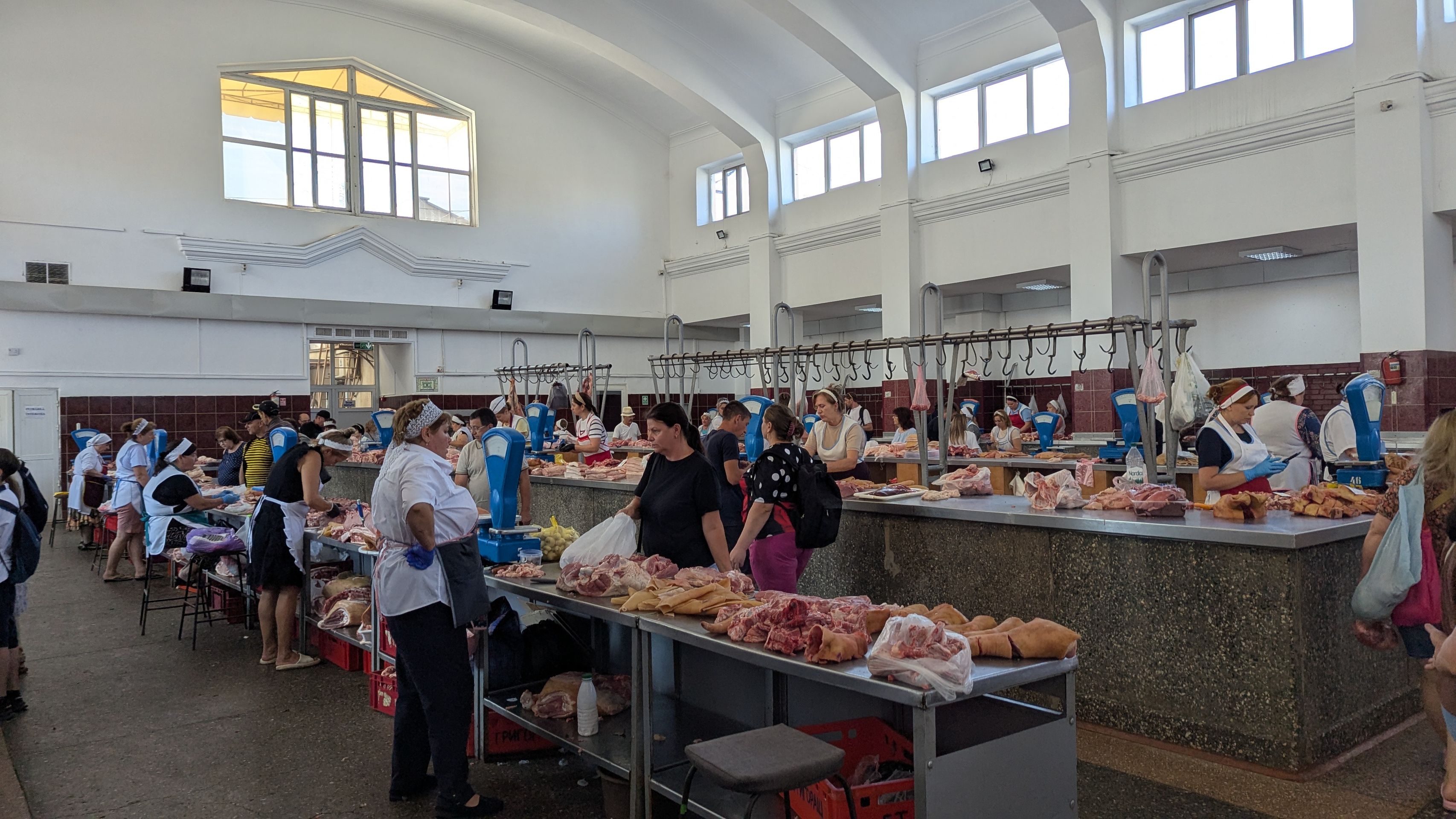
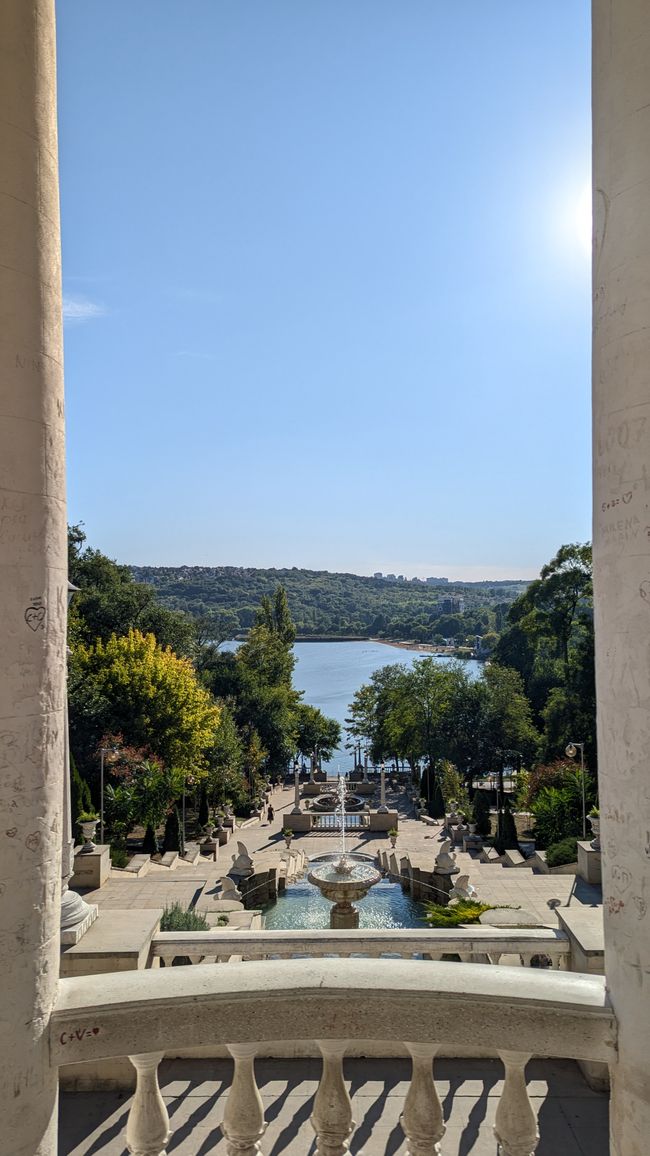
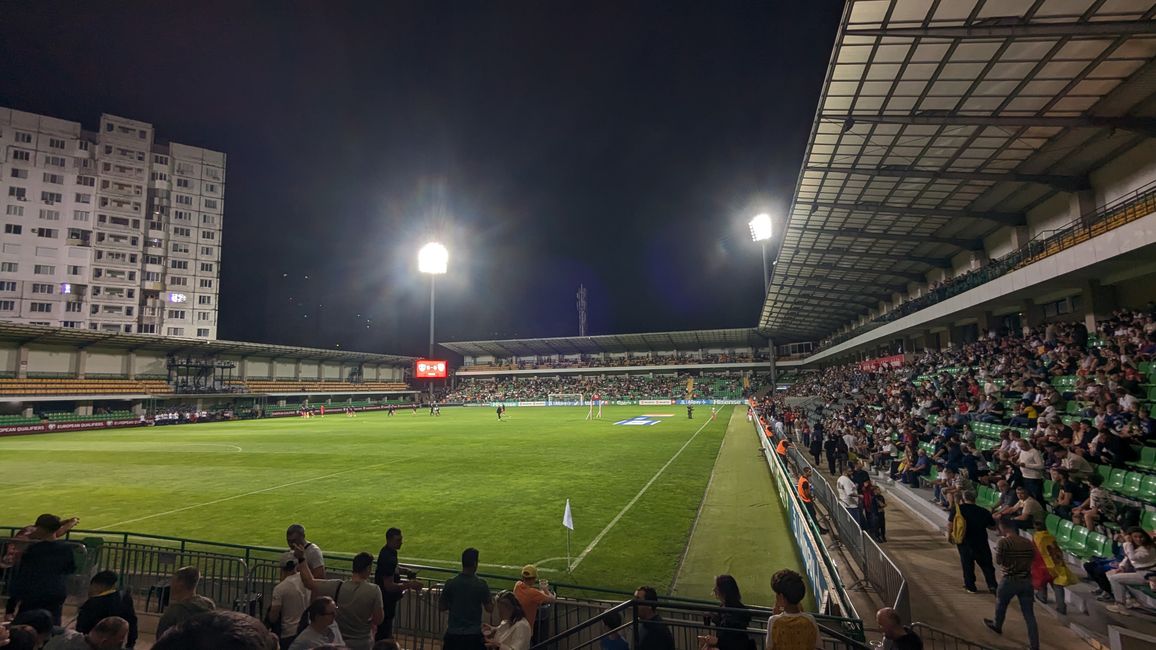
The large church, various parks with a large swimming lake, and the market are definitely worth seeing. In the evening, there was a football match, Moldova against Israel—not special, as there were only 7,500 spectators, but still a nice change. The 'stadium food' was a disaster, there was a hot dog that couldn't even compete with the one from Ikea and some fries. I could have also treated myself to tacos or popcorn, but of course, I passed on the last two options; the Cvas (a fermented malt drink with low alcohol content) was all the better.
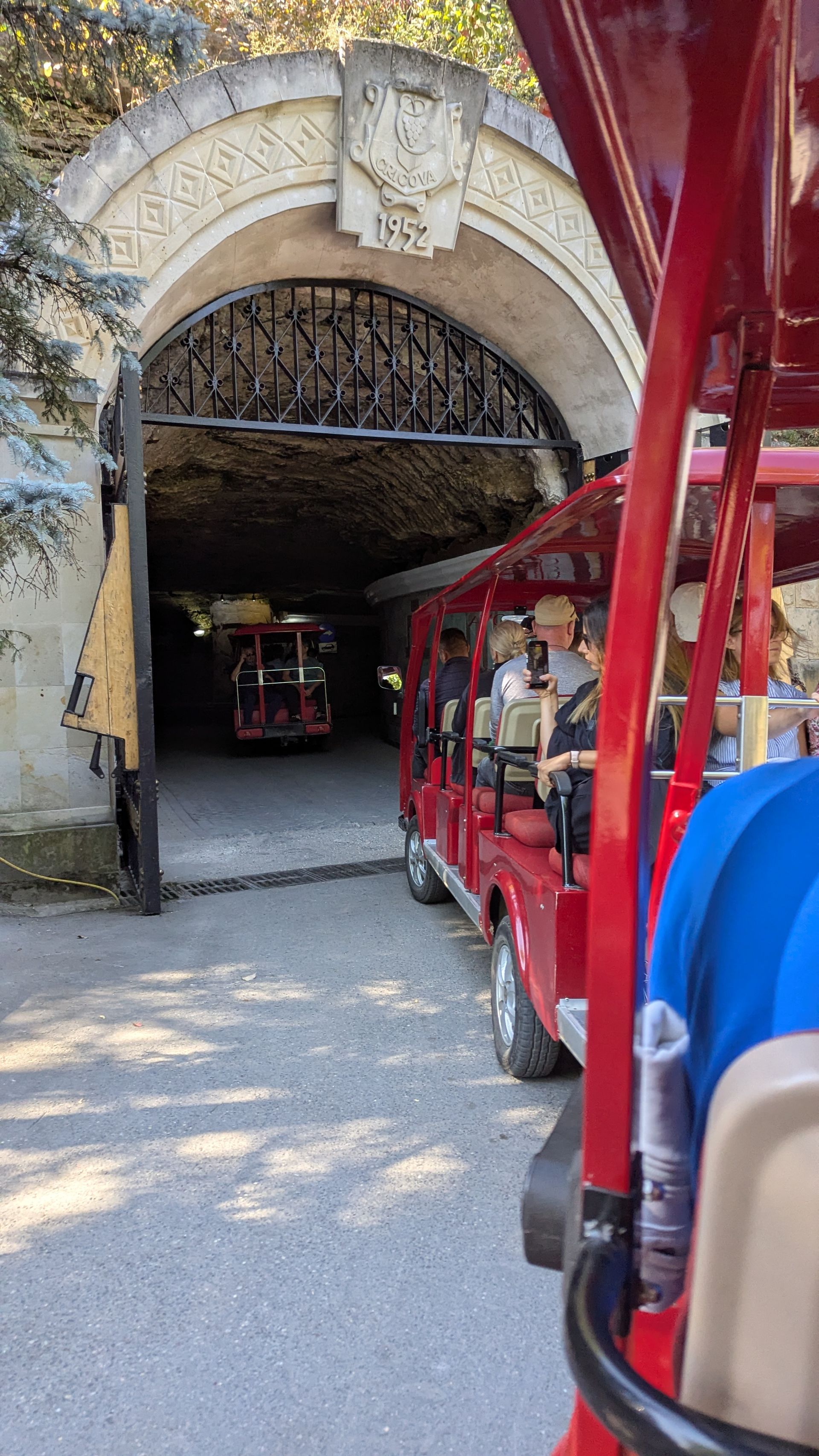
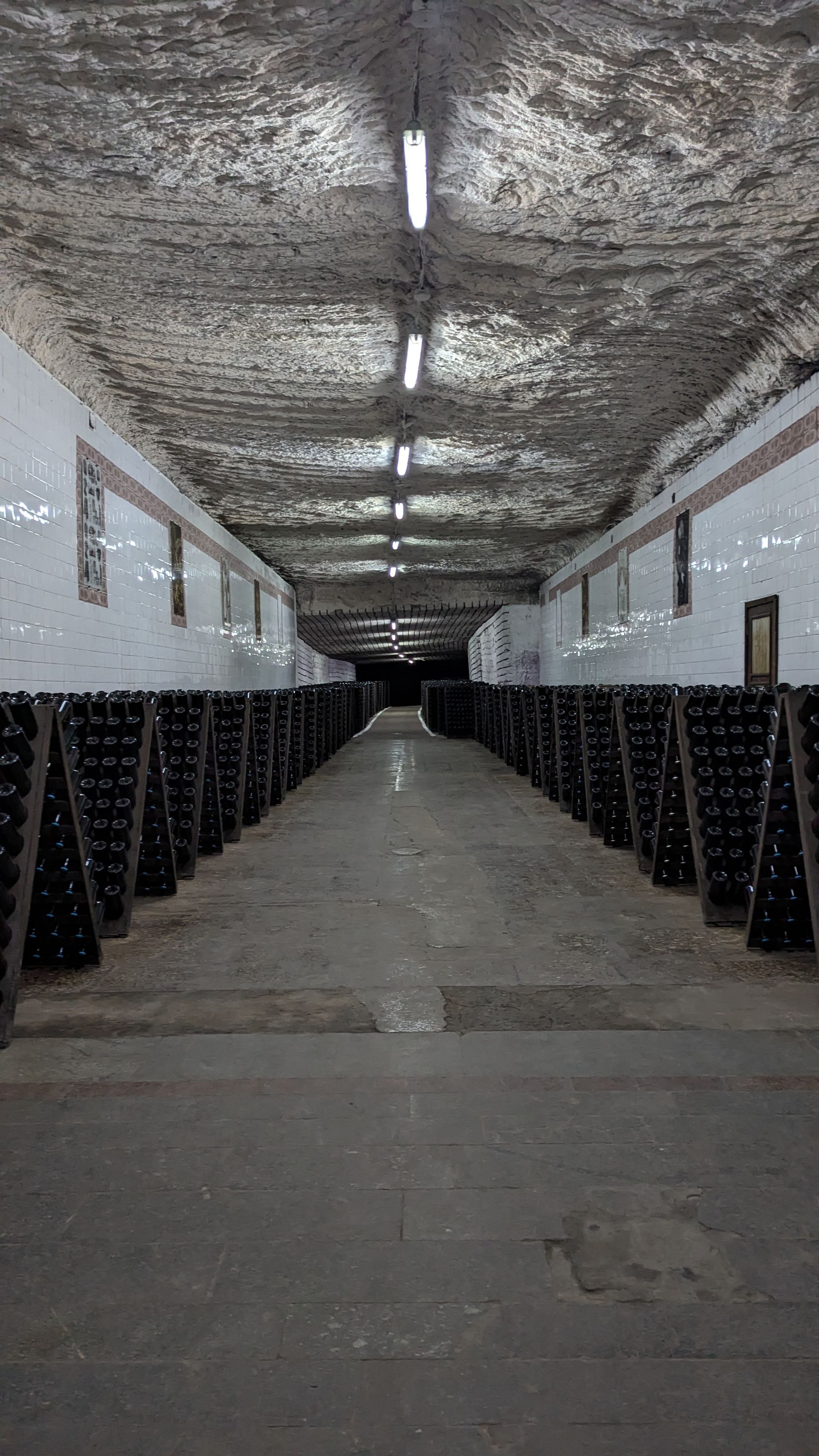
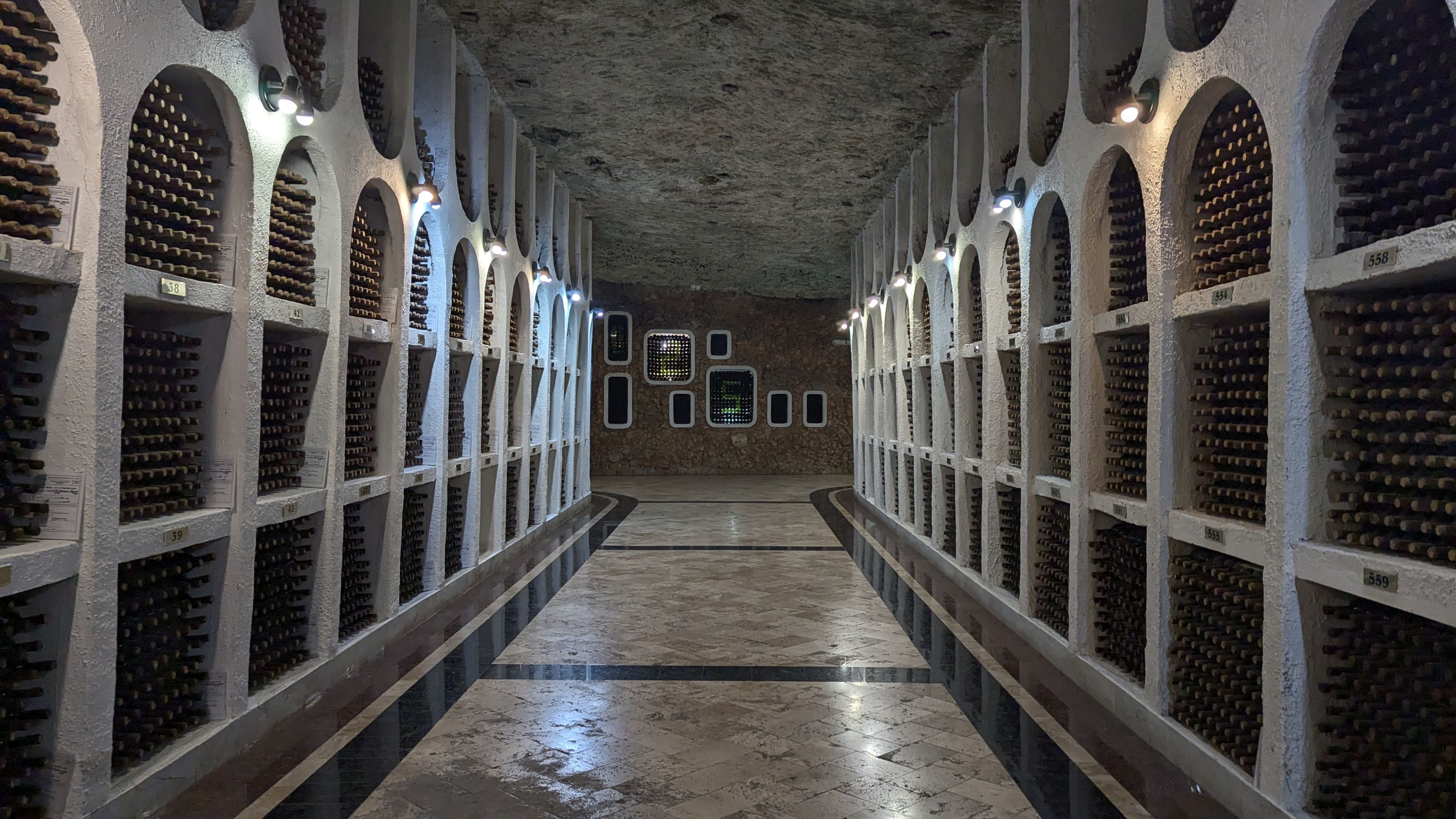
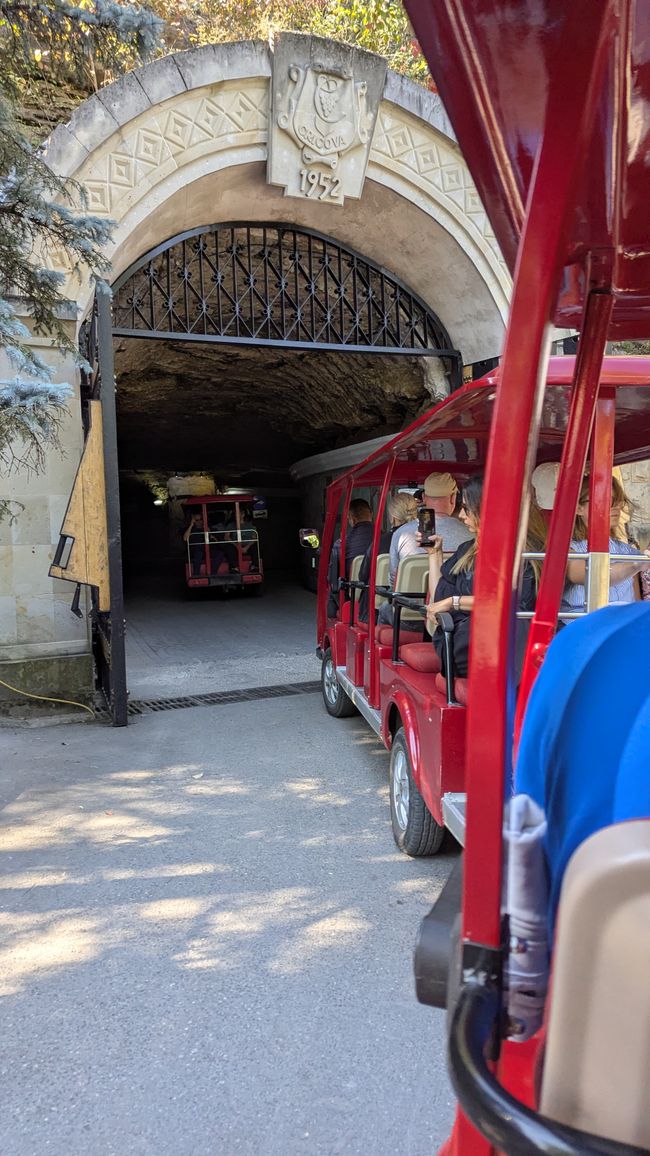
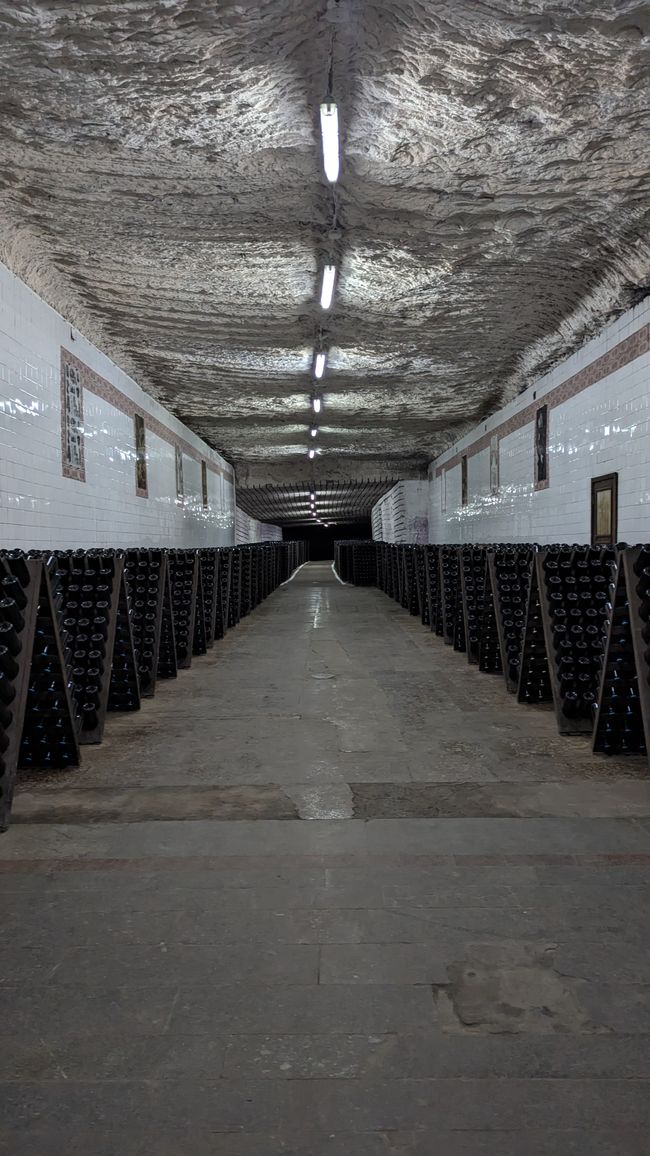
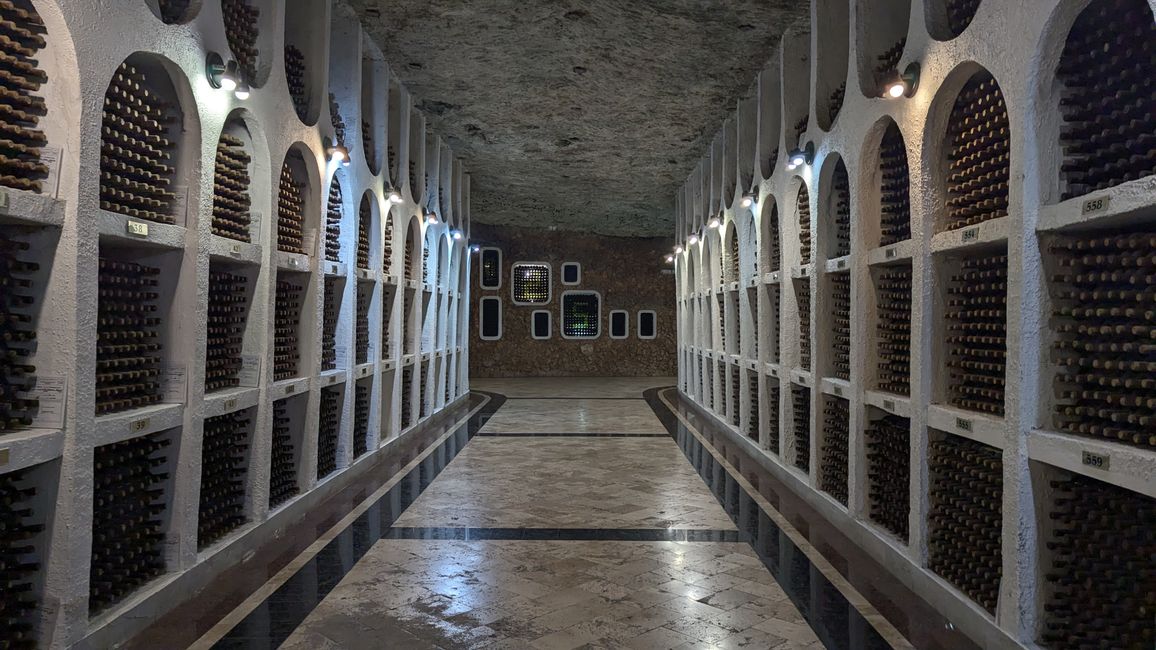
A visit to Chişinău wouldn't be complete without checking out the largest wine cellars in the world. We took a bus to Cricova, located in the suburbs. We drove for about 1½ hours in a golf cart through the 120km long tunnels (of which only 80km are still in use) and stopped at various stations. In a small cinema (underground), there was a film about the winery. We visited corridors where wine was stored and others where champagne was stored, which still has to be turned by hand. The bottles are stored at an angle, neck down, in special wooden racks called pupitres. An experienced riddler (remueur) turns each bottle daily by an eighth and gradually positions it upright until it is completely inverted. This process takes several weeks, depending on the effort involved. Workers can turn up to 50,000 bottles a day. Unfortunately, we were not shown the actual production, which apparently takes place in the factory above the tunnels; for €25, it was super interesting, but I expected a bit more for the price.
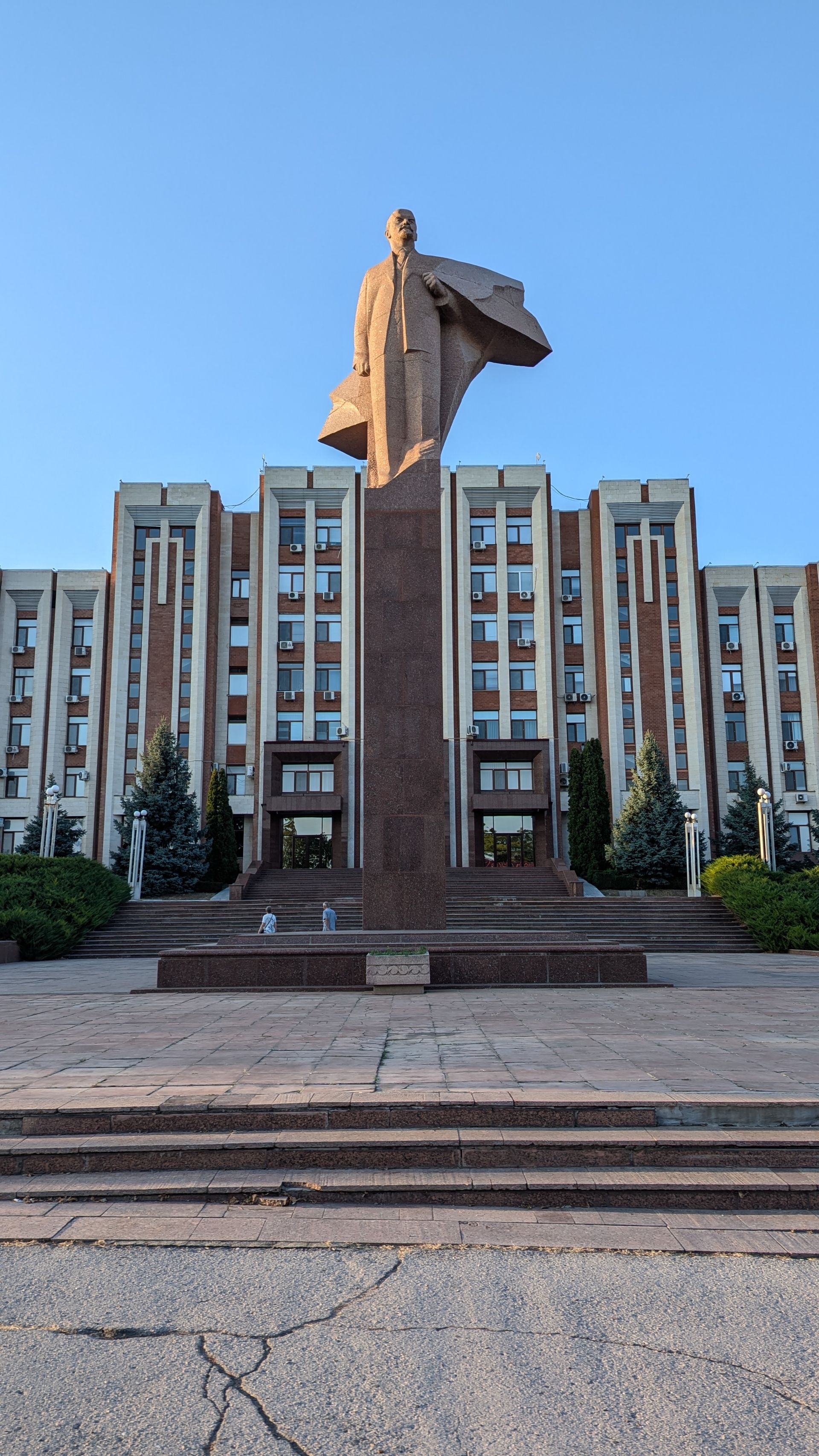
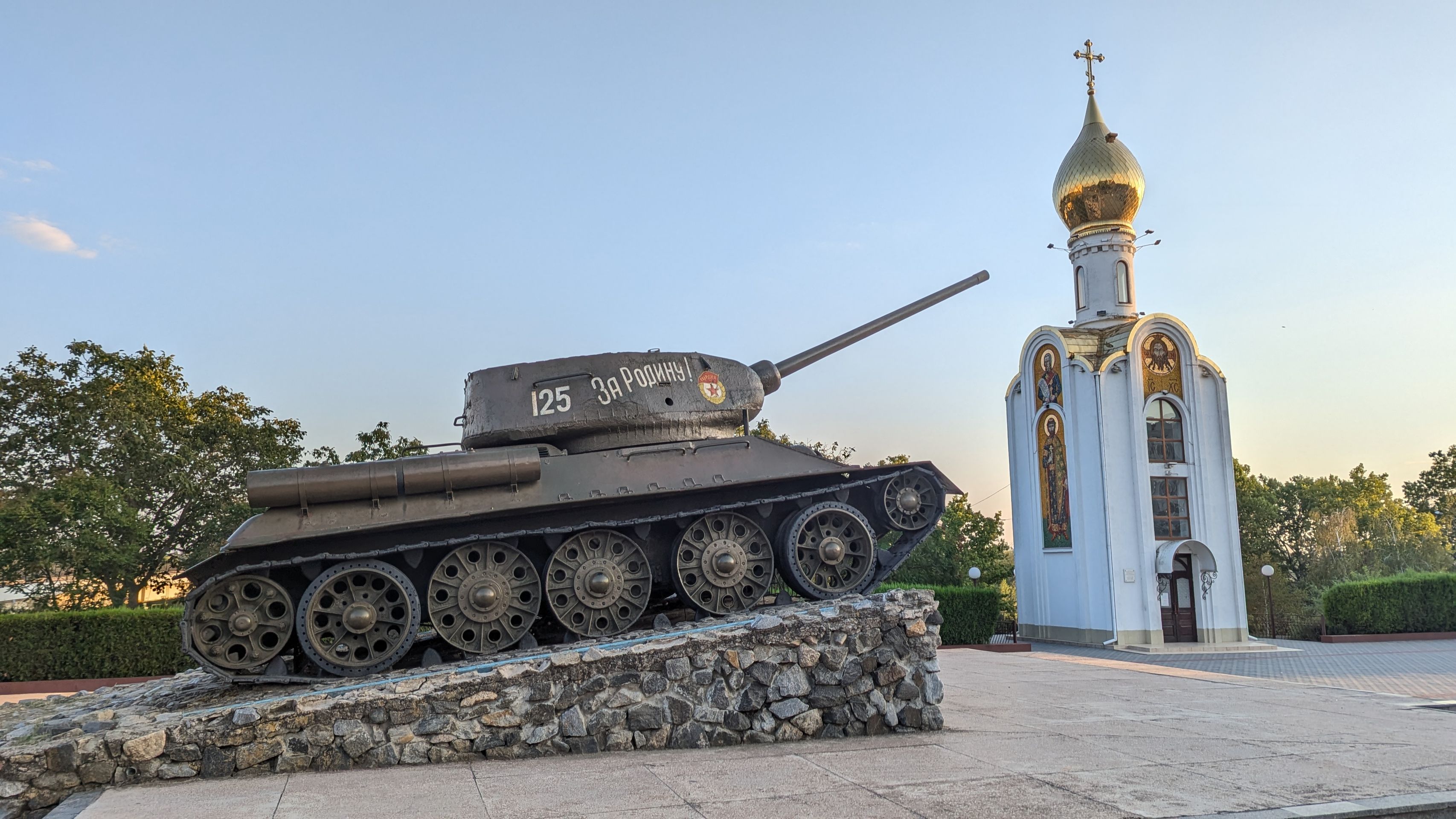
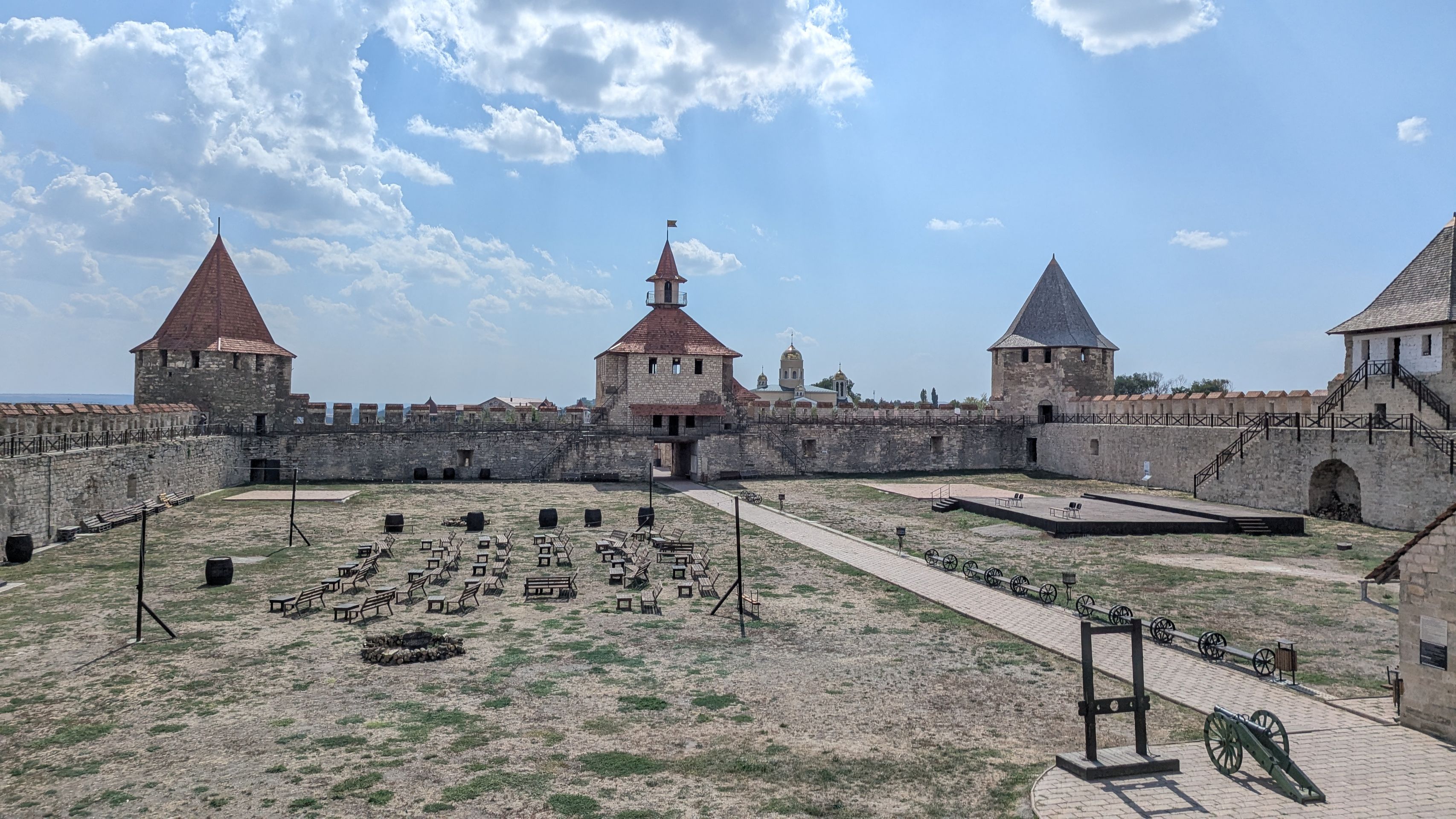
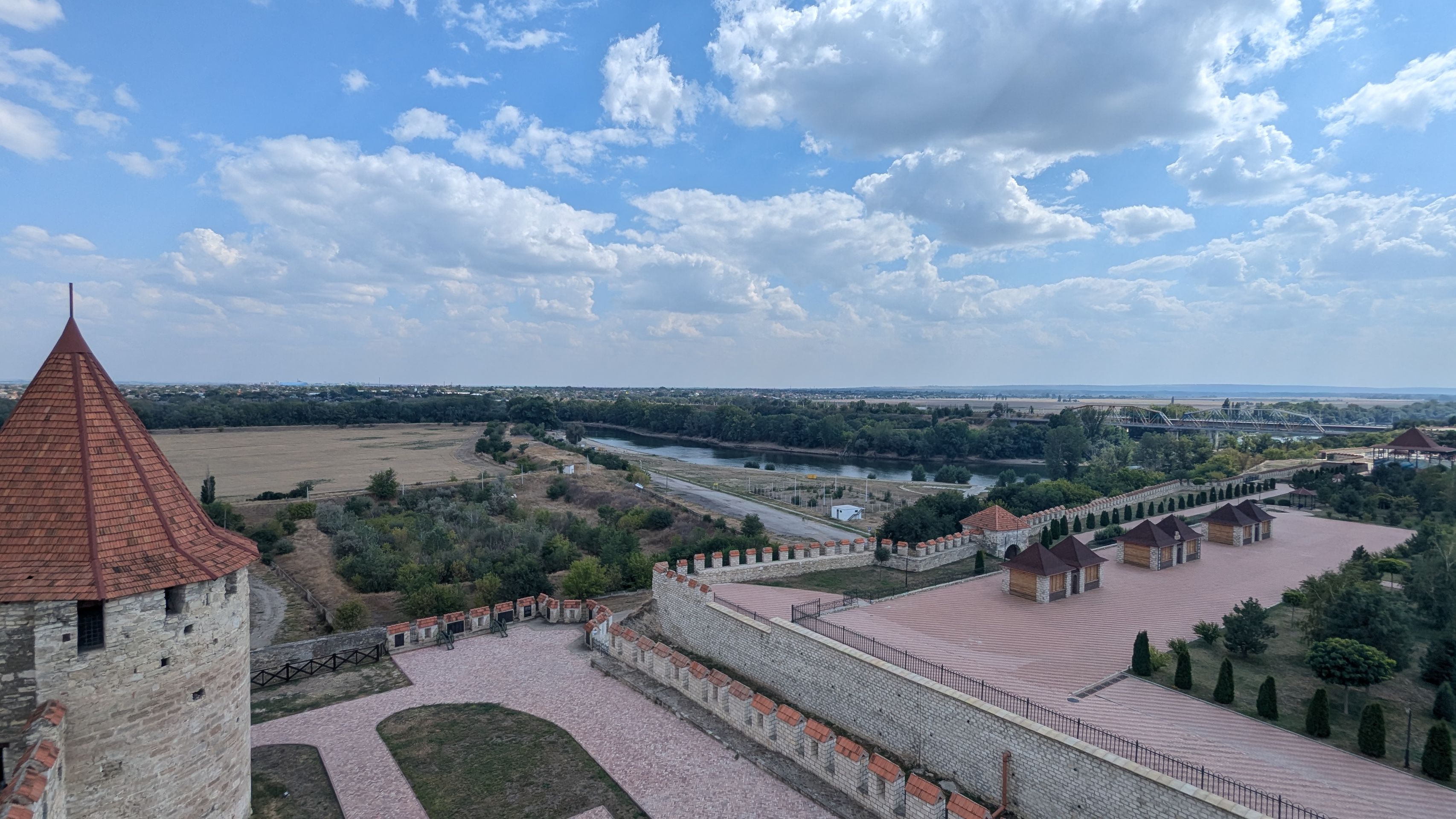
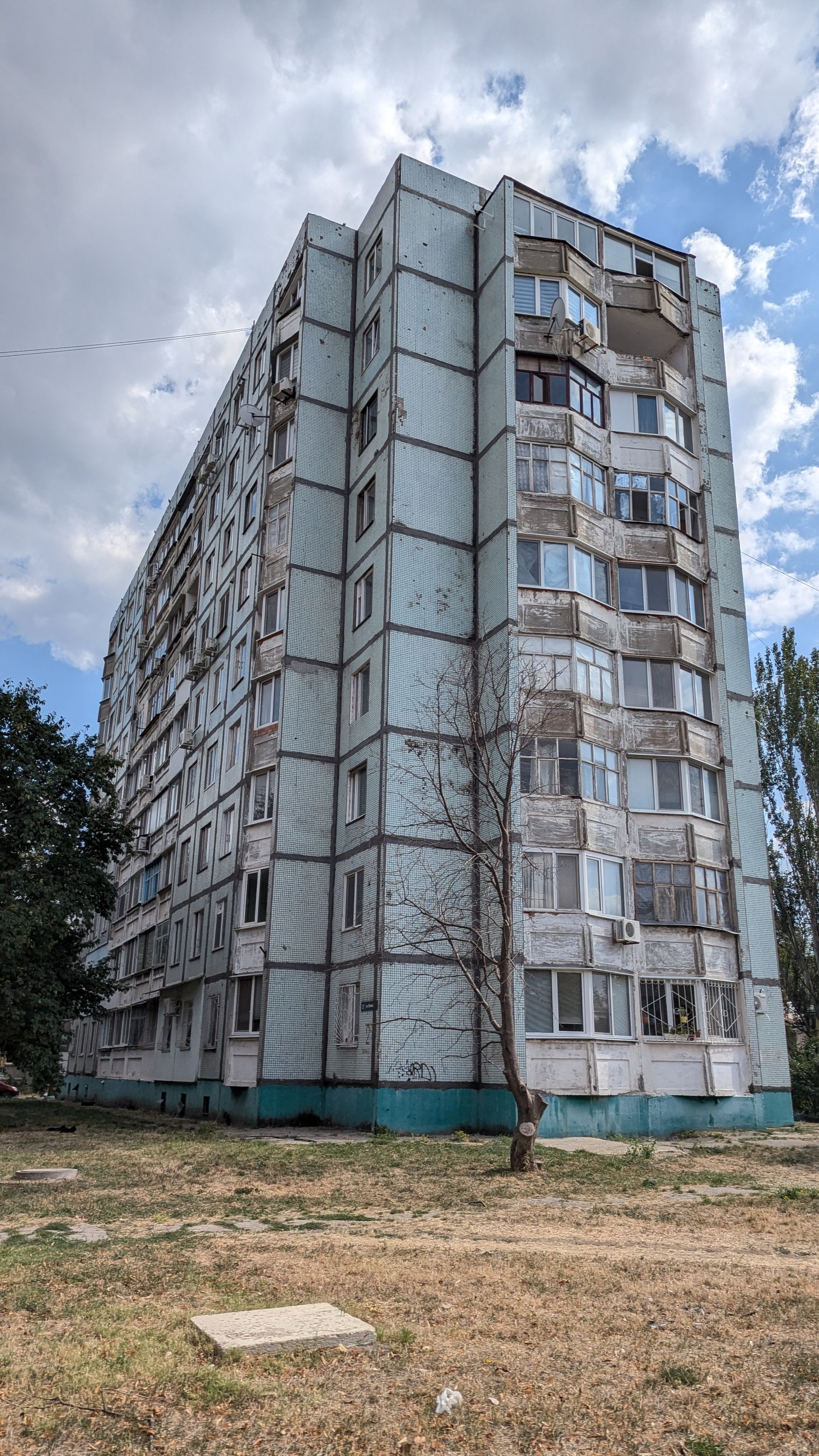
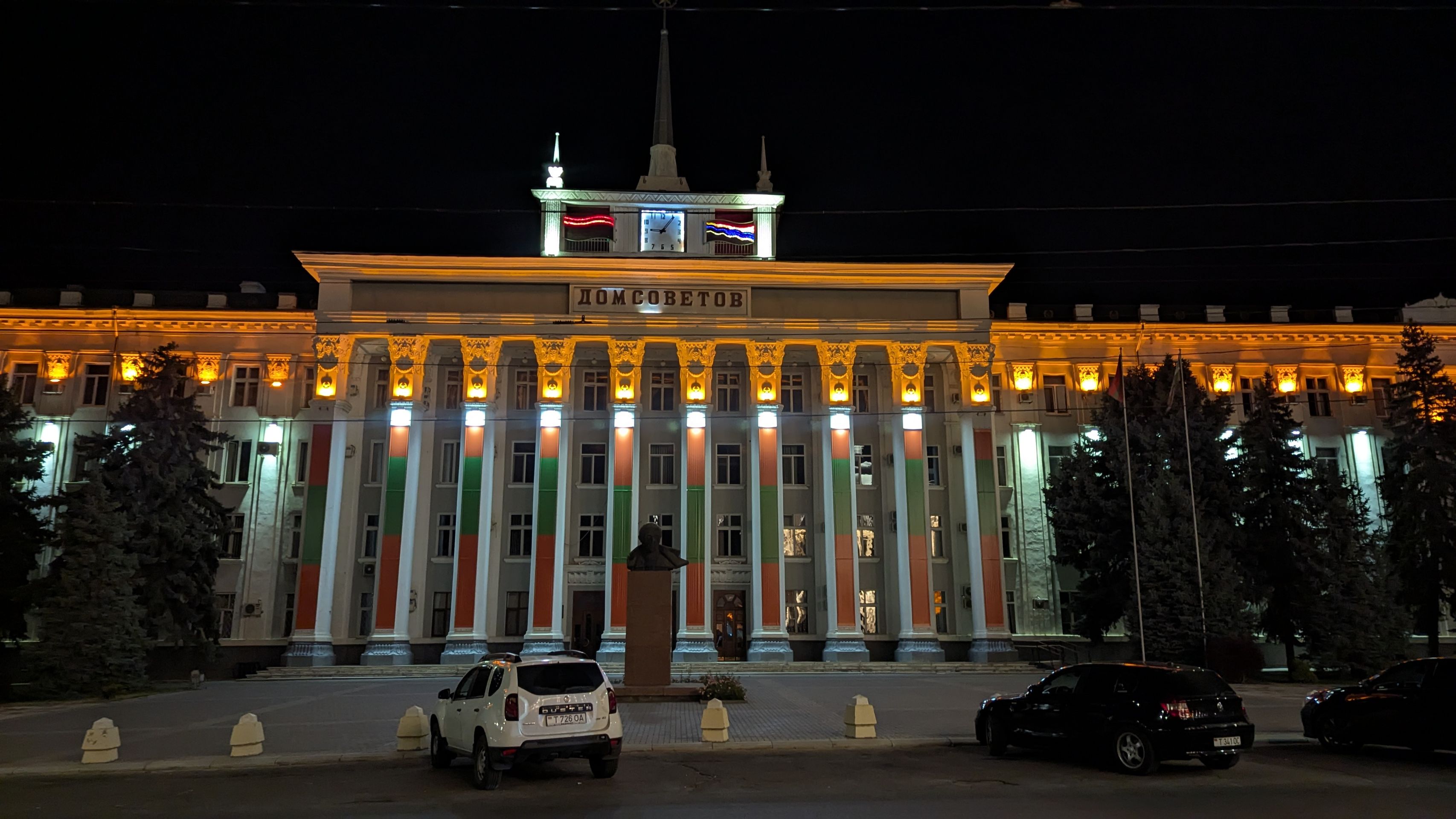
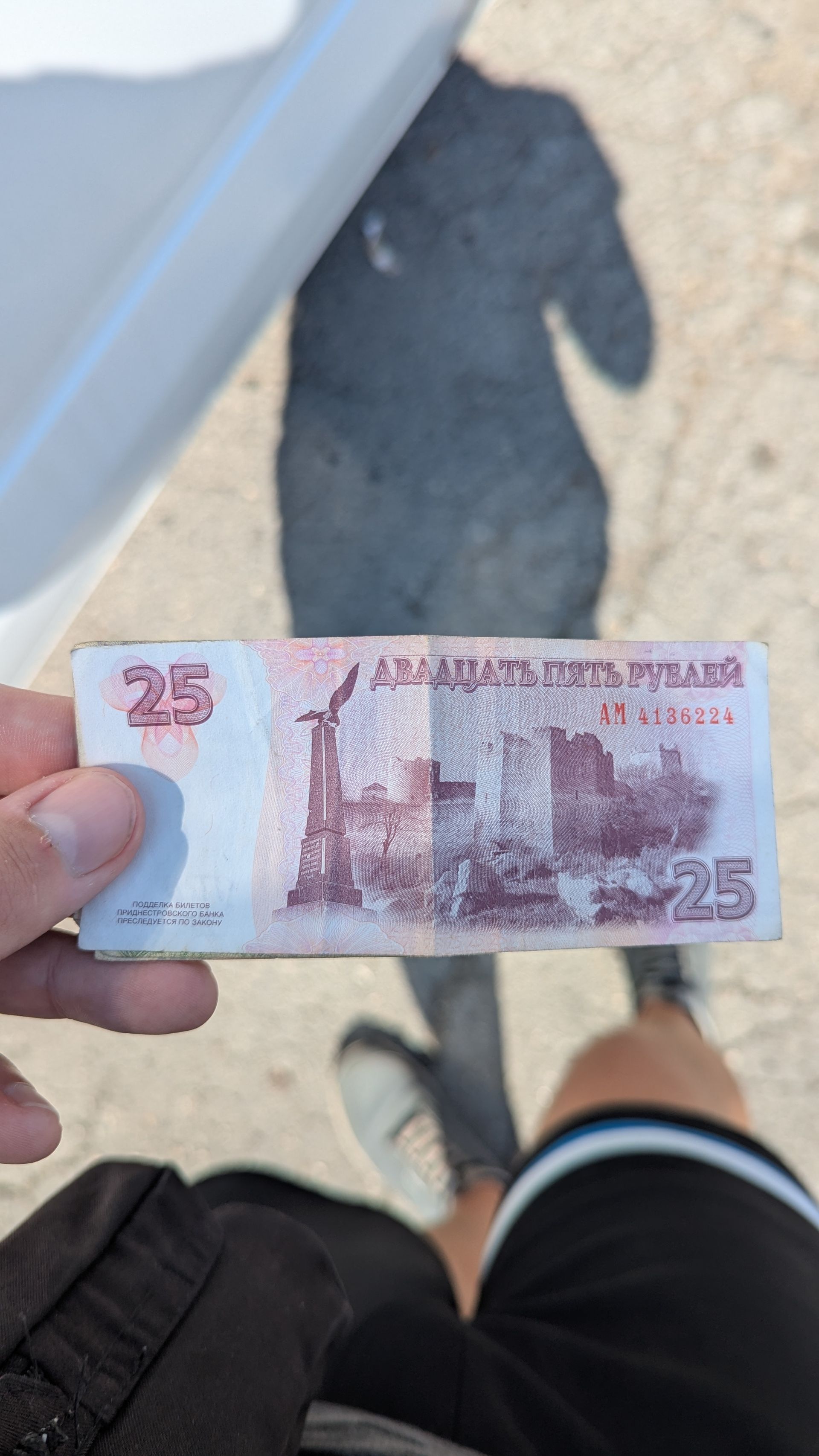
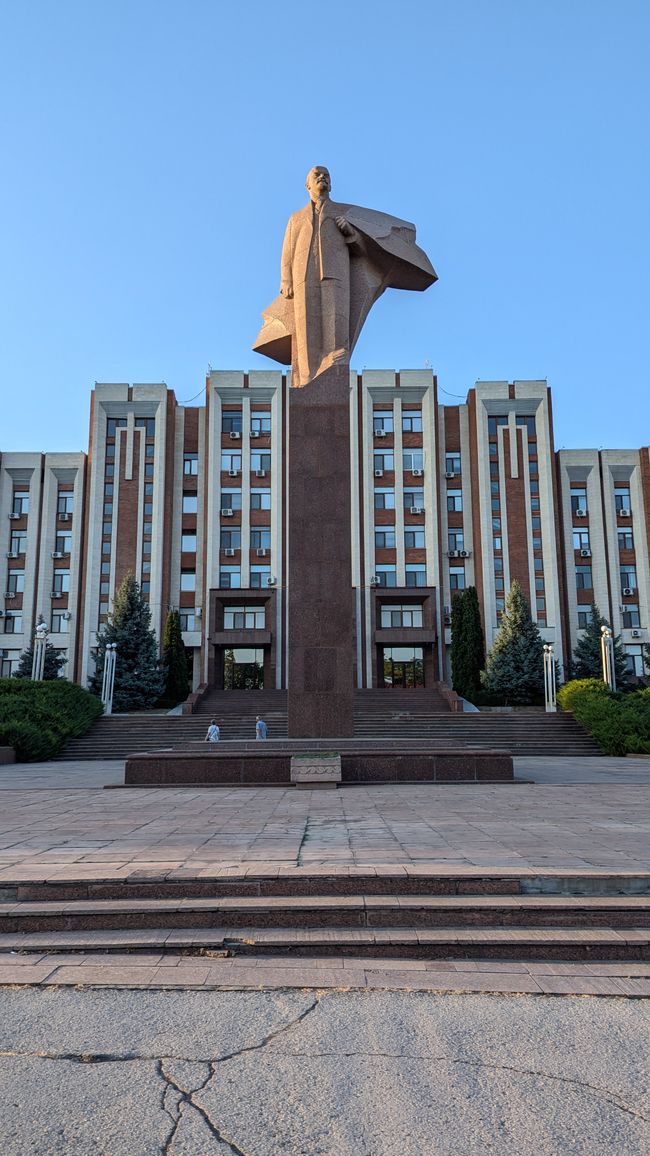
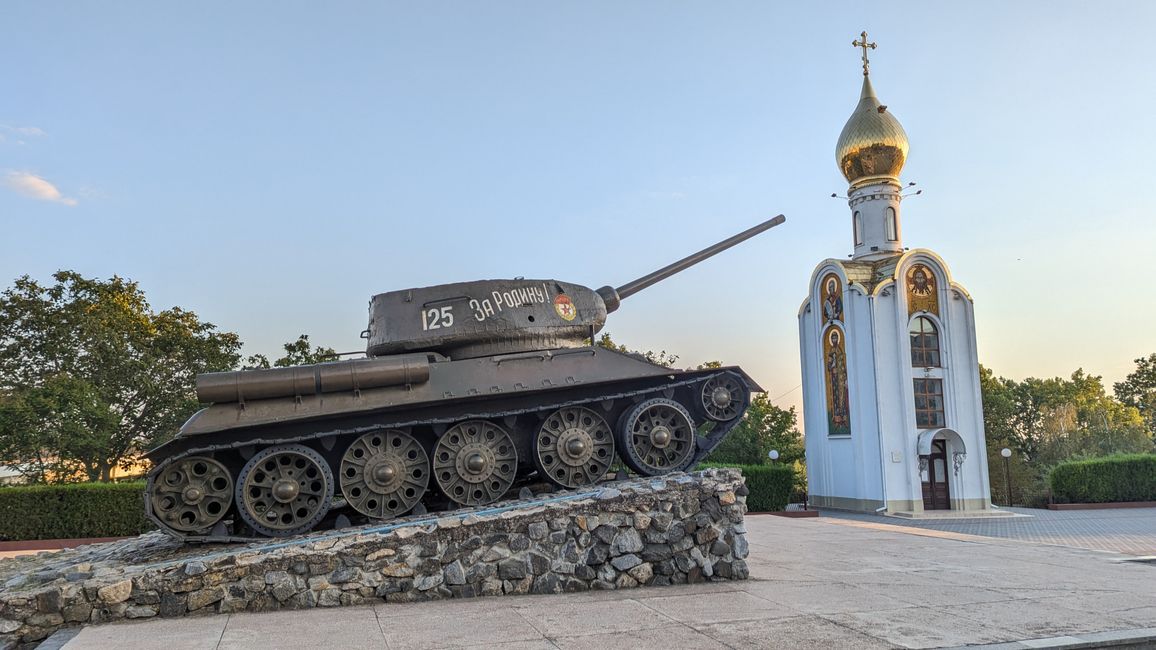
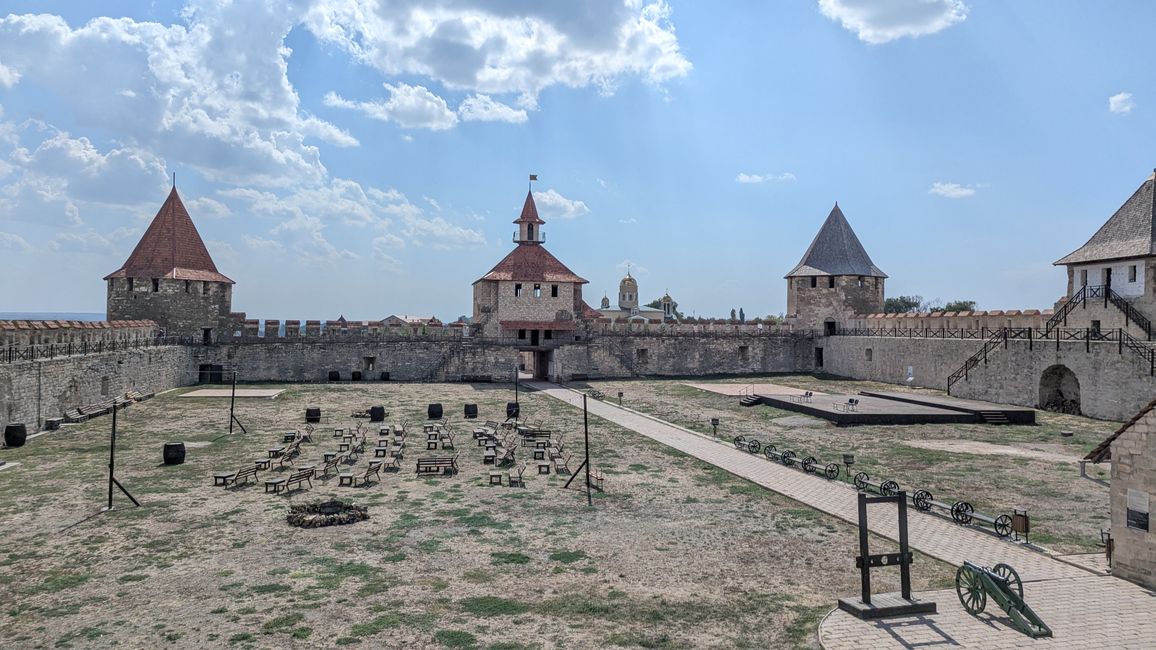
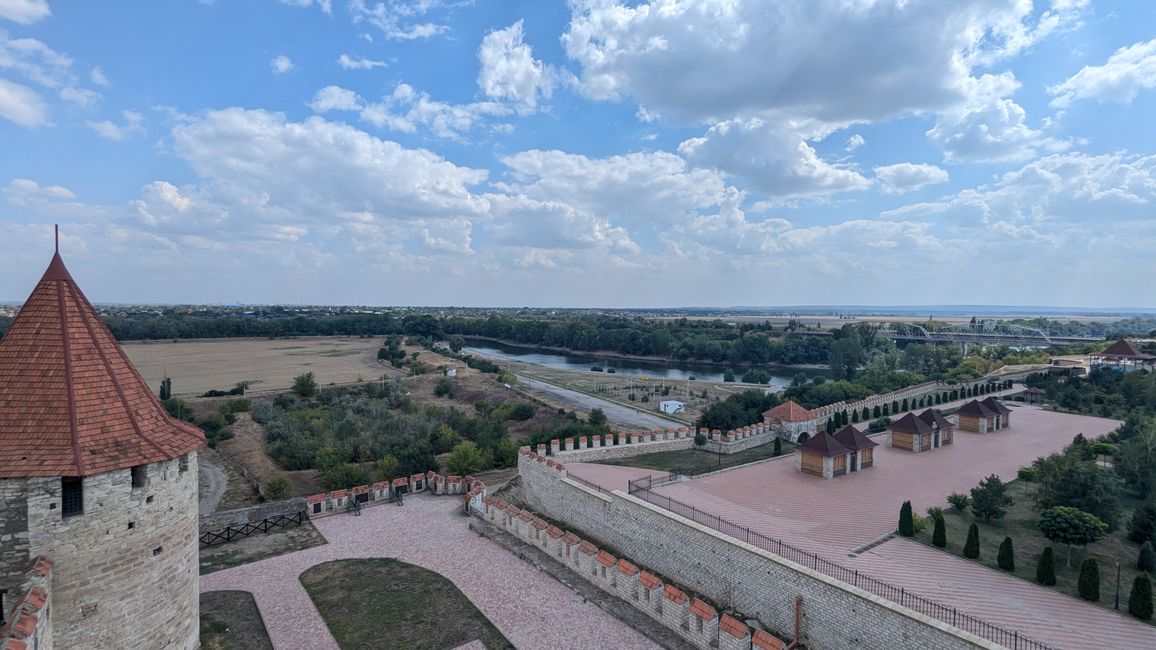
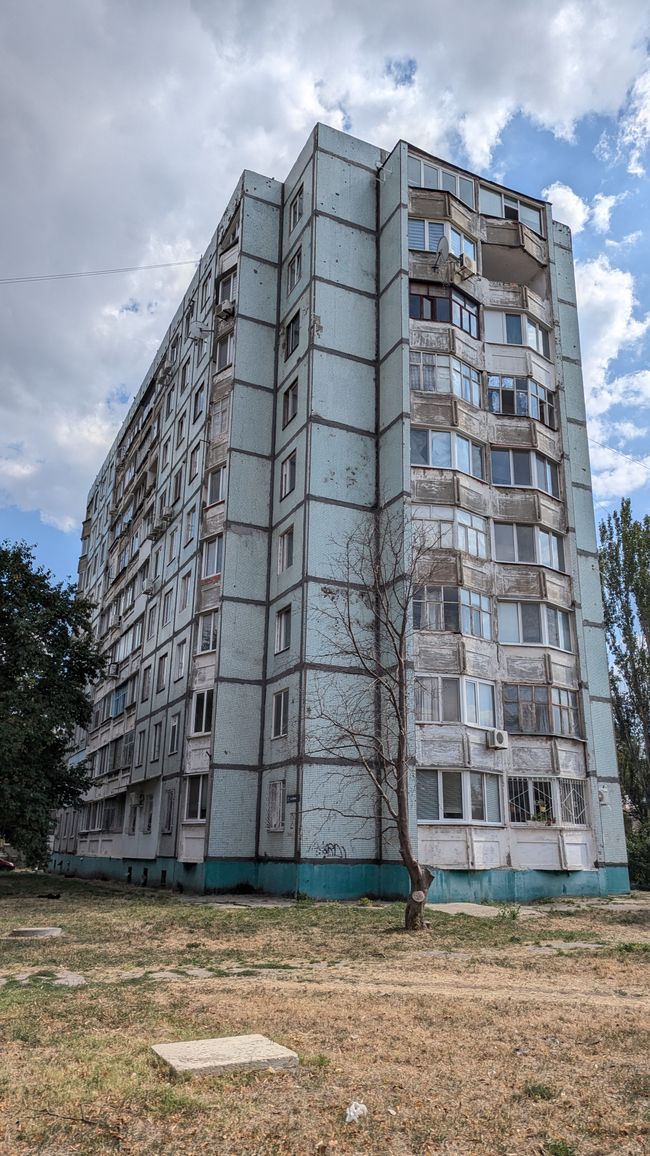
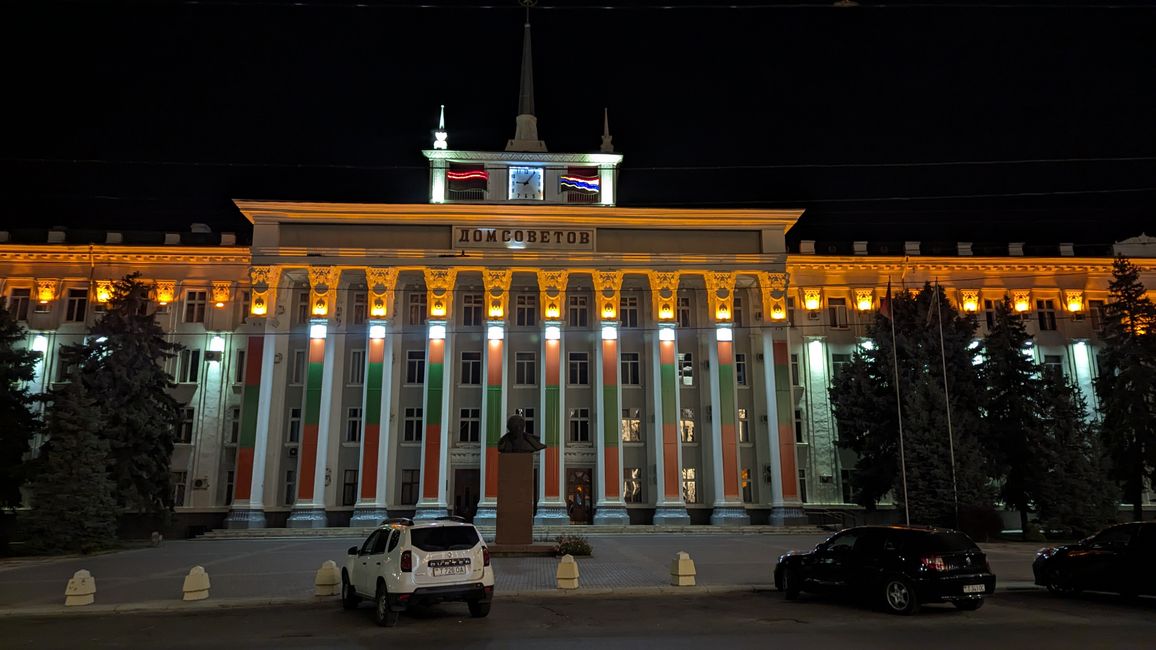
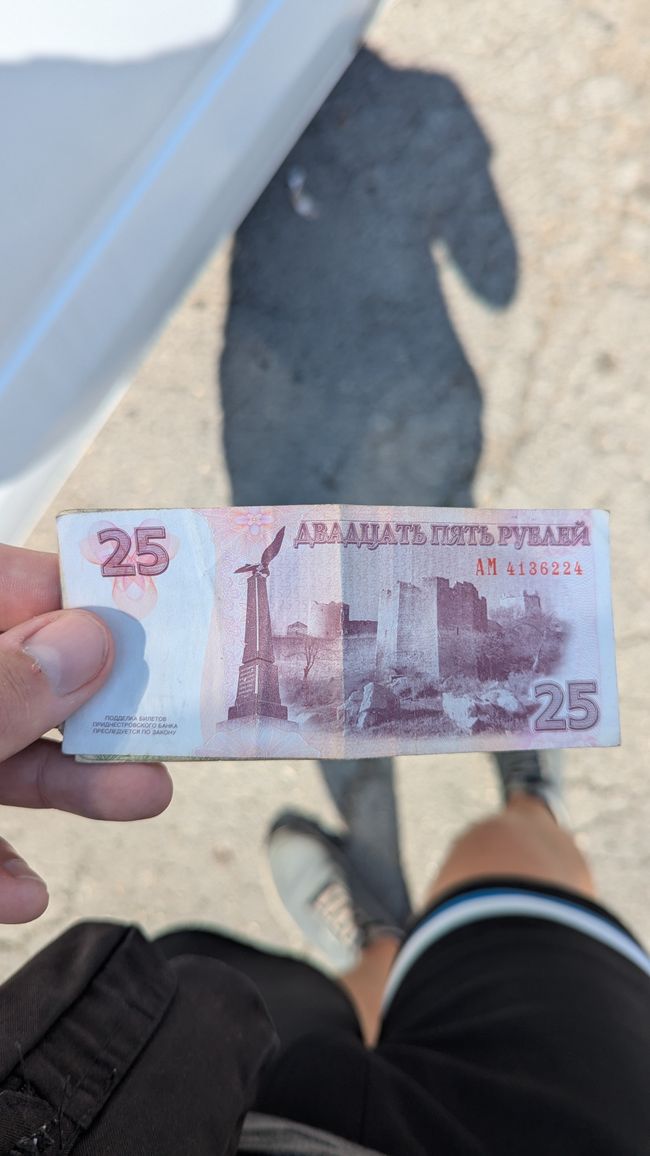
After I collected my backpack at the hostel, I headed with the next marshrutka towards Tiraspol, in the breakaway region of Transnistria. While it was quite 'European' in Chişinău, I felt at least 20 years transported back in time in Tiraspol. The buses are 60 years old or older, the roads got worse, and most residential buildings had seen better days, at least on the outside. Payment by card is only possible with Russian cards here. Fortunately, the euro is also a popular currency, and I got a pretty good exchange rate for the Transnistrian ruble. Otherwise, you could tell you were in the East; a smile at the supermarket checkout, in a café, or in everyday life is hard to find, at least among the older people. Otherwise, people were friendly, and the architecture still strongly resembled Soviet styles. So I strolled through the city for the first afternoon, paying Lenin a visit. I passed by some typical war memorials, tanks, and an Orthodox church. The Tyra River, which separates the Republic of Moldova from Transnistria, is largely paved with concrete, but at certain spots, some sand has been washed up where residents go swimming. My path then took me to the neighboring city of Bender to see the large fortress, which was very worth seeing, as you could freely move around everywhere, walk along all the walls, and climb a lovely lookout tower.
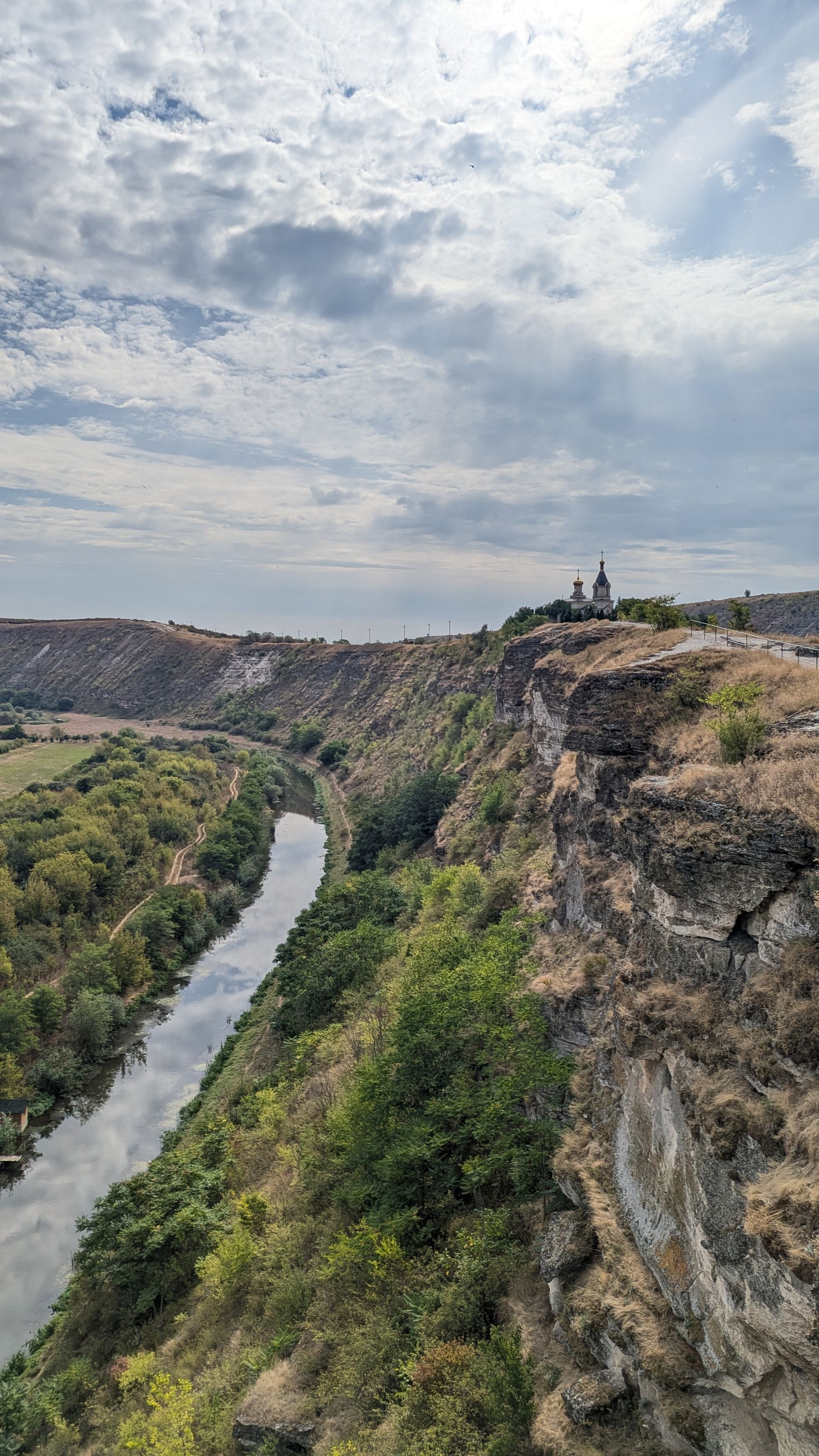
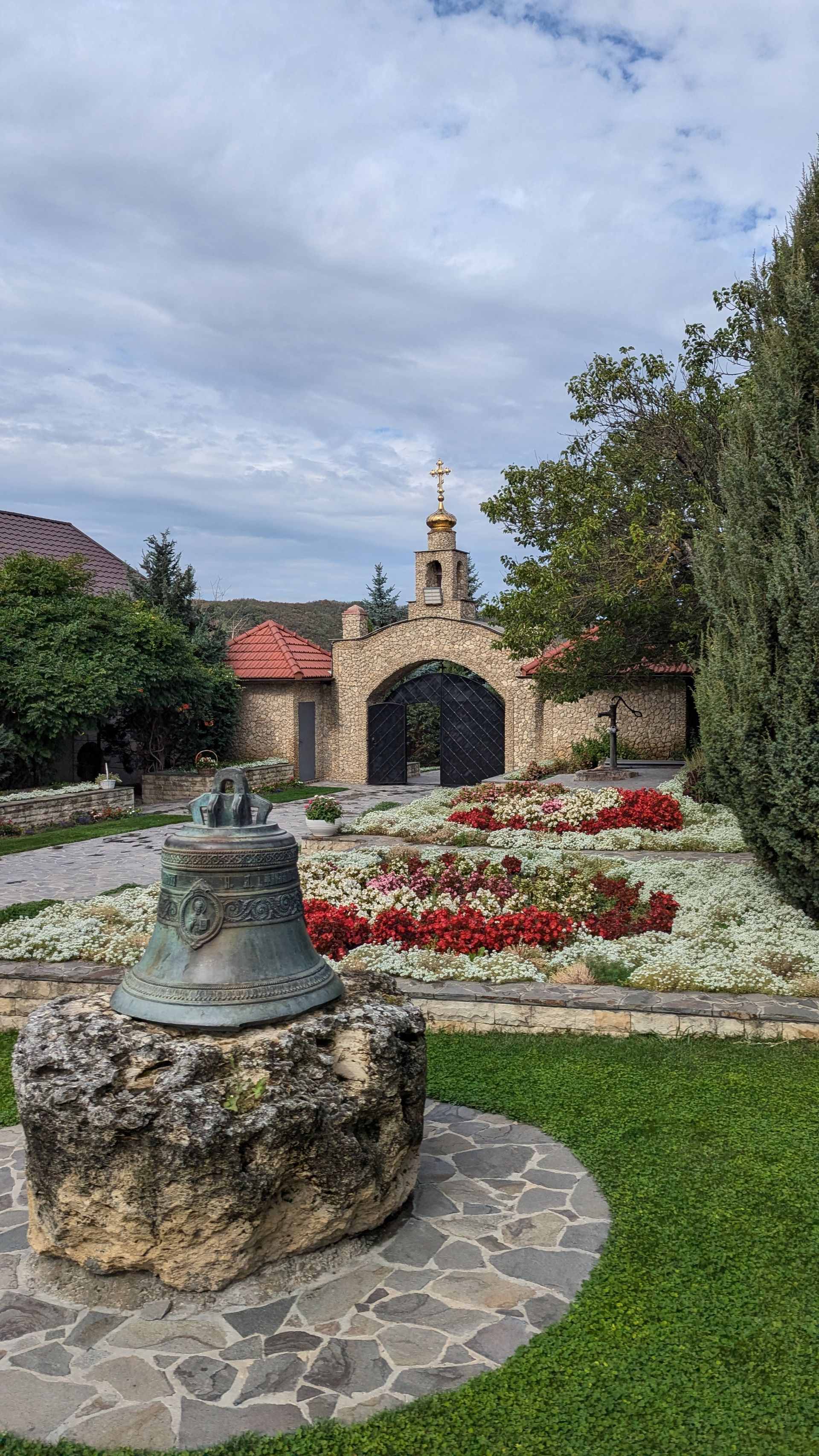
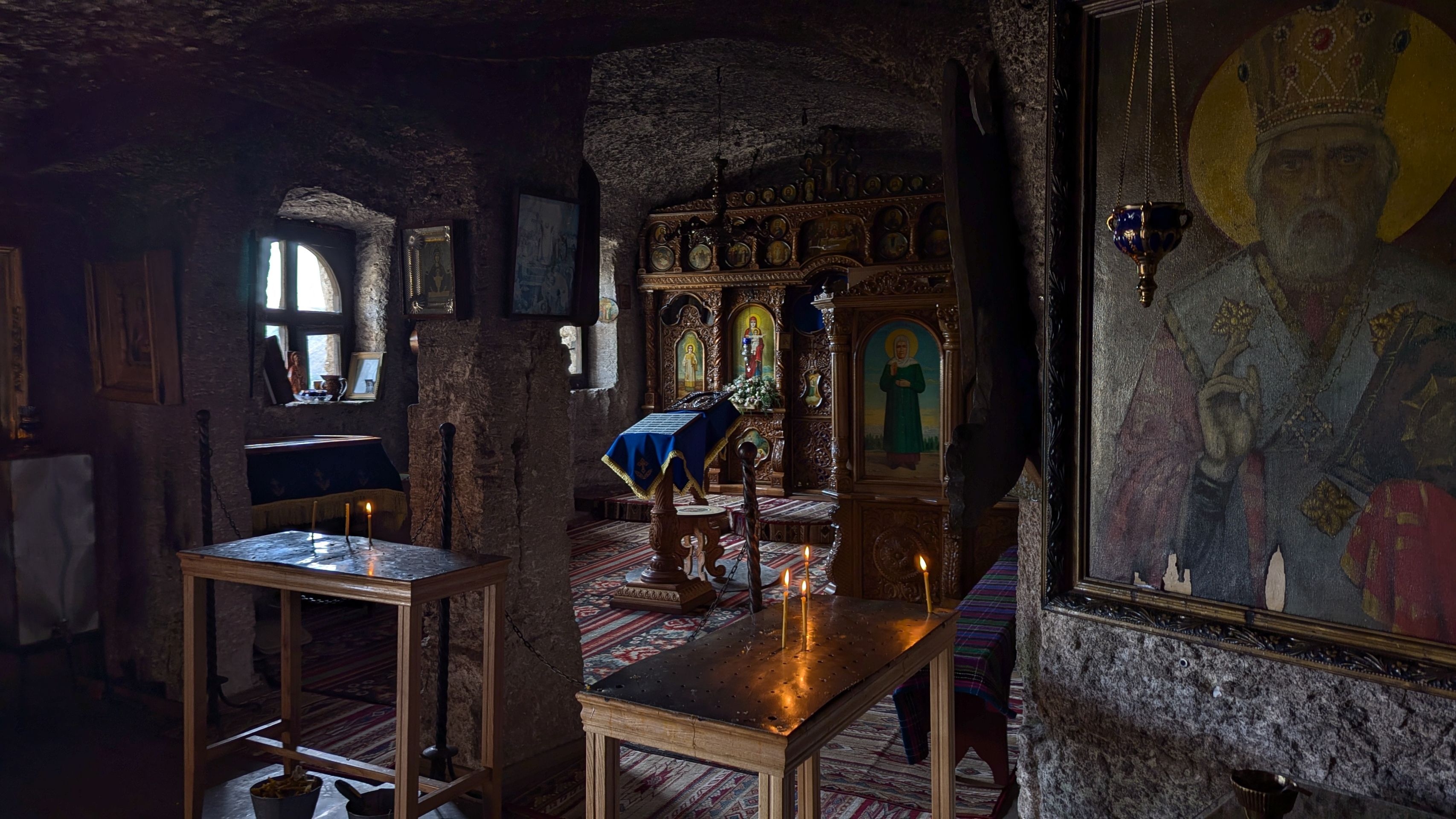
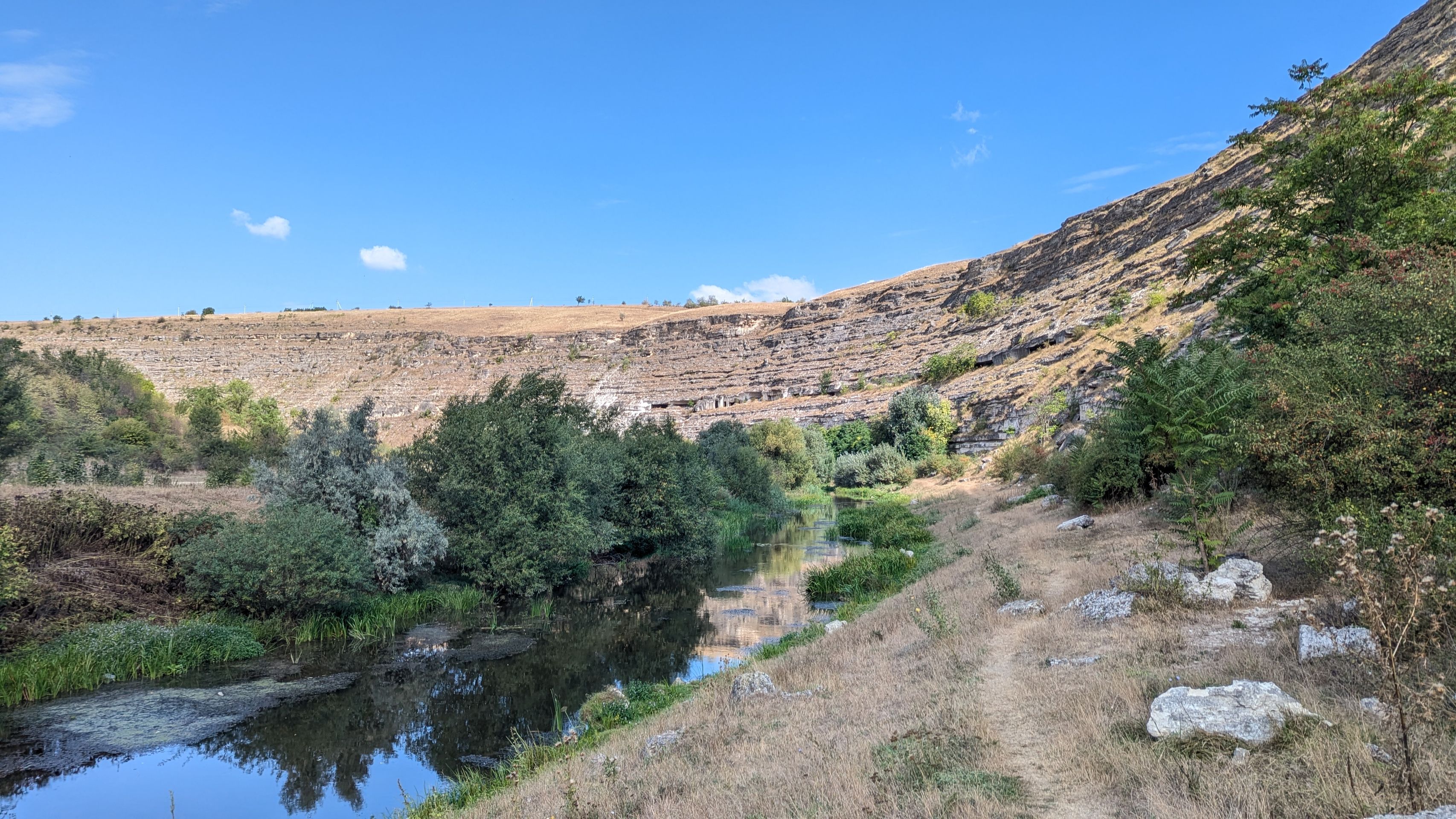
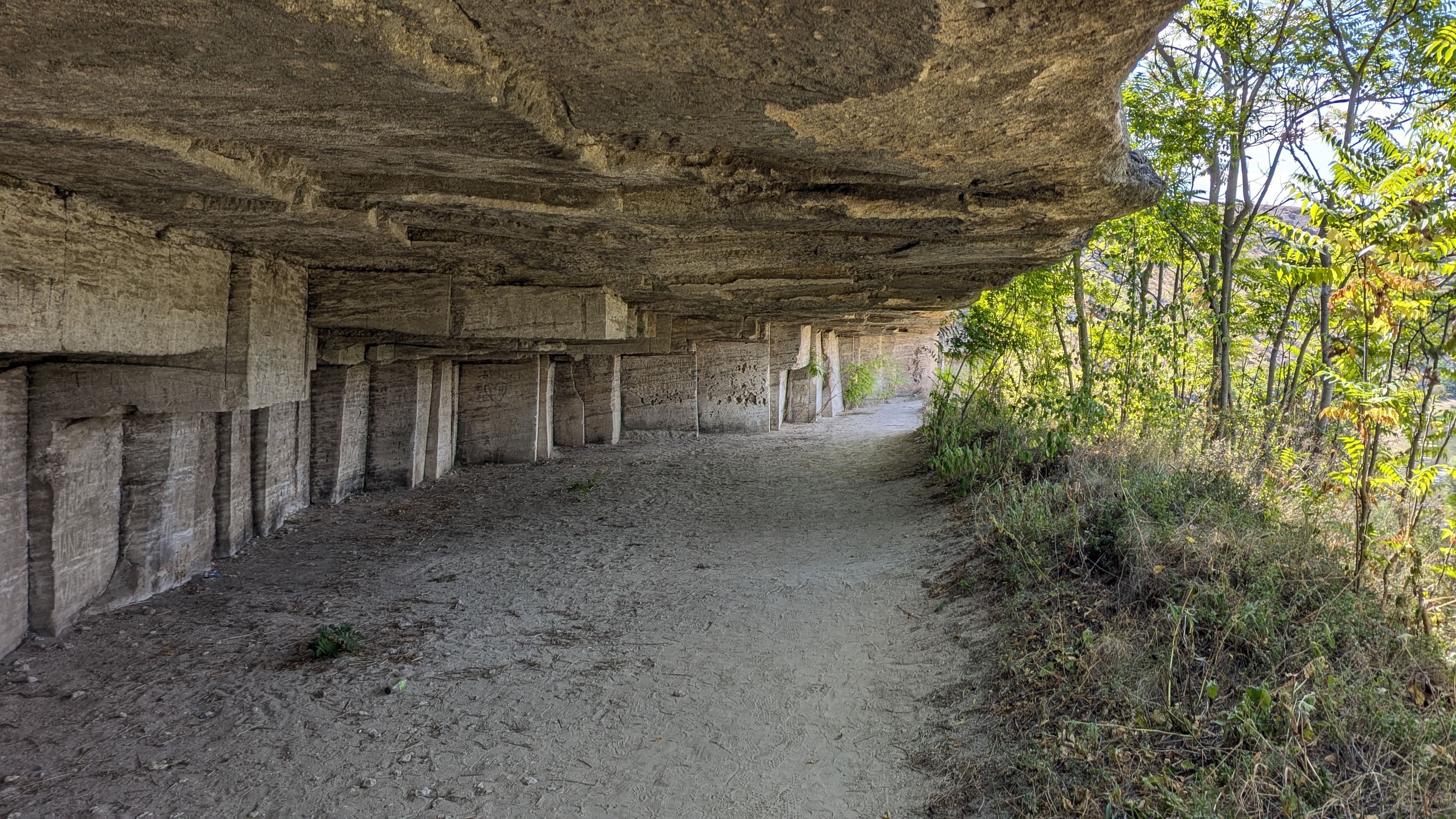
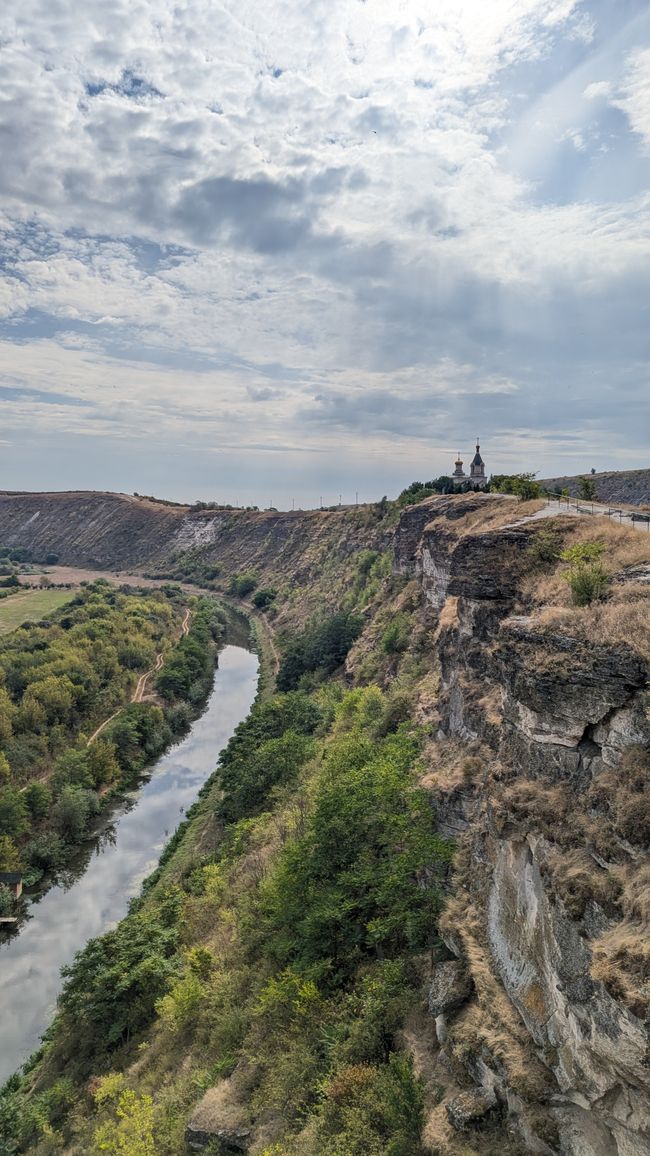
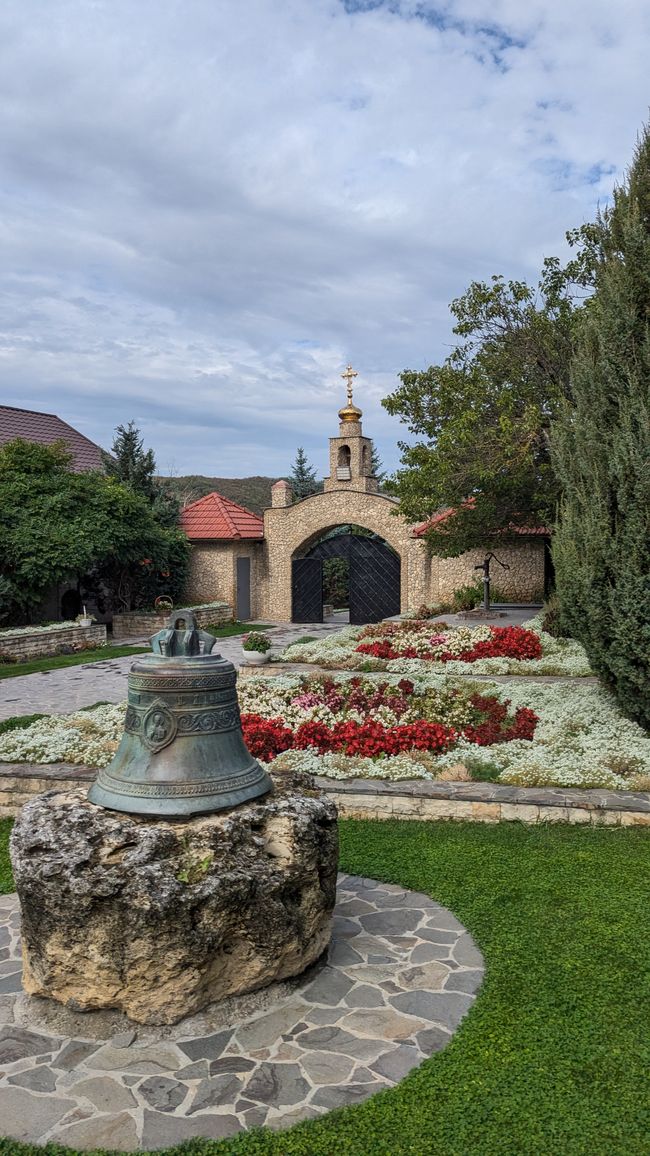
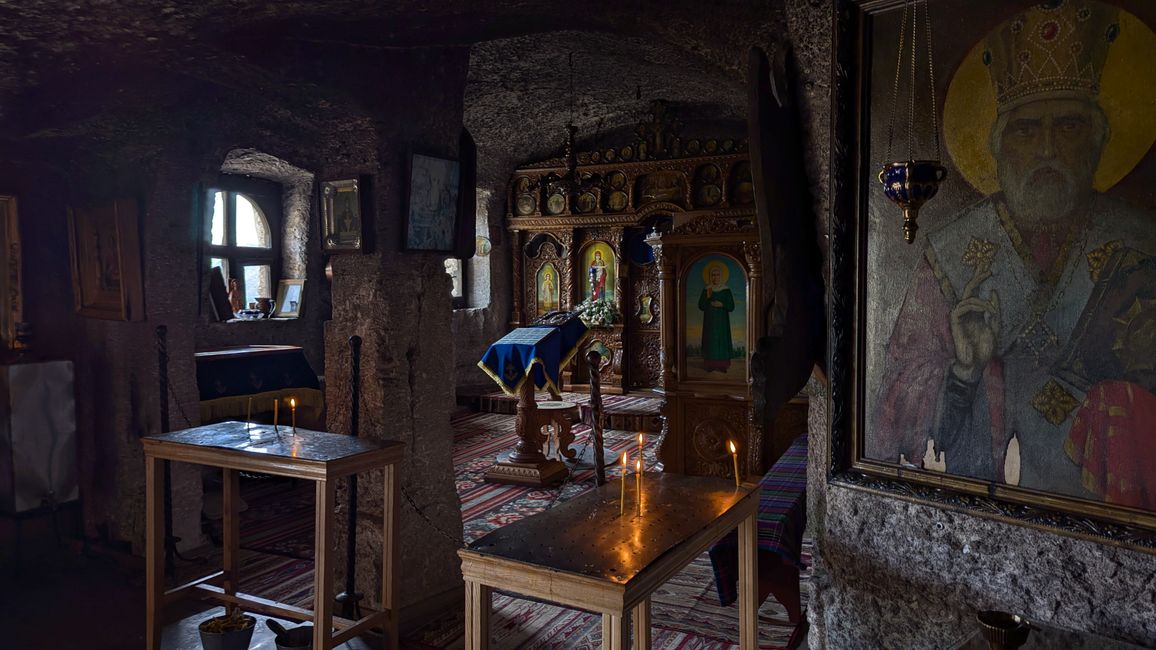
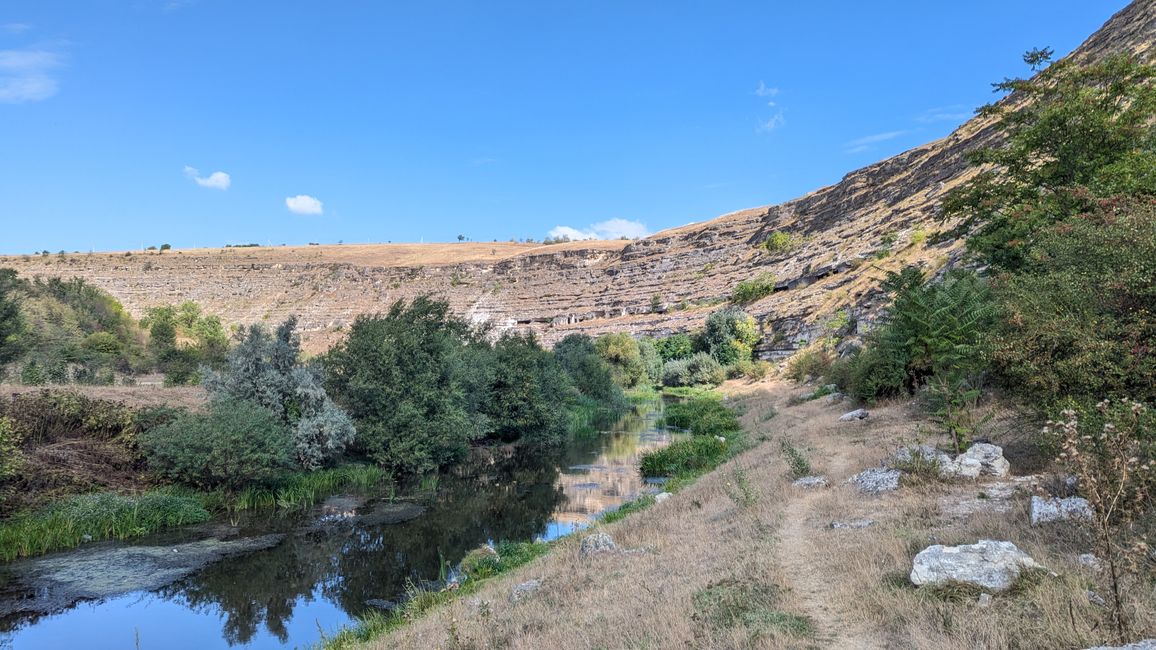
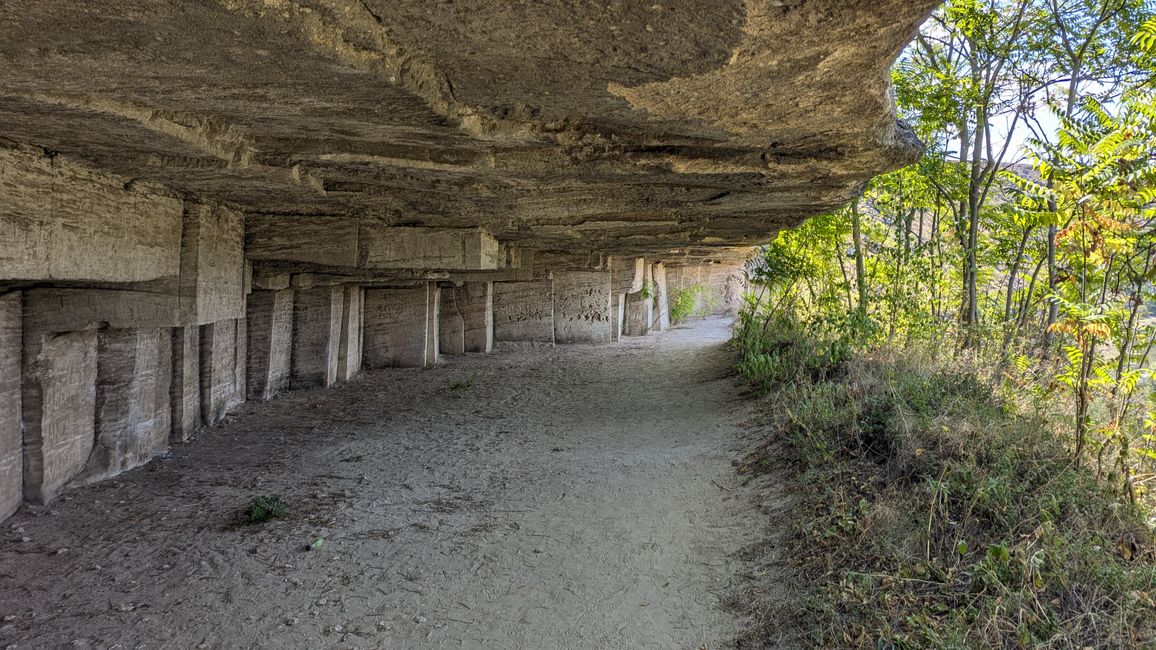
Three days later, my excursion into Transnistria was already over; there isn't much more to see here, so I returned to Chişinău and from there took a marshrutka to a cave monastery, which is the only UNESCO World Heritage Site in Moldova. Located on a hill surrounded by a tight loop of the Răut River, the monastery itself sits atop a steep limestone cliff that offers an impressive view over the river valley. Not far away is a bell tower that marks a rock-hewn corridor leading into the prayer room and on the other side back outside; here you will find a kind of terrace with a view of the valley, situated in the sheer wall. A kilometer further, there are more caves that were also built by monks. The side walls look like concrete slabs and were intentionally built this way in the 15th century. These cuts and the resulting ledges helped reduce erosion from wind and water. They redirected the water and prevented the surface from peeling uncontrollably, which could have threatened the integrity of the entire cave structure.
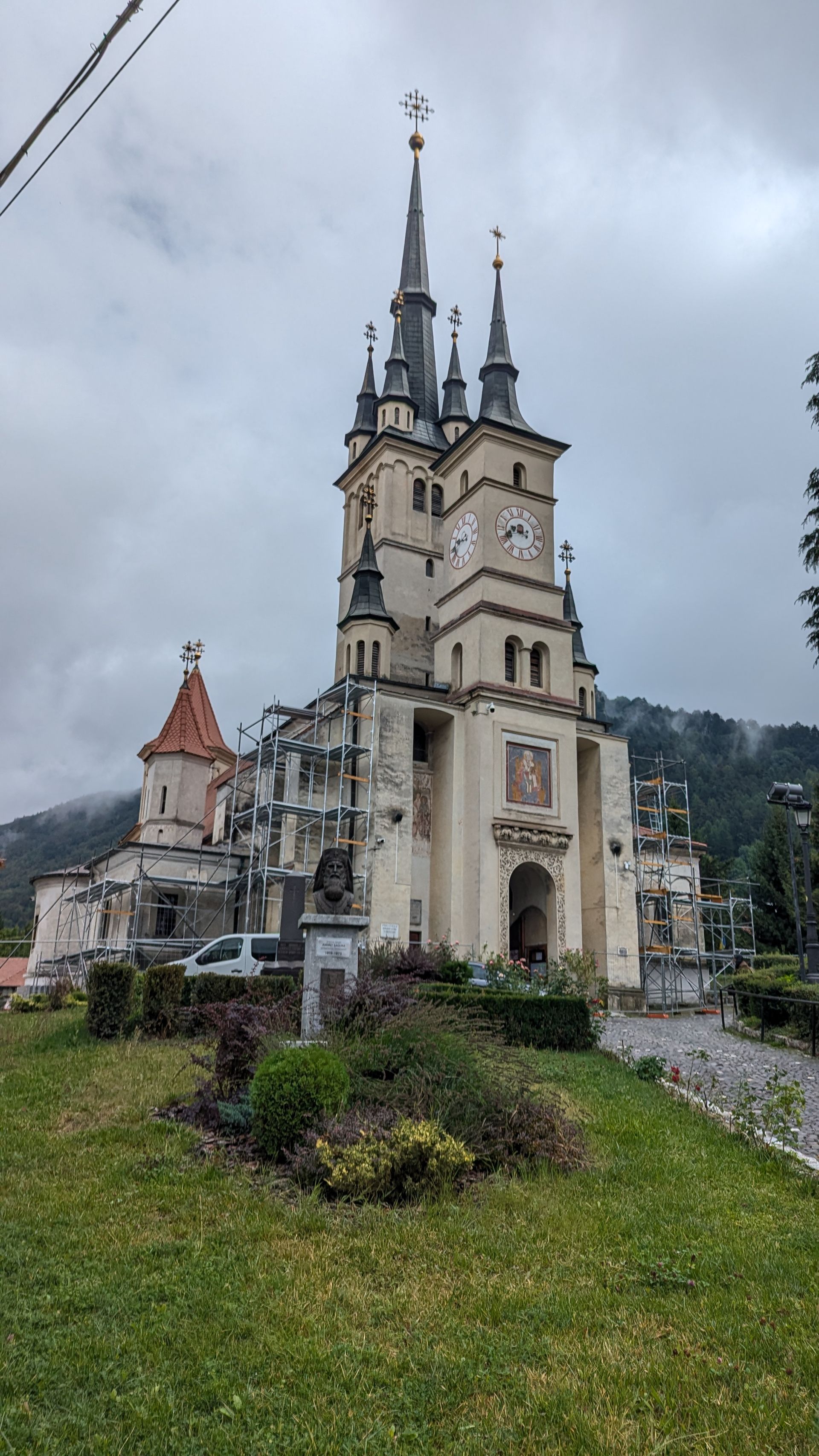
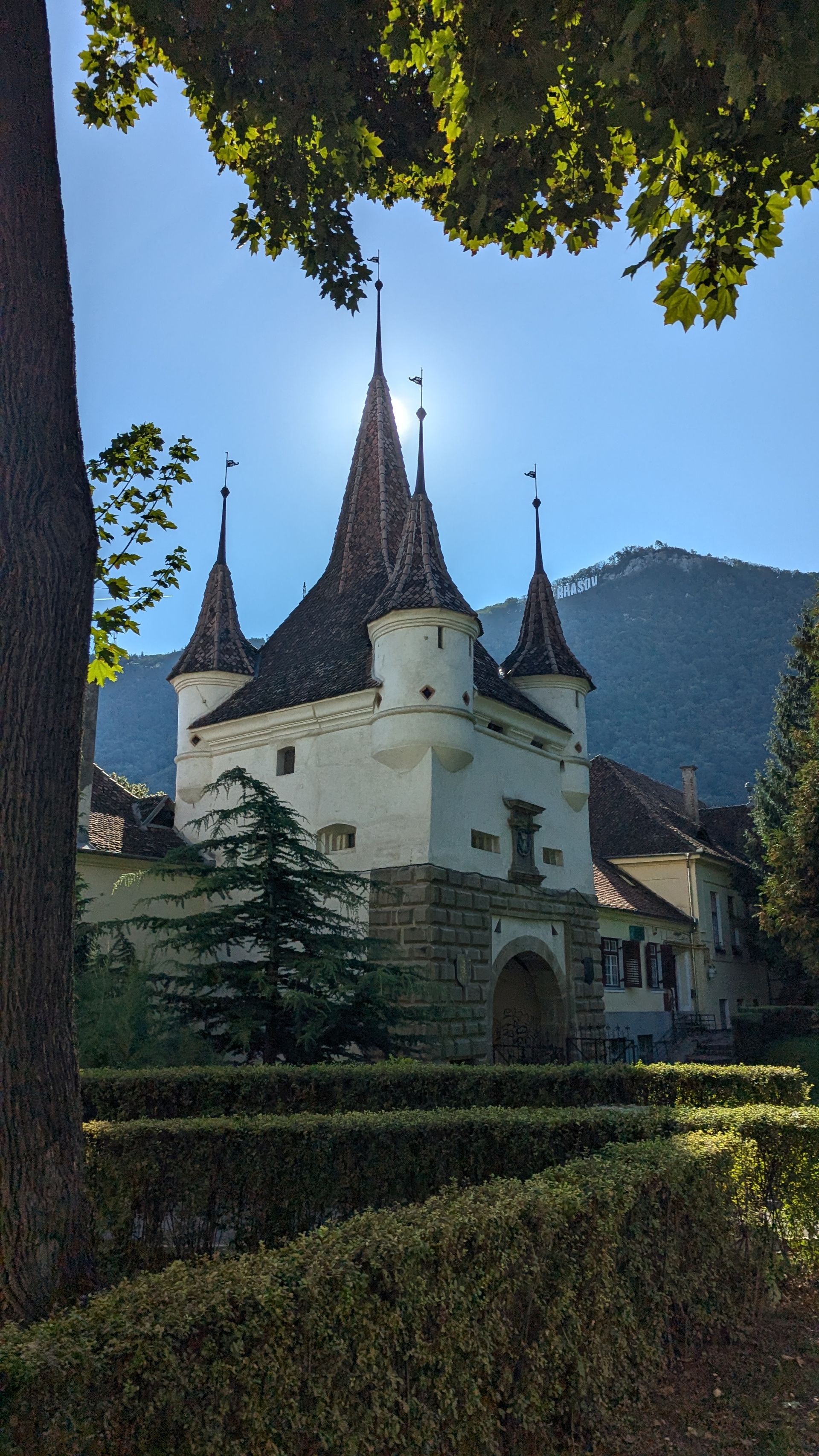
In Brașov, I was first greeted by cold and rainy weather—good thing I had already given my warm clothes to Fina :)
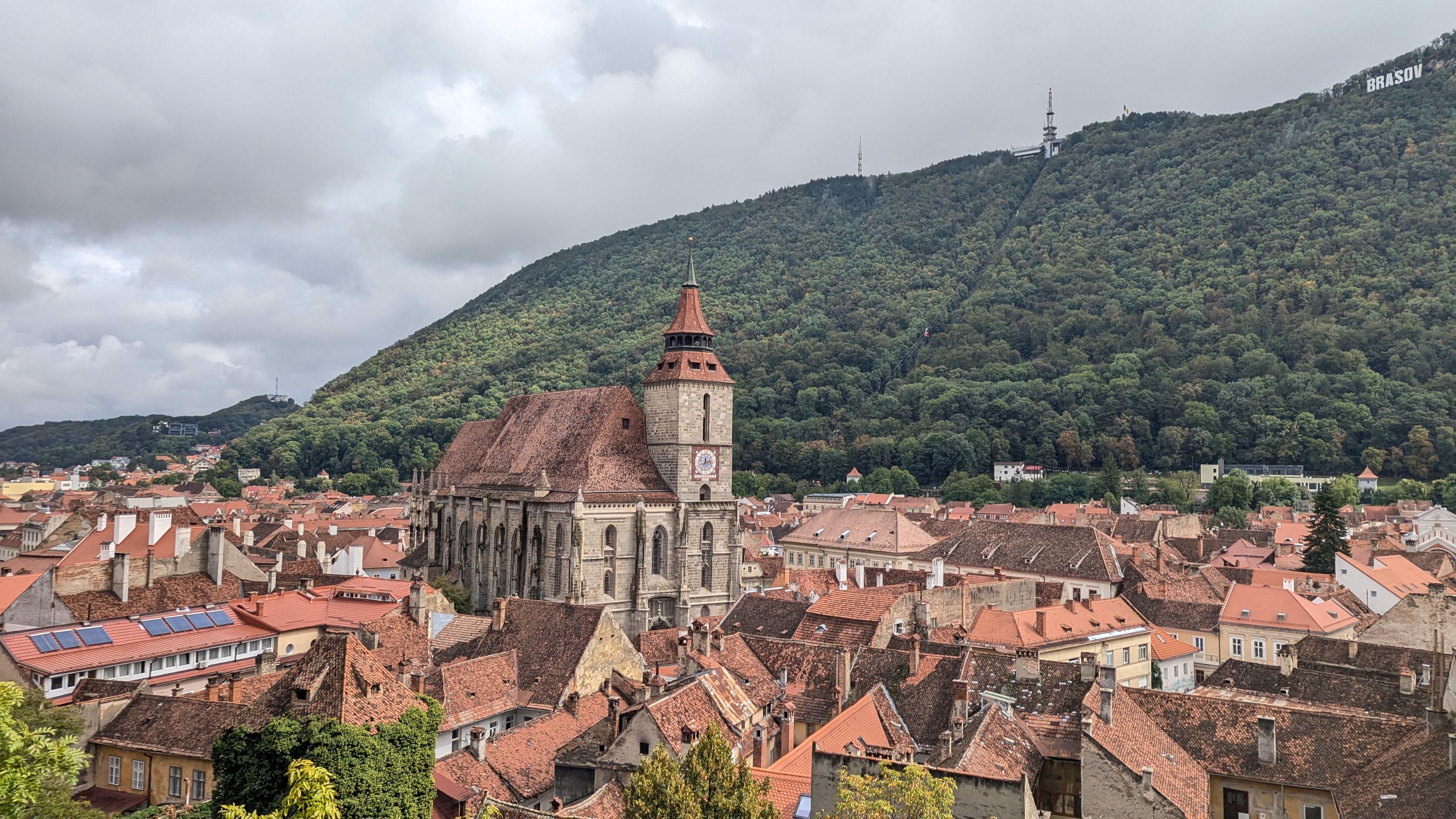
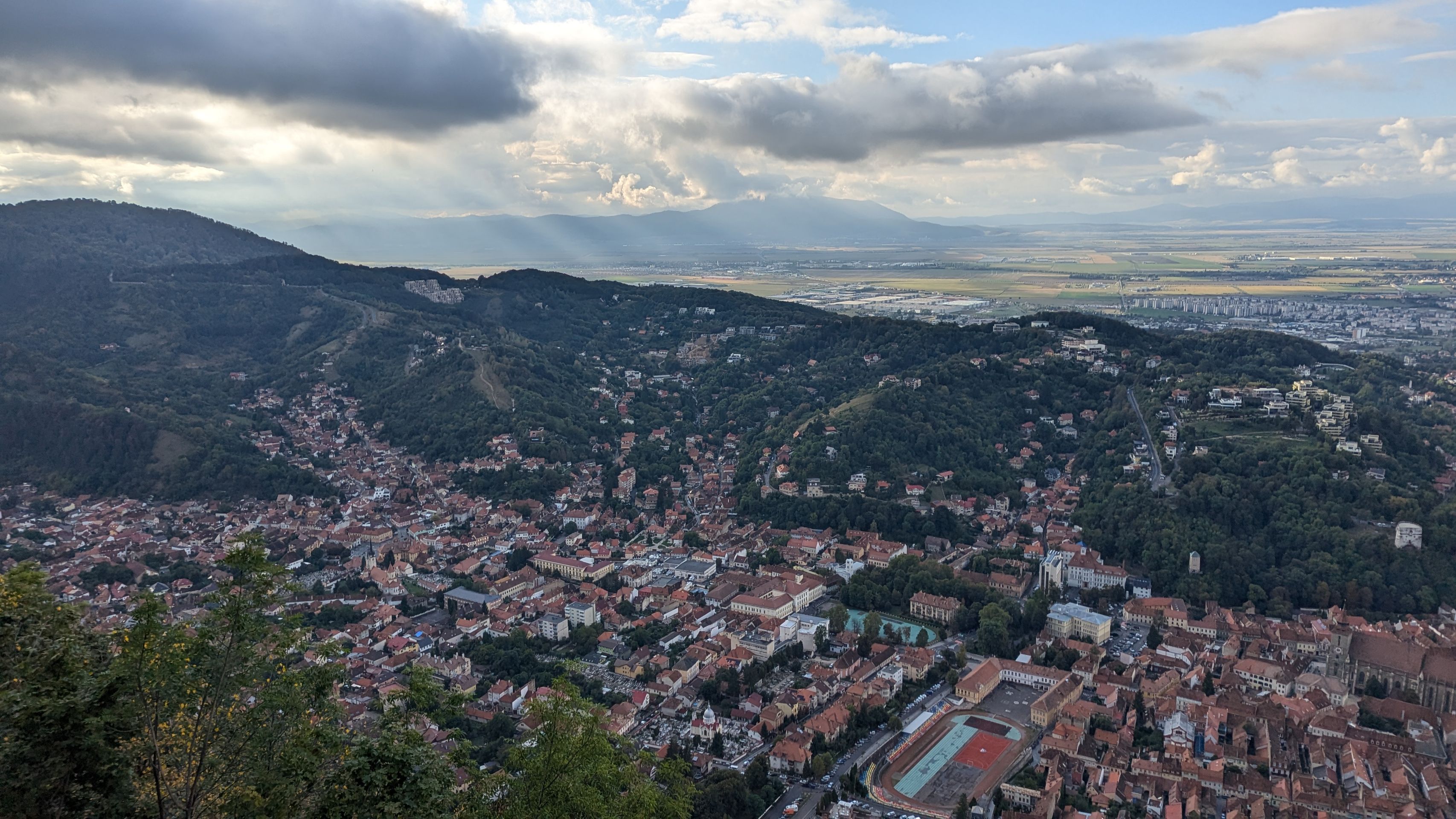
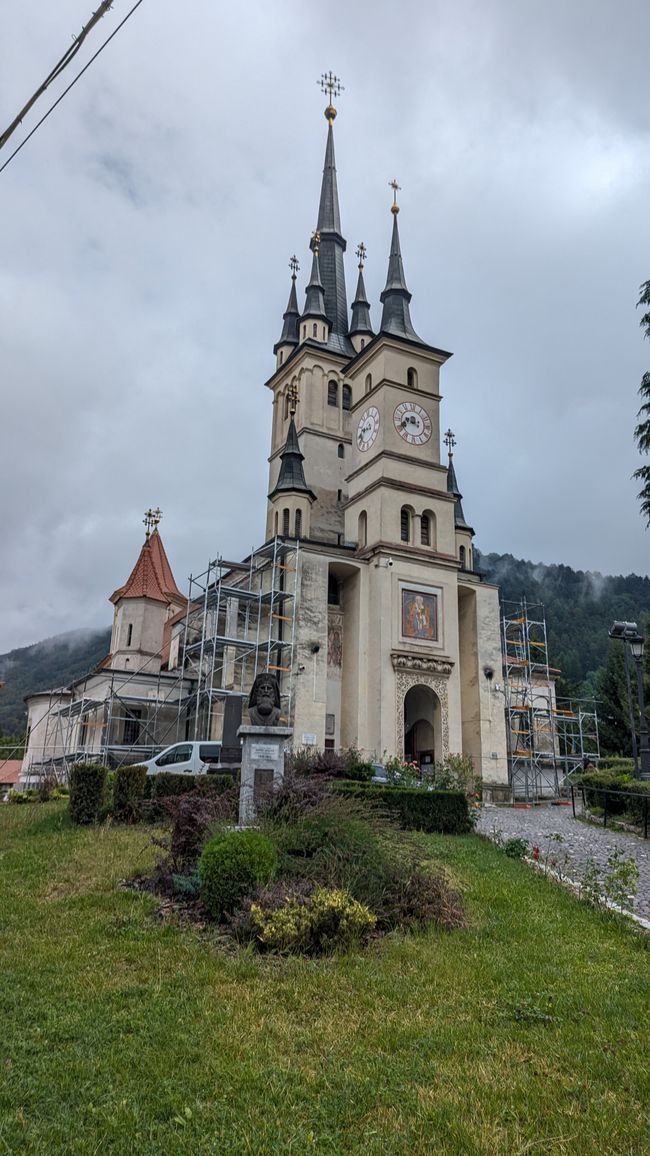
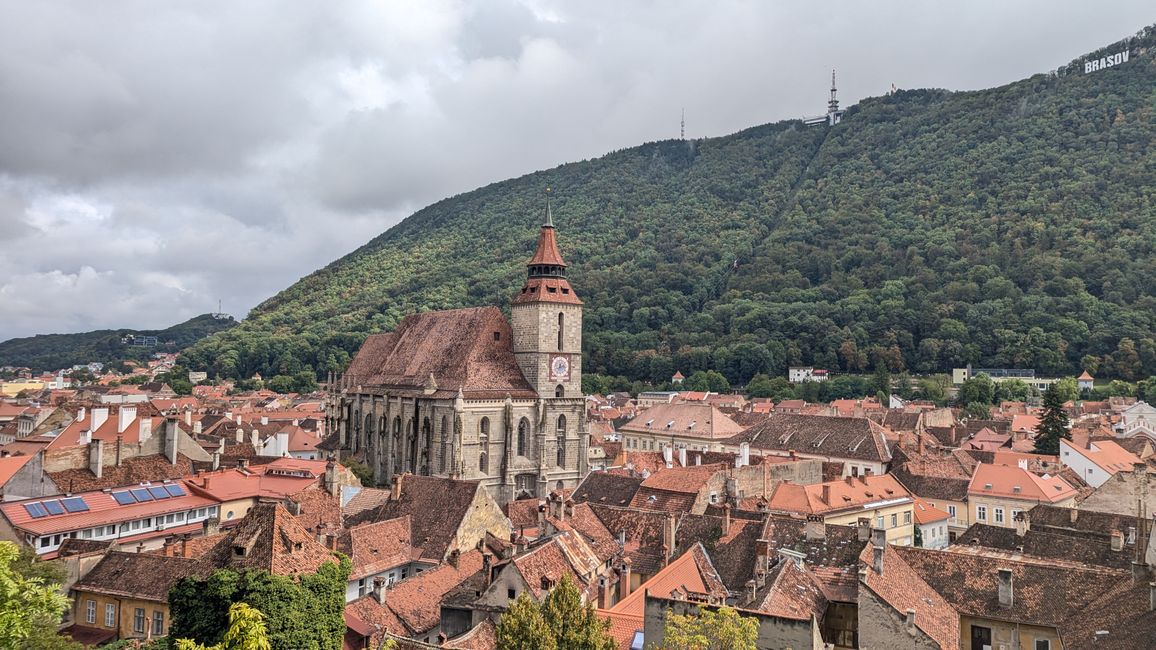
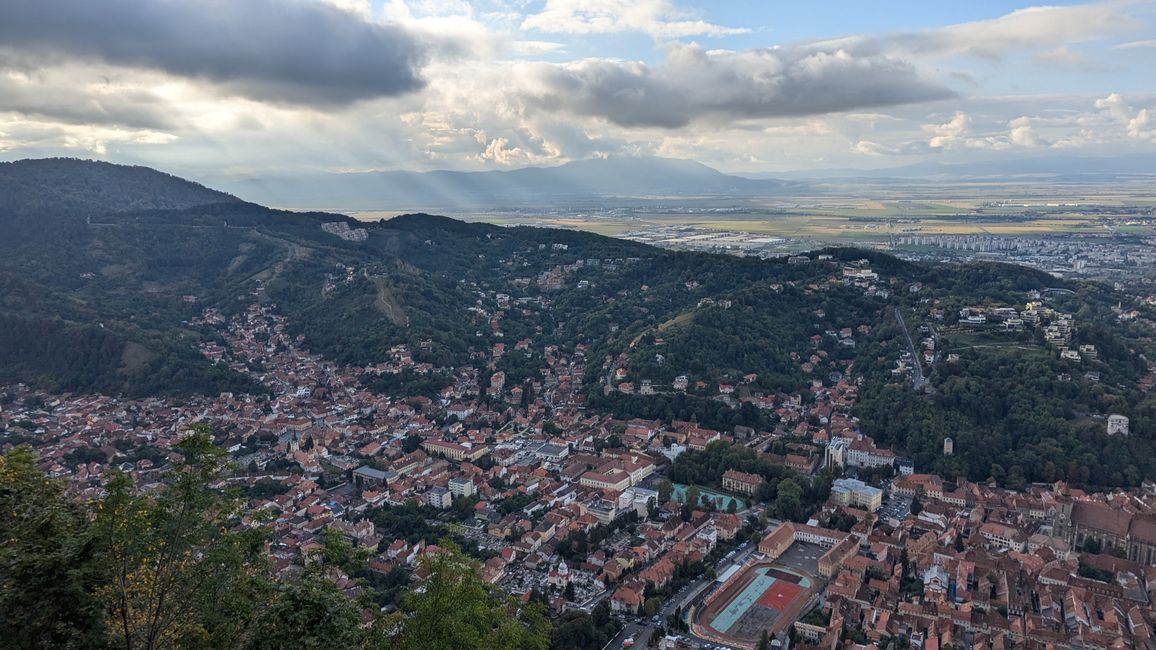
With Andy, I explored the beautiful old town after the rain had lessened a bit; in the afternoon, I ascended the local mountain. Andy then joined another group visiting a nearby castle; since I didn't want to be in a group, didn't want to stand in line for 60 minutes for the castle, and wasn't willing to pay €25 for it, I took a bus to a gorge that was recommended by everyone and described as very impressive. Somehow, I had expected more; only a small stream flowed through the rocks, and I had to wait for each ladder until it was my turn to proceed. Plus, I wasn't really motivated to continue hiking to the summit; I'm slowly ready to go home. Another reason not to wander alone is that there are many bears in Transylvania, and it's strongly advised not to hike alone without bear spray and a whistle, so I turned back to the city.
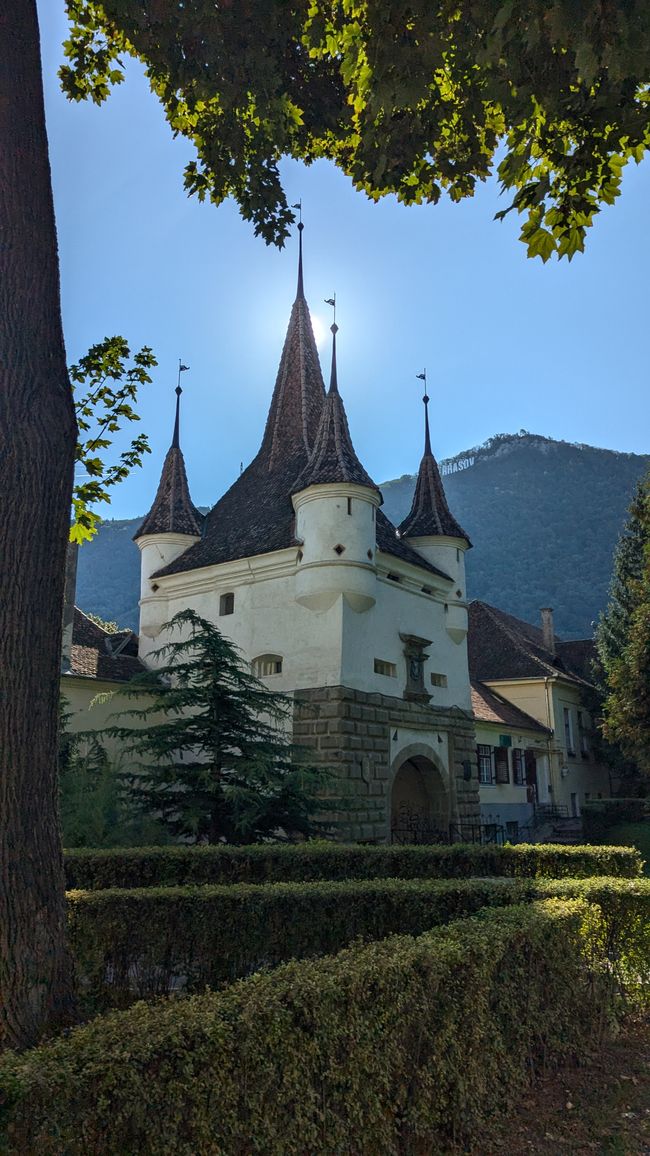
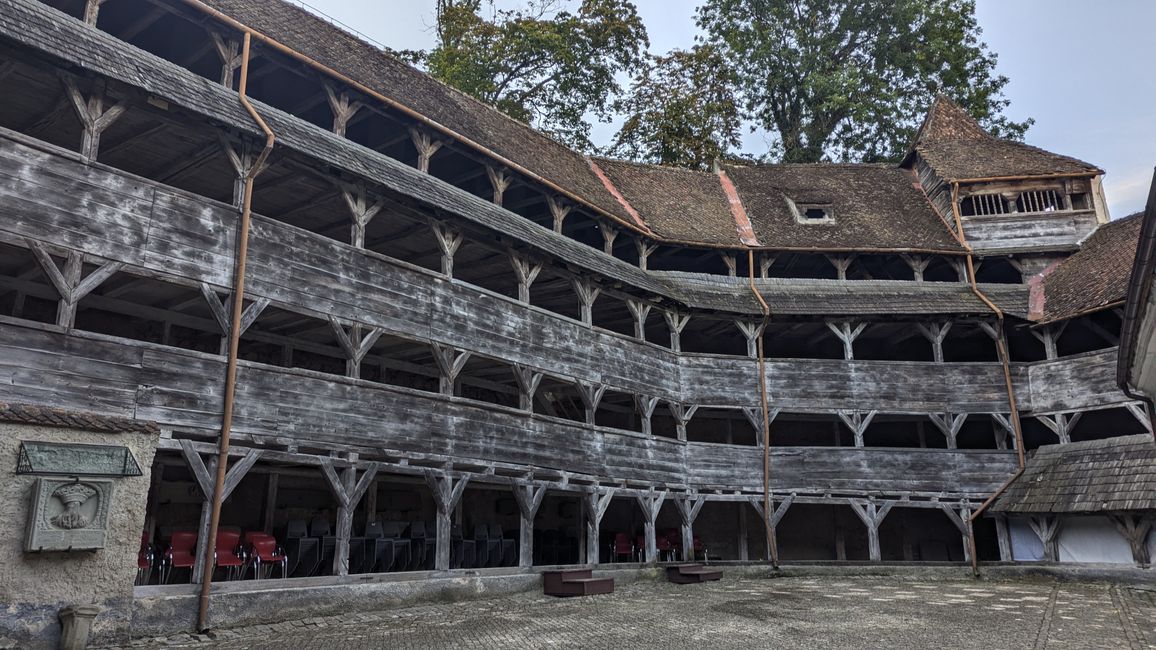
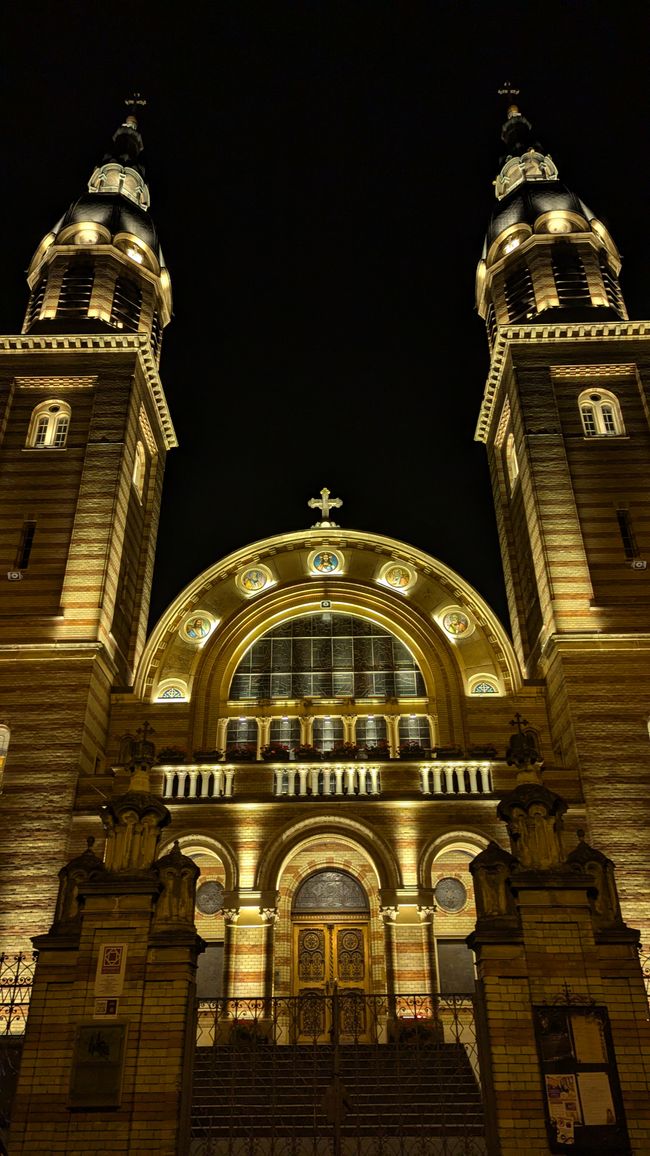
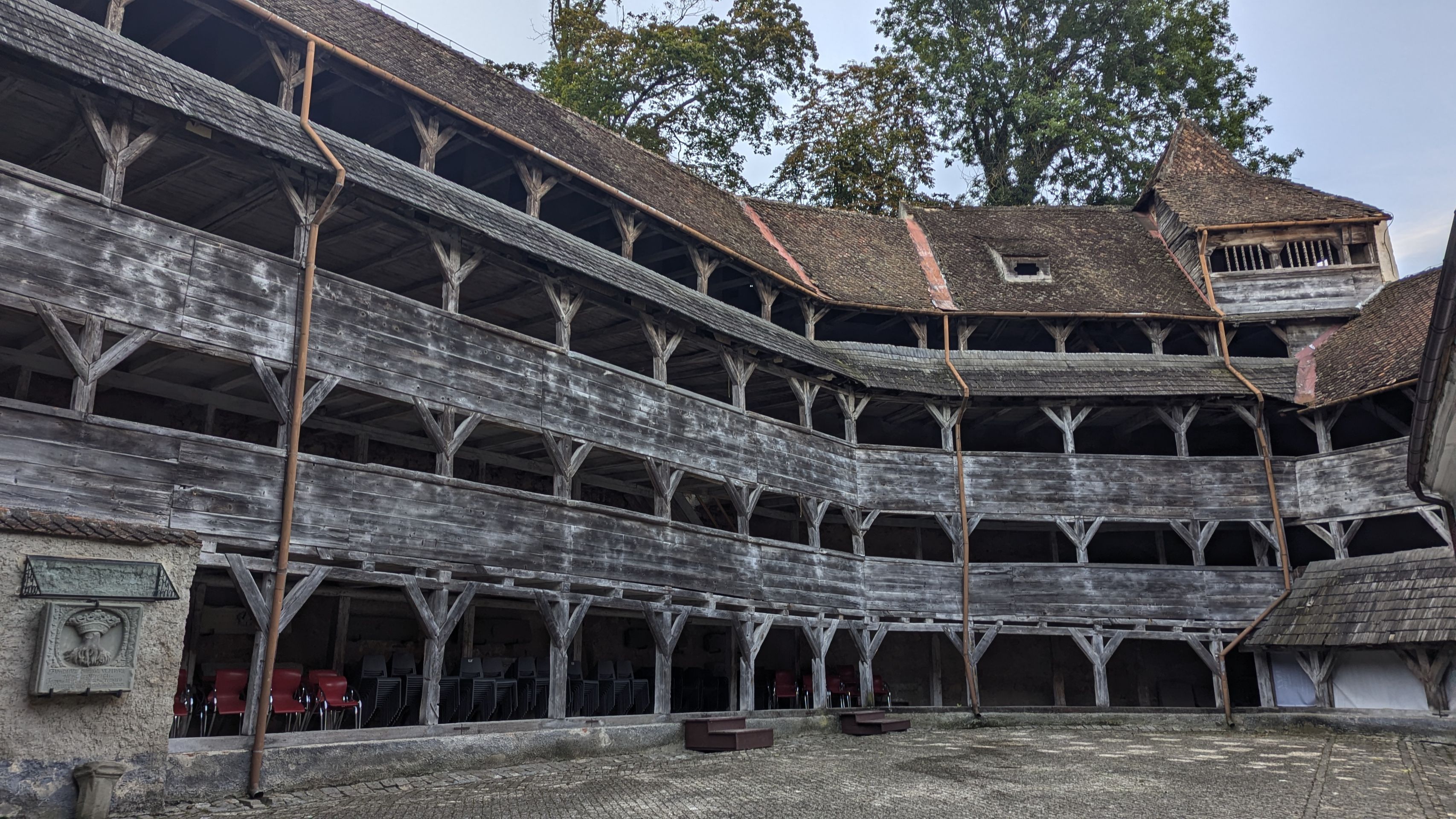
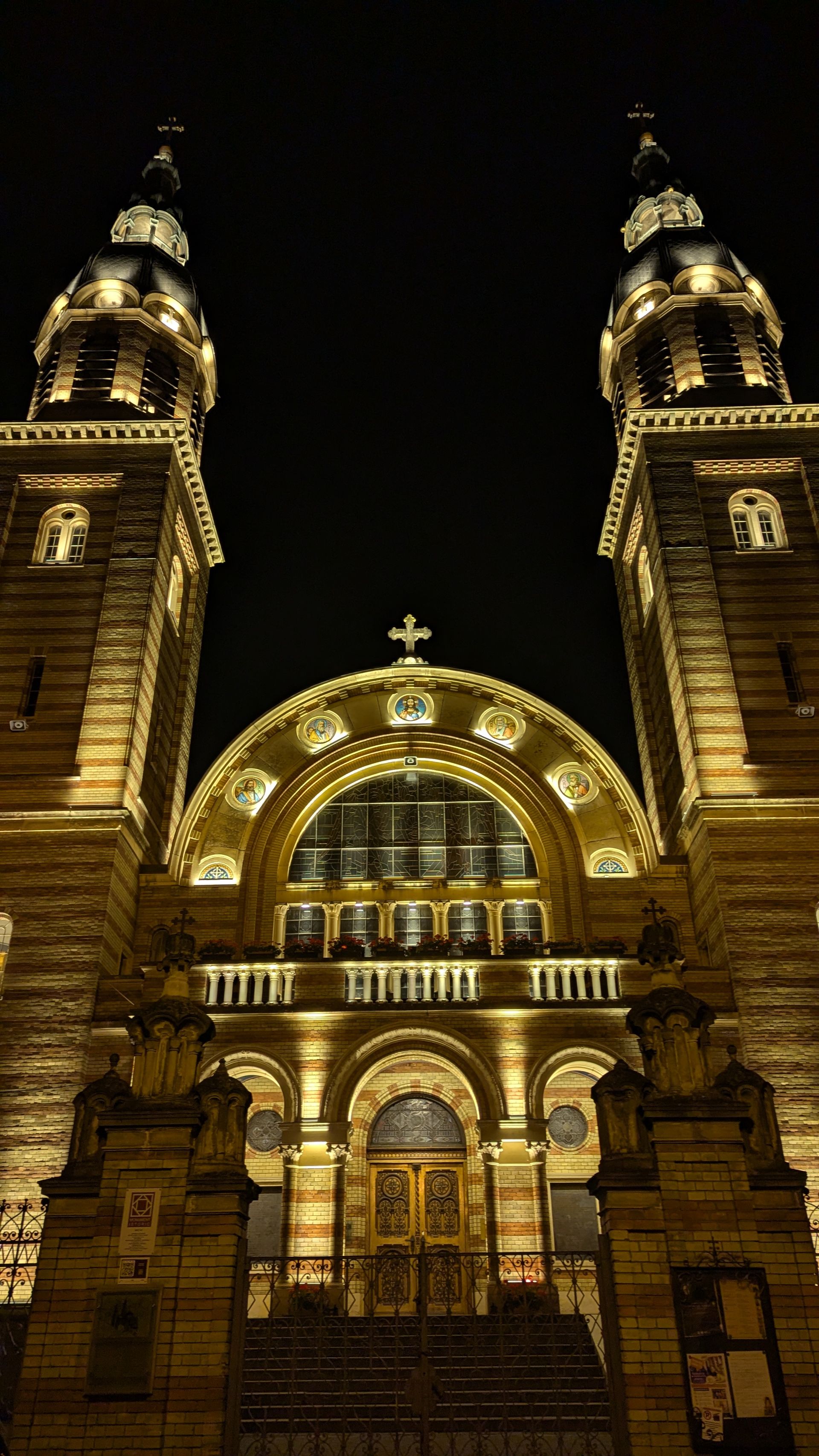
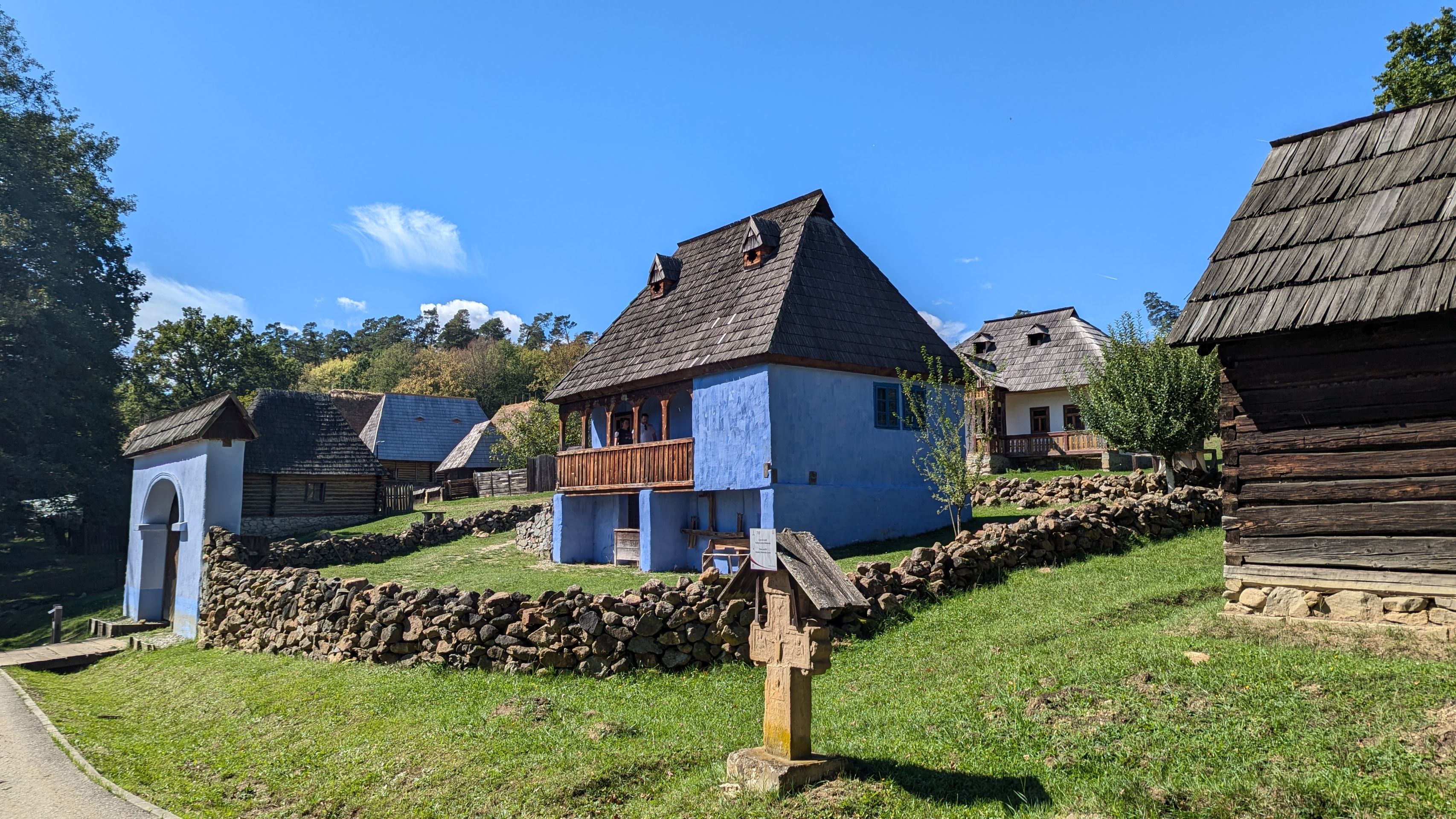
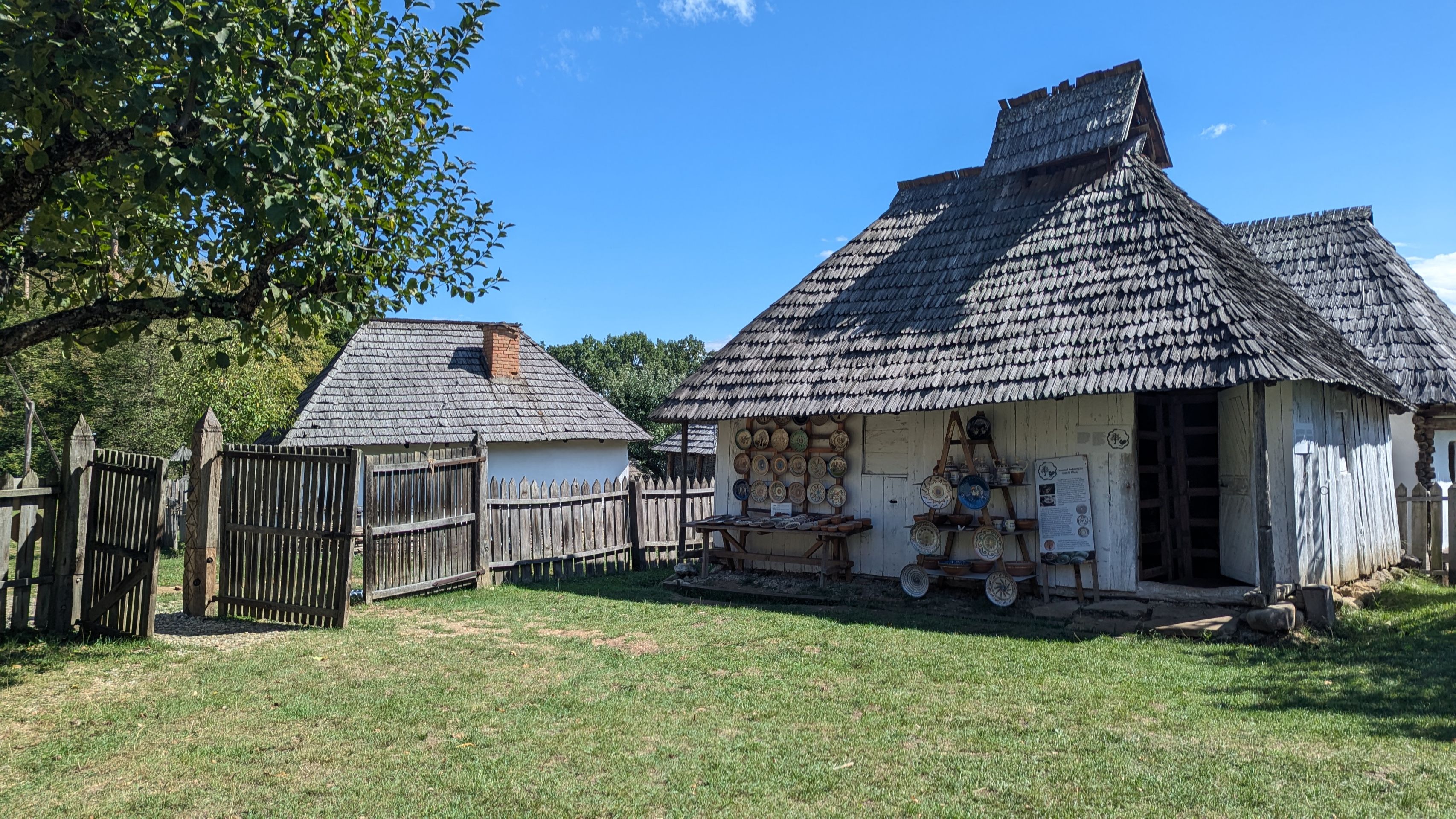
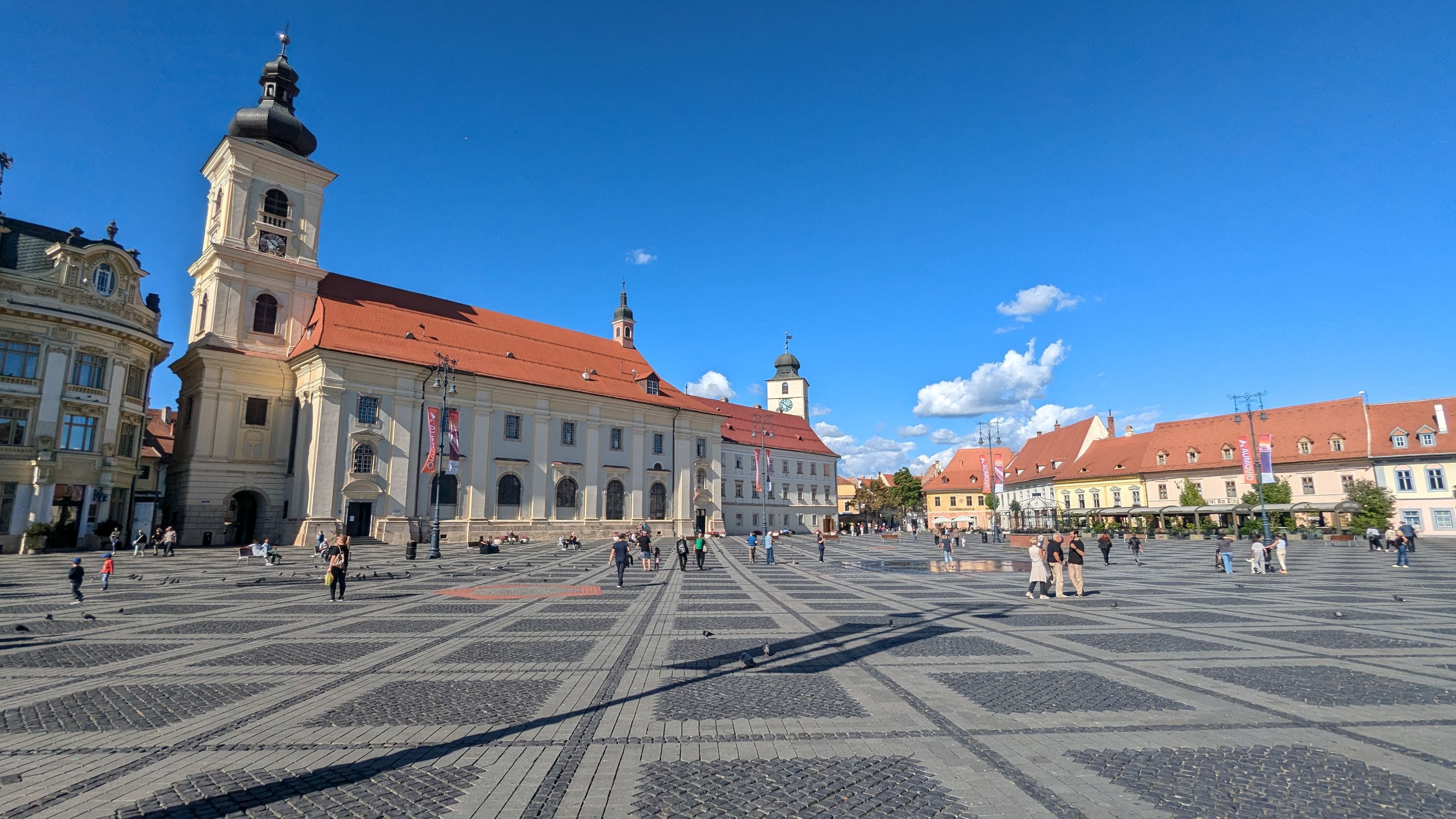
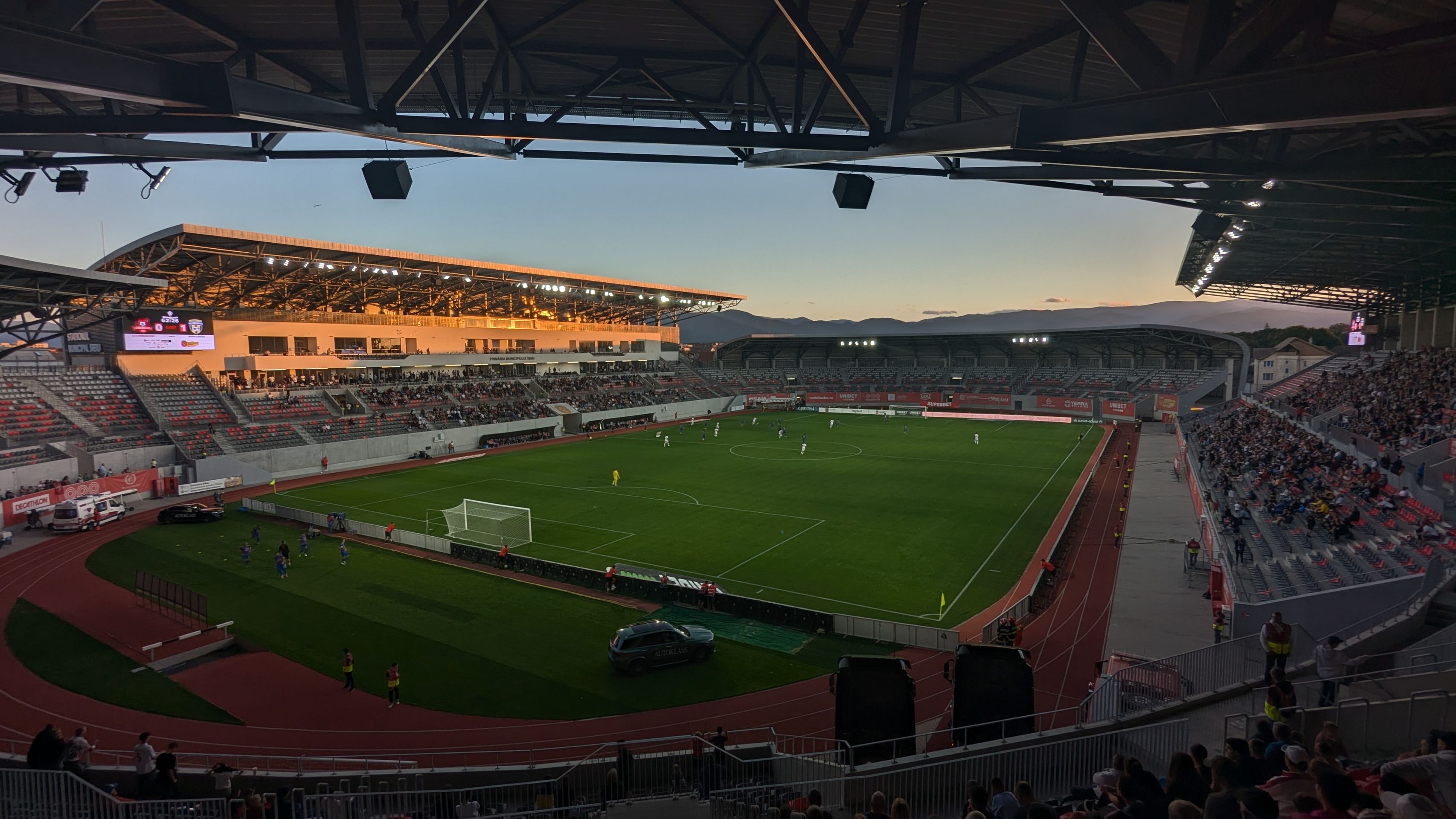
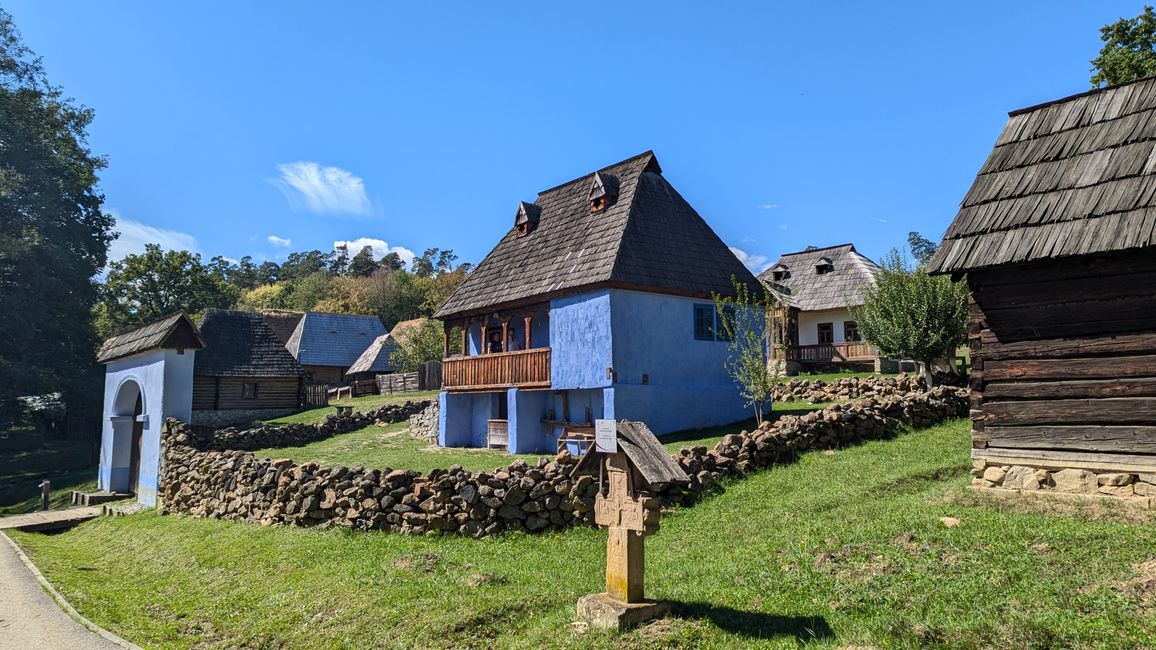
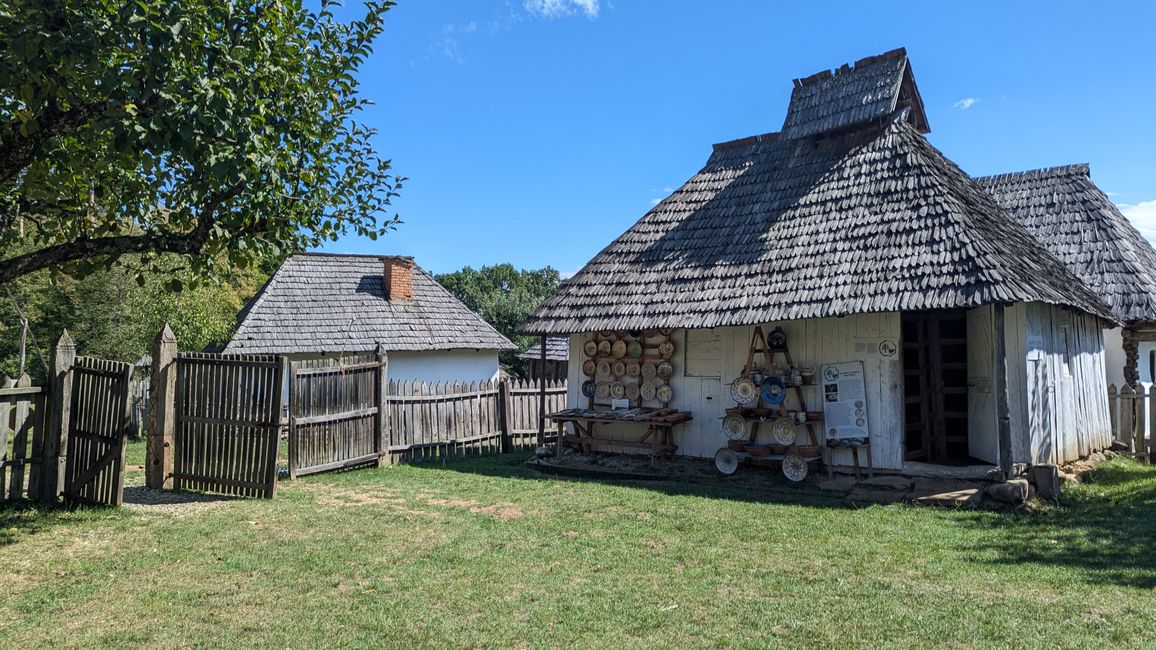
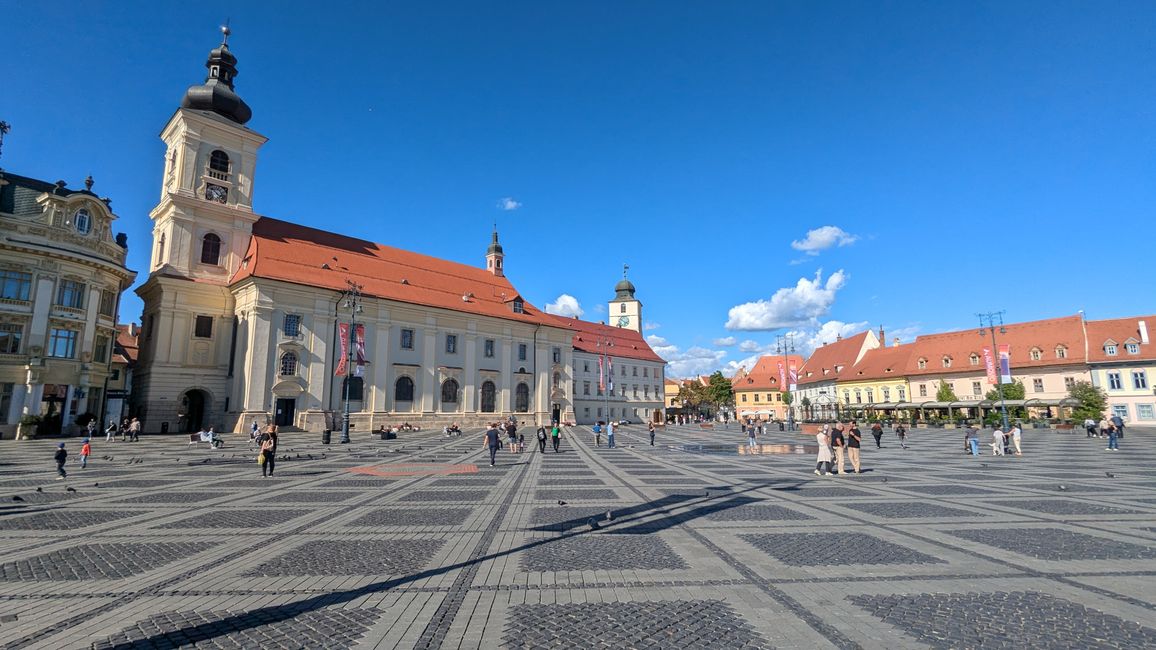
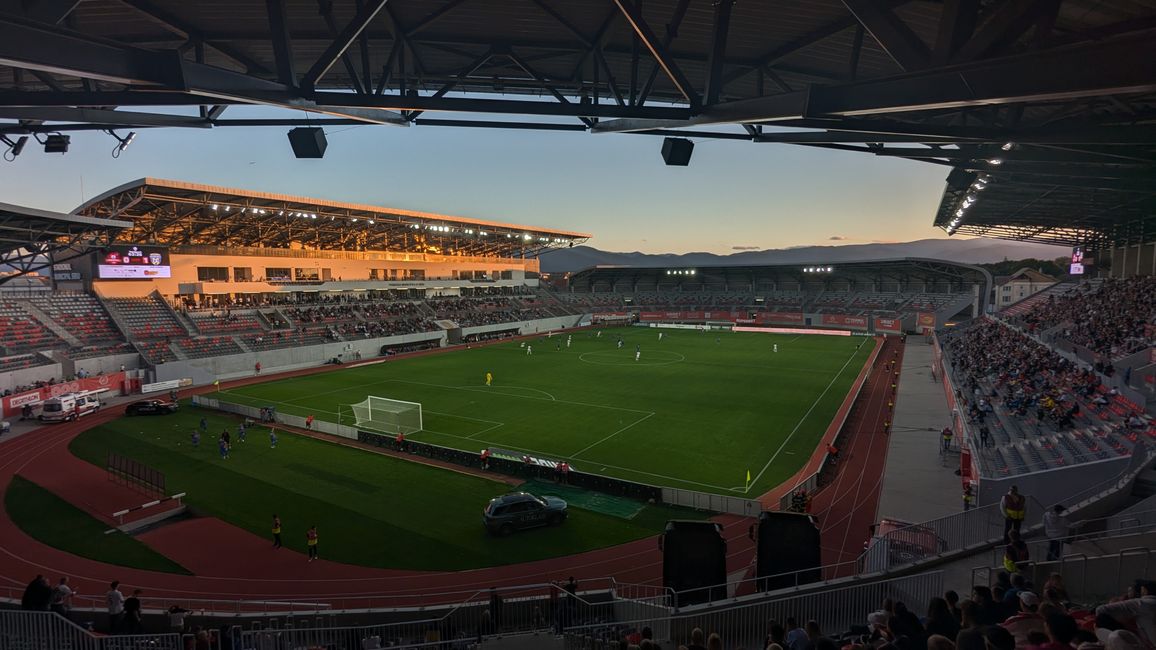
From Brașov, I continued by bus to Sibiu; the old town is also very worth seeing; it looks like Germany, and most information is still provided in German here. I visited the huge open-air museum outside the city. There are countless mills, old farms, churches, and houses to discover, but unfortunately, quantity beats quality here; most houses you cannot enter or they are already in ruins; still, it was worth the visit. In the evening, we watched a football match in the first Romanian league. The stadium was modern, but the football offered us a meager spectacle—maybe at a third or fourth league level.
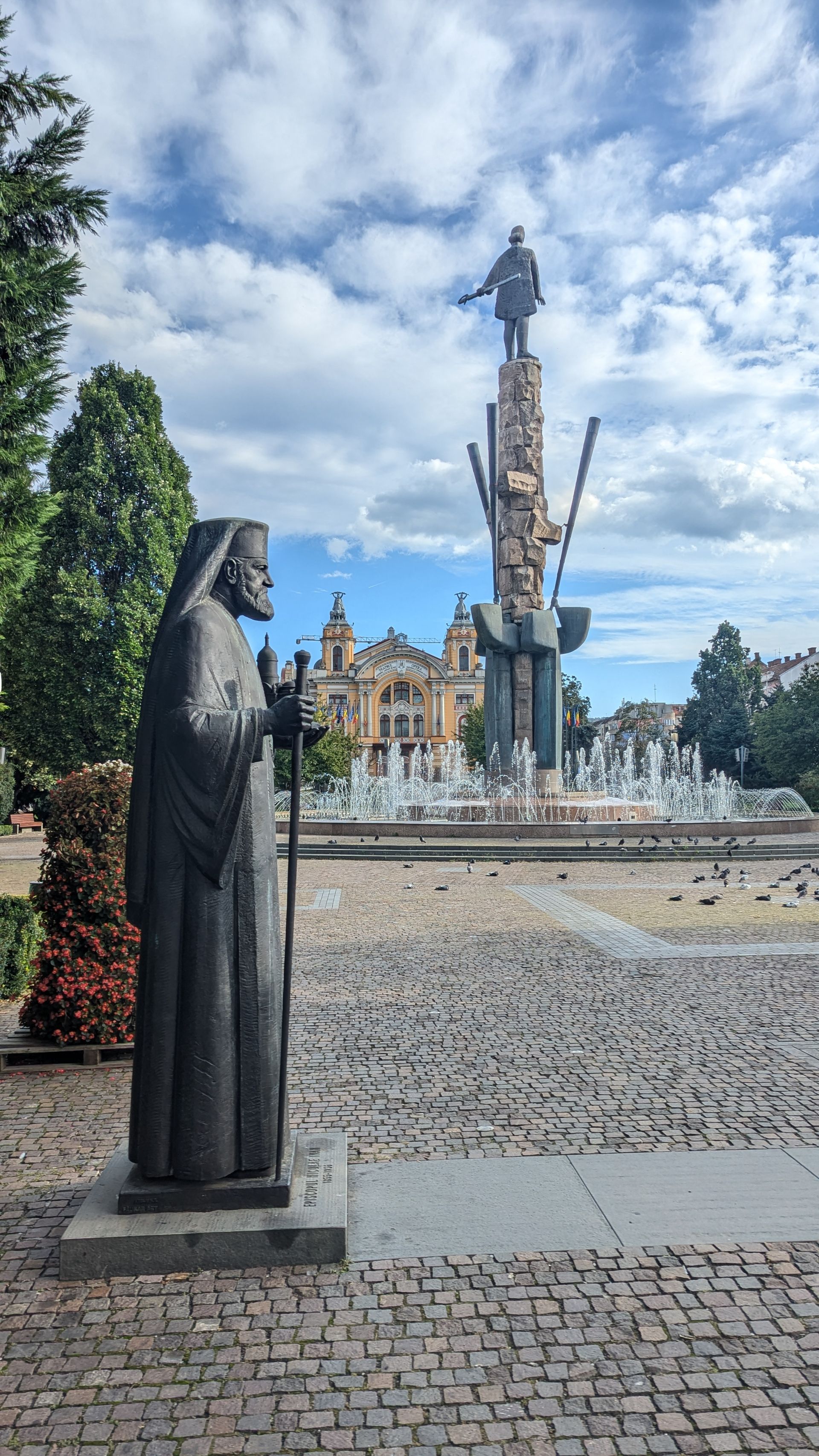
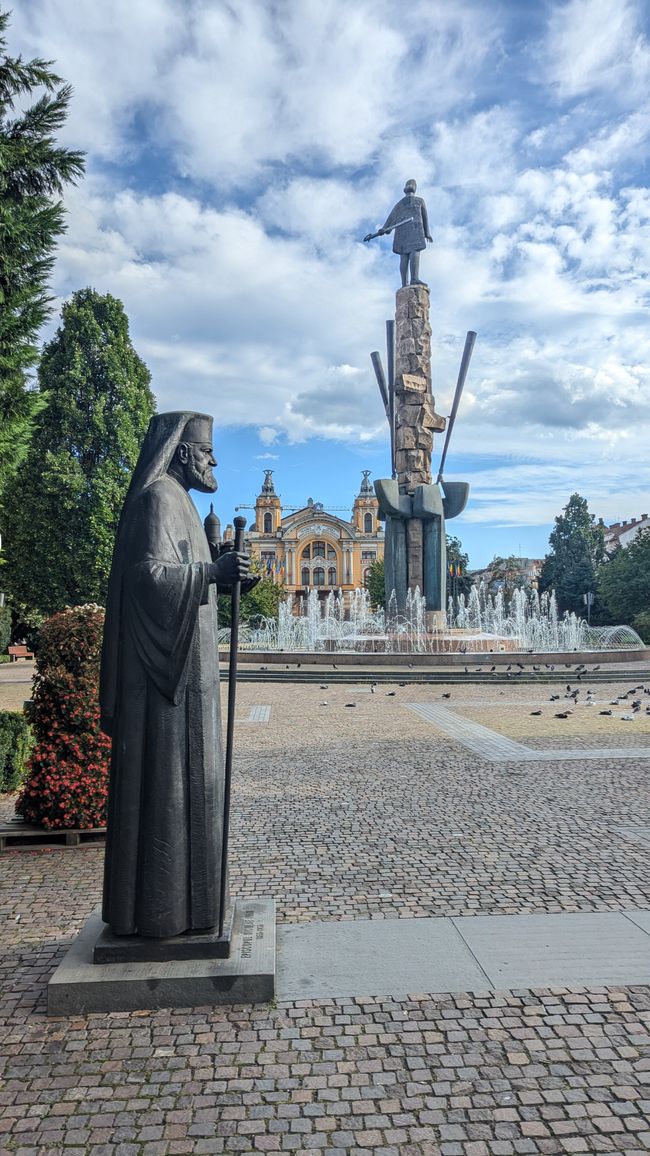
And then the last stop of my journey arrived. One last bus ride from Sibiu to Cluj. One last check-in at the hostel, one last night in the hostel, one last dinner. I am still happy to be heading home now, to sleep in my own bed, to see family and friends again, no longer sleeping in hostels, no longer being kept awake by loud snorers. No dirty showers, no long bus rides in too small and cramped seats anymore. However, I am also sad and nostalgic that this chapter of my life has come to an end after years of saving, years of planning, and especially anticipation! The spontaneous expedition to Antarctica, the Galapagos Islands, the most dangerous mine in the world, Huayna Potosi at over 6000 meters, or the Pamir Highway with a visit to Afghanistan.
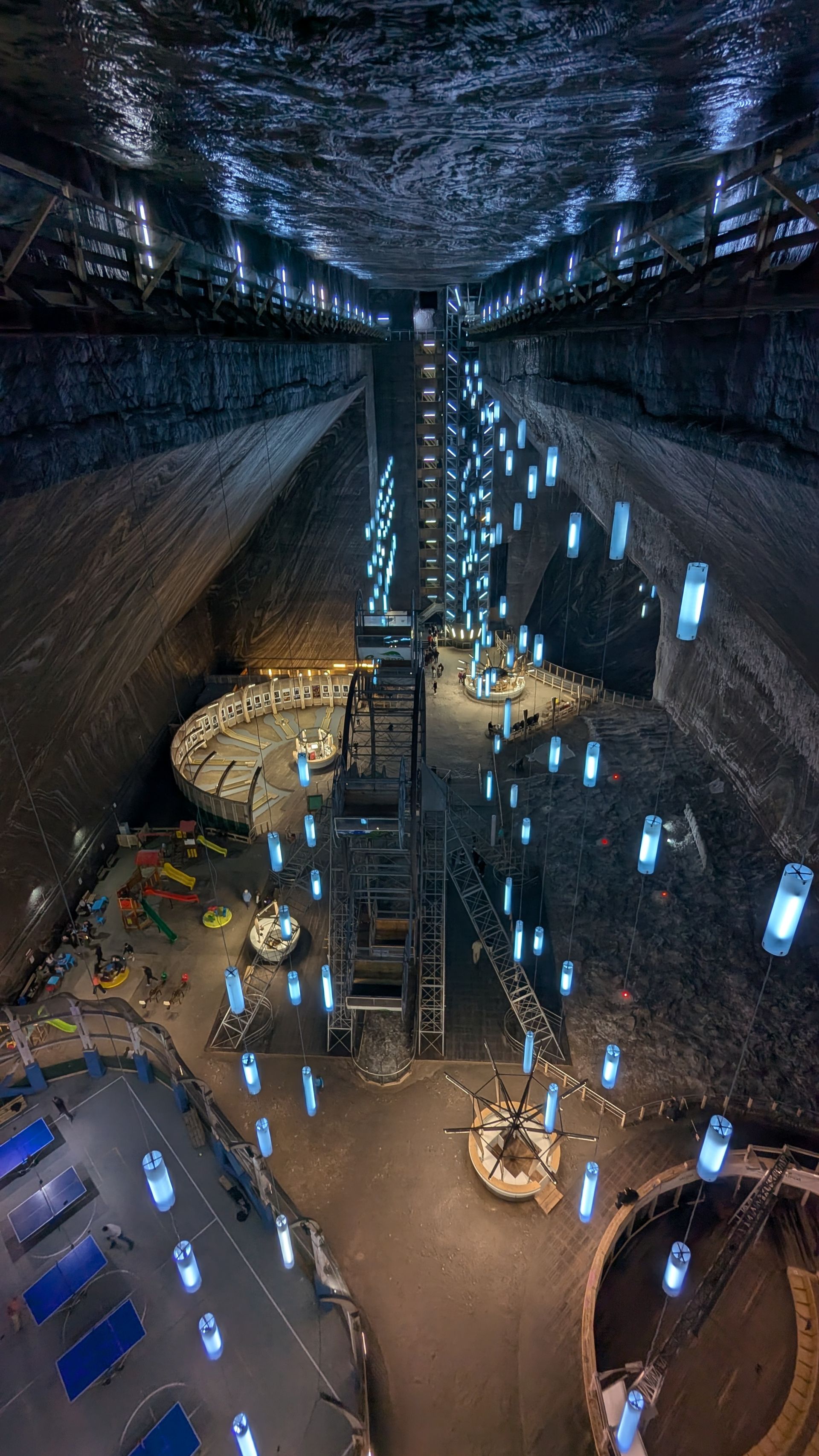
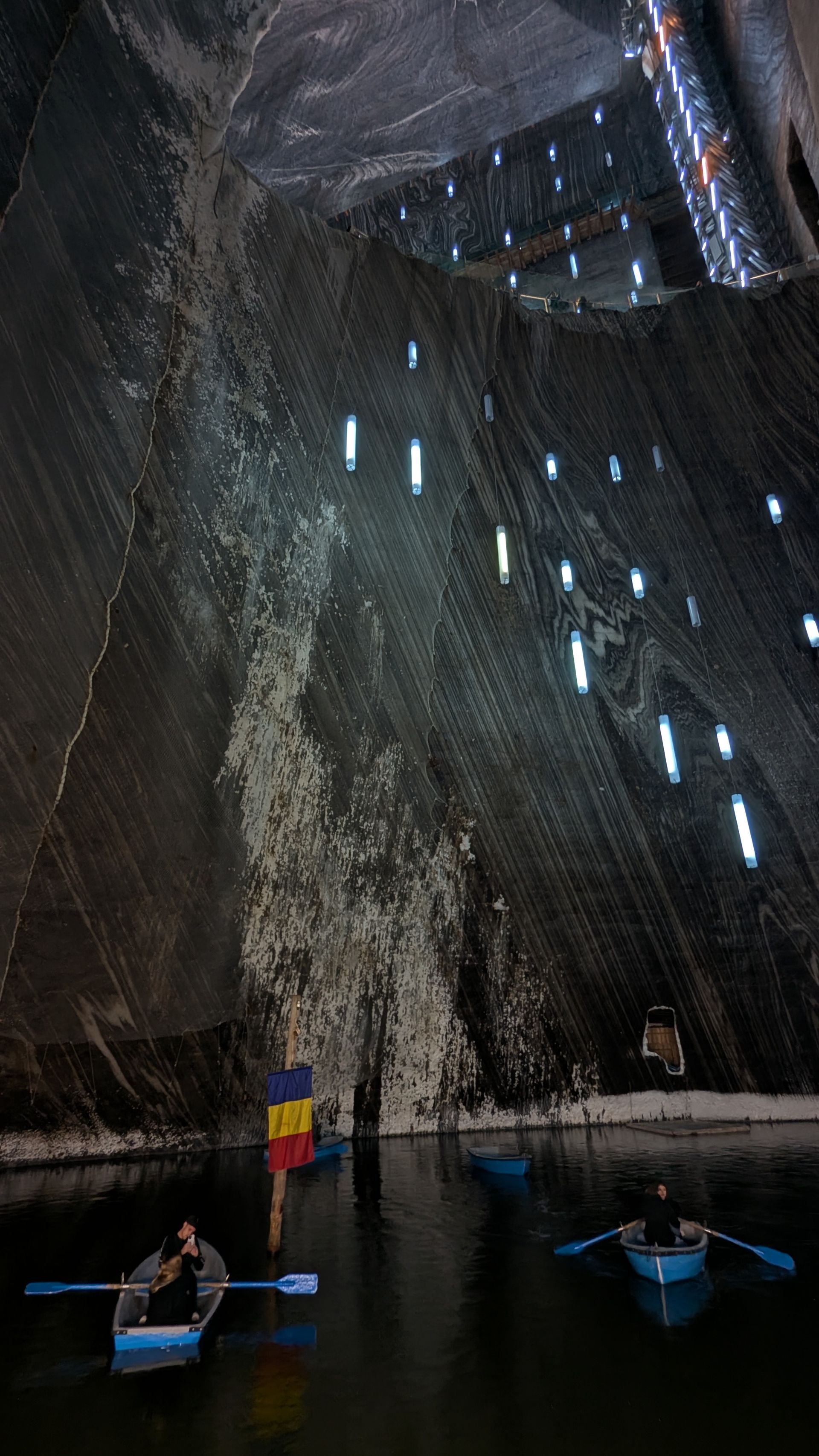
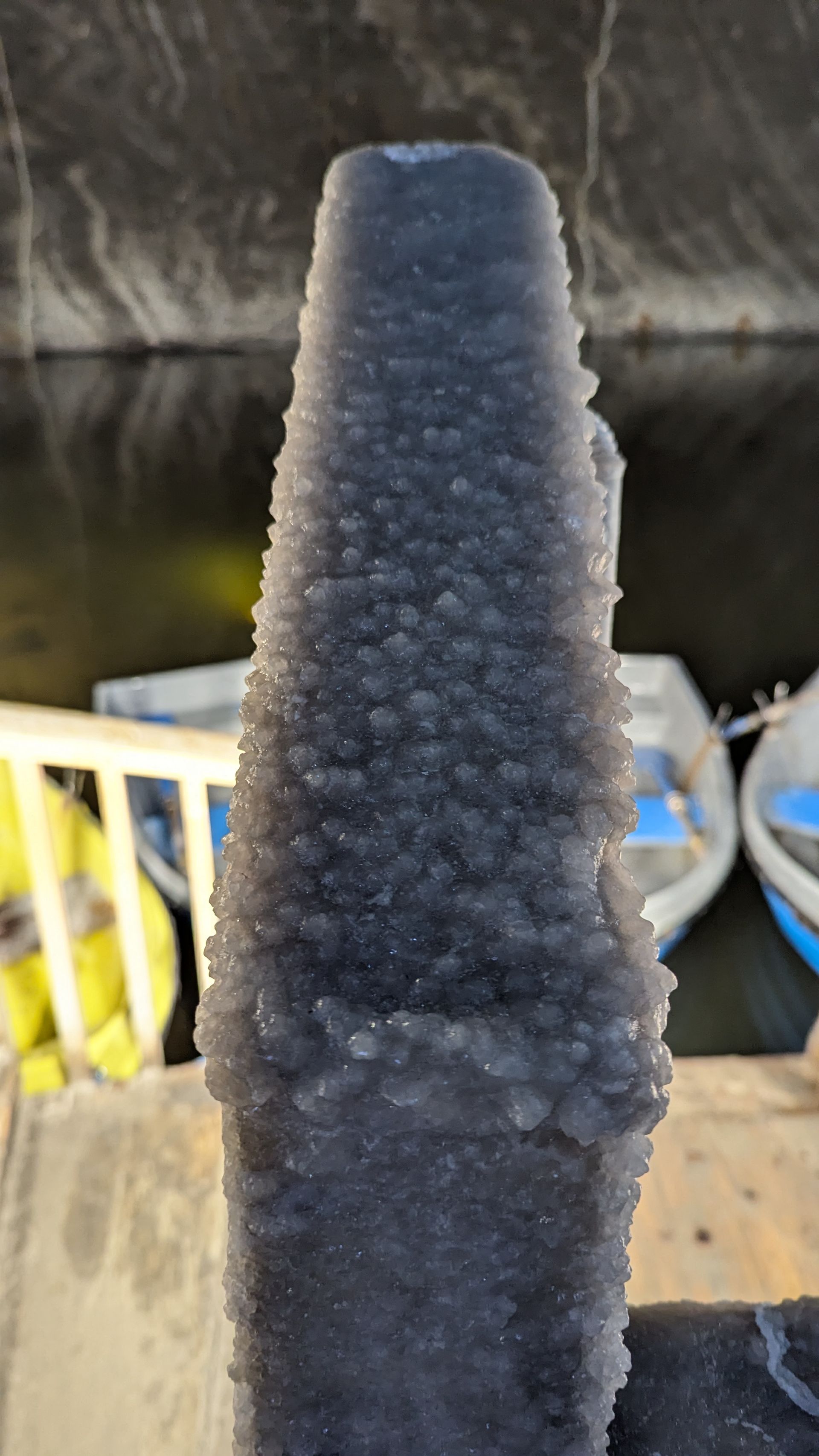
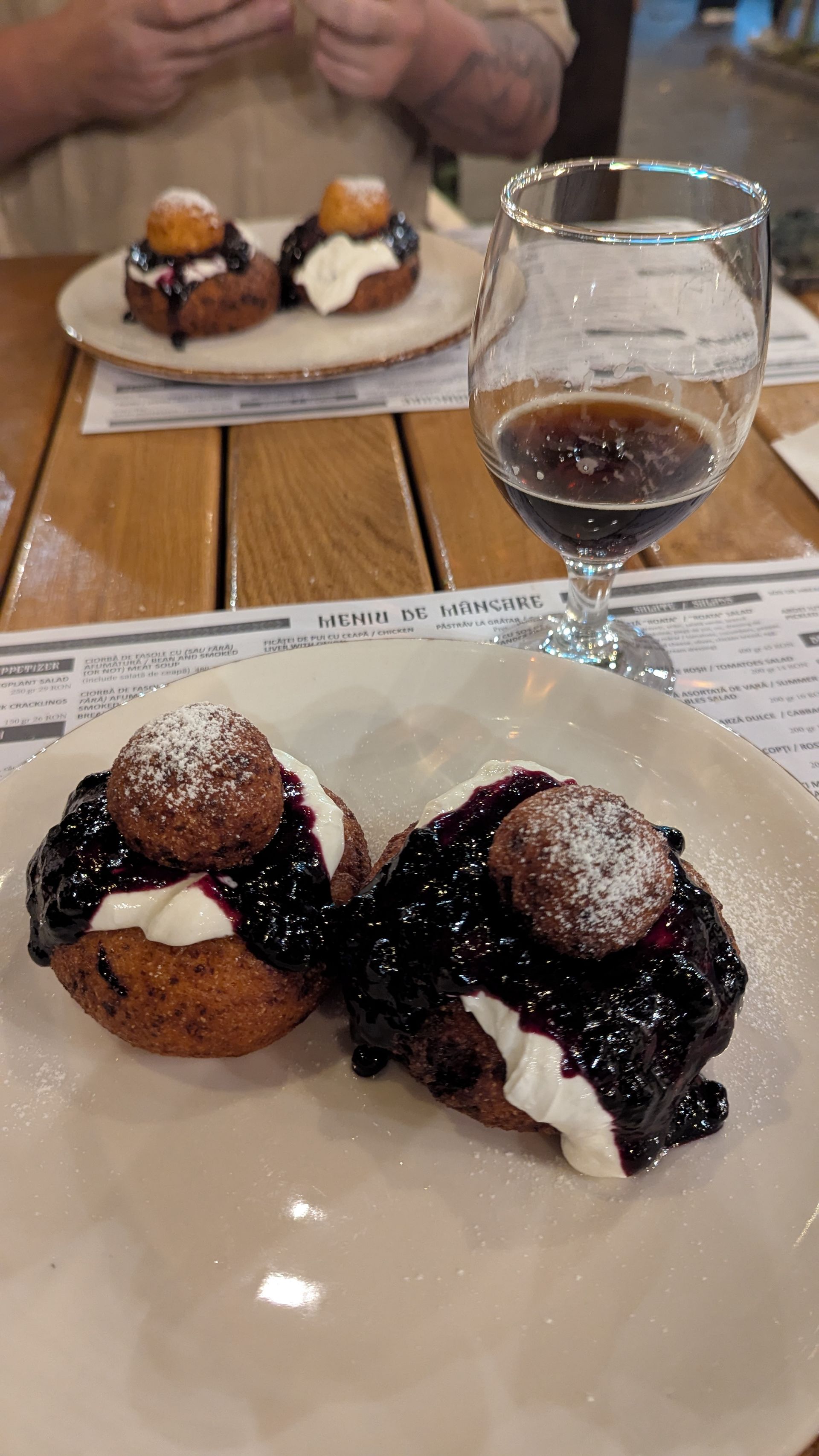
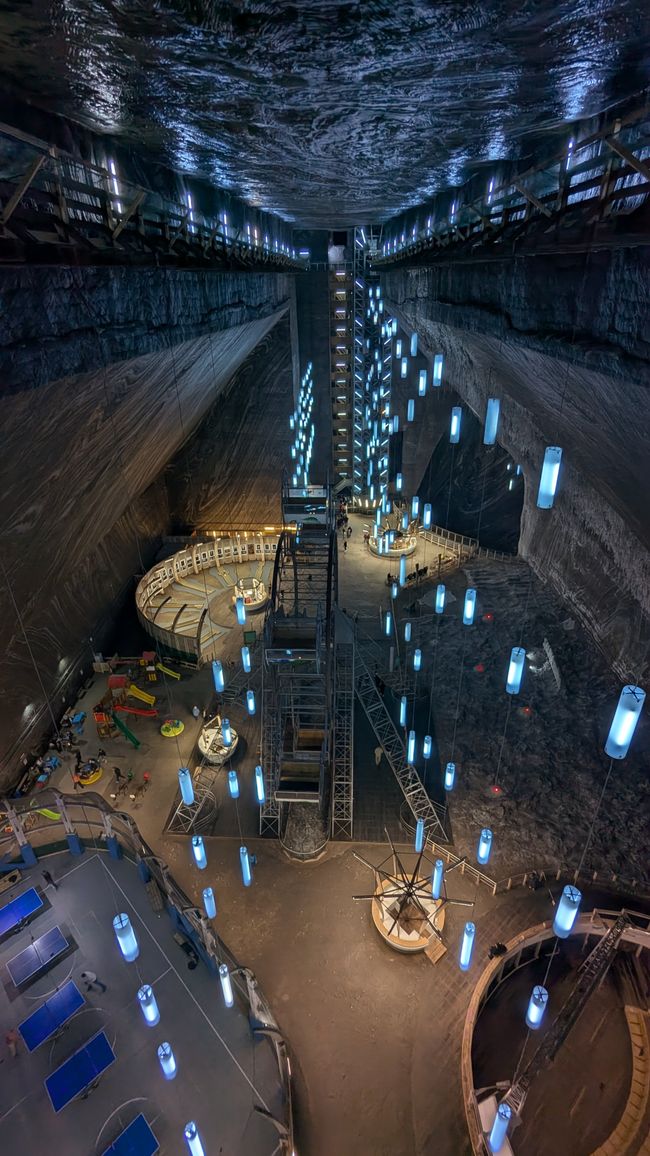
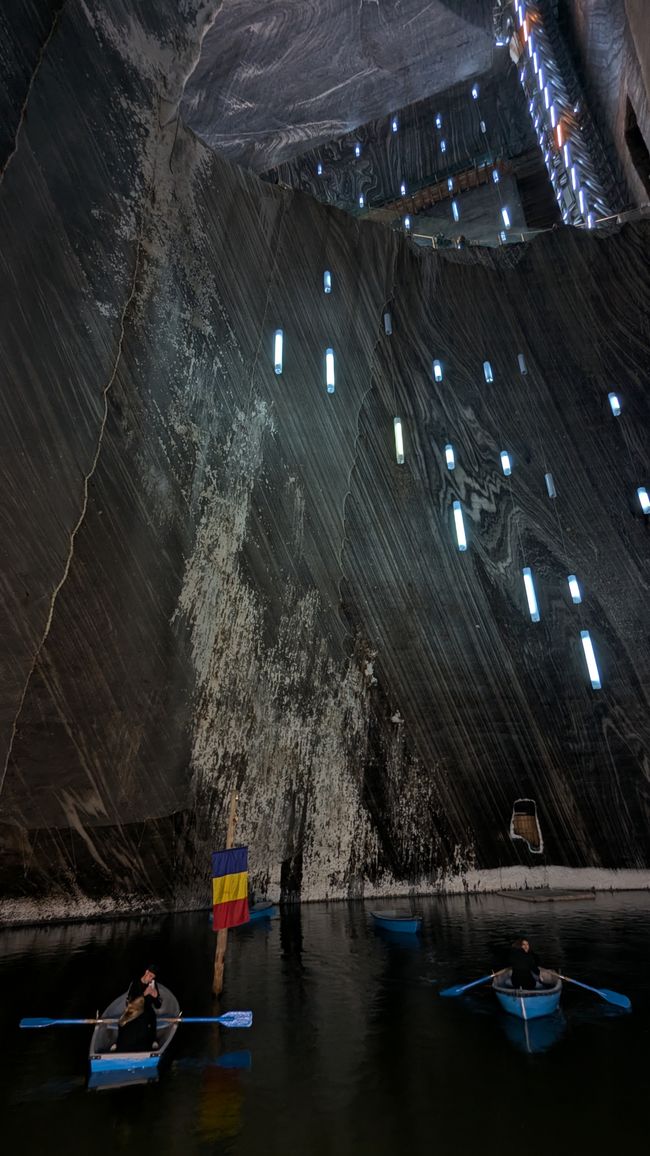
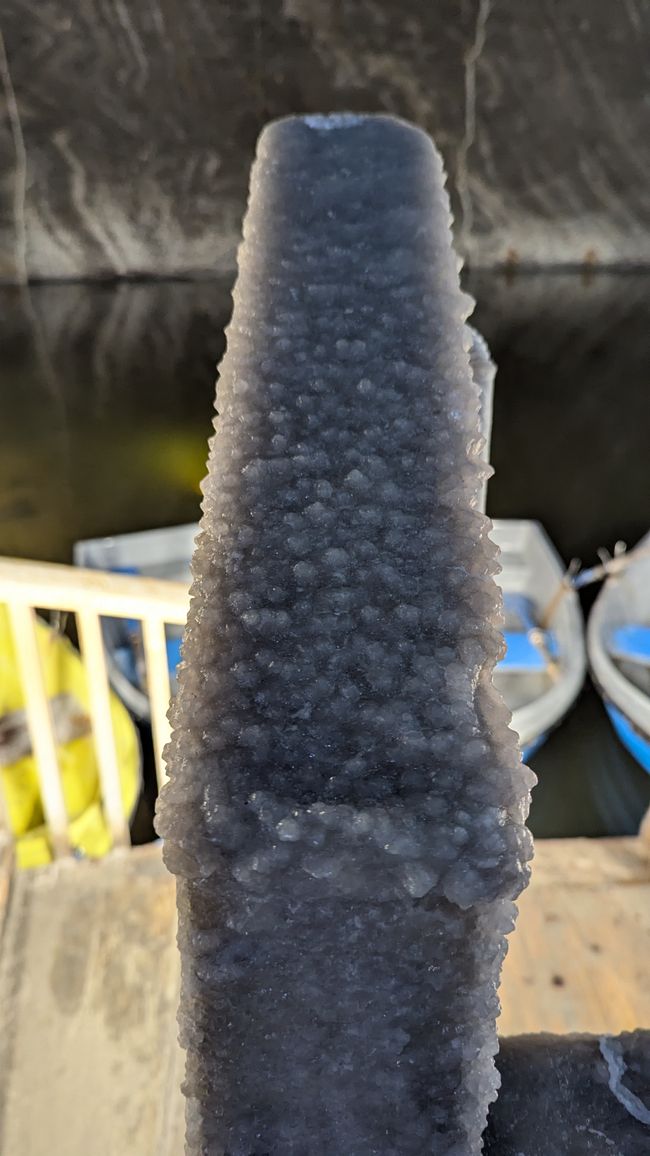
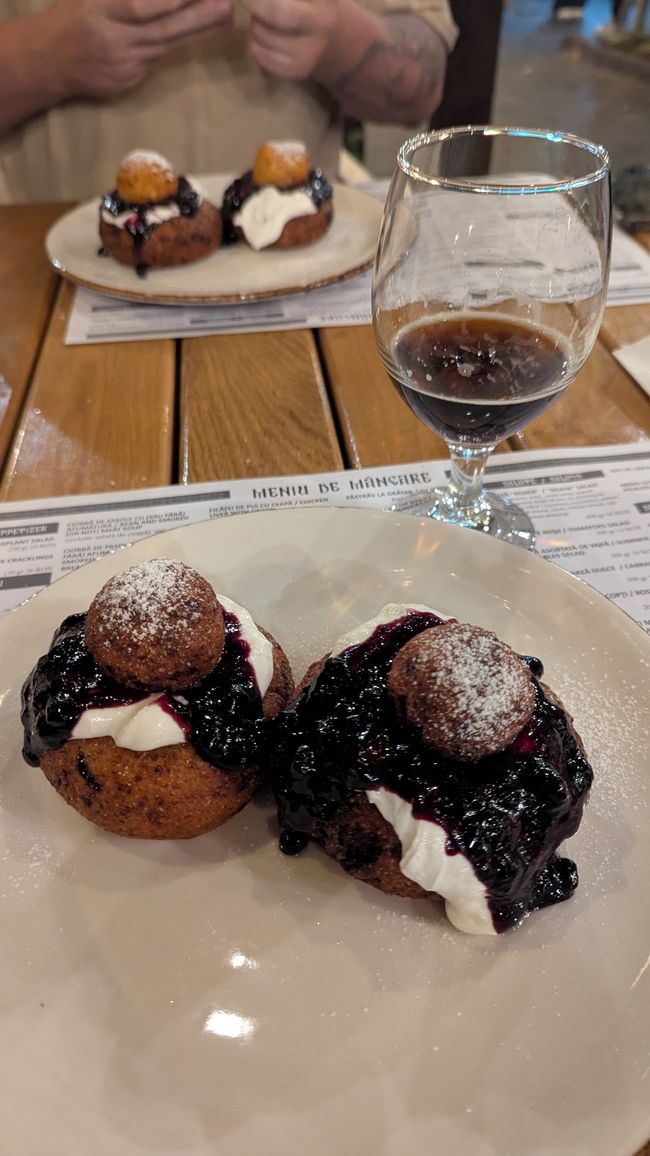
Before the trip finally ended, I also visited the salt mine in Turda; the two large halls are simply gigantic; I have never seen anything like it. 80 meters long, 50 meters wide, and up to 90 meters high. So high and big that there is a mini-golf course, a Ferris wheel, and even boat rentals in the mine—it made me feel like I was in another world. We returned through a nearly kilometer-long tunnel that nearly ended in the city. The last dinner was extensive: local sausage with potatoes, a beer, a fruit brandy, and for dessert, a kind of donut with ricotta, raspberries, and a cream puff.
And thus ends my journey; it is time for one last farewell to my grandpa, and who knows, maybe there will be a third year 'on the road'—perhaps the trips will also be shorter from now on; who knows what time will bring, after all, it has been quite exhausting and expensive: