
Arrival in Monteverde
7.11.2026 Arrival in Monteverde and Manakin Waterfalls Upon waking up, it is raining, and we take our time having breakfast and packing. Today we are heading to Santa...

Published: 09.11.2026
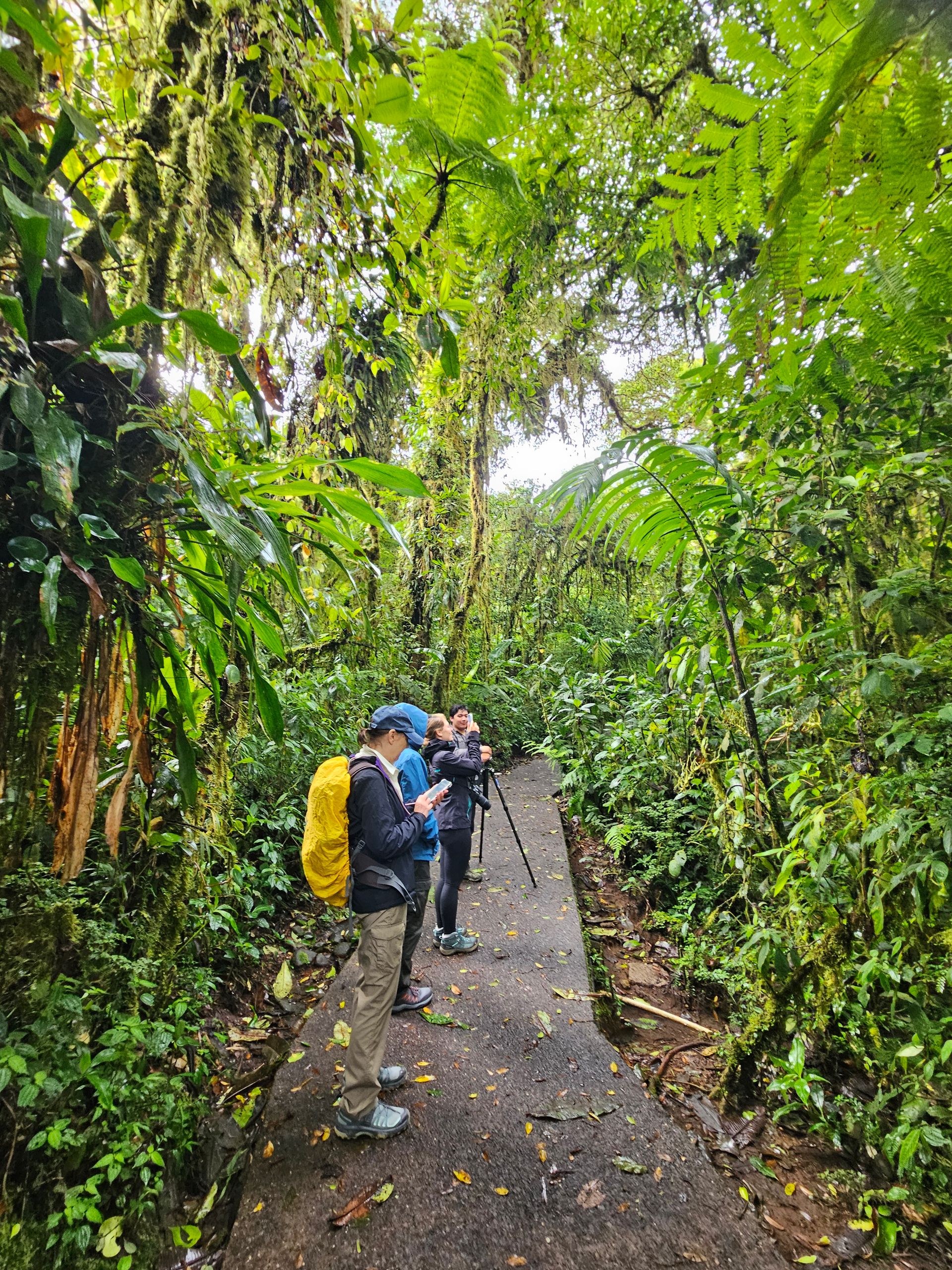
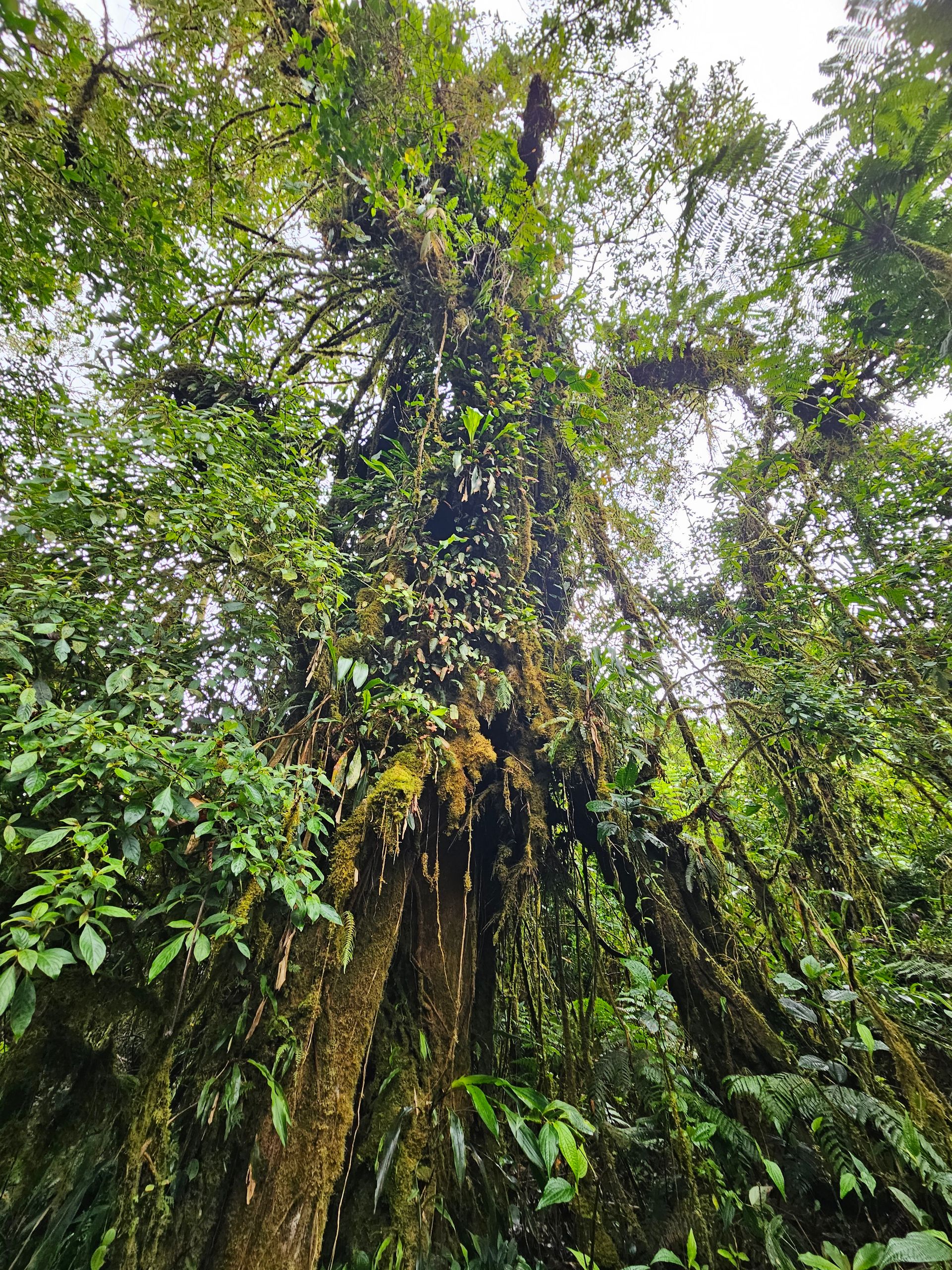
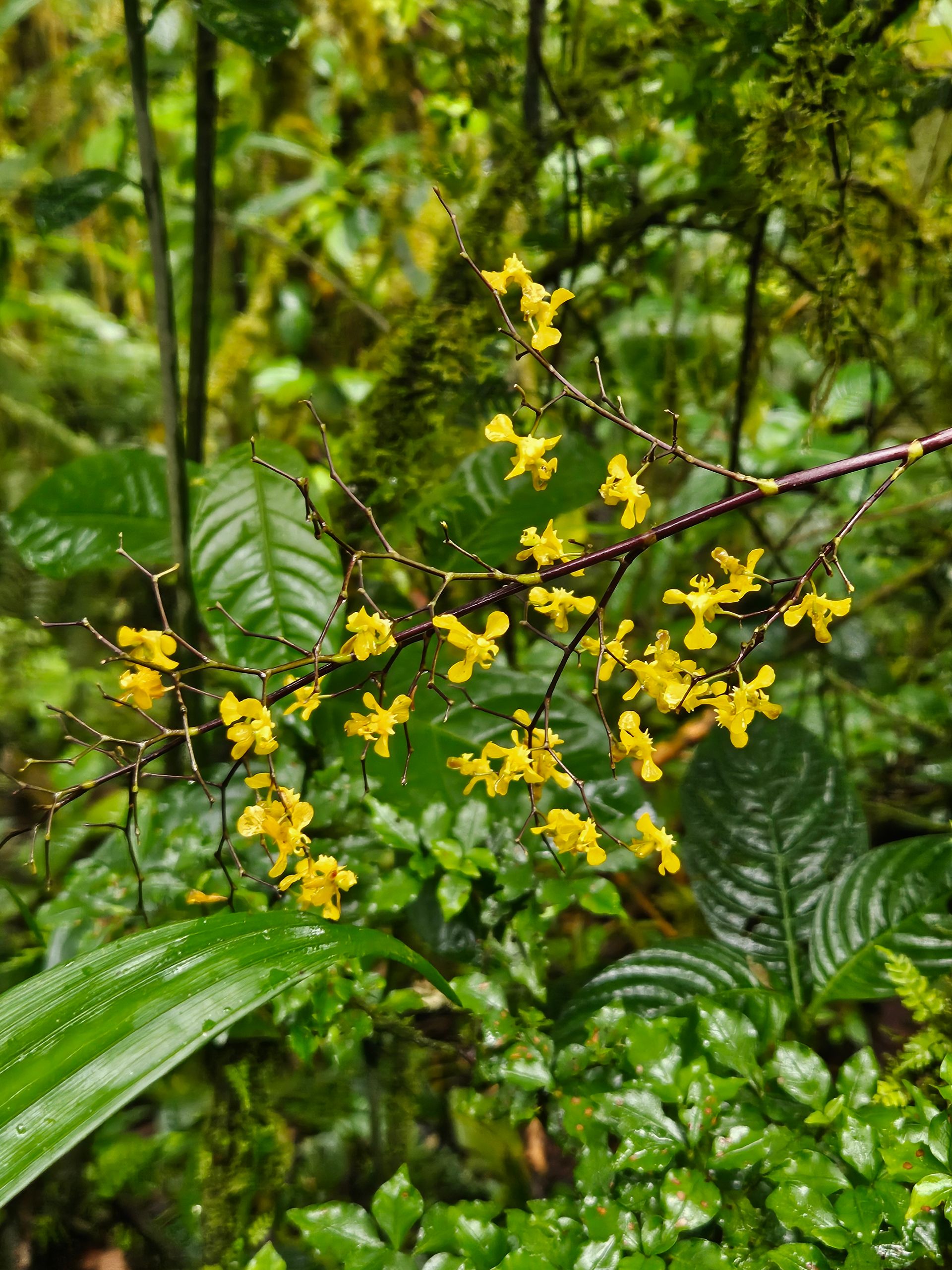
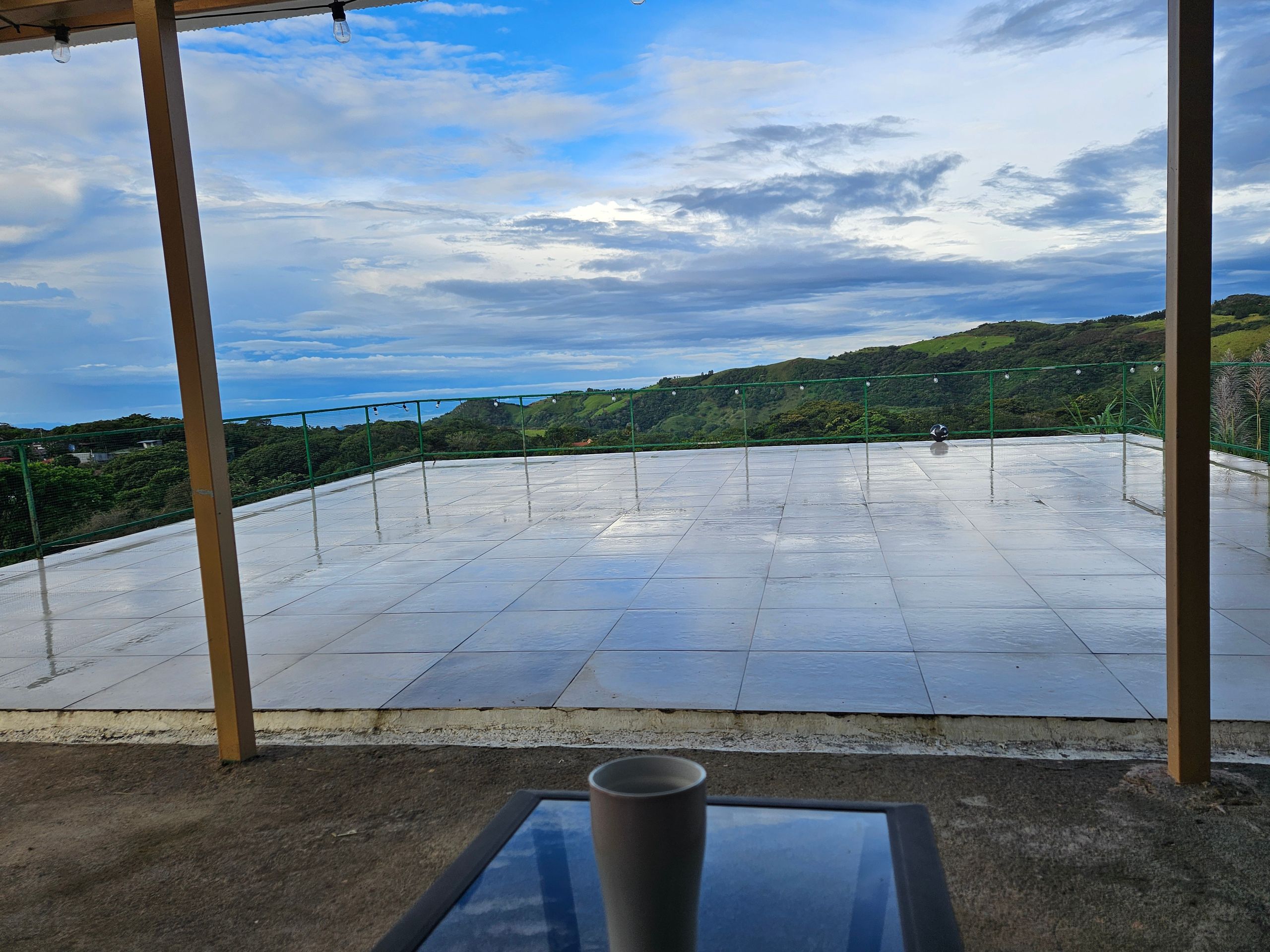
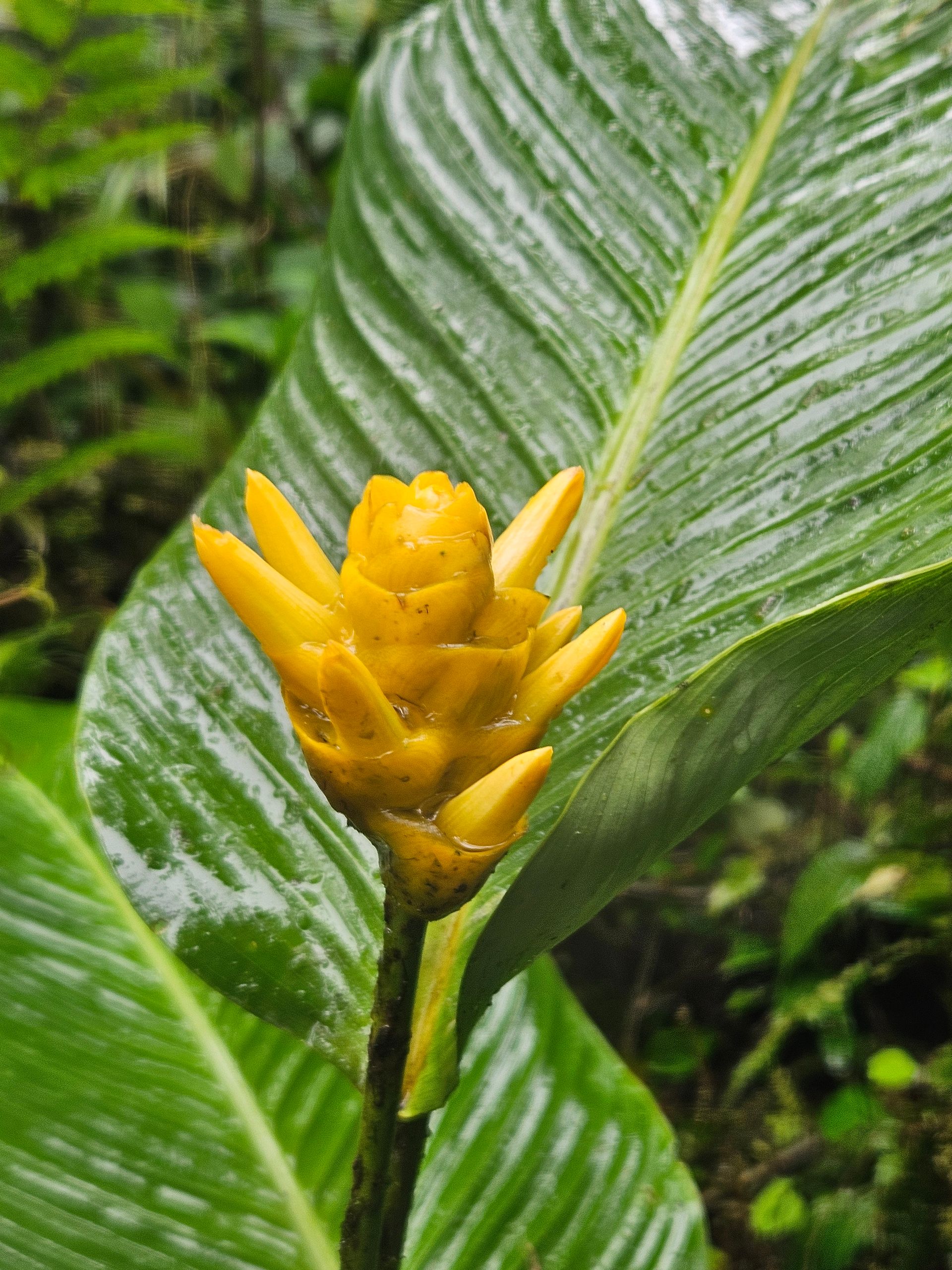
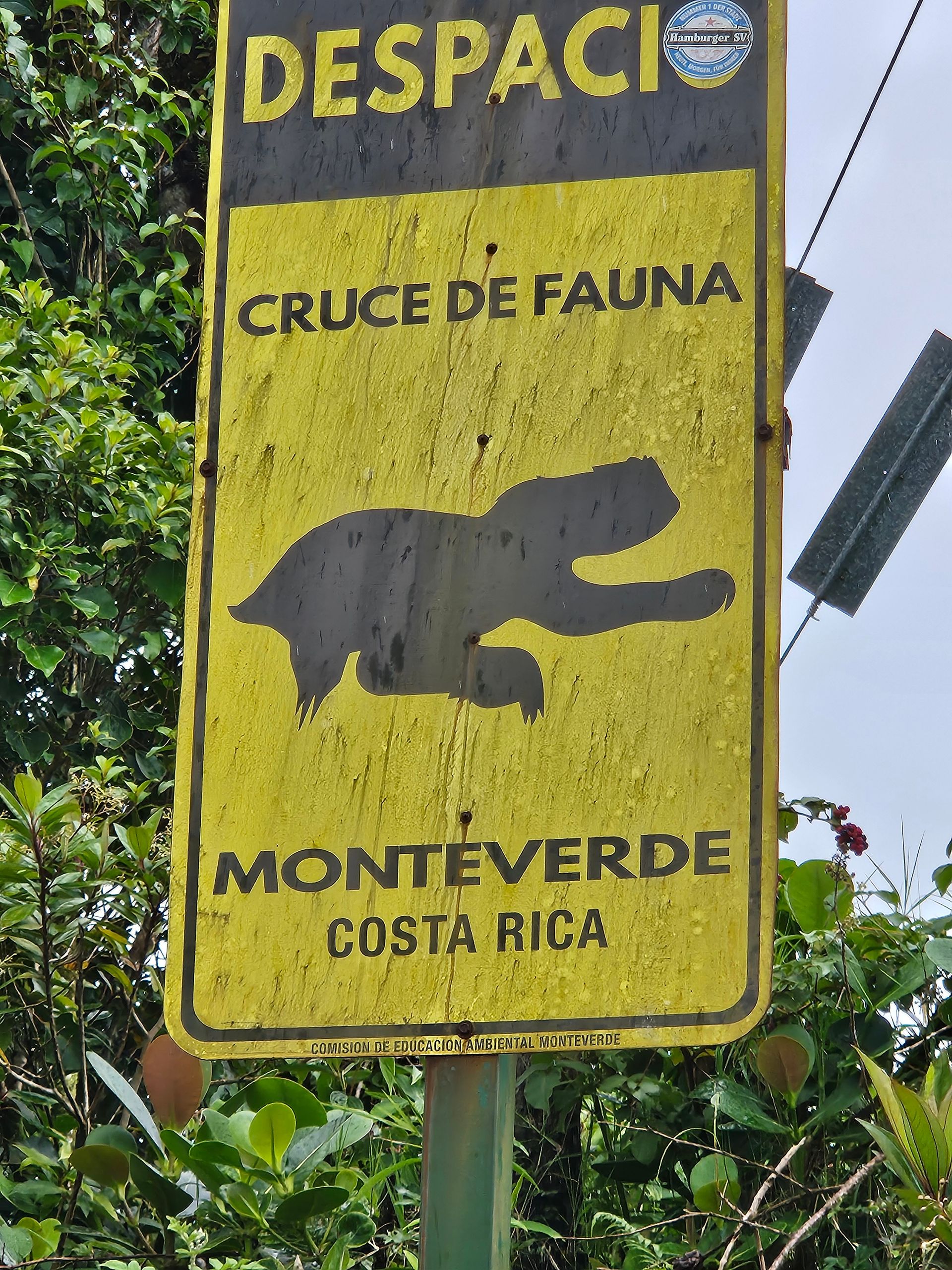
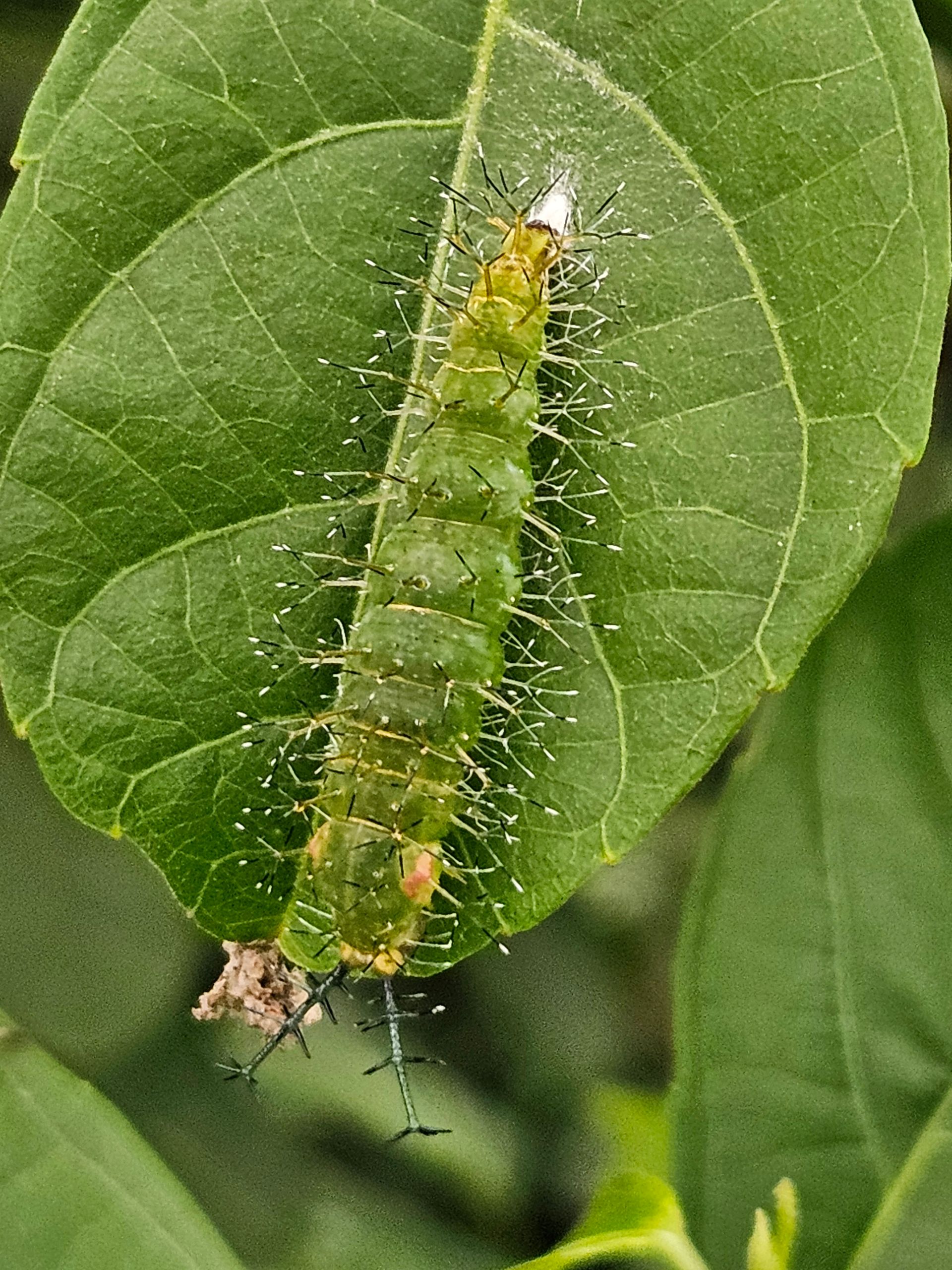
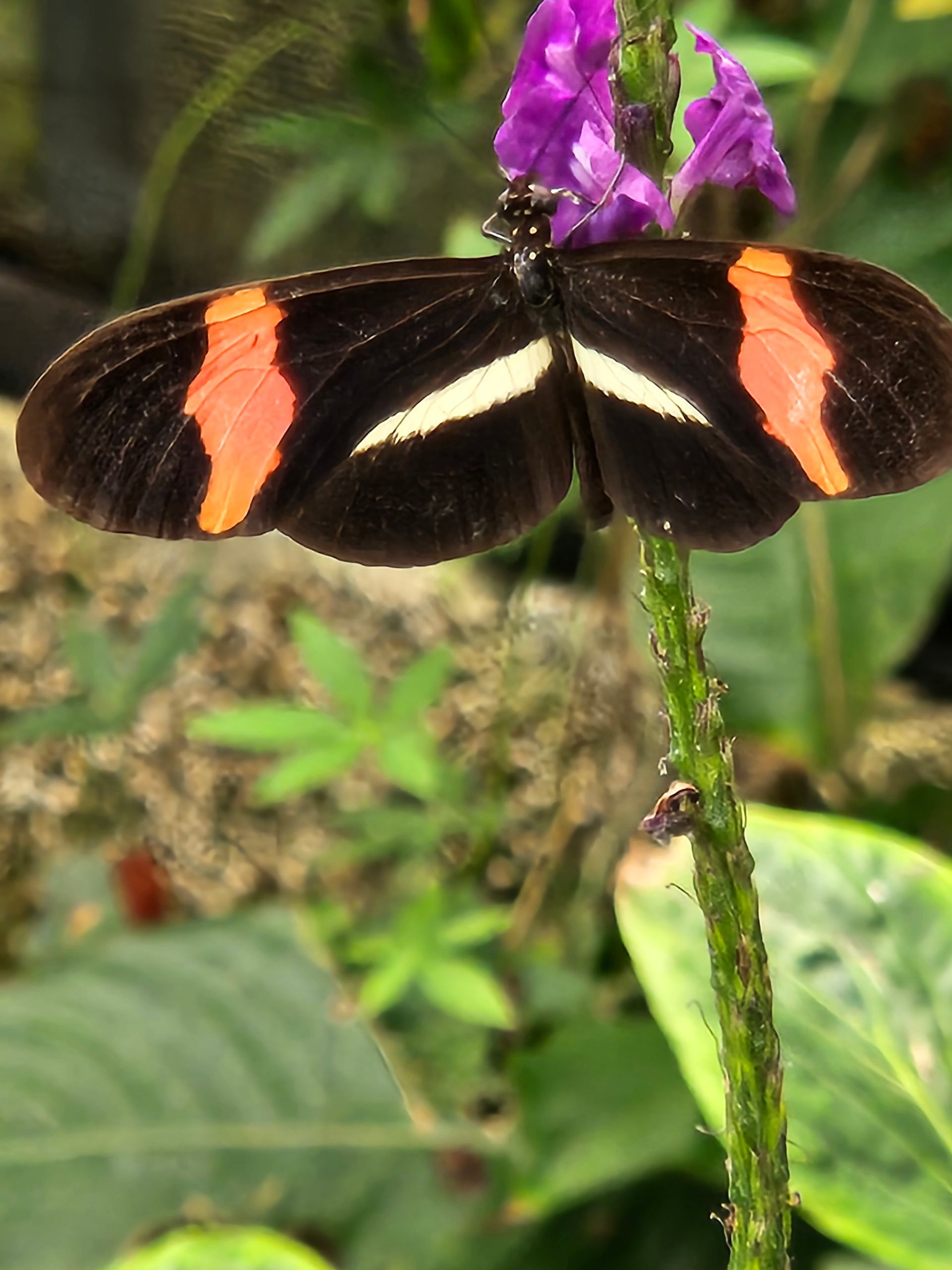
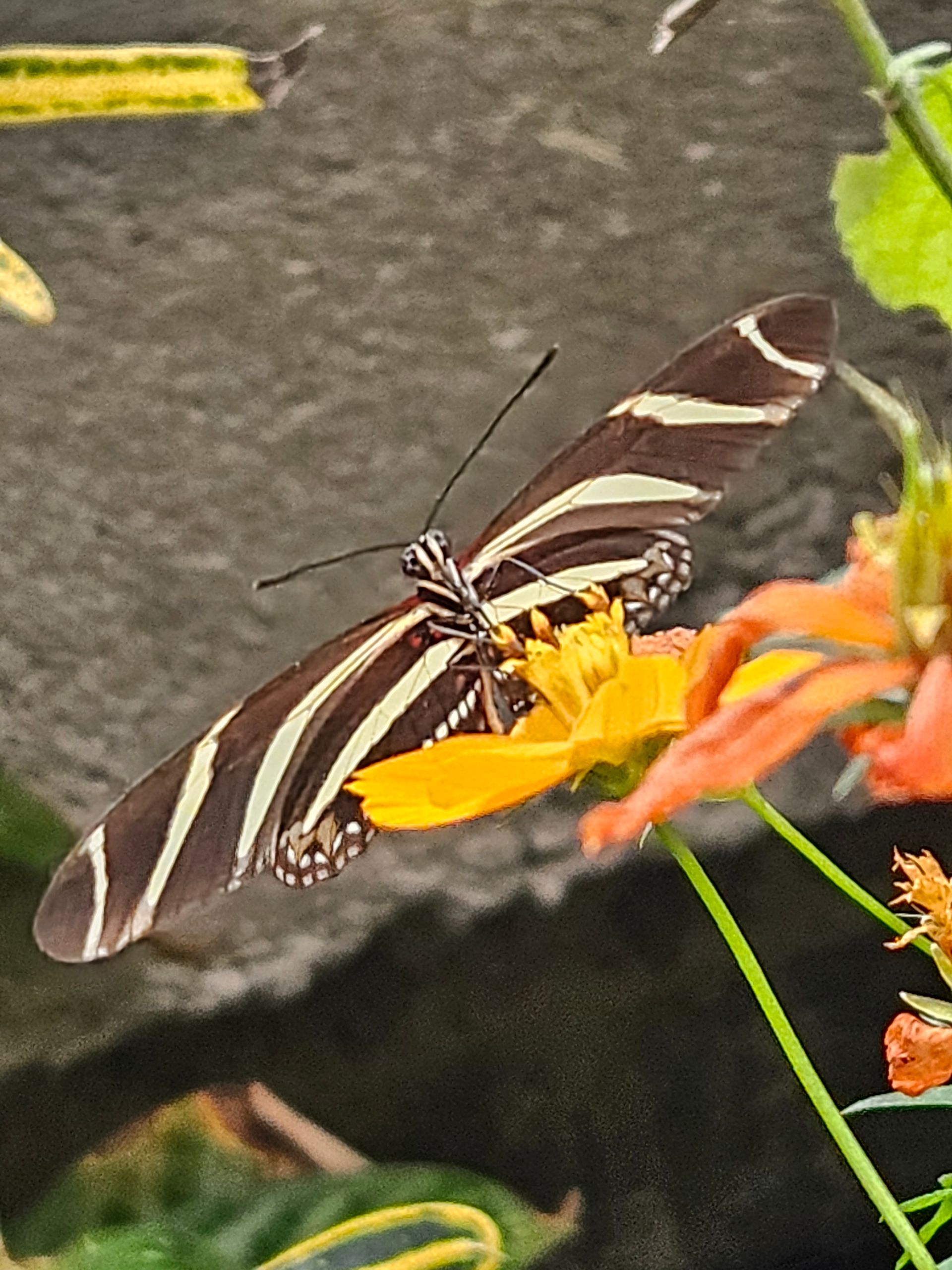
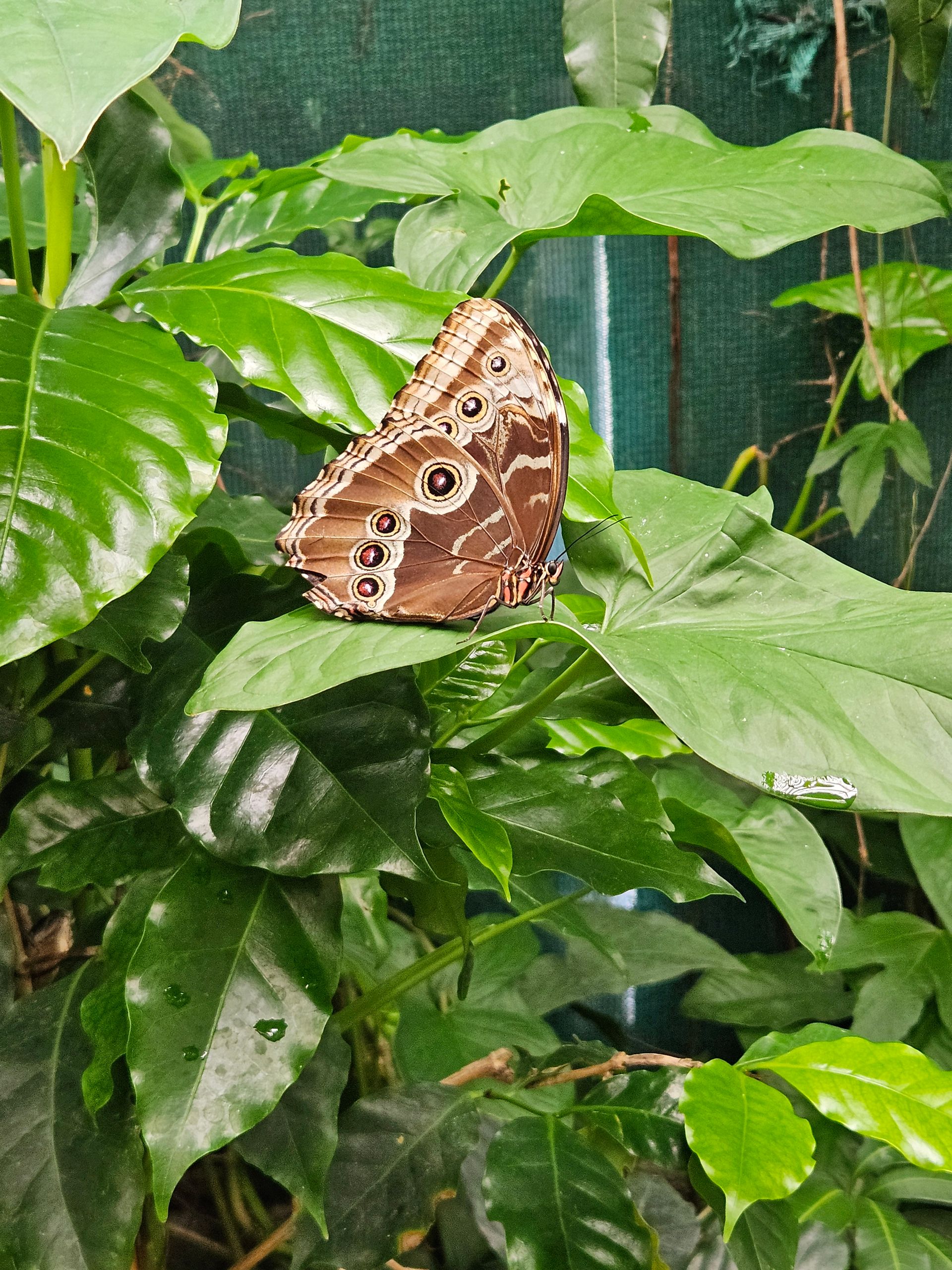
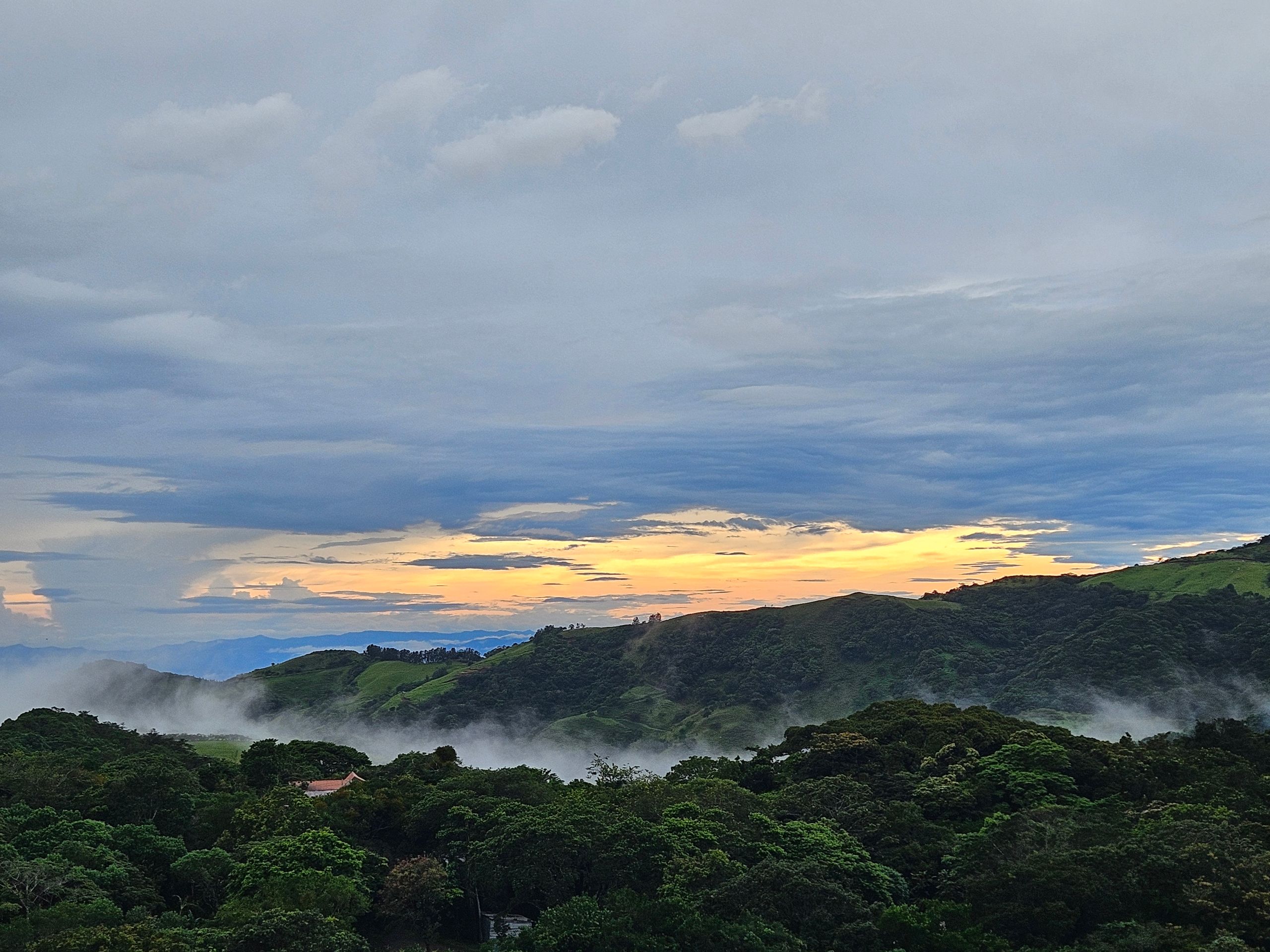
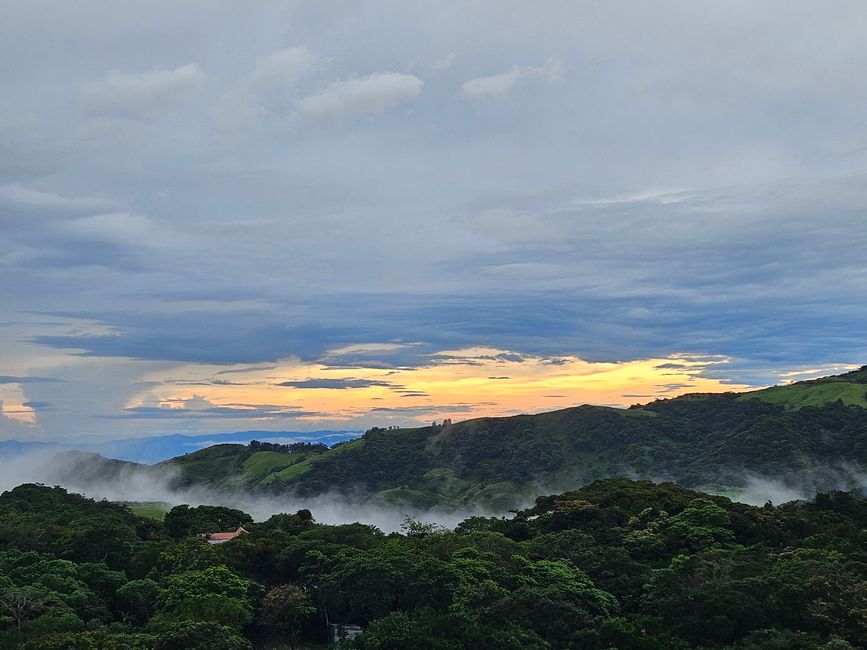
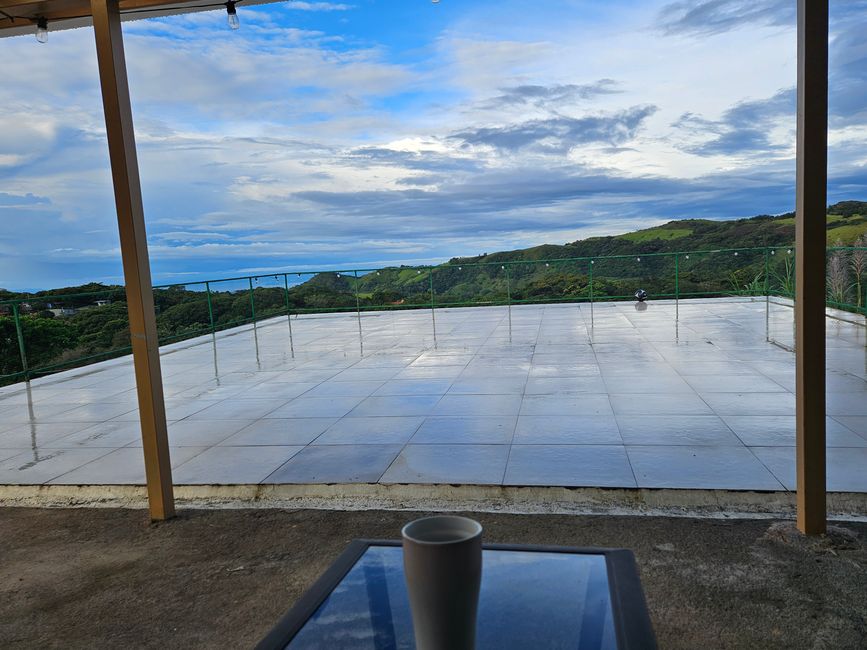
This morning, we have to get up super early to be on time for our booked tour at Santa Elena Reserve at 7:30 AM. The view from the terrace and the morning light make the early rising sweeter. While listening to the birds chirping, I drink my coffee and enjoy the view.
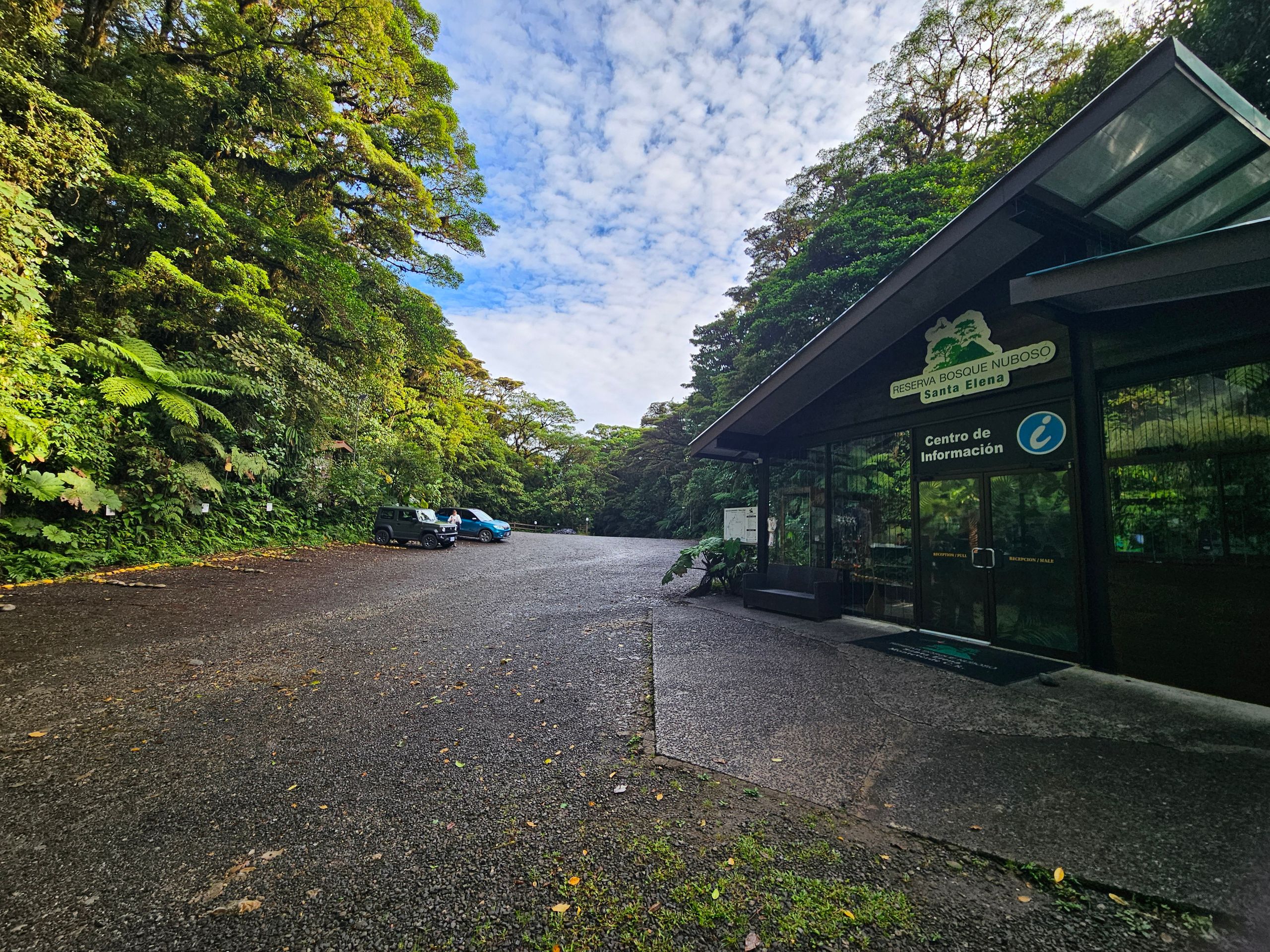
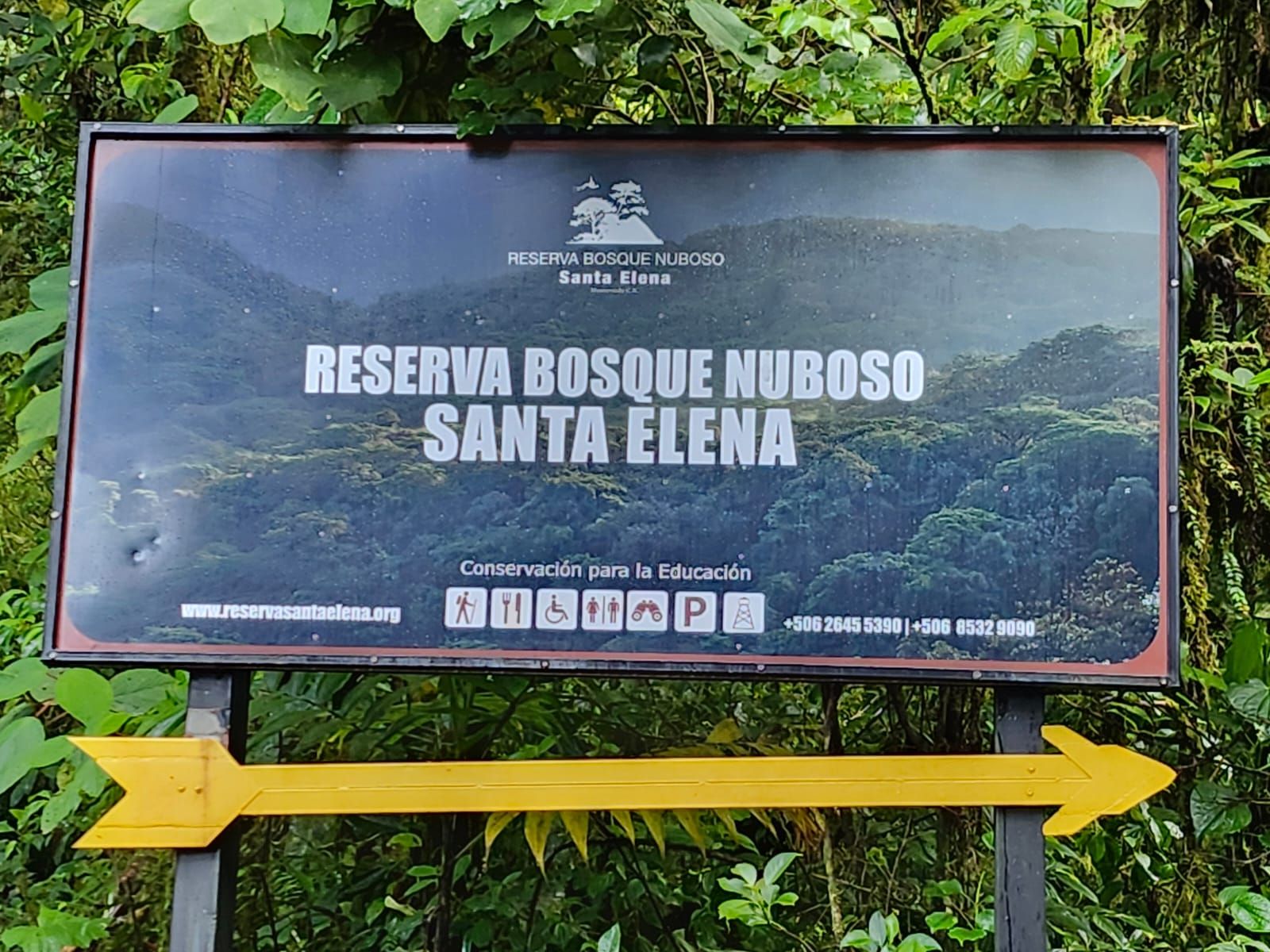
Anyone traveling to Monteverde often automatically heads to the world-famous namesake main reserve. The Santa Elena protected area is located a little higher (at around 1,600 meters) and, with 320 hectares, is significantly smaller, but also often cloudier and, above all, distinctly quieter, wilder, and more pristine than its famous neighbor. It was founded by a foundation in the early 1990s. I was here in 2001 and was thrilled.
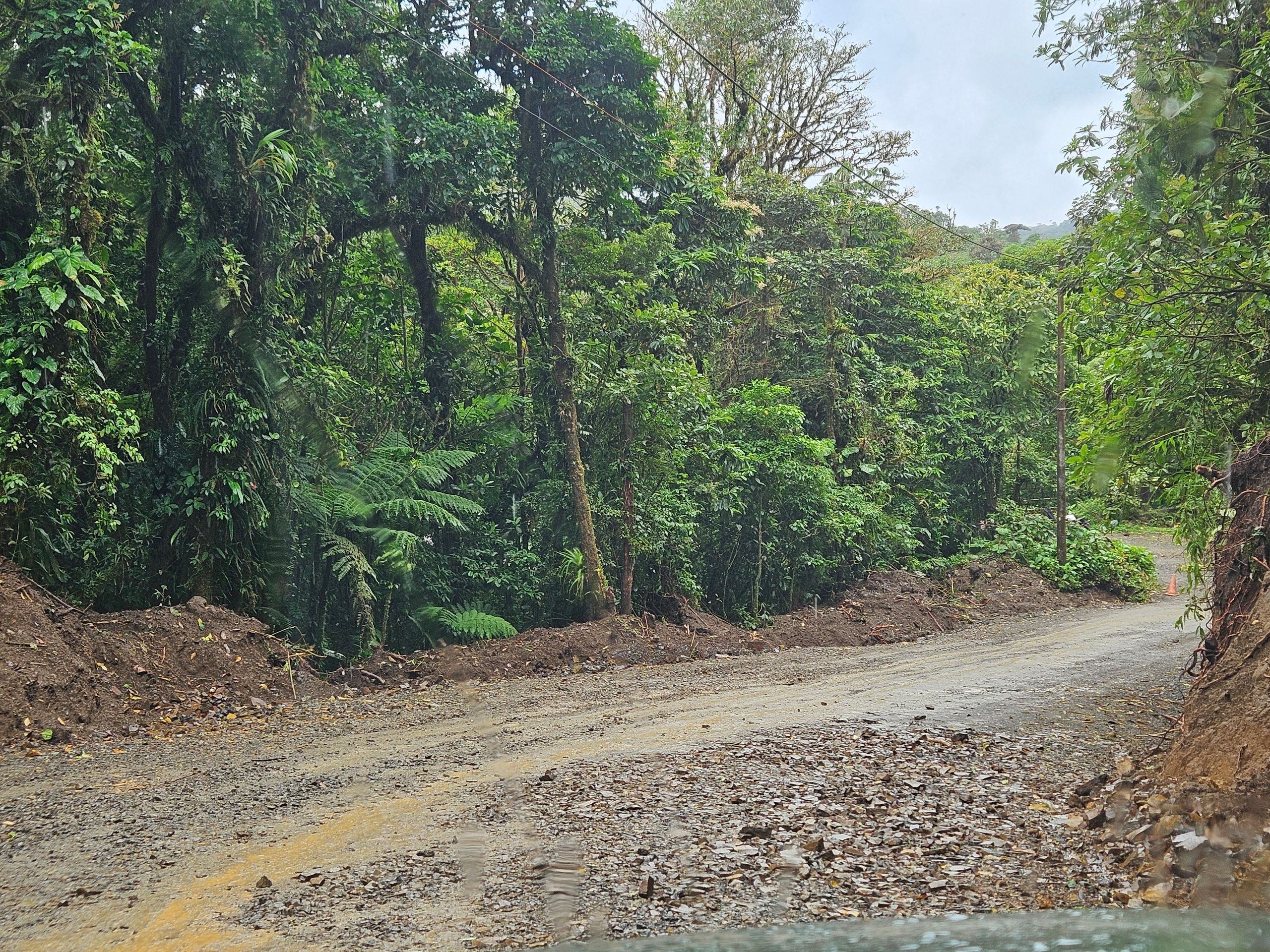
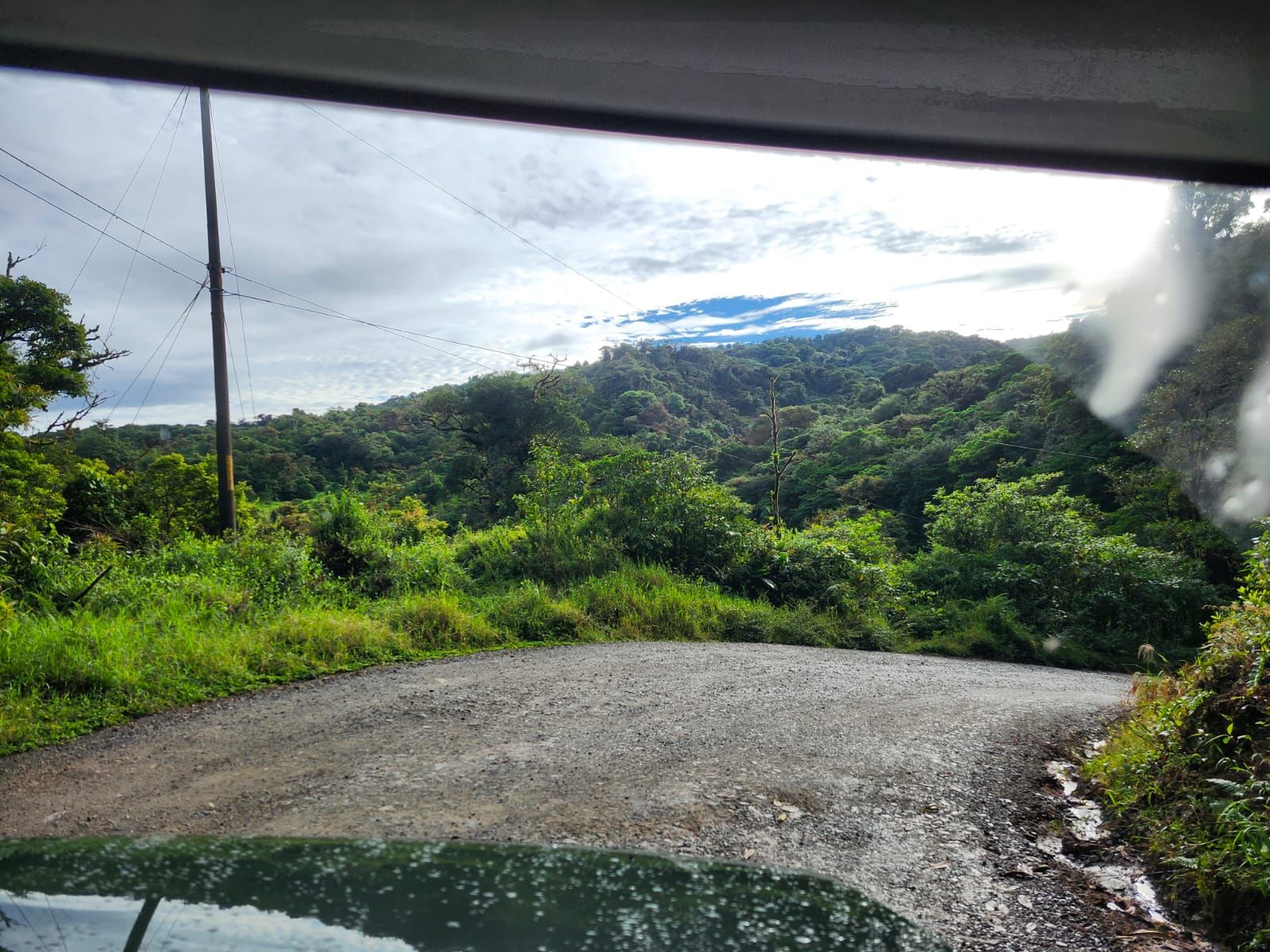
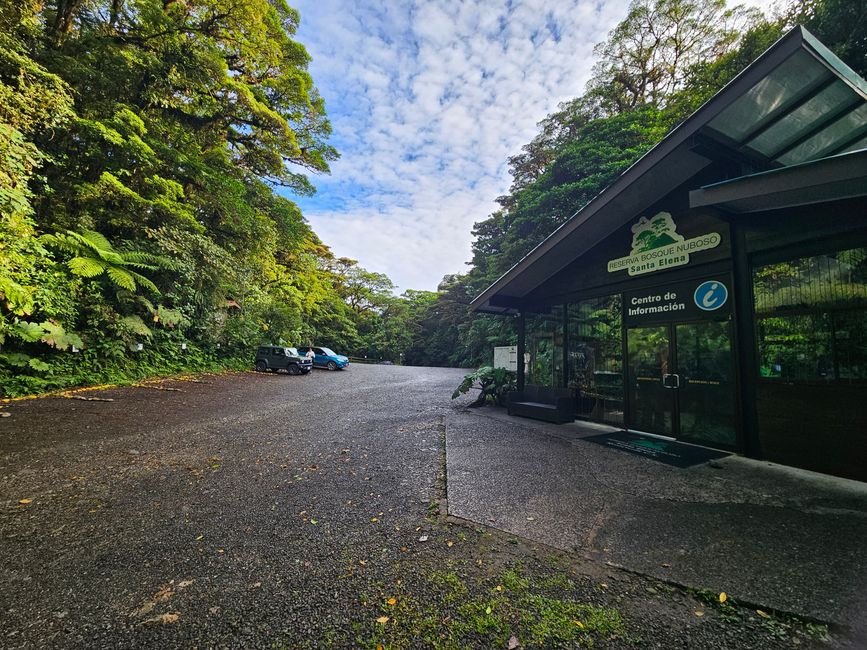
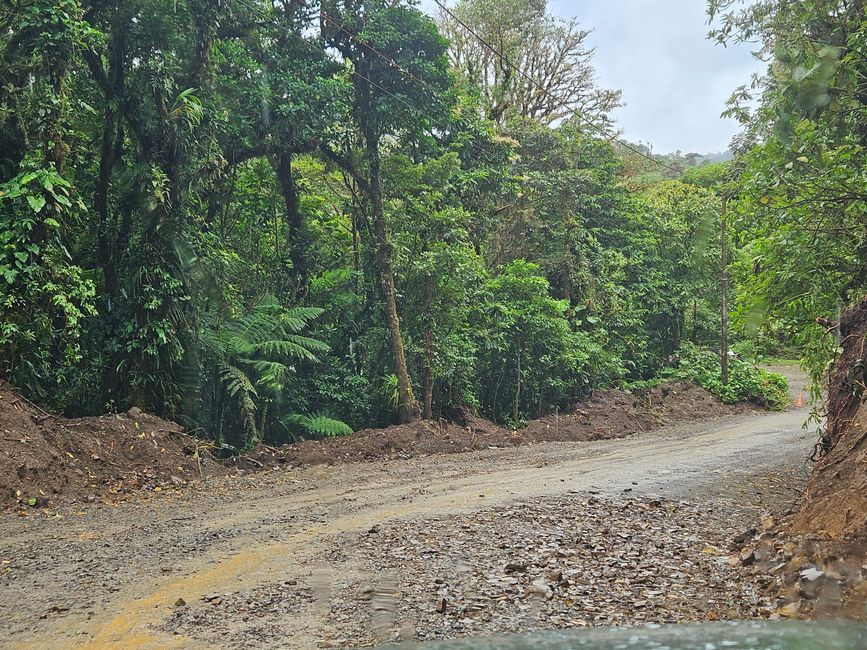
The roughly seven-kilometer journey from the town to the park entrance is practically a continuation of our pothole rally adventure and a true experience. As soon as you leave the last houses of the town behind and follow the signs north, the asphalt says goodbye. We ascend over a steep, unpaved gravel road with deep washouts and mud waves, spiraling upwards. Our Jimmy shows full commitment again; we gently rock back and forth, avoiding the biggest potholes and crawling towards the sky in first or second gear. At the end of the bumpy ride awaits a large, relaxed parking lot right at the main entrance, where so far only one other car accompanies our Jimmy.
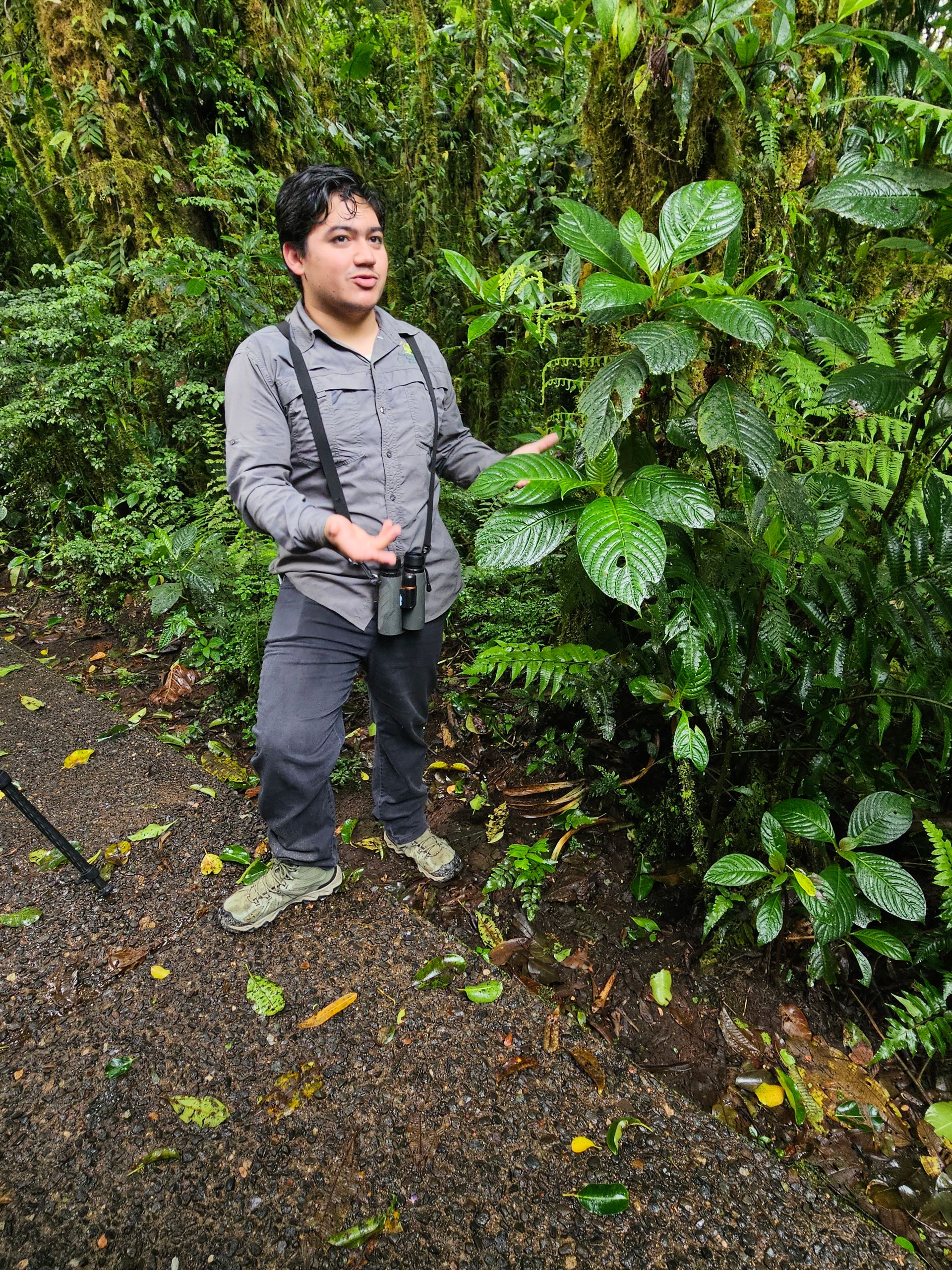
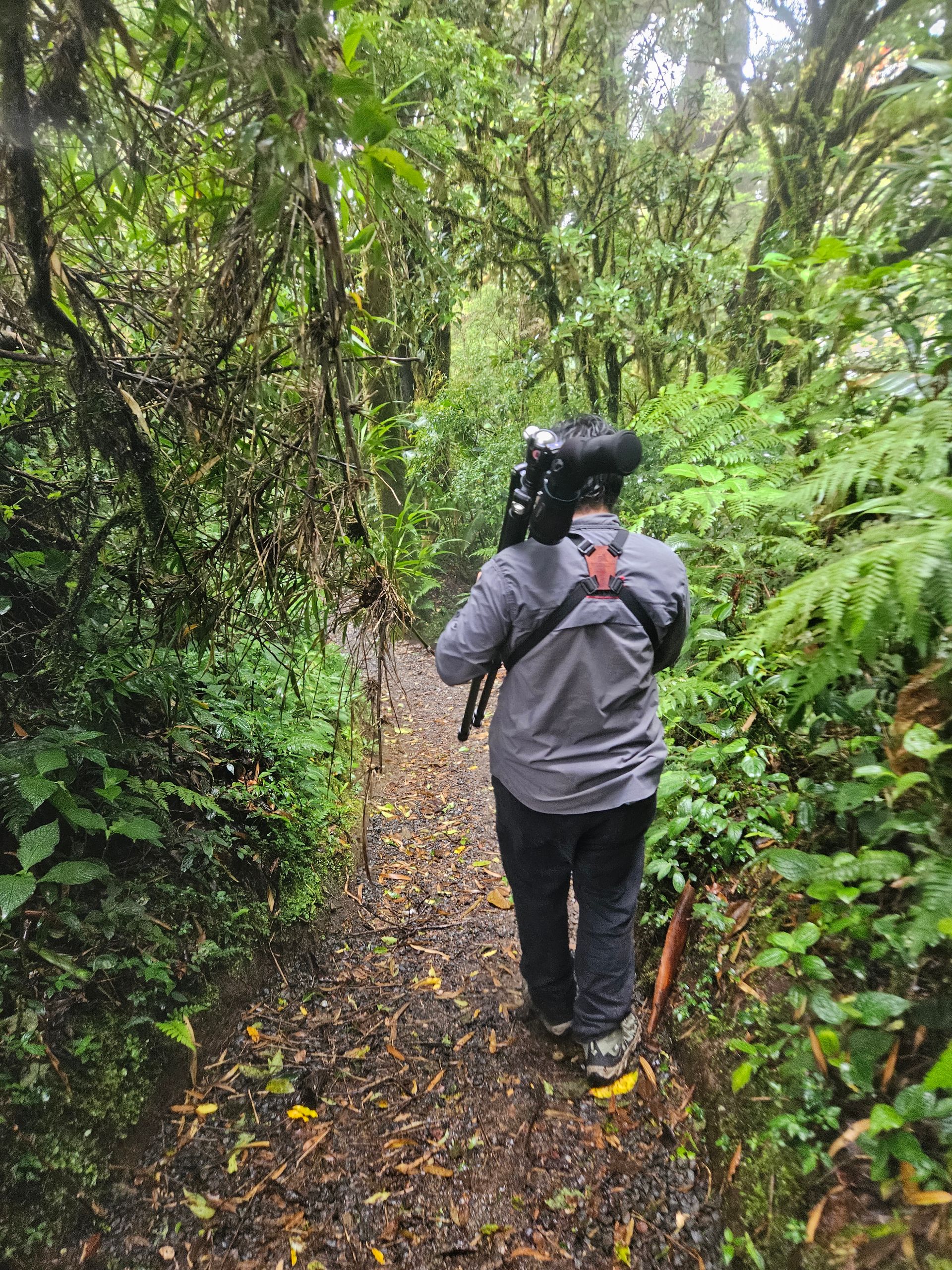
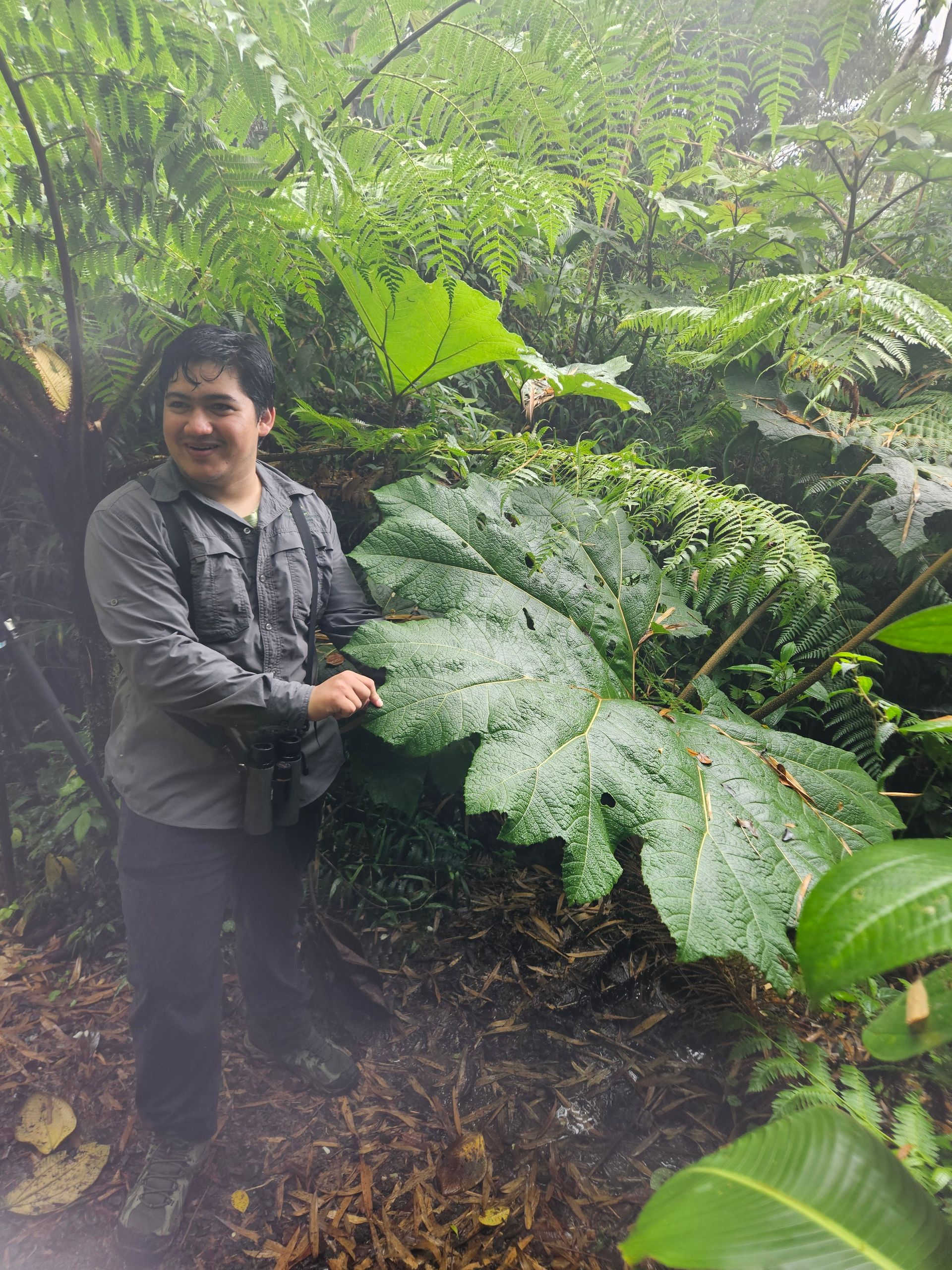
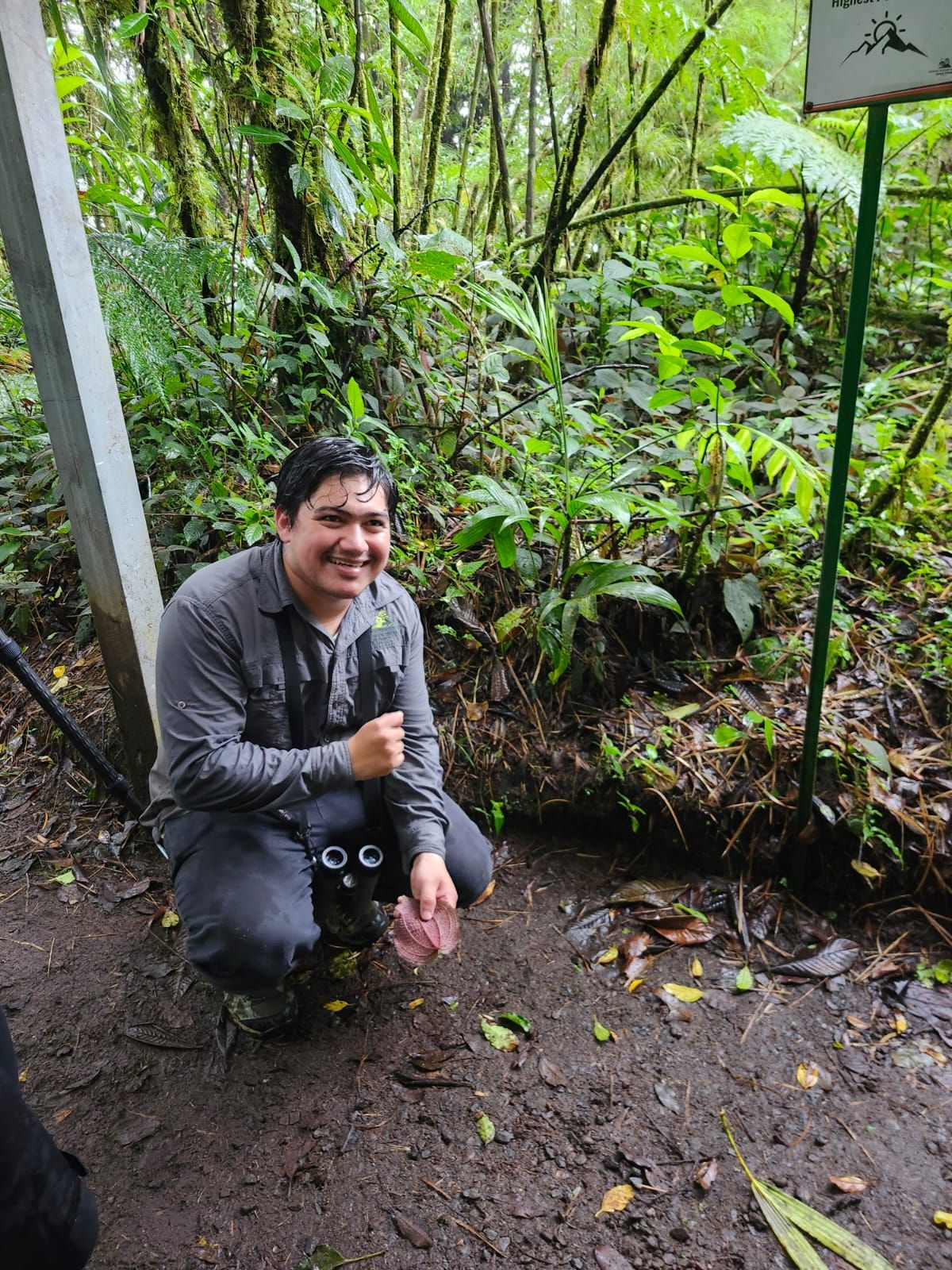
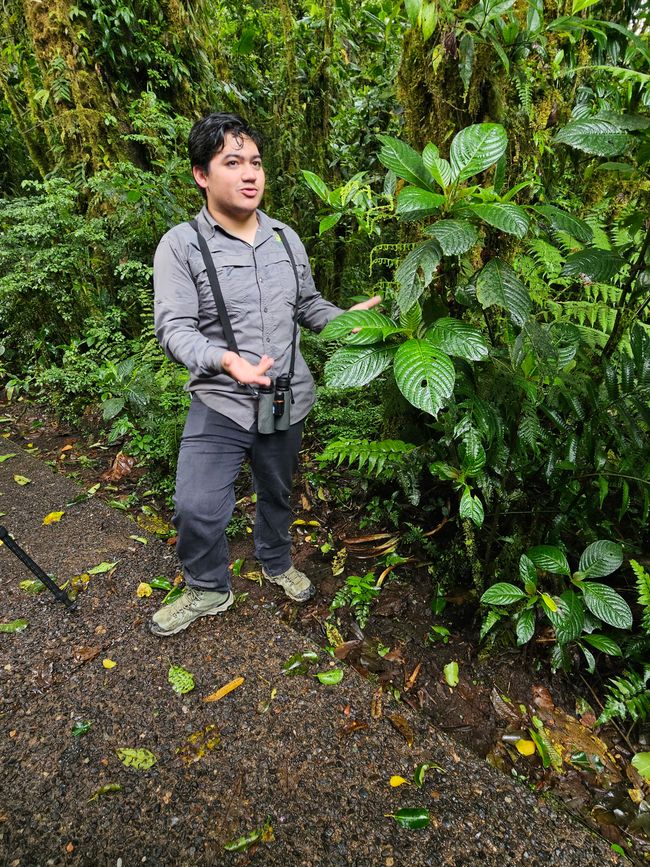
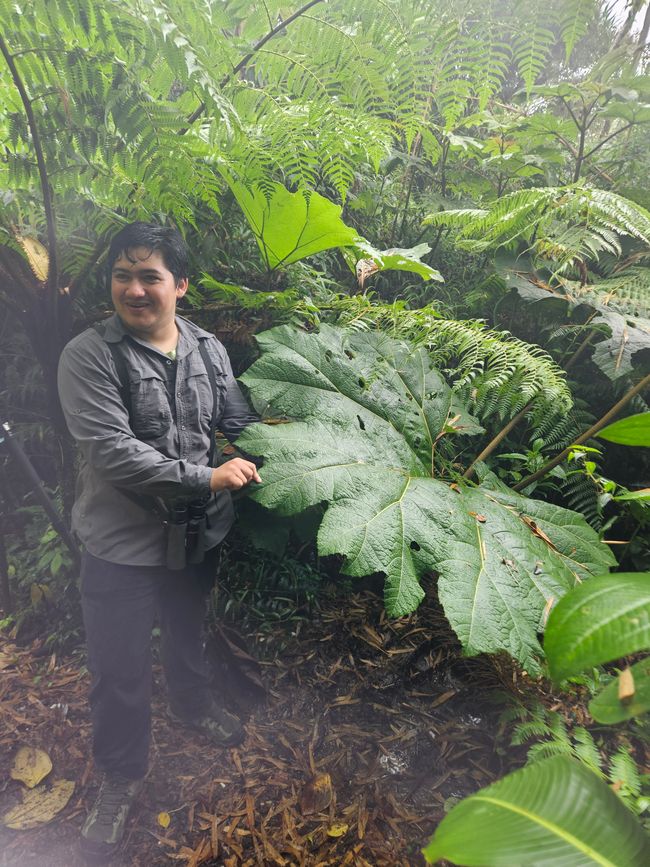
At the reception, we are registered as the first for today in the guestbook and wait for our guide in the restaurant. I booked the tour directly through the reserve because it collaborates with a fixed pool of independent local naturalists and guides. A German couple joins us, and so we are a small group again. Our guide is named Snyder and speaks excellent English; however, I can't always follow the technical terms of flora and fauna. He has incredible knowledge at just 20 years old, but he also has a somewhat macabre fondness for all animals and plants that are dangerous or deadly, finding everything 'Cool, isn't it' and 'perfect'. But you can tell that he loves his job and is truly passionate about nature.
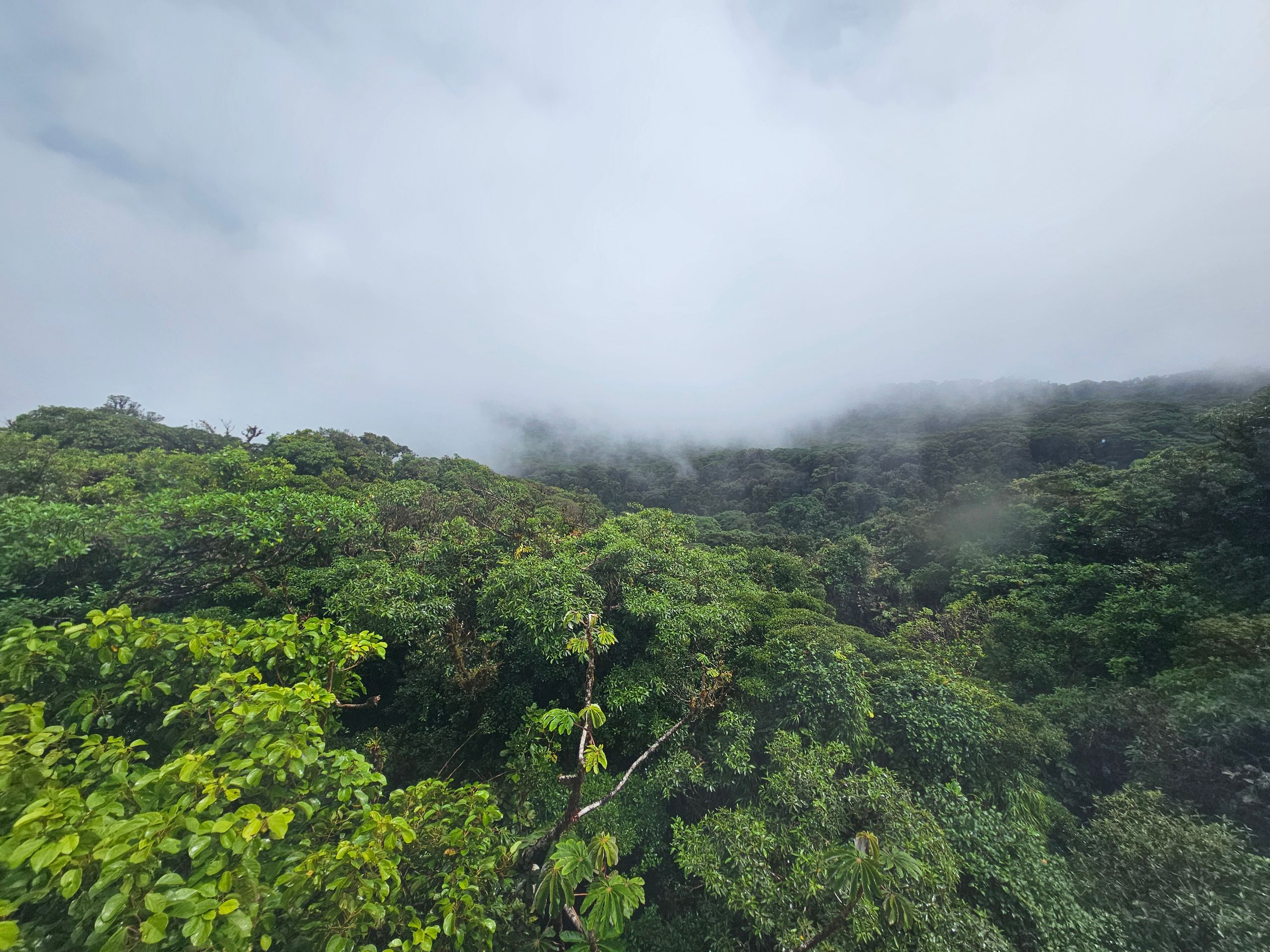
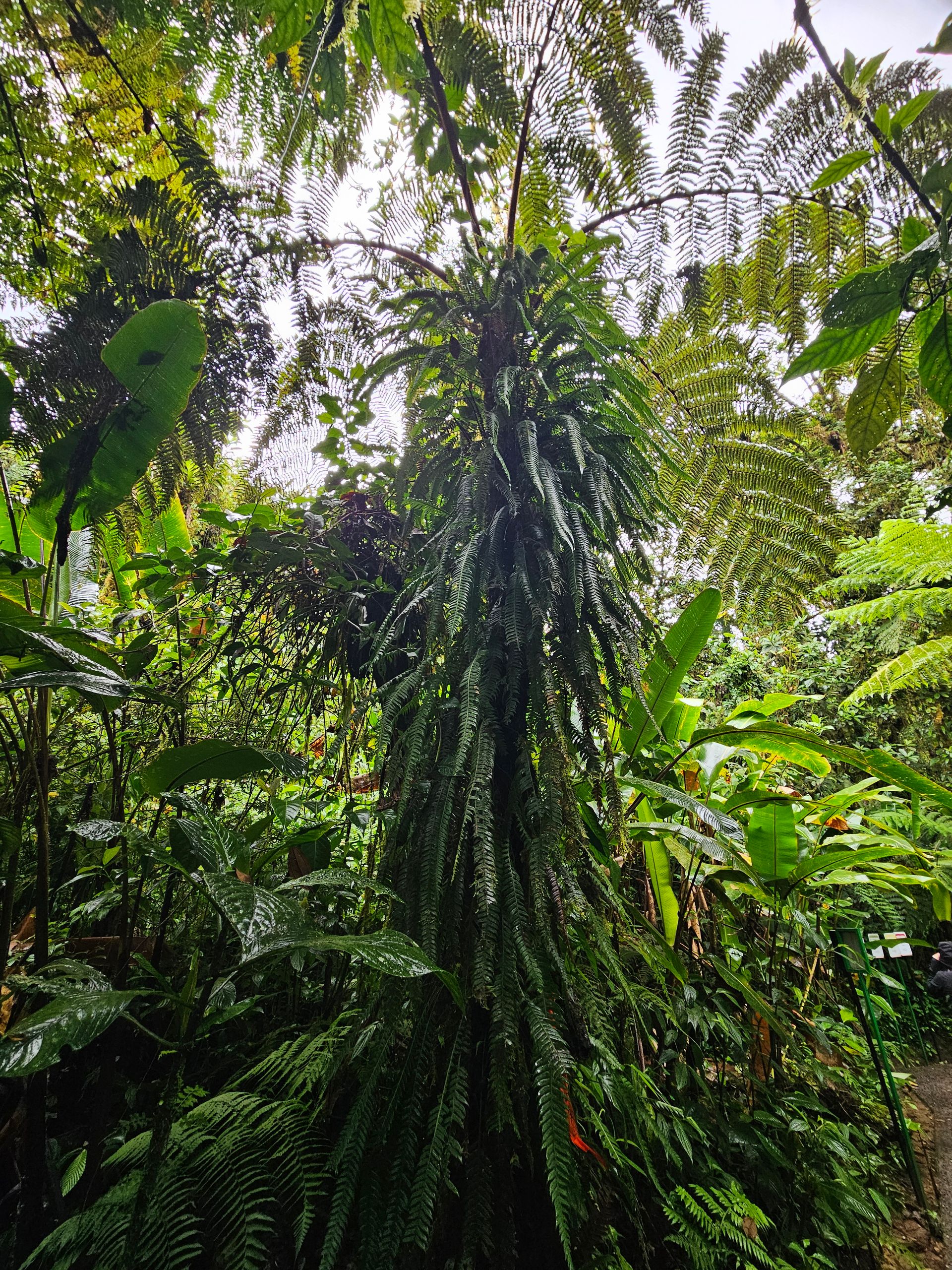
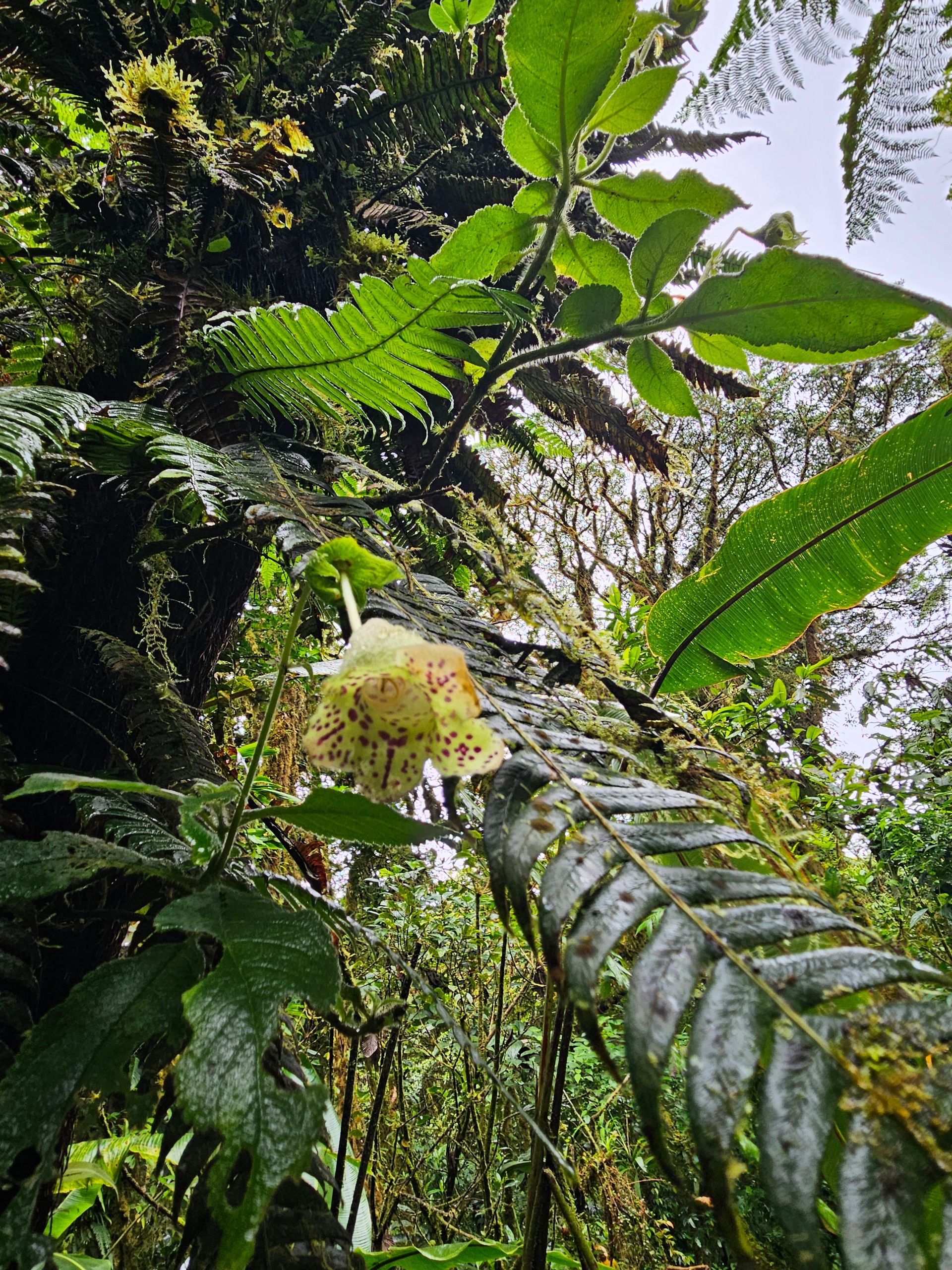
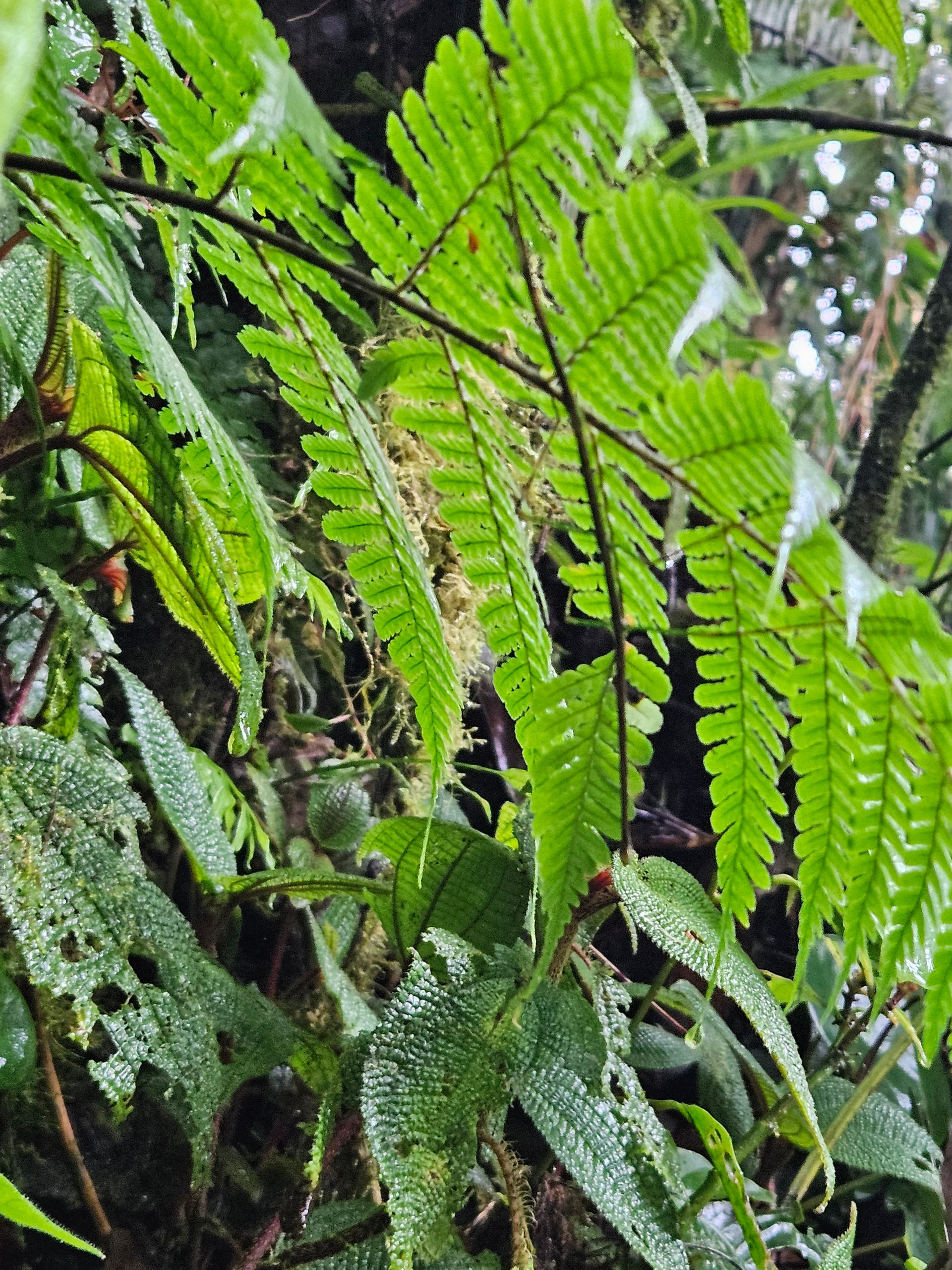
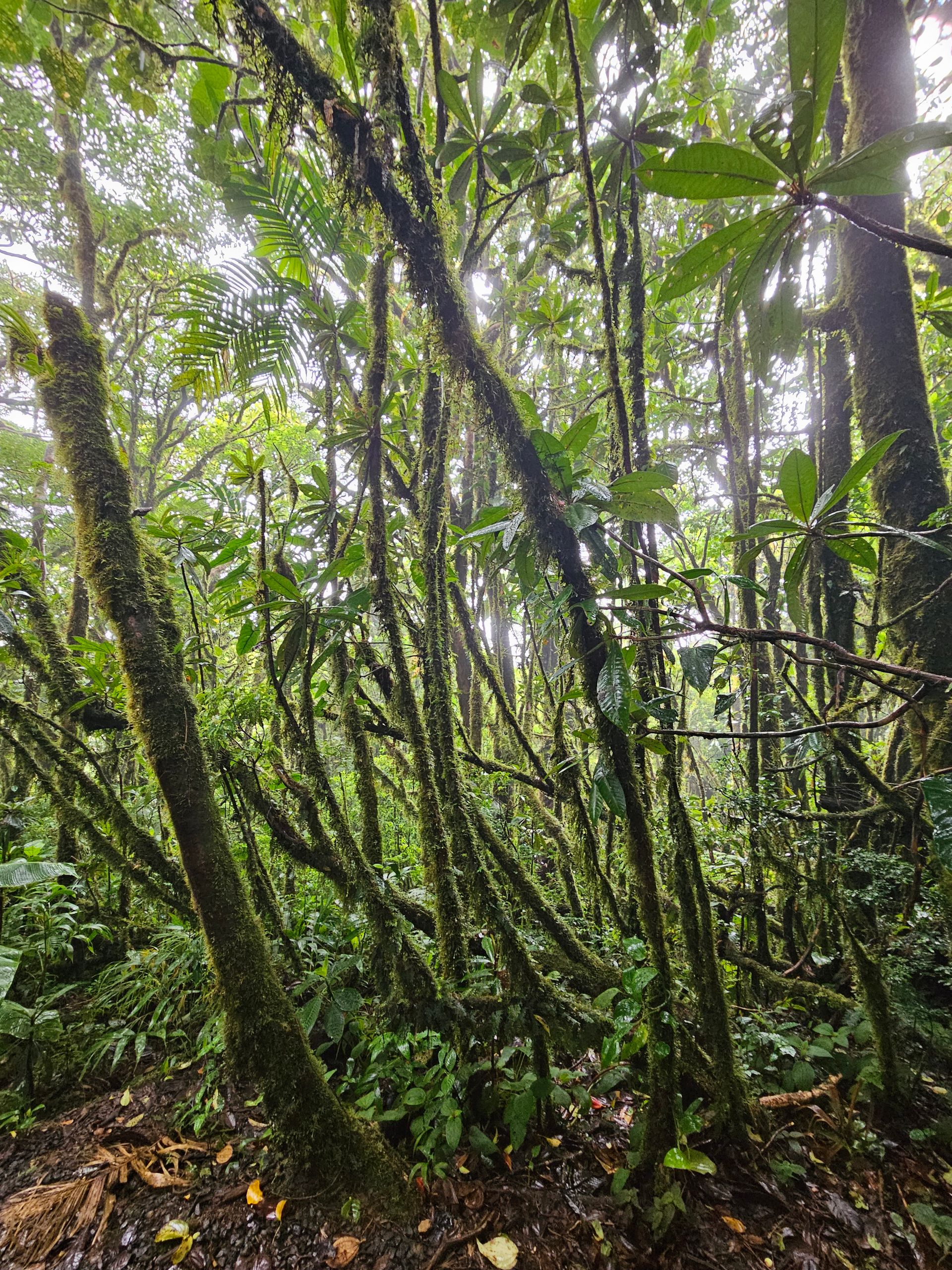
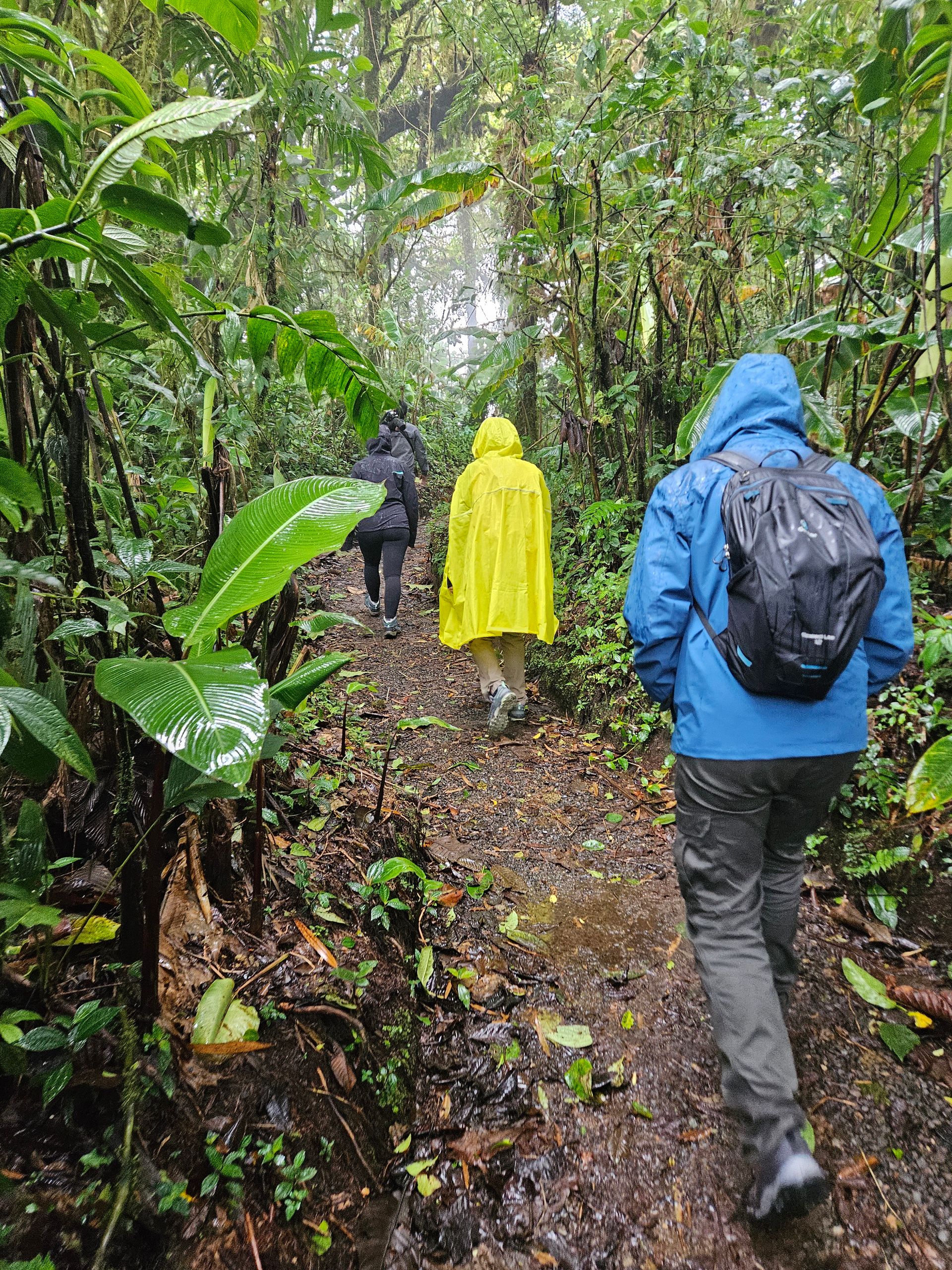
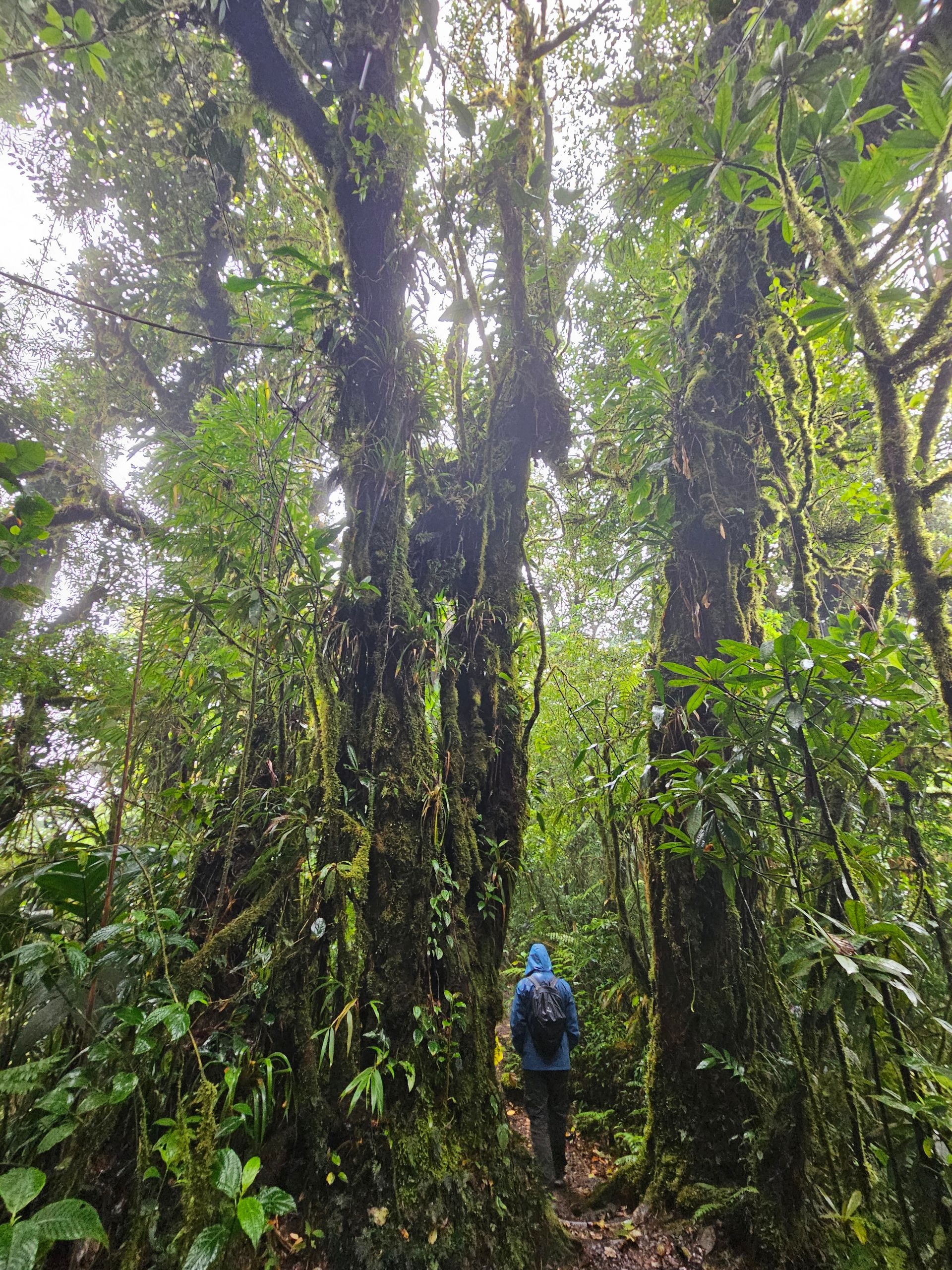
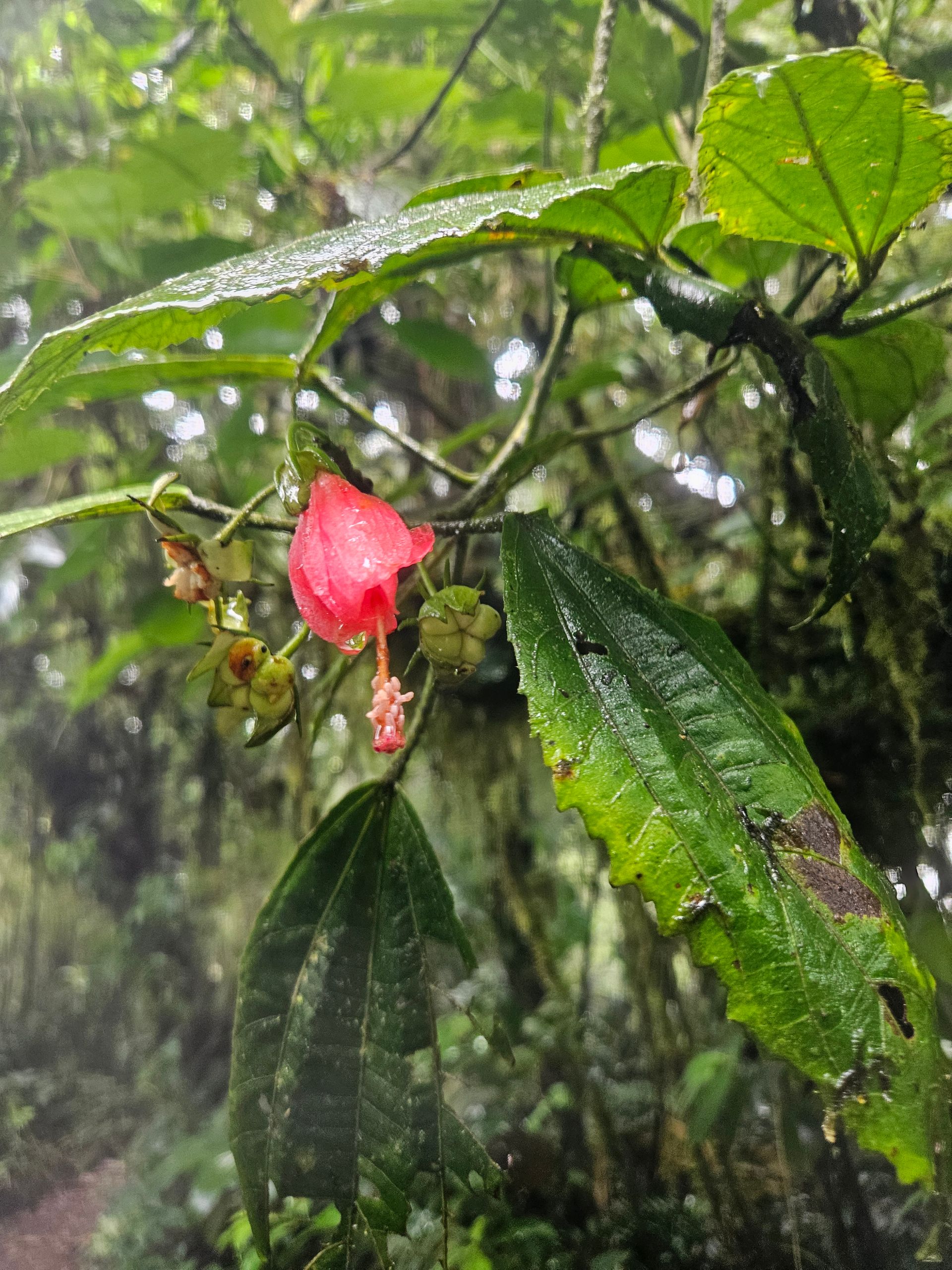
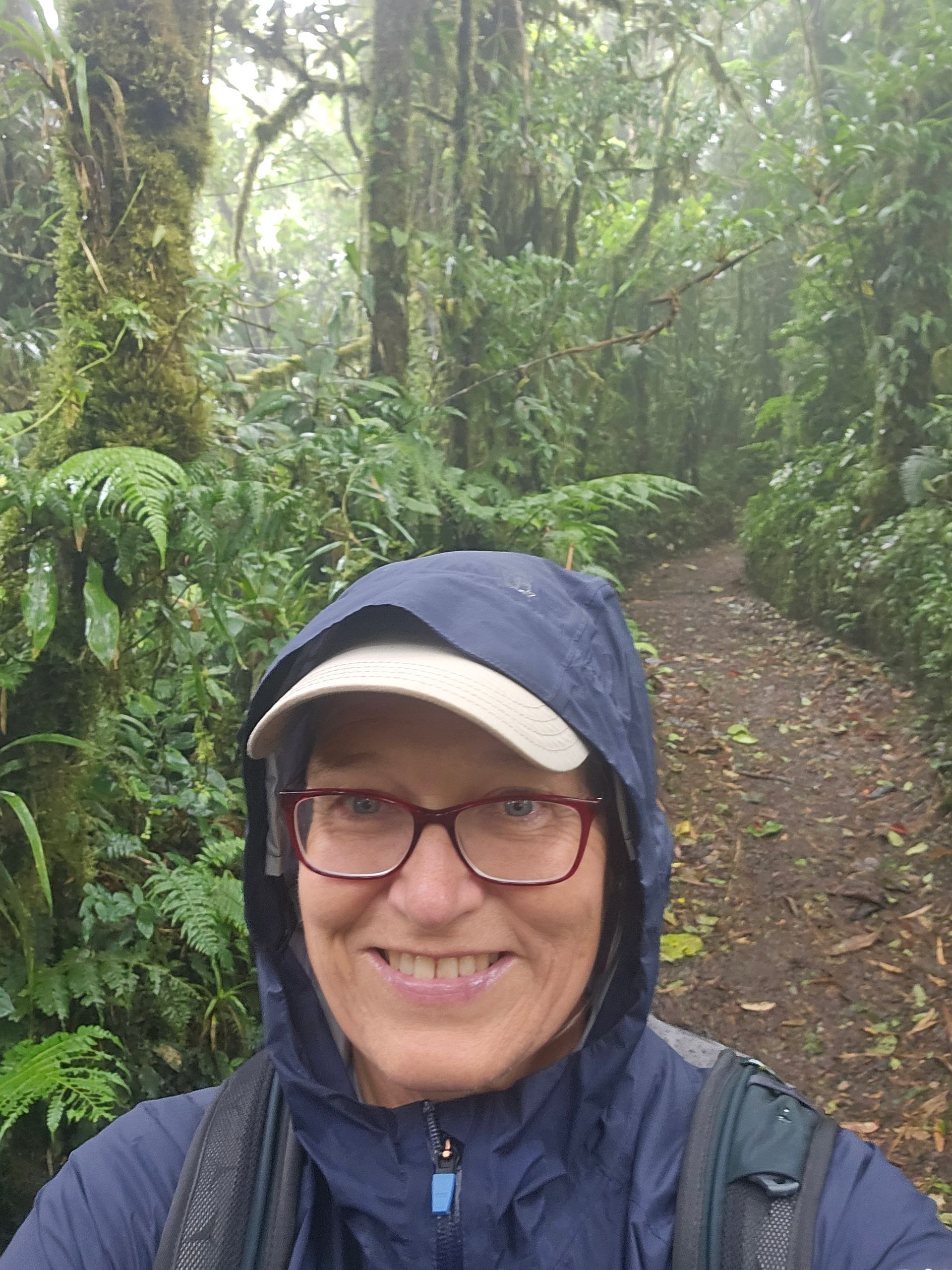
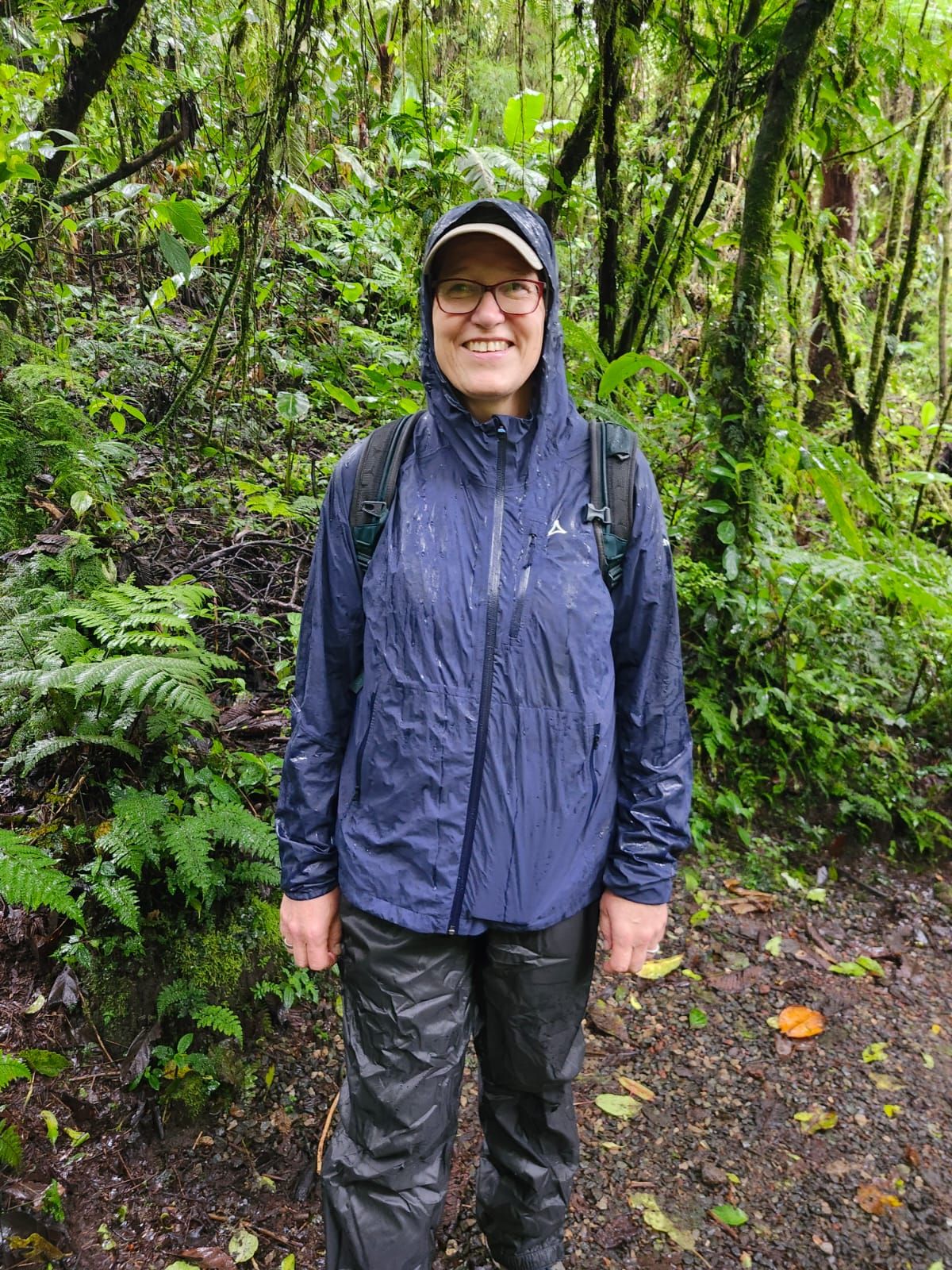
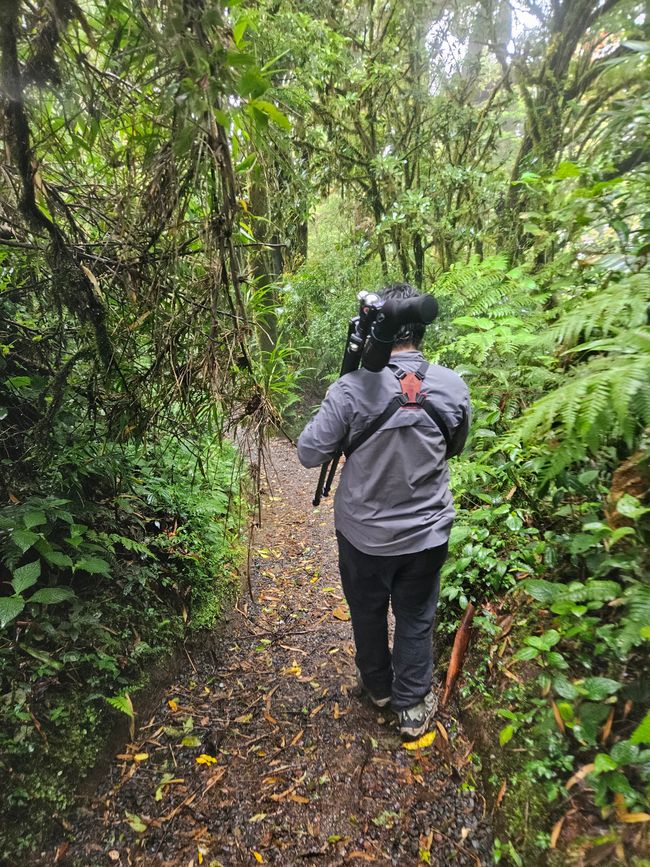
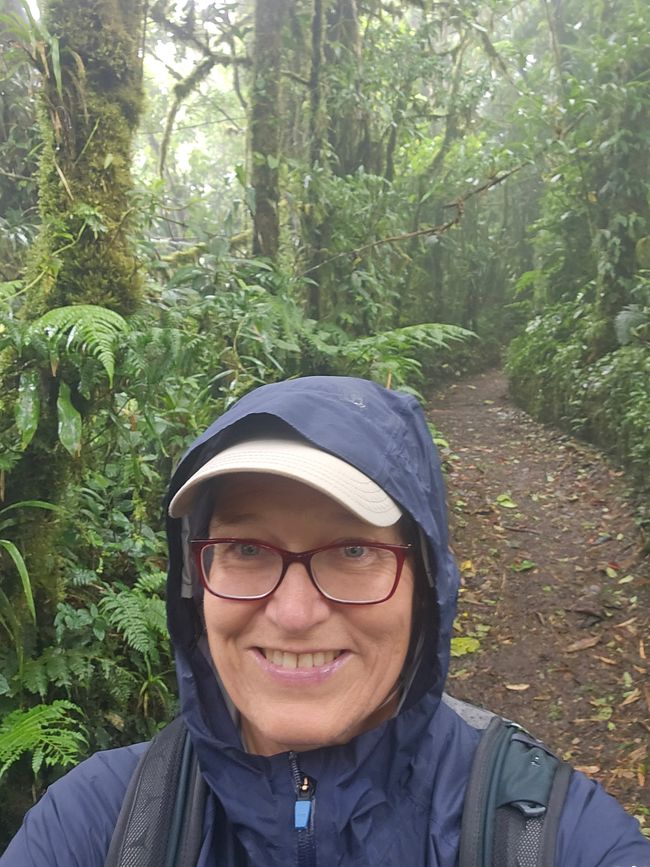
When you enter the reserve, you immediately feel transported into a fantasy film. It has started to rain now. The atmosphere is characterized by a reverent silence, broken only by the dripping of the rain and distant calls of exotic birds. The forest is so dense that in some places hardly any sunlight reaches the ground; every inch is covered with lush green moss, giant ferns, and magnificent plants, while trees stretch their moss-covered branches high into the sky. Grass green, moss green, lush green... it is simply indescribably green.
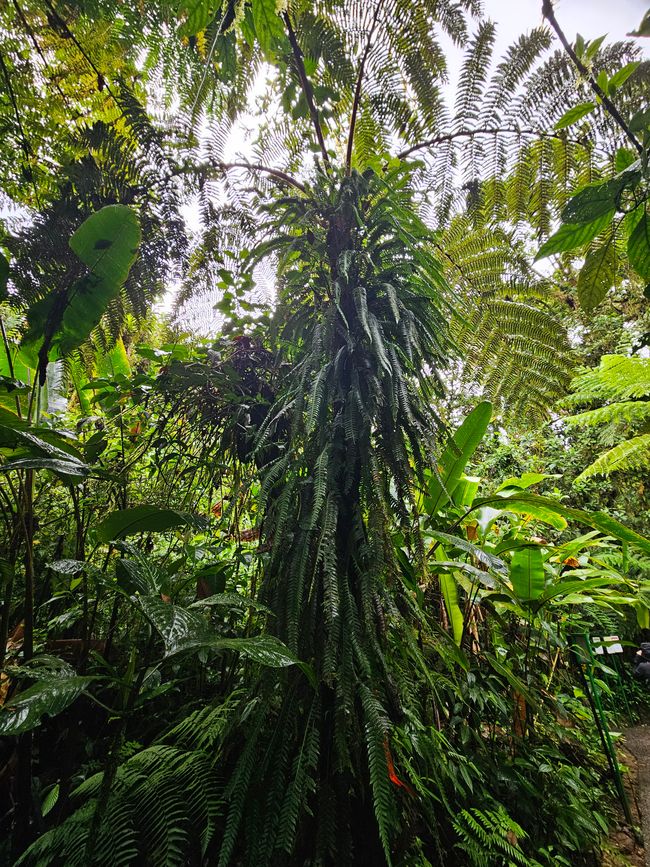
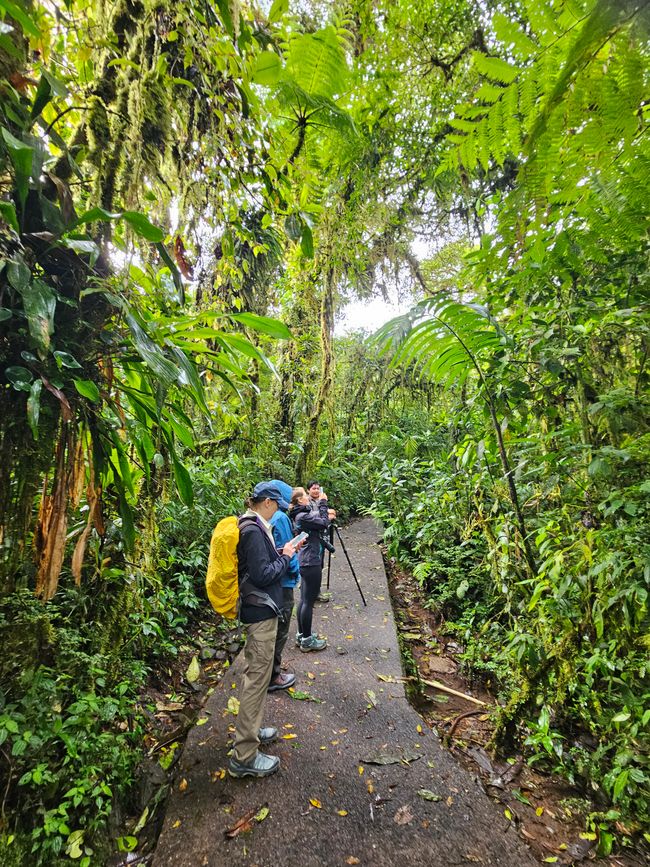
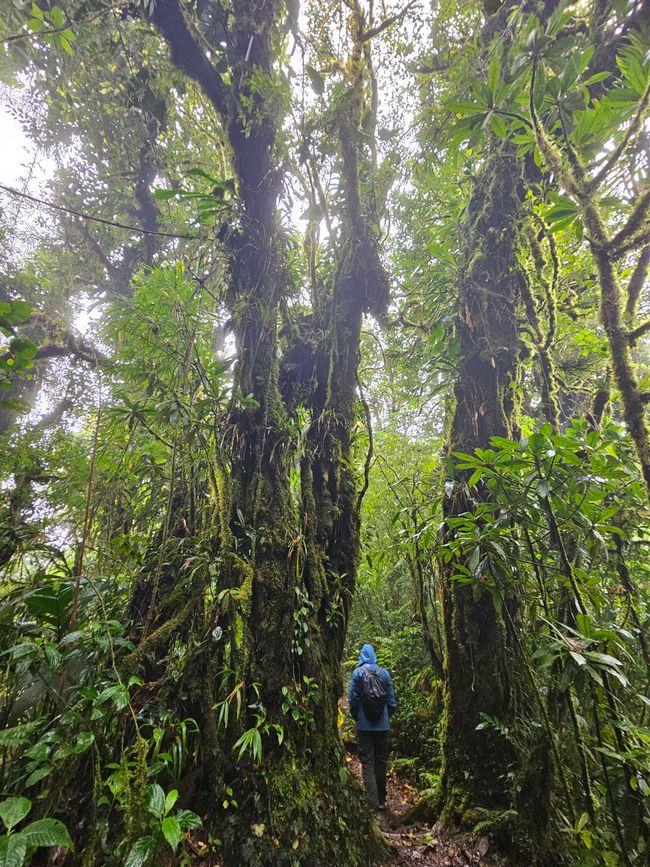
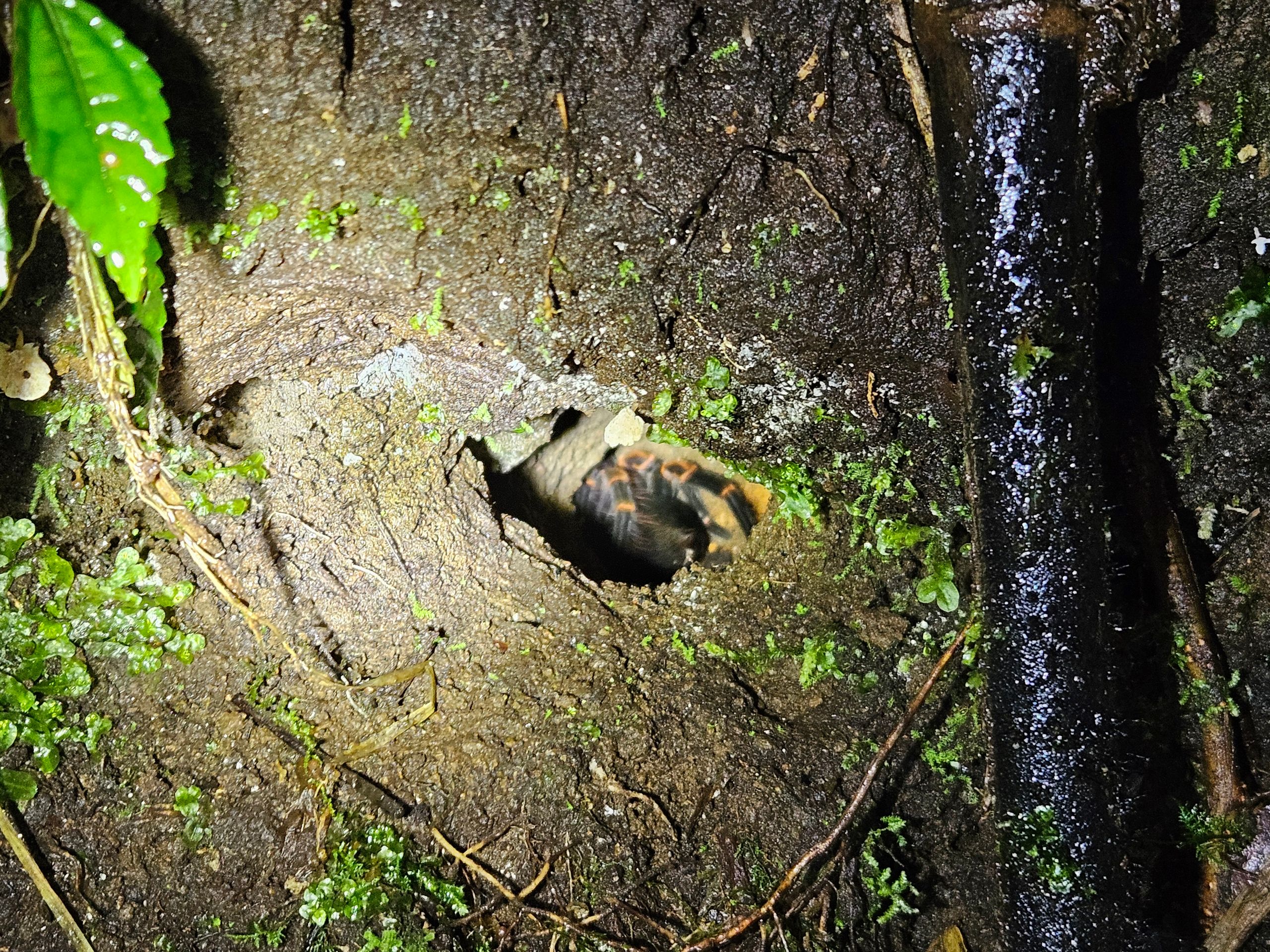
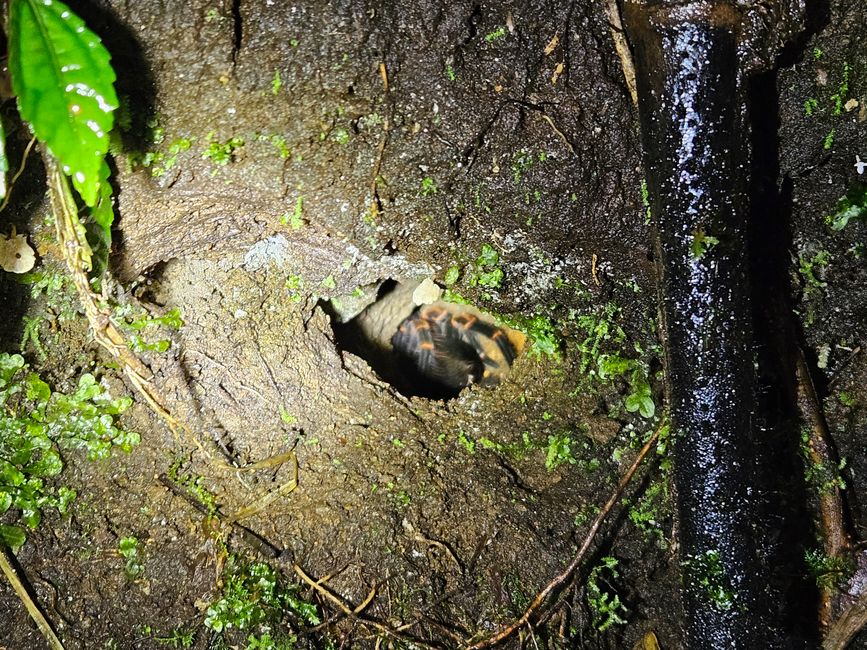
The tour is really great; we walk the Sendero Youth trail, receive valuable and exciting information about flora and fauna, and spot animals like tarantulas, walking sticks, hummingbirds, and a black-throated solitary.
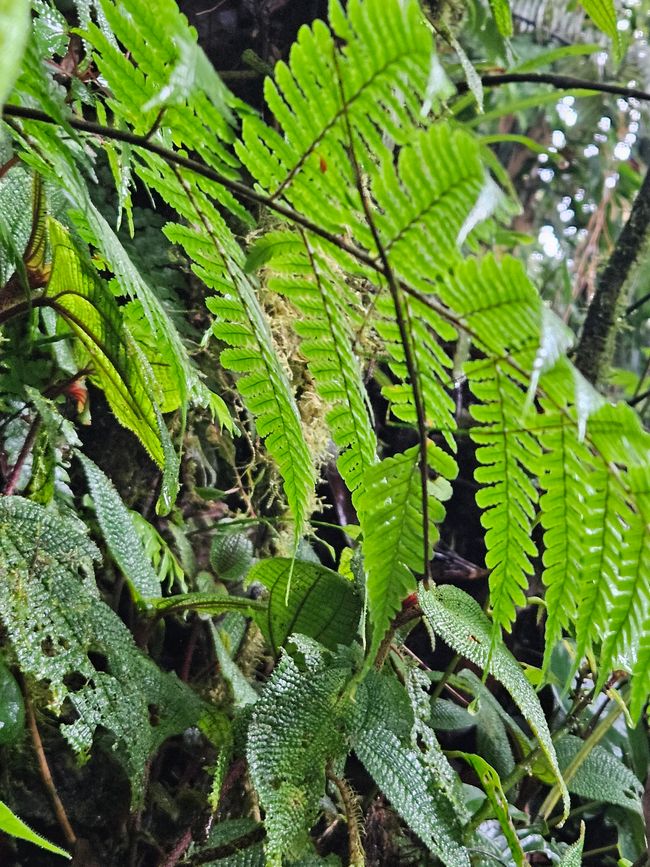
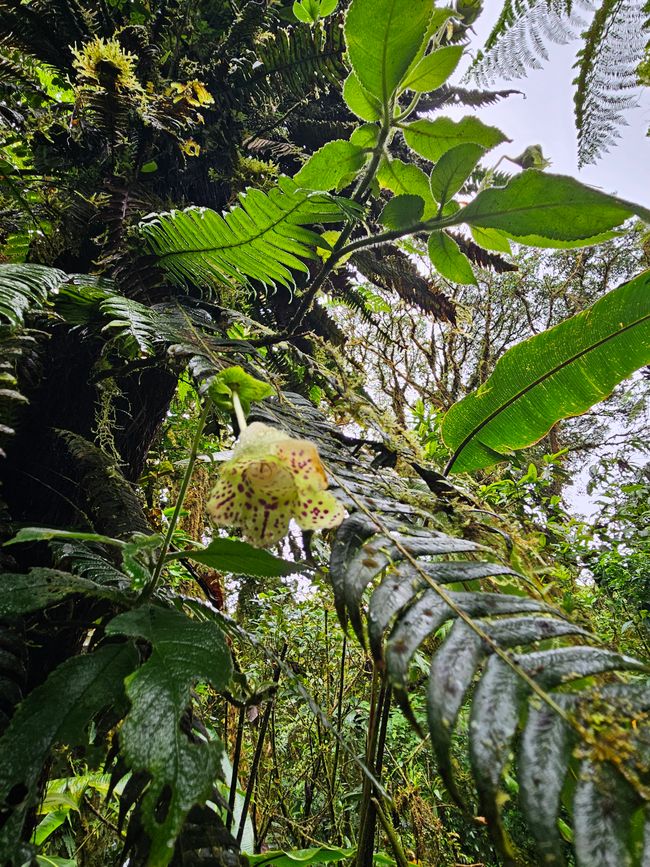
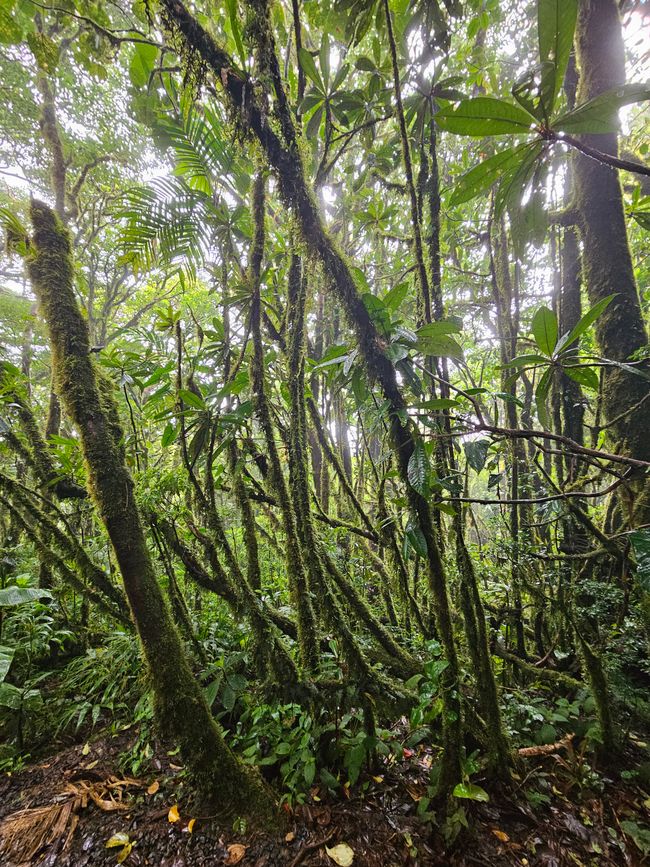
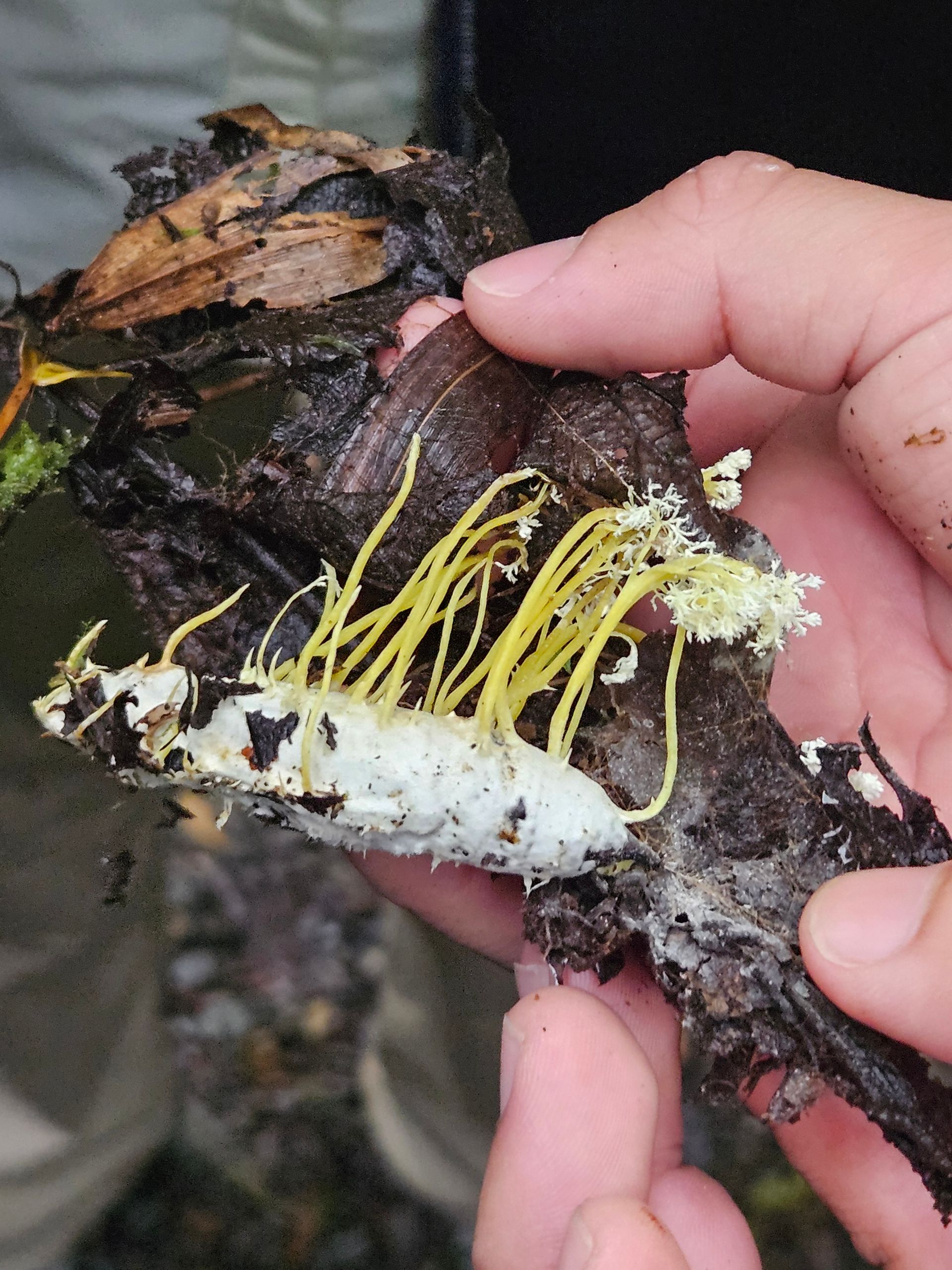
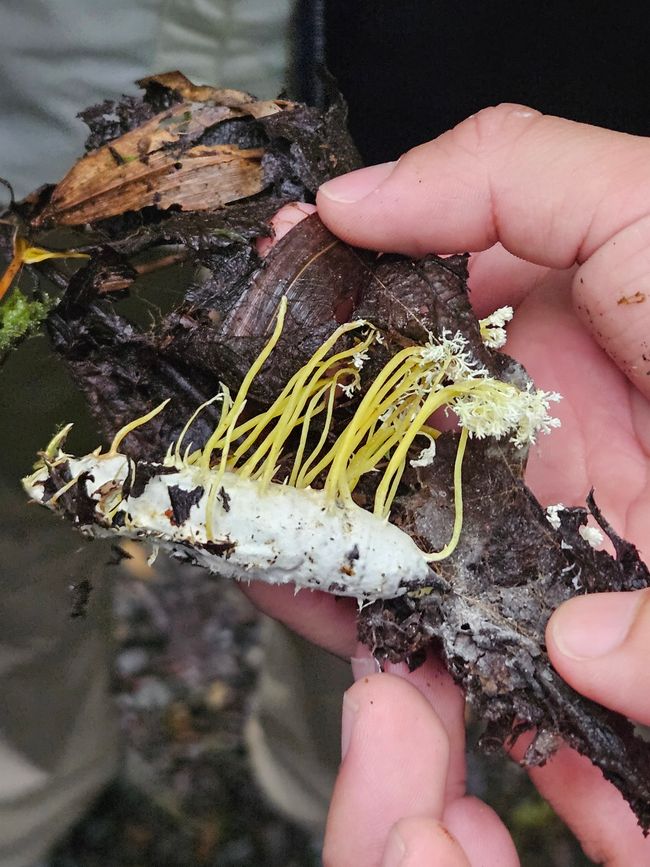
True excitement erupts when Snyder finds a rather large cordyceps; he can hardly contain his joy. Known from The Last of Us, it is completely harmless to humans but controls the nervous systems of ants and beetles. It directs the infected insects like mindless zombies to high leaves where they die, and the fungus grows in a bizarre club out of their bodies. If you closely examine the undersides of ferns while hiking, you can even discover these fossilized “zombie insects”!
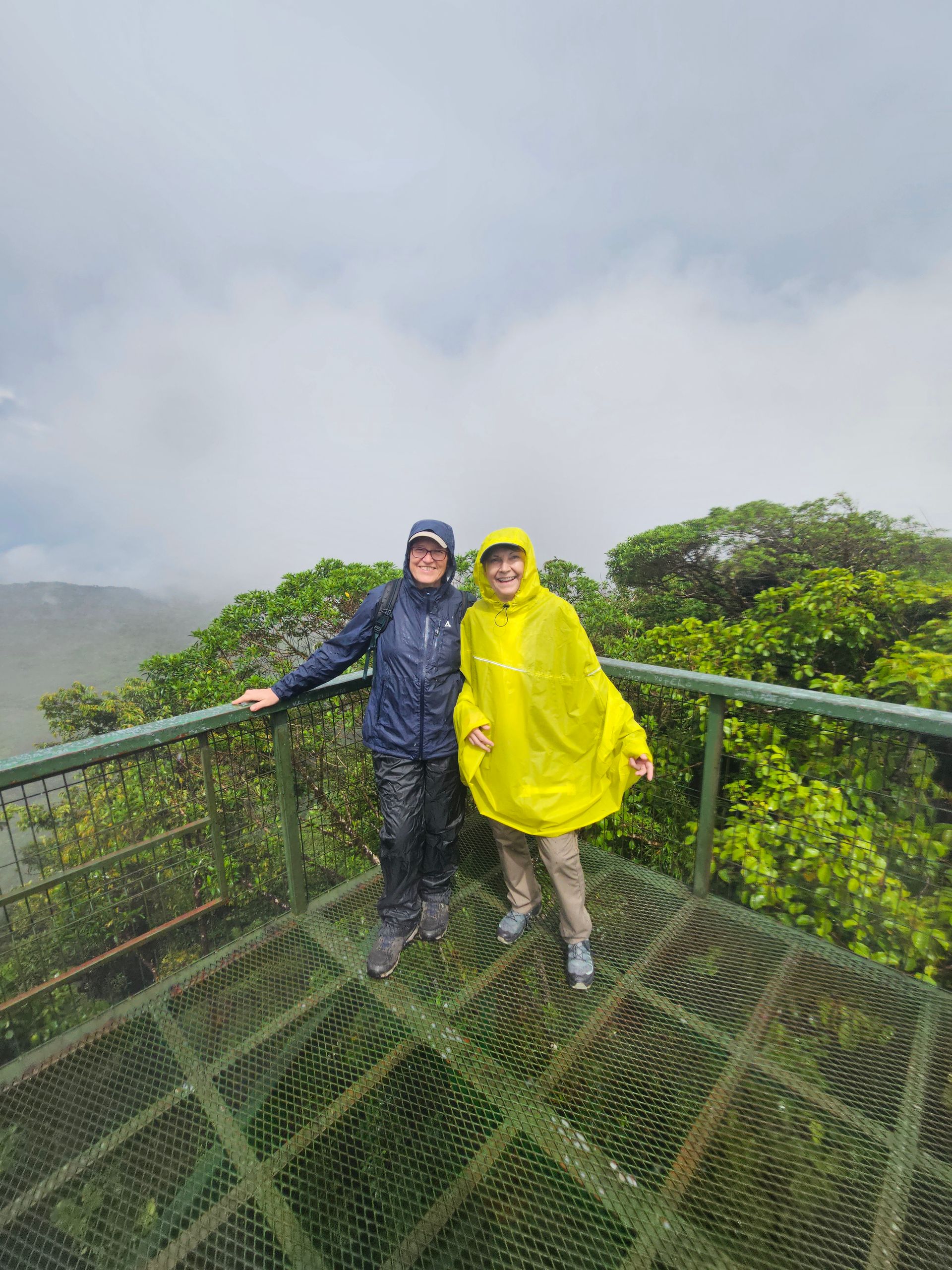
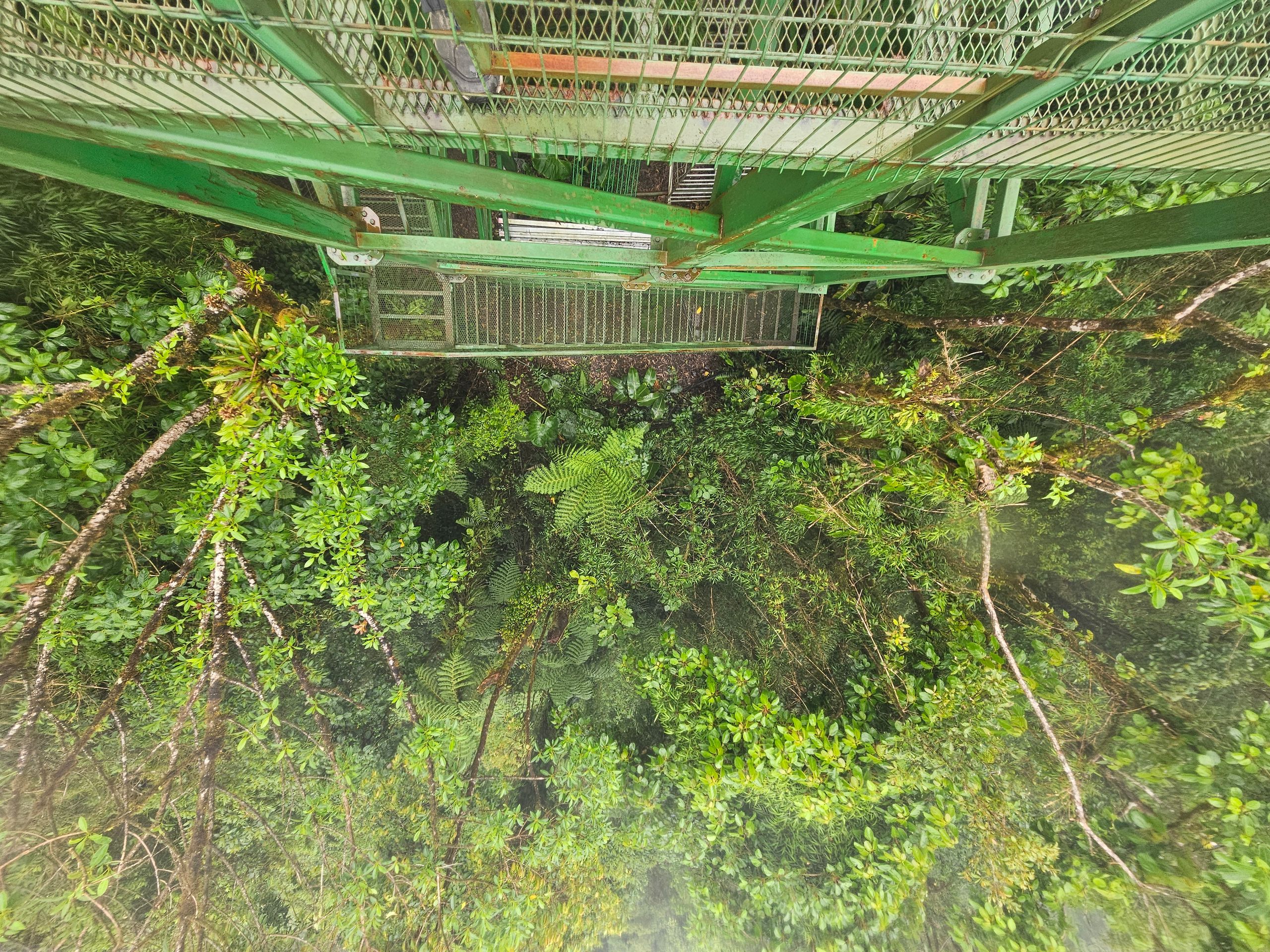
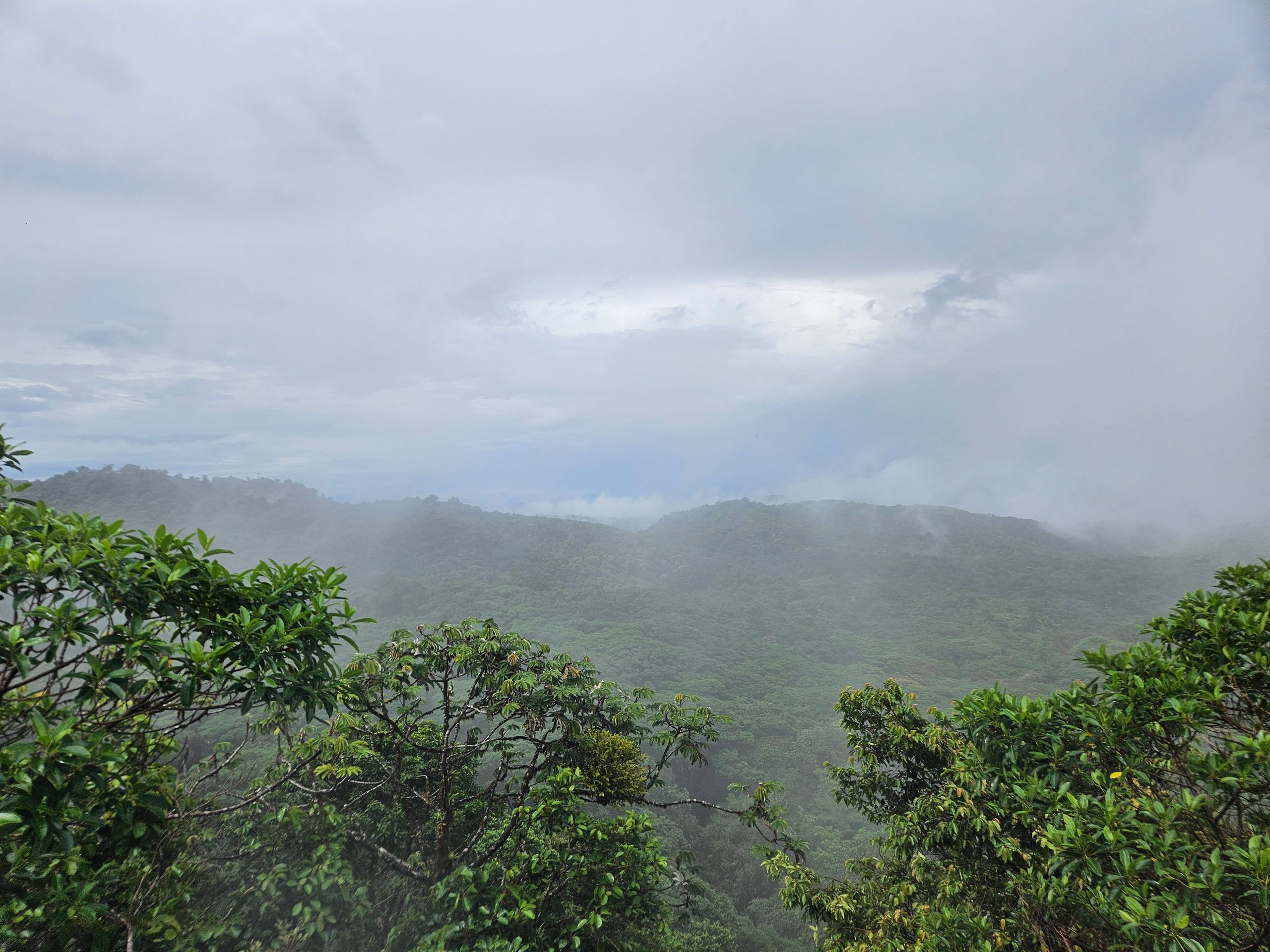
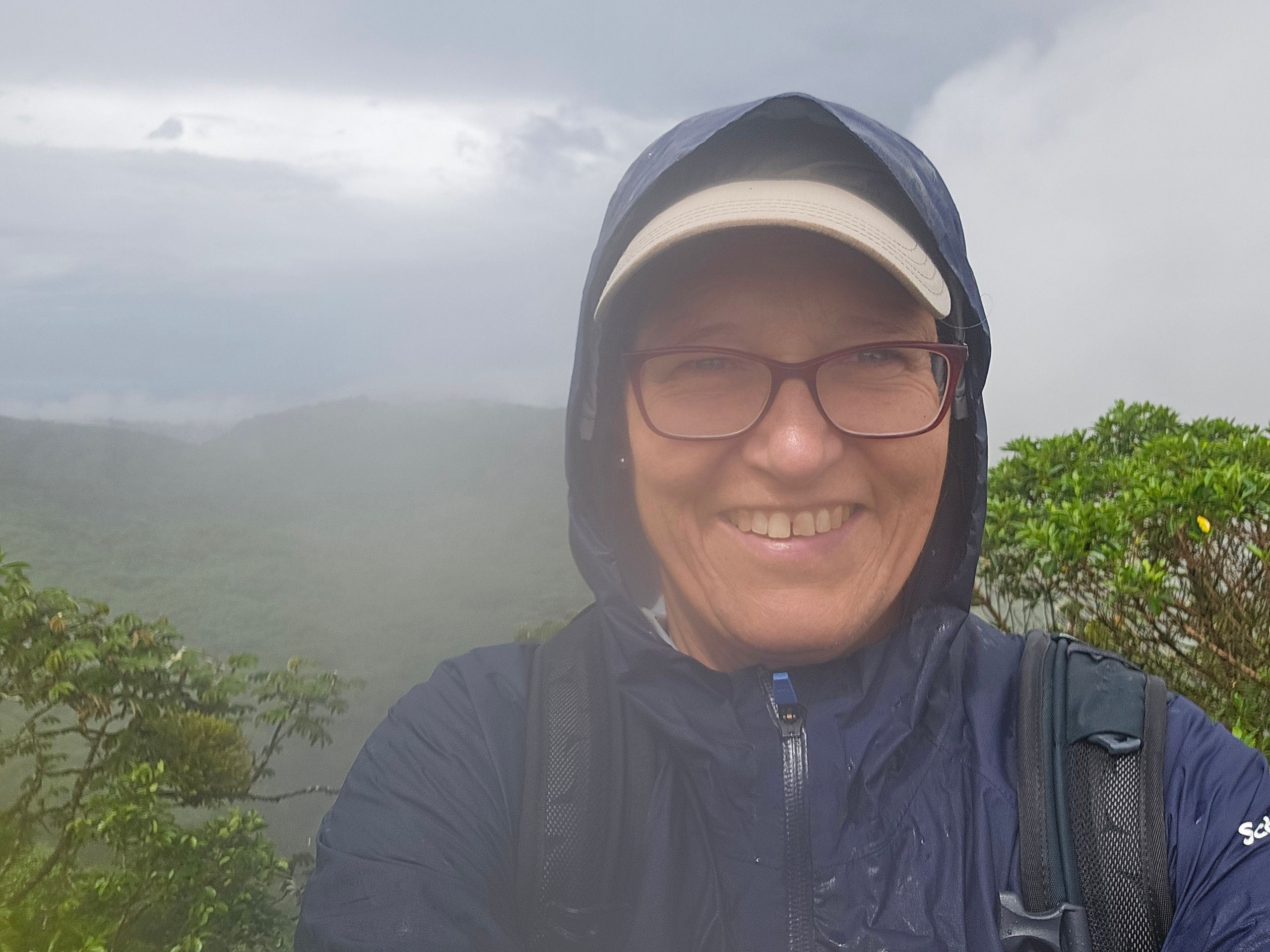
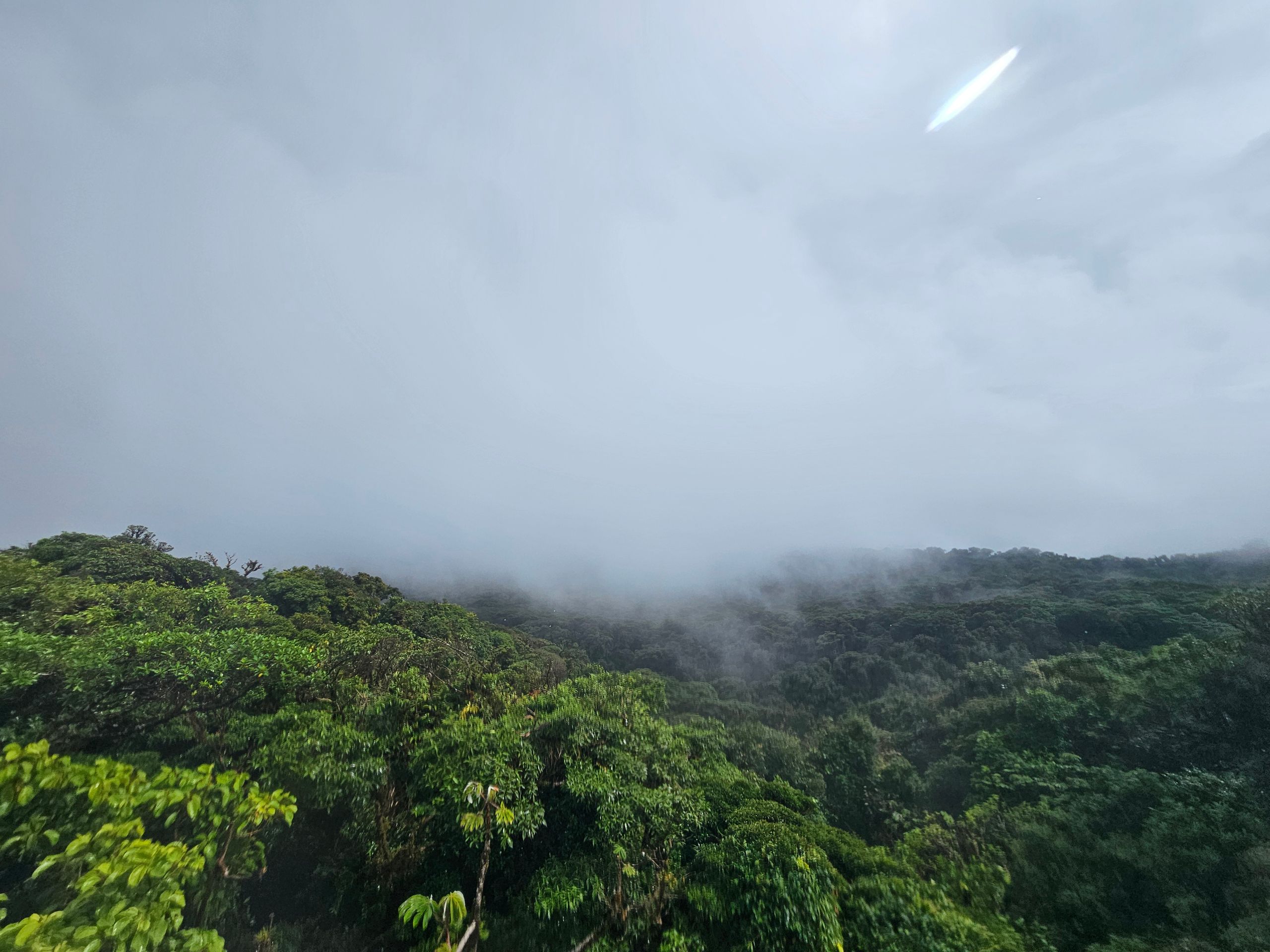
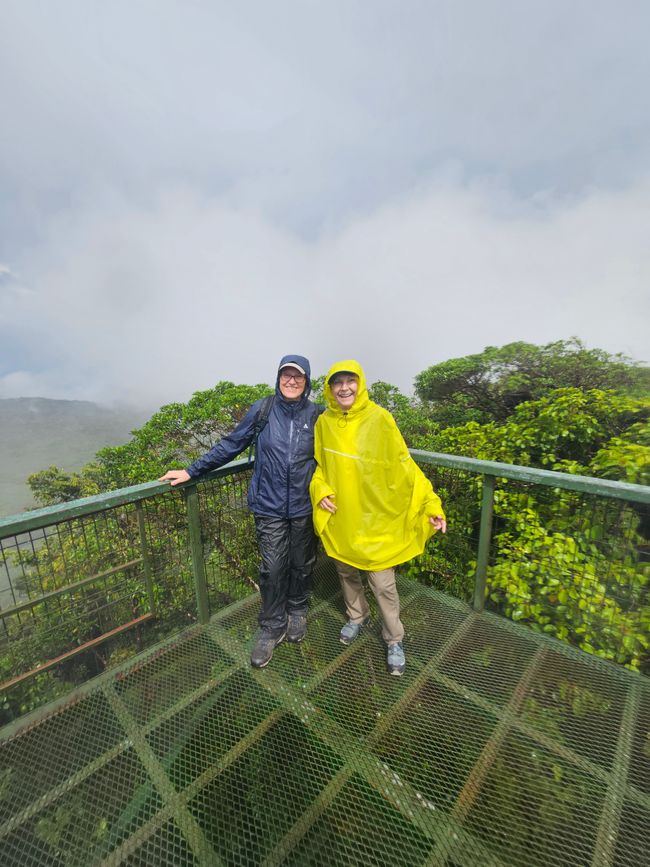
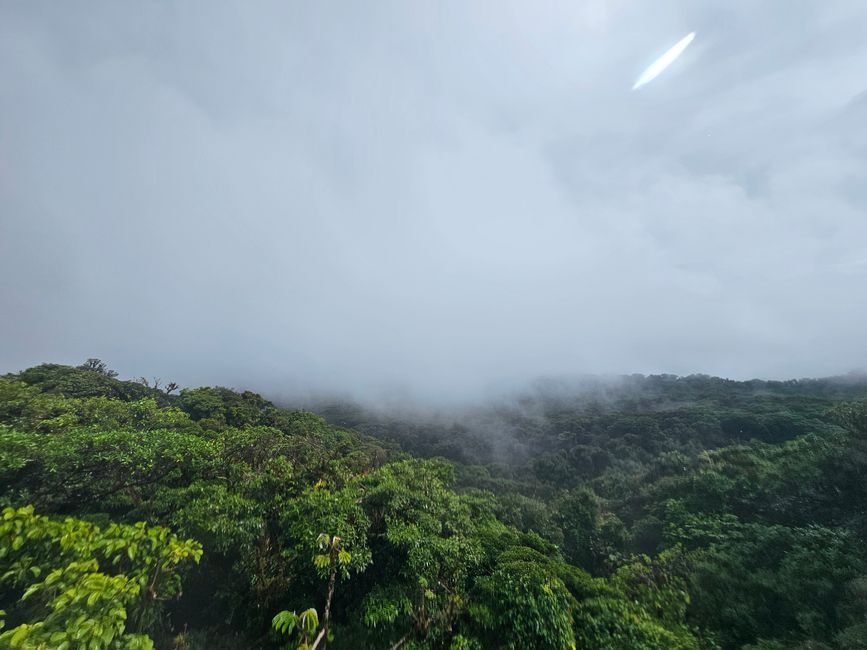
From the viewpoint, one can enjoy a breathtaking panoramic view. The rain has eased, and now wisps of clouds are passing by; fog is piling up, and you get even more of a feeling of being in the cloud forest, high above the clouds, here above the mist even single rays of sunlight can be seen.
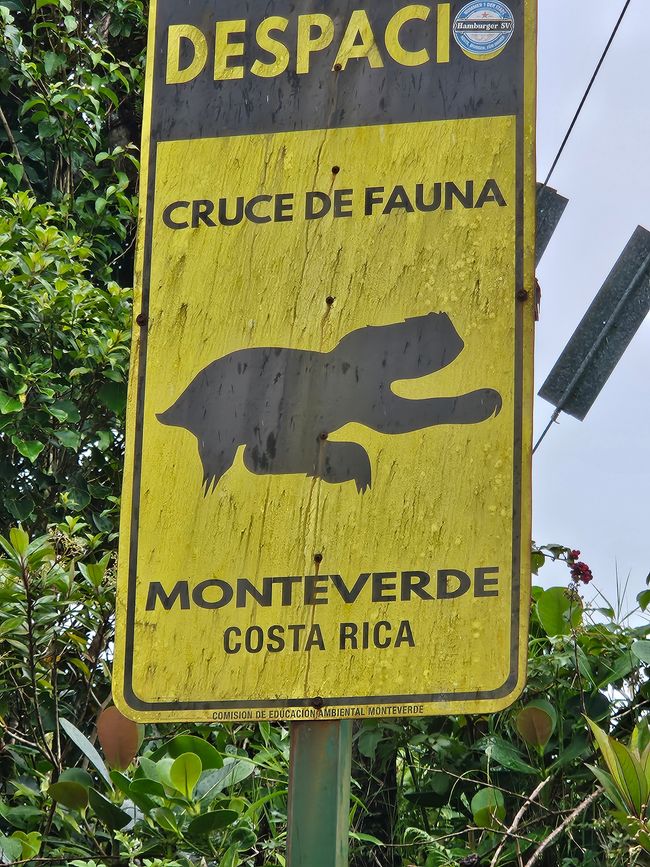
It’s raining and we stroll a bit through the small town of Santa Elena, a tourist center with restaurants, coffee shops, supermarkets, tour providers, and souvenir shops. Everything a heart desires, but not much exciting to discover.
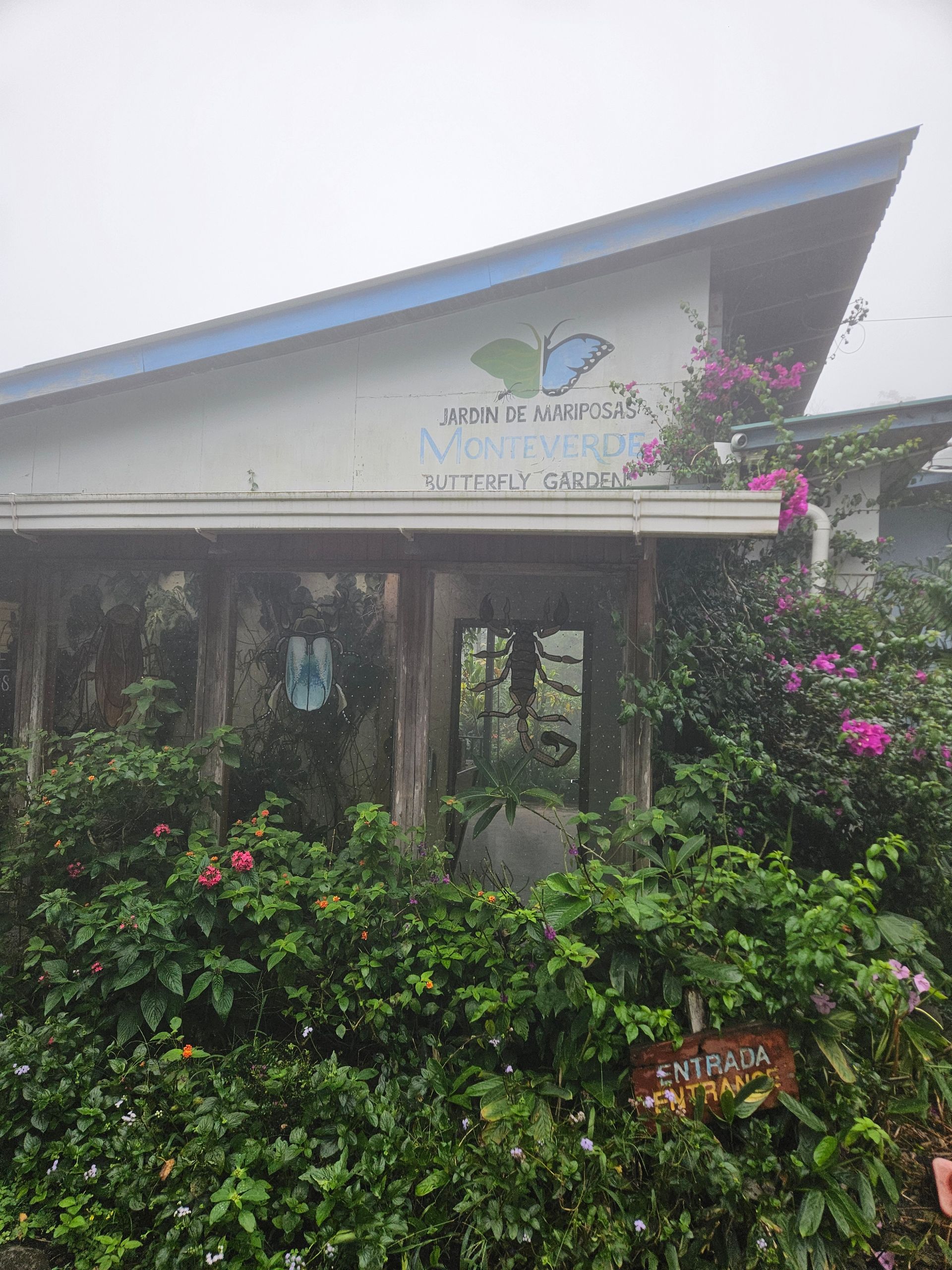
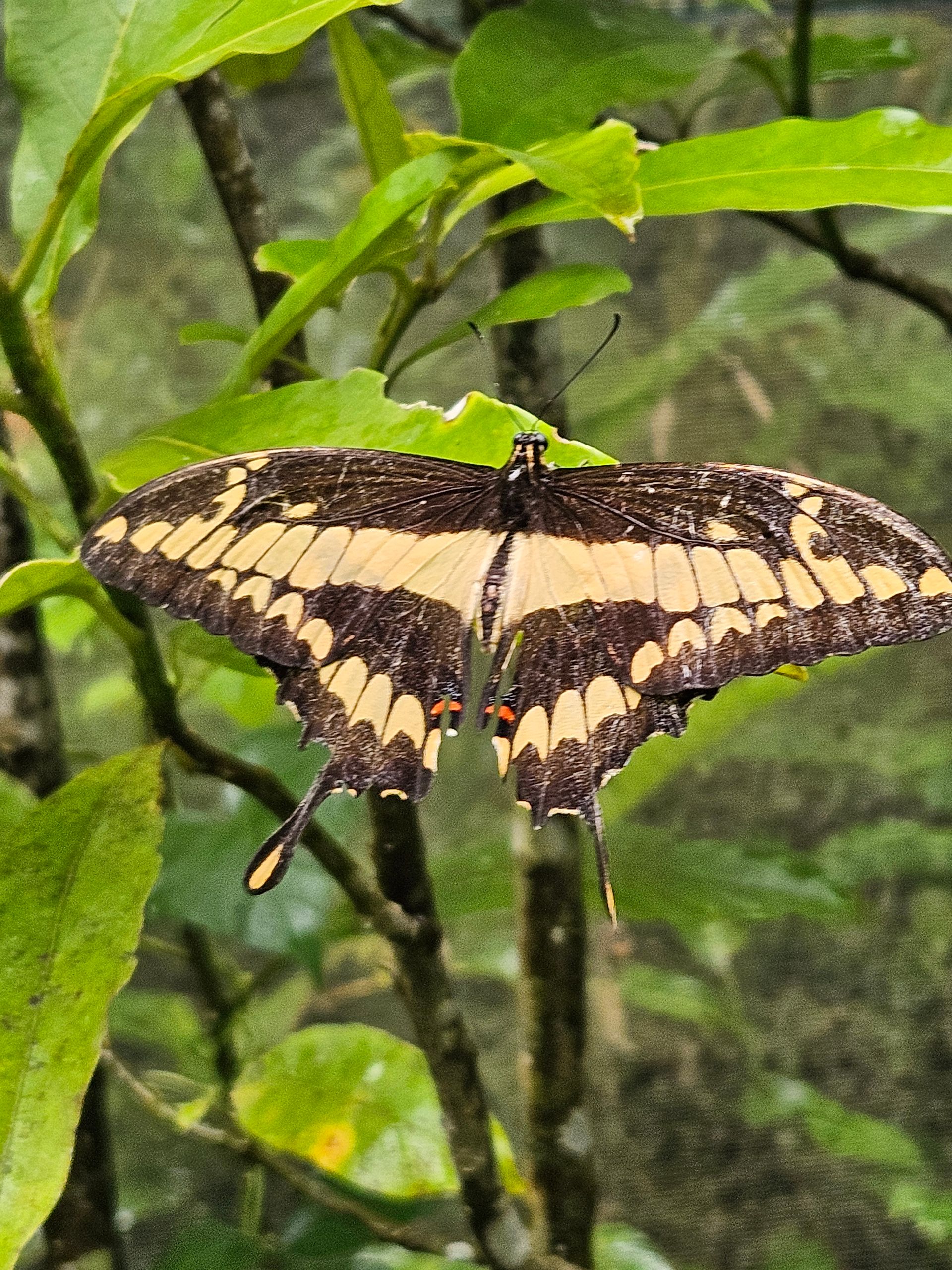
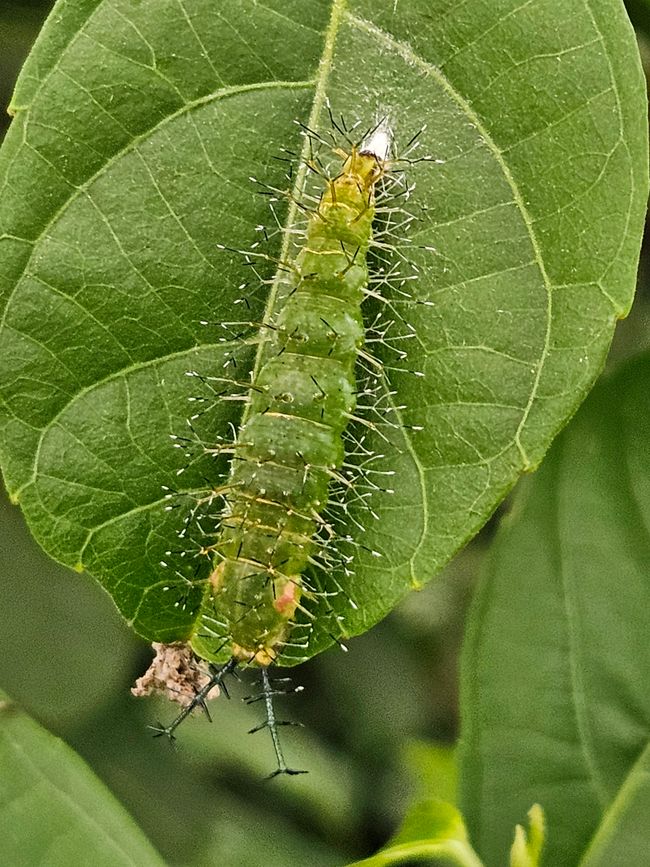
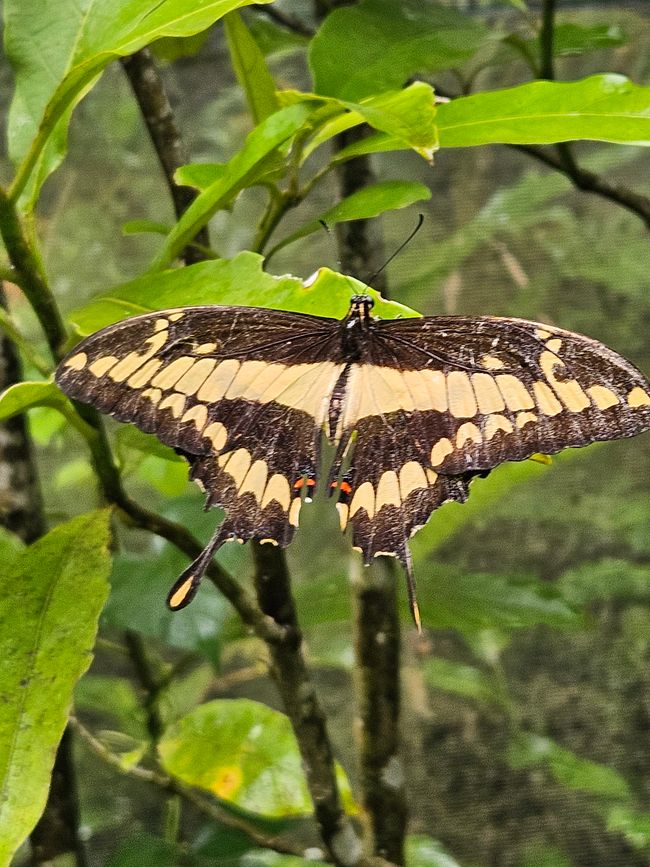
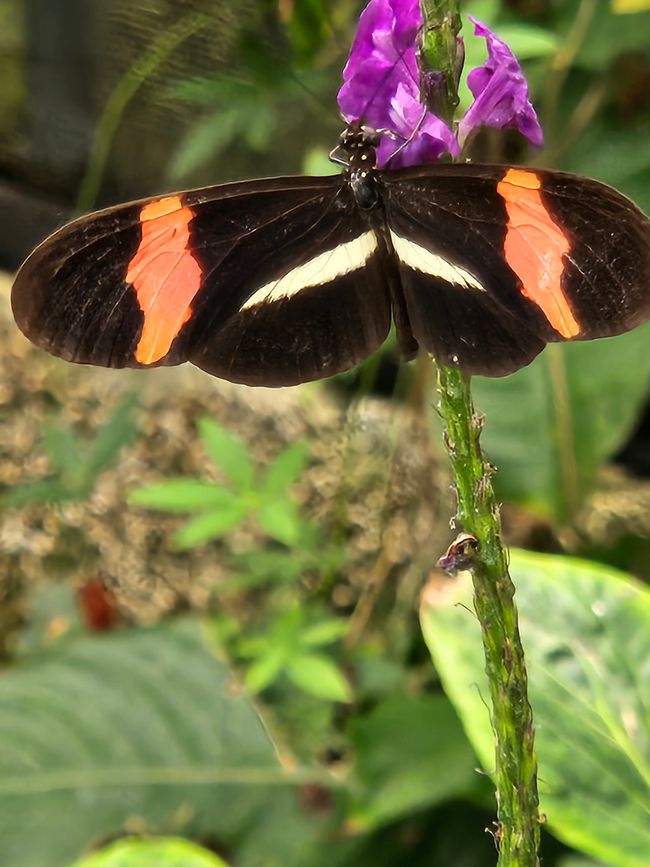
Next, we head to the Butterfly Garden, which is located right next to the town of Santa Elena and is among the oldest nature and education projects in the region. In four different greenhouses adapted to various climate zones, more than 30 native butterfly species, including the famous Blue Morpho butterfly, flutter around. Additionally, there is an interactive nature center where guides provide visitors fascinating insights into the world of Costa Rican insects and arachnids.
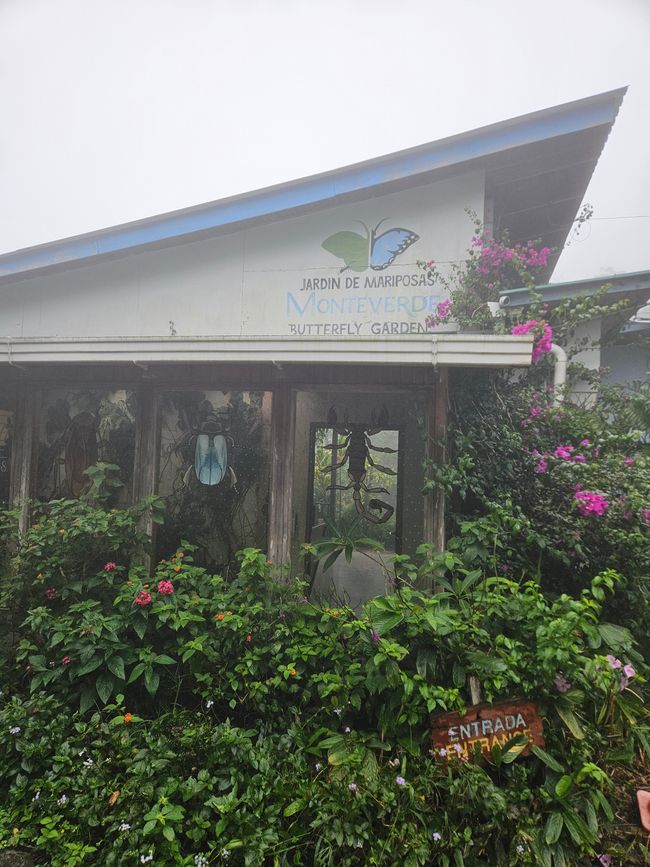
Our guide is named Jenny and bears a certain resemblance to Dr. Frank from The Rocky Horror Picture Show. Like Snyder, she seems to have a fondness for macabre stories from the animal world; we already know the story of the Tarantula Hawk Wasp: the females hunt tarantulas, paralyze them with a venomous sting, and lay an egg on the body of the still-living spider so that the larva can later consume it from the inside. The information about the reproduction of walking sticks is new, which can reproduce both sexually and through parthenogenesis, whereby females without males produce pure female clones that drop the eggs individually from the tree to the forest floor (where they sound like falling seeds) or fling them away with their abdomens. Jenny also explains vividly the courtship behavior of Hercules beetles and raves about cockroaches, which, biologically, are among the cleanest insects. The fact that they are perceived in our heads as the epitome of dirt lies solely in their unappetizing habitats (like garbage bins or sewer pipes).
Very interesting. Then we finally move on to the beautiful things... into the butterfly greenhouses.
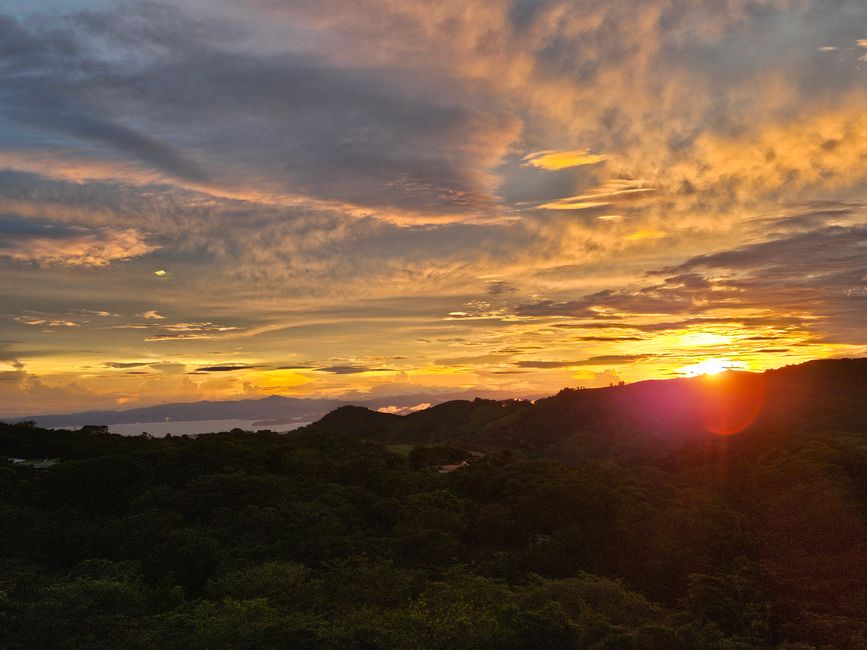
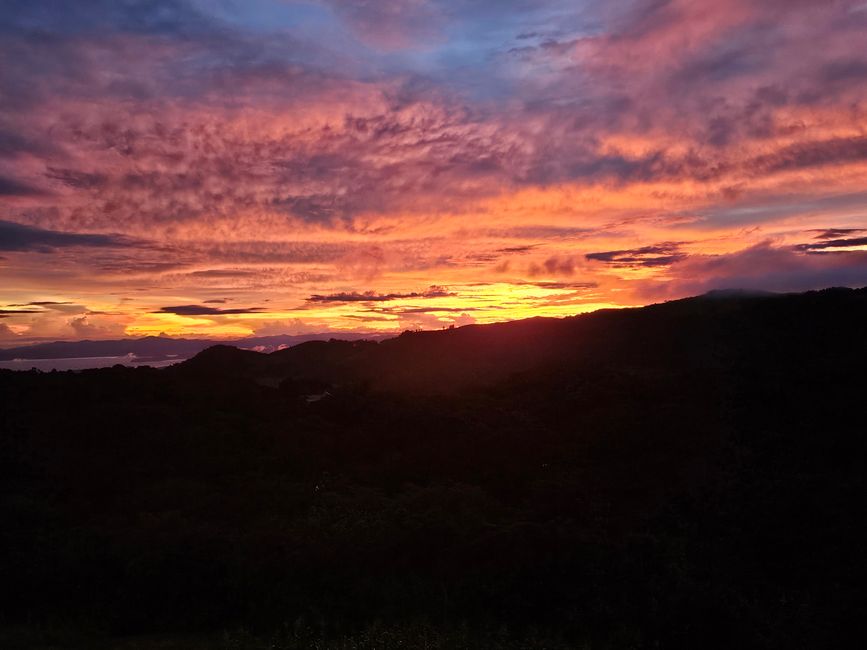
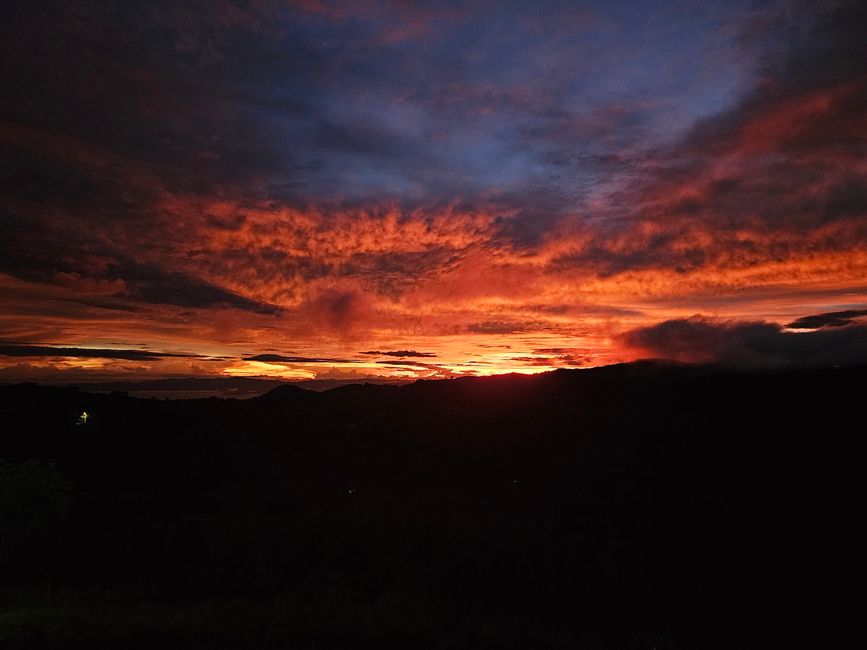
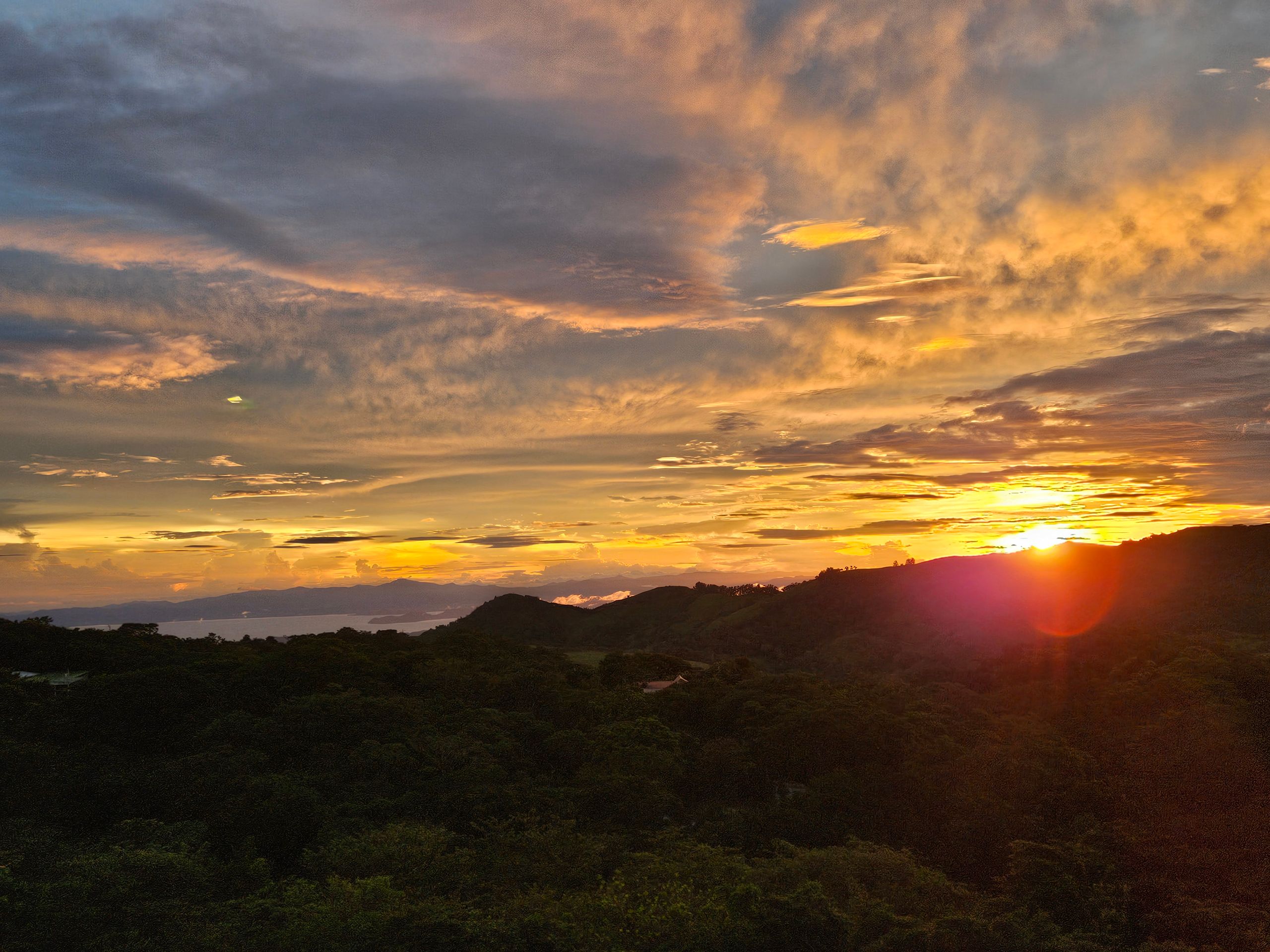
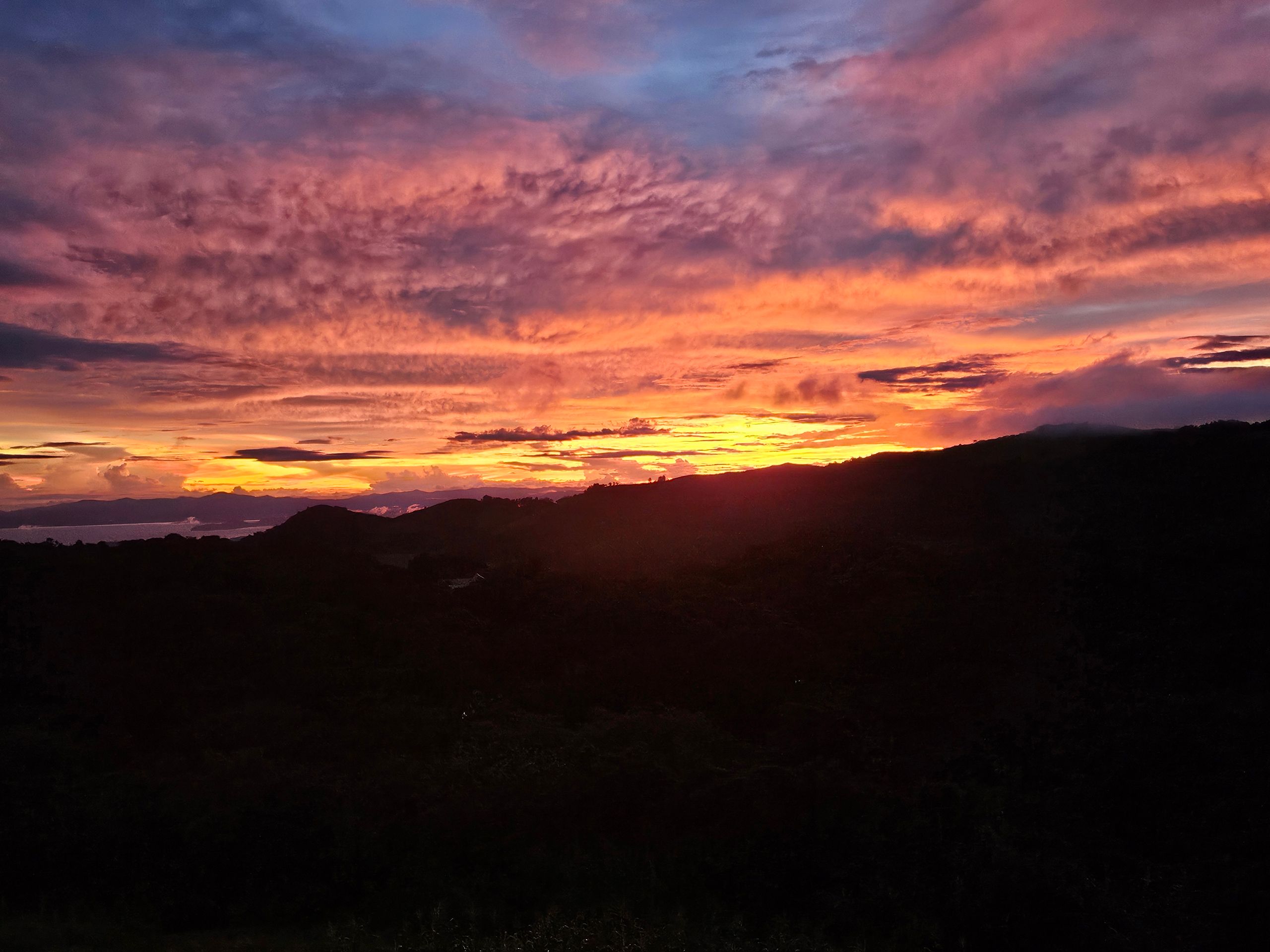
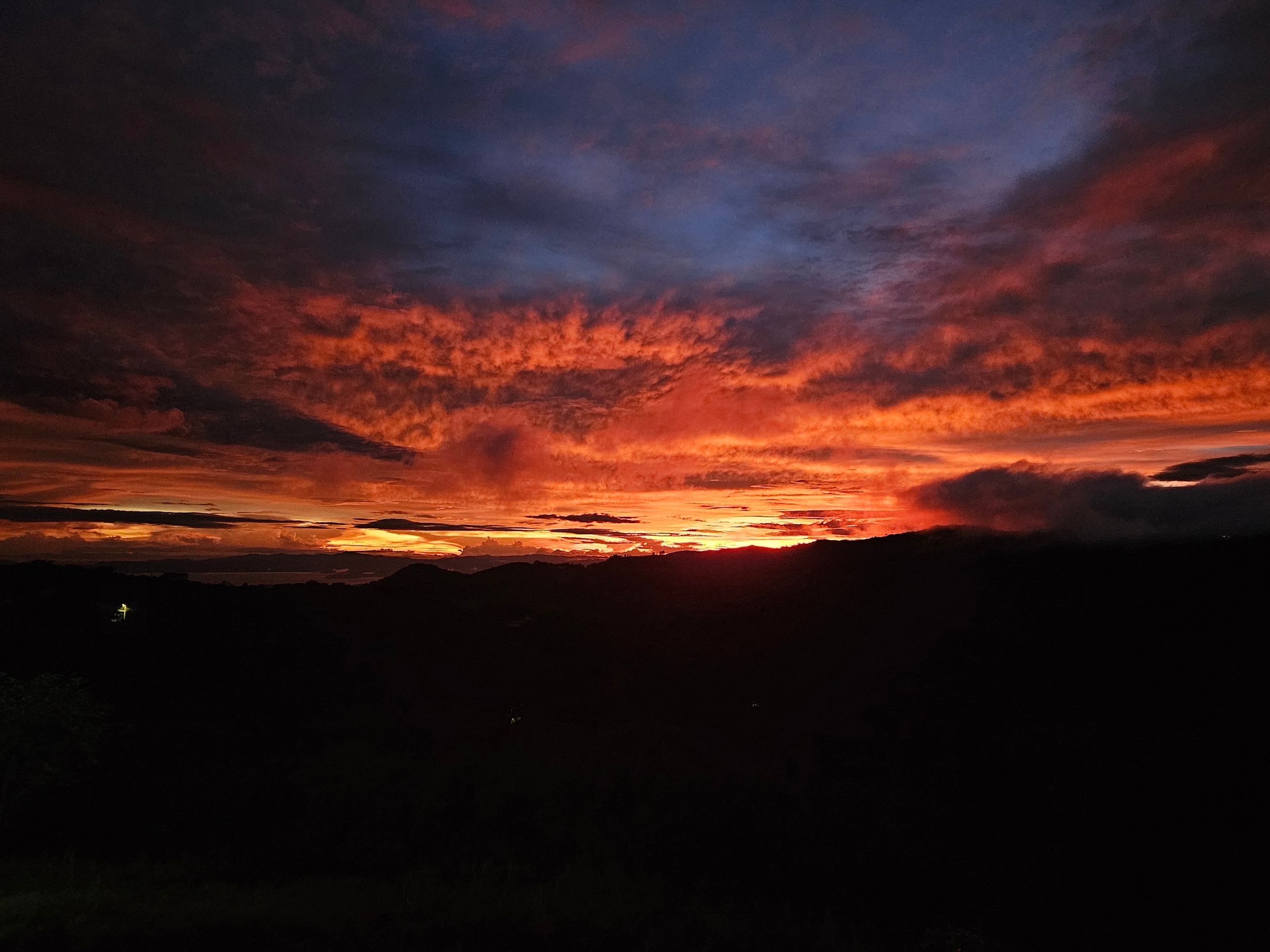
An intense wonderful day is coming to an end. However, the highlight is the sunset from the terrace of our vacation apartment Magic Place: the sky colors itself over an hour in ever-changing shades of red, each scene more beautiful than the last. Over and over, we walk out onto the terrace to take photos. It’s a bit too damp, cool, and the cushions are damp for sitting outside.