

From Görlitz and Zgorzelec to Hirschberg - our first day in Poland
Today we crossed the border into Poland twice and saw Görlitz and two Polish cities.
Published: 01.04.2026
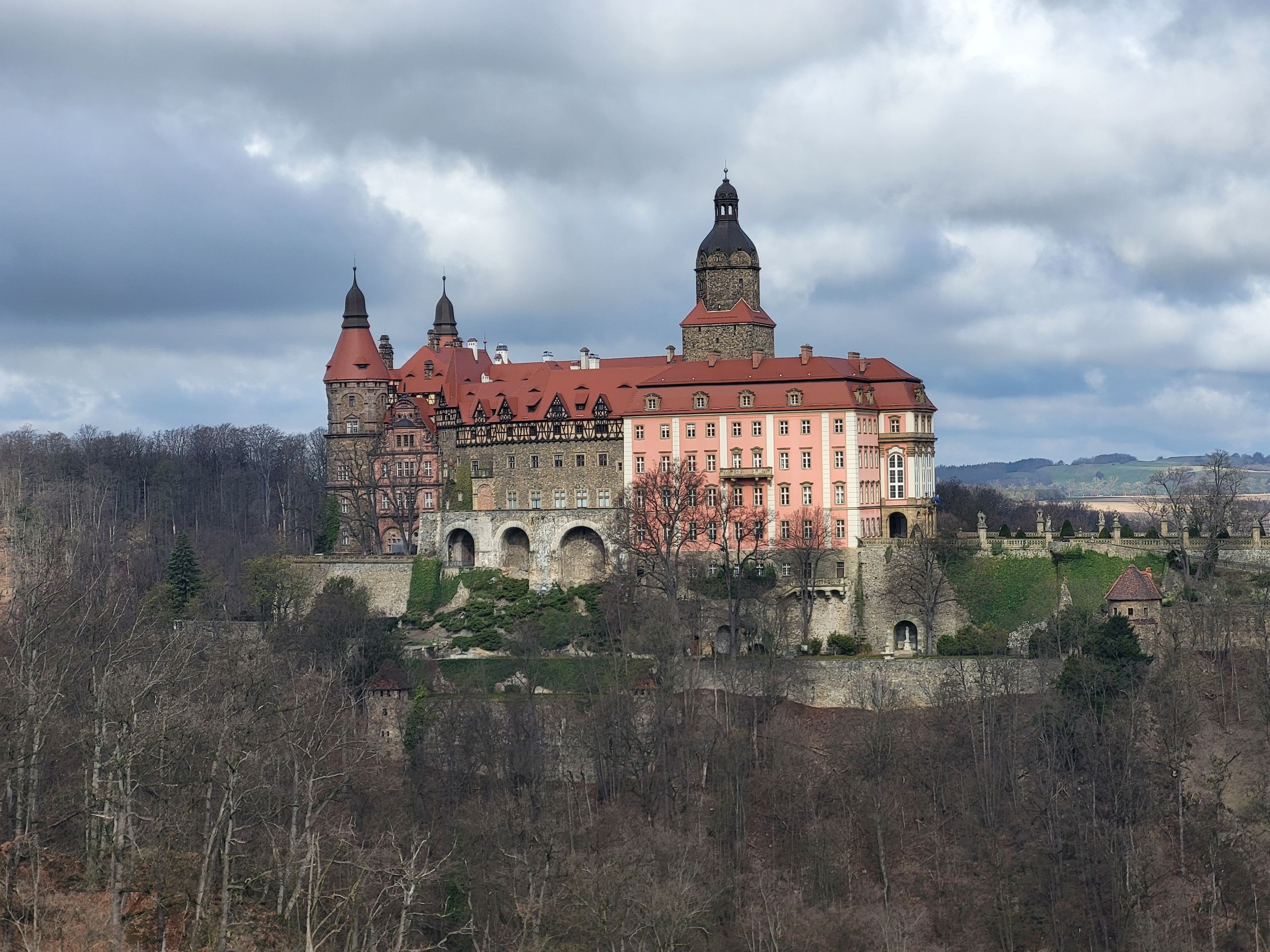
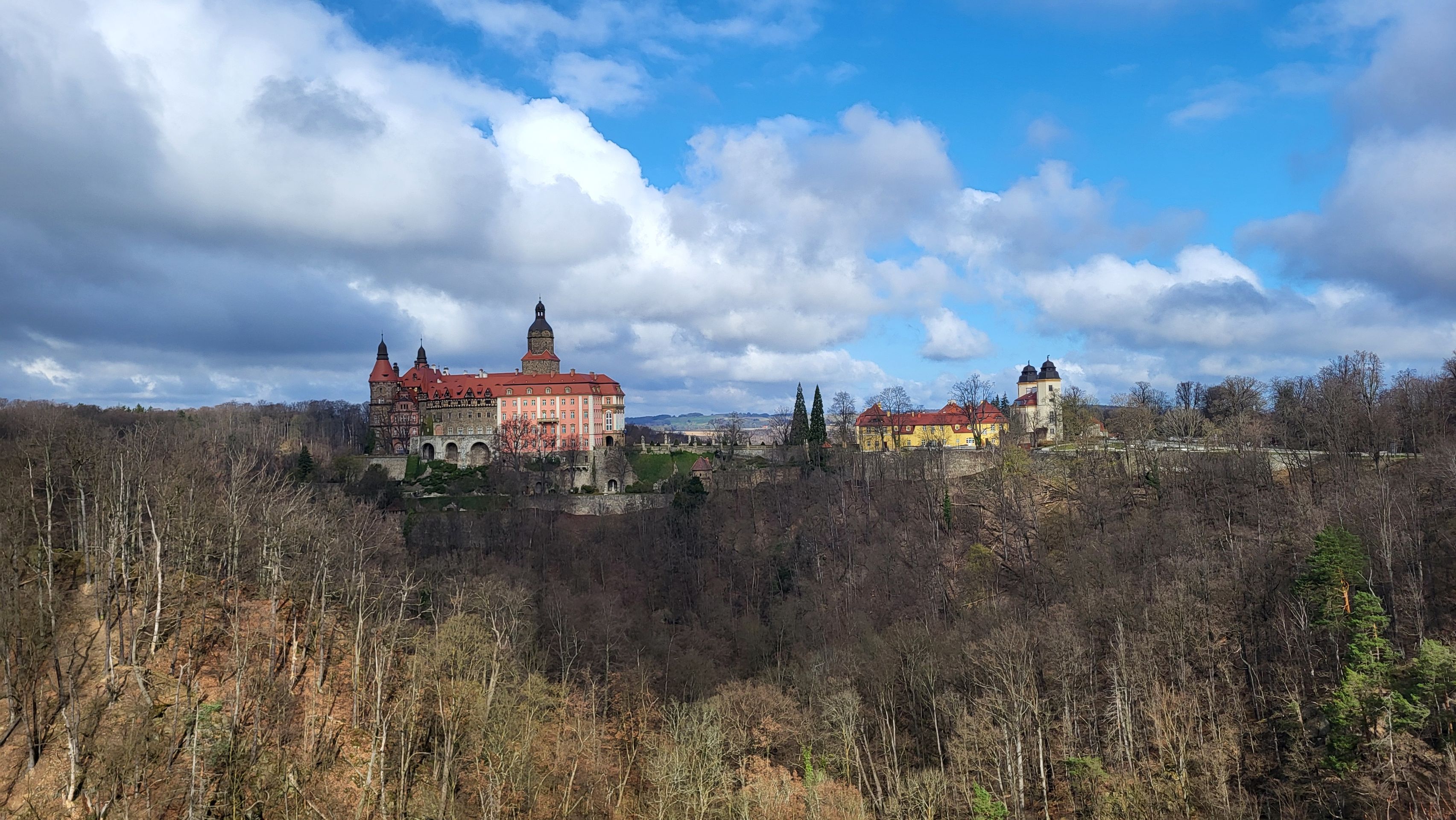
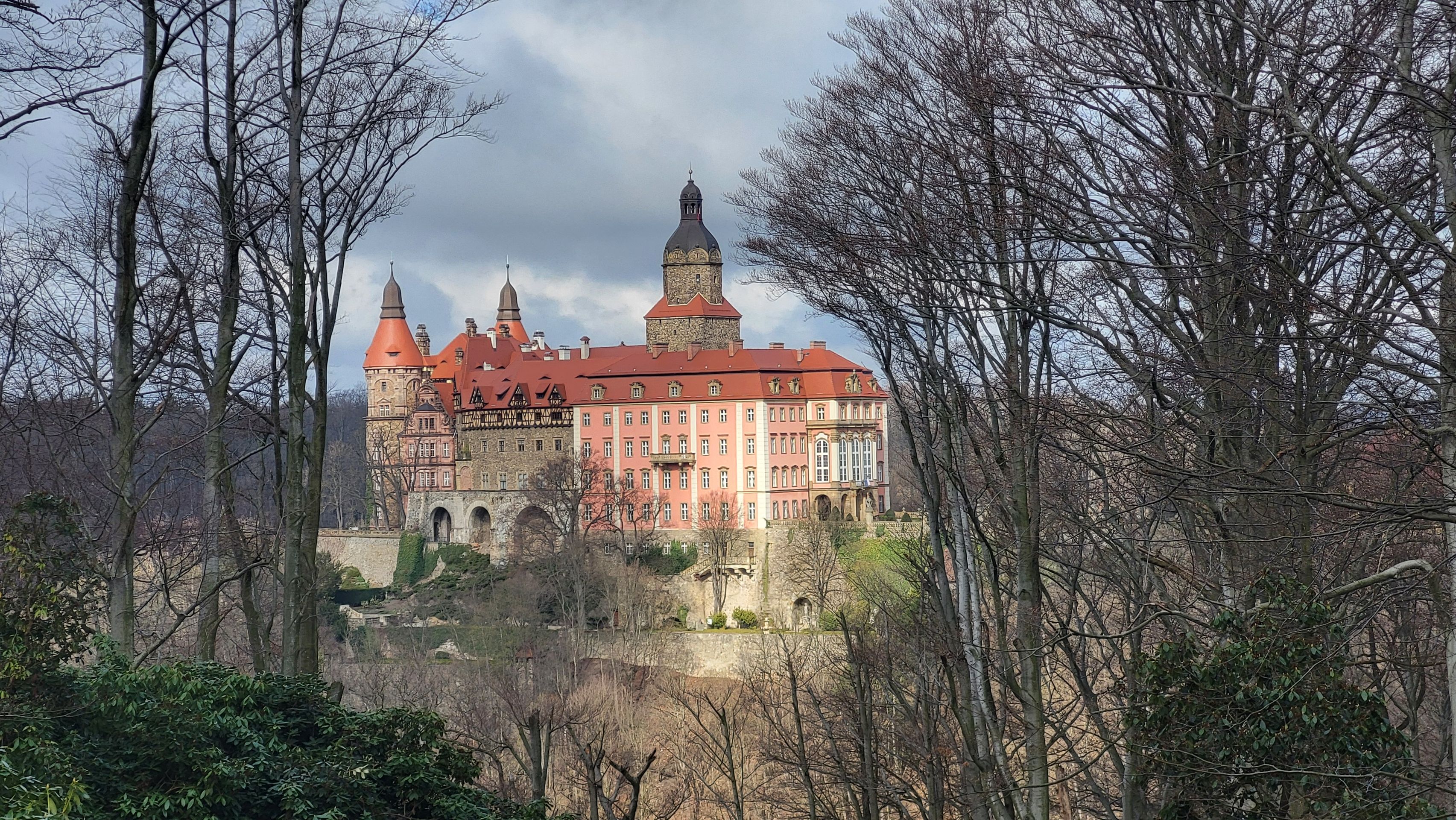
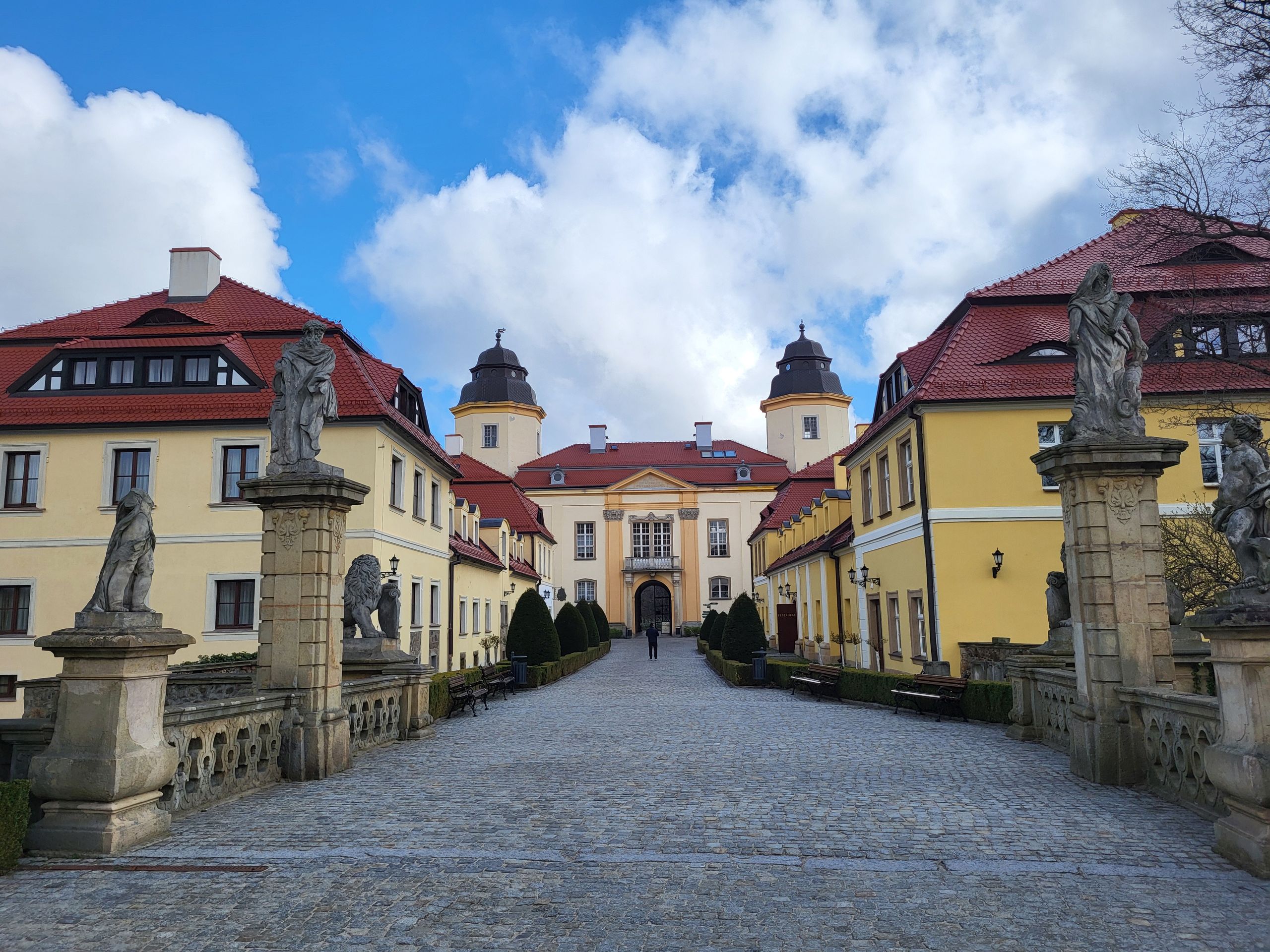
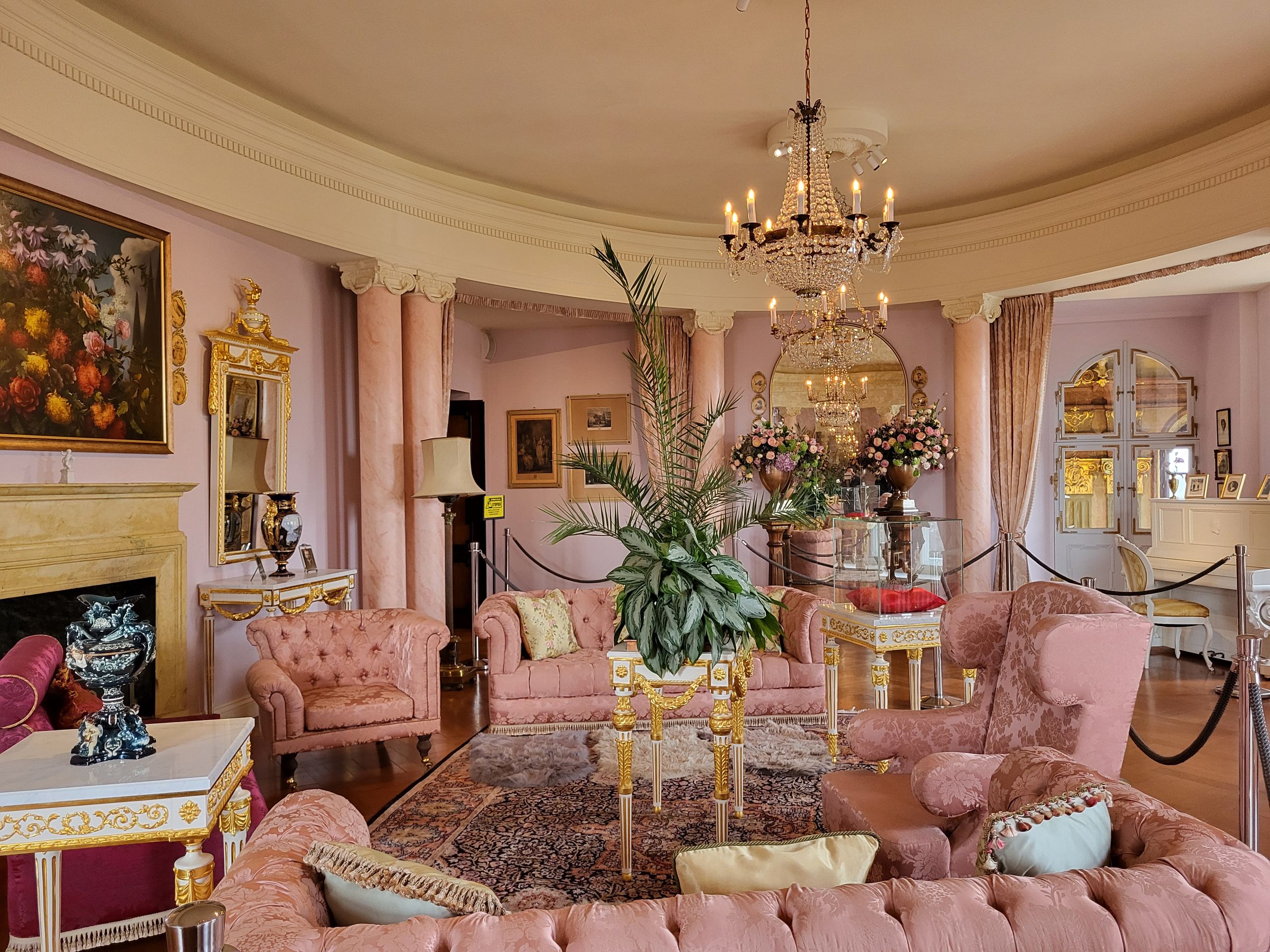
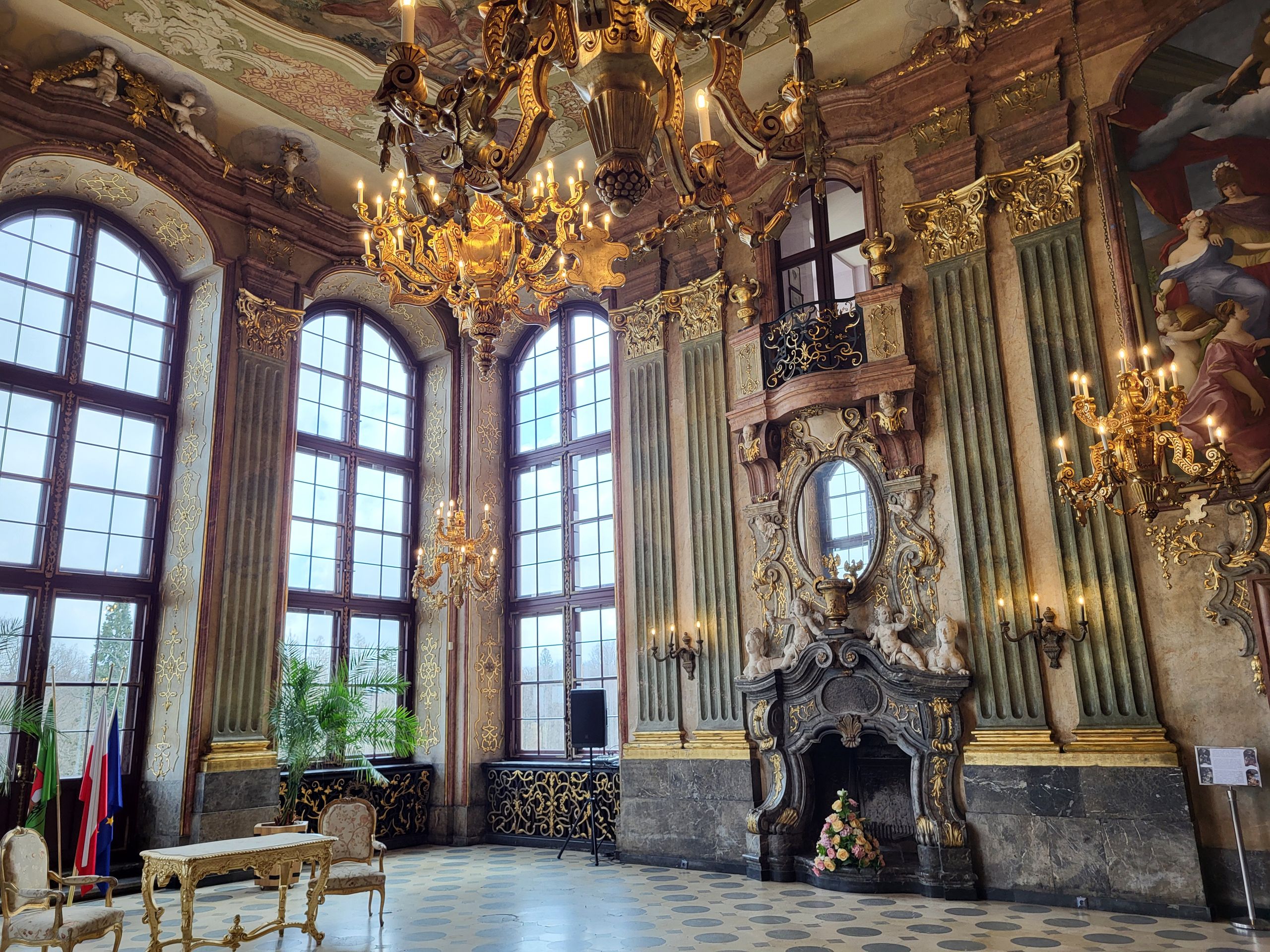
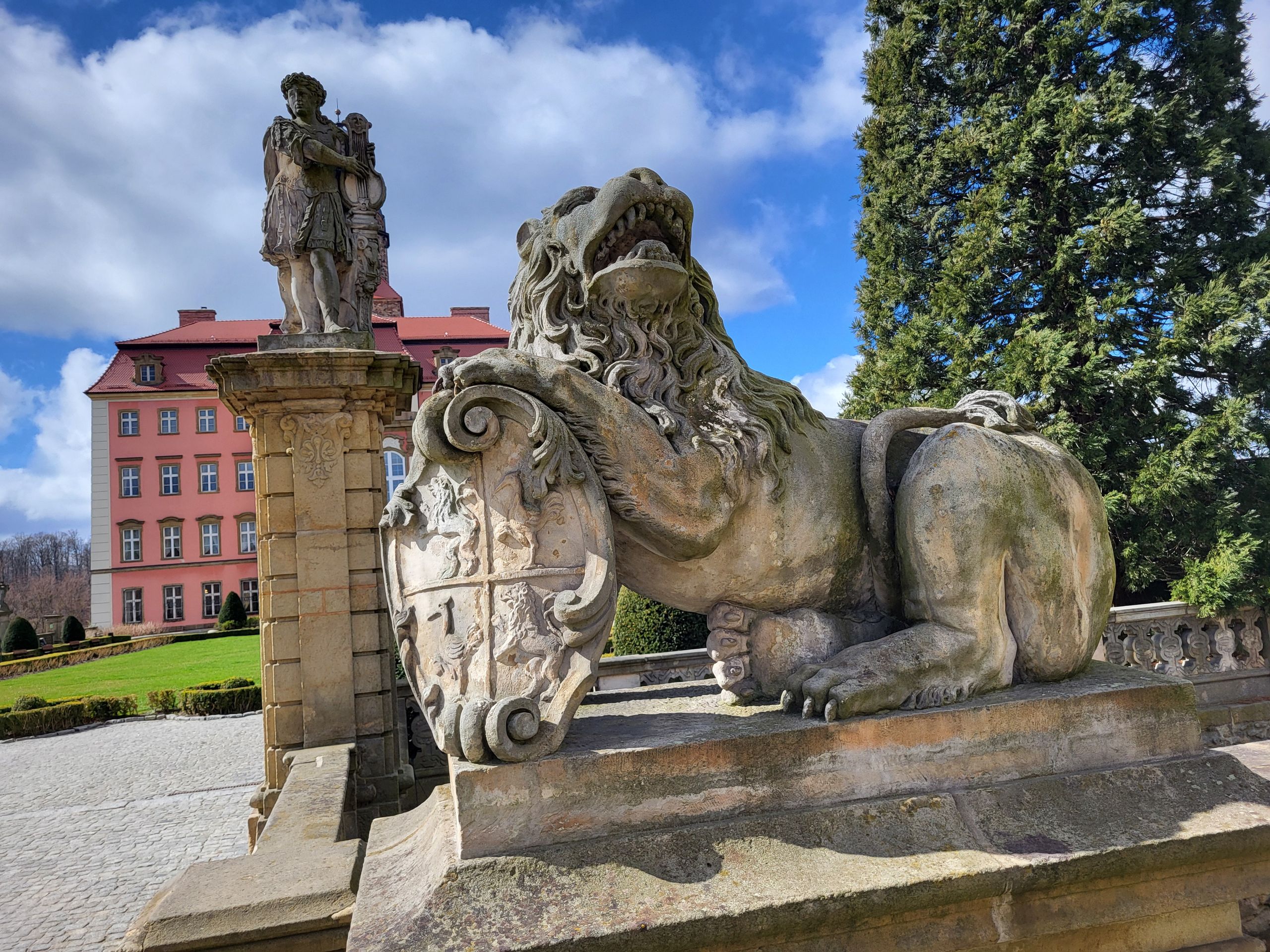
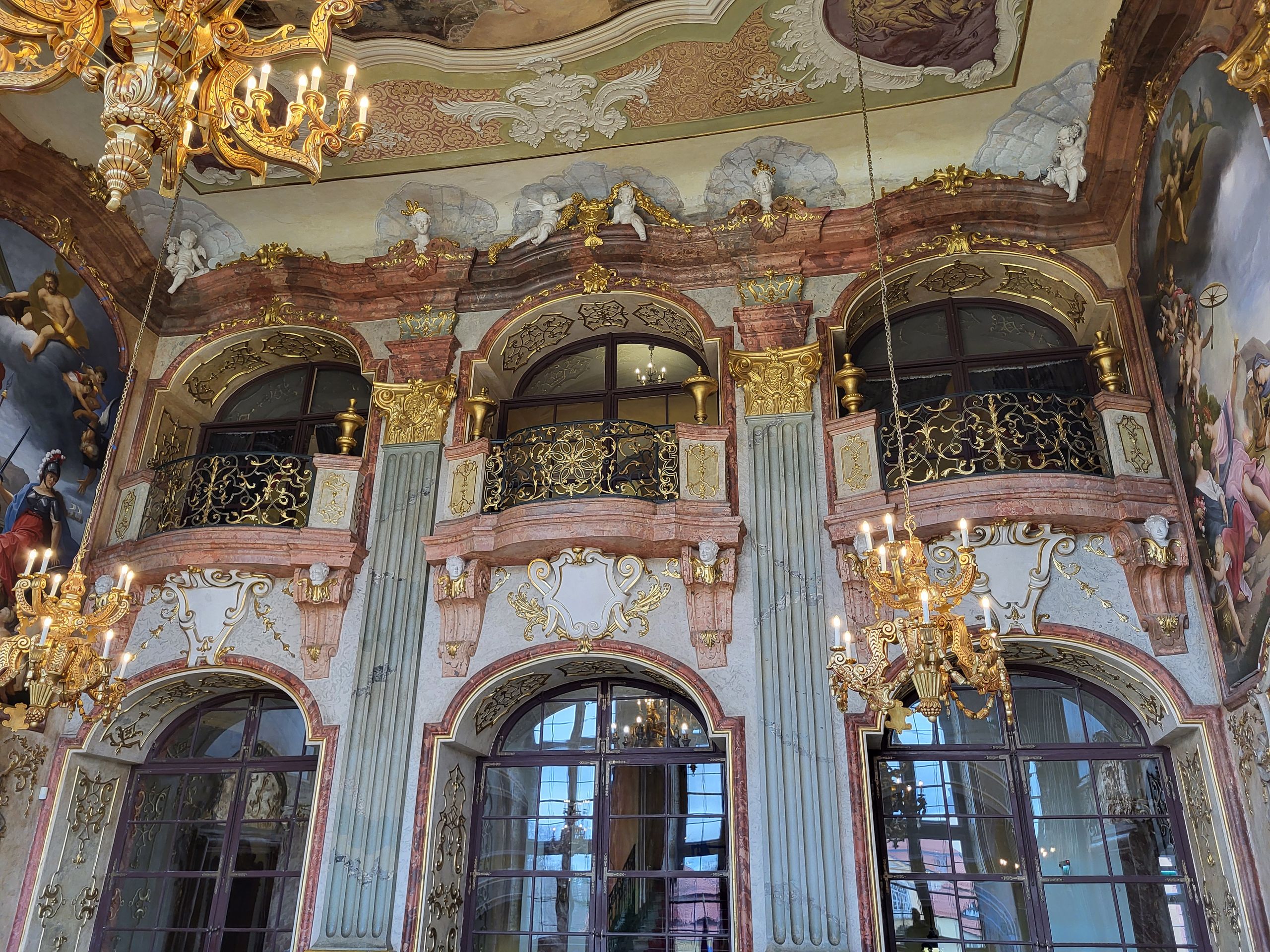
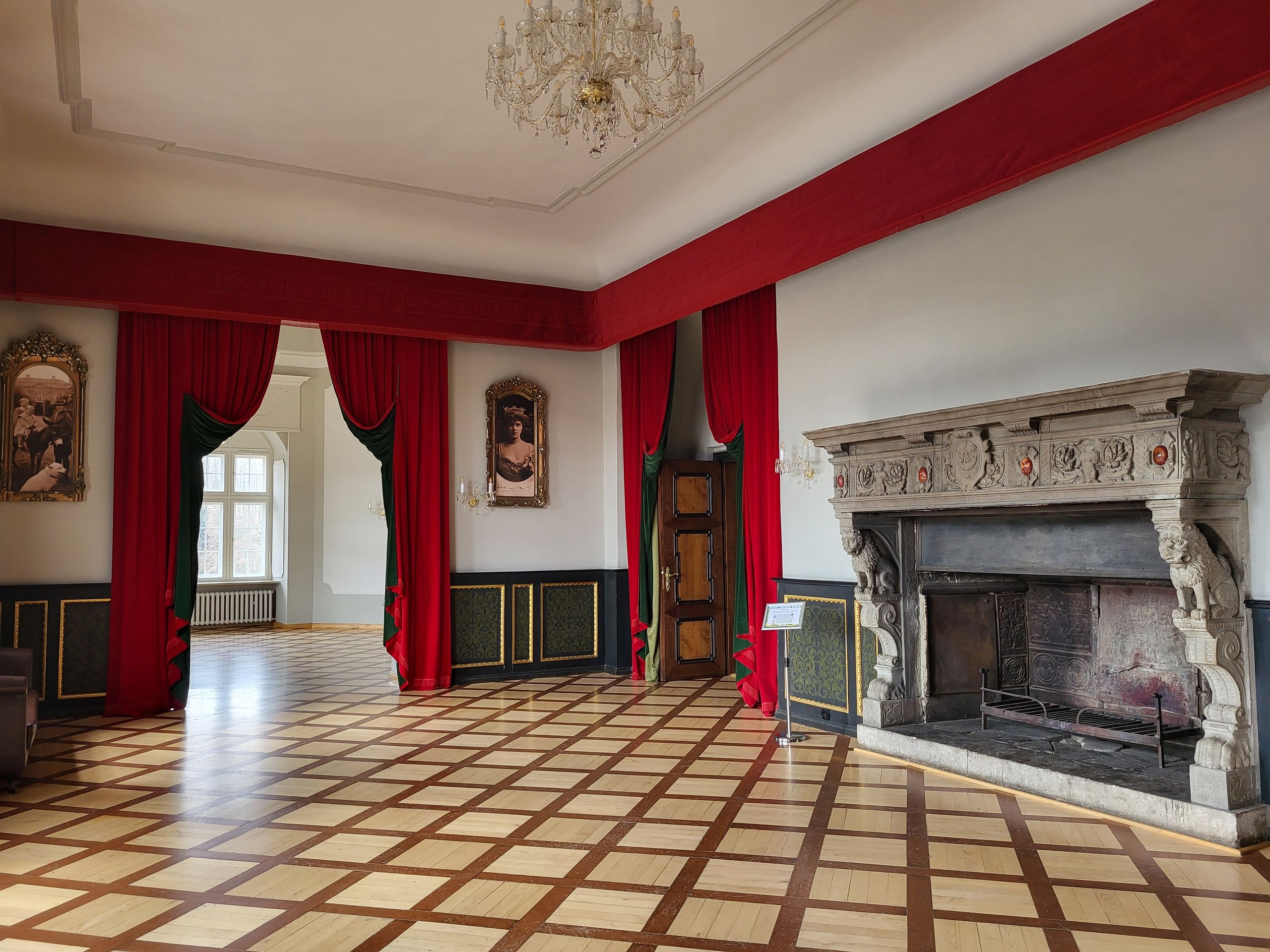
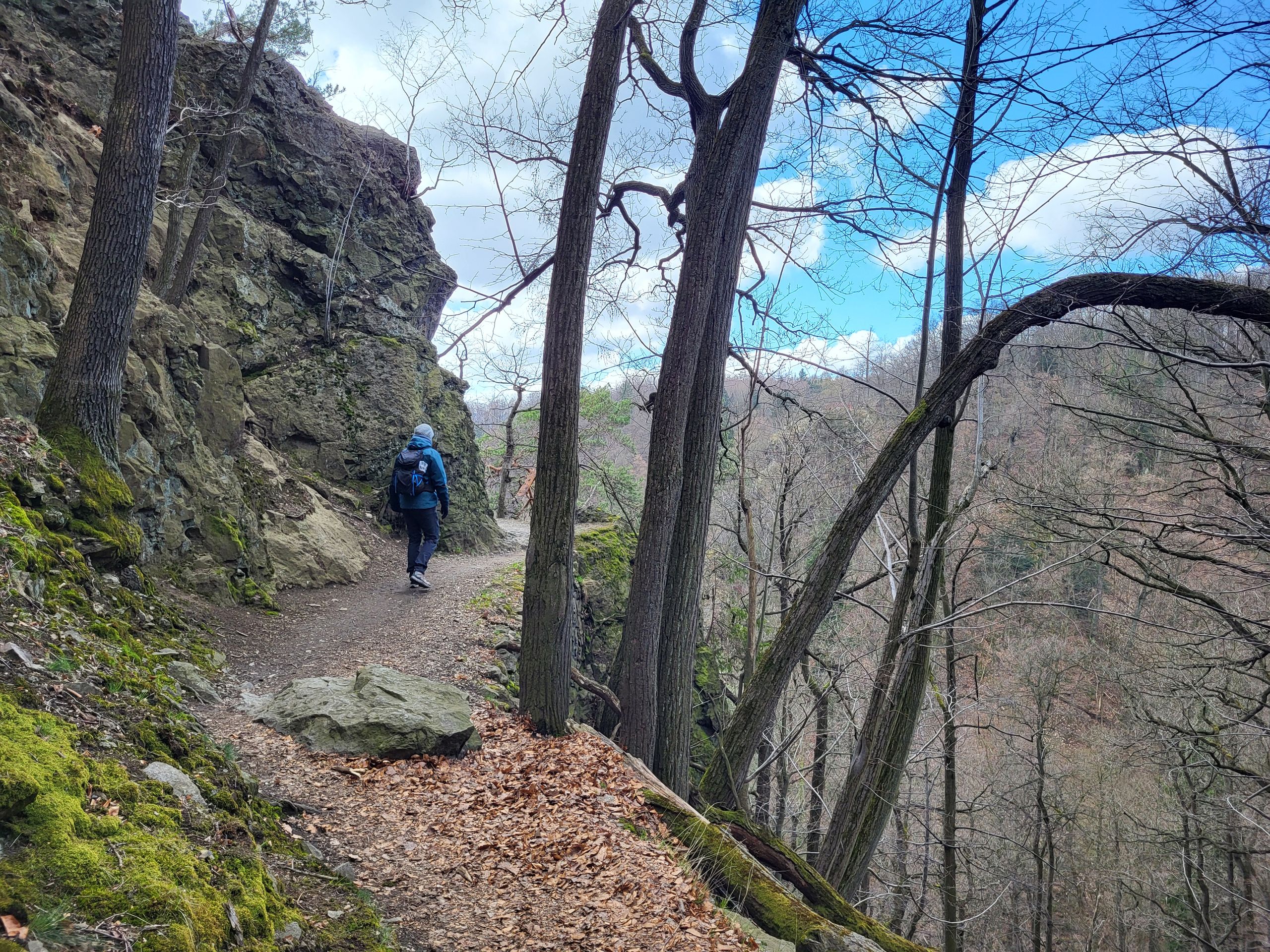
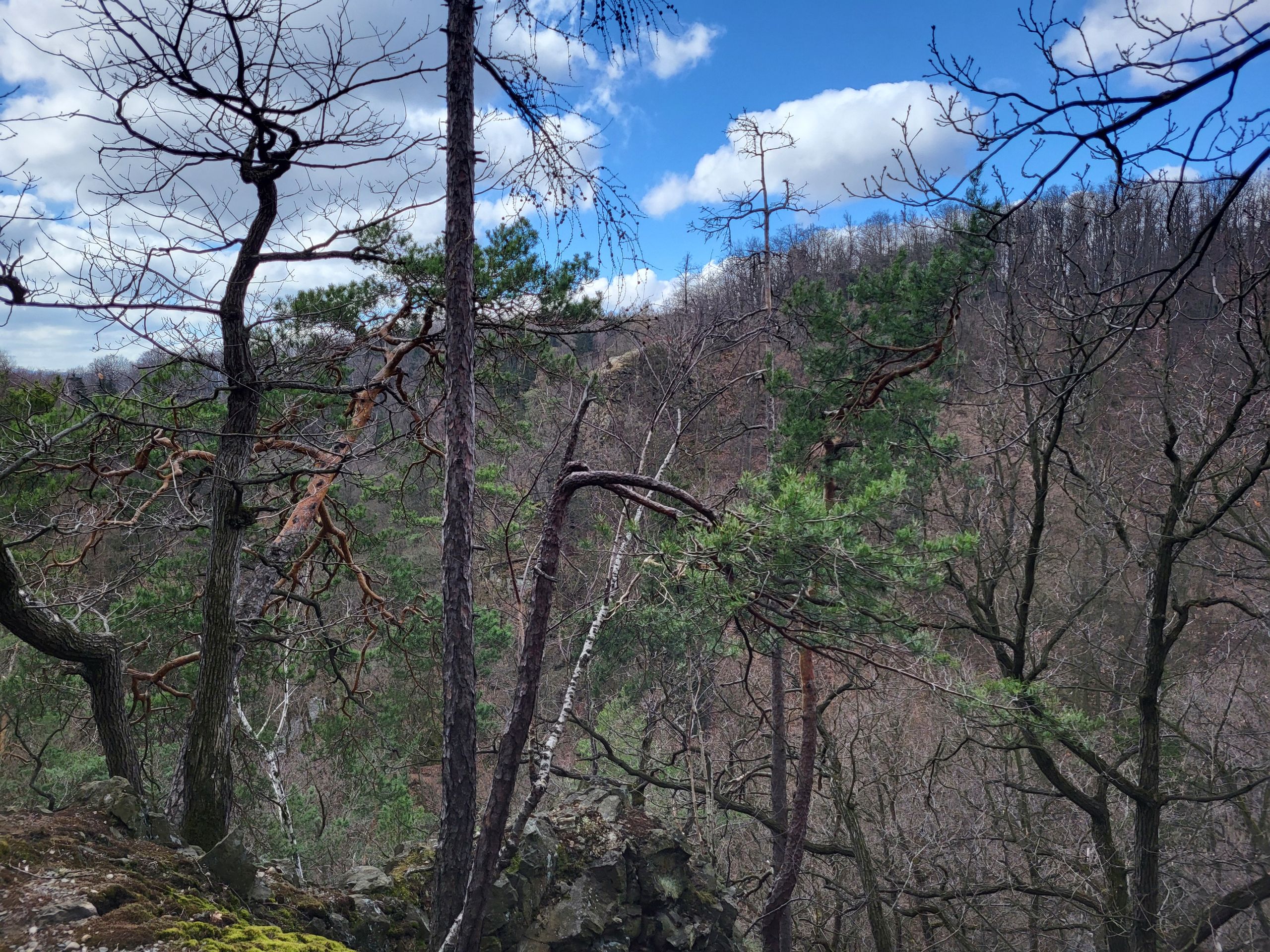



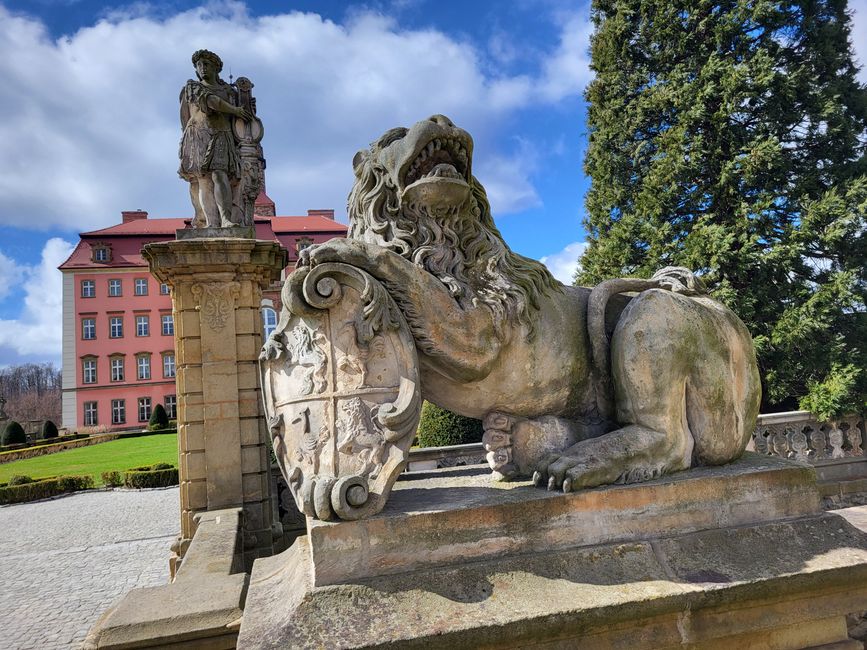
In the morning we drove to Castle Fürstenstein, the largest castle in Lower Silesia.
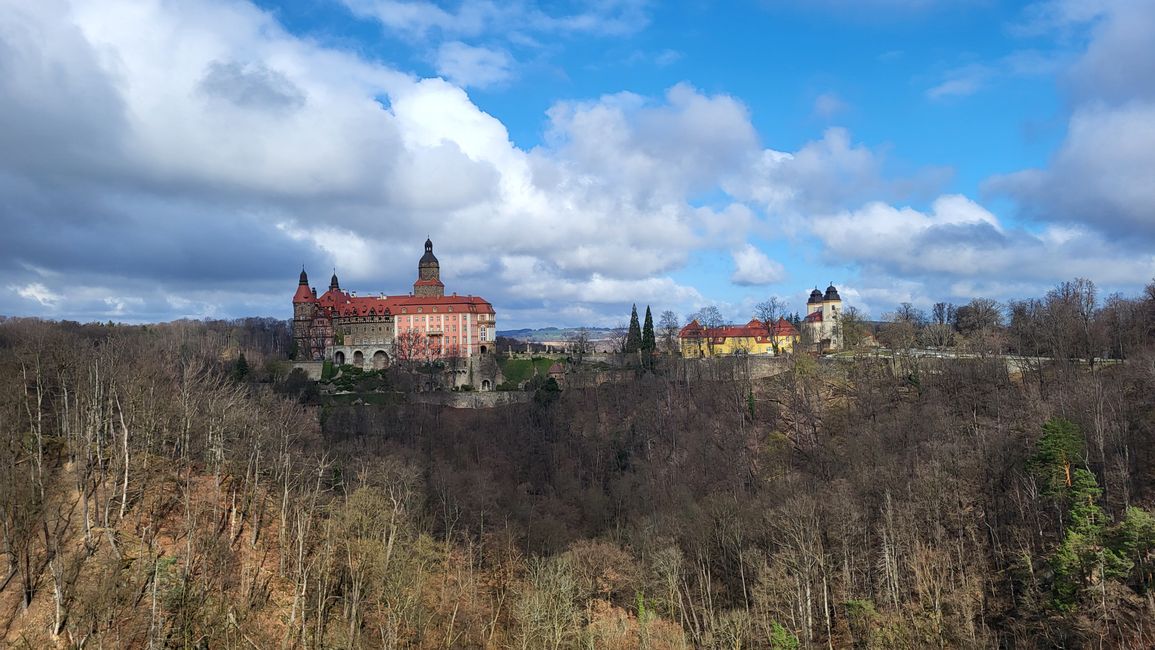
We parked at the Palm House and walked to the castle, allowing us to see the large building from various viewpoints along the way.
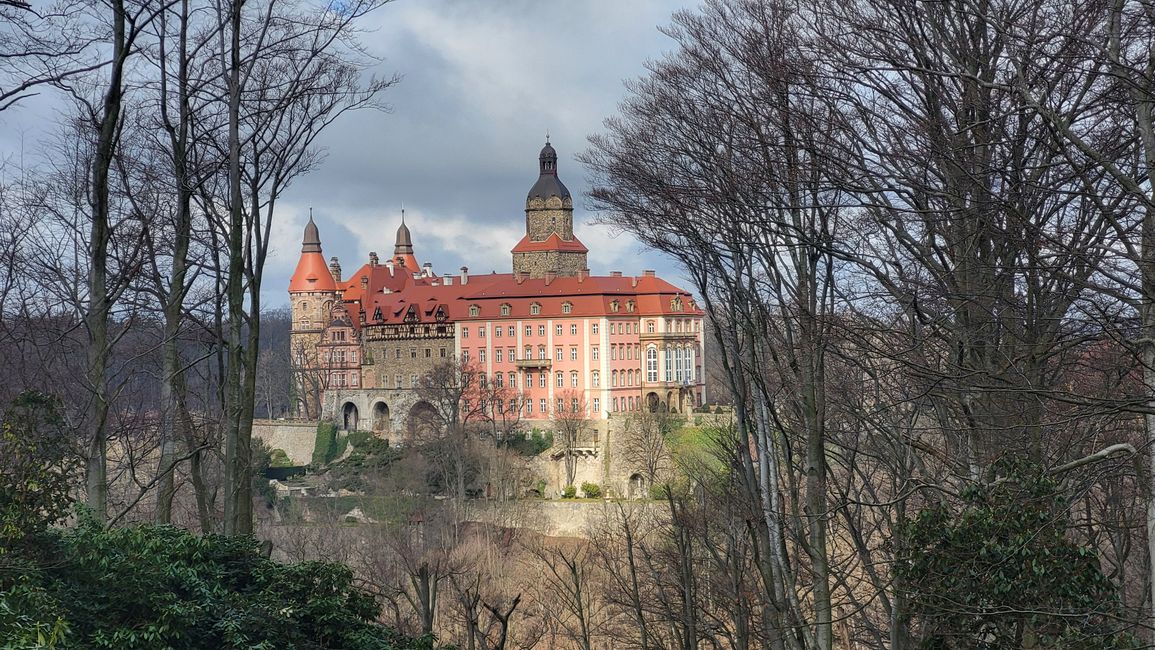
The paths and surroundings of the castle were beautiful and clearly designed for large crowds of visitors.
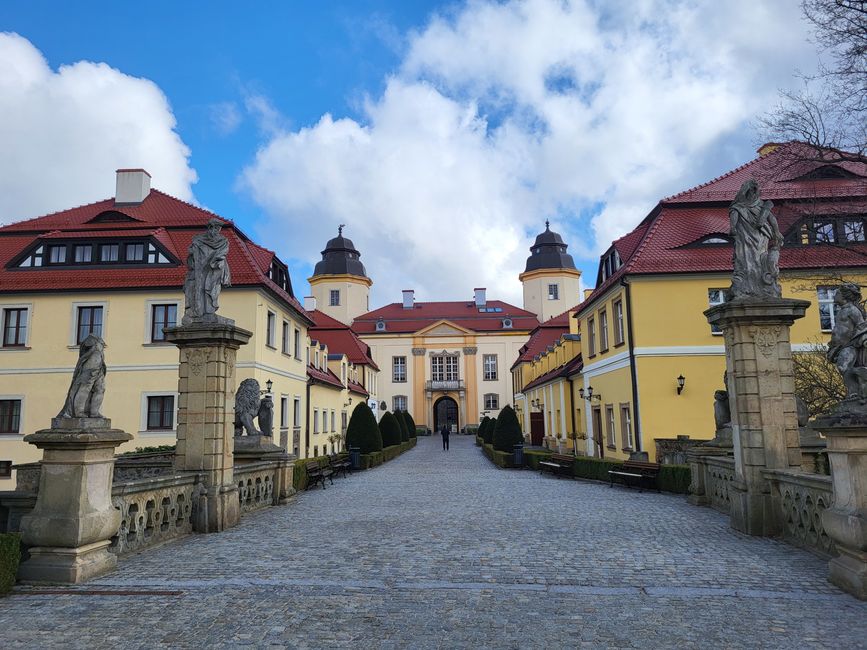
While we were viewing the castle, we were mostly alone in the rooms.
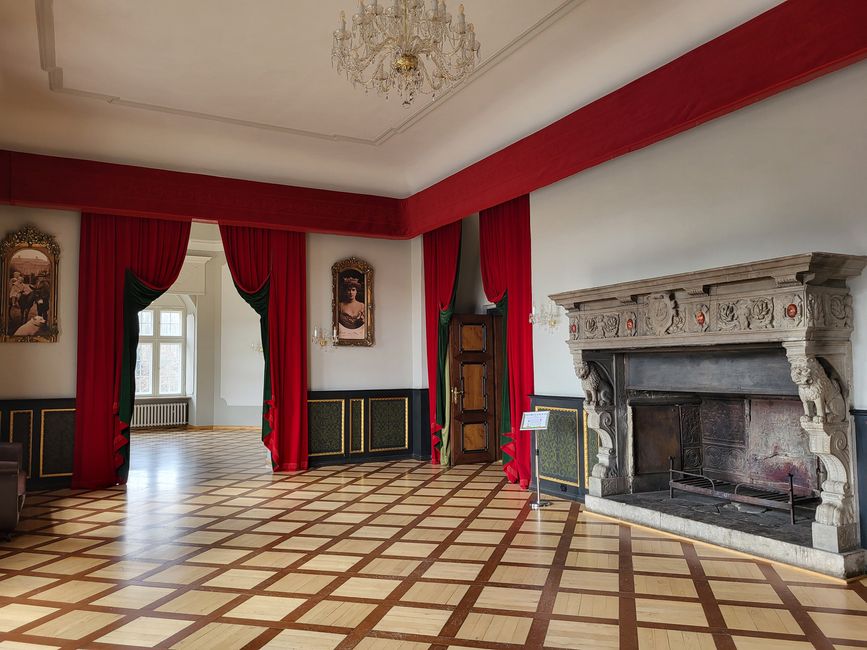
An audio guide narrated the history of the castle and its inhabitants as it guided us through the rooms.
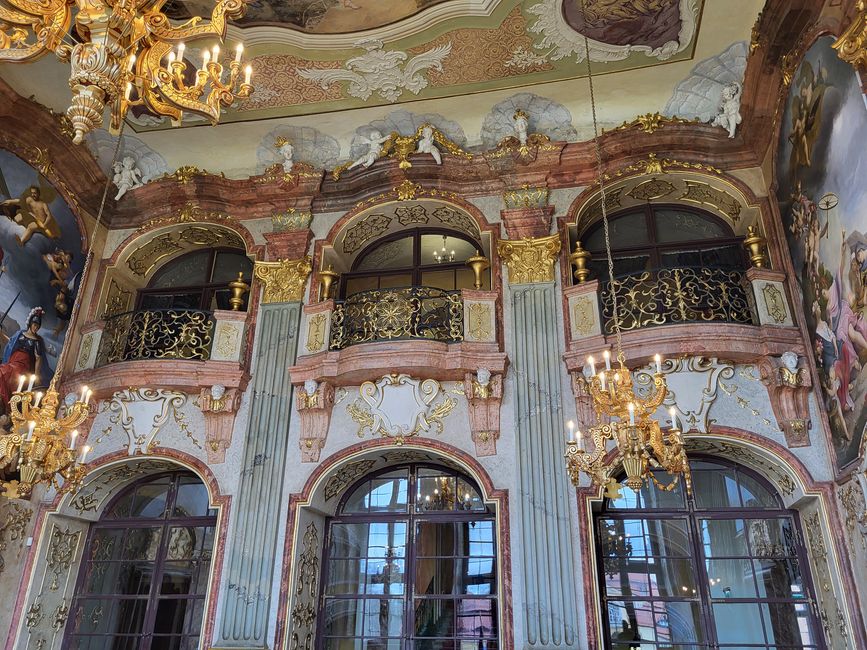
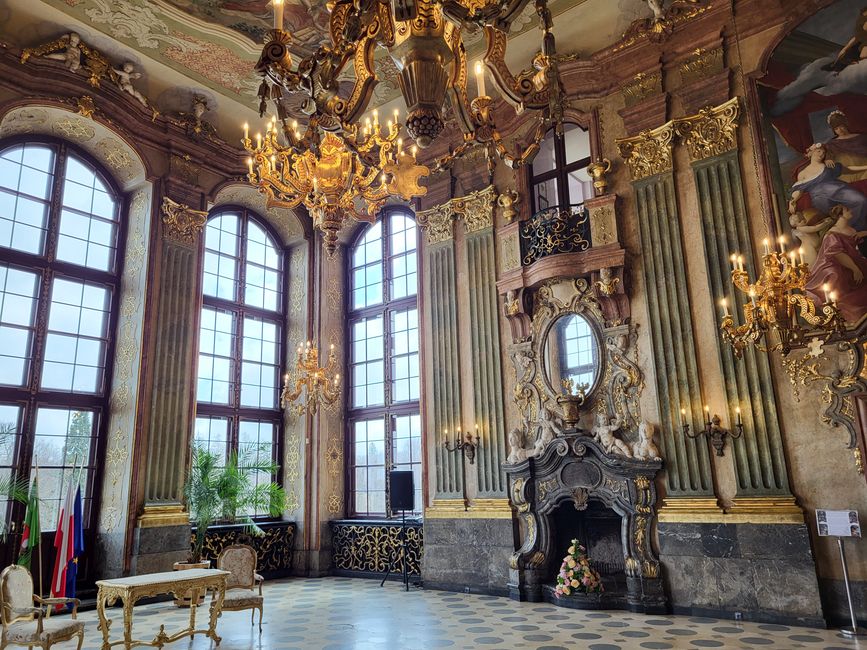
In many rooms of the exhibit, the focus was on the last aristocratic owner, Princess Daisy, the first wife of Hans Heinrich XV from the Hochberg family.
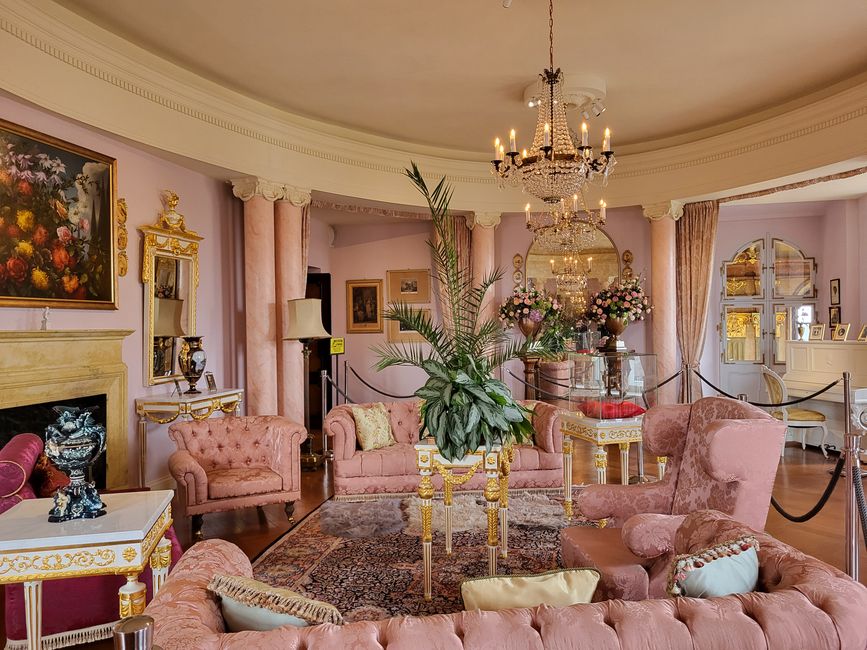
When she lived in the castle with her five children, there were about 300 staff looking after the family’s wellbeing.
The second wife of Hans Heinrich XV, who was over 30 years younger, later caused a scandal: she had an affair with her youngest stepson, whom she later married after divorcing her first husband.
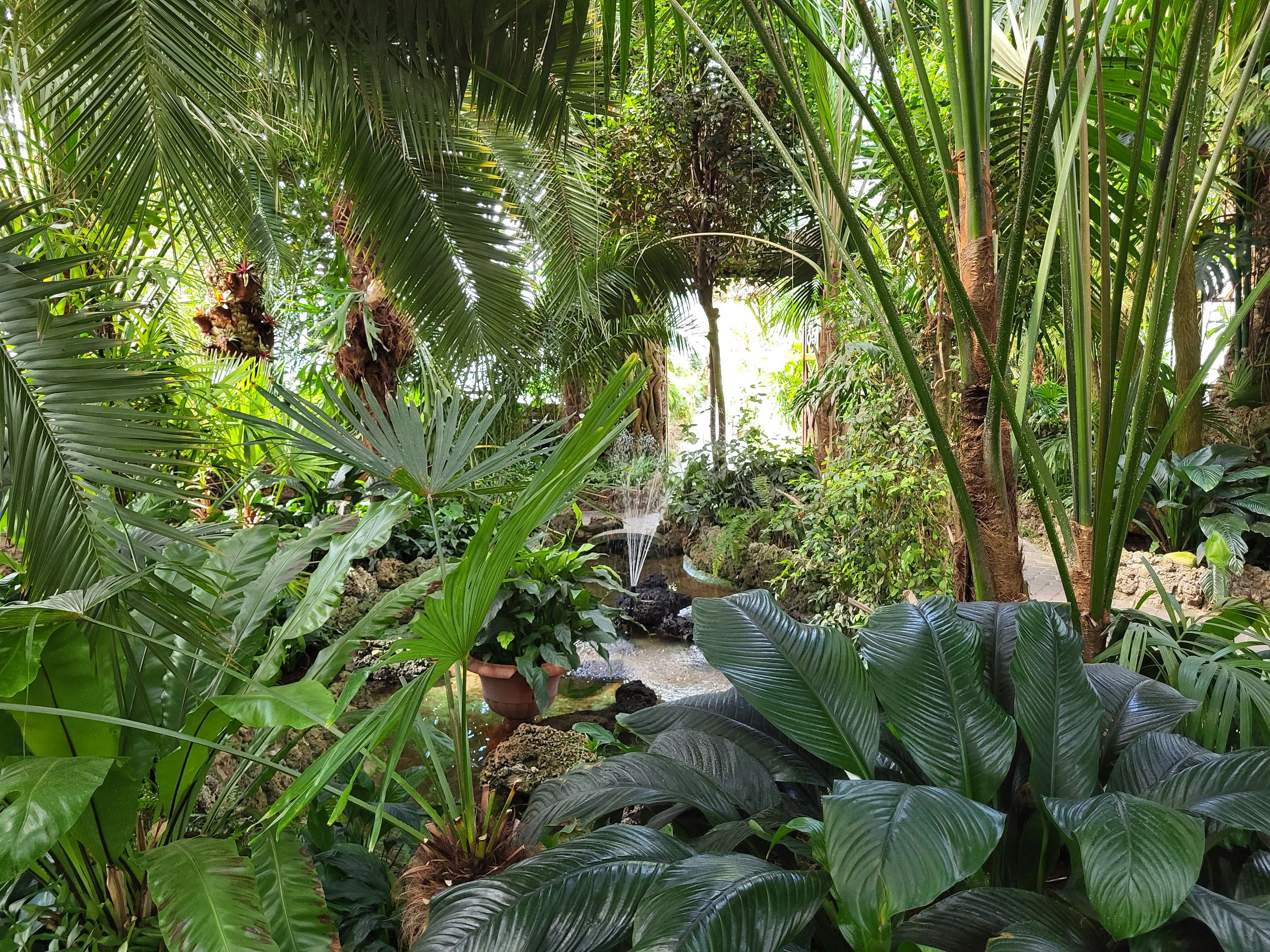
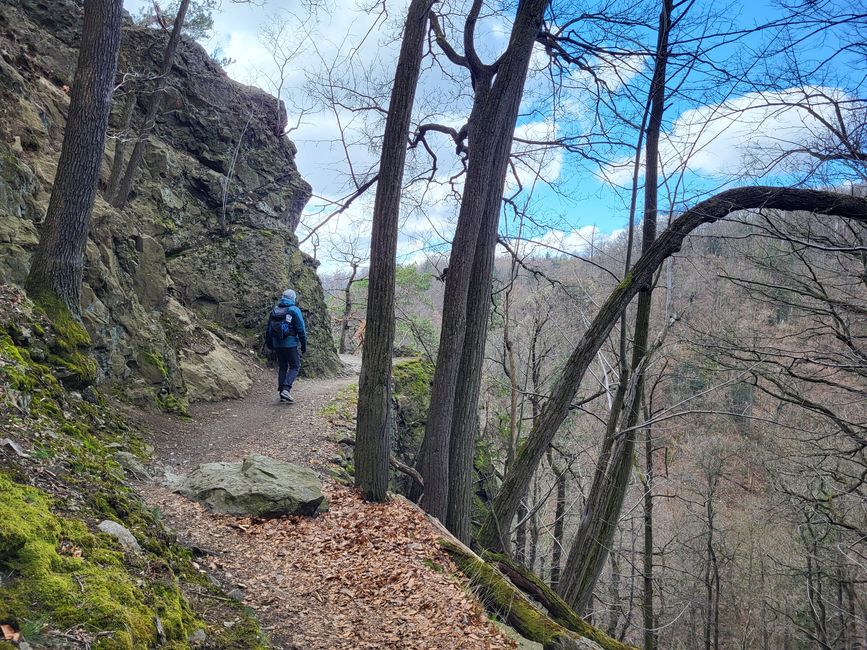
After these aristocratic family stories and a lot of princely splendor, we returned via a small forest path to view the Palm House.
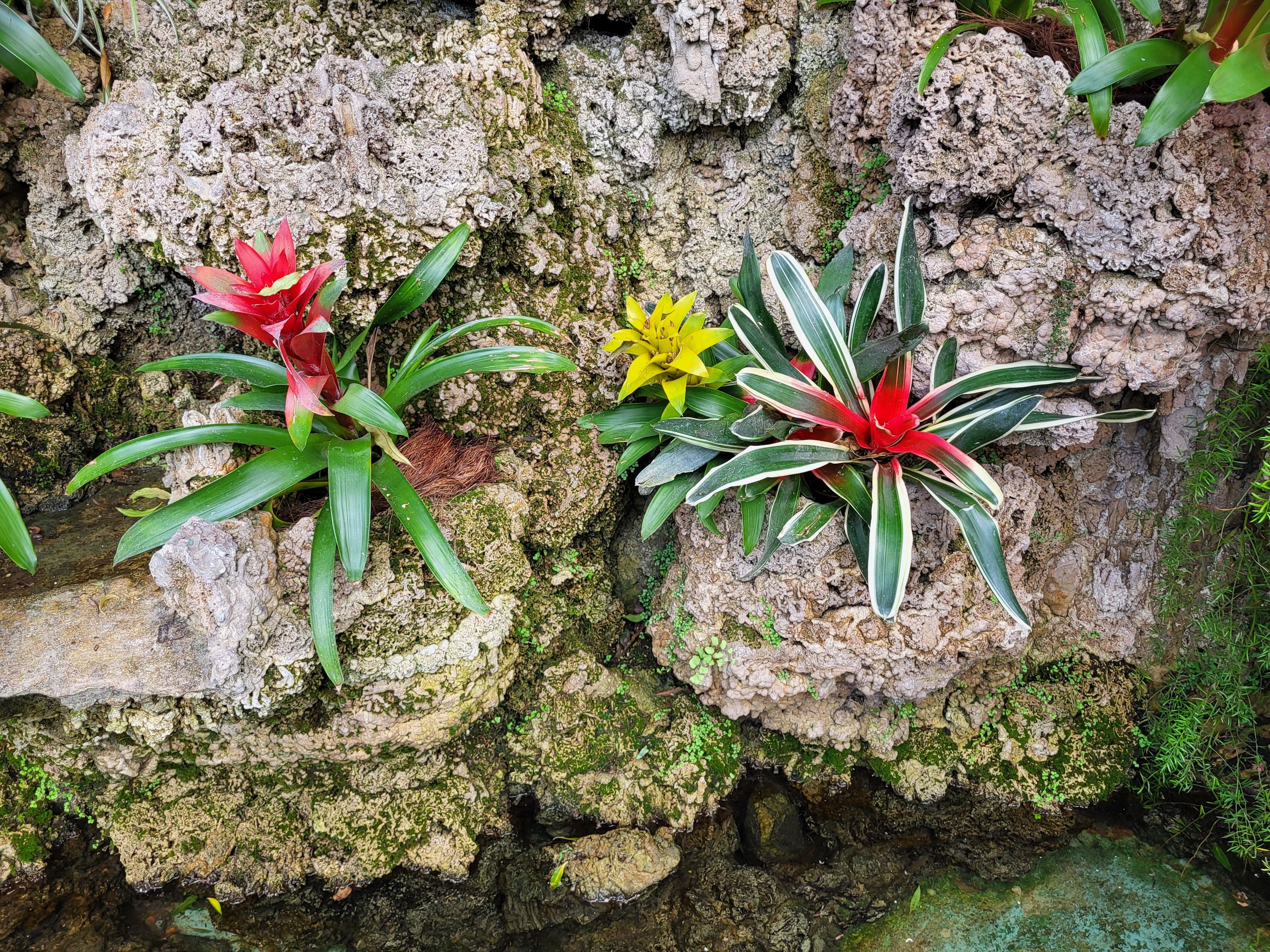
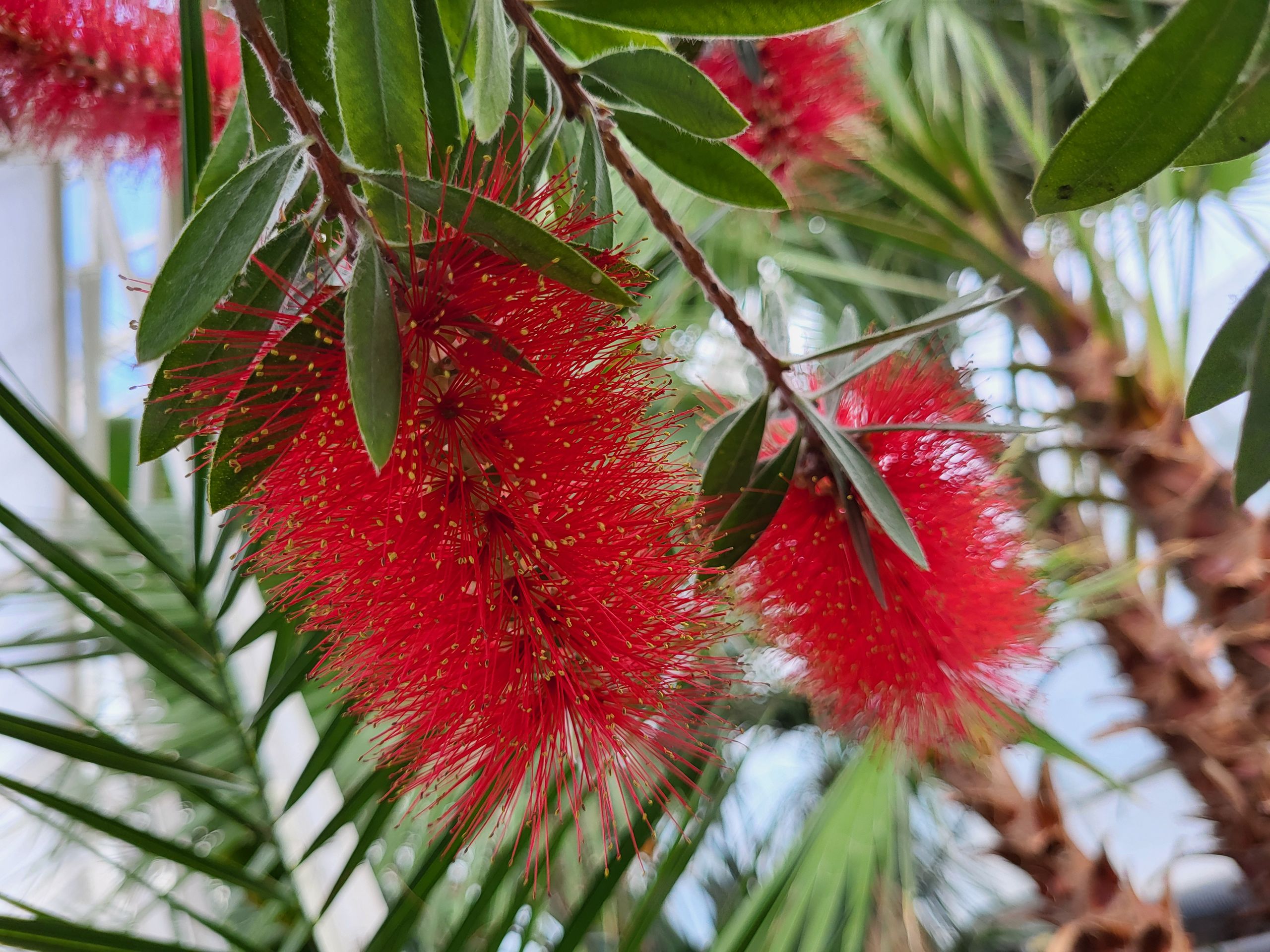
This is where exotic plants were cultivated for Princess Daisy, but also fruits and vegetables for the princely kitchen.
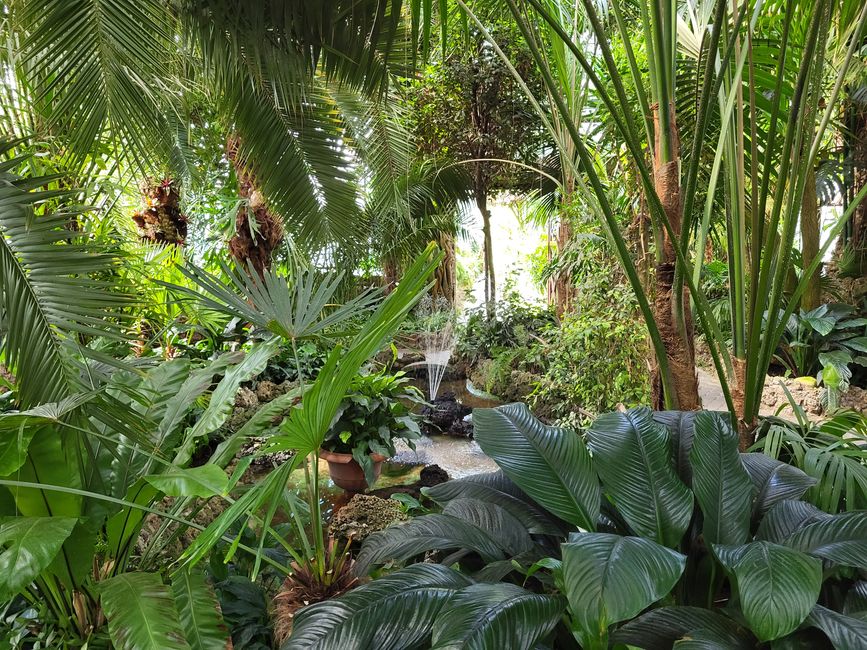
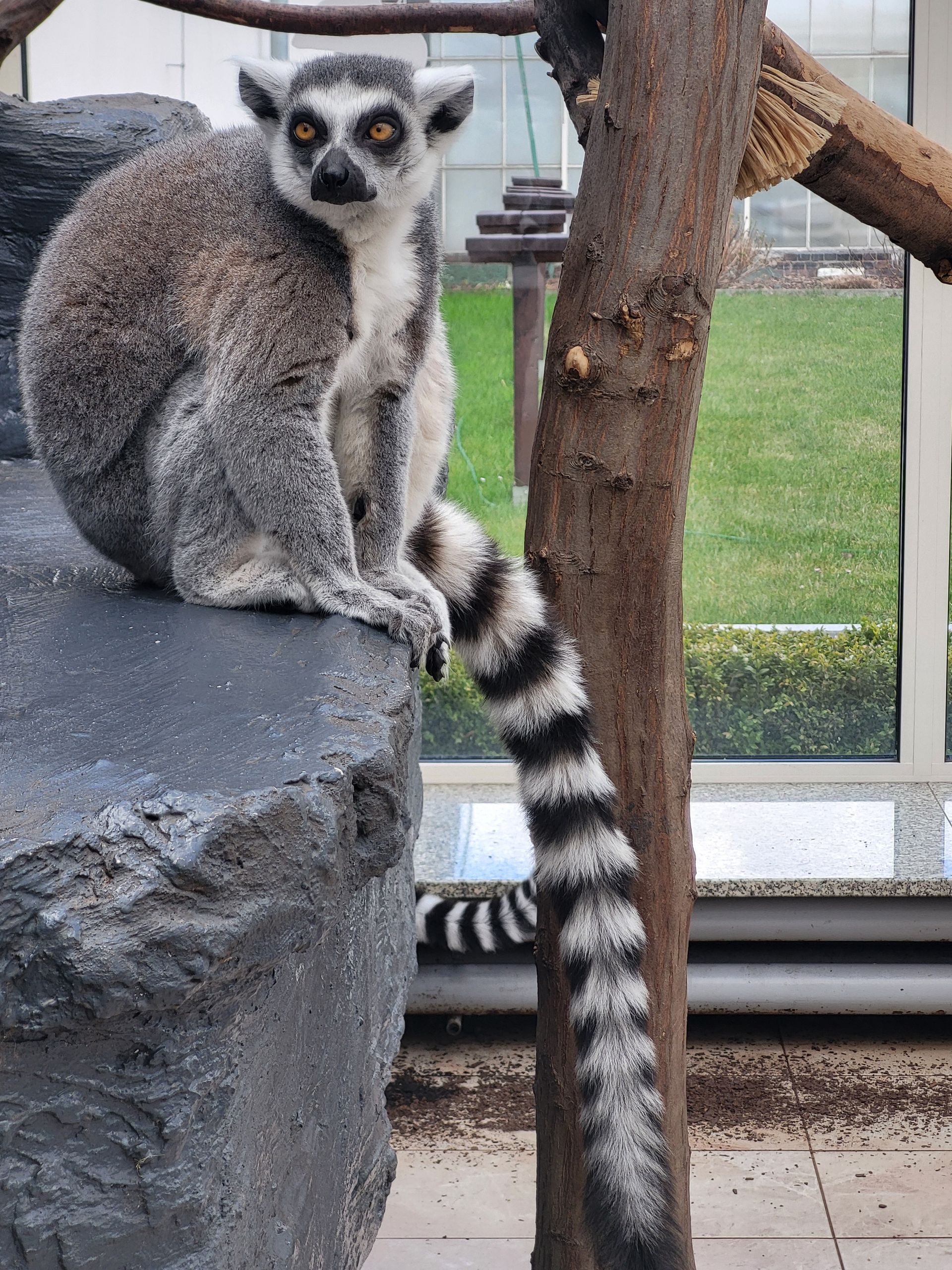
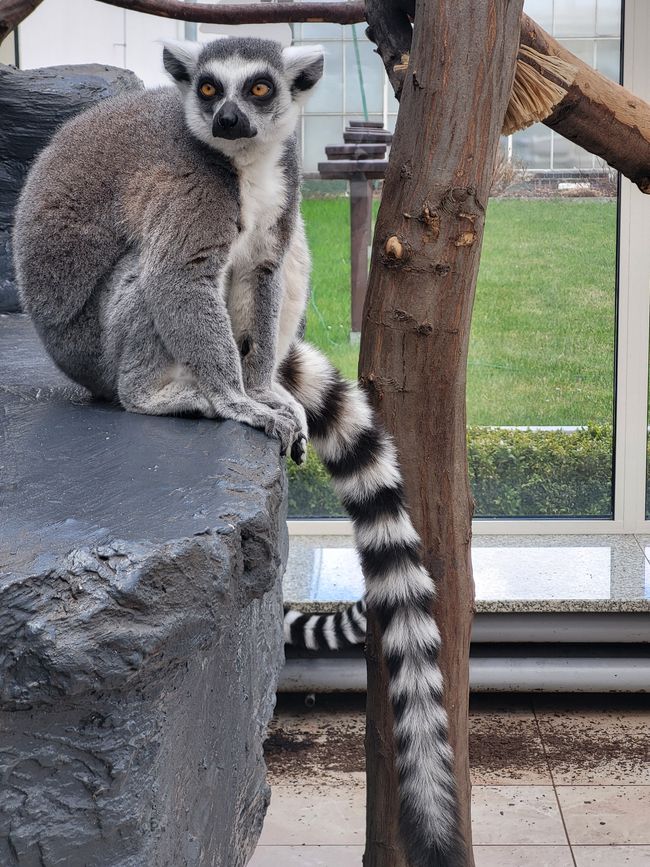
Today, in addition to many exotic plants, there are also aviaries and some ring-tailed lemurs and aquatic turtles.
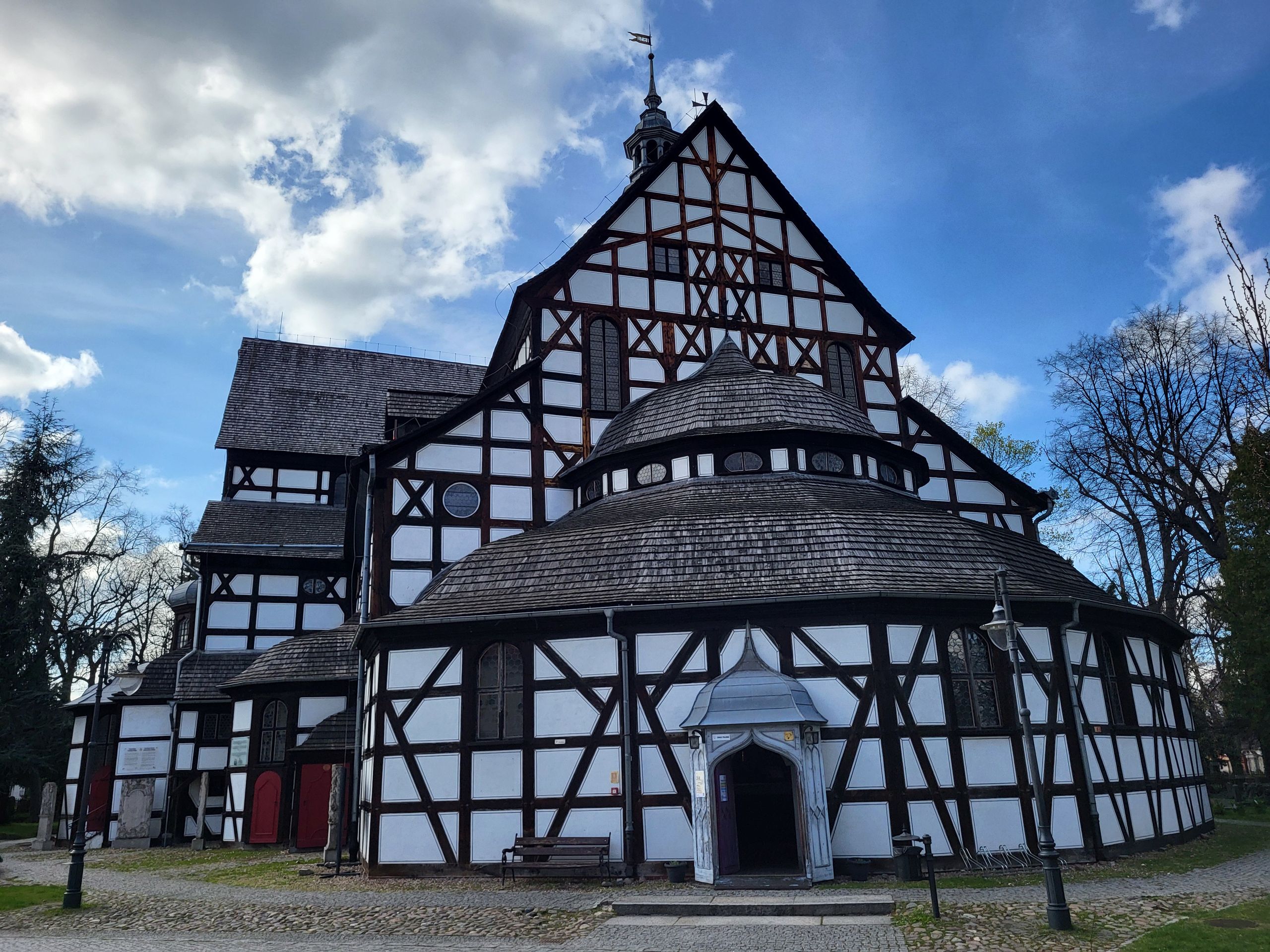
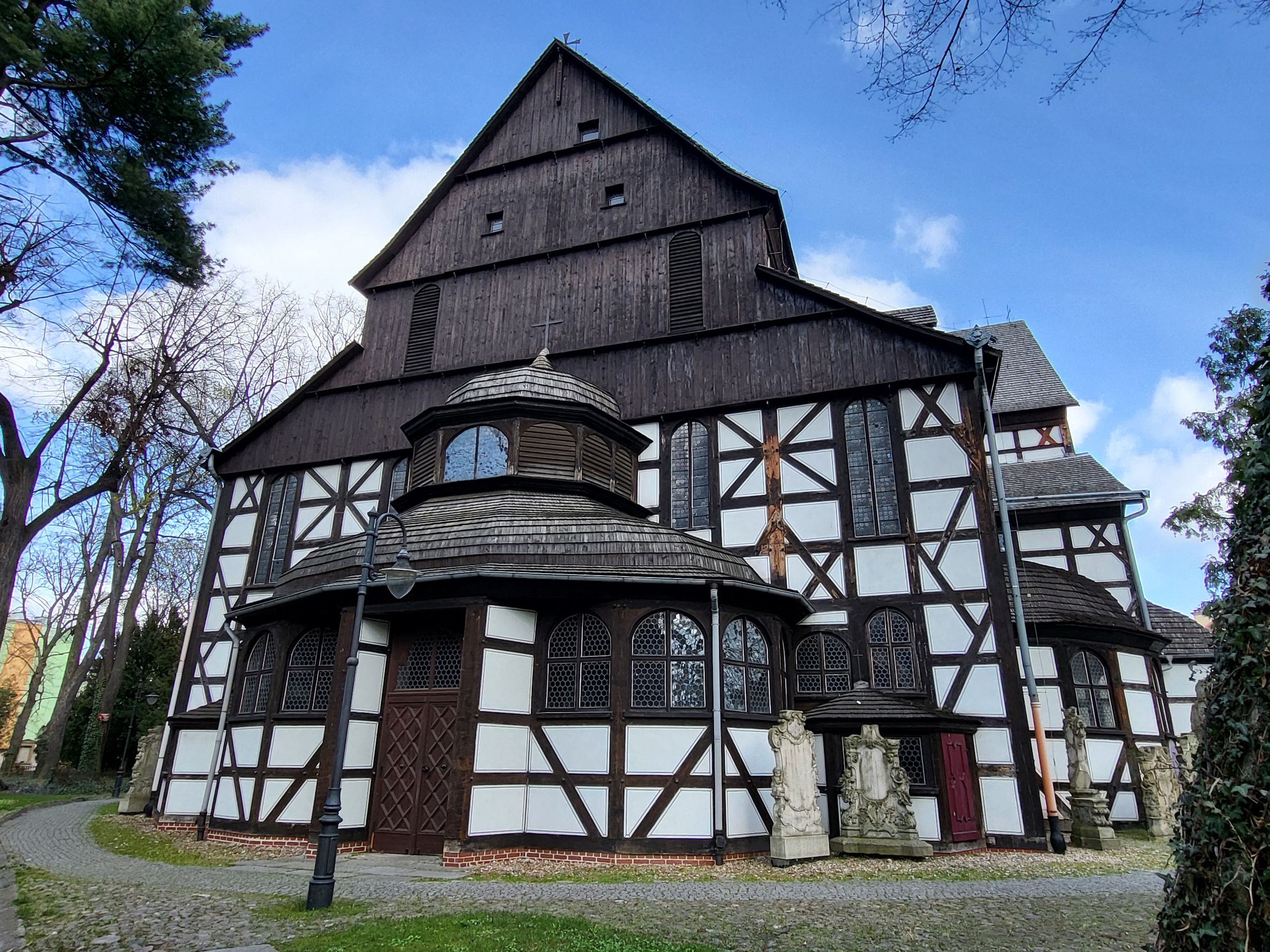
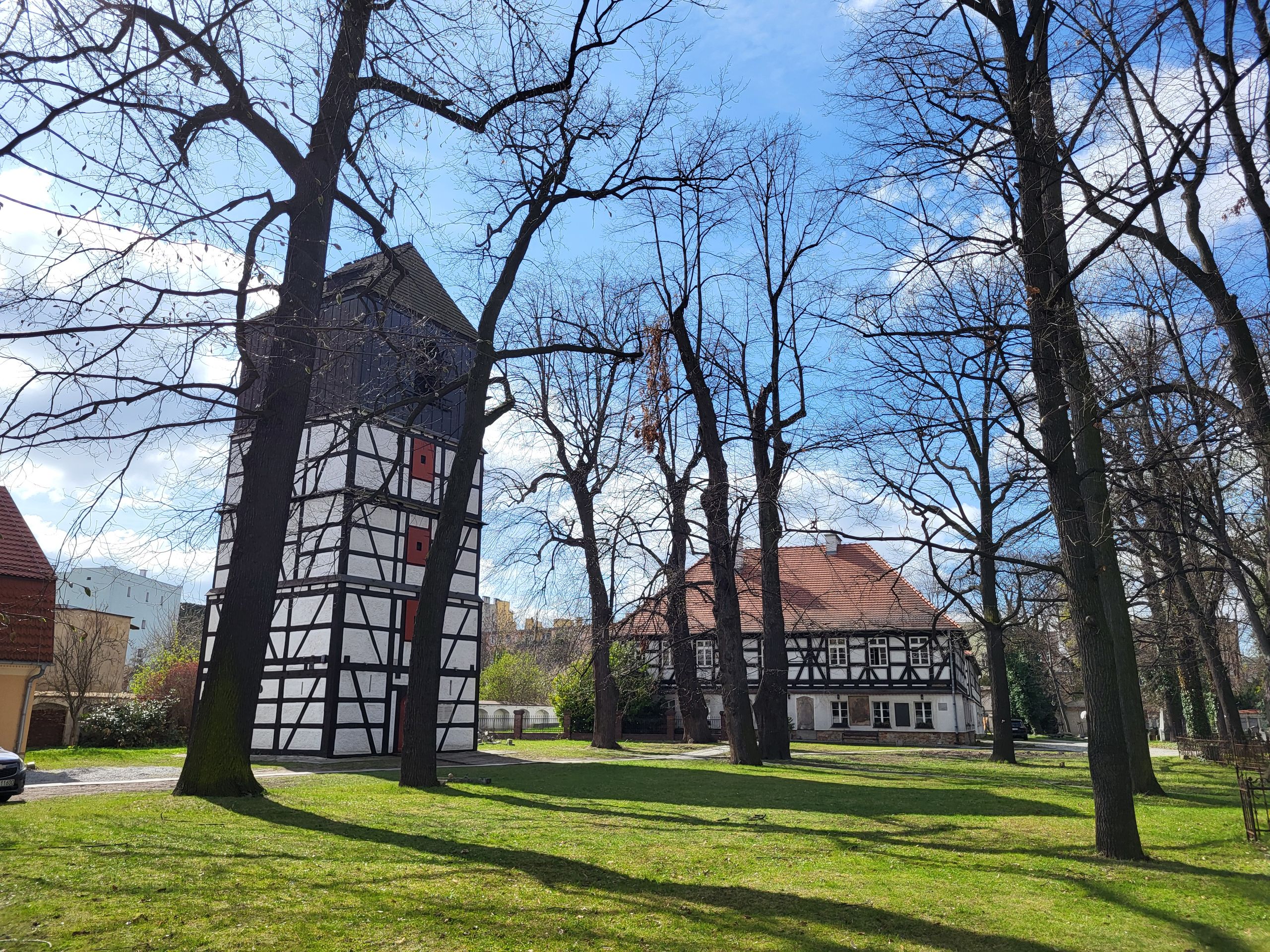
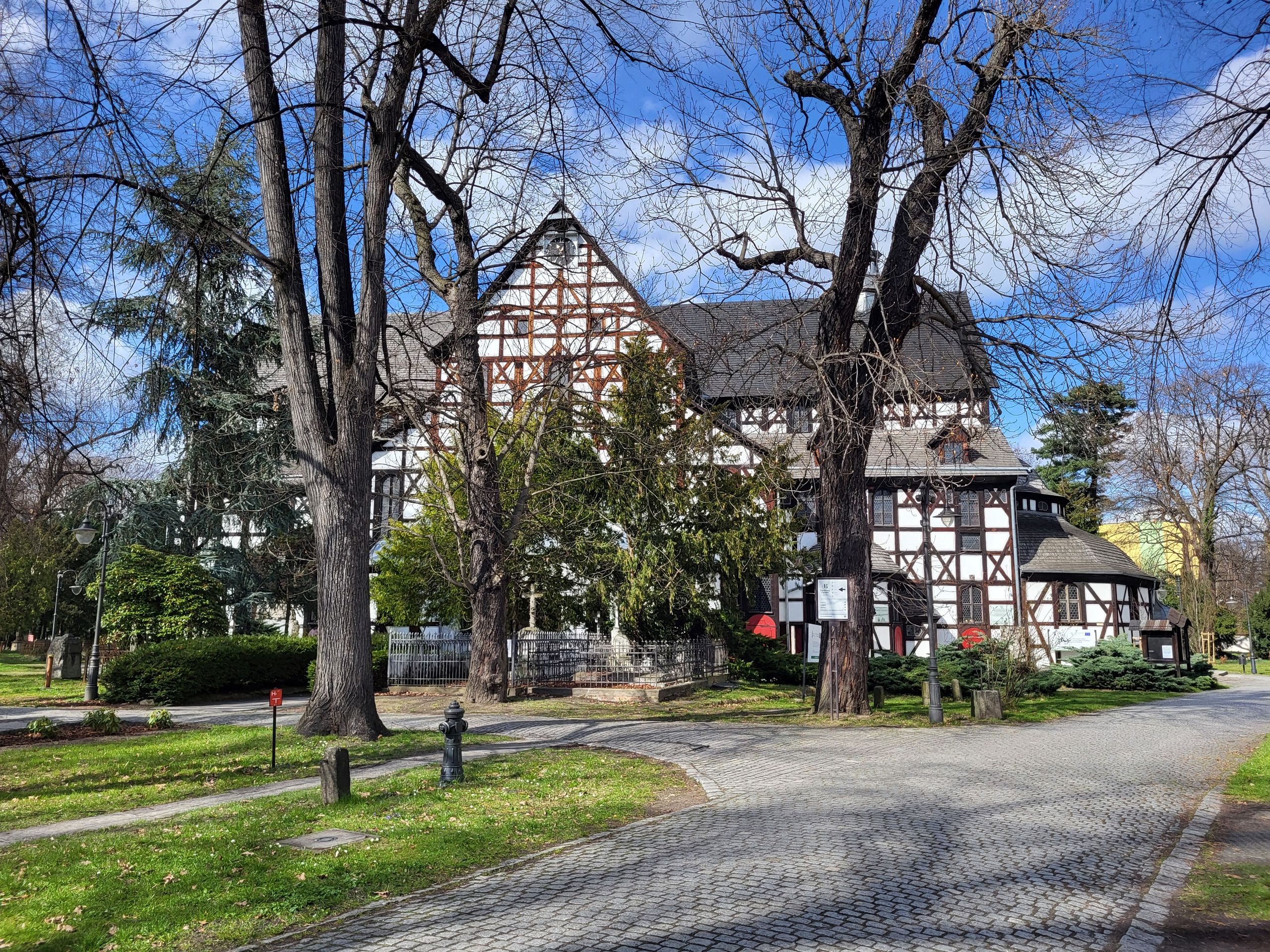
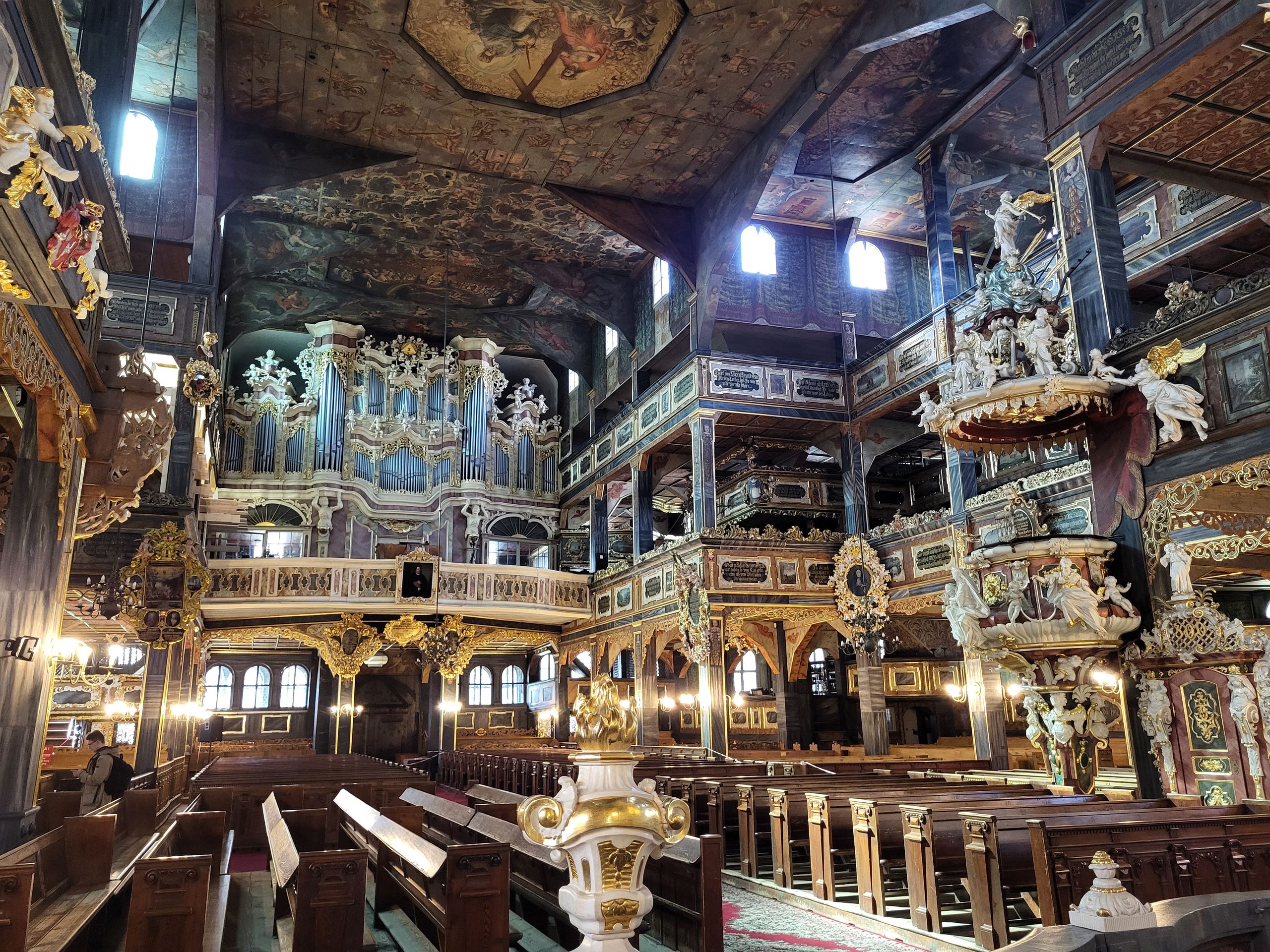
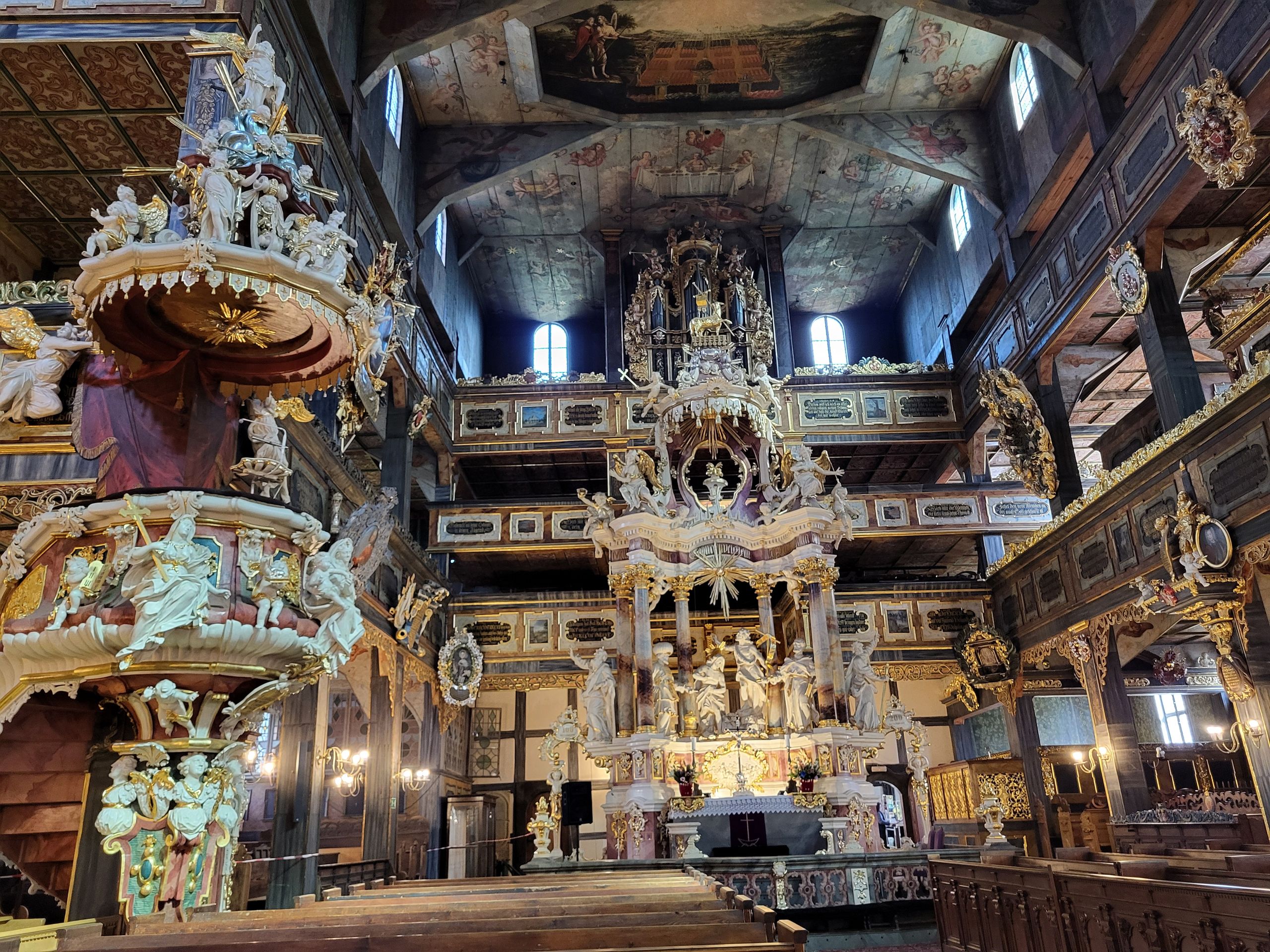
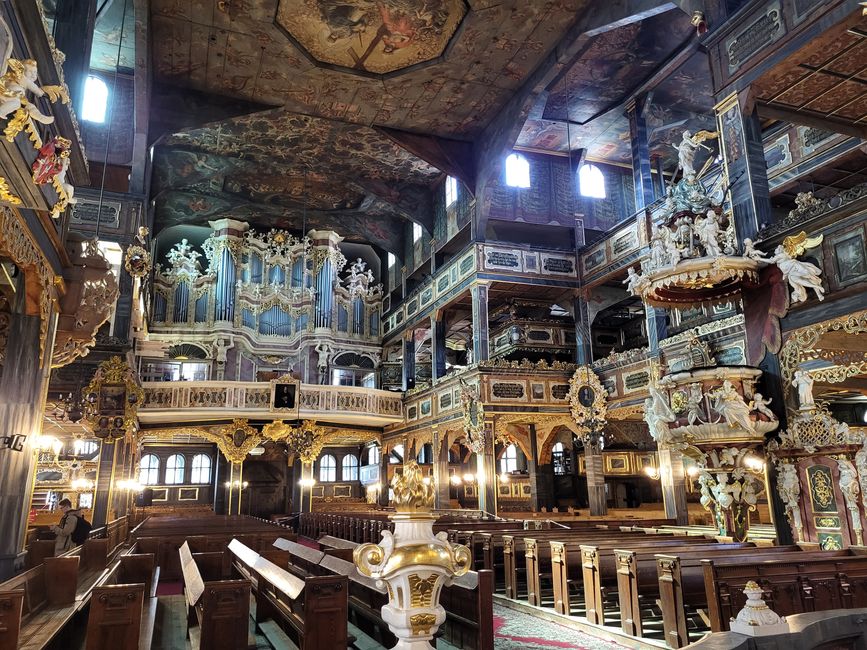
We continued to the Peace Church of Świdnica.
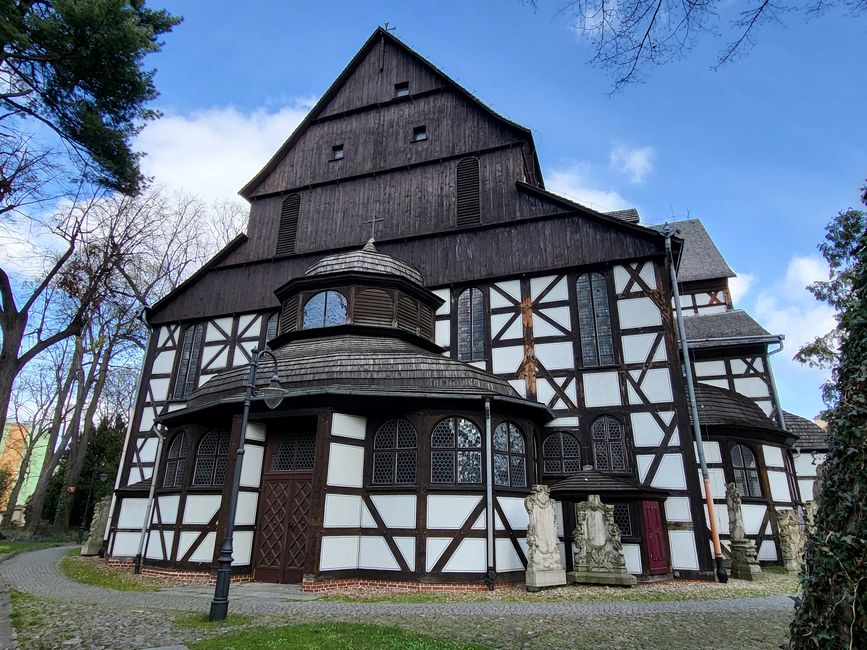
After the Thirty Years' War, Emperor Ferdinand III allowed the Protestants to build three peace churches in Silesia. However, the churches could not be constructed within the city walls and were prohibited from having a tower or bell. Additionally, they had to be built only of wood, straw, clay, and sand within a year.
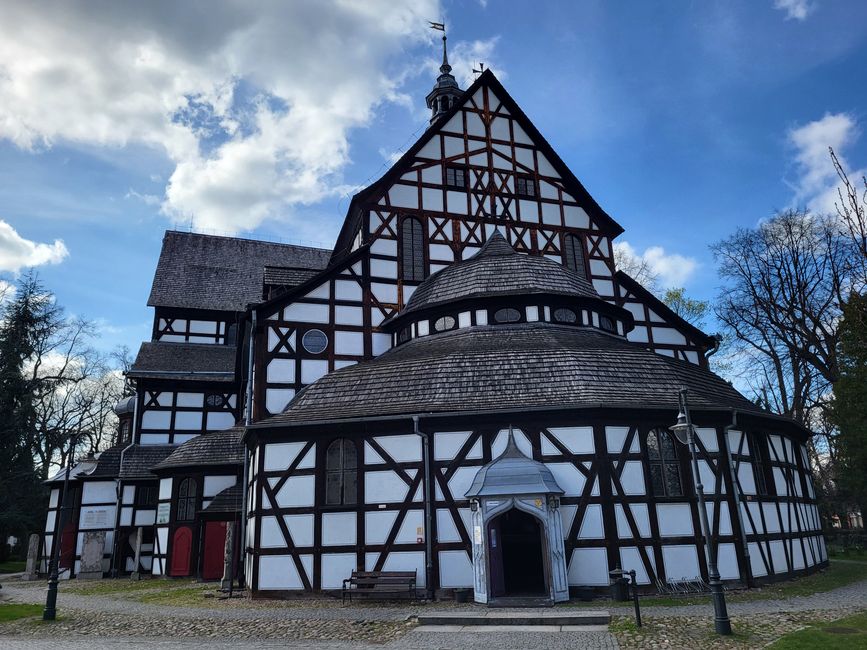
This led to the creation of impressive half-timbered buildings, whose interiors are surprisingly lavish - not at all reflecting Protestant modesty.
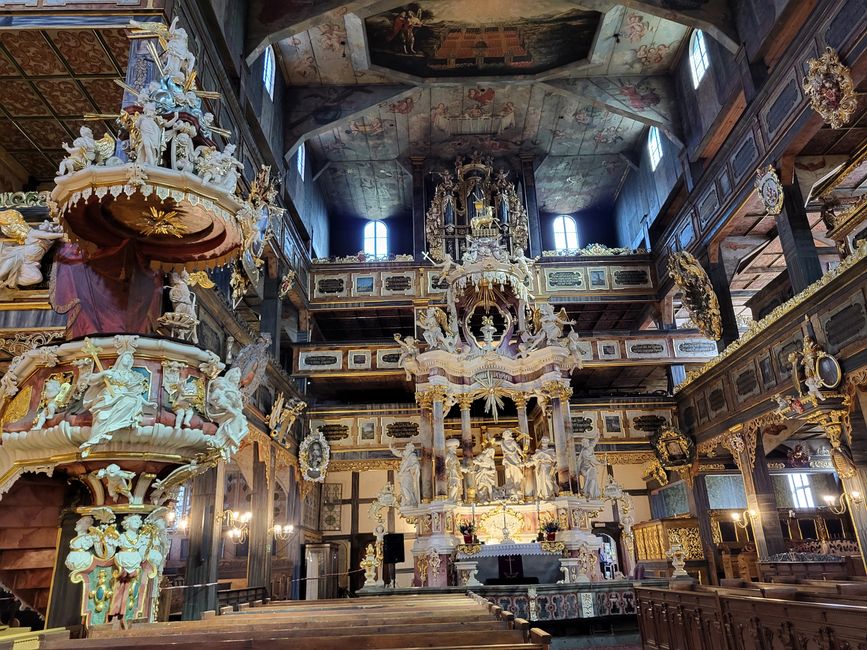
7500 people could fit in the church - though most had to stand. Today, however, there are only about 100 people left in the congregation, who struggle to maintain the building.
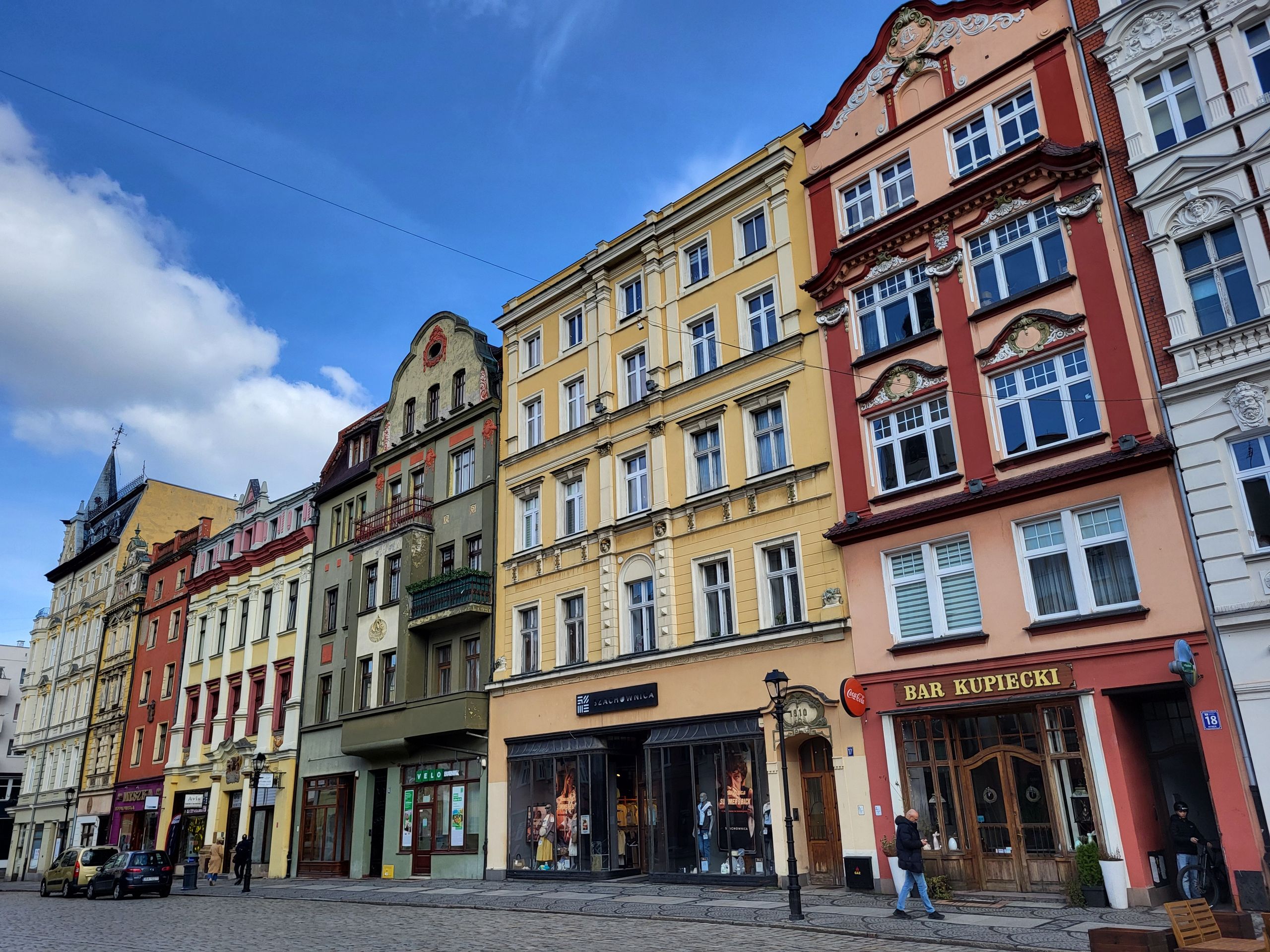
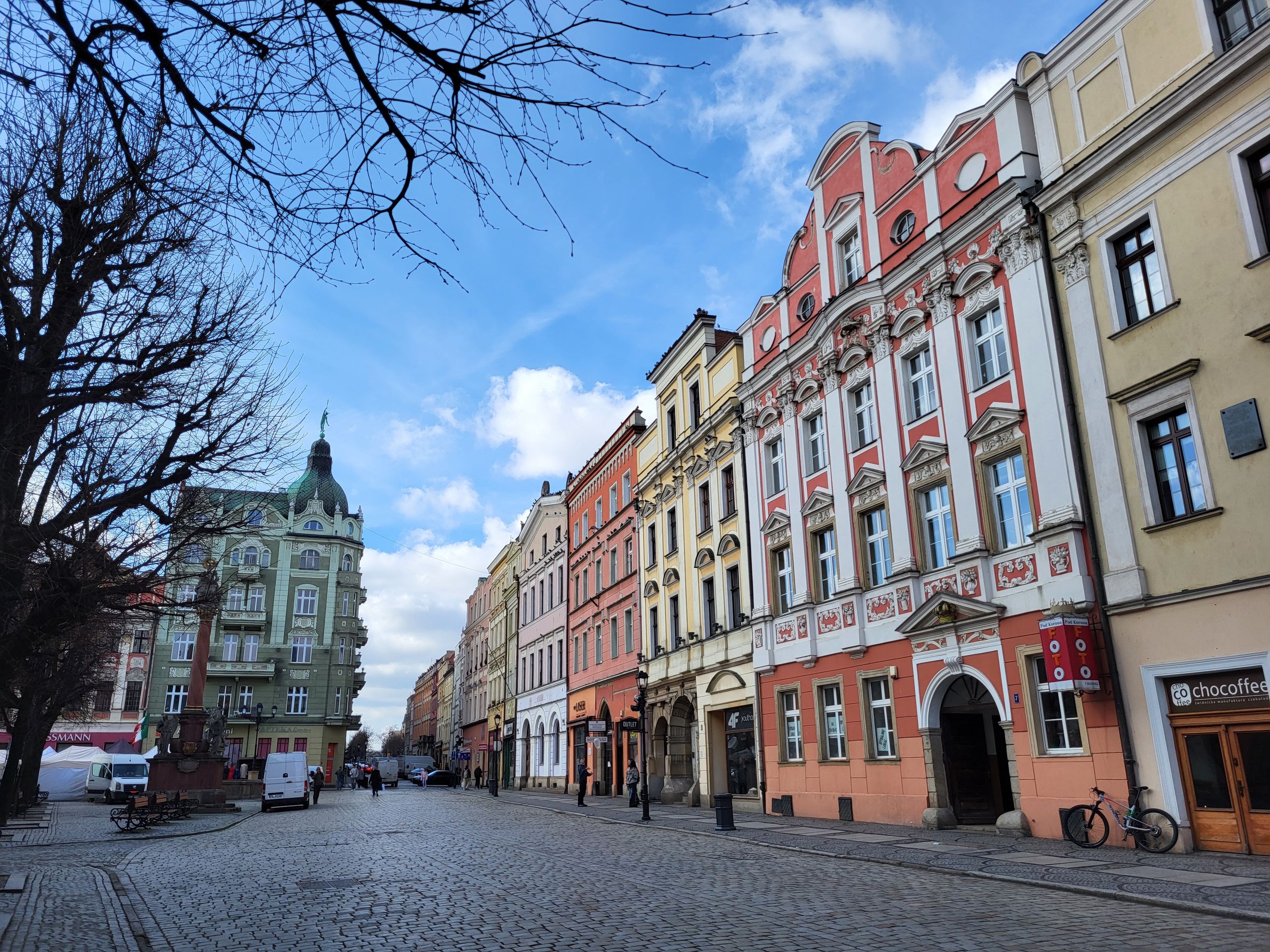
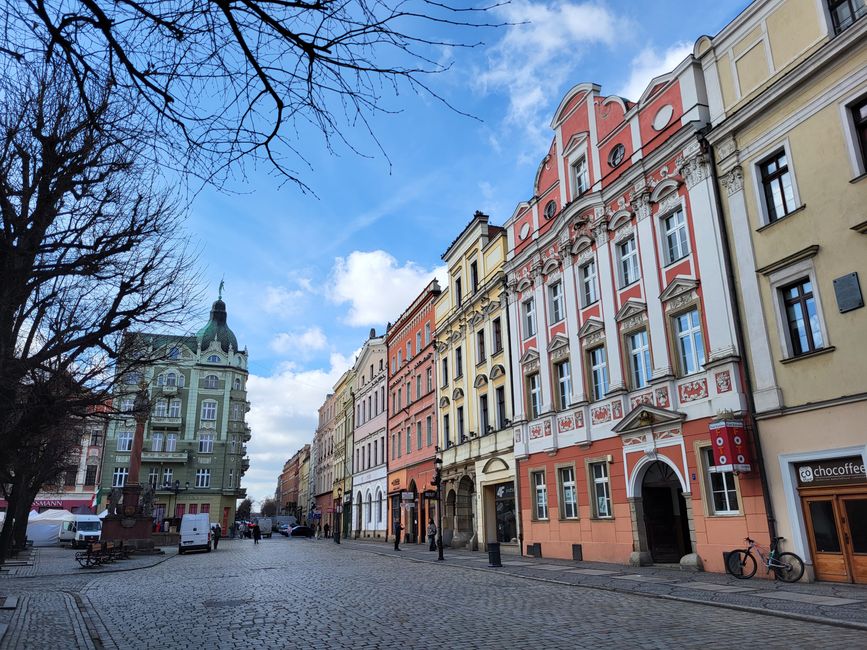
After a brief stroll through the town, we continued on our way because we wanted to stay overnight in Auschwitz to visit the memorials the next morning.
We found a spot for our motorhome on the grounds of the 'Center for Dialogue and Prayer', where we tried Polish pierogi for dinner.