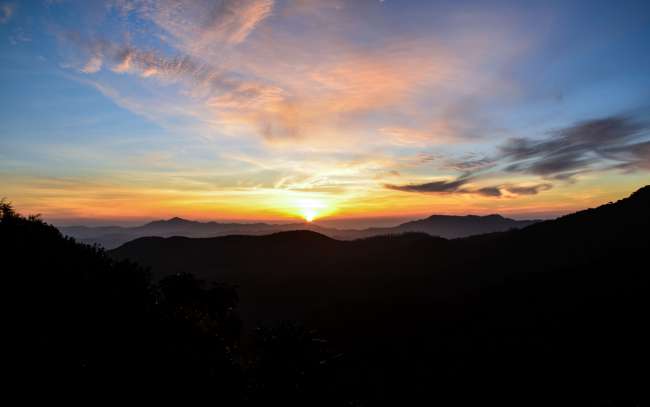

Pidurangala Rock - the view of the Lion
Sigiriya - Lion Rock.Our hike to Pidurangala Rock, which is not the main highlight - that title belongs to Lion Rock, the Lion Rock. This is what you look at when you climb...

Published: 11.03.2026
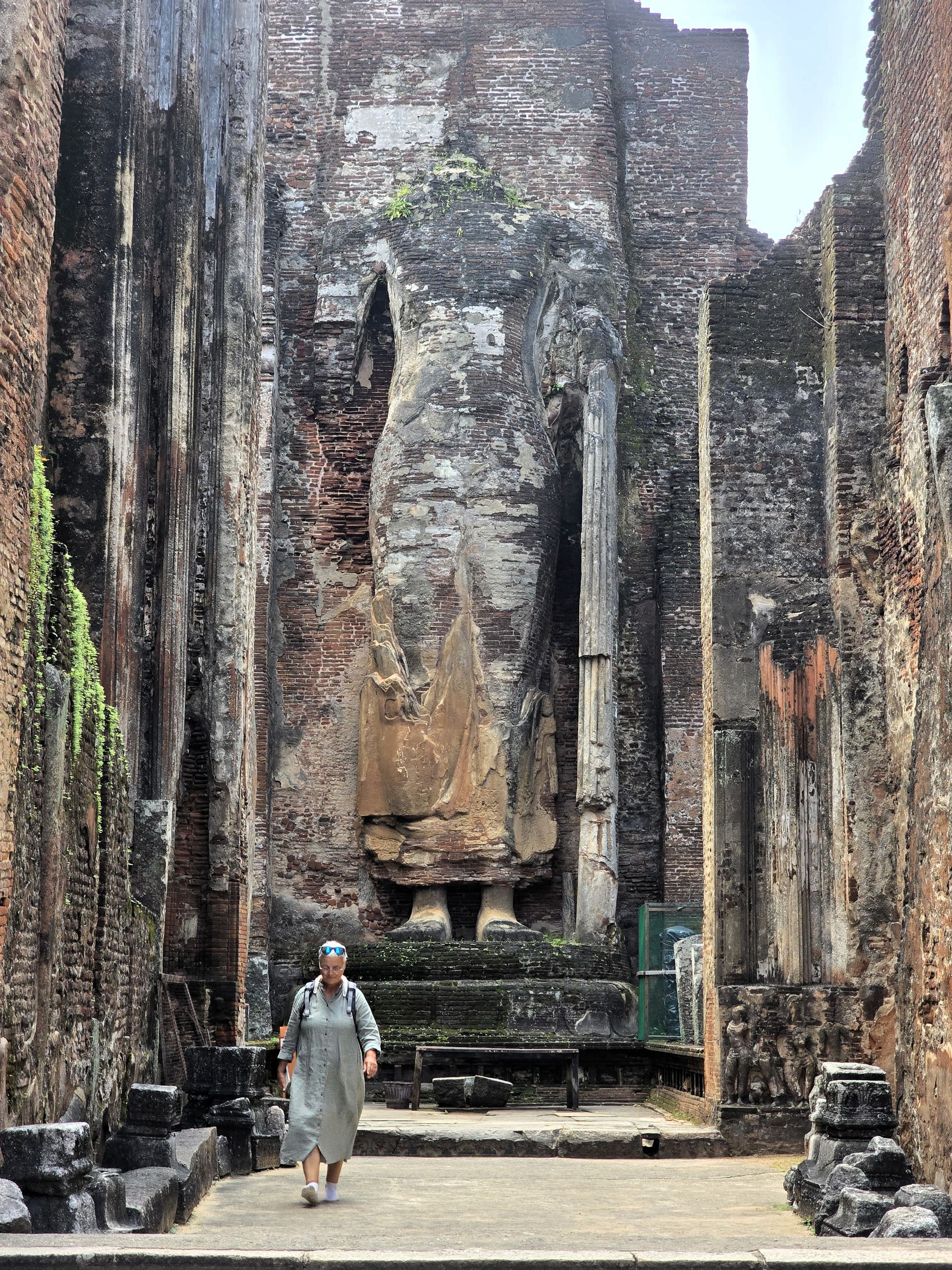
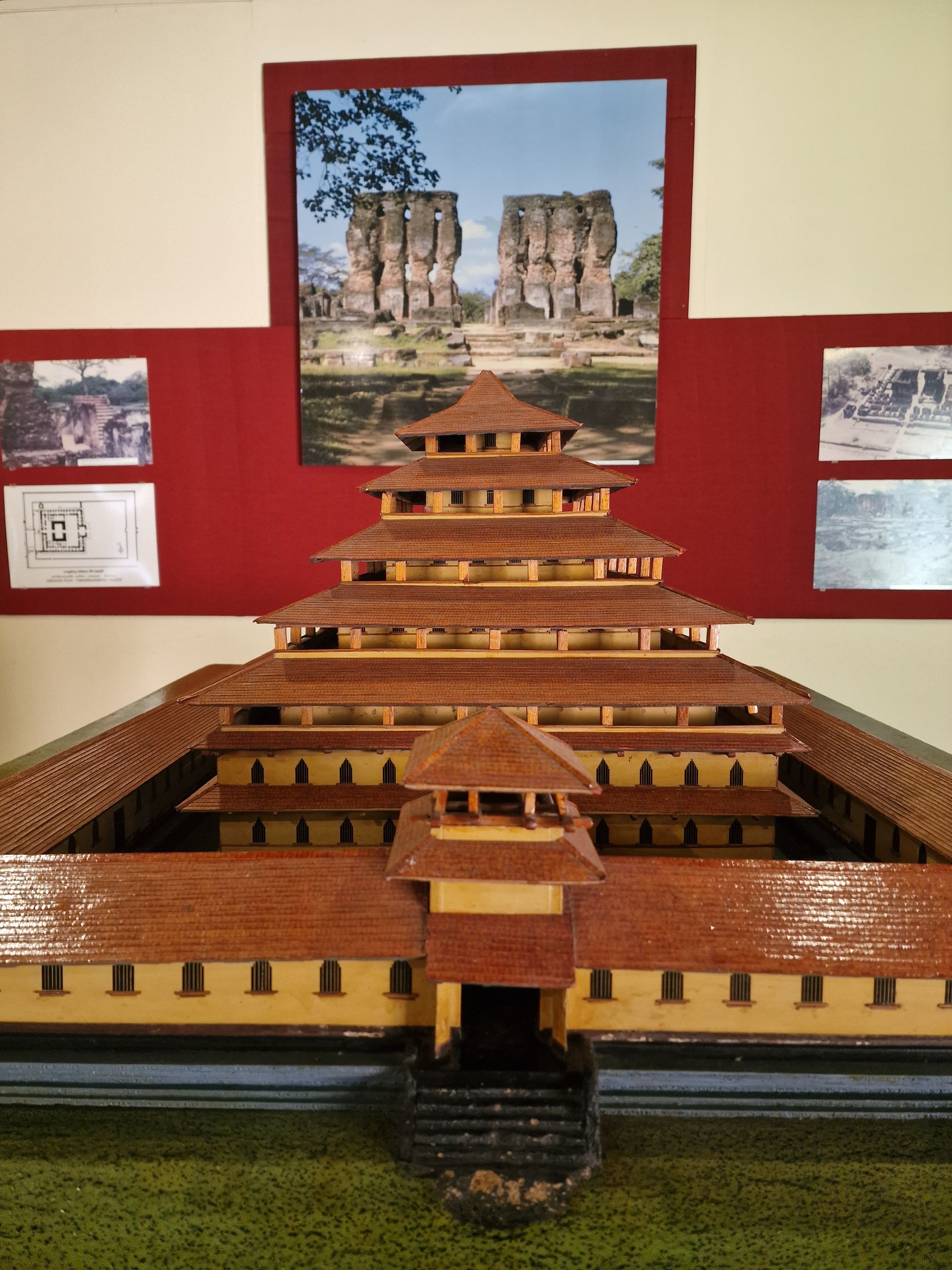
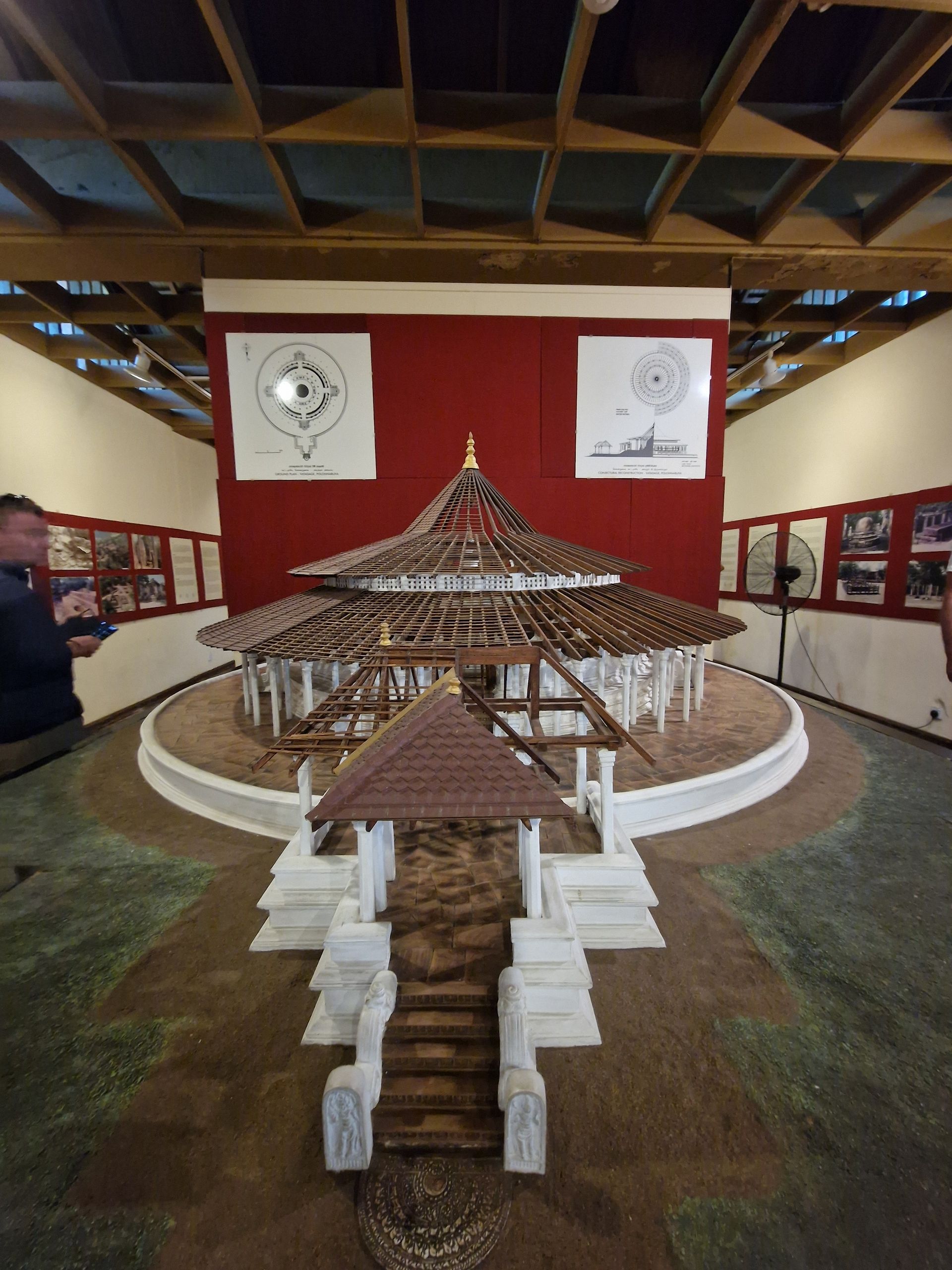
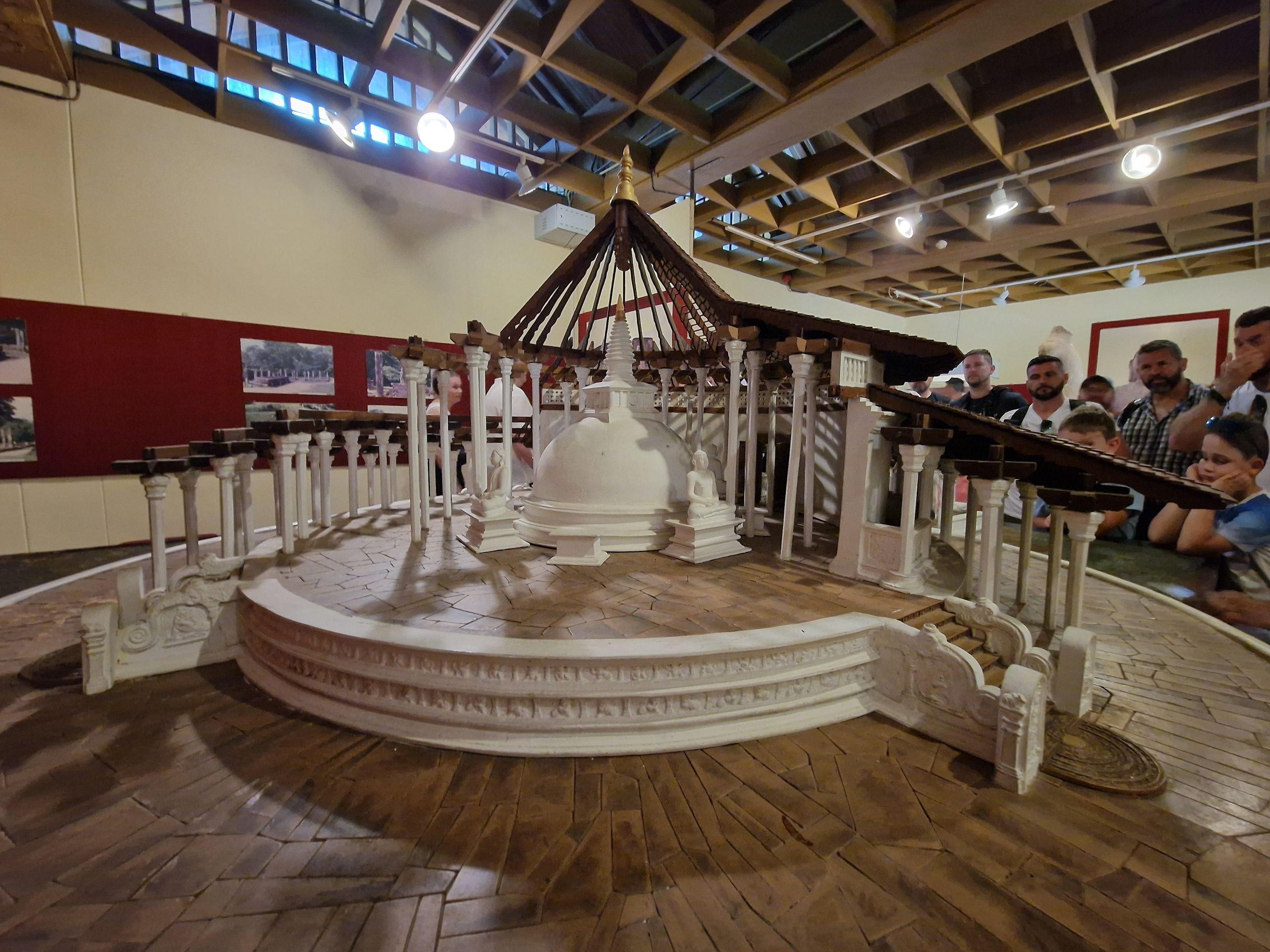
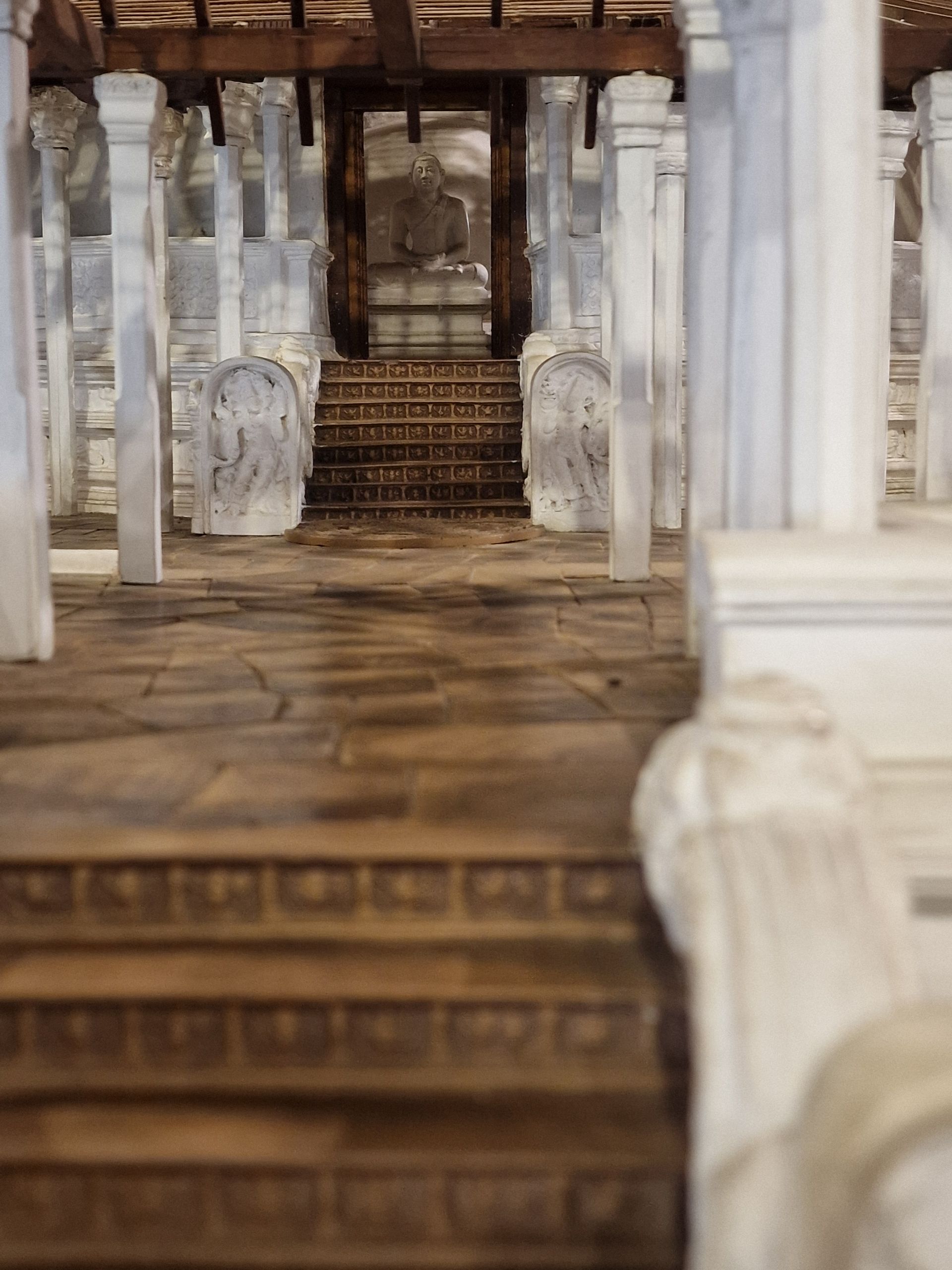
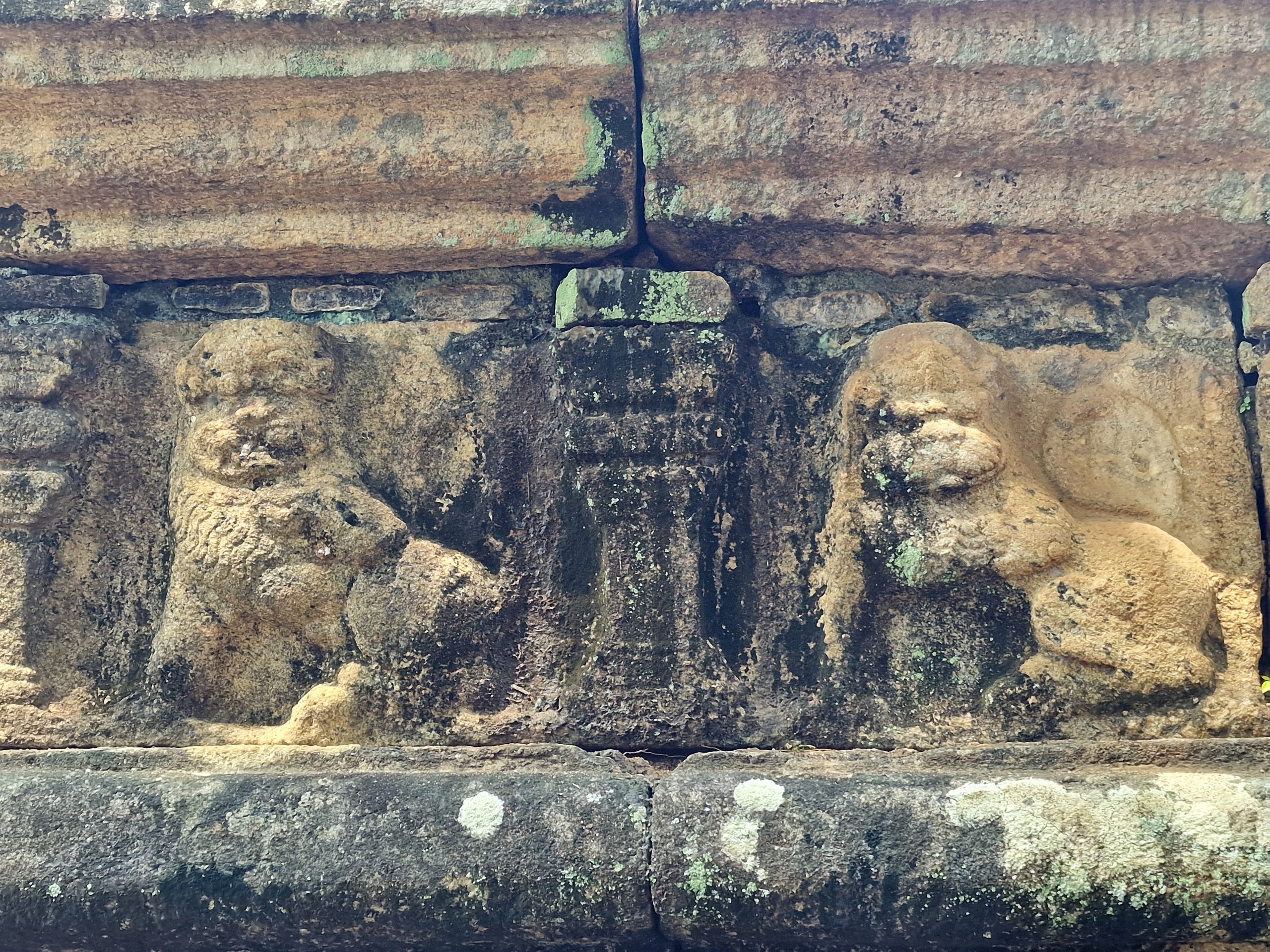
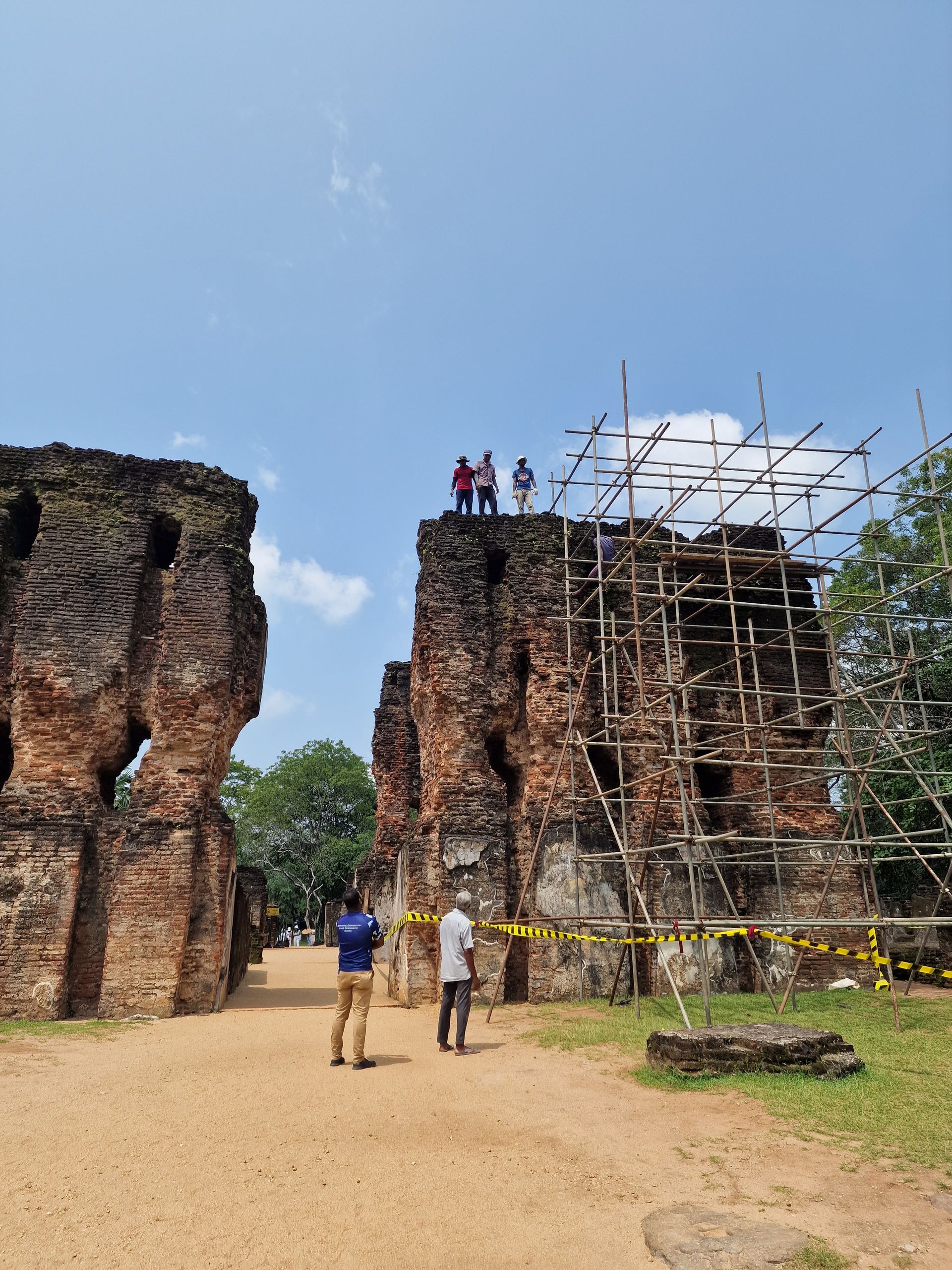
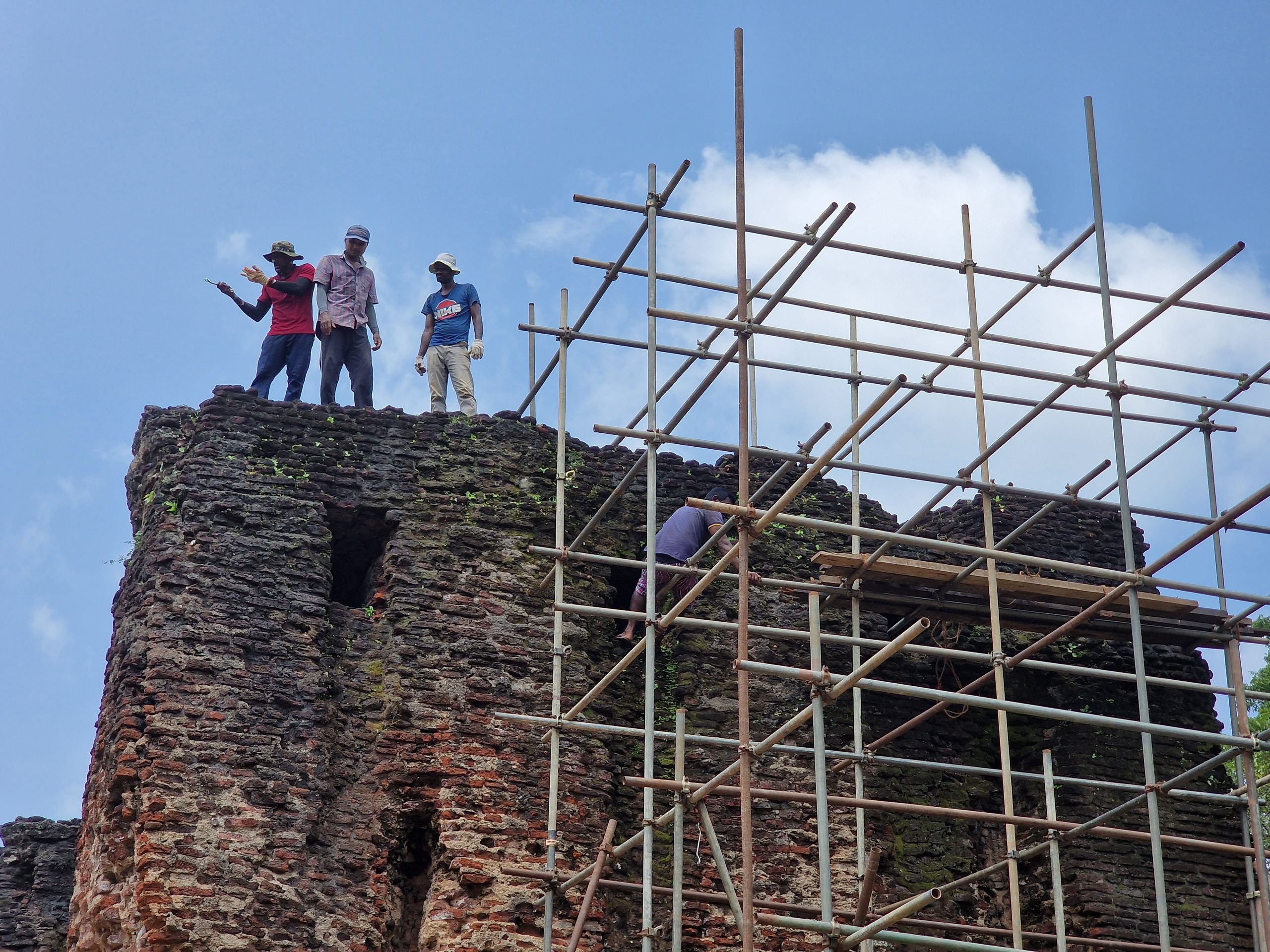
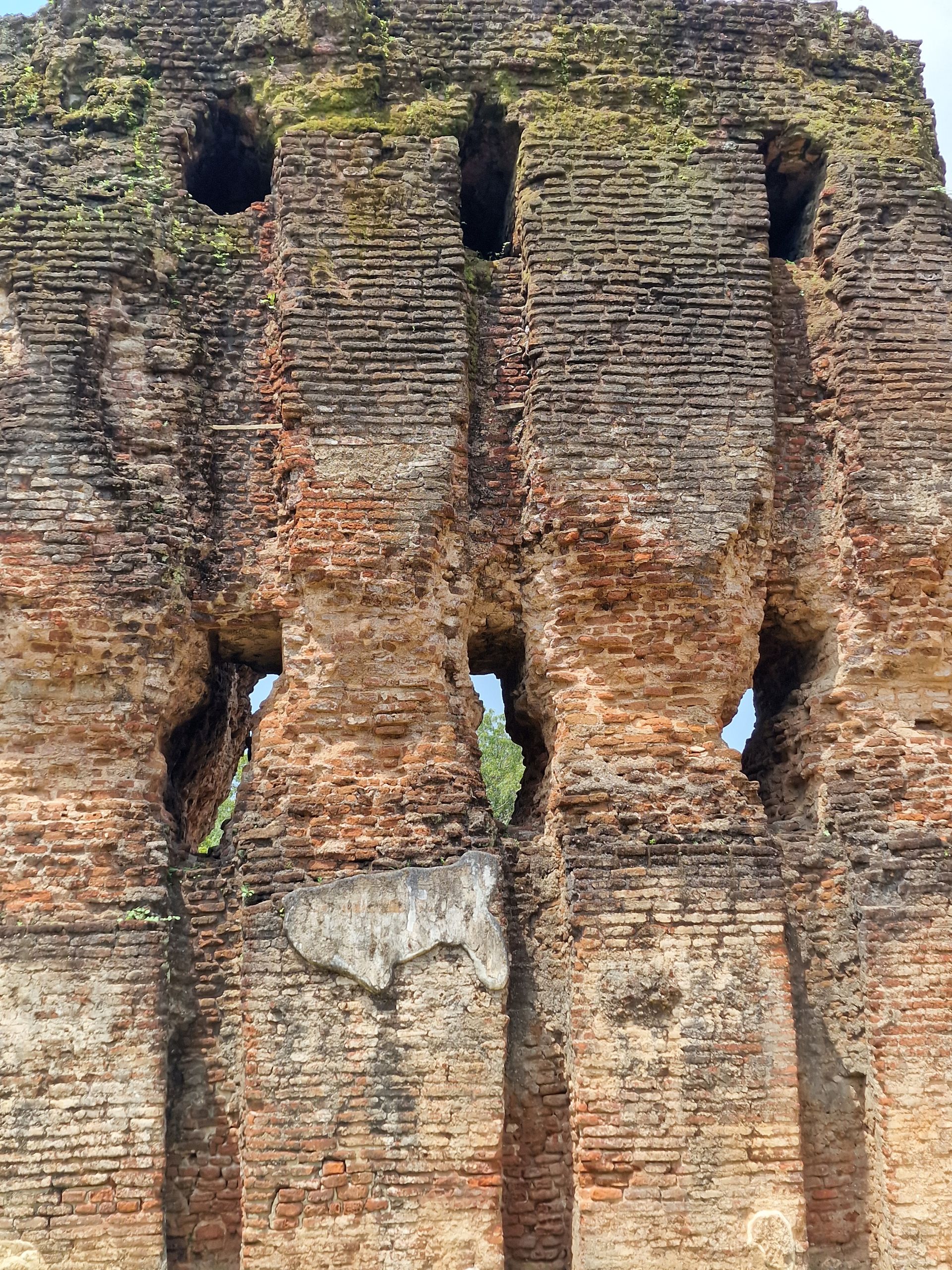
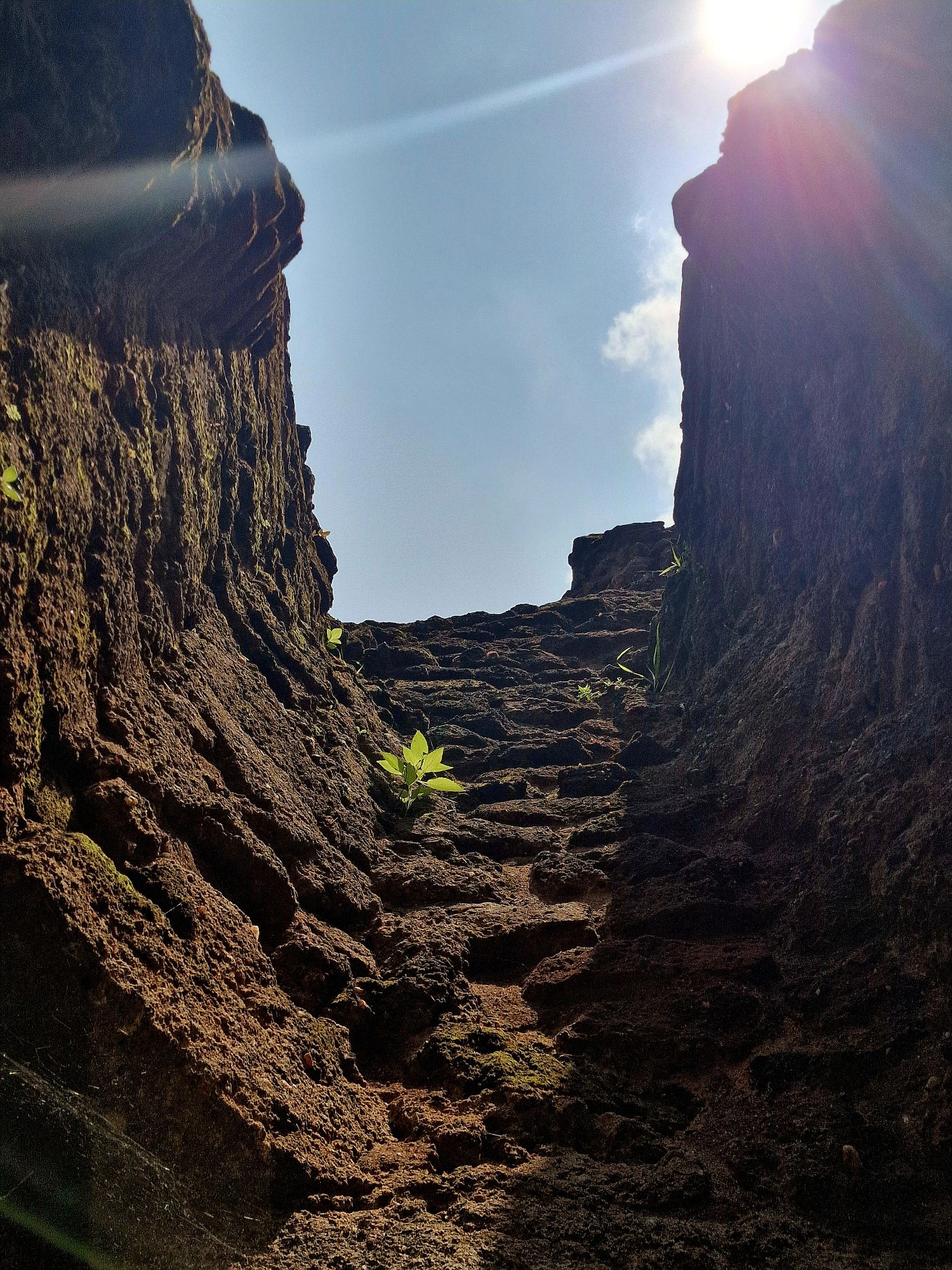
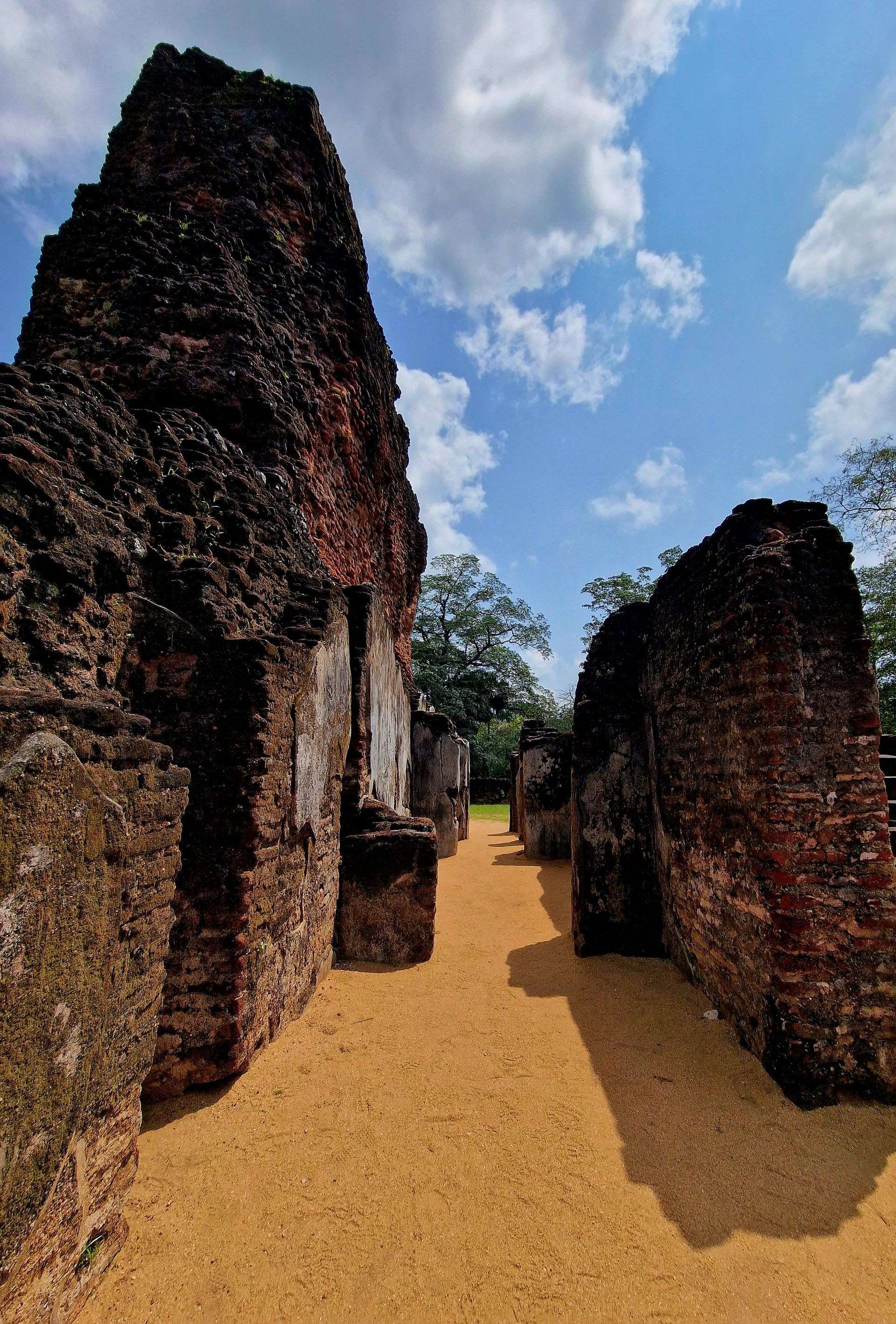
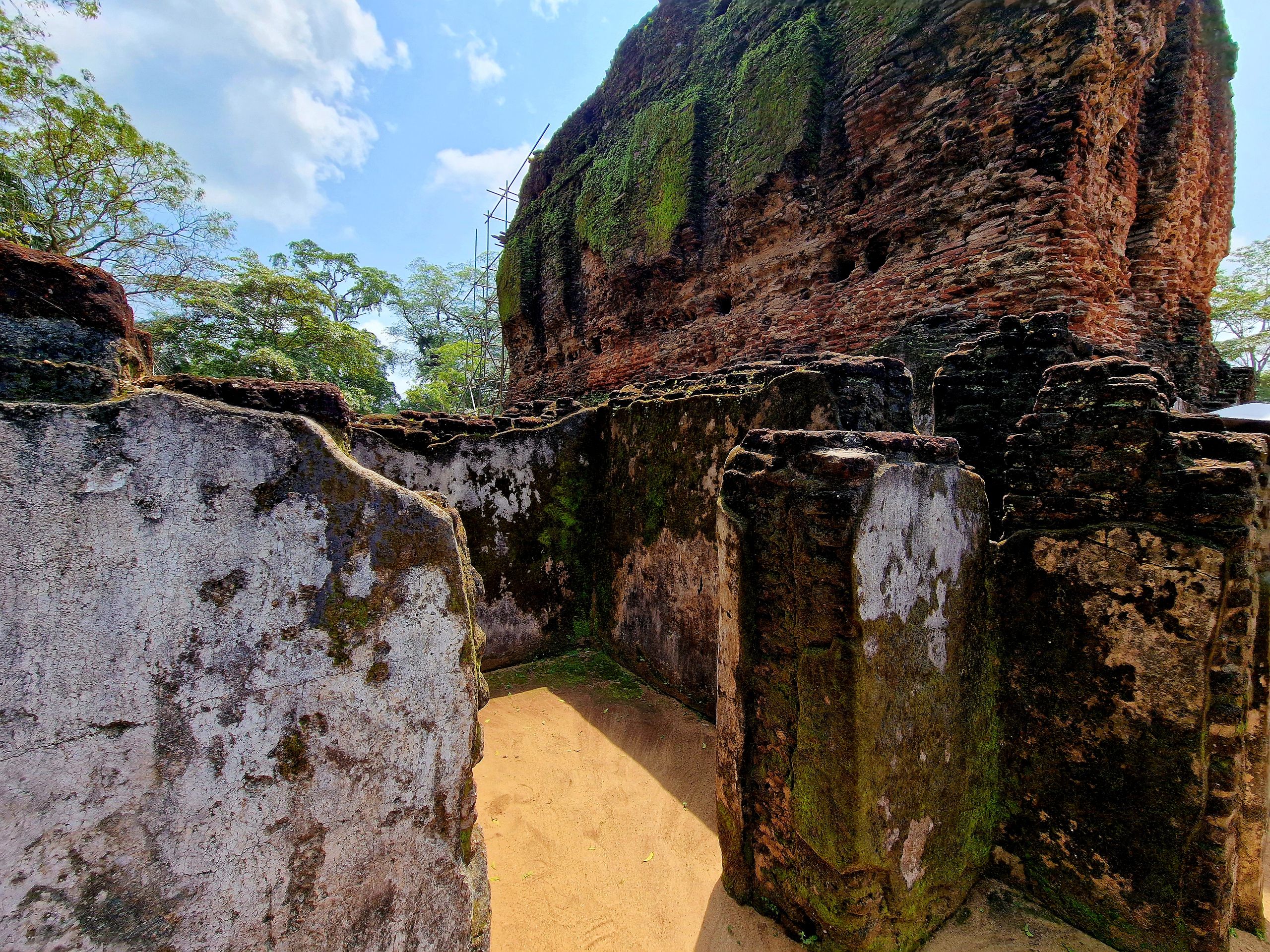
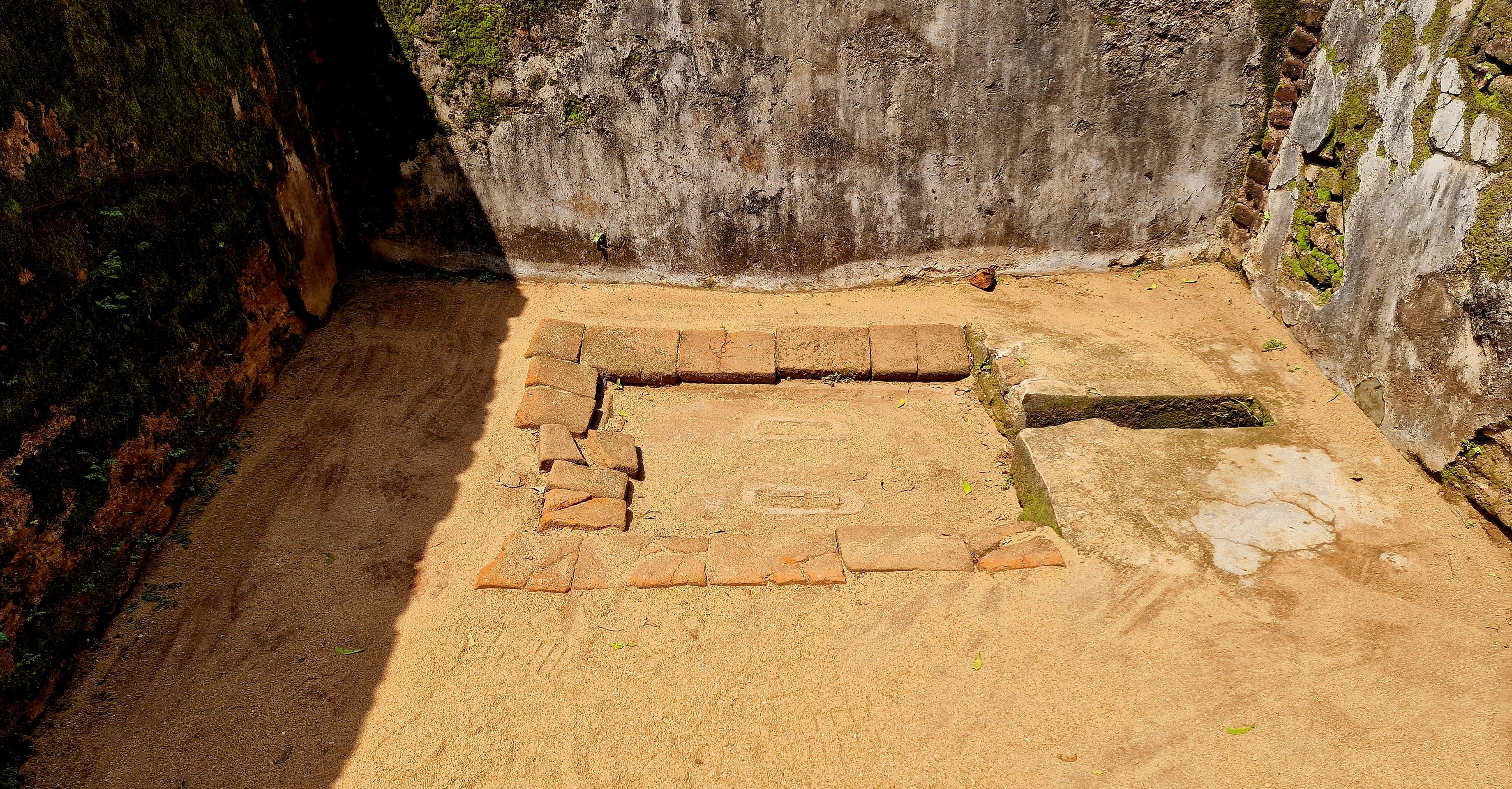
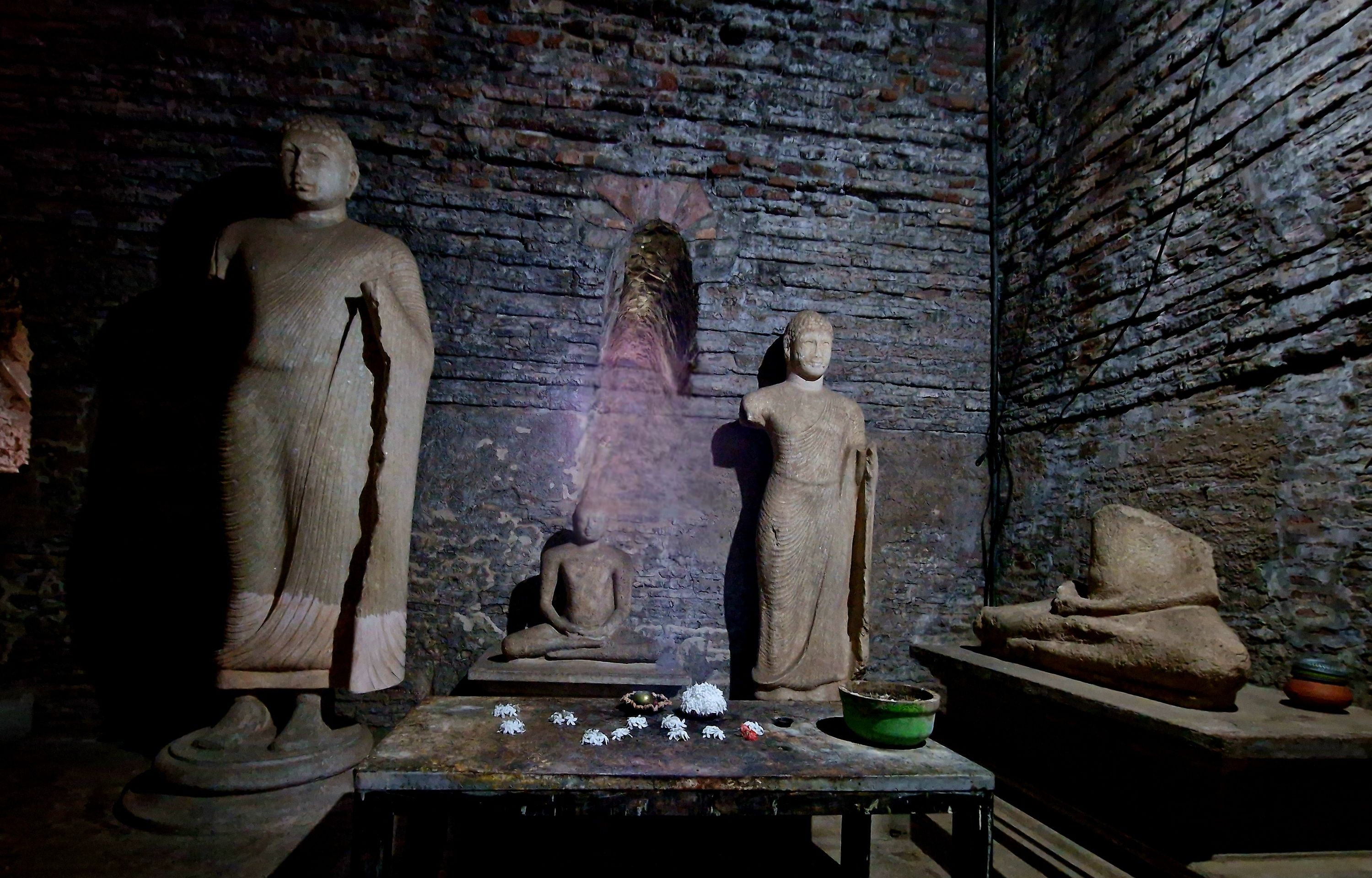
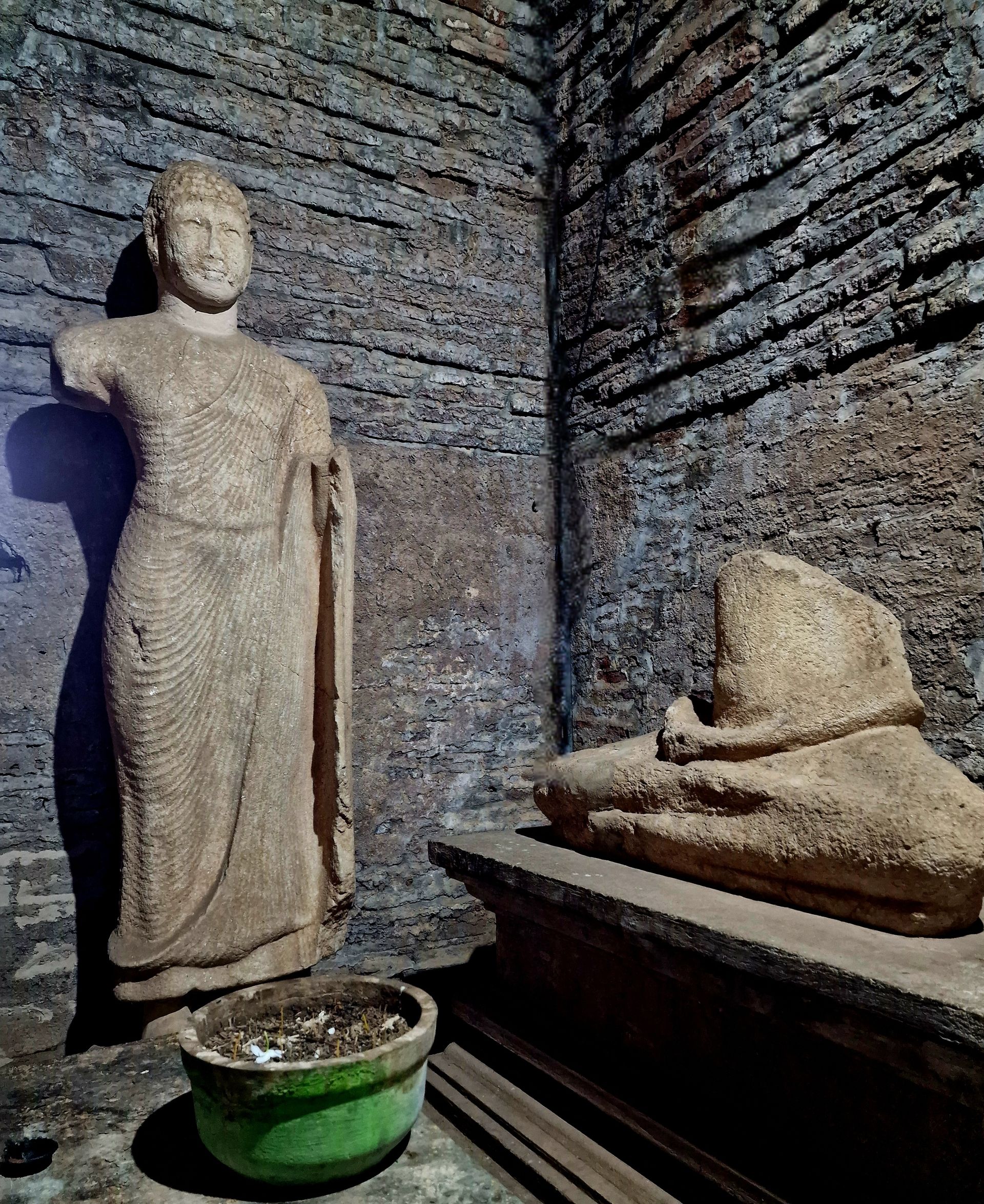
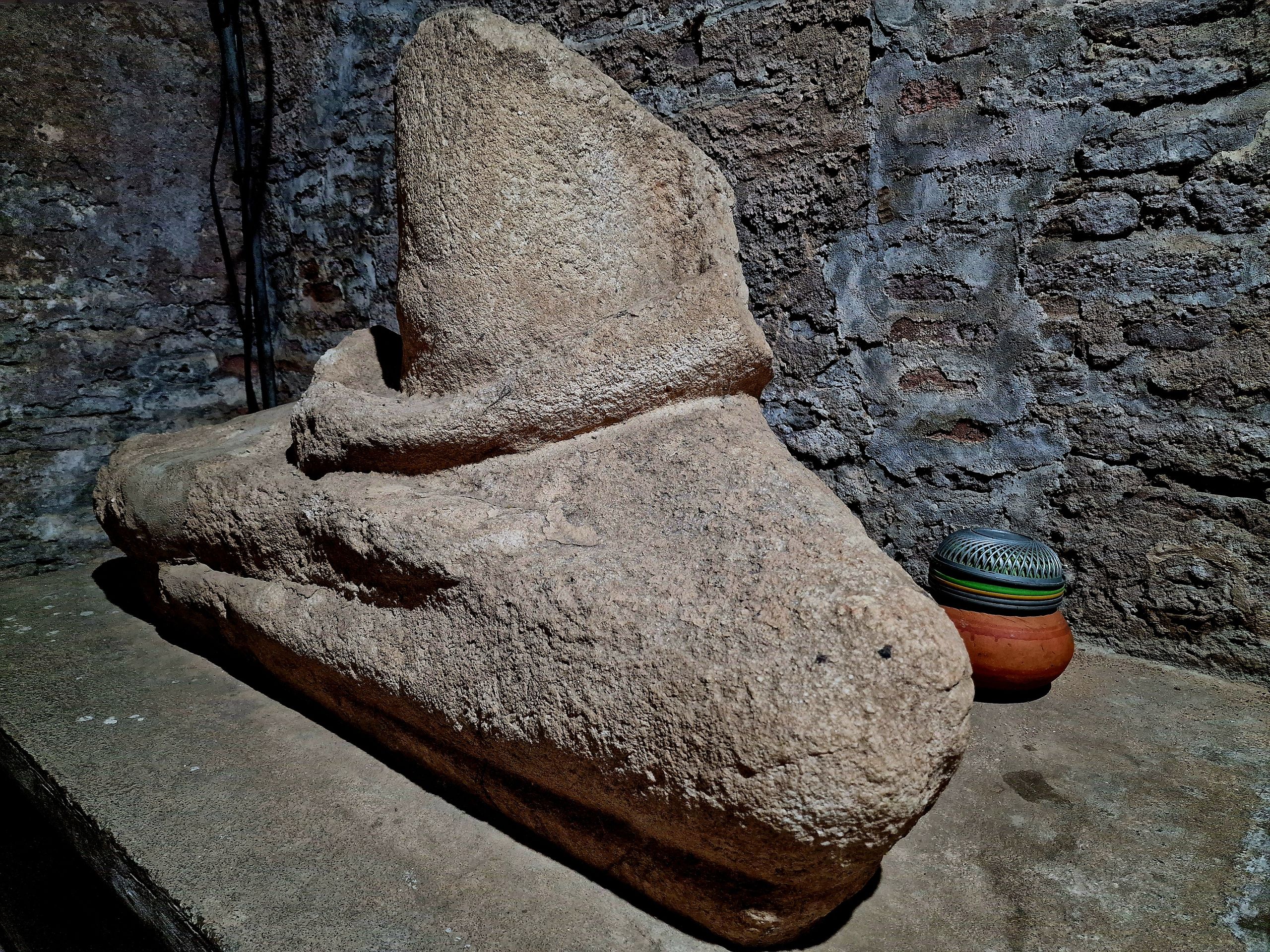
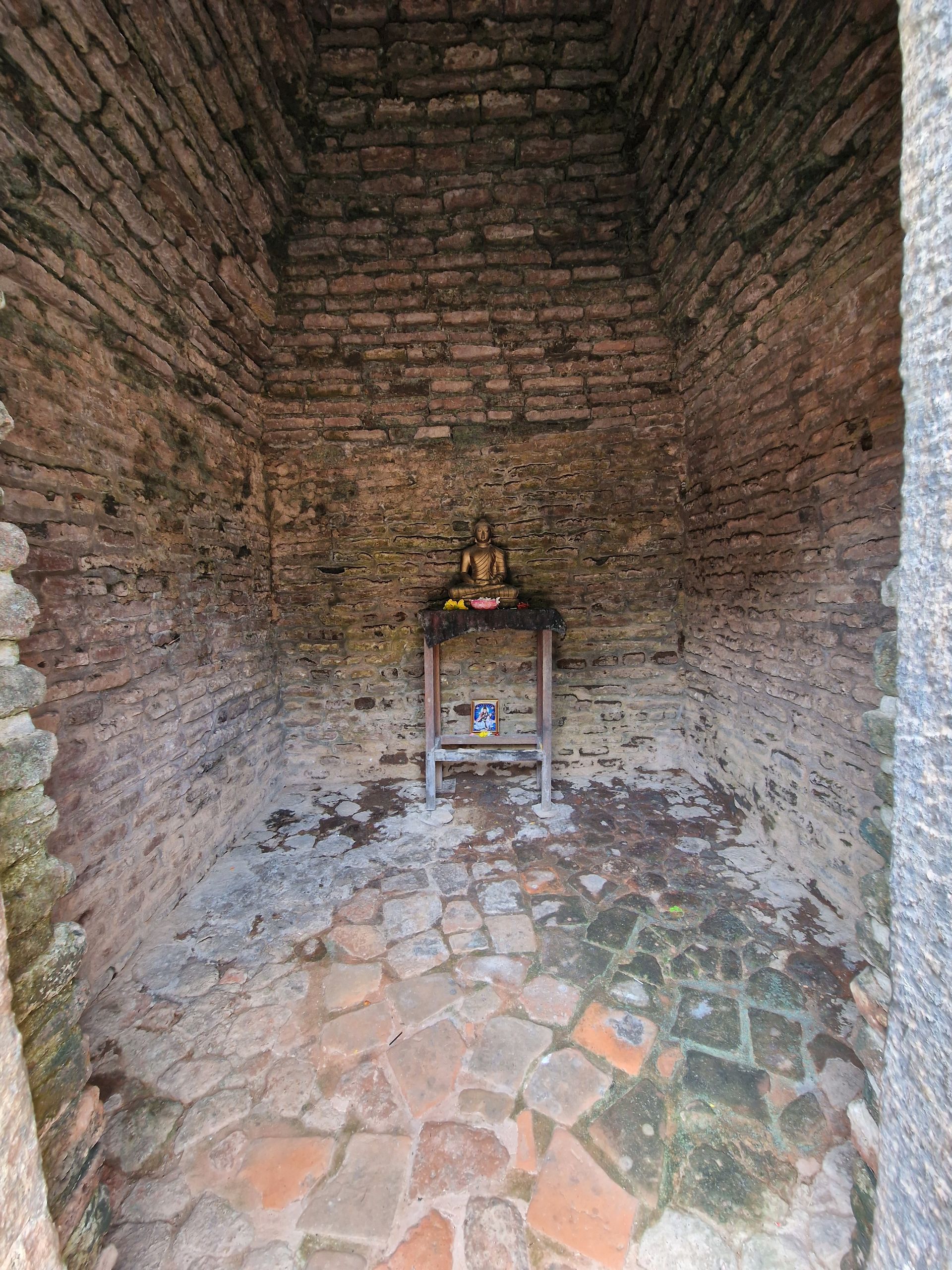
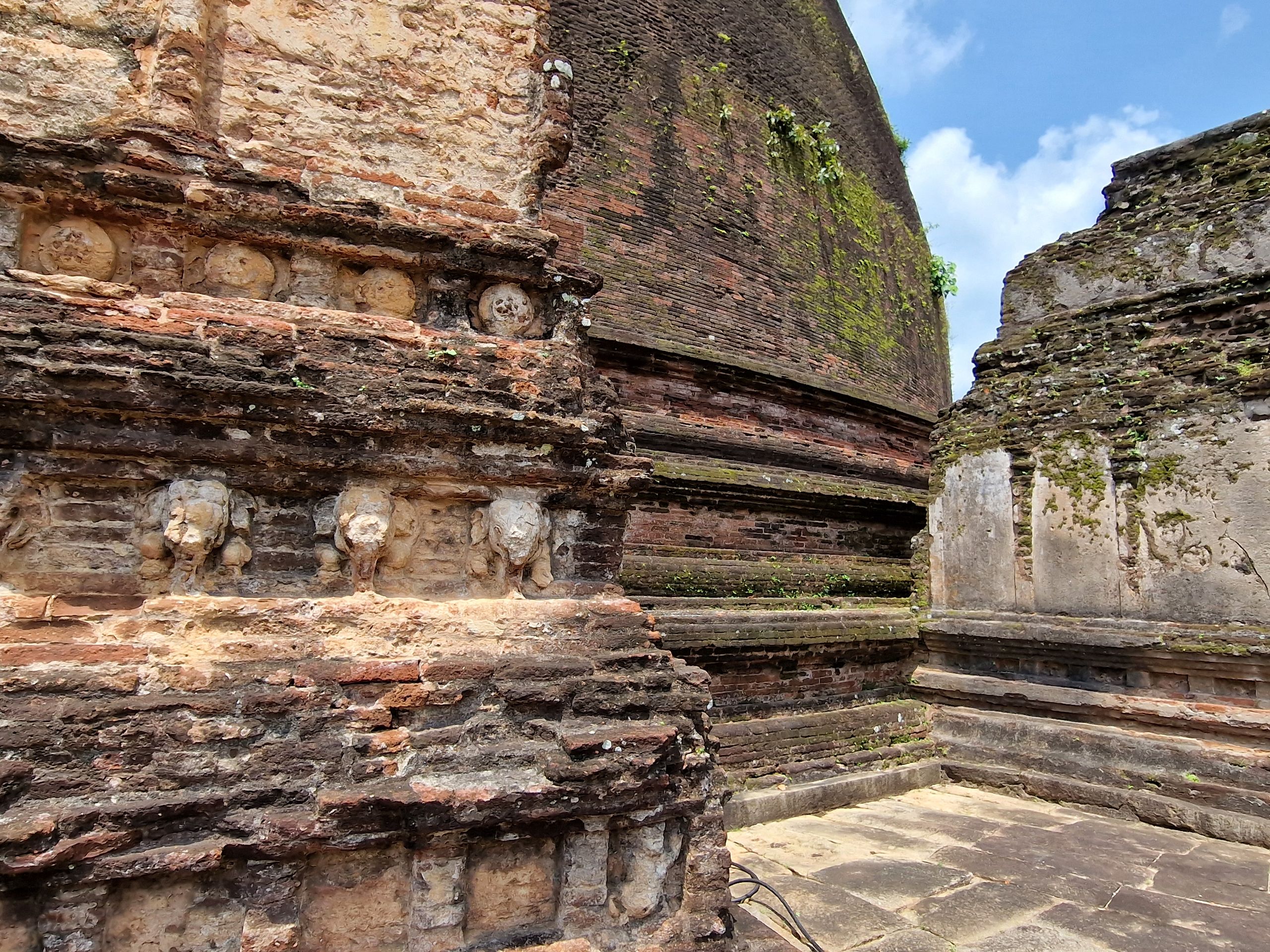
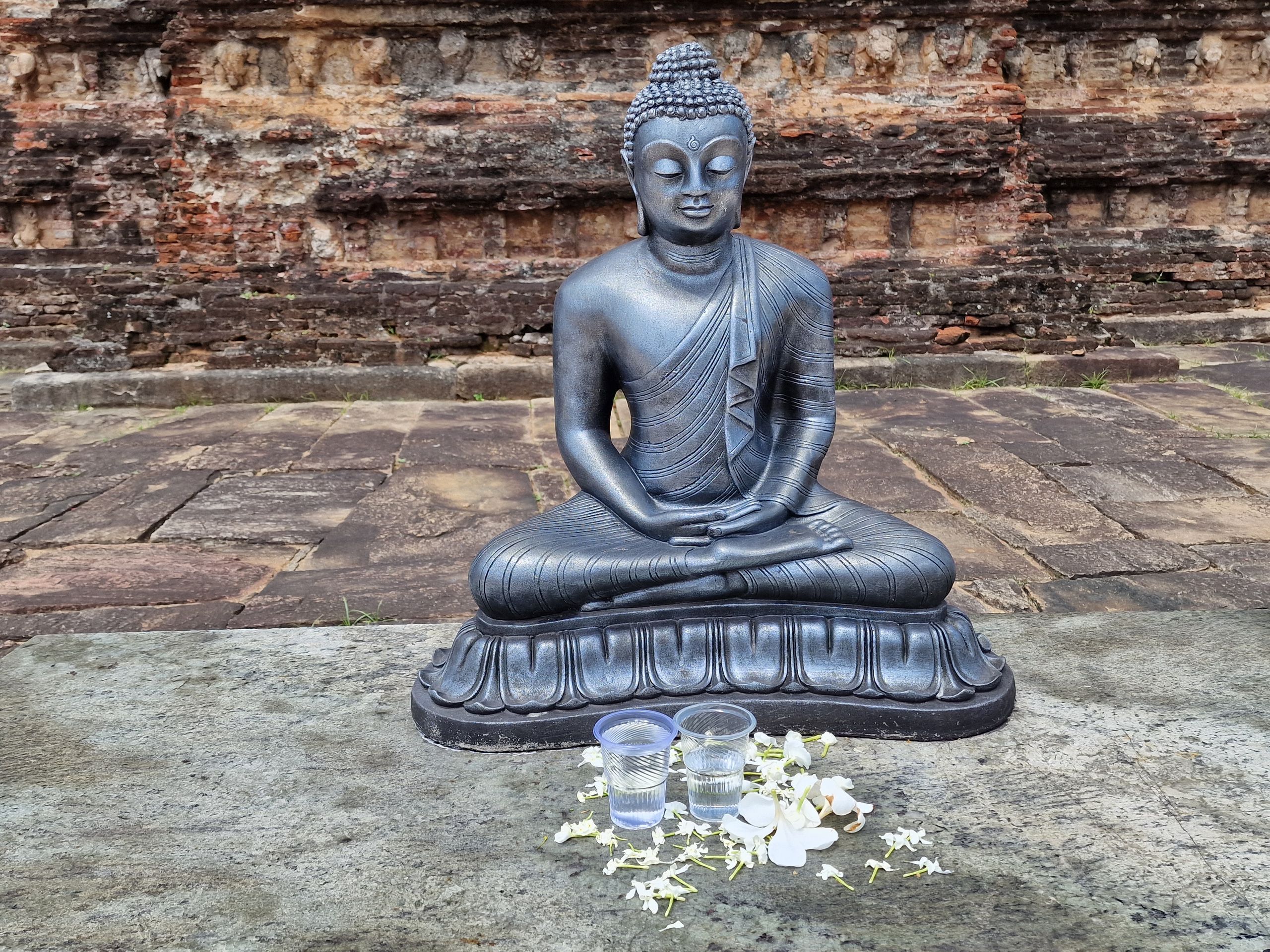
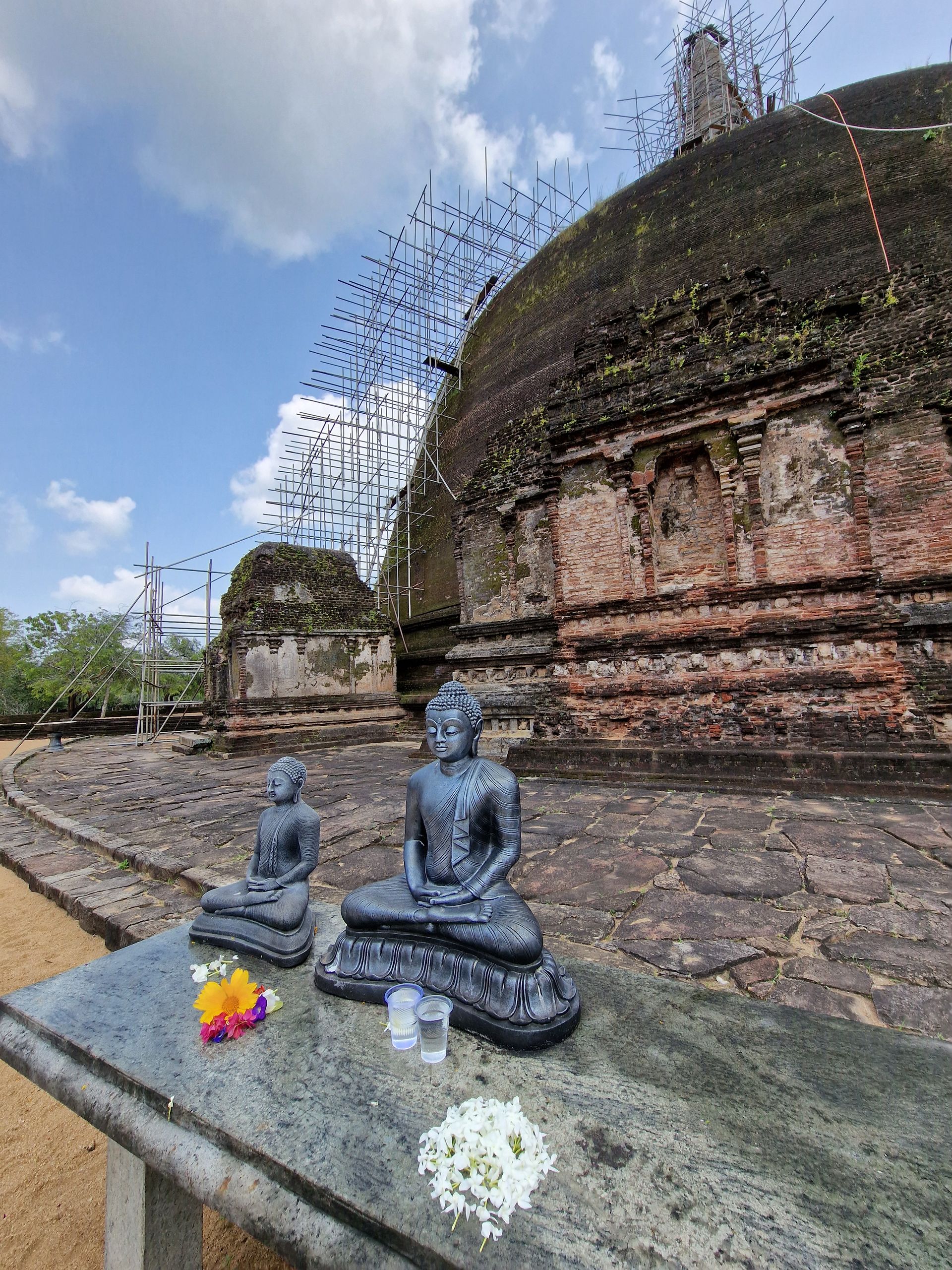
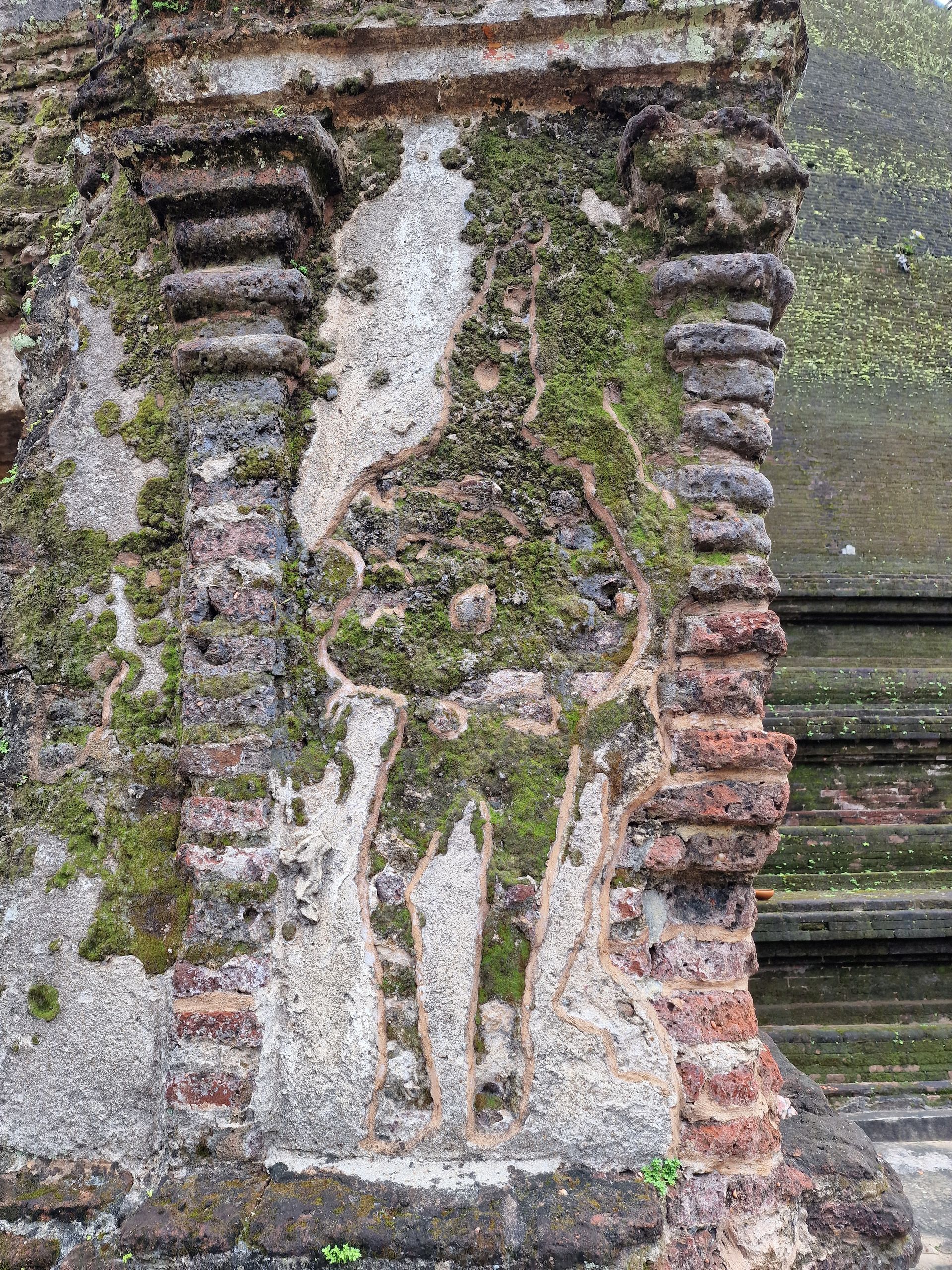
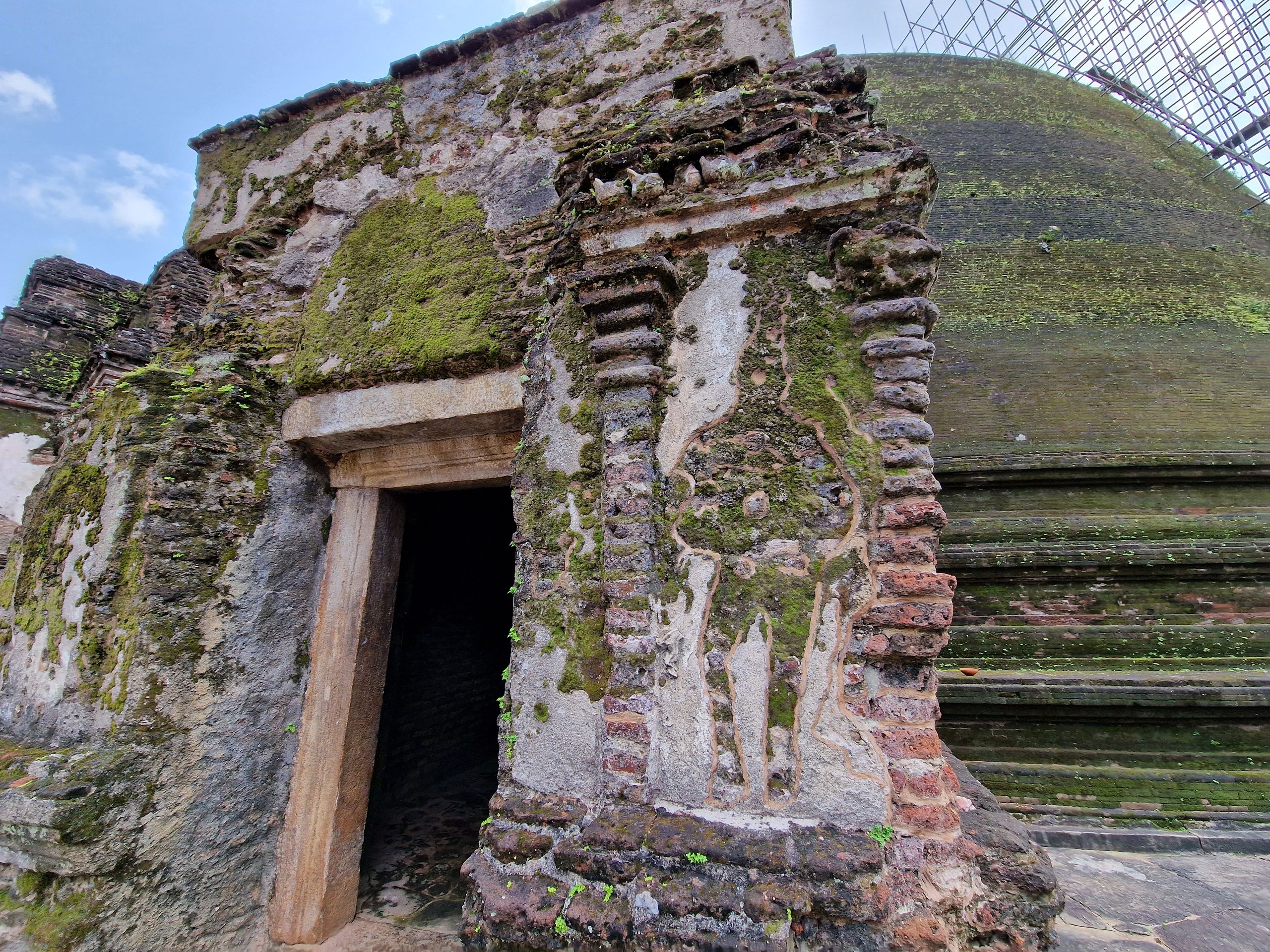
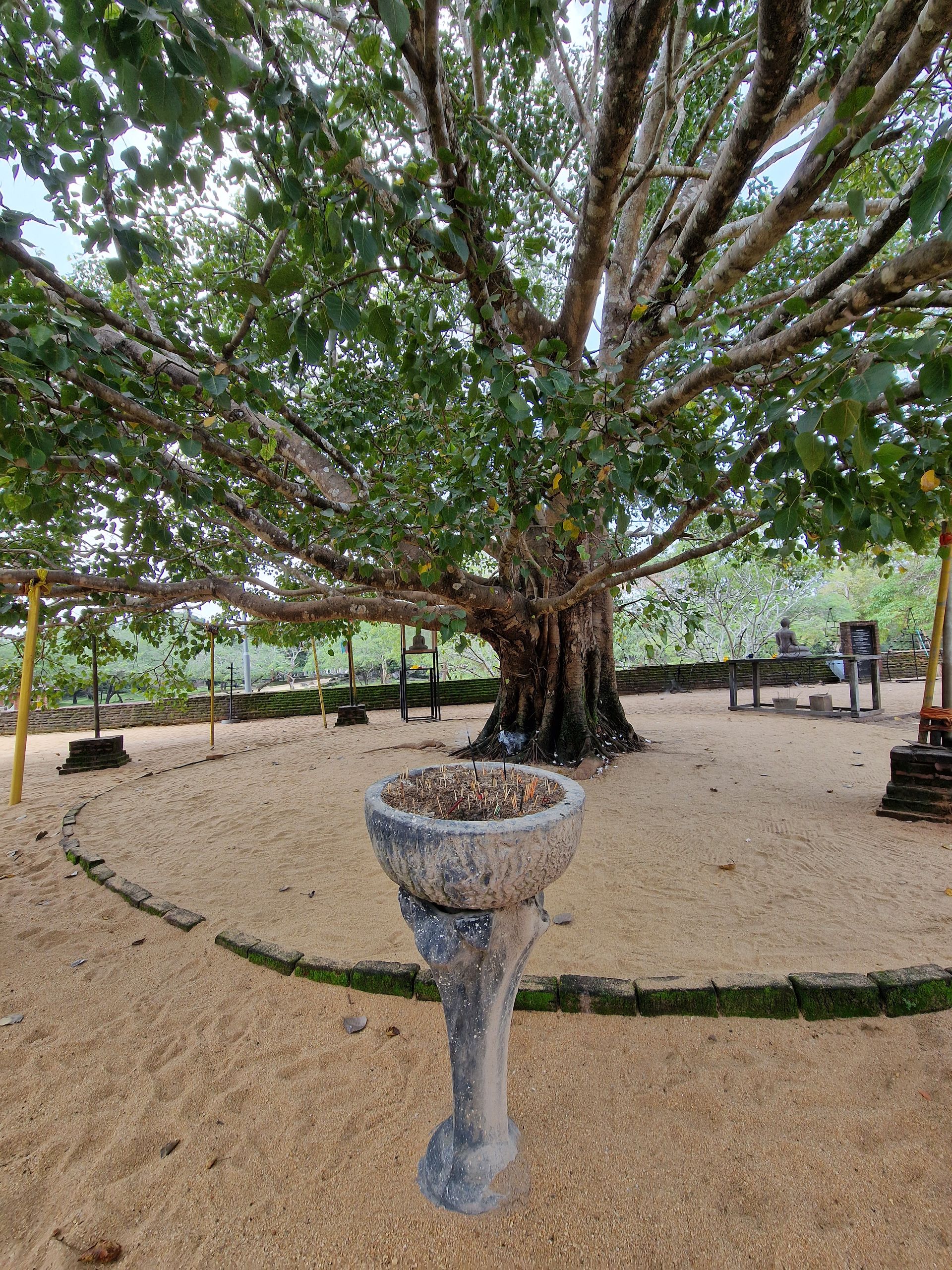
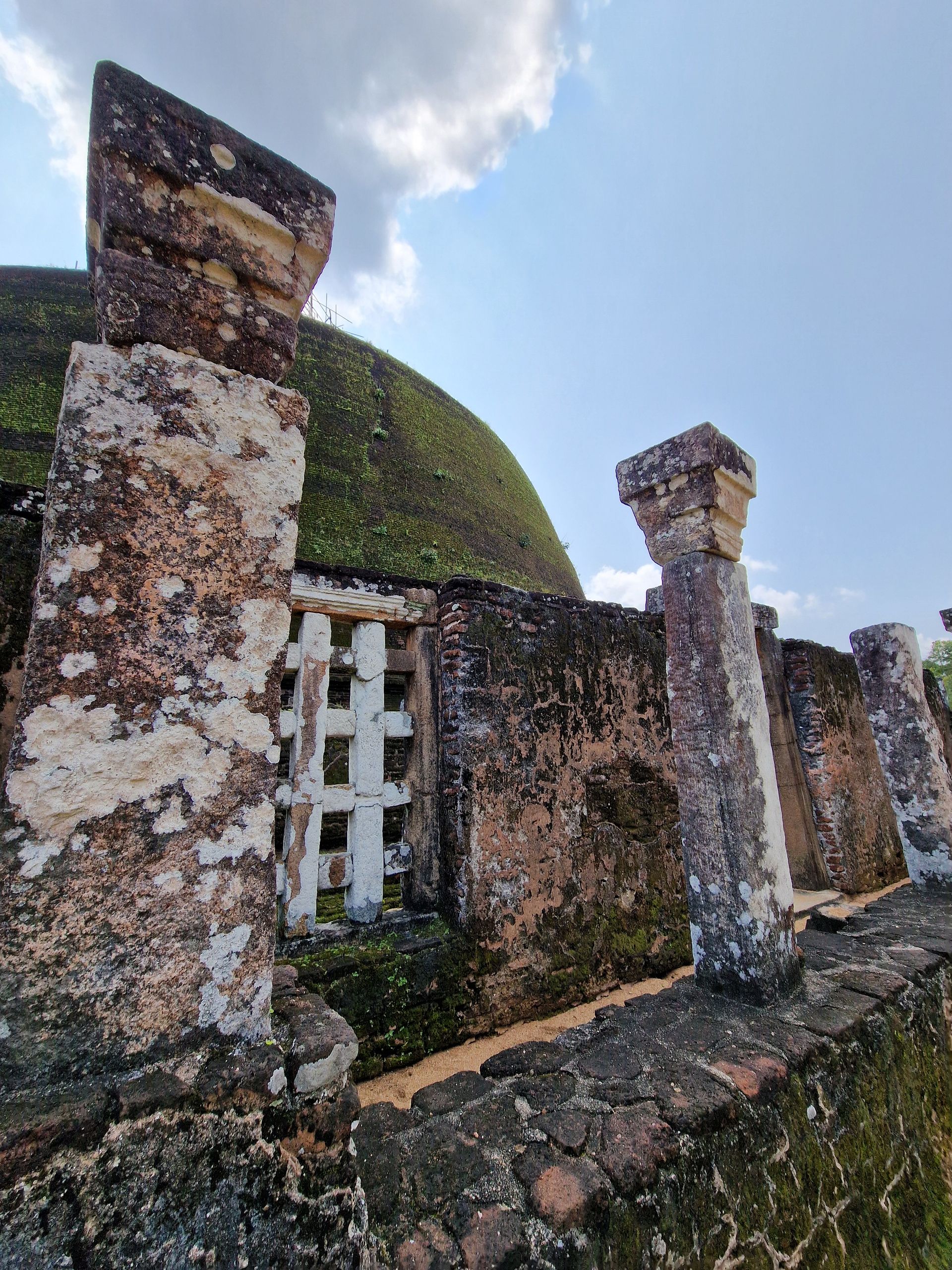
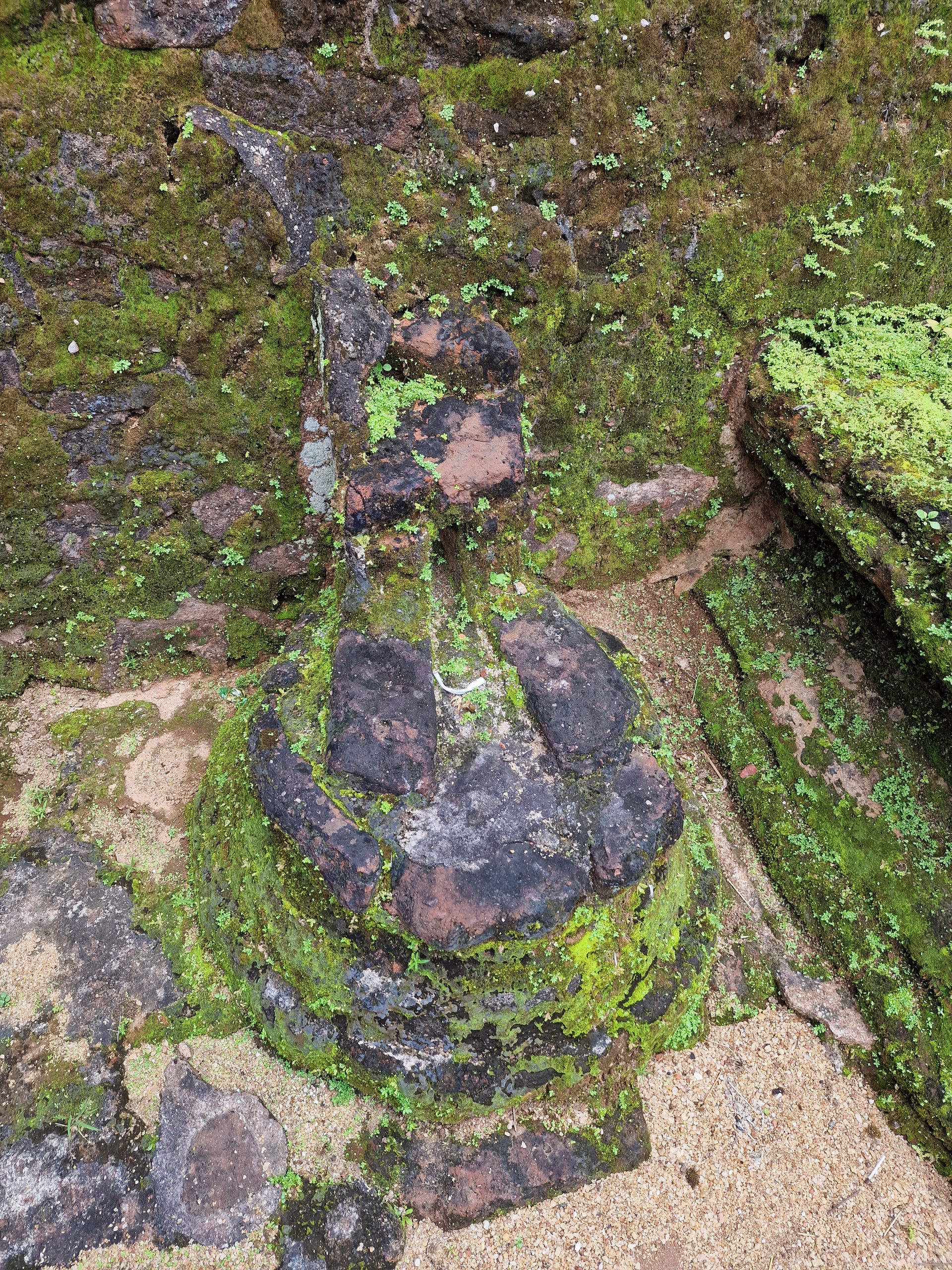
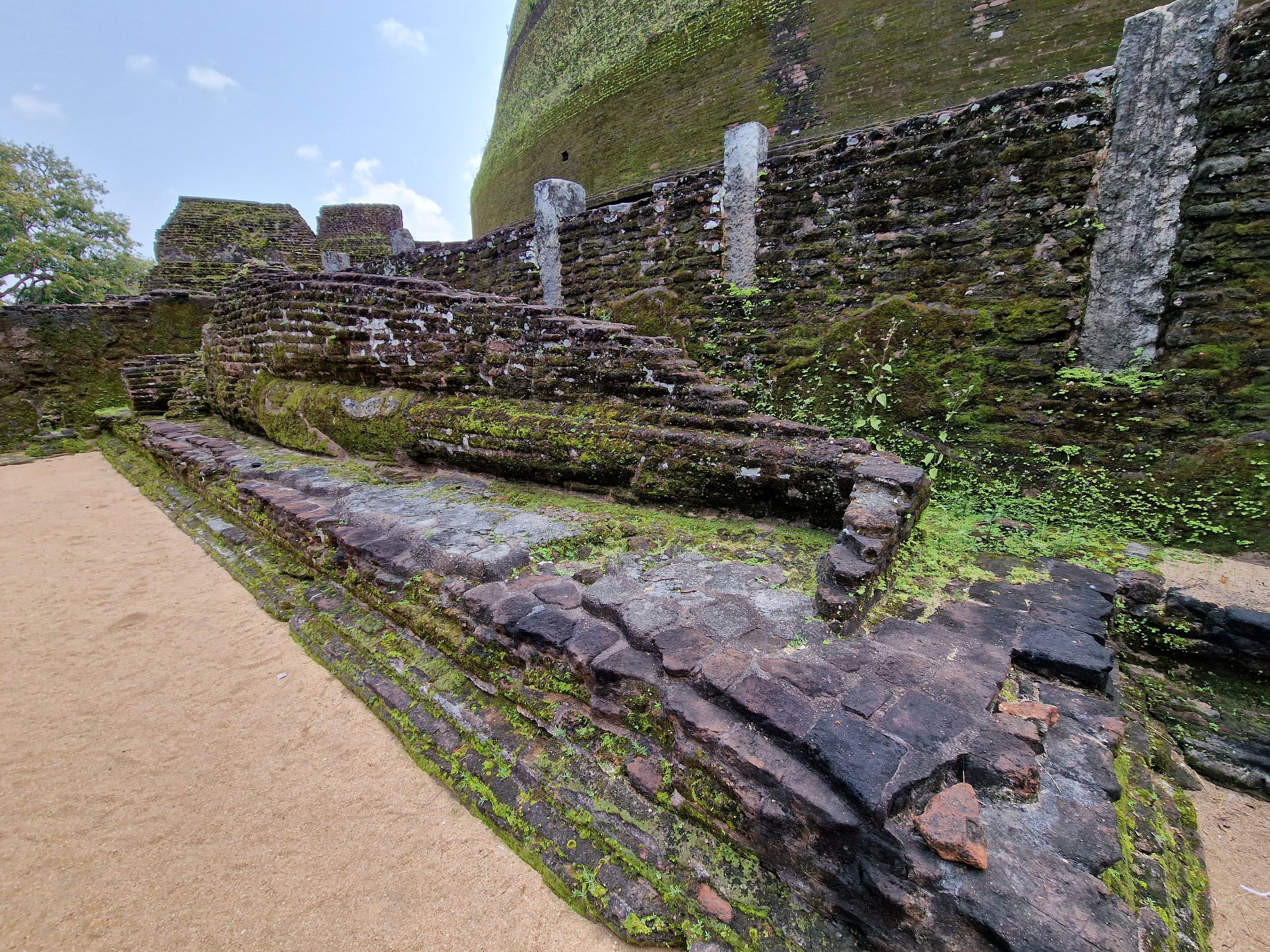
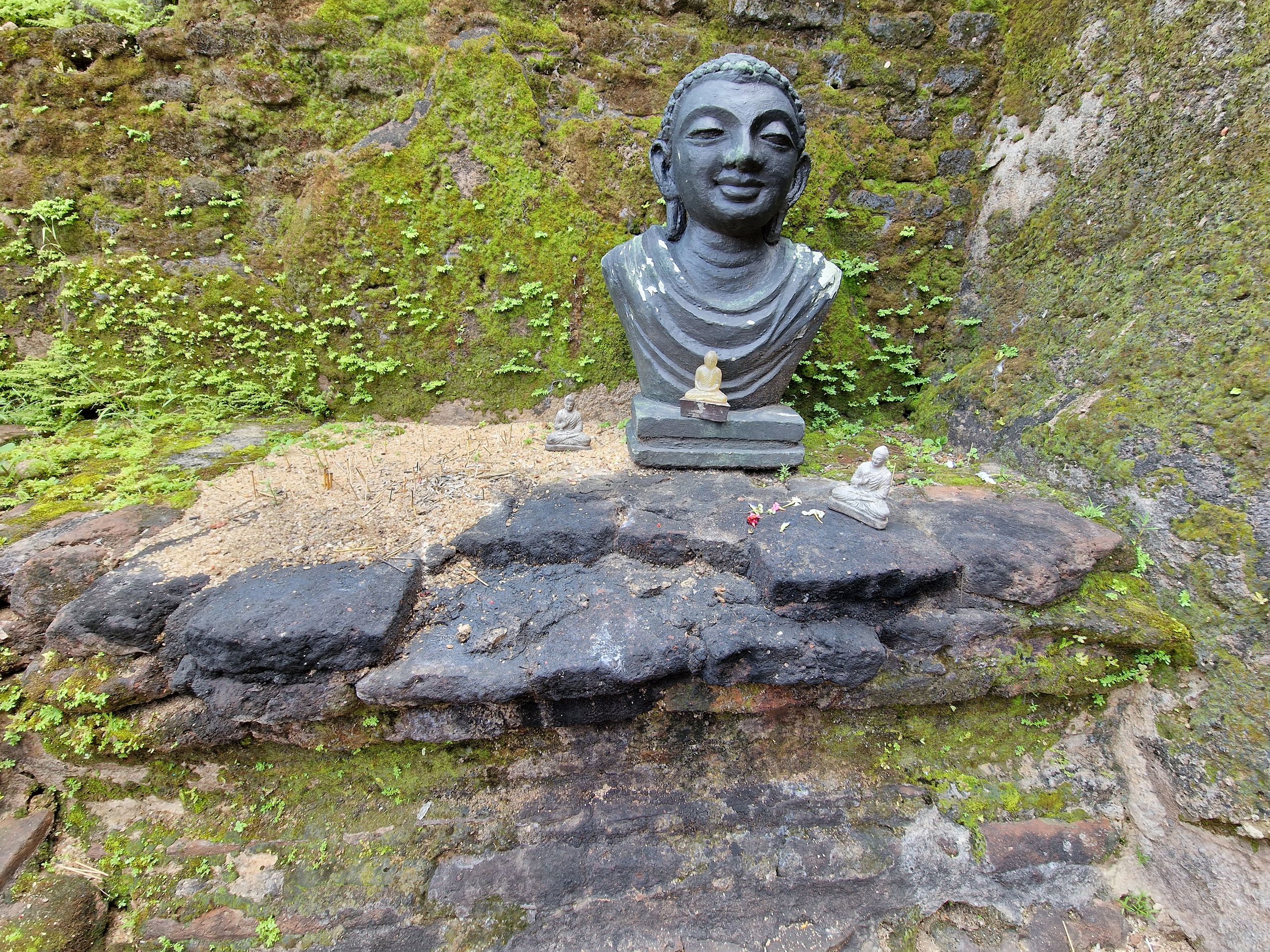
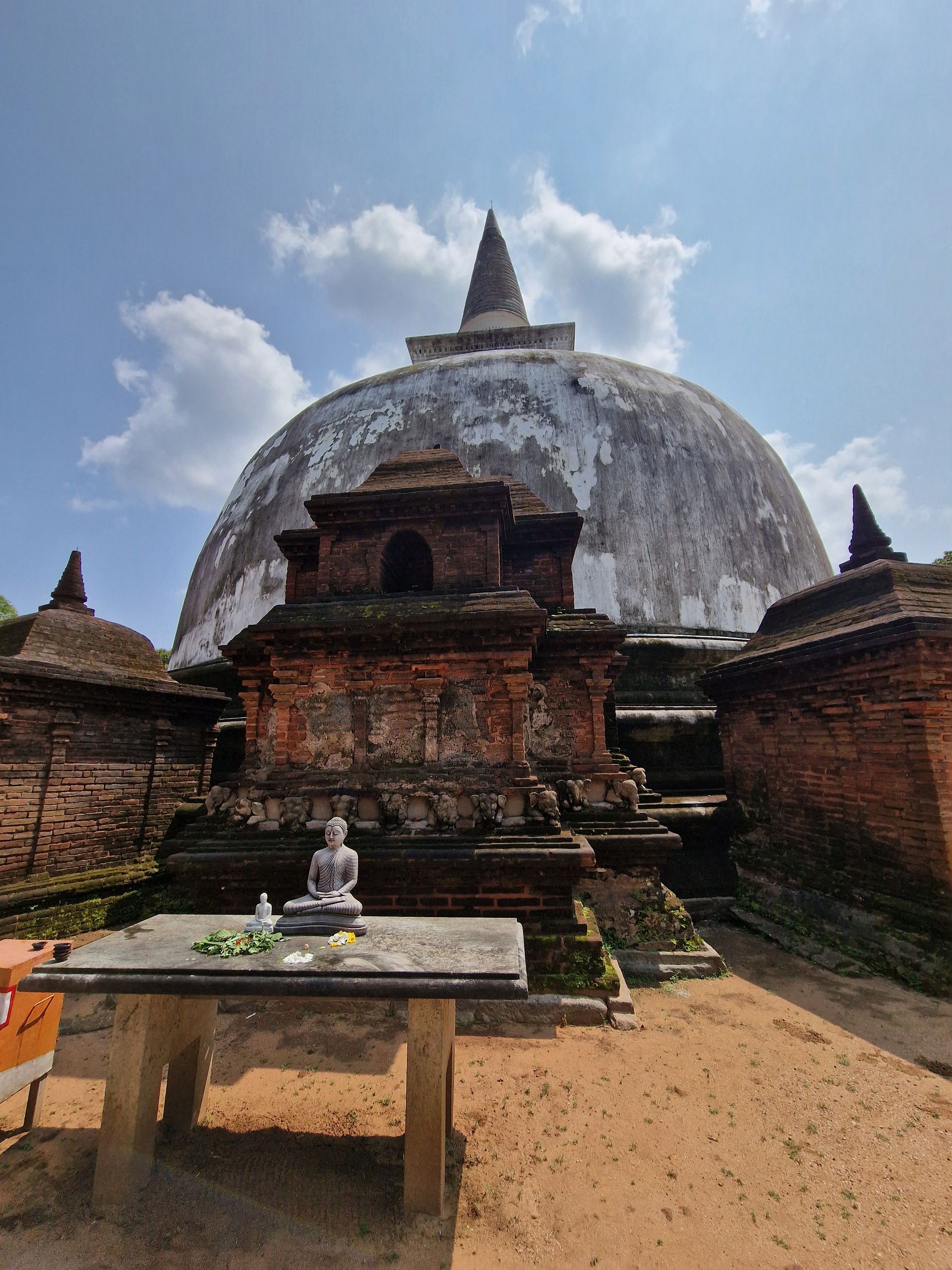
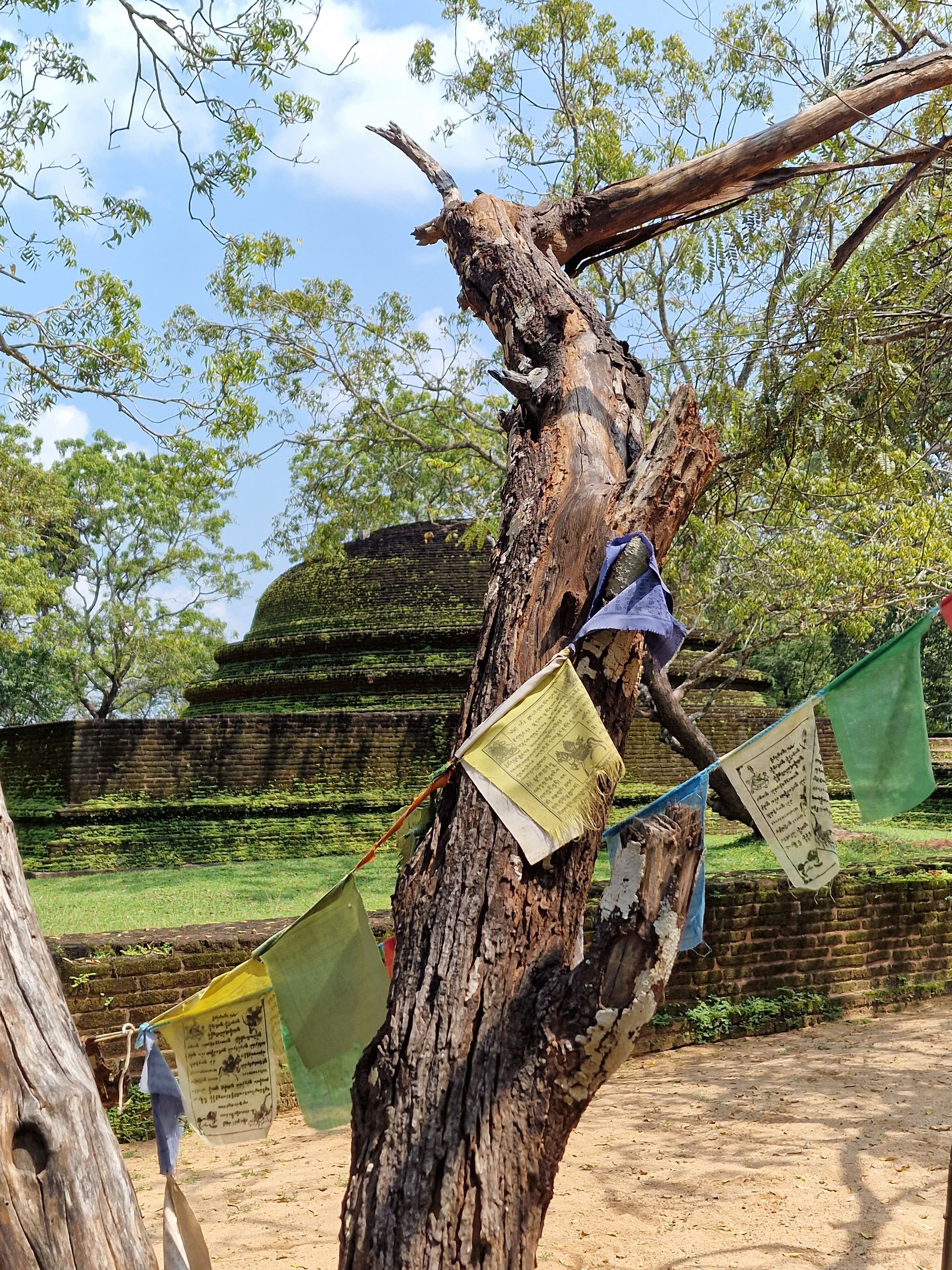
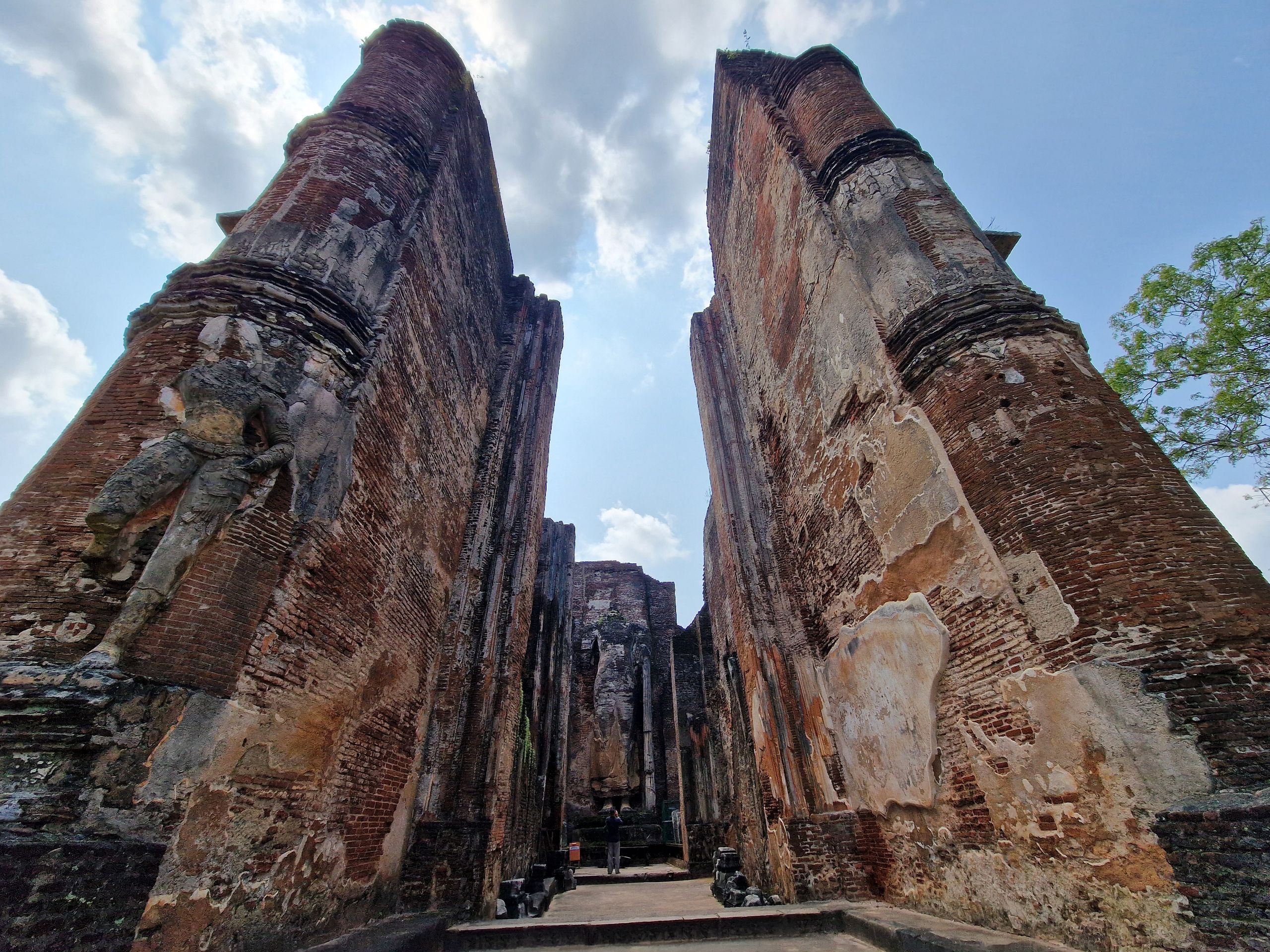
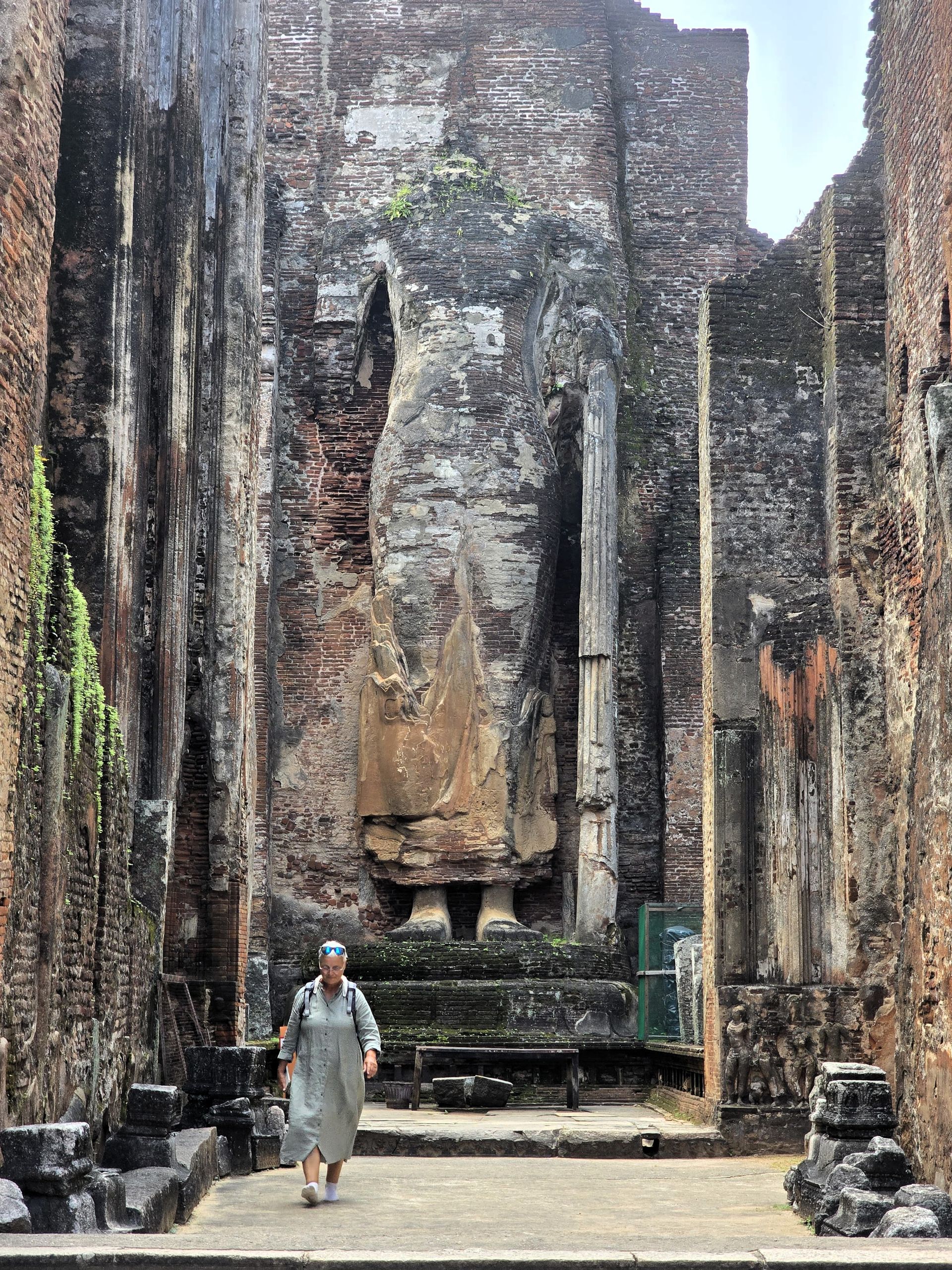
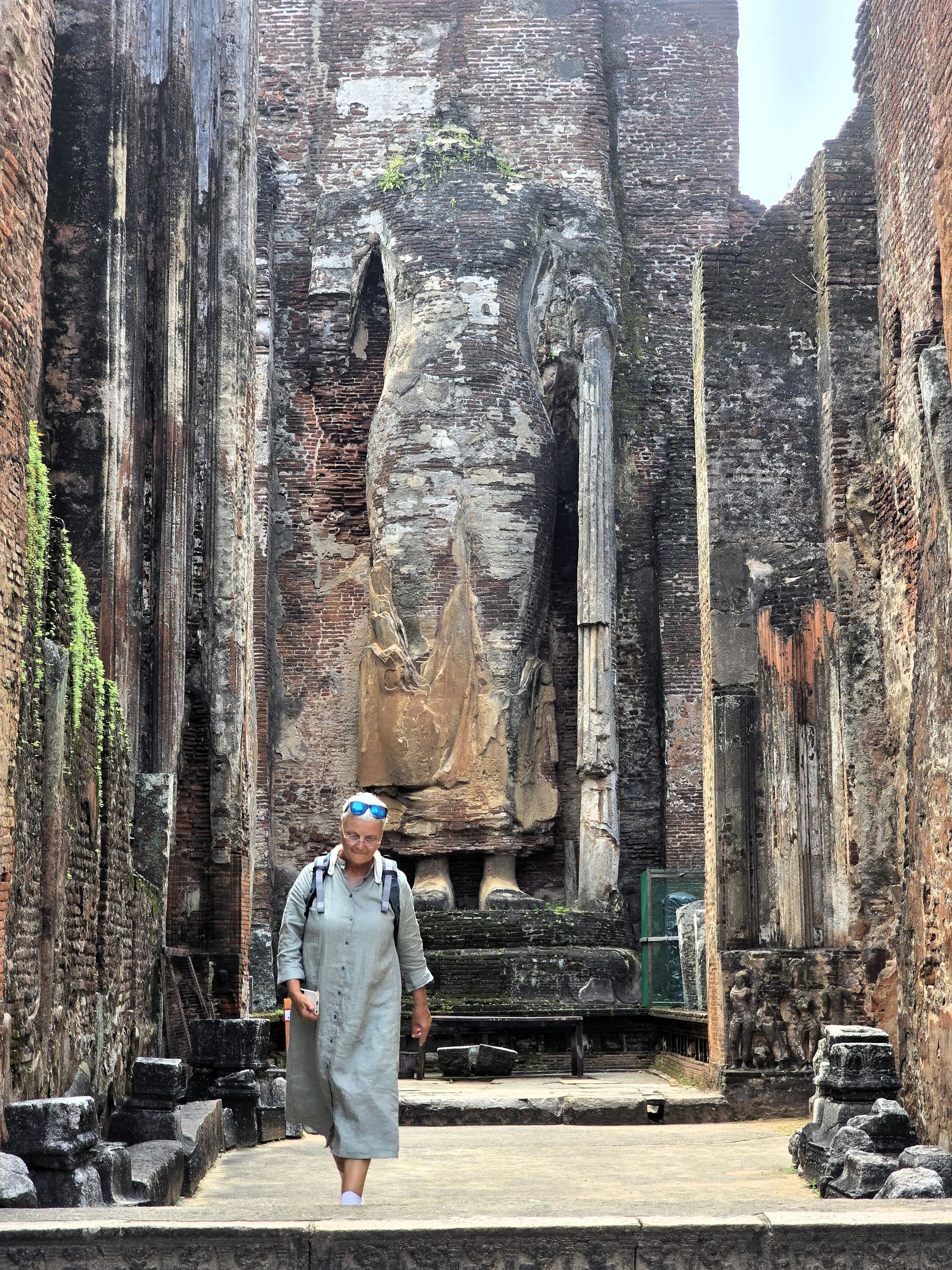
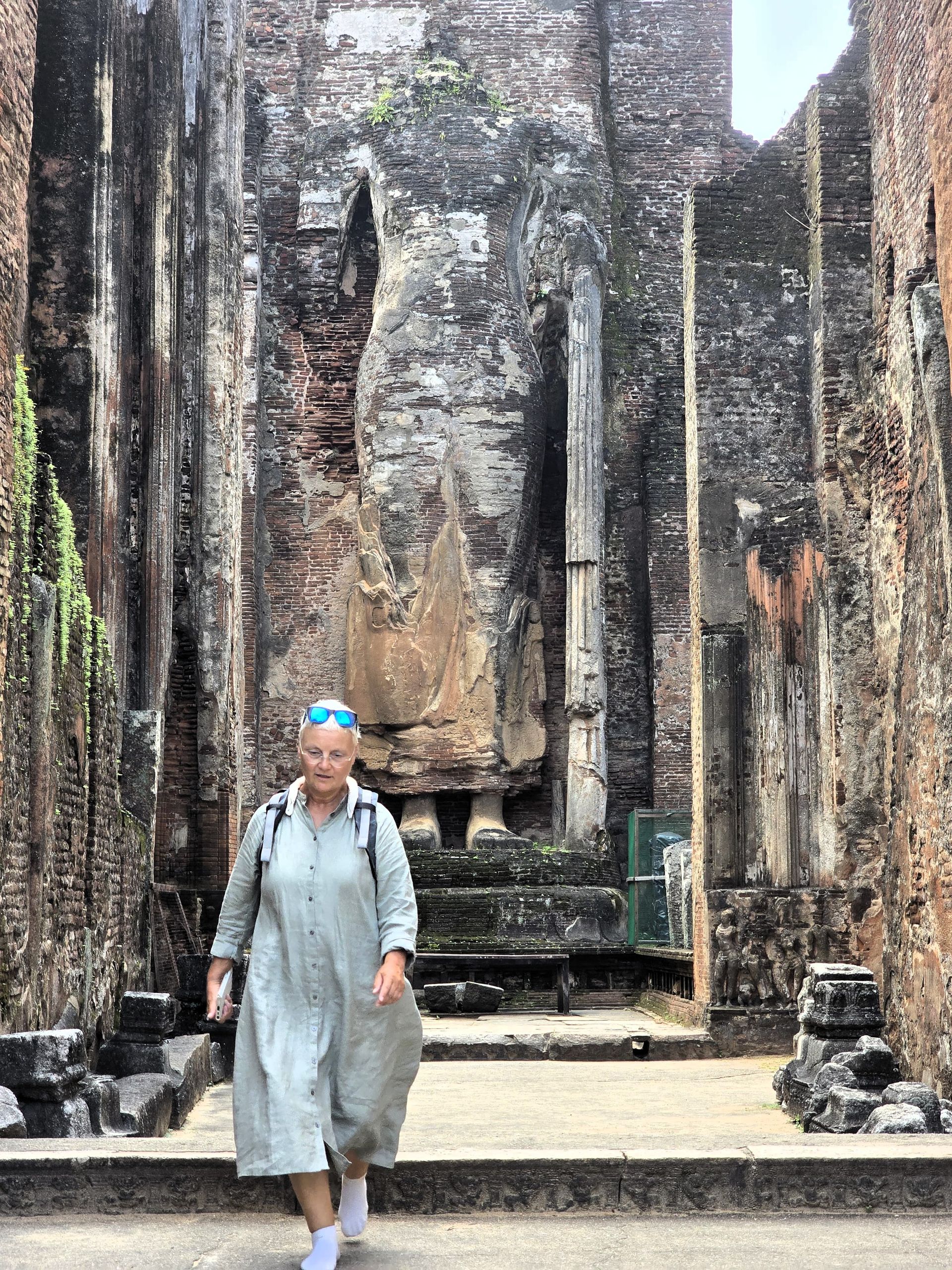
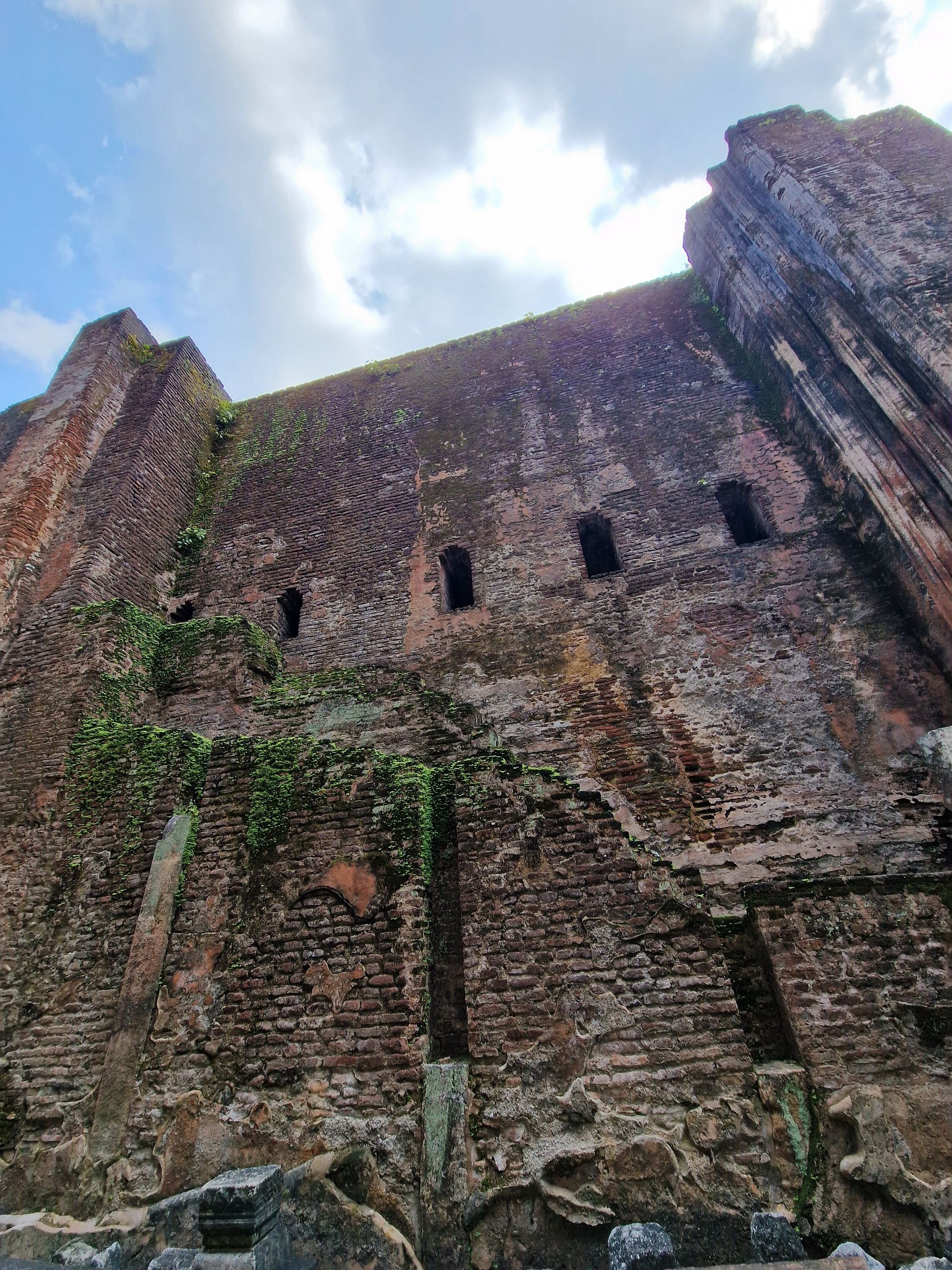
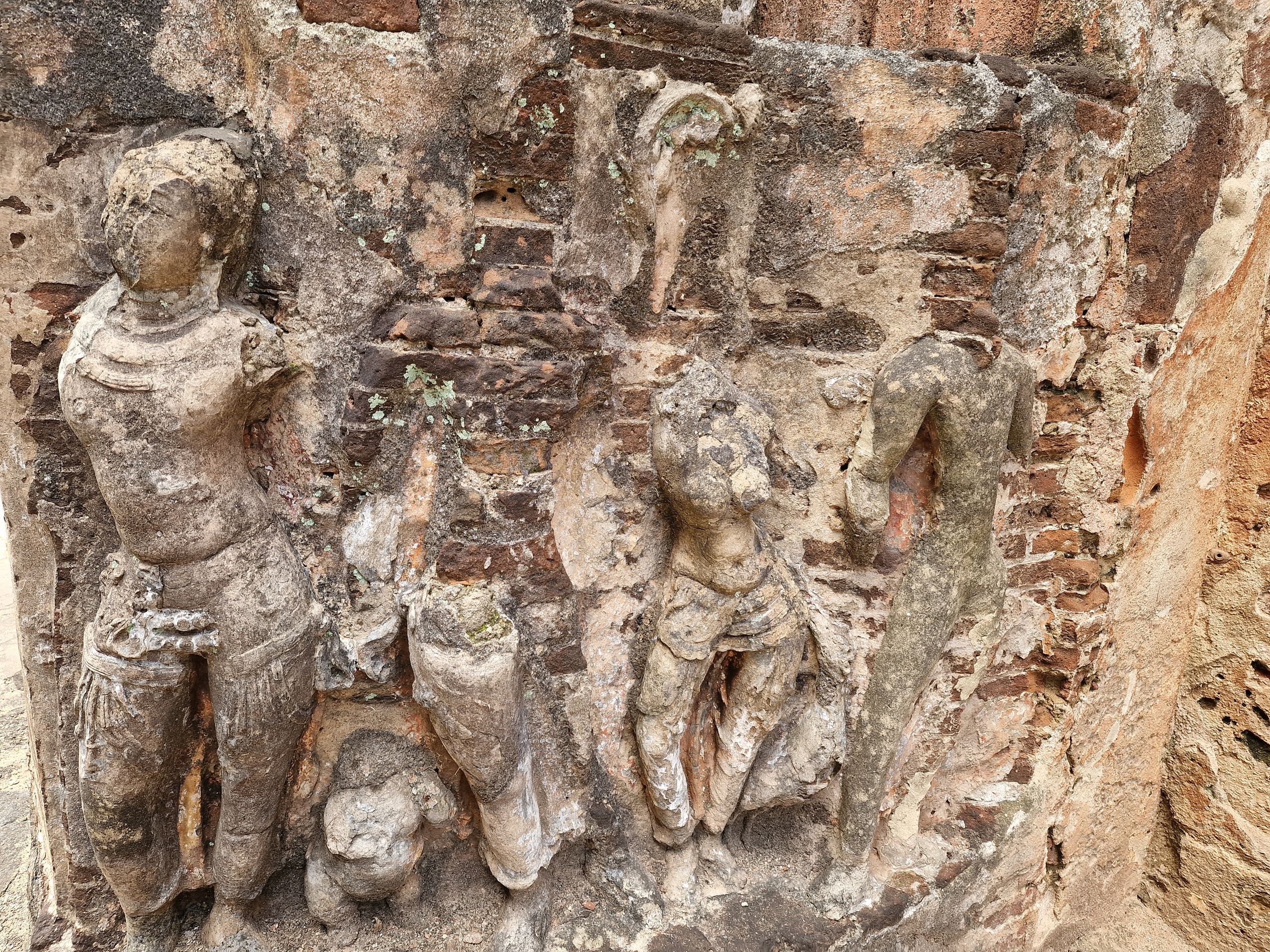
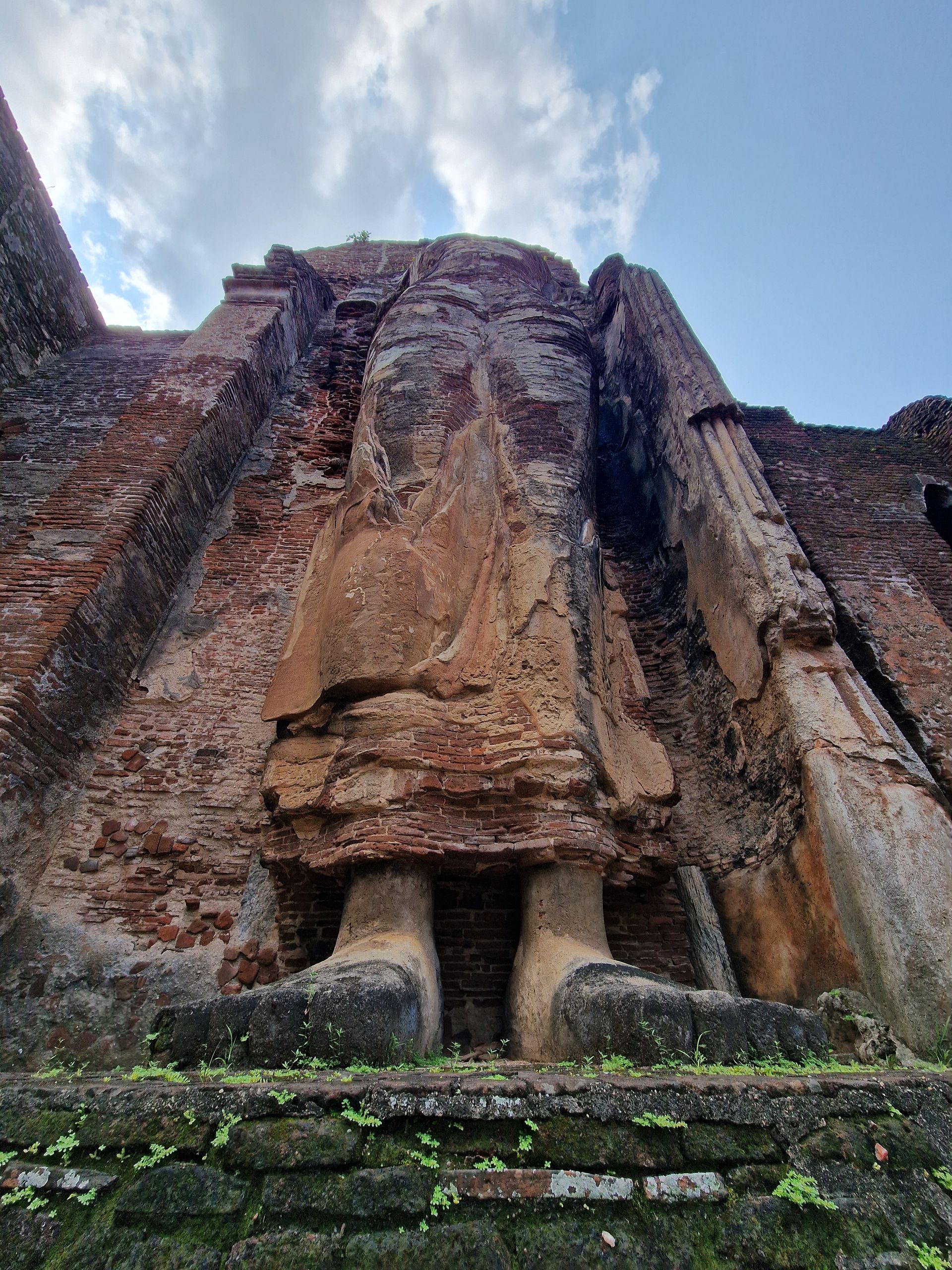
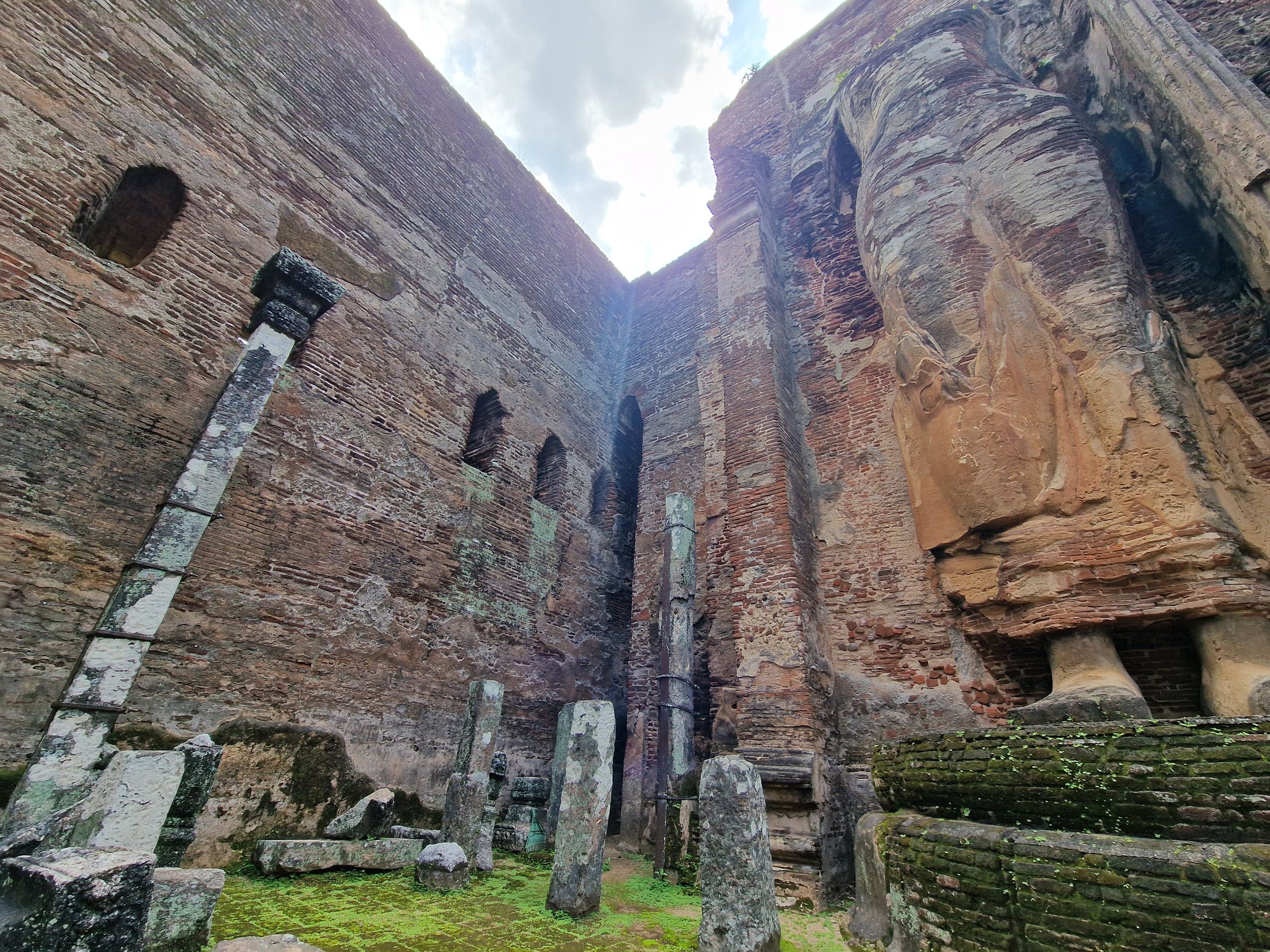
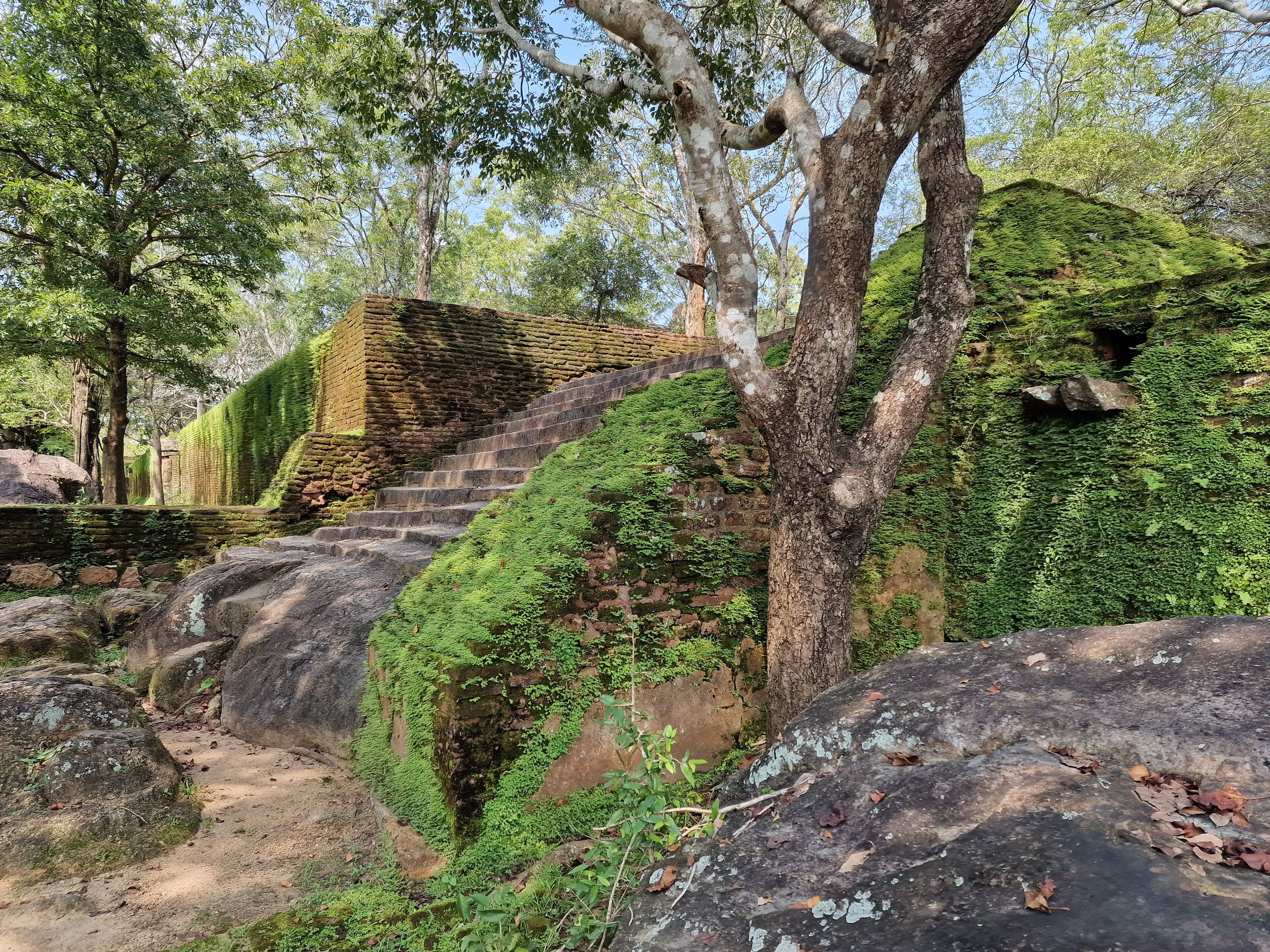
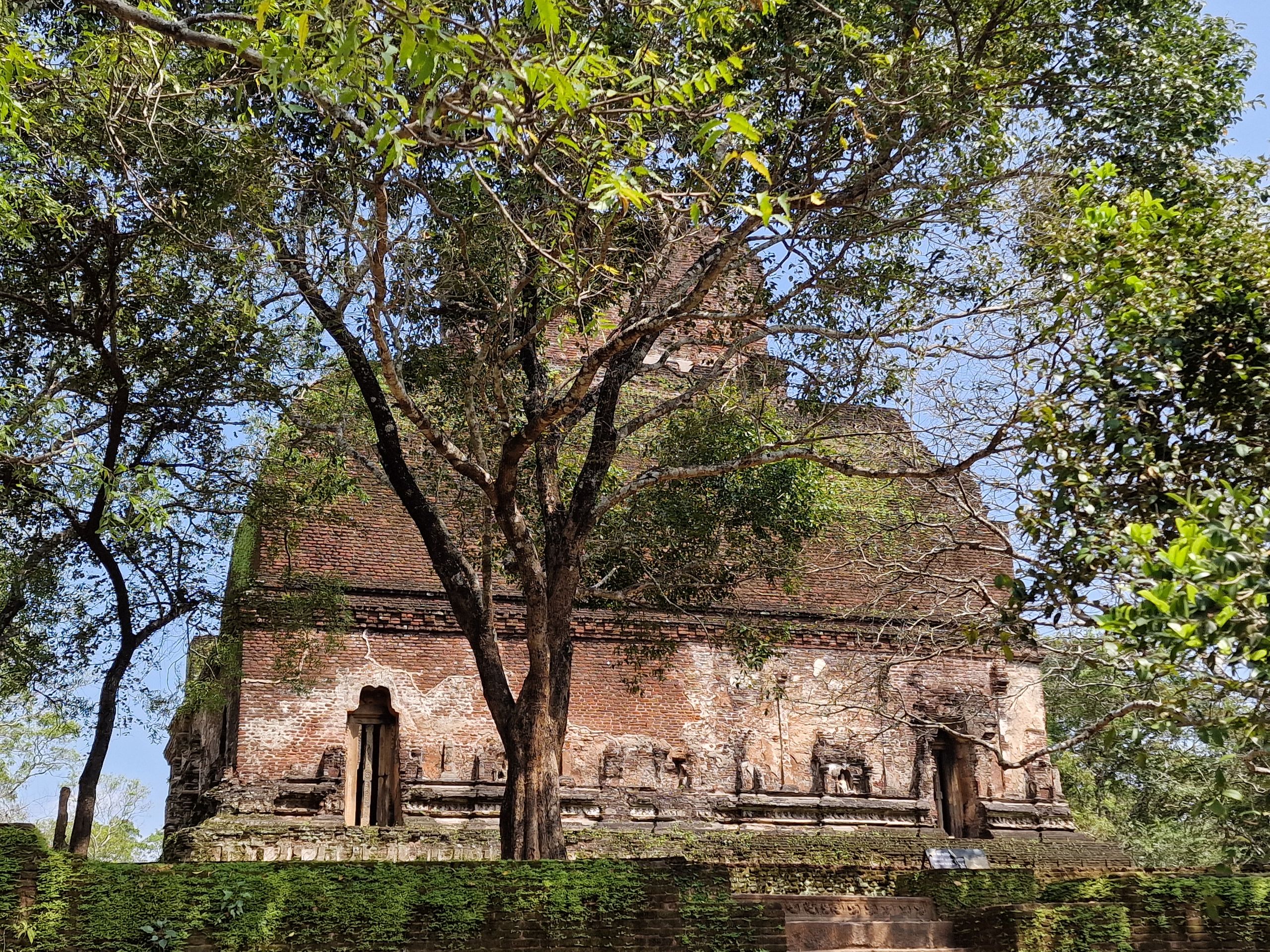
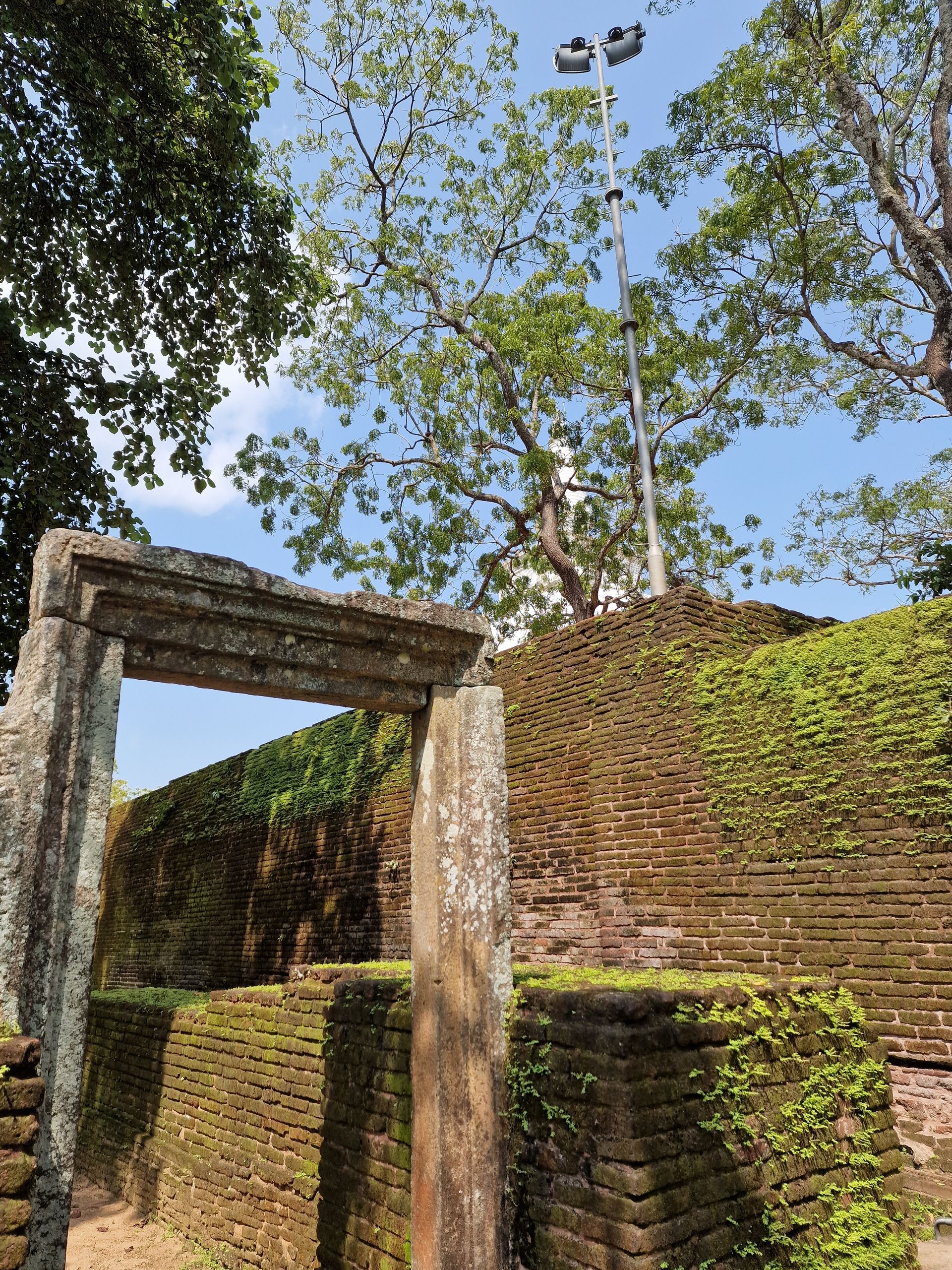
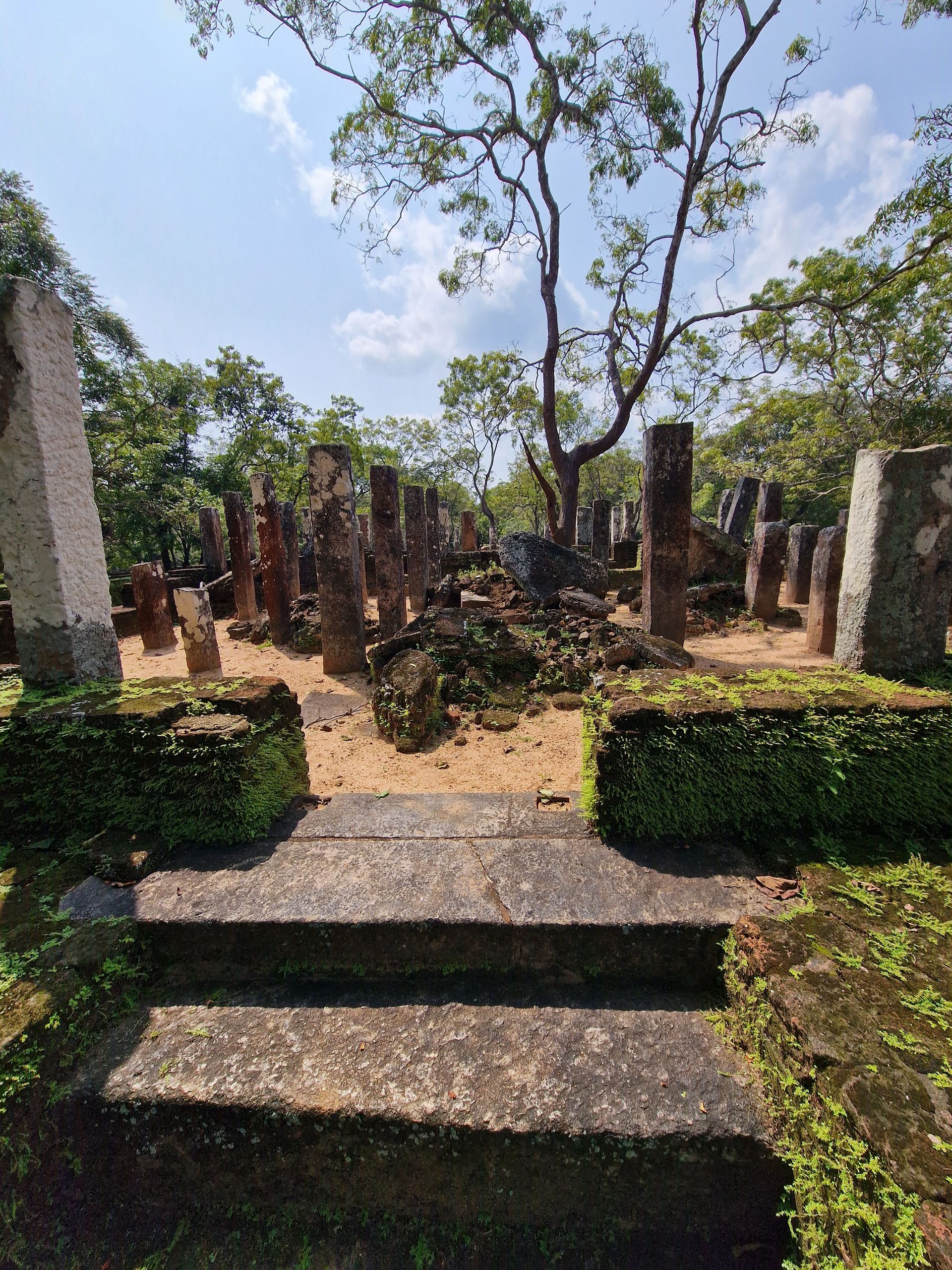
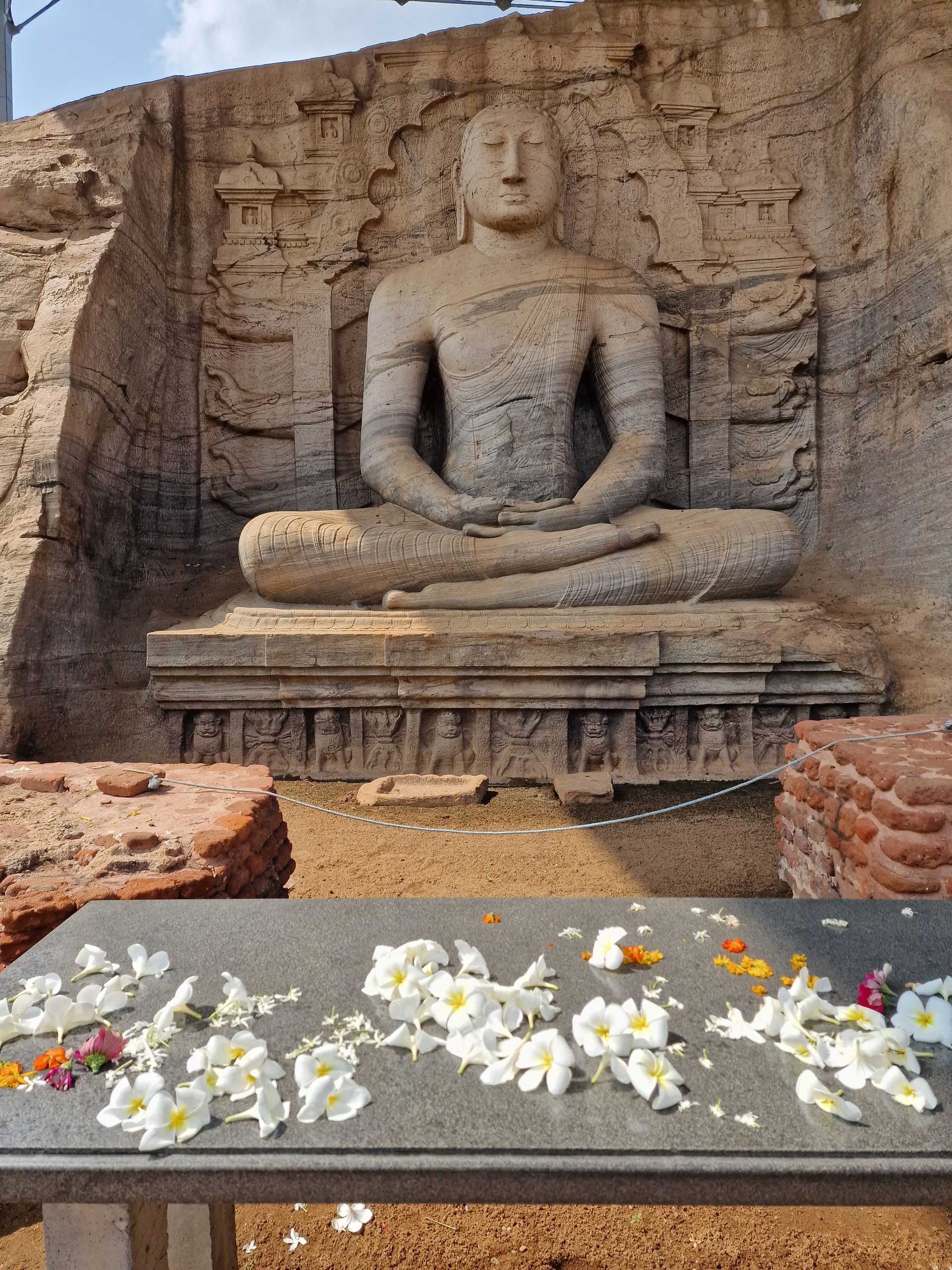
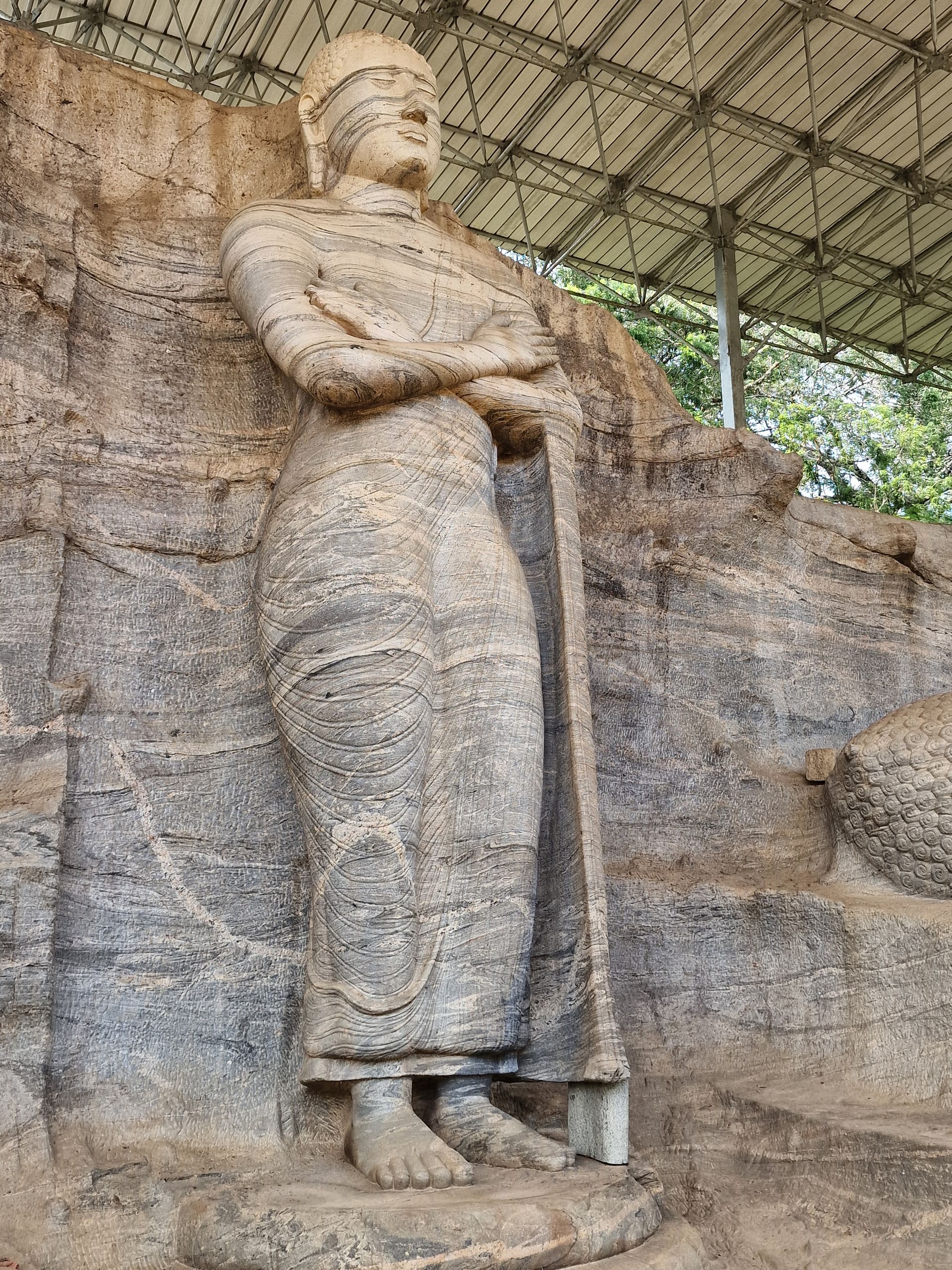
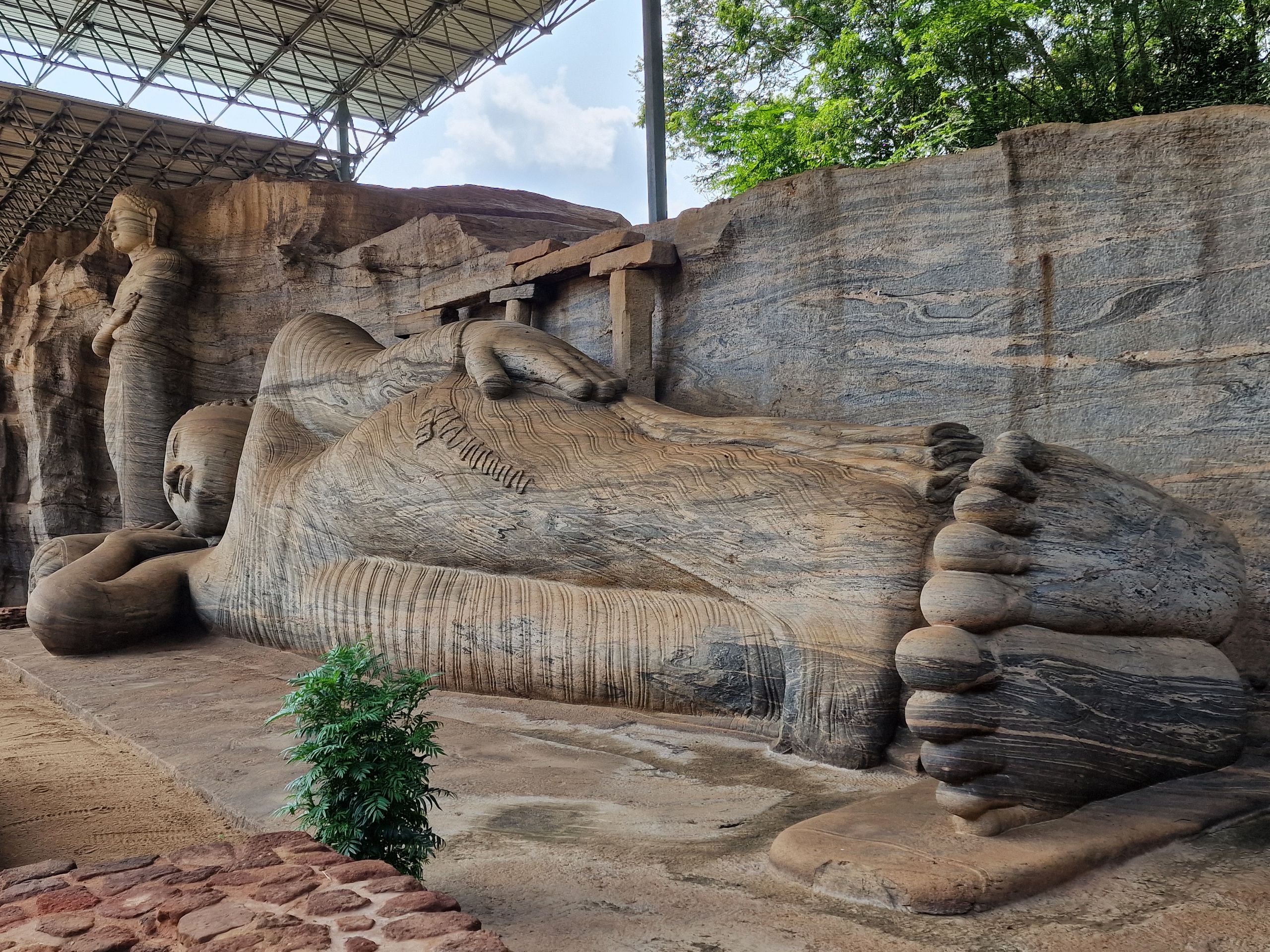
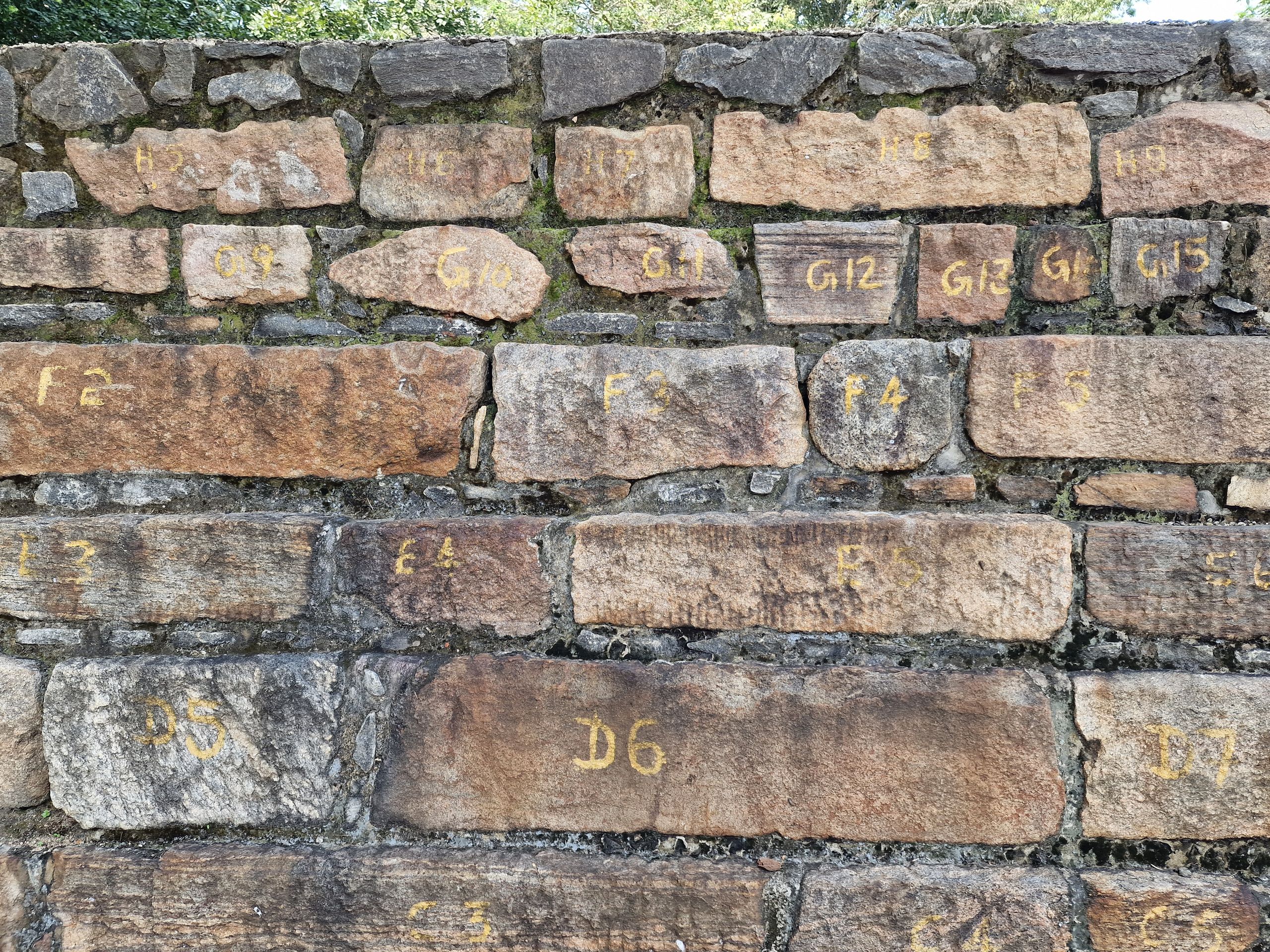
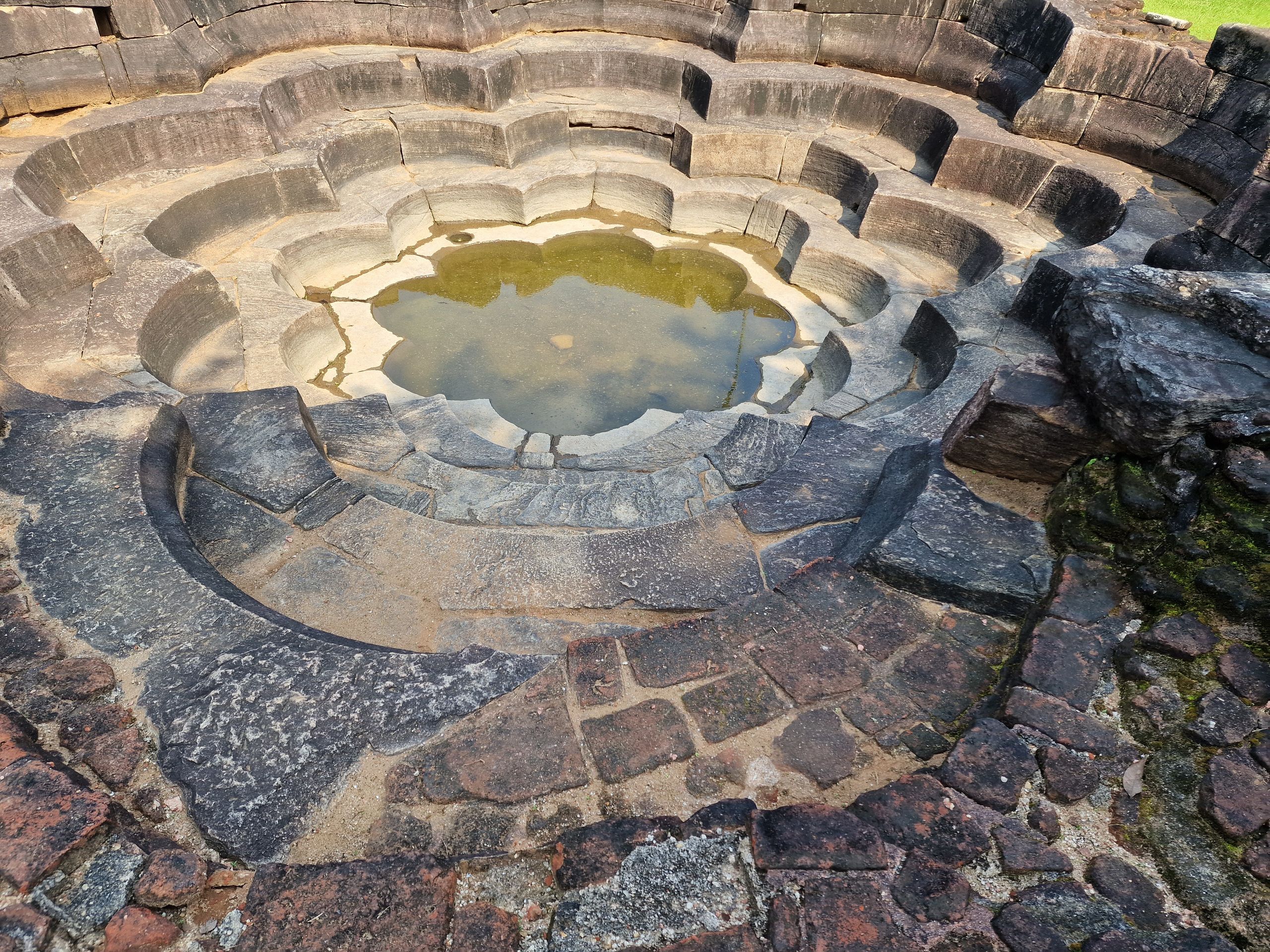
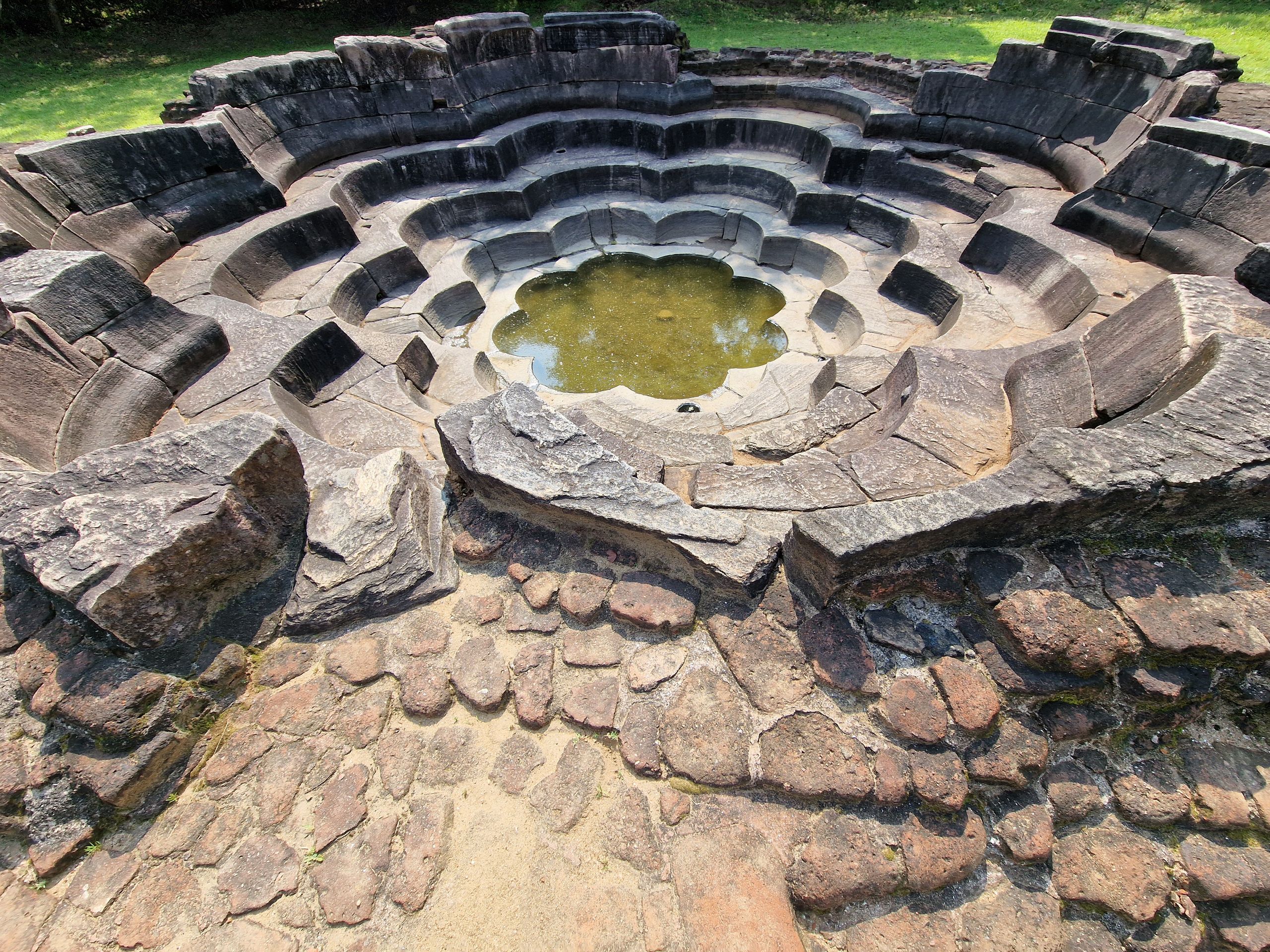
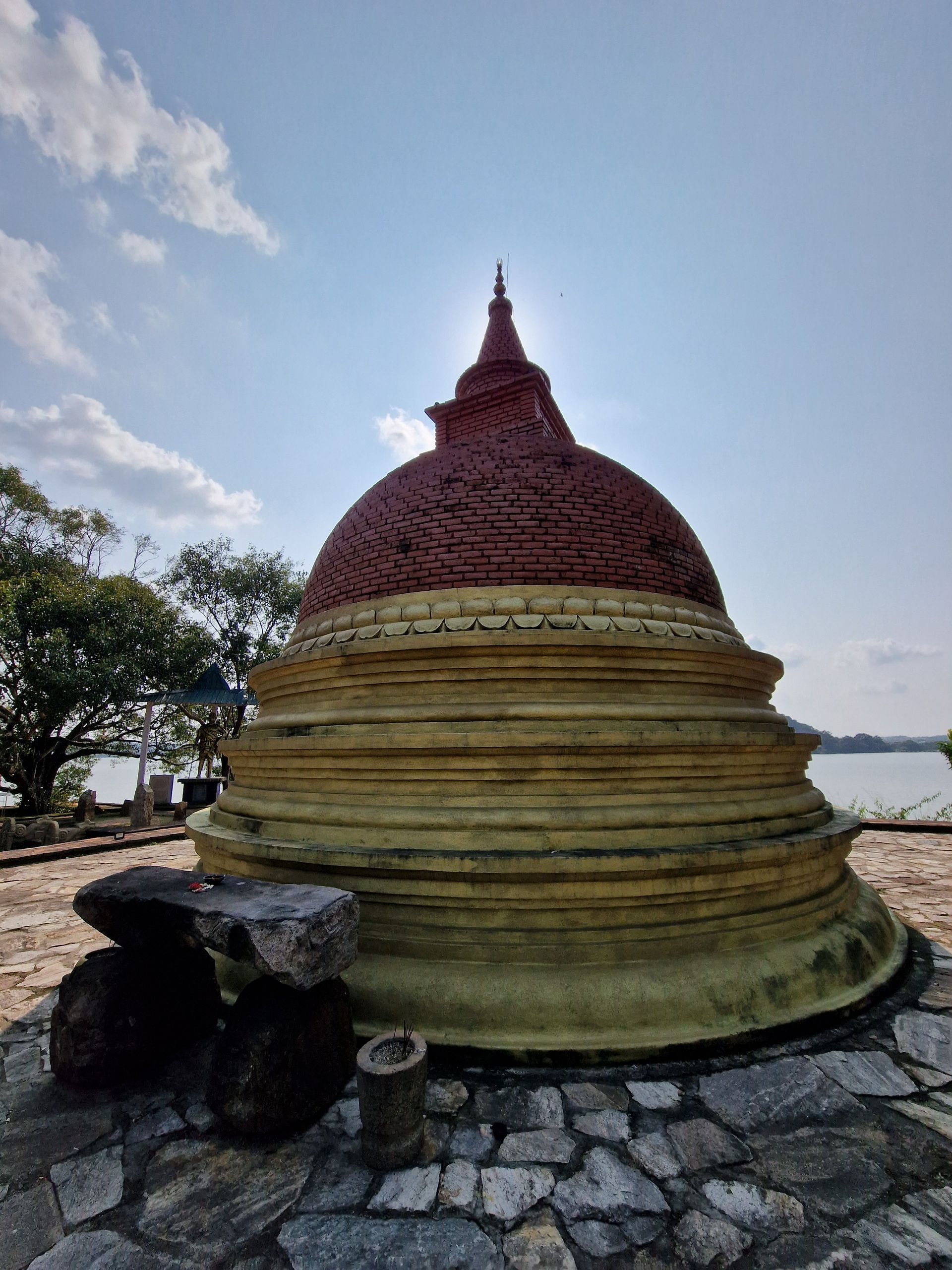
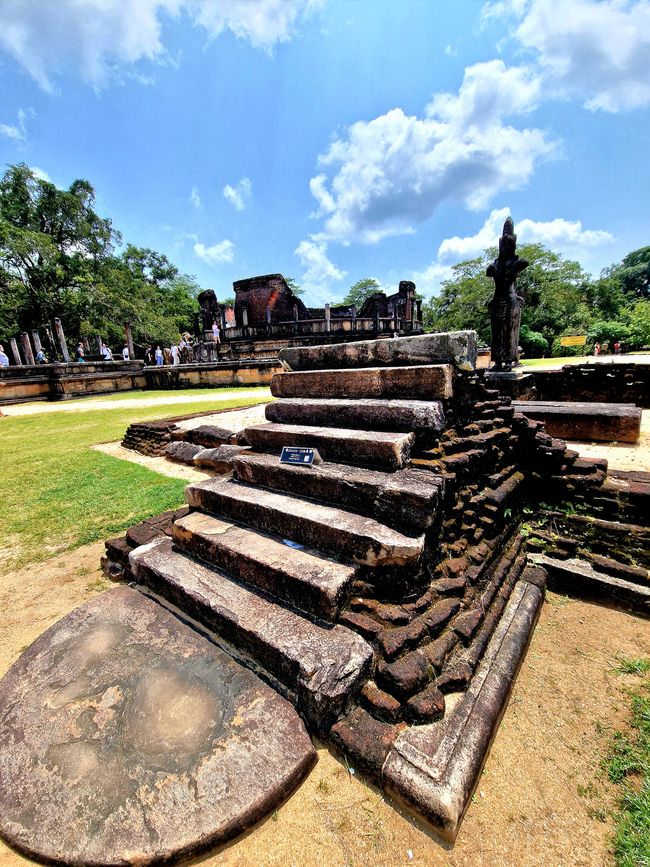
https://en.wikipedia.org/wiki/Polonnaruwa
Polonnaruwa became the capital of the second oldest kingdom of Sri Lanka under the ruler Vijayabahu I. (reg. 1055–1110), who was able to repel the Hindu invaders of the Chola in 1070 and reunified the country under local leadership. He chose not to restore the capital to the destroyed Anuradhapura in 993 and adopted the city of Polonnaruwa, founded by the Chola. The extensive ancient city flourished thanks to his grandson Parakrama Bahu I. (reg. 1153–1186). Parakrama Bahu's reign brought a golden age for Sri Lanka. Through the creation of numerous artificial lakes, e.g. the Parakrama Samudra (“sea of Parakrama”) at Polonnaruwa, and widespread irrigation systems, agriculture, especially rice cultivation, was able to yield good results even during the dry season.
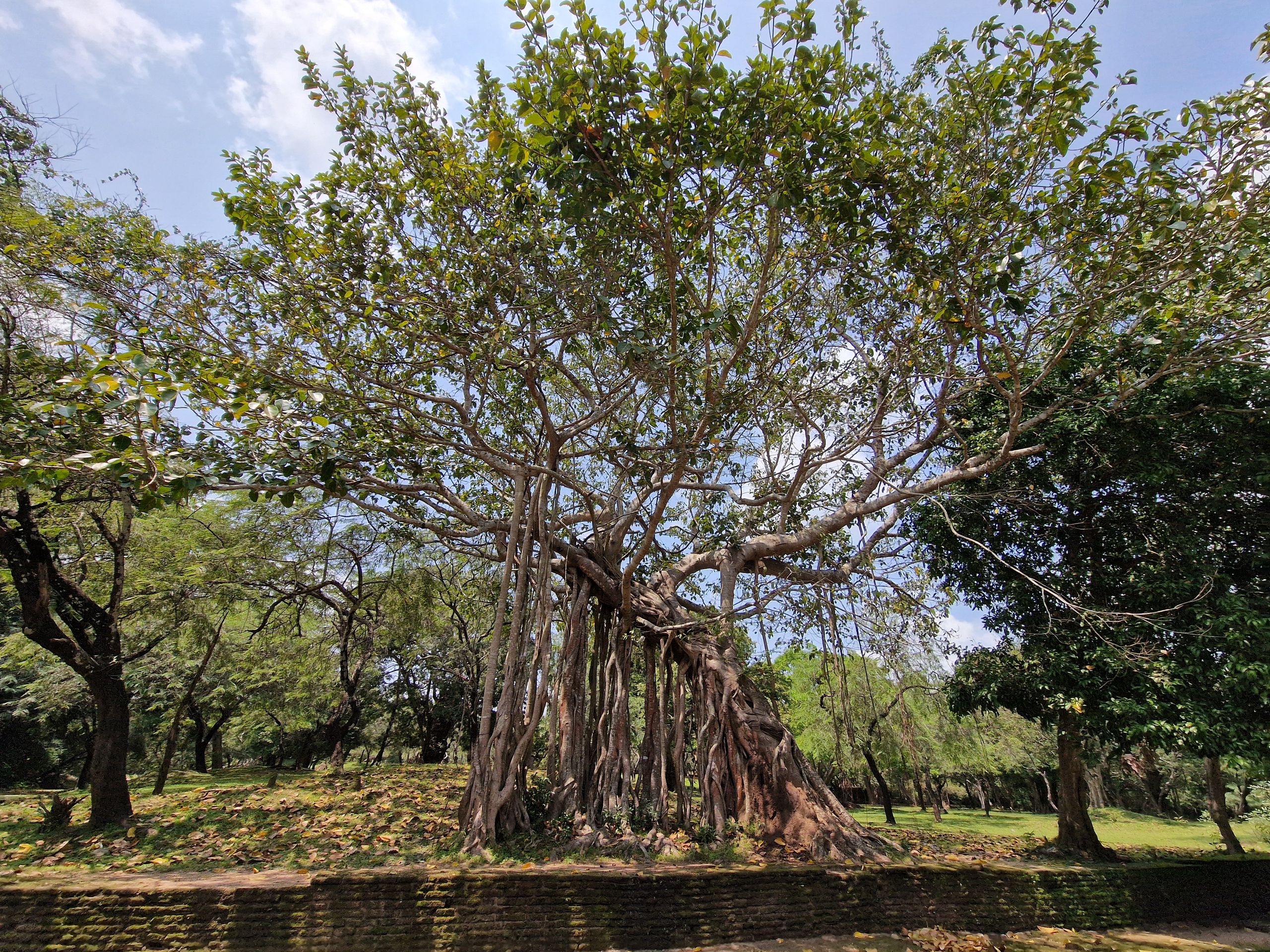
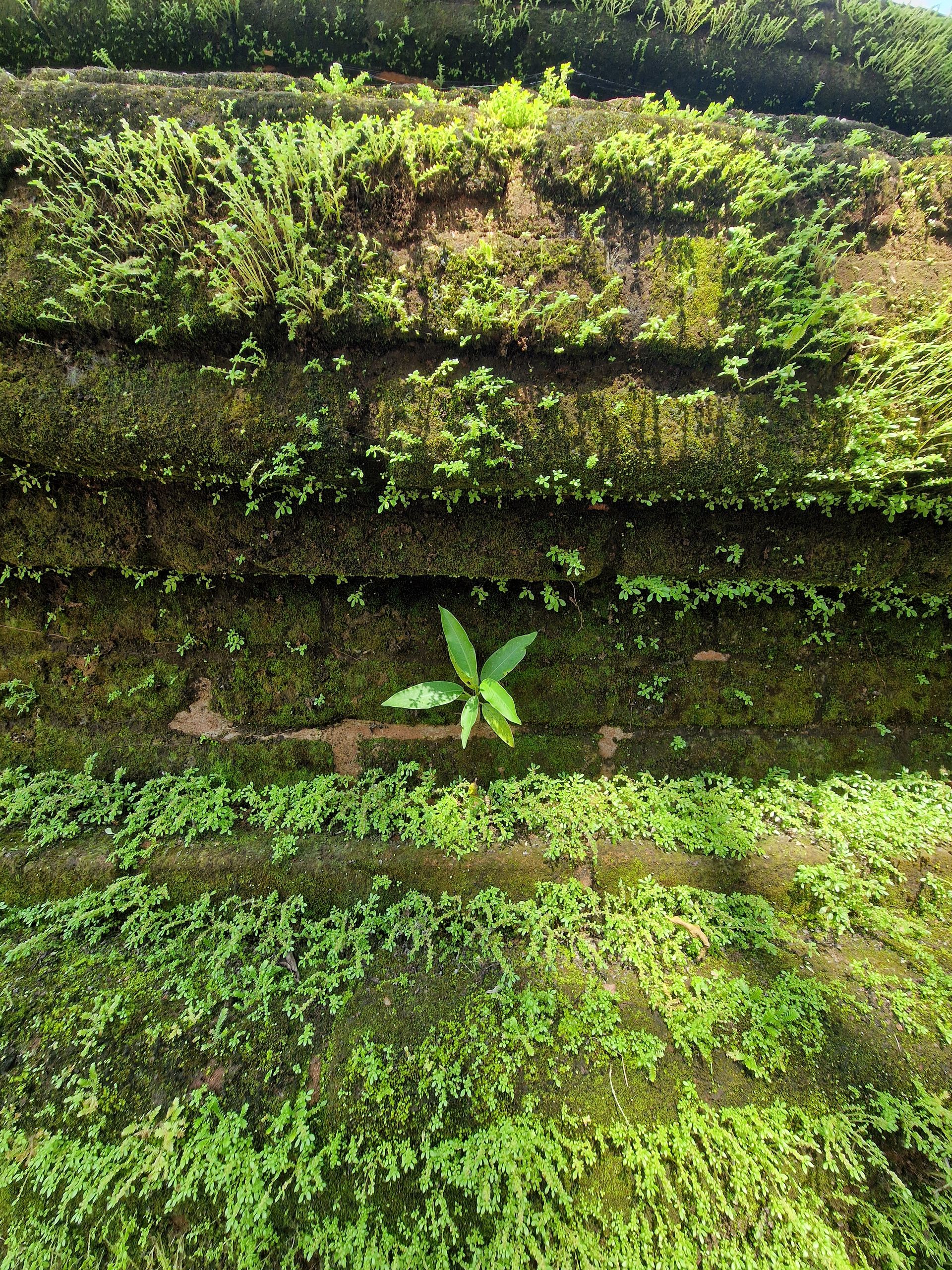
In summary: Anuradhapura, the first capital, was destroyed by the Chola, the then ruler of Sri Lanka was able to drive away the enemies and adopted their city Polonnaruwa as the future capital. His grandson created many artificial lakes, which still contribute to an annual rice harvest of 3-4 times in the region. It is wonderfully green there, which we love!
We visited Anuradhapura on a Sunday, a free day in Sri Lanka, and many Sinhalese took the opportunity to pilgrimage. Therefore, the oldest city in Sri Lanka was populated by praying, singing, meditating, laughing, and joyful people.
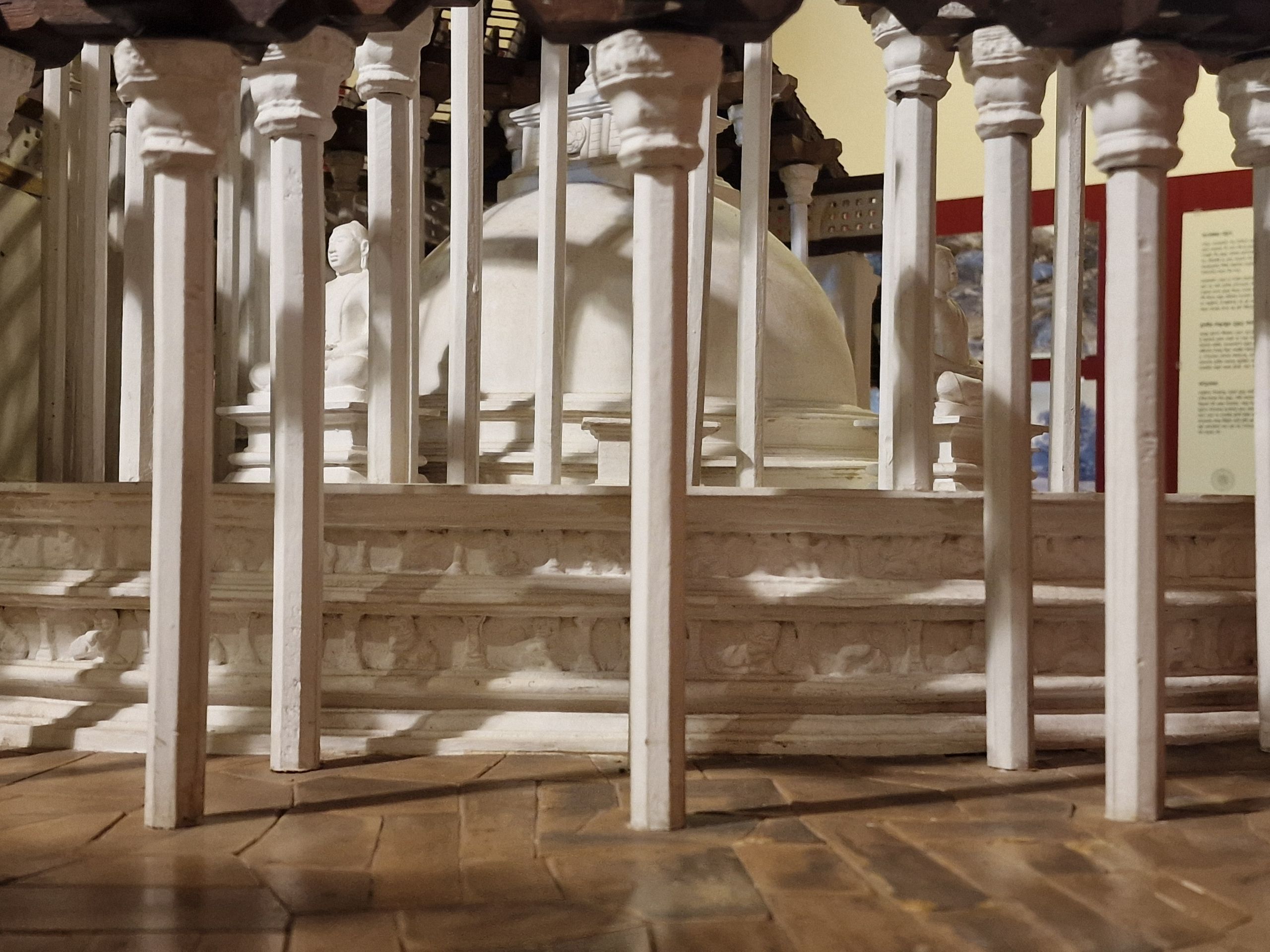
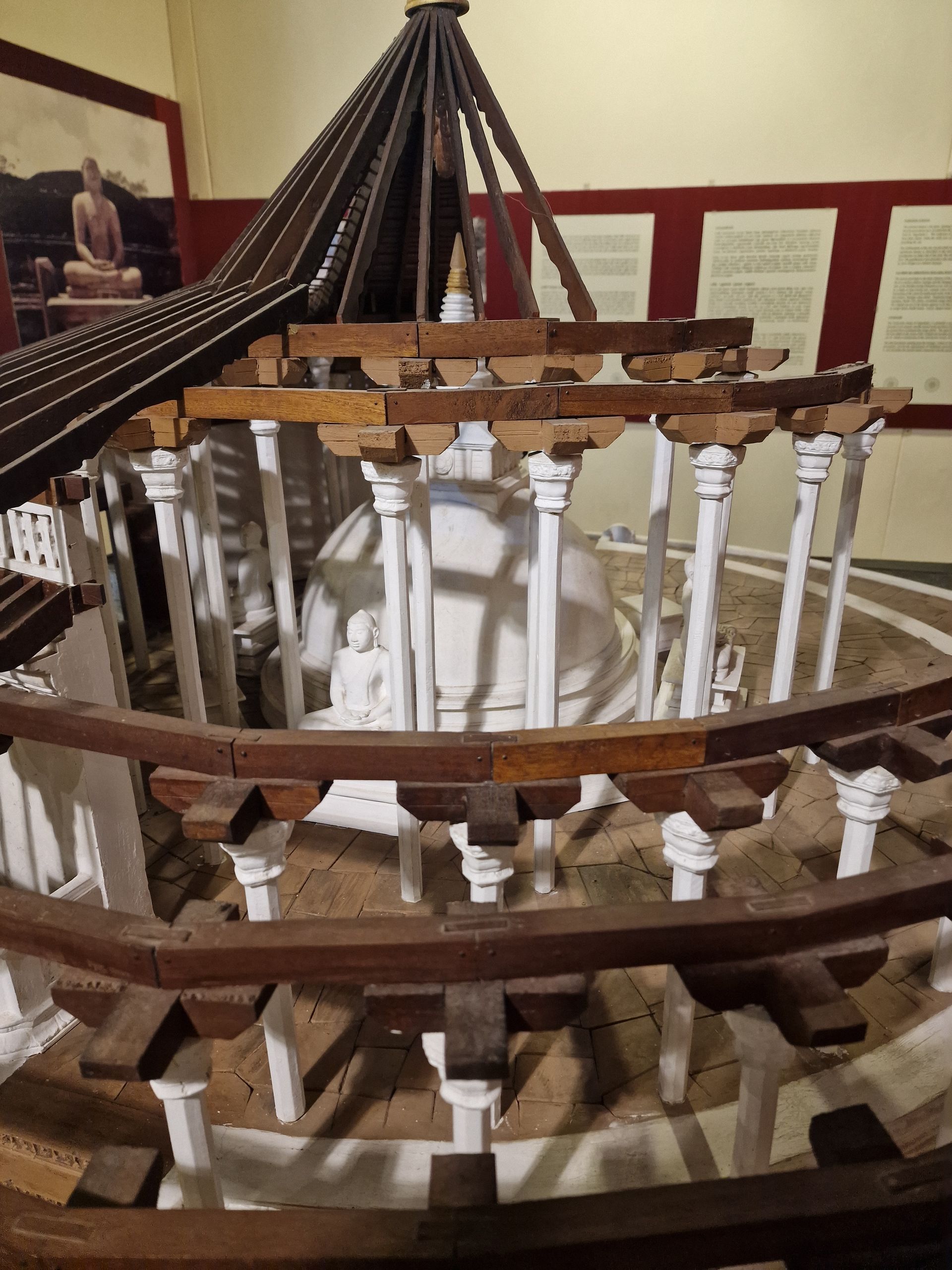
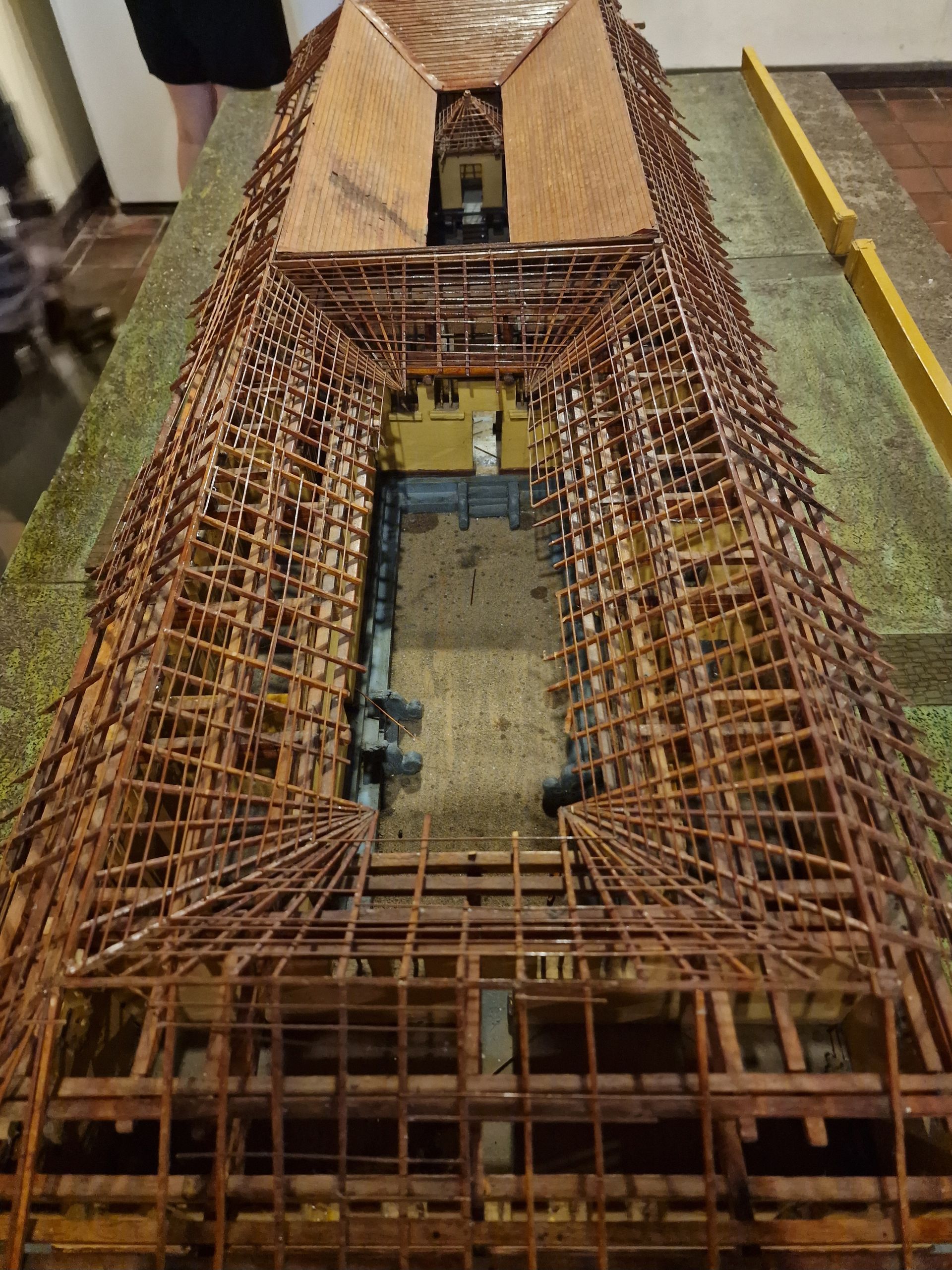
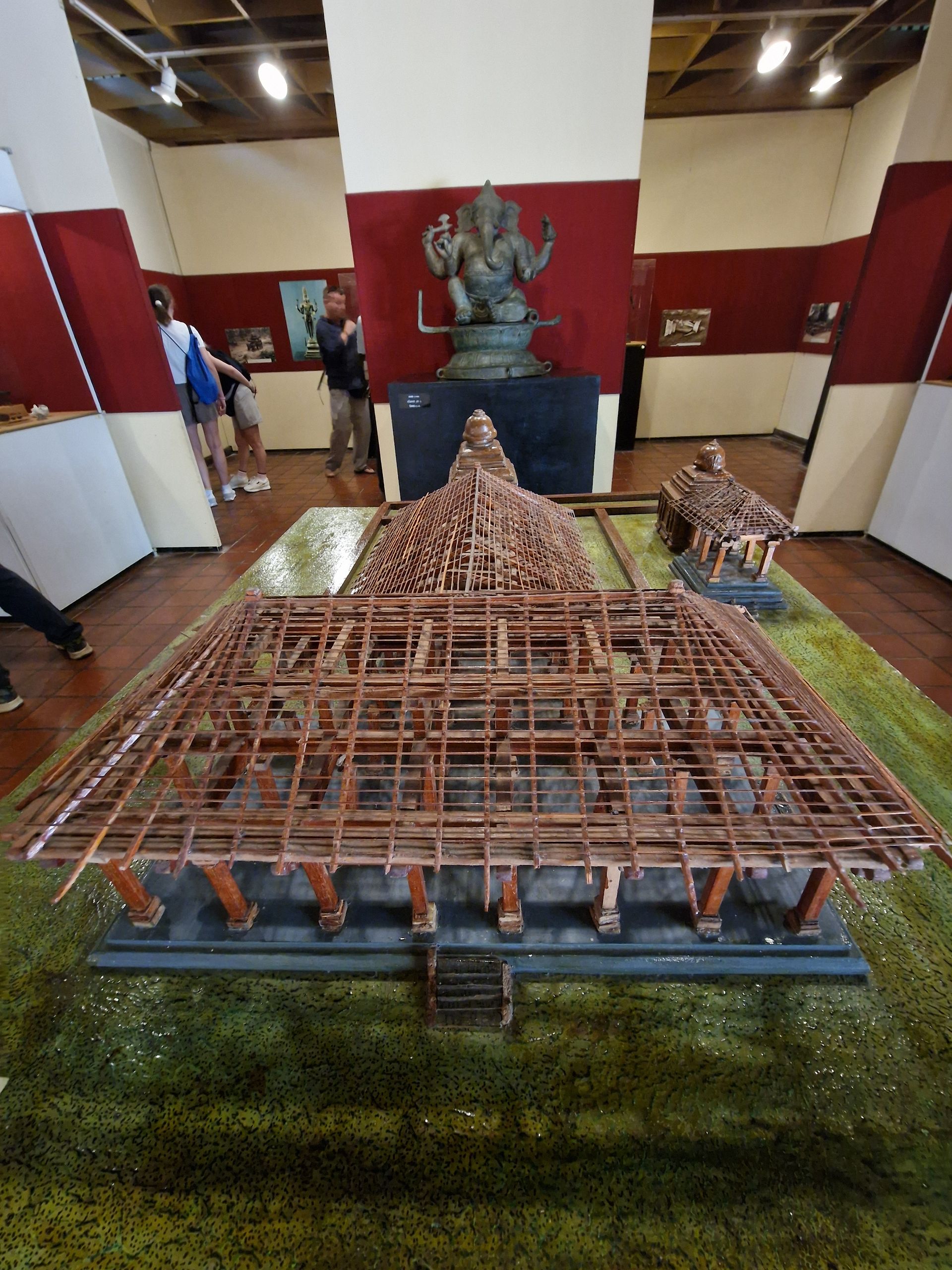
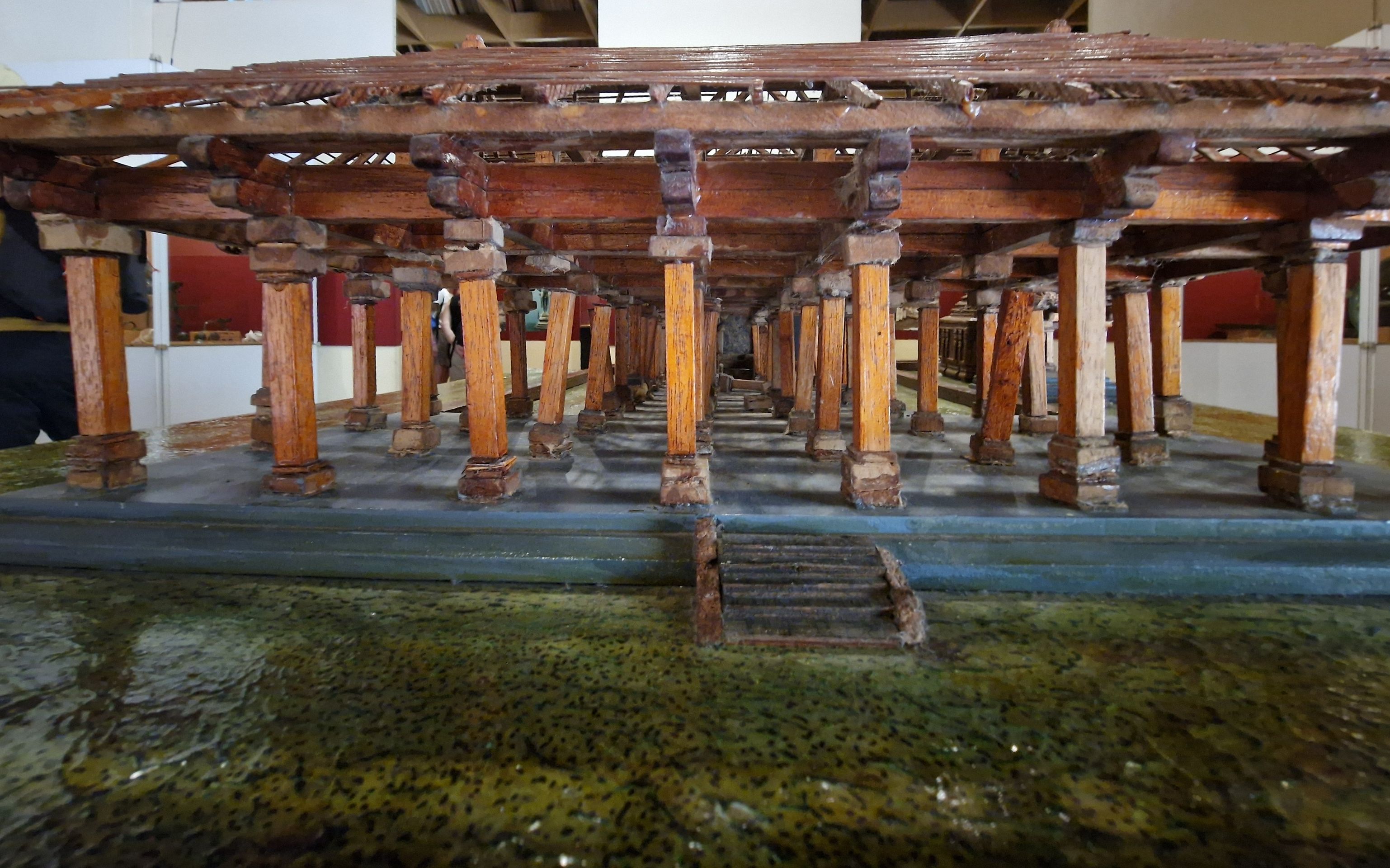
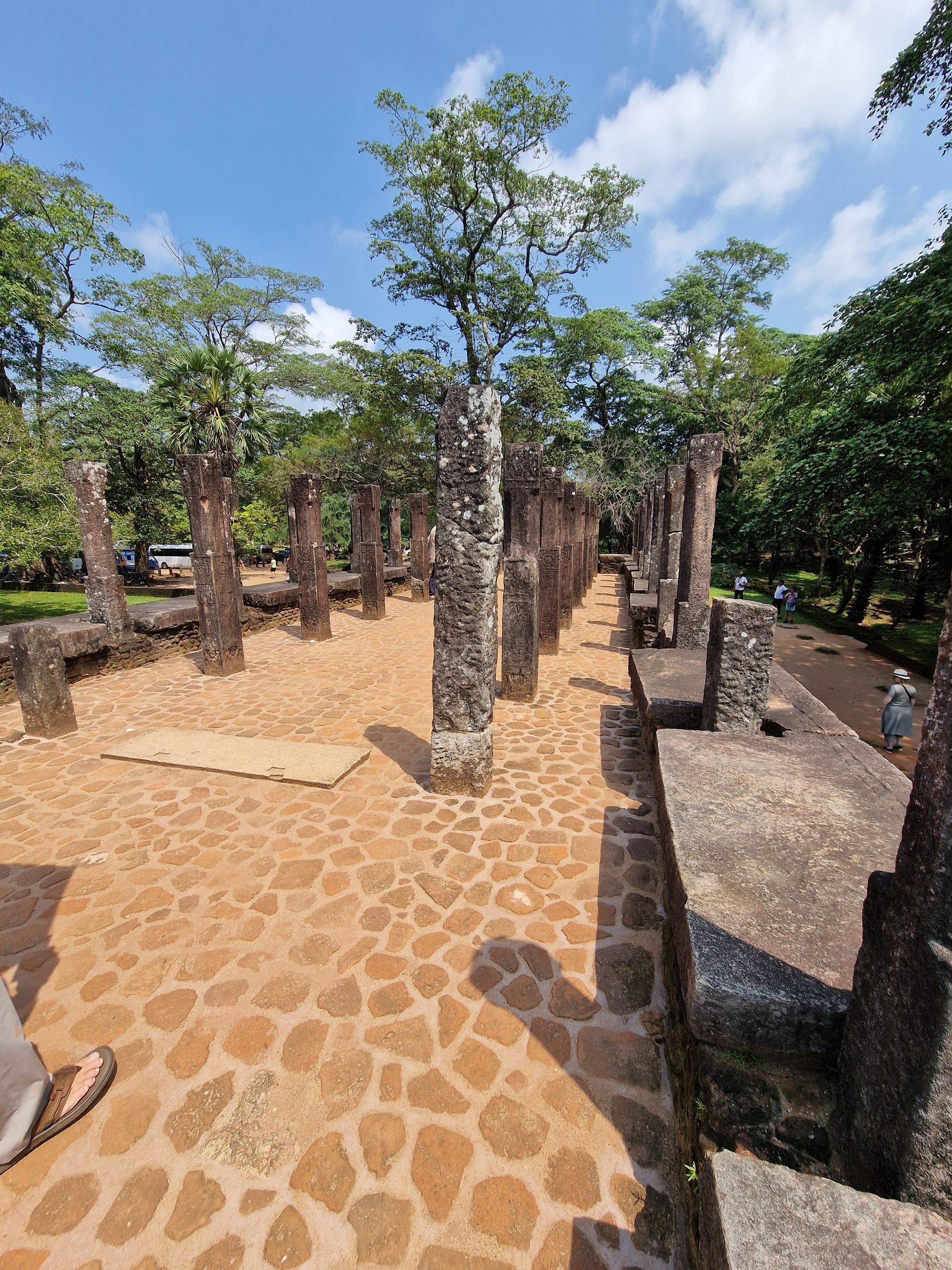
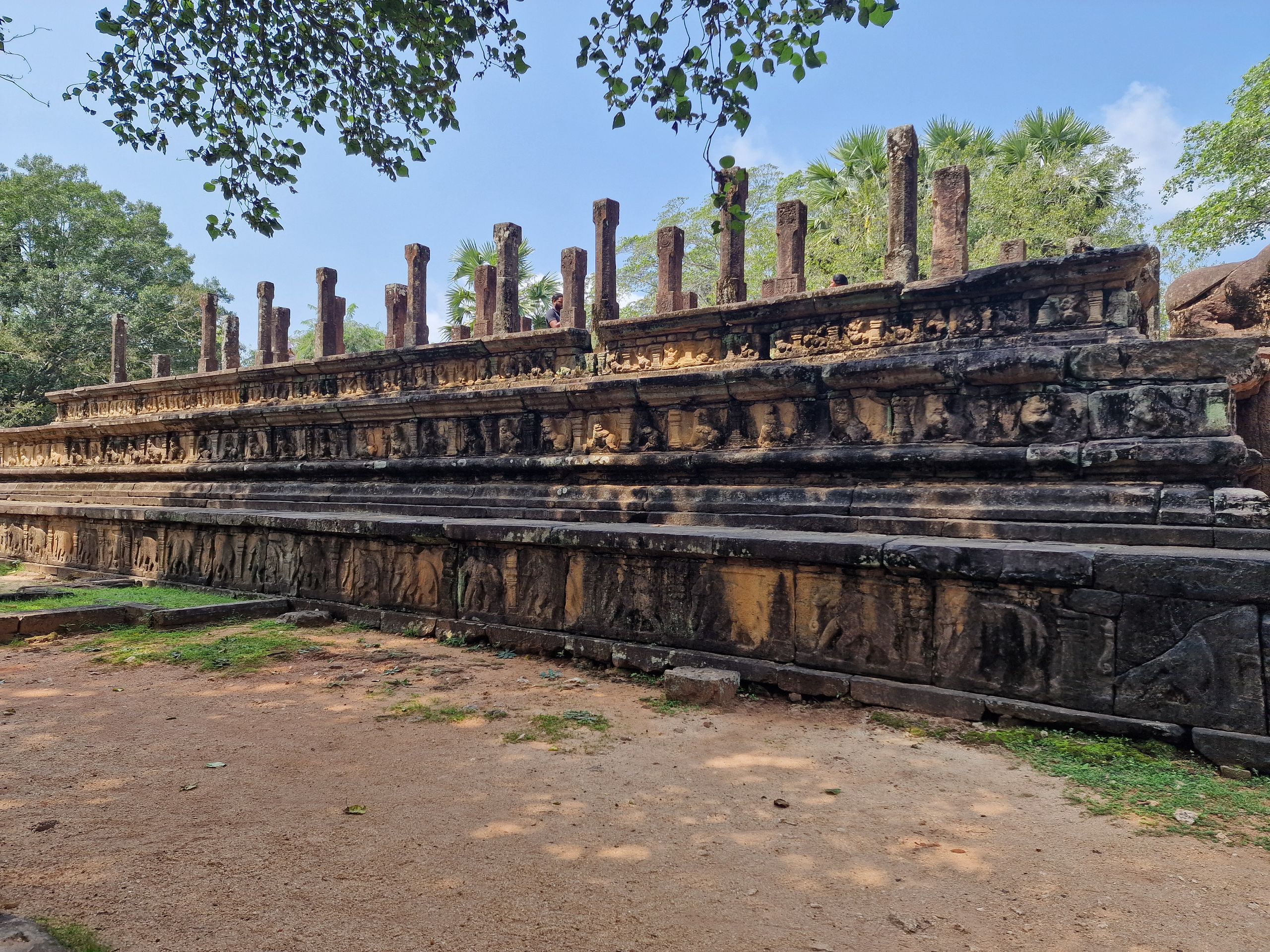
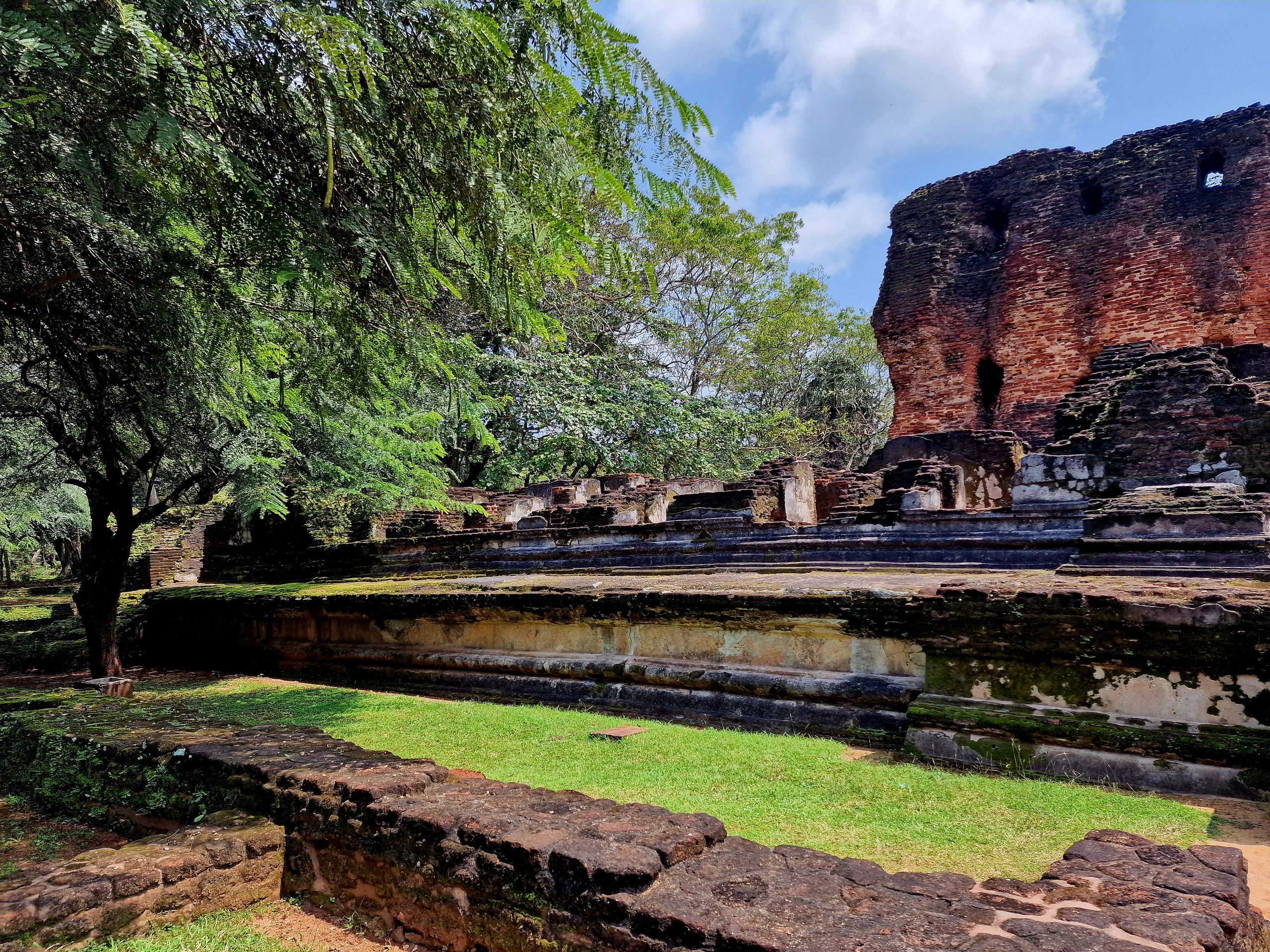
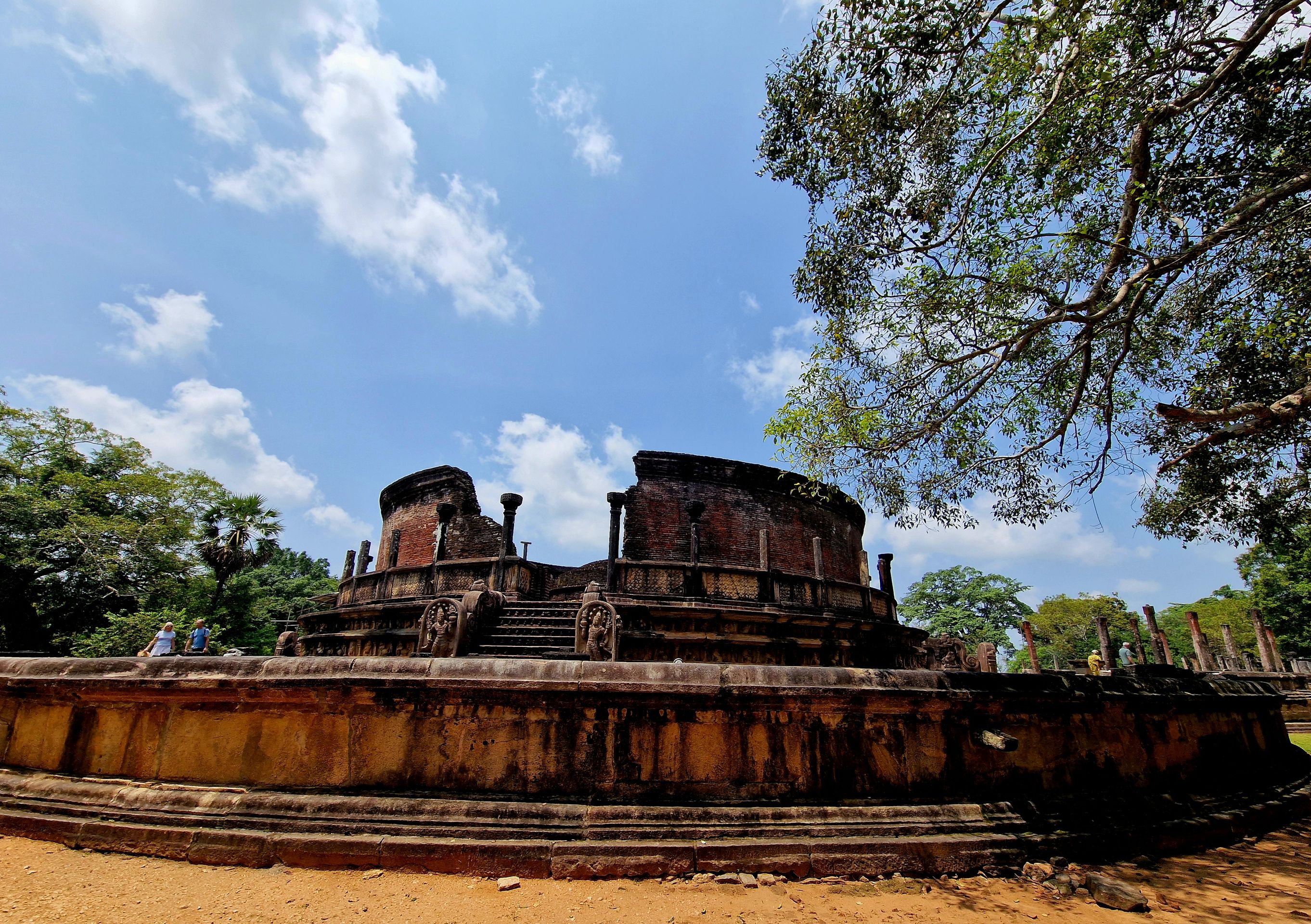
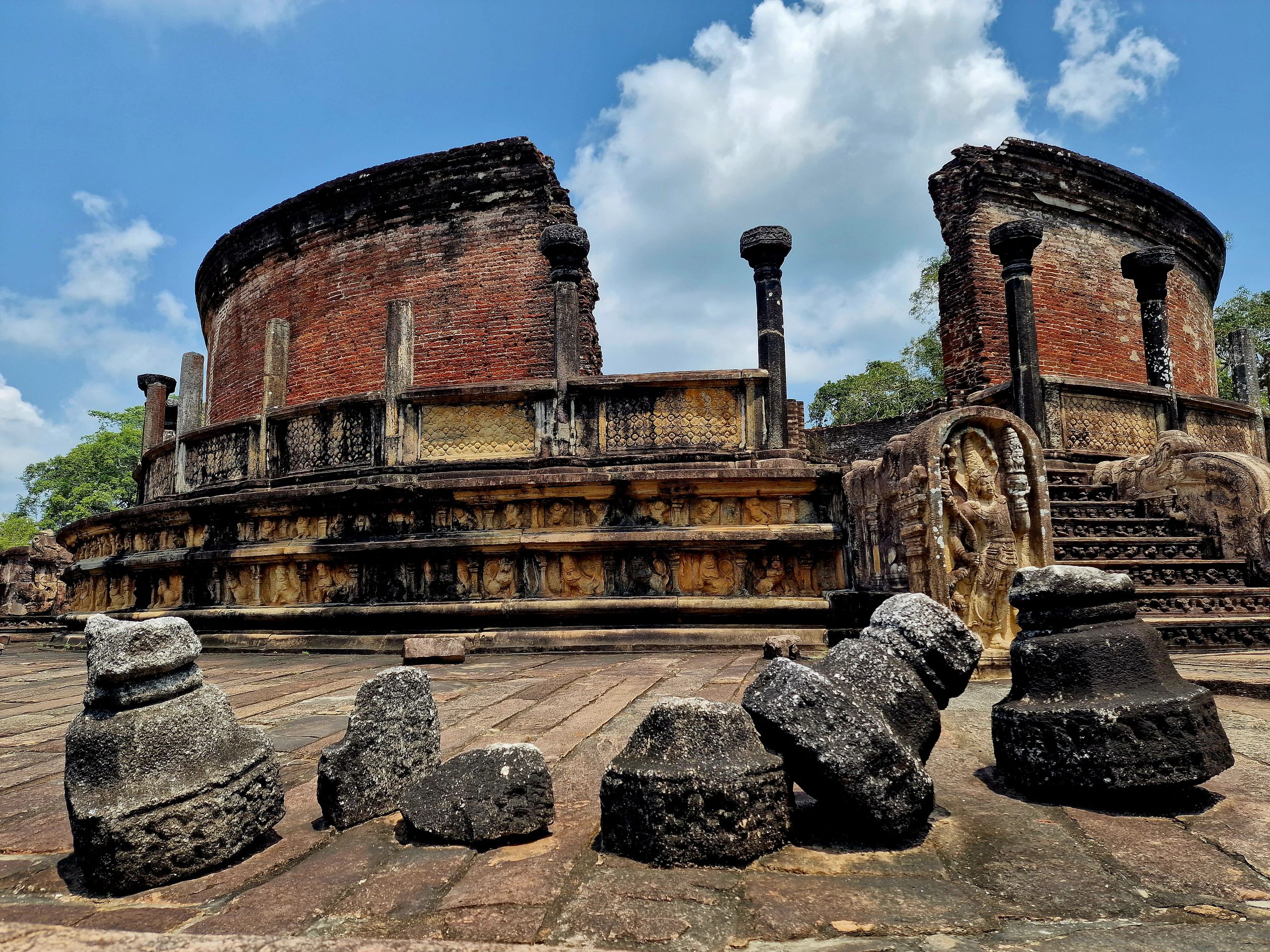
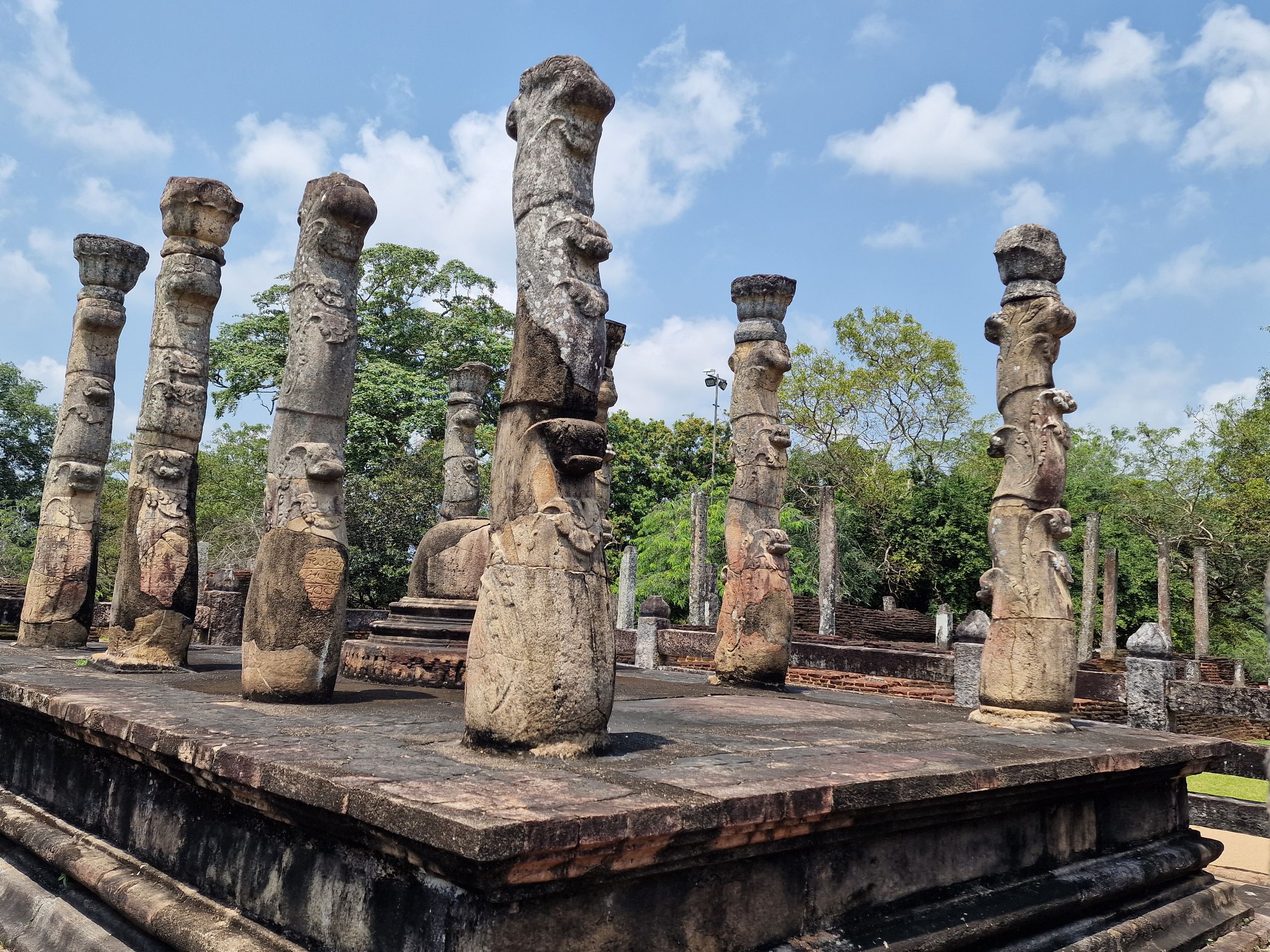
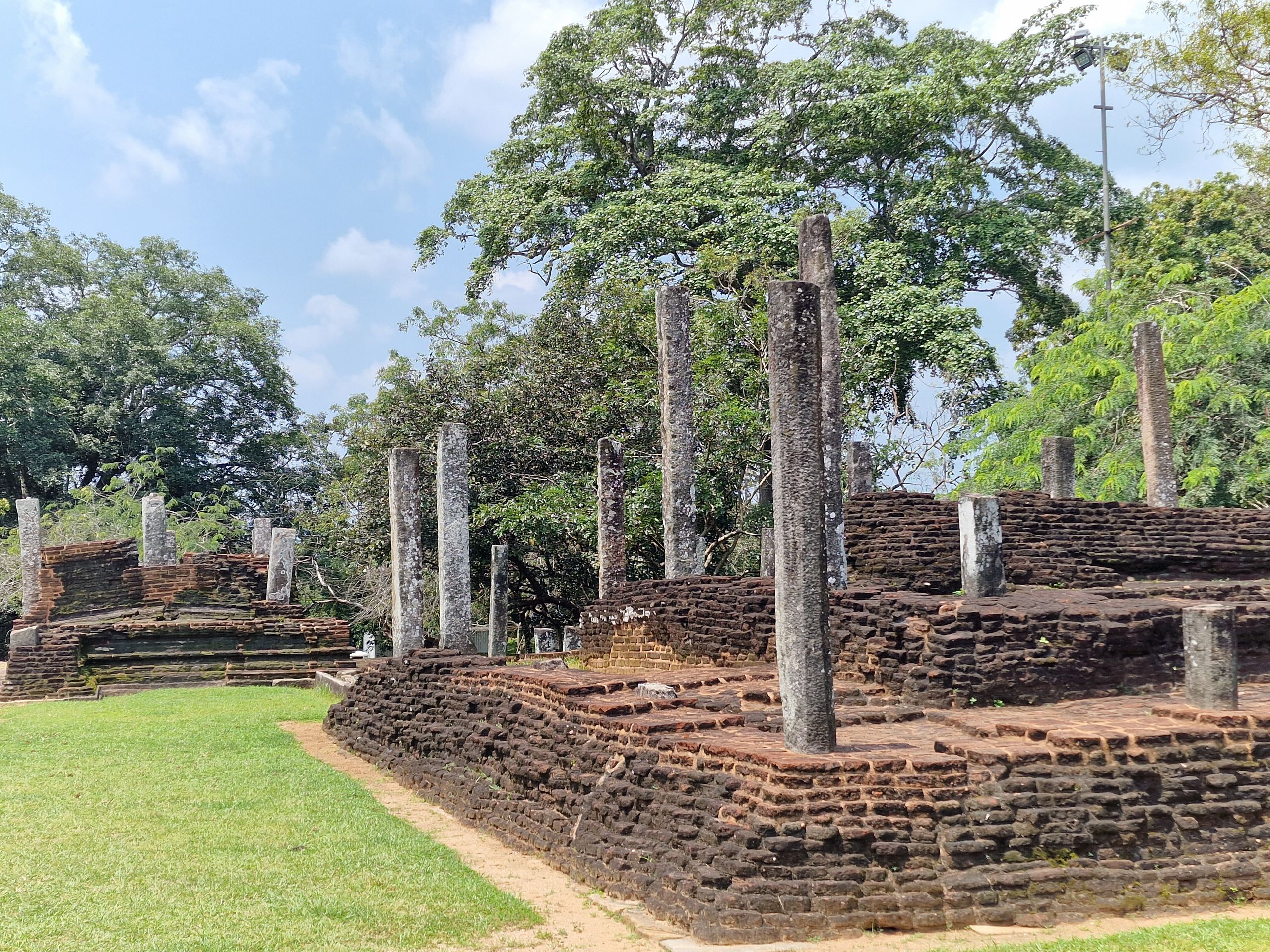
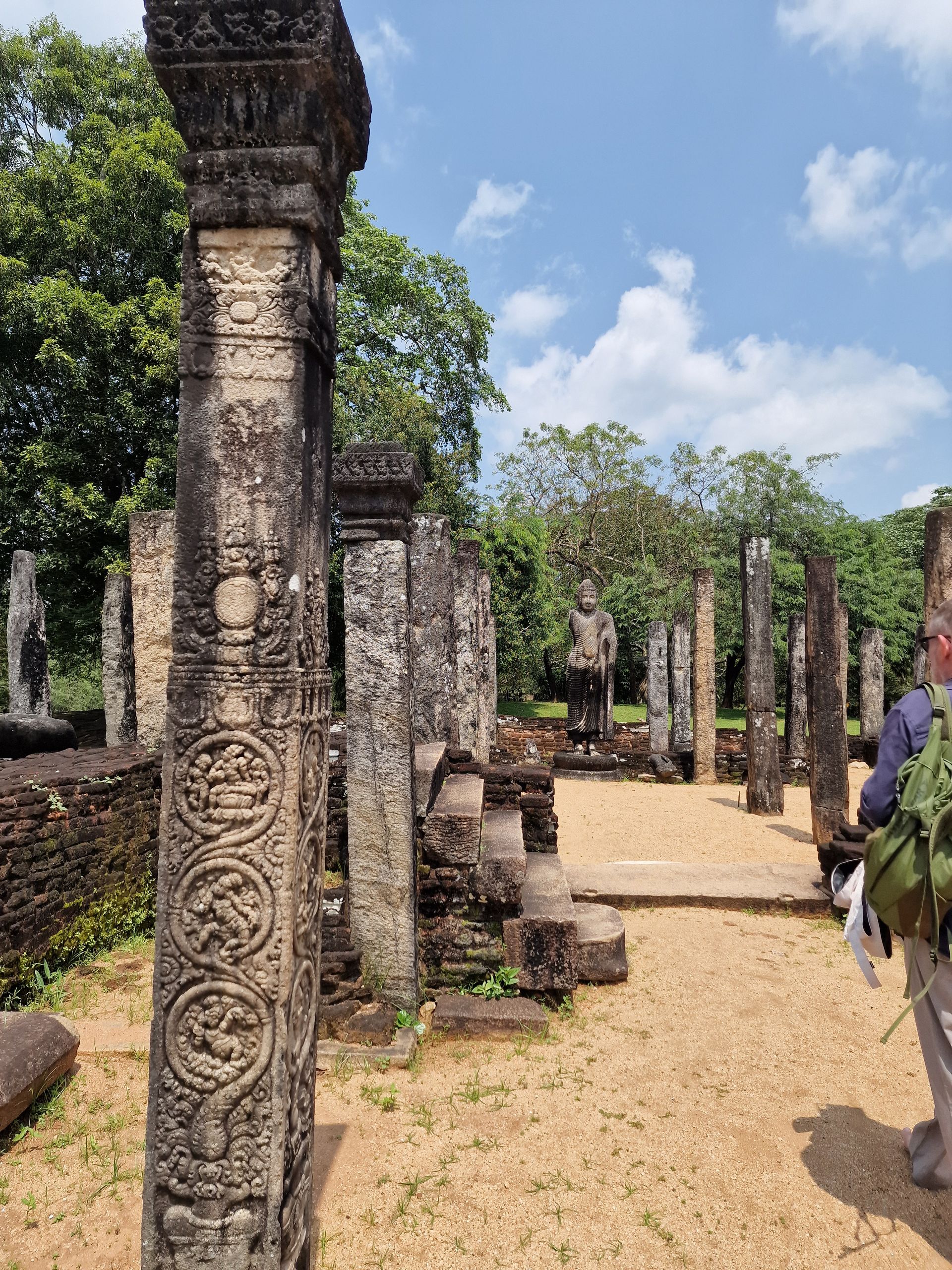
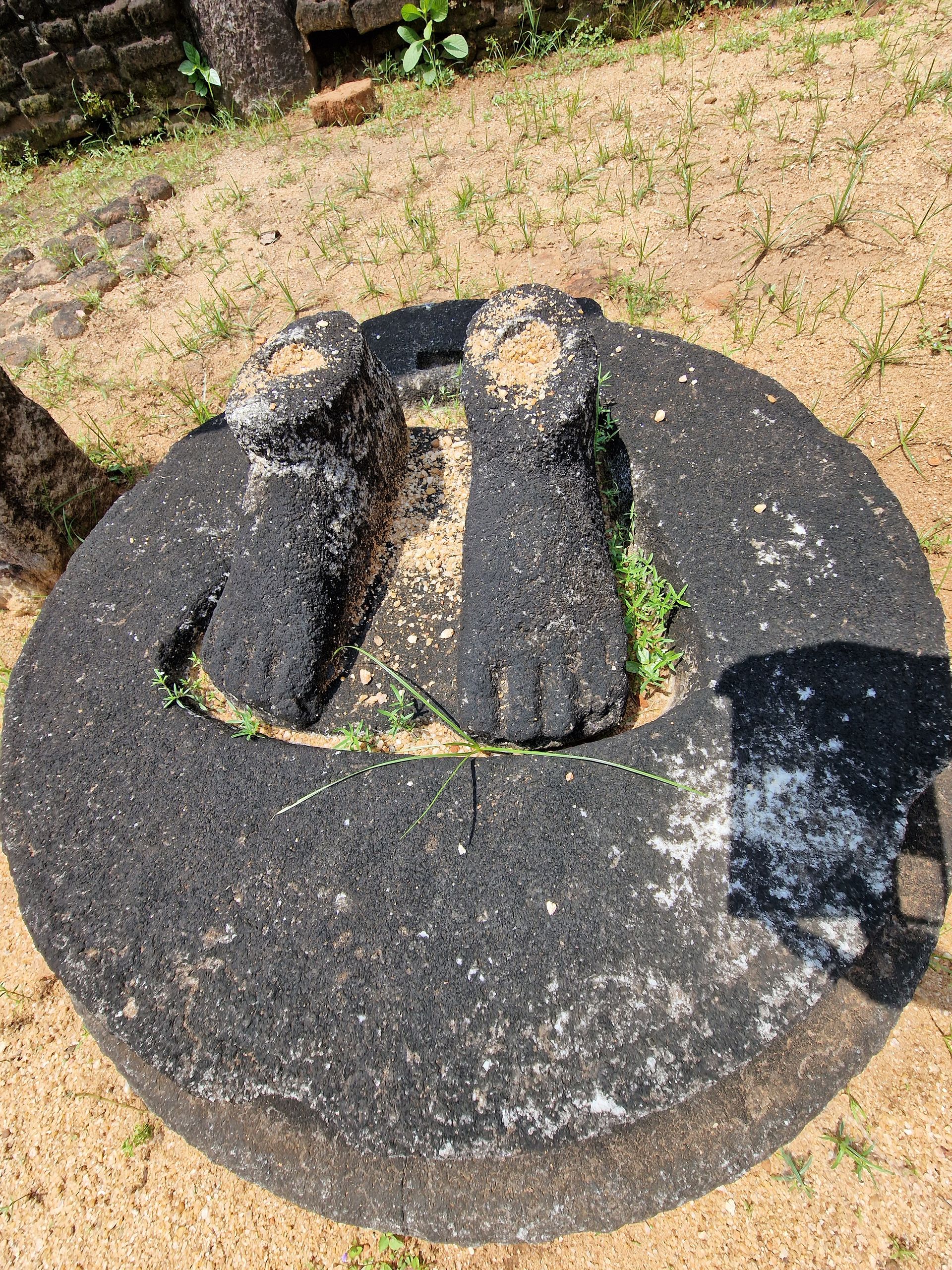
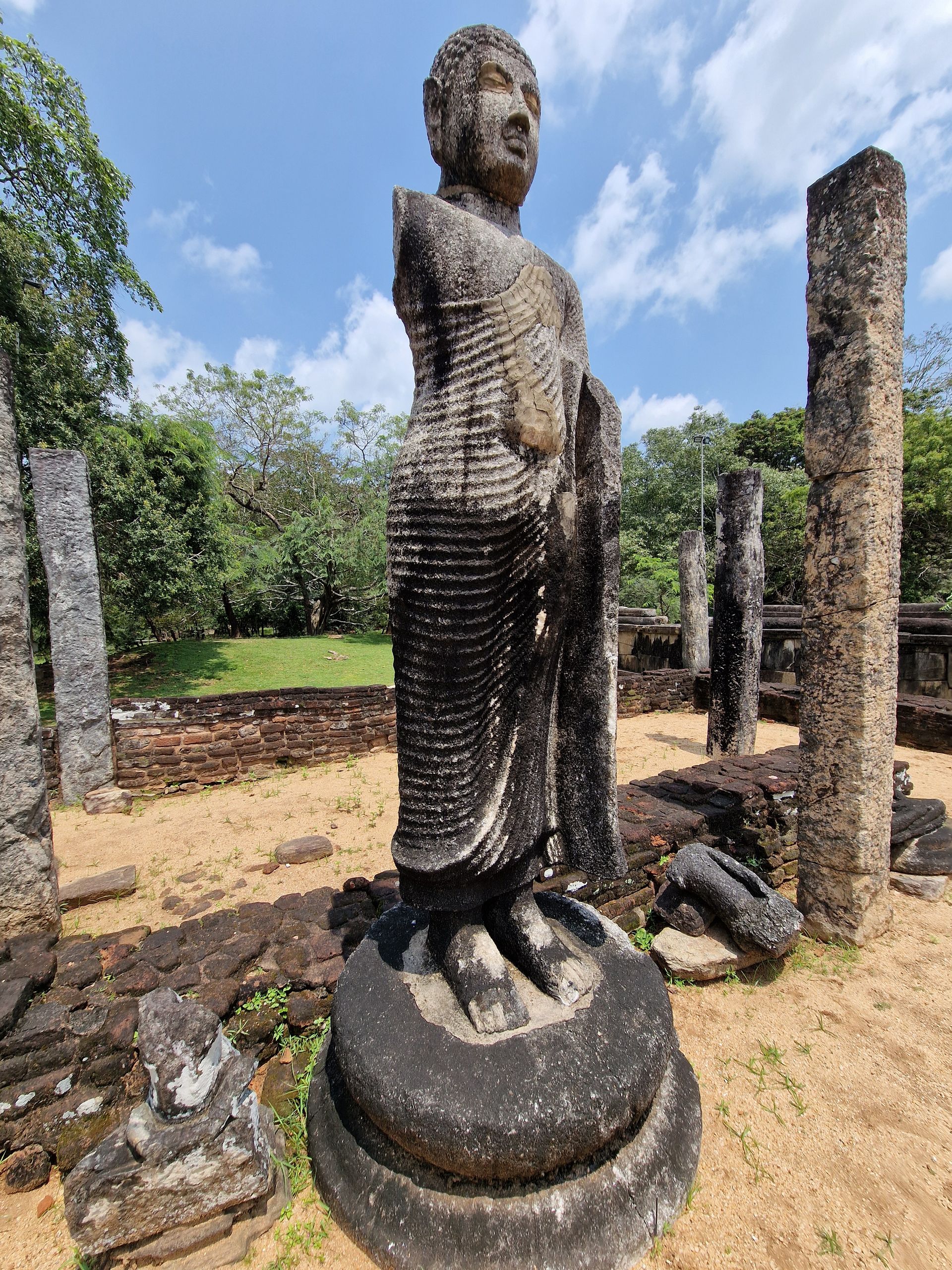
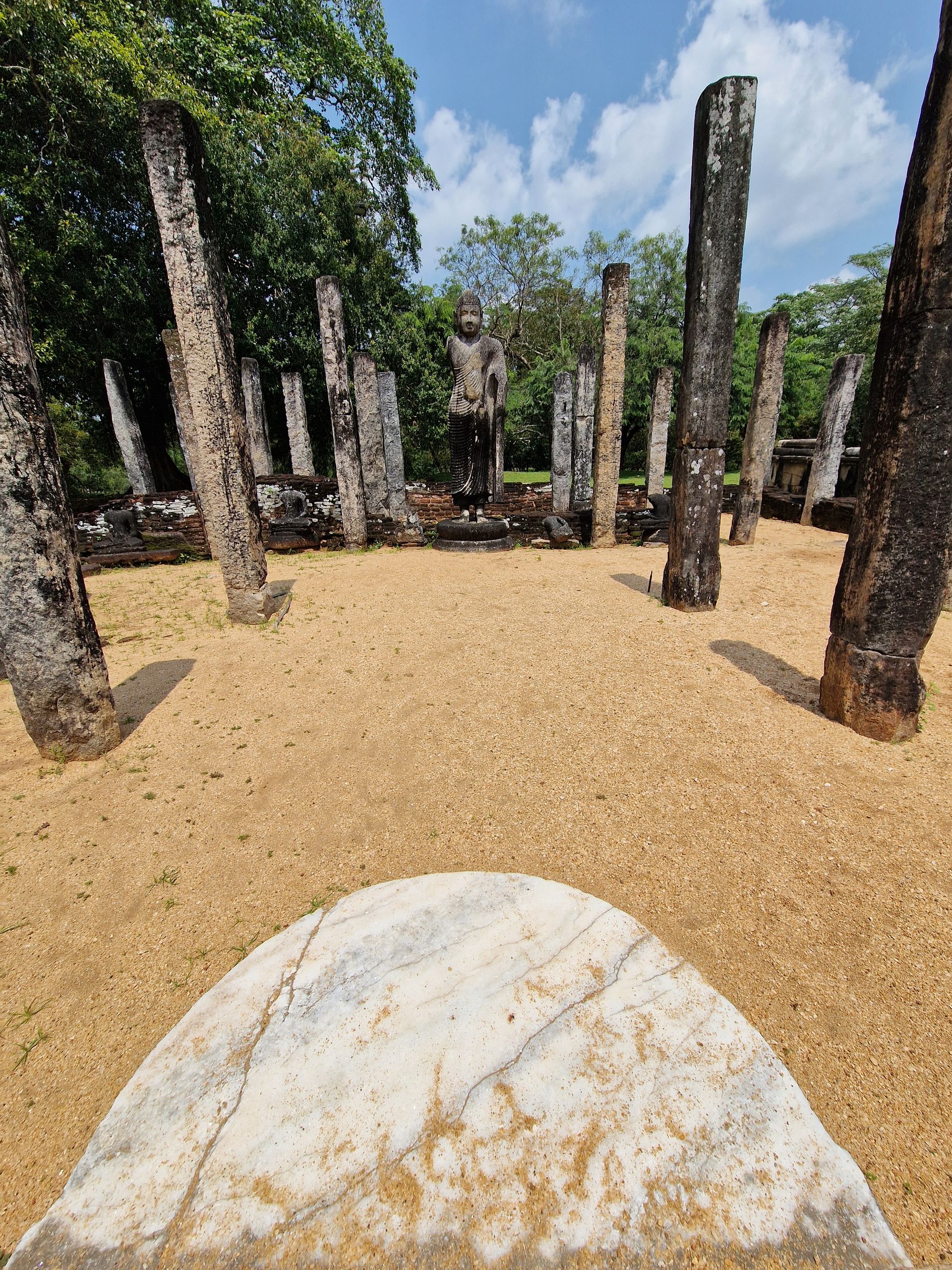
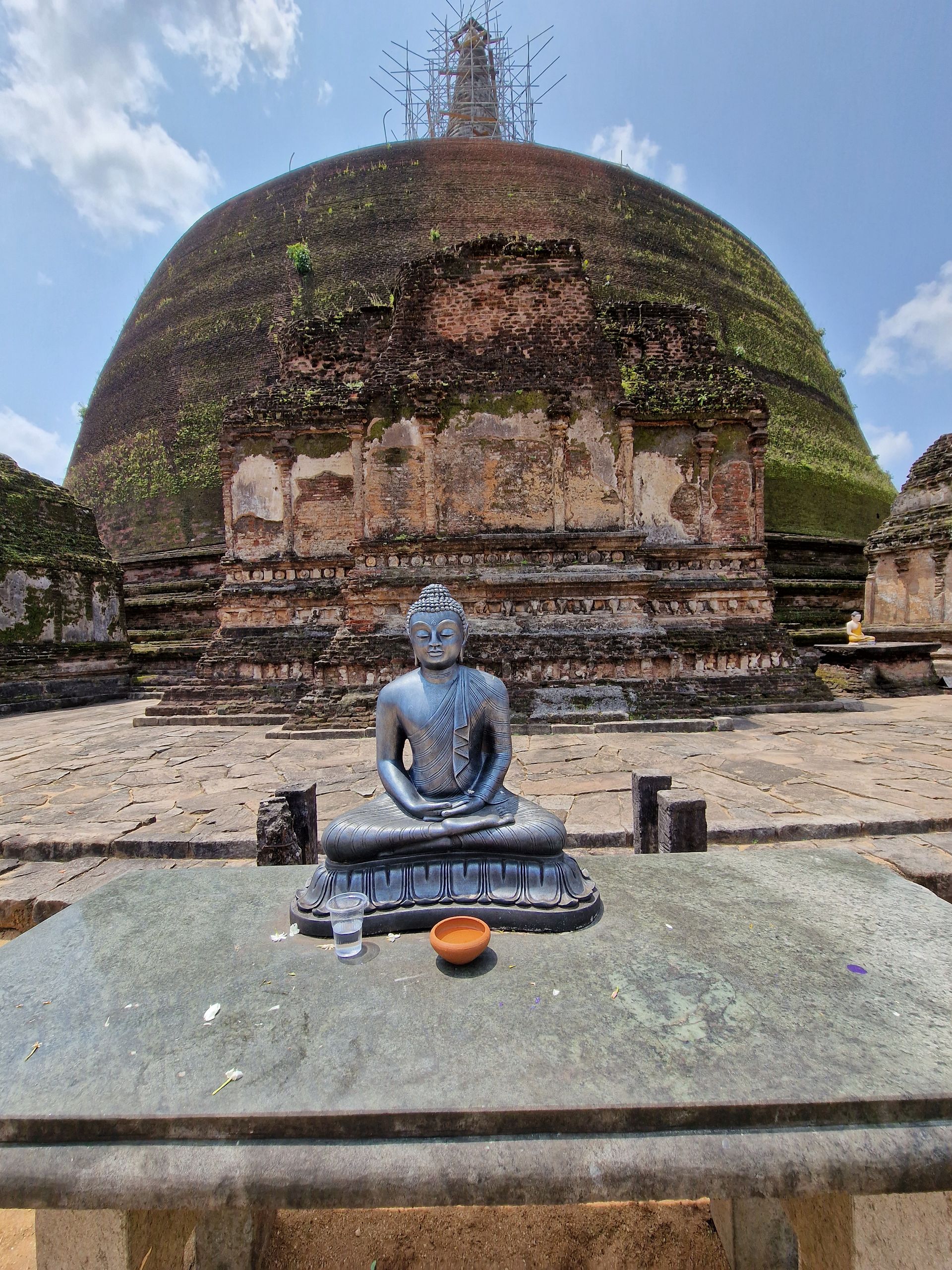
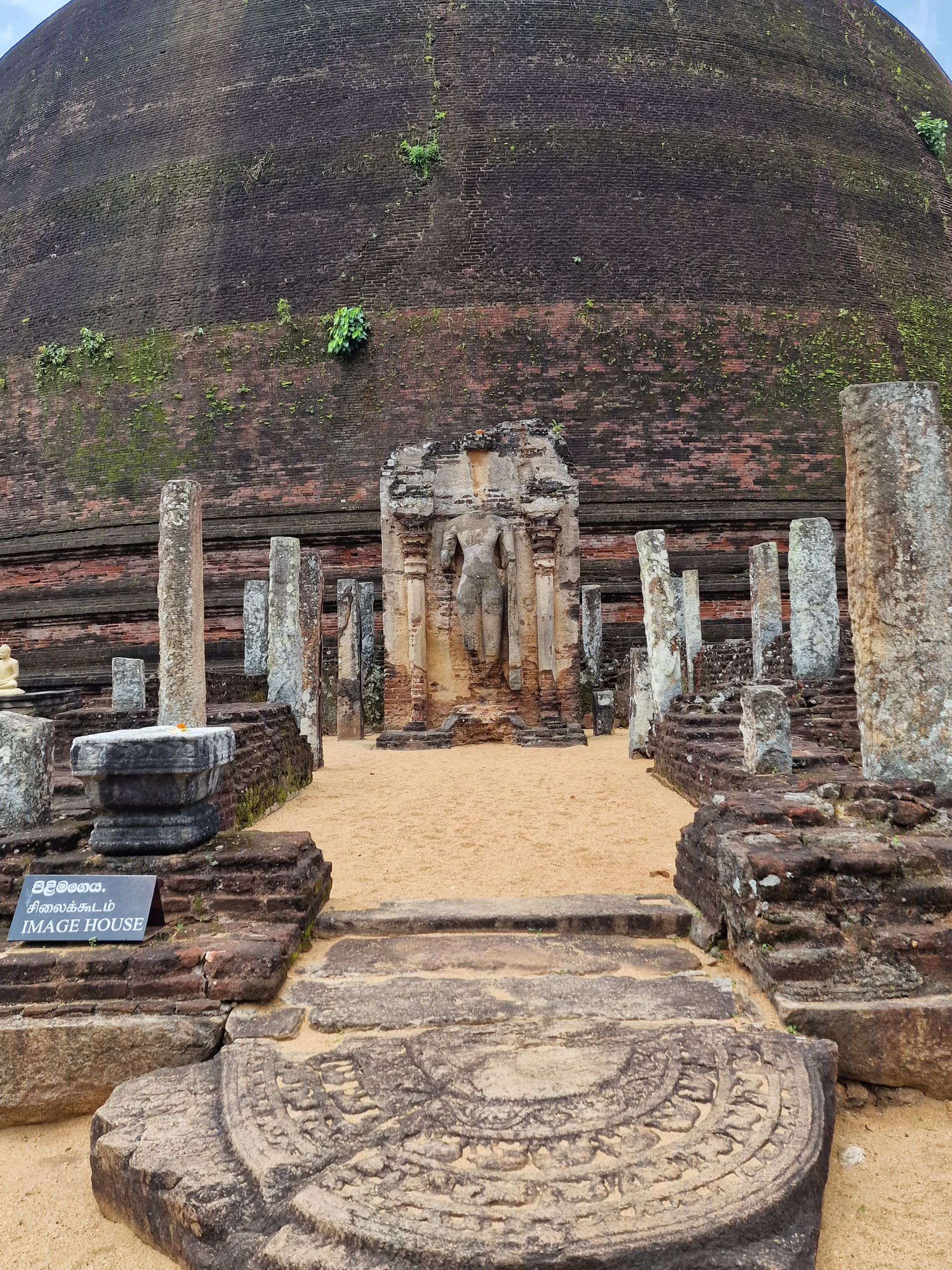
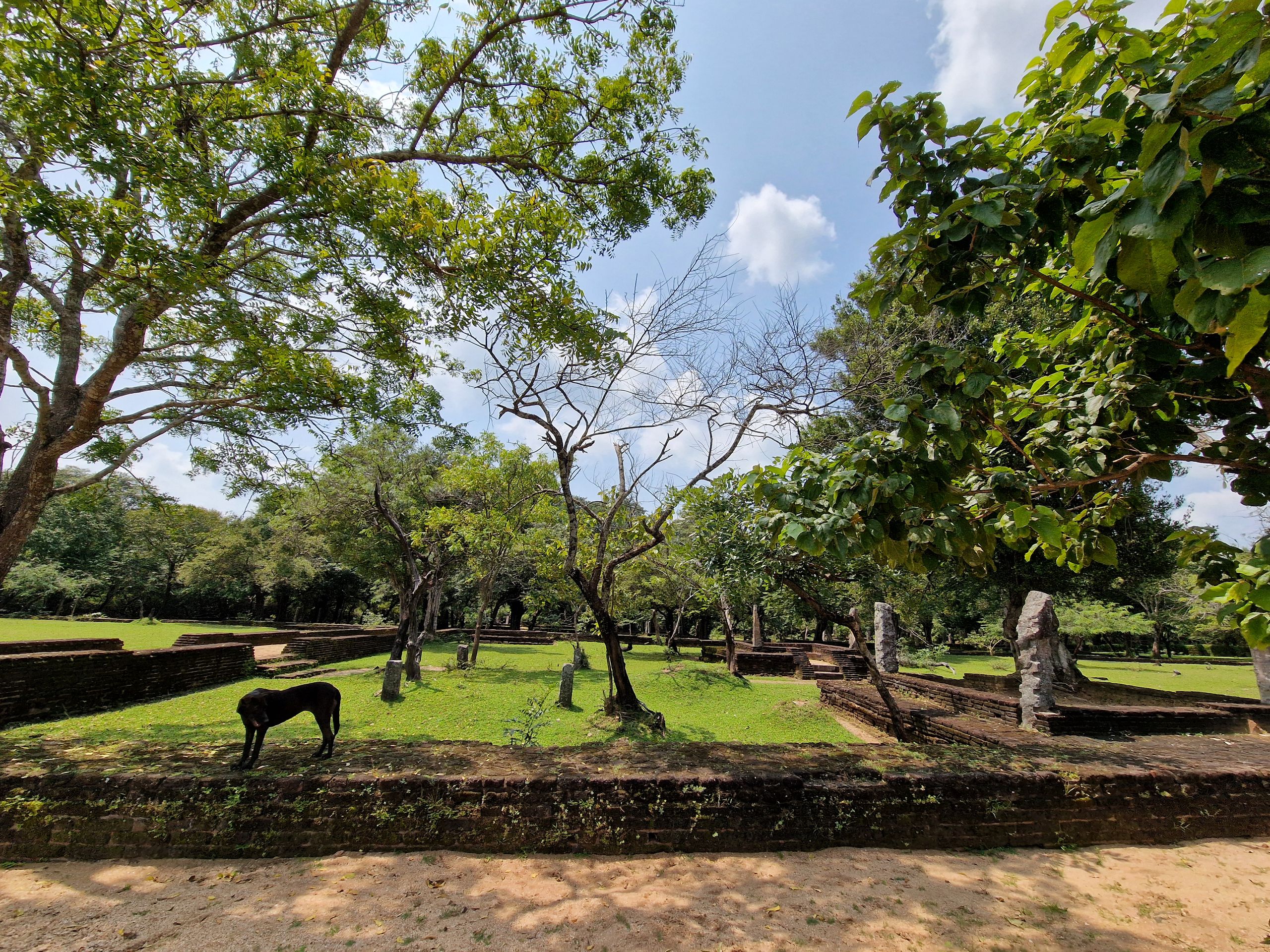
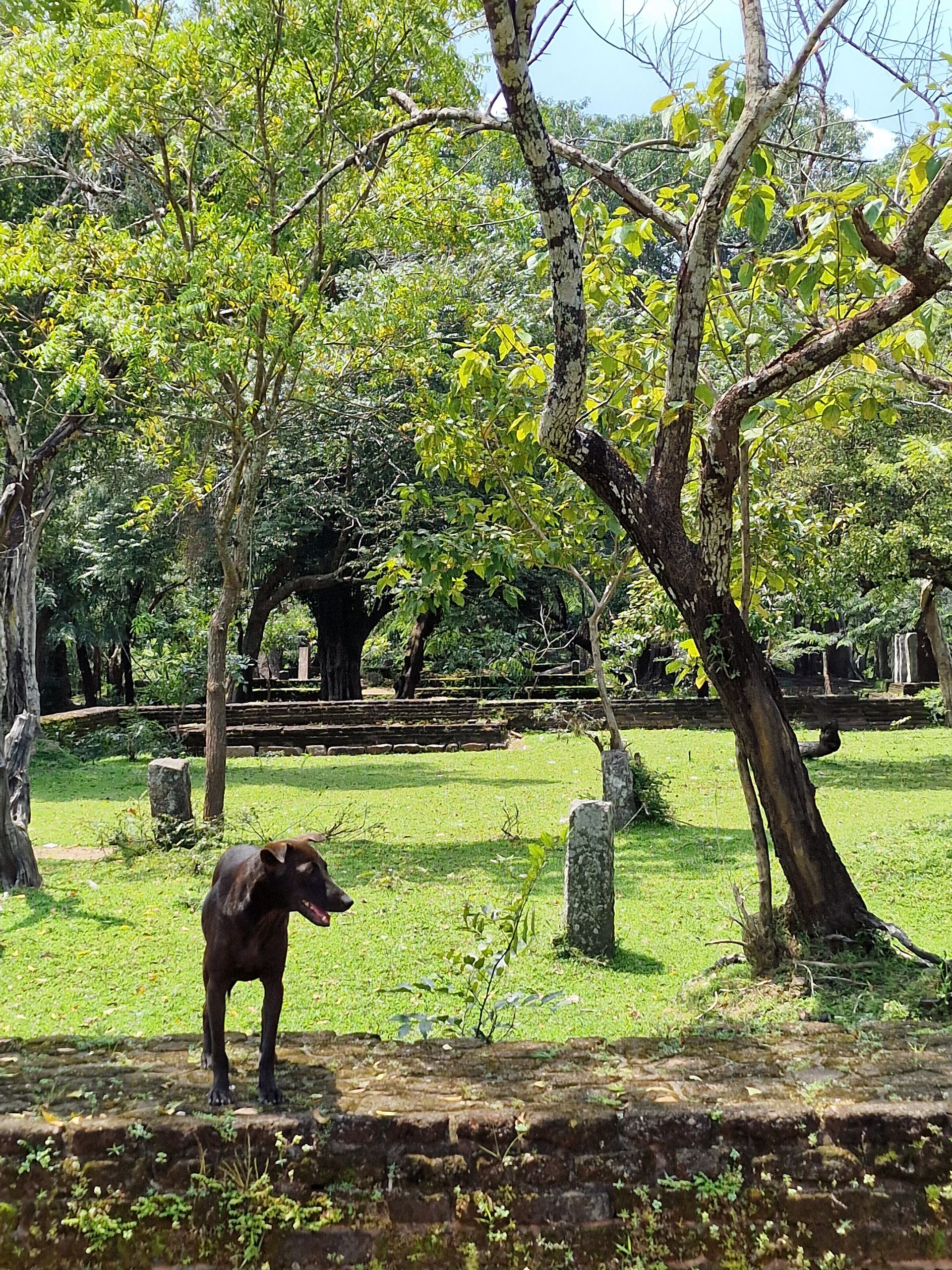
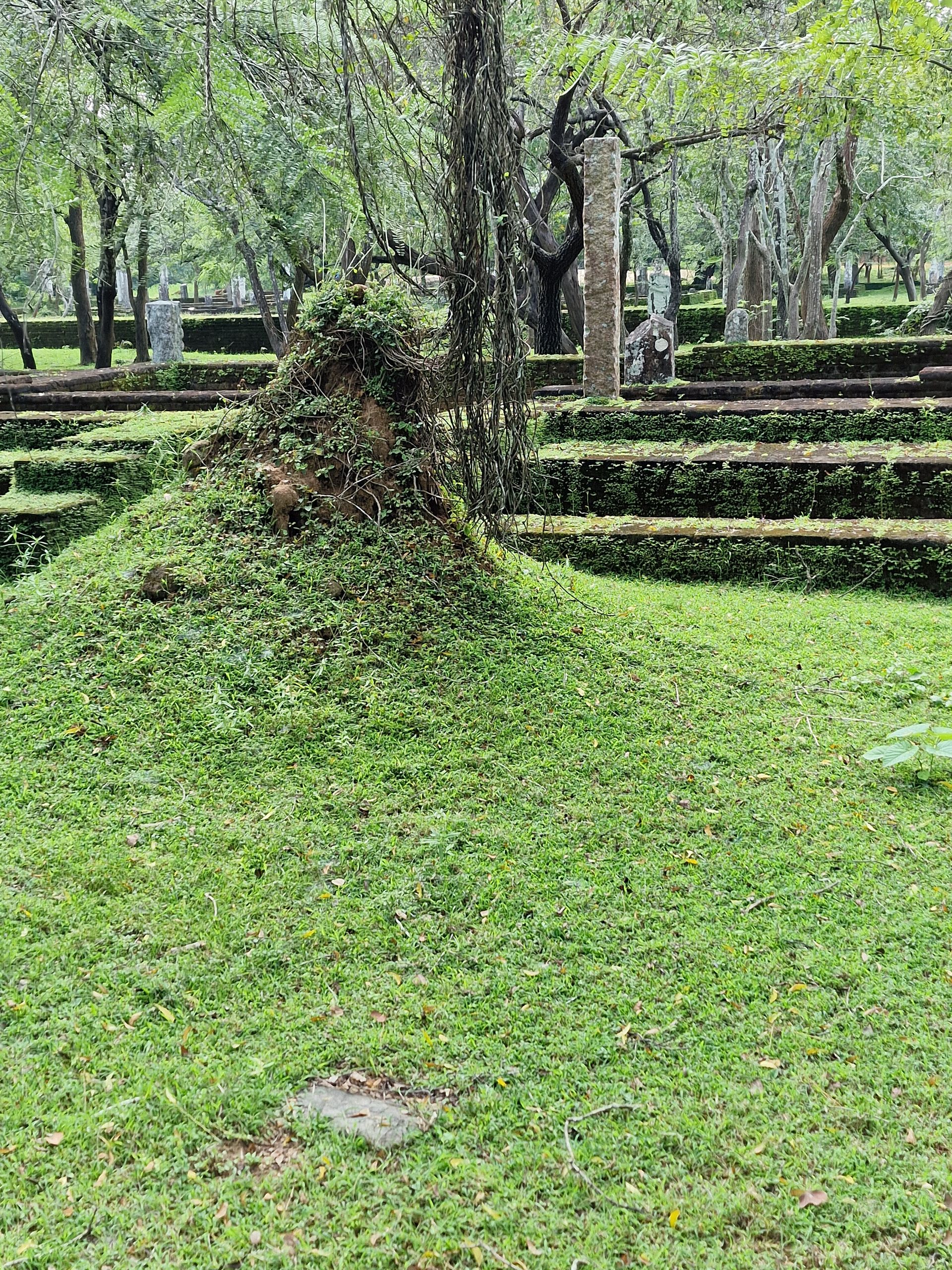
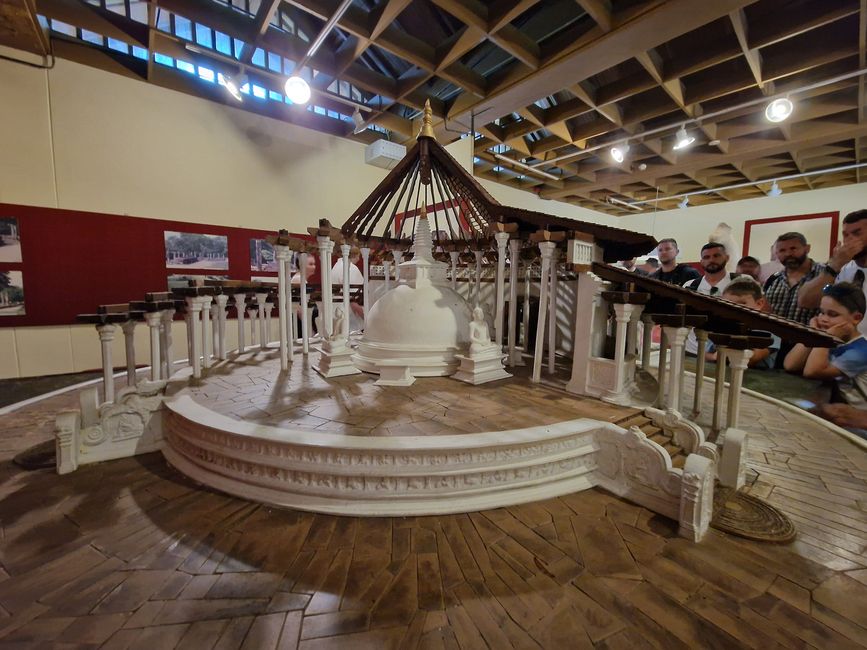
We are in Polonnaruwa on a weekday, surrounded by large tourist groups; we go unnoticed and blend in. The museum at the beginning was very interesting, teaching us that many pagodas were still protected by a cover, often a column structure with a wooden roof. We then understood why we often saw columns standing, something that we were not familiar with.
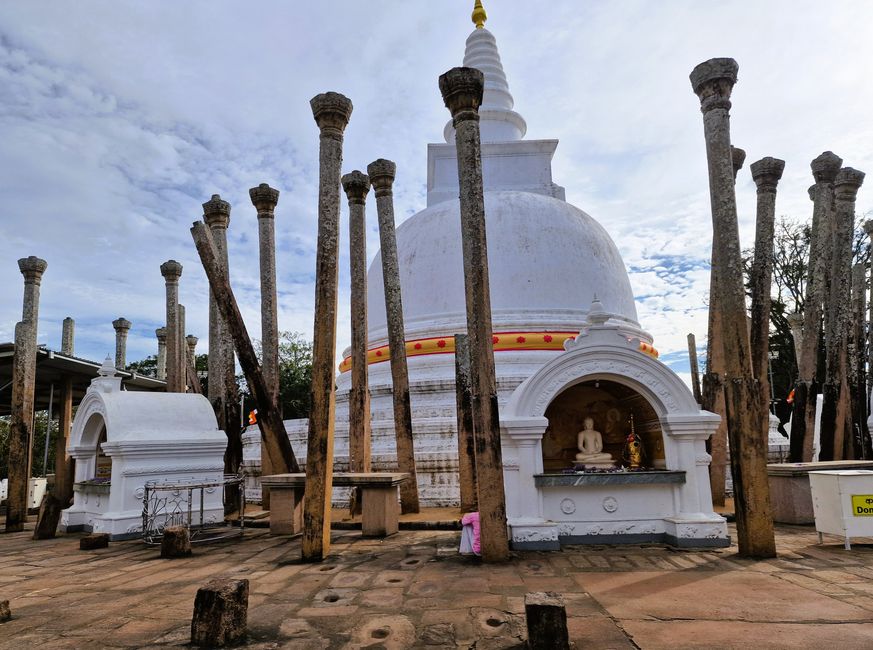
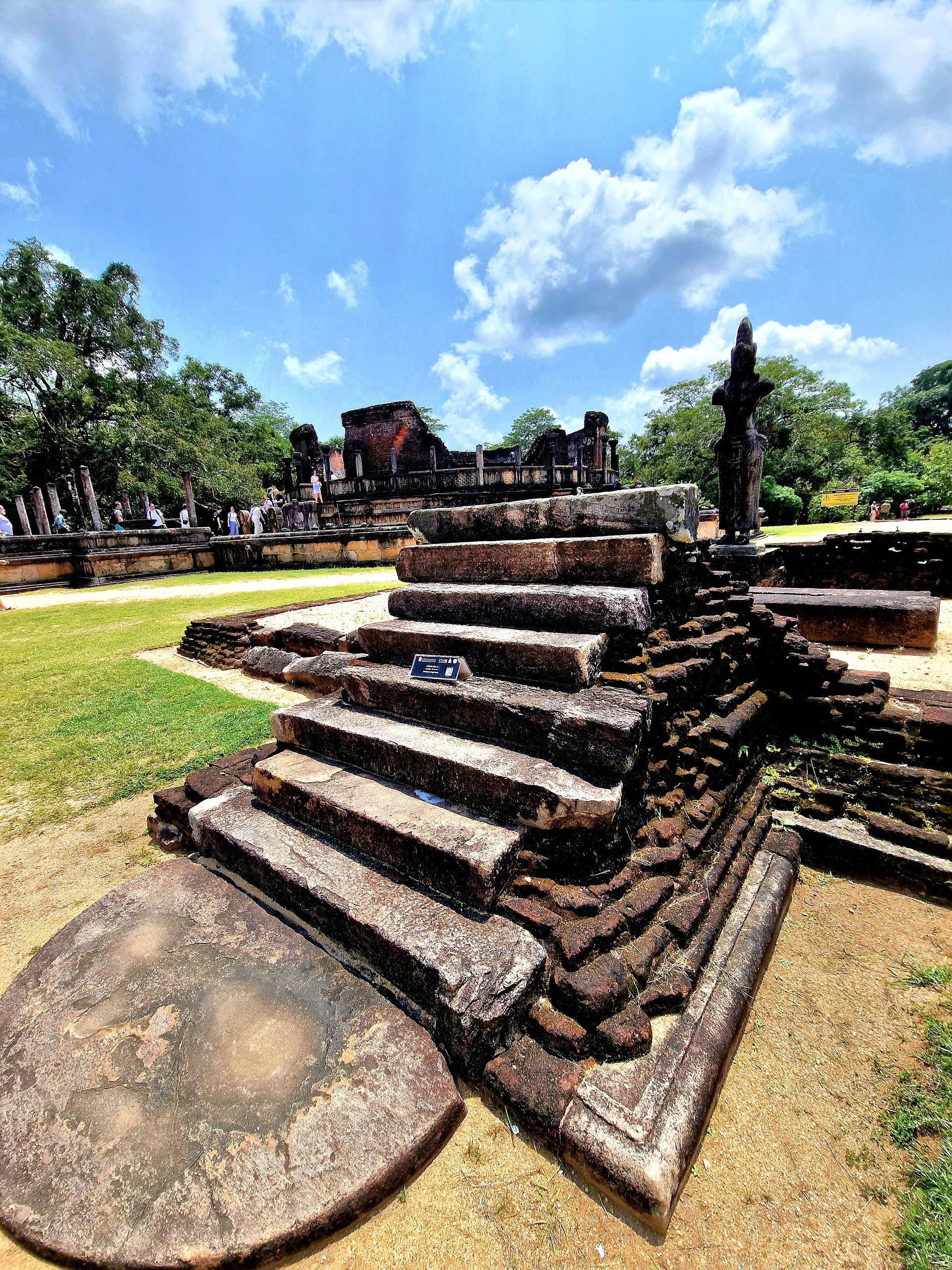
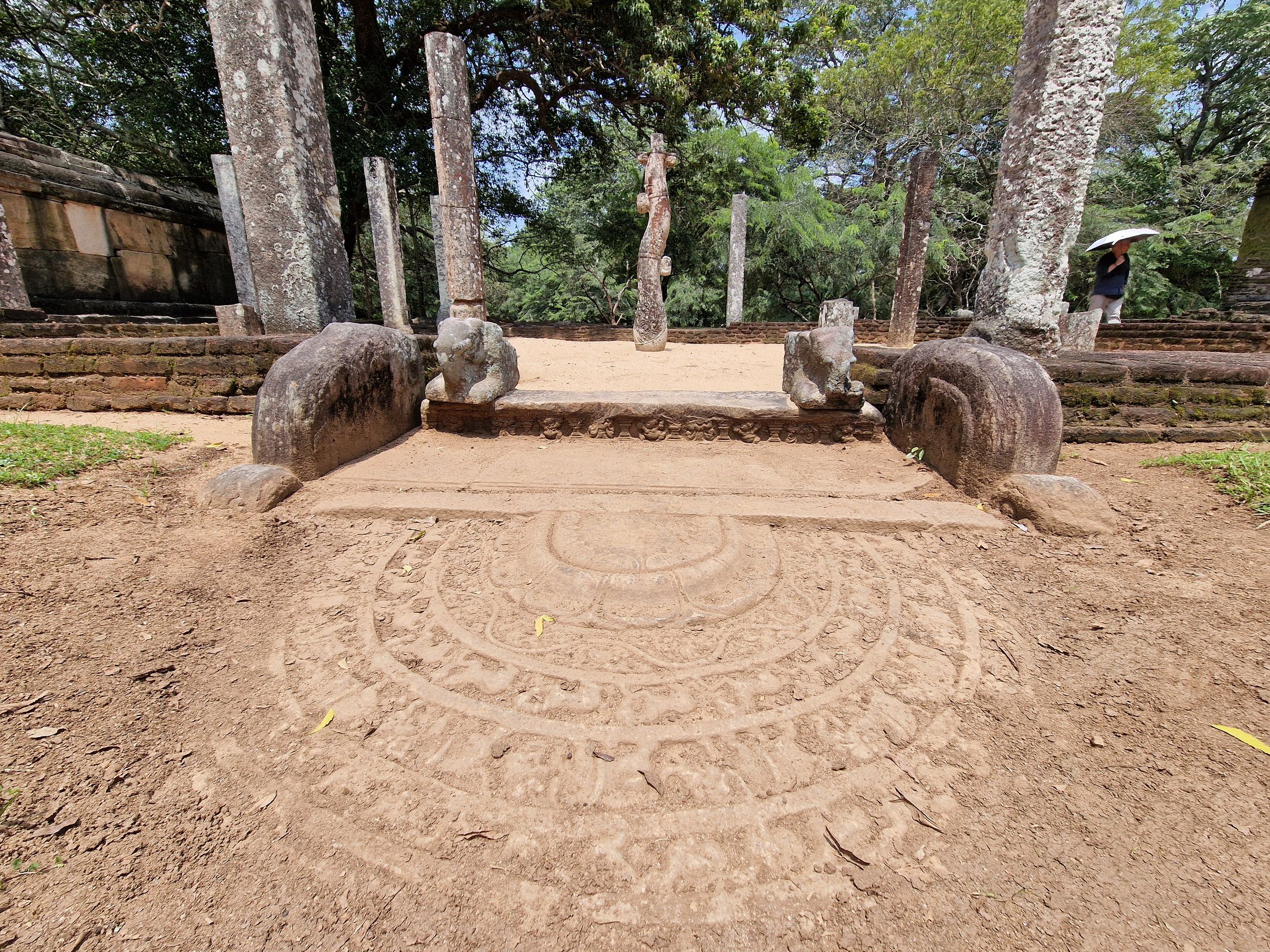
We walk kilometers on the old roads, seeing foundations and imagining a thriving city life. Sometimes the dimensions of the expanse, height, and width are incomprehensible. After such days, we simply put our feet up in the evening.
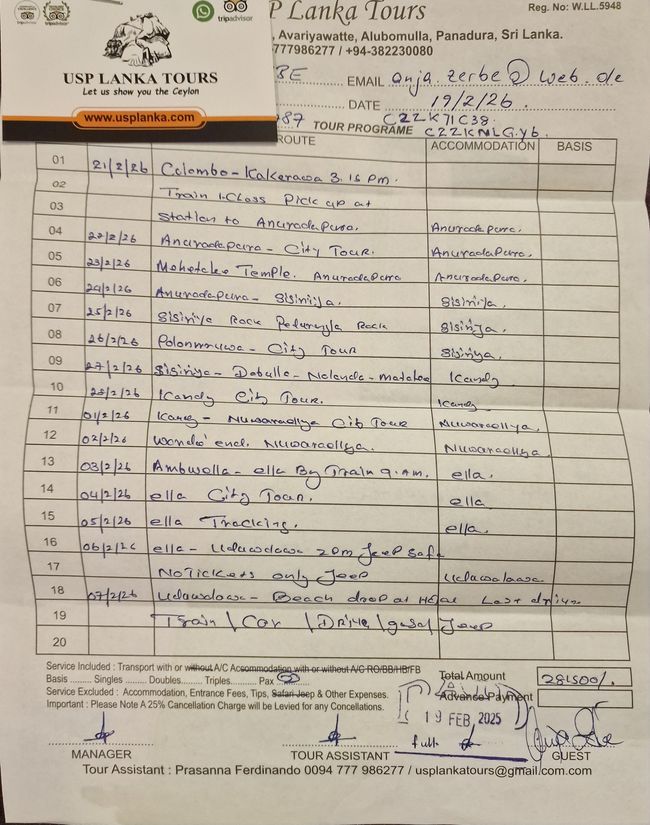
We often look at the map and try to remember the names and what is behind them. In hindsight, we manage fairly well :-)