Huaraz
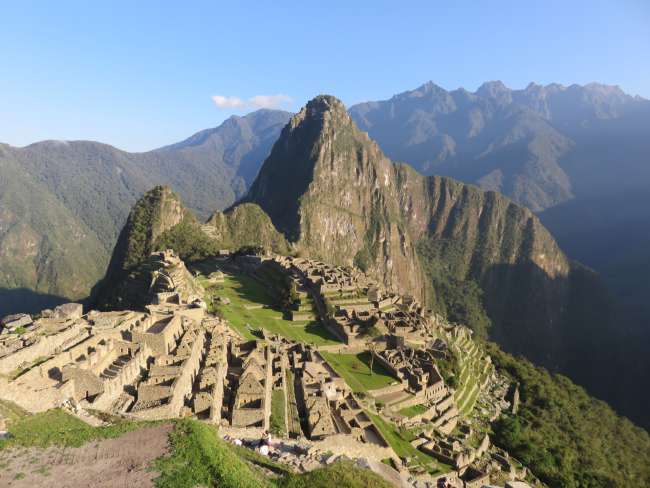
After the wellness time in Lima, we felt refreshed and wanted to explore the heights and the Andes one last time. So we took a winding and arduous bus ride to Huaraz at 3100...

Published: 19.07.2025
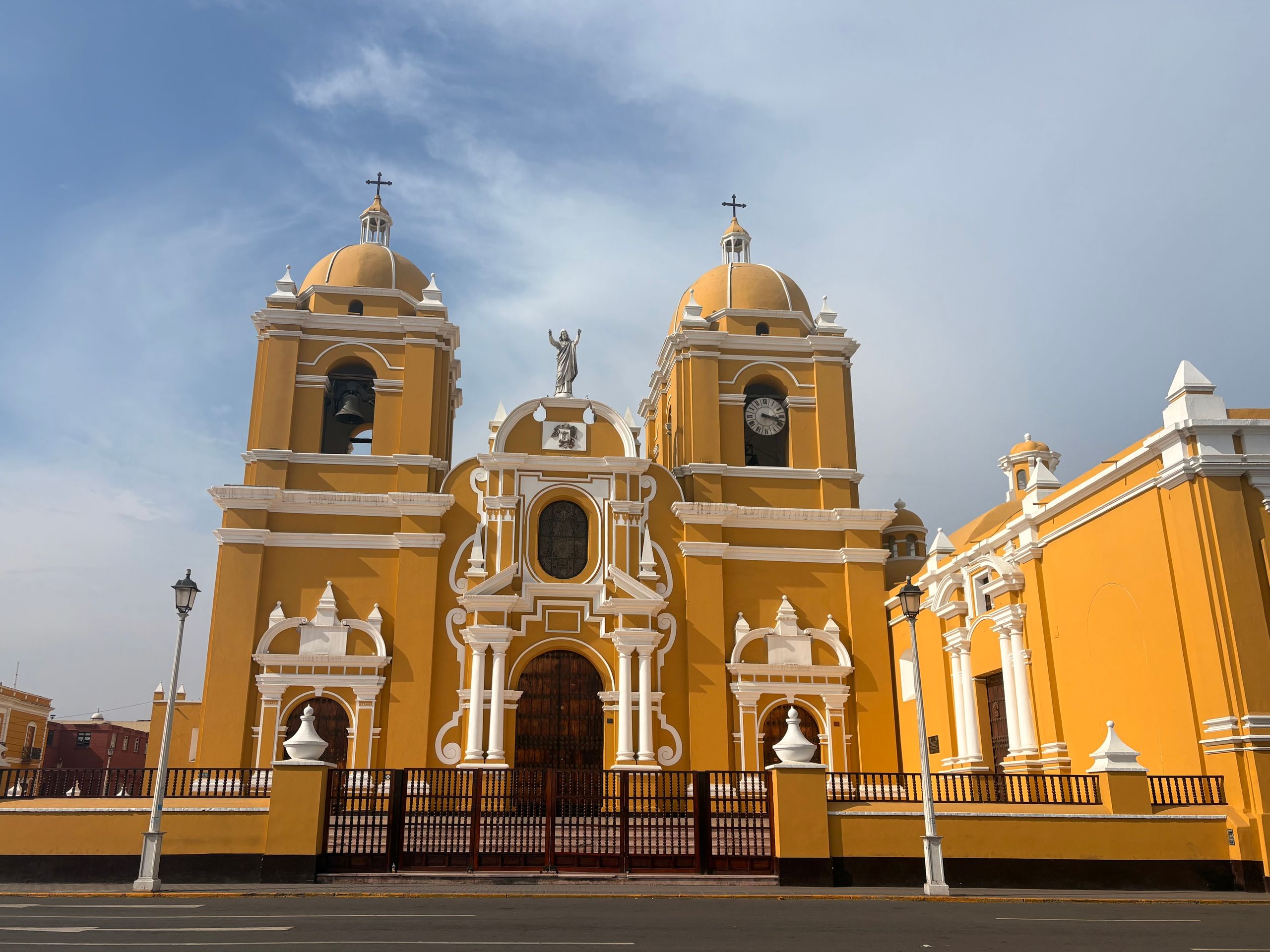
After a sad farewell to the Andes, we headed back to the sea overnight to Trujillo - the third largest city in Peru after Lima and Arequipa.
For a change, we treated ourselves to a proper hotel with a breakfast buffet right at the Plaza de Armas. And because Trujillo is said to have the best ceviche in all of Peru, we immediately looked for a nice, slightly upscale restaurant. You have to indulge yourself sometimes! After an incredibly long wait and a growing bad mood from hunger, our food finally arrived. While it was not completely inedible, the fish was tough and somehow tasted a bit strange. Unsatisfied, we returned to our hotel room, and then it all started. We both felt incredibly sick, and for the next two days, we only exchanged the bathroom doorknob. Ceviche inferno at its finest! Montezuma's revenge is really a joke compared to this. None of us had ever felt so bad in our lives! We probably should have gone to the hospital, but we didn’t have the strength to even think about it. Our fancy hotel room turned out to be a trap (well, at least you could call the reception to order new toilet paper), and the breakfast buffet or the pool was of course pointless…
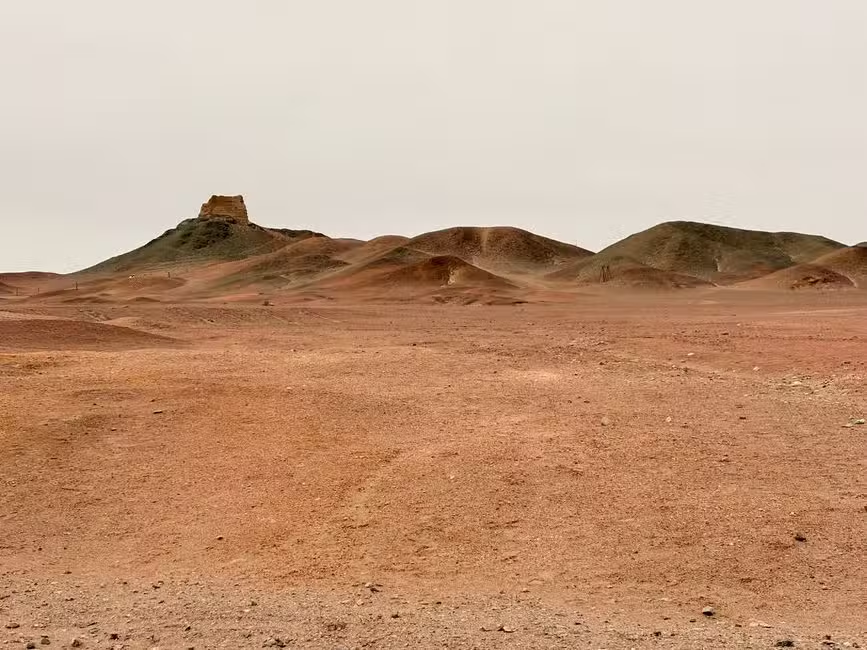
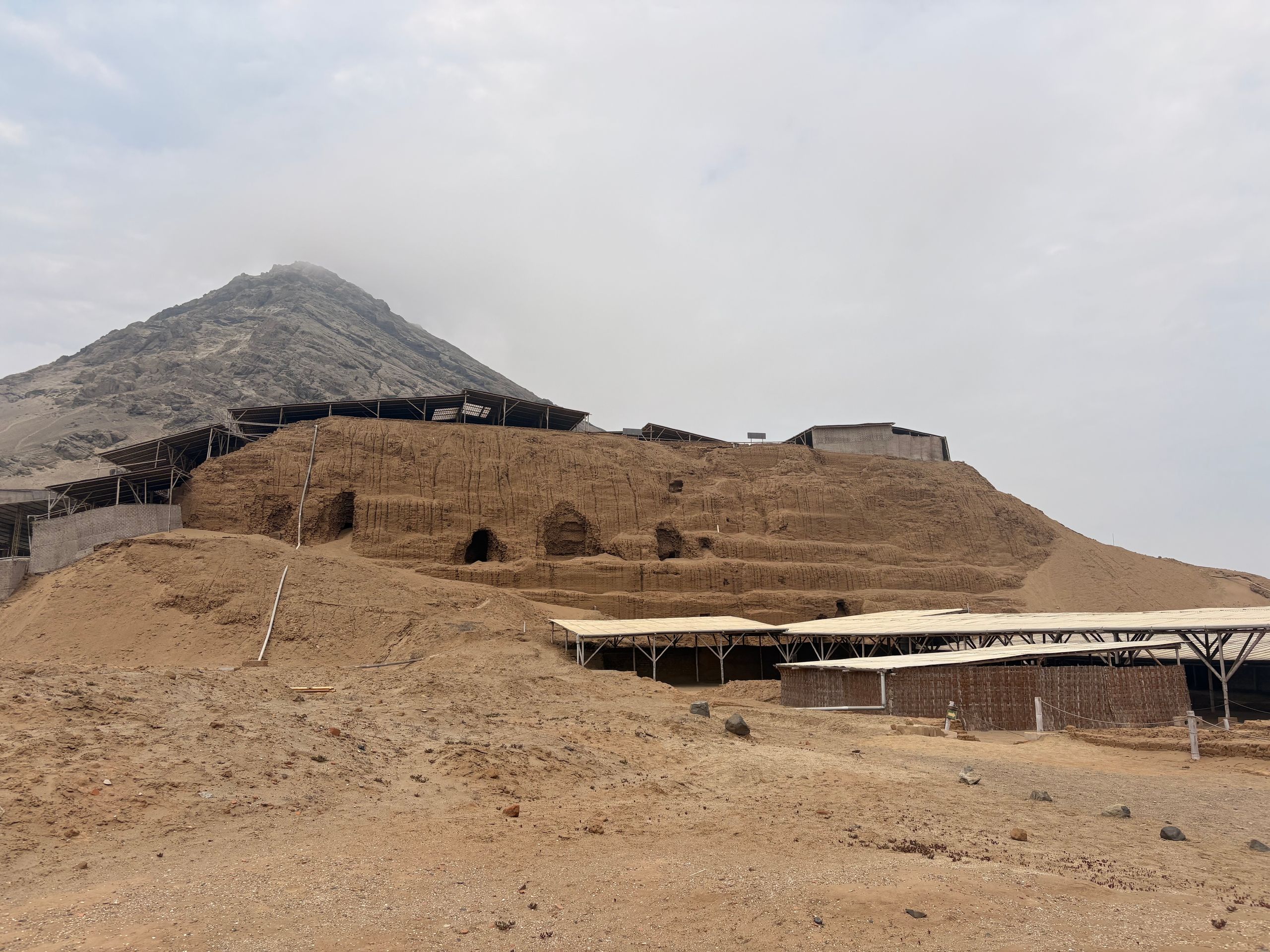
Even the strongest storm passes, and so we could - albeit very weak - still visit the archaeological sites of Huaca de la Luna and Chan Chan.
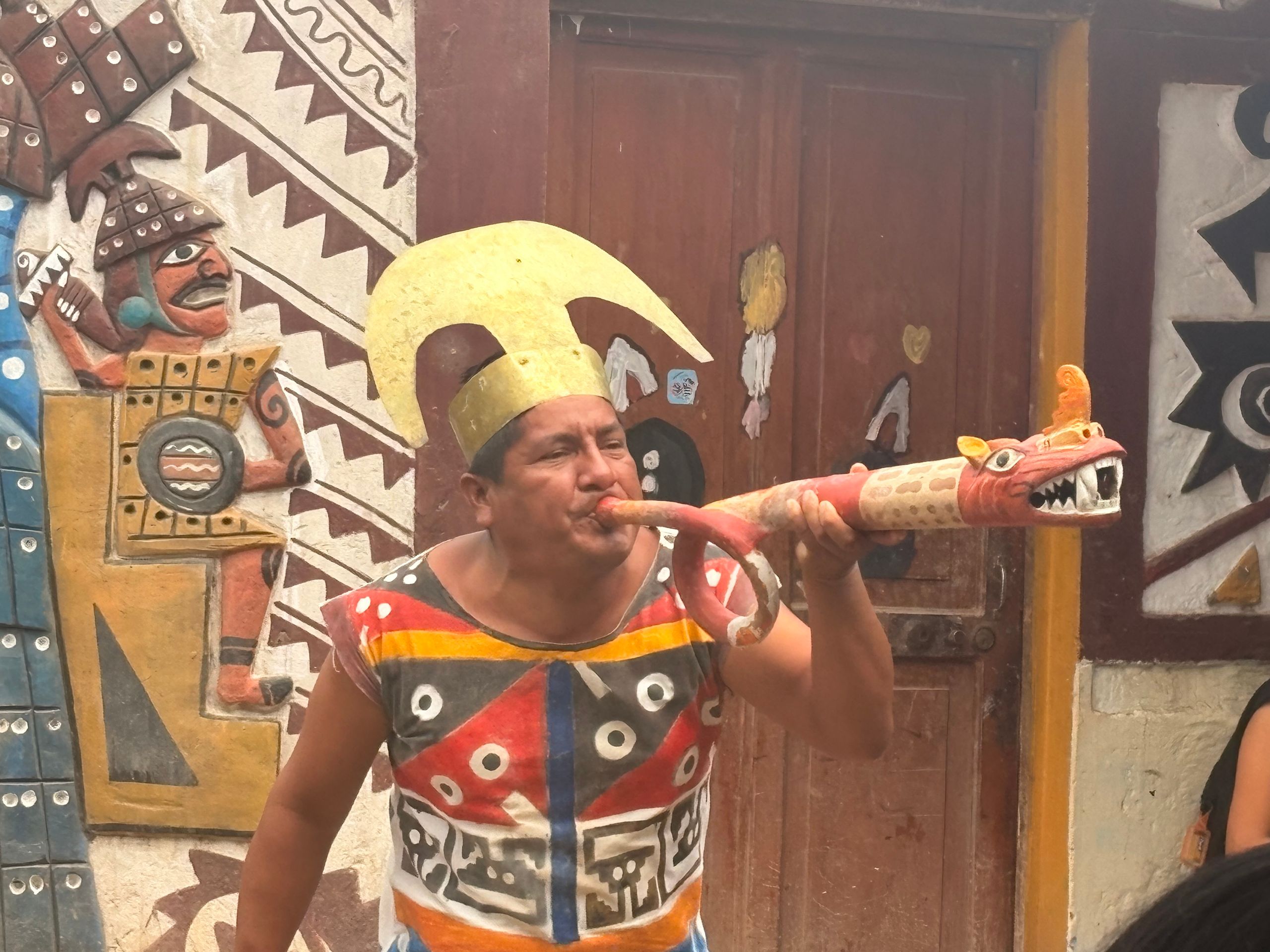
Because we were so exhausted, we booked a Spanish-speaking tour right next door, resulting in being driven directly to the sites by bus, but having to stop at places that were completely uninteresting to us and always waiting for a loud and giggling group of young women who were regularly late back to the bus. Thus, we let a park with giant plastic replicas of tiny clay figures in various sexual positions from the Moche culture (our funny girls' group completely exhausted themselves taking selfies), a sales demonstration of poorly crafted musical instruments by a guy in clumsily painted traditional clothing, and a sunset at the overcrowded and dirty Playa de Huanchaco, where ceviche was offered (anything but that), pass us by. We had to decline lunch with a Marinera Norteña performance (a famous local dance), which led to great displeasure as the guide did not receive a commission for us, but our stomachs were still not ready for enclosed spaces with food smells.
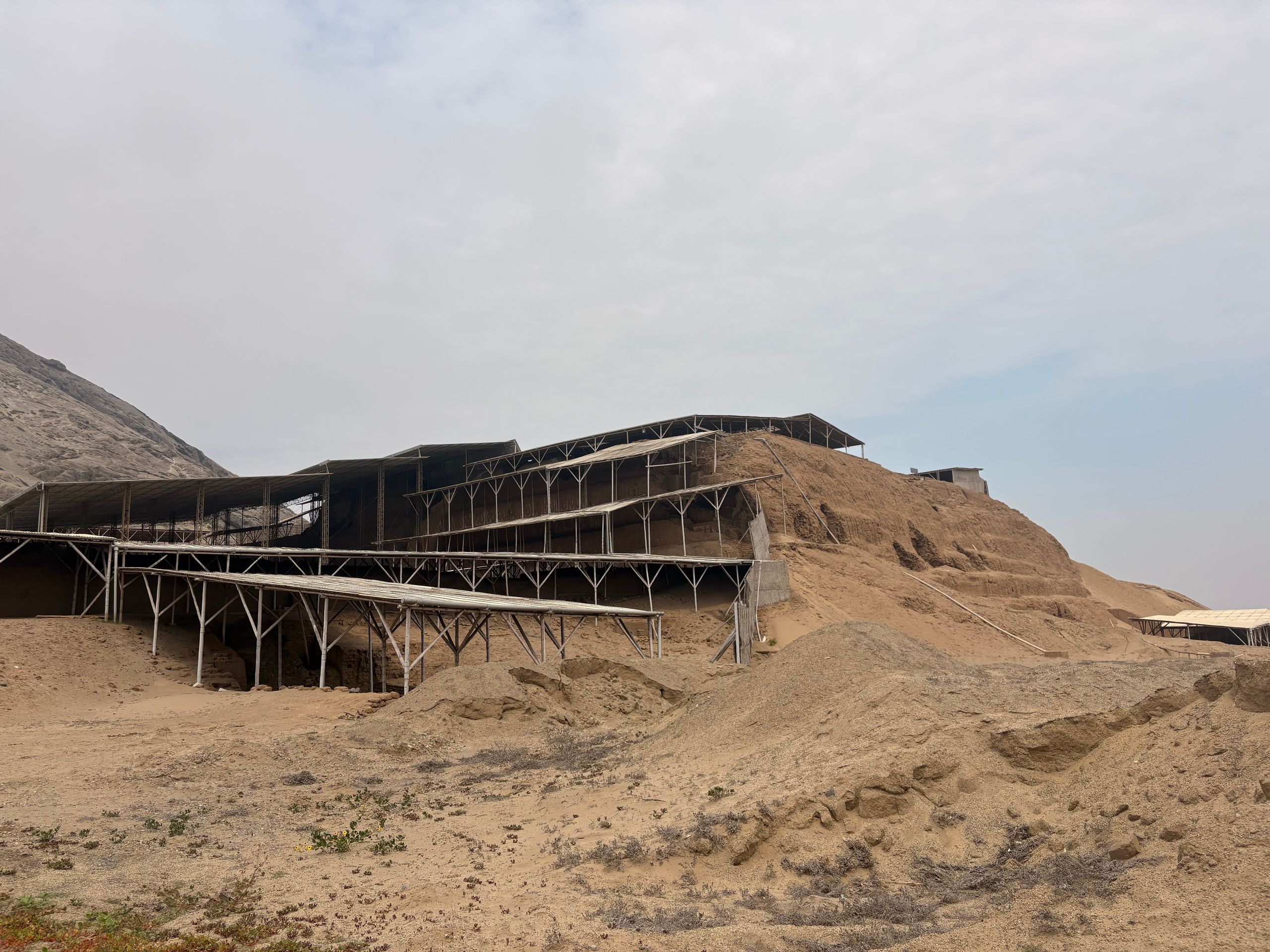
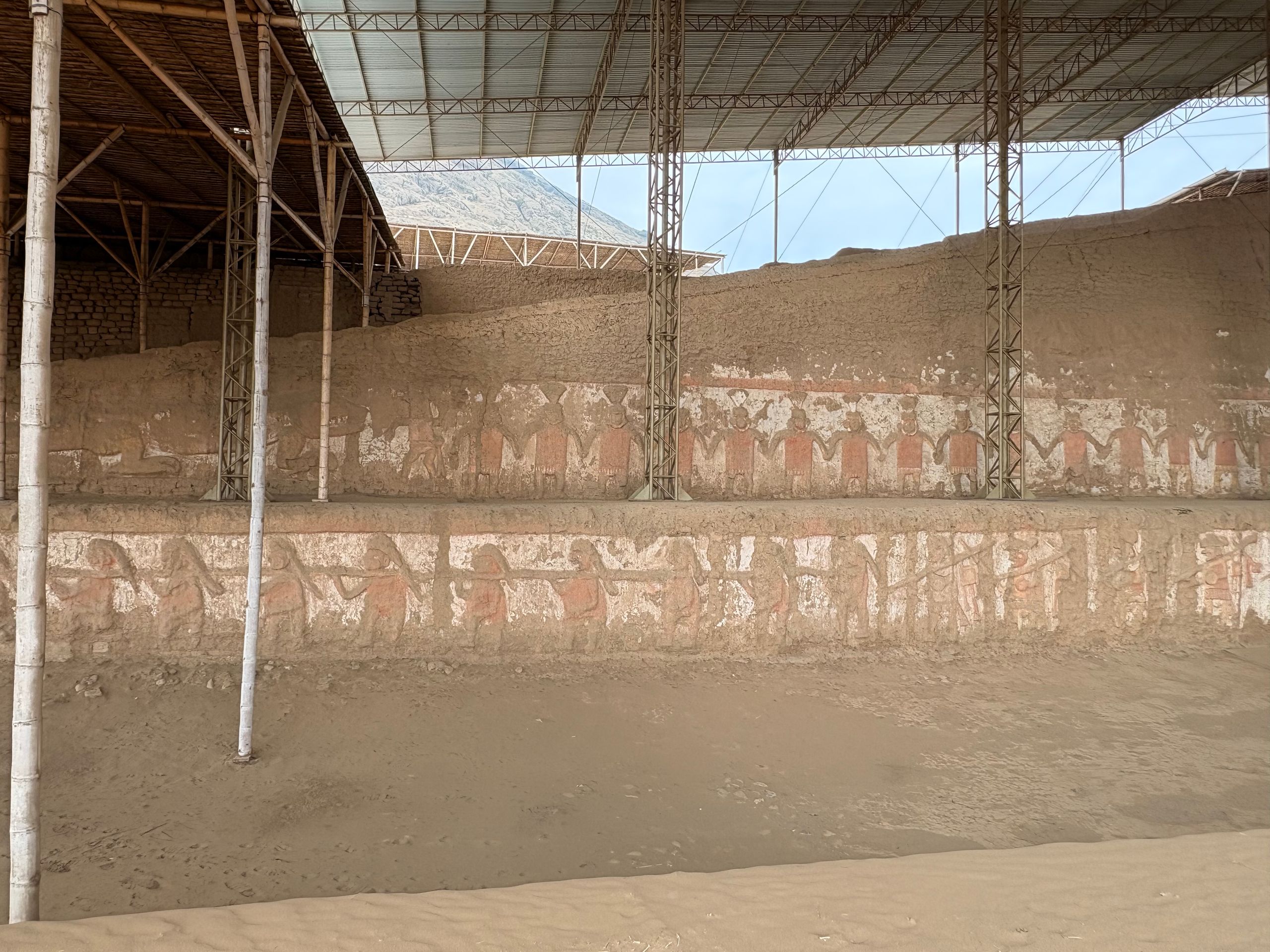
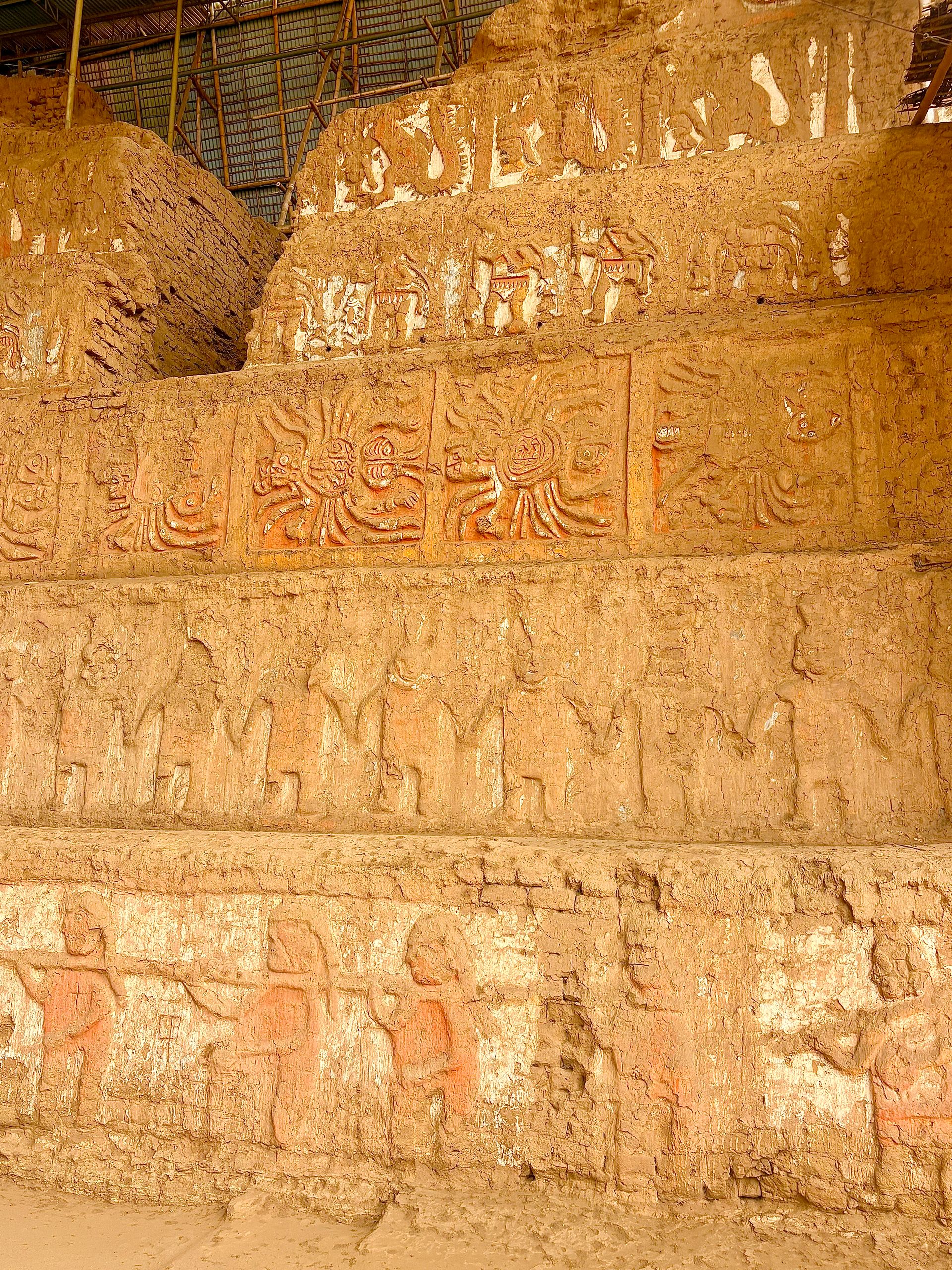
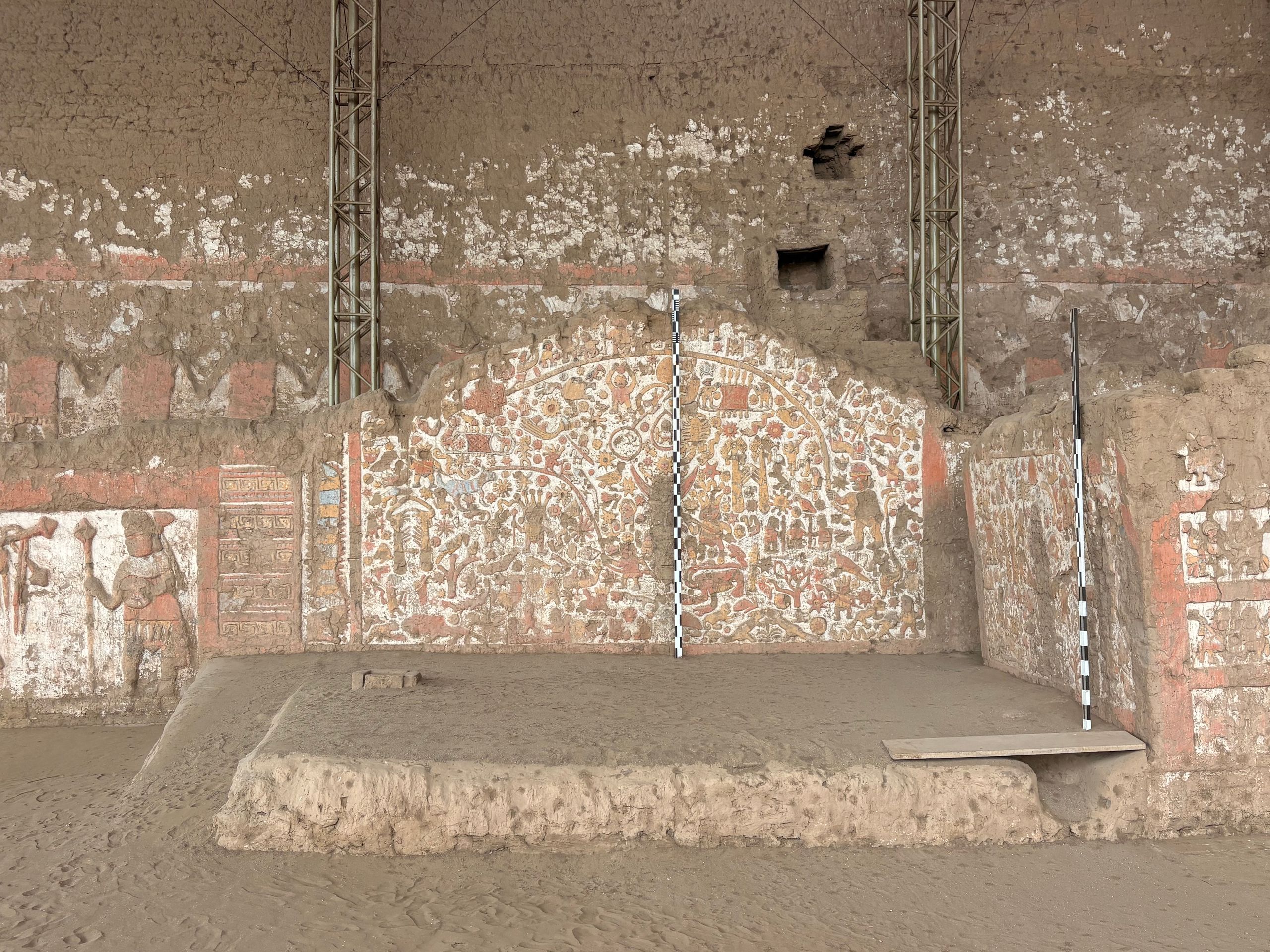
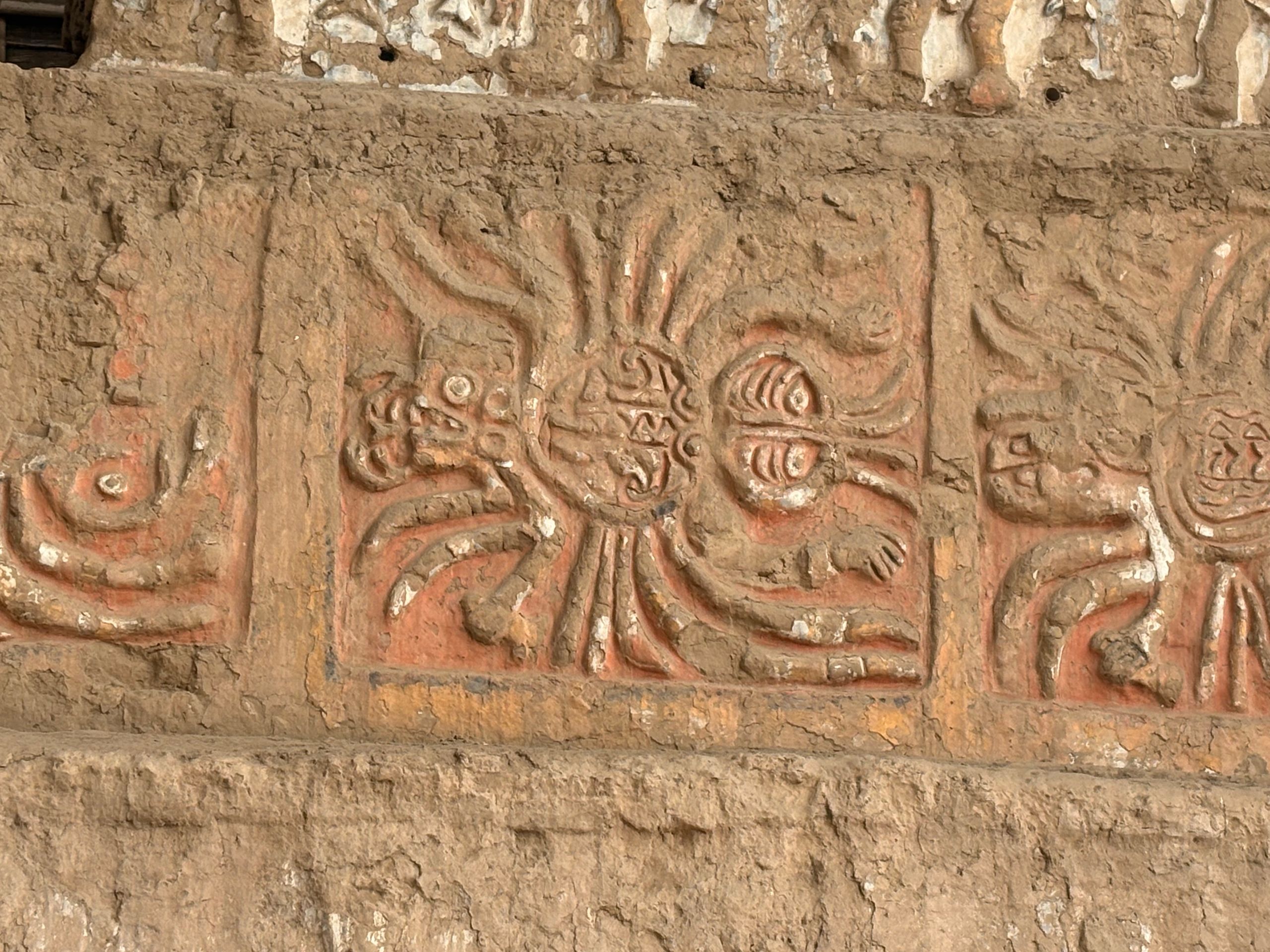
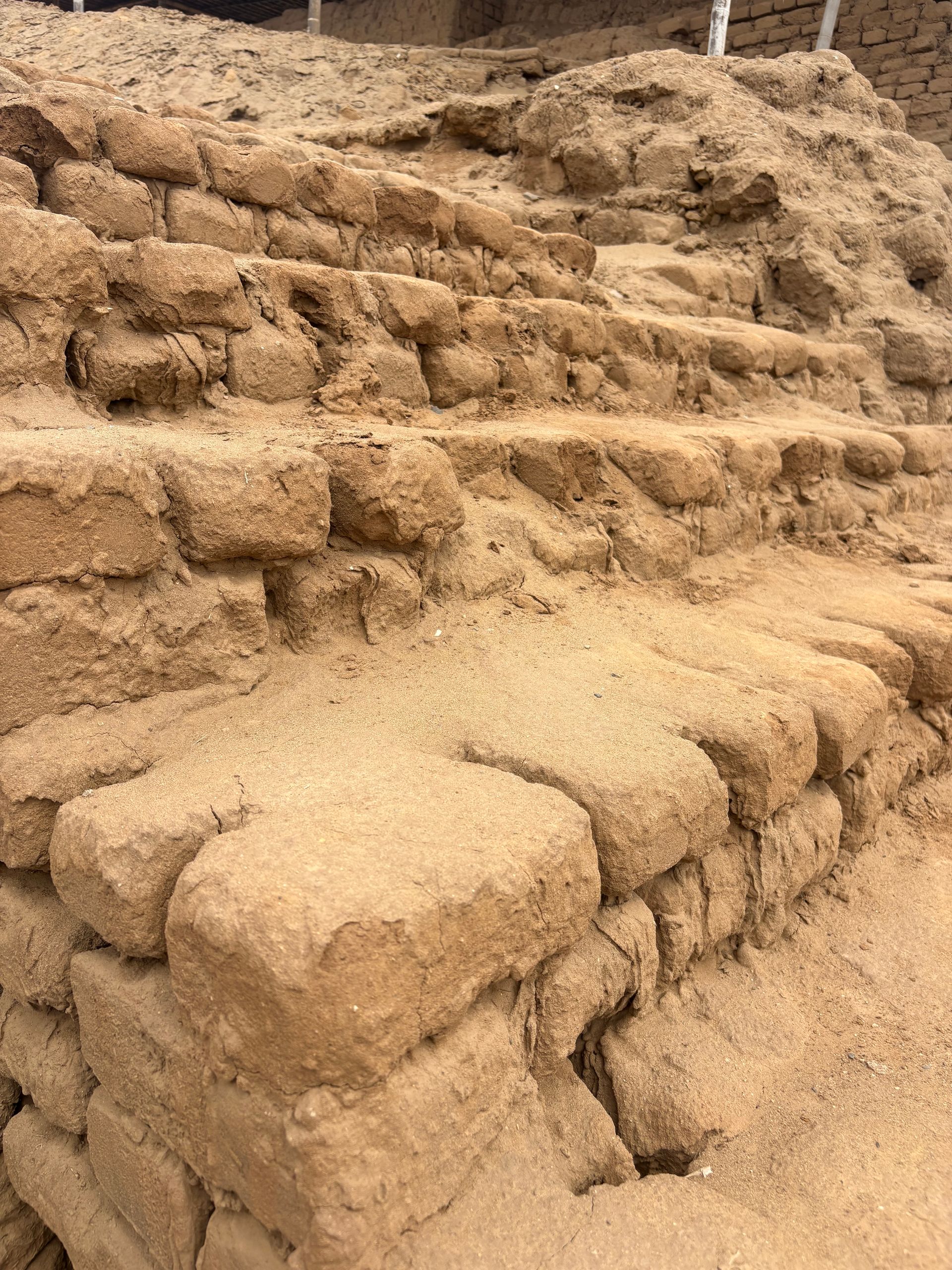
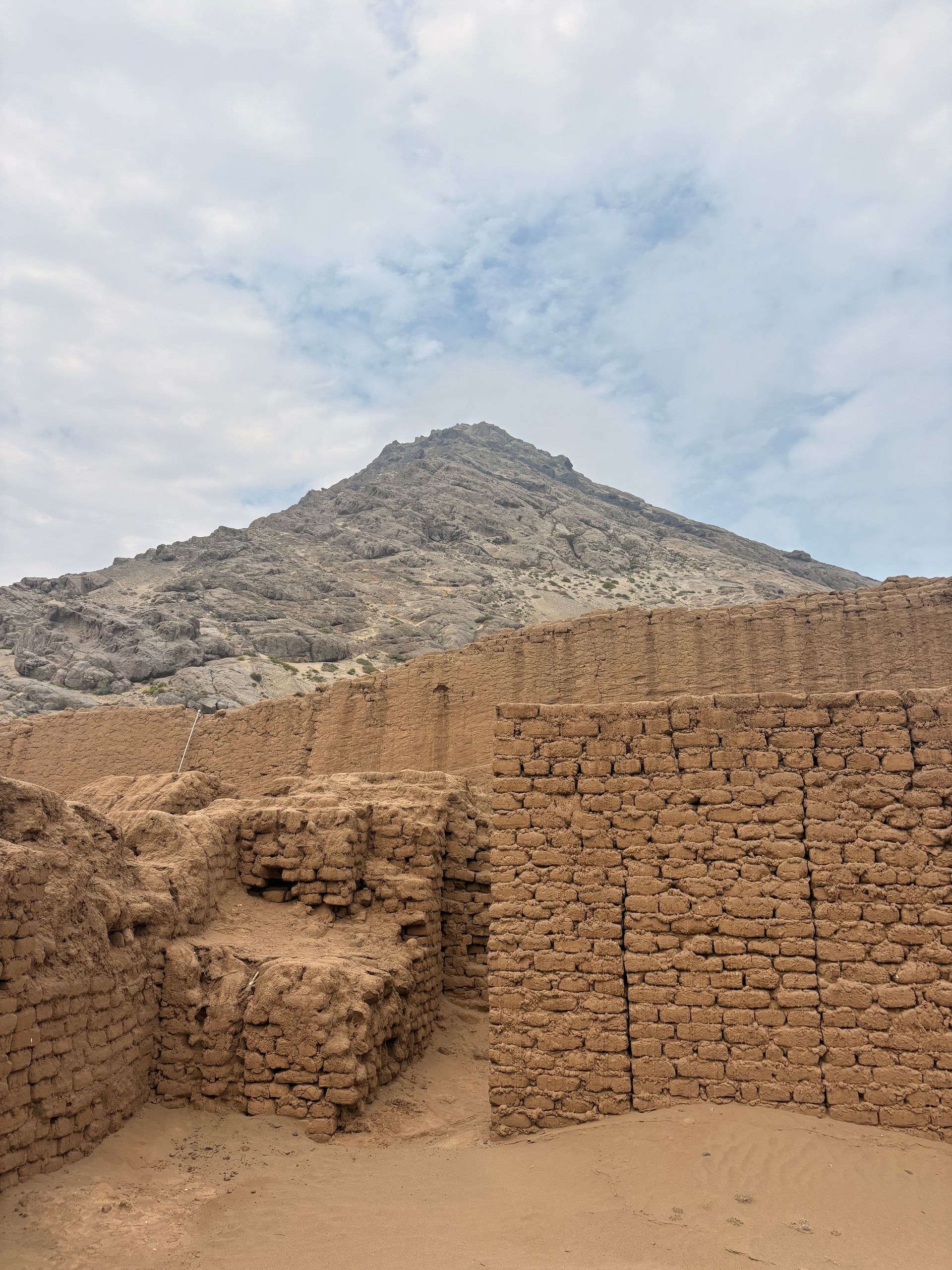
Nevertheless, the tour was completely worthwhile because of the main attractions. Huaca de la Luna is a temple complex with a pyramid made of adobe bricks, built between the 1st and 8th centuries AD and part of the ancient capital of the Moche culture. The Moche were, by the way, a highly developed culture with a complex social system and high technological knowledge, who created irrigation systems to make the barren desert soil fertile. The complex was built higher and higher over the centuries and thus consists of various levels connected by ramps with plazas, patios, burial and sacrificial sites where religious ceremonies took place. Parts of the walls are decorated with colorful frescoes. After the downfall of the Moche (after strong El Niño rains destroyed the irrigation systems, followed by years of drought, the Moche abandoned their cities and moved to smaller villages in the hinterland), the facilities were partially taken over by the Chimu until the Incas finally took control in the 15th century and the Spaniards a century later. From that point on, the sites were abandoned and the fragile adobe constructions were exposed to wind and weather, resulting in significant damage. It is actually fascinating that anything is still left, and you can still see the colorful frescoes clearly on some. During archaeological excavations, some parts are protected with roofs, but that is rather just protection against the worst rain, and the entire ensemble seems to be dwindling.
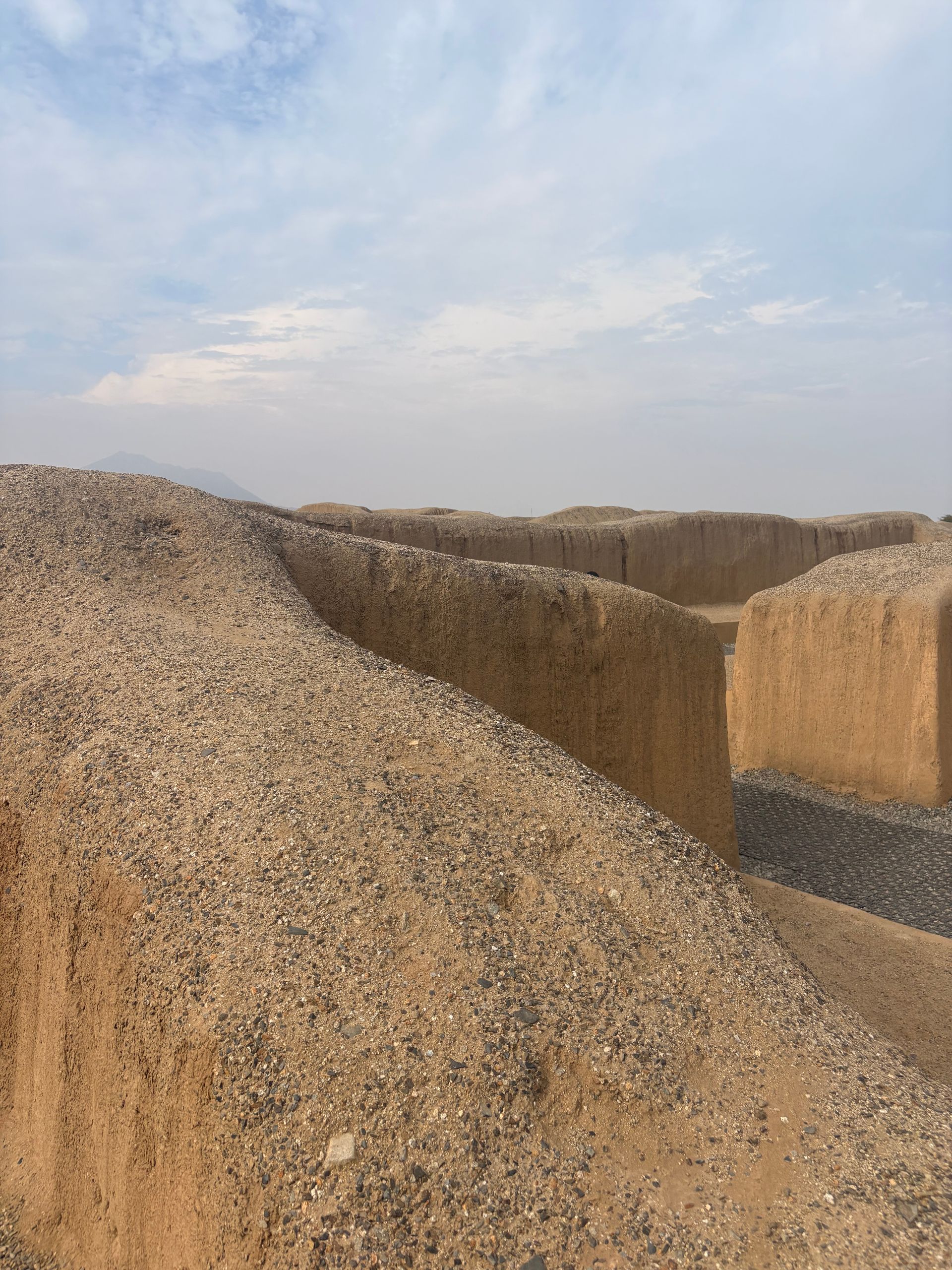
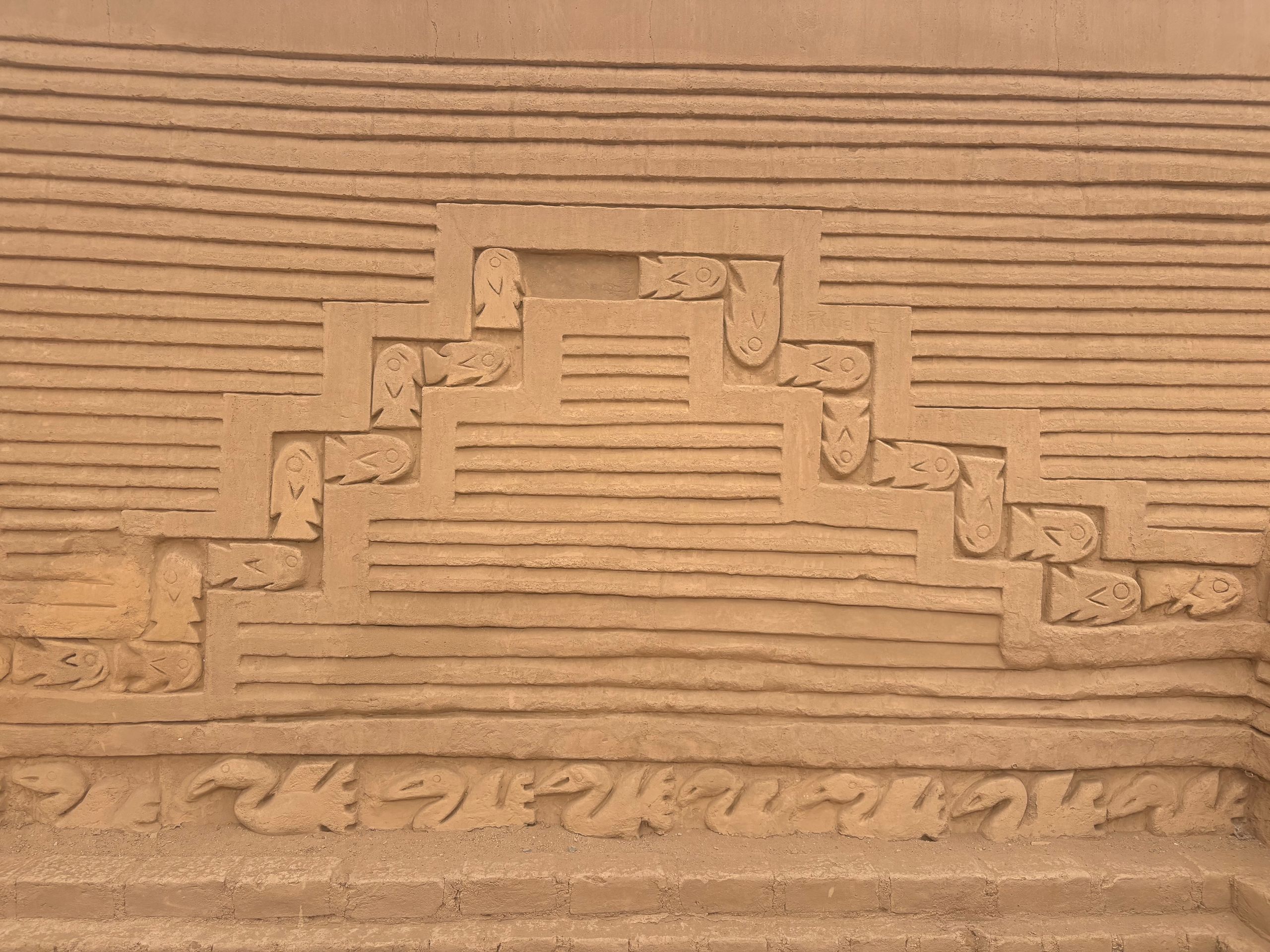
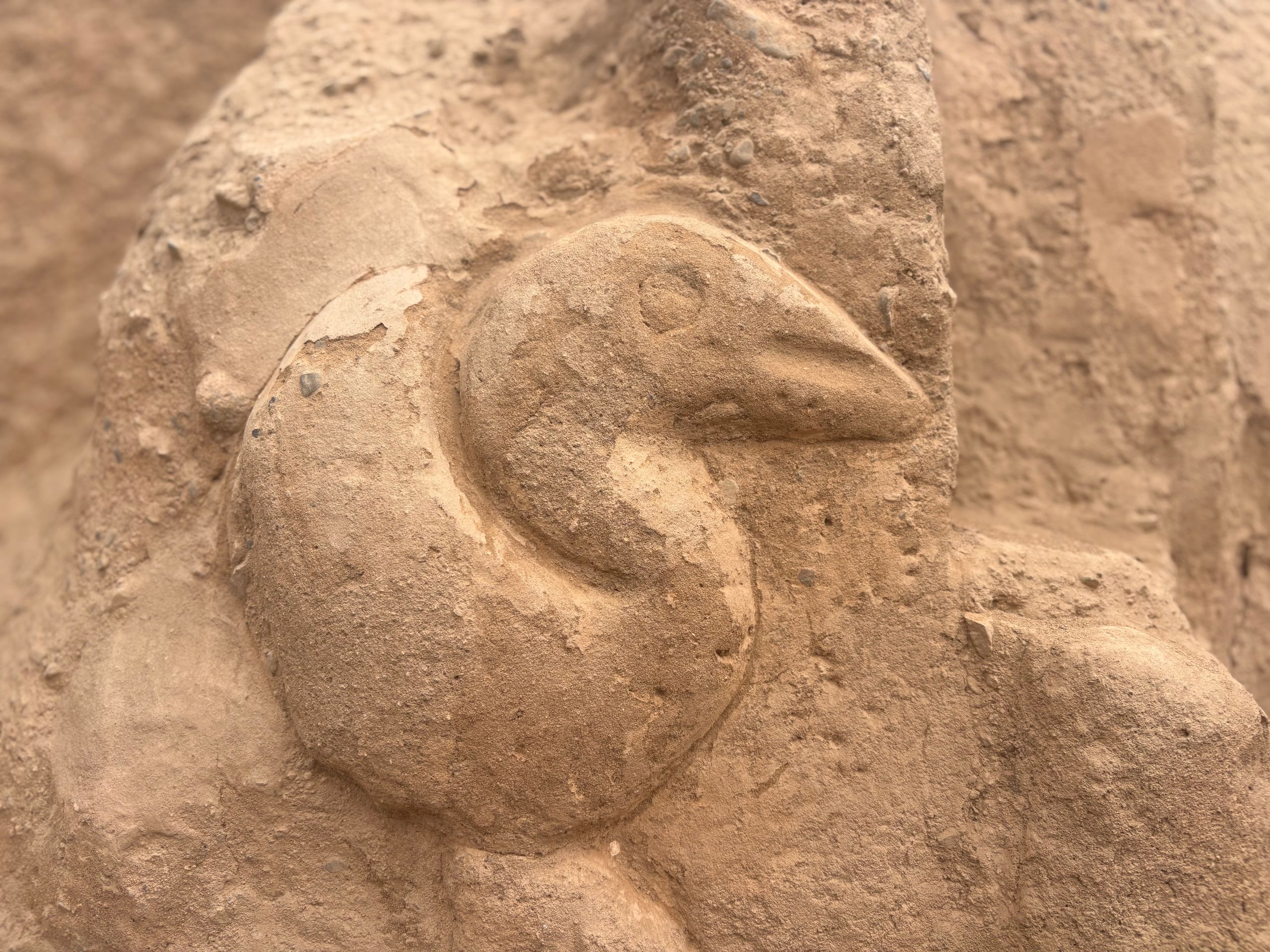
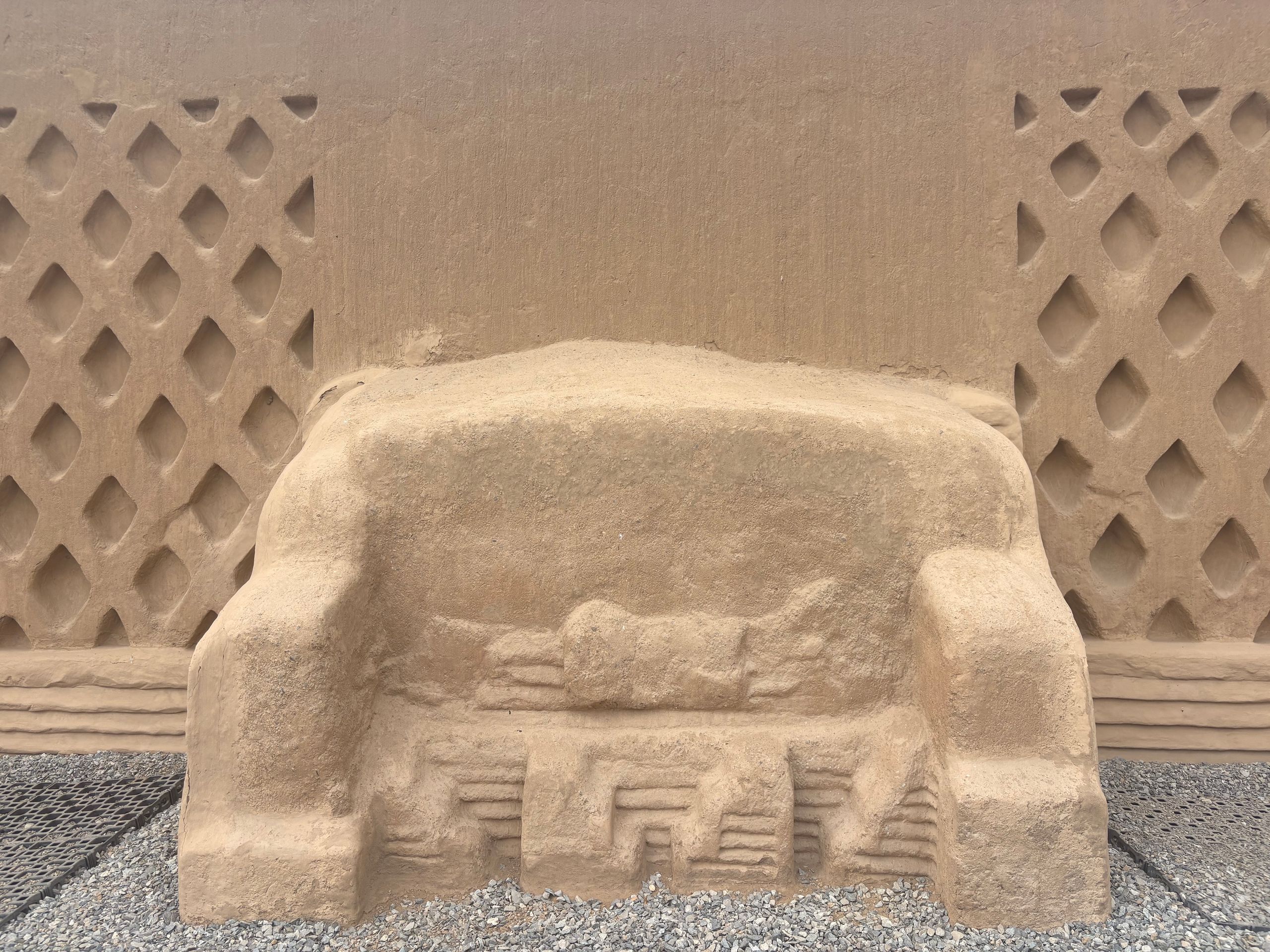
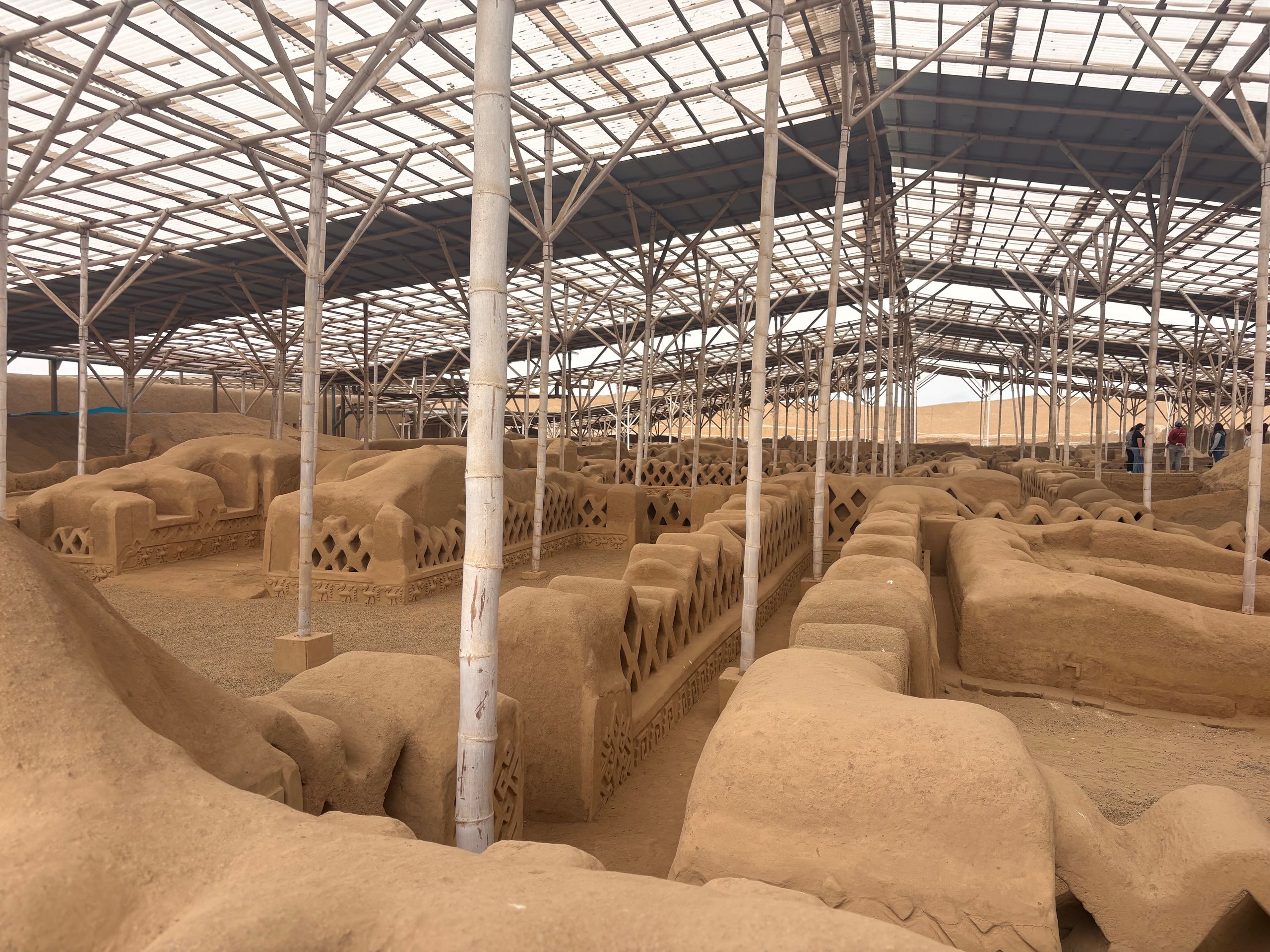
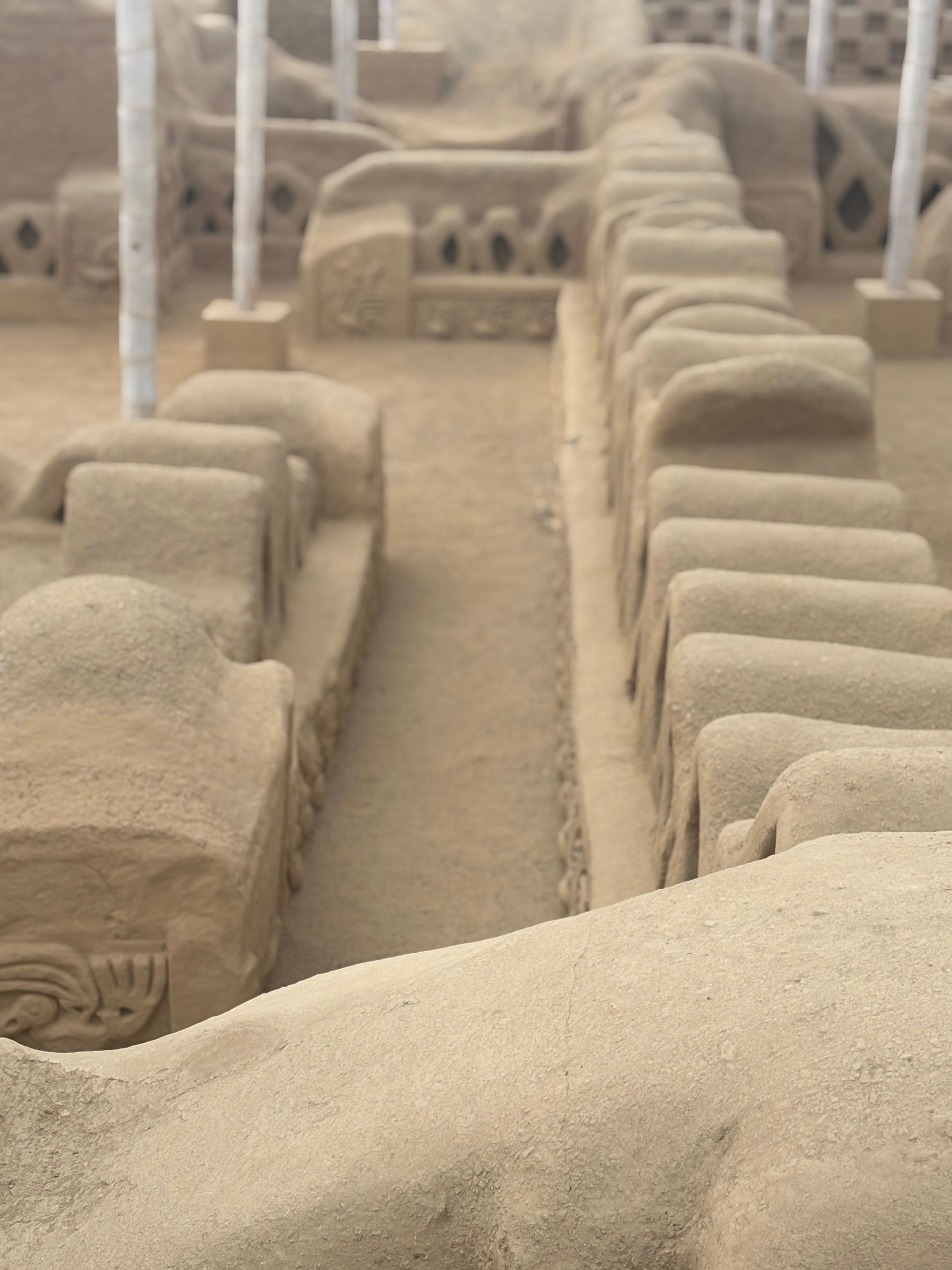
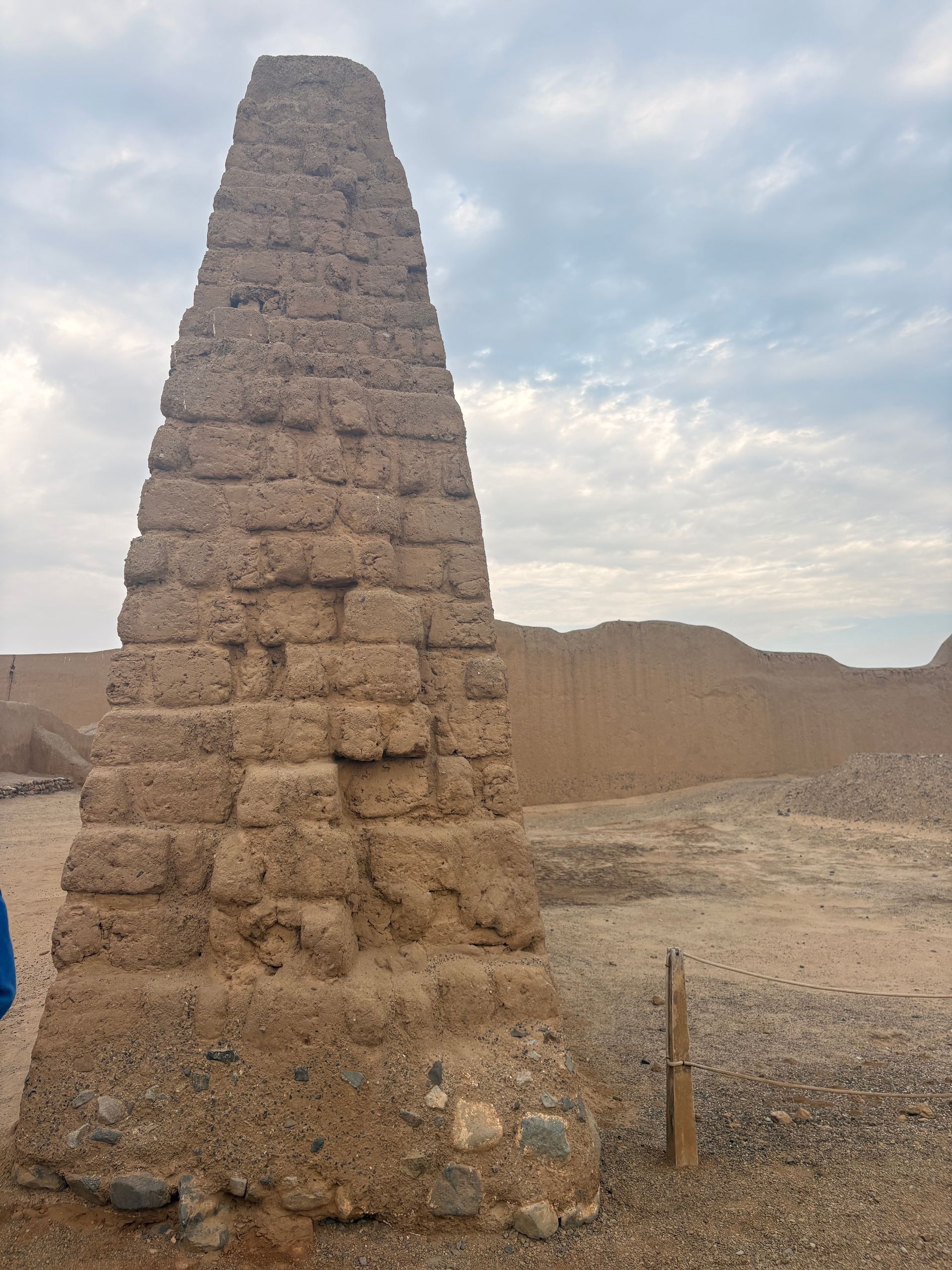
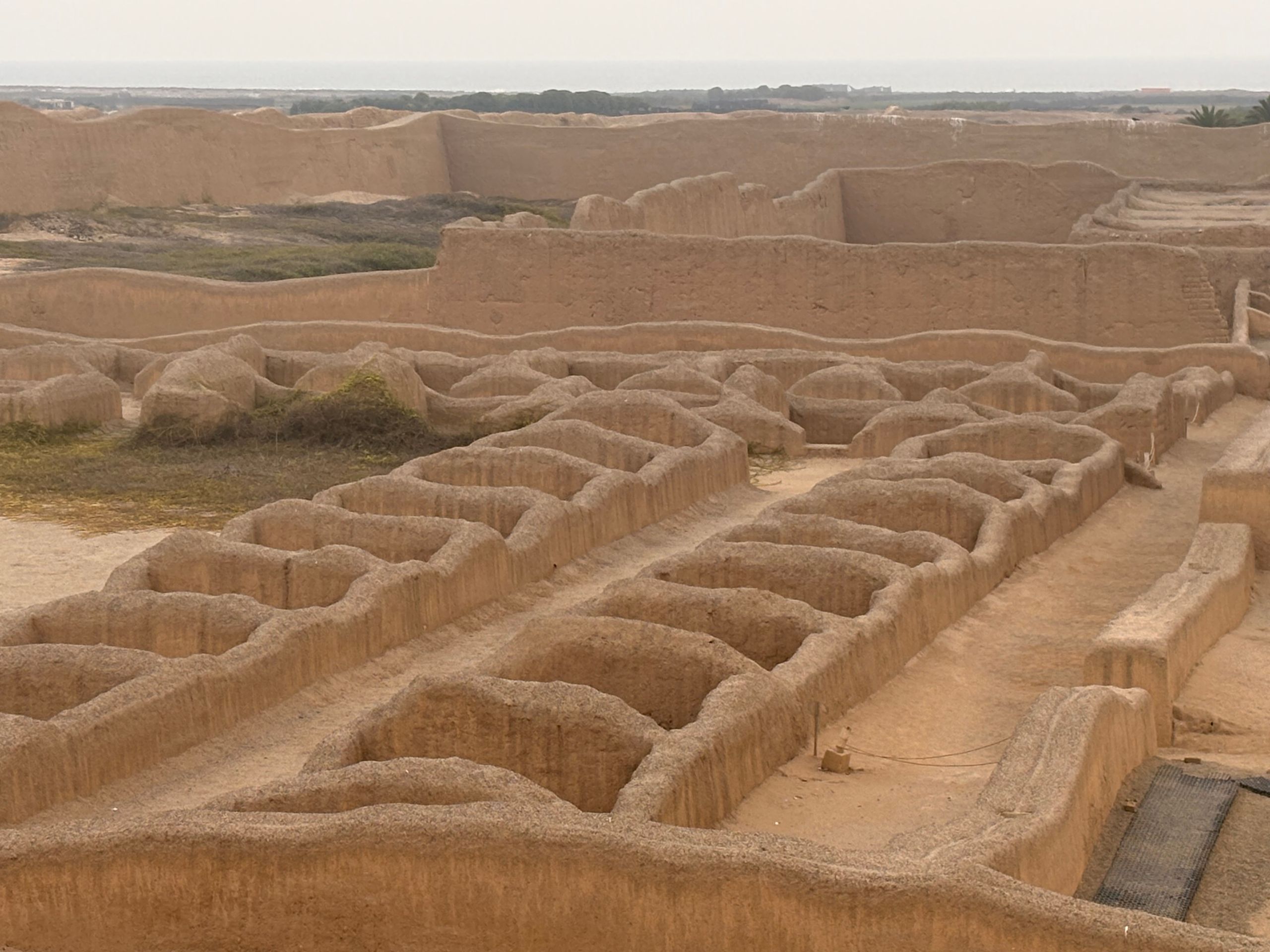
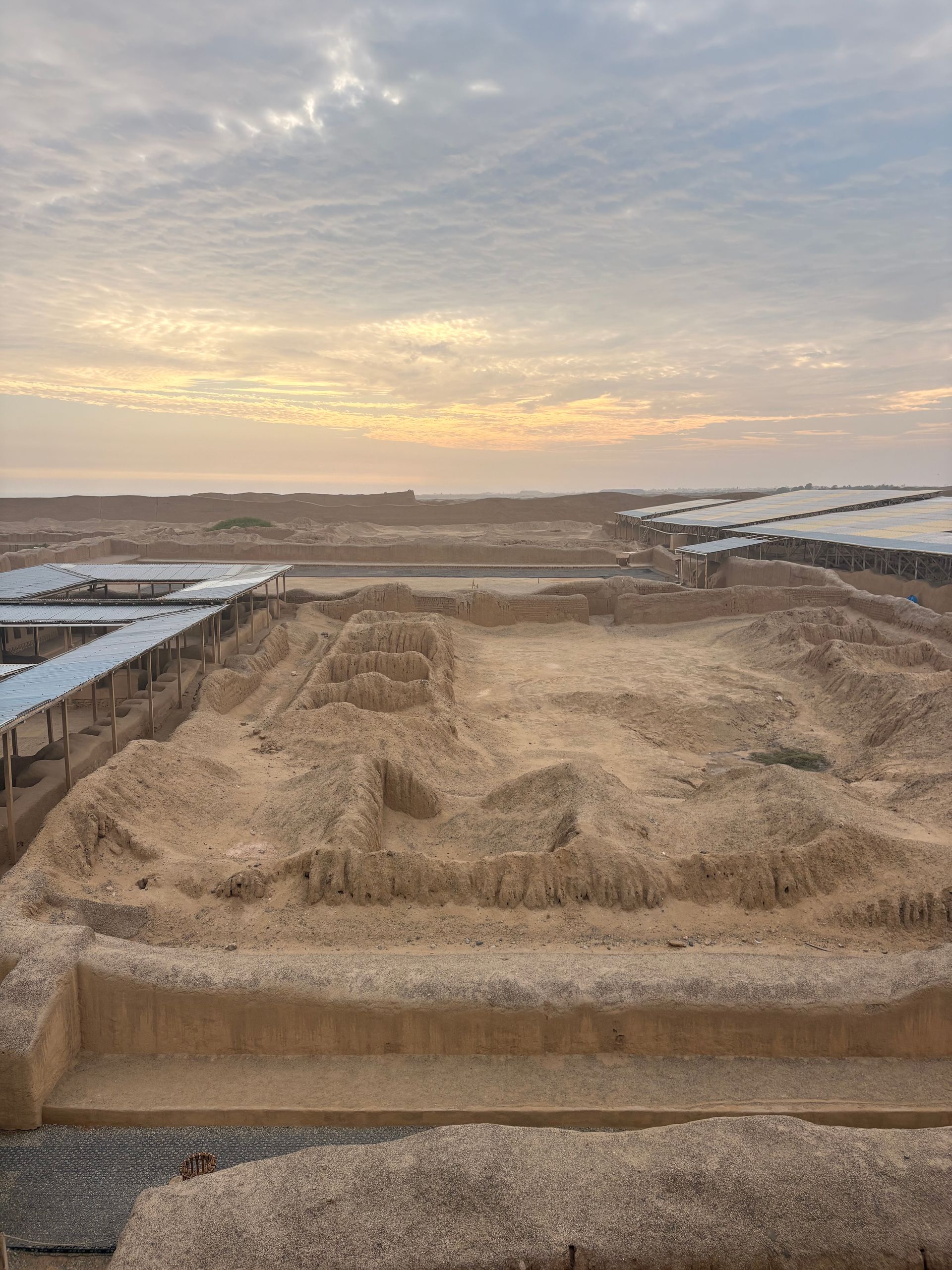
Similarly destroyed is Chan Chan, built by the Chimu, and was probably once the largest city on the South American continent. It originated around 1300 and is still about 28 square kilometers in size today. It was also built from adobe. About 60,000 inhabitants once lived here with a great fortune of gold, silver, and ceramic art. It originally consisted of nine autonomous districts, each ruled by their own leaders, who were revered as kings.
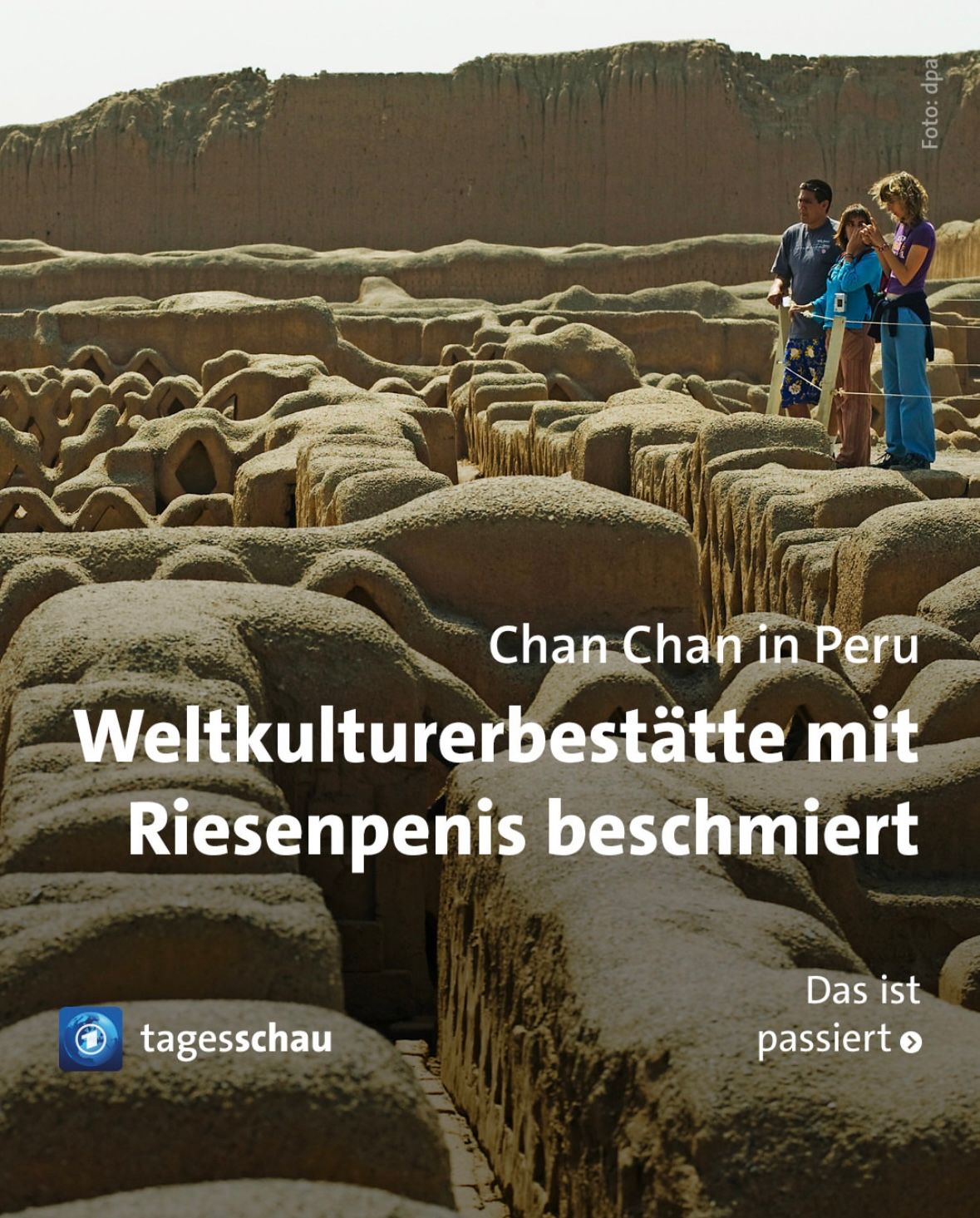
Of course, Chan Chan eventually fell into the crosshairs of the Incas. After their initial military failure, they diverted the Rio Moche, the water source of the city, in 1470, and were able to conquer it due to the water shortage. Subsequently, the city lost significance but was not destroyed by the Incas. This changed with the arrival of the Spaniards, who plundered the treasures of the Chimu and left little of the city intact. The rest is similarly affected by the weather, particularly the strong El Niño rains. Again, attempts are made at some locations to preserve/reconstruct the buildings, but most of the city is disappearing more and more. In some areas, people have even begun to settle again. It’s a bit painful to see.
We found the sites incredibly fascinating and can only recommend visiting before the giant sandcastles completely disappear. As for the culinary part, we are rather reserved.