
Colca Canyon
From Arequipa, we set off to the Colca Canyon, located about 160 km away, which, with a depth of 1000 to 2000 m, is one of the deepest canyons in the world.After a lengthy...

Published: 07.05.2025
Holy Saint Florian, please set my little house on fire! Then I'll buy myself a ship, hooray, and sail to Lake Titicaca!
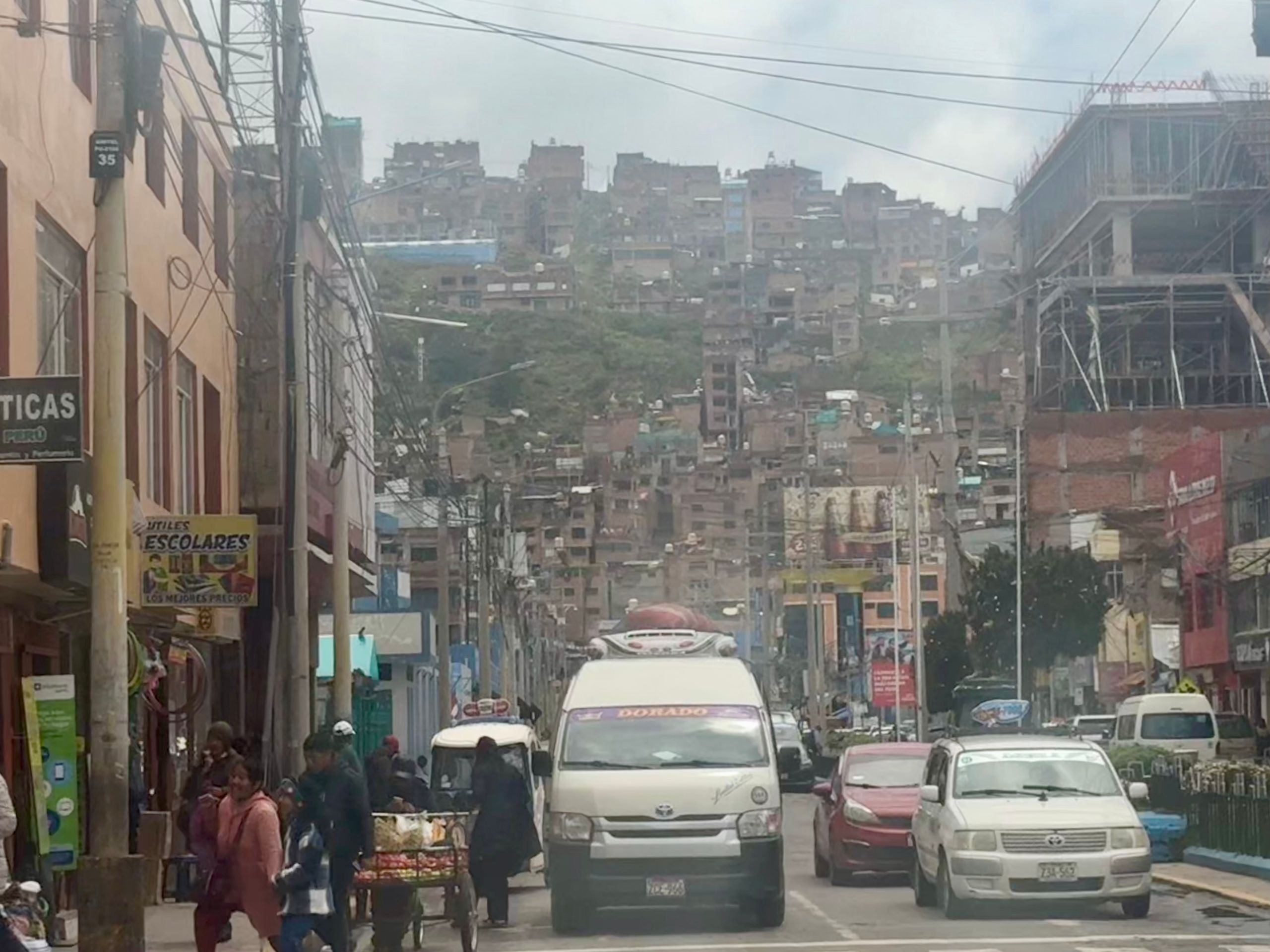
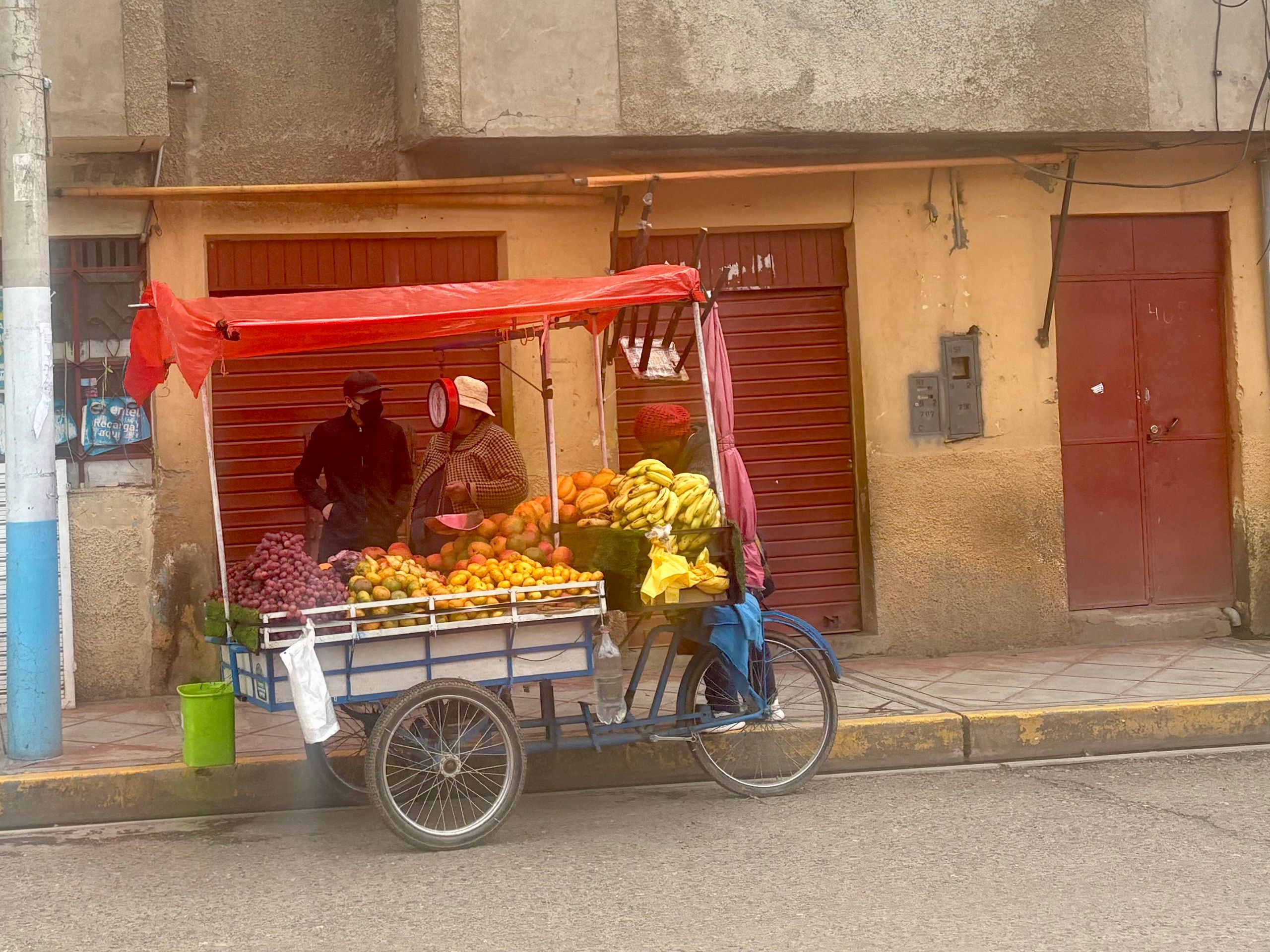
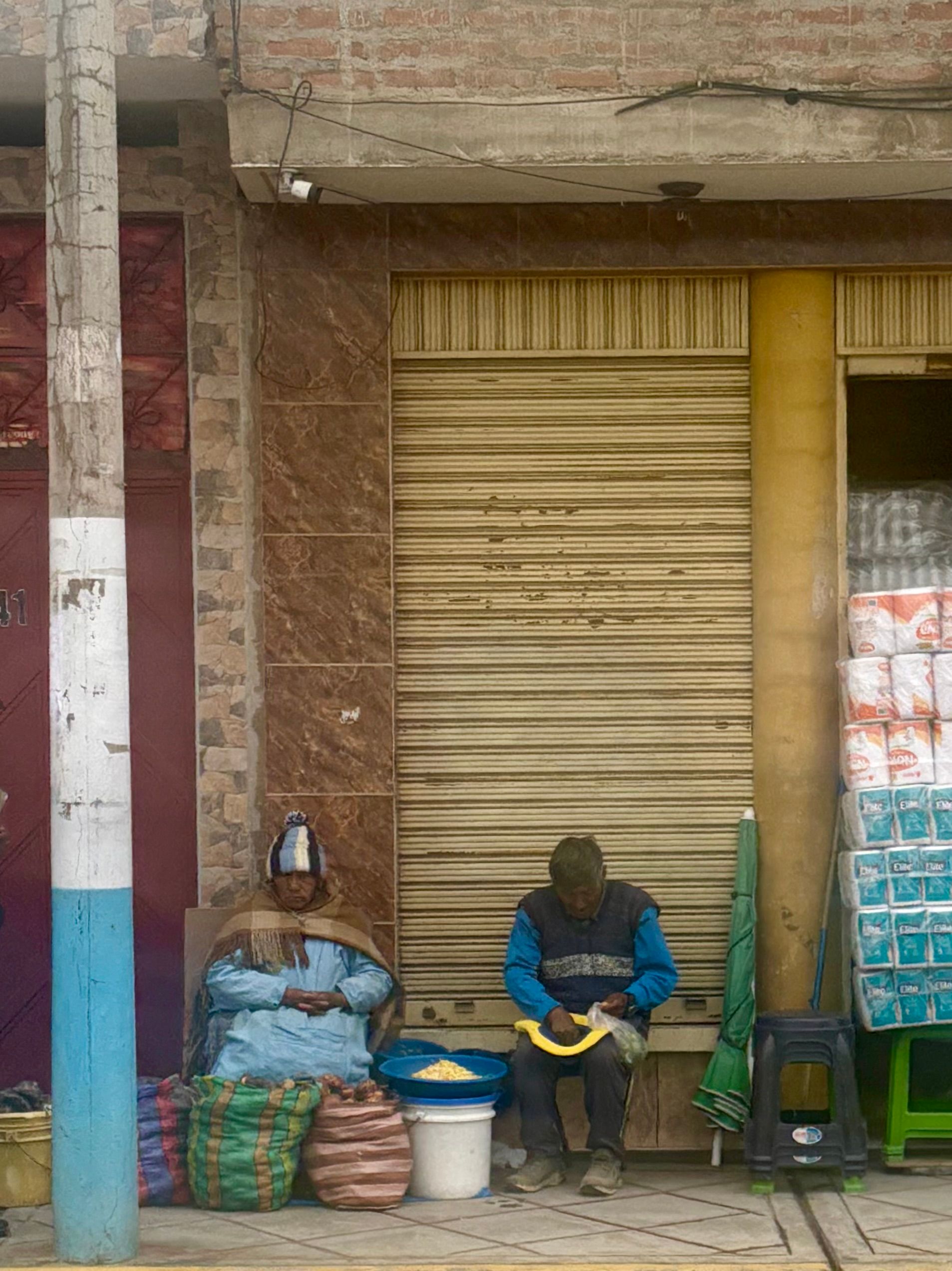
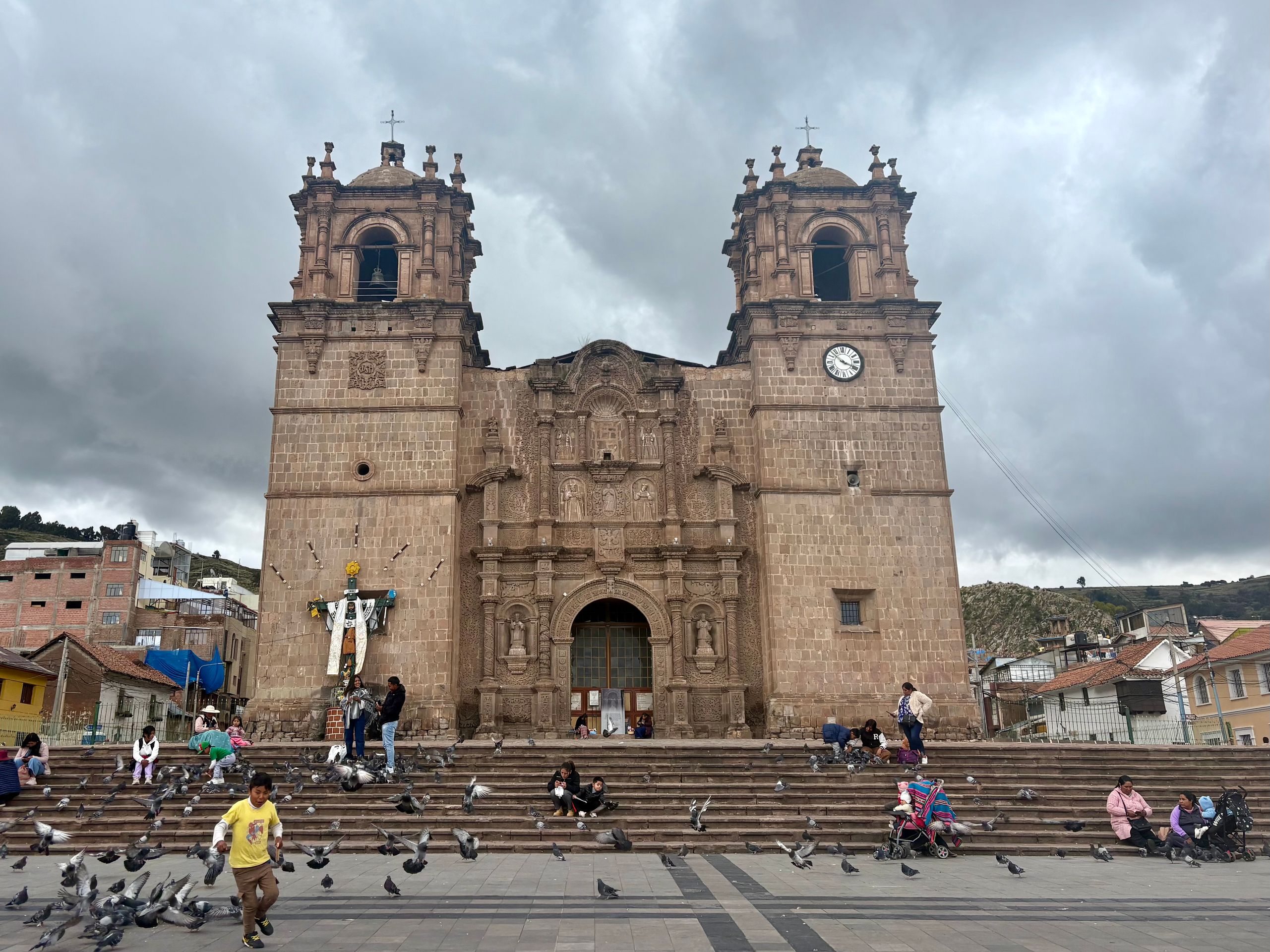
The journey to Puno was quite intense. Tired from the Colca Canyon, with uncomfortable seats, annoying fellow travelers, bad weather, and cold. During the ride, Marike's rain jacket was stolen, and fittingly, we were dumped in the dark amidst pouring rain somewhere in the congested city.
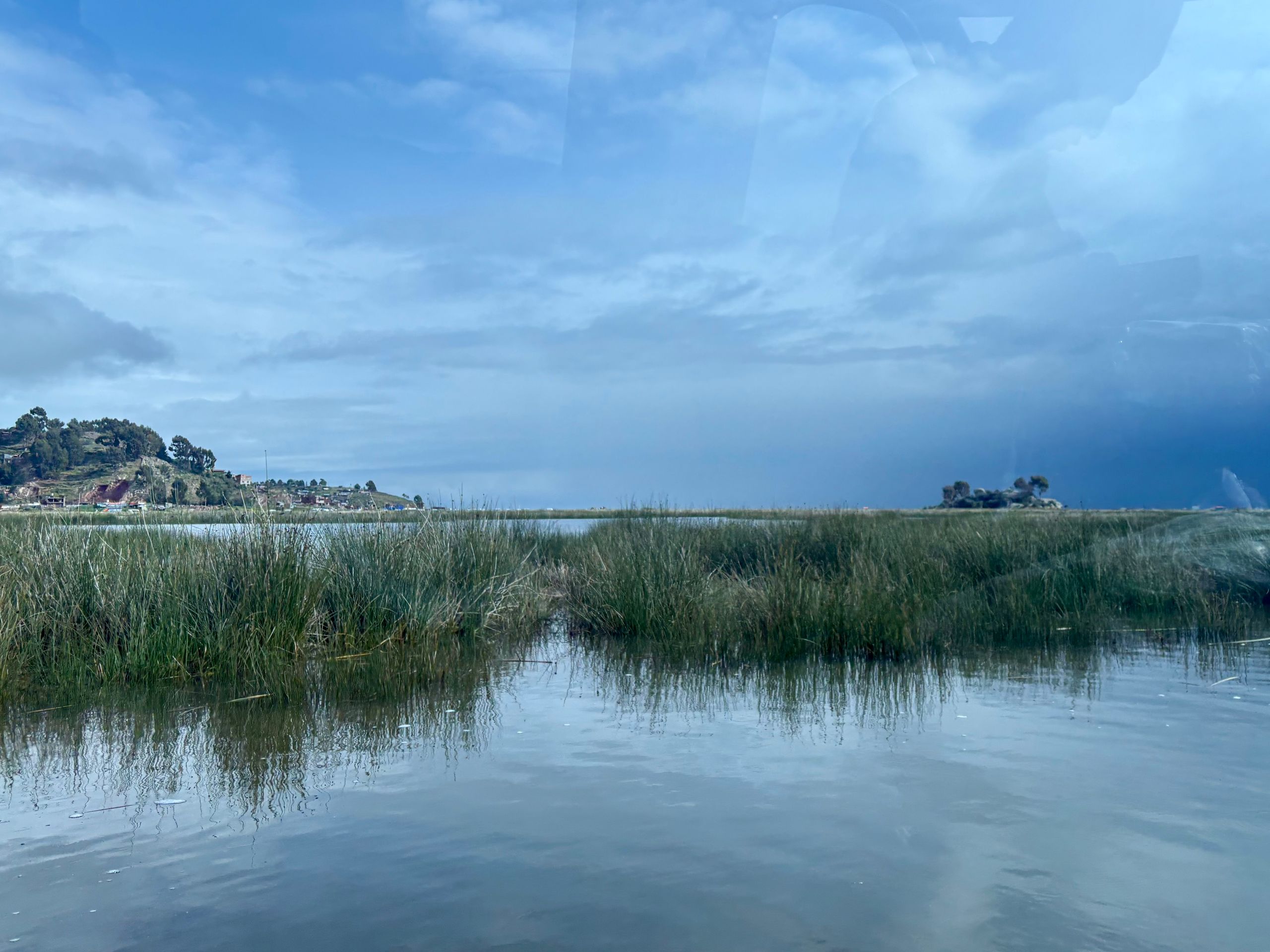
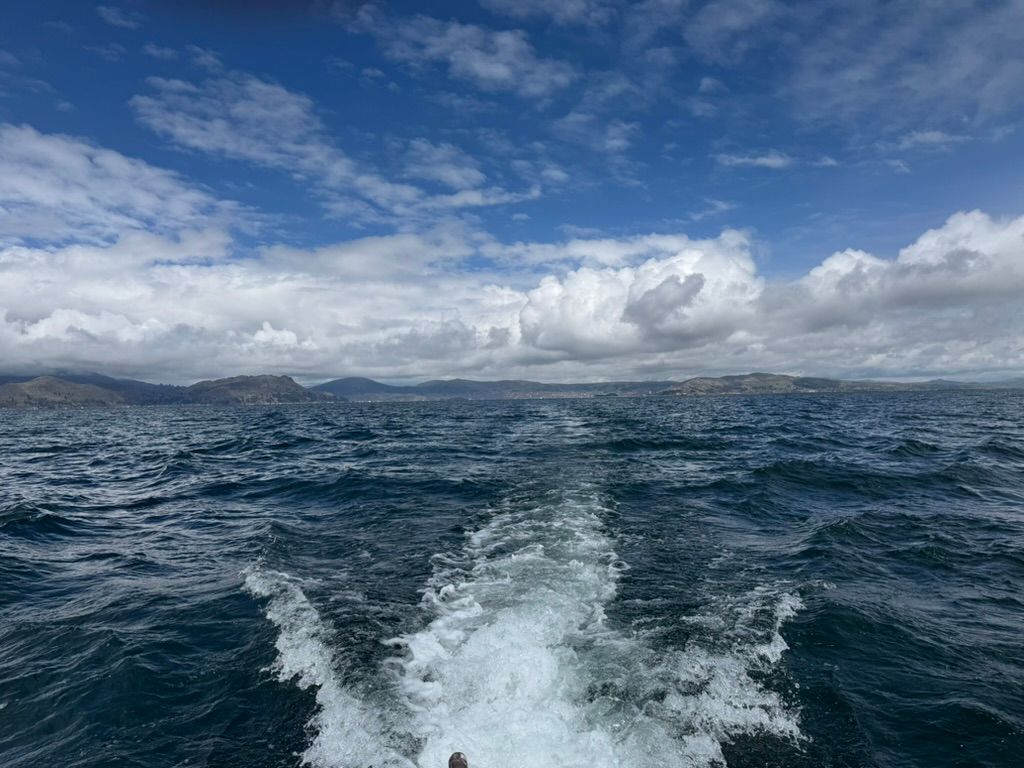
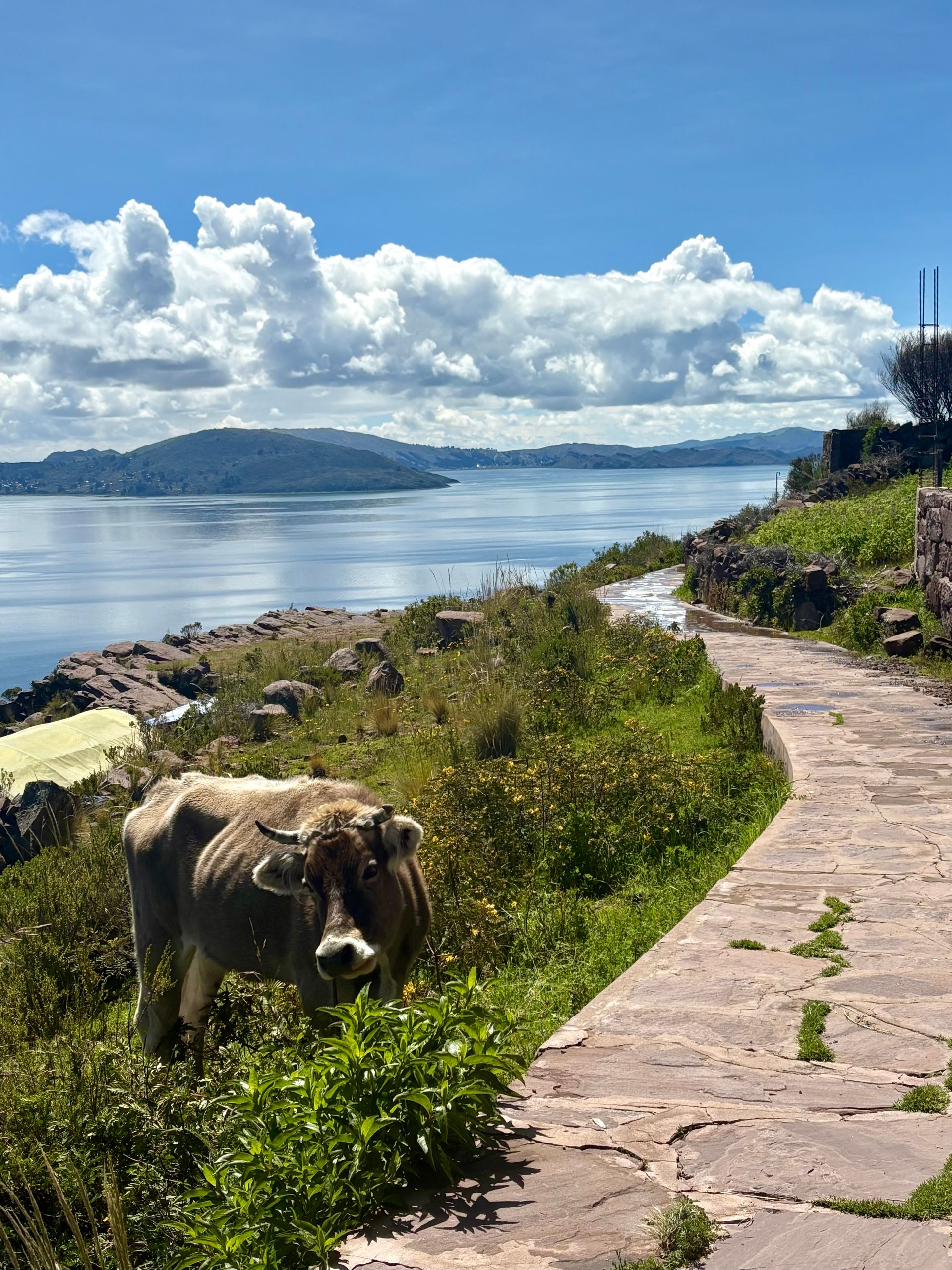
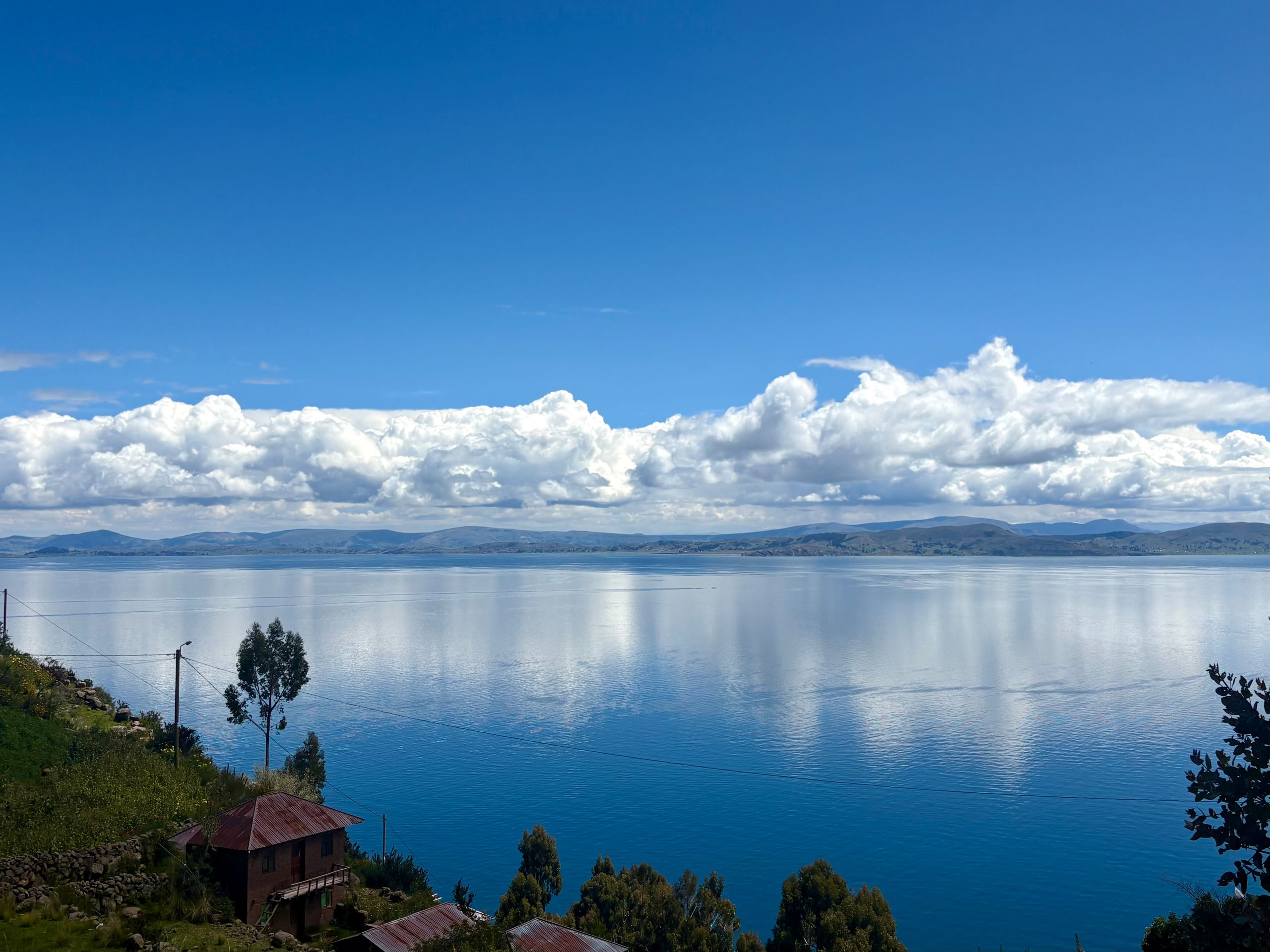
The city itself didn't impress us either on the first impression or the second, had it not been for its location by Lake Titicaca! Partly belonging to Peru and partly to Bolivia, it lies at an altitude of 3812m in the Andes and is considered the birthplace of Inca culture. Its surface appeared extremely calm and sparkled with strong reflections. It is one of the largest lakes in South America and the highest navigable waterway in the world.
Fortunately, rain was followed by sunshine, and so we booked a day trip at the harbor to the floating islands of the Uros and the actual island of Taquile, which is inhabited by the Quechua-speaking Taquilenos. Our boat was in a miserable state, and it was a miracle that it still floated. The wild-looking captain had a good grip on the boat, which must have been challenging to handle (no reverse gear, constant adjustments needed), and skillfully navigated us through all the adversities.
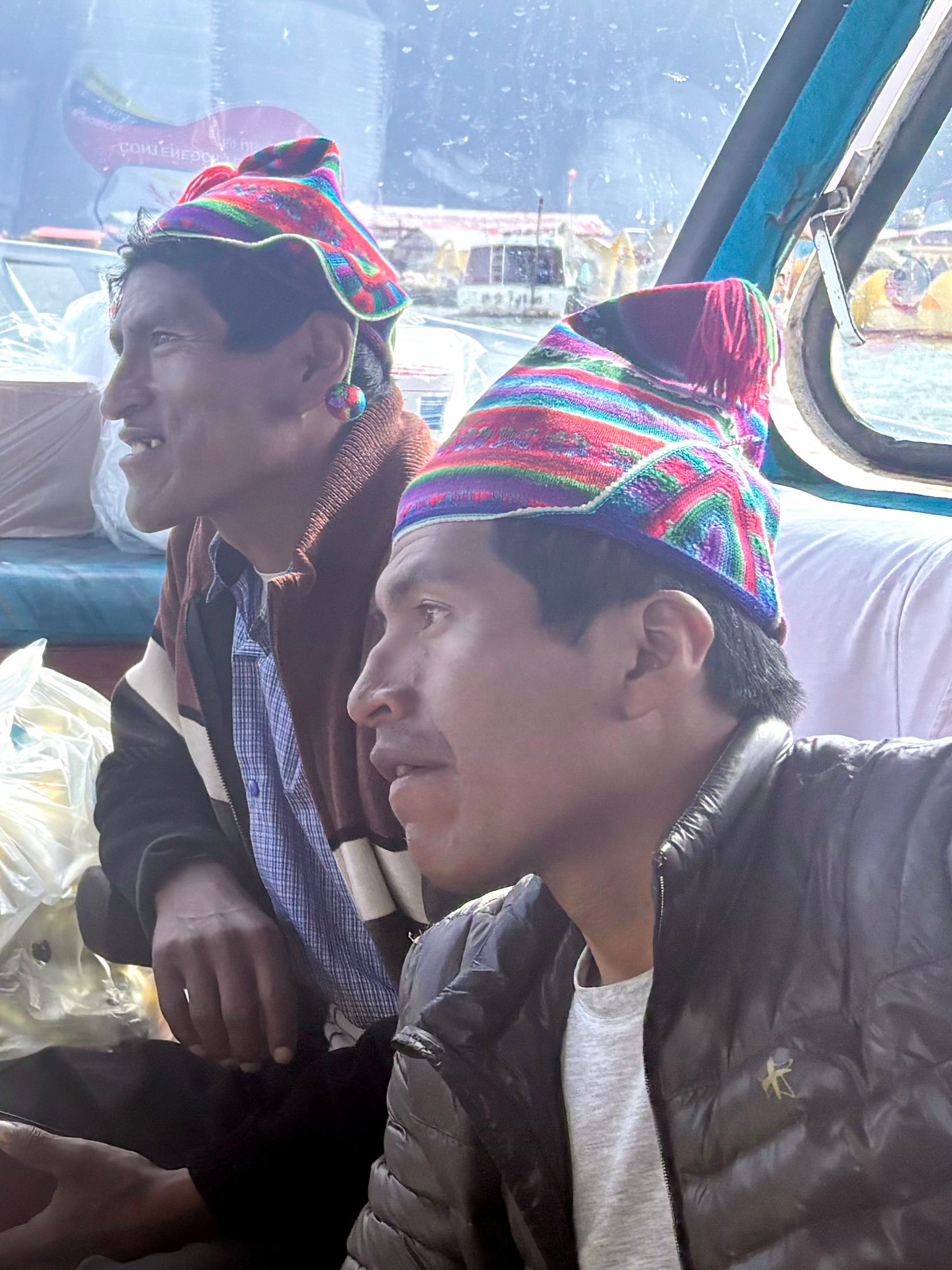
Alongside a handful of tourists, mostly locals joined, who stoically endured the extra program on the Uros islands, resulting in significant delays before reaching their actual destination, Taquile Island.
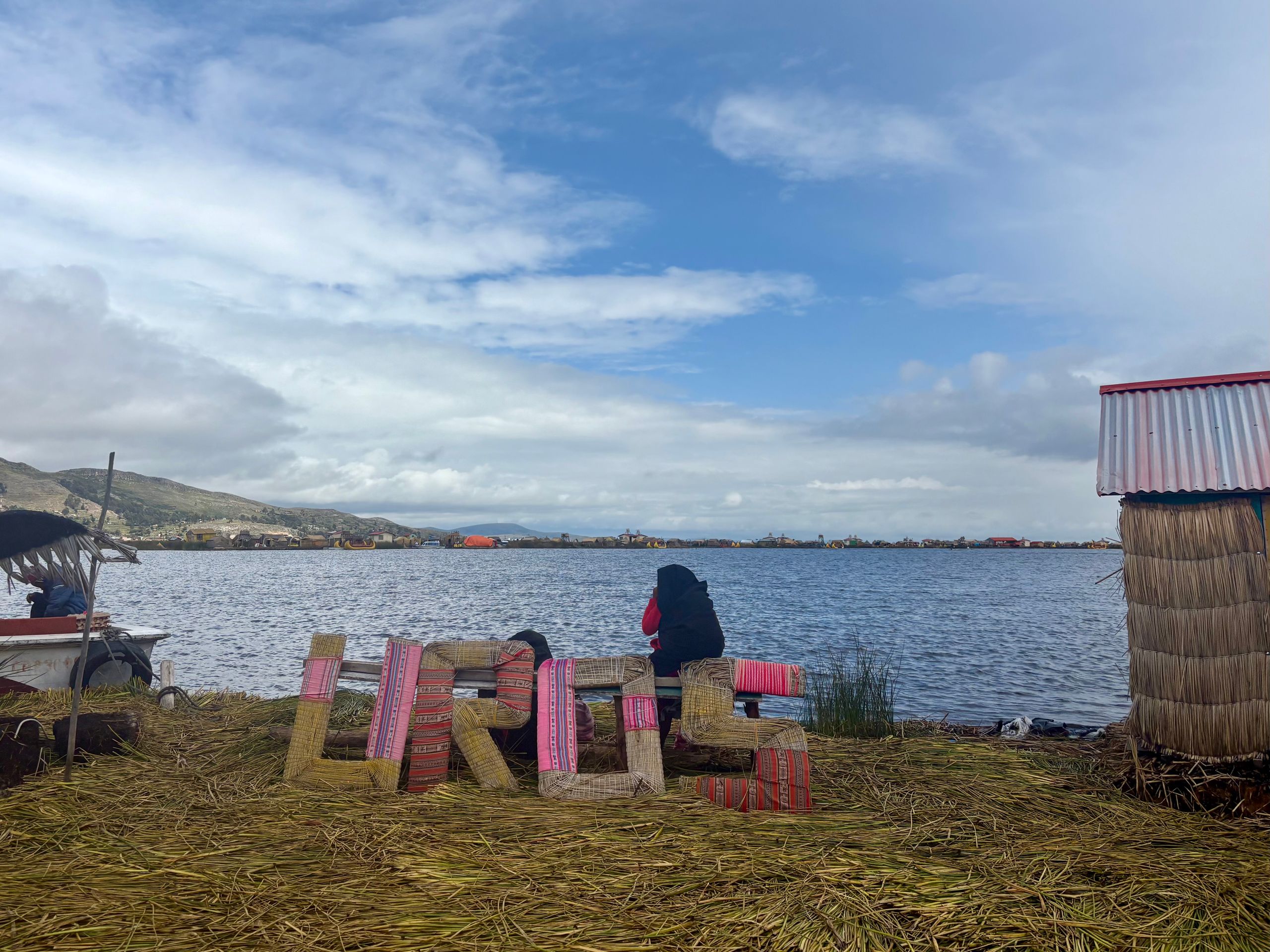
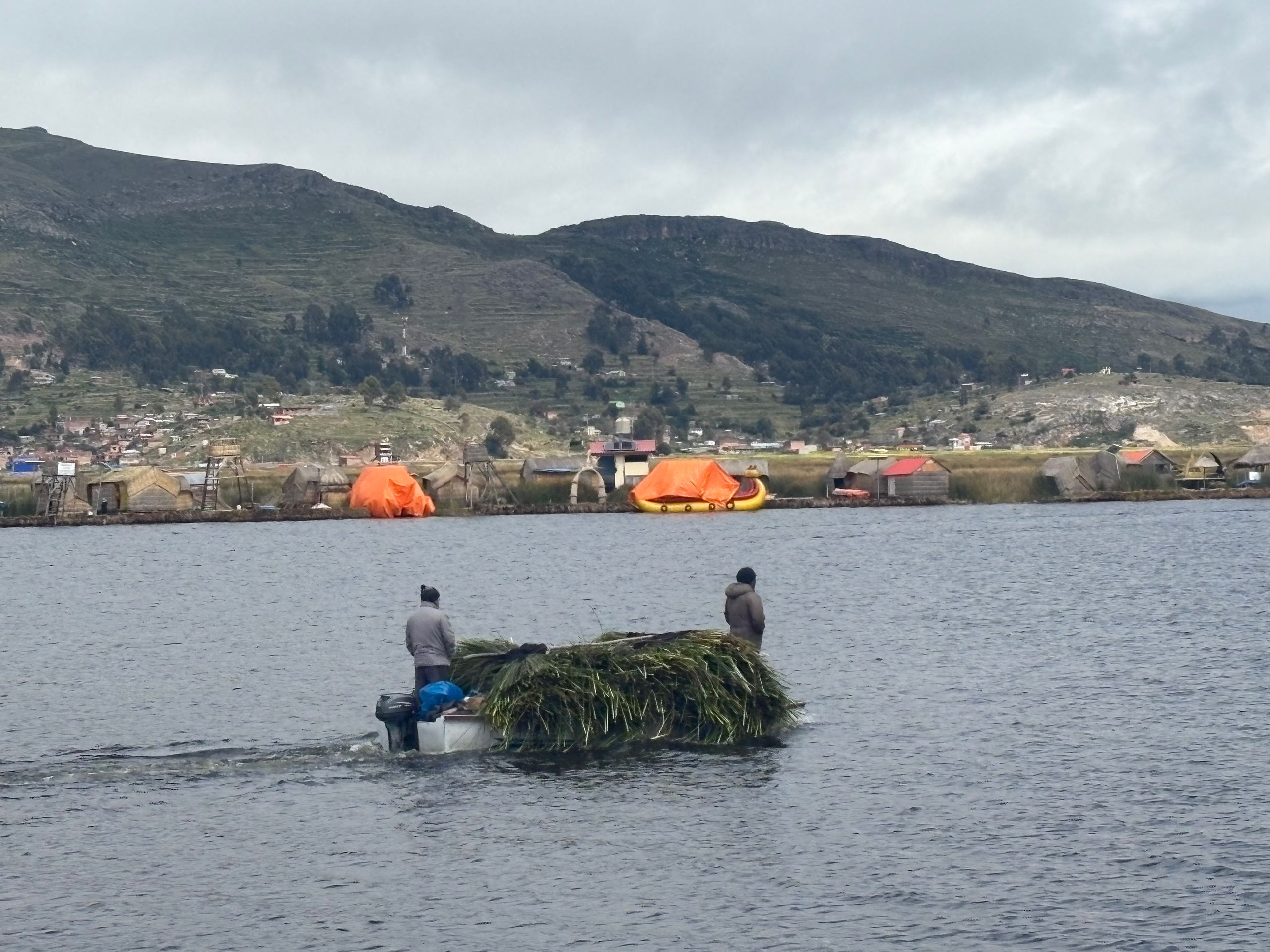
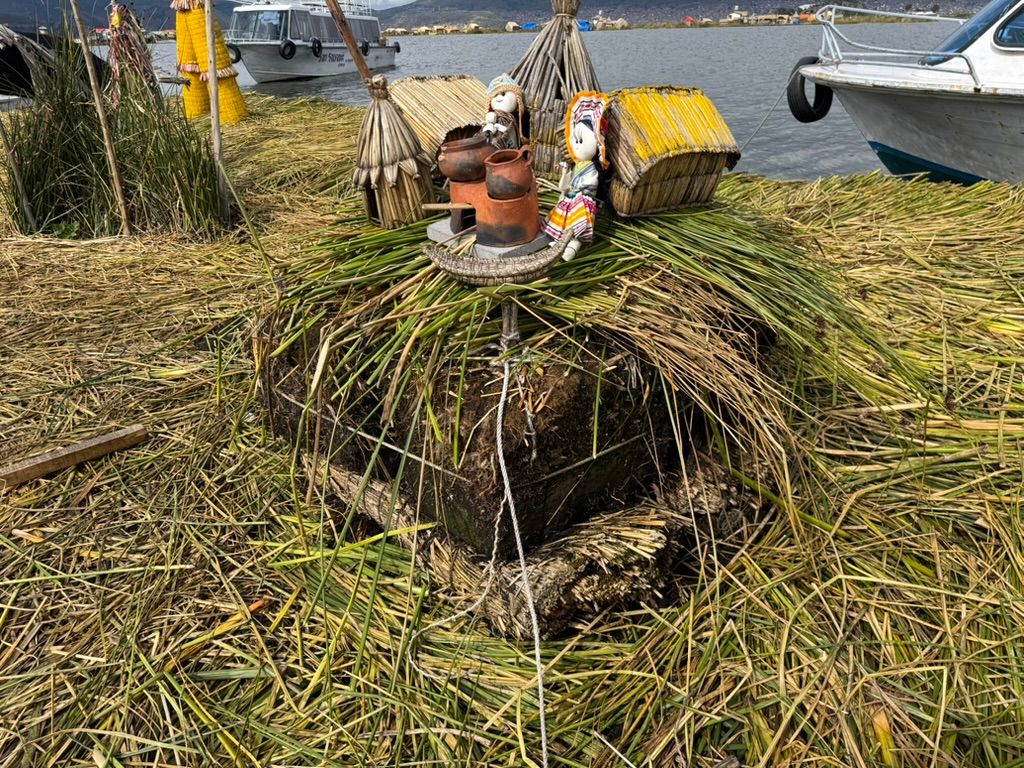
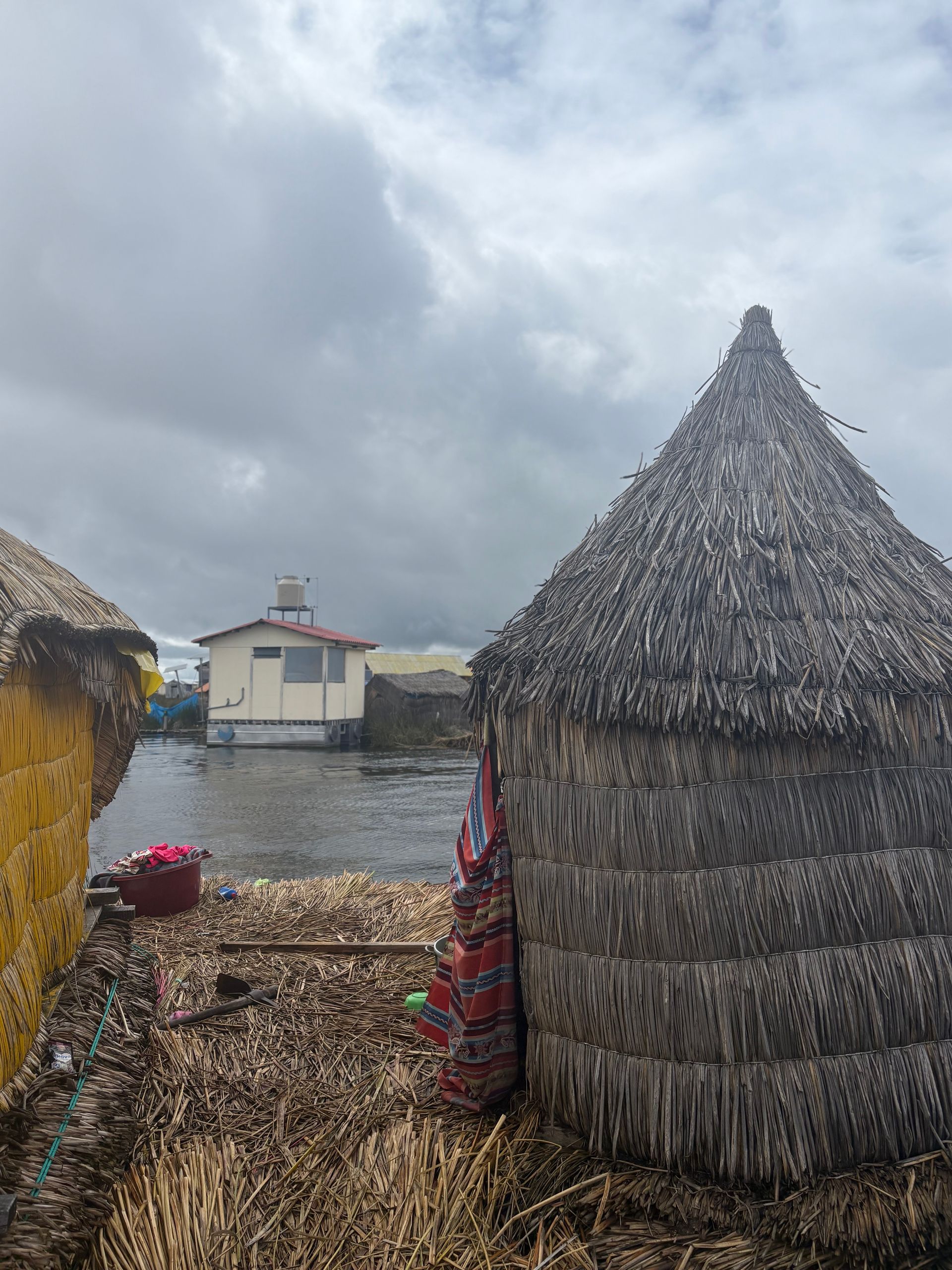
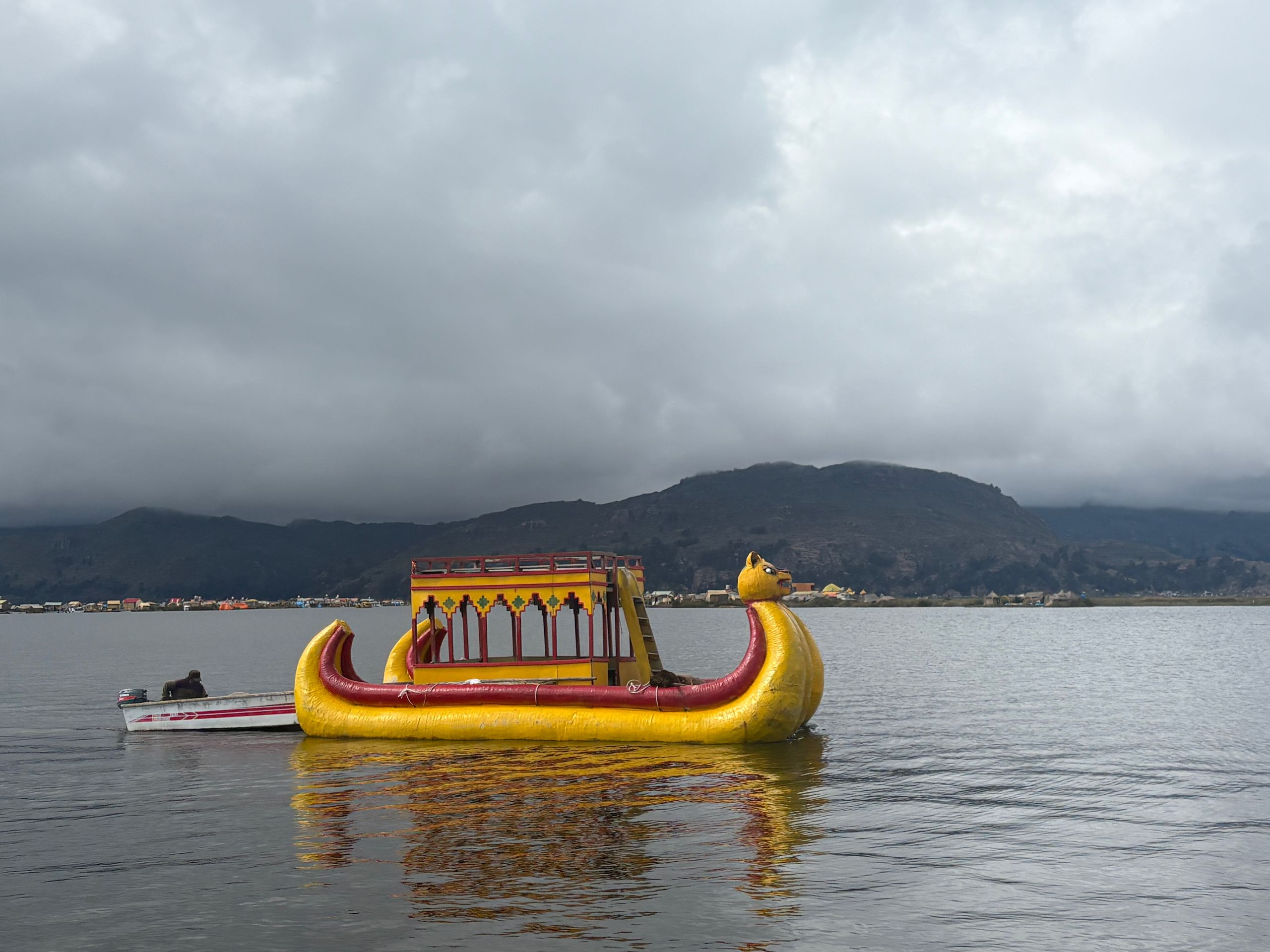
The Uros are a small indigenous group that still partially lives on floating artificial islands on the lake. These island settlements were originally meant for defense, as they could be relocated in case of threat. The islands are made from totora reeds and consist of several layers: the foundation is made of bundled reed roots, on which several layers of cut reeds are added. The islands are drilled through and anchored with eucalyptus poles. The reed layers need constant renewal. According to the leader on the main island, who explained these details to us, an island has a maximum lifespan of 30 years, even with constant care and maintenance. The islands are not particularly beautiful; it's damp and musty, and there isn't a solid ground beneath your feet, but it is remarkable that a handful of Uros keeps this tradition alive.
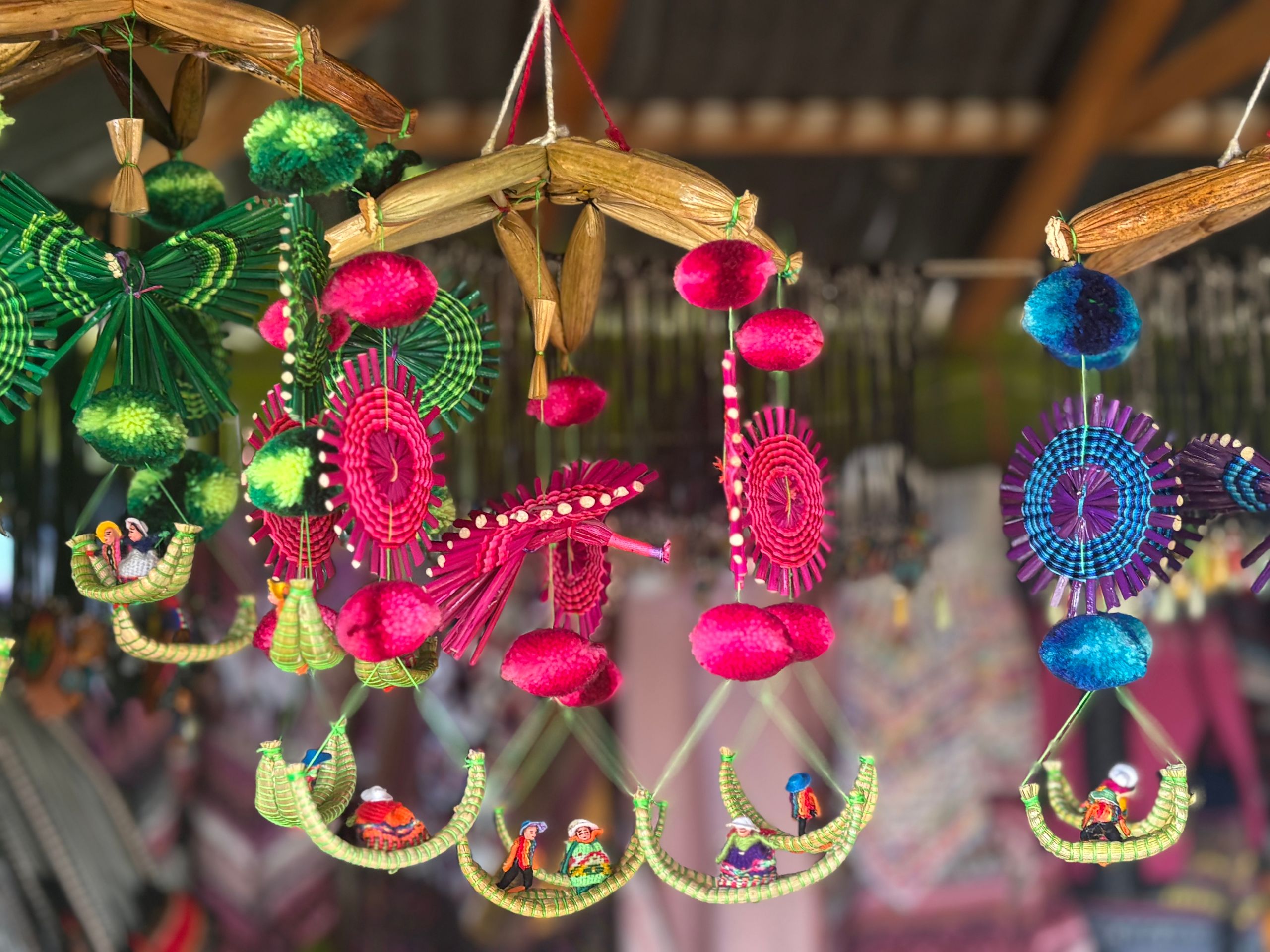
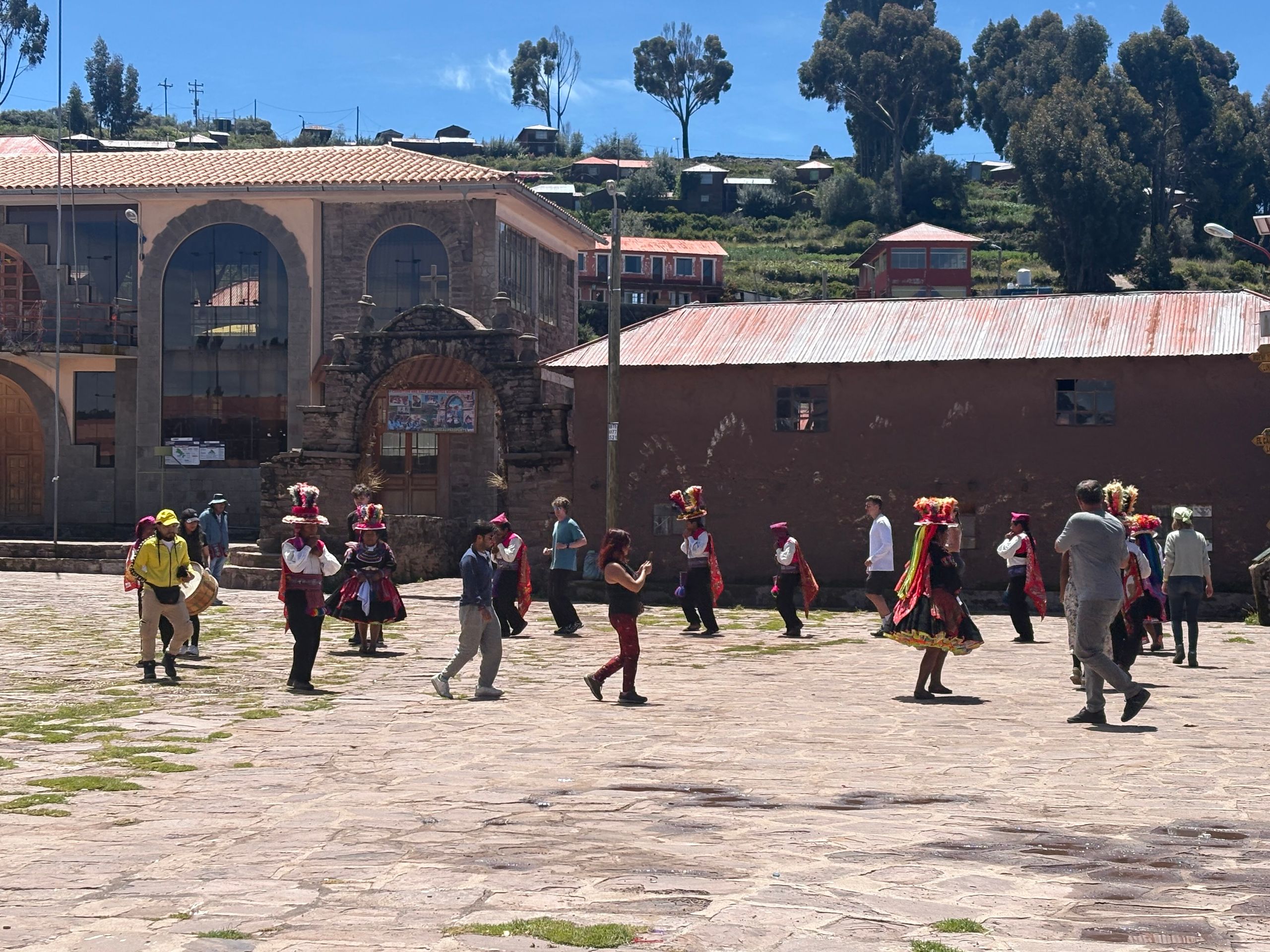
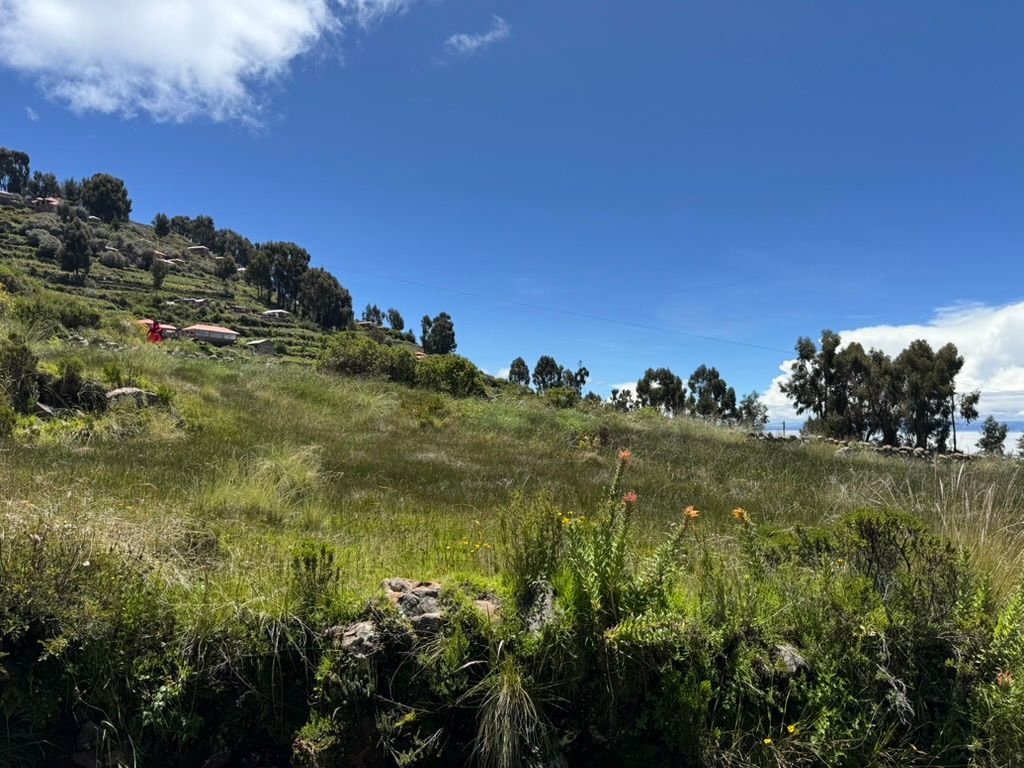
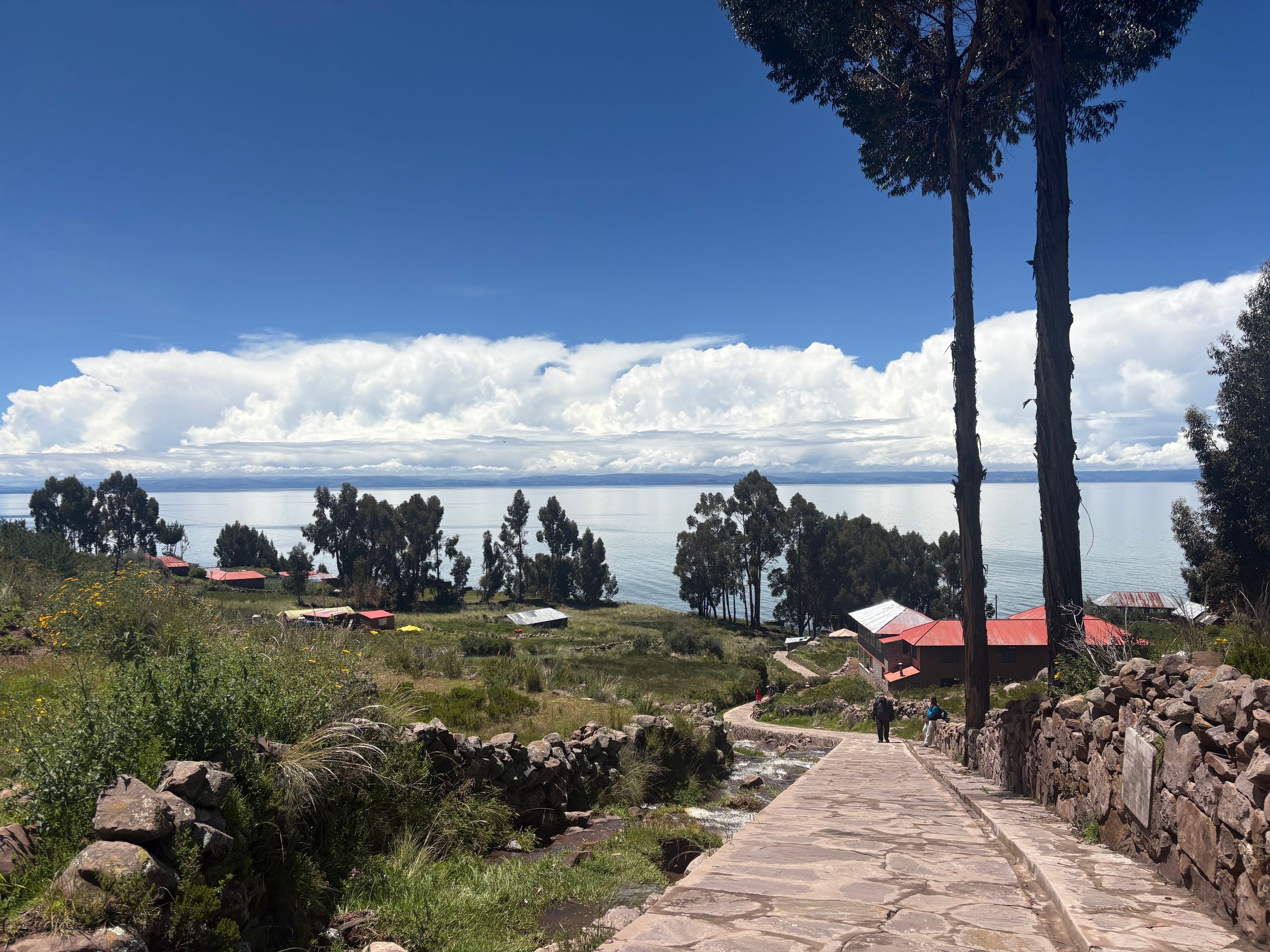
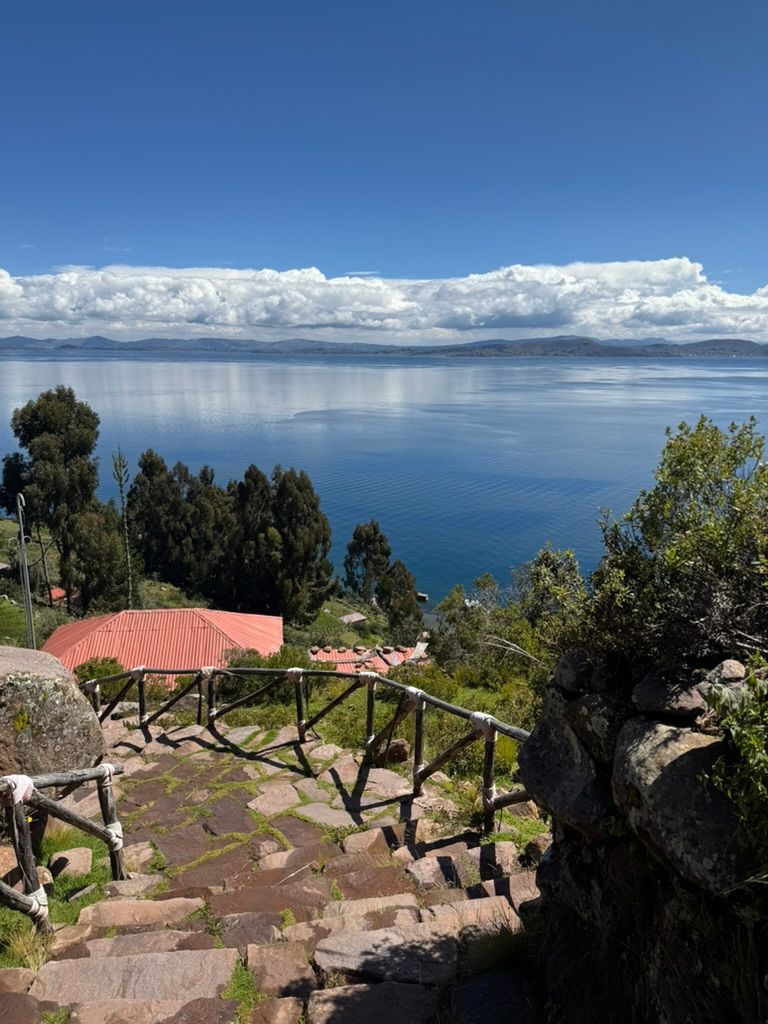
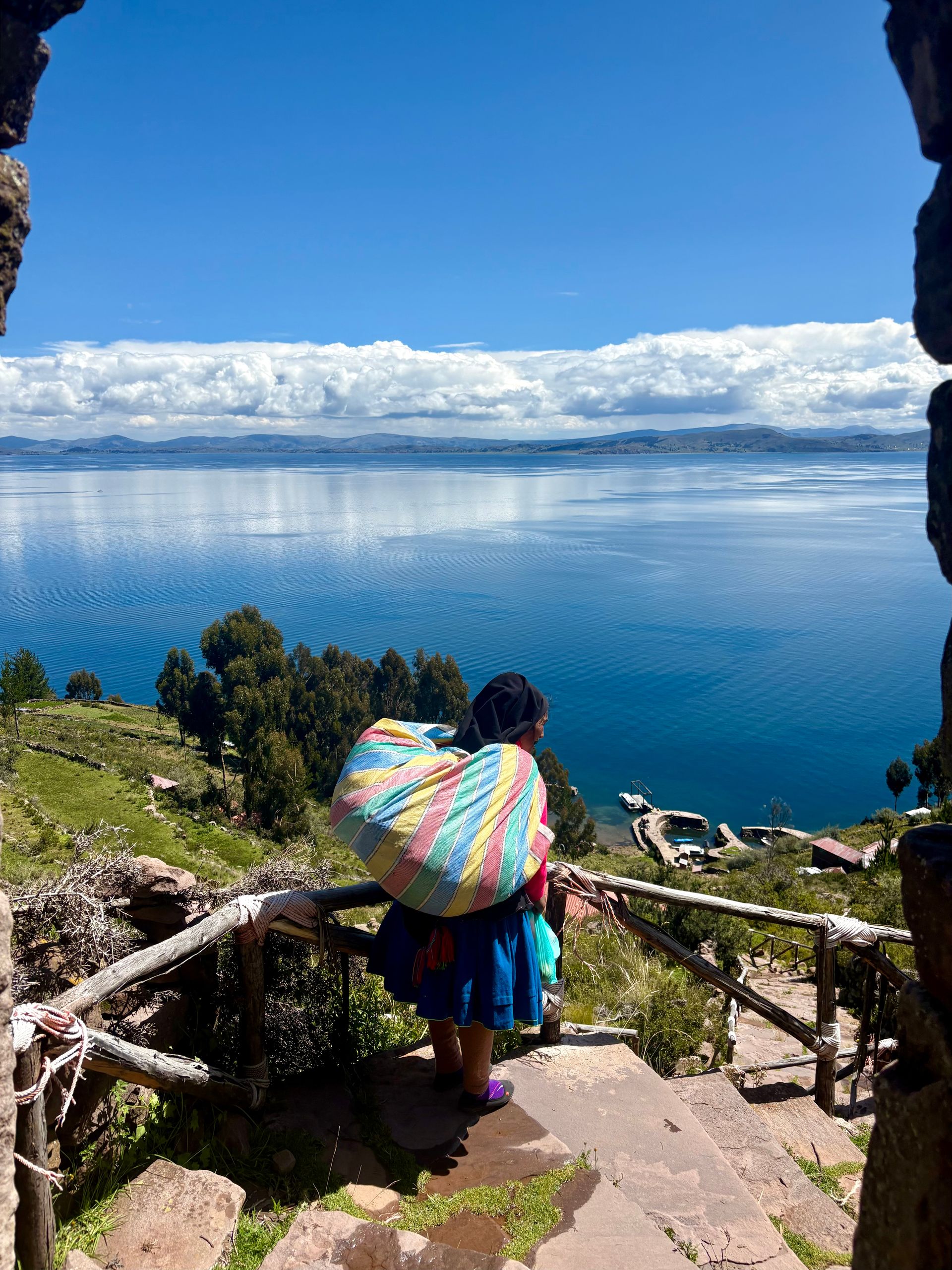
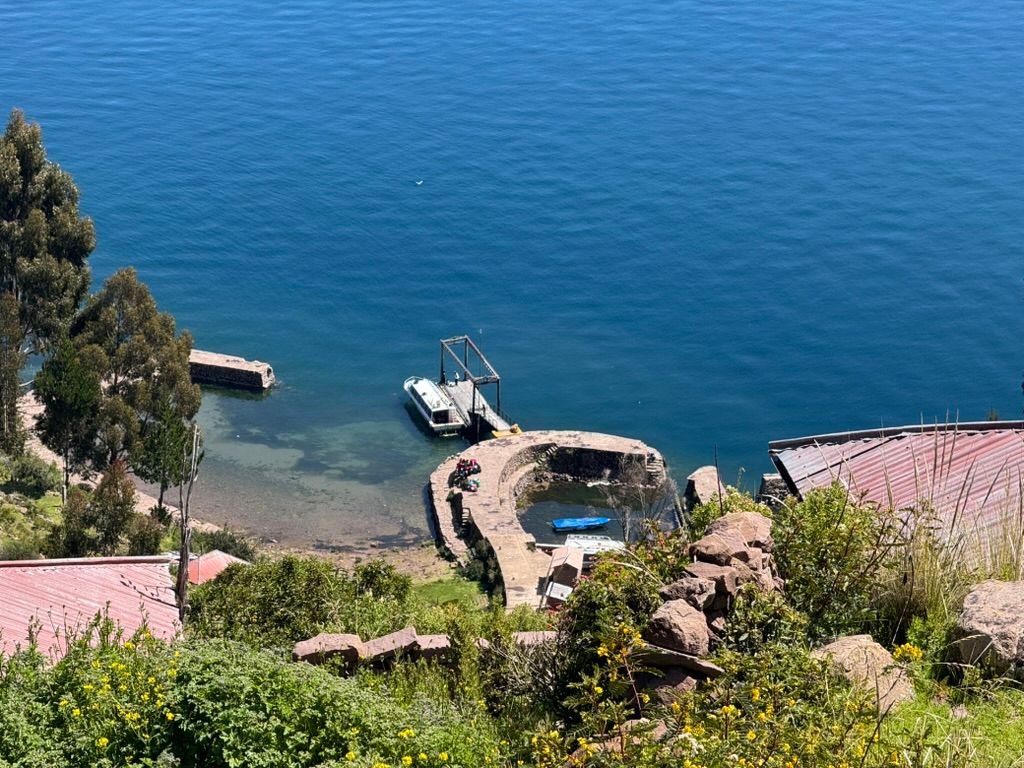
Then we continued in radiant sunshine to the 'real' island of Taquile. It was quite tiring here as one had to overcome some altitude while walking across the island, and despite acclimatization, we sometimes ran out of breath. The landscape was magnificent and occasionally reminded us of Tuscany, and there was a special atmosphere on the island. All the locals wore (whether just for the benefit of the few tourists, we don't know) colorful traditional clothing, and in fact, the island is famous for its weaving and embroidery, which is mainly done by men.
On the opposite side of the island, we then headed back to Puno in a completely overloaded boat, we in the 'good seats' in the boat, a bunch of locals crammed and stacked in the back part of the boat.