Farewell from Kona! We leave the west coast and head to one of the island's most extraordinary places: Papakōlea Beach, better known as Green Sand Beach.
After the drive, we first enjoy a casual lunch at the parking lot. Then we pack our backpacks. Ahead of us is a roughly 4-kilometer hike along the windy, rugged coast.
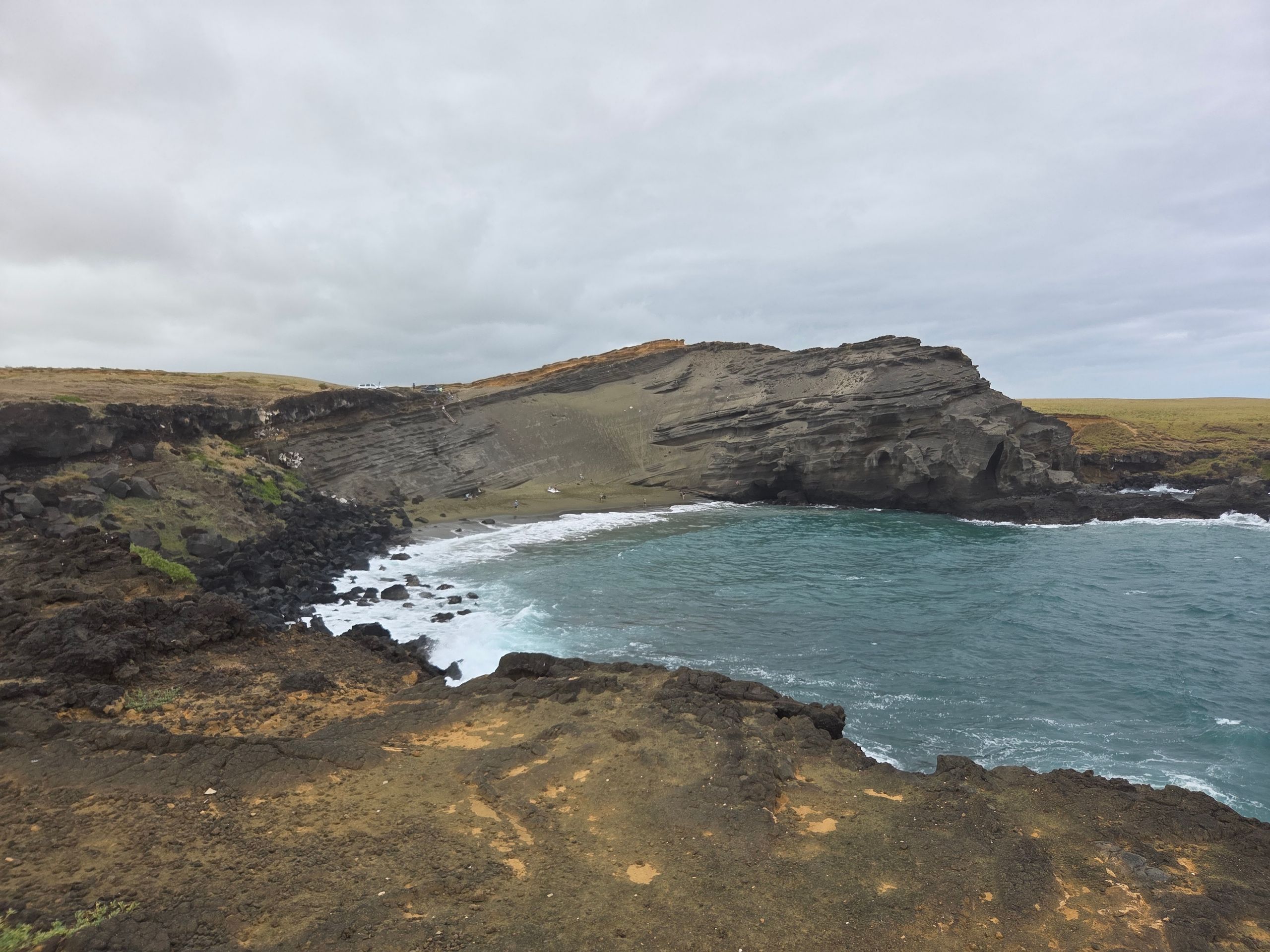
Green Sand Beach owes its olive-green color to a specific mineral: olivine. The beach is located in a cove that is a collapsed part of an approximately 49,000-year-old volcanic cone (Puʻu Mahana). The waves erode the volcanic ash of the cone and wash it away. Since olivine crystals are heavier than the remaining volcanic particles, they remain on the beach while the lighter dark sand is washed into the sea. As no new supply of olivine is coming in, this green sand will eventually be completely washed away in the distant future.
By the way, there are only four green sand beaches in the world. If you want to experience this phenomenon in other places on earth, you have to travel here:
• Talofofo Beach in Guam
• Punta Cormorant on Floreana Island (Galapagos Islands)
• Hornindalsvatnet in
Norway (a lakeshore)
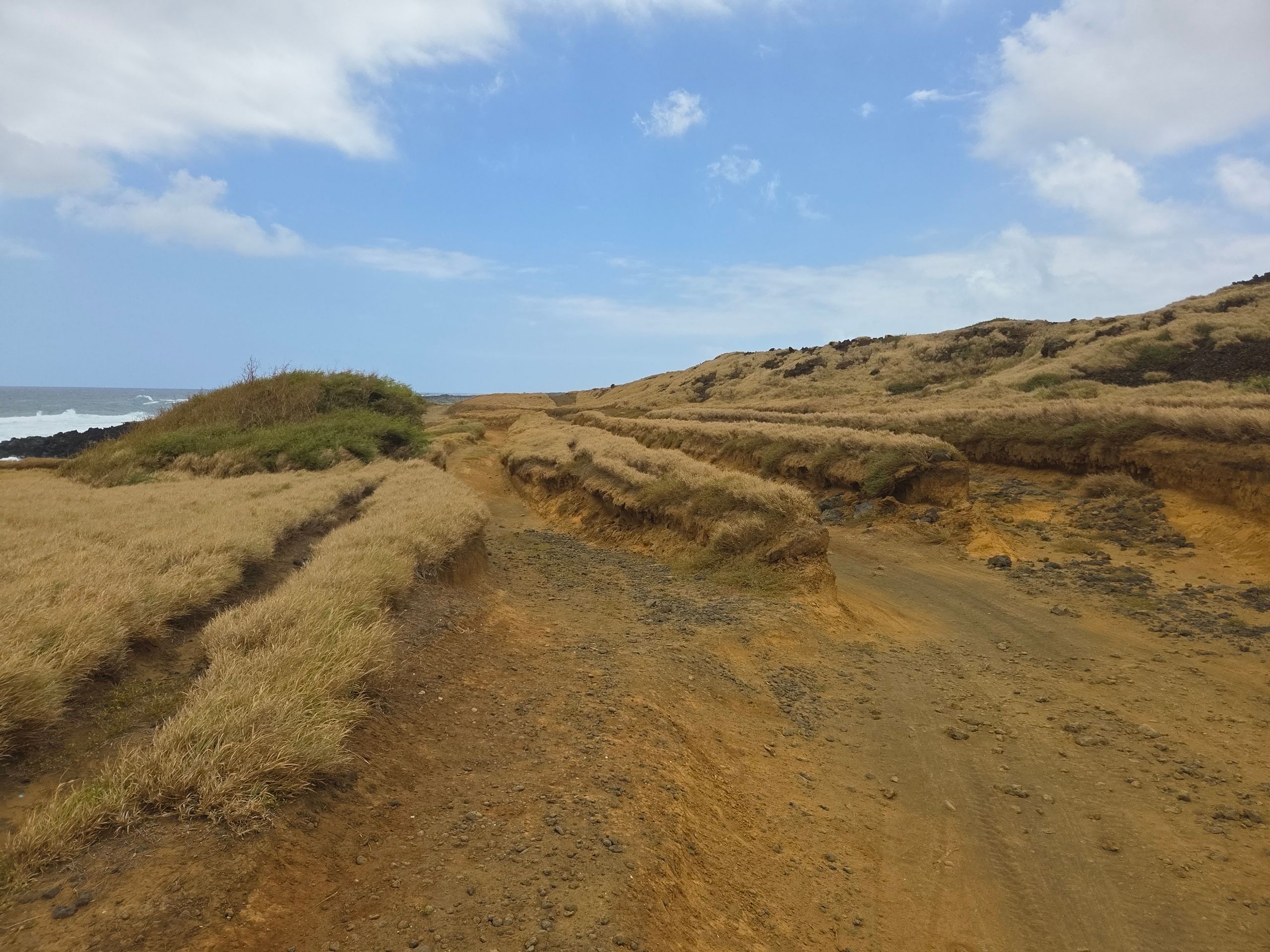
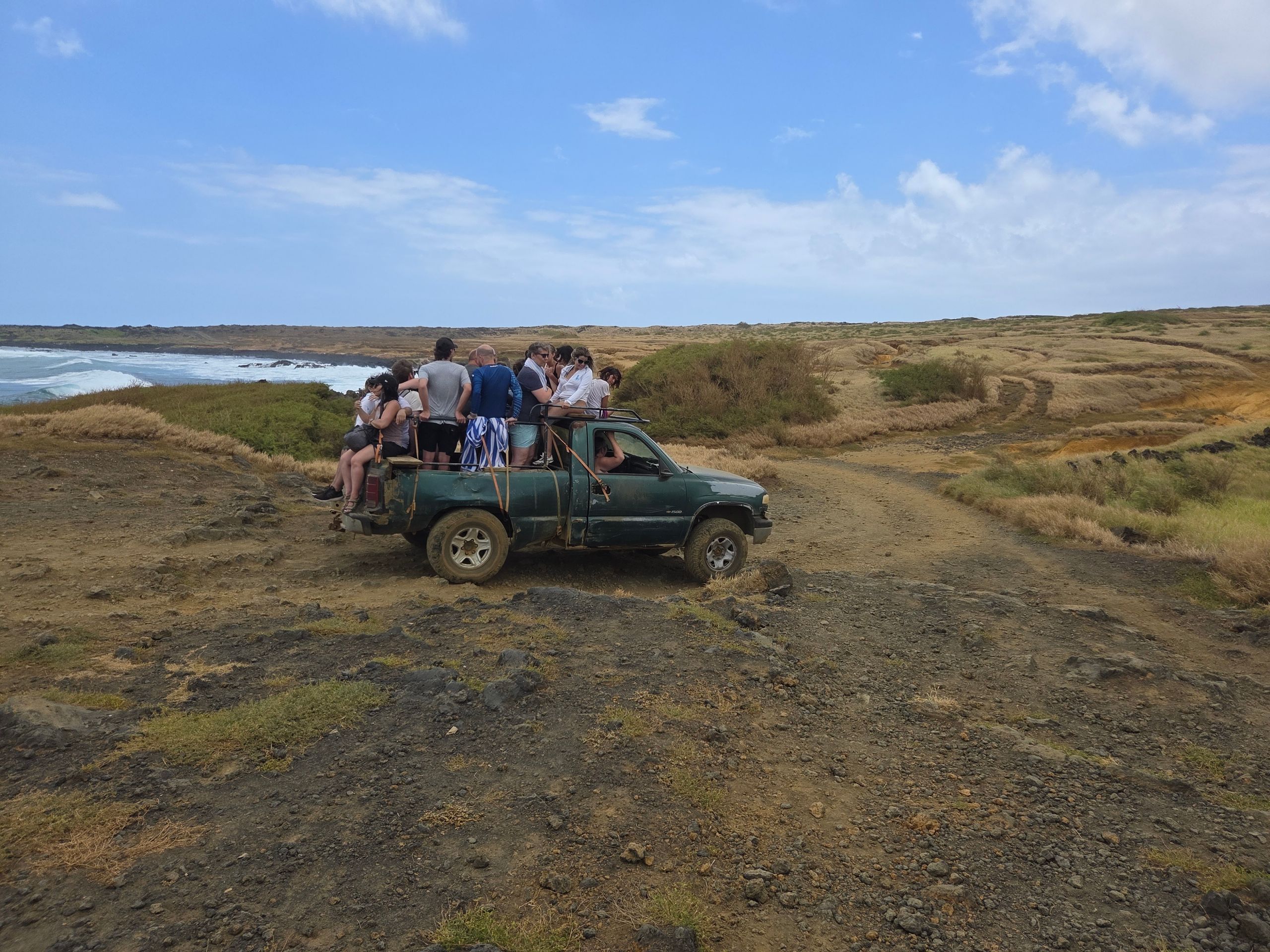
At the starting point of the hike, it immediately stands out: Many tourists choose to travel with local pickup trucks. Locals offer to drive visitors over the extremely worn path for a fee.
However, this isn't an option for us. The “road” consists of deep ruts, dust, and bare rock. Passengers are transported standing in the open beds and are jostled around. This is definitely too adventurous for us and simply too unsafe. The 4-kilometer hike through the sparse, wind-swept landscape is indeed strenuous but beautiful and is essential to our experience.
After the trek, we reach the cliff and look down into the green cove. The descent over the steep path requires some concentration, but once we reach the bottom, the reward awaits. While we dig our feet into the unique sand, the boys dive straight into the waves. After the hot march, swimming in the Pacific is the perfect refreshment. With great photos and a lot of dust on our faces, we finally make our way back.
At 4 PM, we reach our car again. The journey immediately continues to the infamous South Point (Ka Lae), the officially southernmost point of the USA. The rugged cliffs and the endless expanse of the Pacific down here are absolutely impressive.
The next stop takes us to a true institution: Punaluʻu Bake Shop in Naalehu. This is the southernmost bakery in the USA. Here, we stock up on the famous Hawaiian Sweetbread Rolls. We decide on the flavors guava and apple. The rolls are incredibly fluffy, soft, and taste basically like classic milk rolls – just with a delightful fruity filling.
With the sweet provisions in our bags, we sit back in the car and head to the next highlight: the famous, deep black Punaluʻu Black Sand Beach.
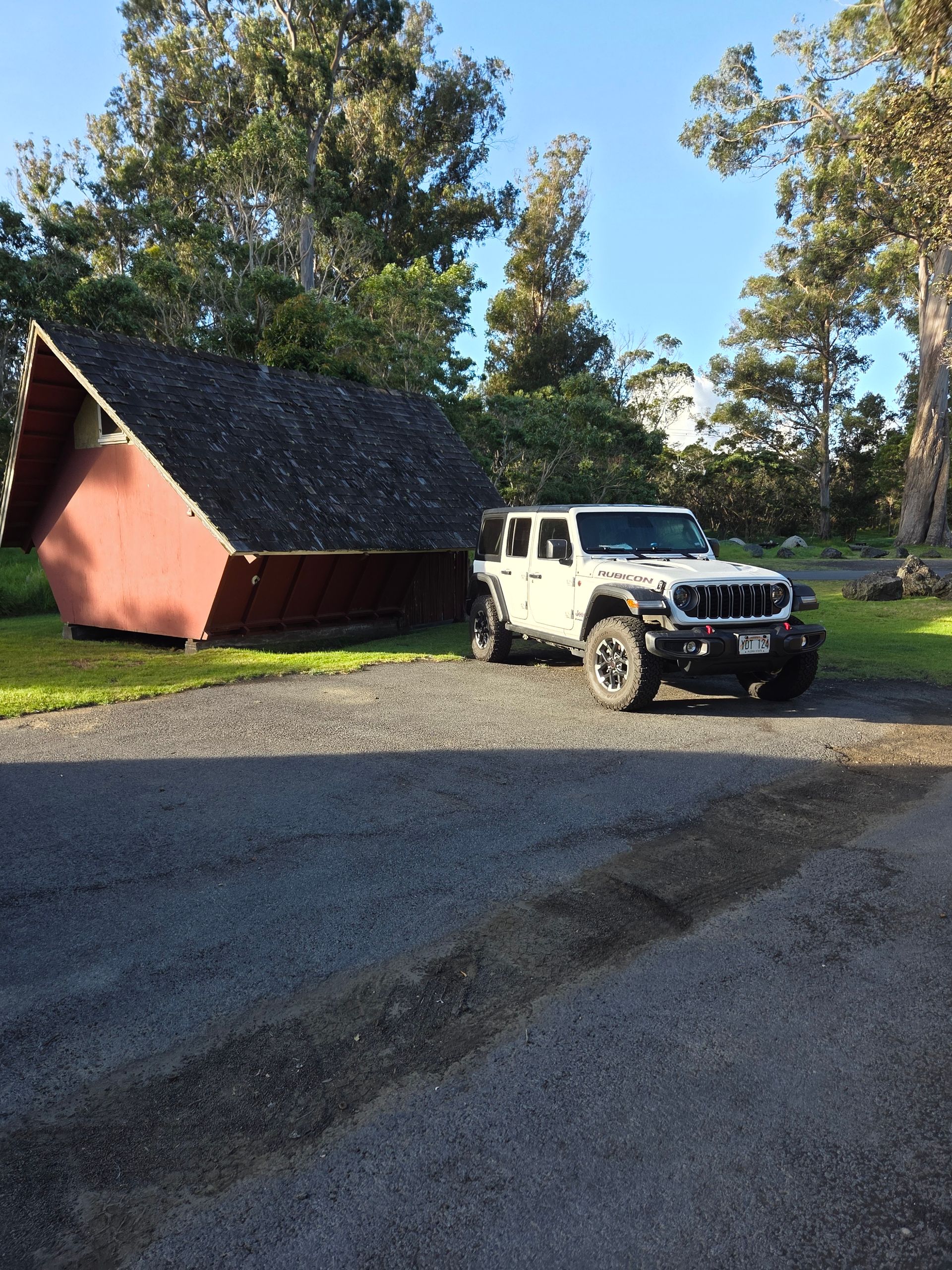
Now I also dare to take the wheel of our Jeep. I hesitate for a long time, but it's not that hard, and I quickly get used to it.
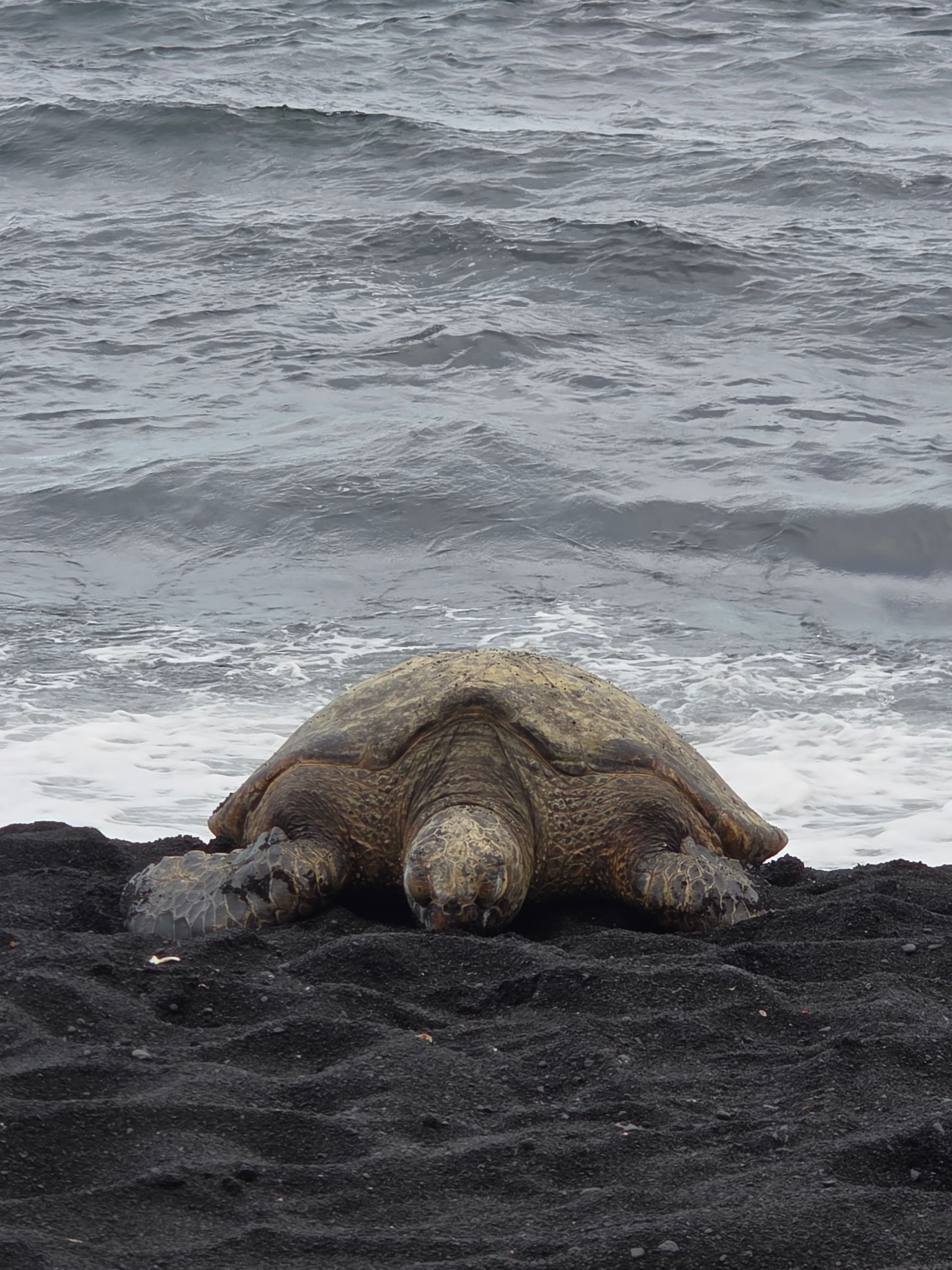
Upon arriving at the beach, we take a brief round. The contrast between the dark volcanic sand, the green palms, and the white waves is spectacular. However, the absolute highlight awaits right at the water's edge: we marvel again at the fascinating Hawaiian sea turtles (Honus), which relax in the sand here.
After this short but impressive stop, we set off again. We continue in the direction of Hawaiʻi Volcanoes National Park!
Upon arriving at the national park, we check into our accommodation for the night. We have rented a small cabin here. The accommodation is very sparsely furnished – just right for a real nature adventure amidst the volcanic landscape.
After the long and eventful road trip, we relax and let the evening wind down. We fire up the grill, prepare dinner, and light a warming campfire. In the midst of the idyllic setting, we sit together, play a round of cards, and reflect on the many impressions of the day.