
7 Days Singapore - Part 3
In the city center, we of course didn’t skip Little India and were amazed by the huge food court - there are countless stalls offering a wide variety of Indian dishes. We

Published: 24.07.2026
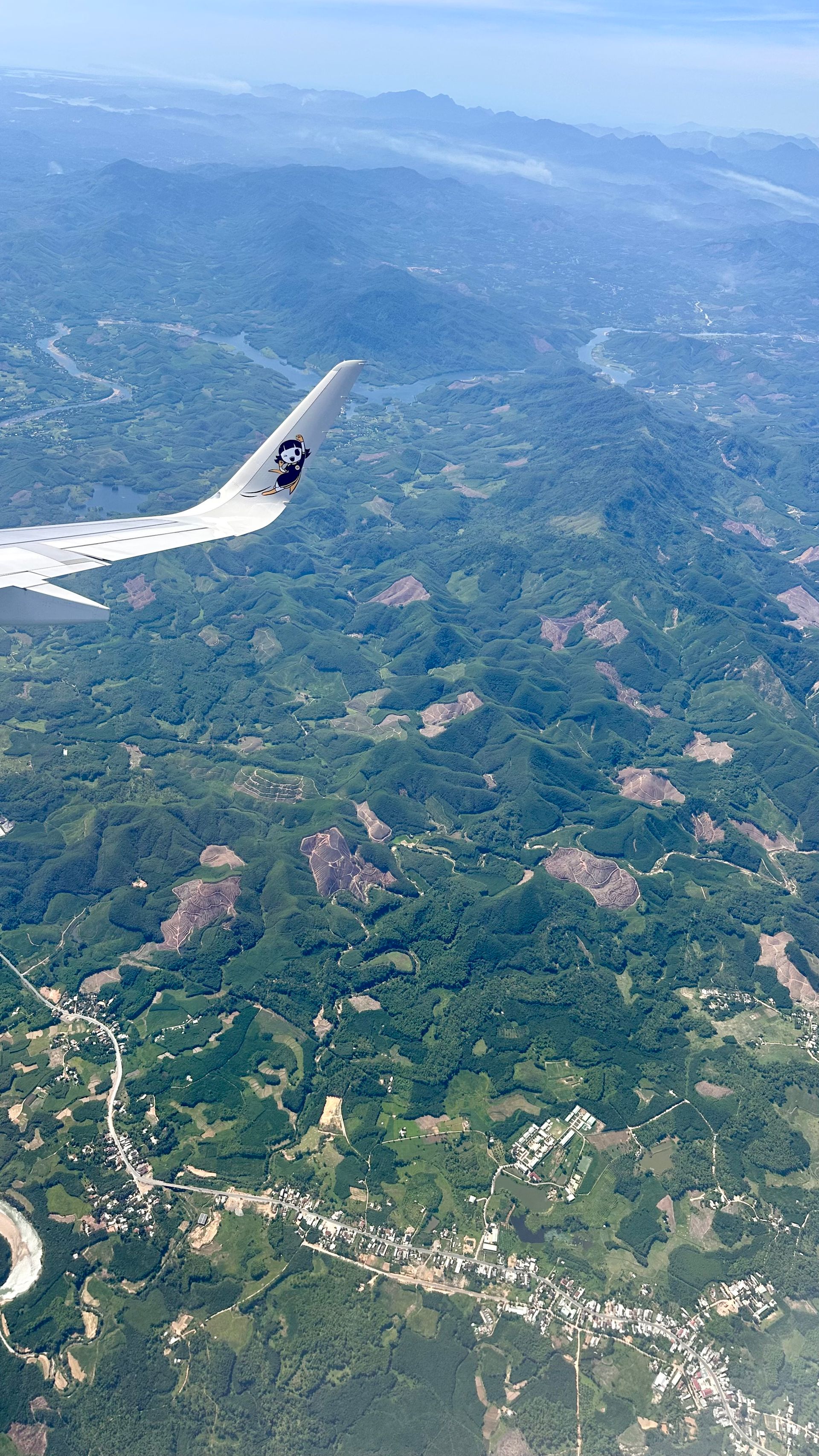
After a flight of just two and a half hours, we landed in Da Nang, Vietnam, on June 26. Although we didn’t need to apply for a visa with our German passports, we still had to join the crowd of other arrivals in line at immigration. Unfortunately, the process moved very slowly, and the line already stretched all the way to the escalators in the arrival area. The processing system really could use some improvement.
When we finally left the airport, loaded down with our luggage, we were greeted by 37 degrees Celsius. Even the Vietnamese staff at our new accommodations for the next thirty days, La Casa Tra Que, were sweating.
The staff here are really very nice and accommodating and did their best to find us the most suitable room possible for the month. Other guests also seem to enjoy staying here time and again: an older couple, who are also staying for a month, are here for the second time, and an American is here for the third time—and has been staying for five months straight. We immediately got all sorts of tips on where to eat well and affordably. The staff seem to love eating at least as much as we do.
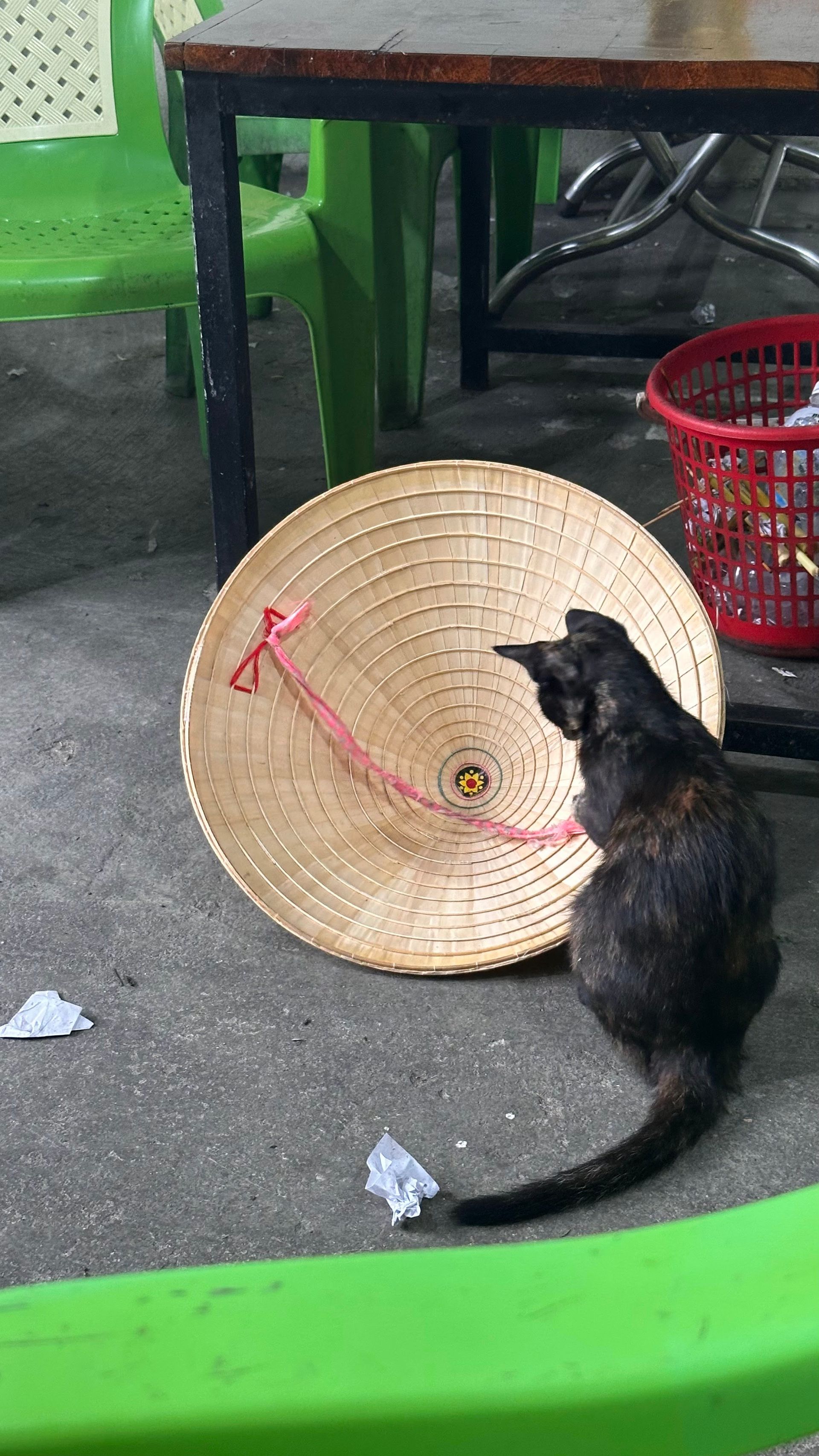
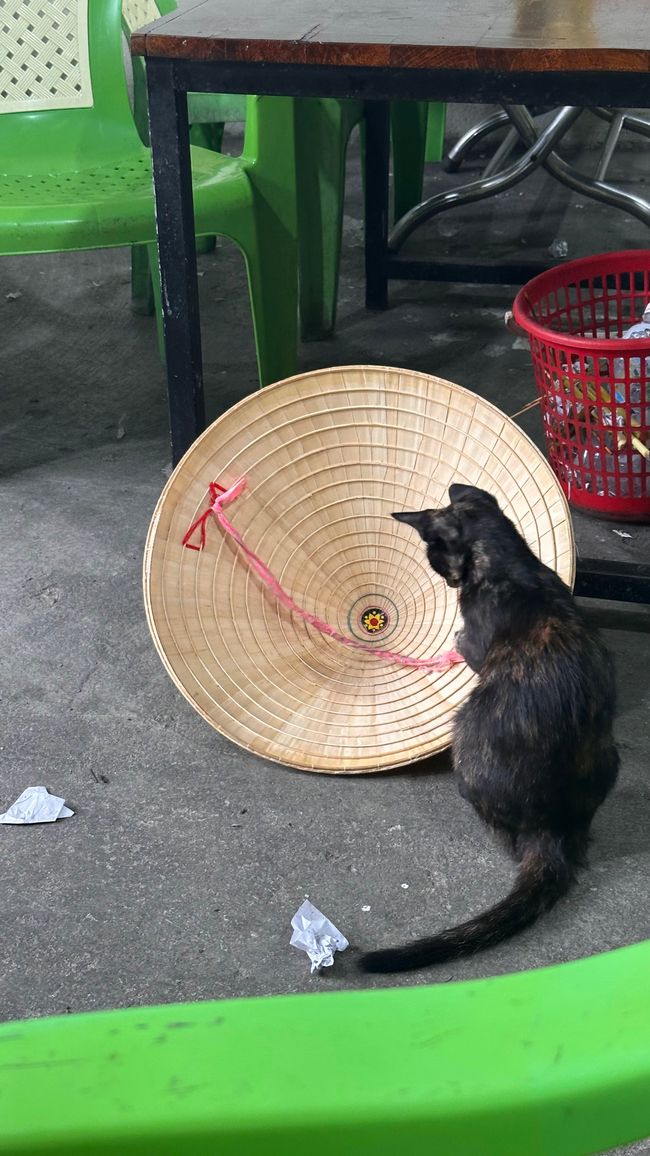
We took one restaurant recommendation to heart right away and went to Bánh Xèo Trà Quế to eat pancakes (bánh xèo). Before the food arrived, we played with the cute little kitten in the restaurant—she wanted to play and be petted at the same time and was literally rolling around our legs.
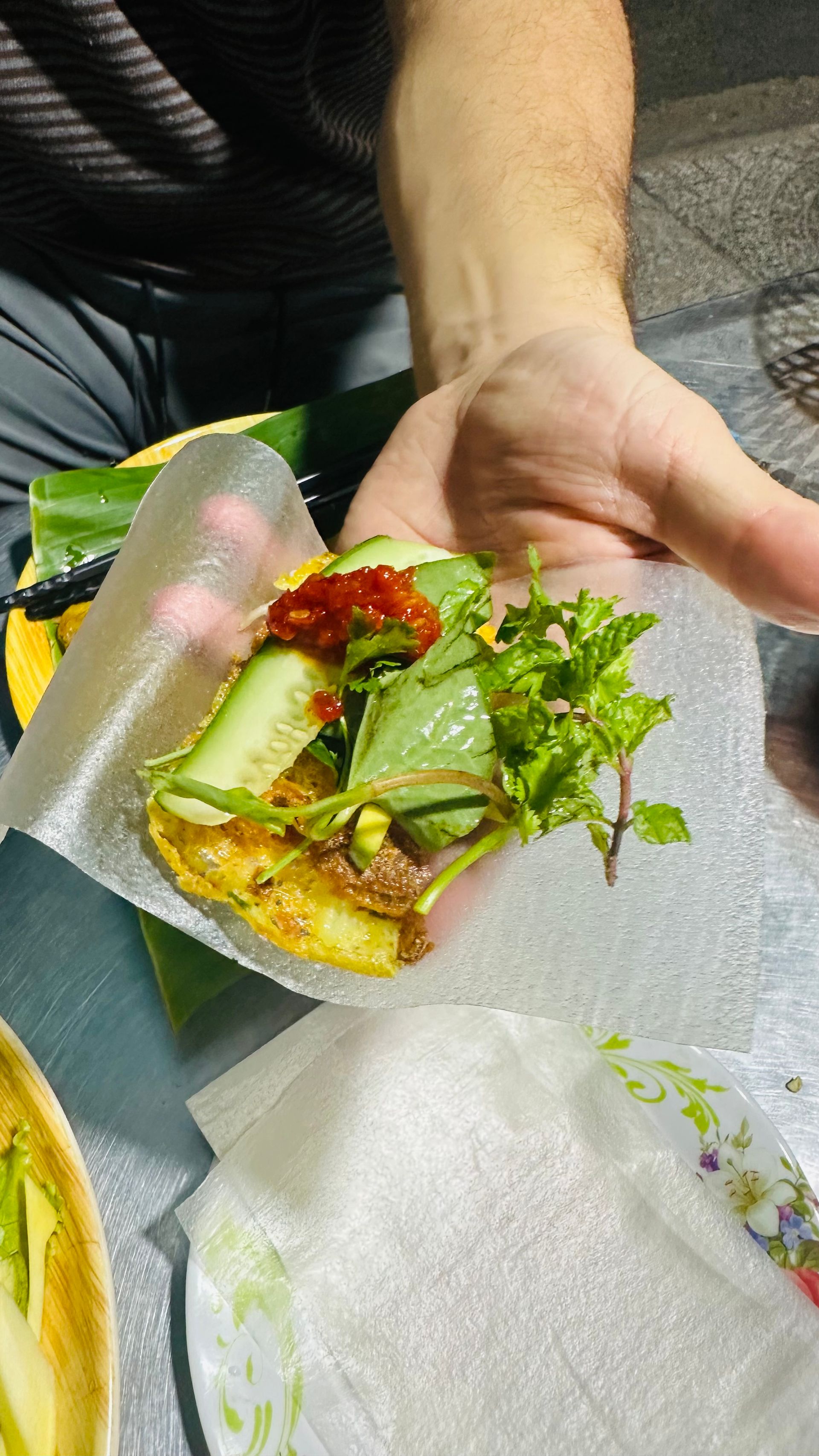
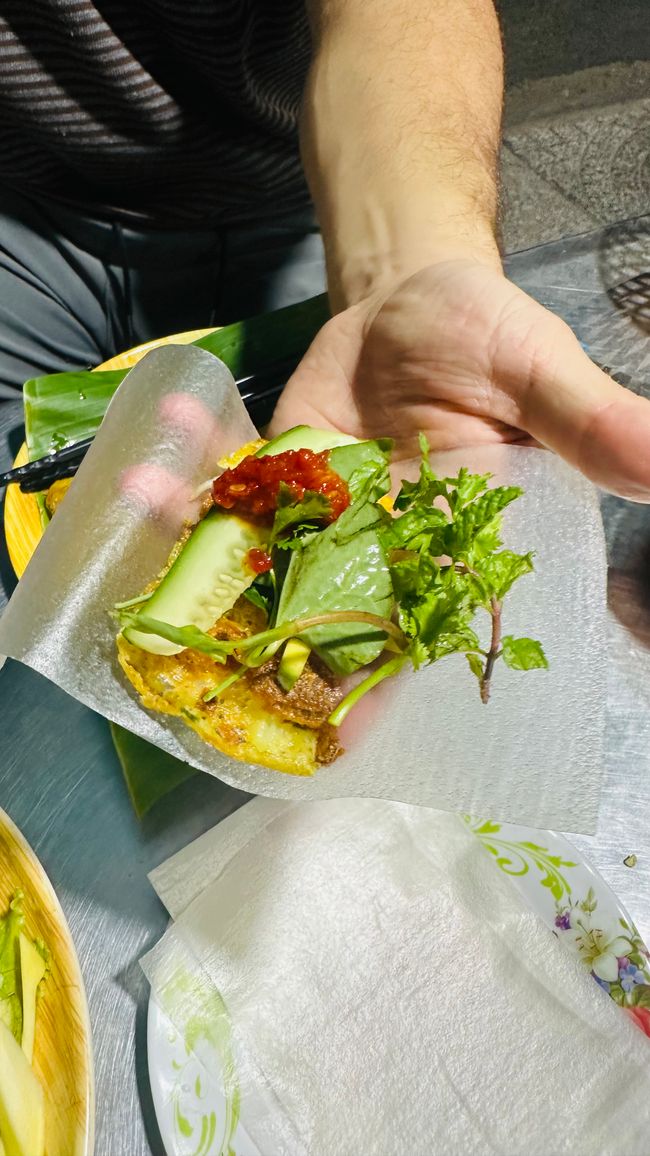
The other guests were visibly amused by our attempts to eat. We’d eaten homemade summer rolls every now and then back in Germany, but here we weren’t quite sure how to put the whole thing together. There were sheets of rice paper, a whole pile of vegetables—lettuce, cabbage, cucumber, carrot, mint, and cilantro—along with folded pancakes filled with bean sprouts and shrimp, and a bowl of peanut sauce.
A woman then took pity on us and showed us that you tear off a piece of pancake, roll it tightly into the rice paper along with the vegetables, and then dip it in the peanut sauce. So simple, once you know how.
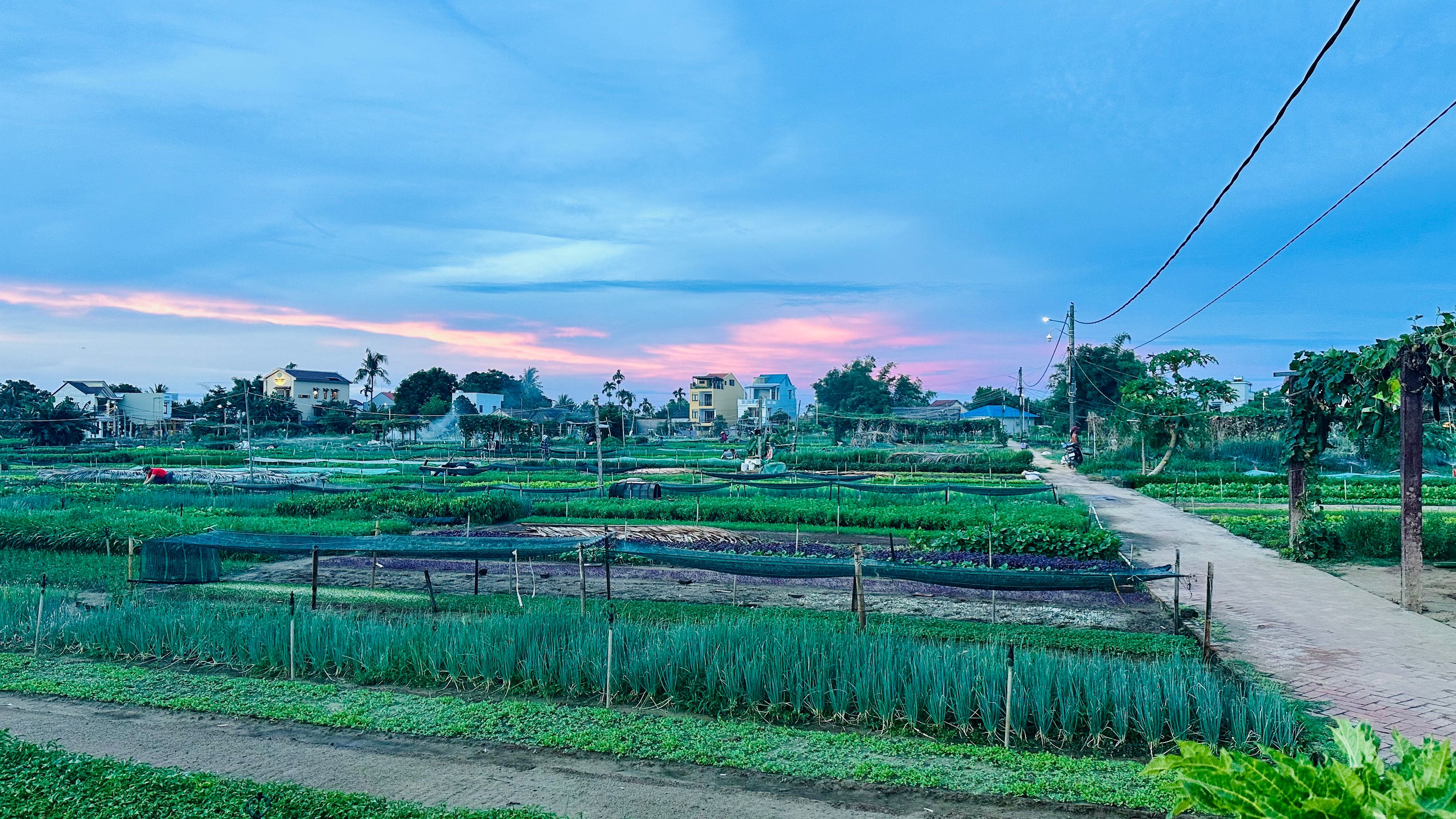
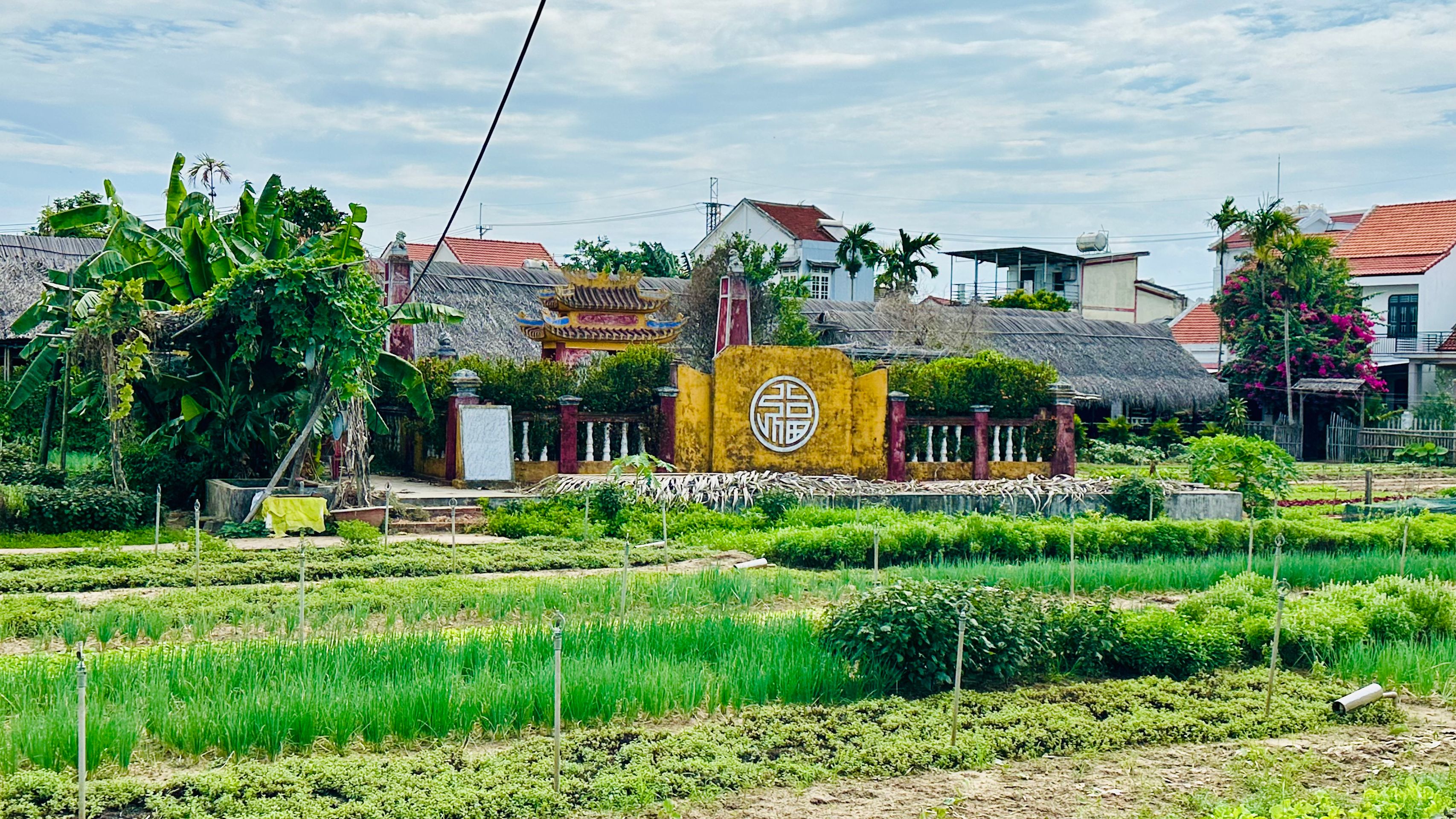
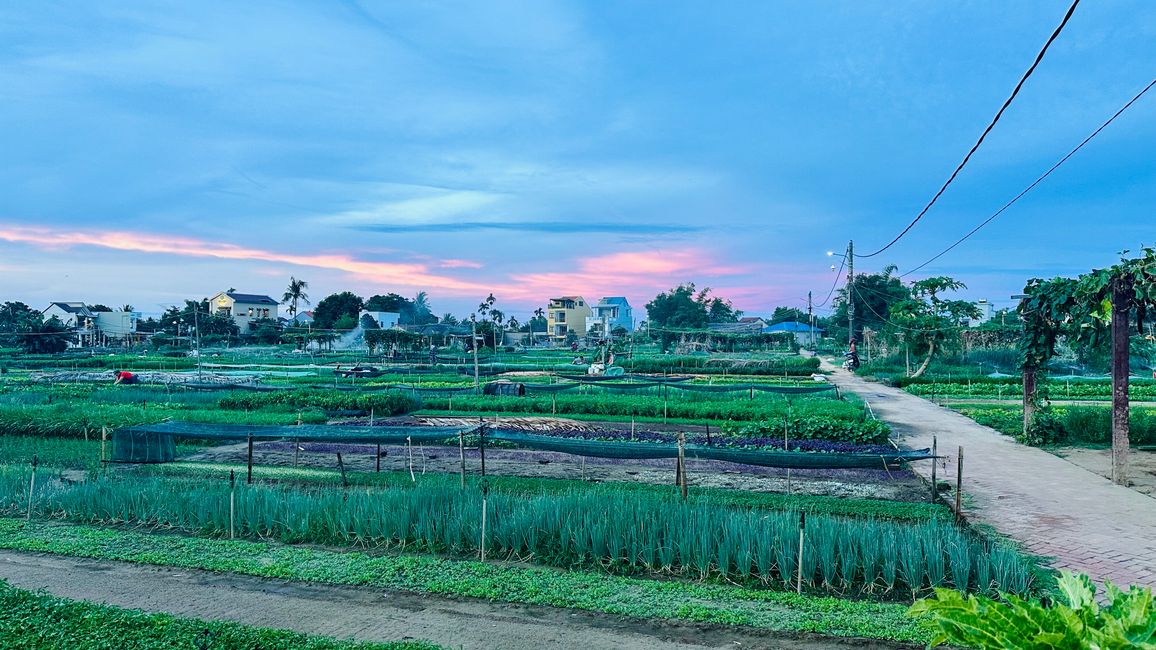
The way back took us through fields of lettuce and various herbs. Trellises with magnificent pumpkin vines spanned the path, and Simon had to be careful not to bump into the low-hanging pumpkins. As dusk was already falling, the swallows flying by were gradually giving way to bats. A truly beautiful walk home.
The next day, we explored downtown Hoi An, the so-called “Ancient Town” or “Old Town.” We’re staying a bit off the main drag on a peninsula just outside the city—but you can easily walk there along a path lined with rice fields.
Here you can shop for all sorts of things, admire historic buildings, or relax in a café. You can book a boat ride on the river at any time, and that’s also where the monthly lantern festival takes place. There’s no lack of ATMs in Hoi An, though there’s only one VP Bank ATM where you can withdraw money for free.
Hoi An was designated a UNESCO World Heritage Site in 1999—as an exceptionally well-preserved example of a Southeast Asian trading port from the 15th to the 19th centuries that reflects the fusion of different cultures through international trade. Some of the well-preserved buildings from this period can still be visited today. At the tourist offices, you can purchase a pass for 120,000 VND per person to visit five of the 25 historic sites, museums, and performances (www.hoianworldheritage.org.vn).
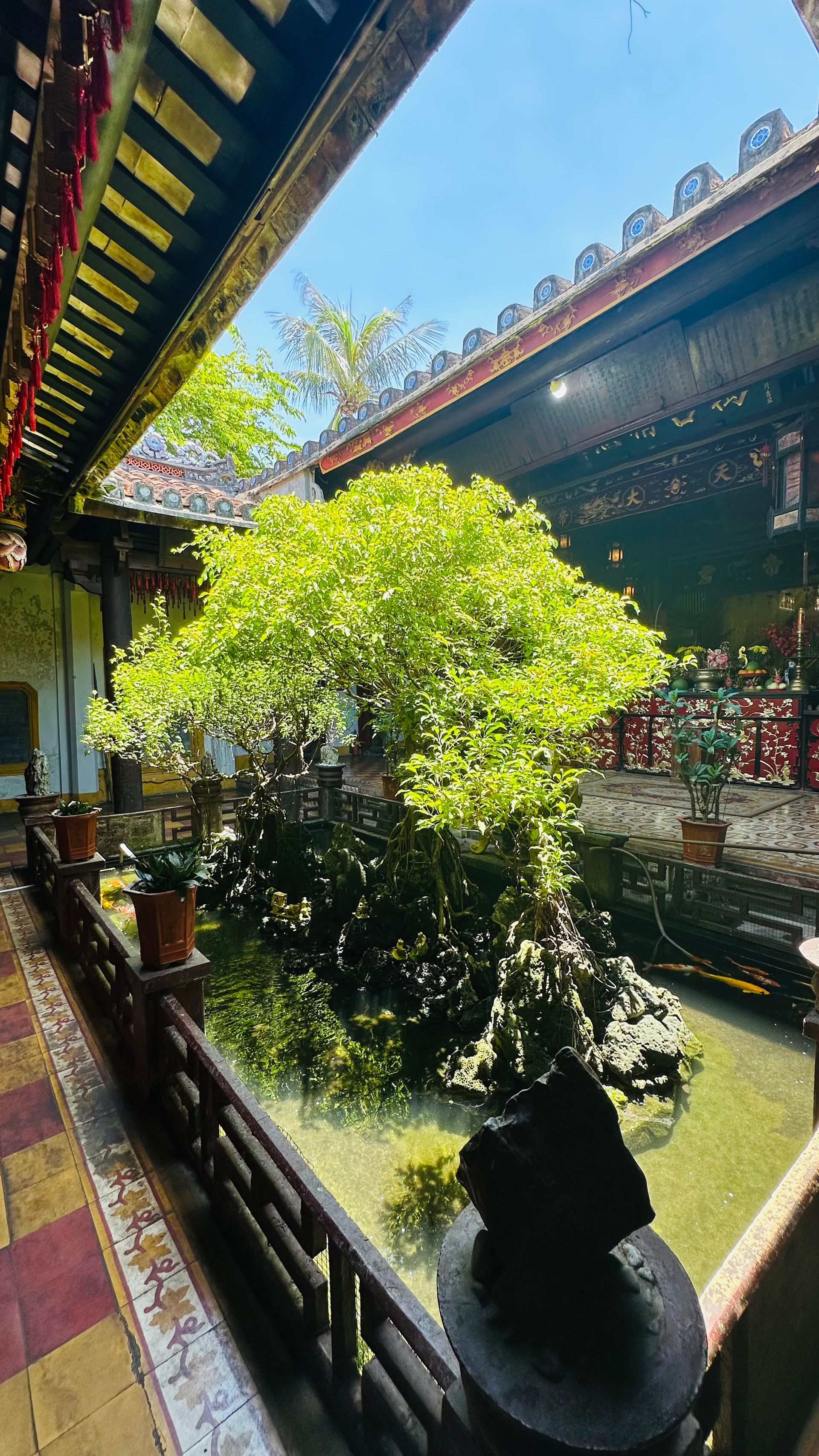
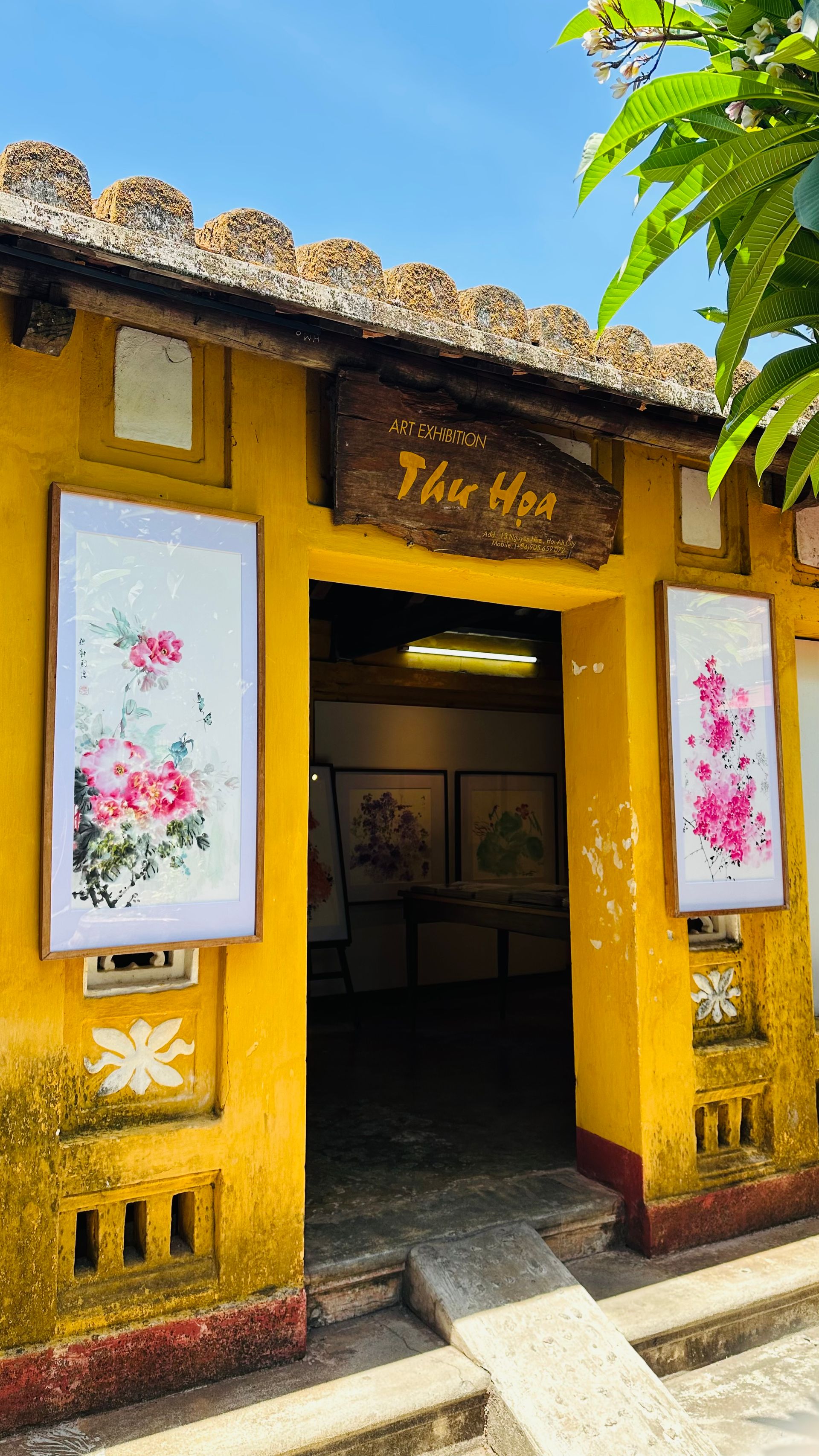
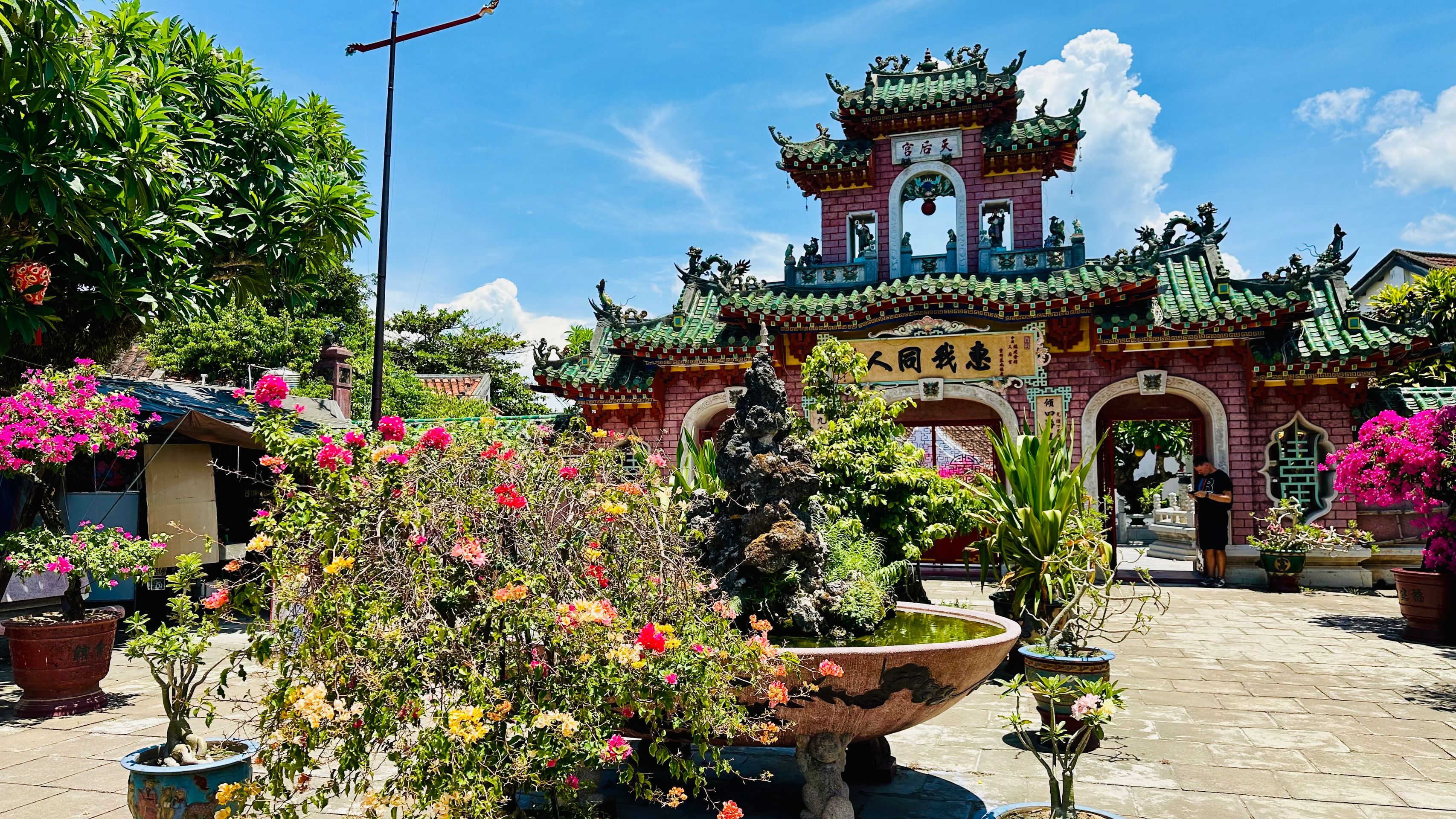
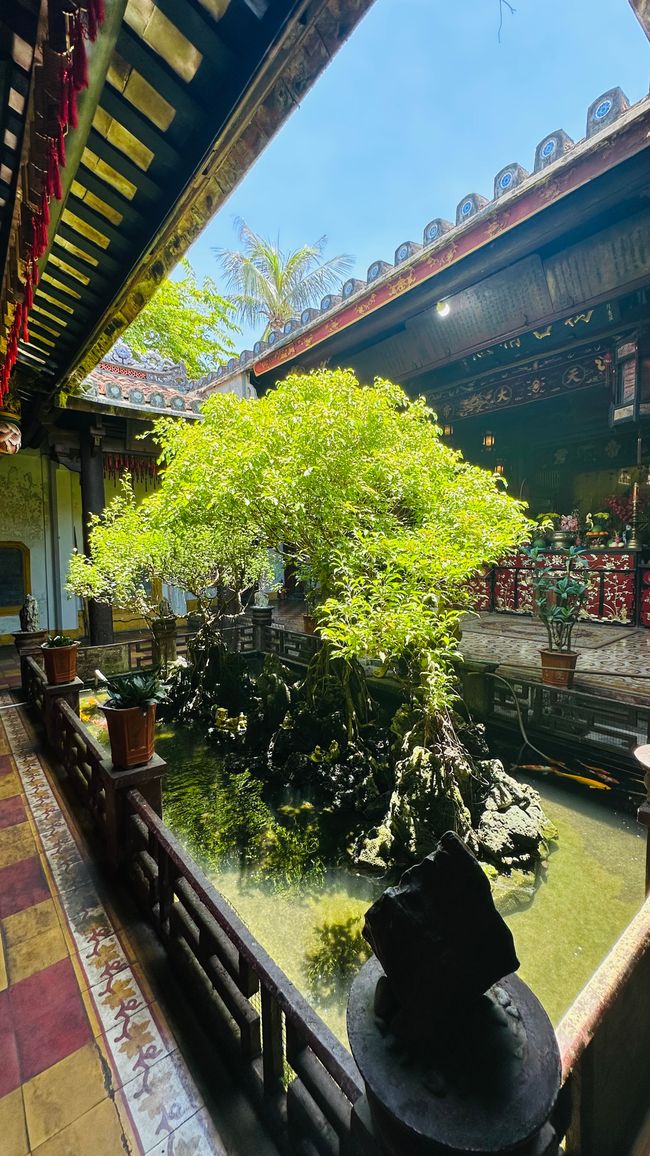
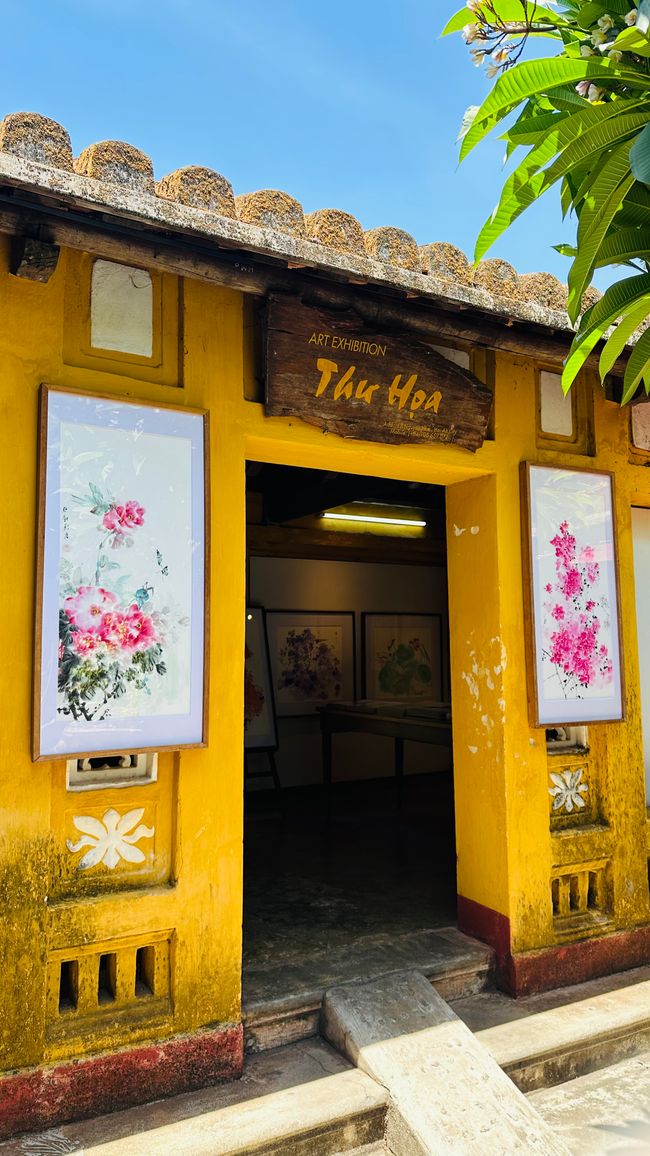
From the ticket options, we chose to visit the Quan Cong Temple—a nice little temple that isn’t too crowded. The pond with bonsai trees in the center is very atmospheric, and there’s also an exhibition area. When we were there, floral watercolor paintings by the artist Thu Hoa were on display.
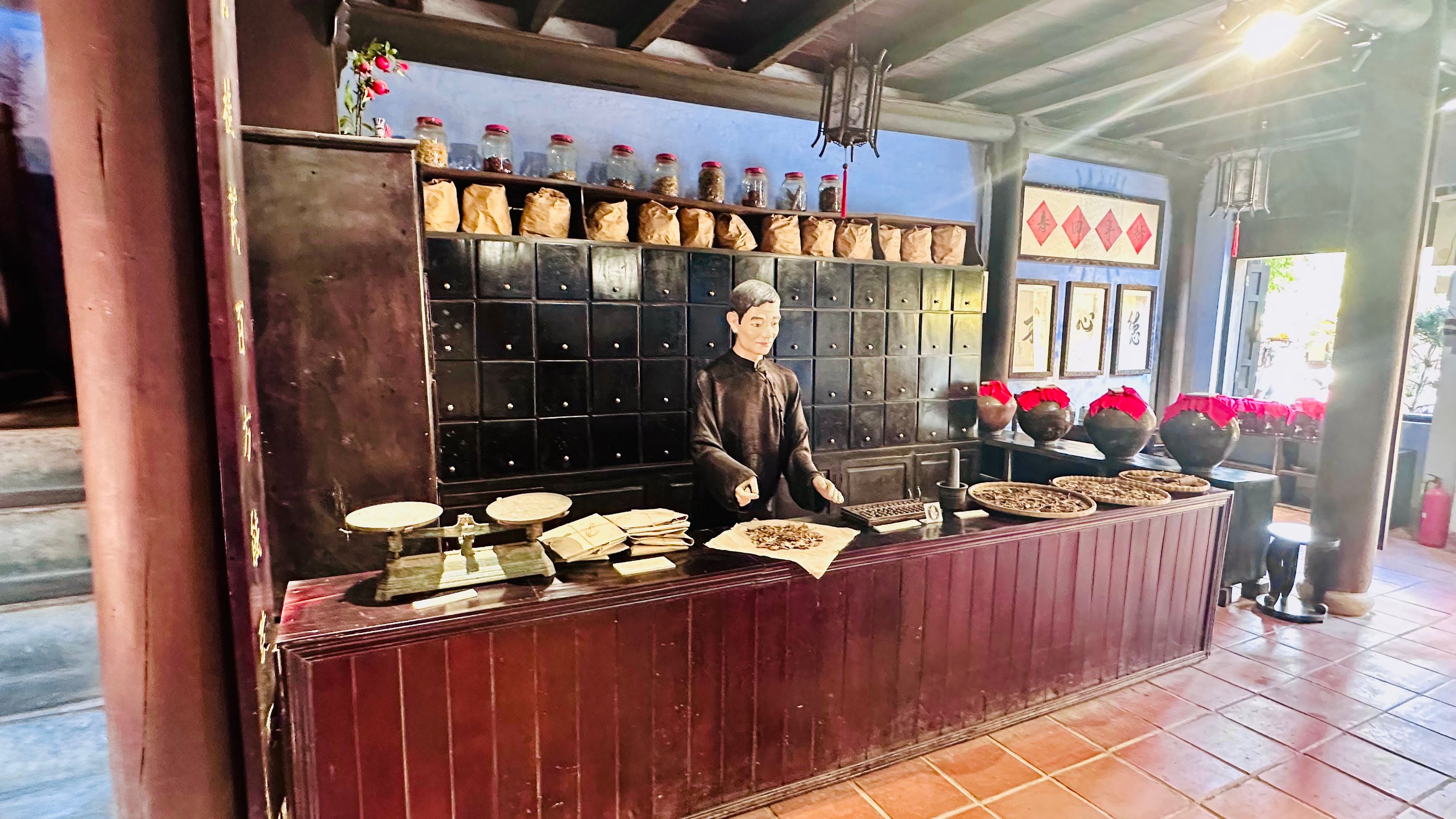
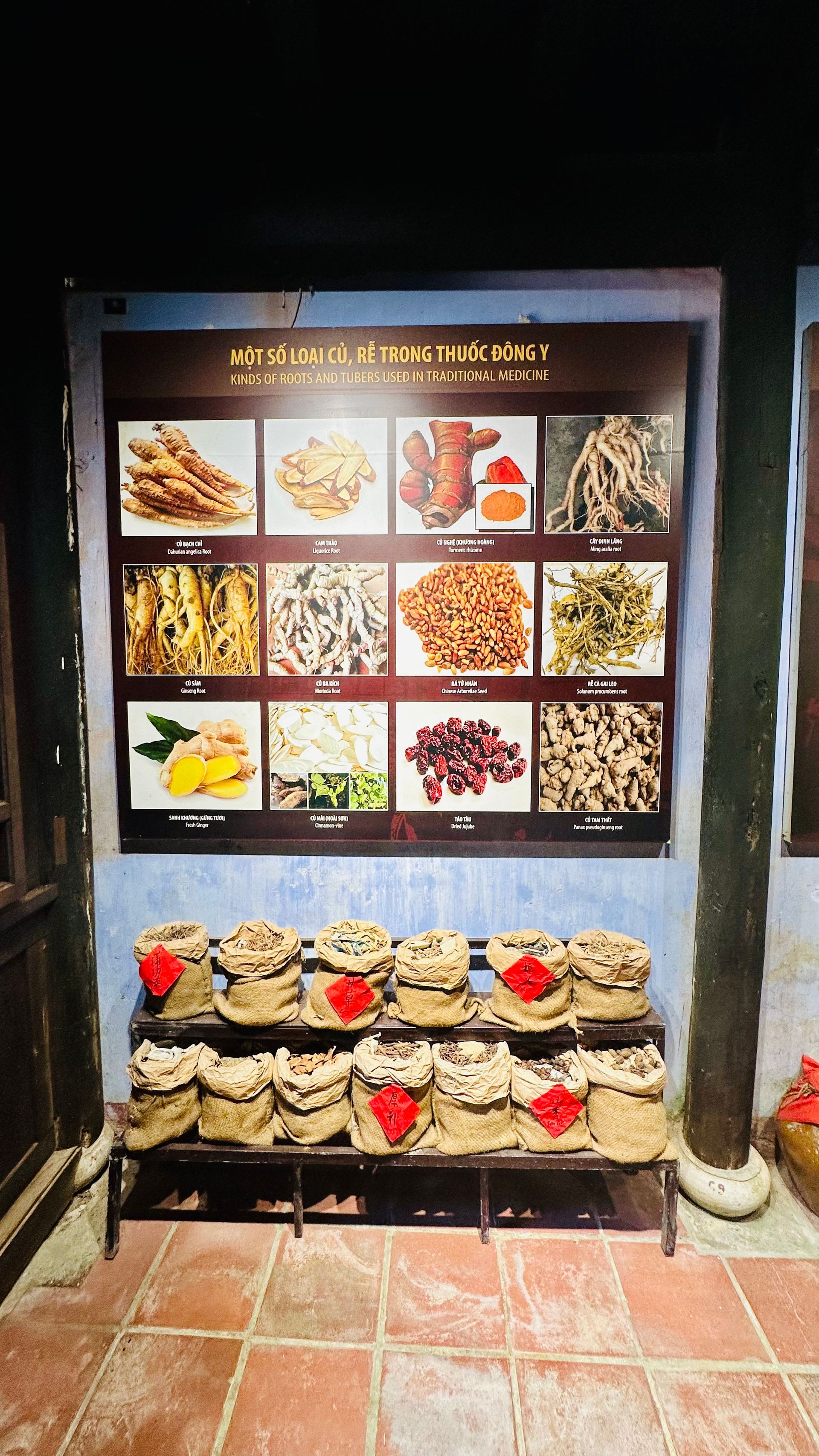
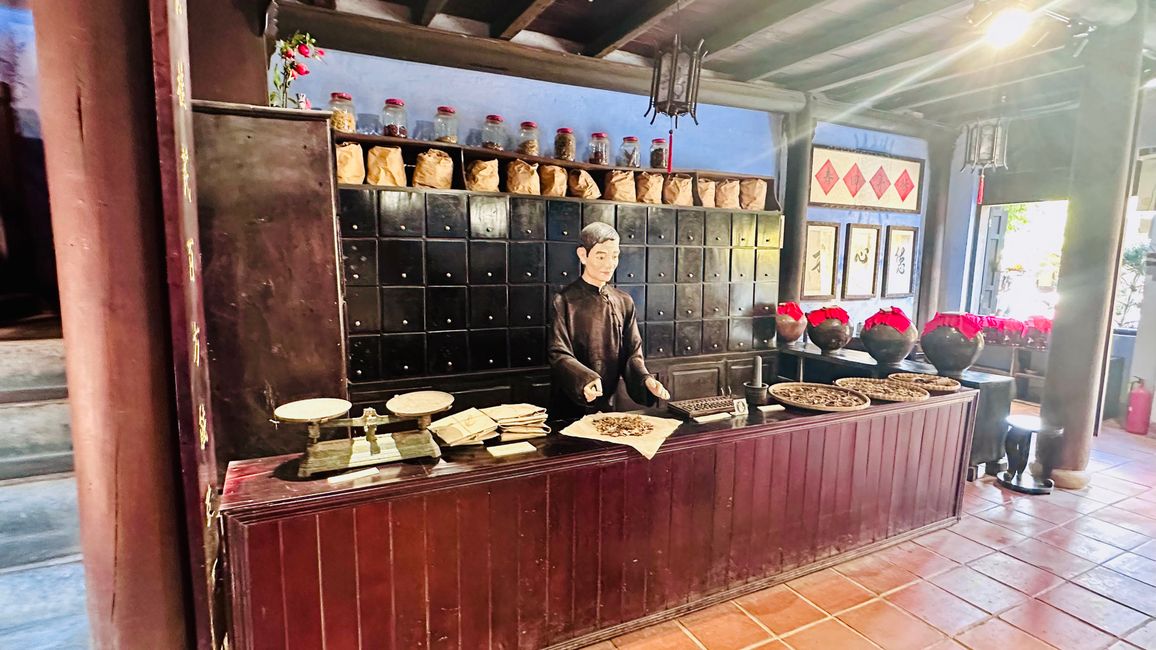
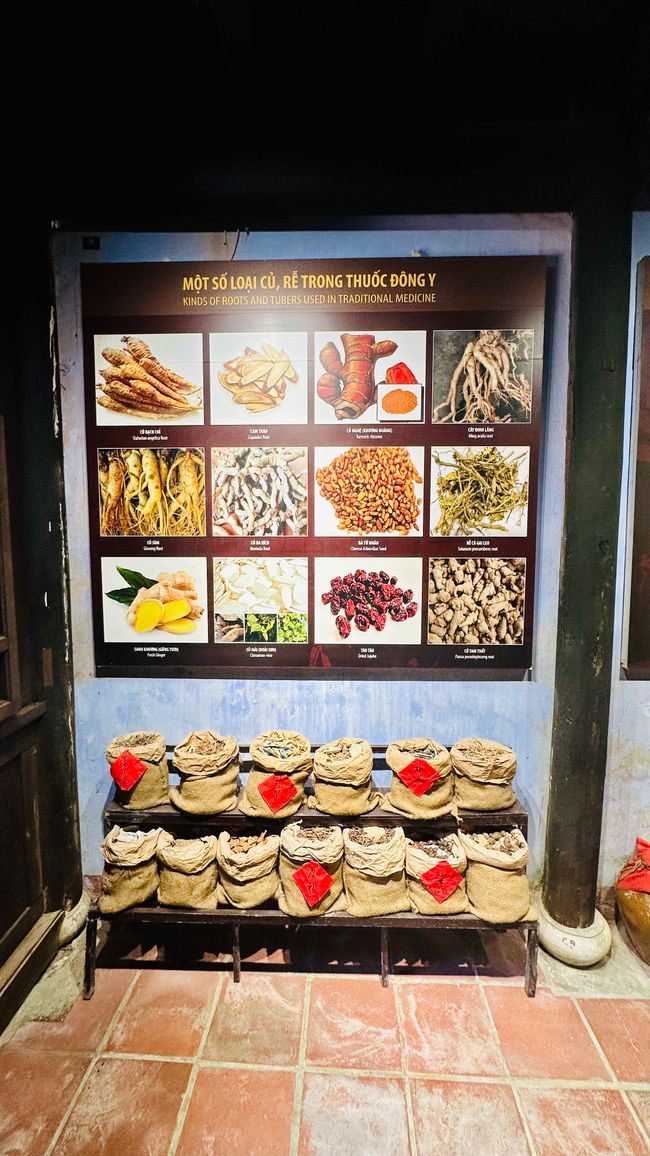
The Museum of Traditional Medicine and the Museum of Local Products are located in the same building complex. On the lower level, dried herbs and roots that were once used for healing are on display, along with the process of making medicine, depictions of medical examinations, and a historical patient room. On the upper level, you can learn about what is grown and harvested in the area: agarwood, used as an ingredient in incense paste; black pepper; rice; sedge; and betel nuts, which are used as offerings.
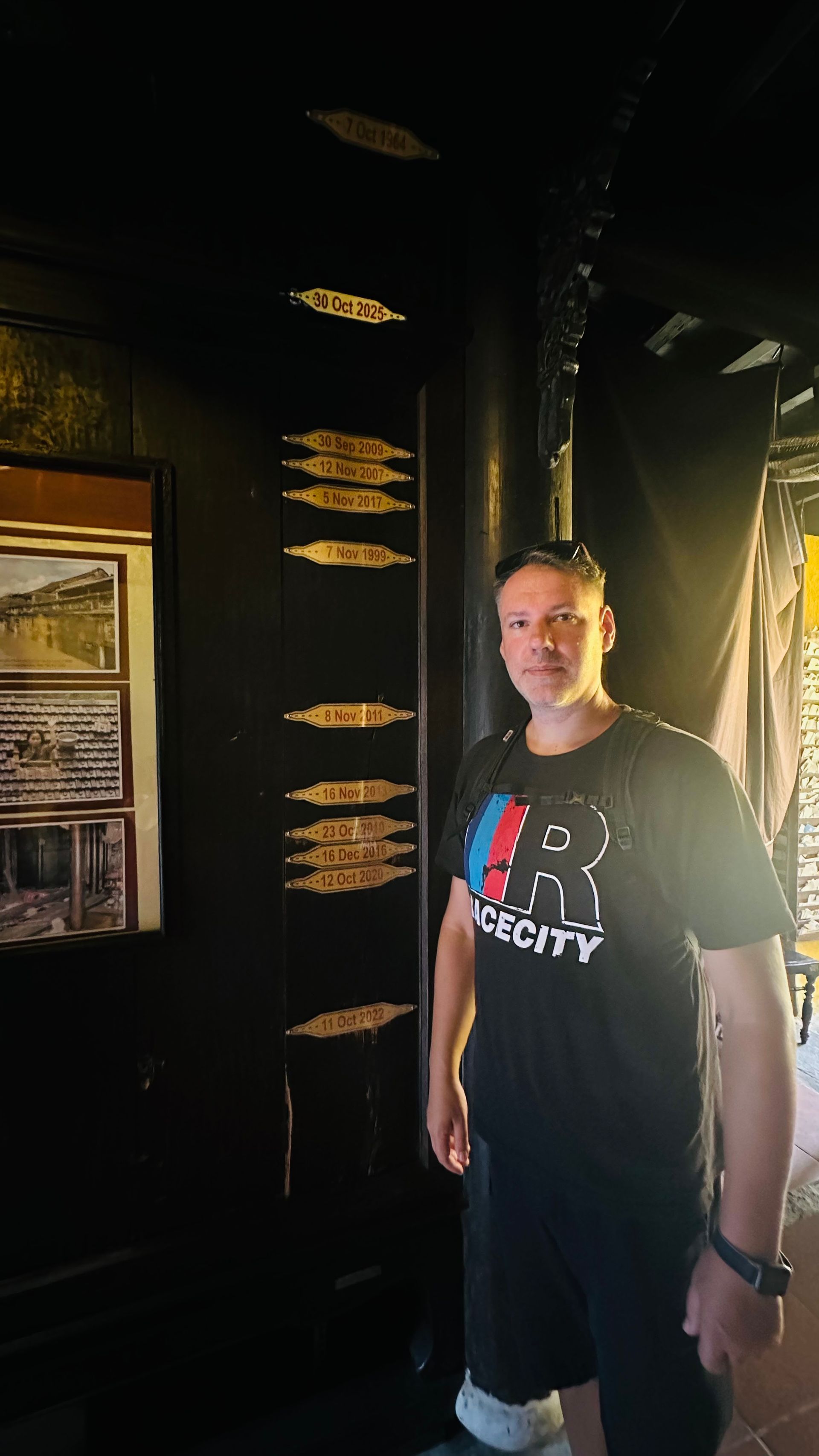
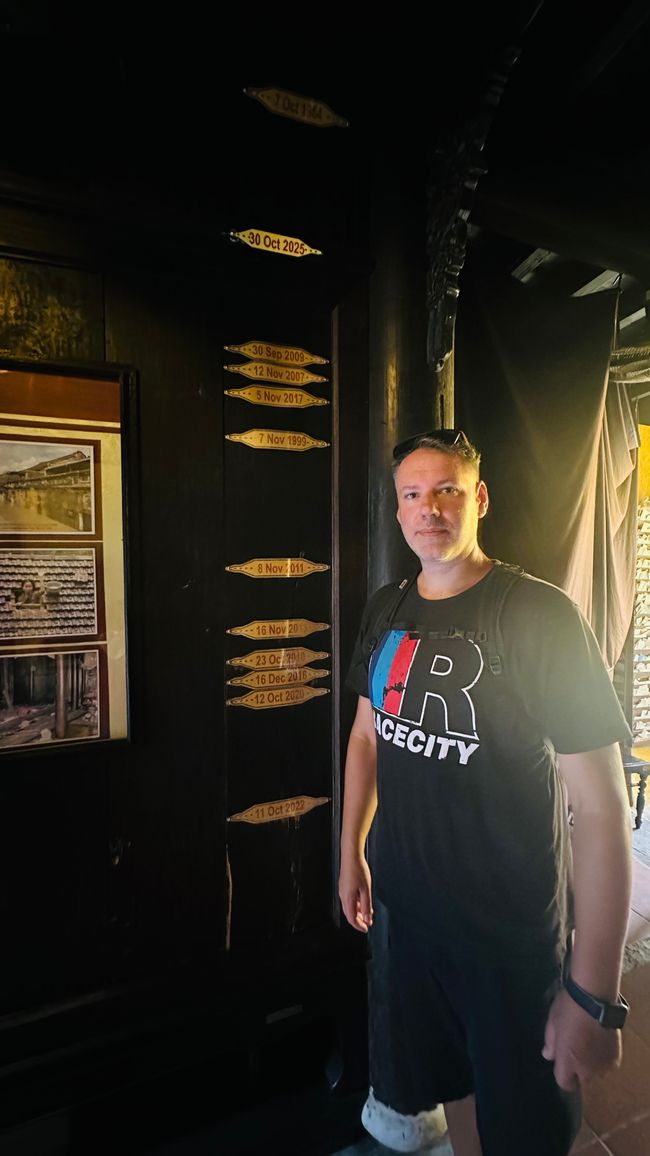
Next, we visited the Tan Ky Trading House—an elaborately furnished residence in the Japanese-Chinese style dating from the early 19th century. On display are various pieces of furniture, bedrooms, and a large collection of porcelain. All in all, it’s not particularly large, but it’s interesting for getting a sense of how wealthy Vietnamese people lived back then. Over the years, the building has also weathered several floods—plaques on the walls indicate the year and water level. Between October and December, the rivers here apparently regularly overflow their banks, as the staff at our lodging had already confirmed.
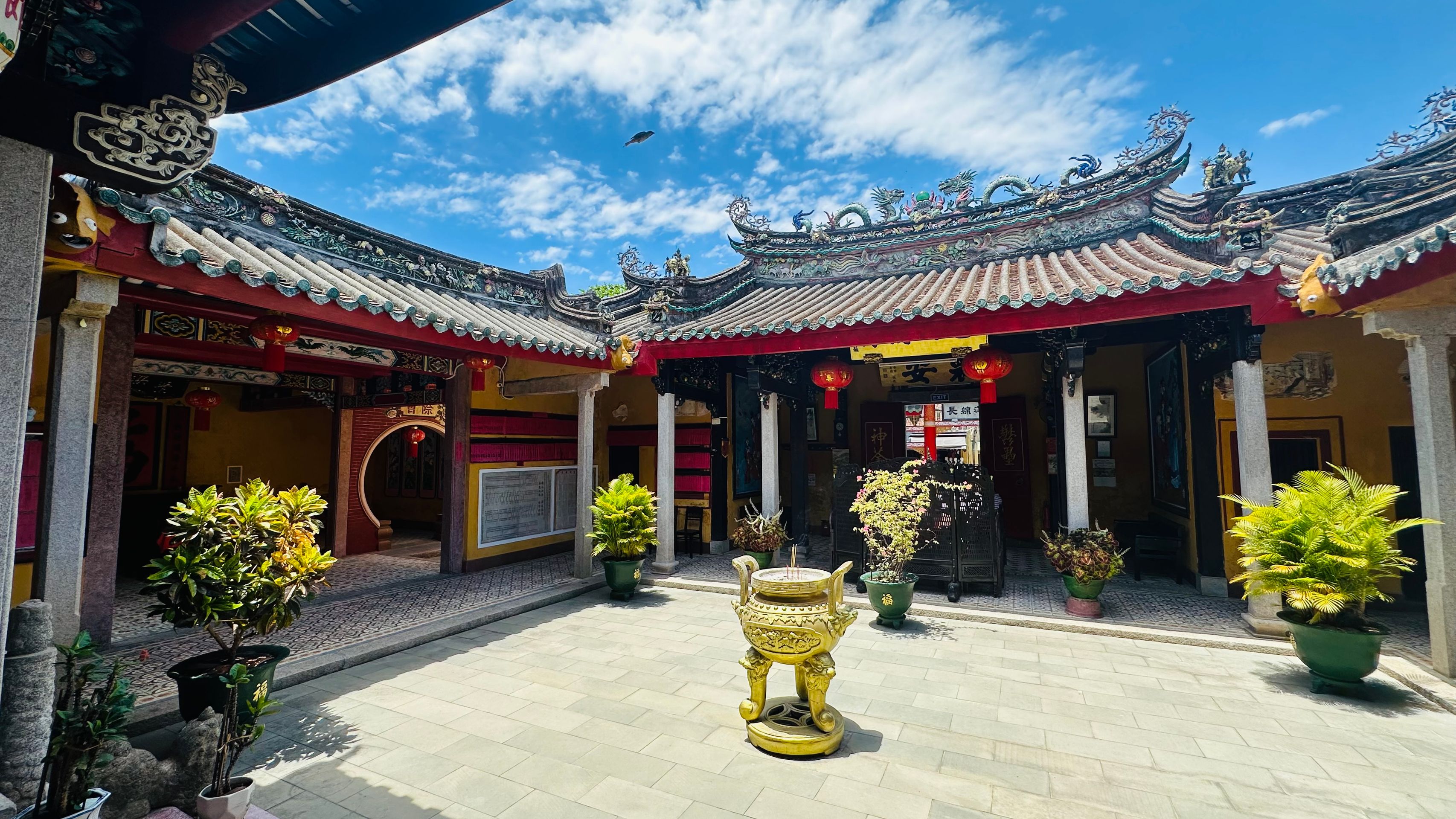
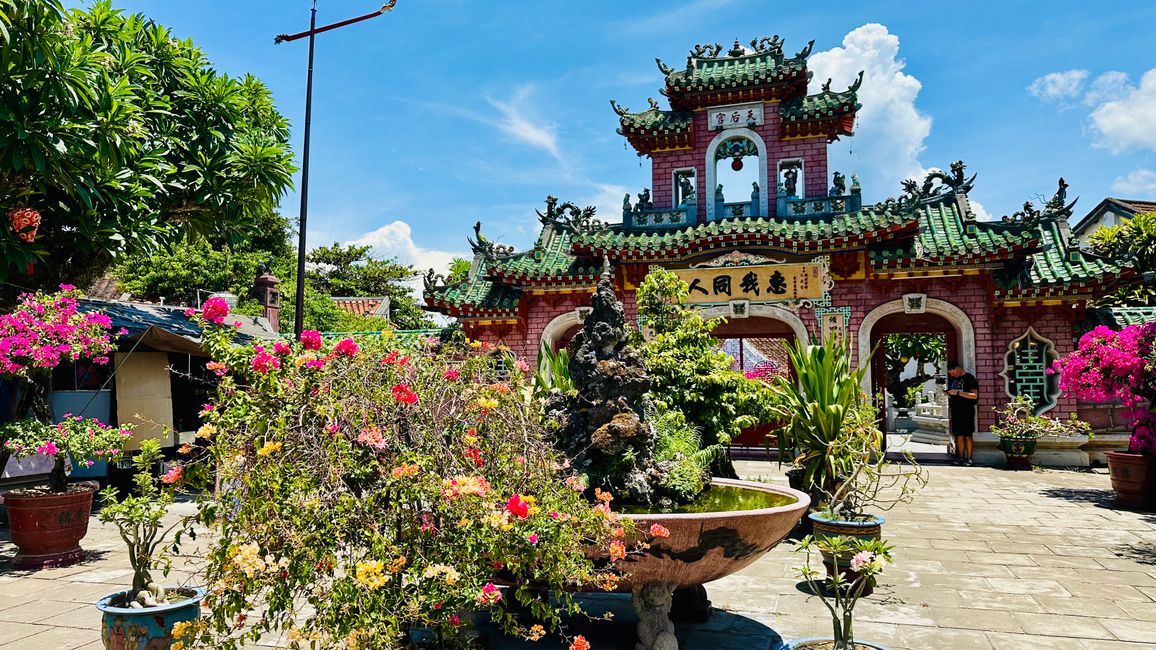
The Fujian Assembly Hall was well worth the visit—a magnificent Chinese temple with many fish ponds.
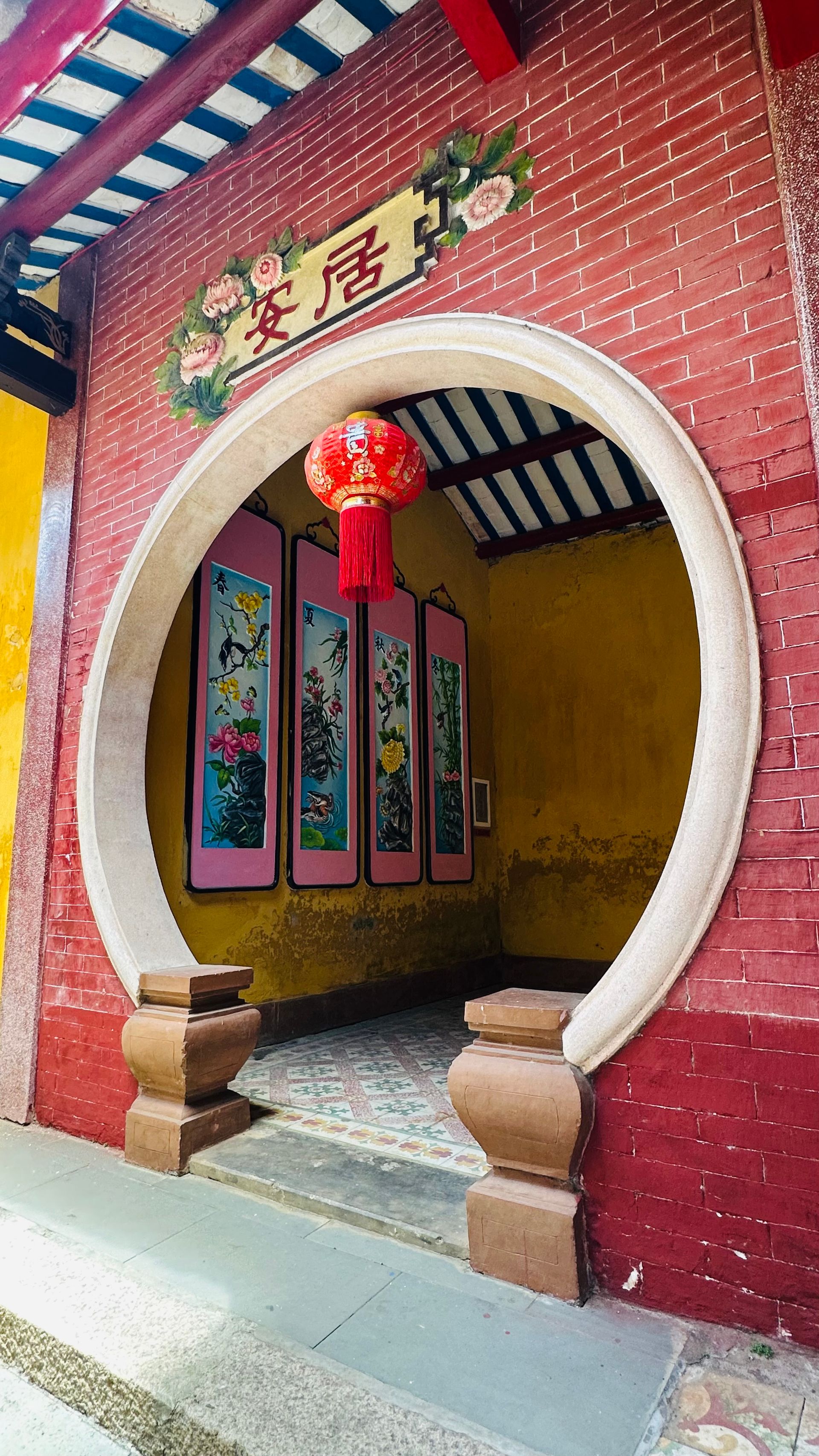
We also really liked the Minh Huong Ancestor Worship House. It’s built in the Chinese style, with round passageways and ornate room dividers.
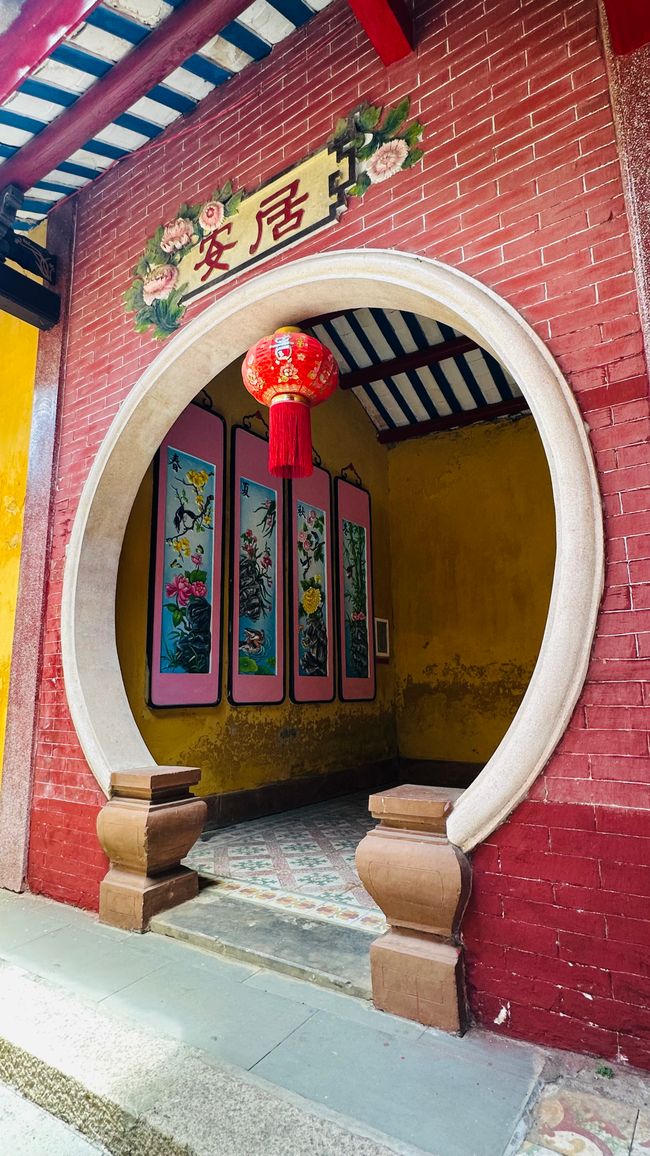
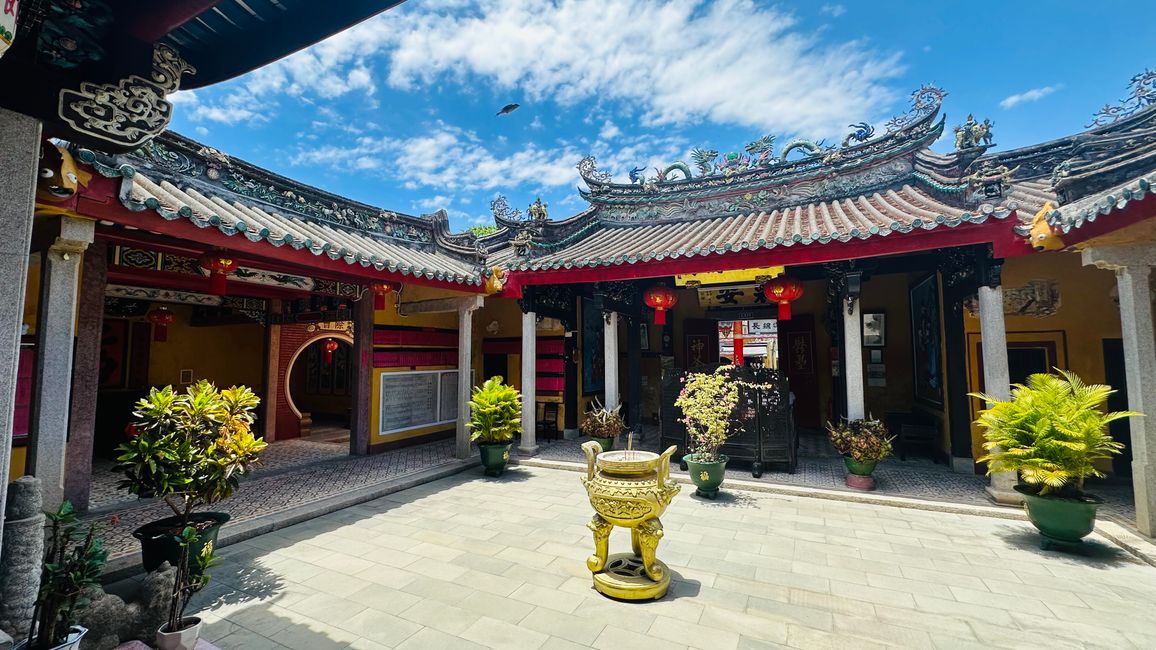
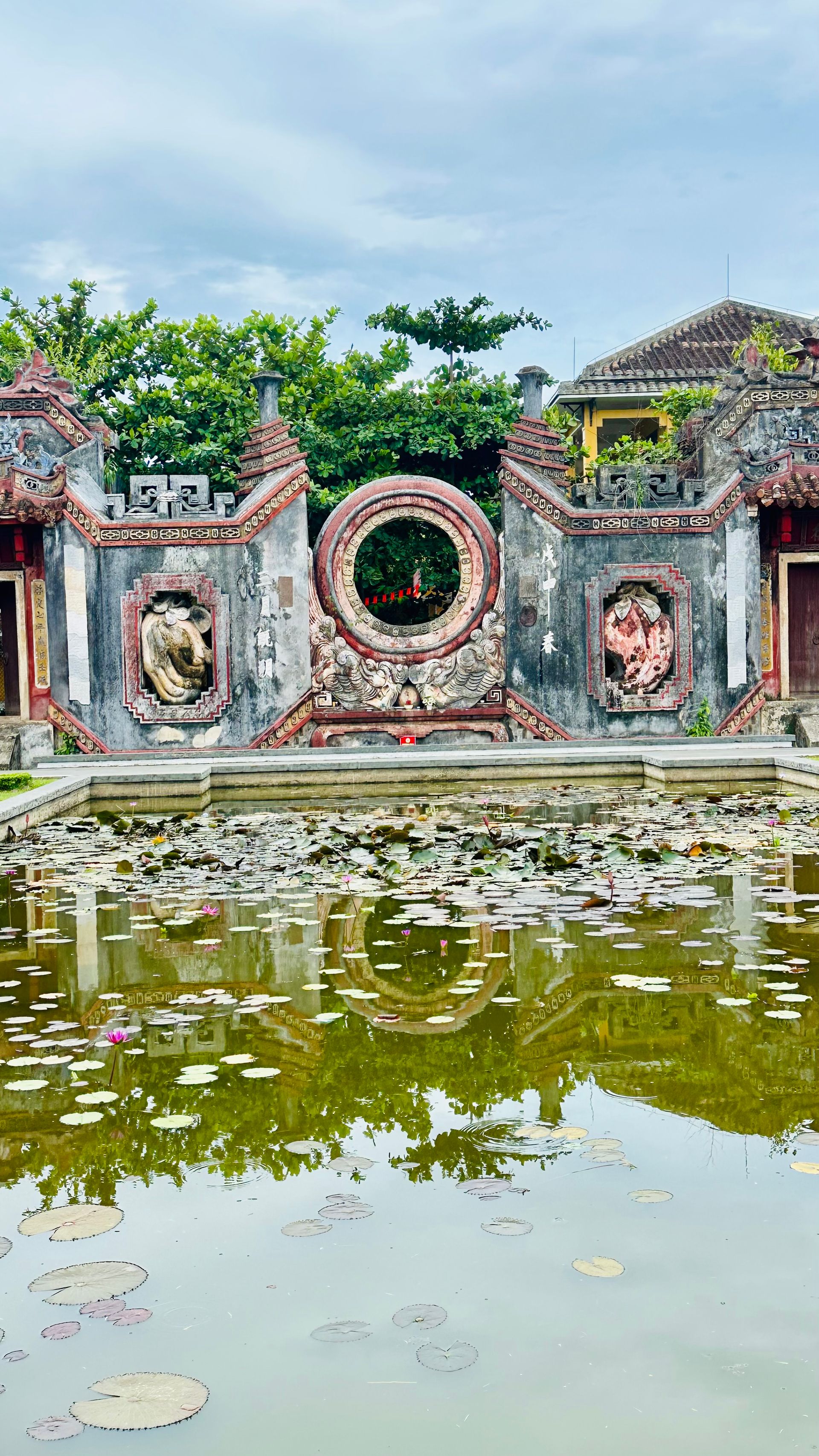
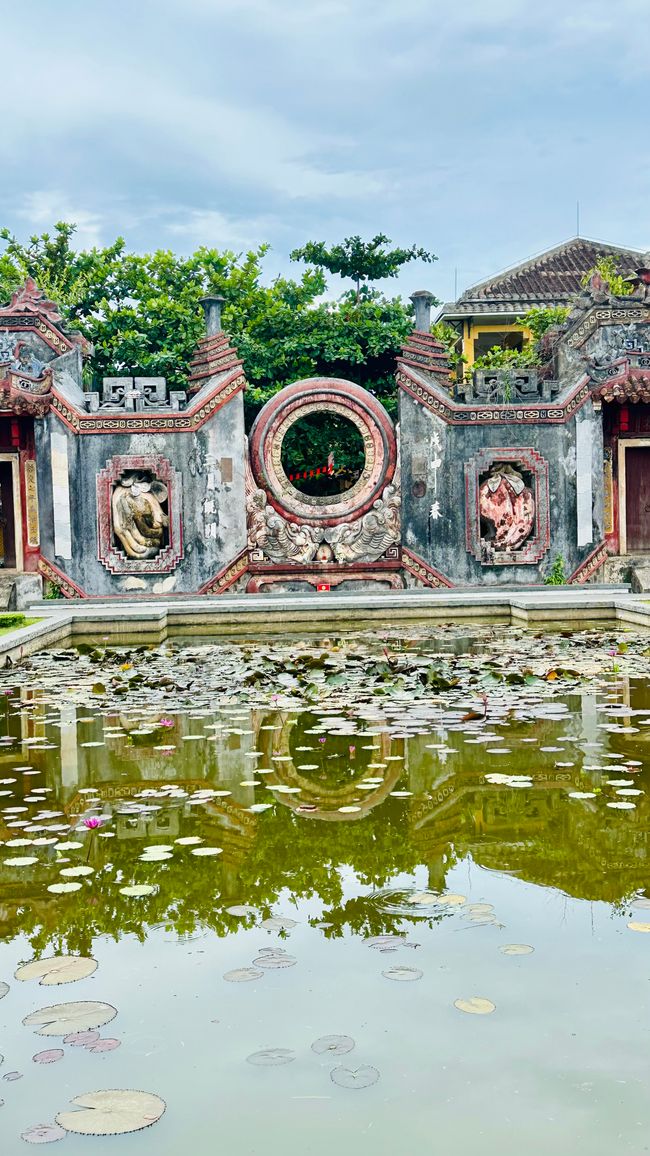
The Ba Mu Temple, which is especially popular for the reflection of its façade in the pond in front of it, can be visited free of charge.
Also free are the Ruan Hahn Gallery and the Precious Heritage Art Gallery Museum, which feature photographic works by the French artist Réhahn depicting the lives of the locals in Hoi An. The museum also displays traditional clothing from various ethnic groups across all regions of Vietnam.
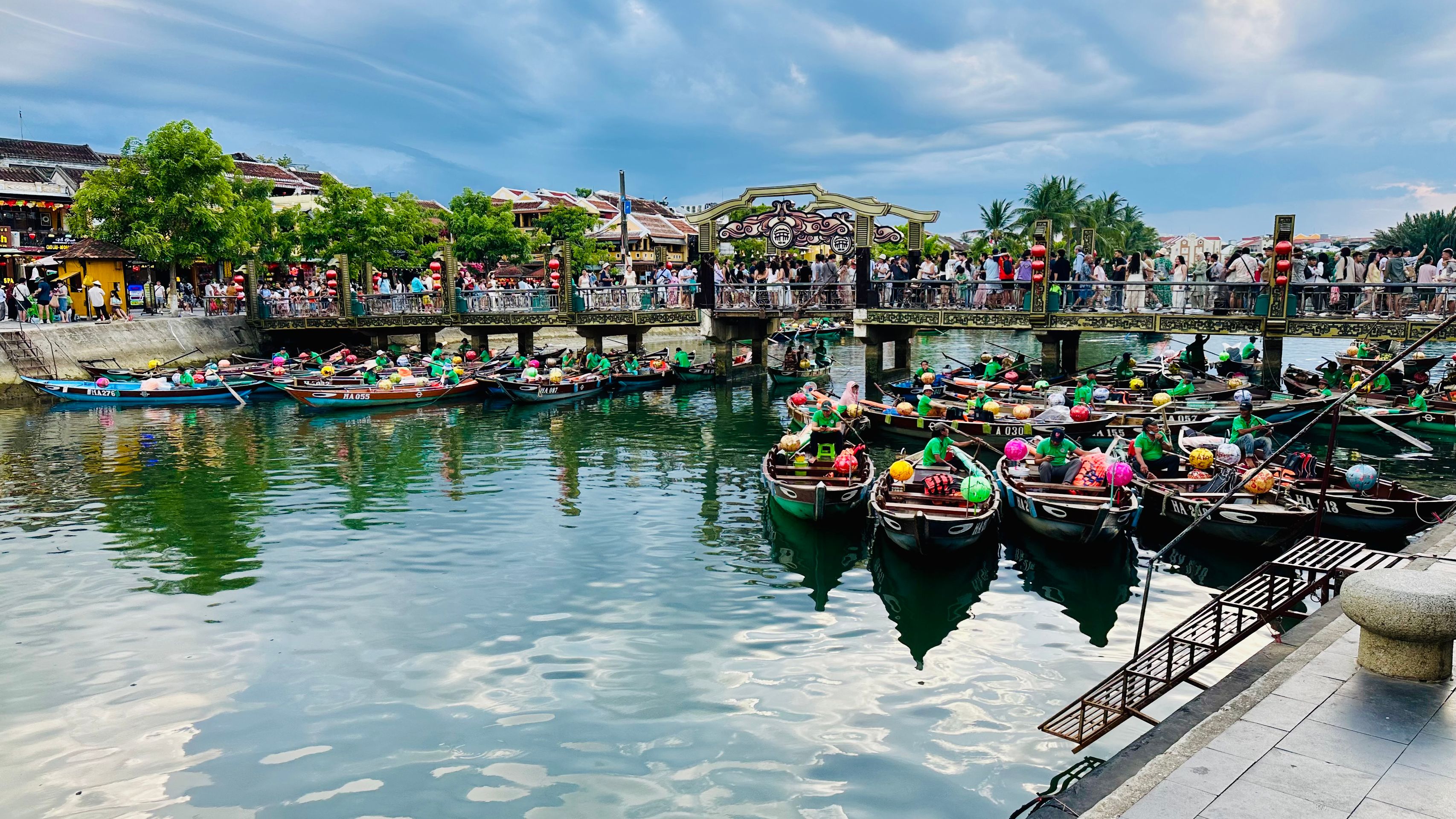
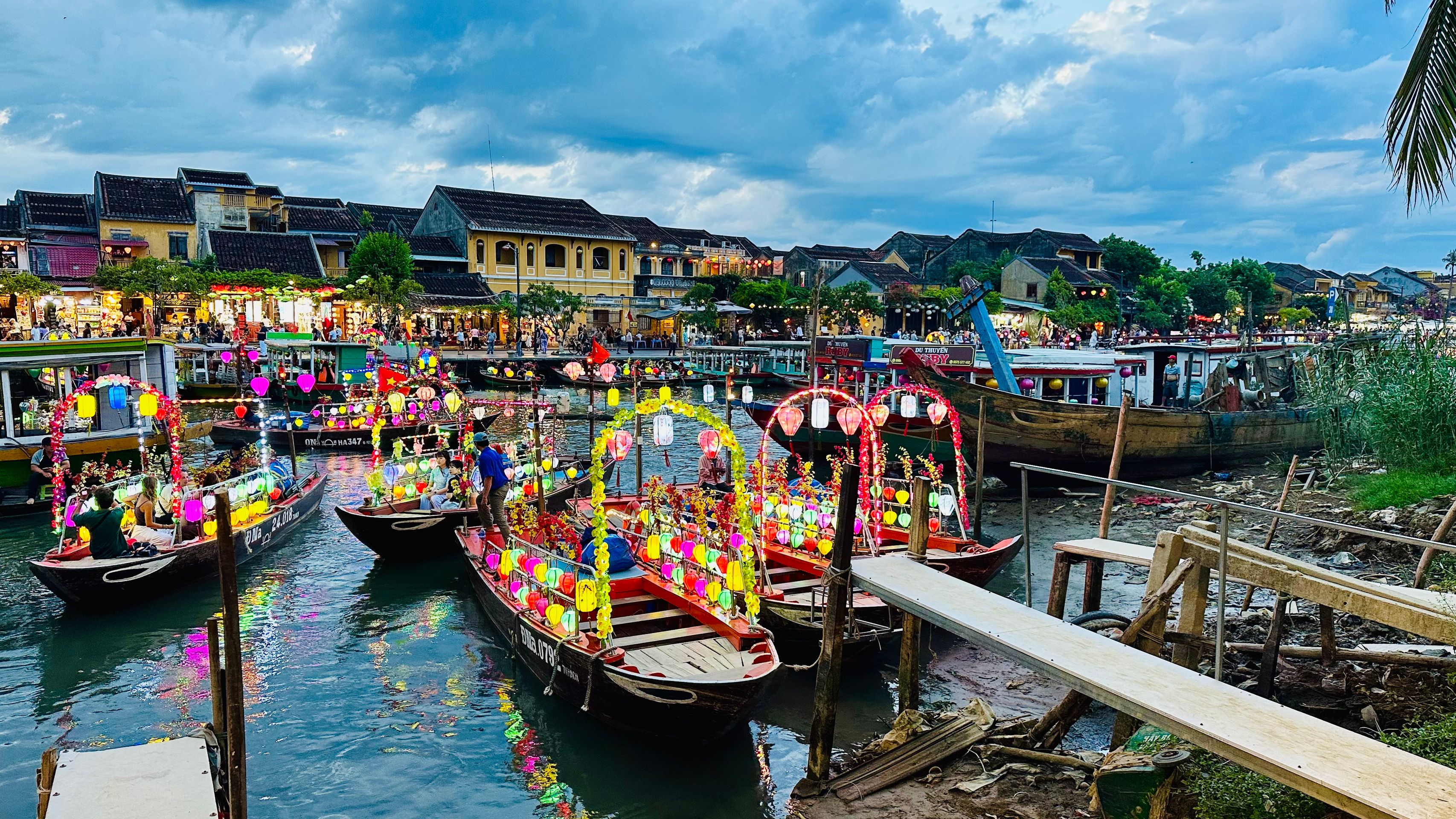
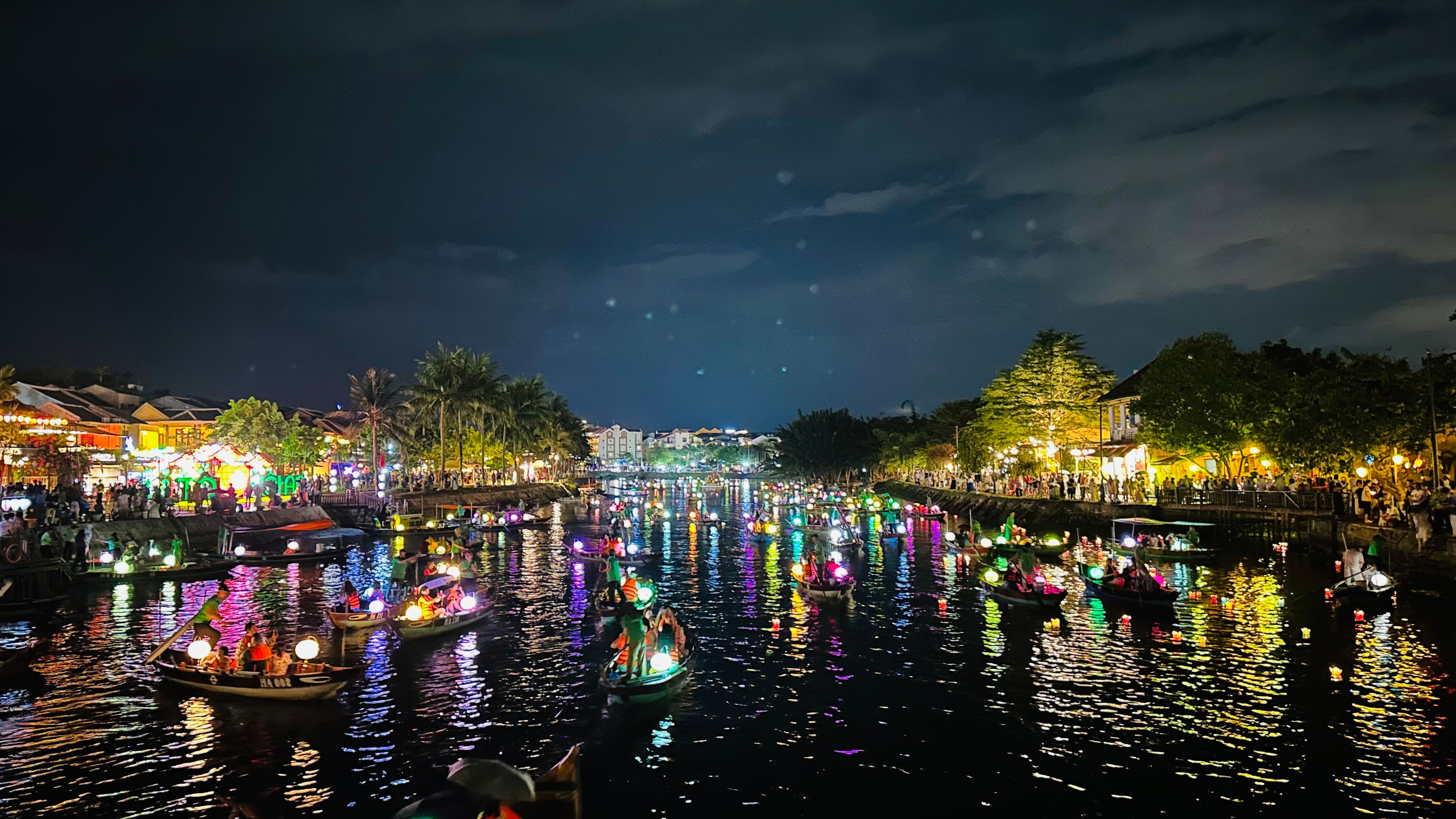
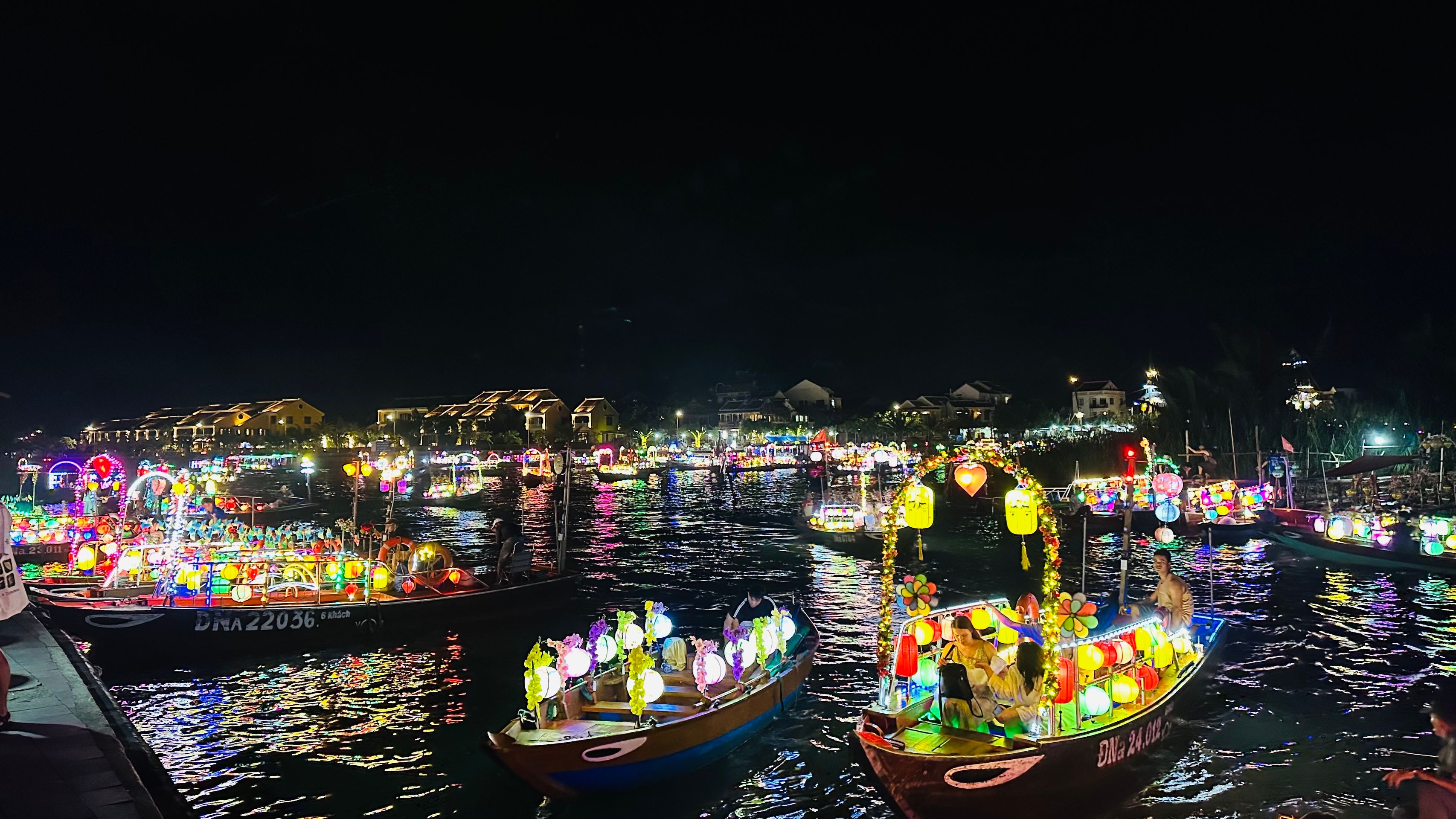
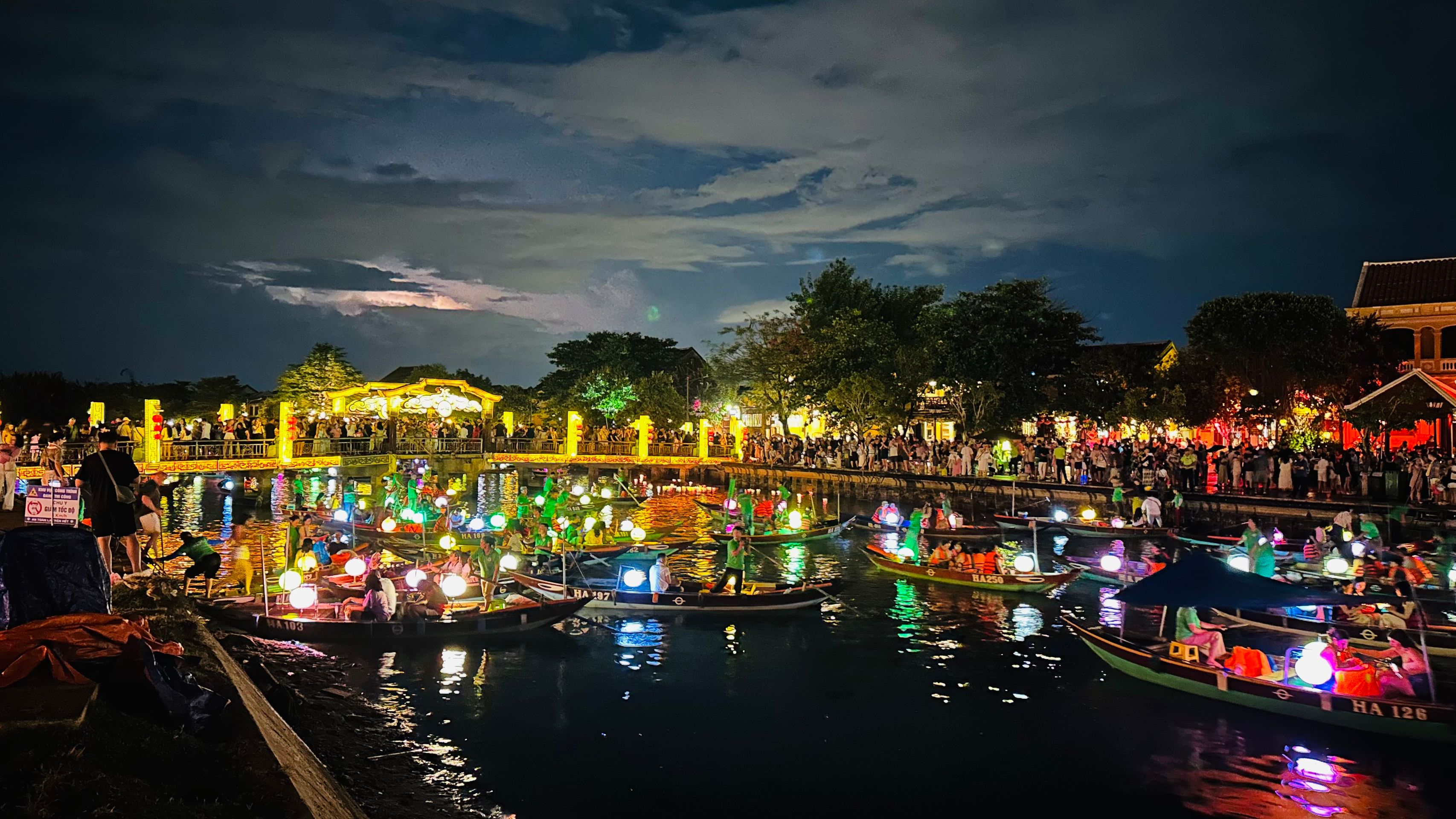
On the very first weekend after our arrival, the monthly Lantern Festival took place in the Ancient Town on the Hoai branch of the Thu Bon River. As early as the afternoon, many souvenir stalls were set up and vendors were touting their wares—fortunately, sellers in Vietnam are always friendly and not too pushy.
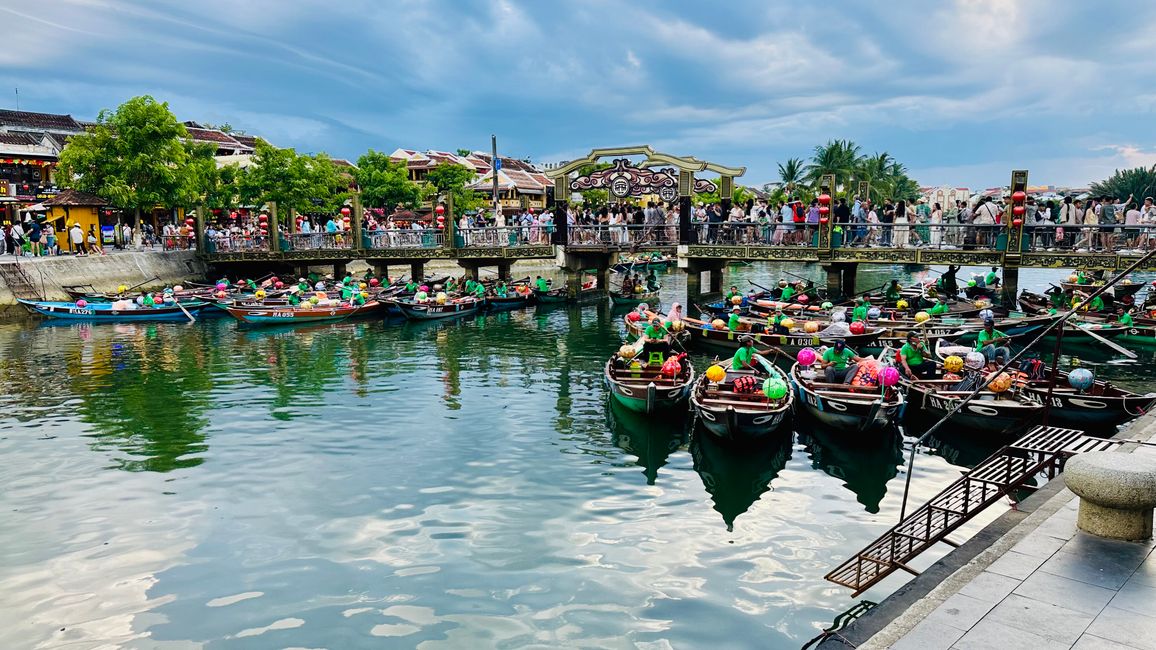
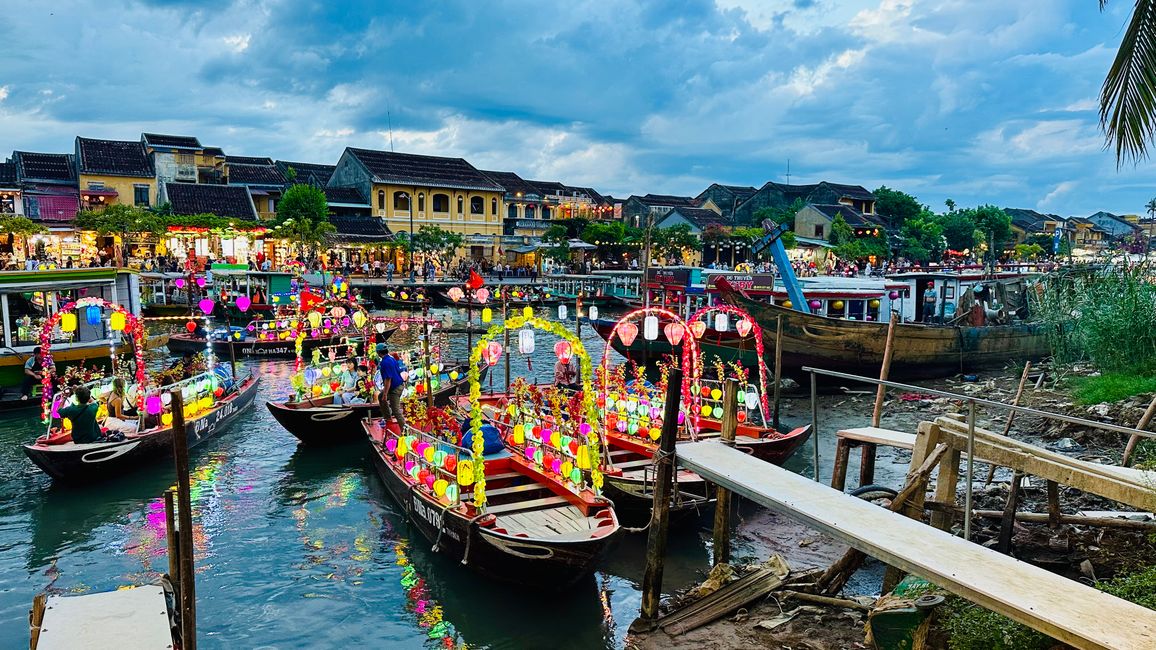
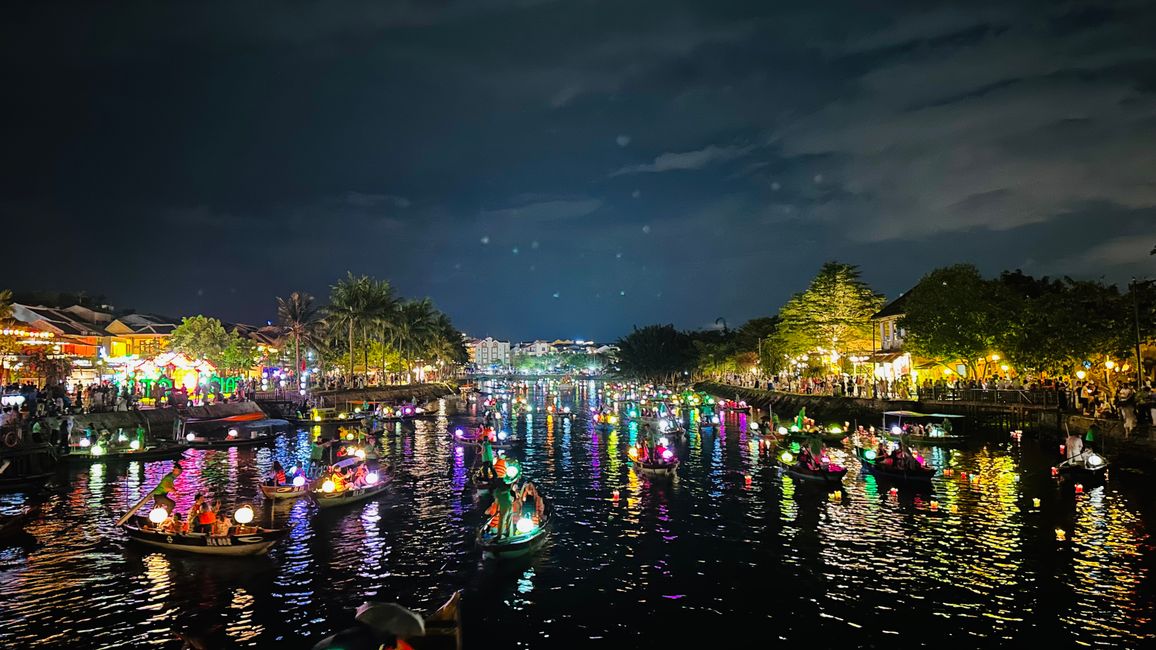
As soon as it got dark, lanterns lit up all over the city, especially on the many boats on the river. The festival was well attended, and the boatmen were swarmed by tourists. Traditionally, small lotus-shaped lanterns with candles are also set afloat in the evening. Each lantern carries a wish or a prayer. You light it, silently make a wish, and then let it go.
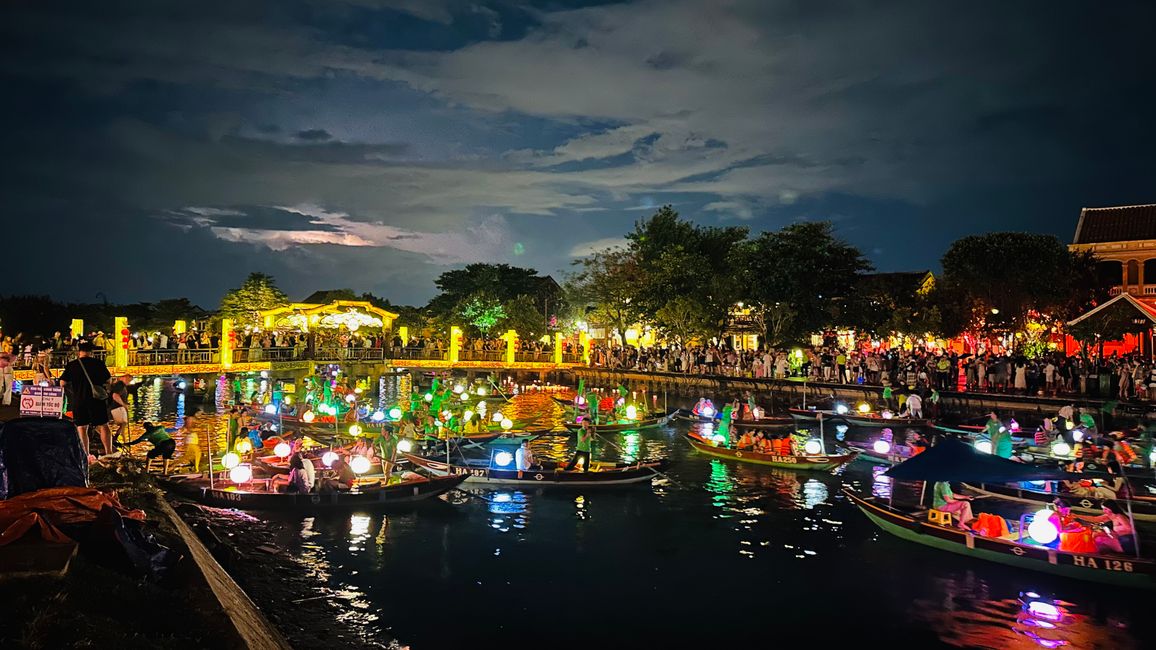
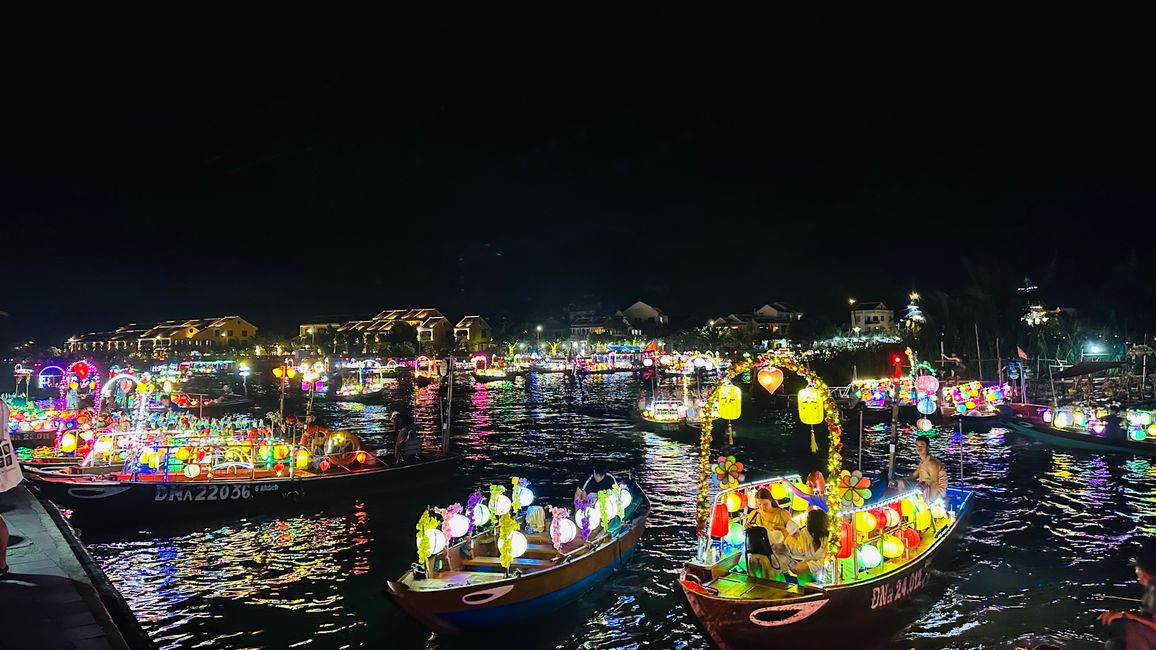
It was truly beautiful to see the city bathed in such a warm, soft light.
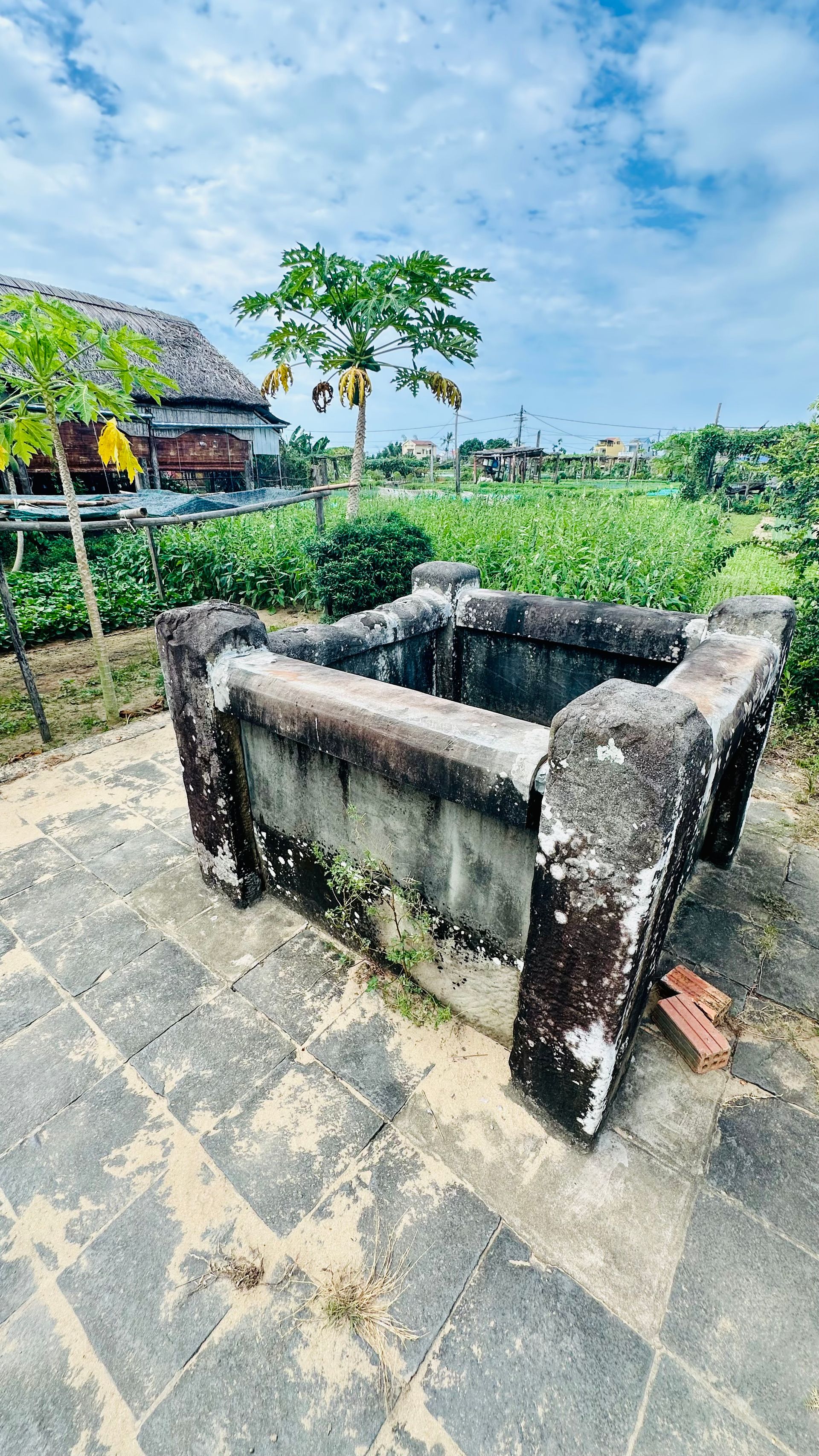
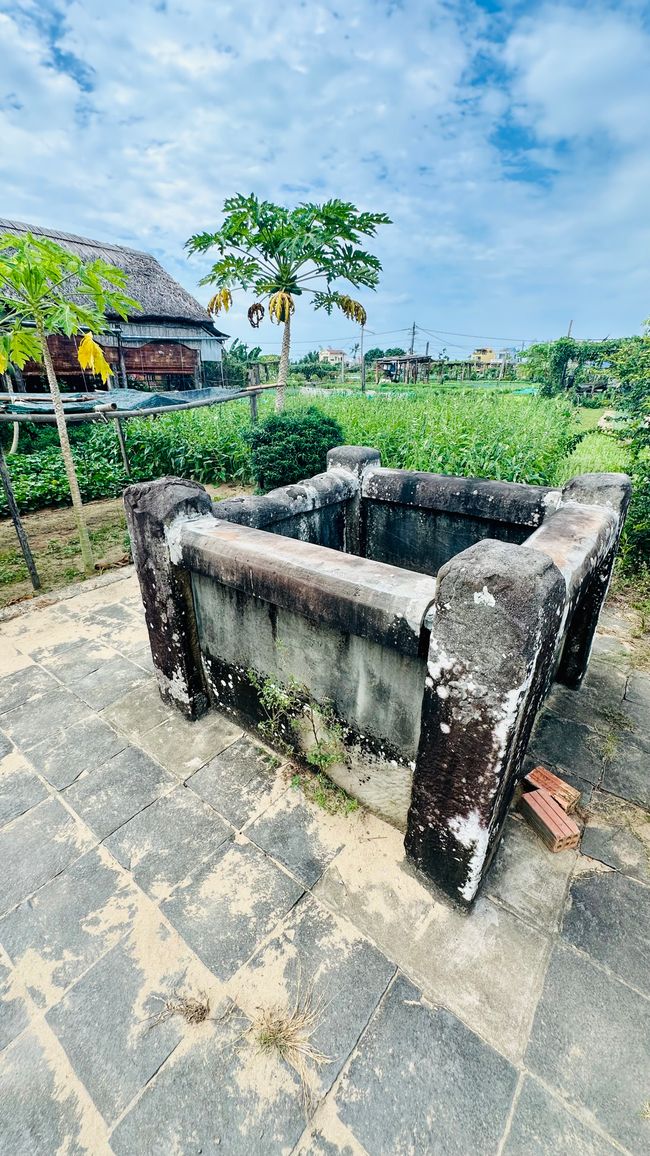
Some sights are a bit hidden, like the stone well here in Tra Que, which has existed since at least the 13th century.
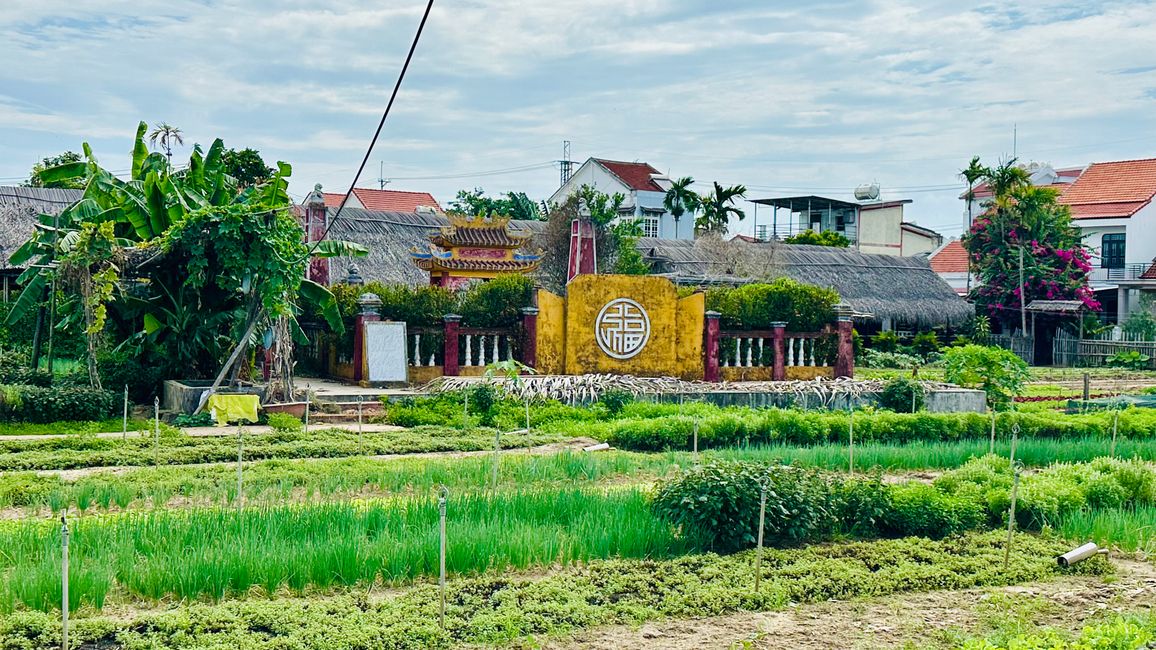
Not far from there is the tomb of Mộ ông Nguyễn Điển—the entrance is right in the middle of a lettuce patch. He was a member of the Nguyen family who was born in Tra Que and served as an important official at the Imperial Court in the 19th century.