
Finale!
Don't worry, there isn't a new pandemic in sight. Finale in Central America, but let's take it step by step. Contrary to reports about the busiest border between Costa Rica and...

Pubblicato: 16.01.2025
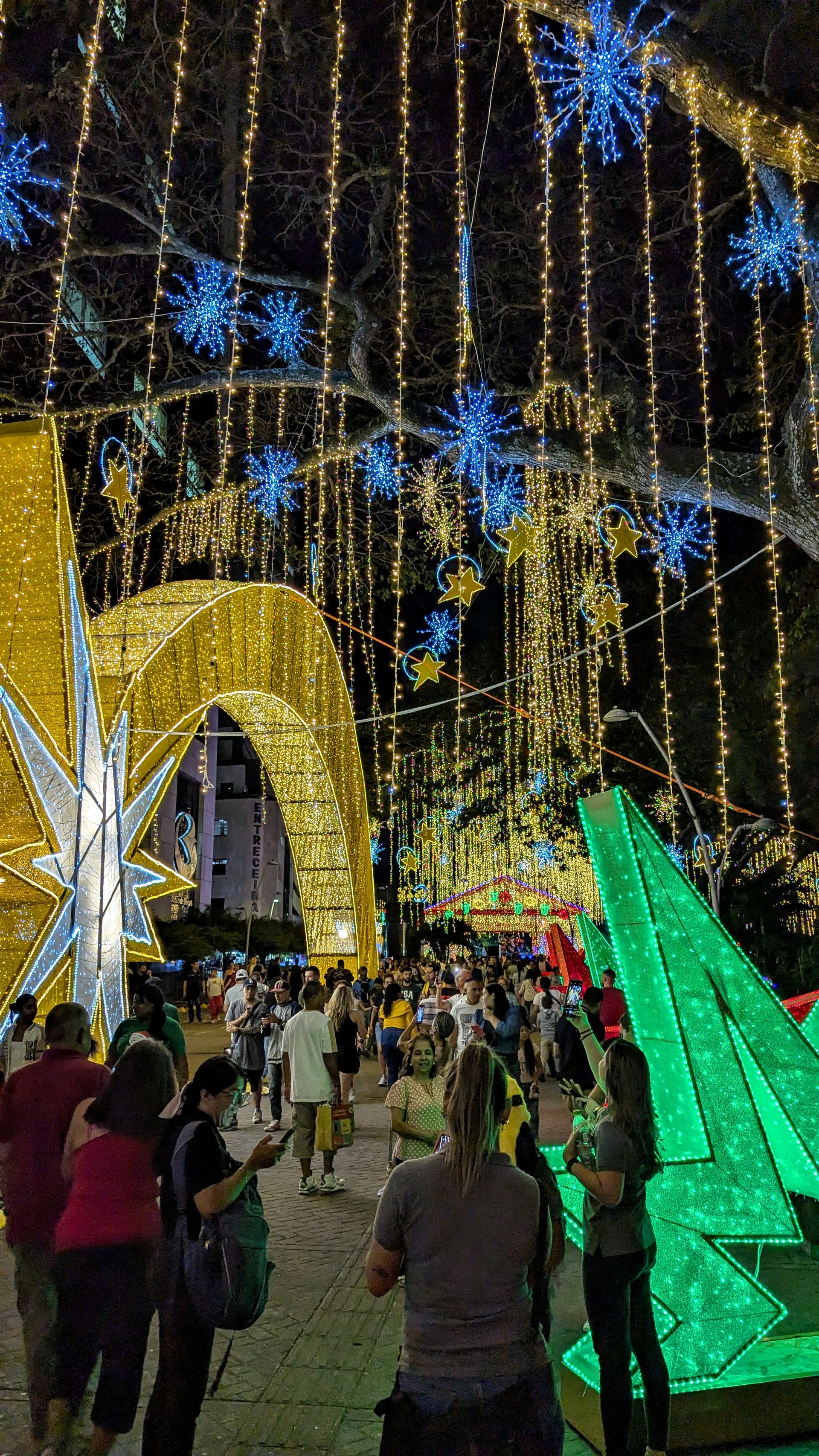
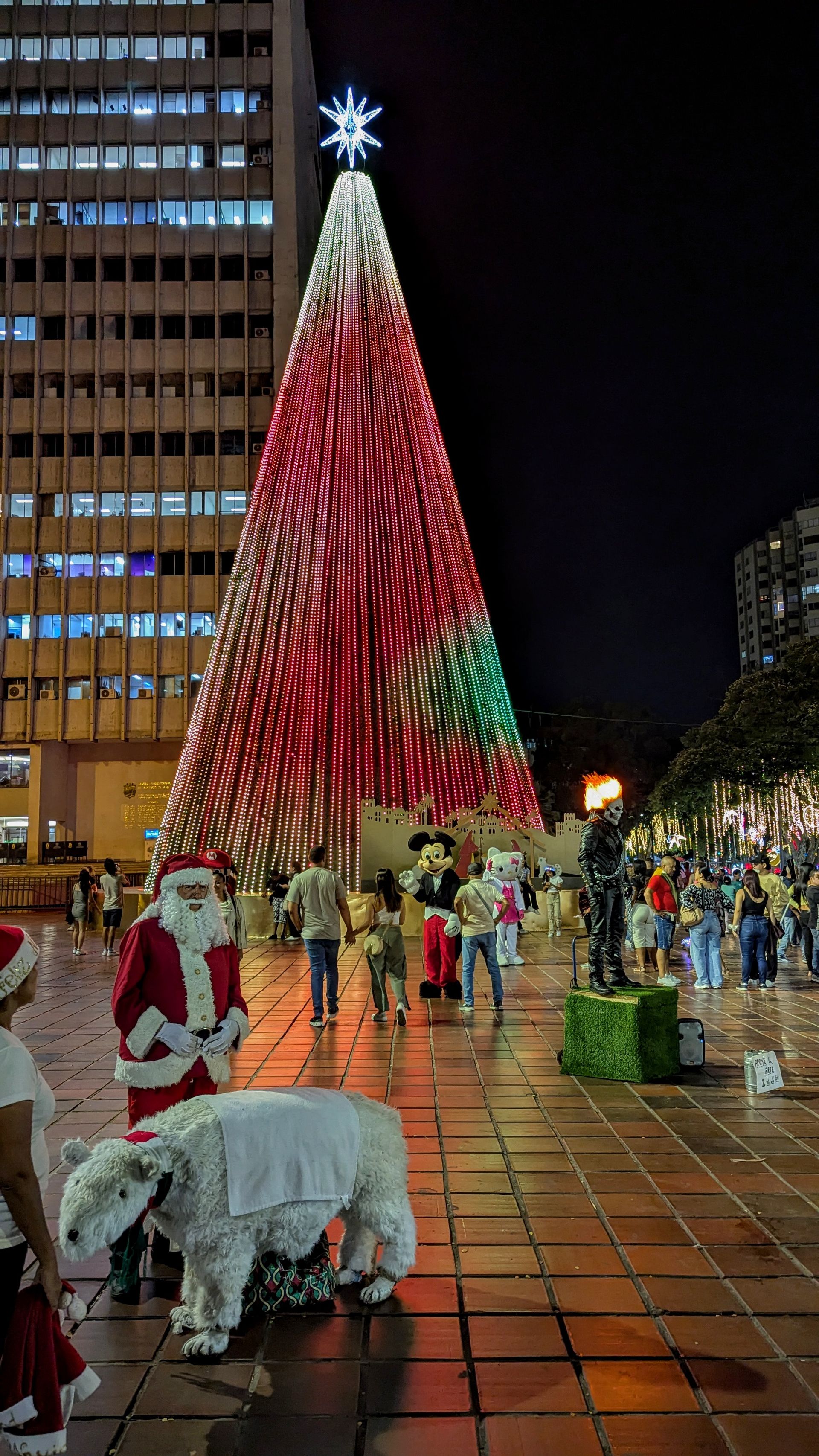

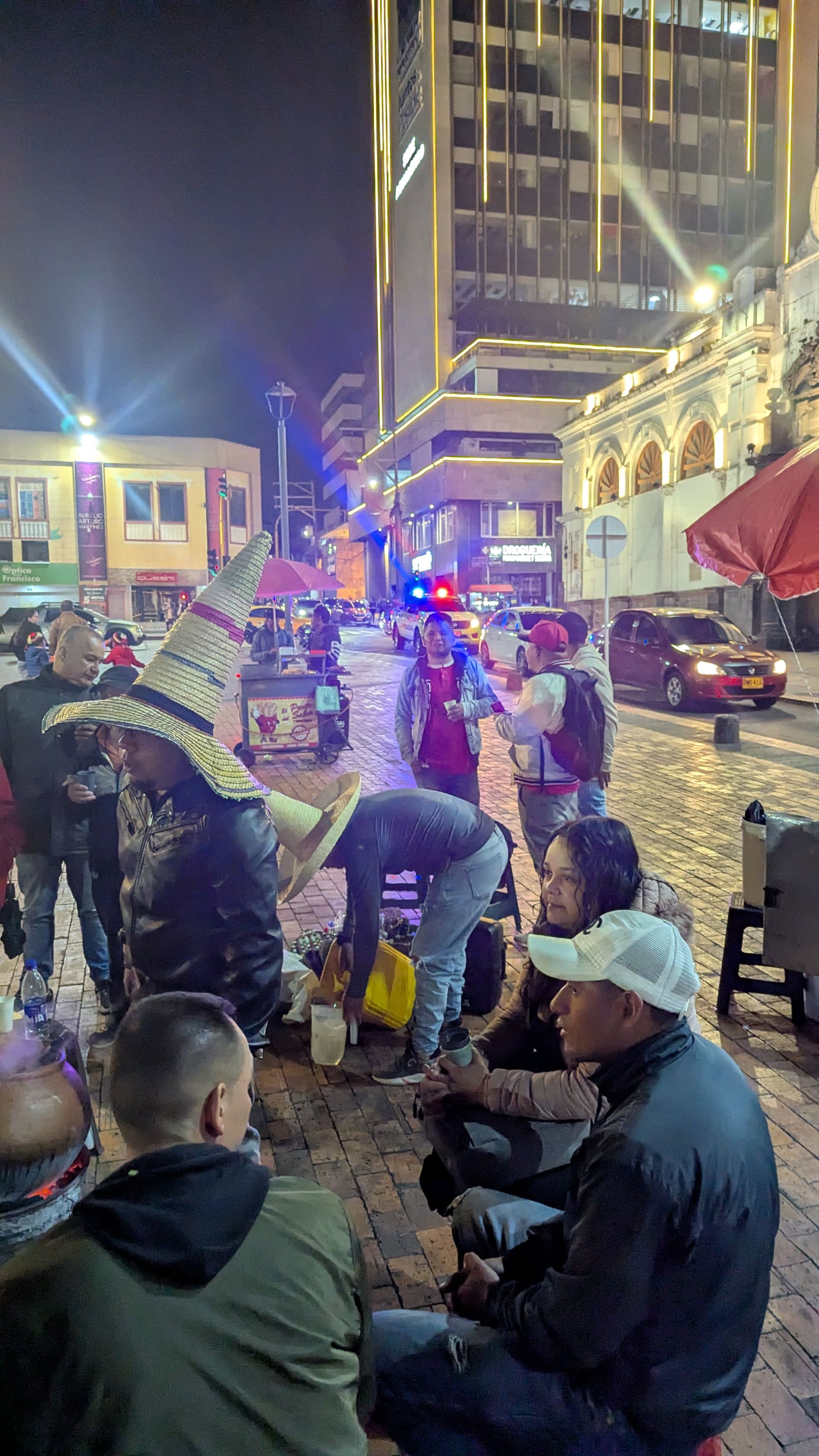
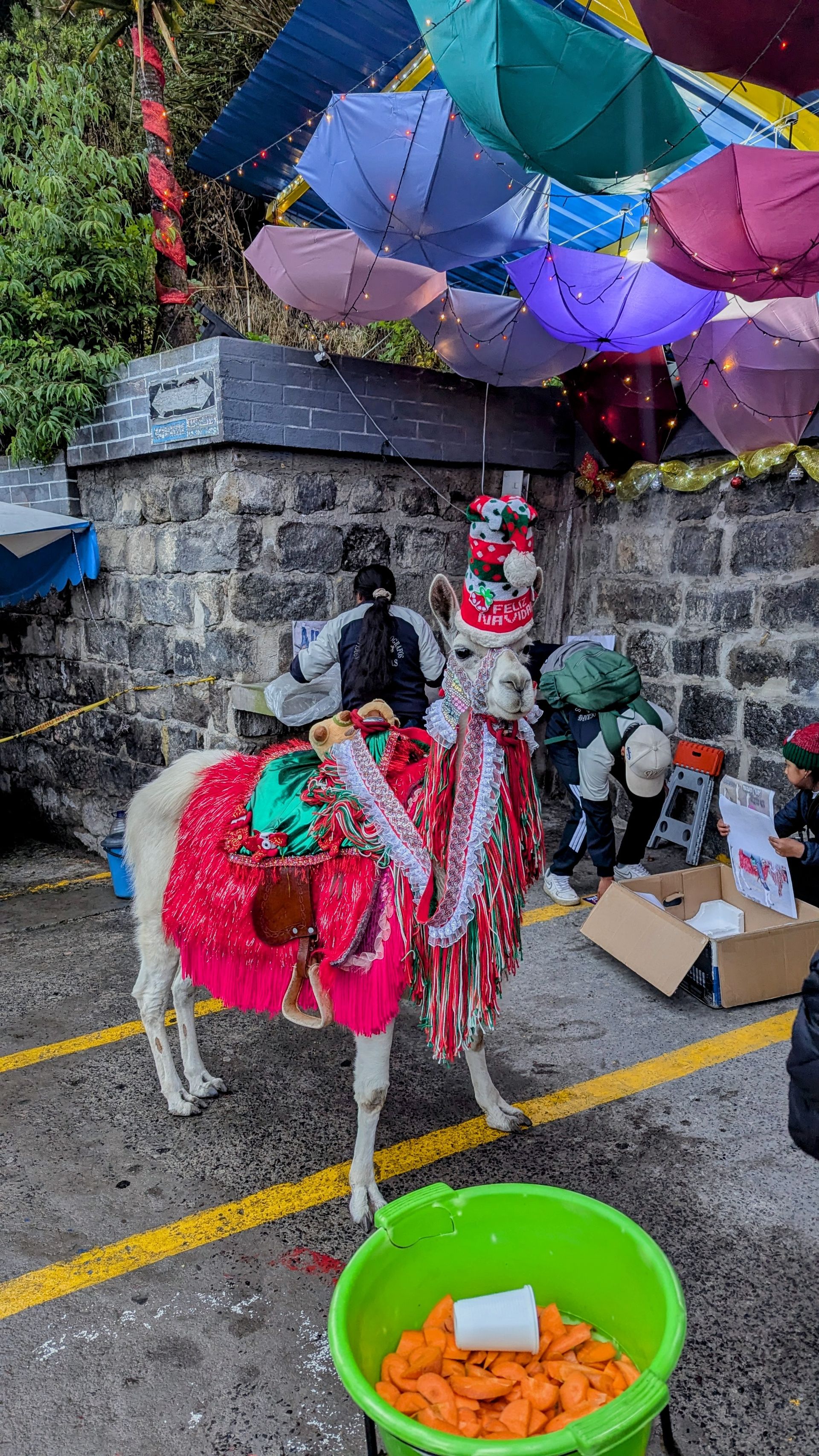
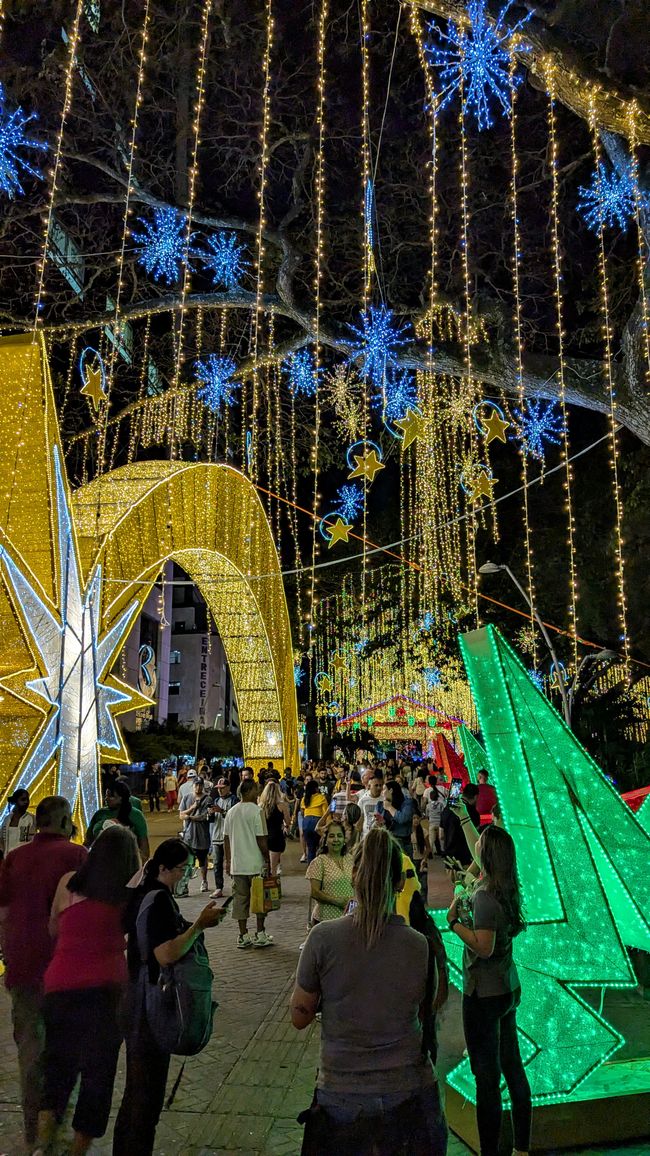
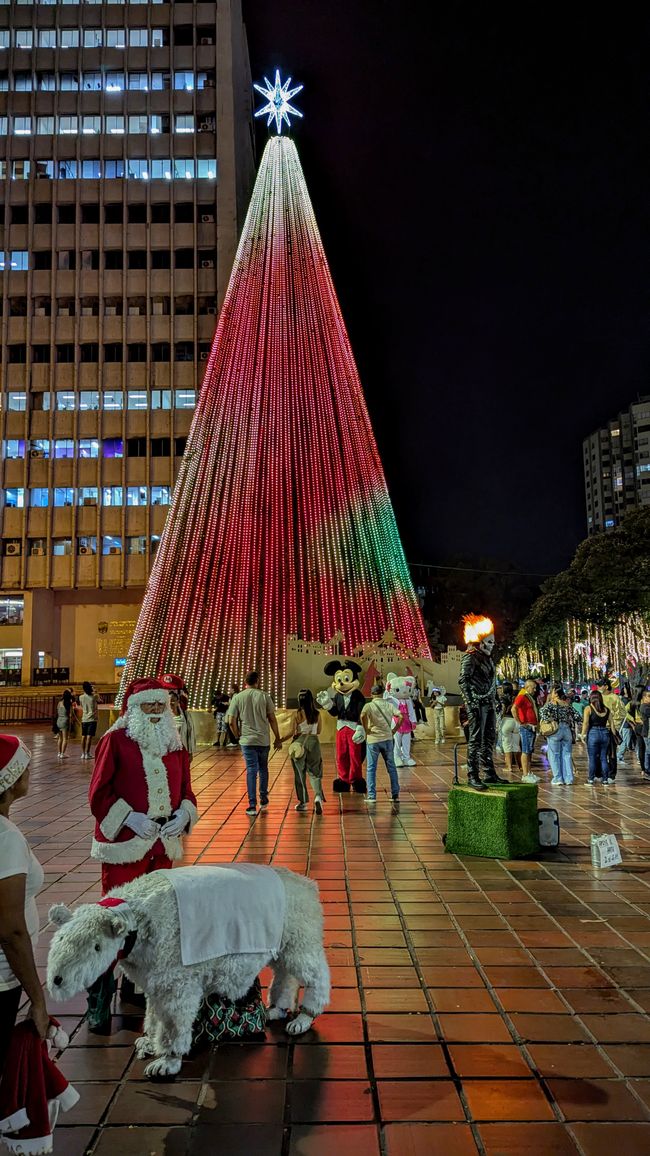
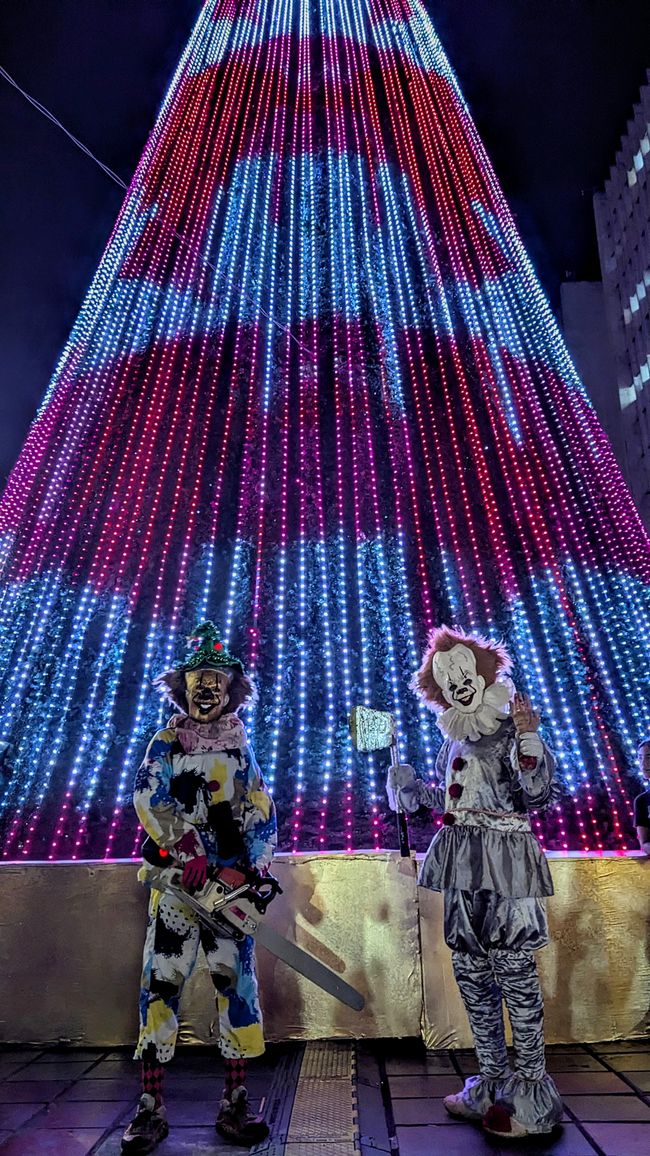
Cali is significantly calmer than Medellín, cleaner, greener, and has less poverty, or it's simply less visible here. Like everywhere in Colombia, the main squares and selected streets are adorned with countless blinking string lights. Santa Clauses, Mickey Mouse, and Hello Kitty mascots roam the streets for photos, while clowns with chainsaws scare people.
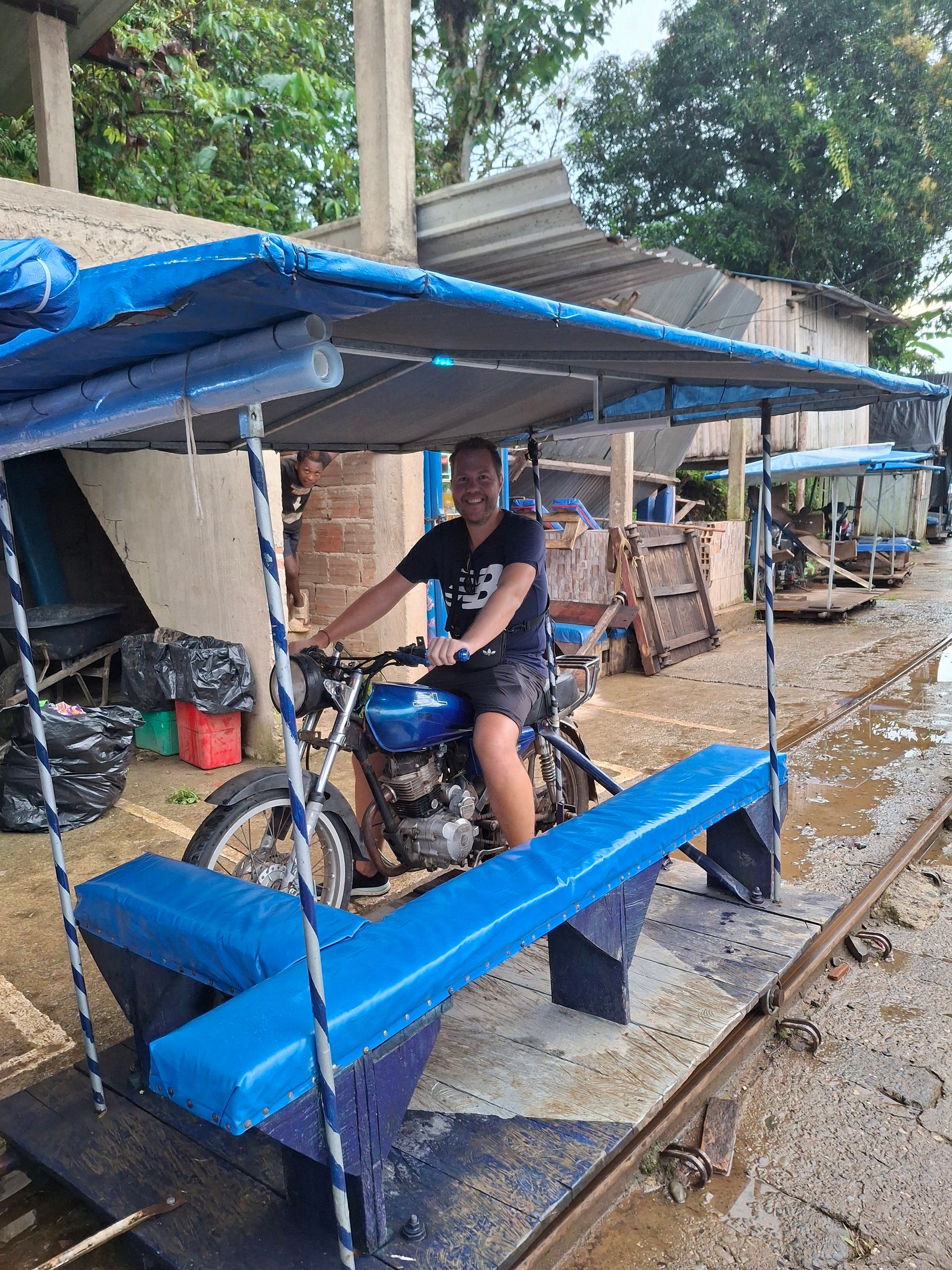
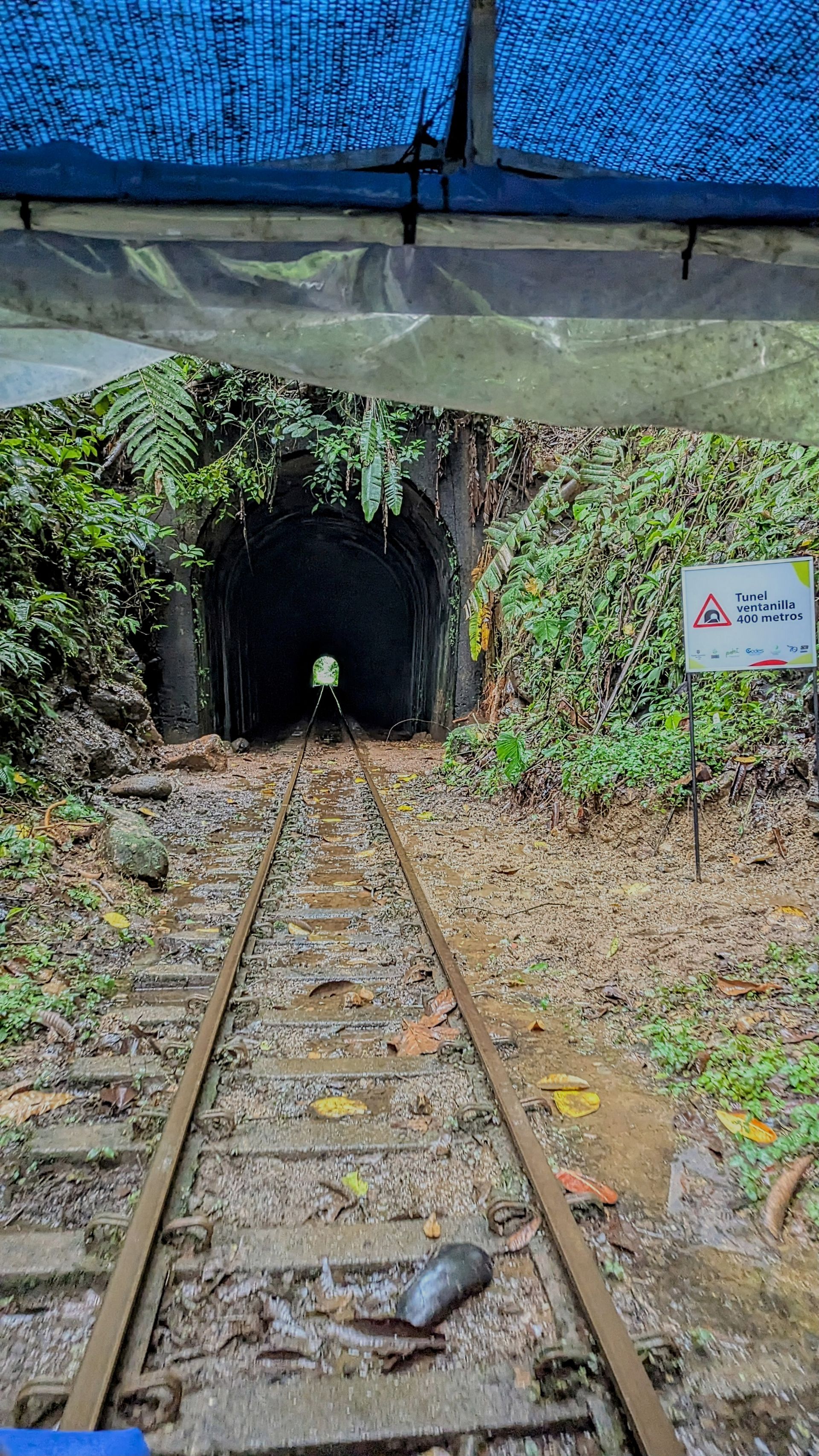
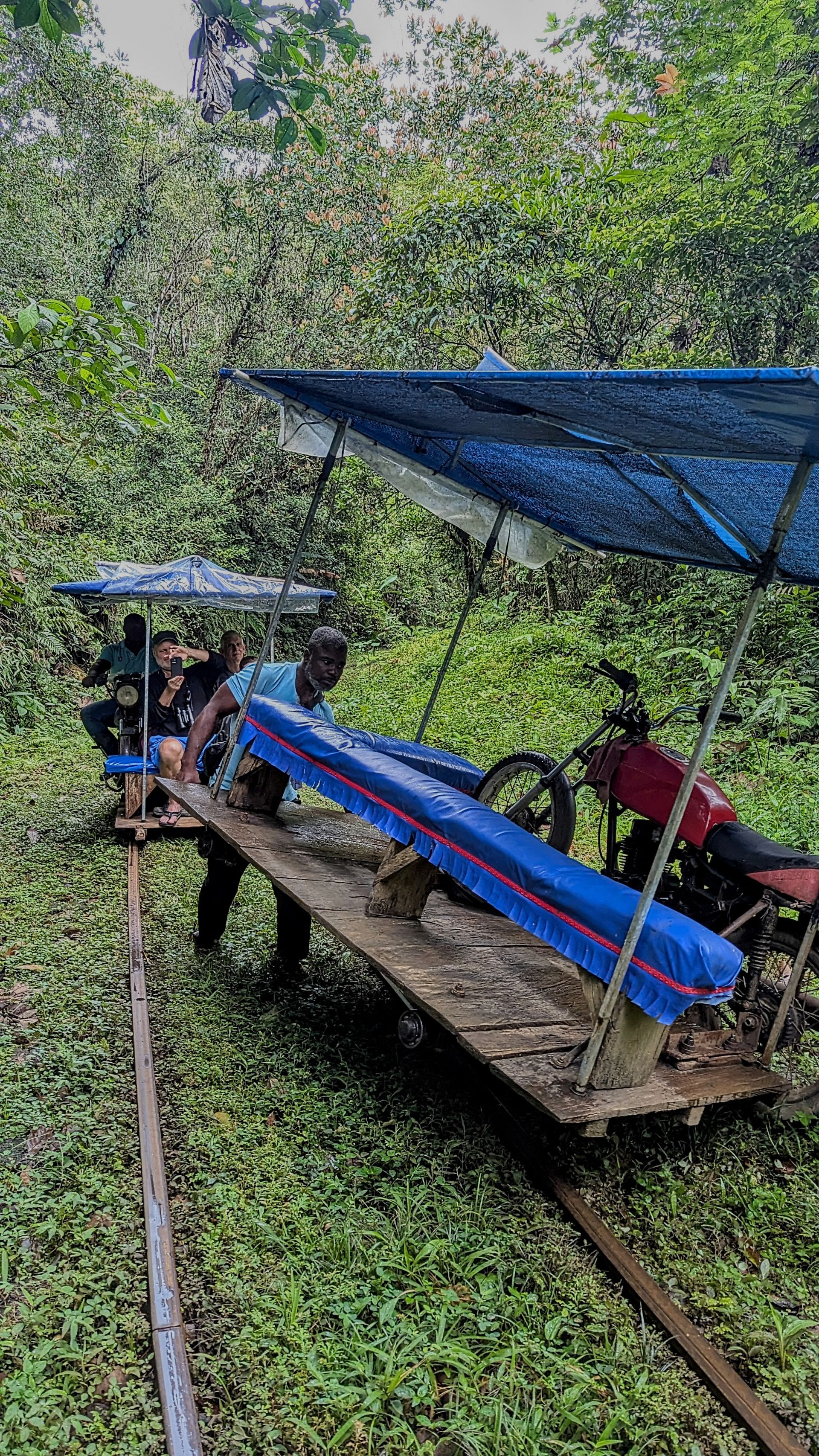
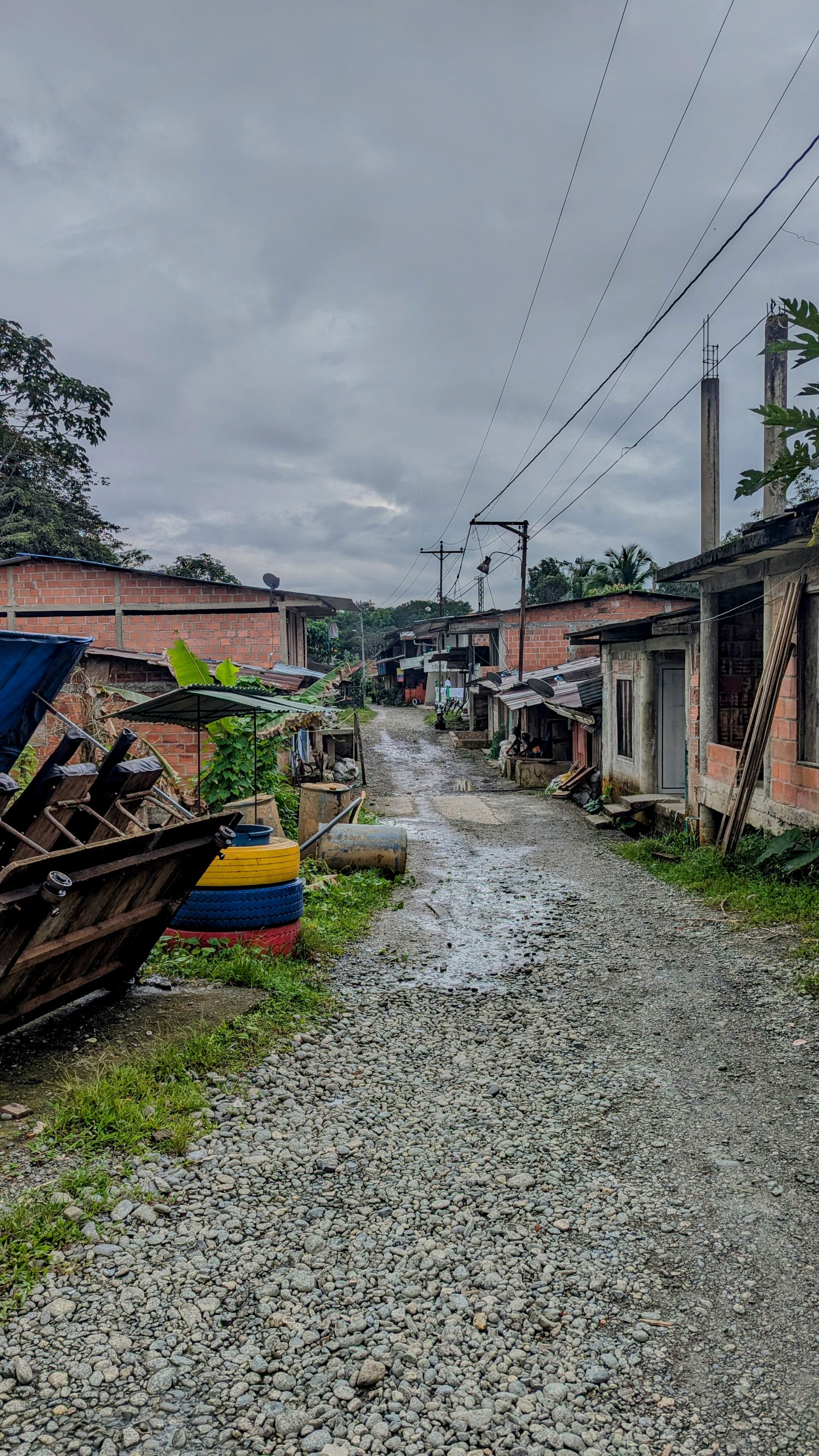
Street food is available, but the food mainly consists of meat skewers, fries with chorizo (including plenty of ketchup and mayo), bad hot dogs with soggy sausage, corn on the cob, dry arepas (rice or corn bread), wafers with jam, sweetened condensed milk, and cheese, as well as sweet drinks in various forms, including diabetes and high cholesterol. Therefore, we decided to eat Arabic food twice; in the neighborhoods of San Antonio and Barrio Granada, there are good international restaurants! Otherwise, we enjoyed a relaxing massage and a guided tour through a market, where we indulged in a lot of food, which I could see myself doing again; there were a few small snacks that we hadn't tried before. Why go to Cali if you don't want to dance salsa? I find Cali worth visiting even without a dance lesson, especially if you spend a day trip or better yet, a night in San Cipriano. So we did, taking the bus from Cali towards Zaragoza. Just before our destination, I asked the bus driver to stop. A small bridge led over the four-lane road to an inconspicuous ticket booth, where we could buy two tickets for the trip to San Cipriano, and then we crossed another hanging bridge, before I could already see the tracks, and my excitement grew. I had seen the small village of San Cipriano and its African-American inhabitants in a documentary long ago; the village has no road connection, and when the train stopped operating, the residents had to come up with something. The solution was small Brujitas, also known as little witches. Eight lodges were built under a wooden pallet, four run on the tracks, and the other four run inside, so that the vehicle stays on the tracks. A motorcycle is attached on the right side, with the rear wheel running on the rail and serving as a drive. What fun it is to go through the jungle over the aging bad tracks, through tunnels and over bridges; if there is oncoming traffic, one party must get off and clear the tracks.
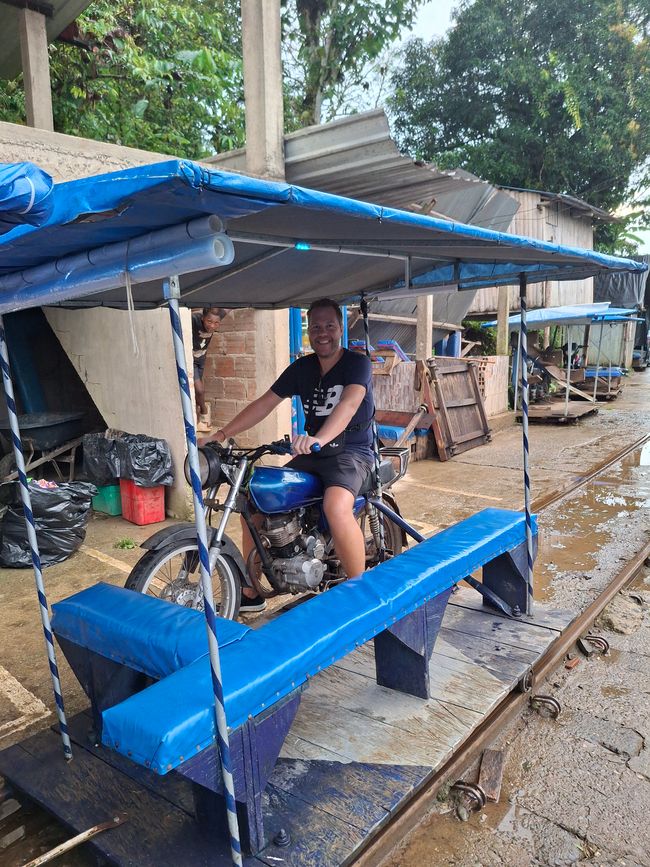
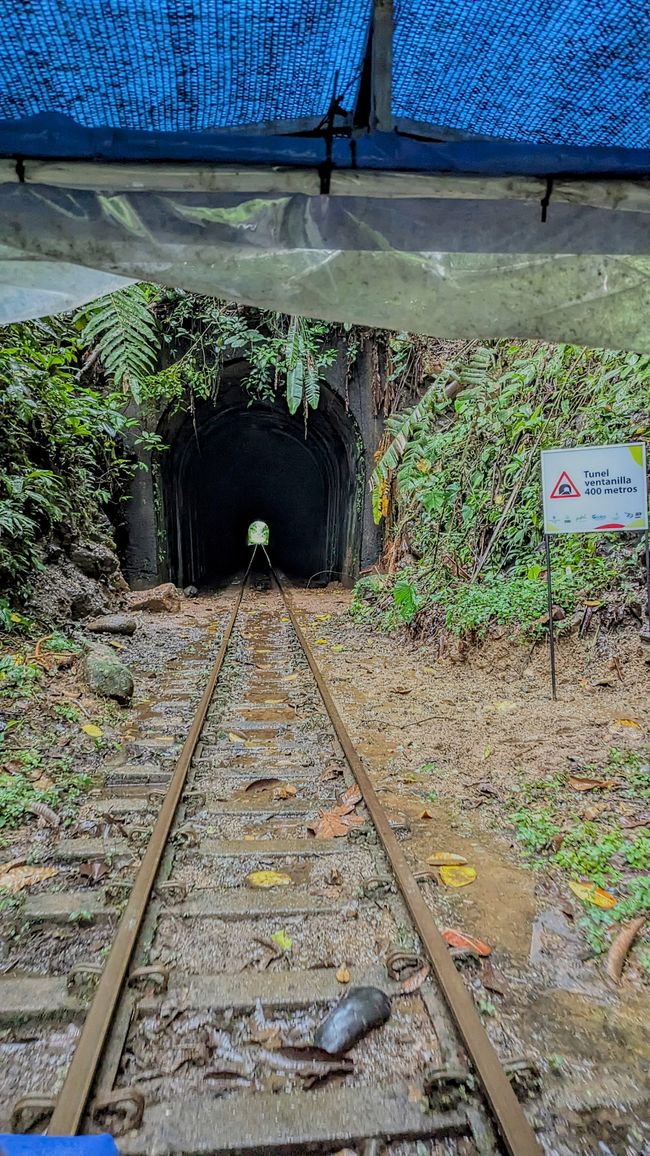
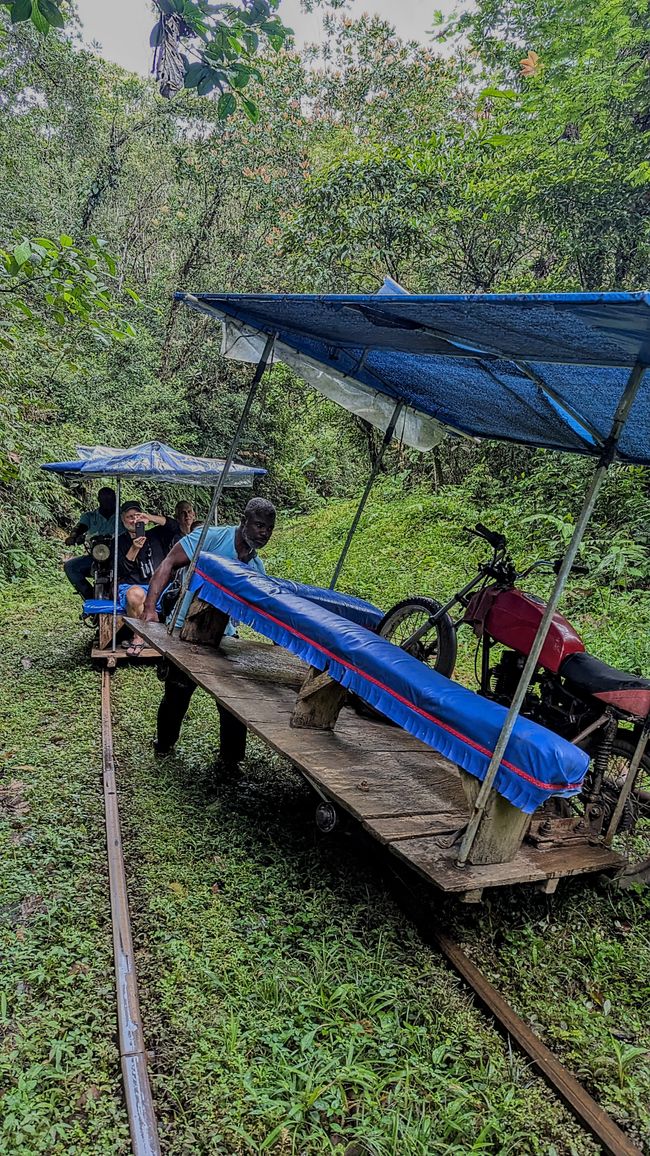
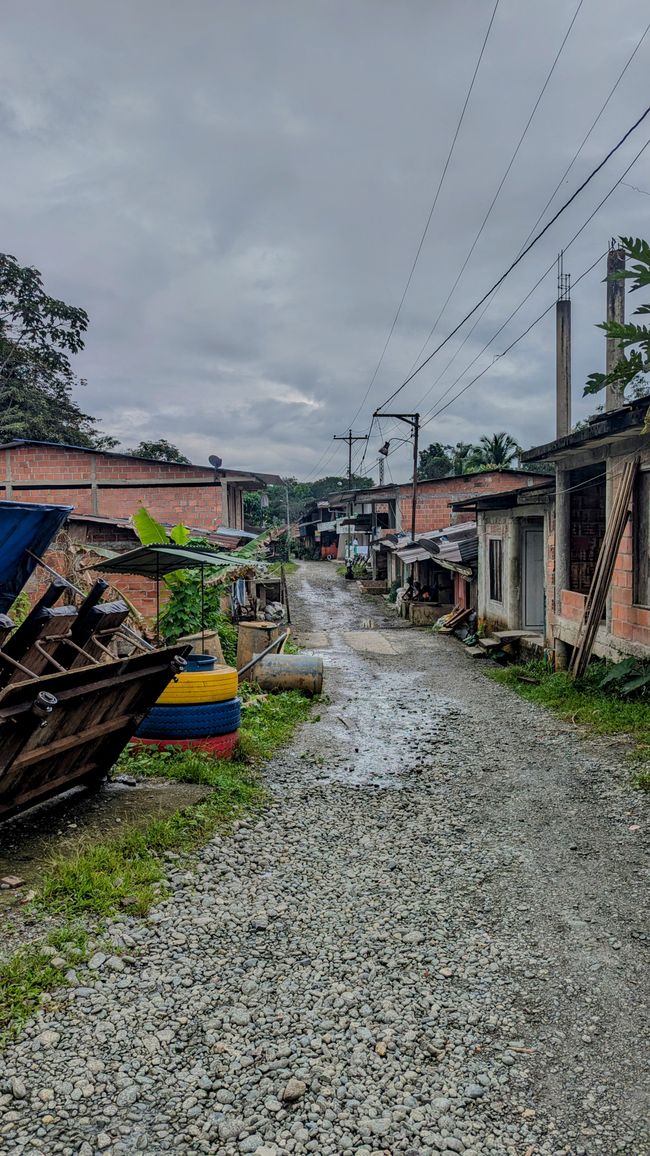
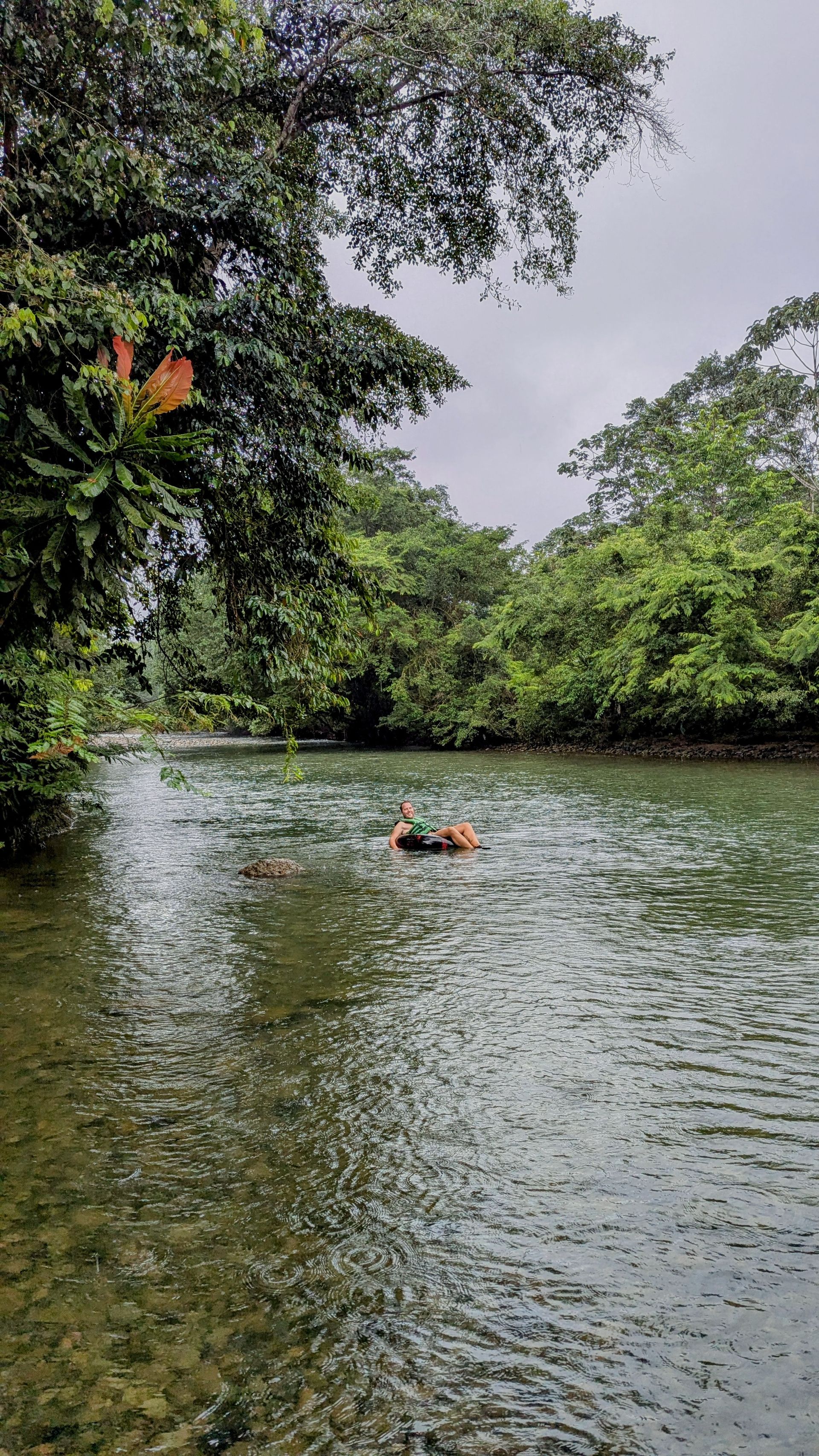
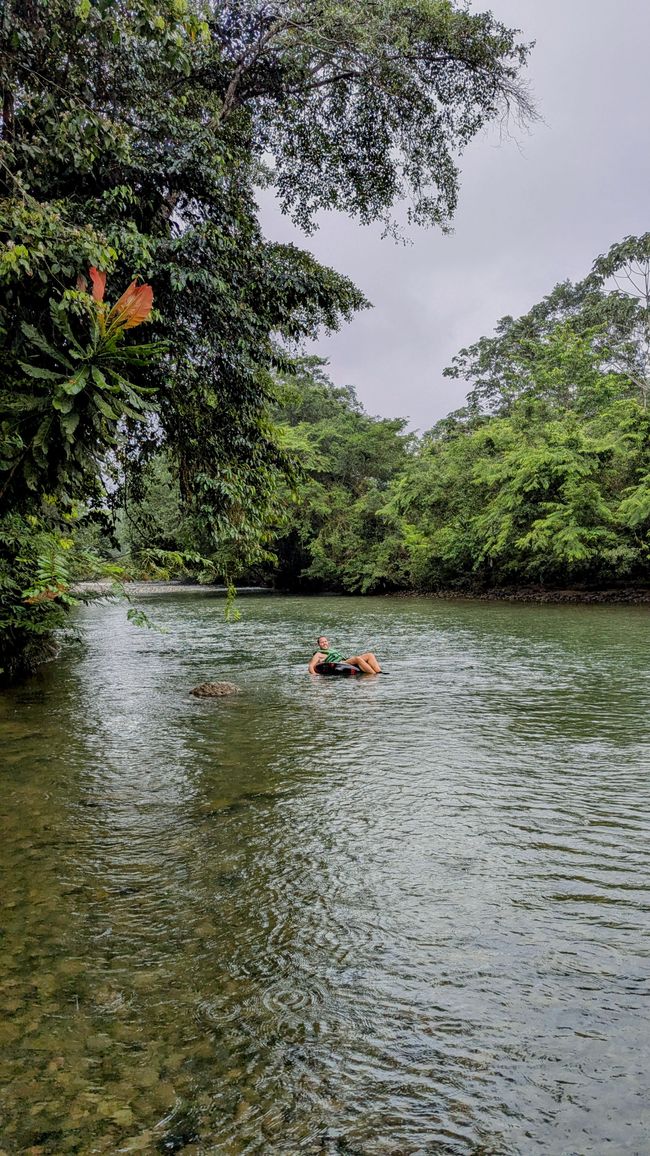
Upon arriving in the village, we treated ourselves to lunch (of course grilled chicken), before heading upstream on two tires. A quick cooldown in a waterfall followed, and then we went into the crystal-clear river towards the village. A few small rapids provided some variety; otherwise, I enjoyed the tranquil jungle atmosphere during the rain and simply let myself drift. The return journey with the little witches was just as much fun as the ride there, a lovely highlight!
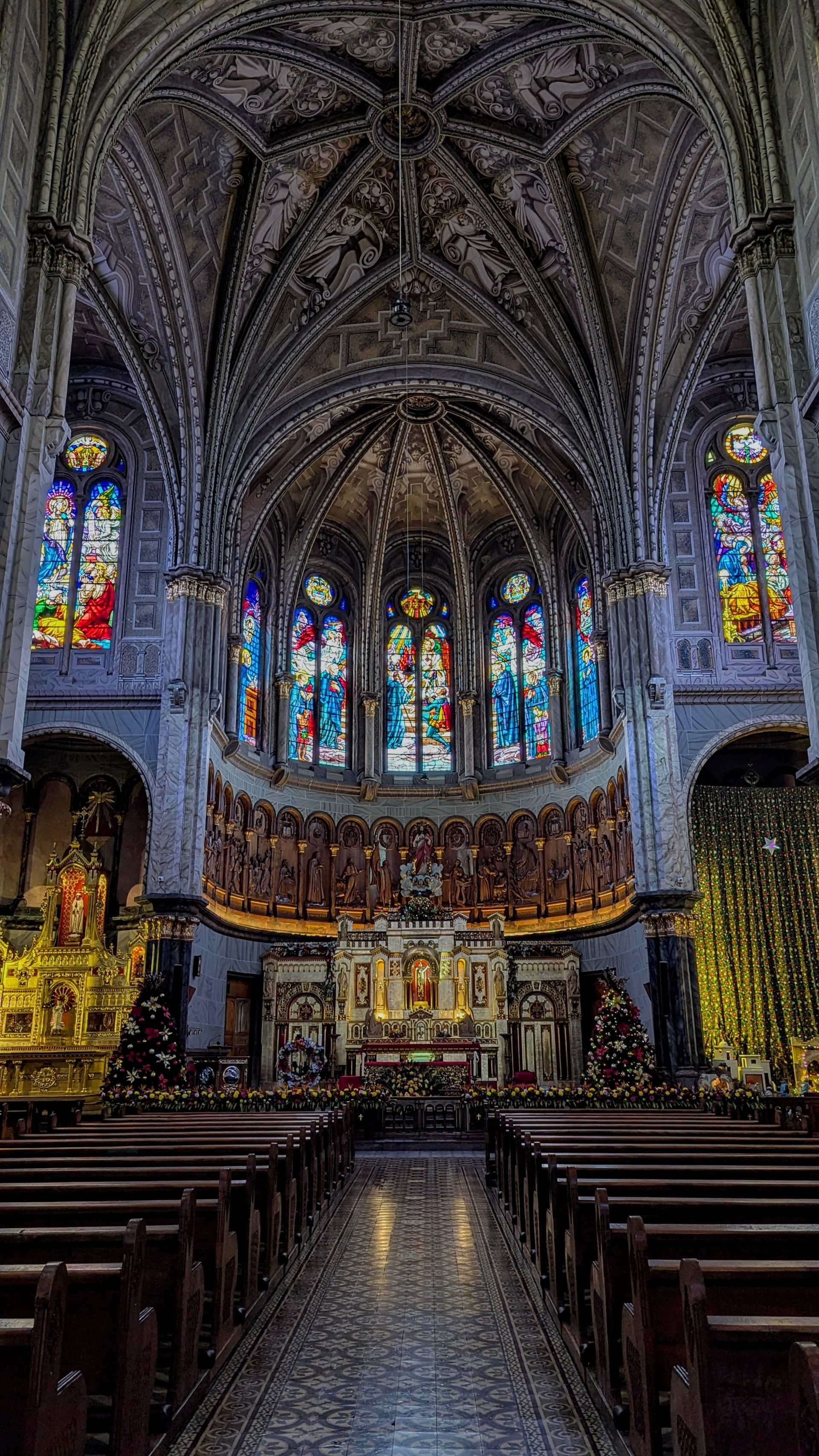
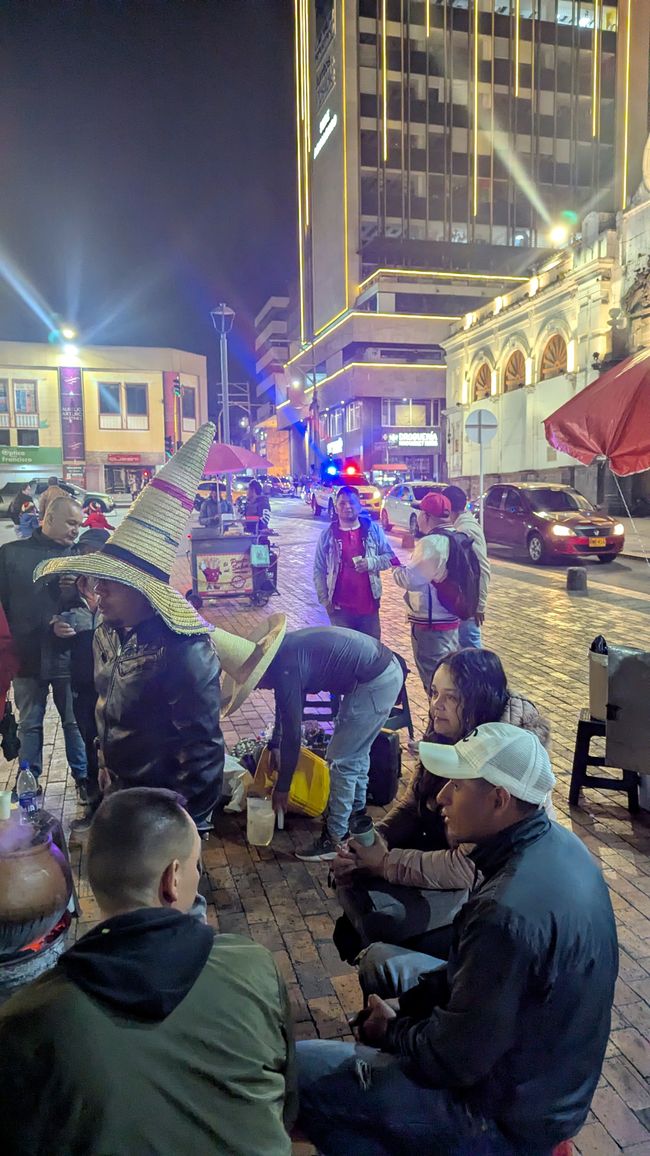
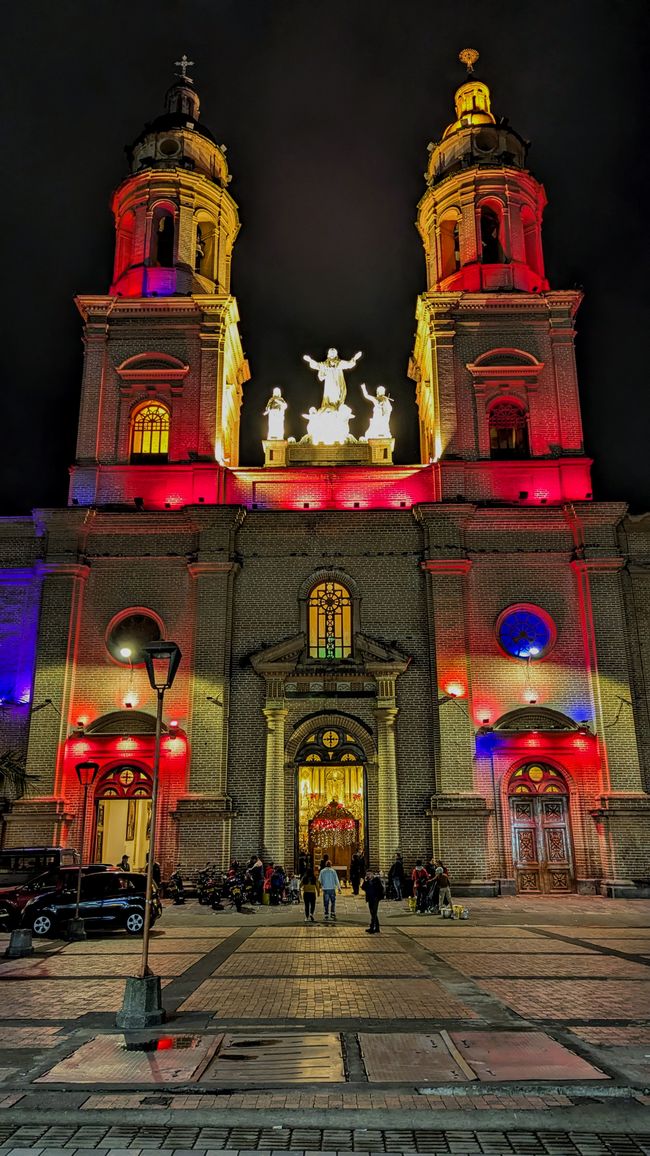
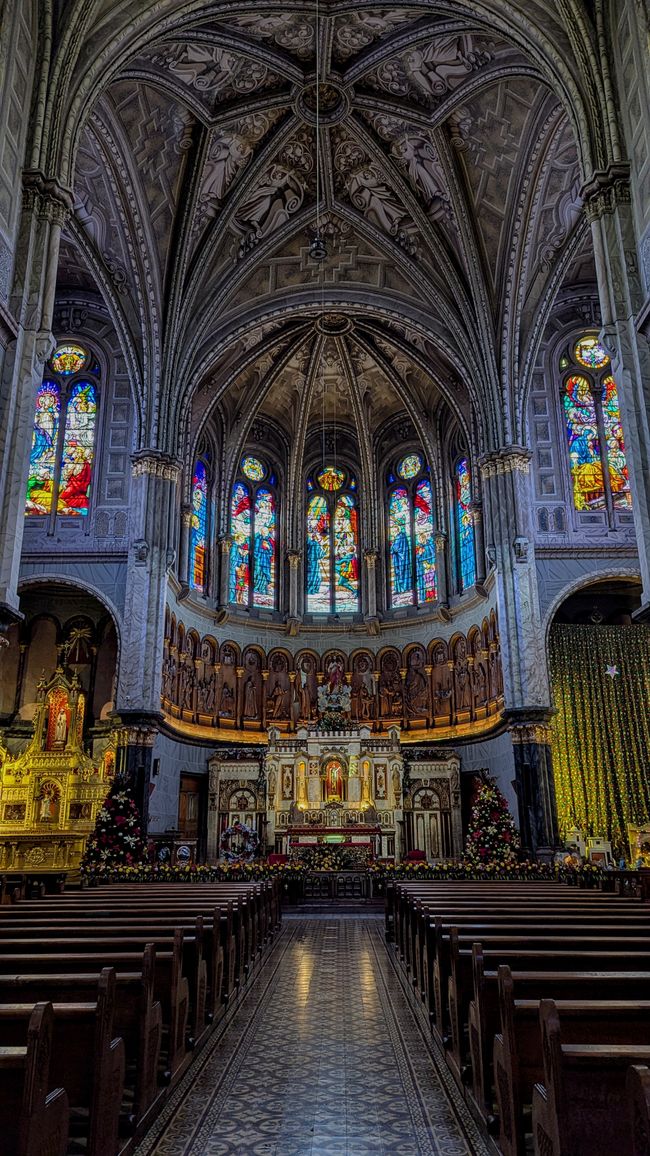
12 hours of bus travel through serpentine roads in an overly small bus and no legroom? Not if there is a 50-minute flight for €70, we simply treat ourselves to that. The landing approach to Pasto with the surrounding mountains at 2500 meters was already impressive. Pasto is the theological capital of Colombia with 56 churches and 23 monasteries, of which we visited a few. In the evening, we had the first mulled wine of the year, a welcome warmth at a cool 12 degrees for me. The warm passion fruit juice with a bit too large a splash of Aguardiente tasted excellent. The supplies of the presumably taxed and not self-distilled liquor came from a large old gasoline canister.
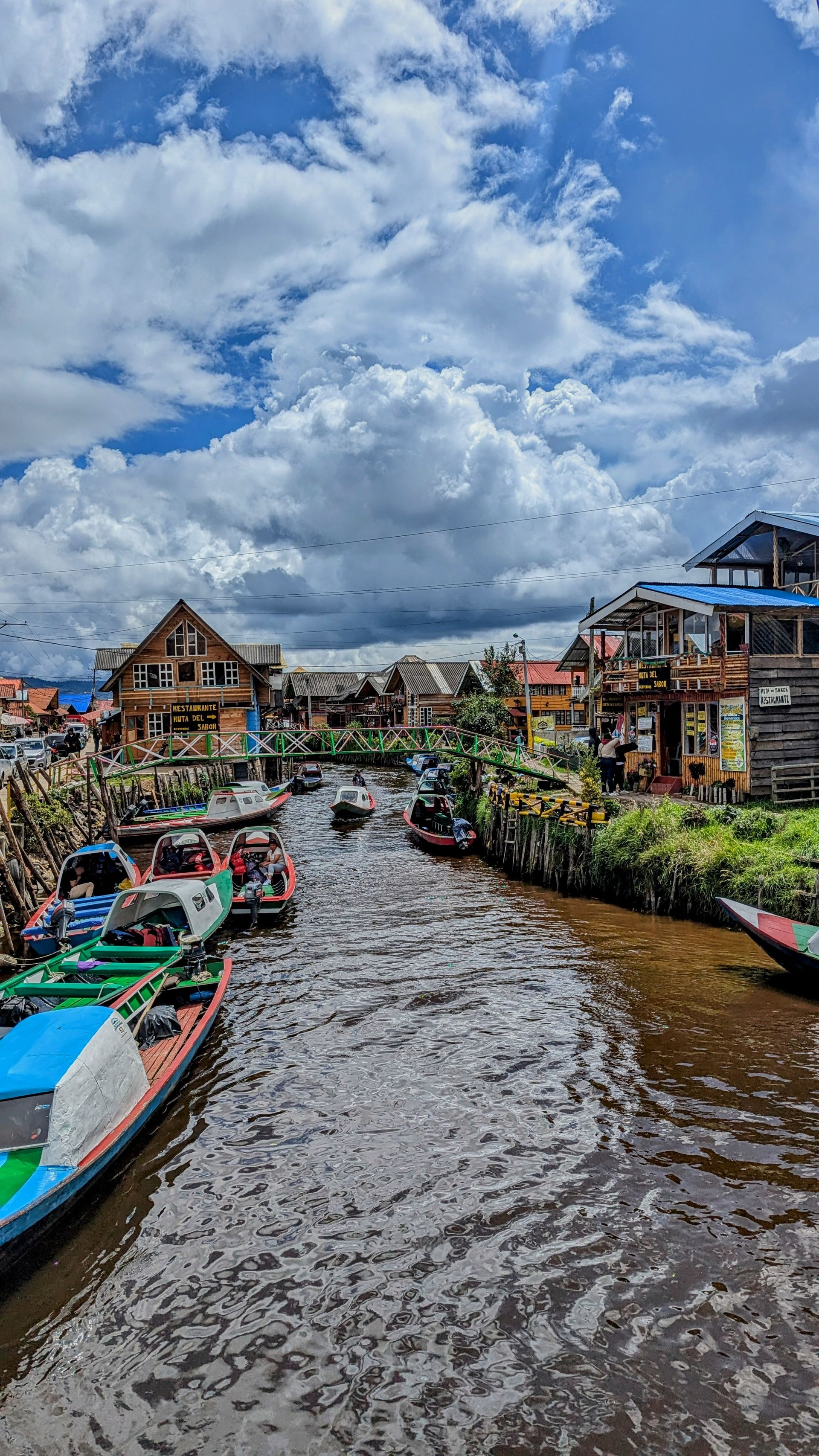
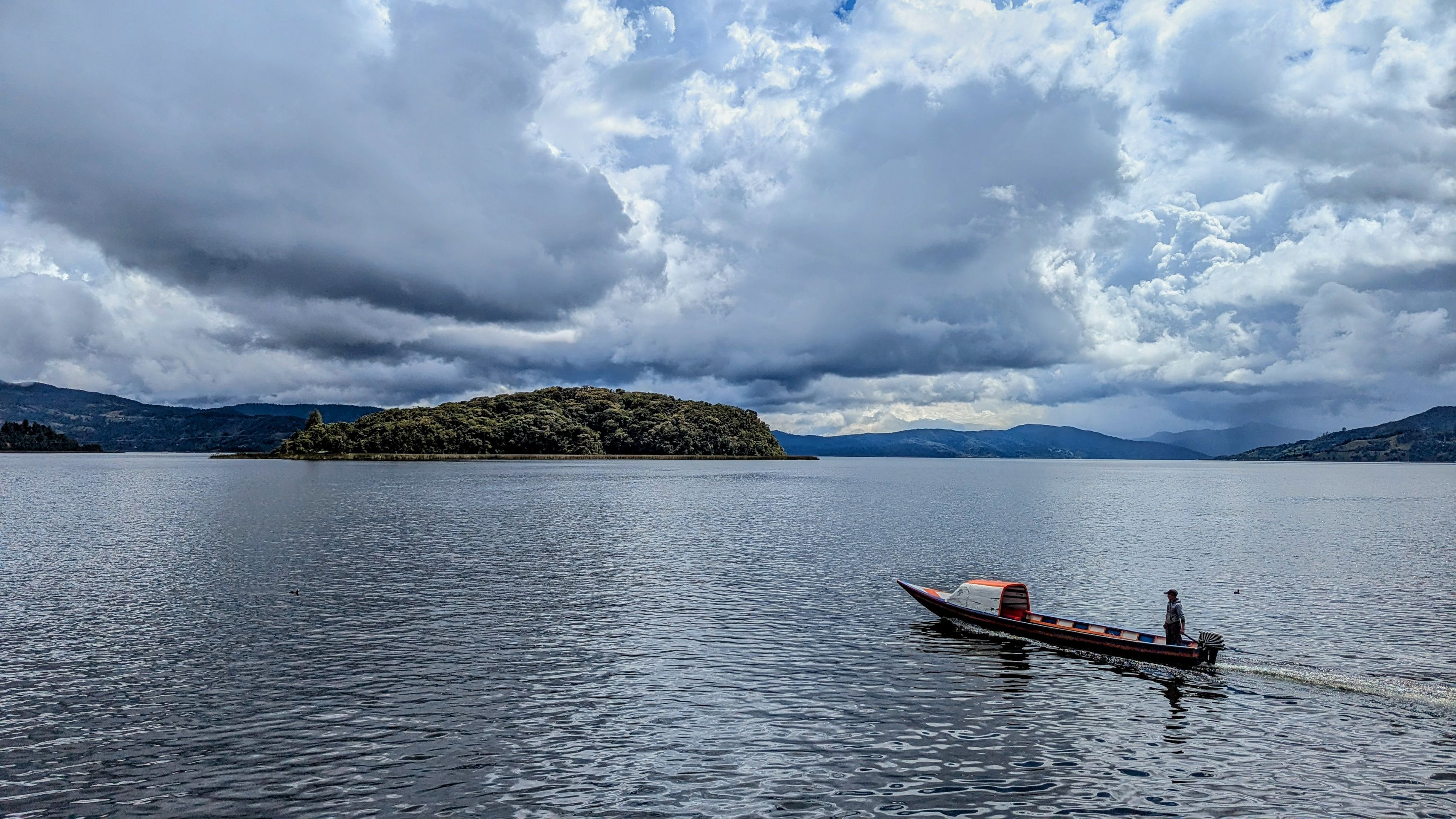
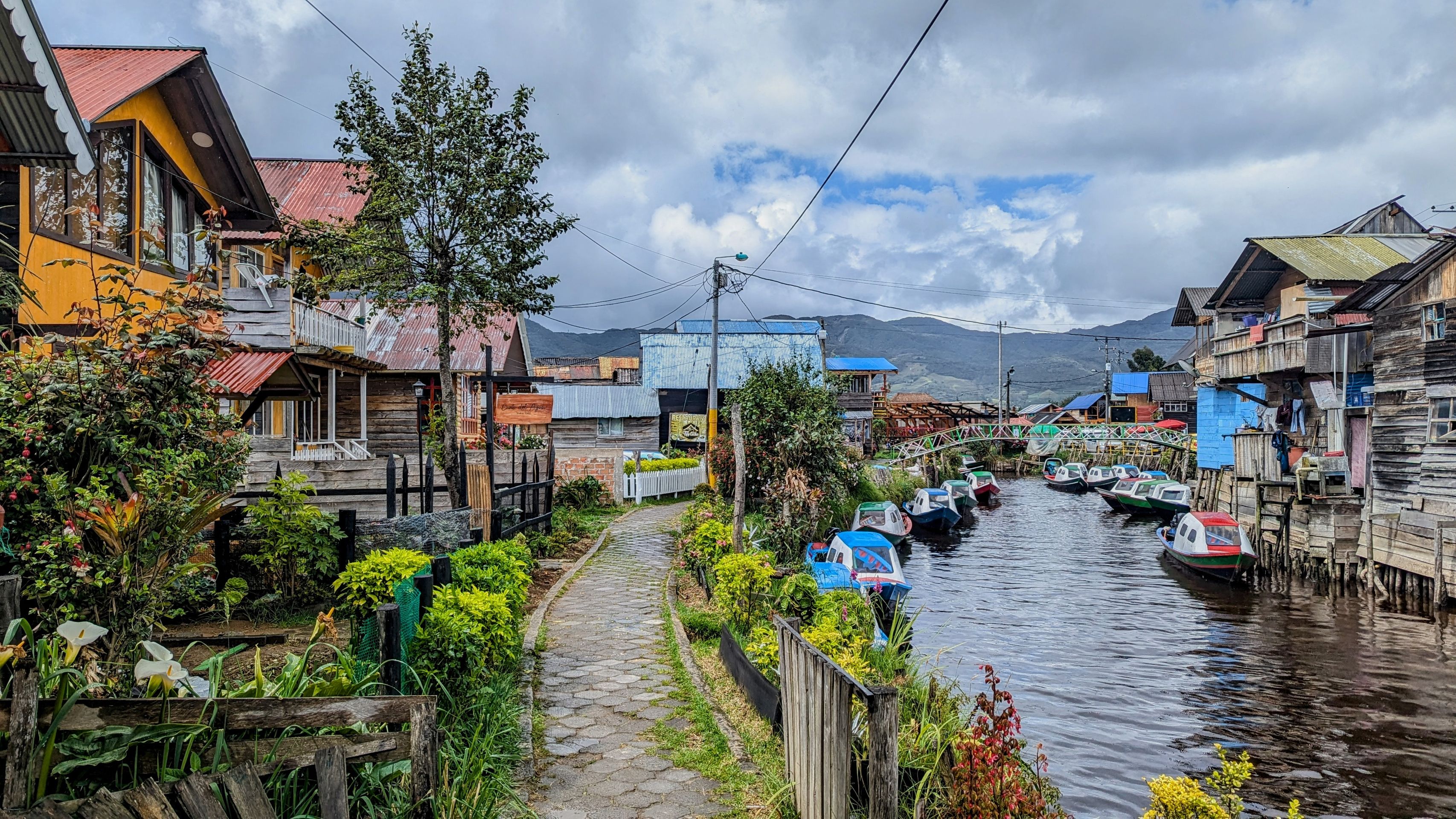
For a day trip, we went to the next valley to 'Laguna de la Cocha', where there was a small picturesque village. From the village, one could take a boat along the little river to the lake, before returning to one of the small, beautifully arranged wooden houses for a cool beer!
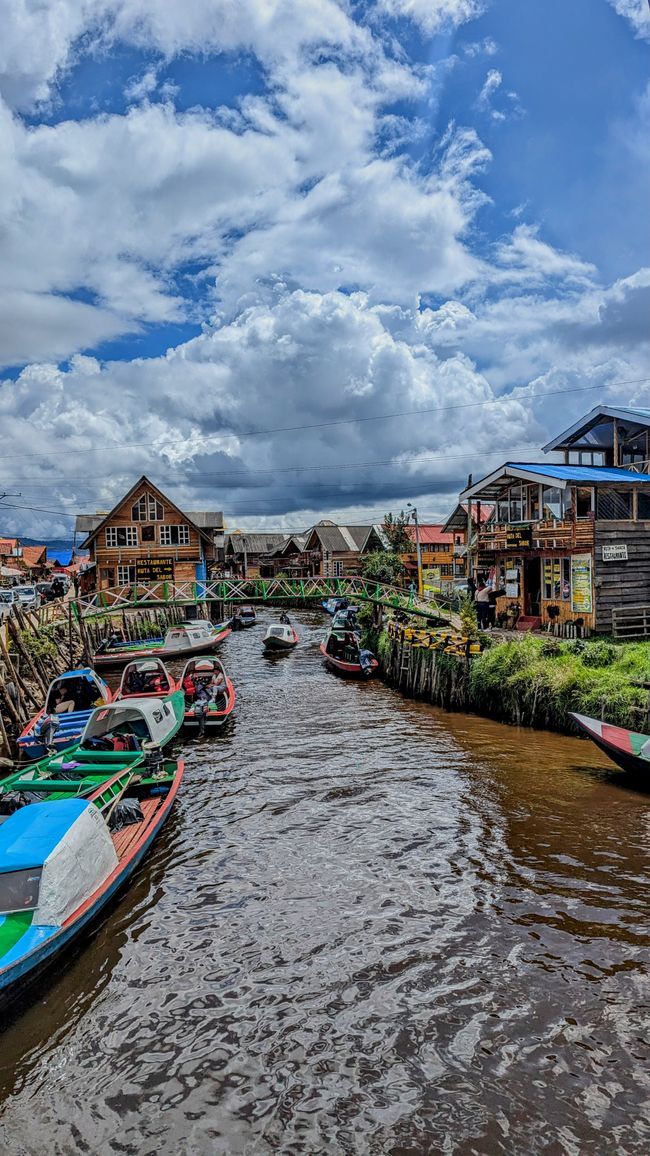
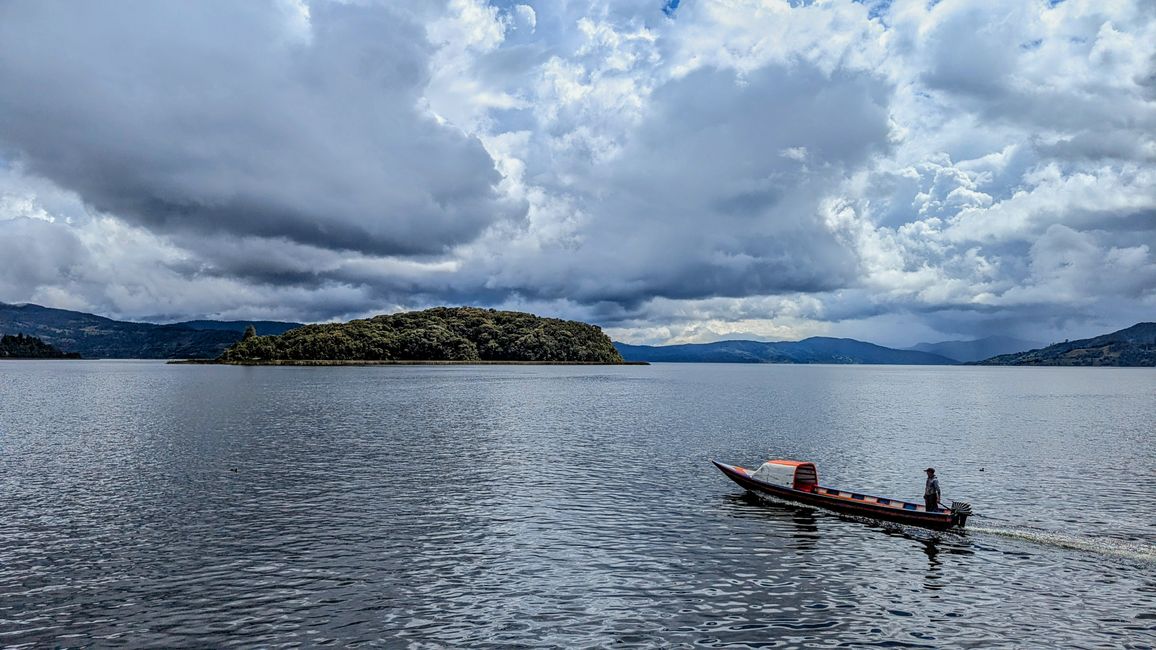
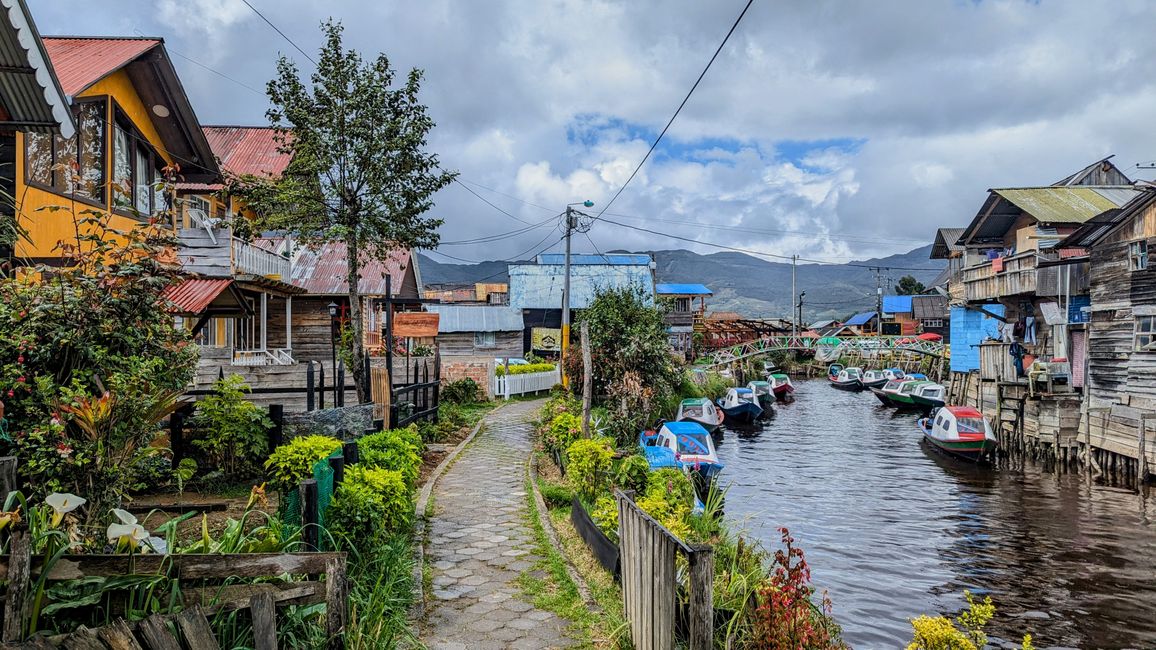
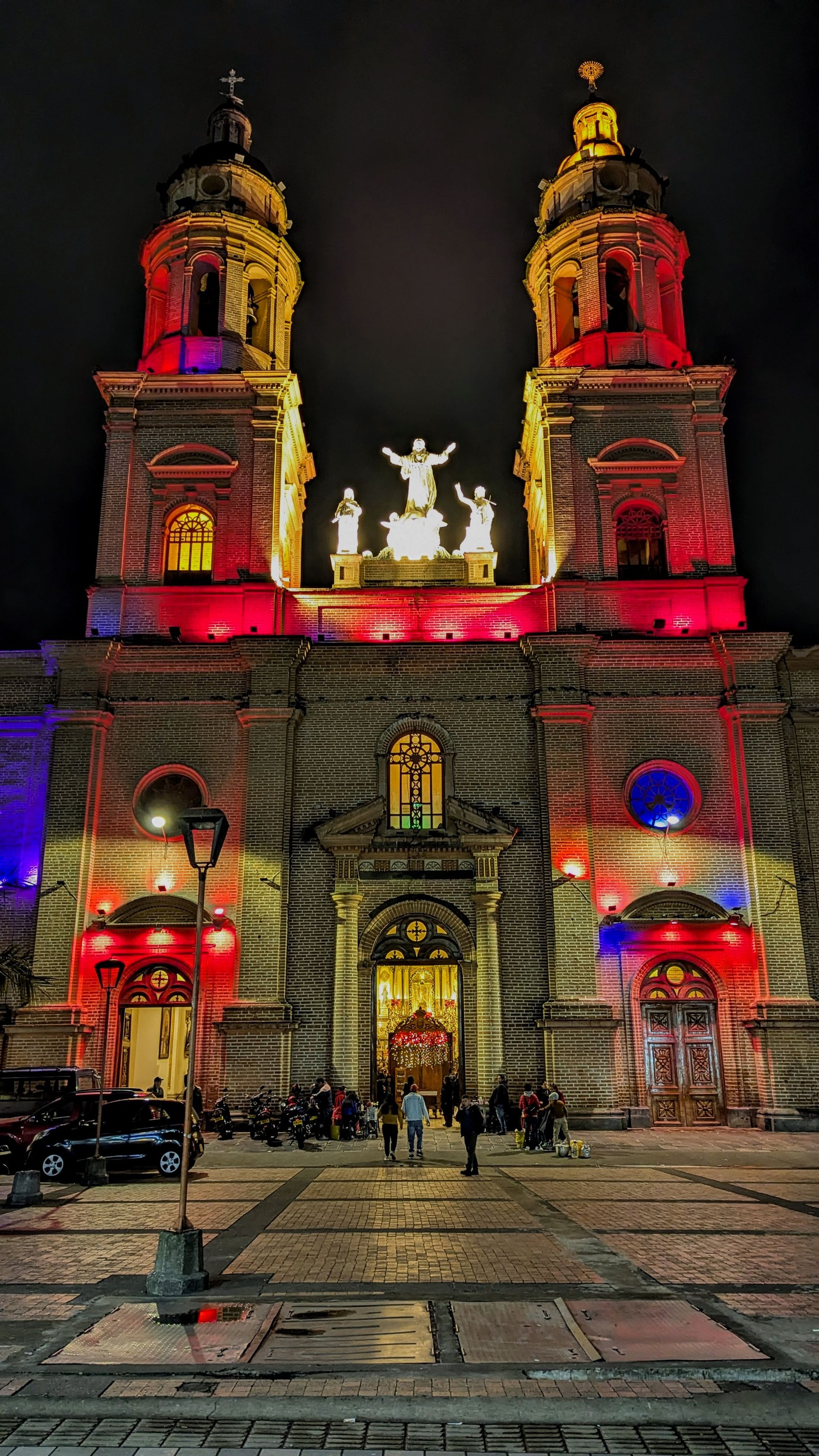
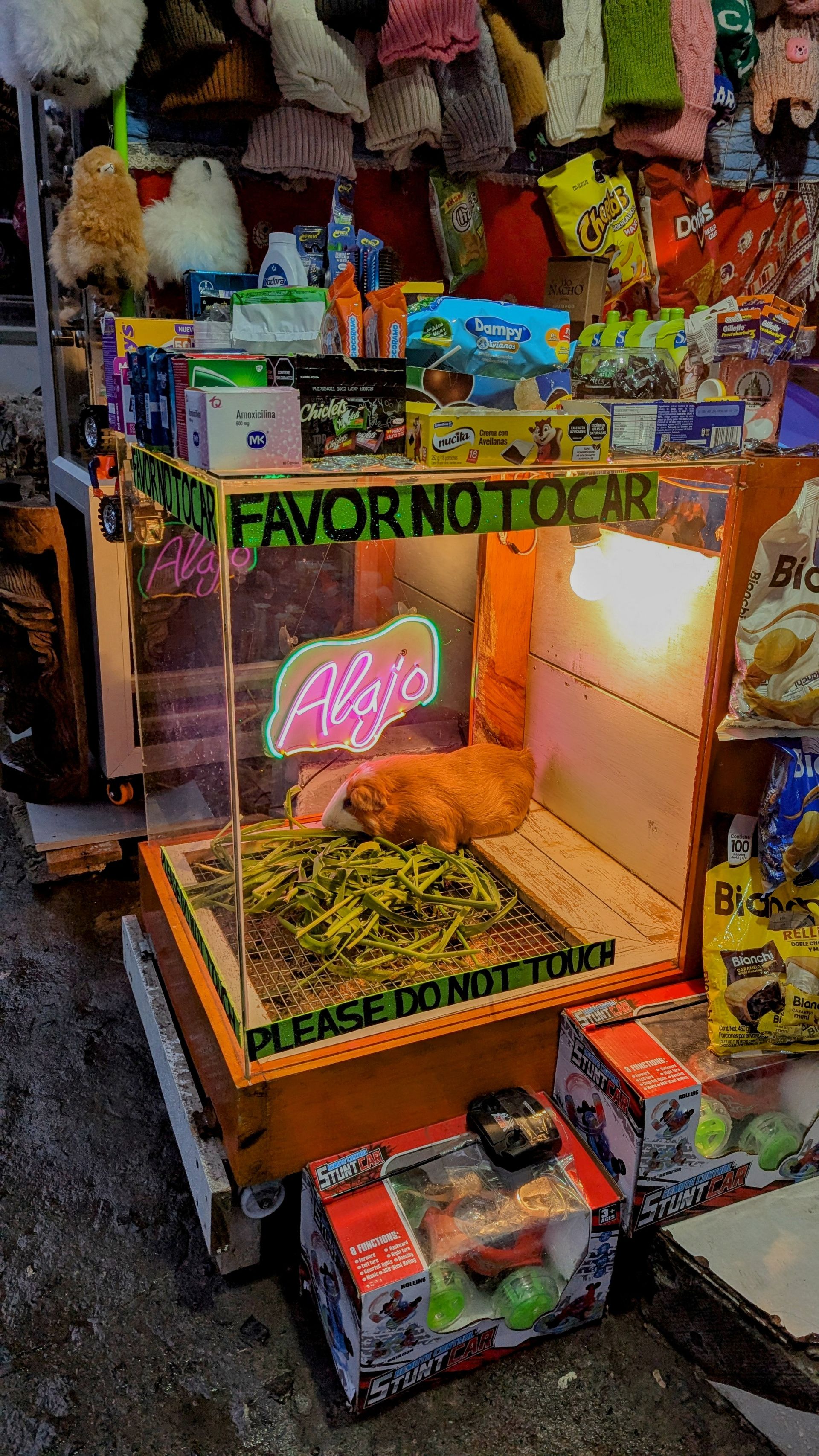
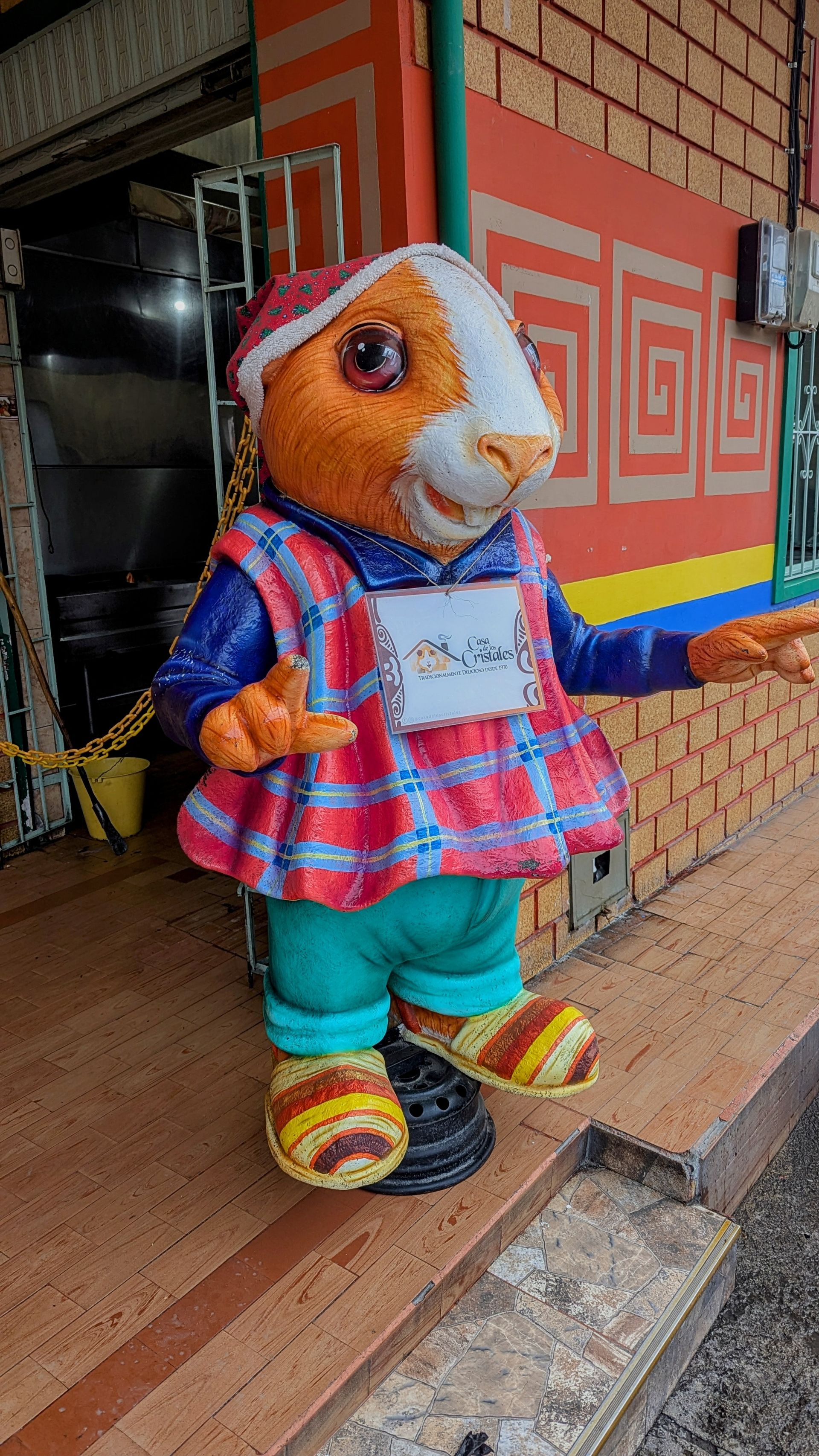
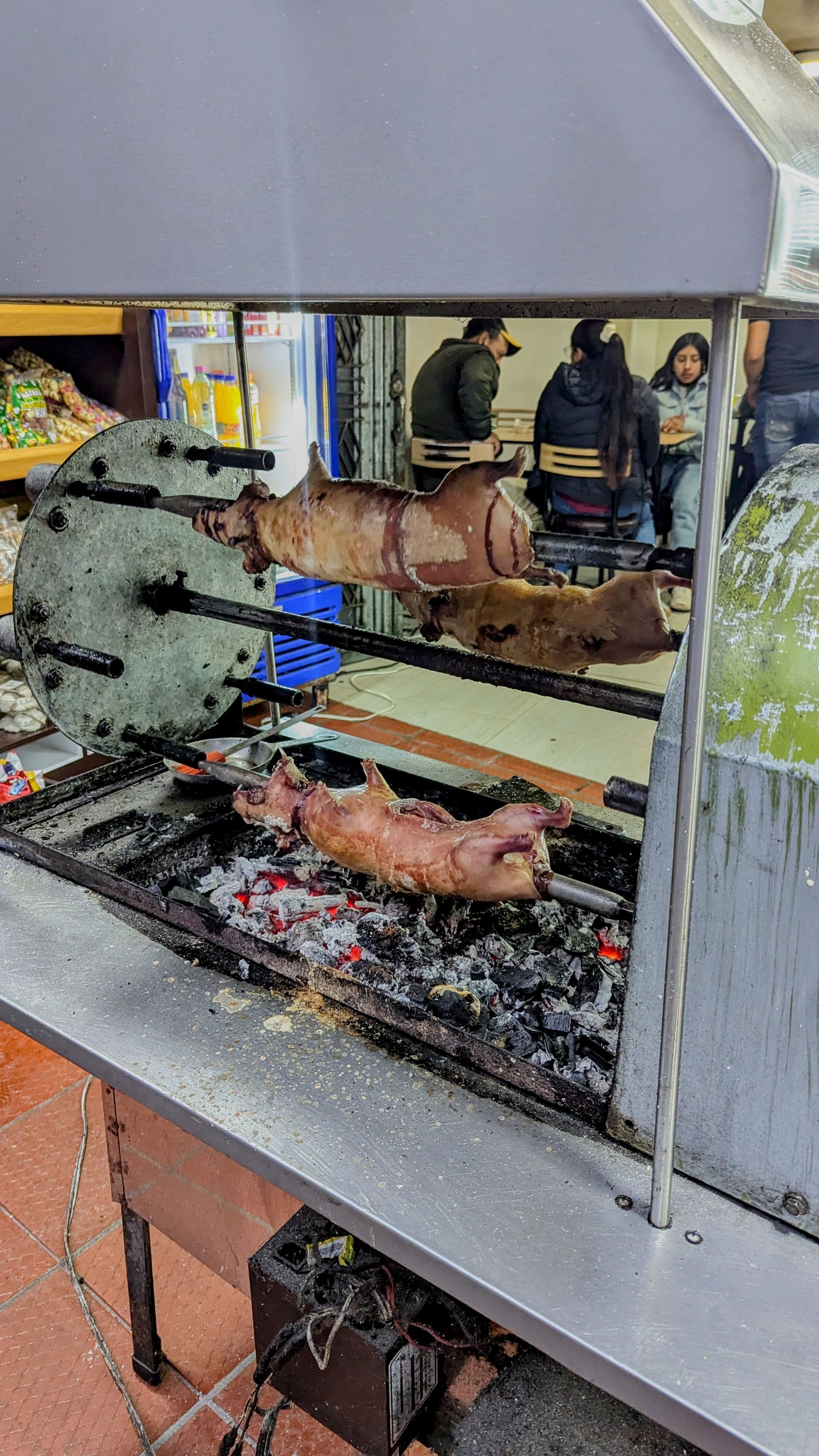
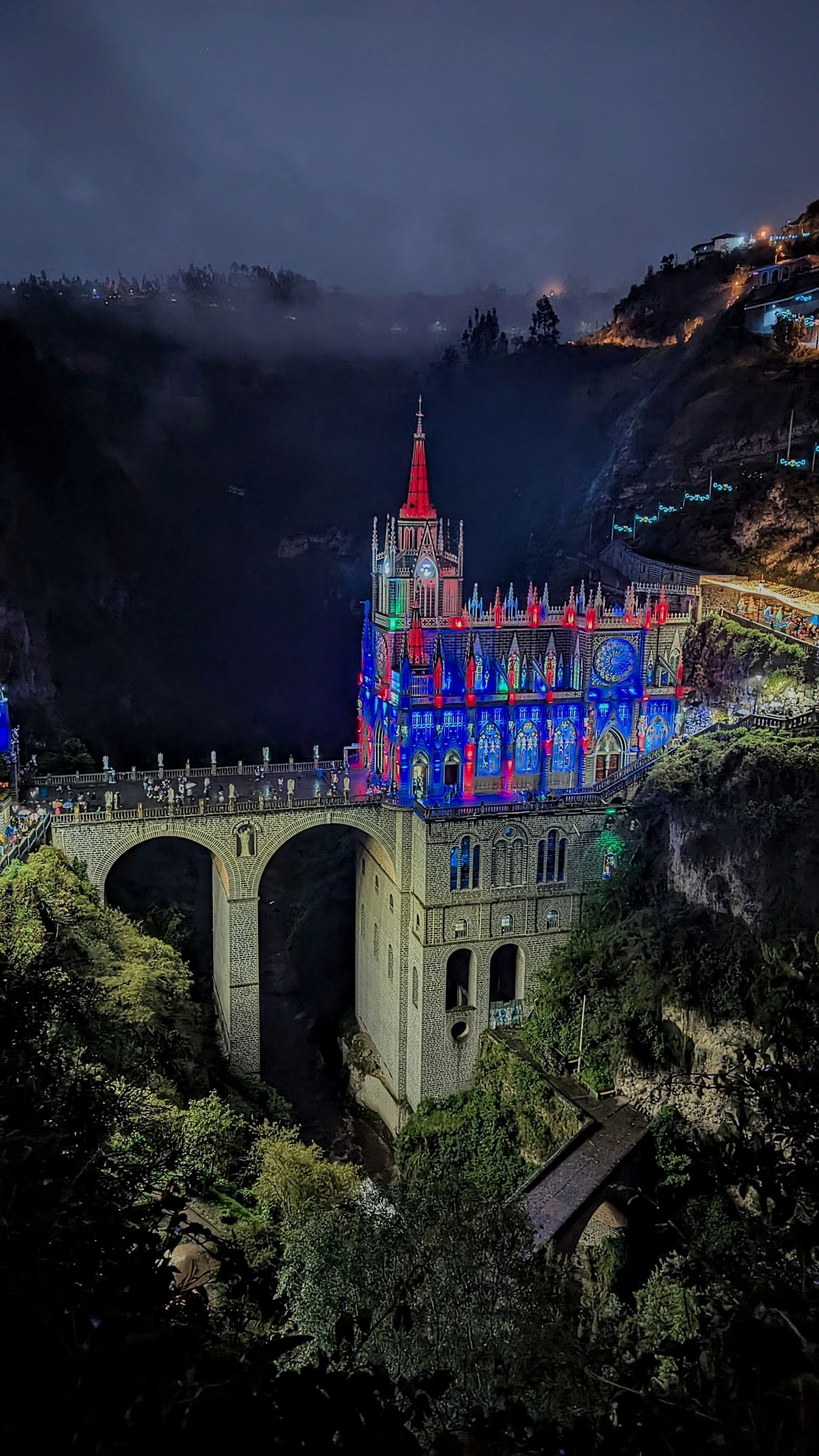
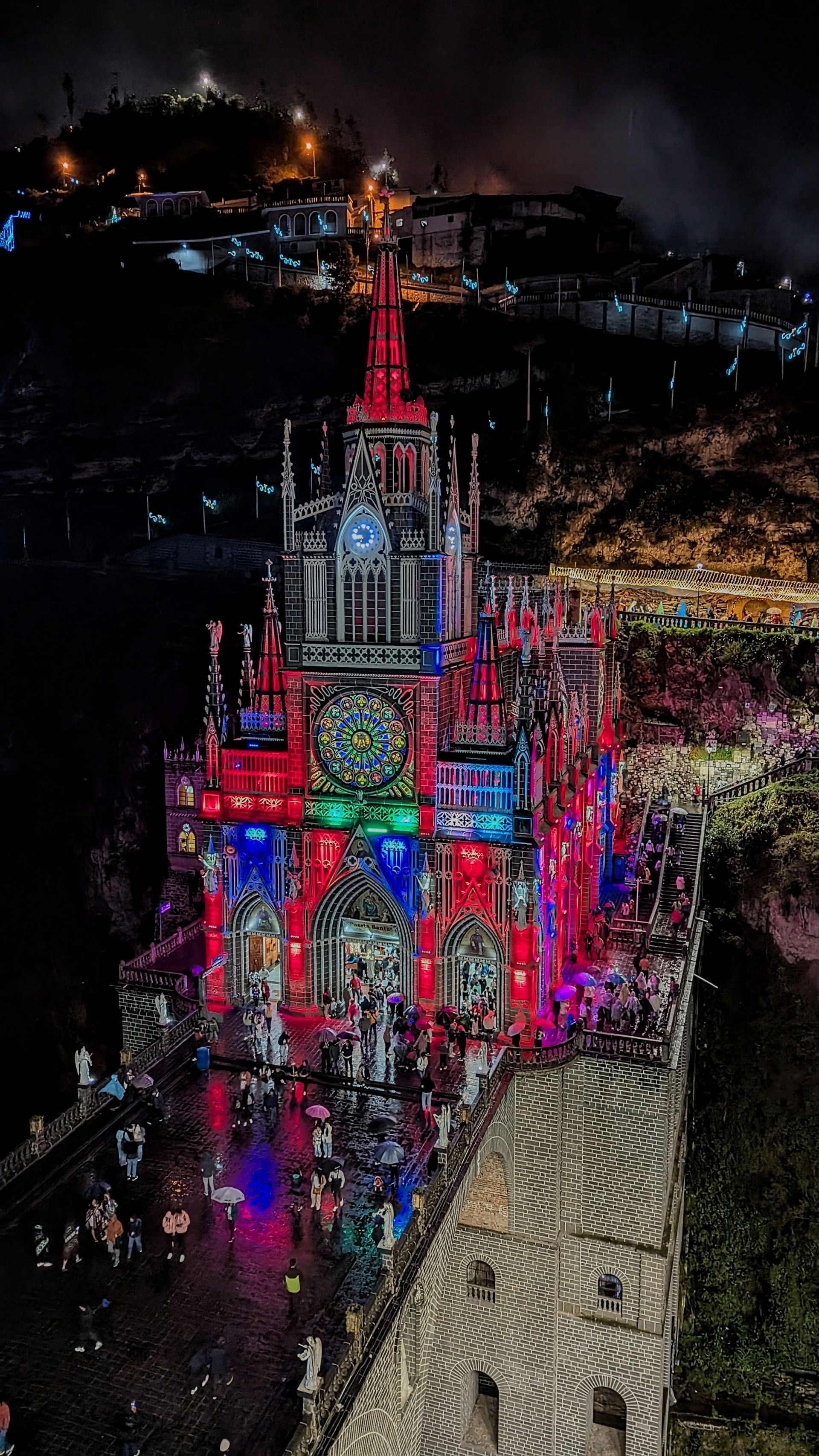
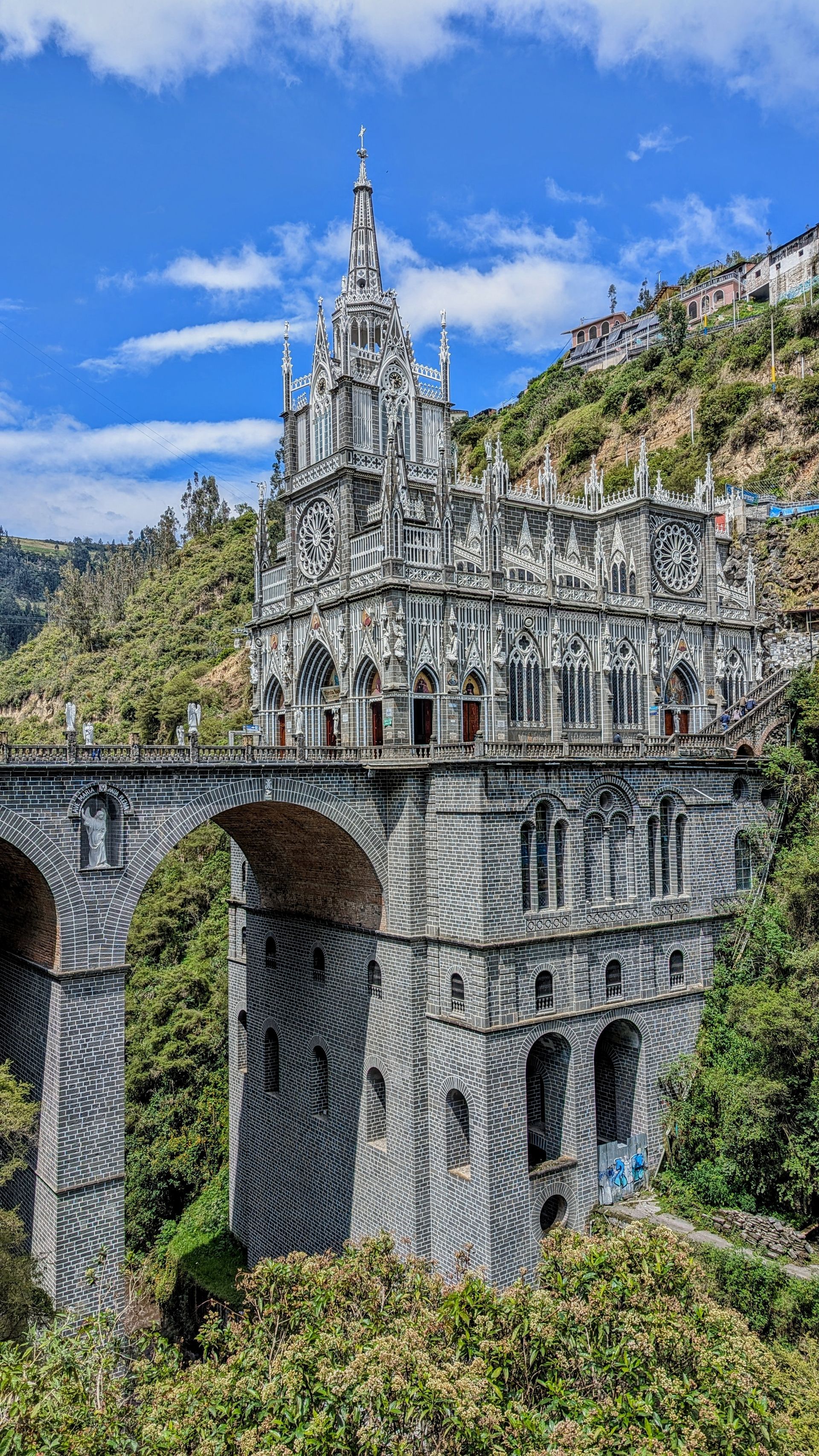
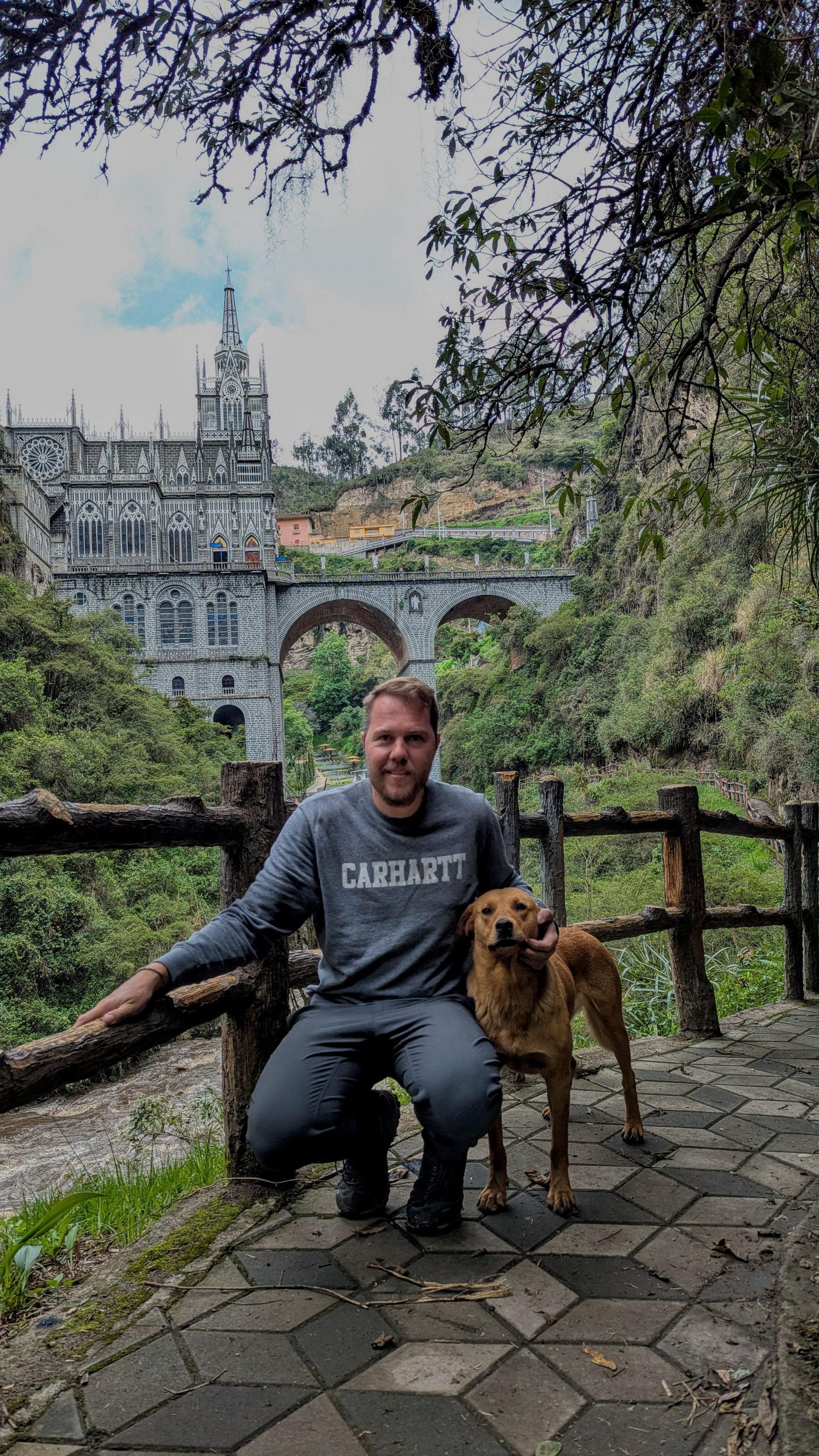
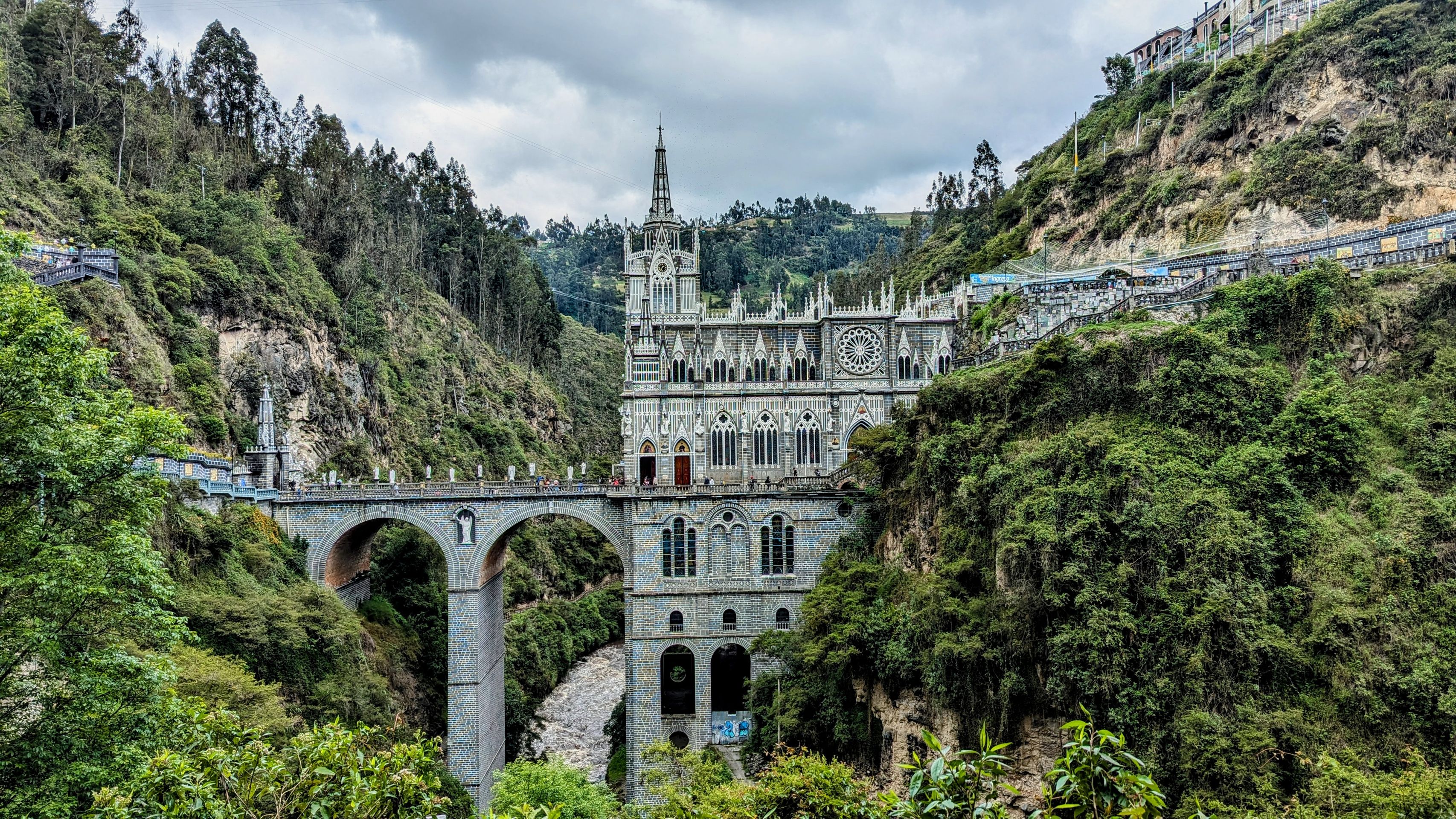
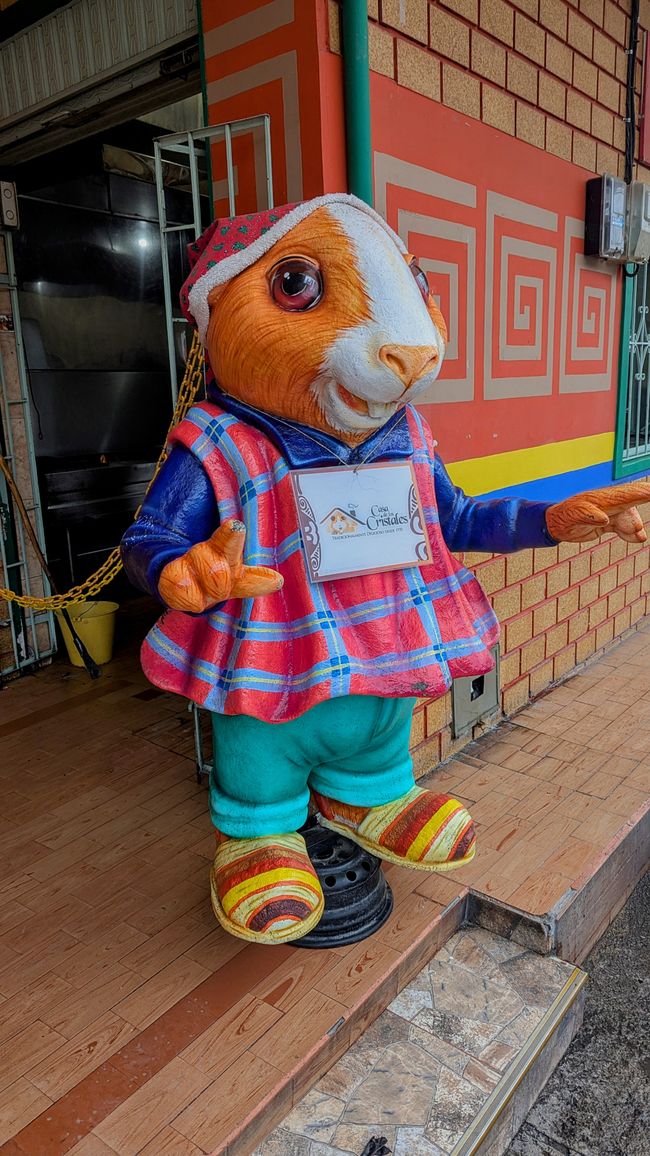
The last stop in Colombia was Ipiales, already at an altitude of 2900 meters, but I don't feel the height yet. The city is not very interesting; we visited the impressive pilgrimage church of Las Lajas. Once in the evening with the appropriate lighting and then again during the daytime before heading into the Intag Valley for two days. I also tried the local specialty 'Cuy', delicious! Anyone who likes crispy chicken will like it too :)
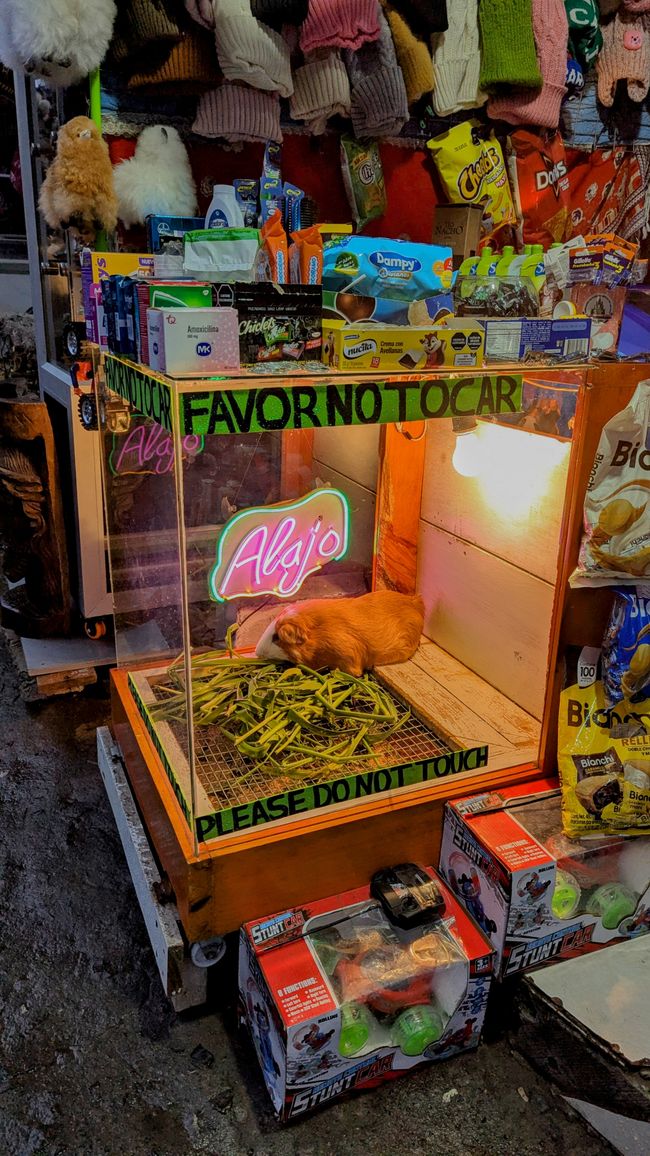
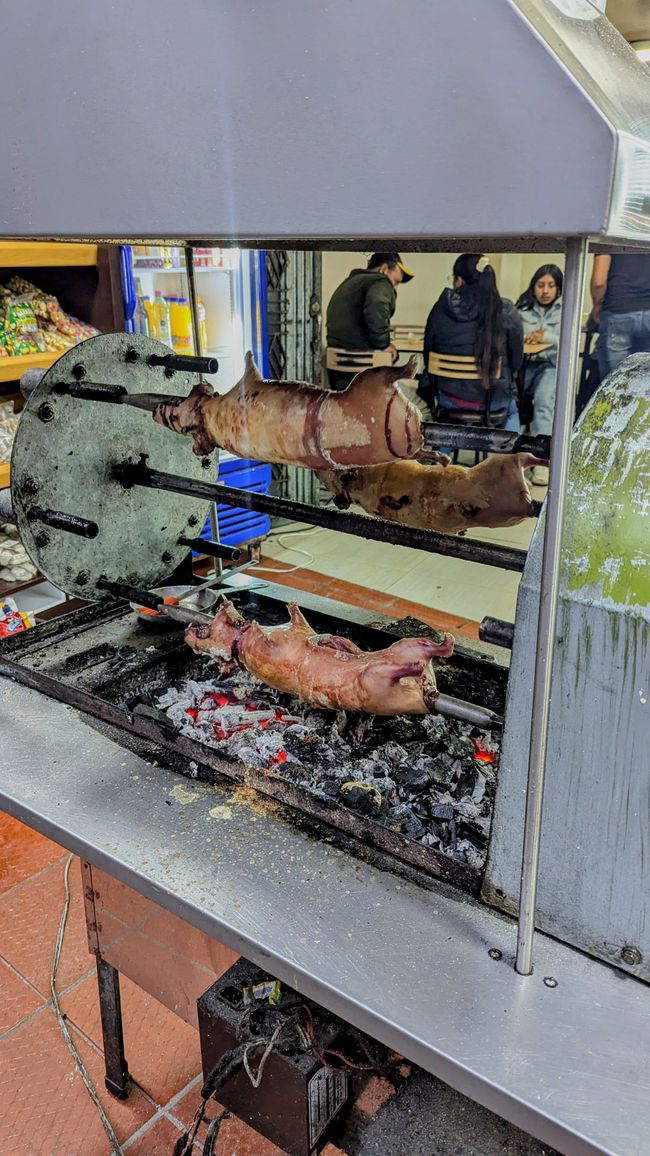
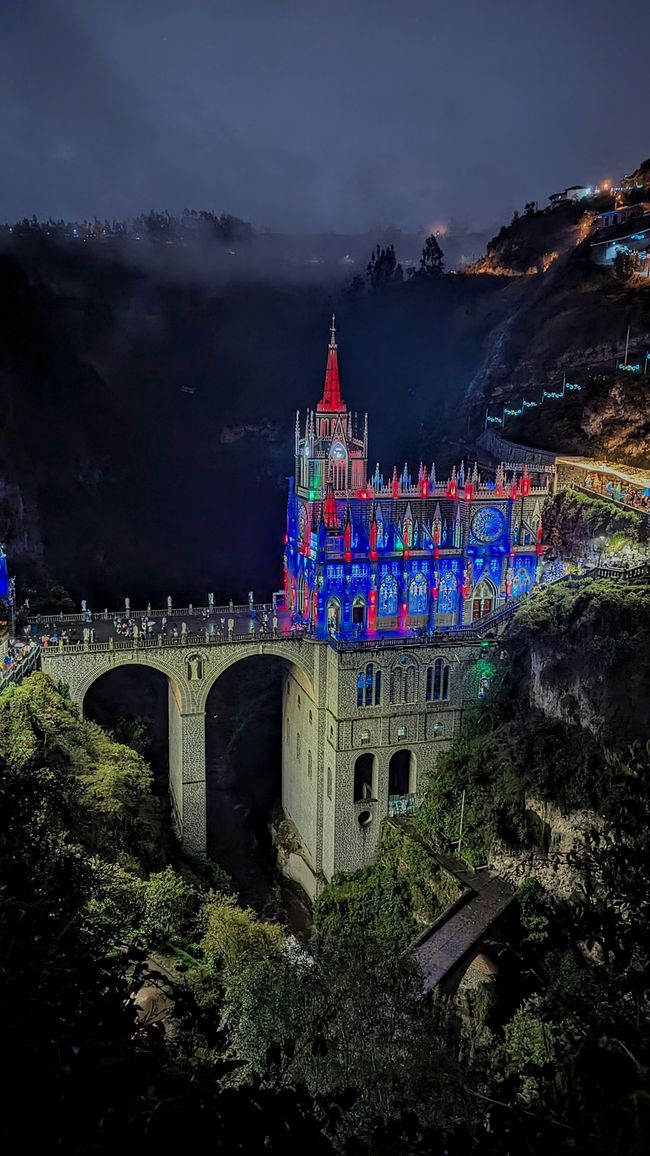
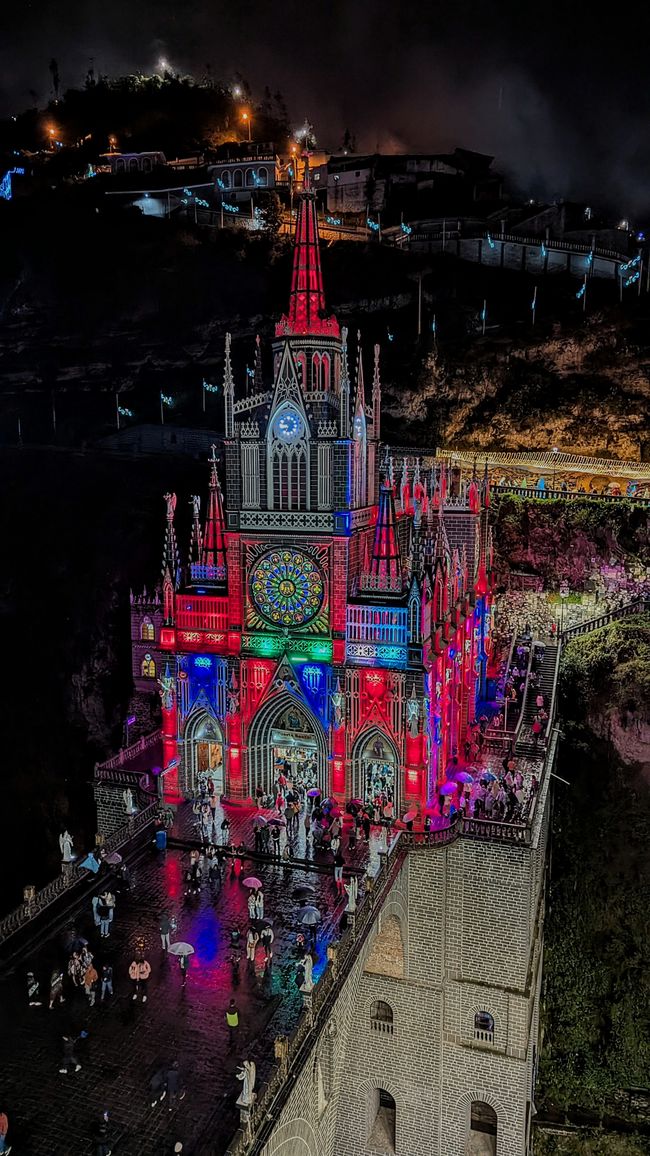
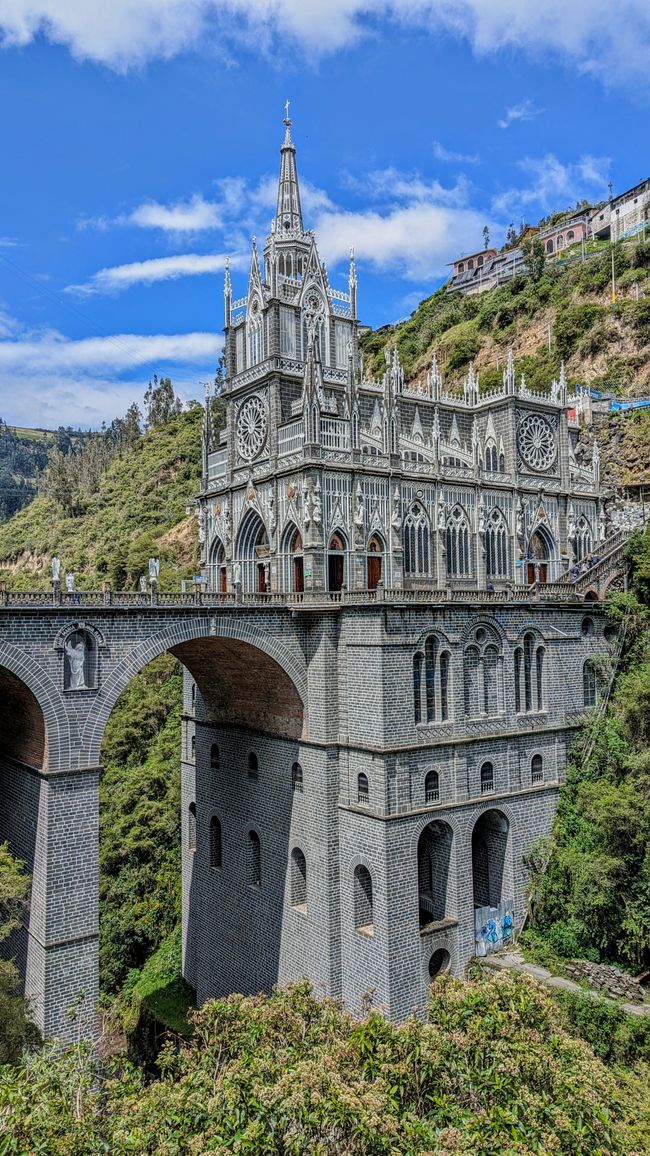
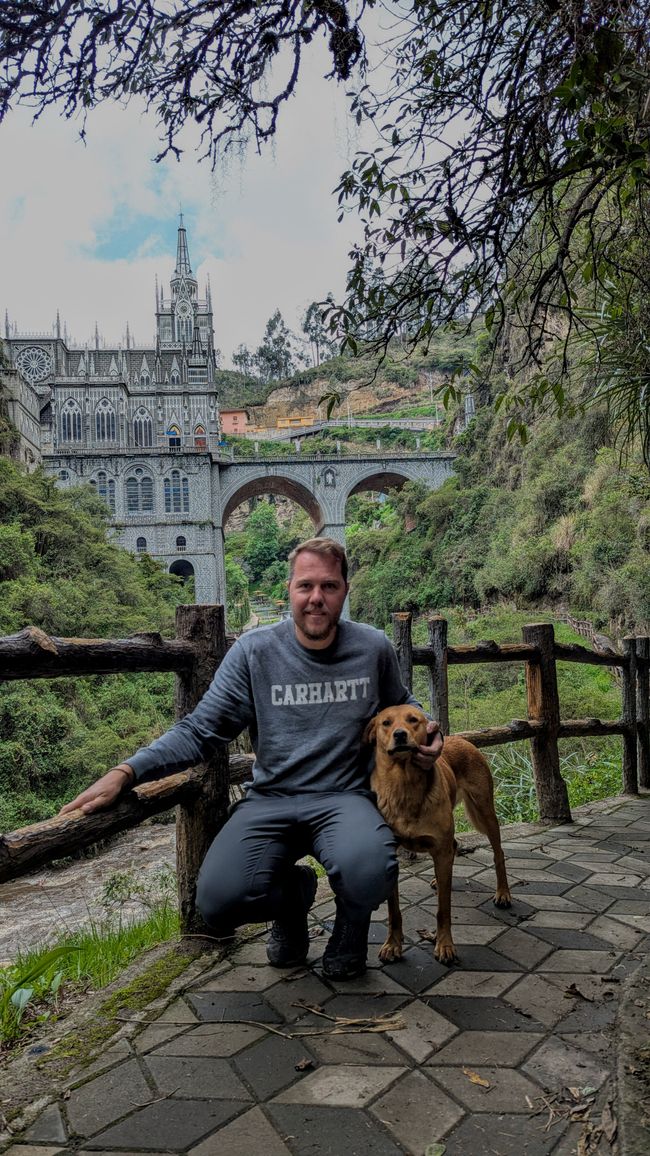
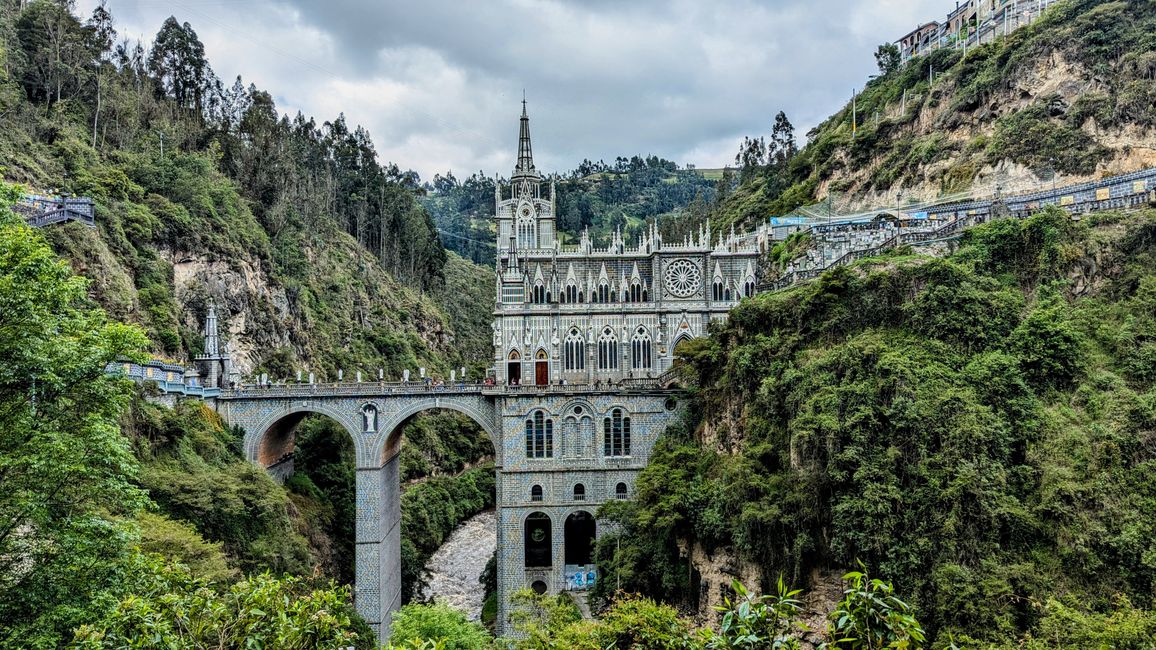
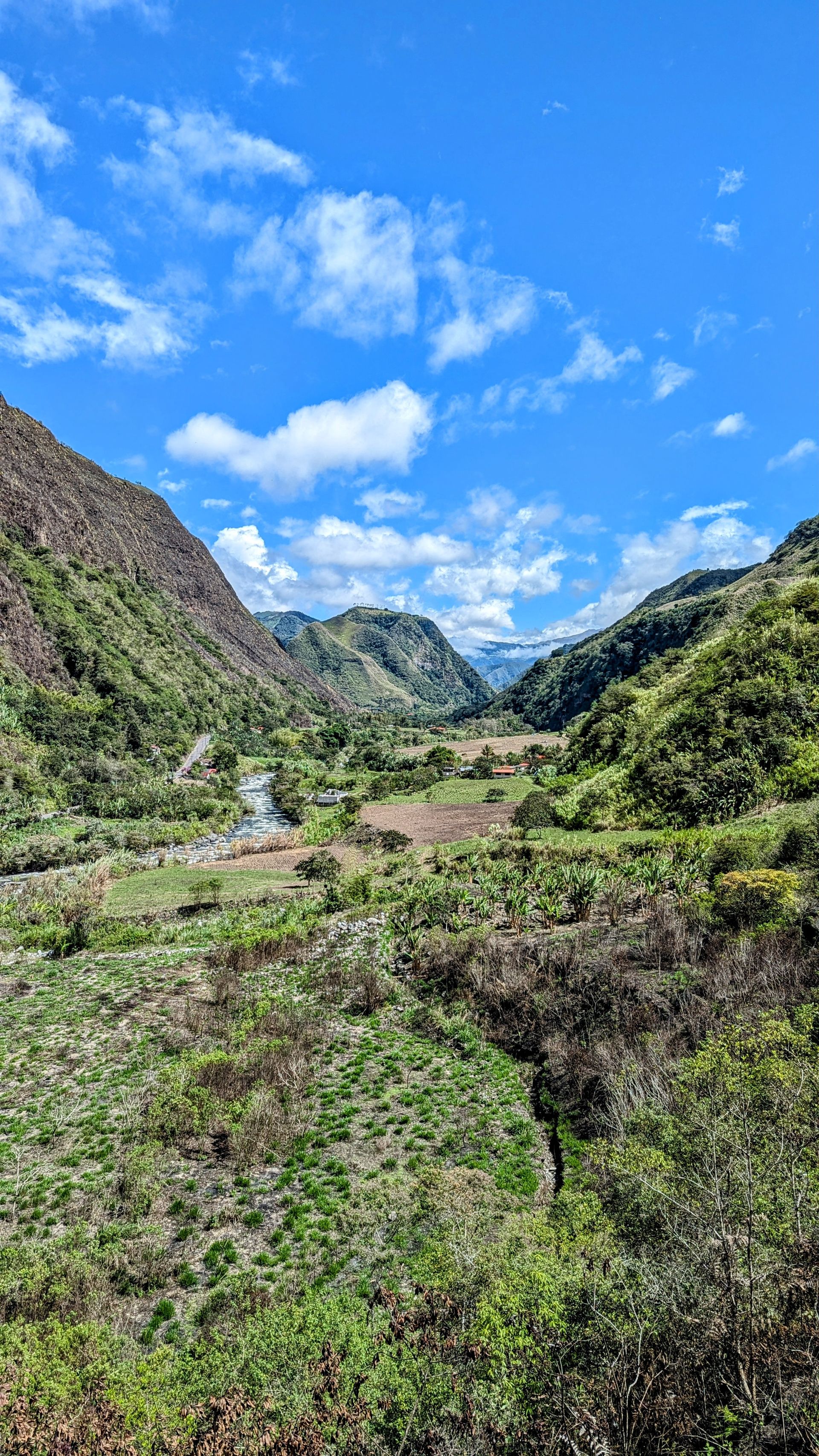
The border crossing was the most straightforward so far. It took 3 minutes for the exit stamp, 3 minutes across the bridge, and then another 5 minutes for the entry stamp before going directly onto the bus, which surprisingly left immediately. In the Intag Valley, we hiked to a large waterfall and an archaeological museum on a plateau. An older gentleman asked for $5 for the tour. The “museum” consisted of a few pots and bowls found in the area. After that, we walked over some hills (under which the temples and graves were located) back to the starting point. We saw nothing because the locals do not allow excavations to preserve the peace of the dead and not to upset the spirits. One must respect that, however, there is no need to offer guidance there since there is really nothing to see; at least we got a freshly picked banana and a few equally fresh tangerines.
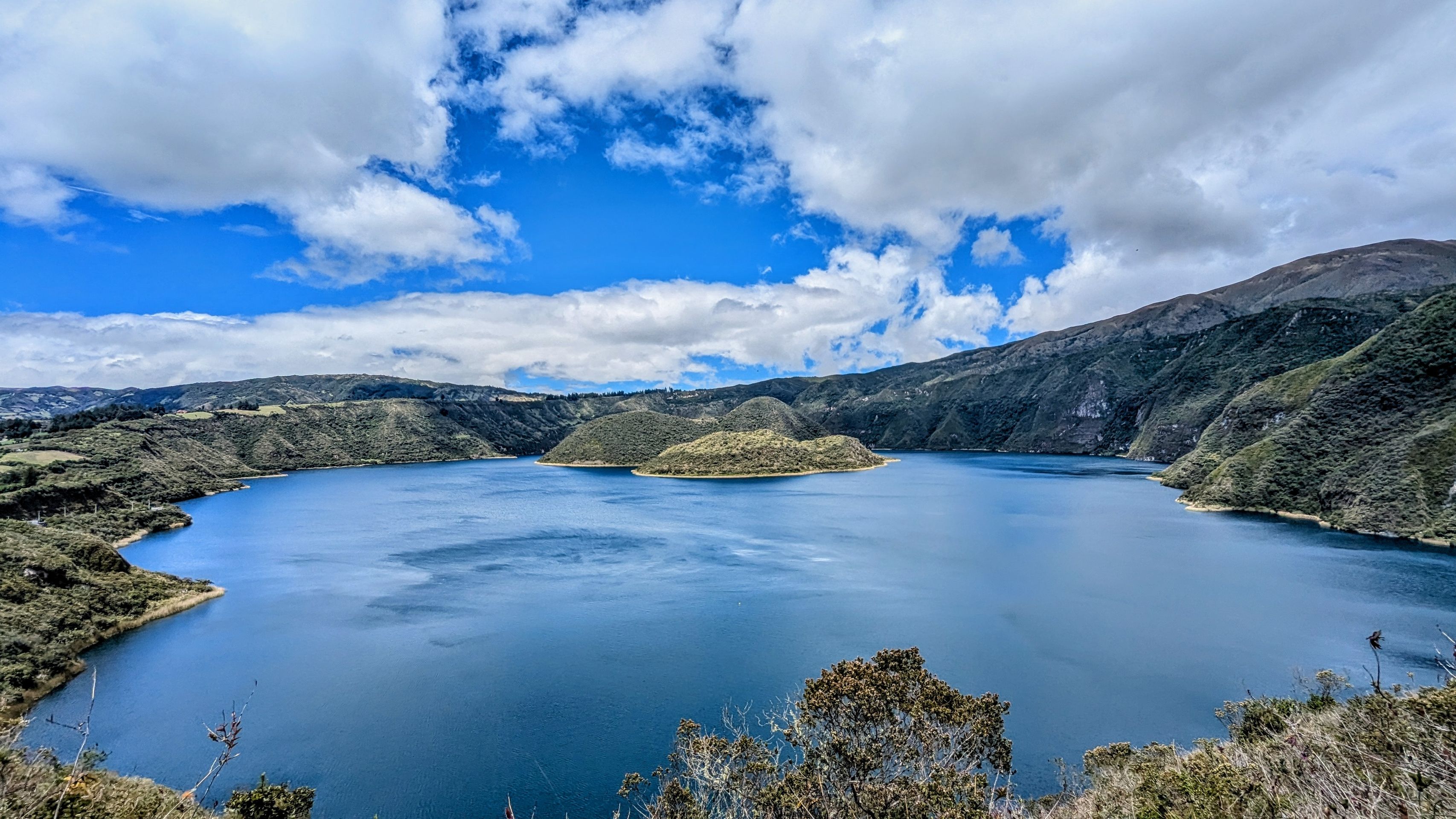
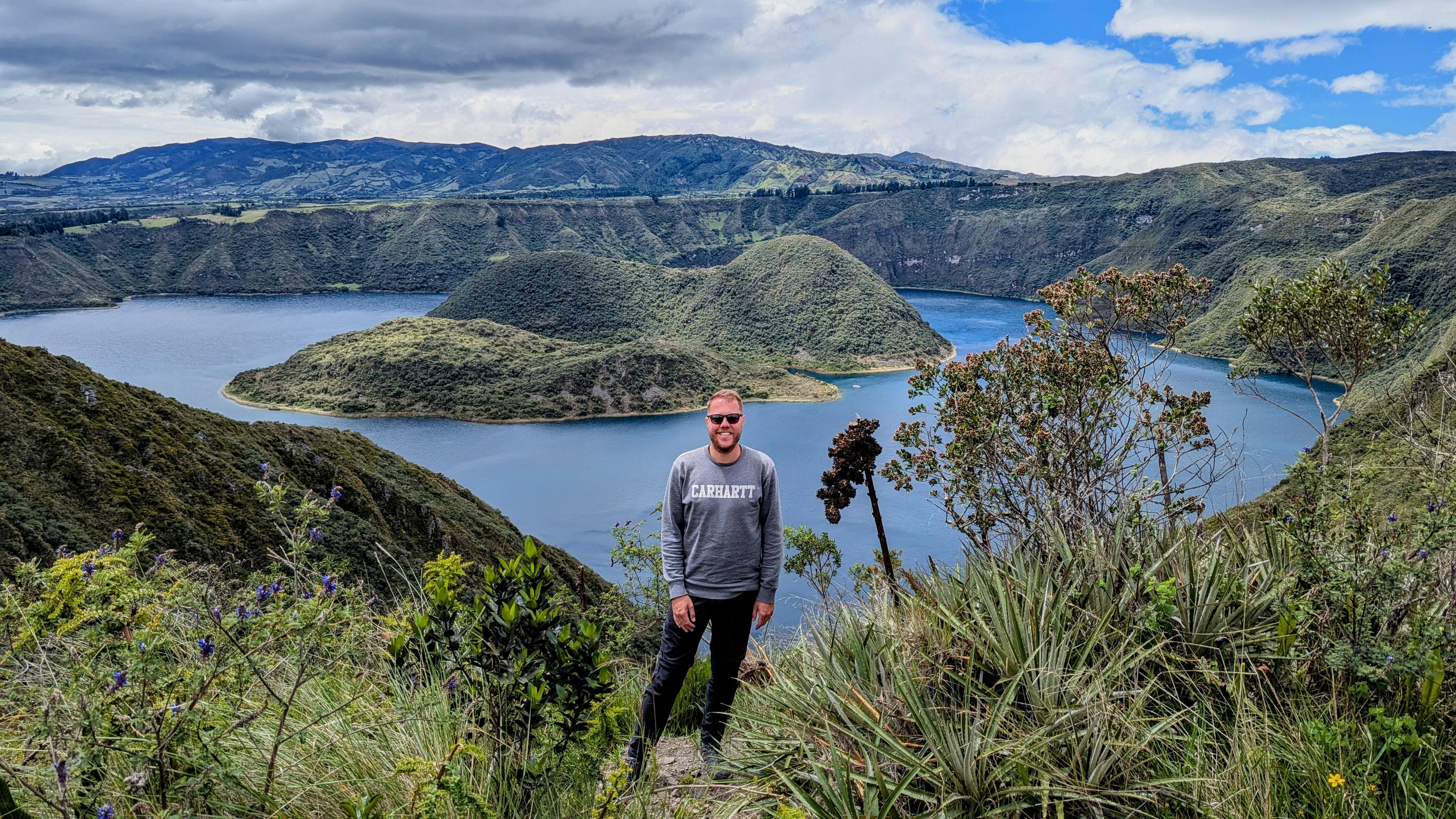
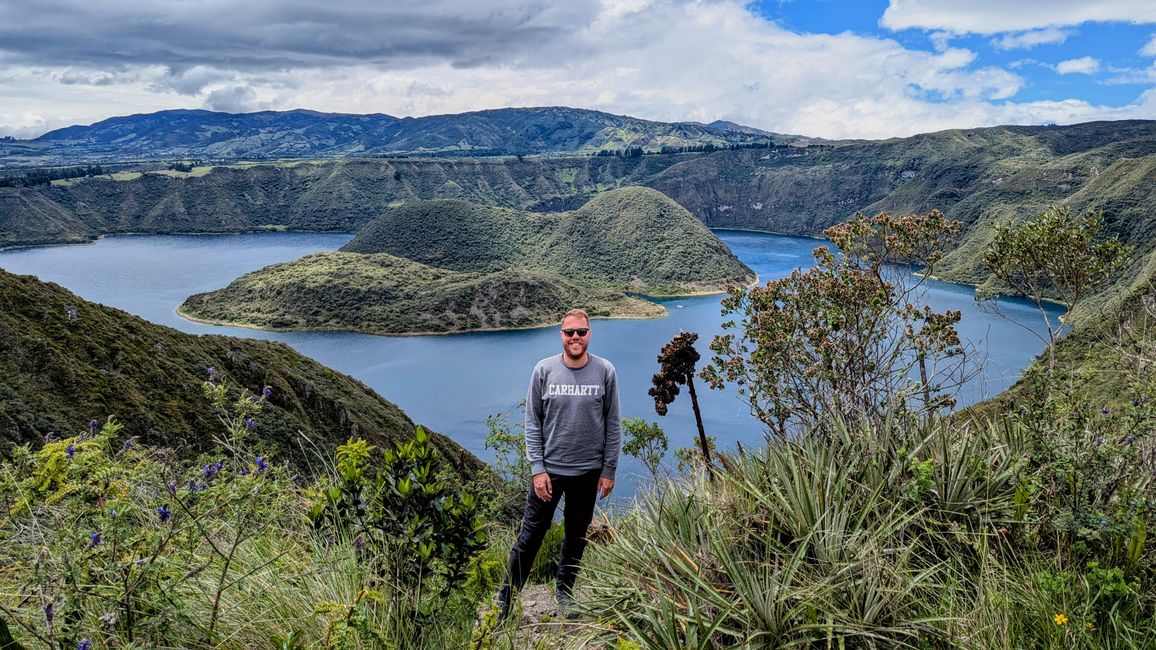
After dinner, then the shock, next to our bed was a palm-sized spider (and my palms aren't that small) with hairy legs, a huge body, and small fangs. They aren't that quick, with a flip-flop we'll probably catch it. The last thing I saw was a shadow behind the nightstand, wow, I really didn't expect that speed. In the past, I wouldn't have entered the room again, but what choice did I have (except to sleep outside in the hammock). When I woke up again during the night and saw the creature sitting a meter next to me on the wall, that was it for sleep until I was tired enough to close my eyes again. The next morning, we packed our things (hopefully without a stowaway) before heading on the way to Otavalo for a short hike around the Cuicocha Lagoon.
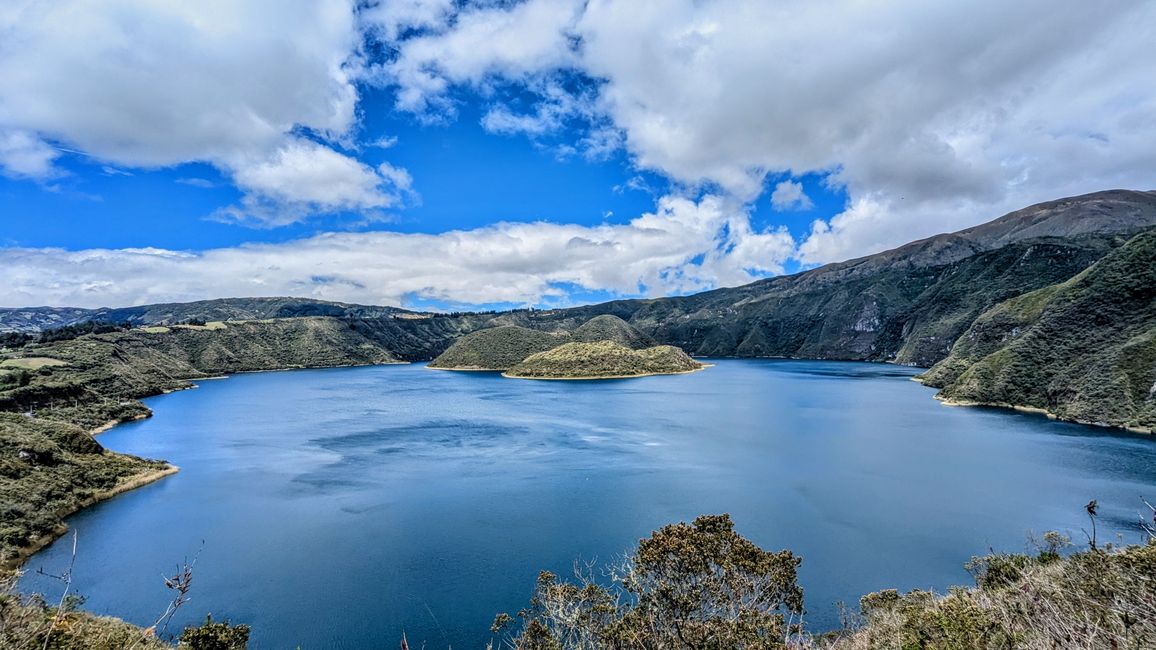
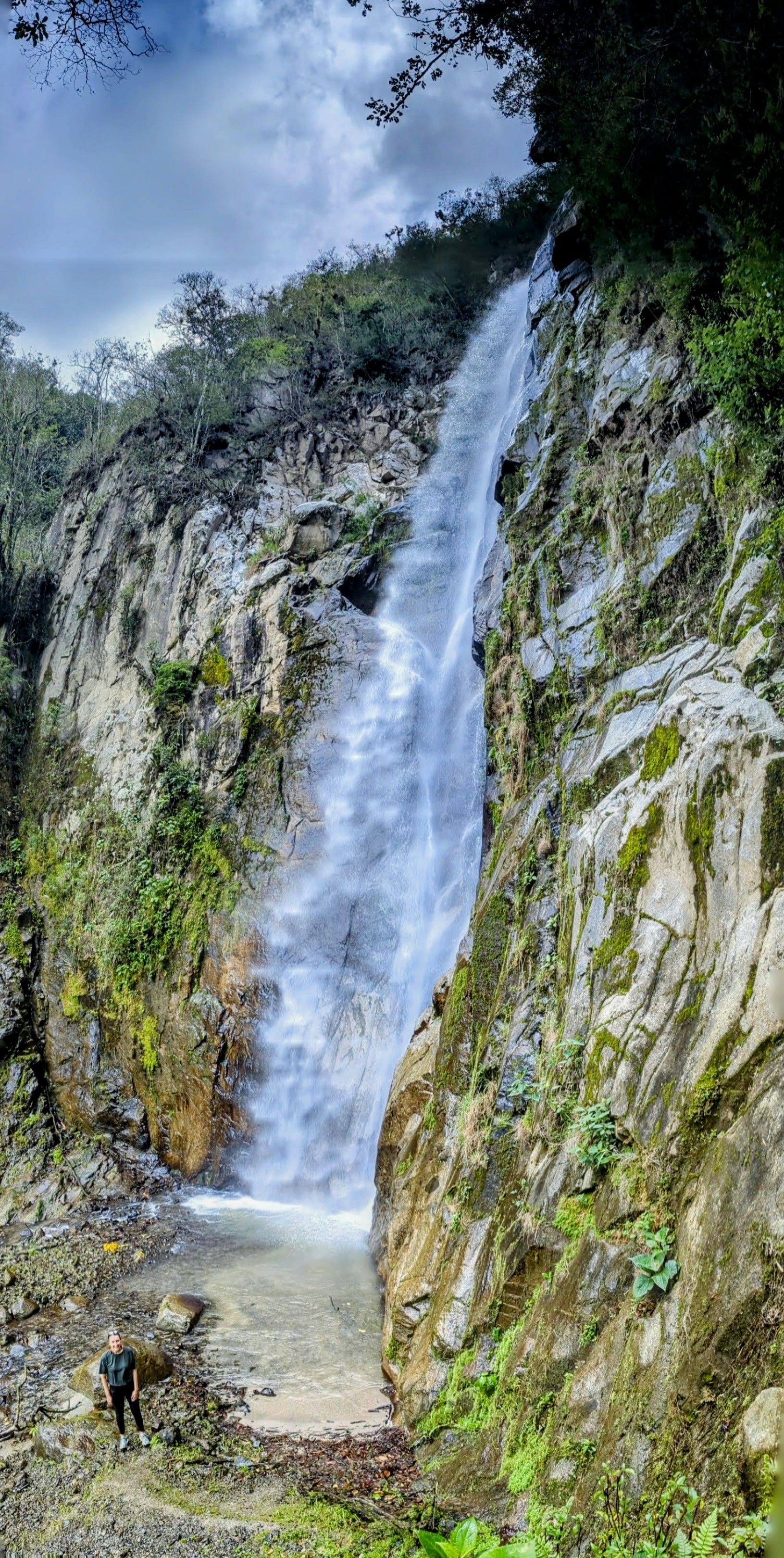
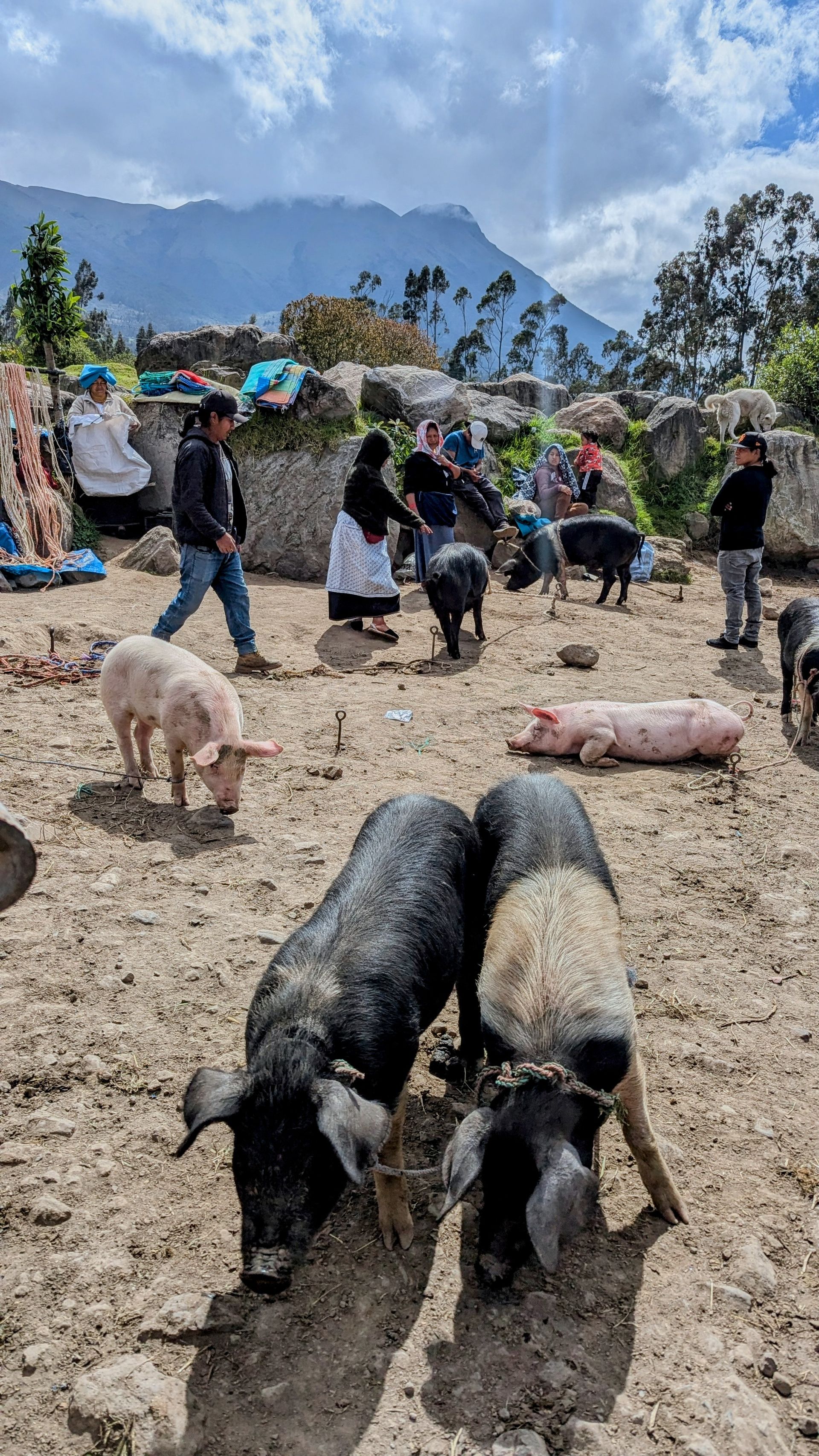
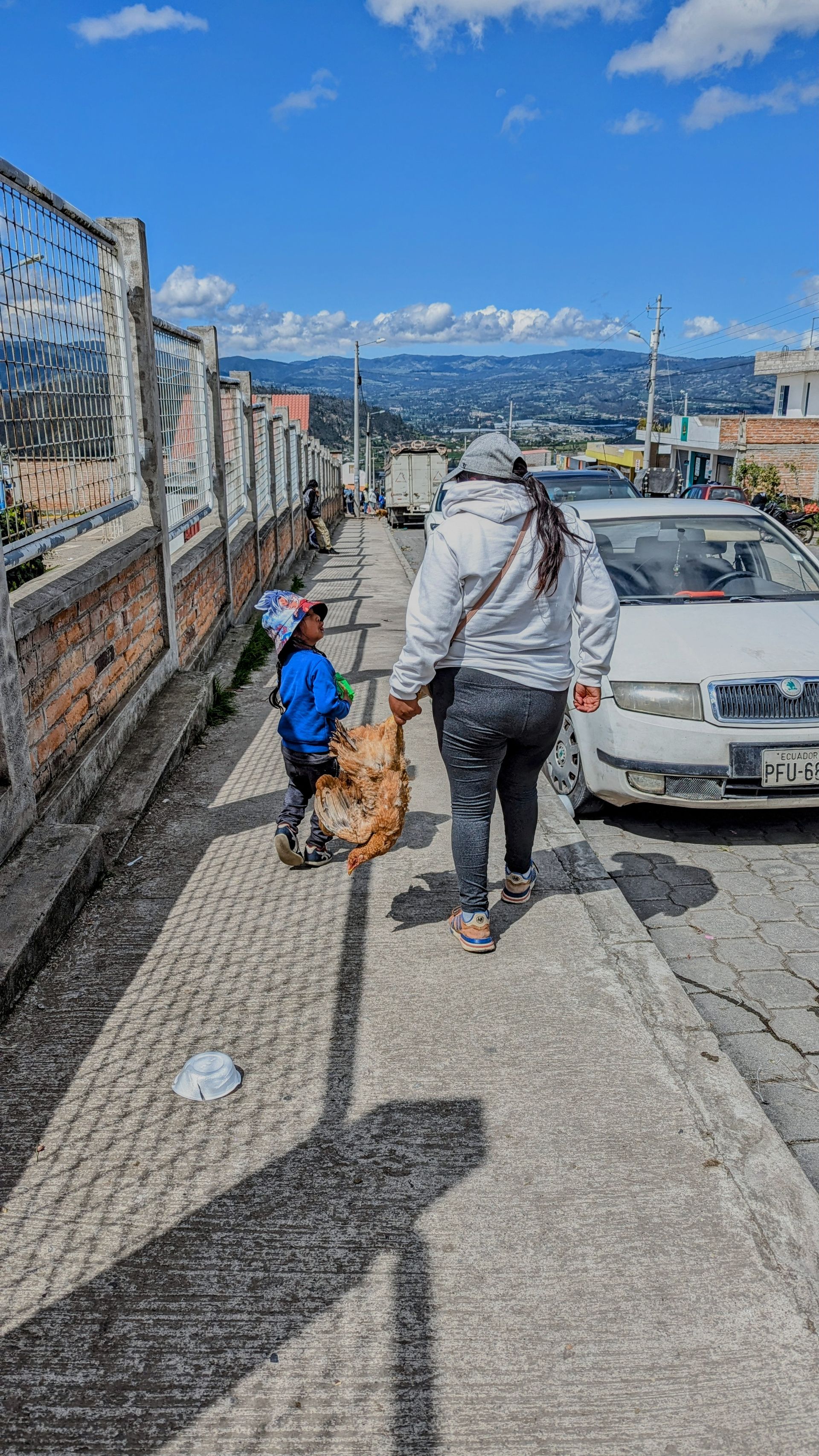
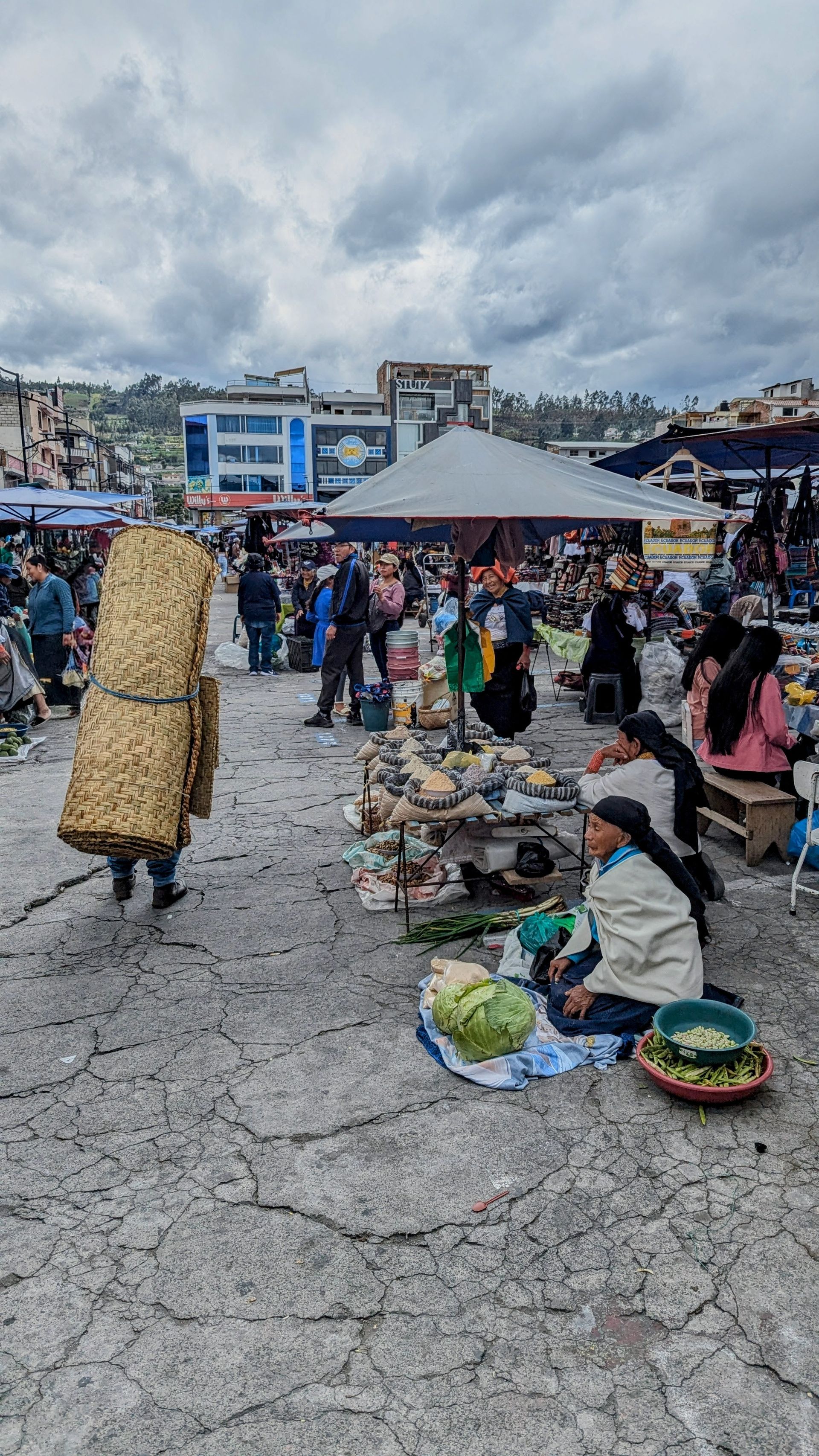
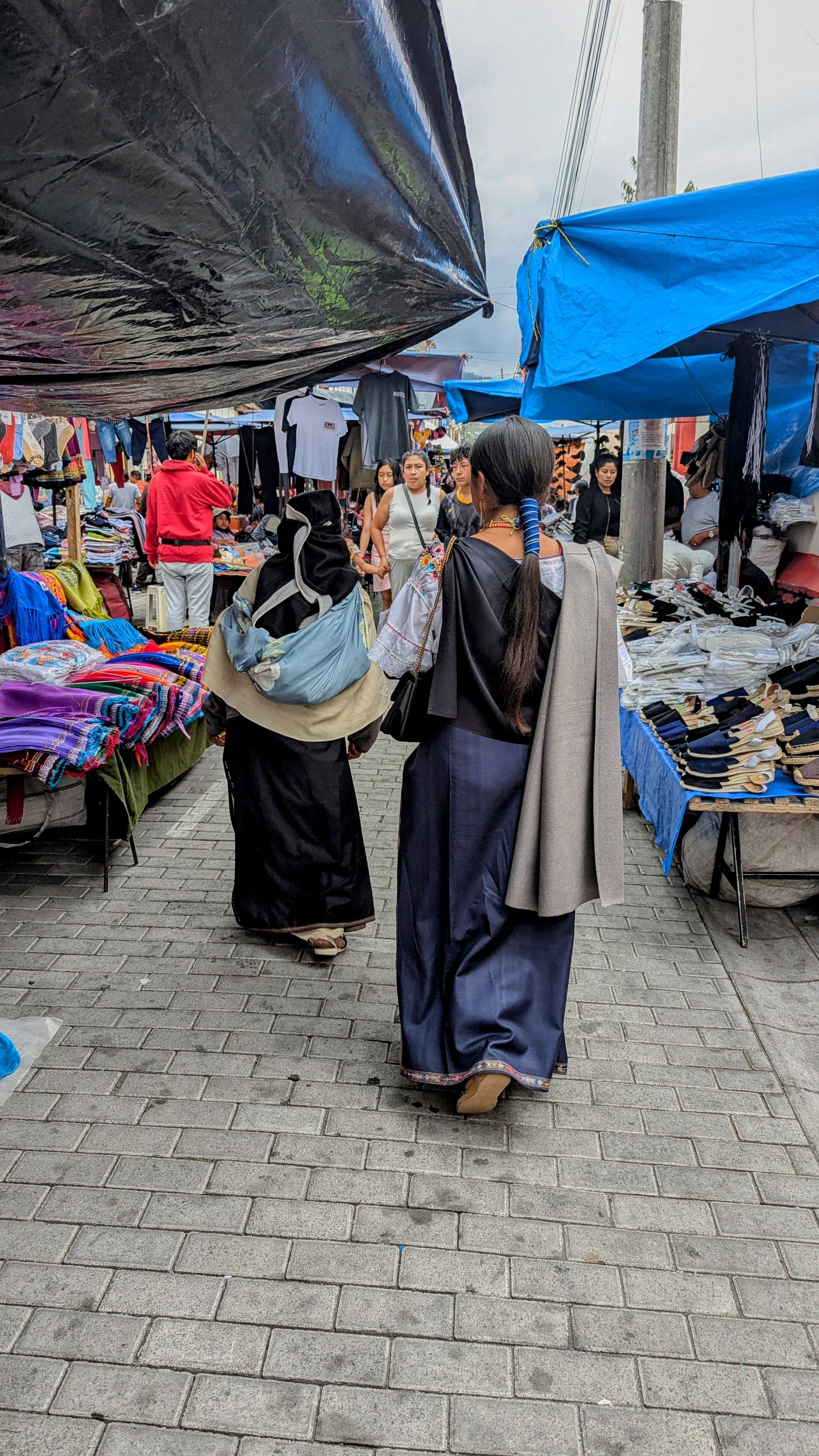
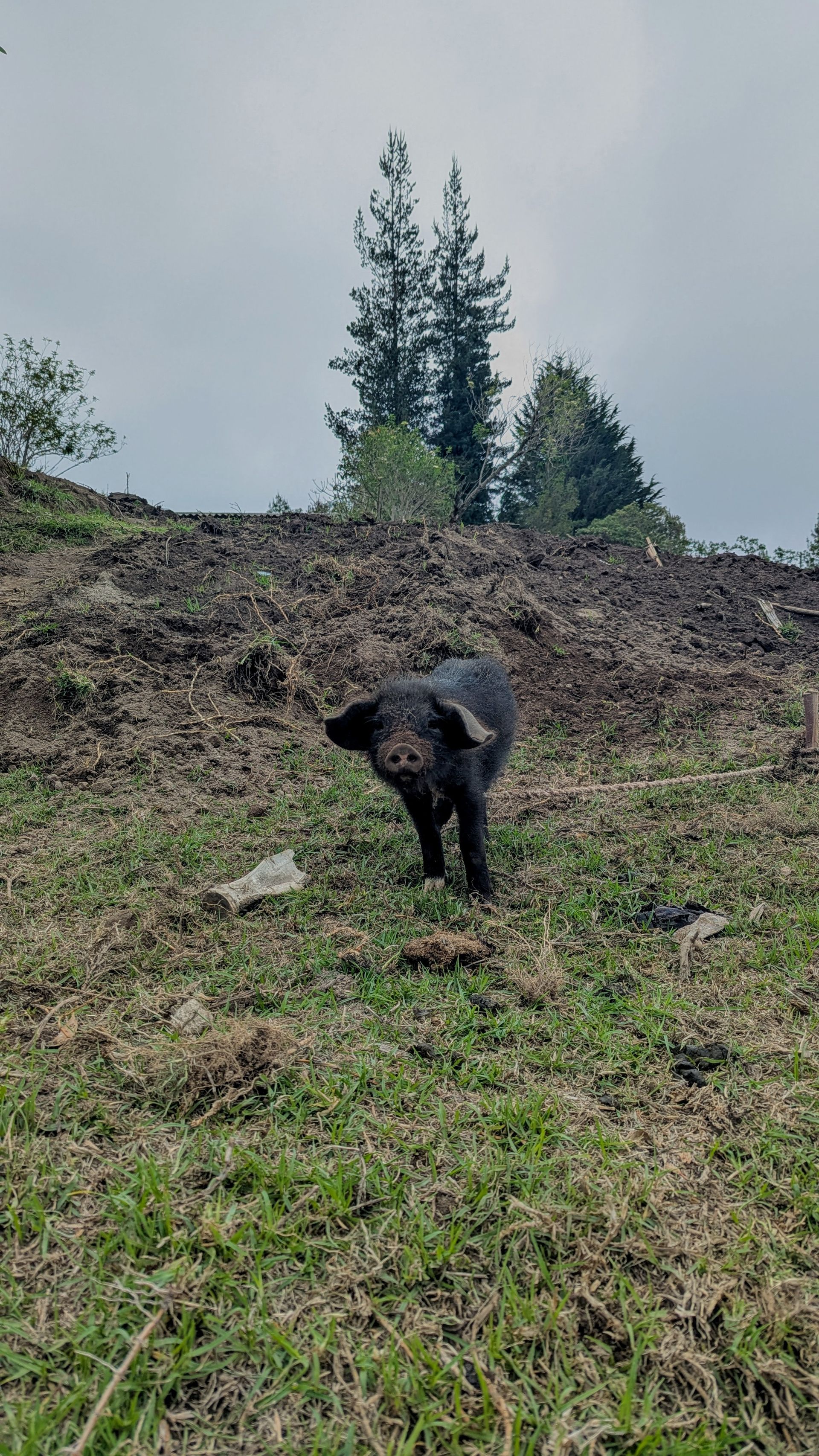
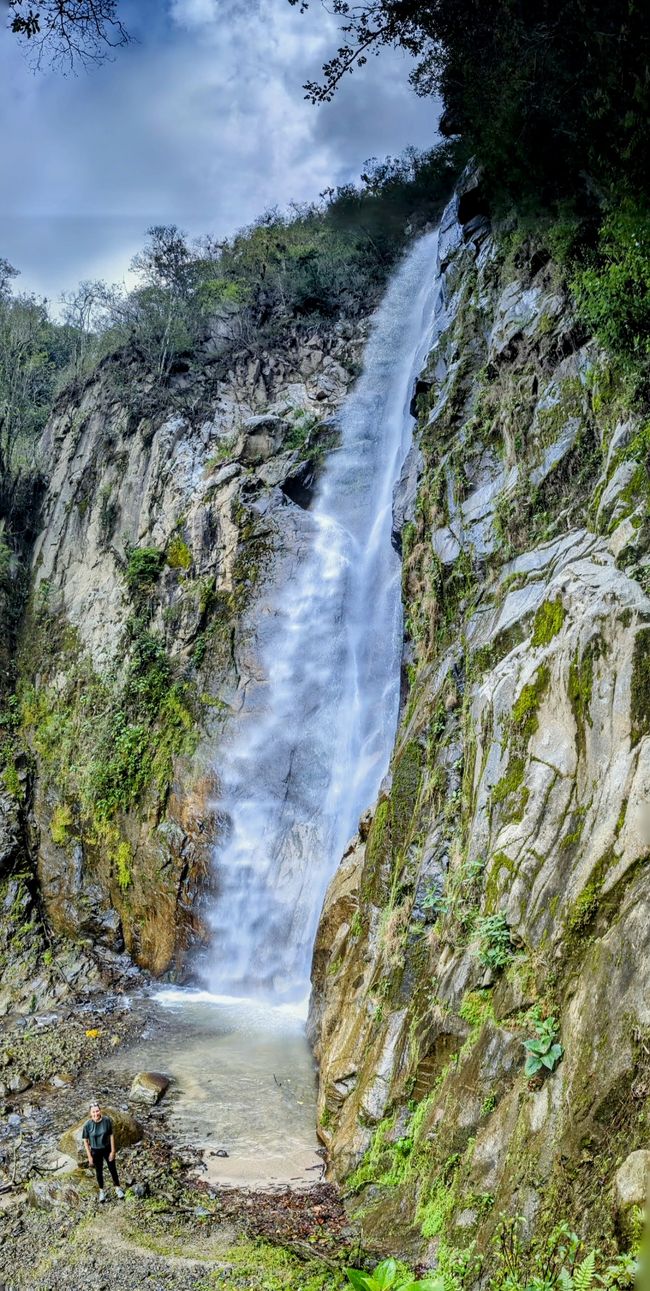
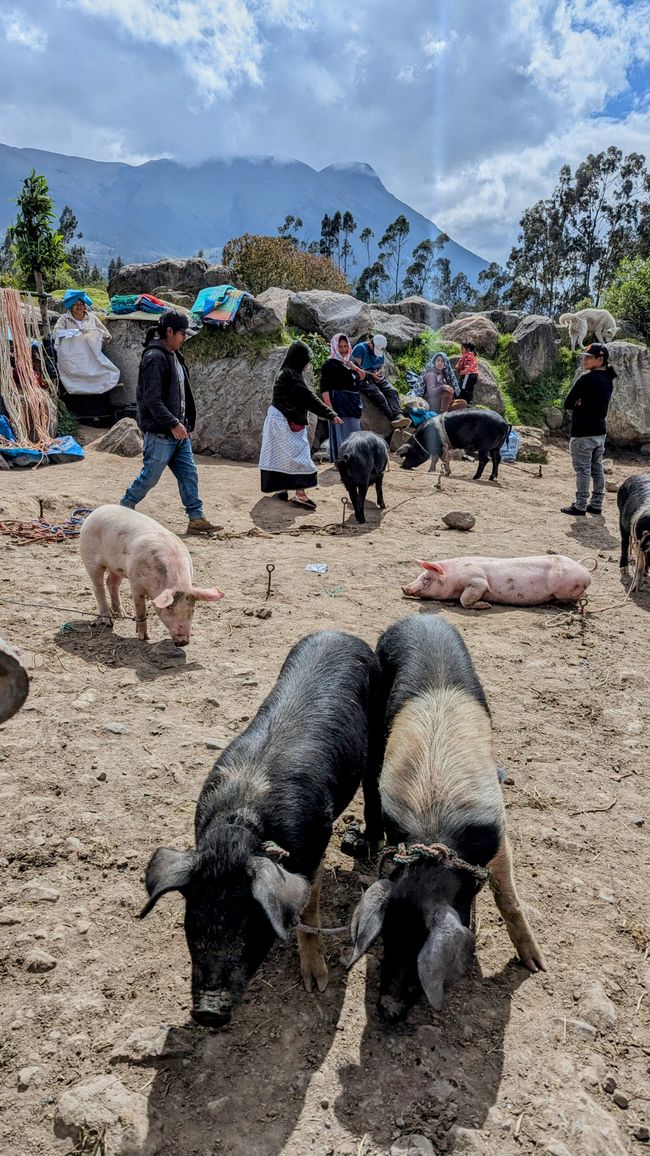
What struck me immediately was how much quieter it is here, a relief; let's see if it stays that way in Ecuador. In Otavalo, there seems to be an evening market every day (at least on the three days we were there), where everything that you might need (or not) is sold. I was more interested in the food; there was “Morada”, a thick warm drink that somehow resembles red fruit pudding. 'Morocho' is also a thick, warm drink made from corn that resembles rice pudding a bit. But what I liked best was the roast pig served with a type of potato pancake and salad. After a short walk, we also visited the local waterfall and then hiked along a nice trail to the next crater lake. However, we were a bit shocked to find that the entire tourist infrastructure was nearly non-existent; in general, since Medellín (except Cali), I have barely seen any tourists; okay fairly, one must say that Fina and I were also no longer in hostels, but even at the tourist hotspots, no one else is seen. Mario and Alessa, who have been studying in Ecuador for a few months, also reported the same. Since Corona and the unrest in Ecuador, there are only a few who wander here, which is a pity because so far I really like it here (or maybe that's exactly why?!). I had imagined the largest market in the Andean region differently; the people from the villages sold all kinds of handicrafts and everyday items like bags, backpacks, scarves, balaclavas, sweaters, ponchos, etc. In between, some vegetables, fruits, and spices were sold, but there was no one buying anything. Again I wondered how the people here survive or why they still come here to sell or if things were different before. I can hardly imagine that one can survive on this since the Ecuadorians also prefer to buy jeans and 'normal' sweaters at the evening market and aside from a small group from Germany, there were no tourists in sight. What I also did not expect: the quiet. Due to the lack of customers, there was no hustle, no noise, no bustle, but that is also very relaxing.
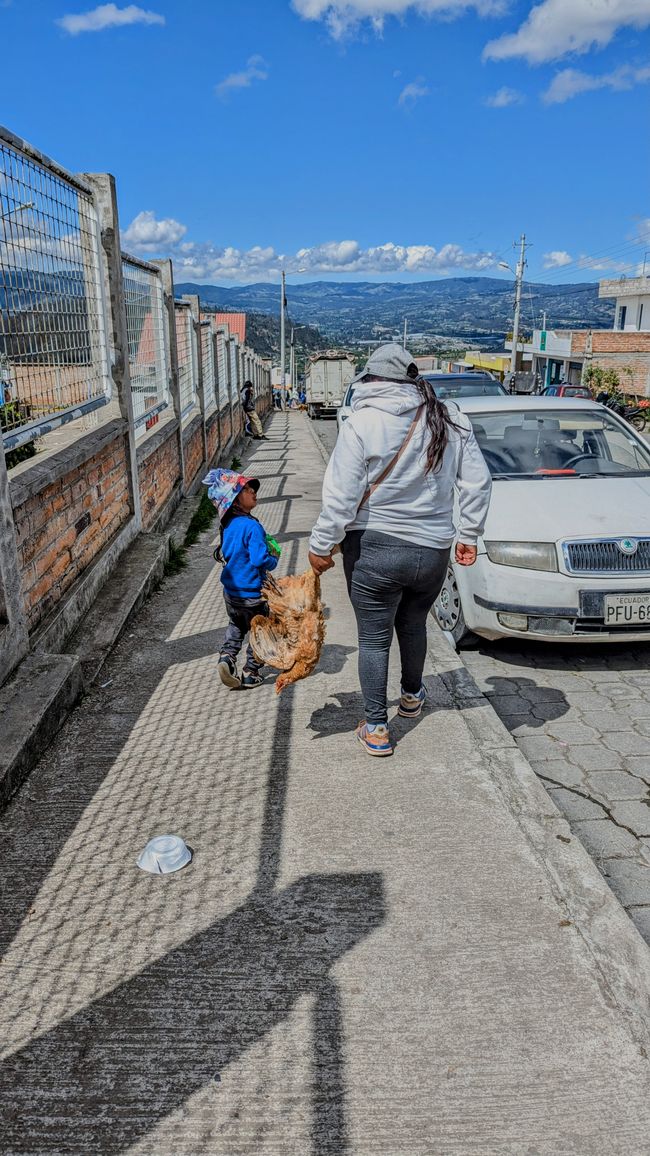
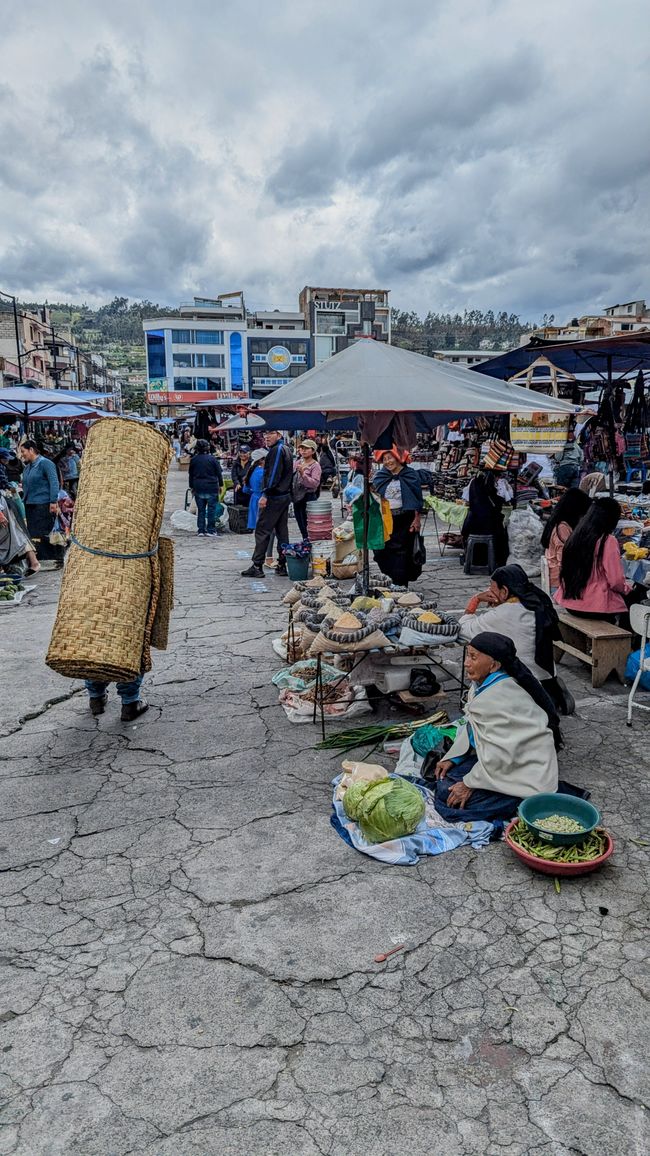
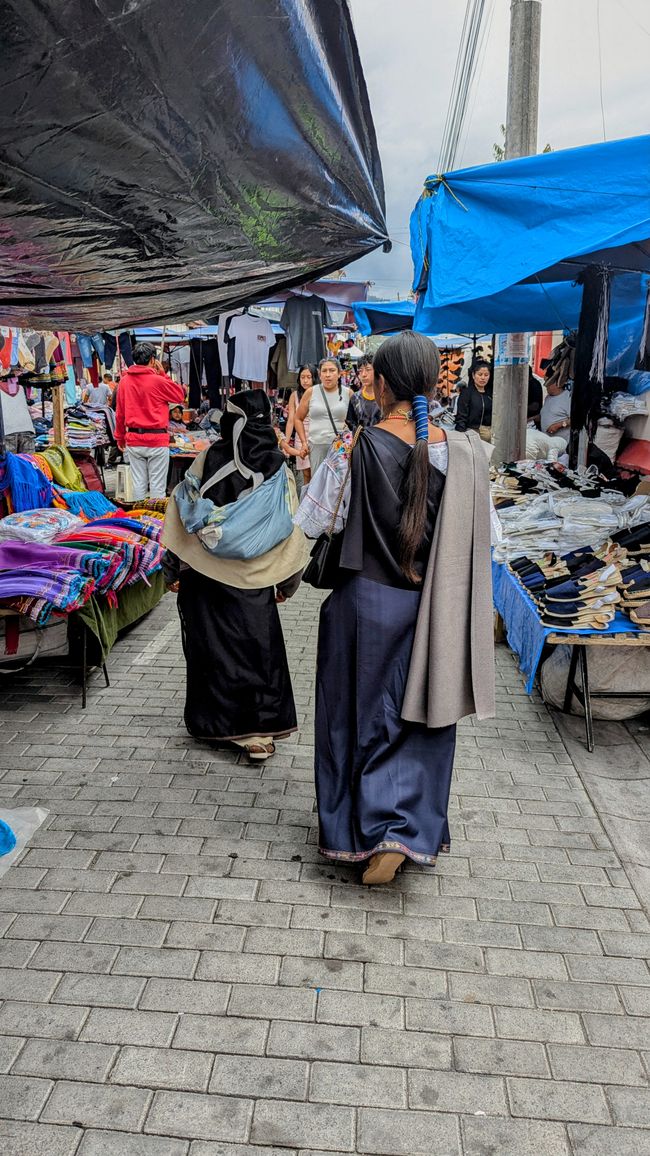
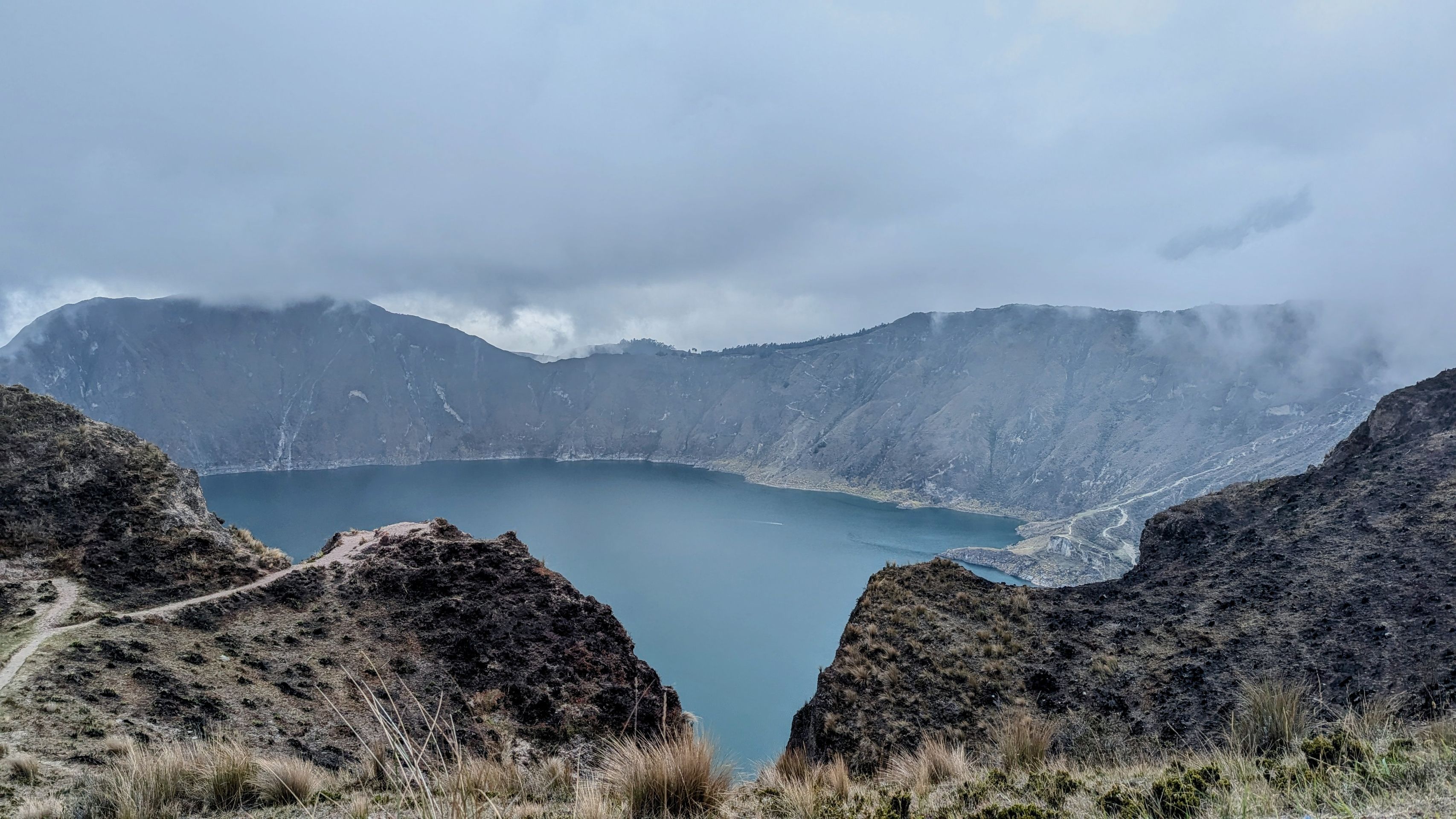
After three nights, we continued on a three-day hike, the so-called Quilotoa loop. We were a bit worried because 0 hours of sunshine were forecast, but more rain was predicted. So we set out early in the morning at 6 am to do the trail, as the rain was supposed to start mainly around noon. It was cloudy but dry; the paths were well marked, and we reached our first accommodation by 1 pm. We got an upgrade to a nice little hut with a private oven.
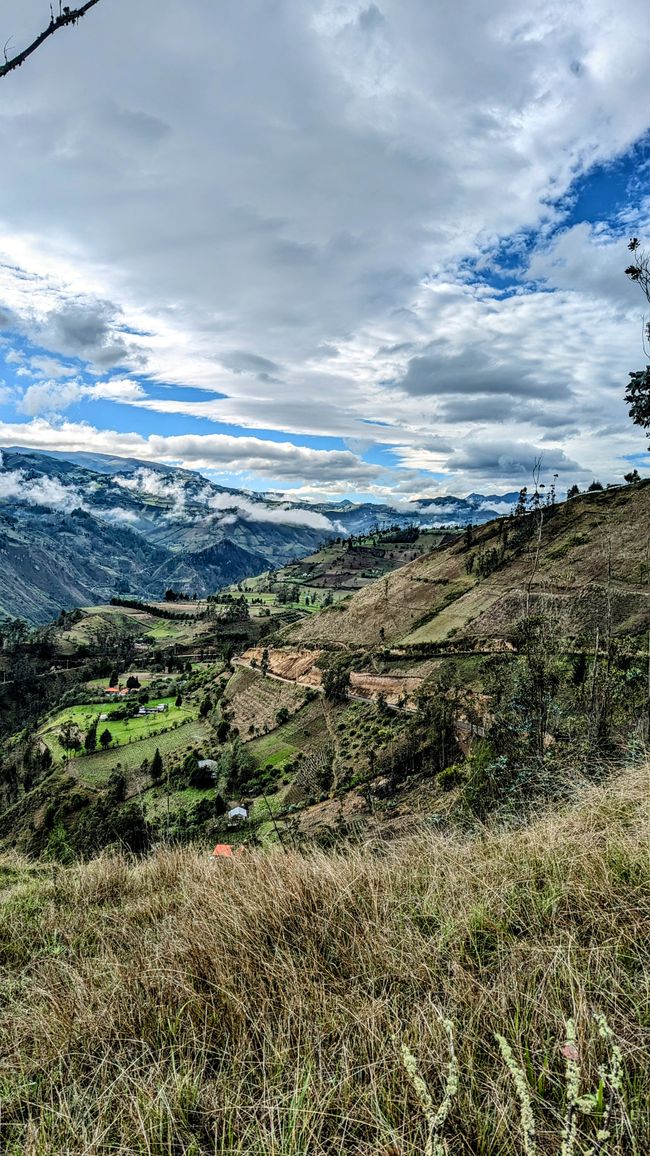
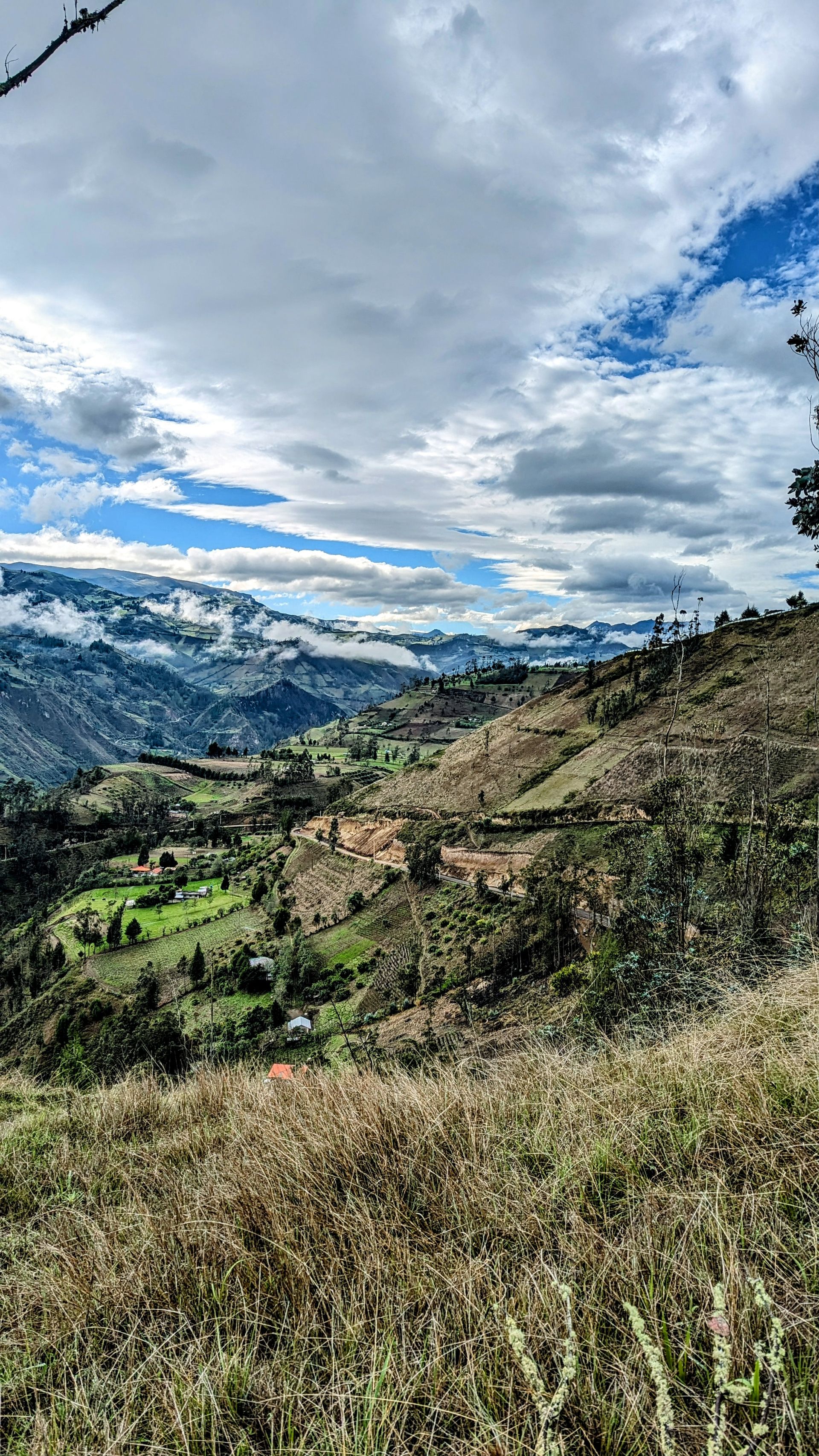
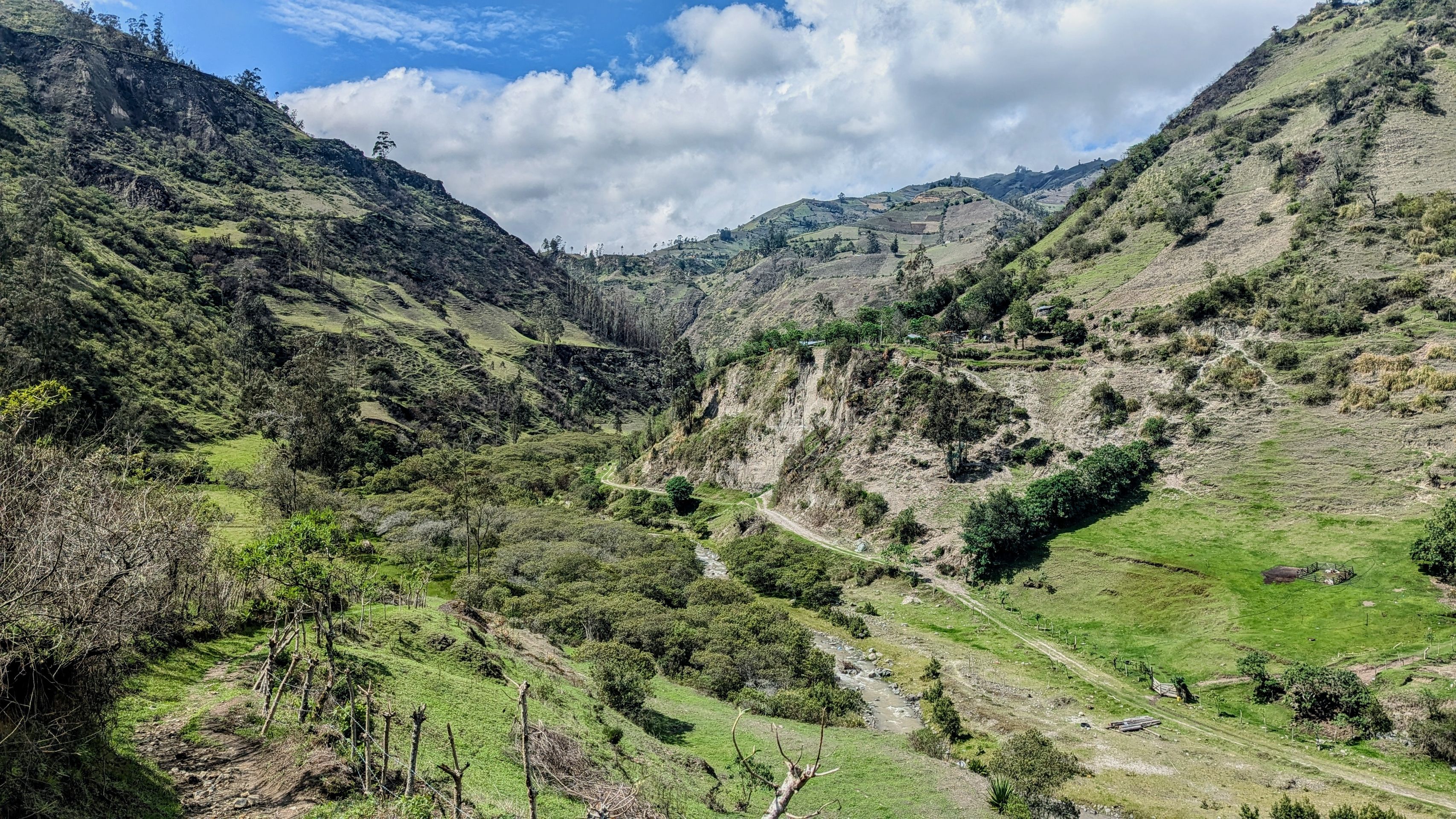
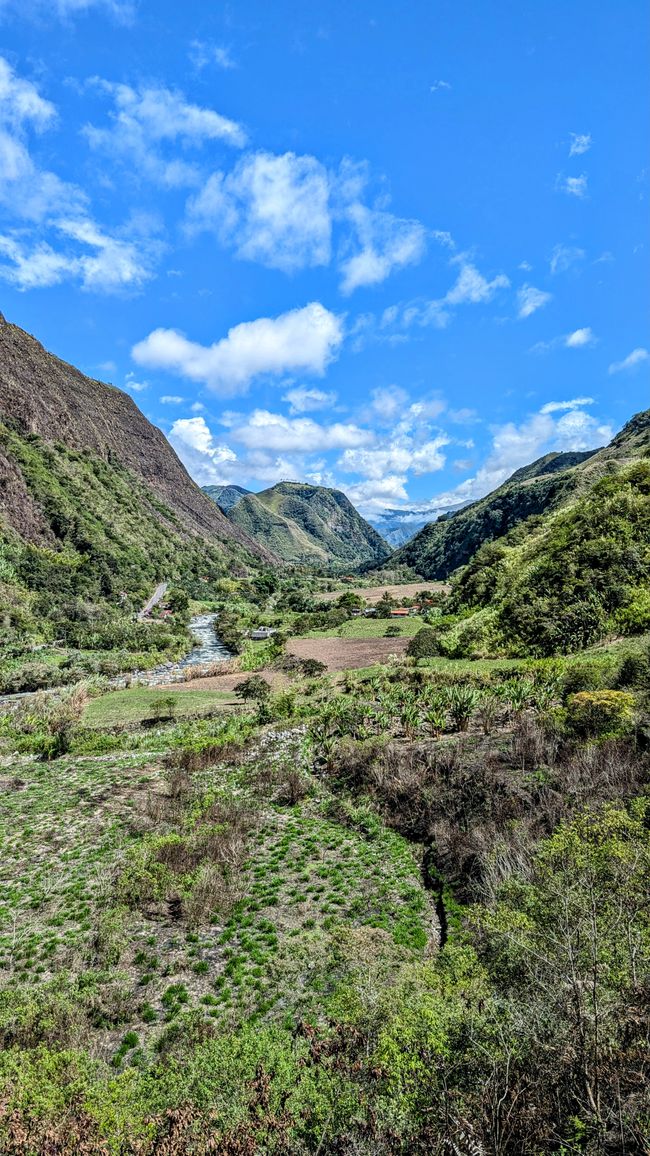
On the second day, we started a little later as breakfast was only at 8 am, but it was still dry. The path was even more beautiful than on the first day, through two valleys over bridges, along small rivers, with small villages, farmers, and many animals in between.
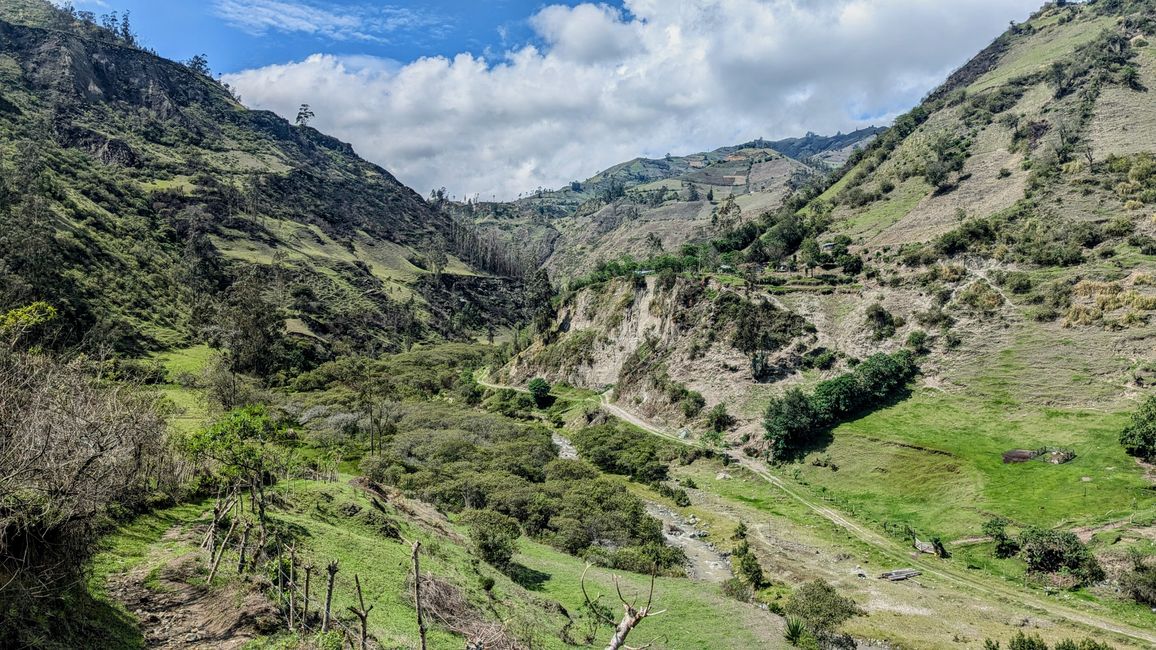
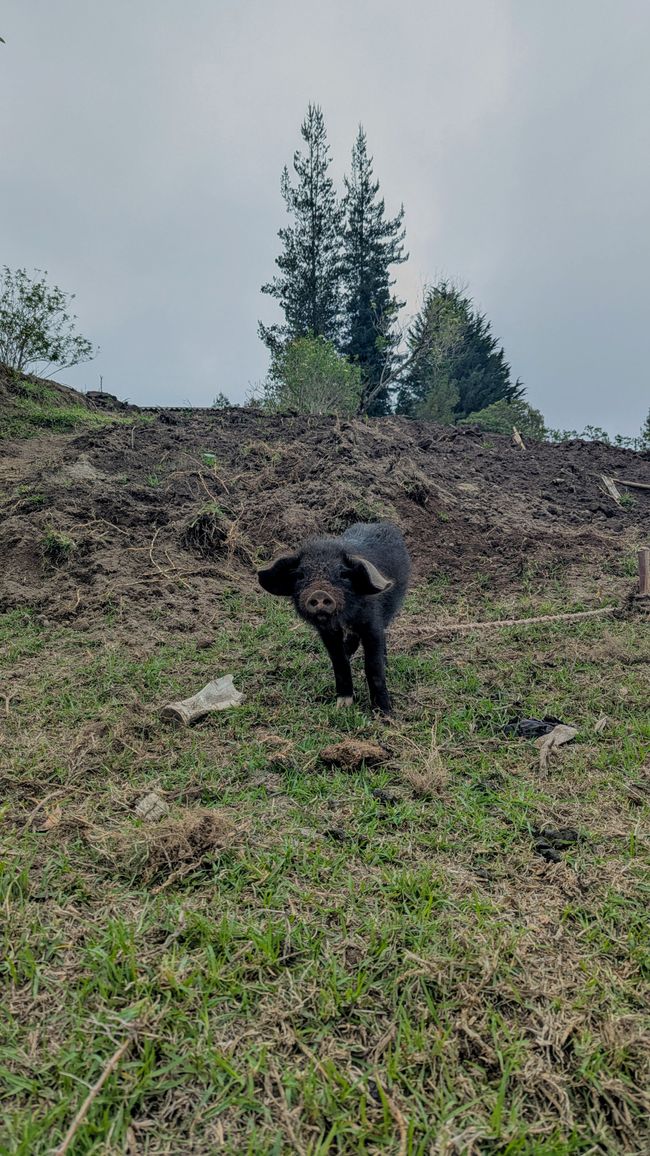
On the third day, I struggled with a minor food poisoning for the first 6 km to the next village before we decided to take a pickup to the main town and from there the bus back to the city. Our poor Spanish, however, complicated things, and we ended up on the opposite side, exactly where the hiking trail runs, which allowed us to skip the exhausting two-hour ascent. Still, I didn’t know how I was to walk the last three kilometers on foot; I was really exhausted by then, and it was terribly cold and windy. A nice lady then made me my first Coca tea in her little hut on the fire, making the last kilometers a bit easier for me! Then another two hours of bus ride back to Latacunga, and I fell into bed tired.
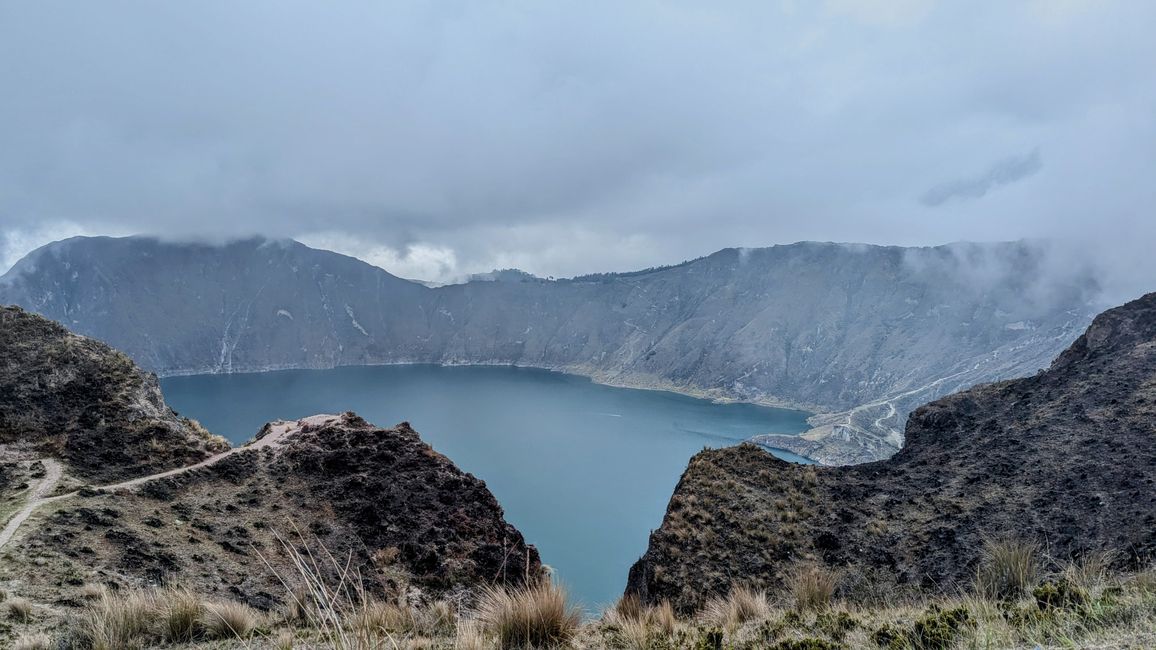
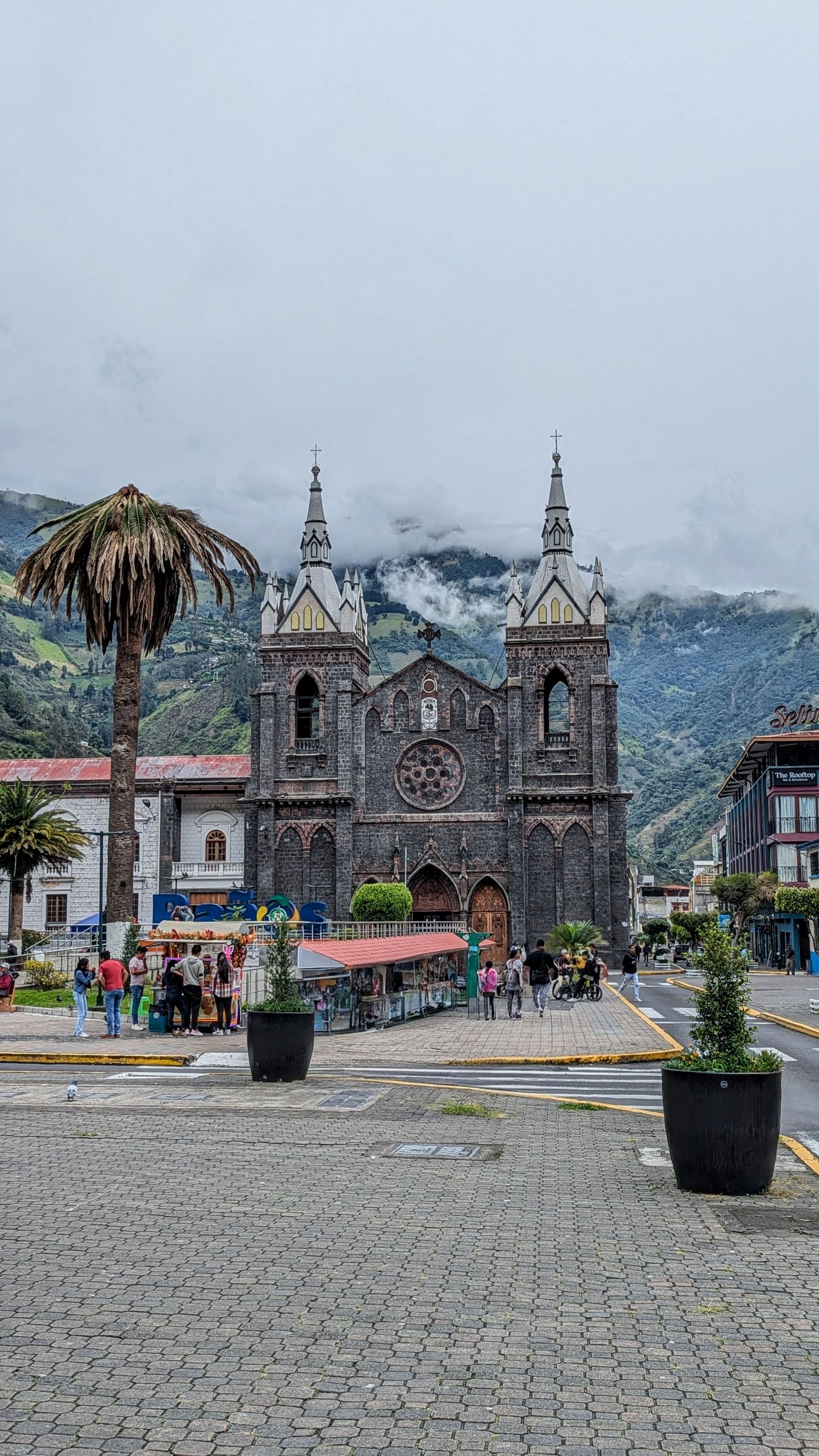
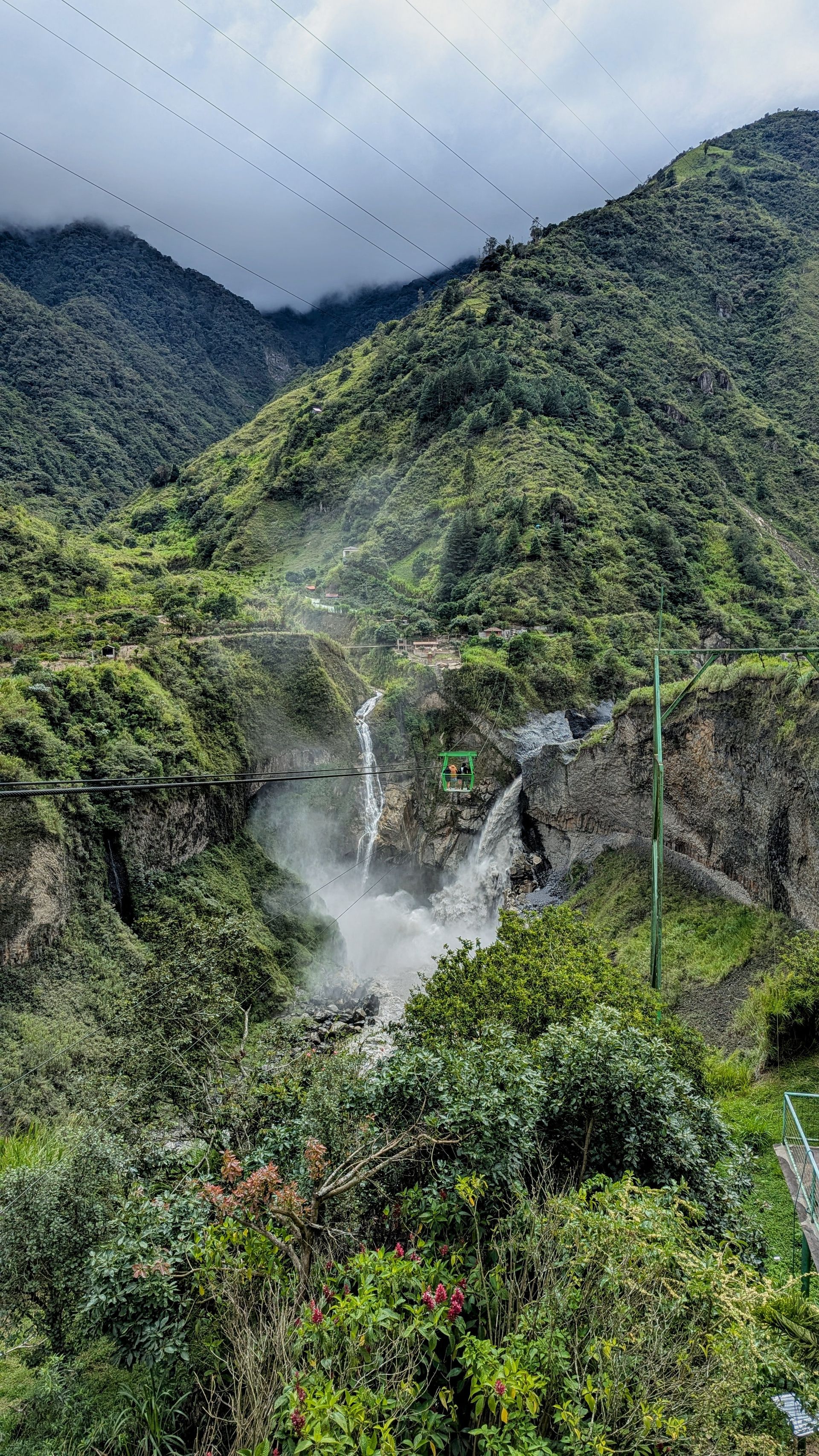
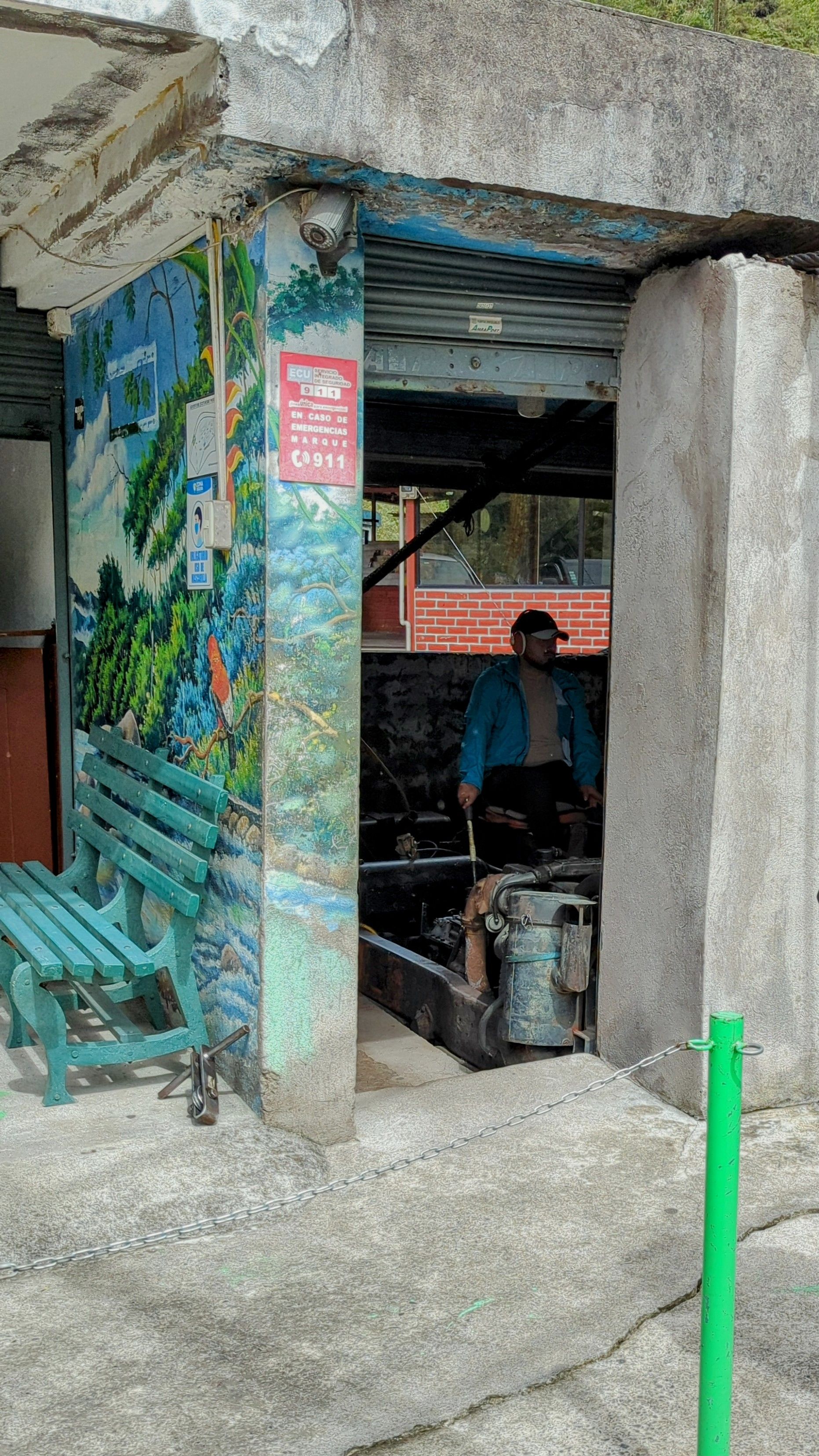
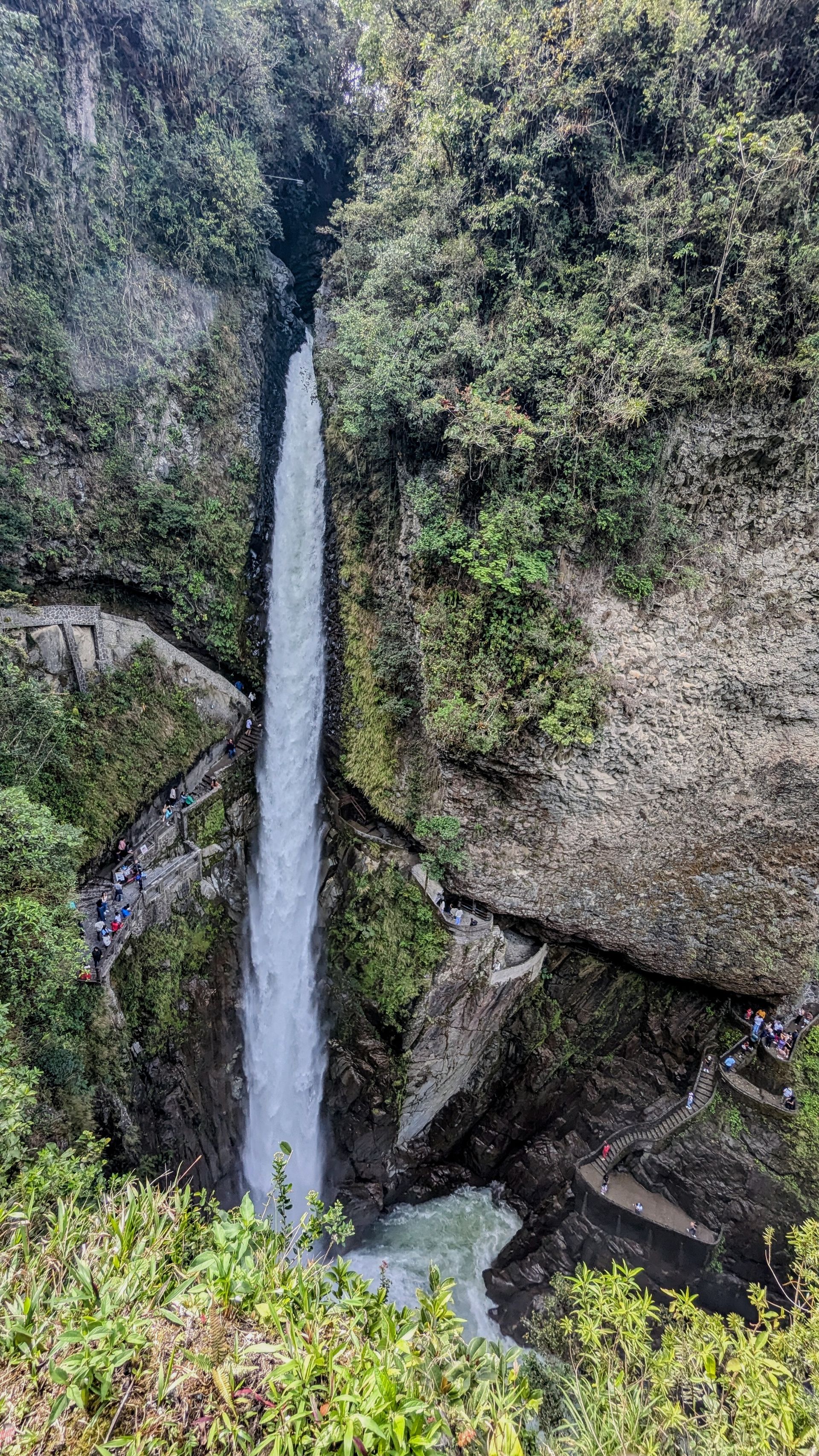
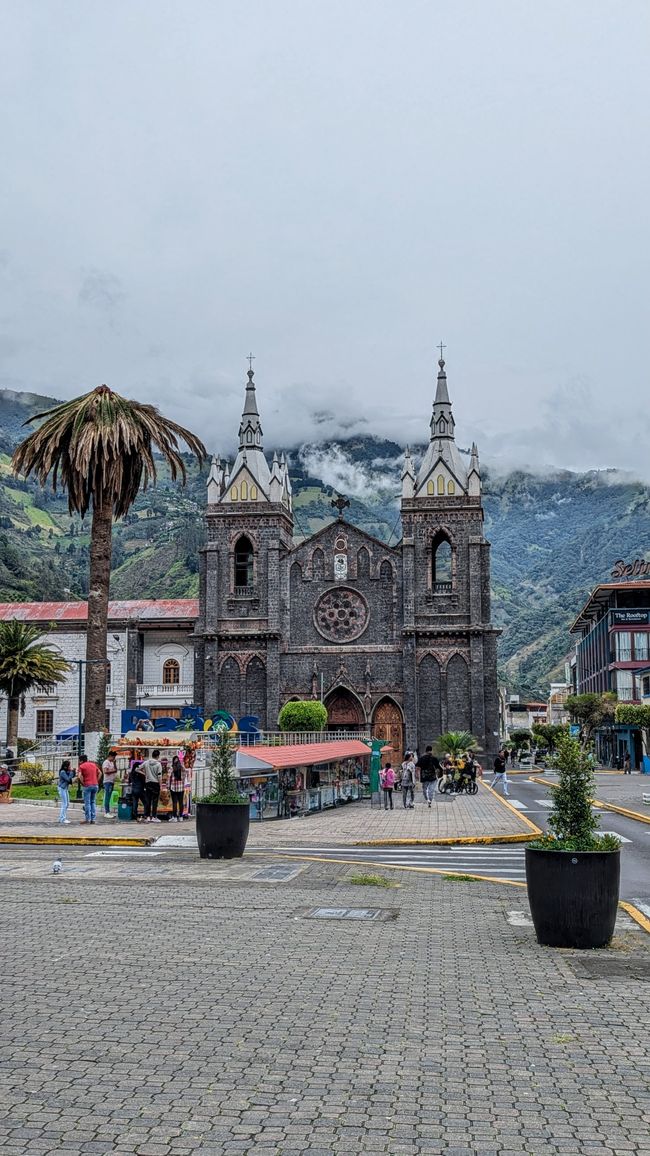
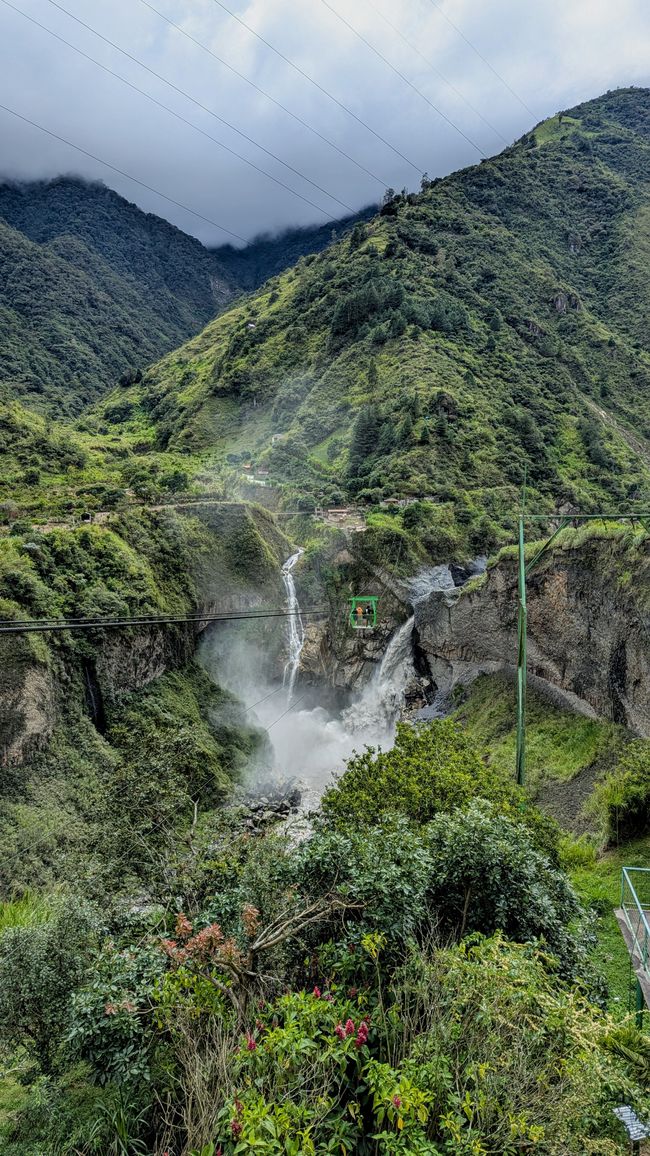
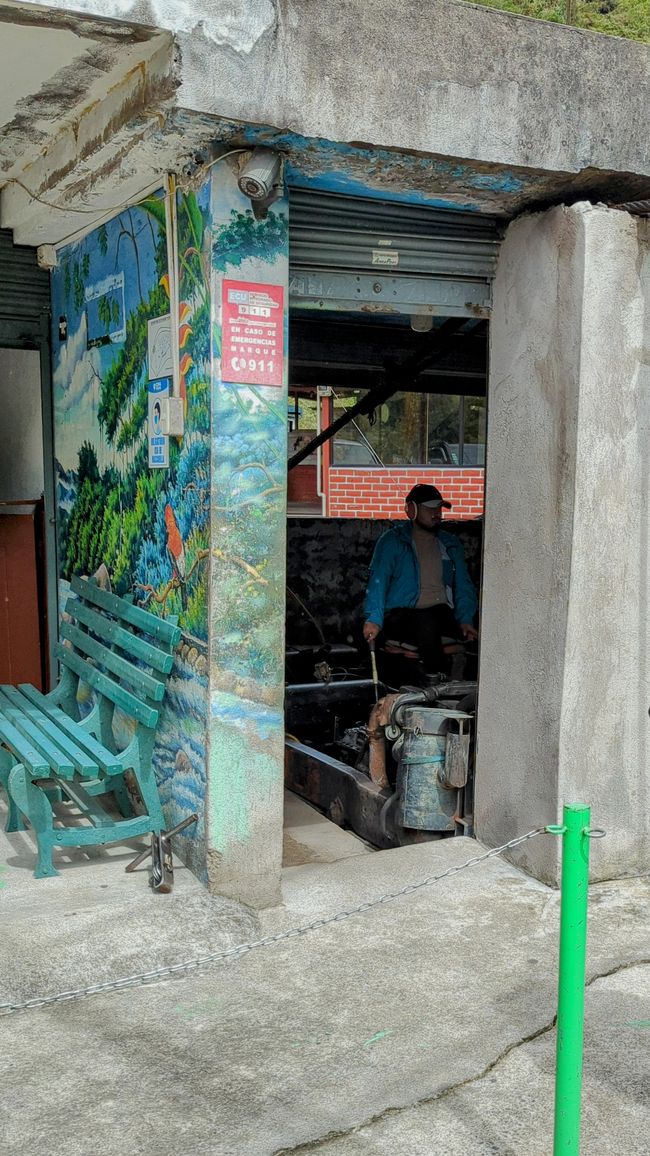
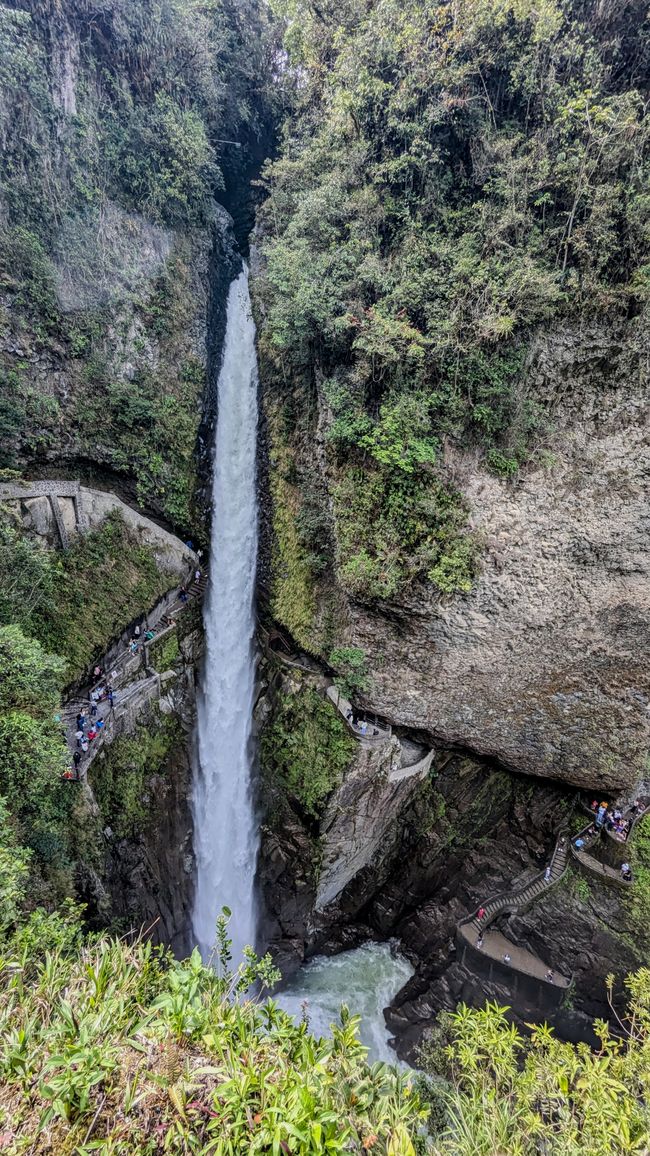
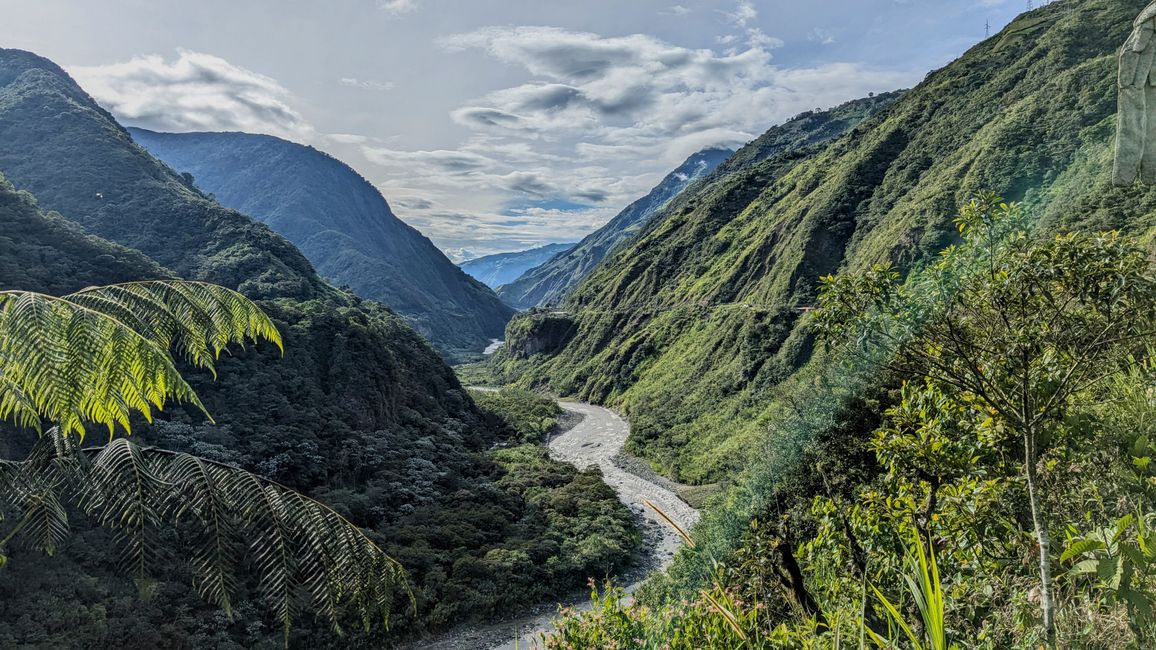
I spent my first day in Baños in bed; only in the afternoon did we go to a waterfall just behind the center and for dinner in the city. The next day, we wanted to explore the area on a scooter; however, the local scooter mafia wanted $20 per hour(!), while in Central America, $25 for a full day was already outrageous. Eventually, we found a dealer who let us rent a scooter for $35 for 4 hours. Clearly, Baños is one of the most touristy places in Ecuador, which surely has to do with its beautiful location. Following the main road, one can visit five impressive waterfalls within 20 kilometers, each one more impressive than the last. However, this also means that there is a cable car to each waterfall, where one can do bungee jumping or zip-lining. But I won’t get into such a 'cable car', where hopefully a well-trained locksmith has welded a basket, got four heavy-duty rollers from a hardware store, and used an old diesel engine for propulsion. Automated? Think again, where the black diesel smoke rises, someone is sitting with ear protectors accelerating and braking the whole contraption... The zip-lines are no better, and the first ones hung 50 meters above the gorge and had to be retrieved with an extra rope; no thanks, no matter how cheap (zip-line - $10, bungee jumping - $20...) We were satisfied with the waterfalls and a brief detour to the next viewpoint (around 1000 meters higher) before our four hours were up.
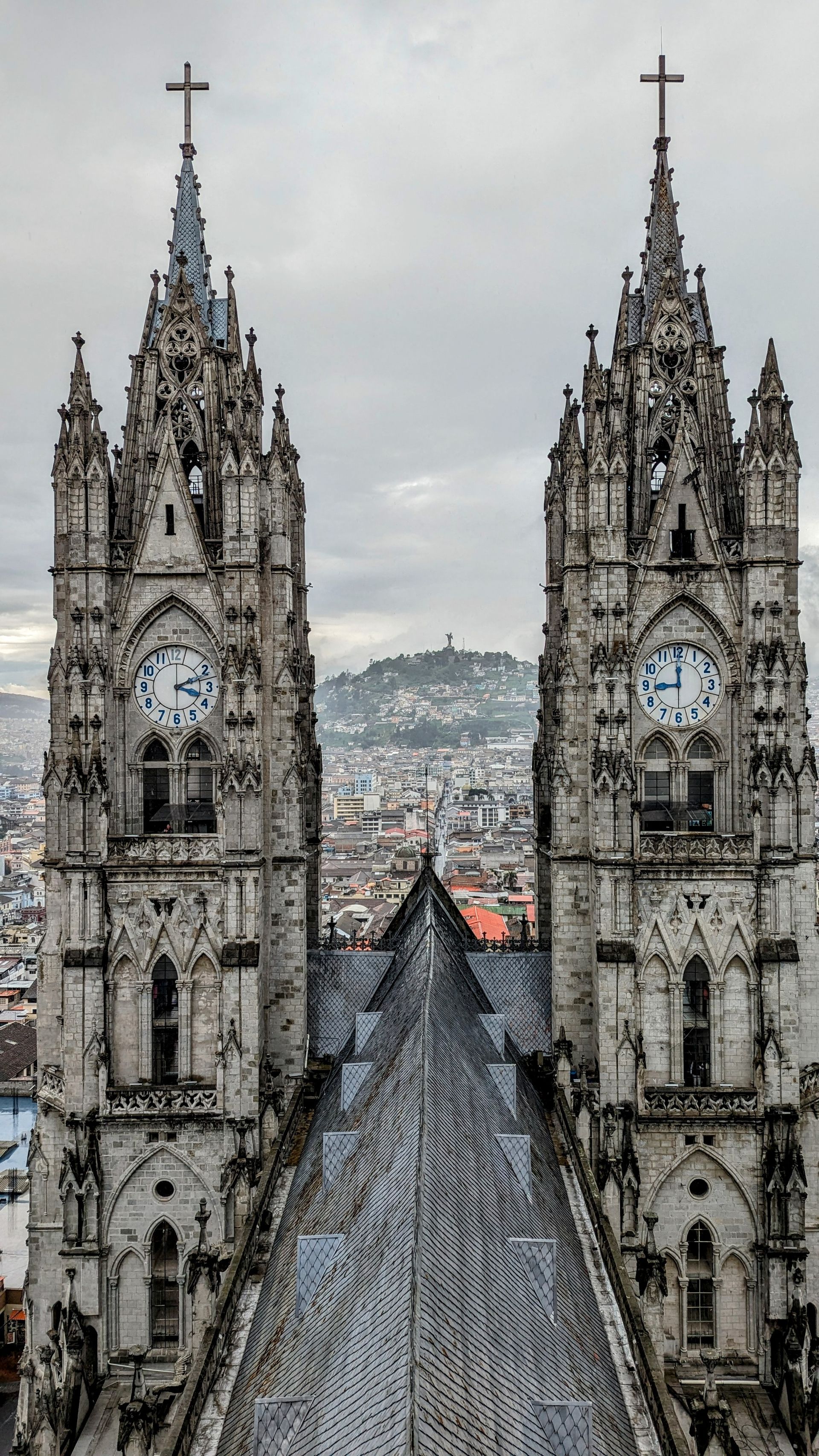
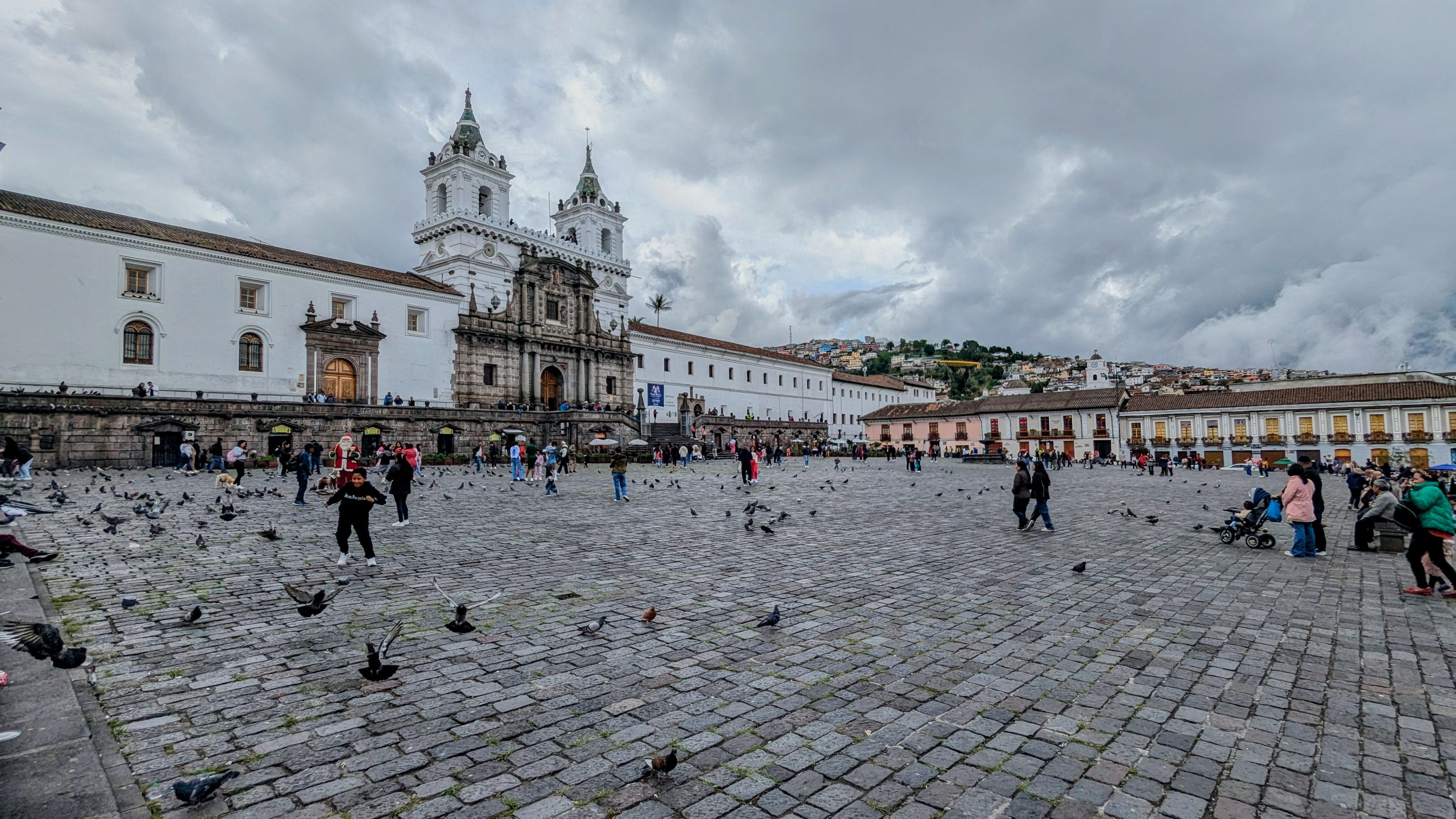
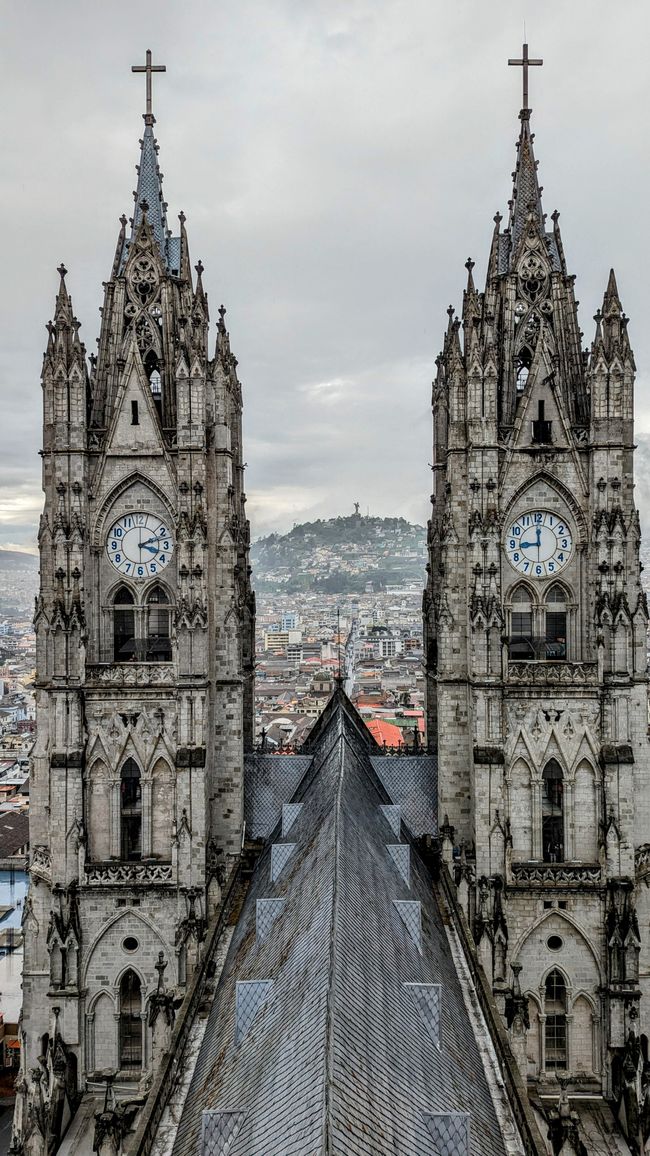
Happy New Year from Quito. The highest capital in the world (2850m) is being explored by us together with Mario, Alessa, and their friends. We met Mario and Alessa in our accommodation in Otavalo and were invited to New Year's Eve. On the first day, we climbed the impressive “Basilica nacional” and enjoyed the rainy view. The church was completed about 100 years ago, which isn't particularly long for a church; if one looks closely, there is a lot of concrete and metal. After that, we went to one brewery or another to taste some local specialties.
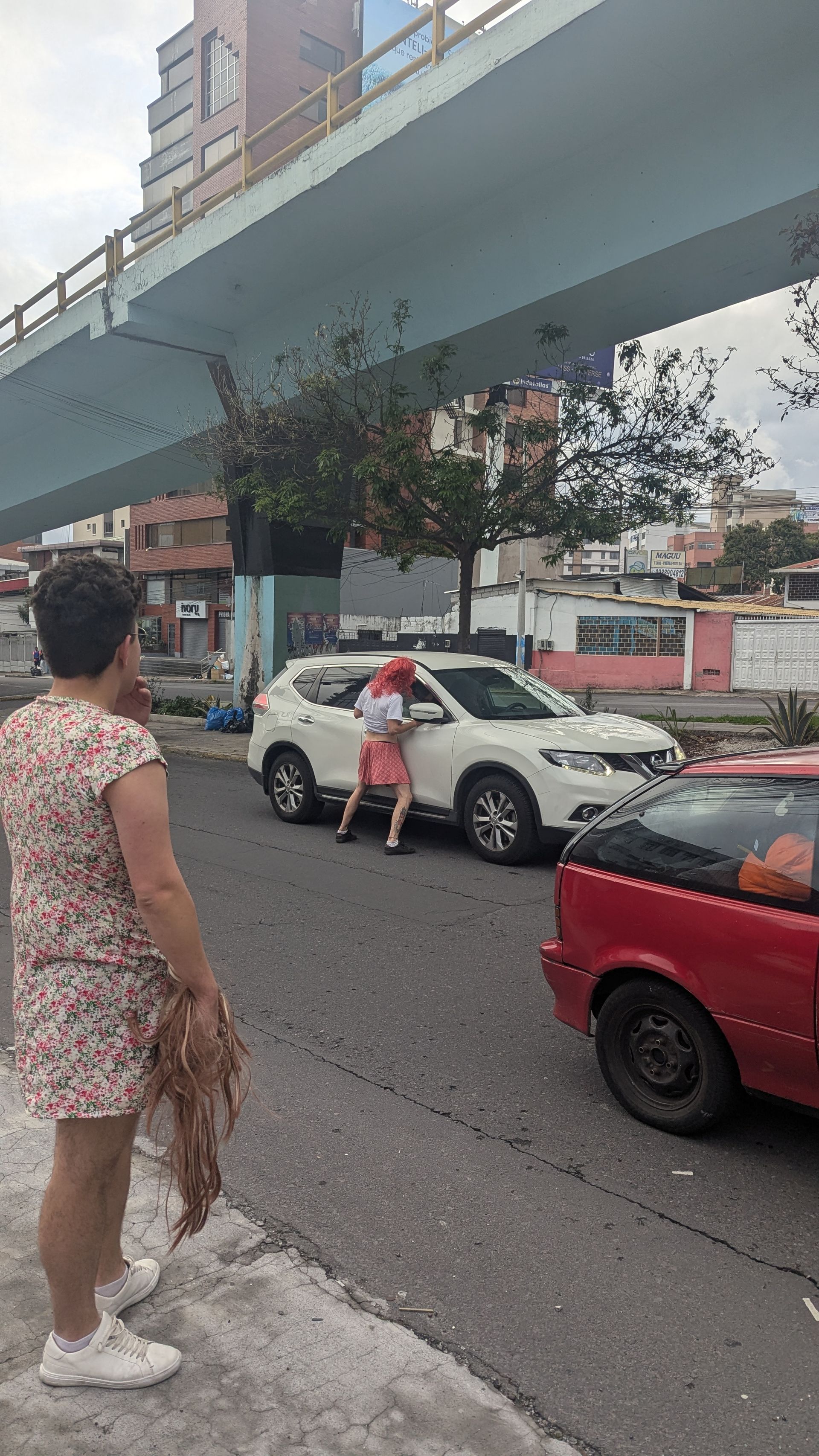
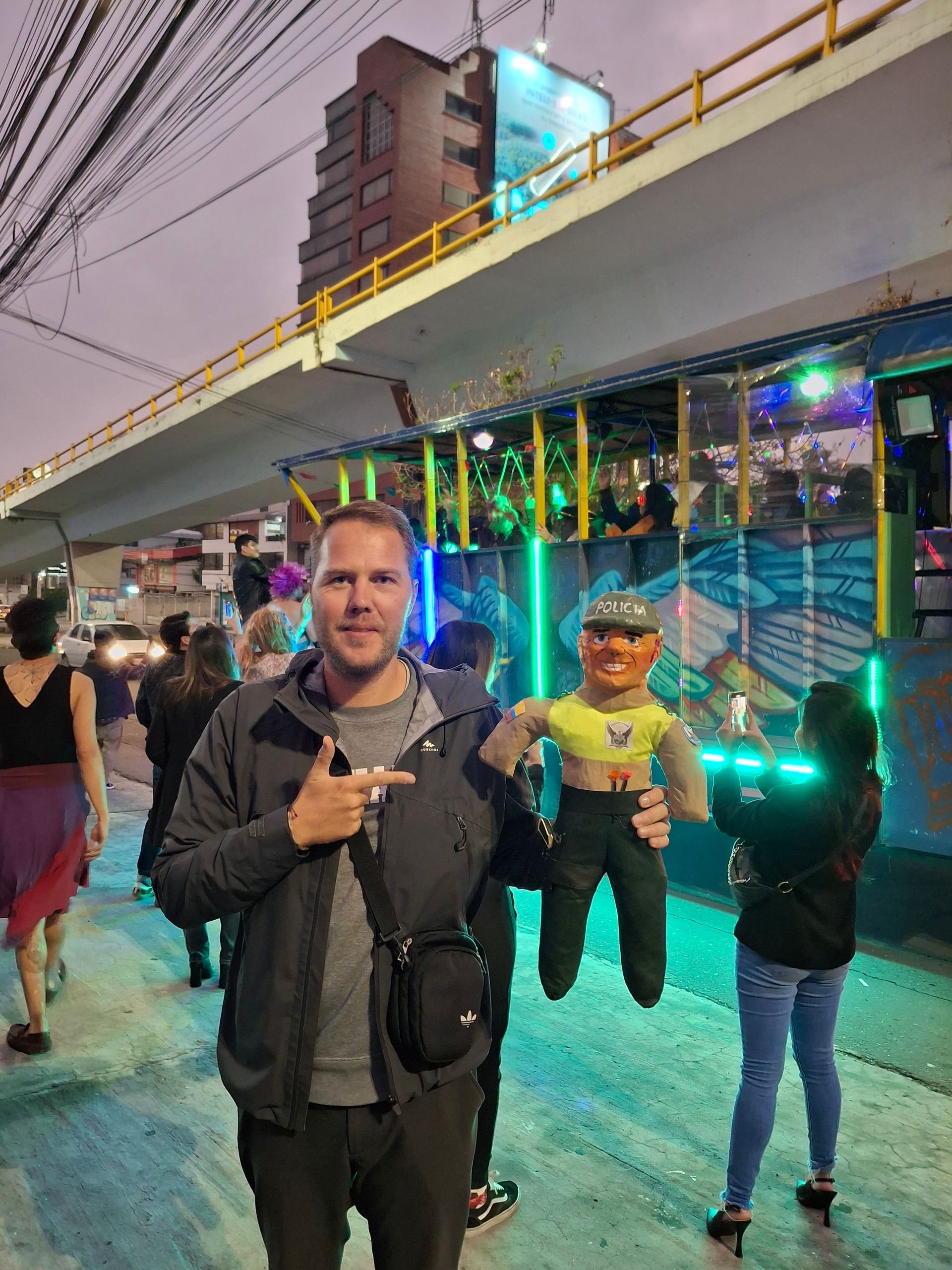
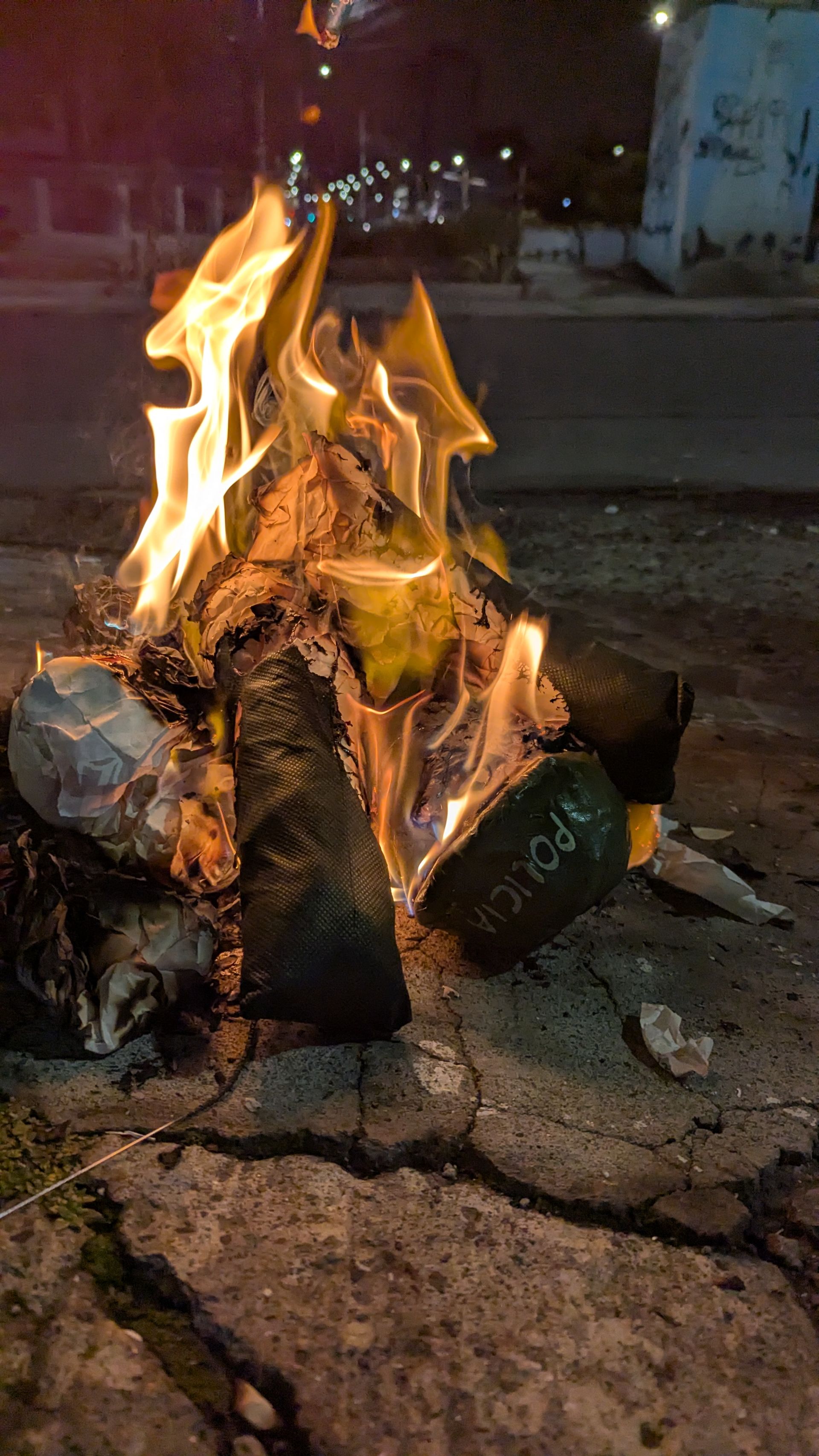
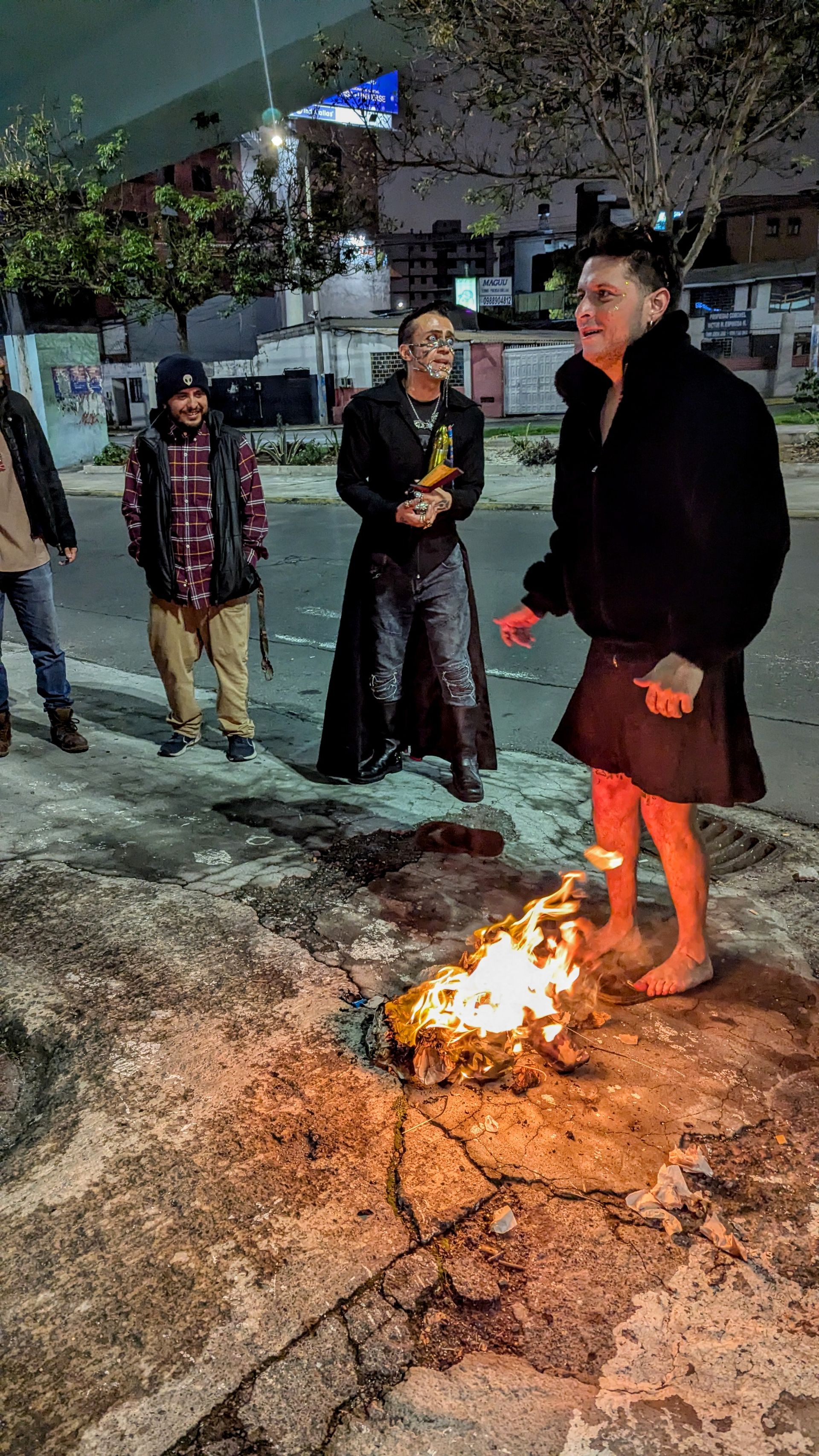
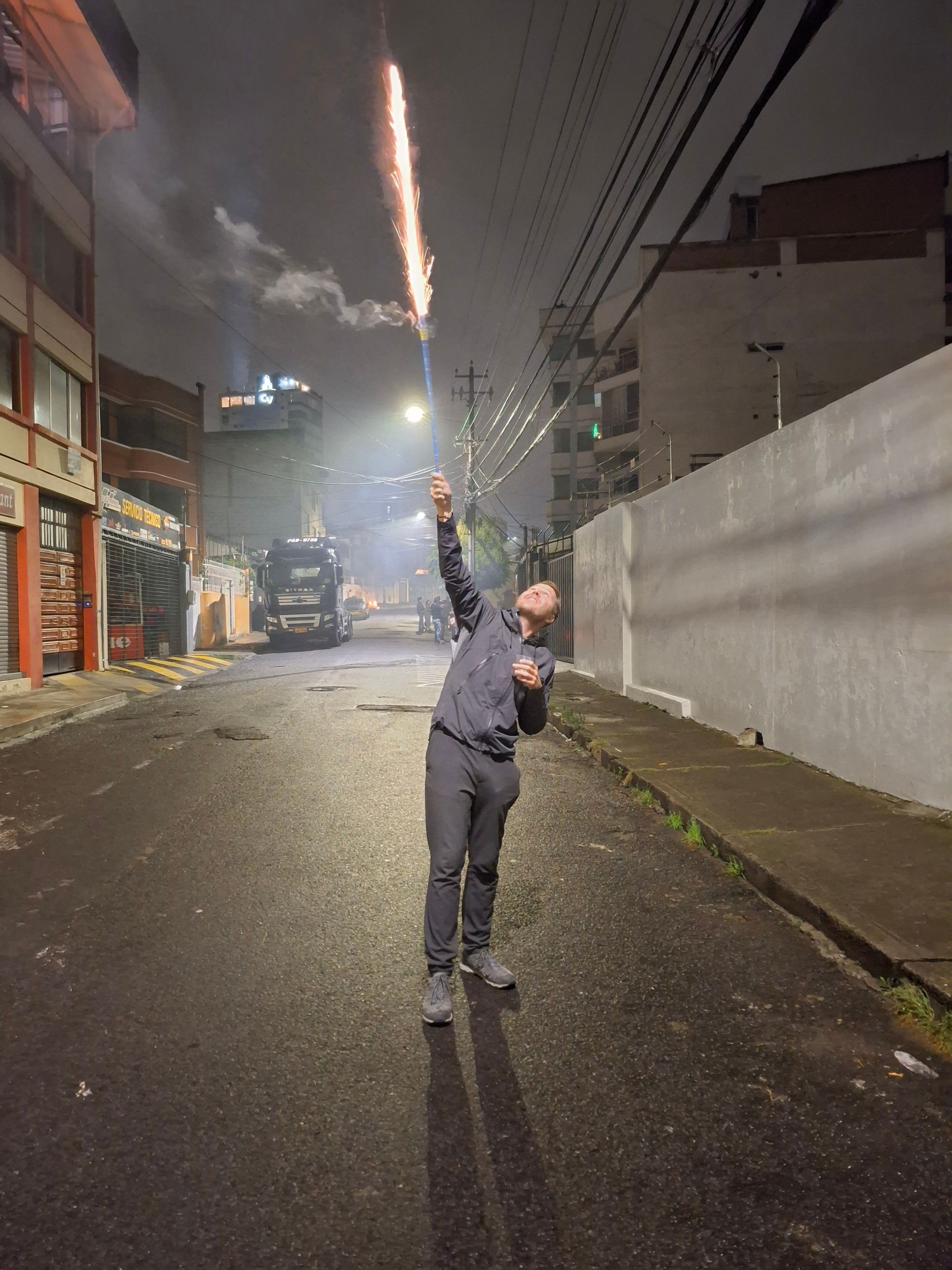
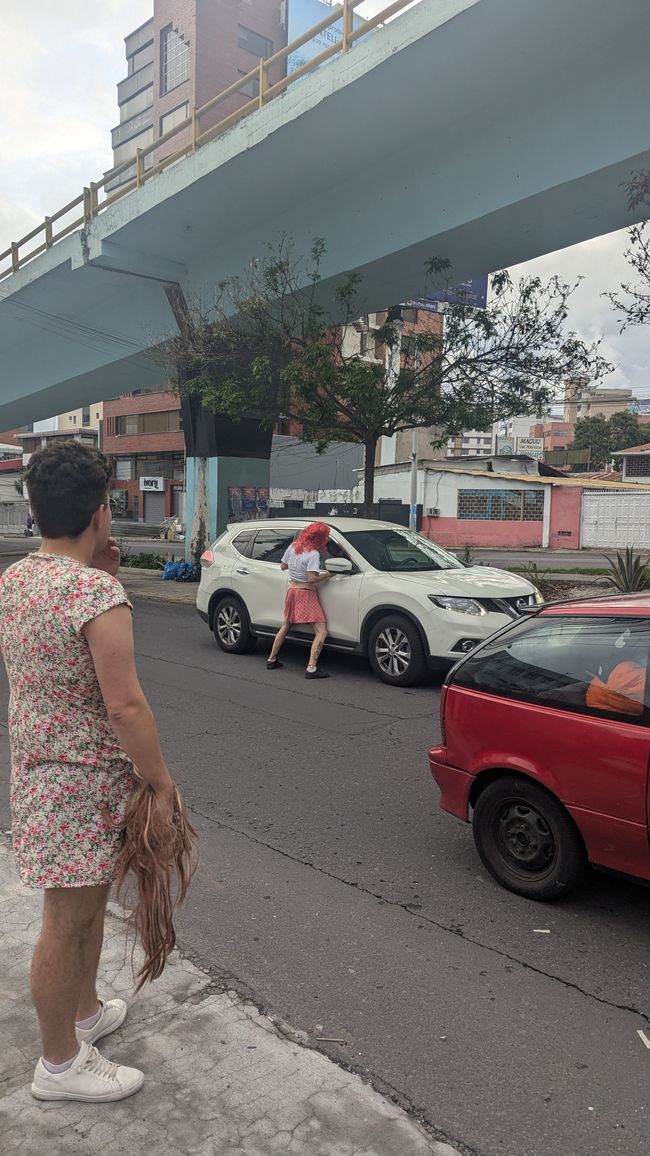
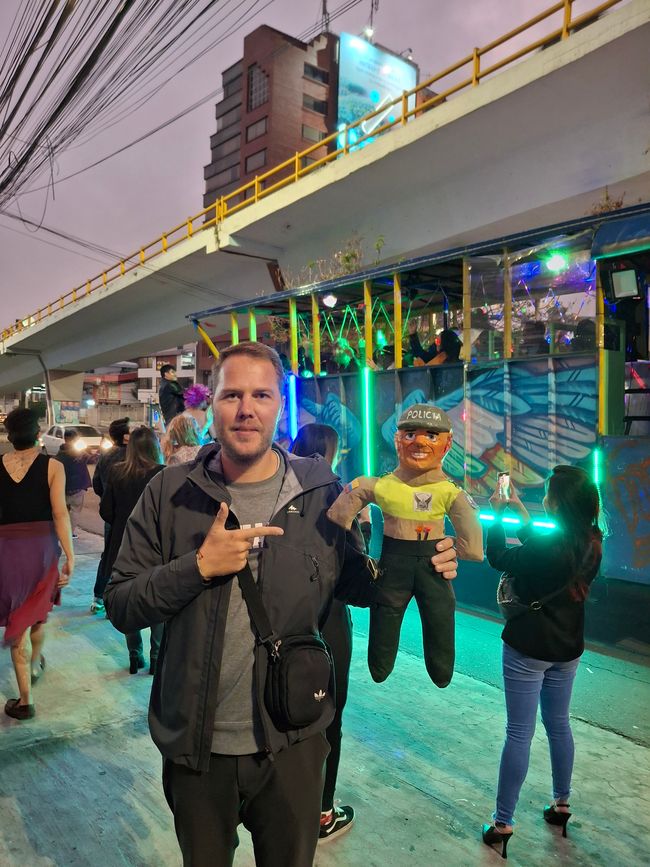
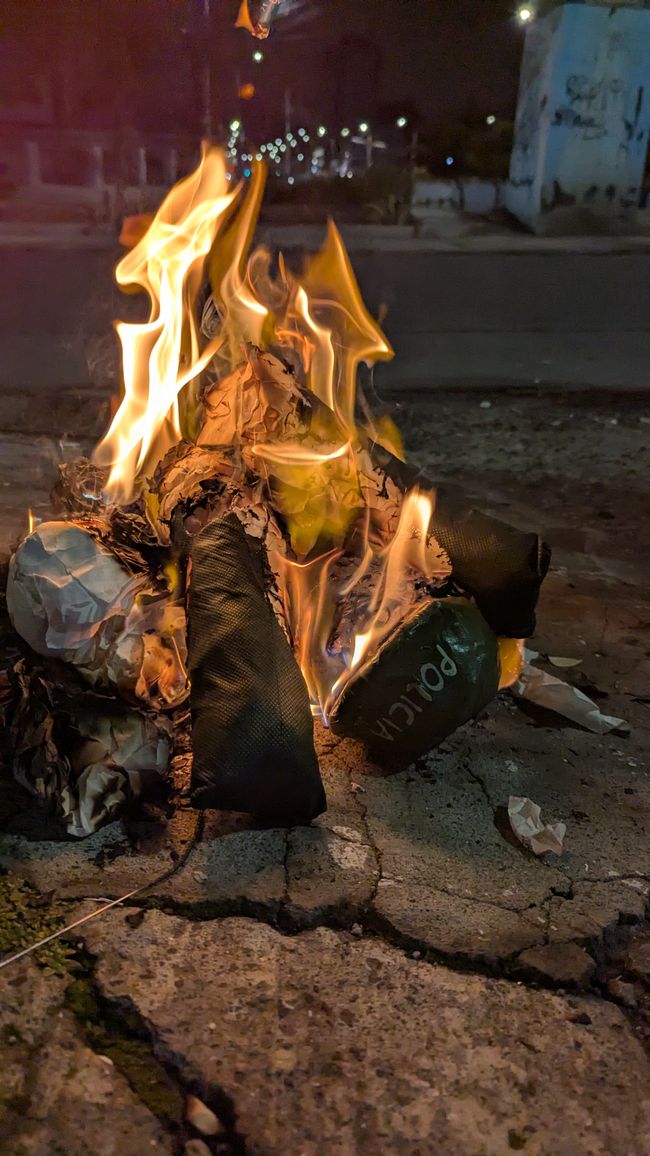
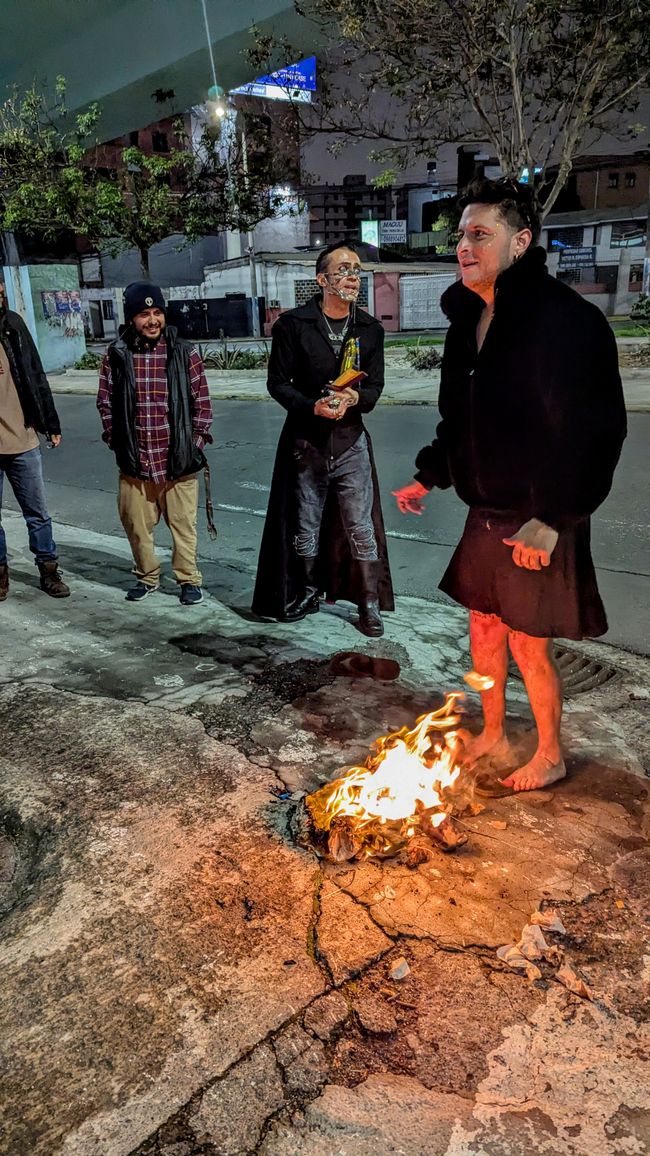
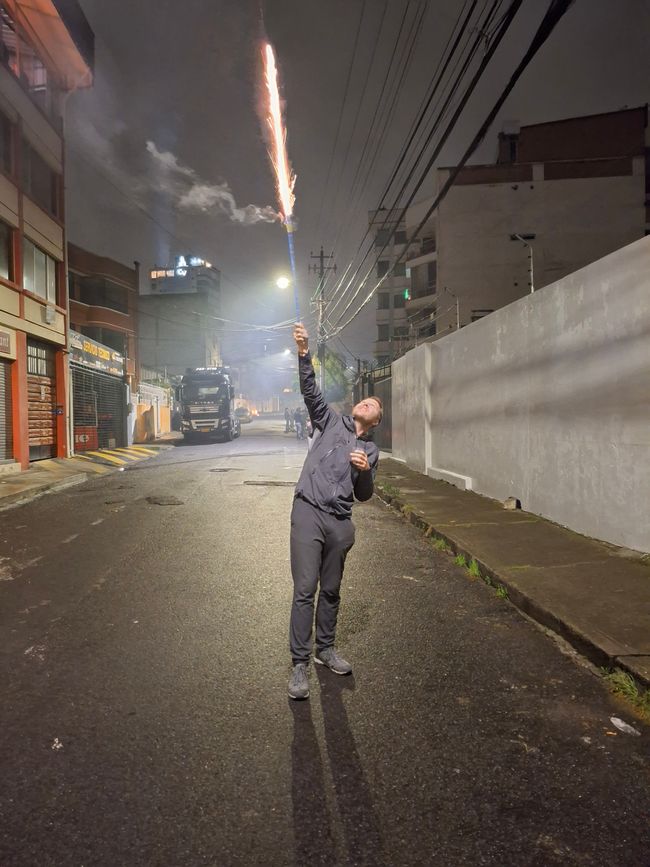
On New Year's Eve, we met with Mario again in the afternoon by the roadside somewhere in Quito, where we observed the tradition of men dressing as women, stopping cars, and dancing suggestively. The money collected was then used to buy drinks and snacks. It is also a common tradition to buy puppets made of papier-mâché, burn them, and jump over the fire. The puppets were available for purchase at every corner, comic figures, politicians, military, Chucky, Spiderman, Batman, etc. My bull (1312) burned well :) Then we made a quick stop at a party of Mario's friends before heading to his family. We got to watch the gift exchange and chatted a lot while drinking before going outside at midnight. With 12 grapes (one for each month), each person gets to wish for something for the new year! Feliz Año! After that, there was delicious roast pig, salad, potatoes, a variety of snacks, and one or two more drinks at 00:30(!). We then went back for a beer at the party, only to fall into bed exhausted at 03:30.
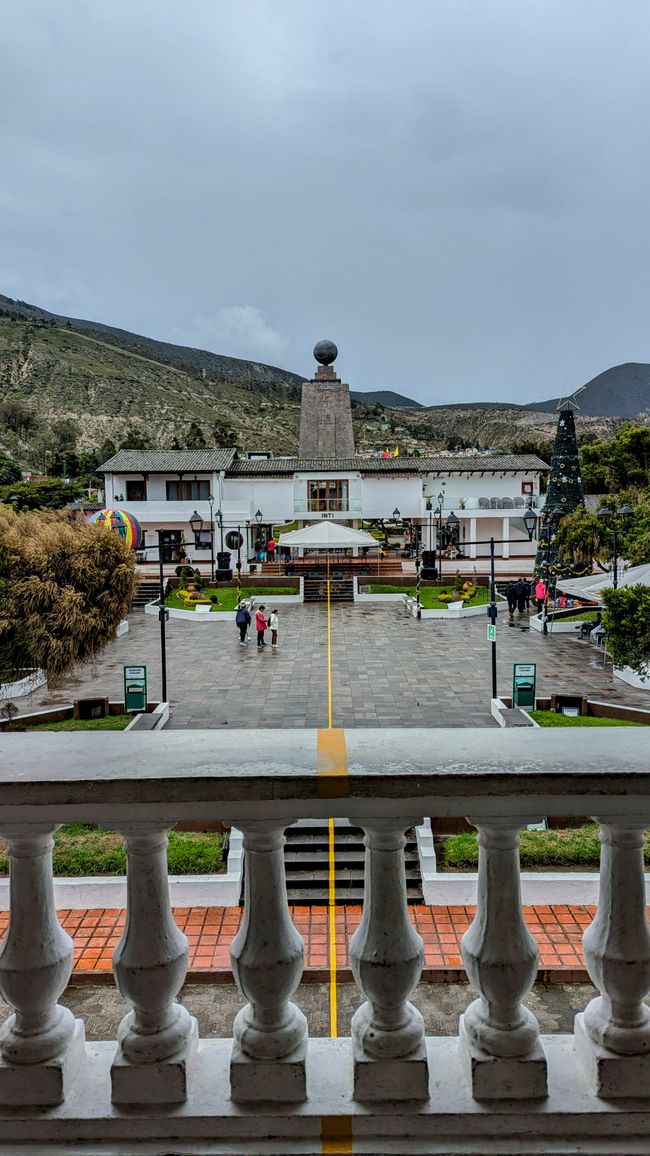
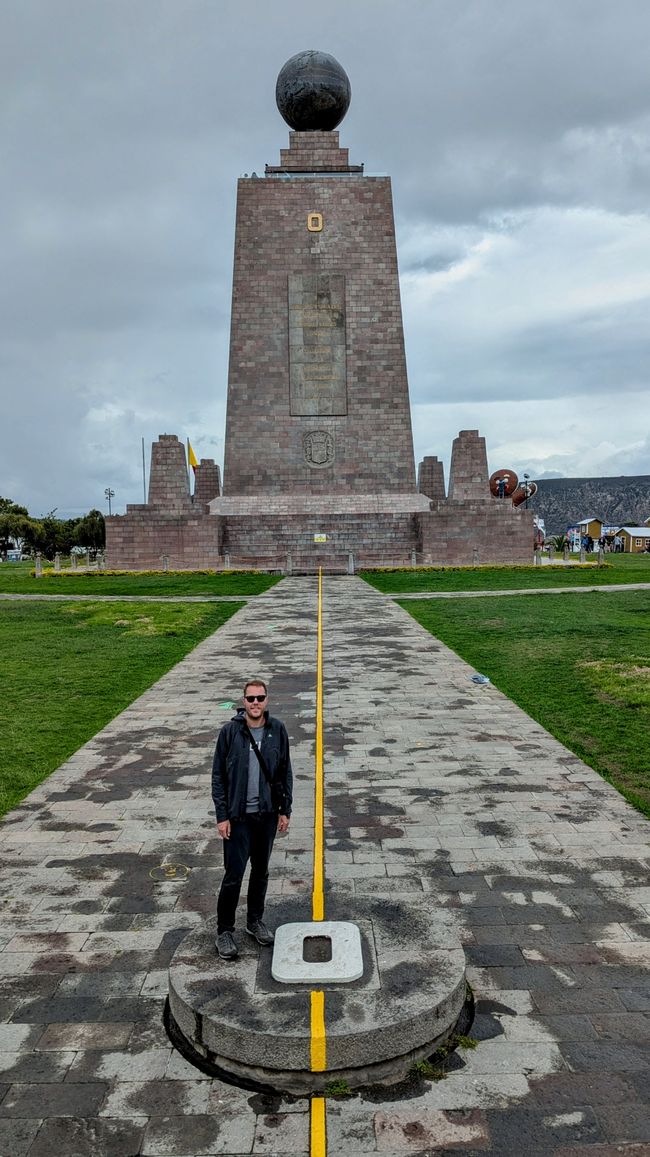
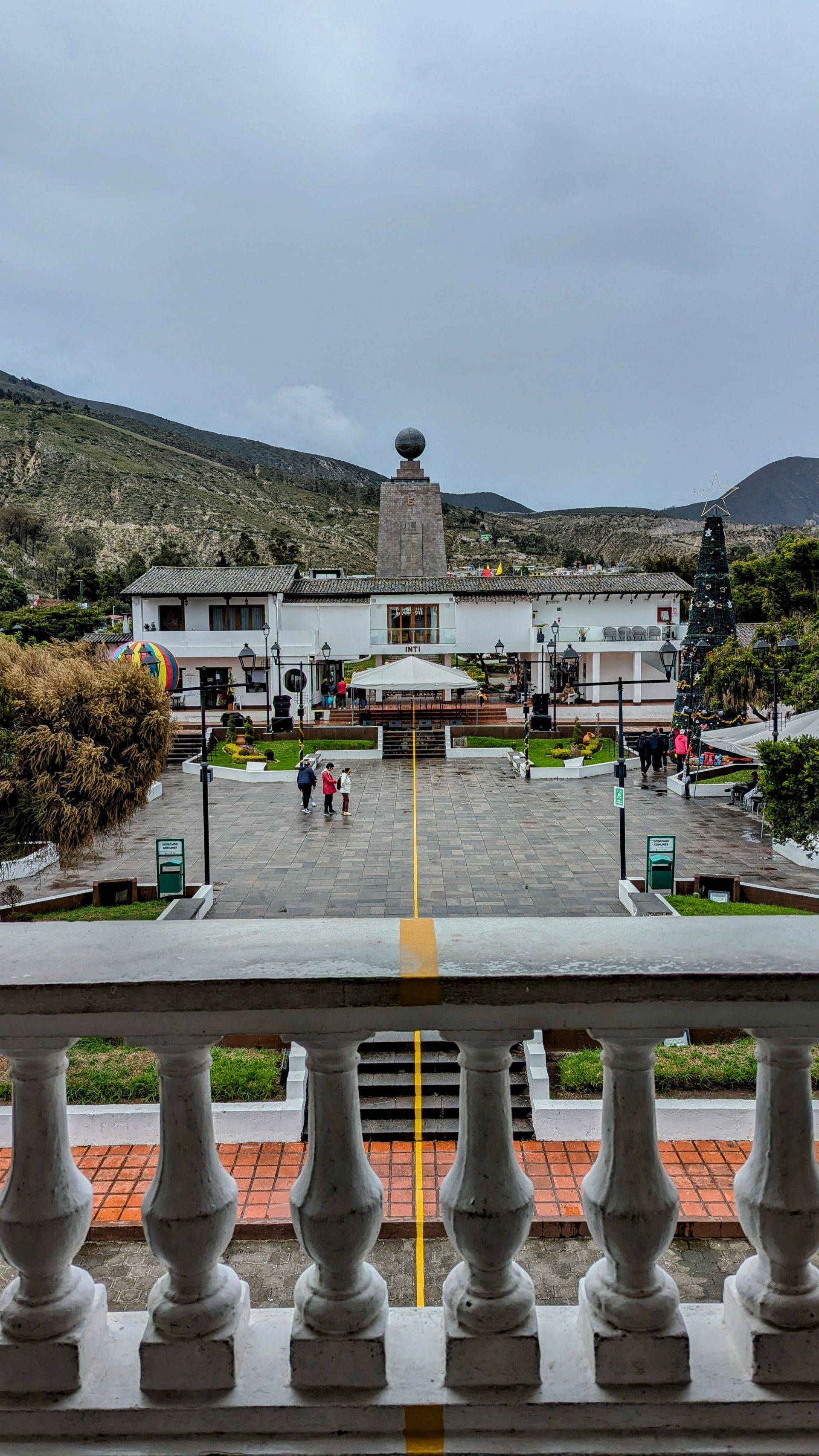
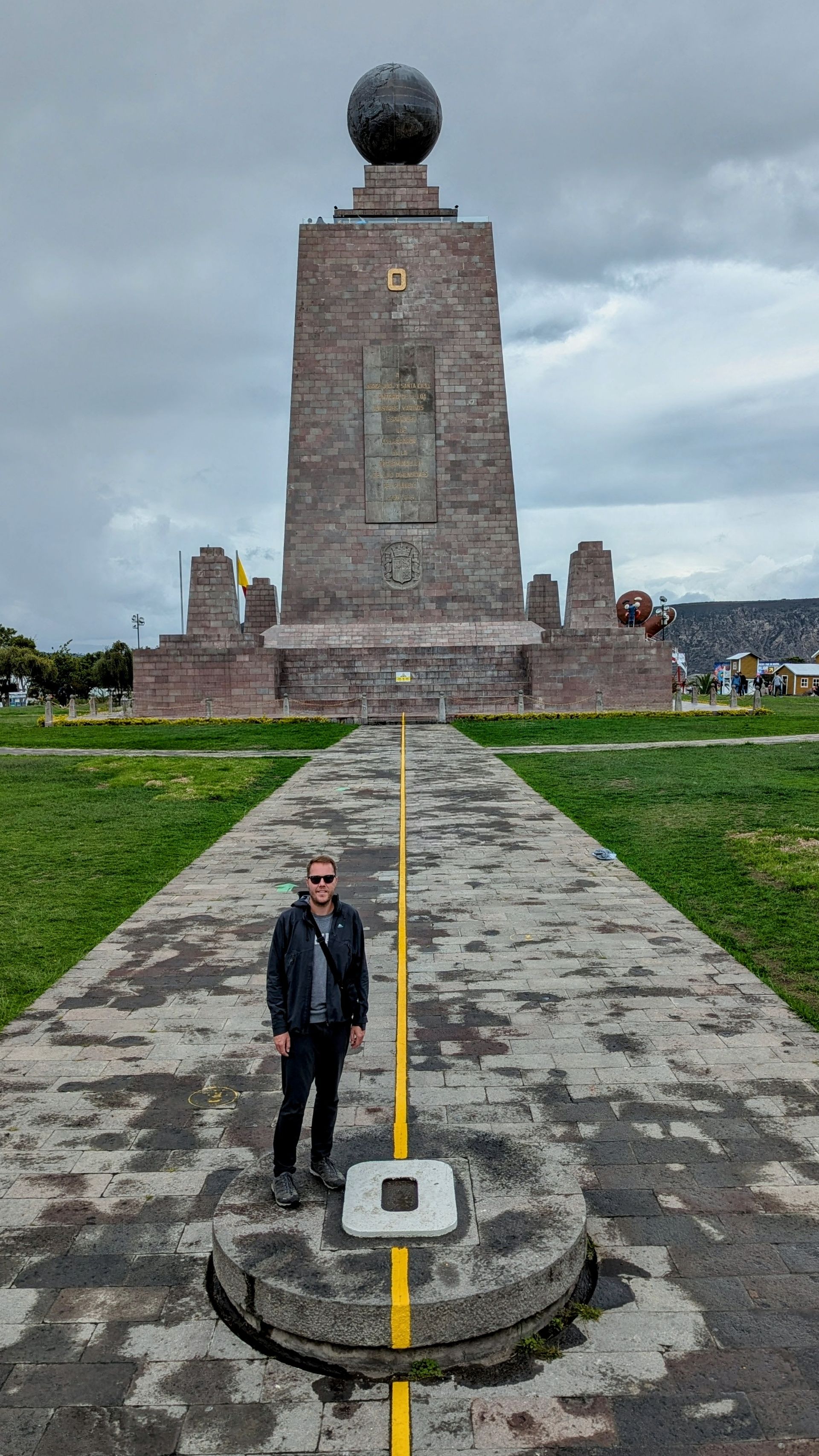
Before heading to the Galapagos Islands, we made a stop at the Equator, specifically at the point where the equator was first determined accurately to 240 m without modern instruments in 1736. A small museum and monument were built there, but it is, in fact, 240 meters away from the actual equator.