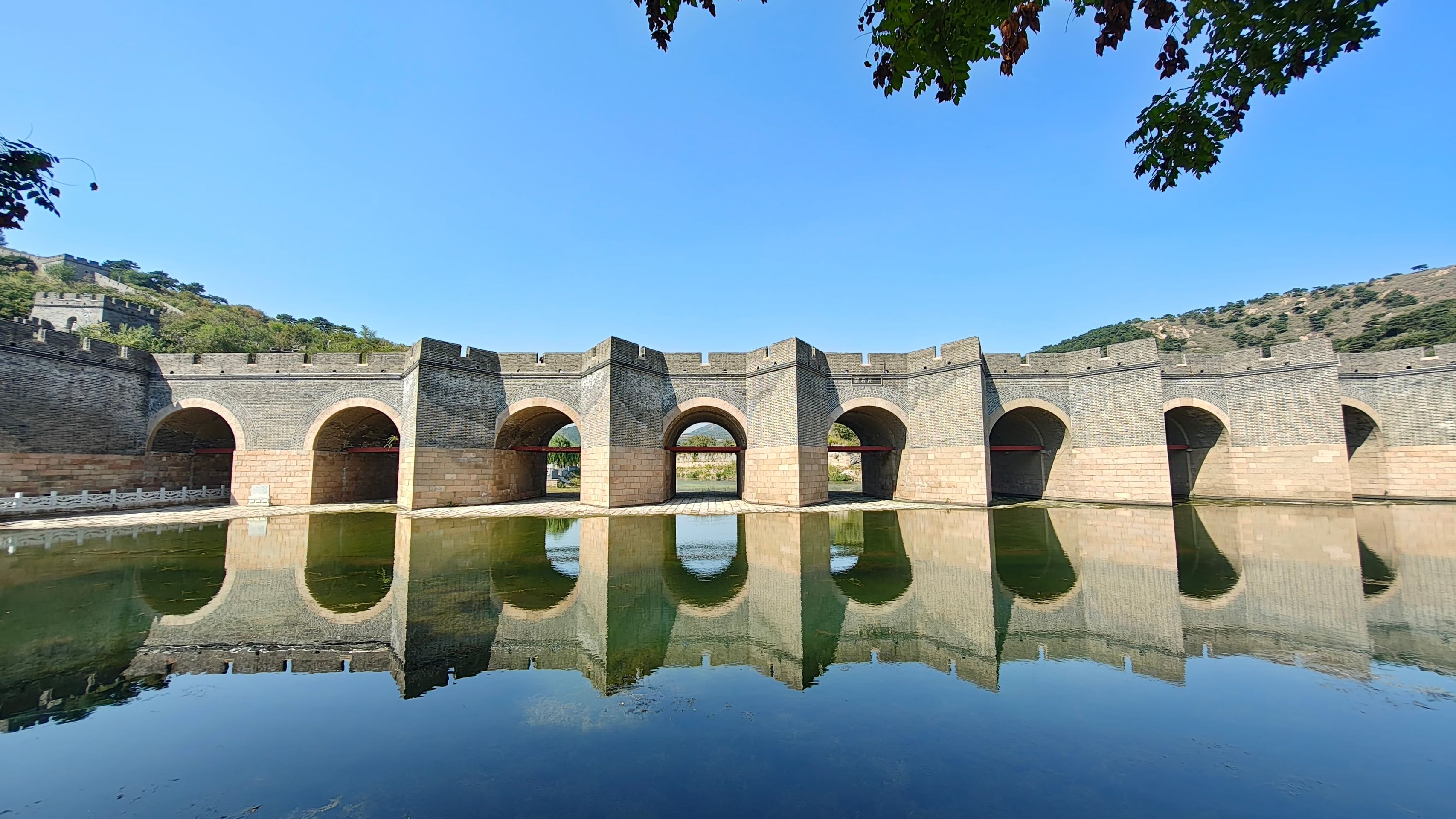
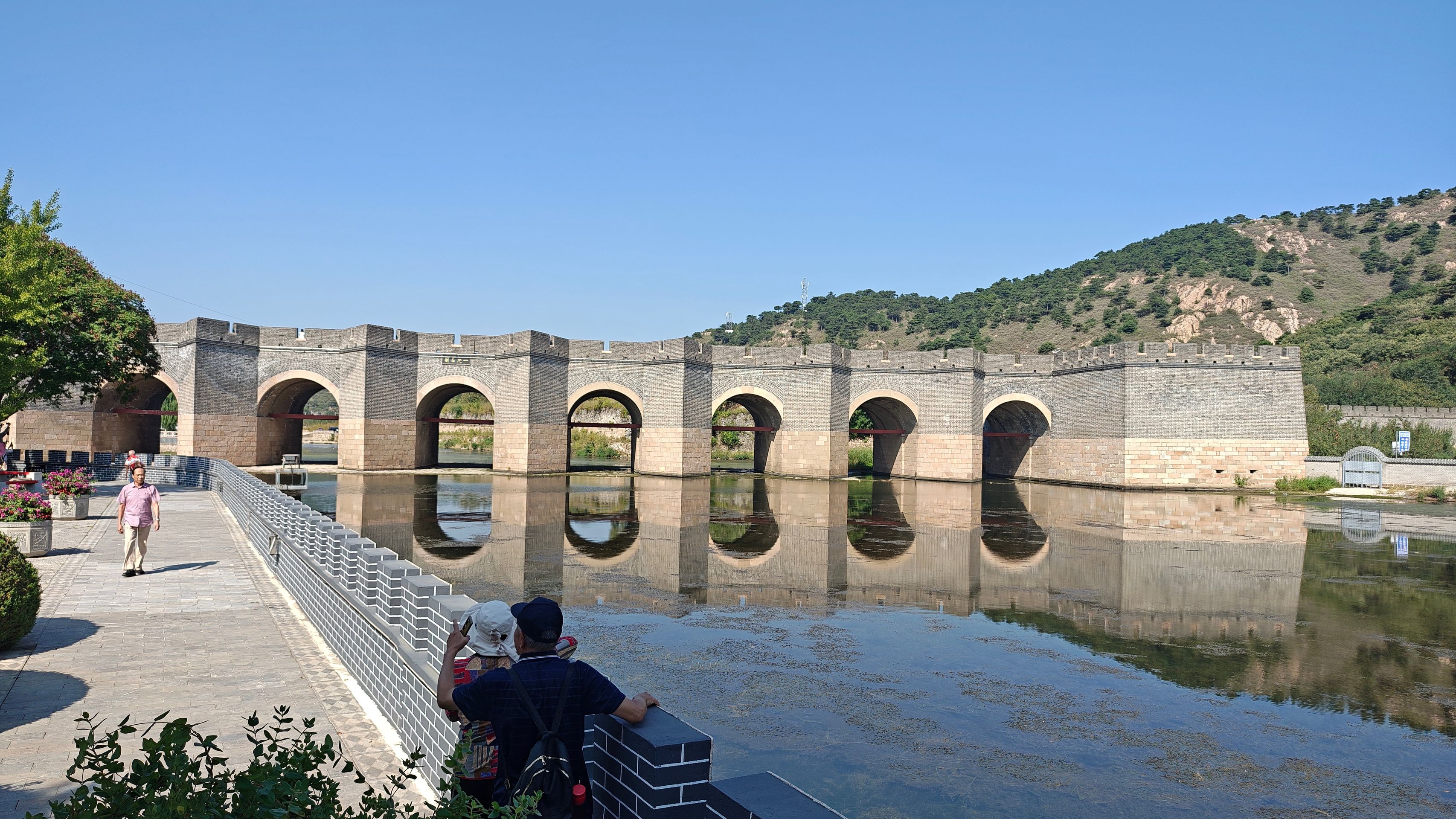
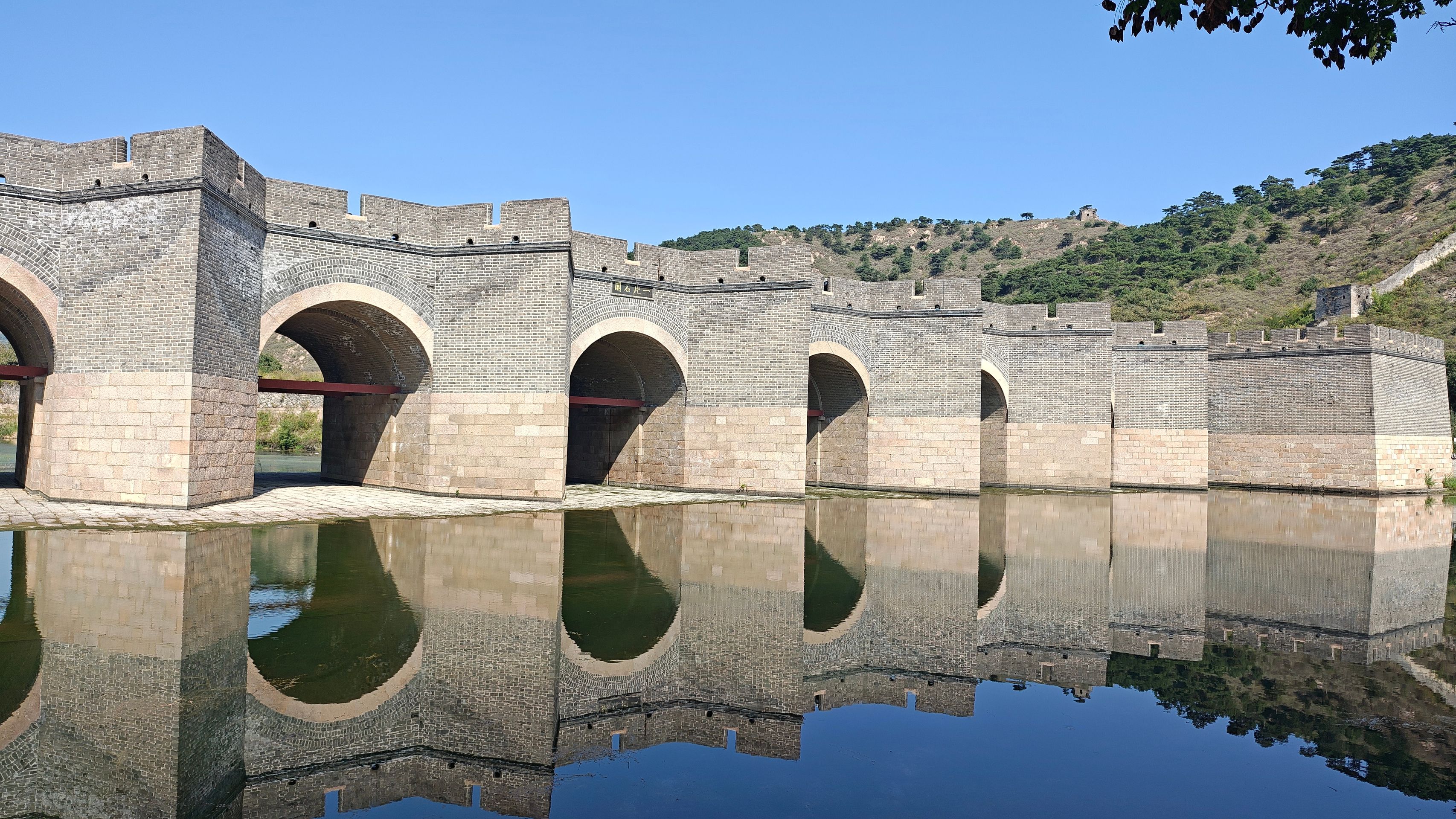
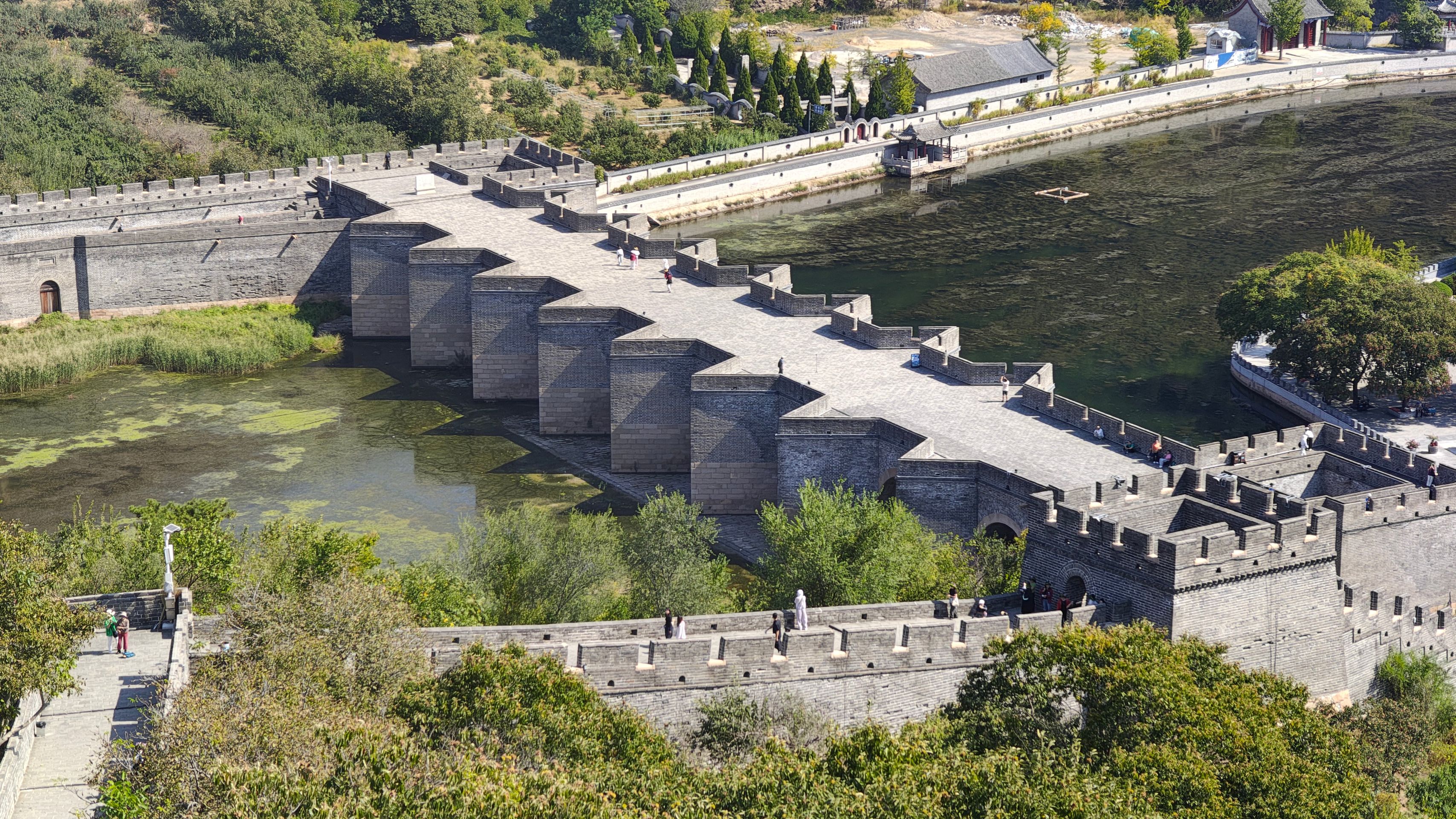
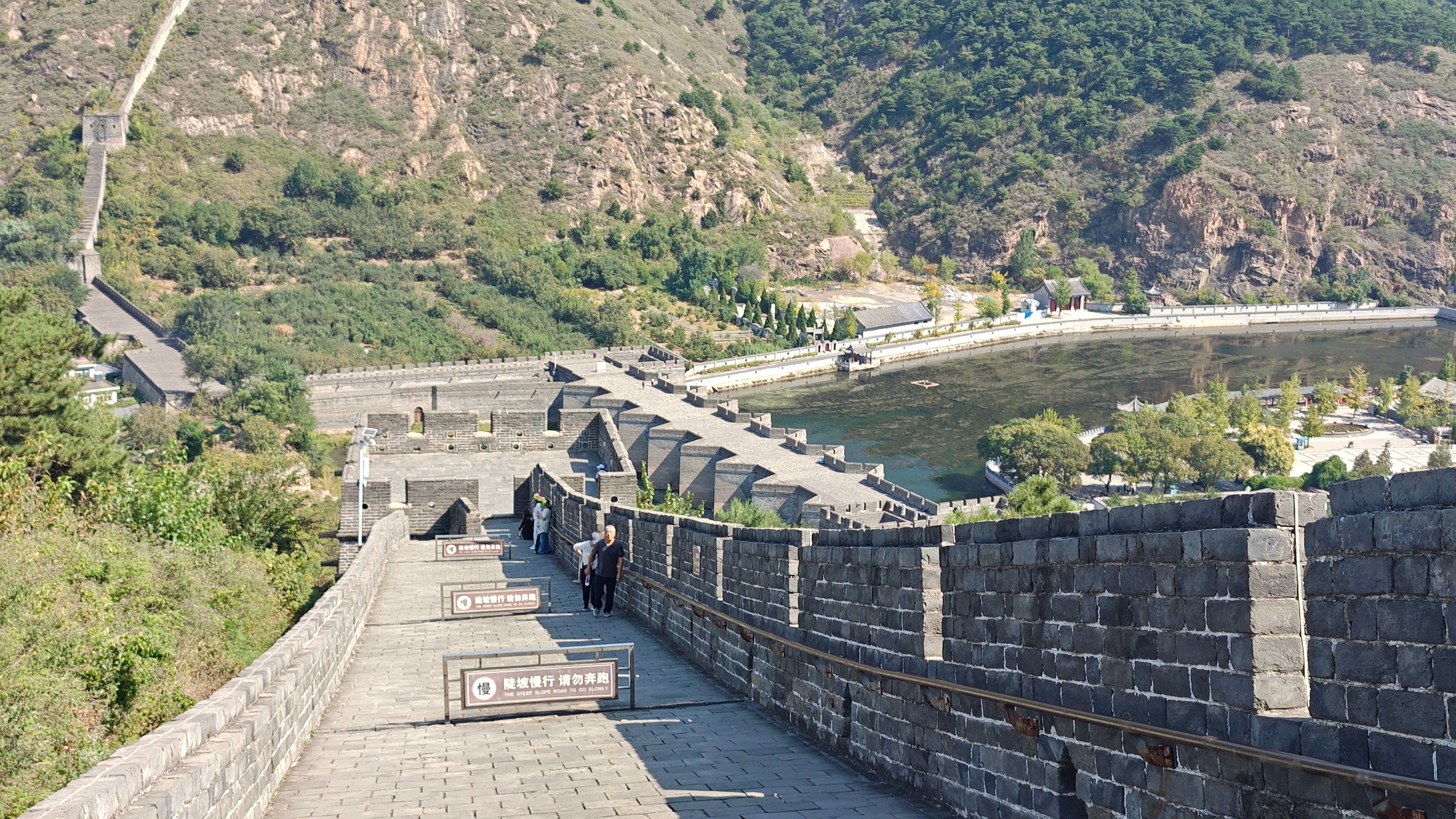
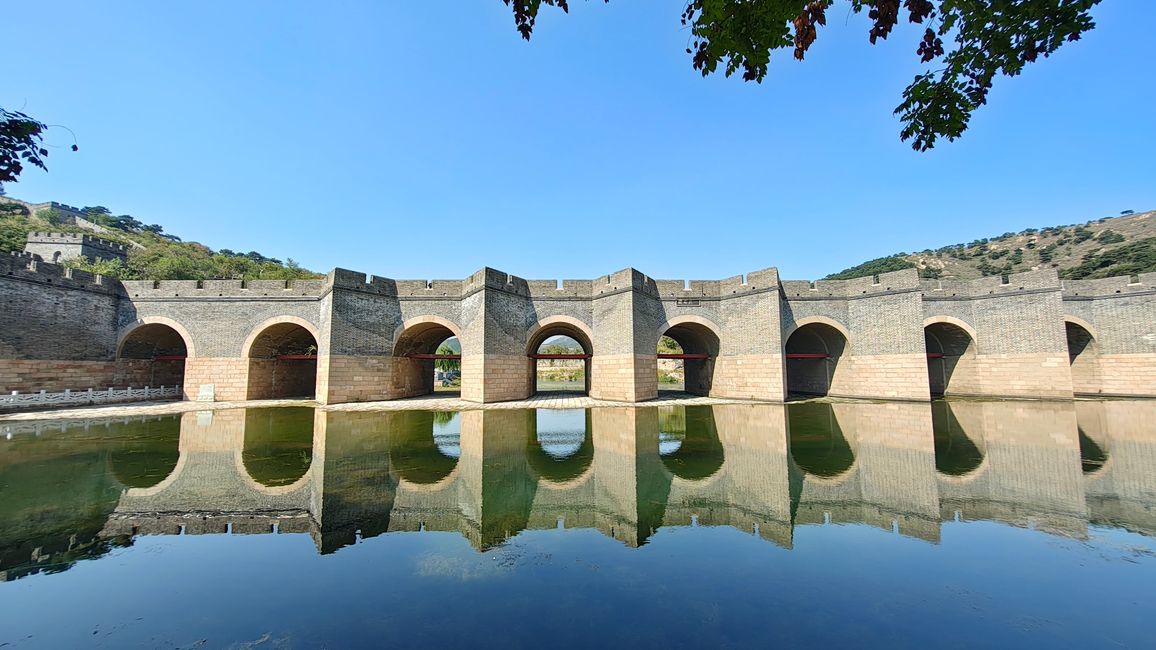
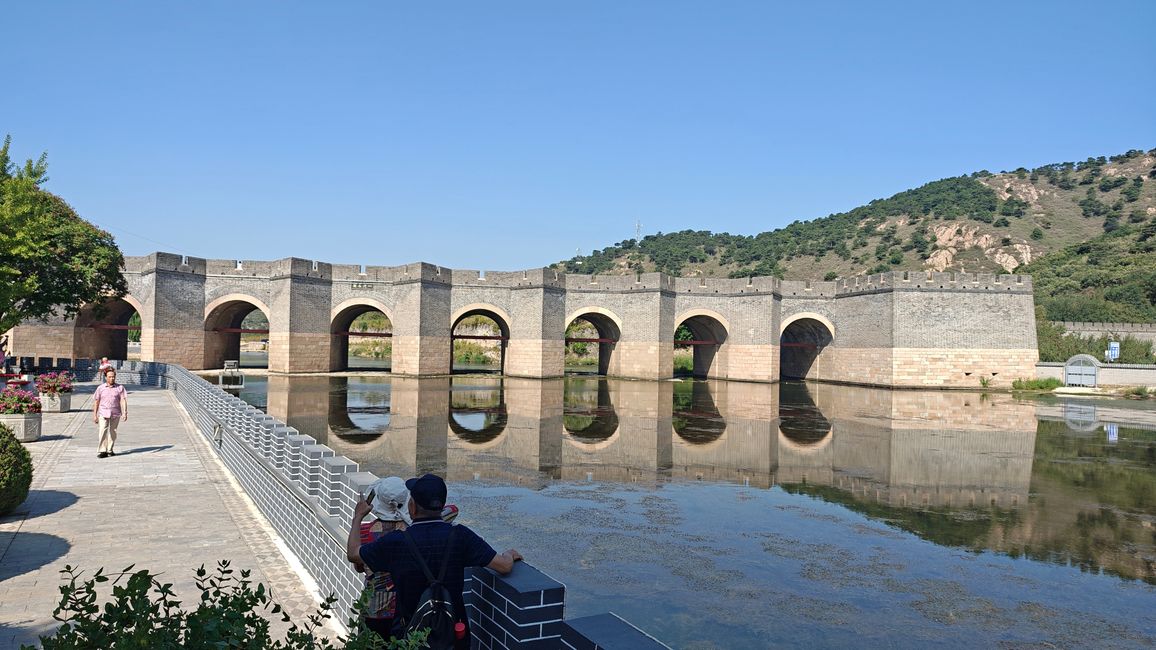
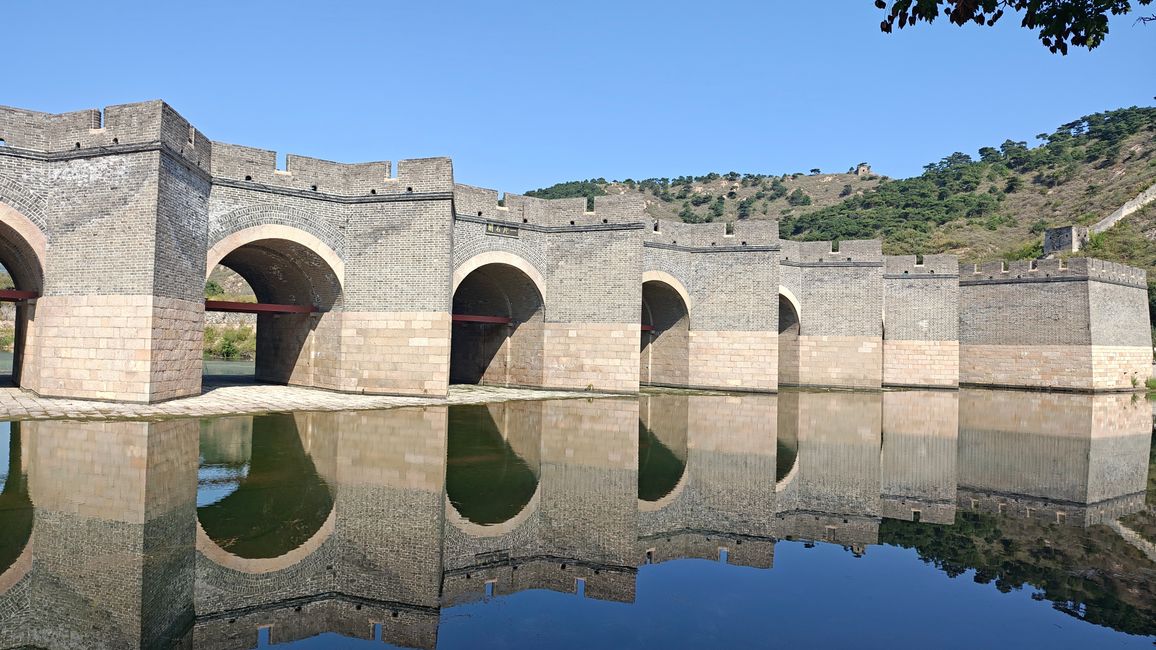
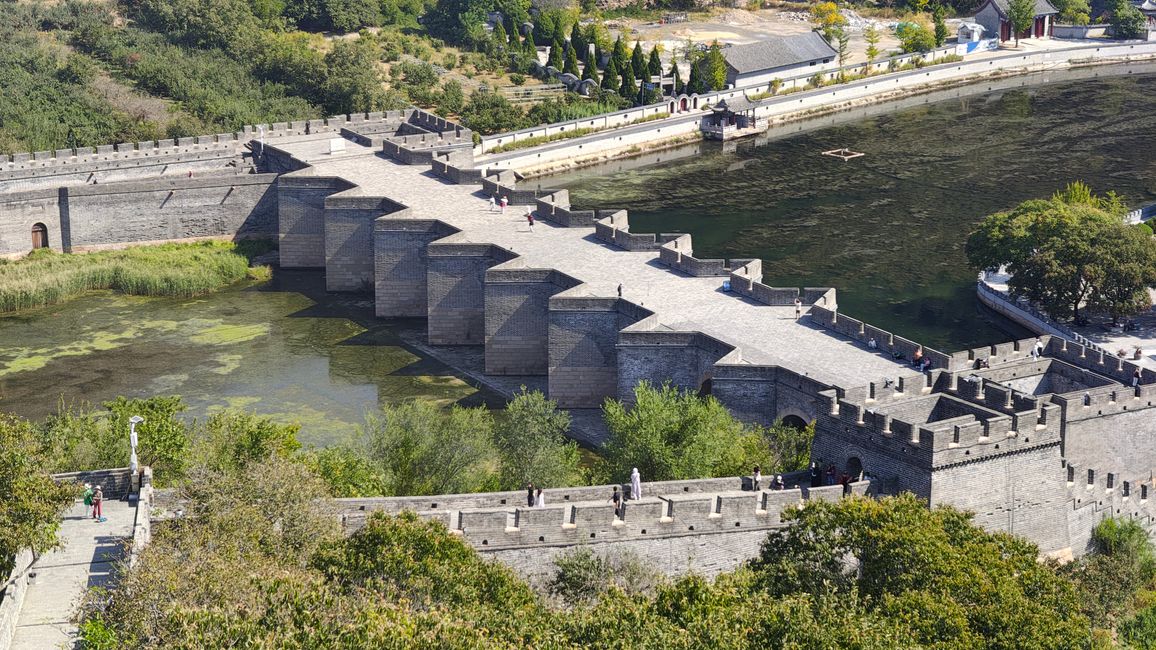
Today we travel from Qinhuangdao into the adjacent mountains heading northeast to Jiumenkou. There, the Great Wall of China spans the Jiujiang River as a wide bridge. It is the only place along the entire 5,000-kilometer structure where the wall is built over a river. I recently mentioned in a blog post the significance of the strong fortification of the protective wall in this region: The Gate that Made History.
The wall bridge was built in 1381 by the Ming General Xu Da on eight bridge pillars, where wooden gates used to be located between the pillars, closed during the dry season. Hence, the name Jiumenkou is derived: 'Nine Gates Pass'. The riverbed is paved with stone plates covering an area of 7,700 m².
We arrive at the information center, buy our tickets, and realize that the wall bridge is still quite a distance away. For a hefty fee, they offer a driving service with one of those electric sightseeing buses. We decide on a short hike but only encounter the main road and not a pleasant walking path.
However, in China, business-minded people are everywhere, and a local villager jumps up from the roadside, offering us a ride in his car for a third of the price, which is still considerably higher than a normal taxi fare. In a three-minute car ride, we pass by empty parking lots, leading me to suspect—perhaps not without reason—that the entrance to the site has been intentionally moved further downstream to profit once again from the expensive driving service.
We walk to the wall bridge and stand before a massive bridge structure, which is immediately recognizable as a defensive fortress.
The eight bridge pillars are made of solid, spindle-shaped masonry to better channel the water and prevent damage. Here, we can also see part of the stone plates in the riverbed.
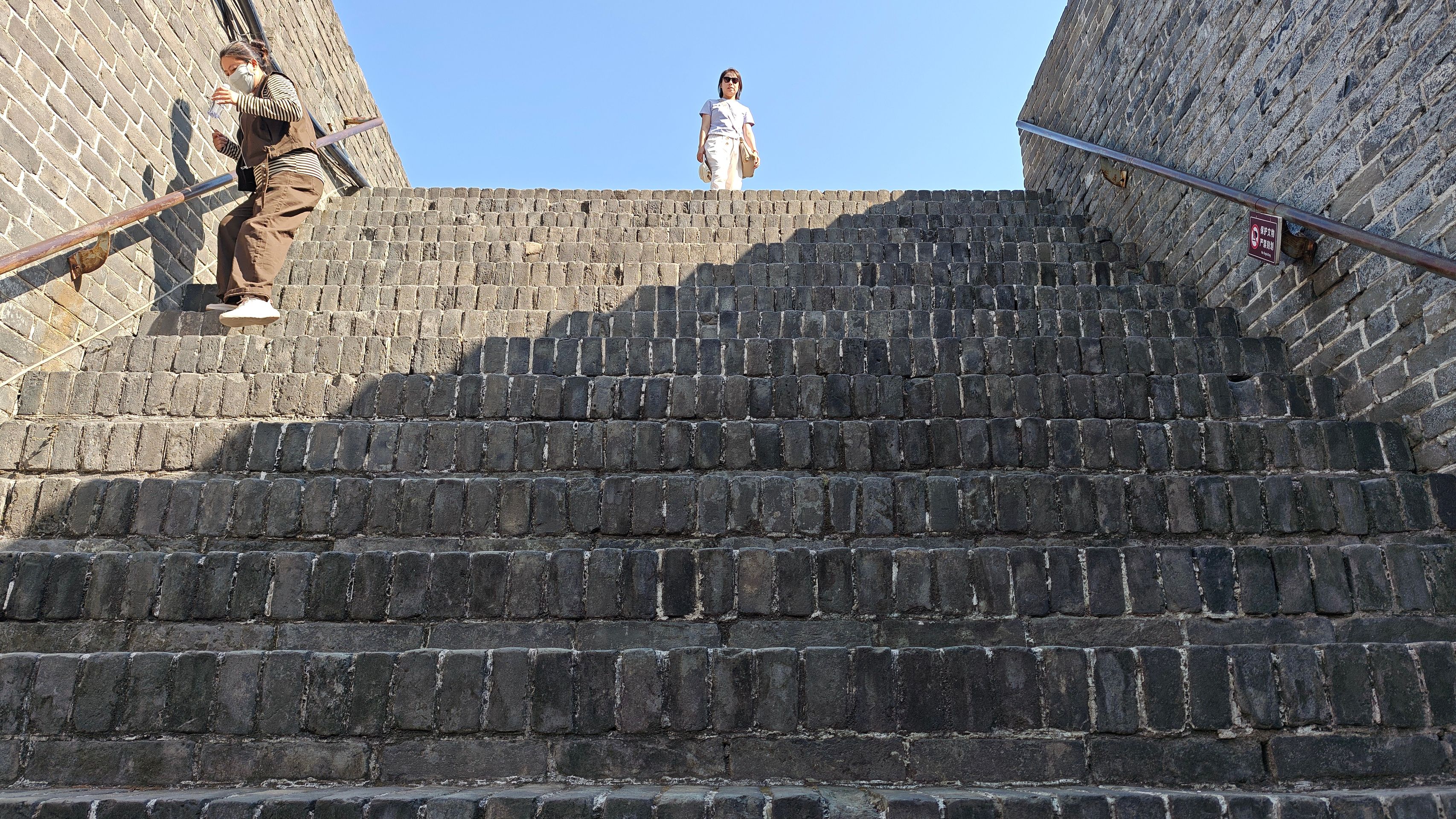
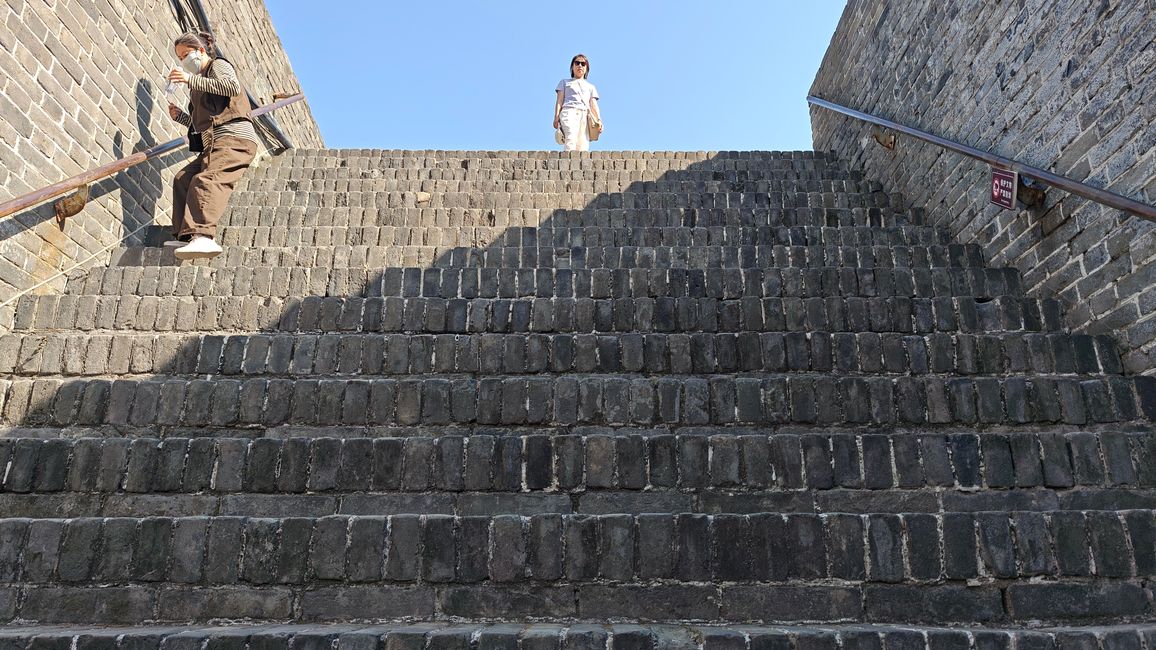
We ascend the steep stairs to the wall.
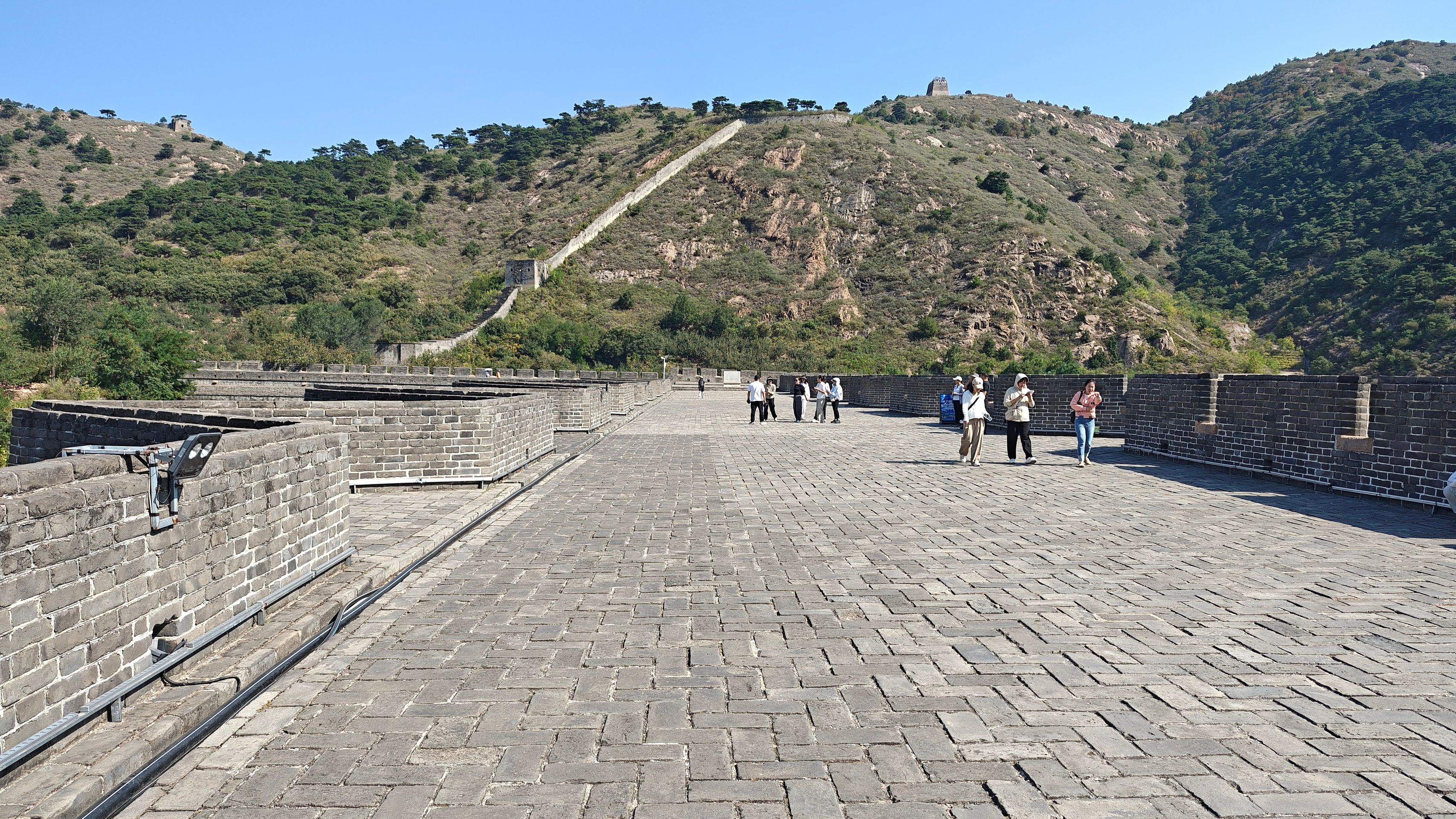
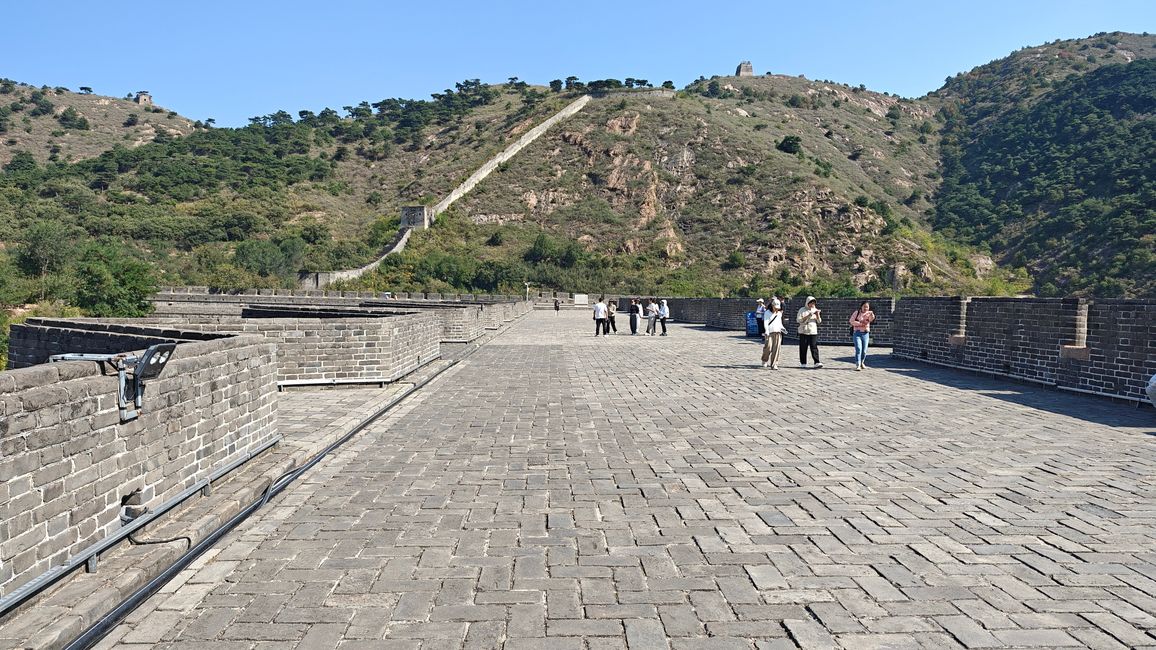
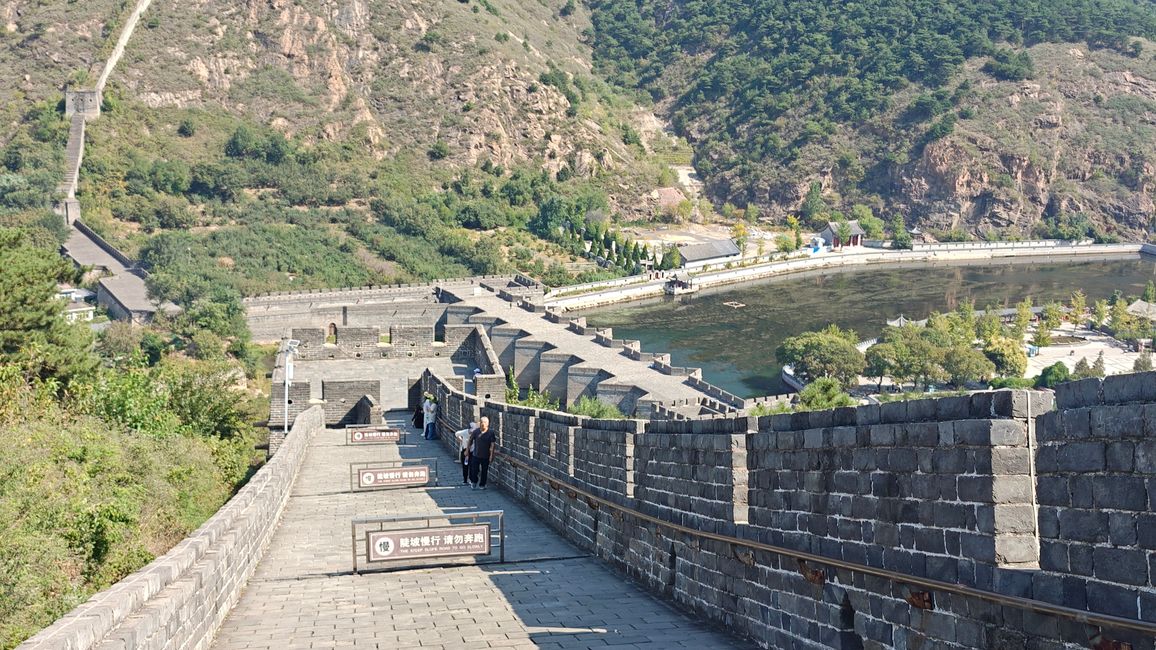
There, we admire the width of the structure, which at this point is significantly more monumental than normal wall sections.
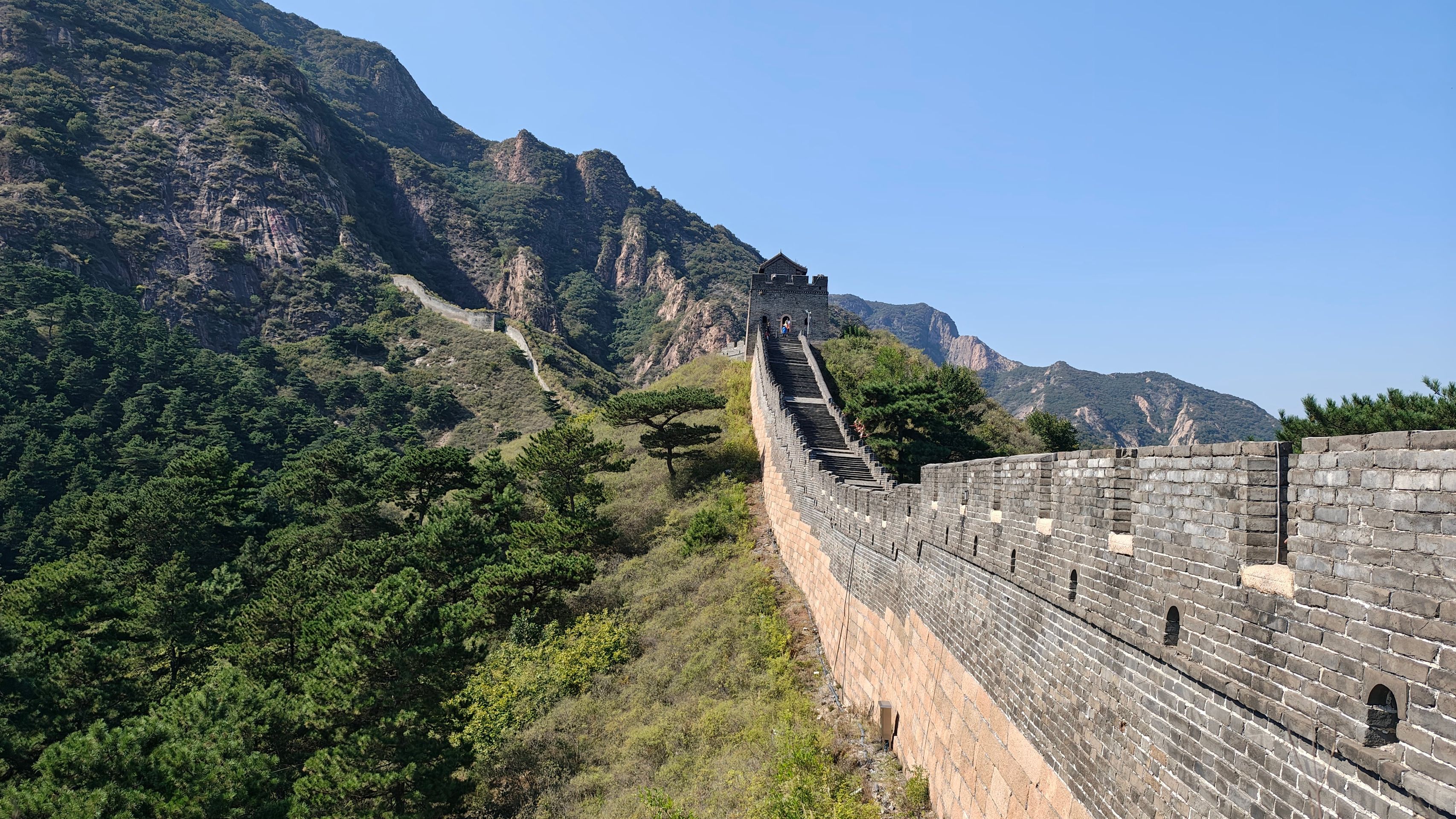
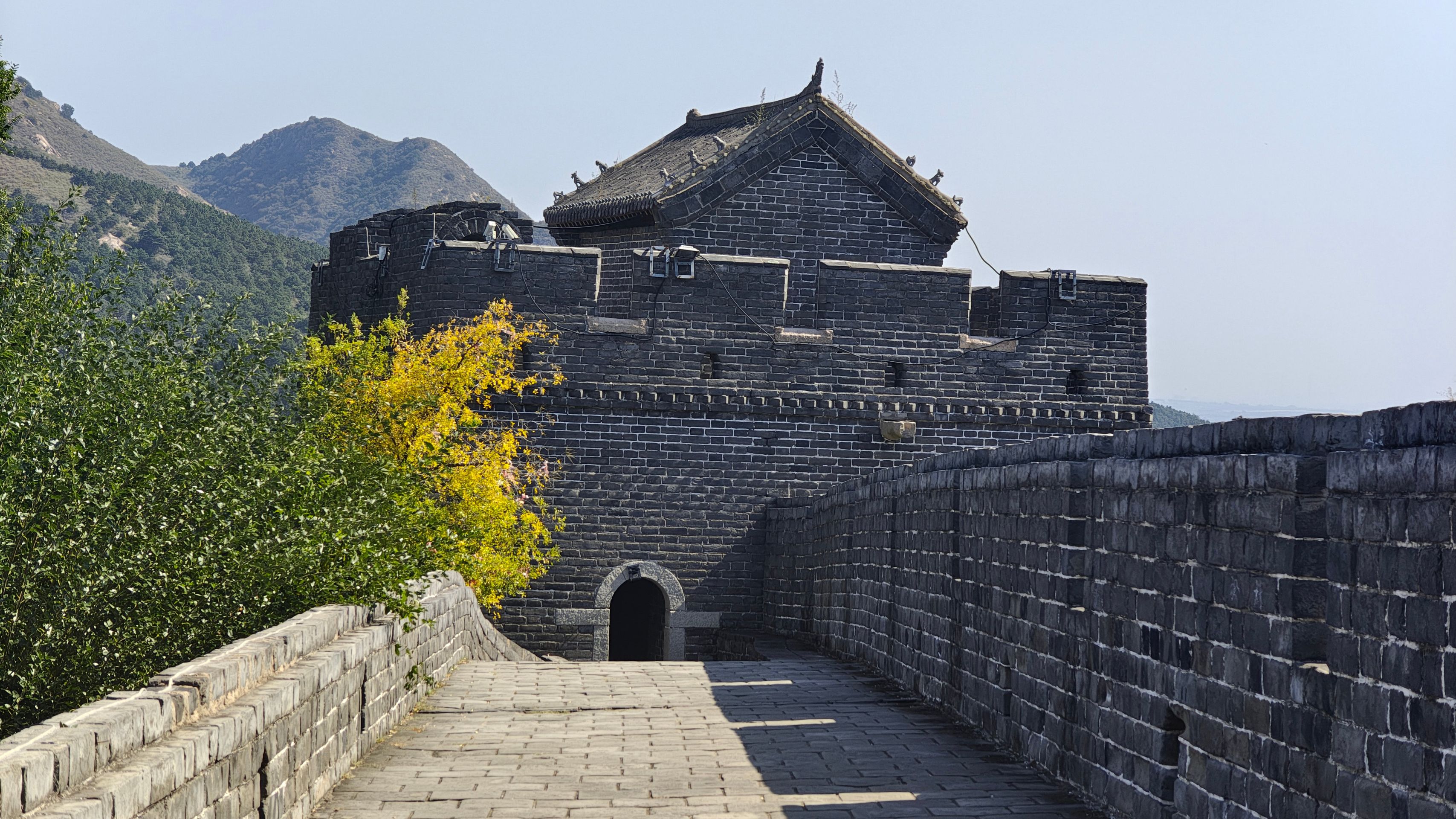
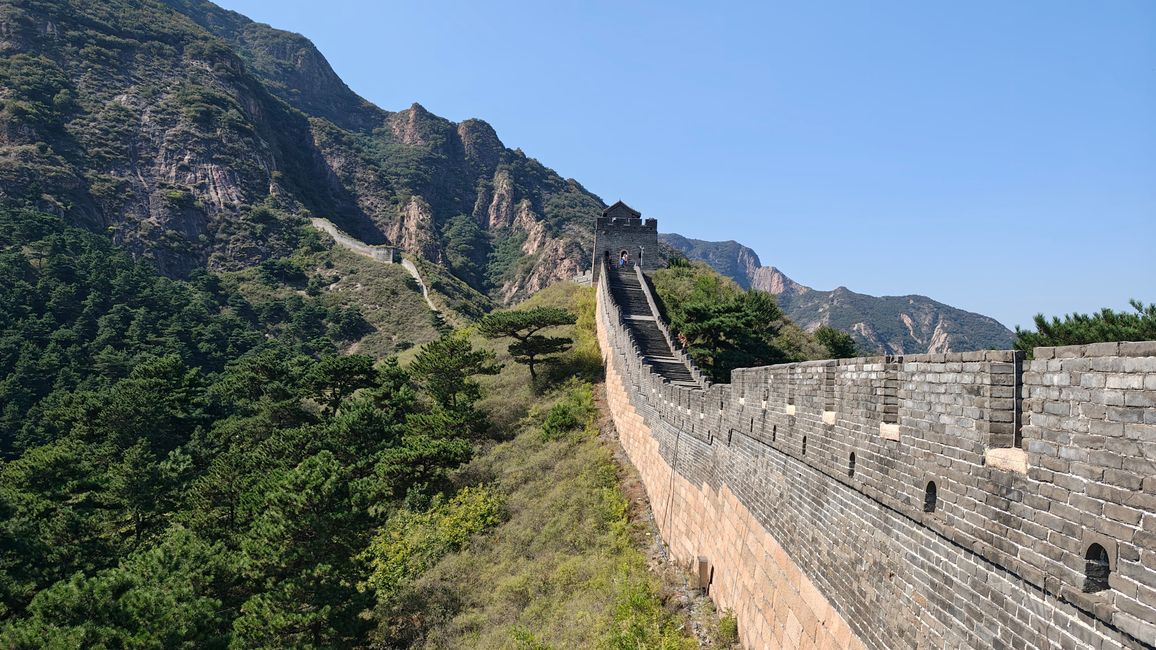
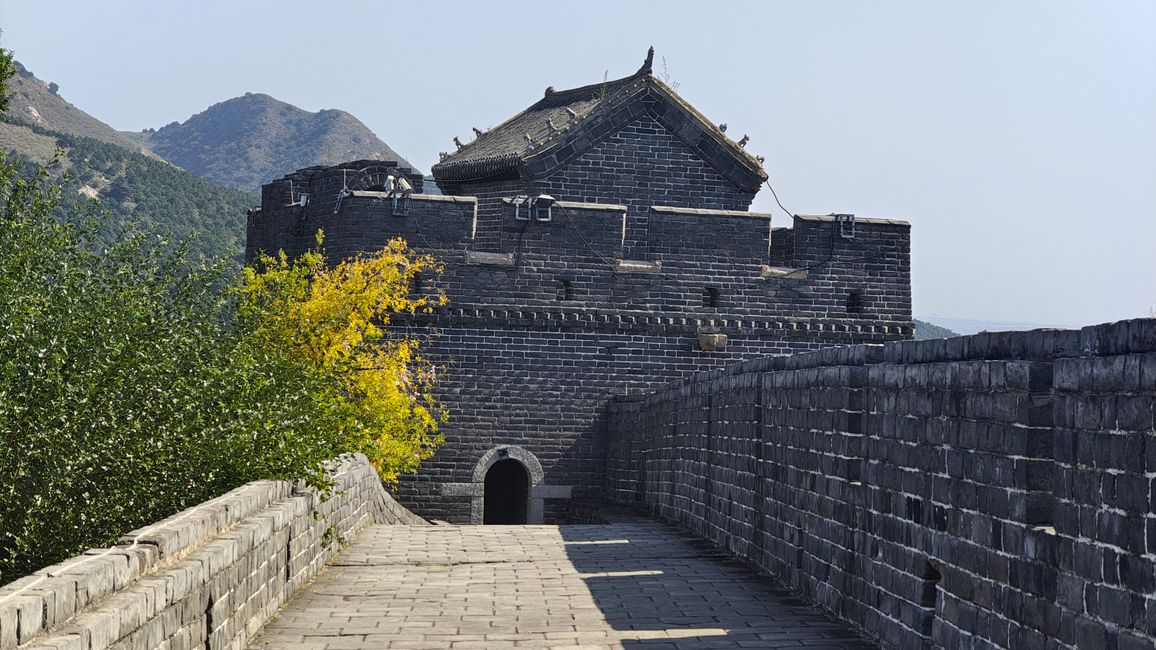
We now climb the southern section of the wall, which and its watchtowers have been restored.
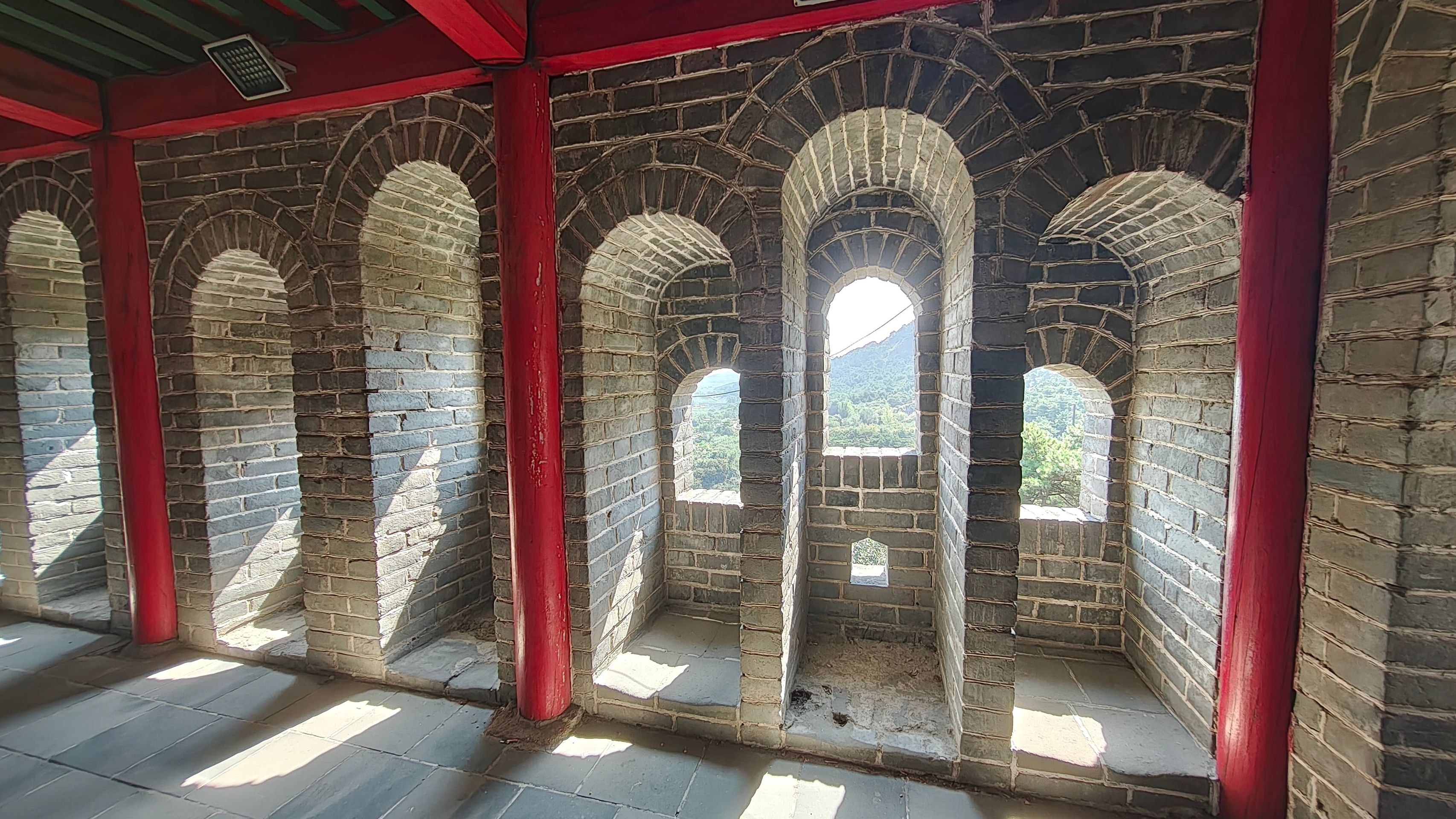
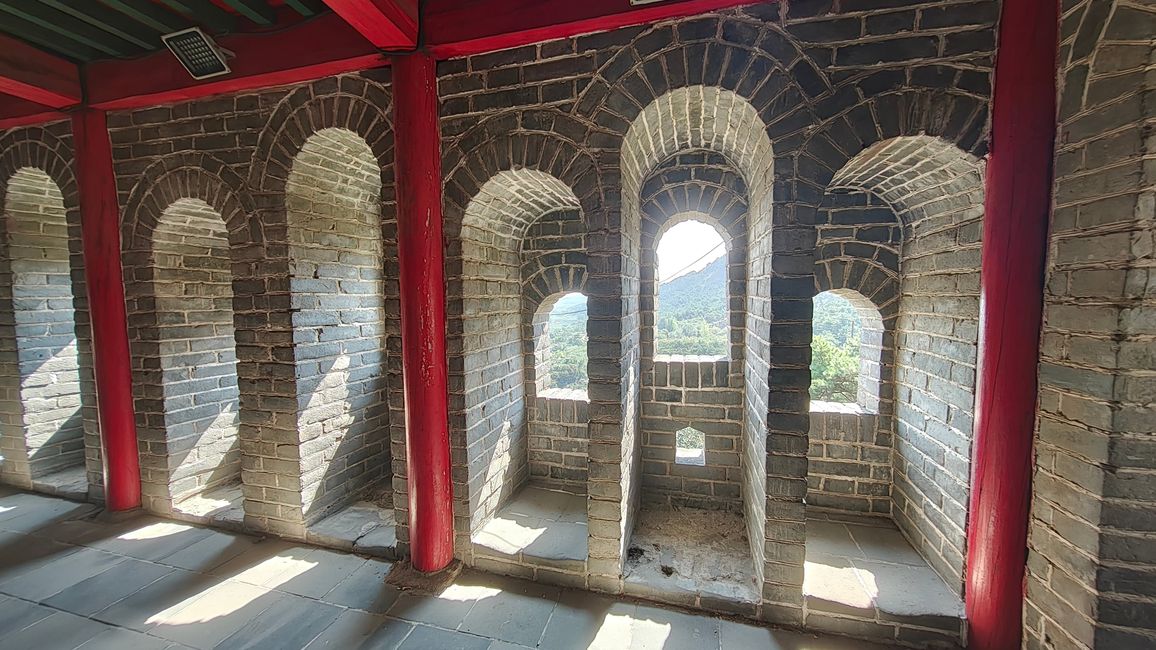
In the watchtower, we take shaded breaks.
The windows offer different perspectives on the bridge structure.
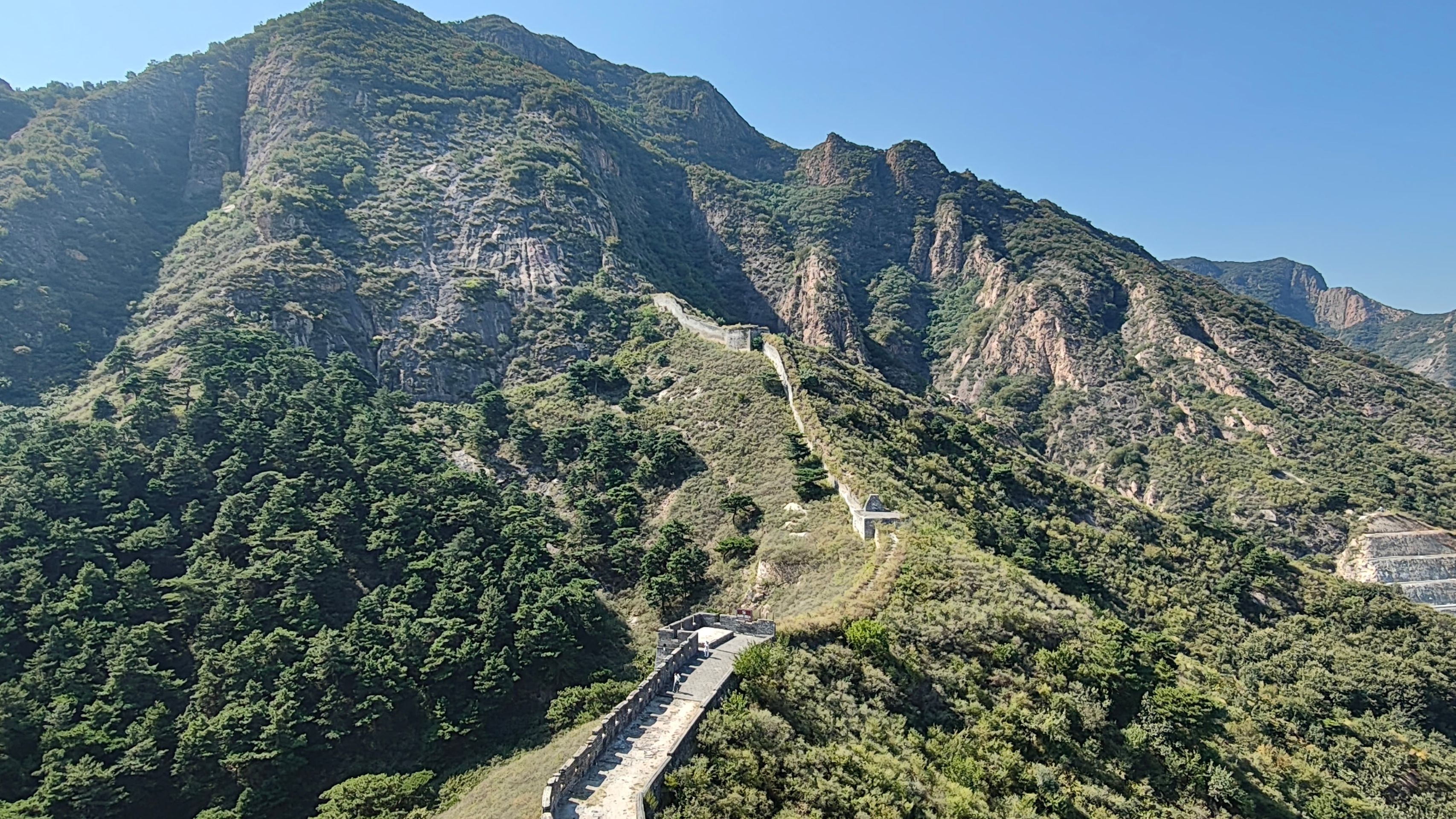
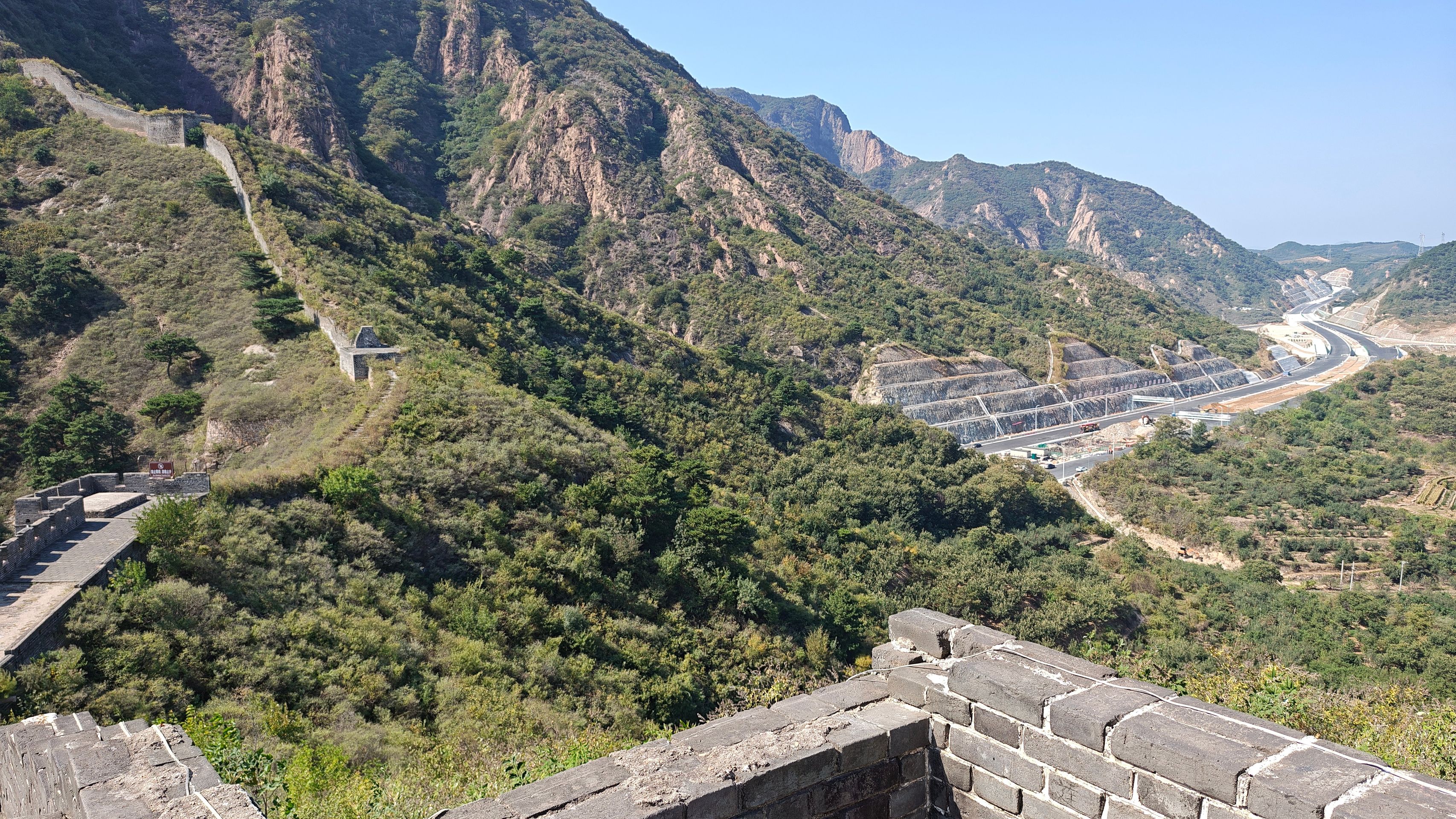
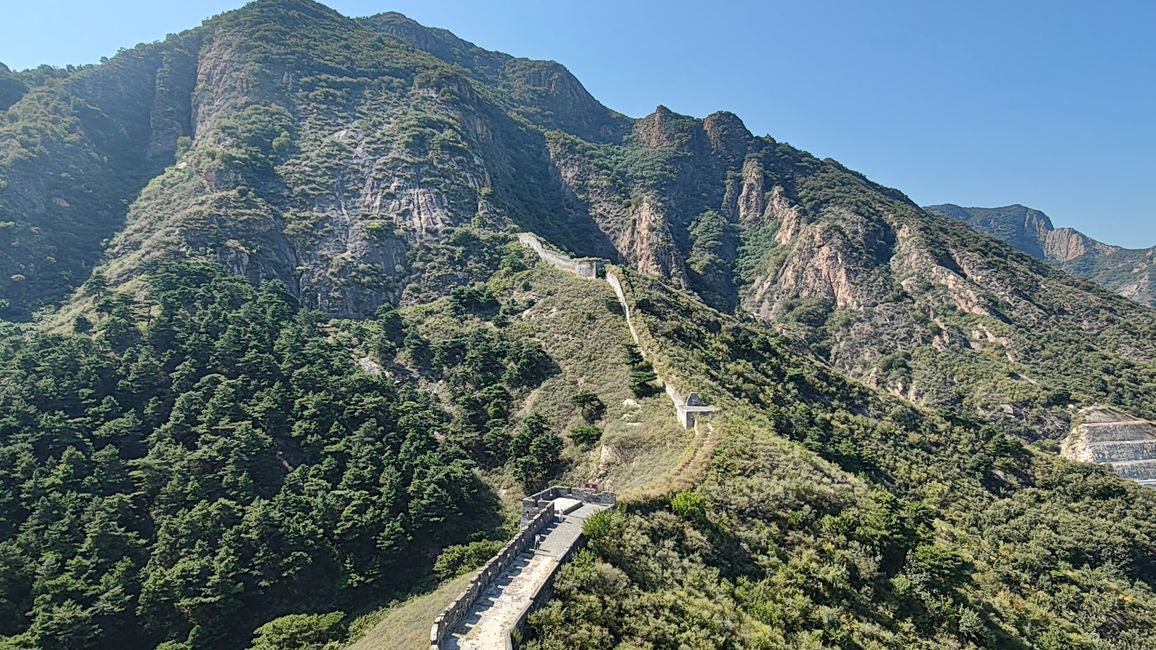
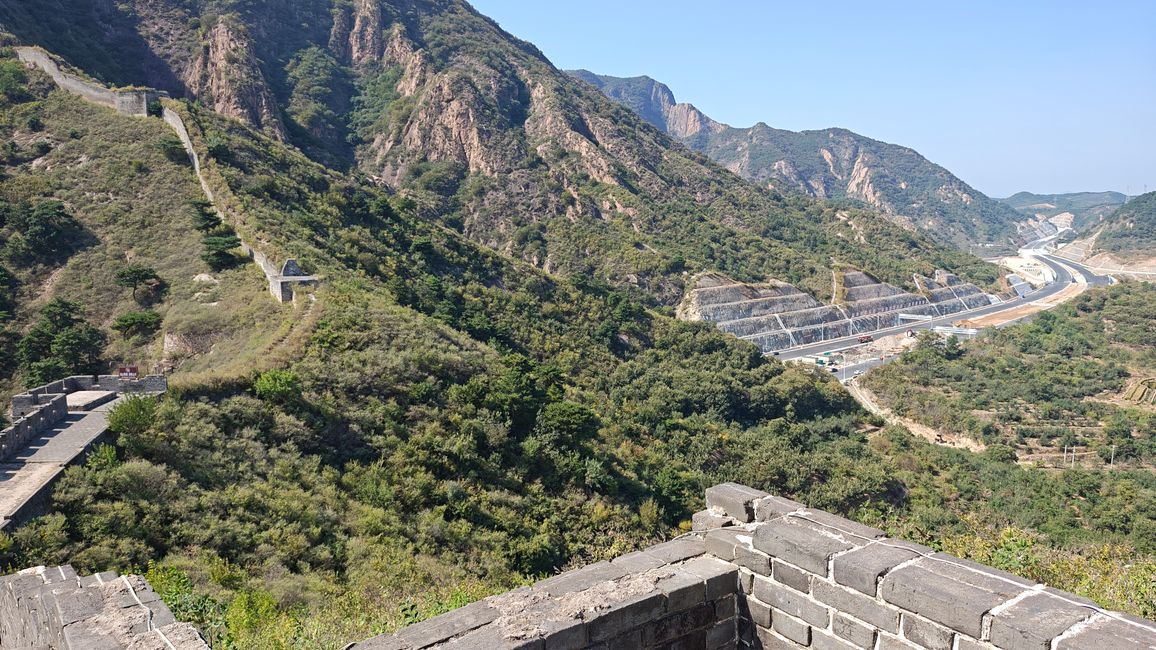
Finally, we approach the end of the restored area.
Here, a highway is being constructed, which cuts through the mountains but respectfully runs as a tunnel beneath the Great Wall of China.
We walk back. At these signs warning of slippery conditions, one realizes that some parts of the wall can be quite steep.
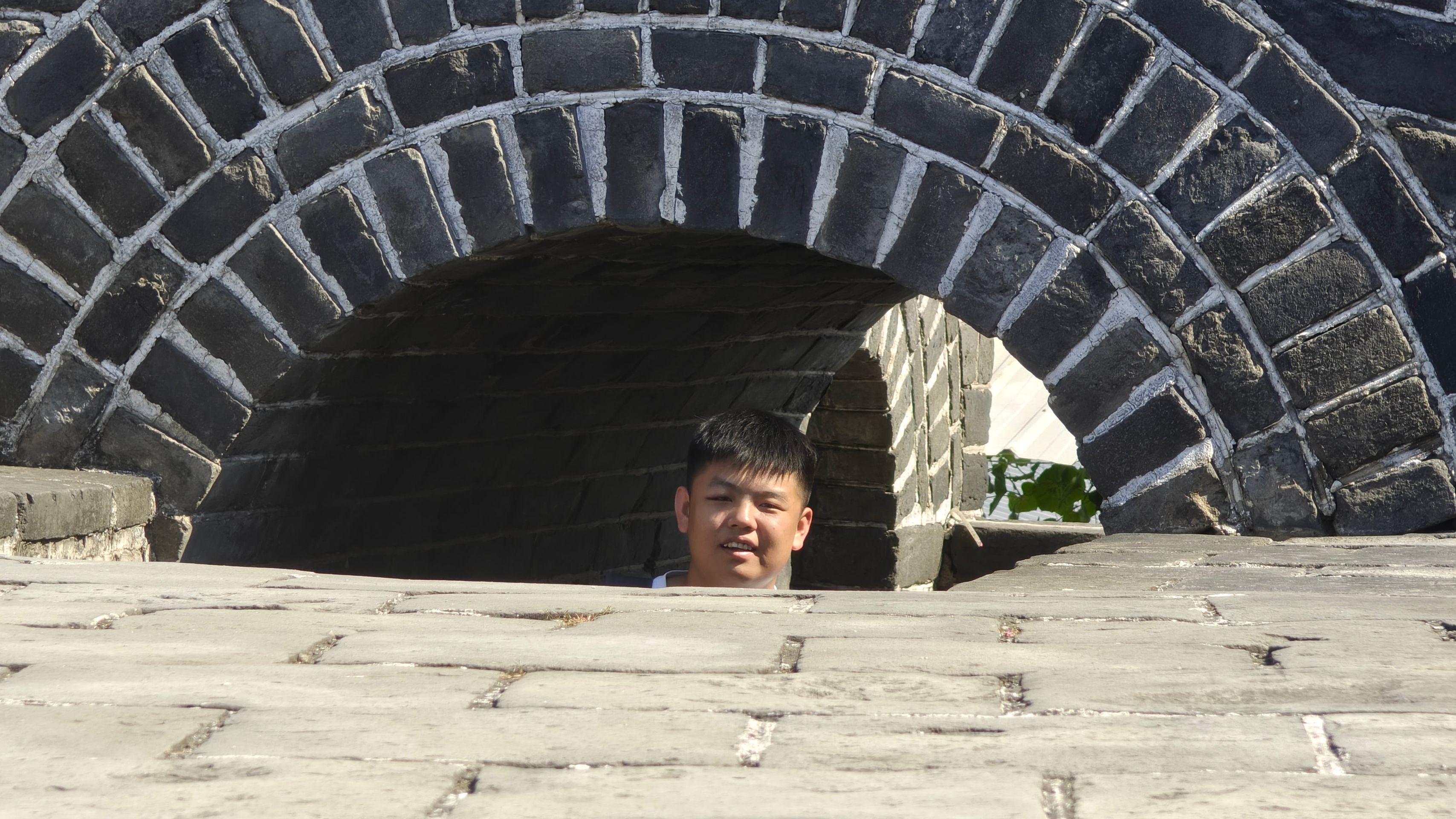
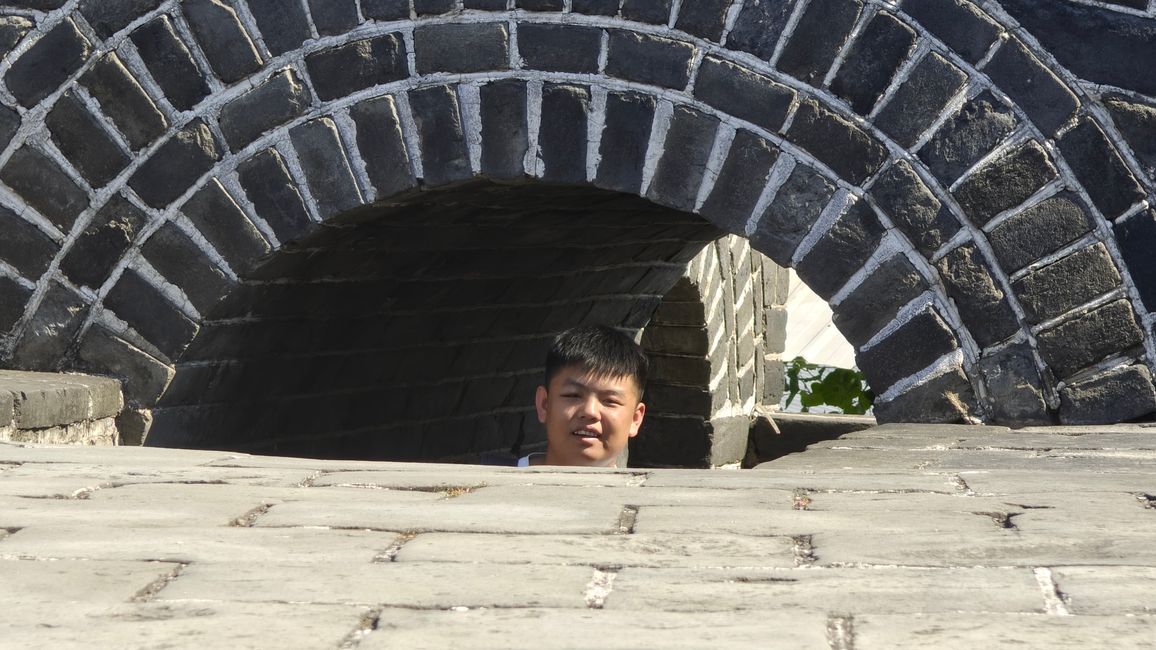
Here, a staircase emerges from the ground, providing amusing photo opportunities, like the head of my wife's son being at ground level.
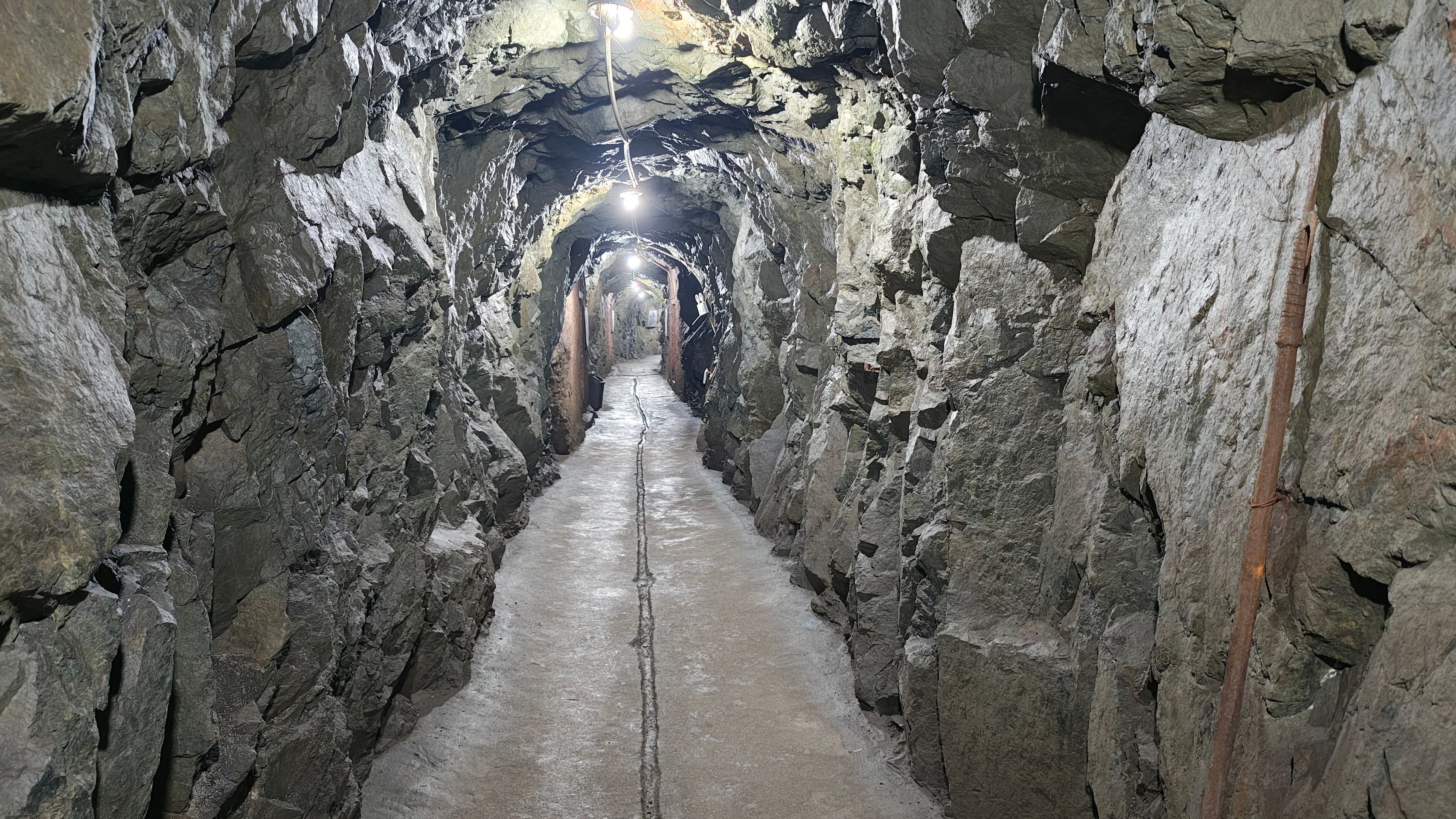
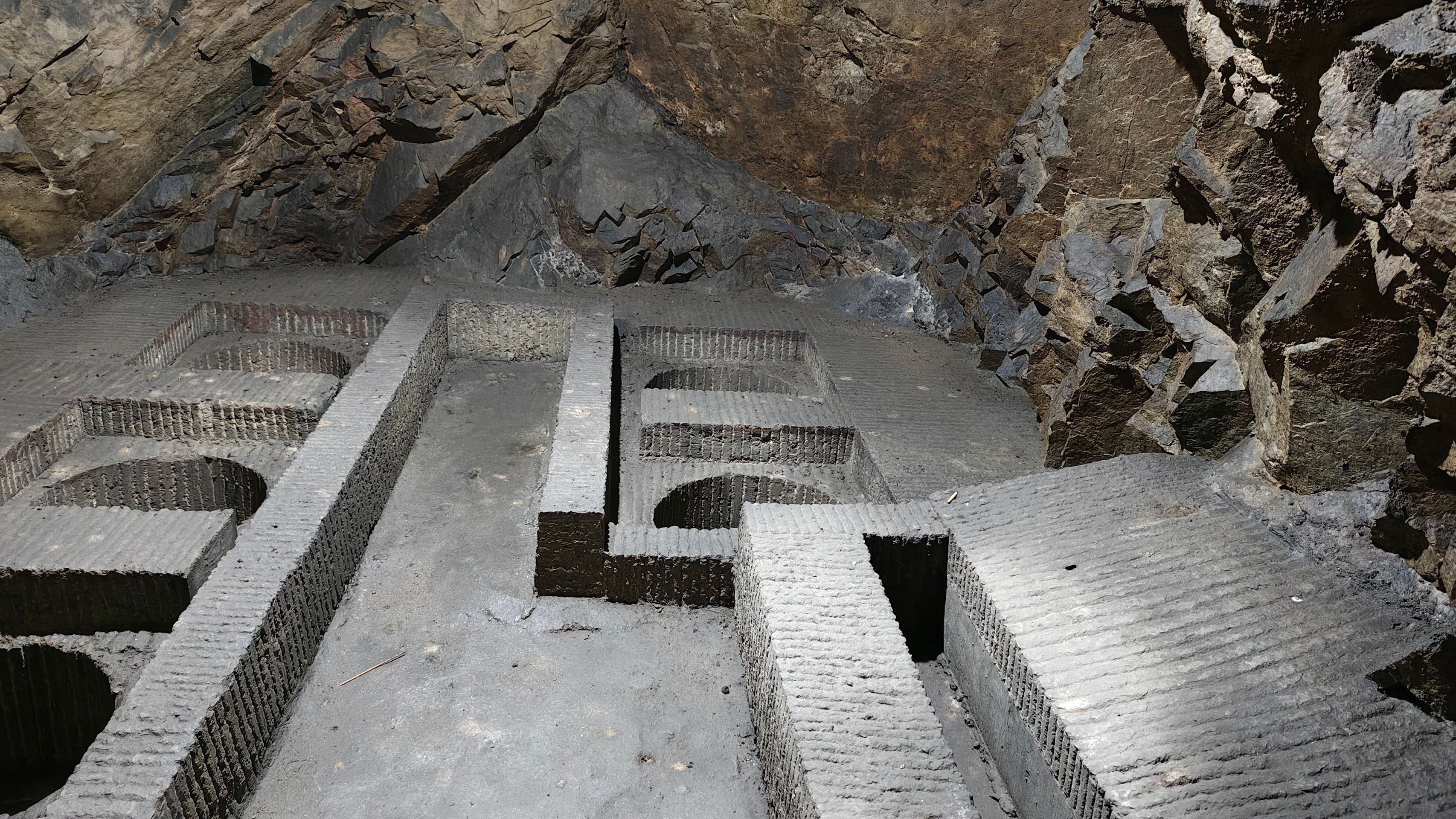
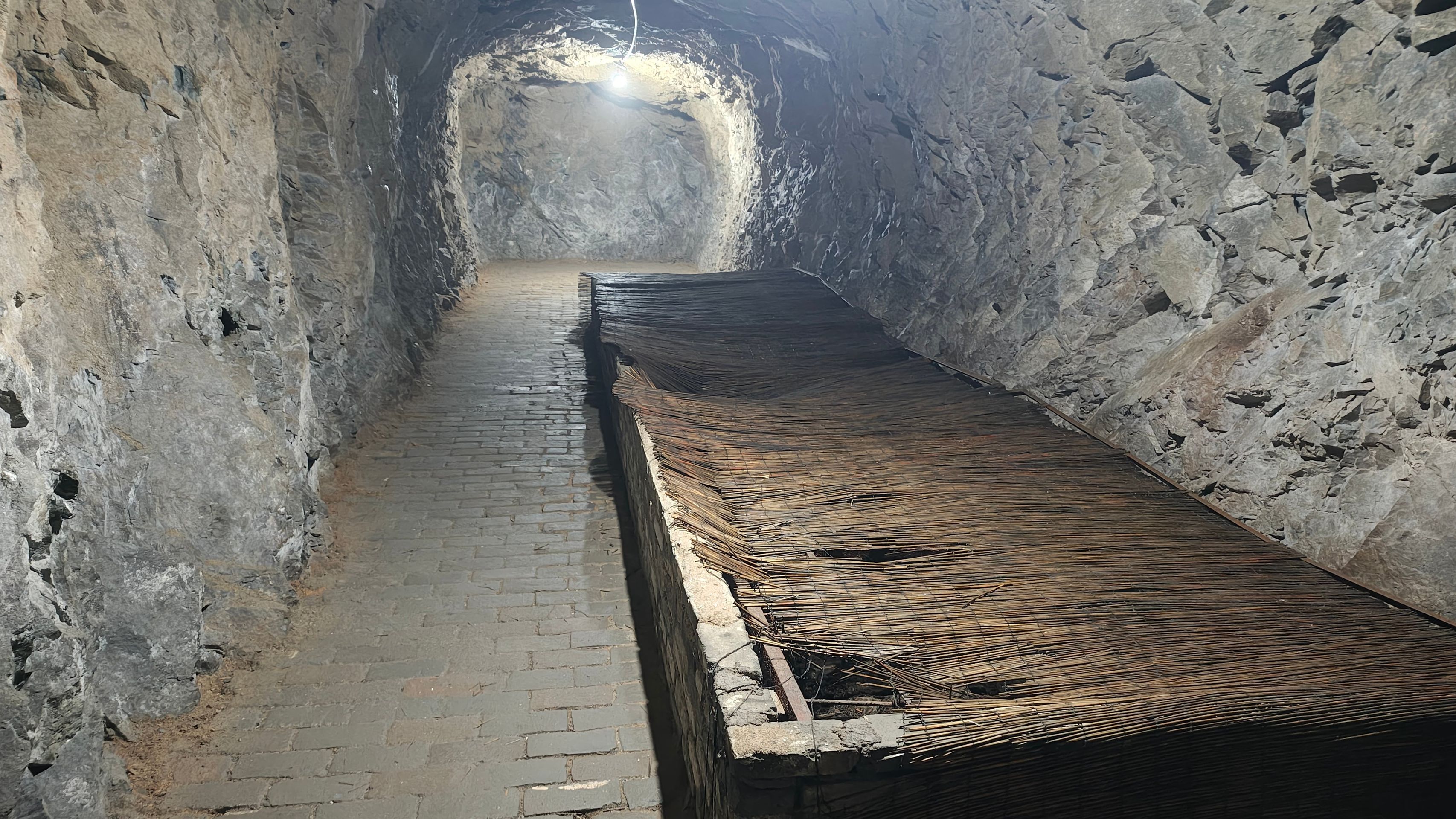
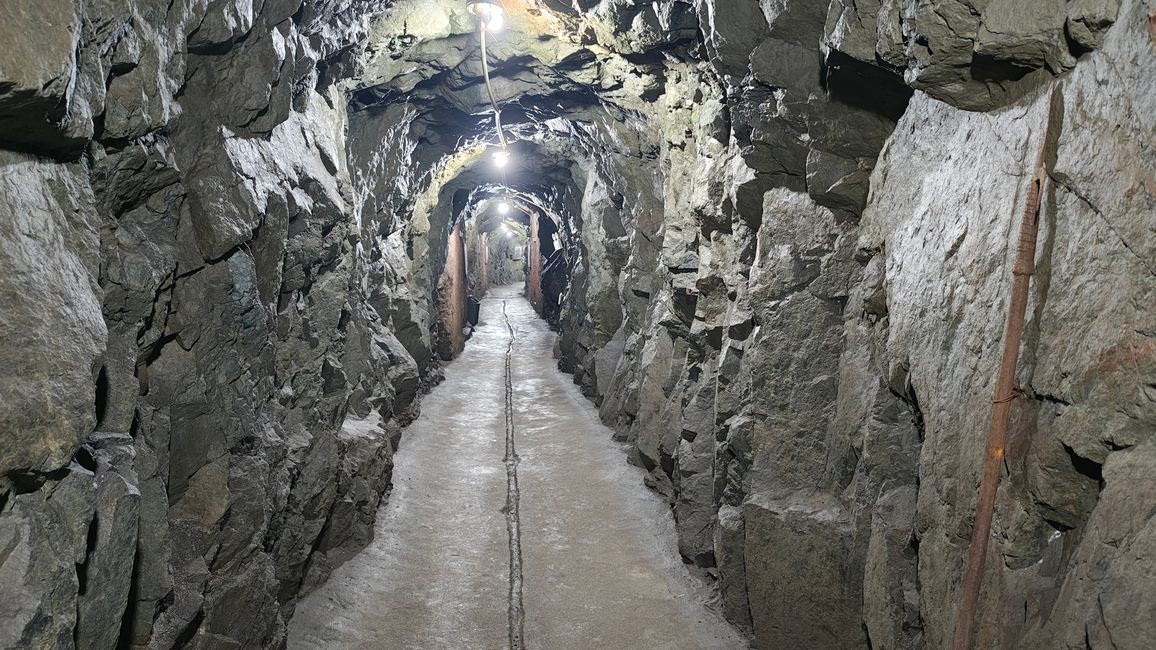
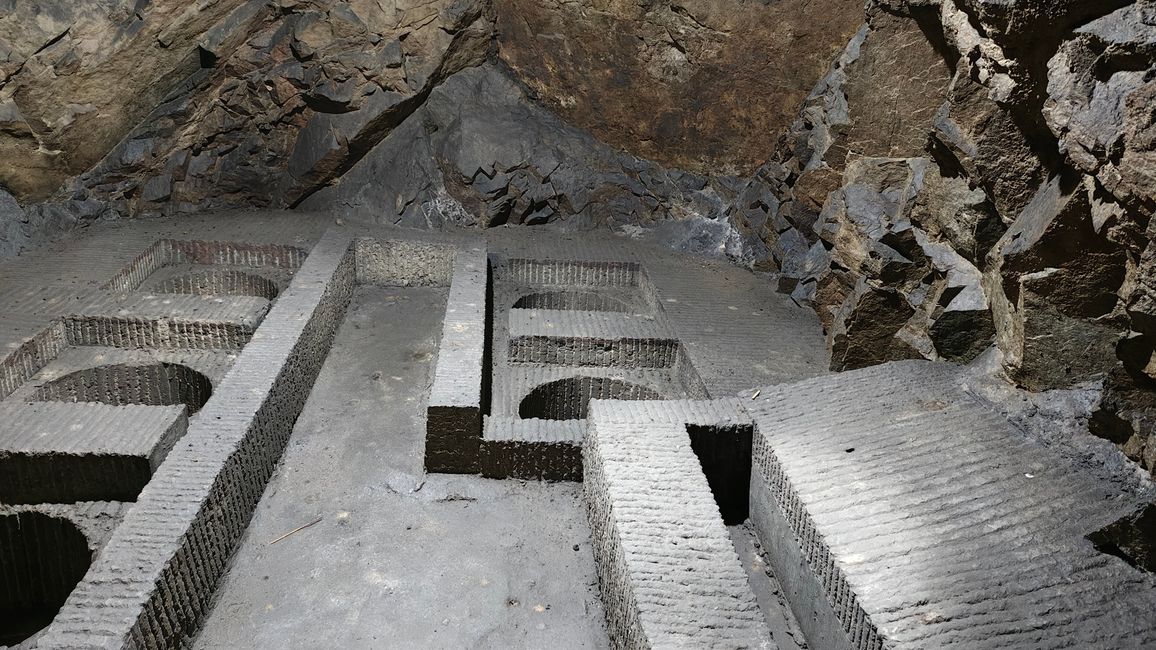
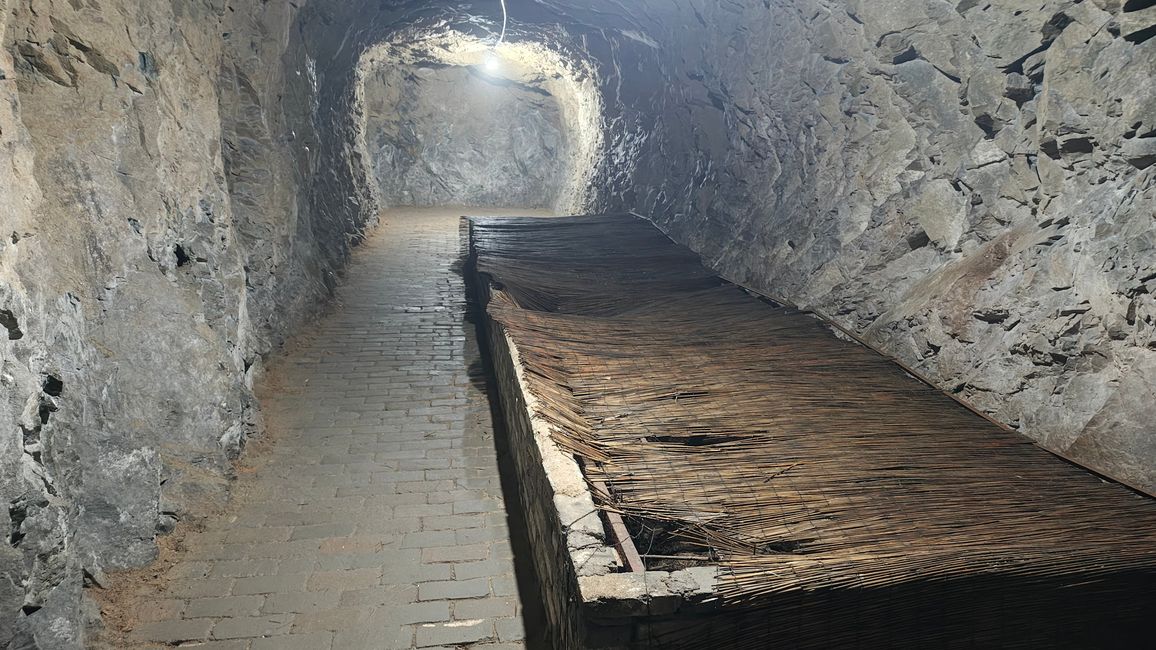
Back at the bridge, we look for the section of the visit that we purchased with our ticket package. It is a secret underground tunnel in the mountain, also built by the Ming General Xu Da. This underground barracks could move troops unnoticed behind enemy lines.
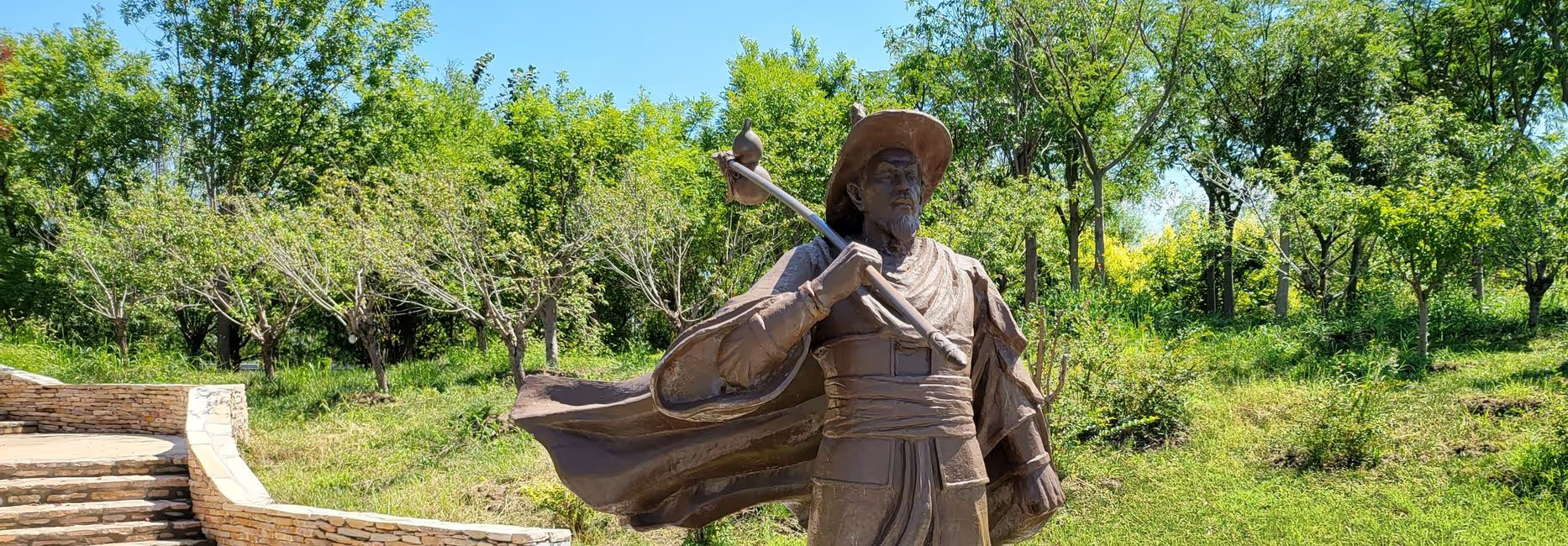
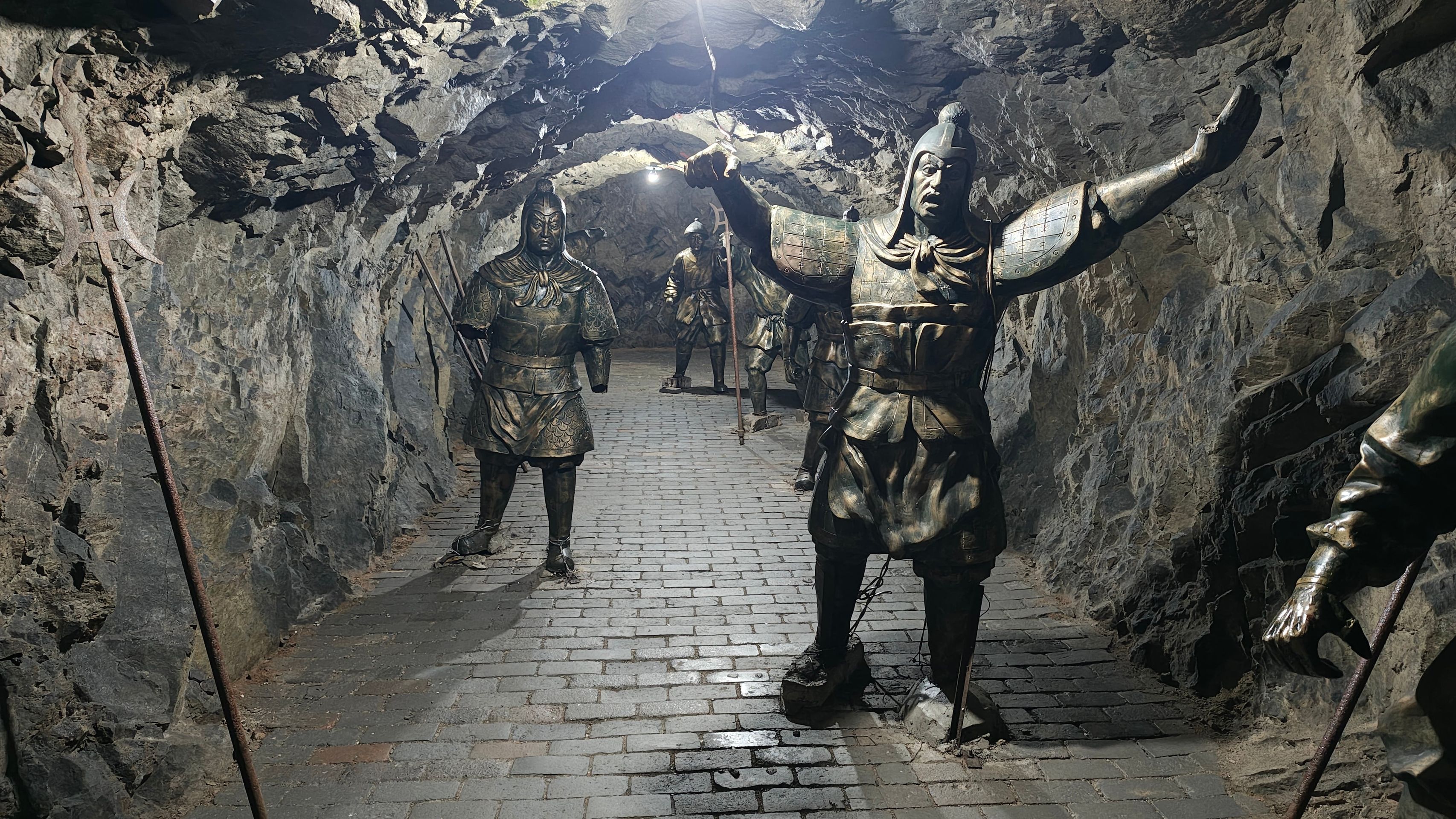
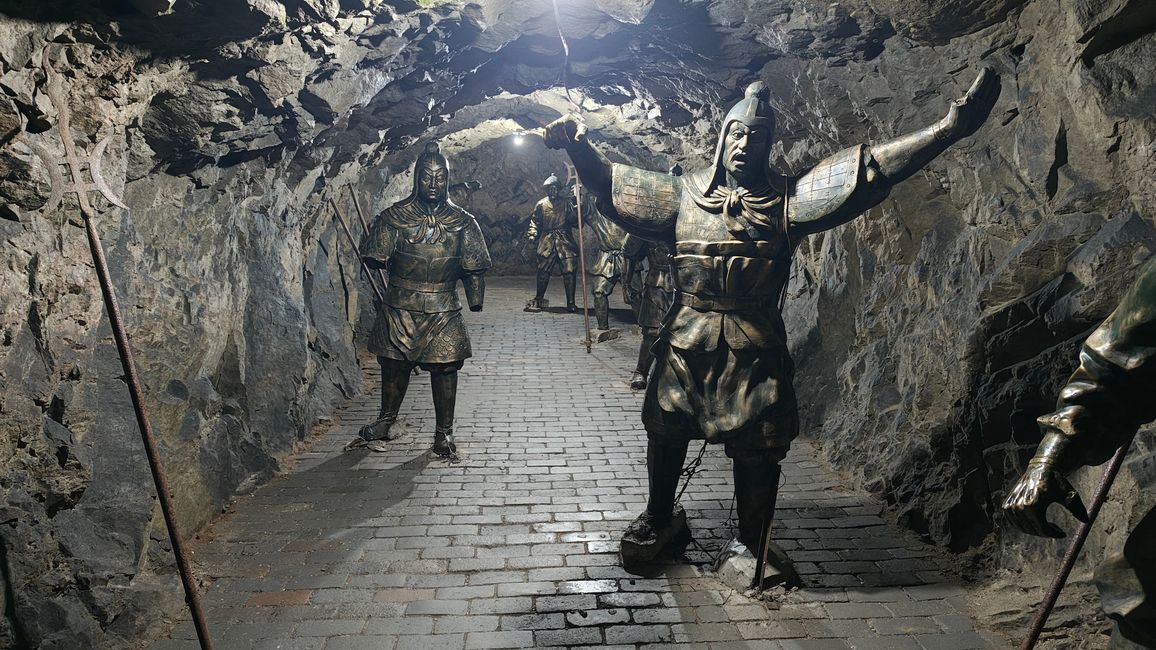
The approximately one-kilometer-long tunnel houses 29 chambers for weapon supplies, kitchens, toilets, sleeping quarters for soldiers, and also a well for water supply. Today, figures tell the story of the Shanhaiguan Pass that led to the dynastic change, as I explained in a previous blog post.
A short walk takes us to the entrance of the tunnel, and we delve into the mountain.
These are the toilets.
A soldiers' room.
A dormitory.
Coming from the cool, pleasant temperatures of the underground mountain tunnel, we bravely decide to visit the museum, which is said to be located 10 minutes away on the mountainside. However, oh wonder, there is no pleasant path to it, and we have to walk along the treeless road. It seems that the paid driving service must be used here as well.
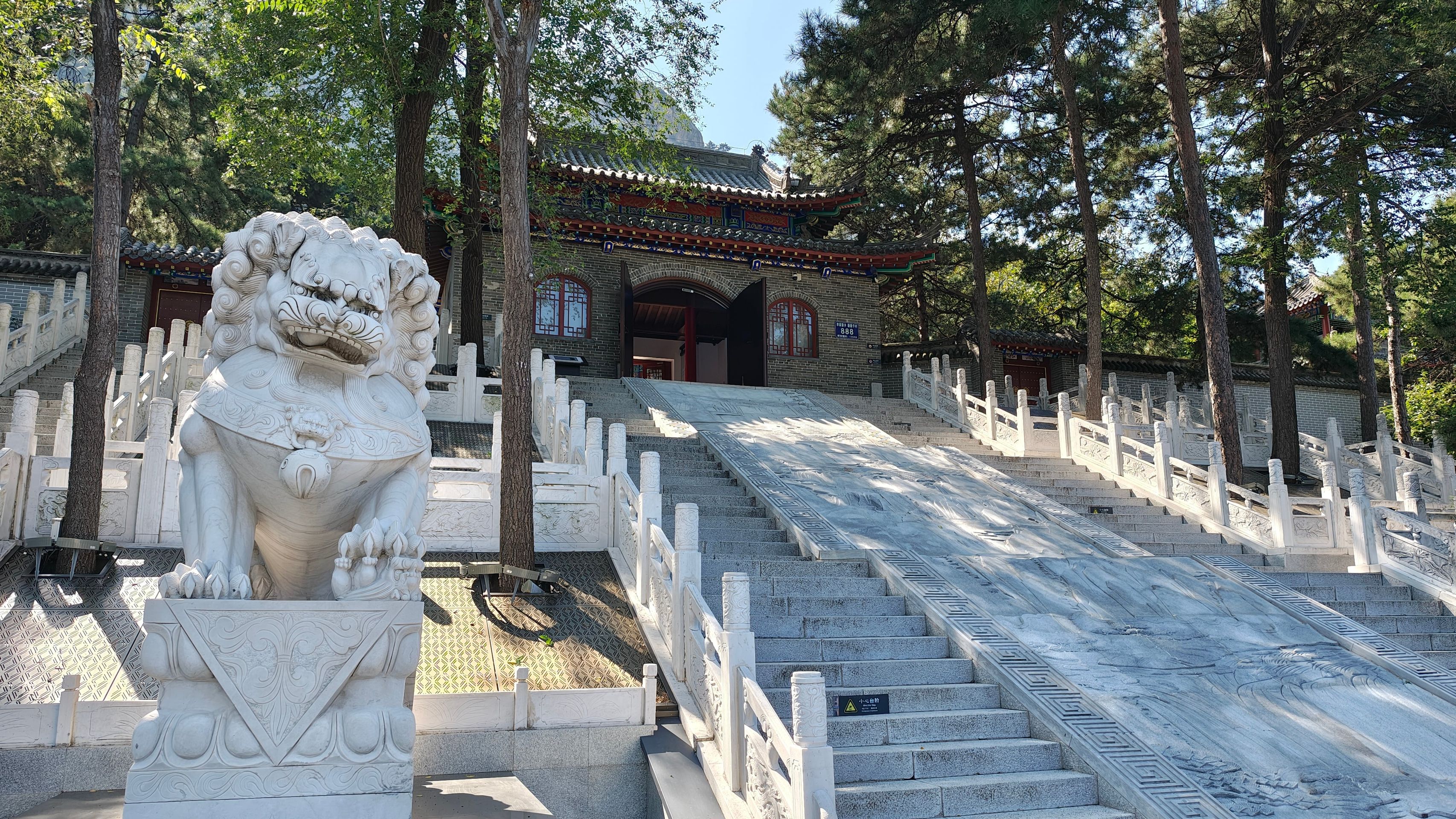
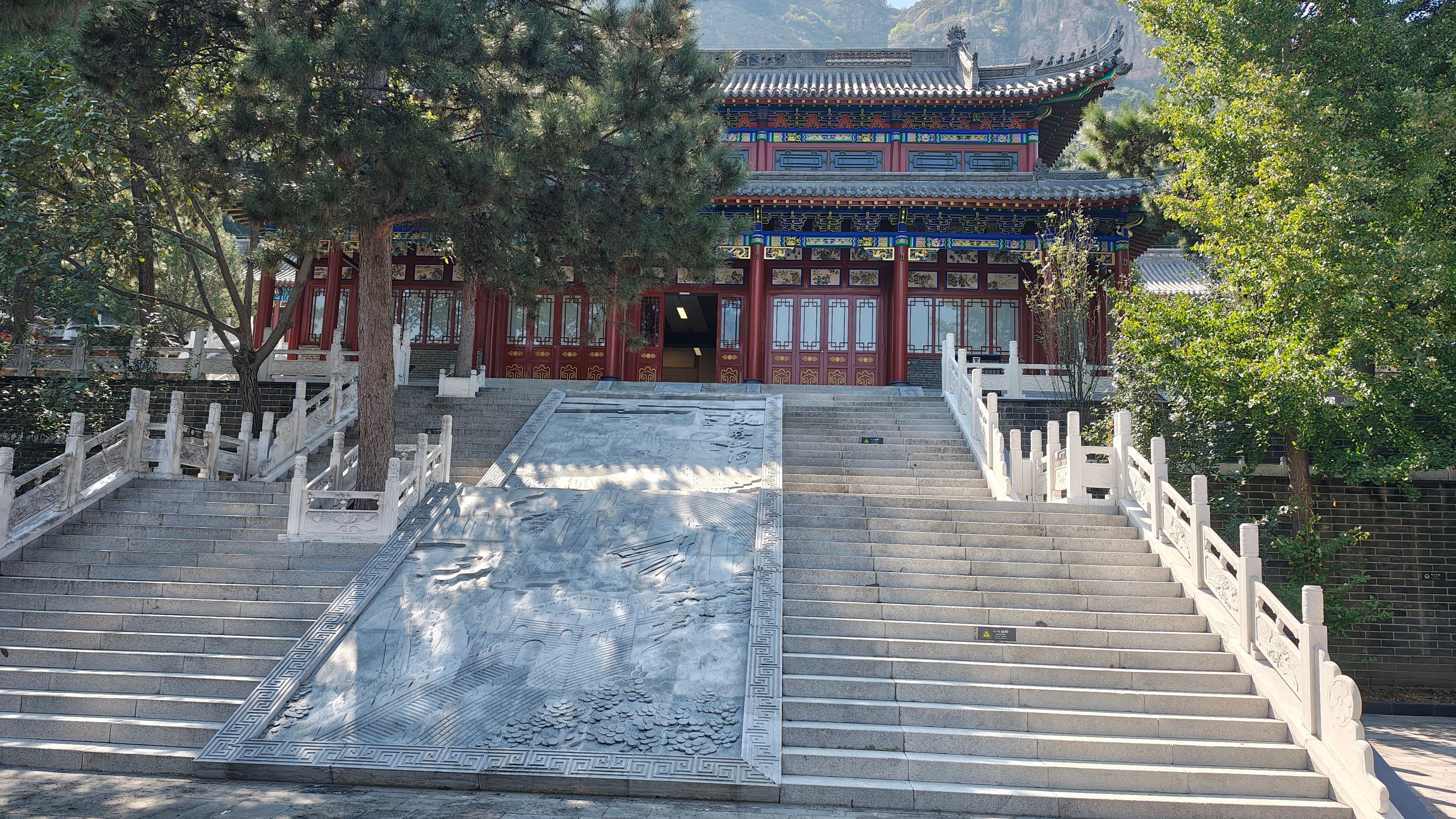
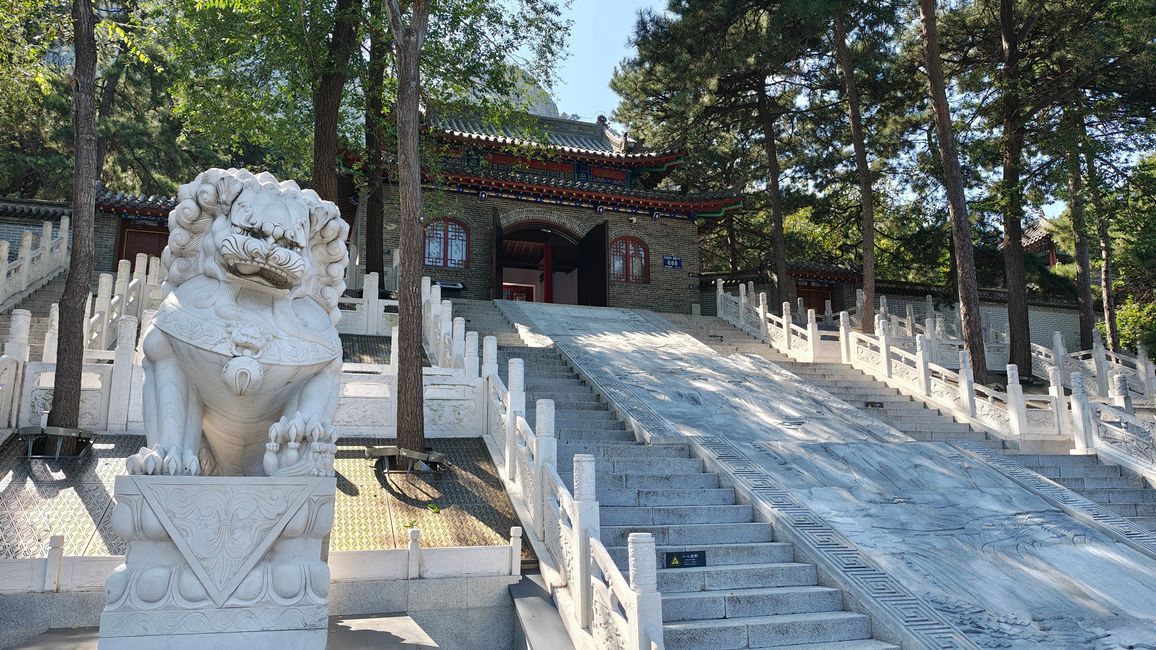
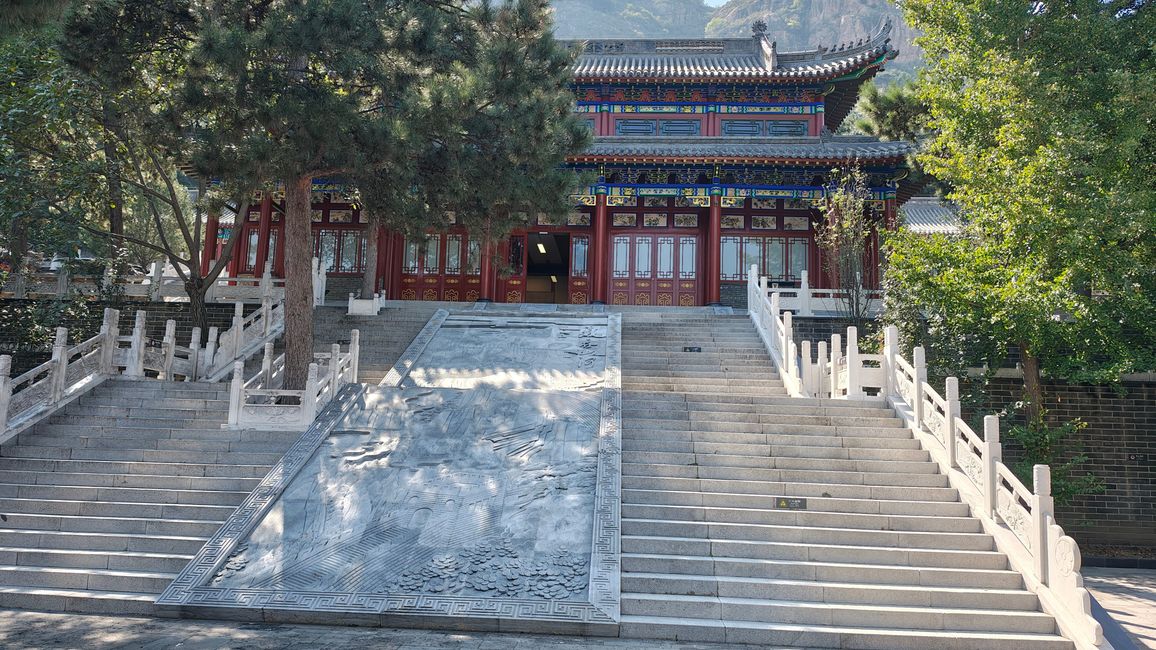
Once we arrive at the hillside, the museum consists of various pavilions, which can only be reached by steep stairs.
For older people, these numerous steep stairs are a challenge.
Encouraged by my good previous museum experiences in China, I take on this exertion. But I am disappointed. Exhibits are missing, multimedia displays remain off, and the content of the exhibit is lacking. The pavilion at the very top is even closed.
Later, the driver of our transportation service tells us that this area was a Buddhist monastery that burned down after a fireworks display. The government then purchased the site and established this museum. I would not want to know who has done whom a financial favor here.
We descend the stairs again, and just before reaching the bottom, a group of seniors is debating whether they should continue the climb. I advise an elderly woman against it, as the effort is not worth the exhibition.
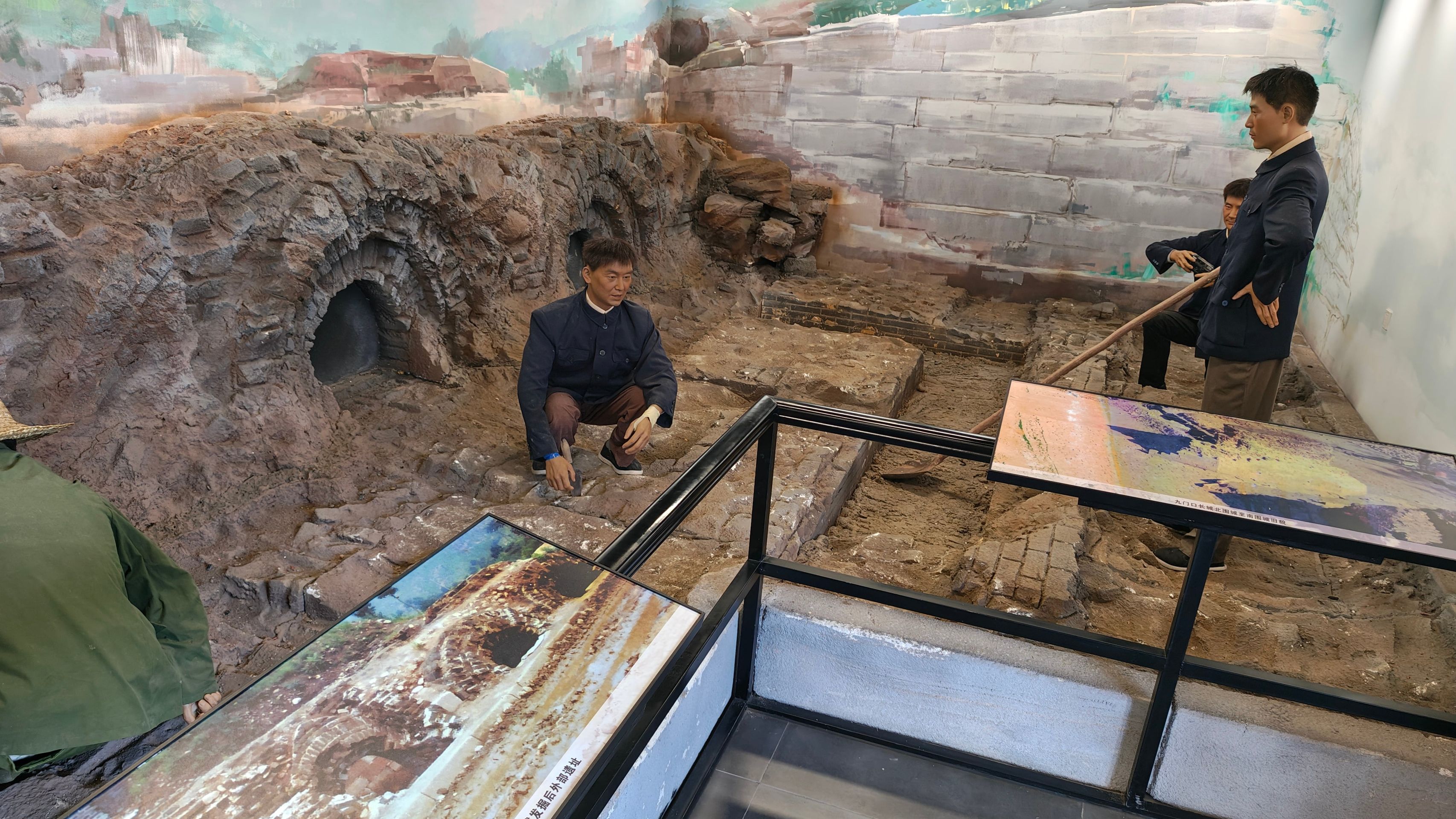
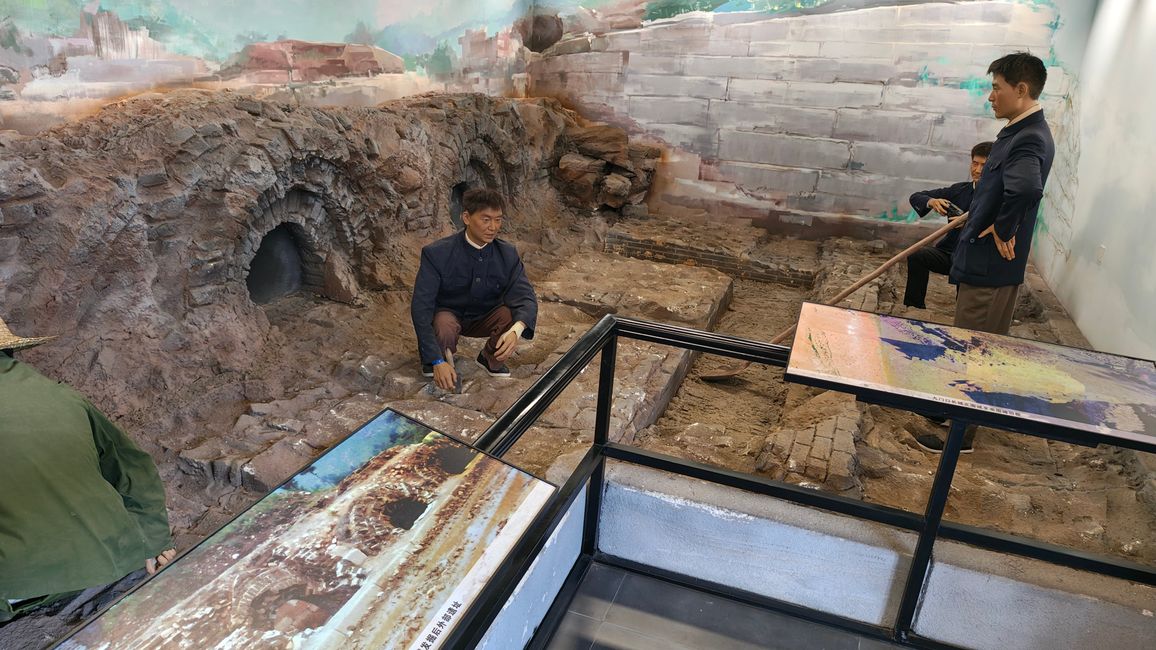
But maybe I am judging too harshly. Some explanations and displays were also interesting. For example, a backdrop was beautifully set up to show the brick firing for the construction of the Great Wall of China.
In any case, we are eager to drive to a nearby nature park. Since no driving service is allowed to enter the area to pick us up, we hire the local villager with his rickety Hyundai from before to take us there. We have virtually no other choice. The price, at nearly 7 euros, is somewhat high for local standards, but it doesn’t leave us poor.
In conclusion: The wall bridge is impressive to visit, and it is absolutely necessary to purchase the expensive ticket package including the tunnel visit; however, one can skip the free museum. The tourist conditions in Jiumenkou, on the other hand, are not optimal.
Xiefuzi Reise BlogLike a newsletter: every new post arrives via email.