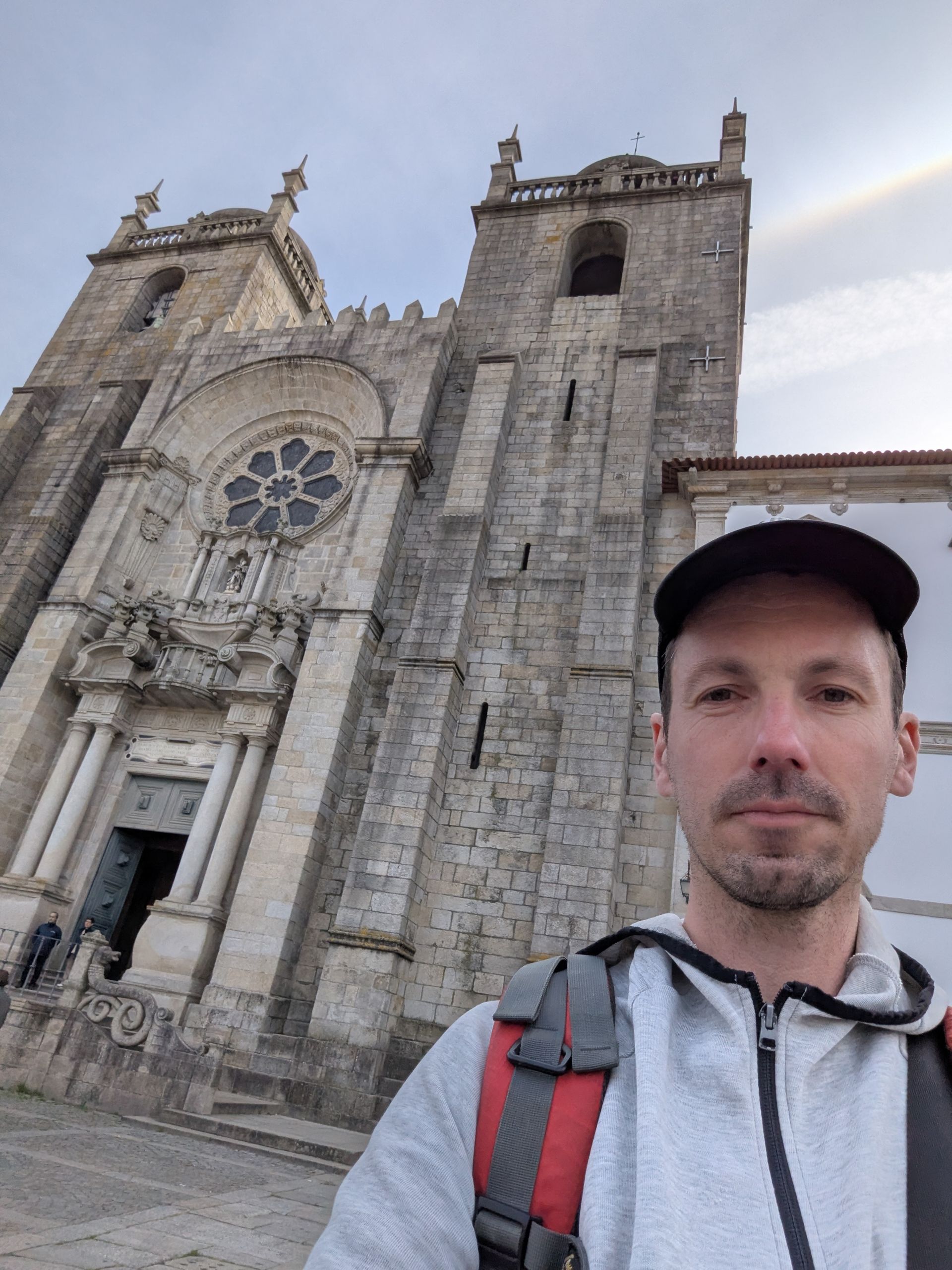
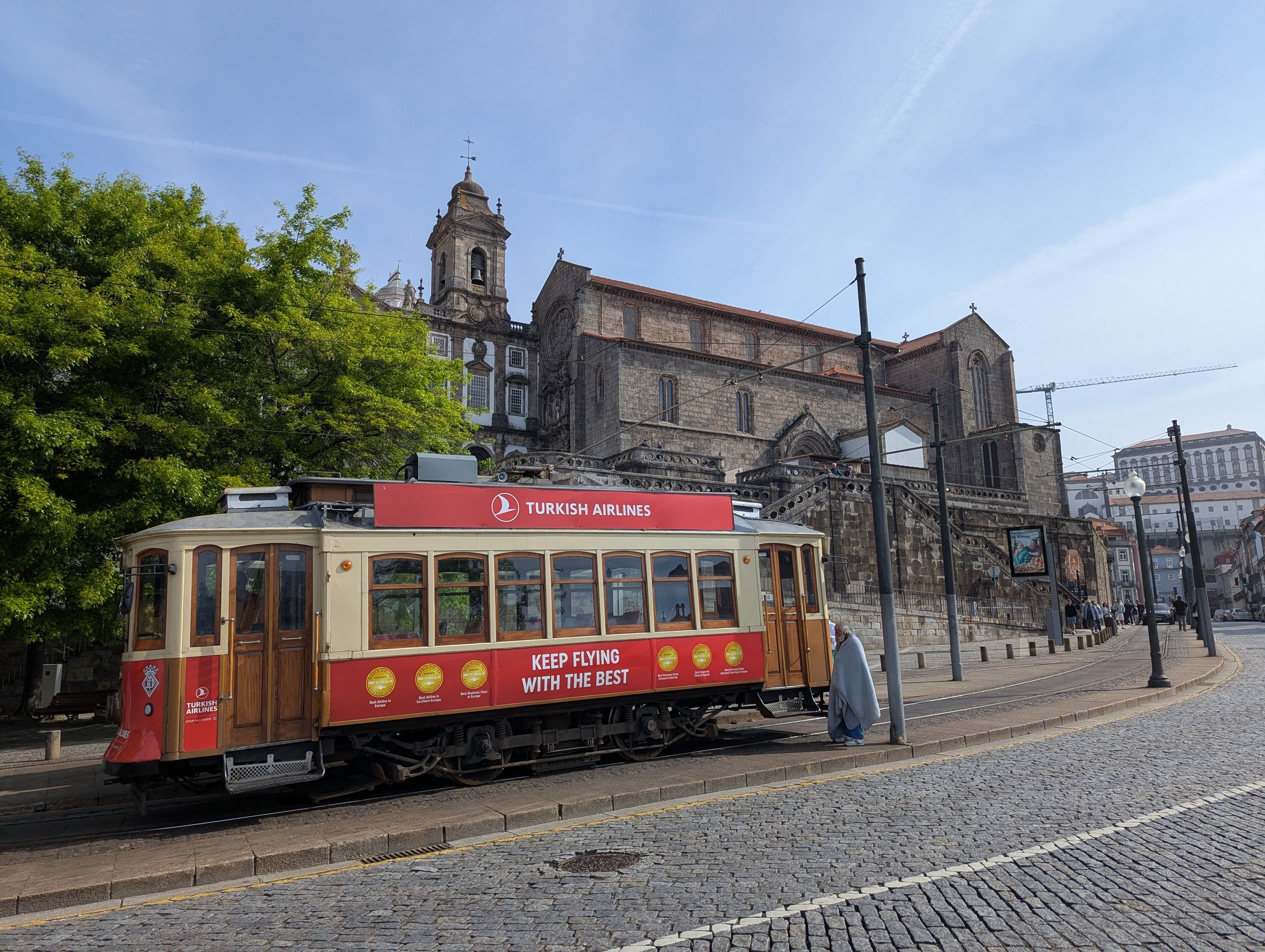
Free walking, just like this time. As soon as I landed in Porto, I took the tram to the city center once more, to finally switch to walking.
Hiking, active and cultural holidays, a bit of sunshine and warm summer temperatures, combined with positive experiences from past Camino trips, all pointed towards a week of hiking on the Portuguese Camino.
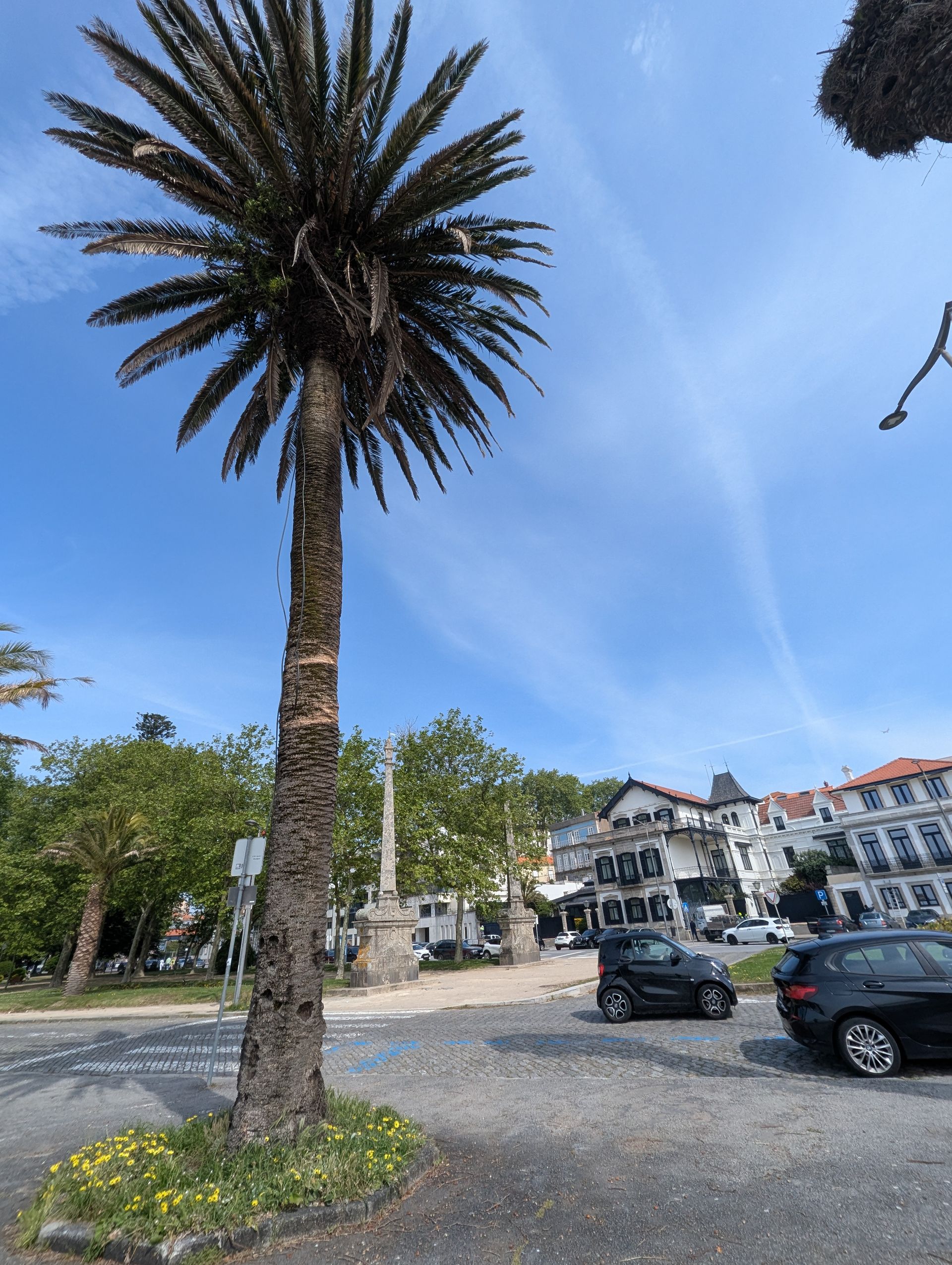
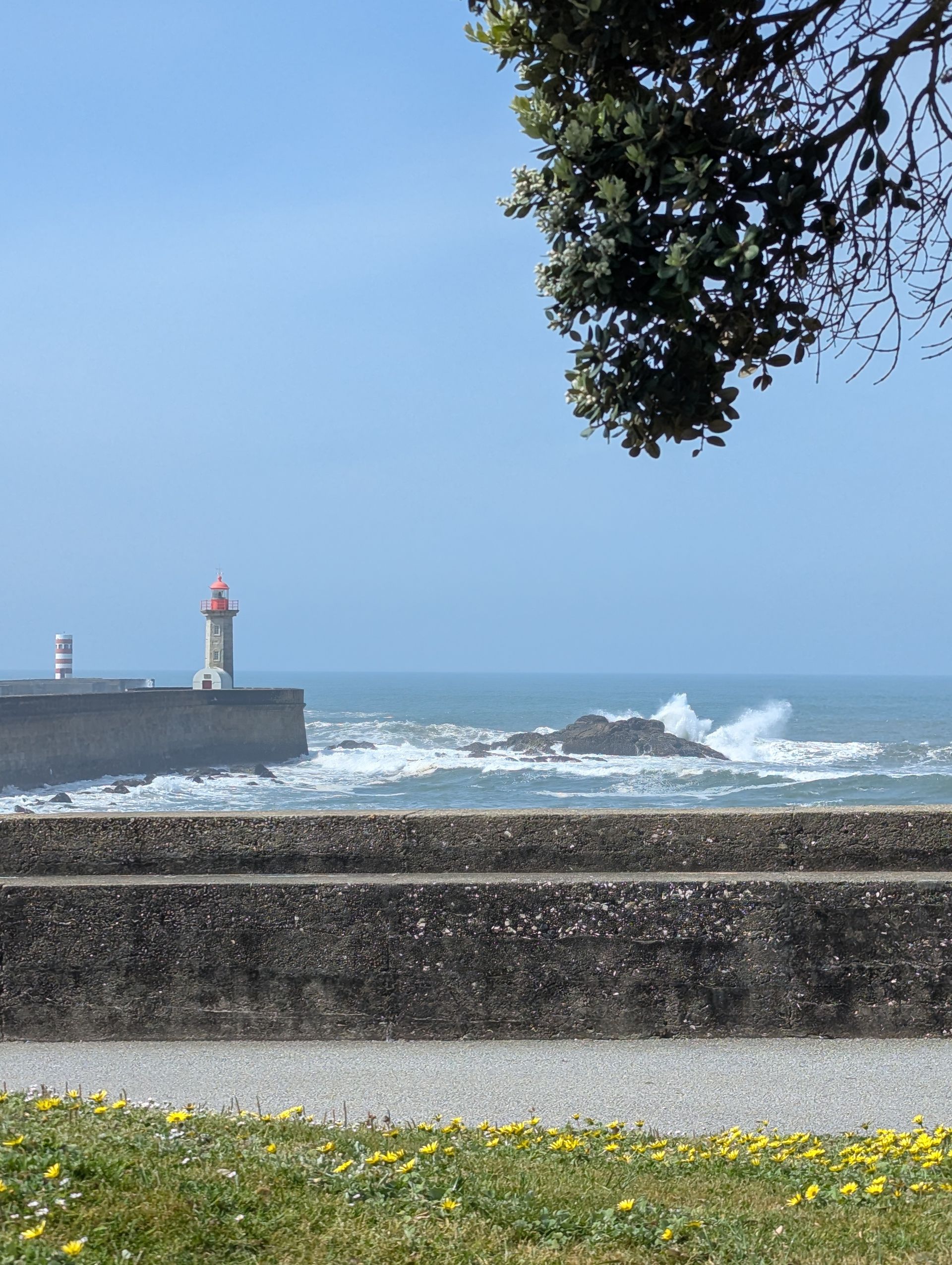
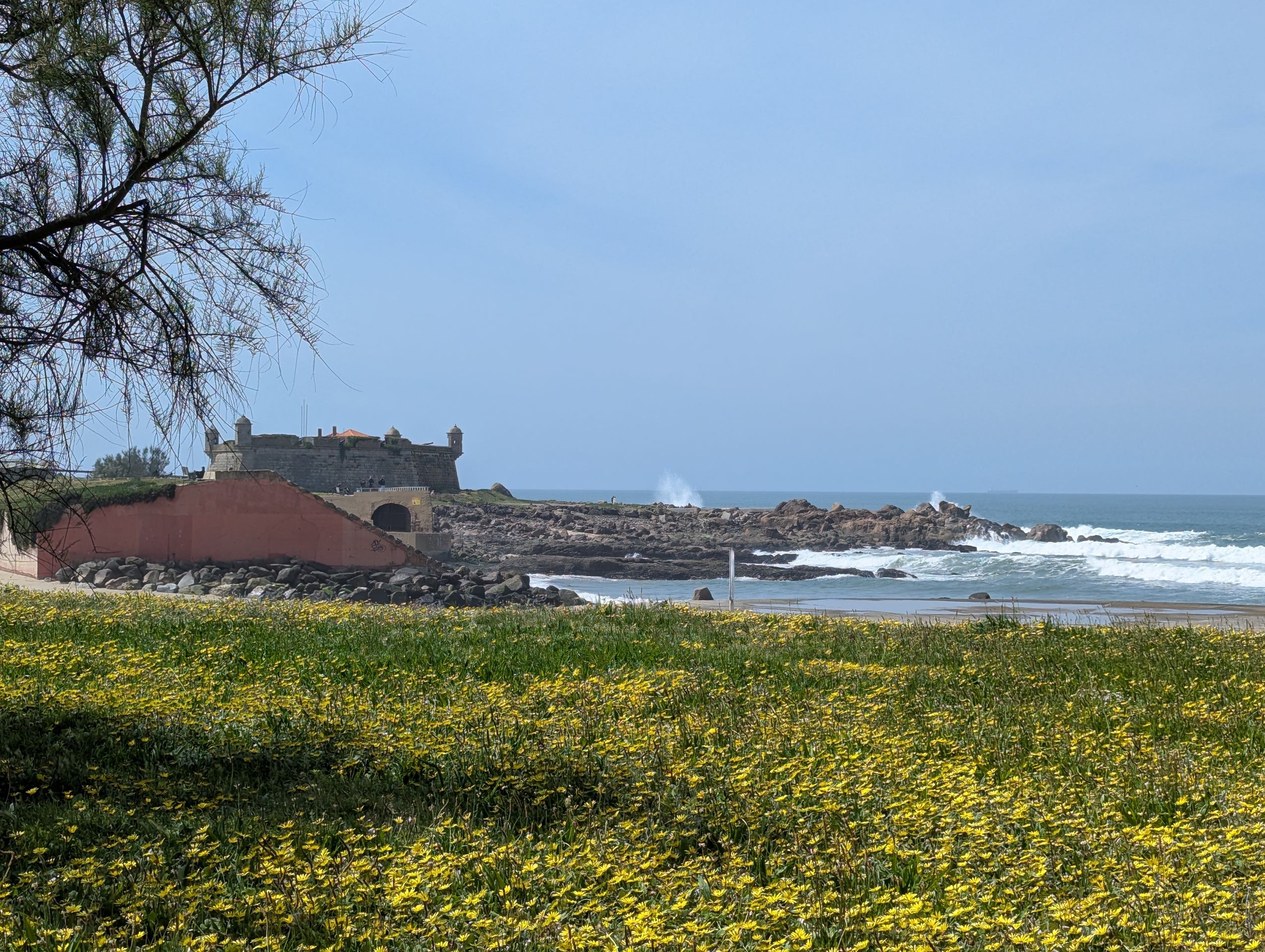
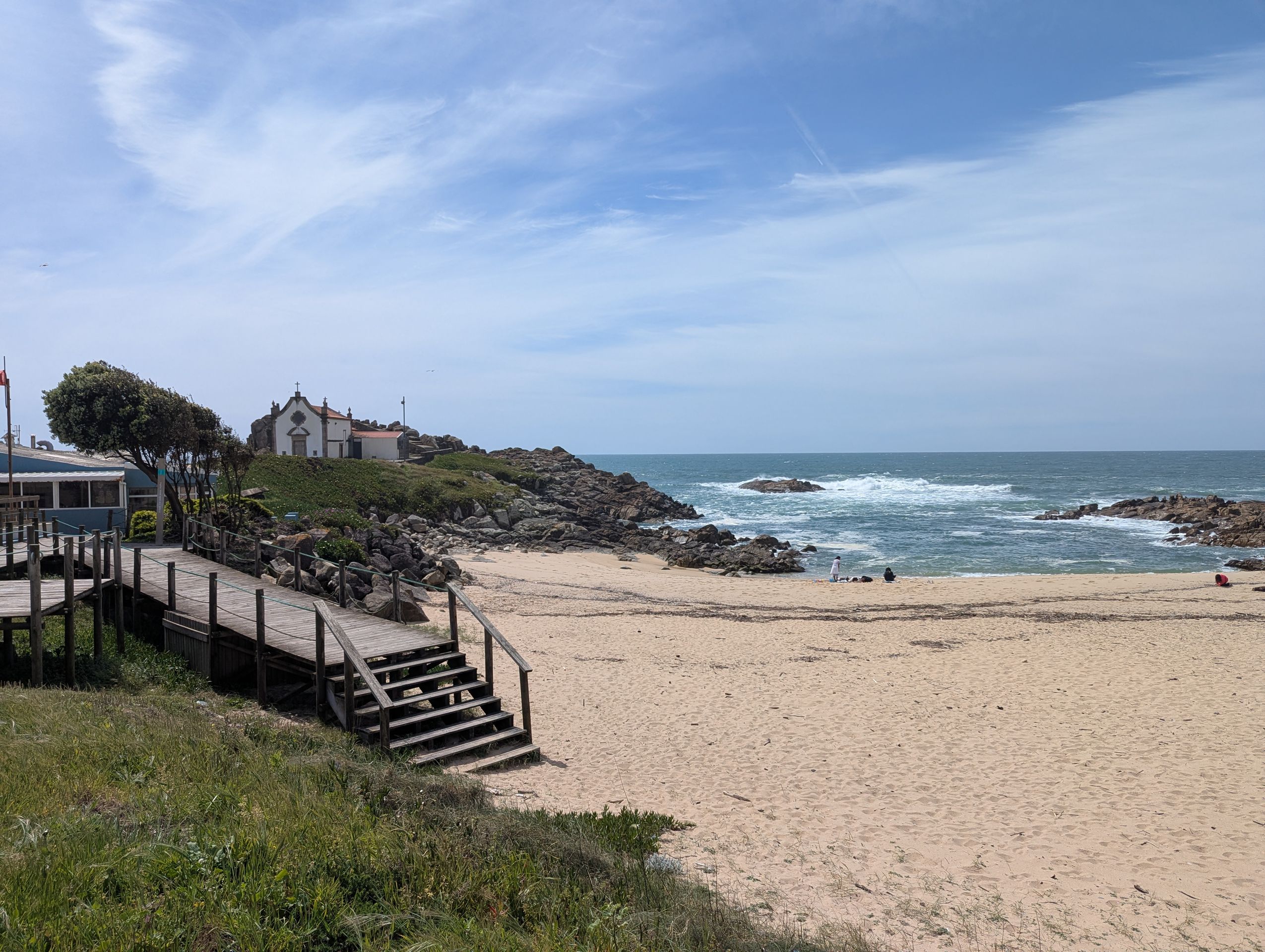
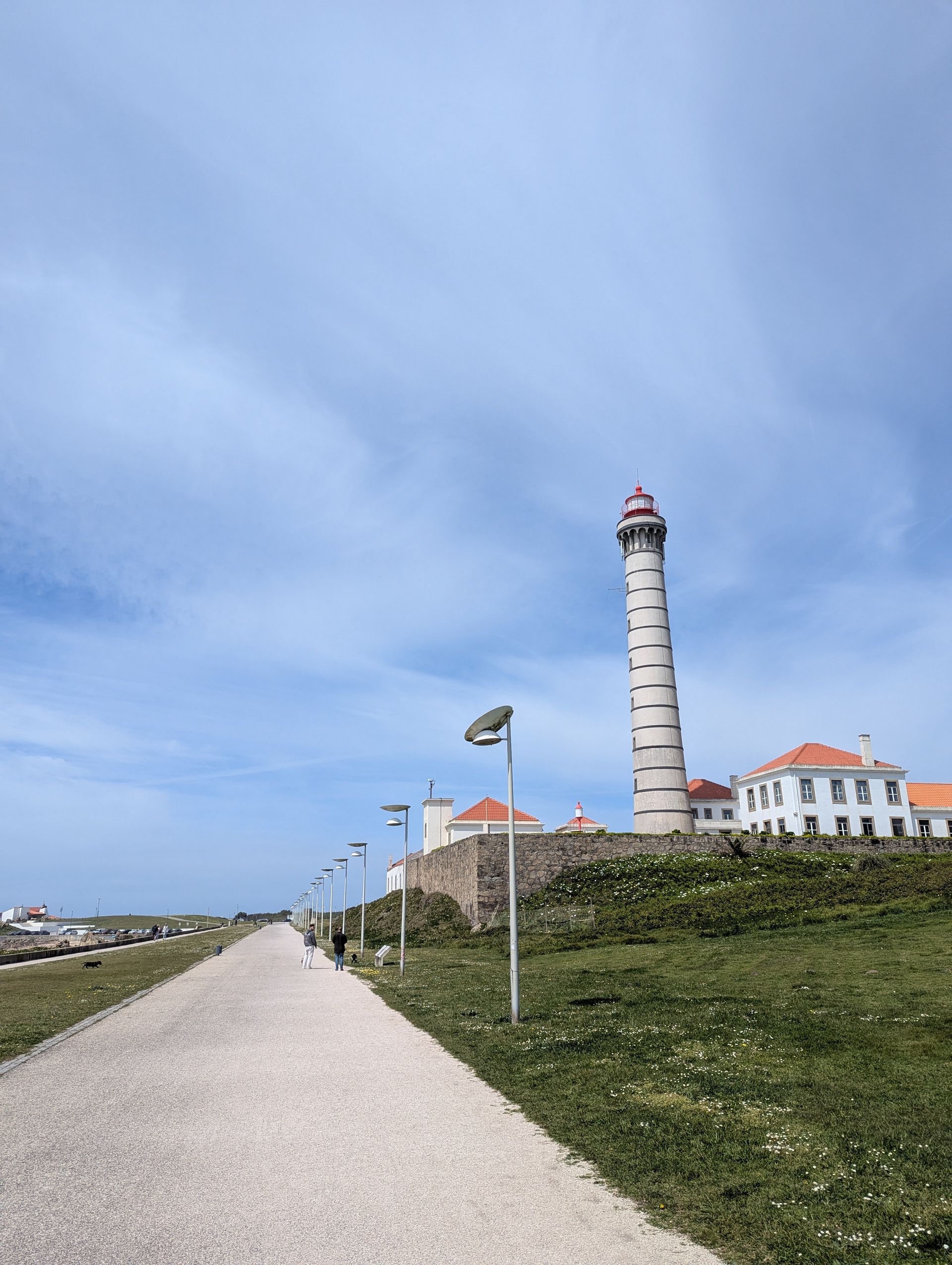
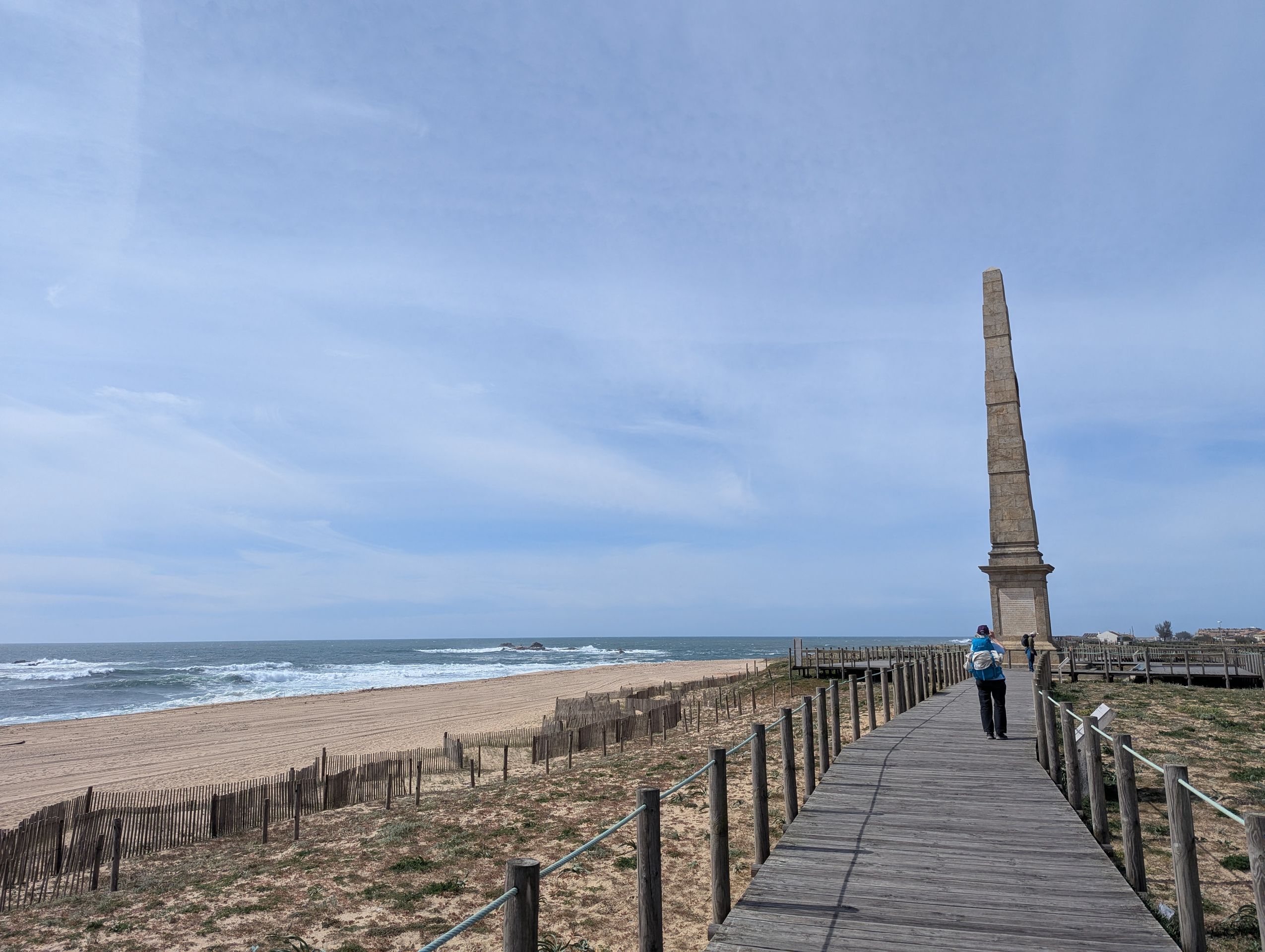
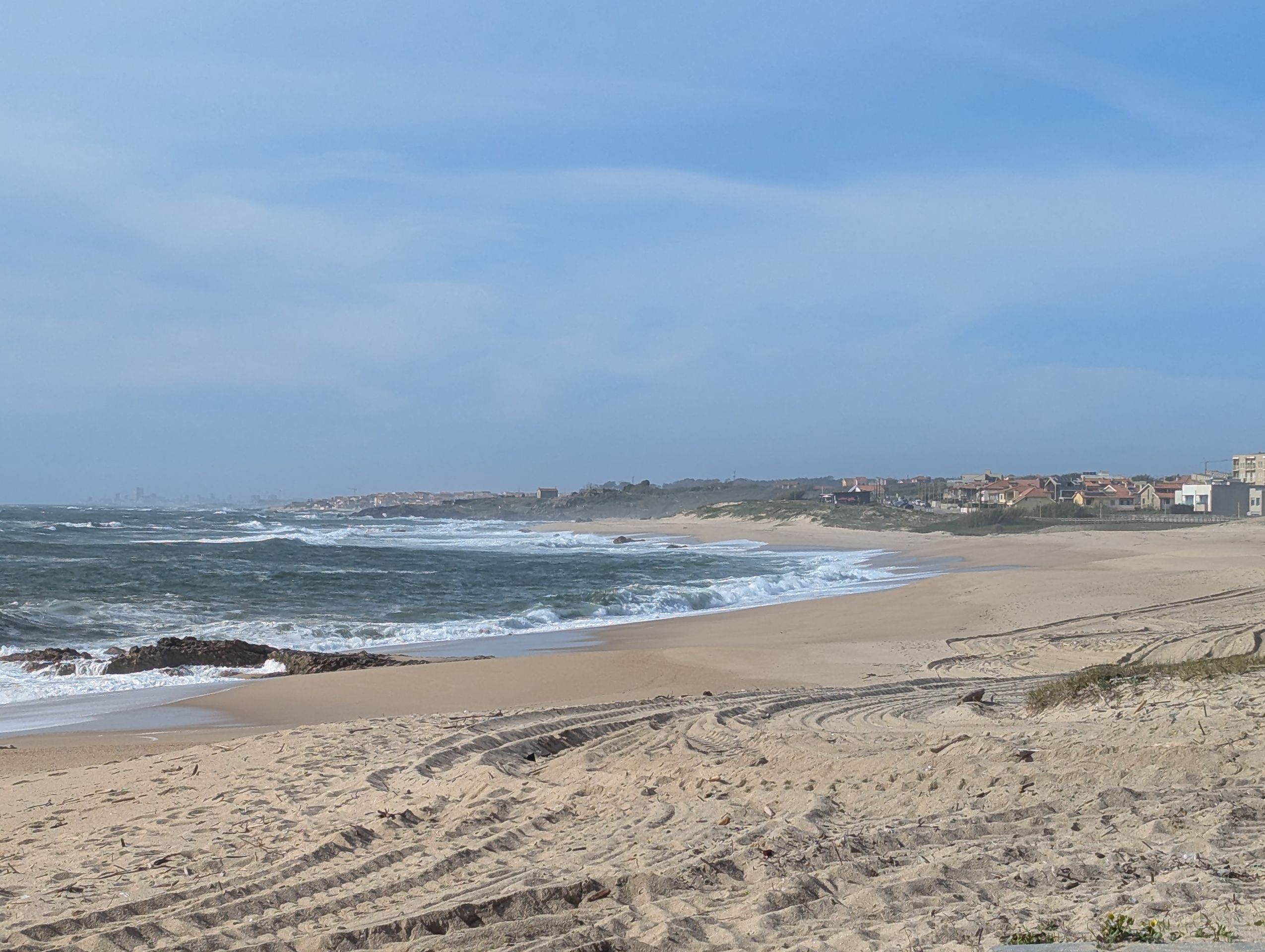
Around 10 o'clock, I joined our small hiking group and we left the city center along the Douro towards the coast. From there, we walked about 20 km north, always along the seafront promenade, always shouldering my seven-and-a-half-kilo backpack, always under glorious sunshine and a fresh sea breeze. At the beginning, the big city of Porto still dominated the scene: grand avenues, then fish restaurants, then beach clubs, then industrial areas, and finally port facilities and a refinery. After that came wide dunes and holiday apartment complexes before the start of the season. Instead of tourists, there were now middle-aged people dressed in colorful functional clothing with bright trekking gear in the majority. Shells dangled from the backpacks as a sign of pilgrimage.
The Portuguese pilgrimage route had been expanded with a variant. For several years, a coastal path had supplemented the extensive network of pilgrimage routes. Whereas the old routes primarily focused on abbeys and churches that provided shelter for pilgrims, today, the potential for tourist marketing is also a factor. Even guidebooks advise against the first stage of the old route, noting dangerous passages. Since the Middle Ages, modern infrastructure with airports, highways, and fast roads has overlaid the old path network. There is little space left for 'foot travelers'.
The new routes would have to prove themselves. New pilgrimage tourism instead of the old pilgrimage economy. Only a few spiritual places lined the coast, and there were also few inns (such as in old monasteries). Instead, information boards, pilgrimage equipment suppliers, and private inns were supposed to meet the travelers' needs.
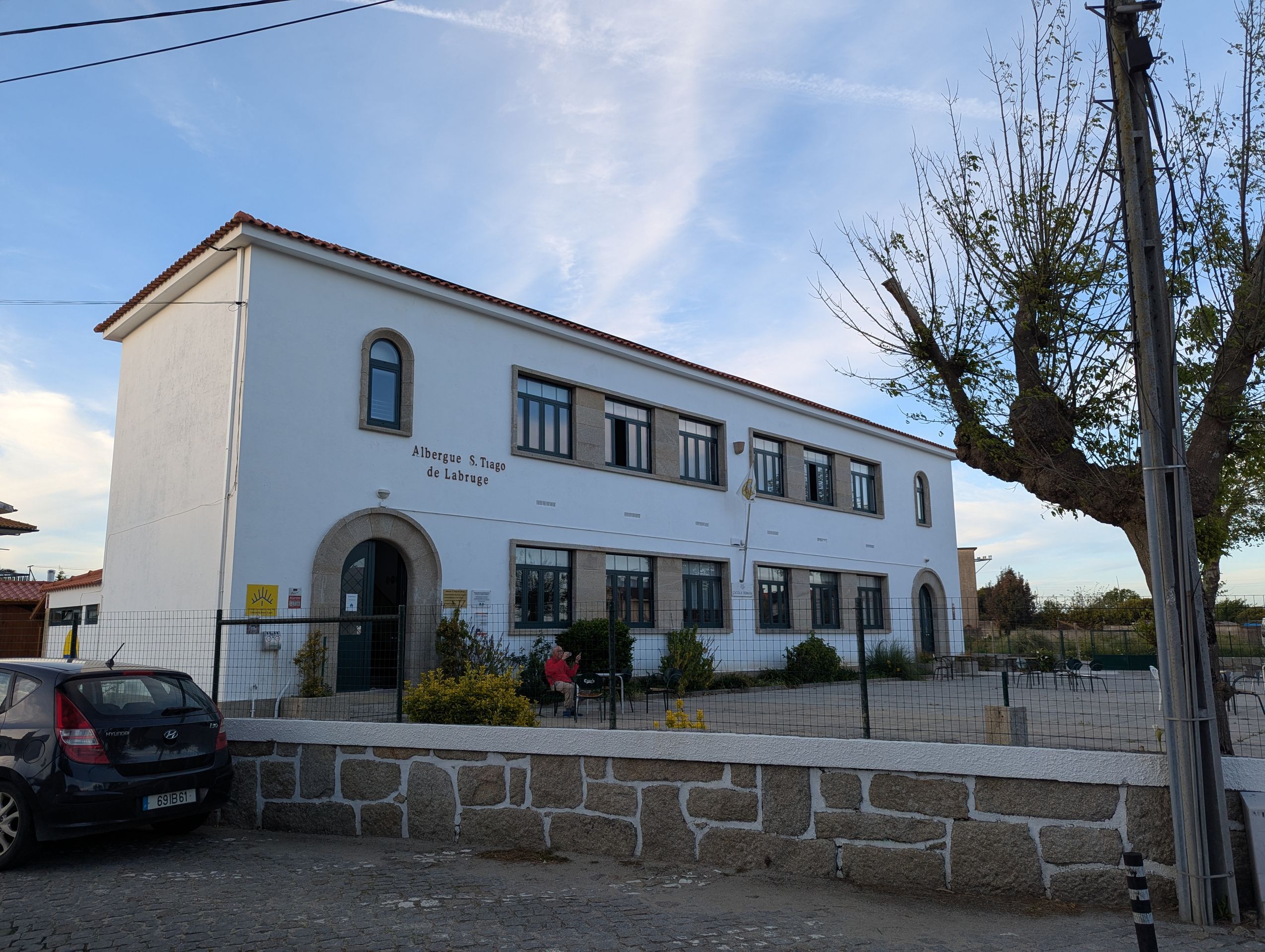
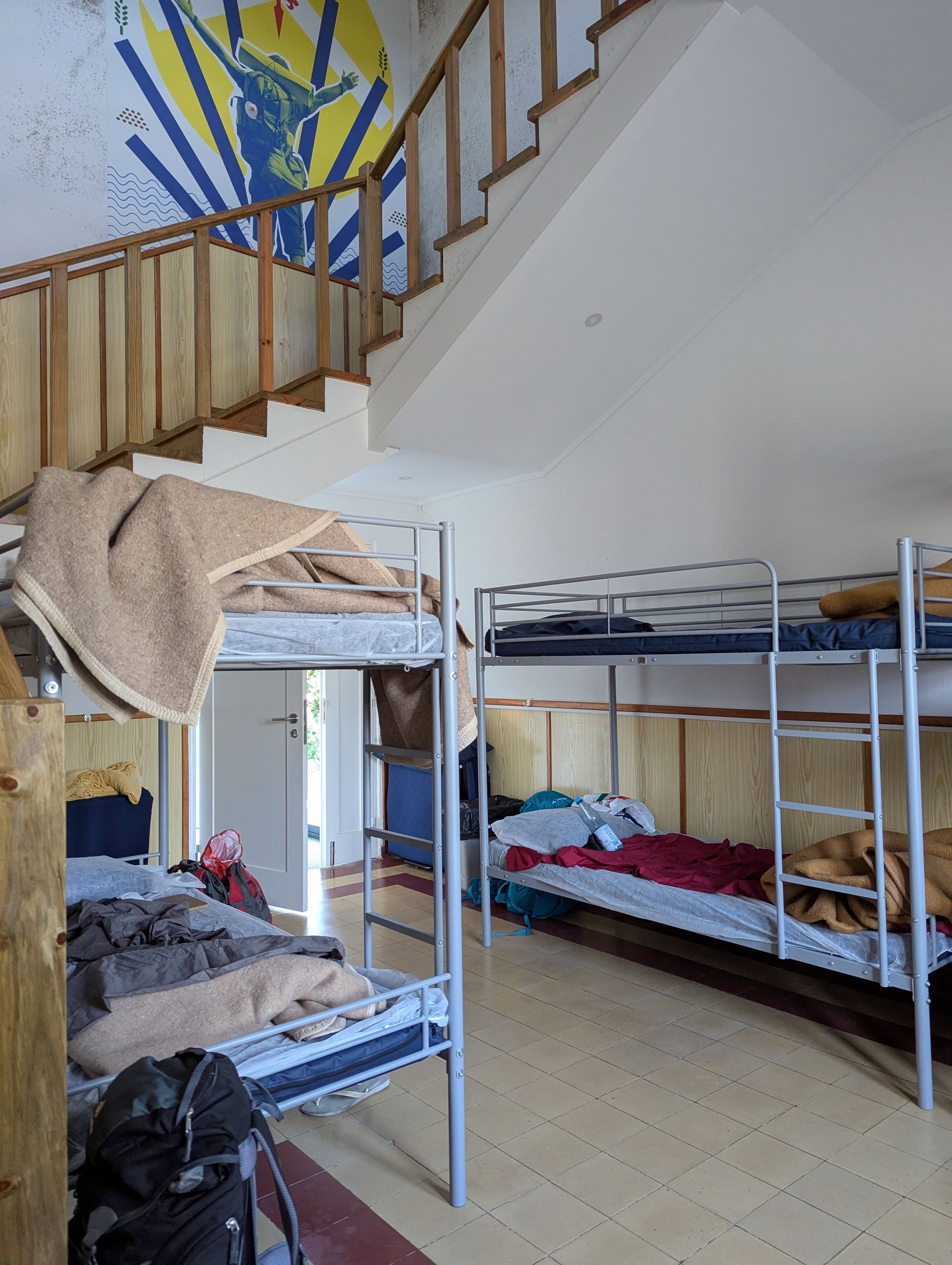
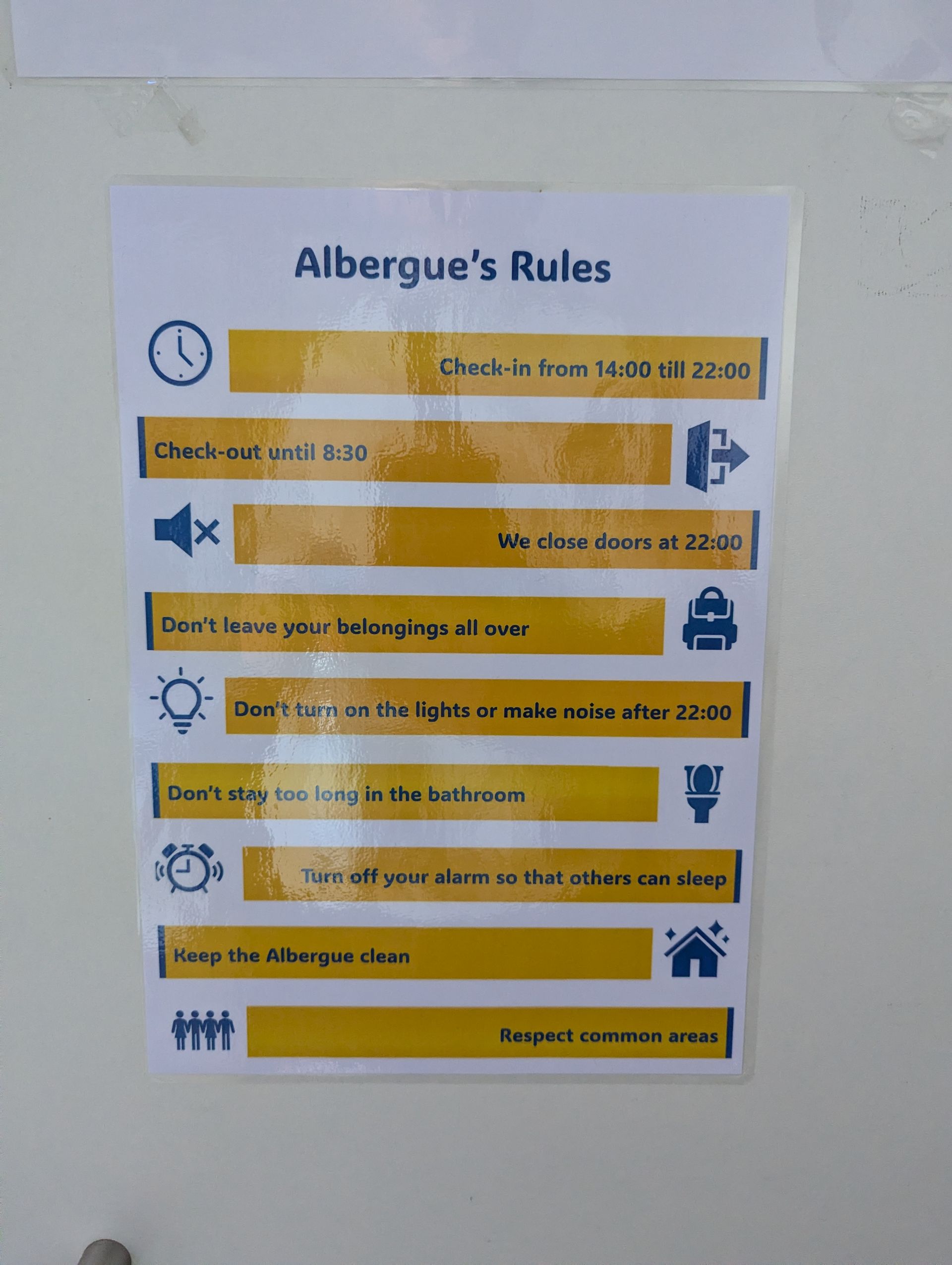
Nevertheless, a hint of authenticity was felt at our accommodation on the evening of the first hiking day. The old school in Labruge had large drafty rooms and offered beds in dormitories for about 20 pilgrims that evening. Here, too, there was strict adherence to a bedtime of 10 PM.