

Goats and Bulls
Milk – true milk – comes from animals. Mostly from mammals. How humanity has come to make cheese from this milk over the millennia, I gladly leave to the historians. Today I'm...


Published: 24.05.2026
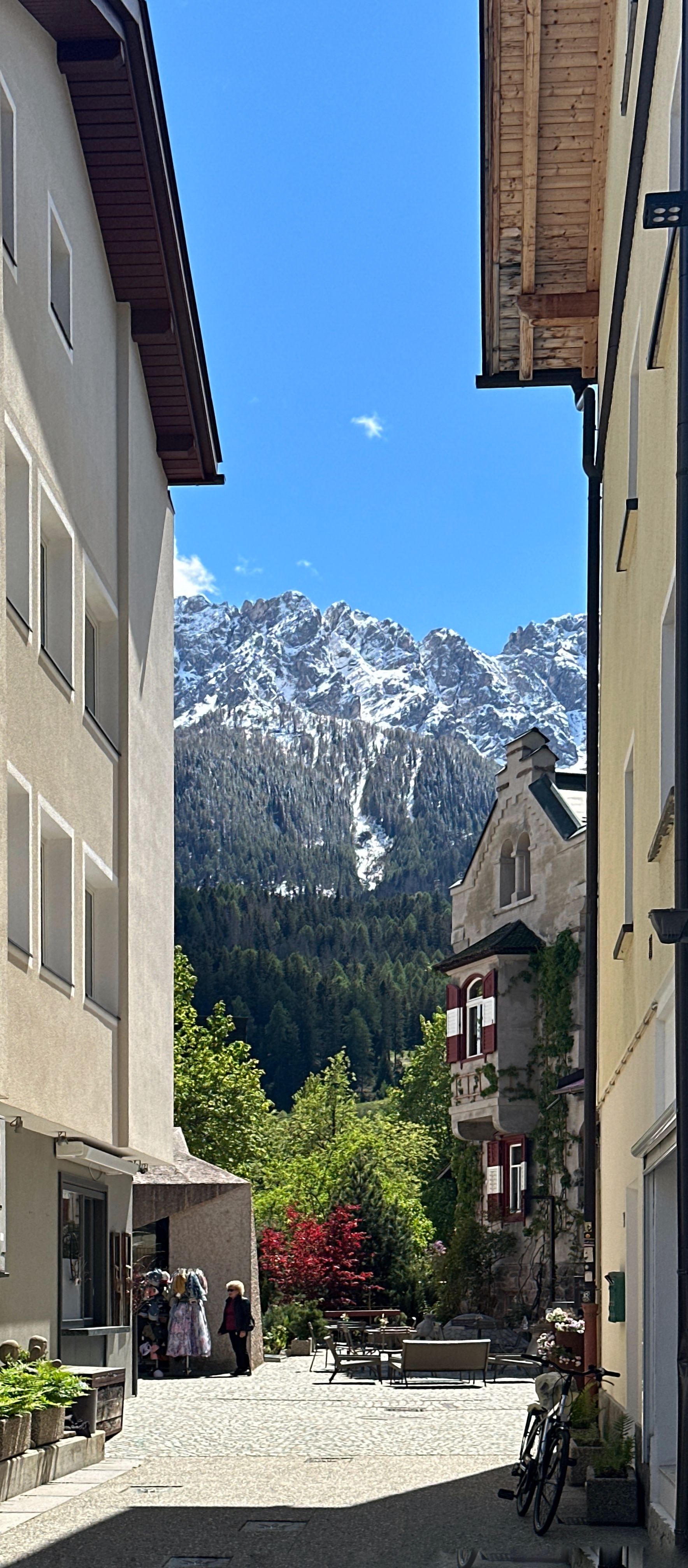
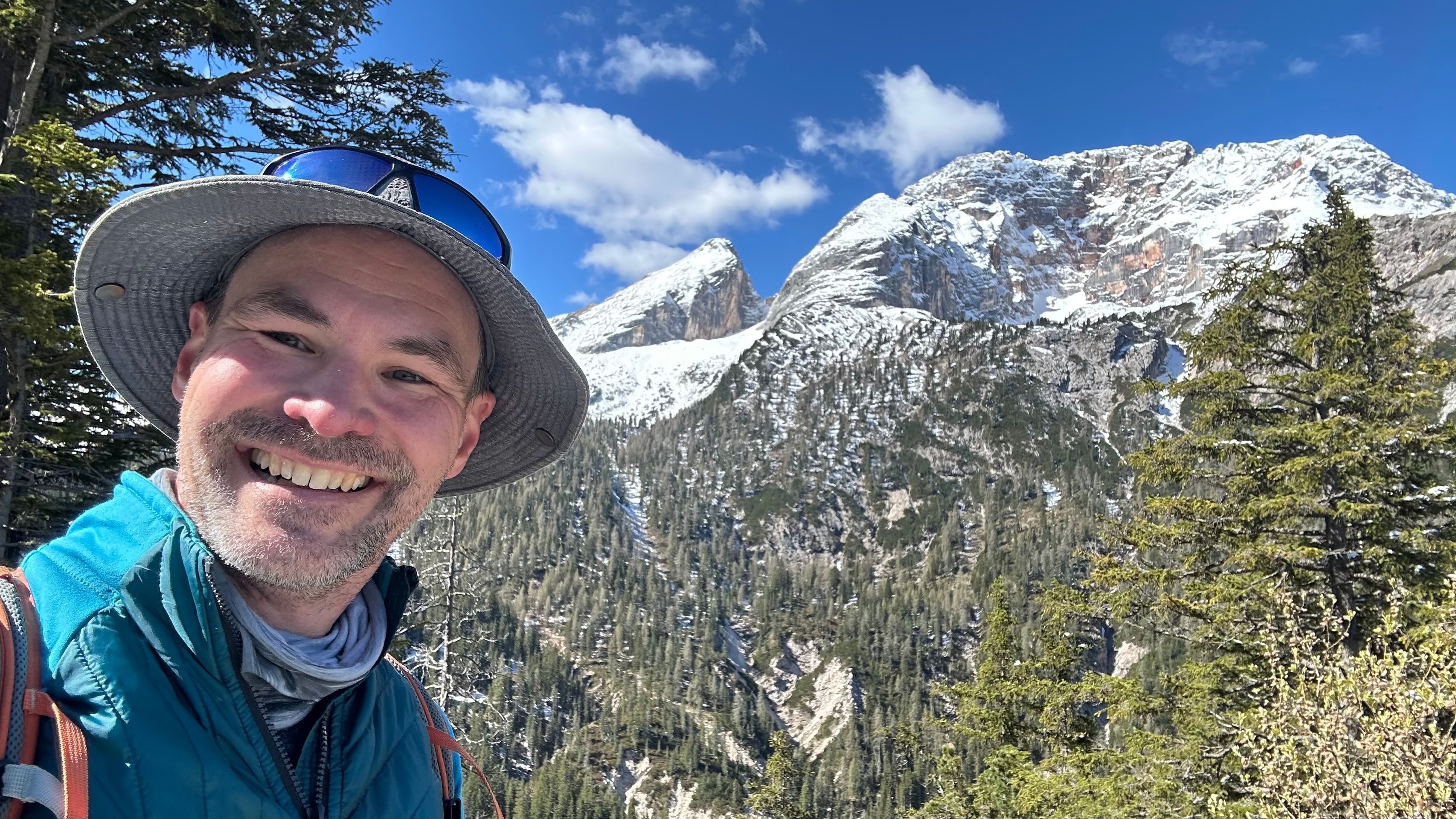
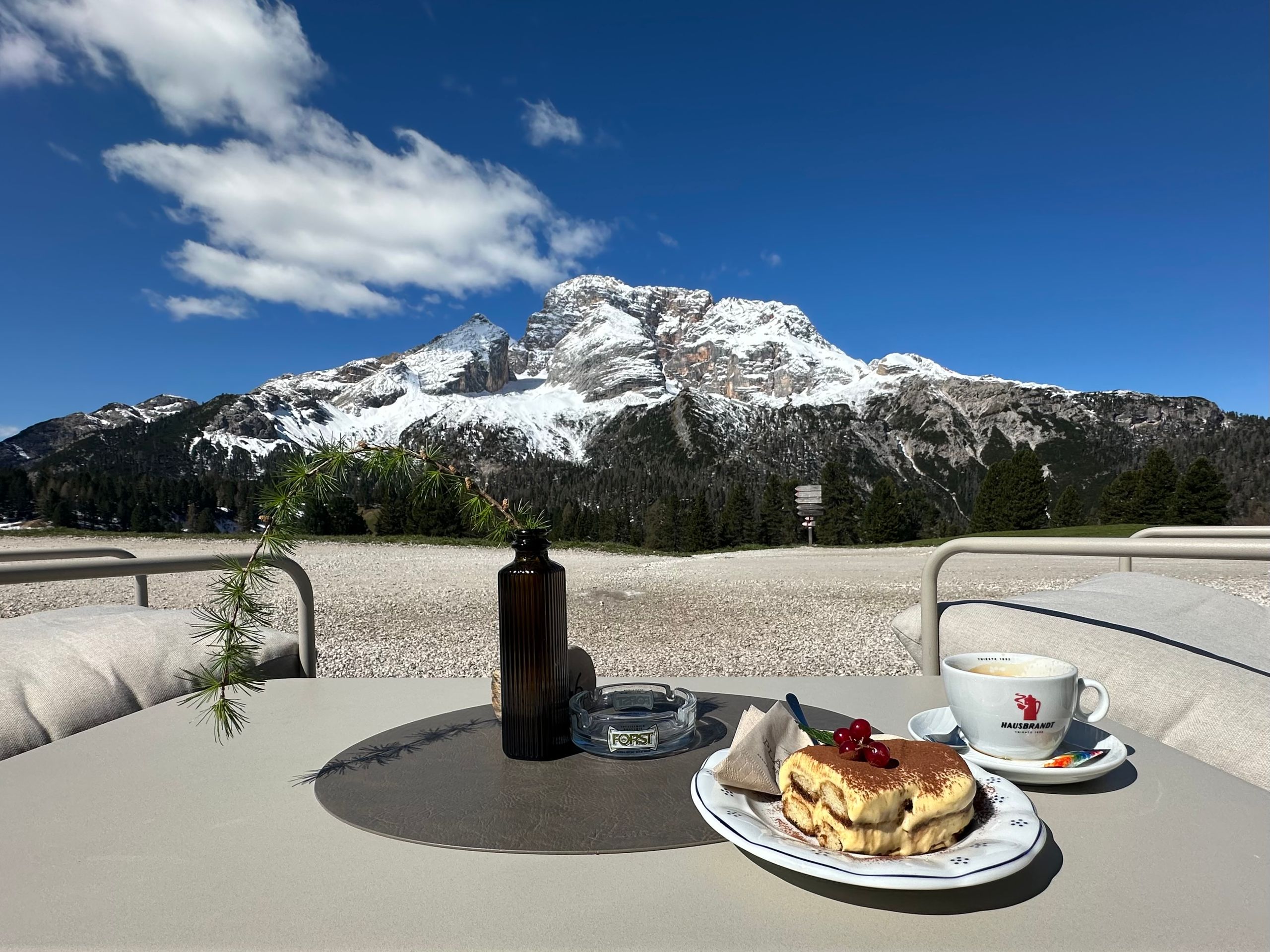
Saturdays are less busy, and I'm free on Sundays. I use that time for a little excursion to a village of 5,000 residents with its own cathedral, and for a longer hike, not without starting the morning with a coffee and pistachio croissants. They are just as good here as they are by Lake Garda. Well, the café is owned by an Italian... I mean, an Italian Italian.
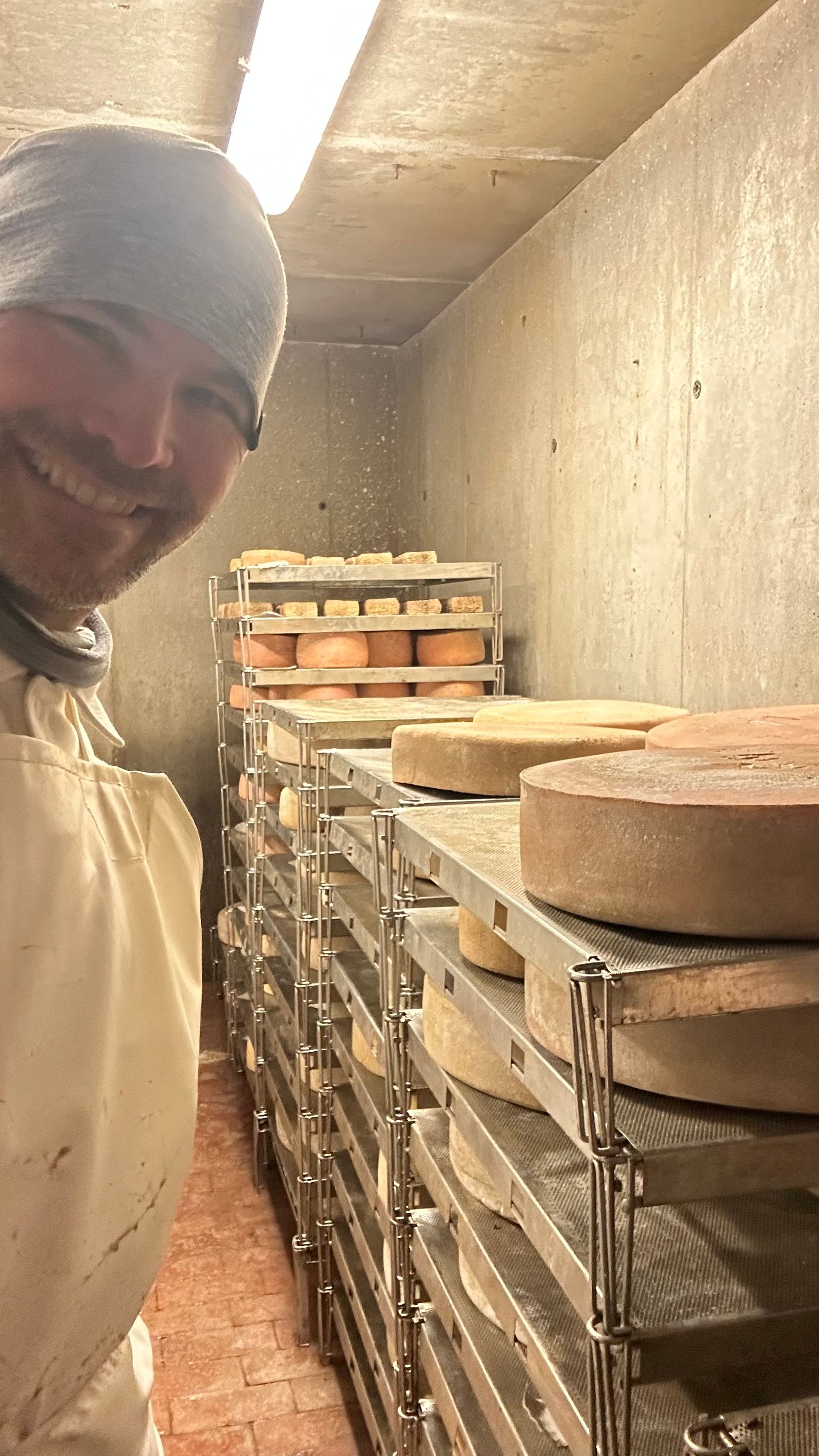
Fridays are care days; the entire cheese cellar gets turned over. The wheels need attention and someone to listen to their stories. Cheese therapy, because cheese is also just a person.
With a brine solution and a brush, the wheels get their styling and rind. A quick brush to the edges and surface, please. This prevents unwanted and excessive mold growth, although mold is not a sign of bad cheese.
The whole process is somewhat a controlled flavoring, as cheese takes time. Aroma and spice develop through bacteria and enzymes that gradually break down proteins and fats. It is also how the cheese gains its firmness. And to prevent spoilage, it is maintained.
Turning the cheese ensures it becomes evenly firm. By flipping it, one avoids moisture accumulating on only one side inside.
All of this happens in a cheese cellar, where hundreds of cheeses stand and the smell of cheese lingers. A dream. But a nightmare, though, having to touch, brush, flip, and restock every single cheese. Boxes and trays of cheese stack up. An alpine cheese weighs about 15 kilograms, and there are a good number of them. They usually lie in pairs on large perforated trays, which are stacked on top of each other: cheese towers.
Besides, there are countless four, two, and one-kilo pieces stored in boxes. Then the task is to take a box down, care for and flip the cheese, and find a new spot for the box. And then continue with the next boxes.
It is hard, physical work. And when one considers what price they think they have to pay for cheese, after this experience, that price does not reflect the work behind it.
On Friday, I didn't quite finish. I wrapped up the rest Saturday morning. A job is only done when it's done. The cellar belongs to me, and I remember the