Havila 1- 15 September 2024
After a calm flight, we land in the morning, in beautiful autumn weather in Oslo. We take the train to the main station, which is very close to our hotel. With the Hop on Hop...

Published: 09.01.2025
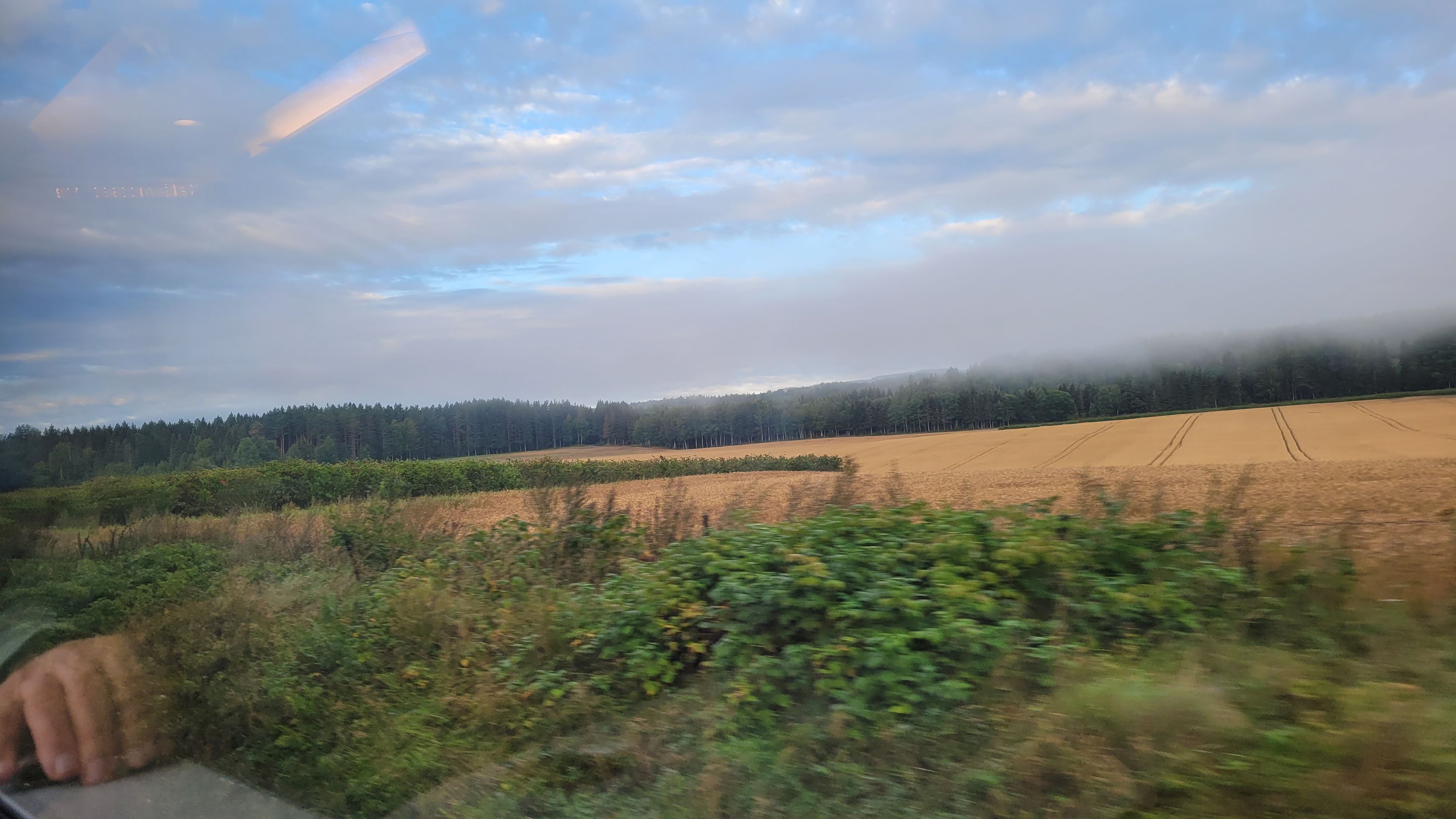

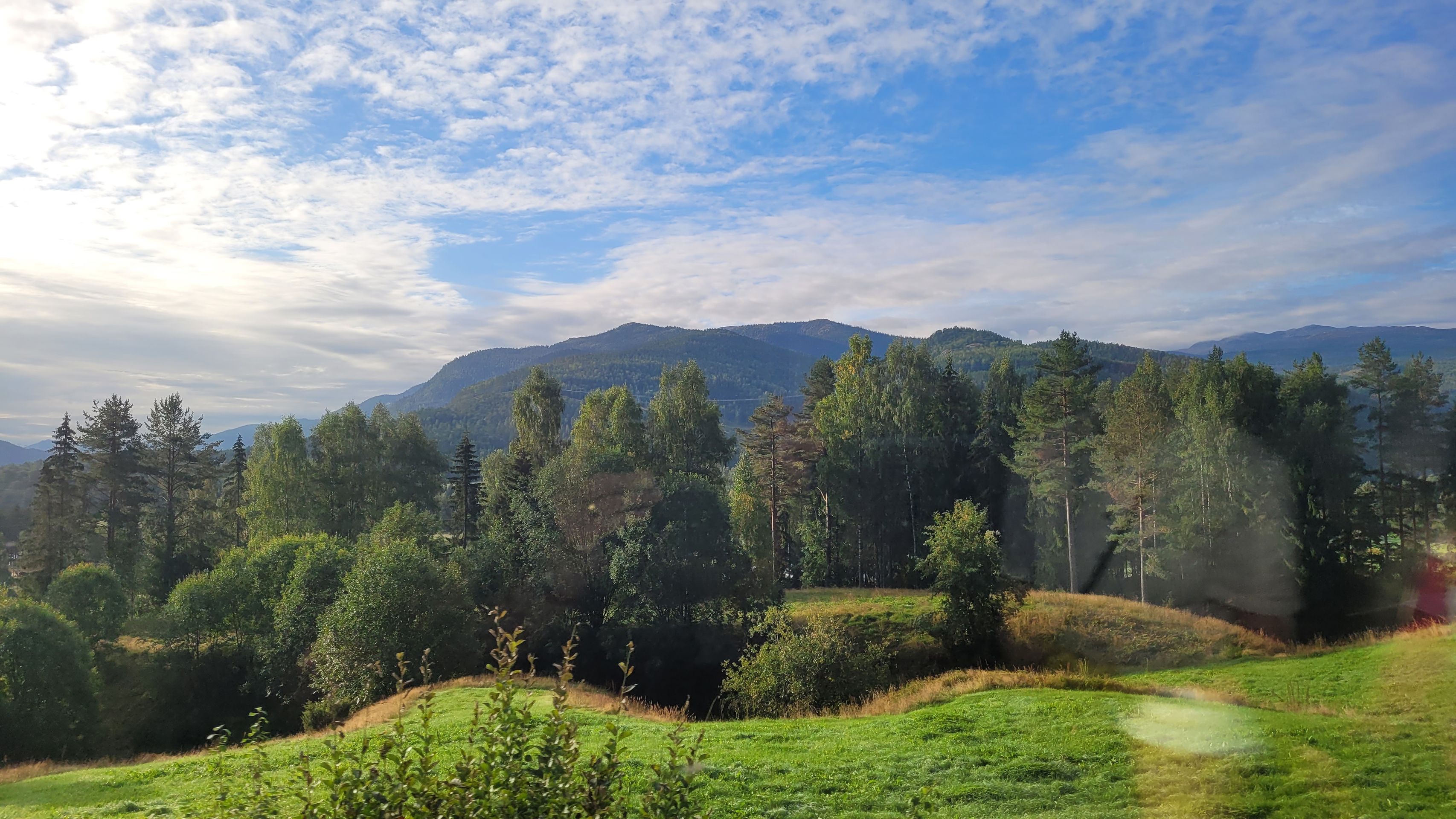
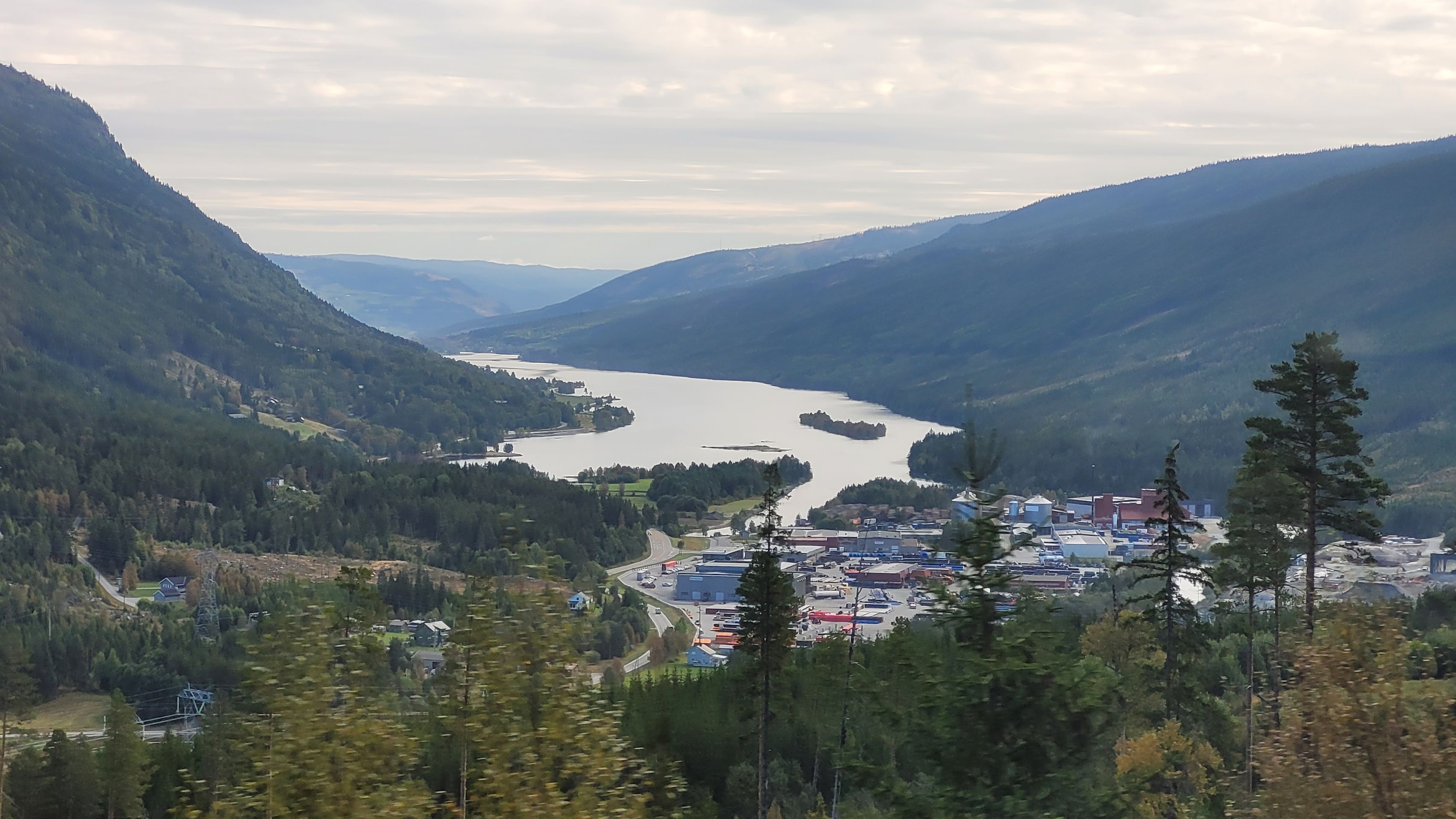
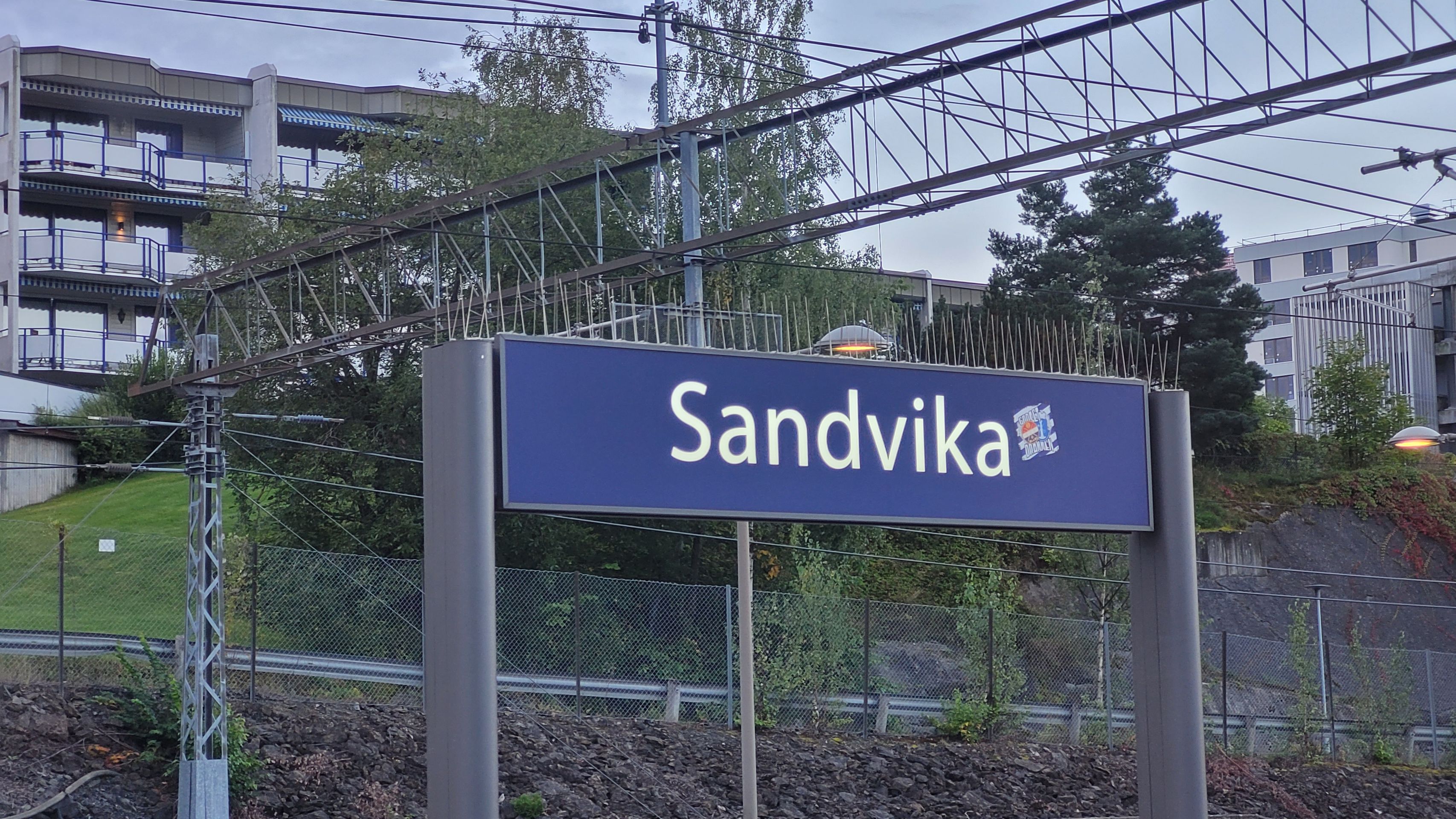
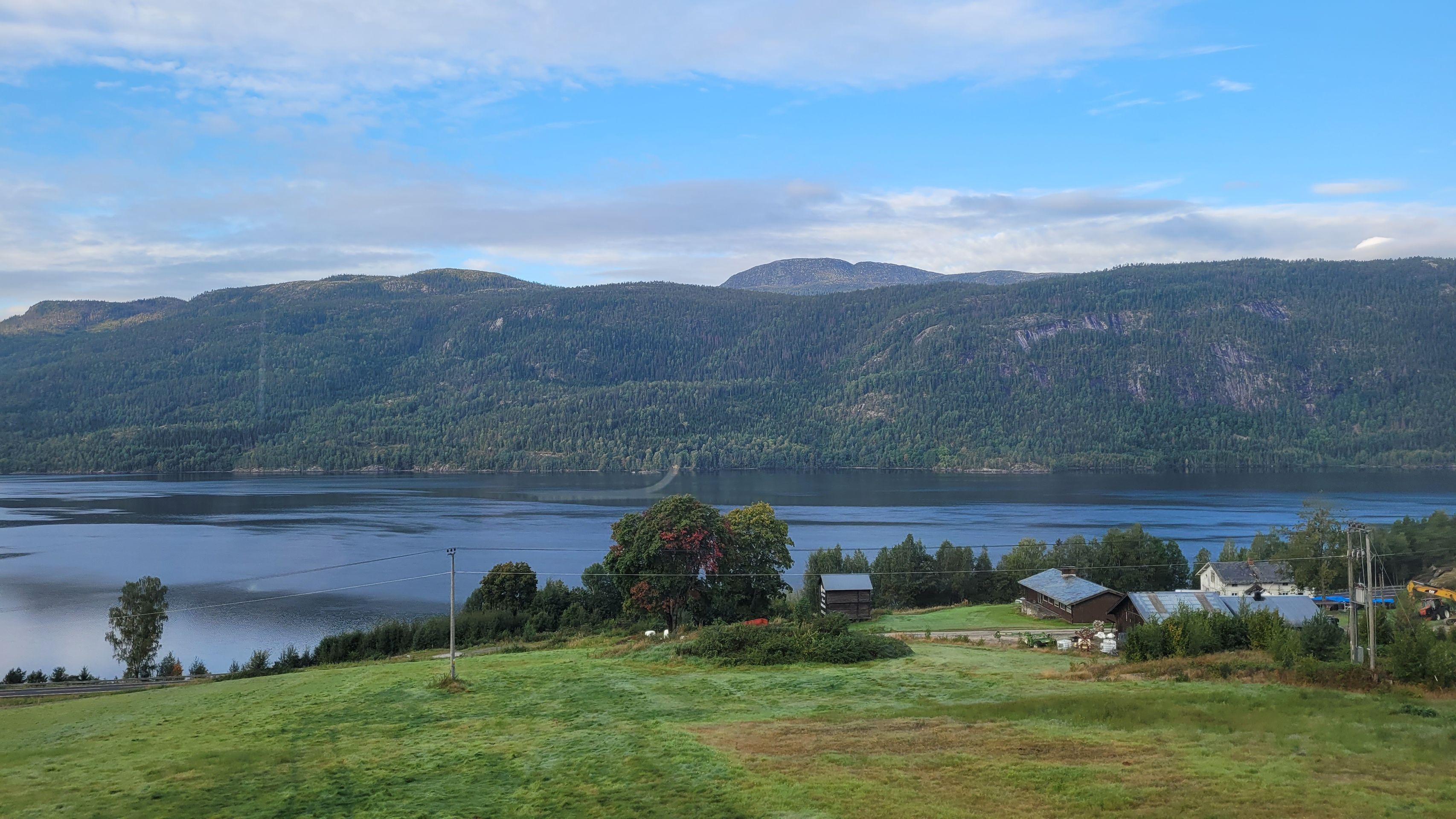
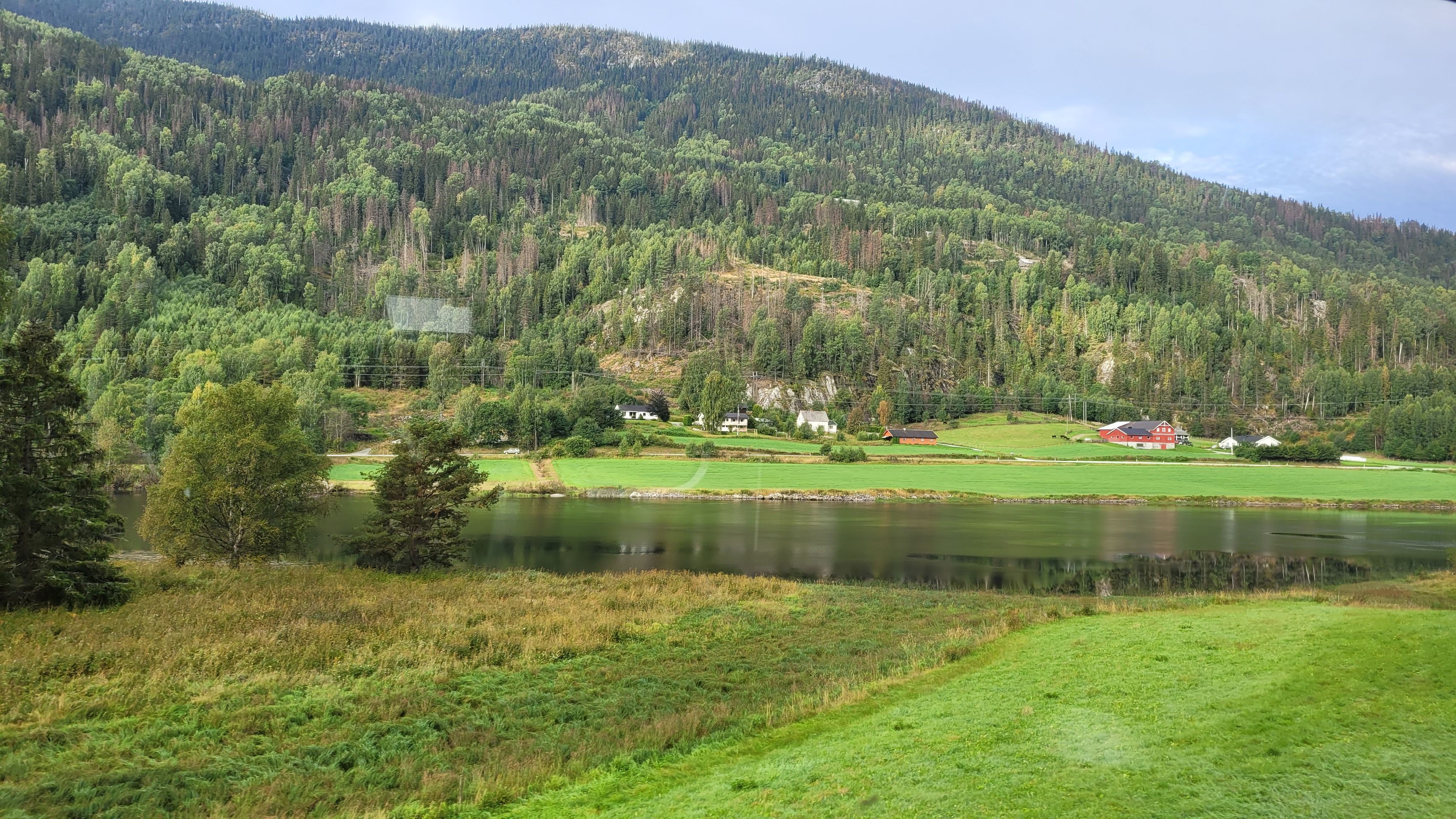

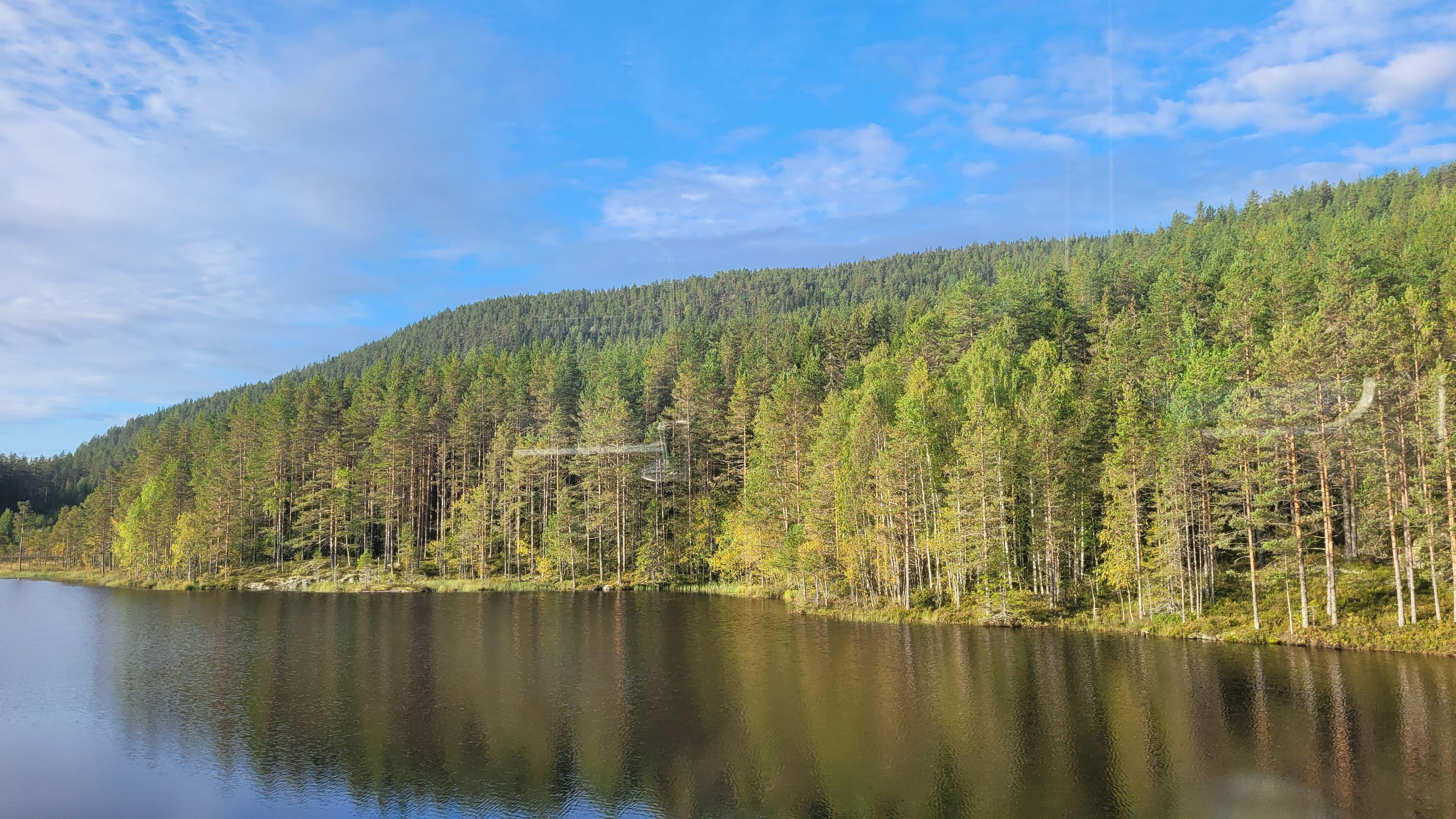

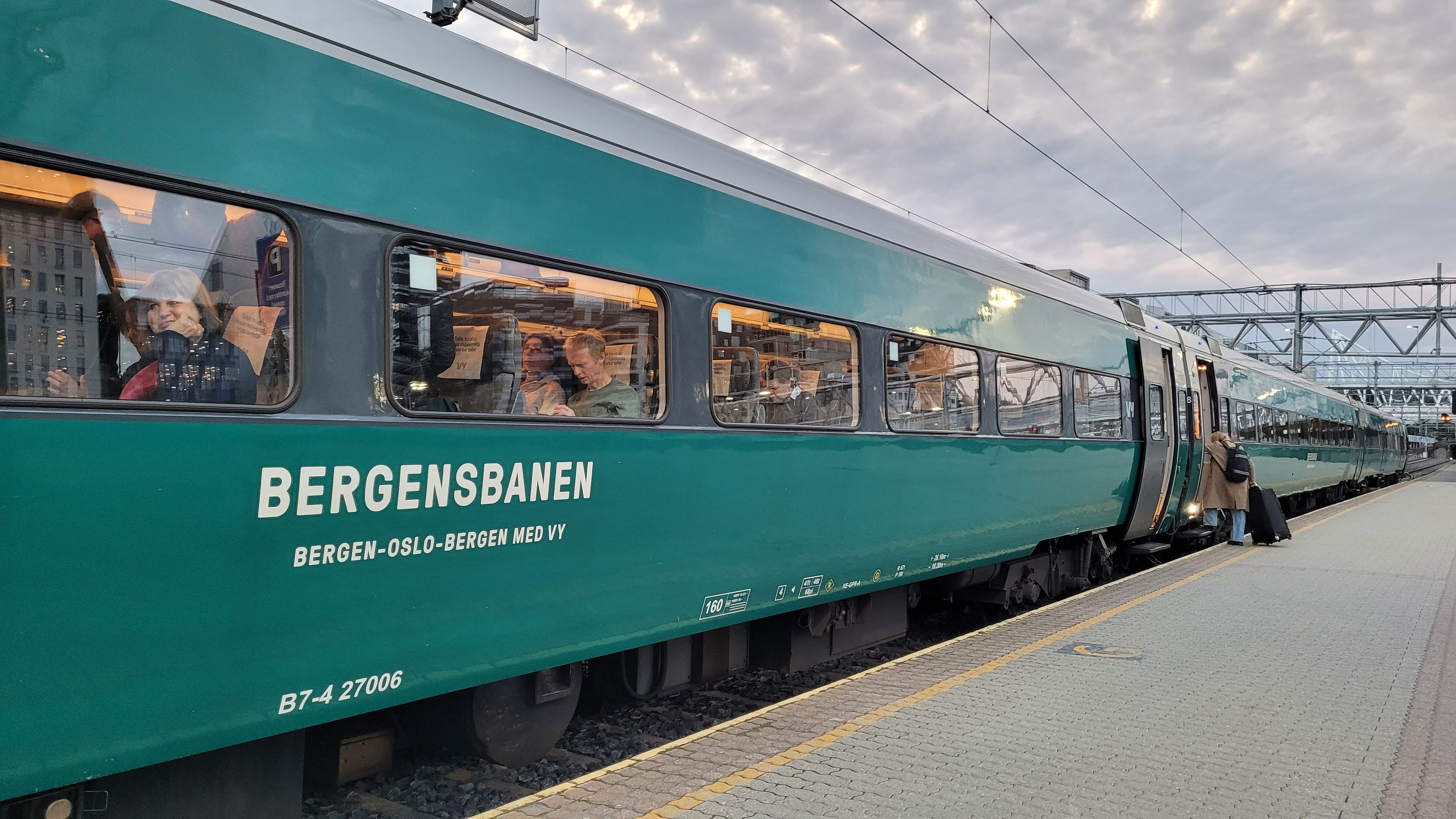
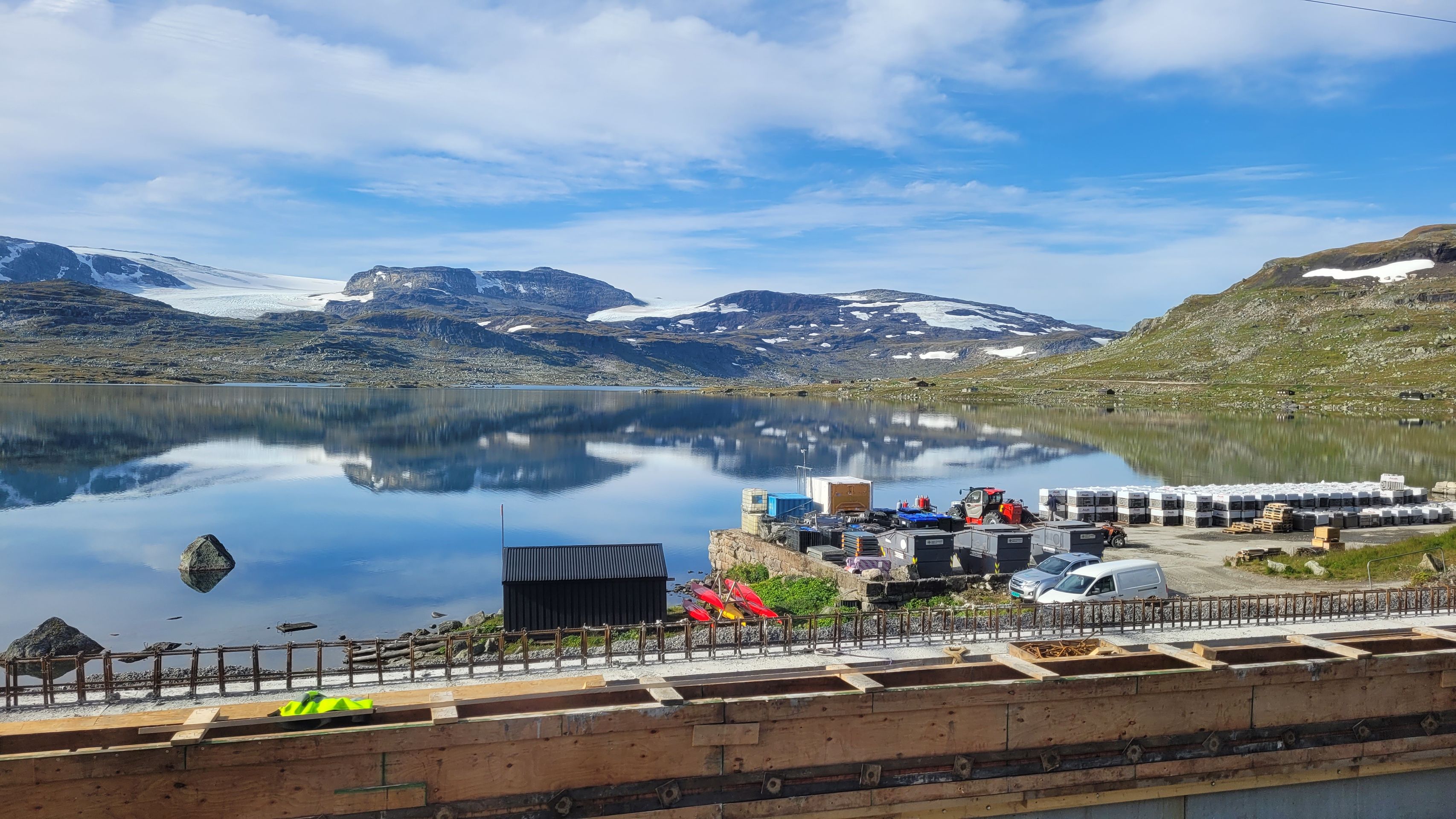
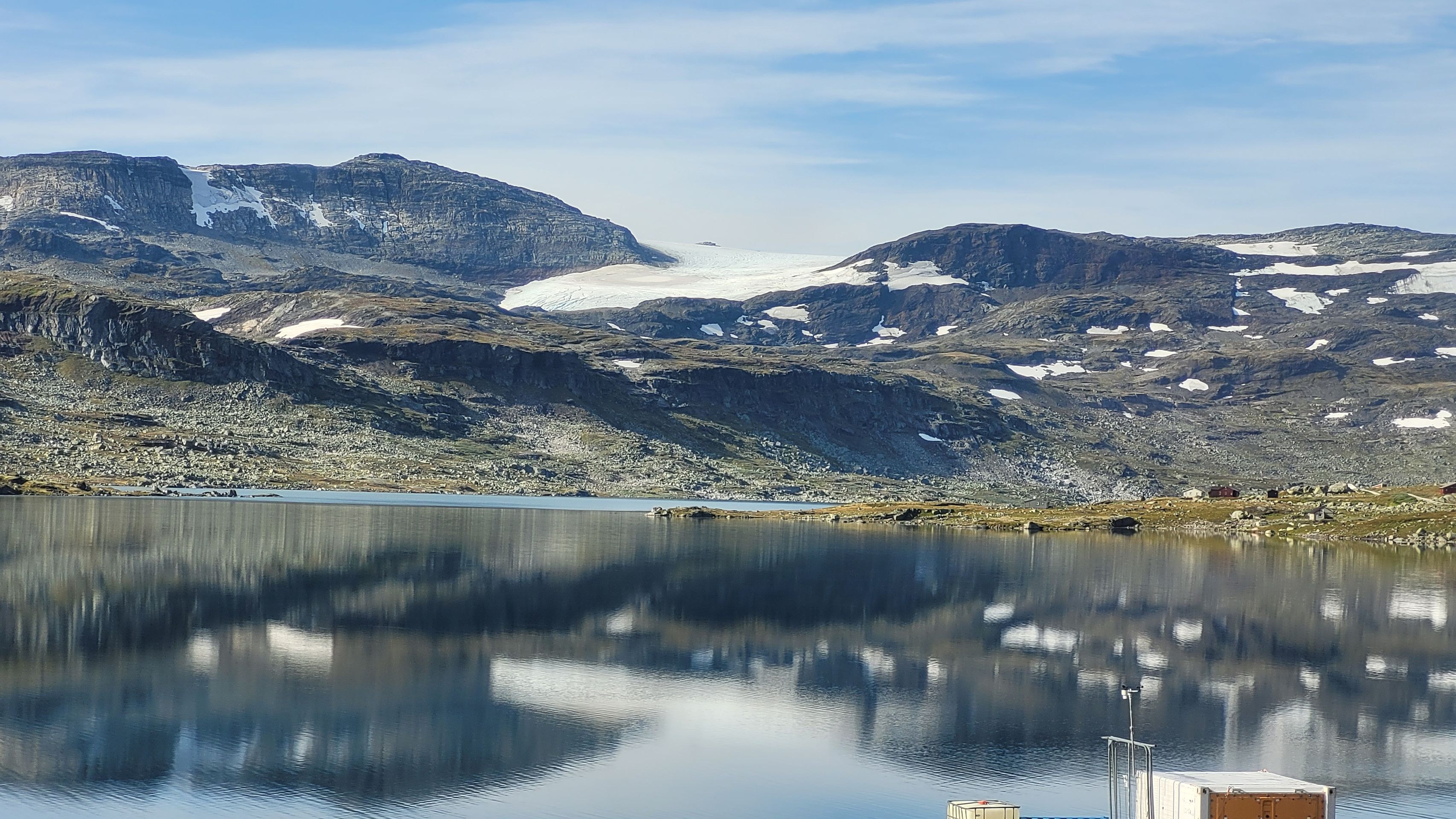
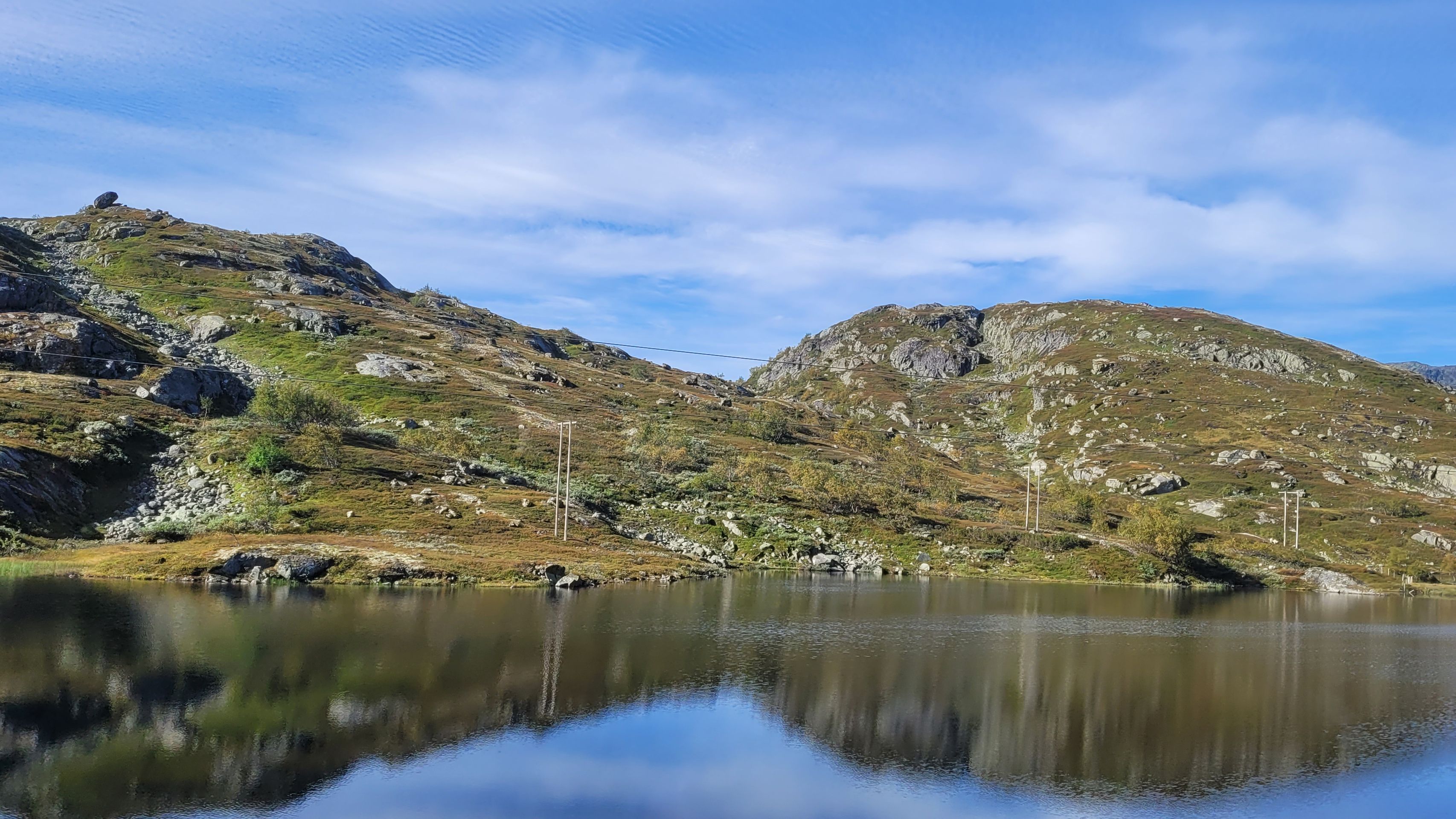
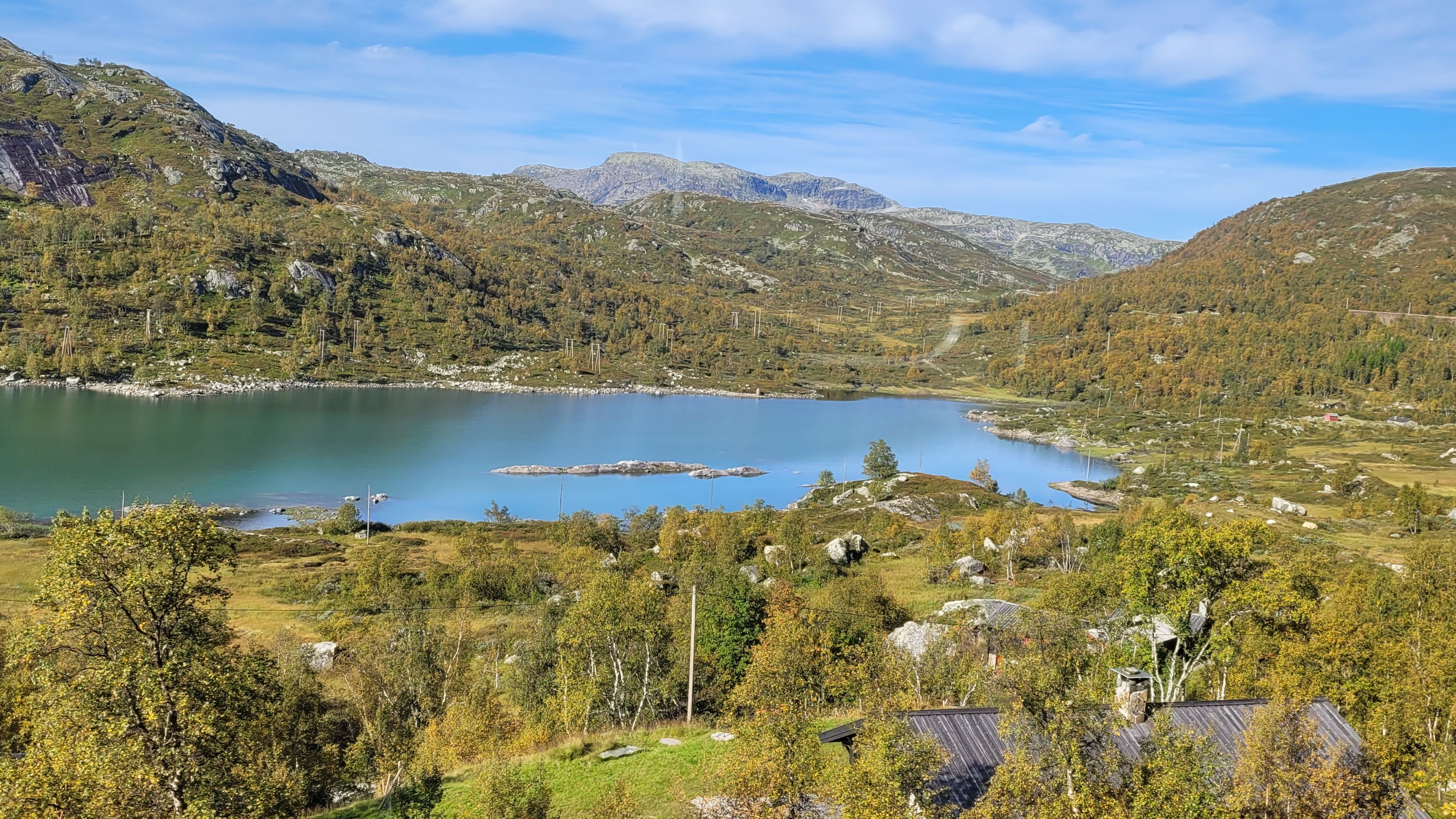
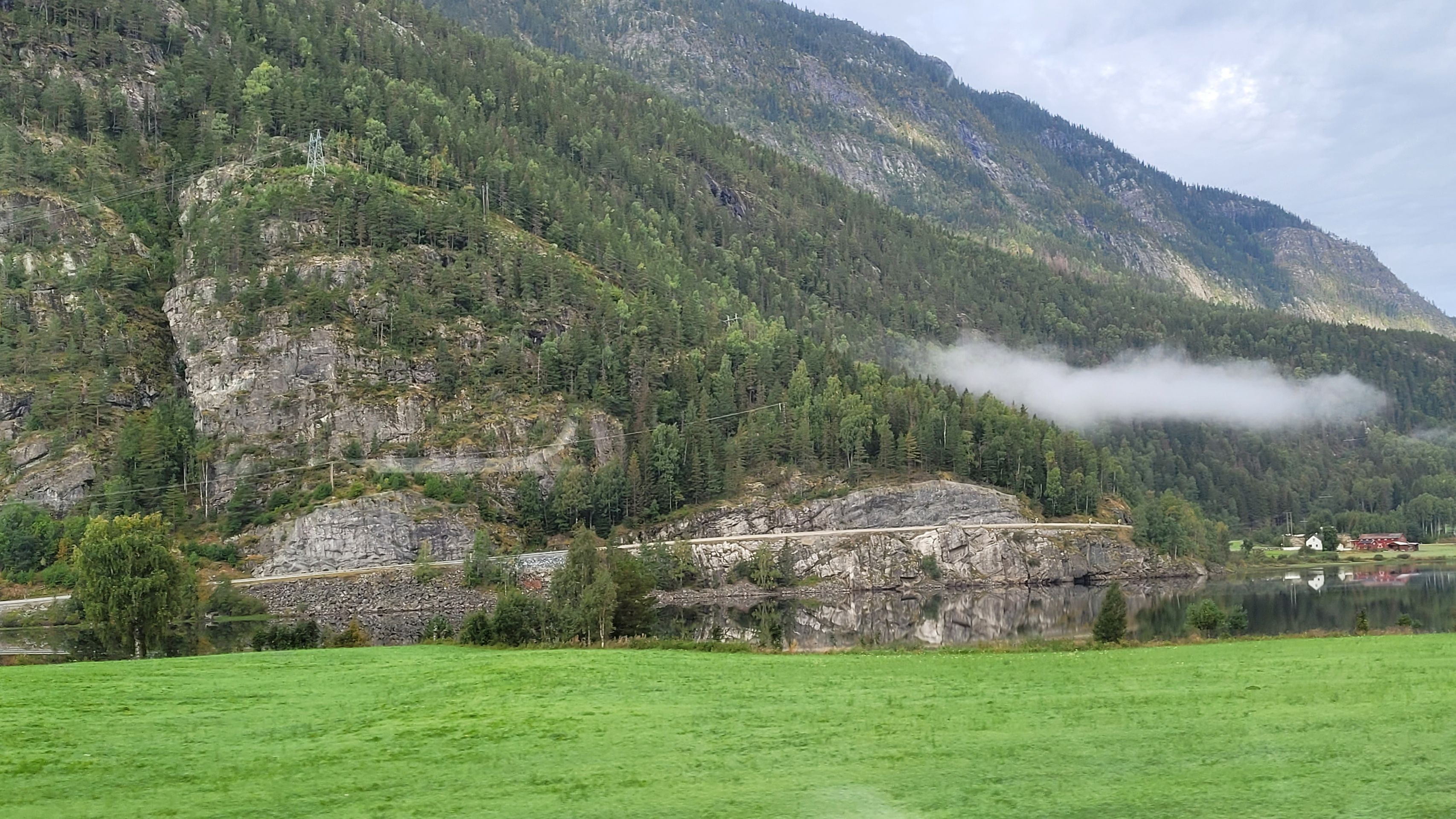
This morning we travel by the Bergen Railway to Bergen. A long-held wish comes true. The Bergensbane[ is a railway line in Norway. It connects the capital Oslo with Bergen, the second-largest city in Norway. It is one of the highest railway lines in Europe and is considered one of the most scenic train routes in Northern Europe. The route is served by both day and night trains.
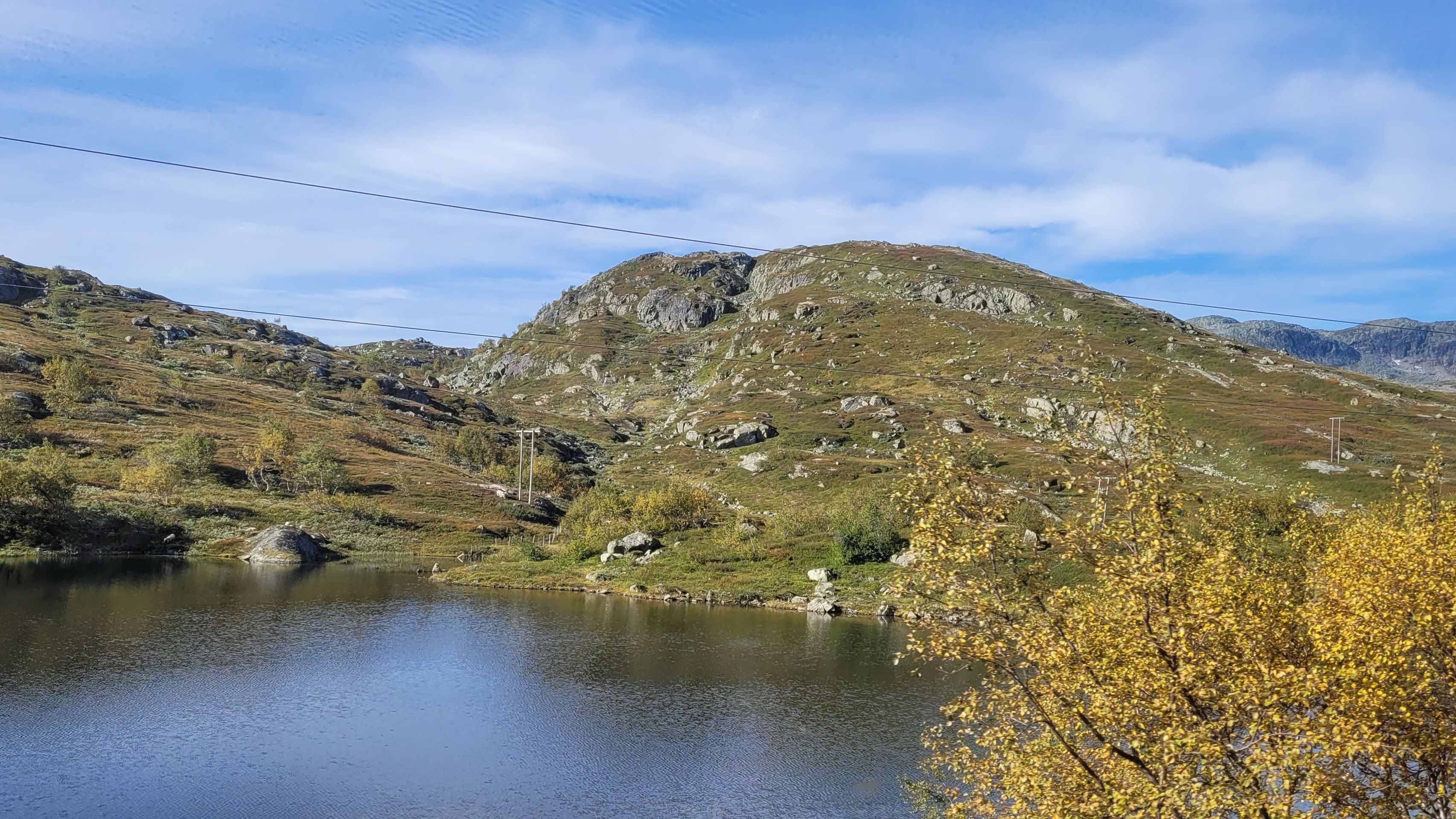
The Bergensbane crosses over the largest plateau in Europe, the Hardangervidda. It runs for about 100 km above the tree line. At the original summit point, the route reached 1,301 m above sea level. Since the opening of the Finsetunnel, the highest point is at 1,237 meters.
The construction work was correspondingly difficult. A total of 182 tunnels with a total length of 73 km and additional avalanche protection structures had to be built to enable year-round operation. The route also crosses about 300 bridges. The longest tunnel on the route, the Finsetunnel, built in 1993, is approximately 10.3 km long.
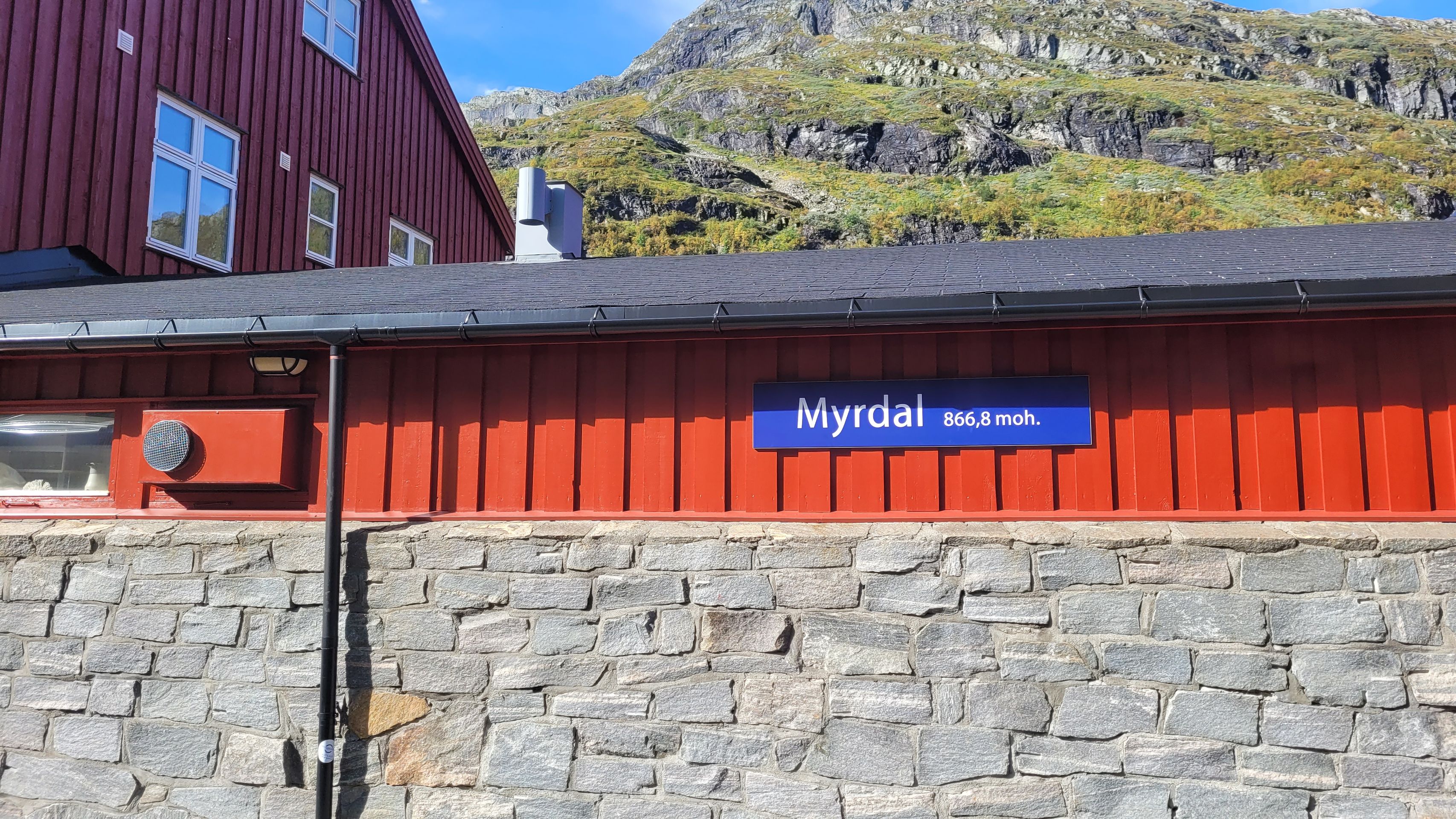
From the Myrdal station, the Flåmsbana diverges towards the Aurlandsfjord. The Granvinbanen railway line, which branches off in Voss and was only opened in 1935, to Granvin, was closed to passenger traffic in 1985 and to freight traffic in 1989. In 1991, parts of the tracks were dismantled.
Along the Hardangervidda, the Rallarvegen runs alongside the railway line, suitable for cycling tourists. Originally, the route from Oslo to Hønefoss went via Roa and the present Roa-Hønefoss line (Jevnakerbanen). Today, the scheduled passenger traffic to Bergen takes the nearly 24 km longer route over Drammen.
Hønefoss in the valley of the Storelva is left northwestward into the valley of Sogna, following it on its northern side until Sokna. To enter the valley of the Krøderen, the Bergen Railway follows the Rudselva, passing the lakes Langevannet and Breidvannet as well as the 2.3-kilometer-long Haverstingtunnelen, which runs parallel to the Ørgenviktunnelen of the Riksvei 7. The Hallingdalselva and the valley Hallingdal are further used northwestward, mostly in a left-side (eastern or northern) valley position uphill, serving the larger settlements Flå and Nesbyen. At Svenkerud north of Nesbyen, the valley side is switched, and we drive southwest to Gol, with the ascent steepening until Geilo.
Behind Geilo, the actual crossing of the Hardangervidda occurs. In the valley of one of the two upper tributaries of the Hallingdalselva, the Usteåne, the railway line follows along smaller lakes to the culmination point at Finse, where the 2.7-kilometer-long Gråskallentunnel at Haugastøl improves the line's alignment. After the peak station Finse, the more than 10 kilometers long Finsetunnel follows, replacing the original open alignment at over 1200 meters above sea level. At the Høgheller junction, the new line merges back into the original route, which runs along numerous enclosures on the northern slope of the Moldåtals until it crosses the river and switches to the southern valley side past the lakes Seltuftvatnet and Reinungavatnet to reach Myrdal and the branch to the Flåmsbana.
In the more than five-kilometer-long Gravhals tunnel, the mountain massif is traversed into the catchment area of the Vosso: Initially, the railway line runs high along the northern valley slopes, westward through the interlocking upper valleys of the Uppsetfurche, Kleielva, and Raundalselva, until the Vangsvatnet is reached at Voss.
The Voss valley is further used along its northern flank up to the Bulken station. At Bolstadøyri, where the Bolstadfjord meets the Atlantic Ocean, the line shifts to the southern flank. In the more than eight-kilometer-long, opened in 1987, Trollkona Tunnel, the route transitions into the lower Bergsdal to Dale (Vaksdal). The tunnel in the mountain massif became necessary because of the expansion of the Riksvei E16 (road connection between Oslo and Bergen) at Bolstadfjord using the old route. South of Dale, the Veafjord, which here transitions into the Sørfjord (Osterøy), is reached at Stanghelle. Along its eastern or southern shore, the line runs to Herland along the Osterøy bridge. Noteworthy is the six-kilometer long Hananipatunnel between Vaksdal and Trengereid, which was put into operation in 1970 as a line improvement. After Herland, the approximately 2.2 kilometers long Arnanipa Tunnel begins, immediately followed by the 7.6 kilometers long Ulrikstunnel, with which the previous, significantly longer, alignment over Nesttun could be abandoned in 1964. Now the urban area of Bergen is reached, and the route follows a short part of the old route until the Bergen terminus.
A wonderful experience; we were lucky to enjoy it in sunny weather.
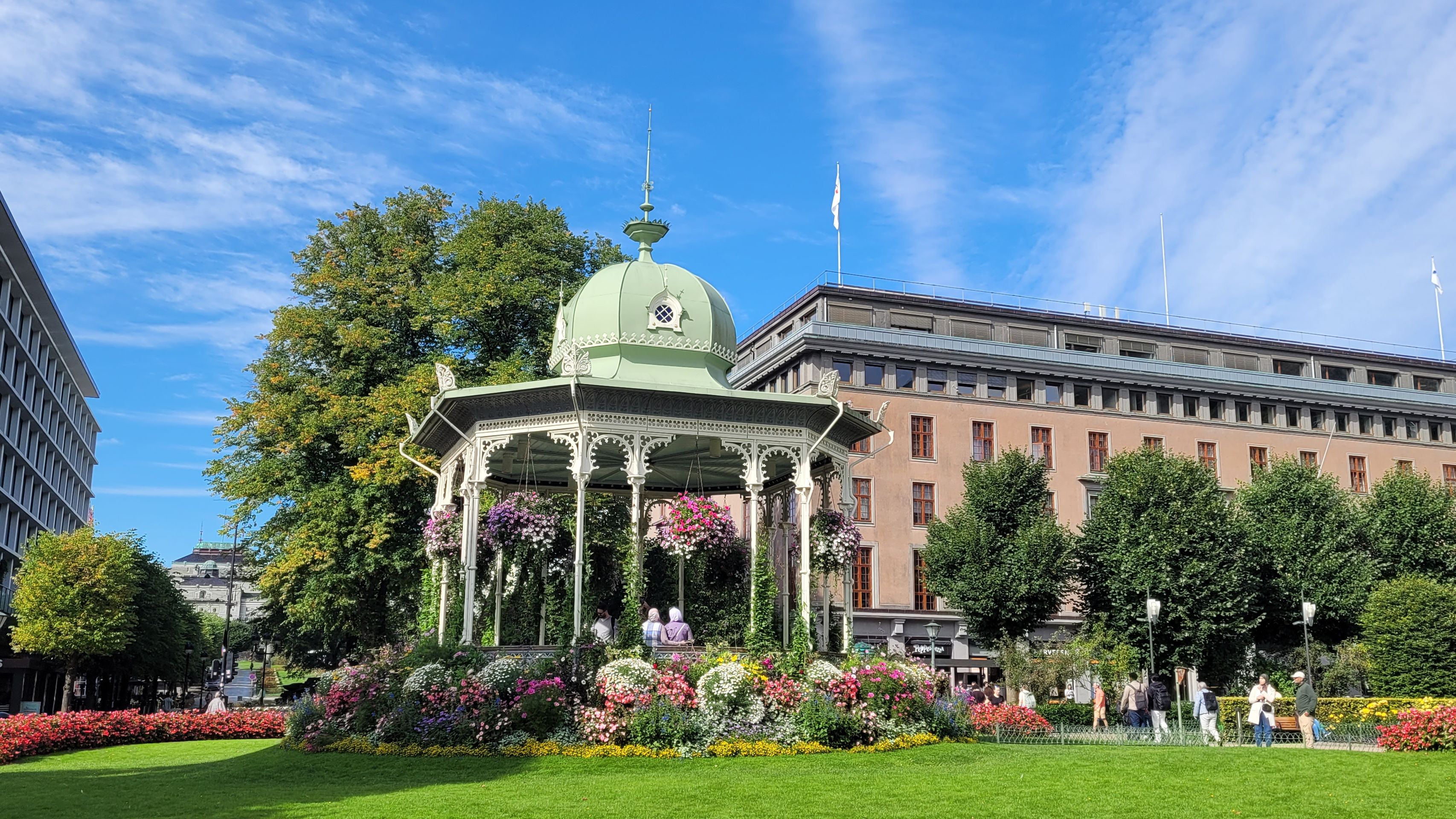
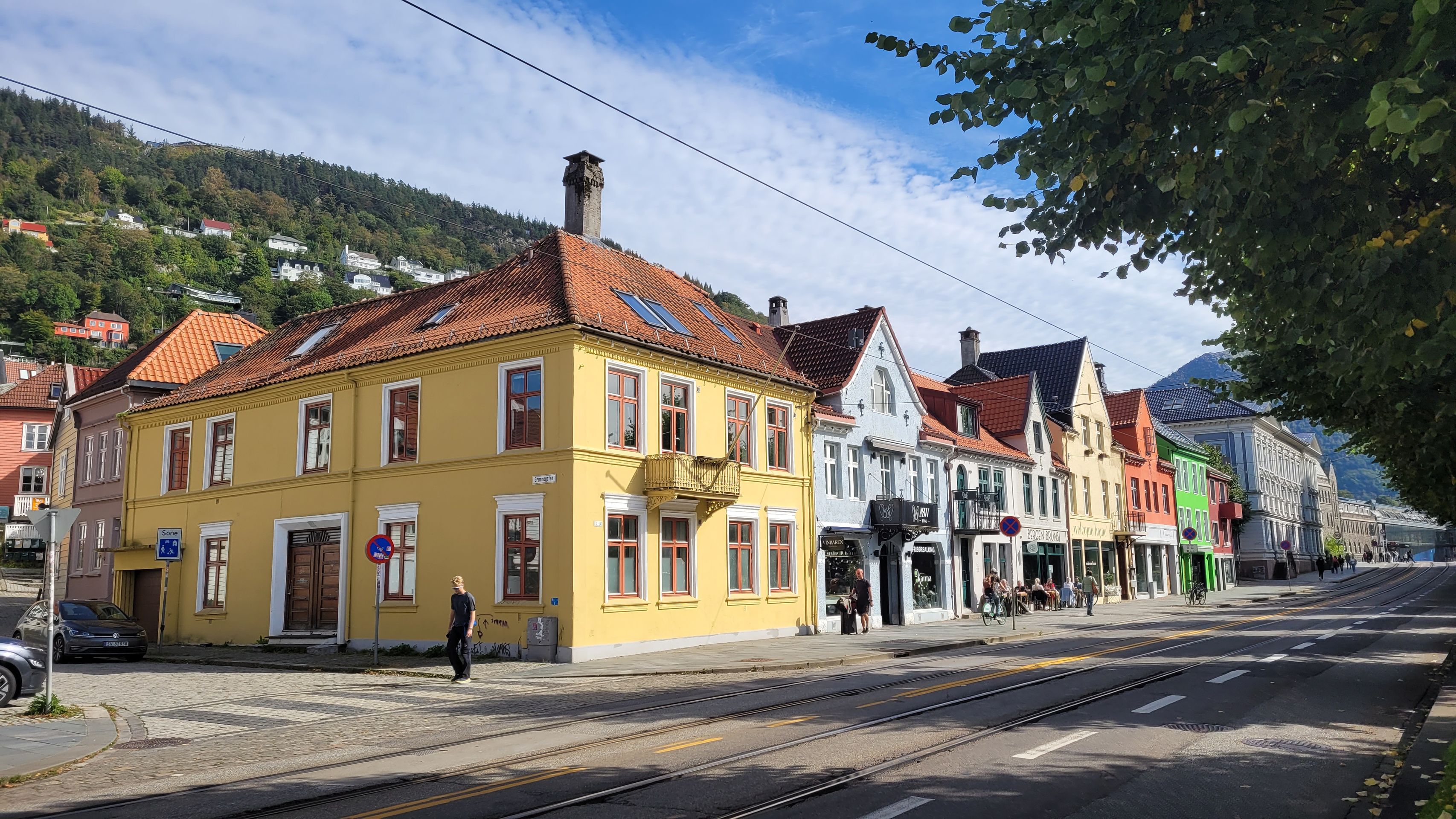
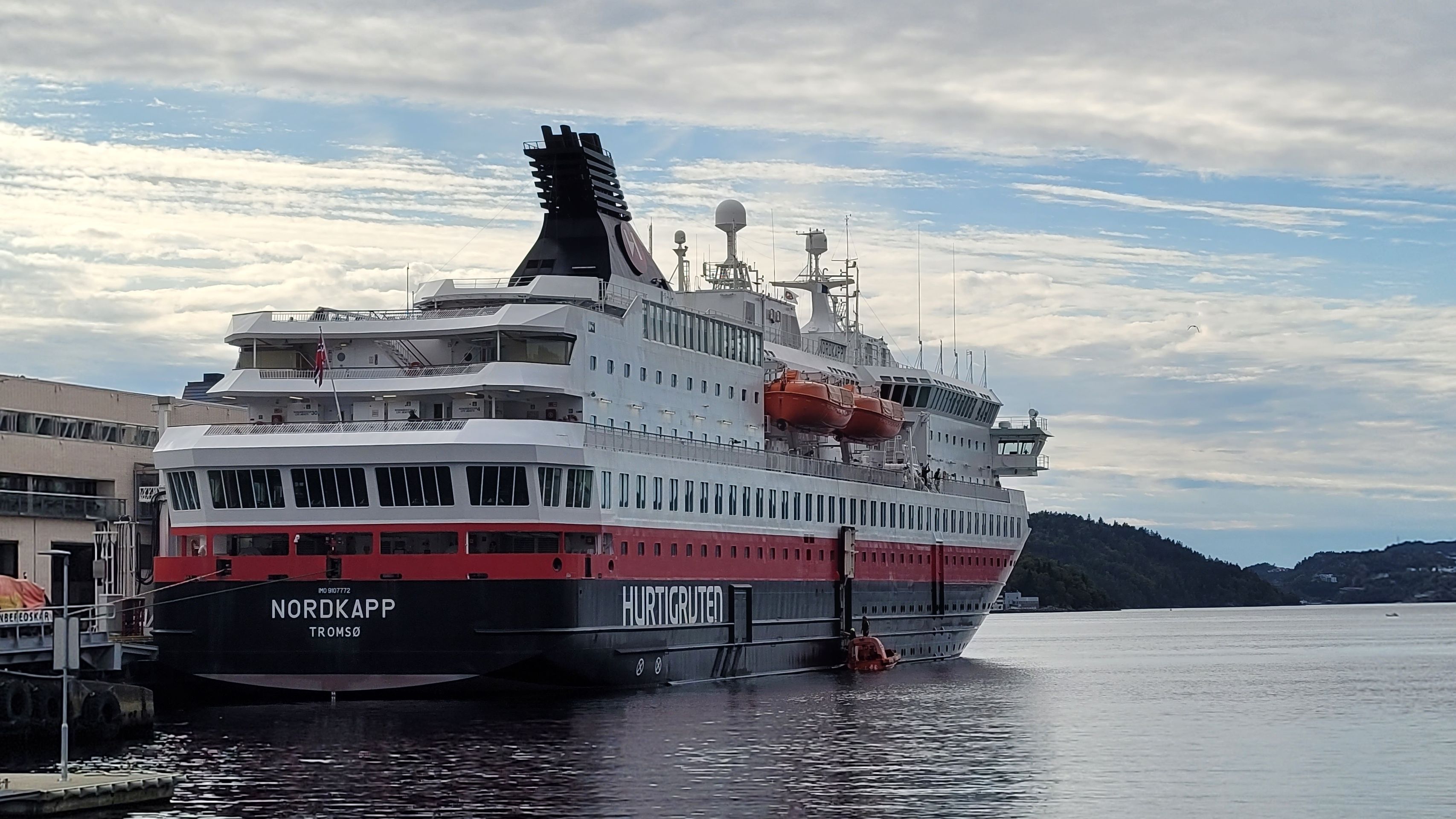
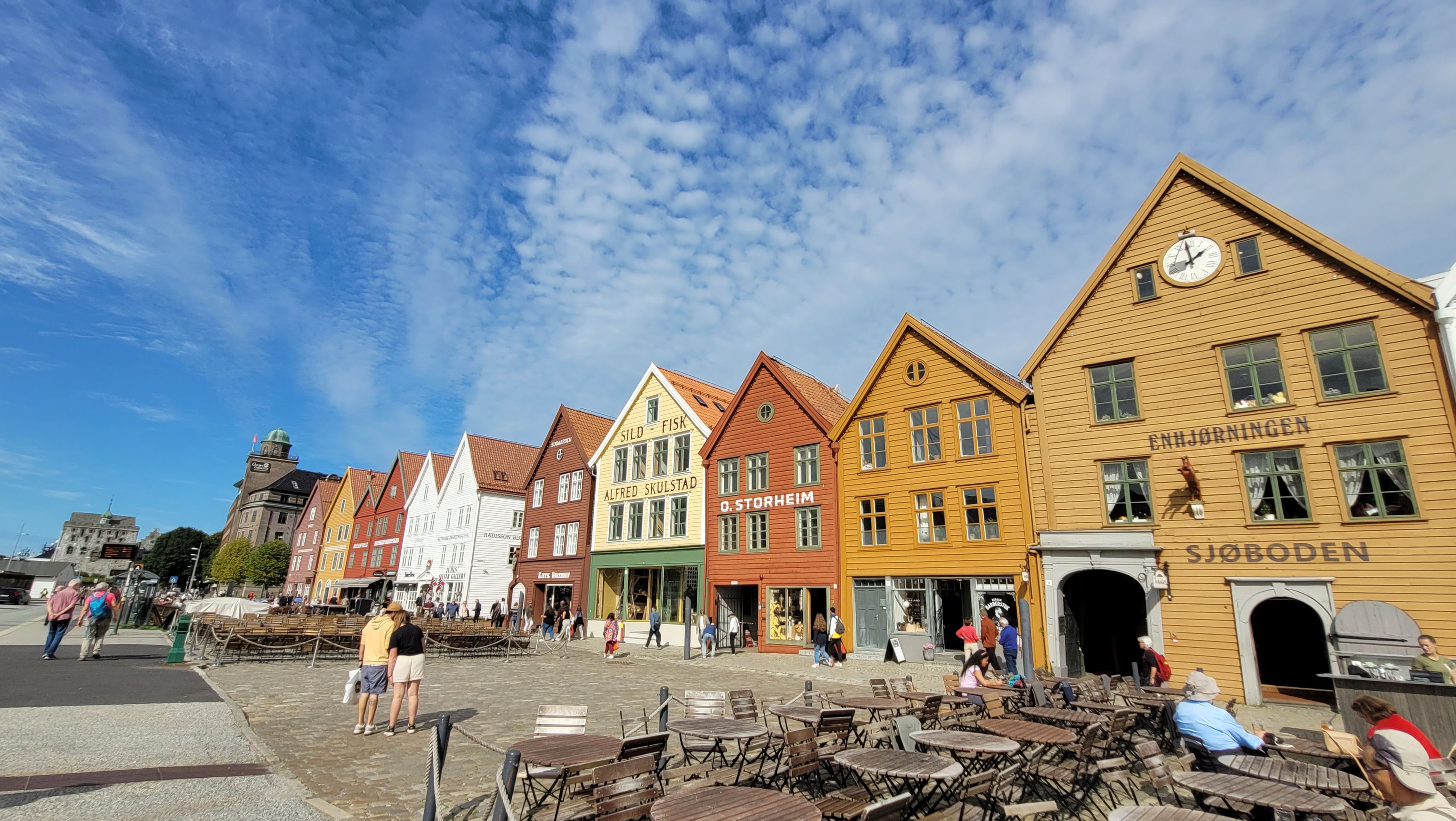
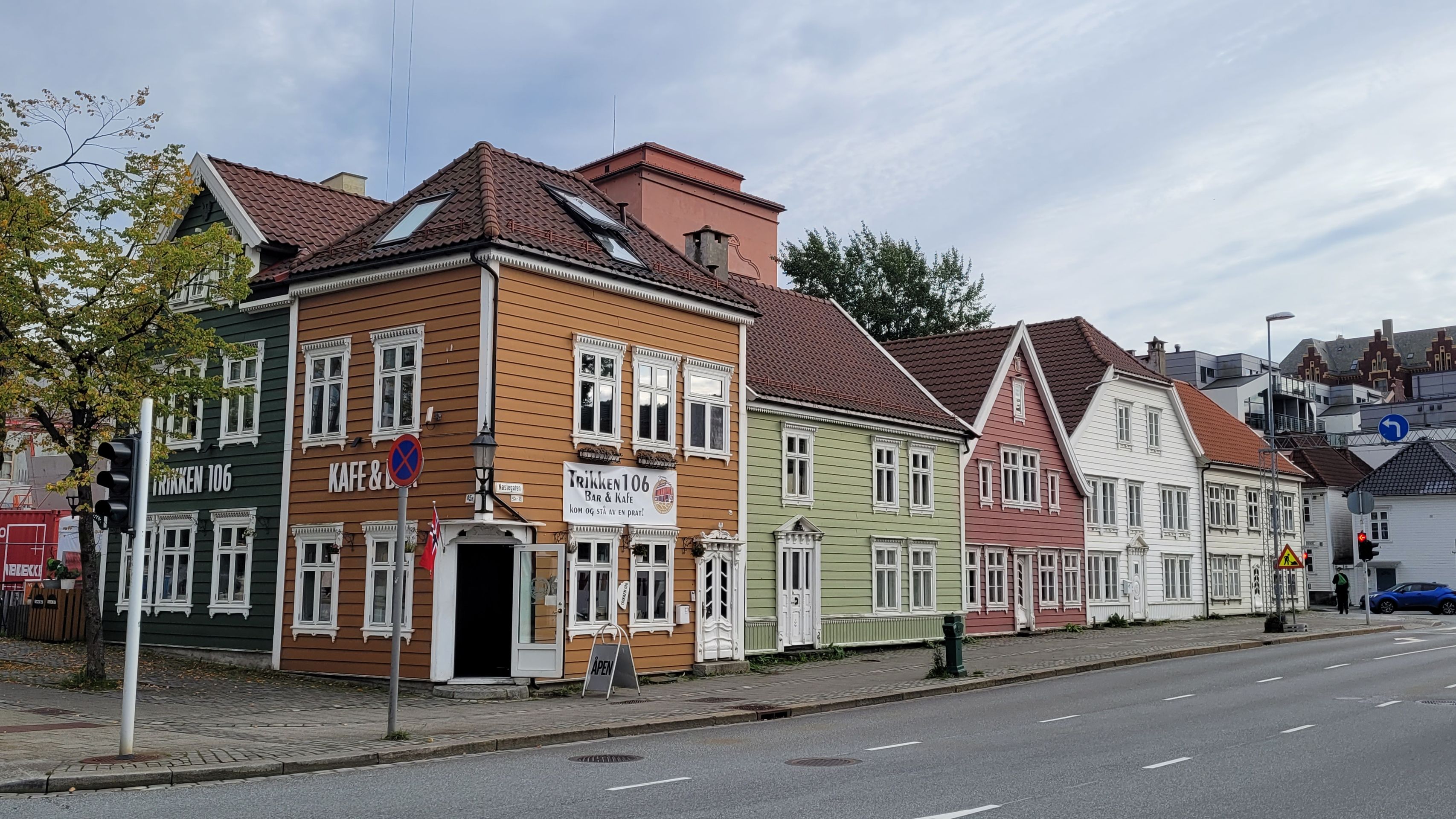
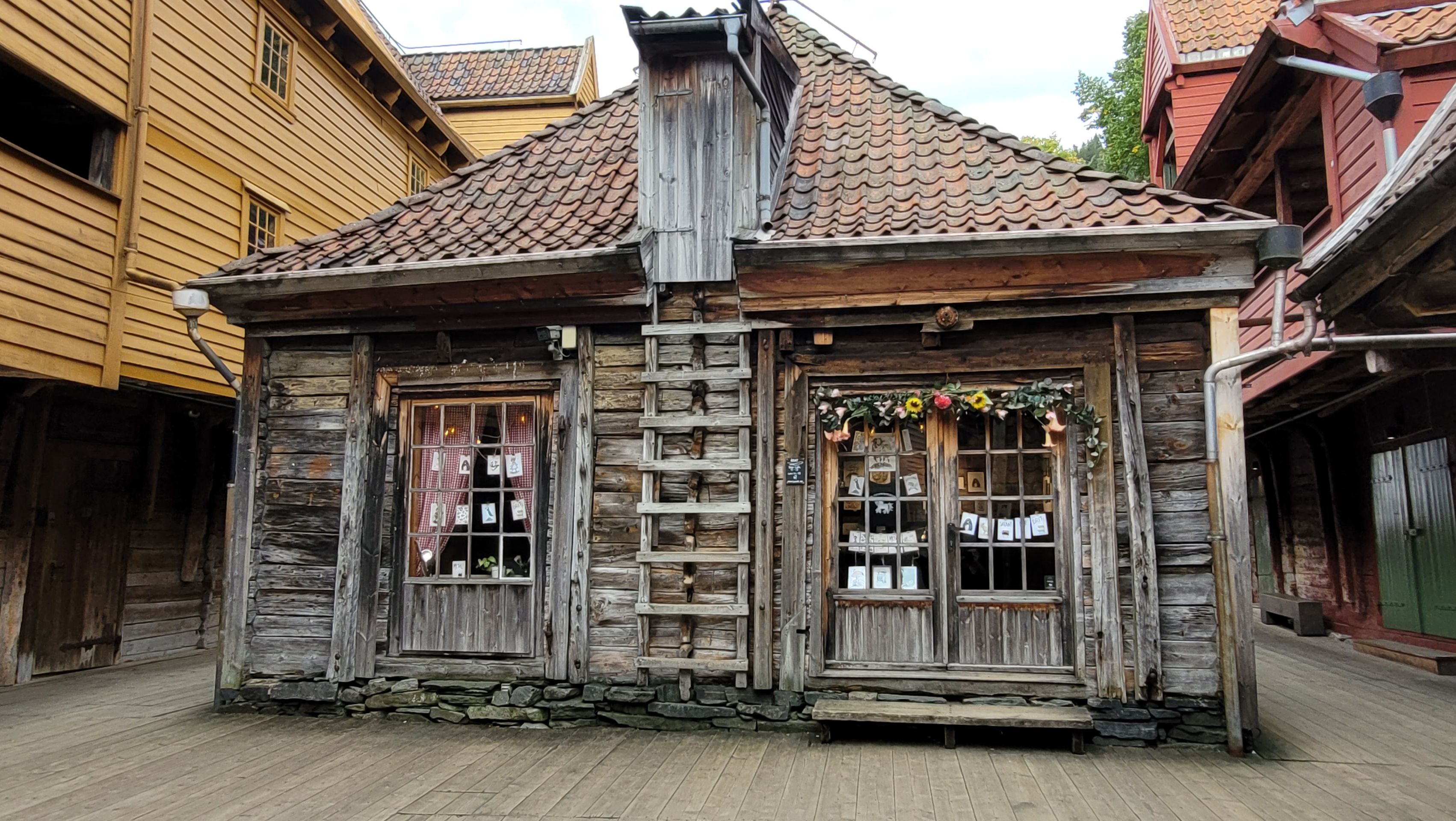
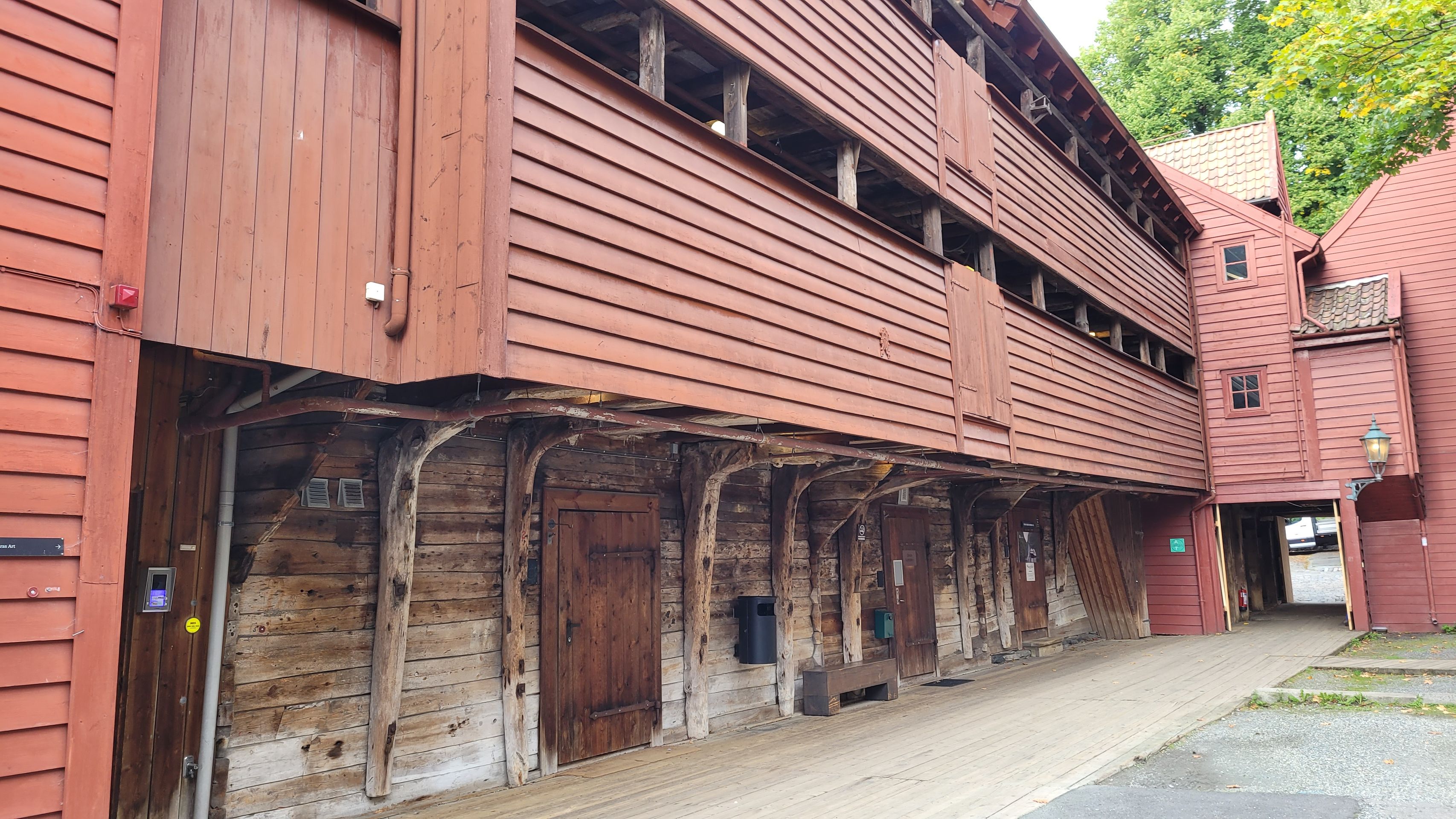
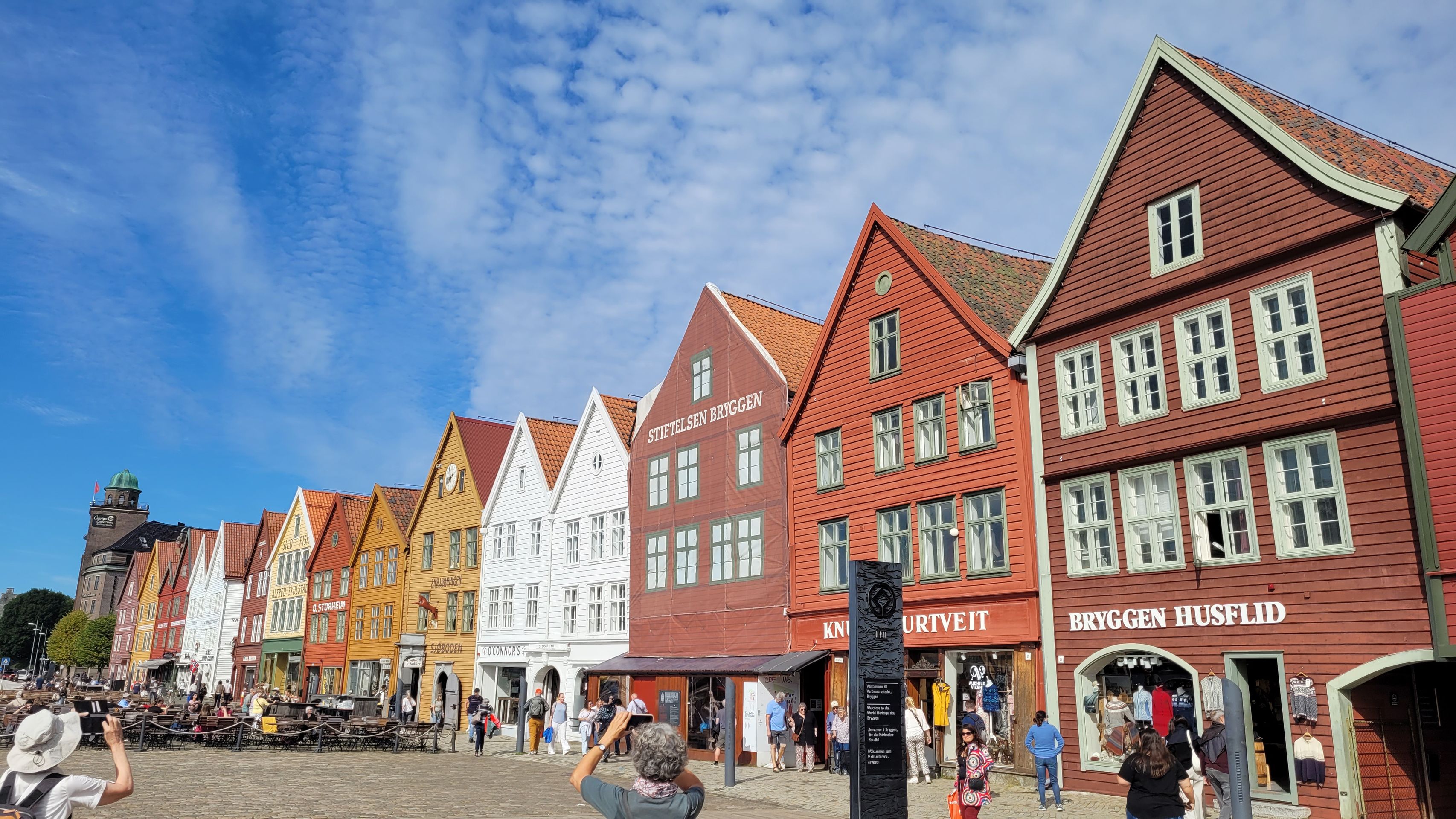
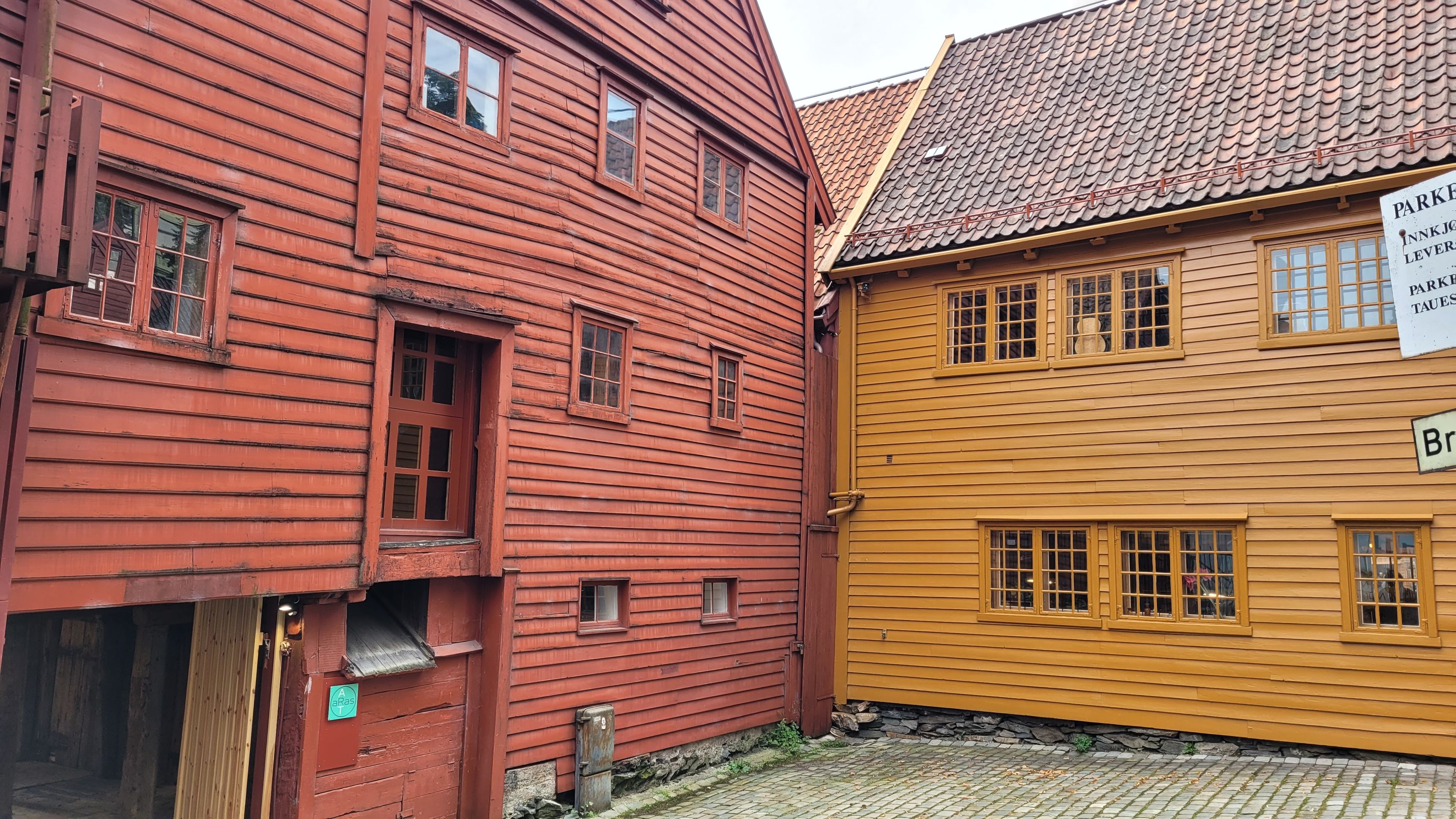
In Bergen, we use the afternoon time for a walking city tour. Bryggen, harbor, arrival of a Hurtigruten ship.
We celebrate this wonderful day with a fine pizza.