I have to get through the typhoon!
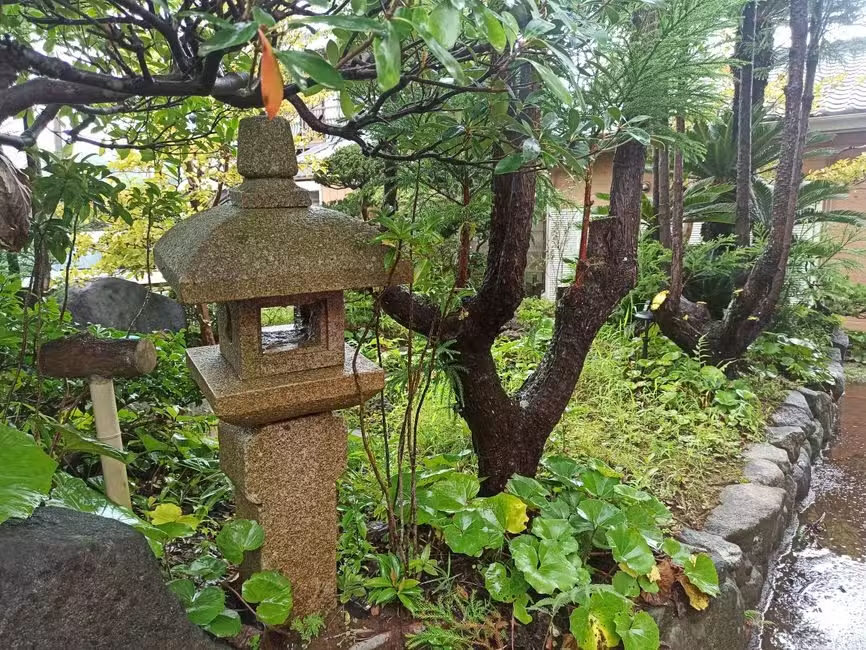
The typhoon finally moved on overnight, and the day began with a beautiful sunrise. Bathed in sunlight, our accommodation seemed even more lovely; we noticed...

Published: 26.09.2026
Our time in the small town of Tako came to an end, and we set off for Kyoto. We took a bus to the airport. Since the fare could only be paid in cash, I withdrew 10,000¥, which is about 55€. However, the bus driver couldn't give me that much change, as the fare was only 300¥. We agreed that I would exchange the money at the airport and pay him then. When we arrived, an elderly lady gave us 1000¥ to pay for the bus, and she left so quickly that I couldn't give her the change. Just so kind.
Next, we headed to the express train to Tokyo, where we had to transfer to the rapid train to Kyoto. First, we picked up the electronic payment card, the Suica Card, and loaded it with the 10,000¥. With the card and the train ticket, we were able to pass through the ticket gate to the platform.
The journey went well, and after an hour, we arrived at Tokyo station.
We had allowed plenty of time since we still had to pick up the tickets for Kyoto. I had booked tickets months ago, and they had to be printed at a machine. There were two types of machines, and since our train line had a blue symbol, we thought the blue machines would be suitable, but it turned out to be the green machines. We had to figure that out while being surrounded by crowds of people all trying to get through the station with luggage. It was like being in an anthill. Even getting food became tricky, and we had to always remember to think about the left-side traffic. Fortunately, the station led to a mall, which was much quieter.
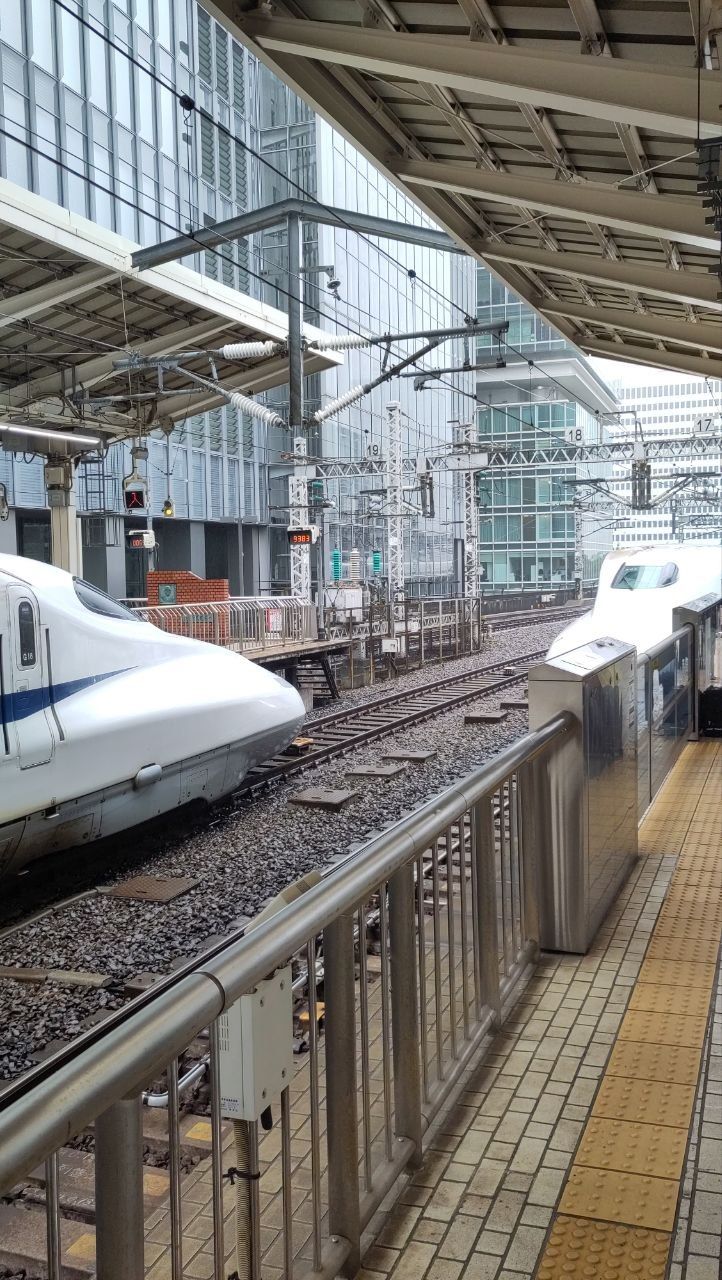
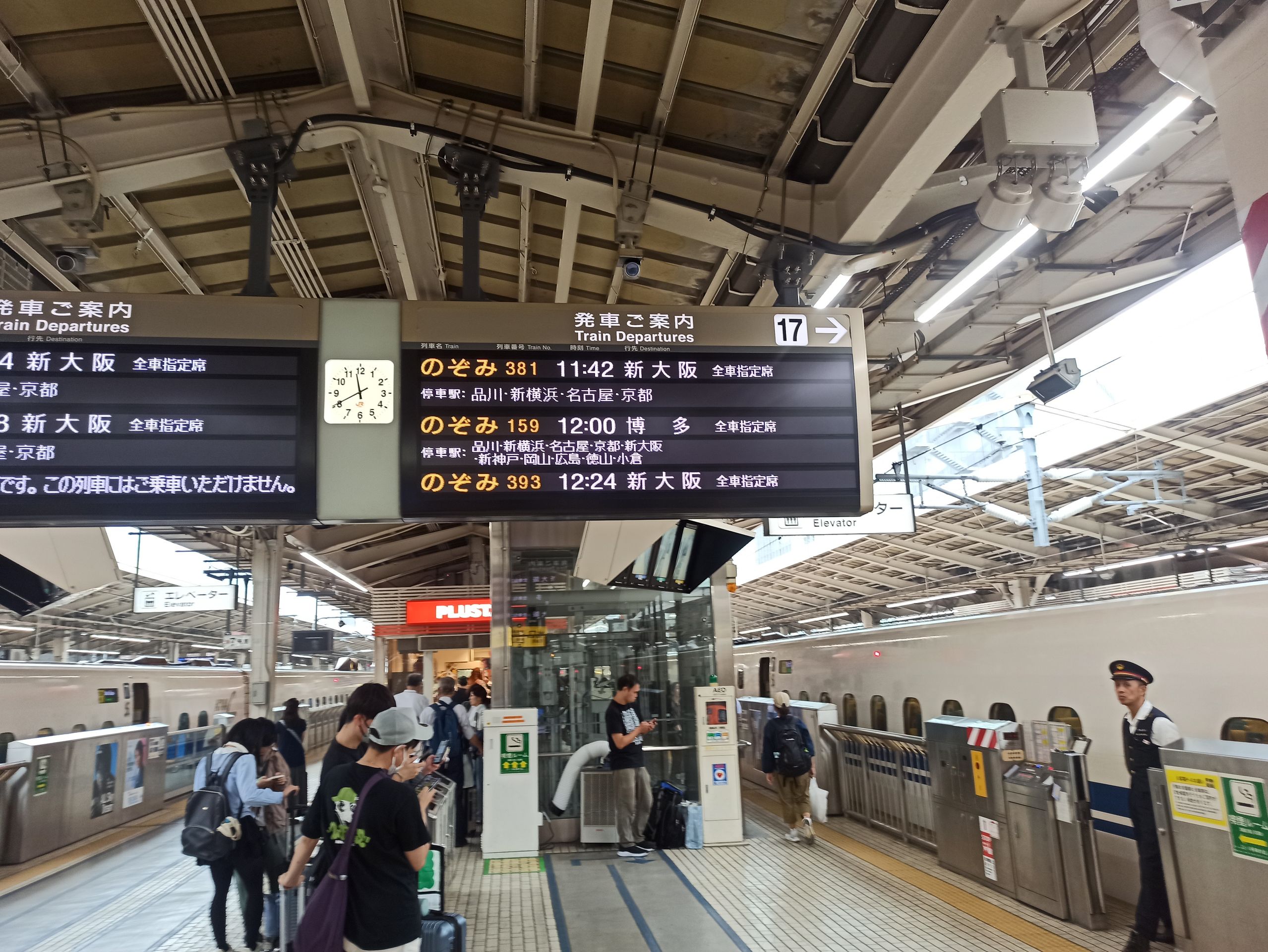
Once we had food, we approached the ticket gate, which wouldn’t let us through. We had each received two tickets from the machine; one was for the rapid train, while the purpose of the other was unknown to us, but a train employee showed us that the gate required both tickets and the Suica card. A bit complicated. In the end, we made it to the platform on time and could see the skyscrapers from the platform and then sat in our seats on the train.
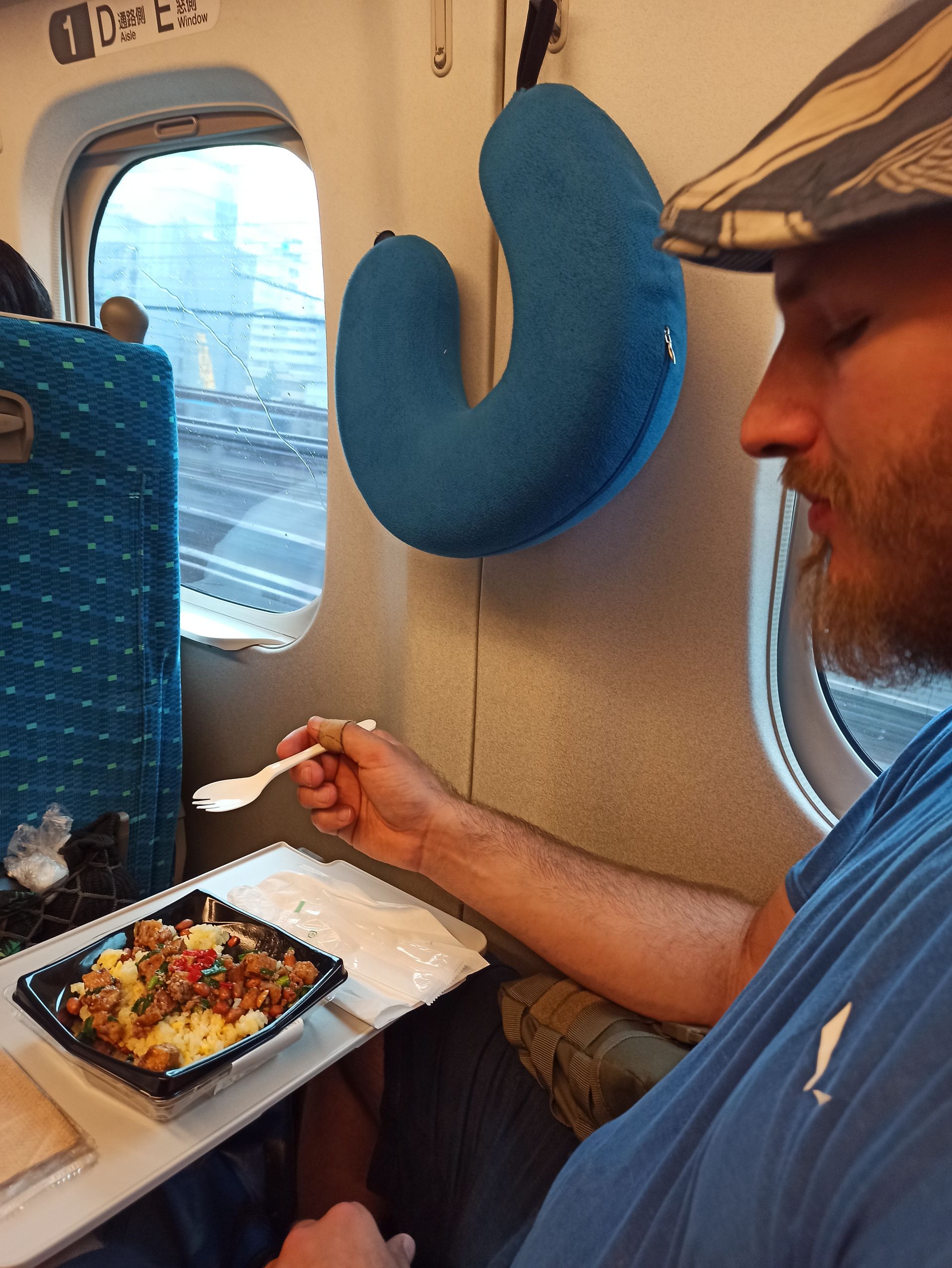
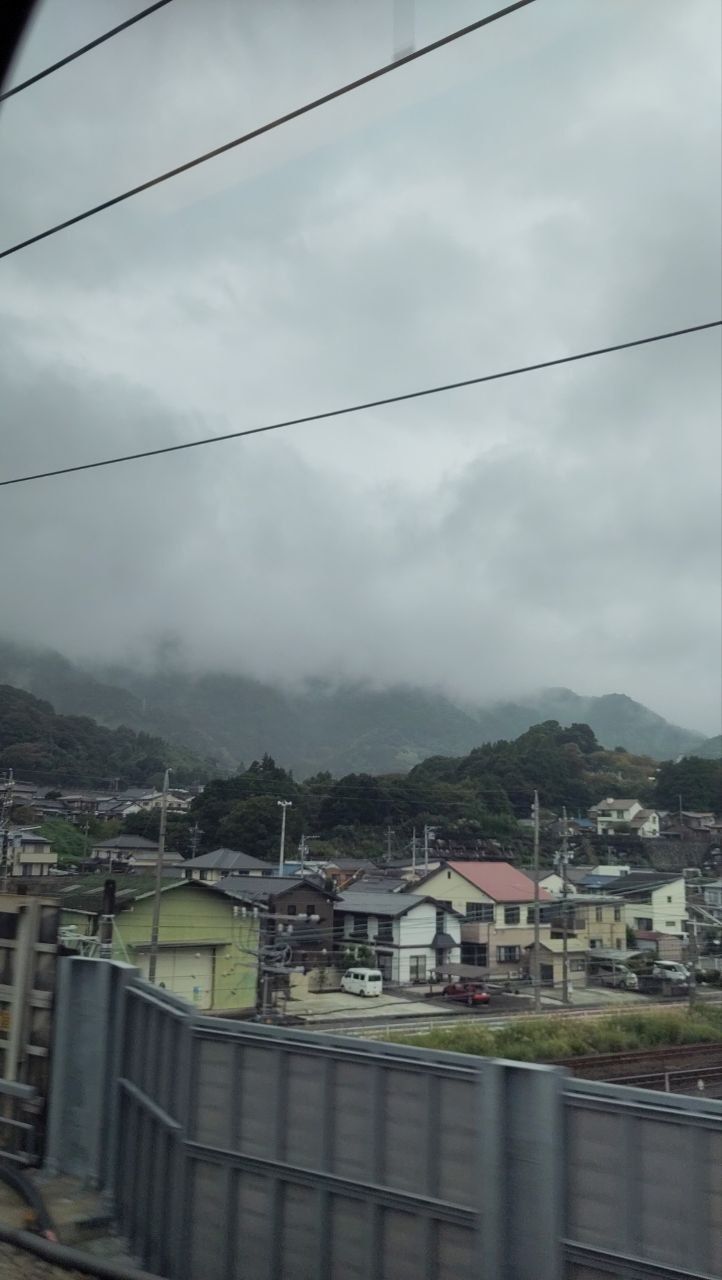
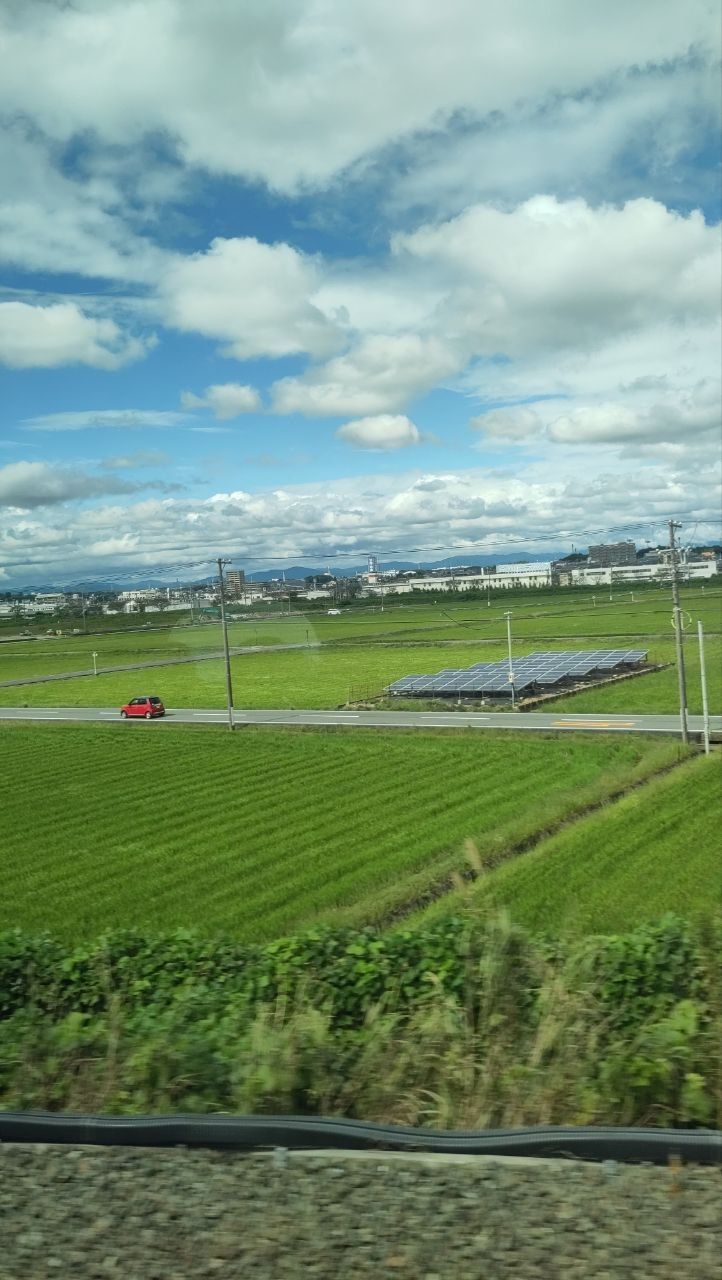
During the ride, we enjoyed our food, rested, and admired the landscape, especially the rice fields and forested mountains shrouded in mist. There was even a small Shinto shrine at one of the siding tracks.
With all the mountains, there are also many tunnels, which gives the Japanese bullet trains, Shinkansen, their typical shape with the long nose.
This shape prevents a loud bang when the train exits a tunnel. Engineers were said to have modeled it on the kingfisher, which not only catches fish with its long beak but also breaks through the water resistance when diving.
After an hour of travel, we had left the rain clouds behind us, and the sky was blue. An hour later, we reached Kyoto.