Perth
Happily united, we took a super cheap flight from Denpasar to Perth. There was first a happy reunion, or rather a first meeting, with Marike's cousin Nils, who set off to travel...

Published: 16.05.2026
When we picked up our rental car, we encountered an unpleasant surprise. We were informed that we were not allowed to drive any further north than Carnarvon, and that the location of the car would always be tracked by GPS. If we went off paved roads, the rental agreement would be immediately terminated. This ruined our plans to drive to Ningaloo Reef. In the end, it was also our own fault; we had rented the car through a third party, where other providers indicated restrictions about driving in specific regions. Since no restrictions were stated with this provider, we naively assumed there were none. We should have read the provider's website more carefully. It is normal that most providers exclude gravel roads, but we didn't realize it was so strictly monitored. So far on the trip, we had also ventured onto a few gravel tracks with the rental car, knowing the insurance wouldn’t cover us in case of an incident. The extent of this preventive monitoring was new to us. It didn't help that we couldn't find any other affordable car quickly, so we decided to continue north looking for a solution and not let it ruin our mood.
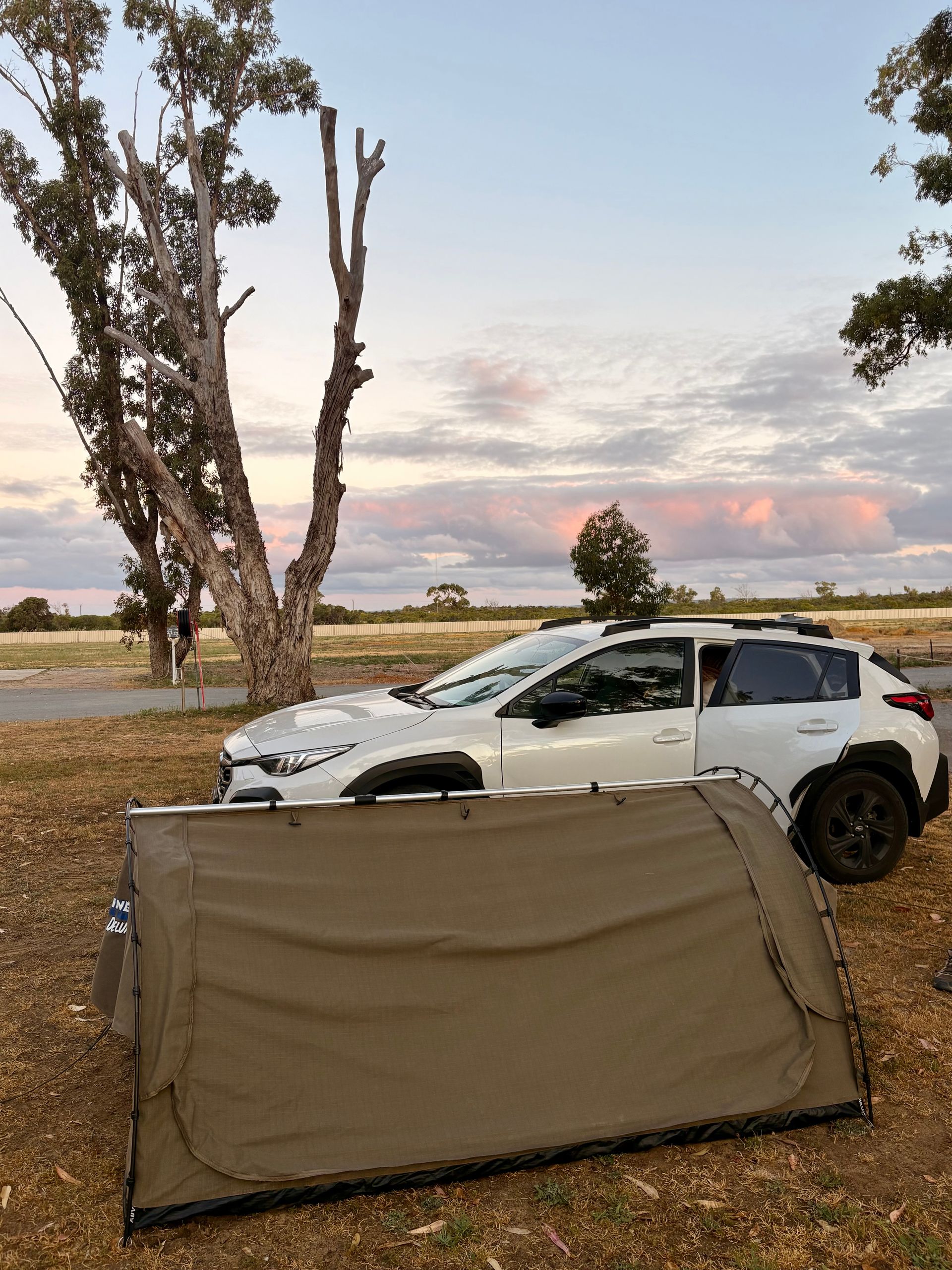
So off we went with basic camping gear, mostly borrowed from Nils. The coolest item was the swag, a rollable tent including a mattress, which could be set up and taken down quickly and was much more comfortable than the standard solution with camping mats. We aren’t really avid camping fans, but this was quite alright, and of course, it helped us save a lot of money. In WA, the kitchens at the campgrounds are usually well-equipped, so we were able to cook often and well. That’s one of the things we miss most while traveling, so we enjoyed that!
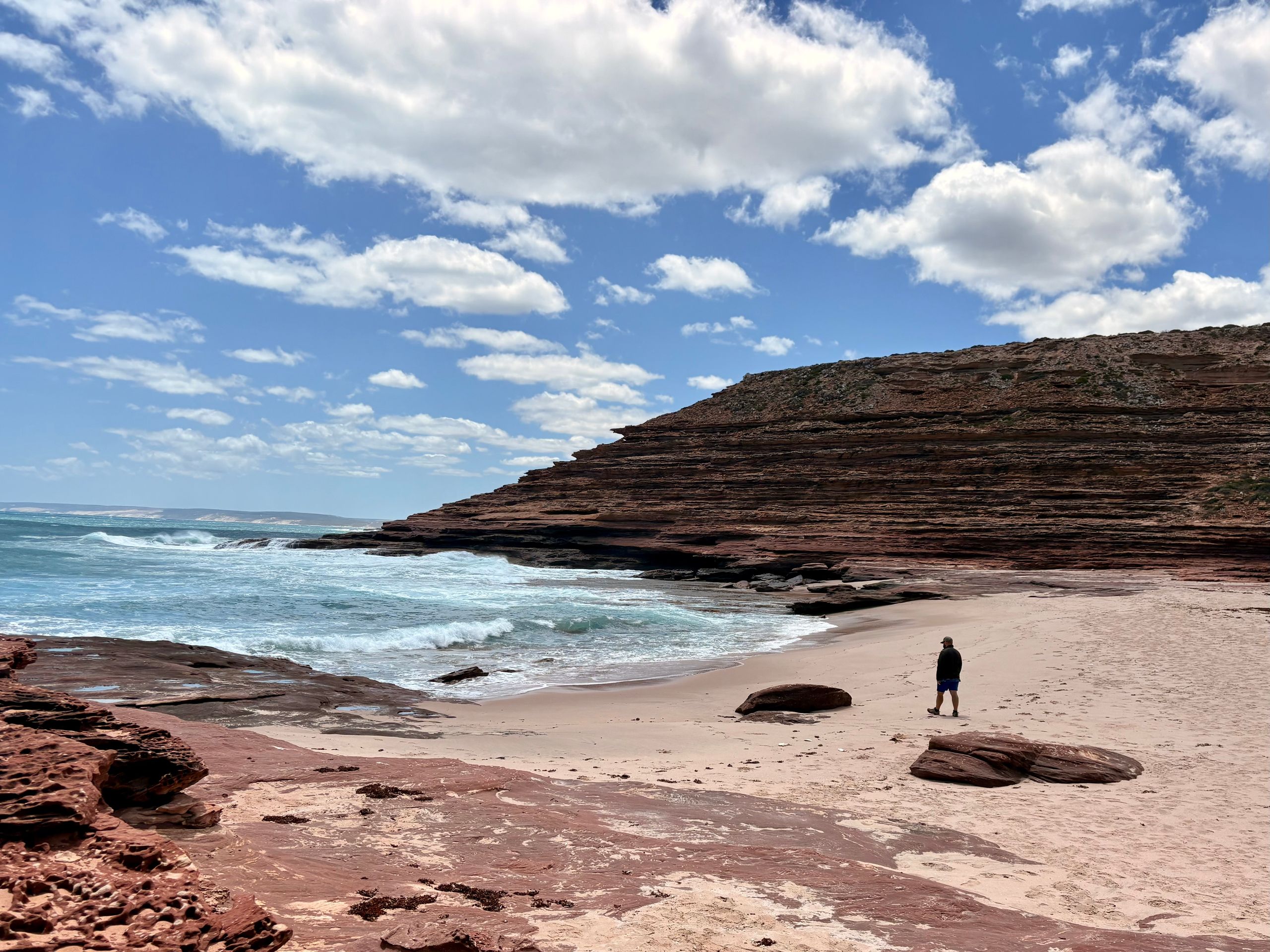
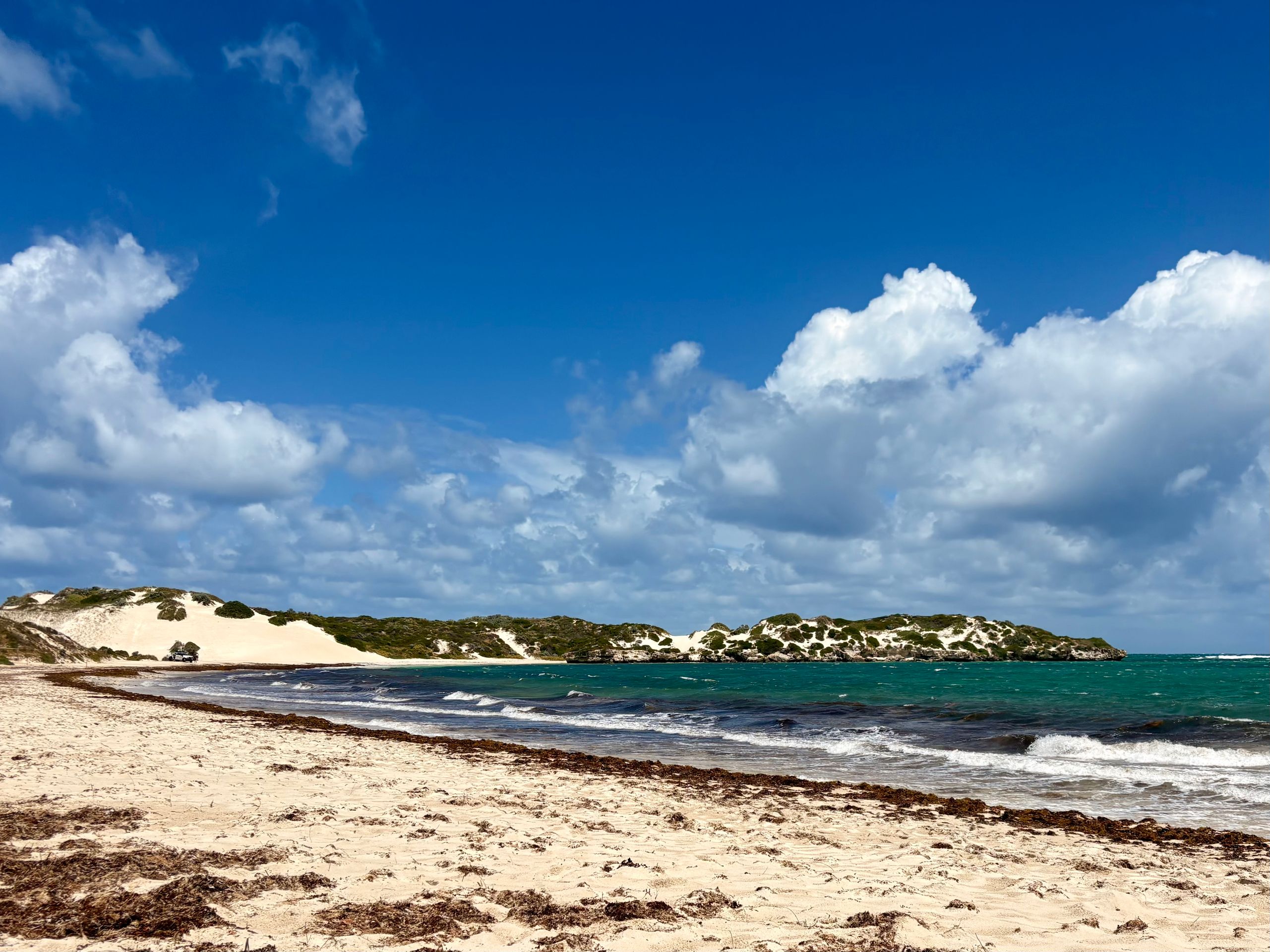
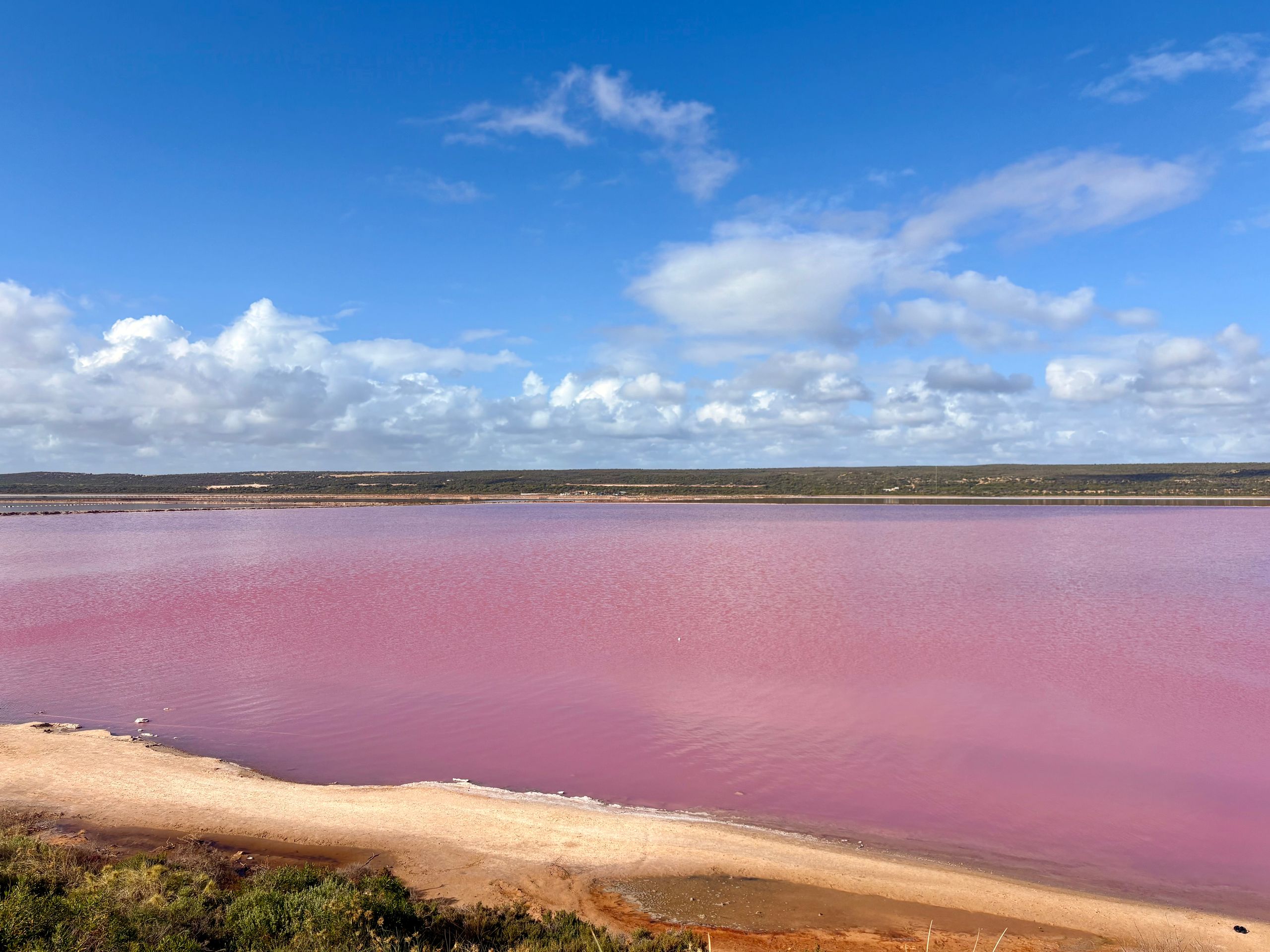
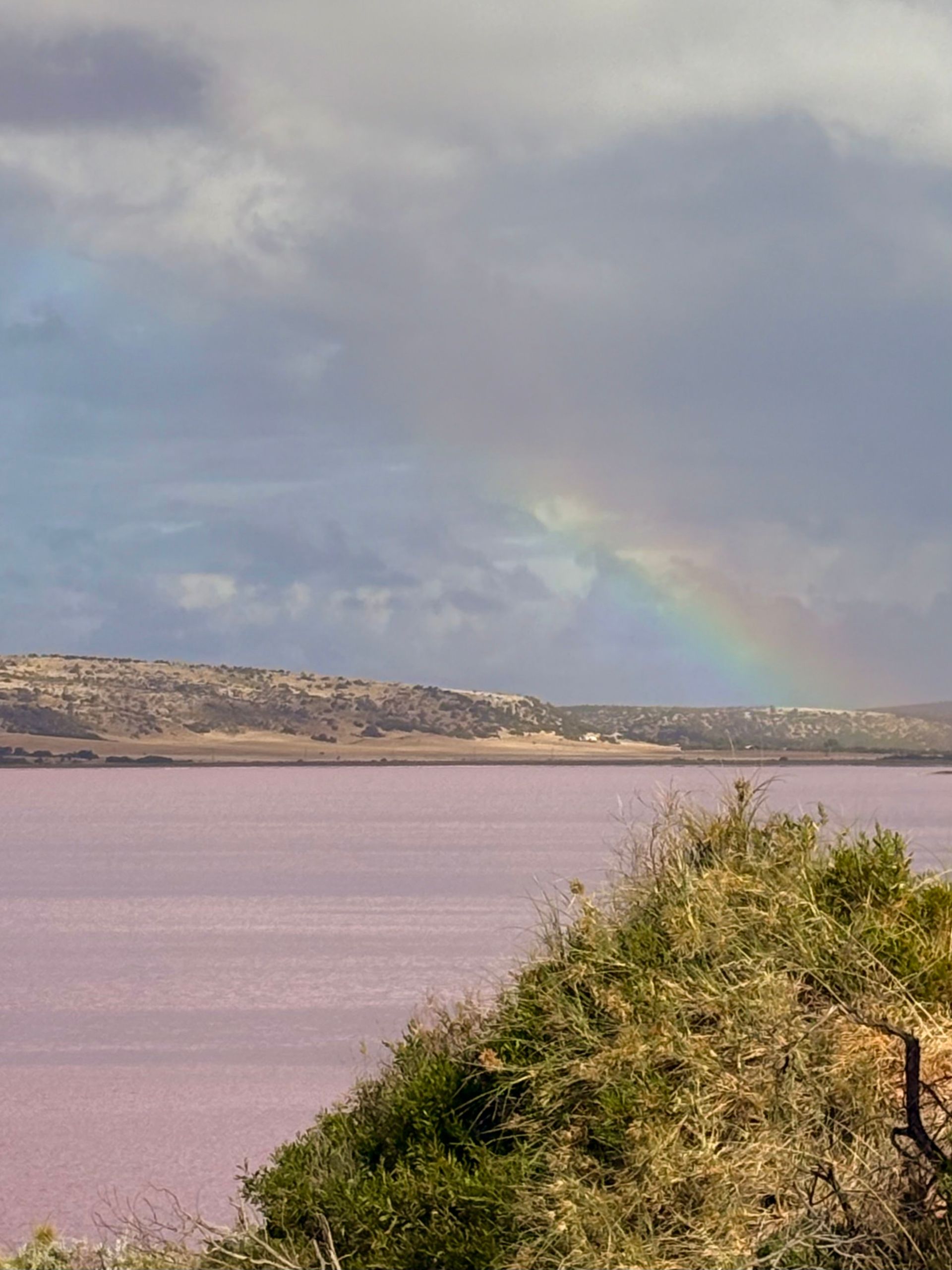
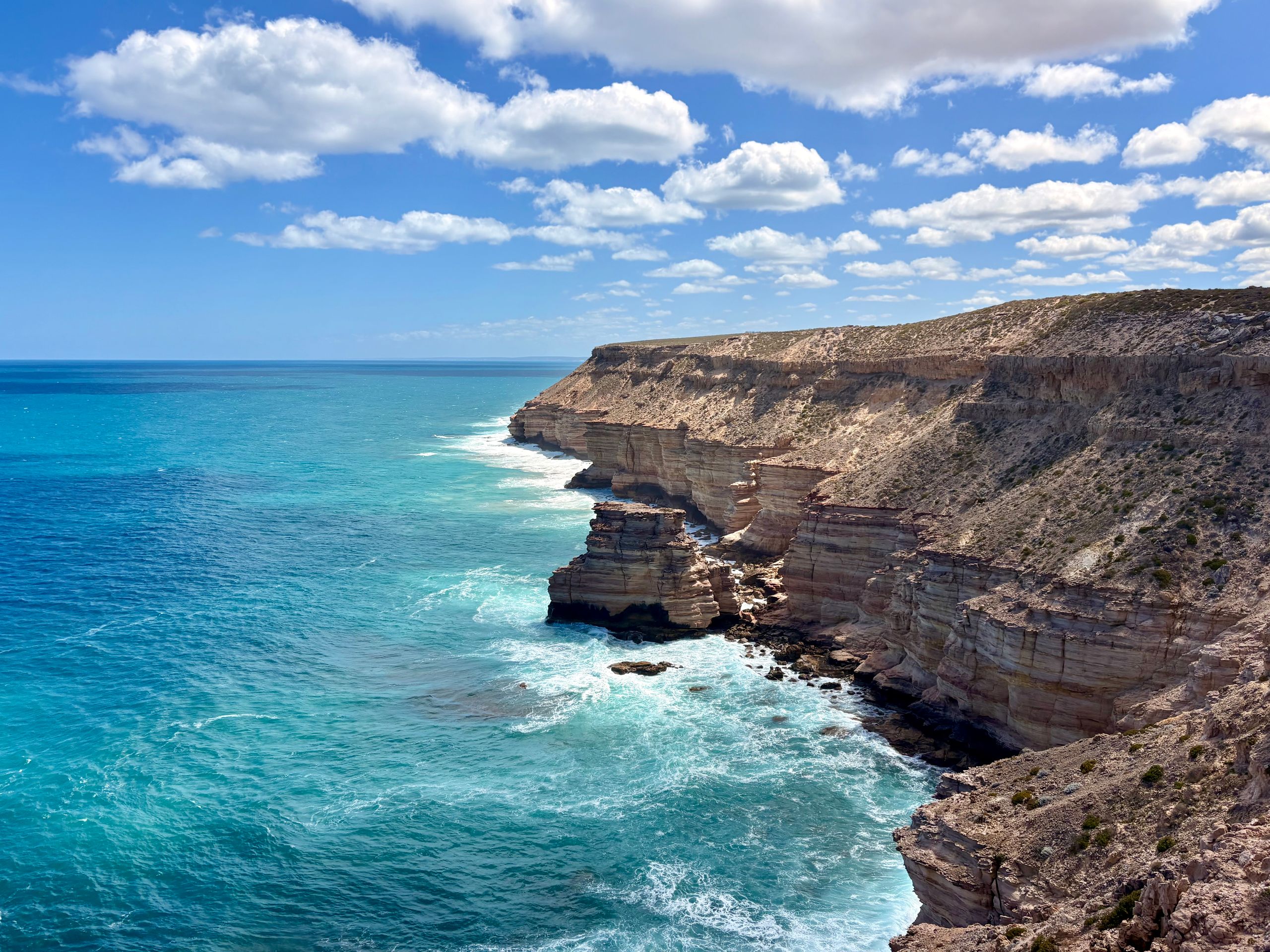
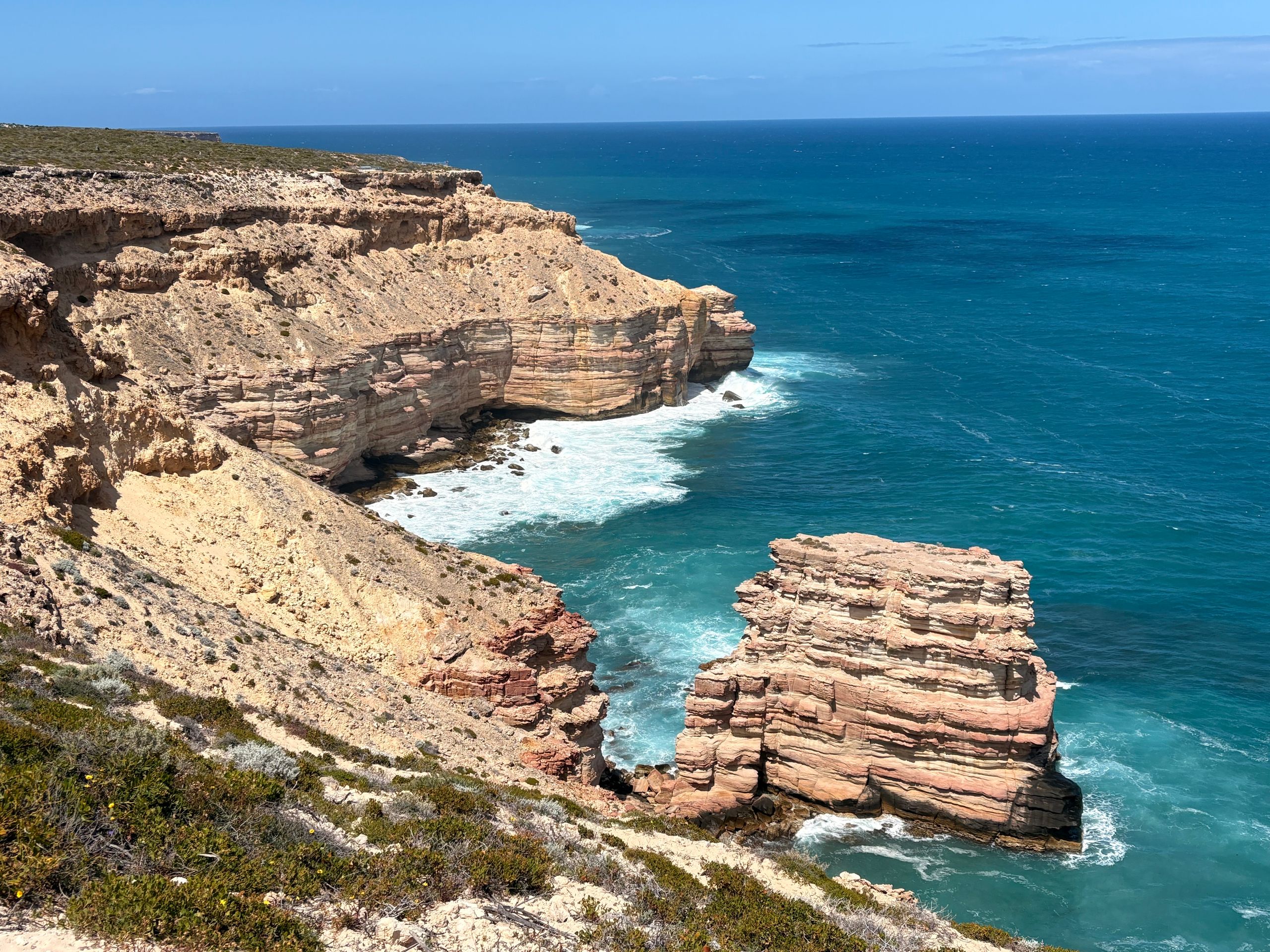
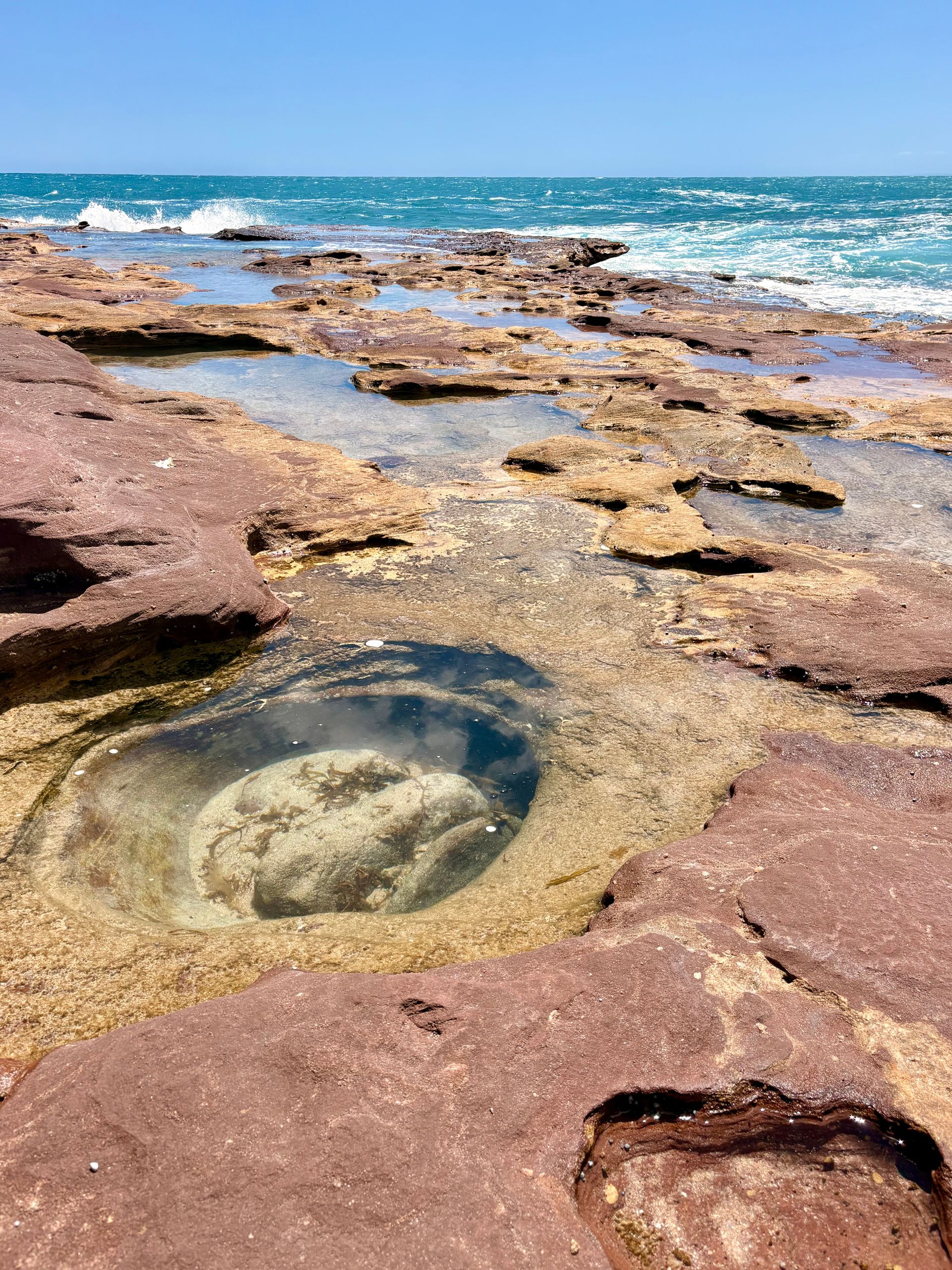
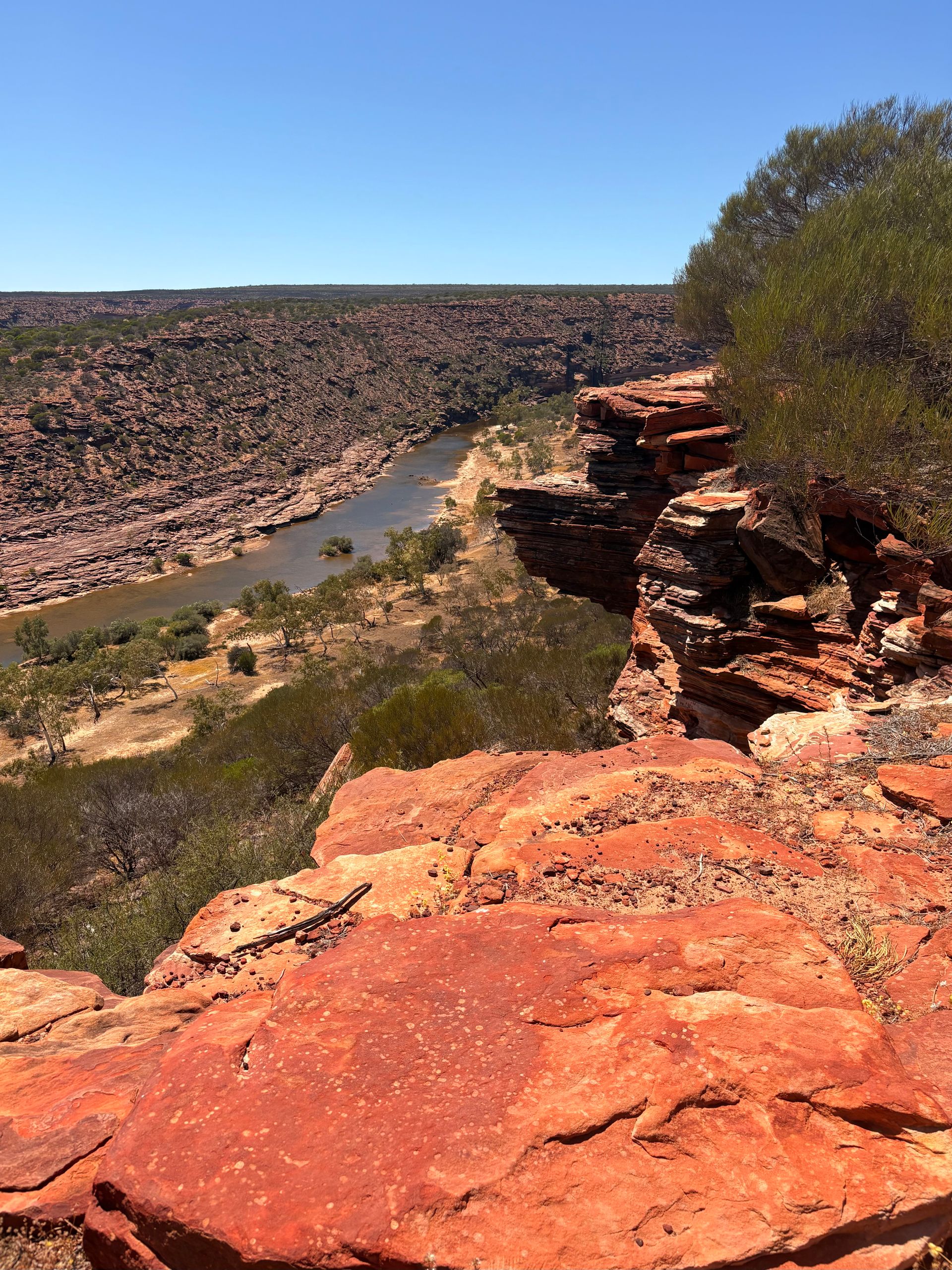
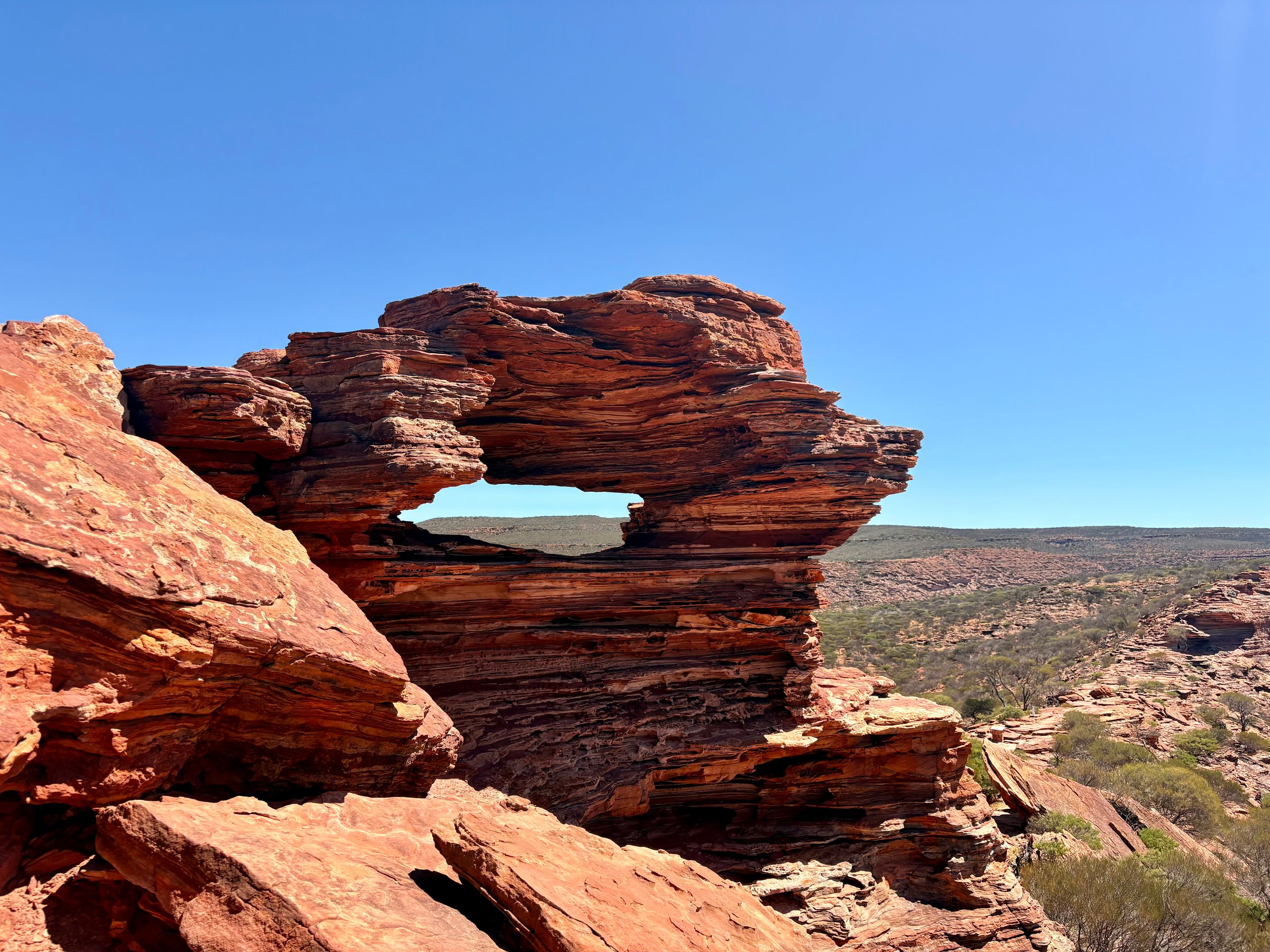
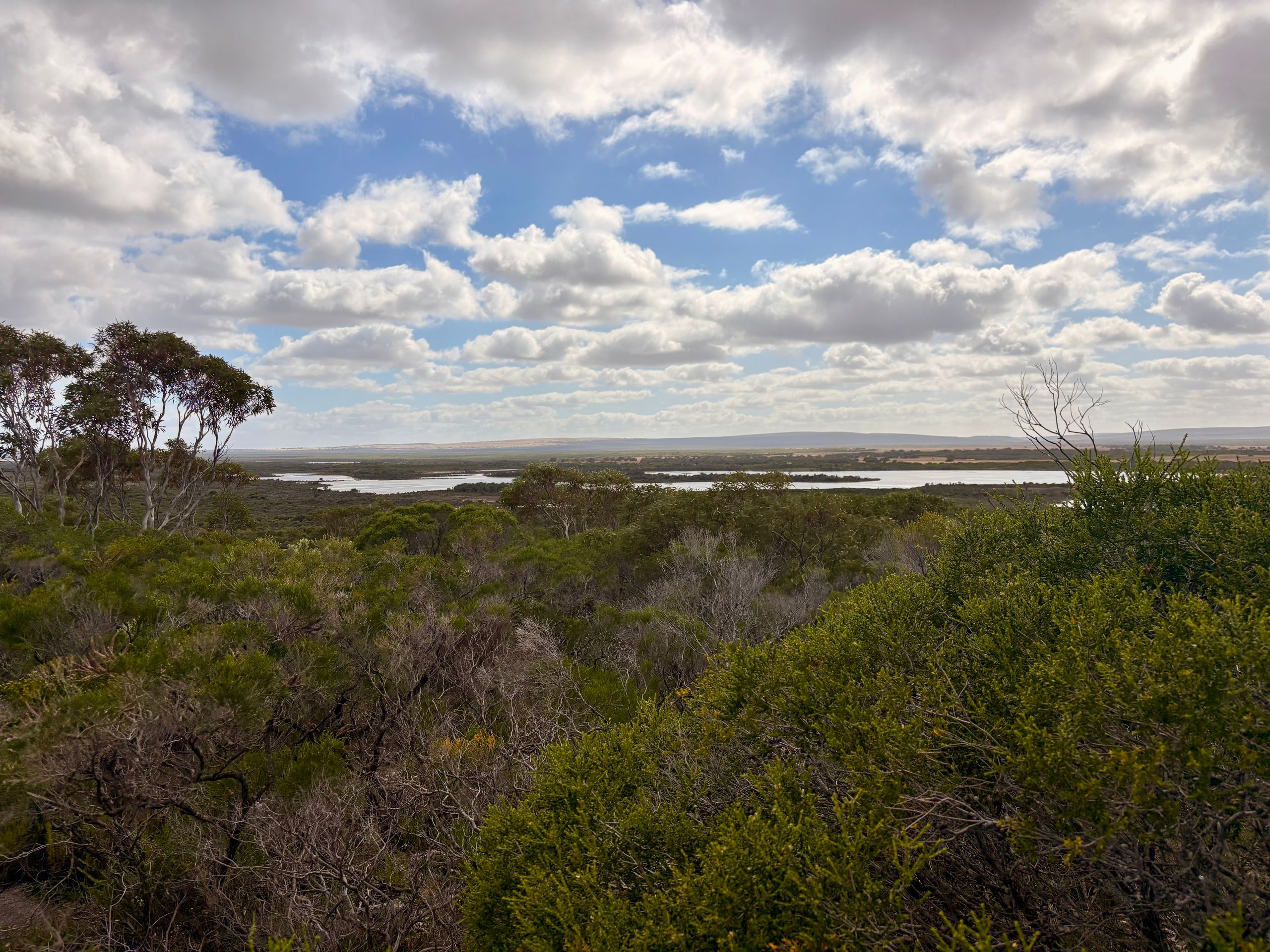
First, we headed to the beautiful Kalbarri National Park. On the way, we stopped at Hutt Lagoon, a pink salt lake created by beta-carotene producing algae. The national park features stunning cliffs with various (well-built) small hiking/walking trails. From up here, we were lucky enough to spot two whales swimming together along the coast at the end of the whale season (probably humpback whales, but we’re not sure). We also found beaches completely to ourselves; it was never really crowded. In the hinterland of the NP, where the Murchison River excavated deep into the earth over millions of years, leaving behind gorges and rock formations, there are fantastic viewpoints and hiking trails. However, it was quite hot even in late spring, but still bearable; it must be brutal in summer.
Next, we went to Shark Bay Marine Park, where we camped in Denham. There was plenty to see here as well; for example, from the Eagle Bluff Lookout, you could see not only sea eagles circling but also small sharks, rays, and turtles in the shallow clear water. The Shell Beach (Wulgada) was completely made up of small heart shellfish that can multiply perfectly here due to the very salty water in the bay, and you could wade through the water for ages at low tide. We also drove to Monkey Mia, where the heavily advertised morning dolphin feeding show flopped (the dolphins weren't interested). However, we finally saw a few emus walking around; until then, we hadn’t seen any live emus or kangaroos, only many run-over specimens by the roadside. And the boat tour we took was all the better for it! We saw sea eagles, many dolphins, and the absolute highlight: dugongs, also known as sea cows or sea pigs, and they were soooo wonderful! They are very shy and sadly endangered, and they feed exclusively on seagrass! Because they surface only briefly to breathe, it’s not easy to spot them. But we were lucky! By the way, they are supposedly responsible for the mermaid myth— their facial expressions seem to be smiling, and their curves appeared very appealing to lonely sailors.
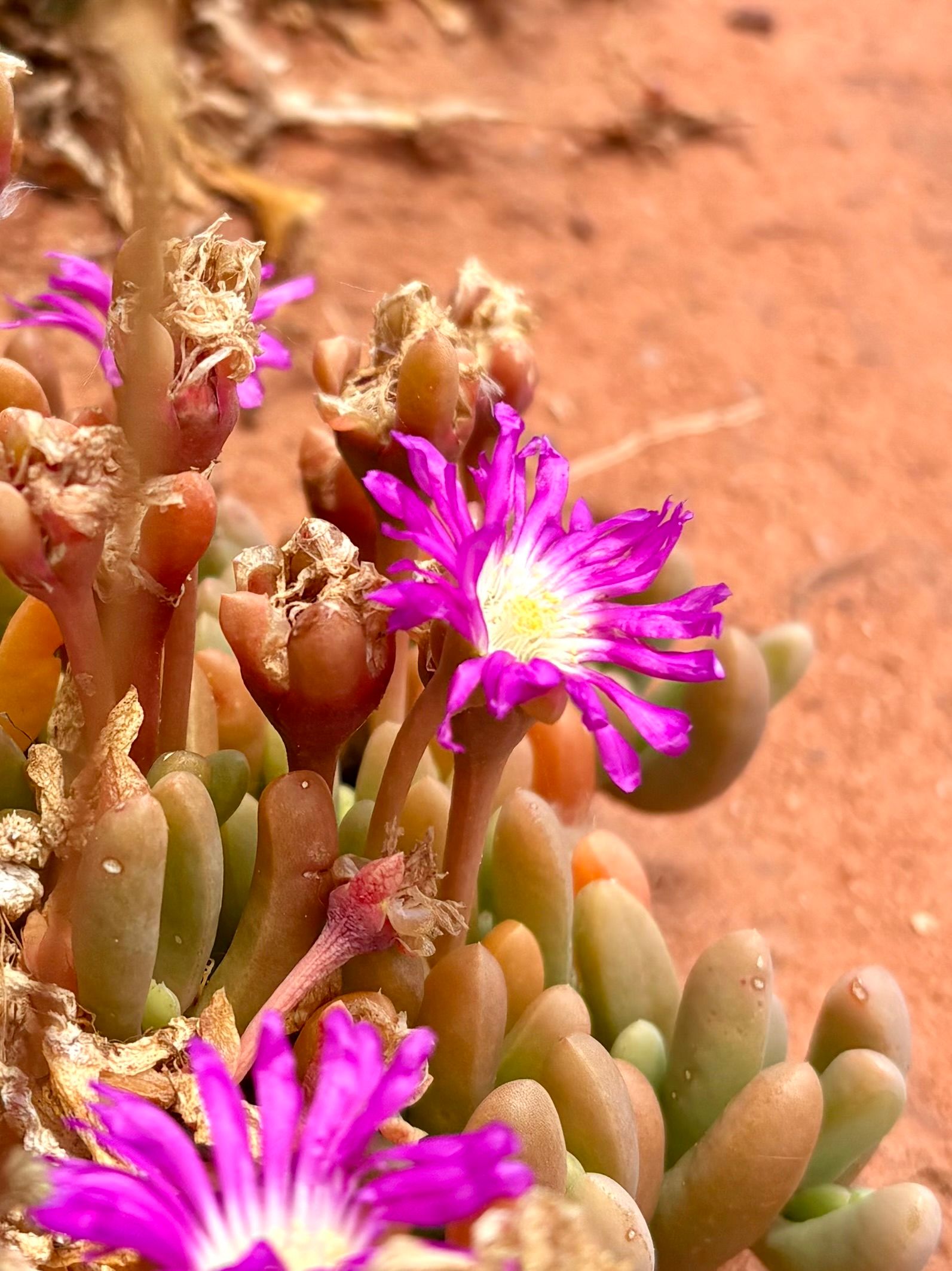
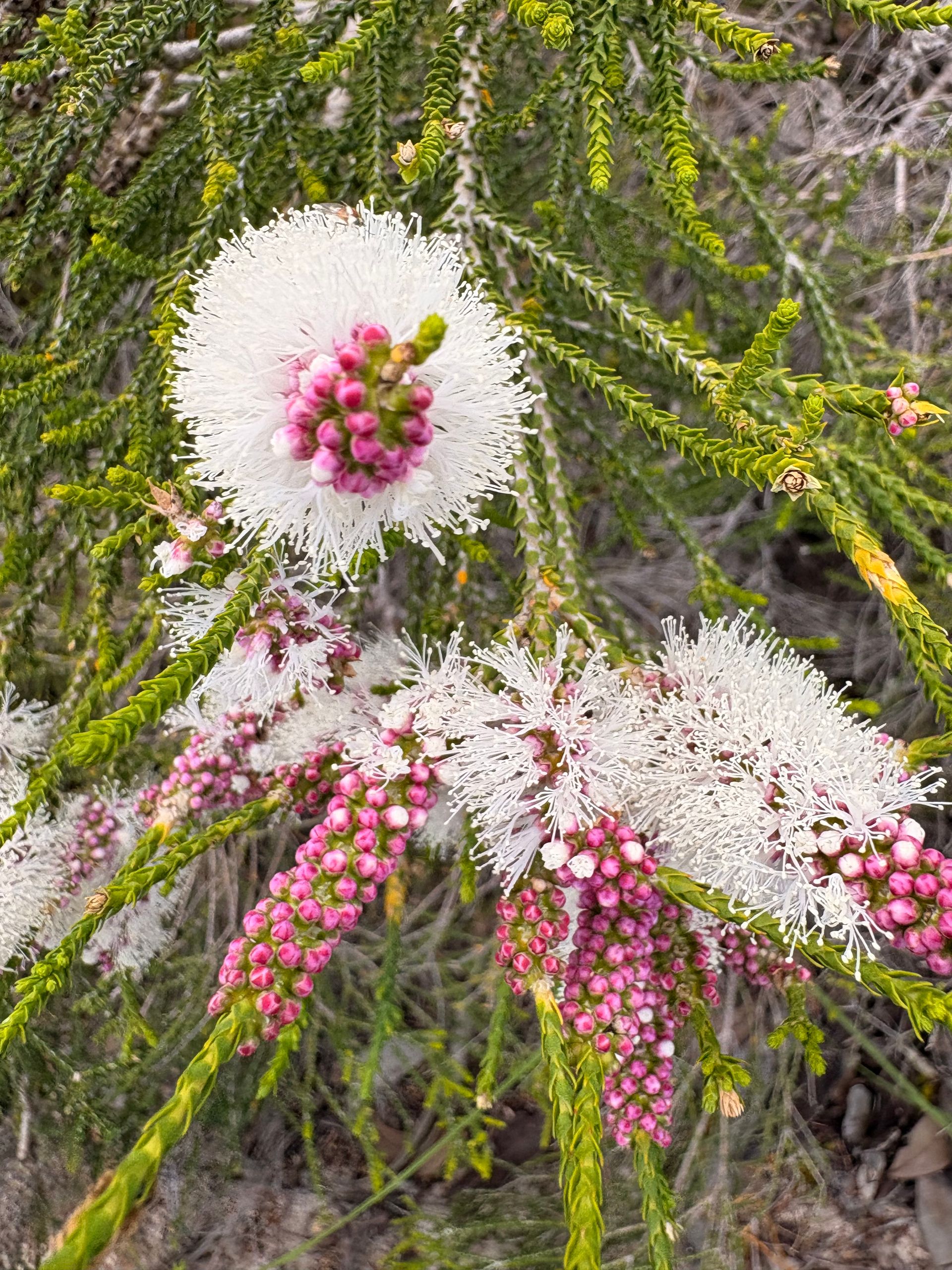
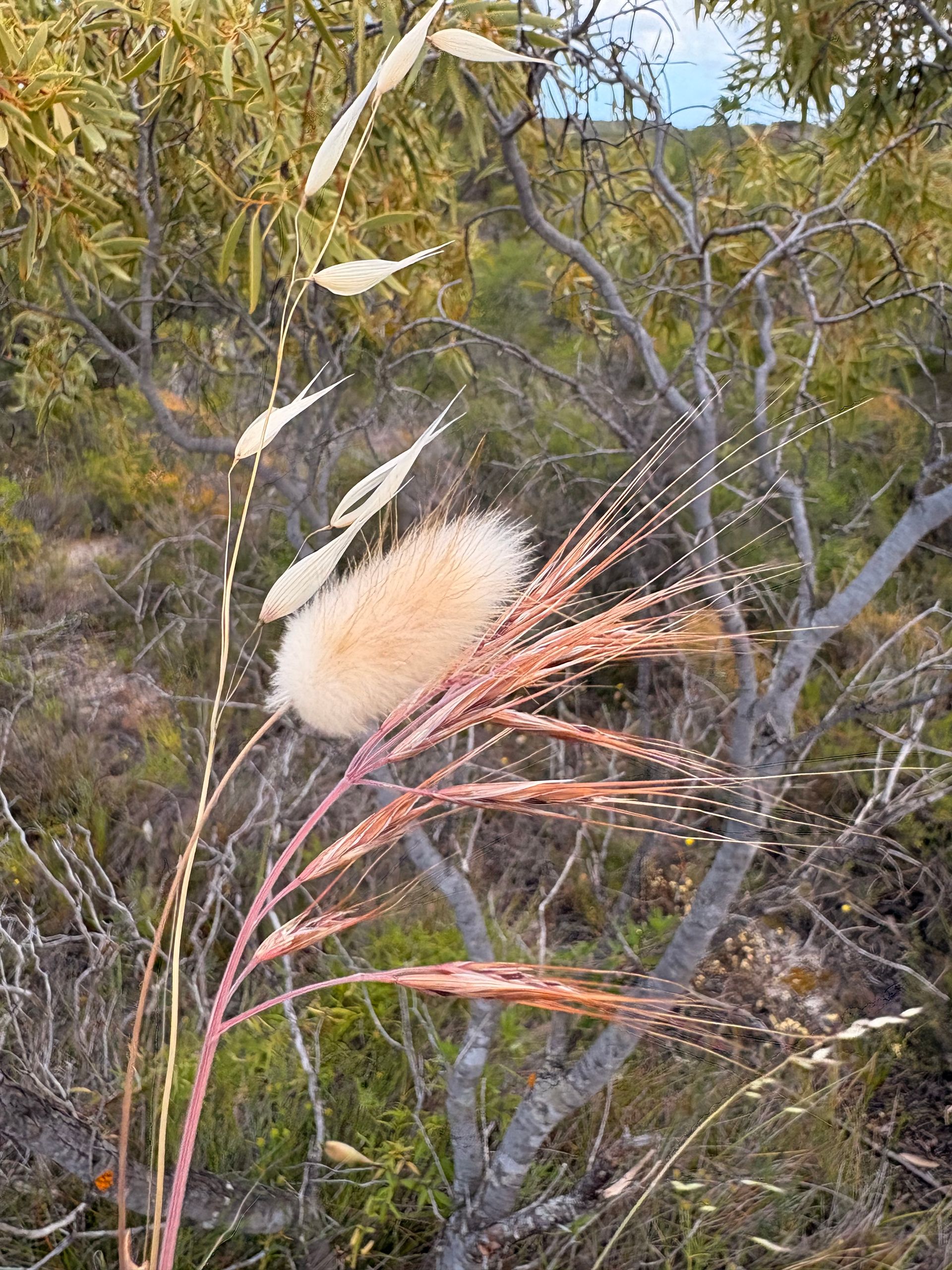
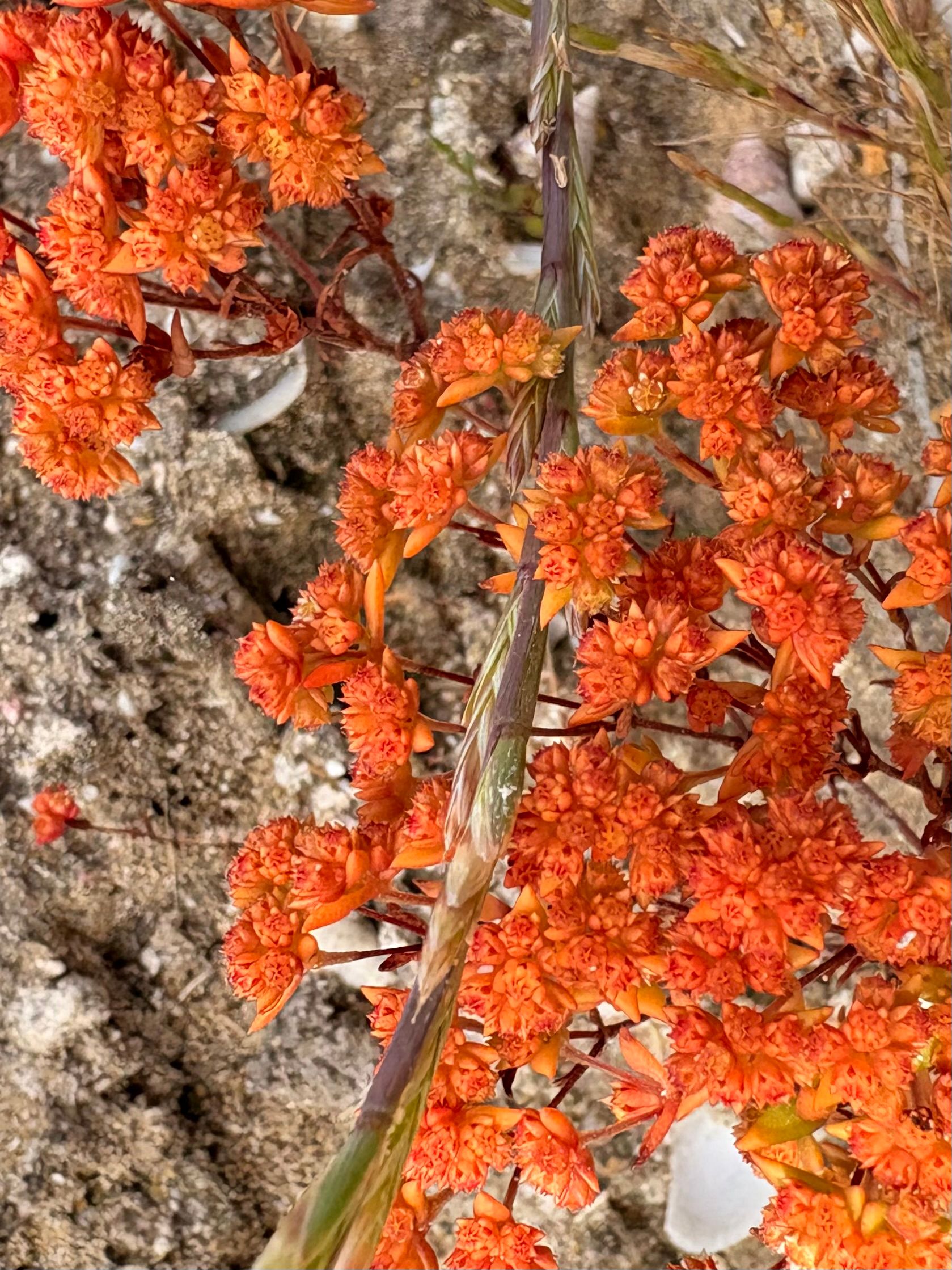
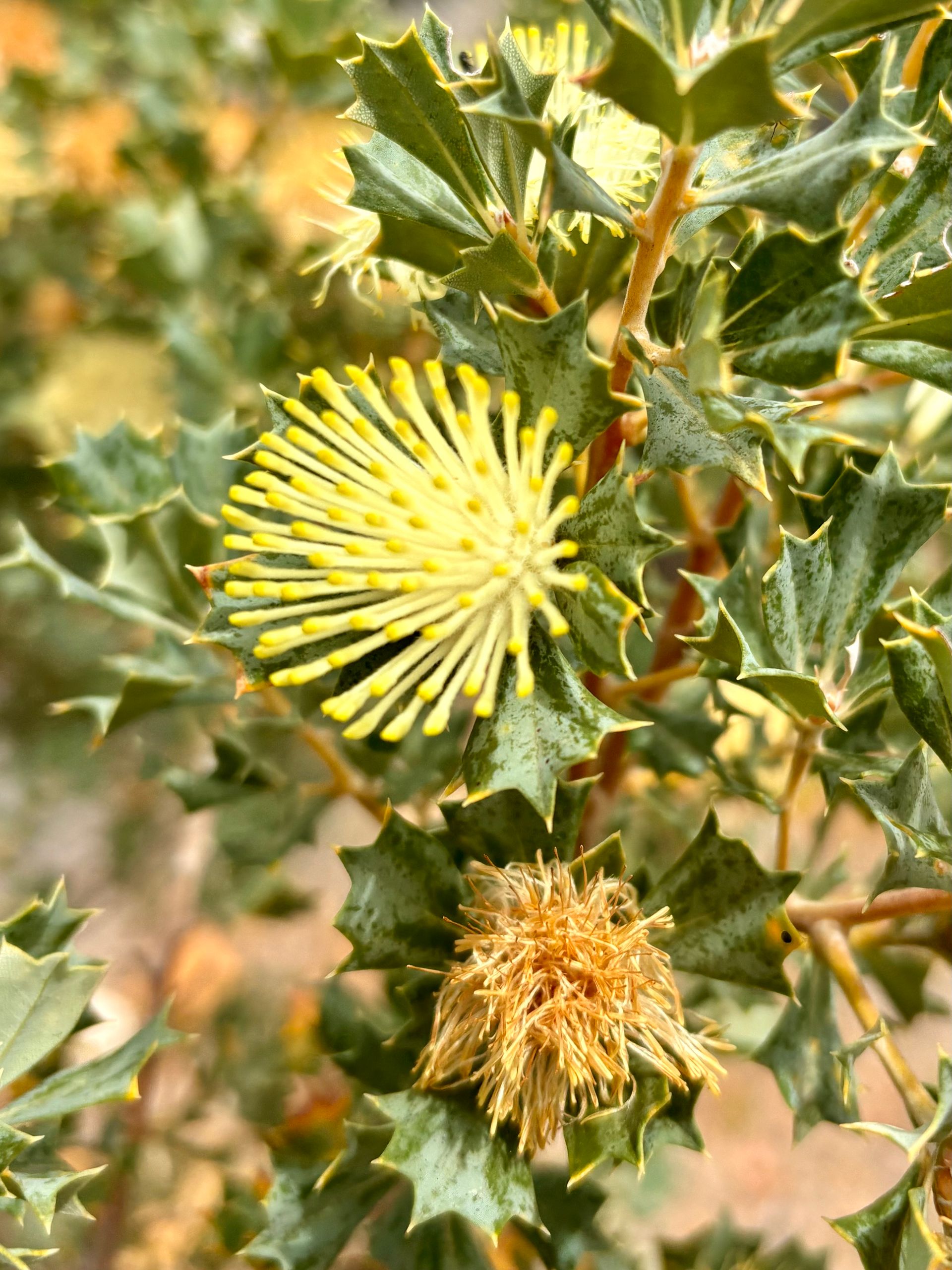
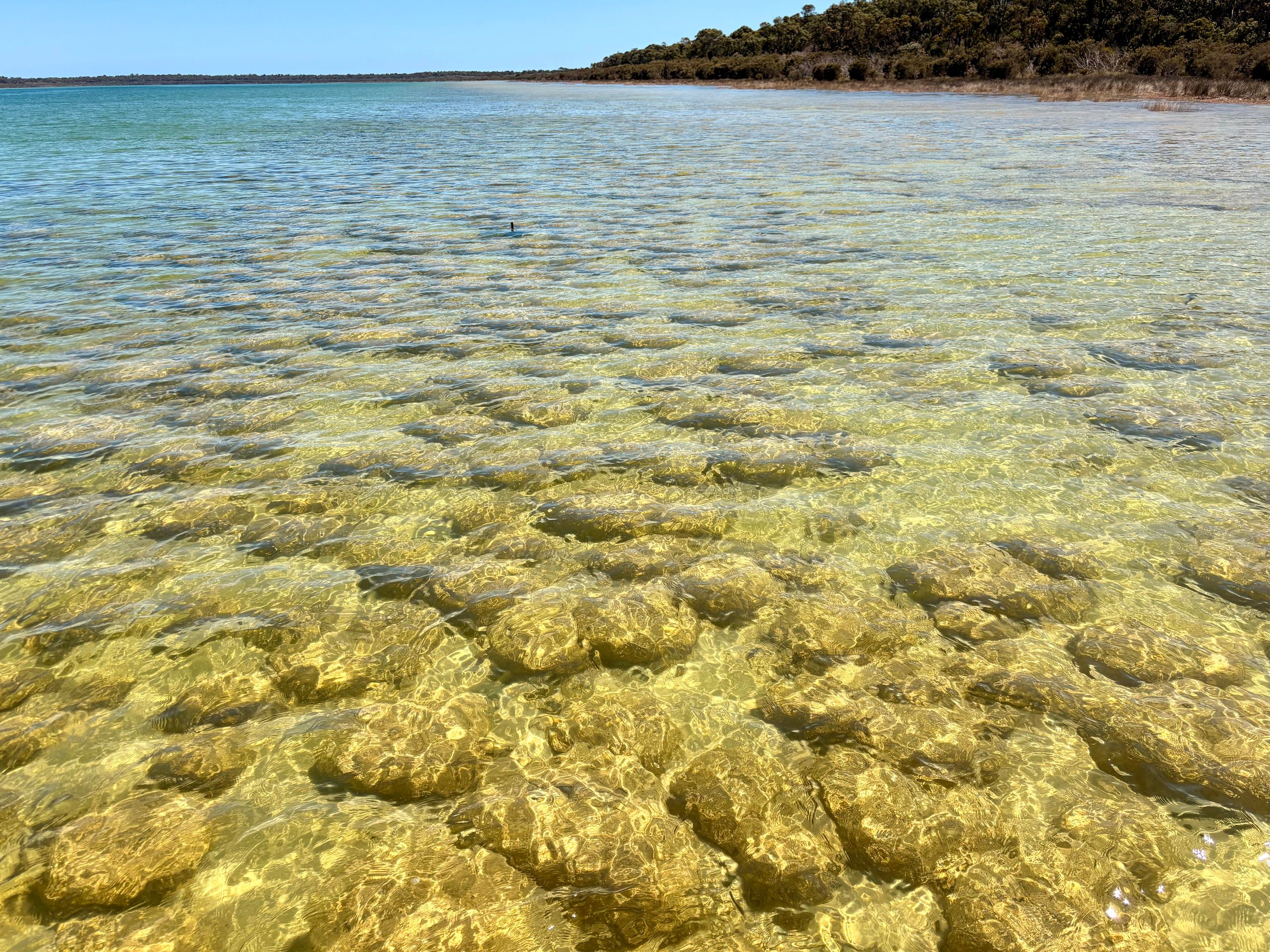
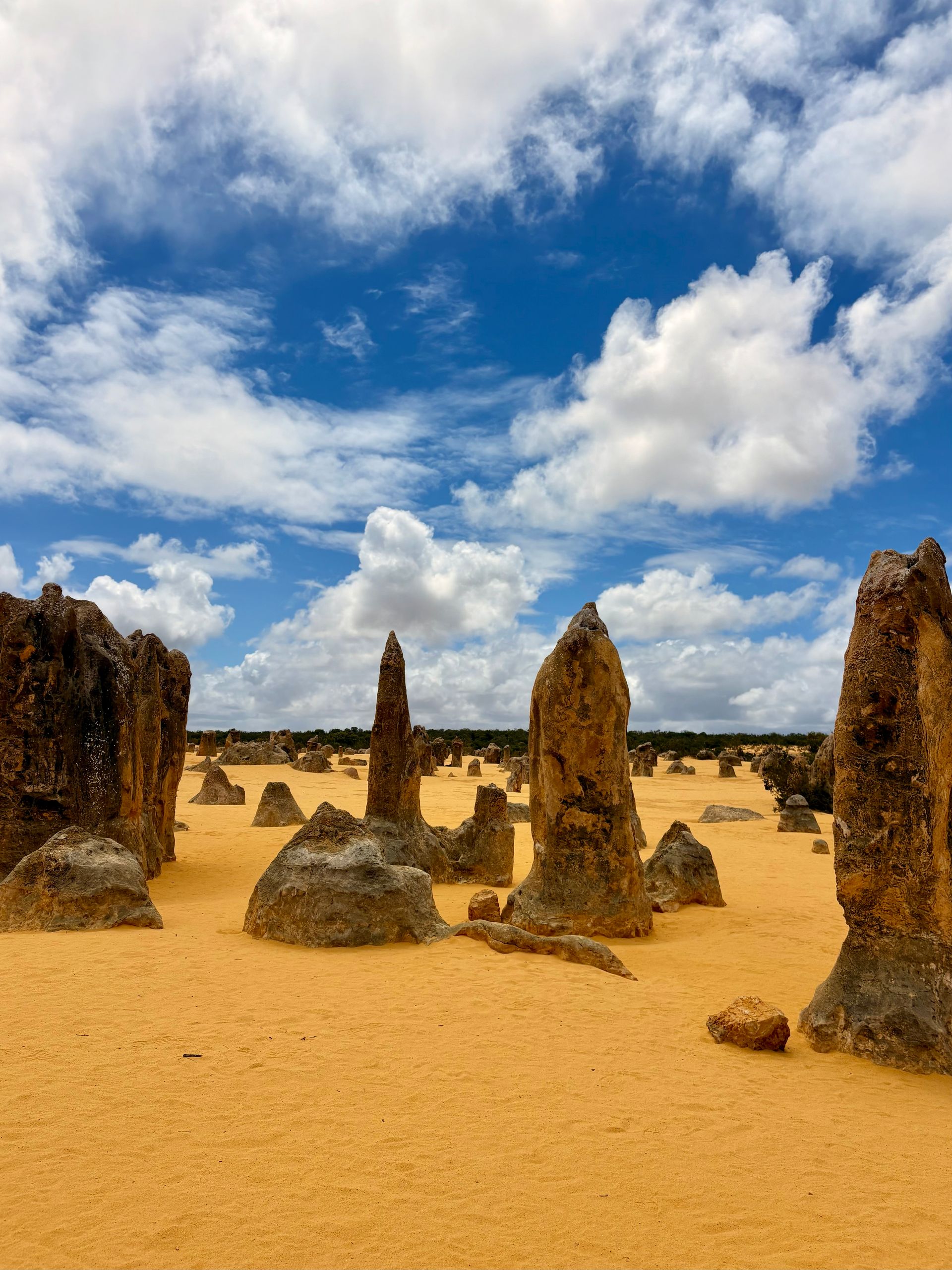
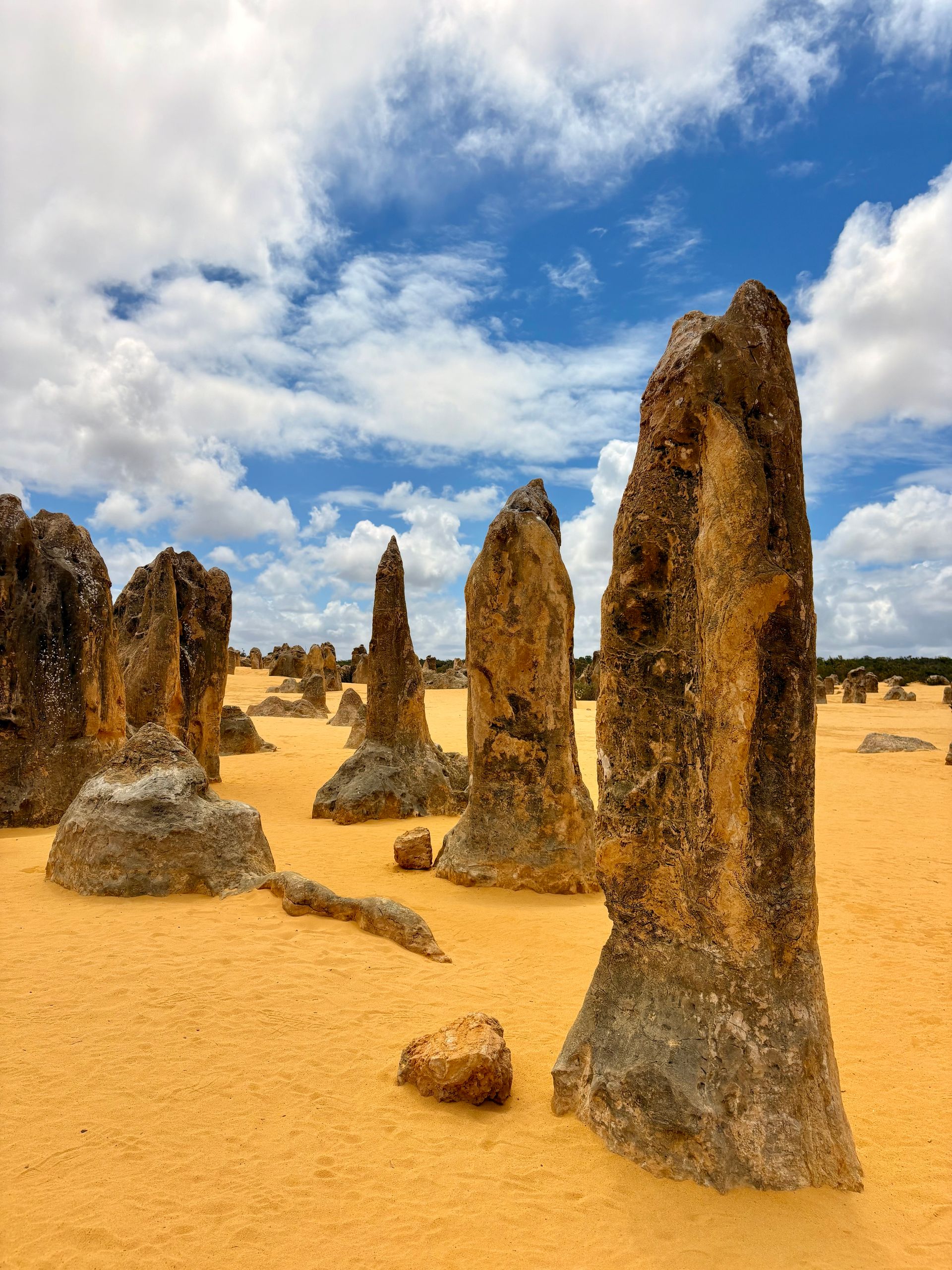
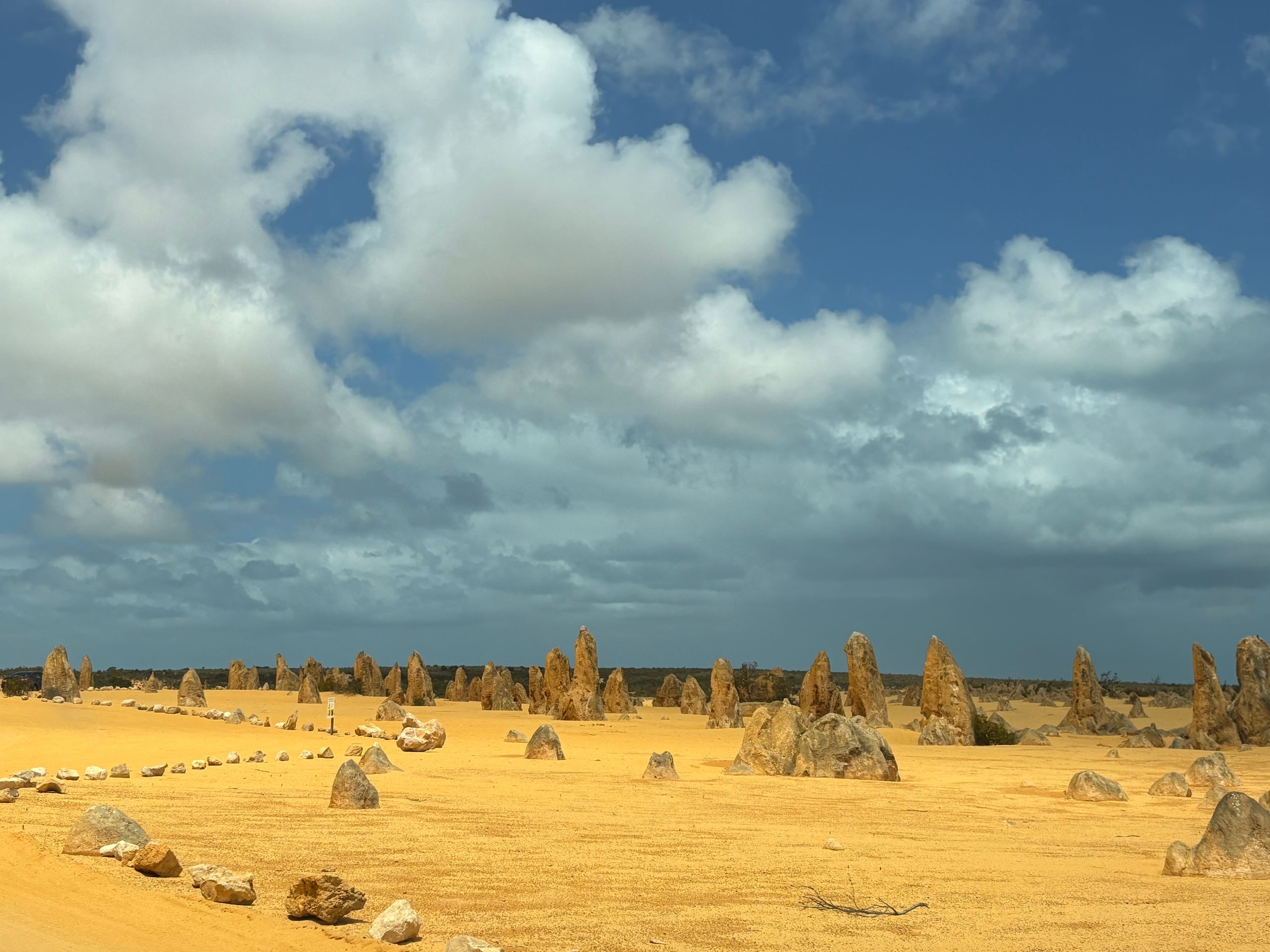
Later on our way back south—a potential detour through the inland was ruled out due to the driving restrictions, we visited Lesueur National Park, which had an incredibly diverse flora and still had many wildflowers blooming at the end of October, and the Pinnacles Desert, home to bizarrely shaped limestone pillars in yellow sand that look extraterrestrial. Then we stopped by the stromatolites at Lake Thetis after Hamelin Pool in the north was unfortunately closed. These are biogenic sedimentary rocks, or rather living stones, and they are quite old. Bacteria form sticky biofilms in shallow sunny waters that capture sand or lime particles. The lime precipitates, the bacteria move upward to get enough light again, and the process starts over, causing the stone to grow. Incredible!
What we generally found less enjoyable were the towns/places in WA, with the exception of Fremantle and the surrounding area. Dull little villages, poor infrastructure (but always clean toilets), a very white society, somewhat bleak. And we often felt lonely, perhaps particularly after the impressions from vibrant and open Indonesia. Fortunately, nature compensated for that!