Arica
Arica, located in the far north of Chile just before the border with Peru, was supposed to be our last stop in Chile. Originally, we wanted to go from here to Lauca National...

Published: 05.04.2025
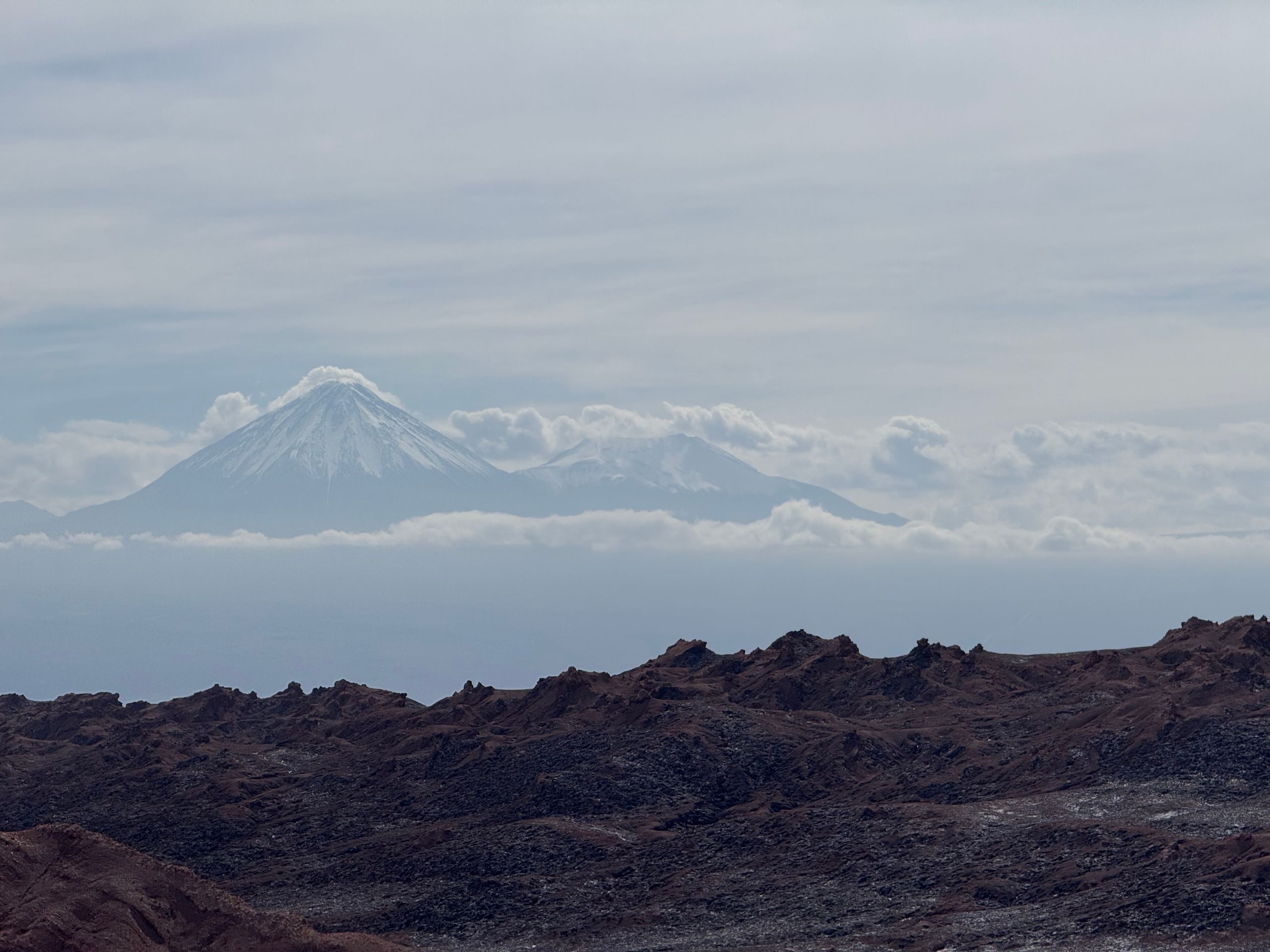
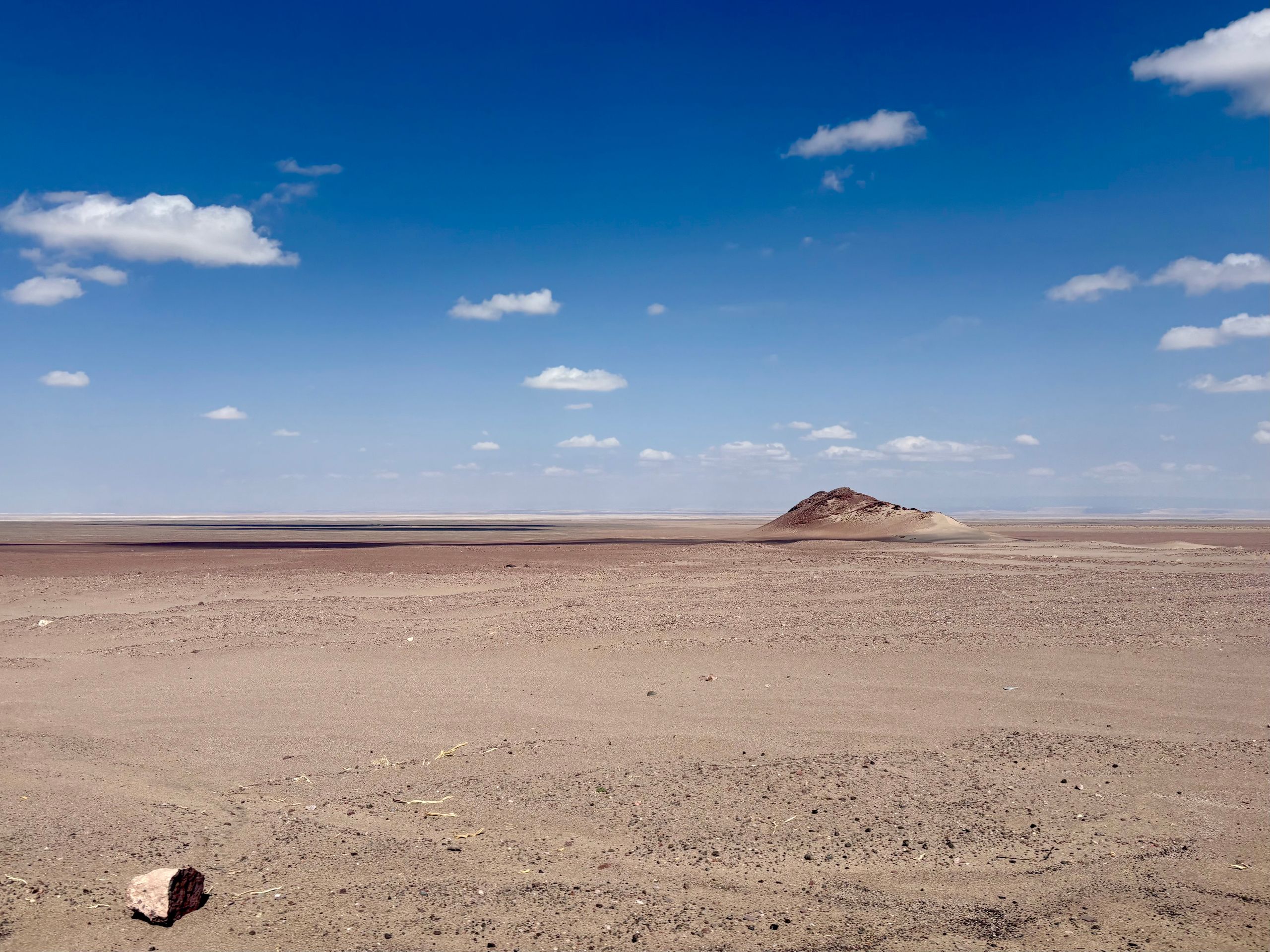
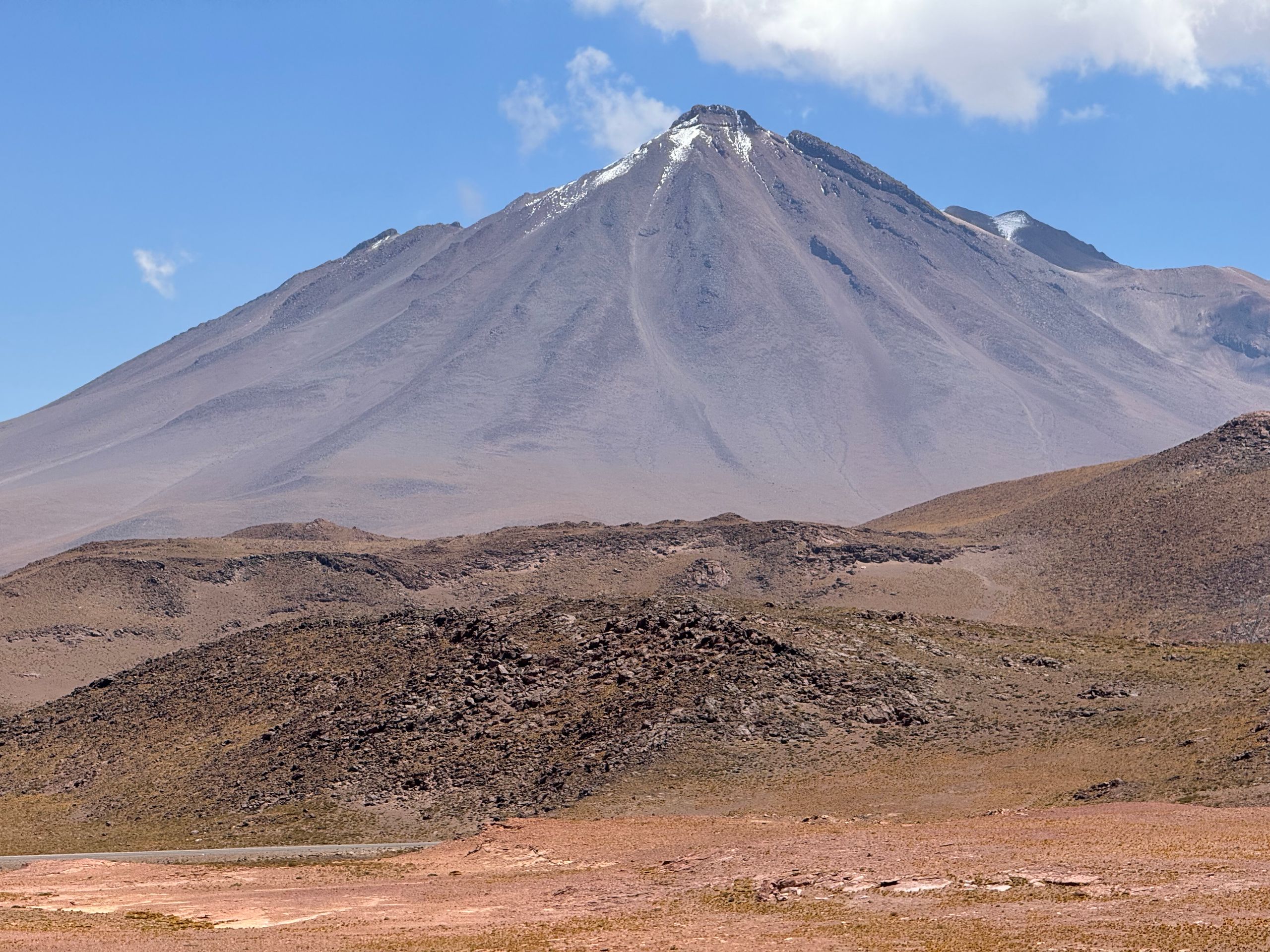
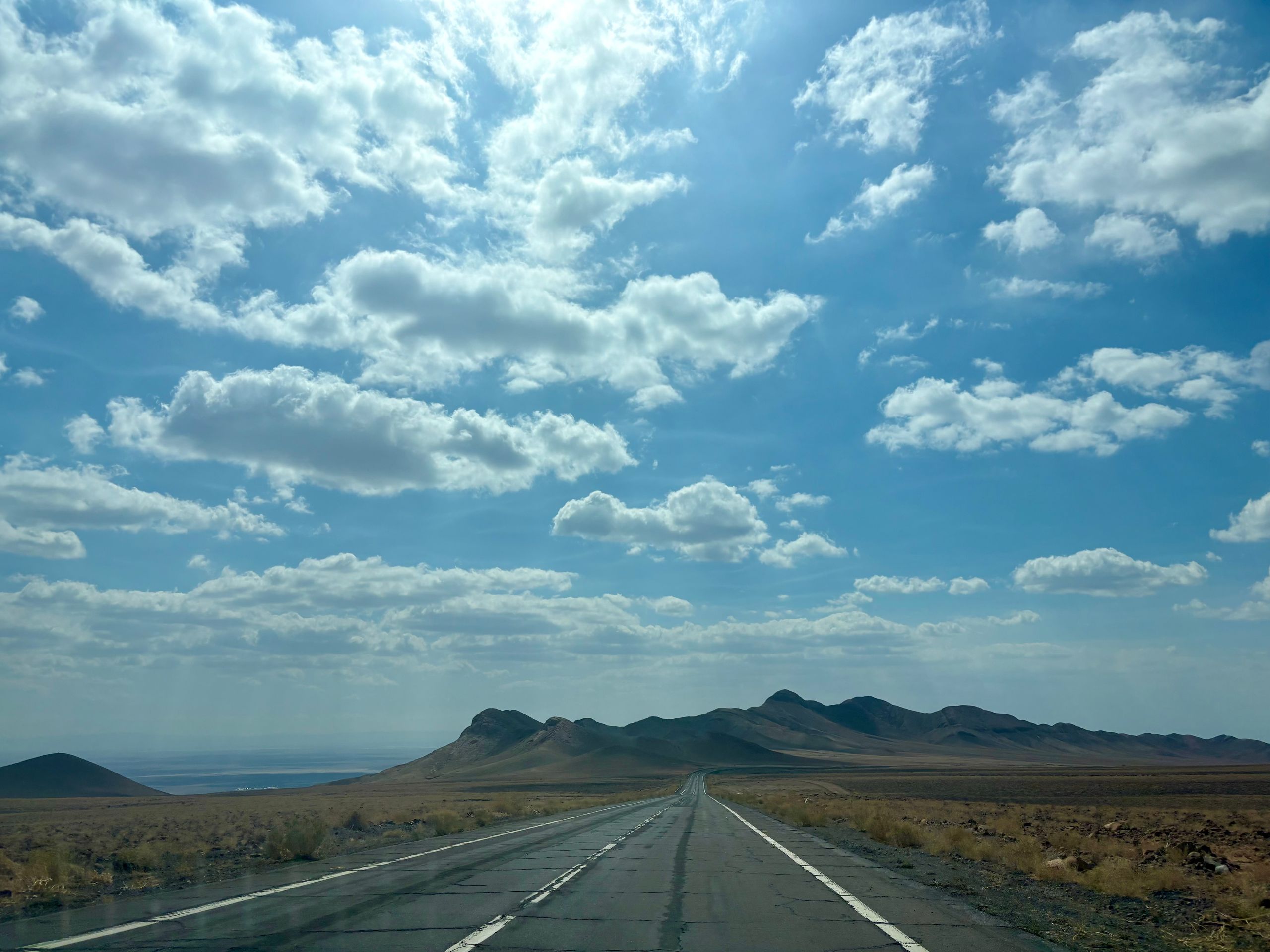
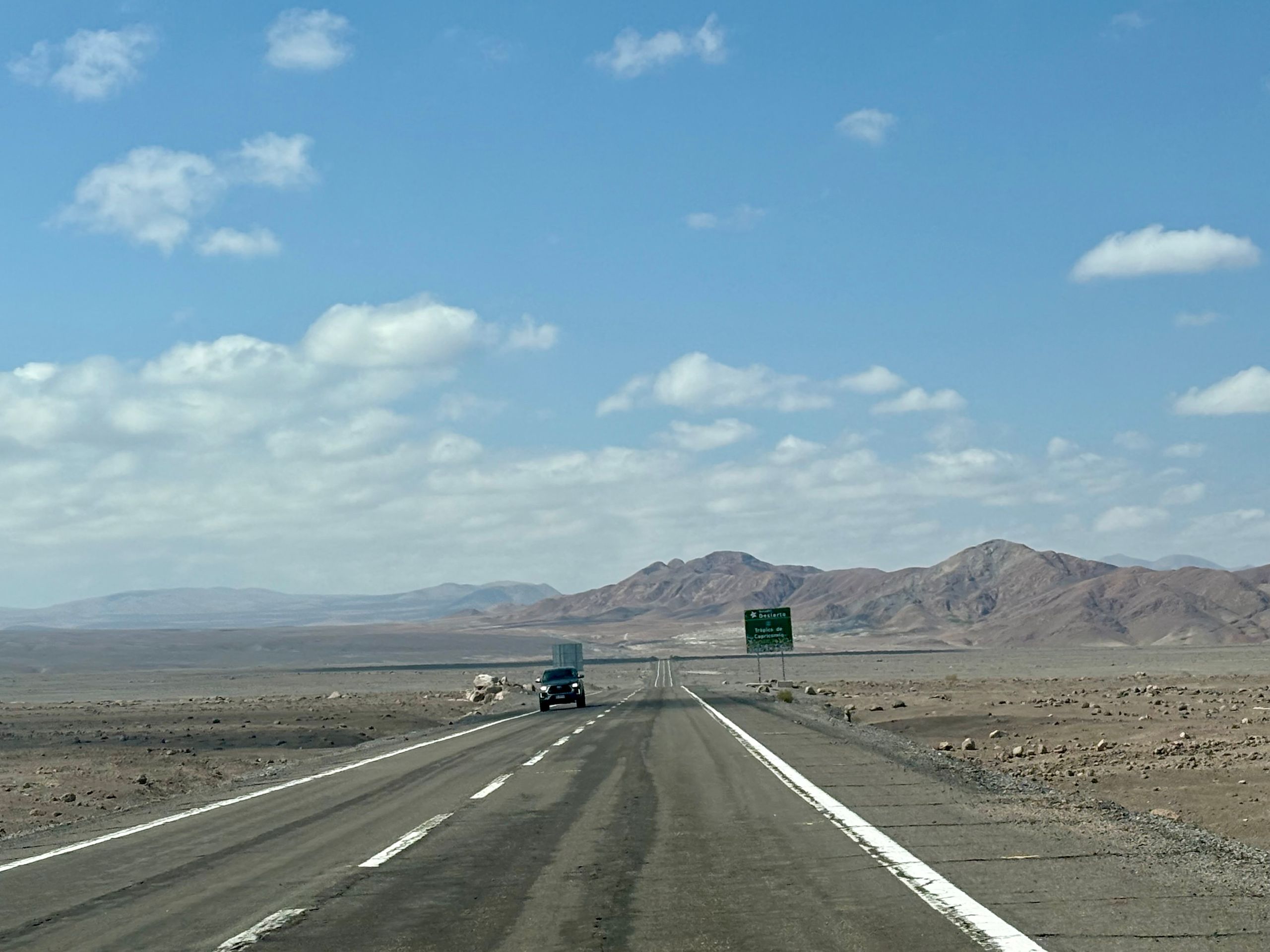
We took the night bus from La Serena to Calama, where we picked up our rental car for a week. We were a bit worried as heavy rains had been reported in the area, travel advisories had been issued against visiting the region, and we were unsure how passable the roads would be. Flooding in one of the driest areas in the world, great! Ultimately, we could see the traces of the rain, and some roads were muddy and more difficult to drive on, but everything was manageable. And we had the feeling that the rain provided us with richer shades of green than usual...
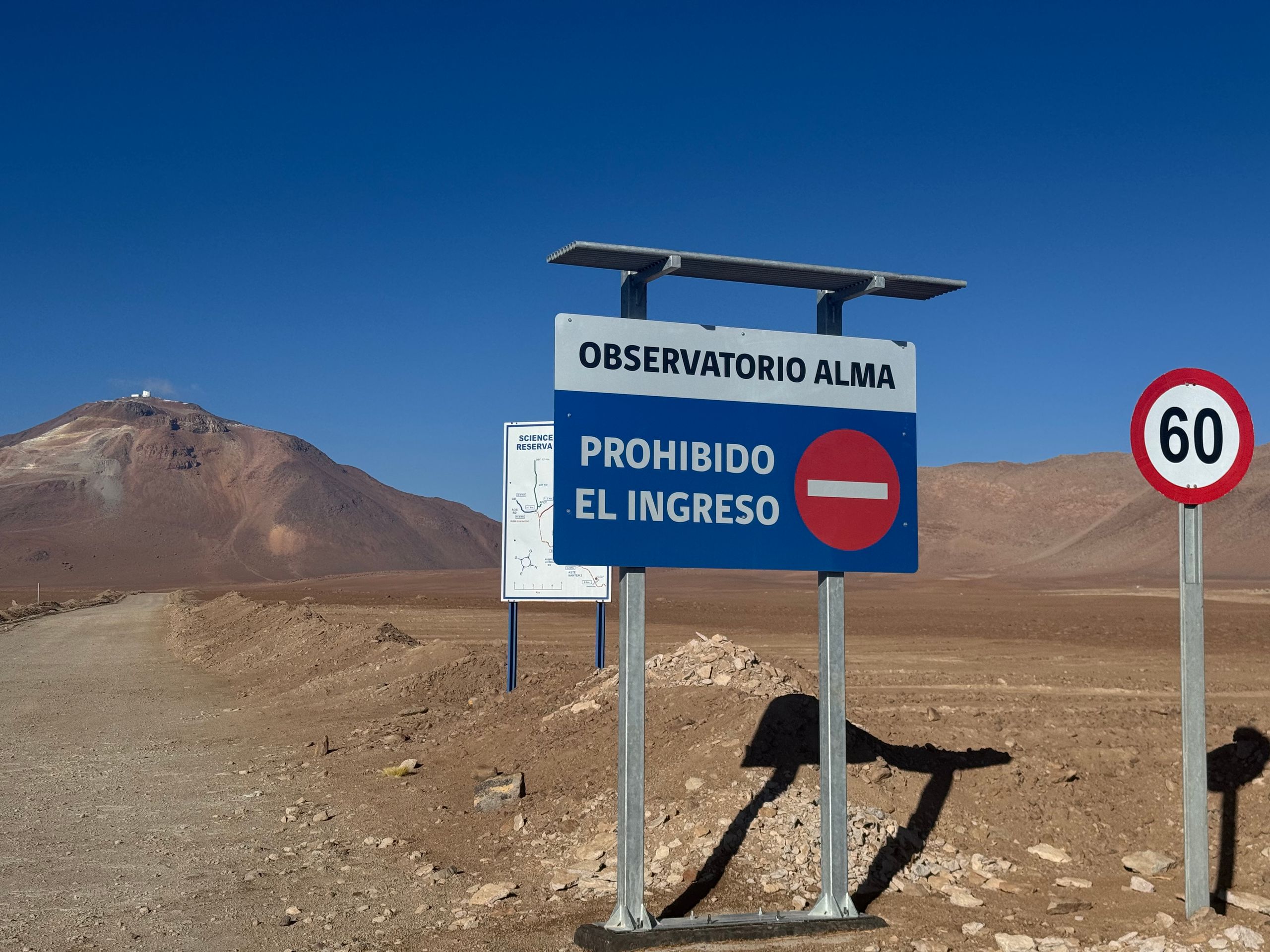
The only thing that unfortunately did not work out regardless of the weather was the visit to the ALMA Observatory (Alma Large Millimeter/submillimeter array). The radio telescopes themselves are generally not accessible due to the high altitude (5000 meters), but we thought that the observatory would be open to visitors. The guard at the gate confirmed this, telling us that we just needed to call the headquarters in Santiago, and there would be no problem. Unfortunately, Santiago turned us down, stating that public access was no longer possible. Moreover, the ALMA staff would cause us further complications later in the week!
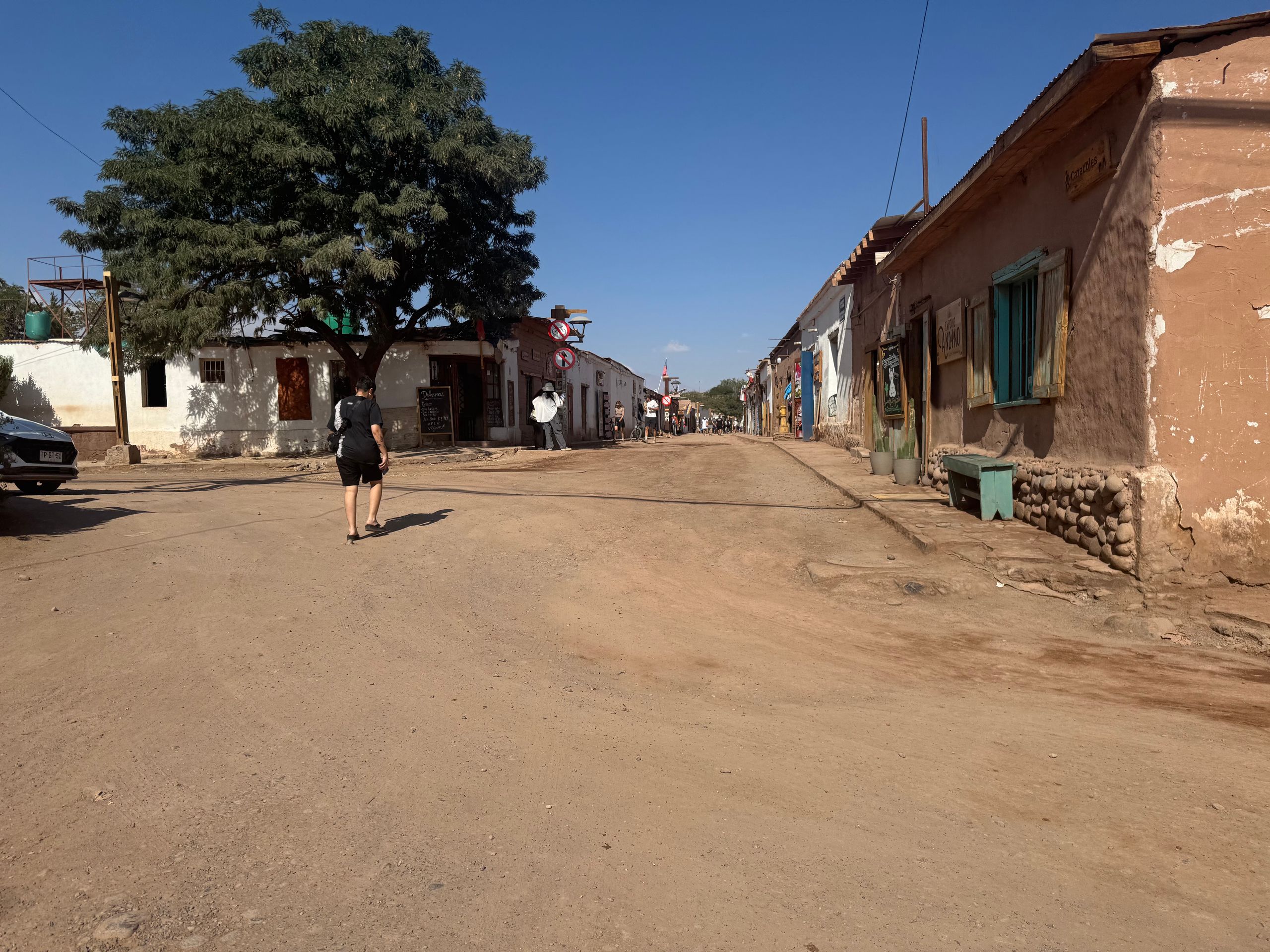
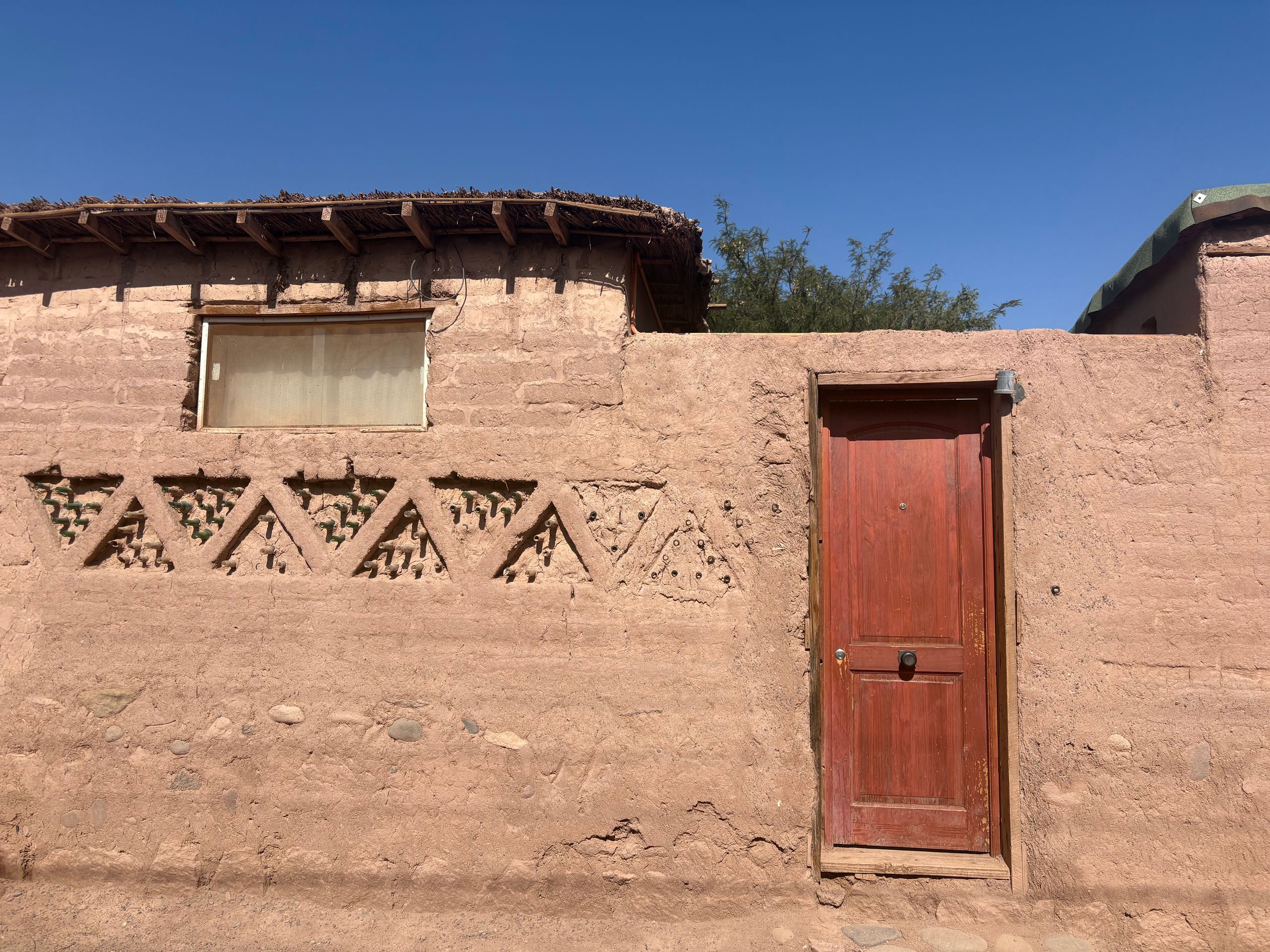
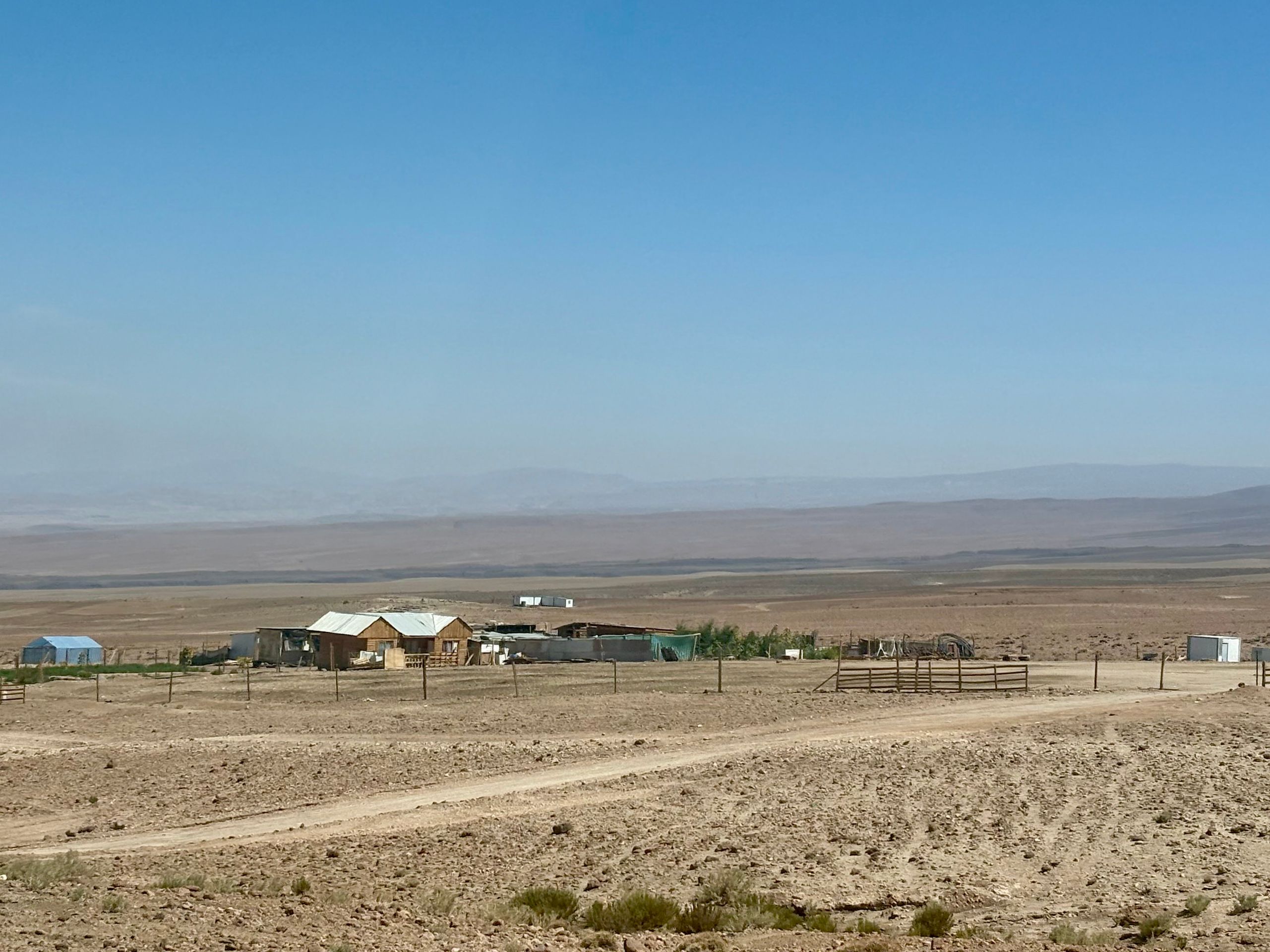
Our base was the oasis of San Pedro de Atacama, at about 2500 meters, from where we started our daily excursions. There are hardly any paved roads here (the paths looked like a muddy battlefield after the rain), and many houses were built from or with mud. The village at some points seemed like it came straight out of a Western. We had specifically rented a hostel with a pool, naively thinking that we could cool off there after the hot desert days, but unfortunately the water was so freezing cold that we only dared to step in once and then preferred to sweat instead.
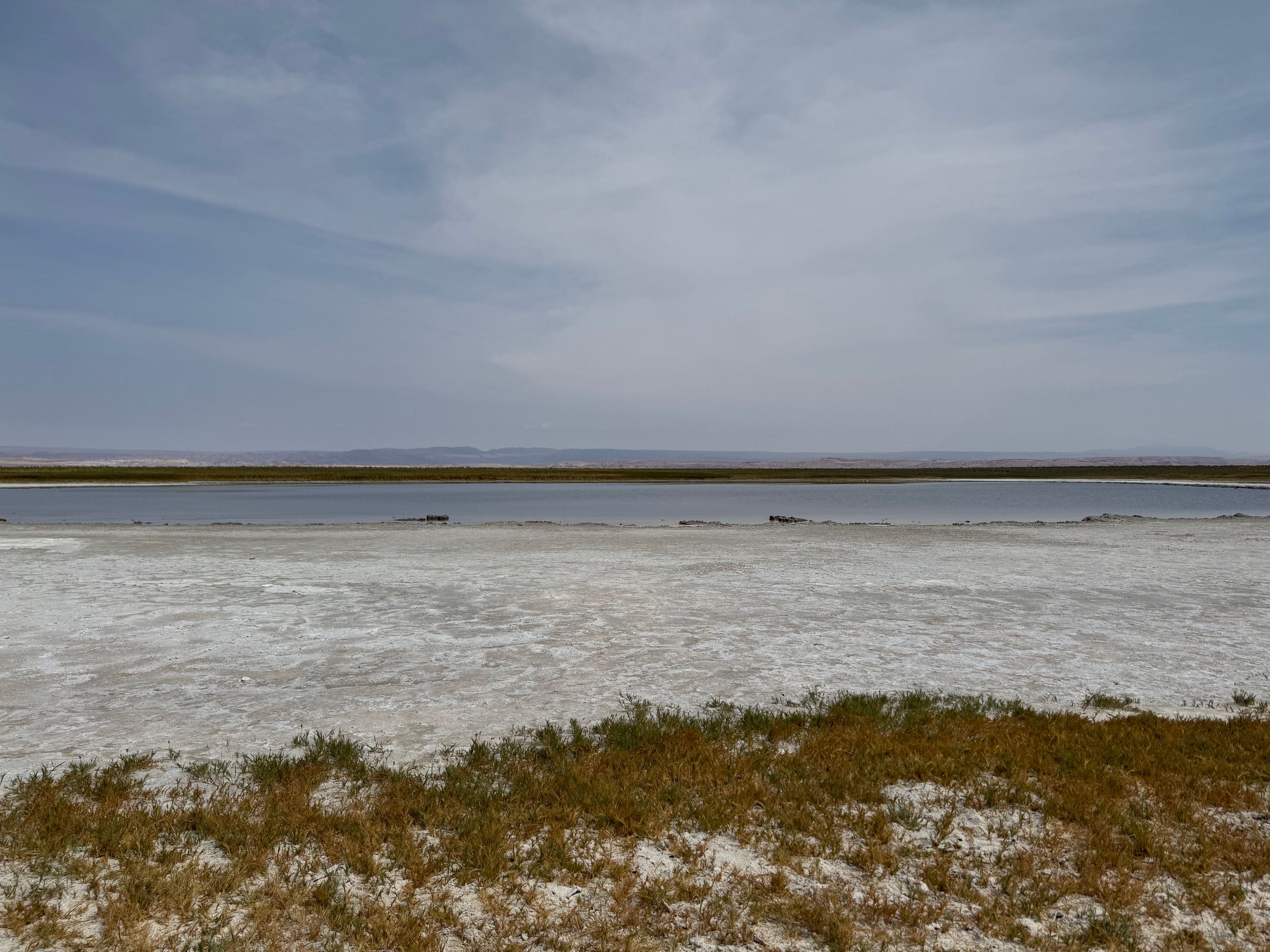
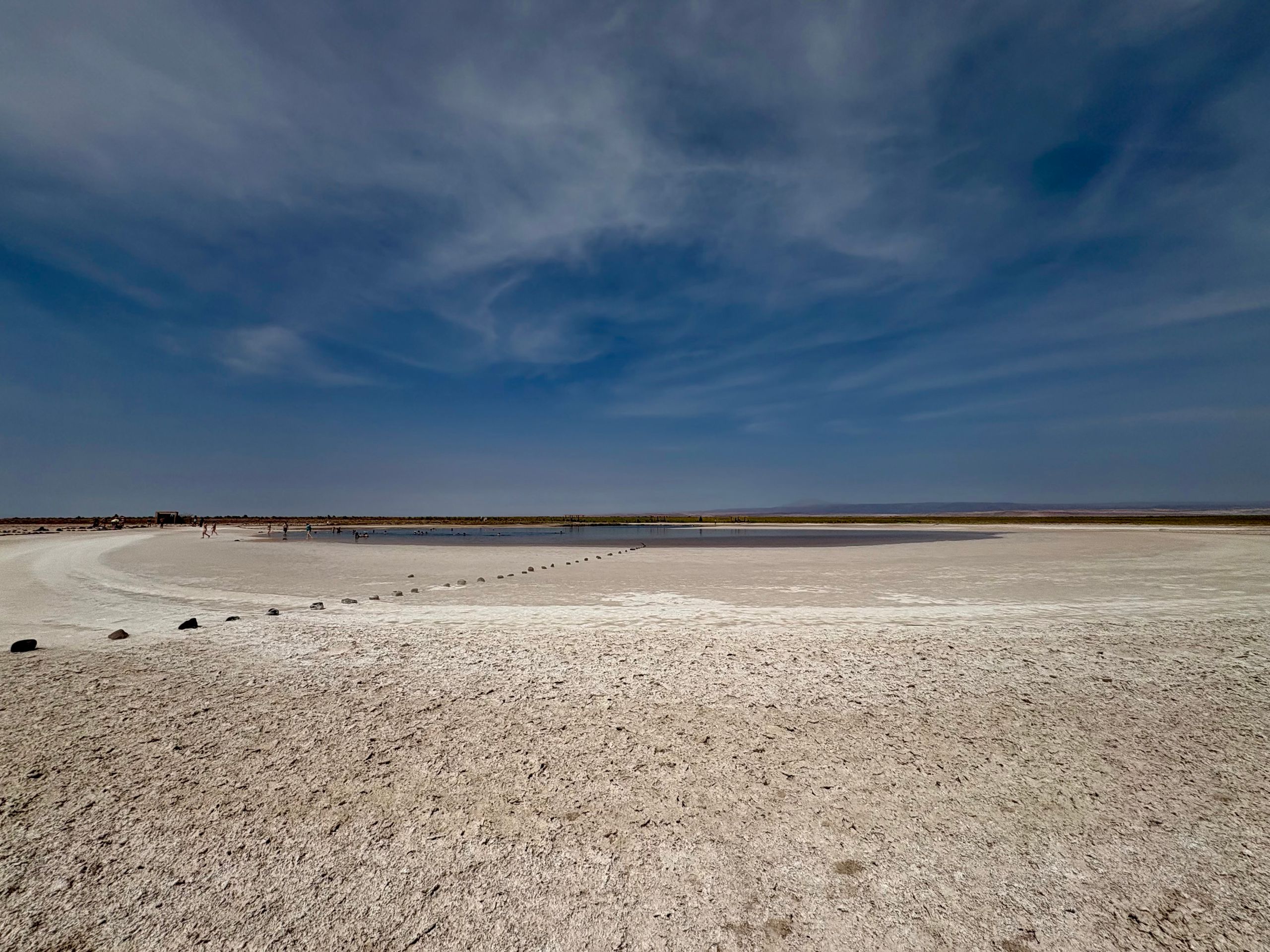
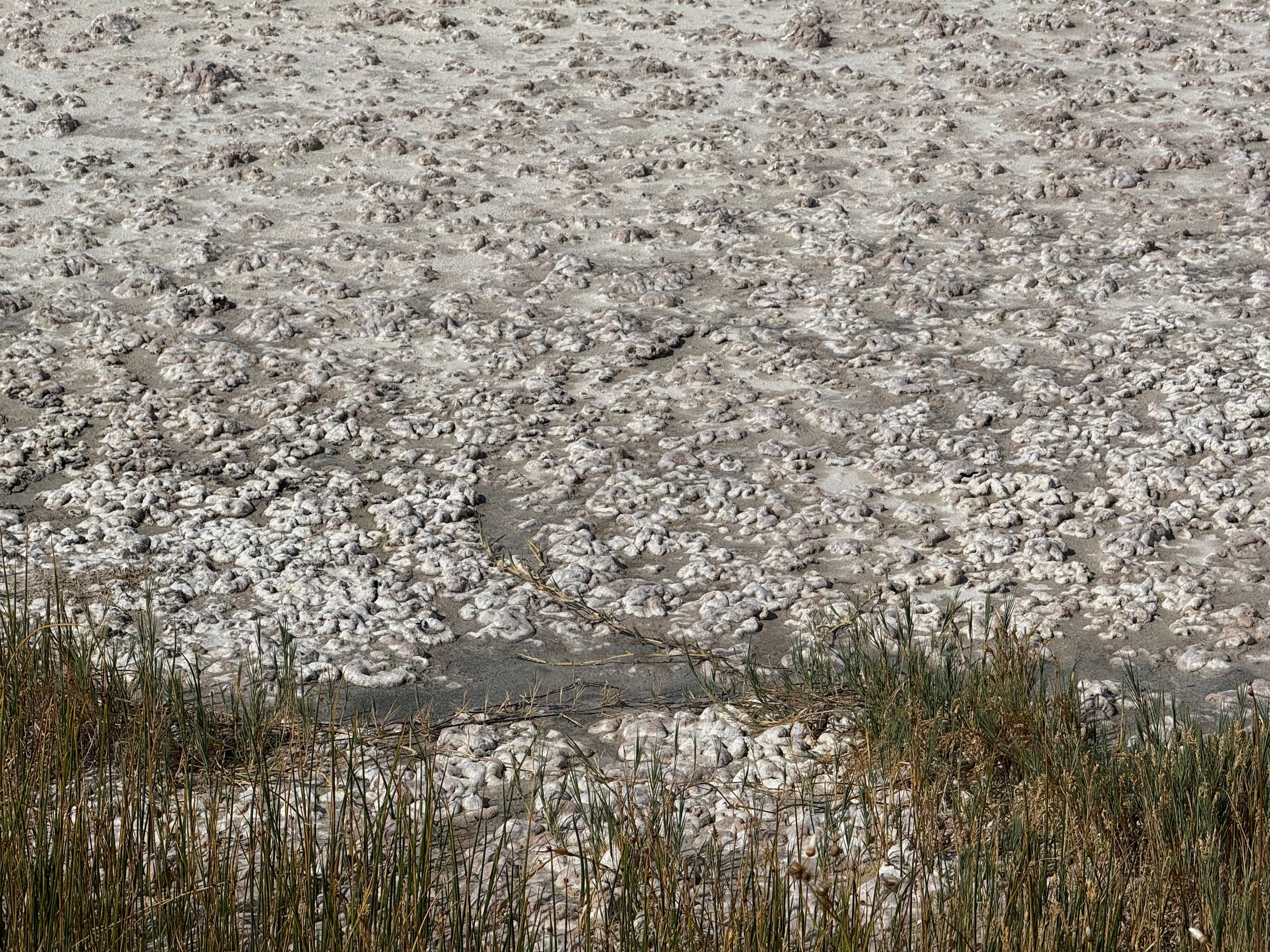
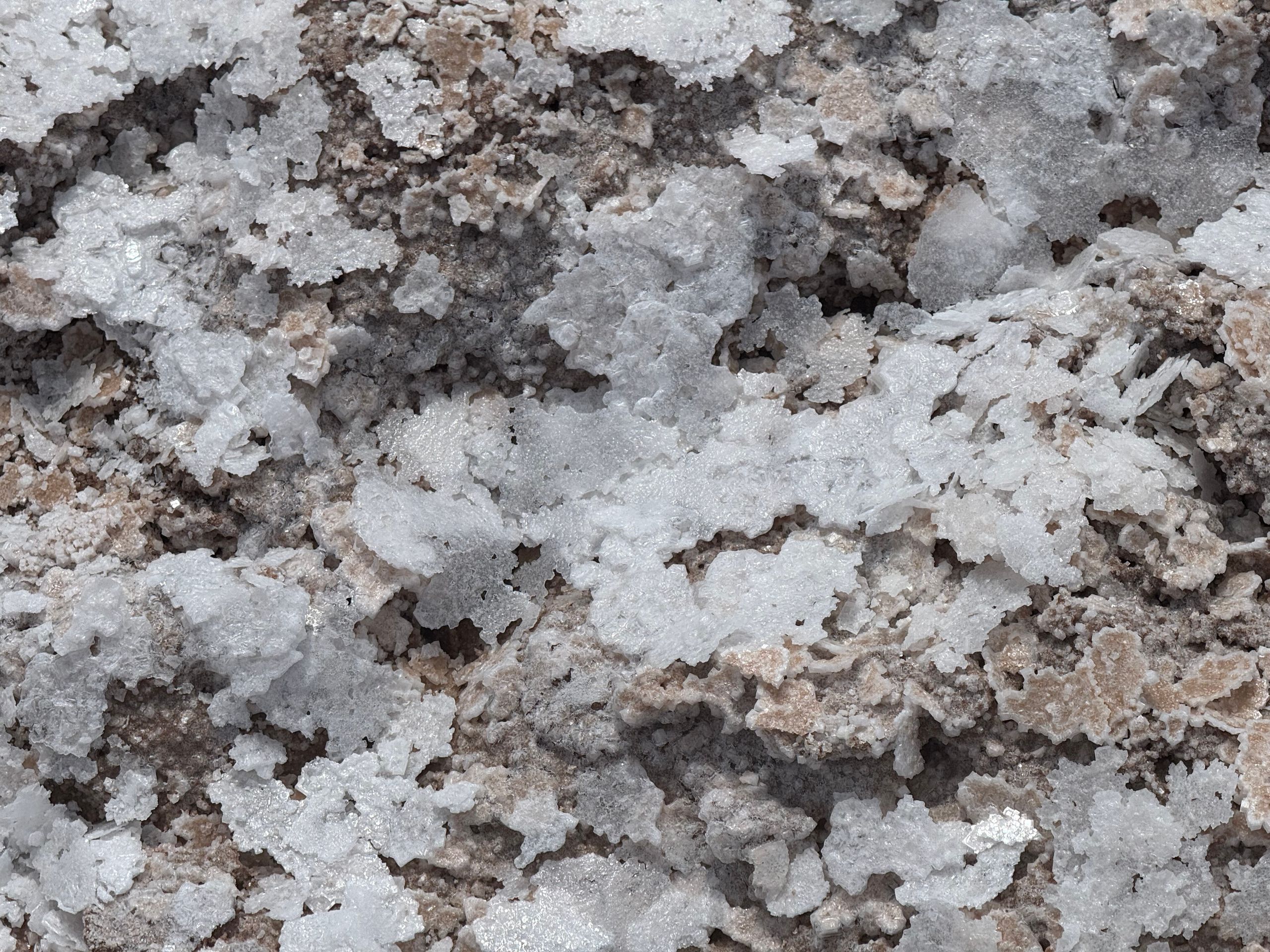
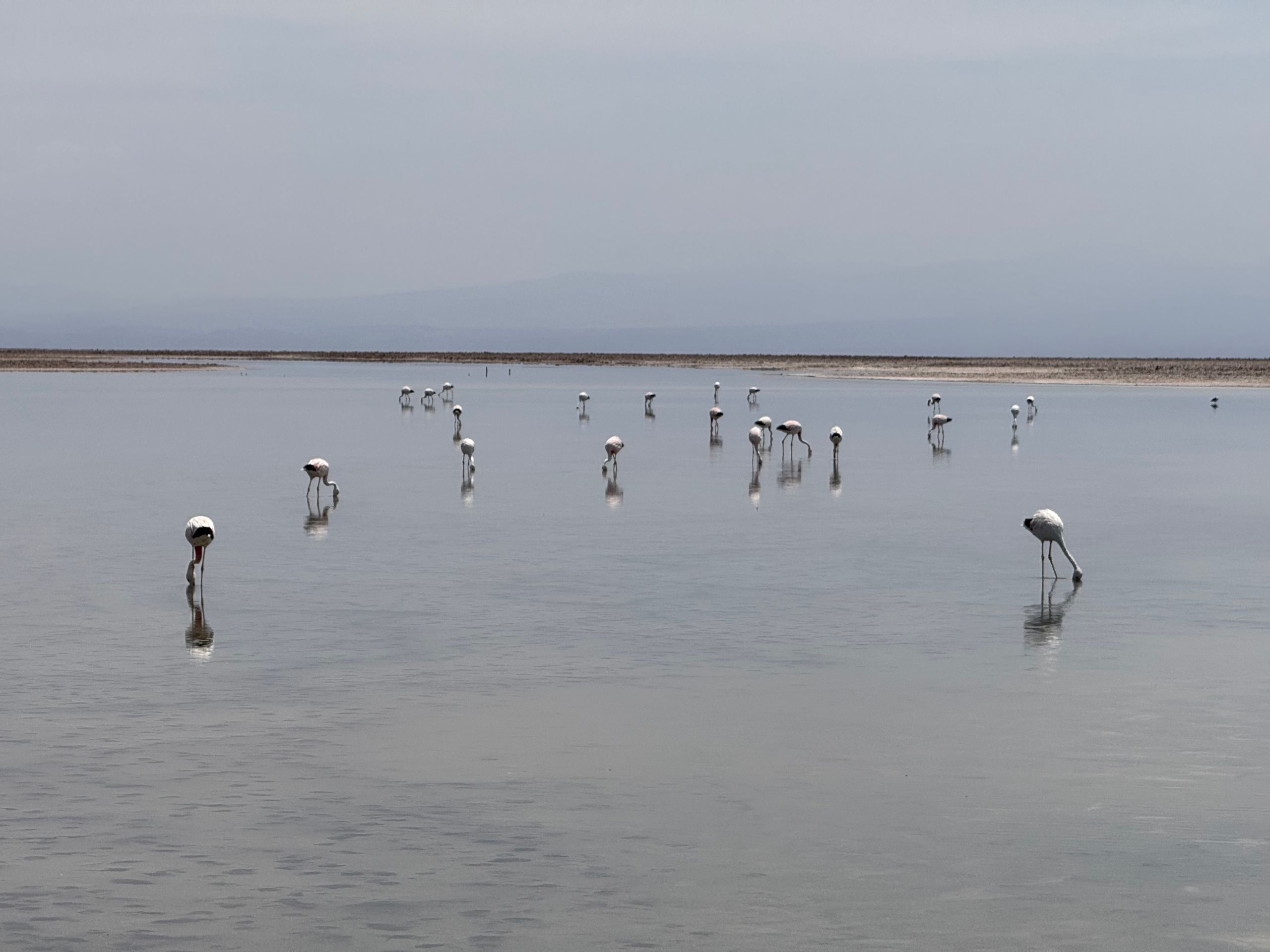
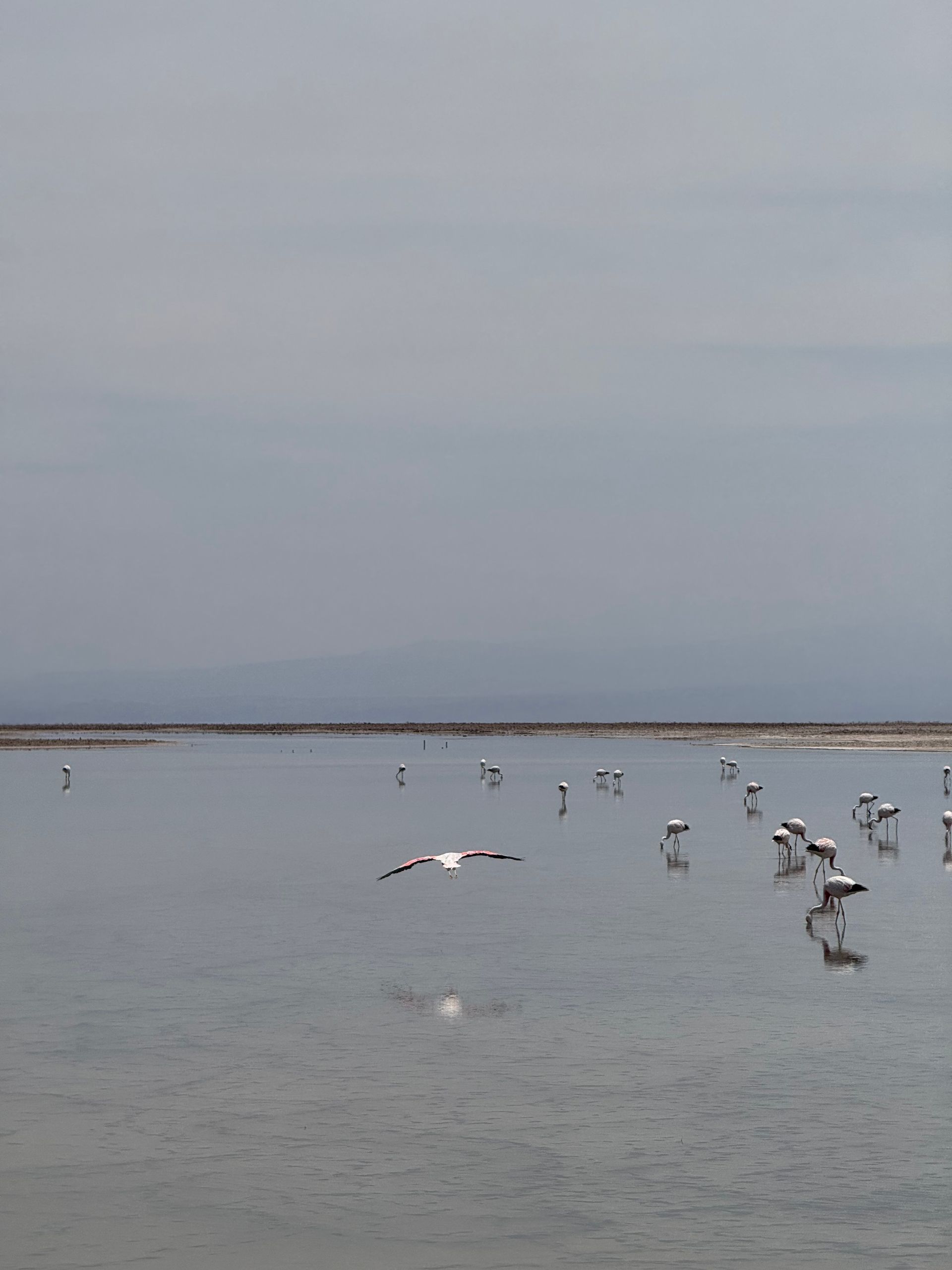
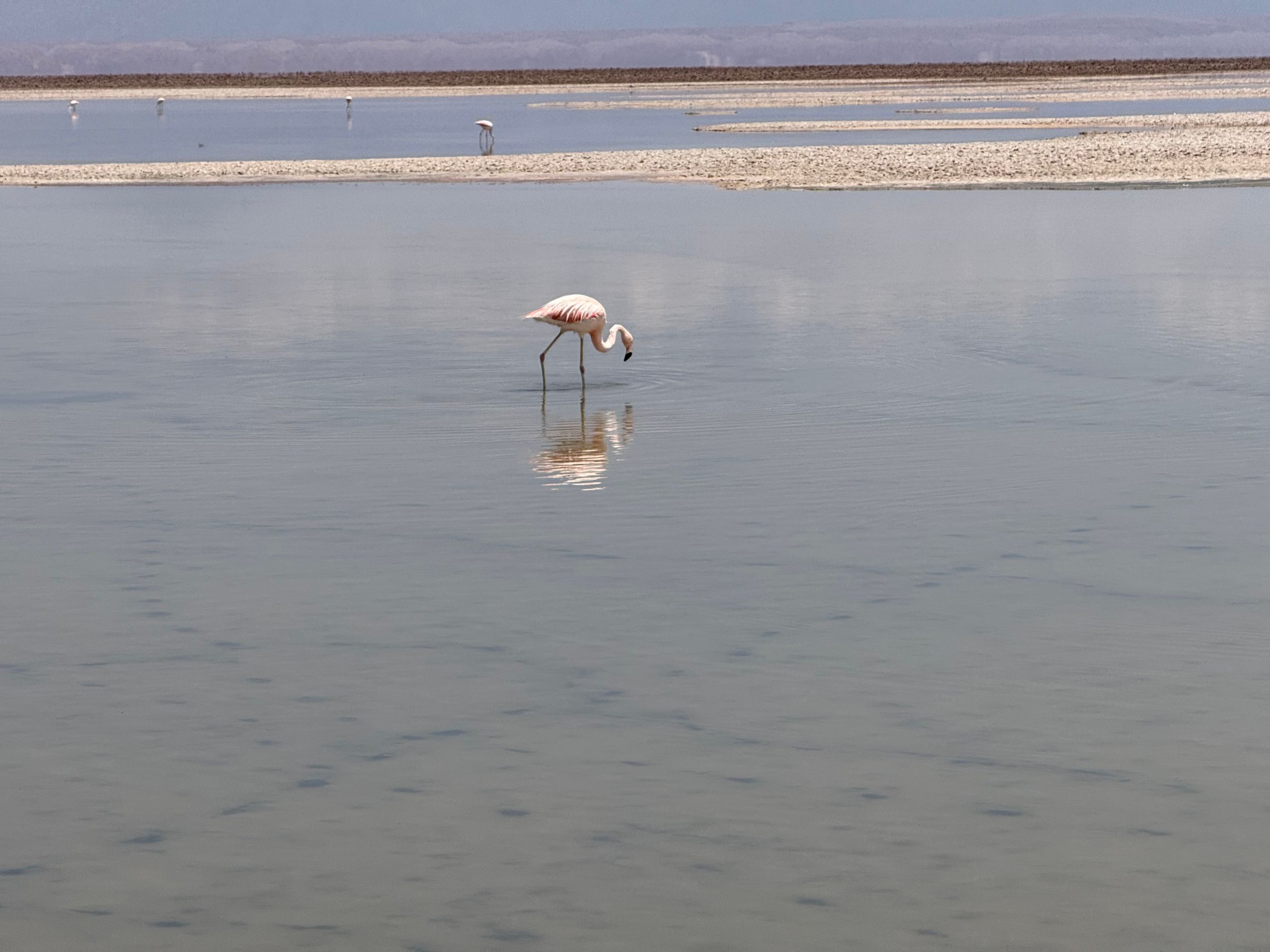
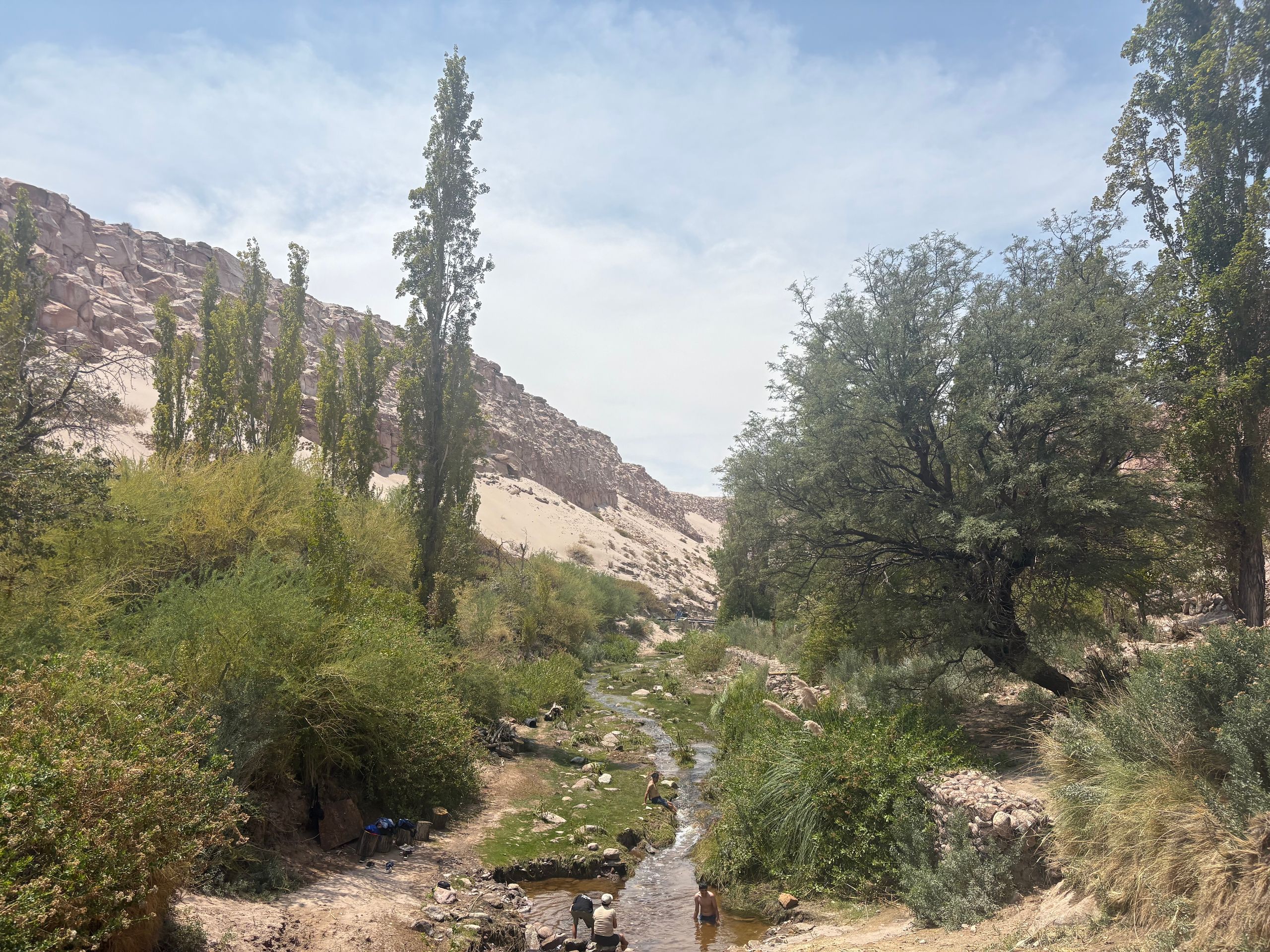
On the first day, we first headed to the Cejar and Piedra salt lagoons, where we could marvel at the expanse of the vast salt flats. The process of getting entrance tickets was absurdly complicated and laborious; we went through this charade in various places frequently. In the end, it does create jobs for the indigenous population, even if one might debate the usefulness of individual tasks. At Piedra, one could even swim - unfortunately it was as cold as our hostel pool. It was a lot of fun, but we couldn't swim properly since the high salt content made it impossible to keep our legs submerged. After that, we continued to Laguna Chaxa, a protected area for flamingos, and then to Jere, one of the many small oases in the desert.
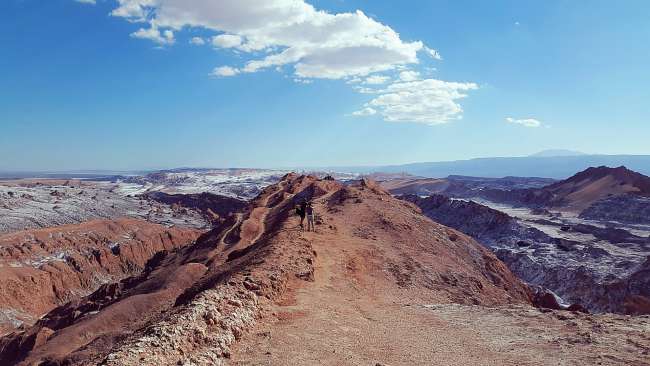
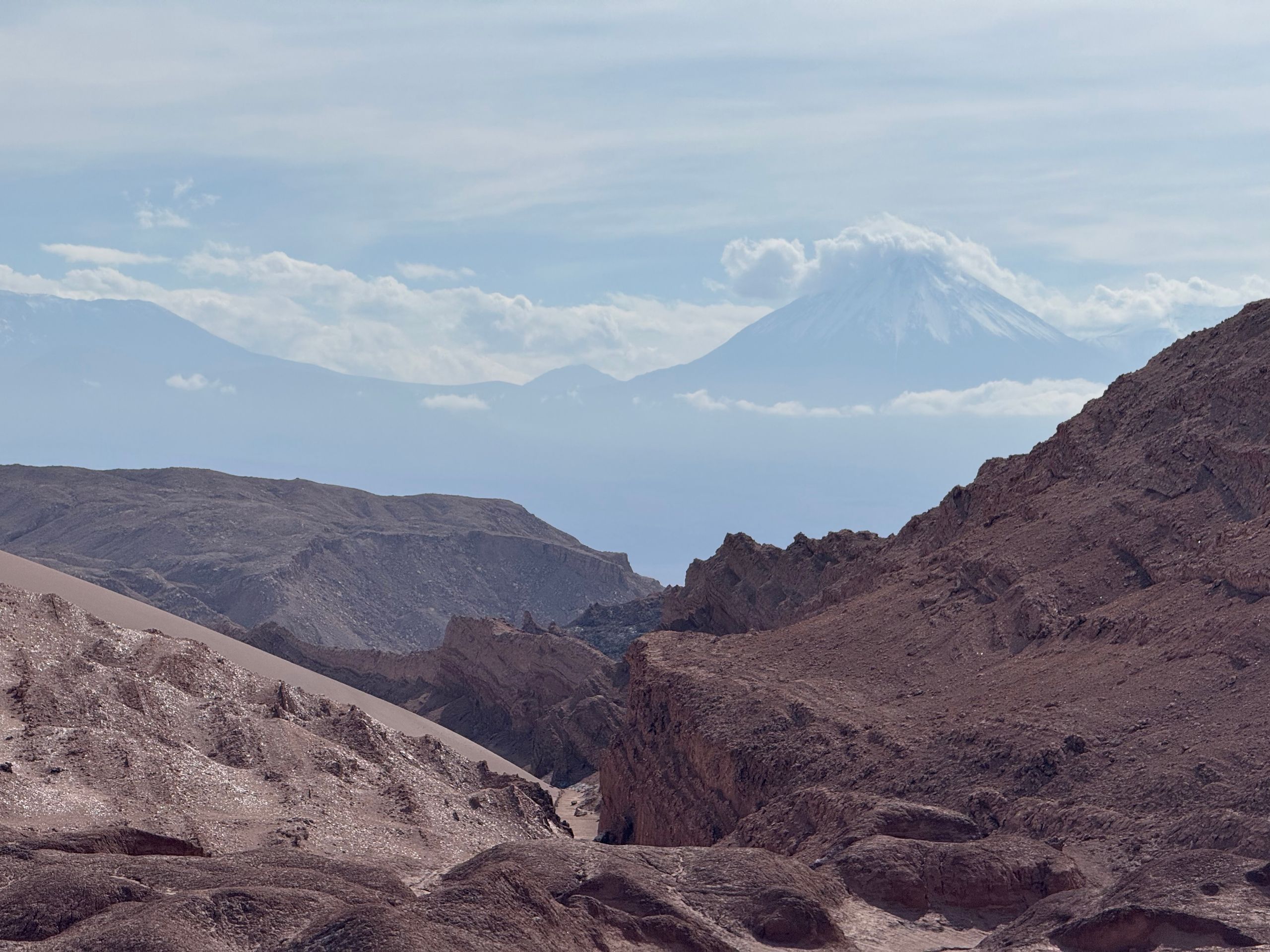
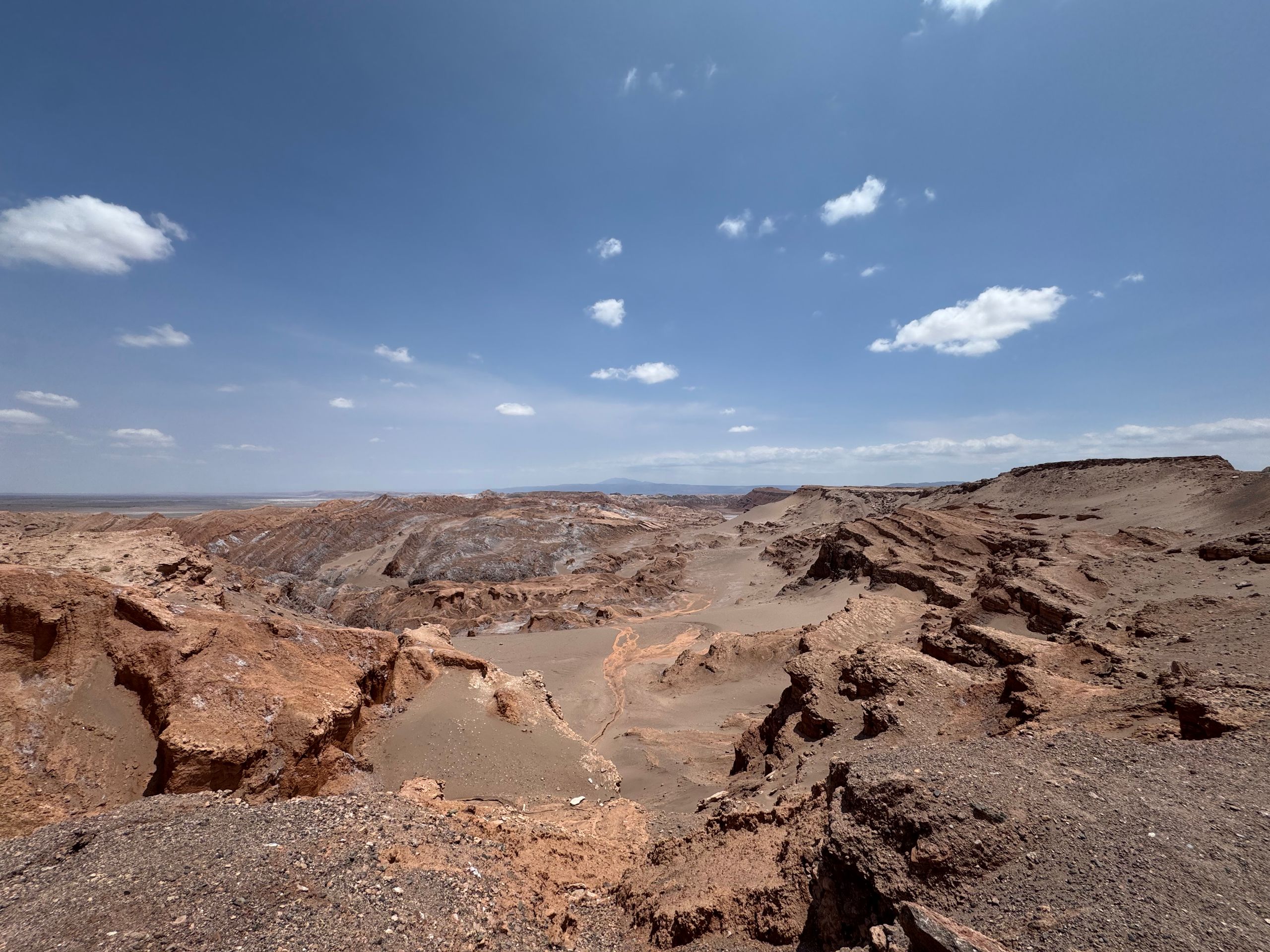
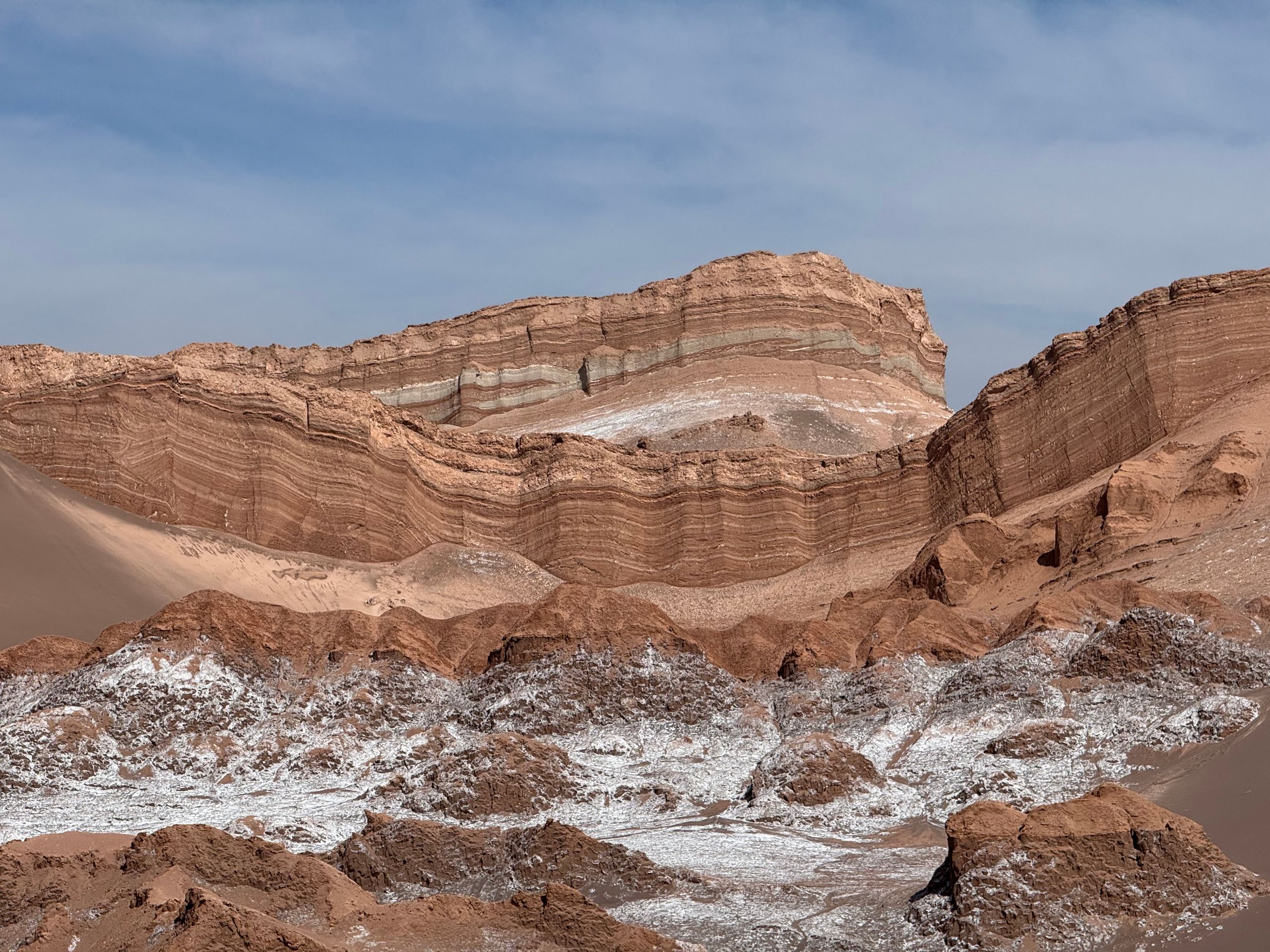
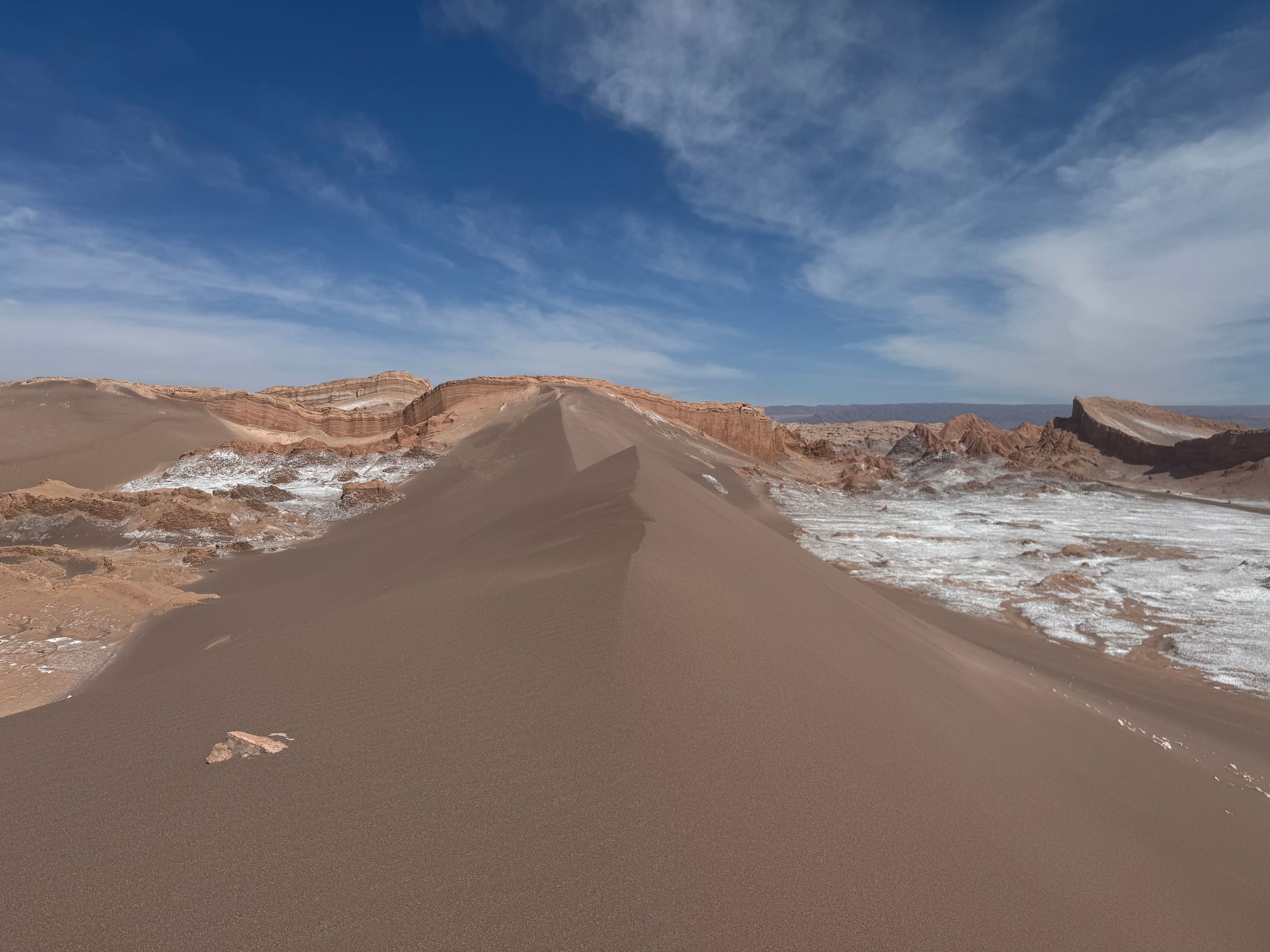
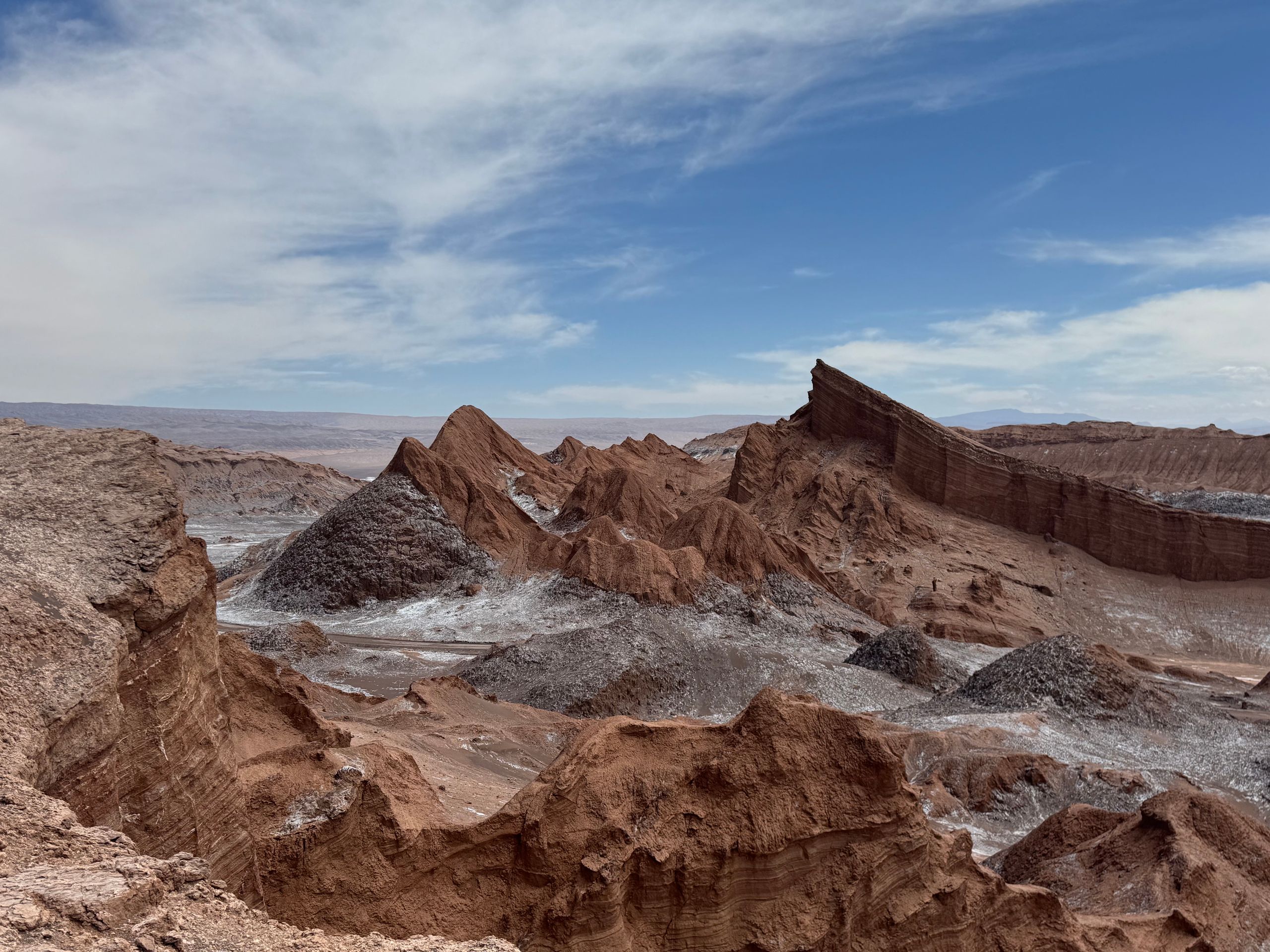
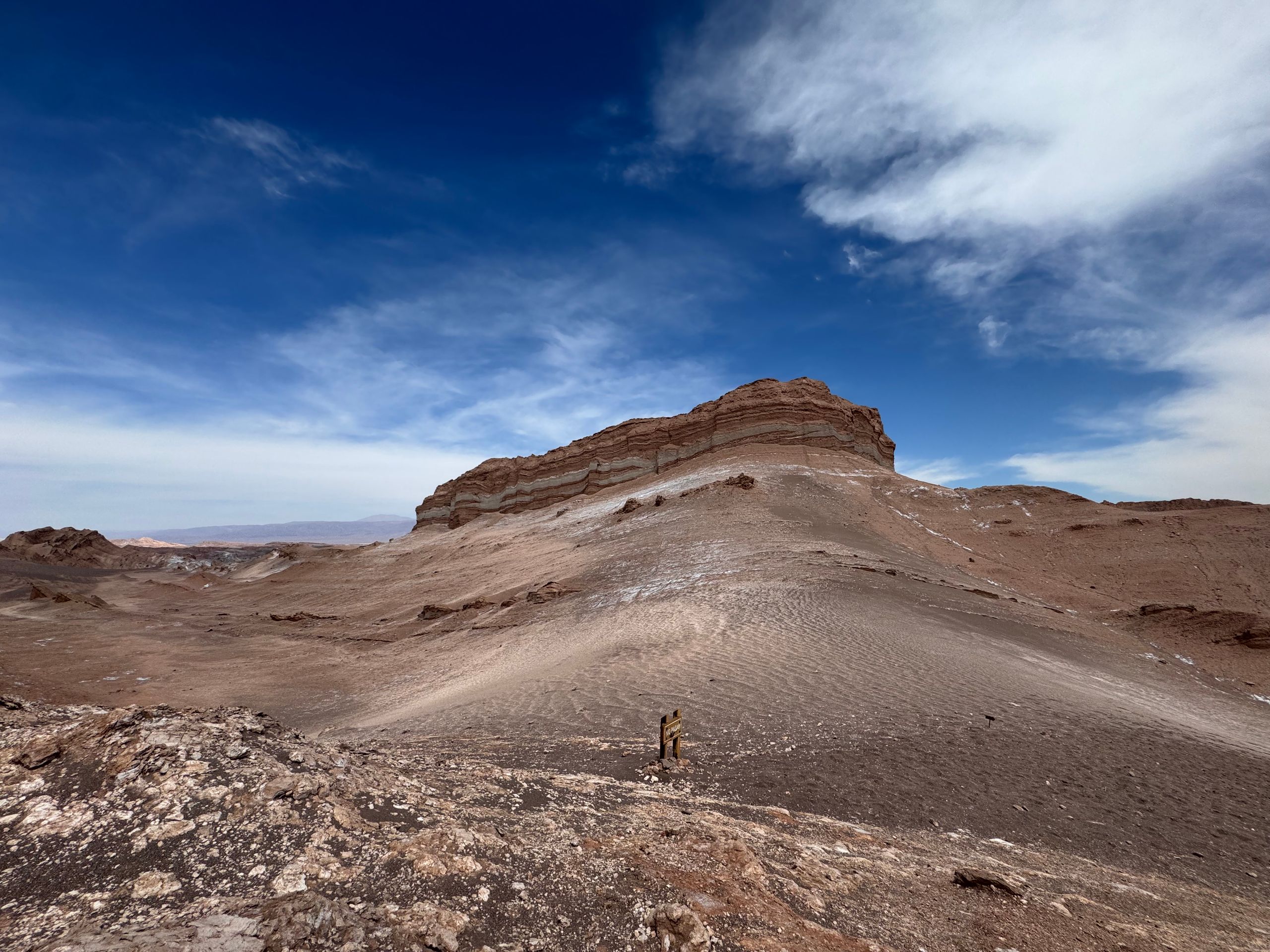
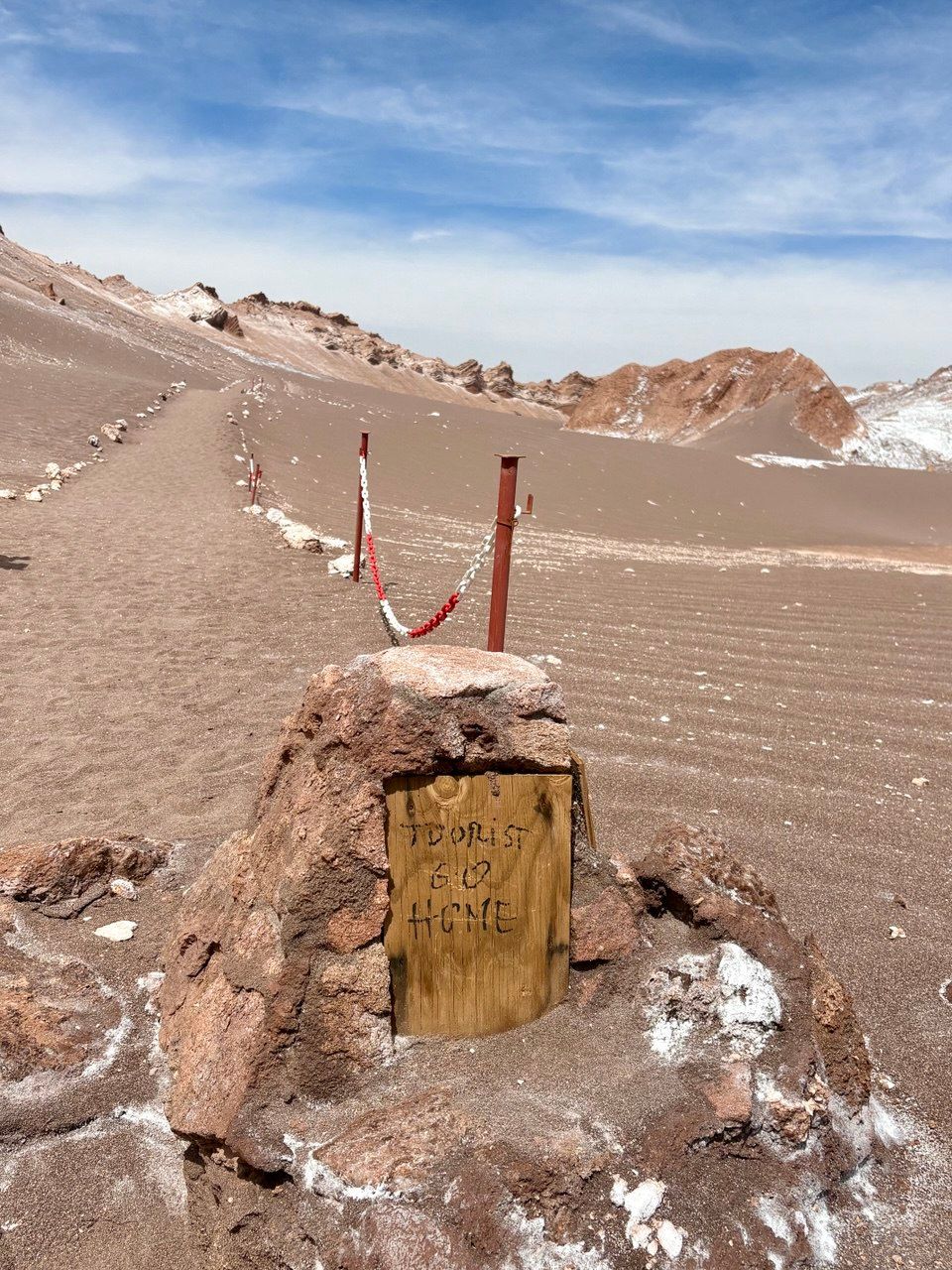
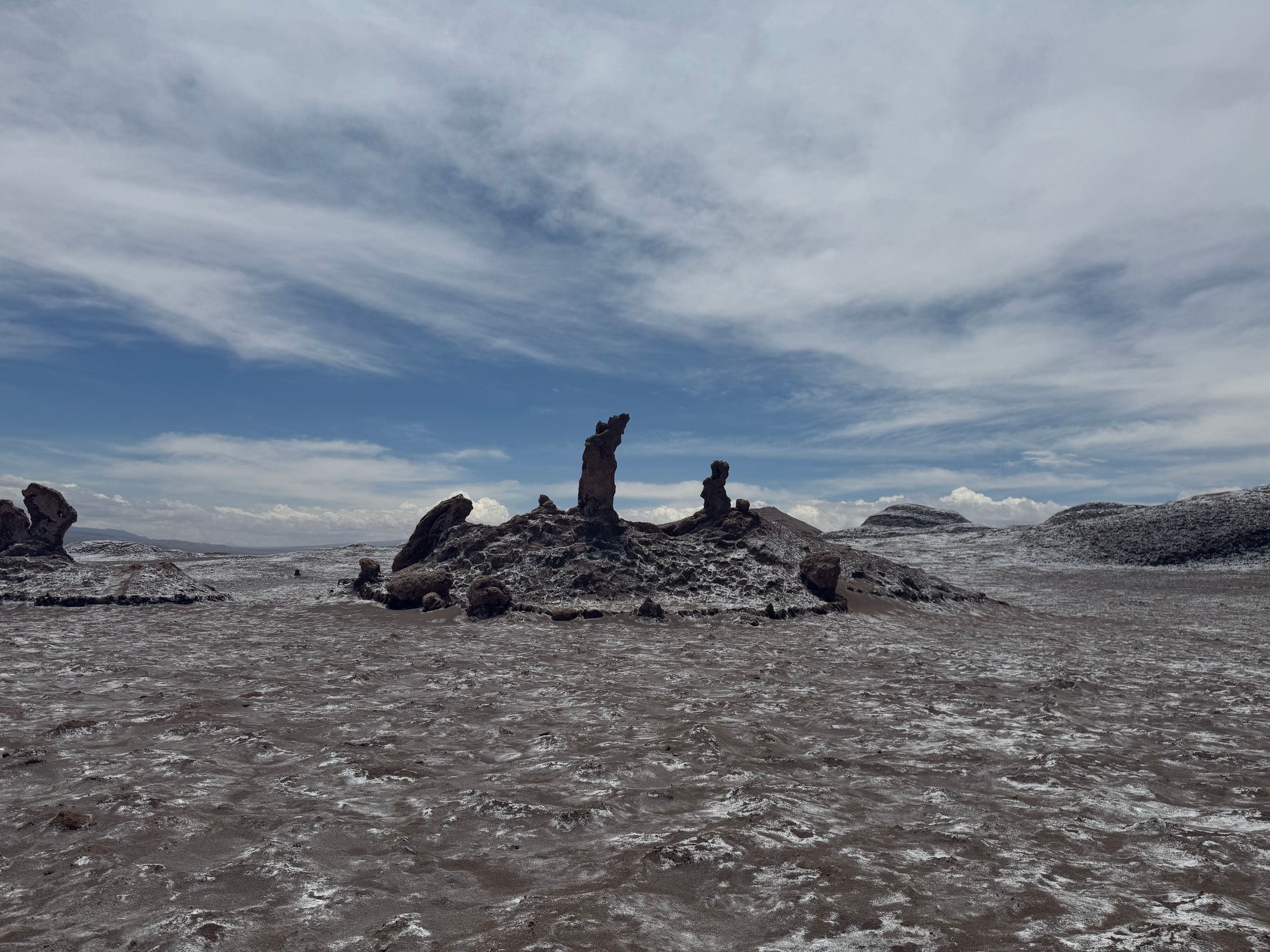
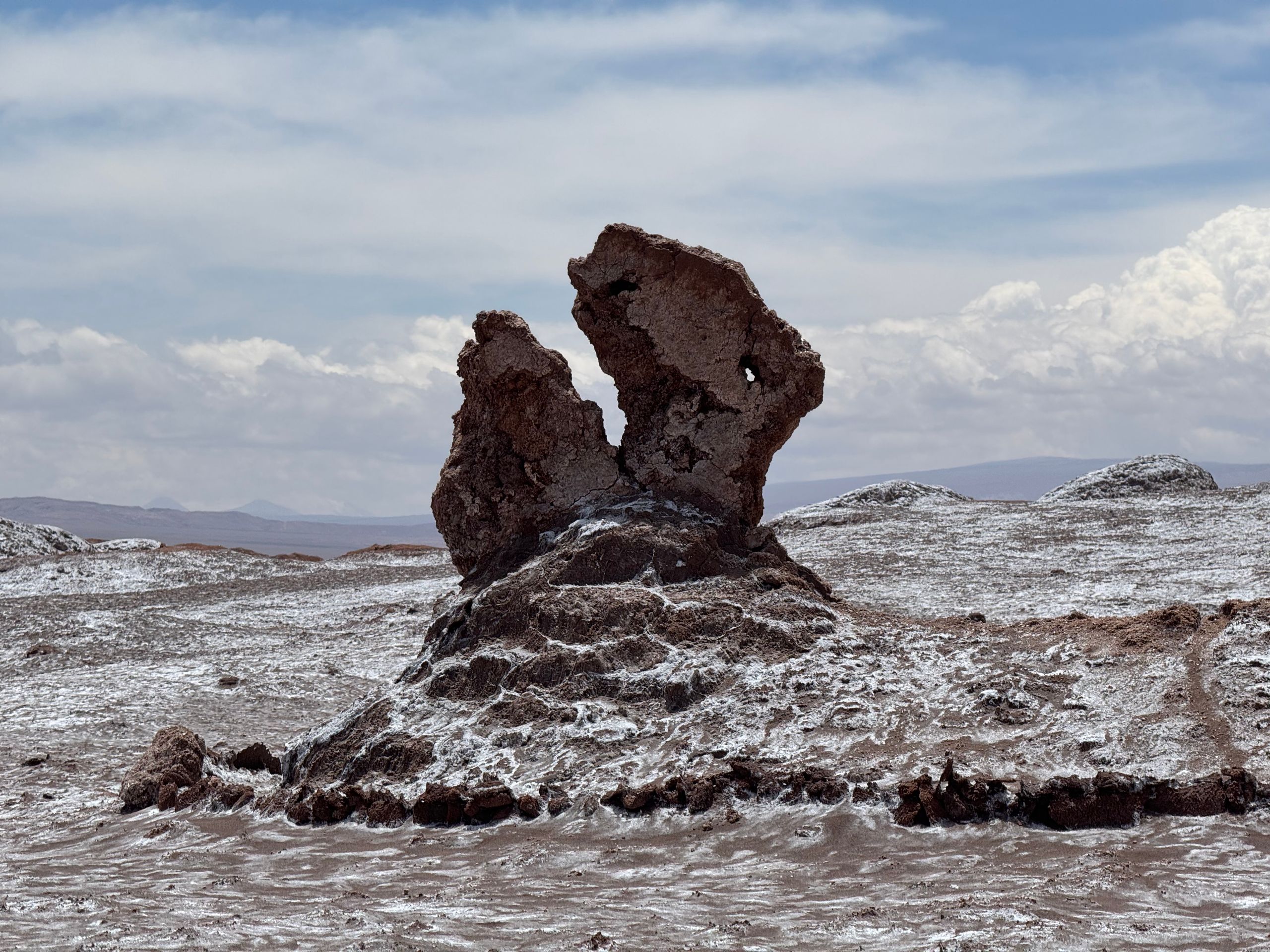
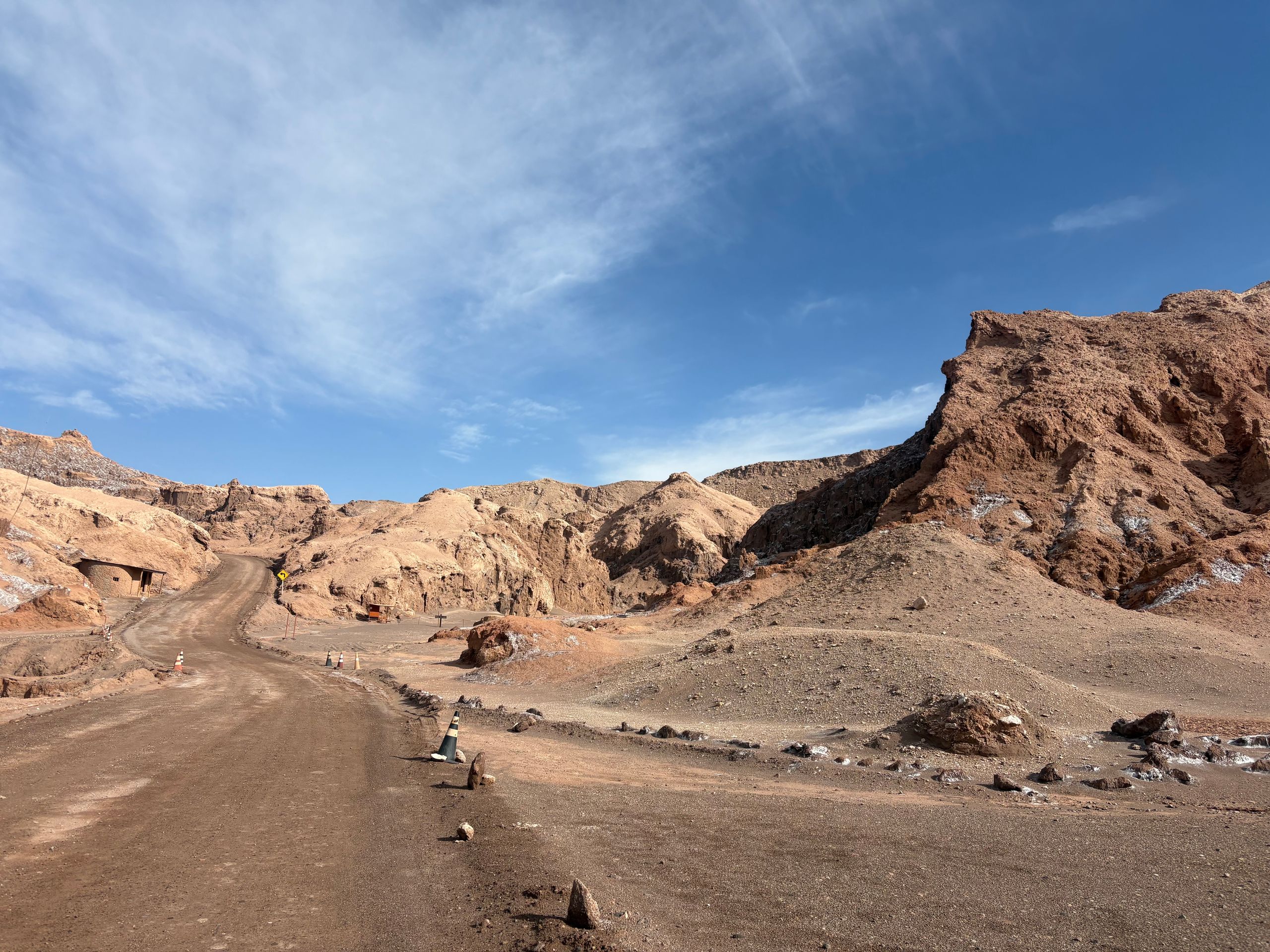
On day 2, we went to Valle de la Luna, which truly honored its name, as one really feels like being in outer space. Here one could walk various small circular trails ranging from 30 minutes to 1 hour and admire the beautiful colors and shapes, the expanses and the sand dunes.
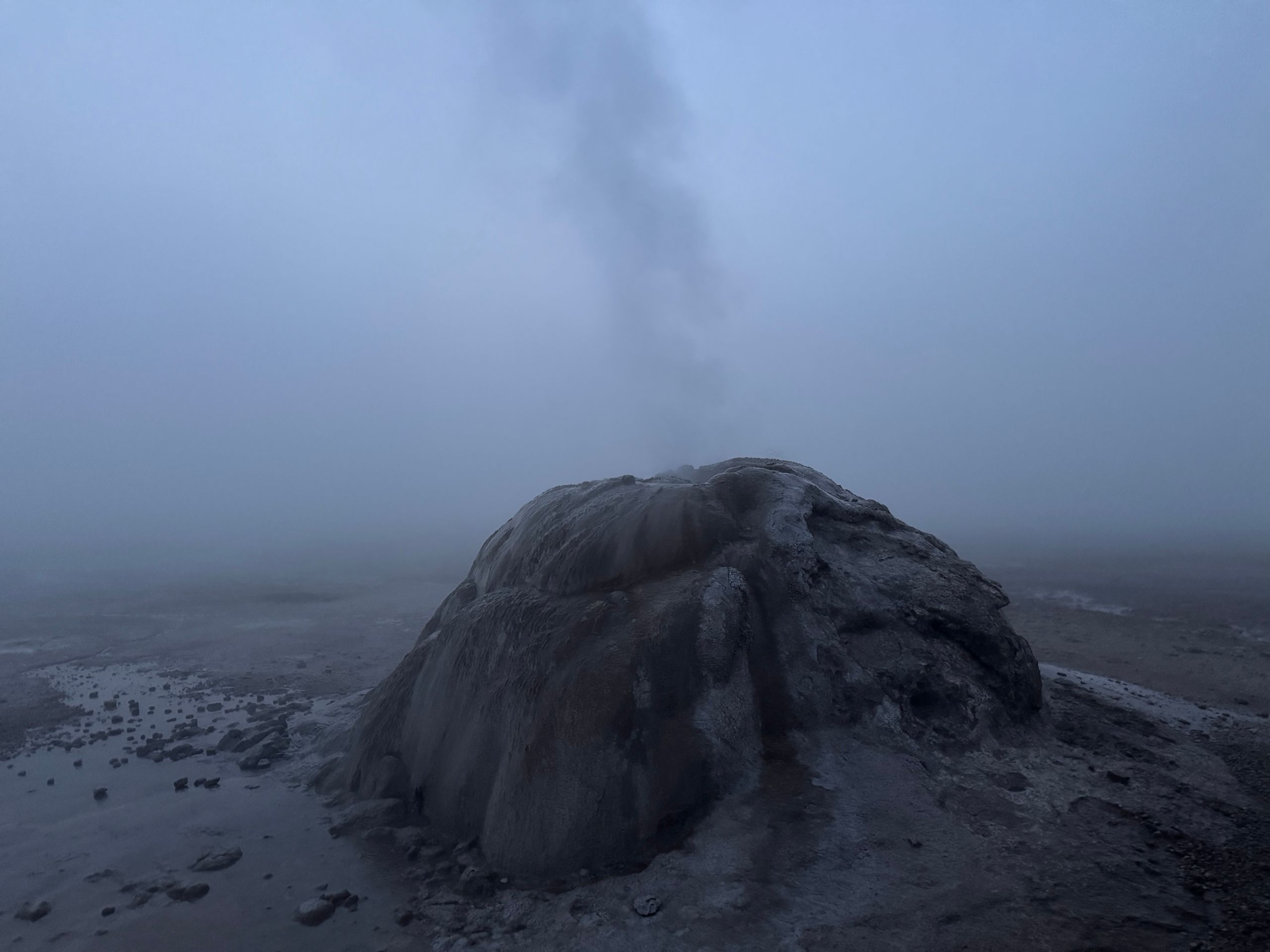
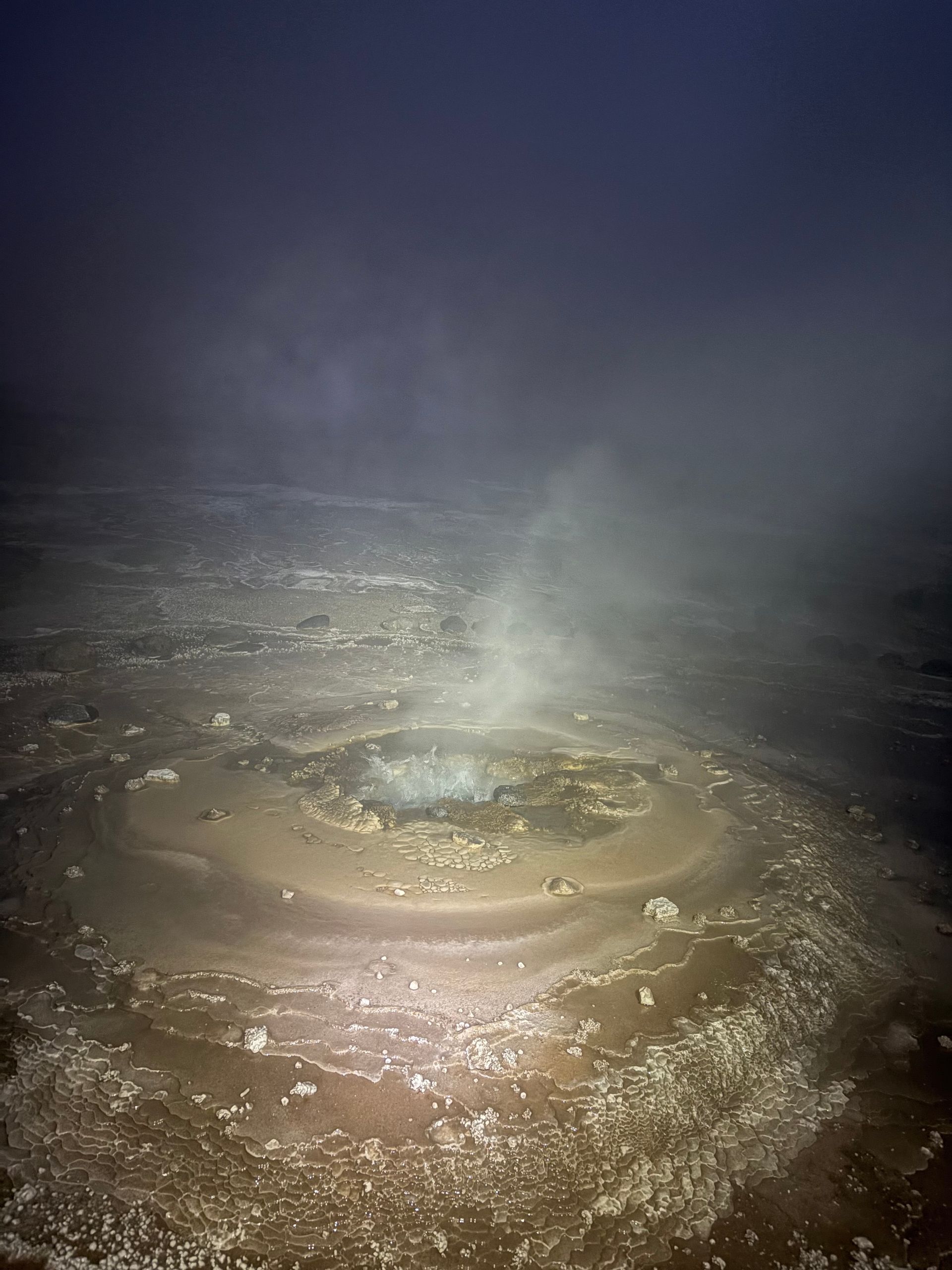
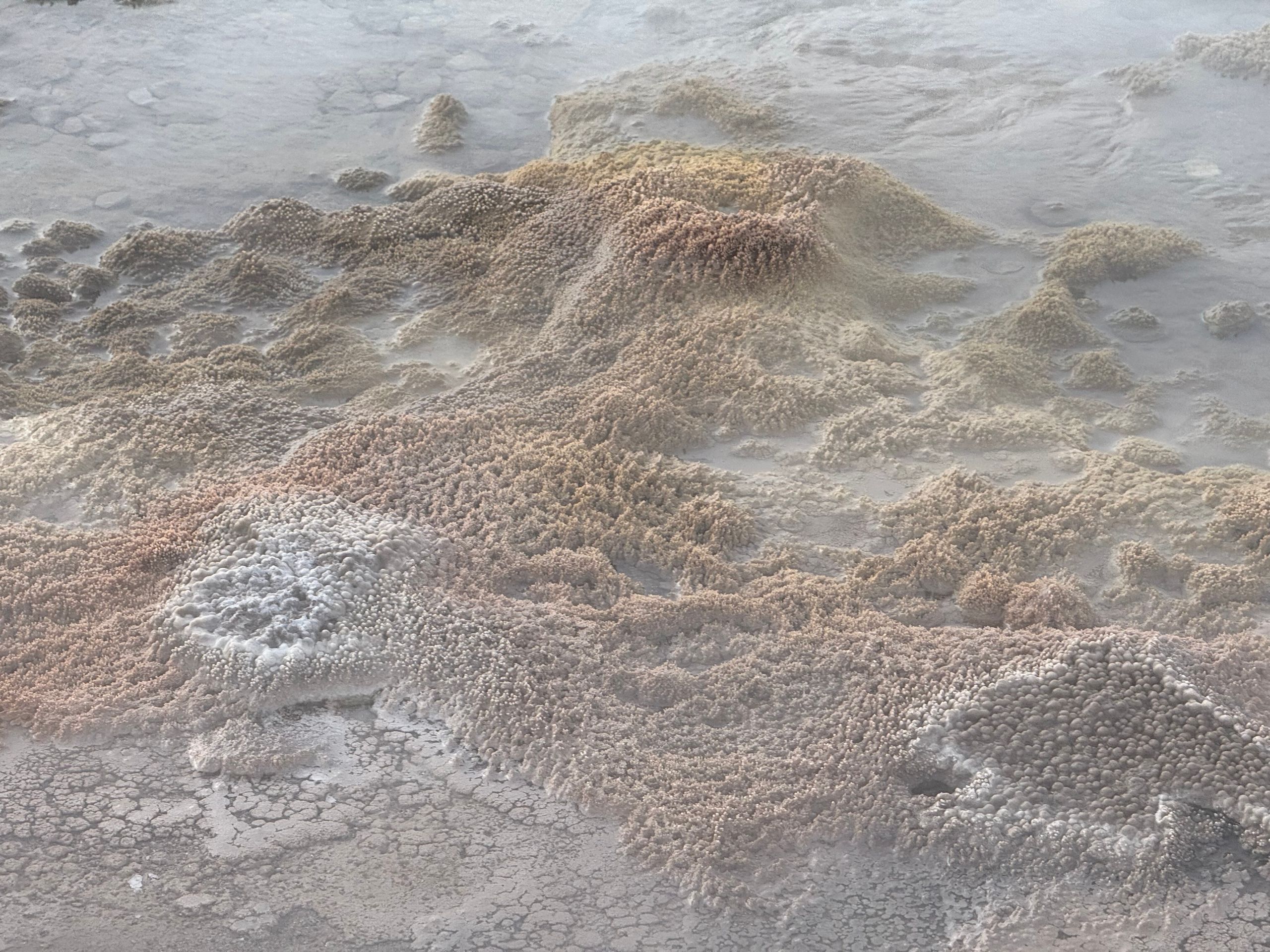
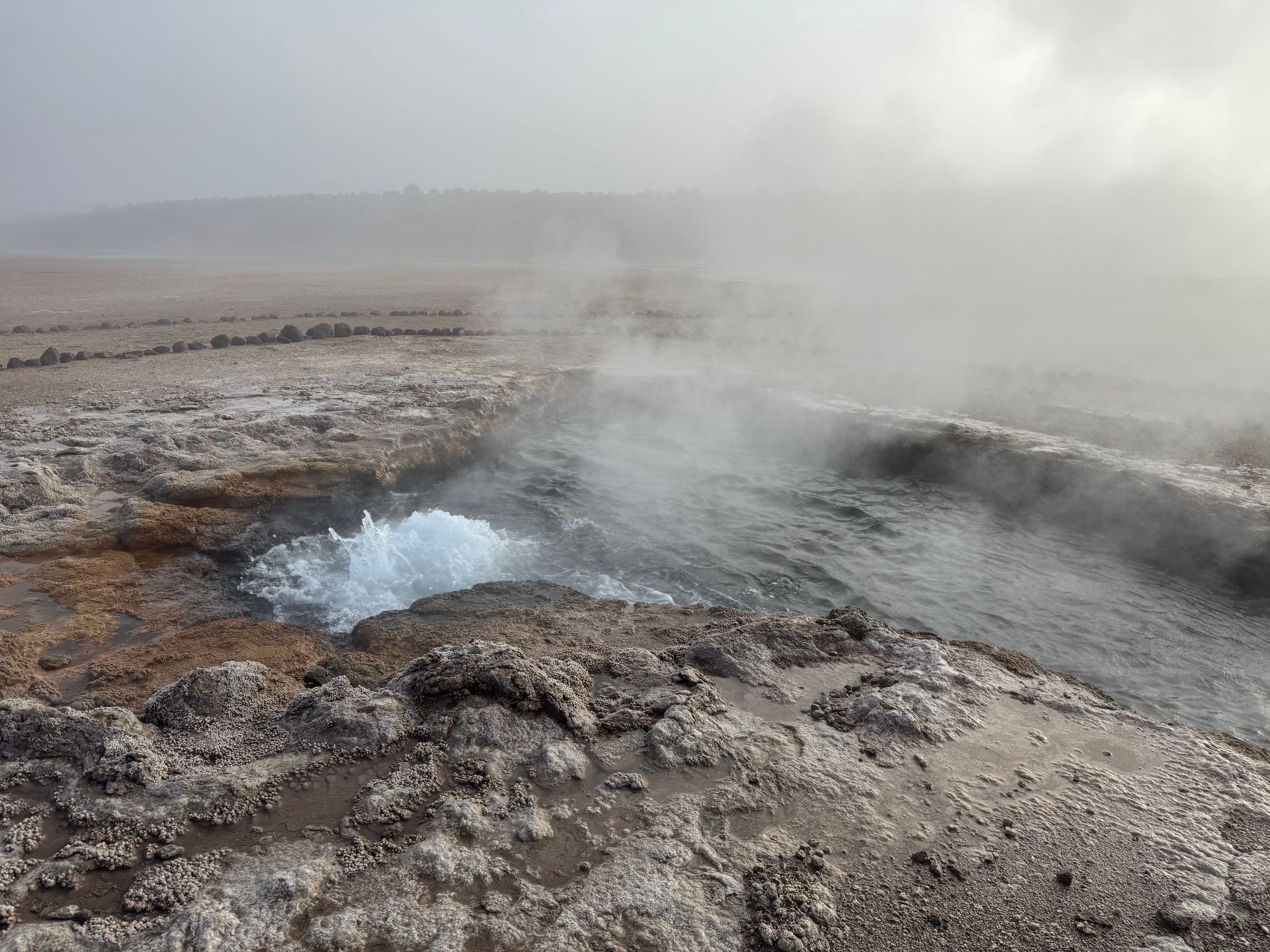
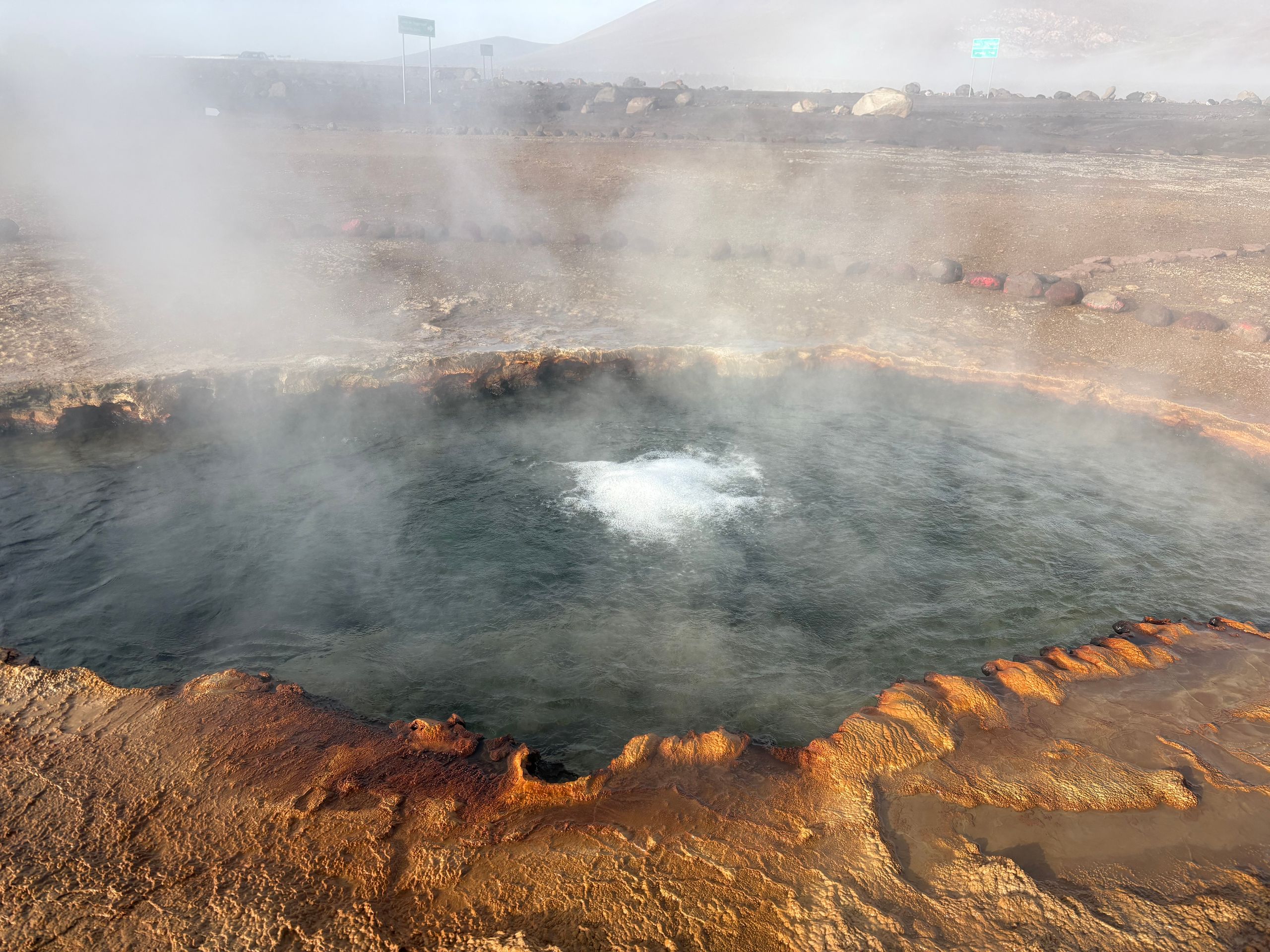
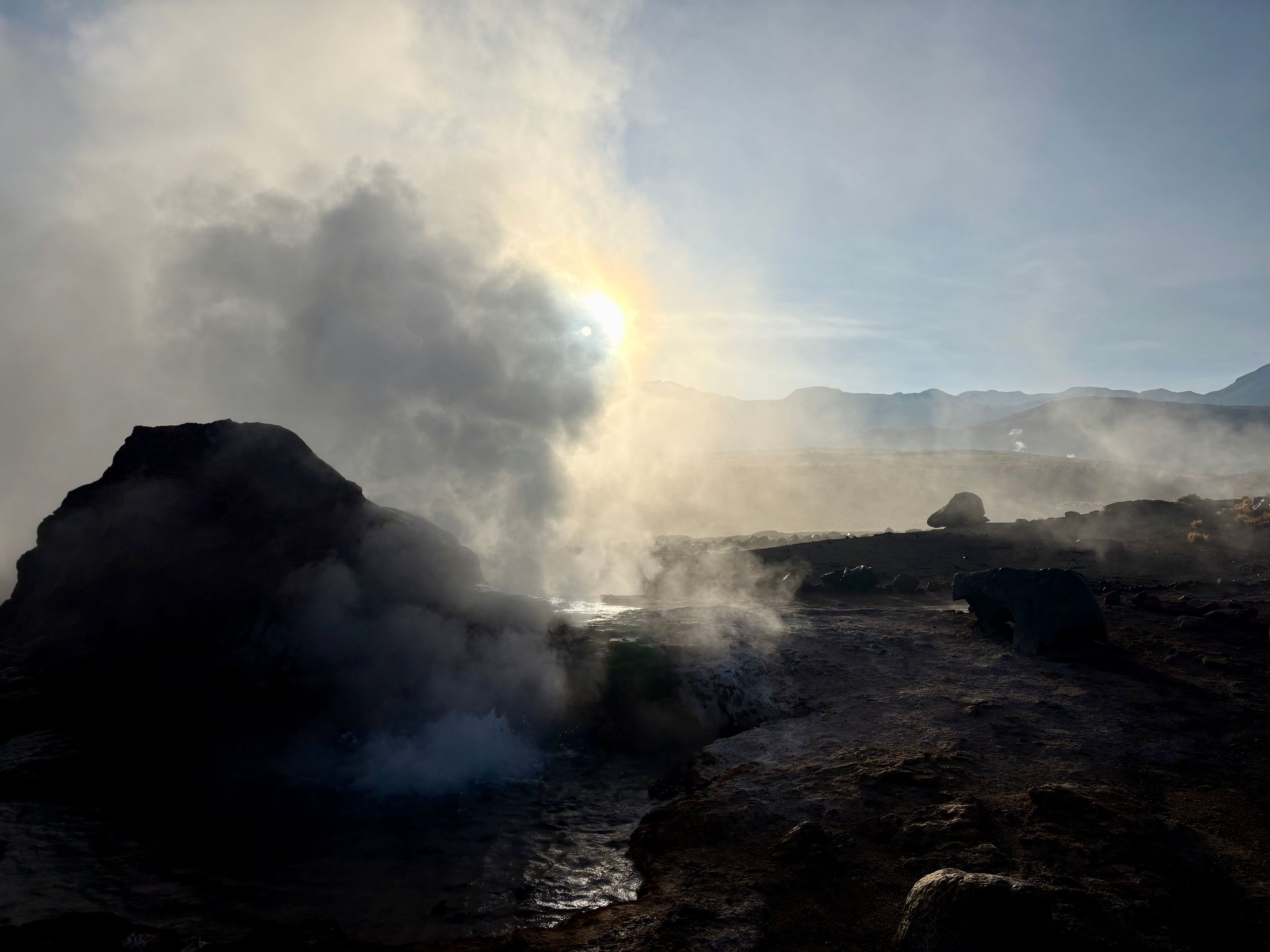
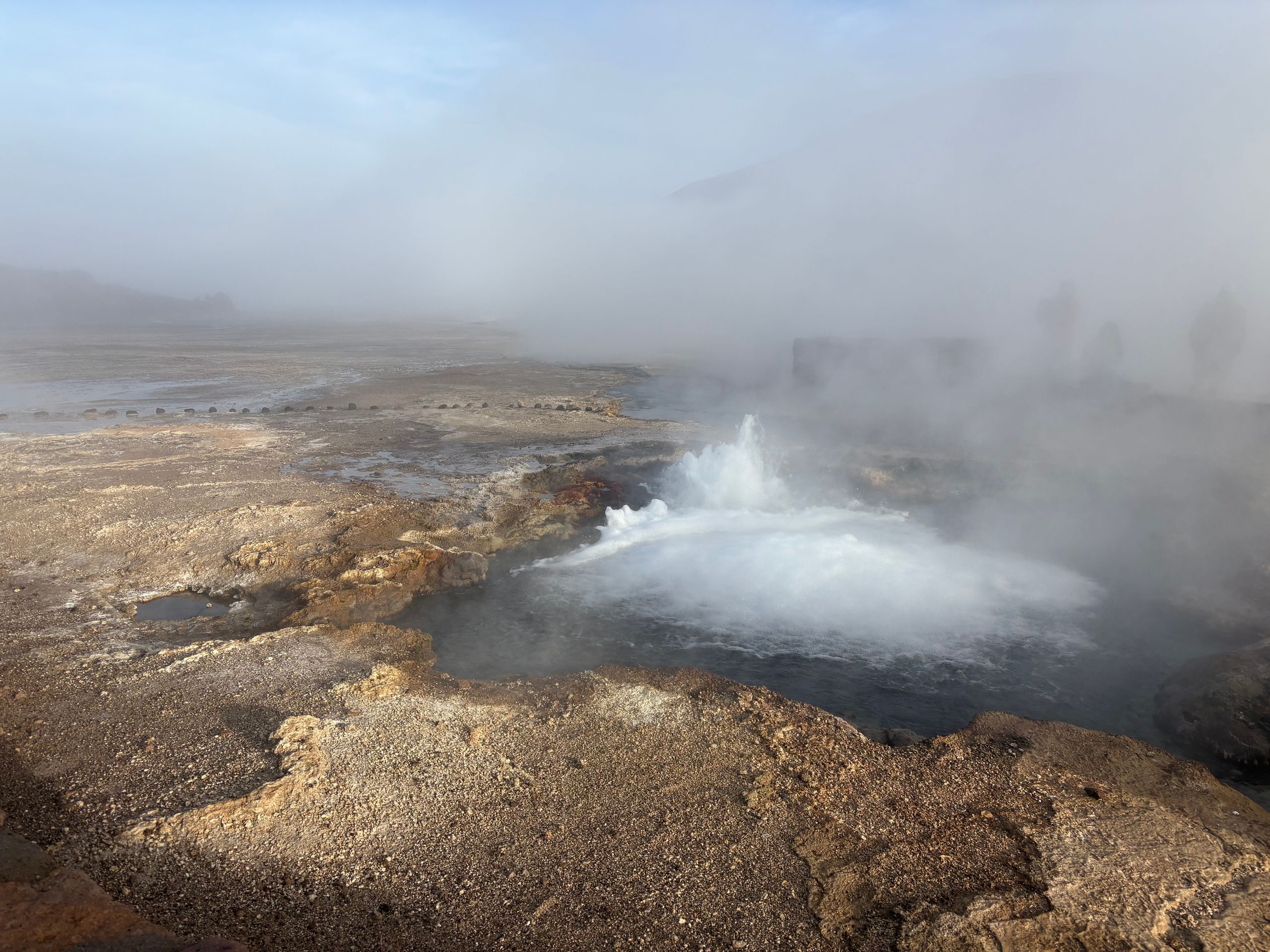
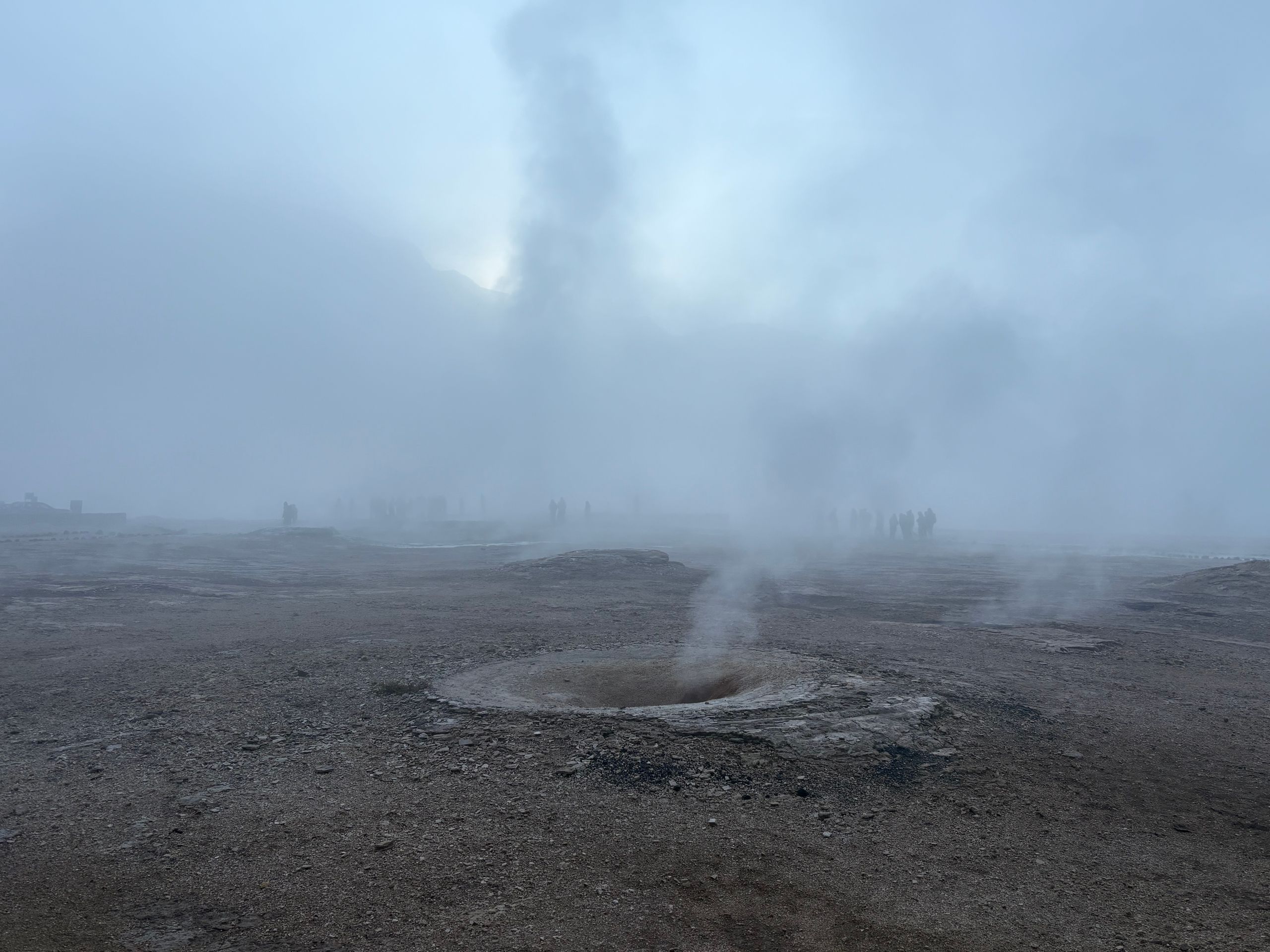
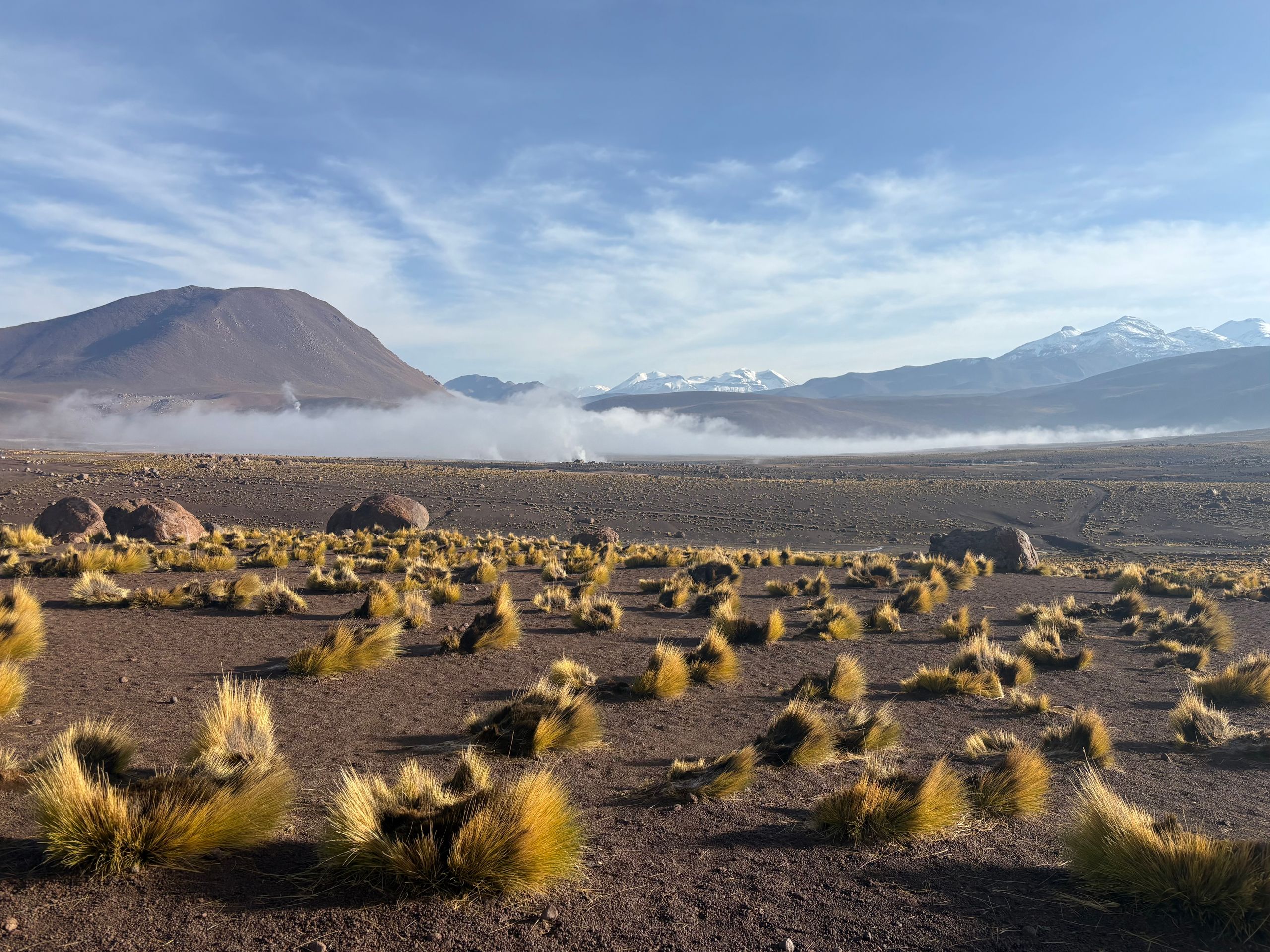
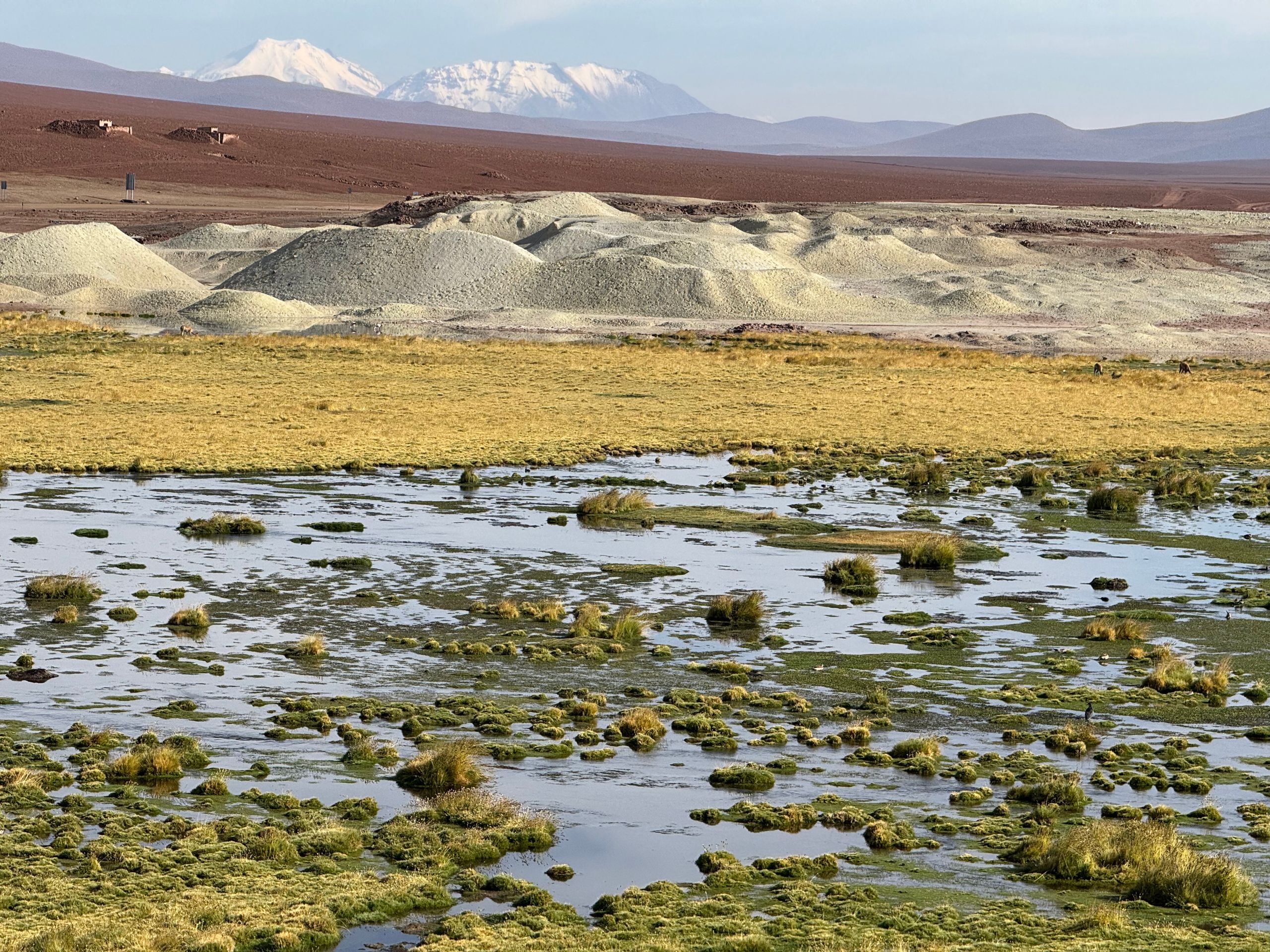
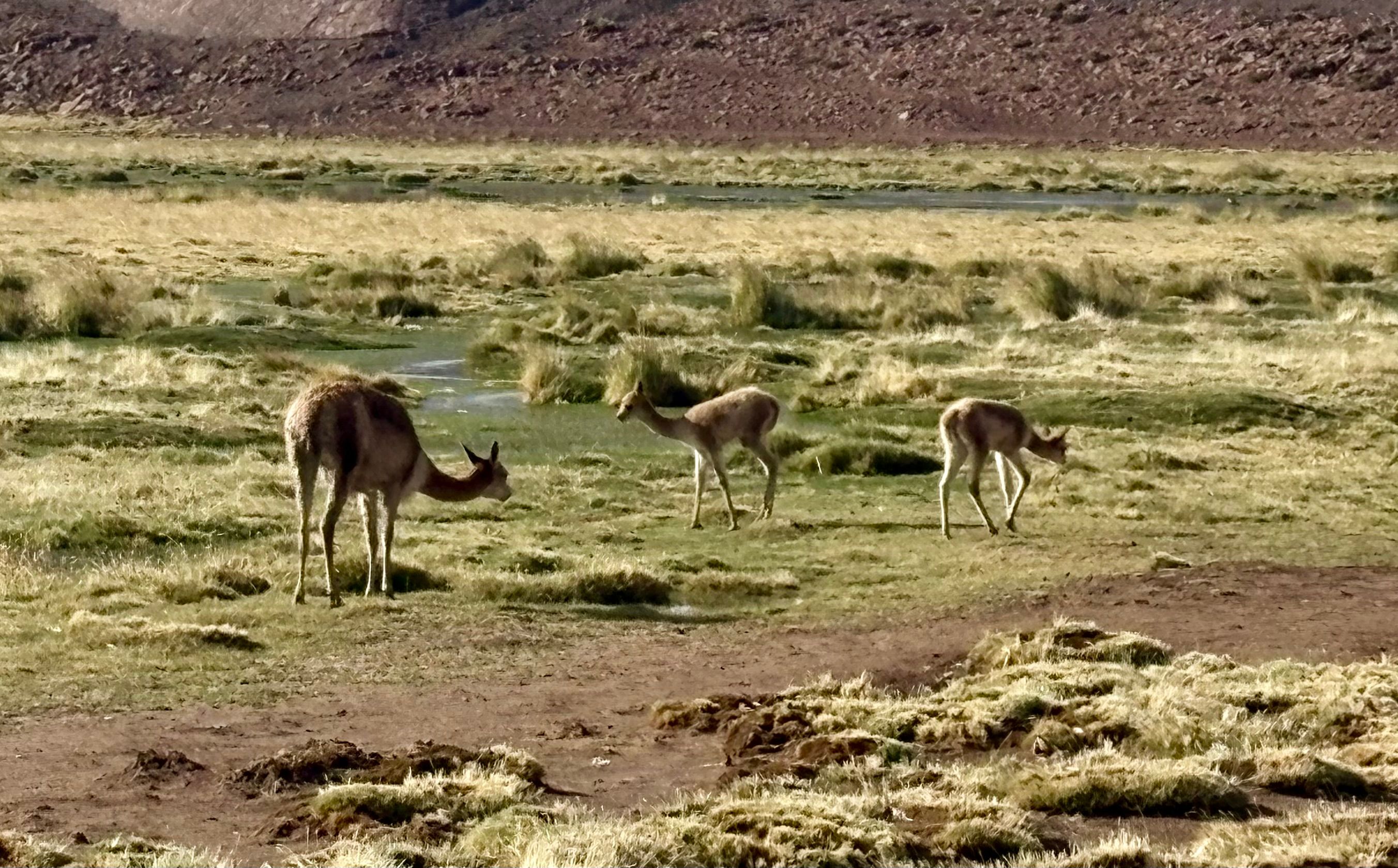
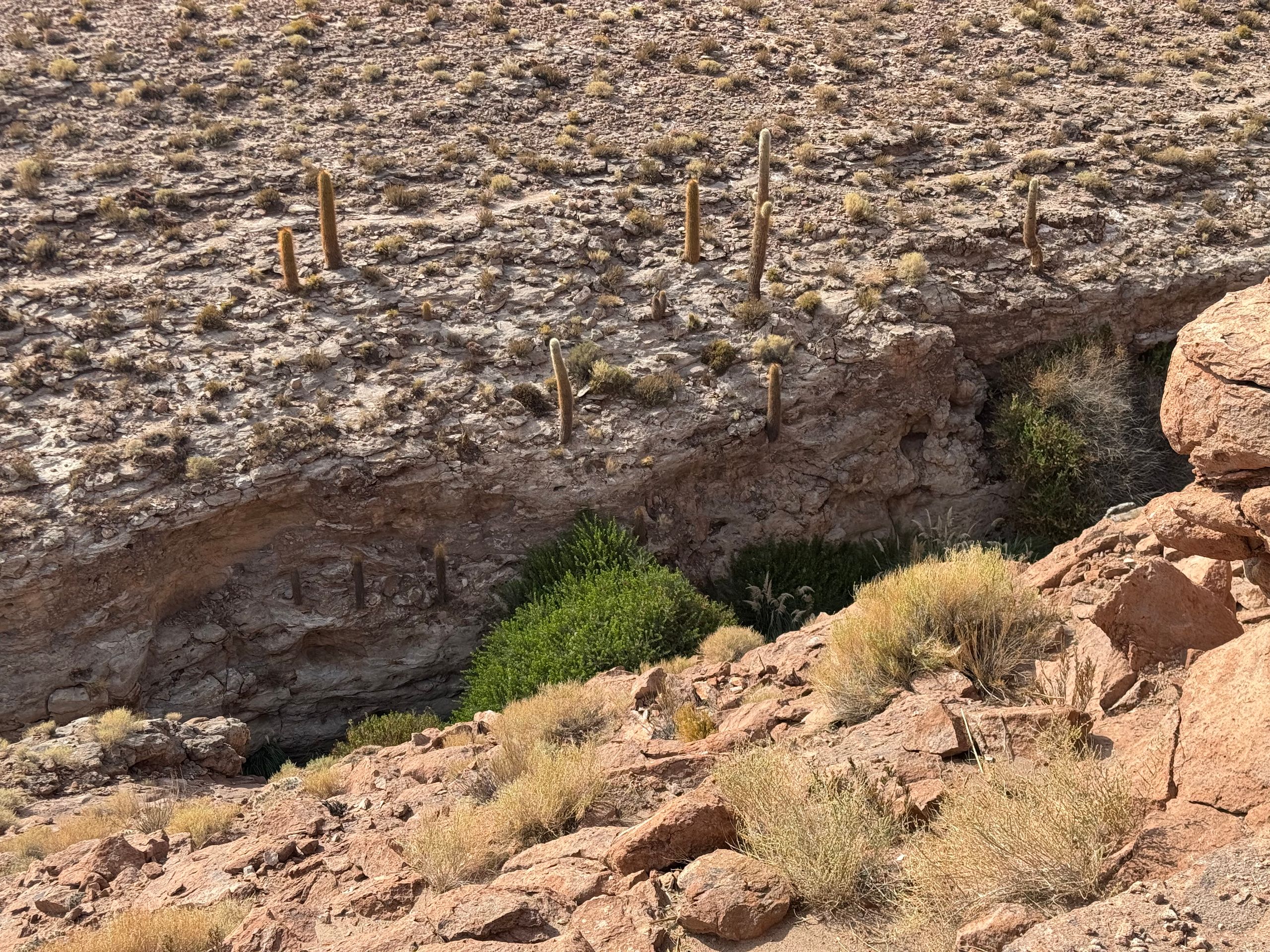
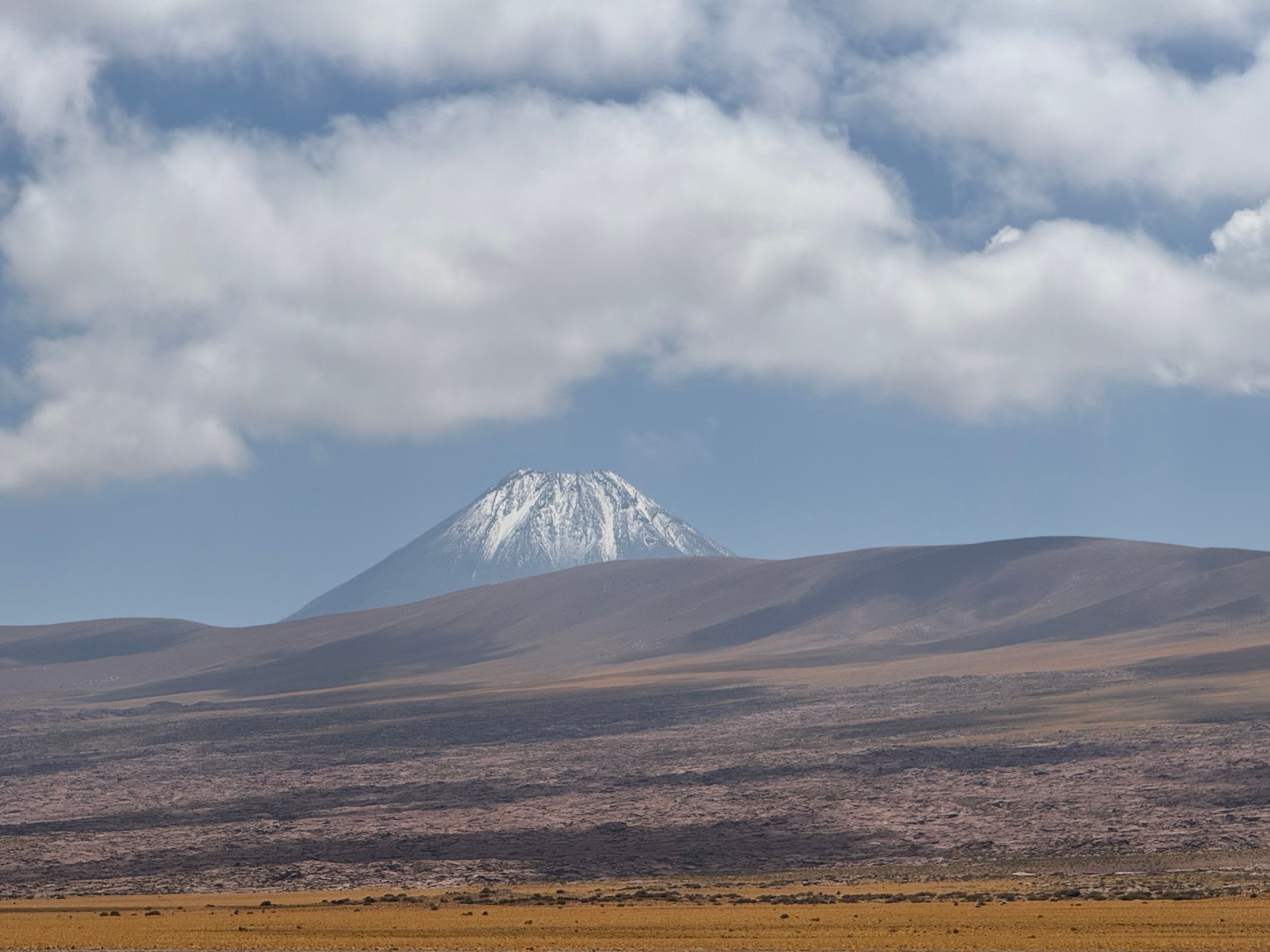
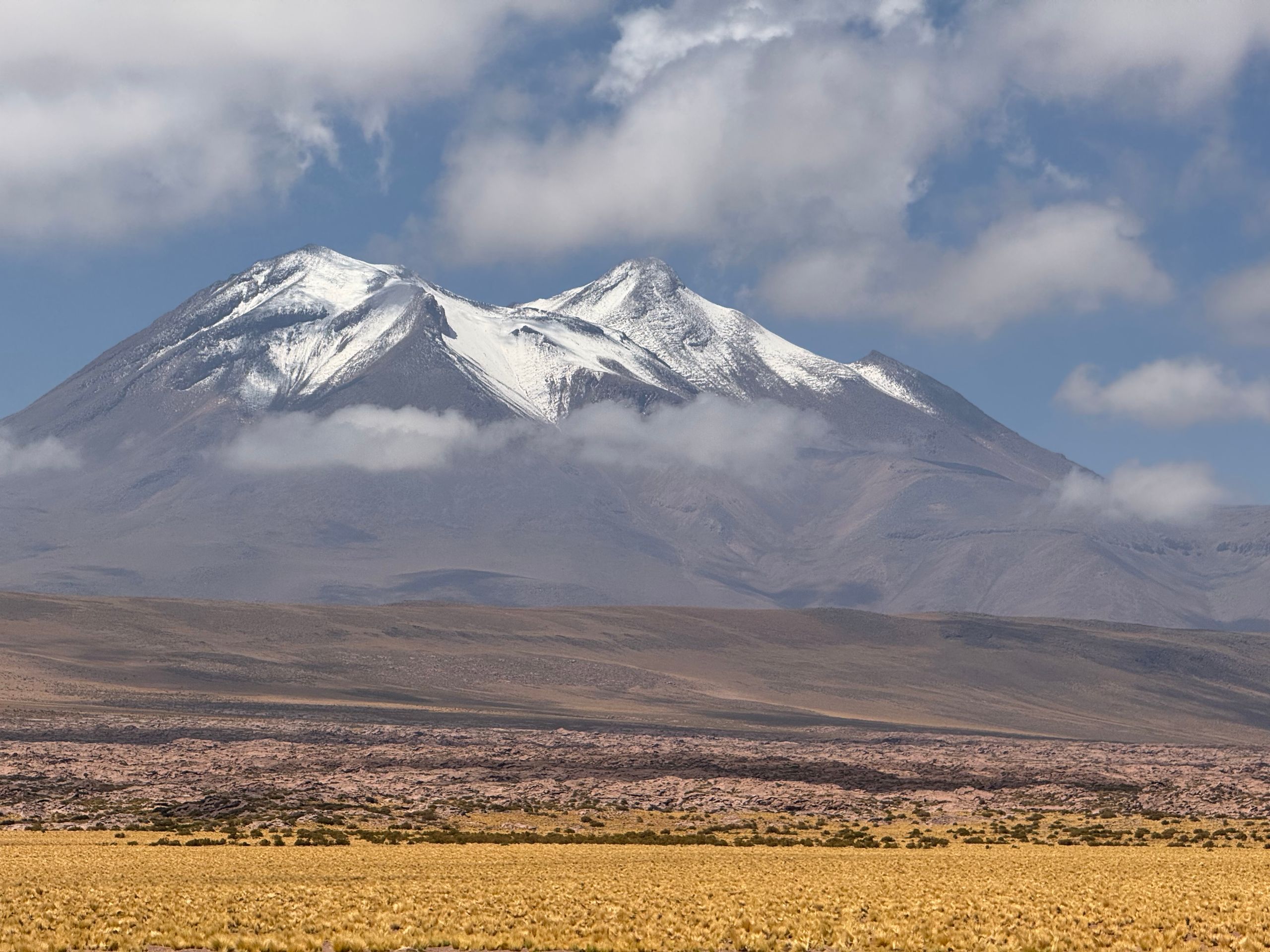
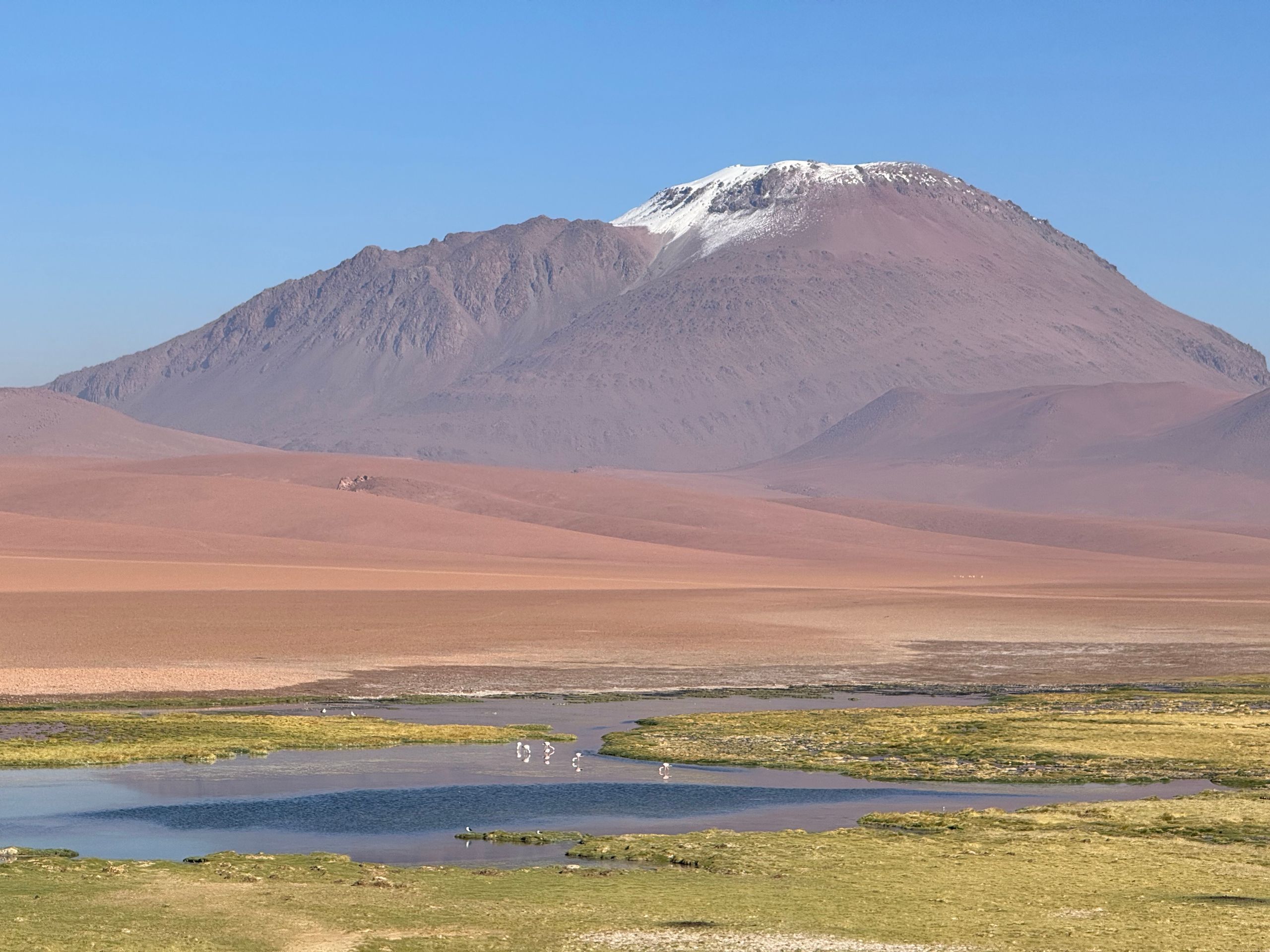
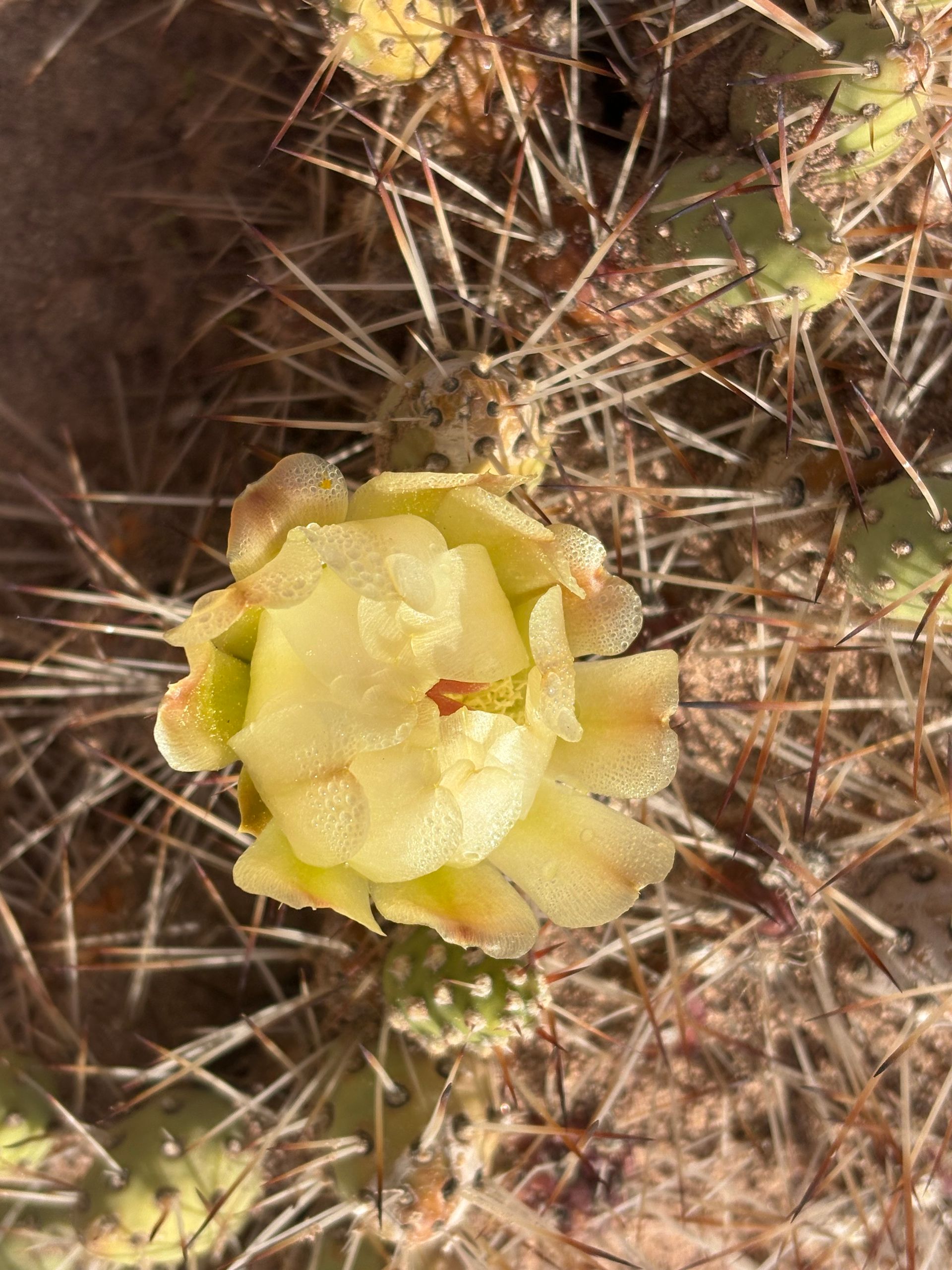
On day 3, we had to get up very early and set off at 4 AM to the El Tatio geysers at about 4300 meters, aiming to arrive at the park's opening and before sunrise. The geyser field stretches over 30 km², making it the third largest and highest in the world. Due to the altitude, water boils at 86 degrees Celsius. When we left in the darkness, we first noticed that the electronics in our rental car, despite having driven very few kilometers, were already completely malfunctioning; the low beam could not be adjusted at all and shone more beside the road than on it, and the high beam turned on or off arbitrarily and independently of the setting. But somehow, we managed anyway. We arrived almost alone in the park and had time to quietly admire the geysers with our headlamps. Shortly after sunrise, however, many buses arrived and spewed out so many people that it became a bit uncomfortable. Nevertheless, the sight of the spouting and steaming geysers in the morning light was very impressive! The return journey was also beautiful - astonishing to see the wonderful spots we had unknowingly sped past in the dark - great mountain panoramas, rock formations, water pools in the most beautiful green with vicuñas and flamingos, and a valley full of cacti.
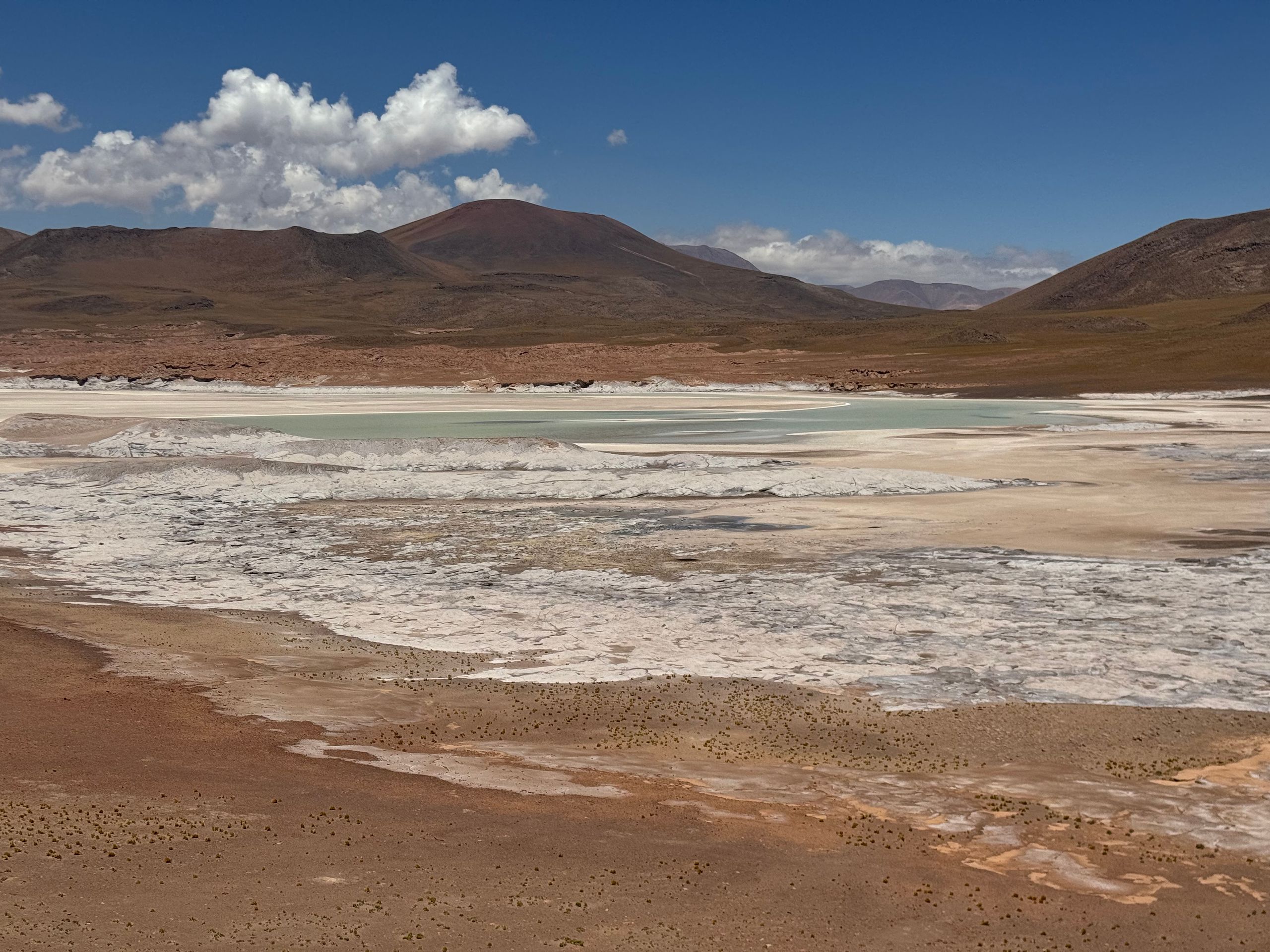
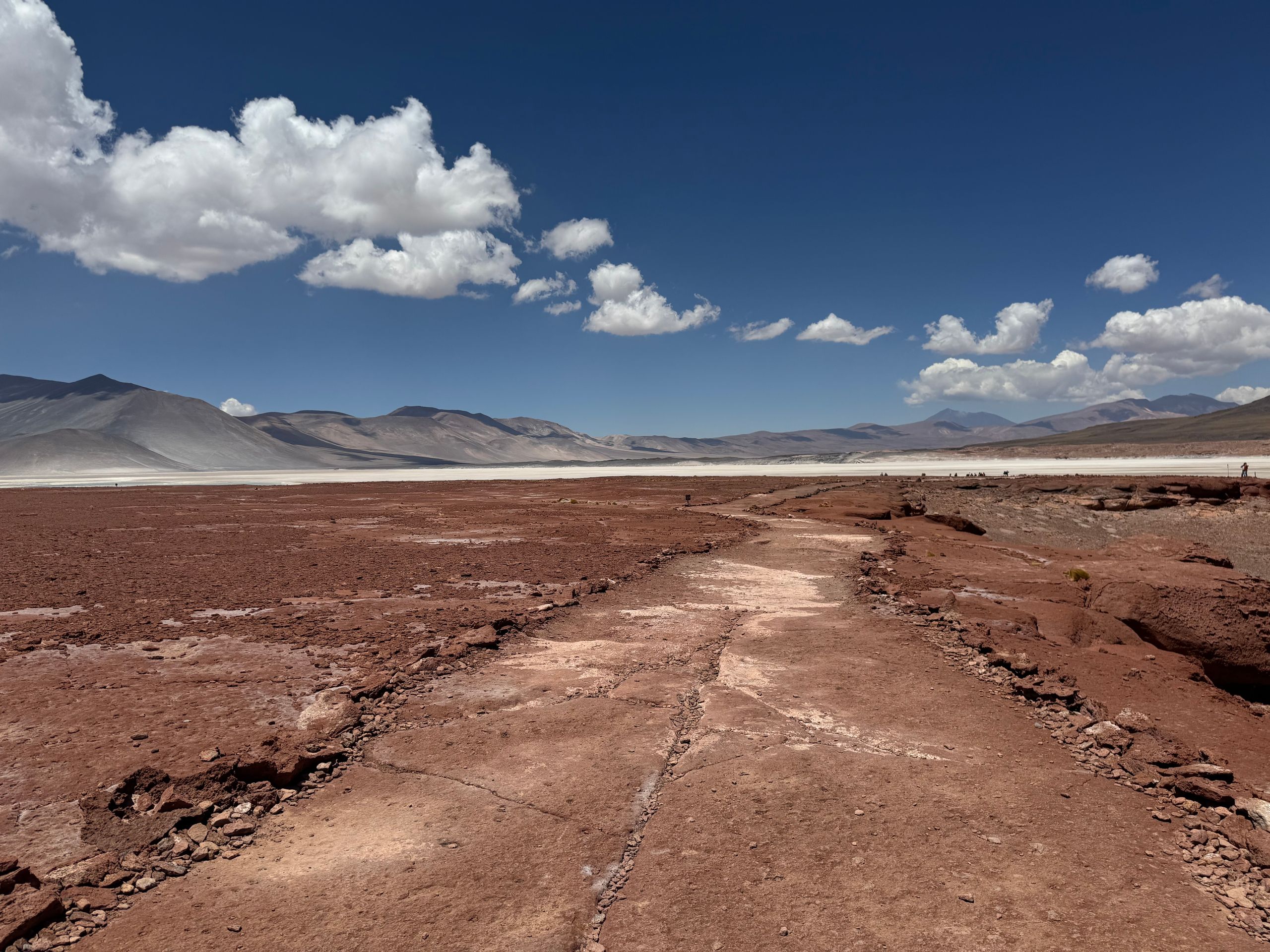
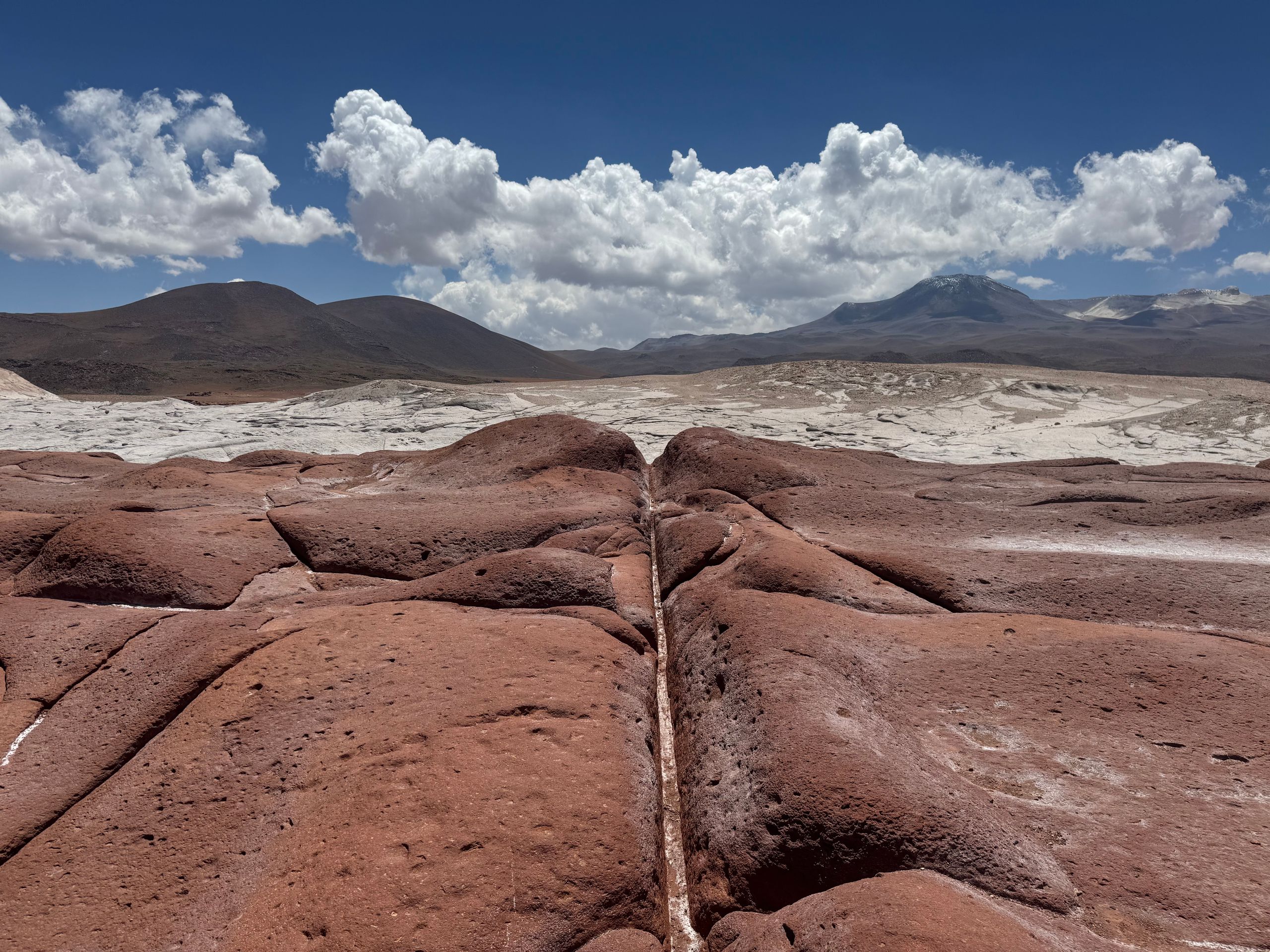
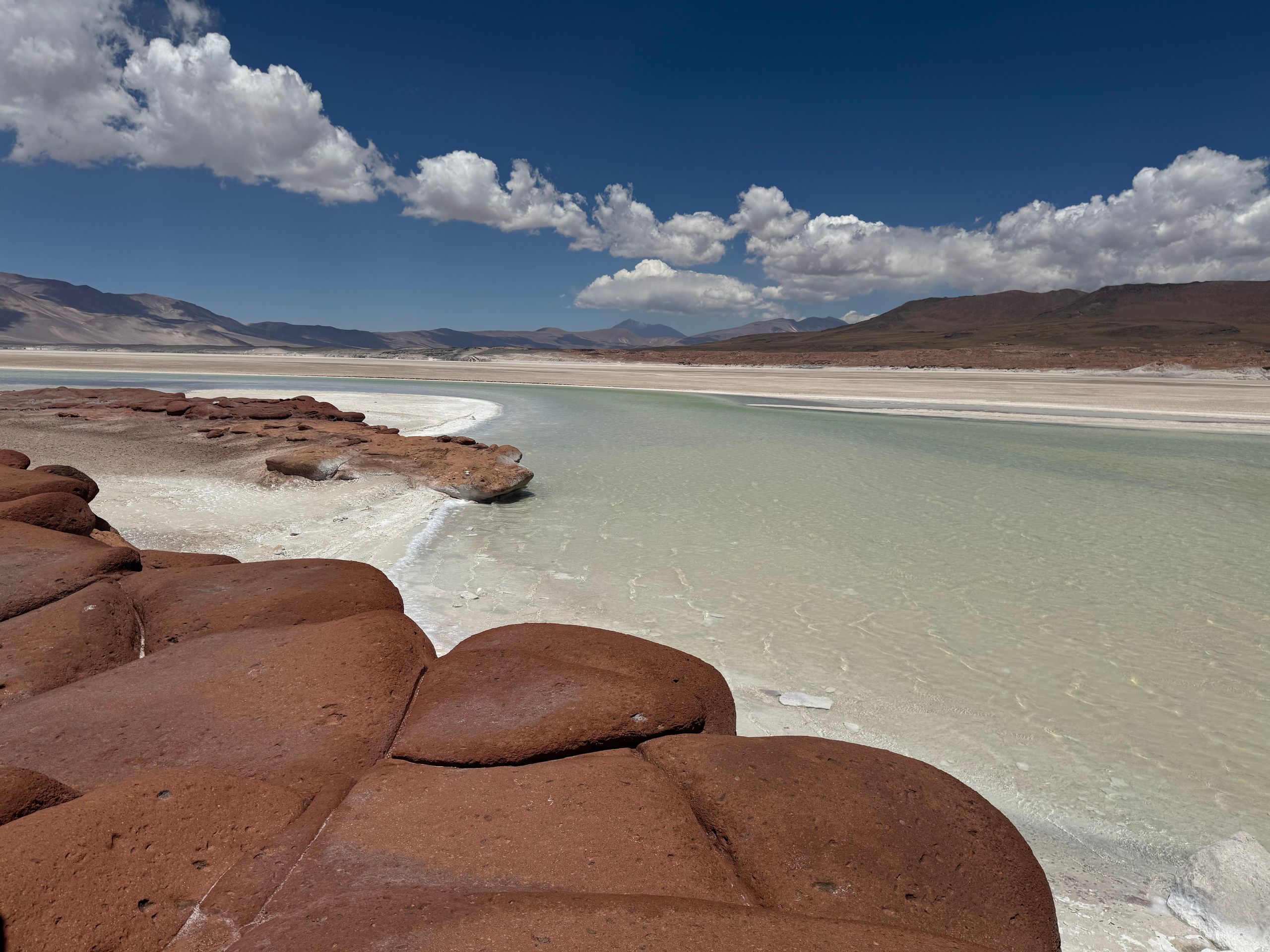
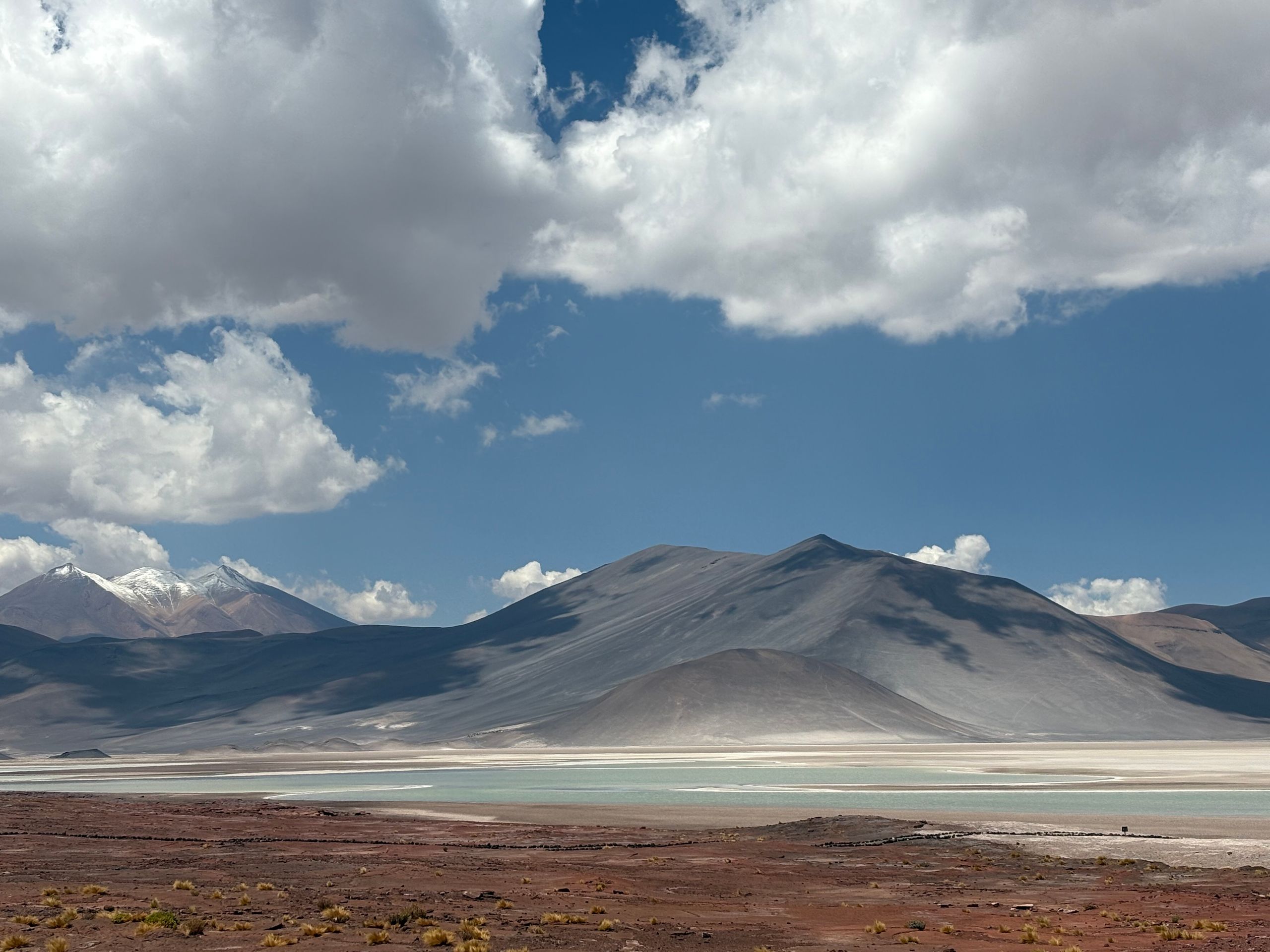
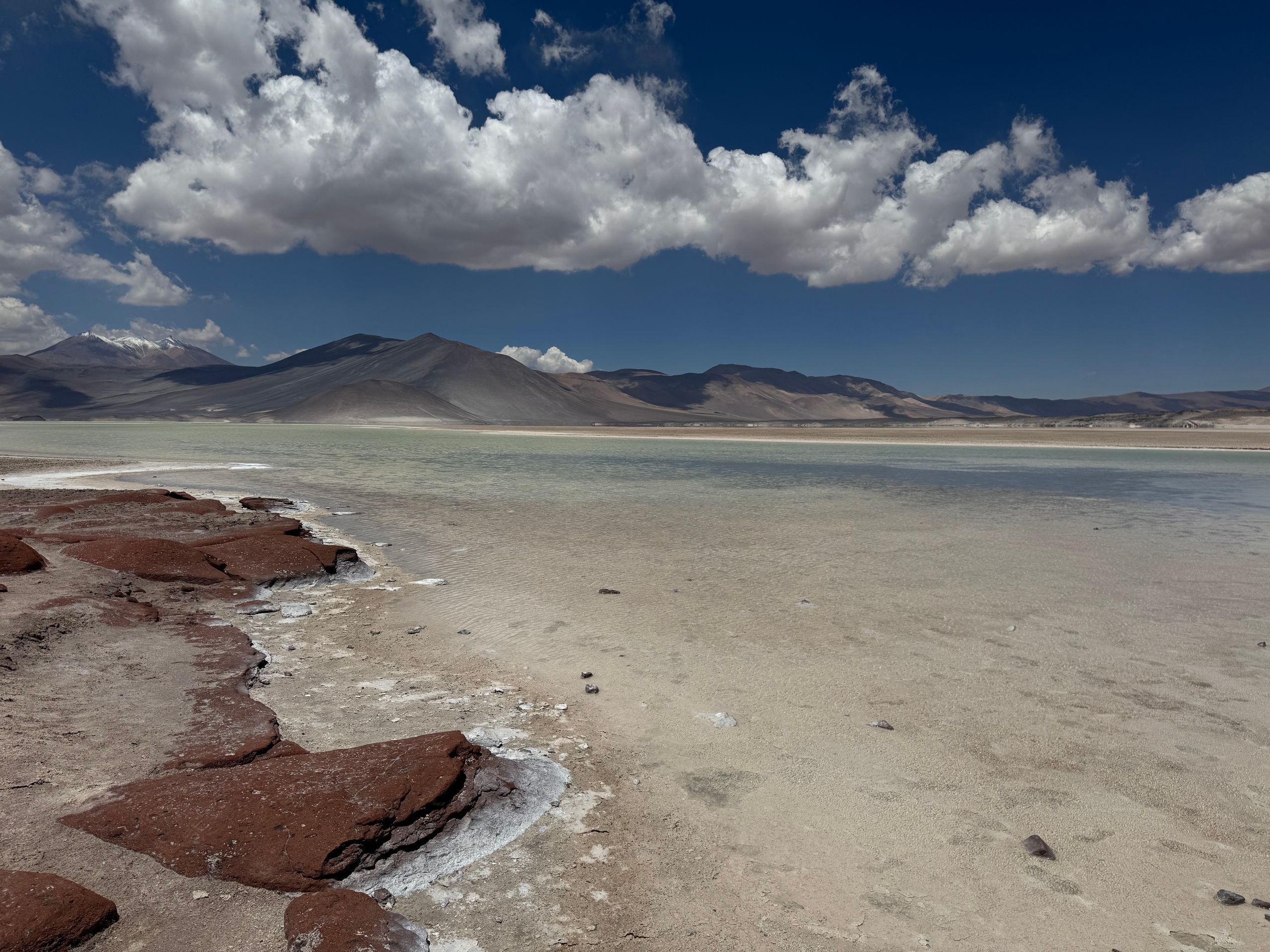
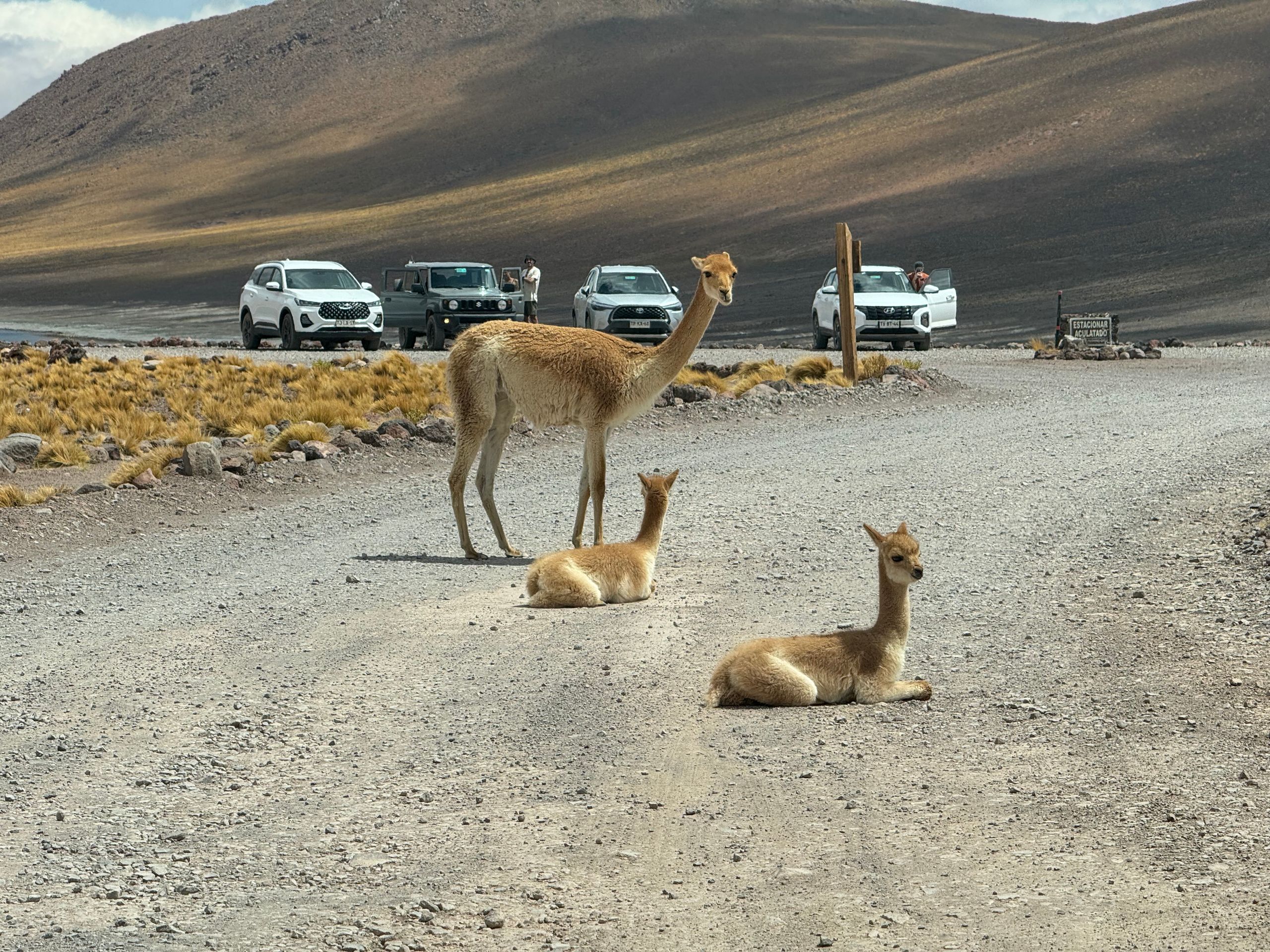
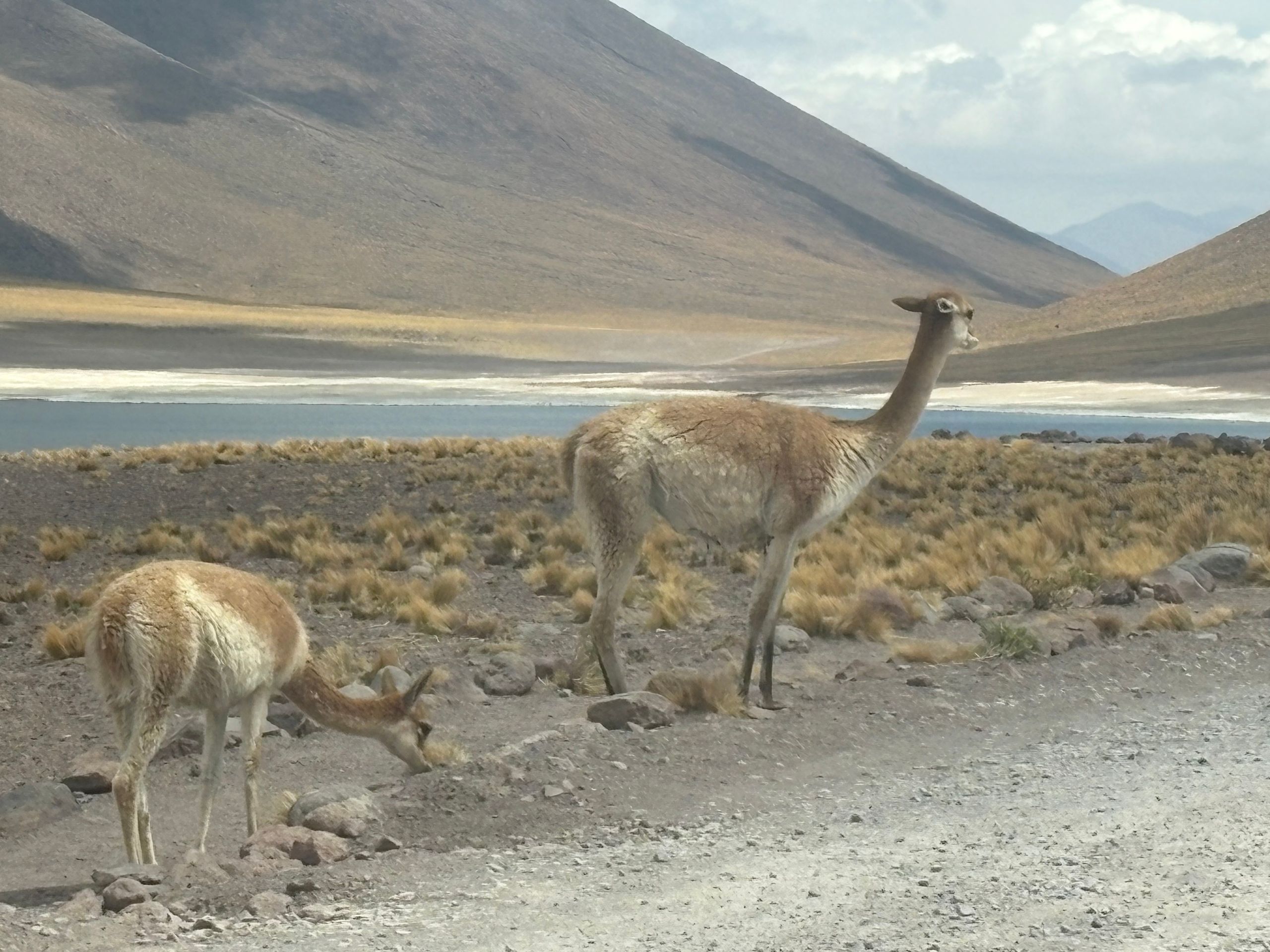
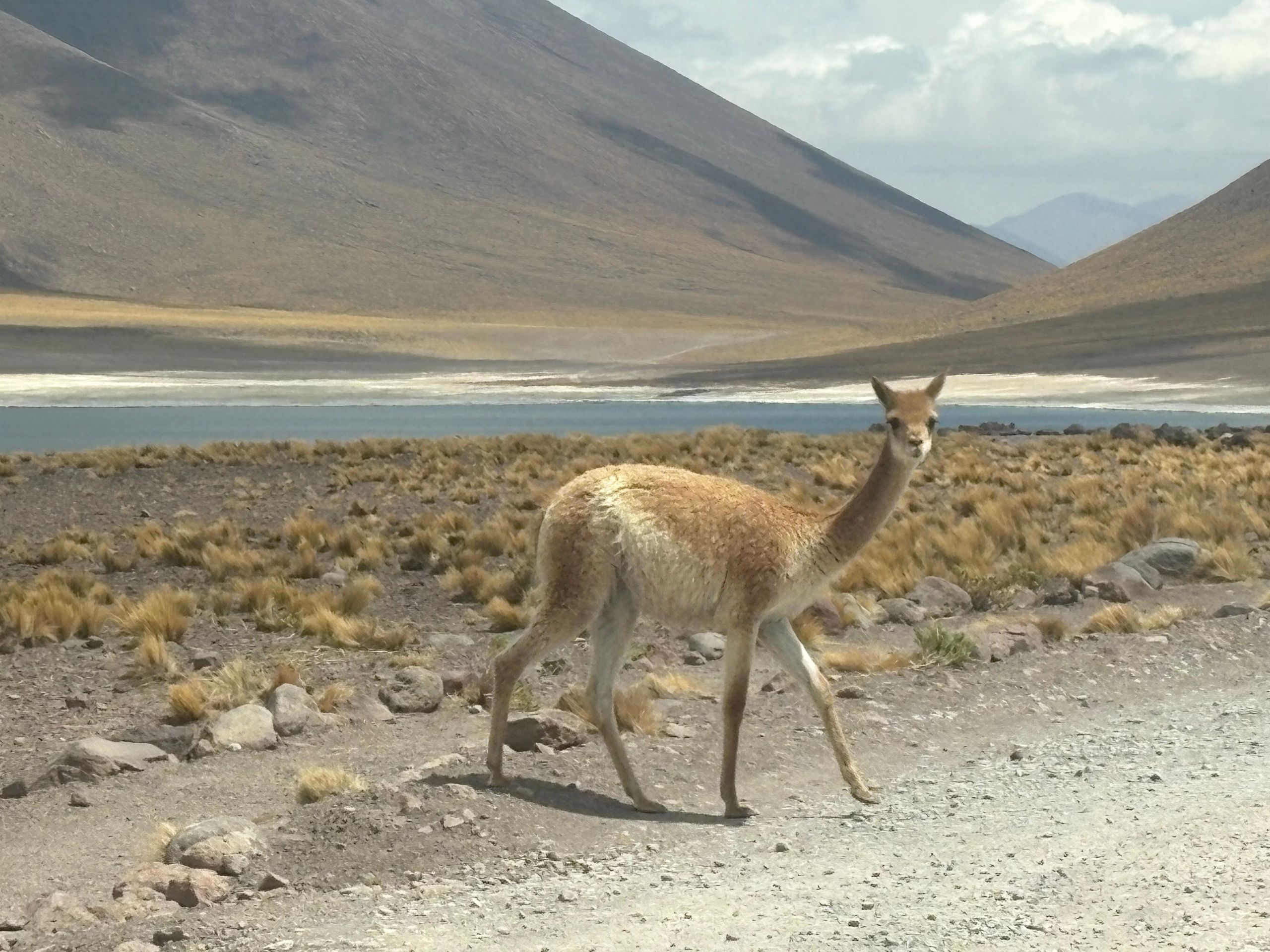
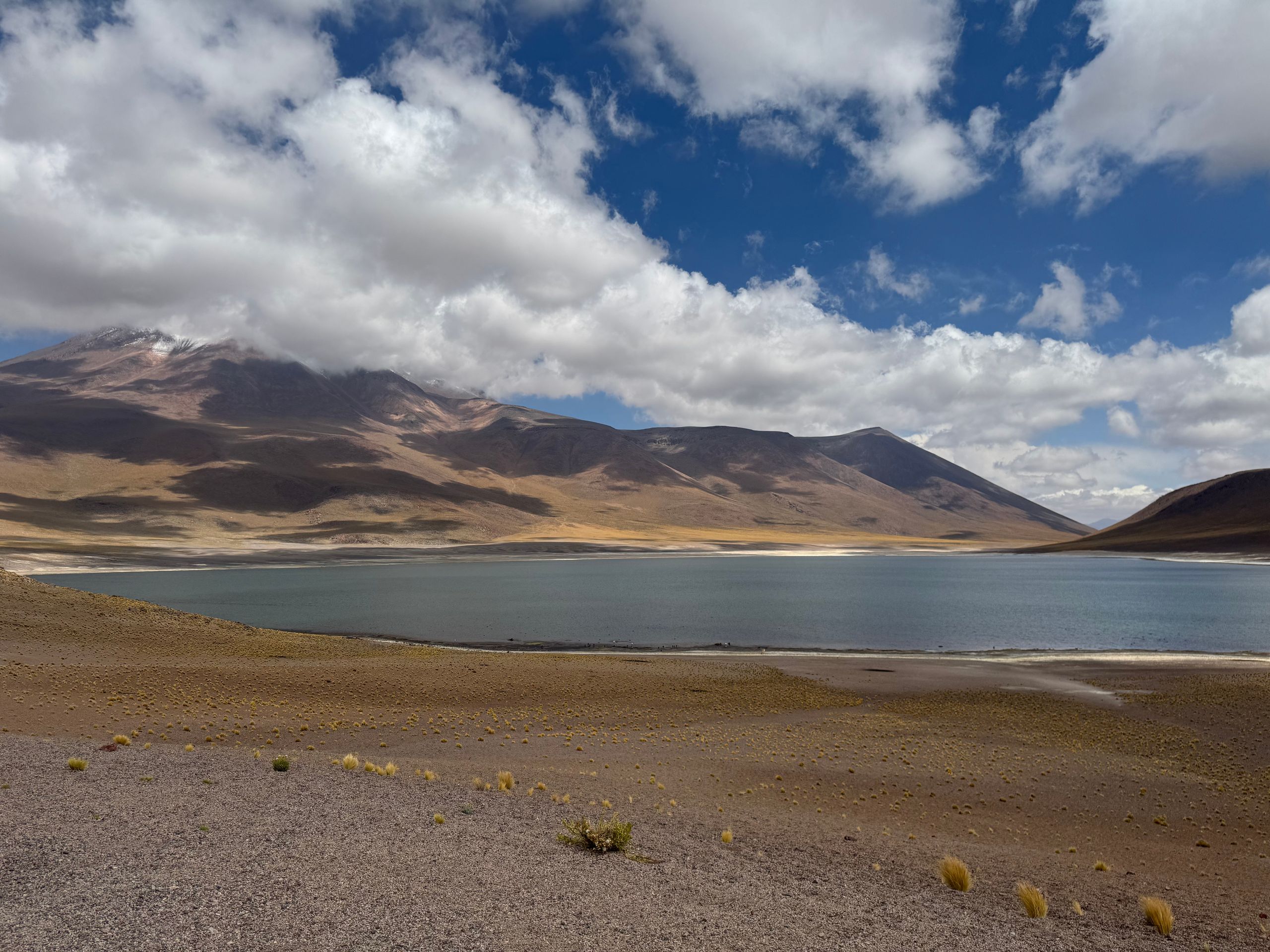
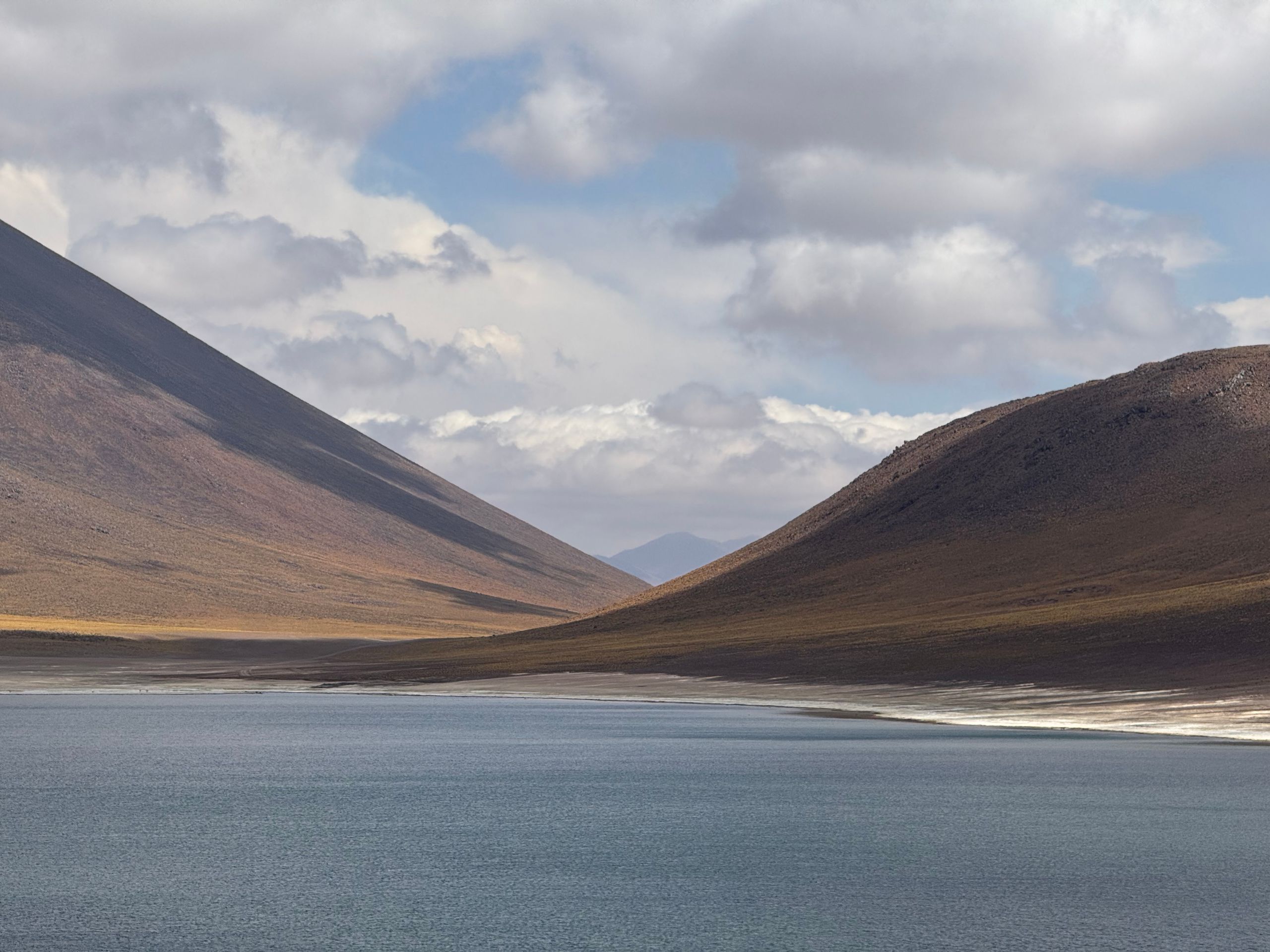
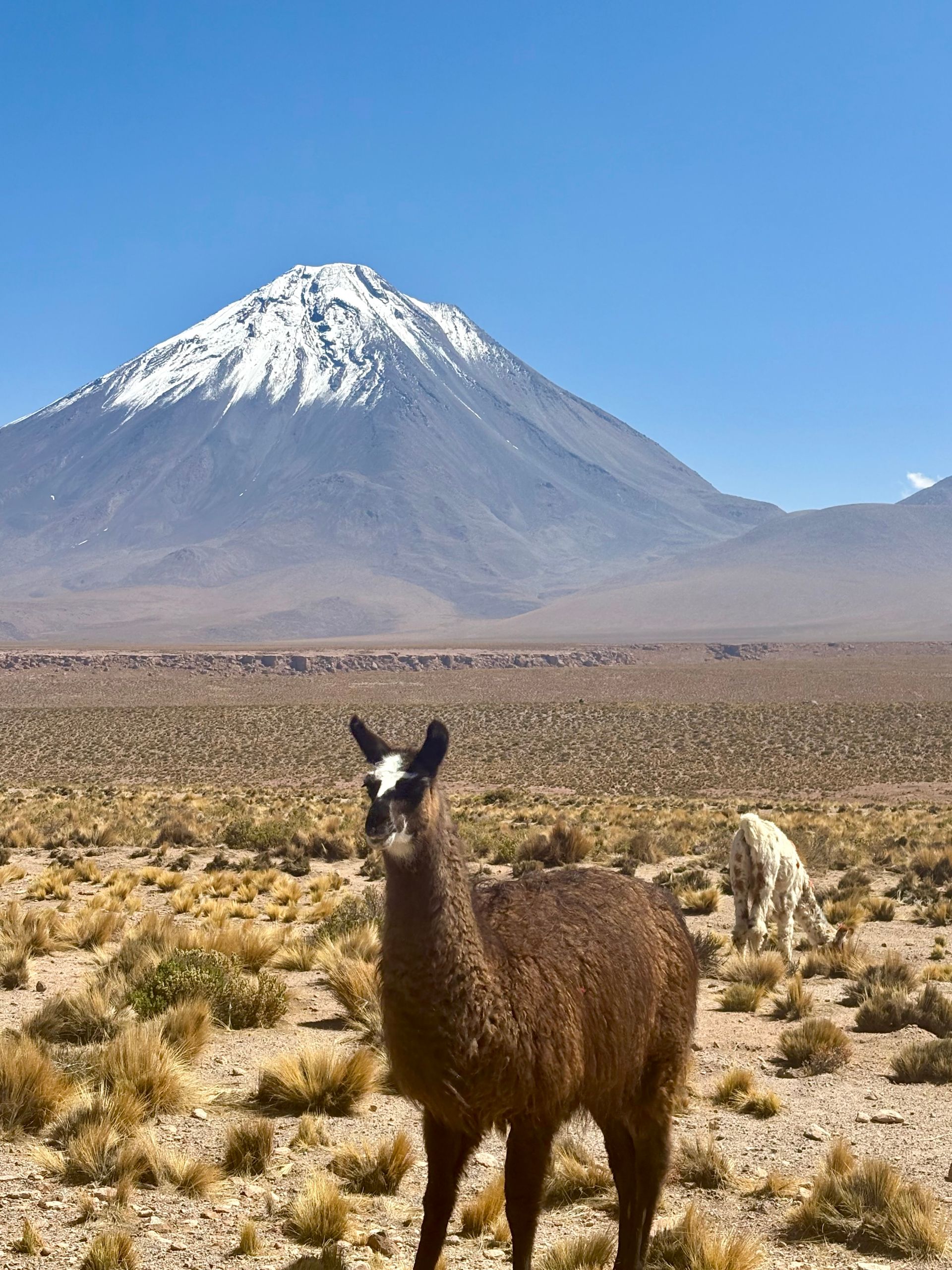
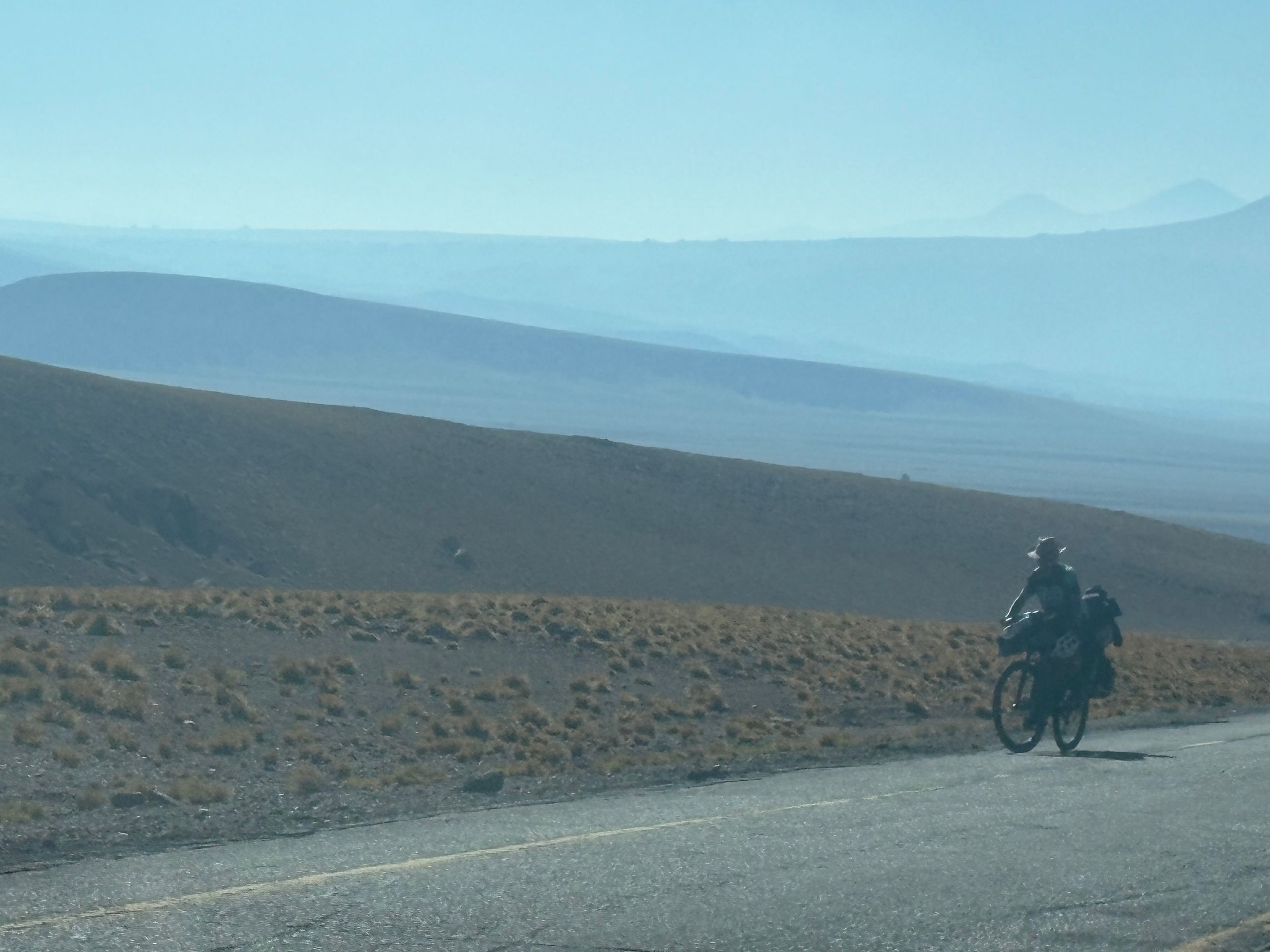
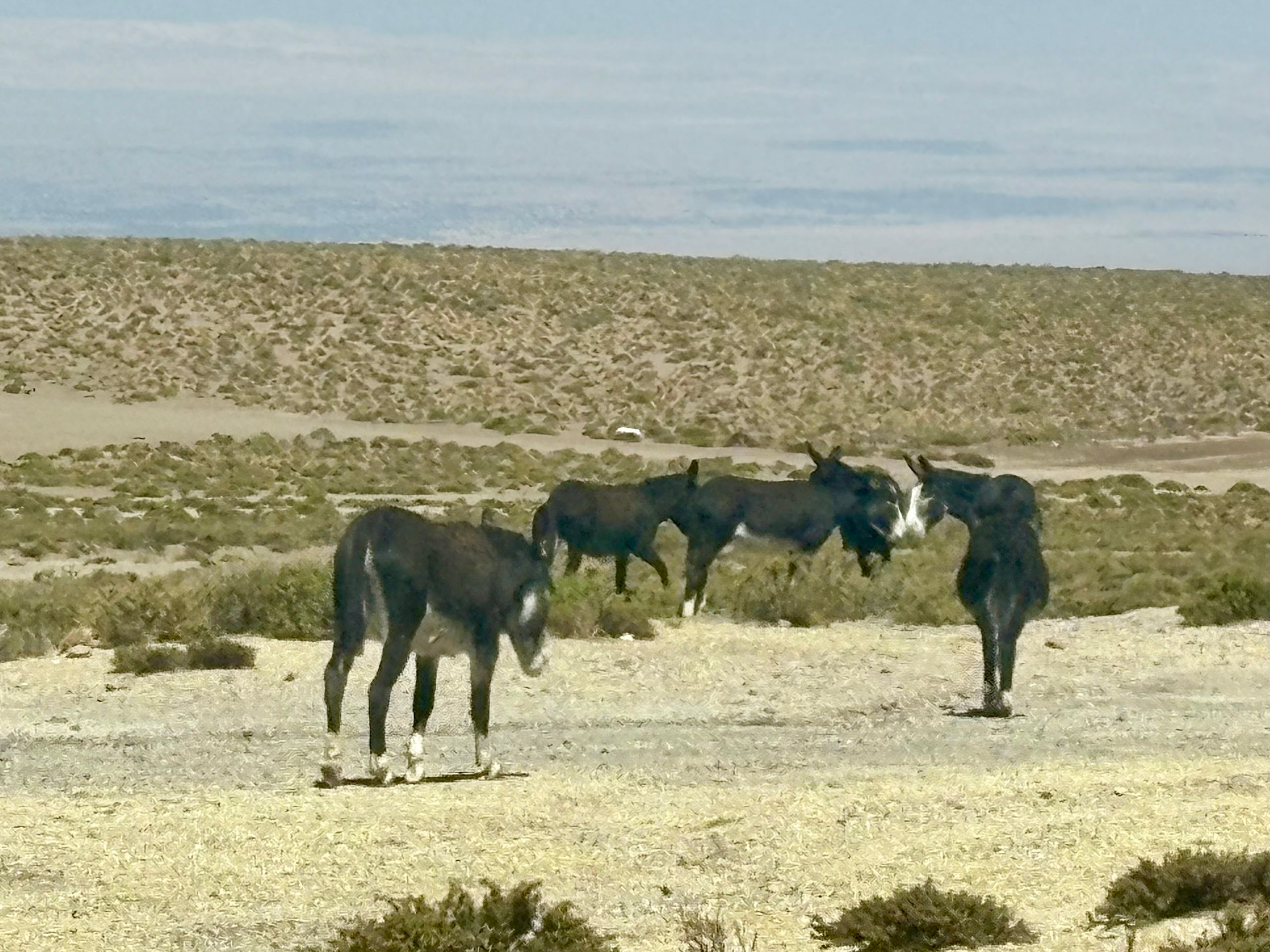
Since we planned to climb our first 5000-meter peak during the week, we chose another high-altitude destination for further acclimatization on day 4: the Piedras Rojas at about 4200 meters. The journey there was already a lot of fun, accompanied by lonely vast landscapes and volcanic panoramas. And the Piedras Rojas (= Red Stones) created a very special mood combined with the cold white-blue of the salt lagoon. After that, we continued to Laguna Tuyajto, where the highlight was a group of vicuñas crossing the road right in front of our car. Two of the young ones found it too exhausting, so they sat down right in front of us on the road. The adult vicuñas could only be persuaded to move on when another car came. And we had plenty of time to observe these beautiful animals up close!
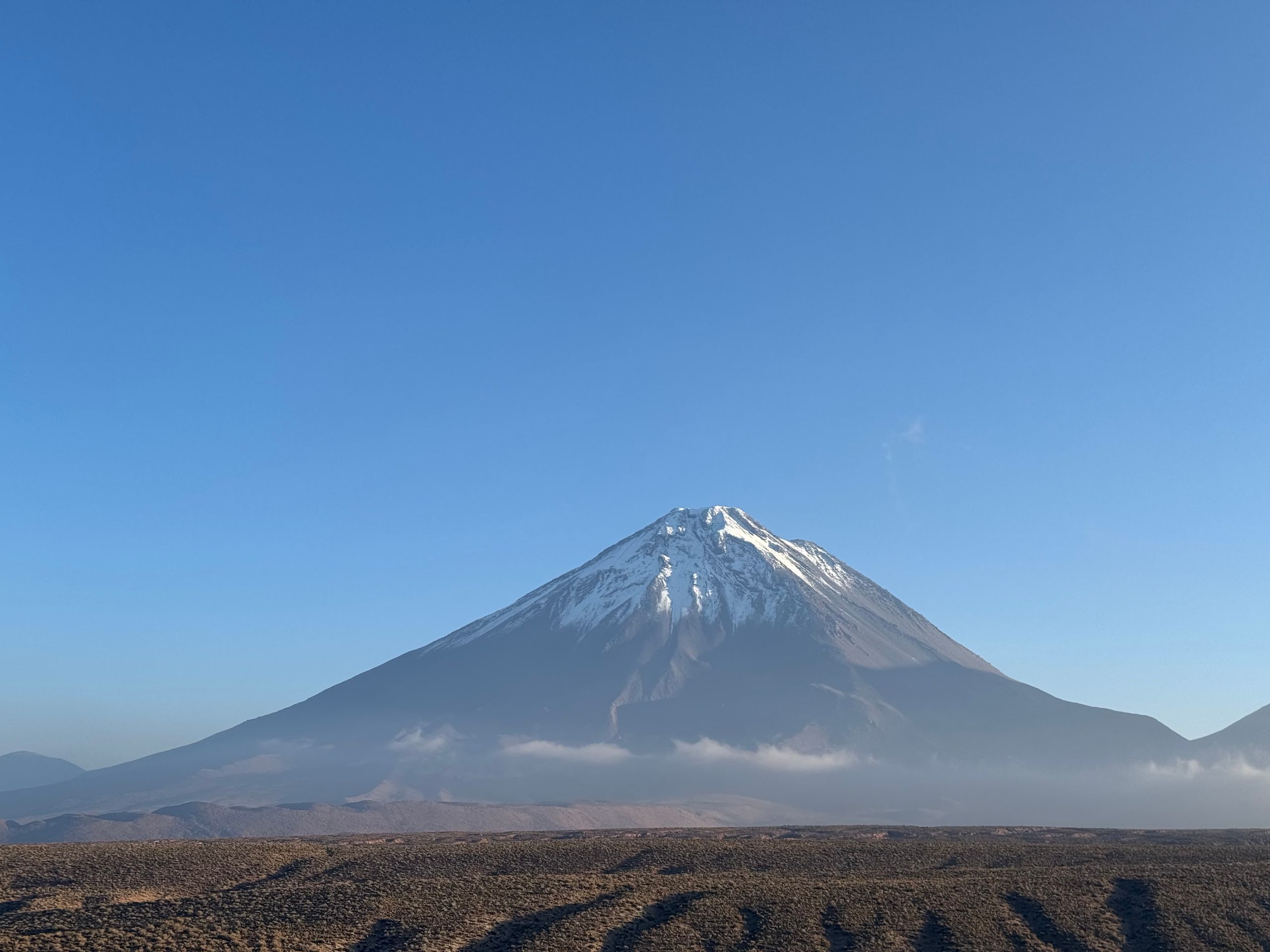
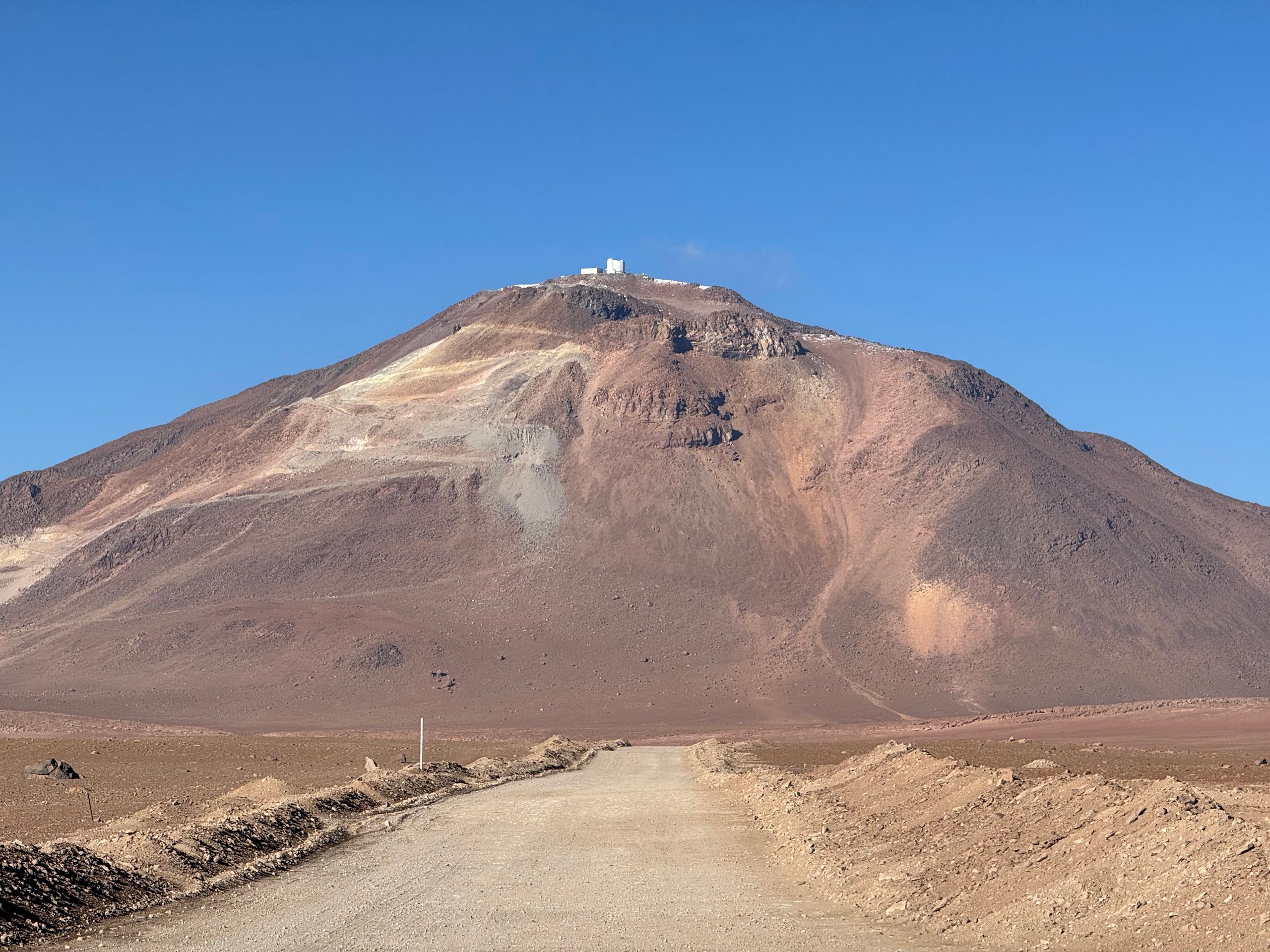
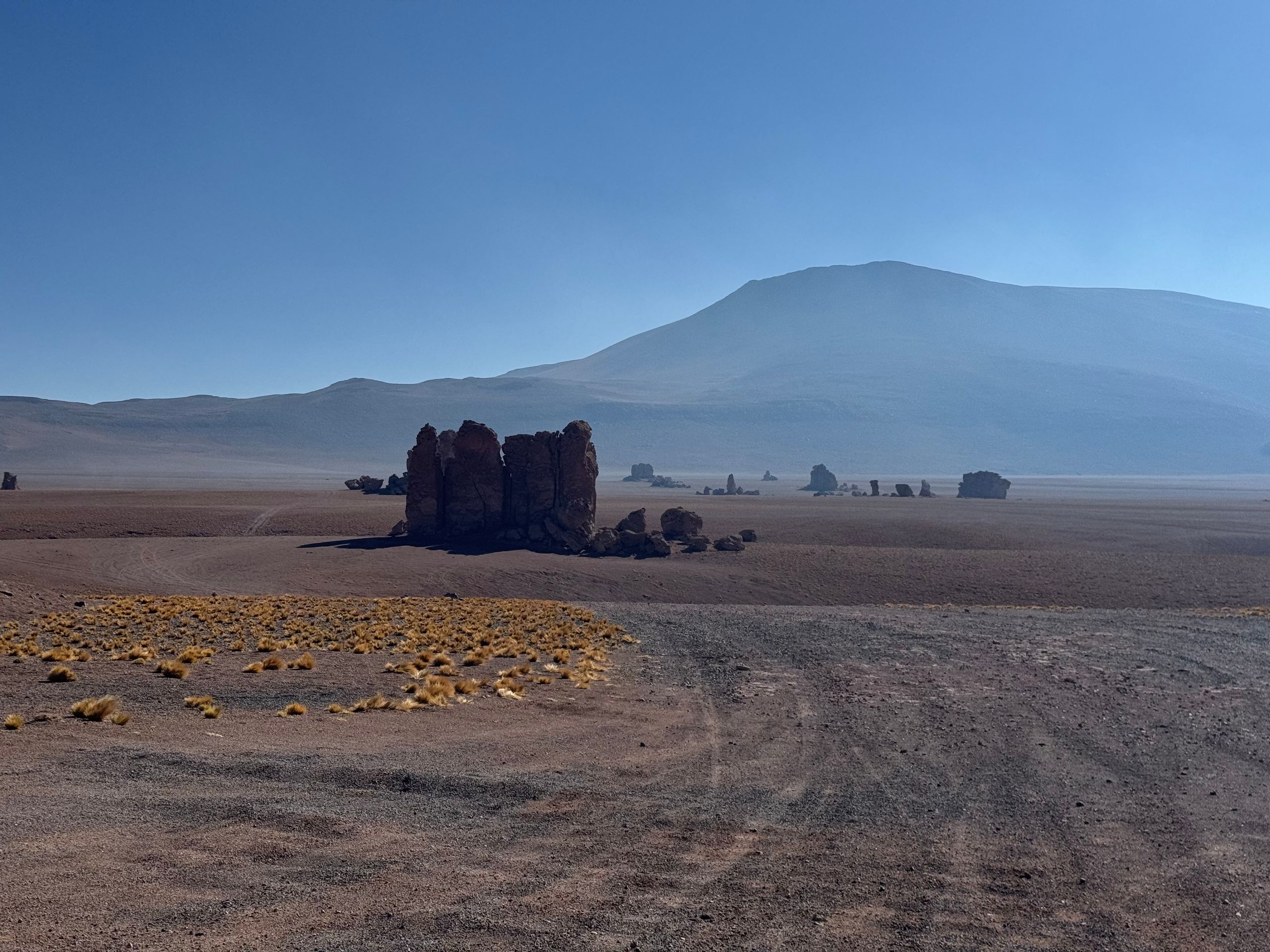
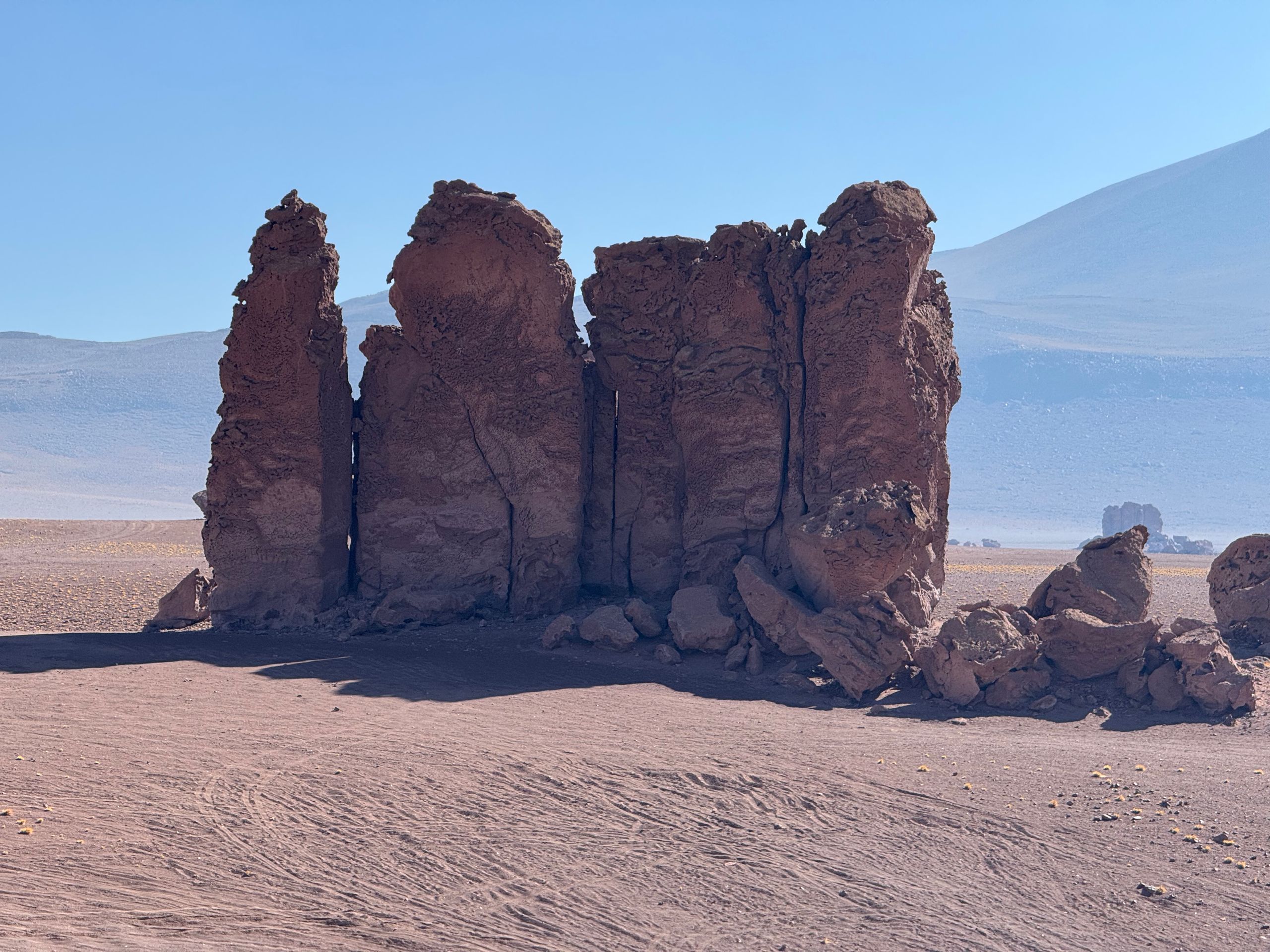
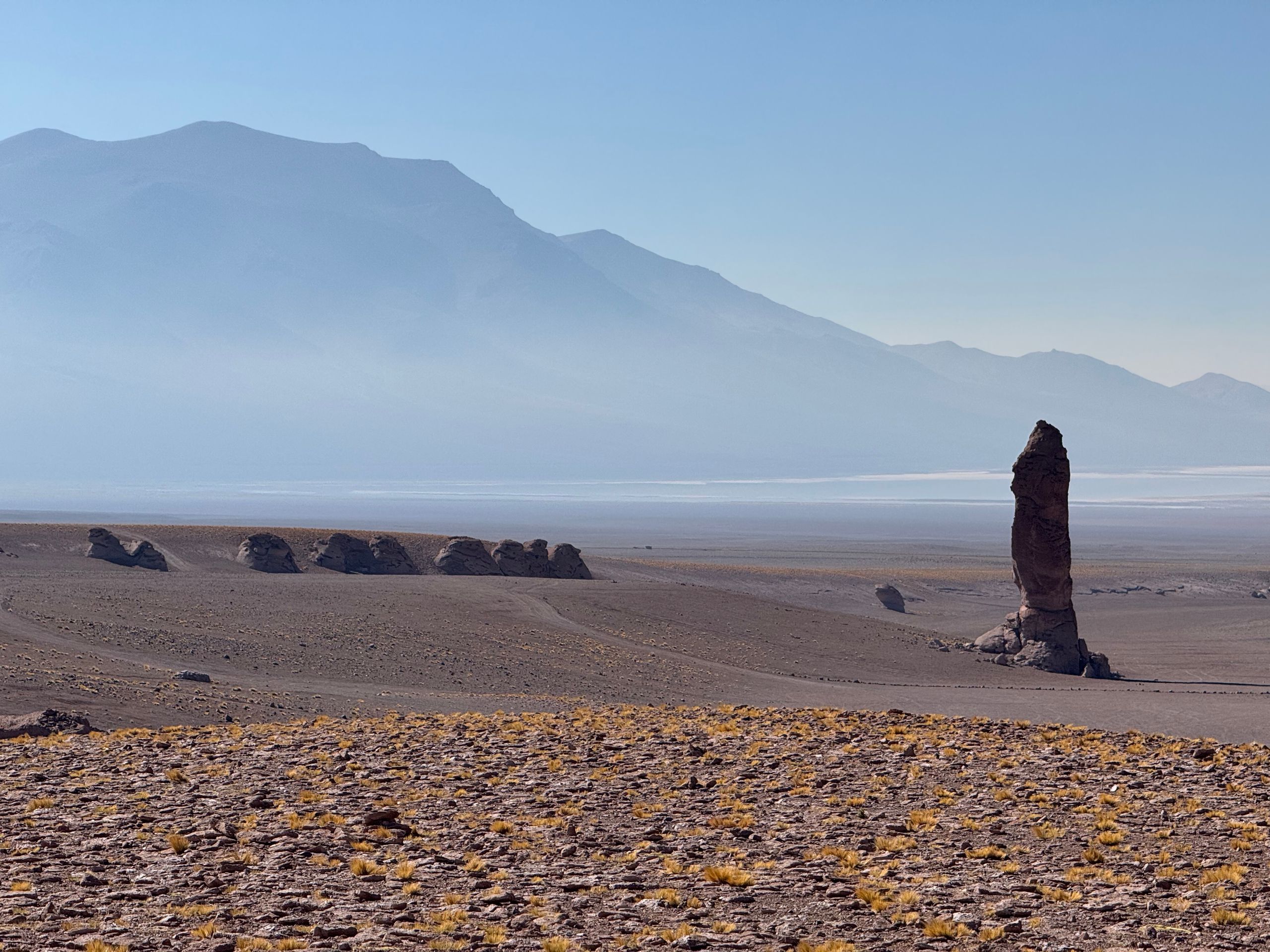
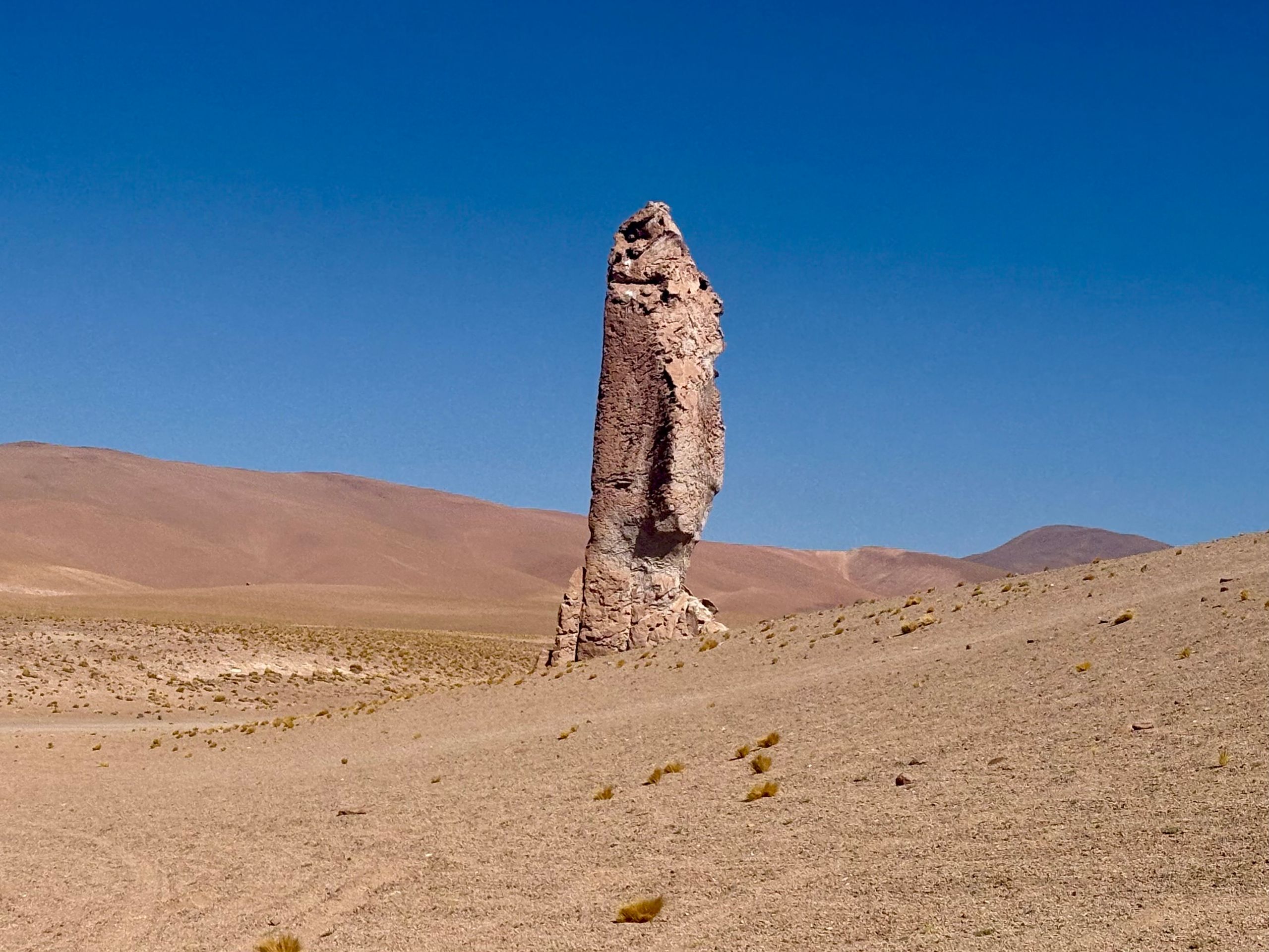
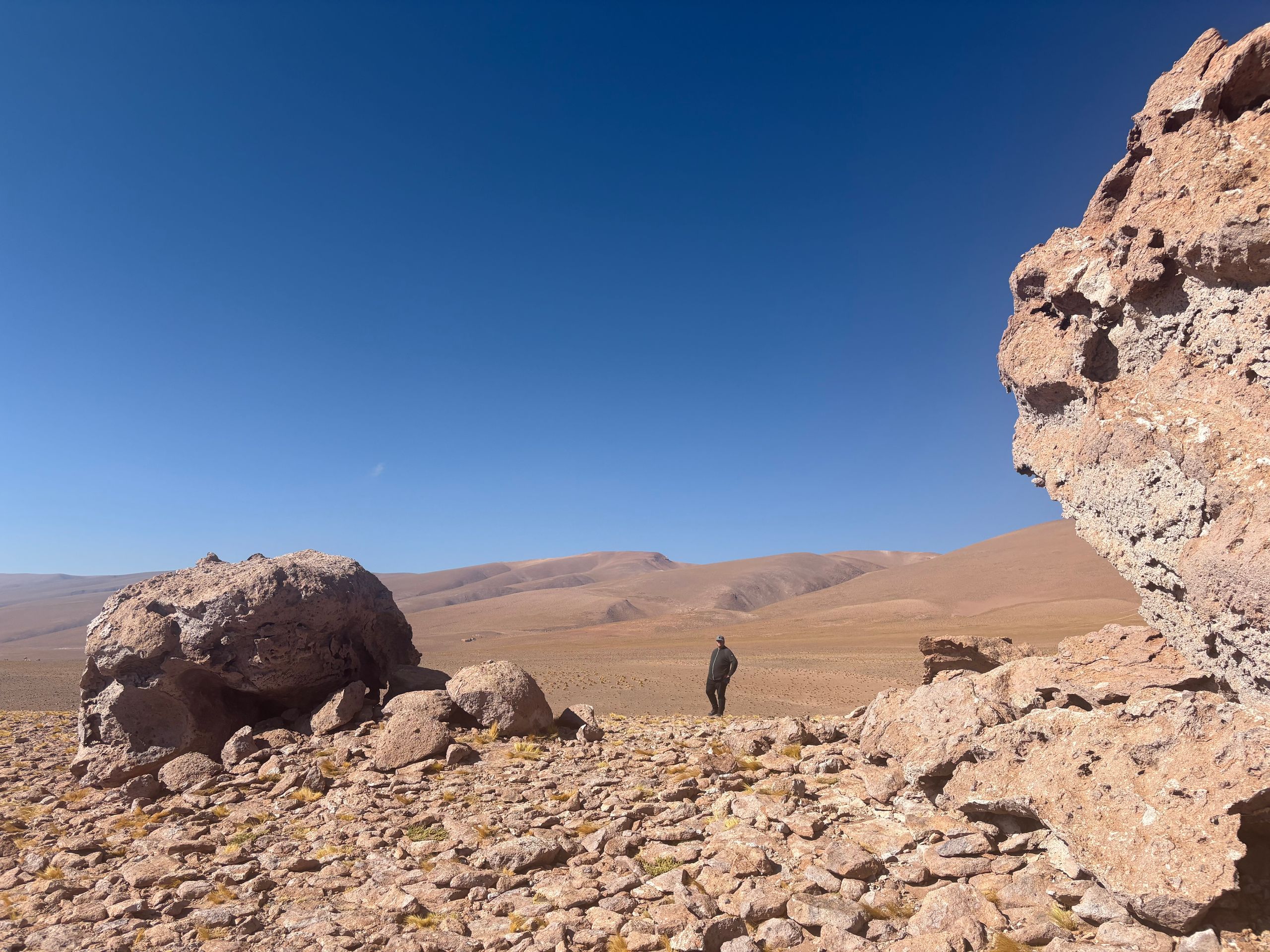
Day 5: for things rarely go as planned. The ascent of Cerro Toco (about 5600 meters) was scheduled for today, an inactive stratovolcano. The climb, which starts at just under 5000 meters, is said to be very easy, so one only has to deal with the altitude without further technical challenges. It sounded like a mountain worth attempting. So we slept well, acclimatized properly, equipped ourselves thoroughly, and set off in high spirits towards the Bolivian border. However, the road leading to the aforementioned radio telescopes was simply blocked by ALMA. Moreover, it was blocked (with barbed wire and ditches) in such a way that there was absolutely no chance of getting through. Although we drove around the area to find alternative routes, we were unsuccessful. And everything was so deserted that we couldn't ask anyone. Being dejected doesn't help, so we alternatively set off towards the nearby Monjes de La Pacana, bizarre rock formations, one of which could even resemble a monk from one angle (but rather looks like a phallic symbol from another). Super impressive, and again no one was around. While strolling at an altitude of 4800 meters, we already felt quite challenged; who knows if we would have even succeeded in climbing Cerro Toco...
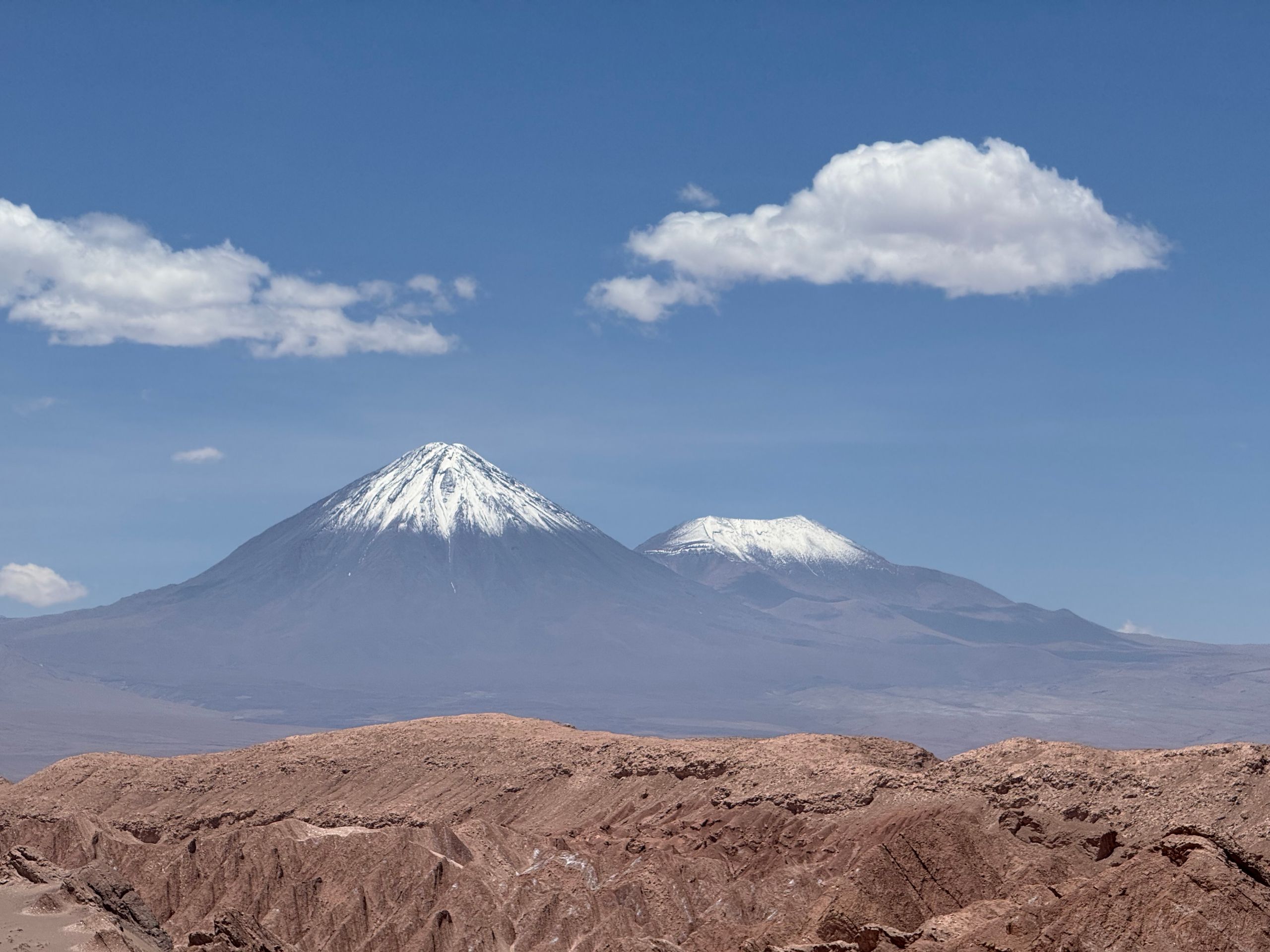
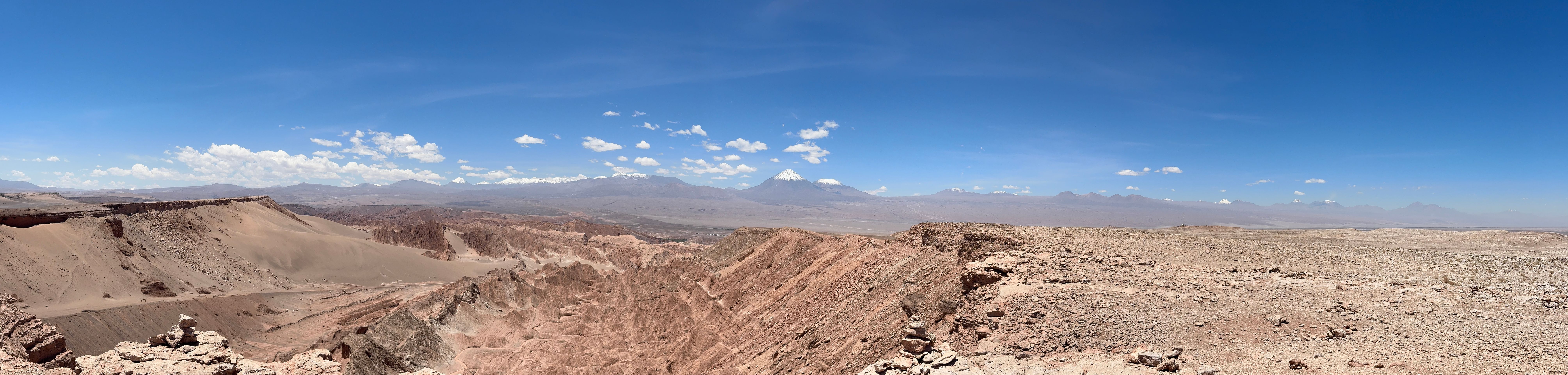
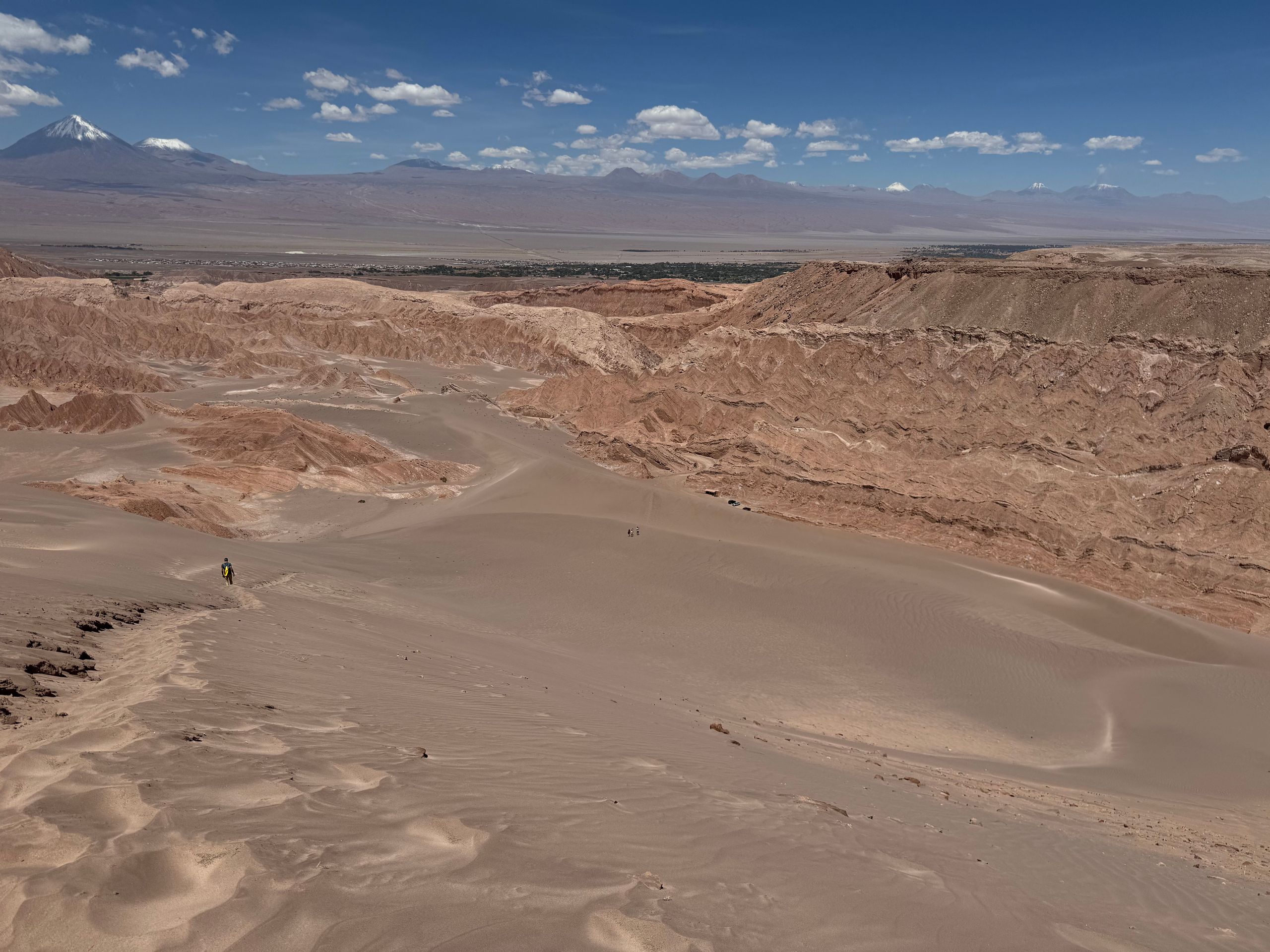
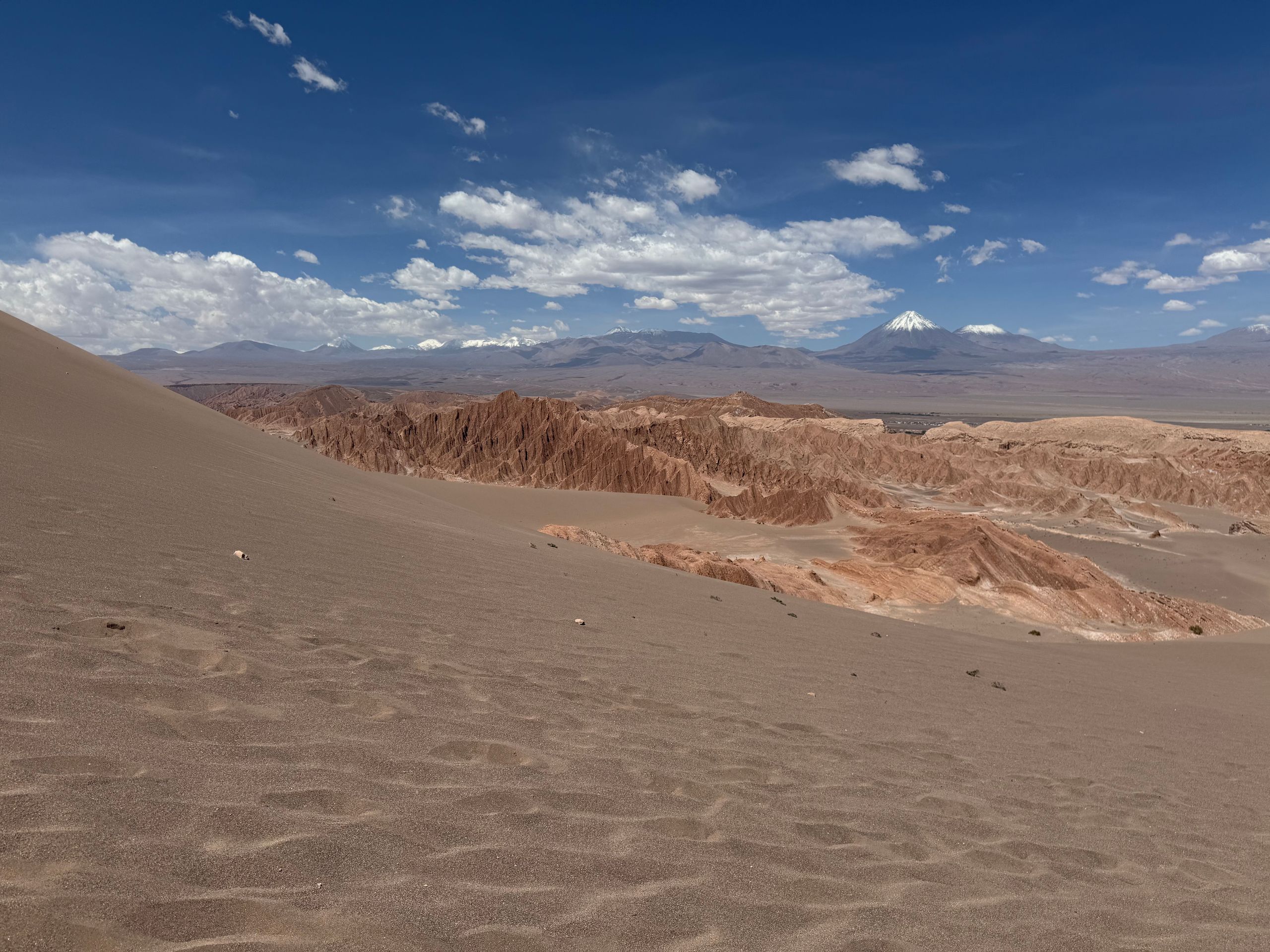
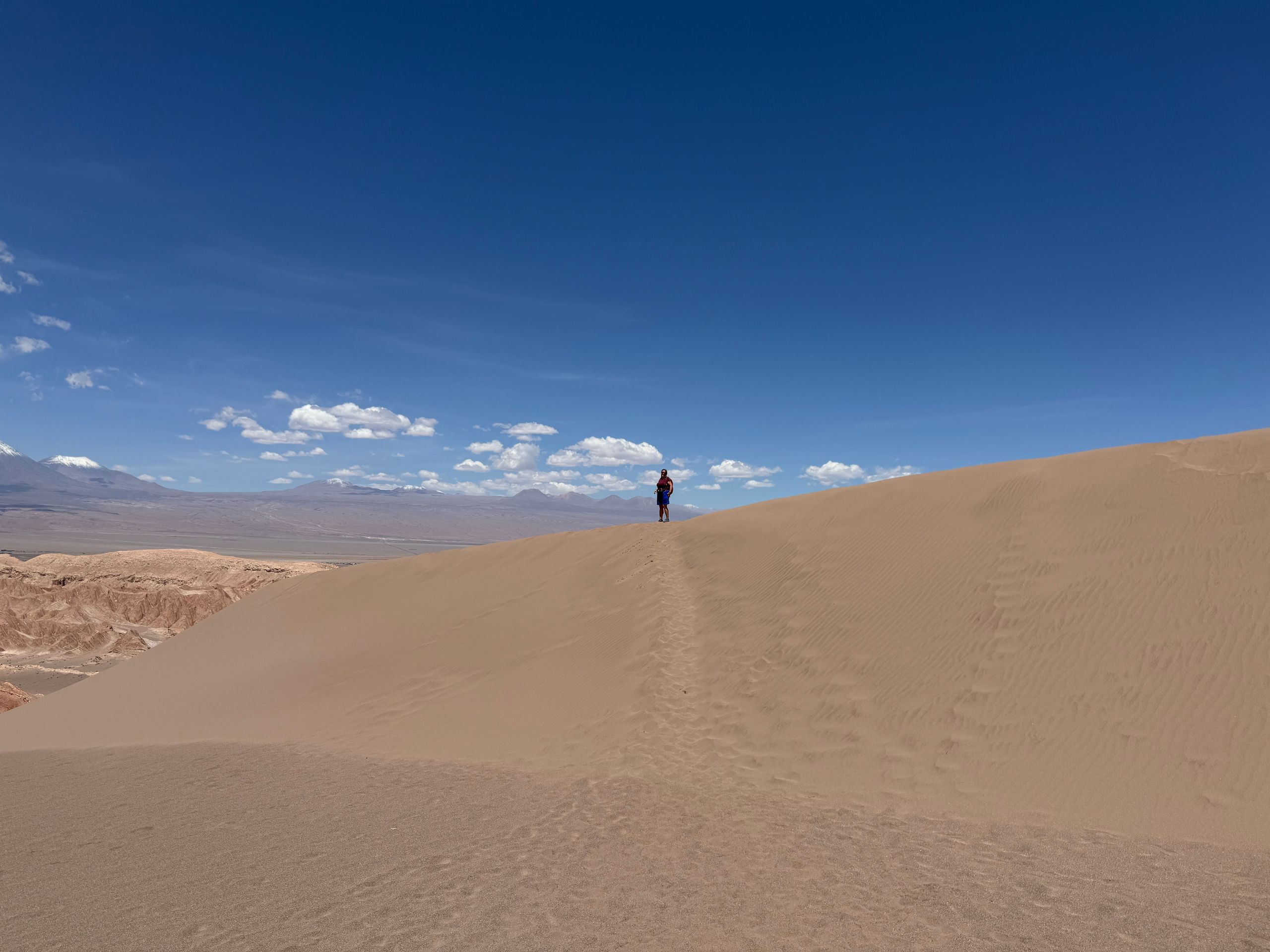
On the last day, we visited Valle de la Marte (or Muerte) near San Pedro de Atacama. Here too, one could trek between desert sand and bizarre rock formations to various viewpoints under the scorching sun and finally descend down a large dune. A fitting finale.
Conclusion: super beautiful and impressive, and it was definitely worth it to rent a car here. But now it slowly becomes too much of this solitude, and we need to process all these wondrous and remarkable landscapes...