
Nan - Time to Relax
On Tuesday, we headed north to Nan.As expected, we first waited for the bus to the airport. However, it actually arrived on time according to the display (the chance is 50/50 due...

Published: 30.10.2025
First things first, I compiled the information on the various wats using AI, but the rest is still written by myself. If you want to skip the information, it is italicized.
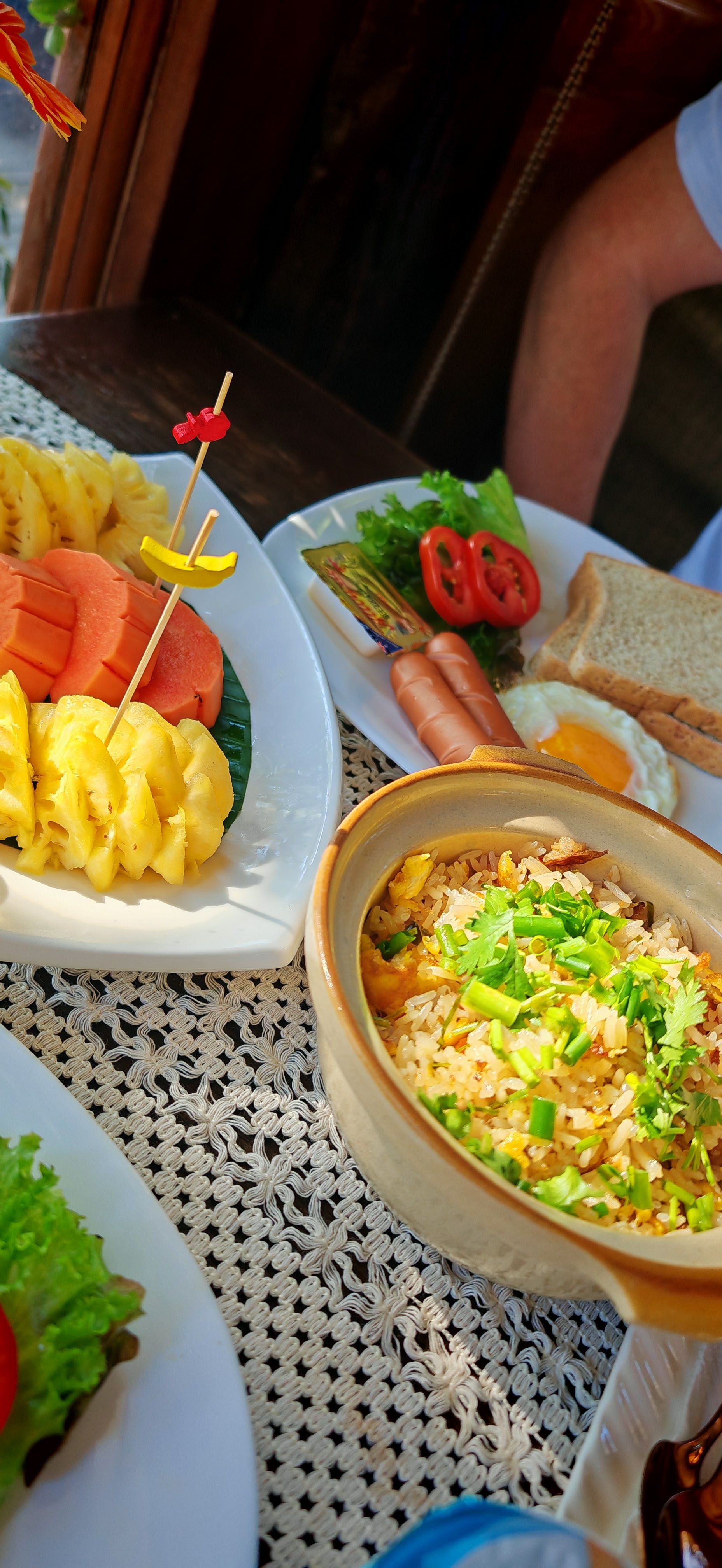
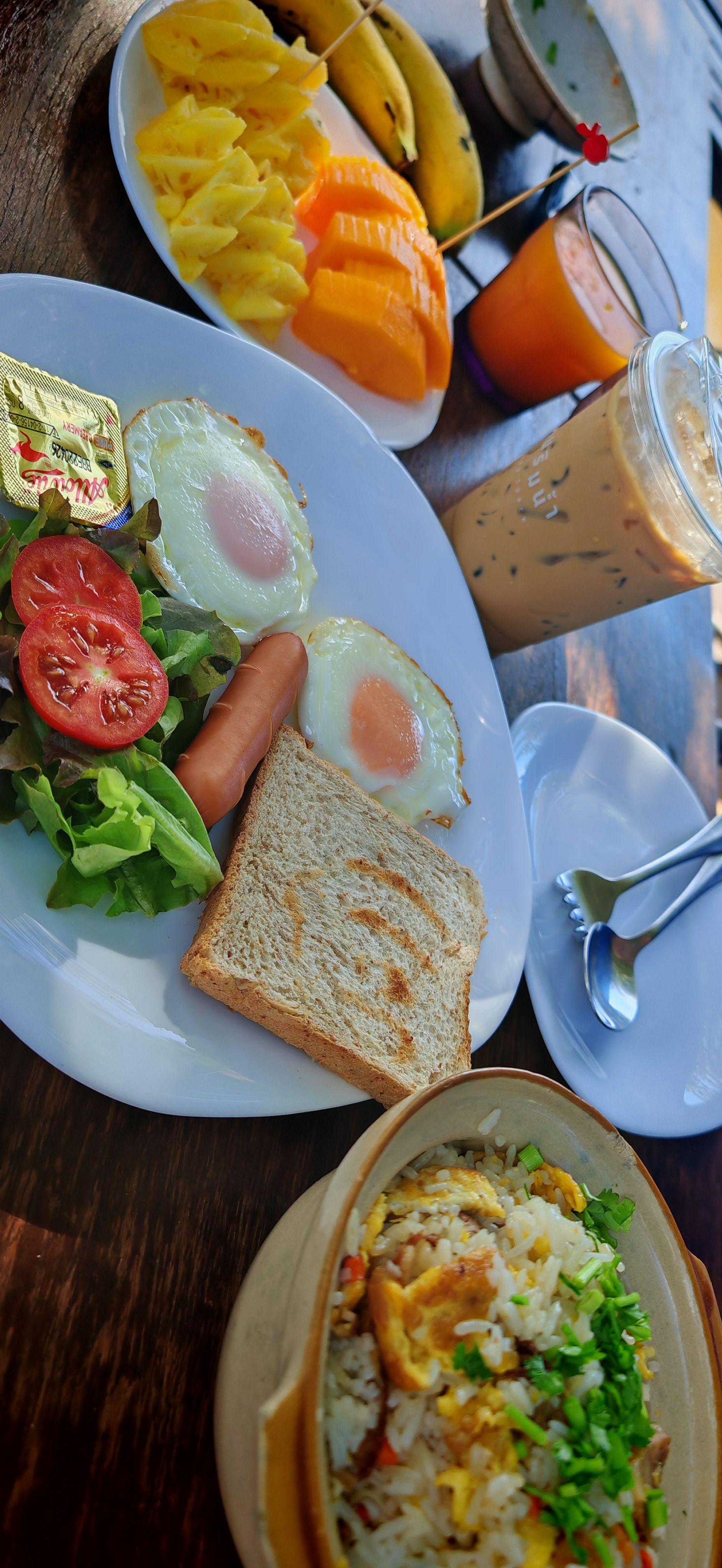
On our second day in Nan, we had quite a bit planned, and the breakfast at our accommodation was very satisfying.
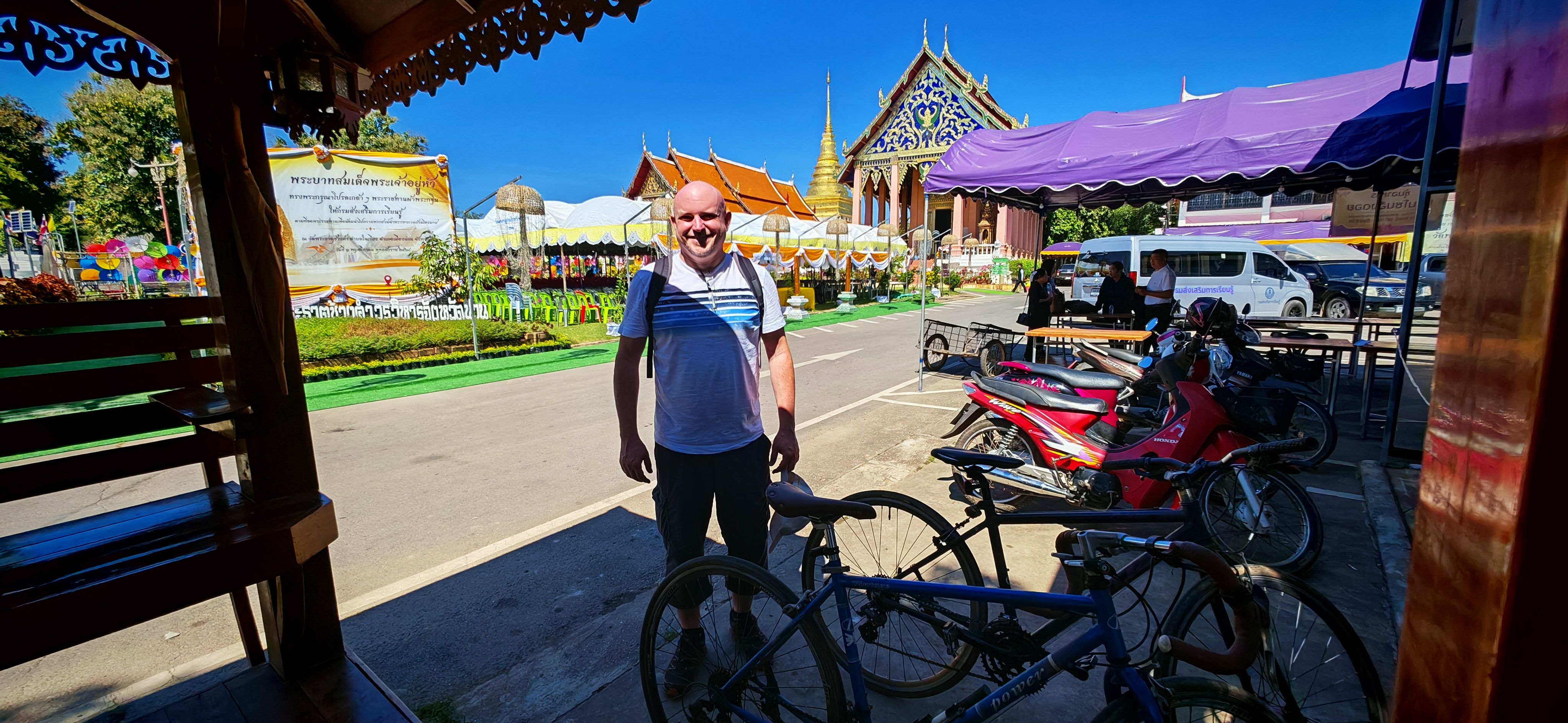
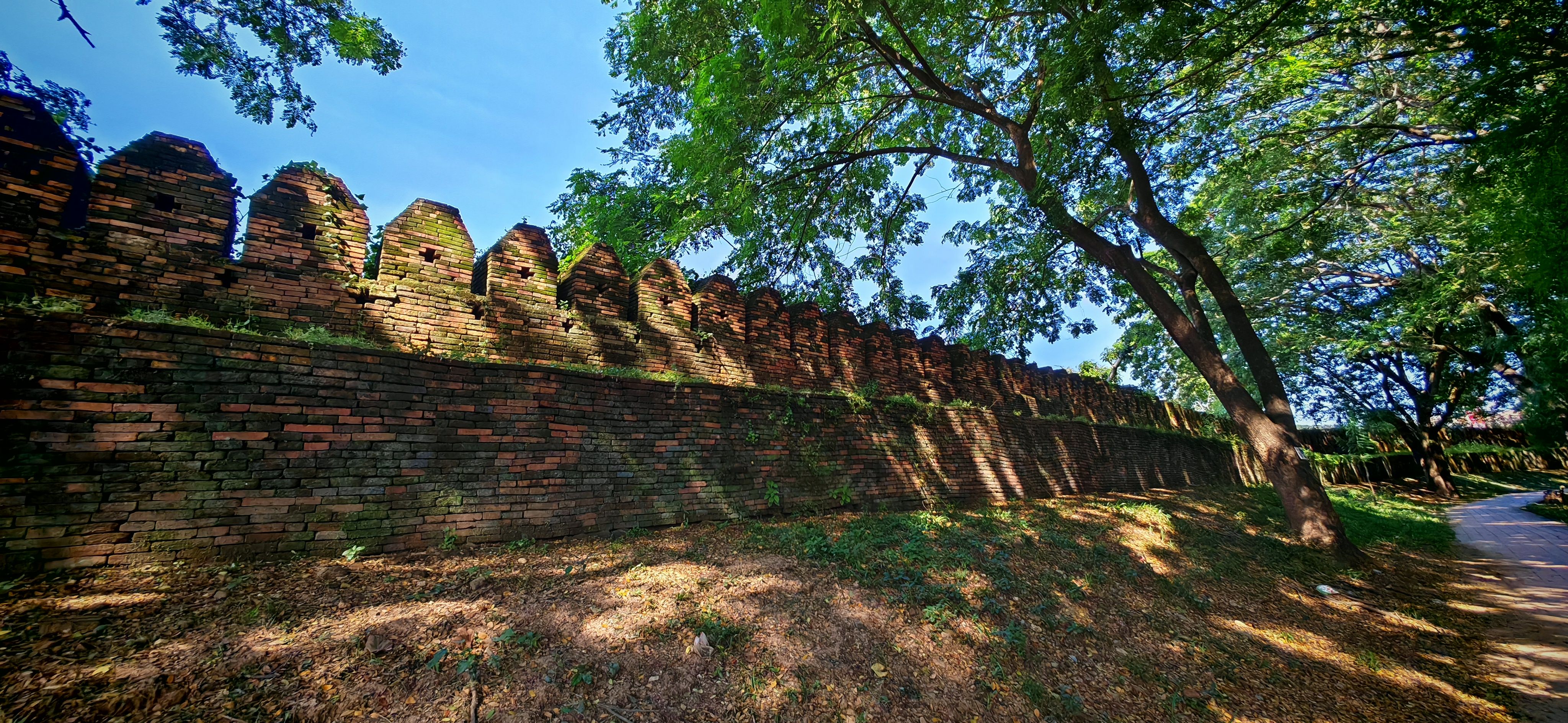
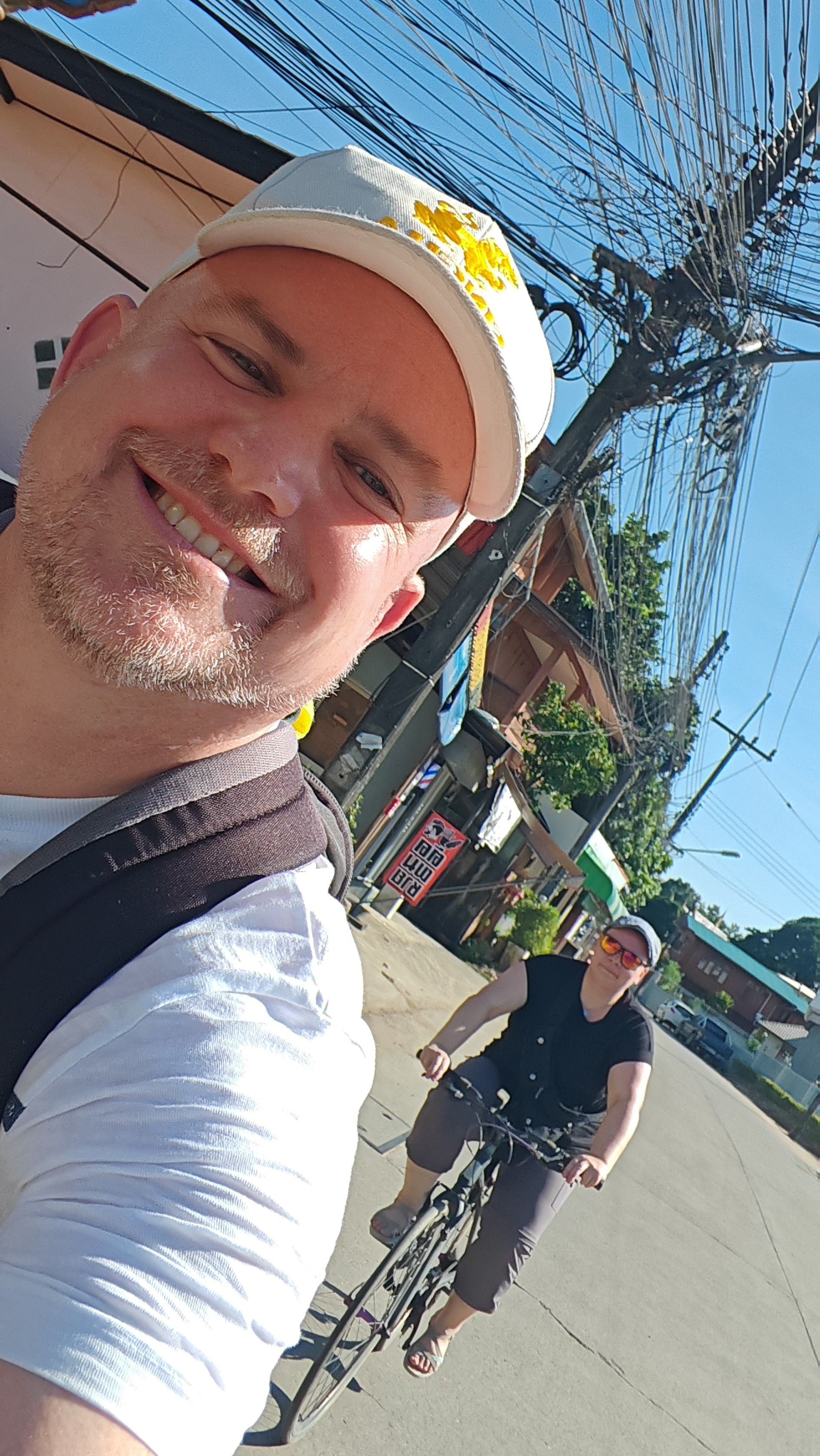
After that, we rented bicycles and rode around the city quite a bit today. All in all, about 10 km.
Doesn't sound like much, but in this heat, it's anything but child’s play.
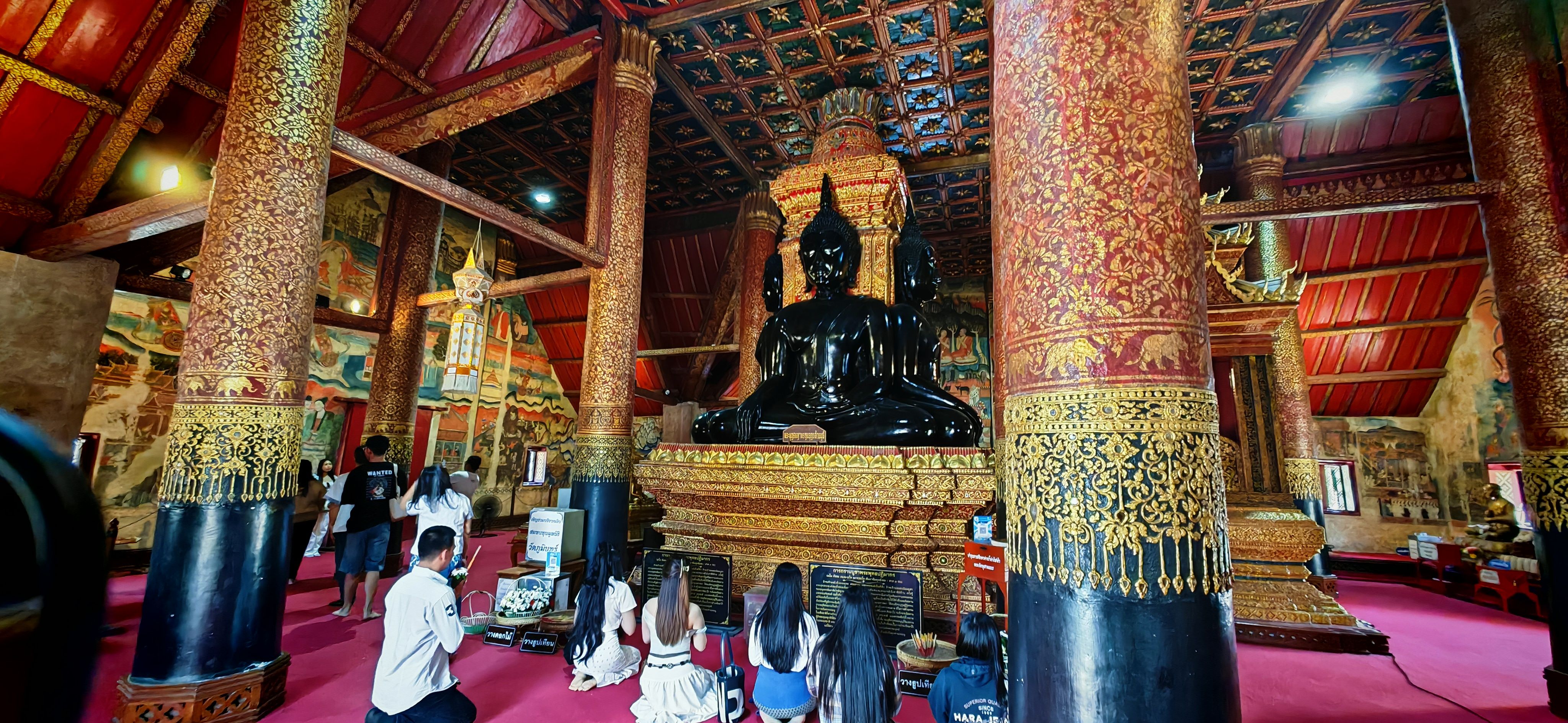
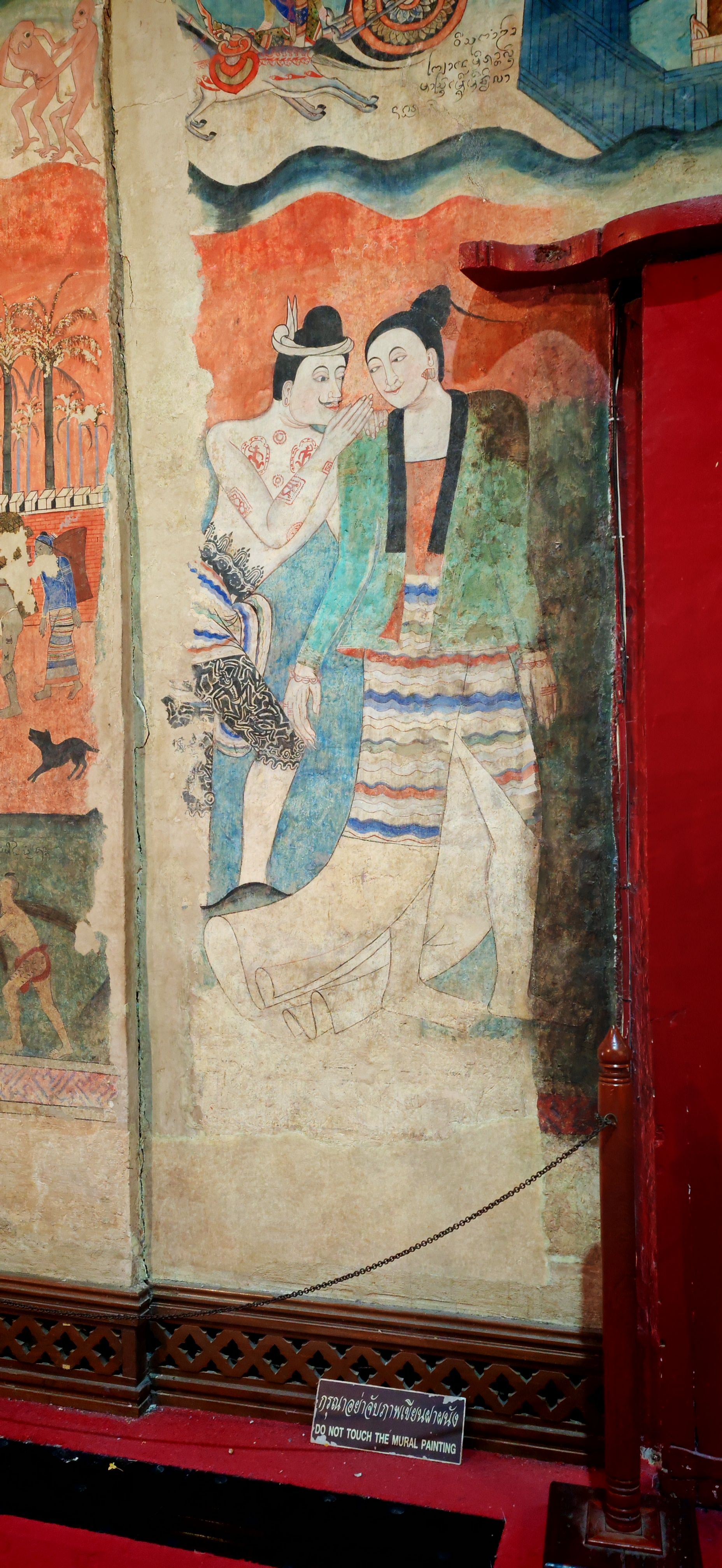
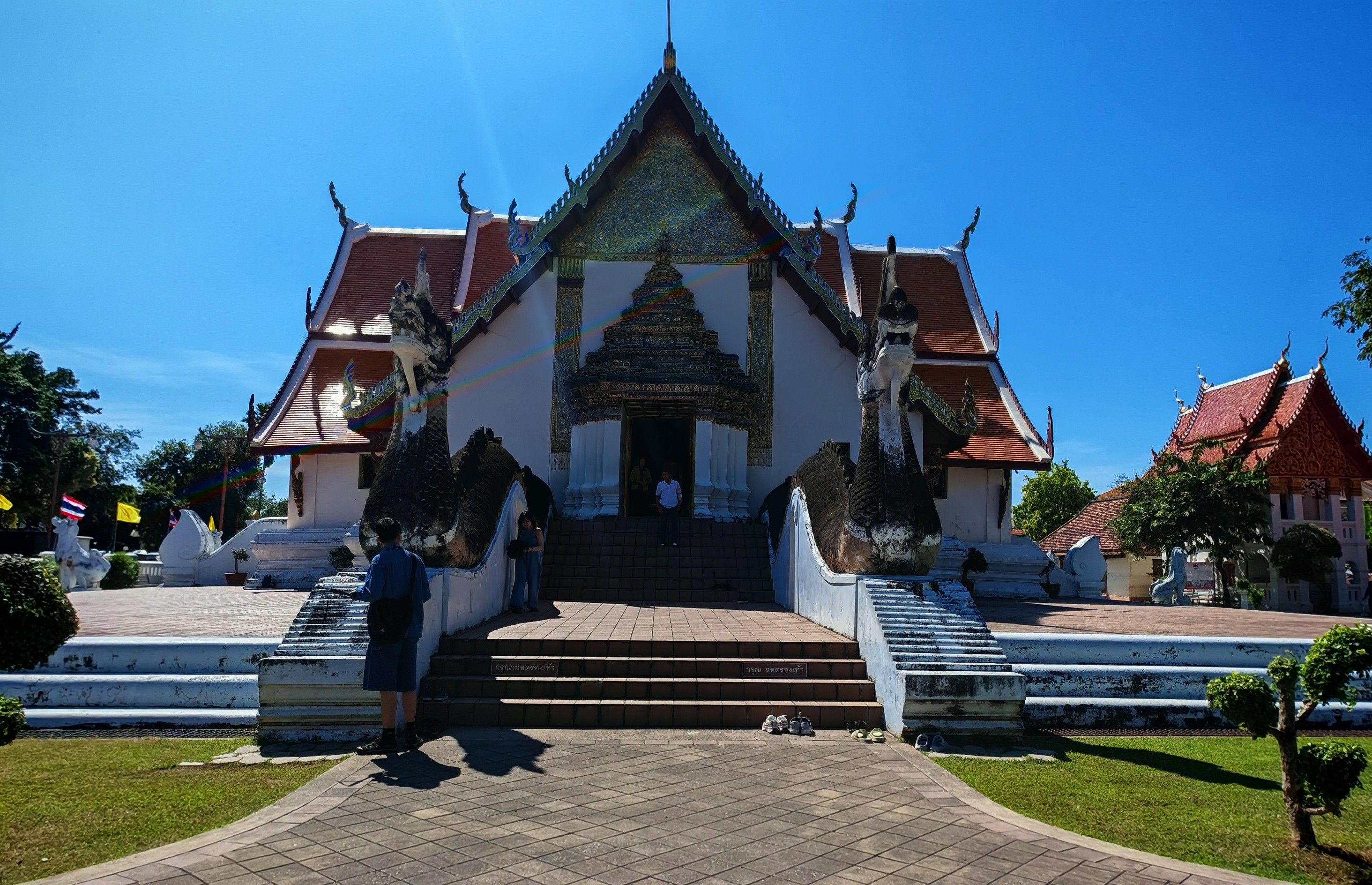
Well then, we started with our first wat for this vacation, Wat Phumin.
Here is some information about Wat Phumin:
Built: approx. 1596 under King Chao Jettabhumisiri
Most famous temple of Nan - known for its extraordinary cross-shaped architecture (four entrances, central Buddha facing four directions).
The wall paintings in Lanna style depict scenes from daily life, legends, and the famous “Love Whisperer” (“Pu Man Ya Man”) - an iconic symbol of Nan.
Central importance for the identity of the city of Nan.
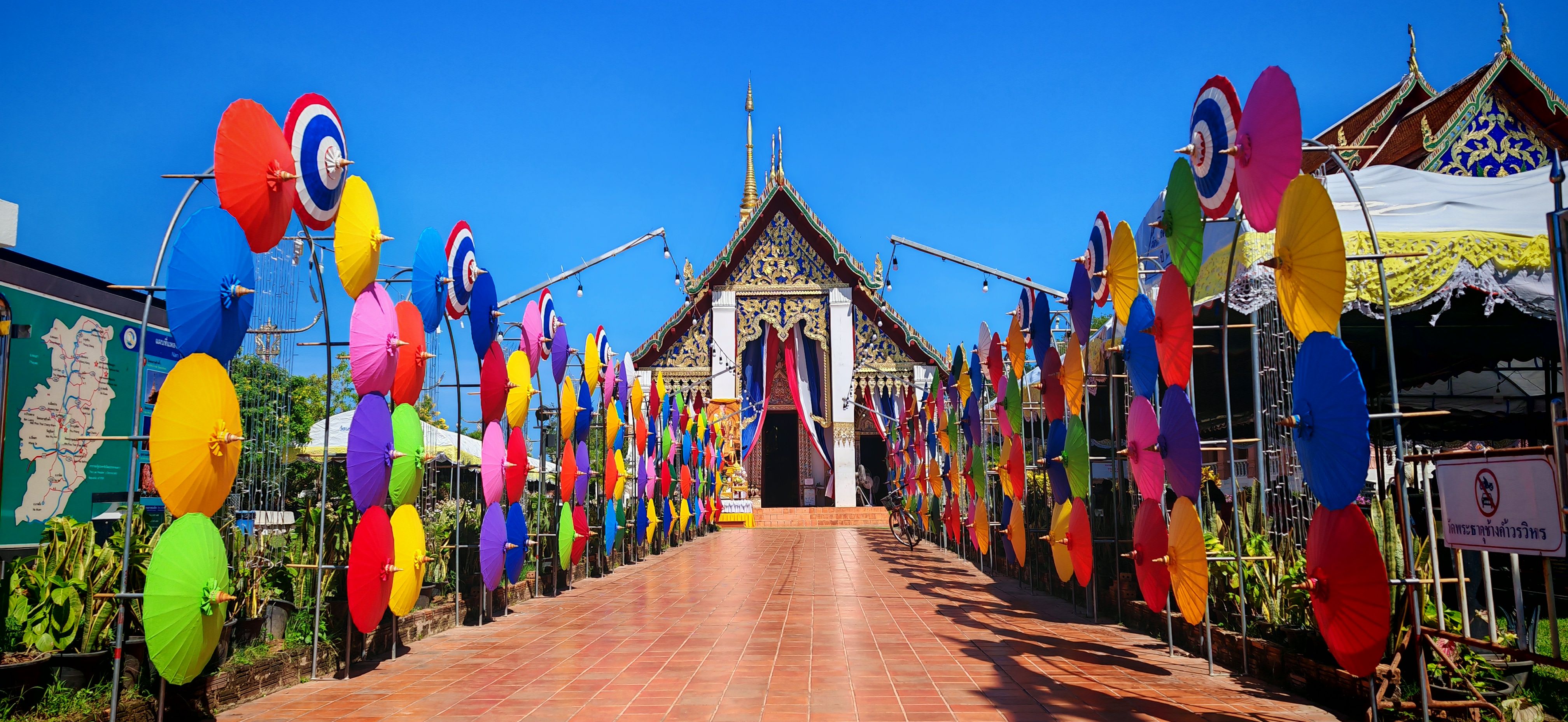
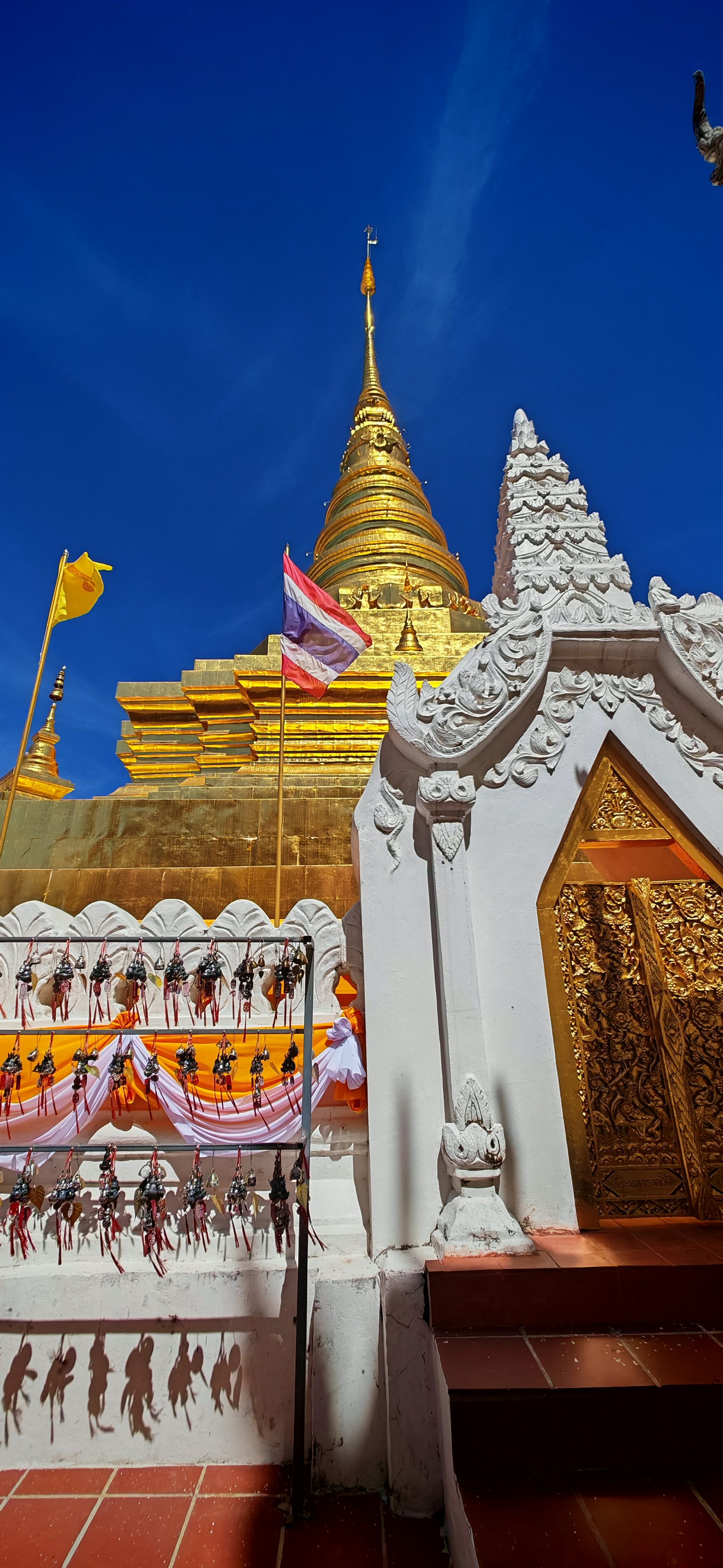
Next, we headed to Wat Phra That Chang Kham Worawihan.
After circling the wat and briefly finding a shady spot, a monk approached us and spoke to us. It was my first time experiencing this, and it was wonderful. He was very interested and even knew a few German words.
For me, it was a grand experience.
Here is more information about the wat:
Originally 14th century, during the Sukhothai Kingdom
Name means “supported by elephants” - the chedi is supported by 24 elephant statues surrounding the base.
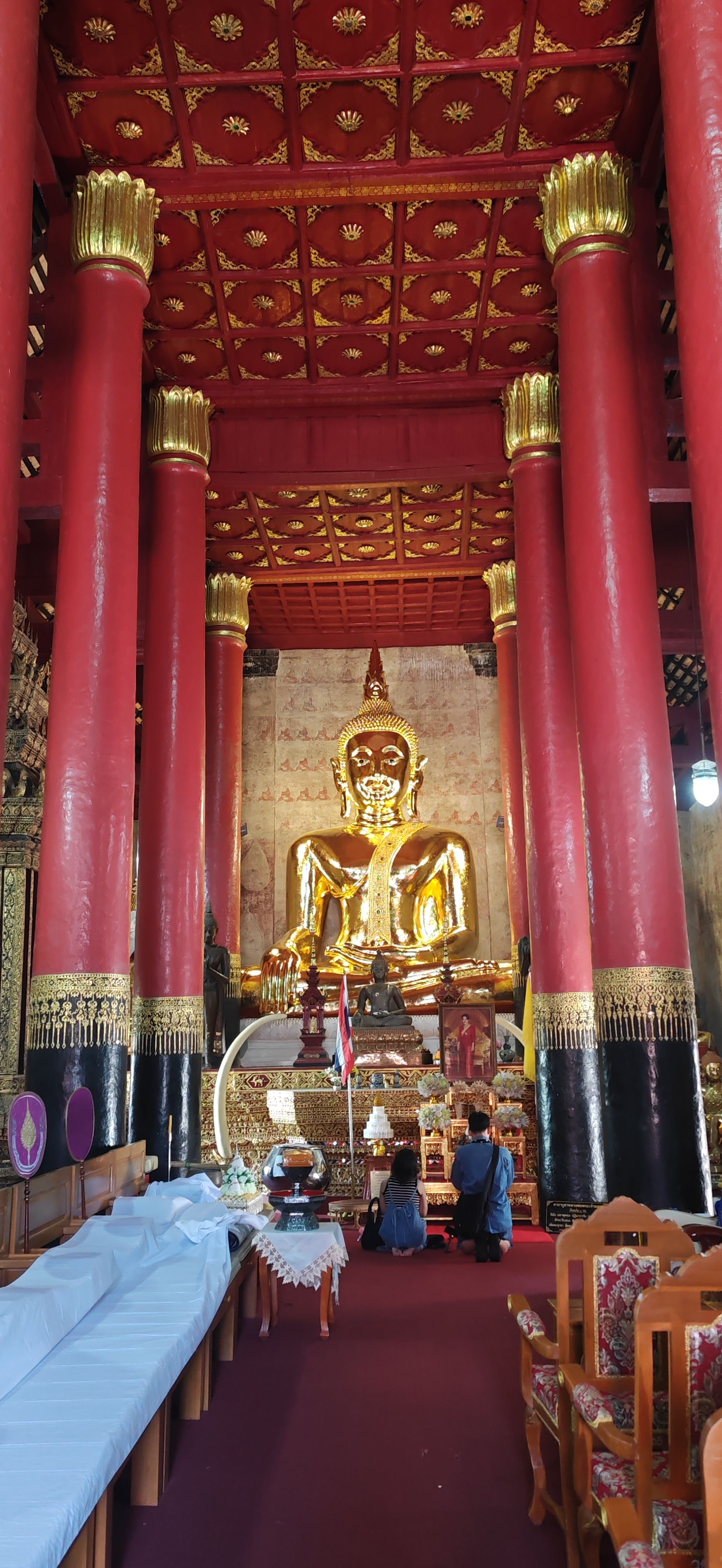
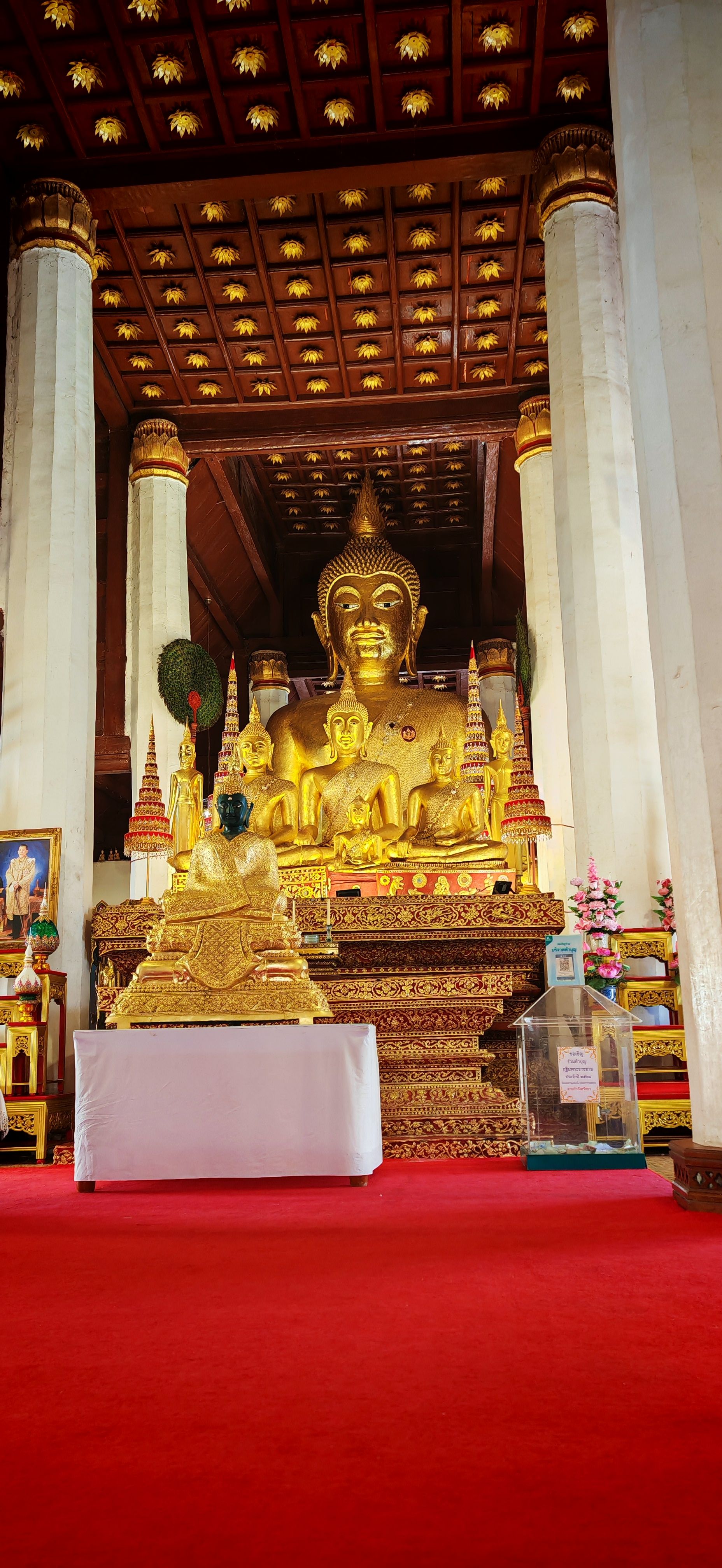
Contains an old Buddha statue and is the second most important temple in the city center.
Used to serve as a royal temple (Worawihan).
Beautiful at sunset when the golden chedi glimmers warmly.
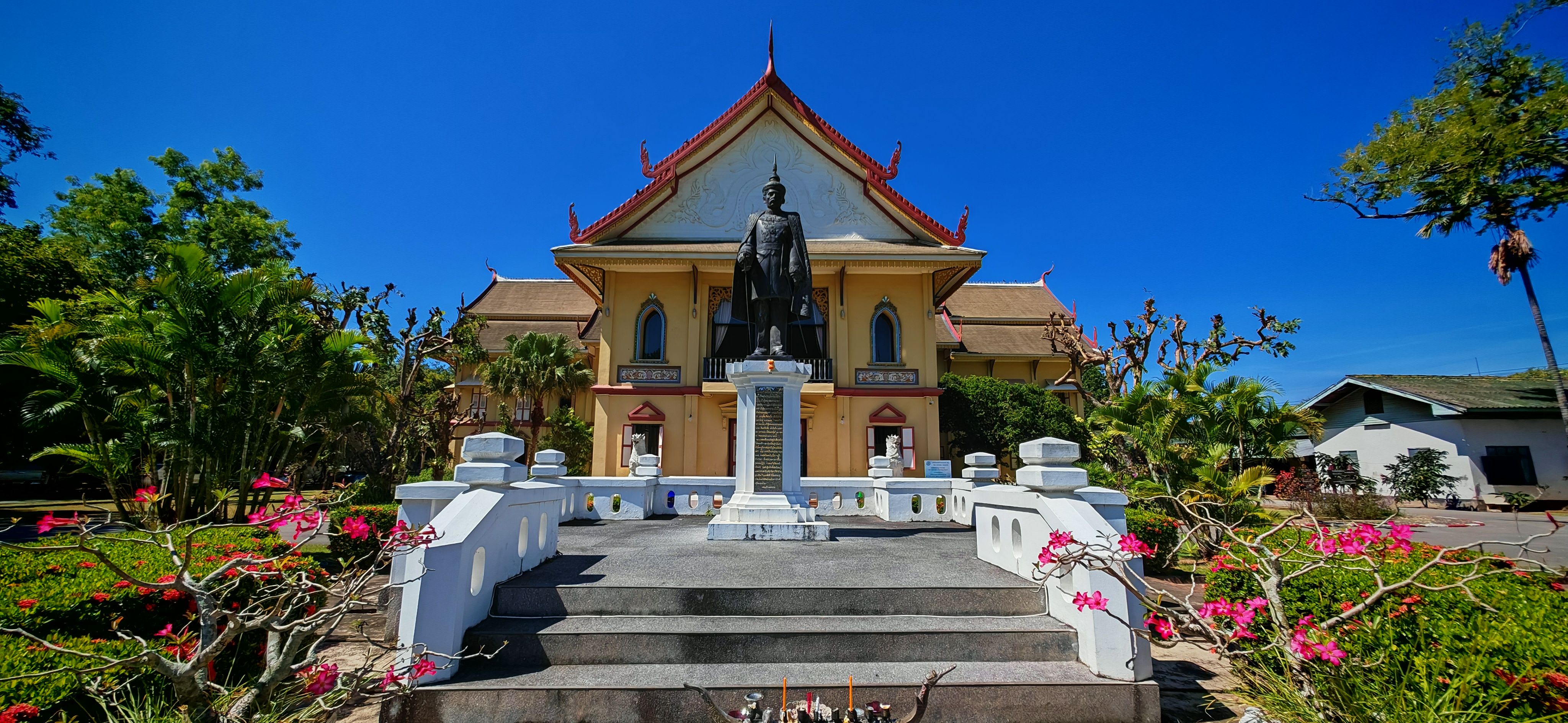
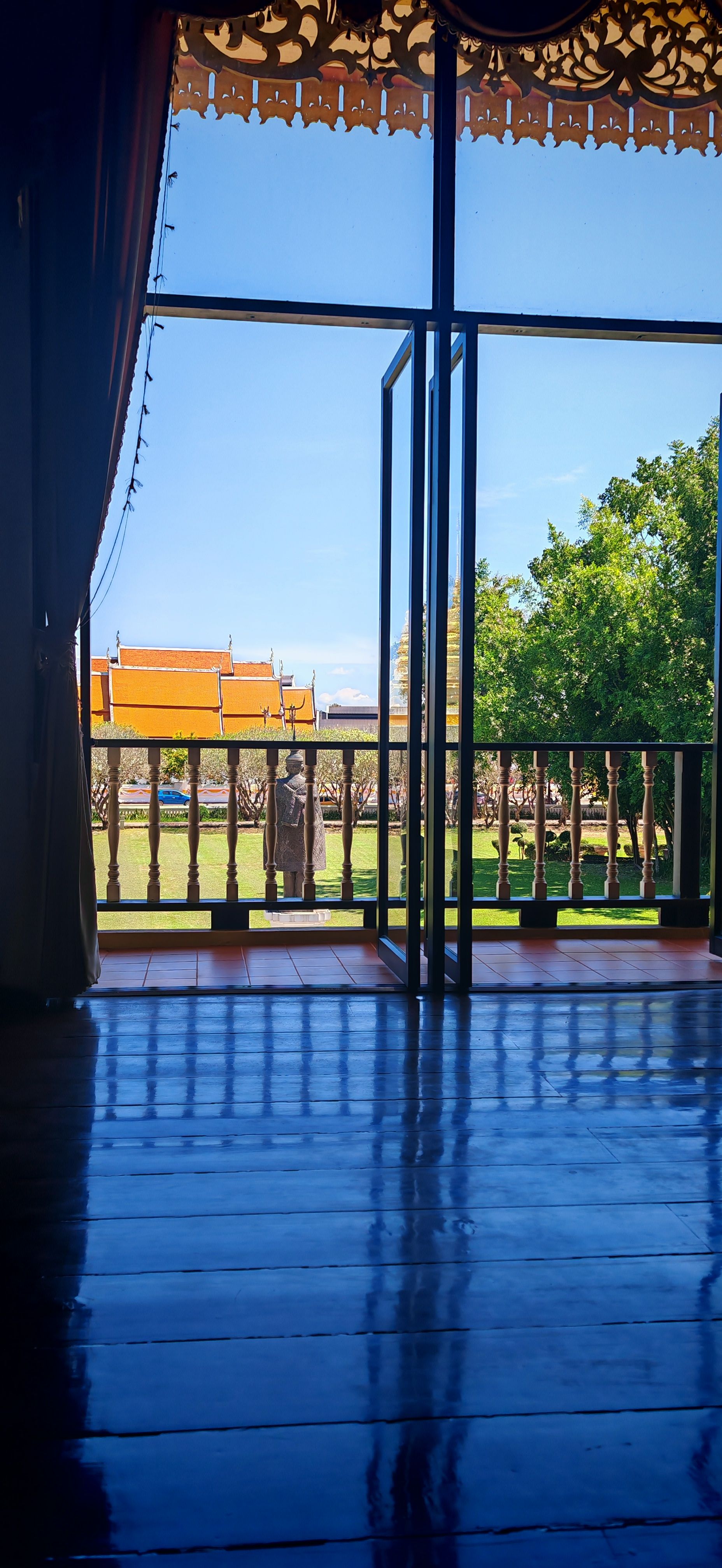
Then, the National Museum was on our agenda. Interesting here are the entrance prices (Thais 20 THB / 50 ct, all others 120 THB / 3 €). Nevertheless, they were very well spent. The house itself is in the old colonial style and very well restored, and the exhibits and display boards are contemporary and modern.
The National Museum addresses the ethnic people of this region, but also how it was in the Stone Age and what was found. There was also a section on various rulers of this area. The highlight of the exhibition is a piece of “black ivory” weighing about 18 kg, which is considered a valuable heirloom and is the only piece of its kind found in Thailand.
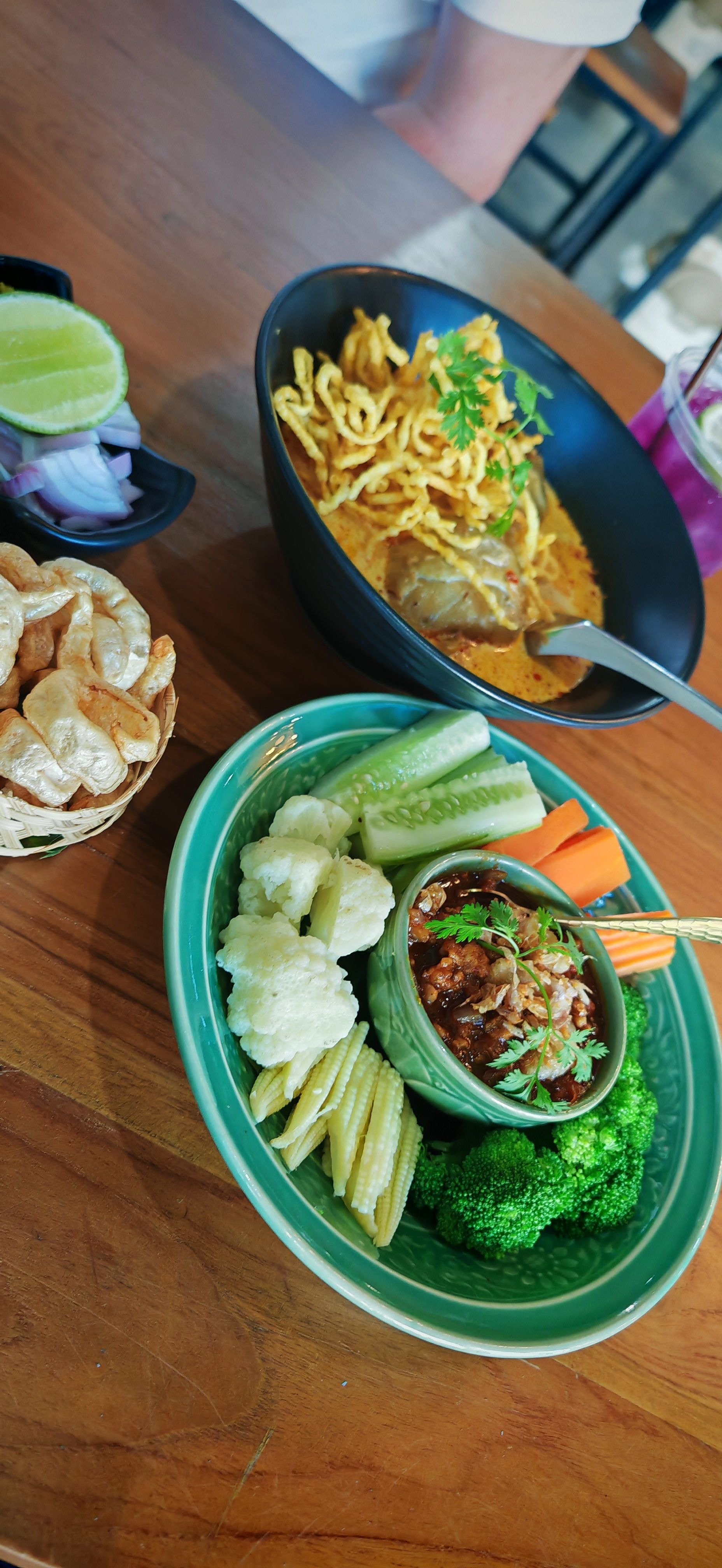
Almost opposite, we could enjoy our first Khao Soi of this vacation and now know the difference between Nam Prik Ong and Nam Prik Num.
Ong is a type of chili dip, primarily made from red chilies, tomatoes, and minced meat, served with steamed vegetables - basically the Thai version of Bolognese. Num is a chili paste made from green chilies, shallots, and garlic.
We opted for the milder variant (Ong).
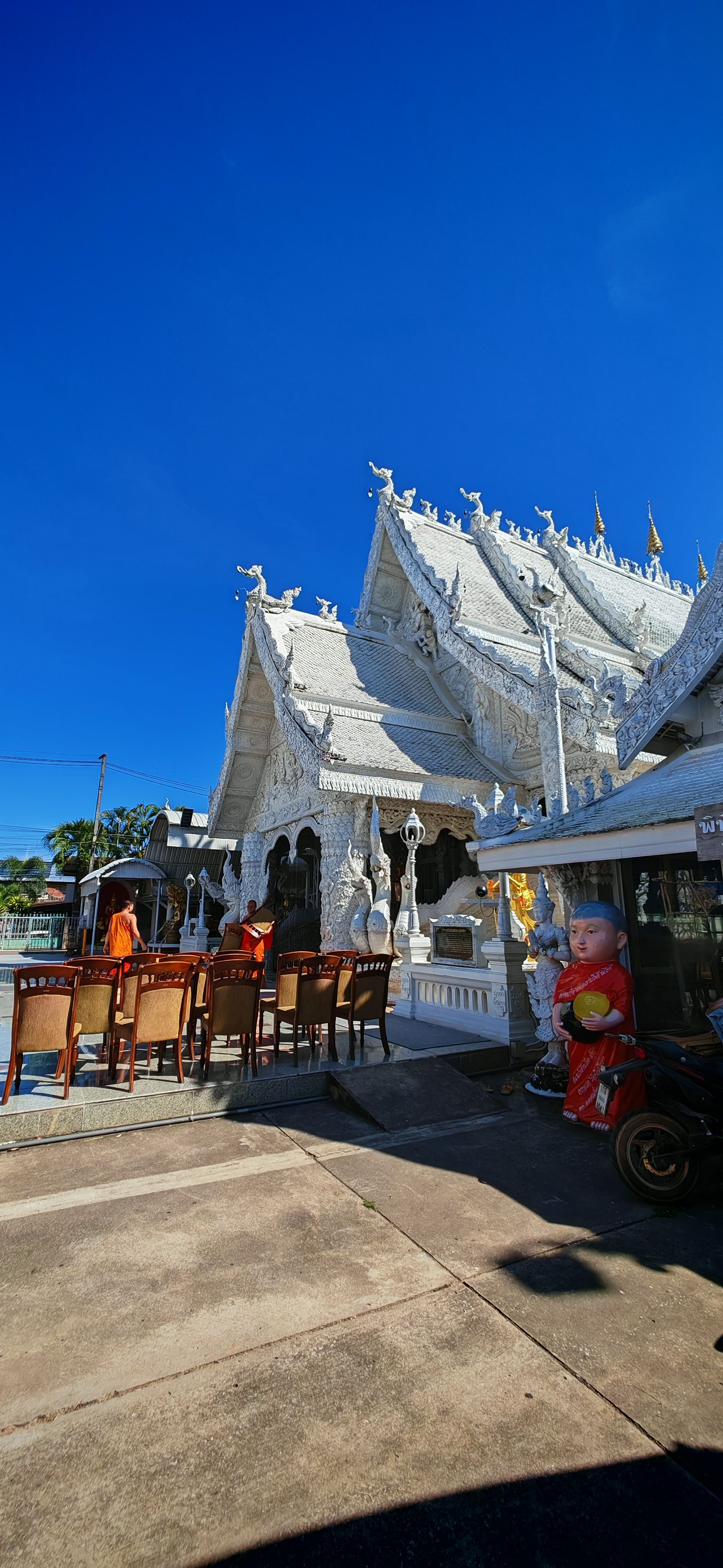
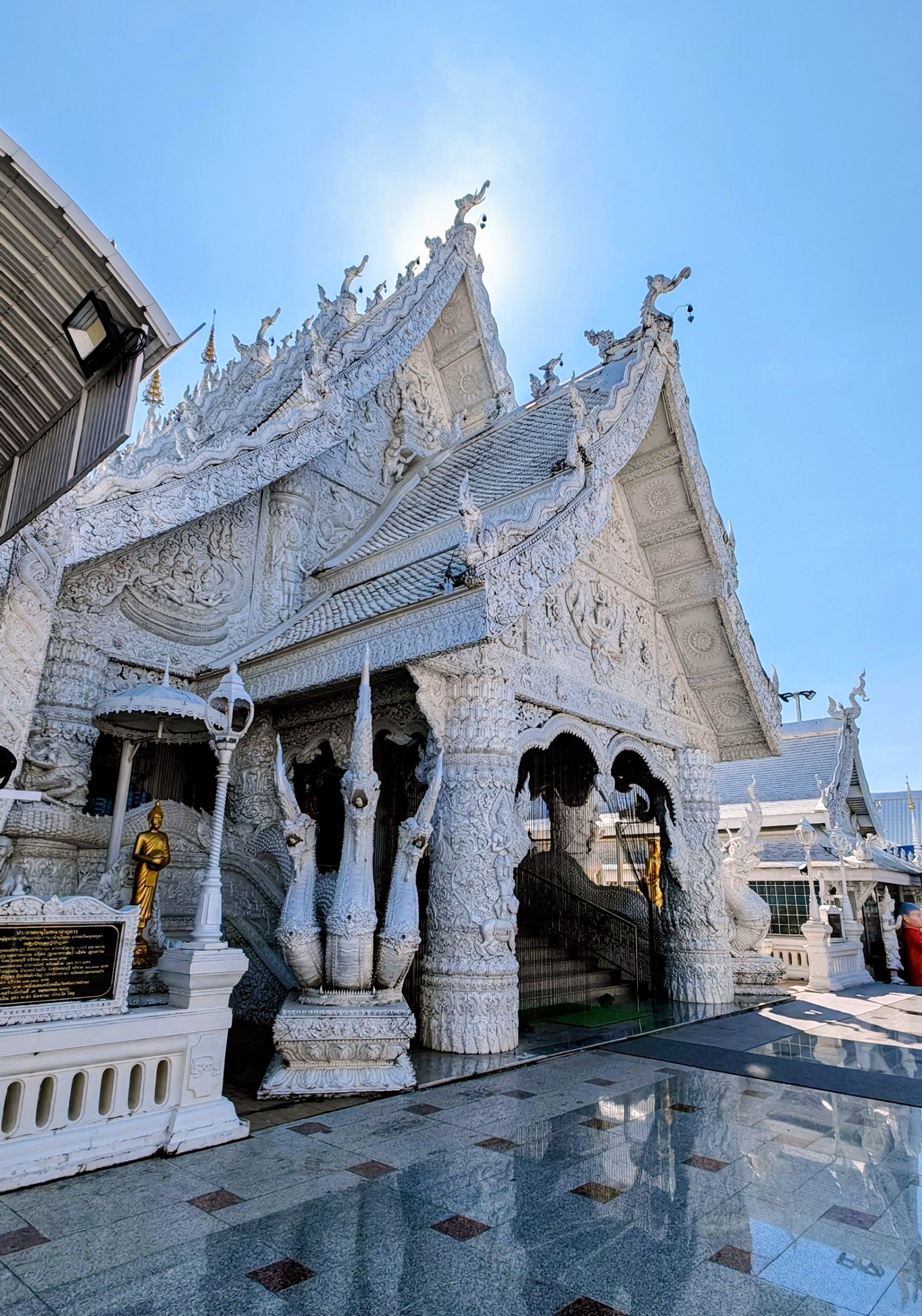
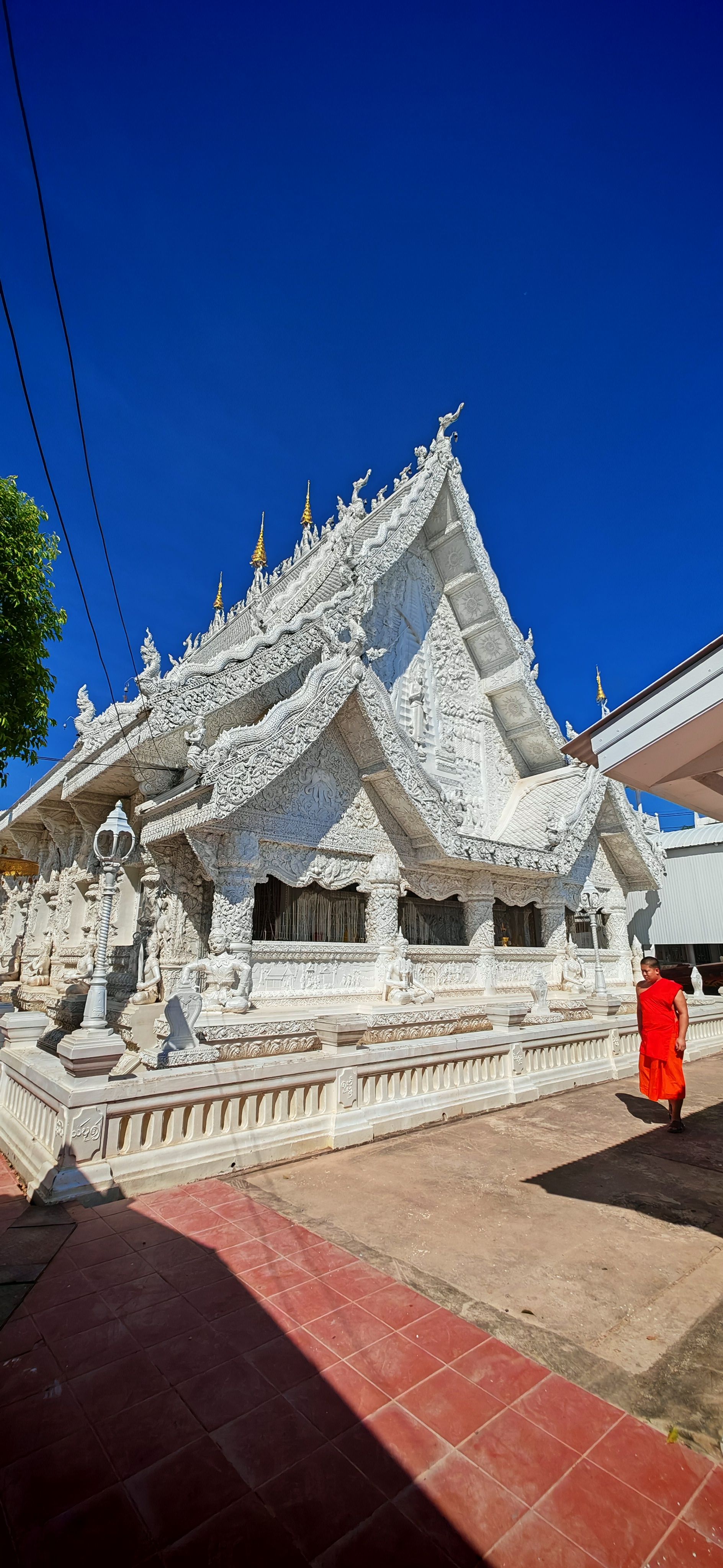
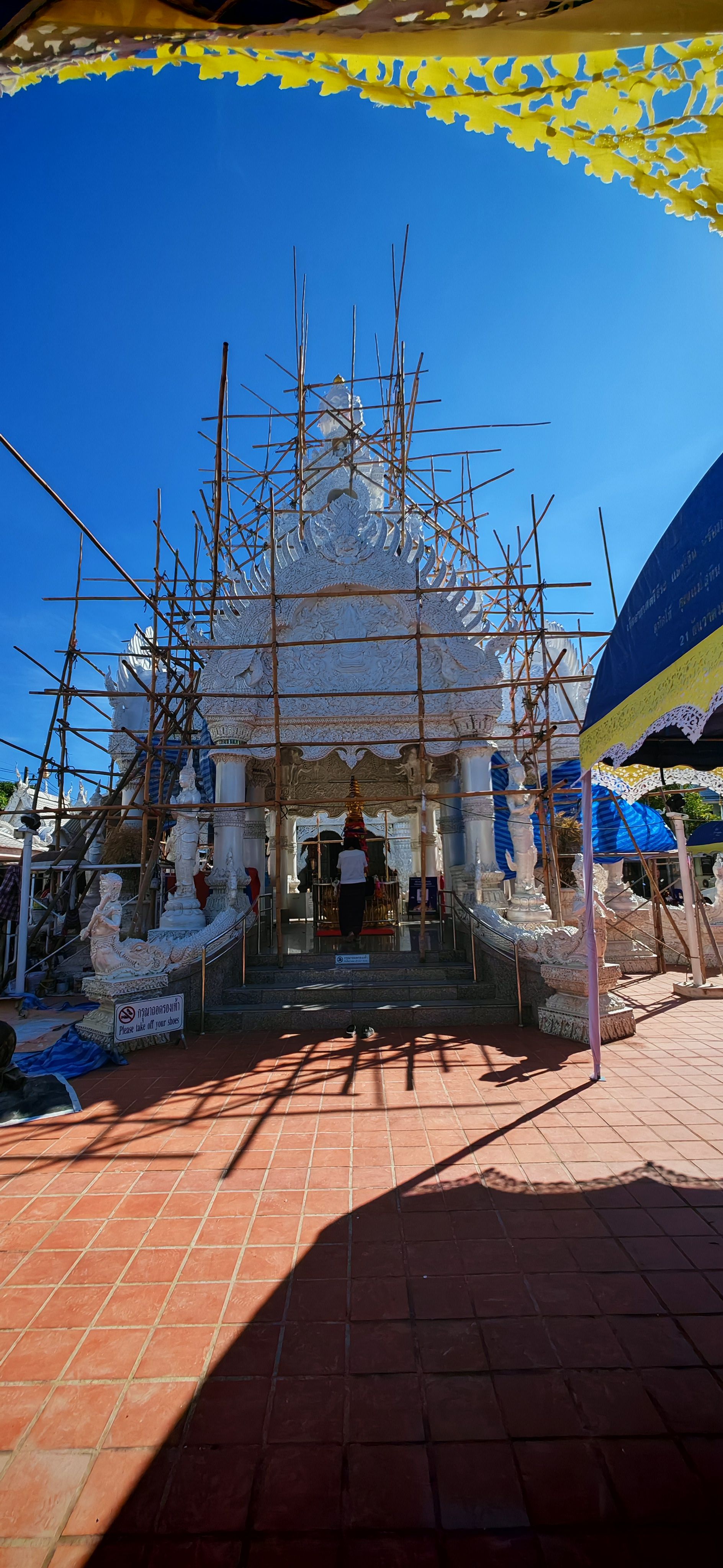
Directly next to the restaurant is Wat Ming Mueang.
Information about this wat:
Built: 1857
Striking white temple with intricate plaster and glass decorations in Lanna style.
Houses the city pillar (Lak Mueang) of Nan, which is considered a spiritual center.
A place for locals to ask for luck and protection for the city.
Especially popular for wedding photos and local festivals.
After a little break, we went to a Thai massage that day, it was okay, but we have had better. Still, a massage is always good.
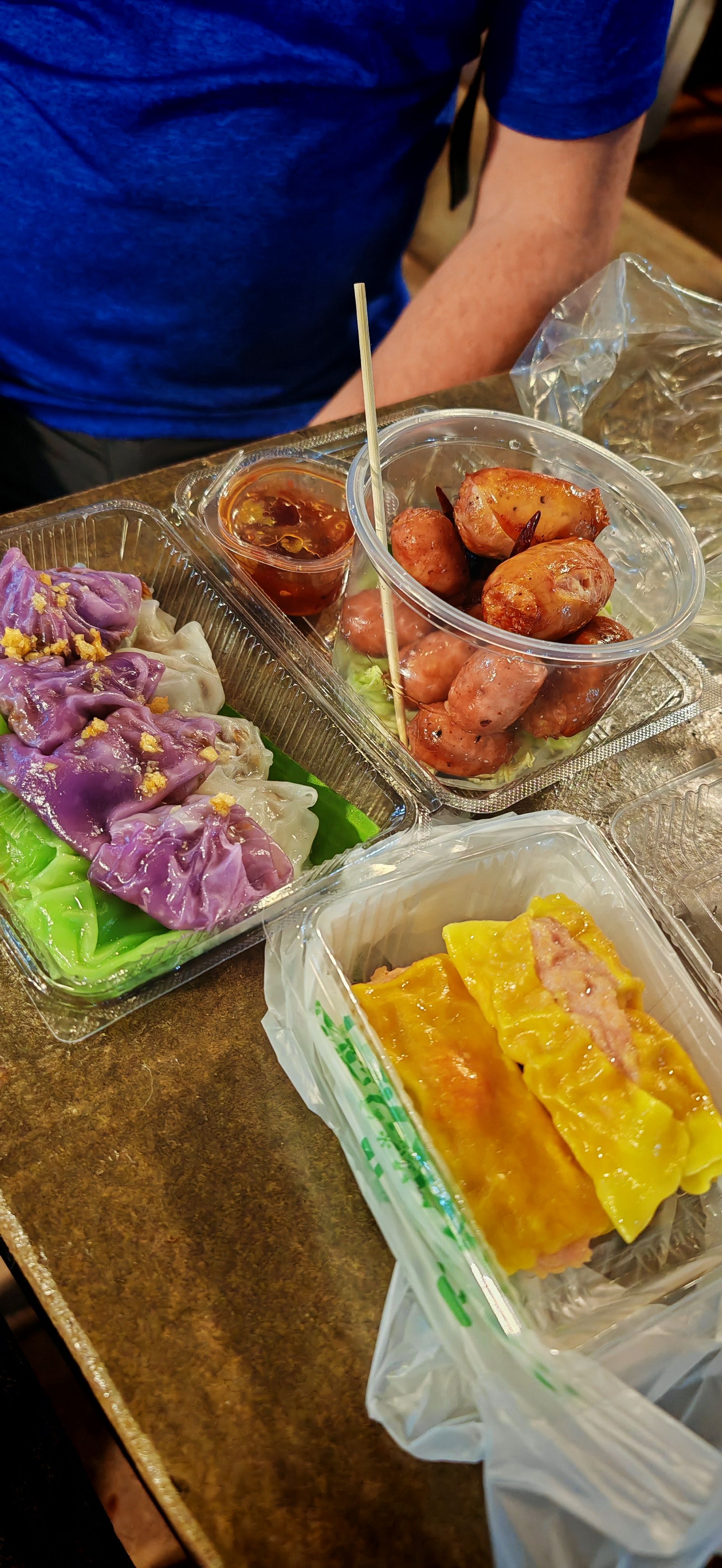
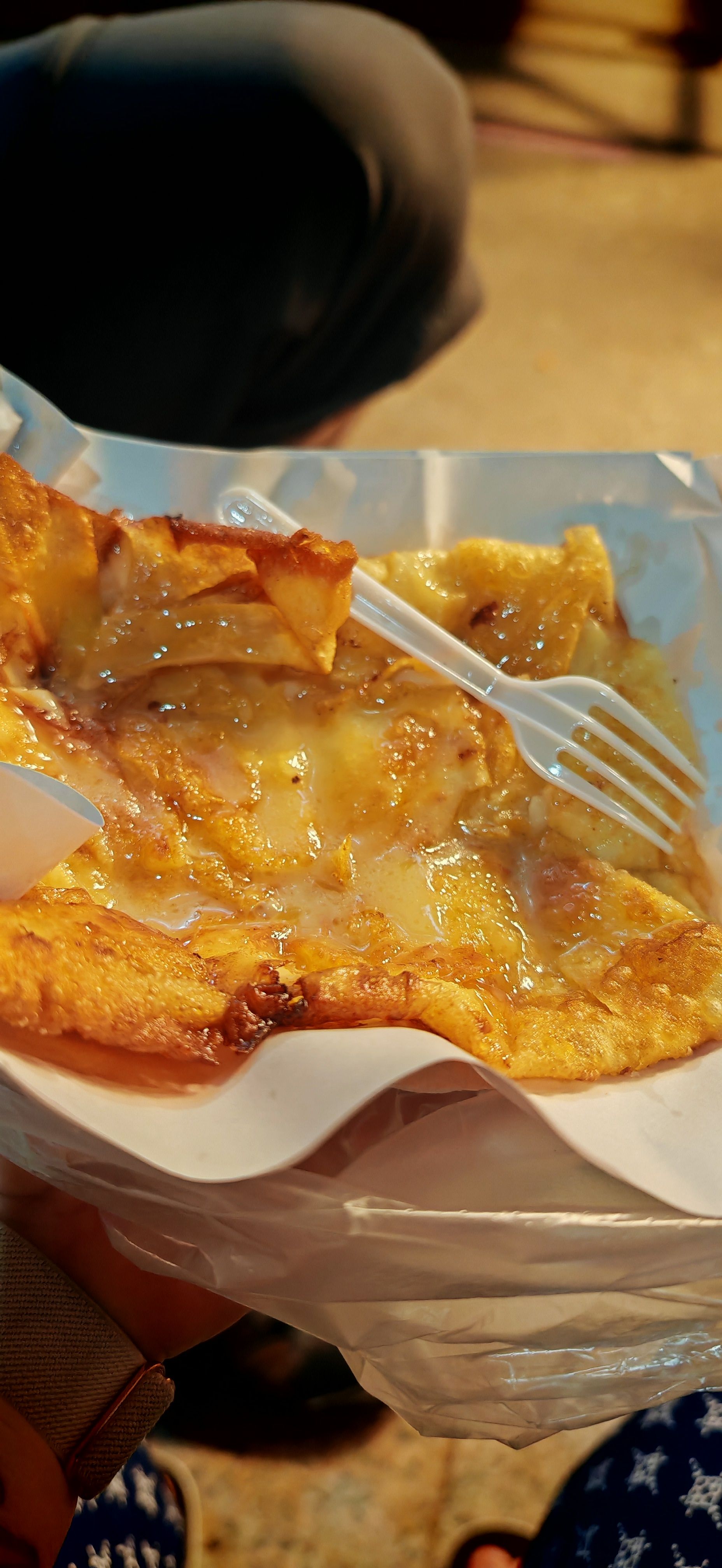
For dinner, we agreed to go to a night market. Here there are many different food stalls offering everything your heart desires. For a small price, there were various sausages, minced meat in sticky rice, and something else, the name of which I have no idea, but it was also delicious. It was all topped off with a roti with coconut.
The next morning, we both found it good that our breakfast was individually tailored and we didn’t have to leave too much behind. We also had a nice conversation with the owner of the accommodation/café.
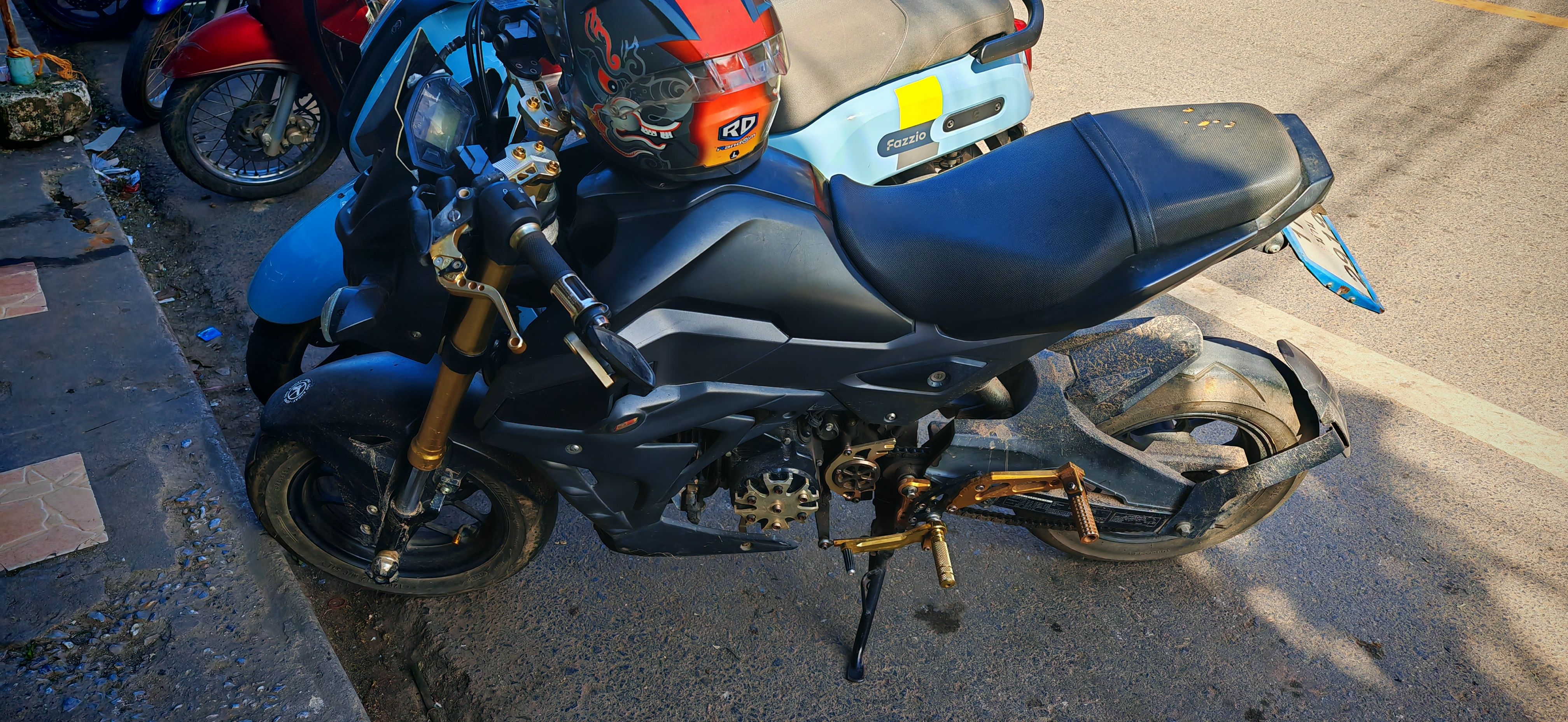
We rented a scooter for two days and actually wanted to head towards Sapan, a hill village located a bit outside. However, we postponed this due to time constraints until tomorrow. So today in Nan, we went on another temple tour.
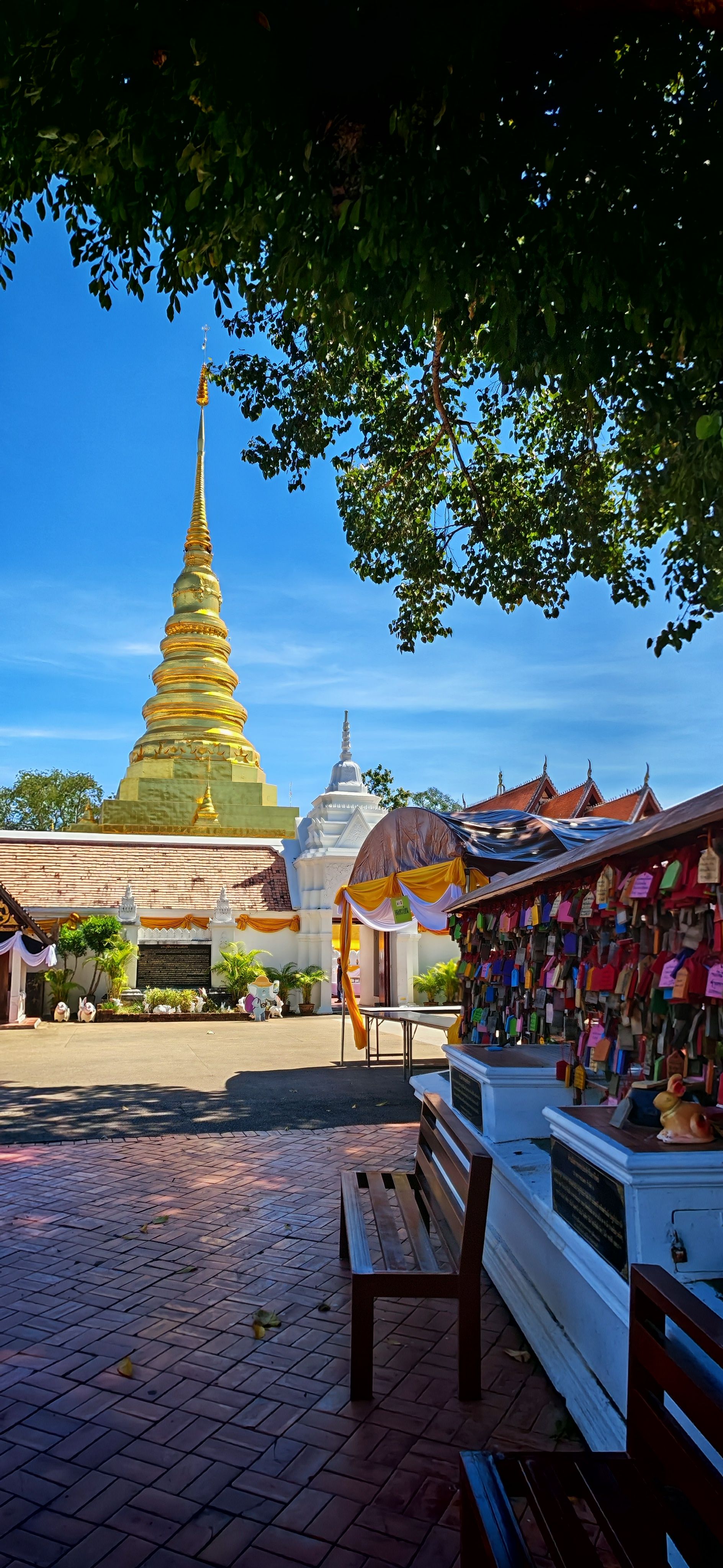
First, we headed to Wat Phra That Chae Haeng. Very beautiful and worth seeing temple a bit outside.
Here is some information about this wat:
Built: around 1355, during the Lanna Kingdom
Most significant temple of the Nan province and holy temple of the “Year of the Rabbit” (Rabbit Zodiac).
Contains relics of the Buddha and is considered a spiritual landmark of the region.
Large golden chedi (55 m high) in Lanna style – a pilgrimage destination for many believers.
Especially impressive in the early morning.
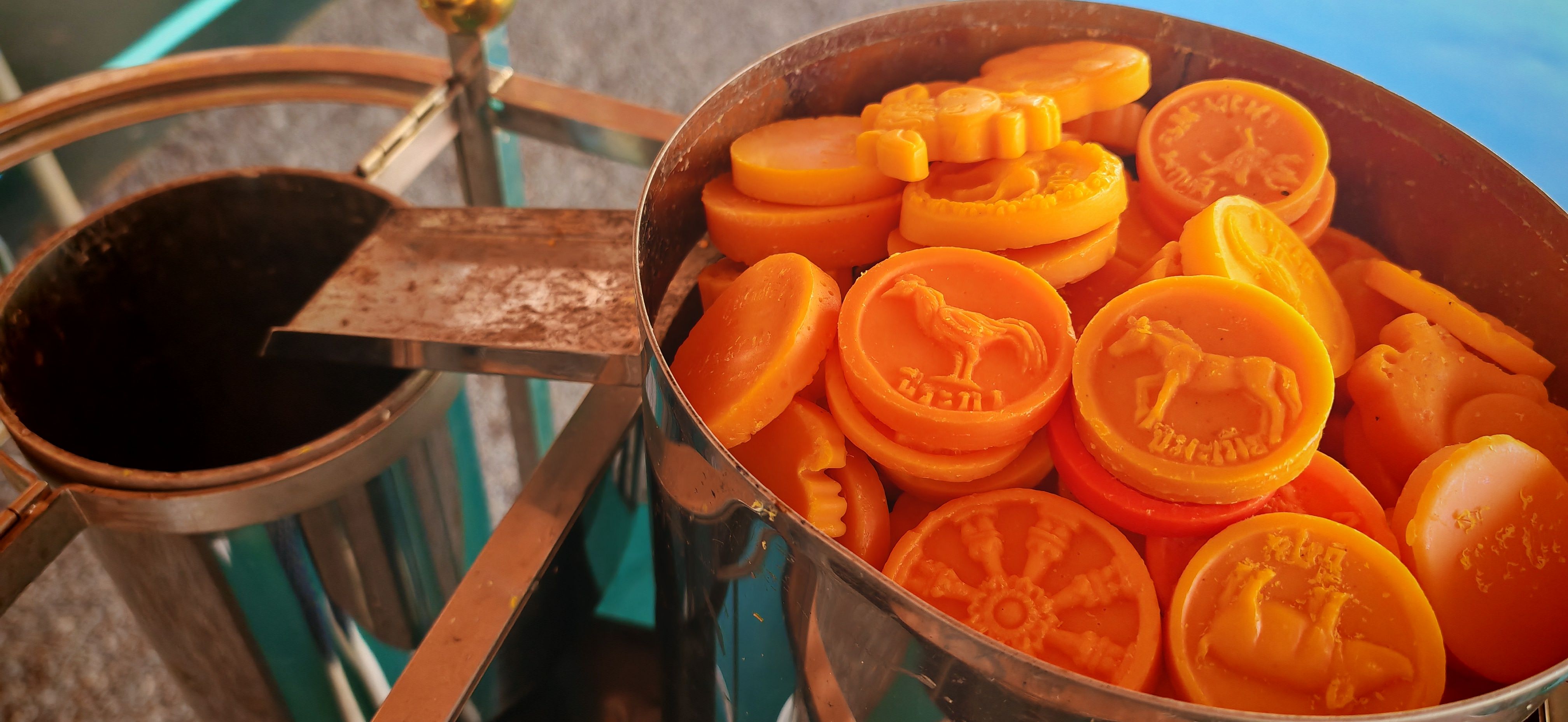
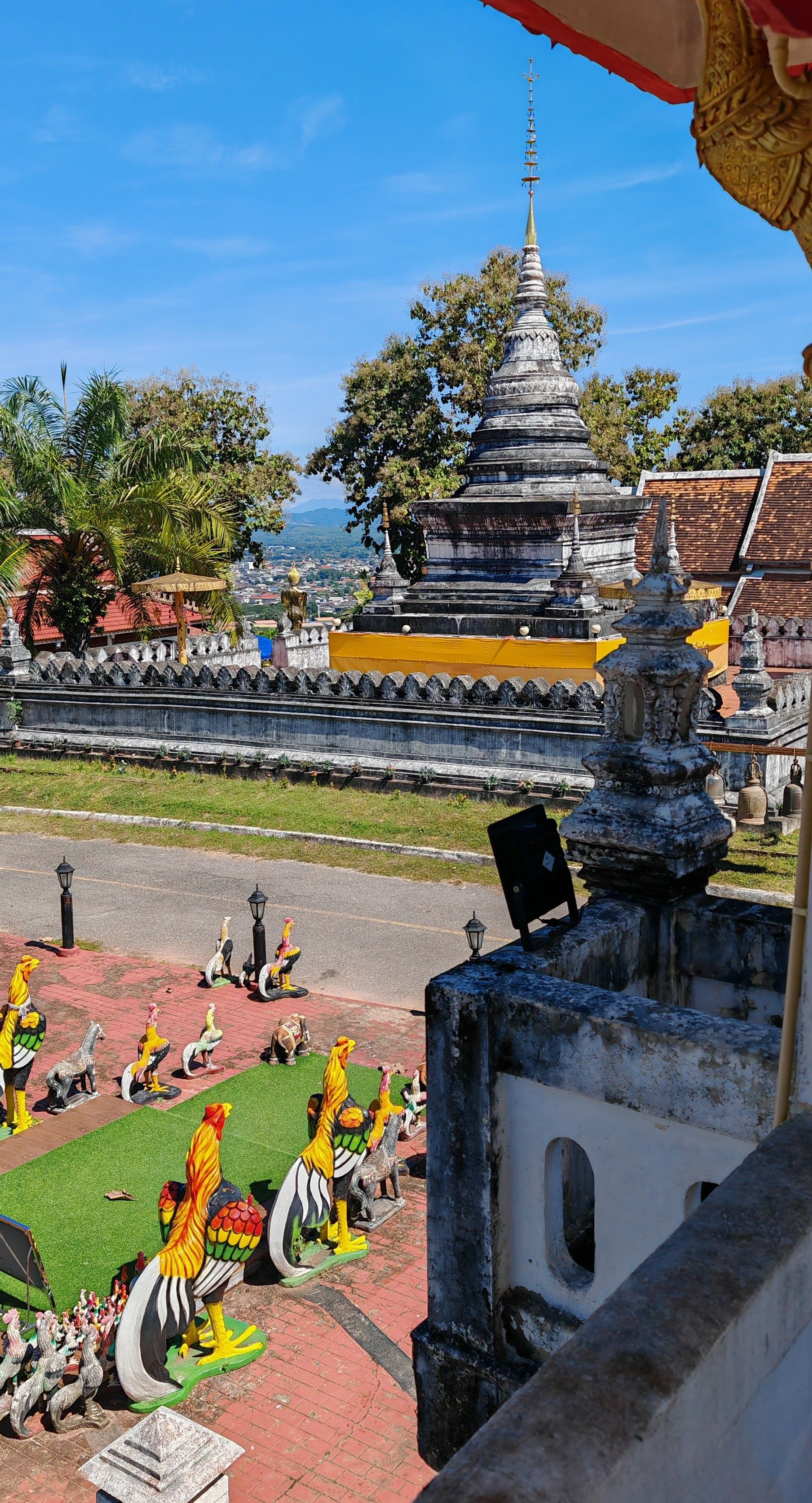
Here, the various displayed zodiac signs were interesting for us, and we had to consult the internet for our signs.
Heide: Year of the Rooster (ปีระกา – Pee Raka)
Part of the Thai zodiac system based on the Chinese calendar.
Years: 1933, 1945, 1957, 1969, 1981, 1993, 2005, 2017, 2029, etc.
People born in the Year of the Rooster are considered:
→ diligent, honest, responsible, detail-oriented.
In Nan, Wat Phra That Khao Noi is the protective temple for people born in the Year of the Rooster.
Egg: Year of the Horse (ปีมะเมีย – Pee Ma Mía)
Years: 1930, 1942, 1954, 1966, 1978, 1990, 2002, 2014, 2026, etc.
People born in the Year of the Horse are considered:
→ energetic, independent, freedom-loving, communicative.
Their corresponding protective temple in Northern Thailand is usually Wat Phra That Hariphunchai (in Lamphun), not in Nan.
Nevertheless, believers from Nan pilgrim to regional Phra-That temples on their birthdays or New Year's to ask for luck.
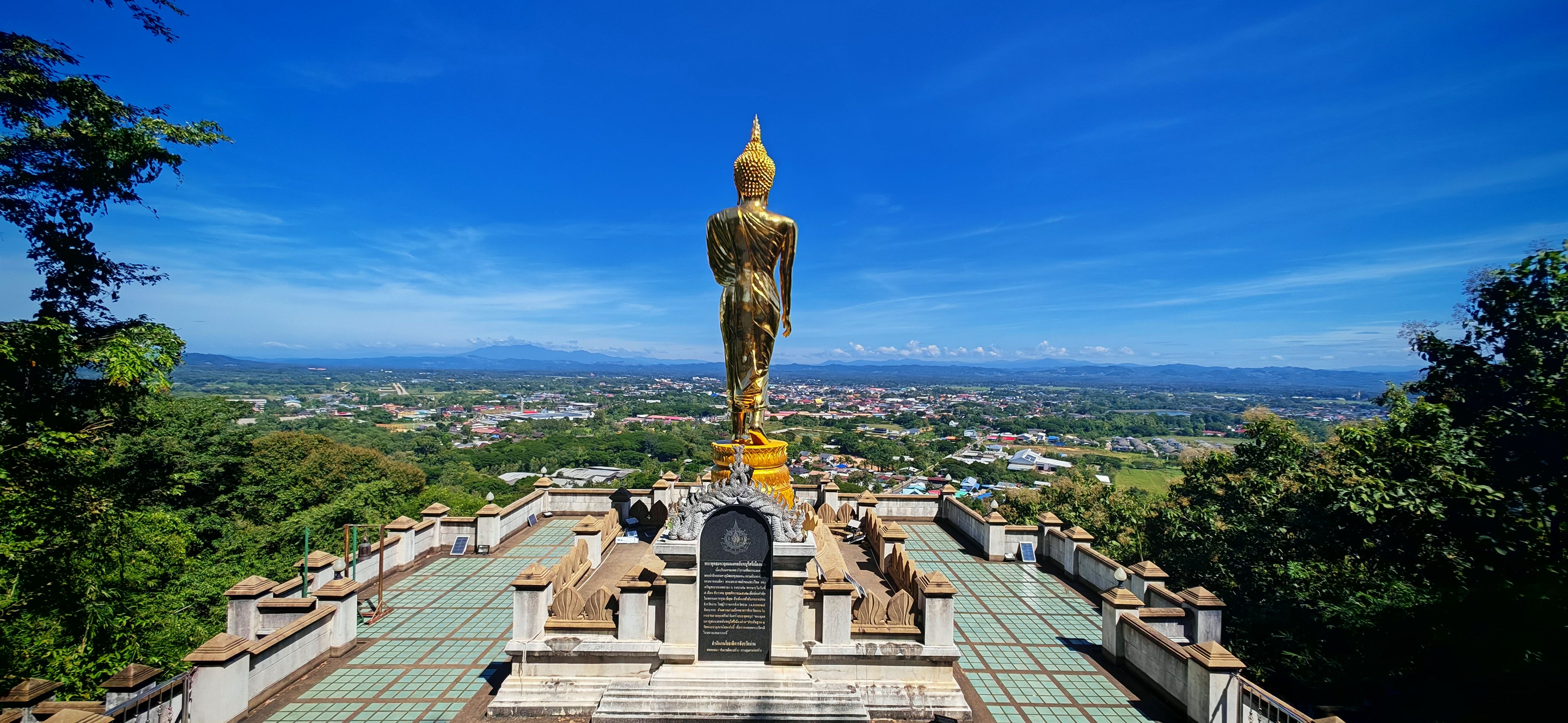
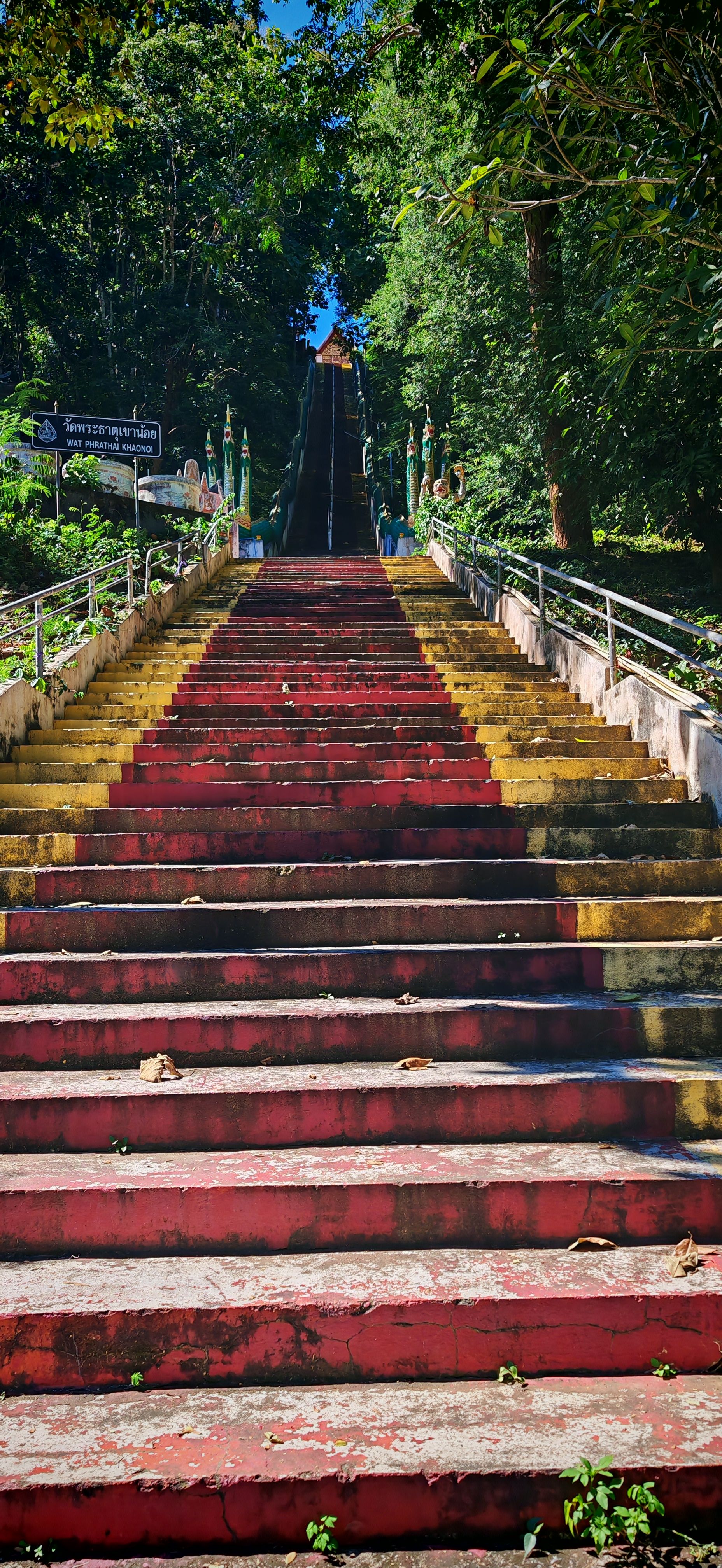
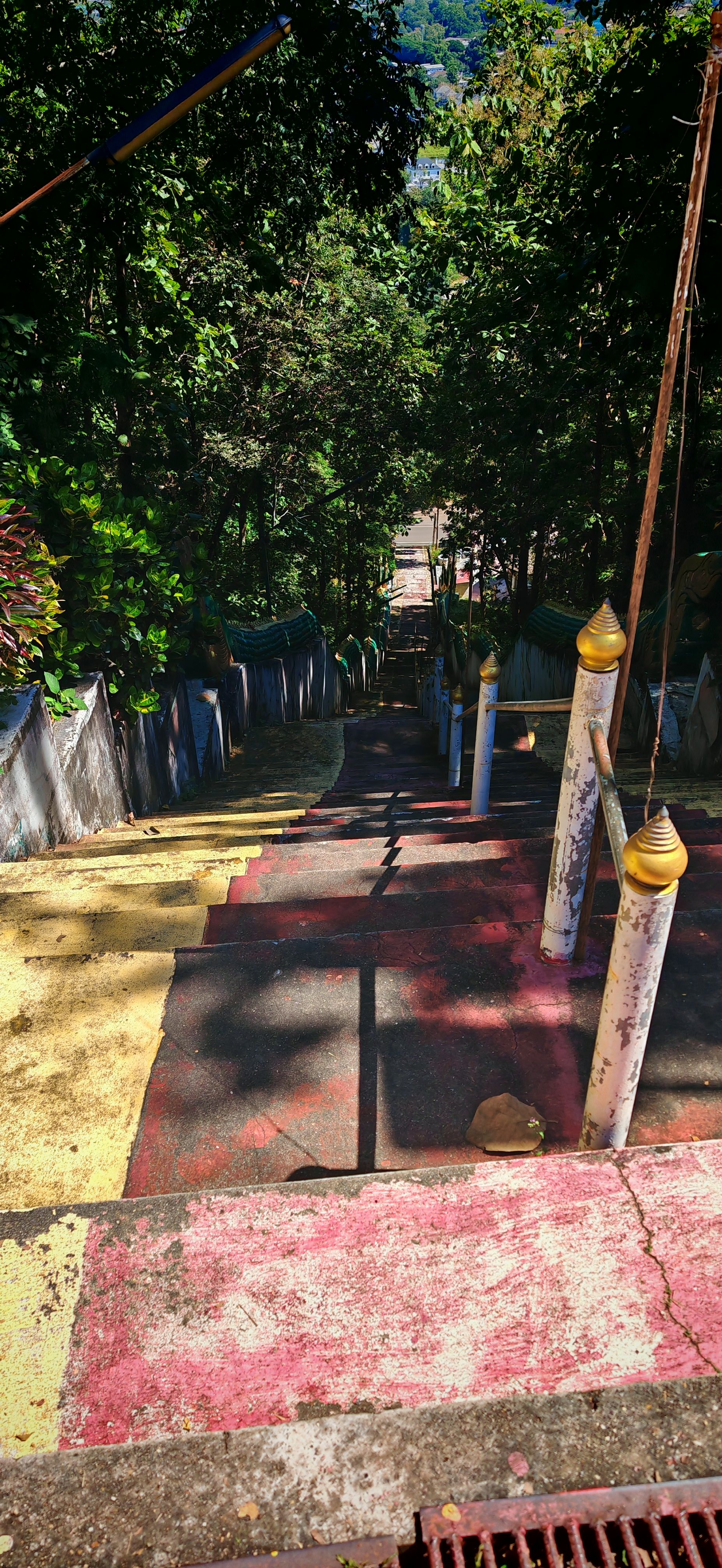
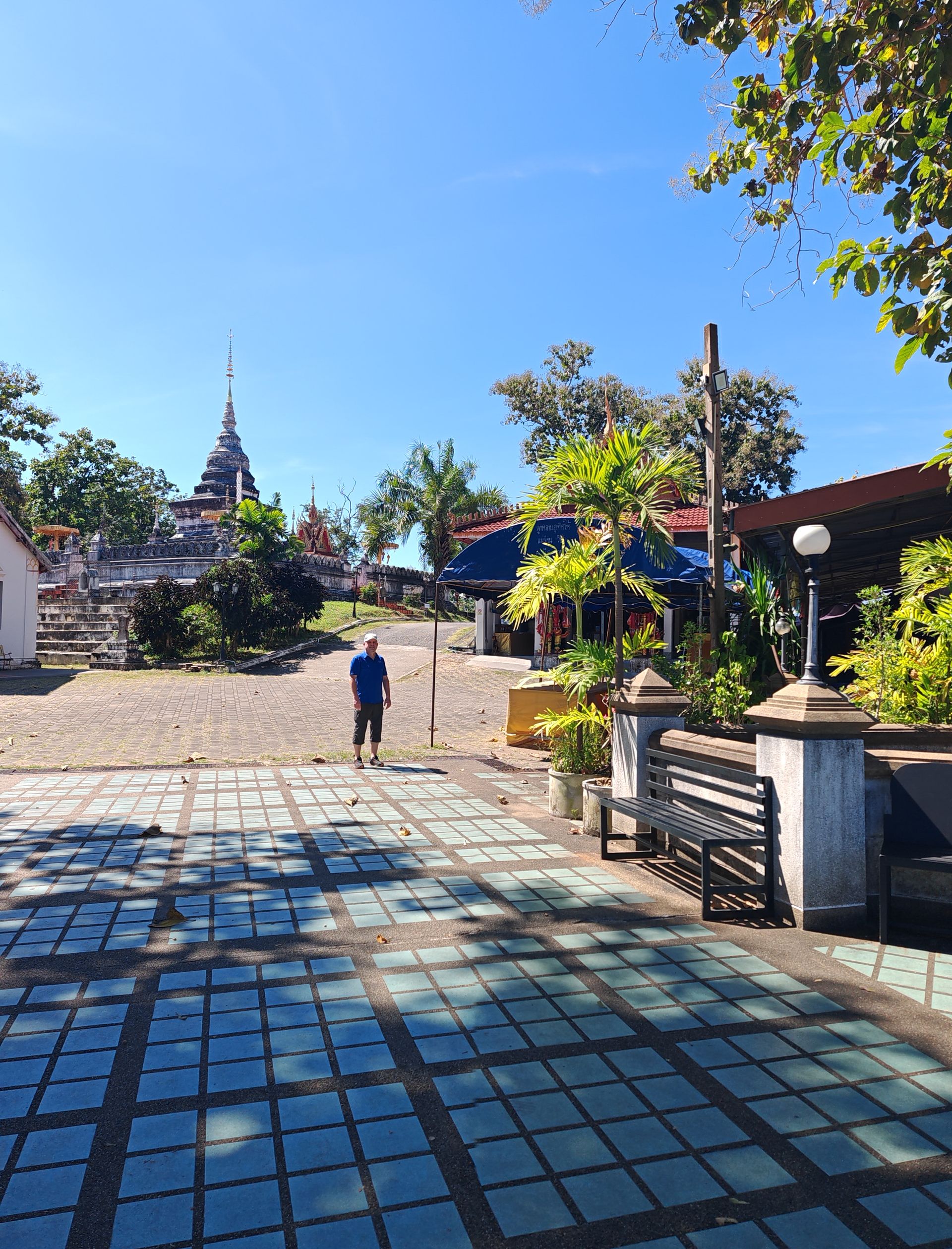
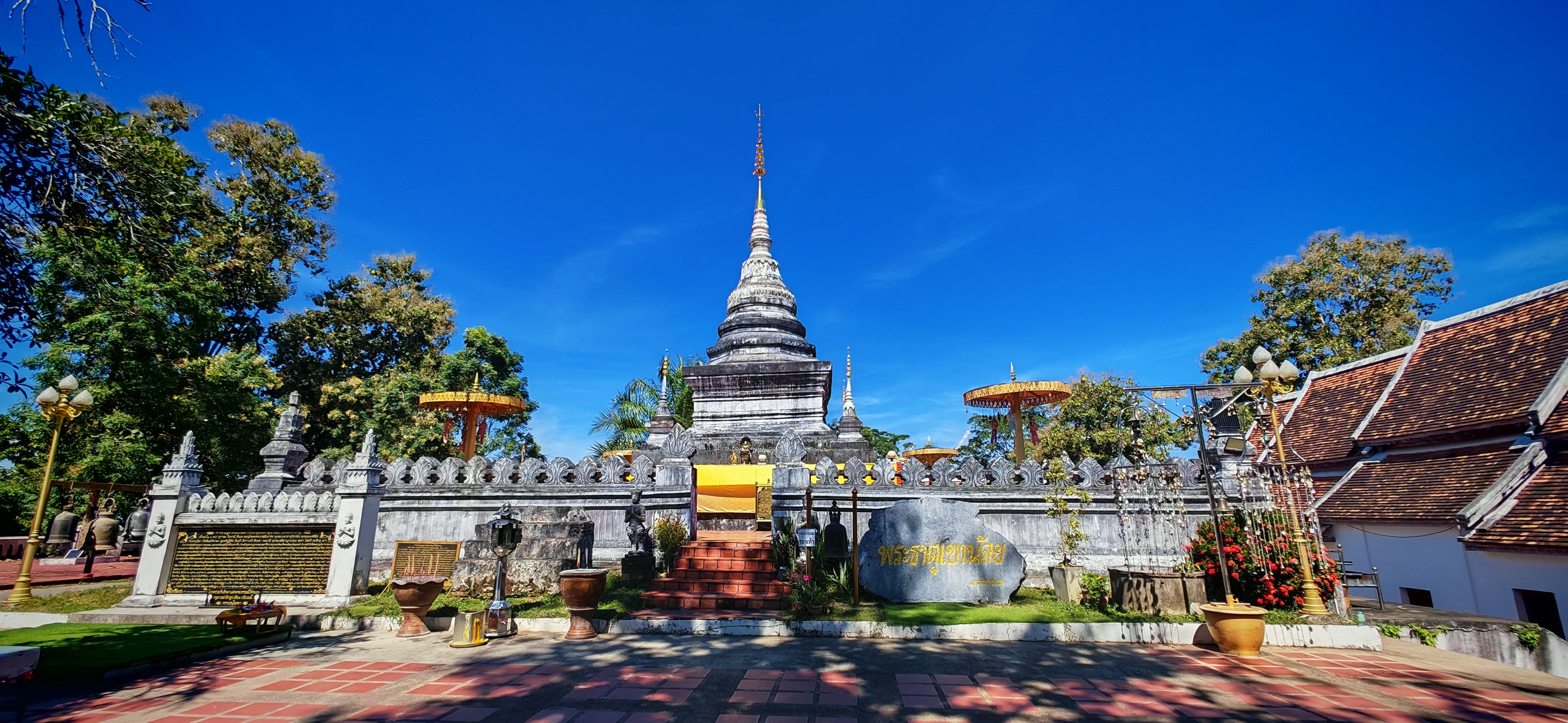
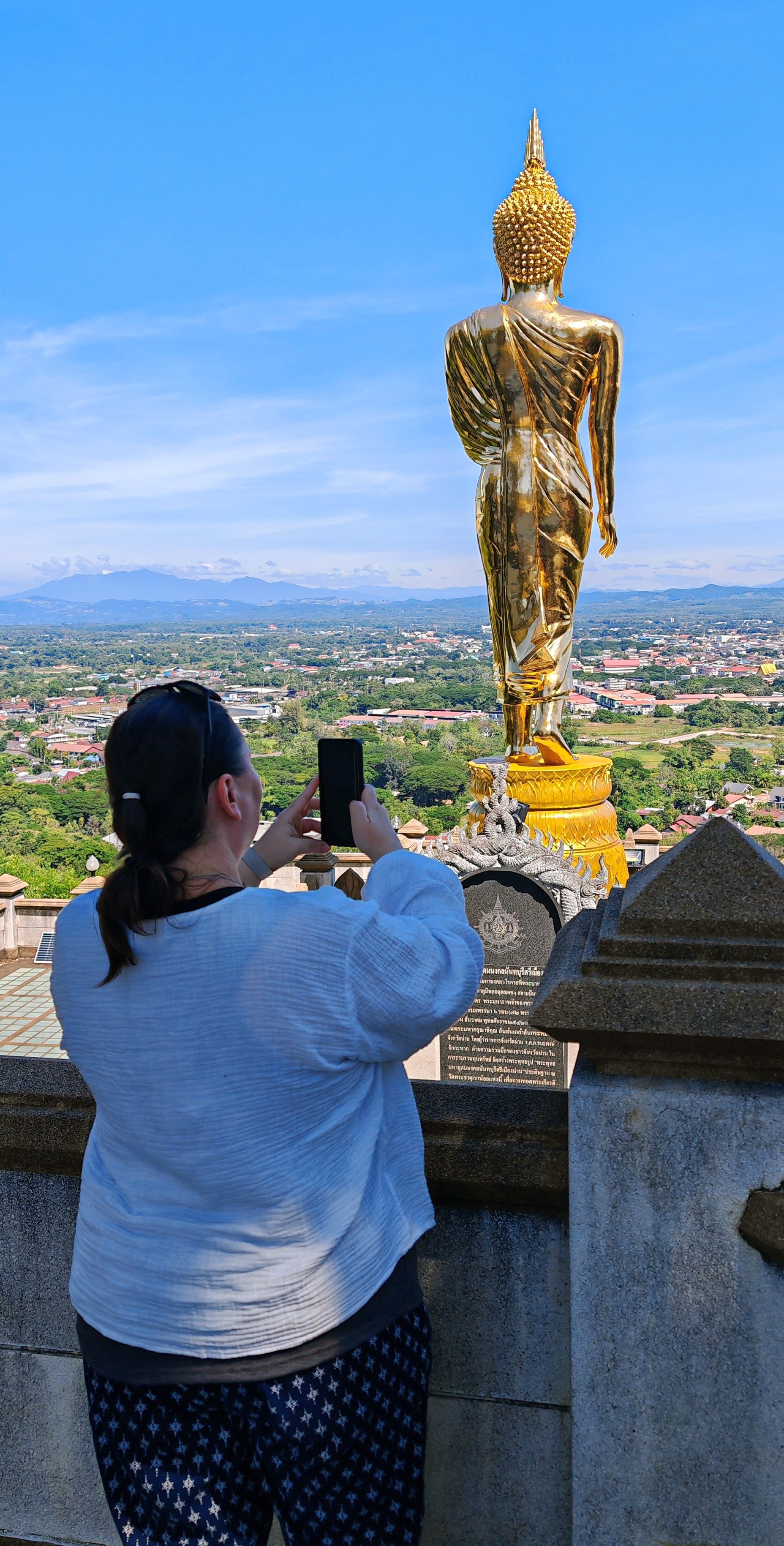
And because it was so beautiful, we rode the scooter to Wat Phra That Khao Noi on a hill outside the city.
For me, it was very impressive; you have a wonderful view of the landscape, and it is worth it not only in the morning or evening.
Information about this wat:
Originally 14th century, restored multiple times
Significant temple for the “Year of the Rooster” (Rooster Zodiac).
Famous for its golden Buddha statue overlooking the city (“Phra Buddha Maha Udom Mongkol Nanthaburi”) - a symbol of peace and happiness.
The view over Nan, especially at sunrise or sunset, is spectacular.
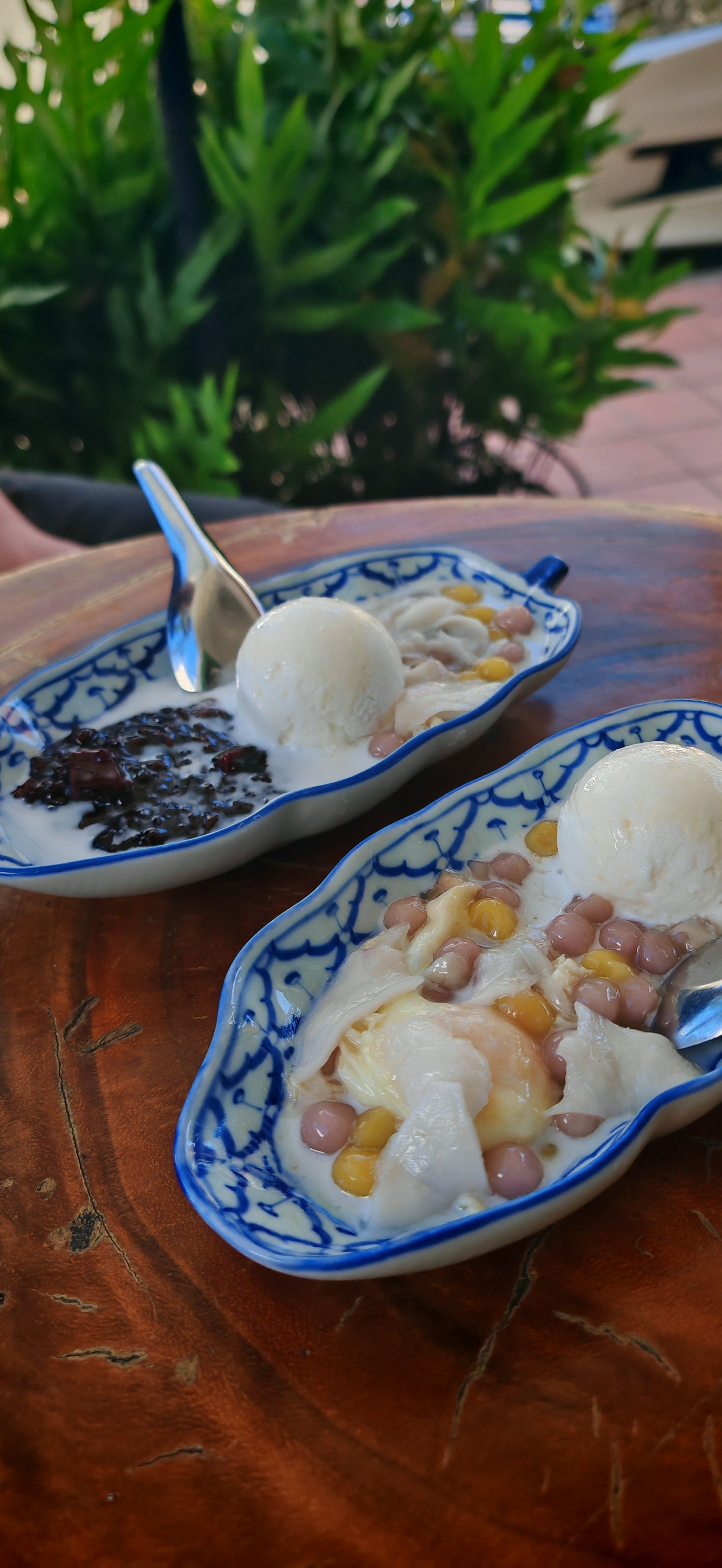
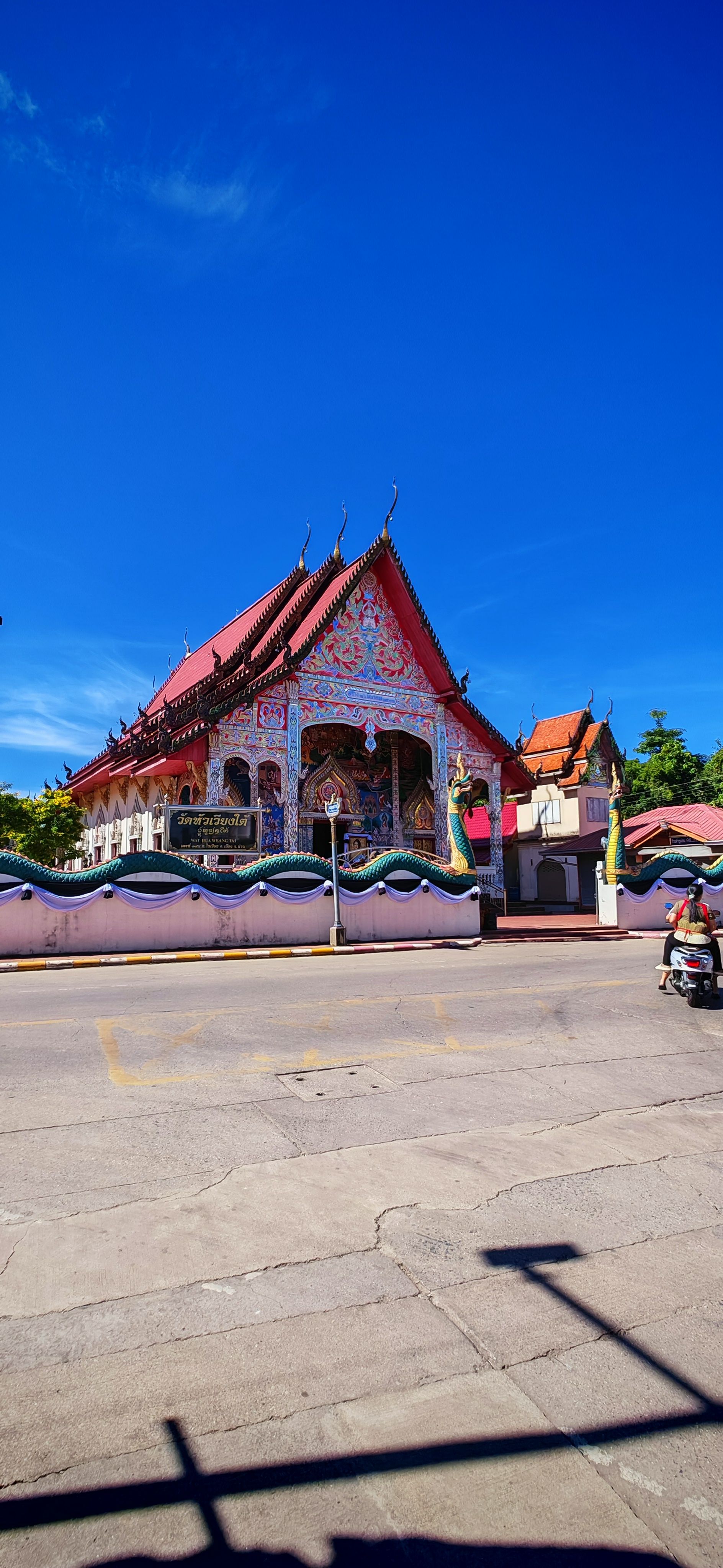
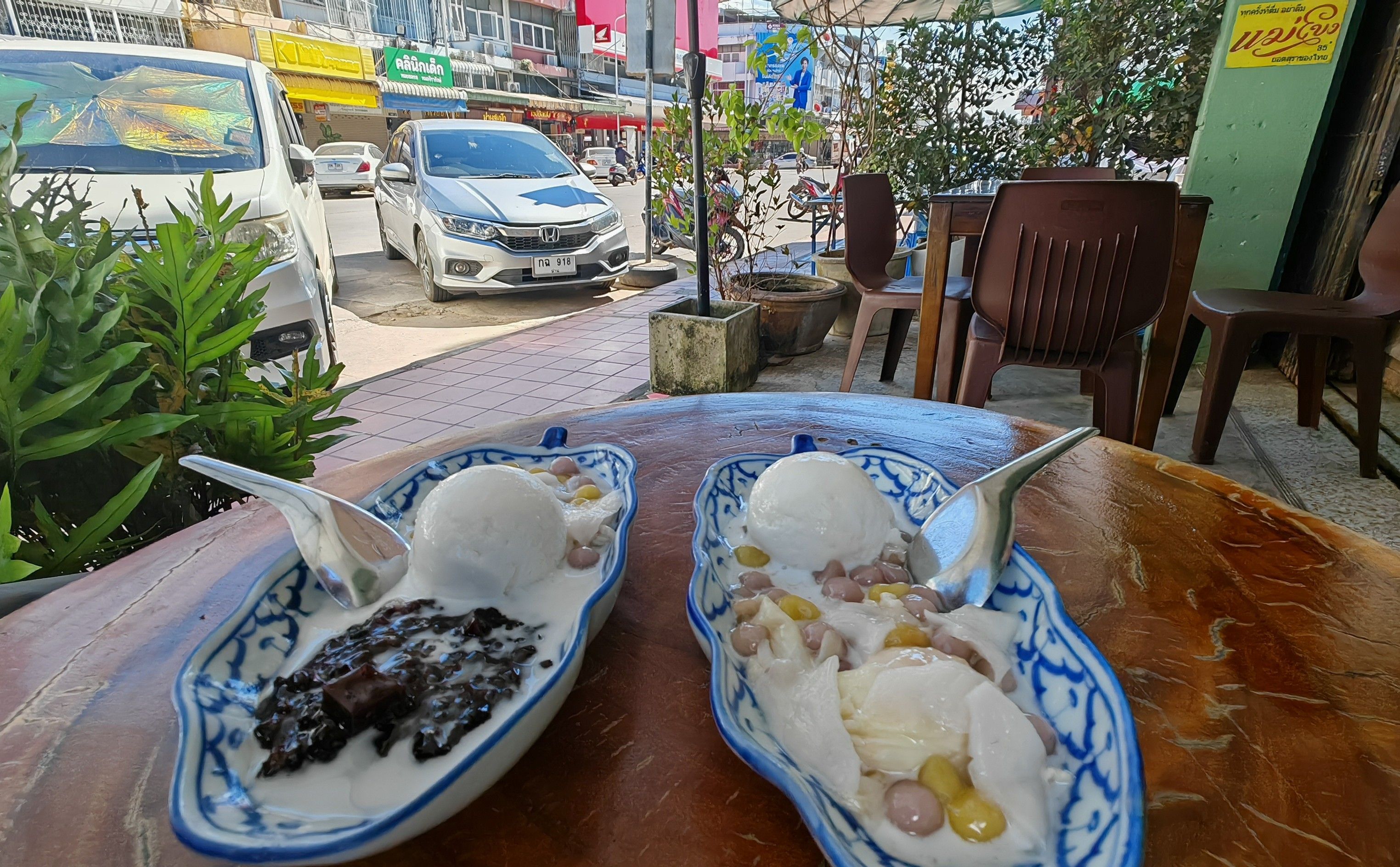
Before returning to the accommodation, we had a little sweet snack and at least from the outside, visited Wat Hua Wiang Tai.
Here are the last bits of information about temples for today (I promise):
Presumably 19th century.
Less known, but authentic – typical local Lanna style.
Inside, there is a beautiful Buddha statue and old wooden structures.
Especially popular with locals for daily prayers and meditation.
A good stop for travelers seeking a non-touristic temple experience.
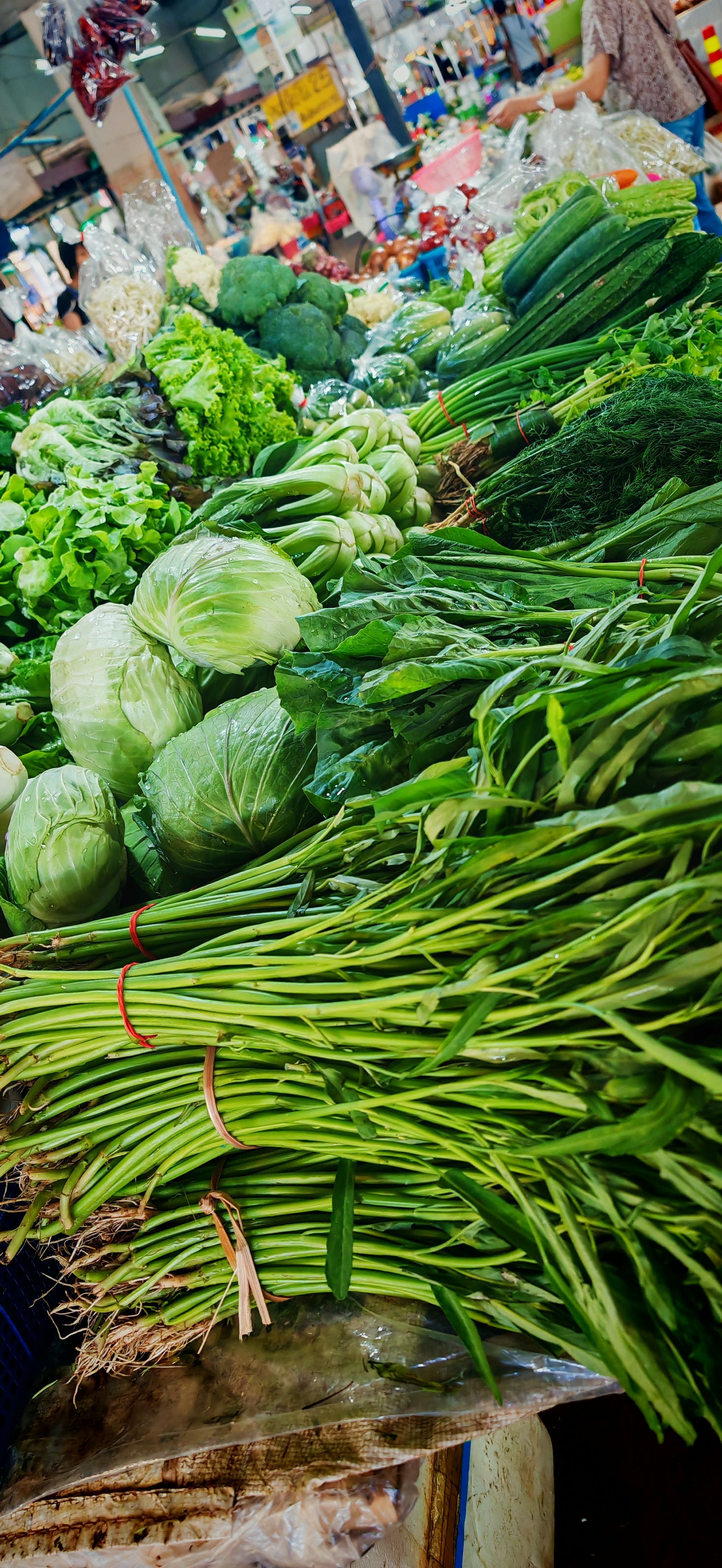
Then we took a little round over the primarily vegetable market; there was also a small meat and fish section. But it’s so beautiful to see how the vegetables look in their original form and so sad that they can cost a small fortune in Germany.
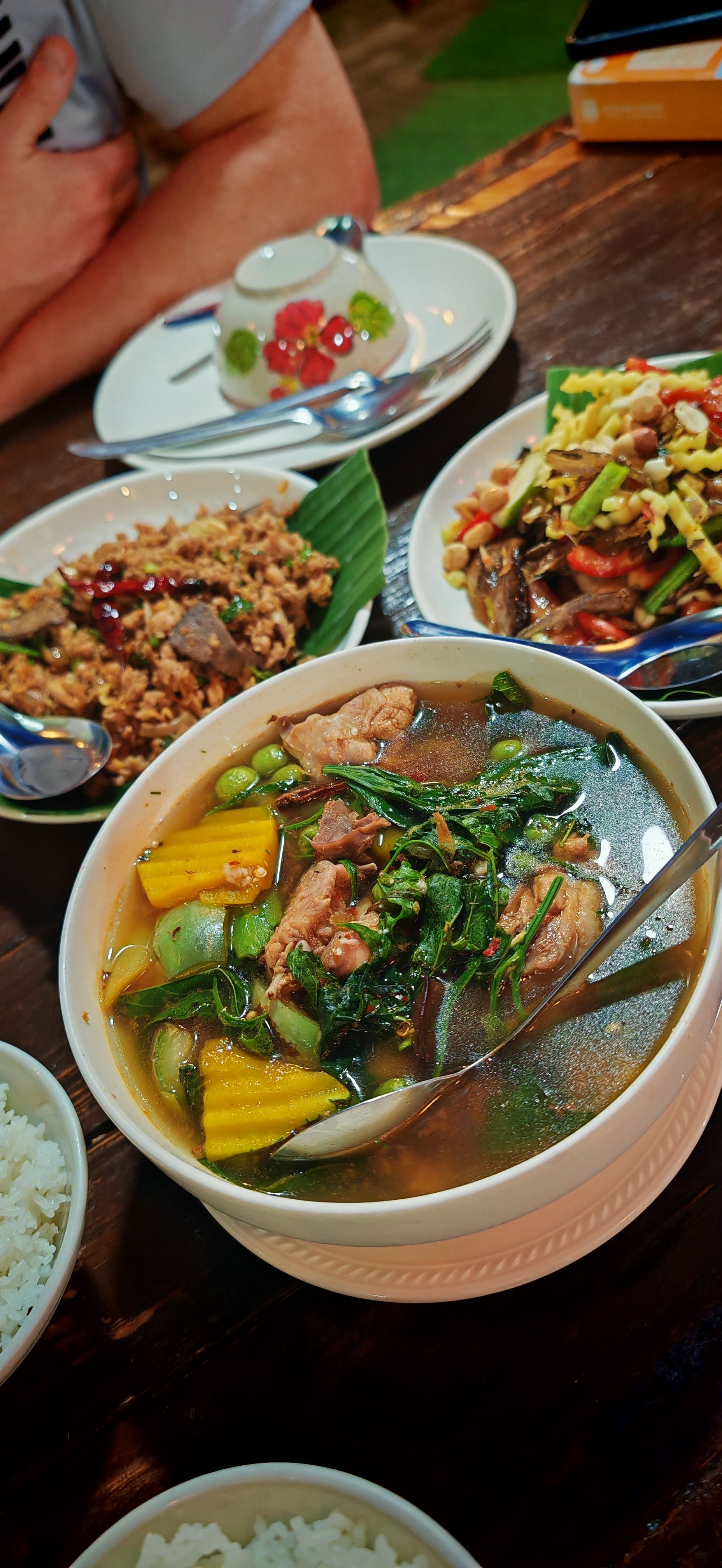
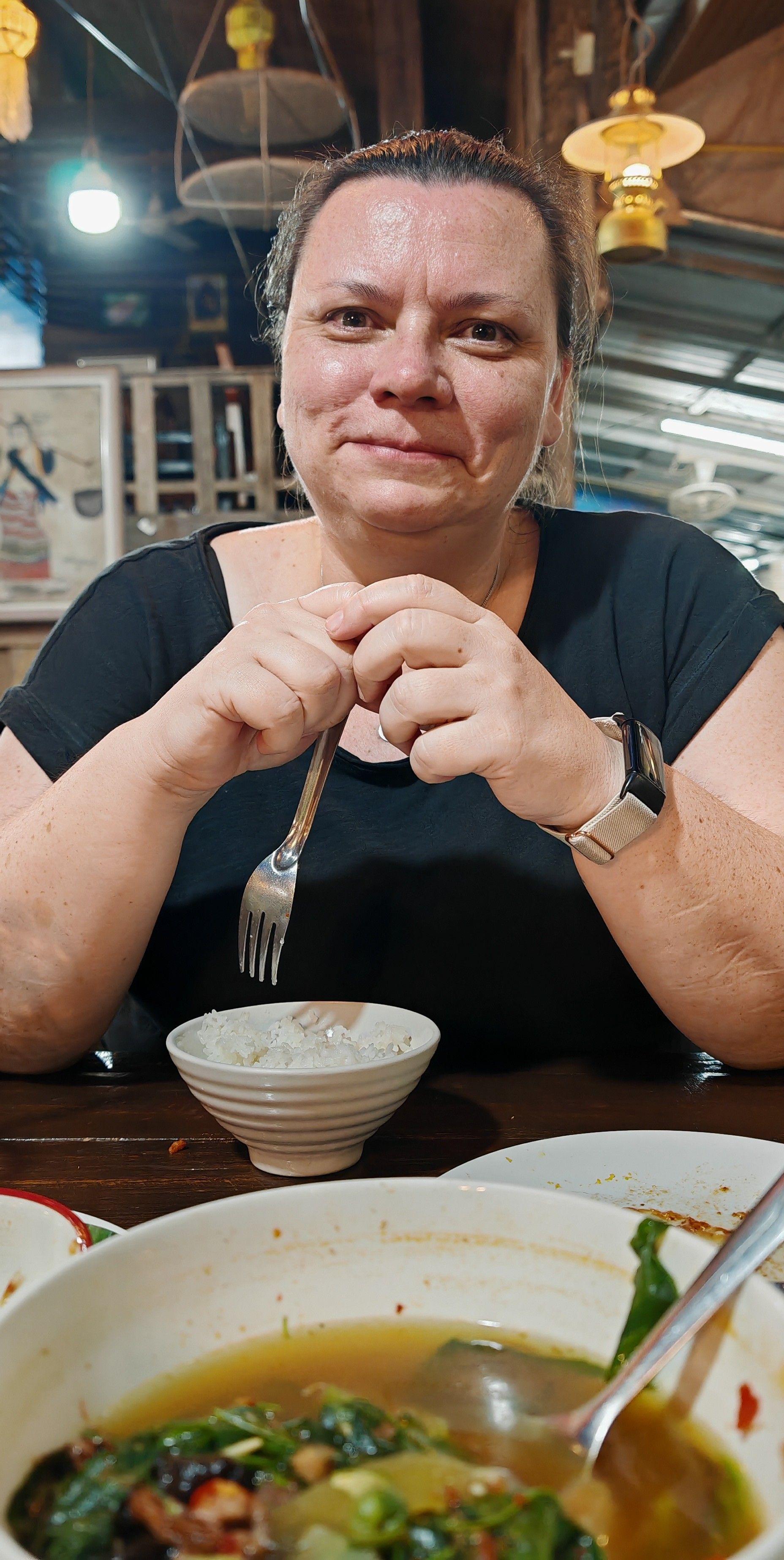
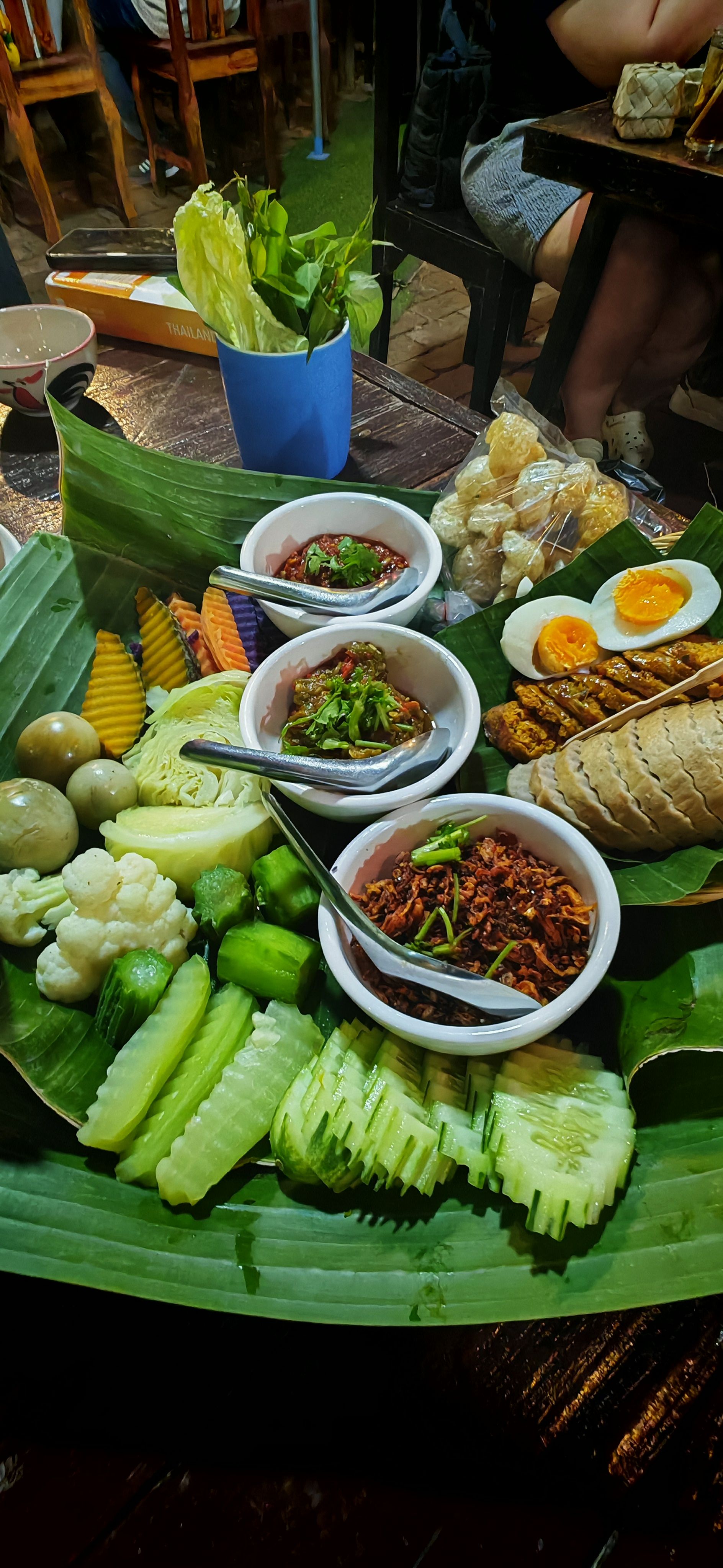
In the evening, we treated ourselves well, to Papa (Larb) Moo Kha (minced pork salad), a colorful mix of Nam Prik Num and Ong, and Sai Ua (northern Thai sausages) and steamed vegetables, green mango salad with crispy fish, and lastly, Kaeng Khae (northern Thai curry soup with chicken). Everything was very delicious (aroi mak mak) and not just a little spicy.
Tomorrow continues…